



Some bowls feel assembled. This one feels cooked.
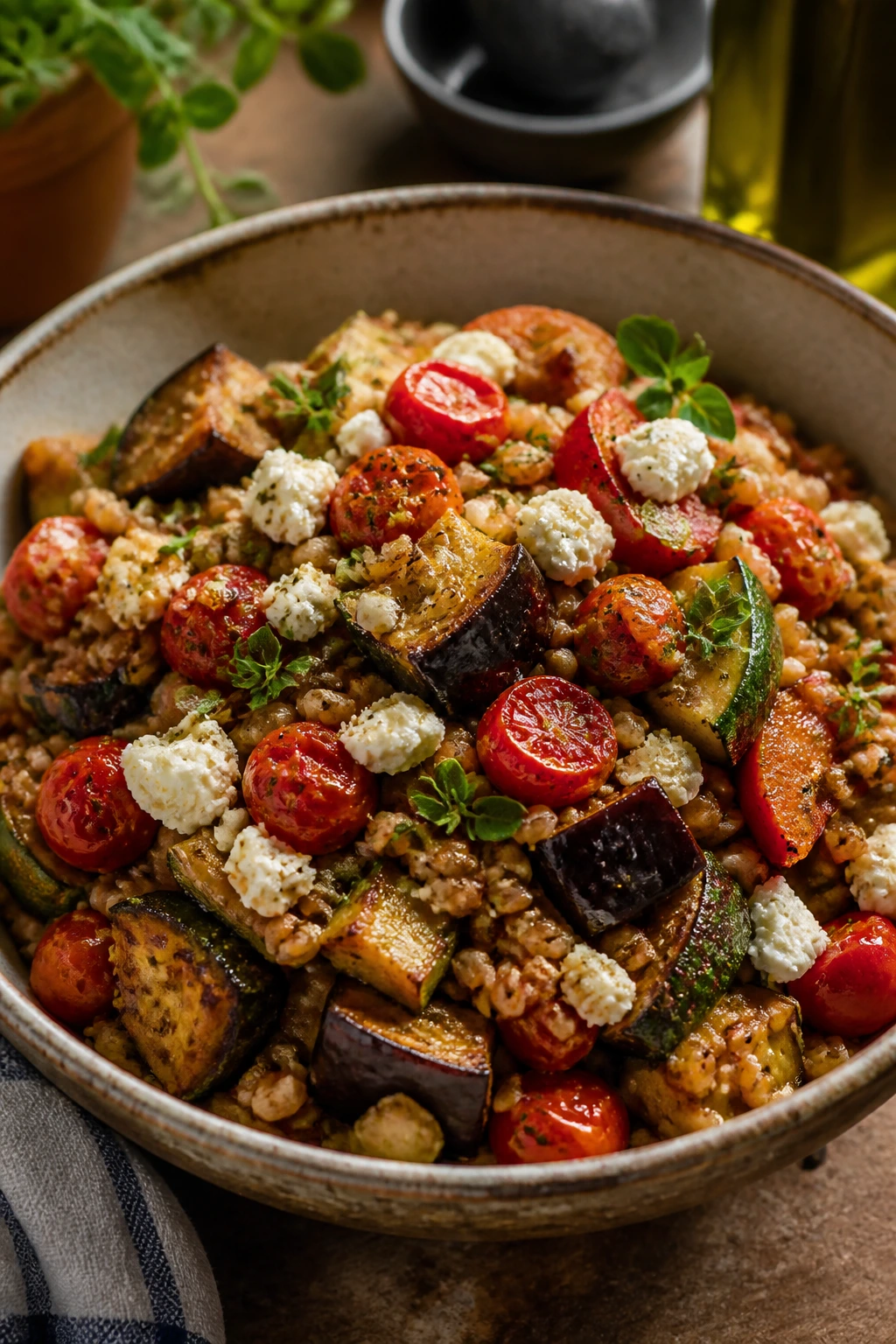
A rustic Mediterranean bowl like Nonna used to make should taste like vegetables that actually spent time in the oven, not like a salad tossed over a grain and called dinner. The farro turns nutty and chewy, the eggplant softens into something almost silky at the center, and the cherry tomatoes slump into glossy little pockets of sweetness. That matters. Without that browning, the whole thing loses its spine.
The Nonna part is less about a family tree than a kitchen attitude. Use good olive oil, roast the vegetables until they show color, keep the lemon sharp, and do not drown everything in dressing. The bowl should taste bright, savory, and a little rough around the edges — the way good home food often does when nobody is trying to make it behave.
The first thing to get right is the base. A grain bowl without a good base is just a pile of toppings with ambition.
Why This Rustic Mediterranean Bowl Works
The bowl works because every part has a job, and none of them are decorative.
Farro Gives the Bowl Its Backbone
Farro is the kind of grain that actually tastes like something. Semi-pearled farro cooks in about 25 minutes and keeps a gentle chew, which means it can sit under warm vegetables without turning gluey. You want the grains tender, not puffed and bland. That small bite is what keeps each spoonful interesting.
I like farro here more than rice because it drinks the lemon dressing without collapsing under it. Brown rice can work, but it goes softer and flatter. Farro stays a little lively. It gives the bowl a sense of weight, which is what makes this feel like a meal instead of a side dish wearing a hat.
Roasting Turns Ordinary Vegetables into Something Better
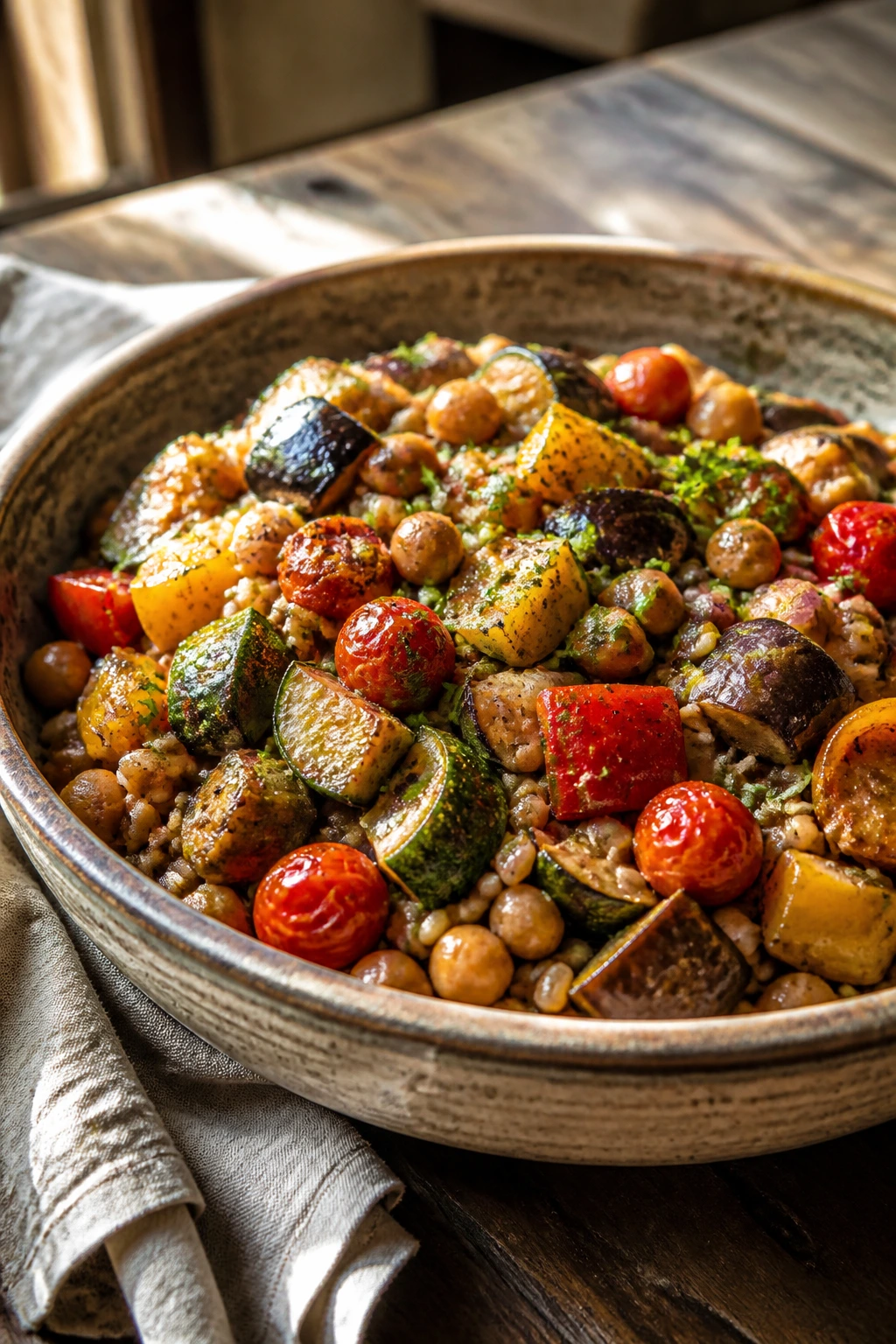
Eggplant, zucchini, onion, peppers, and cherry tomatoes all behave differently in heat, which is exactly why the sheet pan matters. Eggplant needs a little time to go from spongy to plush. Zucchini needs enough space so it browns instead of steaming. Tomatoes need to blister and split so their juices can mix with the oil on the tray.
That pan juice is gold. Spoon a little over the farro and you get a built-in sauce without making the bowl soupy. It tastes like the vegetables have already done part of the seasoning work for you.
The Lemon Keeps Everything Awake
A lot of grain bowls are bland because they stop at “healthy-looking.” This one does not make that mistake.
The dressing is sharp with lemon juice, a little rounded by olive oil, and just sturdy enough from Dijon to cling to the grains. Feta brings salt and creaminess. Olives bring a deeper brine. The herbs lift the top of the bowl so it doesn’t feel heavy after a few bites. Without that acid and salt balance, the roasted vegetables would still be pleasant, but they would taste tired.
That little bright finish is the Nonna part. Not fussy. Not flashy. Just sensible, which is often where the best food lives.
Timing, Yield, and the Best Moment to Serve It
This is the kind of recipe that looks busier than it is. The farro simmers while the vegetables roast, and the dressing comes together in the time it takes the oven to preheat. You do not need to juggle six burners or babysit a sauce.
The best moment to serve it is when the farro is still warm and the vegetables still have a little sheen from the oven. Room temperature is fine too. In fact, I think this bowl tastes even more like itself after 10 minutes on the counter, when the grains have had a minute to absorb the dressing.
Yield: 4 generous main-dish bowls
Prep Time: 25 minutes
Cook Time: 35 minutes
Total Time: 1 hour 5 minutes
Difficulty: Intermediate — the steps are simple, but there are a few parts to coordinate without crowding the pan or overcooking the grains.
Chill/Rest Time: 5 minutes for the farro to steam and settle after cooking
Best Served: Warm or at room temperature, with the dressing added just before serving
One useful rule: if your oven runs a little cool, give the vegetables another 5 minutes. Pale roasted vegetables are the fastest way to make this bowl feel flat.
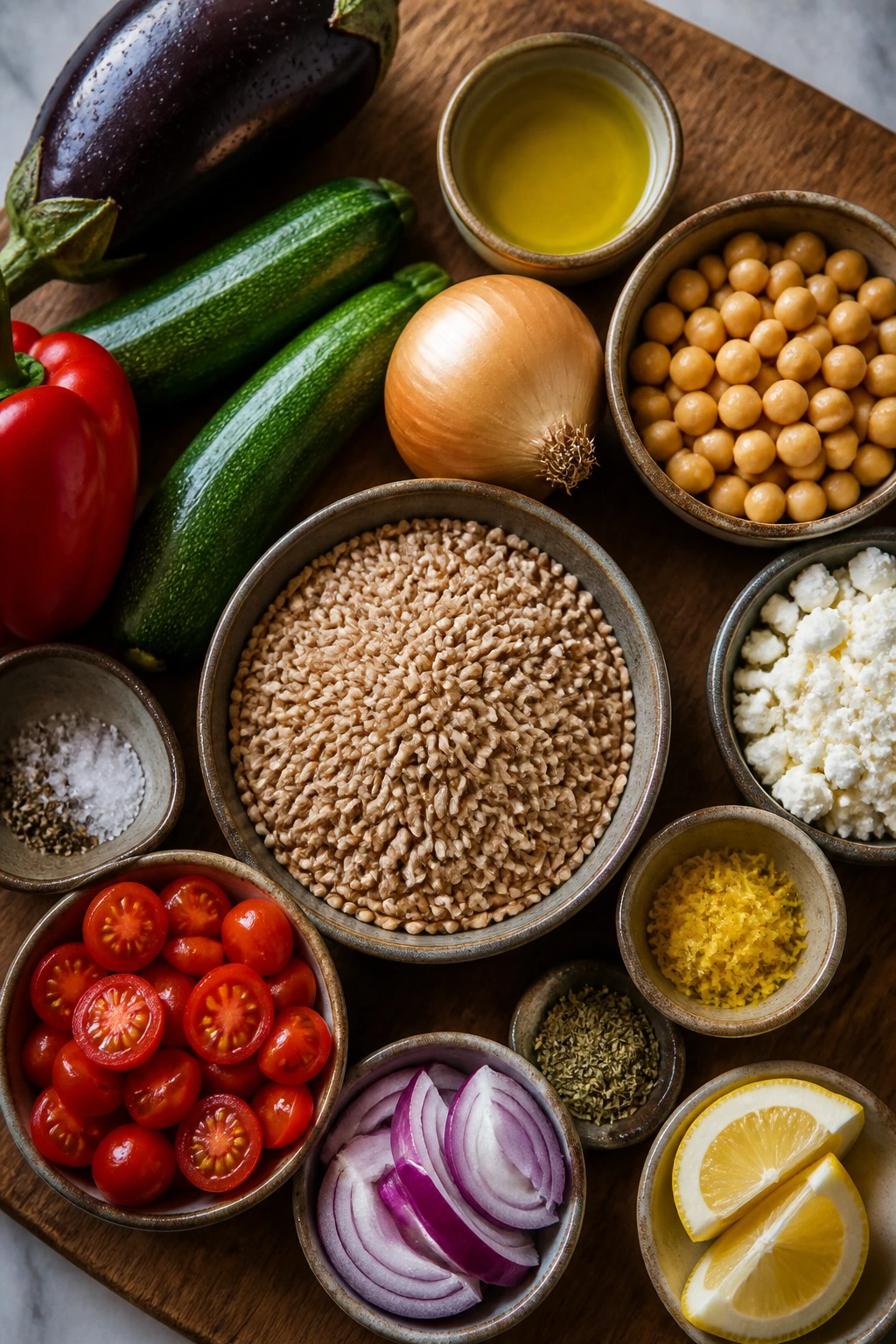
The Ingredients for a Real Nonna-Style Bowl
For the Farro Base:
- 1 1/2 cups semi-pearled farro, rinsed well
- 4 1/2 cups low-sodium vegetable broth or water
- 1 bay leaf
- 1/2 teaspoon kosher salt
For the Roasted Vegetables and Chickpeas:
- 1 medium eggplant, cut into 1-inch cubes
- 2 medium zucchini, halved lengthwise and sliced into 1/2-inch half-moons
- 1 red bell pepper, seeded and cut into 1-inch pieces
- 1 yellow bell pepper, seeded and cut into 1-inch pieces
- 1 small red onion, cut into 8 wedges
- 1 pint cherry tomatoes, left whole
- 1 (15-ounce) can chickpeas, drained, rinsed, and patted very dry
- 3 tablespoons extra-virgin olive oil
- 1 teaspoon kosher salt
- 1/2 teaspoon black pepper
- 1 teaspoon dried oregano
- 1/2 teaspoon smoked paprika
For the Lemon-Oregano Dressing:
- 1/4 cup extra-virgin olive oil
- 3 tablespoons fresh lemon juice
- 1 teaspoon finely grated lemon zest
- 1 small garlic clove, grated to a paste
- 1 teaspoon Dijon mustard
- 1 tablespoon red wine vinegar
- 1/2 teaspoon honey
- 1/4 teaspoon kosher salt
- 1/4 teaspoon black pepper
For Assembly:
- 4 cups baby arugula
- 1 medium cucumber, diced
- 1/2 cup pitted Kalamata olives, halved
- 4 ounces feta, crumbled
- 1/4 cup chopped flat-leaf parsley
- 1/4 cup chopped basil
- 1/3 cup plain breadcrumbs, optional, for pangrattato
- 1 tablespoon extra-virgin olive oil, for toasting the breadcrumbs
- 1/2 teaspoon dried oregano, for the breadcrumb topping
- Pinch of kosher salt, for the breadcrumb topping
- Lemon wedges, for serving
How Each Ingredient Changes the Final Bite
Farro Base
What to use: 1 1/2 cups semi-pearled farro with 4 1/2 cups broth or water. Semi-pearled farro is the sweet spot for this bowl because it cooks in a reasonable amount of time but still keeps its chew.
Preparation: Rinse the farro until the water runs less cloudy, then simmer it gently so the grains expand evenly. If you use whole farro instead, soak it for 30 minutes and expect a longer cook time.
Substitutions: Pearled barley gives a similar chew. Brown rice works if you want a softer grain. Quinoa is the gluten-free swap, though it will feel lighter and less rustic.
Tips: Salt the cooking liquid. Bland farro stays bland even under the best vegetables. I also like to let the cooked grain rest covered for 5 minutes, because that little steam bath makes the texture more even.
Roasted Vegetables
What to use: Eggplant, zucchini, red and yellow peppers, red onion, and cherry tomatoes. This mix gives you soft, juicy, sweet, and slightly charred all in one pan.
Preparation: Cut the eggplant into 1-inch cubes so it can soften without falling apart. Keep the zucchini in thicker half-moons; thin slices collapse before the peppers are ready. Leave the tomatoes whole so they burst on their own.
Substitutions: Cauliflower, fennel, mushrooms, or summer squash all fit the same roasting pattern. If you have only one pepper color, use it. The bowl still works.
Tips: Give the vegetables room on the pan. If they overlap, they steam instead of roast, and steamed eggplant is a sad thing. Also, do not stir them every few minutes — let them sit long enough to pick up color.
Chickpeas
What to use: One 15-ounce can, drained, rinsed, and dried well. This is the pantry piece that gives the bowl substance without needing meat.
Preparation: Spread the chickpeas on a towel and roll them around a little to remove surface moisture. If a few skins fall off, fine. That actually helps them crisp slightly better.
Substitutions: Cannellini beans give you a softer, creamier bite, though they won’t crisp the same way. If you want more protein and less legume texture, grilled chicken thighs or seared halloumi can fill the same role.
Tips: Dry chickpeas are the difference between lightly crisp and rubbery. They should come out browned at the edges, not crunchy like snack mix. That texture belongs in the bowl, not on its own.
Lemon-Oregano Dressing
What to use: Olive oil, lemon juice, zest, garlic, Dijon, red wine vinegar, honey, salt, and pepper. The dressing should taste bright first, then mellow a little on the back end.
Preparation: Grate the garlic to a paste so it disappears into the dressing instead of showing up in sharp little chunks. Whisk until the mixture looks slightly thick and glossy.
Substitutions: White wine vinegar can stand in for red wine vinegar. Maple syrup works in place of honey. Whole-grain mustard gives the dressing more texture, if you like that look.
Tips: Fresh lemon matters here. Bottled juice tastes thin and a little stale next to roasted vegetables. Let the dressing sit for 2 minutes before tasting; the garlic softens a bit and the flavors settle.
Finishing Ingredients
What to use: Baby arugula, diced cucumber, Kalamata olives, feta, parsley, basil, and optional breadcrumbs. These ingredients are what keep the bowl from tasting like only warm things.
Preparation: Keep the cucumber cold and dry so it stays crisp. Tear the herbs or chop them just before serving. Crumble the feta with your fingers instead of shaving it into dust.
Substitutions: Escarole, radicchio, or chopped romaine can replace arugula if you want less peppery bite. Mint can take basil’s place. Castelvetrano olives are milder than Kalamata if you like a softer olive flavor.
Tips: Add the breadcrumbs at the end, not early, or they lose the crunch that makes them worth bothering with. The feta should be block-style if you can get it; the dry pre-crumbled version is convenient, but it tastes chalkier and doesn’t melt into the warm vegetables the same way.
The Pots, Pans, and Tools That Make It Easy
- 2 rimmed sheet pans — One for the vegetables and one for the chickpeas keeps everything from crowding and steaming.
- Medium saucepan with a lid — You need this for the farro, and a heavier pot helps the grains cook evenly.
- Fine-mesh strainer — Useful for rinsing the farro and chickpeas without losing half the ingredients down the drain.
- Large mixing bowl — Big enough to toss the vegetables in oil without flinging pepper strips onto the counter.
- Small bowl and whisk — The dressing comes together fast if you whisk it by hand.
- Microplane or fine grater — Best for lemon zest and grating garlic into a paste.
- Small skillet, optional — Handy for the breadcrumb topping if you want that extra crunch.
- Large shallow serving bowl or platter — A wide bowl shows off the layers better than a deep soup bowl, which just buries everything.
Step-by-Step: Farro, Vegetables, Chickpeas, and Assembly
Cook the Farro
-
Rinse the farro under cool running water in a fine-mesh strainer until the water runs mostly clear.
-
Combine the farro, 4 1/2 cups broth or water, bay leaf, and kosher salt in a medium saucepan. Bring it to a boil over high heat, then reduce the heat to maintain a steady simmer. Cover partially and cook for 22 to 28 minutes, stirring once or twice, until the grains are tender but still chewy. If the pot looks dry before the grains are done, add 1/2 cup hot water.
-
Drain off any excess liquid, discard the bay leaf, and let the farro sit covered off the heat for 5 minutes. Fluff it with a fork. The grains should be separate, not sticky or mushy.
Roast the Vegetables and Chickpeas
-
Preheat the oven to 425°F (220°C) and place racks in the upper and lower thirds. Line 2 rimmed sheet pans with parchment paper.
-
In a large bowl, toss the eggplant, zucchini, bell peppers, onion, and cherry tomatoes with 2 tablespoons of the olive oil, 1/2 teaspoon of the salt, the black pepper, and the oregano. Spread them across one sheet pan in a single layer. On the second sheet pan, toss the chickpeas with the remaining 1 tablespoon olive oil, smoked paprika, and the remaining 1/2 teaspoon salt. Spread them out as well. Roast for 15 minutes.
-
Stir the vegetables, rotate the pans, and roast for another 10 to 15 minutes, until the eggplant edges are browned, the onions are caramelized at the tips, the tomatoes have split, and the chickpeas are lightly crisp. Do not pull them too early; under-roasted vegetables taste watery and flat.
Make the Dressing and Breadcrumbs
-
Whisk the olive oil, lemon juice, lemon zest, garlic, Dijon, red wine vinegar, honey, salt, and pepper in a small bowl until the dressing looks glossy and slightly creamy. Taste it. It should be bright, salty, and sharp, but not harsh.
-
If you are using the breadcrumbs, heat the tablespoon of olive oil in a small skillet over medium heat. Add the breadcrumbs, oregano, and pinch of salt, then stir constantly for 2 to 3 minutes, until the crumbs turn golden and smell toasty. Pull the pan off the heat right away. Breadcrumbs go from golden to burnt in a heartbeat.
Assemble the Bowls
-
Toss the arugula with 1 to 2 tablespoons of the dressing in a large bowl, just enough to coat the leaves lightly. Divide the farro among 4 bowls, then spoon the roasted vegetables and chickpeas over the top. Add the cucumber, olives, feta, parsley, basil, and breadcrumbs. Finish with more dressing and a squeeze of lemon.
-
Taste one spoonful before you serve it. If it feels flat, add a pinch of salt and another squeeze of lemon. If it feels too sharp, a drizzle of olive oil will calm it down fast.
How to Serve This Rustic Mediterranean Bowl
Presentation: Use a wide bowl or shallow plate so the roasted vegetables sit in distinct piles instead of sinking into the grain. I like to place the farro first, then mound the vegetables slightly off-center, then scatter the feta, herbs, and breadcrumbs last. That order keeps the bowl looking generous without turning into a beige heap.
Accompaniments: Warm olive bread, grilled pita, or a small wedge of crusty loaf is enough if you want something on the side. A simple green salad with shaved fennel and lemon works too, though I usually keep the extras restrained. The bowl already has grain, vegetables, salt, acid, and crunch. It does not need a parade.
Portions: Four main-dish portions is honest here. If you serve it with bread and olives, it can stretch to 5. For lunch, 1 1/2 to 2 cups per person is a good range, depending on whether you want a lighter meal or something that sticks around until evening.
Beverage Pairing: A dry white like Vermentino, Pinot Grigio, or a crisp Sauvignon Blanc keeps the lemon and herbs sharp. If you want something nonalcoholic, sparkling water with cucumber and lemon fits the bowl without stepping on the olives and feta.
Small Tweaks That Make It Taste More Like Nonna’s Kitchen
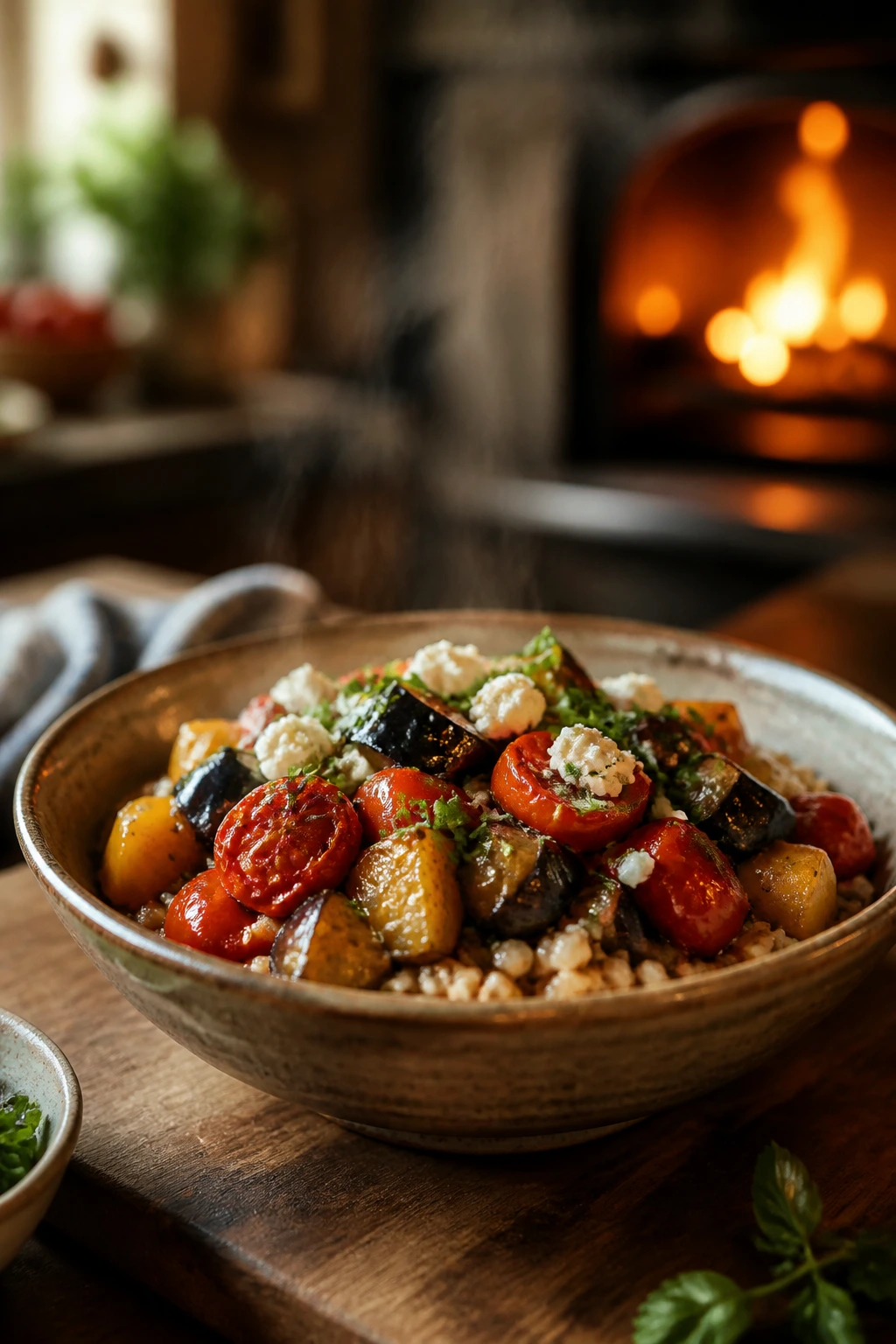
Flavor Enhancement: Finish each bowl with a few drops of your best olive oil right before serving. Not a flood. Just a thin ribbon. The roasting oil and the finishing oil taste different, and that second hit of green, peppery oil makes the whole bowl feel brighter.
Customization: If you want more richness, add a soft-boiled egg or a few slices of grilled chicken thigh. If you want more bite, swap half the arugula for chopped radicchio or escarole. The bowl likes contrast, but it does not like too many competing ideas at once.
Serving Suggestions: A little extra lemon zest on top goes further than another heavy garnish. So does a dusting of breadcrumbs and a few torn basil leaves. If you like heat, a pinch of red pepper flakes works well, but keep it light — the bowl is supposed to taste sun-warmed, not spicy for the sake of being spicy.
Make-It-Yours: For a dairy-free version, skip the feta and add toasted almonds or sunflower seeds for bite. For a gluten-free version, replace the farro with quinoa or brown rice. For a lower-salt bowl, rinse the olives briefly and use water instead of broth for the grain.
Common Mistakes That Flatten the Flavor
-
Crowding the sheet pans — If the vegetables are piled on top of one another, they steam and stay pale. The fix is boring but effective: use two pans, spread everything out, and let hot air do its job.
-
Putting wet chickpeas on the tray — Moisture is the enemy of texture here. Wet chickpeas turn soft and a little squeaky instead of lightly crisp. Pat them dry before seasoning, and if they still look damp, give them another minute on the towel.
-
Underseasoning the farro — Plain farro can taste like a brown blanket if you don’t salt the cooking liquid. The grain should carry a little savoriness on its own, not wait for the dressing to rescue it.
-
Adding the dressing too early — Arugula wilts fast, and the herbs bruise if they sit in acid too long. Dress the greens right before serving, then let the warm farro and vegetables pick up the rest at the table.
-
Using dry, chalky feta — Some feta tastes chalky instead of creamy and salty. If you can, buy block feta in brine and crumble it yourself. It tastes cleaner and melts a little more gracefully against warm vegetables.
-
Skimping on browning — If the tomatoes never blister and the onions never color, the whole bowl tastes one-note. The fix is patience. Let the tray sit long enough to develop those roasted edges before you move things around.
Variations Worth Cooking Again
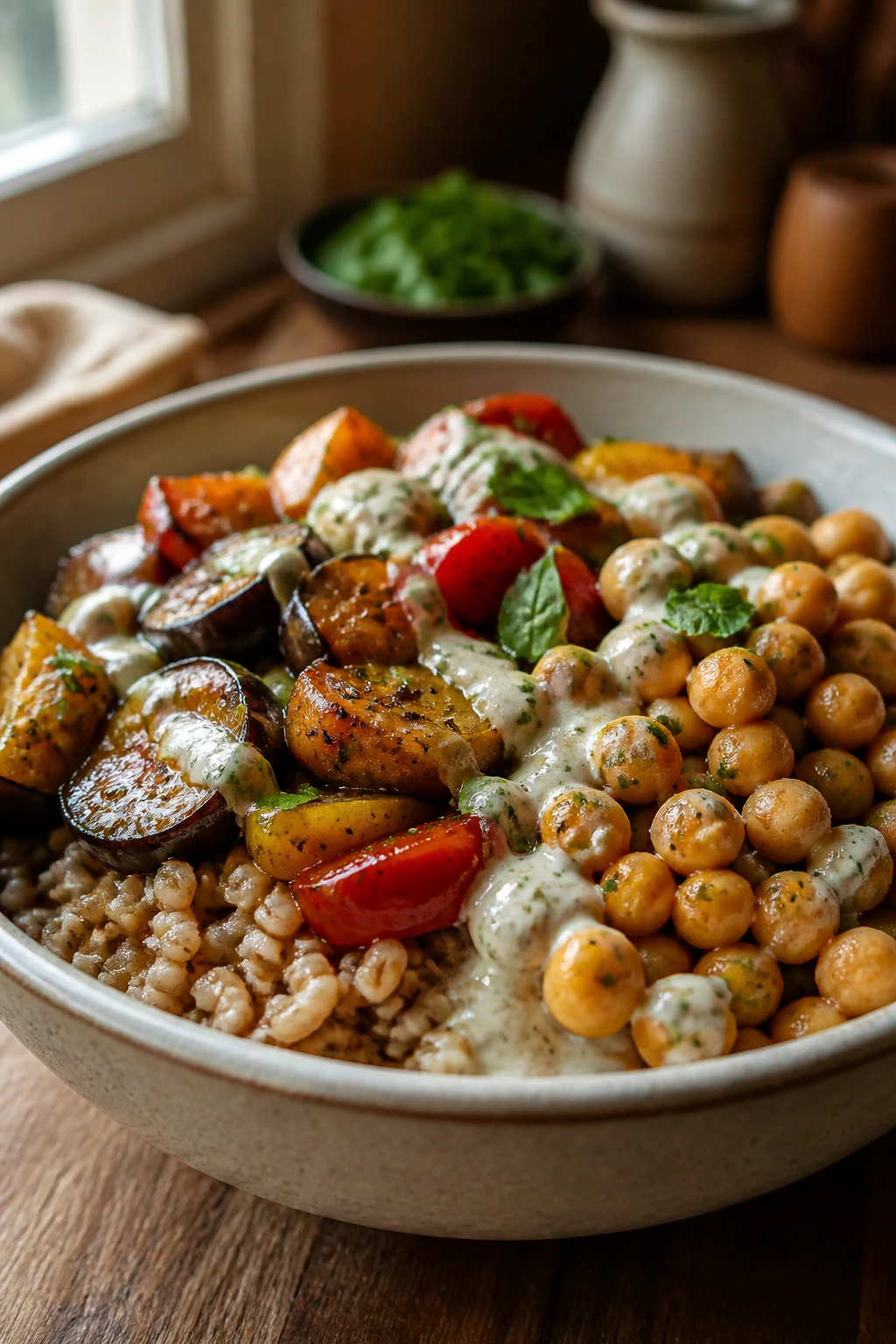
Grilled Summer Garden Bowl: Swap the roasted eggplant, zucchini, and peppers for grilled versions brushed with olive oil. The smoke changes the whole feel of the dish and makes it read a little more like a table spread from an outdoor lunch. Keep the dressing the same, and add the tomatoes raw or barely blistered for a brighter finish.
Lemon Chicken Nonna Bowl: Add 1 1/4 pounds boneless skinless chicken thighs, seasoned with olive oil, garlic, oregano, salt, pepper, and lemon zest. Roast or grill them separately until they reach 165°F, then slice and lay them over the grain. This version is heavier and more dinner-forward, but it still keeps the same lemon-and-herb backbone.
White Bean and Artichoke Bowl: Replace the chickpeas with 1 1/2 cups drained cannellini beans and add 1 cup quartered marinated artichoke hearts. The result is softer and a little more briny, almost like a warm antipasto in bowl form. It loses some crunch, so keep the breadcrumbs and cucumber if you want texture.
Warm Pantry Bowl: Use roasted carrots, cauliflower, and red onion in place of the summer vegetables, and swap the farro for pearled barley. The dressing and toppings stay the same, but the flavor gets deeper and earthier. This one has a heavier, cold-weather feel without losing the Mediterranean shape of the dish.
Keeping Leftovers Tasty for Days
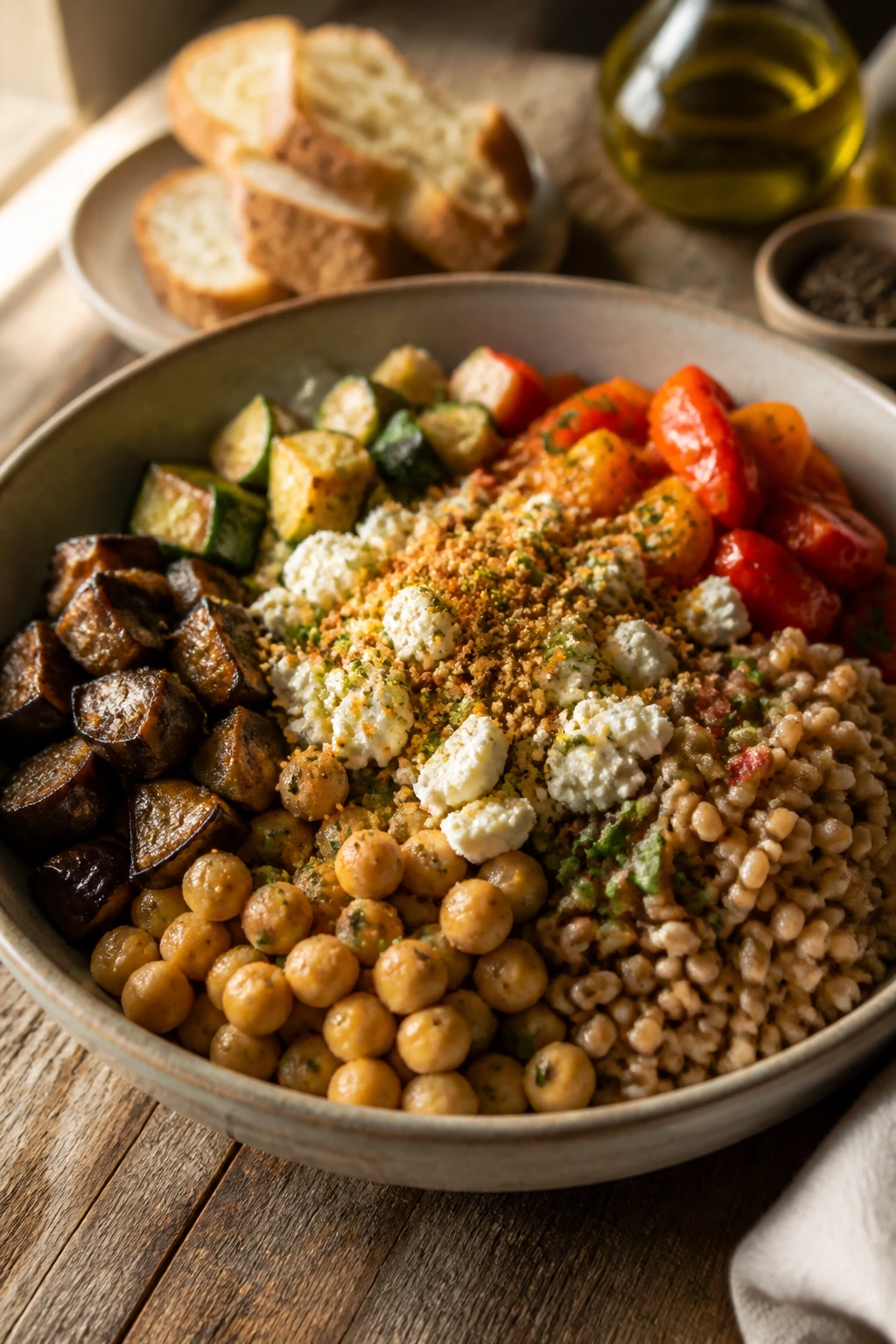
The bowl keeps best when you store the parts separately. Farro, roasted vegetables, chickpeas, dressing, and fresh toppings all age at different speeds, and mixing them too early turns lunch into a soggy compromise.
Refrigerator Storage
Cooked farro keeps for 4 to 5 days in an airtight container in the fridge. The roasted vegetables and chickpeas hold up for 3 to 4 days. The dressing keeps for 1 week, sometimes a little longer if your lemon is fresh and the jar stays cold.
The assembled bowl is best eaten within a few hours, not because it turns unsafe, but because the arugula collapses and the cucumber starts leaking water. If you know you’re packing leftovers, keep the greens, feta, and breadcrumbs separate until serving time.
Freezer Storage
Farro freezes well for up to 2 months. Spread it in a thin layer in a freezer bag and flatten it so it thaws faster. Roasted vegetables can be frozen for about 1 month, though their texture softens after reheating. I would not freeze the finished bowl. The fresh components do not recover gracefully.
Chickpeas are freezer-safe, but they lose their little crisp edges, so I usually make those fresh. If you do freeze them, think of them as a texture layer for reheated bowls, not as snack-like crunch.
Reheating
For farro, add a spoonful of water, cover, and microwave for 45 to 60 seconds, or warm it in a skillet over low heat until loose and steamy. For vegetables, a 400°F oven for 8 to 10 minutes works better than the microwave, because the oven brings some of the roasted edges back. A skillet on medium heat also does the trick if you want quicker results.
The dressing should be stirred or shaken well after chilling. Olive oil firms up in the fridge. That is normal. Let it sit at room temperature for 10 minutes if it looks cloudy.
Questions People Ask Before Making It
Can I use quinoa or rice instead of farro?
Yes. Quinoa gives you a lighter bowl and cooks faster, while brown rice gives a softer, more familiar base. Farro wins if you want chew, but the bowl still works with either swap.
Is this bowl good warm or cold?
Both. Warm is better if you want the vegetables to feel luxurious and the farro to soak up the dressing. Cold works for lunch, especially if you keep the arugula and breadcrumbs separate until the last minute.
What if my vegetables turn soft instead of browned?
That usually means the pan was crowded or the oven was too low. Spread the vegetables out more next time, use a second pan, and keep them in the oven until you see some dark edges. Soft is fine for eggplant; soft across the board is not.
Can I make it dairy-free?
Absolutely. Skip the feta and add something with bite instead, like toasted almonds, sunflower seeds, or extra olives. A few more herbs help replace the richness you lose from the cheese.
How do I keep the chickpeas from staying chewy?
Dry them well, use enough heat, and give them space on the tray. They will never taste like croutons, but they should pick up light crispness at the edges. If they’re pale and rubbery, they need more time.
Can I add meat without changing the whole recipe?
Yes. Grilled chicken thighs work best because they stay juicy and like the same oregano-lemon flavor. Sliced lamb or seared salmon also fit, though I’d keep the seasoning simple so the bowl doesn’t turn crowded.
What greens work besides arugula?
Escarole, chopped romaine, or baby spinach all work, but each changes the mood. Arugula gives you pepper and bite. Romaine is milder and crunchier. Spinach is softer and should go on right before serving so it doesn’t wilt into nothing.
A Bowl That Belongs in the Middle of the Table
This is the kind of dish that earns its place by behaving well. The farro carries the weight, the vegetables bring color and sweetness, and the lemon dressing keeps the whole thing from drifting into beige, bland territory. It has enough structure for dinner, enough flexibility for lunch, and enough leftover potential that you don’t feel punished for making a full pan.
The best part is the way it stays honest. No fancy plating tricks. No sauce that tries to do all the work. Just roasted vegetables, good olive oil, and the kind of bright, salty finish that home cooking has always needed.
Make it once with the vegetables properly browned and the lemon kept sharp, and it becomes the sort of bowl you stop measuring by recipe and start making from memory.
Rustic Mediterranean Bowl Like Nonna Used to Make — Recipe Card
Recipe Name: Rustic Mediterranean Bowl Like Nonna Used to Make
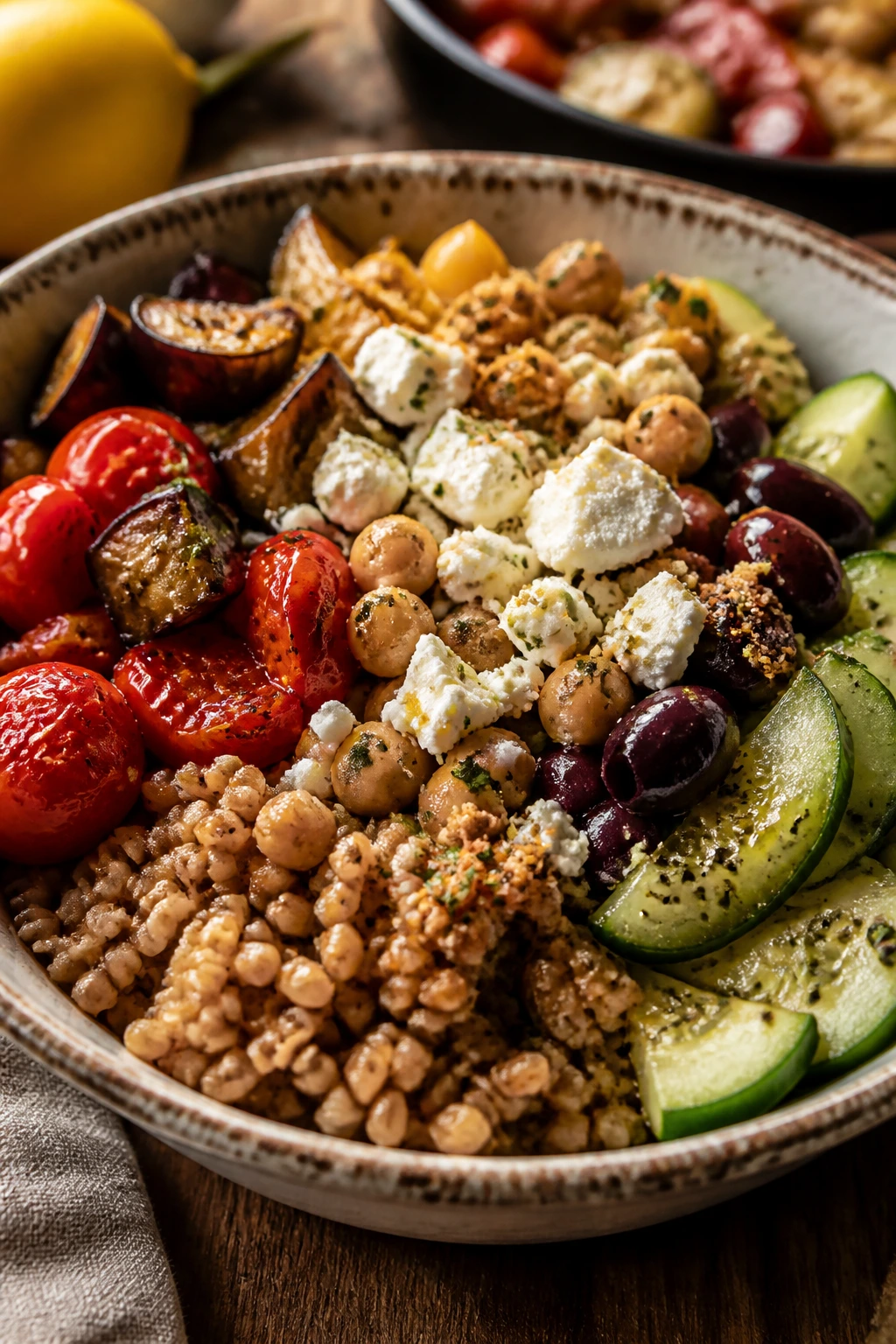
Description: Chewy farro, roasted Mediterranean vegetables, crisp-tender chickpeas, cucumber, olives, feta, and a lemon-oregano dressing come together in a bowl that eats warm, bright, and hearty. The optional breadcrumb topping adds the old-school crunch that makes the dish feel especially homey.
Prep Time: 25 minutes
Cook Time: 35 minutes
Total Time: 1 hour 5 minutes
Course: Main Course
Cuisine: Italian-Mediterranean
Servings: 4 servings
Calories: About 520 kcal per serving
Ingredients
For the Farro Base:
- 1 1/2 cups semi-pearled farro, rinsed well
- 4 1/2 cups low-sodium vegetable broth or water
- 1 bay leaf
- 1/2 teaspoon kosher salt
For the Roasted Vegetables and Chickpeas:
- 1 medium eggplant, cut into 1-inch cubes
- 2 medium zucchini, halved lengthwise and sliced into 1/2-inch half-moons
- 1 red bell pepper, seeded and cut into 1-inch pieces
- 1 yellow bell pepper, seeded and cut into 1-inch pieces
- 1 small red onion, cut into 8 wedges
- 1 pint cherry tomatoes, left whole
- 1 (15-ounce) can chickpeas, drained, rinsed, and patted very dry
- 3 tablespoons extra-virgin olive oil
- 1 teaspoon kosher salt
- 1/2 teaspoon black pepper
- 1 teaspoon dried oregano
- 1/2 teaspoon smoked paprika
For the Lemon-Oregano Dressing:
- 1/4 cup extra-virgin olive oil
- 3 tablespoons fresh lemon juice
- 1 teaspoon finely grated lemon zest
- 1 small garlic clove, grated to a paste
- 1 teaspoon Dijon mustard
- 1 tablespoon red wine vinegar
- 1/2 teaspoon honey
- 1/4 teaspoon kosher salt
- 1/4 teaspoon black pepper
For Assembly:
- 4 cups baby arugula
- 1 medium cucumber, diced
- 1/2 cup pitted Kalamata olives, halved
- 4 ounces feta, crumbled
- 1/4 cup chopped flat-leaf parsley
- 1/4 cup chopped basil
- 1/3 cup plain breadcrumbs, optional, for pangrattato
- 1 tablespoon extra-virgin olive oil, for toasting the breadcrumbs
- 1/2 teaspoon dried oregano, for the breadcrumb topping
- Pinch of kosher salt, for the breadcrumb topping
- Lemon wedges, for serving
Instructions
-
Rinse the farro under cool running water until the water runs mostly clear.
-
Combine the farro, broth or water, bay leaf, and salt in a medium saucepan. Bring to a boil, reduce to a simmer, partially cover, and cook for 22 to 28 minutes until tender but chewy. Drain any excess liquid and let it rest covered for 5 minutes.
-
Preheat the oven to 425°F (220°C) and line 2 rimmed sheet pans with parchment paper.
-
Toss the eggplant, zucchini, bell peppers, onion, and cherry tomatoes with 2 tablespoons of olive oil, 1/2 teaspoon of salt, the black pepper, and the oregano. Spread on one sheet pan. Toss the chickpeas with the remaining olive oil, smoked paprika, and remaining salt on the second sheet pan.
-
Roast both pans for 15 minutes, then stir the vegetables and rotate the pans. Roast another 10 to 15 minutes, until the vegetables are browned in spots and the chickpeas are lightly crisp.
-
Whisk together the dressing ingredients until glossy and lightly emulsified.
-
If using breadcrumbs, toast them in olive oil with oregano and salt in a small skillet over medium heat for 2 to 3 minutes until golden.
-
Toss the arugula lightly with a little dressing. Divide the farro among 4 bowls, top with roasted vegetables, chickpeas, cucumber, olives, feta, parsley, basil, and breadcrumbs. Finish with more dressing and lemon wedges.
Notes: Pat the chickpeas dry before roasting, or they’ll stay soft. Keep the arugula and breadcrumbs separate until serving for the best texture. The bowl is excellent warm or at room temperature.