



A good pizza smells like olive oil warming in a pan before the dough even touches the oven. Herbed local pizza like Nonna used to make has that smell, and then it gets better: garlic softening in tomato, basil bruised between your fingers, and cheese turning glossy at the edges before the crust even finishes browning.
What makes this style worth making at home is the restraint. Not the number of toppings. Not a mile-high mound of cheese. The appeal is in the way a few small, honest ingredients work together: a dough with enough chew to hold a slice, a sauce cooked down until it clings instead of puddling, and herbs that taste green and alive instead of cooked into silence. That’s the difference between pizza that feels homemade and pizza that tastes like someone was trying too hard.
I keep coming back to this kind of pie because it forgives normal kitchen life. The basil might be a little wild. The tomatoes might be from the shop around the corner rather than the garden. The crust might get a dark spot or two. Good. That’s the point. A real pizza like this should look like it came from a working kitchen, not a showroom, and when you cut into it, the center should give way with a soft crackle from the bottom crust and a little steam from the cheese.
Why This Pizza Earns Its Spot on the Table
-
The crust has a real bite: A hot oven and a short bake give you a base that’s crisp underneath and still chewy in the middle, so the slice folds without going floppy.
-
The sauce stays put: Cooking the tomato sauce for 12 to 15 minutes turns it thick enough to spread thinly without soaking the dough.
-
The herbs do more than decorate: Basil, oregano, and parsley bring a green, peppery smell that wakes up the cheese and keeps the pizza from tasting flat.
-
Local ingredients actually matter here: Fresh mozzarella, ripe tomatoes, and herbs with good color make a bigger difference on pizza than they do in a lot of other dishes because there’s nowhere for weak flavor to hide.
-
It works with normal kitchen equipment: A baking stone is lovely, but a preheated sheet pan or cast-iron skillet will still give you a crust worth eating.
-
The leftovers hold their own: Reheated slices crisp back up better than most saucy dinners, which is saying something.
The Ingredients That Make the Crust, Sauce, and Finish Work Together
Yield: Makes 2 (12-inch) pizzas | Serves 4 to 6
Prep Time: 25 minutes
Cook Time: 15 minutes
Total Time: 1 hour 40 minutes, including rise time
Difficulty: Intermediate — the dough is straightforward, but a hot oven and careful shaping matter.
Chill/Rest Time: 1 hour to 1 hour 15 minutes for the dough to rise, plus 15 minutes to rest after dividing
Best Served: Right after baking, after a 3-minute rest on a cutting board
For the Dough:
- 3 1/2 cups bread flour, plus more for dusting
- 2 teaspoons instant yeast
- 1 teaspoon sugar or honey
- 1 1/4 cups warm water, 105°F to 110°F
- 1 1/2 teaspoons fine sea salt
- 2 tablespoons extra-virgin olive oil
- 1 teaspoon dried oregano
For the Herbed Tomato Sauce:
- 1 tablespoon extra-virgin olive oil
- 2 garlic cloves, minced
- 1 can (28 ounces) whole peeled tomatoes, crushed by hand
- 1 tablespoon tomato paste
- 1 teaspoon fine sea salt
- 1/2 teaspoon black pepper
- 1 teaspoon dried oregano
- 1/2 teaspoon crushed red pepper flakes, optional
- 2 tablespoons chopped fresh basil
- 1 tablespoon chopped fresh parsley
- 1 teaspoon chopped fresh oregano or 1/2 teaspoon dried oregano
For the Topping and Finish:
- 2 cups shredded low-moisture whole-milk mozzarella
- 8 ounces fresh mozzarella, torn into 1-inch pieces and patted dry
- 1/3 cup finely grated Parmigiano-Reggiano or pecorino Romano
- 1 cup thinly sliced ripe tomatoes, seeded if juicy
- 1/2 small red onion, very thinly sliced, optional
- 1/4 cup torn fresh basil leaves
- 2 tablespoons extra-virgin olive oil, for drizzling
- Flaky sea salt, for finishing
Why Each Ingredient Pulls Its Weight
Dough
What to use: 3 1/2 cups bread flour, 2 teaspoons instant yeast, 1 teaspoon sugar or honey, 1 1/4 cups warm water, 1 1/2 teaspoons fine sea salt, 2 tablespoons olive oil, and 1 teaspoon dried oregano. That mix gives you a dough that stretches without tearing and browns well in a hot oven.
Preparation: Stir everything together until you get a shaggy mass, then knead until the dough turns smooth and elastic. The oregano goes in with the dry ingredients so its flavor spreads evenly instead of sitting in pockets.
Substitutions: All-purpose flour will work if that’s what you have; the crust will be a little less chewy but still solid. If you want a slightly softer dough, swap the sugar for honey.
Tips: Bread flour drinks water differently from brand to brand, so keep 1 to 2 tablespoons of extra water nearby. The dough should feel tacky, not sticky enough to smear across the counter.
Herbed Tomato Sauce
What to use: 1 tablespoon olive oil, 2 minced garlic cloves, 1 can of whole peeled tomatoes, 1 tablespoon tomato paste, 1 teaspoon salt, 1/2 teaspoon black pepper, 1 teaspoon dried oregano, 1/2 teaspoon crushed red pepper flakes if you like a little heat, plus the chopped basil, parsley, and oregano at the end.
Preparation: Crush the tomatoes by hand before they hit the pan. That keeps the sauce textured and stops it from turning into a watery puree that slides around on the dough.
Substitutions: If your tomatoes are excellent and ripe, you can swap in 2 1/2 cups of peeled fresh tomatoes. If they’re mealy or bland, canned whole tomatoes will usually give you a better sauce.
Tips: Tomato paste is the quiet helper here. One tablespoon deepens the flavor fast, and you’ll taste the difference once the sauce simmers down to a thick spreadable layer.
Cheese and Topping
What to use: 2 cups shredded low-moisture mozzarella, 8 ounces fresh mozzarella torn into small pieces and dried well, 1/3 cup grated Parmigiano-Reggiano or pecorino, 1 cup thinly sliced ripe tomatoes, and 1/2 small red onion if you want it.
Preparation: Pat the fresh mozzarella dry with paper towels before topping the pizza. Slice the tomatoes thin and seed them if they’re juicy, or they’ll flood the center.
Substitutions: If you only have one kind of mozzarella, use all low-moisture for a sturdier melt. If you want a sharper finish, pecorino brings more bite than Parmesan.
Tips: Don’t pile the cheese too thickly in the center. A thin layer melts faster and lets the crust stay crisp under the middle of the pie.
Herbs and Finish
What to use: 2 tablespoons chopped basil, 1 tablespoon parsley, 1 teaspoon fresh oregano or 1/2 teaspoon dried oregano, 2 tablespoons olive oil for drizzling, and flaky salt.
Preparation: Keep the herbs separate from the oven heat until the end if you want them to stay bright. Tear the basil by hand rather than chopping it into confetti.
Substitutions: Basil is the anchor, but parsley and oregano can shift around if needed. Marjoram makes a softer finish if oregano feels too sharp.
Tips: Herbs on top after baking taste fresher than herbs buried under cheese. That last drizzle of olive oil matters more than it sounds like it should.
The Tools That Make the Bake Easier
-
Large mixing bowl: You need room to knead without dough climbing over the rim.
-
Kitchen scale, optional but useful: Flour measures more accurately by weight; if you own one, 420 grams of bread flour is the target.
-
Stand mixer with dough hook or sturdy wooden spoon: Either works. The mixer saves time, but hand-kneading is fine if you don’t mind 8 minutes of work.
-
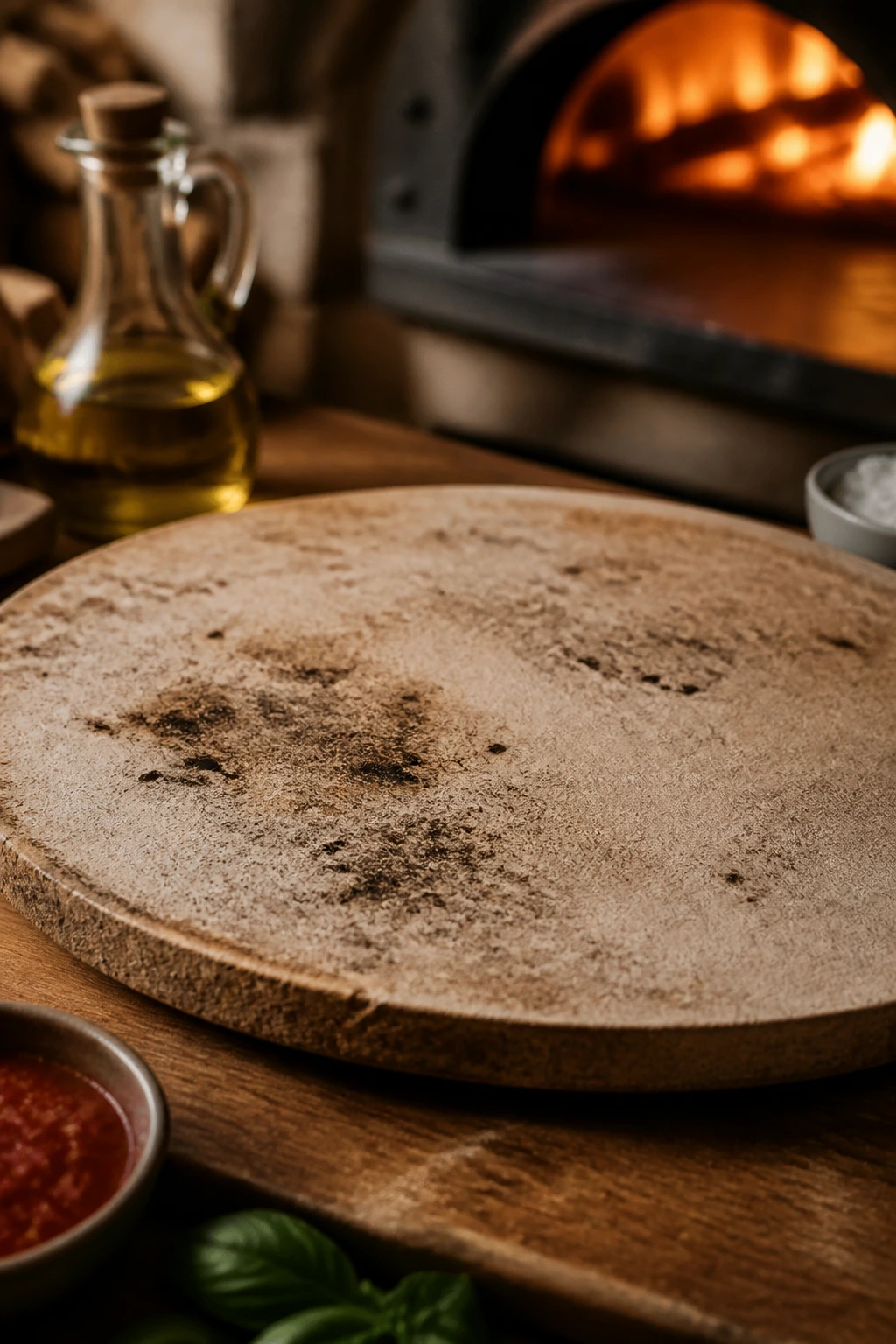
Pizza stone or baking steel: Best for a crisp bottom because it stores heat and hits the dough fast.
-
Heavy rimmed baking sheet, upside down: The best backup if you don’t own a stone or steel.
-
Pizza peel or a second baking sheet: Helps transfer the pizza onto the hot surface without tearing the dough.
-
Bench scraper: Handy for dividing dough and cleaning the counter.
-
Small saucepan: The sauce needs a pan with a little surface area so it reduces cleanly.
-
Paper towels: Fresh mozzarella needs to be dried before it goes on the pizza.
-
Sharp chef’s knife or pizza wheel: Either will cut clean slices, though a pizza wheel is kinder to the cheese.
The Full Dough-to-Oven Method
Build the dough:
-
In a large bowl, whisk together the bread flour, instant yeast, sugar or honey, salt, and dried oregano until the mixture looks even. Add the warm water and olive oil, then stir with a wooden spoon until a shaggy dough forms and no dry flour remains.
-
Turn the dough onto a lightly floured counter and knead for 6 to 8 minutes, adding a dusting of flour only if the dough sticks hard to your hands. It should go from rough and lumpy to smooth, springy, and slightly tacky. If it tears easily or feels stiff, it needs more kneading; if it smears, it needs a touch more flour.
-
Shape the dough into a ball, place it in a lightly oiled bowl, and turn it once so the surface is coated. Cover the bowl with a damp kitchen towel or plastic wrap and let it rise in a warm spot for 60 to 75 minutes, until it looks doubled and the surface shows a few soft bubbles.
Make the sauce:
-
Set a small saucepan over medium heat and add the olive oil and minced garlic. Cook for about 30 seconds, stirring constantly, until the garlic smells sweet and pale gold around the edges. Do not let it brown; burnt garlic makes the whole sauce taste harsh.
-
Add the crushed tomatoes, tomato paste, salt, black pepper, oregano, and red pepper flakes if using. Bring the sauce to a steady simmer, then lower the heat and cook for 12 to 15 minutes, stirring now and then, until the sauce thickens enough to mound on a spoon instead of running off it.
-
Stir in the basil, parsley, and fresh oregano off the heat. Taste the sauce and adjust with another pinch of salt if needed. It should taste bright, a little sweet, and a little salty, not flat or watery.
Shape and preheat:
-
About 45 minutes before baking, place a pizza stone or steel on the middle rack of the oven and preheat to 500°F (260°C). If you’re using an upside-down rimmed sheet pan, preheat that instead. The surface has to be hot before the dough goes on, or the crust will bake pale and soft.
-
Punch down the risen dough and divide it into 2 equal pieces. Shape each piece into a tight ball and let them rest on a lightly floured surface, covered with a towel, for 15 minutes. That rest calms the gluten and makes the dough easier to stretch.
Stretch, top, and bake:
-
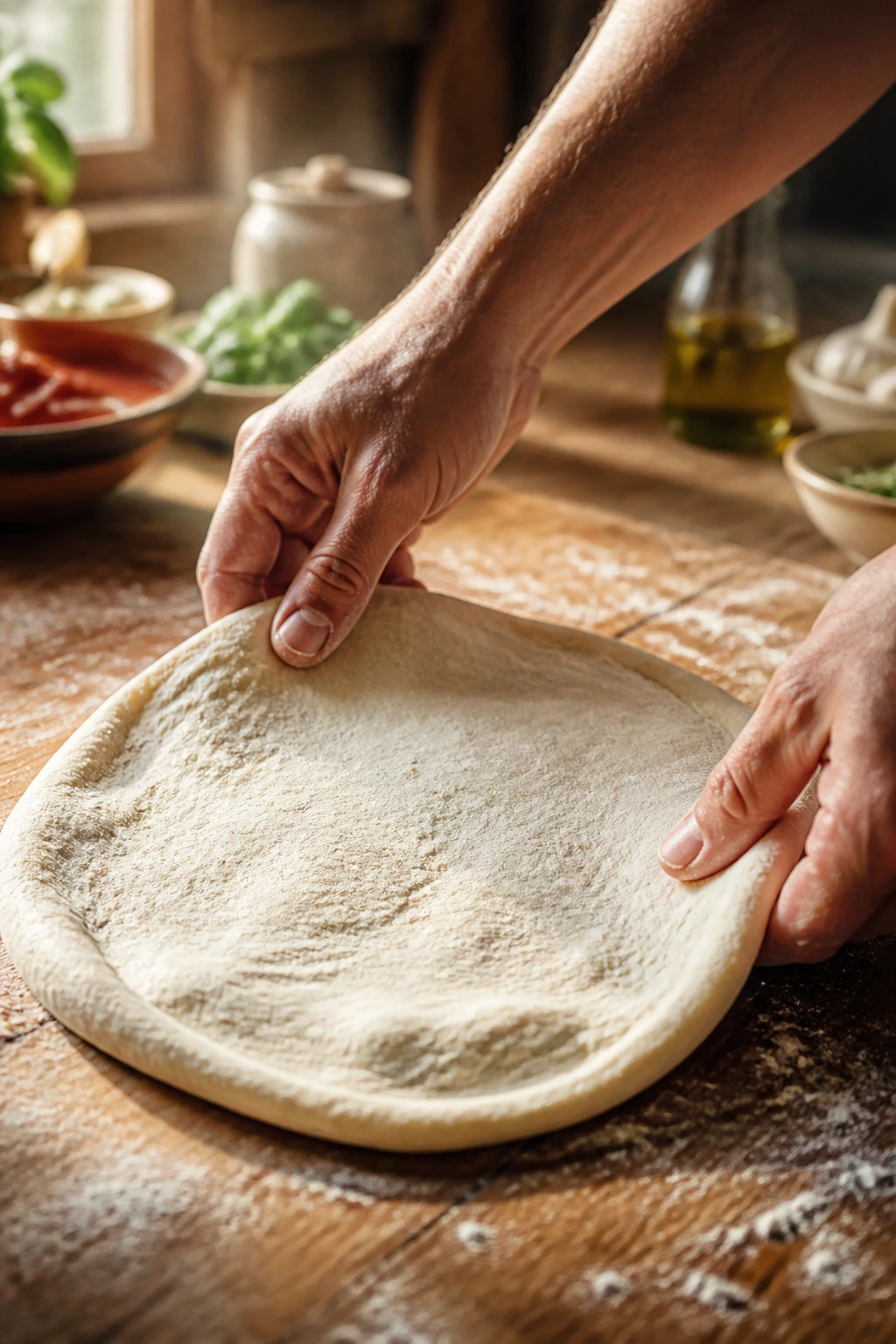
Working with one dough ball at a time, press it gently from the center outward with your fingertips, leaving a slightly thicker rim. Stretch it into a 12-inch round, or use your hands to coax it wider if it starts shrinking back. If it keeps fighting you, let it sit for 5 more minutes and try again.
-
Transfer the dough to a pizza peel dusted with semolina or flour, or to a sheet of parchment if you’re baking on a sheet pan. Spread a thin layer of sauce over the dough, leaving a 1/2-inch border bare. Scatter over the mozzarella, fresh mozzarella, Parmesan, and sliced tomatoes, then add the onion if you’re using it. Keep the center lighter than the edge of the pie; too much topping in the middle is how homemade pizza turns soggy.
-
Slide the pizza onto the hot stone, steel, or sheet pan and bake for 8 to 11 minutes, until the crust is deeply golden at the edges, the cheese is bubbling, and the bottom sounds crisp when you lift it with a spatula. Rotate once halfway through if your oven has a hot spot.
-
Move the pizza to a cutting board and let it sit for 3 minutes before slicing. Finish with torn basil, a drizzle of olive oil, and flaky salt. Cut and serve while the cheese still stretches cleanly.
How I’d Put It on the Table
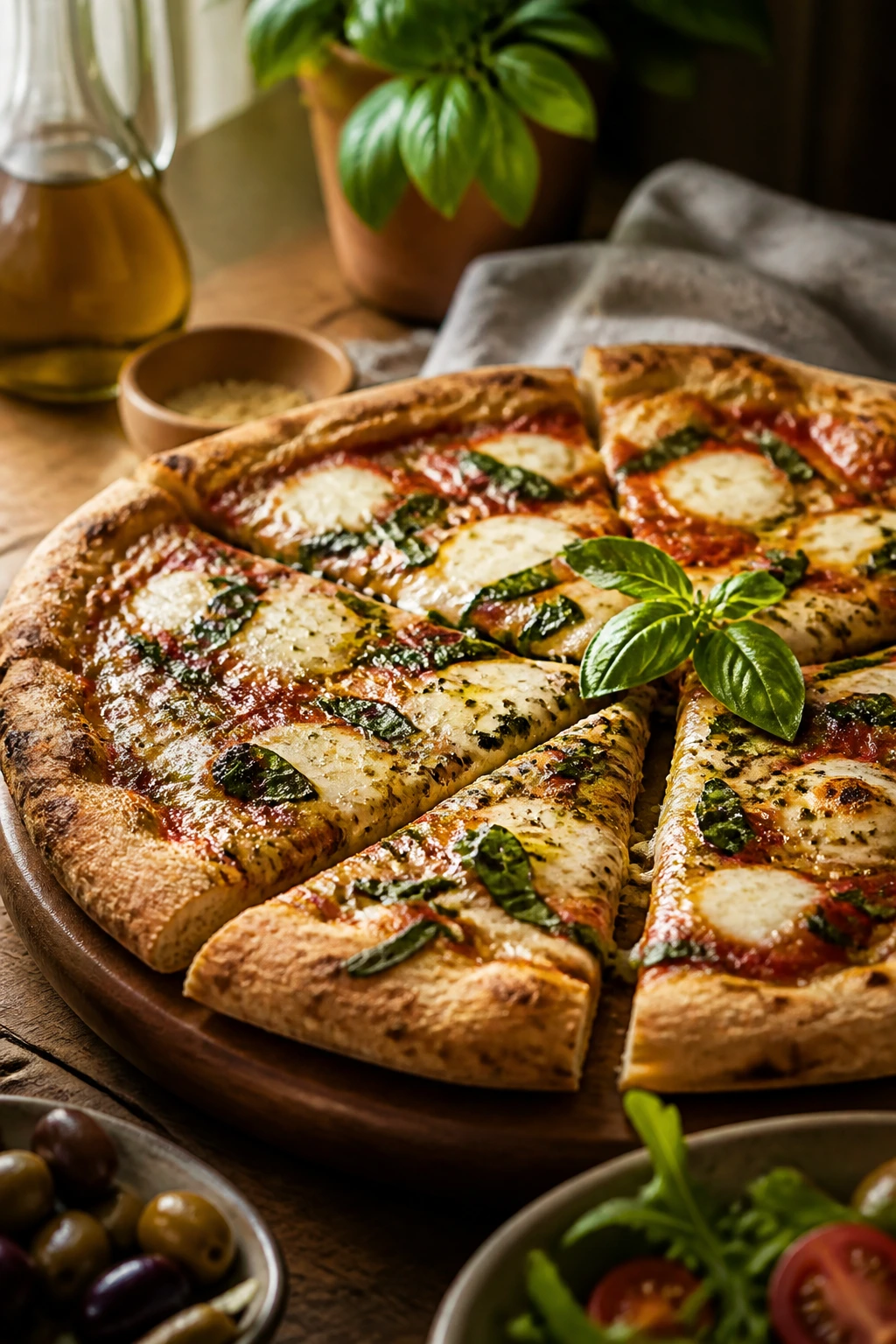
Presentation: Slice the pizza into 6 or 8 wedges and slide them onto a warm wooden board or large platter. A few basil leaves scattered over the top look better than a heavy pile of herbs, and the olive oil drizzle should be thin enough to glint, not puddle.
Accompaniments: A sharp green salad with lemon dressing keeps the meal from feeling heavy. I like peppery arugula, shaved fennel, or a handful of radishes on the side. If you want bread, don’t. You’re already holding bread. A bowl of marinated olives or roasted peppers makes more sense.
Portions: Two 12-inch pizzas will feed 4 people if the slices are generous, or 6 if you’re serving salad and maybe a few antipasti on the side. For a bigger crowd, make the dough a little earlier and keep the second ball covered while the first bakes.
Beverage Pairing: A crisp Vermentino or a light Barbera keeps up with the tomato and herbs without bulldozing them. If you want something nonalcoholic, sparkling water with lemon or a bitter orange soda works especially well with the salt and cheese.
Small Tweaks That Make a Big Difference
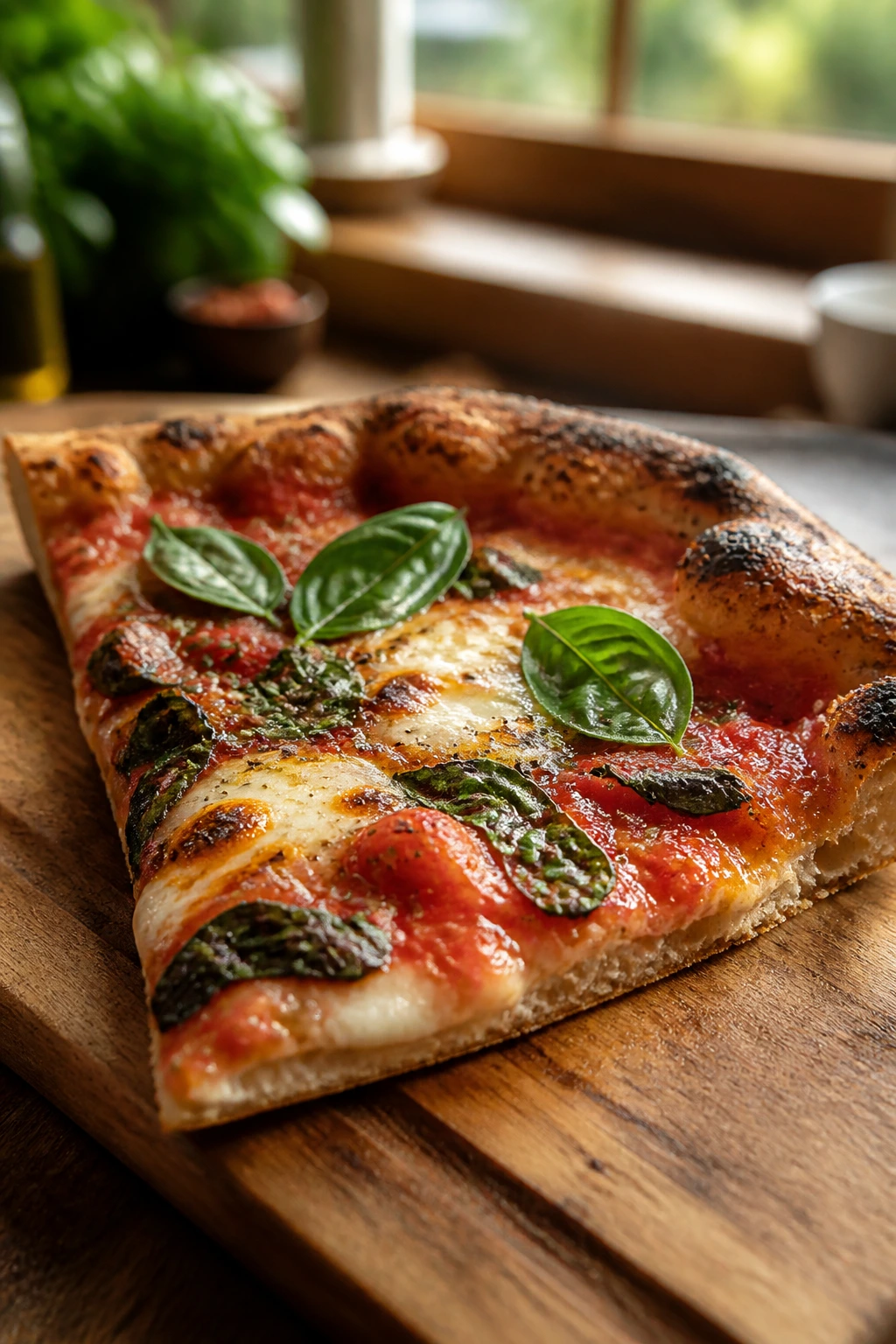
Flavor Enhancement: Brush the crust edge with a teaspoon of olive oil mixed with a pinch of dried oregano as soon as it comes out of the oven. The crust takes on a darker, herbier smell that you notice before the first bite.
Time-Saver: Mix the dough in the morning, let it rise, then refrigerate it after the first rise. By dinner, it’s calmer, easier to stretch, and often tastes better than a same-hour dough.
Herb Move: Keep some of the basil whole and tear it over the pizza after baking. The leaves hit the hot cheese, soften for a second, and keep their green flavor much better than basil that goes into the sauce.
Cost-Saver: Use one fresh mozzarella ball and fill the rest with low-moisture mozzarella. You still get those soft milky pockets without paying fresh-cheese prices for the whole top.
Make-It-Yours: If you love a sharper finish, swap half the Parmesan for pecorino. If you want a softer profile, keep the pecorino out and lean on basil and parsley instead.
The Mistakes That Lead to Pale Crust or Soggy Slices
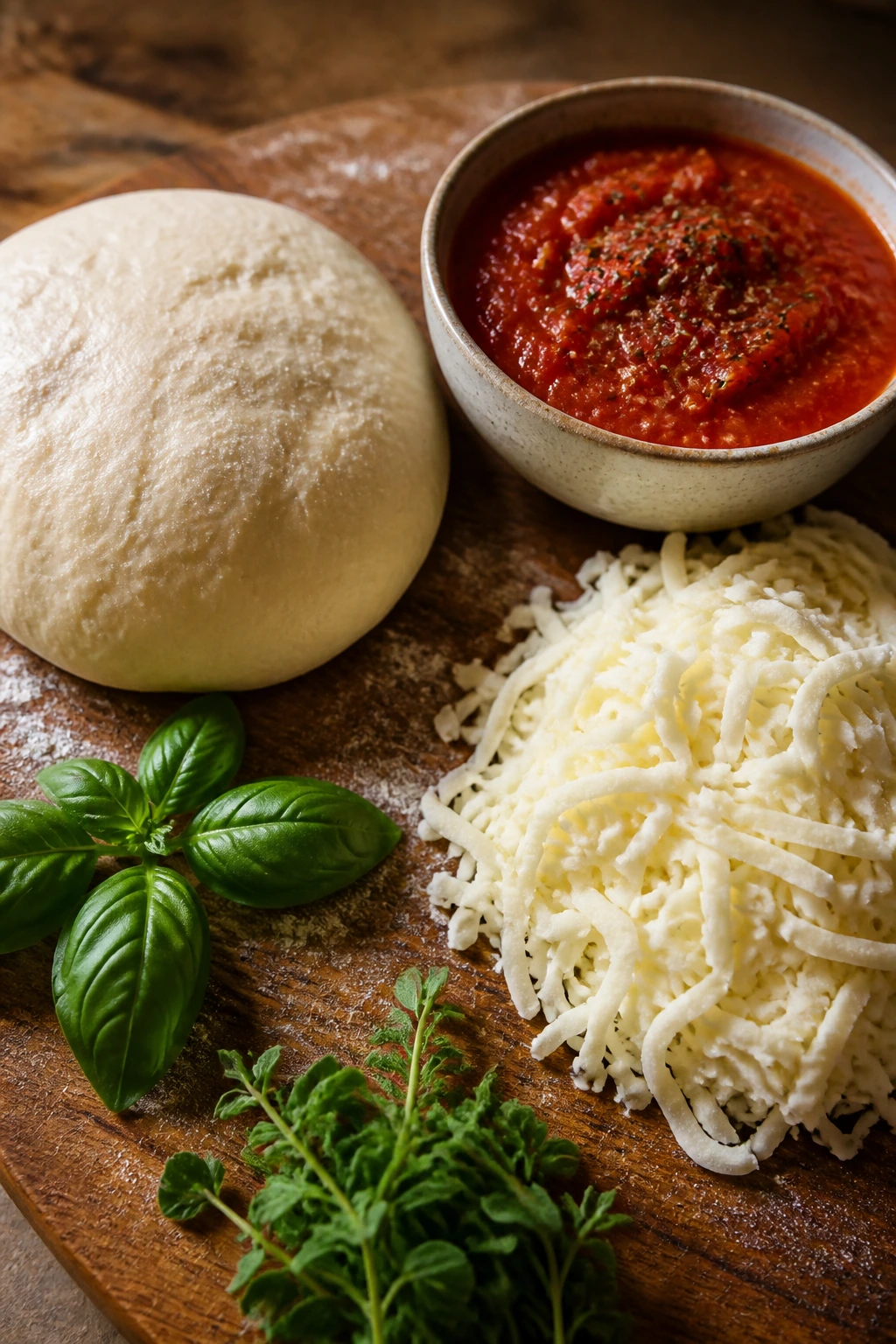
The first mistake is too much sauce. The dough can’t fight through a wet layer, especially if the tomatoes weren’t cooked down enough. If the sauce looks glossy and loose in the pan, give it another 5 minutes before it reaches the pizza.
Another common miss is cold, tight dough. If you try to stretch it straight from the bowl without a short rest, it snaps back like a rubber band and tears at the edges. Letting it sit for 15 minutes after dividing makes the whole process easier.
Then there’s wet mozzarella. Fresh mozzarella tastes lovely, but it carries a lot of moisture. Pat it dry with paper towels and tear it into small pieces so the water has fewer places to hide.
People also underheat the oven. A 425°F bake gives you a pie, sure, but not this pie. You want 500°F with a hot stone, steel, or heavy sheet because that blast of heat sets the bottom quickly before the sauce can seep in.
Last, don’t skip the 3-minute rest after baking. Cut too soon and the cheese runs, the sauce slides, and the crust tears. Wait a moment. The slice firms up, and the first bite lands cleaner.
Variations That Stay in the Same Family
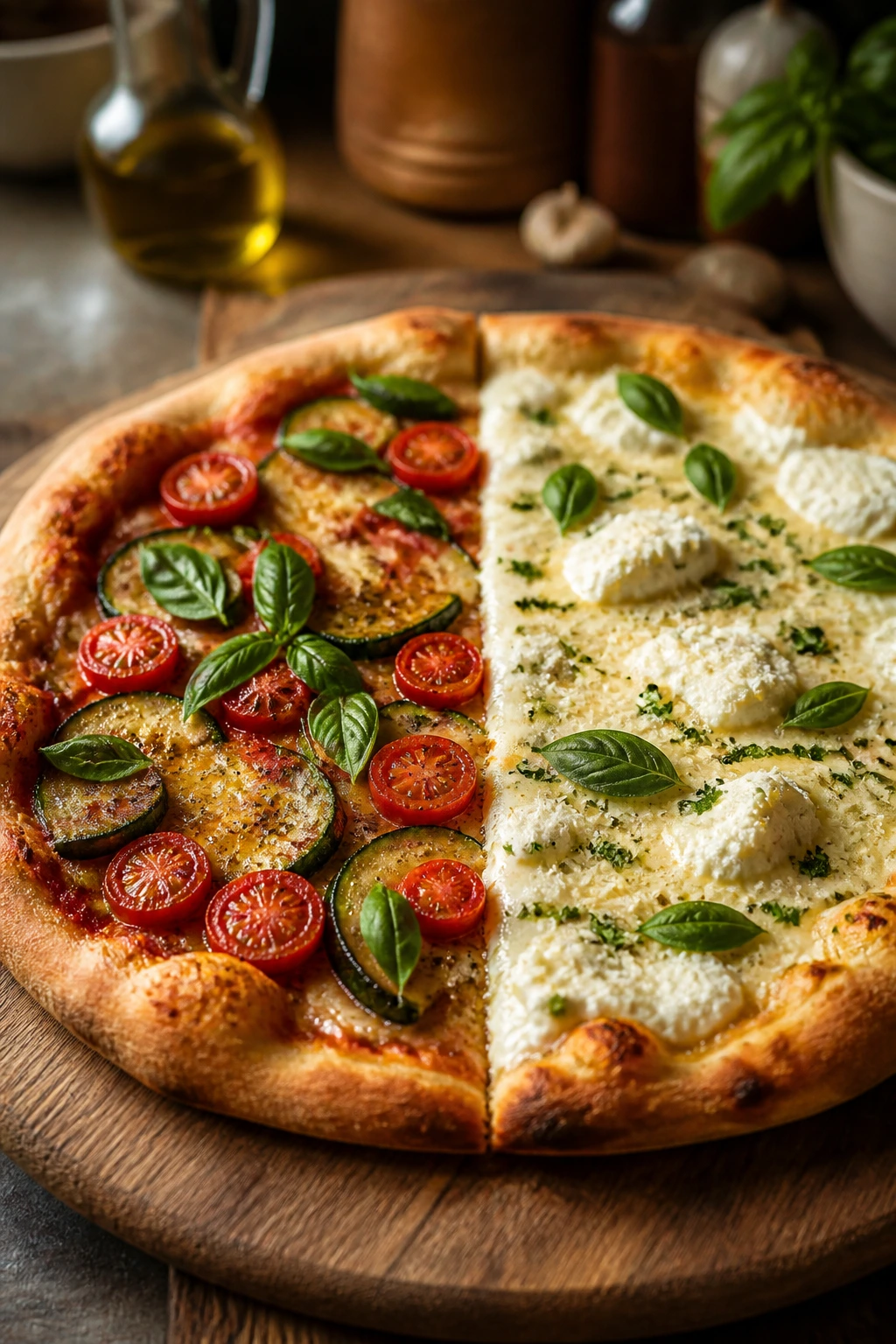
Garden-Ripened Version: Add 1 small zucchini sliced very thin and 1/2 cup halved cherry tomatoes on top of the cheese. Keep the sauce layer thin, because extra vegetables bring their own moisture, and pat the zucchini dry before it goes on.
White Herb Pizza: Skip the tomato sauce and spread the dough with 1 cup ricotta mixed with 1 minced garlic clove, 1 tablespoon olive oil, 1 tablespoon chopped parsley, and 1 teaspoon chopped oregano. Finish with mozzarella, Parmesan, and basil after baking. It feels softer and richer, almost like the red-sauce version took a left turn into a quieter lane.
Spicy Calabrian Kick: Stir 1 to 2 teaspoons Calabrian chile paste into the tomato sauce and finish with a pinch of red pepper flakes. The heat stays in the background instead of hijacking the whole pie, which is how I like it.
Rustic Sheet-Pan Style: Press the dough into an oiled 13-by-18-inch rimmed baking sheet and let it rise there for 20 minutes before topping. The edges go a little crisper and the center gets more pillowy, which is nice if you want thicker slices for a bigger group.
Dairy-Lighter Slice: Use 1 cup low-moisture mozzarella instead of 2 and lean on more tomato, basil, and Parmesan. You’ll get less stretch, but the pizza still tastes complete and a little lighter on the plate.
Make-Ahead, Storage, and Reheating
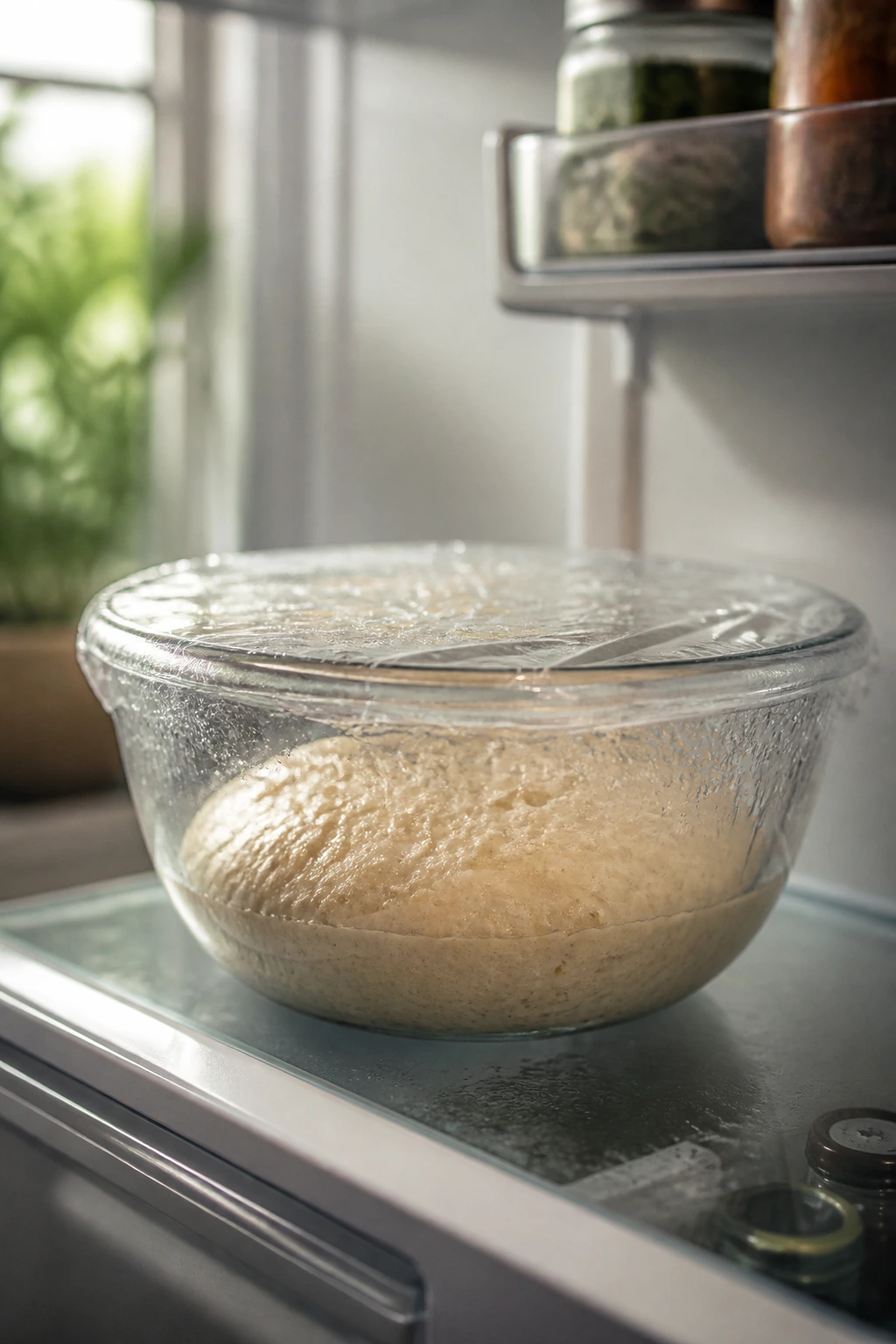
The dough can sit covered in the refrigerator for up to 3 days after the first rise. In fact, a cold rest often improves the flavor and makes the dough easier to handle. If you want to freeze it, wrap the dough balls tightly in plastic and tuck them into a freezer bag for up to 2 months; thaw them overnight in the fridge and let them sit at room temperature for 45 minutes before shaping.
The sauce keeps well in an airtight container in the refrigerator for 4 days. It also freezes for up to 3 months. I usually freeze it in 1-cup portions so I’m not defrosting more tomato than I need.
Baked pizza is best the day it’s made, but leftovers can still be decent. Keep slices in the fridge for up to 3 days, wrapped or stored in a shallow container. For the best texture, reheat them on a skillet over medium heat for 3 to 4 minutes with a lid on for the first minute, then uncovered for the last minute so the bottom crisps back up. An oven works too: 425°F on a sheet pan for about 7 minutes. The microwave is the last resort, and only if you accept a soft crust.
If you’re planning ahead for guests, make the dough and sauce earlier in the day, then shape and bake right before serving. The finished pizza does not improve by sitting around. The dough might. The baked pie won’t.
Questions People Ask Before the First Bake
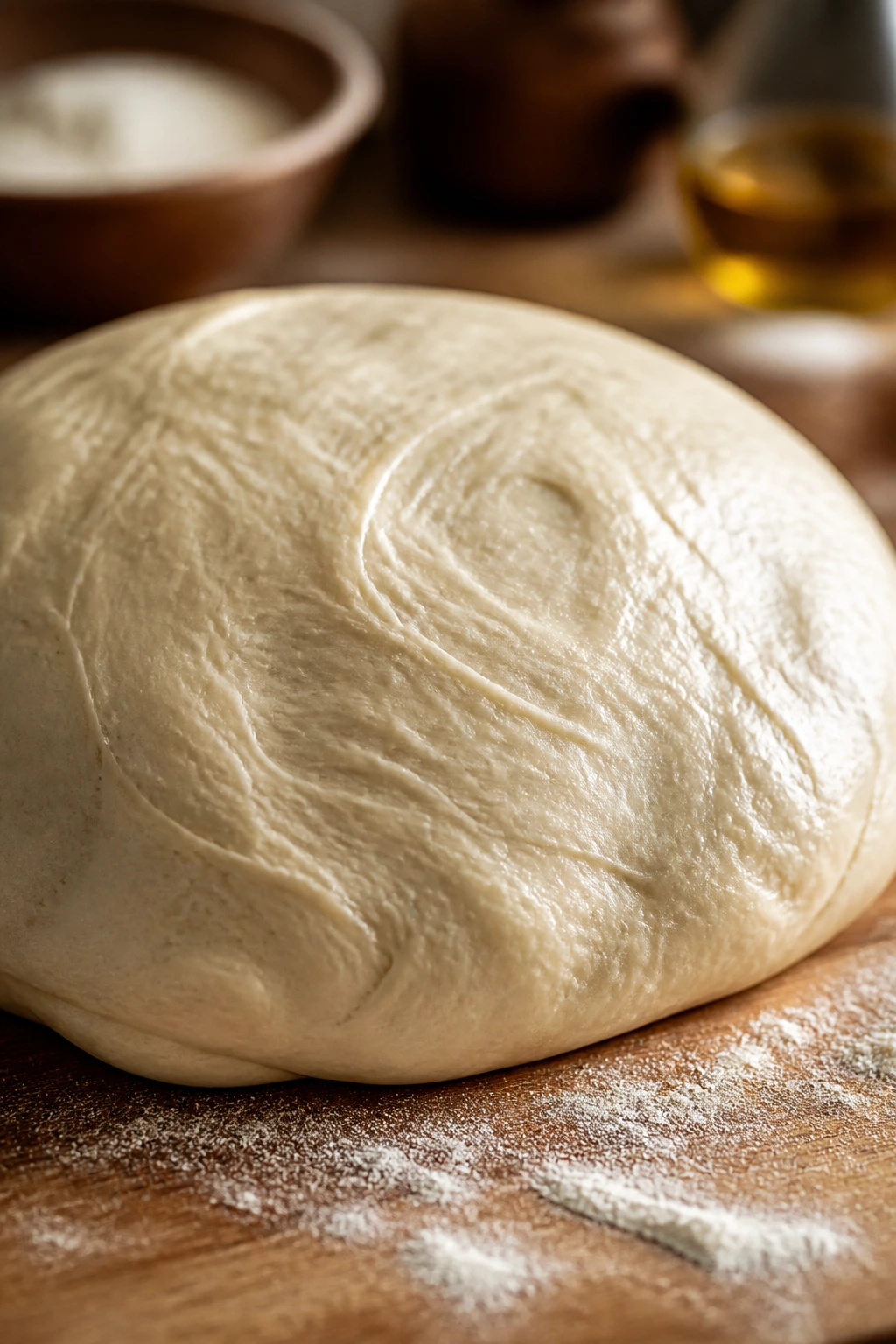
Can I use all-purpose flour instead of bread flour?
Yes. The crust will be a little less chewy and a touch softer, but the recipe still works well. If the dough feels slack, hold back a tablespoon of water at first and add it only if needed.
Do I really need a pizza stone or steel?
No, but they help. A heavy upside-down sheet pan gets closer than most people expect, especially if you preheat it for the full 45 minutes. The key is hot metal under the dough, not fancy equipment for its own sake.
Can I make the dough the day before?
Absolutely, and I often prefer it. After the first rise, cover the dough and refrigerate it overnight; the next day, let it warm on the counter before shaping so it stretches without snapping back.
Why is my pizza coming out soggy in the middle?
Usually it’s one of three things: too much sauce, wet cheese, or an oven that wasn’t hot enough. Thin sauce, dried mozzarella, and a fully preheated baking surface fix most soggy pizza problems fast.
Can I use fresh tomatoes from the market instead of canned?
Yes, if they’re ripe and sweet enough to taste good raw. If they’re watery or pale, the canned whole tomatoes will usually give you a better sauce because they’re consistent and easier to cook down.
What if my dough keeps shrinking while I stretch it?
That means the gluten is tight and needs a pause. Cover the dough ball and let it rest for 5 to 10 minutes, then come back to it. Forcing it only tears the edges and makes the shape lumpy.
How do I keep the herbs from turning dark in the oven?
Put most of the basil on after baking and only use dried oregano in the sauce. Fresh herbs under the cheese can lose their edge fast, while herbs added at the end stay bright and smell sharper.
A Pizza Worth Making More Than Once
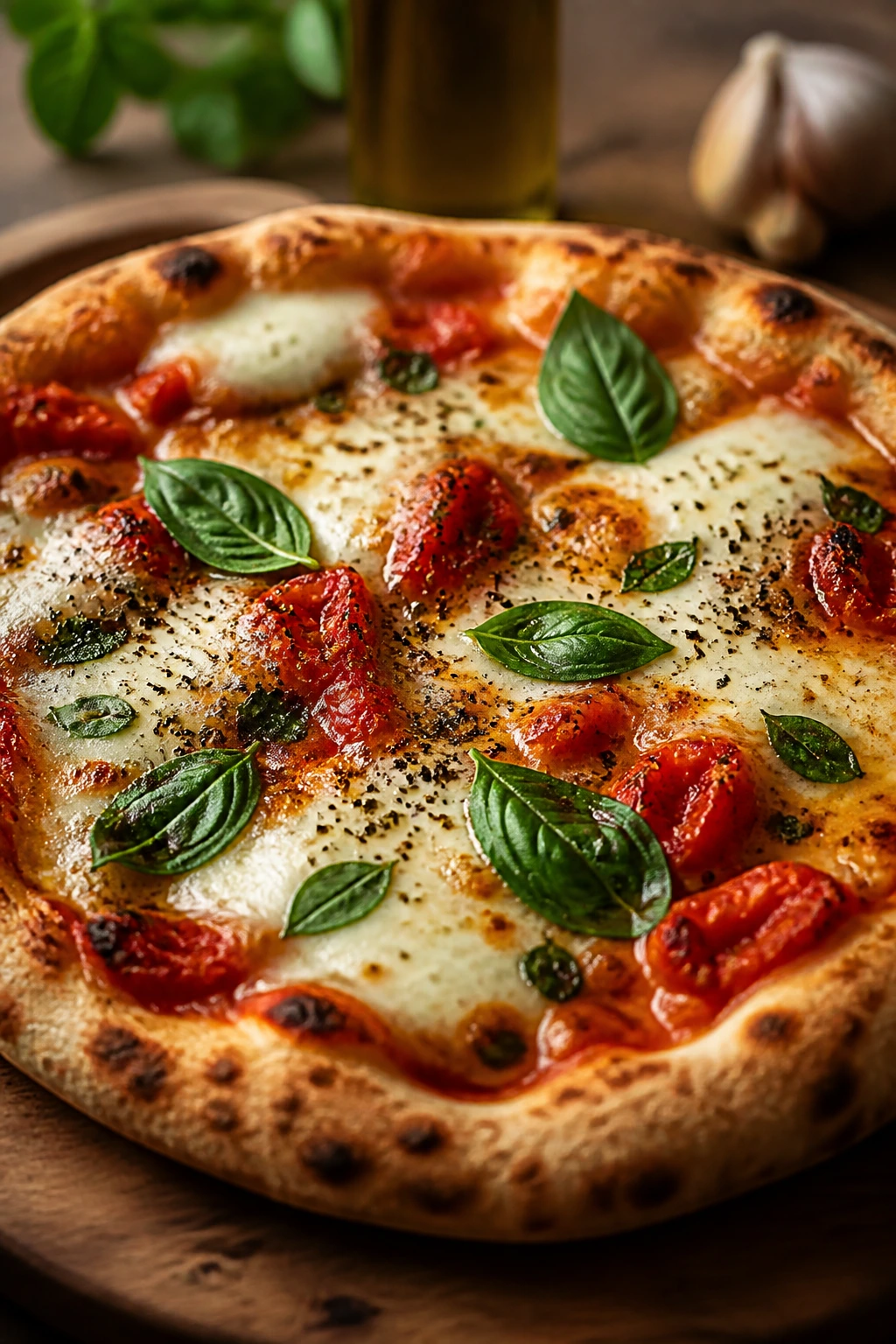
There’s a reason this style of pizza keeps showing up in real kitchens and not just in photos. It doesn’t ask for tricks. It asks for attention. A decent dough, a sauce that’s been given time to thicken, and herbs that get treated like part of the recipe instead of a decoration. That’s enough.
Once you make it a couple of times, you start adjusting the small things without thinking about them: a little less sauce, one extra minute on the stone, more basil at the end than you used the last time. That’s when it starts feeling like your pizza, which is probably the point Nonna was aiming for in the first place.
Herbed Local Pizza Like Nonna Used to Make — Recipe Card
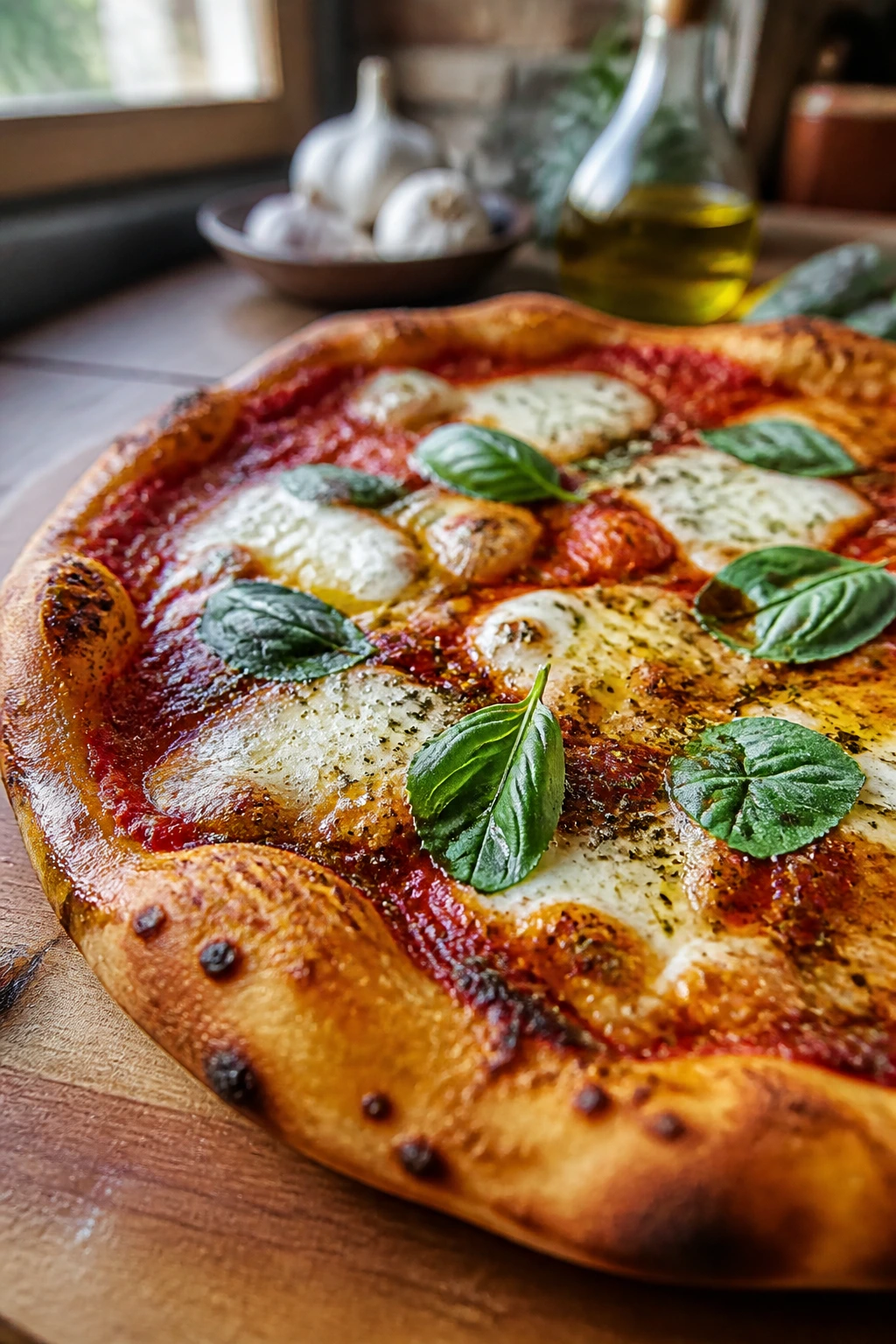
Recipe Name: Herbed Local Pizza Like Nonna Used to Make
Description: A chewy, crisp-edged pizza with a thick herbed tomato sauce, mozzarella, fresh basil, and a finish of olive oil and flaky salt. It tastes like a kitchen that knows when to stop adding things.
Prep Time: 25 minutes
Cook Time: 15 minutes
Total Time: 1 hour 40 minutes, including rising and resting
Course: Main Course
Cuisine: Italian-American
Servings: 4 to 6
Calories: About 500 kcal per serving
Ingredients
For the Dough:
- 3 1/2 cups bread flour, plus more for dusting
- 2 teaspoons instant yeast
- 1 teaspoon sugar or honey
- 1 1/4 cups warm water, 105°F to 110°F
- 1 1/2 teaspoons fine sea salt
- 2 tablespoons extra-virgin olive oil
- 1 teaspoon dried oregano
For the Herbed Tomato Sauce:
- 1 tablespoon extra-virgin olive oil
- 2 garlic cloves, minced
- 1 can (28 ounces) whole peeled tomatoes, crushed by hand
- 1 tablespoon tomato paste
- 1 teaspoon fine sea salt
- 1/2 teaspoon black pepper
- 1 teaspoon dried oregano
- 1/2 teaspoon crushed red pepper flakes, optional
- 2 tablespoons chopped fresh basil
- 1 tablespoon chopped fresh parsley
- 1 teaspoon chopped fresh oregano or 1/2 teaspoon dried oregano
For the Topping and Finish:
- 2 cups shredded low-moisture whole-milk mozzarella
- 8 ounces fresh mozzarella, torn into 1-inch pieces and patted dry
- 1/3 cup finely grated Parmigiano-Reggiano or pecorino Romano
- 1 cup thinly sliced ripe tomatoes, seeded if juicy
- 1/2 small red onion, very thinly sliced, optional
- 1/4 cup torn fresh basil leaves
- 2 tablespoons extra-virgin olive oil, for drizzling
- Flaky sea salt, for finishing
Instructions
-
Whisk the flour, yeast, sugar, salt, and oregano in a large bowl. Add the water and olive oil, then stir into a shaggy dough.
-
Knead on a lightly floured surface for 6 to 8 minutes until smooth and elastic. Place in an oiled bowl, cover, and let rise 60 to 75 minutes until doubled.
-
Heat olive oil and garlic in a saucepan over medium heat for 30 seconds. Add tomatoes, tomato paste, salt, pepper, oregano, and optional red pepper flakes; simmer 12 to 15 minutes until thick. Stir in basil, parsley, and fresh oregano off the heat.
-
Place a pizza stone, steel, or upside-down heavy sheet pan in the oven and preheat to 500°F (260°C) for 45 minutes.
-
Punch down the dough, divide it into 2 balls, and rest them covered for 15 minutes.
-
Stretch one dough ball into a 12-inch round. Transfer to a floured peel or parchment-lined sheet. Spread with a thin layer of sauce, leaving a 1/2-inch border.
-
Top with mozzarella, fresh mozzarella, Parmesan, sliced tomatoes, and optional onion. Bake for 8 to 11 minutes until the crust is browned and the cheese bubbles.
-
Rest for 3 minutes, then finish with basil, olive oil, and flaky salt. Slice and serve.
Notes: Pat the fresh mozzarella dry or the middle can turn wet. If you want overnight flavor, refrigerate the dough after the first rise and bring it back to room temperature before shaping. A hot baking surface matters more than the exact pan shape.