



Savory ground pork with brown sugar glaze is the kind of skillet dinner that looks humble in the pan and then disappears before you’ve even set the spoon down. The meat turns crumbly and browned at the edges, the glaze goes glossy and sticky in the last few minutes, and the whole thing lands somewhere between a fast stir-fry and a proper glazed pork bowl. That’s the sweet spot. Not sugary. Not plain. Just glossy, salty, a little sharp from the vinegar, and built to cling to rice.
The reason this dish works so well is that it doesn’t ask ground pork to be fancy. It asks it to brown. That’s the part people rush, and it matters more than the sauce. Give the pork a minute or two of contact with the hot skillet, let the onions soften before the garlic goes in, then let the brown sugar glaze reduce until it leaves a clean trail on the spoon. That’s where the flavor gets its depth.
Brown sugar can go wrong fast if it’s dumped in too early or cooked too hard. Here, it’s used like a balancing tool. It rounds out the soy sauce, softens the sharp edge of the vinegar, and brings the pork’s richness into focus without turning the whole thing into candy. The final dish tastes savory first, then gently sweet. That order matters.
If you’ve ever wanted a pork skillet that feels bigger than the number of ingredients suggests, this one earns its place. It has the comfort of a saucy bowl meal, the speed of a weeknight pan dinner, and enough flexibility to go over rice, noodles, lettuce, or a pile of steamed vegetables without losing its shape.
Why You’ll Keep Coming Back to This Skillet
-
The glaze clings, not pools: A properly reduced brown sugar glaze coats the pork in a thin lacquer instead of sliding to the bottom of the bowl.
-
Ground pork browns fast: A 12-inch skillet gives you enough surface area to build color in about 15 minutes, which is where most of the flavor lives.
-
The sweetness stays in check: The 1/4 cup of brown sugar is there to round the soy and vinegar, not to make the dish taste like dessert.
-
It handles pantry ingredients well: Soy sauce, garlic, ginger, vinegar, and Worcestershire are all doing real work here, not just filling space.
-
It plays nicely with other foods: Jasmine rice, lo mein noodles, shredded cabbage, and lettuce cups all work because the glaze has enough body to coat them.
-
Leftovers behave better than you’d expect: The sauce thickens overnight, which makes the reheated pork taste even more concentrated the next day.
Why Brown Sugar Glaze Works So Well With Ground Pork
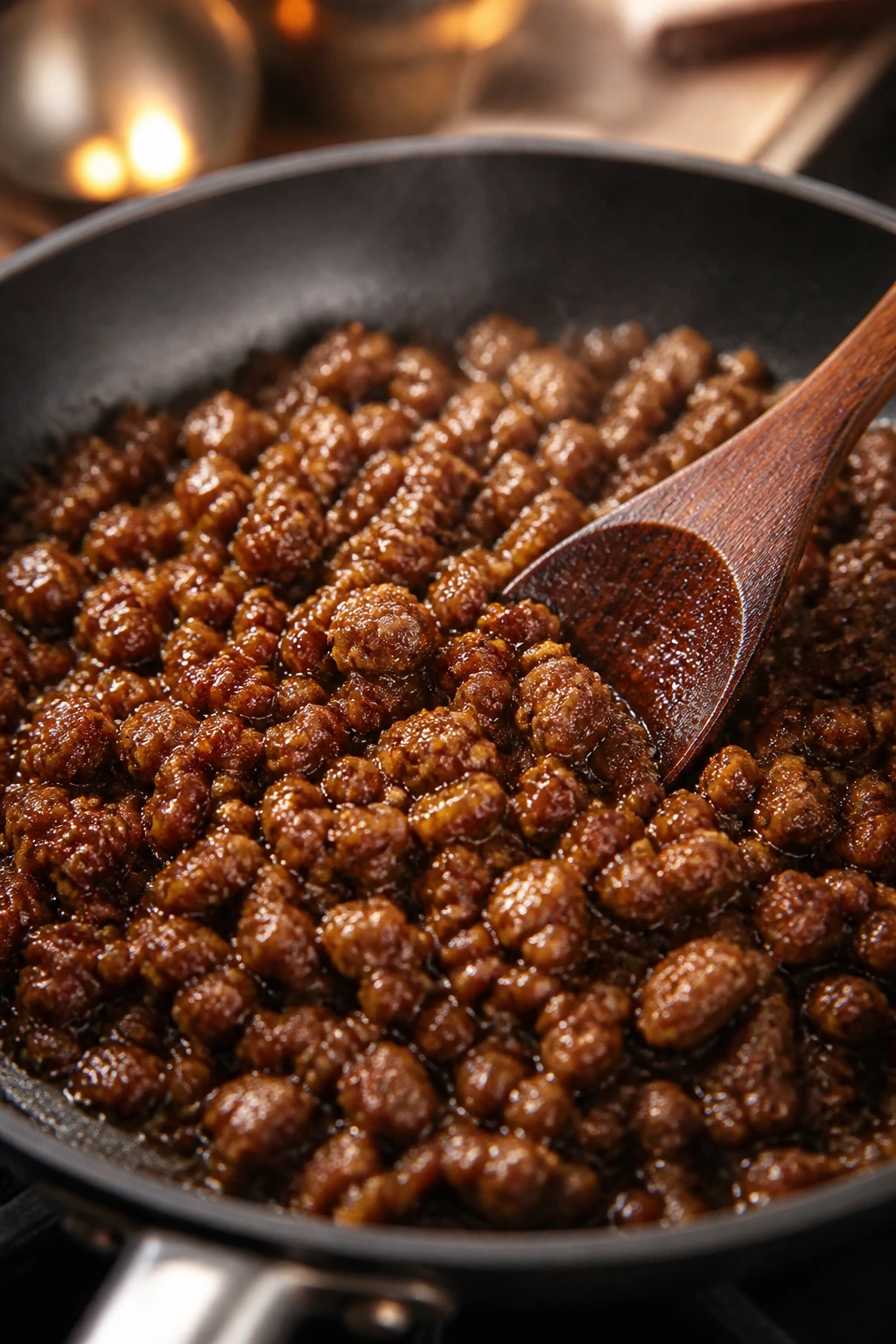
Ground pork is one of those ingredients that rewards speed and temperature control. It has enough fat to stay juicy, enough surface area to brown quickly, and enough natural richness to carry a sweet-savory glaze without tasting heavy. Leaner meats can work, but pork is the one that seems born for this treatment.
Why the fat matters
When pork hits a hot skillet, the fat begins to render almost immediately. That rendered fat carries garlic, ginger, soy sauce, and brown sugar across the pan, so every spoonful tastes seasoned instead of flat. If you use an extra-lean grind, the dish can still work, but it needs a little neutral oil and a tighter eye on the heat. Otherwise it dries out before the glaze finishes.
Why the sugar goes in late
Brown sugar belongs in the sauce, not at the start of the browning process. Early sugar can scorch before the pork finishes cooking, and scorched sugar tastes bitter in a way that no amount of soy sauce can hide. When you add the glaze after the pork has already browned, the sugar melts into the rendered fat and the soy, and the whole pan turns glossy instead of sticky in the bad sense.
Why the glaze clings instead of pooling
The little bit of cornstarch slurry is what keeps this from becoming a thin soy broth. You still want reduction — that slow simmer is doing half the work — but the slurry gives the glaze enough body to hang on the meat. Once it thickens, it should look like a thin varnish on the spoon, not a paste. Too thin and it runs. Too thick and it turns tacky on the plate within a minute.
The other useful detail here is temperature. Ground pork should reach 160°F / 71°C in the center for safe eating. An instant-read thermometer is not overkill on a recipe like this; it’s the difference between guessing and knowing, and ground meat is one place where guessing is lazy.
What Goes Into the Pan and What Each Ingredient Does
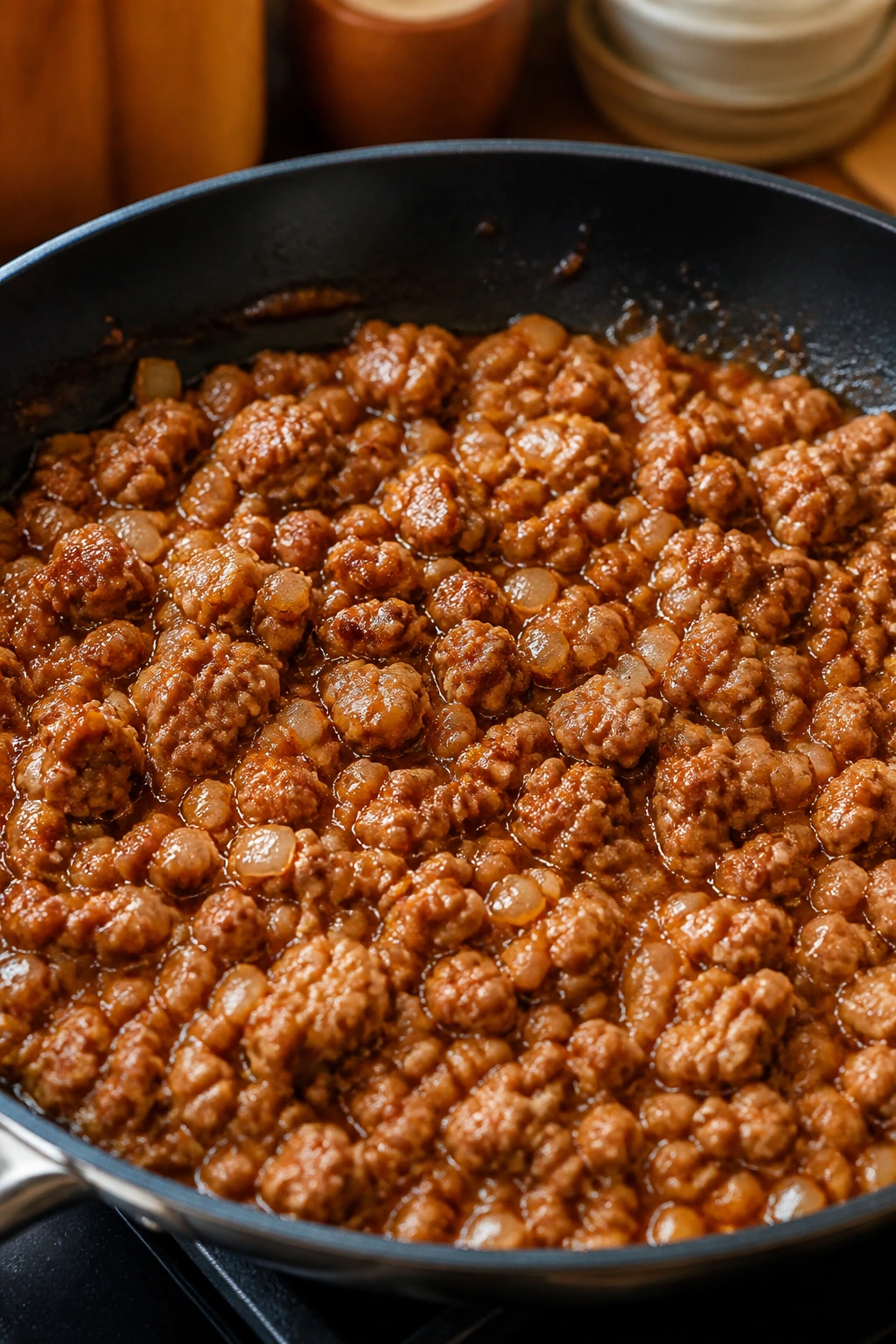
A dish like this is built in layers. The ingredient list looks short, but every part has a job, and if one piece is off — too much sugar, not enough acid, soggy onions, weak browning — the whole skillet flattens out.
Yield: 4 to 6 servings
Prep Time: 15 minutes
Cook Time: 20 minutes
Total Time: 35 minutes
Difficulty: Beginner — the method is simple, but the glaze needs a careful simmer so it thickens without scorching.
Best Served: Right away, while the glaze is still glossy and loose enough to coat rice or noodles.
For the Pork:
- 1 1/2 pounds ground pork, preferably 80/20 or 85/15
- 1/4 teaspoon kosher salt
- 1/2 teaspoon freshly ground black pepper
- 1 tablespoon neutral oil, only if the pork is very lean or the skillet looks dry
For the Brown Sugar Glaze:
- 1 medium yellow onion, finely diced
- 4 garlic cloves, minced
- 1 tablespoon fresh ginger, grated
- 1/4 cup packed light brown sugar
- 3 tablespoons low-sodium soy sauce
- 2 tablespoons rice vinegar
- 1 tablespoon Worcestershire sauce
- 2 tablespoons low-sodium chicken broth or water
- 1 teaspoon cornstarch
- 1 tablespoon cold water
- 1 teaspoon toasted sesame oil
For Finishing:
- 2 scallions, thinly sliced
- 1 teaspoon toasted sesame seeds
- 1/4 teaspoon crushed red pepper flakes, optional
The clean list above is the fast version. The notes below are the version that saves dinner when you’re standing at the stove and wondering whether the sauce is too thin, too salty, or just a little dull.
Ground Pork
- What to use: 1 1/2 pounds of ground pork with enough fat to brown, ideally 80/20 or 85/15.
- Preparation: Keep it cold until it goes into the skillet, then break it into rough chunks so it can brown before you start stirring constantly.
- Substitutions: Ground turkey or ground chicken will work, though both need the optional oil and a slightly firmer hand with seasoning.
- Tips: Extra-lean pork can taste dry once the glaze tightens, so don’t be shy about using a grind with some fat.
Aromatics
- What to use: 1 medium yellow onion, 4 garlic cloves, and 1 tablespoon fresh ginger.
- Preparation: Dice the onion finely so it softens fast; mince the garlic and grate the ginger separately so they don’t burn at the same speed.
- Substitutions: Shallots can stand in for onion, and ginger paste works in a pinch, though fresh ginger has a brighter, cleaner bite.
- Tips: Garlic only needs about 30 seconds in the pan. Any longer and it can go bitter under the glaze.
The Glaze
- What to use: 1/4 cup packed light brown sugar, 3 tablespoons low-sodium soy sauce, 2 tablespoons rice vinegar, 1 tablespoon Worcestershire sauce, 2 tablespoons broth or water, 1 teaspoon cornstarch, and 1 tablespoon cold water.
- Preparation: Whisk the brown sugar into the liquids before it hits the skillet so it dissolves evenly.
- Substitutions: Dark brown sugar gives a deeper molasses note, tamari can replace soy sauce for a gluten-free version, and apple cider vinegar can sub for rice vinegar if that’s what you’ve got.
- Tips: The cornstarch must be mixed with cold water before it goes in. Dumping dry starch into hot sauce gives you little pastey clumps, and they do not melt out well.
Finishing Ingredients
- What to use: 2 scallions, 1 teaspoon toasted sesame seeds, and optional red pepper flakes.
- Preparation: Slice the scallions thin so they soften in the hot pork without turning limp and wet.
- Substitutions: Chives can stand in for scallions, and a spoonful of chili crisp can replace the red pepper flakes if you want more heat and more texture.
- Tips: Add sesame oil at the end, not at the beginning. It smells better and tastes cleaner when it hasn’t spent too long over the flame.
The Tools That Make the Skillet Behave
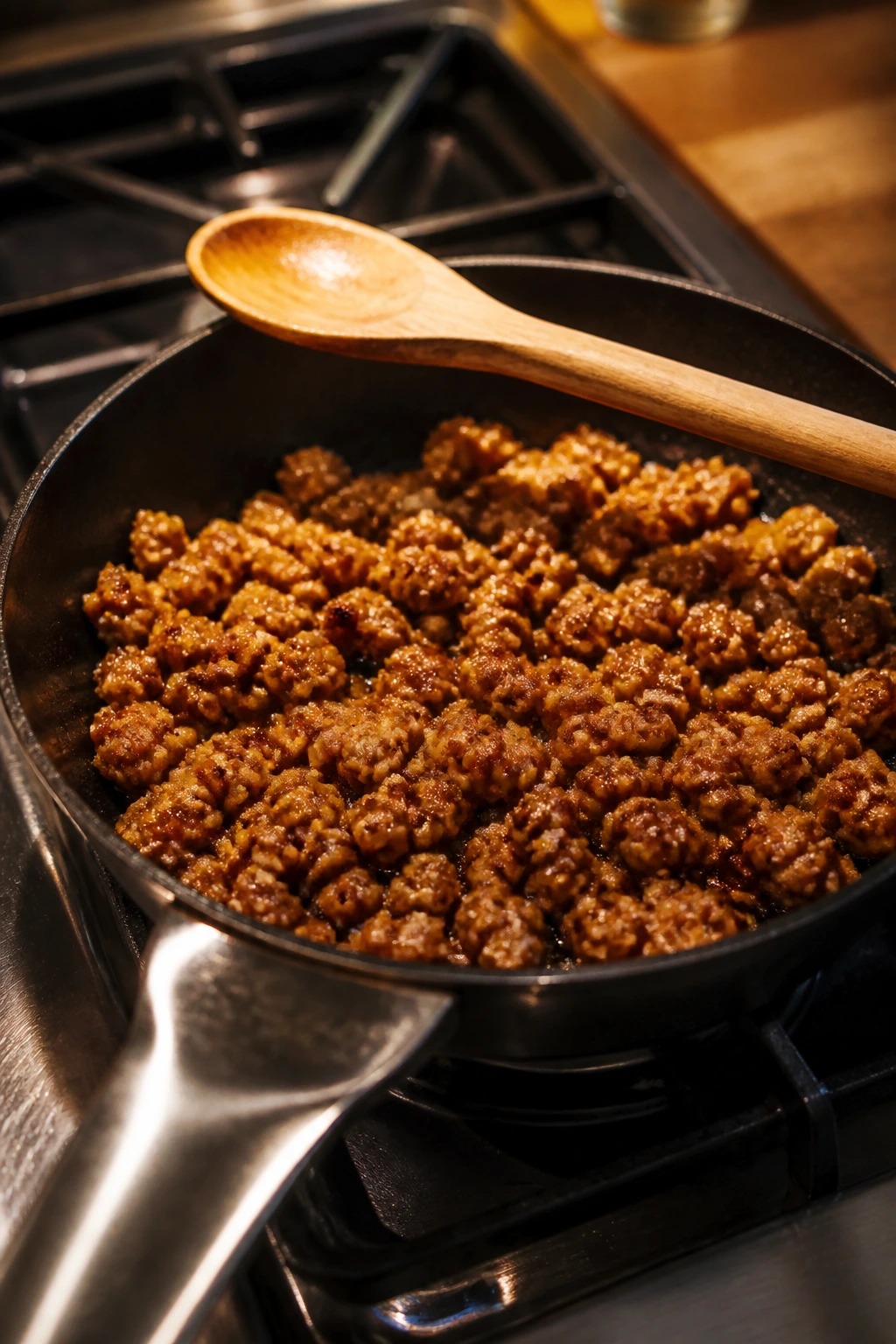
A recipe this size does not need a cabinet full of equipment. What it does need is the right pan and a little confidence with heat. Too small a skillet and the pork steams. Too flimsy a pan and the glaze scorches in one corner while staying thin in another.
- 12-inch skillet, stainless steel or cast iron — Wide enough for browning; if your pan is smaller, cook the pork in two batches.
- Wooden spoon or sturdy spatula — Best for breaking the pork apart without scratching the pan.
- Small mixing bowl — For whisking the glaze before it goes into the skillet.
- Whisk or fork — Either one can dissolve the brown sugar and cornstarch slurry.
- Fine grater or microplane — The ginger should disappear into the sauce, not land in big fibrous strands.
- Instant-read thermometer — The cleanest way to confirm that the pork has reached 160°F.
- Measuring spoons and cups — This glaze is balanced by small amounts; free-pouring is how it gets too sweet or too salty.
- Cutting board and sharp knife — Onion and scallions need to be small enough to soften and finish cleanly.
Browning the Pork, Then Turning It Into a Glaze
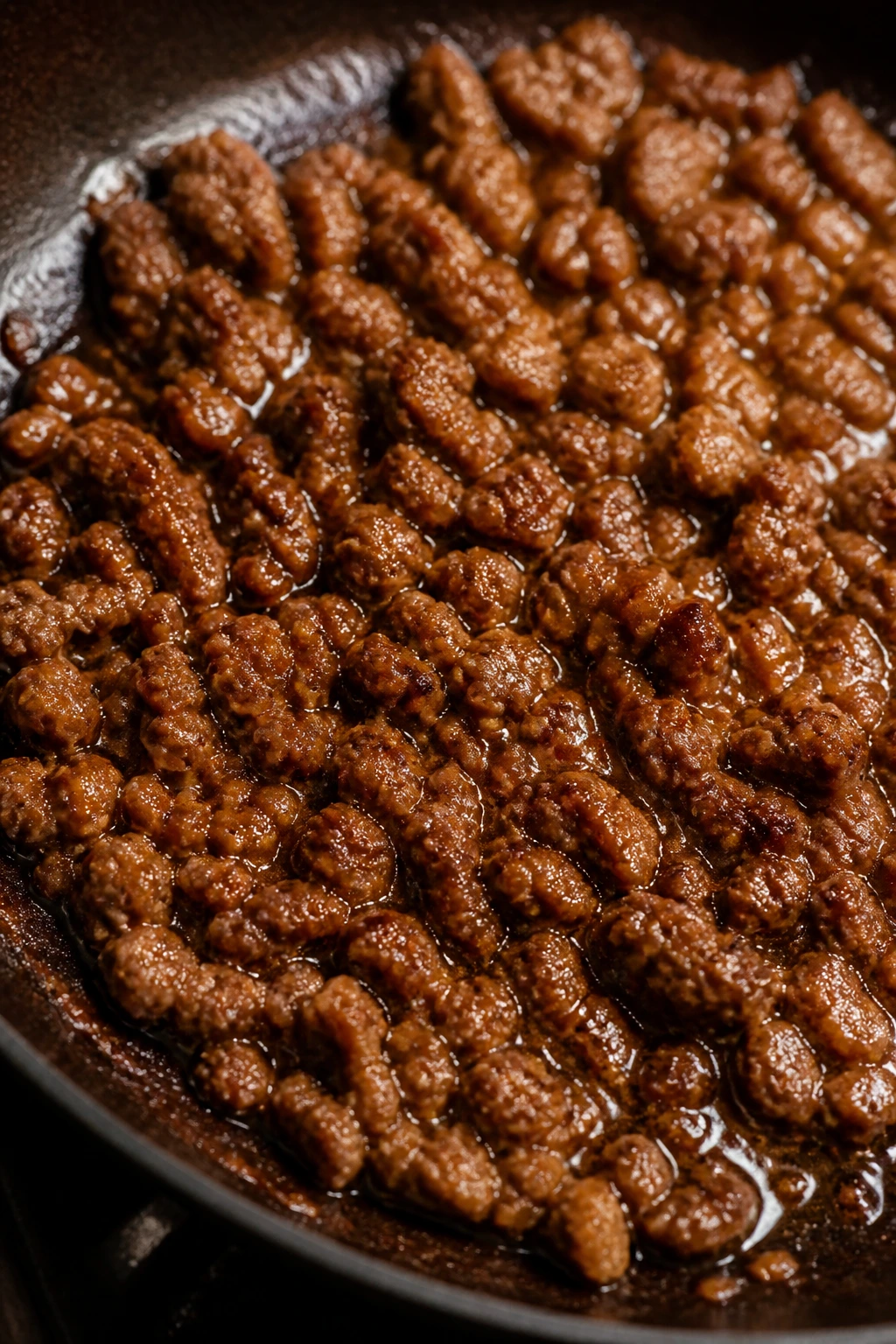
Whisk the Glaze First:
- In a small bowl, whisk together the brown sugar, soy sauce, rice vinegar, Worcestershire sauce, broth or water, cornstarch, and cold water until the mixture looks smooth and the sugar has started to dissolve. Stir in the sesame oil only at the end of the dish. Set the bowl near the stove.
Brown the Pork: 2. Set a large skillet over medium-high heat and let it get hot for 1 to 2 minutes. If the pork is very lean or the pan looks dry, add the neutral oil and swirl it around the bottom. 3. Add the ground pork, sprinkle it with the salt and black pepper, and leave it alone for about 2 minutes. Do not stir right away — that first pause is what gives you browned bits instead of gray crumbles. 4. Break the pork into medium pieces with a spatula and continue cooking for 3 to 4 minutes, stirring now and then, until most of the pink is gone and the edges look browned. If a lot of fat collects, spoon off all but about 1 tablespoon so the glaze does not turn greasy.
Build the Aromatics: 5. Add the diced onion and cook for 3 to 4 minutes, stirring often, until the onion turns translucent and starts to soften around the edges. Add the garlic and ginger and cook for 30 seconds, just until fragrant. If the garlic starts to brown, move faster. Bitter garlic under a sweet glaze is hard to hide.
Glaze the Pork: 6. Pour the whisked sauce into the skillet and scrape the bottom with the spoon to loosen the browned bits. Reduce the heat to medium and let the mixture simmer for 2 to 3 minutes, until the bubbles slow down and the sauce starts looking slightly thicker. 7. Stir the cornstarch slurry again and pour it into the skillet in a thin stream. Cook for 30 to 60 seconds, stirring constantly, until the glaze turns glossy and clings to the pork in a thin coat. If it looks too thick, add a tablespoon of water. If it still seems loose, give it another minute. 8. Turn off the heat and stir in the scallions, sesame seeds, red pepper flakes if using, and the remaining sesame oil. Taste a small bite. If it needs more salt, add a pinch. If it tastes too sweet, add a teaspoon of rice vinegar. The pork should read 160°F / 71°C before you serve it.
How to Serve It So the Sauce Stays Front and Center
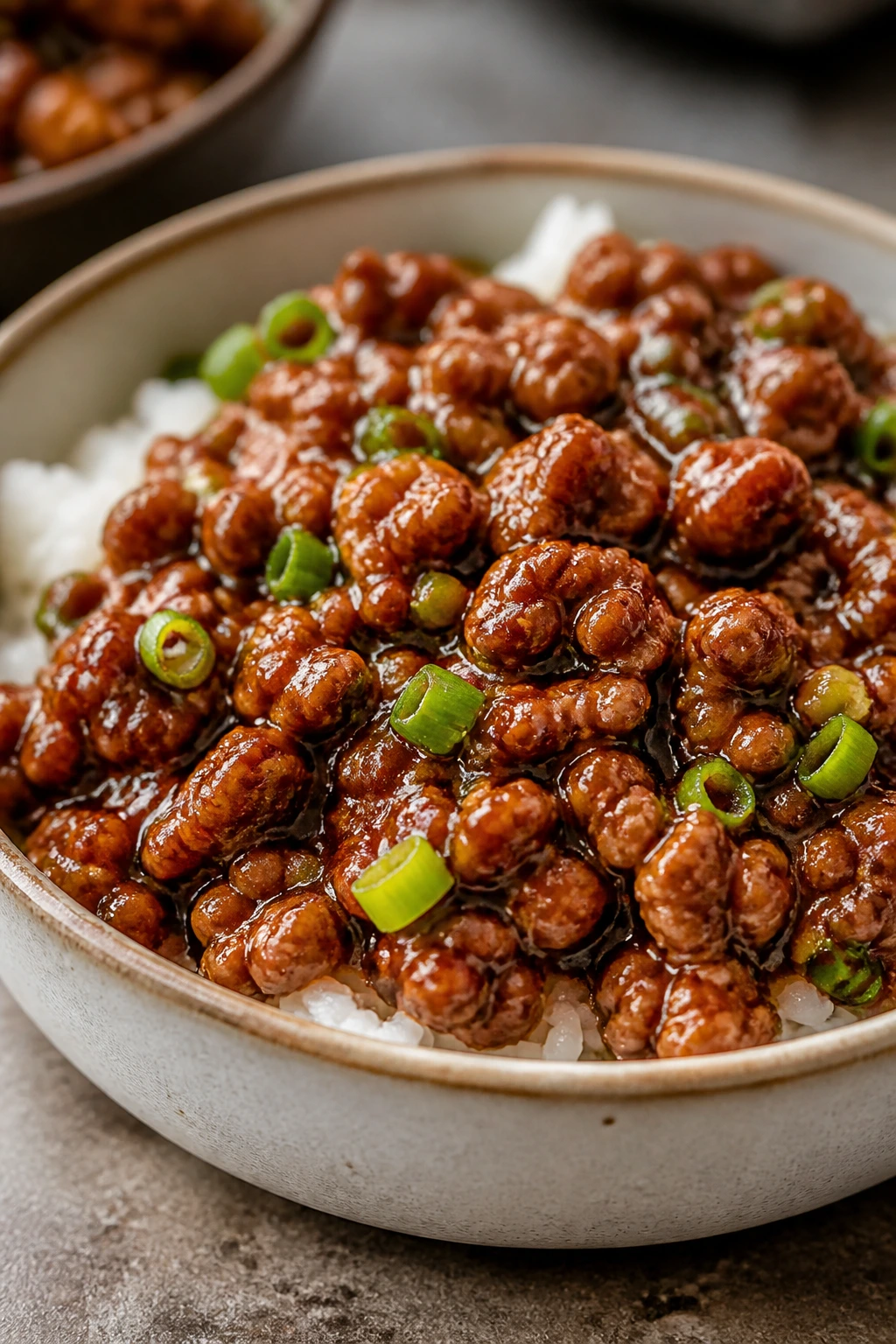
Presentation: Spoon the pork into shallow bowls rather than deep ones. That keeps the glaze visible instead of burying it under a pile of rice, and the shiny sauce looks best when it has room to spread a little.
Accompaniments: Steamed jasmine rice is the cleanest pairing because the grains soak up the glaze without fighting it. Medium-width rice noodles, plain lo mein noodles, shredded cabbage, butter lettuce cups, or even simple steamed broccoli all work. I like a crisp cucumber salad on the side because the cool crunch cuts through the sweetness of the sauce.
Portions: For a full dinner, plan on about 1 to 1 1/4 cups of the pork mixture per person if you’re serving four hungry adults. For six lighter servings, pair the pork with a bigger pile of vegetables and a smaller scoop of rice. If you need to stretch it, add a second vegetable rather than diluting the sauce.
Beverage Pairing: A dry lager is easy here because it clears the glaze off the palate between bites. A crisp riesling also works if you want a little fruit next to the soy and ginger. Unsweetened iced green tea is the quiet choice, and it keeps the meal from feeling too rich.
Small Upgrades That Change the Flavor Fast
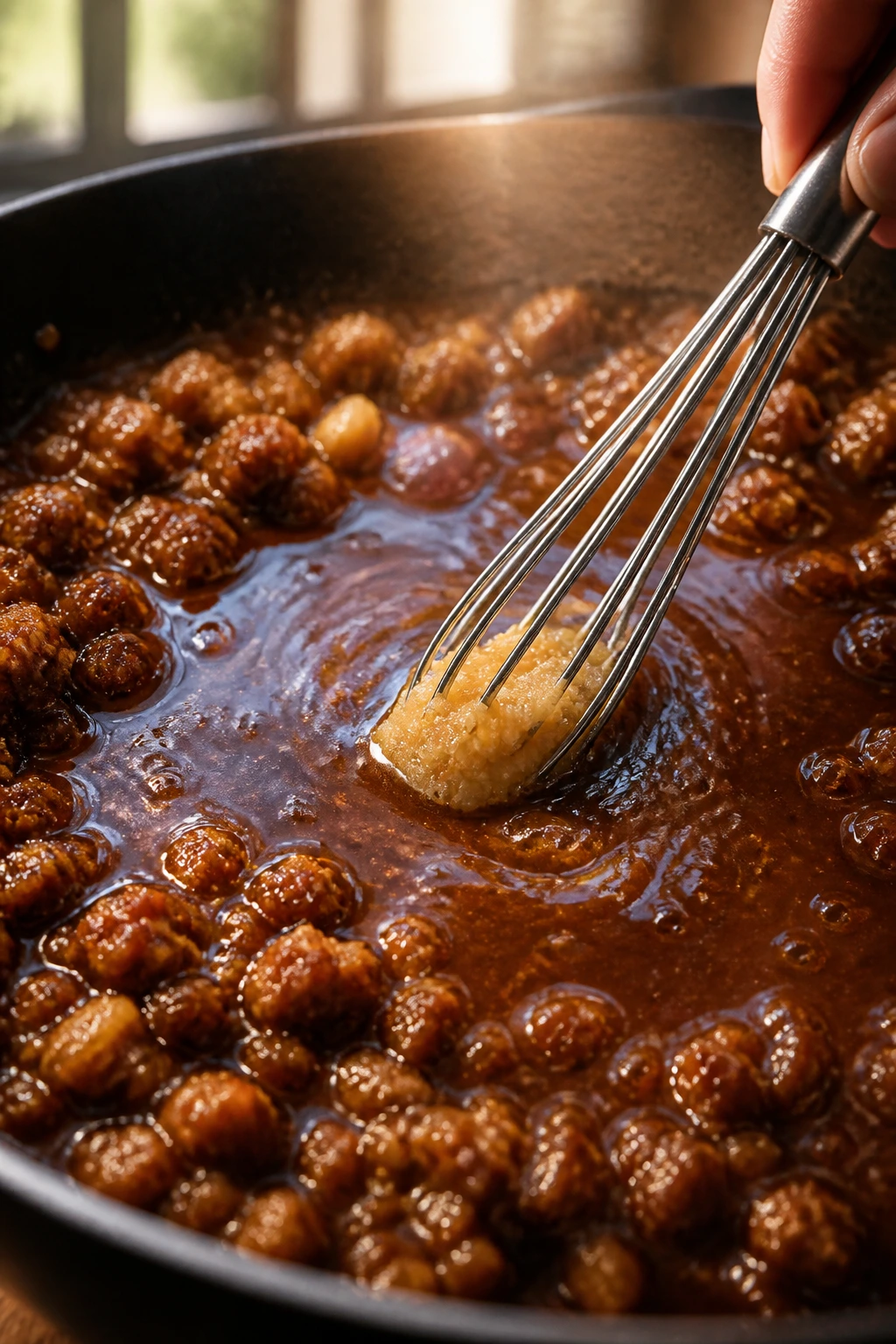
Flavor Enhancement: A teaspoon of white miso whisked into the glaze adds a deeper, saltier base without making the sauce heavier. It melts into the brown sugar and soy in a way that tastes like the dish spent longer cooking than it did.
Customization: If you want more texture, add 1 cup of finely shredded cabbage or a handful of thinly sliced mushrooms after the onion softens. The cabbage collapses into the glaze and drinks up the sauce; the mushrooms give the skillet a meatier, earthier note. For heat, chili crisp at the end is better than loading the sauce with flakes at the start.
Serving Suggestions: Finish the bowl with scallions, sesame seeds, and a few drops of rice vinegar if the glaze seems too rounded. A squeeze of lime works too, though I prefer vinegar because it keeps the flavor profile clean and sharp. If you’re serving kids, leave the red pepper off the table and set out extra scallions instead.
Make-It-Yours: For gluten-free cooking, swap the soy sauce for tamari and check that your Worcestershire is gluten-free. For a lower-sugar version, cut the brown sugar to 3 tablespoons and add 1 extra tablespoon of vinegar so the glaze stays bright. Dairy-free cooks do not need to change a thing.
Common Mistakes That Make the Pan Flat or Watery
-
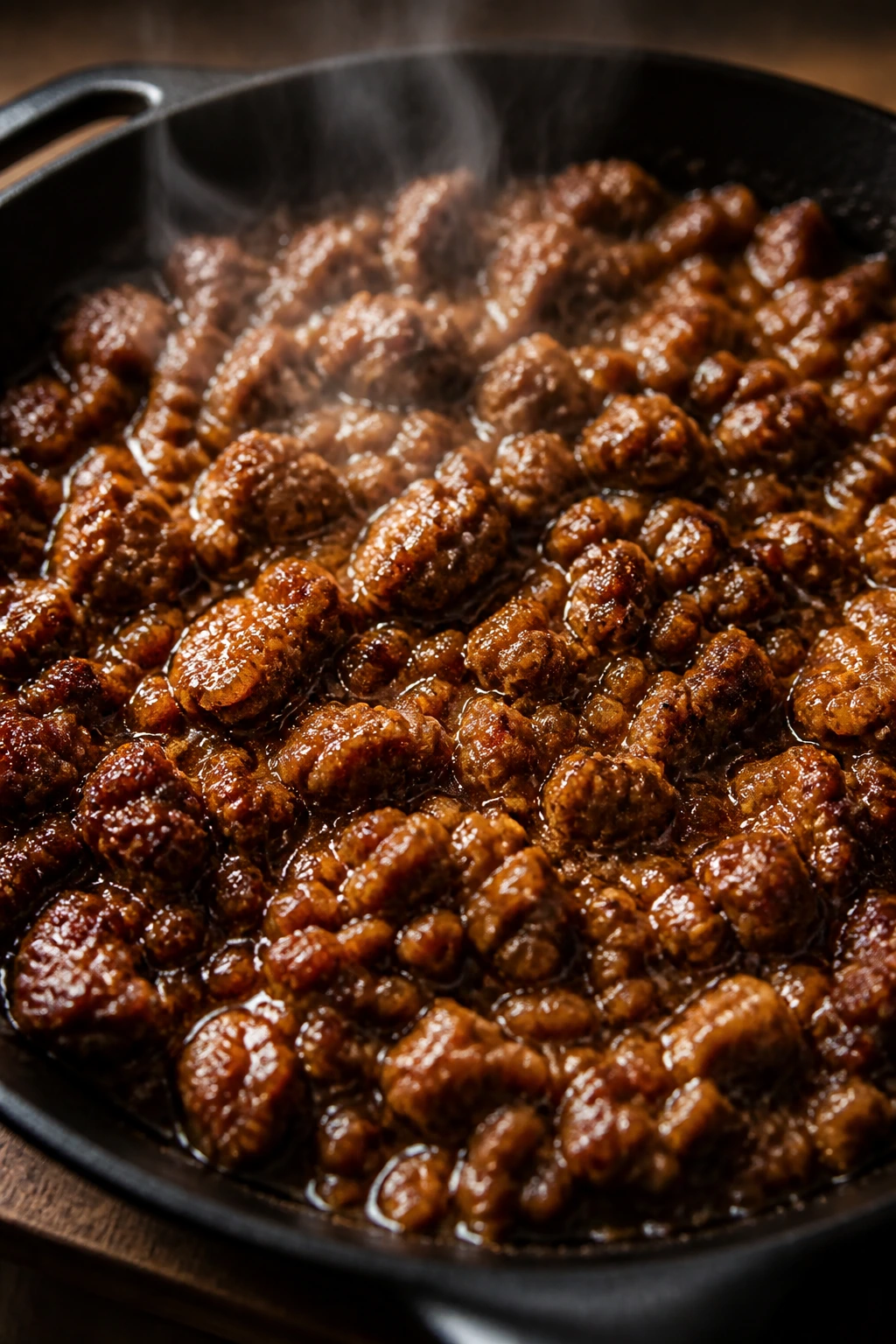
Crowding the skillet: If the pork is packed into a small pan, it steams before it browns, and the finished dish tastes pale and soft. Use a 12-inch skillet or split the pork into two batches so the meat can actually touch the hot surface.
-
Adding the glaze too early: Sugar in a wet pan can burn before the pork is cooked through. Brown the meat first, then add the glaze once the onion has softened and the skillet has enough heat to reduce the sauce instead of scorching it.
-
Letting the sauce boil too hard: A furious boil can push the sugars to the edge of the pan and leave you with sticky, dark bits on the sides. Keep the sauce at a steady simmer, where the bubbles are slower and smaller.
-
Skipping the acid check: If the finished dish tastes sweet but oddly flat, it usually needs a little more rice vinegar. Add it in teaspoon amounts near the end; that small sharp note is what keeps the brown sugar from taking over.
-
Using extra-lean pork without adjustment: Very lean pork can dry out before the sauce is thick enough. If that’s the grind you bought, use the neutral oil and stop cooking as soon as the meat reaches 160°F.
-
Forgetting that the sauce thickens as it cools: The glaze may look perfect in the pan and then lock up on the plate. Serve it promptly, and if it gets too tight, stir in a splash of hot water before plating.
Variations That Fit Different Cravings
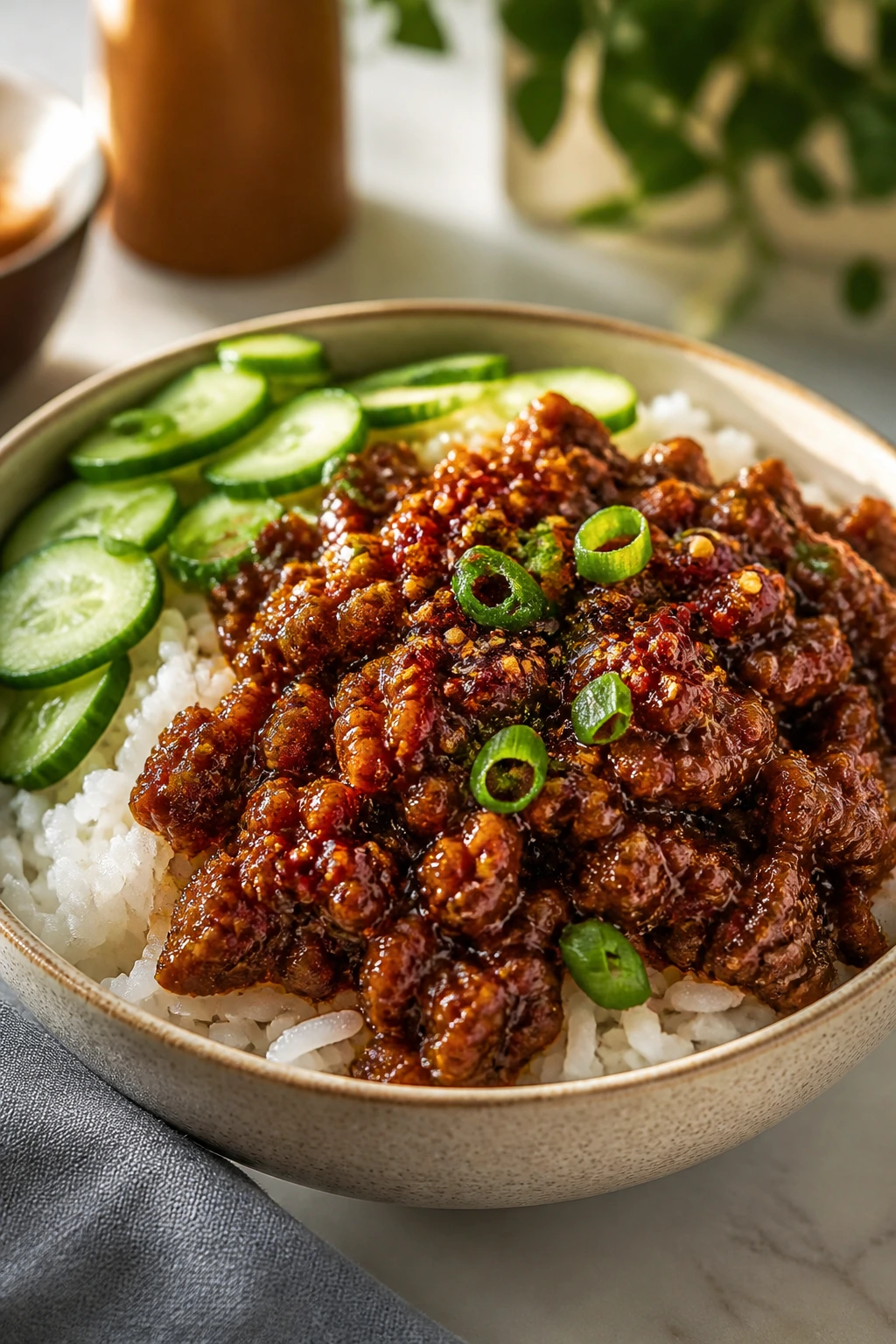
Chili Crisp Pork Bowls
Stir 1 to 2 tablespoons of chili crisp into the finished pork after you take it off the heat. The chili oil gives the glaze a deeper, peppery heat and a little crunch, which works well over rice with cucumber slices on the side. Keep the brown sugar at the original amount so the heat has something to lean against.
Apple-Ginger Skillet
Add 1 small grated apple with the onion and use apple cider vinegar instead of rice vinegar. The apple melts into the glaze and gives the pork a softer, fruitier sweetness that fits especially well with cabbage or butter lettuce. This version tastes gentler, but it still has enough snap to stay savory.
Lettuce-Wrap Batch
Chop the onion a little finer, add 1/2 cup diced water chestnuts, and spoon the pork into butter lettuce cups instead of rice bowls. The water chestnuts keep the filling crisp, and the lettuce gives you a cool, clean bite against the sticky glaze. If you want a sharper finish, add extra scallions and a few drops of vinegar right before serving.
Noodle-Shop Pork
Toss the finished pork with 8 ounces of cooked rice noodles or lo mein noodles and a splash of the noodle cooking water. The extra starch loosens the glaze just enough to coat every strand. I like this version when I want dinner to feel more like takeout without waiting for takeout.
Gluten-Free Tamari Pan
Swap the soy sauce for tamari and make sure the Worcestershire sauce you buy is gluten-free or replace it with an extra tablespoon of broth plus a tiny splash more vinegar. The flavor stays balanced, and the glaze still reduces the same way. This is the least fussy swap in the whole recipe.
Make-Ahead, Storage, and Reheating Without Ruining Texture
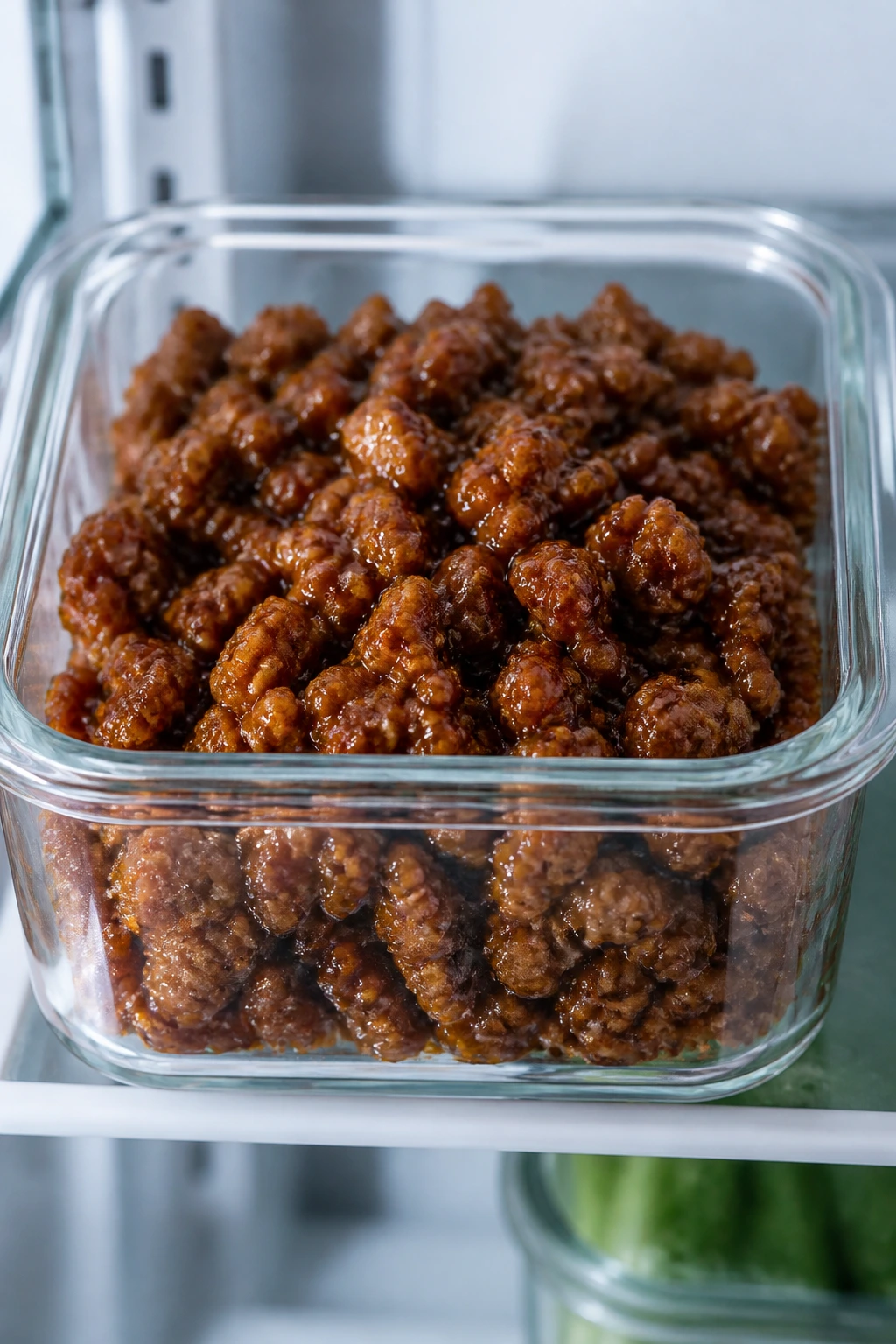
Cold leftovers behave a little differently than the hot skillet version. The glaze thickens, the pork firms up, and the scallions lose their snap, so the way you store and reheat this dish matters more than with a plain sauté.
Refrigerator: Let the pork cool for no more than 1 hour at room temperature, then move it into an airtight container. It keeps well in the fridge for 3 to 4 days. A shallow container is better than a deep one because the food cools faster and reheats more evenly.
Freezer: This dish freezes for up to 2 months. Pack it in a freezer-safe container or a flat zip-top bag, press out as much air as you can, and freeze it without the scallions if possible. Those fresh green tops turn limp after thawing, so save them for serving day.
Reheating on the Stovetop: The best method is a skillet over medium-low heat with 1 to 2 tablespoons of water or broth stirred in. Cover the pan for 2 minutes to loosen the glaze, then uncover and stir until the pork is hot and glossy again. If the sauce looks tight, add another splash of water instead of more soy sauce.
Reheating in the Microwave: Use a covered dish and heat in 45-second bursts, stirring between rounds. The lid or cover traps a little steam, which keeps the pork from drying out while the glaze warms back up. If the sauce has thickened into a paste, stir in a teaspoon of water before heating.
Make-Ahead Work: You can whisk the glaze up to 4 days ahead and keep it in the fridge. The onion, garlic, and ginger can be chopped a day ahead too, though fresh ginger loses a little bite if it sits cut for too long. If you want the finished dish to taste freshest, cook the pork the day you plan to serve it and reheat only the portions you need.
Questions People Ask Before They Start

Can I use ground turkey instead of ground pork?
Yes, and it works fine, but turkey needs a little help. Add the optional oil, keep a close eye on the skillet so it does not dry out, and taste the glaze at the end before deciding whether it needs a pinch more salt.
Will this taste too sweet?
Not if you keep the measurements as written. The soy sauce, vinegar, Worcestershire, and browned pork pull the brown sugar back into savory territory, which is the whole point of the dish.
Do I need the cornstarch slurry?
If you want a glaze that clings to the meat instead of staying thin in the pan, yes. You can simmer longer without it, but the sauce will be more fragile and more likely to run off the pork once it hits the plate.
What if my pork releases a lot of grease?
Spoon off most of it before you add the onion. Leave behind about 1 tablespoon so the aromatics still cook well, but remove the excess or the glaze will sit on top of the fat instead of coating the meat.
Can I make this gluten-free?
Yes. Use tamari instead of soy sauce and check the Worcestershire label, or replace the Worcestershire with a little more broth and a touch more vinegar. The texture stays the same.
What if the glaze gets too thick?
Add hot water, 1 tablespoon at a time, and stir over low heat until it loosens. If it gets too thin, simmer it for another minute before you add more slurry, because extra starch can turn the sauce gummy fast.
Can I freeze the leftovers with rice?
You can, but I would not. The pork freezes well on its own, while rice tends to dry out and go grainy. Freeze the pork separately and make fresh rice when you reheat it.
A Pan Worth Repeating
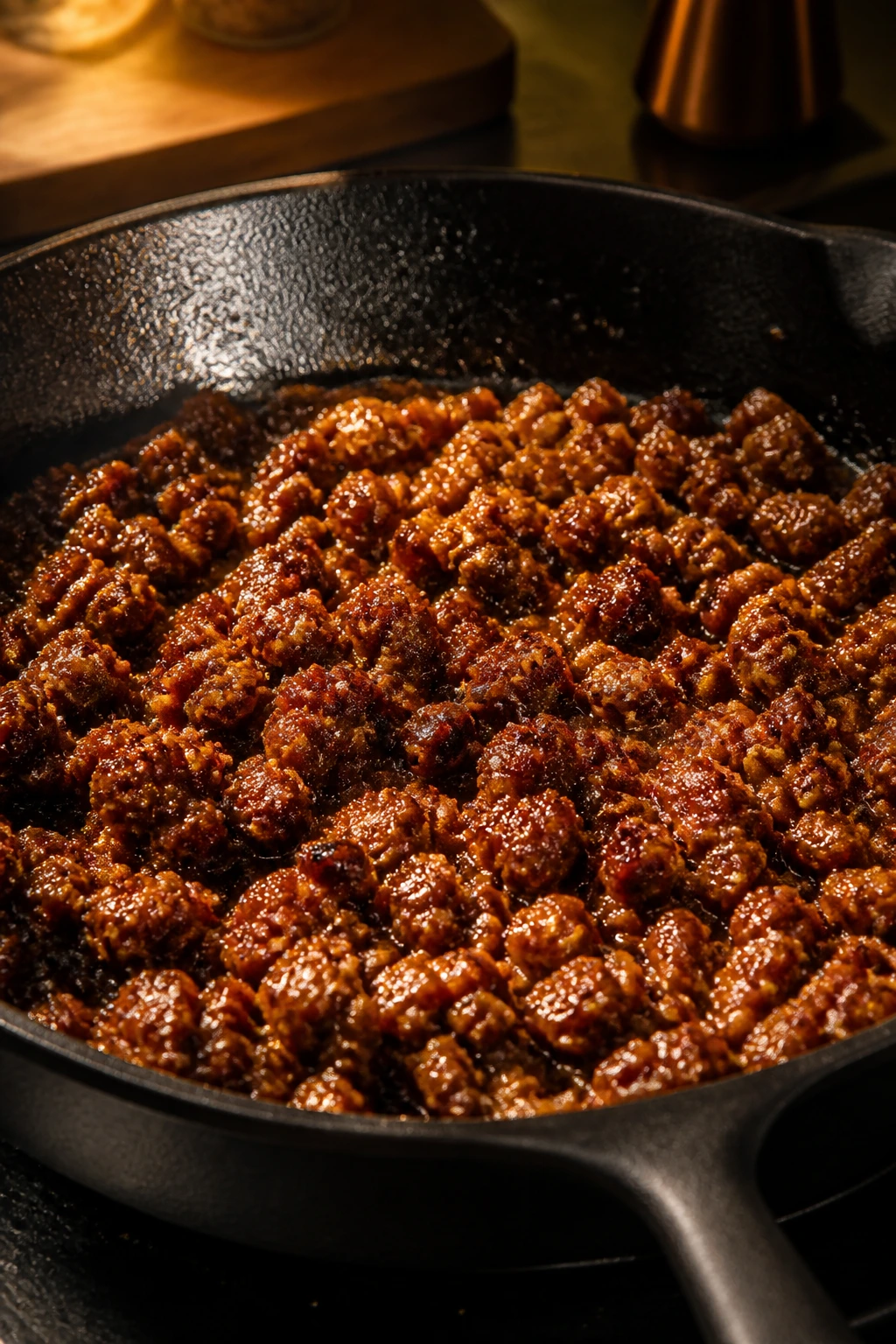
A skillet like this earns its keep because it gives you a lot without asking for much. Pork, sugar, soy, vinegar, garlic, ginger, and a hot pan are enough to build a meal that tastes bigger than its ingredient list, and the glaze does that satisfying thing where it clings to every bite instead of disappearing into the bowl.
The main trick is restraint. Brown the pork. Let the aromatics soften. Give the glaze a minute to thicken. Once those three things happen, the rest is just timing and heat — and the pan does the part people usually overcomplicate.
Make it once and you’ll start keeping ground pork around for exactly this reason. It’s the sort of dinner that comes together when the fridge looks half-empty but the pantry still has a few reliable things in it, and that’s a useful place to be.
Savory Ground Pork with Brown Sugar Glaze — Recipe Card
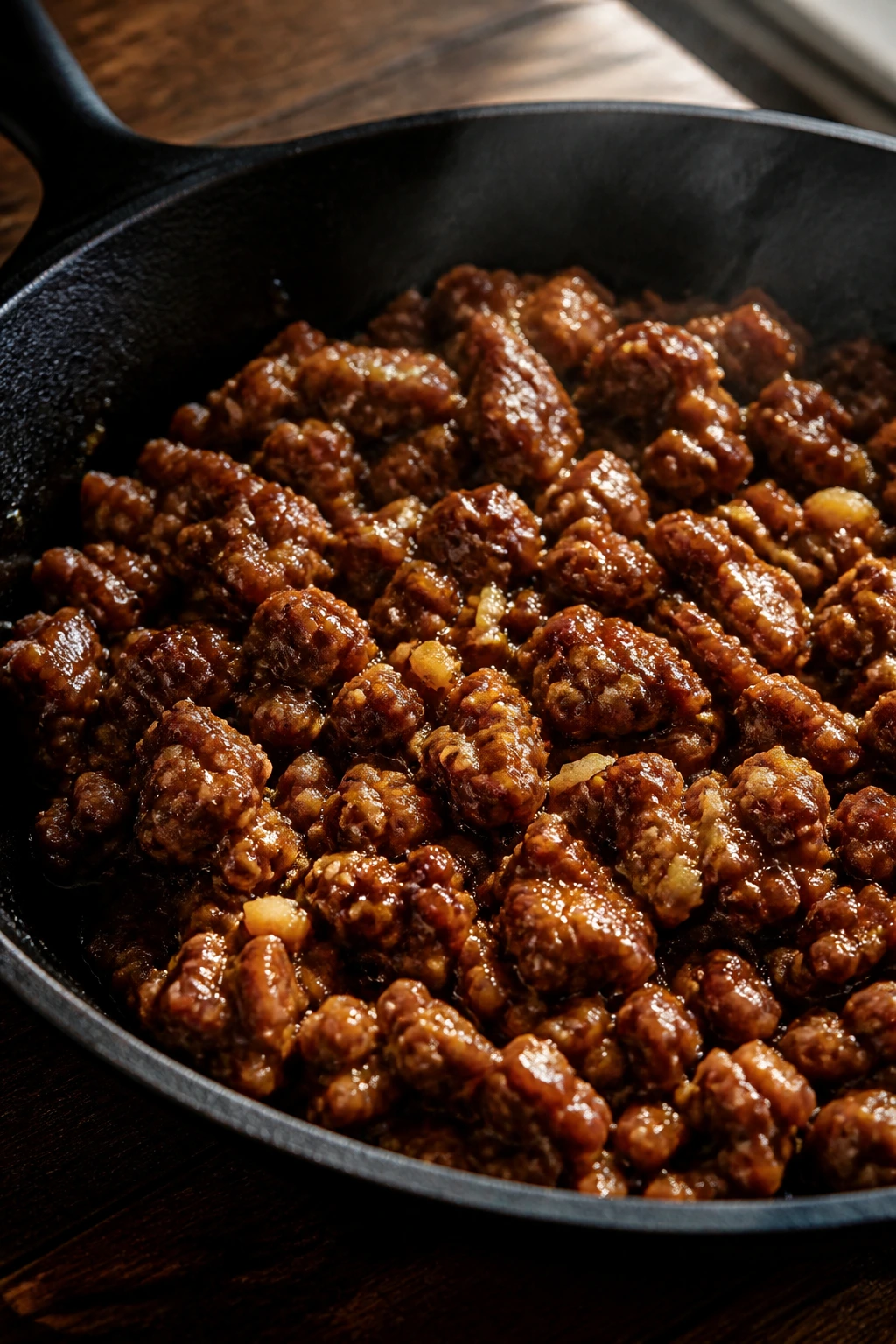
- Recipe Name: Savory Ground Pork with Brown Sugar Glaze
- Description: A fast skillet dinner of browned ground pork coated in a glossy brown sugar glaze with soy sauce, ginger, garlic, and a splash of vinegar. Serve it over rice, noodles, or in lettuce cups for a sticky, savory-sweet meal.
- Prep Time: 15 minutes
- Cook Time: 20 minutes
- Total Time: 35 minutes
- Course: Dinner, Main Course
- Cuisine: Asian-inspired American
- Servings: 4 to 6 servings
- Calories: About 390 kcal per serving
Ingredients
For the Pork:
- 1 1/2 pounds ground pork, preferably 80/20 or 85/15
- 1/4 teaspoon kosher salt
- 1/2 teaspoon freshly ground black pepper
- 1 tablespoon neutral oil, only if the pork is very lean or the skillet looks dry
For the Brown Sugar Glaze:
- 1 medium yellow onion, finely diced
- 4 garlic cloves, minced
- 1 tablespoon fresh ginger, grated
- 1/4 cup packed light brown sugar
- 3 tablespoons low-sodium soy sauce
- 2 tablespoons rice vinegar
- 1 tablespoon Worcestershire sauce
- 2 tablespoons low-sodium chicken broth or water
- 1 teaspoon cornstarch
- 1 tablespoon cold water
- 1 teaspoon toasted sesame oil
For Finishing:
- 2 scallions, thinly sliced
- 1 teaspoon toasted sesame seeds
- 1/4 teaspoon crushed red pepper flakes, optional
Instructions
-
Whisk the brown sugar, soy sauce, rice vinegar, Worcestershire sauce, broth or water, cornstarch, and cold water in a small bowl until smooth. Set aside.
-
Heat a large skillet over medium-high heat for 1 to 2 minutes. Add the neutral oil if needed.
-
Add the ground pork, season with salt and pepper, and let it brown undisturbed for about 2 minutes. Break it into chunks and cook for 3 to 4 minutes more, until mostly browned and the pork reaches 160°F.
-
Add the diced onion and cook for 3 to 4 minutes, until softened. Stir in the garlic and ginger and cook for 30 seconds.
-
Pour in the glaze, scrape up the browned bits, and simmer over medium heat for 2 to 3 minutes.
-
Stir in the cornstarch slurry and cook for 30 to 60 seconds, until the sauce turns glossy and coats the pork.
-
Remove from the heat and stir in the sesame oil, scallions, sesame seeds, and red pepper flakes if using. Serve hot.
- Notes: Use tamari for a gluten-free version. If the sauce thickens too much, add a splash of hot water before serving. For a sharper finish, add a teaspoon of rice vinegar at the end.