



Tender lentils and sausage with brown sugar glaze sounds richer than the work it asks of you. That is the first nice surprise. The lentils do the quiet part — they soak up sausage drippings, onion sweetness, broth, and just enough glaze to taste polished without turning sugary — while the sausage brings salt, smoke, and those browned edges that make a pot smell like dinner before you’ve even set out bowls.
I like this kind of recipe because it does not pretend lentils are glamorous. They are not. They are sturdy, cheap, and good at holding on to flavor, which is exactly why they behave so well under a glossy brown sugar finish. Brown or green lentils keep their shape; red lentils would collapse into a soft mash and steal the texture you actually want here. Not red lentils. Never red lentils here.
The glaze is the part that saves the bowl from feeling flat. Brown sugar alone would be cloying, so it gets company — Dijon for bite, apple cider vinegar for sharpness, a little soy sauce for depth, and butter to make the whole thing cling to the lentils instead of sliding off them. The result is sweet-salty-sour in the best way: not dessert, not stew, not sausage with a syrup problem. Just a pot that tastes like someone paid attention.
Why This Dish Keeps Its Grip on the Table
- One pot, real depth: The sausage browns first, the vegetables soften in the same pot, and the lentils simmer in the browned bits instead of a separate broth that tastes like paperwork.
- The glaze is doing a job, not showing off: Brown sugar, Dijon, vinegar, soy sauce, and butter create a finish that tastes glossy and balanced, not sticky-sweet.
- Brown and green lentils stay useful: They soften in about 20 to 25 minutes and still hold their shape, so you get a spoonable dinner instead of lentil paste.
- It makes sense on a tired night: The ingredient list is short, the steps are direct, and the pot does most of the work once the lentils start simmering.
- Leftovers improve their manners: The lentils soak up more of the sauce overnight, and a splash of broth brings them right back without making them soupy.
- The plate looks better than the effort suggests: A spoonful of parsley on top, a little steam, a glossy surface — that’s enough.
Why Brown Lentils and Smoked Sausage Belong Together

Lentils have a plain reputation, which is unfair. They are earthy, a little nutty, and very good at taking on whatever you cook them with. Smoked sausage gives them salt and fat, which they absolutely need, but it also gives the pot a browned, meaty backbone that turns lentils from a side dish into a main event.
There is a reason this kind of pairing shows up in so many home kitchens. A lentil needs something bold beside it. A sausage needs something soft and absorbent beside it. Put them in the same pot and the whole thing starts making sense in the first ten minutes. The onion and carrot sweeten the broth as they cook, the thyme and smoked paprika nudge the sausage toward a deeper flavor, and the glaze at the end ties the sweet and savory pieces together.
The brown sugar glaze matters because it works like a finishing lamp. It brightens the darker, saltier parts without making the dish sugary. A little acid from apple cider vinegar keeps the glaze from feeling thick or dull. Dijon wakes it up. Butter smooths the edges. That is the kind of small adjustment that changes the whole bowl.
I also appreciate how honest this recipe is about texture. The lentils should be tender, not exploded. The sausage should still have shape, not dissolve into the broth. The glaze should cling to the spoon. Those little details are what make the dish feel cooked, not merely assembled.
What Goes Into the Pot

Yield: Serves 6
Prep Time: 20 minutes
Cook Time: 35 to 40 minutes
Total Time: 55 to 60 minutes, plus 5 minutes resting
Difficulty: Intermediate — the method is straightforward, but the lentils need a steady simmer and the glaze needs a careful finish.
Rest Time: 5 minutes
Best Served: Warm, while the glaze is still glossy
This is the part that looks plain in the grocery cart and turns into a bowl with actual character. Every ingredient has a job. The sausage gives you fat and salt. The lentils carry the meal. The vegetables build the base. The glaze keeps the whole thing from tasting like a gray saucepan.
For the Lentils and Sausage:
- 1 tablespoon olive oil
- 12 ounces smoked pork sausage or kielbasa, sliced into 1/2-inch rounds
- 1 medium yellow onion, diced
- 2 medium carrots, diced
- 2 celery ribs, diced
- 4 garlic cloves, minced
- 1 1/2 cups brown or green lentils, rinsed and picked over
- 4 cups low-sodium chicken broth
- 1 cup water
- 1 bay leaf
- 1 teaspoon kosher salt, plus more to taste
- 1/2 teaspoon black pepper
- 1 teaspoon smoked paprika
- 1/2 teaspoon dried thyme
For the Brown Sugar Glaze:
- 1/4 cup packed light brown sugar
- 2 tablespoons Dijon mustard
- 2 tablespoons apple cider vinegar
- 1 tablespoon soy sauce or tamari
- 1 tablespoon unsalted butter
For Finishing:
- 2 tablespoons chopped fresh parsley
A quick note before the deep-dive: brown and green lentils are the right call here. They soften without turning into mud. That matters more than it sounds like it should. A dish like this lives or dies by texture, and the difference between tender and collapsed is the difference between a spoonable dinner and a bowl that looks tired.
Smoked Sausage
- What to use: 12 ounces smoked pork sausage or kielbasa, sliced into 1/2-inch rounds.
- Preparation: Pat the sausage dry before it hits the pot so the surface browns fast instead of steaming.
- Substitutions: Turkey sausage works if you want something leaner, and andouille works if you want more heat; both need the same slice size.
- Tips: Choose a sausage with a firm casing and visible fat. Very soft links tend to shed too much moisture and never pick up the same browned edge.
The sausage is doing more than adding meat. It leaves behind little brown streaks on the bottom of the pot when it sears, and those streaks are flavor. If you skip the browning step, the whole dish tastes flatter.
Brown or Green Lentils
- What to use: 1 1/2 cups dried brown or green lentils, rinsed and picked over.
- Preparation: Rinse them in a fine-mesh strainer, then spread them out for a quick look. Lentils sometimes hide tiny stones or shriveled bits.
- Substitutions: French green lentils give you a firmer bite; black beluga lentils work too, though they need a few more minutes. Red lentils are the wrong tool for this job.
- Tips: Older lentils take longer to soften, so if your bag has been hanging around for a while, expect the simmer to run a little longer and keep extra broth nearby.
Lentils are useful because they thicken broth without flour or cream. That means the body of the dish comes from the ingredients themselves, not from a trick.
Aromatics and Vegetables
- What to use: 1 medium yellow onion, 2 medium carrots, 2 celery ribs, and 4 garlic cloves.
- Preparation: Dice the onion, carrots, and celery into small, even pieces — about 1/4 inch if you want them to soften at the same pace.
- Substitutions: A pre-diced mirepoix mix works when you need speed; shallots can stand in for the onion if that is what you have.
- Tips: Let the onion and carrot soften until they smell sweet before adding the liquid. If they still smell raw, the base will taste sharp in the finished bowl.
I like the carrot here because it rounds out the sausage’s salt and the glaze’s vinegar. It does not make the dish taste carrot-forward. It just keeps the bottom from tasting thin.
The Brown Sugar Glaze
- What to use: 1/4 cup packed light brown sugar, 2 tablespoons Dijon mustard, 2 tablespoons apple cider vinegar, 1 tablespoon soy sauce or tamari, and 1 tablespoon unsalted butter.
- Preparation: Whisk the glaze in a small bowl before the sausage goes back in so the sugar starts dissolving right away.
- Substitutions: Dark brown sugar gives a deeper molasses note; maple syrup can replace the brown sugar if you want a softer sweetness.
- Tips: The vinegar is not optional. Without it, the glaze reads as sticky-sweet instead of sharp and savory, and the whole pot feels heavier.
The glaze should taste a little too sharp in the bowl. That edge softens once it hits the lentils and sausage. If it tastes balanced on its own, it usually disappears in the pot.
Finishing Touches
- What to use: 2 tablespoons chopped fresh parsley.
- Preparation: Chop it at the last minute so it stays bright and does not bruise.
- Substitutions: Chives or thinly sliced scallions work if parsley is unavailable.
- Tips: If the final bowl tastes heavy, a few drops of extra vinegar or a squeeze of lemon at the table can wake it up fast.
Fresh herbs are not decoration here. They cut through the gloss and keep the bowl from reading as all brown, which matters more than people think.
The Tools That Keep the Pot Calm

You do not need fancy gear for this. You do need a pot that holds heat without spitting it back at you.
- 5- to 6-quart Dutch oven or heavy soup pot: This is the best vessel for even heat and steady simmering; a thin stockpot can scorch the lentils on the bottom.
- Wooden spoon or heatproof spatula: Helpful for scraping up browned bits and stirring without crushing the lentils near the end.
- Fine-mesh strainer: Use it to rinse and sort the lentils before they go into the pot.
- Small bowl and whisk: The glaze mixes more evenly when the sugar gets whisked with the mustard and vinegar first.
- Chef’s knife: A sharp knife makes the onion, carrot, and celery dice faster and more even.
- Cutting board: Preferably a large one; the vegetables go quicker when you are not chasing them around a tiny board.
- Ladle: Useful for serving, especially if you want neat bowls with a bit of sauce.
- Airtight storage containers: Lentils thicken as they sit, so leftovers need a container that seals well and a little broth when they reheat.
If your pot runs hot, use the Dutch oven. If it runs cool, still use the Dutch oven. The control is worth it.
Building the Dish, One Layer at a Time
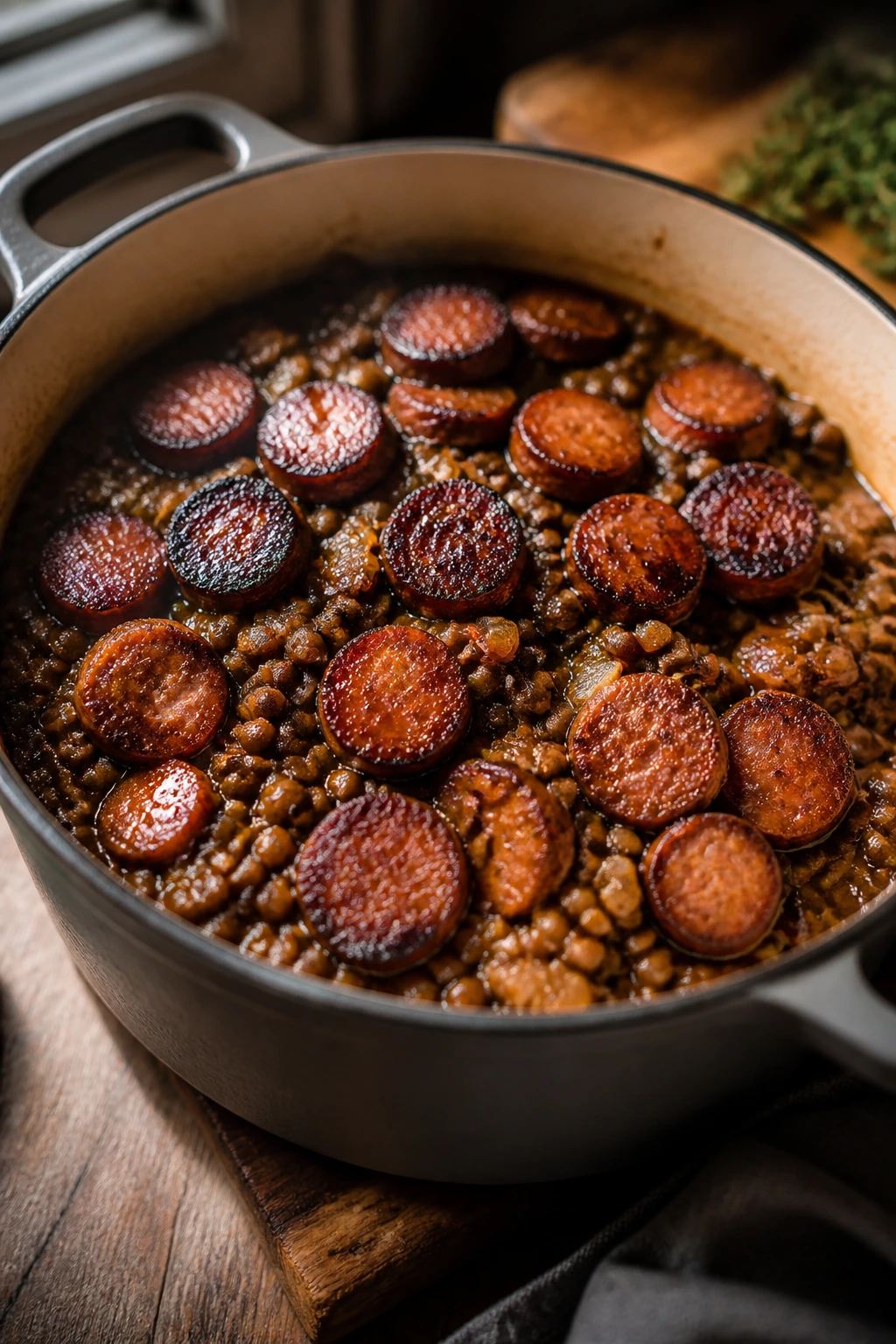
A good lentil pot is mostly about timing. The order matters more than any one spice. Brown the sausage first. Soften the vegetables. Simmer the lentils until tender. Then add the glaze and let it reduce just enough to cling.
Brown the Sausage
- Set a 5- to 6-quart Dutch oven over medium-high heat and add the olive oil.
- Add the sliced sausage in a single layer and cook for 4 to 5 minutes, turning once or twice, until the edges are deep brown and a little crisp. Transfer the sausage to a plate. Do not crowd the pot — if the sausage steams, you lose the browned bits that build the flavor.
Build the Base
- Reduce the heat to medium. Add the onion, carrots, celery, and 1/2 teaspoon of the salt. Cook for 6 to 8 minutes, stirring now and then, until the onion turns translucent and the carrots start to soften at the edges.
- Add the garlic, smoked paprika, and thyme. Stir for 30 seconds, just until the garlic smells fragrant. Do not let the garlic sit long enough to brown; bitter garlic stays bitter.
Simmer the Lentils
- Add the rinsed lentils, chicken broth, water, bay leaf, black pepper, and the remaining 1/2 teaspoon salt. Bring the pot to a boil, then lower the heat until the liquid is at a steady simmer. Cover partially and cook for 20 to 25 minutes, stirring every 5 minutes, until the lentils are tender but still hold their shape. If the pot looks dry before the lentils are done, splash in 1/4 to 1/2 cup more water.
- Taste a few lentils. They should be soft through the center with a little bite at the skin. If they still feel chalky, keep simmering in 3-minute bursts and check again. Brown lentils take patience better than they take punishment.
Glaze and Finish
- Whisk the brown sugar, Dijon mustard, apple cider vinegar, soy sauce, and butter in a small bowl until smooth. Return the browned sausage to the pot and pour in the glaze.
- Simmer uncovered for 4 to 6 minutes, stirring gently, until the liquid looks glossy and lightly thickened and the sausage is coated. Keep the heat modest here — sugar burns faster than most people expect.
- Remove the bay leaf, stir in the parsley, and let the pot rest off the heat for 5 minutes before serving. That short rest lets the sauce settle and cling instead of collecting in the bottom of the bowl.
If you want a thicker final bowl, mash a spoonful of lentils against the side of the pot before serving. Not a puree. Just enough to give the broth some body. Small move. Big payoff.
How I’d Serve It at the Table
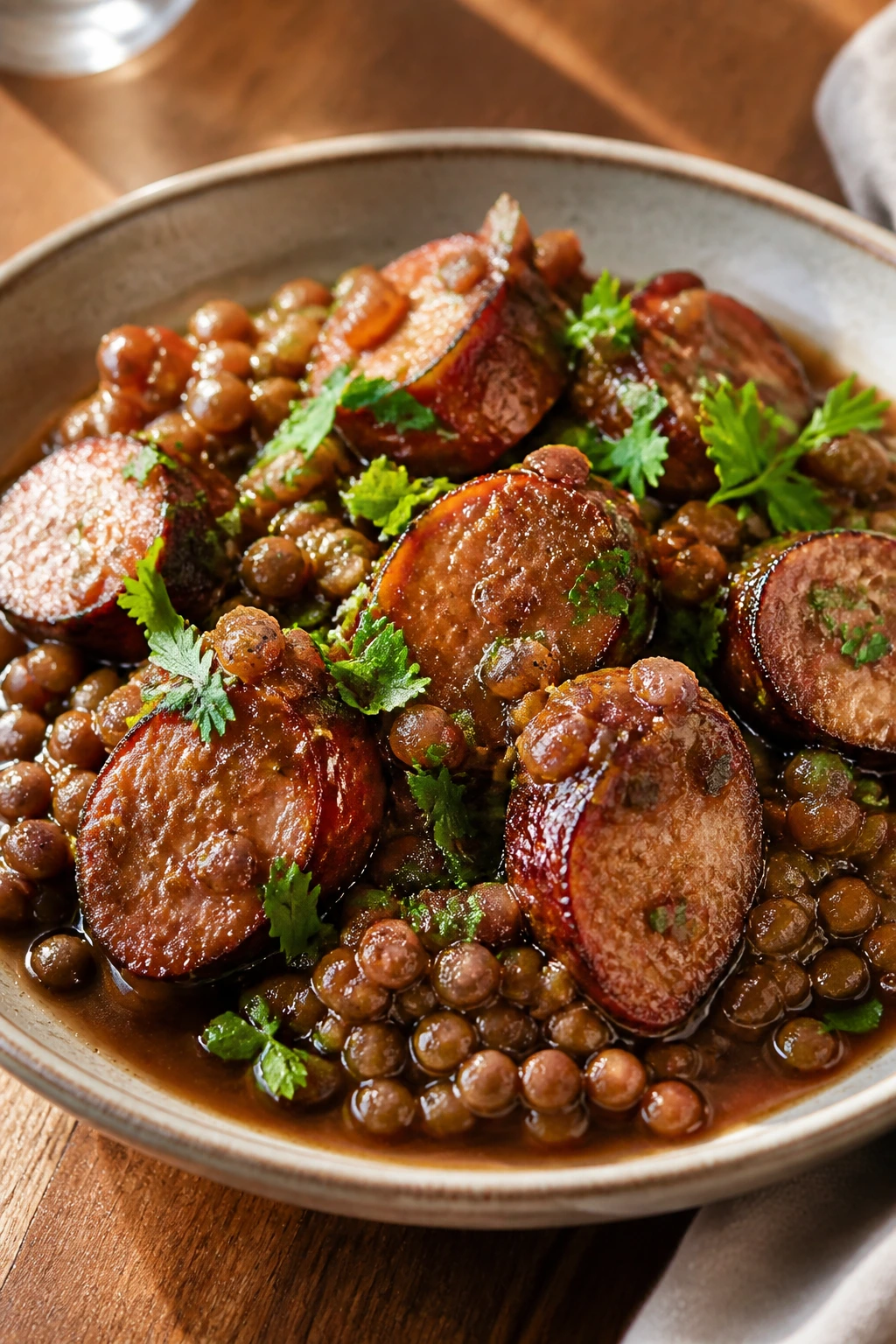
Presentation: Spoon the lentils into shallow bowls rather than deep ones. That gives the glaze room to pool around the sausage, and it keeps the whole thing looking deliberate instead of dumped from a pot. A scatter of parsley and a few grinds of black pepper are enough.
Accompaniments: Crusty sourdough, rye toast, or a thick slice of buttered country bread works best because the bread catches the glaze. A sharp cabbage slaw or a handful of peppery arugula on the side keeps the bowl from feeling too heavy. If you want a more dinner-plate feel, roasted green beans or garlicky broccoli fit without fighting the glaze.
Portions: Count on about 1 1/2 cups per serving if this is the main course. It stretches a little farther with bread, and it shrinks a little if you spoon it over rice or mashed potatoes. For smaller portions, 3/4 cup makes a sturdy side next to roast chicken or pork chops.
Beverage Pairing: A dry hard cider is my favorite match because it echoes the sweetness without making the meal taste sweeter. A light lager works too. If you want something nonalcoholic, unsweetened iced tea with lemon is clean and steady against the sausage and brown sugar.
This is not a bowl that needs a lot of garnish. It needs a little breathing room. Let the lentils look glossy. Let the sausage show its browning. Done.
Small Fixes That Make a Big Difference

A few small moves change the whole pot, and they are not hard to remember once you’ve made the recipe once.
Flavor Enhancement: Stir 1 teaspoon of tomato paste into the vegetables after the garlic and let it cook for 30 seconds before adding the broth. It deepens the color and gives the lentils a little more bass without making the dish taste like tomato sauce.
Time-Saver: Buy pre-sliced smoked sausage and a pre-diced mirepoix mix if you need to shorten the prep. The flavor still comes out right because the sausage browns the same way and the lentils do the rest of the work.
Pro Move: Keep a cup of hot broth nearby while the lentils simmer. If the pot tightens too quickly, you can loosen it without shocking the temperature or diluting the seasoning.
Cost-Saver: Use store-brand dried lentils and low-sodium broth. Put your money into the sausage. That is the ingredient the whole dish leans on, and a decent smoked sausage makes a bigger difference than a fancier broth ever will.
Make-It-Yours: If you want more freshness, finish the bowls with scallions, a little lemon zest, or chopped dill instead of parsley. If you want a darker, deeper pot, swap the light brown sugar for dark brown sugar and keep the vinegar in place.
The other useful trick is patience. Let the browned sausage actually brown. Let the vegetables soften. Let the glaze reduce for the last few minutes. Rushing any of those steps makes the final bowl flatter, and there is no shortcut that fixes that later.
Common Mistakes That Turn Lentils Mushy
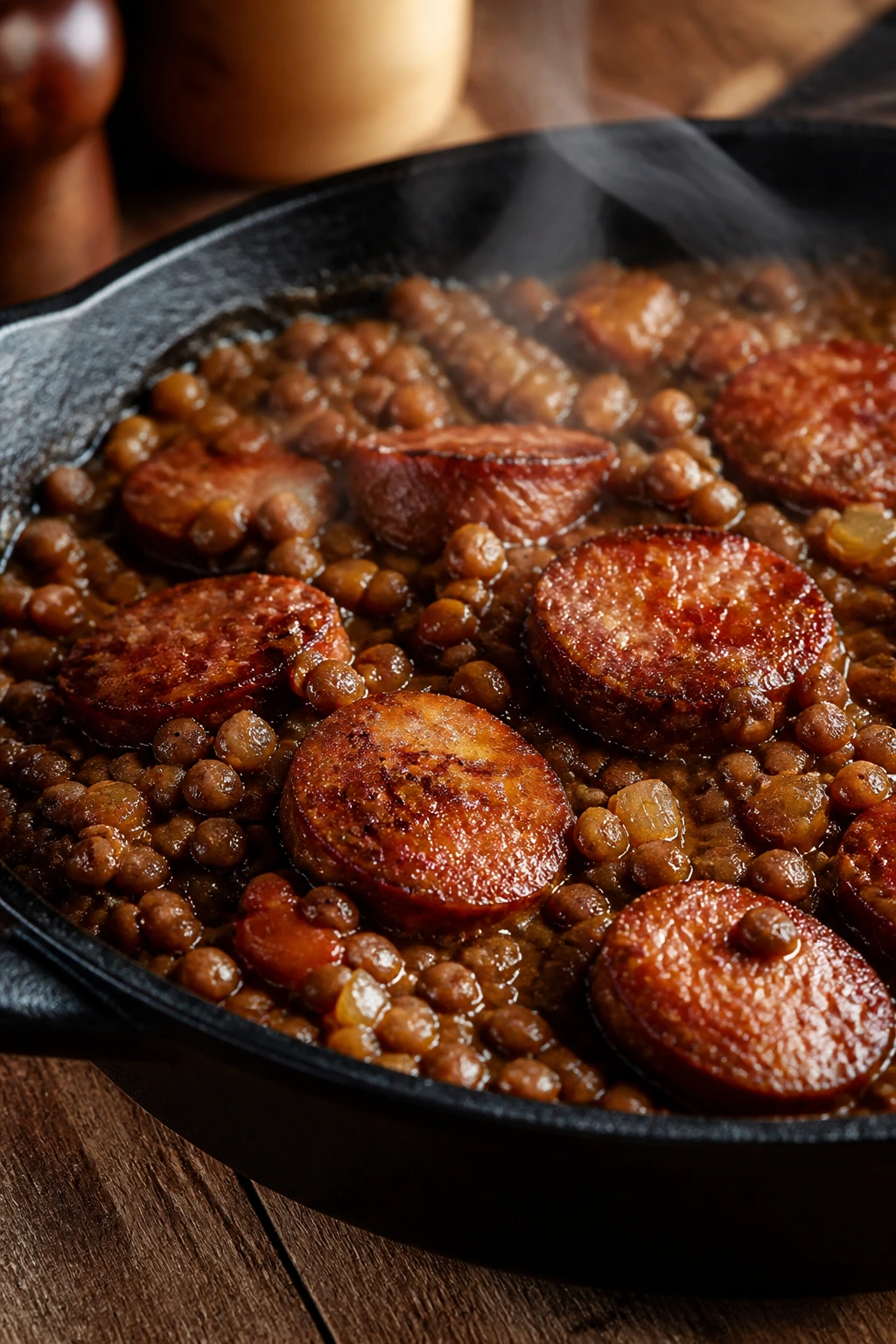
Most problems here come from heat or timing, not from some mysterious failure of the recipe itself.
- Using red lentils by habit: The symptom is obvious — the pot turns soft and cloudy before the sausage has finished doing its thing. Use brown, green, or French green lentils instead, because they hold their shape long enough to finish with the glaze.
- Boiling too hard: A rolling boil splits the lentils and makes the broth look muddy. Keep the pot at a steady simmer, where small bubbles break around the edges rather than slamming the center of the pan.
- Adding the glaze too early: If brown sugar hits high heat before the lentils are tender, it can stick and scorch. Wait until the lentils are almost done, then add the glaze and reduce for just a few minutes.
- Over-salting at the start: Smoked sausage and broth already bring salt to the party. Season lightly, then taste after the glaze goes in and adjust from there.
- Skipping the rest before serving: Straight off the stove, the pot can look a touch loose. Five minutes later, the lentils absorb a little more liquid and the sauce settles into the right texture.
One more thing. If the pot tastes flat, do not reach for more brown sugar first. Try a pinch of salt or another teaspoon of vinegar. Sweetness is not the fix for every bland bowl, and this one proves it.
Variations Worth Trying
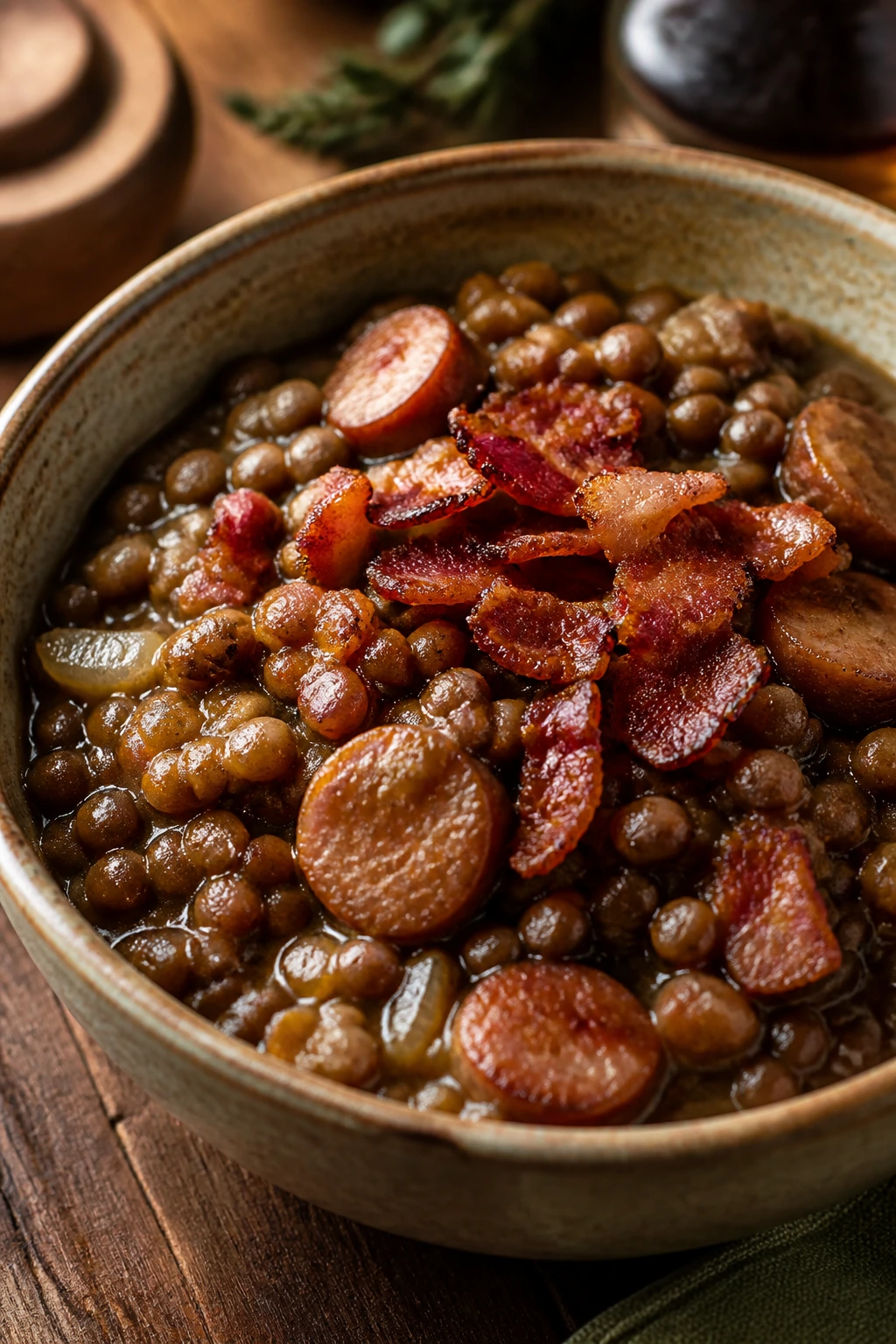
Once you’ve made the base version, the recipe takes kindly to small shifts. No need to rewrite the whole pot.
Bacon-First Country Pot: Render 4 slices of diced bacon before browning the sausage, then cook the vegetables in the bacon fat and reduce the olive oil to 1 teaspoon or skip it. This gives you a deeper smoke and a more old-school pork flavor. It also makes a stronger case for serving the bowl with rye bread.
Maple-Dijon Finish: Replace the brown sugar with 3 tablespoons maple syrup and keep the vinegar and mustard the same. The glaze becomes softer and less molasses-heavy, which suits kielbasa and makes the pot taste a little lighter on the tongue.
Spiced Smokehouse Bowl: Add 1/2 teaspoon crushed red pepper and 1/2 teaspoon caraway seeds with the smoked paprika. The caraway gives the lentils a faint rye-bread note, and the heat keeps the glaze from feeling too polite.
Greens-in-the-Pot Version: Stir in 3 cups chopped kale or collards during the last 5 minutes of simmering. The greens soften just enough to sit inside the lentils without turning them into a leafy stew. Good move if you want the bowl to feel fuller.
Lean Turkey-Sausage Swap: Use turkey sausage instead of pork sausage and add an extra teaspoon of olive oil at the start. Because turkey sausage browns more quietly, give it a little more time in the pan and do not skip the glaze — it matters more here because the sausage is leaner.
If you like sharper food, make the Dijon the loudest thing in the glaze. If you like gentler food, keep the brown sugar as written and let the sausage carry the smoke. Either direction works.
Make-Ahead, Storage, and Reheating
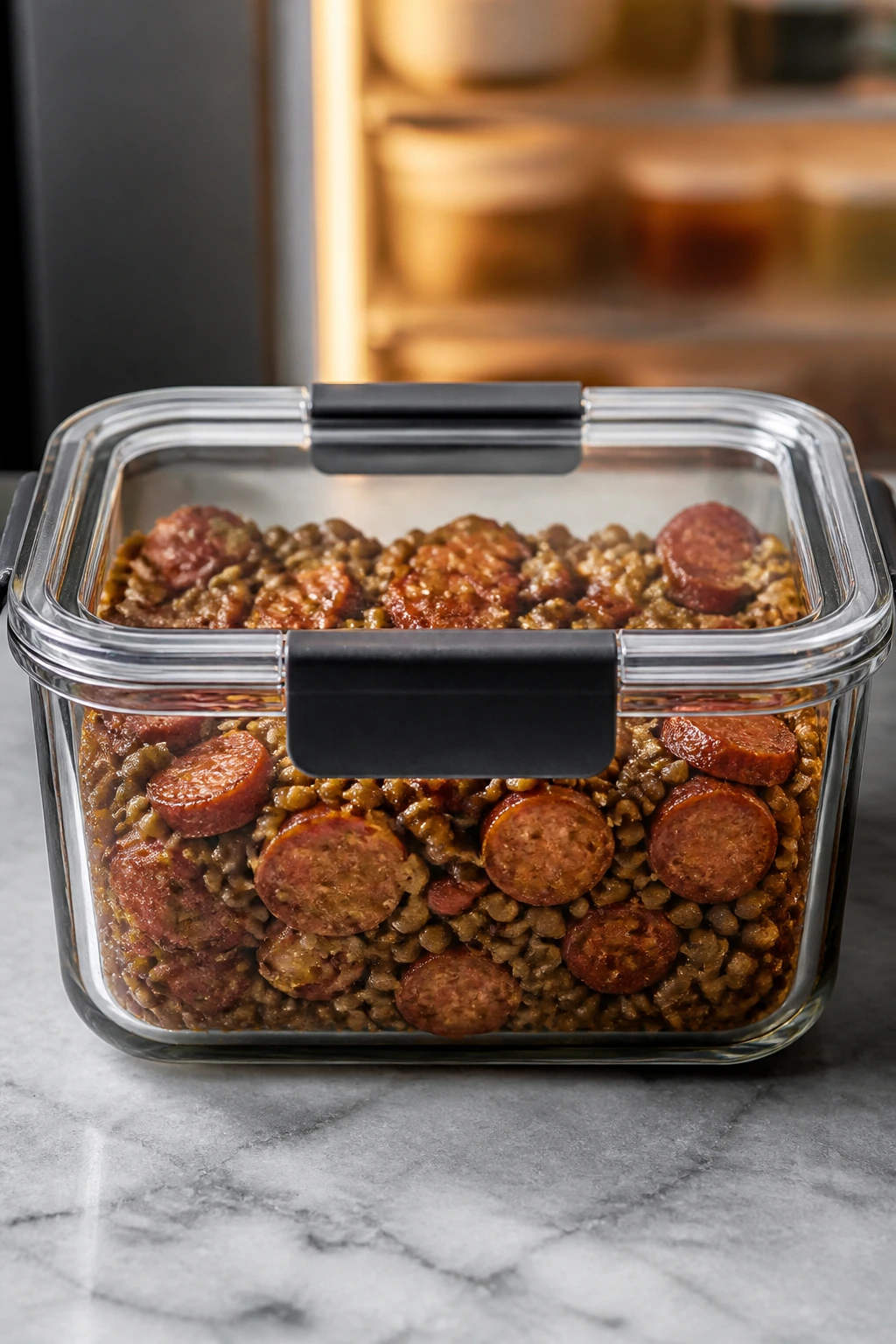
Leftovers are not a problem here. They are part of the appeal.
Room temperature: Keep the finished dish out for no more than 2 hours. Because it contains sausage and broth, it should not sit on the counter like a dry snack mix.
Refrigerator: Store the cooled lentils and sausage in airtight containers for 3 to 4 days. The lentils will absorb more liquid as they chill, so expect a thicker texture the next day. That is normal.
Freezer: Freeze portions for up to 2 months. Let the dish cool completely first, then pack it into freezer-safe containers or zip-top bags laid flat. Freezing in thinner portions makes reheating faster and keeps the lentils from turning unevenly soft.
Stovetop reheating: Put the lentils in a saucepan with 2 to 4 tablespoons of water or broth per serving and warm over medium-low heat, stirring gently, until hot. If the pot seems dry, add another splash. Lentils are thirsty after the fridge.
Microwave reheating: Cover the bowl loosely and heat in 60-second bursts, stirring between bursts. Add a spoonful of broth before the first round so the glaze loosens instead of tightening around the edges.
Make-ahead strategy: You can cook the lentil base and brown the sausage a day ahead, then reheat and add the glaze right before serving. That gives the dish the freshest finish. If you want to get even farther ahead, chop the vegetables and whisk the glaze separately, then assemble the rest when you are ready to cook.
A small warning: if you plan to freeze the pot, undercook the lentils by a minute or two. They will continue softening a bit after thawing, and that little cushion keeps the texture better.
Questions People Ask Before Cooking It

Can I use canned lentils instead of dried lentils?
Yes, but the method changes. Use 2 cans of lentils, about 15 ounces each, drained and rinsed, and cut the broth back to about 1 1/2 cups because you only need enough liquid for the vegetables and glaze. Add the canned lentils near the end and simmer just until warmed through, or they will turn soft fast.
What kind of sausage works best?
Smoked pork sausage or kielbasa gives the best balance of flavor and browning. The pre-cooked style is easiest because it sears quickly, leaves good browned bits, and keeps its shape in the lentil base. Fresh sausage can work, but it changes the texture and adds extra cooking time.
Do I need to soak the lentils first?
No. Brown and green lentils cook quickly enough that soaking is unnecessary, and soaking can make them too fragile for a dish that needs some body. Rinsing and sorting them is enough.
Can I make the glaze less sweet?
Yes. Cut the brown sugar to 3 tablespoons and keep the mustard and vinegar the same, or add another teaspoon of vinegar at the end. The sour edge is what keeps the glaze from turning sticky-sweet, so do not remove that part.
Why are my lentils still firm after simmering?
Old lentils, low heat, or not enough liquid are the usual reasons. Add 1/2 cup hot broth or water, keep the simmer gentle, and give them another 5 to 10 minutes. If the lentils are very old, they may take longer than the package suggests.
Can I make this in a slow cooker?
Yes, but brown the sausage and soften the vegetables first on the stove or the flavor stays flat. Then cook the lentils with the broth on low until tender, usually around 2 to 3 hours depending on the slow cooker, and stir in the glaze near the end so it does not stick to the sides.
What if the glaze seems too thin?
Let it simmer uncovered for another minute or two, stirring gently. The butter and brown sugar need a little heat to thicken, and the sauce also tightens as it cools. If it still feels loose, mash a spoonful of lentils against the side of the pot to give the liquid more body.
Can I use red lentils if that is all I have?
I would not. Red lentils break down too quickly and lose the texture that makes this recipe satisfying. They are better in soups or purees where softness is the goal, not in a pot that should stay spoonable and distinct.
A Bowl Worth Repeating
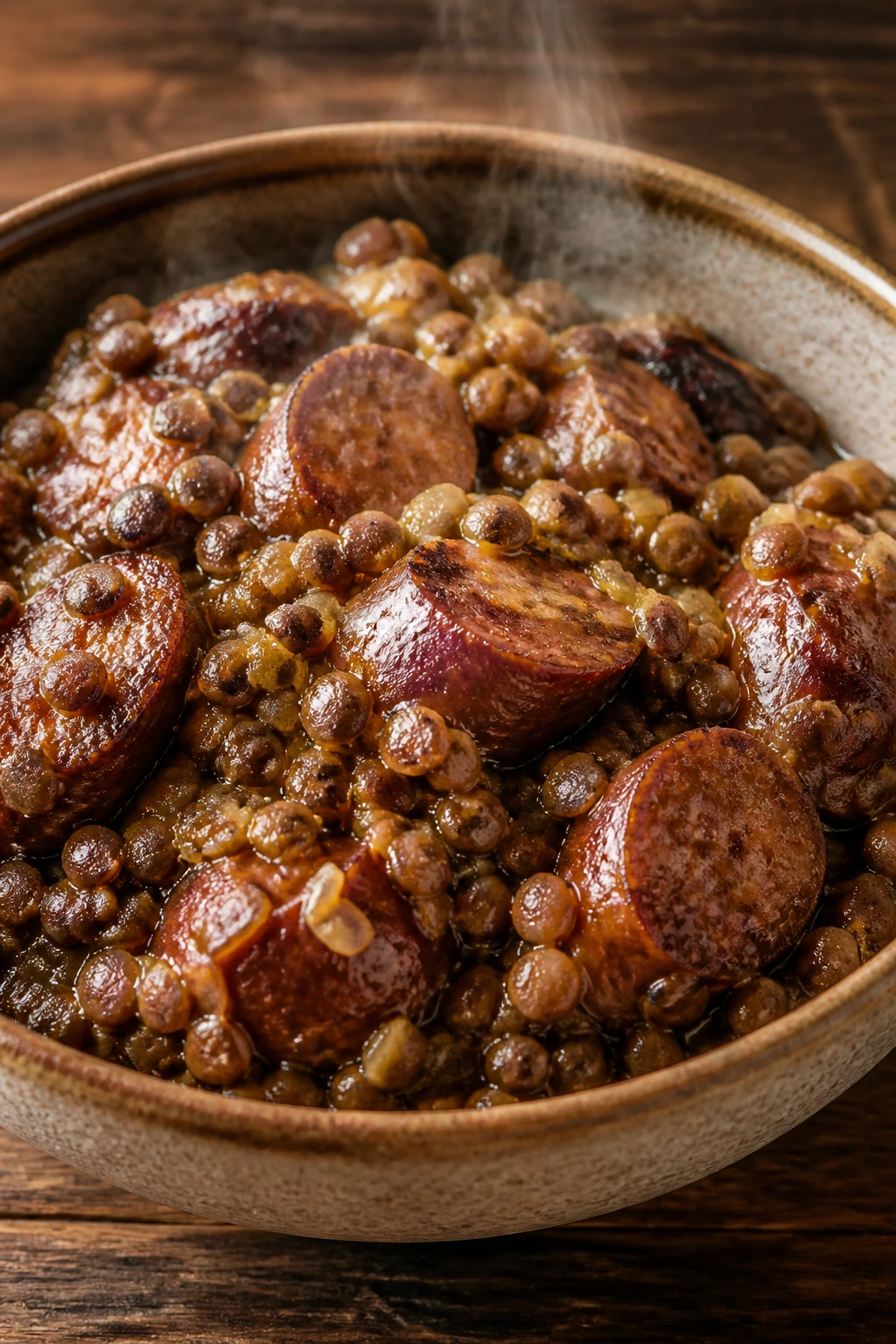
This dish works because it does not try to hide what it is. You taste browned sausage, soft lentils, sweet onion, and a glaze that moves between sharp and sticky without drifting into dessert territory. Nothing in the bowl is fussy. That is the point.
Keep a bag of brown lentils and a package of smoked sausage around, and dinner stays close. The rest is pantry work, a bit of simmering, and one good glaze at the end. Make it once, and you will probably start adjusting the glaze before you touch anything else.
Tender Lentils and Sausage with Brown Sugar Glaze — Recipe Card

Recipe Name: Tender Lentils and Sausage with Brown Sugar Glaze
Description: A one-pot lentil and sausage dinner finished with a sweet-sharp brown sugar glaze. The lentils stay tender, the sausage browns first, and the sauce clings to every spoonful.
Prep Time: 20 minutes
Cook Time: 35 to 40 minutes
Total Time: 55 to 60 minutes, plus 5 minutes resting
Course: Dinner, Main Course
Cuisine: American
Servings: 6 servings
Calories: About 420 kcal per serving
Ingredients
For the Lentils and Sausage:
- 1 tablespoon olive oil
- 12 ounces smoked pork sausage or kielbasa, sliced into 1/2-inch rounds
- 1 medium yellow onion, diced
- 2 medium carrots, diced
- 2 celery ribs, diced
- 4 garlic cloves, minced
- 1 1/2 cups brown or green lentils, rinsed and picked over
- 4 cups low-sodium chicken broth
- 1 cup water
- 1 bay leaf
- 1 teaspoon kosher salt, plus more to taste
- 1/2 teaspoon black pepper
- 1 teaspoon smoked paprika
- 1/2 teaspoon dried thyme
For the Brown Sugar Glaze:
- 1/4 cup packed light brown sugar
- 2 tablespoons Dijon mustard
- 2 tablespoons apple cider vinegar
- 1 tablespoon soy sauce or tamari
- 1 tablespoon unsalted butter
For Finishing:
- 2 tablespoons chopped fresh parsley
Instructions
-
Heat the olive oil in a 5- to 6-quart Dutch oven over medium-high heat. Brown the sliced sausage for 4 to 5 minutes, then transfer it to a plate.
-
Reduce the heat to medium. Add the onion, carrots, celery, and 1/2 teaspoon of the salt. Cook for 6 to 8 minutes until softened.
-
Add the garlic, smoked paprika, and thyme. Stir for 30 seconds until fragrant.
-
Add the lentils, broth, water, bay leaf, black pepper, and remaining salt. Bring to a boil, then reduce to a steady simmer and cook partially covered for 20 to 25 minutes, stirring occasionally, until the lentils are tender but still hold their shape.
-
Whisk the brown sugar, Dijon mustard, apple cider vinegar, soy sauce, and butter in a small bowl.
-
Return the sausage to the pot and pour in the glaze. Simmer uncovered for 4 to 6 minutes, stirring gently, until glossy and lightly thickened.
-
Remove the bay leaf, stir in the parsley, and rest for 5 minutes before serving.
Notes: Brown or green lentils work best; red lentils will turn mushy. Keep extra broth nearby in case the pot tightens while simmering. Add the glaze only after the lentils are tender.