



Buffalo chicken gets messy fast if you treat it like a race. The trick is not more heat; it’s less. A good buffalo chicken should stay juicy enough to shred into thick strands, with a sauce that smells sharp, buttery, and a little wild around the edges.
That balance comes straight from the classic Buffalo wing formula: cayenne-style hot sauce, butter, and a touch of acid to keep the burn from flattening out. Strip away the bones, skip the breading, and the whole thing becomes a fast skillet dinner instead of a bar snack that needs a stack of napkins and a backup shirt.
I keep coming back to this style because it behaves. It sears, it simmers, it shreds, and it does not ask for a marinade that lives in your fridge for two days and then gets forgotten behind the yogurt. The sauce coats the chicken in a glossy layer instead of drowning it, which matters more than people think; too much sauce and the whole dish turns soupy, too little and it tastes like plain chicken with red paint on top. This version keeps the balance tight.
Why This Buffalo Chicken Earns Its Keep on Busy Nights
The original Buffalo wing formula is shockingly simple, and that’s why it’s survived all the messy remixes people have thrown at it over the years. Hot sauce. Butter. A little vinegar. Salt. That’s the backbone. Once you move those flavors onto shredded chicken, the sauce has something to grab, which means more flavor in every forkful and less of that slippery, half-coated feeling you get from weaker versions.
Chicken thighs make the whole thing less fragile. They stay soft through a brief simmer, they shred cleanly, and they’re forgiving if you get distracted by a text or a school pickup line. Breasts can work, but they punish you if you overdo the heat by even a minute or two. Thighs give you room to breathe.
- Tender first, spicy second: The chicken simmers under a lid, so the meat stays juicy instead of tightening up and turning stringy.
- One skillet, not a pile of dishes: You brown, braise, and sauce everything in the same pan.
- Heat you can actually steer: A spoonful of honey or an extra knob of butter softens the burn without turning the sauce flat.
- Flexible enough for real life: Spoon it into buns, pile it over rice, tuck it into wraps, or eat it with celery and ranch straight from a bowl.
- Leftovers pull their weight: The flavors settle in overnight, which means the second day can be even better than the first.
Yield: Serves 4 to 6
Prep Time: 15 minutes
Cook Time: 20 minutes
Total Time: 40 minutes
Chill/Rest Time: 5 minutes resting before shredding
Difficulty: Beginner — the method is straightforward, and an instant-read thermometer keeps the chicken from going dry.
Best Served: Hot from the skillet, with the sauce still glossy and the chicken just shredded
The Pantry List for Tender Buffalo Chicken
A short ingredient list can be deceptive. This one looks almost too easy, which is exactly where people get sloppy. Each ingredient has a job: some season the meat, some keep the pan from drying out, and some stop the sauce from tasting one-note.
For the Chicken
- 2 pounds boneless, skinless chicken thighs, trimmed of excess fat and patted dry
- 1 teaspoon kosher salt
- 1/2 teaspoon freshly ground black pepper
- 1 teaspoon garlic powder
- 1 teaspoon onion powder
- 1/2 teaspoon smoked paprika
For the Buffalo Sauce
- 1 tablespoon olive oil
- 3/4 cup low-sodium chicken broth
- 3/4 cup buffalo-style hot sauce
- 2 tablespoons unsalted butter
- 1 tablespoon apple cider vinegar
- 1 teaspoon honey, optional but useful if your hot sauce leans sharp
For Finishing
- 2 tablespoons chopped fresh chives or parsley
- Ranch or blue cheese dressing, optional for serving
Chicken Thighs and the Gentle Heat That Keeps Them Juicy
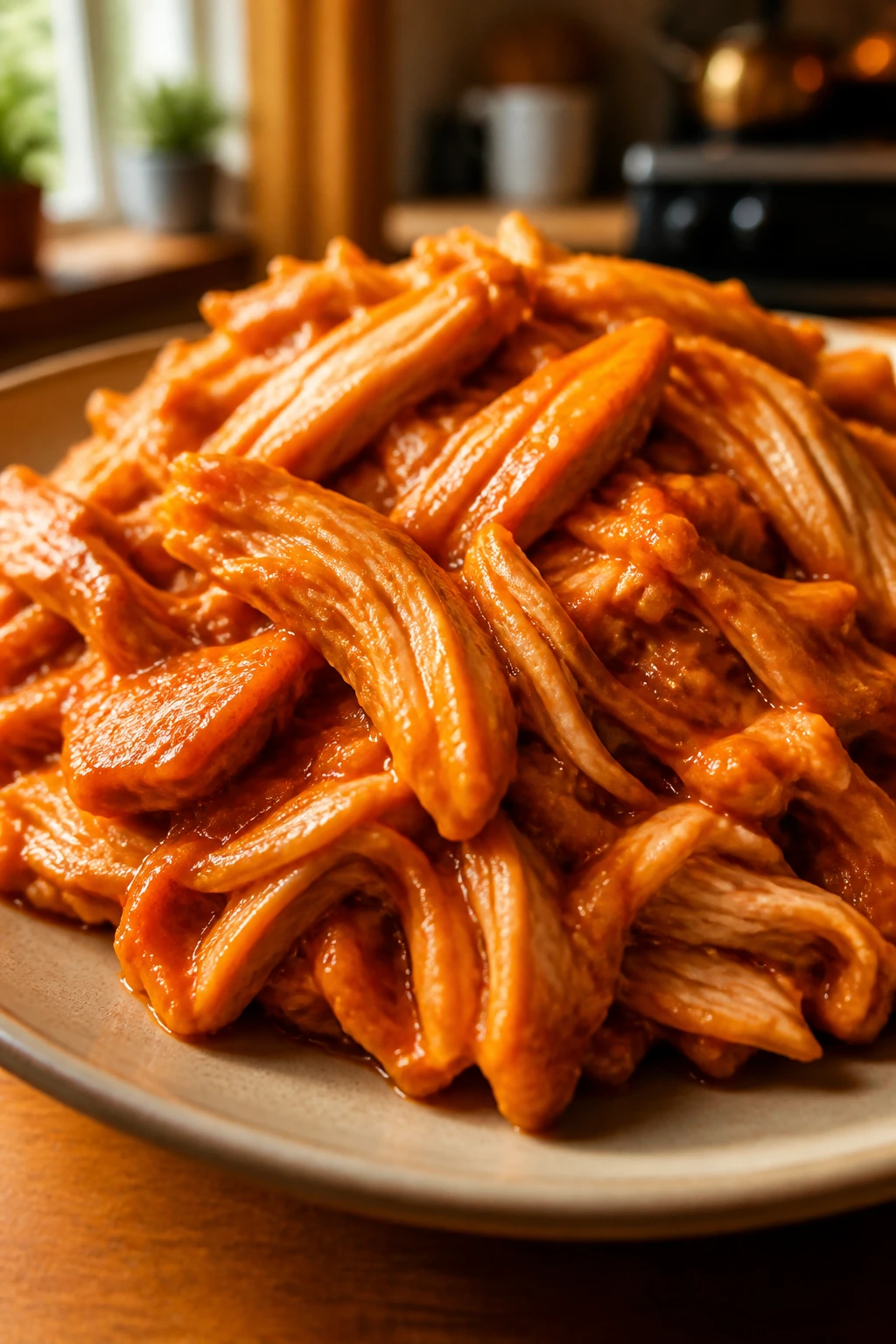
Chicken thighs are the calmest way to make buffalo chicken. They stay soft through a brief simmer, and they shred into juicy ribbons instead of dry threads. If you’ve ever pulled apart a breast that went one minute too long, you know why I reach for thighs here.
Chicken Thighs
- What to use: 2 pounds boneless, skinless chicken thighs, trimmed so the pieces sit flat in the skillet.
- Preparation: Pat them dry before seasoning; wet chicken steams, and steaming leaves you with pale meat and weak flavor.
- Substitutions: Boneless, skinless chicken breasts work too, but pound them to an even thickness first and start checking them a few minutes early.
- Tips: Keep the thighs in a single layer while they simmer. If they overlap, the thickest pieces finish late while the thinner ones start drying out.
The reason thighs hold up so well is simple. They have a little more fat and connective tissue than breasts, which means they tolerate heat without turning into chalk. That tiny cushion matters when the pan gets covered and the chicken spends a few minutes braising in broth. You are not chasing a hard sear here. You are aiming for a soft, sturdy texture that can stand up to hot sauce.
If you do use breasts, don’t treat them like a mystery. Pound them to an even 3/4-inch thickness, lower the simmer a little sooner, and pull them when the center reaches 165°F. Any higher than that, and the shredded texture goes from tender to papery fast.
The Buffalo Sauce Base and Why Butter Changes Everything
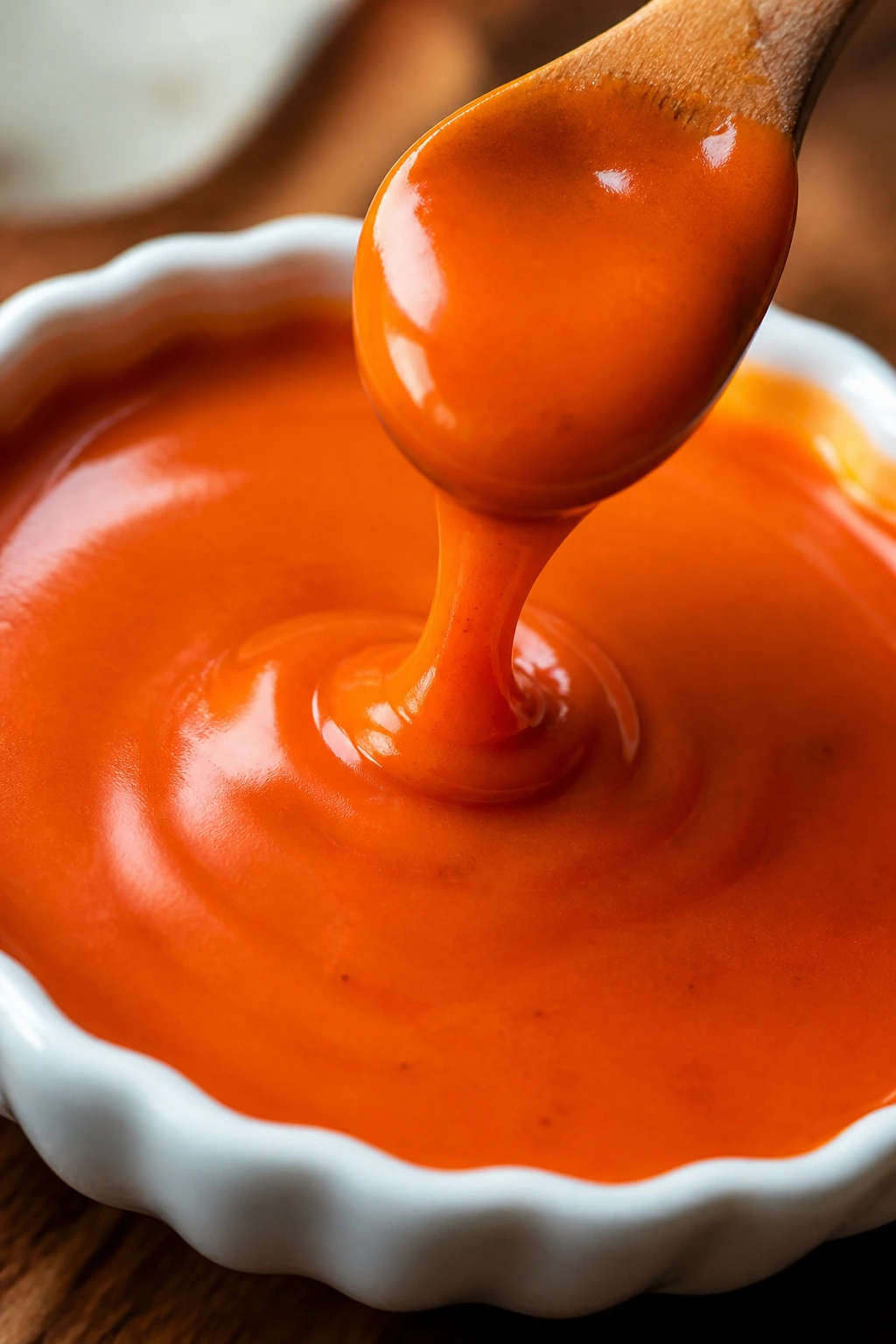
Butter is not here just to be rich. It rounds the sharp edges of cayenne-based hot sauce so the heat lands cleanly instead of biting and then hanging around too long. That’s the whole trick, and it’s why mediocre buffalo sauce tastes aggressive while good buffalo sauce tastes balanced.
Buffalo Sauce
- What to use: 3/4 cup buffalo-style hot sauce, 2 tablespoons unsalted butter, and 1 tablespoon apple cider vinegar.
- Preparation: Measure the sauce before you start cooking, because once the chicken is done, the pan moves quickly and you do not want to be hunting for a measuring cup with hot chicken in your tongs.
- Substitutions: If you like a gentler heat, use 1/2 cup hot sauce plus 1/4 cup mild cayenne sauce or extra broth. For a dairy-free version, swap the butter for olive oil or a good plant-based butter.
- Tips: Keep the sauce over low heat once the butter goes in. If it boils hard, the fat can separate and the texture turns greasy instead of glossy.
The vinegar deserves more credit than it gets. Buffalo sauce without acid can taste flat after the first few bites. A tablespoon wakes up the whole pan. It does not make the dish sour. It makes the heat taste brighter, which is a different thing entirely.
Honey is optional, but I like the small amount because it smooths out a sauce that leans too sharp or too salty. One teaspoon is enough. More than that and you’re heading away from Buffalo and toward a sticky wing glaze, which is a different dish with a different mood.
The Seasoning, Acid, and Finish That Make the Pan Taste Complete
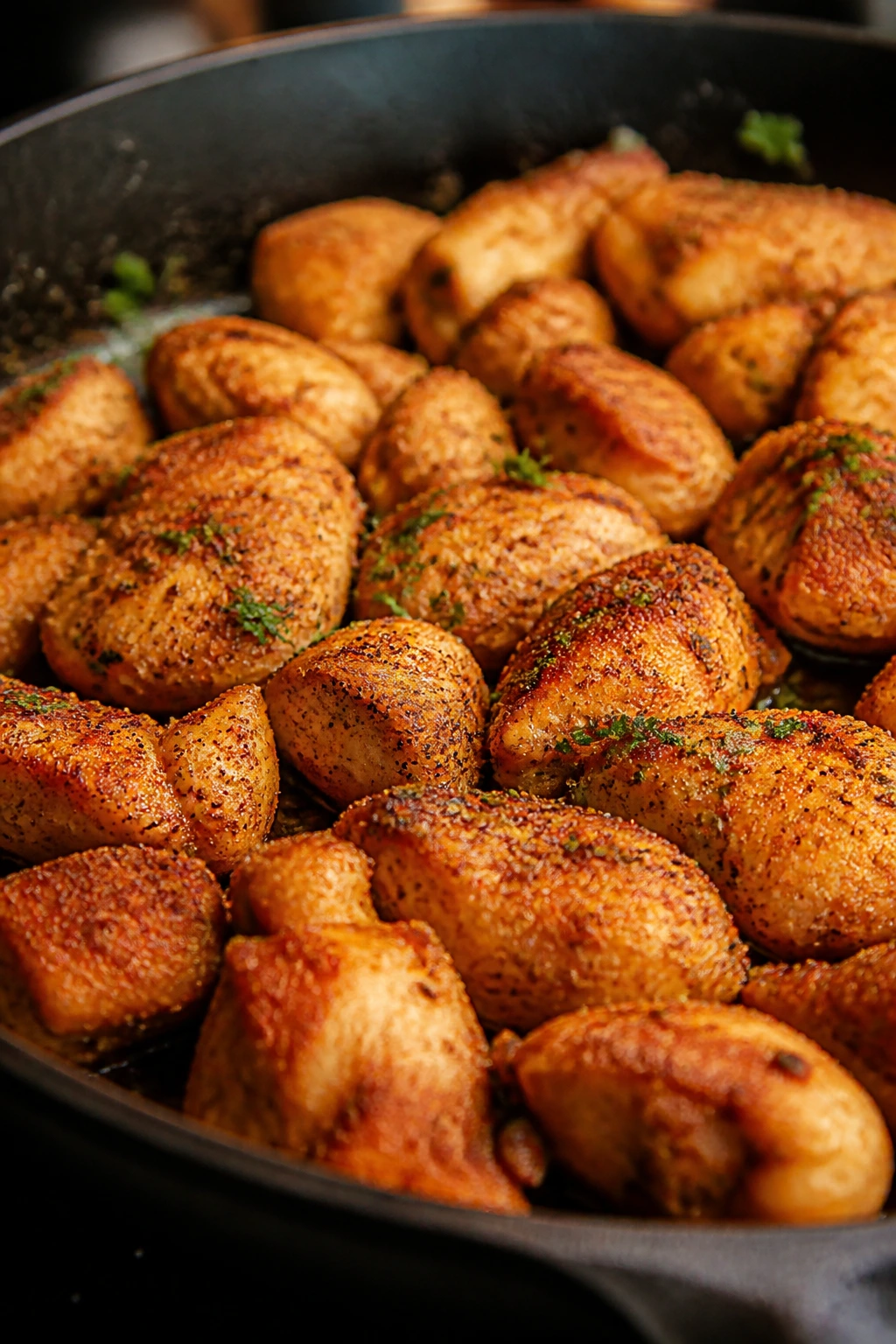
If the chicken and sauce are the loud parts, the seasoning is the part that makes the dish sound finished. Garlic powder, onion powder, black pepper, and a little smoked paprika build a base so the buffalo sauce doesn’t have to do all the work alone. Nobody wants hot sauce and nothing else.
Seasonings and Finishing Touches
- What to use: 1 teaspoon kosher salt, 1/2 teaspoon black pepper, 1 teaspoon garlic powder, 1 teaspoon onion powder, 1/2 teaspoon smoked paprika, and 2 tablespoons chopped chives or parsley.
- Preparation: Mix the dry seasonings before they hit the chicken so the coating stays even. Chop the herbs at the very end so they stay bright.
- Substitutions: Celery salt can stand in for part of the kosher salt if you want a more wing-shop flavor. Fresh parsley works where chives are hard to find.
- Tips: Taste the finished chicken before serving. Hot sauce brands vary a lot in salt and acid, and a small pinch of salt at the end can fix a sauce that tastes oddly thin or tired.
Smoked paprika is not classic in every Buffalo recipe, and that’s fine. I like the little smoky note because it gives the chicken a deeper edge without turning the whole thing into barbecue. You barely need it. Half a teaspoon is enough to show up.
The herbs on top are not decoration. They cut through the butter and give the plate a fresher look and taste. Chives are my favorite here because they taste oniony without being raw and sharp. Parsley is a fine fallback. Celery leaves, if you have them, are even better.
The Skillet Method That Turns Simple Ingredients Into Dinner
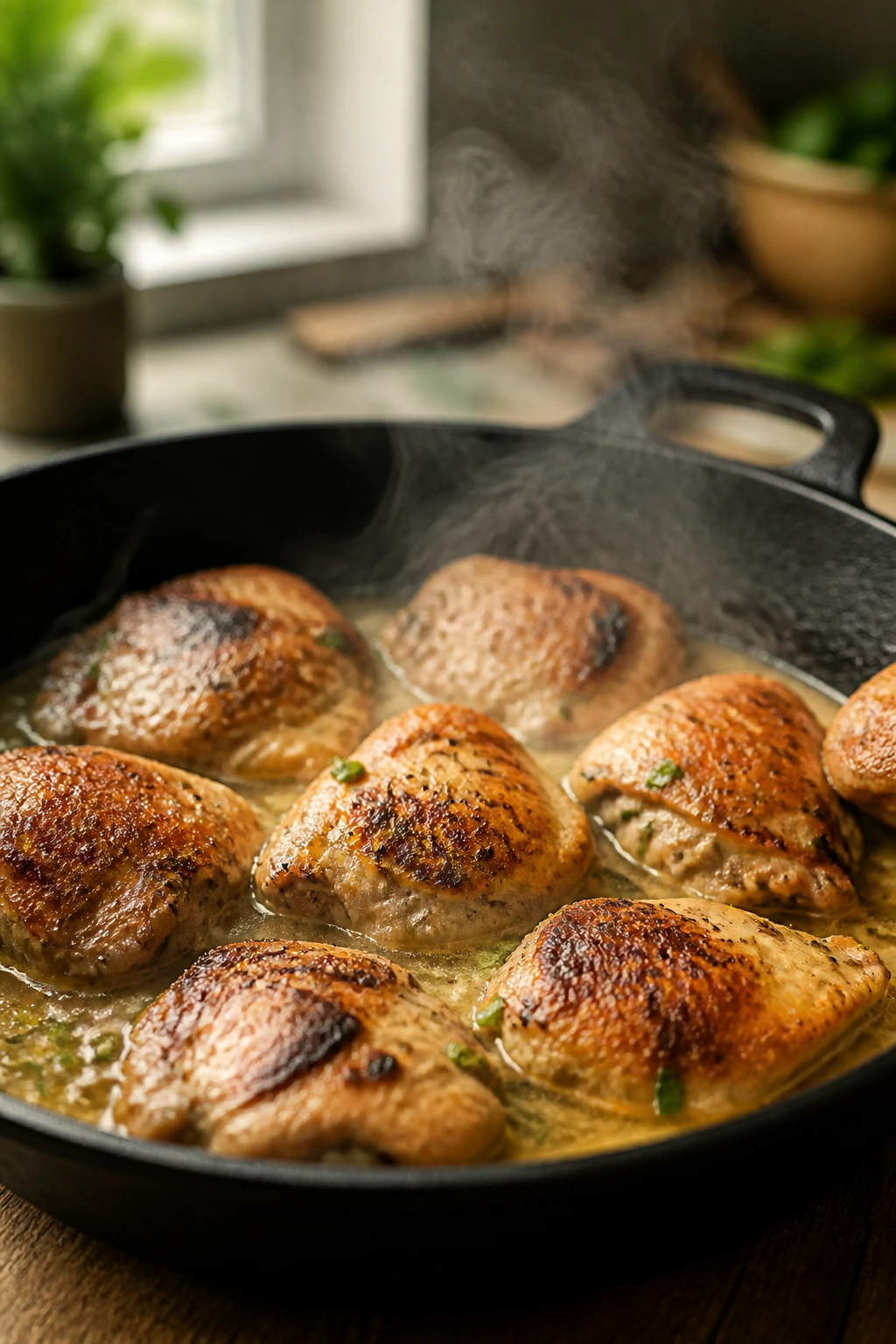
The pan does most of the work here. Your job is to keep the heat where it belongs, give the chicken enough time to cook through, and stop before the sauce turns greasy or broken. That’s it. No drama.
Prepare and Season the Chicken:
- Pat the chicken thighs dry with paper towels and trim away any loose bits of fat or gristle.
- In a bowl, toss the chicken with 1 teaspoon kosher salt, 1/2 teaspoon black pepper, 1 teaspoon garlic powder, 1 teaspoon onion powder, and 1/2 teaspoon smoked paprika until every piece is lightly coated.
Sear and Braise: 3. Heat 1 tablespoon olive oil in a large 12-inch skillet over medium-high heat until it shimmers. 4. Add the chicken in a single layer and cook for 3 minutes on the first side, then 3 minutes on the second side, until the outside is lightly browned. Do not crank the heat higher just to speed this up; the spices can scorch before the chicken has time to cook evenly. 5. Pour in 3/4 cup low-sodium chicken broth, reduce the heat to medium-low, and cover the skillet with a lid. 6. Simmer for 10 to 12 minutes, until the thickest piece of chicken reaches 165°F and the juices run clear. If you’re using chicken breasts instead of thighs, start checking around 8 minutes.
Shred and Sauce: 7. Transfer the chicken to a cutting board or plate and let it rest for 5 minutes. Skip this, and the juices will run onto the board instead of staying in the meat. 8. While the chicken rests, reduce the pan juices until you have about 1 to 2 tablespoons left in the skillet. Add 3/4 cup buffalo-style hot sauce, 2 tablespoons unsalted butter, 1 tablespoon apple cider vinegar, and 1 teaspoon honey, if using. Stir over low heat for 1 to 2 minutes, until the butter melts and the sauce looks glossy. 9. Shred the chicken with two forks, or use a hand mixer on low if you want it fast and you’ve got a deeper bowl. 10. Return the shredded chicken to the skillet and toss for 1 to 2 minutes, until every strand is coated and hot. If the sauce seems too thick, add 1 to 2 tablespoons of the reserved broth. Finish with chopped chives or parsley and serve right away.
The chicken should look moist, not soupy. The sauce should cling, not pool. That visual is worth paying attention to, because buffalo chicken changes personality fast when it gets too wet. Wet buffalo chicken tastes lazy. Coated buffalo chicken tastes finished.
What You’ll Need on the Counter
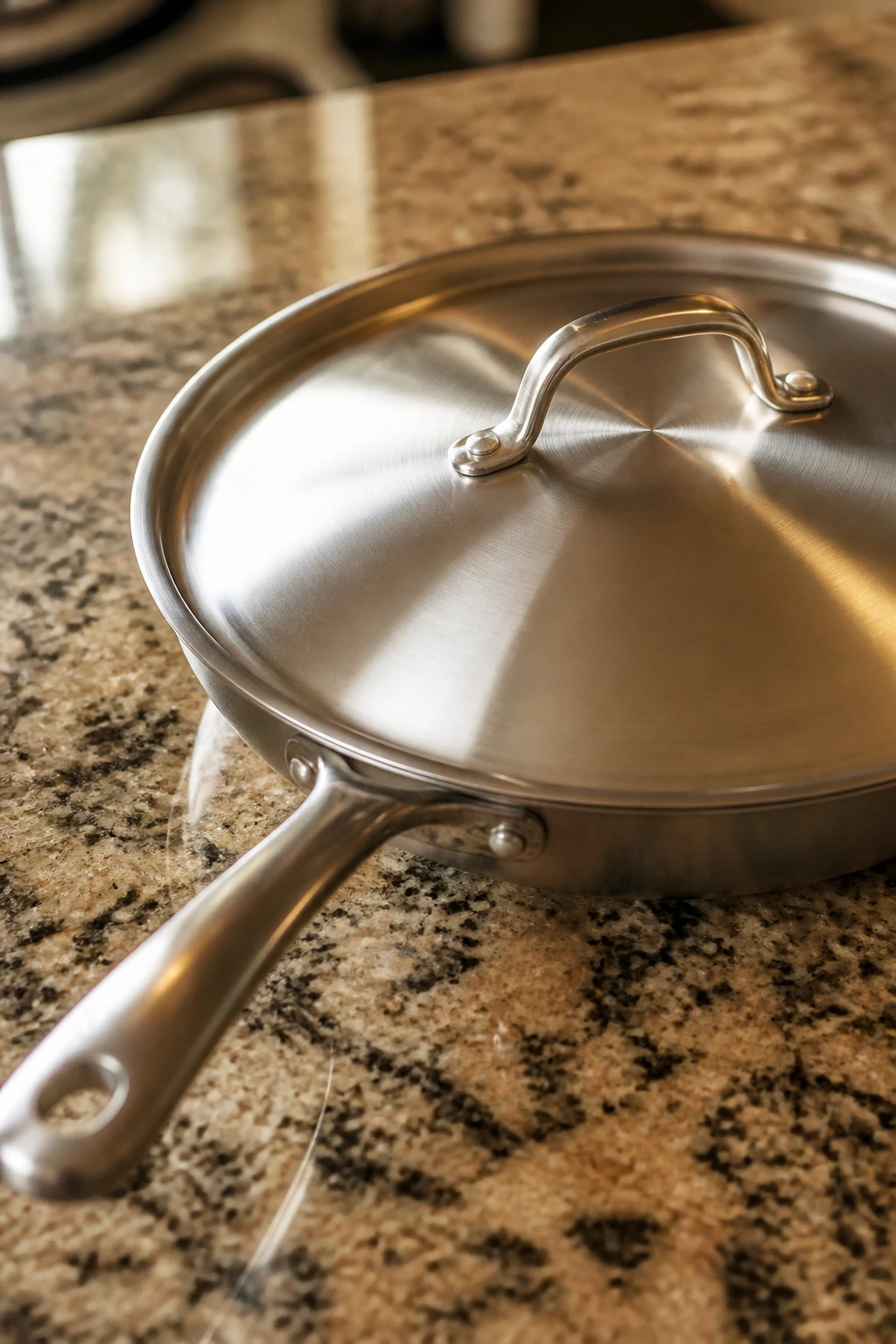
No fancy equipment. Still, a few specific tools make this recipe smoother, and one of them matters more than people think.
- 12-inch skillet with a tight-fitting lid — This gives the chicken room to brown without crowding, and the lid keeps the braise even.
- Instant-read thermometer — The easiest way to stop at 165°F without guessing.
- Tongs — Better than a fork for turning the chicken without tearing the surface before it’s cooked.
- Two forks or a hand mixer — Two forks work fine; a hand mixer shreds the chicken faster if you’re making a bigger batch.
- Small whisk or wooden spoon — Useful for bringing the sauce together smoothly after the butter goes in.
- Cutting board and knife — You’ll need both for trimming the thighs and chopping the herbs.
- Measuring cups and spoons — Buffalo sauce is about balance, so eye-balling the liquid is a bad habit here.
If your skillet does not have a lid, a sheet of foil pressed loosely over the top will do the same job. It is not glamorous. It works.
How I Like to Serve Buffalo Chicken
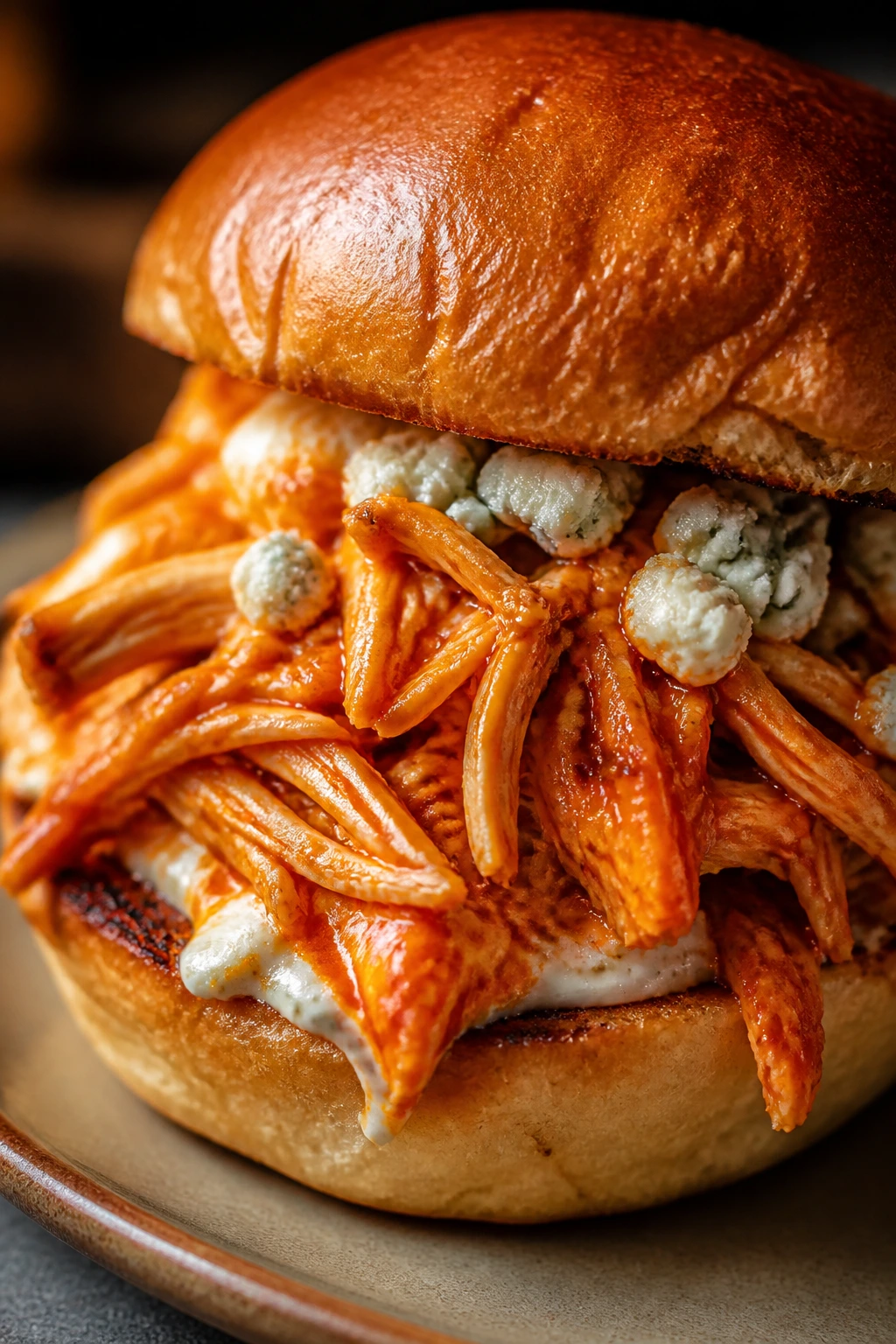
Buffalo chicken can look like three different dinners depending on what you put around it, and I like having those options. Some nights call for the full sandwich treatment. Other nights call for a bowl and a fork because that’s what the fridge gives you.
Presentation: Pile the shredded chicken high so the strands show, then spoon a little extra sauce over the top and finish with chives or parsley. On buns, I like toasted brioche or potato rolls because they hold up better than plain sandwich bread. For bowls, a shallow plate works better than a deep bowl; you can see the sauce, the herbs, and whatever crunchy side you’ve tucked in beside it.
Accompaniments: Celery sticks and carrot sticks are the classic move, and I still like them because they give the plate a cold, crisp bite that cuts through the butter. Beyond that, roasted potatoes, steamed rice, butter lettuce, shredded cabbage, or a simple slaw all work. If I’m serving it as dinner rather than a snack, I usually add one starchy thing and one crunchy thing. Rice plus celery. Bun plus slaw. Potato wedges plus pickles.
Portions: This recipe makes 4 to 6 servings, depending on what else is on the table. As a sandwich filling, count on about 3/4 cup shredded chicken per bun. As a bowl, 5 to 6 ounces of cooked chicken per adult is a good target if you’re serving sides. If the meal is more casual and you’ve got chips or cut vegetables alongside, 1/2 cup per person can be enough.
Beverage Pairing: A cold lager or pilsner is the easiest beer match because it cools the heat without fighting the sauce. For a non-alcoholic option, sparkling water with lime or iced tea with lemon both clean up the palate between bites. I also like a sharp lemonade here, but only if the sauce is not already leaning sweet.
A bowl of buffalo chicken with rice and celery looks simple, but it eats bigger than it looks. That’s part of the charm. It feels like something assembled quickly and correctly, which is a nice thing to have on a tired evening.
Small Fixes and Flavor Moves That Matter
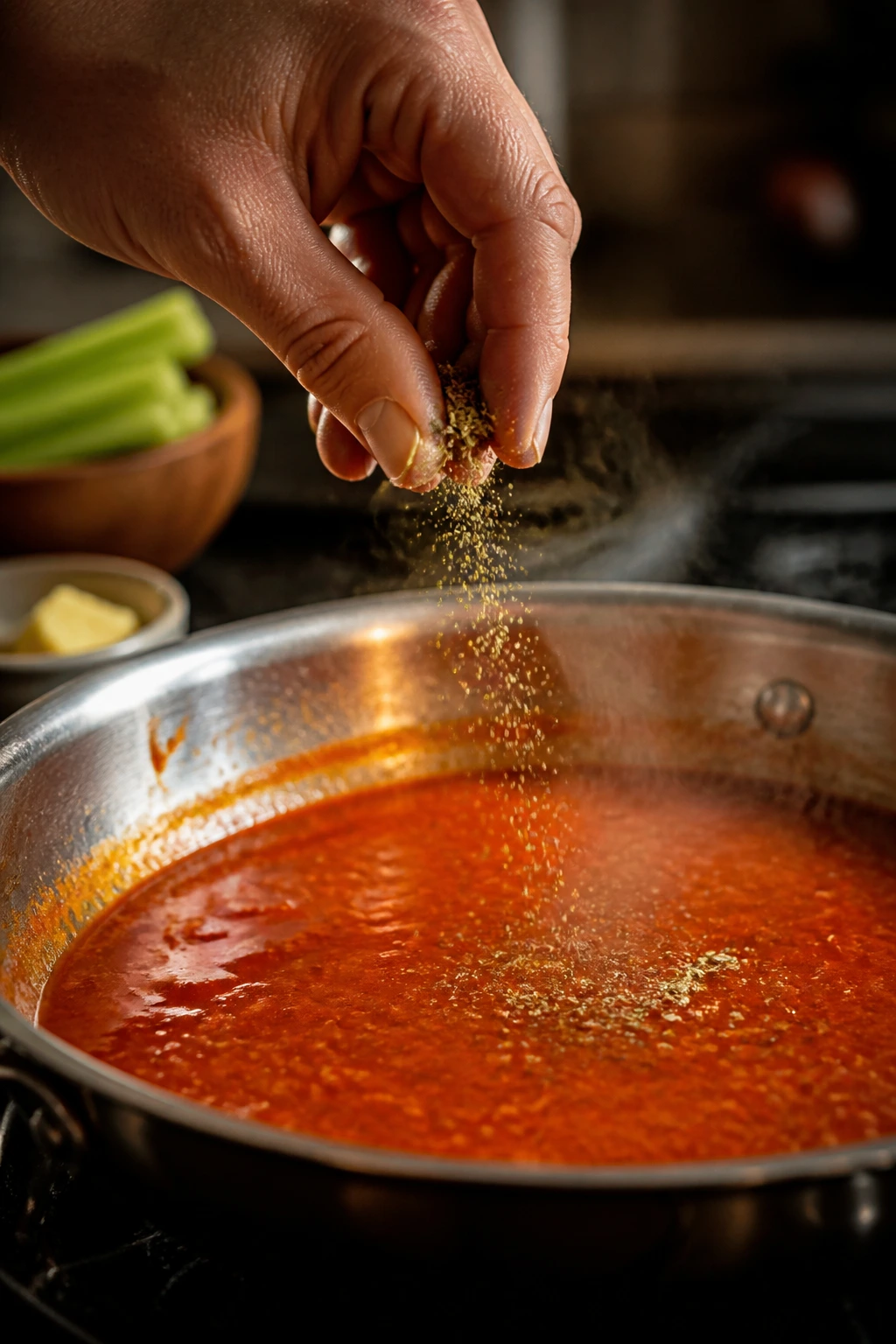
A good buffalo chicken recipe leaves room for small choices, and those small choices change the plate more than people expect. One extra teaspoon here, one finishing splash there — those are the moves that make a recipe feel like yours instead of something copied from a bottle label.
Flavor Enhancement: A teaspoon of celery salt or a small splash of pickle brine at the end gives the sauce the same tangy snap you get from a proper wing basket. It sounds odd until you try it. Then it sounds obvious.
Customization: If you want a richer filling for sandwiches, stir in 2 tablespoons of ranch dressing after the chicken is shredded. If you want more heat, add a pinch of cayenne or a few dashes of extra hot sauce at the end rather than during the braise. That keeps the spice bright instead of cooked down.
Serving Suggestions: Crumbled blue cheese, sliced scallions, or a few celery leaves turn the dish from plain shredded chicken into something that looks finished on the plate. On a sandwich, a thin smear of mayo or ranch on the bun keeps the bread from going soggy before the chicken is gone. That matters more than it sounds like it should.
Make-It-Yours: For dairy-free cooking, swap the butter for olive oil or a plant-based butter with a clean ingredient list and a mild flavor. For a lower-carb plate, serve the chicken over chopped romaine or cauliflower rice. For a milder family version, use a gentler buffalo sauce and add the honey, then let the hot sauce bottle sit out of sight for a night.
A small drizzle of extra sauce over the top is nice, but don’t drown the chicken just because the bottle is there. The goal is coating. The difference between coating and soaking is the difference between dinner and a mess.
Mistakes That Dry Out Buffalo Chicken or Make It Thin
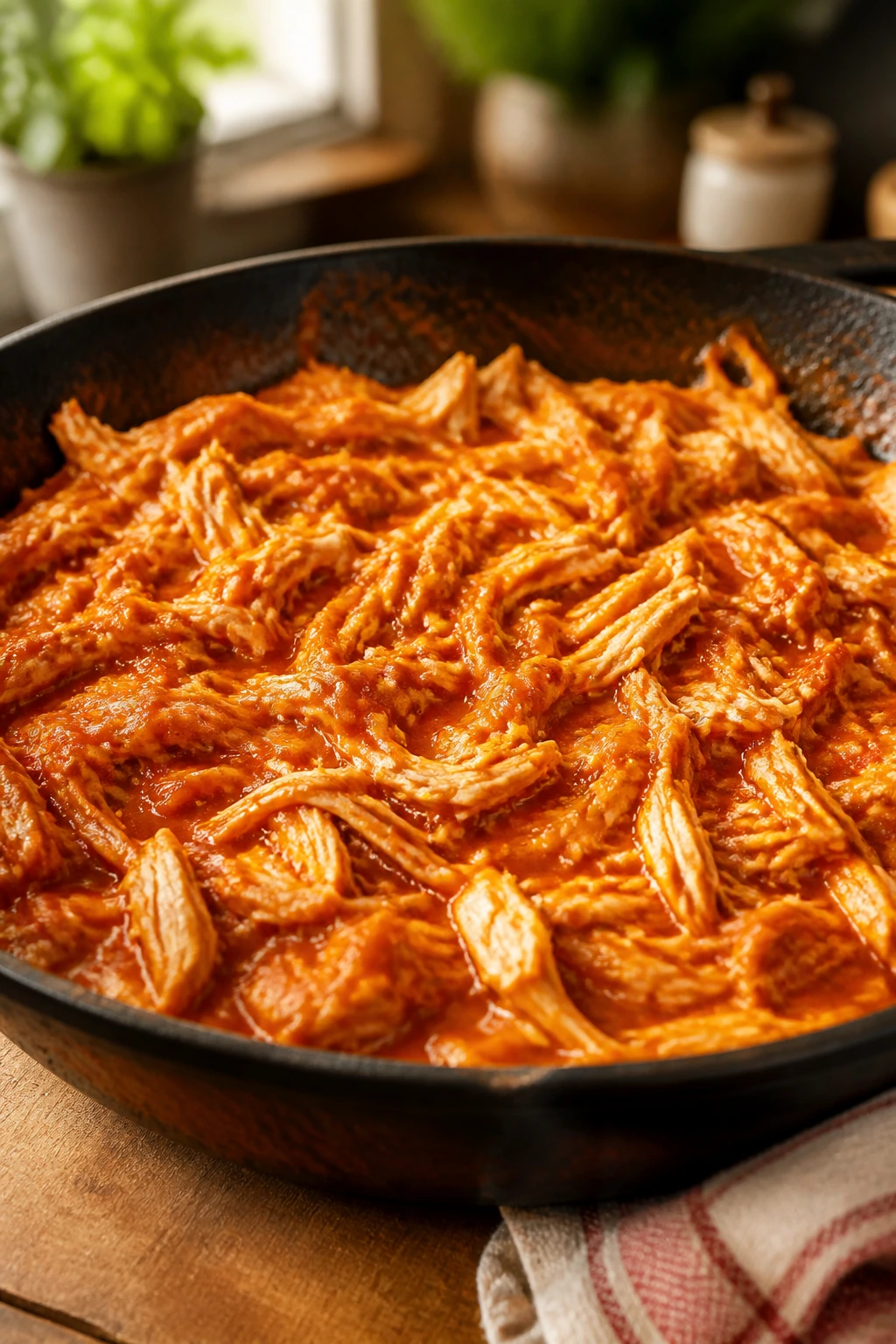
Most bad buffalo chicken problems are boring problems. Too much heat. Not enough seasoning. Sauce boiled too hard. Chicken shredded before it had a chance to settle. None of these are mysterious, and all of them are fixable.
- Cooking by guesswork instead of temperature: The chicken looks done on the outside, but the center is still under or the meat is already dry from hanging out too long. Use an instant-read thermometer and pull it at 165°F, not when the surface starts looking “about right.”
- Letting the sauce boil after the butter goes in: The sauce turns greasy or split instead of glossy. Keep the heat low once the butter is added and stir only until it looks smooth.
- Crowding the skillet: If the chicken pieces are stacked on top of each other, they steam instead of browning, and the seasoning lands flat. Give the thighs a little space, even if that means cooking them in two batches.
- Skipping the rest before shredding: The juice ends up on the board and the chicken feels stringy instead of tender. Five minutes on the counter is enough.
- Adding too much broth and never reducing it: The pan ends up thin, and the sauce won’t cling to the chicken. If that happens, uncover the skillet for a minute or two and let the liquid tighten before the buffalo sauce goes in.
There’s one more mistake I see a lot: using the wrong kind of hot sauce. Thick barbecue-style sauces or sweet chili sauces don’t give you Buffalo flavor. Buffalo sauce wants a cayenne-based hot sauce with a clean burn and a little vinegar tang. If the bottle tastes like candy, it’s the wrong bottle.
Buffalo Chicken Variations Worth Making on Purpose
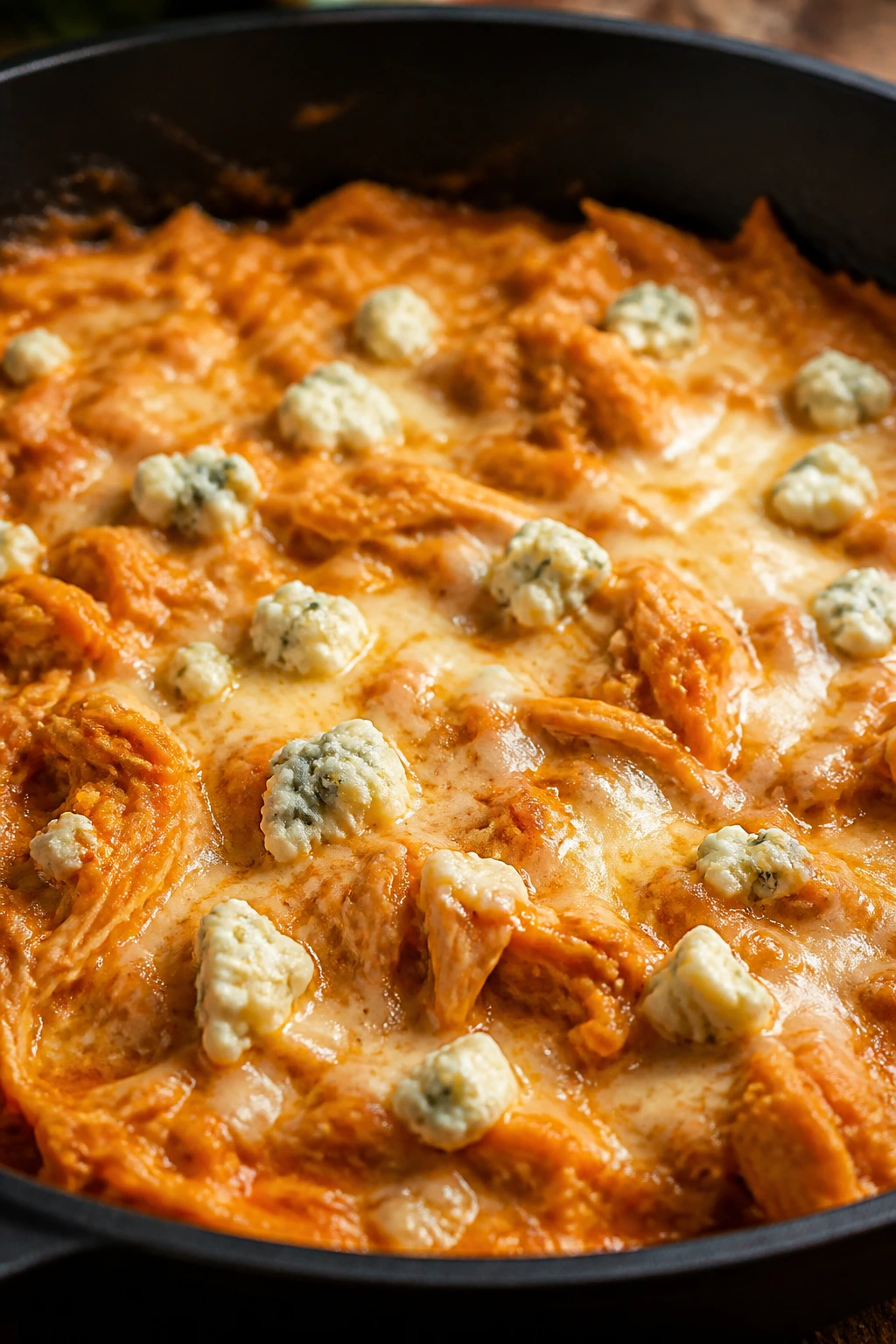
The core recipe is sturdy enough to take a few turns without falling apart. That’s useful, because one week you may want sandwiches and the next week you may want bowls, lettuce wraps, or a slow-cooker version that runs while you handle everything else.
Buffalo Chicken Sandwich Filling
Shred the chicken a little finer and stir in 2 tablespoons of ranch dressing right before serving. The filling gets creamier, which helps it stay inside toasted buns instead of sliding out the sides. I like this version when I’m serving it with pickles and a pile of crunchy slaw.
Blue Cheese Buffalo Skillet
Fold in 1/3 cup blue cheese crumbles after the chicken is coated in sauce, then let them melt for 30 seconds off the heat. The cheese softens into the sauce without disappearing completely. If you already love blue cheese with wings, this is the version that feels most like the original plate.
Dairy-Free Heat
Replace the butter with 2 tablespoons of olive oil or a good plant-based butter. Keep the vinegar and honey the same. The sauce will be a little leaner, not worse, and it still clings well if you reduce it for a minute before tossing the chicken.
Slow Cooker Shredded Buffalo Chicken
Put the chicken, broth, and dry seasonings in a slow cooker and cook on low for 4 to 5 hours, or until the chicken shreds easily. Drain most of the liquid, then stir in the hot sauce, butter, and vinegar after shredding. This is the laziest version, which is not an insult; sometimes lazy is exactly what dinner needs.
Extra-Veggie Buffalo Bowls
Serve the chicken over shredded cabbage, lettuce, or cauliflower rice, then add diced celery, shredded carrots, and sliced scallions. The vegetables give the dish a colder crunch and make the sauce feel less heavy. This is the version I reach for when I want the flavor of wings without turning the whole plate into a bread situation.
You can also make it milder by cutting the hot sauce with a little extra broth, or hotter by adding cayenne at the end. Do not dump in more heat at the beginning and hope for the best. That’s how you end up with a sauce that tastes loud and weird instead of balanced.
Keeping Leftovers Juicy: Storage, Reheating, and Make-Ahead Notes
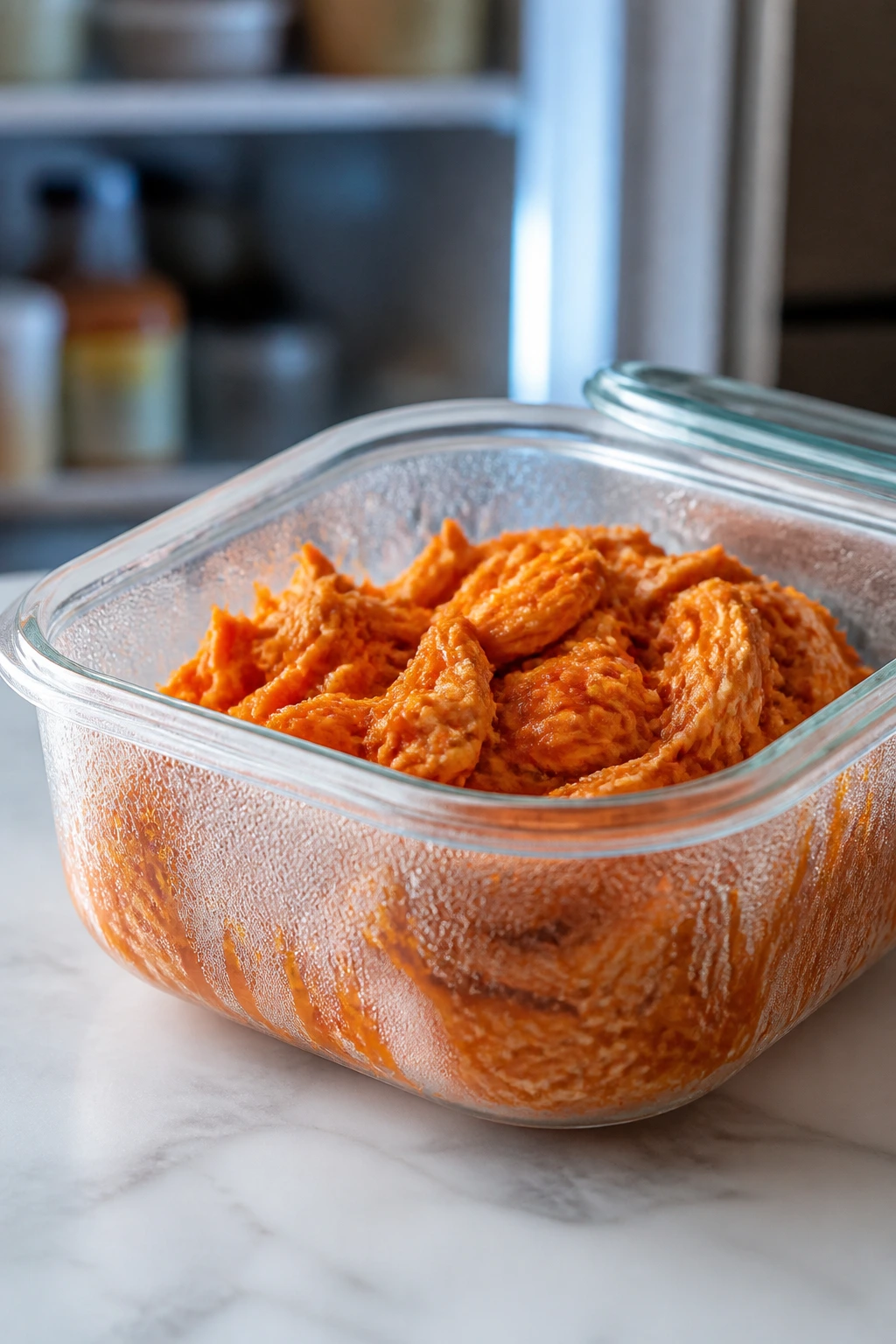
Buffalo chicken holds up better than a lot of sauced meats, but it still needs a little care once it cools. The sauce thickens in the fridge, the chicken drinks it in, and the leftovers end up even more flavorful if you reheat them gently instead of blasting them dry.
Cool the chicken within 2 hours of cooking, then store it in an airtight container. In the refrigerator, it keeps well for 3 to 4 days. If you want to freeze it, portion it into shallow containers or freezer bags and press out as much air as you can; it keeps for up to 2 months without losing too much texture.
For reheating on the stove, put the chicken in a skillet with 1 to 2 tablespoons of broth or water per cup of leftovers. Warm it over low heat, covered, for 5 to 7 minutes, stirring once or twice until it’s hot through. If the sauce looks tight, add another splash of liquid and keep the heat low. High heat dries the meat out and can split the sauce.
In the microwave, use a covered bowl and heat in 30- to 45-second bursts, stirring between each round. That sounds fussy. It isn’t. It keeps the shredded chicken from turning hot on the edges and cold in the middle. If you’re reheating for sandwiches, toast the buns separately so they stay sturdy.
You can also make the chicken a day ahead and hold it in the fridge. In fact, I think the flavor gets a little better overnight because the sauce settles into the shredded strands. If you’re planning ahead, stop at the point where the chicken is coated but still a little loose, then reheat it gently and finish with fresh herbs right before serving.
Buffalo Chicken Questions People Actually Ask

Can I use chicken breasts instead of thighs?
Yes. Pound the breasts to an even thickness so they cook at the same pace, and start checking them a few minutes earlier than the thighs. Pull them as soon as they reach 165°F, then let them rest before shredding so they don’t dry out.
How spicy is this recipe?
It depends on the bottle you buy, which is the honest answer. Standard cayenne-style buffalo sauce gives you a steady, medium heat; if you want it softer, add the optional honey and a little extra butter. If you want it hotter, finish with cayenne rather than loading the pan with more sauce from the start.
Can I make it in a slow cooker?
You can, and it’s a good move when you need the chicken to cook while you handle everything else. Cook the chicken, broth, and dry seasonings on low until tender, shred it, then stir in the hot sauce, butter, and vinegar at the end so the sauce stays bright.
What if my sauce turns out too thin?
Leave the chicken out for a minute and simmer the sauce uncovered over low heat until it tightens a bit. If you already added the chicken back in, keep tossing for another minute or two so the sauce reduces and clings instead of pooling. A thin sauce is usually a heat problem, not a chicken problem.
Can I freeze buffalo chicken after it’s sauced?
Yes. Freeze it in portioned containers so you can thaw only what you need later. The texture softens a little after freezing, but the flavor stays good, and it works well for bowls, wraps, and sandwiches.
What’s the fastest way to shred the chicken?
Two forks work fine. If you want speed, put the cooked chicken in a stand mixer bowl and use the paddle on low for a few seconds, just until it breaks apart. Stop early; if you overdo it, the shreds get too fine and the texture turns mushy.
Can I make it dairy-free without ruining the flavor?
Yes. Use olive oil or a dairy-free butter in place of the butter, then keep the vinegar and seasoning exactly the same. You lose a little of the classic wing-shop richness, but the sauce still tastes like Buffalo chicken, not a compromise.
What should I do if the chicken tastes flat even after saucing?
Add a pinch of salt and a few drops of vinegar, then taste again. Flat buffalo chicken usually needs sharpness, not more heat. A little acid or salt wakes it up faster than another pour of hot sauce.
A Bowl, a Bun, and a Better Weeknight
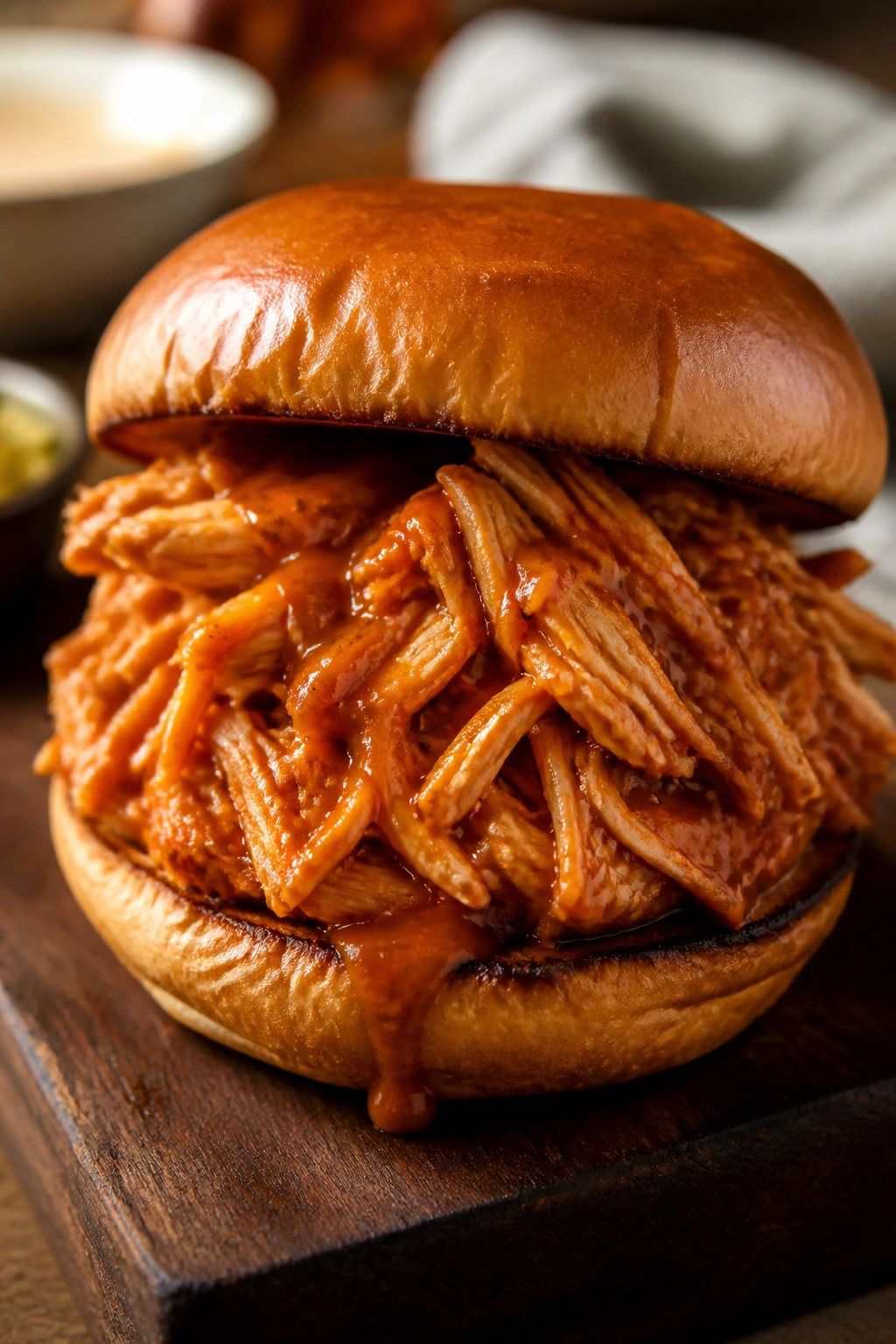
Buffalo chicken works because it does a simple job well: it gives you heat, richness, and enough tang to keep both from getting dull. When the chicken stays tender and the sauce stays glossy, the whole dish feels bigger than the effort it takes to make it. That’s the part I like most.
Serve it on toasted buns when you want the full sandwich experience. Spoon it over rice when the pantry is sparse. Pile it into lettuce wraps when you want the same flavor with a little more crunch. The pan will still taste like you meant it.
Tender Easy Buffalo Chicken for Weeknight Dinners — Recipe Card
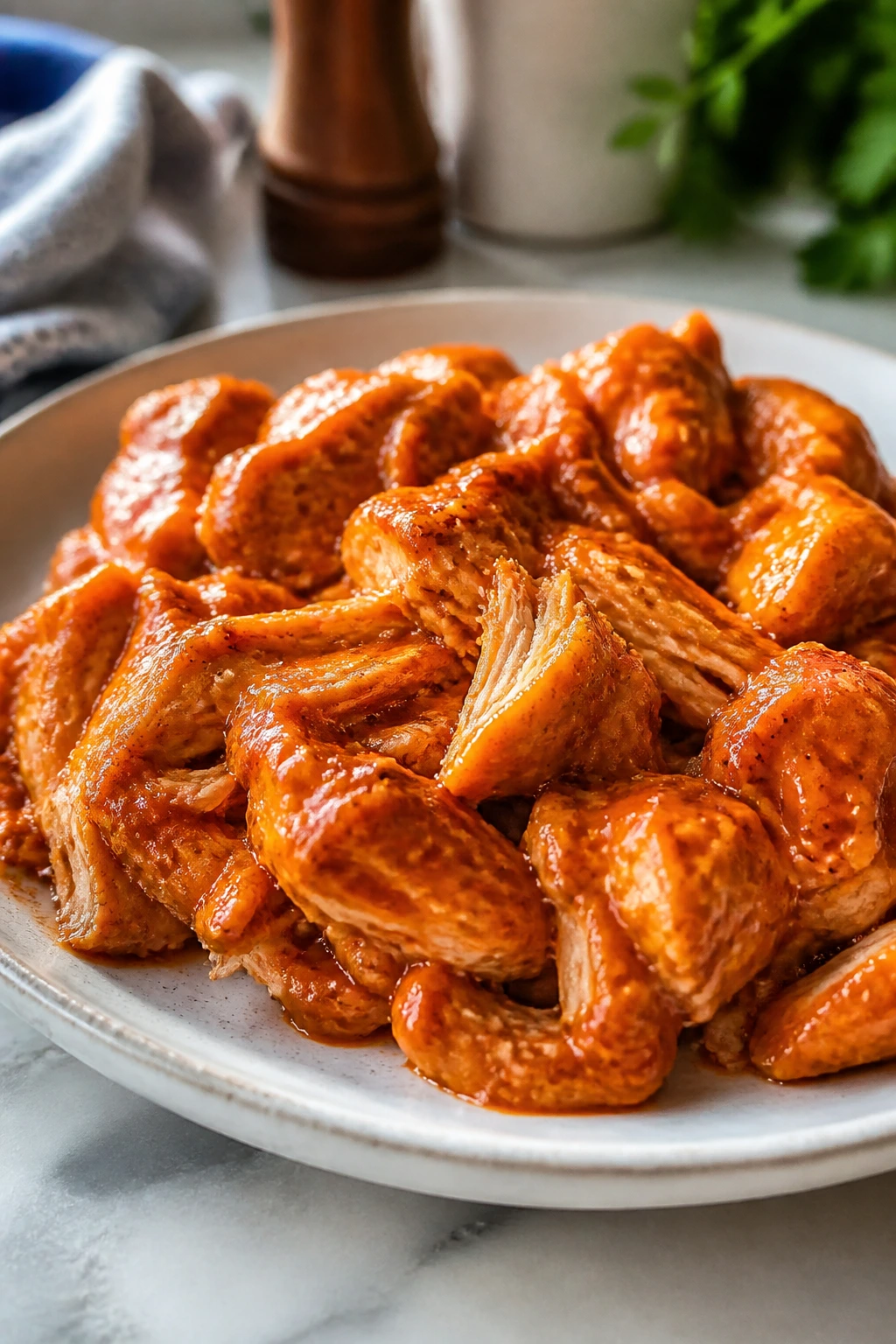
Recipe Name: Tender Easy Buffalo Chicken for Weeknight Dinners
Description: Juicy boneless chicken thighs simmered in broth, tossed in buttery buffalo sauce, and finished with a sharp vinegar kick. Serve it on buns, over rice, or in lettuce wraps.
Prep Time: 15 minutes
Cook Time: 20 minutes
Total Time: 40 minutes
Course: Main Course
Cuisine: American
Servings: 4 to 6 servings
Calories: About 360 kcal per serving
Ingredients
For the Chicken:
- 2 pounds boneless, skinless chicken thighs, trimmed of excess fat and patted dry
- 1 teaspoon kosher salt
- 1/2 teaspoon freshly ground black pepper
- 1 teaspoon garlic powder
- 1 teaspoon onion powder
- 1/2 teaspoon smoked paprika
For the Buffalo Sauce:
- 1 tablespoon olive oil
- 3/4 cup low-sodium chicken broth
- 3/4 cup buffalo-style hot sauce
- 2 tablespoons unsalted butter
- 1 tablespoon apple cider vinegar
- 1 teaspoon honey, optional
For Finishing:
- 2 tablespoons chopped fresh chives or parsley
- Ranch or blue cheese dressing, optional for serving
Instructions
-
Pat the chicken thighs dry and season with salt, pepper, garlic powder, onion powder, and smoked paprika.
-
Heat the olive oil in a large skillet over medium-high heat. Add the chicken and sear for about 3 minutes per side until lightly browned.
-
Pour in the chicken broth, reduce the heat to medium-low, cover, and simmer for 10 to 12 minutes until the thickest piece reaches 165°F.
-
Transfer the chicken to a plate and rest for 5 minutes, then shred it with two forks.
-
Reduce the pan juices to a thin coating, then stir in the buffalo sauce, butter, vinegar, and honey over low heat until glossy.
-
Return the shredded chicken to the skillet and toss until fully coated and hot, 1 to 2 minutes.
-
Finish with chives or parsley and serve with ranch or blue cheese if you like.
Notes: Thighs stay juicier than breasts, but breasts work if you pound them even and check the temperature early. Keep the sauce on low once the butter goes in. Leftovers keep for 3 to 4 days in the fridge.