



A tender chicken dinner for kids has to survive a very specific test: the first bite from a hungry child who has already decided dinner might be suspicious. Dry chicken fails that test fast. So does anything covered in a sauce so spicy, sweet, or busy that half the plate becomes negotiation. The version I keep coming back to is plain in the best way — juicy chicken thighs, fluffy rice, soft carrots, peas added at the end, and just enough seasoning to make the whole pan taste like someone cared.
Weeknight chicken works when it behaves. That means a pan that does most of the work, ingredients that are easy to find without a special trip, and a method that forgives you if you get distracted by homework, a phone call, or a child asking where their other sock went. Thighs are the quiet heroes here. They stay tender under steam in a way chicken breasts often do not, and when they cook over rice in a covered skillet, the whole thing turns into a low-drama dinner with a real payoff.
The finished dish lands somewhere between cozy and clean. You get chicken pieces that stay soft instead of stringy, rice that soaks up broth instead of tasting plain, carrots that still have a little bite, and peas that keep their bright green color because they go in late. Nothing flashy. No weird tricks. Just a dinner that comes out of the oven looking like supper and not a rescue mission.
Why This Tender Chicken Dinner Gets Eaten Without a Fuss
-
Juicy chicken first: Boneless thighs stay moist through the covered bake, so the meat still feels soft when you cut into it instead of drying out around the edges.
-
One pan, one lid: The rice cooks under the chicken and catches the drippings, which gives you more flavor than boiling rice on the side and then wondering why it tastes flat.
-
Mild without tasting bland: Onion, garlic, paprika, thyme, and Parmesan build enough flavor for adults while staying calm enough for kids who side-eye peppery food.
-
Small pieces, easier bites: Cutting the chicken into 1 1/2-inch chunks makes the dinner easier to scoop, easier to chew, and less likely to leave a child pushing a giant piece around their plate.
-
Leftovers behave well: A spoonful of broth brings the rice back to life the next day, so you are not staring at a dry block in a container.
-
Flexible enough for real life: If your family likes carrots, add a few more. If peas are the enemy, swap them out. The pan still works.
Timing, Yield, and the Shape of the Final Dish
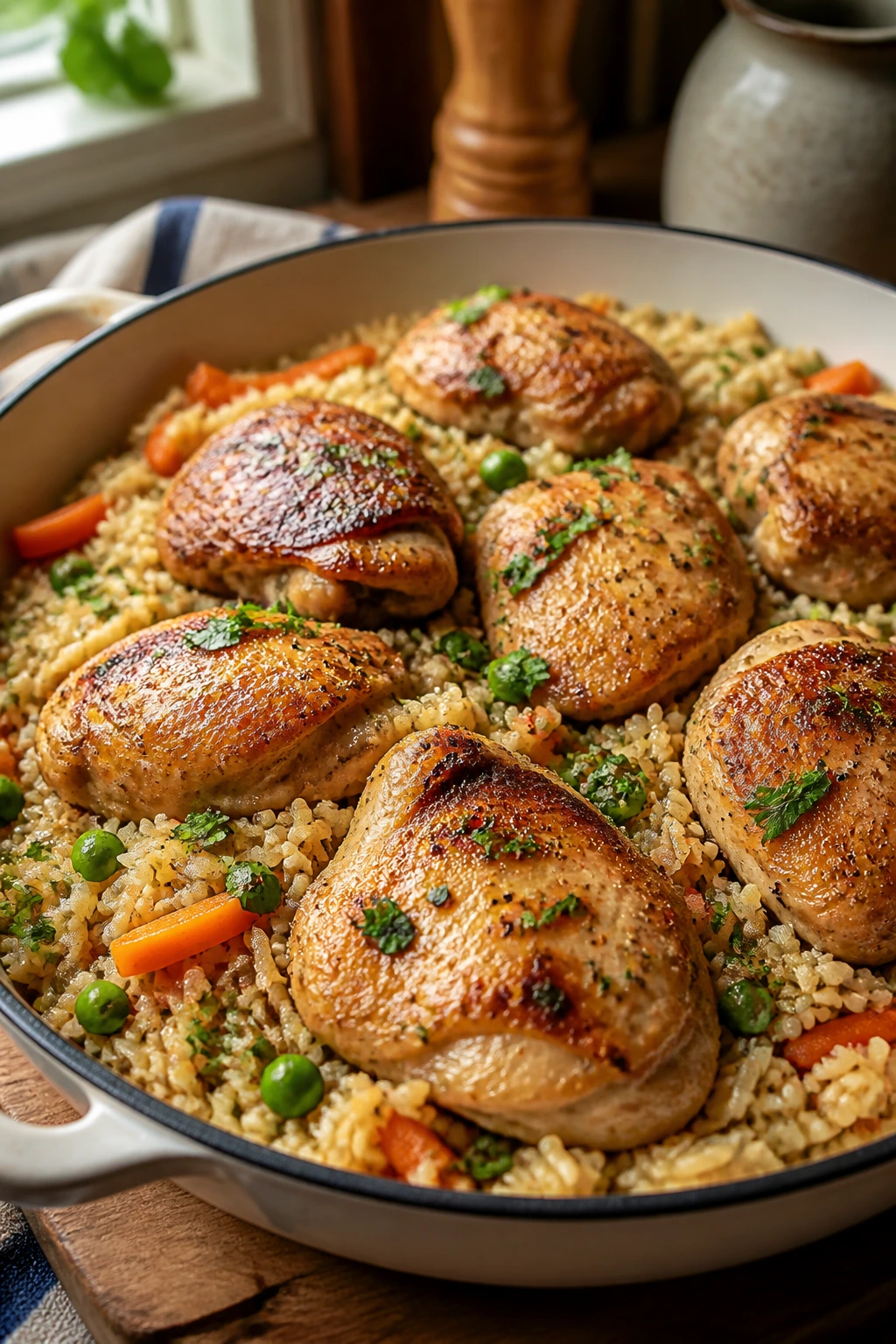
Yield: Serves 5
Prep Time: 15 minutes
Cook Time: 35 minutes
Total Time: 50 minutes
Rest Time: 10 minutes
Difficulty: Beginner — the steps are plain, and the oven does most of the heavy lifting once the skillet is assembled.
Best Served: Warm, after the rice has had a short rest and the steam has settled a little
Ingredients for a One-Pan Chicken and Rice Dinner
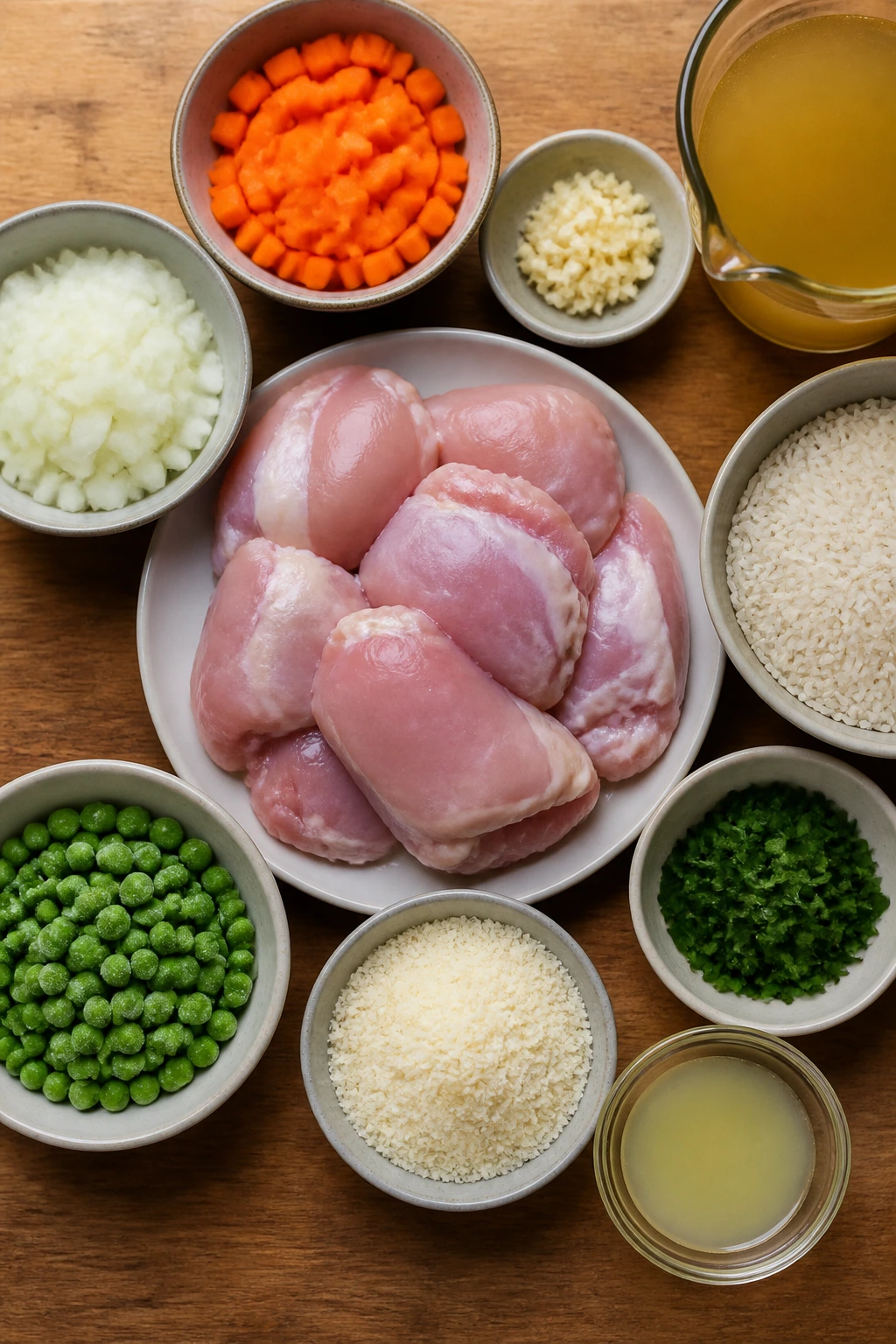
For the Chicken
- 1 1/2 lbs boneless, skinless chicken thighs, trimmed and cut into 1 1/2-inch pieces
- 1 teaspoon kosher salt
- 1/2 teaspoon black pepper
- 1 teaspoon sweet paprika
- 1/2 teaspoon garlic powder
For the Rice and Vegetables
- 2 tablespoons olive oil
- 1 tablespoon unsalted butter
- 1 small yellow onion, finely diced
- 2 medium carrots, cut into 1/4-inch dice
- 3 cloves garlic, minced
- 1 1/2 cups long-grain white rice, rinsed and drained
- 2 3/4 cups low-sodium chicken broth
- 1/2 teaspoon dried thyme
- 1 bay leaf
For the Finish
- 1 cup frozen peas, kept frozen until the end
- 1/2 cup finely grated Parmesan cheese
- 2 tablespoons chopped fresh parsley
- 1 tablespoon lemon juice, optional but useful
What Each Ingredient Does in the Pan
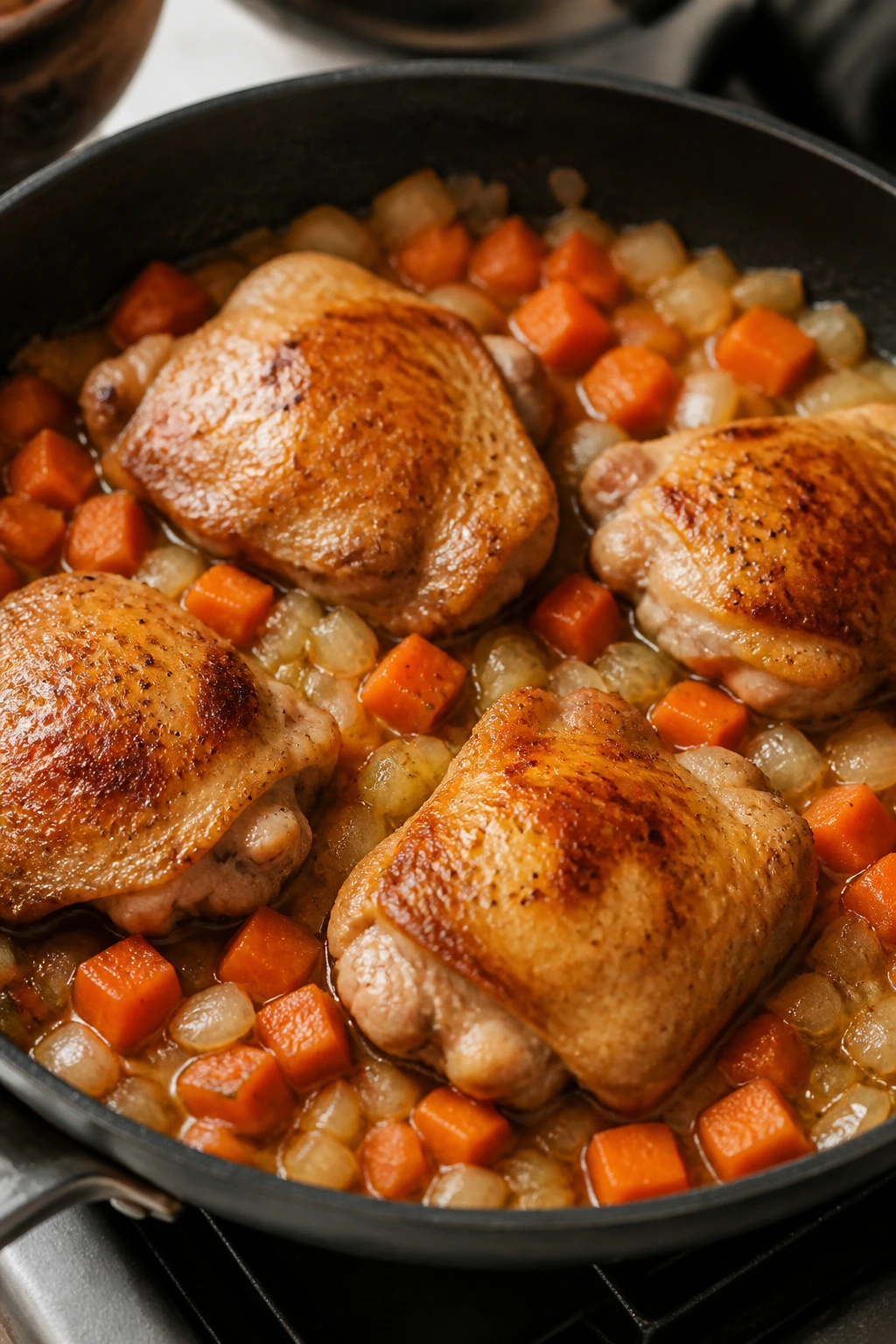
Chicken Thighs
- What to use: 1 1/2 lbs boneless, skinless chicken thighs cut into 1 1/2-inch pieces.
- Preparation: Trim off any large pieces of fat, then pat the thighs dry before seasoning. Dry chicken browns; wet chicken steams.
- Substitutions: Boneless chicken breast works if you cut it into large chunks and watch the oven closely. Turkey thigh meat also works well if that’s what you have.
- Tips: Thighs are the reason this tender chicken dinner for kids stays forgiving. They can sit under steam for a short while without turning chalky, which is the exact opposite of what happens with lean breast meat.
Rice
- What to use: 1 1/2 cups long-grain white rice, rinsed well.
- Preparation: Rinse in a strainer until the water runs mostly clear, then drain thoroughly so the grains don’t start wet and clump together.
- Substitutions: Jasmine rice works with the same liquid, though it can soften a bit more. Parboiled rice can work too, but you may need a few extra minutes in the oven.
- Tips: Rinsing matters here. Skipping it leaves extra starch on the surface, and extra starch means a heavier, stickier skillet instead of fluffy grains.
Onion, Carrots, and Peas
- What to use: 1 small yellow onion, 2 medium carrots, and 1 cup frozen peas.
- Preparation: Dice the onion very fine and keep the carrot dice small — about the size of pea kernels, not chunky coins. Leave the peas frozen until the last stage.
- Substitutions: Corn, small broccoli florets, or finely chopped zucchini can stand in for peas or carrots depending on what your family eats without complaint.
- Tips: Kids usually handle tiny vegetable pieces better than big ones. That sounds trivial, but it changes how the plate gets eaten.
Broth and Seasonings
- What to use: 2 3/4 cups low-sodium chicken broth, 1/2 teaspoon dried thyme, 1 bay leaf, plus salt, pepper, paprika, and garlic powder on the chicken.
- Preparation: Measure the broth before you start cooking so you’re not fumbling when the rice is ready to go in.
- Substitutions: Water plus a bouillon cube can work in a pinch, though broth tastes rounder. If you like a little more warmth, swap the thyme for dried Italian seasoning.
- Tips: Low-sodium broth gives you control. Parmesan adds salt later, so starting with a salty broth can push the dish too far.
Butter, Parmesan, Parsley, and Lemon
- What to use: 1 tablespoon unsalted butter, 1/2 cup finely grated Parmesan, 2 tablespoons chopped parsley, and 1 tablespoon lemon juice if you want brightness.
- Preparation: Grate the Parmesan fine so it melts through the rice instead of sitting in clumps. Chop the parsley right before serving so it stays green and fresh.
- Substitutions: Nutritional yeast can stand in for Parmesan if you need a dairy-free finish. A tiny splash of vinegar can replace the lemon if that’s what sits in your fridge.
- Tips: Parmesan is doing more than making the dish taste cheesy. It also lends salt and a little body to the rice, which helps the skillet feel finished.
The Skillet and Tools That Make This Easier
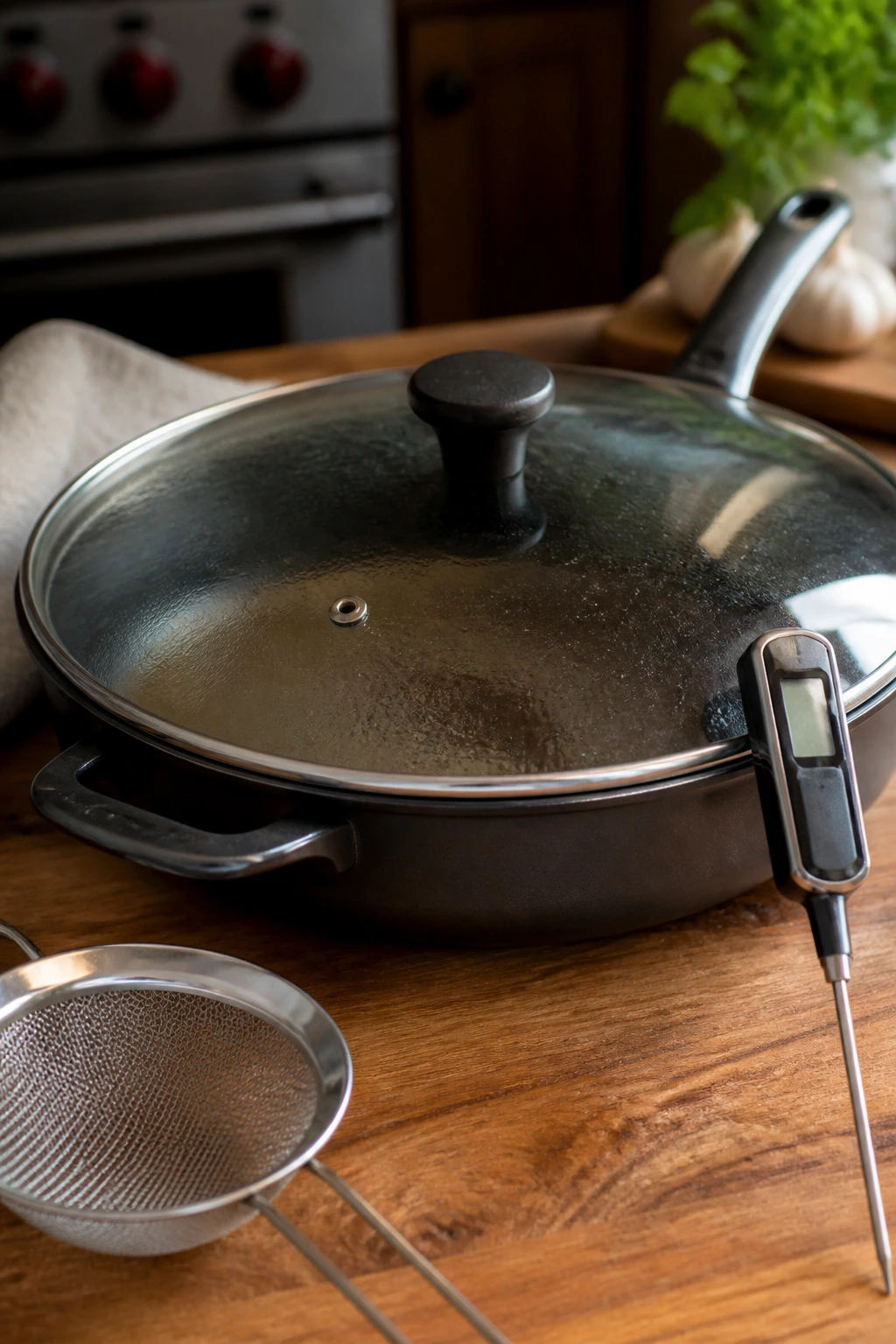
A dinner like this does not need specialty gear, but the right pan makes life easier. Size matters more than brand here. Too small, and the rice steams unevenly. Too shallow, and the broth runs off before the grains finish.
- 12-inch oven-safe skillet with a tight lid or a Dutch oven — This is the main piece. If the lid is loose, use heavy foil to seal in steam.
- Instant-read thermometer — Chicken should hit 165°F in the thickest piece. That number keeps you from guessing.
- Fine-mesh strainer — Use it to rinse the rice until the water runs less cloudy.
- Cutting board and chef’s knife — Small dice matters here, so a stable board and a sharp knife save time.
- Wooden spoon or heatproof spatula — Better than a flimsy spoon when you’re scraping browned bits from the skillet.
- Measuring cups and spoons — The rice-to-broth ratio needs to stay honest.
- Foil, if needed — A workable stand-in when the skillet lid does not seal well enough.
How to Cook the Chicken Dinner Step by Step
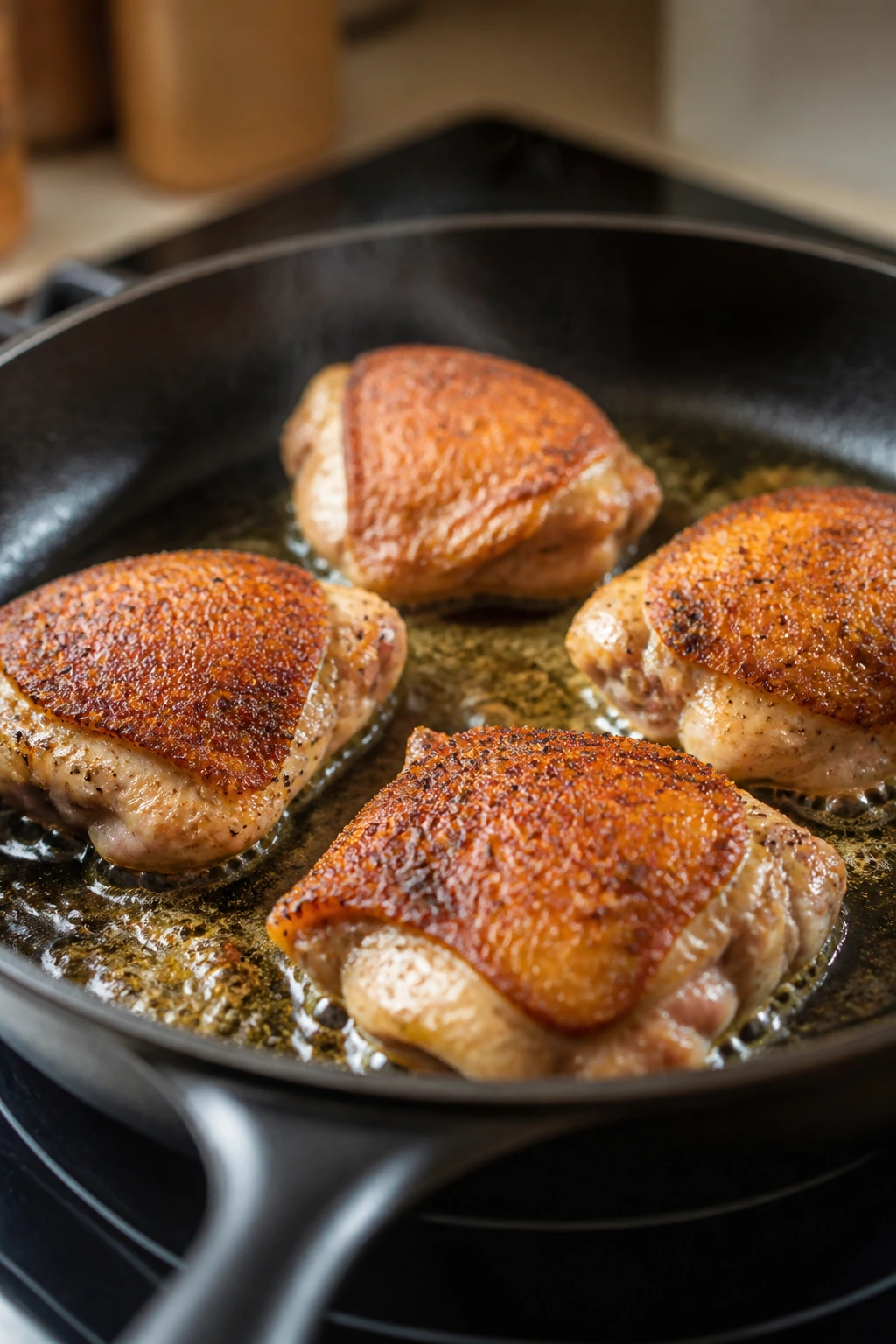
Brown the Chicken
-
Preheat the oven to 375°F (190°C) and position a rack in the center. Pat the chicken thighs dry with paper towels.
-
In a medium bowl, toss the chicken with 1 teaspoon kosher salt, 1/2 teaspoon black pepper, 1 teaspoon sweet paprika, and 1/2 teaspoon garlic powder until every piece is lightly coated.
-
Set a 12-inch oven-safe skillet over medium-high heat. Add 2 tablespoons olive oil and 1 tablespoon butter. When the butter foams and the oil shimmers, add the chicken in a single layer. Brown for 2 minutes per side; the goal is color, not full cooking. Transfer the chicken to a plate.
Build the Rice 4. Reduce the heat to medium. Add the diced onion and carrots to the skillet and cook for 4 to 5 minutes, stirring often, until the onion turns translucent and the carrots start to soften at the edges. Add the garlic and 1/2 teaspoon dried thyme, then cook for 30 seconds until fragrant.
- Stir in the 1 1/2 cups rinsed rice and cook for 1 minute, making sure the grains are coated in the butter, oil, and vegetable mixture. Pour in the 2 3/4 cups low-sodium chicken broth and add the bay leaf, scraping up any browned bits from the bottom of the pan.
Bake and Finish 6. Nestle the browned chicken back into the skillet, placing the pieces mostly on top of the rice. Bring the broth to a gentle simmer, then cover tightly with a lid or foil and bake for 20 minutes.
-
Remove the lid, scatter the 1 cup frozen peas around the chicken, and sprinkle the 1/2 cup Parmesan over the top. Return the skillet to the oven, uncovered, for 8 to 10 minutes, until the chicken reaches 165°F at the thickest point and the rice is tender. If the rice still feels firm, add 3 tablespoons hot broth around the edges, cover again, and bake 5 minutes longer.
-
Let the skillet rest off the heat for 10 minutes. Remove the bay leaf, fluff the rice gently with a fork, then stir in the parsley and lemon juice if using. Taste and adjust with a pinch more salt only if needed. Serve warm.
How to Serve It on a Busy Night
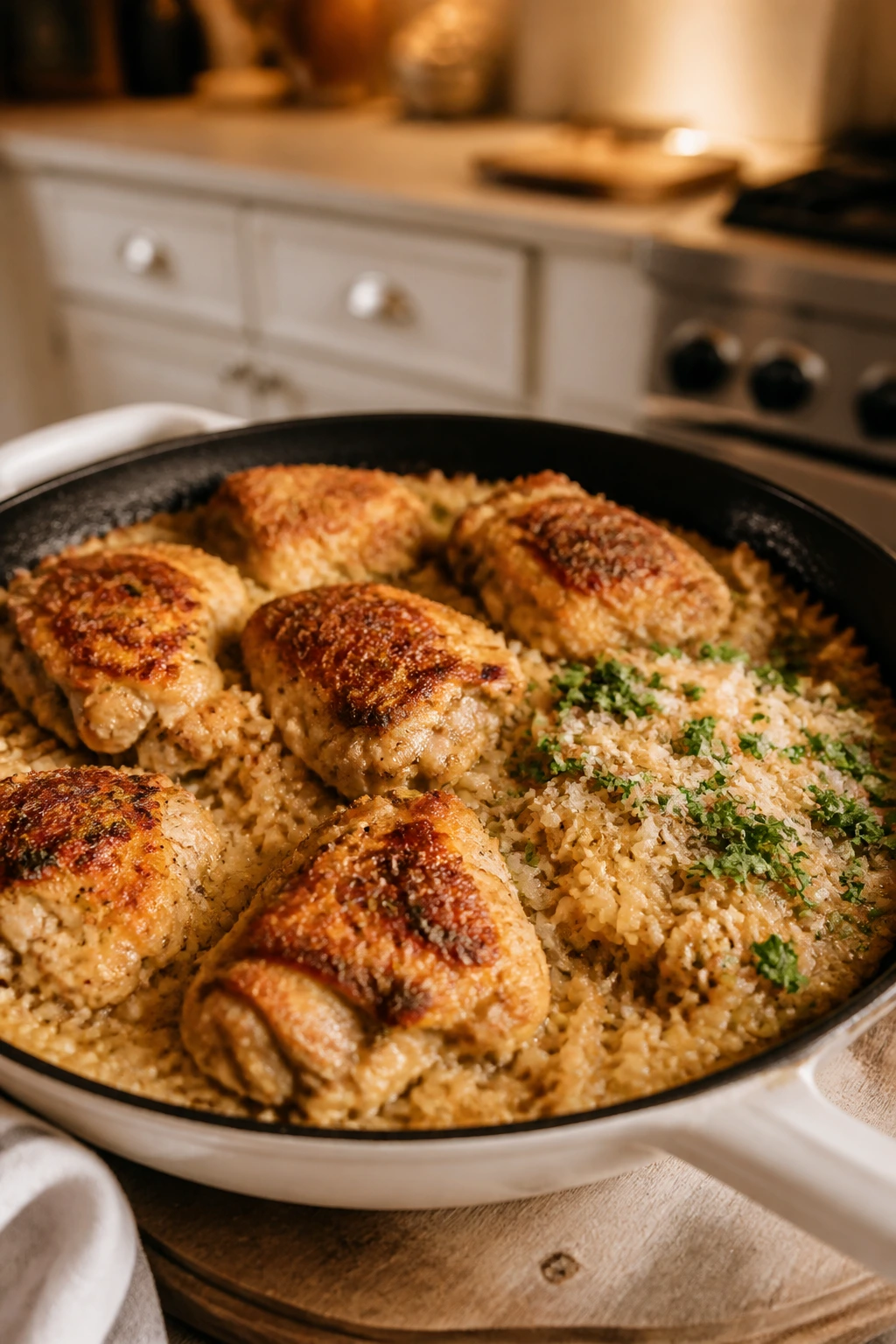
Presentation: Spoon the rice into wide shallow bowls and place the chicken pieces on top so the browned edges stay visible. A sprinkle of parsley and a little extra Parmesan on one side makes the pan look finished without turning it into a fussy plate.
Accompaniments: I like this with something crisp and cold on the side — cucumber slices, apple wedges, or a simple green salad with a mild vinaigrette. A warm slice of buttered bread also works, mostly because kids will use it to chase the last bits of rice around the bowl.
Portions: Plan on about 1 cup of rice mixture plus 4 to 5 ounces of chicken per adult serving, or slightly smaller bowls for younger kids. If you need to stretch the meal, serve it with fruit and a simple salad rather than diluting the skillet itself.
Beverage Pairing: Cold milk is a practical answer for kids. For everyone else, sparkling water with lemon or a very lightly sweetened iced tea keeps the meal from feeling heavy.
Tips for Keeping the Chicken Tender
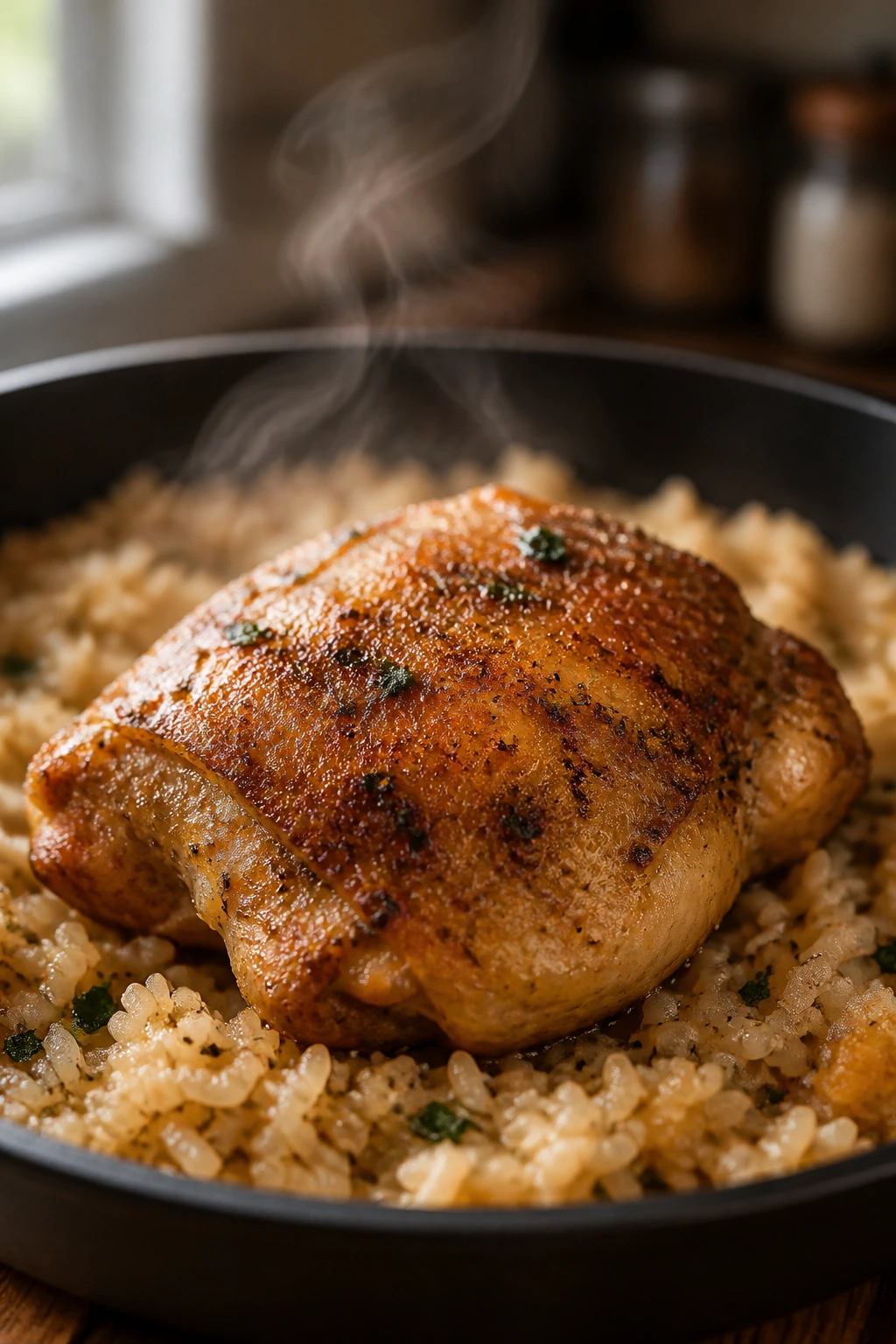
Use thighs if you can. They forgive a little extra oven time and stay softer under the lid. That matters more than choosing a fancy seasoning blend. Lean breast meat can work, but it asks for more attention and gives less back.
Keep the rice rinse simple. You do not need to scrub it clean; just rinse until the water is less cloudy. That one step keeps the skillet from turning starchy and heavy.
Hot broth helps. If your broth is cold from the fridge, warm it in a small pot or the microwave before adding it to the pan. The oven recovers faster when the liquid is already near hot, and the rice starts cooking sooner.
Cut the vegetables small. Tiny carrot dice blend into the rice while still giving color and sweetness. Big chunks tend to outlast the rest of the pan and end up annoyingly firm.
Let the skillet rest. Ten minutes seems boring when everyone is hungry, but it gives the rice time to settle and the chicken time to stop shedding juices the second you cut into it. Skip the rest and the rice turns loose and wet.
Common Mistakes That Turn Dinner Dry or Bland
-
Using chicken breasts the same way you’d use thighs: Breasts can dry out fast in a covered rice bake. If you swap them in, cut them into larger chunks, start checking early, and pull the skillet as soon as the thickest piece hits 165°F.
-
Skipping the rice rinse: The rice cooks, but it cooks into a softer, stickier mass. Rinsing takes less than a minute and keeps each grain more separate.
-
Lifting the lid too often: Every peek leaks steam, and steam is doing a lot of the work here. Open the pan only when you need to check the end point.
-
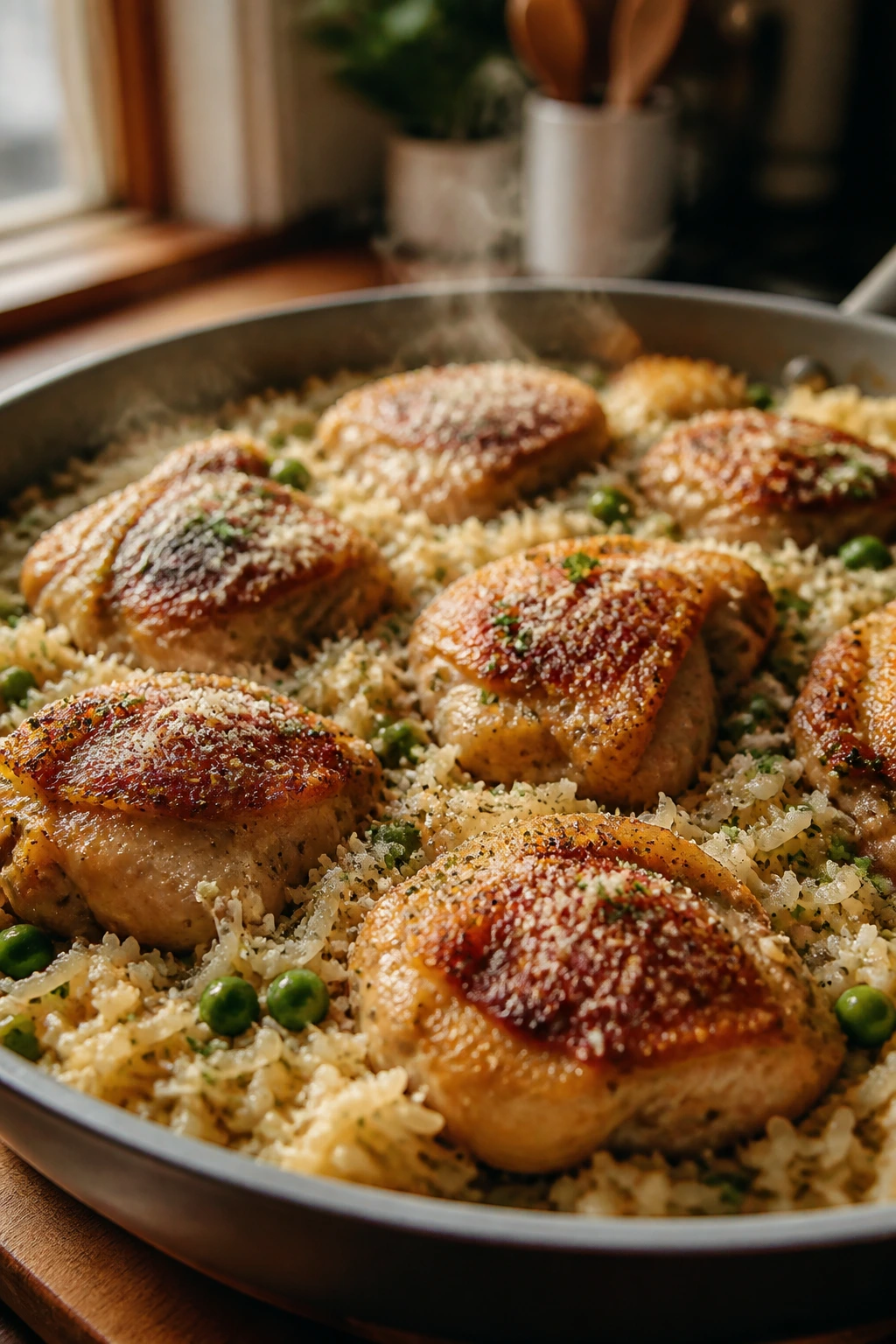
Adding peas at the beginning: They lose their bright color and turn dull. Frozen peas should go in during the last 8 to 10 minutes so they warm through without turning mushy.
-
Under-seasoning the liquid: The rice absorbs the broth, so if the broth tastes flat before baking, the final dish will taste flat too. Season the chicken properly and use low-sodium broth so you can control the salt.
-
Cutting the carrots too large: Big chunks stay stubborn. Small dice blends into the rice and makes each spoonful feel more balanced.
Variations for Different Picky-Eater Phases
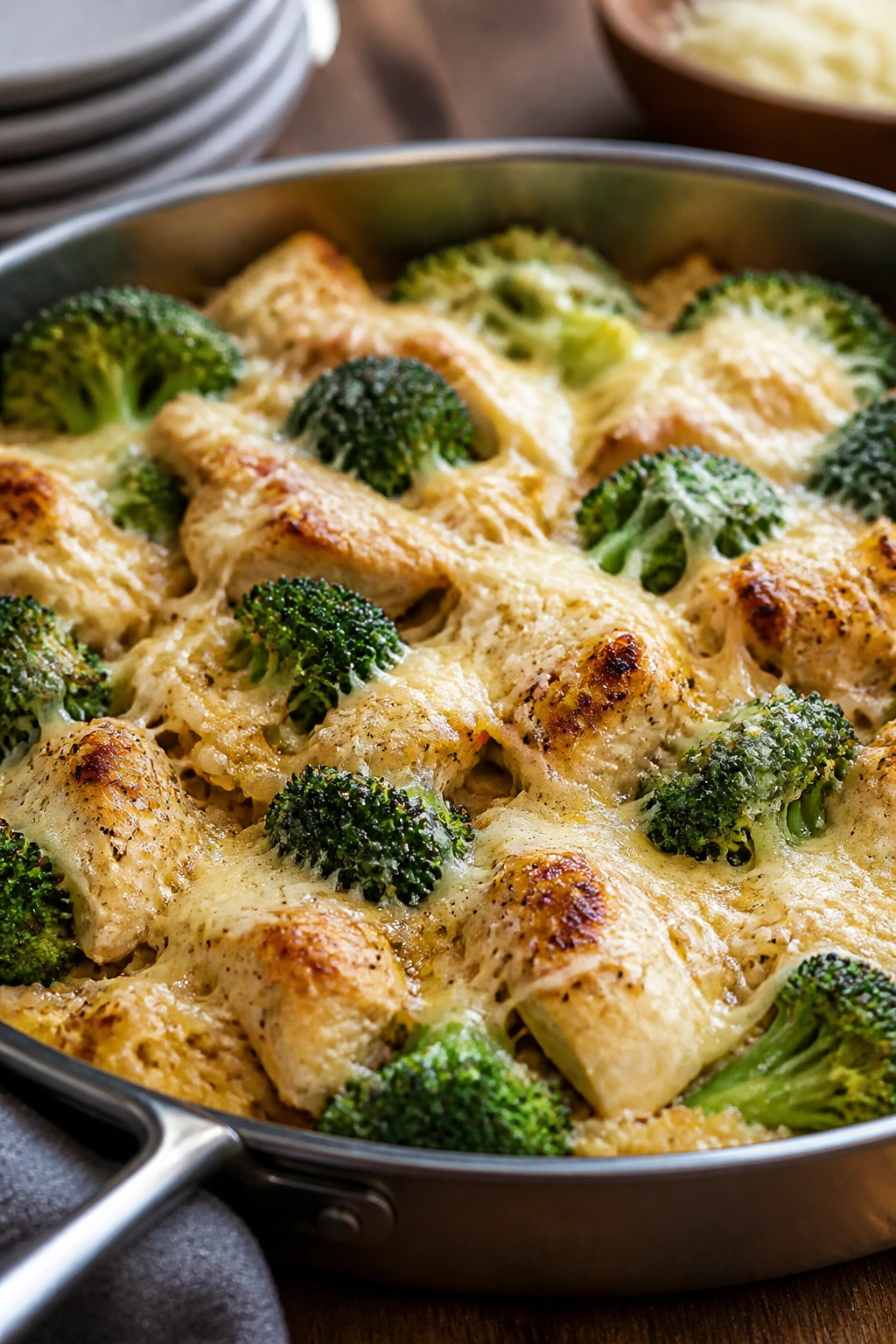
Cheesy Broccoli Dinner Swap the peas for 1 1/2 cups small broccoli florets and add them during the last 12 minutes of baking. The broccoli softens enough for kids who hate crunch, and the Parmesan settles into the florets instead of just sitting on top.
Chicken Breast Shortcut Use 1 1/2 lbs boneless chicken breasts cut into 1-inch pieces and brown them for only 60 to 90 seconds per side. Bake them exactly the same way, but start checking early; breasts go dry when they linger.
Dairy-Free Pantry Bowl Skip the butter and Parmesan. Use 3 tablespoons olive oil total, then finish with 2 tablespoons nutritional yeast and an extra squeeze of lemon. The dish stays savory and still tastes finished, which matters more than trying to mimic cheese for the sake of it.
Tomato-Butter Skillet Stir 1/2 cup tomato sauce into the broth and add 1/2 teaspoon dried oregano with the thyme. The rice turns a little redder and sweeter, and the chicken tastes closer to a mild tomato pilaf than a plain chicken-rice pan.
Brown Rice Version Swap in 1 1/2 cups brown rice, increase the broth to 3 1/2 cups, and bake covered for 40 to 45 minutes before adding the peas and Parmesan. Brown rice takes longer and holds more chew, so this works best on nights when you can give the oven extra time.
Make-Ahead, Storage, and Reheating
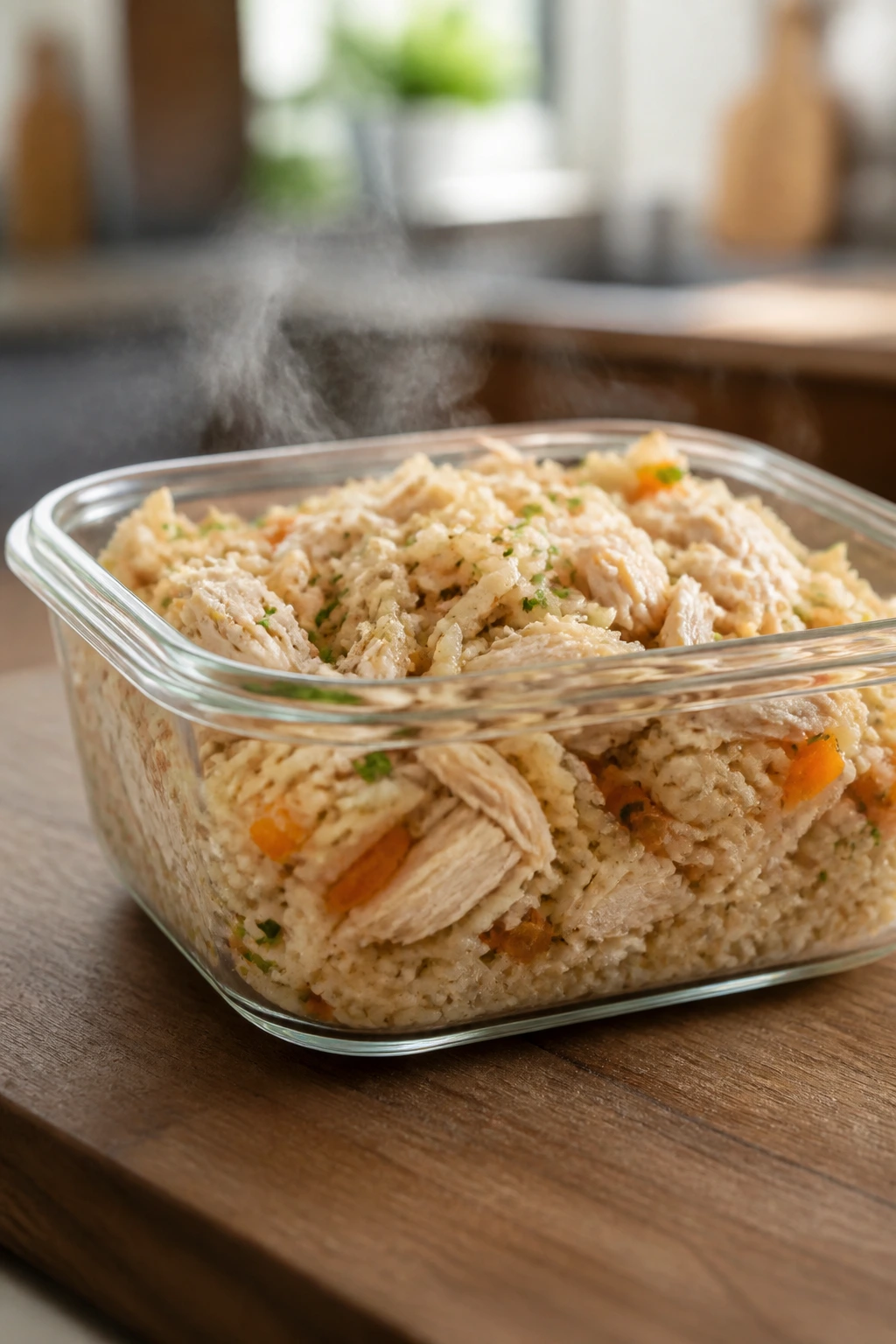
Cooked chicken and rice keep well, but they need a little care so the texture doesn’t collapse into something dry or gluey. Let the skillet cool for no more than 2 hours at room temperature, then move the leftovers into shallow containers. That cooling window matters for food safety and for the rice, which handles shallow storage better than a deep mound.
In the refrigerator, this dinner keeps for 3 to 4 days. The rice will firm up, especially around the edges, so add a spoonful of broth or water before reheating. Microwave portions covered at 70 to 80 percent power in short bursts, stirring once halfway through, or warm the whole portion in a skillet over low heat with 1 to 2 tablespoons broth and a lid on top.
Freezing works too, though the rice softens a bit after thawing. Pack portions in airtight containers or freezer bags for up to 2 months. Thaw overnight in the refrigerator, then reheat gently with a splash of broth. If you reheat it hard and fast, the chicken tightens and the rice dries on the surface before the middle warms.
For make-ahead prep, you can dice the onion and carrots, rinse the rice, and season the chicken up to 1 day ahead. Keep each piece of prep in separate containers in the fridge. I would not assemble the raw skillet hours in advance, because the rice starts drinking broth before it ever sees the oven. That leads to soft rice on one end and dry chicken on the other.
Questions Parents Usually Ask Before Making It Again
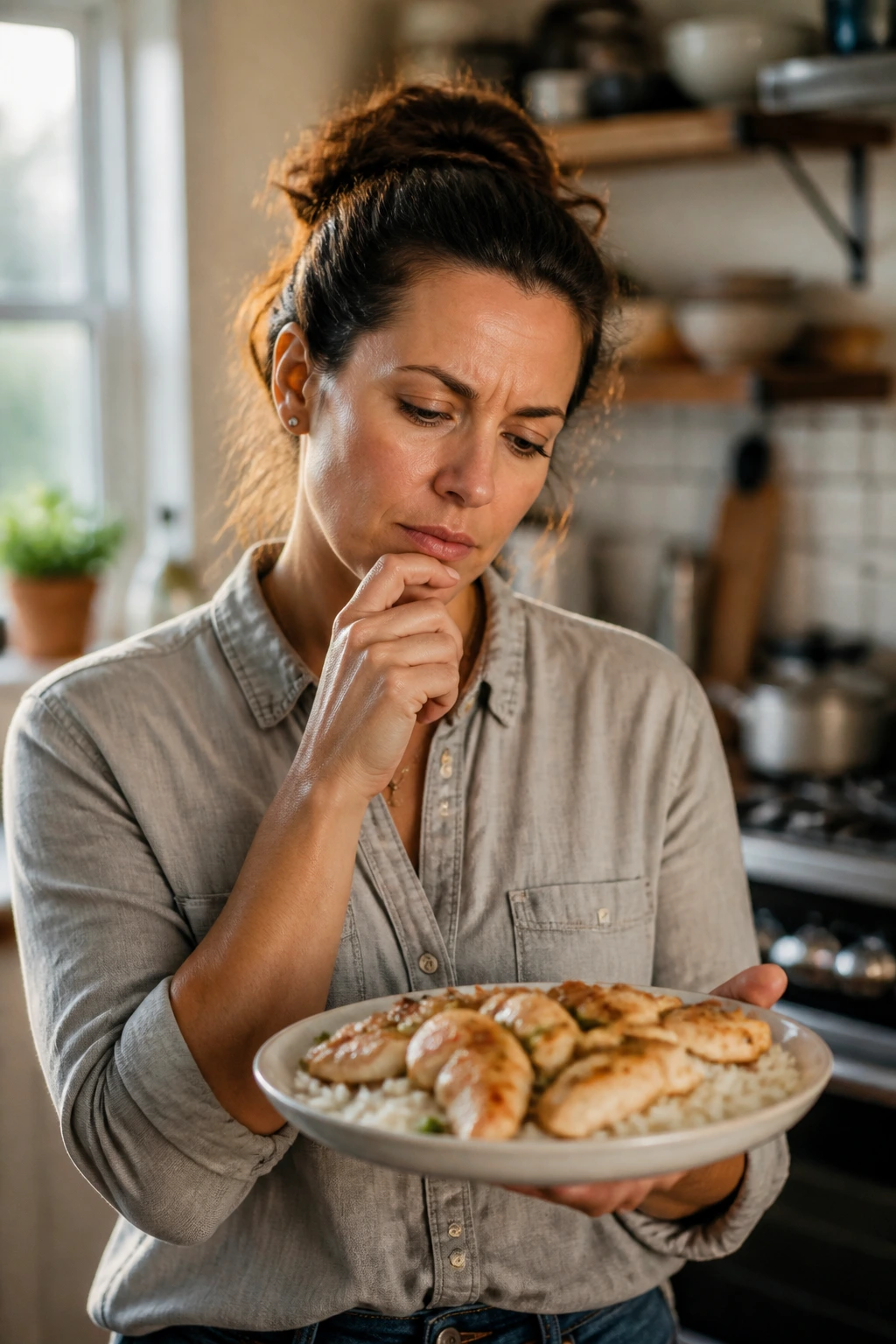
Can I use chicken breasts instead of thighs?
Yes, but the texture changes fast. Breasts need less time and can dry out if you walk away, so cut them into larger chunks and check with a thermometer a few minutes early.
Does this work with brown rice?
It does, but not on the same clock. Brown rice needs more broth and a longer covered bake, so this version is better for a night when you can give it an extra 15 to 20 minutes.
Can I make it without an oven-safe skillet?
Yes. Start the recipe in a regular skillet, then move everything into a 9-by-13-inch baking dish before the oven step. Cover it tightly with foil so the rice still traps steam.
What if the rice is done but the chicken still needs a little more time?
Pull the chicken onto a plate, cover it loosely, and keep the rice warm under foil for a few minutes. Chicken thighs usually stay tender while resting, so a short pause does not hurt them.
Can I freeze leftovers?
Absolutely. Freeze in single-meal portions for up to 2 months and reheat with a splash of broth. The rice will be a little softer after thawing, but the flavor holds up.
My kid hates peas. What should I use instead?
Corn is the easiest swap because it brings sweetness and a familiar texture. Small broccoli florets or diced zucchini can also work if you add them near the end and keep the pieces tiny.
Is the Parmesan necessary?
No, but it does help. If you leave it out, add a pinch more salt at the end and finish with lemon juice or a little butter so the skillet doesn’t taste thin.
A Dinner You Can Hand to a Hungry Kid
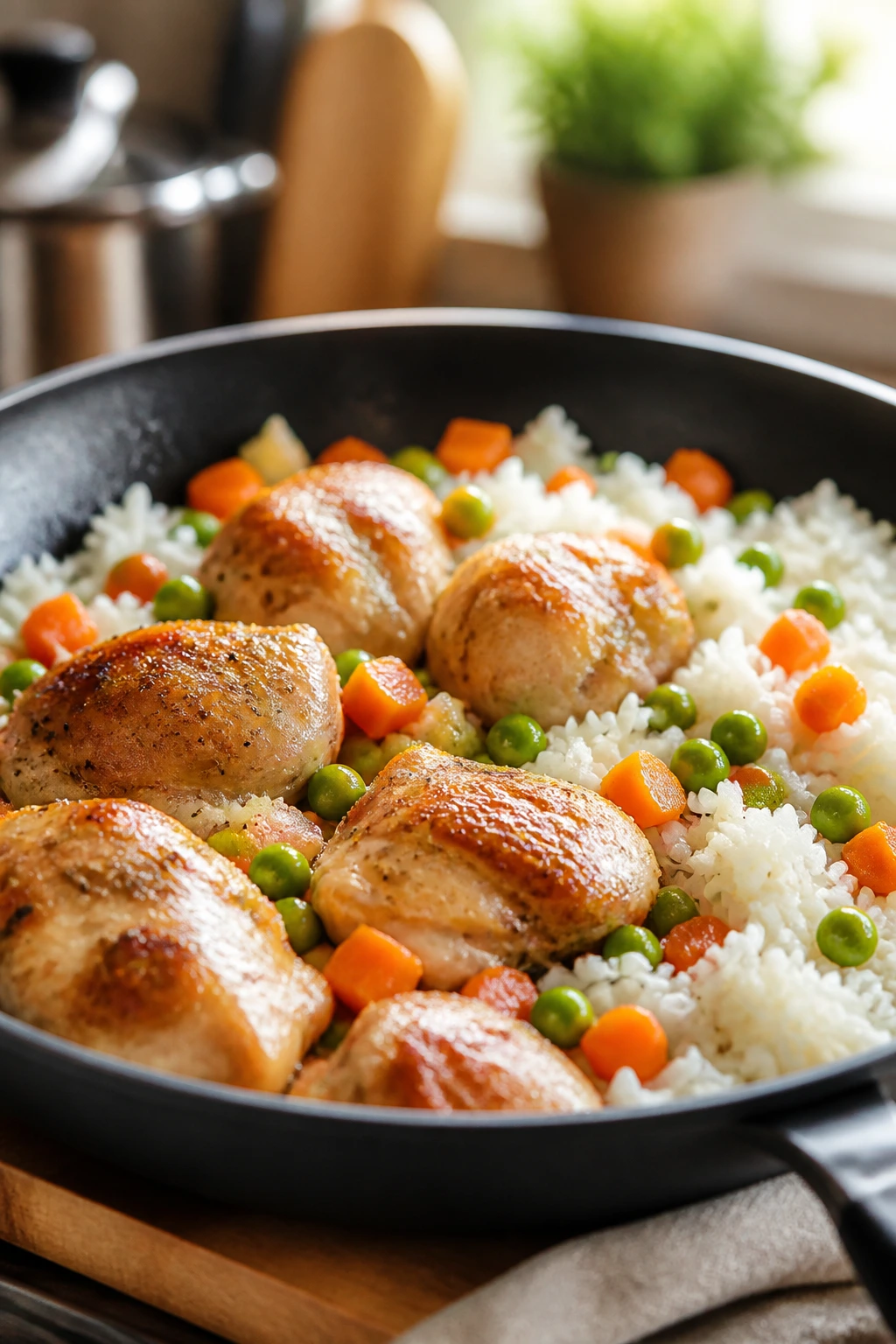
A dinner like this earns its place because it does the simple things well. The chicken stays soft, the rice stays separate enough to scoop, and the vegetables hide in plain sight instead of demanding their own speech at the table. That is the sweet spot for weeknights: food that feels calm, tastes steady, and doesn’t ask for a second round of dishwashing to make it happen.
Keep a bag of peas in the freezer, a box of broth in the cupboard, and this skillet becomes one of those meals you can make almost on autopilot. Not dull. Not fancy. Just the kind of tender chicken dinner for kids that lands on the table, gets eaten, and quietly saves the evening.
One-Pan Tender Chicken and Rice Dinner for Kids — Recipe Card
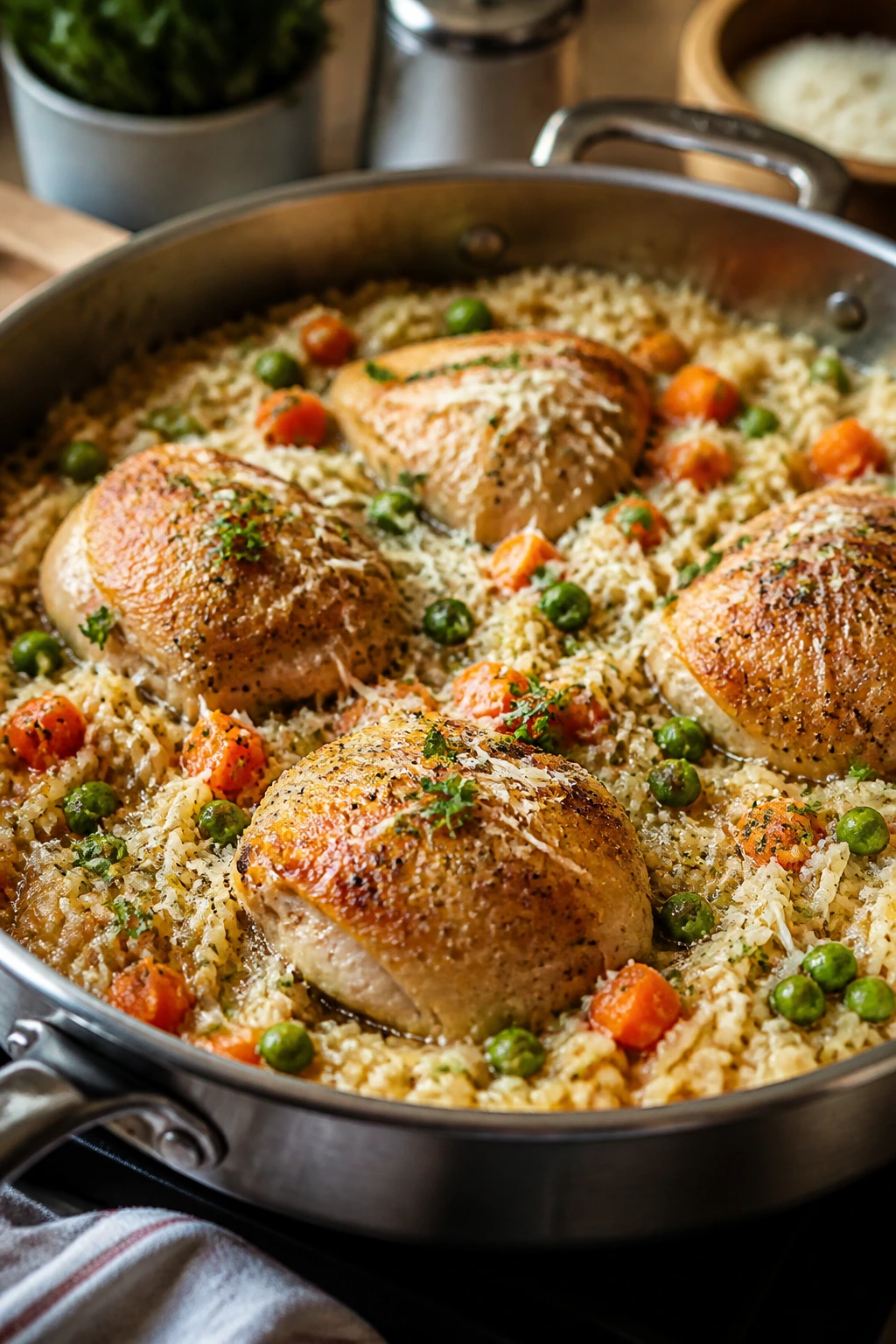
Recipe Name: One-Pan Tender Chicken and Rice Dinner for Kids
Description: Juicy chicken thighs, fluffy rice, sweet carrots, peas, and Parmesan cook together in one skillet for a mild, weeknight-friendly dinner.
Prep Time: 15 minutes
Cook Time: 35 minutes
Total Time: 50 minutes
Course: Dinner, Main Course
Cuisine: American
Servings: 5
Calories: about 470 kcal per serving
Ingredients
For the Chicken:
- 1 1/2 lbs boneless, skinless chicken thighs, trimmed and cut into 1 1/2-inch pieces
- 1 teaspoon kosher salt
- 1/2 teaspoon black pepper
- 1 teaspoon sweet paprika
- 1/2 teaspoon garlic powder
For the Rice and Vegetables:
- 2 tablespoons olive oil
- 1 tablespoon unsalted butter
- 1 small yellow onion, finely diced
- 2 medium carrots, cut into 1/4-inch dice
- 3 cloves garlic, minced
- 1 1/2 cups long-grain white rice, rinsed and drained
- 2 3/4 cups low-sodium chicken broth
- 1/2 teaspoon dried thyme
- 1 bay leaf
For the Finish:
- 1 cup frozen peas
- 1/2 cup finely grated Parmesan cheese
- 2 tablespoons chopped fresh parsley
- 1 tablespoon lemon juice, optional
Instructions
-
Preheat the oven to 375°F (190°C). Pat the chicken dry and season with salt, pepper, paprika, and garlic powder.
-
Heat the olive oil and butter in a 12-inch oven-safe skillet over medium-high heat. Brown the chicken for 2 minutes per side, then transfer it to a plate.
-
Lower the heat to medium. Cook the onion and carrots for 4 to 5 minutes until the onion turns translucent. Add the garlic and thyme, then cook for 30 seconds.
-
Stir in the rinsed rice for 1 minute. Pour in the broth and add the bay leaf, scraping the skillet bottom.
-
Nestle the chicken on top, bring the liquid to a gentle simmer, cover tightly, and bake for 20 minutes.
-
Uncover, add the peas and Parmesan, and bake for 8 to 10 minutes more until the chicken reaches 165°F and the rice is tender.
-
Rest for 10 minutes. Remove the bay leaf, fluff the rice, stir in parsley and lemon juice, and serve warm.
Notes: Thighs stay tender best, but chicken breasts can be swapped in with a shorter bake. Add a splash of broth when reheating leftovers.