



Lemon garlic chicken thighs are one of those dinners that smell like you spent all evening at the stove and taste like you knew exactly when to stop. The pan fills with garlic, butter, and lemon zest first; then the chicken picks up that bronzed, savory edge that makes the whole kitchen feel warmer.
Boneless thighs are the reason this works on a busy night. They cook fast, they don’t punish you for a two-minute delay, and they stay juicy even after a short simmer in the sauce. Breasts can do this job, technically. Thighs do it better. They forgive a hot pan, they hold onto flavor, and they give you enough richness that the lemon tastes bright instead of sharp.
The trick is balance. Too much lemon and the sauce turns thin and aggressive. Too much garlic heat and it goes bitter in a heartbeat. Get the sear right, give the sauce a minute to calm down, and you end up with chicken that tastes like it came from a much more complicated dinner than the one you actually made.
The first thing worth getting right is the sear, because that browned layer is where the sauce gets its backbone.
Why Chicken Thighs Stay Tender in a Lemon-Garlic Skillet
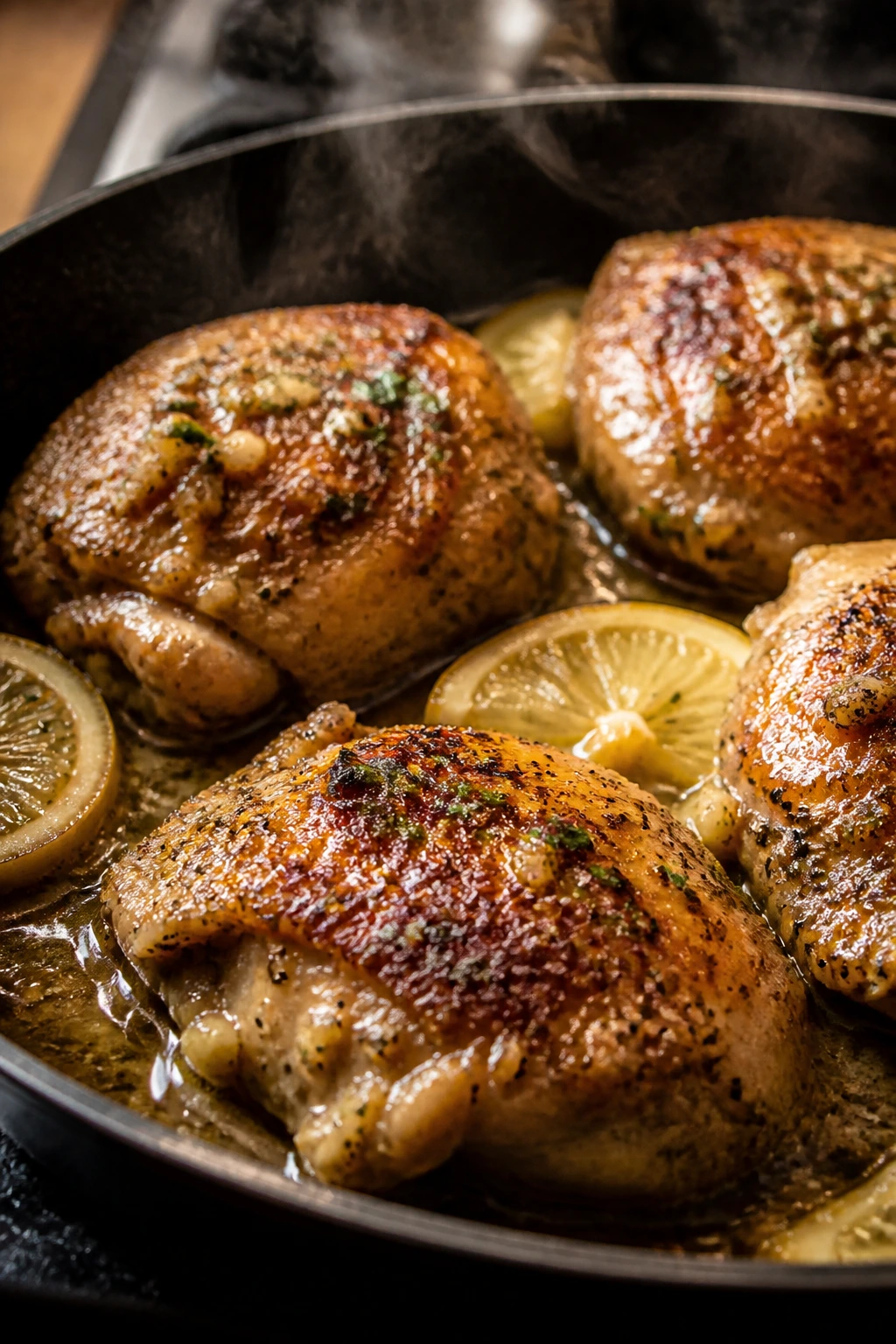
Chicken thighs are the easy answer when you want dinner to behave. They have more fat than breasts, more flavor than breasts, and a little more margin for error when the phone rings or the rice takes longer than planned. That extra fat isn’t a flaw here. It’s the reason the meat stays supple after a hard sear and a short simmer.
There’s also a texture issue that gets overlooked. Thigh meat has a looser grain than breast meat, so it doesn’t dry out in the same tight, stringy way when it hits higher heat. You can take a thigh a few degrees past the exact finish line and still have dinner that feels juicy on the plate. Try that with chicken breast and you’ll usually notice the difference right away.
The lemon-garlic sauce benefits from the thigh’s sturdiness, too. A lean cut wants a very light hand. Thighs can take a sauce that has butter, broth, lemon juice, Dijon, and a little reduction without collapsing into something bland or chalky. That’s the real win. You get a pan sauce with enough body to cling to the meat and soak into rice or mashed potatoes.
And yes, this is a weeknight dinner. Not a project. Not a recipe that asks for a tripod of specialty ingredients and a silent kitchen. Just a hot skillet, a sharp knife, and the sense to stop cooking the moment the chicken is done.
Why You’ll Want to Make This Again
-
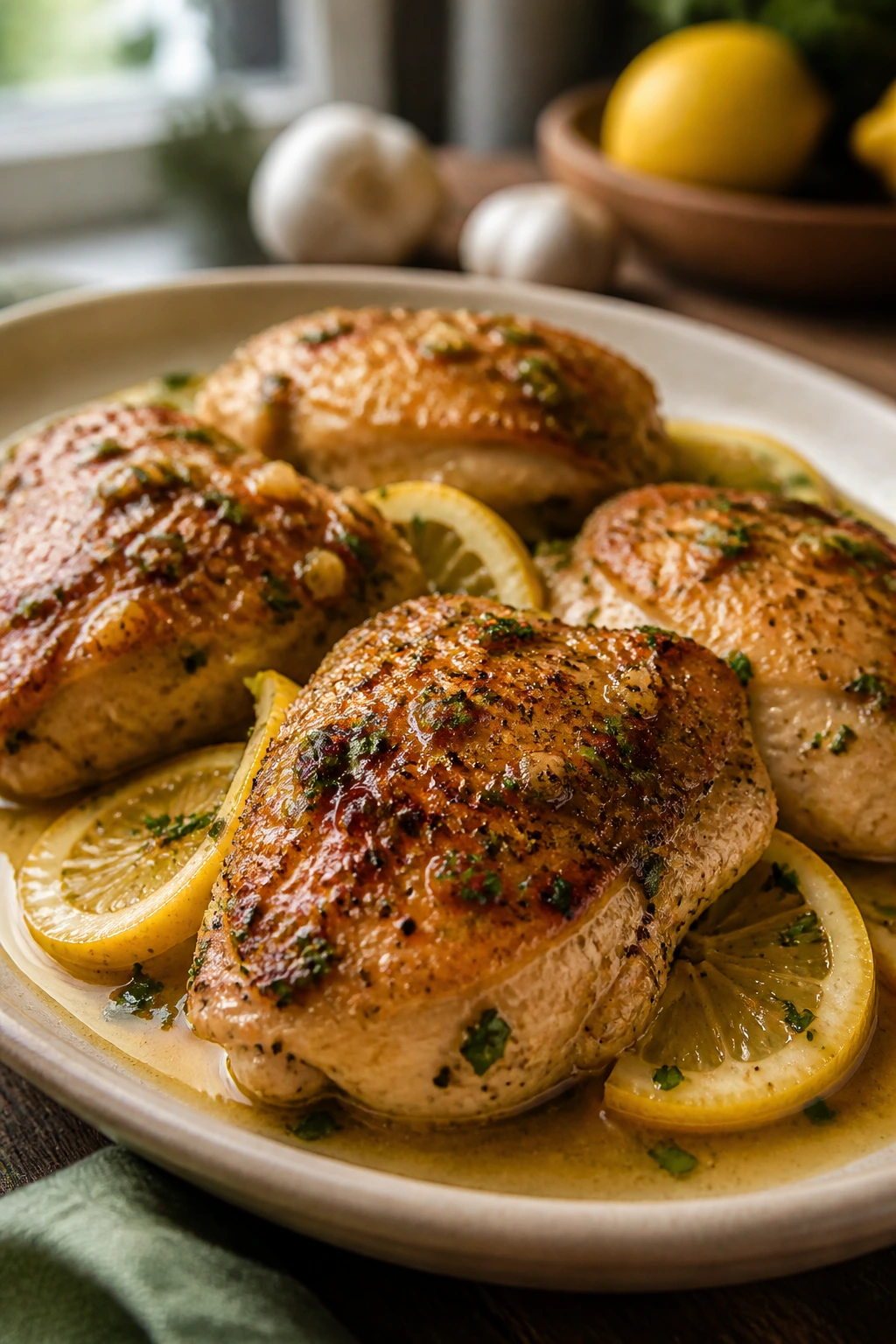
Fast enough for a real evening: The chicken sears in minutes and finishes in the sauce before the side dish has time to get cold.
-
Juicier than most skillet chicken: Thighs keep their tenderness even if the pan runs a little hot or the sauce takes an extra minute to reduce.
-
The sauce uses ordinary ingredients with a sharp payoff: Lemon, garlic, broth, butter, and Dijon turn into something that tastes fuller than the ingredient list suggests.
-
One skillet does the work: The browned bits left after searing melt into the sauce instead of sticking to the pan and going to waste.
-
It plays nicely with leftovers: Rice, couscous, potatoes, and crusty bread all turn into a better lunch when this chicken is around.
-
Easy to adjust at the end: A squeeze of lemon, a knob of butter, or a pinch more salt changes the whole dish in a way you can actually taste.
Yield: Serves 4 to 6
Prep Time: 15 minutes
Cook Time: 20 minutes
Total Time: 35 minutes
Difficulty: Beginner — the method is simple, but you do need to watch the skillet heat and pull the chicken at the right moment.
Chill/Rest Time: 5 minutes resting time
Best Served: Hot from the skillet, while the sauce is glossy and the chicken is still juicy
The Shopping List for a Bright, Savory Skillet
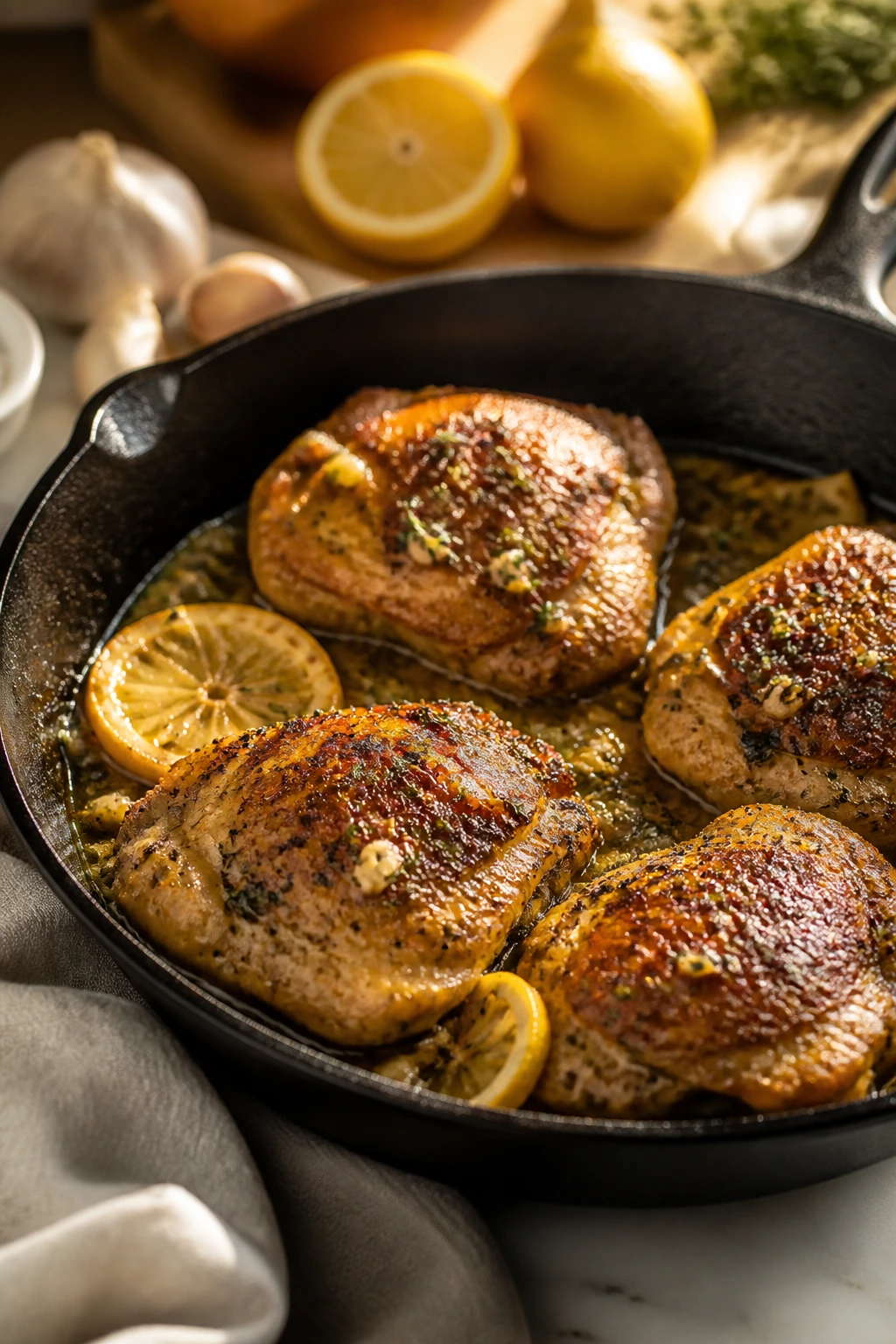
For the Chicken and Sauce:
-
2 lbs boneless, skinless chicken thighs, trimmed and patted dry
-
1 1/2 tsp fine sea salt, divided
-
3/4 tsp black pepper
-
1 tsp dried oregano
-
1/2 tsp paprika
-
2 tbsp olive oil
-
2 tbsp unsalted butter, divided
-
6 cloves garlic, minced
-
1 cup low-sodium chicken broth
-
1 large lemon, zested and juiced, about 3 tbsp juice
-
1 tsp Dijon mustard
-
1 tsp honey
-
1 tsp cornstarch mixed with 1 tbsp cold water, optional, for a thicker sauce
-
2 tbsp chopped fresh parsley
-
Lemon slices, for serving
How Each Ingredient Pulls the Sauce Together
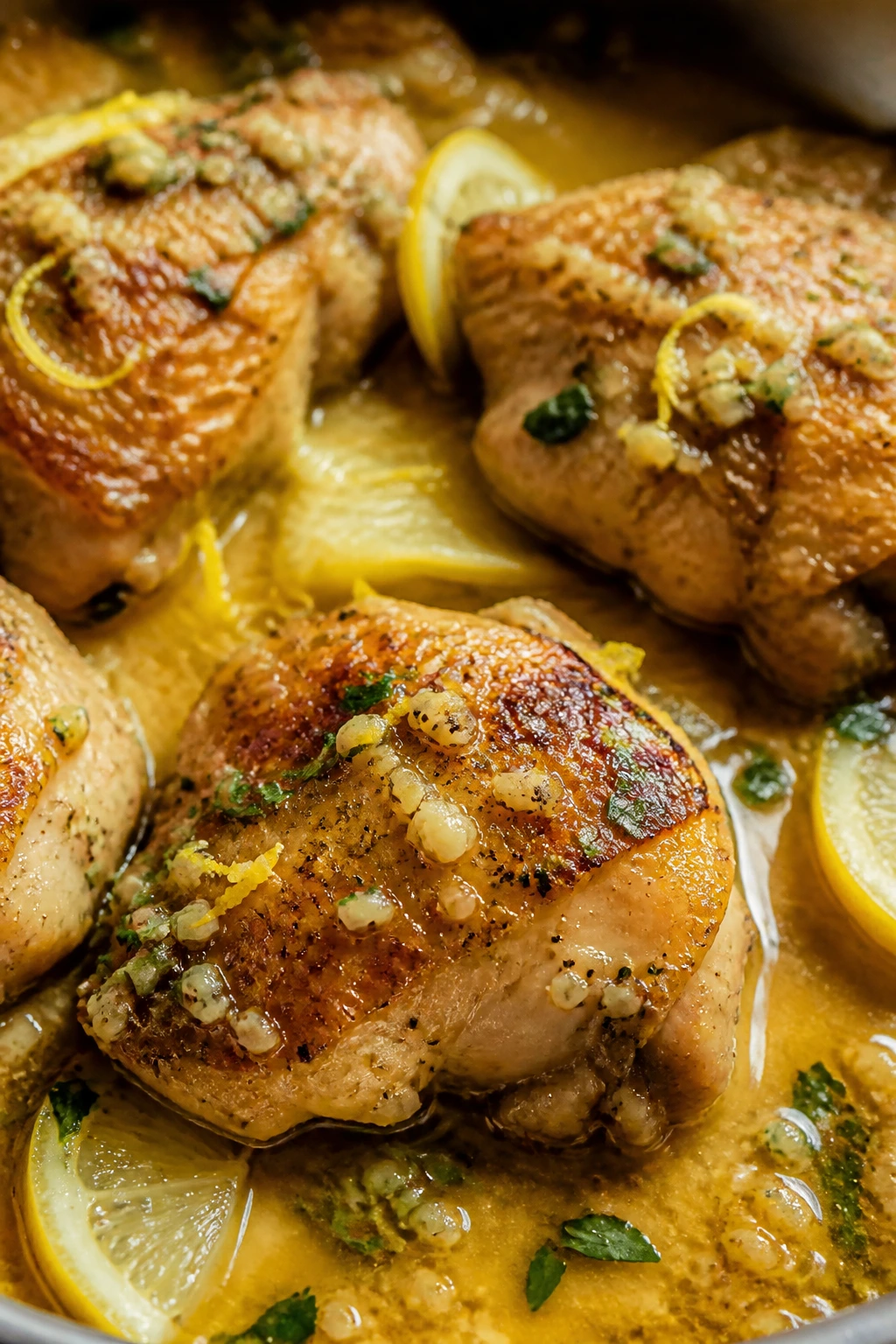
Chicken Thighs
What to use: 2 lbs boneless, skinless chicken thighs. That amount usually gives you 6 to 8 smaller pieces or 4 to 6 generous portions, depending on how they’re cut.
Preparation: Pat them dry with paper towels, then trim any loose fat or odd ragged edges so they brown cleanly. If a few pieces are much thicker than the rest, press them gently with your hand or slice the largest ones in half so they cook at the same pace.
Substitutions: Bone-in, skin-on thighs work if that’s what you have, but they need a longer cook and sometimes a short covered finish. Chicken breasts can be used, though they dry out faster and need more attention.
Tips: Choose thighs that are close in size. A pan full of mismatched pieces is annoying, and it shows up as some pieces done early while others still need another minute.
Lemon and Garlic
What to use: 1 large lemon for zest and juice, plus 6 cloves garlic. The zest gives the dish a lemon smell that hits before the first bite; the juice brings the sharp lift in the sauce.
Preparation: Zest the lemon before you cut it. Juice it into a small bowl, and check for seeds before the liquid goes into the pan. Mince the garlic finely so it softens in the butter instead of sitting in little raw shards.
Substitutions: Bottled lemon juice can work in a pinch, but you’ll miss the zest, and the flavor lands flatter. Garlic paste can replace fresh cloves if that’s what you have, though the taste is a little softer and less punchy.
Tips: Fresh lemon is worth the extra minute. The peel carries the oils that make the sauce smell alive, and that’s the part bottled juice can’t fake.
The Sauce Base
What to use: 1 cup low-sodium chicken broth, 2 tbsp unsalted butter, 1 tsp Dijon mustard, 1 tsp honey, and the optional cornstarch slurry if you want a sauce that clings more tightly.
Preparation: Whisk the broth, lemon juice, lemon zest, Dijon, honey, and remaining salt together before the chicken finishes searing. Having the liquid ready means the garlic won’t sit in a hot pan while you scramble for measuring cups.
Substitutions: White wine can replace half of the broth if you want a slightly sharper sauce. If Dijon is out of the pantry, a tiny pinch of dry mustard or an extra pat of butter can soften the edges, though the sauce will be a little less layered.
Tips: Low-sodium broth matters here because the lemon reduces and the salt concentrates. If you start with full-salt broth, the finished sauce can feel louder than you meant it to.
Herbs and Finishing Touches
What to use: 1 tsp dried oregano in the seasoning mix, 2 tbsp chopped fresh parsley for the finish, and lemon slices for serving.
Preparation: Keep the parsley chopped fairly fine so it melts into the sauce instead of sitting in big wet leaves on top. Slice the lemon thin if you want a fresh garnish that looks clean on the plate.
Substitutions: Thyme, Italian seasoning, or a small pinch of rosemary all work if oregano isn’t your thing. If parsley tastes like nothing to you, scallions are a decent swap at the end.
Tips: Finish with herbs off the heat. Green herbs stay brighter that way, and the parsley keeps its fresh bite instead of turning dull in the hot sauce.
The Tools for a Clean Sear and a Smooth Sauce
-
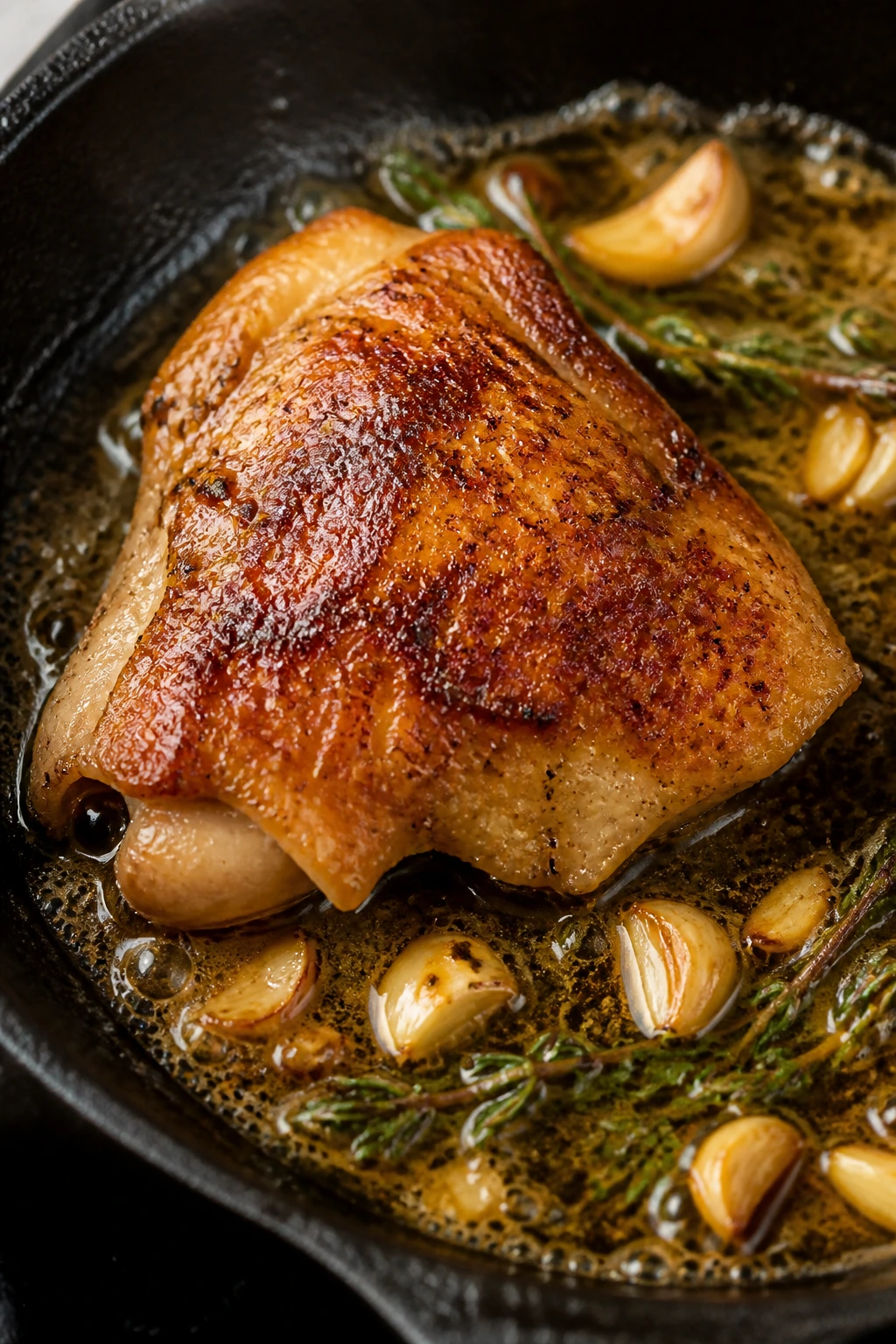
12-inch skillet, stainless steel or cast iron: You need room between the thighs so they brown instead of steam. A 10-inch pan gets crowded fast.
-
Tongs: Makes turning the chicken easier and keeps the crust from tearing.
-
Instant-read thermometer: The most reliable way to know when the chicken is done without cutting into it and losing juices.
-
Microplane or fine grater: Best for lemon zest. A coarse grater leaves bigger strips that can taste pithy.
-
Small bowl and whisk: Handy for mixing the sauce liquids before they hit the pan.
-
Wooden spoon or silicone spatula: Useful for scraping up the browned bits without scratching the skillet.
-
Cutting board and sharp knife: For trimming the thighs, mincing garlic, and slicing the lemon.
-
Plate or shallow tray: A place to hold the chicken while the sauce comes together.
Sear, Simmer, Finish: The Cooking Method That Keeps the Chicken Tender
Prep the chicken and the sauce.
-
Pat the chicken thighs dry with paper towels, then trim any loose fat or ragged edges.
-
Season both sides with 1 tsp of the salt, the black pepper, oregano, and paprika. Press the seasoning in lightly so it sticks.
-
Zest the lemon, then juice it. In a small bowl, whisk together the broth, lemon juice, lemon zest, Dijon mustard, honey, and the remaining 1/2 tsp salt. If you plan to use the cornstarch slurry, mix that in a separate tiny bowl and set it aside.
Build a deep brown crust.
-
Heat a large skillet over medium-high heat for about 2 minutes, until it feels hot when you hold your hand a few inches above the surface. Add the olive oil and swirl it around.
-
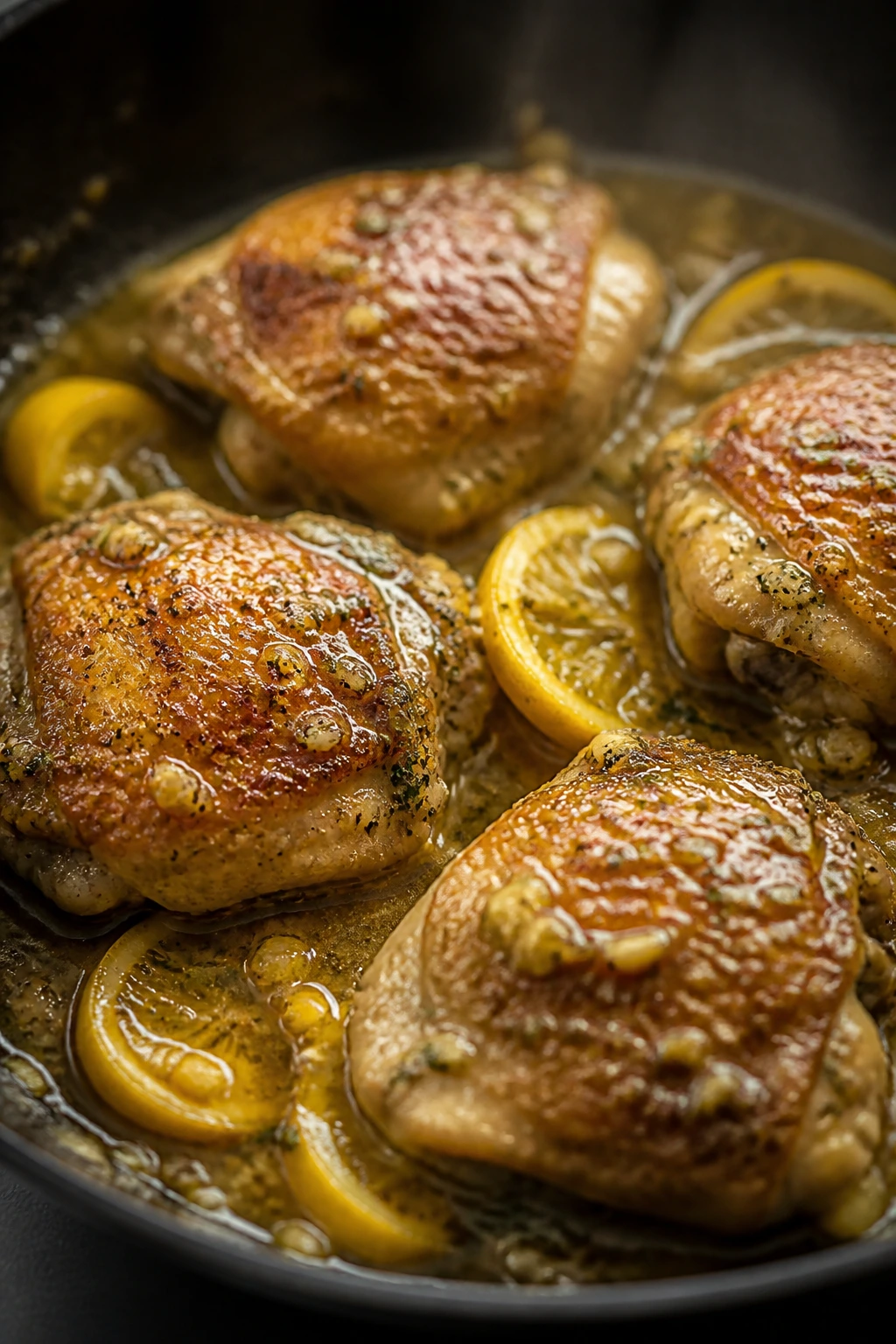
Lay the chicken thighs in the skillet in a single layer. You should hear a clean sizzle. Cook them for 5 to 6 minutes on the first side without moving them, until the underside is deep golden brown.
-
Flip the thighs and cook for another 3 to 4 minutes, until the second side is browned and the centers register about 160 to 165°F on an instant-read thermometer. Transfer the chicken to a plate. Do not crowd the pan — if the thighs overlap, they will steam instead of brown.
Make the lemon-garlic sauce.
-
Reduce the heat to medium. Add 1 tbsp of the butter to the skillet, then stir in the garlic. Cook for 30 to 45 seconds, just until it smells sweet and strong. If the garlic starts to turn dark brown, lower the heat immediately.
-
Pour in the broth mixture and use a wooden spoon to scrape the browned bits off the bottom of the pan. Let the sauce simmer for 2 to 3 minutes, until it reduces a little and the sharp raw edge of the lemon softens.
-
If you want a thicker sauce, stir in the cornstarch slurry and simmer for 30 to 60 seconds more, just until the sauce looks glossy and lightly coats the spoon.
Bring the chicken back and finish cleanly.
-
Return the chicken thighs and any juices from the plate to the skillet. Spoon the sauce over them and simmer for 2 to 4 minutes, turning once, until the chicken reaches 165°F in the thickest part and the sauce clings to the meat.
-
Turn off the heat and stir in the remaining 1 tbsp butter and the parsley. Taste the sauce. Add a small pinch more salt if it needs it, or a squeeze more lemon if it tastes too flat.
-
Let the chicken rest in the pan for 5 minutes before serving. Spoon extra sauce over the top and finish with lemon slices.
How to Plate It on a Busy Night
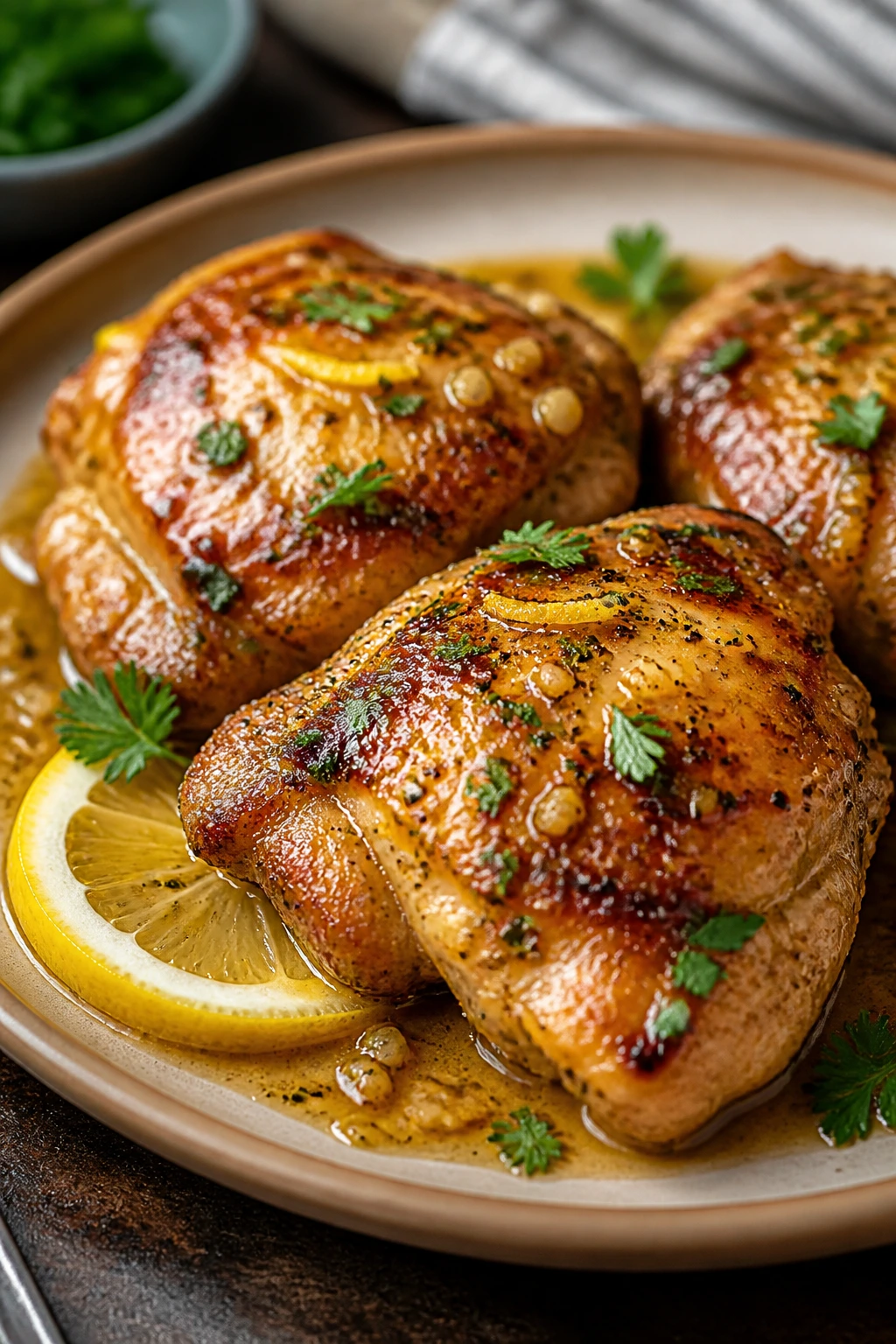
Presentation: Spoon the chicken onto warm plates and let the sauce run across the top and around the edges instead of burying the meat under it. That little bit of shine matters. A few parsley leaves and a thin lemon slice make the plate look intentional, even if you made it between checking homework and unloading groceries.
Accompaniments: Rice is the easiest landing spot because it catches the sauce without stealing attention. Mashed potatoes are richer and better if you want the lemon to cut through something creamy. Couscous, buttered noodles, or crusty bread all work, and a simple green vegetable keeps the plate from feeling too heavy. Broccoli, green beans, asparagus, or a chopped salad with a sharp vinaigrette all fit without fuss.
Portions: Four adults can eat this with a solid side dish, and six people can stretch it if you add bread, rice, or potatoes. If you’re serving very hungry eaters, keep the portions generous and plan on one thigh per person. The sauce is usually the first thing people run out of.
Beverage Pairing: A crisp white wine like Sauvignon Blanc or dry Riesling handles the lemon without turning sweet. If you’d rather skip wine, sparkling water with a wedge of lemon, or even a light lager, works nicely because it keeps the meal feeling bright.
Small Tweaks That Make a Big Difference
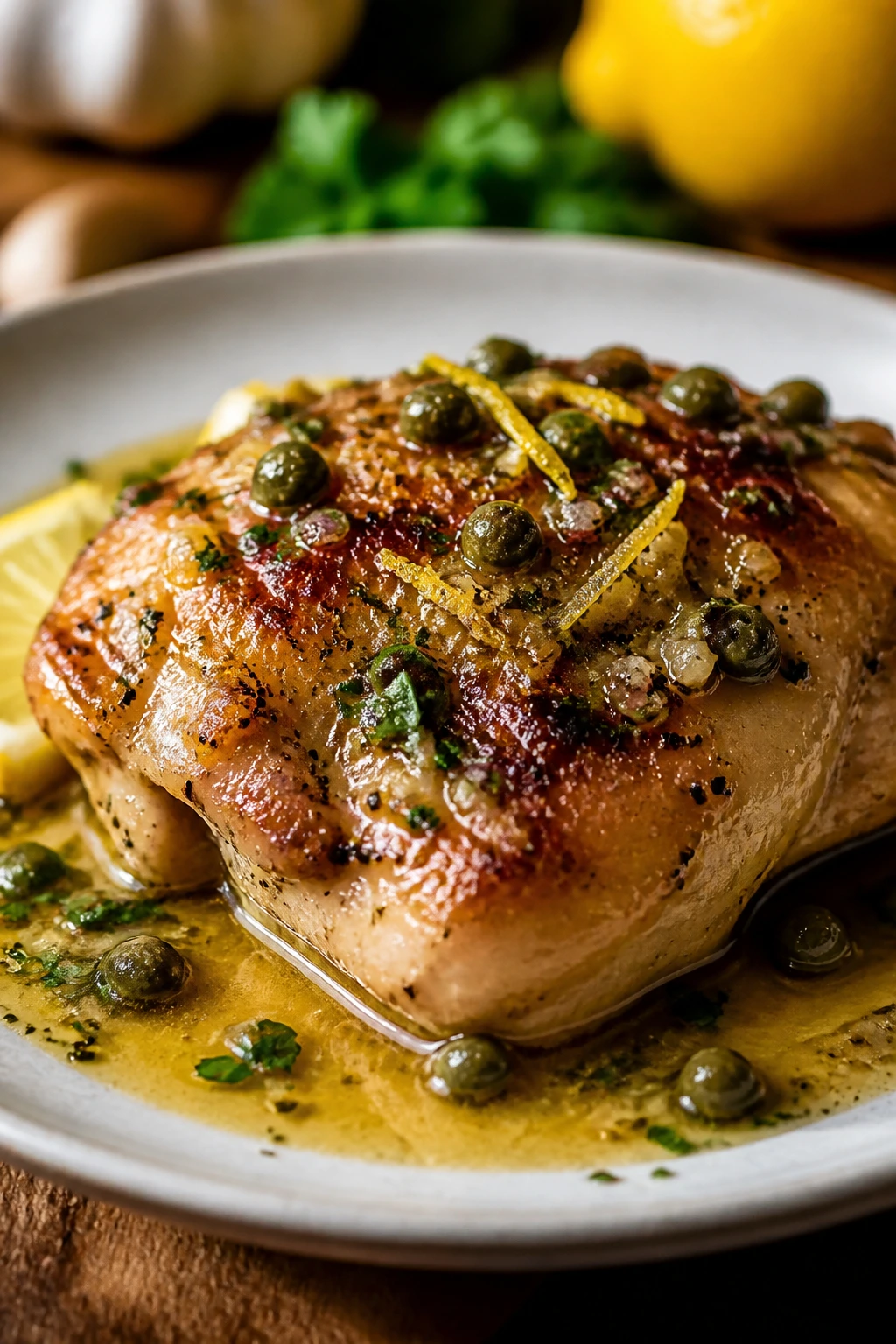
Flavor Enhancement: Stir in a teaspoon of capers with the broth if you like a sharper, saltier sauce. They add little bursts of brine that play nicely with the lemon and keep the dish from feeling one-note.
Time-Saver: Zest and juice the lemon before the pan heats up. Garlic can be minced and the sauce whisked in the same minute, but trying to zest a half-cooked lemon is a tiny kitchen punishment I would skip.
Pro Move: Pull the chicken at 160 to 162°F and let it ride to 165°F in the sauce. That small gap matters. You get juicier thighs, and the final simmer finishes the job without squeezing out every last drop.
Cost-Saver: Chicken thighs are usually cheaper than breasts and far less fussy, which is part of why I keep buying them. If your store sells family packs, cook them all, then freeze extra portions with sauce so future dinners start halfway done.
Mistakes That Turn Juicy Thighs Flat or Dry
-
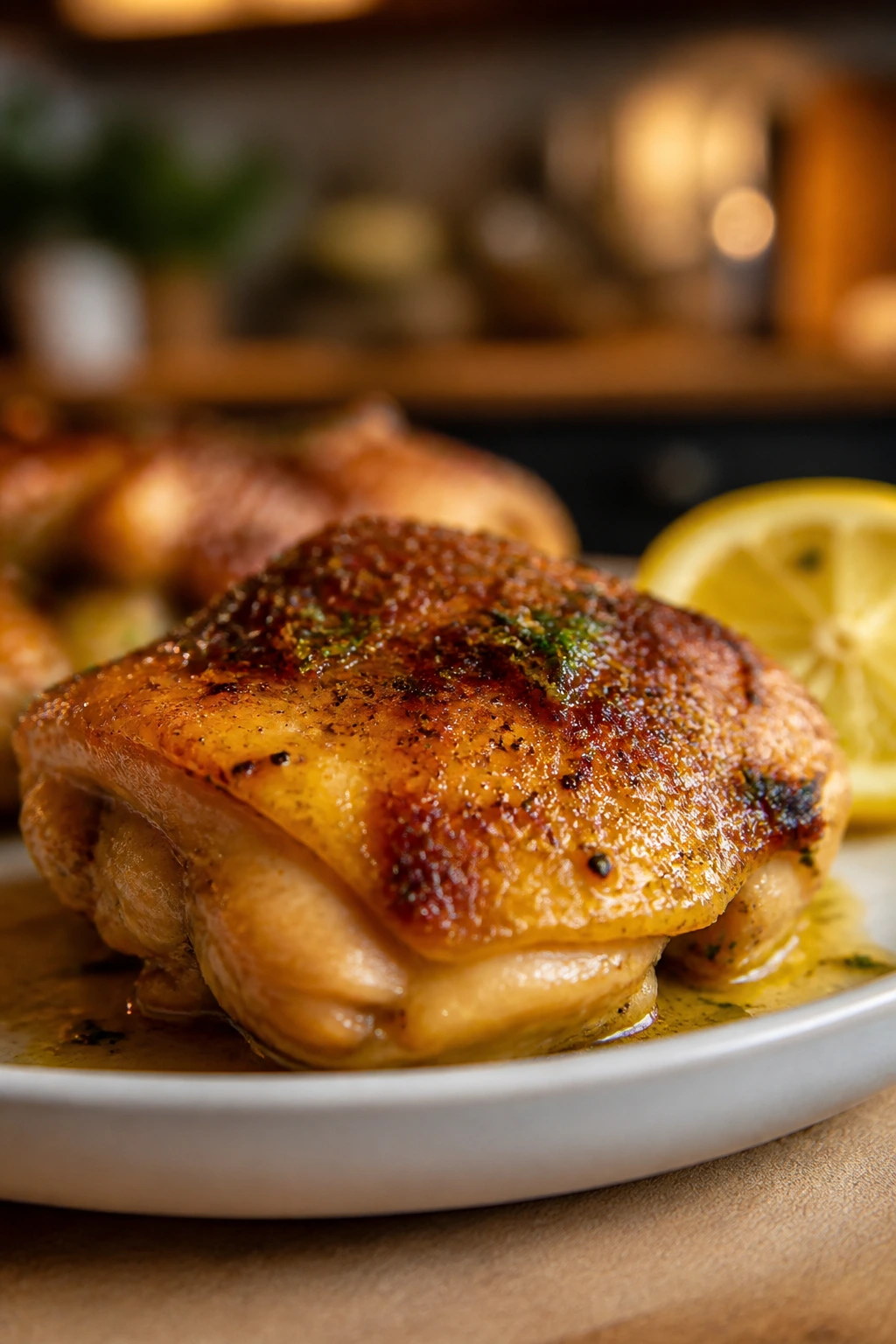
Starting with wet chicken: If the thighs go into the pan damp, the surface steams before it browns. The fix is simple: pat them dry until the paper towel comes away nearly clean.
-
Crowding the skillet: Too many thighs in one pan drop the temperature, and you get pale chicken with soft edges instead of a good crust. If your skillet is small, cook in two batches.
-
Burning the garlic: Garlic only needs a short visit to hot butter. If it turns dark brown before the liquid goes in, the sauce tastes bitter. Lower the heat and keep it moving.
-
Using all the lemon juice too early: Lemon is sharp when it hits heat and can taste harsh if it reduces too hard. Whisking the liquid ahead of time helps, but the real fix is tasting at the end and adjusting with a small squeeze off the heat if needed.
-
Cooking thighs like they’re breasts: Breasts need caution because they dry out fast; thighs can take a little more heat, but they still don’t need to be cooked to exhaustion. Pull them around 165°F, let them rest, and stop chasing a darker number that only makes the meat tight.
Variations on the Same Skillet Dinner
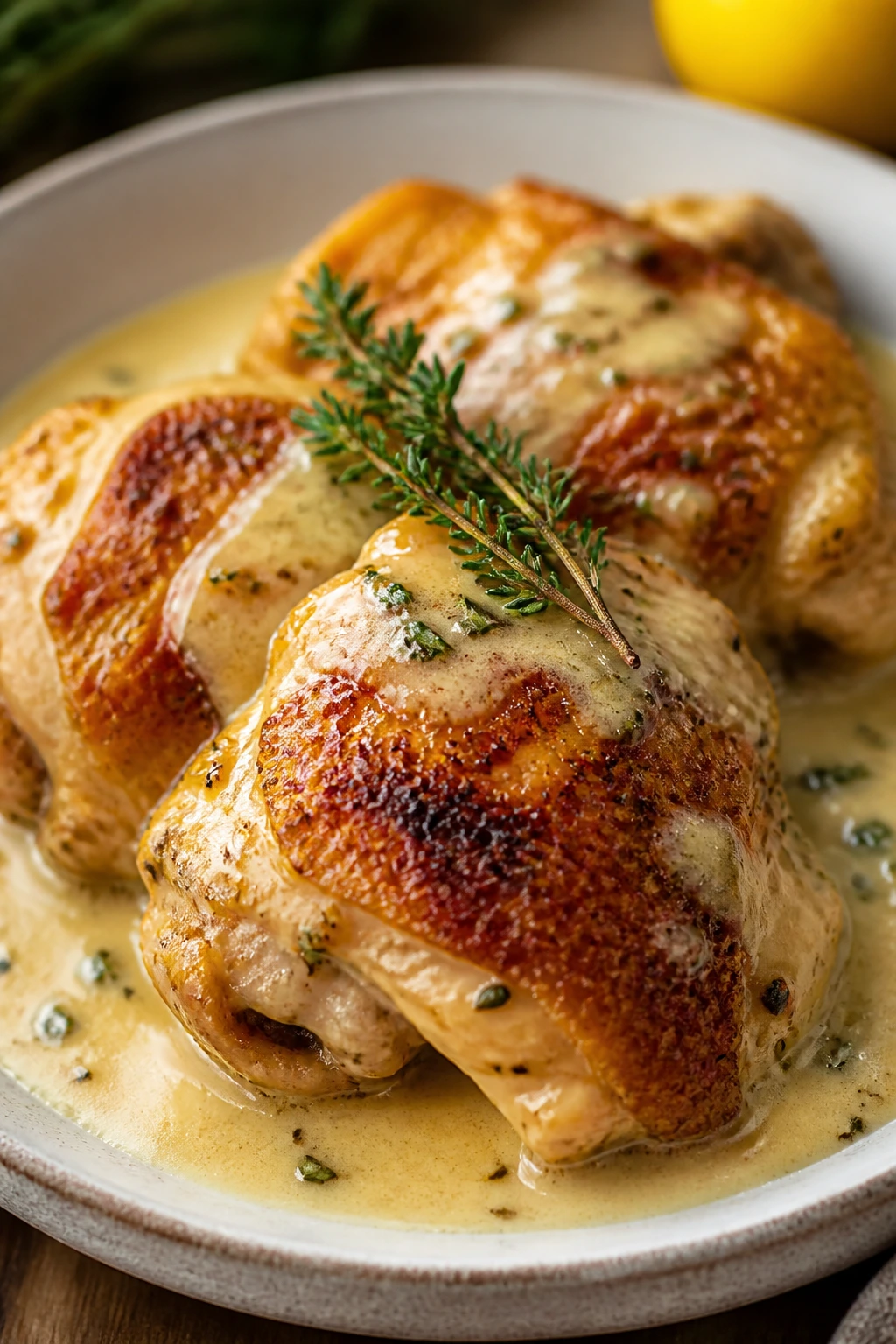
Creamy Lemon Thyme Thighs
Stir 1/4 cup heavy cream into the sauce after the broth has reduced, then keep the heat low so it doesn’t split. The sauce turns pale and silky, and thyme gives it a softer, more rounded flavor than oregano.
Capers and Parsley Skillet
Add 1 tbsp capers with the broth and finish with a little extra parsley. The brine gives the sauce a sharp, almost coastal edge that works especially well with rice or mashed potatoes.
Spicy Paprika Lemon Chicken
Increase the paprika to 1 tsp and add 1/2 tsp red pepper flakes with the garlic. The heat stays in the background, which is where it should be, and the lemon cuts the spice cleanly instead of fighting it.
Honey-Dijon Lemon Thighs
Raise the honey to 2 tsp and the Dijon to 2 tsp if you want a sauce that leans a little more glossy and rounded. It’s a small change, but it softens the lemon and gives the pan sauce a deeper, stickier finish.
Storage, Reheating, and Make-Ahead Notes
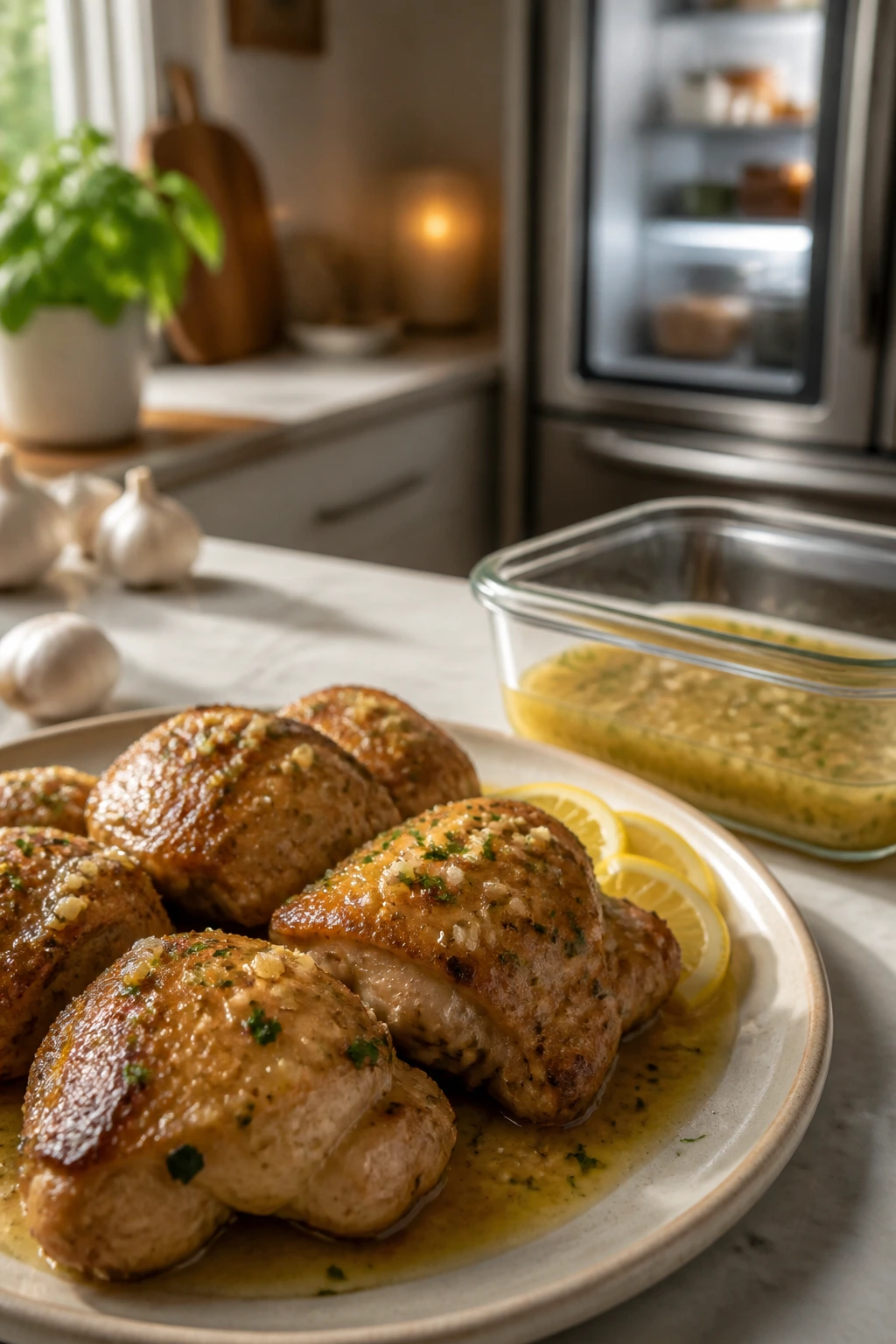
Leftovers keep well, which is one reason this dish earns repeat status. Store the chicken and sauce in an airtight container in the refrigerator for 3 to 4 days. If you know you’ll be saving part of it, keep the sauce with the chicken; thighs dry out less when they’re coated.
For freezing, let the chicken cool first, then pack it into a freezer-safe container with the sauce. It holds for up to 2 months without turning sad and stringy. Thaw it overnight in the refrigerator before reheating. The sauce may look a little separated after thawing, but that usually comes back together once it warms.
Reheat gently. A skillet over low heat works best: add the chicken and sauce with 1 to 2 tbsp of broth or water, cover loosely, and warm for 5 to 7 minutes until hot through. The microwave is fine if you’re in a hurry, but use medium power and short bursts so the meat doesn’t tighten up. If the sauce thickens in the fridge, a splash of broth loosens it right back down.
For make-ahead planning, season the chicken up to 24 hours early and keep it covered in the refrigerator. You can also whisk the sauce ingredients together the day before and keep them chilled, then give the mixture a quick stir before it goes into the pan. I would not fully cook the chicken far ahead unless you need the convenience more than the texture. Fresh off the stove is still better here. That’s the honest version.
Questions Home Cooks Ask About Lemon Garlic Chicken Thighs

Can I use bone-in, skin-on thighs instead of boneless?
Yes, but the timing changes. Bone-in thighs usually need several more minutes per side, and I’d finish them covered over lower heat or in a 400°F oven until they reach 165°F near the bone. The skin can get excellent if you start it skin-side down and leave it alone long enough to render.
What if I only have chicken breasts?
They’ll work, but treat them gently. Pound them to an even thickness, sear them a little less aggressively, and pull them as soon as they hit 160 to 165°F so they don’t dry out while resting. The sauce still helps, but breasts never have the same cushion that thighs do.
How do I stop the lemon sauce from tasting bitter?
Use the zest only from the yellow outer peel, not the white pith underneath. Keep the simmer short, and taste after the chicken goes back into the pan. If the sauce feels too sharp, a small knob of butter or a splash more broth softens it better than dumping in more salt.
Do I need the cornstarch slurry?
No. The sauce is good when it’s a little loose and spoonable. Use the slurry only if you want a thicker glaze that sticks to the thighs more tightly, especially if you’re serving rice and want the sauce to stay on top instead of running straight to the bottom of the bowl.
Can I make this without Dijon mustard?
You can. The sauce will still work with just broth, lemon, garlic, and butter, though it won’t have quite the same depth. If you want a little of that mustard note without Dijon, use a tiny pinch of dry mustard or leave it out and add a touch more butter at the end.
What’s the best way to know when the chicken is done?
An instant-read thermometer is the cleanest answer. Stick it into the thickest part of the thigh, and look for 165°F. If you don’t have one, cut into the thickest piece and check that the juices run clear and the meat is no longer pink in the center, but the thermometer is worth using.
Can I bake the chicken instead of finishing it on the stovetop?
Yes, though the sauce loses a little of the browned fond that makes it taste deep. You can sear the thighs in a skillet, pour the sauce around them, and finish the pan in a 400°F oven for about 8 to 10 minutes. It’s a good option if your stove runs hot or if you want to cook the chicken and sauce together with less hovering.
The Kind of Dinner That Earns Repeat Status
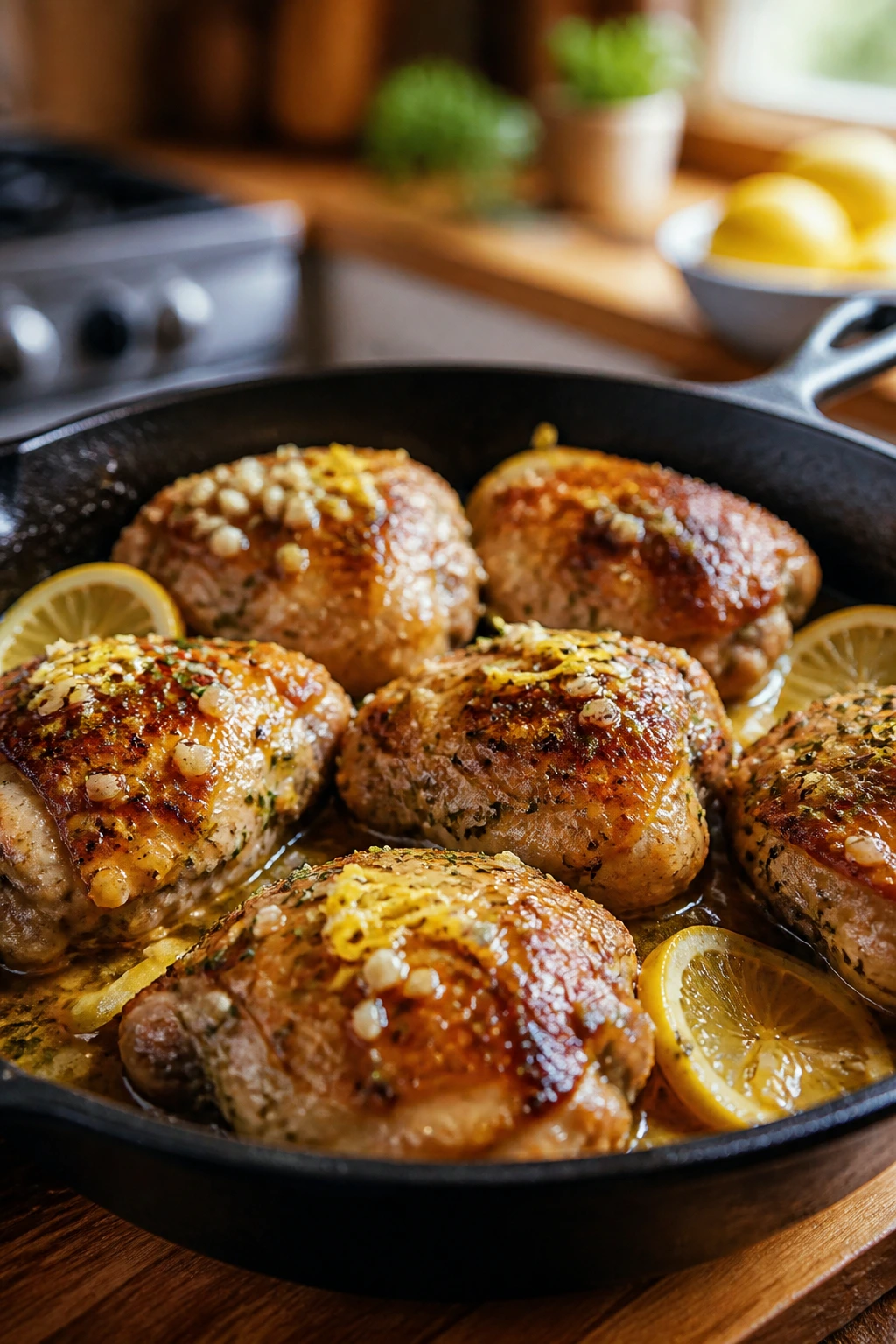
There’s a reason this skillet dinner earns a permanent spot in the rotation. It doesn’t ask much, but it gives a lot back. The chicken stays tender, the sauce tastes clean and savory, and the whole thing lands on the table without a pile of dishes or a long cleanup waiting afterward.
Lemon, garlic, broth, butter, and a skillet of browned thighs are enough to make a dinner that feels grounded and bright at the same time. That’s a rare combination on a weeknight, and it’s why I keep coming back to it. The next time you need something that tastes sharper than takeout and less fussy than a roast, this is the pan I’d reach for.
Tender Lemon Garlic Chicken Thighs — Recipe Card
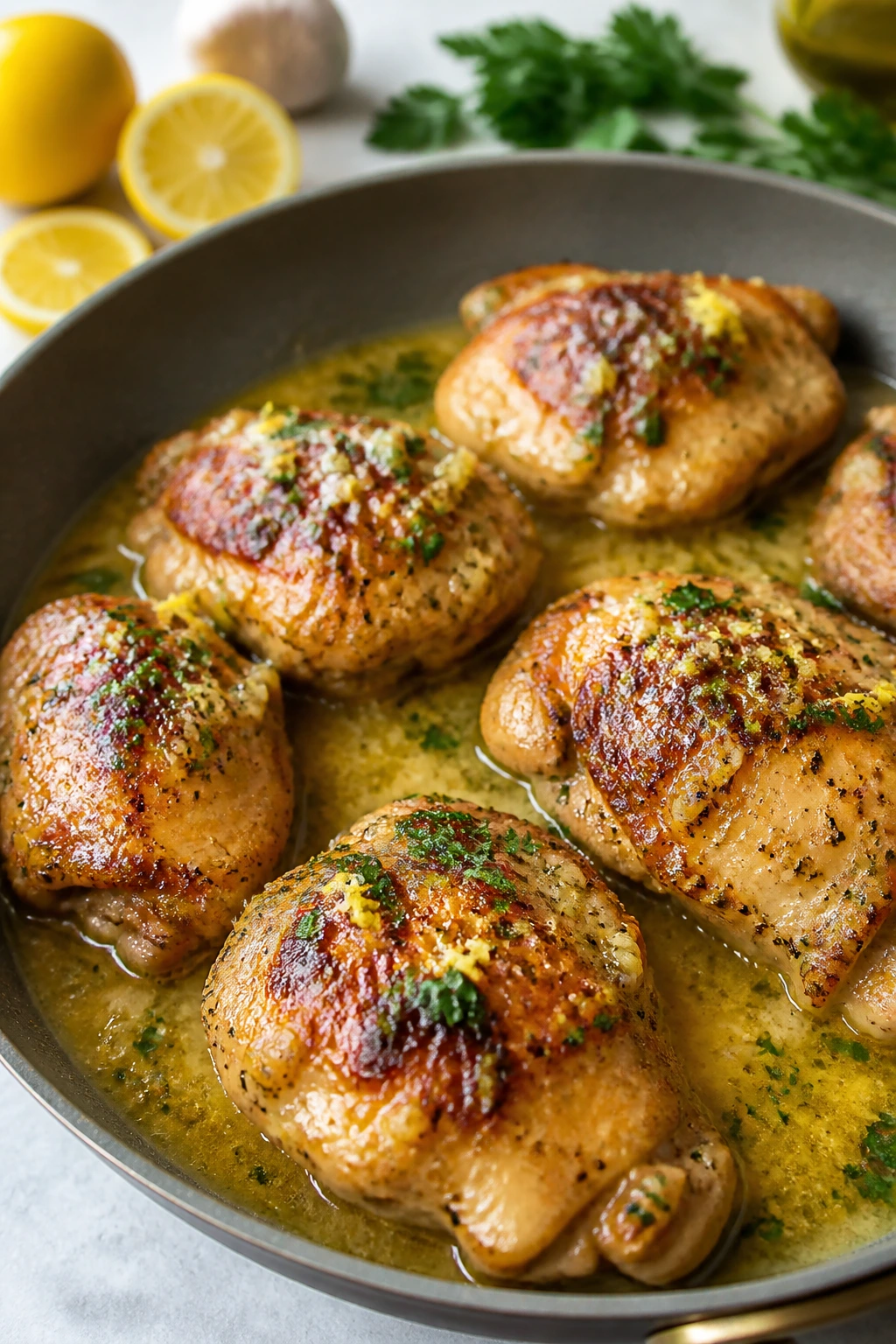
Recipe Name: Tender Lemon Garlic Chicken Thighs
Description: Juicy boneless chicken thighs seared until golden, then finished in a bright lemon-garlic pan sauce with butter, Dijon, and parsley. It’s a fast skillet dinner that tastes clean, savory, and a little rich.
Prep Time: 15 minutes
Cook Time: 20 minutes
Total Time: 35 minutes
Course: Main Course
Cuisine: American
Servings: 4 to 6 servings
Calories: About 380 kcal per serving
Ingredients
For the Chicken and Sauce:
- 2 lbs boneless, skinless chicken thighs, trimmed and patted dry
- 1 1/2 tsp fine sea salt, divided
- 3/4 tsp black pepper
- 1 tsp dried oregano
- 1/2 tsp paprika
- 2 tbsp olive oil
- 2 tbsp unsalted butter, divided
- 6 cloves garlic, minced
- 1 cup low-sodium chicken broth
- 1 large lemon, zested and juiced, about 3 tbsp juice
- 1 tsp Dijon mustard
- 1 tsp honey
- 1 tsp cornstarch mixed with 1 tbsp cold water, optional
- 2 tbsp chopped fresh parsley
- Lemon slices, for serving
Instructions
-
Pat the chicken thighs dry, trim any loose fat, and season both sides with 1 tsp salt, pepper, oregano, and paprika.
-
Zest and juice the lemon. Whisk together the broth, lemon juice, lemon zest, Dijon mustard, honey, and the remaining 1/2 tsp salt. Mix the cornstarch slurry separately if using.
-
Heat a large skillet over medium-high heat. Add the olive oil, then sear the chicken thighs for 5 to 6 minutes on the first side and 3 to 4 minutes on the second side, until browned and nearly cooked through. Transfer to a plate.
-
Reduce the heat to medium. Add 1 tbsp butter and the garlic, then cook for 30 to 45 seconds until fragrant.
-
Pour in the broth mixture and scrape up the browned bits from the pan. Simmer for 2 to 3 minutes.
-
If you want a thicker sauce, stir in the cornstarch slurry and simmer for 30 to 60 seconds until glossy.
-
Return the chicken and any juices to the skillet. Simmer for 2 to 4 minutes, turning once, until the chicken reaches 165°F.
-
Turn off the heat. Stir in the remaining 1 tbsp butter and parsley. Taste and adjust with a little more salt or lemon if needed.
-
Rest for 5 minutes, then serve with lemon slices and extra sauce spooned over the top.
Notes: A 12-inch skillet gives the chicken room to brown. If the sauce tastes too sharp, add a small knob of butter or a splash more broth instead of more salt.