



The sad version of chicken chow mein is easy to spot from across the table: pale chicken, limp noodles, and a slick of sauce left at the bottom of the bowl like it gave up halfway through dinner. The good version is a different animal. The chicken is thin, glossy, and still juicy. The noodles stay springy. The vegetables keep a little crunch, and the whole pan smells like garlic, soy, and toasted sesame oil the moment it hits the table.
That balance is what makes tender chicken chow mein worth caring about. It’s not trying to be a heavy noodle casserole, and it’s not a bland stir-fry pretending to be takeout. The point is the contrast: chewy noodles, soft chicken, crisp edges on the cabbage, and a savory sauce that coats everything without turning the bowl swampy. If you’ve ever had chow mein that felt greasy or watery, you already know how quickly this dish can go wrong.
I’m also a fan of how little drama it asks for. The ingredients are familiar, the method is fast, and the pan does most of the work once everything is chopped. A thin cornstarch marinade, high heat, and noodles cooked one minute shy of done are the three things that keep this from sliding into the sad, mushy category. Get those right, and the rest feels almost suspiciously easy.
Why This Bowl Works So Well on a Busy Night
- Thin-sliced thighs stay juicy: Chicken thighs handle high heat better than breasts, and when they’re cut into 1/4-inch strips they cook in minutes without drying out.
- The sauce coats instead of puddling: A little cornstarch in the sauce gives the noodles a light sheen, not a sticky glaze that turns gluey in the bowl.
- The vegetables still taste like themselves: Cabbage, carrot, bean sprouts, and scallions need only a minute or two in the pan before they’re crisp-tender and bright.
- Cleanup stays sane: One wok or large skillet, one pot, one bowl for sauce. That’s the whole mess.
- Leftovers can recover: A splash of water or broth in a hot skillet brings the noodles back to life faster than the microwave ever will.
- It tastes like takeout without the heavy finish: Oyster sauce, soy sauce, ginger, and sesame oil give you that familiar savory depth without drowning the noodles.
Fast Facts for the Skillet
Yield: Serves 4
Prep Time: 20 minutes
Cook Time: 15 minutes
Total Time: 35 minutes active, plus 10 to 15 minutes marinating
Difficulty: Intermediate — the steps themselves are straightforward, but stir-frying moves fast and the pan needs to be ready before the first ingredient goes in.
Chill/Rest Time: 10 to 15 minutes for the chicken marinade
Best Served: Right away, while the noodles still have a little bite and the chicken is hot through the center
The Short Shopping List for Glossy Noodles
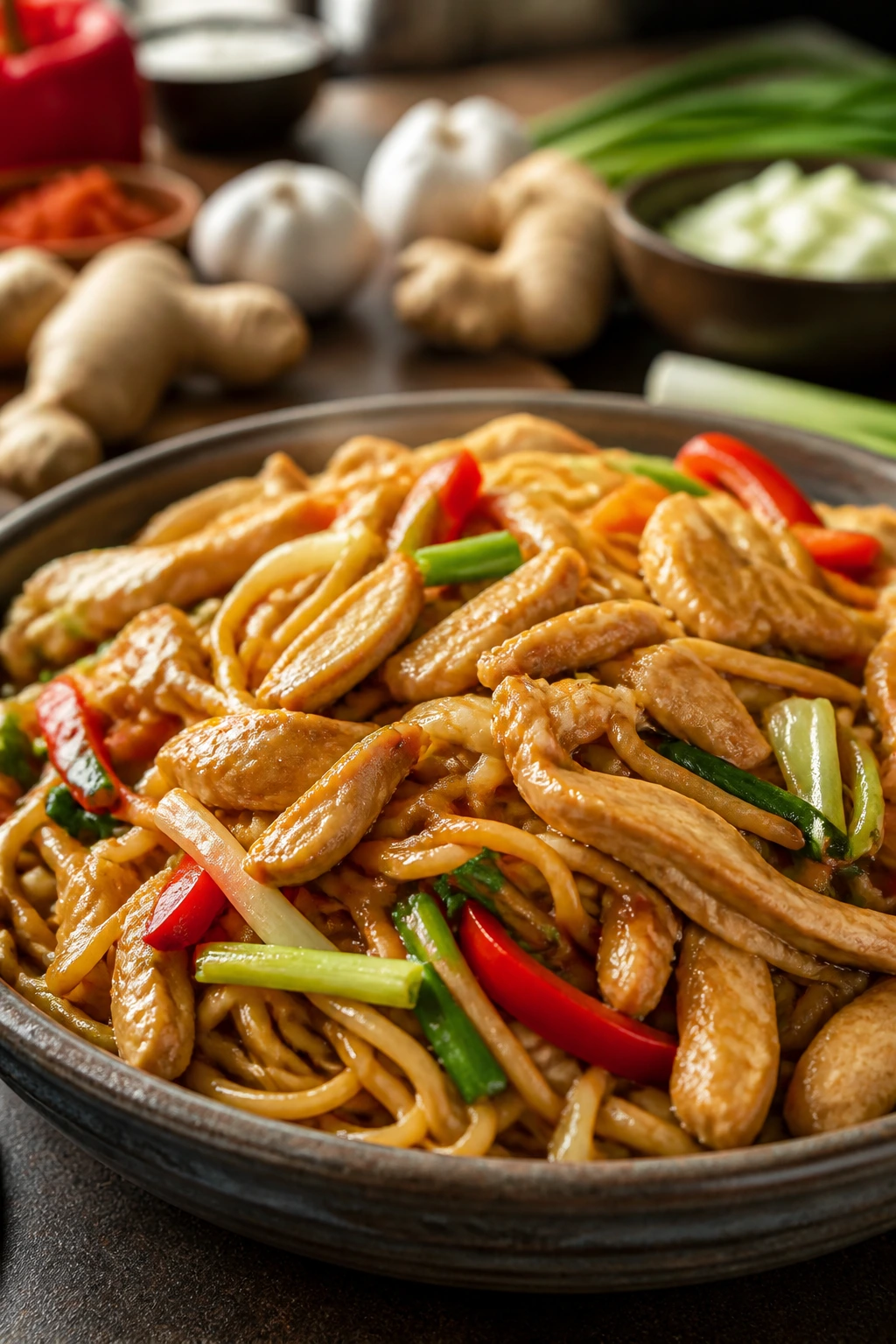
For the Chicken
- 1 pound boneless, skinless chicken thighs, sliced into 1/4-inch strips against the grain
- 1 tablespoon low-sodium soy sauce
- 1 tablespoon Shaoxing wine or dry sherry
- 1 tablespoon cornstarch
- 1 teaspoon neutral oil
- 1/4 teaspoon white pepper
For the Noodles and Sauce
- 8 ounces dried chow mein noodles or thin egg noodles
- 3 tablespoons low-sodium soy sauce
- 2 tablespoons oyster sauce
- 1/4 cup low-sodium chicken broth
- 1 tablespoon Shaoxing wine or dry sherry
- 1 teaspoon sugar
- 1 teaspoon toasted sesame oil
- 1 teaspoon cornstarch
- 1/4 teaspoon white pepper
For the Vegetables and Finish
- 2 tablespoons neutral oil, divided
- 3 cloves garlic, minced
- 1 tablespoon fresh ginger, minced
- 1 medium carrot, cut into thin matchsticks
- 2 cups shredded green cabbage or napa cabbage
- 1 cup bean sprouts
- 3 scallions, sliced into 2-inch pieces
- 1 tablespoon toasted sesame seeds, for serving
Why Each Ingredient Earns Its Place in the Pan
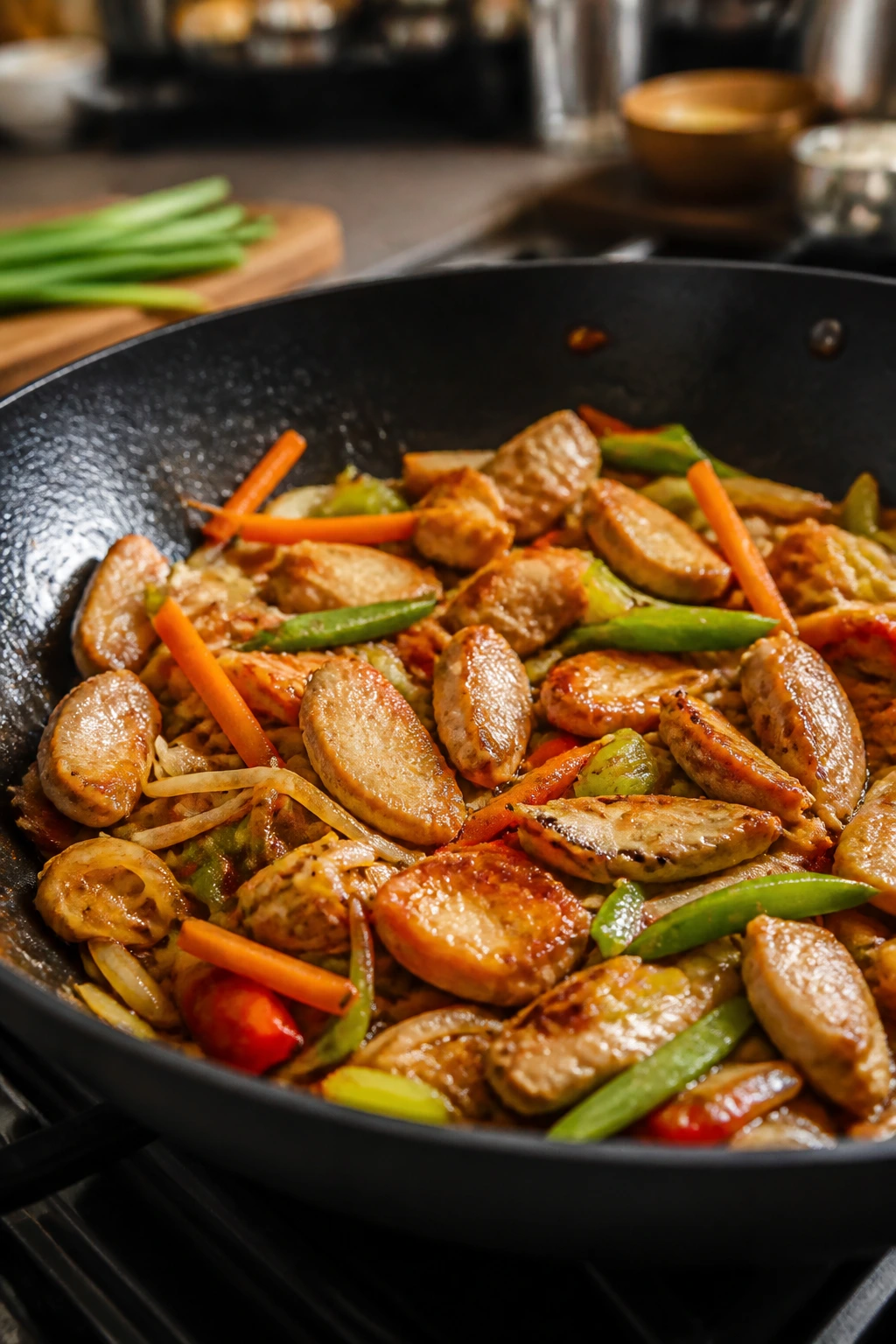
Chicken
What to use: 1 pound boneless, skinless chicken thighs, sliced into thin strips. Thighs have more fat than breast meat, which is a big part of why they stay plush after a hard toss in a hot pan.
Preparation: Slice the chicken against the grain into 1/4-inch strips. If the meat feels slippery, slide it into the freezer for 10 to 15 minutes first; it firms up just enough to cut cleanly.
Substitutions: Boneless chicken breast will work, but slice it thinner and pull it from the pan the second it turns opaque. Thin pork loin or turkey tenderloin can also step in without changing the flavor profile too much.
Tips: The marinade isn’t there just for seasoning. The cornstarch gives the chicken that lightly velvety surface you notice in good takeout stir-fries, and the short rest lets the soy sauce get past the surface instead of sitting on top.
Noodles
What to use: 8 ounces dried chow mein noodles or thin egg noodles. That amount gives you a proper noodle-to-sauce ratio without making the skillet feel overcrowded.
Preparation: Cook the noodles one minute shy of the package directions, then drain well and toss with a teaspoon of oil so they don’t weld themselves into a single clump.
Substitutions: Yakisoba noodles are a natural fit. Ramen bricks or even spaghetti can work in a pinch if you keep them slightly firm and finish them in the pan.
Tips: Don’t cook the noodles all the way through in the pot. They finish in the wok or skillet, and that last minute of heat is what keeps them from turning soft and tired.
Sauce
What to use: Soy sauce, oyster sauce, chicken broth, Shaoxing wine, sugar, toasted sesame oil, cornstarch, and white pepper. Together they build that deep, savory, slightly glossy flavor that makes chow mein taste finished instead of merely seasoned.
Preparation: Whisk everything until the cornstarch disappears. Then whisk again right before pouring, because cornstarch settles fast and leaves a cloudy little layer at the bottom of the bowl.
Substitutions: Tamari works for gluten-free cooking. Vegetarian oyster sauce is a fine stand-in if you’re cooking without shellfish, and dry sherry is the most useful swap for Shaoxing wine.
Tips: Low-sodium soy is the smarter choice here. Oyster sauce already brings salt and body, and the noodles will soak up every bit of the sauce once they hit the heat.
Vegetables and Aromatics
What to use: Garlic, ginger, carrot, cabbage, bean sprouts, and scallions. That mix gives you sweetness, sharpness, crunch, and a little grassy freshness from the scallions at the end.
Preparation: Cut everything before the stove turns on. Stir-frying is fast enough to punish anyone who starts chopping after the chicken hits the pan.
Substitutions: Napa cabbage can replace green cabbage. Snow peas, bell pepper, mushrooms, or broccoli slaw all fit if that’s what the crisper drawer offers.
Tips: Dry the vegetables after washing them. Surface water cools the pan, and a cool pan is how you end up steaming the vegetables instead of keeping them snappy.
Fat and Finish
What to use: 2 tablespoons neutral oil for the actual stir-fry, plus toasted sesame seeds for garnish. Peanut oil, avocado oil, or any other high-smoke-point oil will do the same job.
Preparation: Keep the sesame oil in the sauce or finish with it at the very end. It has too much flavor and too low a smoke point to use as the main cooking fat.
Substitutions: Peanut oil is especially good if you want a more classic takeout smell. Avocado oil is a quiet, neutral choice that handles heat well.
Tips: If your oil smokes the second it hits the pan, lower the heat for a minute. Burnt garlic is bitter, and once it’s there, the whole bowl tastes sharp in the wrong way.
What to Set on the Counter Before You Start
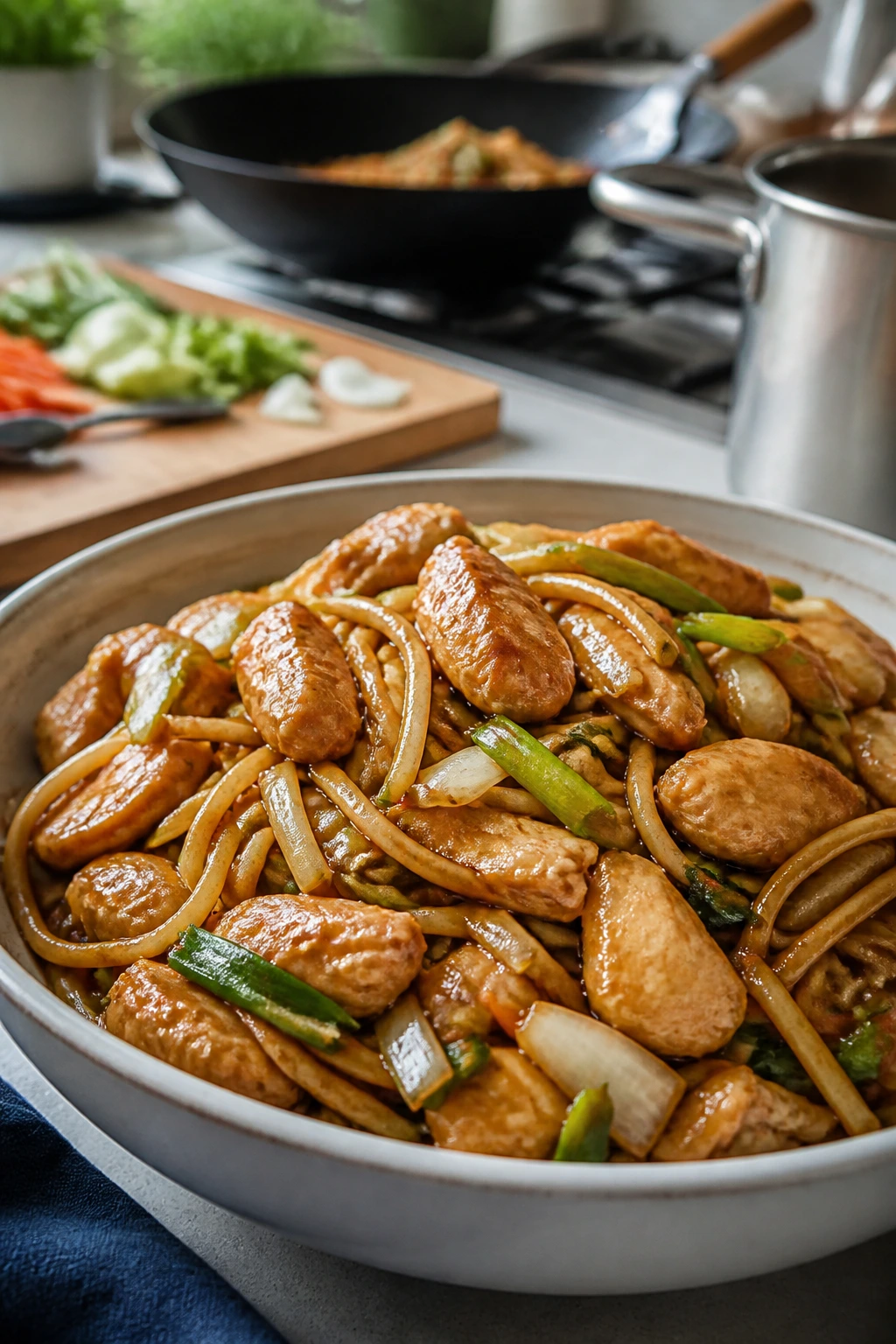
A good stir-fry doesn’t reward improvisation. It rewards having everything within arm’s reach, because the actual cooking takes less time than the chopping did.
- 12-inch wok or large stainless-steel skillet: This gives the chicken enough room to sear instead of steaming. A wok is my first choice, but a flat skillet works if it’s wide.
- Medium saucepan or pot: Use this for the noodles. A pot that’s too small makes the water cool down too much once the noodles go in.
- Colander: Drains the noodles quickly so they don’t sit and overcook.
- Large mixing bowl: Handy for tossing the chicken with marinade and for keeping ingredients organized.
- Small bowl and whisk: The sauce needs to be mixed separately so the cornstarch disperses evenly.
- Tongs or two wide spatulas: Either one lets you toss noodles without smashing them.
- Sharp chef’s knife: Thin, even slices matter more here than they do in a stew.
- Cutting board with a damp towel underneath: This keeps the board from sliding while you slice the chicken and vegetables.
- Instant-read thermometer: Optional, but useful. It tells you exactly when the chicken hits 165°F instead of making you guess.
How to Cook Tender Chicken Chow Mein
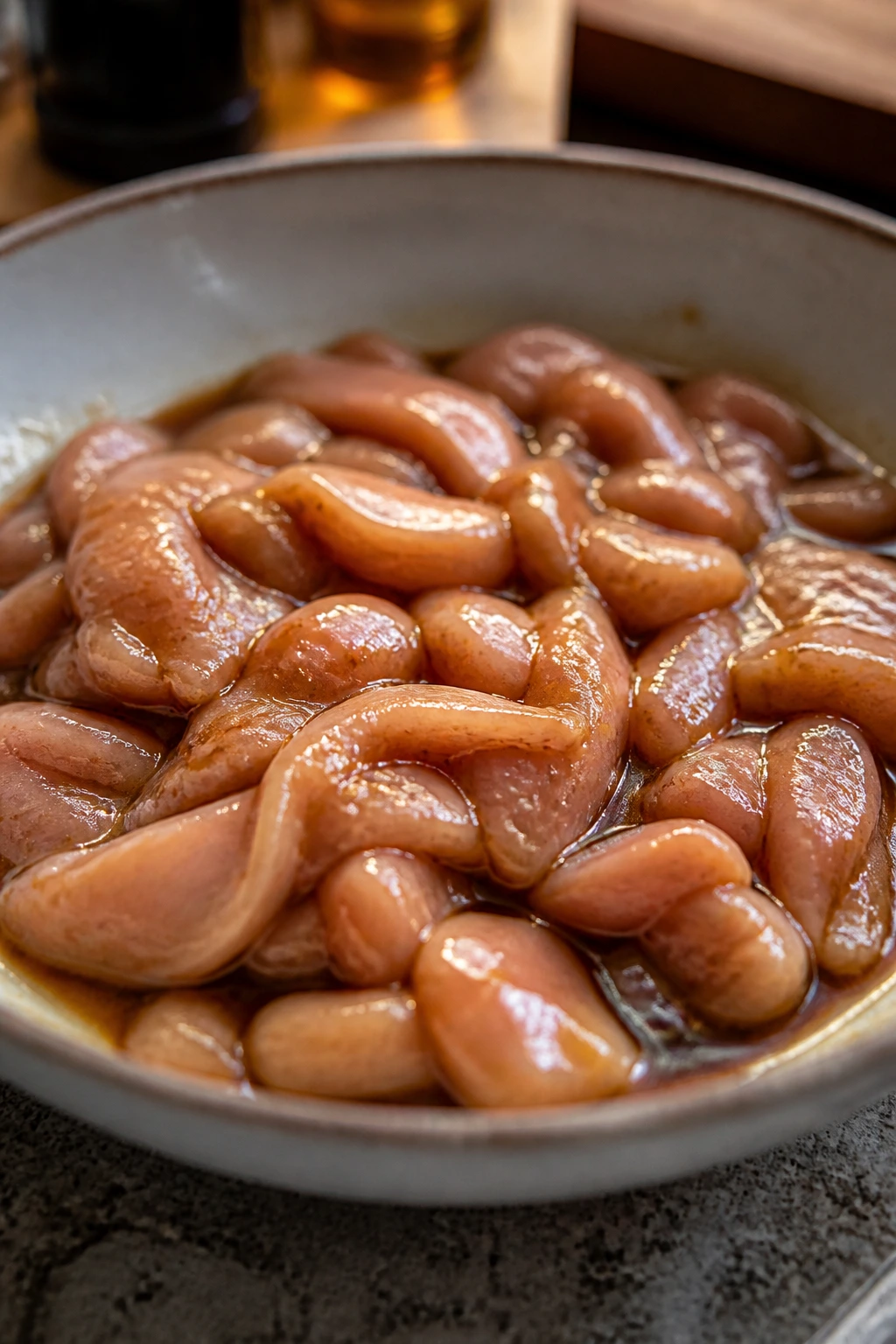
Marinate the Chicken
-
In a medium bowl, combine the sliced chicken thighs, 1 tablespoon soy sauce, 1 tablespoon Shaoxing wine or dry sherry, 1 tablespoon cornstarch, 1 teaspoon neutral oil, and 1/4 teaspoon white pepper. Toss until the chicken looks lightly coated and a little glossy, with no dry cornstarch left on the surface.
-
Let the chicken rest for 10 to 15 minutes while you prep the vegetables and whisk the sauce. Do not skip this pause — it gives the cornstarch time to cling to the meat, which is part of what keeps the chicken tender.
Cook the Noodles
-
Bring a large pot of salted water to a rolling boil. Add the noodles and cook them until they’re just shy of tender, usually 1 minute less than the package suggests. They should still have a small amount of bite when you drain them.
-
Drain the noodles well and toss them with 1 teaspoon of neutral oil so they don’t stick into one heavy knot while you finish the stir-fry. If they’re especially starchy, a very quick rinse with warm water is fine, but don’t rinse them until they’re completely slick; you want a little starch left behind for the sauce to grab.
Mix the Sauce
-
In a small bowl, whisk together 3 tablespoons soy sauce, 2 tablespoons oyster sauce, 1/4 cup chicken broth, 1 tablespoon Shaoxing wine or dry sherry, 1 teaspoon sugar, 1 teaspoon toasted sesame oil, 1 teaspoon cornstarch, and 1/4 teaspoon white pepper. Keep whisking until the liquid looks smooth and uniform, with no cloudy streaks from the cornstarch.
-
Set the sauce nearby and whisk it again right before you pour it into the pan. Cornstarch settles fast. If you forget this part, the sauce can thicken unevenly and leave little lumps behind.
Sear the Chicken
-
Heat 1 tablespoon neutral oil in a 12-inch wok or large skillet over medium-high heat until it shimmers and slides easily across the surface. If you flick a drop of water into the pan, it should hiss on contact.
-
Add the chicken in a single layer and let it sit for 2 to 3 minutes without moving it. That undisturbed contact is what gives you a little browning instead of gray, steamed meat.
-
Toss the chicken and cook for another 1 to 2 minutes, just until the strips are lightly browned and the internal temperature reaches 165°F. Transfer the chicken to a clean plate. It should look just barely done at the center; it will finish quietly when it goes back into the pan later.
Stir-Fry the Vegetables
-
Add the remaining 1 tablespoon neutral oil to the same pan. Toss in the garlic, ginger, carrot, and cabbage, then stir-fry for about 2 minutes. The garlic should smell sweet, the cabbage should wilt at the edges, and the carrot should lose its raw, sharp crunch without going floppy.
-
Add the bean sprouts and scallions and stir for another 30 seconds. The sprouts should stay crisp and the scallions should still look bright green, not dull or collapsed.
Bring It All Together
-
Add the noodles to the pan, then pour the sauce around the edges and over the top. Use tongs or two spatulas to lift and toss everything for 1 to 2 minutes, until the sauce thickens just enough to coat the noodles and leaves a light sheen on the pan.
-
If the pan looks dry before the noodles are glossy, splash in 1 to 2 tablespoons of water or broth. Do not pour in more sauce just to fix dryness. That usually leads to a salty bowl with too much liquid.
-
Return the chicken and any juices from the plate to the pan and toss for 30 seconds, just until everything is steaming hot and evenly coated. Taste a noodle. Add a few drops of sesame oil or a pinch more white pepper if you want a stronger finish.
-
Transfer the chow mein to bowls or a large serving platter and scatter the toasted sesame seeds over the top. Serve immediately, while the noodles still have their spring.
How to Plate It So It Stays Hot at the Table
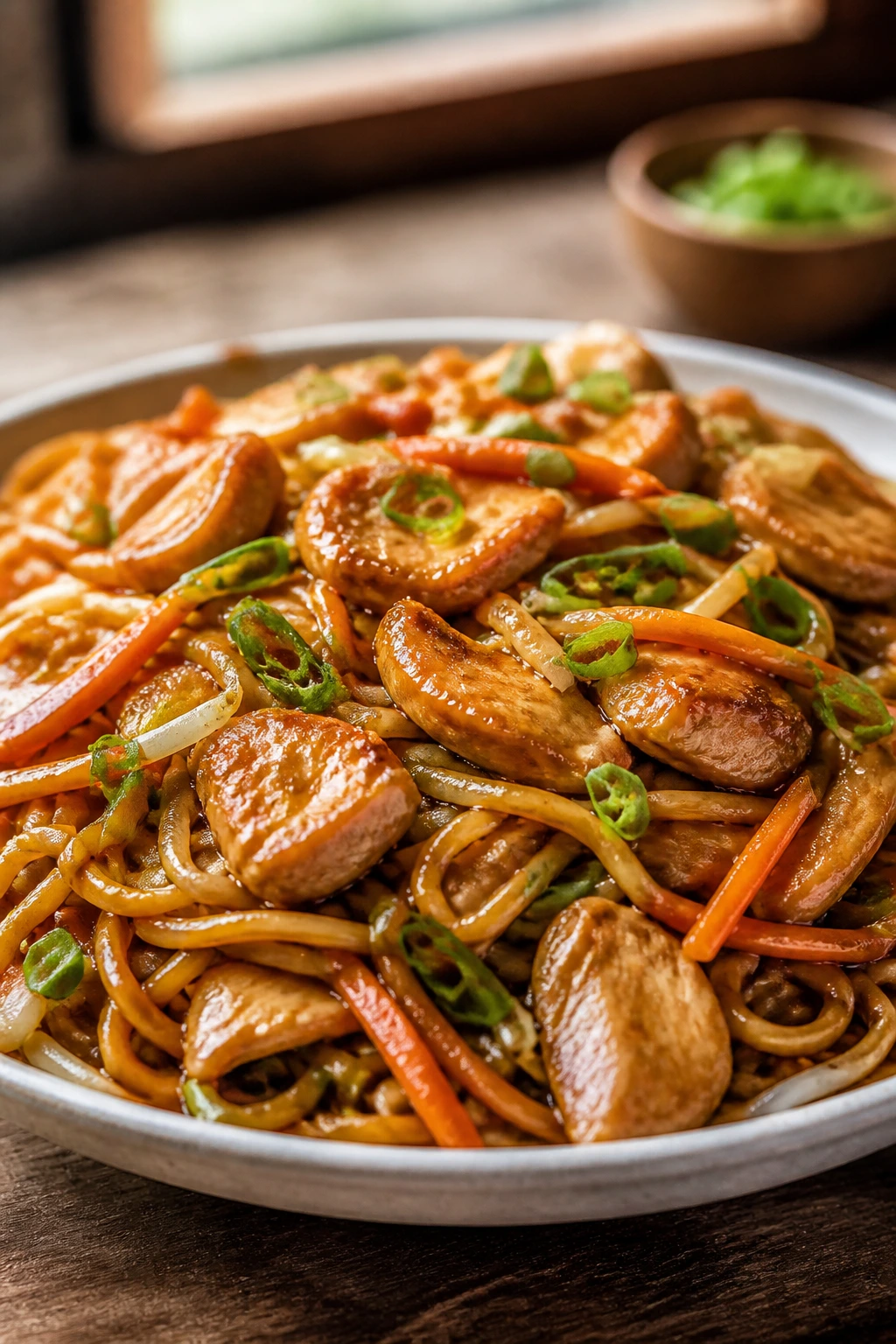
Presentation: Pile the noodles into a shallow bowl or on a wide platter instead of dropping them into deep soup bowls. That keeps the chicken and vegetables visible, which matters because the best part of chow mein is the contrast between the glossy noodles and the crisp bits of carrot and scallion on top.
Accompaniments: A simple cucumber salad with rice vinegar and a pinch of sugar is the side I reach for most often. If you want a bigger spread, steamed bok choy, quick-pickled chilies, or a light egg drop soup all sit nicely beside the noodles without fighting them.
Portions: Four generous servings is the honest answer here. If you’re serving smaller bowls with soup or dumplings first, this stretches to five. For bigger appetites, I’d rather make a second noodle pan than stuff the first one past the point where it can still toss properly.
Beverage Pairing: Jasmine tea is the cleanest match, especially if the sauce leans a little salty. A cold lager works if you want something with a sharper edge, and a dry Riesling handles the soy and sesame oil without turning sweet.
Small Tweaks That Add More Flavor Without Extra Fuss
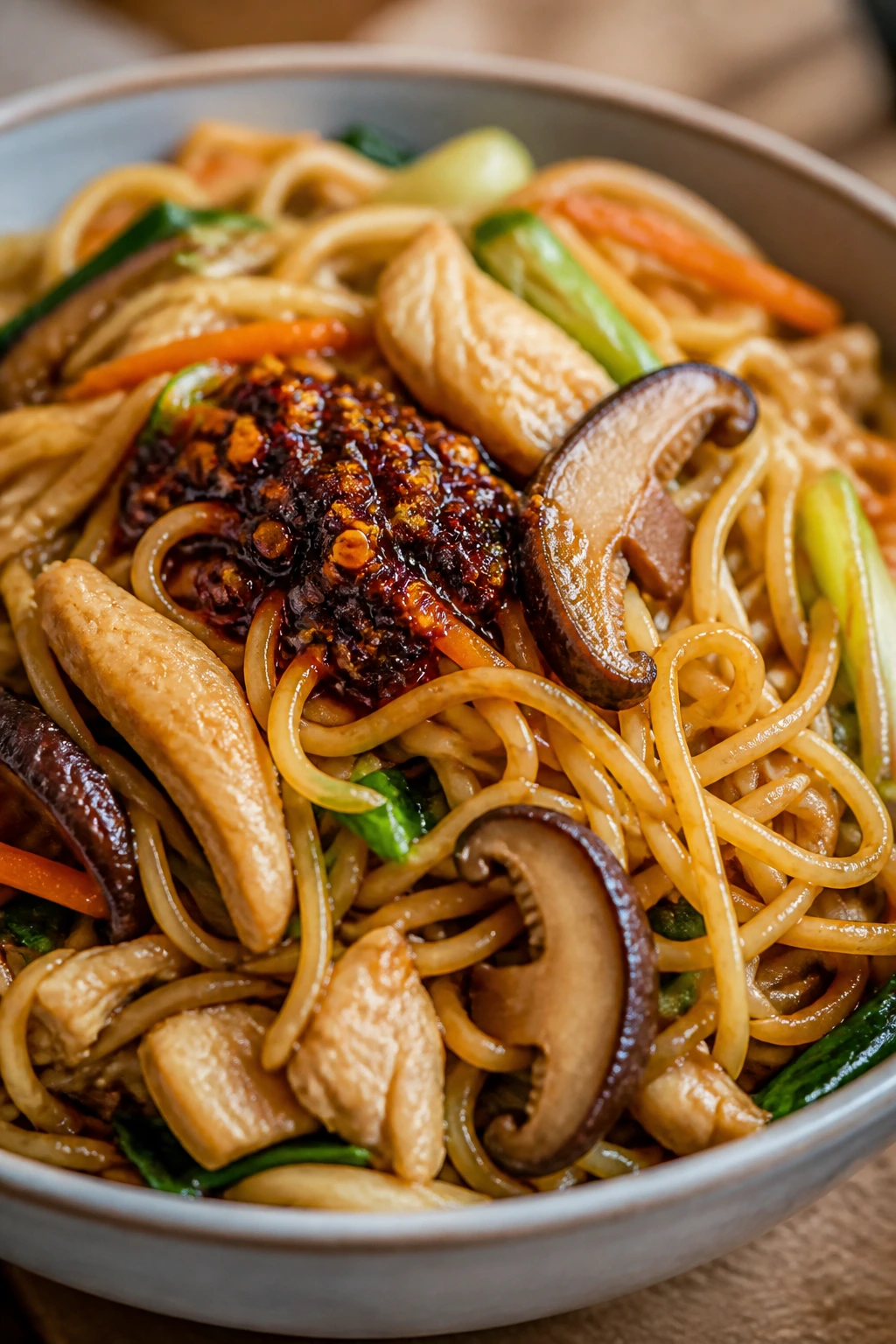
Flavor Enhancement: A teaspoon of chili crisp on each bowl gives the noodles heat, garlic crunch, and a little red oil that makes the top layer look lively. If you like a brighter finish, a few drops of black vinegar at the table sharpen the savory sauce without making the dish sour.
Customization: Add 6 to 8 sliced shiitake mushrooms with the carrots if you want more depth, or toss in a handful of baby bok choy in the last minute of cooking. For a heartier bowl, scramble 2 eggs in the empty pan before the vegetables and fold them back in at the end.
Serving Suggestions: Toast the sesame seeds in a dry skillet for 1 minute until they smell nutty, not brown and bitter. That tiny step gives the finished bowl more aroma than people expect from such a small garnish.
Make-It-Yours: Swap tamari for soy sauce and use certified gluten-free noodles if gluten is the issue. If you want a lighter bowl, use chicken breast instead of thighs, but slice it thin and shorten the sear so it doesn’t dry out before the sauce hits.
The Mistakes That Turn Chow Mein Heavy or Soggy
-
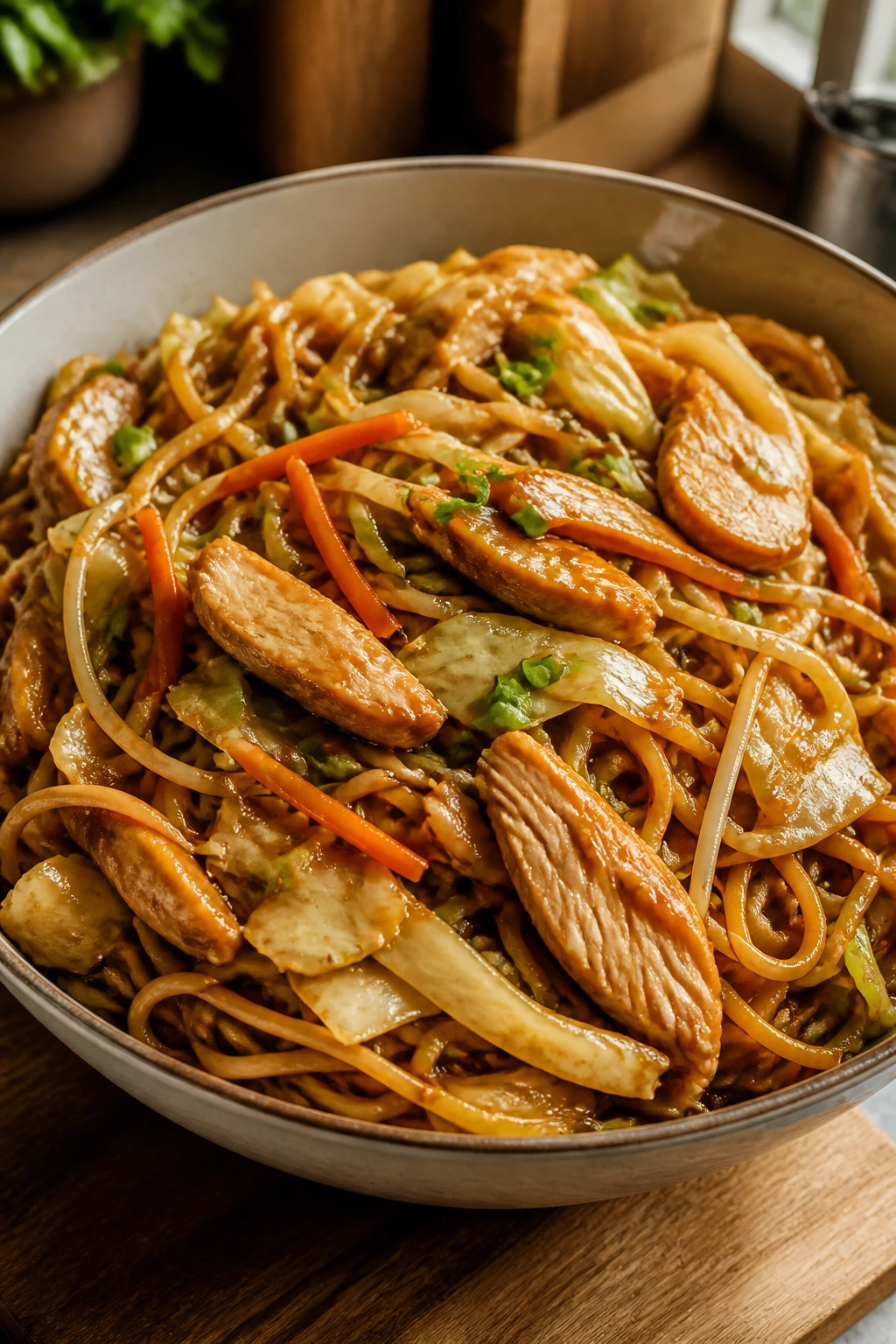
Crowding the chicken: If the chicken piles on top of itself, it steams and turns pale instead of picking up color. The fix is simple: use a big enough pan, or sear the chicken in two batches and keep the heat high.
-
Overcooking the noodles in the pot: Soft noodles break once they meet the wok, and then the whole dish gets heavy. Pull them when they still have a little spring, because they always cook a touch more in the pan.
-
Pouring sauce into a cold or barely warm skillet: Cornstarch thickens unevenly when the pan isn’t hot enough, and you end up with watery spots and gluey clumps. Heat the skillet first, whisk the sauce again, and keep the toss moving.
-
Starting with wet vegetables: A wet carrot or cabbage leaf cools the pan right when you need it hot. Dry the vegetables after washing, and don’t be shy about shaking off extra water from the sprouts.
-
Adding too much sauce because the pan looks dry: Chow mein should look glossy, not soupy. If the noodles need more moisture, add a spoonful of water or broth, not another pour of soy sauce that pushes the salt level too far.
-
Walking away during the final toss: That last minute is where the sauce tightens and the noodles pick up the flavor. Leave the phone alone. The window is small, and it matters.
Variations When You Want a Different Version
Chili Crisp Chicken Chow Mein
Stir 1 to 2 tablespoons of chili crisp into the sauce or spoon it over the finished bowls. The crunchy garlic bits and red oil give the dish heat and a more toasted, slightly smoky edge.
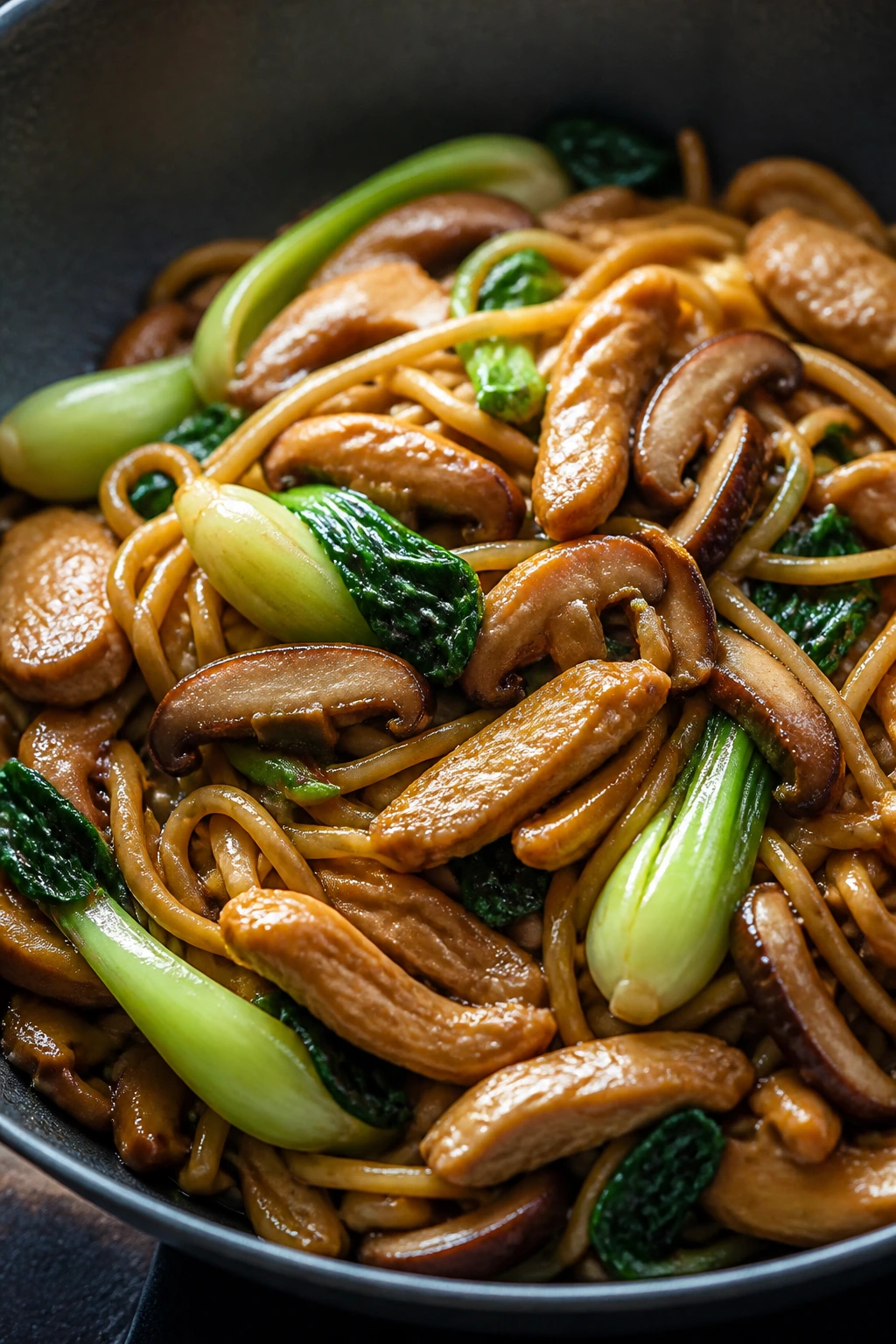
Mushroom-and-Bok Choy Chow Mein
Replace half the cabbage with sliced shiitake mushrooms and chopped baby bok choy. The mushrooms bring a deeper, woodsy flavor, while the bok choy softens just enough to fold into the noodles without turning soggy.
Gluten-Free Tamari Chow Mein
Use tamari in place of soy sauce and switch to certified gluten-free noodles. Rice-based noodles can work, but keep them slightly firmer than you think you need; they soften fast once they meet the hot sauce.
Crispy-Edge Chow Mein
After tossing everything together, press the noodles into the pan for 30 to 45 seconds in small sections so a few strands pick up browned edges. Flip and repeat in another spot if you want those crunchy takeout-style bits.
Vegetable-Heavy Fridge-Cleanout Chow Mein
Add snap peas, bell pepper, shredded napa cabbage, or broccoli slaw. The trick is to keep the total vegetable volume about the same so the sauce can still coat the noodles instead of disappearing into a mountain of produce.
Storing, Reheating, and Making It Ahead
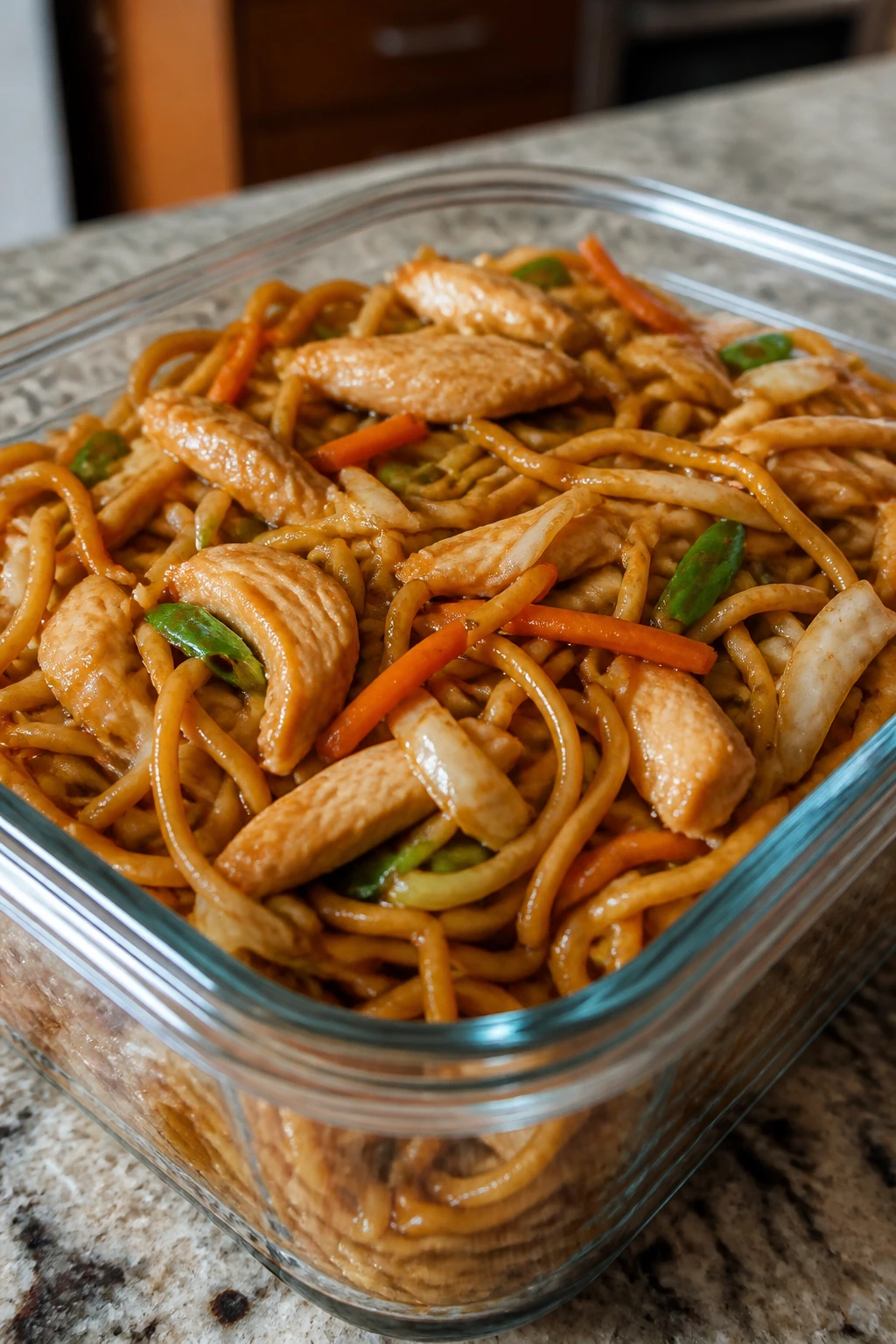
Fridge: Leftover chicken chow mein keeps well in an airtight container for 3 to 4 days in the refrigerator. The noodles will absorb more sauce as they sit, which is normal; they just won’t have the same spring as they did right out of the pan.
Freezer: You can freeze it for up to 2 months, but I won’t pretend the texture stays perfect. The noodles soften after thawing, so if you’re freezing on purpose, the cleaner move is to freeze the cooked chicken and sauce together and cook fresh noodles later.
Reheating: The best way to revive leftovers is in a skillet over medium heat with 1 to 2 tablespoons of water or broth. Toss for 3 to 4 minutes until the noodles loosen and the steam rises again. A microwave works in a pinch; cover the bowl with a damp paper towel and heat in short bursts, stirring between each one.
Make-Ahead: The sauce can be mixed up to 3 days in advance and kept in the fridge. The chicken can marinate for up to 12 hours, though I usually stay closer to 30 minutes if I’m planning ahead because the texture is still a little cleaner. Vegetables can be sliced a day ahead and stored in separate airtight containers with a paper towel tucked in to catch moisture.
Best texture note: If you know you’ll be eating leftovers, undercook the noodles by another 30 seconds. They’ll finish during the reheat and stay a little more alive on day two.
Questions People Ask Before They Make Chicken Chow Mein
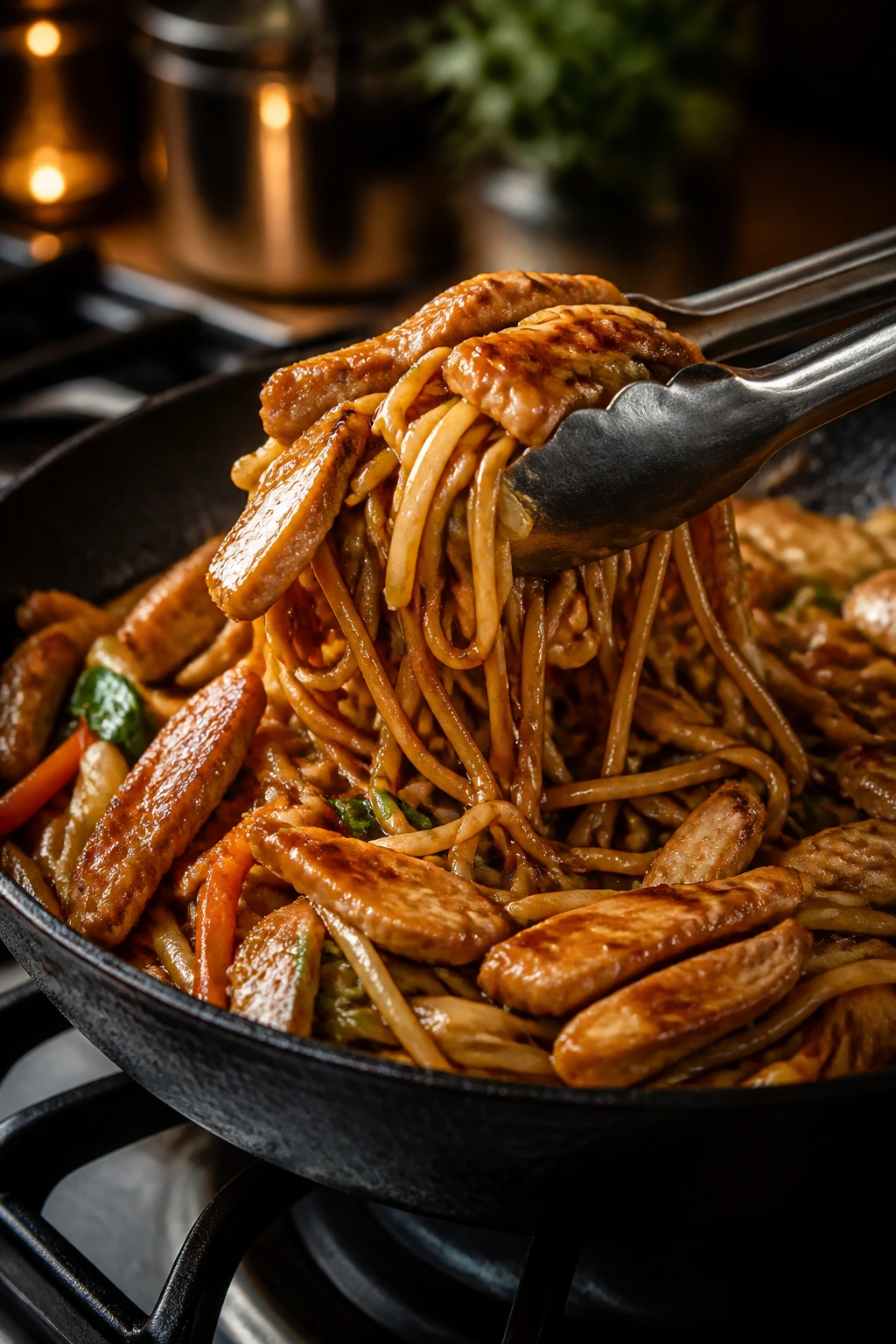
Can I use chicken breast instead of thighs?
Yes, but cut it thinner than you think you need and keep the sear short. Chicken breast goes from juicy to dry fast, so pull it the moment the center turns opaque and let the sauce finish the job.
Do I need a wok to make this work?
No. A 12-inch skillet with enough surface area works well, especially if it’s stainless steel or carbon steel. The main thing is heat and room, not the shape of the pan.
What noodles should I use if I can’t find chow mein noodles?
Thin egg noodles are the closest swap, followed by yakisoba or even spaghetti in a pinch. Whatever you use, cook it just shy of done so it finishes in the sauce instead of turning soft at the edge of the pan.
How do I keep the noodles from clumping together?
Drain them well, toss them with a teaspoon of oil, and don’t let them sit in a wet pile while you finish the stir-fry. If they still stick, a quick splash of water in the skillet loosens them better than more oil does.
Can I make this less salty?
Use low-sodium soy sauce, keep the oyster sauce measured, and don’t add extra soy at the end until you’ve tasted the finished pan. A squeeze of lime is not traditional here, but a tiny splash of water or broth can soften the saltiness without changing the flavor profile too much.
Can I add frozen vegetables?
Yes, but thaw them first and pat them dry. Frozen vegetables release a lot of water, and if they go into the skillet still icy, the pan loses heat and the noodles take the hit.
What should I do if the sauce gets too thick?
Add water or chicken broth 1 tablespoon at a time while tossing over heat. The sauce should coat the noodles in a thin sheen, not settle into a heavy paste.
A Skillet Dinner Worth Keeping in Rotation
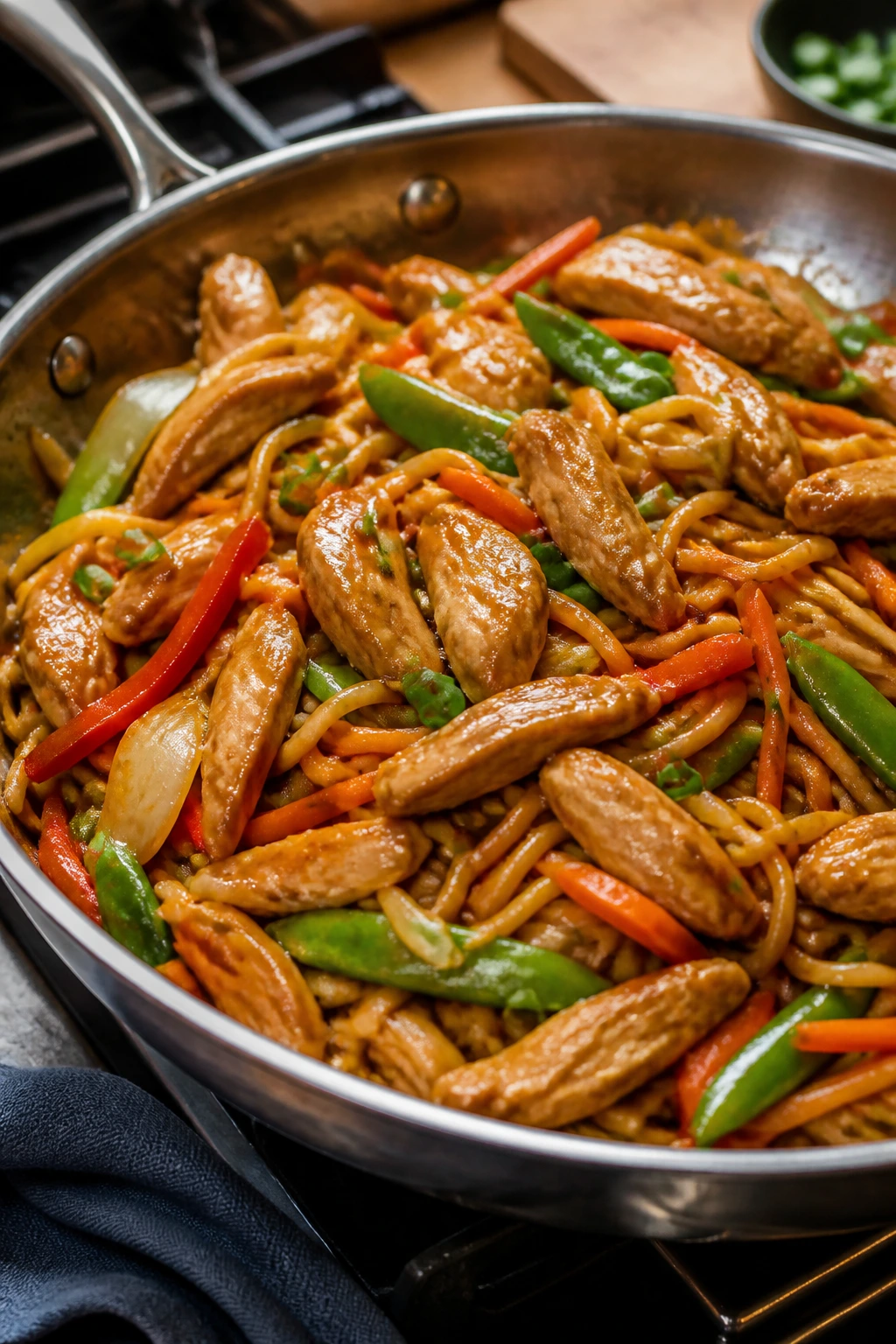
Tender chicken chow mein earns its keep because it doesn’t waste your time. The chicken cooks fast, the noodles stay lively, and the vegetables still taste like vegetables when you’re done. That sounds simple, but the difference between “simple” and “flat” is the whole game here, and the pan gives you enough control to get it right.
The best part is how repeatable it is once you’ve made it once or twice. Slice the chicken thin. Keep the noodles a little firm. Don’t crowd the pan. After that, the dish starts feeling less like a recipe and more like a habit you’re glad to have.
Tender Chicken Chow Mein — Recipe Card
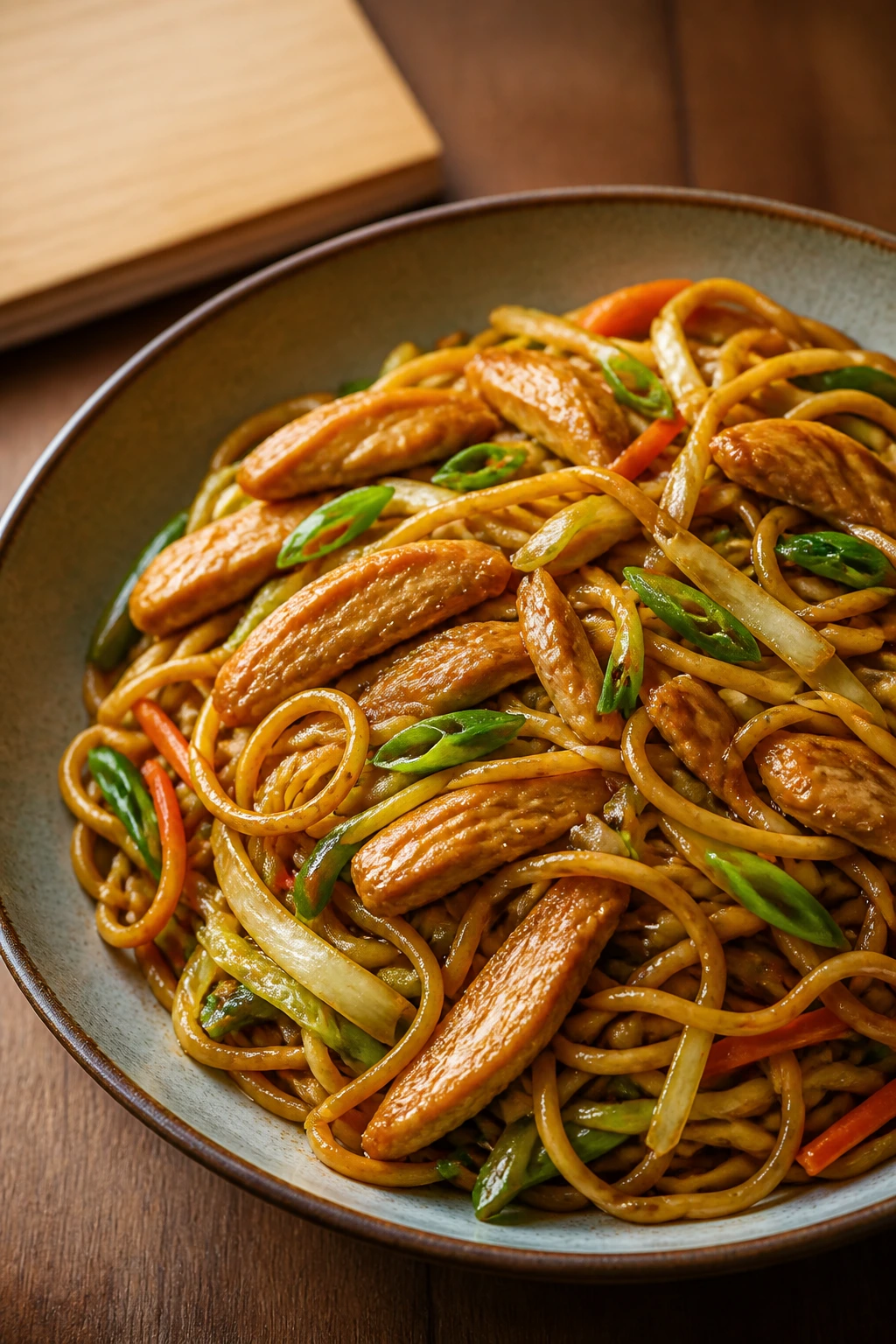
Recipe Name: Tender Chicken Chow Mein
Description: A fast Chinese-American noodle stir-fry with juicy chicken thighs, crisp vegetables, and glossy noodles coated in a savory soy-oyster sauce. The chicken stays tender, the vegetables keep some bite, and the whole pan comes together in about half an hour.
Prep Time: 20 minutes
Cook Time: 15 minutes
Total Time: 35 minutes active, plus 10 to 15 minutes marinating
Course: Main Course
Cuisine: Chinese-American
Servings: 4 servings
Calories: About 460 kcal per serving
Ingredients
For the Chicken
- 1 pound boneless, skinless chicken thighs, sliced into 1/4-inch strips against the grain
- 1 tablespoon low-sodium soy sauce
- 1 tablespoon Shaoxing wine or dry sherry
- 1 tablespoon cornstarch
- 1 teaspoon neutral oil
- 1/4 teaspoon white pepper
For the Noodles and Sauce
- 8 ounces dried chow mein noodles or thin egg noodles
- 3 tablespoons low-sodium soy sauce
- 2 tablespoons oyster sauce
- 1/4 cup low-sodium chicken broth
- 1 tablespoon Shaoxing wine or dry sherry
- 1 teaspoon sugar
- 1 teaspoon toasted sesame oil
- 1 teaspoon cornstarch
- 1/4 teaspoon white pepper
For the Vegetables and Finish
- 2 tablespoons neutral oil, divided
- 3 cloves garlic, minced
- 1 tablespoon fresh ginger, minced
- 1 medium carrot, cut into thin matchsticks
- 2 cups shredded green cabbage or napa cabbage
- 1 cup bean sprouts
- 3 scallions, sliced into 2-inch pieces
- 1 tablespoon toasted sesame seeds, for serving
Instructions
-
Toss the chicken with soy sauce, Shaoxing wine or dry sherry, cornstarch, neutral oil, and white pepper. Let rest for 10 to 15 minutes.
-
Cook the noodles in salted boiling water until just shy of tender, then drain and toss with 1 teaspoon oil.
-
Whisk together the soy sauce, oyster sauce, chicken broth, Shaoxing wine or dry sherry, sugar, toasted sesame oil, cornstarch, and white pepper.
-
Heat 1 tablespoon neutral oil in a wok or large skillet over medium-high heat. Sear the chicken for 2 to 3 minutes without moving it, then toss and cook 1 to 2 minutes more until it reaches 165°F. Remove to a plate.
-
Add the remaining 1 tablespoon oil. Stir-fry the garlic, ginger, carrot, and cabbage for about 2 minutes, then add the bean sprouts and scallions for 30 seconds.
-
Add the noodles and pour in the sauce. Toss for 1 to 2 minutes until the noodles are glossy and the sauce clings.
-
Return the chicken and juices to the pan and toss for 30 seconds. Finish with sesame seeds and serve immediately.
Notes: If the pan looks dry, add 1 to 2 tablespoons water or broth instead of more soy sauce. Thighs stay juicier than breast meat, but thin-sliced chicken breast can work if you cook it briefly.