



Dry chicken is almost never a seasoning problem. It’s a timing problem, and that matters because timing can be fixed.
You can pull tender, moist chicken for weeknight dinners off the stove in less than half an hour if you stop treating the meat like a mystery. The breast should not be guessed at. The thigh should not be rushed. The pan should not be crowded with three things at once because you ran out of patience and the broccoli was still frozen in the bag. Small things. They add up fast.
The USDA’s 165°F mark is the safe line for chicken, but the trick is getting there without blasting the meat past the point where the fibers clamp shut and squeeze out every last drop. That’s why a good thermometer, an even thickness, and a short rest change the result more than any fancy rub ever will. Once those pieces are in place, chicken stops being the thing you hope turns out fine and starts being the dinner you can repeat without hovering over the stove like a worried lifeguard.
Why Juicy Chicken Is Mostly a Timing Problem
Thermometer over guesswork: Chicken breast can look done while still being undercooked in the middle, or it can look pale and be perfectly safe. Measuring the thickest part with an instant-read thermometer removes the drama and keeps you from cutting into the meat too early.
Even thickness matters more than people think: A breast that’s ¾ inch thick from edge to edge cooks at the same pace. A lumpy one gives you one dry corner and one stubborn center, which is how a meal goes from promising to disappointing in a single bite.
Salt does quiet work: A short dry brine seasons the meat through the surface layers and helps the muscle fibers hold onto moisture better during cooking. You do not need a giant salt bath for this. You need enough salt and enough time.
Thighs forgive a bad minute: Boneless skinless thighs stay juicy at higher finished temperatures because they have more fat and collagen. That makes them the friendliest cut for nights when the timer gets ignored for a moment.
Resting is not optional: Five to ten minutes on a board lets the juices settle back into the meat instead of flooding the cutting board. Skip that, and even well-cooked chicken can look dry from the outside.
Crowded pans sabotage browning: If the chicken is packed too tightly, it steams in its own moisture before it can brown. Browning needs dry heat and room. No room, no crust.
What Tender Chicken Looks Like on the Cutting Board
What does “moist” actually look like once the knife goes in? Not wet. That’s the part people get wrong.
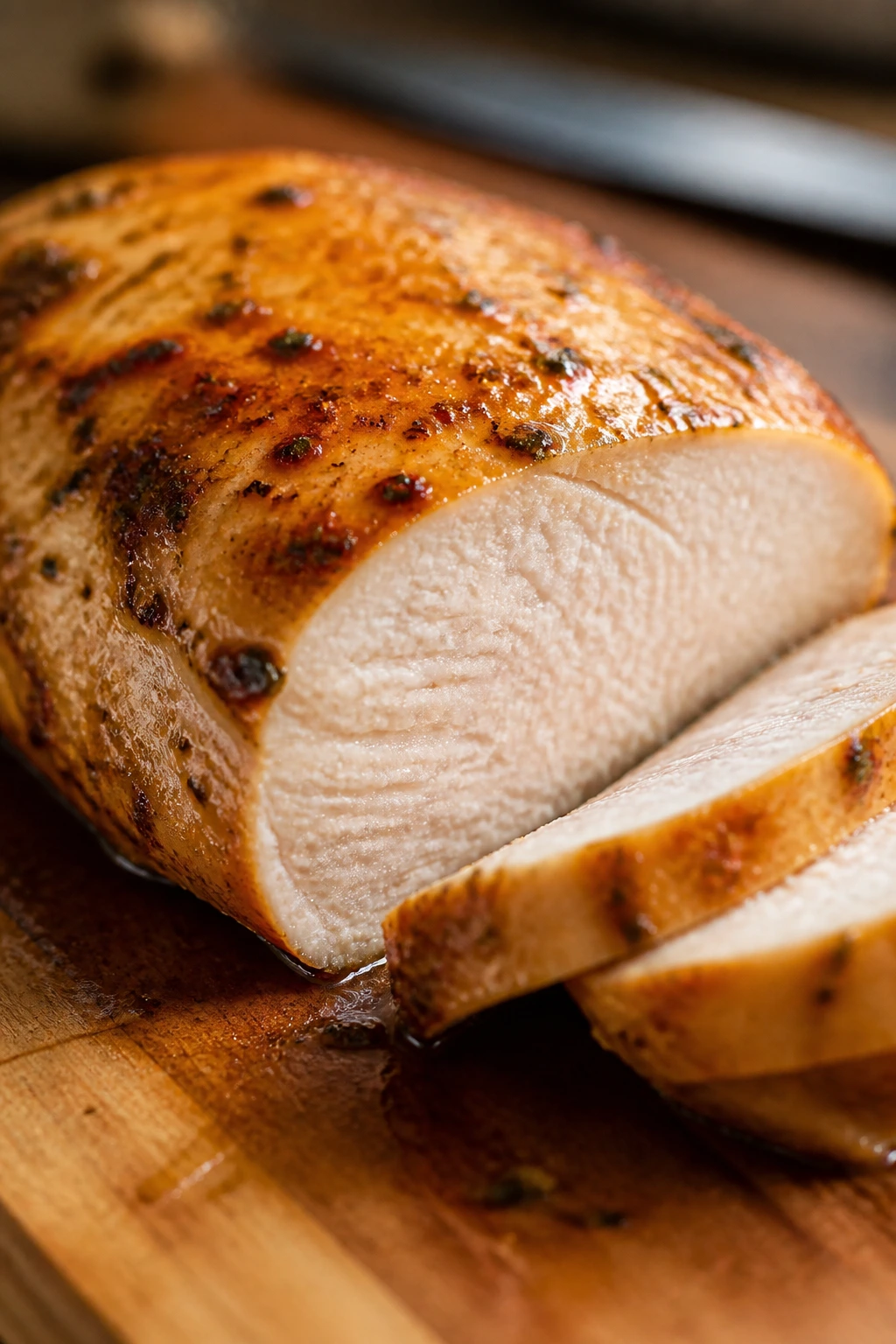
A juicy piece of chicken usually has a clean, glossy cut surface and fibers that separate in neat lines instead of shredding into sawdust. The meat should feel springy when you press the center with a fingertip, not slack and not hard. If the juices run out in a small sheen and settle on the board, that’s fine. If they gush like you hit a water balloon, you cut too early. If nothing comes out at all, the chicken probably sat on the heat too long.
On the cutting board
A breast cooked well looks opaque all the way through with a pale, even color and a little shine. The edges should not be shriveled and thirsty-looking. Thigh meat can take on a deeper, richer color and still stay soft; that darker meat is doing different work, so the visual cue changes a bit.
In the first bite
The first bite should pull apart cleanly and stay juicy enough that you notice the texture before you notice the seasoning. That is the real test. Not a sauce coating. Not a garnish. The meat itself should still feel like food, not cotton.
When people say “dry,” what they usually mean
They usually mean overcooked, unevenly cooked, or sliced too soon. Sometimes all three. The trick is not chasing some glossy restaurant magic. It’s learning the handful of signals that tell you the chicken is done without letting it get tight and stringy.
The Cut Matters More Than the Marinade
If you want tender chicken on a Tuesday, start at the grocery shelf. The cut decides how much margin you get, and margin is the thing weeknight cooking runs on.
Boneless skinless breasts
Breasts are lean, fast, and easy to use in salads, wraps, rice bowls, and pasta. They also punish sloppy heat more than any other common cut. I like them best when they’ve been sliced into cutlets or pounded to an even ½ to ¾ inch thickness. Whole thick breasts can work, but they ask for better timing and a thermometer that’s already in your hand.
Boneless skinless thighs
Thighs are the low-drama choice. They stay tender at a wider range of doneness, brown nicely, and keep their texture even if dinner gets delayed by ten minutes. If I’m shopping for a week with zero patience, this is the cut I grab first.
Tenderloins
Chicken tenderloins cook fast enough to fit into the shortest weeknight window. They’re useful when you need dinner on the table before anyone has started asking what’s for dinner. The downside is that they dry out faster than thighs, so they need the same careful heat you’d give cutlets.
Bone-in pieces
Great flavor. Less convenient. Bone-in thighs and drumsticks are fine when you want a roasted dinner and have 35 to 45 minutes to spare, but they are not my first move for speed. The bone helps the meat stay a little more forgiving, yet the cooking time stretches enough that a busy night can get annoying fast.
If you want one answer, buy boneless skinless thighs. If you want the leaner texture of breast meat, buy cutlets or make them yourself by slicing the breast horizontally. That single move changes the whole meal.
Salt Before You Cook, Not After You Panic
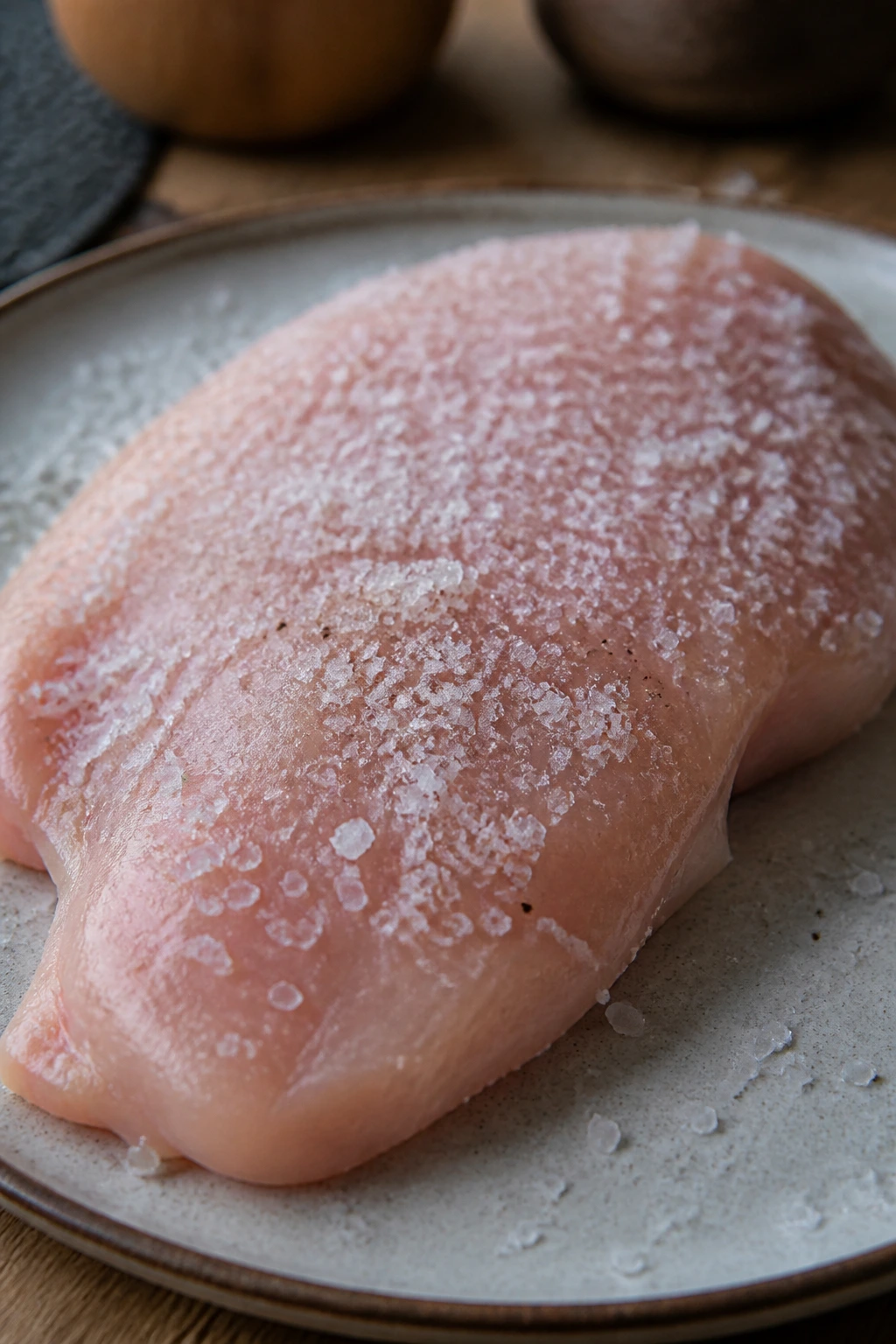
Most home cooks under-salt chicken because they’re afraid of going too far, then they blame the texture for what is really a bland, rushed piece of meat. Salt is not an afterthought. It’s part of the cooking process.
A dry brine is the simplest fix. Salt the chicken, let it sit, and cook it later. Fifteen minutes helps. Thirty minutes helps more. If you have the time, an uncovered rest in the refrigerator for several hours or overnight gives the surface a slightly drier feel, which browns better in the pan.
How much salt to use
For boneless chicken pieces, I like enough salt to season the surface evenly without leaving visible crusts of salt. If you weigh food, aim for roughly 1% salt by weight for a dry brine. For a pound of chicken, that’s a modest amount — not a snowstorm. The surface should taste seasoned, not salty.
How far ahead to salt
If dinner is happening soon, salt the chicken and leave it on a plate while the pan heats and the side dishes get started. That alone makes a difference. If you know you’ll cook later, salt it in the morning and leave it uncovered in the fridge on a plate or rack. The outside dries a bit, which helps with browning.
What not to do
Do not dump a salty rub on raw chicken and then let it sit forever in a puddle of lemon juice. Acid changes the surface texture if it sits too long, especially on thin breasts. Salt is steady. Acid is more temperamental. Treat them differently.
Marinades That Help—and Marinades That Waste Time
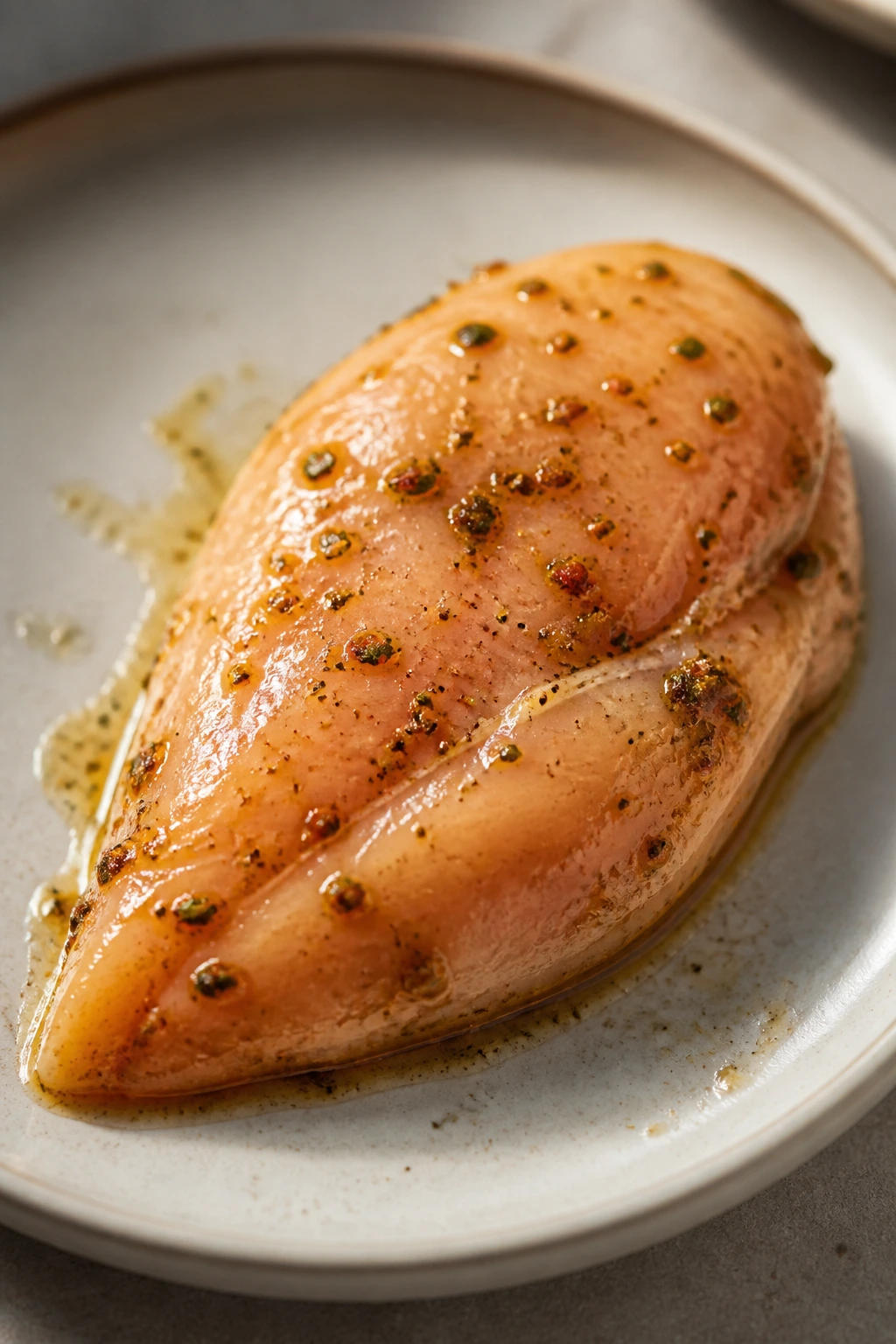
A marinade is not magic. It won’t soak all the way through a thick breast in 20 minutes, and it will not save a piece of chicken that spent too long on high heat. What it can do is season the surface, add fat, and give the meat a head start on flavor.
The best quick marinades for weeknight chicken usually have three parts: salt, fat, and a flavor driver. Olive oil and lemon. Yogurt and garlic. Soy sauce and ginger. But the balance matters. Too much acid and not enough fat can make the surface tight or mealy, especially on thin cuts.
The marinades that actually pull their weight
A yogurt-based marinade is one of my favorites for thighs because it clings well and keeps the exterior from drying out too fast. A soy-ginger mix works well for thin slices that will be cooked quickly and served over rice. Olive oil, garlic, and herbs are simple, but they help the chicken brown and keep the seasoning from feeling flat.
What marinades cannot do
They do not turn a thick breast into a thigh. They do not erase poor pan management. And they do not need to sit for eight hours to matter on a weeknight piece of meat. A 20- to 30-minute marinade on cutlets can be enough because the meat is already thin.
The acid rule
If the marinade has a lot of lemon juice, vinegar, or another sharp acid, keep the time short unless the cut is thick and forgiving. For breasts or cutlets, a brief soak is enough. For thighs, you can stretch it longer. The surface should smell bright, not harsh. If it starts to feel slightly chalky before it goes in the pan, the acid sat too long.
Fast Cooking Methods That Still Stay Juicy
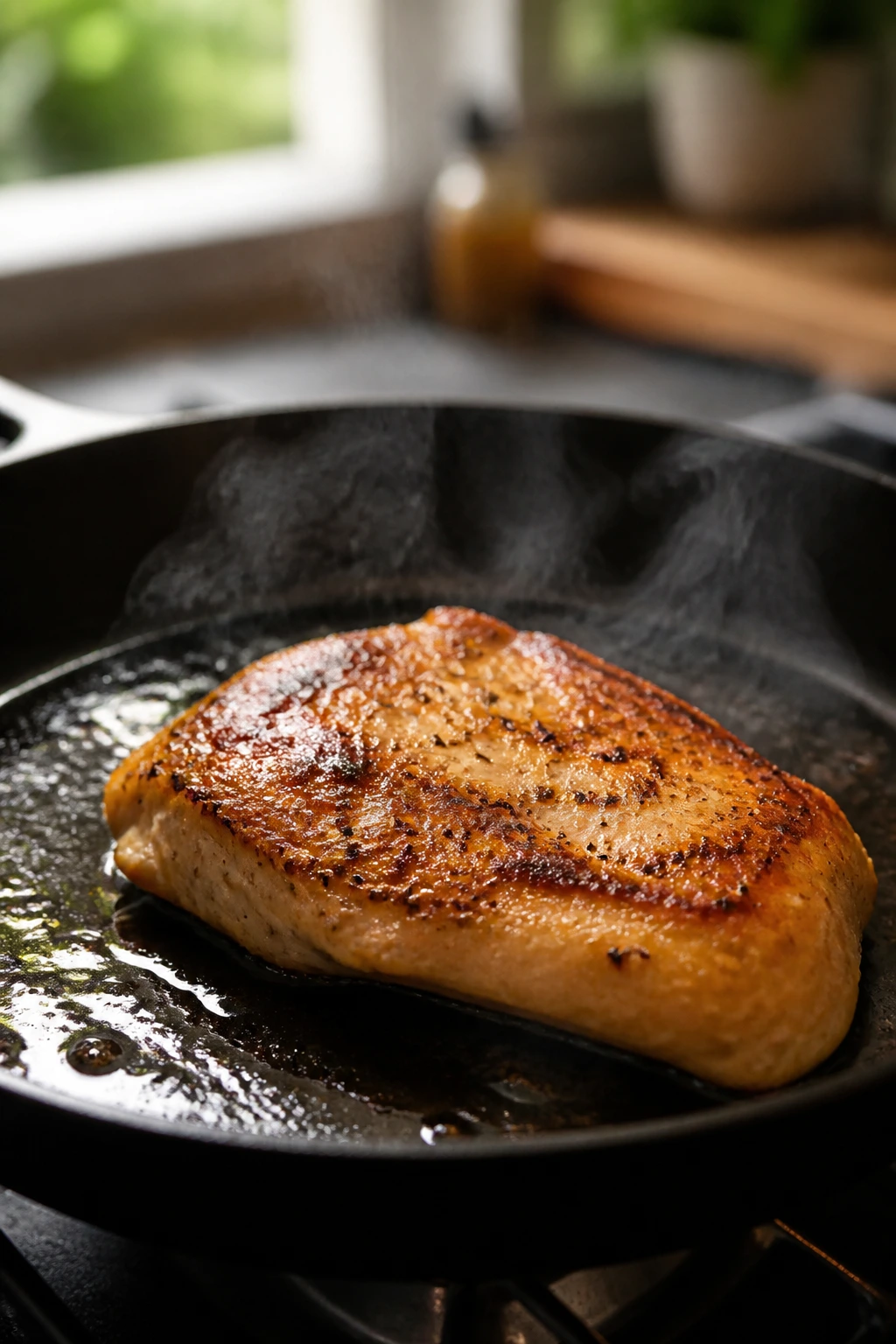
The method should match the cut. That’s the part people skip, then they wonder why the result feels random.
Stovetop skillet cooking
Thin cutlets and tenderloins do well in a hot skillet with a thin film of oil. Medium-high heat is usually right, though I turn it down if the pan starts smoking hard before the outside has developed color. A 1-inch cutlet often needs about 3 to 5 minutes per side, depending on the pan and the starting temperature. Thighs can take a little longer.
A stainless-steel or cast-iron skillet gives you better browning than a nonstick pan, though nonstick has its place when you want easier cleanup and less crust. The pan should hiss when the chicken hits it. Not whisper. Hiss.
Oven roasting
Roasting is the easiest route when you’re cooking a few pieces and want to handle a side dish at the same time. Set the oven around 400°F to 425°F for boneless pieces, and use a rimmed sheet pan so the juices stay where they belong. Cutlets can finish quickly; thighs take longer. If the pieces are uneven, the smaller ones overcook while the larger ones lag behind.
A wire rack over the sheet pan helps the underside stay drier, which matters if you care about browning on both sides. If you do not care that much, skip the rack and keep going. The difference is real, but not every Tuesday needs a science project.
Air fryer cooking
Air fryers work well for thin breasts, cutlets, and tenderloins because the circulating heat browns the outside fast. I like 375°F to 400°F, flipping halfway through, and checking early. That machine can overdo the outer edges fast, especially on smaller pieces.
For anyone who cooks chicken this way more than once a month, the air fryer earns its space by being consistent. The texture can be excellent, but only if you don’t stack the pieces or trust the clock more than the thermometer.
Slow cooker? Sometimes, but not for this goal
A slow cooker can make shredded chicken for tacos, soups, or enchiladas. It can even make decent pulled chicken with enough seasoning and moisture. It is not my first choice for sliced, tender chicken breast on a weeknight. The texture gets soft in a way that is useful for shredding and disappointing for a plated dinner.
The Sear-Roast Rhythm That Keeps Cutlets Juicy
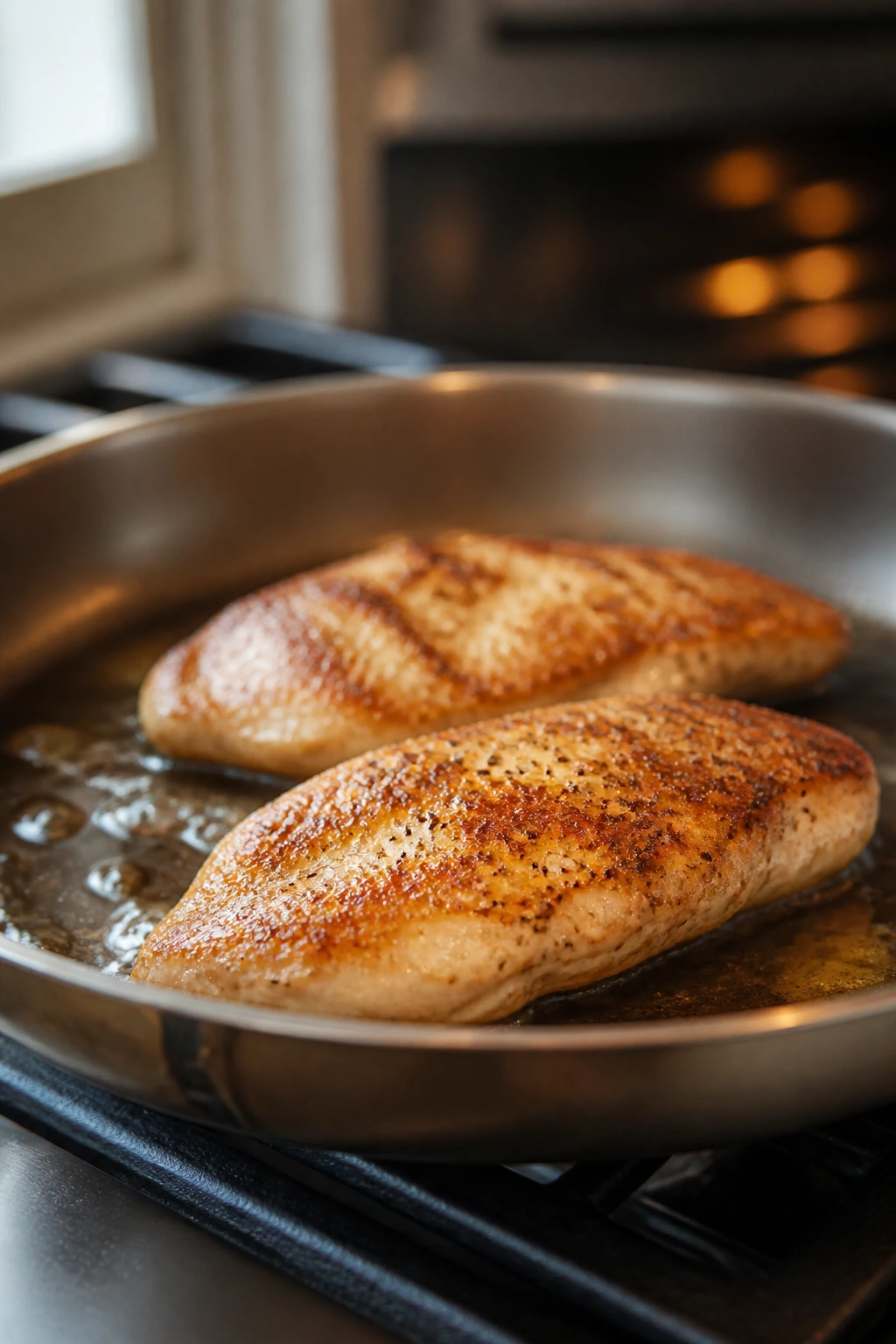
There’s a reason a lot of cooks lean on the sear-and-roast method. It gives you color on the outside without forcing the center to spend too long in the pan.
Start with a dry, seasoned piece of chicken and a hot skillet with a thin layer of oil. Lay the chicken away from you so the oil doesn’t spit at your wrist. Leave it alone long enough for a crust to form. If you move it too soon, the surface tears and sticks. That’s not flavor. That’s repair work.
Once the first side has browned, flip the chicken and either finish it in the pan on lower heat or move it to a hot oven if the piece is thick enough to need a gentler finish. This matters most for breasts. The pan gives you color; the oven gives you a more even finish. Together, they’re a lot less stressful than trying to nurse the chicken all the way through one screaming-hot skillet.
For a 1-inch cutlet, I like about 3 to 4 minutes on the first side, 2 to 3 minutes on the second, then a short oven finish if needed. For thighs, the pan can do more of the work, because the cut can handle the longer heat. Either way, remove the chicken before it looks completely done if carryover heat will finish it on the board.
That last part is where people overcook food. They wait for the pan to announce victory. The pan is not the judge.
How to Tell Chicken Is Done Without Guessing
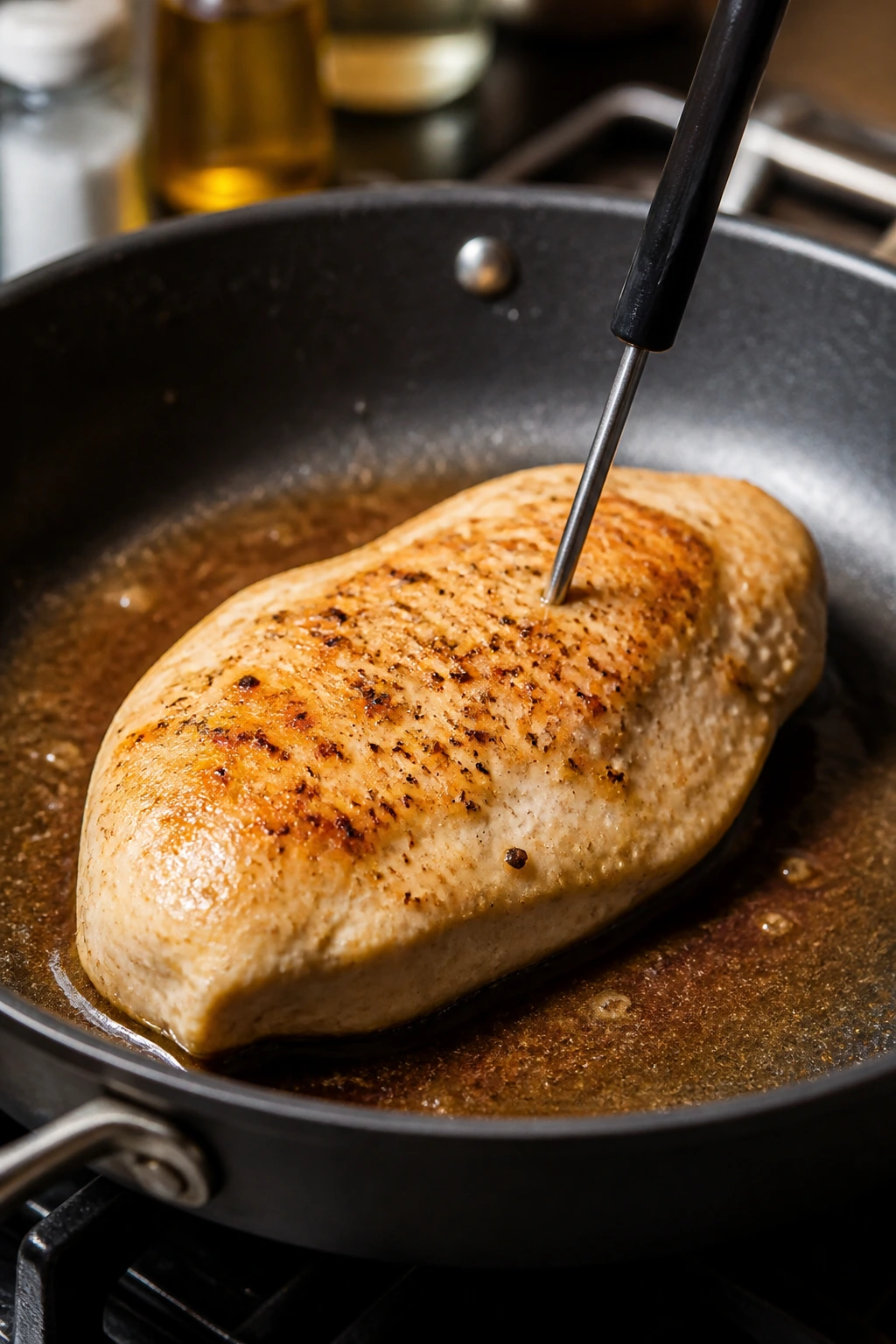
A thermometer solves most of the drama. Use it.
The breast temperature range
Chicken breast is safe at 165°F in the thickest part. If you pull it at 160°F and let it rest for a few minutes, carryover heat often finishes the job. That works best when the pieces are evenly thick and the cooking heat is steady. If the breast is uneven or the thermometer placement is shaky, go straight to 165°F and stop there.
The thigh temperature range
Thighs are different. They can taste better around 175°F to 185°F because the connective tissue softens as the temperature climbs. That is not a license to scorch them. It just means thighs have a wider comfort zone and don’t punish you for being a minute late.
What the thermometer should do
Insert it into the thickest part of the meat without touching the pan or the bone. Bone throws off the reading. So does a shallow angle that never reaches the center. If your thermometer has a fast response time, even better. If it doesn’t, hold still and wait for the number to settle.
Why color misleads
Some chicken stays slightly pink near the bone even when it’s safe. Some chicken looks pale and dry before it reaches temperature. Marinades, smoke, and lighting can all confuse your eye. The thermometer doesn’t care about any of that. It gives you the number that actually matters.
Fast Sides That Keep Dinner Moving
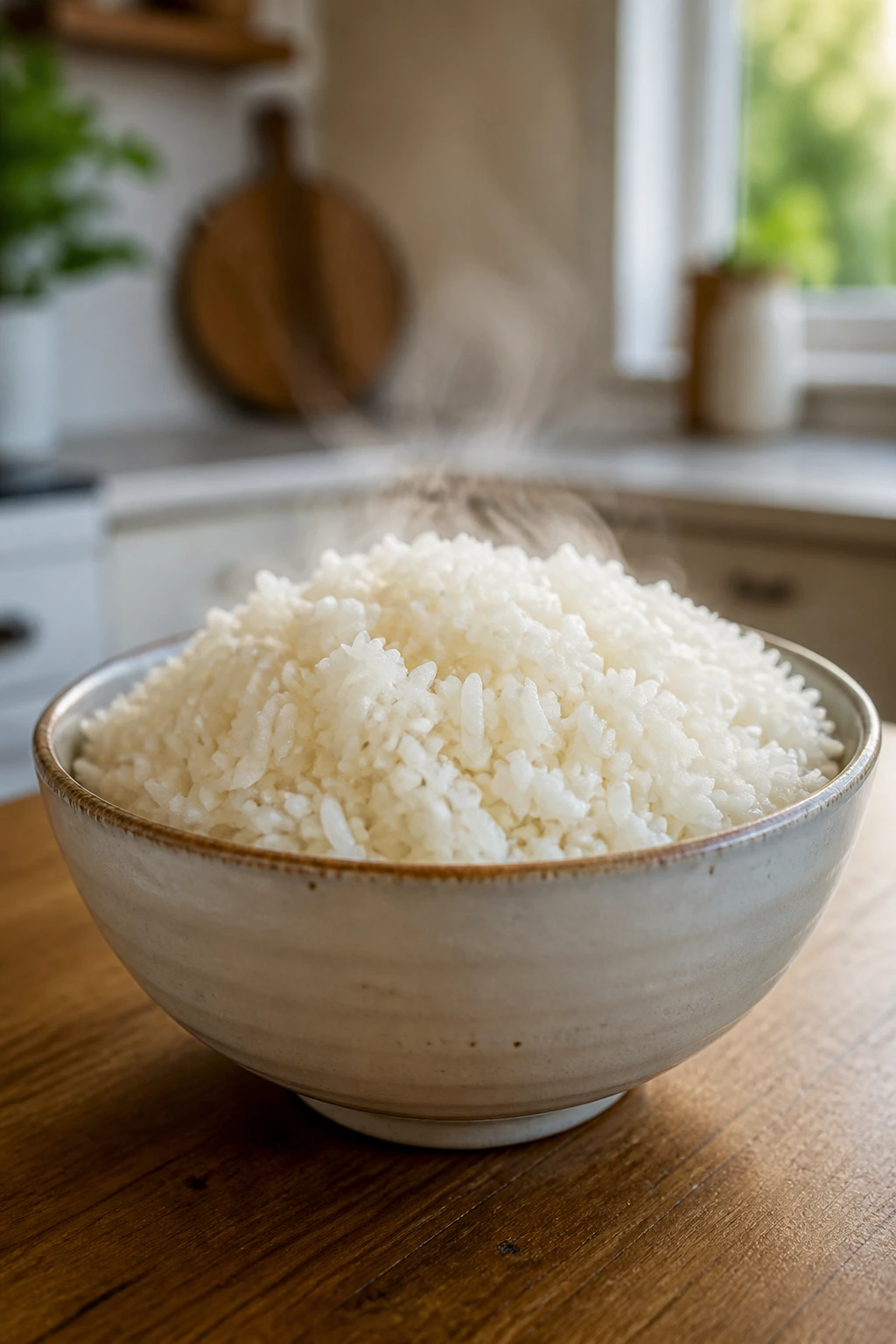
Chicken is often the fastest part of dinner, which is why the side dish can quietly become the bottleneck. A 12-minute chicken breast is not paired well with a 50-minute potato project unless you planned ahead and are oddly calm about it.
A few side dishes fit the same pace without making the plate feel bare:
- Microwave rice or rice from a rice cooker: It gives you a soft base for pan juices, sauce, or chopped herbs.
- Couscous: It swells in hot water in minutes and behaves well under sliced chicken.
- Roasted broccoli or green beans: Toss them with oil, salt, and pepper, then let the oven do the work while the chicken rests.
- A sturdy salad kit: Add warm chicken on top and the meal looks more deliberate than it actually was.
- Buttered noodles: Not fancy. Effective. They catch sauce and make lean chicken feel fuller.
- Quick potatoes: Thin-sliced skillet potatoes or microwave-steamed potatoes are faster than a full roast and still give the plate something solid.
I also like a tiny pan sauce when I have 2 extra minutes. Pull the chicken out, pour in a splash of broth or water, scrape up the browned bits, add a knob of butter or a spoonful of olive oil, and spoon that over the sliced meat. It turns the pan drippings into something that makes the whole plate taste connected.
Small Adjustments That Make a Big Difference
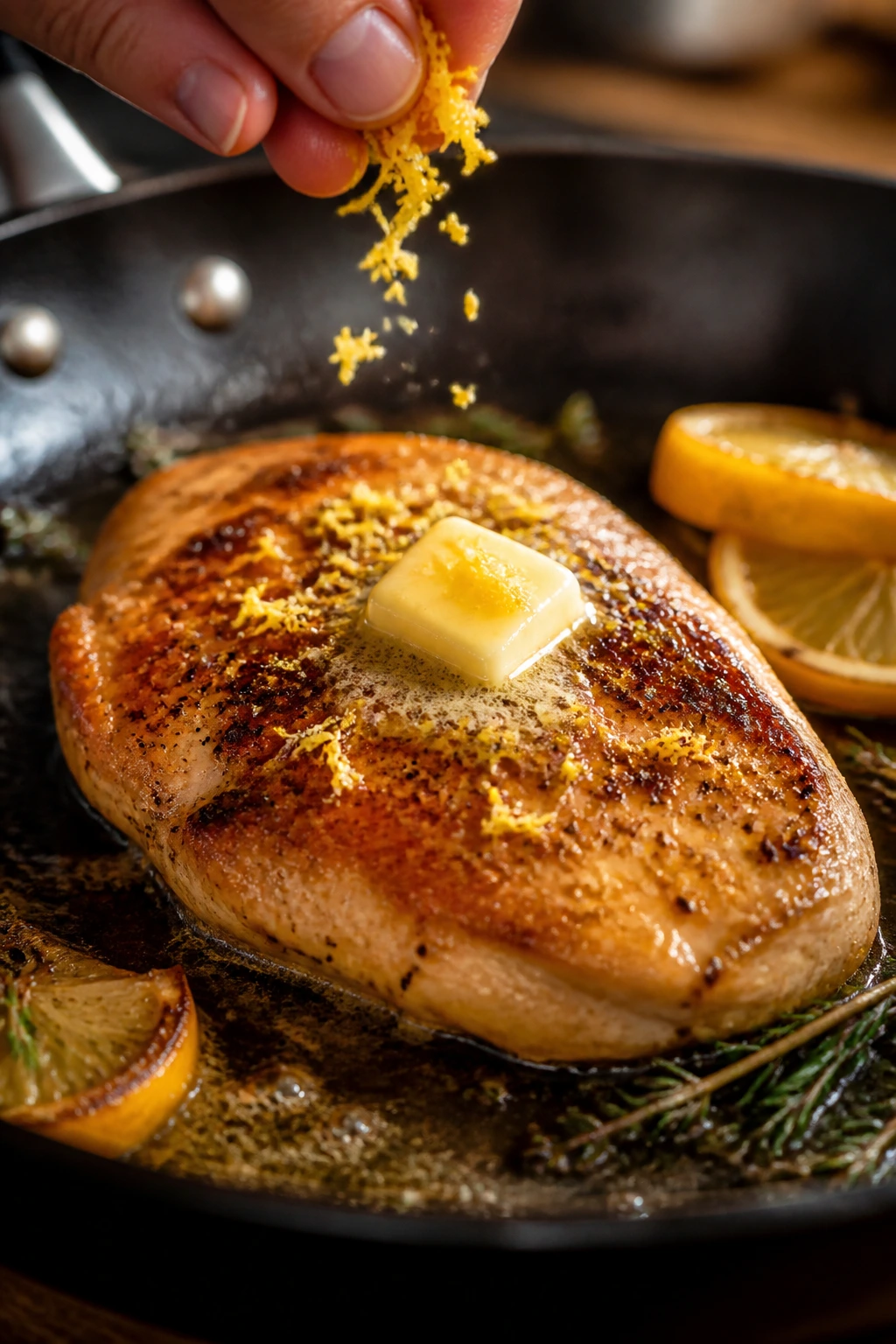
Flavor Enhancement: Finish hot chicken with something sharp or fatty right at the end. A squeeze of lemon, a spoonful of pan butter, or a dusting of fresh herbs wakes up the meat without forcing you into another marinade. Chicken likes a clean finish. Salt, fat, acid, heat. That old pattern still works because it solves a real problem.
Time-Saver: Buy cutlets when the week looks crowded. Paying a little more for meat that’s already even in thickness saves you the part where you stand at the cutting board trying to butterfly a breast that wants to roll around. If you buy whole breasts, slice them horizontally and lay them flat before they go anywhere near the pan.
Pro Move: Dry the surface well before cooking. Pat it with paper towels, then leave it uncovered for a few minutes if you can. A dry surface browns faster, and browning means better flavor in less time. Wet chicken steams. Dry chicken sears.
Cost-Saver: Use thighs when you want the least drama per dollar. They usually cost less than breasts and stay tender even if the timing gets a little messy. They also take seasoning well, which is one reason I keep coming back to them.
Make-It-Yours: Build the flavor profile around one direction instead of throwing everything in at once. Lemon and garlic. Paprika and onion powder. Soy and ginger. Herb and butter. Pick one lane and let the chicken stay the star.
Common Mistakes That Dry Chicken Out
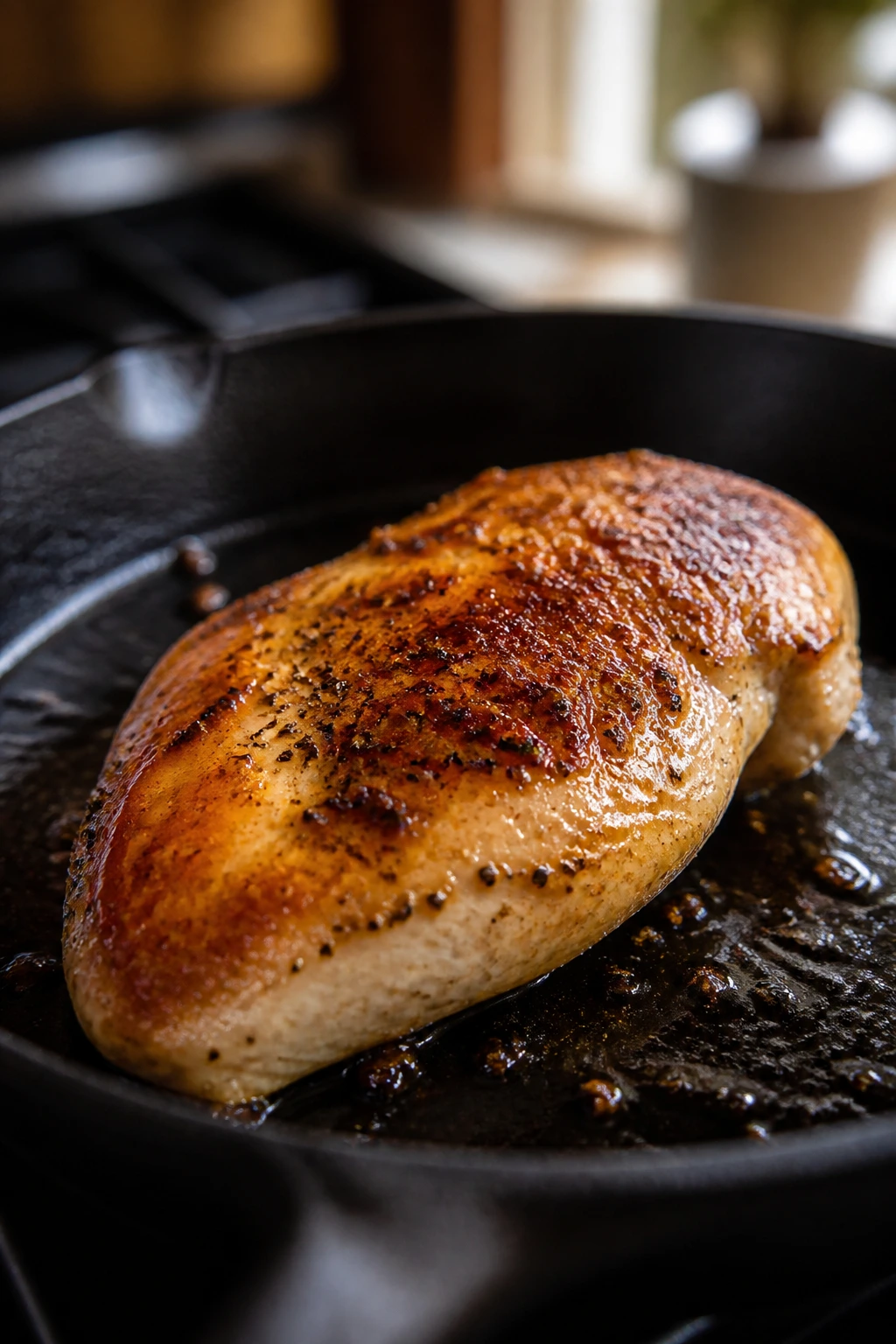
Uneven thickness: A thick hump in the middle and thin edges on the sides cook at different speeds. The edges dry while the center catches up. Fix it by butterflying, pounding, or buying cutlets.
Crowding the pan: If the chicken pieces are touching each other, the moisture has nowhere to go and the surface won’t brown well. Fix it by cooking in batches or using a larger skillet. If the chicken is pale and slippery instead of deeply colored, this is usually why.
Skipping the rest: Cutting the chicken the second it leaves the heat sends the juices onto the board instead of back into the meat. Fix it by resting the pieces for 5 to 10 minutes, depending on size. The chicken will slice cleaner and taste fuller.
Cooking only by color: Golden skin or white flesh does not always mean done. Some pieces turn brown early and stay under the safe temperature; others look pale and are already fine. Fix it by checking the thickest point with a thermometer.
Using too much acid for too long: A lemon-heavy marinade can turn the outer layer mealy if it sits too long, especially on thin breasts. Fix it by keeping acid forward but time short, or balancing it with yogurt, oil, and salt.
Over-tenting the chicken: Wrapping it in foil like a warm burrito softens the crust and steams the surface. Fix it by resting loosely, or not at all if you’re serving immediately and the pan sauce is ready.
Five Variations You Can Rotate All Week
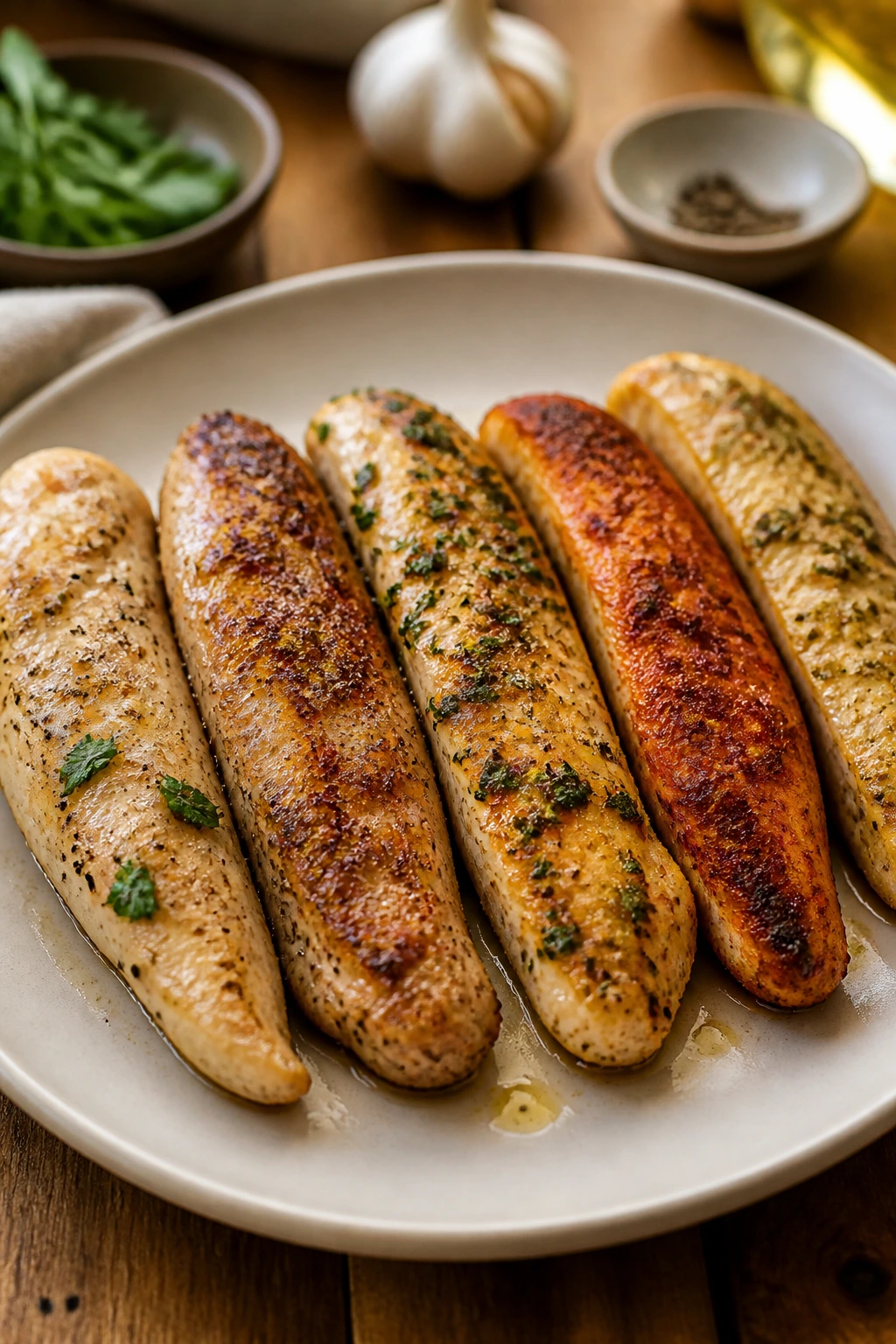
Lemon-Garlic Skillet Cutlets: Thin breasts get salted, seared, and finished with butter, lemon zest, and minced garlic. This is the cleanest, brightest version, and it works when you want chicken that can sit next to rice or a green salad without competing for attention.
Paprika-Rubbed Oven Thighs: Boneless thighs get coated with smoked paprika, garlic powder, black pepper, and oil, then roasted on a sheet pan. The paprika gives the surface a deeper color and a slightly smoky edge, which is useful when dinner needs more personality but not more steps.
Yogurt-and-Herb Chicken: Mix plain yogurt with salt, garlic, chopped parsley, and a little lemon zest, then coat thighs or cutlets for a short marinating window. The yogurt clings well and keeps the exterior from drying out too fast, especially under high heat.
Soy-Ginger Bowl Chicken: Marinate thin sliced breasts or tenderloins in soy sauce, grated ginger, a little honey, and oil, then cook quickly and serve over rice. This version likes scallions and sesame seeds on top, and it is one of the fastest ways to turn chicken into a takeout-style dinner.
Crispy Air-Fryer Cutlets: Pound the chicken thin, season well, mist lightly with oil, and air-fry until the outside is crisp and the center hits temperature. This works best when you want a less greasy finish and you have no patience for a skillet cleanup later.
Tools That Make Juicy Chicken Easier
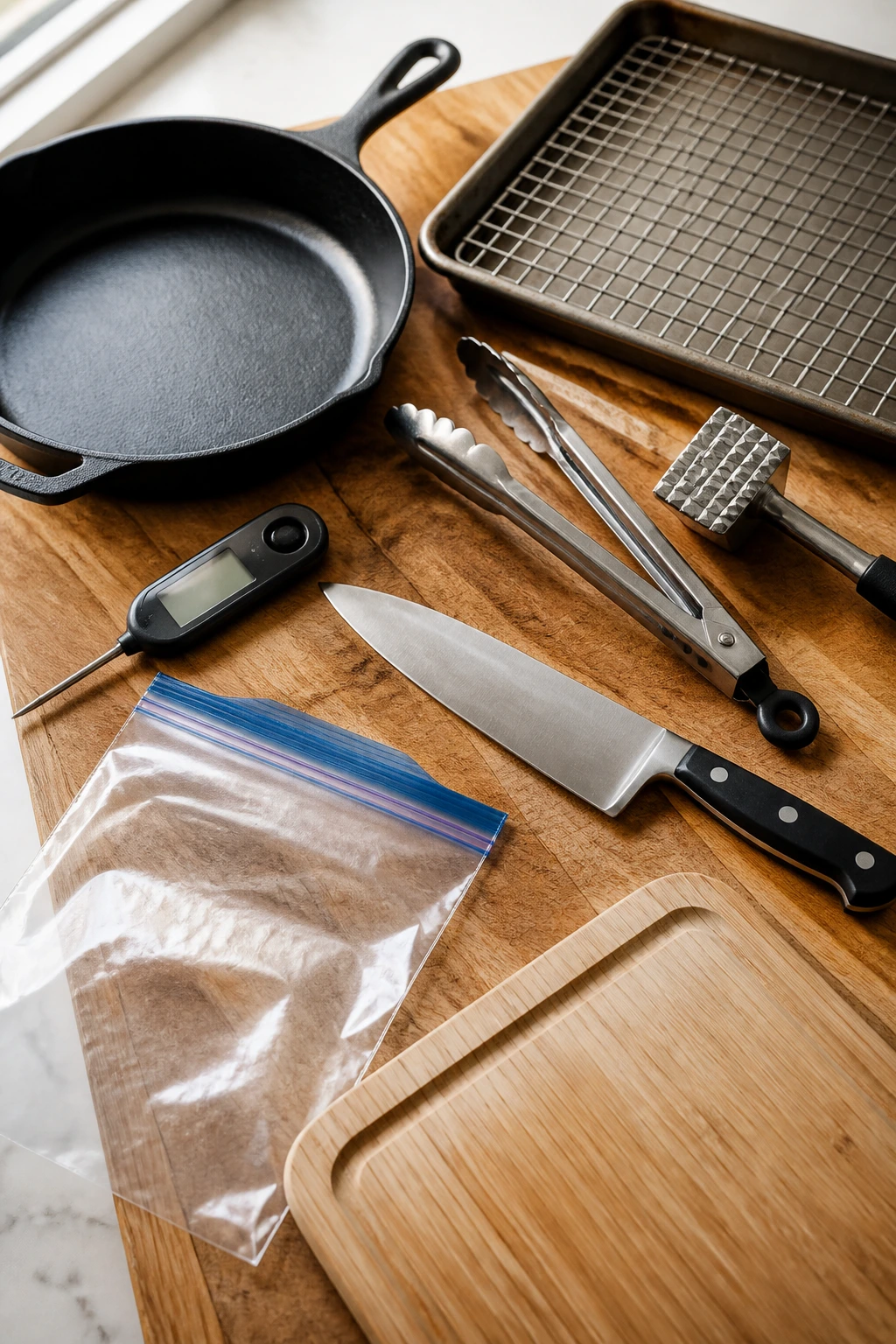
- Instant-read thermometer — The single best tool here; it tells you exactly when to stop cooking.
- 12-inch stainless-steel or cast-iron skillet — Big enough to keep pieces from crowding and hot enough to brown the surface.
- Rimmed sheet pan — Useful for oven finishing, roasting, and keeping juices contained.
- Wire rack — Optional, but it helps air move around the chicken in the oven so the bottom stays drier.
- Tongs — Easier on the meat than a fork, which can puncture and leak juices.
- Sharp chef’s knife — Needed for slicing cutlets, trimming tenderloins, and cutting against the grain after resting.
- Meat mallet or rolling pin — Handy for flattening thicker breasts to an even thickness.
- Zip-top bag or shallow dish — Good for quick marinades and dry brining without making a mess.
- Cutting board with a groove — Keeps the resting juices from running across the counter.
Make-Ahead, Storage, and Reheating Without Rubber Chicken
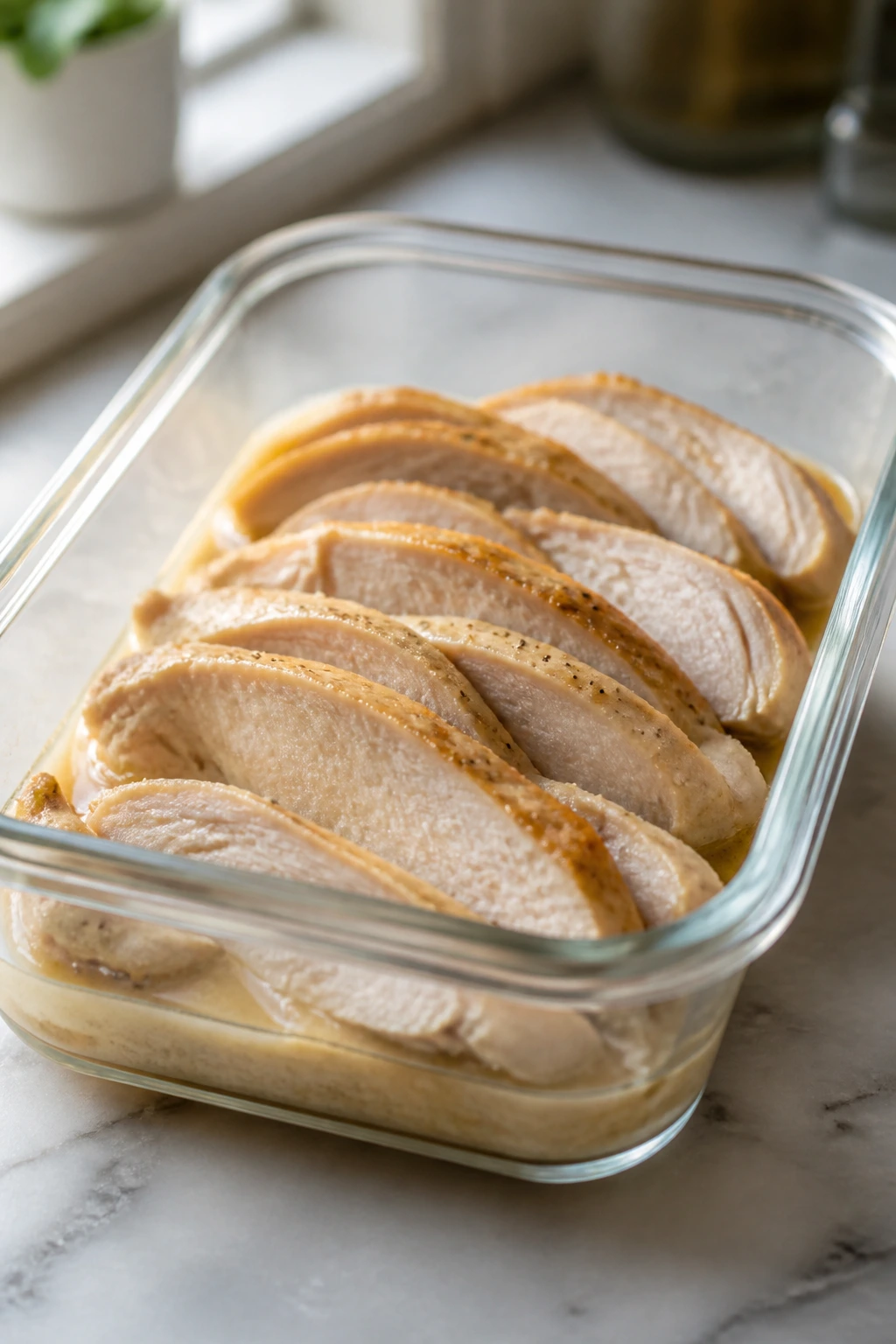
Leftover chicken can stay tender if you handle it like leftover chicken, not like a brand-new cut of meat.
Refrigerator life
Cooked chicken keeps well in the refrigerator for 3 to 4 days if it’s cooled promptly and stored in a covered container. Let it come down to room temperature for no more than 2 hours before refrigerating. If the chicken is sliced, pack it with a spoonful of pan juices or sauce so the cut edges don’t dry out.
Freezer life
Cooked chicken freezes for about 2 to 3 months with good texture. Thighs tend to hold up a little better than breasts. Wrap portions tightly or use freezer bags with the air pressed out. If you know the chicken will be frozen, slice it first so it reheats more evenly later.
Reheating
The gentlest method is a low oven, around 275°F to 300°F, covered loosely and moistened with a bit of broth, water, or sauce. That takes the chill off without turning the edges chalky. A skillet over low heat works too, especially for sliced chicken: add a splash of liquid, cover for a minute or two, then uncover to let the surface dry a little.
Microwaves are fine if you go slow. Use 50% power and short bursts, checking between each one. Full blast turns the outer layers tough before the middle warms up. That’s the fastest way to ruin leftovers that were fine ten minutes earlier.
Make-ahead moves
You can salt chicken the night before and leave it uncovered in the fridge. You can also marinate thin pieces for a few hours before cooking. If the week looks packed, cook extra on purpose and store it plain, then change the sauce when you reheat it. A lemony sauce one night, soy and sesame the next, pan gravy after that. The meat stays useful.
Questions People Ask When Chicken Keeps Turning Dry
Do I need to brine chicken overnight to keep it moist?
No. An overnight dry brine can help, but a 20- to 30-minute salt rest already improves seasoning and texture on a weeknight. If you’ve got more time, great. If not, use the time you have and cook it properly.
Can I cook breasts and thighs in the same pan?
Yes, but only if the pieces are similar in thickness and you watch the temperatures separately. Thighs usually need a little longer, and thicker pieces should start earlier or finish in the oven. Mixing a thin cutlet with a thick thigh in the same batch is asking for uneven results.
Is the air fryer actually good for juicy chicken?
It can be, especially for cutlets, tenderloins, and thin breasts. The key is not overcrowding and checking temperature early, because the hot circulating air can move from “done” to “dry” in a narrow window.
Can I cook chicken from frozen and still get tender results?
Not well for the pan-sear methods in this article. Frozen chicken is better thawed first, because thawing gives you even browning and a more predictable finish. If the chicken is already frozen, use a method built for it, like a soup or pressure-cooked dish, not a quick skillet dinner.
Why does my chicken get rubbery instead of dry?
Rubbery chicken usually means the proteins tightened too hard from heat, not that the meat lacked moisture to begin with. Lower the heat a little, cook thinner pieces, and stop at the right internal temperature. A short rest helps too.
What if the chicken is done before the rest of dinner?
Pull it, rest it, and keep it loosely tented or uncovered on a board for a few minutes. If you need to hold it longer, slice it and cover it lightly with warm sauce or pan juices. Whole pieces held too long in foil soften fast.
Should I rinse chicken before cooking it?
No. Rinsing does not improve texture or flavor, and it splashes raw juices around the sink. Pat the chicken dry with paper towels instead. That helps browning and keeps the kitchen cleaner.
What can I do with already dry chicken?
Slice it thin and put it in something wet: pan sauce, broth, curry, soup, salad with dressing, or a rice bowl with extra sauce. Dry chicken is much less obvious once it’s cut small and surrounded by moisture. Don’t keep reheating it alone.
The Chicken You Can Count On
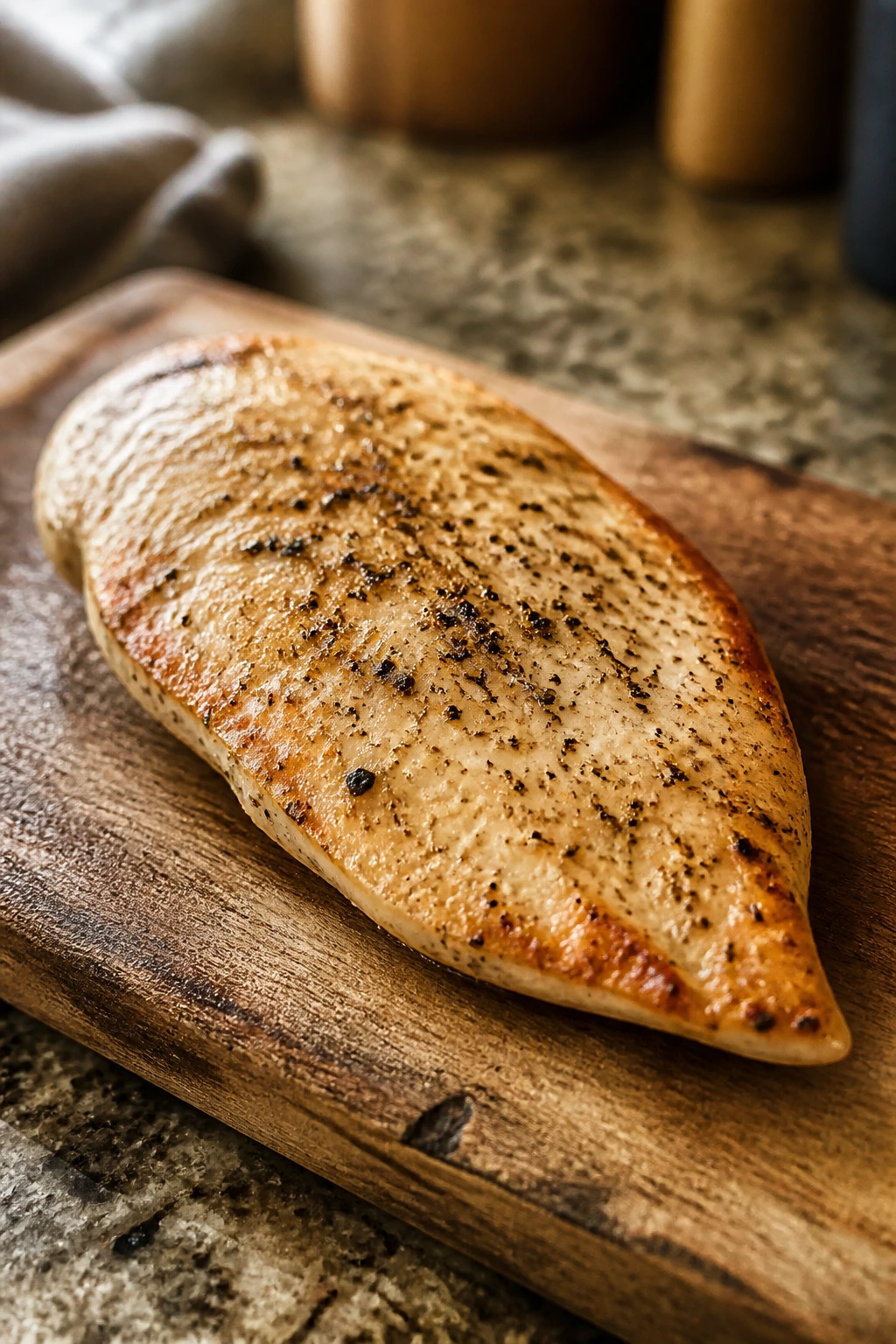
Tender, moist chicken for weeknight dinners is not a mystery dish. It’s a control dish. Salt it at the right time. Cut it evenly. Cook it with the right heat for the cut in front of you. Then stop at the right temperature and give it a short rest.
That sounds plain, maybe even a little unromantic. It works anyway.
Once those habits are in place, you can change the flavor every night and still land on dinner that slices cleanly and eats like you meant it to. Lemon and garlic one day, paprika and butter the next, soy and ginger after that — same reliable chicken, different mood. That’s the kind of weeknight cooking I trust.