



A roast chicken can look generous on Sunday and slightly rude on Tuesday. Tender roast chicken leftovers do not stay tender by accident; they stay tender when you cool them fast, cut them the right way, and warm them with enough moisture that the meat never has to panic. That is the whole game.
Weeknight dinners are where this matters most. You want a skillet of rice, a soup that doesn’t require a grocery run, tacos that come together before the dishwasher is done, or a creamy pasta that tastes like a plan rather than a compromise. The chicken is already cooked. The real question is how to make the second meal feel intentional instead of recycled.
A few small details do most of the work. Breast meat wants gentler heat and a little sauce. Thigh meat can take more punishment and usually tastes better for it. Pan juices are worth saving, even if there’s only a spoonful. And the carcass—if you still have it—isn’t scrap. It’s stock in a rib cage.
Why Leftover Roast Chicken Starts You Halfway to Dinner
The best leftover chicken dinners are not trying to hide the chicken. They use the fact that it is already seasoned, already browned, and already cooked through, which means your job is to protect the texture instead of chasing doneness from scratch.
That changes the rhythm of dinner. Raw chicken demands attention from the first minute in the pan. Leftover roast chicken asks for something different: a little moisture, a little heat, and the right companion. Put breast meat into broth, sauce, or a grain bowl and it behaves. Put thigh meat into a hot skillet, and it takes the treatment like it was built for it.
The second meal should respect that difference. Breast meat is lean and dries out fast when it gets reheated hard. Dark meat keeps more fat and usually forgives a longer simmer or a hotter finish. If the bird was roasted with salt, pepper, garlic, herbs, or citrus, those flavors do not disappear in the fridge—they just need a new stage.
- Built-in seasoning: The meat has already spent time in salt and heat, so you are starting with real flavor instead of plain protein.
- Faster than raw chicken: Most leftover chicken dinners land in the 10- to 20-minute zone once the meat is prepped.
- Different cuts, different jobs: Breast meat likes soups, saucy skillets, and wraps; thighs handle higher heat and heartier sauces.
- Less waste, more useful pieces: The carcass, juices, and even the fat can turn into stock, pan sauce, or a richer dinner base.
- Flavor changes are easy: Lemon, mustard, salsa, curry paste, soy sauce, or pesto can send the same chicken in a new direction without much effort.
How to Store Roast Chicken So It Stays Tender
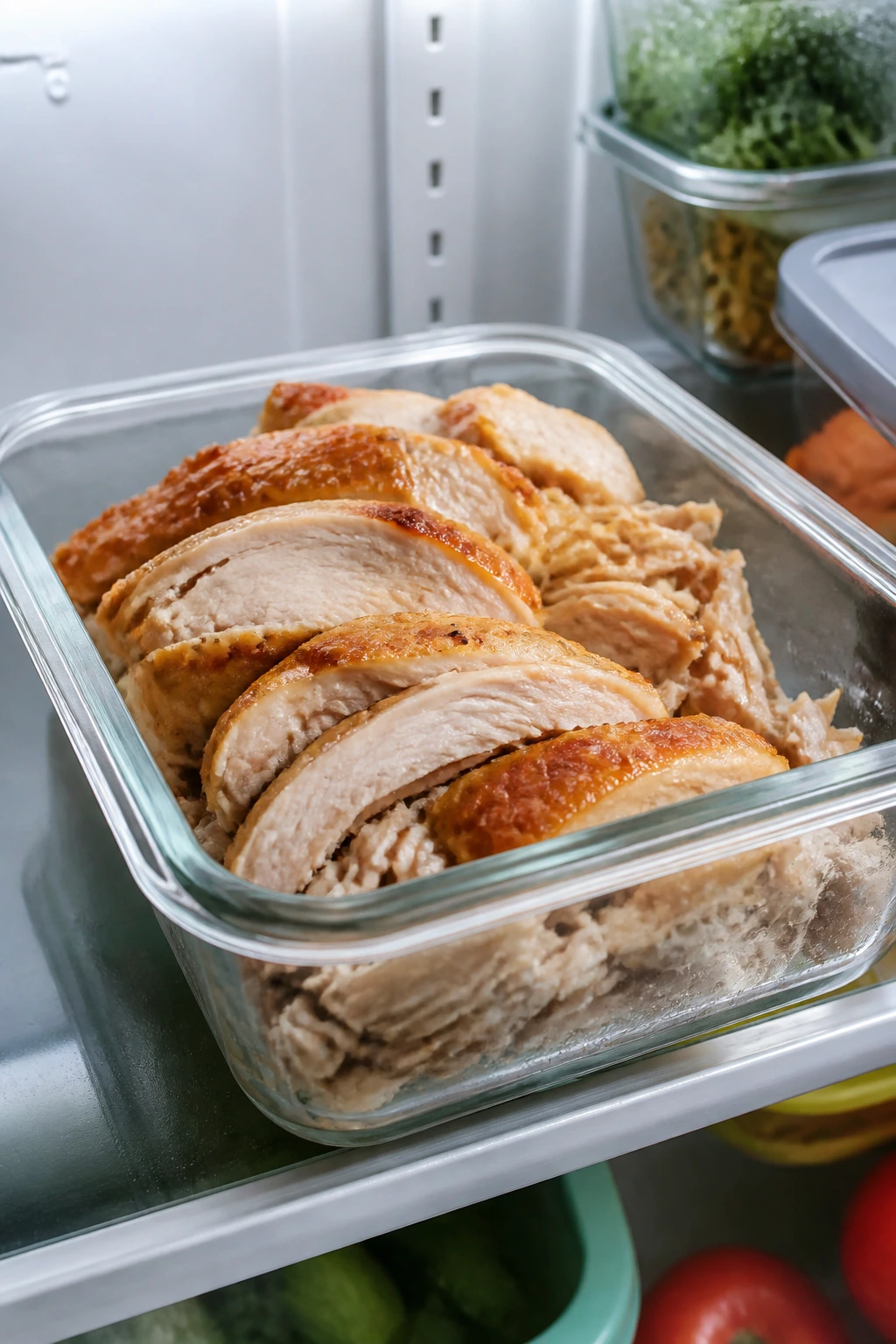
How fast should roast chicken leftovers go into the fridge? Faster than people usually think, and less neatly than magazine photos suggest.
Once the bird is cool enough to handle, pull the meat off the bones and spread it into shallow containers. Deep bowls trap heat, which means the center stays warm while the outer pieces sit in condensation and get soft in the wrong way. If you have drippings, spoon a little over the meat. A thin film of juice is helpful; a soup bath is not.
Do not seal a piping-hot bird in plastic and call it good. That gives you steam, which is the enemy of clean slices and decent texture. Cool it first, then pack it. If the chicken is still barely warm after carving, leave the pieces uncovered on the counter only long enough to stop the steam, then move them into the fridge. Two hours is the outer edge for food safety; less is better.
- Separate the meat from the carcass: The bones can go into a stock bag, while the meat gets its own container.
- Keep breast and thigh meat apart if you can: Breast meat dries sooner and benefits from gentler reheating.
- Save the drippings in a small jar: A tablespoon or two of those juices can fix a bland soup or skillet later.
- Label the container with the date: Cooked chicken is best within 3 to 4 days in the refrigerator.
- Freeze what you won’t use soon: Portion the chicken in meal-size bags and freeze it flat so it thaws quickly.
That little bit of organization pays off on the second night. And sometimes the third.
Slice, Shred, or Chop: Picking the Right Cut for the Job
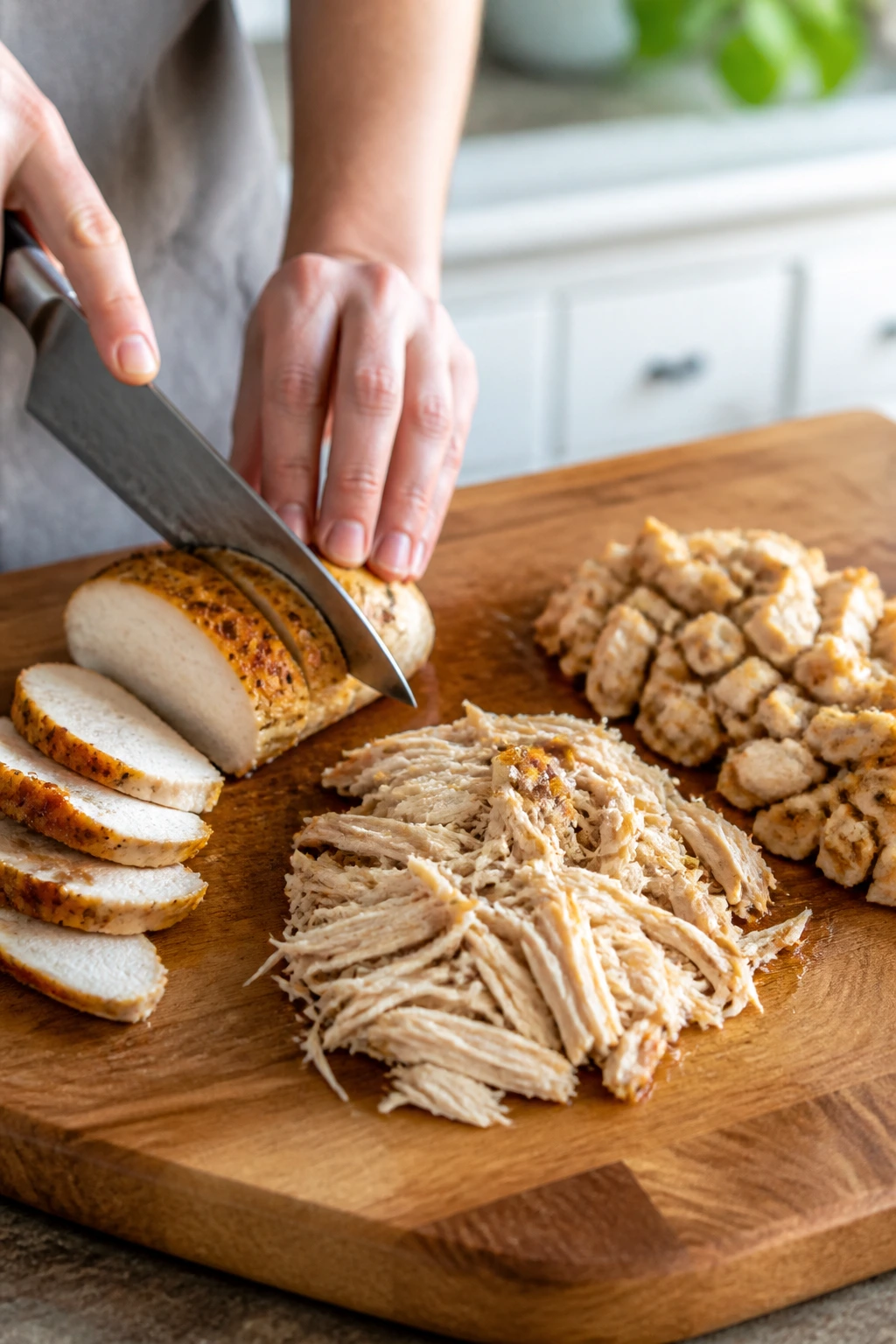
Not every piece of leftover chicken belongs in every dinner. A thick slice that looks perfect on a plate can turn awkward in soup, while a fluffy pile of shreds can disappear in fried rice if you don’t give it enough body. The cut matters more than most people admit.
Thin slices for wraps and sandwiches
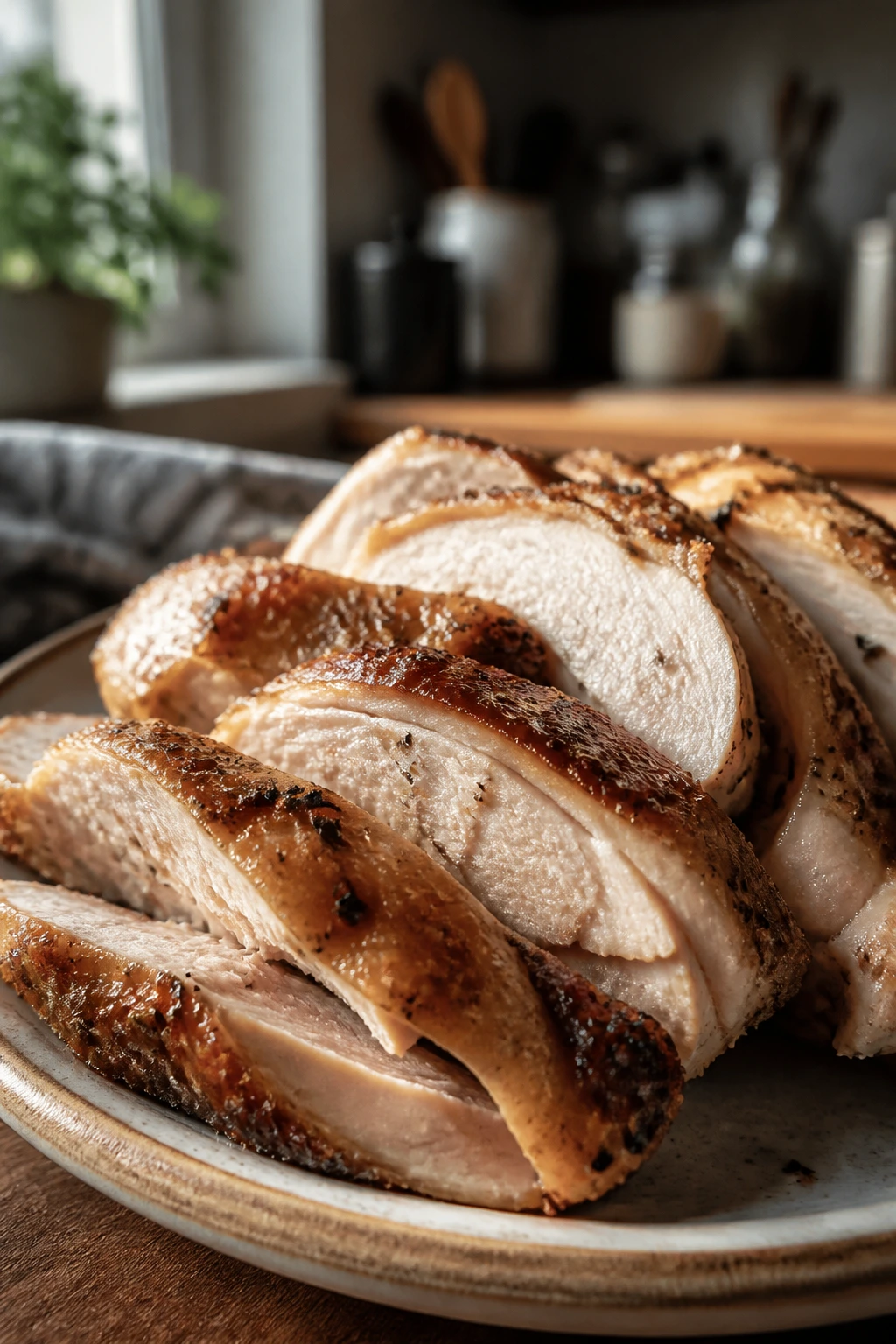
Breast meat wants to be sliced across the grain into neat strips, about 1/4 inch thick, especially if you’re putting it into wraps, pitas, or sliced sandwich bread. Thin slices hold together better than chunky pieces and feel less dry because your mouth gets sauce and chicken in the same bite.
If the chicken is still cold, slicing is cleaner. Warm meat falls apart and leaves shreds on the board. Cold meat behaves.
Shreds for soups and saucy skillets
Shredded chicken is the easiest shape for broth-based dishes, enchilada filling, creamy skillet dinners, and anything with a spoon. Use two forks or your fingers and pull the meat along the grain, not against it. That gives you longer strands that catch sauce instead of collapsing into little pellets.
Thigh meat is especially good shredded. It keeps some softness after a second round of heat, which is why it belongs in soups, taco fillings, and saucy casseroles more often than breast meat does.
Small cubes for fried rice and pasta
If the dinner is built around grains or pasta, cut the chicken into 1/2-inch cubes. Small dice distributes better through rice, farro, couscous, or noodles, and it warms through fast without turning stringy. It also gives you more browned edges if you sauté the chicken before mixing it in.
The rough rule is simple: the wetter the dish, the smaller the chicken can be. The drier the dish, the more the chicken needs moisture around it.
The Sauces and Pantry Ingredients That Wake Up Leftover Chicken
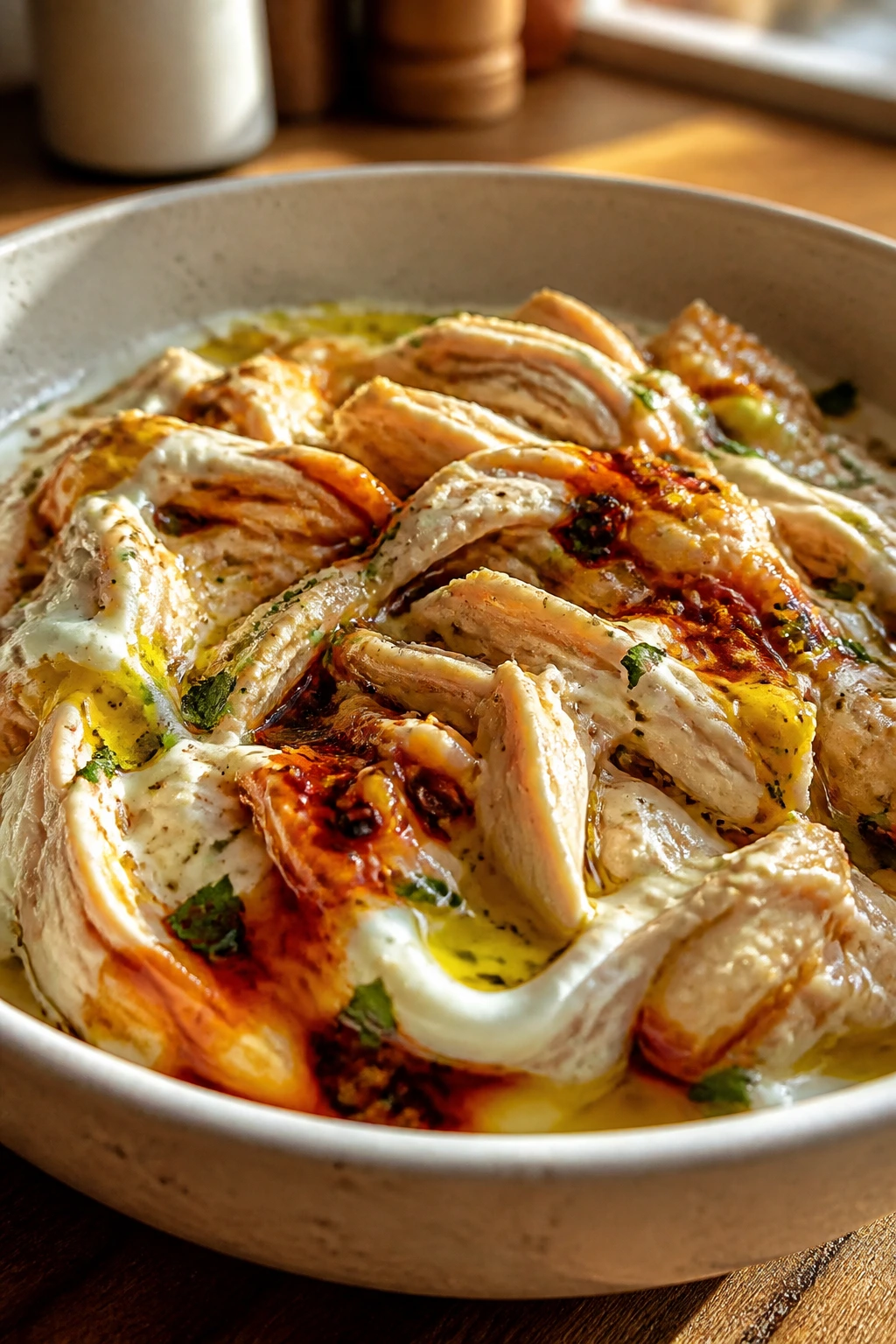
You do not need a new recipe every night. You need one bright thing, one soft thing, and one savory thing. That’s the useful trio.
The acid that cuts through richness
A spoonful of lemon juice, lime juice, vinegar, or pickle brine can change a bowl of chicken from flat to lively. For about 2 cups of meat, start with 1 tablespoon and taste before adding more. Acid works best at the end, after the chicken is hot and the dish is assembled.
This matters more with creamy or starchy dinners. A buttery skillet, a cheesy quesadilla, or a rice bowl can taste heavy fast if nothing sharp comes in to clean up the finish.
The fat that keeps the meat plush
Yogurt, sour cream, mayo, olive oil, butter, crème fraîche, and coconut milk all do different jobs, but they share one trick: they keep reheated chicken from feeling dry on the tongue. A spoonful in a wrap filling or a splash in a skillet sauce can do more than extra seasoning ever will.
If you’re using breast meat, lean on this hard. Breast meat likes insurance.
The savory base that gives the chicken a new accent
Broth, stock, Dijon mustard, soy sauce, miso, Worcestershire, salsa, tomato paste, pesto, and curry paste all work as anchors. They’re not interchangeable, but they all give the chicken a stronger frame. One tablespoon of Dijon in a cream sauce tastes very different from one tablespoon of pesto in a pasta skillet—and that’s the point.
A few pantry combinations I reach for often:
- Lemon + dill + peas: bright, green, and good with rice or potatoes.
- Soy sauce + sesame oil + scallions: ideal for fried rice or noodles.
- Salsa + cumin + cheddar: taco filling, quesadilla filling, or a baked casserole base.
- Curry paste + coconut milk + spinach: fast, rich, and strong enough for shredded chicken.
- Mustard + cream + thyme: the fast answer when you have mushrooms or egg noodles.
The crunch that keeps dinner awake
Celery, sliced cabbage, pickled onions, toasted nuts, breadcrumbs, tortilla chips, or crispy onions give leftover chicken a second texture. Without that, too many reheated chicken dinners feel soft from edge to edge. A little crunch at the end makes the whole plate feel more awake.
What to Do with the Bones, Skin, and Pan Juices
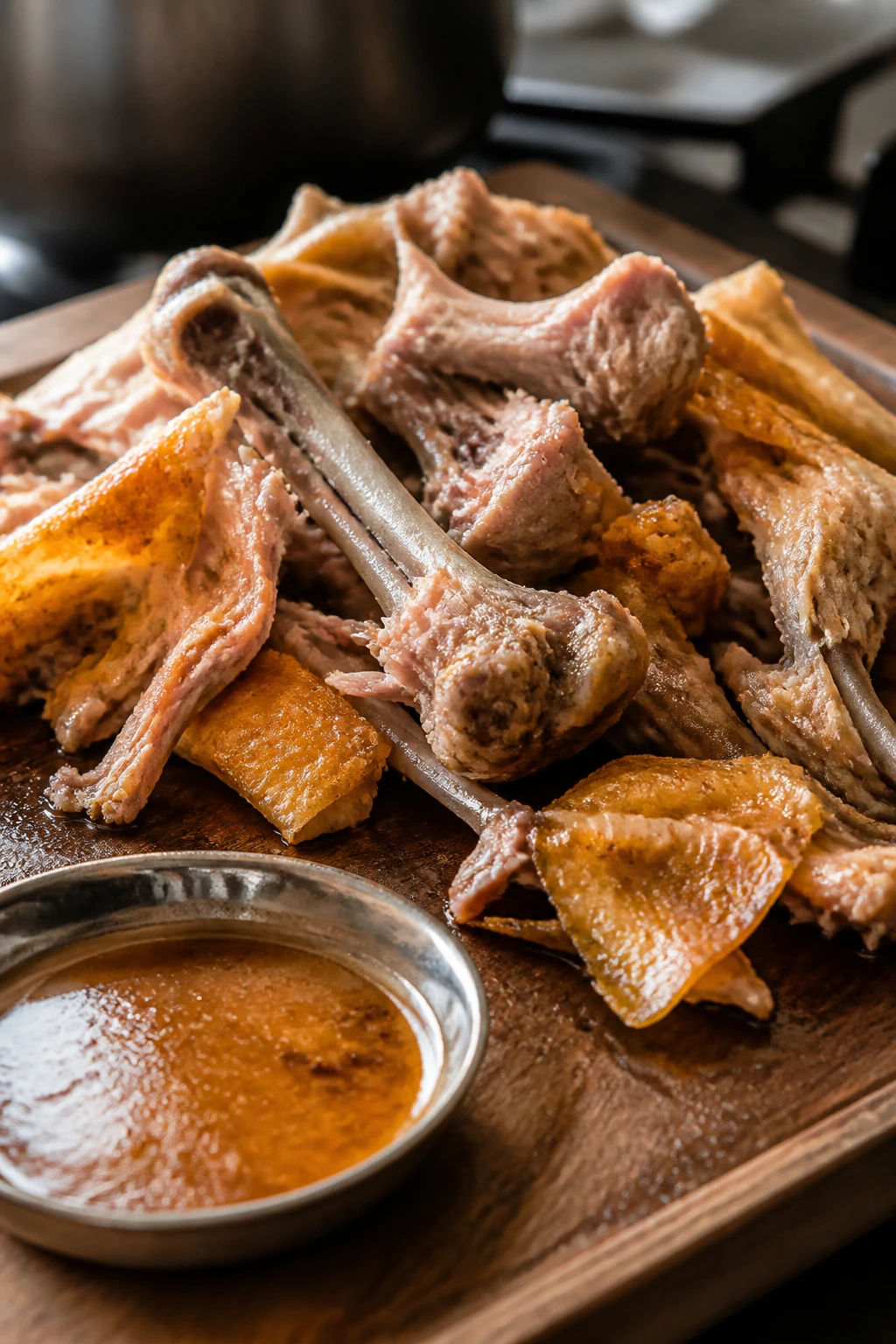
The carcass still smells like roast garlic and pepper long after the meat is gone. That smell is a clue. It means the chicken has more to give.
Stock from the carcass
If you have the bones, break them into smaller pieces if you can, then cover them with cold water in a stockpot by about 1 inch. Add 1 halved onion, 1 chopped carrot, 1 chopped celery stalk, a few peppercorns, and a bay leaf. Bring it up slowly, then let it sit at a bare simmer for 2 to 3 hours. You want lazy bubbles, not a rolling boil.
The broth will taste deeper if the chicken was roasted with herbs or aromatics, but don’t let it get over-salted. Taste at the end and adjust then. Strain it, chill it, and skim the fat if you want a cleaner broth.
Pan juices and fat
Those brown bits and drippings at the bottom of the roasting pan are not kitchen clutter. They are concentrated chicken flavor. Pour them through a fine strainer into a jar, chill them, and use the fat layer for roasting vegetables or sautéing onions. Use the liquid underneath in soups, gravies, or skillet sauces.
Even 2 tablespoons makes a difference. That is enough to loosen a pan sauce and keep leftover chicken from tasting like it came from a microwave tray.
What to do with the skin
If the skin is still attached and you actually like the texture, save it for one of two jobs: crisp it separately under a broiler for a minute or two, or chop it finely and scatter it over soup or rice for a salty finish. If it has gone flabby and rubbery, strip it off before it hits a sauce. No need to pretend otherwise.
Creamy Skillet Dinners That Coat the Chicken
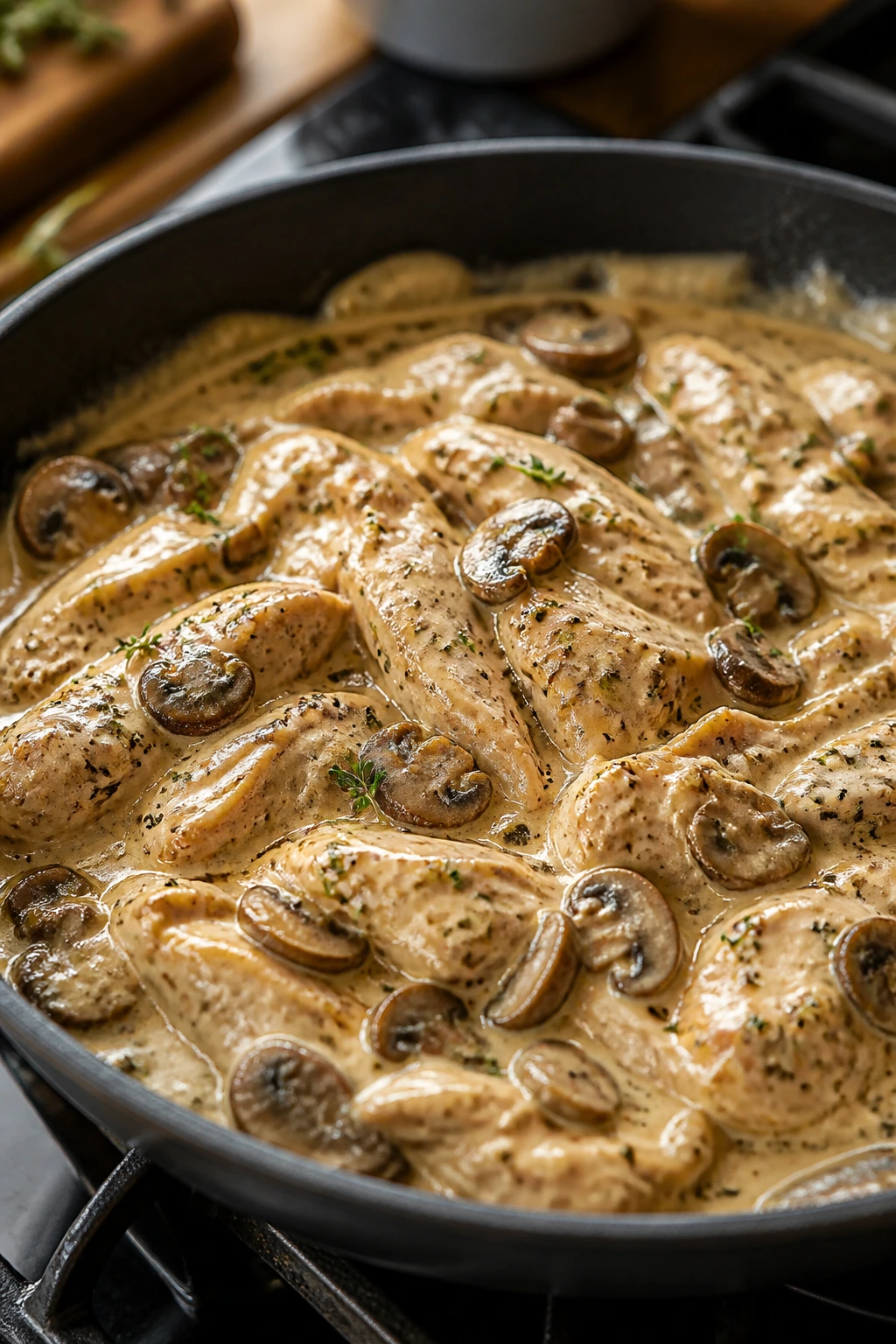
Creamy skillet dinners are where leftover chicken feels richer than fresh. They also hide a lot of sins. If the meat is a touch dry, a sauce with enough body can pull it back into line.
Start with onions or shallots, then add mushrooms, peas, spinach, or leeks depending on what’s in the fridge. A spoonful of butter, a little flour, and 1 cup of broth builds the base. Once that thickens slightly, add cream, sour cream, or crème fraîche, and fold in the chicken at the very end.
Mushroom and thyme skillet
This is the one I make when the chicken is plain and the fridge is half-empty. Sauté sliced mushrooms until they give up their water and start to brown on the edges. Add garlic, thyme, broth, and a splash of cream, then finish with chicken and parsley. It tastes like you worked harder than you did.
Mustard cream with peas
Dijon is sharp enough to wake up breast meat. Whisk 1 to 2 teaspoons into a cream sauce with peas and a little black pepper, then spoon it over noodles, rice, or mashed potatoes. The mustard keeps the sauce from tasting heavy, which is a nice trick when the chicken came from a rich roast.
Pot pie filling without the pie
This is basically a thick chicken stew with vegetables, but I like it because you can stop at the filling if you’re tired. Peas, carrots, celery, onions, and chicken go into a thickened broth, then you top the whole thing with biscuits, puff pastry, or nothing at all. It still counts as dinner either way.
A good rule here: warm the chicken in the sauce just until it’s hot. Do not boil it after the dairy goes in. That’s where breast meat gets stubborn.
Soups and Brothy Bowls That Make Dry Bits Irrelevant
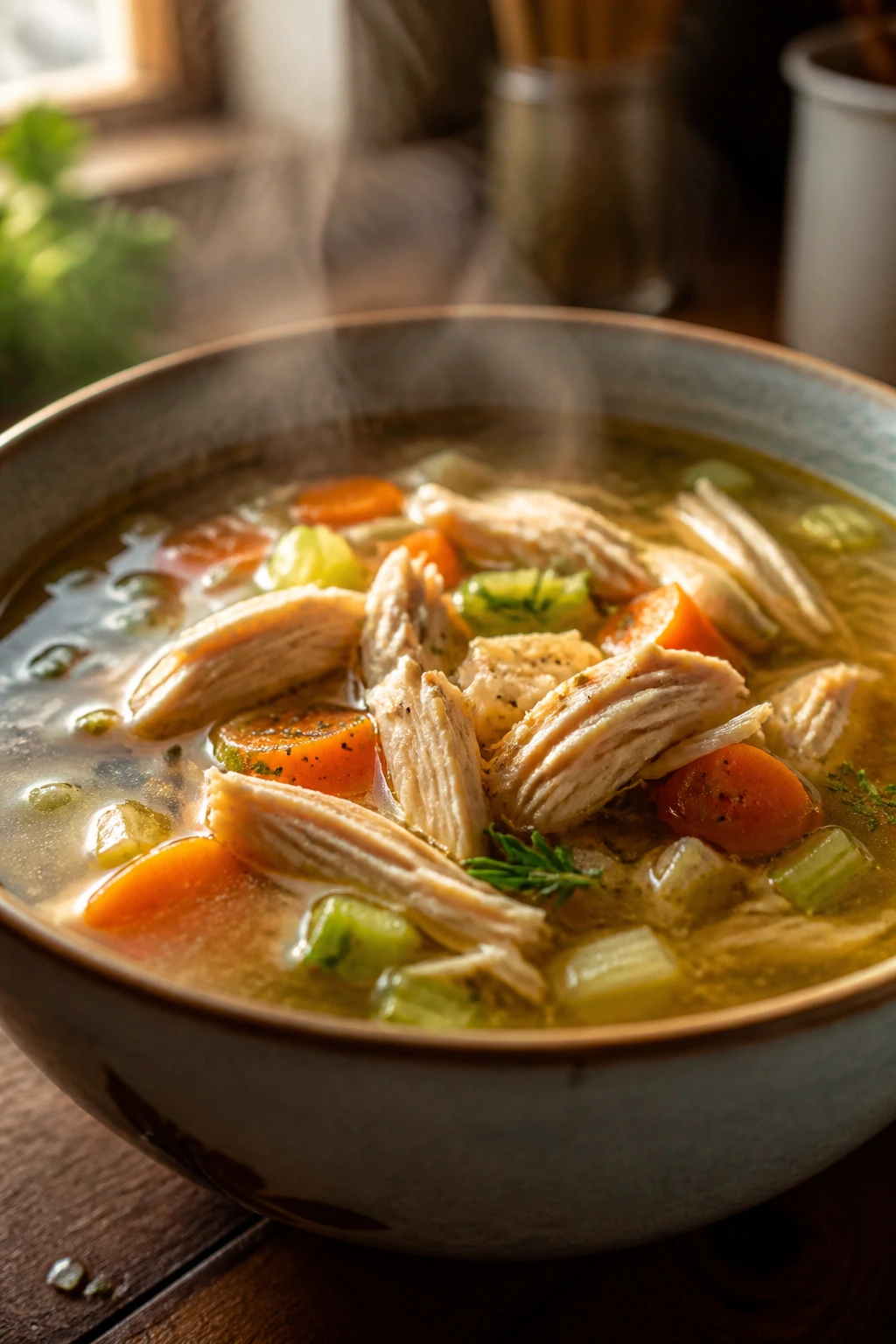
Why do some leftover chicken soups taste flat while others taste like they simmered all afternoon? Usually because the good ones respect timing.
Broth-based dinners are forgiving, but only if you add the chicken late. The pot should already be seasoned and hot before the cooked meat goes in. If you simmer leftover chicken for too long, the edges go stringy and the breast starts to feel chalky. Three to five minutes of gentle heat is plenty.
Chicken noodle soup that doesn’t go soft
Use the carcass if you have it. If not, a good boxed broth still works. Add carrots, celery, onion, and herbs first, then the noodles. If you want leftovers from the soup itself, cook the noodles separately and add them to each bowl. Noodles drink broth like they’re being paid for it.
Tortilla soup with shredded chicken
Tomato broth, cumin, garlic, a little chili, and shredded chicken are a strong combination because they handle dry edges well. Top with tortilla strips, avocado, cilantro, and a squeeze of lime. The lime matters more than people think; it keeps the broth from tasting murky.
Rice soup or ramen-style bowl
Shredded thigh meat is especially good here. Stir it into rice soup, ramen-style broth, or a ginger-soy bowl near the end, then finish with scallions and sesame oil. If you want more body, add mushrooms or a handful of spinach. If you want more bite, add bean sprouts or quick-pickled cucumbers.
The useful trick is simple: broth first, chicken last, herbs and acid at the end. That order keeps the meat from turning into thread.
Wraps, Tacos, and Quesadillas That Use Every Shred
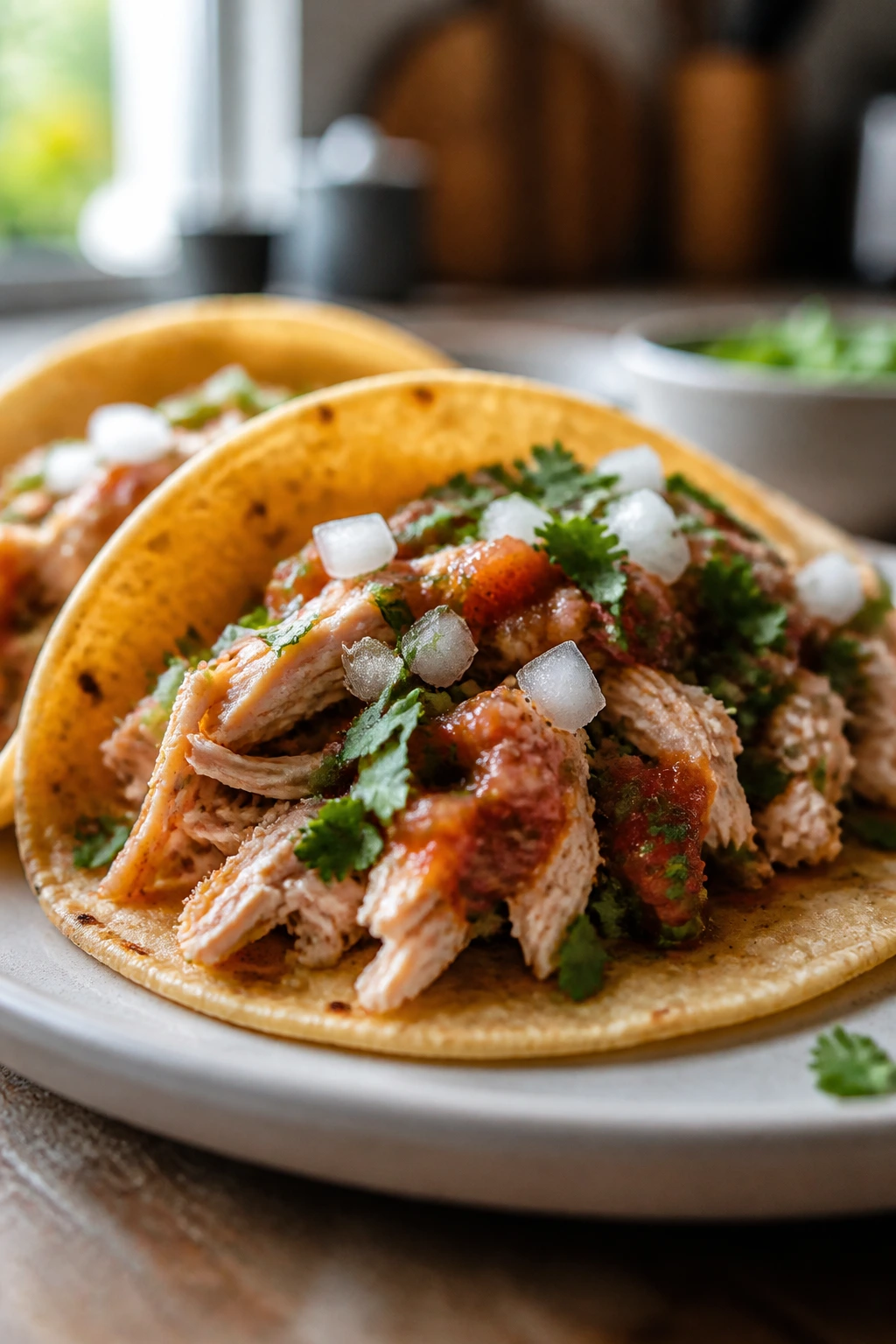
If your idea of dinner is one tortilla, one hot pan, and one bowl of sauce, leftover chicken is already your friend.
Tortillas and cooked chicken play well together because both like speed. Warm the filling first. Then warm the tortilla. Then assemble while everything is still loose and hot. If the chicken goes into the tortilla cold, it feels drier than it needs to.
Tacos that don’t taste like scraps
Toss chopped or shredded chicken with a spoonful of salsa, a pinch of cumin, and a little oil or butter so it looks glossy instead of dusty. That tiny coating keeps the chicken from falling out of the taco in dry bits. Add onion, cilantro, lime, and a crumbly cheese, and you’ve got dinner with almost no ceremony.
Quesadillas that stay crisp
The best quesadilla is less about filling and more about restraint. Put cheese against the tortilla on both sides, tuck the chicken and maybe a little sautéed pepper or onion in the middle, and cook over medium heat until the cheese melts and the outside turns deep gold. Two to three minutes per side is usually enough.
Wraps and lettuce cups
For wraps, use a thicker spread like yogurt, mayo, hummus, or avocado so the meat doesn’t slide around. Add something crisp—lettuce, cabbage, sliced cucumber, or celery—and something sharp, like pickled onions or a squeeze of lemon. Lettuce cups work well when you want a lighter dinner, but they need a moist filling or they feel flimsy.
The fix for dry chicken is not always more sauce. Sometimes it is warmer tortillas, better seasoning, and a crunchy thing alongside the meat.
Rice, Pasta, and Grain Bowls That Stretch a Small Amount
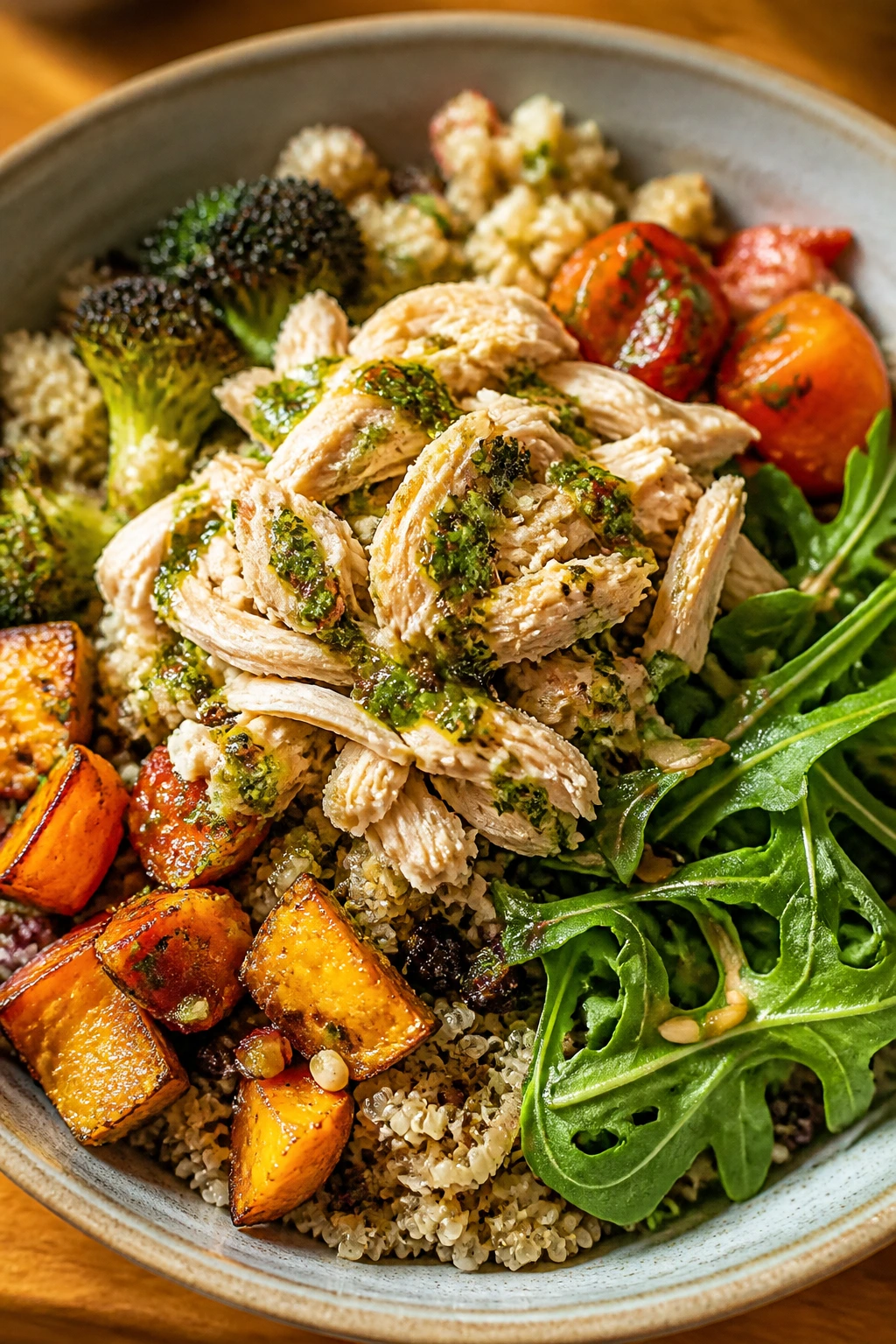
Two cups of chopped chicken can cover a lot of dinner if the base carries some weight. That’s why bowls work so well. They let the chicken stay in the lead without having to do all the work.
Grain bowls with a sharp finish
Farro, quinoa, brown rice, barley, and bulgur all make sturdy bases for leftover chicken. Add roasted vegetables, chopped herbs, and a vinaigrette or tahini sauce. The trick is contrast: soft grain, tender chicken, crisp veg, sharp dressing. A bowl with only soft ingredients gets dull fast.
If you have a spoonful of pan juices or stock, whisk it into the dressing. That little bit of chicken flavor goes further than another pinch of salt.
Pasta when you want a saucy dinner
Chicken and pasta like each other best when there’s a sauce to coat the noodles. Think garlic butter, lemon cream, tomato sauce, or pesto loosened with pasta water. Cut the chicken small so each forkful gets some meat without making the bowl feel crowded.
Use about 1/2 cup of pasta water to help the sauce cling. That starch matters. It keeps the sauce from sliding off into the bottom of the bowl.
Fried rice when the rice is already cold
This is one of the best homes for diced leftover roast chicken. Cold rice fries cleaner than fresh rice, and the chicken only needs the last minute or two in the pan. Scramble the eggs first, add vegetables, add rice, then fold in the chicken with soy sauce or tamari. Finish with scallions and sesame oil.
If the rice clumps, break it up with your fingers before it hits the pan. That saves you from a wet lump in the middle of dinner.
Sheet Pan Dinners That Bring Back Crisp Edges
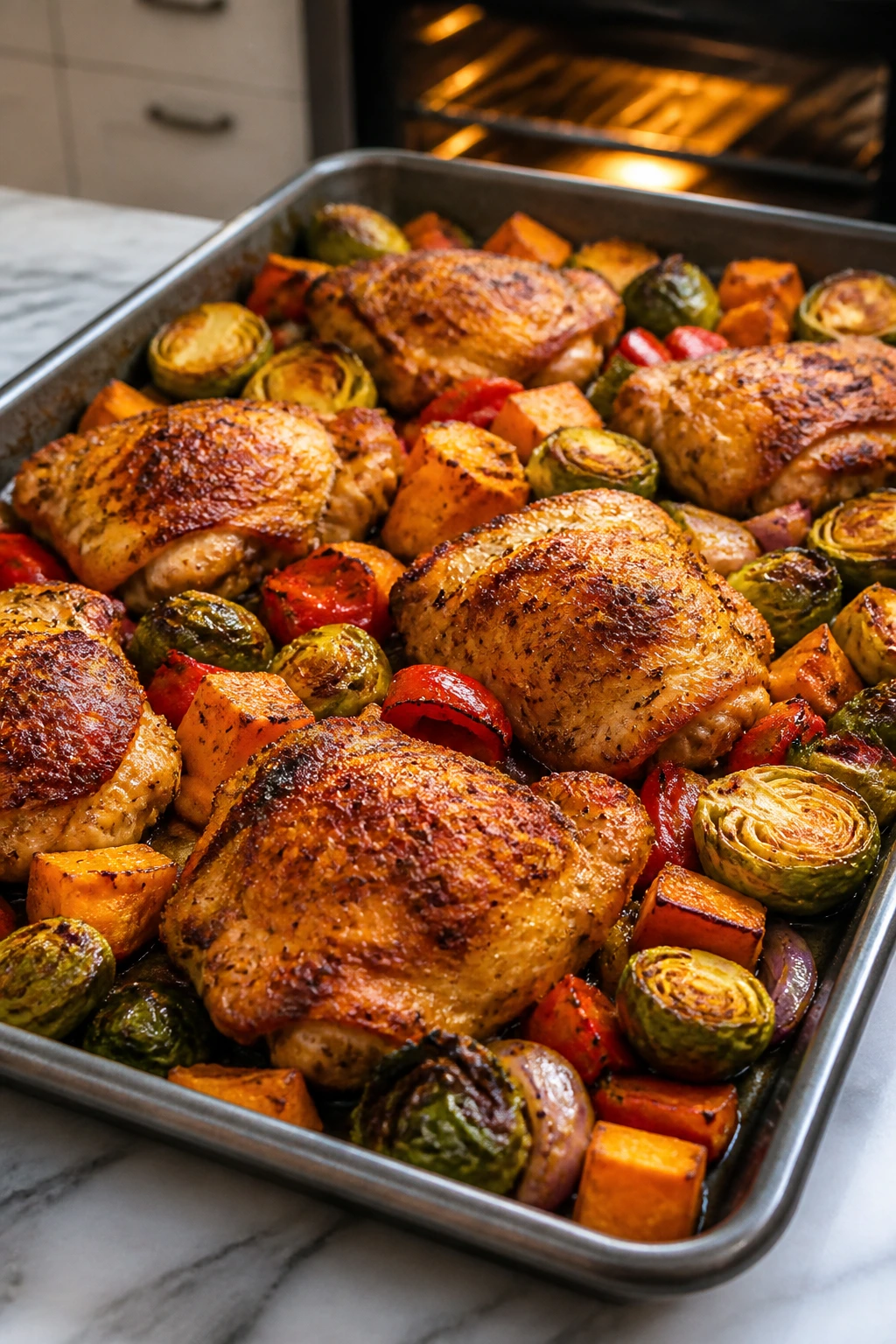
The broiler is the move when the chicken needs a little color and the vegetables need a louder finish.
This works best when the leftovers are already cut into chunks or the skin has been removed. Toss potatoes, carrots, Brussels sprouts, cauliflower, onions, or broccoli with oil, salt, pepper, and whatever spice mix fits the mood. Roast the vegetables first at 425°F until they’re nearly done, then add the chicken for the last 5 to 7 minutes just to warm it through.
When to add the chicken
Add it late. That’s the rule. If the chicken goes in at the start, the meat dries out before the vegetables are anywhere near done. If it’s already mixed with sauce, use a casserole instead of a sheet pan, because the pan can’t protect saucy chicken from scorching edges.
What vegetables work best
Root vegetables and brassicas are the easiest. Potatoes, carrots, squash, broccoli, cauliflower, Brussels sprouts, onions, and fennel all handle a hot oven without turning to mush. Tomatoes and zucchini work too, but they need less time and a lighter hand.
How to finish the pan
A squeeze of lemon, a splash of vinegar, or a spoonful of salsa at the end keeps the tray from tasting flat. Fresh herbs help too. Parsley, dill, cilantro, or scallions make the whole pan look and taste fresher, even if the chicken came from yesterday.
A sheet pan dinner is not the place to be precious. It’s the place to be practical and a little pushy with the heat.
Small Moves That Make Leftovers Taste Fresh Again
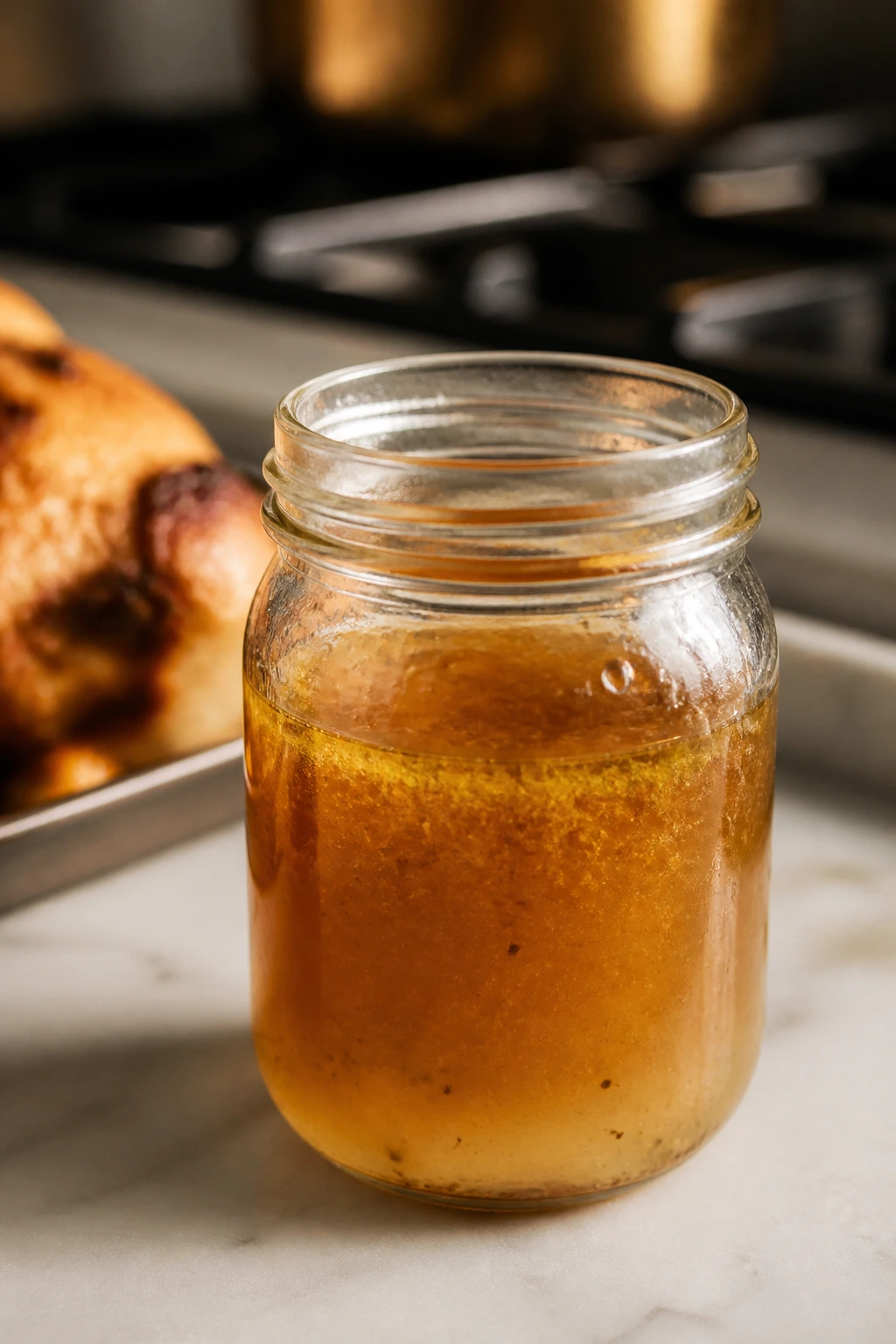
Save the juices. That’s the sentence I keep coming back to, because it solves more than people expect.
Save the juices: Strain any pan drippings or roasting liquid into a small jar and refrigerate it. A spoonful can loosen a skillet sauce, deepen a soup, or make reheated chicken taste like it still belongs to the bird it came from.
Warm the chicken with moisture: Use a splash of broth, stock, sauce, or even water in a covered pan. About 1 to 2 tablespoons per cup of chicken is enough to keep the meat from tightening up while it heats.
Season the second round at the end: Salt is only half the job. Lemon juice, vinegar, scallions, dill, parsley, or a pinch of chili flakes can wake up chicken that tastes flat after storage.
Match the cut to the meal: Keep breast meat in slices or larger chunks for lighter dishes. Use thigh meat for soups, taco fillings, and skillet dinners that simmer a little longer. That one choice saves a lot of disappointment.
Add texture on purpose: A bowl of soft chicken, soft rice, and soft vegetables gets tired fast. Throw in something crisp—celery, cabbage, cucumber, nuts, tortilla chips, toasted breadcrumbs, or pickled onions. The plate needs a little snap.
One more thing: do not be shy about using a tiny bit of fat. Butter, olive oil, mayo, yogurt, or sour cream can pull a dried edge back into the conversation.
Common Mistakes That Dry Out Good Roast Chicken
Where do leftover chicken dinners go wrong? Usually in the same few places.
- Reheating whole pieces on high heat: The edges turn rubbery while the center is still cool. Slice the meat first, then warm it gently with broth or sauce.
- Adding chicken too early to soup or sauce: The meat sits in hot liquid long enough to lose its texture. Put it in near the end and heat only until it’s hot.
- Storing everything in one deep container: The middle stays warm too long and the outside gets soggy. Use shallow containers and separate sauces from the meat when you can.
- Skipping the second seasoning pass: Leftovers need tasting and adjusting after they’re warmed. A pinch of salt, a squeeze of lemon, or a spoonful of mustard can fix a flat dish fast.
- Treating breast and thigh meat the same: Breast wants gentle heat and moisture; thigh can handle more simmering. When you use the same method for both, one of them usually loses.
- Throwing away the drippings and carcass too quickly: That’s free flavor gone. Even a small amount of pan juice or stock can make the next dinner taste less recycled.
The pattern is blunt: too much heat, too little moisture, and too little attention to the cut. Fix those three things and most leftover chicken problems disappear.
Flavor Swaps That Keep the Bird Interesting
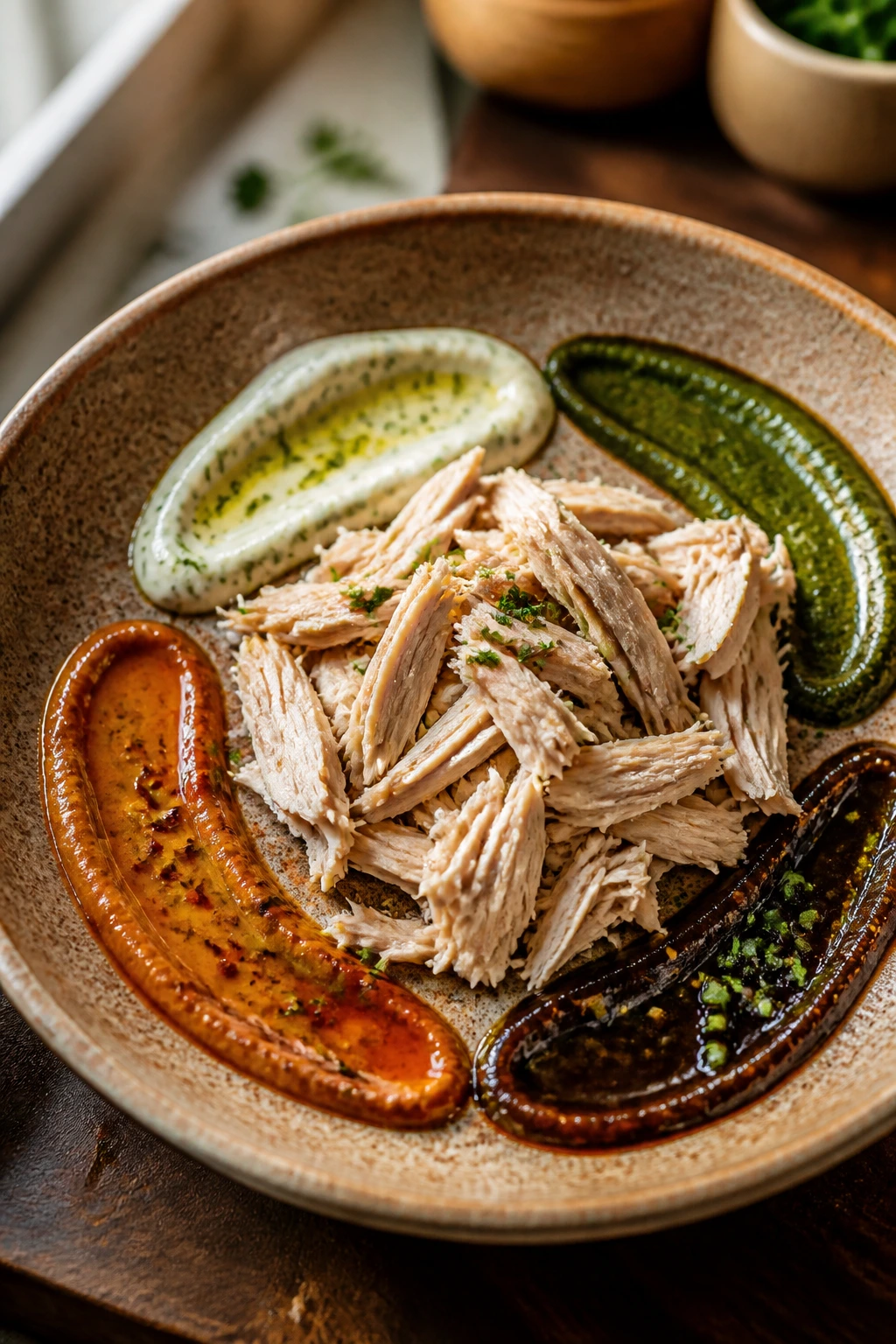
Some nights want lemon and herbs. Other nights want chili, soy, or curry paste. That’s what makes roast chicken leftovers useful instead of repetitive.
Lemon-Dill Chicken with Peas: Fold shredded chicken into buttered rice or potatoes with peas, dill, lemon zest, and a little black pepper. This version works best when the chicken is plain or lightly seasoned, because the lemon brings the whole thing to life.
Smoky Taco Skillet: Toss chopped chicken with cumin, chili powder, garlic, a spoonful of salsa, and a little oil. Pile it into tortillas, bowls, or over chips with cheese and lime. If you want heat, a little chipotle in adobo goes a long way.
Mustard Cream and Mushrooms: Sauté mushrooms, add broth, then whisk in cream and Dijon before folding in the chicken. Spoon it over egg noodles, rice, or mashed potatoes. This one is a good answer when the chicken breast needs a softer landing.
Soy-Ginger Noodle Bowl: Warm the chicken in soy sauce, ginger, garlic, and a touch of sesame oil, then serve it over noodles with scallions and cucumber. It works especially well if the leftover bird came from a simple roast and you want a sharper flavor profile.
Coconut Curry Shortcut: Stir curry paste into coconut milk, add spinach or peas, and fold in shredded chicken at the end. Serve it with rice. This is the fastest way to make the chicken feel like a different meal without buying another protein.
You can also make these swaps by dietary need: use yogurt instead of cream, tamari instead of soy sauce, or gluten-free noodles and tortillas if that’s what the pantry allows.
The Kitchen Gear That Makes Leftover Chicken Easier
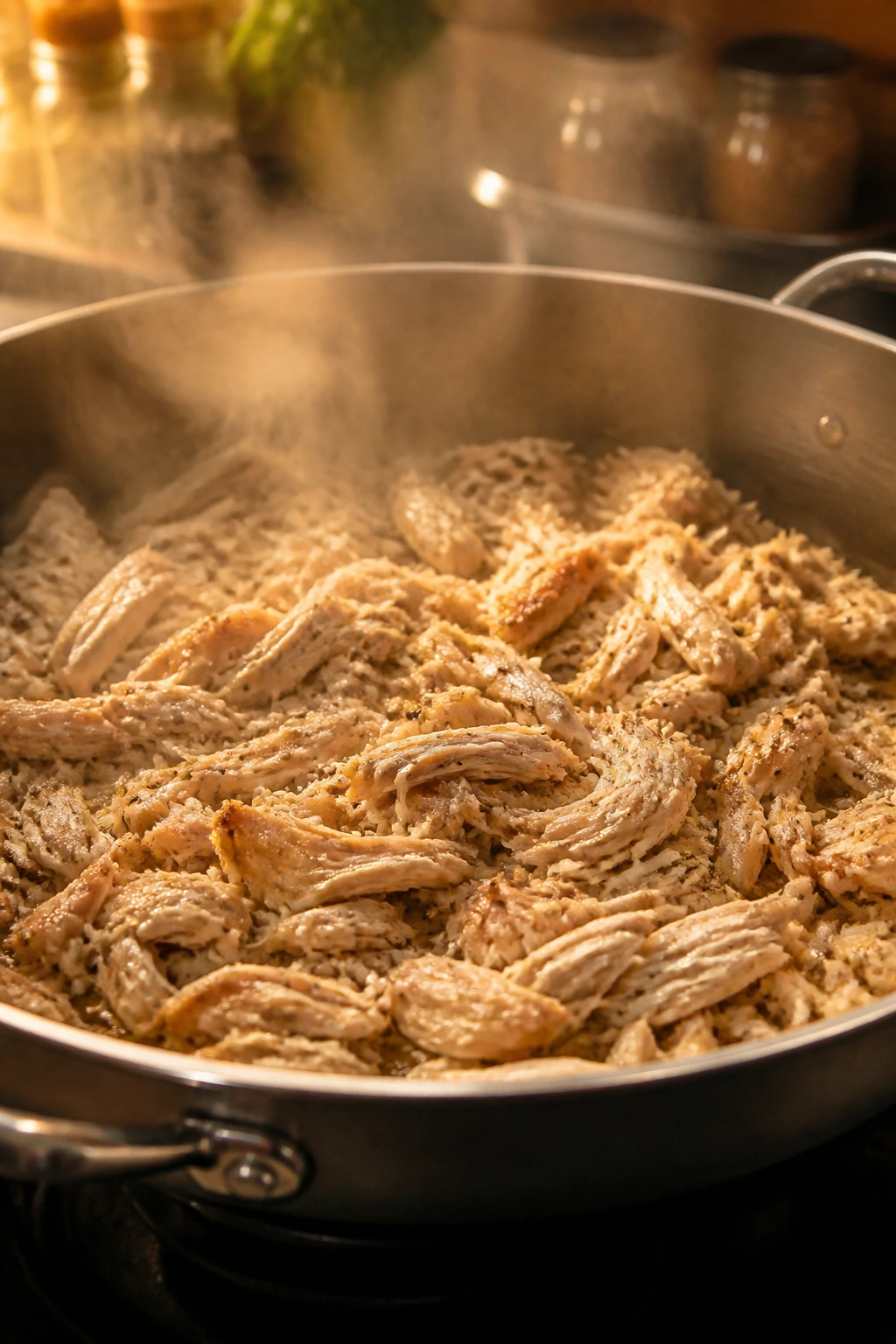
The right tools do not make leftovers glamorous. They make them less annoying.
- Chef’s knife: A sharp knife slices cold chicken cleanly instead of tearing it into ragged pieces.
- Cutting board with a groove: The groove catches juices when you carve or shred the bird.
- Shallow airtight containers: These help the chicken cool fast and keep it from steaming itself soft.
- 12-inch skillet: Big enough for sauces, tacos, fried rice, and quick skillet dinners without crowding.
- Dutch oven or heavy soup pot: Useful for stock, noodle soup, and any broth-based dinner.
- Rimmed sheet pan: Best for roasting vegetables and warming chicken at the end.
- Instant-read thermometer: This is how you know reheated chicken has reached 165°F without guessing.
- Fine-mesh strainer: Handy for separating pan juices or stock from bones and herbs.
- Silicone spatula or wooden spoon: Gentle stirring matters when the meat is already cooked.
- Freezer bags: Flattened portions thaw faster and stack neatly, which matters more than people want to admit.
A microplane for lemon zest and a pair of forks for shredding are nice to have, too. Not required. Just useful.
Fridge, Freezer, and Reheating Rules That Keep It Safe
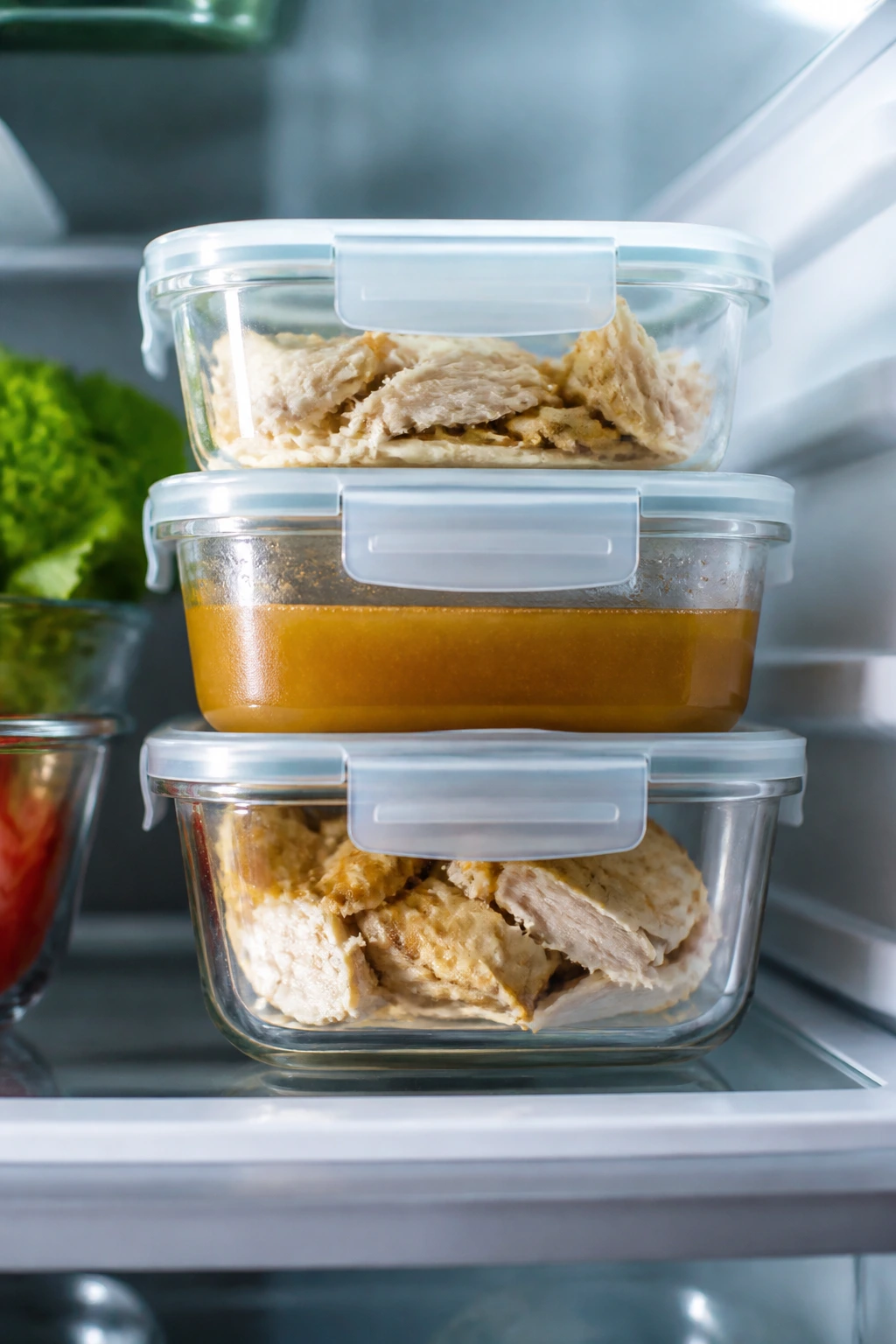
What does safe storage actually look like with cooked chicken? Boring, mostly. That’s a good sign.
Cooked poultry should not sit out longer than 2 hours, and if the room is hot, I would shorten that window. Once the chicken is cool enough to handle, portion it into shallow containers and get it cold quickly. The fridge is the right home for 3 to 4 days. After that, the texture starts slipping even if the chicken still seems fine.
For freezing, portion the meat in meal-size bags or containers and press out the air. Frozen cooked chicken keeps best for about 2 months, though it stays safe while frozen much longer. The difference is texture. A flatter bag thaws quicker and loses less moisture than a tall hard block.
Refrigerator method
Keep chicken in a shallow sealed container, ideally with a spoonful of drippings or broth to protect the surface. Store creamy sauces separately if you can. Chicken salad, mayo-based fillings, and yogurt-heavy mixes belong in the fridge, not the freezer.
Freezer method
Freeze plain meat separate from sauce when possible. If you know you’ll turn it into soup, freeze the carcass and the meat in different bags. If you’re freezing for tacos or curry, portion it already shredded so you can drop it straight into the pan.
Reheating method
- Skillet: Add a splash of broth or water, cover, and warm over low heat until the chicken hits 165°F.
- Oven: Cover the chicken with foil and reheat at 325°F with a little liquid in the pan.
- Microwave: Use 50% power, cover with a damp paper towel, and stop to stir or turn the pieces every 30 seconds.
- Soup or stew: Put the chicken in near the end and heat just until hot.
If you only need part of the batch, reheat only that part. Repeated heating is where good leftovers turn tired.
Questions People Ask About Roast Chicken Leftovers

How long do roast chicken leftovers last in the fridge?
Three to four days is the safe window for cooked chicken in the refrigerator. If you know you won’t use it by then, freeze it sooner rather than later. The texture drops off first in the breast meat, so that’s the part I freeze earliest.
Can I freeze chicken after it’s been mixed with sauce?
Yes, but the sauce matters. Broth-based sauces, tomato sauces, and curry sauces freeze well enough for weeknight dinners, while mayo and sour cream can separate and get grainy. If the sauce is creamy, I usually freeze the chicken plain and add the sauce after thawing.
What’s the best way to keep breast meat from drying out?
Slice it across the grain, warm it gently, and give it some liquid or sauce. If you can keep the reheating temperature low and stop at 165°F instead of going past it, the meat stays much softer. Breast meat also benefits from acid at the end—lemon, vinegar, or a little mustard helps.
Can I reheat leftover chicken more than once?
I try not to. Every extra heating makes the meat a little drier and less pleasant. If you’re making a soup or casserole, heat the whole dish once and serve it; if not, only warm the portion you plan to eat.
Is it okay to use the carcass for stock if the chicken was heavily seasoned?
Yes, but go easy on salt while the stock simmers. The roast chicken already brought some seasoning to the pot, and you can always correct the final broth later. Strong herbs, garlic, and pepper usually make the stock better, not worse.
What if the chicken is already dry?
Chop it smaller and put it into a moist dish. Soup, curry, creamy skillet sauce, or taco filling all give dry chicken a better chance than a plain reheated plate. A spoonful of broth, yogurt, mayo, or gravy before the final heat helps too.
Can I use leftover roast chicken in a slow cooker?
Yes, but add it near the end. Cooked chicken sitting in a slow cooker for hours turns stringy and lifeless. If you want a slow-cooker dinner, build the sauce or soup first, then stir in the chicken during the last 20 to 30 minutes.
Should I keep the skin?
Only if you like what it does after reheating. Crisp it separately if you want a topping, or strip it off before putting the chicken into soup, pasta, or a saucy skillet. Flabby skin in a wet dish usually adds more chew than pleasure.
Can I mix white and dark meat in the same dinner?
Absolutely, and most of the time you should. I like to keep them separate only when one part needs gentler handling than the other. Otherwise, mixed meat makes the dinner feel fuller and keeps the texture interesting.
One Roast Bird, a Better Weeknight
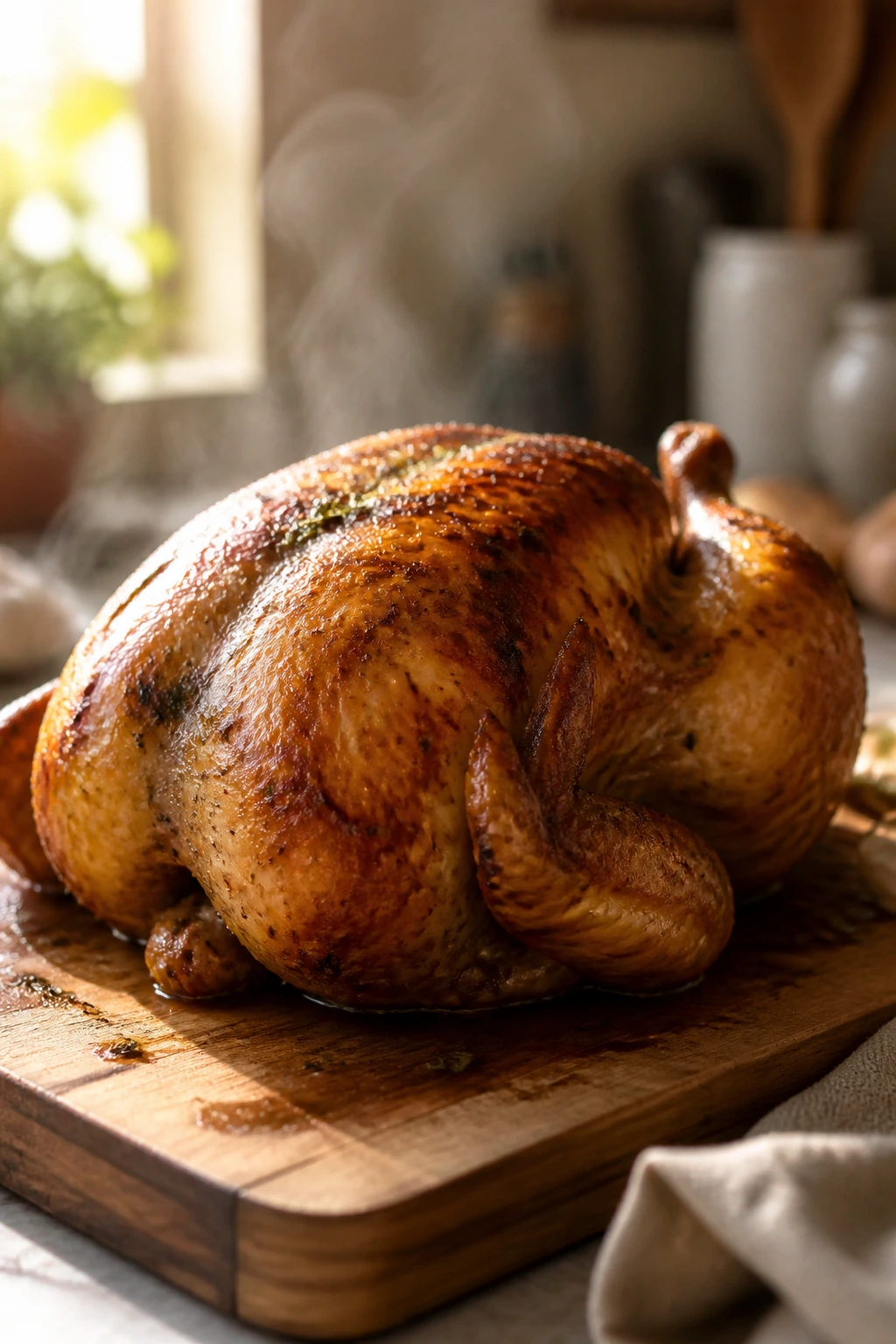
A roasted chicken should buy you more than one good dinner. If you cool it properly, cut it with intent, and give it moisture on the second round, the leftovers stop feeling like a chore and start acting like a shortcut with taste.
That is the real advantage here. The carcass becomes broth, the drippings become flavor, the breast goes into soup or sauce, the thigh meat heads for tacos or skillets, and the weeknight dinner problem gets smaller without getting dull. Keep the meat cold, warm it gently, and the next bird you carve will already feel like a plan for Tuesday.