



A good juicy sausage dinner with brown sugar glaze lives or dies on timing. Push the heat too hard and the sugar scorches before the links finish; baby the pan too much and you end up with pale sausage and a glaze that tastes flat. The sweet spot is a hot oven, a head start for the potatoes, and a glaze that goes on in two passes so it clings instead of pooling.
Fresh pork sausage has its own fat, and that matters. It bastes the pan as it cooks, which is why the vegetables need enough room to brown instead of steaming under a heap of onions and peppers. I like firm apples here because they keep a little shape and turn soft at the edges without dissolving into mush. That small detail changes the whole plate.
The flavor lands somewhere between a roast dinner and a sticky skillet supper. Brown sugar gives the shine, Dijon gives the bite, and apple cider vinegar keeps the whole thing from tasting like candy. If that balance sounds right to you, the rest is mostly heat control and refusing to rush the final glaze.
Why This Sausage Dinner Works So Well
-
The glaze has backbone: Dijon mustard and apple cider vinegar pull the brown sugar back from dessert territory, so the sausage tastes lacquered rather than sugary.
-
The sausage stays plump: Fresh links roast whole, and you check them with a thermometer at 160°F instead of slicing them open and letting the juices run onto the pan.
-
The potatoes actually brown: They get a 15-minute head start, which is just enough time for the cut sides to color before the wetter ingredients join in.
-
The apples stay useful: Firm wedges soften at the edges, keep their shape, and give you little pockets of sweet-tart contrast instead of applesauce.
-
Cleanup stays sane: A rimmed sheet pan, a small bowl for the glaze, and one brush are all you need. No extra skillet. No second saucepot.
-
Leftovers don’t feel punished: The glaze tightens in the fridge, and the sausage slices reheat better than you’d expect, especially tucked into a breakfast hash or a sandwich.
A Quick Snapshot Before You Start
Yield: Serves 4 to 6
Prep Time: 20 minutes
Cook Time: 35 minutes
Total Time: 55 minutes
Difficulty: Beginner — the steps are straightforward, but the glaze timing and thermometer check matter if you want the sausage juicy.
Chill/Rest Time: 5 minutes resting before serving
Best Served: Hot from the oven, while the glaze is still glossy and the potatoes still have a little bite at the edges
A Sheet Pan of Sausage, Potatoes, Apples, and Brown Sugar Glaze
For the Sausage Dinner:
- 1 1/2 pounds fresh pork sausage links, about 6 medium links
- 1 1/2 pounds baby Yukon Gold potatoes, halved
- 1 large red onion, cut into 8 wedges
- 2 bell peppers, seeded and sliced into 1-inch strips
- 2 medium firm apples, cored and cut into 8 wedges
- 2 tablespoons olive oil
- 1 teaspoon kosher salt
- 1/2 teaspoon black pepper
- 1 teaspoon dried thyme
- 2 tablespoons chopped fresh parsley, for serving
For the Brown Sugar Glaze:
- 1/2 cup packed light brown sugar
- 3 tablespoons Dijon mustard
- 2 tablespoons apple cider vinegar
- 2 tablespoons unsalted butter, melted
- 1 tablespoon soy sauce or tamari
- 2 garlic cloves, minced or grated
- 1 teaspoon smoked paprika
- 1/4 teaspoon crushed red pepper flakes
- 2 tablespoons water, as needed
Why Each Ingredient Pulls Its Weight
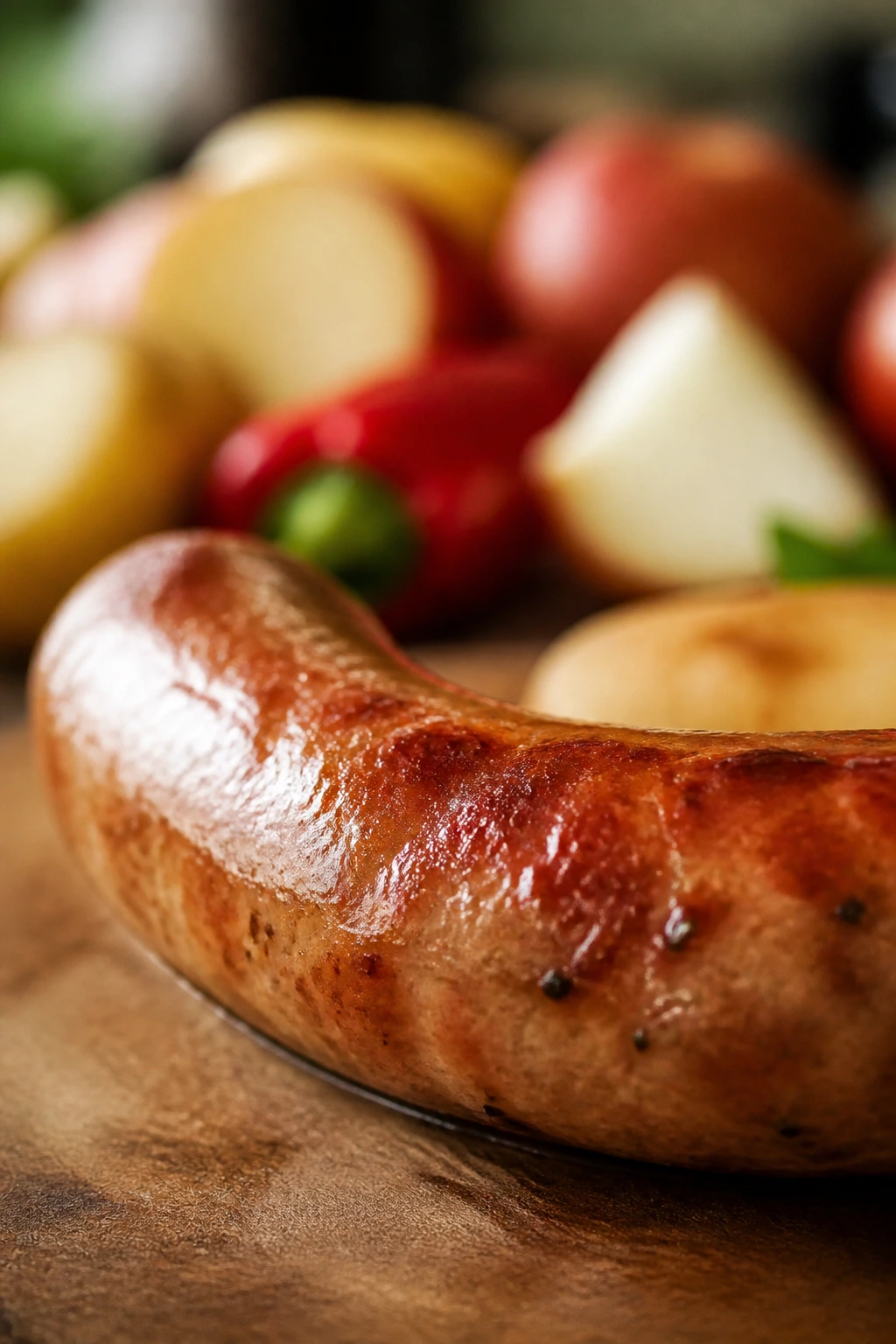
Fresh Pork Sausage Links
What to use: 1 1/2 pounds fresh pork sausage links, roughly 6 medium links. I like links that feel firm in the package and show a little fat marbling under the casing; that fat is what keeps the sausage juicy as it roasts.
Preparation: Leave the links whole and pat them dry with paper towels. Do not pierce the casings. The skin needs to hold the fat inside so the sausage can baste itself while the oven does the work.
Substitutions: Bratwurst, mild Italian sausage, or hot Italian sausage all fit here. Turkey or chicken sausage can step in too, though they need a light brush of oil because they don’t bring as much fat to the pan.
Tips: Pull the sausage when the thickest part reaches 160°F. That number matters more than the clock, because a thick link can go from plump to dry in a couple of minutes if the oven runs hot.
Potatoes, Onions, Peppers, and Apples
What to use: 1 1/2 pounds baby Yukon Gold potatoes, 1 large red onion, 2 bell peppers, and 2 medium firm apples. Yukon Golds are the right kind of sturdy here; they turn creamy inside while the cut sides go gold and a little crisp.
Preparation: Halve the potatoes so the flat side can hit the pan. Cut the onion into thick wedges so it doesn’t disappear, slice the peppers into 1-inch strips, and core the apples into 8 wedges so they soften without collapsing.
Substitutions: Baby red potatoes work if that’s what you have. Sweet potatoes can replace the Yukon Golds, and pears can replace the apples if you want a softer, more floral sweetness. Brussels sprouts and carrots both fit the same roasting window if you like more vegetable weight in the pan.
Tips: Keep the potatoes and the sausage in separate thought bubbles at the beginning. The potatoes need their own first roast, and the apples need to go in later so they stay defined. That small timing split is what keeps the pan from turning soft.
The Brown Sugar Glaze
What to use: 1/2 cup packed light brown sugar, 3 tablespoons Dijon mustard, 2 tablespoons apple cider vinegar, 2 tablespoons unsalted butter, 1 tablespoon soy sauce or tamari, 2 garlic cloves, 1 teaspoon smoked paprika, 1/4 teaspoon crushed red pepper flakes, and up to 2 tablespoons water. Light brown sugar gives a cleaner, sweeter glaze; dark brown sugar works too, but it tastes heavier and browns faster under the broiler.
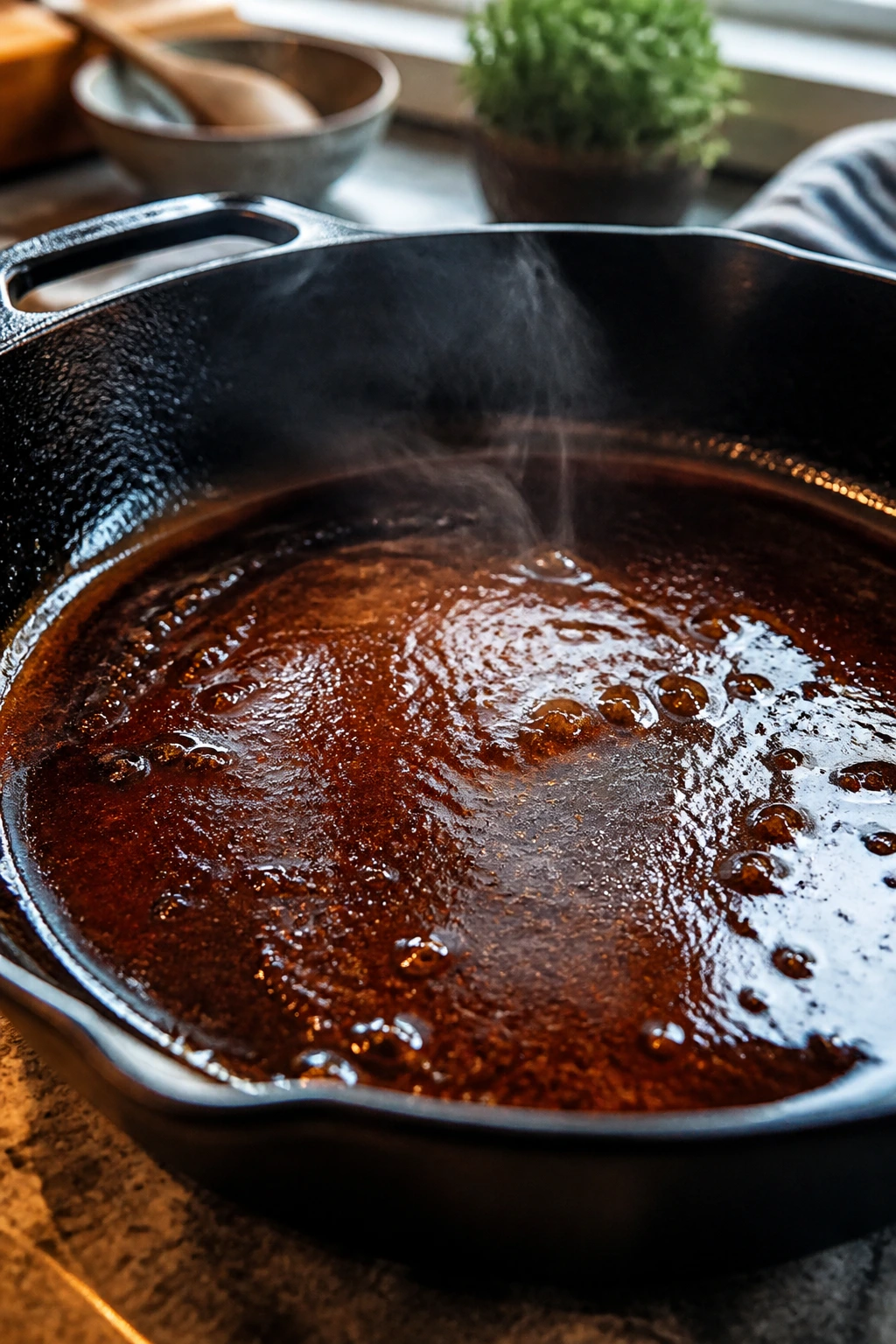
Preparation: Melt the butter just until liquid, then whisk everything together until the sugar loosens and the mixture looks smooth. If it feels thick enough to spoon rather than brush, add water 1 teaspoon at a time.
Substitutions: Whole-grain mustard gives the glaze more texture. Honey or maple syrup can replace part of the brown sugar if you want a different kind of sweetness, though both brown faster, so keep an eye on the oven. Tamari works well for a gluten-free version.
Tips: Reserve part of the glaze for the end. If you coat the pan too heavily at the start, the sugar can burn before the sausage is done. The best glaze looks shiny, smells a little caramelized, and still brushes easily.
Parsley and the Last Small Brightener
What to use: 2 tablespoons chopped fresh parsley for serving, plus an optional tiny splash of apple cider vinegar at the table. The parsley looks small on paper, but it keeps the whole pan from reading heavy.
Preparation: Chop the parsley just before serving so it stays bright and leafy. If you want a sharper finish, have the vinegar ready in a small dish or spoon it over the vegetables while the pan is still steaming.
Substitutions: Chives or thinly sliced scallions can stand in for parsley. A little lemon zest also works if you want a cleaner finish than vinegar gives.
Tips: Add the herbs after the pan has rested, not before. Hot glaze sticks to the parsley better, and the green keeps its color when it lands on the food last.
The Tools That Make the Pan Behave
-
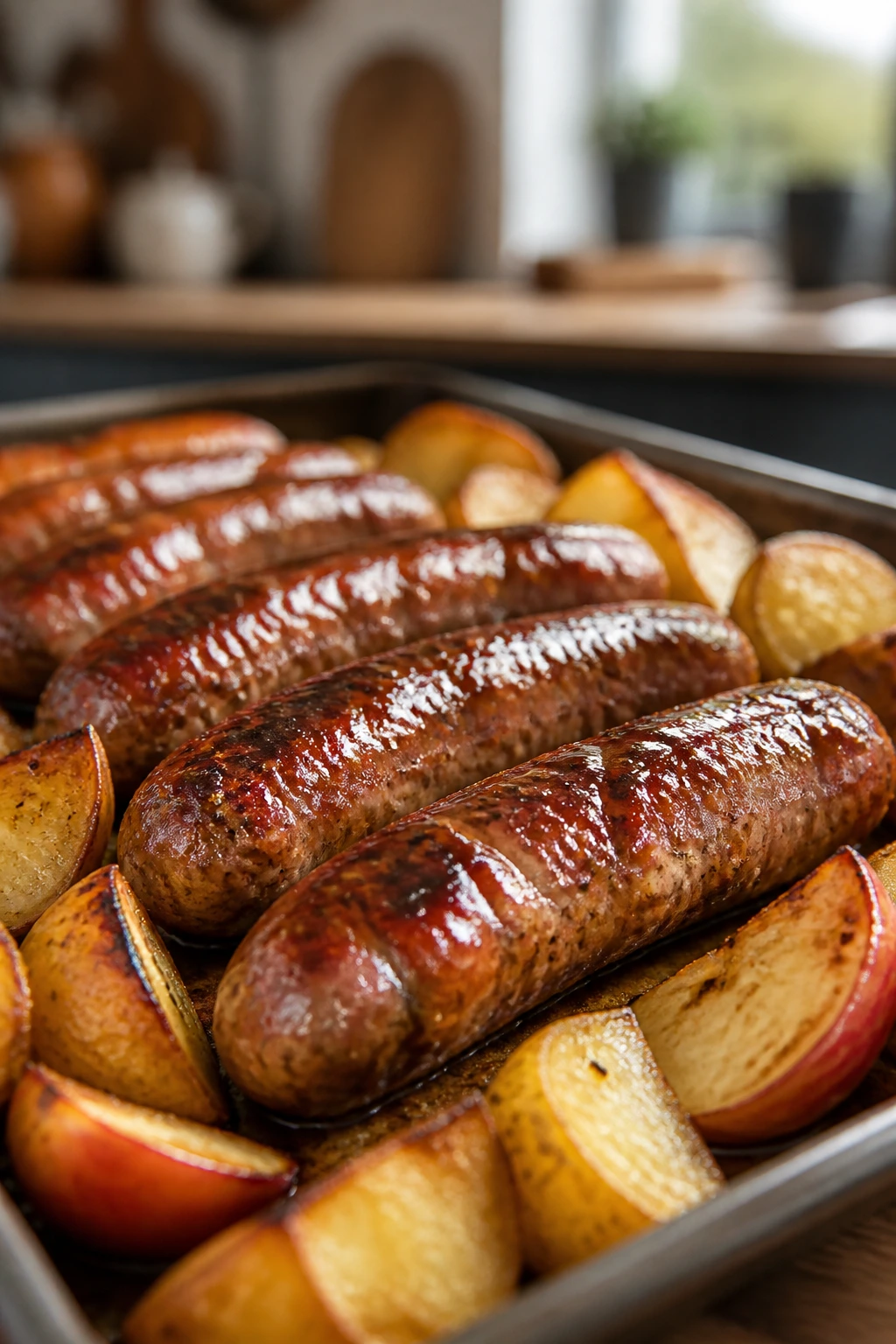
Rimmed half-sheet pan — big enough to keep everything in a single layer; a shallow cookie sheet can let juices slide off.
-
Large mixing bowl — useful for tossing the potatoes without oil splashing all over the counter.
-
Small bowl or small saucepan — for whisking the glaze until the brown sugar loosens.
-
Pastry brush or spoon — a brush gives better control, but a spoon works if that’s what you have.
-
Instant-read thermometer — the easiest way to keep the sausage juicy. Guessing is how links dry out.
-
Tongs — helpful for moving the sausage and apples without tearing the casings or turning the wedges into shards.
-
Chef’s knife and sturdy cutting board — the onions and apples cut cleanly when the knife is sharp.
-
Foil or parchment paper — foil browns a little better; parchment makes cleanup easier. If you plan to broil hard at the end, foil or a bare pan is the safer choice.
How to Roast the Sausage Without Drying It Out
Prep the Pan
-
Preheat the oven to 425°F (220°C) and position a rack in the center. Line a rimmed half-sheet pan with foil for easy cleanup, or leave it bare and brush it lightly with oil if you want more browning.
-
Put the halved potatoes in a large bowl with the olive oil, kosher salt, black pepper, and dried thyme. Toss until every cut side looks lightly coated, then spread the potatoes cut-side down on the pan in a single layer. Roast for 15 minutes, until the edges start to color and the bottoms look golden.
Build the Glaze
- While the potatoes roast, whisk together the brown sugar, Dijon mustard, apple cider vinegar, melted butter, soy sauce, garlic, smoked paprika, crushed red pepper flakes, and water in a small bowl. The glaze should look smooth and brushable, not paste-thick. If it feels stiff, add 1 teaspoon more water.
Roast the Sausage and Vegetables
-
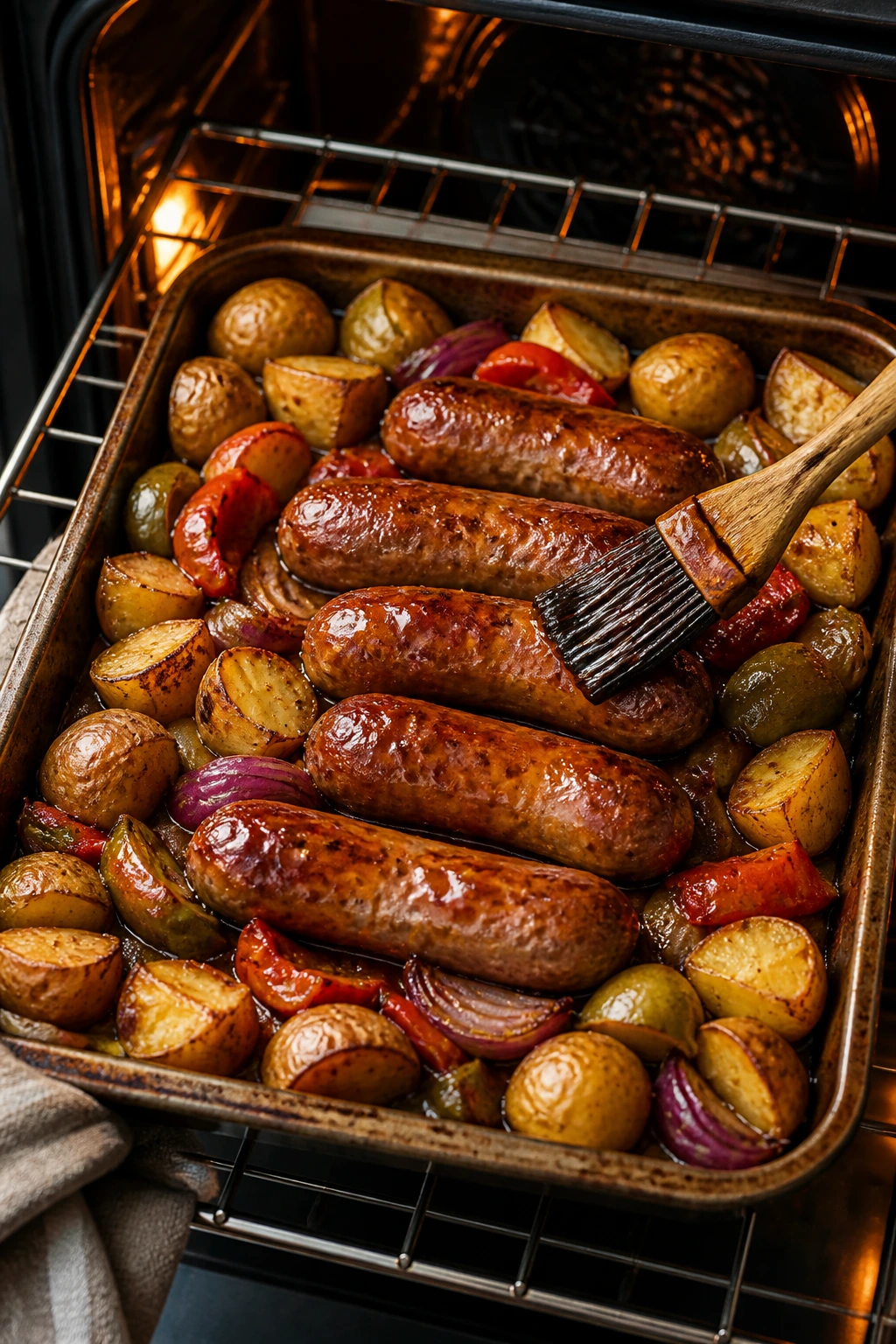
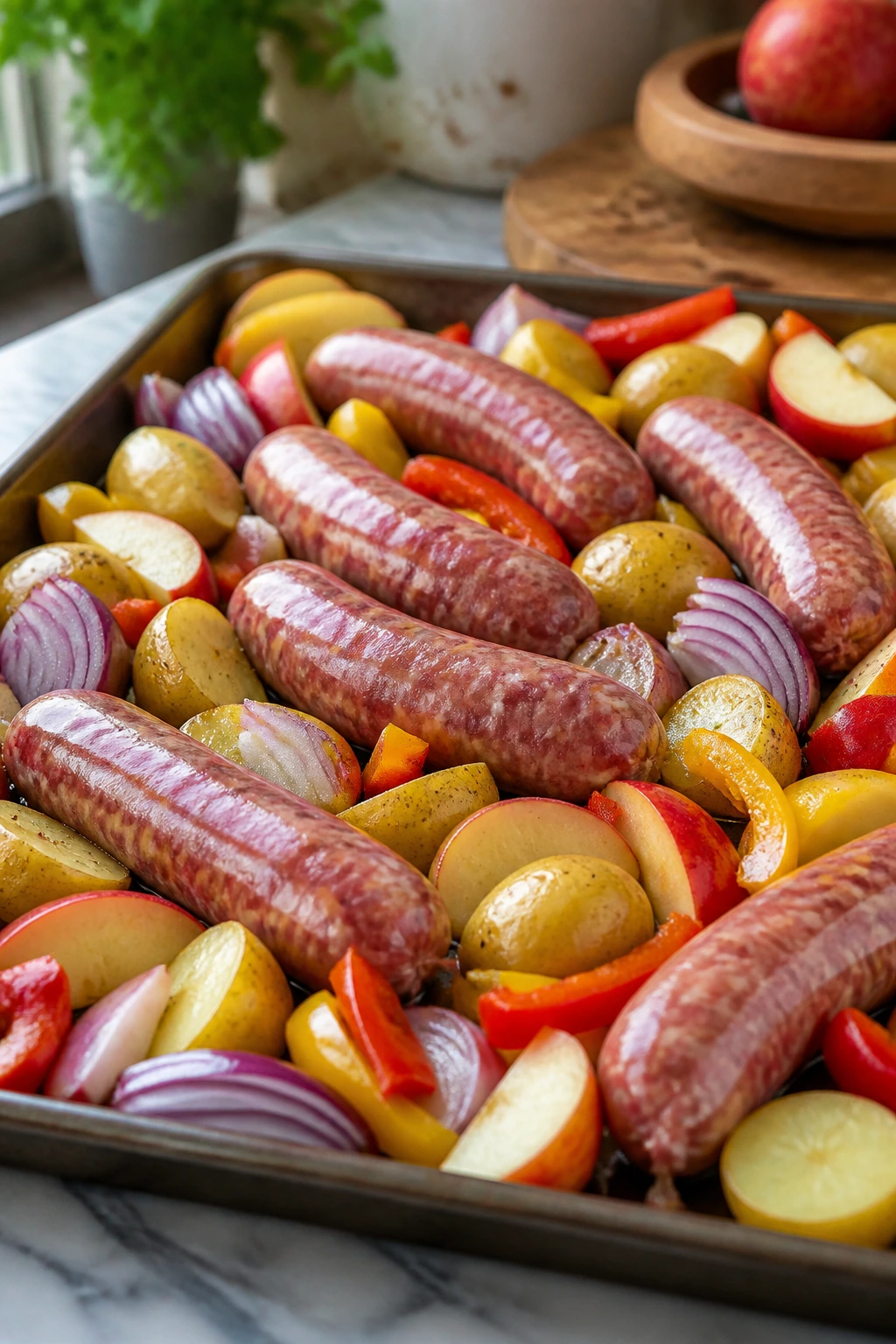
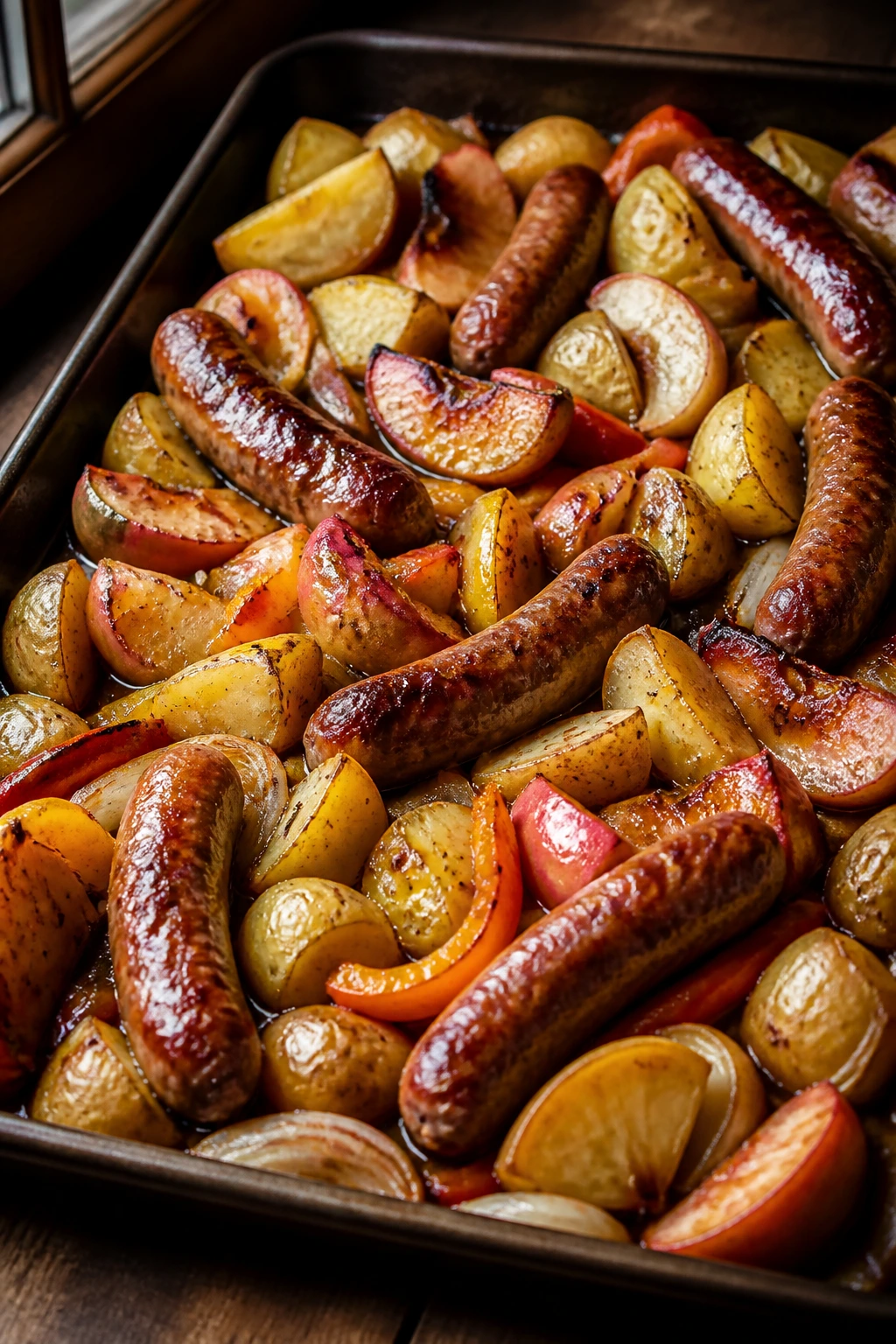
Pull the pan from the oven. Push the potatoes toward the edges and nestle the sausage links in the center. Scatter the onion wedges and bell peppers around the sausage, then brush about half the glaze over the links and vegetables. Do not flood the pan with glaze; a thin coat browns better and stays glossy.
-
Roast for 12 minutes. Add the apple wedges around the pan and brush with most of the remaining glaze, then return the pan to the oven for 10 to 12 minutes more. The sausage should reach 160°F in the thickest part, the potatoes should slide easily on a fork, and the apples should be tender at the edges but still hold their shape. If your sausage is fully cooked, add it with the apples and roast only until hot through.
-
Brush on the last bit of glaze, then broil for 1 to 2 minutes until the edges bubble and darken in spots. Stay close. Brown sugar can cross from shiny to bitter fast, and the oven won’t warn you.
-
Transfer everything to a warm platter or serve straight from the pan. Let the sausage rest for 5 minutes before slicing or plating so the juices settle back into the links instead of running out onto the board.
-
Scatter the parsley over the top and spoon any juices left in the pan over the vegetables. If you want a sharper finish, add a tiny splash of apple cider vinegar at the table.
How to Serve the Pan at the Table
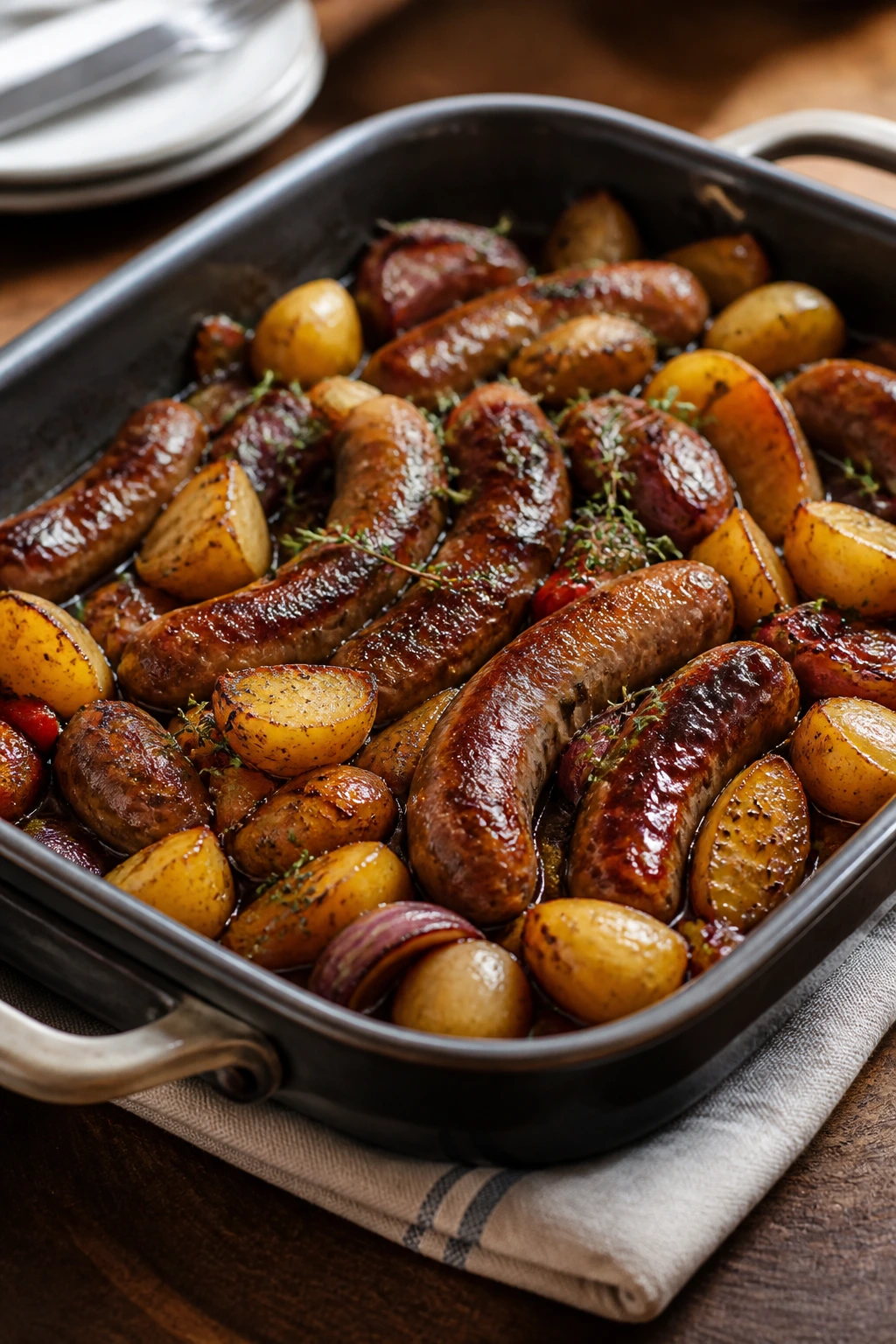
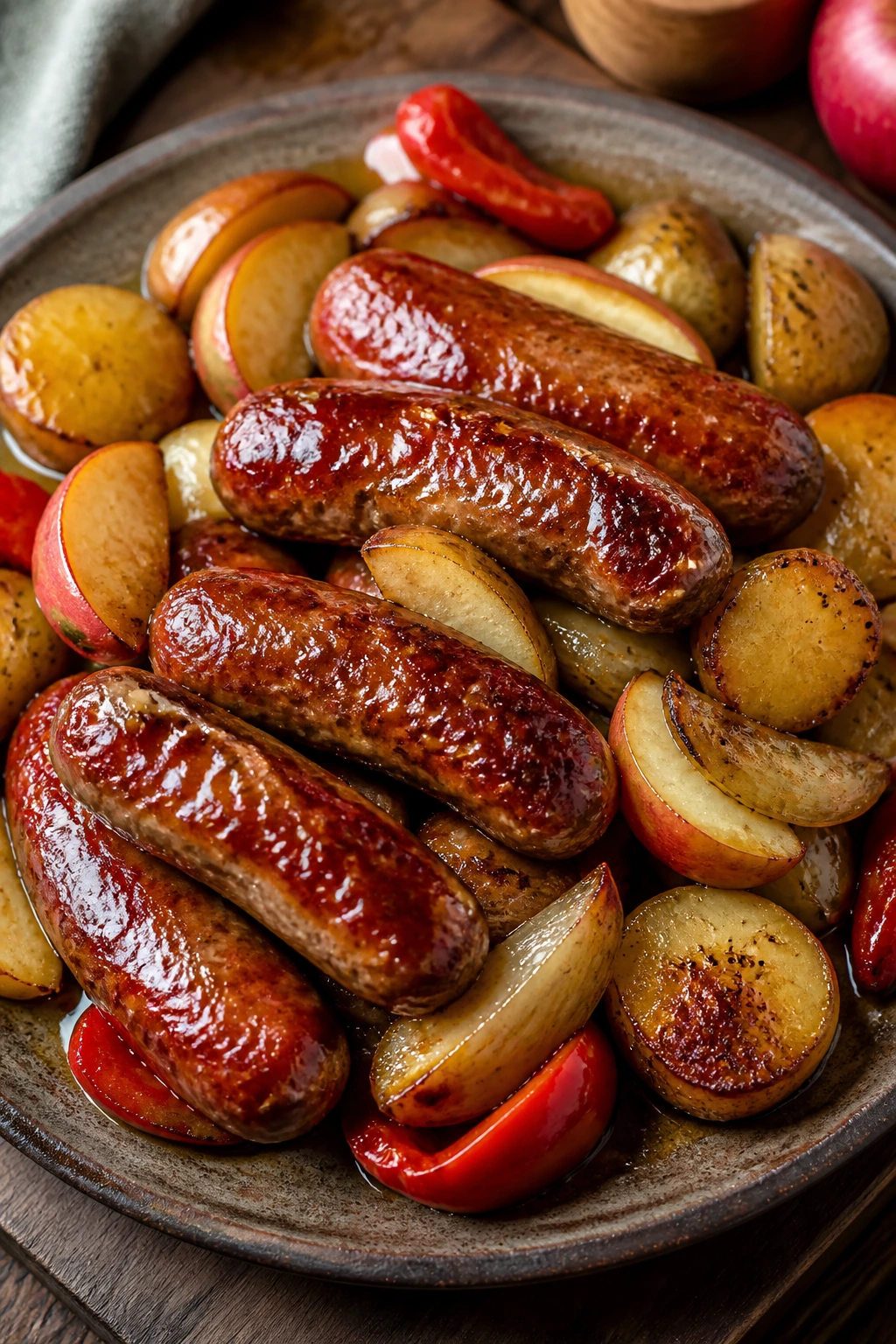
Presentation: Pile the potatoes and onions in the middle of a warm platter, tuck the sausage on top, and drag the glossy pan juices across everything so it looks like one finished dish rather than separate parts. The parsley goes on last, not because it is decorative, but because it keeps the glaze from looking heavy. If you serve straight from the sheet pan, set it on a folded towel so it doesn’t slide around.
Accompaniments: A sharp mustard on the side is worth the extra dish. So is a simple green salad with lemony dressing or a bowl of sauerkraut if you like contrast. Warm sourdough, buttered rolls, or even mashed potatoes work, but I like crusty bread because it catches the glaze without turning the plate into soup.
Portions: Four hungry adults will finish this in one sitting; six people get a moderate share, especially if you lean on the potatoes and peppers. Count on two sausage links per adult if the links are medium-sized, or one large link plus a good heap of vegetables. To scale up, use two pans rather than crowding one—crowding steals browning and makes the glaze watery.
Beverage Pairing: Dry hard apple cider is the easy answer because it echoes the apple wedges and cuts the brown sugar. A cold pilsner or a malty amber lager also works, and unsweetened iced tea with lemon is the nonalcoholic route I reach for when the glaze is doing most of the talking.
Small Moves That Lift the Whole Pan
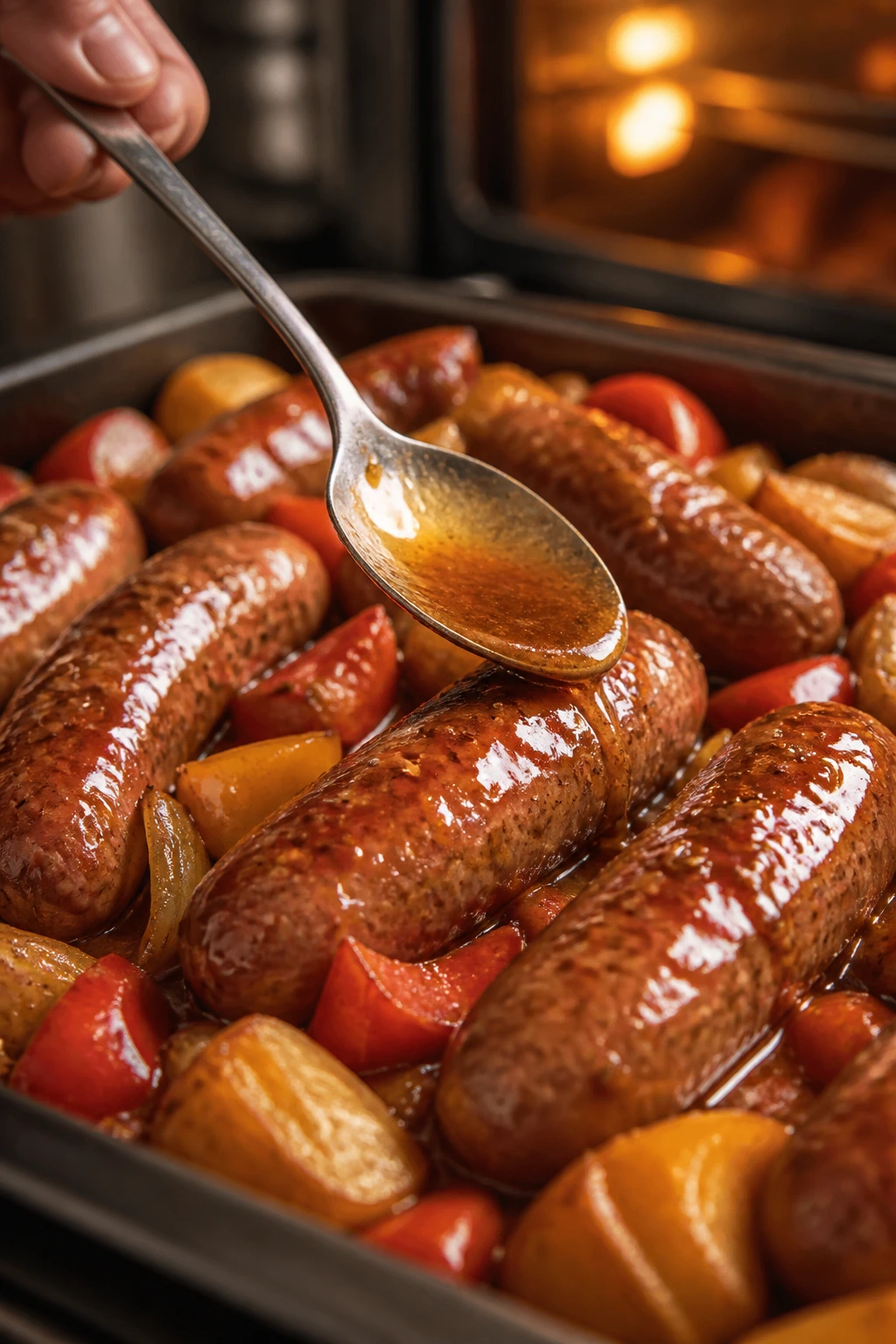
Flavor Enhancement: Stir 1 tablespoon of the pan juices into a spoonful of Dijon and serve that on the side. It sharpens the glaze without adding more sweetness, and it gives people one more thing to drag across the sausage.
Time-Saver: Mix the glaze up to 3 days ahead and keep it sealed in the fridge. If you want to get ahead on prep, cut the onions and peppers the morning of cooking and keep them chilled in a covered container.
Pro Move: If your oven has a hot back corner, rotate the pan halfway through the second roast. The potatoes on the back edge often brown faster than the apples, and a quick turn keeps the whole tray even.
Customization: Swap the bell peppers for halved Brussels sprouts, or add sliced carrots at the same time as the potatoes. If you want a deeper, less sweet glaze, use dark brown sugar and add another teaspoon of apple cider vinegar.
Make-It-Yours: Hot sausage gives you more spice without changing the method, while turkey sausage needs a light extra brush of oil so it doesn’t look dry. Want a bacon note? Lay 4 chopped slices on the pan first, render them for 5 minutes, then roast everything in the drippings. That gives the potatoes a smoky edge that sits nicely under the glaze.
The Traps That Make Sausage Dry or Glaze Bitter
-
Piercing the sausage casings: The second you stab the links, the juices start leaking out and the surface goes wrinkled. Leave the casings alone and use a thermometer instead.
-
Putting every drop of glaze on too early: Brown sugar burns faster than most people expect, especially under the broiler. Hold some glaze back for the last brush so the pan finishes shiny rather than scorched.
-
Crowding the vegetables: If the pan looks packed, the onions go soft and the potatoes turn pale instead of browned. Use a second pan or cut the vegetables slightly larger so steam has somewhere to go.
-
Choosing soft apples: Apples that collapse into sauce can make the pan taste muddy. Stick with firm varieties like Honeycrisp, Pink Lady, or Braeburn so the wedges stay shaped.
-
Skipping the rest: Cutting the sausage the moment it leaves the oven sends the juices straight to the board. Five quiet minutes of rest keeps those juices where you want them.
-
Broiling without watching the pan: A minute too long can turn the glaze from caramelized to bitter. Stand there, open the oven light, and trust your eyes more than the timer.
Flavor Changes That Still Taste Like Dinner
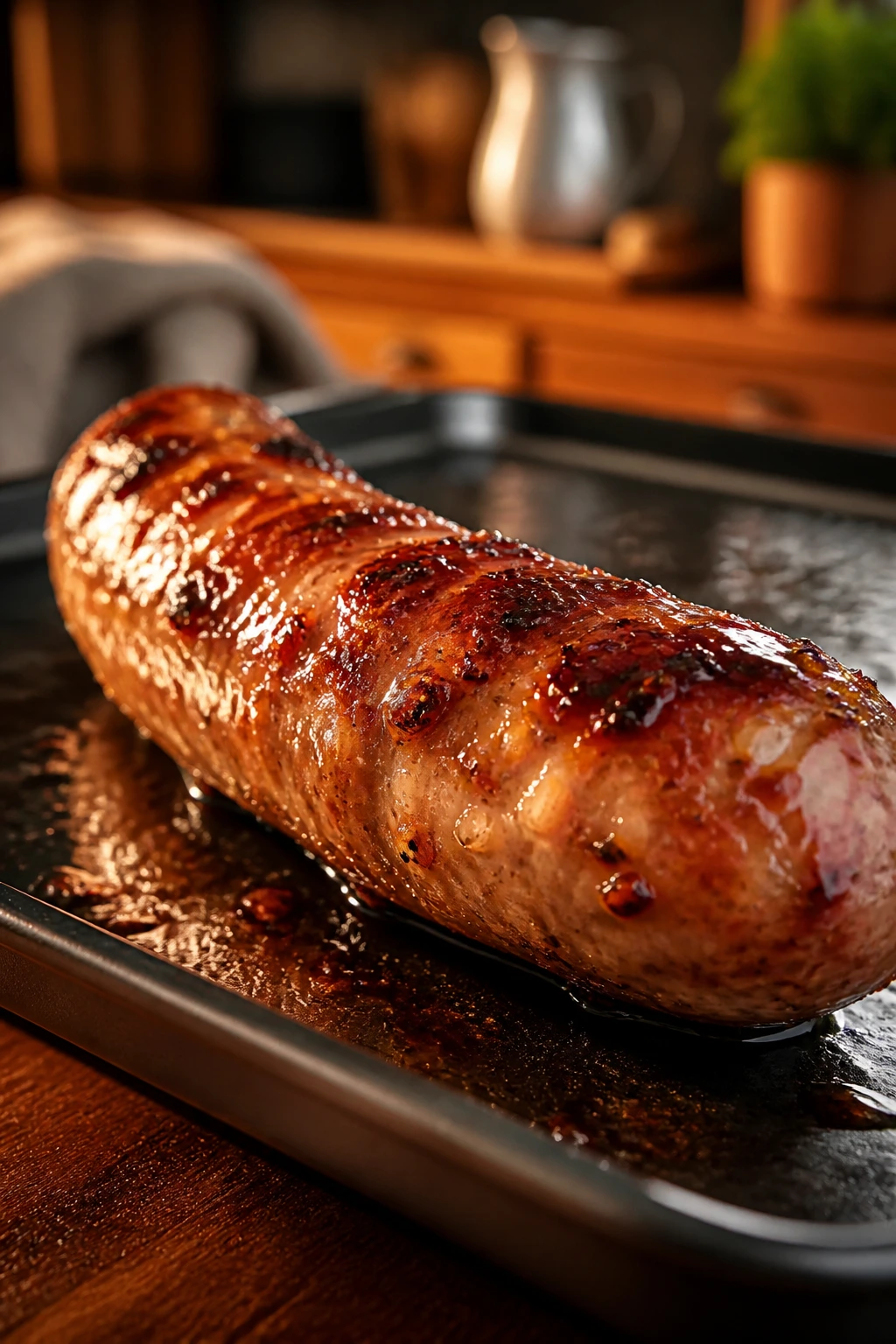
Smoky Maple Brat Roast: Swap the fresh pork sausage for bratwurst and replace 1/4 cup of the brown sugar with maple syrup. The maple reads woodsy rather than candy-like, and the bratwurst gives you a softer, juicier bite that plays well with Brussels sprouts or onion wedges.
Spicy Dijon Kick: Use hot Italian sausage and add an extra 1/2 teaspoon crushed red pepper flakes to the glaze. A spoonful of whole-grain mustard in place of part of the Dijon gives the pan more sharpness, which helps if you like heat that lands at the front of the tongue.
Bacon-Rendered Finish: Render 4 chopped bacon slices on the sheet pan first, then roast the sausage and vegetables in the drippings. That adds smoke and salt in a way that feels natural here, and the bacon bits can be scattered over the top at serving time if you want crunch.
Apple-Orchard Roast: Add one extra apple and a half teaspoon of fennel seed, then keep the peppers on the lighter side. The fennel pulls the dish toward classic sausage-shop flavors, and the extra fruit makes the glaze feel less heavy.
Lower-Sugar Pantry Bake: Drop the brown sugar to 1/3 cup and add an extra tablespoon of Dijon plus 1 tablespoon apple juice. You still get a sticky finish, but the glaze stays sharper and less sweet, which is useful if you serve the pan with bread or mashed potatoes.
Make-Ahead, Fridge Life, and Reheating
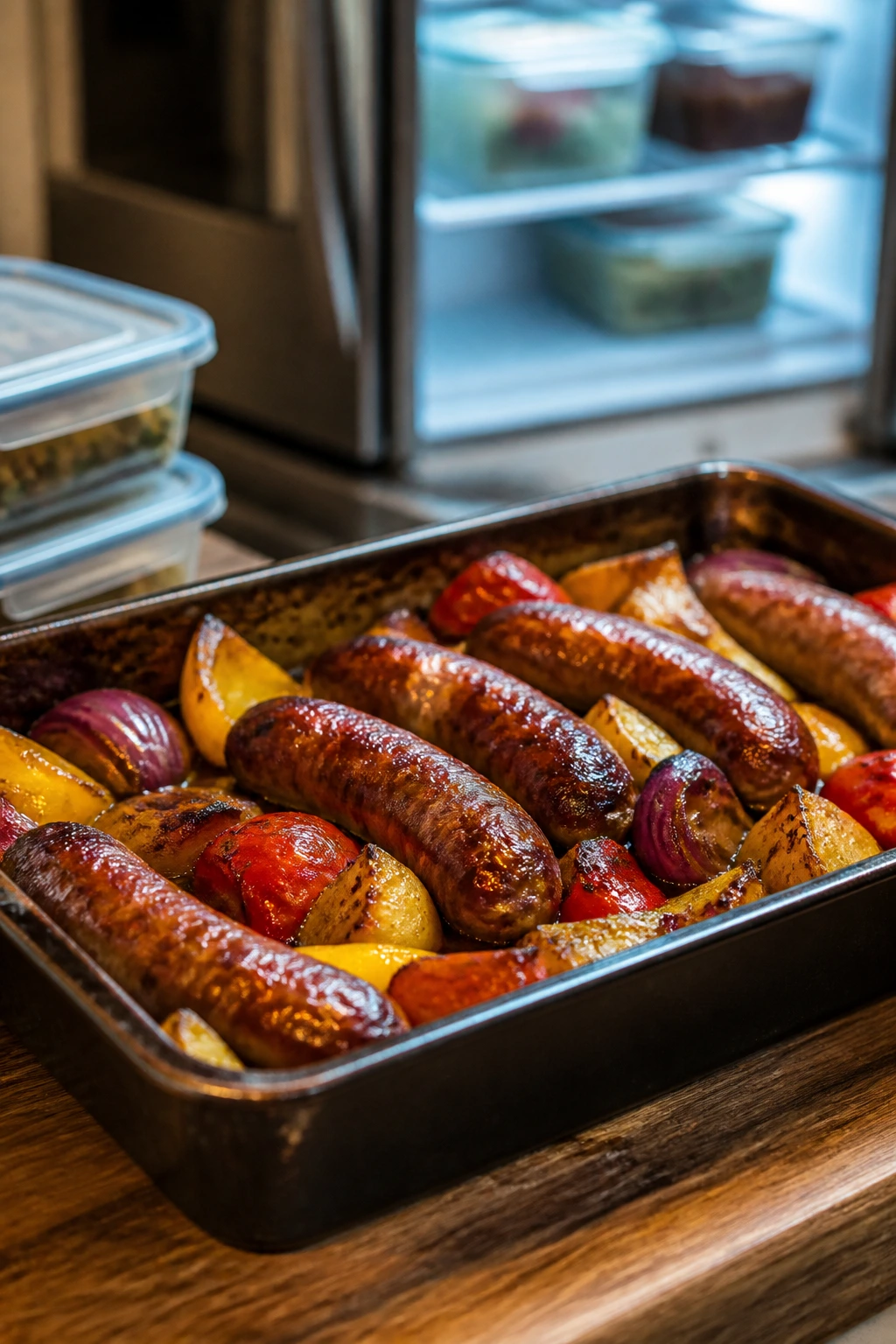
Cooked sausage and vegetables keep in an airtight container in the refrigerator for 3 to 4 days. Let the pan cool a bit before packing it up, but don’t leave it out longer than about 2 hours. After that, the glaze softens and the sausage loses some of its best texture.
The freezer works for up to 2 months, though the potatoes won’t come back with the same roasted texture they had on day one. If you know you’ll freeze part of the batch, freeze the sausage and vegetables in a shallow container and keep extra glaze in a separate small container. The glaze freezes well; the potatoes are the part that gets a little soft after thawing.
The oven is the cleanest way to reheat. Put the leftovers in a baking dish, cover loosely with foil, and warm at 350°F (175°C) for 12 to 15 minutes, then uncover for 3 to 5 minutes so the glaze wakes back up. A skillet over medium heat works when you want the sausage to pick up a little color again—add a tablespoon of water or apple juice so the glaze doesn’t stick and scorch.
The microwave gets the job done, but use 50 percent power in 60-second bursts. Full blast tends to split the casings and dry the potatoes faster than you’d expect. If the leftovers seem tight after reheating, a teaspoon of warm water or apple cider vinegar stirred over the top brings the glaze back to life.
Make-ahead is easiest with the parts that don’t care about heat. The glaze can be mixed 3 days ahead. Onions and peppers can be cut a day ahead. Apples are best cut close to cooking time, though a quick toss in lemon water keeps them from browning if you must prep them early. I would not assemble the full raw pan too far ahead; the potatoes start to weep, and the glaze wants to slide off before it ever sees the oven.
Chopped leftovers also make a very good breakfast hash. Cut the sausage into coins, crisp them in a skillet, and scatter the potatoes and apples in with a fried egg. That’s not a rescue meal. It’s a second dinner in disguise.
Questions I Hear Before This Pan Goes In the Oven
Can I use fully cooked sausage instead of raw links?
Yes. Add it during the second half of roasting, along with the apples, and cook only until the sausage is hot through and the glaze has clung to the outside. Raw links need the full roast and a thermometer check; fully cooked links just need heat and color.
What sausage works best here?
Fresh pork sausage links give the juiciest result because they bring enough fat to baste themselves. Bratwurst and mild Italian sausage are both good choices. Turkey or chicken sausage works too, but it usually needs a light brush of oil so it doesn’t look dry by the time the glaze finishes.
Can I leave out the apples?
You can, and the pan will still work. If you skip them, add more bell peppers, Brussels sprouts, or carrots so the dish keeps the sweet-savory balance the apples were giving you. I do think the apples make the glaze feel more rounded, though.
How do I keep the glaze from burning under the broiler?
Hold some glaze back for the final brush and keep the broil short—1 to 2 minutes, not 5. If your oven runs hot or your broiler is aggressive, skip the broiler and just roast the pan for a few extra minutes at 425°F. You lose a little char, but you keep the sweetness intact.
Can I make this on the stovetop instead of in the oven?
Yes, but use a wide oven-safe skillet or cast iron pan so the ingredients still sit in a fairly shallow layer. Sear the sausage first, then tuck the vegetables around it and cover the pan for part of the cook so the potatoes soften. You’ll need more attention than with the sheet pan, and the browning won’t be as even.
Can I swap brown sugar for maple syrup or honey?
You can, though the glaze will run thinner and brown faster. If you use maple syrup or honey, reduce the added water and watch the last few minutes closely. The flavor shifts toward a different kind of sweetness—less caramel, more woodsy or floral.
What if the sausage hits temperature before the potatoes are tender?
Pull the links to a warm plate, cover them loosely, and keep roasting the potatoes and apples until a fork slides in easily. That move is better than overcooking the meat. A few minutes of patience on the vegetables will not hurt the sausage, but the reverse can dry the links out fast.
Why I Keep Coming Back to This Pan
There’s a nice honesty to a dinner like this. The sausage brings the savory part, the brown sugar glaze brings the shine, and the oven does the rest without asking for much drama. If you get the timing right, the pan comes out looking polished in a way that feels earned, not fussy.
Serve it with mustard, bread, or a sharp salad, and the whole thing stops feeling like a shortcut. It becomes a roast with some swagger—quietly, not in a flashy way. Keep a thermometer close, keep a little glaze back for the end, and the second pan will feel even easier than the first.
Juicy Sausage Dinner with Brown Sugar Glaze — Recipe Card
Recipe Name: Juicy Sausage Dinner with Brown Sugar Glaze
Description: Fresh pork sausage links roast with potatoes, onions, peppers, and apples, then get brushed with a sticky brown sugar-Dijon glaze. The result is savory, sweet, glossy, and edged with just enough tang to keep every bite interesting.
Prep Time: 20 minutes
Cook Time: 35 minutes
Total Time: 55 minutes
Course: Dinner, Main Course
Cuisine: American
Servings: 4 to 6 servings
Calories: About 540 kcal per serving
Ingredients
For the Sausage Dinner:
- 1 1/2 pounds fresh pork sausage links, about 6 medium links
- 1 1/2 pounds baby Yukon Gold potatoes, halved
- 1 large red onion, cut into 8 wedges
- 2 bell peppers, seeded and sliced into 1-inch strips
- 2 medium firm apples, cored and cut into 8 wedges
- 2 tablespoons olive oil
- 1 teaspoon kosher salt
- 1/2 teaspoon black pepper
- 1 teaspoon dried thyme
- 2 tablespoons chopped fresh parsley, for serving
For the Brown Sugar Glaze:
- 1/2 cup packed light brown sugar
- 3 tablespoons Dijon mustard
- 2 tablespoons apple cider vinegar
- 2 tablespoons unsalted butter, melted
- 1 tablespoon soy sauce or tamari
- 2 garlic cloves, minced or grated
- 1 teaspoon smoked paprika
- 1/4 teaspoon crushed red pepper flakes
- 2 tablespoons water, as needed
Instructions
- Preheat oven to 425°F (220°C). Toss potatoes with olive oil, salt, black pepper, and thyme, then roast cut-side down for 15 minutes.
- Whisk brown sugar, Dijon mustard, apple cider vinegar, melted butter, soy sauce, garlic, smoked paprika, crushed red pepper flakes, and water until smooth.
- Add sausage, onion, and bell peppers to the pan. Brush with half the glaze and roast for 12 minutes.
- Add apples and brush with most of the remaining glaze. Roast 10 to 12 minutes more, until sausage reaches 160°F and potatoes are tender.
- Brush with the last bit of glaze and broil 1 to 2 minutes until the edges bubble and darken slightly.
- Rest 5 minutes, then sprinkle with parsley and serve.
Notes: If the sausage is fully cooked, add it with the apples and roast only until hot. For better browning, do not crowd the pan; use two pans if needed.