



Healthy dinner options under 500 calories get treated like punishment plates far too often. A sad bowl of lettuce. Half a chicken breast. Three lonely carrot coins staring up from the bottom of a wide white dish. That’s not dinner. That’s a spreadsheet wearing a fork.
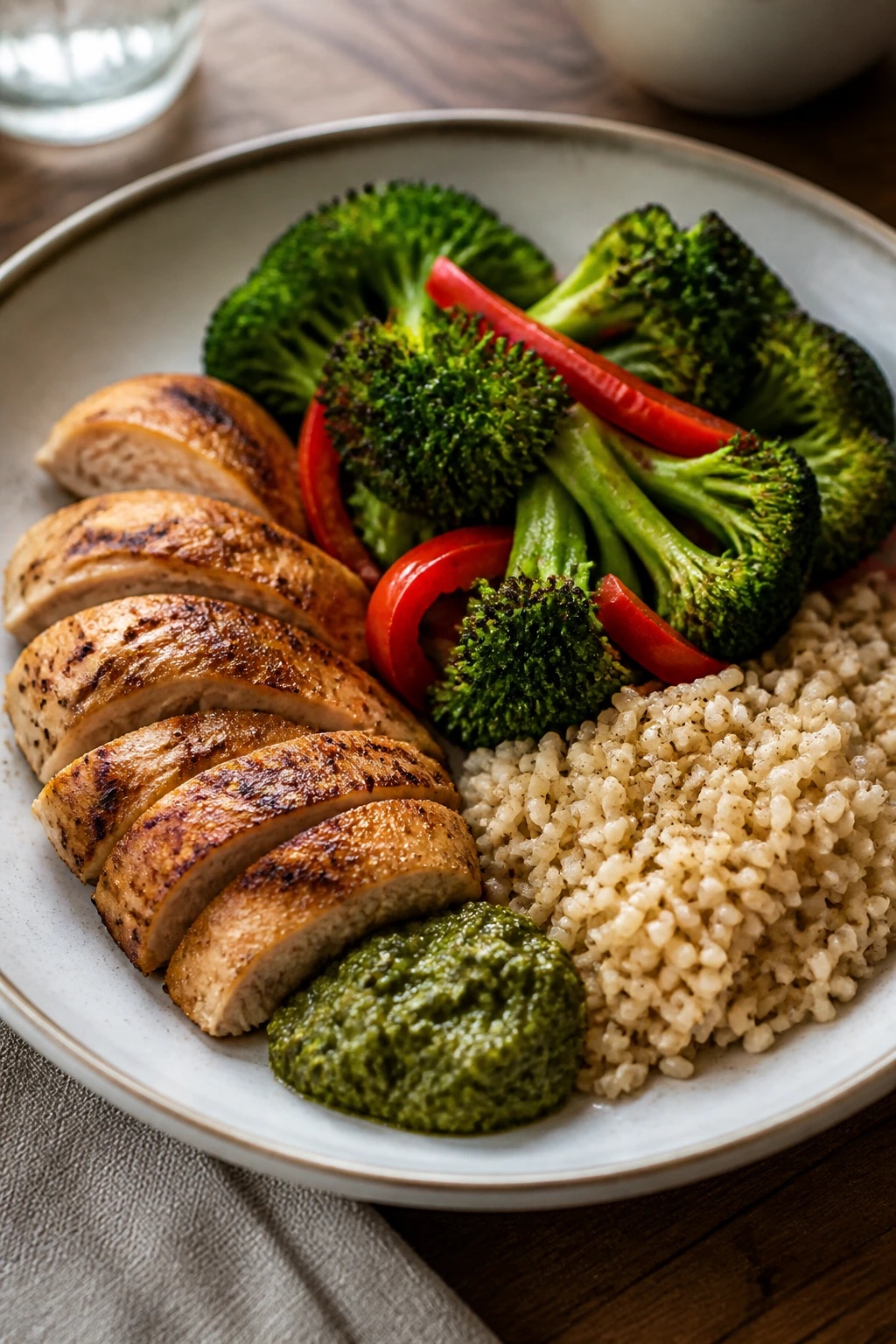
The better version looks different. Think roasted chicken with browned broccoli and a few baby potatoes. Think salmon with green beans and a cool dill yogurt spooned over the top. Think turkey taco bowls with enough rice to feel like a meal, not a compromise. A plate can stay under 500 calories and still have crunch, salt, heat, sauce, and enough substance that you’re not prowling the kitchen an hour later.
The part people usually miss is this: the calorie ceiling is not the point by itself. The point is building a plate with enough protein, enough vegetables, and just enough starch and fat to make the whole thing taste finished. Get that mix right, and “under 500” stops sounding restrictive. It starts sounding efficient.
Why These Plates Work
-
Protein does the heavy lifting: A dinner with 4 to 6 ounces of chicken, fish, tofu, turkey, or shrimp usually lands in a satisfying calorie range without blowing the budget on breading or heavy sauce.
-
Vegetables add volume fast: Two full cups of broccoli, green beans, peppers, spinach, or cabbage can make a plate look generous for fewer calories than one tablespoon of olive oil.
-
Measured starch keeps the meal from feeling thin: Half a cup of rice, a small potato, one slice of toast, or 2 ounces of dry pasta gives the dinner some shape and keeps it from turning into “protein plus side salad.”
-
A little fat is worth paying for: One teaspoon of olive oil, a spoon of yogurt sauce, or an ounce of cheese can do more for flavor than another cup of plain greens ever will.
-
The right sauce changes everything: Lemon, salsa, curry paste, vinegar, mustard, and herbs can make a 430-calorie dinner taste fuller than a bland 300-calorie one.
-
Leftovers matter too: Meals built with sturdy vegetables, lean protein, and simple sauces usually reheat better than anything covered in crumbs or drowned in cream.
What Healthy Dinner Options Under 500 Calories Really Need
Five hundred calories is a useful ceiling because it gives you room to eat like a normal person. Not a saint. Not a rabbit. A normal person who wants dinner with edges, texture, and a little comfort.
What you do not want is a plate that spends all 500 calories on one thing. A giant pile of rice with a token sprinkle of vegetables feels heavy, then hungry again. A plate of chicken breast with no fat and no starch feels lean in the most annoying way. The sweet spot usually lives somewhere in the middle: 25 to 35 grams of protein, 2 cups or more of vegetables, and one measured carb or sauce element.
That shape shows up again and again in dinners that actually work in real life. A 5-ounce salmon fillet with green beans and a small portion of potatoes lands in a very different place from a 500-calorie burger and fries. Both can technically fit the number. Only one gives you a plate that still feels like dinner when you sit down with it.
A simple benchmark worth keeping in your head
- Protein: 4 to 6 ounces cooked chicken, turkey, fish, tofu, or shrimp
- Vegetables: 2 cups or more, especially roasted, sautéed, or crisp-tender ones
- Starch: 1/2 cup cooked rice, 1 small potato, 1 slice toast, or 2 ounces dry pasta
- Fat: 1 teaspoon oil, 1 tablespoon seeds, or a modest spoon of sauce
- Finish: lemon, herbs, salsa, vinegar, hot sauce, or a little cheese
That mix is not fancy. It works because it covers the parts your mouth notices first: salt, texture, warmth, and contrast. Miss one of those pieces and a low-calorie dinner can feel oddly unfinished, even if the math is right.
The Plate Formula That Keeps You Full
Why does one 450-calorie dinner feel generous while another feels like a snack with ambition?
Because fullness is not only about calories. It’s about volume, protein, and how much chewing the meal asks of you. A bowl of soup with lentils, tomatoes, carrots, and toast feels more substantial than a tiny mound of grilled chicken alone, even when the numbers are similar. The body likes a plate that takes a little time to eat.
I keep coming back to the same formula because it’s practical: anchor, fill, finish. The anchor is the protein. The fill is the vegetable bulk. The finish is the carb, fat, or sauce that makes the whole thing taste like it belongs on a dinner table.
Anchor, fill, finish
- Anchor: chicken breast, salmon, shrimp, tofu, turkey, eggs, lentils
- Fill: broccoli, peppers, cabbage, green beans, mushrooms, spinach, tomatoes
- Finish: rice, potatoes, toast, pasta, yogurt sauce, salsa, cheese, herbs
The nice thing about this formula is that it doesn’t care whether you eat meat or not, whether you want pasta or potatoes, or whether you cook in a skillet or on a sheet pan. It’s a shape, not a rulebook.
And that’s the reason these healthy dinner options under 500 calories keep showing up in my kitchen: they’re flexible enough to survive a real grocery run. You can swap green beans for asparagus, rice for potatoes, or turkey for tofu without breaking the whole thing. The meal still lands.
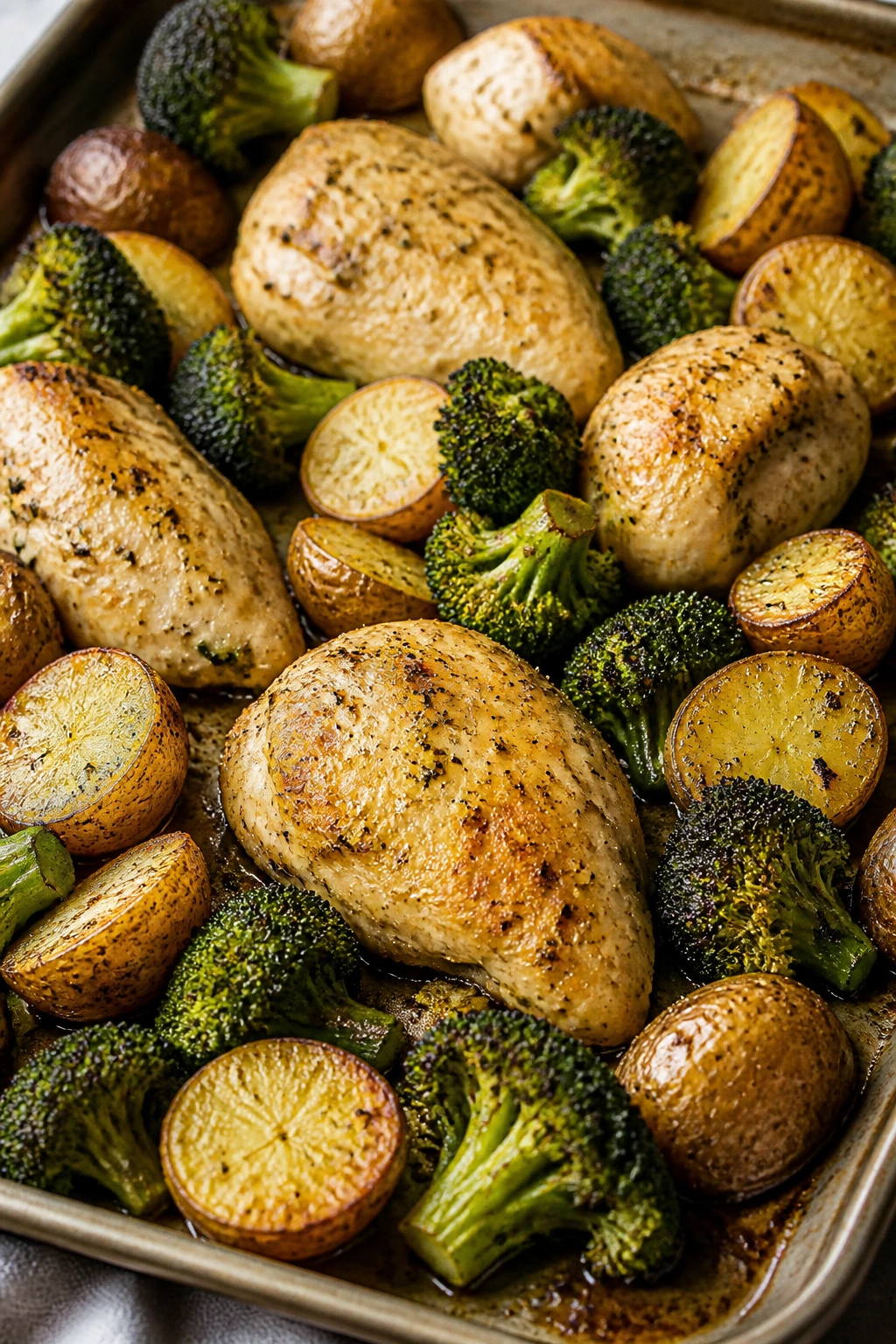
Sheet-Pan Chicken, Broccoli, and Baby Potatoes
The smell of roasted chicken, garlic, and browned potatoes coming out of a hot oven is the kind of thing that makes the kitchen feel organized again. No drama. No sauce splatter. Just a tray full of food that looks like it took more effort than it did.
This is the dinner I’d make when I want one pan, a real serving of vegetables, and a plate that sits around 430 to 480 calories depending on the exact cut of chicken and how generous you are with oil. Use 5 ounces of boneless skinless chicken breast, 2 cups broccoli florets, and 6 ounces of baby potatoes cut in half. Toss everything with 2 teaspoons olive oil, garlic powder, salt, pepper, and a squeeze of lemon at the end.
The trick is timing. Potatoes need a head start. Chicken and broccoli don’t. Roast the potatoes at 425°F for about 10 minutes first, then add the chicken and broccoli for another 15 to 18 minutes. The chicken should hit 165°F in the thickest part, and the broccoli should have dark edges without collapsing into mush.
Why it works
Chicken breast gets accused of being boring, but the real problem is usually overcooking. When you pull it at the right temperature and let the tray rest for 5 minutes, it stays juicy enough to pair with the dry, crisp edges of the potatoes. That contrast matters.
Broccoli is the quiet hero here. It soaks up salt and oil from the pan, and the florets catch just enough browning to taste nutty instead of grassy. If you want the whole thing to feel more finished, add a spoon of plain Greek yogurt mixed with lemon zest and chopped dill.
A plate like this is also easy to scale. Hungry night? Add another half cup of potatoes and keep the oil measured. Smaller appetite? Trim the potatoes and pile on more broccoli. The structure stays the same.
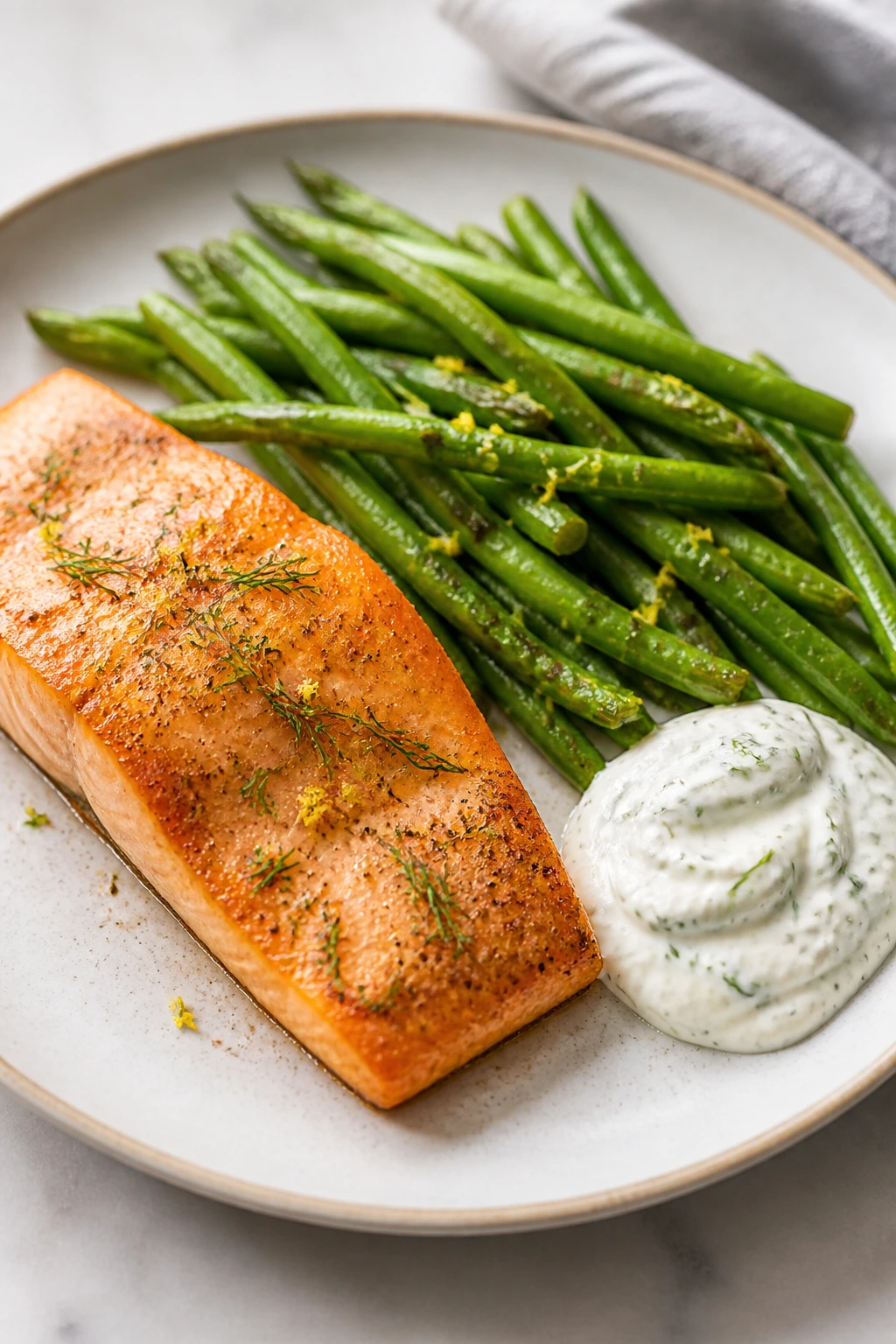
Lemon Salmon with Green Beans and Dill Yogurt
Salmon does not need to be buried in butter to taste rich. That’s the first thing people get wrong. A properly cooked fillet has enough fat on its own to feel luxurious, especially when you give it lemon, salt, and something cold and herby on the side.
Build this dinner with 5 ounces of salmon, 2 cups green beans, and either 1/2 cup roasted fingerling potatoes or 1/2 cup cooked rice if you want a starch. A quick sauce made from 1/4 cup plain Greek yogurt, lemon juice, dill, garlic powder, and salt keeps the total in the 440 to 490 calorie zone depending on the starch choice. Brush the salmon with 1 teaspoon olive oil, not a flood. It needs a sheen, not a bath.
Bake at 400°F for 10 to 12 minutes, depending on thickness. Salmon should flake at the edges and still look a little glossy in the center when you pull it. If you like it more done, give it another minute or two. Green beans can roast alongside it or be blanched and finished with lemon zest if you want a brighter, snappier texture.
The best part is how little the sauce has to do. A spoonful of chilled yogurt against warm fish gives the whole plate a restaurant feel without turning it heavy. If you’re one of those people who thinks “healthy” means dry, this plate will annoy that belief in a useful way.
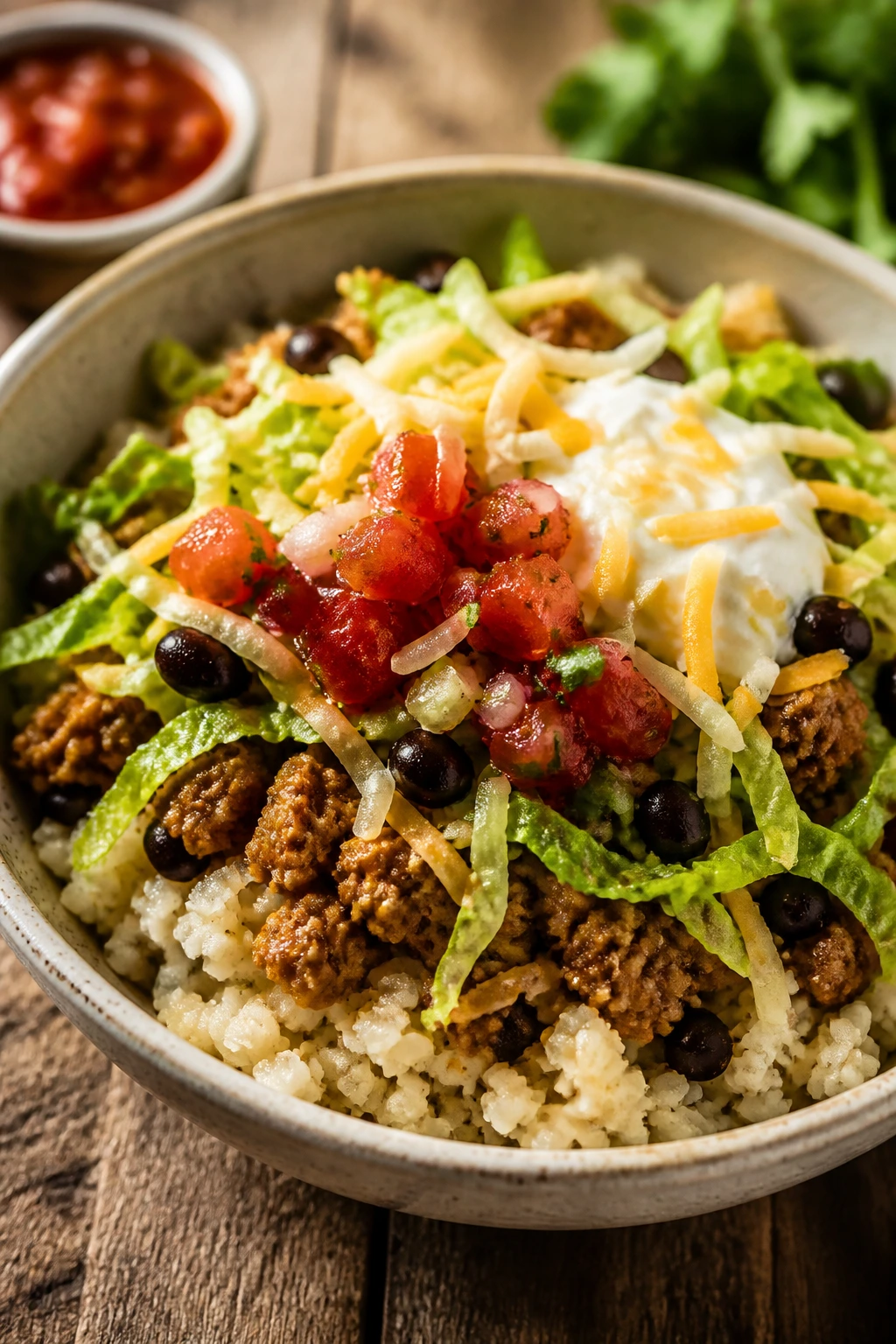
Turkey Taco Bowls with Cauliflower Rice
Can a taco bowl feel like a real dinner when it stays under 500 calories? Absolutely — if you stop trying to stuff every single taco ingredient into the same bowl at full force.
Use 5 ounces of 93% lean ground turkey, browned with taco seasoning and a little onion. Serve it over 1 cup cauliflower rice plus 1/3 cup cooked brown rice if you want a better texture than cauliflower alone gives you. Add shredded lettuce, salsa, a spoon of Greek yogurt, a small sprinkle of cheese, and maybe a few black beans if you’re trimming something else out. The whole bowl lands around 430 to 480 calories.
The calorie math works because cauliflower rice stretches the bowl without behaving like a starch bomb. Brown rice brings a better chew, but not enough to dominate the plate. That mix matters more than people think. A bowl made of only cauliflower rice can feel a little too earnest. A bowl made of only rice can burn through the budget fast. Put them together and the texture actually improves.
What keeps this bowl from getting dull
- Brown the turkey hard enough to get some crust in the pan.
- Cook the cauliflower rice in a dry skillet long enough to drive off moisture.
- Use salsa or pico de gallo instead of another spoon of cheese.
- Add crunch from shredded lettuce or sliced radish.
This is also the kind of dinner that survives a workday lunch container. Keep the yogurt and salsa separate if you’re packing it. Nobody wants a bowl that tastes like damp seasoning by noon.
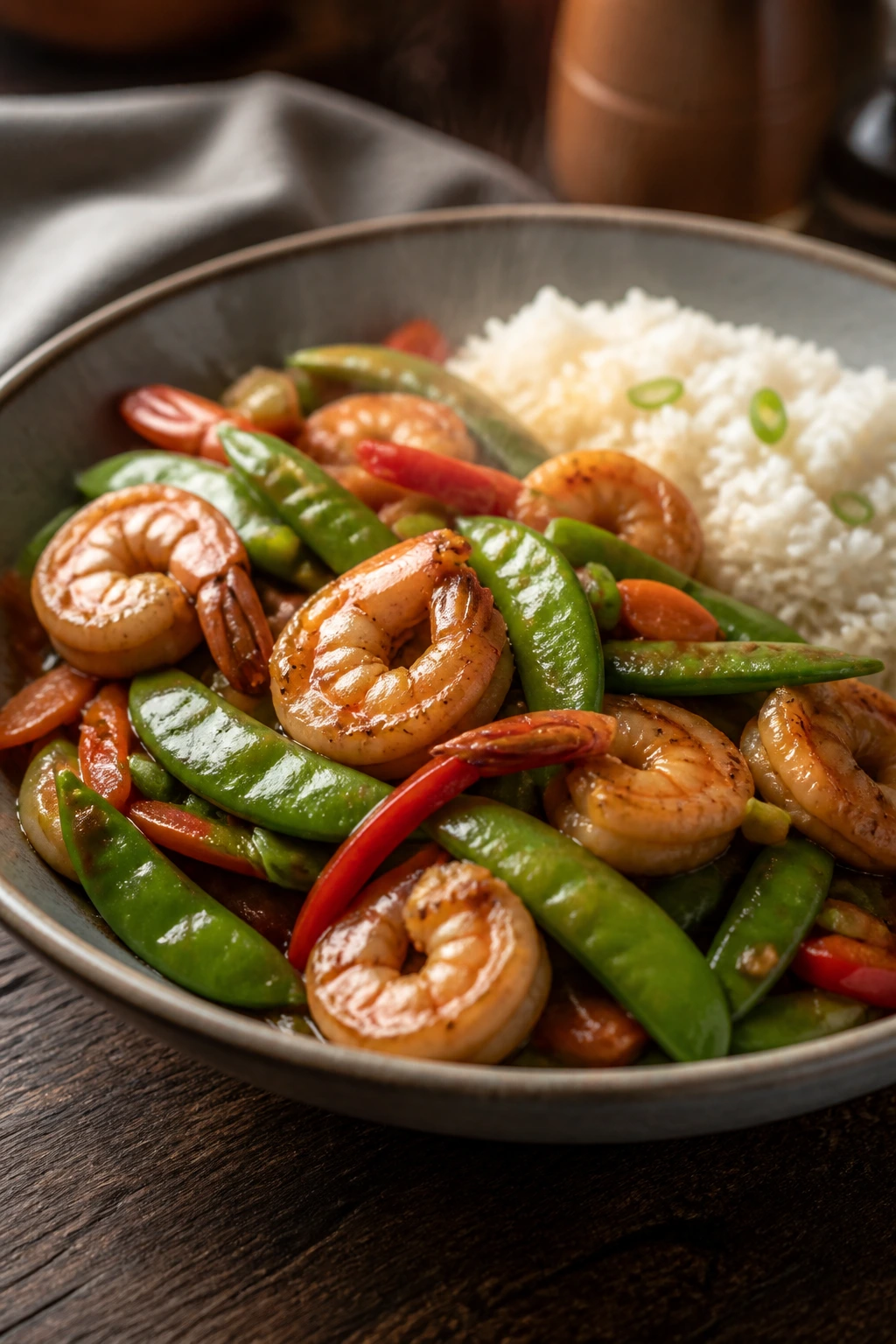
Shrimp Stir-Fry with Snap Peas and Rice
Snap peas popping in a hot skillet make a better sound than any packaged “healthy” dinner ever will. Crisp vegetables, quick-cooking shrimp, and a small measured portion of rice give you a dinner that feels fast without tasting rushed.
Build it with 6 ounces of shrimp, 2 cups snap peas and bell pepper strips, 1/2 cup cooked jasmine rice, 1 teaspoon sesame oil, 1 teaspoon neutral oil, garlic, ginger, soy sauce, and a splash of rice vinegar. You’ll usually land around 380 to 450 calories per serving. If you want a little more bulk, add mushrooms or shredded cabbage instead of more rice.
Shrimp cook fast. Too fast, if you turn your back. Give them 2 to 3 minutes per side in a very hot pan until they turn opaque and curl into a loose C. If they tighten into tiny O shapes, you’ve gone too far. The vegetables should stay bright and a little crisp. Wilted snap peas are a waste of good snap peas.
This dinner is one of my favorites for calorie control because the aroma does some of the work. Ginger, garlic, and sesame make the whole kitchen smell louder than the calories suggest. That’s not a small thing. Food that smells finished tends to feel more satisfying when you sit down with it.
Lentil-Tomato Soup with Toasted Whole-Grain Bread
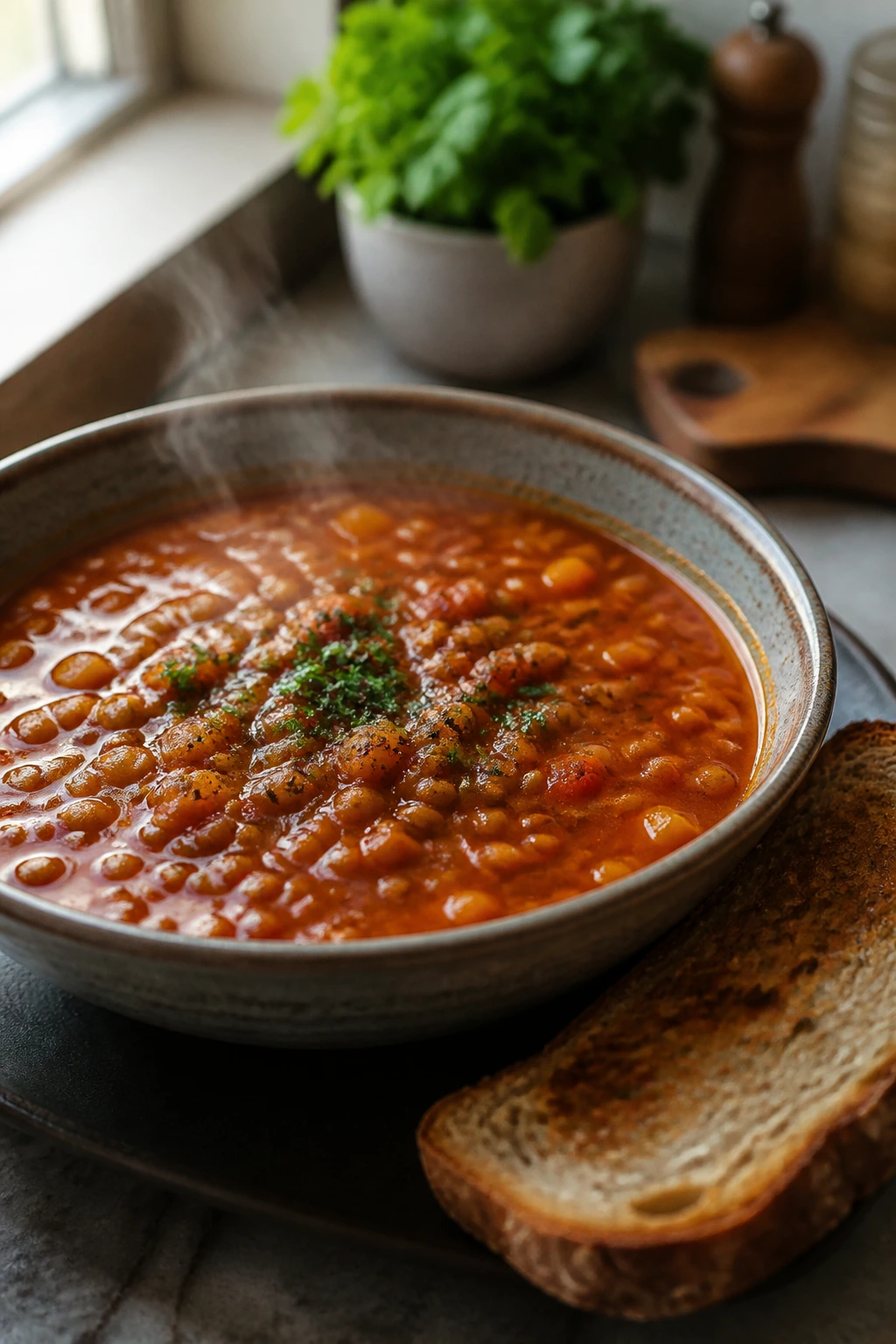
Not every dinner under 500 calories needs a piece of meat at the center. That idea hangs around because people confuse “light” with “small,” and soup is the easiest place to prove them wrong.
Start with 1 cup cooked lentils, 1 can diced tomatoes, chopped onion, carrot, celery, garlic, and 2 to 3 cups vegetable broth. Stir in spinach at the end, finish with 1 teaspoon olive oil, and serve with 1 slice toasted whole-grain bread or a small piece of sourdough. A bowl like this usually sits in the 350 to 450 calorie range depending on the bread and oil. Add grated Parmesan if you want, but keep it measured.
Lentils do the important work here. They bring protein, starch, and body all in the same spoonful, which is one reason this soup feels fuller than a broth-based vegetable soup ever does. The tomato base keeps it bright instead of muddy. And once it rests for 10 or 15 minutes, the flavors settle in and the soup tastes even better than it did right off the stove.
A lot of people treat soup like a starter. I don’t. With lentils and bread, it’s dinner with a spoon.
Turkey-Stuffed Peppers with Melted Cheese
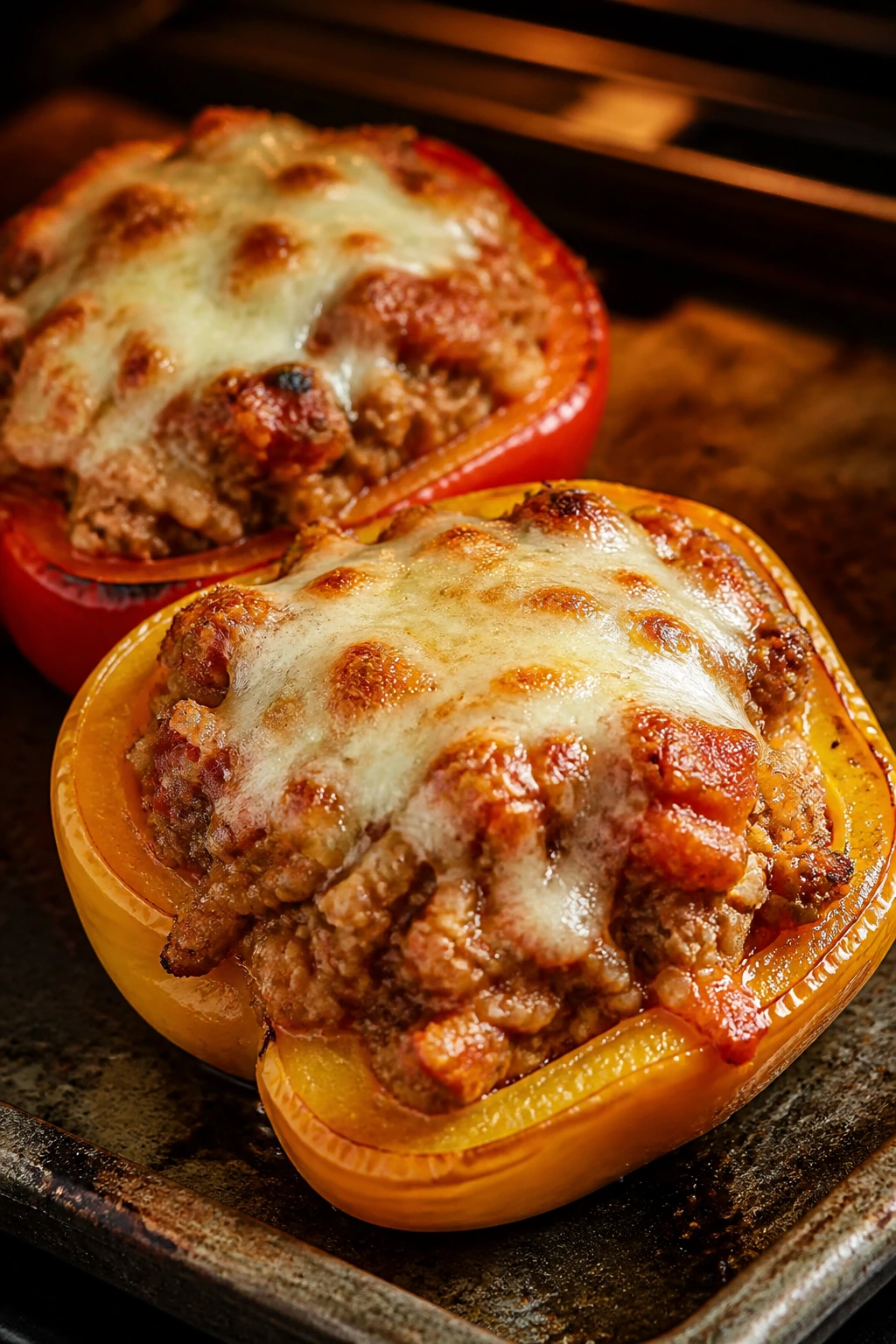
A stuffed pepper is one of those meals that looks like it took forever, even when the oven did most of the work. That’s useful. You get all the theater of a baked casserole with better portion control and less chance of wandering past 700 calories because nobody measured the filling.
Use 2 large bell peppers, halved and seeded, and fill them with 5 ounces lean ground turkey, onion, garlic, 1/3 cup cooked rice, tomato sauce, Italian seasoning, and 1 ounce shredded mozzarella. Bake at 375°F for 30 to 35 minutes until the peppers are soft at the edges and the cheese is melted with a few browned spots. Depending on the exact rice and sauce amounts, this lands around 420 to 480 calories.
The key is not overstuffing the peppers. You want the filling mounded, not jammed so tightly that it dries out. The peppers should slump a little but still hold their shape. If they collapse into a wet pile, they’ve gone too far.
I like these because they reheat better than a lot of other low-calorie dinners. The tomato sauce keeps the turkey from drying out, and the pepper shell stays useful for a couple of days in the fridge.
Chickpea Curry with Spinach and Basmati
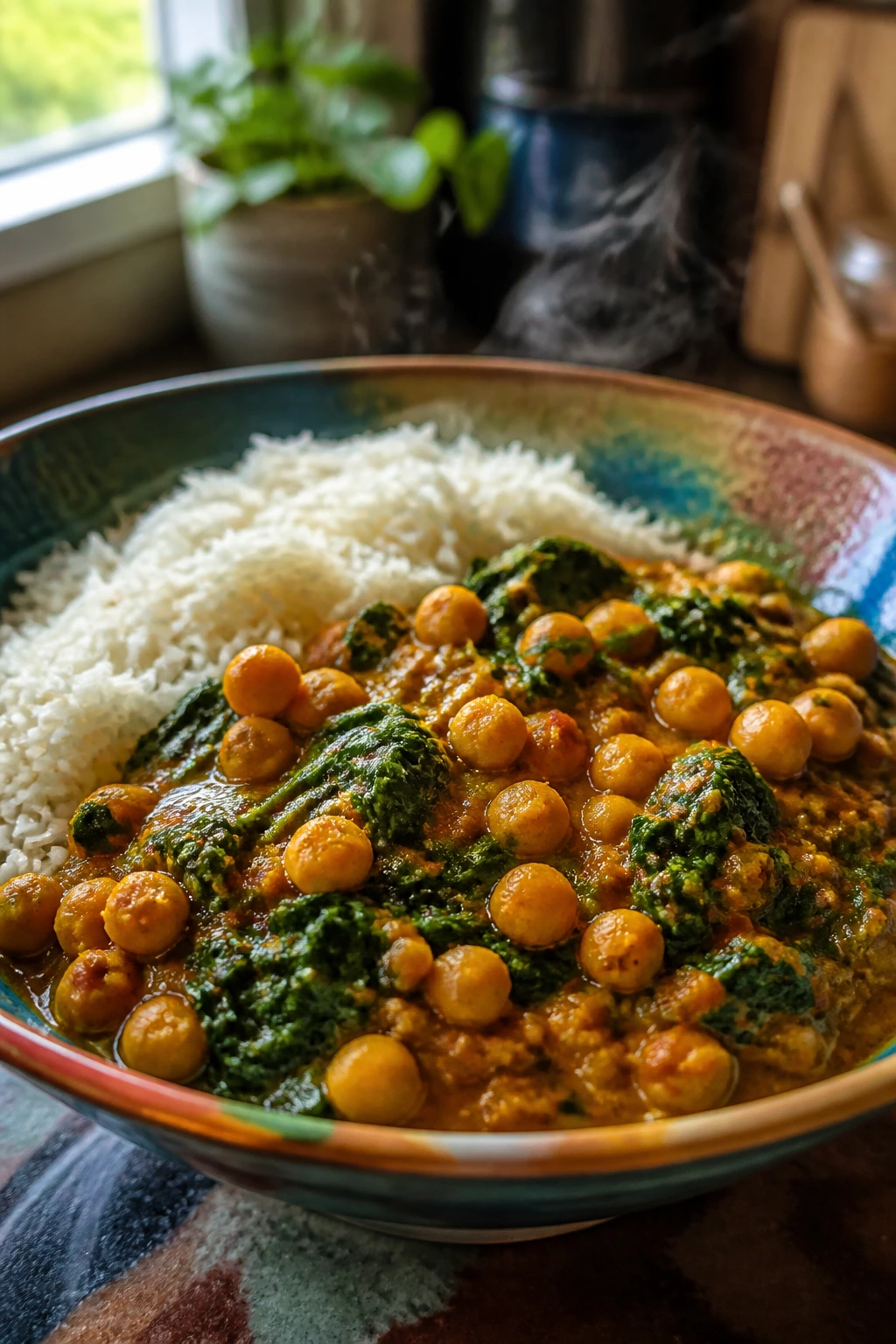
Plant-based dinners can feel thin when they lean too hard on broth and hope. Curry solves that problem if you keep the spice base honest and don’t drown everything in coconut milk.
Use 3/4 cup chickpeas, 2 cups spinach, onion, garlic, ginger, curry powder or a spoon of curry paste, crushed tomatoes, and 1/4 cup light coconut milk. Serve it over 1/2 cup cooked basmati rice. The total usually lands near 450 to 490 calories. A teaspoon of oil to bloom the spices is enough; more than that and the dish starts creeping upward fast.
What makes this work is texture. Chickpeas give chew. Spinach melts in and turns the sauce darker and richer. The tomatoes keep the curry from tasting heavy, while the coconut milk adds enough roundness to keep the sauce from going sharp. You do not need a cup of coconut milk to make curry taste good. You need the right balance.
If you like heat, a pinch of chili flakes or a little fresh jalapeño wakes the whole thing up. If you like it milder, add a spoonful of yogurt at the table. That little cold contrast is useful with spicy dishes, especially when the meal is sitting under the 500-calorie line and every bite needs to count.
Frittata Night with Salad and Crisp Bread
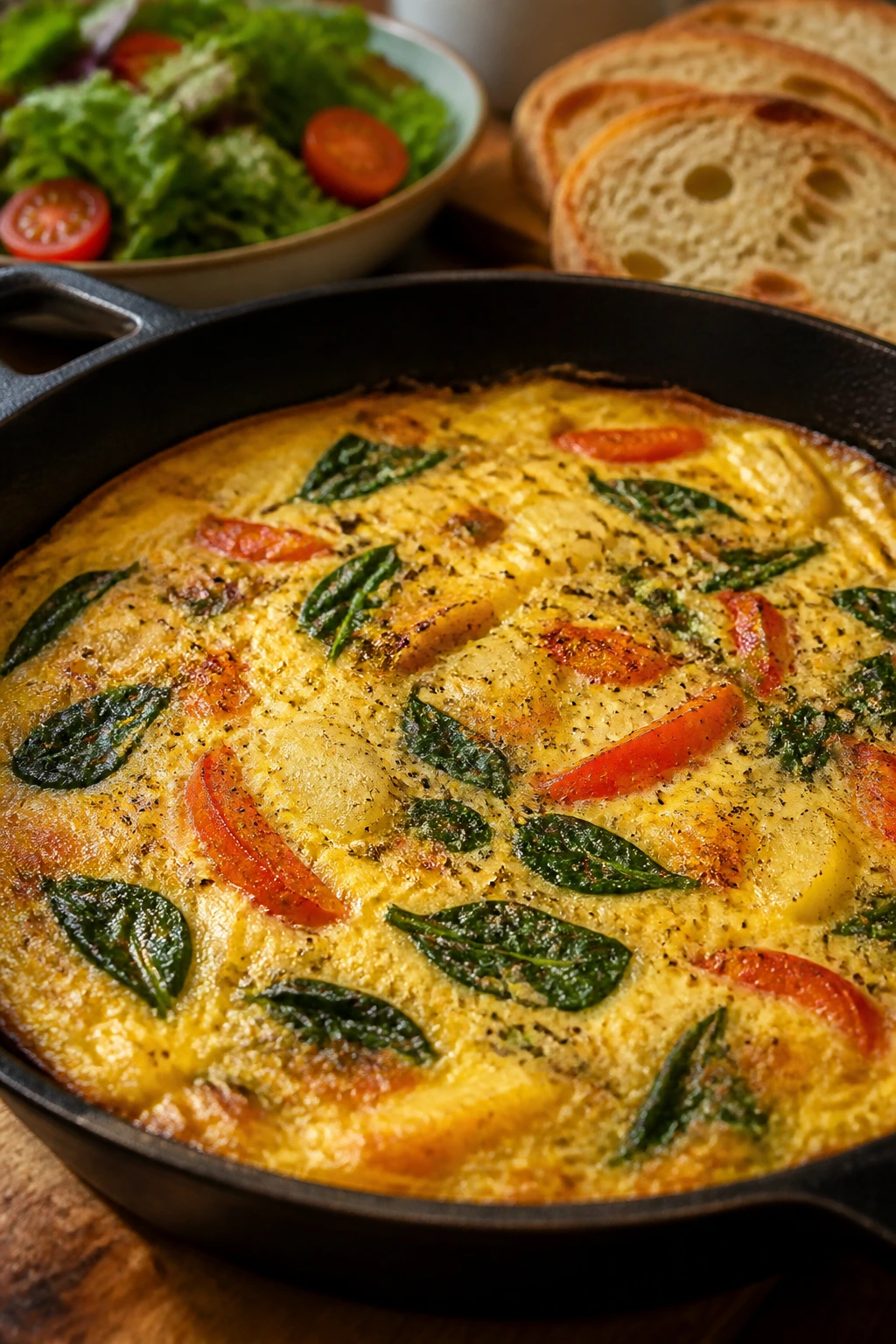
A frittata is what happens when leftovers stop looking like leftovers and start looking intentional. Eggs, greens, a bit of cheese, and a sharp salad on the side can carry dinner better than people expect, especially when the bread is measured and the pan is hot.
Use 2 whole eggs and 3 egg whites, spinach, mushrooms, onions, and 1 ounce feta or goat cheese. Bake it in a skillet or finish it in the oven, then serve with a simple salad dressed with lemon and 1 slice toasted whole-grain bread. You’re usually in the 380 to 450 calorie range. If you need to tighten it further, skip the bread and keep the salad dressed lightly.
Why this one earns a place at dinner
Eggs bring protein, but the whites let you keep the protein up without pushing the calories up as fast. Mushrooms and spinach fill the pan with moisture and make the frittata look bigger than a plain omelet ever would. That matters more than it sounds like it should.
The side salad is not decoration. It gives the meal a cold, crisp note that eggs can’t supply on their own. A few sliced cucumbers, a handful of arugula, lemon juice, salt, and pepper are enough. Fancy is optional. Fresh is not.
This is also the section of the weeknight dinner world where I happily endorse leftovers. A wedge of frittata held in the fridge overnight slices cleanly and reheats without much trouble.
Whole-Wheat Pasta with Tomato, Spinach, and Mozzarella
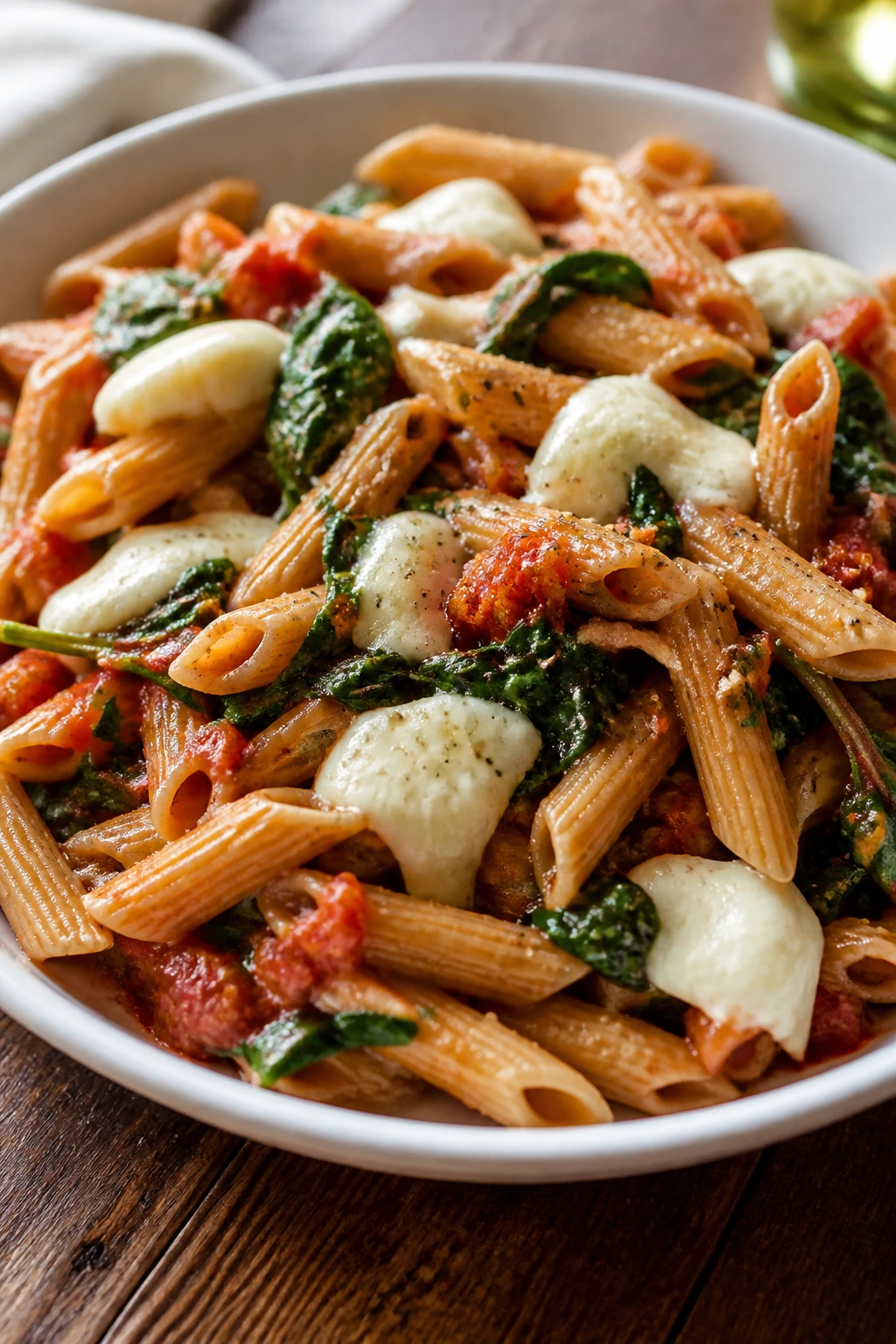
Pasta is not the enemy. Portion creep is. There’s a difference, and once you start measuring dry pasta instead of guessing from a giant box, the whole conversation changes.
Use 2 ounces dry whole-wheat pasta, 1 cup marinara, 2 cups spinach, garlic, mushrooms if you like them, and 1 ounce fresh mozzarella torn over the top. Add a side salad if you want more volume without many calories. The meal usually lands around 430 to 480 calories, depending on the sauce and cheese. If your sauce is heavy with sugar or oil, the number jumps fast, so read the label or make your own.
The reason this works is simple: whole-wheat pasta gives you chew, the tomato sauce brings acidity, and spinach disappears into the pan without demanding a bigger calorie budget. Mozzarella adds that warm, stretchy finish, but you only need a little. One ounce is enough to give the dish a creamy finish when it melts into the sauce.
A lot of people think low-calorie pasta has to taste like compromise. It doesn’t. It just has to be portioned with discipline. Two ounces of dry pasta does not look like much in the box, but once it’s cooked and coated, it’s enough for a real dinner.
Sesame Tofu and Broccolini Bowls
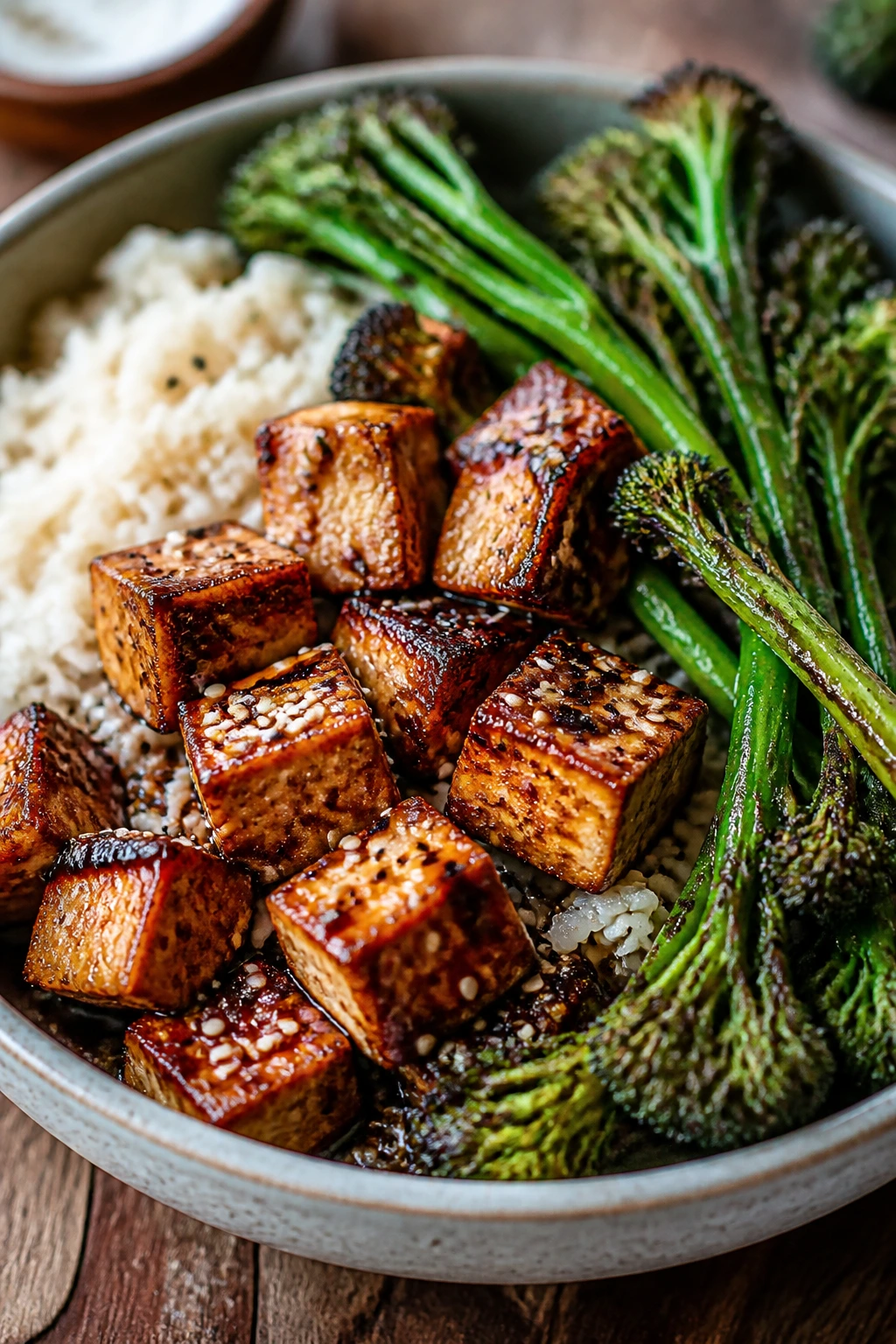
Tofu rewards heat and patience. Rush it, and it tastes like what impatient people complain about. Give it a hot pan, a dry surface, and a proper sauce, and it takes on edges and crunch that make it easy to forget you’re staying under 500 calories.
Press 6 ounces extra-firm tofu for 15 minutes, cut it into cubes, and sear it in a skillet with 1 teaspoon oil until the sides are golden. Add 2 cups broccolini and a quick sauce made from soy sauce, ginger, garlic, rice vinegar, and 1 teaspoon sesame oil. Serve it over 1/2 cup cooked rice. The total usually lands around 420 to 470 calories.
The small details matter here. If the tofu is wet, it steams. If the pan is too cool, it sticks and breaks apart. If you crowd the skillet, the broccolini softens instead of blistering. Give it space and heat, then finish with sesame seeds or sliced scallions if you have them.
This bowl is one of the easiest ways to build a vegetarian dinner that still feels complete. The tofu gives protein, the broccolini gives crunch and bitterness, and the rice gives the whole thing a soft landing. A good bowl does not have to shout. It just has to have enough going on that the last bite tastes different from the first.
How to Push Flavor Without Pushing Calories
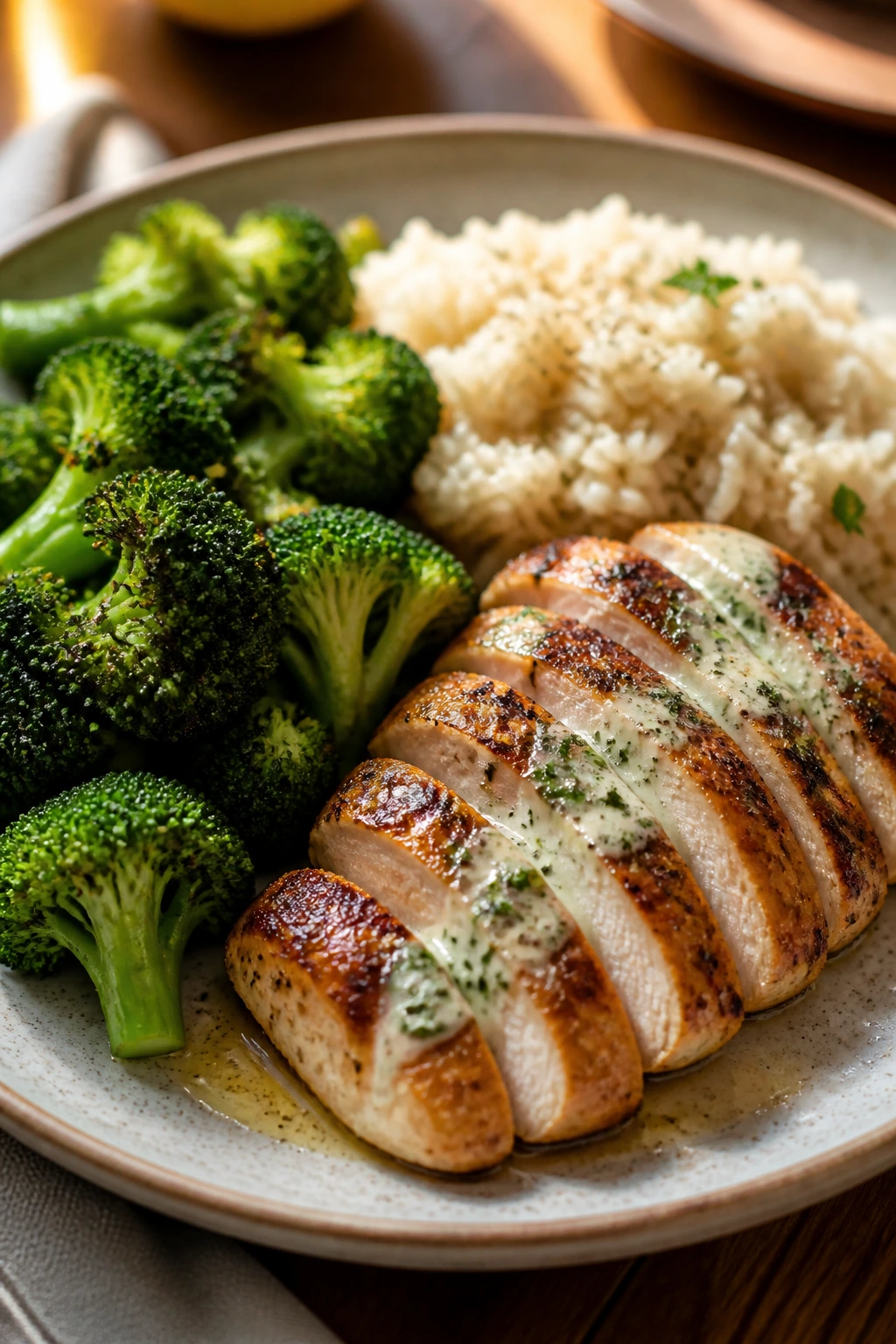
Flavor Enhancement: Acid is your cheapest friend. A squeeze of lemon, a spoon of vinegar, a splash of pickle brine, or a few chopped tomatoes can wake up a plate faster than another tablespoon of oil. If a dinner tastes flat, the problem is often lack of brightness, not lack of calories.
Texture: Build at least one crunchy element into the meal. Roasted broccoli edges, toasted seeds, crisp lettuce, blistered peppers, or a handful of sliced radishes can keep a lower-calorie dinner from feeling soft and samey. Soft meals get tiring fast.
Customization: Use spices like smoked paprika, cumin, chili flakes, curry powder, garlic powder, or za’atar in real amounts. A 1/2 teaspoon here and a 1 teaspoon there can change the whole personality of the dish without changing the calorie count much at all. Bland food is not a moral virtue.
Serving Suggestions: Put the sauce on top or on the side, not hidden in the pan. A spoon of dill yogurt over salmon, salsa over taco turkey, or tahini drizzle over tofu makes the plate look finished and helps you control how much you use. It’s easier to add than remove.
Make-It-Yours: If you want more protein, add a boiled egg, extra shrimp, or a larger tofu portion and trim the starch by a few bites. If you want it lower carb, swap rice or pasta for roasted vegetables. If you want it dairy-free, use herbs, mustard, salsa, or tahini instead of cheese and cream.
That balance is what keeps healthy dinner options under 500 calories from tasting thin. You don’t need heroic restraint. You need good decisions at the edges: a little acid, a little salt, enough heat, and one or two things with texture.
The Mistakes That Make Low-Calorie Dinners Feel Small
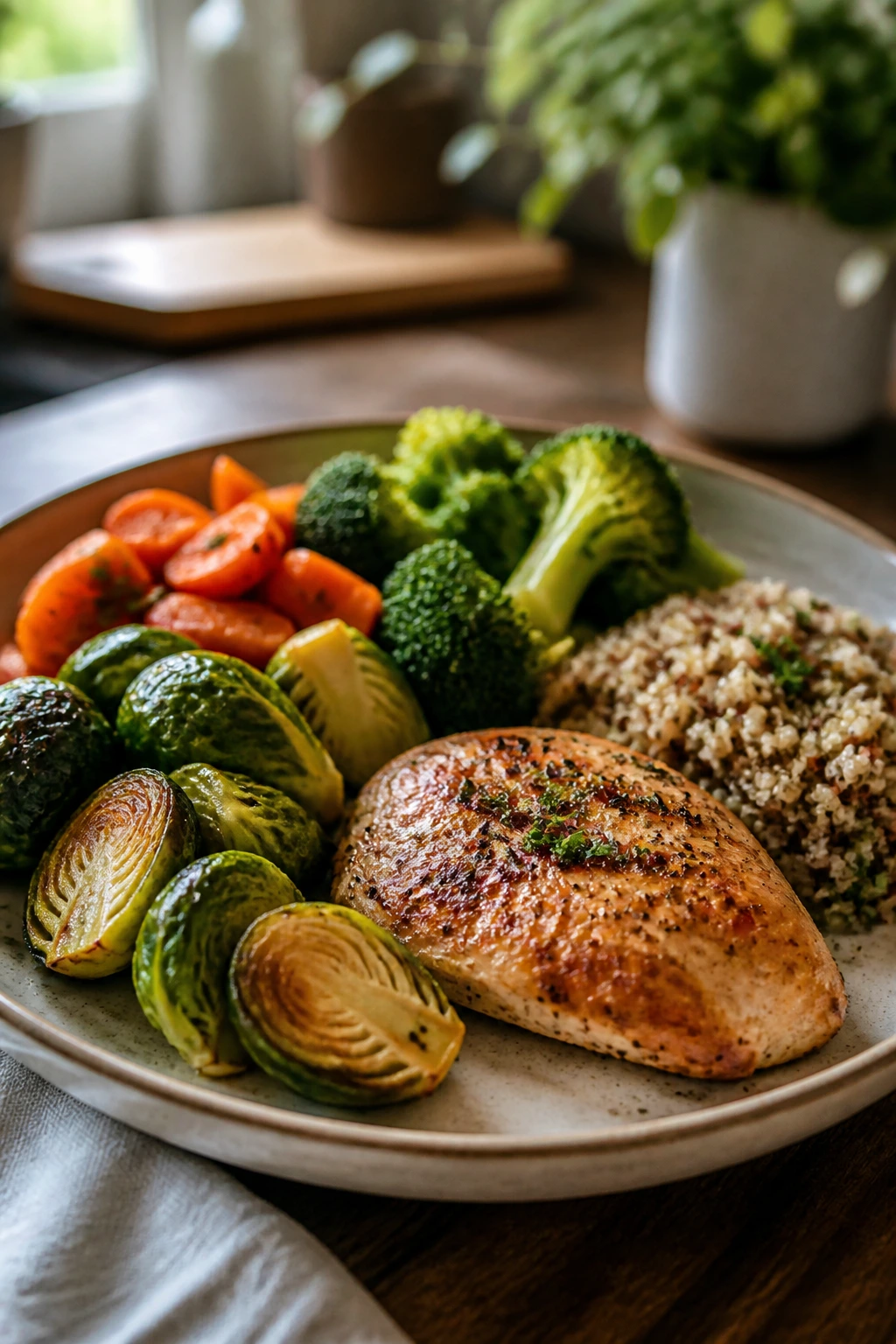
The first mistake is under-portioned protein. People shave the chicken breast down to a tiny piece, then wonder why they’re hunting for crackers at 9 p.m. A better fix is simple: keep the protein in the 4- to 6-ounce cooked range and trim calories somewhere else, usually from oil, cheese, or starch.
The second mistake is pouring oil like it doesn’t count. It counts. One tablespoon of olive oil is around 120 calories, which means the “healthy” skillet can get expensive fast. Measure it with a teaspoon when you’re trying to stay under a hard ceiling. A light brush or spray can work too, but don’t guess.
The third mistake is overcooking lean proteins. Dry chicken breast, chalky fish, and rubbery shrimp feel punishing no matter how virtuous the ingredient list looks. Pull poultry at 165°F, salmon when it flakes but still looks a little glossy, and shrimp the second they turn opaque and curl. Overcooked food makes people reach for more sauce, which can defeat the calorie target anyway.
The fourth mistake is making the plate one-note. If dinner is soft, beige, and same-textured, it will feel smaller than it is. You want at least one crisp thing, one juicy thing, and one warm, savory thing. If a plate lacks those contrasts, people tend to eat faster and feel less satisfied.
The fifth mistake is skipping acid and salt because the meal is “healthy.” That usually leaves you with food that tastes polite and forgettable. Salt the vegetables before roasting, add lemon or vinegar at the end, and taste the sauce before you serve it. A well-seasoned 470-calorie dinner feels bigger than a bland 350-calorie one.
Variations for Different Eating Styles
High-Protein Boost: Add an extra egg white to the frittata, bump chicken or turkey to a full 6-ounce cooked portion, or stir plain Greek yogurt into sauces instead of cream. The calorie count barely moves if you swap, not add.
Lower-Carb Plate: Cut the rice, potatoes, or pasta by half and replace the gap with mushrooms, cauliflower rice, cabbage, or extra greens. The meal still looks full on the plate, which matters more than people admit.
Vegetarian Reset: Tofu, lentils, chickpeas, eggs, and Greek yogurt can cover dinner without making every plate taste like the same salad in a new sweater. Keep an eye on cheese and coconut milk, since those two can push calories up faster than the plant proteins do.
Dairy-Free Finish: Use salsa, chimichurri, mustard sauces, tahini-lemon dressing, or a spoon of olive oil with herbs instead of cheese and yogurt. You’ll still get a finished plate, just with a different kind of richness.
Kid-Friendly Shift: Keep sauces separate, soften the seasonings a little, and lean on familiar shapes like roasted potatoes, pasta, stuffed peppers, or rice bowls. Kids often eat better when the components stay visible instead of mixed into one anonymous pile.
Extra-Crunch Version: Add toasted pumpkin seeds, sliced almonds, crisp lettuce, or a few fried shallots in a measured amount. Crunch is one of the easiest ways to make a lighter dinner feel more complete.
Tools That Make These Dinners Easier
- Sheet pan with a rim: Best for chicken, salmon, potatoes, and roasted vegetables without spills.
- Large skillet or wok: Useful for stir-fries, tofu, turkey fillings, and quick vegetable sautés.
- Instant-read thermometer: The cleanest way to avoid dry chicken, overcooked fish, and guesswork.
- Kitchen scale: Worth it if you want to stay under a hard calorie cap with pasta, rice, cheese, or meat.
- Sharp chef’s knife: Clean cuts on vegetables mean even cooking and fewer soggy edges.
- Cutting board with a damp towel underneath: Keeps the board from skating around while you chop peppers, herbs, or onions.
- 9×13-inch baking dish or skillet: Handy for stuffed peppers and frittatas.
- Airtight storage containers: Needed for meal prep portions, especially soup, curry, and turkey bowls.
- Microplane or fine grater: Great for lemon zest, garlic, and hard cheese without adding bulky toppings.
Meal Prep, Storage, and Reheating That Actually Works
Most of these dinners keep well for 3 to 4 days in the fridge if they’re cooled quickly and stored in shallow containers. Soup, curry, turkey taco filling, and stuffed peppers are the safest bets for meal prep because they hold moisture without getting wrecked by reheating. Salmon and shrimp are a little fussier. I’d keep salmon to 2 days if you want the texture to stay decent, and shrimp stir-fry is best within 2 to 3 days.
Freezing works best with the wetter dishes. Lentil soup, chickpea curry, and turkey filling can freeze for up to 2 months in airtight containers, and they usually reheat without much damage. Pasta, tofu, and roasted vegetables can freeze too, but the texture gets softer. That’s not a dealbreaker; it just means you should expect a less crisp finish.
Reheat roasted chicken, stuffed peppers, and salmon gently in a 325°F to 350°F oven until warm. Cover loosely with foil if the surface starts drying out. Stir-fries do better in a hot skillet with a teaspoon of water or broth than in a microwave, which can make the vegetables limp. Soup and curry are easiest on the stovetop over medium heat, stirred often.
Keep sauces separate when you can. A dill yogurt sauce, salsa, or tahini drizzle lasts longer in a small container on the side and keeps the main dish from getting soggy. That tiny habit makes meal prep feel less like leftovers and more like planned dinner.
Questions People Ask Before They Build These Plates
Can dinner under 500 calories still be filling?
Yes, if the plate includes enough protein, vegetables, and one measured carb. A 460-calorie chicken tray with potatoes and broccoli feels more like dinner than a tiny salad with the same calorie count.
Do I need to count every single calorie?
No, but you should measure the parts that hide calories fast: oil, cheese, rice, pasta, nuts, and sauces. Most vegetables, herbs, and leafy greens won’t move the number much unless you drown them in dressing.
What protein is easiest to keep under 500 calories?
Chicken breast, shrimp, cod, turkey, tofu, egg whites, and lentils are the easiest building blocks. Salmon and thighs can still fit; you just need a smaller portion of the rich ingredient and a calmer hand with added fat.
What if I’m still hungry after dinner?
Add vegetables first, then protein, then a little more fiber-rich starch if you still need it. A second sprinkle of cheese usually fixes flavor, not fullness.
Can I use frozen vegetables?
Yes. Roast or sauté them hard enough to drive off extra water. Frozen broccoli, snap peas, spinach, and cauliflower rice all work, but crowding the pan will leave you with steam instead of browning.
What’s the best make-ahead dinner from this group?
Soup, curry, stuffed peppers, and turkey taco filling hold up the best. They taste good after a day in the fridge and don’t lose much texture.
How do I stop these dinners from tasting dry?
Don’t overcook the protein, and use acid at the end. Lemon, vinegar, salsa, or yogurt sauce brings life back to a plate fast.
Can I make a low-calorie dinner without rice, potatoes, or bread?
Yes, but you’ll want another source of body, like beans, lentils, mushrooms, extra vegetables, or a sauce with some thickness. Removing starch without replacing the texture is where most “healthy” dinners go wrong.
A Smaller Plate, Not a Sad One
The best low-calorie dinners are not tiny versions of bigger meals. They’re built differently. More vegetables. Better seasoning. Measured fat. A protein that isn’t overcooked into a chalky apology. That’s the whole move.
Once you start thinking in terms of structure instead of restriction, the 500-calorie ceiling gets a lot less annoying. A plate can stay light enough to fit your goal and still look like something you’d put in front of a guest without embarrassment.
Pick one of these dinner shapes, cook it once, and pay attention to what actually makes you feel satisfied. That’s the part worth keeping.