



A good lunch should not taste like a punishment. If your usual midday meal is a dry sandwich, a limp salad, or a container of food that smells better than it eats, healthy lunch recipes can start to feel like a joke. They do not have to. The difference is usually not calories or virtue; it is whether the food has salt, acid, crunch, and enough protein to keep the last hour of the workday from turning feral.
What makes lunch fail, in my experience, is sameness. A bowl with only greens gets tired fast. So does one-note chicken, or pasta salad that tastes like cold starch. The recipes here lean on things that survive a fridge shelf and still taste alive at noon: lemon, yogurt, beans, herbs, roasted vegetables, toasted nuts, and the occasional punch of chili or mustard.
I like lunches that can be eaten at a desk, in a car, or standing up over the sink if the day gets weird. Some are cold, some are warm, and a few are best reheated with a splash of water and a minute in the microwave. All of them are built to taste like someone cared when they were made, which is the real point. The first batch starts with the kind of bowl I’d gladly pack two days in a row.
Why These Lunches Beat the Usual Sad-Desk Routine
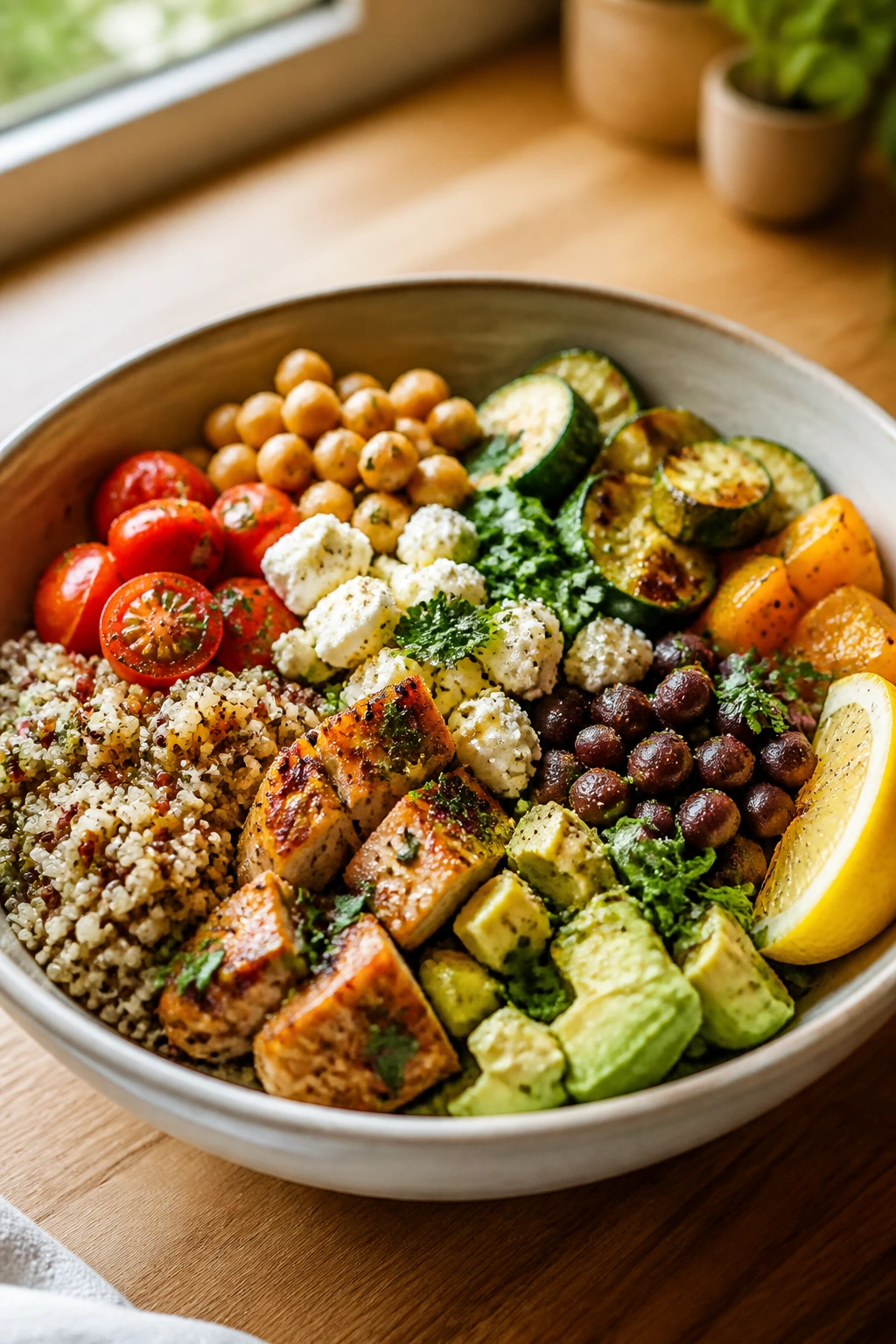
-
Real flavor first: Each recipe uses at least one sharp or savory element — lemon, vinegar, salsa, mustard, yogurt, harissa, pesto, or miso — so the lunch tastes finished instead of flat.
-
Built for actual hunger: Most of these lunches pair protein with fiber-rich grains, beans, or vegetables, which helps the meal feel like a meal and not a snack in a container.
-
Make-ahead friendly: A lot of the recipes hold up for 3 to 4 days when you keep wet ingredients separate until serving time.
-
Flexible pantry staples: Canned beans, frozen edamame, bagged slaw, rotisserie chicken, and pre-cooked grains all fit here without wrecking the flavor.
-
Cold, warm, or room temp: You do not need a microwave for every lunch on this list, and that matters more than people admit.
1. Lemon-Herb Chicken Quinoa Bowls
Intro:
Bright lemon, garlic, and parsley keep this bowl from drifting into bland territory. The quinoa stays fluffy, the chicken gets browned at the edges, and the cucumber gives a cold snap against everything warm. I like this one because it tastes deliberate, not like leftovers thrown together in a rush.
Why It Works:
The dressing does the heavy lifting here: lemon juice wakes up the quinoa, while feta brings enough salt to sharpen every bite. Quinoa also packs well, which is why this lunch still tastes decent hours later. Cook the chicken to 165°F and let it rest for 5 minutes so the juices stay put.
Key Ingredients:
- 1 lb boneless skinless chicken thighs — they stay juicy and slice cleanly.
- 1 cup quinoa, rinsed — rinse it or the bowl can taste dusty.
- 1 cucumber, diced — brings cold crunch.
- 1 cup cherry tomatoes, halved — adds sweetness and moisture.
- 1/2 cup crumbled feta — gives the bowl its salty finish.
- 1 lemon, zested and juiced — the whole thing depends on this.
- 2 tbsp olive oil — for searing and dressing.
- 2 tbsp chopped parsley — use it generously.
Quick Steps:
- Simmer the quinoa in 2 cups water until the grains open and the pot looks dry, about 15 minutes.
- Season the chicken with salt and pepper, then sear it in olive oil over medium-high heat for 5 to 6 minutes per side.
- Whisk the lemon juice, lemon zest, olive oil, and parsley in a small bowl.
- Slice the chicken after a 5-minute rest, then divide the quinoa, cucumber, and tomatoes between bowls.
- Spoon the dressing over the top, add feta, and finish with black pepper.
Equipment for This Recipe:
- 10- or 12-inch skillet
- Medium saucepan with lid
- Sharp knife and cutting board
- Small mixing bowl
How to Serve This Dish:
Serve it warm or at room temperature with a handful of arugula on the side. A few olives or a spoonful of hummus turns it into a fuller lunch without making it heavy.
Pro Tips for This Recipe:
- Salt the quinoa water. It sounds small; it is not.
- Slice the cucumber right before packing if you want it crisp.
- If your lemon is tiny, use a little extra zest. That smell matters.
Variations on This Dish:
- Chickpea Grain Bowl: Swap the chicken for 1 can of chickpeas, drained and rinsed.
- Spicy Lemon Bowl: Add 1 tsp chili crisp or a pinch of red pepper flakes to the dressing.
Common Mistakes to Avoid with This Dish:
- Mushy quinoa: Do not overcook it; stop when the grains show tiny tails and the liquid is gone.
- Dry chicken: Pull it at 165°F and let it rest before slicing.
- Watery bowls: Pat the cucumber dry if you are packing this for later.
2. Turkey Taco Salad Jars
Intro:
Ever opened a salad jar and found a swamp at the bottom? This is the fix. Spiced turkey, black beans, corn, and crisp romaine stay separate until lunch, so the whole jar still tastes fresh when you shake it up.
Why It Works:
The turkey is seasoned like taco filling, not bland meal-prep meat, which keeps the flavor from collapsing once it chills. Greek yogurt gives you the creamy part without turning the jar greasy. The layered build matters here — dressing first, greens last.
Key Ingredients:
- 1 lb lean ground turkey
- 2 tbsp taco seasoning
- 1 can black beans, rinsed and drained
- 1 cup corn, thawed if frozen
- 2 cups chopped romaine
- 1 avocado, diced
- 1/2 cup salsa
- 1/2 cup plain Greek yogurt
- 1 lime, juiced
Quick Steps:
- Brown the turkey in a skillet over medium heat for 6 to 8 minutes.
- Stir in taco seasoning and 2 tbsp water, then cook until glossy.
- Mix the Greek yogurt, salsa, and lime juice for the dressing.
- Layer jars with dressing, beans, turkey, corn, and tomatoes, then finish with romaine and avocado.
- Shake the jar just before eating and spoon it into a bowl if you want cleaner bites.
Equipment for This Recipe:
- Large skillet
- 2 to 4 quart-size jars or meal-prep containers
- Spoon or spatula
- Citrus juicer, optional
How to Serve This Dish:
Eat it straight from the jar or dump it into a wide bowl and add crushed tortilla chips. A few pickled onions on top make the whole thing taste sharper.
Pro Tips for This Recipe:
- Cool the turkey before layering or it will wilt the lettuce.
- Use thick salsa; watery salsa makes the dressing thin.
- Add avocado on the day you eat it, not the day you make it.
Variations on This Dish:
- Bean-Only Taco Jar: Swap the turkey for extra black beans and pinto beans.
- Chipotle Version: Stir 1 tsp chipotle powder into the turkey for a smoky edge.
Common Mistakes to Avoid with This Dish:
- Soggy greens: Keep lettuce at the top, far from the dressing.
- Bland filling: Taste the turkey before you stop cooking and add salt if needed.
- Brown avocado: Pack it separately unless you do not mind the color shift.
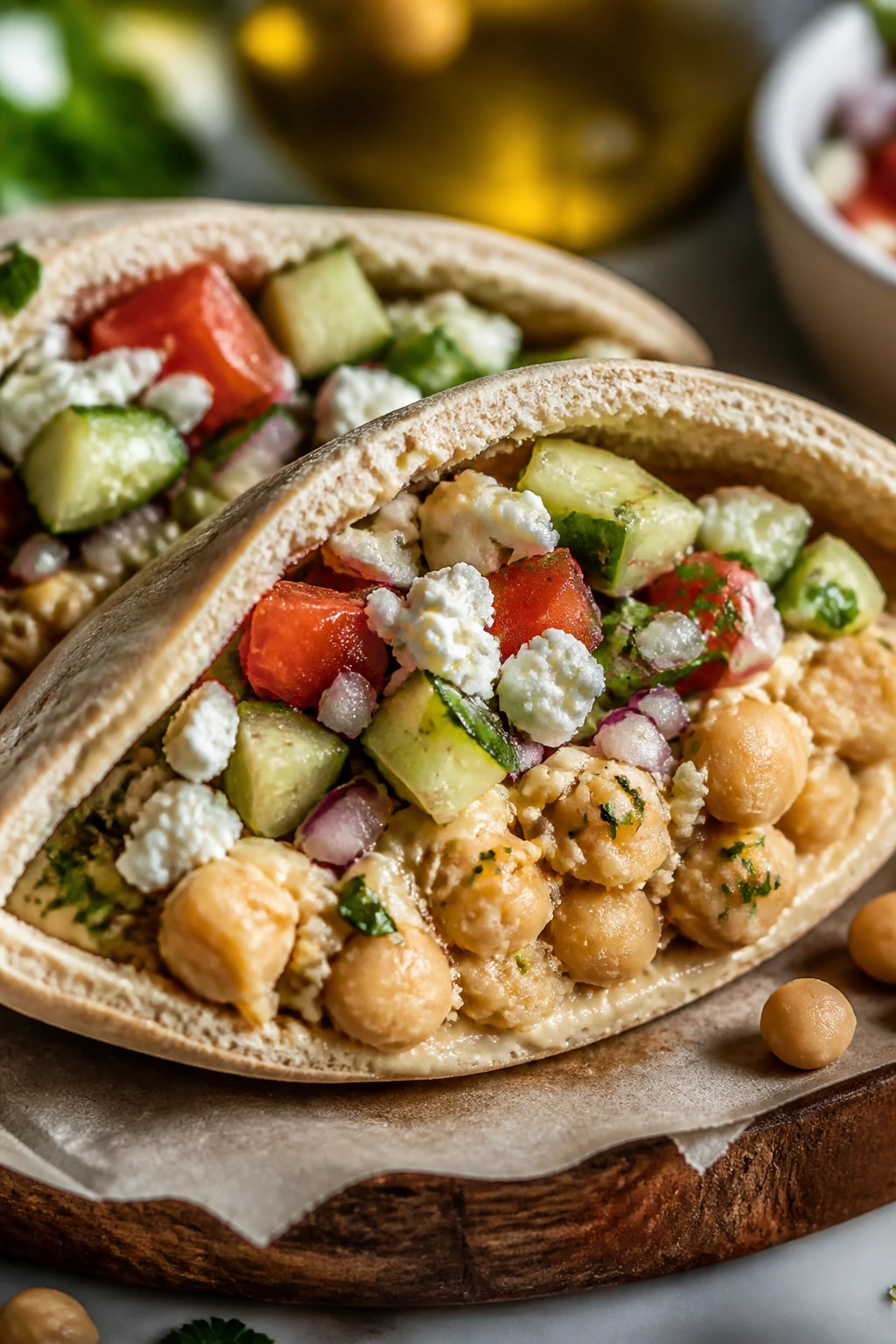
3. Mediterranean Chickpea Pita Pockets
Intro:
These pockets taste like lunch made by someone who owns lemon juice and actually uses it. Chickpeas, cucumber, tomato, and feta keep every bite cool, salty, and a little juicy, which is exactly what a midday pita should be.
Why It Works:
Mashed chickpeas make the filling cling to the pita instead of sliding out in one sad clump. Hummus adds body, while the lemon and herbs keep the whole thing from tasting heavy. It is one of those lunches that gets better with a short rest.
Key Ingredients:
- 2 cans chickpeas, drained and rinsed
- 1 cucumber, finely diced
- 1 cup cherry tomatoes, chopped
- 1/4 red onion, minced
- 1/2 cup crumbled feta
- 1/2 cup hummus
- 4 pita rounds
- 1 lemon, juiced
- 1 tsp dried oregano
Quick Steps:
- Mash half the chickpeas in a bowl with a fork.
- Stir in the remaining chickpeas, cucumber, tomatoes, onion, feta, lemon juice, oregano, salt, and pepper.
- Warm the pita rounds in a dry skillet for about 30 seconds per side.
- Spread hummus inside each pita, then spoon in the chickpea mixture.
- Pack the filling separately if you are making these more than a few hours ahead.
Equipment for This Recipe:
- Mixing bowl
- Fork or potato masher
- Skillet
- Knife and cutting board
How to Serve This Dish:
Serve with olives and a handful of baby greens. If you want it heartier, tuck a spoonful of roasted red peppers into each pocket.
Pro Tips for This Recipe:
- Mash only part of the chickpeas so the filling still has texture.
- Salt the tomatoes lightly before mixing; it draws out sweetness.
- Warm pita first — cold pita tears much easier.
Variations on This Dish:
- Tahini Chickpea Pita: Replace half the hummus with tahini and a splash of water.
- Crunchier Version: Add diced celery or shredded romaine right before serving.
Common Mistakes to Avoid with This Dish:
- Overstuffed pita: It will split. Use less filling than you think.
- Wet filling: Pat the cucumber dry after dicing.
- Flat flavor: Lemon and salt need to be obvious here, not shy.
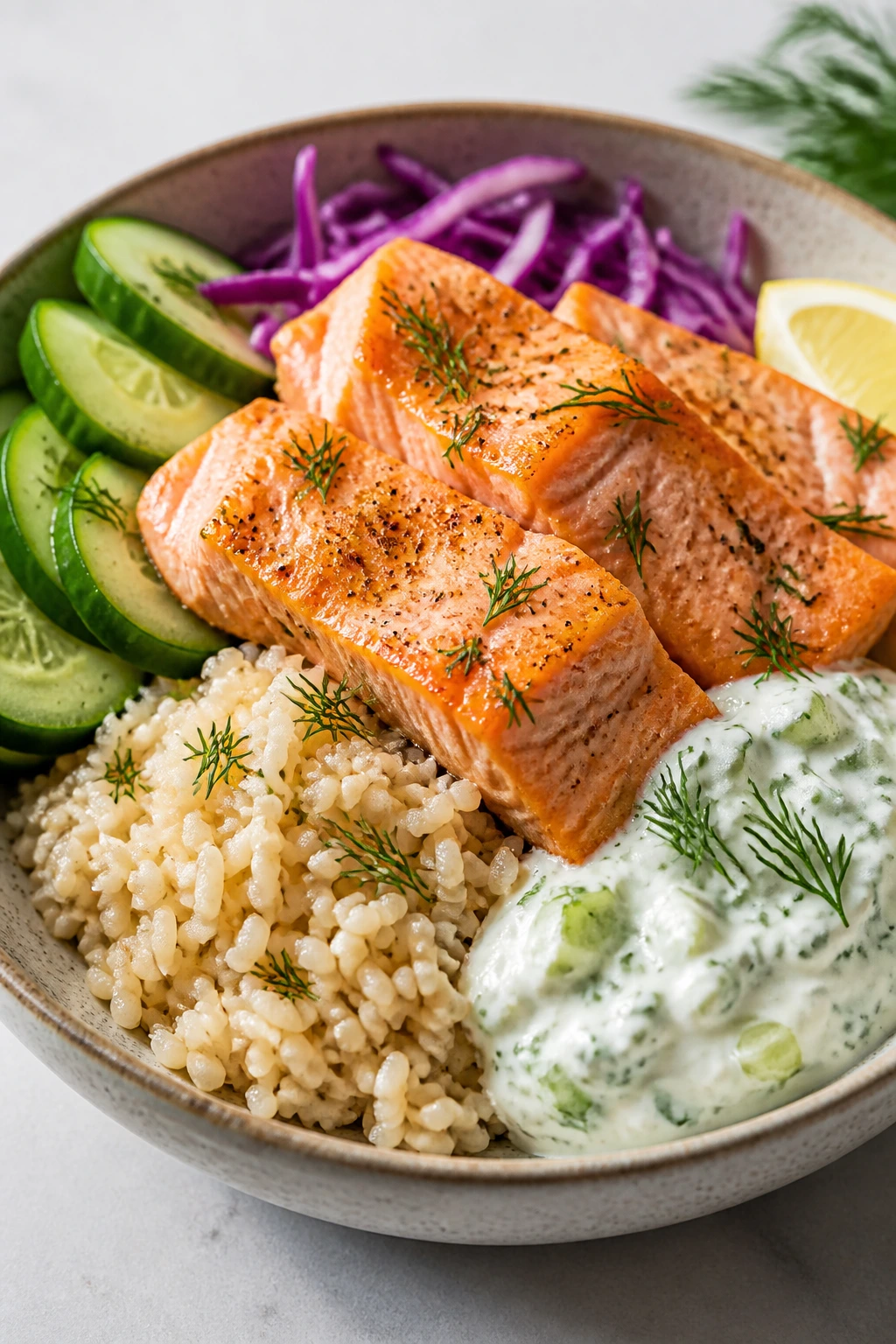
4. Salmon Rice Bowls with Cucumber-Dill Yogurt
Intro:
Cold cucumber, warm rice, and flaky salmon give this bowl the kind of contrast that makes lunch feel planned. The dill yogurt is creamy without being thick, and the salmon stays rich enough to taste like something you paid attention to.
Why It Works:
Salmon brings strong flavor on its own, so you do not need a heavy sauce. Brown rice or jasmine rice both work, but the key is keeping the grains separate and fluffy. The yogurt sauce also doubles as a moisture shield for the rice, which helps the bowl stay pleasant after chilling.
Key Ingredients:
- 4 salmon fillets, about 5 oz each
- 2 cups cooked brown rice
- 1 cucumber, sliced
- 1 cup shredded cabbage
- 1/2 cup plain Greek yogurt
- 2 tbsp chopped dill
- 1 lemon, juiced
- 1 tbsp olive oil
Quick Steps:
- Heat the oven to 400°F and bake the salmon for 12 to 15 minutes, until it flakes at the thickest point.
- Stir the yogurt, dill, lemon juice, salt, and pepper into a smooth sauce.
- Divide the cooked rice between bowls and top with cabbage and cucumber.
- Flake the salmon into large pieces and set it over the rice.
- Spoon the dill yogurt over the top and finish with black pepper.
Equipment for This Recipe:
- Rimmed baking sheet
- Small mixing bowl
- Rice cooker or saucepan
- Spatula
How to Serve This Dish:
Serve it warm, with the yogurt drizzled over the salmon, or pack it cold and add the sauce at lunch. A few sesame seeds or sliced scallions make it look finished without effort.
Pro Tips for This Recipe:
- Pull the salmon when the center still looks slightly translucent; carryover heat will finish it.
- Salt the cucumber lightly if it tastes watery.
- If you hate soggy rice, keep the yogurt in a separate cup.
Variations on This Dish:
- Gochujang Bowl: Stir 1 tsp gochujang into the yogurt sauce.
- No-Rice Version: Use shredded cabbage as the base and add extra cucumber.
Common Mistakes to Avoid with This Dish:
- Dry salmon: Bake just until it flakes, not until it turns chalky.
- Sauce too thin: Use thick Greek yogurt, not runny yogurt.
- Wet bowl: Cool the rice before packing.
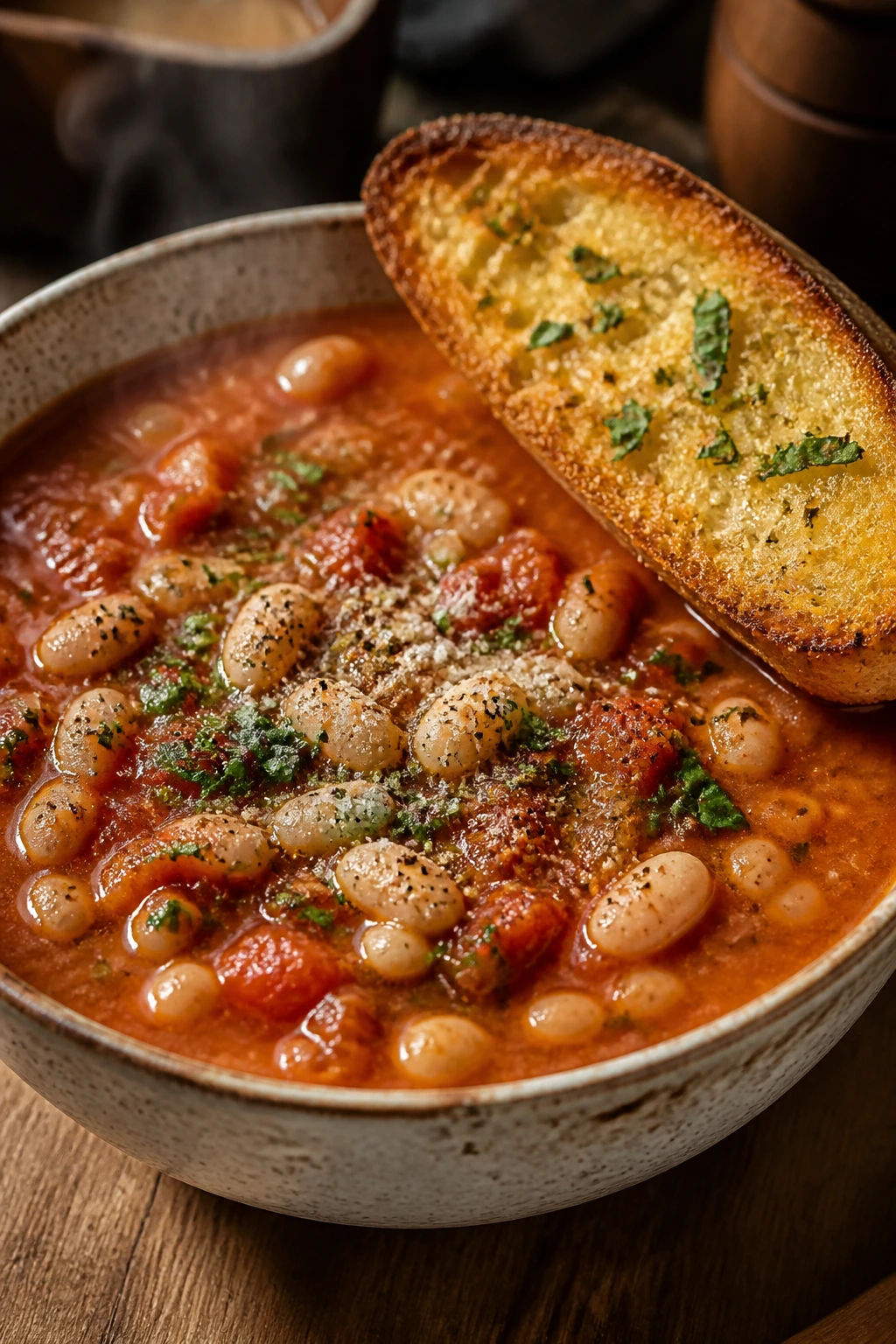
5. Tomato White Bean Soup with Parmesan Toast
Intro:
This is the kind of soup that smells like garlic and onion before you even sit down. The white beans add body, the tomatoes bring tang, and the Parmesan toast does what every lunch should do: provide something crunchy to drag through the bowl.
Why It Works:
Canned tomatoes keep this soup easy, but the beans make it feel hearty enough for lunch. A quick blend with an immersion blender gives it a silky edge without turning it into baby food. The toast matters as much as the soup — don’t skip it.
Key Ingredients:
- 2 tbsp olive oil
- 1 yellow onion, diced
- 3 garlic cloves, minced
- 2 cans crushed tomatoes
- 2 cans white beans, rinsed and drained
- 4 cups low-sodium broth
- 1 tsp dried basil
- 4 slices whole grain bread
- 1/3 cup grated Parmesan
Quick Steps:
- Sauté onion in olive oil over medium heat for 6 minutes, until soft.
- Add garlic and cook for 30 seconds.
- Stir in tomatoes, beans, broth, and basil, then simmer for 20 minutes.
- Blend about half the soup with an immersion blender for a thicker texture.
- Toast the bread, top with Parmesan, and serve with black pepper.
Equipment for This Recipe:
- Large pot
- Immersion blender
- Cutting board and knife
- Sheet pan or toaster
How to Serve This Dish:
Serve in a wide bowl with the toast leaning on the rim. A drizzle of olive oil or a few basil leaves makes it look less like cafeteria soup and more like lunch worth sitting down for.
Pro Tips for This Recipe:
- Let the onion go all the way soft; undercooked onion shows up as sharp bites.
- Blend only part of the soup if you want texture.
- Add a splash of lemon at the end if the tomatoes taste flat.
Variations on This Dish:
- Spicy Bean Soup: Add red pepper flakes with the garlic.
- Creamier Version: Stir in 1/4 cup cream or oat cream at the end.
Common Mistakes to Avoid with This Dish:
- Watery soup: Simmer uncovered for the last 5 minutes if needed.
- Burnt garlic: Add it after the onion softens, not before.
- Soggy toast: Serve it immediately, not after the soup has sat.
6. Buffalo Chicken Stuffed Sweet Potatoes
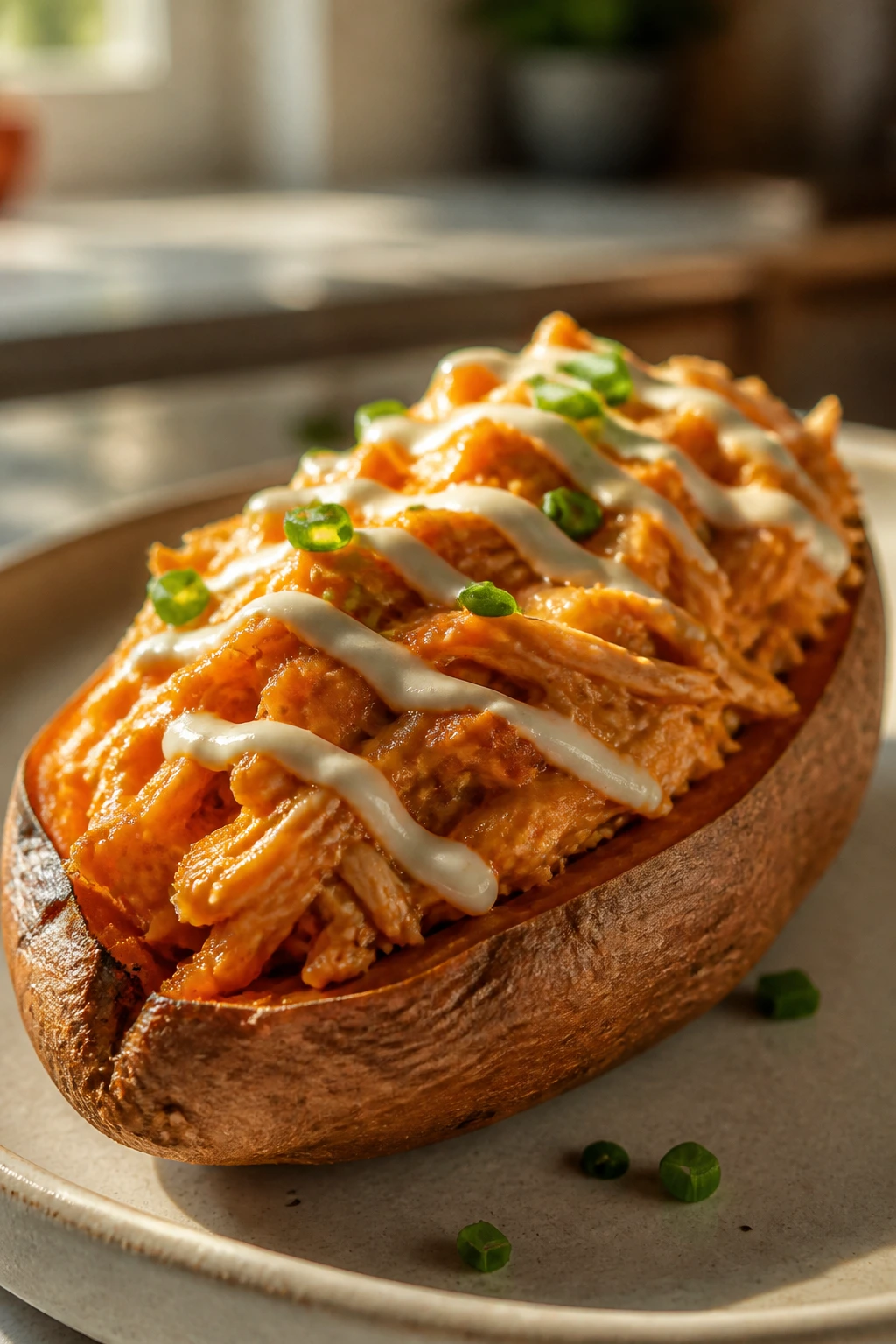
Intro:
A baked sweet potato is already doing a lot of work. Add buffalo chicken, celery, and a cool yogurt drizzle, and it suddenly stops feeling like diet food and starts tasting like something you’d choose on purpose.
Why It Works:
The sweet potato gives a soft, caramel-like base that plays nicely against hot sauce. Greek yogurt keeps the topping creamy without making it heavy. This lunch also reheats well because the potato stays sturdy and the chicken keeps its seasoning.
Key Ingredients:
- 4 medium sweet potatoes
- 1 lb chicken breast or thighs
- 1/3 cup buffalo sauce
- 1/2 cup plain Greek yogurt
- 1 tbsp ranch seasoning or chopped dill
- 2 celery stalks, diced
- 2 scallions, sliced
- Blue cheese, optional
Quick Steps:
- Bake the sweet potatoes at 425°F for 40 to 50 minutes, until tender.
- Cook the chicken in a skillet until it reaches 165°F, then shred it.
- Toss the chicken with buffalo sauce.
- Mix the yogurt with ranch seasoning and a splash of water for a drizzle.
- Split the potatoes, pile on the chicken, add celery and scallions, then drizzle the sauce.
Equipment for This Recipe:
- Baking sheet
- Skillet
- Fork
- Small bowl
How to Serve This Dish:
Serve it with a crisp celery salad or a simple pile of romaine. If you want it extra filling, add a spoonful of black beans beside the potato.
Pro Tips for This Recipe:
- Pick sweet potatoes that are similar in size so they finish together.
- Shred the chicken while it’s warm; it falls apart cleaner.
- Add the yogurt drizzle after reheating, not before.
Variations on This Dish:
- Turkey Version: Use shredded leftover turkey instead of chicken.
- Milder Bowl: Cut the buffalo sauce with a spoonful of yogurt.
Common Mistakes to Avoid with This Dish:
- Undercooked potato: It should feel soft all the way through when squeezed with an oven mitt.
- Soggy topping: Drain excess sauce from the chicken before stuffing.
- Cold center: Reheat the potato first, then add the chicken.
7. Greek Tuna and White Bean Salad
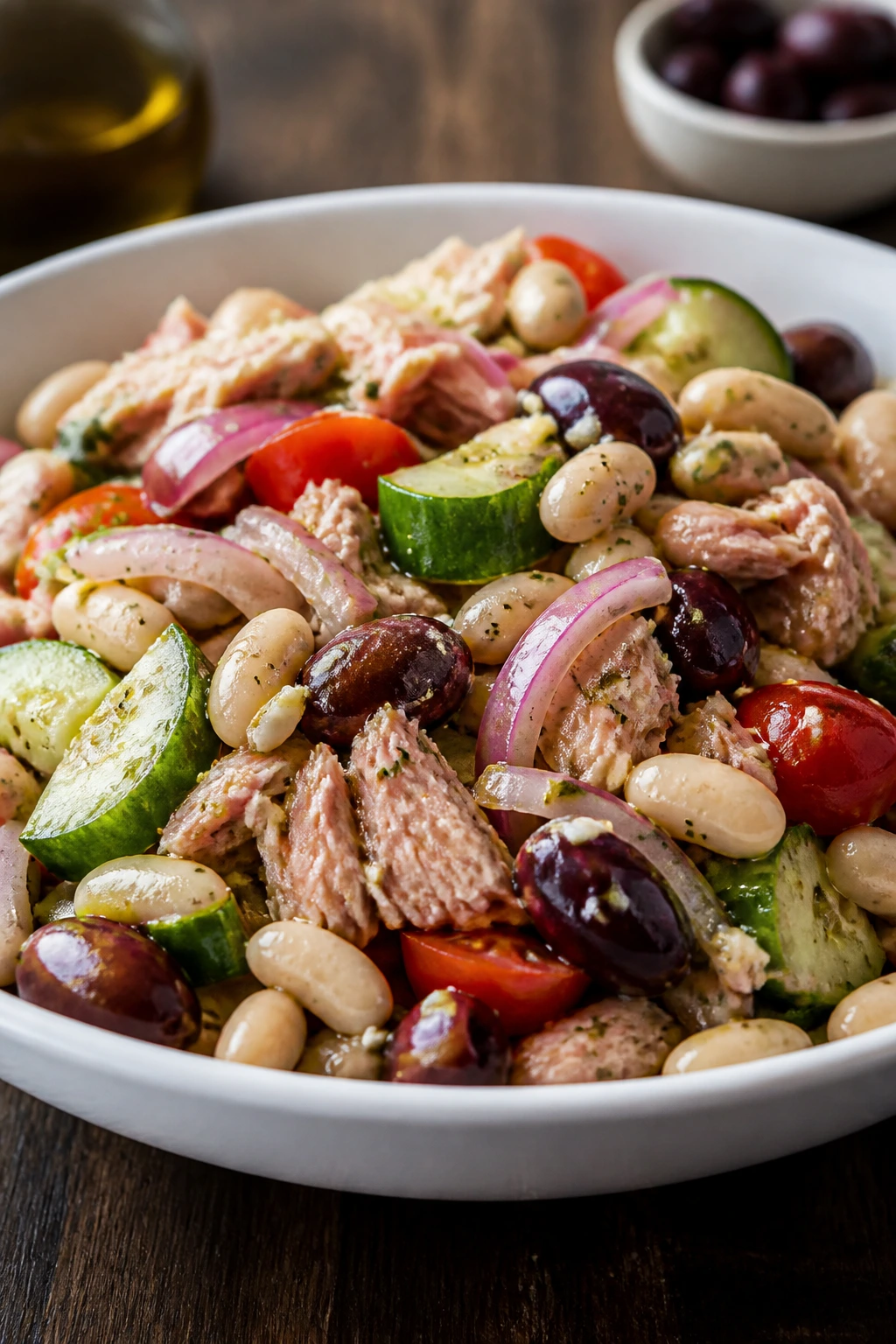
Intro:
This is pantry lunch that doesn’t taste like pantry lunch. Tuna, white beans, lemon, olives, cucumber, and red onion make a salad that feels sharp and salty in the best way, with enough heft to keep you full.
Why It Works:
Beans stretch the tuna without making the salad heavy, and the lemon-olive oil dressing keeps everything lively. The onion and olives do the loud work here, which is exactly what canned tuna needs. It’s also one of the easiest lunches to assemble from a few reliable shelves.
Key Ingredients:
- 2 cans tuna, drained
- 1 can white beans, rinsed and drained
- 1 cucumber, chopped
- 1 cup cherry tomatoes, halved
- 1/4 red onion, thinly sliced
- 1/3 cup Kalamata olives, sliced
- 1 lemon, juiced
- 2 tbsp olive oil
- 2 tbsp chopped parsley
Quick Steps:
- Whisk the lemon juice, olive oil, salt, and pepper in a large bowl.
- Add the tuna, beans, cucumber, tomatoes, onion, olives, and parsley.
- Fold gently so the tuna stays in chunky pieces.
- Taste and add more lemon if the salad feels dull.
- Chill for 15 minutes or eat right away with bread or greens.
Equipment for This Recipe:
- Mixing bowl
- Fork
- Knife and cutting board
- Can opener
How to Serve This Dish:
Spoon it over greens, pile it into a pita, or eat it with crackers. A few cucumber slices on the side keep the plate crisp and clean.
Pro Tips for This Recipe:
- Use tuna packed in olive oil if you want richer flavor.
- Slice the onion very thin so it doesn’t take over.
- Add beans last if you want a more intact salad texture.
Variations on This Dish:
- Capers Instead of Olives: Use 1 tbsp capers for a brinier bite.
- Creamy Tuna Salad: Stir in 2 tbsp Greek yogurt for a softer texture.
Common Mistakes to Avoid with This Dish:
- Dry flavor: The salad needs enough lemon and salt to wake up the tuna.
- Crushed beans: Fold, don’t mash, unless you want a spread.
- Too much onion: Start small; red onion can get loud fast.
8. Roasted Veggie Hummus Wraps
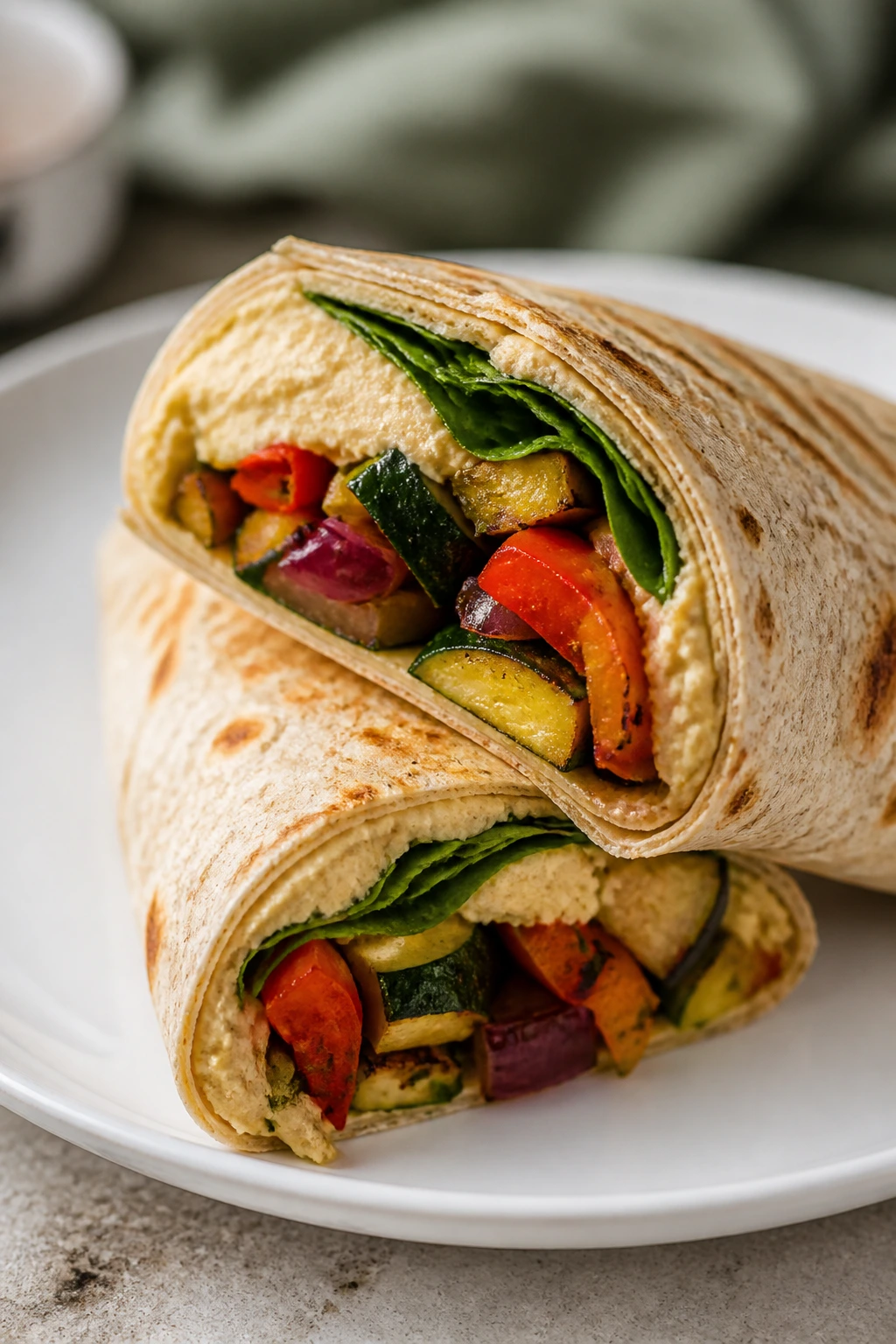
Intro:
Roasted vegetables make a wrap taste warmer, sweeter, and less like an afterthought. The hummus keeps things creamy, the spinach gives the wrap some bite, and the charred edges on the vegetables do half the flavor work.
Why It Works:
Roasting concentrates the flavor of the vegetables, which matters when you’re packing lunch for later. Hummus acts like glue and keeps the wrap from feeling dry. If you use sturdy tortillas, this one travels well.
Key Ingredients:
- 1 zucchini, sliced
- 1 red bell pepper, sliced
- 2 carrots, cut into sticks
- 1/2 red onion, sliced
- 1/2 cup hummus
- 4 large whole wheat wraps
- 2 cups baby spinach
- 1/4 cup crumbled feta, optional
Quick Steps:
- Roast the vegetables at 425°F for 20 minutes, until browned at the edges.
- Warm the wraps for 10 seconds so they roll without tearing.
- Spread hummus over each wrap.
- Layer on spinach, roasted vegetables, and feta if you’re using it.
- Roll tightly, slice in half, and wrap in parchment for packing.
Equipment for This Recipe:
- Rimmed baking sheet
- Parchment paper
- Knife and cutting board
- Small spatula or spoon
How to Serve This Dish:
Serve with a cup of tomato soup or a handful of olives. If you want more crunch, add a few sunflower seeds right before rolling.
Pro Tips for This Recipe:
- Don’t overcrowd the pan or the vegetables will steam.
- Let the vegetables cool a bit before wrapping.
- Spread hummus edge to edge so the wrap stays sealed.
Variations on This Dish:
- Spicy Hummus Wrap: Use harissa hummus or stir chili flakes into plain hummus.
- Bean-Packed Version: Add 1/2 cup chickpeas for extra protein.
Common Mistakes to Avoid with This Dish:
- Soggy wrap: Hot vegetables can steam the tortilla.
- Tearing tortillas: Warm them briefly before rolling.
- Weak flavor: Salt the vegetables after roasting, not before.
9. Teriyaki Tofu Broccoli Bowls
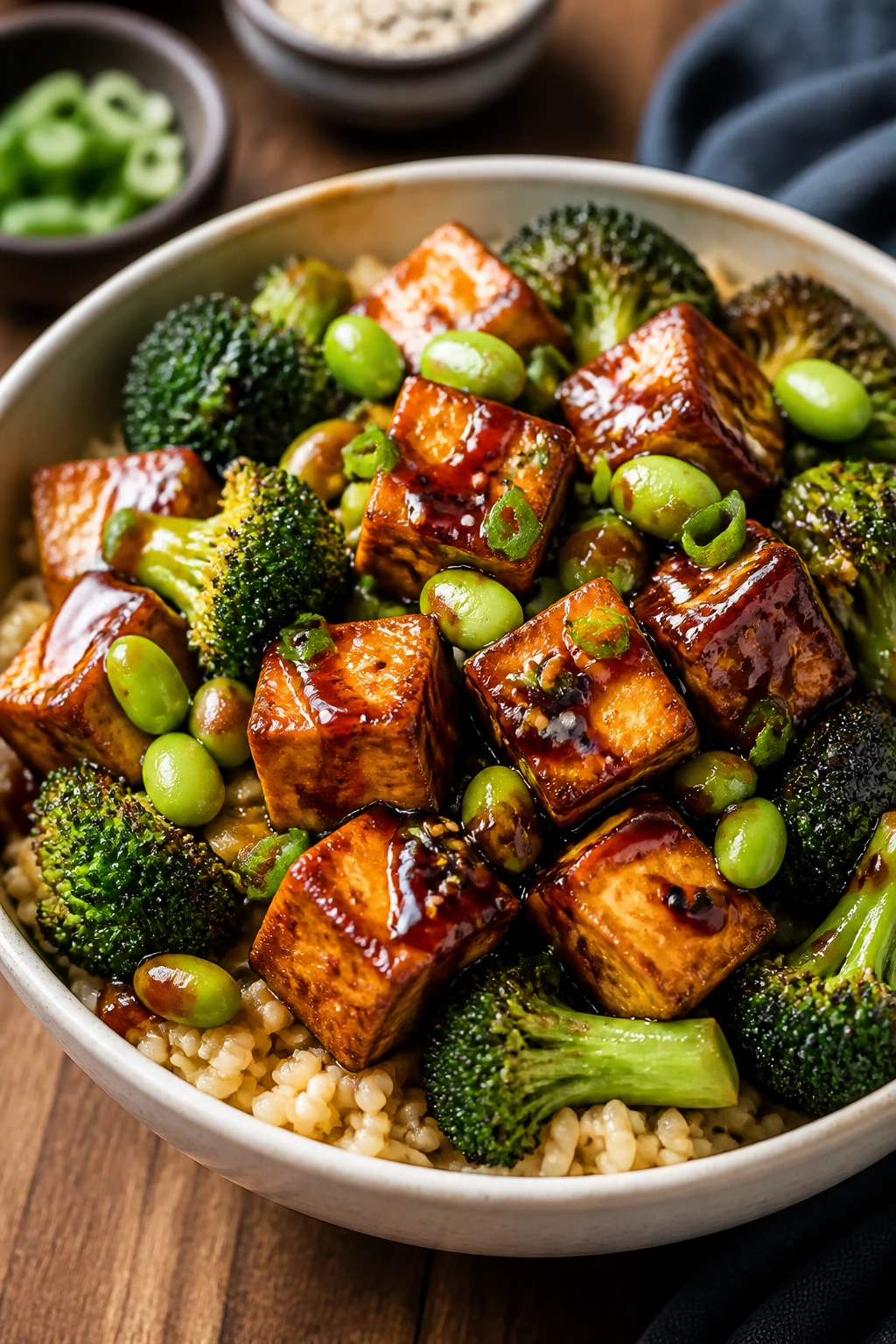
Intro:
This bowl tastes best when the tofu is crisp on the outside and still tender in the middle. Broccoli, edamame, and teriyaki sauce bring enough color and salt that you don’t miss meat for a second.
Why It Works:
Pressing the tofu is the part people skip, and it’s the part that matters most. Dry tofu browns; wet tofu steams. The broccoli and edamame add protein and crunch, so the bowl doesn’t lean entirely on the sauce.
Key Ingredients:
- 1 block extra-firm tofu, 14 oz
- 2 cups broccoli florets
- 1 cup shelled edamame
- 2 cups cooked brown rice
- 1/3 cup teriyaki sauce
- 1 tbsp sesame oil
- 2 scallions, sliced
- 1 tbsp sesame seeds
Quick Steps:
- Press the tofu for 15 minutes, then cube it.
- Roast the tofu and broccoli at 425°F for 20 to 25 minutes, tossing once.
- Warm the edamame and rice.
- Toss the tofu with teriyaki sauce and a few drops of sesame oil.
- Build the bowls and finish with scallions and sesame seeds.
Equipment for This Recipe:
- Baking sheet
- Tofu press or clean towels and a heavy pan
- Small bowl
- Rice cooker or saucepan
How to Serve This Dish:
Serve it warm, with extra sauce on the side if you like a saucier bowl. Pickled ginger or shredded carrots make it brighter without much work.
Pro Tips for This Recipe:
- Press tofu longer than you think.
- Use parchment so the tofu releases cleanly.
- Add the sauce after roasting so it stays glossy, not sticky-burned.
Variations on This Dish:
- Peanut Teriyaki Bowl: Add 1 tbsp peanut butter to the sauce.
- Rice-Free Version: Serve over shredded cabbage for a lighter bowl.
Common Mistakes to Avoid with This Dish:
- Rubbery tofu: Don’t skip pressing.
- Soggy broccoli: Roast it on a hot, uncovered sheet.
- Thin sauce: If teriyaki is watery, reduce it for a minute in a pan.
10. Caprese Chicken Salad with Balsamic
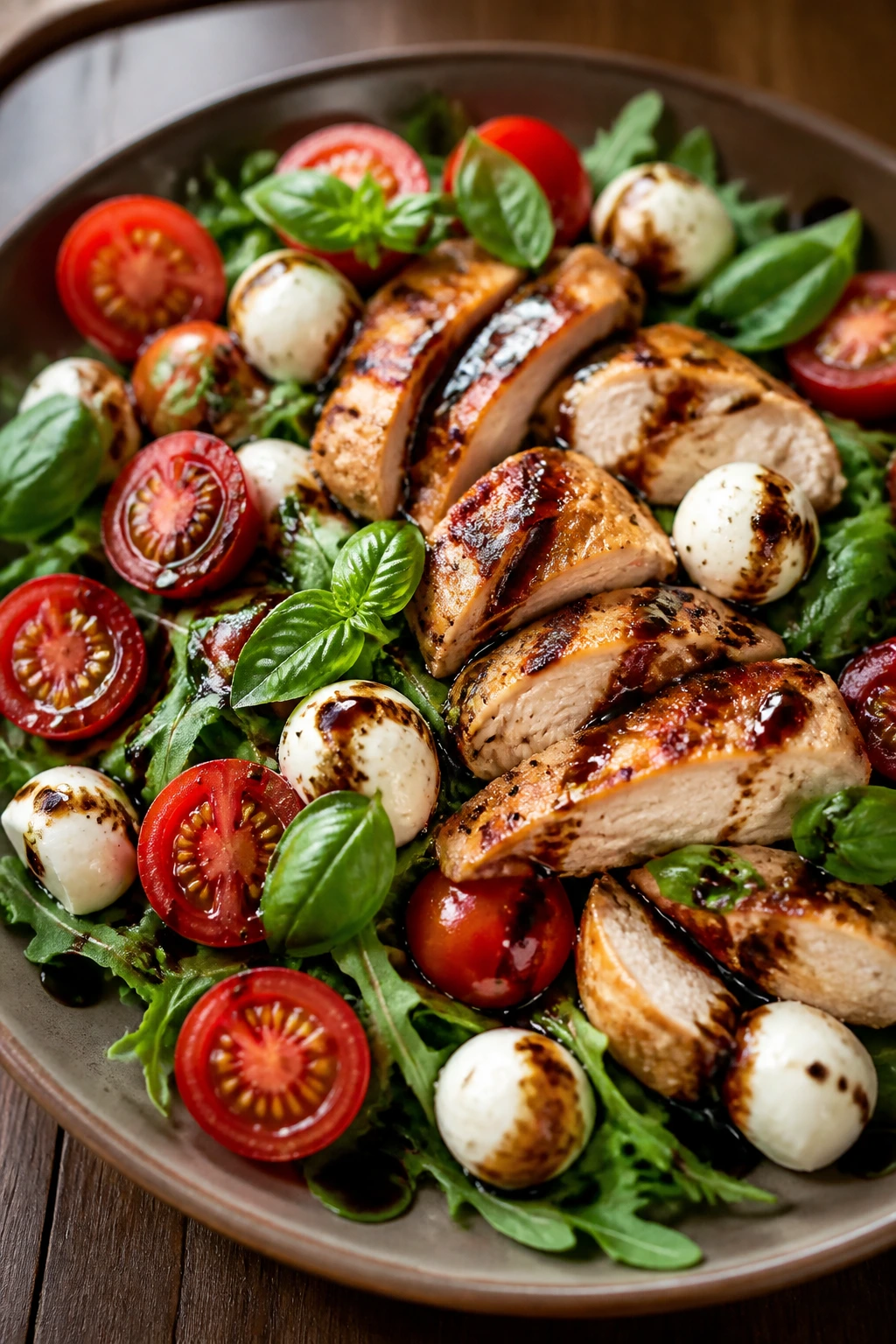
Intro:
This is what happens when chicken salad stops being boring and starts tasting like lunch with a point of view. Juicy tomatoes, mozzarella, basil, and arugula keep it fresh, while the chicken gives it enough structure to hold up as a real meal.
Why It Works:
The balsamic cuts through the mozzarella and keeps the tomatoes from reading as soft or sweet only. Arugula adds peppery bite, which is what keeps the bowl from feeling too mild. I prefer this one slightly warm, but it works cold too.
Key Ingredients:
- 2 boneless chicken breasts
- 2 cups arugula
- 1 cup cherry tomatoes, halved
- 1 cup mini mozzarella balls
- 1/2 cup fresh basil leaves
- 2 tbsp olive oil
- 2 tbsp balsamic vinegar
- 1 garlic clove, grated
Quick Steps:
- Season and cook the chicken in olive oil over medium heat until it reaches 165°F.
- Let it rest for 5 minutes, then slice it.
- Toss arugula, tomatoes, mozzarella, and basil in a bowl.
- Whisk balsamic, olive oil, garlic, salt, and pepper.
- Top the salad with chicken and drizzle with dressing.
Equipment for This Recipe:
- Skillet
- Mixing bowl
- Knife and cutting board
- Small whisk or fork
How to Serve This Dish:
Serve it with toasted sourdough or a few roasted potatoes if you want more volume. A spoonful of pesto on the side makes it feel richer without much effort.
Pro Tips for This Recipe:
- Tear the basil by hand so it stays fragrant.
- Use ripe tomatoes; under-ripe ones make the salad taste flat.
- Dress the greens right before serving so they stay lively.
Variations on This Dish:
- Turkey Caprese Salad: Swap the chicken for sliced turkey breast.
- No-Mozzarella Version: Use avocado slices for a softer finish.
Common Mistakes to Avoid with This Dish:
- Dry chicken: Let it rest before slicing.
- Bitter arugula overload: Balance it with enough tomato and mozzarella.
- Weak dressing: Balsamic needs salt to taste finished.
11. Turkey Zucchini Meatball Orzo
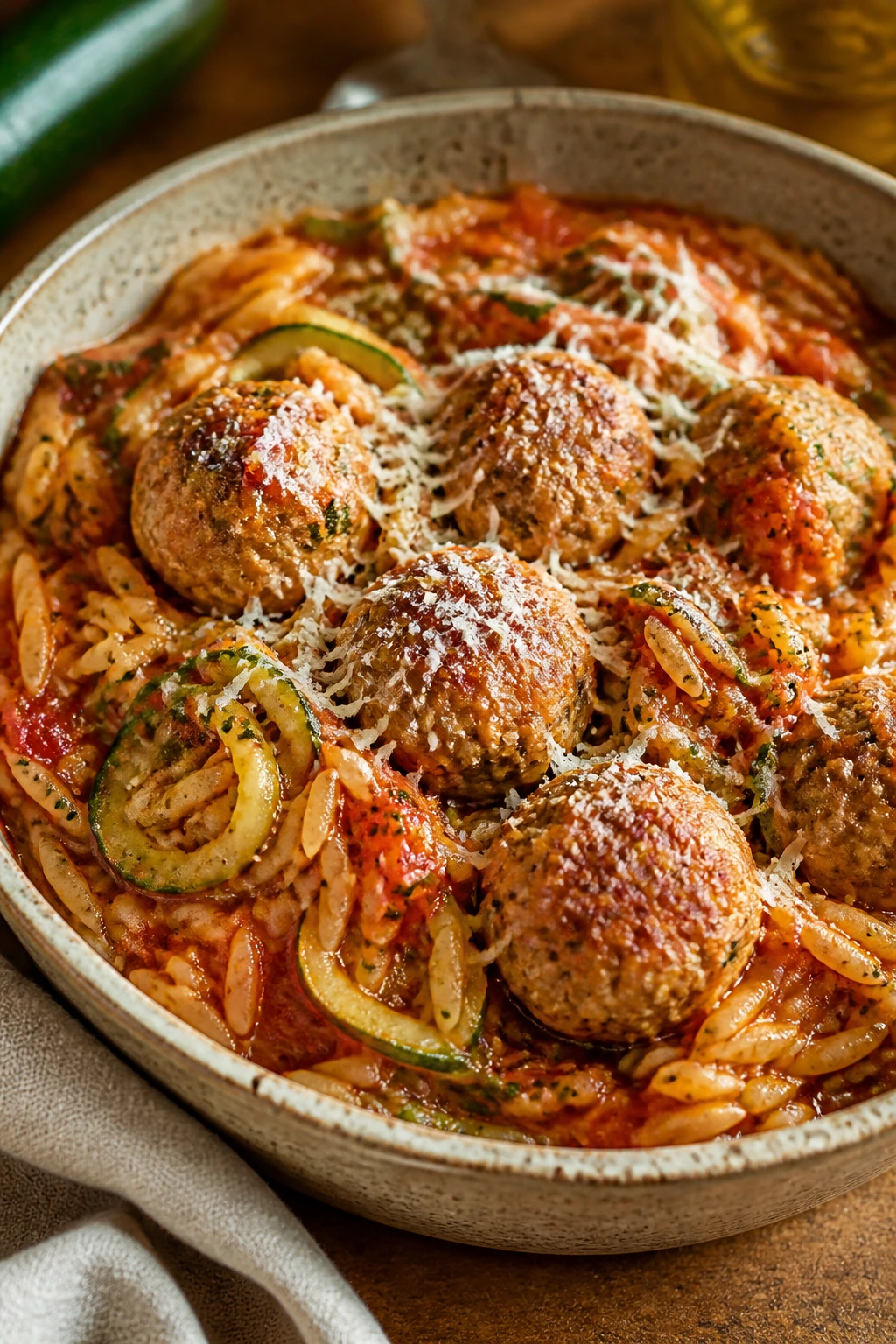
Intro:
A bowl of orzo can go from plain to worth packing the minute you add browned turkey meatballs and a handful of spinach. The zucchini keeps the meatballs tender, and the marinara gives the whole thing enough sauce to eat without a fork fight.
Why It Works:
Turkey can dry out fast, so the grated zucchini and egg are not decoration — they’re insurance. Orzo cooks quickly and catches sauce in a way that rice sometimes doesn’t. Spinach wilts into the hot pasta and makes the bowl feel more complete.
Key Ingredients:
- 1 lb ground turkey
- 1 small zucchini, grated
- 1 egg
- 1/3 cup breadcrumbs
- 1 cup orzo
- 1 1/2 cups marinara sauce
- 2 cups baby spinach
- 1/4 cup grated Parmesan
Quick Steps:
- Heat the oven to 400°F and line a baking sheet.
- Mix turkey, zucchini, egg, breadcrumbs, salt, and pepper, then form small meatballs.
- Bake the meatballs for 14 to 16 minutes, until cooked through.
- Cook the orzo, then warm it with marinara and spinach until the spinach wilts.
- Top with meatballs and Parmesan.
Equipment for This Recipe:
- Baking sheet
- Mixing bowl
- Medium pot
- Grater
How to Serve This Dish:
Pack it in a lidded bowl and add extra Parmesan at lunch. A spoonful of chili oil wakes up the tomato sauce if you like more heat.
Pro Tips for This Recipe:
- Squeeze some moisture from the zucchini if it’s especially watery.
- Make the meatballs small so they bake evenly.
- Save a little pasta water to loosen the sauce if needed.
Variations on This Dish:
- Beef Version: Use lean ground beef instead of turkey.
- Dairy-Free Bowl: Skip the Parmesan and add basil and lemon zest.
Common Mistakes to Avoid with This Dish:
- Loose meatballs: Don’t skip the egg and breadcrumbs.
- Dry pasta: Orzo drinks sauce fast, so keep it slightly loose.
- Overbaked turkey: Pull the meatballs as soon as they hit 165°F.
12. Coconut Lentil Curry with Spinach
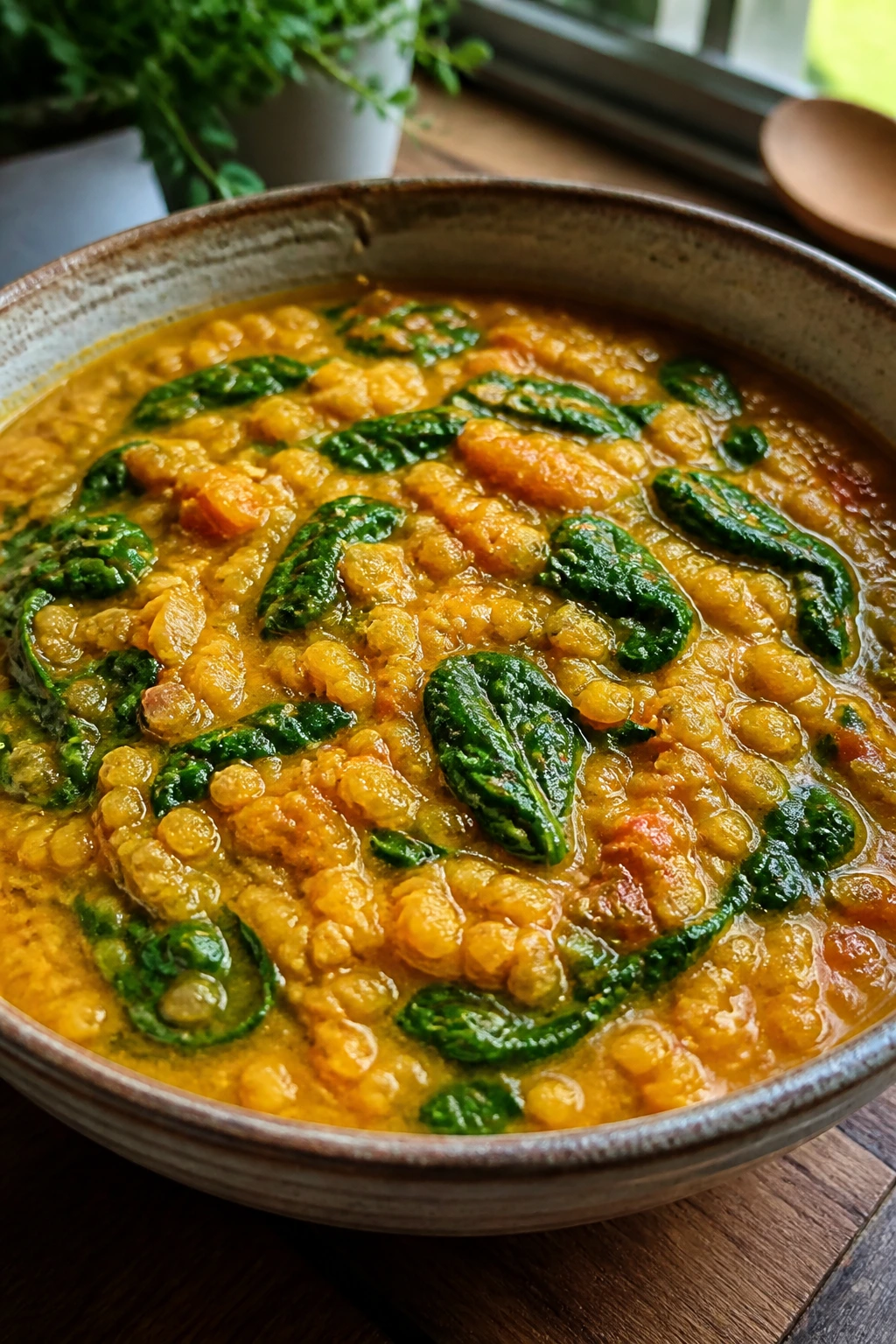
Intro:
This curry tastes rich without needing meat, and that’s part of its charm. Coconut milk softens the spices, red lentils melt into the sauce, and spinach disappears into the pot like it was meant to be there.
Why It Works:
Red lentils break down quickly, which gives you a thick, spoonable curry in less than half an hour. Coconut milk adds body, while lime at the end keeps the bowl from tasting heavy. It reheats like a dream, which makes it a serious lunchbox player.
Key Ingredients:
- 1 tbsp olive oil
- 1 yellow onion, diced
- 3 garlic cloves, minced
- 1 tbsp grated ginger
- 1 cup red lentils, rinsed
- 1 can coconut milk
- 3 cups broth
- 2 tsp curry powder
- 3 cups baby spinach
- 1 lime, juiced
Quick Steps:
- Sauté onion in oil for 5 minutes, until soft.
- Add garlic and ginger and cook for 30 seconds.
- Stir in lentils, coconut milk, broth, and curry powder.
- Simmer for 18 to 20 minutes, stirring now and then, until thick.
- Stir in spinach and lime juice, then serve over rice.
Equipment for This Recipe:
- Medium pot
- Wooden spoon
- Knife and cutting board
- Citrus juicer, optional
How to Serve This Dish:
Serve it over brown rice with chopped cilantro on top. A spoonful of yogurt or a few toasted cashews makes the bowl feel a little more finished.
Pro Tips for This Recipe:
- Rinse the lentils well so they cook cleanly.
- Add the spinach at the end; it only needs a minute.
- If the curry thickens too much in the fridge, loosen it with water or broth.
Variations on This Dish:
- Chickpea Curry: Swap half the lentils for chickpeas if you want more texture.
- Milder Version: Use less curry powder and add extra coconut milk.
Common Mistakes to Avoid with This Dish:
- Burnt spices: Stir quickly after adding curry powder.
- Too-thick curry: Add broth a splash at a time.
- Flat finish: Lime at the end makes this dish taste alive.
13. Avocado Egg Salad Rye Toasts
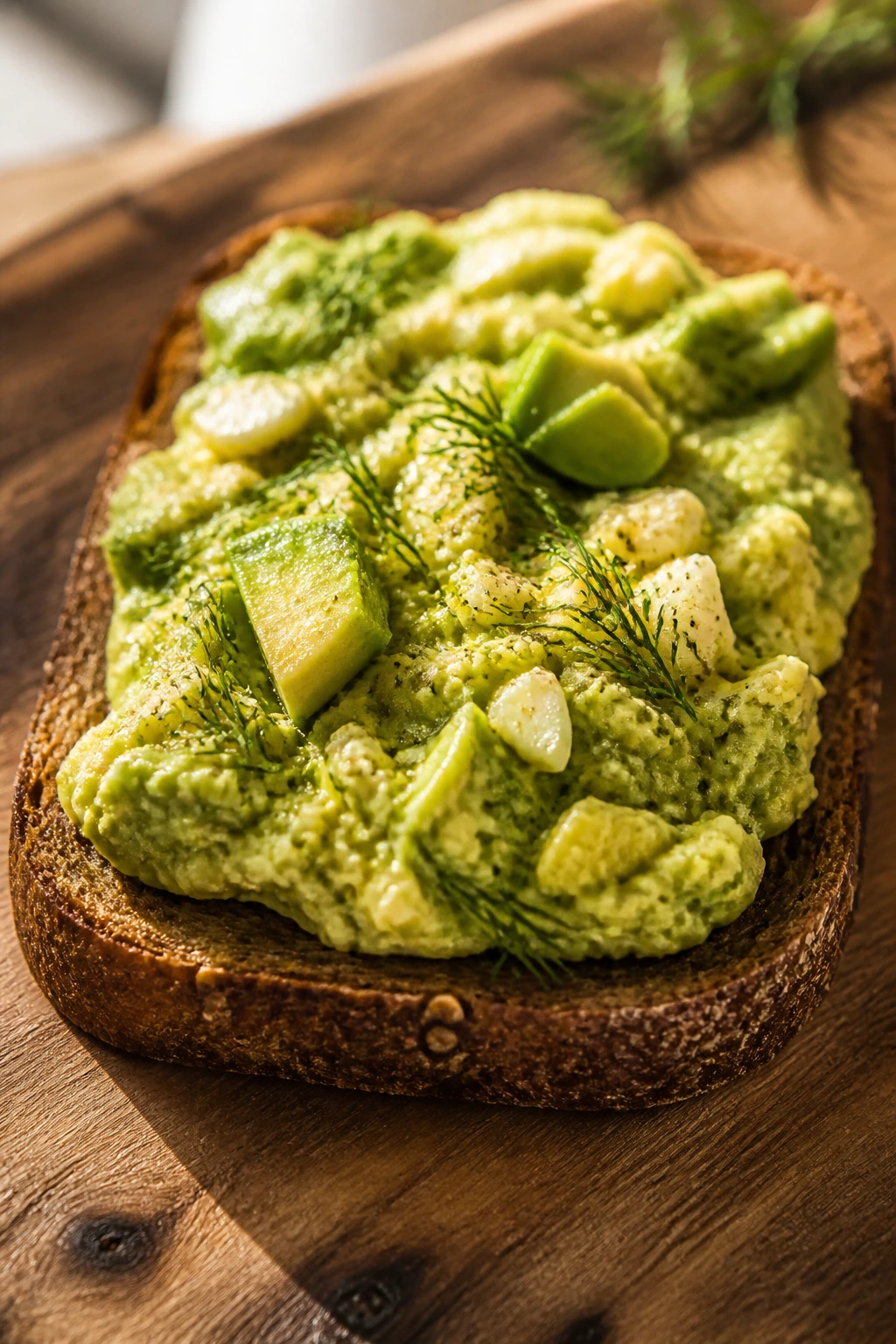
Intro:
Egg salad can be dull or messy; this version keeps the creamy part but adds avocado, dill, and Dijon so it tastes bright instead of soft. Toasted rye gives the whole thing a little grit, which is exactly what lunch needs.
Why It Works:
Avocado replaces some of the mayo without stripping away the richness. Rye bread has enough flavor to stand up to the filling, and Dijon sharpens the eggs. It’s a fast lunch, but not a lazy one.
Key Ingredients:
- 6 large eggs
- 1 ripe avocado
- 2 tbsp plain Greek yogurt
- 1 tsp Dijon mustard
- 1 tbsp chopped dill
- 4 slices rye bread
- 1 tbsp lemon juice
- Chives, for topping
Quick Steps:
- Boil the eggs for 10 minutes, then cool and peel them.
- Mash the avocado with yogurt, Dijon, lemon juice, dill, salt, and pepper.
- Chop the eggs and fold them into the avocado mixture.
- Toast the rye bread until crisp at the edges.
- Spoon on the egg salad and finish with chives.
Equipment for This Recipe:
- Small saucepan
- Bowl
- Fork
- Toaster or skillet
How to Serve This Dish:
Serve open-faced with sliced tomatoes or cucumber on the side. If you want a more portable lunch, pack the salad separately and toast the bread at work.
Pro Tips for This Recipe:
- Slightly older eggs peel easier than very fresh ones.
- Mash the avocado first so the mixture stays creamy.
- Assemble close to eating time if you want the toast crisp.
Variations on This Dish:
- Spicy Egg Salad: Add a pinch of cayenne or chili flakes.
- No-Dairy Version: Skip the yogurt and use a touch more avocado.
Common Mistakes to Avoid with This Dish:
- Rubbery eggs: Do not overboil them.
- Soggy toast: Wait to assemble until lunch if possible.
- Flat flavor: Rye needs salt, lemon, and mustard to come alive.
14. Shrimp Cabbage Slaw Tacos
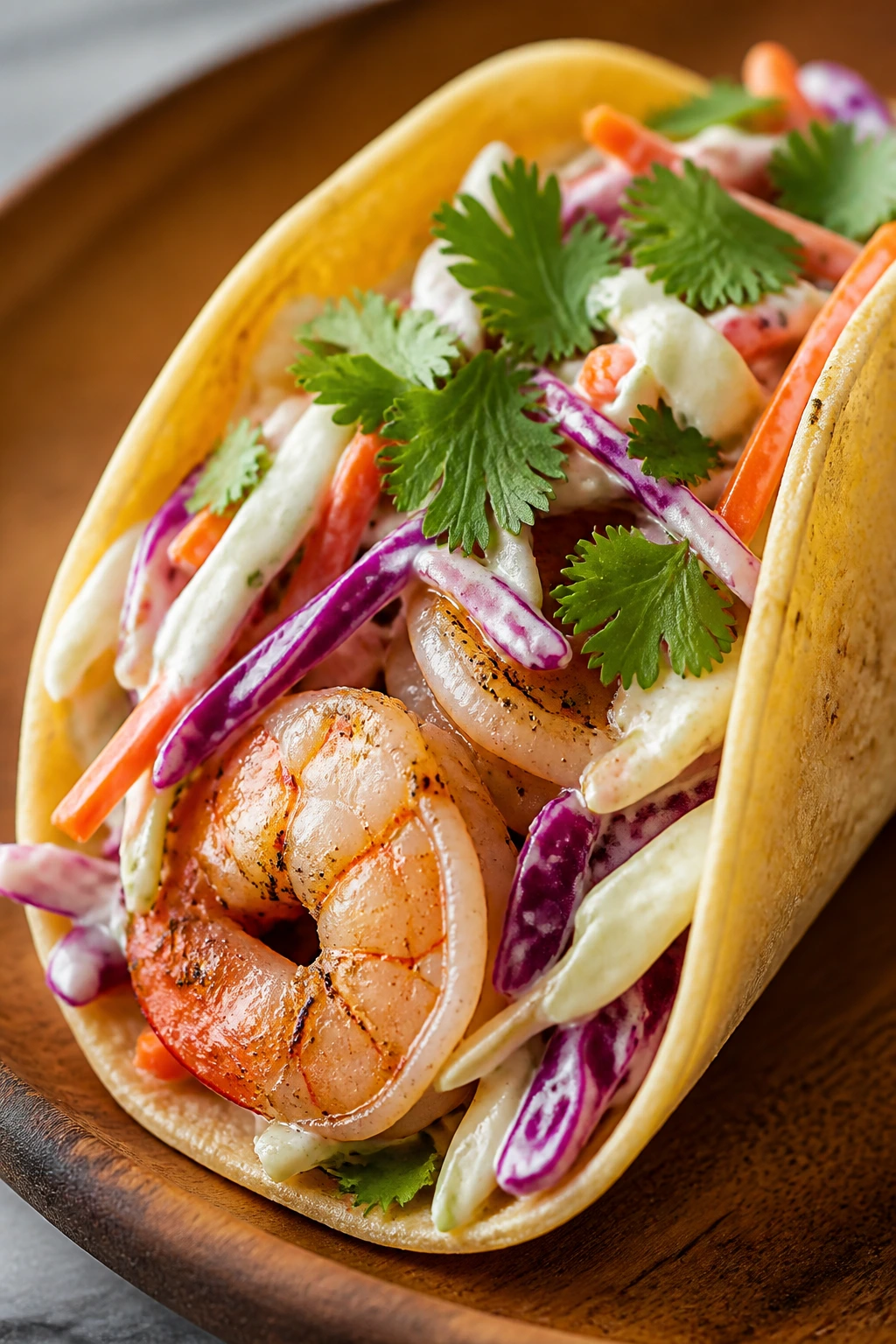
Intro:
Shrimp cooks fast, cabbage stays crisp, and lime does the thing it always should: make lunch taste awake. These tacos are light enough for a hot day and sturdy enough to feel like you actually ate something.
Why It Works:
Cabbage slaw is better than lettuce here because it keeps its crunch after dressing. Shrimp only needs a short cook, which means it stays tender instead of rubbery. A cool yogurt-lime sauce ties the whole thing together without drowning it.
Key Ingredients:
- 1 lb shrimp, peeled and deveined
- 2 cups shredded cabbage
- 1 carrot, shredded
- 1/2 cup plain Greek yogurt
- 1 lime, juiced
- 8 small corn tortillas
- 1 avocado, sliced
- 1 tsp chili powder
Quick Steps:
- Toss cabbage and carrot with half the lime juice and a pinch of salt.
- Season the shrimp with chili powder, salt, and pepper.
- Cook the shrimp in a hot skillet for 2 minutes per side, until pink and curled.
- Warm the tortillas in a dry pan.
- Fill with slaw, shrimp, avocado, and a spoonful of yogurt.
Equipment for This Recipe:
- Skillet
- Mixing bowl
- Knife and cutting board
- Small spoon
How to Serve This Dish:
Serve with extra lime wedges and a spoonful of salsa. If you want more crunch, add sliced radishes or pickled onions.
Pro Tips for This Recipe:
- Pat the shrimp dry before seasoning or they’ll steam.
- Dress the slaw lightly; too much liquid makes the tacos collapse.
- Keep the tortillas wrapped in a towel after warming.
Variations on This Dish:
- Chipotle Shrimp Tacos: Add chipotle powder for a smoky hit.
- No-Tortilla Bowl: Serve the shrimp and slaw over rice or shredded lettuce.
Common Mistakes to Avoid with This Dish:
- Overcooked shrimp: Pull them as soon as they turn opaque.
- Wet slaw: Light dressing is enough.
- Cold tortillas: Warm them or they crack.
15. Cauliflower Rice Burrito Bowls
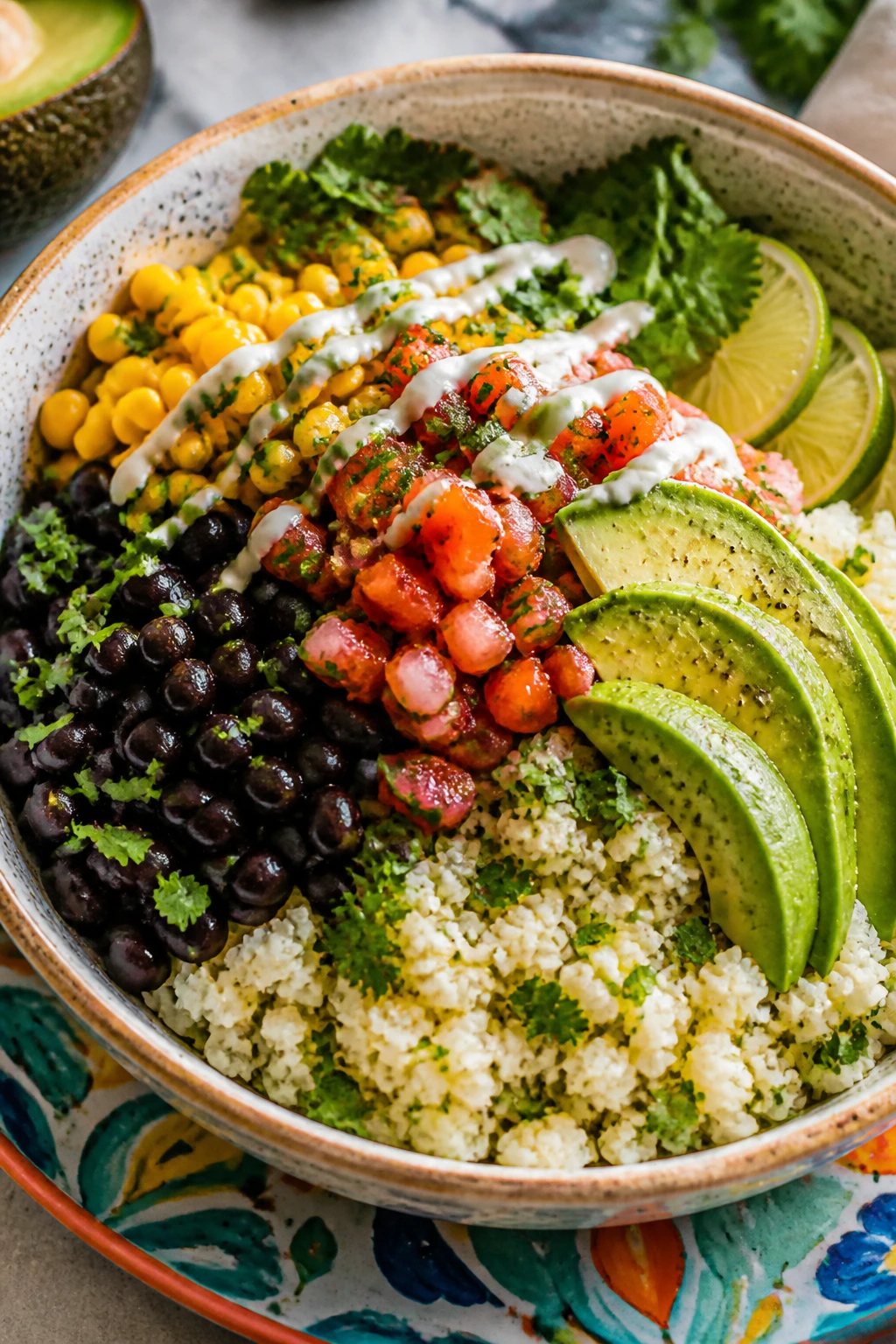
Intro:
A burrito bowl does not need a mountain of rice to feel complete. With cauliflower rice, beans, salsa, avocado, and a properly seasoned protein, this one still tastes like lunch with backbone.
Why It Works:
Cauliflower rice soaks up seasoning fast, which means it can carry the bowl if you cook it hard enough in a skillet. Beans add fiber and give the bowl staying power. The salsa and lime are not optional; they keep the whole thing from tasting dry.
Key Ingredients:
- 4 cups cauliflower rice
- 1 lb cooked chicken or 2 cans black beans
- 1 cup salsa
- 1 cup corn
- 1 avocado, sliced
- 2 cups shredded lettuce
- 1 lime, juiced
- 1/4 cup chopped cilantro
Quick Steps:
- Warm the chicken or beans in a skillet with salt and cumin.
- Cook the cauliflower rice in a dry skillet for 4 to 5 minutes, until tender but not mushy.
- Stir in lime juice and cilantro.
- Divide the cauliflower rice, protein, corn, lettuce, and salsa between bowls.
- Finish with avocado and any extra hot sauce you like.
Equipment for This Recipe:
- Large skillet
- Knife and cutting board
- Mixing bowl
- Spoon
How to Serve This Dish:
Serve it in a wide bowl so the toppings stay visible. A spoonful of Greek yogurt or shredded cheese works if you want a creamier finish.
Pro Tips for This Recipe:
- Cook the cauliflower rice on high enough heat to steam off moisture.
- Add avocado at the end so it stays bright.
- If using beans, warm them with a pinch of cumin and garlic.
Variations on This Dish:
- Fajita Version: Add sautéed peppers and onions.
- Turkey Bowl: Swap chicken for lean ground turkey seasoned with taco spices.
Common Mistakes to Avoid with This Dish:
- Wet cauliflower rice: Cook off the moisture, don’t just warm it.
- Underseasoned base: The rice itself needs salt and lime.
- Packed too early: Keep avocado and salsa separate if you need crunch.
16. Pesto Turkey Sandwiches
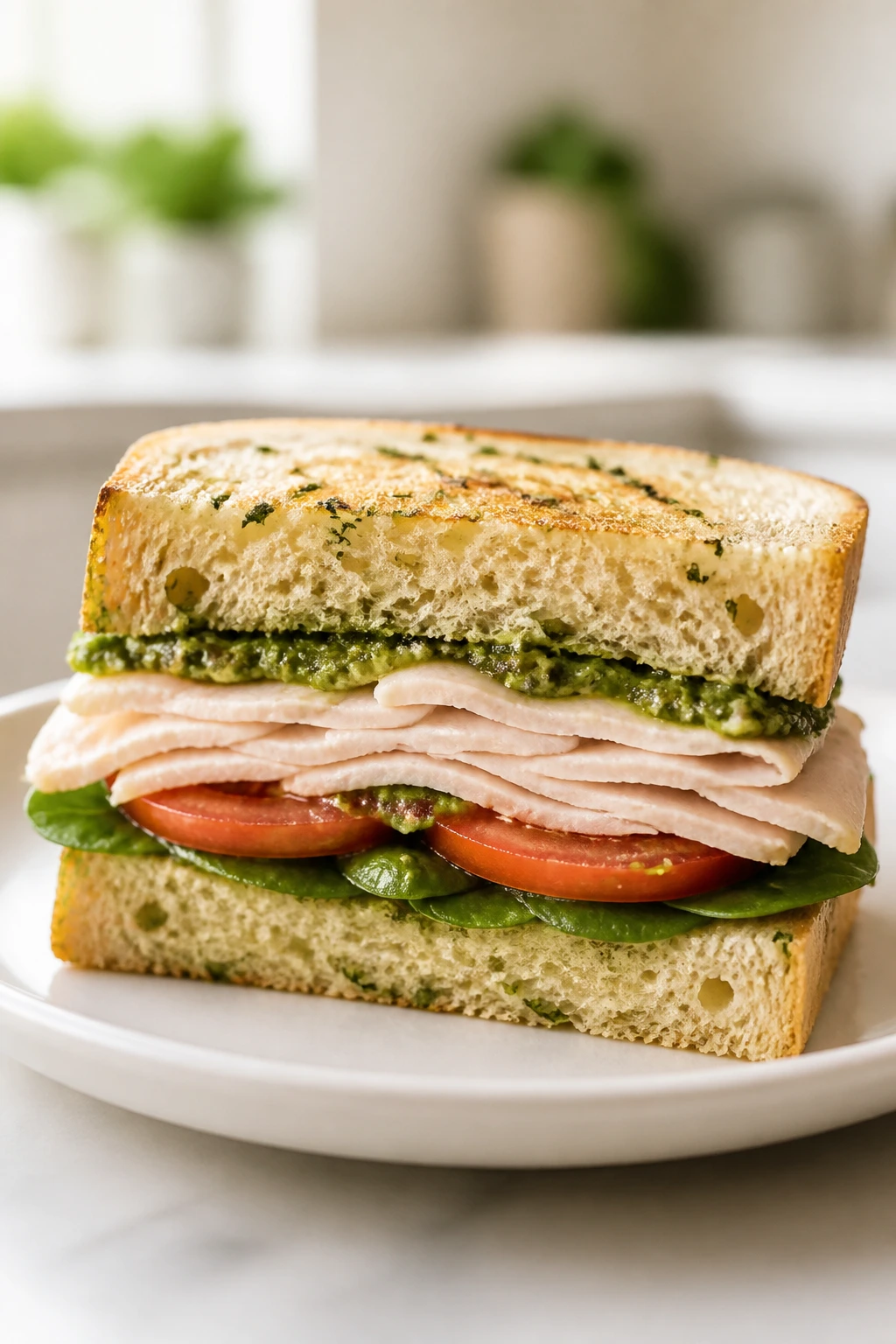
Intro:
A turkey sandwich can be forgettable fast. Add pesto, tomato, spinach, and the right bread, though, and it starts tasting like something from a café that actually bothered to season the filling.
Why It Works:
Pesto brings fat, herbs, and salt in one swipe, which keeps lean turkey from tasting dry. Tomato adds moisture, but spinach gives you structure so the bread does not go soggy immediately. Toasting the bread lightly is the small step that pays off.
Key Ingredients:
- 8 slices whole grain bread
- 8 oz sliced turkey breast
- 1/3 cup pesto
- 1 large tomato, sliced
- 2 cups baby spinach
- 1/2 cucumber, thinly sliced
- 4 slices mozzarella, optional
Quick Steps:
- Lightly toast the bread so it can handle the filling.
- Spread pesto on both slices of bread.
- Layer turkey, tomato, spinach, cucumber, and mozzarella if using.
- Close the sandwich, press gently, and slice.
- Wrap tightly if you’re packing it for later.
Equipment for This Recipe:
- Toaster or skillet
- Knife
- Cutting board
- Parchment or sandwich wrap
How to Serve This Dish:
Serve with a cup of soup, a few grapes, or a simple pickle spear. If you want extra crunch, add thinly sliced bell pepper instead of cucumber.
Pro Tips for This Recipe:
- Pat tomato slices dry before building the sandwich.
- Use sturdy bread; soft bread squashes fast.
- Add mozzarella only if you like a richer, heavier sandwich.
Variations on This Dish:
- Chicken Pesto Sandwich: Swap turkey for cooked chicken breast.
- Mediterranean Version: Add roasted red peppers and olives.
Common Mistakes to Avoid with This Dish:
- Soggy bread: Toast first and dry the tomato.
- Too much pesto: A thin layer is enough.
- Flat sandwich: Salt the tomato lightly to sharpen the flavor.
17. Miso Soba Noodle Salad
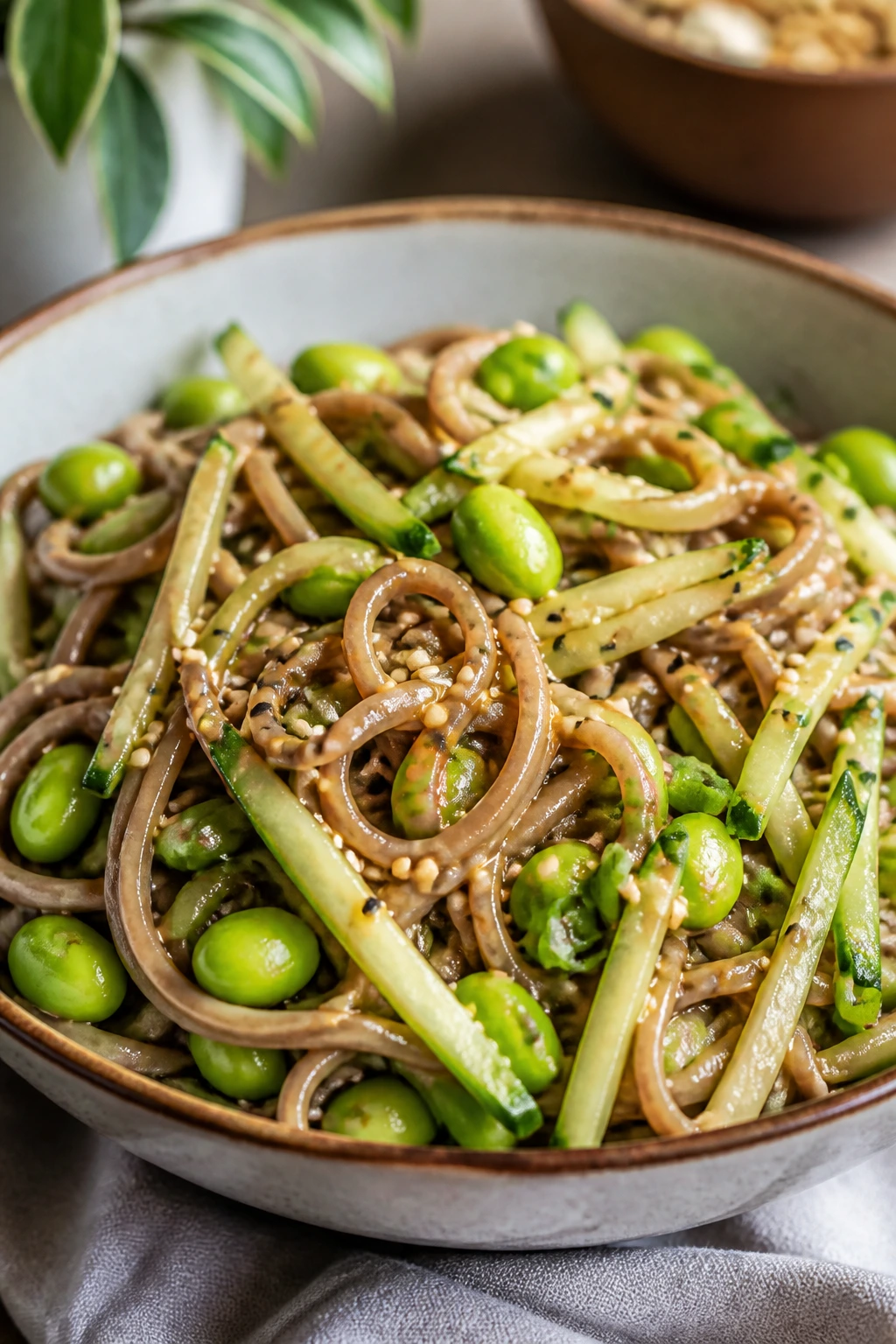
Intro:
Cold noodles can be brilliant or boring; this one lands in the first camp. Miso, sesame, cucumber, and edamame give it that savory-salty balance that makes a noodle salad feel like a real lunch.
Why It Works:
Soba noodles hold their shape after chilling better than a lot of pasta. Miso makes the dressing taste deep without needing a pile of ingredients. The edamame adds protein, so the salad does more than fill space.
Key Ingredients:
- 8 oz soba noodles
- 2 tbsp white miso paste
- 2 tbsp rice vinegar
- 1 tbsp sesame oil
- 1 cucumber, julienned
- 1 cup shredded carrots
- 1 cup shelled edamame
- 2 scallions, sliced
- 1 tbsp sesame seeds
Quick Steps:
- Cook the soba noodles until tender, then rinse under cold water.
- Whisk miso, rice vinegar, sesame oil, and 2 tbsp water into a dressing.
- Toss the noodles with cucumber, carrots, edamame, scallions, and dressing.
- Sprinkle with sesame seeds.
- Chill for 15 minutes before serving, or eat right away.
Equipment for This Recipe:
- Medium pot
- Colander
- Mixing bowl
- Whisk or fork
How to Serve This Dish:
Serve in a shallow bowl with extra scallions on top. A hard-boiled egg or a few strips of tofu make it even more lunch-worthy.
Pro Tips for This Recipe:
- Rinse soba well or it will cling together.
- Loosen the dressing with water before tossing.
- Add cucumber close to serving if you want maximum crunch.
Variations on This Dish:
- Peanut Miso Salad: Stir 1 tbsp peanut butter into the dressing.
- Spicy Version: Add chili oil or chili crisp at the end.
Common Mistakes to Avoid with This Dish:
- Sticky noodles: Rinse them after cooking.
- Too-salty dressing: Use white miso and thin it with water.
- Lost crunch: Keep some vegetables separate until serving.
18. Black Bean Sweet Potato Quesadillas
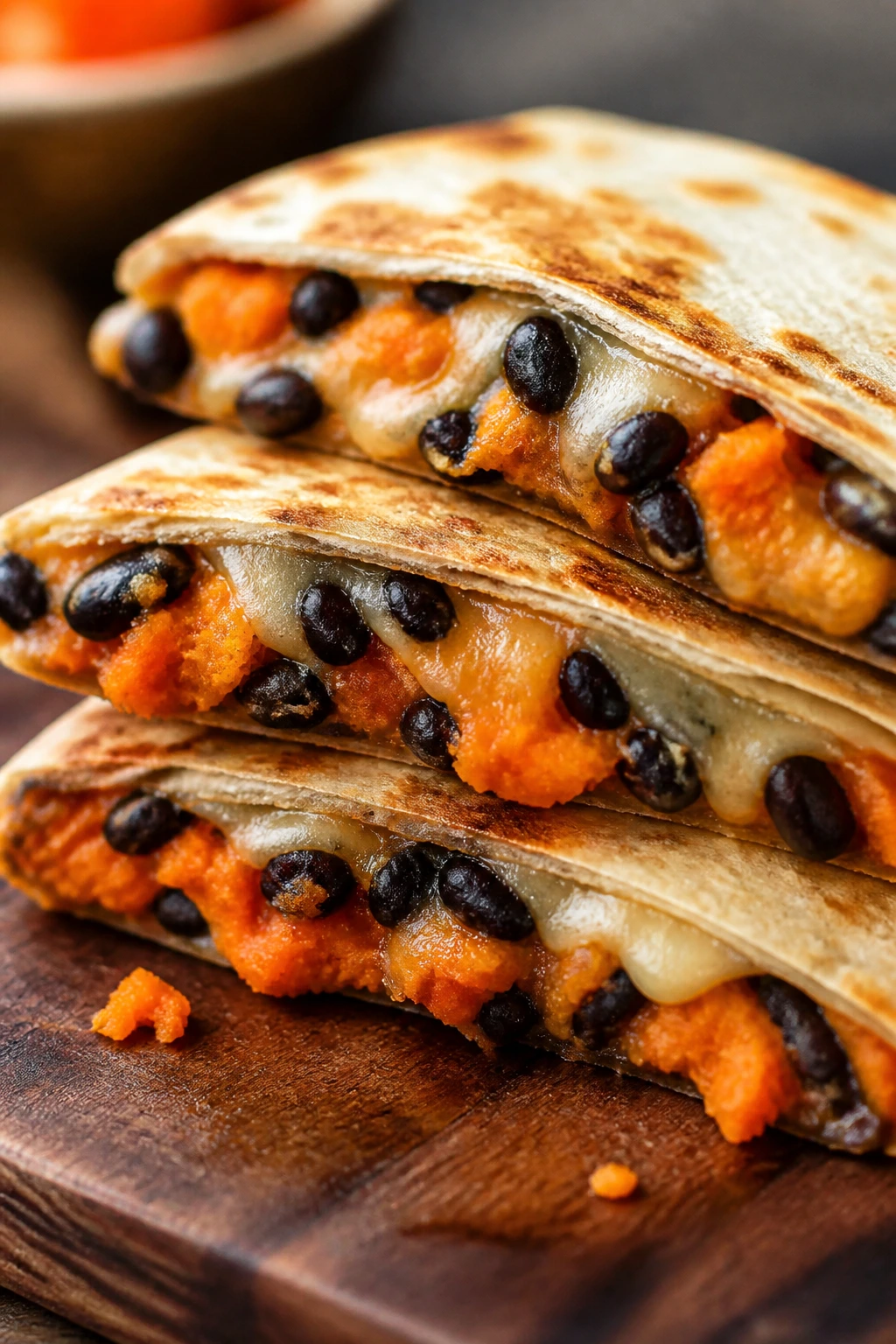
Intro:
A good quesadilla should crunch when you cut it. Sweet potato, black beans, and melted cheese turn that familiar sound into a lunch that feels comforting but still balanced enough for the middle of the day.
Why It Works:
Sweet potato brings sweetness and body, while black beans add protein and a little earthiness. The tortilla crisps in the skillet, which gives you texture instead of a soft, flat pocket. Salsa on the side pulls the whole thing together.
Key Ingredients:
- 2 medium sweet potatoes, peeled and cubed
- 1 can black beans, rinsed and drained
- 1 tsp cumin
- 4 large flour or whole wheat tortillas
- 1 1/2 cups shredded cheddar or Monterey Jack
- 1/4 red onion, finely diced
- Salsa, for serving
- Plain yogurt, optional
Quick Steps:
- Roast the sweet potatoes at 425°F for 20 to 25 minutes, until tender.
- Toss them with black beans, cumin, onion, salt, and pepper.
- Sprinkle cheese on half of each tortilla, then add the filling and fold.
- Cook in a skillet over medium heat for 2 to 3 minutes per side, until crisp and melted.
- Slice into wedges and serve with salsa.
Equipment for This Recipe:
- Baking sheet
- Skillet
- Spatula
- Knife and cutting board
How to Serve This Dish:
Serve with a chopped salad or a cup of soup. A spoonful of yogurt on the side cools the cheese and makes the lunch feel fuller.
Pro Tips for This Recipe:
- Roast the sweet potato until the edges caramelize a little.
- Use medium heat for the quesadillas so the tortilla browns before the cheese burns.
- Let them rest for a minute before slicing or the filling will run.
Variations on This Dish:
- Corn Version: Add 1/2 cup corn for more sweetness.
- Spicy Quesadilla: Use pepper jack and add chopped jalapeños.
Common Mistakes to Avoid with This Dish:
- Soggy filling: Roast the potatoes instead of boiling them.
- Burnt tortilla: Keep the heat at medium.
- Cheese spill: Don’t overfill the fold.
19. Spinach Feta Frittata Muffins
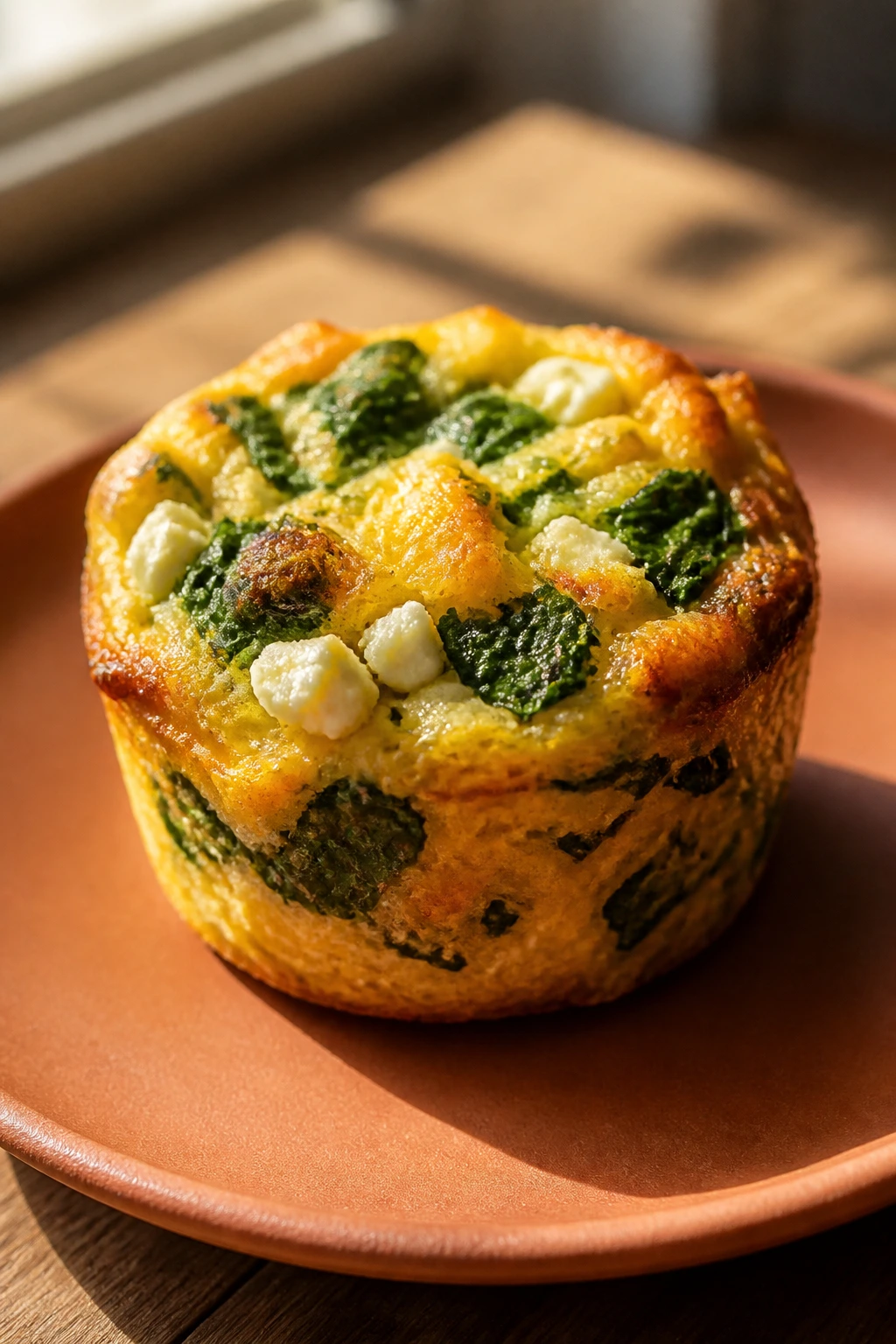
Intro:
These are the lunch you make when you want something neat, savory, and easy to pack. The edges go a little golden, the centers stay tender, and the feta gives each bite enough salt to stay interesting cold or warm.
Why It Works:
Egg muffins are good meal prep because they do not turn limp in the fridge the way some lunches do. Spinach melts into the eggs, and feta keeps the flavor sharp. They’re also easy to eat with one hand, which is not a small thing.
Key Ingredients:
- 8 large eggs
- 1/2 cup milk
- 2 cups chopped spinach
- 1/2 cup crumbled feta
- 1/2 red bell pepper, diced
- 1/4 onion, diced
- 1 tbsp olive oil
- Salt and pepper
Quick Steps:
- Heat the oven to 375°F and grease a muffin tin.
- Sauté the onion and pepper in olive oil for 3 minutes.
- Whisk eggs, milk, salt, and pepper in a bowl.
- Stir in spinach, feta, onion, and pepper, then divide into muffin cups.
- Bake for 18 to 20 minutes, until set in the center.
Equipment for This Recipe:
- Muffin tin
- Mixing bowl
- Whisk
- Skillet, optional for sautéing
How to Serve This Dish:
Serve with toast and sliced tomatoes, or pack them with fruit and crackers. They also make sense beside a green salad if you want a larger lunch.
Pro Tips for This Recipe:
- Grease the tin well or the muffins will cling.
- Let the vegetables cool before adding them to the eggs.
- Bake until just set; overbaked egg muffins get rubbery.
Variations on This Dish:
- Mushroom Frittata Muffins: Replace the bell pepper with sautéed mushrooms.
- Dairy-Free Version: Skip the feta and add chopped olives.
Common Mistakes to Avoid with This Dish:
- Stuck muffins: Use a generous coat of oil.
- Rubbery texture: Pull them as soon as the centers are set.
- Watery filling: Cook off excess moisture from the vegetables first.
20. Greek Yogurt Chicken Salad
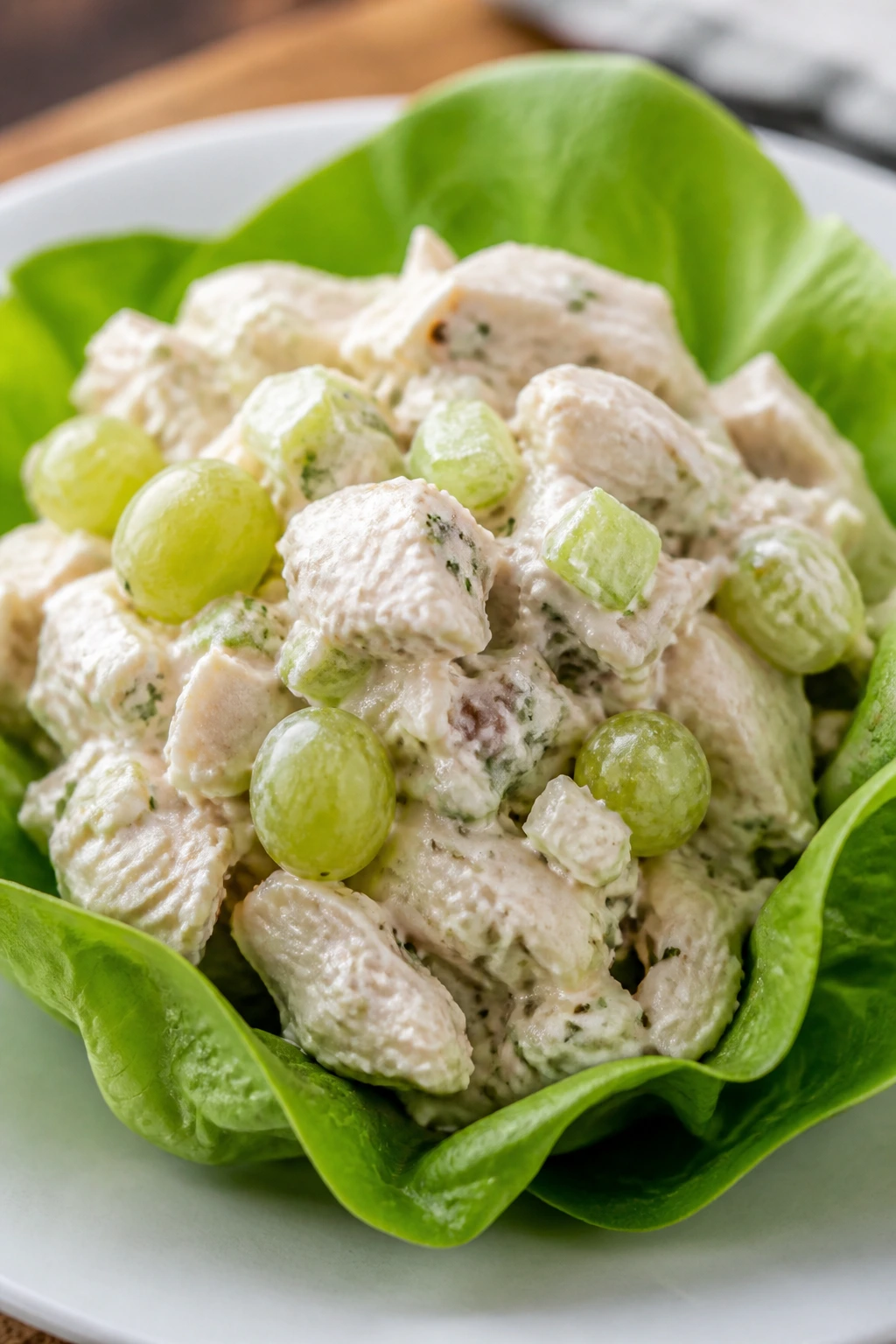
Intro:
Chicken salad gets a bad reputation because too many versions drown in mayo and lose all shape. This one stays lighter, sharper, and cleaner, with celery, grapes, and almonds giving it enough crunch and sweetness to stay worth eating.
Why It Works:
Greek yogurt keeps the texture creamy while adding tang, and Dijon stops the whole thing from tasting flat. Grapes or apple pieces break up the savory chicken with small bursts of sweetness. This is one of the easiest lunches to spread on bread or pile into lettuce cups.
Key Ingredients:
- 3 cups cooked chicken, chopped
- 1/2 cup plain Greek yogurt
- 1 celery stalk, diced
- 1/2 cup grapes, halved
- 1/4 cup sliced almonds
- 1 tsp Dijon mustard
- 1 tbsp lemon juice
- Lettuce cups or crackers, for serving
Quick Steps:
- Stir the Greek yogurt, Dijon, lemon juice, salt, and pepper together.
- Fold in the chicken, celery, grapes, and almonds.
- Chill for 10 minutes if you want the flavor to settle.
- Spoon into lettuce cups or spread on bread.
- Finish with black pepper or extra herbs.
Equipment for This Recipe:
- Mixing bowl
- Spoon
- Knife and cutting board
- Container for storage
How to Serve This Dish:
Serve in lettuce cups for a lighter lunch or on rye bread if you want more heft. A few cucumber slices on the side keep it crisp.
Pro Tips for This Recipe:
- Chop the chicken small enough that every bite gets a little of everything.
- Toast the almonds if you want deeper flavor.
- Salt the mixture a touch more than you think; cold foods hide seasoning.
Variations on This Dish:
- Apple Walnut Version: Swap grapes for diced apple and almonds for walnuts.
- Curry Chicken Salad: Add 1 tsp curry powder and a little chopped scallion.
Common Mistakes to Avoid with This Dish:
- Watery salad: Pat the chicken dry if it was stored in liquid.
- Too-sweet flavor: Keep the fruit to about half the volume of the chicken.
- Bland taste: Cold chicken salad needs salt, lemon, and mustard.
21. Moroccan Carrot Lentil Soup
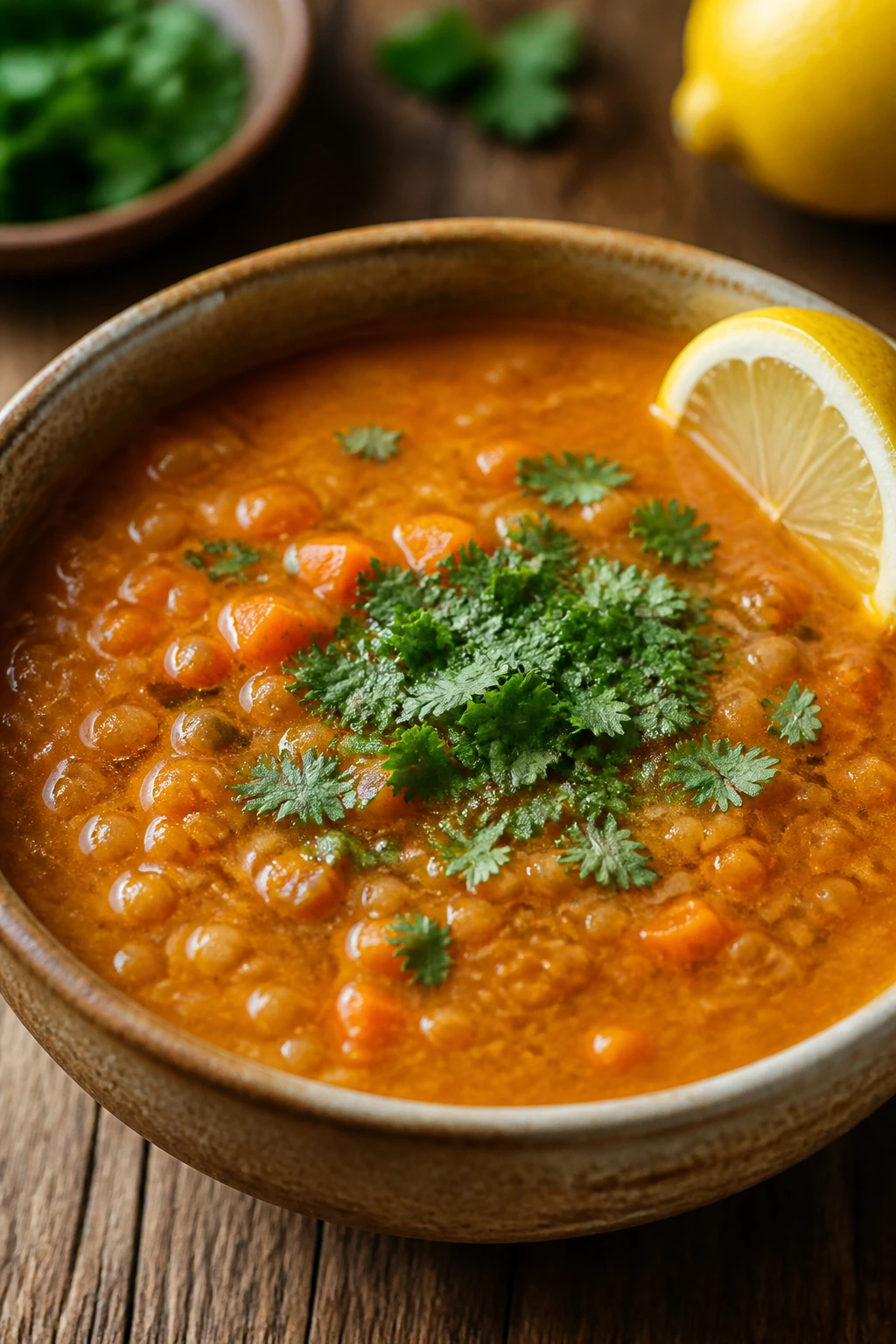
Intro:
This soup smells warm the second the spices hit the pot. Carrots bring sweetness, lentils bring thickness, and lemon at the end keeps the whole thing from settling into one soft note.
Why It Works:
Lentils turn this into a proper lunch instead of a starter, and carrots soften into the broth so the soup tastes fuller than it looks. Cumin and coriander give it a deeper savory edge without making it heavy. It freezes well, which makes batch cooking easy.
Key Ingredients:
- 1 tbsp olive oil
- 1 onion, diced
- 4 carrots, sliced
- 3 garlic cloves, minced
- 1 cup brown or green lentils, rinsed
- 6 cups broth
- 1 tsp cumin
- 1 tsp coriander
- 1 lemon, juiced
- Cilantro, for serving
Quick Steps:
- Sauté onion and carrots in oil for 6 minutes.
- Add garlic, cumin, and coriander, then cook for 30 seconds.
- Stir in lentils and broth, then simmer for 25 to 30 minutes.
- Blend half the soup if you want it thicker.
- Stir in lemon juice and top with cilantro.
Equipment for This Recipe:
- Large pot
- Immersion blender
- Knife and cutting board
- Wooden spoon
How to Serve This Dish:
Serve with toasted flatbread or a scoop of yogurt. A little harissa on the side works well if you like heat.
Pro Tips for This Recipe:
- Add lemon at the end so it stays bright.
- If your carrots are large, slice them thin so they soften on time.
- Brown lentils hold their shape better than red lentils here.
Variations on This Dish:
- Creamier Soup: Stir in 1/4 cup coconut milk at the end.
- Spicier Bowl: Add cayenne or harissa with the spices.
Common Mistakes to Avoid with This Dish:
- Flat flavor: It needs enough salt and lemon to finish.
- Undercooked lentils: Simmer until they’re soft all the way through.
- Watery texture: Blend part of the soup or simmer uncovered a few minutes longer.
22. Sesame Ginger Edamame Noodle Bowls
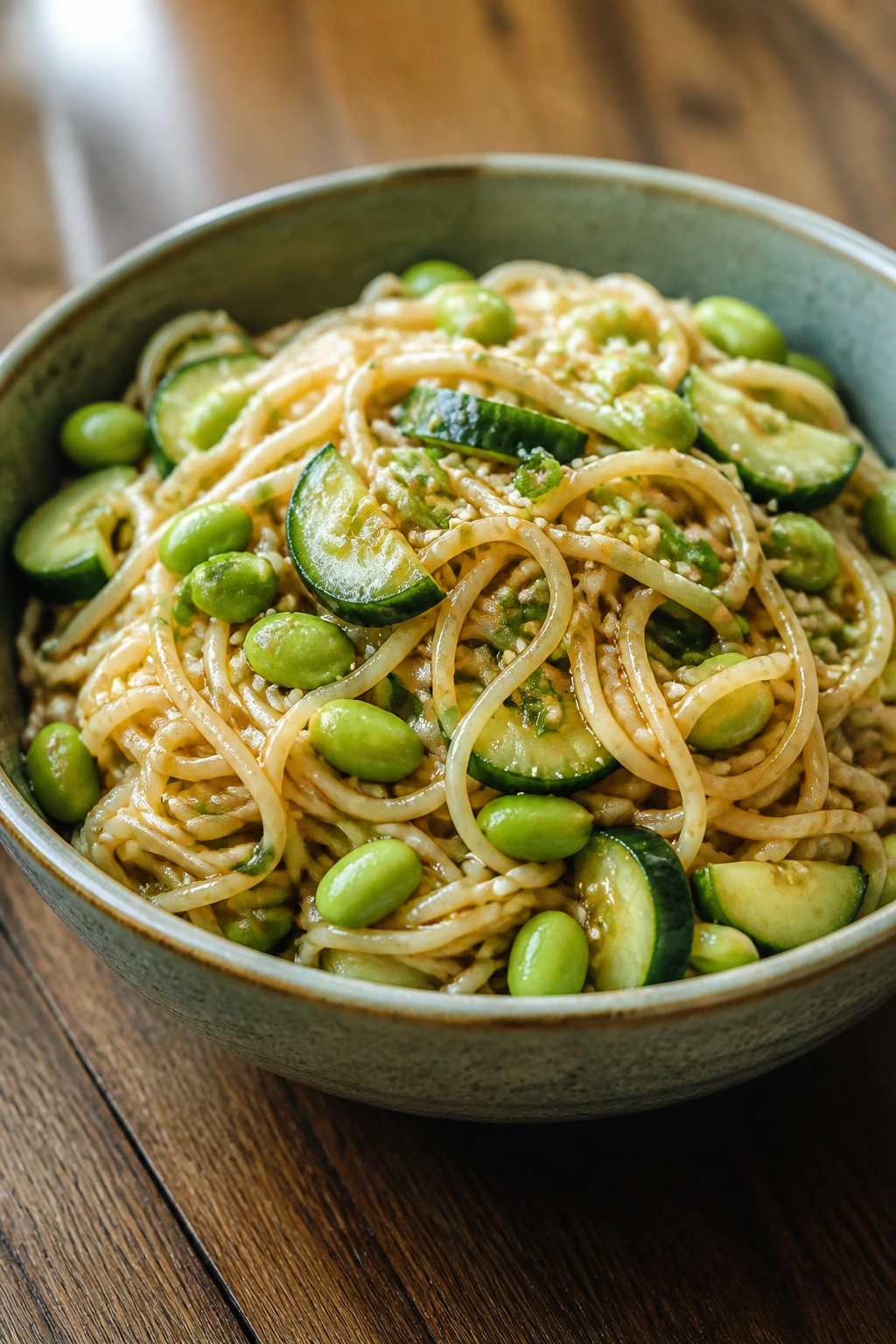
Intro:
Sesame, ginger, and soy sauce make this bowl taste punchy even when it’s cold from the fridge. Edamame gives it substance, cucumber cools it down, and the noodles carry the dressing without turning soggy too fast.
Why It Works:
Rice noodles are soft enough for lunch but still quick to make. Ginger and sesame oil bring a sharp, fragrant finish, and edamame gives you protein without needing meat. It’s a good bowl when you want something that feels light but not flimsy.
Key Ingredients:
- 8 oz rice noodles
- 1 cup shelled edamame
- 1 cucumber, thinly sliced
- 2 carrots, shredded
- 2 tbsp soy sauce
- 1 tbsp sesame oil
- 1 tbsp rice vinegar
- 1 tsp grated ginger
- 1 tbsp peanut butter
- Sesame seeds, for topping
Quick Steps:
- Cook the noodles, then rinse them under cold water.
- Whisk soy sauce, sesame oil, rice vinegar, ginger, peanut butter, and 2 tbsp water.
- Toss the noodles with edamame, cucumber, carrots, and dressing.
- Top with sesame seeds.
- Chill briefly or pack right away.
Equipment for This Recipe:
- Medium pot
- Colander
- Mixing bowl
- Whisk or fork
How to Serve This Dish:
Serve chilled with extra sesame seeds and scallions. A soft-boiled egg or strips of tofu turn it into a fuller lunch.
Pro Tips for This Recipe:
- Use warm water to thin the dressing if it seizes.
- Rinse noodles well so they don’t gum together.
- Add cucumber last if you want it extra crisp.
Variations on This Dish:
- Peanut-Heavy Version: Double the peanut butter for a richer sauce.
- Spicy Ginger Bowls: Add chili oil or sambal.
Common Mistakes to Avoid with This Dish:
- Clumped noodles: Rinse and toss with a little dressing right away.
- Runny sauce: Add water slowly.
- Watery vegetables: Pat the cucumber dry.
23. Balsamic Steak Salad
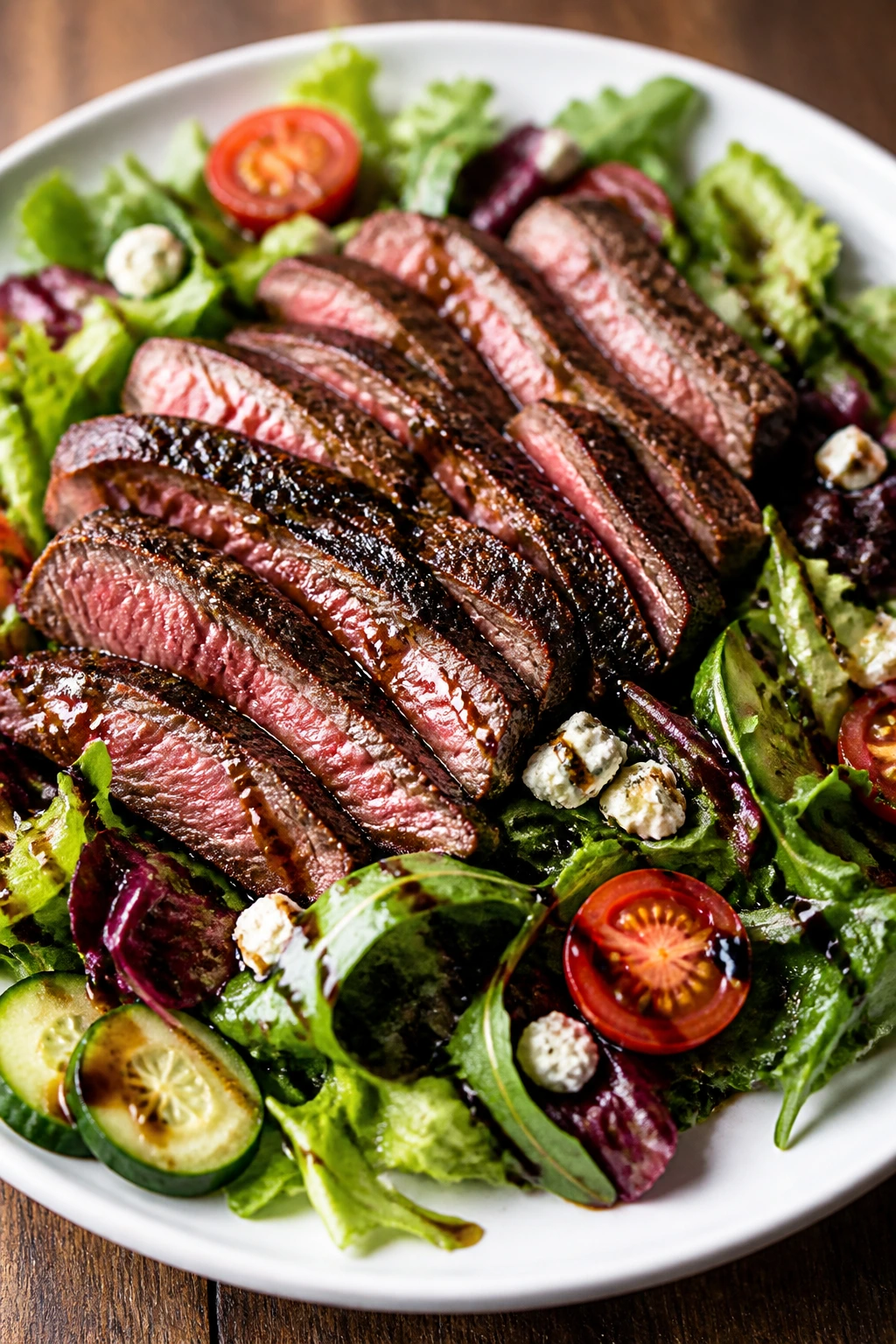
Intro:
Steak salad works when the steak is actually tender, not chewy strips on a pile of lettuce. A little balsamic, some crunchy vegetables, and a few salty extras make this lunch feel sturdy without being heavy.
Why It Works:
The steak brings enough richness that you do not need much cheese or dressing. Greens and tomatoes cut through that richness, while chickpeas or potatoes keep the salad from feeling like garnish. Resting the steak before slicing matters more than the dressing.
Key Ingredients:
- 1 lb flank steak
- 4 cups mixed greens
- 1 cup cherry tomatoes, halved
- 1 cucumber, sliced
- 1 cup roasted potatoes or chickpeas
- 3 tbsp balsamic vinaigrette
- 1/4 cup crumbled blue cheese, optional
Quick Steps:
- Sear the steak in a hot skillet for 3 to 5 minutes per side, depending on thickness.
- Rest it for 10 minutes.
- Toss greens, tomatoes, cucumber, and potatoes or chickpeas with vinaigrette.
- Slice the steak thinly against the grain.
- Arrange the steak over the salad and add blue cheese if using.
Equipment for This Recipe:
- Skillet or grill pan
- Cutting board
- Sharp knife
- Large bowl
How to Serve This Dish:
Serve on a wide plate so the steak stays on top of the greens. A piece of crusty bread on the side is not mandatory, but it does make the lunch feel more complete.
Pro Tips for This Recipe:
- Slice against the grain for tenderness.
- Use room-temperature steak for a more even sear.
- Dress the greens lightly first, then add the steak.
Variations on This Dish:
- Chicken Salad Version: Swap the steak for grilled chicken.
- No-Cheese Version: Add avocado for creaminess instead.
Common Mistakes to Avoid with This Dish:
- Chewy steak: Cut across the grain.
- Wilted greens: Let the steak cool a few minutes before plating.
- Underseasoned salad: The dressing and steak both need salt.
24. Cottage Cheese Power Bowl with Tomatoes and Cucumbers
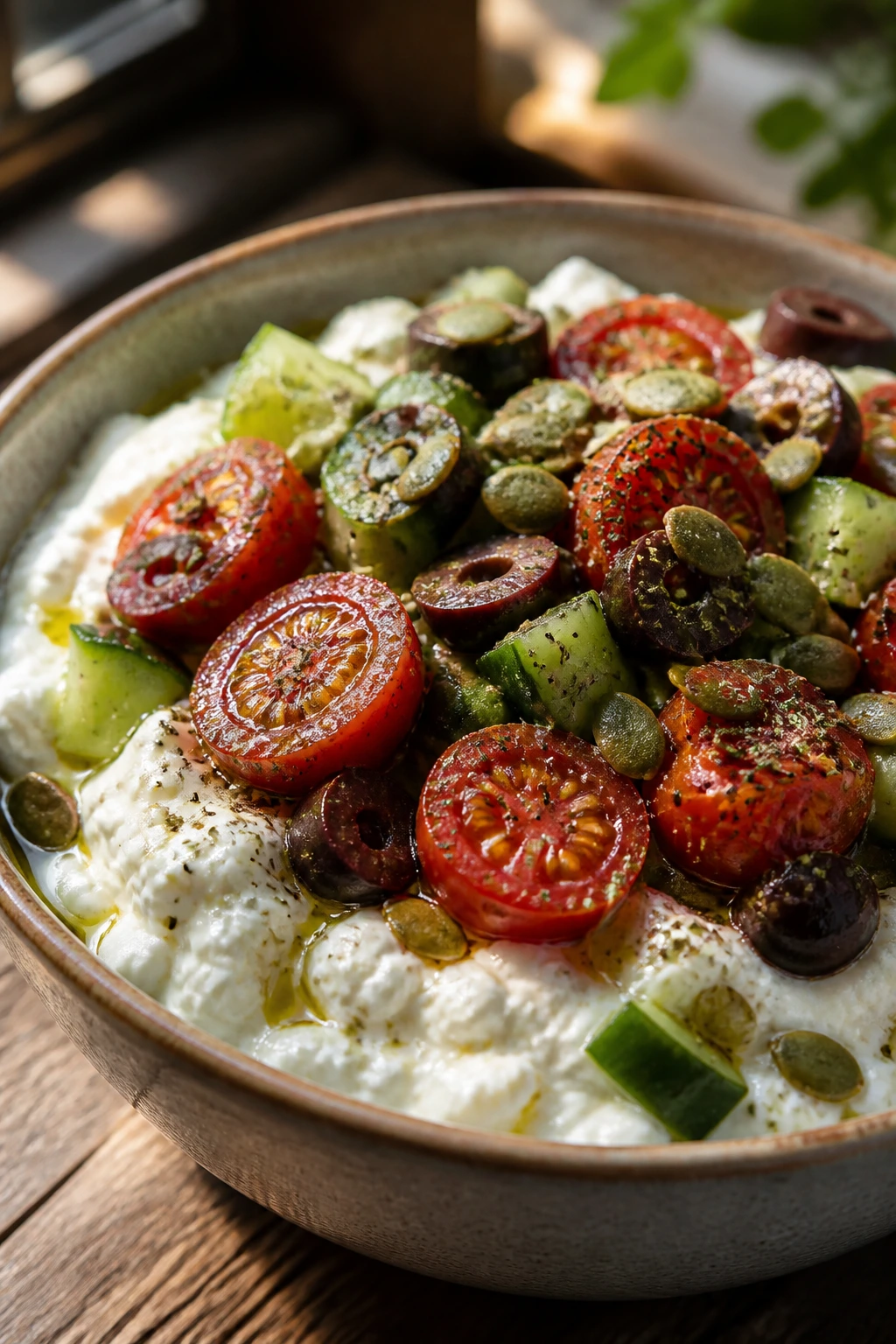
Intro:
Cottage cheese gets dismissed too fast. Pair it with tomatoes, cucumber, herbs, olives, and seeds, and it turns into a cold, savory bowl that tastes clean, salty, and much more interesting than the word “cottage” suggests.
Why It Works:
This lunch is built on contrast: creamy curds, juicy vegetables, and a little crunch from seeds or crackers. Za’atar or lemon keeps the bowl from tasting flat, and the olive oil adds just enough richness. It is fast, but it doesn’t feel random.
Key Ingredients:
- 1 1/2 cups cottage cheese
- 1 cup cherry tomatoes, halved
- 1 cucumber, diced
- 1/4 cup olives, sliced
- 2 tbsp pumpkin seeds or sunflower seeds
- 1 tsp olive oil
- 1 tsp lemon juice
- Za’atar or black pepper
- Whole grain crackers, optional
Quick Steps:
- Spoon the cottage cheese into a bowl.
- Scatter the tomatoes, cucumber, olives, and seeds over the top.
- Drizzle with olive oil and lemon juice.
- Finish with za’atar or black pepper.
- Eat with crackers or a fork, depending on your mood.
Equipment for This Recipe:
- Bowl
- Knife and cutting board
- Spoon
How to Serve This Dish:
Serve cold with crackers, seeded bread, or crisp romaine leaves. If you want more heft, add a boiled egg or sliced avocado on the side.
Pro Tips for This Recipe:
- Use a good cottage cheese; the texture matters a lot here.
- Salt the tomatoes lightly first if they taste dull.
- Add seeds right before eating so they stay crunchy.
Variations on This Dish:
- Herby Bowl: Add chopped dill and chives.
- Smoky Version: Add smoked paprika and a few slices of roasted red pepper.
Common Mistakes to Avoid with This Dish:
- Bland bowl: It needs lemon, salt, or both.
- Watery tomatoes: Drain off excess juice if the tomatoes are very soft.
- No crunch: Seeds or crackers give the bowl its backbone.
25. Peanut Lime Chickpea Noodle Salad
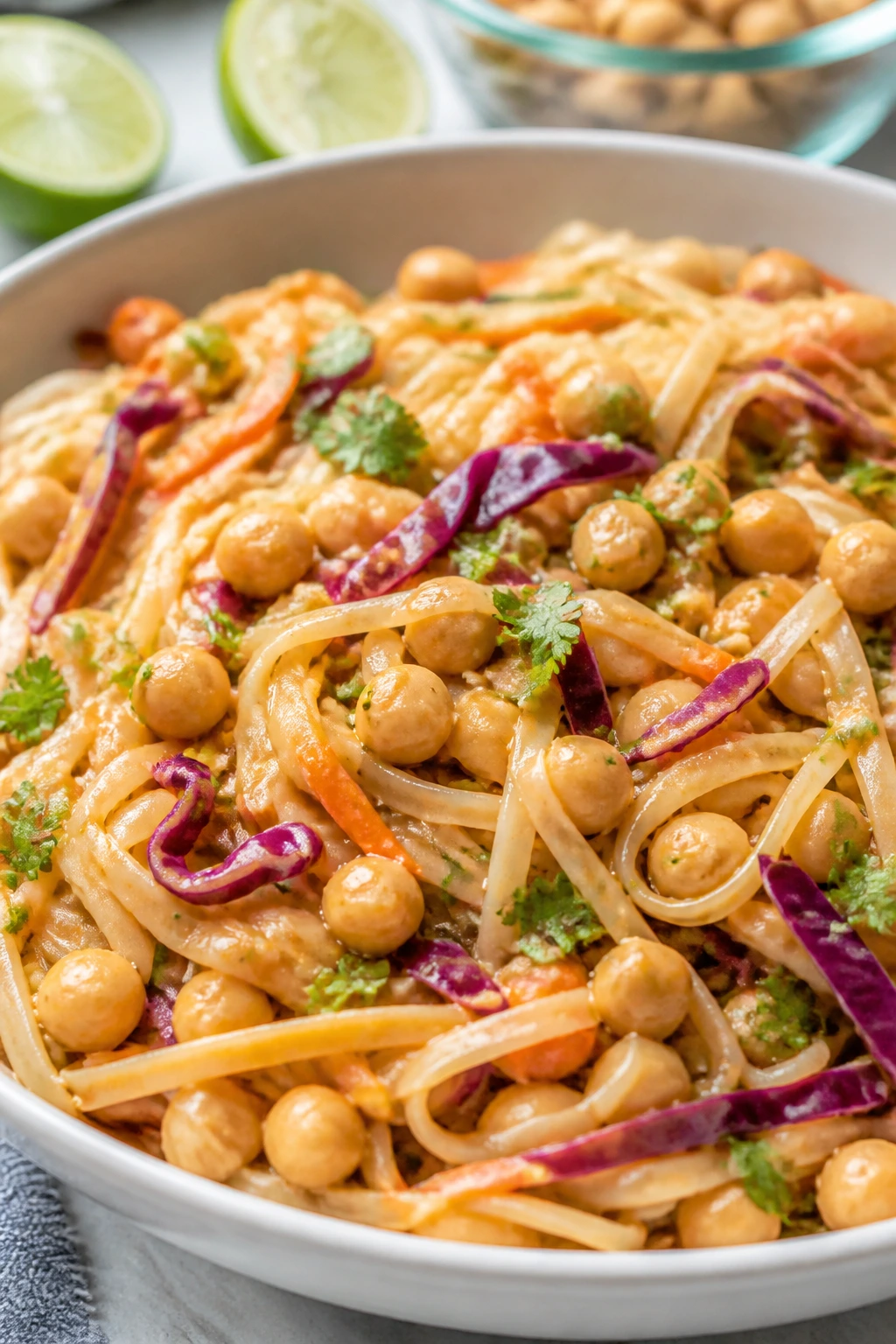
Intro:
Peanut and lime are one of those pairings that makes a cold noodle salad taste bigger than it is. Chickpeas add substance, cabbage keeps the crunch, and the sauce clings to everything without feeling heavy.
Why It Works:
The peanut dressing gives you fat, salt, and sweetness in one shot, which is why this salad still tastes good after chilling. Chickpeas make it lunch, not side dish. Cabbage and carrots stay crisp long enough to pack ahead.
Key Ingredients:
- 8 oz rice noodles or spaghetti
- 1 can chickpeas, rinsed and drained
- 2 cups shredded cabbage
- 1 carrot, shredded
- 2 tbsp peanut butter
- 1 lime, juiced
- 2 tbsp soy sauce
- 1 tbsp sesame oil
- Cilantro, for topping
Quick Steps:
- Cook the noodles, then rinse with cold water.
- Whisk peanut butter, lime juice, soy sauce, sesame oil, and 2 tbsp water.
- Toss the noodles with chickpeas, cabbage, carrots, and dressing.
- Top with cilantro.
- Chill briefly before serving if you want the flavor to settle.
Equipment for This Recipe:
- Pot
- Colander
- Mixing bowl
- Whisk
How to Serve This Dish:
Serve in a shallow bowl with extra lime wedges. If you want more crunch, add chopped peanuts right at the end.
Pro Tips for This Recipe:
- Thin the peanut sauce slowly so it stays silky.
- Use pre-shredded cabbage when time is short.
- Add cilantro after tossing so it stays bright.
Variations on This Dish:
- Tofu Version: Add cubed baked tofu for more protein.
- Spicier Bowl: Stir in sriracha or chili crisp.
Common Mistakes to Avoid with This Dish:
- Gluey sauce: Add water a teaspoon at a time.
- Soft vegetables: Pack the cabbage dry.
- Over-salty finish: Taste before adding more soy sauce.
26. Broccoli Cheddar White Bean Soup
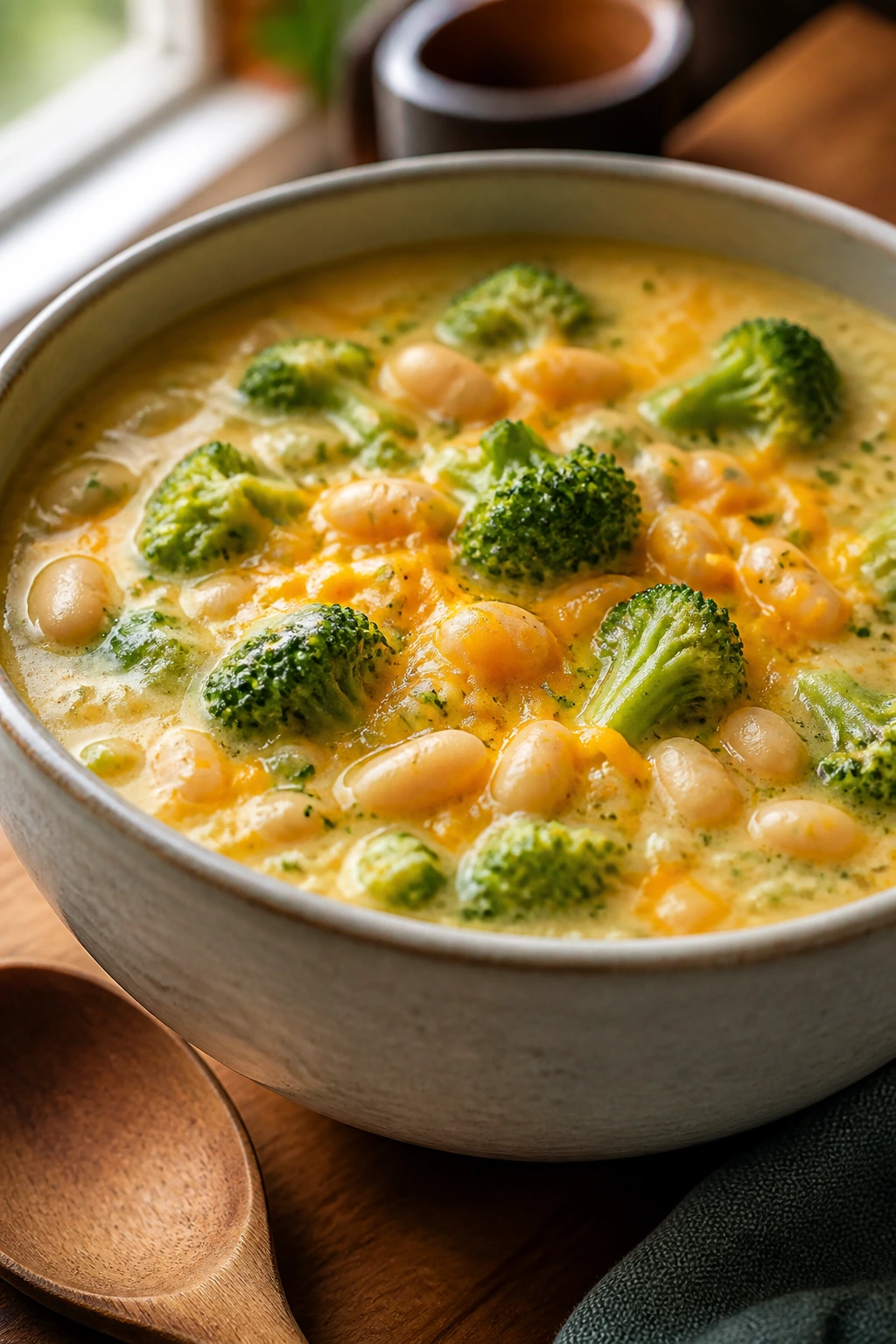
Intro:
Broccoli cheddar soup can get too rich, too fast. White beans solve that problem nicely — they add creaminess and body without turning the pot into melted cheese soup with no structure.
Why It Works:
The beans make the soup thicker and more filling, which is what lunch needs. Broccoli brings that grassy bite, and cheddar gives the familiar flavor people want from the classic version. A little mustard sharpens the whole pot.
Key Ingredients:
- 1 tbsp butter or olive oil
- 1 onion, diced
- 2 carrots, diced
- 3 cups broccoli florets
- 2 cans white beans, rinsed and drained
- 4 cups broth
- 1 cup shredded sharp cheddar
- 1/2 cup milk
- 1 tsp Dijon mustard
Quick Steps:
- Sauté onion and carrots in butter or oil for 5 minutes.
- Add broccoli, beans, broth, and Dijon, then simmer for 15 minutes.
- Blend part of the soup for a smoother base.
- Stir in milk and cheddar over low heat until melted.
- Taste and season before serving.
Equipment for This Recipe:
- Soup pot
- Immersion blender
- Cutting board and knife
- Wooden spoon
How to Serve This Dish:
Serve with whole grain toast or a small salad. A few cracked black pepper flakes on top keep the cheese from feeling too soft.
Pro Tips for This Recipe:
- Add cheese over low heat so it stays smooth.
- Use sharp cheddar, not mild, or the soup can taste flat.
- If the broccoli is very thick, chop the stems small so they cook through.
Variations on This Dish:
- Smoky Version: Add smoked paprika.
- No-Dairy Version: Skip the cheese and use extra white beans plus nutritional yeast.
Common Mistakes to Avoid with This Dish:
- Grainy cheese: Don’t boil after adding cheddar.
- Undercooked broccoli: Cut the florets small.
- Too-thick soup: Loosen with broth or milk.
27. Smoked Salmon Bagel Bowls
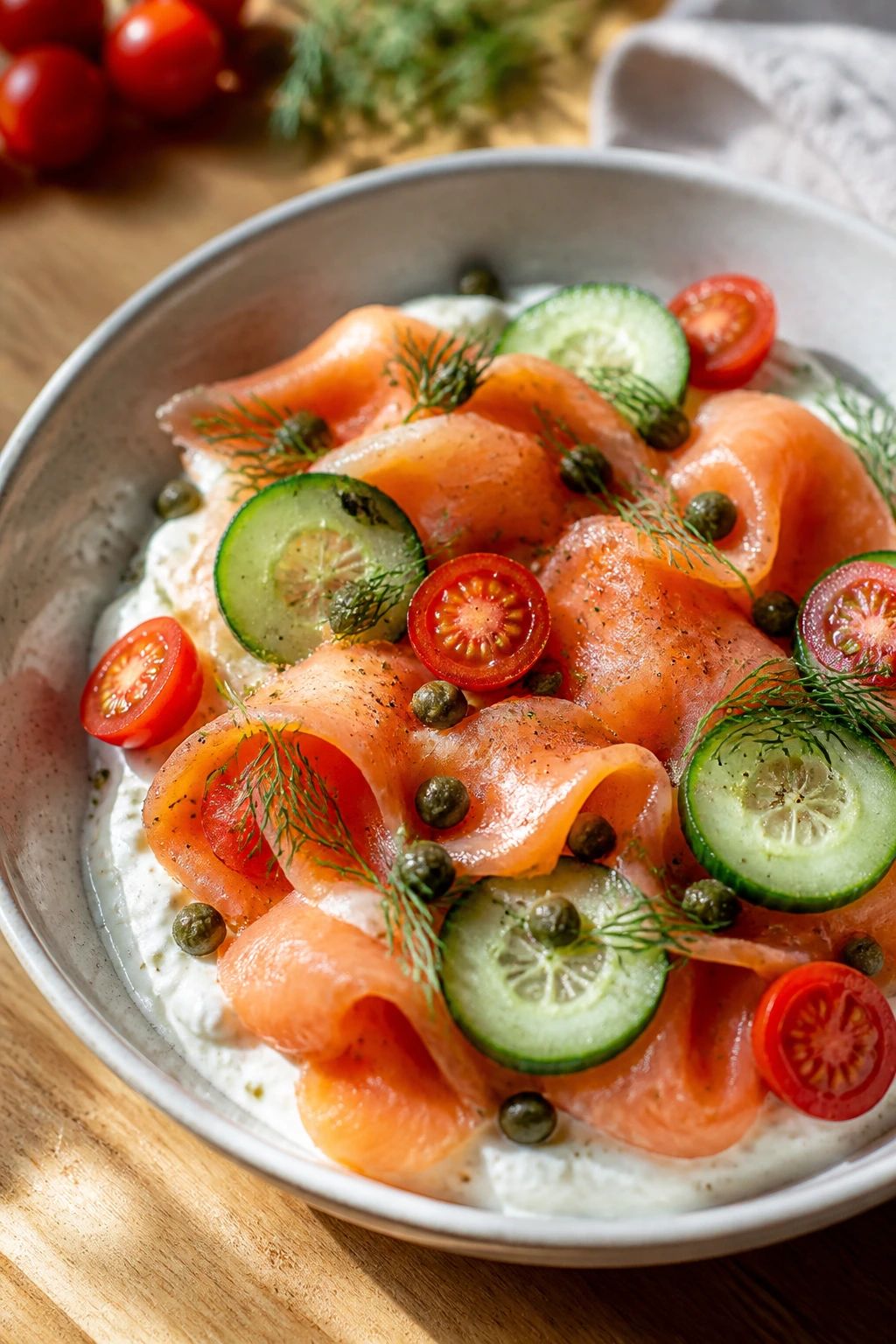
Intro:
This is the bagel shop lunch turned into a bowl so it packs better. Smoked salmon, cucumber, tomato, capers, and dill give you that classic salty-bright flavor without the need to wrestle with a giant sandwich.
Why It Works:
You get the same flavor cues as a bagel with lox, but the structure is easier to control. Greek yogurt or cream cheese gives a creamy base, and the vegetables keep it from feeling too rich. It works especially well when you don’t want a hot lunch.
Key Ingredients:
- 6 oz smoked salmon
- 1 cup plain Greek yogurt or softened cream cheese
- 1 cucumber, sliced
- 1 cup cherry tomatoes, halved
- 2 tbsp capers
- 1/4 red onion, very thinly sliced
- 2 tbsp chopped dill
- Bagel chips or whole grain toast, for serving
Quick Steps:
- Spoon the yogurt or cream cheese into bowls.
- Arrange salmon, cucumber, tomatoes, capers, and onion on top.
- Sprinkle with dill and black pepper.
- Serve with bagel chips or toast on the side.
- Add lemon juice if you want extra brightness.
Equipment for This Recipe:
- Bowl
- Knife
- Cutting board
- Spoon
How to Serve This Dish:
Serve it cold, with a few greens on the side if you want more volume. A hard-boiled egg fits well here too, and it makes the bowl feel more complete.
Pro Tips for This Recipe:
- Thin the red onion in cold water if it tastes too sharp.
- Keep the salmon cold until serving.
- Use bagel chips sparingly; too many and the bowl turns into a snack plate.
Variations on This Dish:
- Cream Cheese Bowl: Use cream cheese for a richer base.
- Avocado Version: Replace some of the dairy with sliced avocado.
Common Mistakes to Avoid with This Dish:
- Too much caper salt: Go easy until you taste the bowl.
- Warm salmon: Keep it chilled.
- No acid: A little lemon wakes up the whole thing.
28. Chicken Shawarma Flatbreads
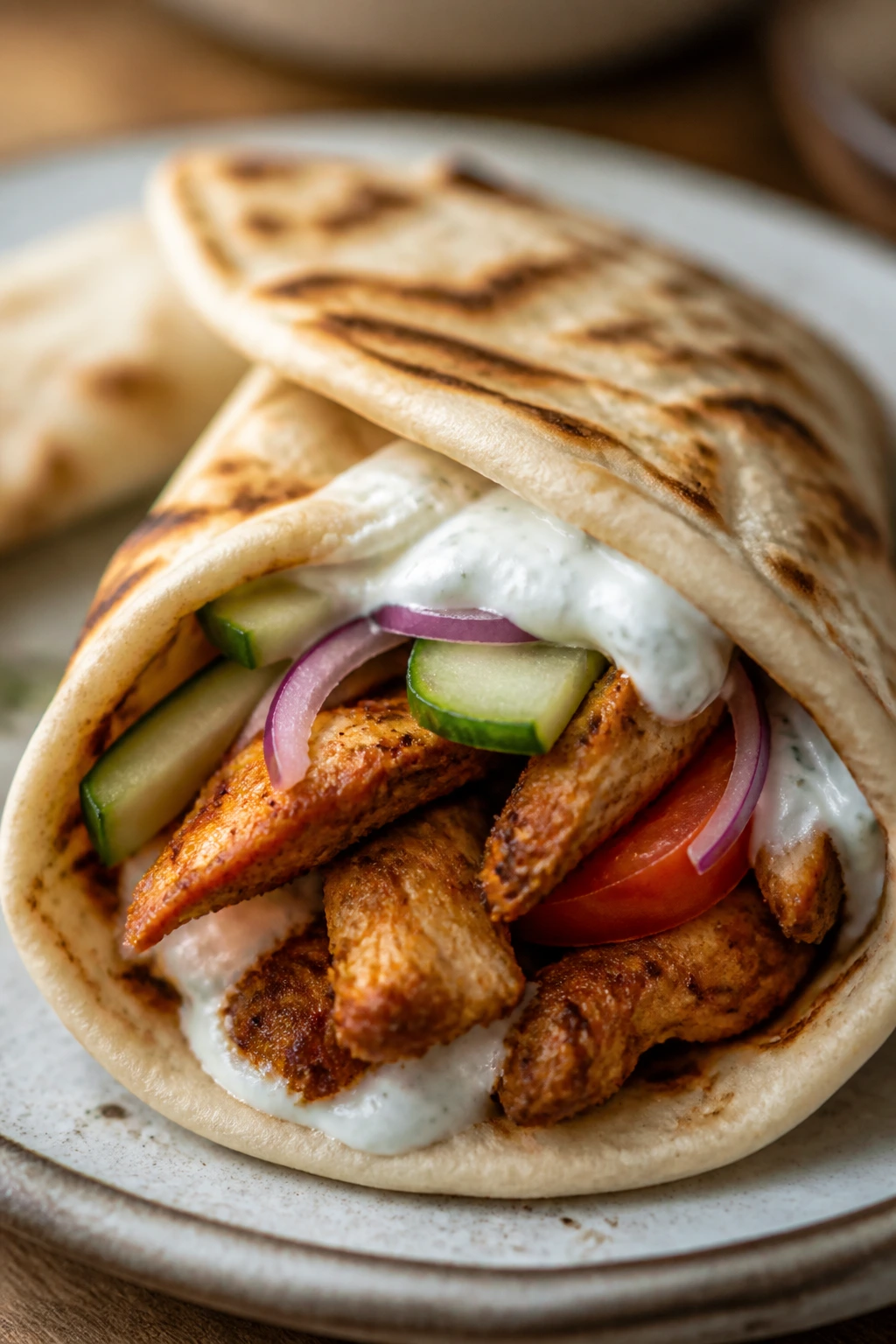
Intro:
Shawarma seasoning does magic on chicken. Once it hits the hot pan, the spices smell warm and a little smoky, and the flatbread, yogurt sauce, and vegetables turn it into a lunch that tastes like it took more effort than it did.
Why It Works:
The spice blend gives the chicken enough personality that it does not need a heavy sauce. Yogurt cools the heat, while cucumber and tomato keep each bite fresh. Flatbreads are easier to pack than stuffed pitas, and they stay flexible.
Key Ingredients:
- 1 1/2 lb chicken thighs
- 2 tsp shawarma spice blend
- 1 tbsp olive oil
- 4 flatbreads
- 1 cucumber, sliced
- 1 tomato, sliced
- 1/2 red onion, thinly sliced
- 1/2 cup Greek yogurt
- 1 lemon, juiced
Quick Steps:
- Toss chicken with shawarma spice, olive oil, salt, and pepper.
- Cook the chicken in a hot skillet until browned and cooked through, about 5 to 7 minutes per side.
- Mix the yogurt with lemon juice and a pinch of salt.
- Slice the chicken and pile it onto flatbreads with vegetables.
- Drizzle with yogurt sauce and fold.
Equipment for This Recipe:
- Skillet
- Knife and cutting board
- Bowl
- Spoon
How to Serve This Dish:
Serve with chopped parsley and a few pickles on the side. If you want a fuller lunch, add a scoop of hummus beside the flatbread.
Pro Tips for This Recipe:
- Thighs stay juicier than breasts for this style.
- Let the chicken brown; that crust is flavor.
- Warm the flatbreads just enough to make them bend.
Variations on This Dish:
- Turkey Shawarma: Use ground turkey shaped into patties or crumbles.
- Vegetarian Flatbread: Swap the chicken for roasted cauliflower and chickpeas.
Common Mistakes to Avoid with This Dish:
- Bland chicken: Let the spice coat every surface.
- Dry flatbread: Don’t overheat it.
- Watery topping: Pat vegetables dry before assembling.
29. Roasted Veggie Farro Salad
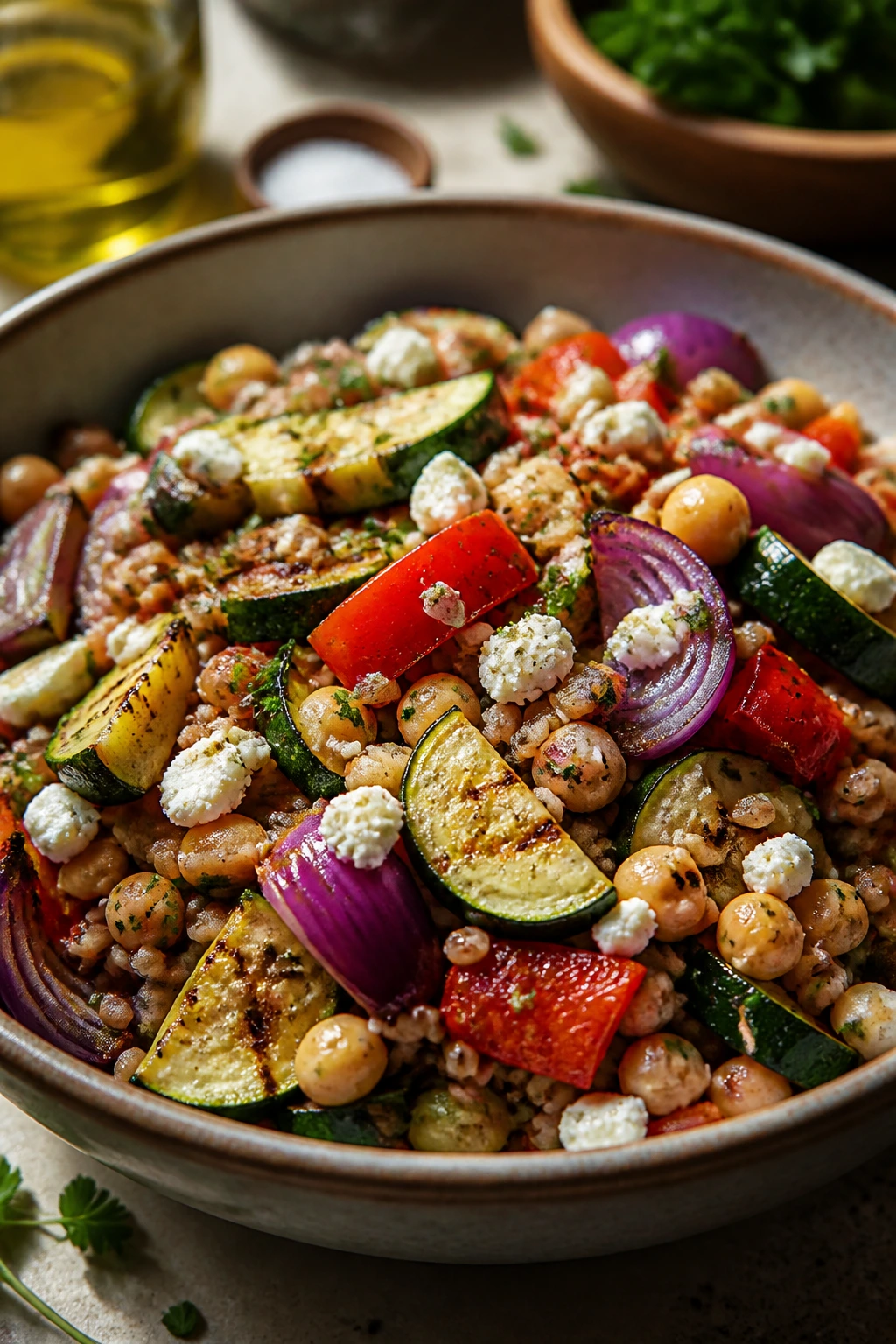
Intro:
Farro gives a salad enough chew that it feels like lunch instead of garnish. Add roasted vegetables, chickpeas, feta, and lemon dressing, and the whole bowl starts tasting nutty, sharp, and sturdy.
Why It Works:
Farro holds its texture better than softer grains, which makes it ideal for meal prep. Roasted vegetables deepen the flavor without needing much else. Chickpeas and feta add protein and salt, so the salad doesn’t drift toward “healthy but missing something.”
Key Ingredients:
- 1 cup farro
- 2 cups water or broth
- 1 zucchini, chopped
- 1 red bell pepper, chopped
- 1/2 red onion, sliced
- 1 can chickpeas, rinsed and drained
- 1/2 cup feta
- 2 tbsp olive oil
- 1 lemon, juiced
- Parsley, for topping
Quick Steps:
- Cook the farro until tender but chewy, about 25 minutes.
- Roast the zucchini, pepper, onion, and chickpeas at 425°F for 20 minutes.
- Whisk olive oil, lemon juice, salt, and pepper.
- Toss everything together while the farro is still warm.
- Finish with feta and parsley.
Equipment for This Recipe:
- Saucepan
- Baking sheet
- Mixing bowl
- Knife and cutting board
How to Serve This Dish:
Serve warm or cold, depending on the day. A spoonful of pesto or a handful of arugula works well if you want a greener edge.
Pro Tips for This Recipe:
- Salt the farro water so the grain itself tastes good.
- Roast until the vegetables have browned edges.
- Add feta after tossing so it stays crumbly.
Variations on This Dish:
- Herbed Farro Salad: Add mint and dill with the parsley.
- Dairy-Free Version: Skip the feta and add more chickpeas or olives.
Common Mistakes to Avoid with This Dish:
- Soft grain: Stop cooking while farro still has bite.
- Mushy vegetables: Roast them on a single layer.
- Underseasoned bowl: Lemon and salt matter here.
30. Turkey Chili with Beans
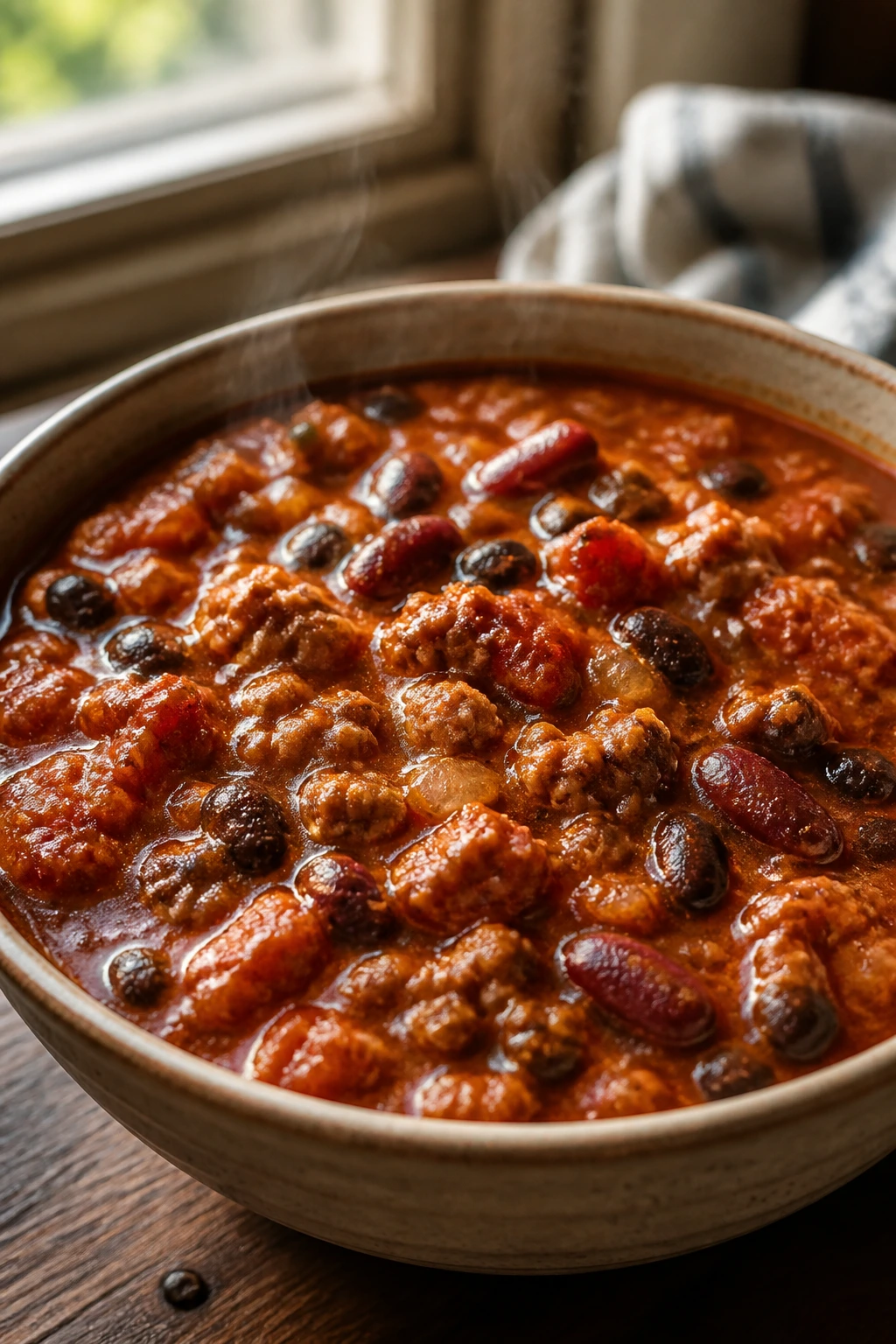
Intro:
Turkey chili is one of the few lunches that gets better after sitting overnight. The spices settle in, the beans soften the edges, and the tomato base turns from bright to deep and savory.
Why It Works:
Lean turkey keeps the chili lighter than beef while still giving you enough protein. Beans make the pot thick and filling, and the tomato broth carries chili powder and cumin well. This is a freezer-friendly lunch that does not feel like punishment when reheated.
Key Ingredients:
- 1 lb ground turkey
- 1 onion, diced
- 3 garlic cloves, minced
- 1 can kidney beans, rinsed and drained
- 1 can black beans, rinsed and drained
- 1 can diced tomatoes
- 2 tbsp chili powder
- 1 tsp cumin
- 1 cup broth
Quick Steps:
- Brown the turkey with onion in a pot over medium heat.
- Add garlic, chili powder, and cumin, then stir for 30 seconds.
- Stir in tomatoes, beans, and broth.
- Simmer for 25 to 30 minutes, stirring now and then.
- Taste and adjust salt before serving.
Equipment for This Recipe:
- Large pot
- Wooden spoon
- Knife and cutting board
- Ladle
How to Serve This Dish:
Serve with chopped scallions, a spoon of yogurt, or a little shredded cheddar. Cornbread is optional, but it does make a decent lunch feel bigger.
Pro Tips for This Recipe:
- Let the onions soften before adding the turkey back in.
- Add a splash of water if the chili gets too thick.
- Taste after simmering; beans often need more salt than people think.
Variations on This Dish:
- Bean-Heavy Version: Add pinto beans for more texture.
- Smoky Chili: Stir in smoked paprika or chipotle powder.
Common Mistakes to Avoid with This Dish:
- Thin chili: Simmer uncovered near the end.
- Flat spice profile: Use enough cumin and chili powder.
- Dry turkey: Don’t cook it until it turns chalky.
31. Cucumber Turkey Roll-Ups with Apple
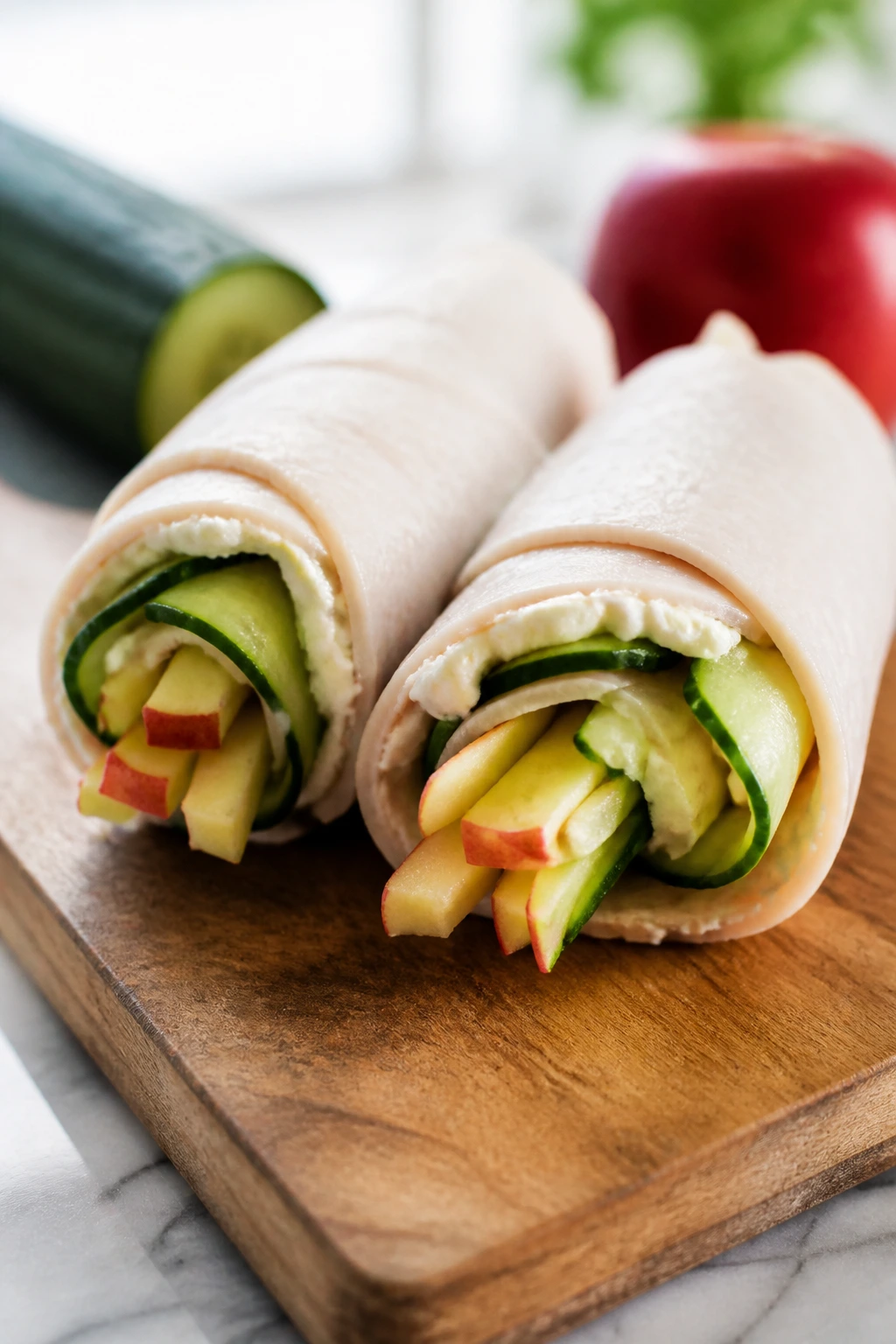
Intro:
Some lunches need zero heat and zero mess. These roll-ups are clean, crunchy, and surprisingly satisfying when you tuck in cucumber, apple, and turkey with a little spread to hold everything together.
Why It Works:
The cucumber adds crispness, the apple adds sweetness, and the turkey gives the whole thing actual structure. A spread like hummus or cream cheese keeps the roll from falling apart. It’s the kind of lunch that works in a container without making a scene.
Key Ingredients:
- 8 slices deli turkey
- 1 cucumber, cut into thin ribbons
- 1 apple, thinly sliced
- 1/4 cup hummus or cream cheese
- 1 tsp mustard
- 1 cup baby spinach
- 2 tbsp sunflower seeds
Quick Steps:
- Lay the turkey slices flat on a cutting board.
- Spread each slice lightly with hummus or cream cheese and a touch of mustard.
- Add cucumber ribbons, apple slices, spinach, and a few seeds.
- Roll tightly and secure with a toothpick if needed.
- Pack with extra apple slices or crackers.
Equipment for This Recipe:
- Cutting board
- Knife
- Small spoon or butter knife
- Toothpicks, optional
How to Serve This Dish:
Serve as a cold lunch box meal with fruit and crackers. If you want more substance, add a handful of roasted nuts on the side.
Pro Tips for This Recipe:
- Use a firm apple so the slices stay crisp.
- Pat the cucumber dry to keep the roll-ups from slipping.
- Slice the cucumber ribbons thin enough to bend without cracking.
Variations on This Dish:
- Chicken Roll-Ups: Use sliced chicken breast instead of turkey.
- Creamy Herb Version: Mix chopped dill into the spread.
Common Mistakes to Avoid with This Dish:
- Loose rolls: Don’t overfill them.
- Soggy cucumber: Dry the ribbons first.
- Brown apple: Pack lemon juice or slice the apple just before eating.
32. Smashed White Bean and Tomato Toast
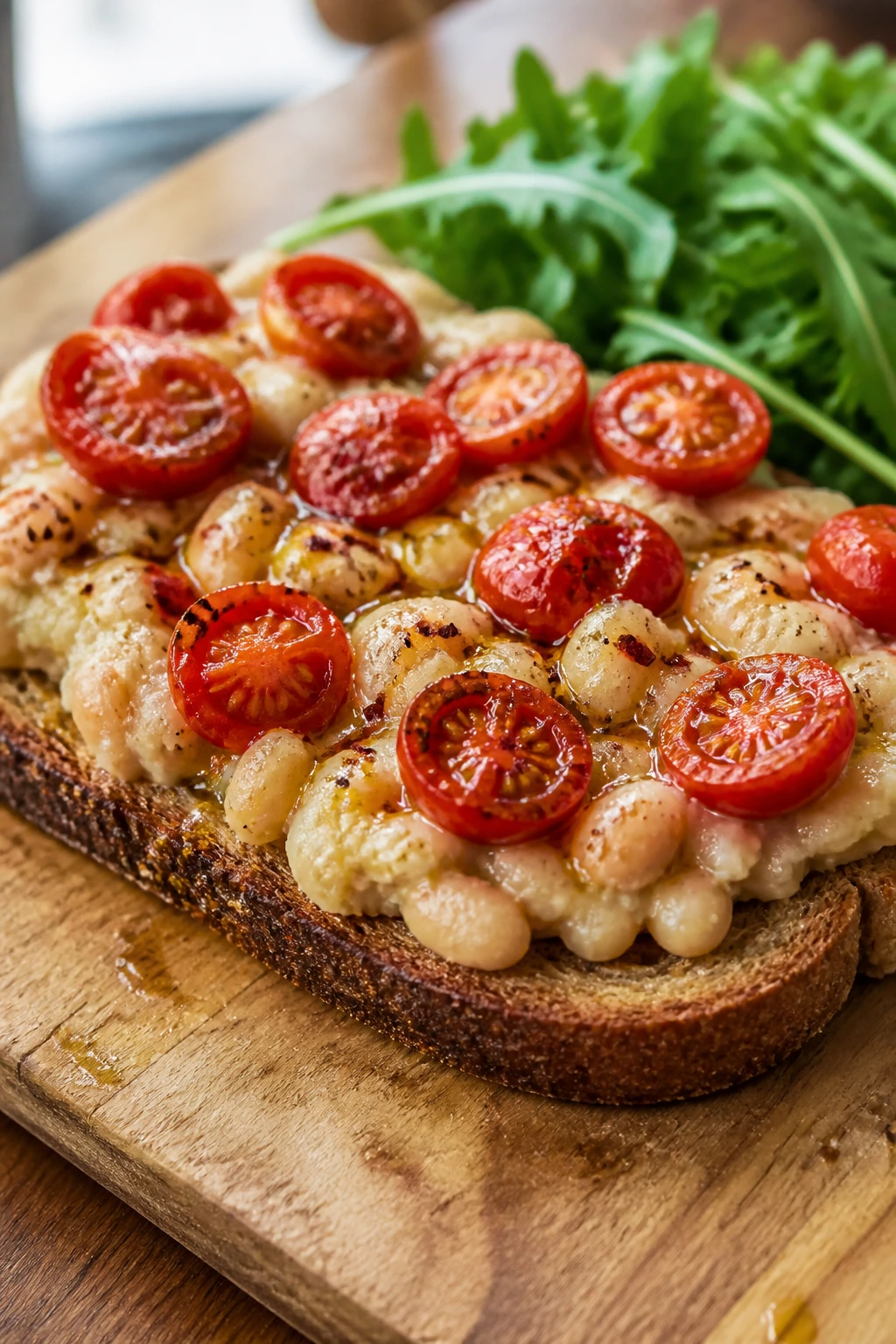
Intro:
Toast gets a lot more useful when the topping has protein and acid. White beans, tomatoes, garlic, and lemon make a spread that tastes savory and bright, not like a compromised version of lunch.
Why It Works:
Smashed beans give you a creamy base without needing mayo or cheese. Tomatoes bring juiciness, while lemon and chili flakes keep the toast from tasting soft or sleepy. It is simple, but the flavors are pointed.
Key Ingredients:
- 1 can white beans, rinsed and drained
- 1 cup cherry tomatoes, halved
- 1 garlic clove, grated
- 1 lemon, juiced
- 2 tbsp olive oil
- 4 slices whole grain bread
- 1 cup arugula
- Chili flakes, optional
Quick Steps:
- Smash the beans with olive oil, garlic, lemon juice, salt, and pepper.
- Sauté or blister the tomatoes in a pan for 3 to 4 minutes.
- Toast the bread until crisp.
- Spread the beans on toast and top with tomatoes and arugula.
- Finish with chili flakes if you want heat.
Equipment for This Recipe:
- Bowl
- Fork
- Skillet
- Toaster or oven
How to Serve This Dish:
Serve open-faced with a side salad or soup. If you want extra richness, add a fried egg on top and call it lunch without apology.
Pro Tips for This Recipe:
- Mash the beans until some are smooth and some stay whole.
- Season the bean spread aggressively; bread softens flavor.
- Keep the arugula dry so the toast stays crisp longer.
Variations on This Dish:
- Herby Toast: Add parsley and dill to the bean mash.
- Tomato Basil Version: Top with fresh basil and a little balsamic.
Common Mistakes to Avoid with This Dish:
- Wet toast: Add tomatoes right before eating.
- Bland bean spread: Salt and lemon are not optional.
- Dense bread: Choose sturdy, whole grain slices that can hold up.
33. Spinach Mushroom Egg Bake
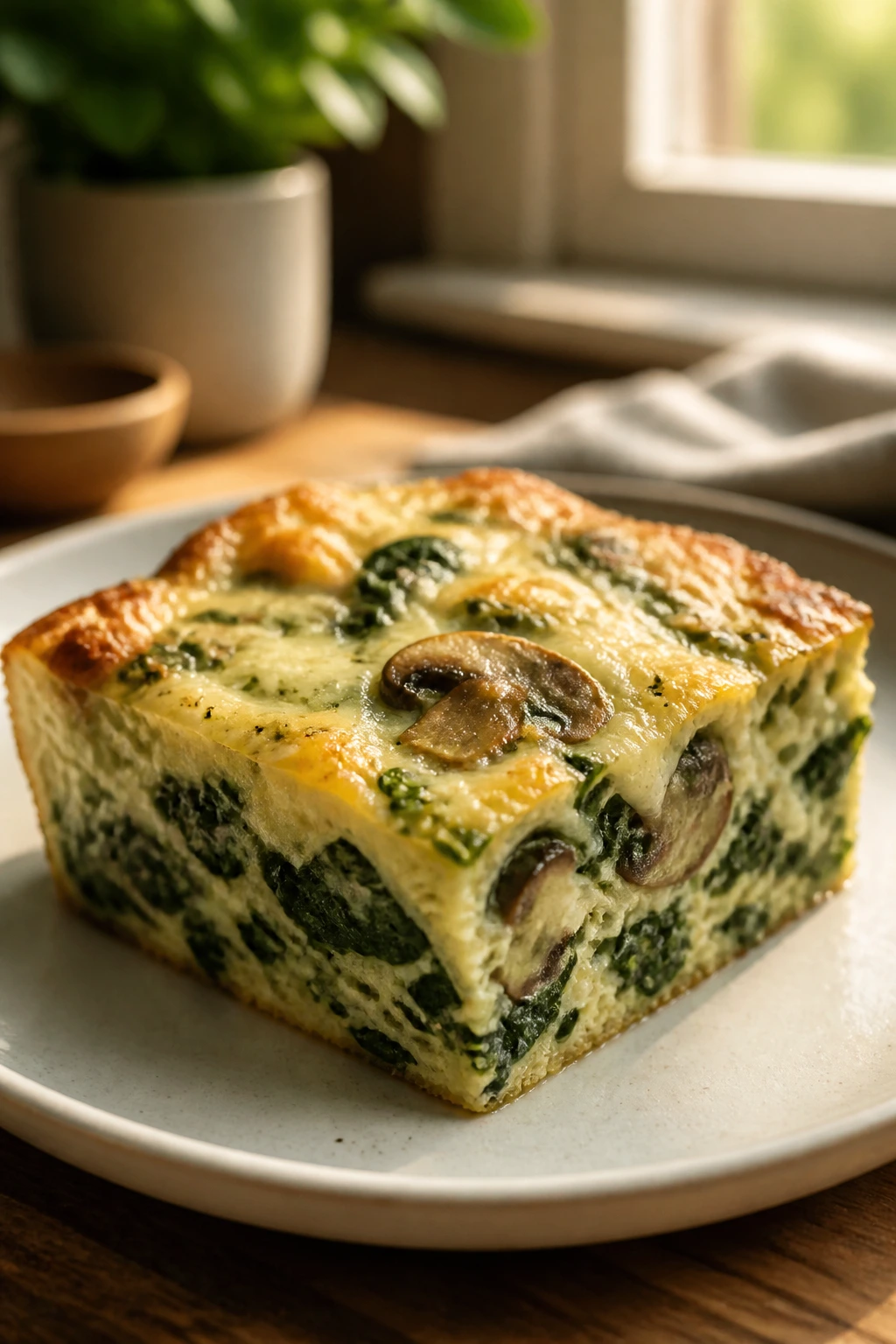
Intro:
This is the lunch you bake once and forget about until the fridge starts looking useful. Mushrooms bring savory depth, spinach softens into the eggs, and the slices hold together neatly enough to pack without drama.
Why It Works:
Egg bakes are good because they reheat without going stringy if you stop baking on time. Mushrooms add a browned, meaty flavor that makes the dish feel richer than the ingredient list suggests. A little cheese on top gives it a clean finish.
Key Ingredients:
- 8 large eggs
- 1/2 cup milk
- 2 cups spinach
- 1 cup mushrooms, sliced
- 1/4 onion, diced
- 1/2 cup shredded cheddar or feta
- 1 tbsp olive oil
Quick Steps:
- Sauté mushrooms and onion in oil until browned and soft.
- Whisk eggs, milk, salt, and pepper in a bowl.
- Stir in spinach, mushrooms, onion, and cheese.
- Pour into a greased baking dish and bake at 375°F for 20 to 25 minutes.
- Cool slightly before slicing.
Equipment for This Recipe:
- Baking dish
- Skillet
- Mixing bowl
- Whisk
How to Serve This Dish:
Serve warm with toast, sliced tomatoes, or avocado. Cold leftovers work too, which is the whole reason I keep egg bake in rotation.
Pro Tips for This Recipe:
- Brown the mushrooms well so they don’t taste watery.
- Grease the dish generously.
- Let the bake rest before cutting so the slices hold.
Variations on This Dish:
- Pepper Jack Version: Use pepper jack for a little heat.
- Mediterranean Bake: Swap cheddar for feta and add chopped olives.
Common Mistakes to Avoid with This Dish:
- Rubbery eggs: Don’t overbake.
- Watery bake: Cook the mushrooms down first.
- Broken slices: Let it cool a bit before cutting.
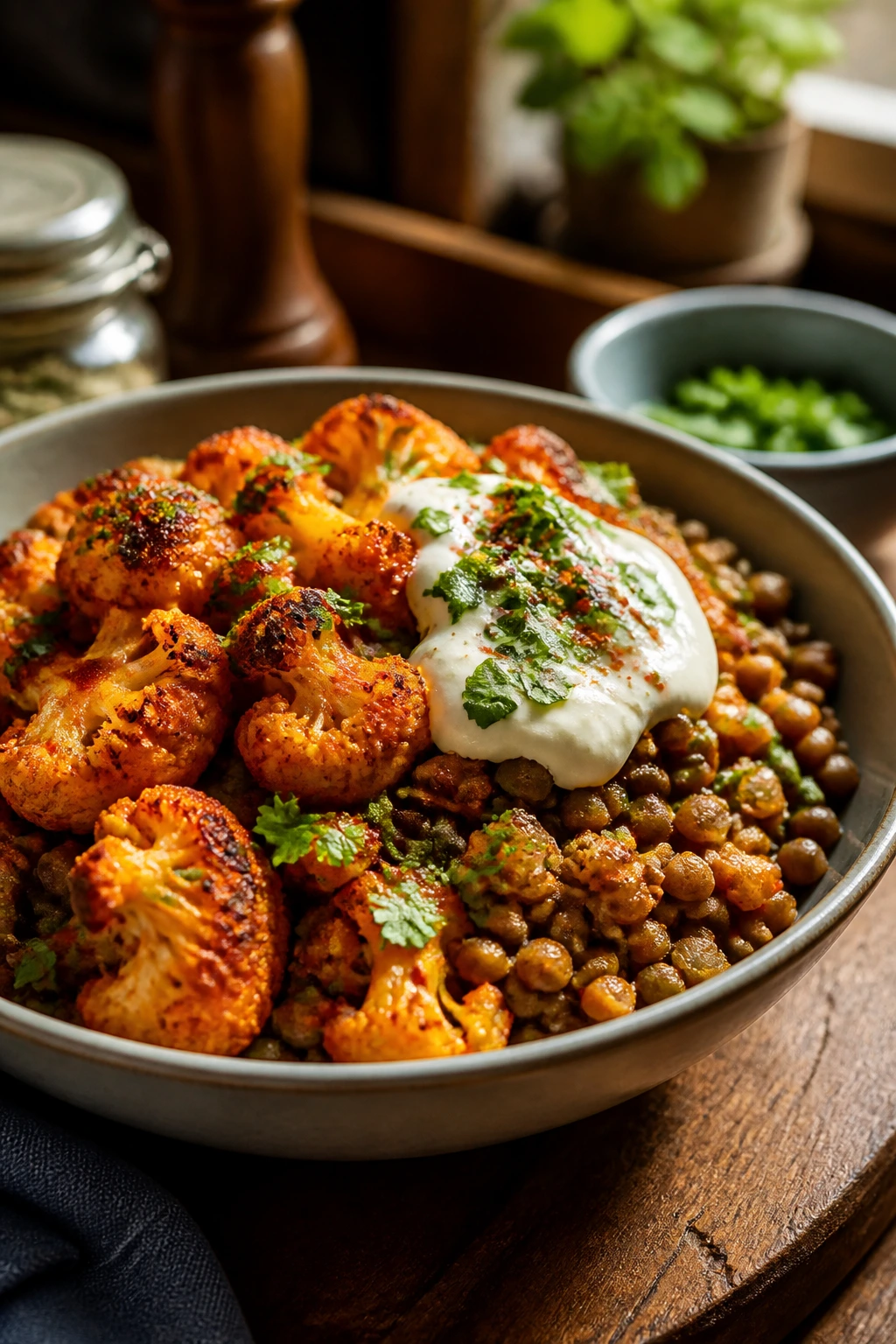
34. Harissa Cauliflower Lentil Bowls
Intro:
Harissa changes cauliflower from polite to memorable. Roast it until the edges darken a little, add lentils for heft, and spoon a cool yogurt sauce over the top — suddenly lunch has heat, creaminess, and enough texture to stay interesting.
Why It Works:
Roasting brings out cauliflower’s sweetness, which makes harissa taste deeper. Lentils fill the bowl without needing meat, and the yogurt balances the spice. This one tastes best when the components stay separate until the last minute.
Key Ingredients:
- 1 head cauliflower, cut into florets
- 1 tbsp harissa paste
- 1 tbsp olive oil
- 2 cups cooked lentils
- 1/2 cup plain Greek yogurt
- 1 cucumber, diced
- 1 lemon, juiced
- 2 tbsp chopped mint
Quick Steps:
- Toss cauliflower with harissa, olive oil, salt, and pepper.
- Roast at 425°F for 20 to 25 minutes, until browned at the edges.
- Warm the lentils with a splash of water if needed.
- Mix yogurt, lemon juice, mint, and a pinch of salt.
- Build the bowls and spoon the yogurt over the top.
Equipment for This Recipe:
- Rimmed baking sheet
- Mixing bowl
- Small bowl
- Spoon
How to Serve This Dish:
Serve warm with rice or couscous if you want more volume. A few toasted almonds or pumpkin seeds add crunch and make the bowl feel finished.
Pro Tips for This Recipe:
- Don’t crowd the cauliflower or it’ll steam.
- Taste the harissa first; some brands run hotter than others.
- Keep the yogurt sauce cold for contrast.
Variations on This Dish:
- Sweet Potato Version: Swap half the cauliflower for roasted sweet potato.
- No-Yogurt Option: Use tahini thinned with lemon and water.
Common Mistakes to Avoid with This Dish:
- Pale cauliflower: Roast until it gets color.
- Too much harissa: Start with a light hand.
- Muddy bowl: Keep the yogurt separate until serving if packing ahead.
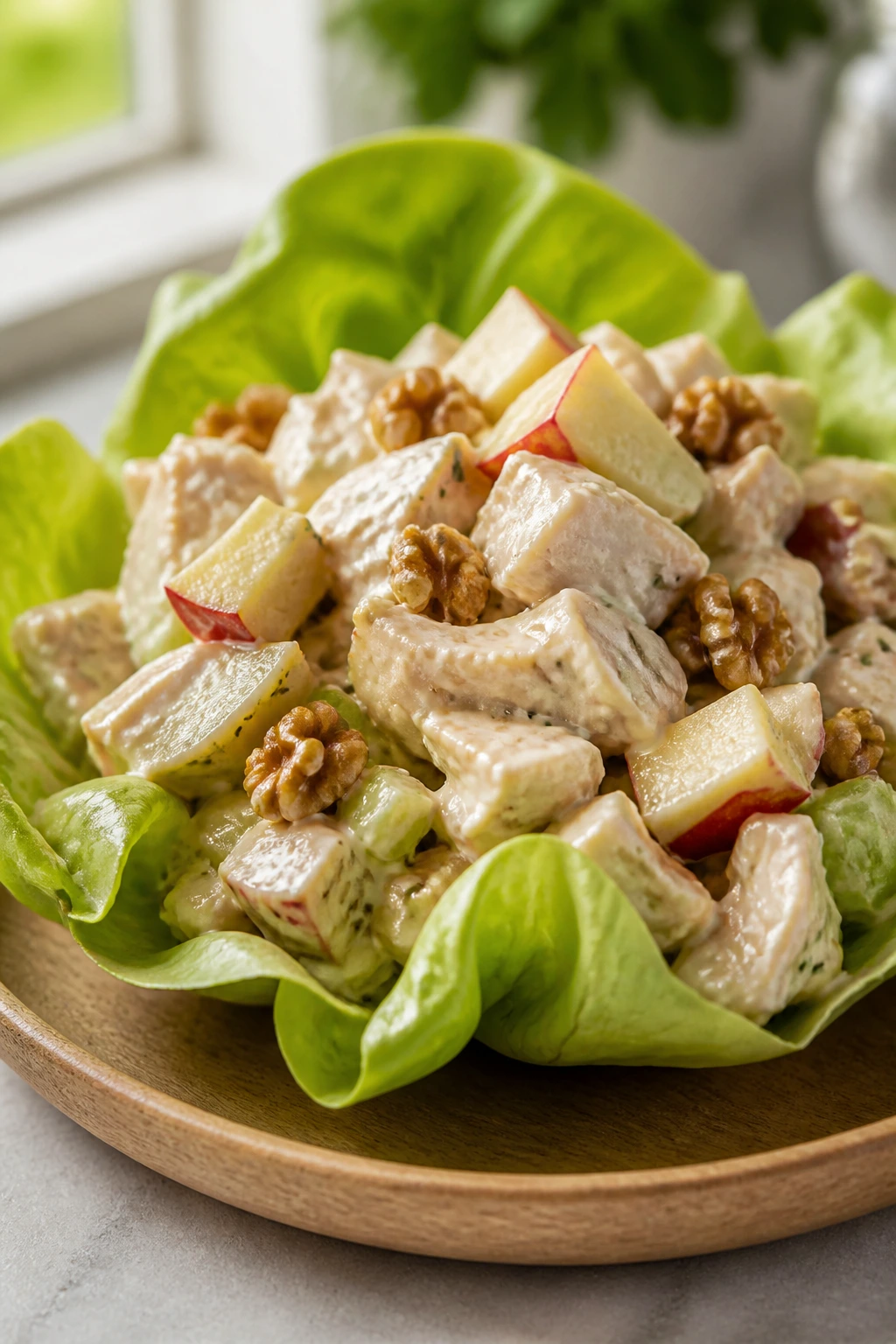
35. Apple Walnut Chicken Salad Lettuce Cups
Intro:
Apple and walnut make chicken salad taste sharper, crunchier, and a little more alive. Lettuce cups keep it light without making it feel skimpy, and the whole thing packs well if you keep the filling chilled.
Why It Works:
The apple gives sweet crunch, the walnuts bring a toasted note, and the yogurt-Dijon dressing keeps the chicken from tasting dry. Lettuce cups are cleaner than bread for this style, and they hold up as long as you don’t overfill them. It’s a lunch that feels fresh without asking for much.
Key Ingredients:
- 3 cups cooked chicken, chopped
- 1 apple, diced
- 1 celery stalk, diced
- 1/3 cup walnuts, chopped
- 1/2 cup plain Greek yogurt
- 1 tsp Dijon mustard
- 1 tbsp lemon juice
- Butter lettuce leaves or romaine cups
Quick Steps:
- Stir the yogurt, Dijon, lemon juice, salt, and pepper together.
- Fold in the chicken, apple, celery, and walnuts.
- Chill for 10 minutes if you have time.
- Spoon into lettuce cups.
- Finish with extra black pepper or chopped herbs.
Equipment for This Recipe:
- Mixing bowl
- Spoon
- Knife and cutting board
- Container for storage
How to Serve This Dish:
Serve with fruit or a small pile of crackers on the side. If you want a more substantial lunch, add a boiled egg or a few slices of avocado.
Pro Tips for This Recipe:
- Use a crisp apple so the texture stays lively.
- Toast the walnuts for better flavor.
- Dry the lettuce leaves well before filling them.
Variations on This Dish:
- Curry Chicken Salad: Add a pinch of curry powder and raisins.
- Grape Walnut Version: Swap apple for halved grapes.
Common Mistakes to Avoid with This Dish:
- Watery filling: Pat the chicken dry before mixing.
- Bitter lettuce: Choose sweet butter lettuce if you can.
- Soft apples: Add them just before serving for the best crunch.
Why These Lunches Hold Up After Noon
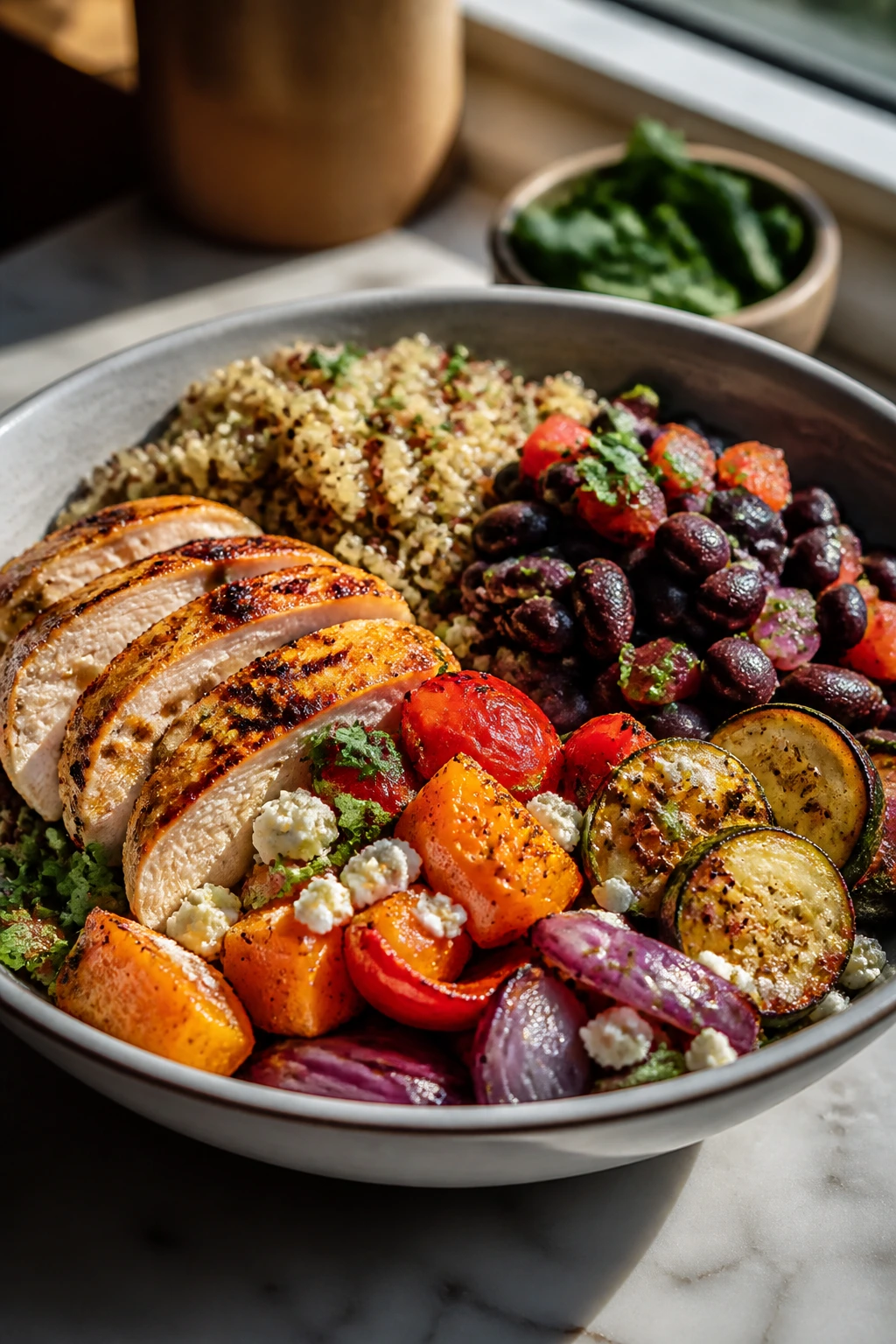
A lunch recipe earns its keep when it can survive a little time. That is the test. Some food tastes fine the second it leaves the stove and collapses an hour later; these recipes are built around ingredients that keep their shape, their seasoning, or both.
The pattern is pretty consistent. Acid keeps chicken, beans, and grains from tasting dull. Crunch keeps soft things from going sleepy. And when a lunch has enough protein, salt, and one sharp flavor — lemon, pickle, mustard, chili, yogurt, salsa, miso — it tends to taste like a real meal even after the container has sat in a bag or fridge shelf for a while.
The Tools That Make Lunch Prep Less Annoying
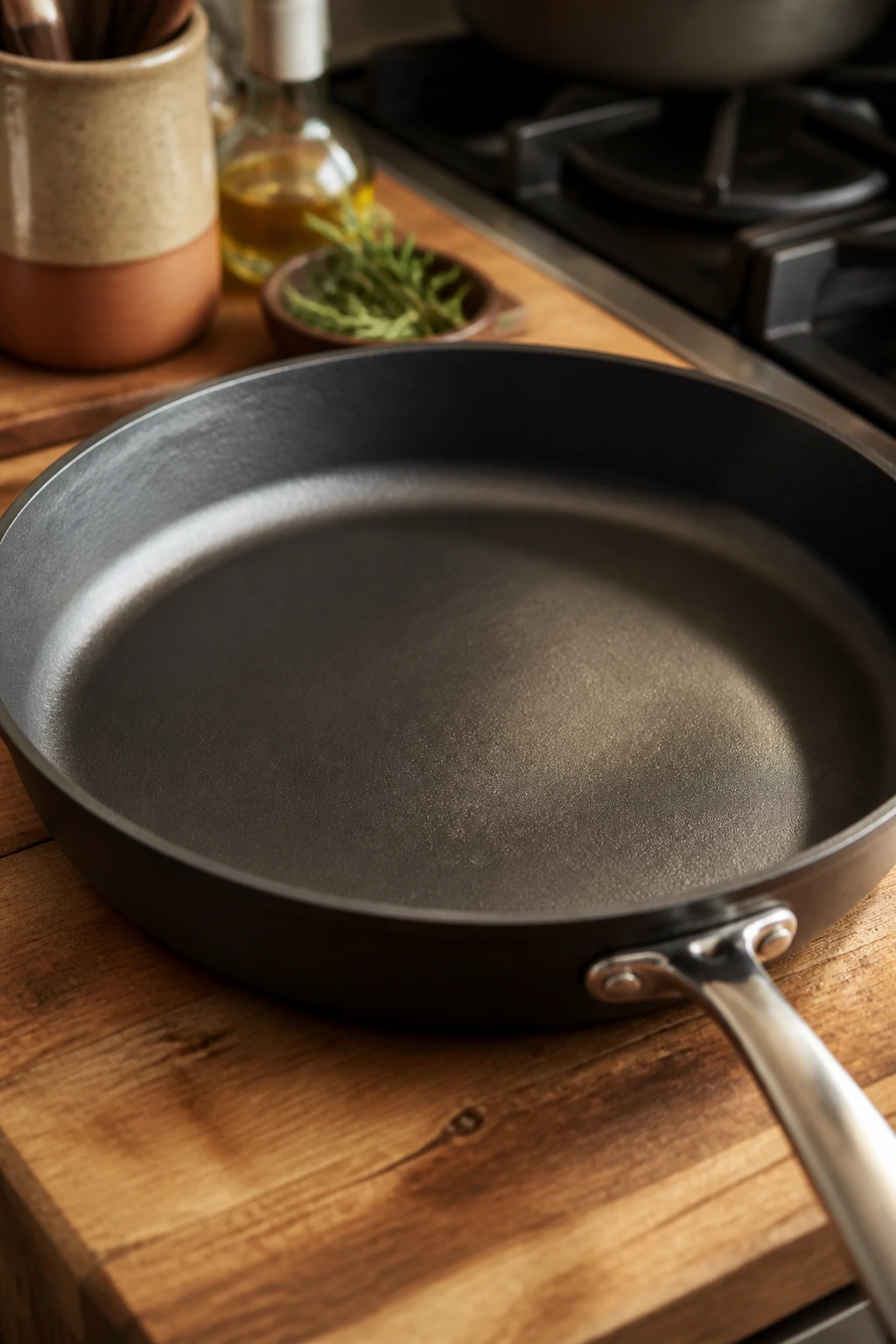
- 10- or 12-inch skillet: The workhorse for chicken, tofu, shrimp, and quick vegetables.
- Rimmed baking sheet: Roasting vegetables, potatoes, cauliflower, and sweet potatoes is much easier on a sheet pan.
- Medium saucepan with lid: Good for quinoa, farro, rice, lentils, and soup bases.
- Large mixing bowls: You’ll use them for salads, slaws, dressings, and grain bowls.
- Sharp chef’s knife: A dull knife makes lunch prep slow and sloppy.
- Cutting board with a towel underneath: Keeps everything steady when you’re slicing quickly.
- Can opener: Beans, tuna, tomatoes, and coconut milk show up all over this list.
- Airtight containers: Glass or sturdy plastic both work; what matters is a tight lid.
- Small jars or sauce cups: Separate dressings, yogurt sauces, and salsa until serving time.
- Immersion blender, optional: Handy for soups when you want a thicker texture without pouring hot liquid into a blender.
Smart Shopping and Ingredient Tips
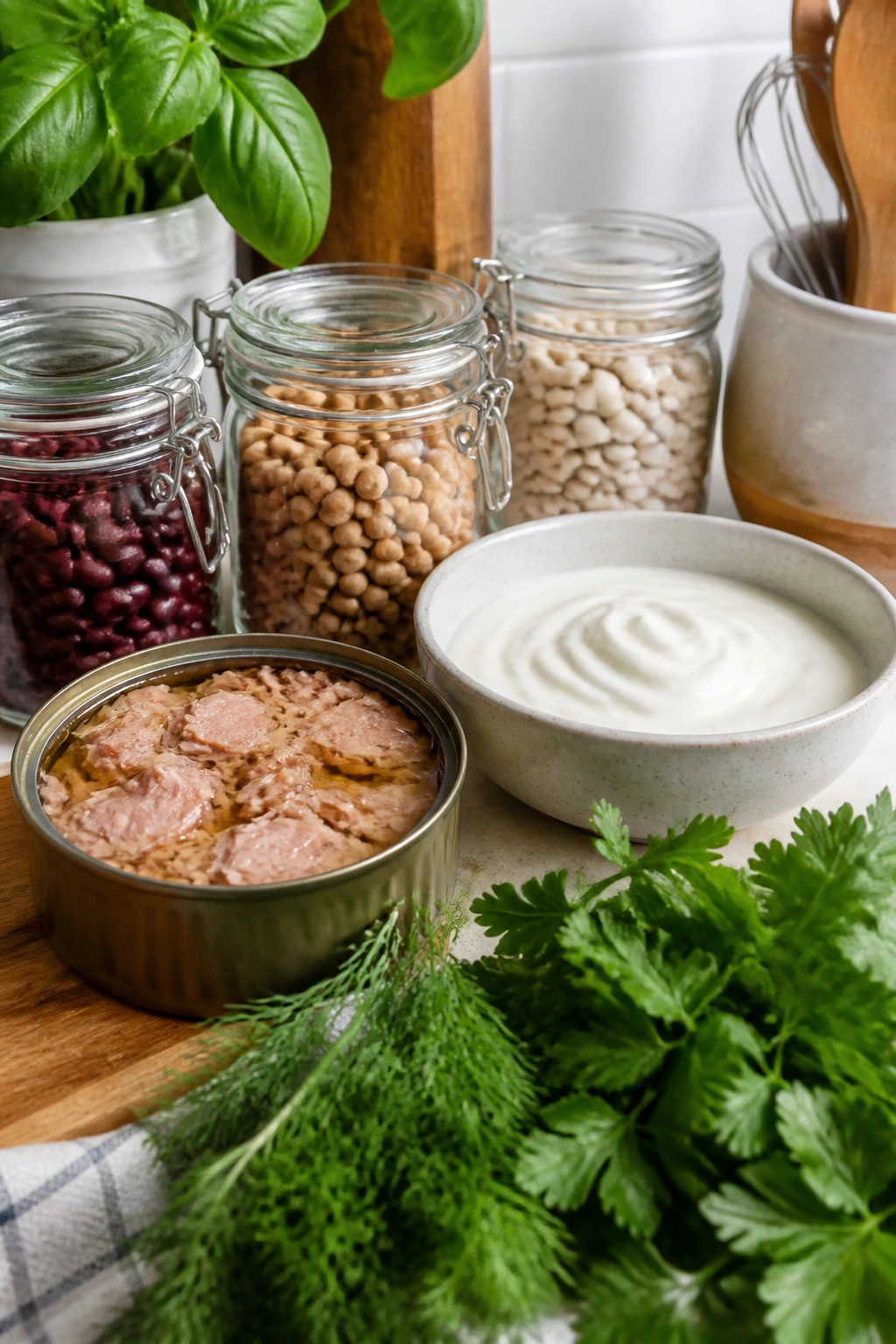
A good lunch starts in the cart, not the kitchen. If you’re buying chicken, thighs usually stay juicier than breasts for bowls, wraps, and shawarma-style recipes. For tuna, look for cans packed in olive oil if you want a rounder taste; water-packed tuna works too, but it needs more lemon or mayonnaise to wake up.
Beans deserve better treatment than they usually get. Rinse canned beans until the liquid runs mostly clear, because that starchy liquid can make salads and bowls taste muddy. If you’re buying yogurt for dressings or sauces, choose plain Greek yogurt with some body to it; thin yogurt turns runny the minute lemon or salsa hits it.
Grains are worth cooking in broth if you can spare it. Quinoa, farro, rice, and lentils all taste more finished when the cooking liquid has salt. Same with vegetables: bagged slaw, pre-shredded carrots, and frozen edamame are fine when time is tight, but they need a good dressing or sauce to keep them from reading as store-bought background noise.
One more thing. Use herbs generously. Parsley, dill, mint, cilantro, basil — all of them make lunch taste fresher than extra cheese ever will. Cheap, too.
How to Serve These Recipes
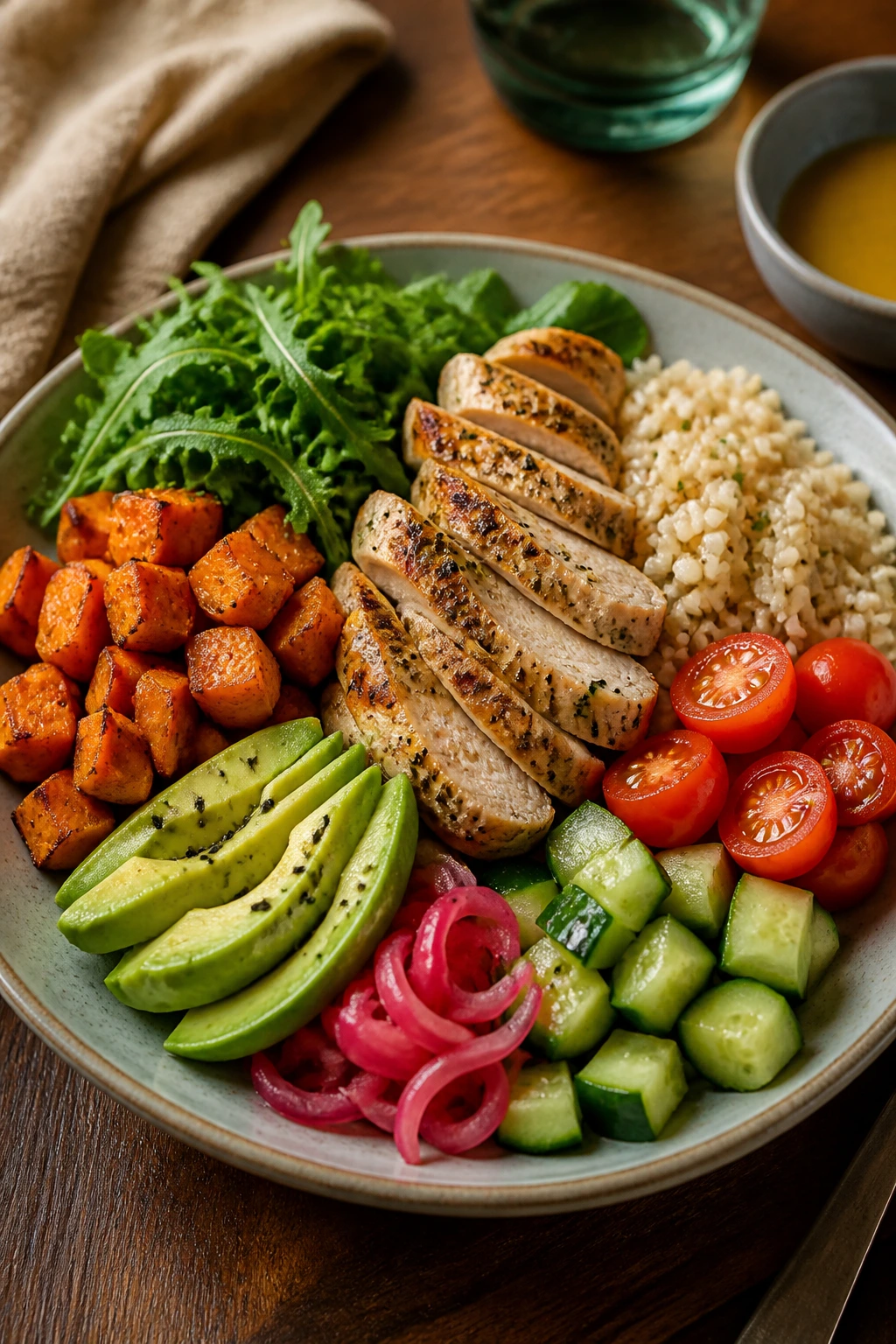
Presentation:
Bowls look best when you keep the toppings visible instead of burying them. Put greens or grains in the base, then arrange protein, vegetables, and sauce in separate patches so the colors stay clear. Wraps and sandwiches look better when cut on a sharp diagonal; it sounds fussy, but the cleaner edge makes the filling feel intentional.
Accompaniments:
A crisp side always helps: cucumber spears, pickles, apple slices, fruit, roasted chickpeas, or a simple green salad. For soup, use toast, flatbread, or a seeded cracker. For bowls and salads, a handful of nuts or seeds adds texture without making lunch feel heavier than it needs to be.
Portions:
Most of these recipes work as one substantial lunch for one person, though soups, chili, and grain bowls can stretch if you need a bigger plate. If you’re packing for a long day, lean toward 1 1/2 cups of protein-rich filling or about 2 cups of soup. If you want a lighter lunch, keep the grain portion modest and let vegetables do more of the work.
Beverage Pairing:
Sparkling water with lemon is the easiest match because it resets your palate without getting in the way. Unsweetened iced tea, light herbal tea, or cold brew also fit a lunch that leans savory. If the meal is spicy — buffalo chicken, harissa cauliflower, taco bowls — a cold, plain drink beats anything sweet.
Additional Tips and Flavor Boosters
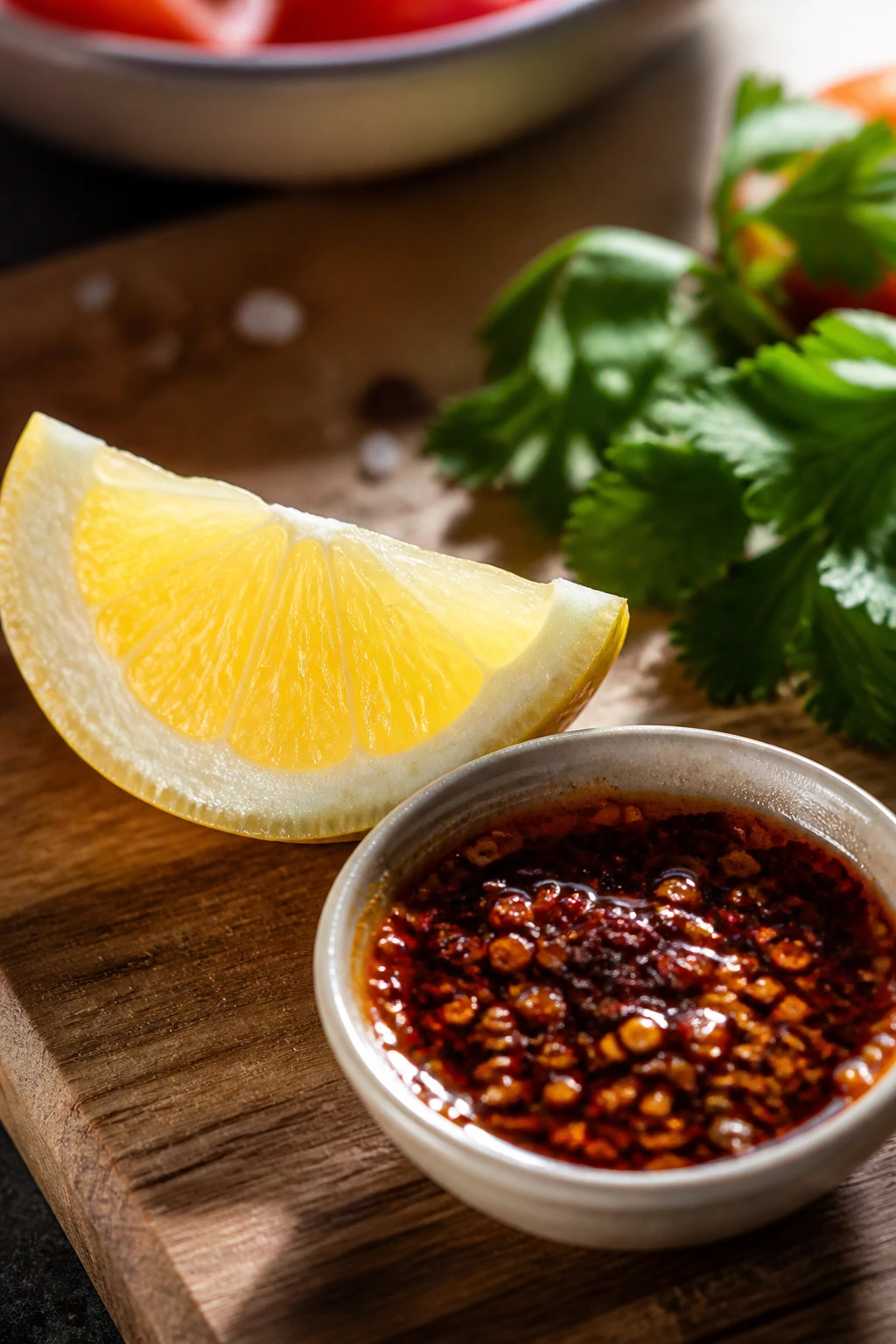
Flavor Enhancement:
Use one bright finish on almost every recipe: lemon juice, lime juice, red wine vinegar, pickled onions, or a little chili crisp. That last little hit makes healthy lunch recipes taste more alive than a big pile of toppings ever will.
Customization:
Swap grains based on what you have. Quinoa, farro, rice, couscous, or even shredded cabbage can stand in for each other without wrecking the recipe. If you need more protein, add eggs, chickpeas, extra turkey, tofu, or a handful of nuts.
Serving Suggestions:
Keep a tiny container of seeds, herbs, or crunchy toppings in your lunch bag. Pumpkin seeds, sesame seeds, chopped walnuts, or crushed tortilla chips can rescue a soft bowl in about five seconds. A clean finish matters.
Make-It-Yours:
For dairy-free lunches, lean on tahini, avocado, hummus, or olive oil instead of yogurt and cheese. For gluten-free lunches, use rice, corn tortillas, lettuce cups, or baked potatoes. For lower-sodium versions, build more flavor with citrus, herbs, garlic, and toasted spices instead of trying to strip the food down to nothing.
Make-Ahead, Storage, and Reheating Guidance
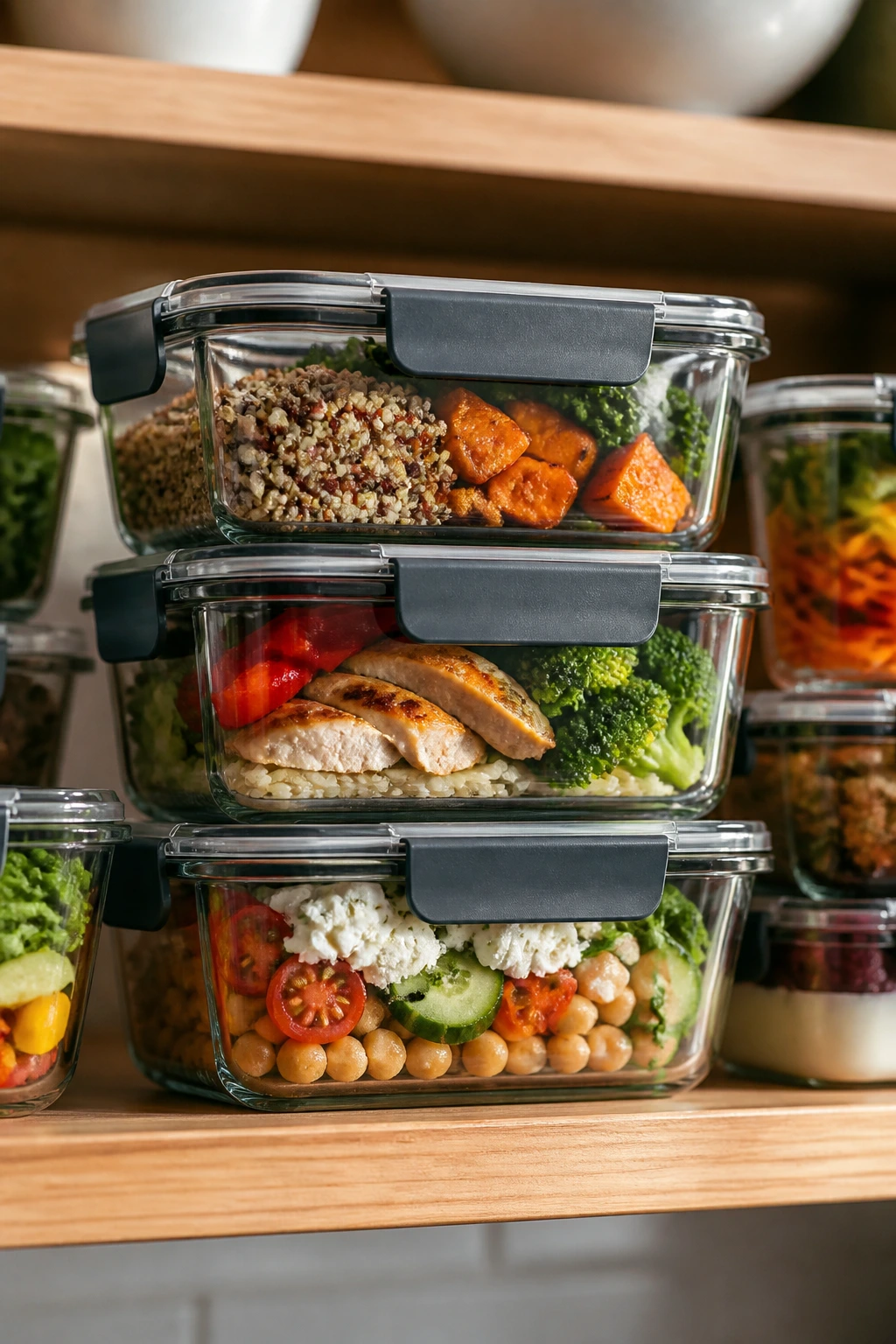
Most grain bowls, chicken salads, and wraps keep well for 3 to 4 days in the refrigerator if you store wet ingredients separately. That means dressing in a small container, lettuce or herbs on the side, and avocado added the day you eat it. The more you separate crisp things from juicy things, the better lunch will taste on day three.
Soups, chili, and lentil curry are the strongest freezer candidates here. They usually keep for 2 to 3 months frozen in airtight containers, and they reheat best over low heat on the stove with a splash of broth or water. If you use the microwave, stop halfway through and stir, because the edges heat faster than the middle.
Cooked grains such as rice, quinoa, and farro hold for about 4 days in the fridge. Reheat them with a teaspoon or two of water, covered loosely, so they steam instead of drying out. Protein bowls with chicken, turkey, tofu, or beans can be microwaved for 60 to 90 seconds, stirred, then heated again in short bursts if needed.
A few lunches are better cold. Tuna salad, chicken salad, egg salad, smoked salmon bowls, roll-ups, and noodle salads usually taste cleaner straight from the fridge. If you’re packing eggs or seafood, keep the lunch cold until you eat it. No mystery there.
Variations and Adaptations to Try
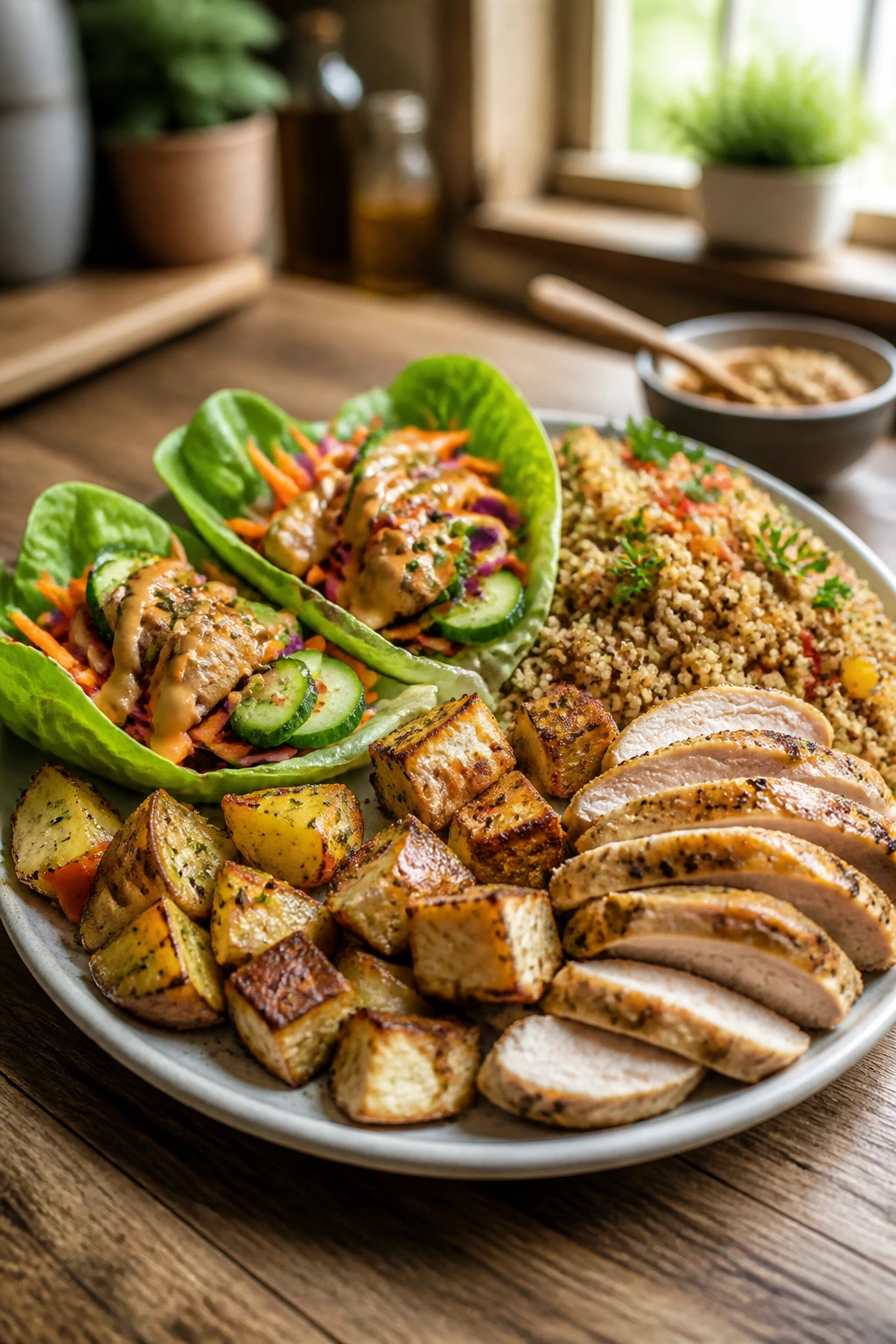
Gluten-Free Rotation:
Use rice, quinoa, corn tortillas, lettuce cups, potatoes, or gluten-free bread where needed. That change works across almost every recipe here without requiring a new cooking method. The trick is keeping the texture sturdy enough that the lunch still feels complete.
Dairy-Free Swap Day:
Replace yogurt sauces with tahini, hummus, avocado, or a simple lemon-olive oil dressing. Skip cheese and lean harder on herbs, capers, olives, pickled onions, and toasted seeds. The food should still have depth; it just comes from a different place.
Higher-Protein Lunches:
Add eggs, extra chicken, tuna, tofu, edamame, or beans to bowls and salads. You do not need a protein shake hiding inside the meal; you need enough of the real thing to keep lunch from wearing off too fast. That usually means bumping the protein portion a little, not doubling everything.
Vegetarian and Vegan Turns:
Most of the bowls, soups, and wraps here convert easily with chickpeas, lentils, tofu, or white beans. When you swap out meat, add another layer of flavor — more herbs, a stronger dressing, toasted nuts, or roasted vegetables. Otherwise the lunch can feel thin.
Lower-Sodium Approach:
Use unsalted broth when possible, rinse canned beans thoroughly, and season with lemon, vinegar, garlic, cumin, and fresh herbs. Salt still matters, but it should not be the only thing doing the talking. That’s a boring lunch in disguise, and you can do better.
Common Mistakes to Avoid
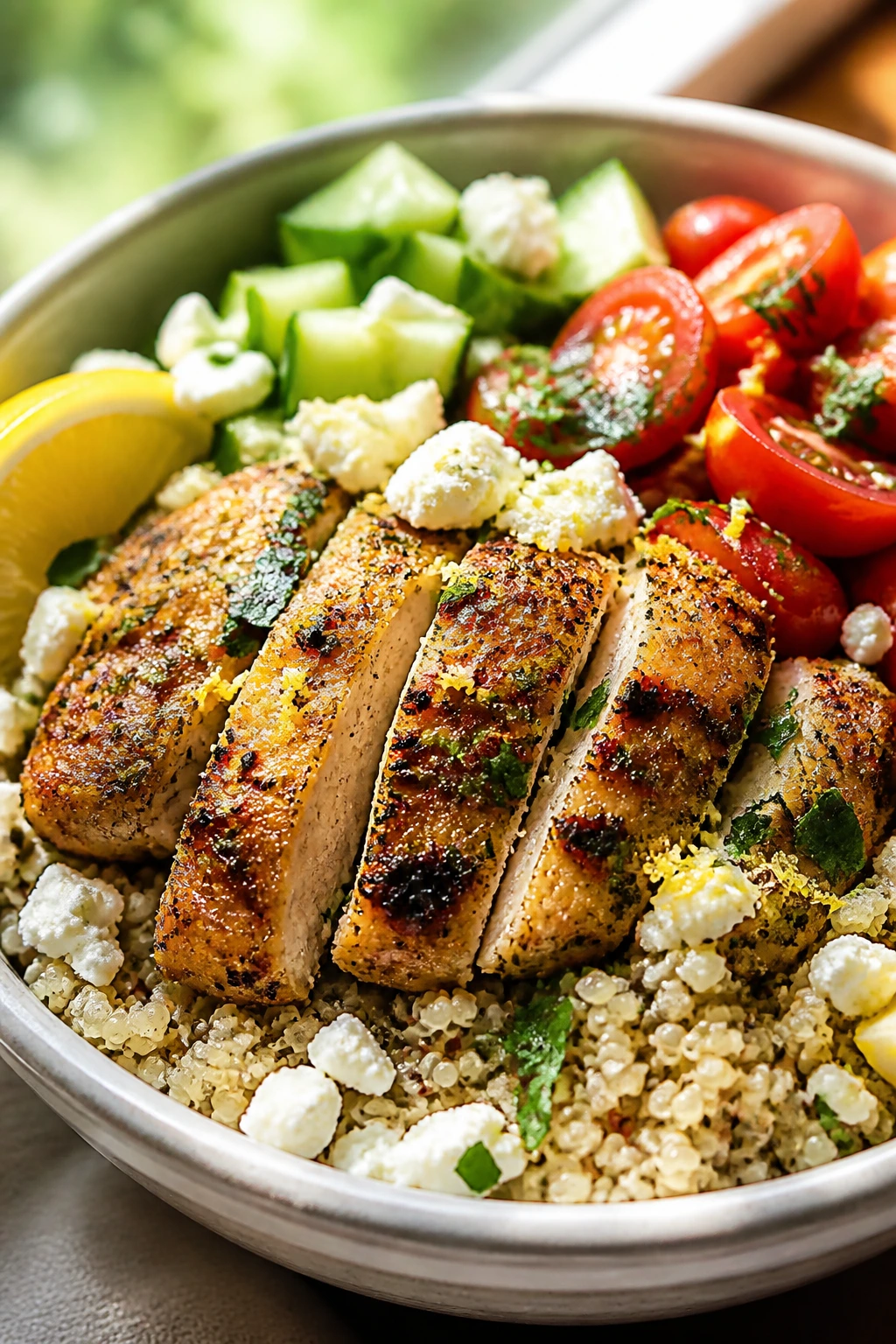
The first mistake is building lunches that are too wet. Dressing a salad too early, piling juicy tomatoes directly onto bread, or packing hot vegetables over greens all lead to soggy food by noon. Keep wet and dry pieces apart until the end.
Another one: underseasoning cold food. A recipe can taste fine off the stove and then flatten in the fridge because cold dulls salt and acid. Taste the food after it cools a bit, then add more lemon, vinegar, mustard, herbs, or salt if it needs it.
People also overcook proteins for lunch because they’re afraid of food safety. That usually backfires. Dry chicken, shriveled shrimp, and rubbery eggs are not more careful; they’re just less pleasant. Pull food at the right temperature and let carryover heat do the rest.
Don’t forget texture. A bowl with only soft parts — beans, rice, chicken, avocado — goes mushy fast. Add something crisp: cabbage, cucumber, celery, seeds, pickles, toasted nuts, or a few croutons. Lunch needs a little bite or it collapses into sameness.
Last one, and this is a big one: making portions too small. “Healthy” does not mean tiny. If lunch leaves you hungry an hour later, you’ll end up scavenging anyway. Pack enough protein, enough fiber, and enough flavor to actually get through the afternoon.
Frequently Asked Questions
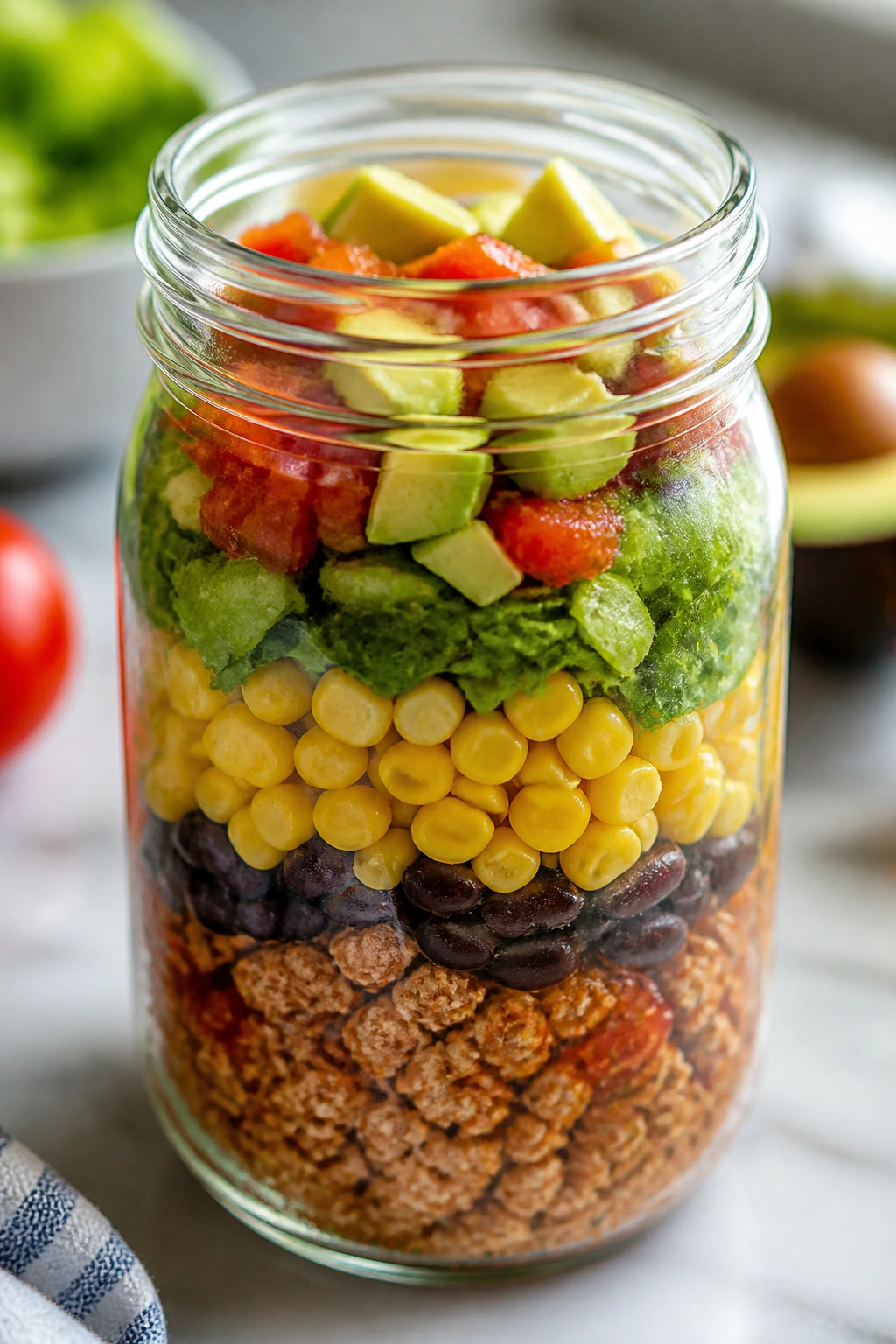
Which of these lunches hold up best for meal prep?
The soups, chili, lentil curry, grain bowls, chicken salad, tuna salad, and roasted vegetable salads keep especially well. Anything with a dressing, sauce, or crunchy topping usually does better if you store those parts separately and assemble at lunch.
Can I make these lunches without a microwave?
Absolutely. Many of them are designed for cold or room-temperature eating: tuna salad, chickpea pita pockets, noodle salads, roll-ups, egg salad toasts, and smoked salmon bowls all work fine without reheating.
How do I keep avocado from turning brown?
Add it the day you eat the lunch, or toss the slices with lemon or lime juice and pack them tightly against the filling. If the color bothers you, use avocado in a mash with yogurt or tahini so it shows less browning.
What’s the easiest protein to batch-cook for these recipes?
Chicken thighs, ground turkey, hard-boiled eggs, lentils, and tofu are the least fussy. They can be cooked in bigger batches and moved into different recipes across the week without tasting like the same meal over and over.
How do I keep salads from getting soggy?
Store dressing separately, keep juicy ingredients like tomatoes or cucumbers in their own layer, and place greens on top if you’re using a jar. If the salad needs crunch, add seeds or nuts right before eating.
Can I swap grains in these recipes?
Yes. Quinoa, rice, farro, couscous, or even roasted potatoes can usually swap in without trouble. Keep the dressing or sauce the same, and the lunch still works.
Which recipes freeze well?
Turkey chili, coconut lentil curry, tomato white bean soup, carrot lentil soup, and broccoli cheddar white bean soup freeze well. Grain bowls and salads usually do not freeze well once they’re assembled, but the cooked components can often be frozen separately.
What if my lunch tastes flat after chilling?
Add acid first — lemon, lime, vinegar, or pickles — then taste again for salt. Cold food often needs a sharper finish than you expect, and that one little squeeze or splash usually fixes the problem faster than adding more sauce.
How much should I pack for one lunch?
Aim for enough protein to make the meal feel centered, plus one or two sides of vegetables, grains, or fruit. If you’re still hungry after lunch, increase the bean, grain, or protein portion instead of adding random extras that don’t really fill you up.
Can I use rotisserie chicken in these recipes?
Yes, and I do it often. It works best in chicken salad, grain bowls, wraps, quesadillas, and soups; just pull off the skin if you want a leaner lunch and season the chicken a little more aggressively, because pre-cooked meat can taste underpowered on its own.
A Lunch Routine That Actually Deserves the Fridge Space
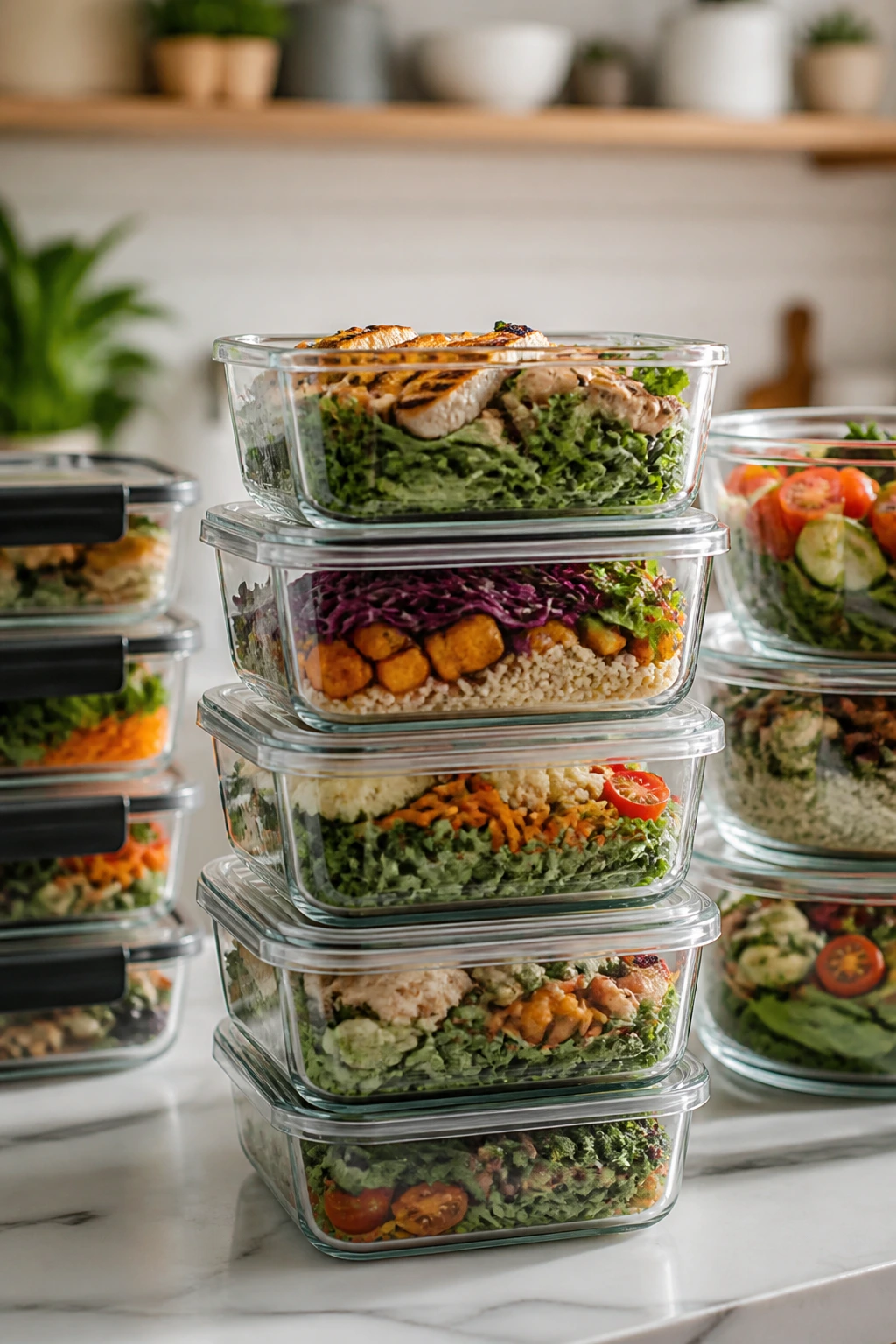
A good lunch is not about perfection. It’s about opening a container at noon and finding something that still tastes like food someone meant to make. That means salt, acid, texture, and enough substance to keep you from rummaging for snacks an hour later.
These 35 recipes cover the range: bowls, soups, wraps, salads, roll-ups, toast, and a few lunchbox oddities that earn their place anyway. Pick three, batch a few components, and let the week stop feeling like a series of emergency sandwiches. The best lunch is the one you’re willing to eat twice.