



Camping dinner has a way of exposing every weak plan you made back at home. One loose onion. One flimsy bag of potatoes. One skillet that looked harmless in the kitchen and turns into a blackened headache once the fire gets hot and the light gets weird.
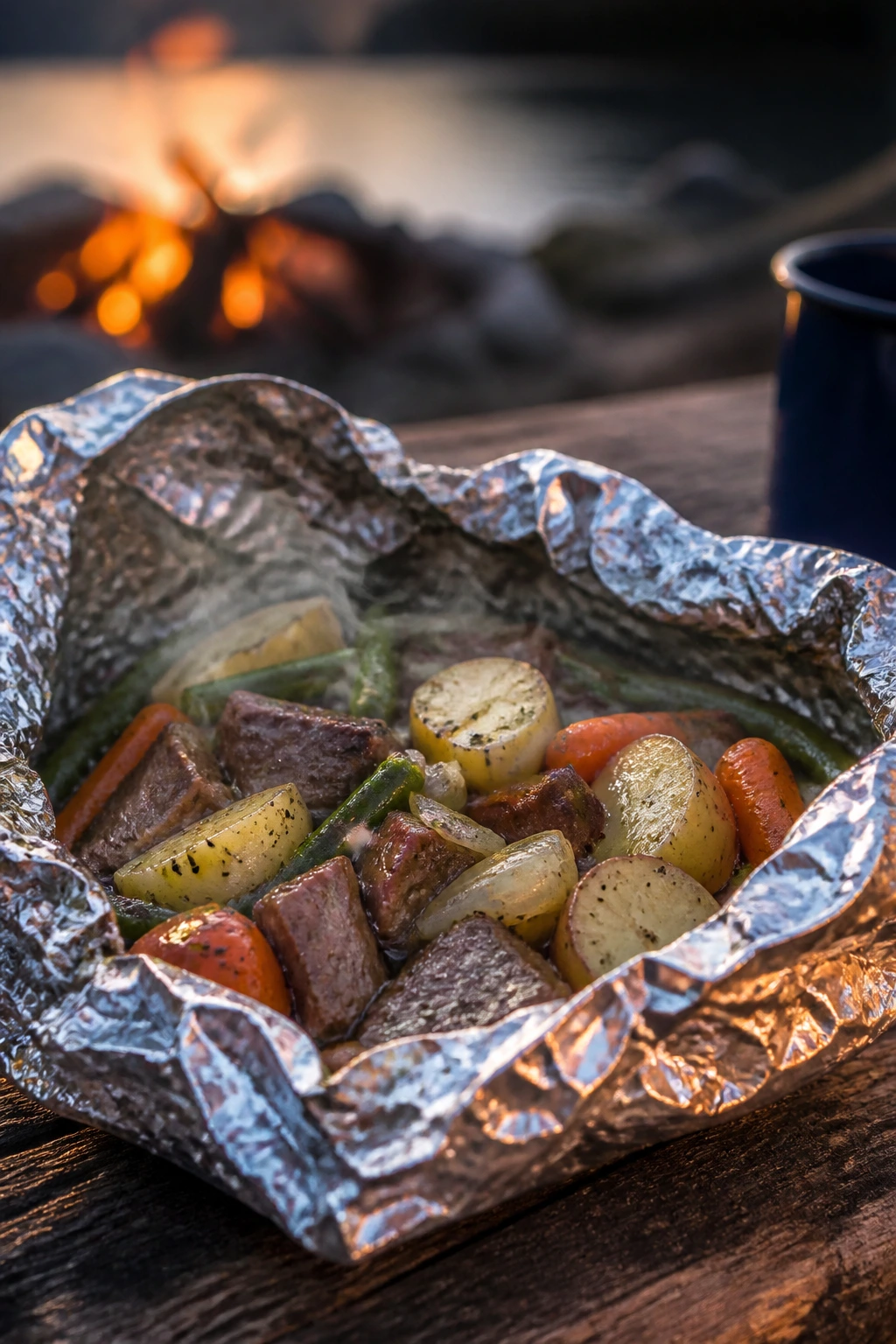
That’s exactly why foil packet dinners for camping trips earn their keep. You tuck the food into a neat parcel, set it over medium coals or a grill grate, and let the packet trap heat, steam, and seasoning right where you want it. Cleanup drops to almost nothing. The food stays contained. Nobody has to wash a greasy pan in the dark with one cold sponge and a bad attitude.
The trick is not random dumping. A good packet dinner is built with a little care: cut the potatoes small enough to finish, keep delicate fish away from long cooking times, and use enough fat that the food doesn’t dry out before the center is done. That part matters more than people admit. Once you get the rhythm, these meals become the easiest way to feed a crowd outdoors without turning dinner into a project.
Why These Packets Earn Space in the Cooler
-
Cleanup is almost boring: Each packet acts like its own tiny roasting pan, so you can eat, toss, and move on without scrubbing a pot at the campsite.
-
The food stays juicy: Foil traps steam and melted fat around the ingredients, which helps chicken thighs, sausage, and vegetables cook through without drying out.
-
Timing is manageable: Most of these meals finish in 15 to 30 minutes over coals or a grill, so you’re not stuck hovering over the fire all night.
-
You can cook them different ways: Every recipe here works over campfire coals, on a grill grate, or in a home oven if the weather turns annoying.
-
The menu doesn’t get boring: Chicken, beef, shrimp, sausage, and vegetarian packets all show up here, so nobody ends up eating the same smoky thing three nights in a row.
-
Prep can happen before you leave: A lot of the chopping and mixing can be done at home, which saves time when the cooler is already full and the picnic table is crowded.
1. Garlic Herb Butter Chicken and Potatoes
Butter, garlic, and chicken thighs are a very old, very reliable friendship. Add baby potatoes and green beans, and you get a foil packet dinner that smells rich the moment the foil opens, with a little steam, a little parsley, and that classic campfire edge that makes people drift toward the table without being asked.
Why It Works
Chicken thighs stay tender even when the heat around a campfire runs a little uneven. That matters. Potatoes give the packet some body, while green beans bring a snap that keeps the whole thing from feeling heavy. The garlic butter coats everything, and because the butter melts inside the foil instead of running off into the fire, the flavor stays put.
Key Ingredients
- 1½ lb boneless, skinless chicken thighs, cut into 1½-inch pieces — thighs hold up better than breasts over fire heat.
- 1 lb baby potatoes, halved — keep them small so they finish on time.
- 8 oz green beans, trimmed — they soften without turning mushy.
- 4 tbsp unsalted butter, melted — this is the flavor carrier.
- 2 tbsp olive oil — helps the packet stay moist and limits sticking.
- 4 garlic cloves, minced — use fresh garlic if you can; it tastes sweeter here.
- 1 tsp kosher salt — enough to season the potatoes and chicken evenly.
- 1 tsp Italian seasoning — gives the packet a savory, herby backbone.
- ½ tsp black pepper — enough to show up without taking over.
- 1 lemon, cut into wedges — for the finish.
- 1 tbsp chopped parsley — add it at the end for freshness.
Quick Steps
- Build the fire or heat the grill to medium heat, or set an oven to 400°F (205°C) as a backup.
- Toss the chicken, potatoes, green beans, butter, oil, garlic, salt, pepper, and Italian seasoning in a large bowl until everything is coated.
- Divide the mixture among four double-layered sheets of heavy-duty foil, piling the potatoes toward the bottom and keeping the pieces in a single, loose layer.
- Seal the packets tightly, folding the edges over twice so the butter stays inside. Leave a little air space inside the packet so steam can move.
- Cook for 24 to 28 minutes over medium coals or on the grill, flipping once halfway through. The potatoes should pierce easily with a knife and the chicken should reach 165°F.
- Open carefully and finish with lemon juice and parsley. The steam will be hot. Annoyingly hot.
Tips and Variations
- Make-ahead move: Mix the chicken and vegetables at home, then pack them in a sealed container. Add the butter right before cooking.
- Easy swap: Broccoli florets work if you do not have green beans, but cut them a bit larger so they do not collapse.
- Flavor bump: A pinch of smoked paprika gives the butter a deeper campfire taste without making the packet spicy.
2. Lemon Dill Salmon and Asparagus
This one is all brightness and speed. You open the foil and get lemon first, then dill, then the clean smell of salmon steaming with asparagus and tomatoes. It feels lighter than most camp meals, which is exactly why people keep coming back to it after a few heavier nights around the fire.
Why It Works
Salmon cooks fast, so it fits the packet method beautifully as long as you keep the heat moderate and the fish fillets similar in thickness. Asparagus and cherry tomatoes soften at the same pace, and the butter or olive oil keeps the surface from drying out before the center turns opaque. Dill and lemon do the rest. They cut through the richness and keep the whole thing tasting fresh rather than smoky in a tired way.
Key Ingredients
- 4 salmon fillets, about 5 to 6 oz each — choose fillets of similar thickness.
- 1 lb asparagus, trimmed — thin stalks cook a little faster.
- 1 pint cherry tomatoes — they burst and make a light sauce in the packet.
- 3 tbsp olive oil — keeps the fish from sticking.
- 2 tbsp unsalted butter, cut into small pieces — optional, but I like the rounder flavor.
- 2 tbsp lemon juice, plus lemon slices — the acid wakes up the whole packet.
- 2 garlic cloves, minced — use lightly; salmon is delicate.
- 2 tbsp chopped fresh dill — dried dill works in a pinch, but fresh is better here.
- ¾ tsp kosher salt — enough to season the fish and vegetables.
- ½ tsp black pepper — just enough bite.
Quick Steps
- Preheat the grill to medium heat or the oven to 400°F (205°C). If you are using a campfire, wait for a bed of glowing coals instead of open flame.
- Toss the asparagus and tomatoes with olive oil, garlic, salt, and pepper in a bowl.
- Lay the vegetables on double-layered foil sheets, then set one salmon fillet on top of each portion. Spoon lemon juice over the fish and add butter pieces and dill.
- Top with lemon slices and seal the packets. Crimp the edges so the steam stays in, but don’t press the foil so tightly that it sticks to the fish.
- Cook for 12 to 14 minutes, depending on thickness. The salmon should flake at the thickest point and look just opaque through the center.
- Open the packet and serve right away. Salmon goes from lovely to dry fast if it sits too long.
Tips and Variations
- Time-saver: Trim the asparagus at home; the woody ends are a pain to deal with at a campsite.
- Substitution: Thin green beans can stand in for asparagus, though they need a minute or two longer.
- Finish idea: A spoonful of capers adds a salty pop if you want a more briny, restaurant-style packet.
3. Classic BBQ Beef and Corn Packets
Sweet corn, smoky beef, and barbecue sauce are the kind of camp flavor that feels a little messy in the best way. This packet gives you browned edges, sticky sauce, and enough heft to satisfy people who usually ask whether dinner has “real food” in it.
Why It Works
Beef likes direct heat, but it also likes a little cushioning, and the foil packet gives it both. Thin slices or small strips cook quickly enough to stay tender, while corn and onions soak up the sauce and release enough juice to keep the packet from turning dry. A little smoked paprika helps the barbecue flavor taste deeper, not just sweeter.
Key Ingredients
- 1½ lb sirloin steak, sliced into thin strips — cut across the grain for tenderness.
- 2 cups corn kernels or 2 ears corn, cut into rounds — fresh, frozen, or thawed all work.
- 1 red bell pepper, sliced — adds sweetness and color.
- 1 red onion, sliced into wedges — it softens into something almost jammy.
- 1 cup baby potatoes, thinly sliced — optional, but they make the packet heartier.
- ⅓ cup barbecue sauce — use a thicker sauce so it clings.
- 2 tbsp olive oil — helps the beef sear a little in the packet.
- 1 tsp smoked paprika — gives the beef a campfire edge.
- 1 tsp kosher salt — don’t be shy here.
- ½ tsp black pepper — enough to sharpen the sauce.
- 1 tbsp chopped cilantro or parsley — for the finish.
Quick Steps
- Preheat a grill to medium-high or heat coals to a steady medium bed. If you use the oven, set it to 425°F (220°C).
- Toss the beef, corn, pepper, onion, potatoes, oil, paprika, salt, and pepper in a bowl until coated.
- Add the barbecue sauce and mix again so the sauce coats everything in a thin layer.
- Spoon the mixture onto four foil sheets and seal tightly, making sure the potatoes are tucked underneath the beef so they get closer to the heat.
- Cook for 18 to 22 minutes, flipping once halfway through. The beef should be cooked through but still juicy, and the potatoes should be tender when pierced.
- Open, scatter with herbs, and serve with extra barbecue sauce on the side if you want a sweeter finish.
Tips and Variations
- Potato note: If your potato slices are thicker than ¼ inch, par-cook them for 5 minutes before packing.
- Heat control: Keep the sauce on the thick side. Thin barbecue sauce can run out and leave the packet bland.
- Serving idea: Spoon the beef and corn over toasted bread if you want an easier camp plate.
4. Sausage, Peppers, and Potatoes
This is the packet I’d hand to someone who wants dinner to taste familiar and not fussy. The sausage gives you browned edges and smoke. The peppers soften into something sweet. The potatoes absorb everything around them. It’s a simple packet, but it never feels empty.
Why It Works
Smoked sausage is already cooked, which takes a lot of pressure off the camping setup. You’re mostly heating, softening, and browning, not gambling with raw meat in uneven fire heat. Peppers and onions cook at nearly the same rate, and the potatoes can keep up if they’re cut small enough. That balance is why this packet works so well when people are hungry and impatient.
Key Ingredients
- 14 oz smoked sausage, sliced into ½-inch rounds — kielbasa or andouille both work.
- 1 lb baby red potatoes, quartered — small pieces finish evenly.
- 1 red bell pepper, sliced — adds sweetness.
- 1 yellow bell pepper, sliced — a little softer and sweeter than the red.
- 1 small onion, sliced — gives the packet depth.
- 2 tbsp olive oil — helps everything brown instead of drying out.
- 1 tsp garlic powder — useful here because fresh garlic can scorch.
- 1 tsp dried thyme — a little woodsy note fits the sausage.
- ¾ tsp kosher salt — the sausage already brings salt, so keep this measured.
- ½ tsp black pepper — enough to keep it from tasting flat.
Quick Steps
- Set the grill to medium heat or prepare medium coals. In an oven, use 400°F (205°C).
- Toss the sausage, potatoes, peppers, onion, oil, garlic powder, thyme, salt, and pepper in a large bowl.
- Divide the mixture into four foil packets, placing the potatoes near the center where the heat is strongest.
- Seal the packets and cook for 28 to 30 minutes, turning once. The potatoes should be fork-tender and the sausage edges should look lightly browned.
- Open the packets and let them sit for a minute before eating. That little pause keeps the steam from burning the roof of your mouth.
Tips and Variations
- Short-cut option: Microwave the potatoes for 3 to 4 minutes at home before you pack them. It cuts the camp cooking time.
- Flavor move: A spoonful of whole-grain mustard stirred into the oil gives the packet a sharp, savory edge.
- Veg swap: Zucchini can replace one of the peppers, but add it in bigger chunks so it does not vanish.
5. Teriyaki Chicken and Pineapple
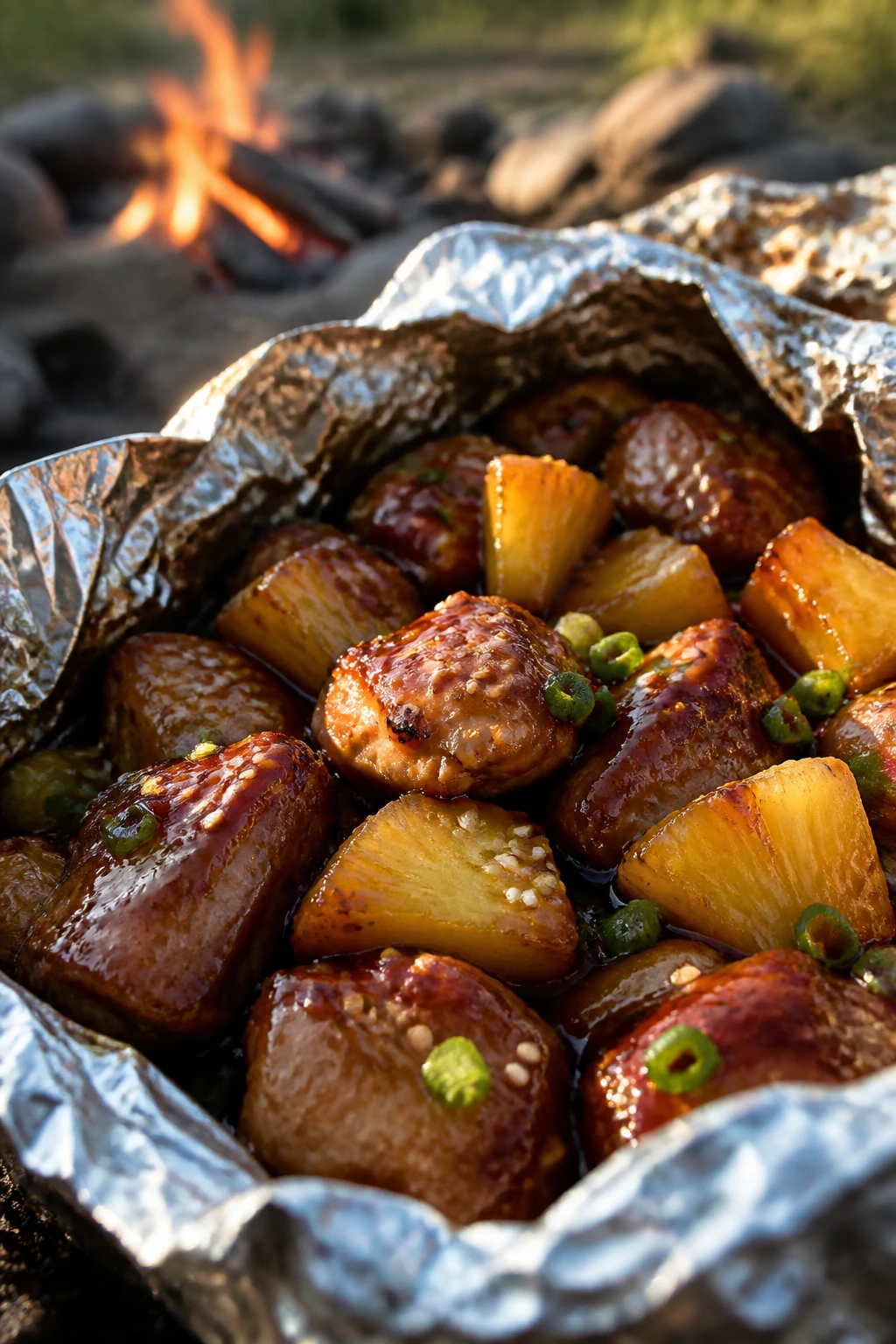
Sweet pineapple and savory teriyaki are a campfire pairing I never get tired of. The fruit turns glossy and soft, the chicken gets sticky at the edges, and the whole packet smells like dinner is doing more work than it actually is.
Why It Works
Teriyaki sauce handles heat well because it brings salt, sugar, and thickness together in one place. That means the chicken gets coated instead of drowned. Pineapple adds acidity and juice, which keeps the packet lively and helps the chicken stay tender. Snap peas or bell peppers add crunch near the end, so the final bite has contrast instead of softness all the way through.
Key Ingredients
- 1½ lb boneless, skinless chicken thighs, cut into chunks — thighs stay juicy and forgiving.
- 2 cups pineapple chunks — fresh or canned, drained.
- 1 red bell pepper, sliced — brings color and a mild sweet crunch.
- 1 cup snap peas — add clean snap and a fresh green taste.
- ⅓ cup teriyaki sauce — thick enough to cling.
- 1 tbsp soy sauce or tamari — deepens the saltiness.
- 1 tsp grated fresh ginger — sharpens the sweetness.
- 1 tbsp sesame oil — a little goes a long way here.
- 2 green onions, sliced — finish the packet with a fresh bite.
- 1 tbsp sesame seeds — optional, but nice for texture.
Quick Steps
- Heat the grill to medium or the oven to 400°F (205°C). If you’re cooking over coals, wait until they’re ashy and steady.
- Toss the chicken, pineapple, bell pepper, snap peas, teriyaki sauce, soy sauce, ginger, and sesame oil until the chicken is coated.
- Divide the mixture among four double-layer foil sheets and seal each packet with a bit of empty space inside.
- Cook for 18 to 20 minutes, flipping once. The chicken should reach 165°F and the pineapple should look glossy and soft.
- Open, sprinkle with green onions and sesame seeds, and serve. Spoon the sauce from the packet over rice or noodles if you brought them.
Tips and Variations
- Make-ahead note: Mix the chicken and sauce before leaving, but keep the pineapple separate until just before cooking so the fruit does not soften the chicken too early.
- Heat option: A pinch of chili flakes or sliced fresh chile gives the sweet packet some bite.
- Serving idea: This is very good tucked into warm tortillas with shredded cabbage.
6. Southwest Turkey and Black Bean Packets
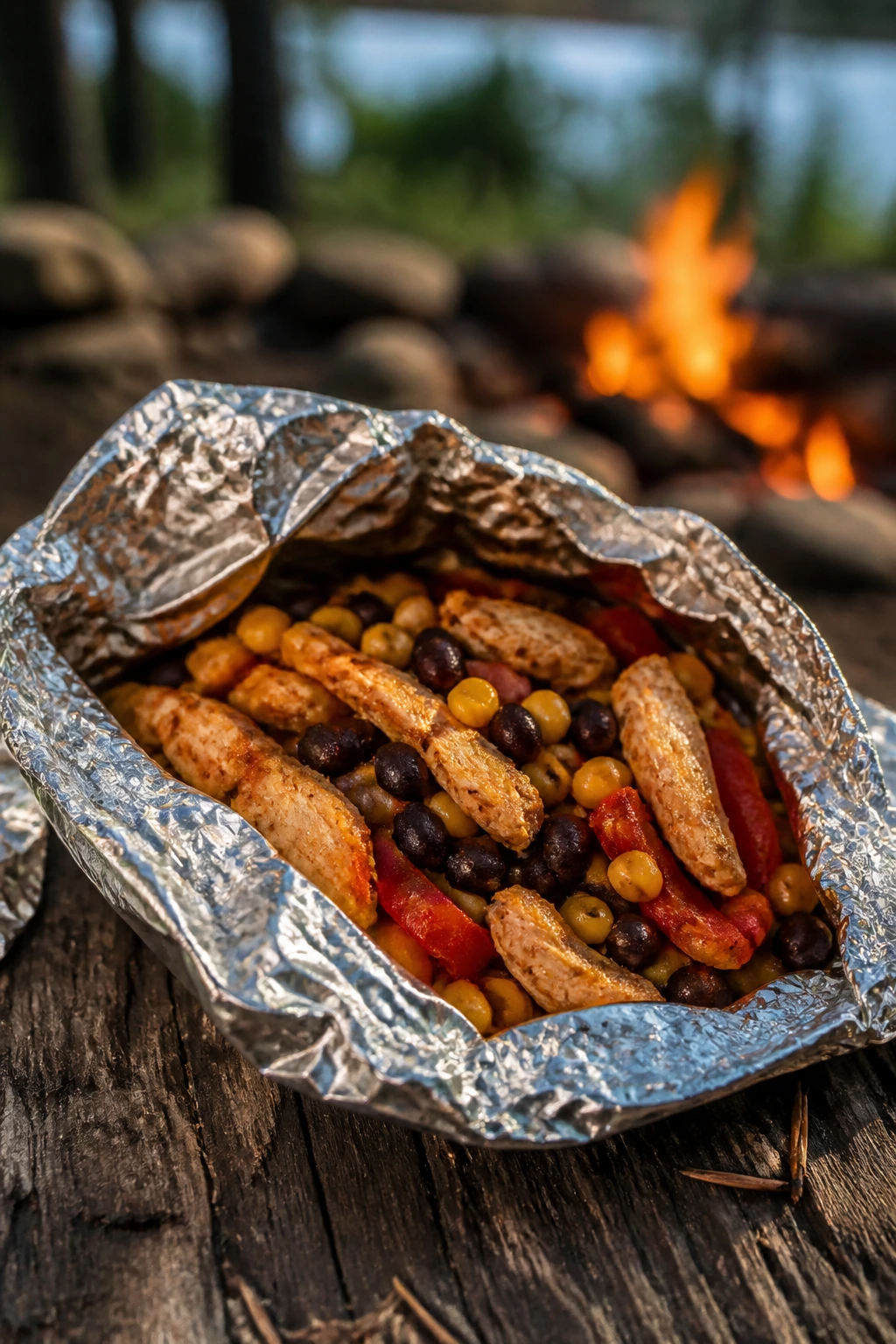
A packet like this has a louder personality. There’s cumin, lime, beans, corn, and that browned, savory smell that makes you think of a roadside taco stand more than a campsite. It’s hearty, but not heavy in a dull way.
Why It Works
Turkey cutlets or thin turkey strips cook quickly enough for foil packets, which avoids the dryness that happens when thicker poultry pieces sit too long over fire heat. Black beans bring body. Corn brings sweetness. Salsa ties everything together and keeps the packet from tasting dry or flat. If you want a dinner that feels complete without needing much else, this is the one.
Key Ingredients
- 1½ lb turkey cutlets, sliced into strips — thin cuts cook evenly and fast.
- 1 can black beans, drained and rinsed — they add bulk and a creamy bite.
- 1½ cups corn kernels — fresh, frozen, or thawed.
- 1 red bell pepper, diced — adds crunch and sweetness.
- 1 small red onion, sliced — softens and sweetens in the packet.
- ⅓ cup salsa — choose a thick salsa so it stays inside the foil.
- 2 tbsp olive oil — helps the turkey stay moist.
- 1 tbsp taco seasoning — gives the packet its backbone.
- 1 lime, cut into wedges — the finish matters here.
- 2 tbsp chopped cilantro — optional, but very welcome.
Quick Steps
- Preheat the grill to medium heat or set the oven to 400°F (205°C).
- Toss the turkey, beans, corn, pepper, onion, olive oil, and taco seasoning in a large bowl until the meat is coated.
- Divide the mixture among four foil sheets and spoon salsa over each packet. Keep the layer loose so steam can move through the beans and vegetables.
- Seal the packets and cook for 18 to 20 minutes, flipping once. The turkey should be fully cooked and the peppers should still have some shape.
- Finish with lime juice and cilantro. If you brought tortillas, pile the filling right in.
Tips and Variations
- Protein swap: Ground turkey works if you pre-cook it first, but turkey cutlets are easier on a campsite.
- Texture tip: Don’t use watery salsa. It leaks and makes the packet soggy.
- Extra finish: Crumbled cotija or shredded cheddar goes on after the packet opens, not before.
7. Steak, Mushrooms, and Onions
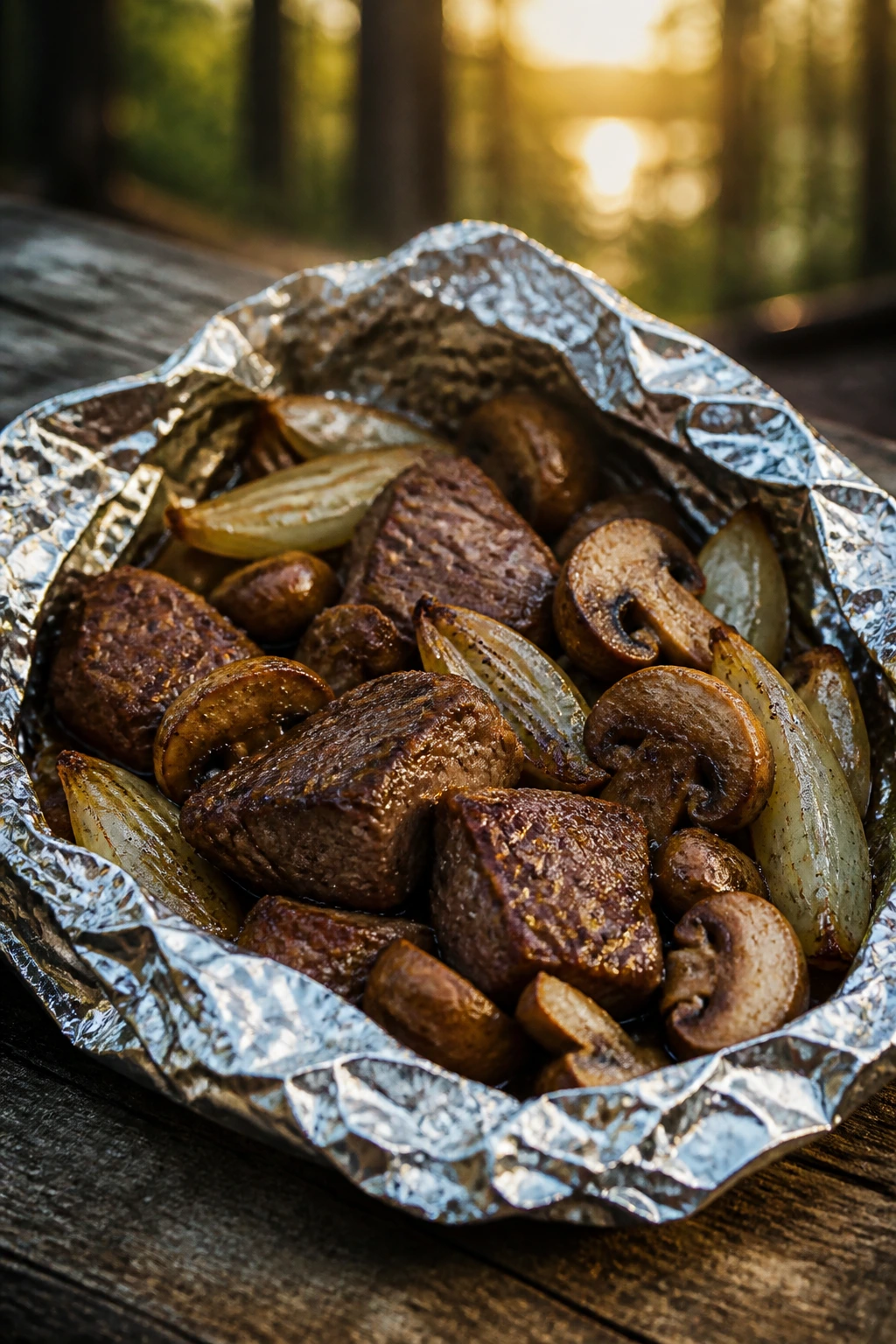
This packet is the one that feels a little like a steakhouse dinner dressed for the woods. Beef, mushrooms, onions, and rosemary turn rich and dark inside the foil. It smells luxurious, which is a funny thing to say about a meal cooked over campfire coals, but there it is.
Why It Works
Steak tips or thin sirloin pieces cook fast enough to avoid turning chewy, and mushrooms bring their own moisture so the packet stays juicy. Onions melt into the pan juices, rosemary gives the beef a piney edge, and a little butter at the end carries the flavor right through the whole thing. The key is cutting the steak small and even. Big chunks take too long. Thin pieces give you better control.
Key Ingredients
- 1½ lb sirloin steak, cut into 1-inch cubes or strips — choose a tender cut.
- 10 oz cremini mushrooms, halved — they hold up better than very delicate mushrooms.
- 1 large onion, sliced into wedges — sweetens as it cooks.
- 2 tbsp olive oil — for coating and browning.
- 2 tbsp butter, cut into small pieces — adds richness at the end.
- 1 tsp kosher salt — seasons the beef and vegetables.
- ½ tsp black pepper — keeps the flavor sharp.
- 1 tsp chopped fresh rosemary or ½ tsp dried rosemary — use a light hand.
- 2 cloves garlic, minced — enough to round things out.
- 1 tbsp Worcestershire sauce — optional, but very good here.
Quick Steps
- Heat the grill to medium-high or preheat the oven to 425°F (220°C).
- Toss the steak, mushrooms, onion, olive oil, salt, pepper, rosemary, garlic, and Worcestershire sauce in a bowl.
- Divide the mixture into four heavy-duty foil packets and add a few pieces of butter to each one.
- Seal and cook for 16 to 18 minutes, flipping once. The steak should be browned at the edges and the mushrooms should shrink and look glossy.
- Rest the packet for 2 minutes before opening so the juices settle back into the meat.
Tips and Variations
- Best cut note: Use a tender steak. Tough cuts need longer cooking and can get chewy in a packet.
- Campfire trick: Put the packets on a grill grate, not directly on open flames.
- Flavor twist: A spoonful of Dijon makes the beef taste deeper without turning the packet into mustard dinner.
8. Campfire Shrimp Boil Packets
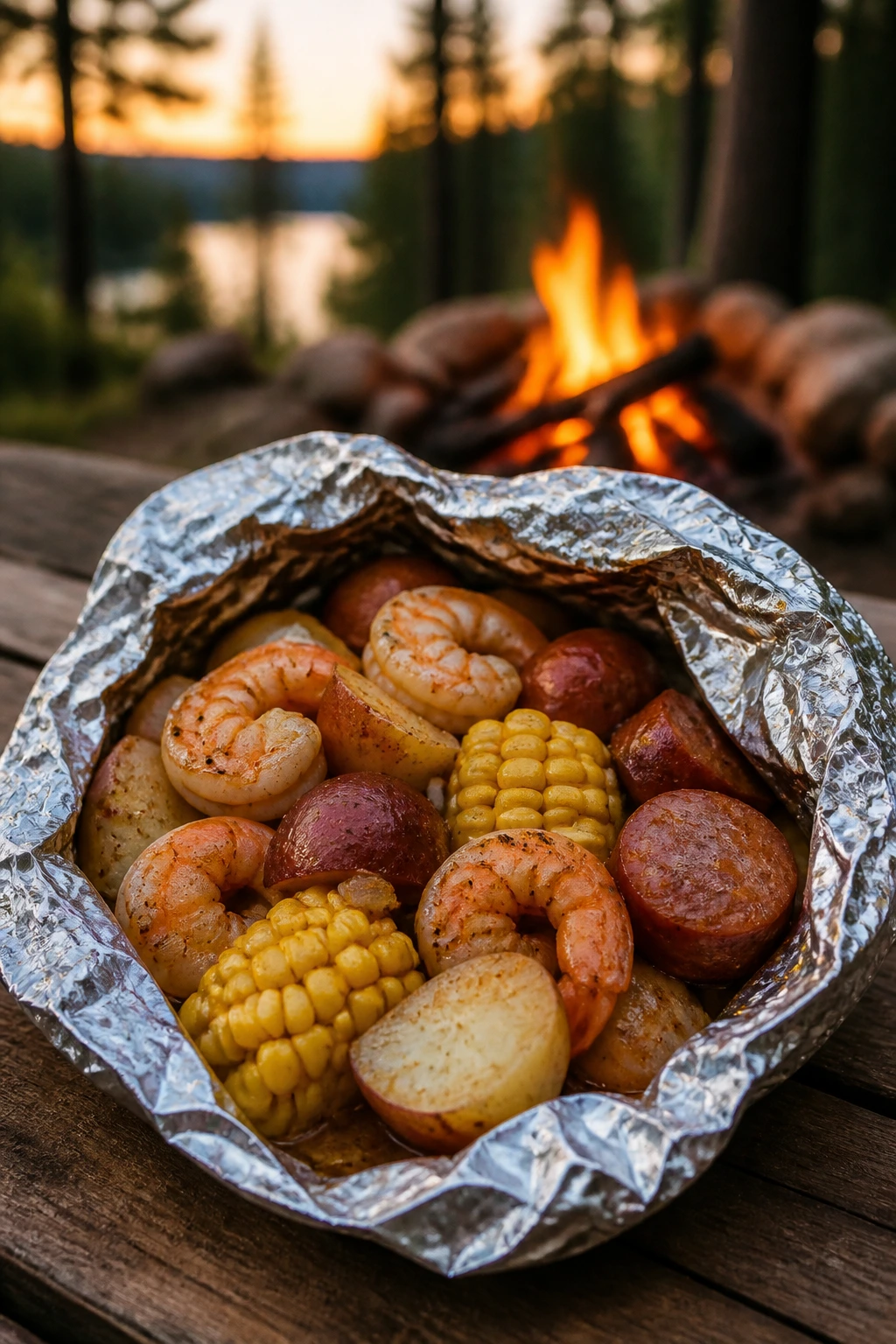
This is the packet that makes a camp dinner feel a little celebratory. Shrimp, sausage, corn, potatoes, lemon, and Old Bay pile up into one salty, buttery mess in the best possible way. It’s fast, loud, and gone in a hurry.
Why It Works
Shrimp cooks quickly, which means the whole packet can be built around speed rather than endurance. The trick is to give the potatoes a head start, either by par-cooking them or cutting them very small. Smoked sausage adds fat and flavor, corn brings sweetness, and Old Bay ties the whole thing together with that familiar shellfish-boil profile. When the butter melts, it turns into a sauce you’ll want to mop up with bread.
Key Ingredients
- 1 lb large shrimp, peeled and deveined — leave the tails on if you want easier handling.
- 12 oz smoked sausage, sliced into rounds — andouille or kielbasa both work.
- 1 lb baby potatoes, halved or quartered — cut small so they finish in time.
- 2 ears corn, cut into thirds — fresh is ideal, but frozen kernels work too.
- 4 tbsp butter, melted — this is where the sauce lives.
- 1 tbsp Old Bay seasoning — don’t skimp; it gives the packet its identity.
- 1 lemon, sliced — brightens the butter.
- 2 cloves garlic, minced — for depth.
- ½ tsp kosher salt — usually enough once the sausage and seasoning are in.
- 1 tbsp chopped parsley — for the finish.
Quick Steps
- Par-cook the potatoes for 6 to 8 minutes in boiling water or microwave them until barely tender if you want to keep camp cooking time short.
- Preheat the grill to medium heat or prepare medium-hot coals. Set the oven to 400°F (205°C) if needed.
- Toss the potatoes, corn, sausage, melted butter, Old Bay, garlic, and salt in a bowl.
- Divide the mixture into four packets and place the shrimp on top, then add lemon slices before sealing.
- Cook for 12 to 15 minutes, just until the shrimp turn pink and opaque. Overcooked shrimp turns rubbery fast, so check early.
- Open carefully and scatter with parsley. Serve immediately while the butter is still pooling at the bottom.
Tips and Variations
- Don’t overcook: Shrimp is the first thing to suffer if you leave the packet on too long.
- Heat option: Add a pinch of cayenne if you want a spicier boil.
- Serving idea: Crackers or crusty bread are useful here. The butter wants something to soak into.
9. Greek Chicken and Veggie Packets
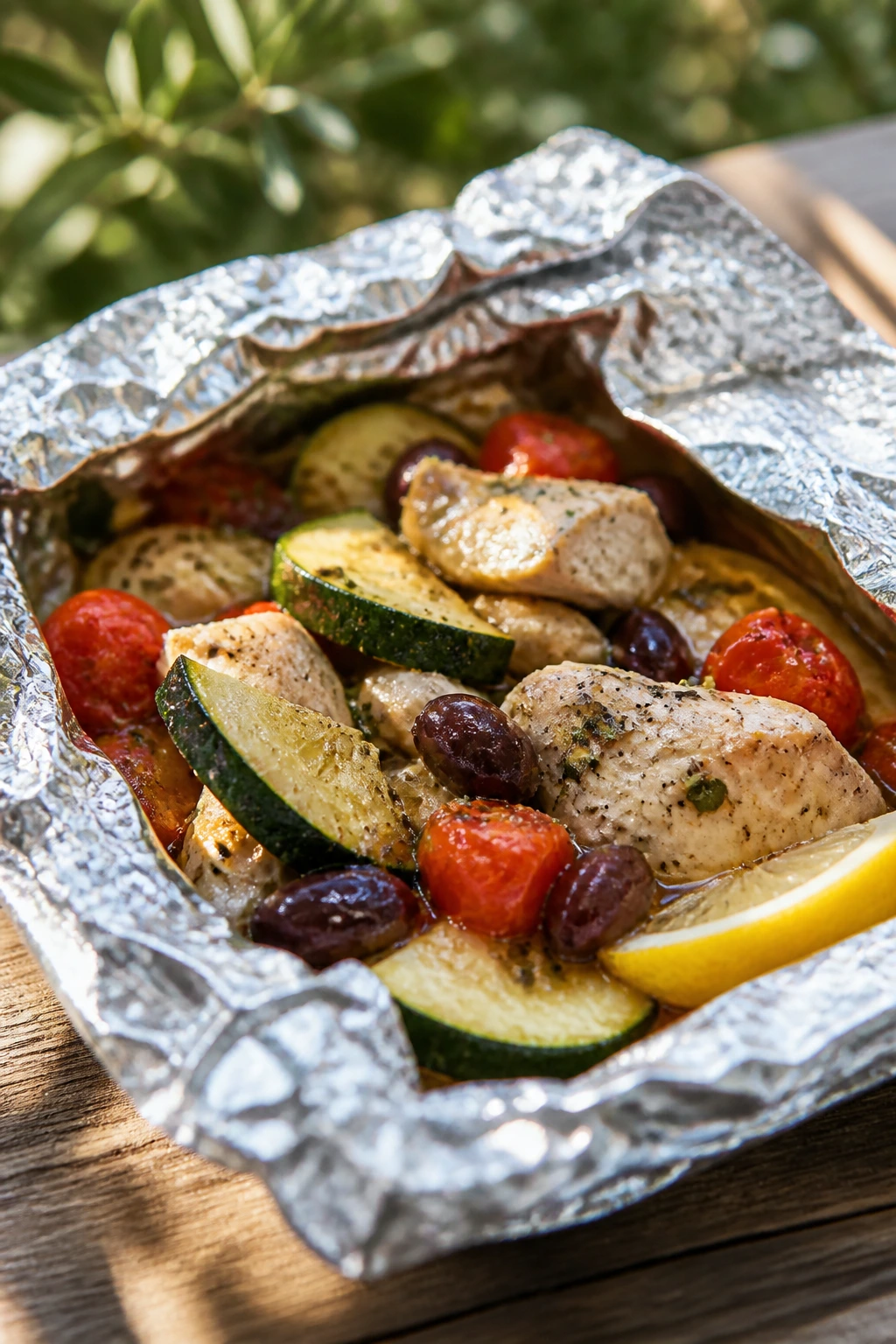
This one tastes like a picnic went to the Mediterranean and came back better dressed. Lemon, oregano, olives, tomatoes, and feta do the heavy lifting. It’s bright without being fussy, and it feels a little cleaner than the richer packets in the set.
Why It Works
Chicken thighs are still the safest choice for packet cooking because they tolerate uneven heat and don’t dry out as quickly as breast meat. Zucchini and tomatoes cook fast, onions soften into sweetness, and olives bring the salty punch that keeps the whole thing from feeling bland. The feta goes on after cooking, where it softens but doesn’t vanish. That timing matters.
Key Ingredients
- 1½ lb boneless, skinless chicken thighs, cut into chunks — forgiving and flavorful.
- 2 medium zucchini, sliced into half-moons — keep the slices thick enough to hold shape.
- 1 pint cherry tomatoes — they burst into the juices.
- 1 small red onion, sliced — gives the packet sweetness.
- ⅓ cup pitted Kalamata olives — salty, briny, and worth it.
- 2 tbsp olive oil — keeps everything moist.
- 2 tbsp lemon juice — brightens the chicken.
- 2 tsp dried oregano — the flavor backbone.
- 1 tsp kosher salt — adjust if your olives are very salty.
- ½ tsp black pepper — for a little lift.
- ½ cup crumbled feta — add after cooking.
- 1 tbsp chopped dill or parsley — optional, but good.
Quick Steps
- Preheat the grill to medium or set the oven to 400°F (205°C).
- Toss the chicken, zucchini, tomatoes, onion, olives, olive oil, lemon juice, oregano, salt, and pepper until coated.
- Divide into four foil packets and seal them with a little room for steam.
- Cook for 22 to 24 minutes, flipping once. The chicken should reach 165°F and the zucchini should be tender but not collapsed.
- Open, top with feta and herbs, and serve right away. The feta softens in the heat and tastes much better than if it had cooked the whole time.
Tips and Variations
- Make-ahead move: The chicken can sit in the lemon and oregano mixture for a few hours before cooking.
- Substitution: Yellow squash works in place of zucchini and cooks at the same pace.
- Serving idea: Warm pita on the side makes this feel like a full meal without extra trouble.
10. Buffalo Ranch Chicken and Cauliflower
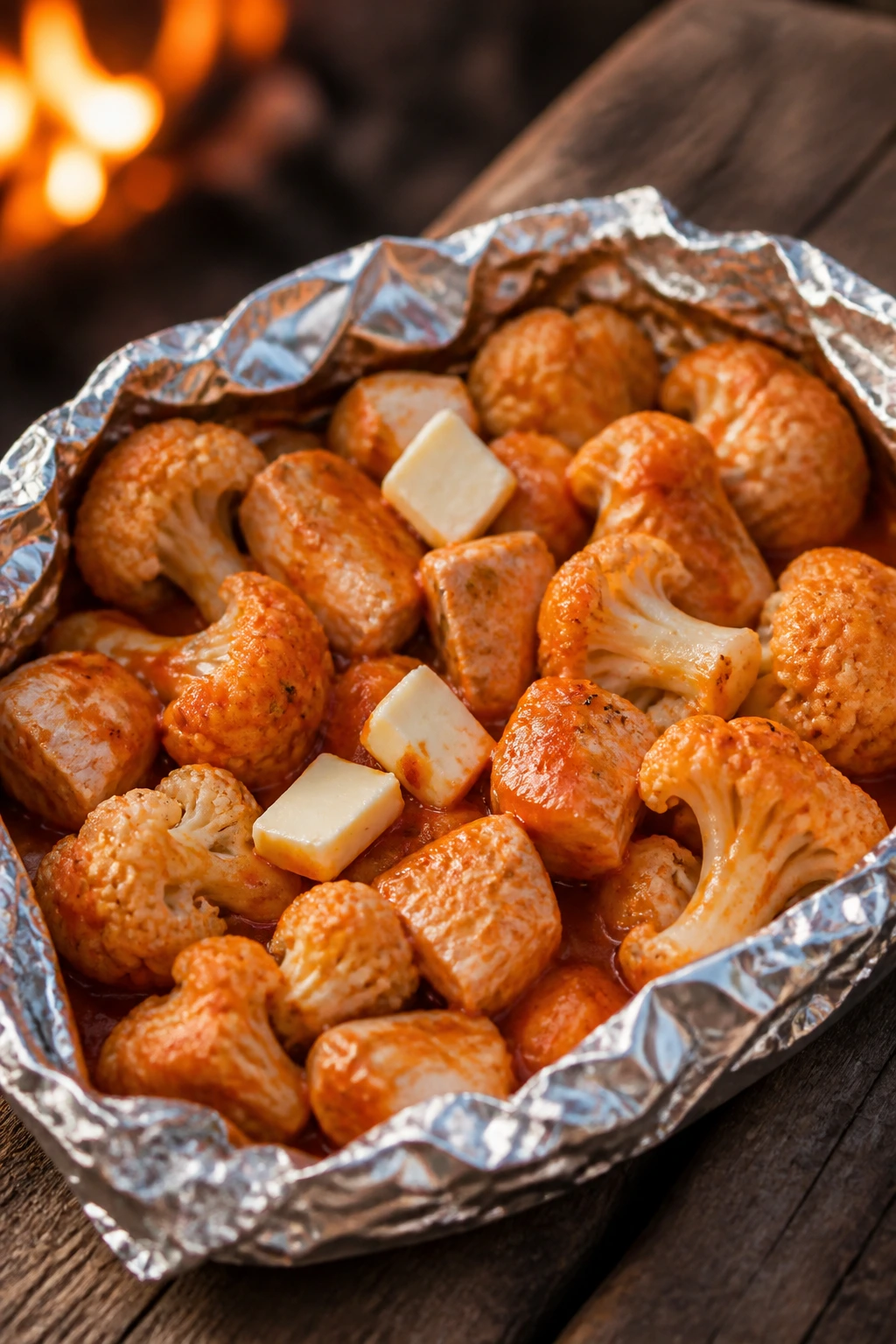
If you like a little heat and a lot of sauce, this packet delivers. The cauliflower softens and picks up the buffalo flavor, the chicken stays juicy, and the ranch seasoning adds the cooling, savory note that makes the whole thing taste complete instead of one-note hot.
Why It Works
Buffalo sauce can be sharp and aggressive on its own, which is why butter or olive oil helps tame it inside the packet. Cauliflower is sturdy enough to cook with the chicken and absorb flavor without going limp, and the ranch seasoning gives you salt, herbs, and a creamy profile without needing actual cream at the campsite. This is one of those packets that tastes better if you let the sauce coat everything before sealing.
Key Ingredients
- 1½ lb boneless, skinless chicken thighs or breasts, cut into chunks — thighs stay juicier.
- 1 medium head cauliflower, cut into small florets — small pieces cook through on time.
- 2 carrots, sliced thin — optional, but good for sweetness.
- 3 tbsp buffalo sauce — start here and add more at the table.
- 2 tbsp melted butter — softens the heat.
- 1 tbsp ranch seasoning mix — gives the packet its herby, salty edge.
- 1 tbsp olive oil — helps coat the vegetables.
- ½ tsp kosher salt — use less if your ranch mix is salty.
- ½ tsp black pepper — for balance.
- 2 tbsp chopped chives or green onions — for the finish.
- Blue cheese crumbles, optional — add after cooking if you like that sharp bite.
Quick Steps
- Preheat the grill to medium heat or the oven to 400°F (205°C).
- Toss the chicken, cauliflower, carrots, buffalo sauce, melted butter, ranch seasoning, olive oil, salt, and pepper in a bowl.
- Divide the mixture among four foil packets and seal them tightly.
- Cook for 24 to 26 minutes, flipping once. The cauliflower should be tender and the chicken should read 165°F.
- Open, scatter with chives or green onions, and add blue cheese if you want it. Serve with extra buffalo sauce only if the group actually likes heat.
Tips and Variations
- Heat control: Use half buffalo sauce and half melted butter if you want a milder packet.
- Texture fix: Cut the cauliflower small, but not tiny. Tiny florets can disappear.
- Serving idea: Celery sticks on the side make this feel more like buffalo wings, which is the point.
11. Smoky Chickpea and Sweet Potato Packets
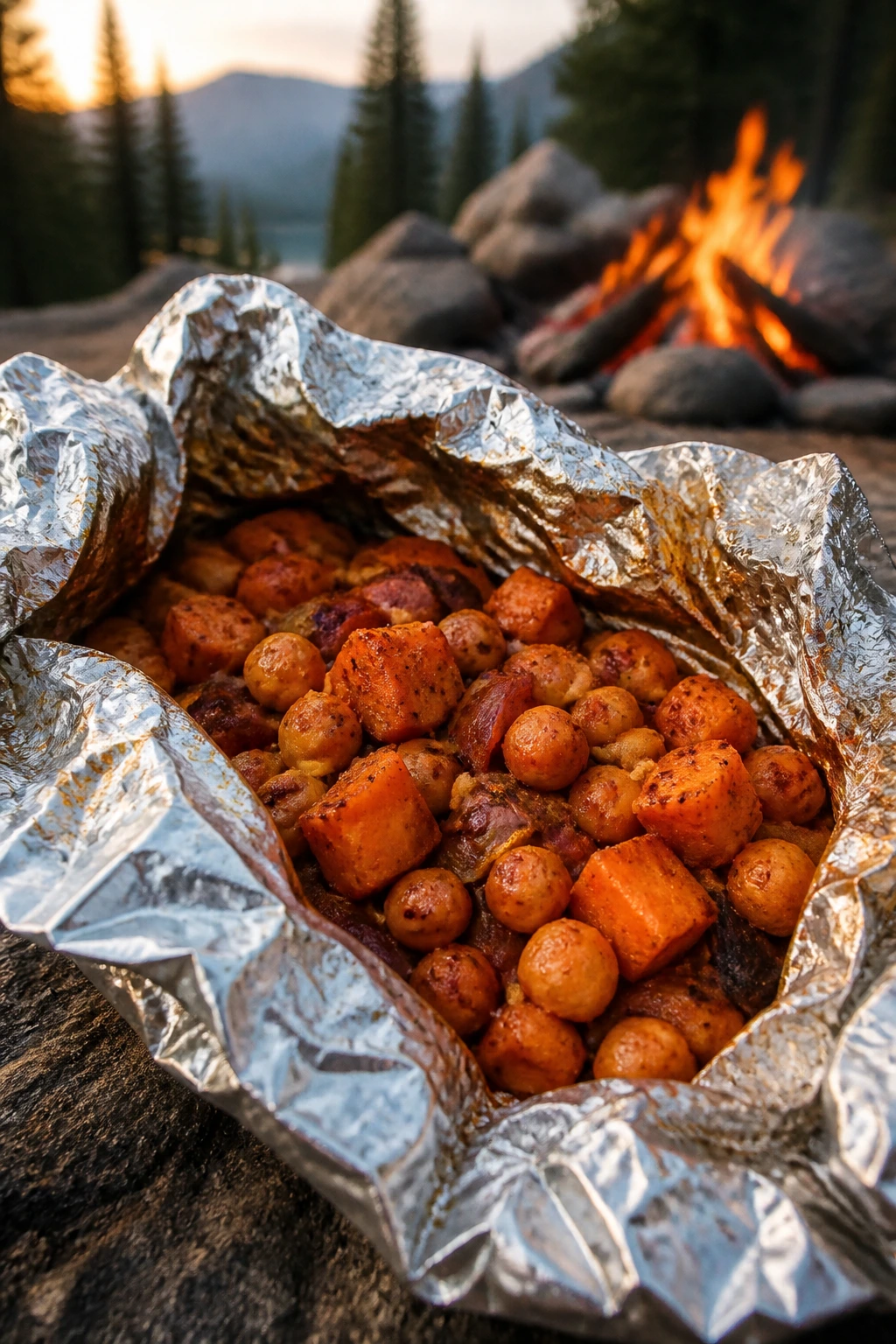
This is the vegetarian packet that doesn’t feel like a compromise. The sweet potatoes go soft and caramel-like, the chickpeas stay sturdy, and the smoked paprika gives the whole thing a deep, savory pull. It’s filling enough to stand on its own.
Why It Works
Chickpeas are already cooked, so they only need heating and seasoning. Sweet potatoes bring sweetness and structure, but they need to be cut small so they finish without turning the rest of the packet to mush. Red onion and bell pepper add flavor and color, while the smoked spices keep the packet from drifting into bland territory. A handful of spinach at the end gives it a fresh finish and a softer texture change.
Key Ingredients
- 2 medium sweet potatoes, peeled and cut into ½-inch cubes — keep them even.
- 1 can chickpeas, drained and rinsed — the backbone of the packet.
- 1 red bell pepper, sliced — sweet and sturdy.
- 1 small red onion, sliced — gives the packet depth.
- 2 tbsp olive oil — helps the vegetables brown a little.
- 1 tsp smoked paprika — essential here.
- 1 tsp ground cumin — gives warmth.
- ½ tsp garlic powder — keeps the seasoning even.
- ¾ tsp kosher salt — enough to wake up the vegetables.
- ½ tsp black pepper — for balance.
- 2 cups baby spinach — stir in after cooking if you want a greener finish.
- 2 tbsp tahini or yogurt, optional — for serving.
Quick Steps
- Par-cook the sweet potato cubes for 4 to 5 minutes if they are dense or very large. That saves a lot of campfire waiting.
- Preheat the grill to medium heat or set the oven to 400°F (205°C).
- Toss the sweet potatoes, chickpeas, bell pepper, onion, olive oil, smoked paprika, cumin, garlic powder, salt, and pepper until everything is coated.
- Divide the mixture into four foil packets and seal well. Keep the potatoes low in the packet so they sit closest to the heat.
- Cook for 26 to 28 minutes, flipping once. The sweet potatoes should be tender and the chickpeas should be warmed through.
- Open the packets, fold in the spinach if using, and finish with tahini or yogurt. The residual heat will wilt the greens quickly.
Tips and Variations
- Flavor boost: A squeeze of lime at the end keeps the packet from tasting too starchy.
- Protein note: This is filling enough on its own, but it also sits well under a fried egg.
- Texture tip: Do not cut the sweet potatoes into tiny dice. They’ll fall apart before the rest is ready.
12. Italian Turkey Meatball and Zucchini Packets
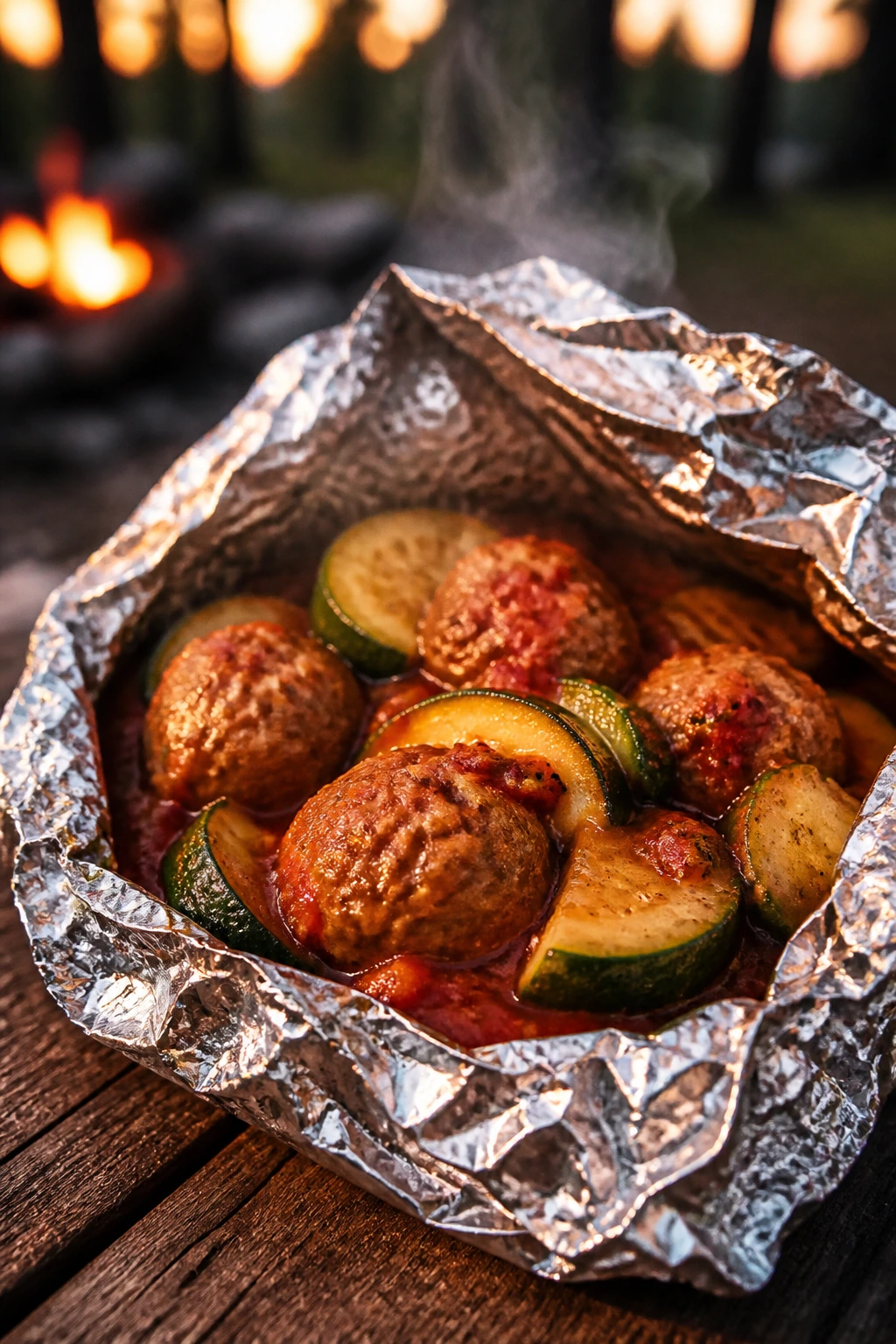
This one leans into cozy, saucy comfort. It tastes like an easy red-sauce dinner that somehow ended up beside a camp chair. The meatballs bring the heft, the zucchini softens in the marinara, and the cheese on top melts into little salty pockets.
Why It Works
Using fully cooked turkey meatballs solves the timing problem that can make meatball packets awkward. You’re heating, glazing, and softening the vegetables, not trying to judge raw poultry in a sealed foil pouch. Zucchini cooks quickly and drinks up the sauce, cherry tomatoes add acid and sweetness, and a little mozzarella at the end gives the packet a proper Italian-American finish.
Key Ingredients
- 12 to 16 fully cooked turkey meatballs — about 1½ lb total.
- 2 medium zucchini, sliced into thick half-moons — thicker slices hold up better.
- 1 pint cherry tomatoes — they soften into the sauce.
- 1 small onion, thinly sliced — adds sweetness.
- 1 cup marinara sauce — use a thick sauce so it stays put.
- 1 tbsp olive oil — helps the vegetables move around in the packet.
- 1 tsp dried Italian seasoning — keeps the flavor familiar.
- ½ tsp kosher salt — adjust based on your sauce.
- ¼ tsp black pepper — enough for a little edge.
- 1 cup shredded mozzarella — add after opening the packet.
- 2 tbsp chopped basil or parsley — for the finish.
Quick Steps
- Preheat the grill to medium heat or the oven to 400°F (205°C).
- Toss the zucchini, tomatoes, onion, olive oil, Italian seasoning, salt, and pepper in a bowl.
- Lay the vegetables on foil, top with meatballs, and spoon marinara over everything. Seal the packets.
- Cook for 16 to 18 minutes, until the zucchini is tender and the sauce is bubbling.
- Open, sprinkle with mozzarella, and close the packet for 1 more minute so the cheese softens.
- Finish with basil or parsley and serve. Bread helps, obviously. The sauce wants something to absorb into.
Tips and Variations
- Shortcut: Store-bought meatballs save a lot of time here, and no one at camp will complain.
- Extra richness: A spoonful of ricotta on top after cooking makes this feel more like a baked pasta dish.
- Serving idea: If you brought cooked pasta, spoon the packet over it. If not, it still works as-is.
13. Kielbasa, Apples, and Cabbage Packets
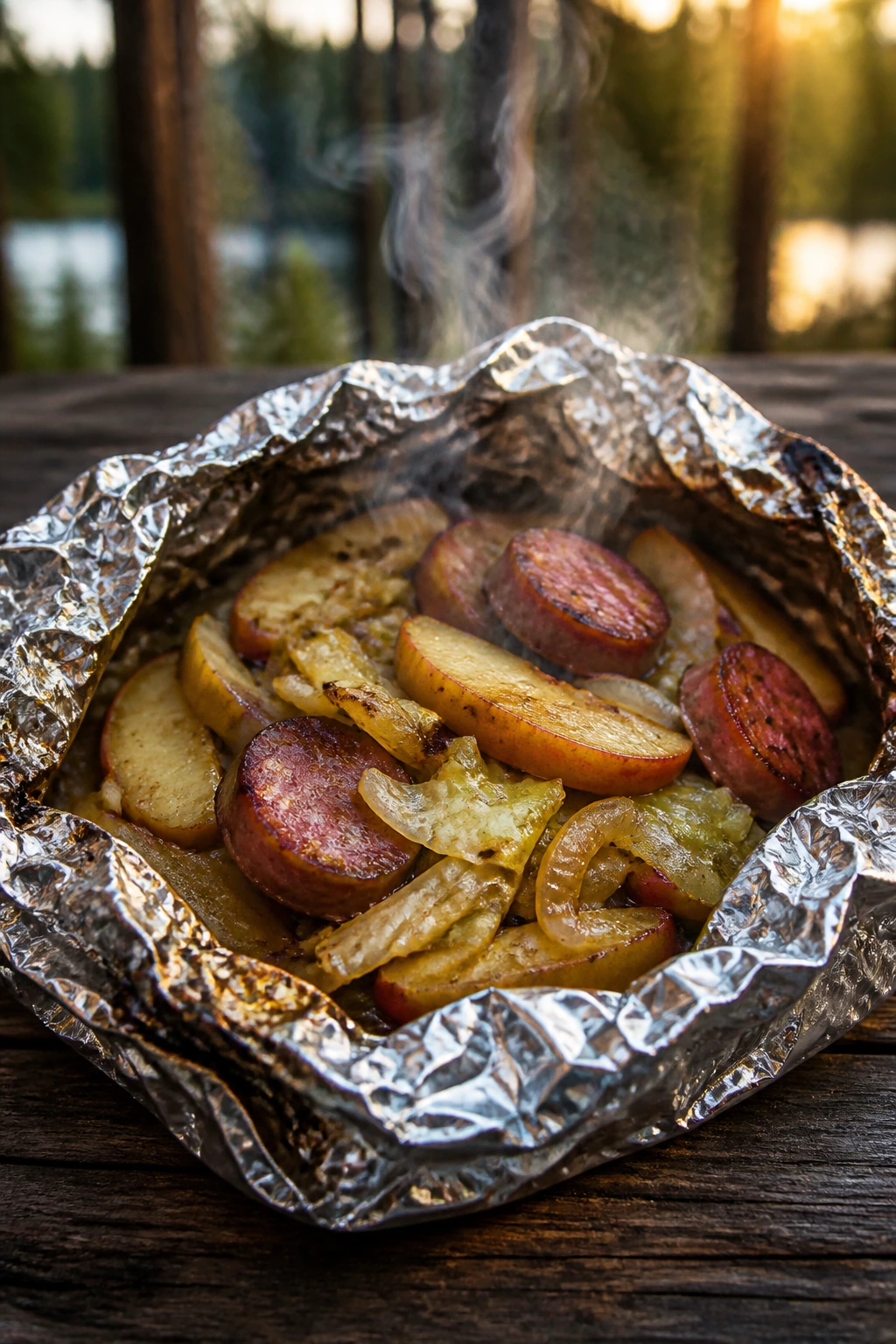
Sweet, smoky, and a little old-school. This packet tastes like something that should have been cooked in a cast-iron pan, but the foil gives it the same soft edges and caramelized onions without the cleanup. The apples do a lot of the work here. They’re not dessert. They’re balance.
Why It Works
Kielbasa is sturdy and already seasoned, so it likes the packet method. Cabbage softens slowly and takes on the sausage drippings, while apples add a sweet, tart note that keeps the whole thing from tasting too heavy. A touch of mustard or caraway is enough to turn the mix from “sausage and cabbage” into something with actual character.
Key Ingredients
- 14 oz kielbasa, sliced into ½-inch rounds — smoked sausage works too.
- 4 cups green cabbage, thinly sliced — pack it lightly so it cooks through.
- 2 apples, cored and thinly sliced — firm apples hold shape better.
- 1 small onion, sliced — for sweetness.
- 2 tbsp butter, cut into bits — helps the cabbage soften and brown.
- 1 tbsp Dijon mustard — sharp and useful.
- 1 tsp caraway seeds or thyme — optional, but good with cabbage.
- ½ tsp kosher salt — keep it modest because the sausage is salty.
- ¼ tsp black pepper — just enough.
- 1 tbsp apple cider vinegar — brightens the finished packet.
Quick Steps
- Preheat the grill to medium heat or set the oven to 400°F (205°C).
- Toss the cabbage, apples, onion, butter, Dijon, caraway, salt, pepper, and vinegar in a large bowl.
- Add the kielbasa and mix gently, keeping the apple slices intact.
- Divide into four foil packets and seal them, pressing the edges flat so the steam stays in.
- Cook for 22 to 24 minutes, flipping once. The cabbage should be tender and the apples should still have shape, not collapse.
- Open and stir once before serving so the sausage juices coat everything.
Tips and Variations
- Apple choice: Use a firm apple like Honeycrisp, Pink Lady, or Gala. Soft apples turn into sauce too fast.
- Mustard note: If you want more bite, drizzle a little extra mustard after cooking.
- Serving idea: This is good with rye bread or potatoes on the side, though it does not need much.
14. Chicken Fajita Packets
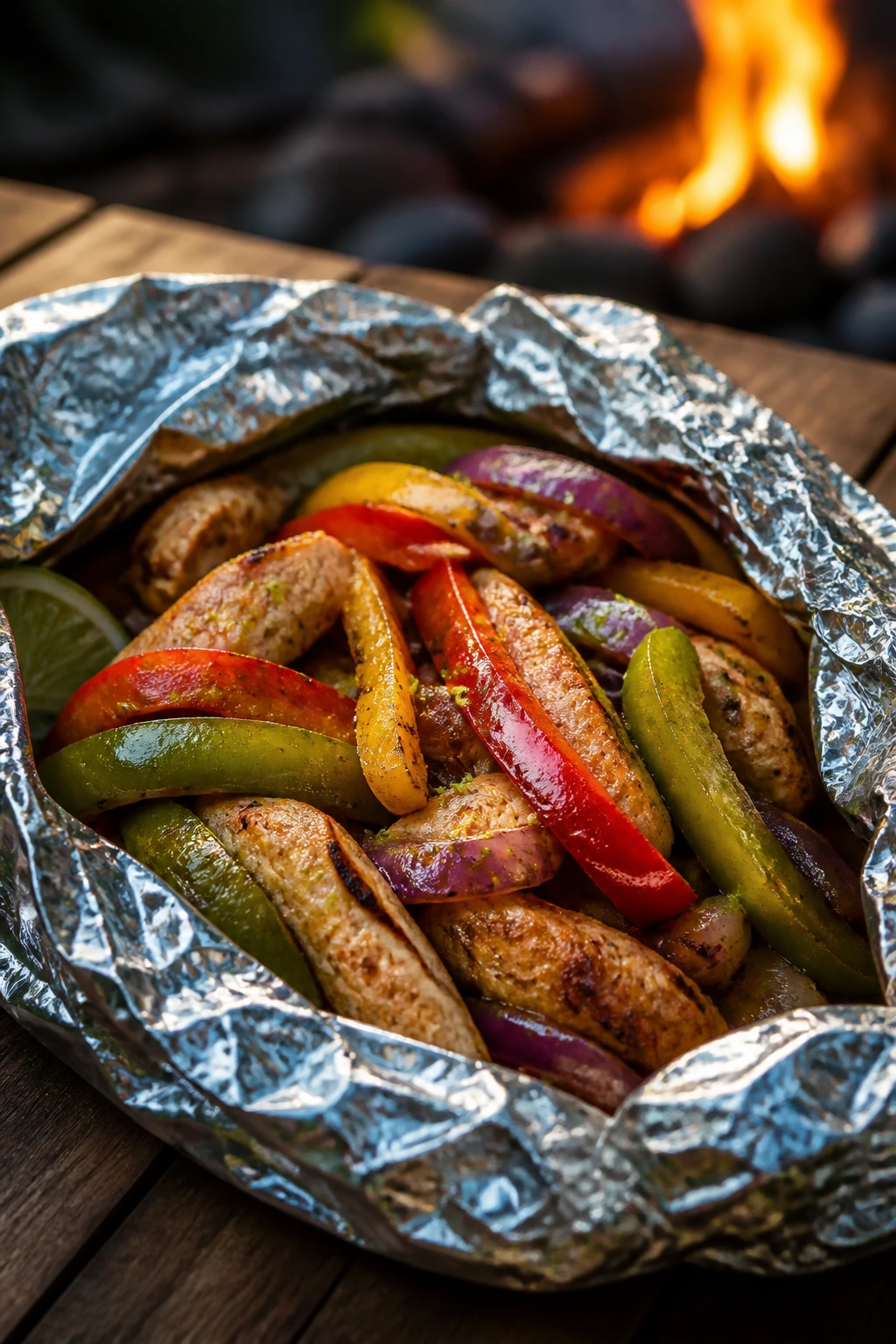
This is the packet that gets the most spontaneous tortilla requests. Charred peppers, onion, lime, and spiced chicken make the foil open like a small event. It’s bright, smoky, and easy to hand around, which matters when everybody’s trying to eat at the same time.
Why It Works
Thin strips of chicken cook fast, and bell peppers and onions are built for this kind of heat. Fajita seasoning gives you cumin, chili, garlic, and a little smokiness in one move, while lime juice keeps the packet from tasting flat. If you want a camping dinner that can turn into tacos, bowls, or straight-from-the-foil bites, this is the one.
Key Ingredients
- 1½ lb boneless, skinless chicken breasts or thighs, sliced into thin strips — thighs are juicier, breasts are leaner.
- 3 bell peppers, sliced into strips — use a mix of colors.
- 1 large onion, sliced — essential for the fajita feel.
- 2 tbsp olive oil — keeps the chicken from drying out.
- 1½ tbsp fajita seasoning — use store-bought or homemade.
- 1 lime, juiced — brighten the spices.
- ½ tsp kosher salt — adjust if your seasoning blend is salty.
- ½ tsp black pepper — for a little edge.
- ½ cup salsa, optional — spoon on after cooking if you want more moisture.
- 8 small tortillas, warmed — for serving.
Quick Steps
- Heat the grill to medium-high or the oven to 425°F (220°C).
- Toss the chicken, peppers, onion, olive oil, fajita seasoning, lime juice, salt, and pepper in a bowl until the chicken is well coated.
- Divide into four foil packets and seal tightly. Keep the chicken in a mostly even layer so it cooks at the same pace as the vegetables.
- Cook for 16 to 18 minutes, flipping once. The chicken should reach 165°F and the peppers should be soft with a little bite left.
- Open and serve with warm tortillas and salsa. A little shredded cheese or sour cream is welcome if you brought it.
Tips and Variations
- Best texture move: Slice the peppers thick enough to keep some structure. Too thin, and they go limp.
- Heat option: Add sliced jalapeños if your group likes real fire.
- Serving idea: This packet makes excellent tacos, but it also works over rice if you packed any.
Why Foil Packet Dinners Work So Well Over a Fire
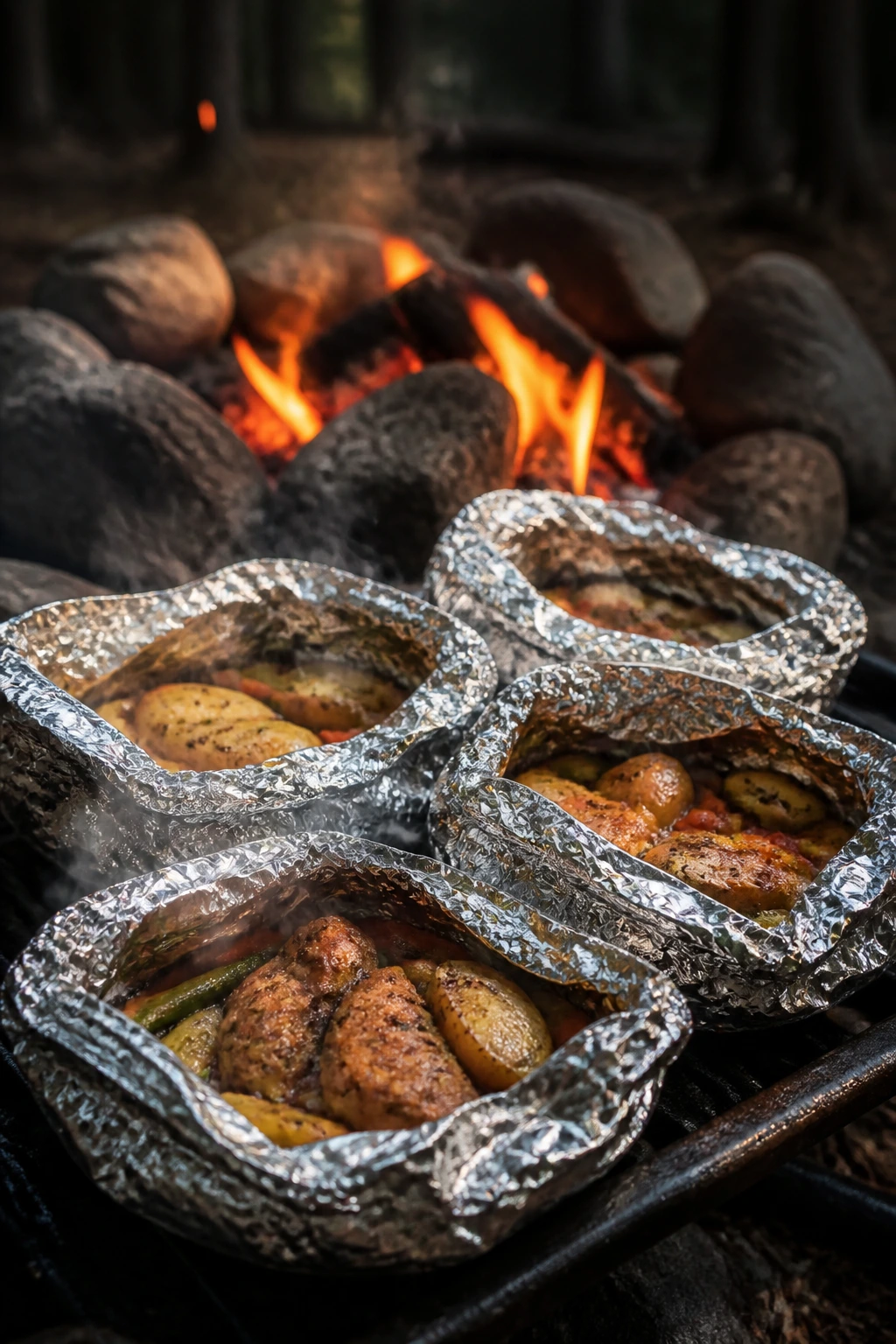
Foil packet cooking is really a lesson in restraint. You’re not trying to brown everything hard or cram six different textures into one pan. You’re creating a small, sealed cooking space where steam, oil, and seasoning can do most of the work. That is why the method suits camping so well.
The foil acts like a tiny oven, which matters when fire heat can swing from hot to scorching in minutes. A packet softens that edge. Chicken stays juicier. Vegetables soften without sticking to a grate. Fish and shrimp cook more evenly than they would directly on metal, and the juices collect where you can actually use them instead of losing them to the fire.
There’s a practical side, too. Packets let you portion meals ahead of time, which is a lifesaver when people are hungry and the light is fading. They also help with mixed groups. One packet can be spiced hard, another kept mild, a third packed with vegetables only. No need to build one giant skillet that tries to please everyone and ends up pleasing no one.
The catch is that foil packets reward good prep. Cut the potatoes small. Slice peppers evenly. Don’t bury shrimp under raw sweet potatoes and hope for the best. Once those basic habits become automatic, the method stops feeling rustic and starts feeling efficient in the best way.
Essential Equipment for These Recipes
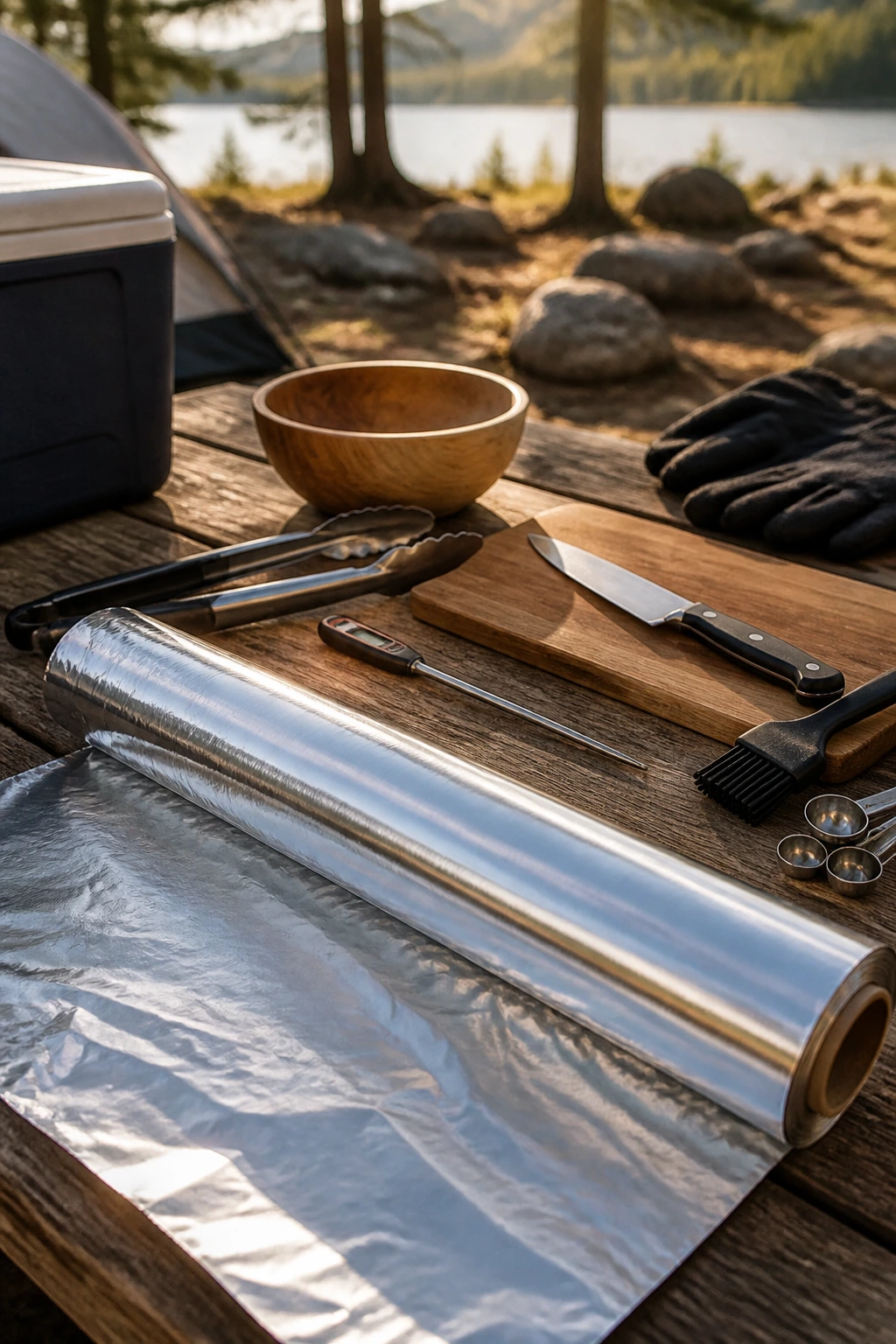
-
Heavy-duty aluminum foil: Regular foil tears too easily over fire heat; double-layering helps even more.
-
Tongs: Useful for turning packets without stabbing holes in them.
-
Instant-read thermometer: The easiest way to know chicken, turkey, and beef are actually done.
-
Sharp chef’s knife: Even cuts are the difference between tender vegetables and half-raw potatoes.
-
Cutting board: A big one saves space when you’re chopping several ingredients at once.
-
Large mixing bowl: Makes it easier to coat everything evenly before sealing the packets.
-
Measuring spoons and cups: Handy for seasoning blends and sauces, even when the campsite feels casual.
-
Small brush or spoon: Good for spreading butter, oil, or sauce without making a mess.
-
Heat-safe gloves or mitts: Useful if you’re moving packets near coals or opening hot foil.
-
A cooler with ice packs: Not cooking gear, exactly, but raw proteins need to stay cold and safe.
Smart Shopping and Ingredient Tips
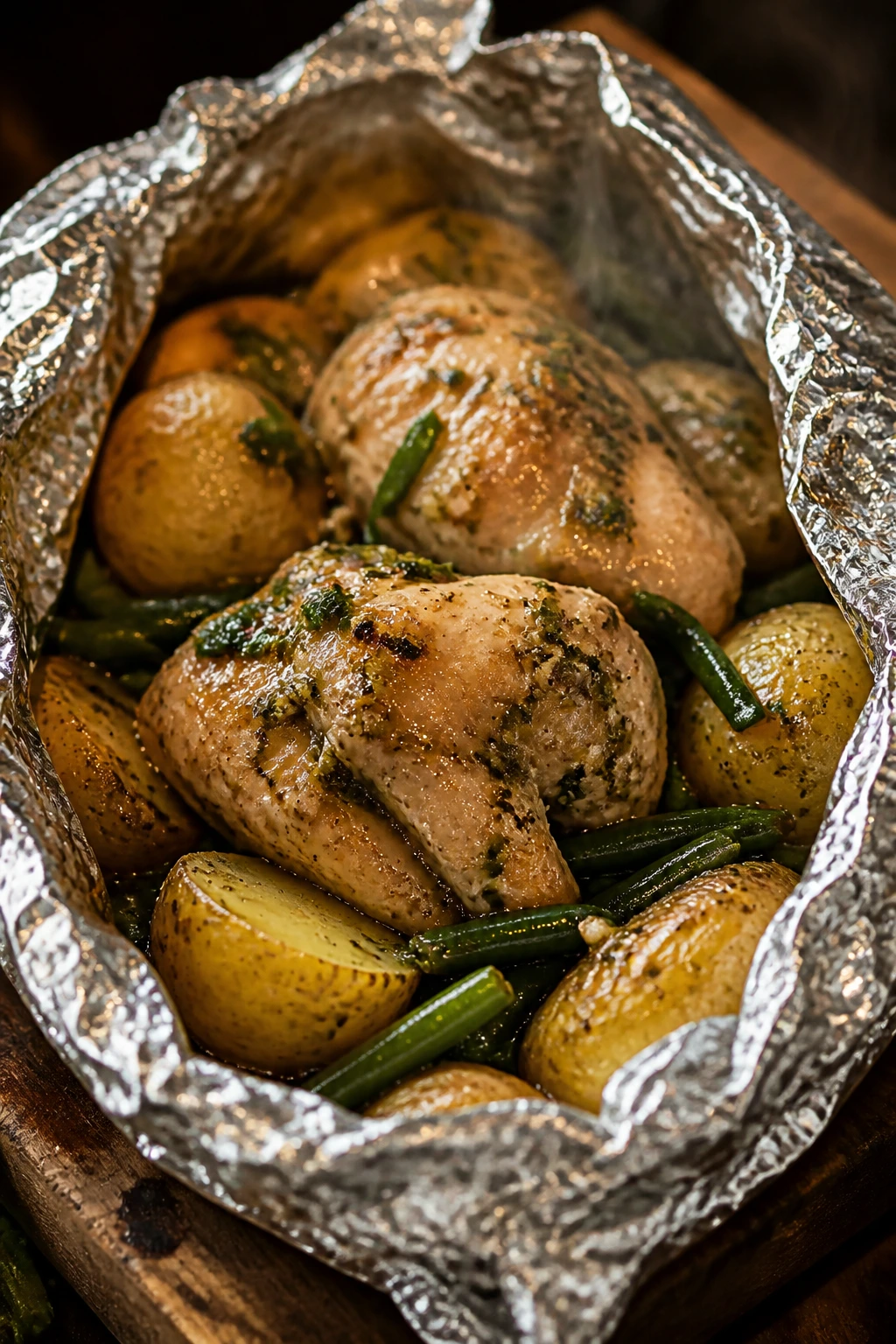
The best foil packet dinners start before you leave the store. Pick ingredients that cook at roughly the same speed, or be ready to cut the slower ones smaller. Baby potatoes are easier than full-size potatoes because they can be halved or quartered without turning into rocks. Carrots should be sliced thin. Sweet potatoes need to be diced, not hacked into giant chunks. That kind of thing matters more outdoors than it does in a kitchen with a reliable oven.
Choose proteins with packet cooking in mind. Chicken thighs are more forgiving than breasts. Salmon fillets should be similar in thickness so one piece doesn’t dry out while the other is still pale in the center. Shrimp should be large enough to stay juicy, and sausage should be pre-cooked unless a recipe clearly says otherwise. For beef, use tender cuts or thin strips. Campfire heat is not kind to bargain steak.
Sauces need a little common sense, too. Thick barbecue sauce, salsa, teriyaki, and marinara stay inside the packet better than thin, watery versions. If you love a very loose sauce, save some for serving and use the thicker stuff in the packet itself. Fresh herbs can go on after cooking, where they taste cleaner and brighter. Hard herbs like rosemary and thyme can go in earlier because they hold up to heat.
Fresh produce should be sturdy, not delicate. Bell peppers, onions, zucchini, cabbage, asparagus, and green beans all work for good reasons: they soften at a useful pace and keep some shape. Greens like spinach or herbs should usually go in at the end. And if you’re buying corn, fresh ears are worth the small amount of extra effort if you have the room. They smell better, and that sweetness matters in foil packets.
How to Serve These Recipes
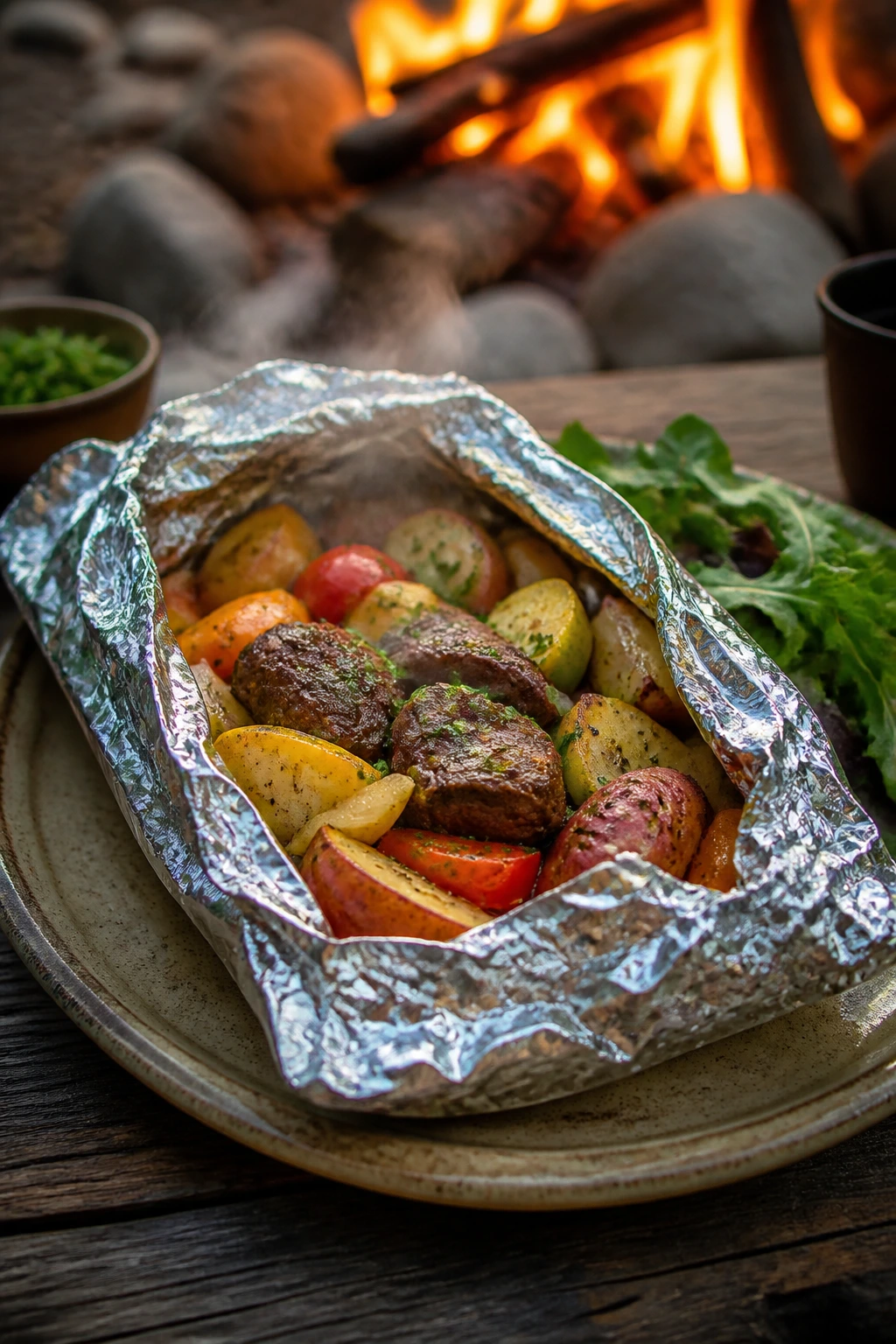
Presentation: Open each packet carefully and let the steam escape before serving. I like to fold the foil edges outward and leave the food in the packet on a plate or paper boat; it looks casual, but it keeps the juices where they belong. A final scatter of herbs, cheese, or sliced green onions makes the whole thing look intentional.
Accompaniments: Packets with potatoes usually need nothing else. The lighter ones, like salmon or Greek chicken, welcome a simple side such as pita, crusty bread, tortilla chips, or a bagged salad. Fajita packets almost beg for tortillas. Shrimp boil packets are strongest with bread or crackers for the sauce. If you want one side that works with nearly all of them, coleslaw is hard to beat.
Portions: Most of these recipes serve 4, with one packet per person. Heavier packets like sausage and potatoes can stretch farther if you add bread or salad. Lighter seafood packets may be enough at one packet per adult if there’s a side. For a mixed group, make one extra packet than you think you need. Outdoor appetites get weird.
Beverage Pairing: Lemonade, iced tea, sparkling water with citrus, and a light beer all fit these dinners well. For richer packets like beef or sausage, a cola or ginger beer is a nice match. For salmon or Greek chicken, plain sparkling water with lime keeps the meal feeling fresh.
Additional Tips and Flavor Boosters
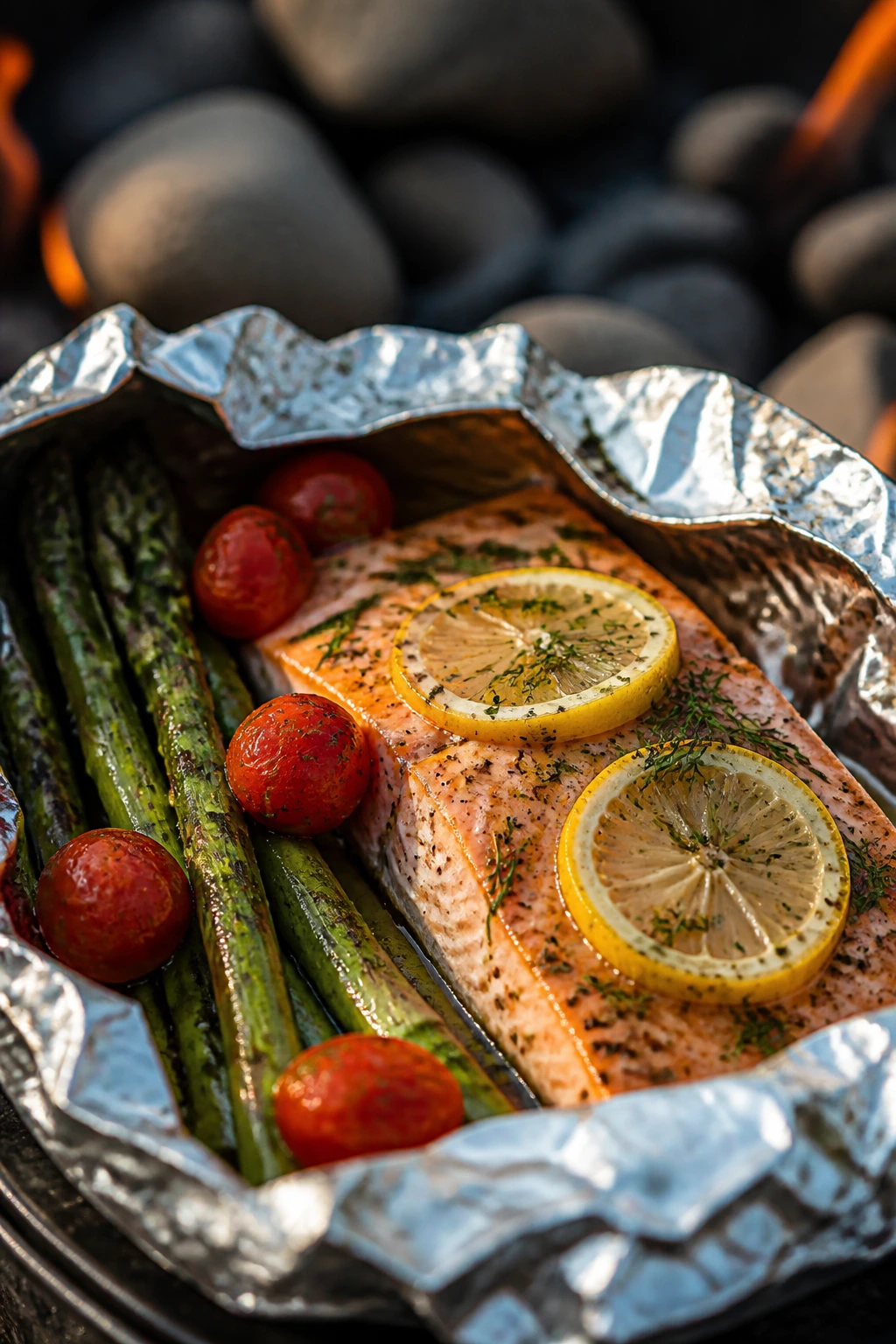
Flavor Enhancement: A small finishing splash changes a packet more than people expect. Lemon juice, lime juice, cider vinegar, or a spoonful of hot sauce added after cooking gives the food a brighter edge than anything sealed into the foil from the start.
Customization: You can adjust heat, salt, and richness without changing the method. Add jalapeños to fajita packets, use smoked paprika with sausage, or swap feta for shredded cheese if that’s what the group will actually eat. The packet method is flexible as long as you keep the cooking time in mind.
Serving Suggestions: Fresh herbs are your friend. Parsley, dill, chives, cilantro, and basil all work as finishing touches because they cut through the steam-cooked flavor. A dollop of sour cream, ranch, pesto, or yogurt on the side can also cool down spicier packets without making them bland.
Make-It-Yours: For dairy-free packets, use olive oil instead of butter and finish with citrus. For gluten-free cooking, check the sauces and seasoning blends; teriyaki, barbecue, and ranch packets often hide wheat in the ingredient list. For lower-carb meals, lean into chicken, seafood, sausage, cabbage, cauliflower, and zucchini. You can keep the same cooking style and just change the mix.
Make-Ahead, Storage, and Reheating Guidance
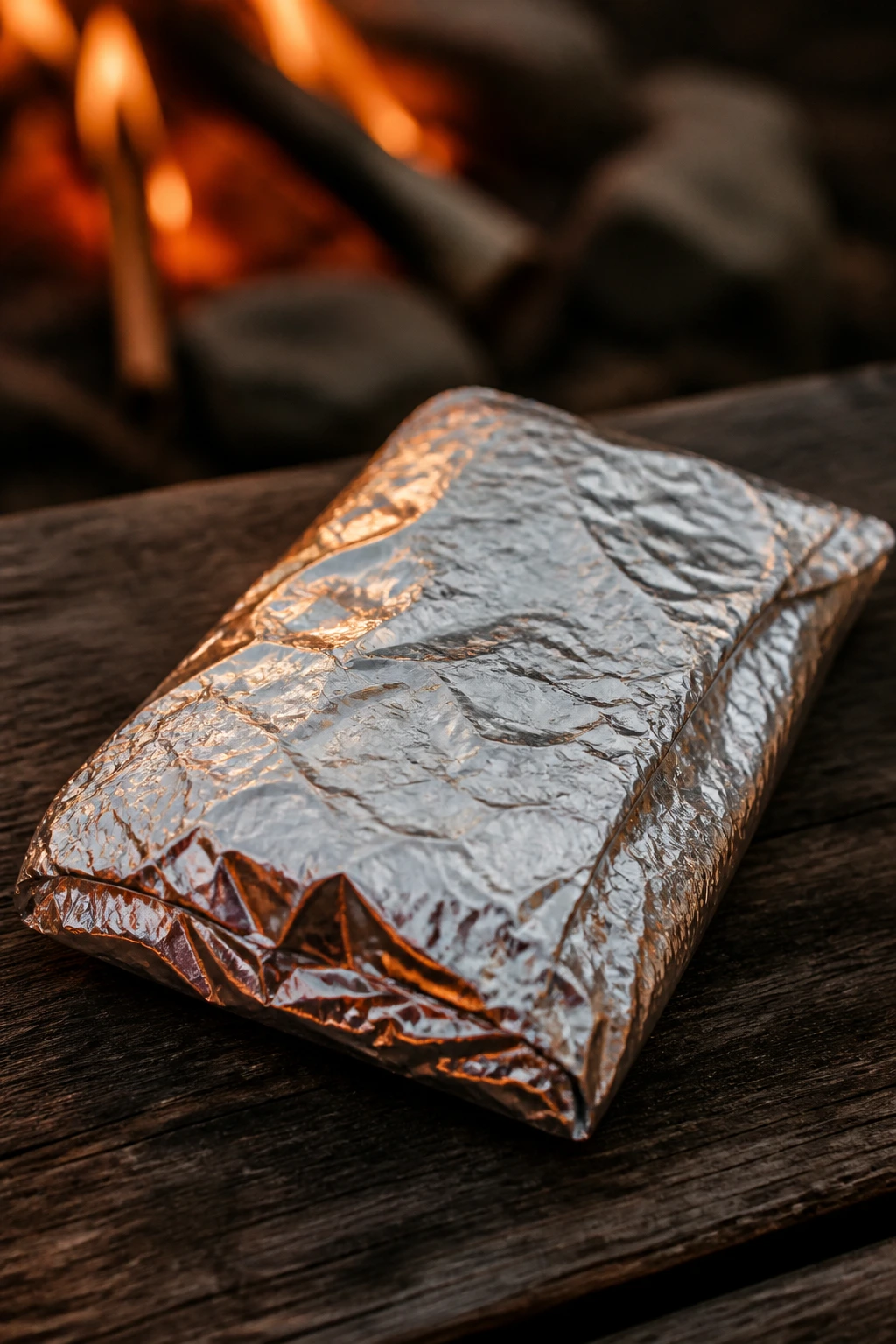
A lot of foil packet dinners can be assembled ahead of time, which is half the point. Chicken, beef, sausage, and vegetable packets can usually be mixed and refrigerated for up to 24 hours before cooking, as long as they stay cold at 40°F or below. I would keep seafood packets shorter than that. Salmon and shrimp are better assembled close to cooking time, or at least the same day, because texture starts to go downhill once the salt and acid sit too long.
Cooked leftovers keep well in the fridge for 3 to 4 days in most cases. Seafood is the exception; eat salmon or shrimp packets within 1 to 2 days if you want the best texture. Freeze cooked chicken, beef, sausage, or vegetarian packet fillings for up to 2 months, though potatoes and zucchini soften after thawing. They’re still safe and usable. They just lose the fresh packet texture.
For reheating, the oven is the cleanest option. Put the packet contents in a baking dish, cover loosely with foil, and warm at 325°F to 350°F until hot through. Chicken and sausage packets usually need 15 to 20 minutes. Seafood is quicker and easier to dry out, so keep it short and gentle. On a campsite, reheat over low coals in a closed packet for a few minutes, but watch closely so the edges do not scorch. The microwave works in a pinch, though potatoes and steak get a little odd if you push them too far.
If you want to prep a trip ahead of time, chop vegetables, measure seasonings, and mix sauces into small containers or zipper bags. That cuts campsite work down a lot. Just keep raw proteins separate until you’re ready to cook. Raw packets belong in the cooler, sealed and labeled, not marinating for days in a warm tote while you find the lighter.
Easy Swaps for Different Camp Kitchens
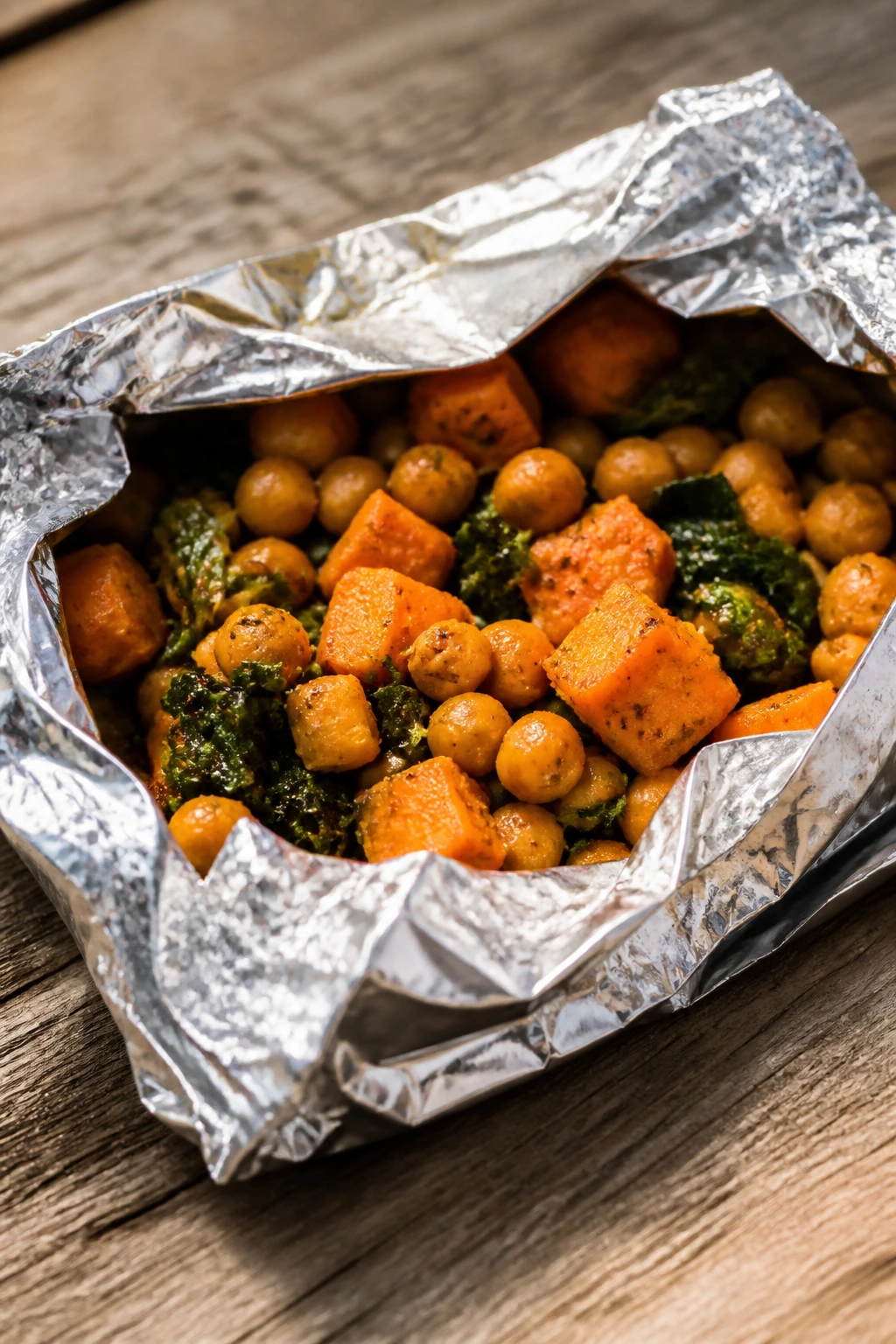
Trail-Ready Veggie Packets: Skip meat entirely and build around chickpeas, cabbage, sweet potatoes, mushrooms, and sturdy greens. Add a little olive oil and a bold seasoning blend so the packet doesn’t taste flat.
Lighter-Heat Packs: Use chicken breast, salmon, or turkey cutlets with lemon, herbs, and olive oil instead of butter-heavy sauces. You still get plenty of flavor, and the meal feels less heavy late in the evening.
Saucy Comfort Packs: If your group likes big flavor, lean into barbecue sauce, marinara, teriyaki, or buffalo sauce. Keep the sauce thick, then save a little extra for serving so the packet doesn’t dry out.
Spice-Forward Packs: Cajun seasoning, chipotle powder, cumin, and chili flakes all work well here. Pair them with sausage, beef, or chicken thighs so the heat has something sturdy to cling to.
Kid-Friendly Packs: Stick with mild sausage, chicken, corn, potatoes, and a little butter or ranch seasoning. Skip the aggressive heat and let everyone add hot sauce at the table if they want it.
Low-Sodium Packs: Use fresh lemon, herbs, garlic, unsalted butter, and no-salt-added sauces when possible. That keeps the packet bright without leaning so hard on salt that the meal tastes flat.
Common Mistakes to Avoid
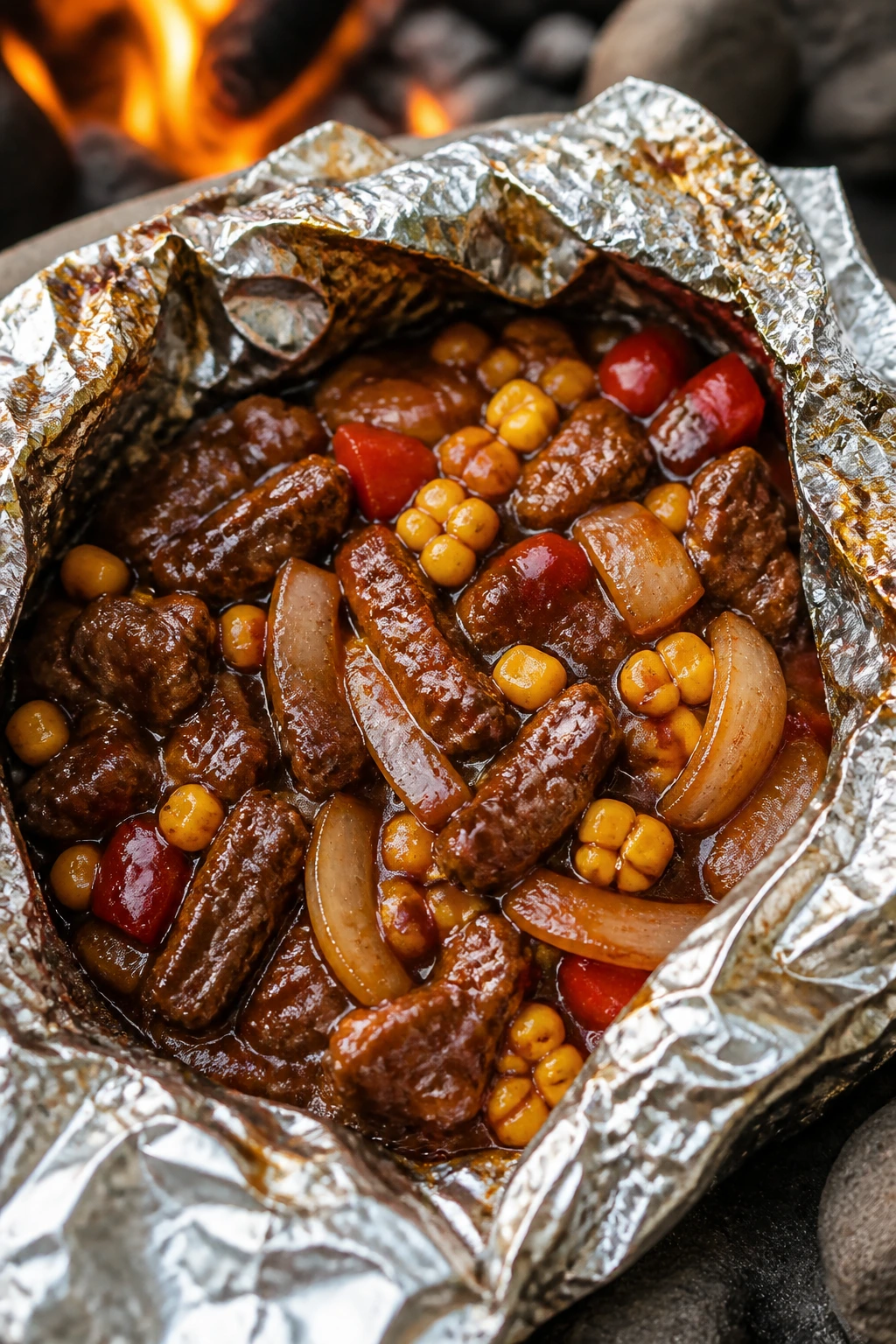
Packing the foil too full: A packet stuffed to the seams steams unevenly and makes it hard to know whether the center is done. Keep the layer loose enough for heat to move around the food. If you need more dinner, make another packet. It’s worth the extra foil.
Cutting everything to different sizes: One huge potato wedge beside a thin asparagus spear is a recipe for frustration. The spear is done while the potato is still hard. Cut ingredients to similar cooking times or par-cook the slower ones before sealing.
Using weak foil: Thin foil tears the second you flip it or open it near the fire. Use heavy-duty foil, and for extra insurance, double-layer the sheet. Dry, punctured packets leak sauce and turn dinner into smoke.
Cooking over active flames: Flames are fast and messy. Medium coals or a steady grill grate give you better control and fewer burnt edges. If the packet is blackening before the center is ready, the heat is too aggressive.
Forgetting the thermometer: Chicken and turkey are not guesswork food. Use an instant-read thermometer and look for 165°F in the thickest part. Shrimp should turn opaque and pink, while beef depends on your preference and cut. Guessing over a fire is a bad trade.
Opening too early: Steam burns are real, and they linger. Let the packet sit for a minute after it comes off the heat, then open the seam away from your face. That one small pause saves a lot of cursing.
Questions People Ask Before Cooking Packets
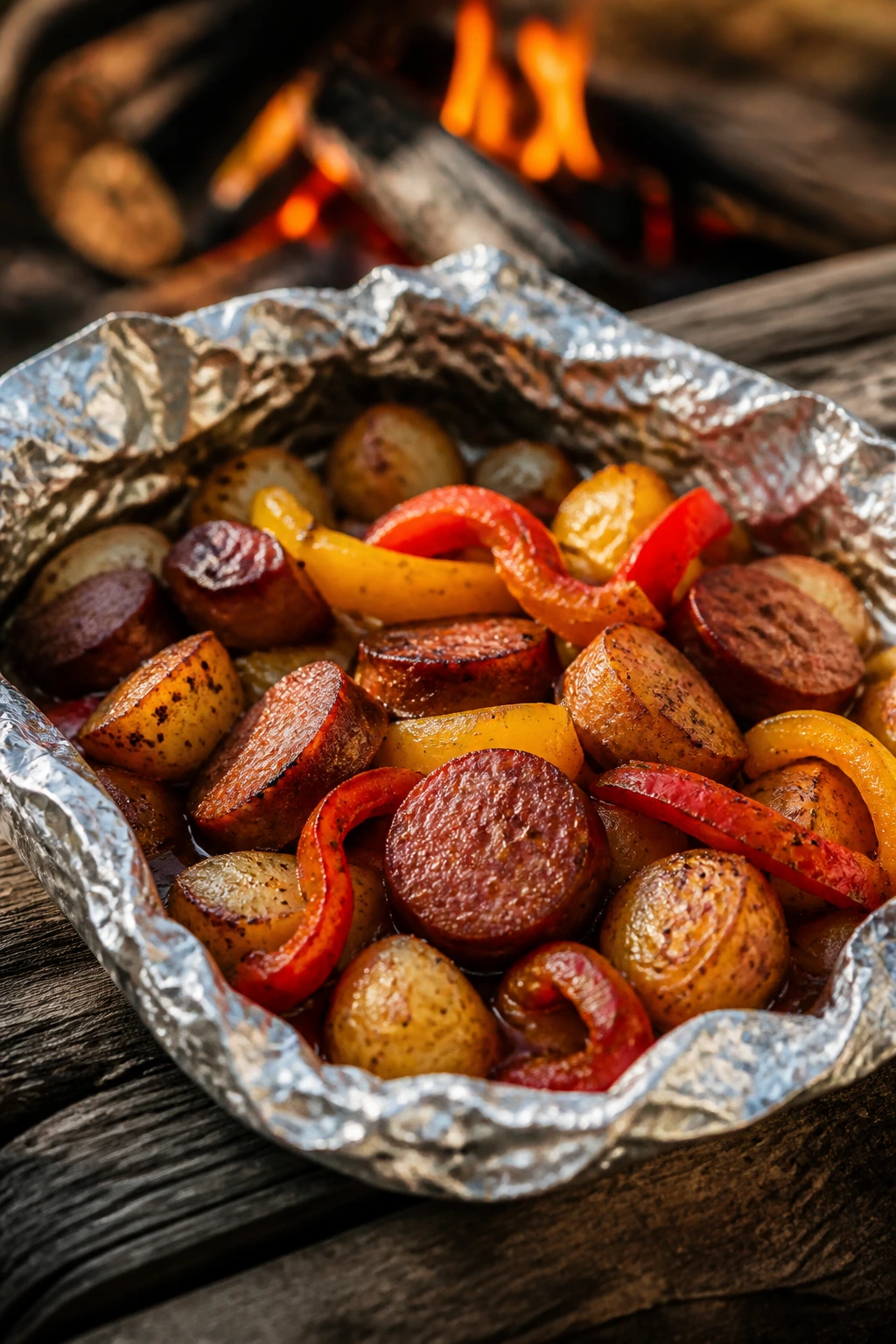
Can I assemble foil packets before the trip?
Yes, for most chicken, beef, sausage, and vegetable packets. Keep them cold in the cooler and cook them within 24 hours for the best texture and food safety. I would hold seafood until closer to cooking time because fish and shrimp are less forgiving after sitting in seasoning and acid.
Do I really need heavy-duty foil?
I would not skip it. Regular foil tears when you flip the packets or when sharp edges from bones, potatoes, or vegetables poke through. If heavy-duty foil is not available, use two layers of regular foil and handle the packets carefully.
How do I know when chicken is done?
Use an instant-read thermometer and check the thickest piece. You want 165°F. If you do not have a thermometer, cut into the largest piece and look for juices that run clear and meat that is no longer pink in the center, but the thermometer is the better answer.
Can these be cooked in an oven at home?
Absolutely. Most of these recipes work well at 400°F to 425°F on a baking sheet. The oven gives you a more even result than campfire coals, which is handy if you want to test the packet before a trip or cook it on a rainy night at home.
What if the vegetables are still hard when the protein is done?
That means the vegetables were cut too large or the packet needed more time. Lift the protein out only if you have to, then return the vegetables to the heat for a few more minutes. Better yet, next time cut the slow vegetables smaller or par-cook them first.
Can I use frozen vegetables?
Yes, with a little caution. Frozen corn, peas, and some pepper mixes work well, but watery vegetables can release extra moisture and make the packet soggy. If you use frozen vegetables, do not thaw them in a puddle of liquid first. Add them straight from frozen and expect a few extra minutes of cooking.
How do I keep packets from leaking?
Use double-layer foil, keep sauce amounts reasonable, and crimp the edges firmly. Leave a little space inside for steam, but not so much that the packet floats open. If you’re cooking especially saucy recipes, set the packets on a grill tray or in a shallow pan for backup.
Which packets are the best for a mixed crowd?
Sausage and potatoes, chicken fajita packets, and garlic butter chicken are usually the safest crowd-pleasers because the flavors are familiar and easy to adjust at the table. Salmon and buffalo packets are more opinionated. Which is fine, but it helps to know your audience before you pack the cooler.
Pack, Seal, Cook
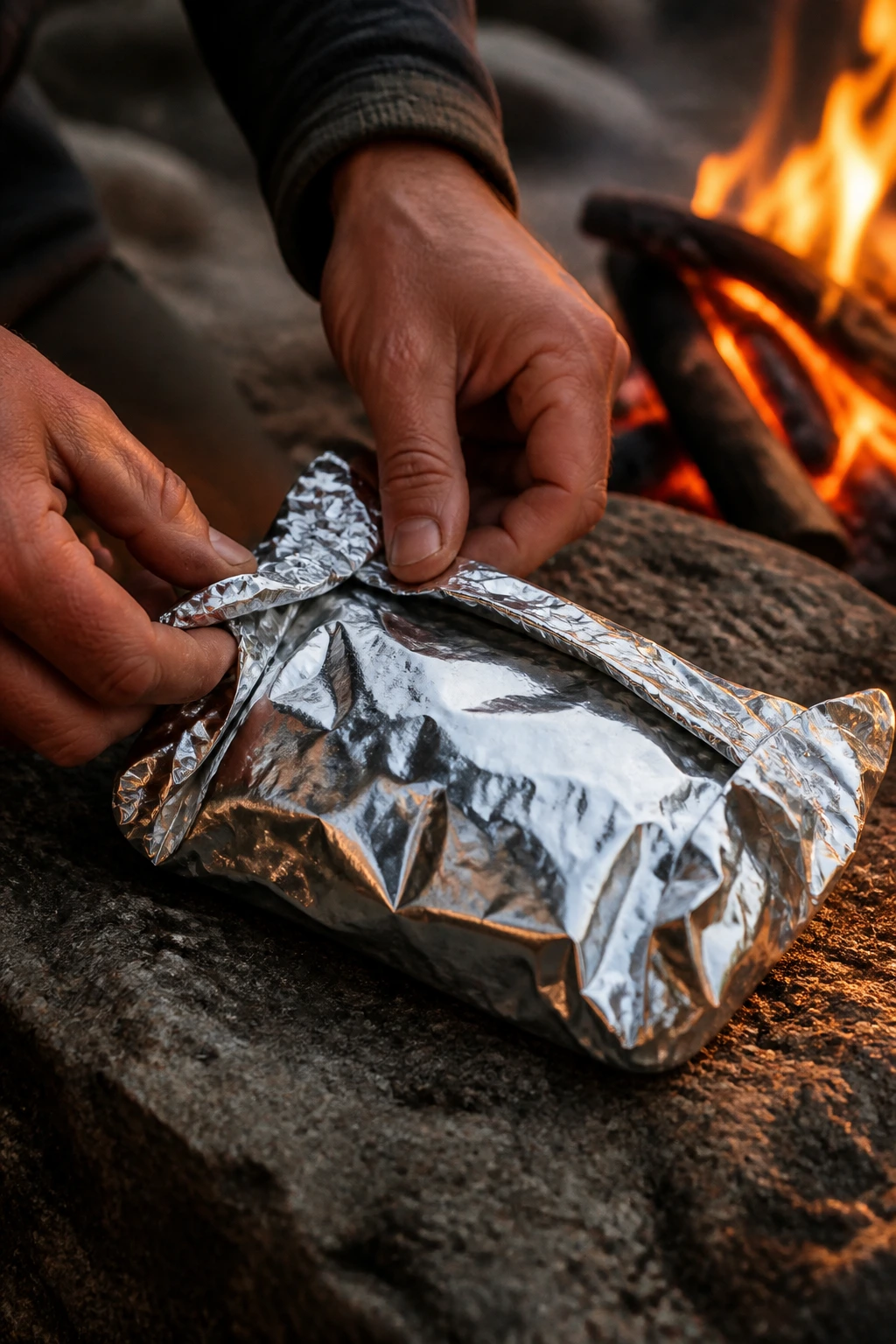
The real beauty of foil packet dinners is that they turn camping into a more forgiving kind of cooking. You still get smoke, heat, and a little drama from the fire, but you also get structure. Dinner stays together. The cleanup stays small. The food tastes like you paid attention, even when the wind was rude and the campsite table was lopsided.
There’s no single best packet here. Some nights call for salmon and lemon. Some nights want sausage and peppers. Some nights the only right answer is a greasy, buttery shrimp boil packet eaten while standing up with a paper plate in one hand. That variety is the point.
Pack the ingredients with a little care, keep the cuts even, and trust the method. Once you do, these meals become part of the camping rhythm, the kind of dinner that makes the whole trip feel more organized than it probably was.
| Recipe | Prep Time | Cook Time | Total Time | Servings | Standout Detail |
|---|---|---|---|---|---|
| Garlic Herb Butter Chicken and Potatoes | 15 min | 28 min | 43 min | 4 | richest butter-garlic finish |
| Lemon Dill Salmon and Asparagus | 12 min | 14 min | 26 min | 4 | fastest packet in the group |
| Classic BBQ Beef and Corn Packets | 15 min | 22 min | 37 min | 4 | sticky-sweet barbecue flavor |
| Sausage, Peppers, and Potatoes | 15 min | 30 min | 45 min | 4 | most straightforward camp supper |
| Teriyaki Chicken and Pineapple | 15 min | 20 min | 35 min | 4 | sweet-savory glaze with fruit |
| Southwest Turkey and Black Bean Packets | 18 min | 20 min | 38 min | 4 | hearty taco-style filling |
| Steak, Mushrooms, and Onions | 15 min | 18 min | 33 min | 4 | steakhouse flavor in foil |
| Campfire Shrimp Boil Packets | 15 min | 15 min | 30 min | 4 | butteriest, most festive packet |
| Greek Chicken and Veggie Packets | 15 min | 24 min | 39 min | 4 | bright lemon-oregano profile |
| Buffalo Ranch Chicken and Cauliflower | 15 min | 26 min | 41 min | 4 | bold heat with cooling ranch |
| Smoky Chickpea and Sweet Potato Packets | 20 min | 28 min | 48 min | 4 | best vegetarian option here |
| Italian Turkey Meatball and Zucchini Packets | 15 min | 18 min | 33 min | 4 | sauce-and-cheese comfort meal |
| Kielbasa, Apples, and Cabbage Packets | 15 min | 24 min | 39 min | 4 | sweet-savory sleeper hit |
| Chicken Fajita Packets | 15 min | 18 min | 33 min | 4 | easiest taco night outdoors |