



The first thing most families notice about dinner is not whether it’s “healthy.” It’s whether it smells worth sitting down for. If the pan is full of bland chicken, steamed vegetables, and a sauce that tastes like it was whispered at, people drift. If the kitchen smells like garlic, lemon, cumin, browned onions, roasted tomatoes, or sesame oil hitting a hot skillet, they show up. That’s the real bar for easy healthy dinners for family: not perfect nutrition theater, just food that gets eaten.
I care less about meals that behave and more about meals that disappear. A weeknight dinner should do three jobs at once: feed people, keep the prep manageable, and taste like someone actually cared. That means leaning on a few honest tricks—high heat for color, acid for wake-up, salt in the right places, and vegetables that bring their own personality instead of vanishing into the background.
The recipes below are built around that idea. They’re the kind of dinners I’d put in front of a mixed table without bracing for complaints: some are one-pan, some are one-pot, some lean on pantry staples, and all of them keep texture in the game. No sad, gray “health food” energy. Just good dinners, made to work on a real night.
Why These Fifteen Dinners Actually Get Eaten
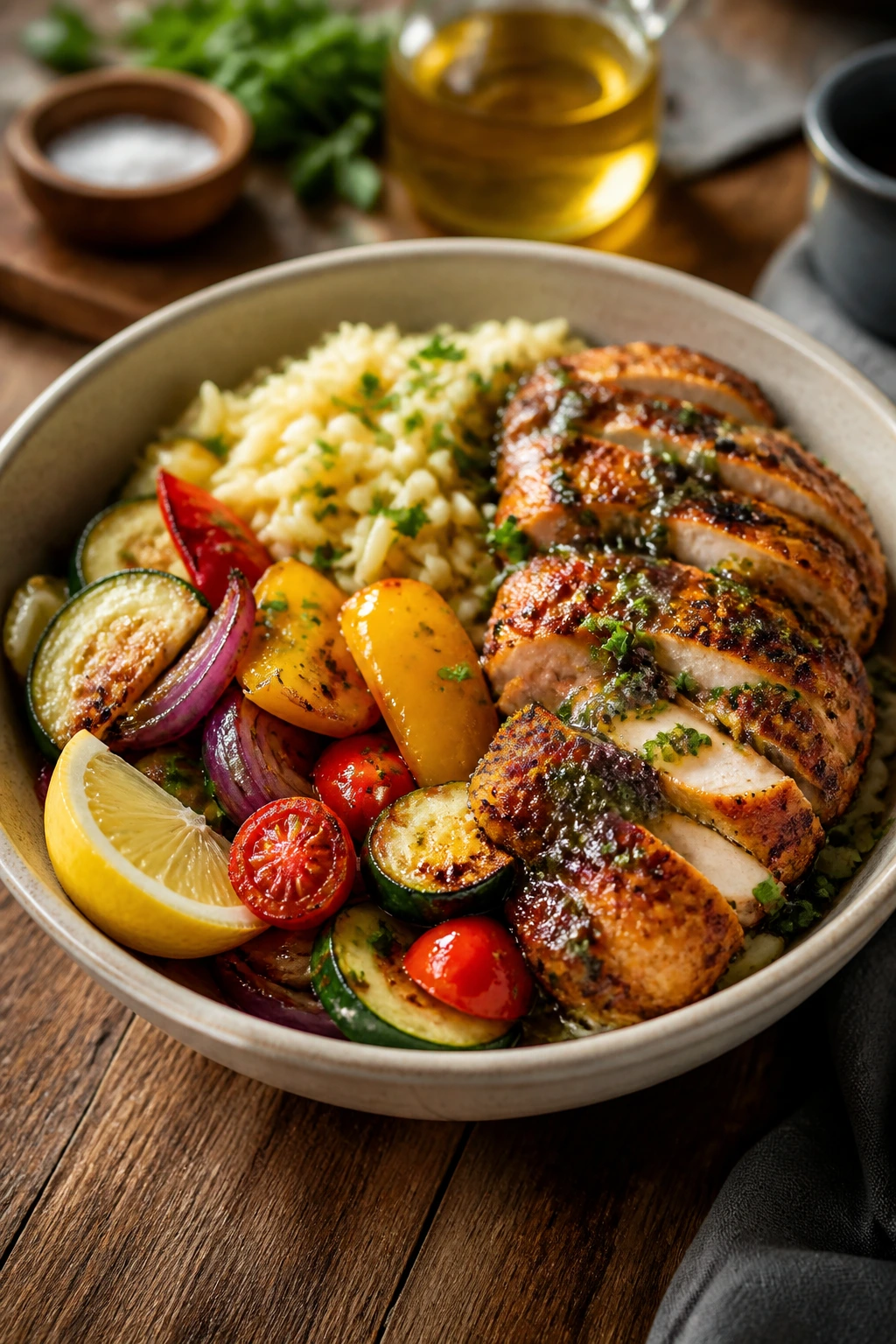
-
Flavor leads, health follows: Each recipe builds around browning, citrus, herbs, or a sauce with enough salt and acid to make vegetables taste alive, not dutiful.
-
Most of them finish fast: The majority land in 20 to 35 minutes, and the oven does a lot of the lifting while you set the table or make a quick salad.
-
There’s built-in balance: Protein, vegetables, and a sensible starch show up in the same bowl or pan, so you are not assembling dinner from five separate sides.
-
Picky eaters get fewer surprises: The vegetables are usually chopped small, roasted, or tucked into a familiar format—tacos, pasta, bowls, chili, enchiladas.
-
Leftovers still make sense: These dinners reheat like actual food, not like a punishment. Chili, meatballs, lentil sauce, and skillet lasagna get even better after a night in the fridge.
-
You can shop once and cook twice: The ingredient list leans on chicken, turkey, beans, rice, pasta, tortillas, frozen vegetables, and a few brighteners like lemon, yogurt, and herbs.
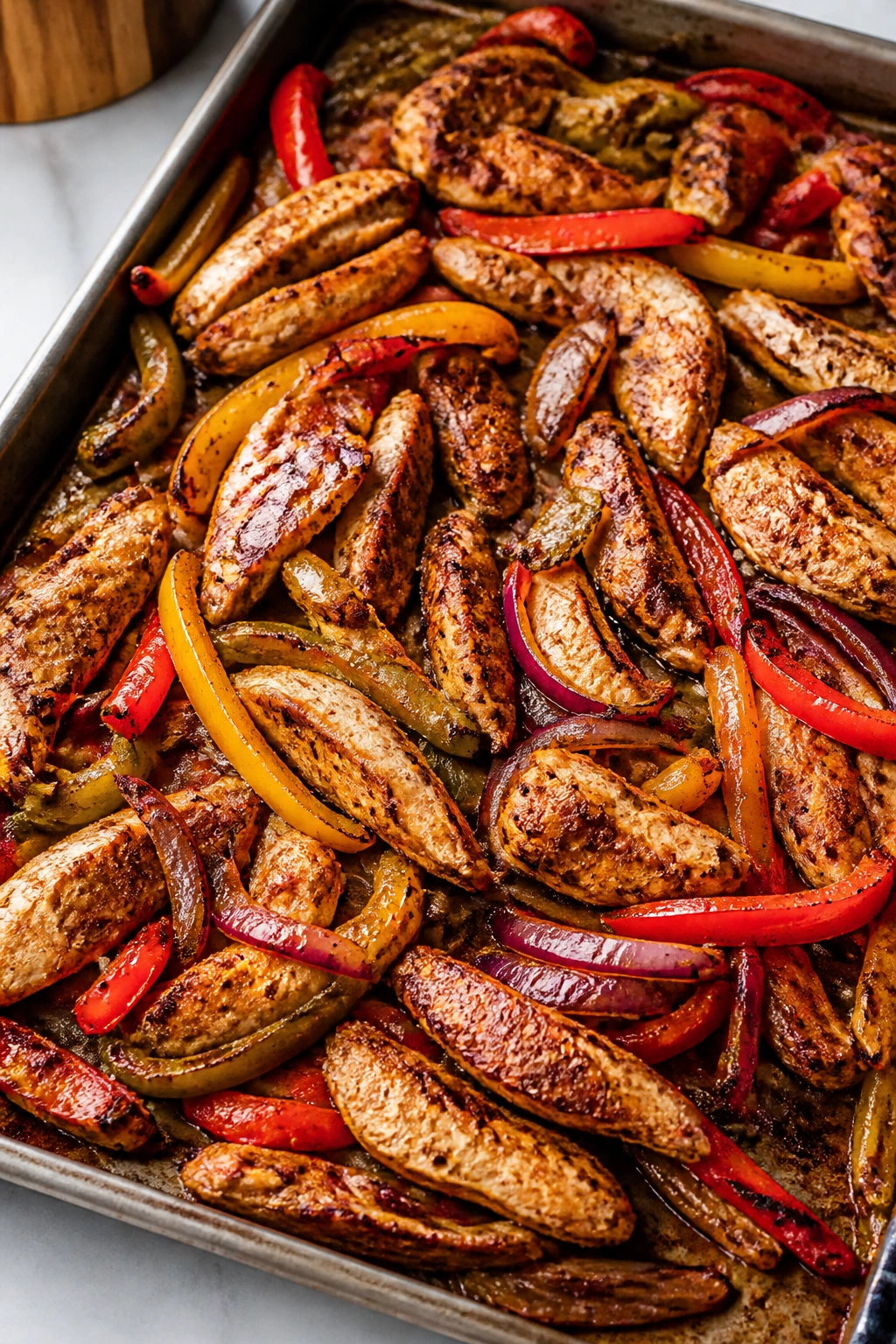
1. Sheet-Pan Chicken Fajitas
The smell alone does half the work here. Chicken, onions, and bell peppers roast together at high heat, so the edges char a little and the whole pan turns glossy with spice and lime. It tastes like dinner with a pulse, not a pile of leftovers pretending to be Mexican night.
Why It Works:
Sheet-pan fajitas solve the two biggest weeknight problems: too many pans and not enough flavor. A hot oven turns sliced peppers sweet and keeps the chicken juicy if you don’t crowd the tray. The lime at the end matters; it cuts through the oil and wakes up the cumin in a way that plain salt never will.
Key Ingredients:
- 1 1/2 pounds boneless, skinless chicken breasts or thighs, sliced into 1/2-inch strips
- 3 bell peppers, sliced into strips
- 1 large yellow onion, sliced
- 2 tablespoons olive oil
- 2 teaspoons chili powder
- 1 teaspoon ground cumin
- 1 teaspoon smoked paprika
- 1/2 teaspoon garlic powder
- 1 teaspoon kosher salt
- 1/2 teaspoon black pepper
- 1 lime, juiced
- 8 small tortillas, warmed
- Optional: cilantro, avocado, Greek yogurt, salsa
Quick Steps:
- Preheat the oven to 425°F (220°C) and line a large sheet pan with parchment.
- Toss the chicken, peppers, and onion with olive oil, chili powder, cumin, paprika, garlic powder, salt, and pepper until everything is coated.
- Spread the mixture in a single layer. Do not pile it up or the vegetables will steam instead of roast.
- Roast for 15 minutes, then stir once and roast for 5 to 7 minutes more, until the chicken reaches 165°F and the peppers have browned edges.
- Squeeze the lime over the pan, toss again, and rest for 3 minutes before serving.
- Warm the tortillas and build the fajitas with whatever toppings your family actually likes.
Equipment for This Recipe:
- Large rimmed sheet pan
- Mixing bowl
- Sharp knife and cutting board
- Tongs or a spatula
How to Serve This Dish:
Pile the fajita mix into warm tortillas and keep the toppings simple: a spoon of salsa, a few avocado slices, and a little cilantro are enough. A cabbage slaw or black beans on the side turns it into a fuller plate without more cooking.
Pro Tips for This Recipe:
- Slice the chicken thin and evenly so it finishes when the peppers do.
- If your sheet pan is small, use two pans. Crowding kills the roast.
- A squeeze of lime at the end does more than garnish; it changes the whole flavor line.
- Thighs stay juicier than breasts if you tend to overcook chicken.
Variations on This Dish:
- Shrimp Fajitas: Swap in 1 1/2 pounds raw shrimp and roast for only 8 to 10 minutes total.
- Veggie Fajitas: Use portobello strips and 1 can black beans, then add the beans for the last 5 minutes.
- Smoky Chipotle Fajitas: Add 1 teaspoon chipotle powder or 1 minced chipotle in adobo to the spice mix.
Common Mistakes to Avoid with This Dish:
- Overcrowding the pan: The vegetables go limp. Use a second tray if needed.
- Skipping the final lime: The fajitas taste flatter and heavier.
- Overbaking the chicken: Pull it as soon as it hits 165°F; don’t wait for the peppers to look “done enough.”
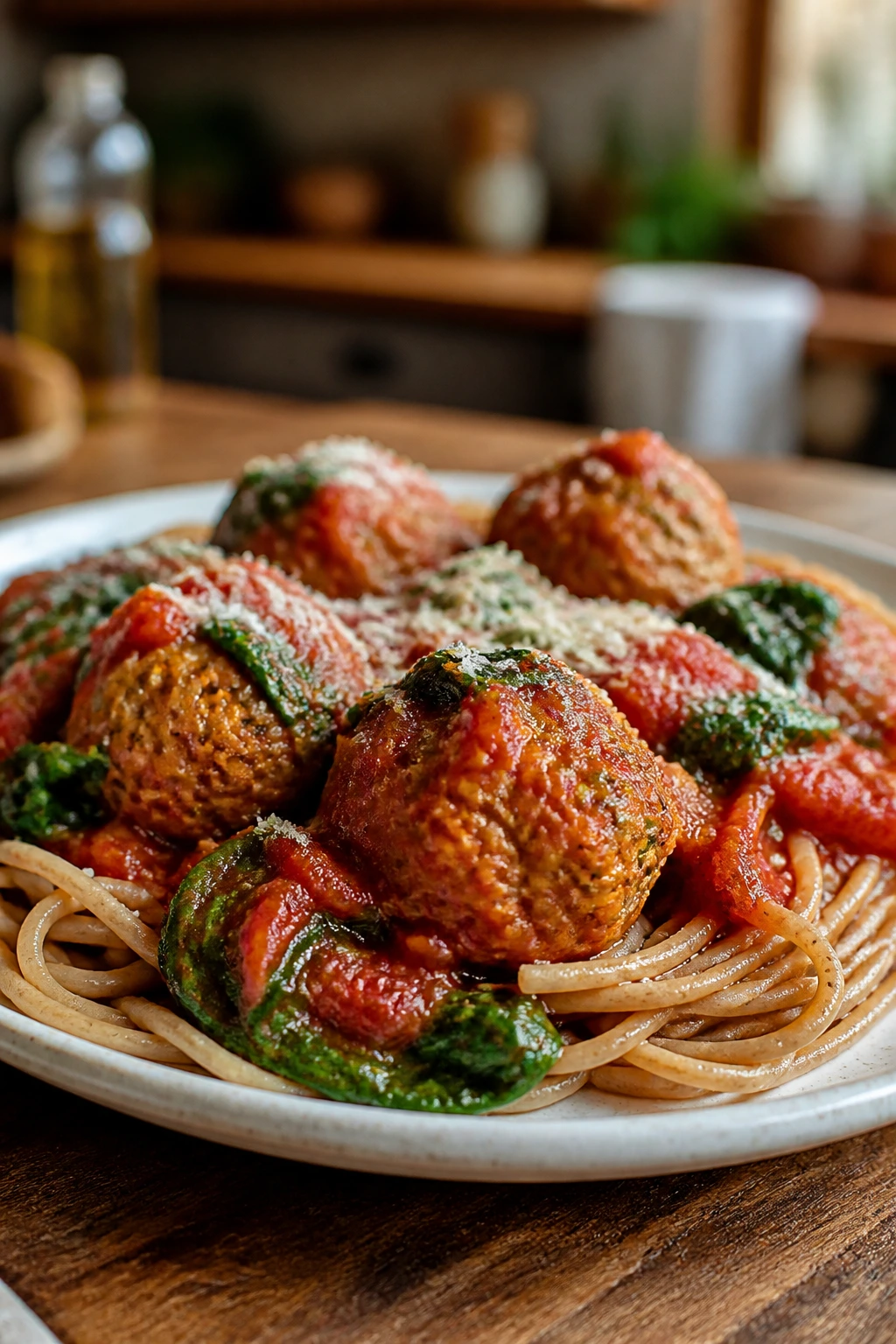
2. Turkey Meatballs with Spinach and Marinara over Whole-Wheat Pasta
These meatballs are what happens when you stop treating turkey like a dry substitute and start seasoning it properly. The spinach disappears into the mix, the marinara clings to the pasta, and the Parmesan gives the whole thing a salty edge that keeps kids from calling it “healthy food” like that’s a warning label.
Why It Works:
Baking the meatballs first keeps them tender and gives you a clean, controlled texture. Simmering them in marinara after baking finishes the centers without toughening the outside. Whole-wheat pasta brings enough nutty flavor to stand up to the sauce, and the spinach adds color without making a speech about itself.
Key Ingredients:
- 1 pound lean ground turkey
- 1/2 cup whole-wheat breadcrumbs
- 1 large egg
- 1/4 cup grated Parmesan
- 1/4 cup finely chopped onion
- 2 cups baby spinach, finely chopped
- 2 cloves garlic, minced
- 1 teaspoon Italian seasoning
- 3/4 teaspoon kosher salt
- 1/2 teaspoon black pepper
- 1 tablespoon olive oil
- 2 cups marinara sauce
- 12 ounces whole-wheat spaghetti or linguine
Quick Steps:
- Preheat the oven to 400°F (205°C) and line a sheet pan with parchment.
- Mix the turkey, breadcrumbs, egg, Parmesan, onion, spinach, garlic, Italian seasoning, salt, and pepper in a bowl until just combined. Stop as soon as it comes together.
- Shape into 14 to 16 meatballs and place on the pan.
- Bake for 14 to 16 minutes, until browned and cooked through.
- Warm the marinara in a skillet, add the meatballs, and simmer for 3 to 5 minutes.
- Cook the pasta in salted water, drain, and toss with the sauce and meatballs.
Equipment for This Recipe:
- Rimmed sheet pan
- Large pot for pasta
- Skillet or sauté pan
- Mixing bowl
How to Serve This Dish:
Serve the pasta in shallow bowls so the sauce stays where it belongs. A simple green salad with lemon dressing is enough beside it, and a little extra Parmesan on top gives the plate some edge.
Pro Tips for This Recipe:
- Grate or mince the onion finely so the meatballs hold together.
- Wet your hands before rolling the meatballs; it keeps the mixture from sticking.
- Salt the pasta water until it tastes like a mild broth.
- If the sauce gets too thick, add a splash of pasta water instead of more marinara.
Variations on This Dish:
- Turkey Meatball Subs: Tuck the meatballs into toasted rolls and top with provolone.
- Zucchini Noodle Bowl: Skip the pasta and serve over quick-sautéed zucchini ribbons.
- Dairy-Free Version: Leave out the Parmesan and add 1 tablespoon nutritional yeast.
Common Mistakes to Avoid with This Dish:
- Overmixing the meatball mixture: That makes the texture dense and tight.
- Making the meatballs too large: They brown late and can dry out.
- Serving plain pasta with sauce on top only: Toss everything together so the noodles actually taste seasoned.
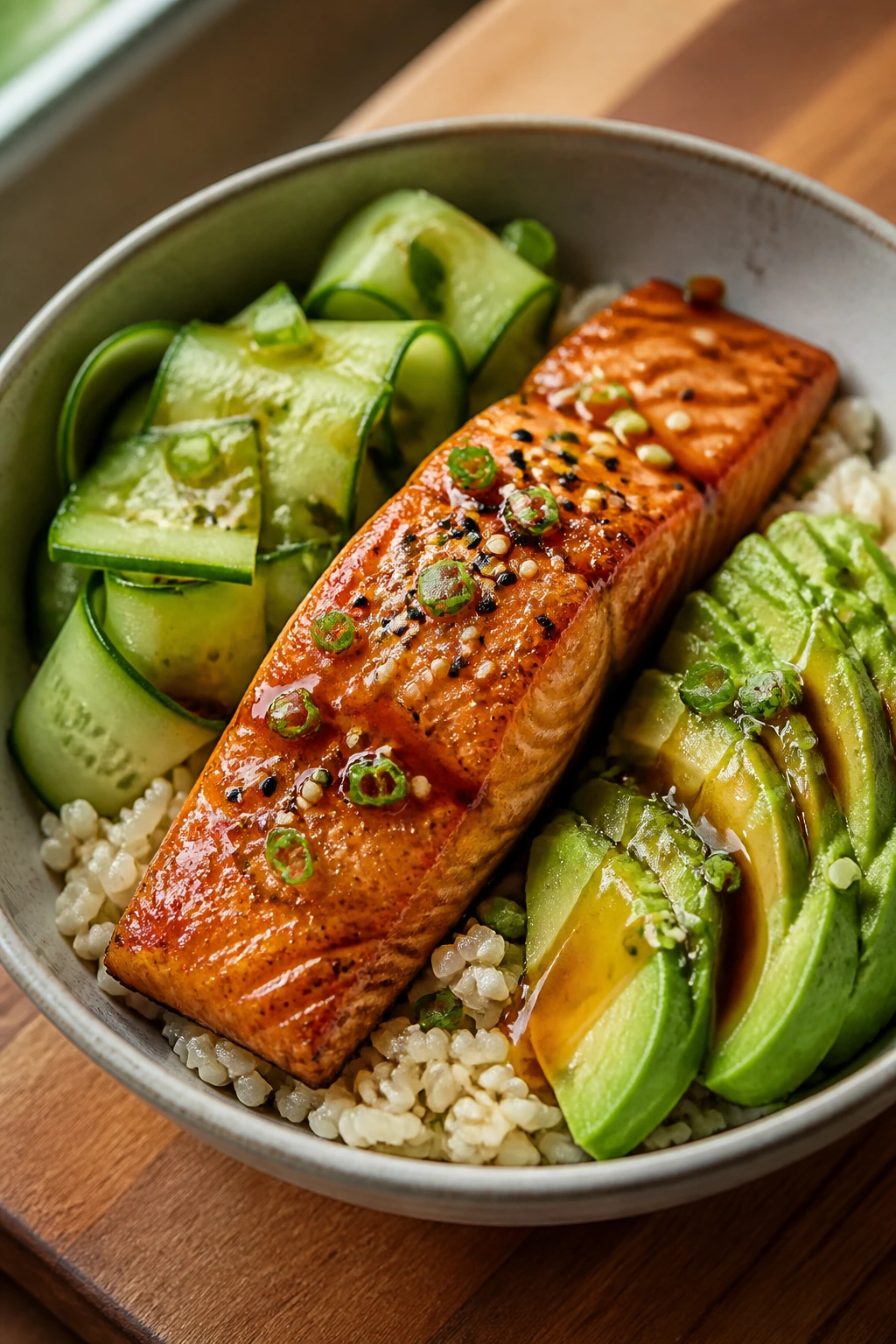
3. Salmon Rice Bowls with Cucumber and Avocado
Warm salmon, cool cucumber, sticky rice, and a sharp little soy-ginger glaze—there’s a reason this kind of bowl works every time. It has temperature contrast, creamy contrast, and enough salt and acid to make the whole thing taste deliberate instead of assembled from leftovers.
Why It Works:
Salmon is rich enough that you don’t need much to make it satisfying. A quick glaze made with soy sauce, honey, rice vinegar, and ginger gives it a glossy finish without burying the fish. Brown rice brings a chewy base, and the cucumber and avocado keep each bite from feeling heavy.
Key Ingredients:
- 4 salmon fillets, about 6 ounces each
- 2 tablespoons low-sodium soy sauce or tamari
- 1 tablespoon honey
- 1 tablespoon rice vinegar
- 1 teaspoon sesame oil
- 1 teaspoon grated fresh ginger
- 2 cups cooked brown rice
- 1 cucumber, thinly sliced
- 2 carrots, shredded or ribboned
- 1 avocado, sliced
- 2 green onions, sliced
- 1 tablespoon sesame seeds
Quick Steps:
- Preheat the oven to 400°F (205°C) and line a baking sheet with parchment.
- Stir the soy sauce, honey, rice vinegar, sesame oil, and ginger together.
- Place the salmon on the tray, brush with the glaze, and bake for 10 to 12 minutes, until the fish flakes easily.
- Reheat the rice with a tablespoon of water if needed, then divide it between bowls.
- Top with cucumber, carrots, avocado, and salmon.
- Finish with green onions and sesame seeds, plus an extra drizzle of glaze if you saved some.
Equipment for This Recipe:
- Baking sheet
- Small bowl for glaze
- Rice cooker or saucepan
- Sharp knife
How to Serve This Dish:
Build the bowls with rice on the bottom and the salmon slightly off-center so the vegetables stay visible. A squeeze of lime or a spoonful of sriracha mayo on the side gives older eaters more bite without changing the base bowl.
Pro Tips for This Recipe:
- Use leftover rice if you have it; day-old rice has better texture.
- Pat the salmon dry before glazing so it browns instead of steaming.
- Slice the avocado at the last minute so it stays green.
- If the fillets are thin, start checking them at 9 minutes.
Variations on This Dish:
- Spicy Mayo Bowl: Mix 2 tablespoons Greek yogurt or mayo with 1 teaspoon sriracha.
- Tofu Bowl: Swap salmon for extra-firm tofu cubes and bake them until the edges firm up.
- Citrus Bowl: Add orange segments and a little lime zest for a brighter finish.
Common Mistakes to Avoid with This Dish:
- Overcooking the salmon: Dry salmon turns the whole bowl dull. Pull it while the center still looks a touch translucent.
- Using hot, wet rice: It turns gummy. Fluff it and let it sit a minute.
- Adding avocado too early: It browns and looks tired before dinner starts.
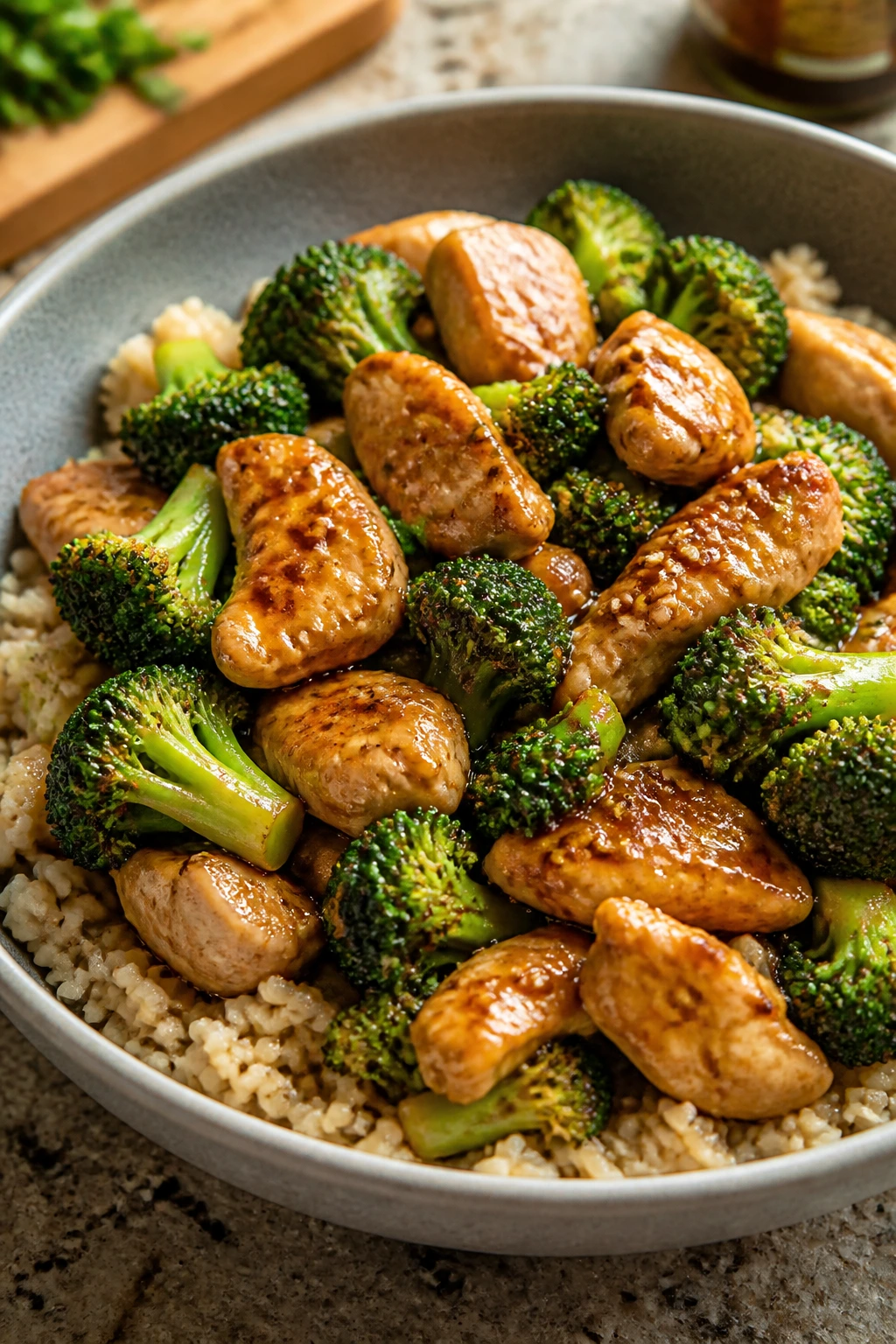
4. Chicken and Broccoli Stir-Fry with Brown Rice
The point of stir-fry is speed, but speed without a plan just makes mush. This one stays sharp because the chicken gets seared first, the broccoli stays crisp-tender, and the sauce is thin enough to coat everything without flooding the pan.
Why It Works:
Thin slices of chicken cook fast and stay tender if you don’t crowd them. Broccoli loves high heat, especially when you give it a quick splash of water and cover the pan for a minute. Brown rice gives you a sturdy base, and the soy-ginger sauce keeps the whole dish from tasting like a health-food afterthought.
Key Ingredients:
- 1 1/2 pounds boneless, skinless chicken thighs, thinly sliced
- 4 cups broccoli florets
- 1 red bell pepper, sliced
- 2 tablespoons avocado oil
- 4 cloves garlic, minced
- 1 tablespoon grated fresh ginger
- 1/3 cup low-sodium soy sauce
- 1/4 cup water or low-sodium chicken broth
- 1 tablespoon honey
- 1 tablespoon rice vinegar
- 1 teaspoon cornstarch
- 3 cups cooked brown rice
Quick Steps:
- Mix the soy sauce, water, honey, rice vinegar, and cornstarch in a small bowl.
- Heat 1 tablespoon oil in a large skillet over medium-high heat and sear the chicken for 4 to 5 minutes, until golden and mostly cooked through.
- Add the remaining oil, broccoli, and bell pepper, and cook for 3 minutes.
- Add the garlic and ginger, stir for 30 seconds, then pour in the sauce.
- Cook for 1 to 2 minutes, stirring, until the sauce turns glossy and clings to the chicken.
- Serve over brown rice.
Equipment for This Recipe:
- Large skillet or wok
- Small bowl for sauce
- Wooden spoon or spatula
- Knife and cutting board
How to Serve This Dish:
Spoon the stir-fry over rice and finish with sliced scallions or sesame seeds if you want a little crunch. A side of orange wedges or a simple cucumber salad works better than another heavy side.
Pro Tips for This Recipe:
- Slice the chicken against the grain so it stays tender.
- Keep the pan hot; if it stops sizzling, you are steaming dinner.
- Mix the sauce before you turn on the heat so the cornstarch doesn’t clump.
- Broccoli should still have a bite when the sauce goes in.
Variations on This Dish:
- Cashew Chicken Style: Add 1/3 cup roasted cashews at the end.
- Beef Swap: Use flank steak instead of chicken and cut the cook time by a minute or two.
- Cauliflower Rice Bowl: Swap the brown rice for quick sautéed cauliflower rice.
Common Mistakes to Avoid with This Dish:
- Crowding the skillet: The chicken goes pale instead of browned.
- Adding the garlic too early: It burns and turns bitter in seconds.
- Overcooking the broccoli: You want green and crisp, not olive-colored and tired.
5. Turkey and Bean Chili
Chili can go flat fast if you treat it like a dump-and-wait meal. This version gets a better start: the onion softens, the turkey browns, the spices bloom in the pot, and the fire-roasted tomatoes bring smoke without needing a long simmer.
Why It Works:
Lean turkey keeps the chili lighter than beef without making it thin or bland. Beans add body and fiber, and the tomato paste gives the broth a deeper, almost stewy feel after it cooks for a few minutes. The best part is that this is one of those dinners that tastes even better after it sits for a bit.
Key Ingredients:
- 1 tablespoon olive oil
- 1 medium onion, diced
- 1 red bell pepper, diced
- 3 cloves garlic, minced
- 1 pound lean ground turkey
- 2 tablespoons chili powder
- 1 teaspoon ground cumin
- 1 teaspoon smoked paprika
- 1/2 teaspoon dried oregano
- 2 tablespoons tomato paste
- 1 can (28 ounces) fire-roasted diced tomatoes
- 1 1/2 cups low-sodium chicken broth
- 1 can kidney beans, rinsed and drained
- 1 can black beans, rinsed and drained
- 1 teaspoon kosher salt, plus more to taste
- Black pepper
Quick Steps:
- Heat the olive oil in a Dutch oven over medium heat.
- Cook the onion and bell pepper for 5 minutes, until soft and fragrant.
- Add the garlic and turkey, breaking the meat up as it cooks until no pink remains.
- Stir in the chili powder, cumin, smoked paprika, oregano, and tomato paste; cook for 1 minute so the spices smell toasted.
- Add the tomatoes, broth, beans, salt, and pepper, then simmer uncovered for 25 to 30 minutes.
- Taste and adjust the salt before serving.
Equipment for This Recipe:
- Dutch oven or heavy pot
- Wooden spoon
- Cutting board and knife
- Can opener
How to Serve This Dish:
Ladle the chili into bowls and keep the toppings sparse: Greek yogurt, chopped cilantro, or a few crushed tortilla chips are enough. It works with cornbread, but a green salad is the cleaner move if you want the plate to stay lighter.
Pro Tips for This Recipe:
- Let the tomato paste cook for a full minute before adding liquid; it deepens the flavor.
- If you like thicker chili, simmer it 10 minutes longer with the lid off.
- Taste after the beans go in; canned beans vary in salt.
- A squeeze of lime at the table sharpens the whole pot.
Variations on This Dish:
- Smoky Chipotle Chili: Add 1 minced chipotle pepper in adobo.
- Vegetarian Chili: Skip the turkey and add a third can of beans plus 1 cup diced mushrooms.
- Bean-Light Version: Use one can of beans and add 1 cup frozen corn for texture.
Common Mistakes to Avoid with This Dish:
- Skipping the browning step: Pale turkey tastes flat.
- Using too much broth: The chili turns soupy instead of spoonable.
- Serving it before the seasoning settles: Chili needs that final taste and salt check.
6. Sweet Potato Taco Bowls with Black Beans and Corn
This is taco night with a little more backbone. The sweet potatoes roast until caramelized at the edges, the beans and corn give you a soft, savory center, and the lime keeps the whole bowl from tipping into sweet-heavy territory.
Why It Works:
Sweet potatoes do a lot of work here, but only if you roast them hot enough to brown. Black beans make the meal feel complete without extra meat, and the toppings let everybody steer their own bowl. Greek yogurt adds a creamy finish that keeps the spices from feeling harsh.
Key Ingredients:
- 2 large sweet potatoes, peeled and cubed into 3/4-inch pieces
- 1 tablespoon olive oil
- 1 tablespoon taco seasoning
- 1 can black beans, rinsed and drained
- 1 cup frozen corn
- 2 cups cooked brown rice or chopped romaine
- 1 avocado, sliced
- 1 lime, cut into wedges
- 1/2 cup plain Greek yogurt
- Salsa, cilantro, and sliced cabbage for topping
Quick Steps:
- Preheat the oven to 425°F (220°C) and line a sheet pan.
- Toss the sweet potatoes with olive oil and taco seasoning, then roast for 25 minutes, stirring halfway through.
- Warm the black beans and corn in a small skillet with a pinch of salt.
- Divide the rice or romaine between bowls.
- Top with sweet potatoes, beans, corn, avocado, and yogurt.
- Finish with lime, salsa, cilantro, and cabbage if you like crunch.
Equipment for This Recipe:
- Sheet pan
- Small skillet
- Mixing bowl
- Sharp knife
How to Serve This Dish:
Serve it in wide bowls so the toppings don’t sink into one pile. If you want it more taco-like, put out warm tortillas and let everyone build their own wrap from the bowl filling.
Pro Tips for This Recipe:
- Cut the sweet potatoes evenly so they roast at the same pace.
- Frozen corn is fine; just warm it long enough to lose the icy taste.
- Add the lime at the table, not before roasting.
- A pinch of salt on the avocado matters more than you’d think.
Variations on This Dish:
- Chicken Taco Bowls: Add shredded rotisserie chicken and a spoonful of salsa.
- Quinoa Base: Swap the rice for quinoa if you want a nuttier base.
- Dairy-Free Bowl: Use guacamole or tahini instead of yogurt.
Common Mistakes to Avoid with This Dish:
- Cutting the sweet potatoes too big: They take forever and never get those browned edges.
- Overloading the bowl with toppings: One creamy thing, one crunchy thing, one bright thing is enough.
- Skipping seasoning on the beans: Salt them lightly or they get lost under the sweet potatoes.
7. Lemon Garlic Shrimp and Veggie Couscous
Shrimp cooks in minutes, which is either a blessing or a trap. The blessing is dinner before the family starts circling the kitchen. The trap is overcooked shrimp that taste like little rubber coins. This version stays on the right side because the vegetables and couscous are ready to meet the shrimp the second it comes out of the pan.
Why It Works:
Pearl couscous gives you a chewy base that feels more substantial than plain rice. Zucchini, tomatoes, and spinach soften quickly, so the whole skillet builds flavor without dragging out the clock. Lemon and garlic cut through the richness and keep shrimp tasting sweet instead of heavy.
Key Ingredients:
- 1 1/2 pounds large shrimp, peeled and deveined
- 1 cup pearl couscous
- 1 zucchini, diced
- 1 pint cherry tomatoes, halved
- 2 cups baby spinach
- 3 tablespoons olive oil
- 3 cloves garlic, minced
- 1 lemon, zested and juiced
- 1/2 teaspoon red pepper flakes
- 3/4 teaspoon kosher salt
- Black pepper
- 2 tablespoons chopped parsley
Quick Steps:
- Cook the couscous in salted water according to the package, then drain.
- Heat 1 tablespoon olive oil in a large skillet and sauté the zucchini and tomatoes for 4 to 5 minutes.
- Add the garlic and red pepper flakes and stir for 30 seconds.
- Push the vegetables aside, add the remaining oil, and cook the shrimp for 2 minutes per side until pink and opaque.
- Stir in the spinach, couscous, lemon zest, lemon juice, salt, pepper, and parsley.
- Toss until the spinach wilts and everything looks glossy.
Equipment for This Recipe:
- Large skillet
- Saucepan for couscous
- Colander
- Zester or fine grater
How to Serve This Dish:
Serve it in shallow bowls with the parsley scattered over the top. A cucumber salad or warm pita on the side works well if you want to stretch the meal.
Pro Tips for This Recipe:
- Shrimp should be dry before they hit the pan; blot them with paper towels.
- Don’t overcook the couscous in advance or it goes sticky in the skillet.
- If the tomatoes are bland, add a pinch of salt before the shrimp goes in.
- Keep the lemon for the end so the flavor stays bright.
Variations on This Dish:
- Orzo Swap: Use orzo instead of couscous for a more pasta-like texture.
- Chickpea Version: Add 1 can chickpeas and use 1 pound shrimp.
- Herb Finish: Swap parsley for dill or basil if that’s what’s in the crisper.
Common Mistakes to Avoid with This Dish:
- Overcooking the shrimp: They toughen fast. Pull them the moment they turn opaque.
- Using soggy couscous: It turns clumpy and dull.
- Skipping the lemon zest: You lose a lot of the freshness.
8. Baked Cod with Tomatoes, Olives, and Potatoes
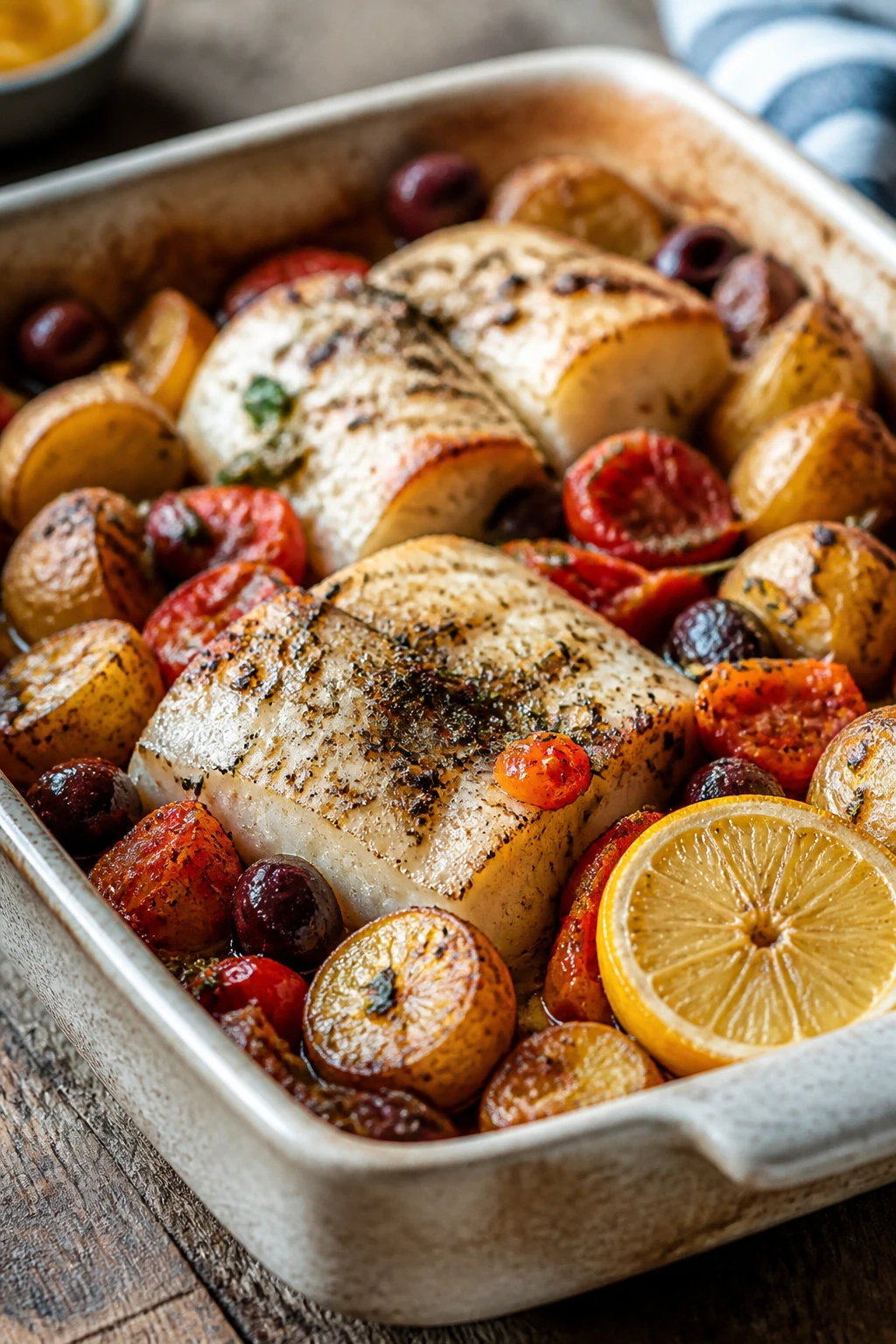
Cod needs help. It’s mild, almost shy, and if you bake it without enough seasoning, it behaves like plain white paper. Put it with potatoes, tomatoes, olives, garlic, and lemon, though, and it suddenly tastes like dinner from a place where people know how to use olive oil.
Why It Works:
The potatoes go in first so they have time to soften and brown. Cod finishes fast, so it rides on top of the seasoned vegetables instead of drying out in a long bake. The olives and lemon bring salt and acid, which keeps the fish from fading into the background.
Key Ingredients:
- 1 1/2 pounds baby potatoes, halved
- 4 cod fillets, about 6 ounces each
- 1 pint cherry tomatoes
- 1/2 cup pitted olives
- 1 red onion, sliced
- 3 tablespoons olive oil
- 1 teaspoon dried oregano
- 1/2 teaspoon kosher salt
- 1/2 teaspoon black pepper
- 1 lemon, sliced or juiced
- 2 tablespoons chopped parsley
Quick Steps:
- Preheat the oven to 425°F (220°C).
- Toss the potatoes and onion with 2 tablespoons olive oil, oregano, salt, and pepper, then roast for 20 minutes.
- Stir in the tomatoes and olives, then nestle the cod fillets on top.
- Drizzle with the remaining olive oil and a little lemon juice.
- Roast for 10 to 12 minutes more, until the cod flakes and the potatoes are tender.
- Scatter parsley and serve with extra lemon.
Equipment for This Recipe:
- Large sheet pan
- Parchment paper
- Knife and cutting board
- Spatula
How to Serve This Dish:
Plate the cod over the potatoes and spoon the tomatoes and olives around it so the dish stays juicy. Steamed green beans or a simple arugula salad fit neatly beside it.
Pro Tips for This Recipe:
- Cut the potatoes in similar sizes or some stay hard while others collapse.
- Choose cod fillets of similar thickness so they finish together.
- If the fish looks done at 9 minutes, trust it.
- Fresh lemon beats bottled juice here by a mile.
Variations on This Dish:
- Halibut Version: Use halibut if you want a firmer, meatier fish.
- Caper Twist: Swap half the olives for capers if you like a sharper briny note.
- Fennel Roast: Add sliced fennel to the potatoes for a more aromatic base.
Common Mistakes to Avoid with This Dish:
- Overbaking the fish: Dry cod is the reason people say they do not like cod.
- Not giving the potatoes a head start: They’ll still be crunchy when the fish is done.
- Using uneven fillets: Thin and thick pieces cook at different speeds.
9. Lean Beef and Broccoli Skillet
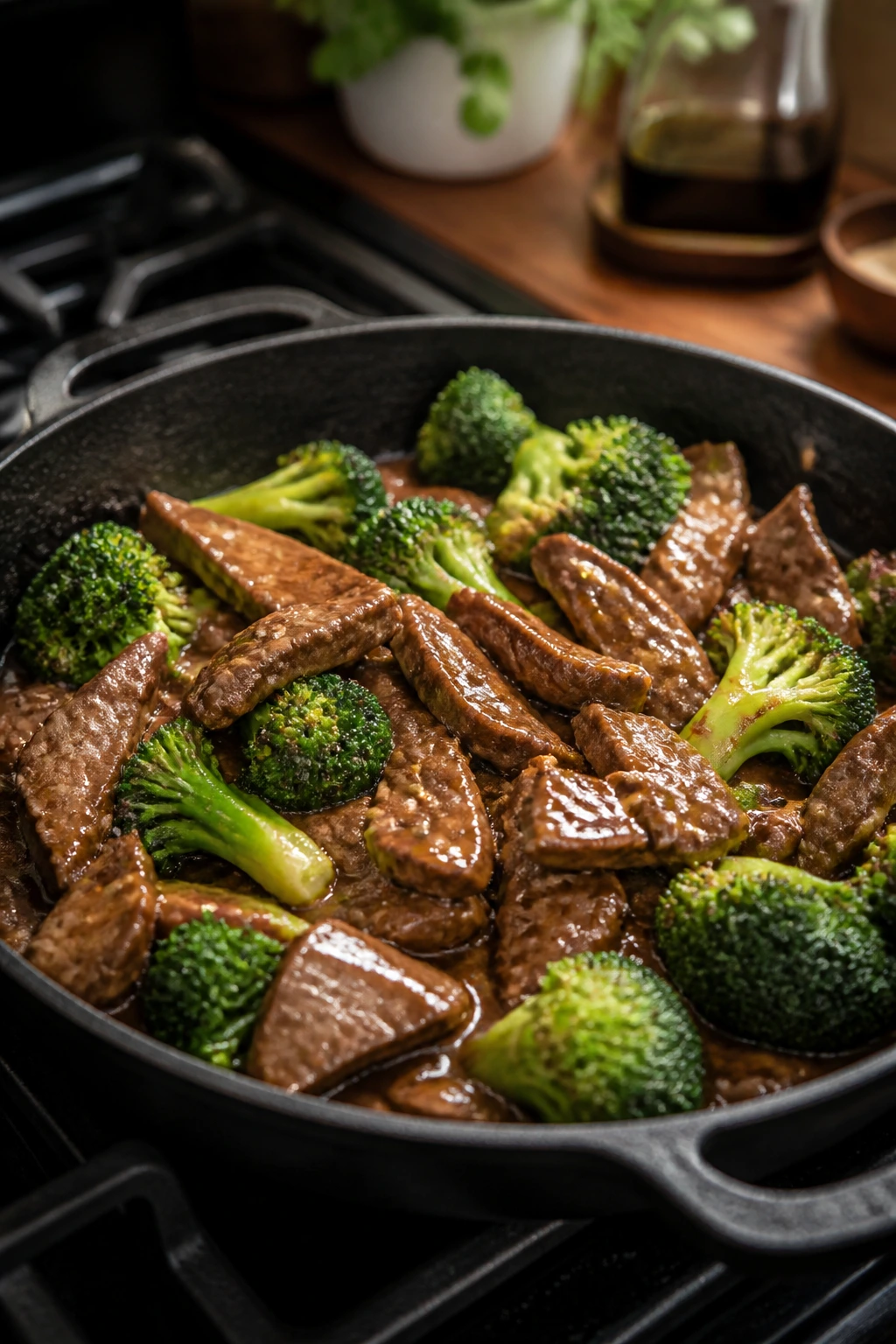
Takeout flavor usually comes with more sugar than people expect. This skillet keeps the glossy sauce and the savory bite, but the beef stays in control and the broccoli still has some crunch. It tastes familiar in the best way, which is the whole point.
Why It Works:
Thinly sliced beef cooks fast and stays tender if you cut it against the grain. Broccoli likes a quick steam after a hot sauté, so it softens without turning mushy. A little honey in the sauce balances the soy and vinegar, which gives you that classic takeout feel without drowning the dish.
Key Ingredients:
- 1 1/4 pounds flank steak or sirloin, sliced very thin against the grain
- 4 cups broccoli florets
- 2 tablespoons avocado oil
- 4 cloves garlic, minced
- 1 tablespoon grated ginger
- 1/3 cup low-sodium soy sauce
- 1/4 cup beef broth or water
- 1 tablespoon honey
- 1 tablespoon rice vinegar
- 1 teaspoon cornstarch
- 1 teaspoon sesame oil
- 3 cups cooked brown rice
Quick Steps:
- Whisk the soy sauce, broth, honey, vinegar, cornstarch, and sesame oil together.
- Heat 1 tablespoon avocado oil in a large skillet over high heat and sear the beef for 1 to 2 minutes, just until browned. Remove it.
- Add the remaining oil and broccoli, then splash in 2 tablespoons water and cover for 2 minutes.
- Stir in the garlic and ginger and cook for 30 seconds.
- Return the beef, pour in the sauce, and toss for 1 to 2 minutes until glossy.
- Serve over brown rice.
Equipment for This Recipe:
- Large skillet or wok
- Sharp knife
- Small bowl for sauce
- Tongs or spatula
How to Serve This Dish:
Pile the beef and broccoli over rice and finish with sesame seeds if you have them. A few sliced scallions or a side of sliced cucumbers keeps the plate from feeling too heavy.
Pro Tips for This Recipe:
- Put the beef in the freezer for 15 minutes before slicing; it’s easier to cut thin.
- High heat is not optional here.
- If the sauce thickens too much, add a tablespoon of water.
- Broccoli should still be bright green when you plate it.
Variations on This Dish:
- Chicken Swap: Use thin-sliced chicken thighs instead of beef.
- Mushroom Boost: Add sliced mushrooms with the broccoli for more volume.
- Cauliflower Rice Bowl: Serve it over cauliflower rice for a lower-carb version.
Common Mistakes to Avoid with This Dish:
- Slicing beef with the grain: It turns chewy.
- Letting the pan cool down: You’ll steam the meat instead of searing it.
- Overcooking the broccoli: Crisp-tender beats soft every single time.
10. Chicken Shawarma Pita Bowls
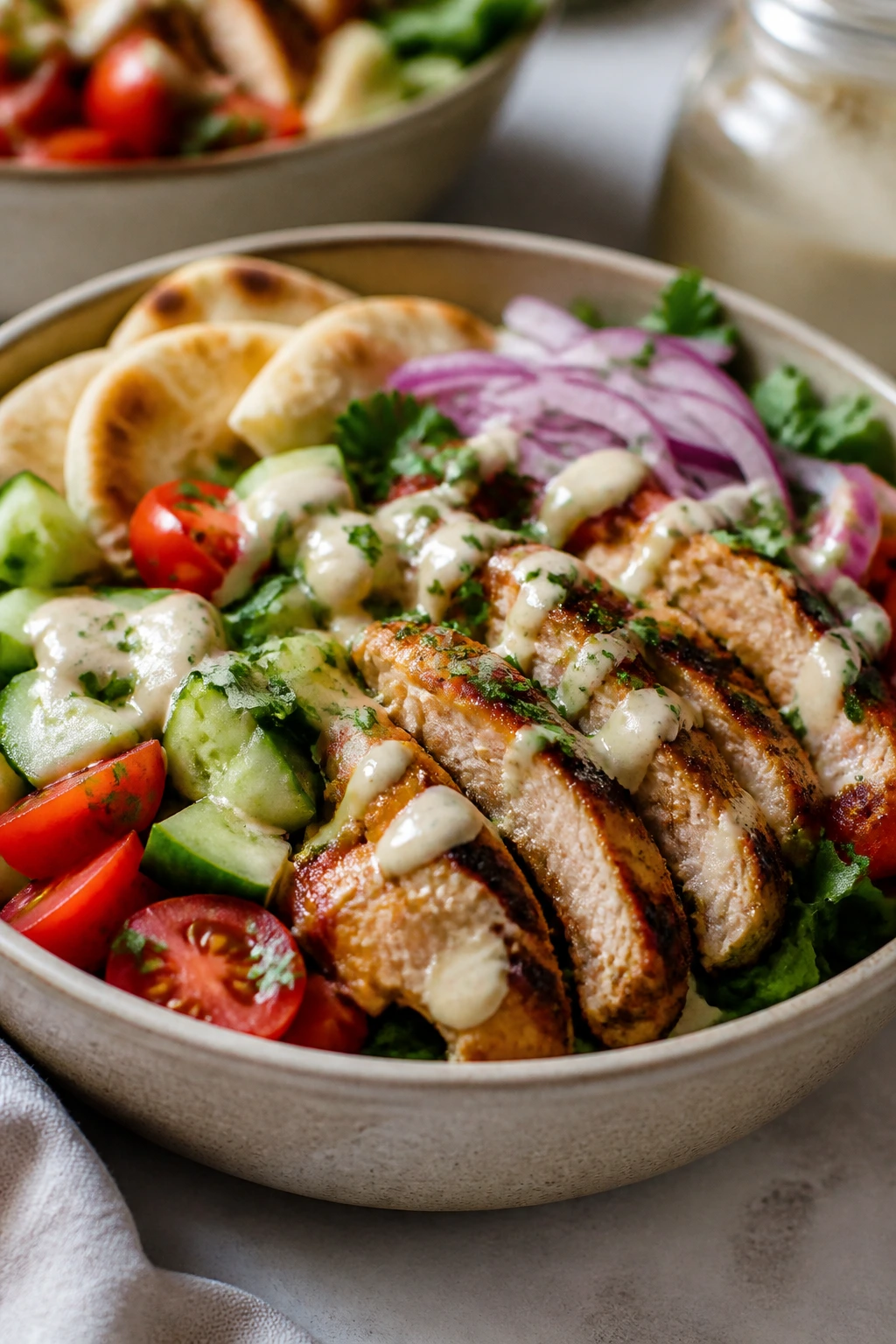
If you like dinner that smells like garlic, cumin, and toasted spice before it hits the table, this is your move. The chicken gets coated in yogurt and spices, then roasted until the edges darken a little. That’s where the good stuff happens.
Why It Works:
Yogurt helps the marinade cling and keeps the chicken tender. Shawarma spice blends do not need to be complicated; cumin, coriander, paprika, and turmeric get you most of the way there. The cool vegetables and tahini pull the heat back just enough so every bite feels balanced.
Key Ingredients:
- 1 1/2 pounds boneless, skinless chicken thighs
- 1/2 cup plain Greek yogurt
- 2 tablespoons olive oil
- 2 tablespoons lemon juice
- 3 cloves garlic, minced
- 2 teaspoons ground cumin
- 2 teaspoons ground coriander
- 1 teaspoon paprika
- 1/2 teaspoon turmeric
- 1 teaspoon kosher salt
- 1/2 teaspoon black pepper
- 4 pita breads
- 1 cucumber, diced
- 2 tomatoes, diced
- 1/2 red onion, thinly sliced
- 1/4 cup tahini
- Water and lemon juice to thin tahini
Quick Steps:
- Mix the yogurt, olive oil, lemon juice, garlic, cumin, coriander, paprika, turmeric, salt, and pepper.
- Coat the chicken and let it sit while the oven preheats, or up to 24 hours if you plan ahead.
- Roast the chicken at 425°F (220°C) for 20 to 25 minutes, until browned and cooked through.
- Rest the chicken for 5 minutes, then slice it.
- Whisk tahini with a little water and lemon juice until it’s drizzle-thin.
- Fill the pitas with chicken, cucumber, tomatoes, onion, and tahini.
Equipment for This Recipe:
- Baking sheet
- Mixing bowl
- Knife and cutting board
- Small bowl for tahini sauce
How to Serve This Dish:
Serve the chicken tucked into pitas or over rice bowls if your family likes more fork food than handheld food. A spoon of hummus on the side makes the plate feel complete without much extra work.
Pro Tips for This Recipe:
- Thighs stay juicier than breasts here.
- Slice the chicken after resting or the juices run out.
- Thin tahini with water a teaspoon at a time; it tightens fast.
- If the vegetables are watery, salt them lightly and let them sit 5 minutes before serving.
Variations on This Dish:
- Rice Bowl Version: Serve everything over brown rice with chopped parsley.
- Chickpea Shawarma: Roast chickpeas with the same spice mix for a vegetarian version.
- Spicy Version: Add cayenne or a spoonful of harissa to the marinade.
Common Mistakes to Avoid with This Dish:
- Using too much yogurt: The marinade turns thick and pasty instead of clinging.
- Skipping the rest time: The chicken loses moisture when sliced too soon.
- Overloading the pita: It tears. Two or three good fillings beat a stuffed pocket that falls apart.
11. Veggie-Packed Fried Rice with Eggs and Edamame
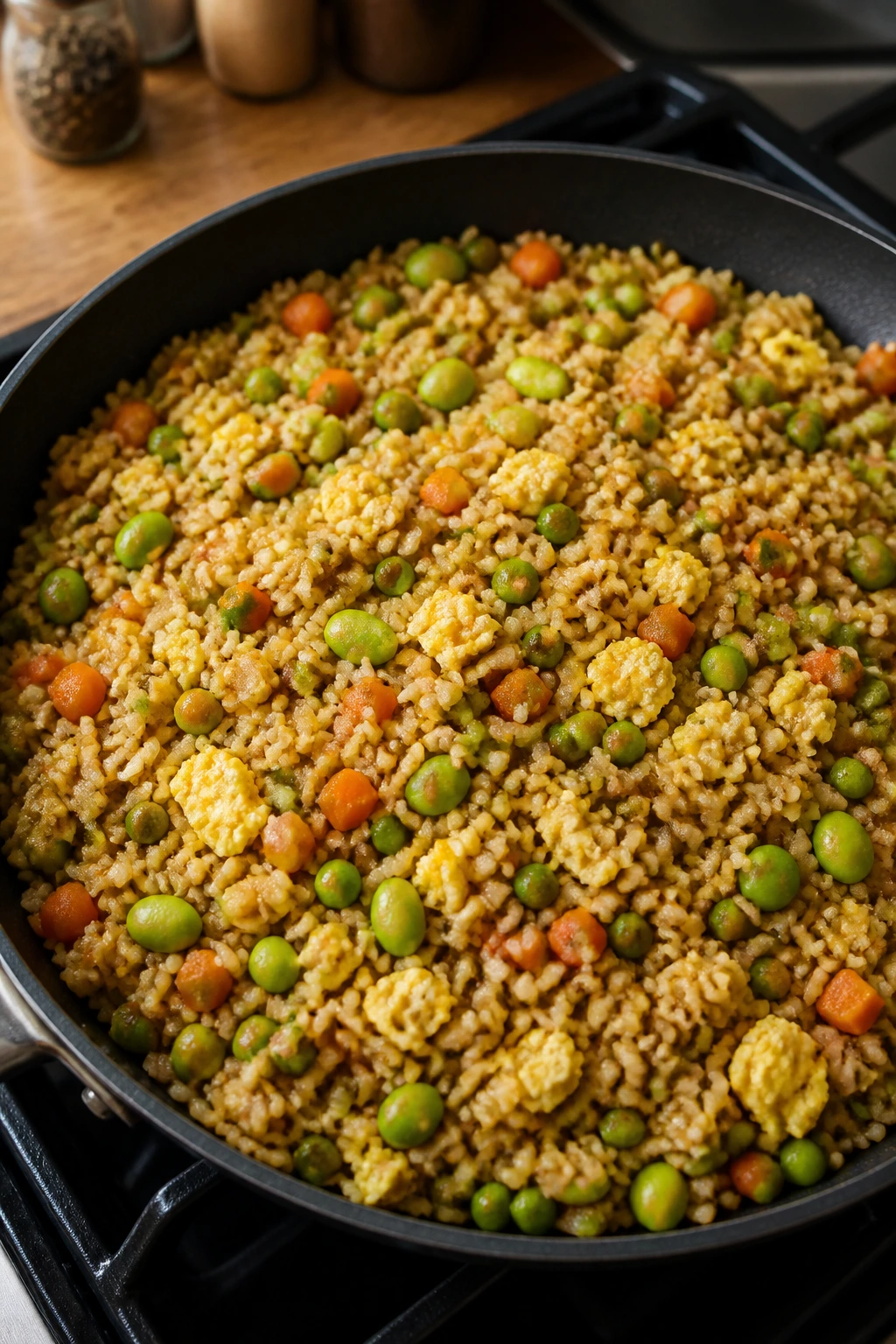
Fried rice lives or dies on the rice itself. Cold, day-old rice gives you separate grains and a little chew. Fresh hot rice turns gluey, which is how a fast dinner starts acting like a bad casserole.
Why It Works:
Eggs add protein and richness without making the dish feel heavy. Frozen peas, carrots, and edamame keep the prep easy and bring color and bite. Soy sauce and sesame oil do what they always do in a good fried rice: make a few humble ingredients taste like a finished meal.
Key Ingredients:
- 4 cups cooked brown rice, chilled
- 2 tablespoons avocado oil
- 2 eggs, lightly beaten
- 1 cup frozen peas and carrots
- 1 cup shelled edamame
- 3 scallions, sliced
- 2 cloves garlic, minced
- 1 tablespoon grated ginger
- 3 tablespoons low-sodium soy sauce
- 1 teaspoon sesame oil
- Optional: 1 cup chopped cabbage
Quick Steps:
- Heat 1 tablespoon oil in a large skillet or wok over medium-high heat and scramble the eggs until just set. Remove them.
- Add the remaining oil, peas and carrots, edamame, scallions, cabbage, garlic, and ginger. Cook for 3 to 4 minutes.
- Add the rice and break up any clumps with a spatula.
- Pour in the soy sauce and sesame oil, then stir-fry for 2 to 3 minutes until everything is hot and lightly toasted.
- Fold the eggs back in and taste for salt.
- Serve right away.
Equipment for This Recipe:
- Large skillet or wok
- Spatula
- Bowl for the eggs
- Measuring spoons
How to Serve This Dish:
Fried rice wants a small bowl, not a giant plate. A few cucumber slices or a simple miso soup on the side keeps the meal feeling complete without adding much work.
Pro Tips for This Recipe:
- Break up the rice before it hits the pan.
- Let the vegetables touch the hot skillet instead of dumping everything in at once.
- Keep soy sauce modest; you can add more, but you cannot pull it back.
- Frozen edamame saves time and gives the dish more substance.
Variations on This Dish:
- Chicken Fried Rice: Add diced cooked chicken with the rice.
- Cauliflower Fried Rice: Swap half or all of the rice for cauliflower rice.
- Kimchi Fried Rice: Stir in chopped kimchi at the end for a sharper finish.
Common Mistakes to Avoid with This Dish:
- Using warm rice: It clumps and turns soft.
- Overloading the pan: The rice steams instead of frying.
- Adding too much sauce: The grains lose their texture and the dish goes wet.
12. Lentil Bolognese with Whole-Wheat Spaghetti
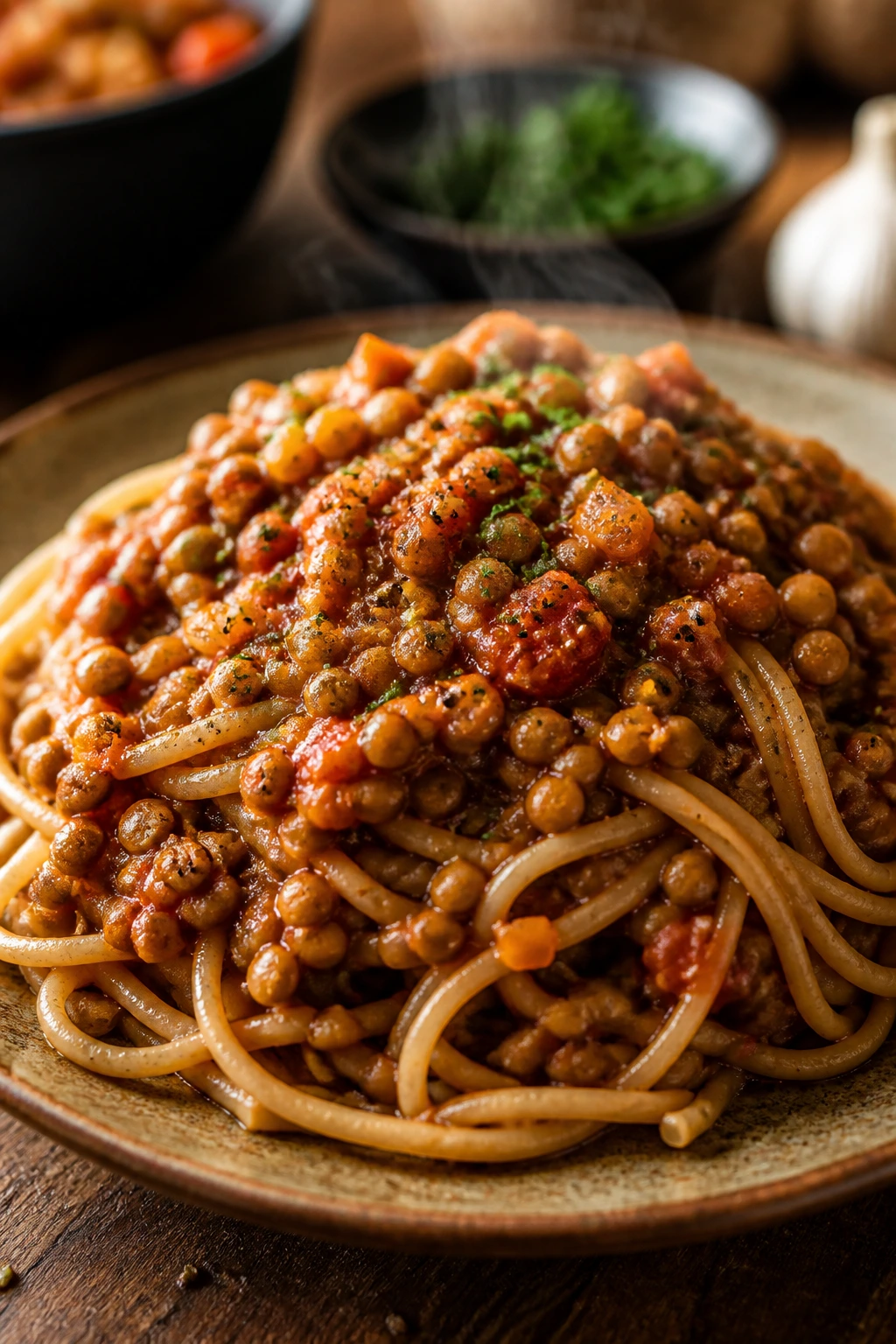
This is the meatless dinner for people who do not want a sad meatless dinner. Lentils give the sauce body, the soffritto brings sweetness, and the tomato paste deepens everything until it tastes slow-cooked even though it is not.
Why It Works:
Brown or green lentils hold their shape, which keeps the sauce hearty. Onion, carrot, and celery build the base the way a proper tomato sauce should. Whole-wheat spaghetti gives the dish enough chew to stand up to the sauce instead of disappearing under it.
Key Ingredients:
- 1 tablespoon olive oil
- 1 medium onion, diced
- 1 carrot, diced
- 2 celery stalks, diced
- 3 cloves garlic, minced
- 2 tablespoons tomato paste
- 1 cup brown or green lentils, rinsed
- 1 can (28 ounces) crushed tomatoes
- 2 cups low-sodium vegetable broth
- 1 teaspoon Italian seasoning
- 1/2 teaspoon kosher salt
- Black pepper
- 12 ounces whole-wheat spaghetti
- Grated Parmesan, for serving
Quick Steps:
- Heat olive oil in a large skillet or Dutch oven over medium heat.
- Cook the onion, carrot, and celery for 6 to 8 minutes, until softened.
- Stir in the garlic and tomato paste and cook for 1 minute.
- Add the lentils, crushed tomatoes, broth, Italian seasoning, salt, and pepper, then simmer for 30 to 35 minutes, until the lentils are tender and the sauce has thickened.
- Cook the spaghetti in salted water and drain.
- Toss the pasta with the lentil sauce and serve with Parmesan.
Equipment for This Recipe:
- Large skillet or Dutch oven
- Pot for pasta
- Wooden spoon
- Colander
How to Serve This Dish:
Use wide bowls and finish with a small shower of Parmesan and black pepper. A green salad with sharp vinaigrette is the best side because it cuts through the tomato richness.
Pro Tips for This Recipe:
- Keep the simmer gentle so the lentils stay intact.
- If the sauce thickens too much, add a splash of pasta water.
- Salt matters here; lentils can taste flat if you underseason.
- Chop the vegetables small so they melt into the sauce.
Variations on This Dish:
- Mushroom Bolognese: Add 8 ounces chopped mushrooms with the vegetables.
- Vegan Version: Skip the Parmesan or use nutritional yeast.
- Gluten-Free Plate: Serve over gluten-free pasta or polenta.
Common Mistakes to Avoid with This Dish:
- Undercooking the lentils: They stay chalky in the center.
- Leaving the sauce watery: Simmer longer if needed; lentils can handle it.
- Forgetting acidity: A tiny splash of red wine vinegar at the end can brighten the whole pot.
13. Pork Tenderloin with Apples and Brussels Sprouts
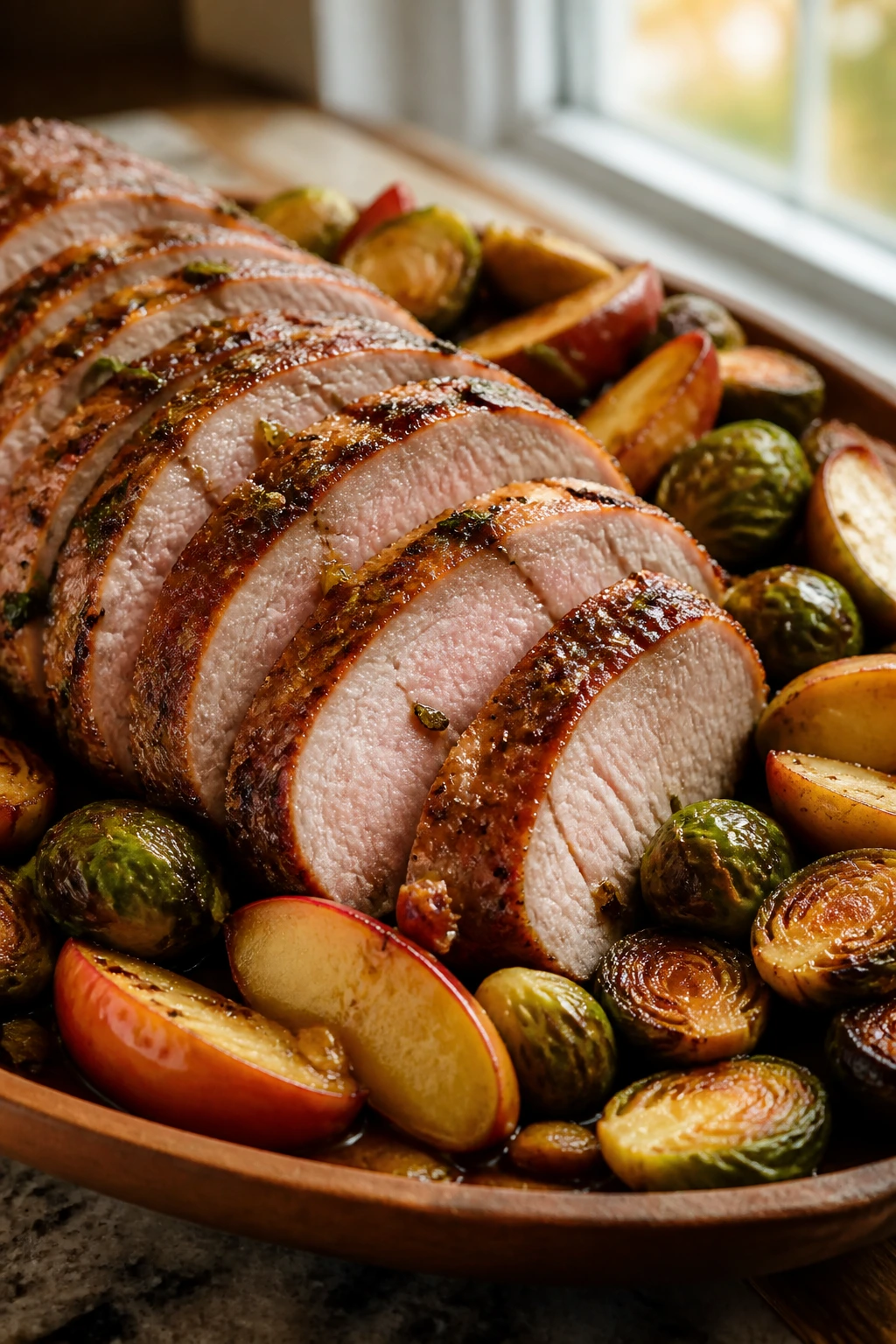
Pork tenderloin is one of the least fussy cuts in the meat case, which is a nice change. It roasts fast, stays lean, and takes well to sweet apples and caramelized Brussels sprouts. The whole pan tastes like fall without leaning on sugar or sticky glazes.
Why It Works:
Pork tenderloin cooks quickly, so it fits a weeknight better than most roasts. Brussels sprouts need high heat to get those dark, nutty edges, and apples bring a gentle sweetness that plays well against the mustard and thyme. A little vinegar at the end keeps the plate from feeling heavy.
Key Ingredients:
- 2 pork tenderloins, about 1 1/2 pounds total
- 1 1/2 pounds Brussels sprouts, halved
- 2 apples, cored and sliced into wedges
- 2 tablespoons olive oil
- 1 tablespoon Dijon mustard
- 2 cloves garlic, minced
- 1 teaspoon dried thyme
- 1 teaspoon kosher salt
- 1/2 teaspoon black pepper
- 1 tablespoon apple cider vinegar
Quick Steps:
- Preheat the oven to 425°F (220°C).
- Toss the Brussels sprouts with 1 tablespoon olive oil, half the salt, and half the pepper, then roast for 15 minutes.
- Mix the remaining olive oil, Dijon, garlic, thyme, salt, and pepper, and rub it over the pork.
- Add the pork and apple wedges to the pan and roast for 18 to 20 minutes, until the pork reaches 145°F.
- Rest the pork for 5 to 10 minutes, then slice it.
- Drizzle with apple cider vinegar before serving.
Equipment for This Recipe:
- Large sheet pan
- Instant-read thermometer
- Knife and cutting board
- Small bowl
How to Serve This Dish:
Slice the pork and fan it across the roasted sprouts and apples. It’s good with mashed potatoes or farro, but honestly, the pan has enough on it that you may not need much else.
Pro Tips for This Recipe:
- Use a thermometer. Pork tenderloin goes from juicy to dry fast.
- Leave the apples in bigger wedges so they hold their shape.
- If the sprouts are huge, cut them again so they roast evenly.
- Resting the meat matters more here than people think.
Variations on This Dish:
- Pear Version: Swap apples for firm pears if you want a softer sweetness.
- Maple Mustard Glaze: Stir 1 teaspoon maple syrup into the Dijon mixture.
- Sweet Potato Add-In: Roast cubed sweet potatoes alongside the sprouts for a fuller pan.
Common Mistakes to Avoid with This Dish:
- Overcooking the pork: Hit 145°F and stop.
- Using tiny apple slices: They turn to mush.
- Crowding the pan: The sprouts need space to brown.
14. Turkey Zucchini Skillet Lasagna
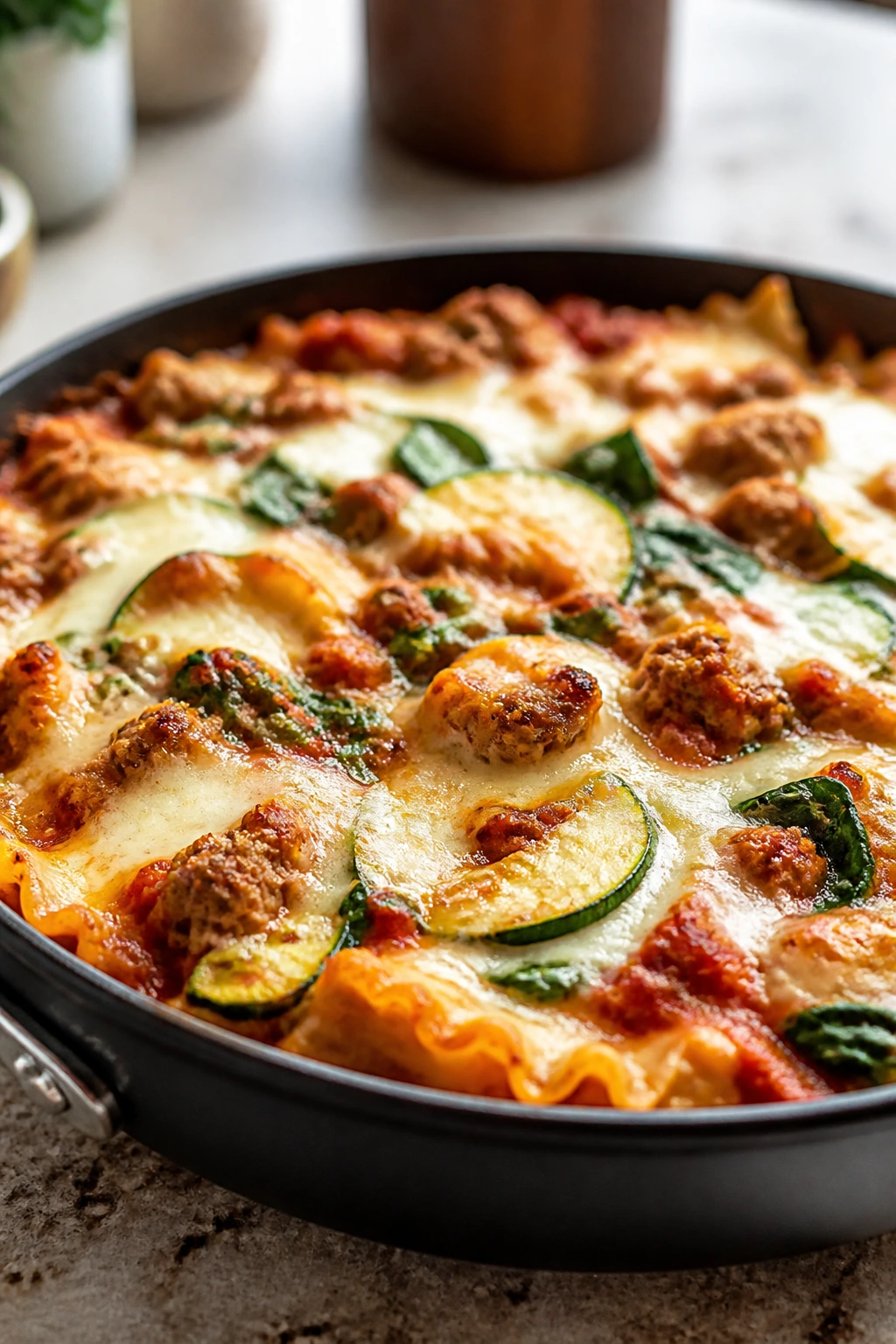
This is lasagna flavor without the layering ceremony. The noodles cook right in the sauce, the turkey keeps it hearty, and the zucchini brings more volume without making the pan feel like a vegetable lecture.
Why It Works:
Broken lasagna noodles absorb the sauce as they cook, which means every bite tastes seasoned. Zucchini disappears into the skillet while still adding moisture and extra vegetables. Ricotta and mozzarella give you the creamy, stretchy finish people expect from lasagna, just with less waiting and fewer dishes.
Key Ingredients:
- 1 tablespoon olive oil
- 1 pound lean ground turkey
- 1 medium onion, diced
- 3 cloves garlic, minced
- 1 medium zucchini, diced
- 1 teaspoon Italian seasoning
- 1 jar (24 ounces) marinara sauce
- 2 cups water or low-sodium chicken broth
- 8 whole-wheat lasagna noodles, broken into pieces
- 1 cup part-skim ricotta
- 1 cup shredded mozzarella
- 1/4 cup grated Parmesan
- 1 cup baby spinach
- Fresh basil, for serving
Quick Steps:
- Heat the olive oil in a large deep skillet over medium heat.
- Cook the turkey and onion for 6 to 7 minutes, breaking up the meat as it browns.
- Add the garlic, zucchini, and Italian seasoning and cook for 2 minutes.
- Stir in the marinara, water, and broken noodles, then simmer covered for 12 to 15 minutes, stirring once or twice, until the noodles are tender.
- Fold in the spinach, dollop the ricotta over the top, and scatter the mozzarella and Parmesan across the skillet.
- Cover for 2 minutes or broil briefly until the cheese melts, then finish with basil.
Equipment for This Recipe:
- Large deep skillet with a lid
- Wooden spoon
- Knife and cutting board
- Small spoon for ricotta
How to Serve This Dish:
Scoop it straight from the skillet into shallow bowls so the cheese and sauce stay together. A crisp salad with a sharp dressing is the right side because this dish already has plenty of comfort built in.
Pro Tips for This Recipe:
- Stir the noodles once or twice while they cook so they do not stick.
- If the skillet dries out before the noodles are tender, add a splash more broth.
- Broil only long enough to melt the cheese; do not walk away.
- Chop the zucchini small so it melts into the sauce.
Variations on This Dish:
- Spinach Lasagna Skillet: Add another 2 cups spinach for a greener pan.
- Dairy-Free Version: Use dairy-free ricotta and mozzarella or skip the cheese and finish with basil oil.
- Mushroom Add-In: Add 8 ounces sliced mushrooms with the onion for more depth.
Common Mistakes to Avoid with This Dish:
- Using too little liquid: The noodles stay hard in the center.
- Forgetting to cover the pan: They dry out before they soften.
- Overloading with ricotta: A few dollops go farther than a blanket of cheese.
15. Black Bean and Sweet Potato Enchiladas
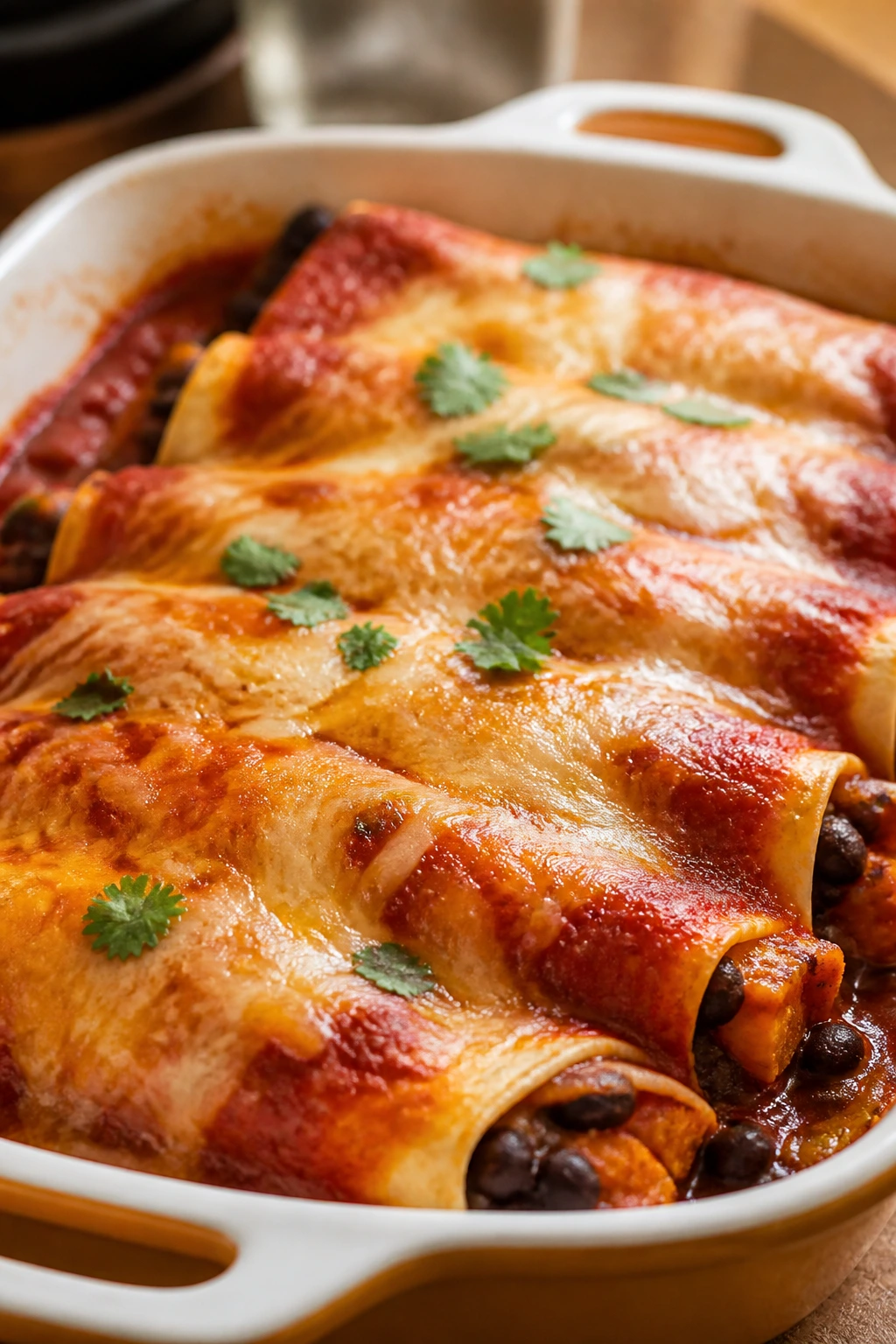
The filling in these enchiladas has enough sweetness to keep things friendly and enough spice to keep them from tasting soft. The sauce and cheese give the dish its familiar comfort-food shape, while the beans and sweet potatoes make it more substantial than the usual tortilla roll-up.
Why It Works:
Roasted sweet potatoes bring caramelized edges and a creamy middle, which gives the filling body without needing meat. Black beans add protein and a little texture, and the enchilada sauce keeps everything juicy in the oven. Warm tortillas are the difference between neat rolls and a torn-up casserole situation.
Key Ingredients:
- 2 medium sweet potatoes, peeled and cubed
- 1 tablespoon olive oil
- 1 small onion, diced
- 1 can black beans, rinsed and drained
- 1 teaspoon ground cumin
- 1 teaspoon chili powder
- 8 corn tortillas
- 2 cups red enchilada sauce
- 1 1/2 cups shredded cheddar or Monterey Jack
- 1/2 cup chopped cilantro
- 1 lime, cut into wedges
- Optional: 1 cup baby spinach
Quick Steps:
- Preheat the oven to 425°F (220°C) and roast the sweet potatoes with olive oil for 25 minutes, until tender.
- Mix the roasted sweet potatoes with the onion, black beans, cumin, chili powder, and spinach if using.
- Warm the tortillas so they bend without cracking.
- Spoon the filling into each tortilla, roll it up, and place seam-side down in a baking dish.
- Pour the enchilada sauce over the top and scatter the cheese across the pan.
- Bake at 400°F (205°C) for 20 minutes, then finish with cilantro and lime.
Equipment for This Recipe:
- Sheet pan
- 9-by-13-inch baking dish
- Mixing bowl
- Foil or a clean towel for warming tortillas
How to Serve This Dish:
Serve two enchiladas per adult and one to two per kid, depending on what else is on the table. A spoon of salsa or a dollop of yogurt on top is enough; the filling already does a lot.
Pro Tips for This Recipe:
- Warm the tortillas under a damp towel so they don’t crack.
- Roast the sweet potatoes until the edges brown a little.
- Let the baked enchiladas sit for 5 minutes before serving; they set up neatly.
- Use a sauce you like on its own, because bland enchilada sauce makes bland enchiladas.
Variations on This Dish:
- Chicken Enchiladas: Add shredded cooked chicken to the filling and reduce the beans slightly.
- Verde Version: Swap the red sauce for salsa verde and add chopped green chiles.
- Vegan Enchiladas: Use plant-based cheese or skip the cheese and top with avocado.
Common Mistakes to Avoid with This Dish:
- Overfilling the tortillas: They burst in the pan.
- Using cold corn tortillas: They split when you roll them.
- Skipping the rest time: The filling spills everywhere when you cut too soon.
Why Easy Healthy Dinners for Family Work Better When Flavor Leads
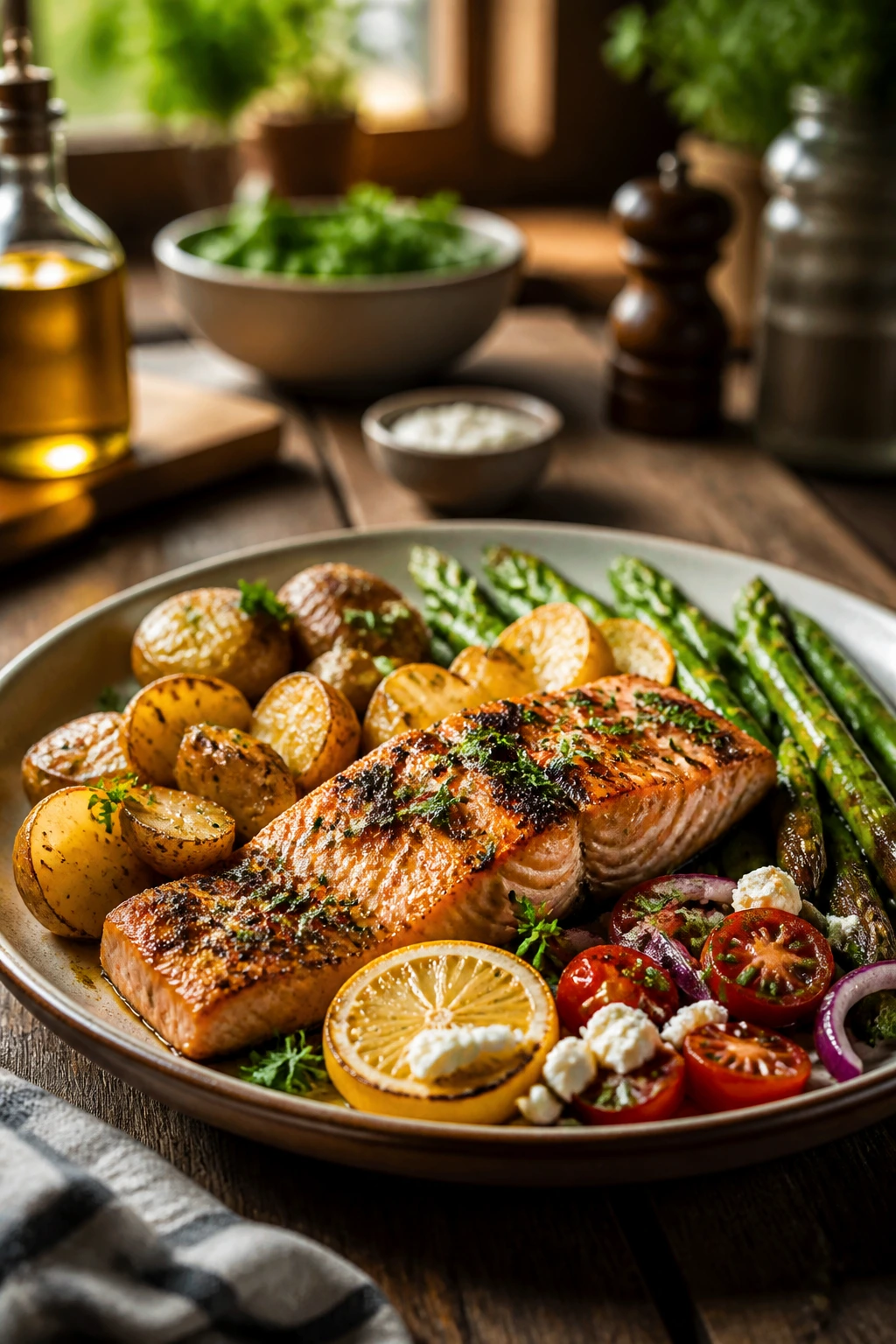
A dinner earns its spot by being eaten twice: once at the table, and again the next day from the fridge if there’s any left. That’s why the best family meals are not built around restraint alone. They need a flavor anchor—garlic, tomato, lemon, soy, cumin, mustard, herbs, something that smells like dinner from the moment it hits heat.
I like meals that give you one browned thing, one fresh thing, and one soft thing. A roasted chicken tray with peppers. A bowl with salmon, rice, and cucumber. A skillet where lentils, tomatoes, and pasta all show up with a little attitude. That mix keeps healthy dinners from feeling flat or preachy, and it keeps the family from treating vegetables like a side quest.
There’s also a practical side to this. If dinner is fast enough to make on a tired night and tasty enough that people ask for seconds, you’re more likely to cook again tomorrow. That’s the whole game.
Essential Equipment for These Recipes
-
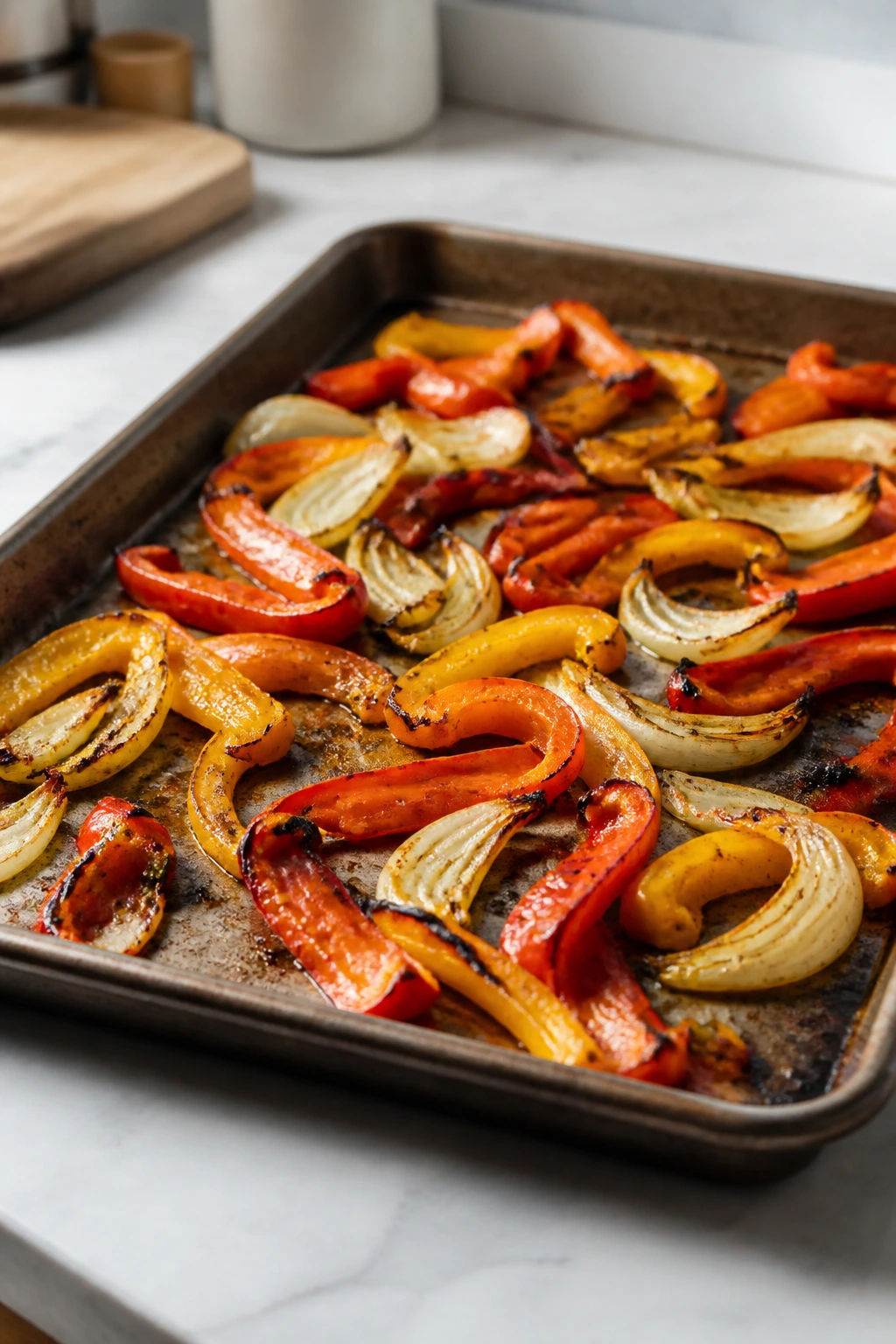
Large rimmed sheet pans: You’ll use these for fajitas, cod, pork tenderloin, sweet potatoes, and enchiladas; the rim keeps juices where they belong.
-
12-inch skillet or sauté pan: Good for stir-fries, fried rice, shrimp, beef and broccoli, and skillet lasagna. A wide pan means less steaming.
-
Dutch oven or heavy soup pot: Chili and lentil bolognese need steady heat and enough room to simmer without splashing.
-
Sharp chef’s knife: Thin slicing matters for chicken, beef, onions, peppers, and Brussels sprouts. A dull knife makes prep slower and messier.
-
Cutting board with a damp towel underneath: It sounds small, but it keeps the board from skating around when you’re slicing fast.
-
Instant-read thermometer: The cleanest way to know chicken, pork, and salmon are done without guessing.
-
Mixing bowls in two sizes: One for marinade or sauces, one for tossing vegetables or meatballs.
-
Tongs and a sturdy spatula: Better control in a hot pan, especially for stir-fries and fajitas.
-
Colander or mesh strainer: Pasta, rice, and lentils all become easier when draining is quick and clean.
-
Storage containers with tight lids: You’ll need them for leftovers, and shallow containers reheat better than deep ones.
Smart Shopping for Easy Healthy Dinners for Family
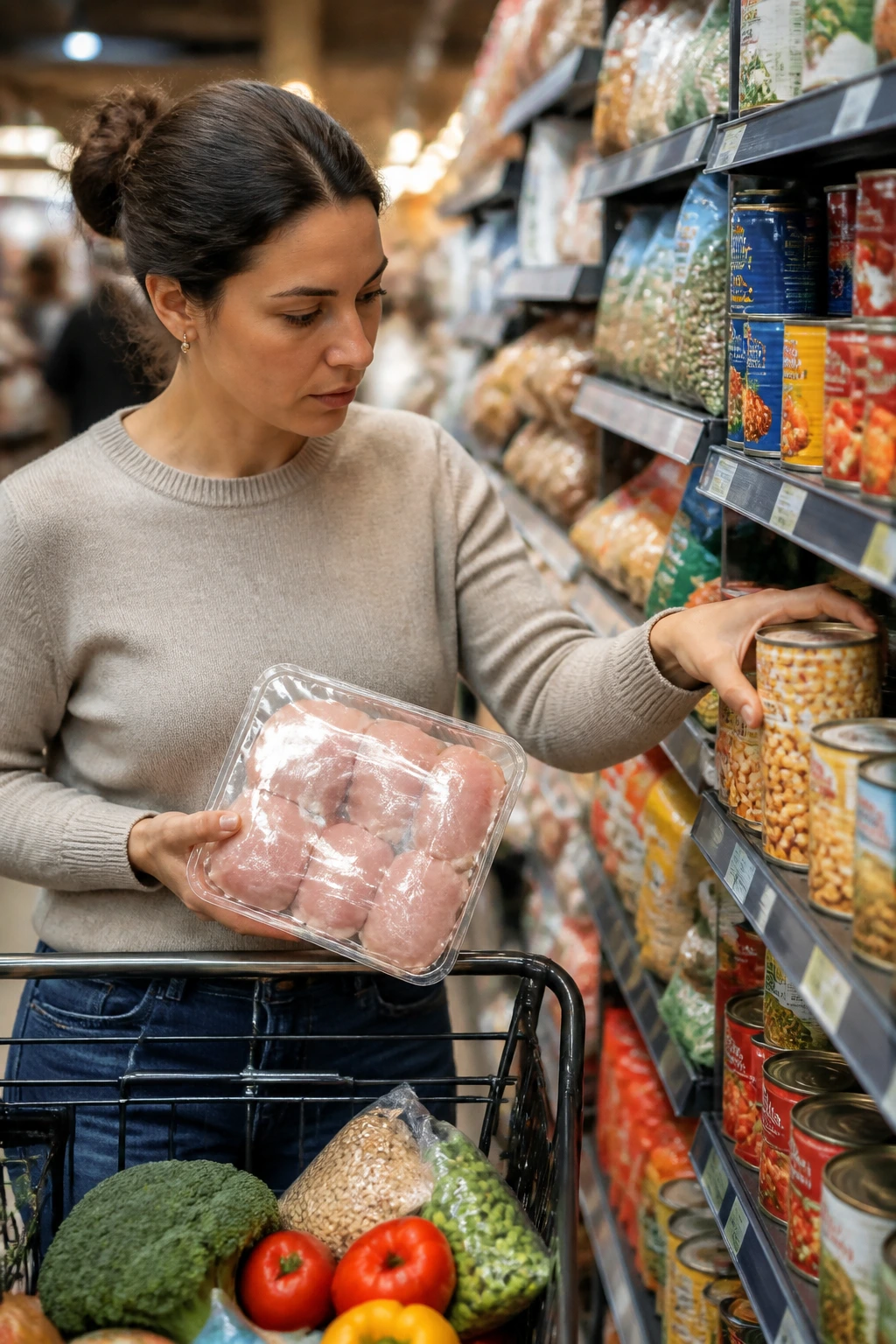
The best shopping move is not buying more ingredients. It’s buying the right versions of a few familiar ones. For chicken, thighs stay juicier than breasts if you tend to overcook dinner by two minutes while answering a question about homework. For fish, choose fillets that look even in thickness so they finish together. For beef, flank steak or sirloin sliced thin against the grain will save you from chewing through dinner like it’s a task.
Canned goods matter more than people think. Low-sodium broth gives you room to season with your own hand. Fire-roasted tomatoes carry more flavor than plain diced tomatoes in chili, enchiladas, or skillet sauces. Beans should be rinsed unless you need the starchy liquid for a specific reason, because the canning liquid can make the final dish taste muddy.
Frozen vegetables are not a compromise here. Frozen corn, peas, carrots, and edamame are often better than tired produce that has been sitting in a crisper drawer for a week. They save chopping time, they’re already portioned, and they hold up well in bowls, fried rice, and stir-fries. Fresh vegetables still matter for texture and crunch, but frozen has a place.
For grains and starches, choose the one your family will actually eat. Brown rice brings chew and keeps well, but white rice is fine if that’s what gets eaten. Whole-wheat pasta adds a little nuttiness, though regular pasta is better than a box of corkscrew guilt. Tortillas, pita, couscous, and potatoes all do a different job, and the right one is the one that matches the sauce you’ve built.
Finally, don’t skip the bright stuff. Lemons, limes, yogurt, vinegar, herbs, and scallions do the work that expensive ingredients often pretend to do. A cheap dinner with the right finish tastes better than a fancy dinner that never gets salted properly.
How to Serve These Family Dinners
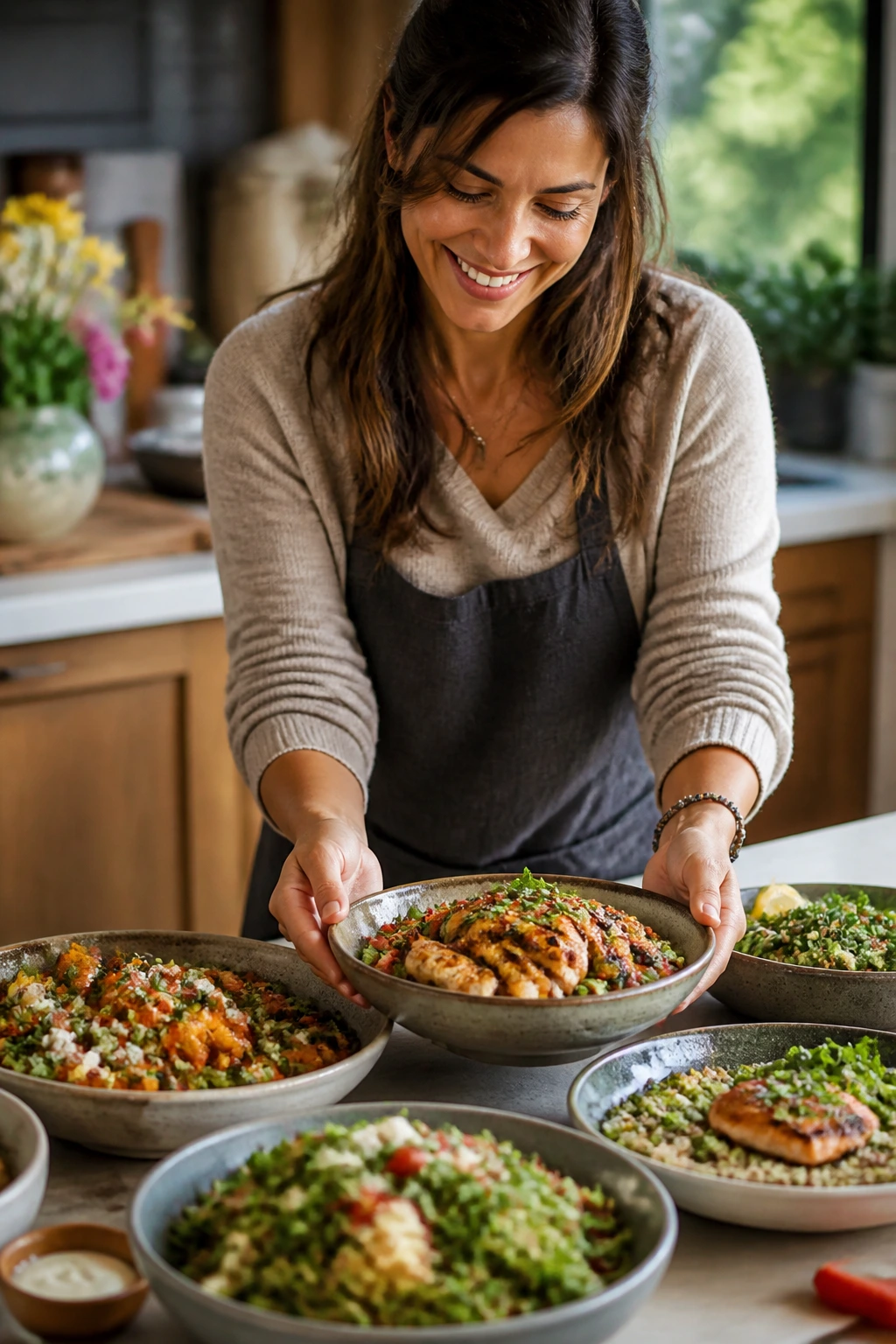
Presentation:
Serve bowls in shallow, wide dishes when you want everything to stay visible and warm. Pile fajitas and enchiladas with a little height, spoon stir-fries and chili into wider bowls, and finish roasted dishes with herbs or a lemon wedge so the plate looks fresh instead of heavy.
Accompaniments:
A simple green salad, cabbage slaw, cucumber salad, steamed green beans, or fruit on the side keeps the plate balanced without stealing your time. Warm tortillas, pita, crusty bread, or rice are the easiest starch partners across the whole collection.
Portions:
Most of these recipes feed 4 to 6 people. For adults with bigger appetites, plan on 1 1/2 portions of bowls, pasta, or chili, and 1 proper serving of fish or chicken with extra vegetables on the side. For kids, it often helps to plate components separately instead of mixing them into one pile.
Beverage Pairing:
Sparkling water with lime fits almost everything here. For a more specific match, try unsweetened iced tea with fajitas or chili, or a crisp white wine with the salmon, cod, and shrimp dishes if you’re serving adults.
Additional Tips and Flavor Boosters
Flavor Enhancement: A squeeze of citrus at the end does more than make things “fresh.” It wakes up salt, softens fat, and gives roasted or braised dinners a cleaner finish. Keep lemons and limes around for the last 30 seconds of cooking, not just the garnish bowl.
Customization: Build in one topping bar whenever you can—yogurt, hot sauce, chopped herbs, avocado, sesame seeds, or toasted nuts. People who like more heat can add it, and people who do not can keep their plate calm.
Serving Suggestions: Use contrast on the plate. Creamy food wants crunch. Roasted food wants something sharp. Chili wants a cool topping. Fried rice wants something green and crisp. That little difference in texture keeps the meal from turning one-note.
Make-It-Yours: For dairy-free dinners, tahini, avocado, or olive oil-based sauces carry the load better than fake substitutions. For lower-carb plates, swap some rice or pasta for cauliflower rice, zucchini ribbons, or extra greens. For budget-friendly nights, beans, eggs, cabbage, and frozen vegetables can stretch almost any meal here without making it feel thin.
Make-Ahead, Storage, and Reheating Guidance
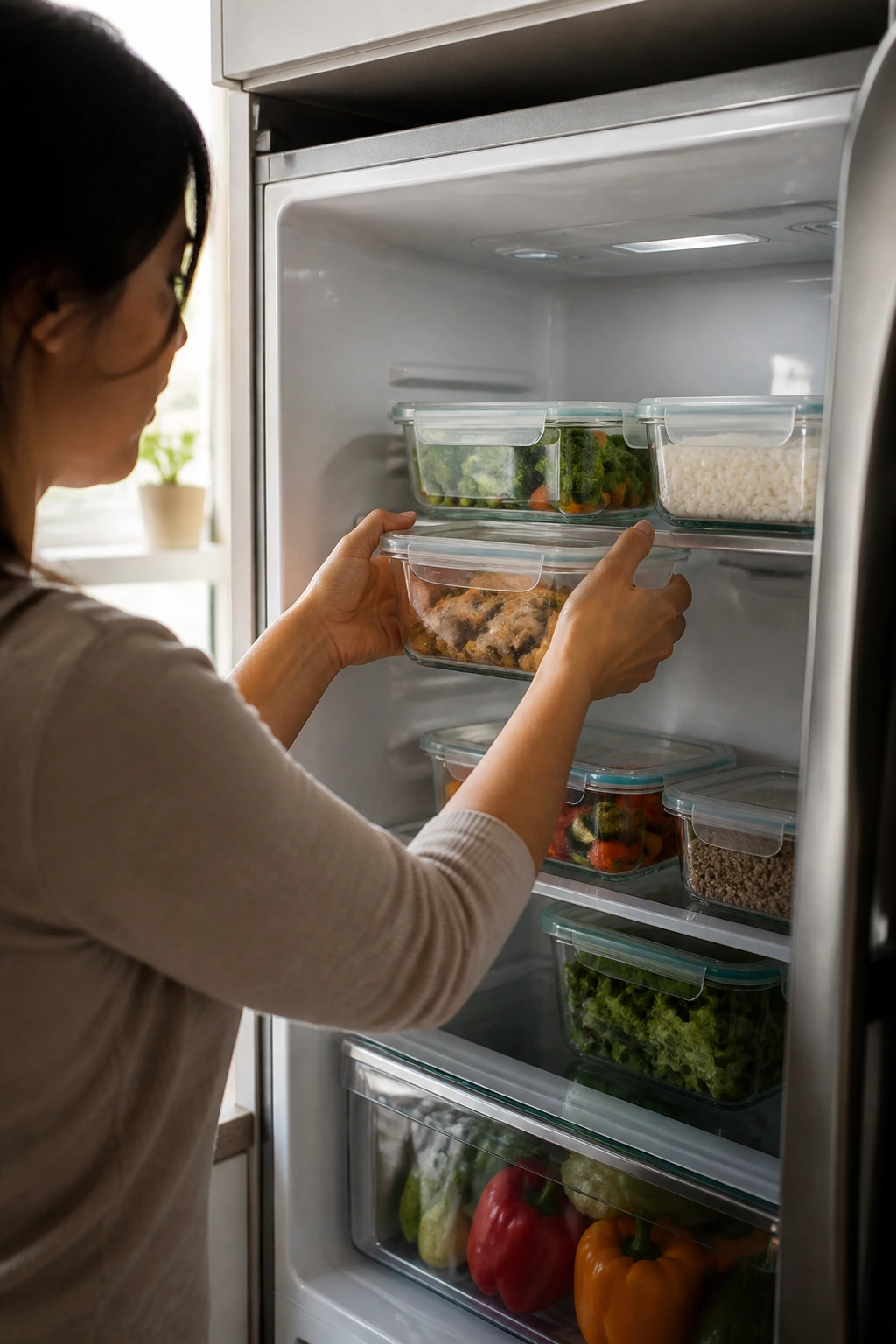
Most of these dinners keep well for 3 to 4 days in the fridge in airtight containers. Chili, lentil bolognese, and turkey meatballs are especially good after a night in the refrigerator, because the flavors settle and the sauce thickens. Fish dishes are the exception; salmon, cod, and shrimp are best within 1 to 2 days so they stay pleasant instead of fishy.
For the freezer, think in terms of up to 2 to 3 months for chili, meatballs, lentil sauce, and skillet lasagna. Enchiladas also freeze well if you wrap the pan tightly before baking or freeze individual portions after cooking. The rice bowls, fried rice, and most fish dishes are not ideal freezer candidates once assembled, though the cooked rice and protein can be frozen separately.
Reheat meat-and-sauce dishes slowly in a skillet with a splash of water or broth. That keeps turkey meatballs, chili, stir-fries, and bolognese from drying out. Pasta and lasagna-style dishes do well in a covered oven dish at 350°F until hot in the center, usually 15 to 20 minutes depending on the portion. For rice bowls and fried rice, a skillet is better than the microwave because it restores texture.
If you’re making ahead, keep wet toppings separate. Avocado, yogurt, tahini drizzle, cilantro, and lime should stay out of the main container until serving time. Tortillas and pita should be wrapped separately so they don’t turn damp. A little planning there saves you from the sad leftover problem that makes good dinners feel worse than they are.
Easy Swaps and Flavor Twists Across the Whole Collection
Gluten-Free Nights: Swap whole-wheat pasta for gluten-free pasta, use corn tortillas instead of flour tortillas, and keep an eye on soy sauce—tamari is the easy replacement. Most of the sheet-pan meals and bowls are already close to gluten-free with very little work.
Dairy-Free Plates: Use tahini, avocado, salsa, or olive oil in place of yogurt and cheese where they show up as finishes. The shawarma bowls, taco bowls, and fajita nights all hold up well without dairy if you keep the seasoning strong.
Lower-Sodium Cooking: Choose low-sodium broth, rinse canned beans, and use acid and herbs to replace some of the salt’s job. Lemon, lime, vinegar, garlic, and fresh parsley or cilantro do a lot more than people give them credit for.
Kid-Calm Versions: Keep hot sauce, raw onion, and strong garnishes on the side. Chop vegetables a little smaller, and serve sauces separately when possible. Kids often eat more when the plate looks organized instead of mixed like a test kitchen spill.
Budget Bowl Mode: Beans, eggs, rice, cabbage, frozen vegetables, and one solid sauce can stretch an entire dinner plan. Sweet potato taco bowls, fried rice, and chili are the best places to lean on this approach without making dinner feel cheap.
Spice-Level Control: Use the same base recipe, then add heat at the table. Red pepper flakes, hot sauce, chipotle, harissa, or sriracha can go on the side or into a small finishing bowl. That keeps the family table peaceful and still gives adults some fire.
Common Mistakes That Make Easy Healthy Dinners for Family Taste Flat
The first mistake is underseasoning at every stage. If you only salt the finished dish, the chicken tastes bland, the beans taste murky, and the vegetables never quite wake up. Season the protein, season the vegetables, and taste the sauce before it goes on the plate.
Another one is overcooking lean protein because you’re trying to be safe. Chicken breasts, salmon, cod, shrimp, and pork tenderloin all go dry fast once they cross their line. An instant-read thermometer is boring, but it saves dinner from turning leathery.
Crowding the pan is a big one too. When there’s too much food in one place, the moisture has nowhere to go, so you get steaming instead of browning. That is how fajitas go limp and stir-fries lose their edge.
People also lean too hard on soft textures. A meal with only soft noodles, soft beans, soft sauce, and soft vegetables gets dull halfway through the plate. Add crunch where you can—cabbage, scallions, sesame seeds, toasted tortillas, cucumber, or a quick salad.
The last mistake is forgetting acid. Lemon, lime, vinegar, pickles, tomatoes, and yogurt all keep a meal from tasting heavy. If dinner tastes technically correct but emotionally flat, acid is usually the thing you forgot.
Questions Families Ask Before Dinner Hits the Table
Can I mix and match these recipes with what I already have?
Yes, and that’s one of the best parts of this collection. The structure stays the same even when the ingredients change: protein, vegetable, starch, and a bright finish. Swap salmon for chicken, rice for quinoa, or tortillas for bowls without upsetting the whole meal.
What if my family is picky about vegetables?
Keep the vegetables chopped smaller, roasted until browned, or
Some nights, dinner needs to be fast. Other nights, it needs to be fast and not taste like a compromise. That’s where easy healthy dinners for family earn their keep: the chicken still browns, the vegetables still have a little bite, the sauce still tastes like somebody meant it, and nobody at the table starts picking out the “good parts” from the sad parts.
I’m not interested in meals that wear the word healthy like a badge and then arrive bland, watery, or weirdly beige. Family dinner has a much simpler test. Does it smell good? Does it fill the plate in a way that looks like dinner, not a side project? Will the leftovers survive tomorrow without turning into punishment food? If the answer is yes, the recipe is worth keeping.
The fifteen dinners below lean on real-world tricks that make weeknights easier: sheet pans that roast instead of steam, skillet sauces that cling instead of pool, smart use of acid, and enough texture to keep each bite alive. There’s no moralizing here. Just food that gets eaten, and often requested again.
Why These Fifteen Dinners Actually Get Eaten
-
Flavor shows up first: Every recipe uses browning, garlic, citrus, herbs, or a good sauce so the first bite tastes like dinner, not a lecture.
-
The cooking stays manageable: Most of these land in 20 to 40 minutes, and several use one pan or one pot, which means fewer dishes and fewer chances to lose steam.
-
The plates look familiar: You’ll see tacos, pasta, rice bowls, chili, skillet meals, and sheet-pan dinners—the formats families already trust.
-
Vegetables fit the meal instead of fighting it: Broccoli, peppers, zucchini, sweet potatoes, Brussels sprouts, and spinach are either roasted, tucked into sauce, or mixed into something people already want to eat.
-
Leftovers don’t feel like an afterthought: Chili, pasta, bowls, enchiladas, and lentil sauce all reheat well, which matters more than people admit.
-
The shopping list stays sane: Chicken, turkey, beans, rice, pasta, tortillas, lemons, canned tomatoes, and frozen vegetables do a lot of heavy lifting without wrecking the budget.
1. Sheet-Pan Chicken Fajitas
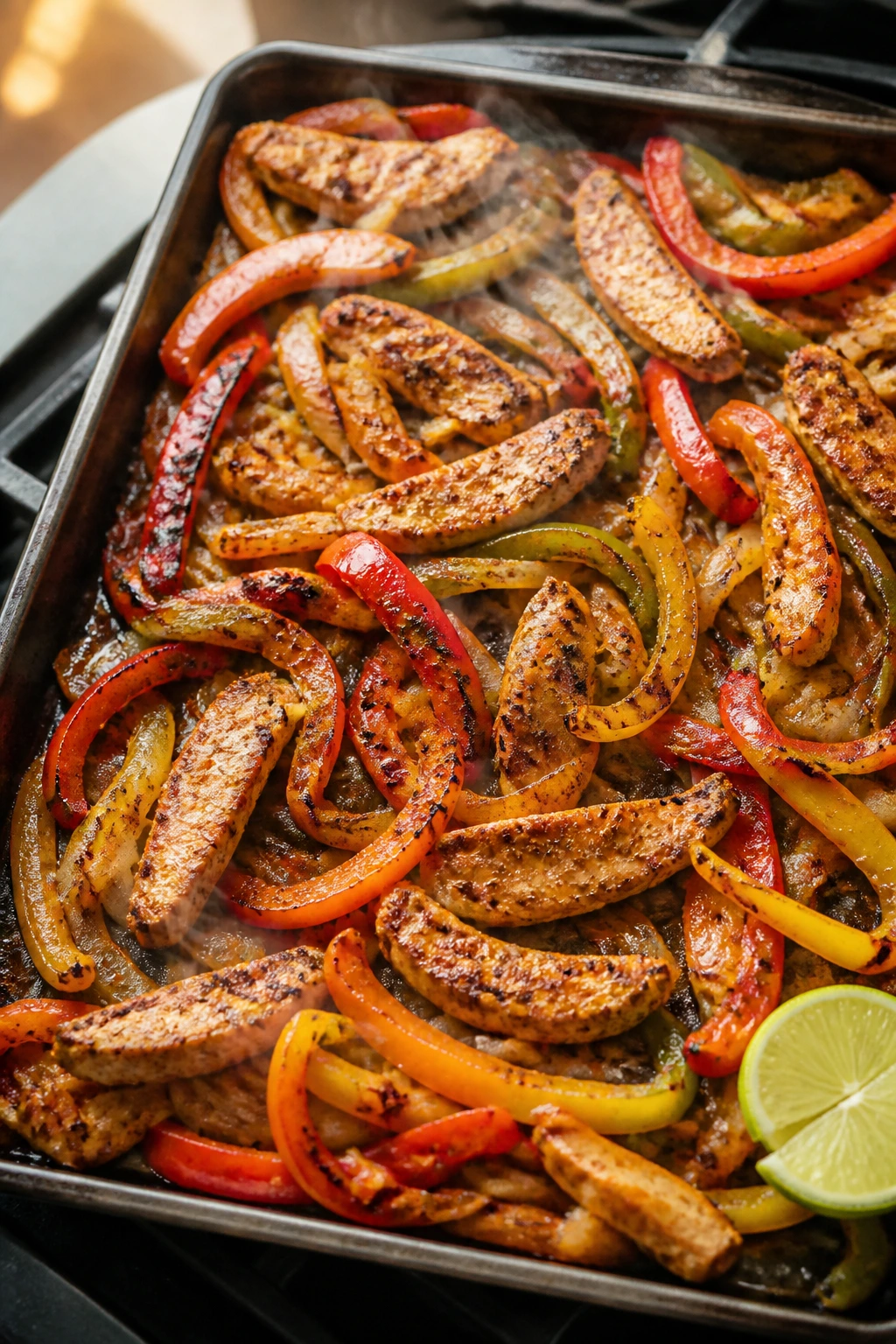
The smell hits first: onions going sweet in the oven, peppers blistering at the edges, chicken taking on a little color from chili powder and cumin. This is the kind of dinner that makes the kitchen feel active without making you hover over a stove.
Why It Works:
High heat does the heavy lifting here. The vegetables roast instead of sweating, the chicken cooks quickly, and the lime at the end cuts through the oil so everything tastes brighter. If you’ve ever had fajitas that felt soggy and apologetic, the difference is usually heat and space on the pan.
Key Ingredients:
- 1 1/2 pounds boneless, skinless chicken thighs or breasts, sliced into 1/2-inch strips
- 3 bell peppers, sliced into strips
- 1 large yellow onion, sliced
- 2 tablespoons olive oil
- 2 teaspoons chili powder
- 1 teaspoon ground cumin
- 1 teaspoon smoked paprika
- 1 teaspoon kosher salt
- 1/2 teaspoon black pepper
- 1 lime, juiced
- 8 small tortillas, warmed
- Optional toppings: avocado, salsa, cilantro, plain Greek yogurt
Quick Steps:
- Preheat the oven to 425°F (220°C) and line a large rimmed sheet pan with parchment.
- Toss the chicken, peppers, and onion with olive oil, chili powder, cumin, paprika, salt, and pepper.
- Spread everything in a single layer. Do not crowd the pan or the vegetables will steam.
- Roast for 15 minutes, stir once, then roast 5 to 7 minutes more until the chicken reaches 165°F and the peppers have browned edges.
- Squeeze the lime over the hot pan and toss again.
- Serve in warm tortillas with toppings.
Equipment for This Recipe:
- Large rimmed sheet pan
- Mixing bowl
- Sharp knife
- Tongs or a spatula
How to Serve This Dish:
Pile the filling into warm tortillas and keep the toppings tight and simple. A spoon of salsa, a few avocado slices, and a little yogurt are enough. If you want to stretch it, add black beans or a cabbage slaw on the side.
Pro Tips for This Recipe:
- Slice the chicken evenly so it finishes with the vegetables.
- Use two pans if yours is small; a crowded pan is the enemy here.
- Lime juice right at the end matters more than a lot of extra seasoning.
- Thighs stay juicier than breasts if you tend to overcook chicken by a minute or two.
Variations on This Dish:
- Shrimp Fajitas: Swap in shrimp and roast only 8 to 10 minutes.
- Veggie Fajitas: Use portobello strips and add black beans in the last 5 minutes.
- Smoky Heat Fajitas: Add chipotle powder or a spoonful of minced chipotle in adobo.
Common Mistakes to Avoid with This Dish:
- Overloading the sheet pan: You’ll get limp vegetables instead of browned ones.
- Skipping the lime: The whole dish tastes flatter without that sharp finish.
- Cooking by color alone: Use temperature for the chicken, not guesswork.
2. Turkey Meatballs with Spinach and Marinara over Whole-Wheat Pasta
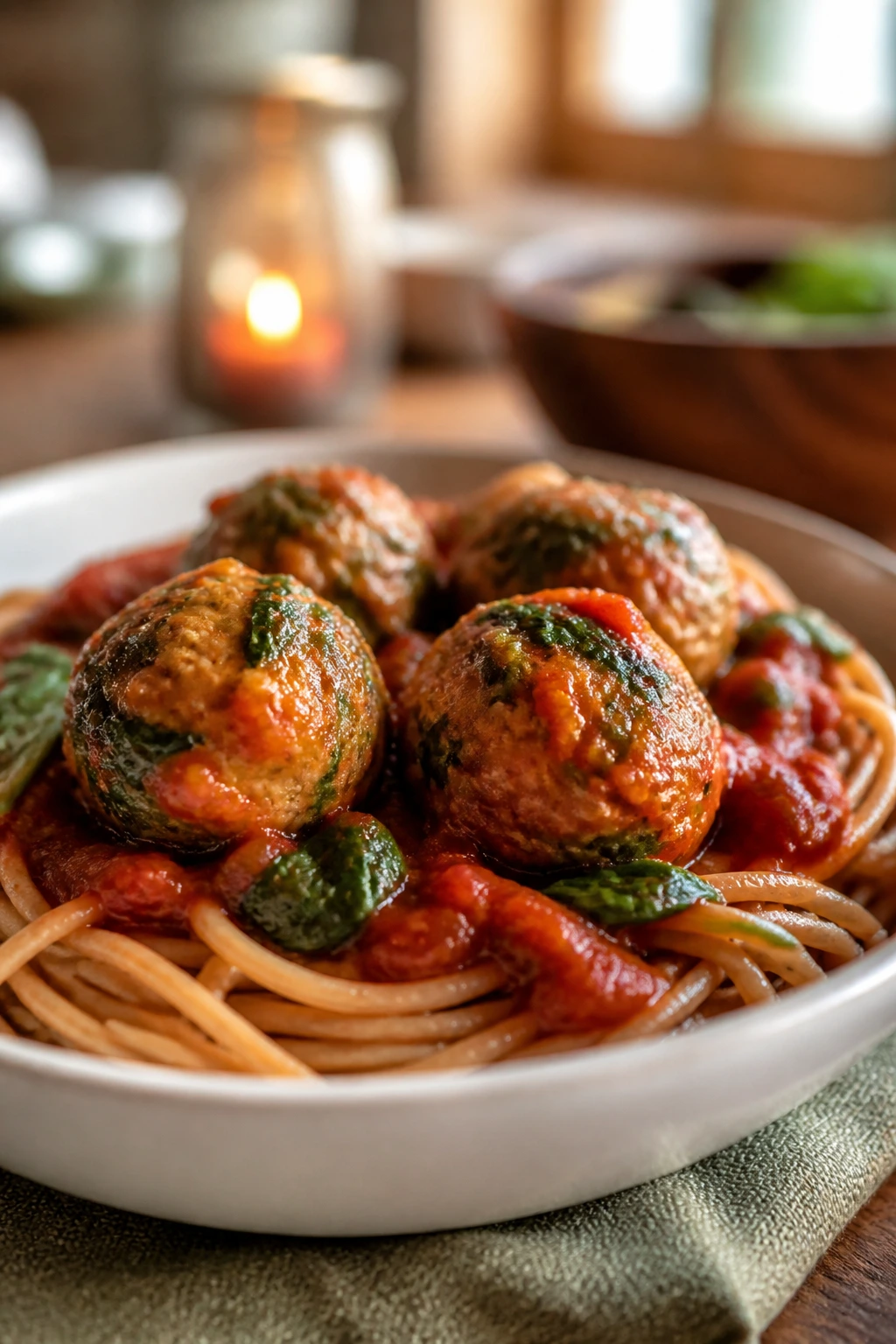
These meatballs are tender, savory, and a little richer than people expect from ground turkey. The spinach melts into the mix, the marinara coats the noodles, and the whole bowl tastes like something you’d actually want twice in one week.
Why It Works:
Baking the meatballs first keeps the shape clean and the texture soft. A short simmer in marinara finishes them without turning them dry. Whole-wheat pasta adds enough bite to stand up to the sauce, which is the part people usually forget when they try to “health up” a pasta dinner.
Key Ingredients:
- 1 pound lean ground turkey
- 1/2 cup whole-wheat breadcrumbs
- 1 large egg
- 1/4 cup grated Parmesan
- 1/4 cup finely chopped onion
- 2 cups baby spinach, finely chopped
- 2 cloves garlic, minced
- 1 teaspoon Italian seasoning
- 3/4 teaspoon kosher salt
- 1/2 teaspoon black pepper
- 1 tablespoon olive oil
- 2 cups marinara sauce
- 12 ounces whole-wheat spaghetti or linguine
Quick Steps:
- Preheat the oven to 400°F (205°C) and line a sheet pan with parchment.
- Mix the turkey, breadcrumbs, egg, Parmesan, onion, spinach, garlic, Italian seasoning, salt, and pepper just until combined.
- Shape into 14 to 16 meatballs and place them on the pan.
- Bake for 14 to 16 minutes, until cooked through.
- Warm the marinara in a skillet, add the meatballs, and simmer for 3 to 5 minutes.
- Cook the pasta, drain it, and toss with the sauce and meatballs.
Equipment for This Recipe:
- Rimmed sheet pan
- Large pot for pasta
- Skillet
- Mixing bowl
How to Serve This Dish:
Use shallow bowls so the sauce doesn’t run everywhere. A green salad with lemon dressing or a few roasted carrots beside the pasta keeps the meal balanced without extra effort.
Pro Tips for This Recipe:
- Chop the onion small so the meatballs hold together.
- Wet your hands before shaping; the mixture stops sticking to your palms.
- Salt the pasta water until it tastes mildly briny.
- Add a splash of pasta water if the sauce seems too thick.
Variations on This Dish:
- Turkey Meatball Subs: Tuck the meatballs into toasted rolls with mozzarella.
- Dairy-Free Version: Leave out the Parmesan and add 1 tablespoon nutritional yeast.
- Zucchini Pasta Bowl: Serve the meatballs over sautéed zucchini ribbons.
Common Mistakes to Avoid with This Dish:
- Overmixing: The meatballs turn tight and rubbery.
- Making them too large: They brown late and dry out.
- Serving pasta plain with sauce on top: Tossing is what seasons the noodles.
3. Salmon Rice Bowls with Cucumber and Avocado
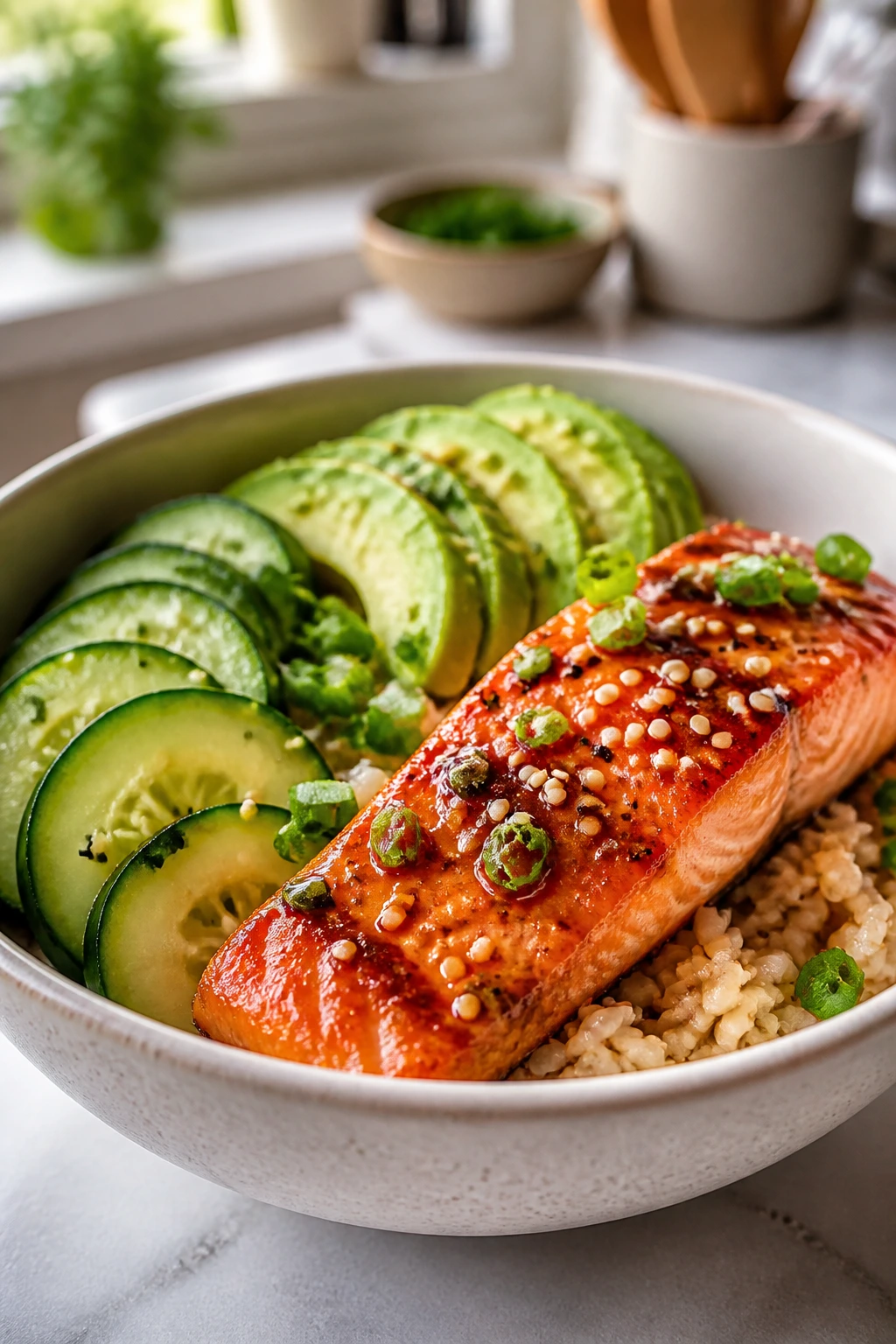
Warm salmon, cold cucumber, sticky rice, and a little soy-ginger glaze make a bowl that hits several textures at once. It feels fresh without being fussy, which is why I keep coming back to it.
Why It Works:
Salmon brings enough richness that the bowl doesn’t need much else. The glaze adds salt, sweetness, and acid in one pass, while the cucumber and avocado keep each bite from getting heavy. Brown rice gives it enough chew to count as a full dinner.
Key Ingredients:
- 4 salmon fillets, about 6 ounces each
- 2 tablespoons low-sodium soy sauce or tamari
- 1 tablespoon honey
- 1 tablespoon rice vinegar
- 1 teaspoon sesame oil
- 1 teaspoon grated fresh ginger
- 2 cups cooked brown rice
- 1 cucumber, thinly sliced
- 2 carrots, shredded
- 1 avocado, sliced
- 2 green onions, sliced
- 1 tablespoon sesame seeds
Quick Steps:
- Preheat the oven to 400°F (205°C) and line a baking sheet with parchment.
- Stir the soy sauce, honey, rice vinegar, sesame oil, and ginger together.
- Brush the salmon with the glaze and bake for 10 to 12 minutes, until it flakes easily.
- Warm the rice if needed and divide it into bowls.
- Add cucumber, carrots, avocado, and salmon.
- Finish with green onions and sesame seeds.
Equipment for This Recipe:
- Baking sheet
- Small bowl for glaze
- Saucepan or rice cooker
- Knife and cutting board
How to Serve This Dish:
Build the bowls with rice on the bottom and the vegetables in little piles so the colors stay distinct. A spoon of spicy mayo or a squeeze of lime can go on the side for people who like a sharper finish.
Pro Tips for This Recipe:
- Pat the salmon dry before glazing so it browns better.
- Use day-old rice if you have it; it has better texture.
- Slice the avocado at the last minute.
- Thin fillets need less time, so start checking early.
Variations on This Dish:
- Spicy Mayo Bowl: Mix Greek yogurt or mayo with sriracha.
- Tofu Bowl: Swap in extra-firm tofu cubes and bake until the edges firm up.
- Citrus Bowl: Add orange segments and a little lime zest.
Common Mistakes to Avoid with This Dish:
- Overcooking the salmon: It dries out fast.
- Using hot, wet rice: The bowl turns sticky.
- Adding avocado too early: It bruises and browns.
4. Chicken Broccoli Stir-Fry with Brown Rice
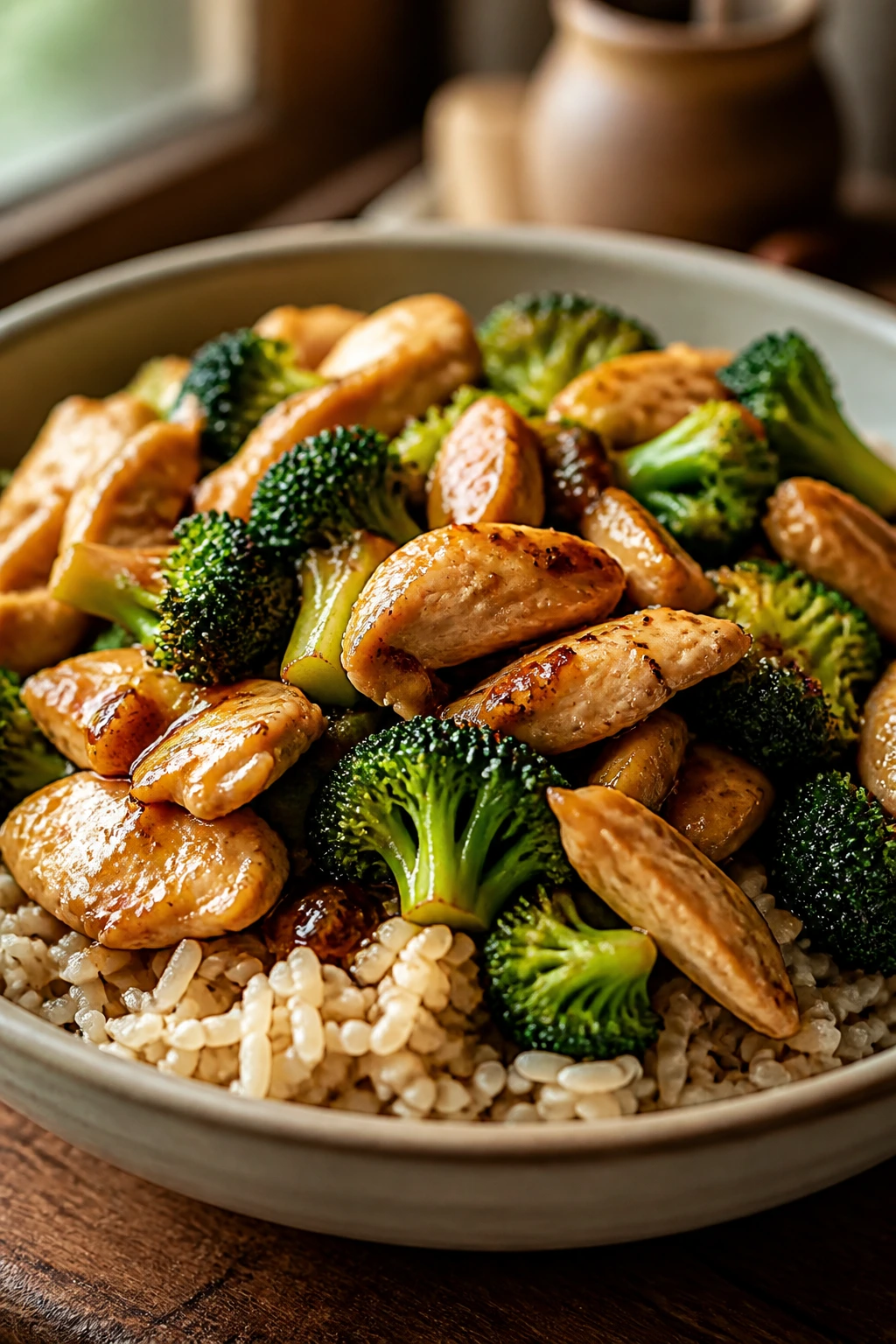
This is the dinner version of moving quickly but not carelessly. The chicken sears, the broccoli stays crisp-tender, and the sauce turns glossy enough to coat everything instead of flooding the pan.
Why It Works:
Thin-sliced chicken cooks in minutes and stays tender if the pan is hot. Broccoli takes well to a quick steam under a lid, which keeps it green and snappy. Brown rice adds a sturdy base so the meal feels complete.
Key Ingredients:
- 1 1/2 pounds boneless, skinless chicken thighs, thinly sliced
- 4 cups broccoli florets
- 1 red bell pepper, sliced
- 2 tablespoons avocado oil
- 4 cloves garlic, minced
- 1 tablespoon grated ginger
- 1/3 cup low-sodium soy sauce
- 1/4 cup water or low-sodium chicken broth
- 1 tablespoon honey
- 1 tablespoon rice vinegar
- 1 teaspoon cornstarch
- 3 cups cooked brown rice
Quick Steps:
- Whisk the soy sauce, water, honey, vinegar, and cornstarch together.
- Heat 1 tablespoon oil in a large skillet over medium-high heat and sear the chicken for 4 to 5 minutes.
- Add the remaining oil, broccoli, and bell pepper, and cook for 3 minutes.
- Add the garlic and ginger and stir for 30 seconds.
- Pour in the sauce and cook 1 to 2 minutes, until it turns glossy and coats the chicken.
- Serve over brown rice.
Equipment for This Recipe:
- Large skillet or wok
- Small bowl
- Spatula
- Knife and cutting board
How to Serve This Dish:
Spoon it over rice and finish with scallions or sesame seeds if you have them. A quick cucumber salad or orange wedges on the side keeps the plate from feeling heavy.
Pro Tips for This Recipe:
- Slice the chicken against the grain.
- Mix the sauce before the heat goes on.
- Keep the pan hot enough that it still sizzles.
- Don’t let the broccoli go soft before the sauce arrives.
Variations on This Dish:
- Cashew Chicken Style: Add roasted cashews at the end.
- Beef Swap: Use flank steak instead of chicken.
- Cauliflower Rice Bowl: Serve it over cauliflower rice.
Common Mistakes to Avoid with This Dish:
- Crowding the skillet: The chicken steams.
- Burning the garlic: It goes bitter in seconds.
- Overcooking the broccoli: Crisp-tender is the target.
5. Turkey and Bean Chili
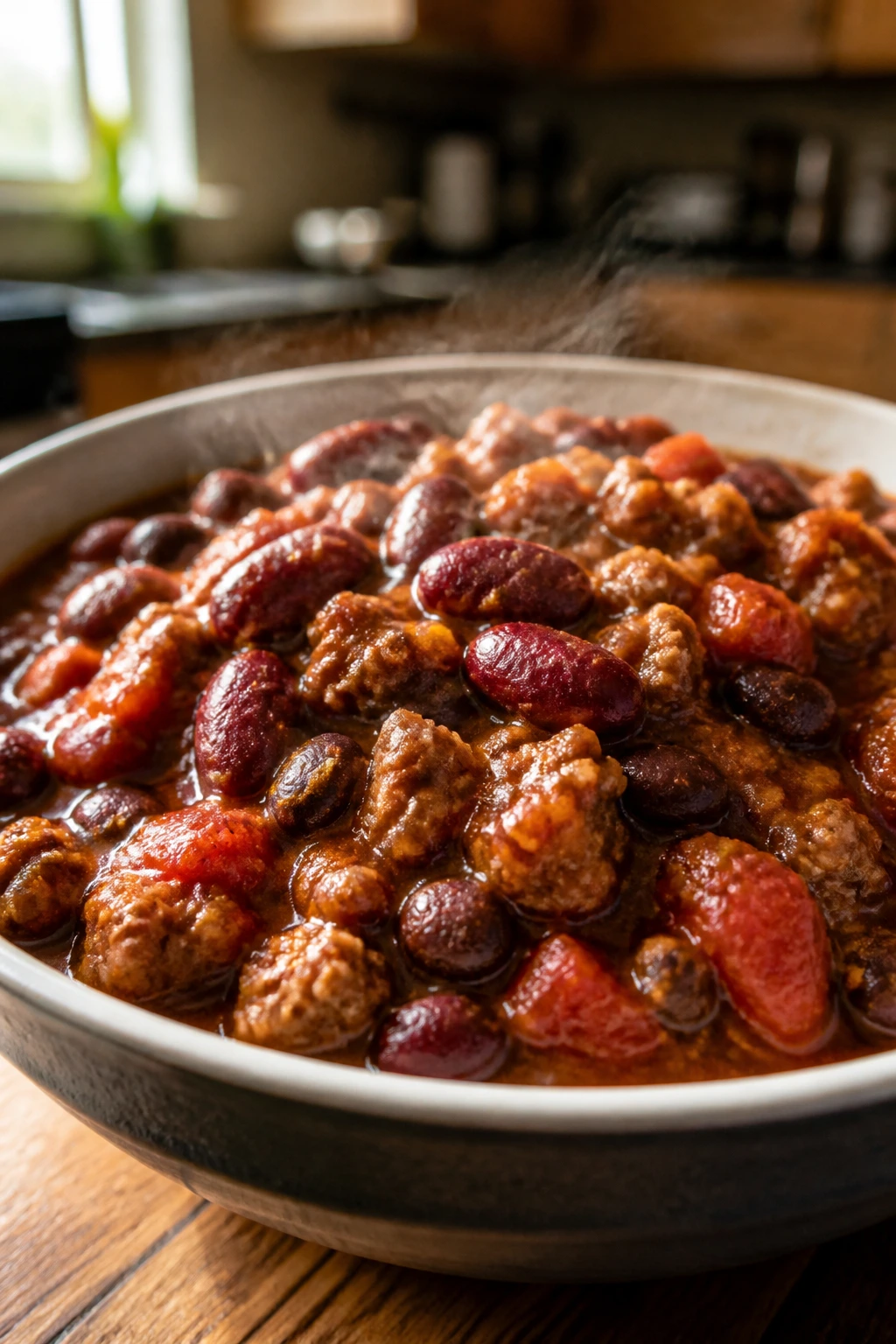
This chili smells like it’s been cooking longer than it has. That’s the point. Onion, browned turkey, chili powder, cumin, and fire-roasted tomatoes build enough depth that no one has to miss the heavier version.
Why It Works:
Lean turkey keeps the dish lighter, but the spices and tomato paste give it a stew-like body. Beans thicken the pot without making it mushy. It also reheats well, which is a quiet advantage on a packed week.
Key Ingredients:
- 1 tablespoon olive oil
- 1 medium onion, diced
- 1 red bell pepper, diced
- 3 cloves garlic, minced
- 1 pound lean ground turkey
- 2 tablespoons chili powder
- 1 teaspoon ground cumin
- 1 teaspoon smoked paprika
- 1/2 teaspoon dried oregano
- 2 tablespoons tomato paste
- 1 can (28 ounces) fire-roasted diced tomatoes
- 1 1/2 cups low-sodium chicken broth
- 1 can kidney beans, rinsed and drained
- 1 can black beans, rinsed and drained
- 1 teaspoon kosher salt, plus more to taste
- Black pepper
Quick Steps:
- Heat the oil in a Dutch oven over medium heat.
- Cook the onion and bell pepper for 5 minutes until softened.
- Add garlic and turkey, breaking up the meat as it cooks.
- Stir in chili powder, cumin, paprika, oregano, and tomato paste; cook for 1 minute.
- Add tomatoes, broth, beans, salt, and pepper, then simmer uncovered for 25 to 30 minutes.
- Taste and adjust seasoning before serving.
Equipment for This Recipe:
- Dutch oven or heavy pot
- Wooden spoon
- Cutting board
- Can opener
How to Serve This Dish:
Ladle it into bowls and let people add their own toppings. A small spoon of yogurt, chopped cilantro, or crushed tortilla chips is enough. Cornbread works, but a simple salad is the cleaner pairing.
Pro Tips for This Recipe:
- Let the tomato paste cook before the liquid goes in.
- Simmer longer if you want it thicker.
- Taste after the beans go in, because canned beans carry different salt levels.
- A squeeze of lime at the table sharpens the pot.
Variations on This Dish:
- Smoky Chipotle Chili: Add minced chipotle in adobo.
- Vegetarian Chili: Skip the turkey and add mushrooms and one extra can of beans.
- Corn Chili: Stir in frozen corn near the end.
Common Mistakes to Avoid with This Dish:
- Starting with pale meat: Brown the turkey for real flavor.
- Too much broth: The chili turns soupy.
- Serving before tasting: Chili almost always needs one more pinch of salt.
6. Sweet Potato Taco Bowls with Black Beans and Corn
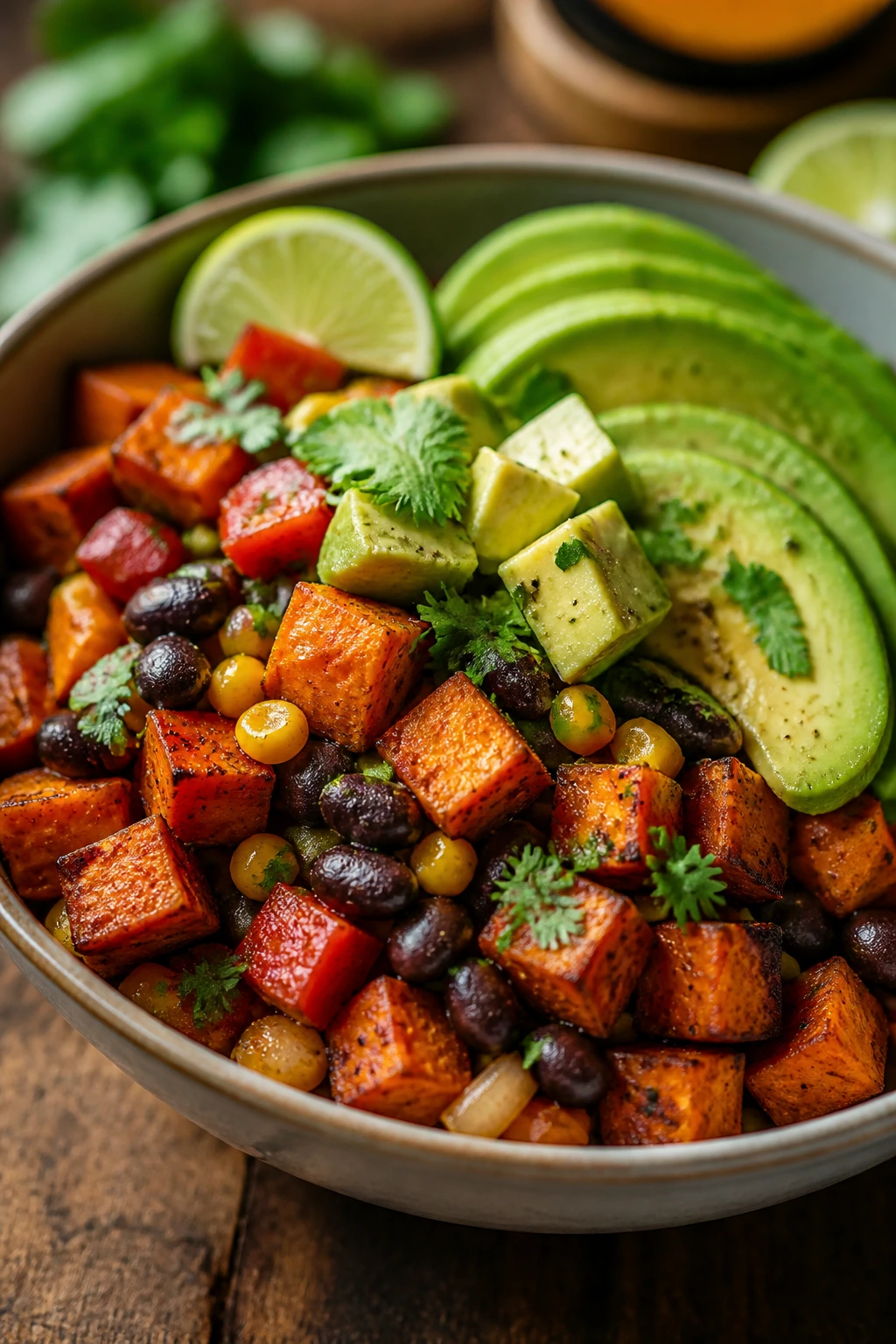
This bowl has the same comfort as tacos, just with better structure. Sweet potatoes roast until the edges caramelize, black beans bring the protein, and the lime keeps the whole thing from going soft and sweet.
Why It Works:
Sweet potatoes bring body and a little sweetness, but roasting them at high heat keeps that sweetness grounded. The beans and corn give you softness and bite in the same bowl, and the toppings let each person steer their own plate.
Key Ingredients:
- 2 large sweet potatoes, peeled and cubed into 3/4-inch pieces
- 1 tablespoon olive oil
- 1 tablespoon taco seasoning
- 1 can black beans, rinsed and drained
- 1 cup frozen corn
- 2 cups cooked brown rice or chopped romaine
- 1 avocado, sliced
- 1 lime, cut into wedges
- 1/2 cup plain Greek yogurt
- Salsa, cilantro, and sliced cabbage for topping
Quick Steps:
- Preheat the oven to 425°F (220°C) and line a sheet pan.
- Toss the sweet potatoes with olive oil and taco seasoning, then roast for 25 minutes, stirring halfway through.
- Warm the black beans and corn in a skillet with a pinch of salt.
- Divide the rice or romaine into bowls.
- Top with sweet potatoes, beans, corn, avocado, yogurt, salsa, and cabbage.
- Finish with lime juice.
Equipment for This Recipe:
- Sheet pan
- Small skillet
- Mixing bowl
- Knife and cutting board
How to Serve This Dish:
Use wide bowls so the toppings stay visible. If your family wants a more taco-like meal, set out warm tortillas and let them scoop the filling inside instead of eating it as a bowl.
Pro Tips for This Recipe:
- Cut the sweet potatoes evenly or some pieces will burn before others soften.
- Frozen corn works fine; just warm it long enough to lose the cold edge.
- Salt the avocado lightly if you want it to taste more like a real topping.
- Add the lime at the table, not before roasting.
Variations on This Dish:
- Chicken Taco Bowl: Add shredded cooked chicken.
- Quinoa Base: Swap the rice for quinoa.
- Dairy-Free Bowl: Use guacamole or tahini instead of yogurt.
Common Mistakes to Avoid with This Dish:
- Cutting the sweet potatoes too large: They stay hard in the middle.
- Overloading the bowl: One creamy topping, one crunchy topping, one bright topping is enough.
- Skipping salt on the beans: They vanish under the sweet potatoes.
7. Lemon Garlic Shrimp and Veggie Couscous
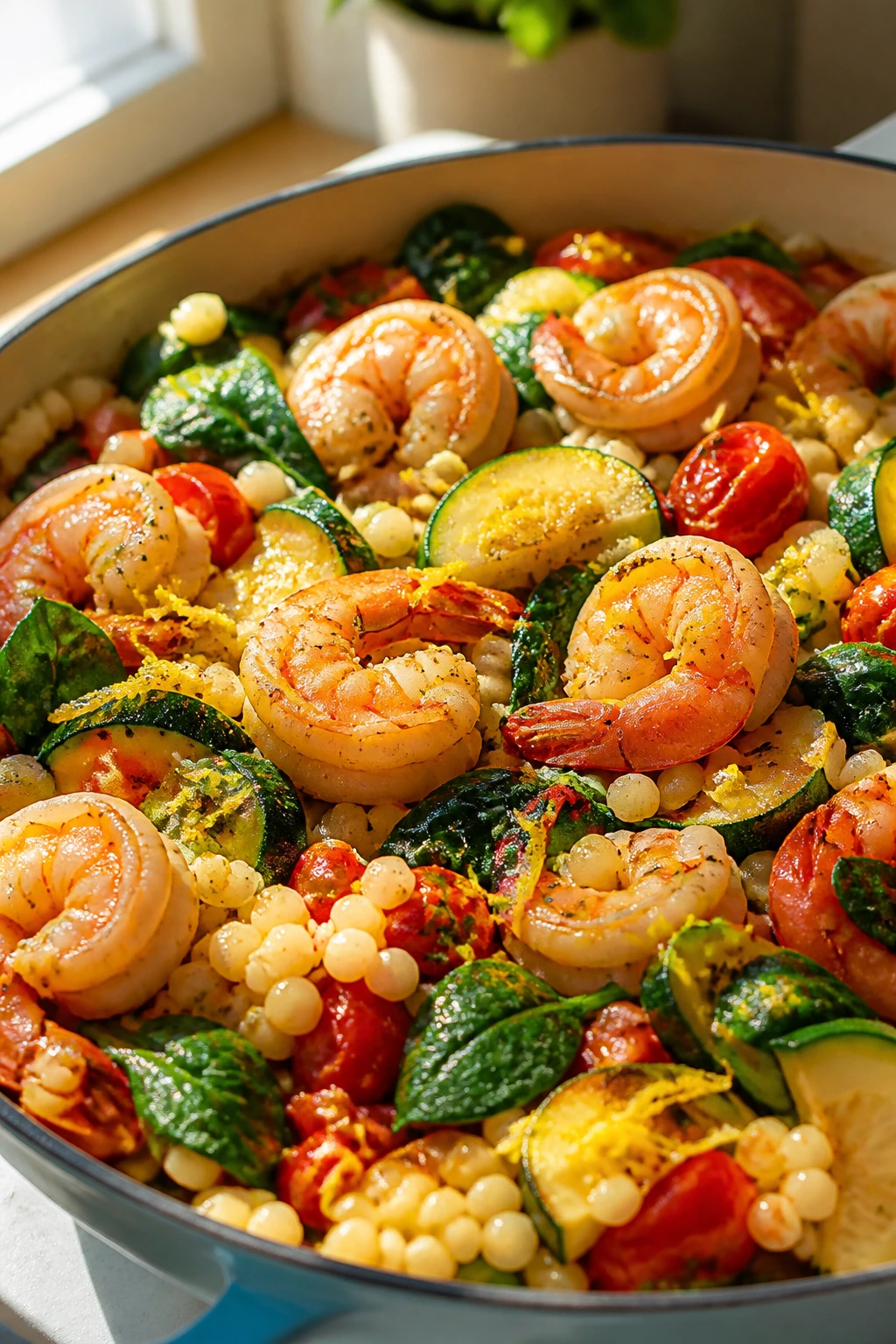
Shrimp cooks fast enough to make you nervous, which is why this dinner needs a bit of rhythm. Once the couscous is ready and the vegetables are softened, the shrimp goes in, turns pink, and the whole skillet gets a lemony finish.
Why It Works:
Pearl couscous brings a chewy base that feels more substantial than plain rice. Zucchini, tomatoes, and spinach soften quickly, so the skillet stays lively instead of dragging. Lemon and garlic keep the shrimp sweet, not heavy.
Key Ingredients:
- 1 1/2 pounds large shrimp, peeled and deveined
- 1 cup pearl couscous
- 1 zucchini, diced
- 1 pint cherry tomatoes, halved
- 2 cups baby spinach
- 3 tablespoons olive oil
- 3 cloves garlic, minced
- 1 lemon, zested and juiced
- 1/2 teaspoon red pepper flakes
- 3/4 teaspoon kosher salt
- Black pepper
- 2 tablespoons chopped parsley
Quick Steps:
- Cook the couscous in salted water according to the package, then drain.
- Heat 1 tablespoon olive oil in a large skillet and sauté the zucchini and tomatoes for 4 to 5 minutes.
- Add garlic and red pepper flakes and stir for 30 seconds.
- Push the vegetables aside, add the remaining oil, and cook the shrimp for 2 minutes per side.
- Stir in the spinach, couscous, lemon zest, lemon juice, salt, pepper, and parsley.
- Toss until the spinach wilts and everything looks glossy.
Equipment for This Recipe:
- Large skillet
- Saucepan
- Colander
- Zester or fine grater
How to Serve This Dish:
Serve it in shallow bowls with parsley scattered on top. Warm pita or a cucumber salad on the side stretches the meal without extra weight.
Pro Tips for This Recipe:
- Dry the shrimp before cooking.
- Do not overcook the couscous in advance.
- Salt the tomatoes lightly if they taste flat.
- Keep the lemon for the end so the flavor stays bright.
Variations on This Dish:
- Orzo Swap: Use orzo instead of couscous.
- Chickpea Version: Add a can of chickpeas for more body.
- Dill Finish: Swap parsley for dill.
Common Mistakes to Avoid with This Dish:
- Overcooking shrimp: They turn springy fast.
- Using soggy couscous: The skillet goes clumpy.
- Skipping citrus zest: You lose the sharp, clean aroma.
8. Baked Cod with Tomatoes, Olives, and Potatoes
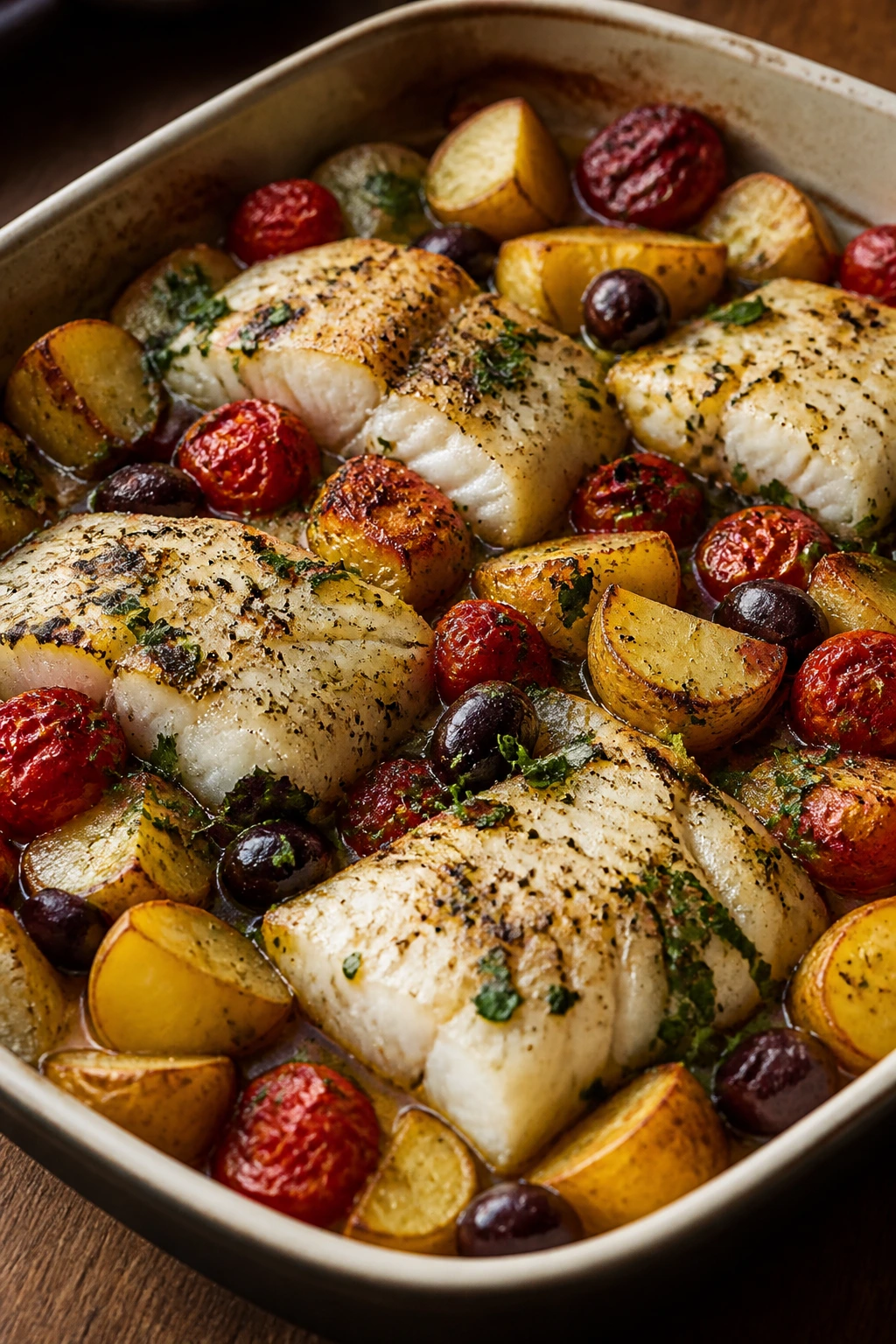
Cod is mild enough to disappear if you let it, which is why I like it with olives, tomatoes, lemon, and potatoes. The vegetables bring the flavor; the fish just absorbs it and stays tender if you don’t bully it in the oven.
Why It Works:
The potatoes get a head start, so they have time to soften and brown. Cod finishes quickly on top of the vegetables, which keeps it from drying out. Olives and lemon add salt and acid, and those two things keep the whole pan from tasting sleepy.
Key Ingredients:
- 1 1/2 pounds baby potatoes, halved
- 4 cod fillets, about 6 ounces each
- 1 pint cherry tomatoes
- 1/2 cup pitted olives
- 1 red onion, sliced
- 3 tablespoons olive oil
- 1 teaspoon dried oregano
- 1/2 teaspoon kosher salt
- 1/2 teaspoon black pepper
- 1 lemon, sliced or juiced
- 2 tablespoons chopped parsley
Quick Steps:
- Preheat the oven to 425°F (220°C).
- Toss the potatoes and onion with 2 tablespoons olive oil, oregano, salt, and pepper, then roast for 20 minutes.
- Stir in the tomatoes and olives.
- Nestle the cod fillets on top, drizzle with the remaining oil and a little lemon juice.
- Roast for 10 to 12 minutes more until the cod flakes and the potatoes are tender.
- Finish with parsley and extra lemon.
Equipment for This Recipe:
- Large sheet pan
- Parchment paper
- Knife and cutting board
- Spatula
How to Serve This Dish:
Spoon the tomatoes and olives around the fish so the pan stays juicy. A side of green beans or arugula makes sense here because the fish already carries the meal.
Pro Tips for This Recipe:
- Cut the potatoes evenly.
- Choose cod fillets that are close in thickness.
- Check early; cod goes from tender to dry quickly.
- Fresh lemon tastes cleaner than bottled juice.
Variations on This Dish:
- Halibut Version: Use halibut for a firmer fish.
- Caper Twist: Swap some olives for capers.
- Fennel Roast: Add sliced fennel to the potatoes.
Common Mistakes to Avoid with This Dish:
- Overbaking the fish: Dry cod is the main reason people think they dislike cod.
- Skipping the potato head start: They’ll lag behind.
- Uneven fillets: Thin pieces finish too soon.
9. Lean Beef and Broccoli Skillet
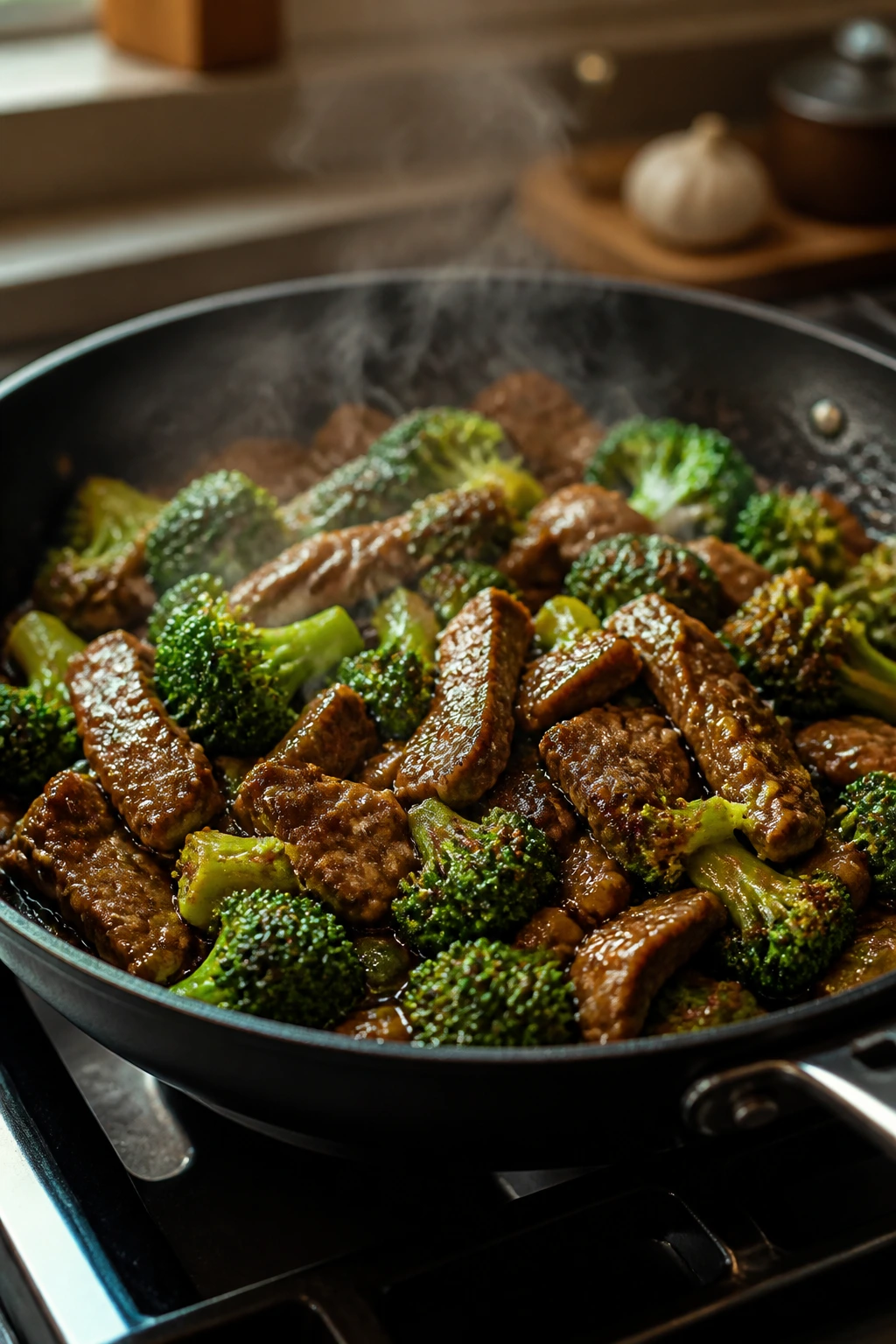
This is the takeout-style dinner that behaves at home. The beef sears, the broccoli stays bright, and the sauce turns glossy instead of sticky-sweet in that heavy, fast-food way.
Why It Works:
Thin slices of beef cook quickly and stay tender if you cut them right. Broccoli needs just enough steam to soften without losing snap. A little honey balances the soy sauce and vinegar, which gives the skillet a clean, familiar flavor.
Key Ingredients:
- 1 1/4 pounds flank steak or sirloin, sliced very thin against the grain
- 4 cups broccoli florets
- 2 tablespoons avocado oil
- 4 cloves garlic, minced
- 1 tablespoon grated ginger
- 1/3 cup low-sodium soy sauce
- 1/4 cup beef broth or water
- 1 tablespoon honey
- 1 tablespoon rice vinegar
- 1 teaspoon cornstarch
- 1 teaspoon sesame oil
- 3 cups cooked brown rice
Quick Steps:
- Whisk the soy sauce, broth, honey, vinegar, cornstarch, and sesame oil together.
- Heat 1 tablespoon oil in a skillet over high heat and sear the beef for 1 to 2 minutes, then remove it.
- Add the remaining oil and broccoli, splash in 2 tablespoons water, and cover for 2 minutes.
- Stir in garlic and ginger and cook for 30 seconds.
- Return the beef and pour in the sauce; toss for 1 to 2 minutes until glossy.
- Serve over rice.
Equipment for This Recipe:
- Large skillet or wok
- Small bowl
- Tongs or spatula
- Sharp knife
How to Serve This Dish:
Serve it over brown rice and finish with sesame seeds if you have them. A few cucumber slices or scallions on top keep the plate crisp.
Pro Tips for This Recipe:
- Put the beef in the freezer for 15 minutes before slicing.
- Keep the skillet hot enough to sizzle.
- If the sauce thickens too much, add a tablespoon of water.
- The broccoli should stay bright green.
Variations on This Dish:
- Chicken Version: Swap in thin-sliced chicken thighs.
- Mushroom Boost: Add mushrooms with the broccoli.
- Cauliflower Rice Bowl: Serve over cauliflower rice.
Common Mistakes to Avoid with This Dish:
- Slicing beef with the grain: It gets chewy.
- Letting the pan cool: You’ll steam the meat.
- Too much sauce: The broccoli and beef lose their texture.
10. Chicken Shawarma Pita Bowls
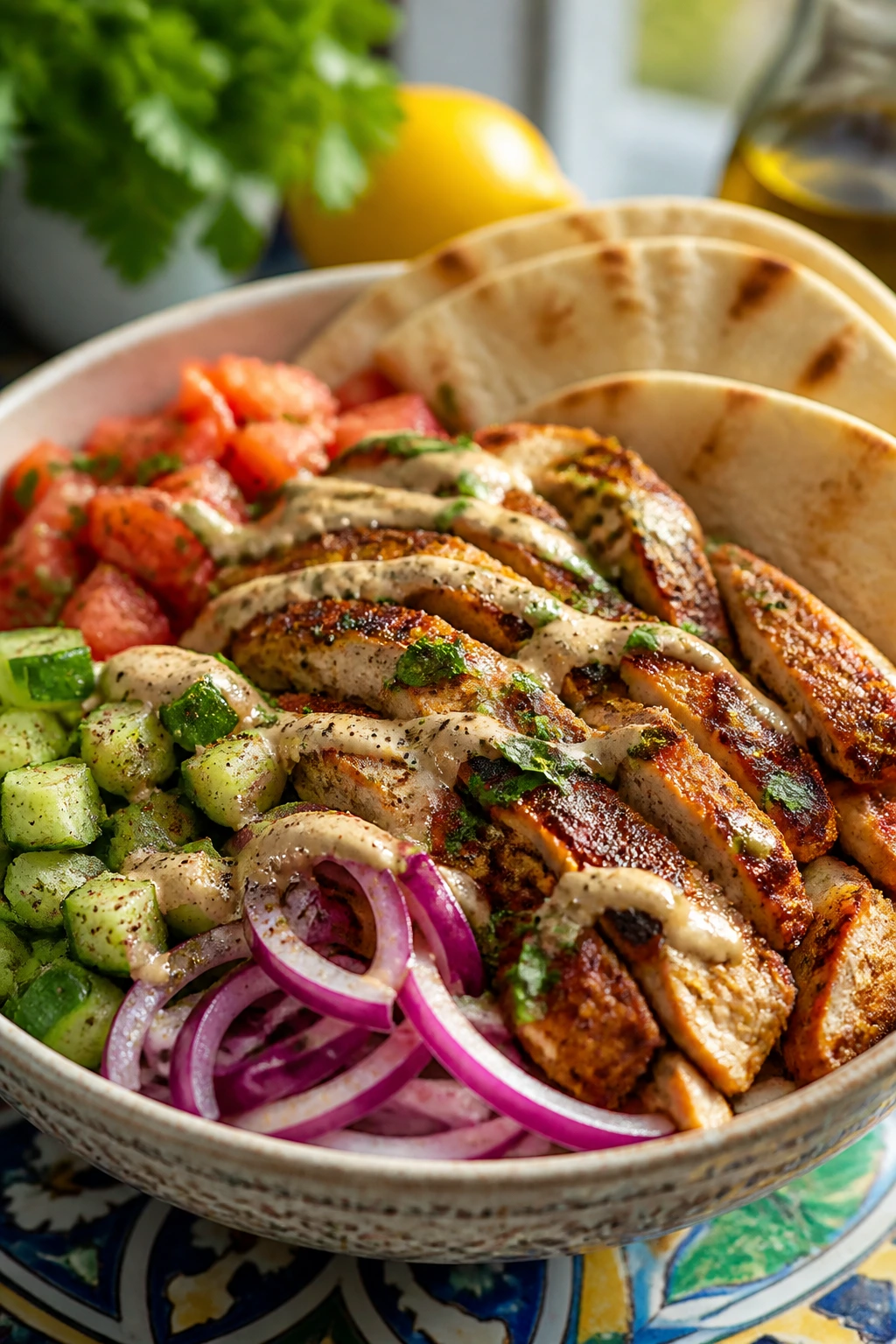
The spices smell warm and dry in the best way—cumin, coriander, paprika, garlic, and a little turmeric. Yogurt keeps the chicken tender, and the vegetables on top keep the bowl from getting too rich.
Why It Works:
The yogurt marinade clings to the chicken and helps it roast with a little char at the edges. Shawarma spice does not need to be complicated to taste right. A sharp tahini drizzle and fresh vegetables pull the whole thing back into balance.
Key Ingredients:
- 1 1/2 pounds boneless, skinless chicken thighs
- 1/2 cup plain Greek yogurt
- 2 tablespoons olive oil
- 2 tablespoons lemon juice
- 3 cloves garlic, minced
- 2 teaspoons ground cumin
- 2 teaspoons ground coriander
- 1 teaspoon paprika
- 1/2 teaspoon turmeric
- 1 teaspoon kosher salt
- 1/2 teaspoon black pepper
- 4 pita breads
- 1 cucumber, diced
- 2 tomatoes, diced
- 1/2 red onion, thinly sliced
- 1/4 cup tahini
- Water and lemon juice to thin tahini
Quick Steps:
- Mix yogurt, olive oil, lemon juice, garlic, cumin, coriander, paprika, turmeric, salt, and pepper.
- Coat the chicken and marinate while the oven preheats, or longer if you’ve planned ahead.
- Roast at 425°F (220°C) for 20 to 25 minutes until browned and cooked through.
- Rest the chicken for 5 minutes, then slice.
- Thin the tahini with water and lemon juice.
- Fill pitas with chicken, cucumber, tomatoes, onion, and tahini.
Equipment for This Recipe:
- Baking sheet
- Mixing bowl
- Knife and cutting board
- Small bowl for sauce
How to Serve This Dish:
Serve it in pitas or over rice if your family prefers bowls. A spoon of hummus or a handful of lettuce on the side rounds it out without much extra work.
Pro Tips for This Recipe:
- Thighs stay juicier than breasts.
- Slice after resting so the juices stay in the meat.
- Add water to tahini a teaspoon at a time; it thickens fast.
- Salt the cucumber lightly if it tastes watery.
Variations on This Dish:
- Rice Bowl Version: Serve over brown rice with parsley.
- Chickpea Shawarma: Roast chickpeas with the same spice mix.
- Spicy Version: Add cayenne or harissa to the marinade.
Common Mistakes to Avoid with This Dish:
- Using too much yogurt: It turns pasty.
- Skipping the rest: The chicken loses moisture.
- Stuffing the pita too full: It tears and spills.
11. Veggie-Packed Fried Rice with Eggs and Edamame
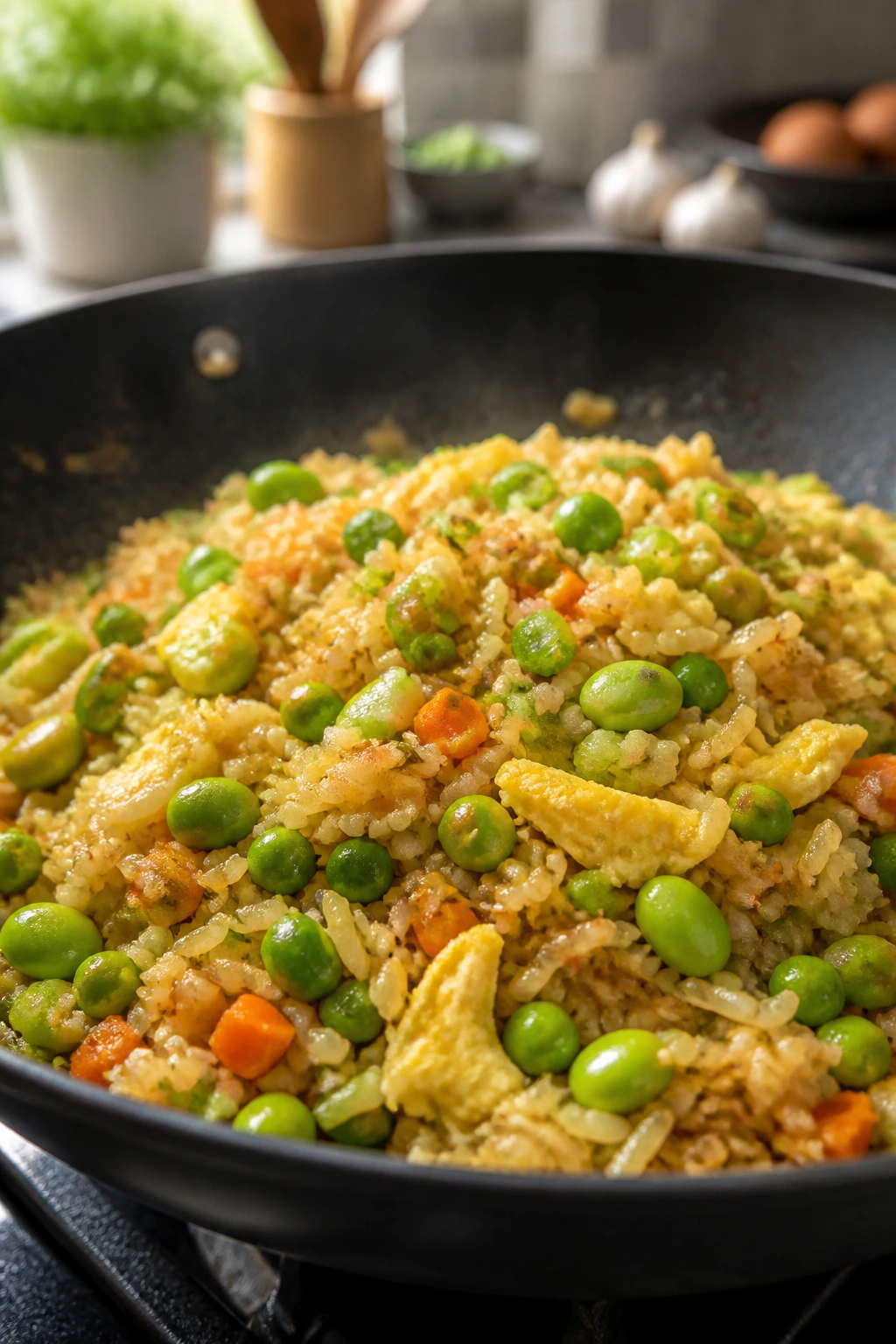
Fried rice works when the rice is old, the pan is hot, and the additions are quick. That sounds fussy, but it isn’t. It’s just the difference between separate grains and a clump that tastes like it was steamed by mistake.
Why It Works:
Cold rice fries instead of going gummy. Eggs bring richness, frozen vegetables keep the prep short, and edamame gives the bowl more substance than plain rice ever could. Soy sauce and sesame oil finish it with a familiar savory note.
Key Ingredients:
- 4 cups cooked brown rice, chilled
- 2 tablespoons avocado oil
- 2 eggs, lightly beaten
- 1 cup frozen peas and carrots
- 1 cup shelled edamame
- 3 scallions, sliced
- 2 cloves garlic, minced
- 1 tablespoon grated ginger
- 3 tablespoons low-sodium soy sauce
- 1 teaspoon sesame oil
- Optional: 1 cup chopped cabbage
Quick Steps:
- Heat 1 tablespoon oil in a large skillet or wok and scramble the eggs until just set. Remove them.
- Add the remaining oil, peas and carrots, edamame, scallions, cabbage, garlic, and ginger. Cook for 3 to 4 minutes.
- Add the rice and break up the clumps.
- Pour in the soy sauce and sesame oil and stir-fry for 2 to 3 minutes.
- Fold the eggs back in and taste for salt.
- Serve hot.
Equipment for This Recipe:
- Large skillet or wok
- Spatula
- Small bowl
- Knife and cutting board
How to Serve This Dish:
Fried rice belongs in small bowls, not giant plates. A cucumber salad or a little miso soup keeps the meal feeling finished without adding much work.
Pro Tips for This Recipe:
- Break up the rice before it hits the pan.
- Let the vegetables touch the skillet instead of dumping everything at once.
- Go easy on the soy sauce.
- Frozen edamame gives the dish more bite and protein.
Variations on This Dish:
- Chicken Fried Rice: Add diced cooked chicken.
- Cauliflower Fried Rice: Swap half or all of the rice for cauliflower rice.
- Kimchi Fried Rice: Stir in chopped kimchi at the end.
Common Mistakes to Avoid with This Dish:
- Using warm rice: It clumps.
- Overloading the pan: The rice steams.
- Too much sauce: The grains lose their texture.
12. Lentil Bolognese with Whole-Wheat Spaghetti
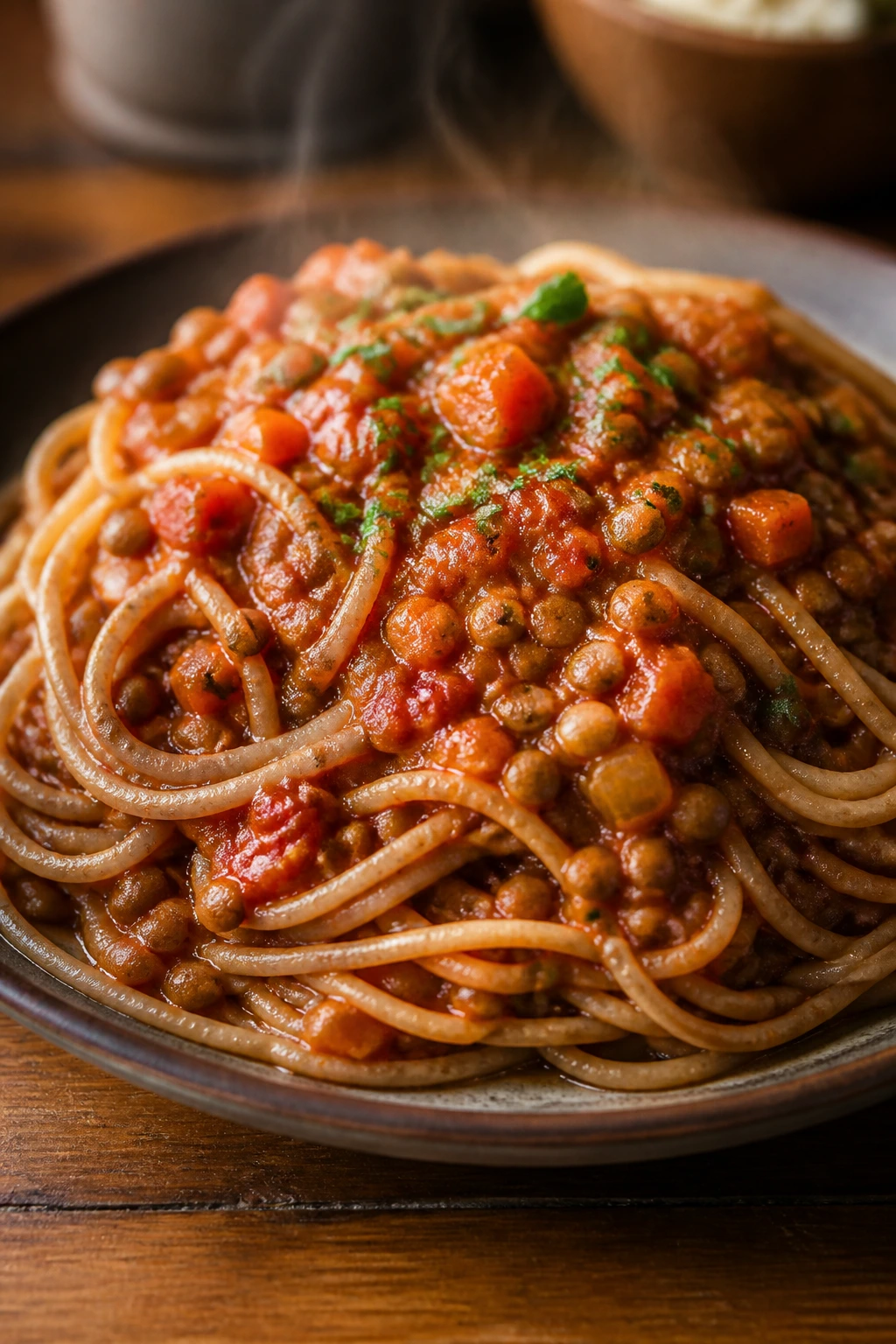
This is the sauce for nights when you want something sturdy but not heavy. Lentils bring body, tomatoes bring sweetness and acidity, and the carrots, celery, and onion melt into the pot the way a good sauce should.
Why It Works:
Brown or green lentils stay intact, so the sauce feels meaty without actual meat. Tomato paste gives it depth, and the long simmer thickens everything into a proper coat for pasta. Whole-wheat spaghetti has enough chew to keep up.
Key Ingredients:
- 1 tablespoon olive oil
- 1 medium onion, diced
- 1 carrot, diced
- 2 celery stalks, diced
- 3 cloves garlic, minced
- 2 tablespoons tomato paste
- 1 cup brown or green lentils, rinsed
- 1 can (28 ounces) crushed tomatoes
- 2 cups low-sodium vegetable broth
- 1 teaspoon Italian seasoning
- 1/2 teaspoon kosher salt
- Black pepper
- 12 ounces whole-wheat spaghetti
- Grated Parmesan, for serving
Quick Steps:
- Heat olive oil in a large skillet or Dutch oven over medium heat.
- Cook onion, carrot, and celery for 6 to 8 minutes until softened.
- Stir in garlic and tomato paste and cook for 1 minute.
- Add lentils, crushed tomatoes, broth, Italian seasoning, salt, and pepper, then simmer for 30 to 35 minutes until the lentils are tender.
- Cook the spaghetti and drain it.
- Toss the pasta with the lentil sauce and serve with Parmesan.
Equipment for This Recipe:
- Large skillet or Dutch oven
- Pot for pasta
- Wooden spoon
- Colander
How to Serve This Dish:
Use wide bowls and finish with black pepper and Parmesan. A sharp green salad is the right side because the pasta already brings enough warmth.
Pro Tips for This Recipe:
- Keep the simmer gentle.
- If the sauce gets too thick, add a splash of pasta water.
- Salt matters here; lentils go flat if you underseason.
- Chop the vegetables small so they vanish into the sauce.
Variations on This Dish:
- Mushroom Bolognese: Add chopped mushrooms with the vegetables.
- Vegan Version: Skip the Parmesan or use nutritional yeast.
- Gluten-Free Plate: Serve over gluten-free pasta or polenta.
Common Mistakes to Avoid with This Dish:
- Undercooking the lentils: They stay chalky.
- Watery sauce: Simmer longer.
- No acidity at the end: A tiny splash of vinegar or lemon helps.
13. Pork Tenderloin with Apples and Brussels Sprouts
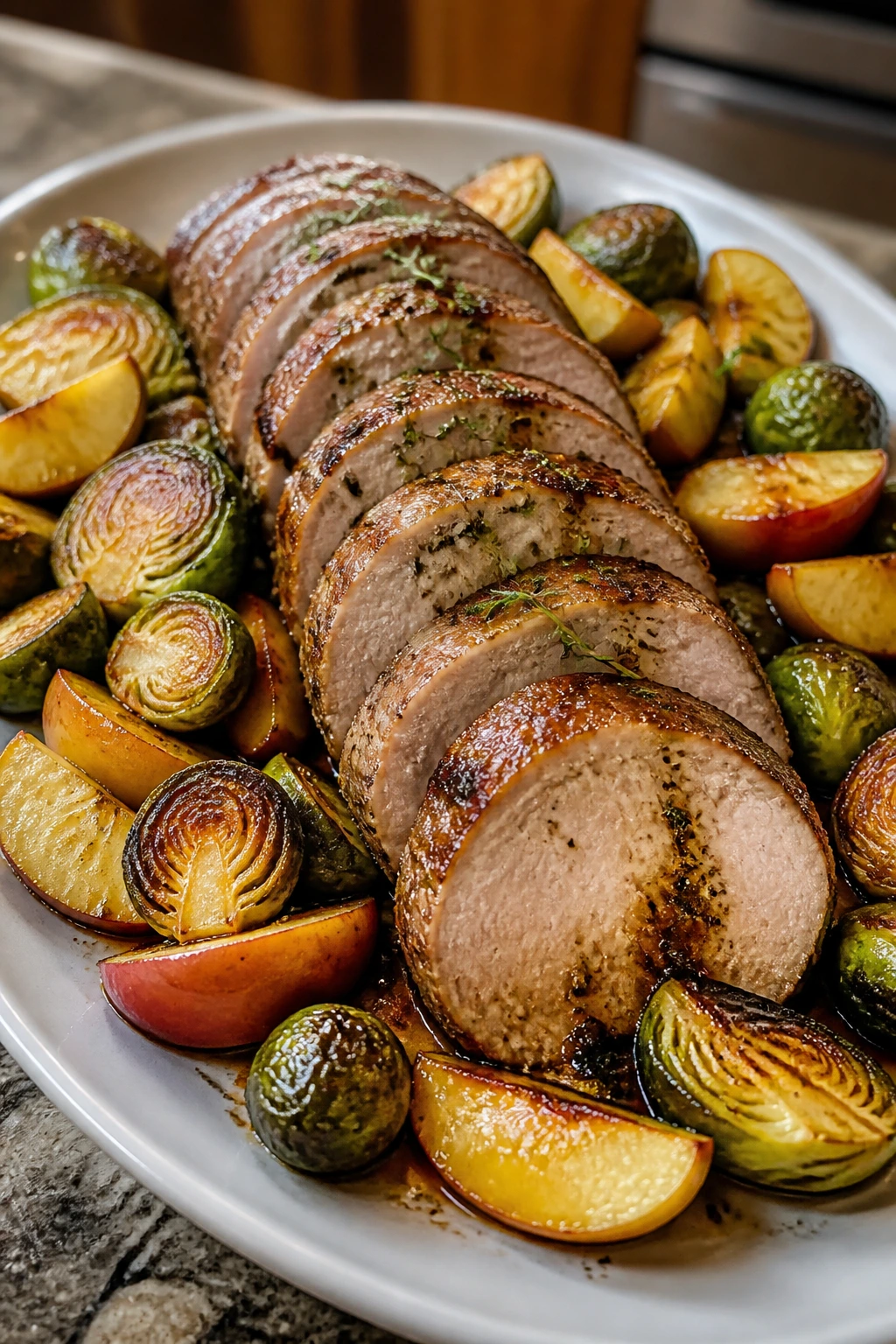
Pork tenderloin is one of the easiest lean cuts to roast without fuss. Apples bring a soft sweetness, Brussels sprouts get nutty at the edges, and the mustard-thyme coating keeps the whole pan from tasting one-note.
Why It Works:
Pork tenderloin cooks quickly, which makes it a good weeknight roast. Brussels sprouts need heat to brown properly, and apples soften just enough to slide into the savory side of the pan without turning to mush. A little vinegar at the end sharpens everything.
Key Ingredients:
- 2 pork tenderloins, about 1 1/2 pounds total
- 1 1/2 pounds Brussels sprouts, halved
- 2 apples, cored and sliced into wedges
- 2 tablespoons olive oil
- 1 tablespoon Dijon mustard
- 2 cloves garlic, minced
- 1 teaspoon dried thyme
- 1 teaspoon kosher salt
- 1/2 teaspoon black pepper
- 1 tablespoon apple cider vinegar
Quick Steps:
- Preheat the oven to 425°F (220°C).
- Toss the Brussels sprouts with 1 tablespoon olive oil, half the salt, and half the pepper, then roast for 15 minutes.
- Mix the remaining oil, Dijon, garlic, thyme, salt, and pepper, and rub it over the pork.
- Add the pork and apple wedges to the pan and roast for 18 to 20 minutes, until the pork reaches 145°F.
- Rest the pork for 5 to 10 minutes, then slice.
- Drizzle with apple cider vinegar before serving.
Equipment for This Recipe:
- Large sheet pan
- Instant-read thermometer
- Knife and cutting board
- Small bowl
How to Serve This Dish:
Slice the pork and fan it across the roasted vegetables. If you want a starch, mashed potatoes or farro fits, but the pan already carries a lot of weight on its own.
Pro Tips for This Recipe:
- Use a thermometer. Pork tenderloin goes dry if you guess.
- Keep the apple wedges large enough to hold their shape.
- If the sprouts are huge, cut them again.
- Let the pork rest before slicing or the juices run out.
Variations on This Dish:
- Pear Version: Swap apples for firm pears.
- Maple Mustard Glaze: Stir a teaspoon of maple syrup into the mustard mix.
- Sweet Potato Add-In: Roast cubes alongside the sprouts.
Common Mistakes to Avoid with This Dish:
- Overcooking the pork: Stop at 145°F.
- Tiny apple slices: They melt away.
- Crowding the pan: The sprouts stop browning.
14. Turkey Zucchini Skillet Lasagna
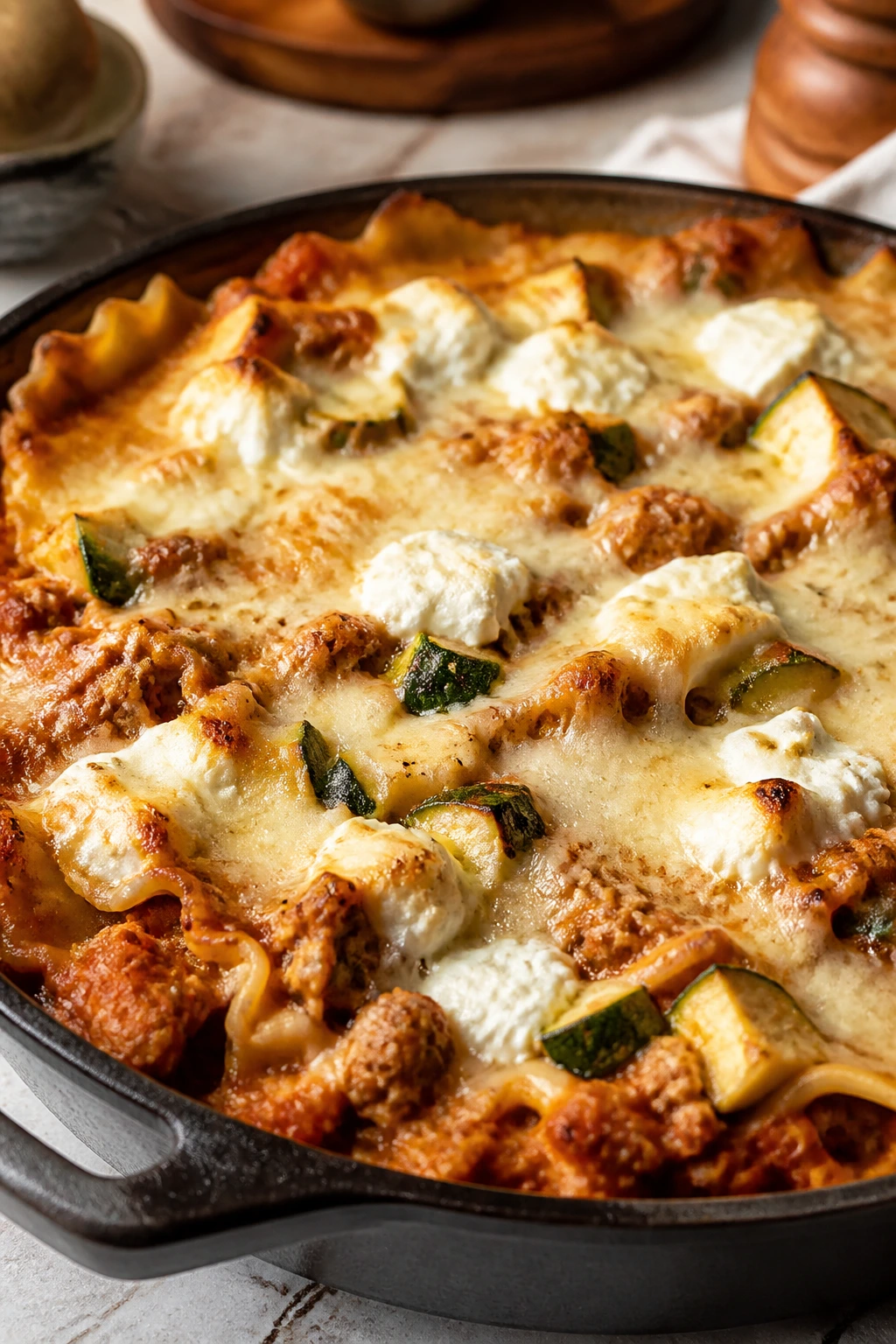
This has the right lasagna flavor without the full lasagna project. The noodles cook in the sauce, the turkey keeps it hearty, and the zucchini adds volume without turning the skillet into a vegetable sermon.
Why It Works:
Broken lasagna noodles absorb flavor as they cook, which means the whole skillet tastes seasoned. Zucchini softens into the sauce, ricotta adds creaminess, and mozzarella gives you the stretchy finish people expect from lasagna. It’s a solid trade.
Key Ingredients:
- 1 tablespoon olive oil
- 1 pound lean ground turkey
- 1 medium onion, diced
- 3 cloves garlic, minced
- 1 medium zucchini, diced
- 1 teaspoon Italian seasoning
- 1 jar (24 ounces) marinara sauce
- 2 cups water or low-sodium chicken broth
- 8 whole-wheat lasagna noodles, broken into pieces
- 1 cup part-skim ricotta
- 1 cup shredded mozzarella
- 1/4 cup grated Parmesan
- 1 cup baby spinach
- Fresh basil, for serving
Quick Steps:
- Heat the olive oil in a large deep skillet with a lid over medium heat.
- Cook the turkey and onion for 6 to 7 minutes, breaking up the meat.
- Add garlic, zucchini, and Italian seasoning and cook for 2 minutes.
- Stir in marinara, water, and broken noodles, then simmer covered for 12 to 15 minutes, stirring once or twice.
- Fold in spinach, dot with ricotta, and sprinkle with mozzarella and Parmesan.
- Cover briefly or broil just until melted, then finish with basil.
Equipment for This Recipe:
- Large deep skillet
- Lid or foil
- Wooden spoon
- Knife and cutting board
How to Serve This Dish:
Scoop it into bowls straight from the skillet. A crisp salad with a sharp dressing balances the richness better than bread does, though bread is not illegal.
Pro Tips for This Recipe:
- Stir the noodles once or twice so they do not stick.
- Add a splash more broth if the pan dries out too soon.
- Broil only for a minute or two if you use that finish.
- Chop the zucchini small so it disappears into the sauce.
Variations on This Dish:
- Spinach Lasagna Skillet: Add another 2 cups spinach.
- Dairy-Free Version: Use dairy-free ricotta and mozzarella or skip the cheese.
- Mushroom Add-In: Add mushrooms with the onion.
Common Mistakes to Avoid with This Dish:
- Not enough liquid: The noodles stay hard.
- Forgetting to cover the skillet: They dry out.
- Too much ricotta: It gets heavy fast.
15. Black Bean and Sweet Potato Enchiladas
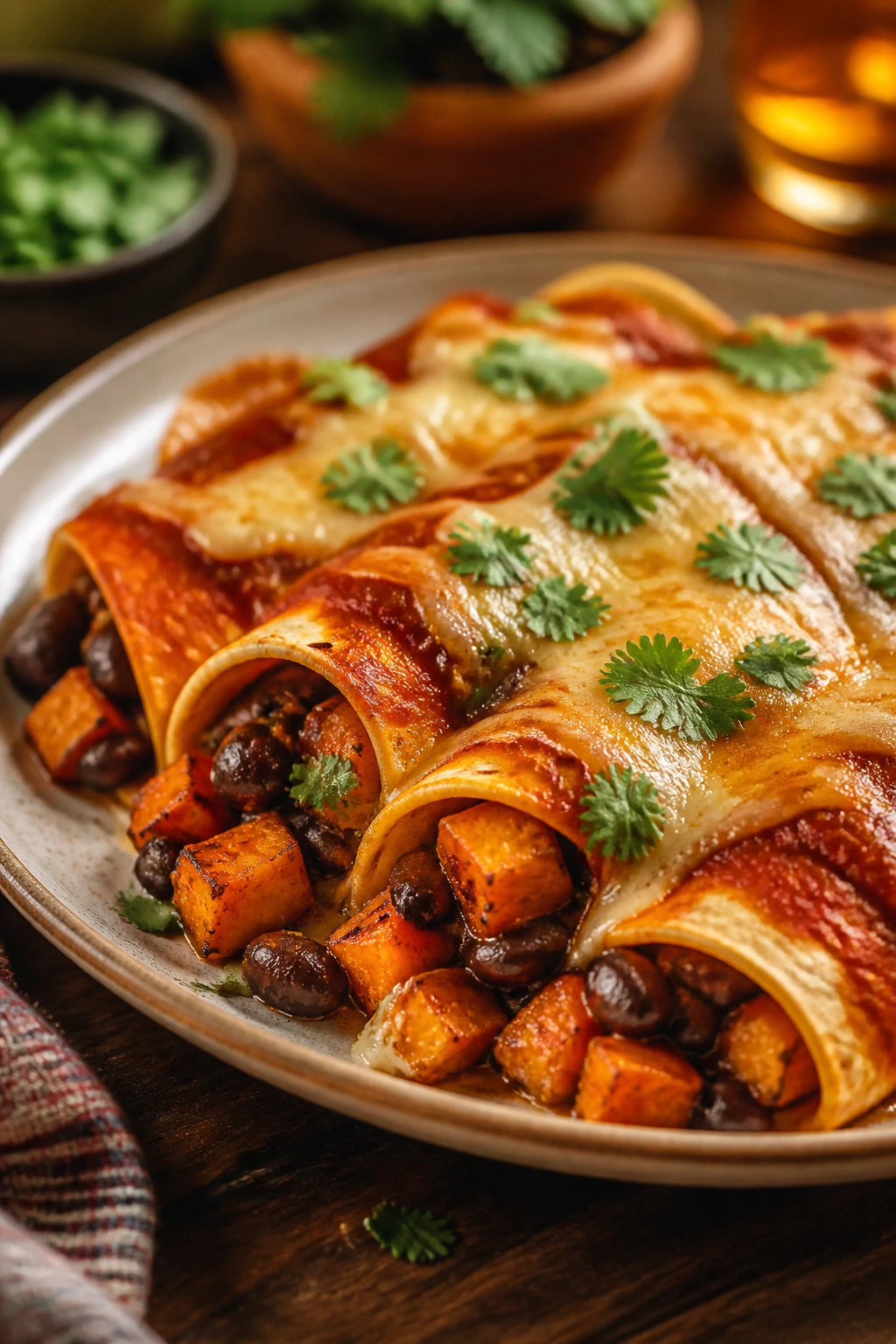
Sweet potatoes and black beans make a filling that feels generous, not thin. Wrapped in tortillas, covered in enchilada sauce, and topped with cheese, they eat like comfort food with a more sensible engine underneath.
Why It Works:
Roasted sweet potatoes give you caramelized edges and a creamy middle. Black beans bring protein and texture, while the sauce keeps the tortillas soft in the oven. Warm tortillas matter more than people think; cold ones crack when you try to roll them.
Key Ingredients:
- 2 medium sweet potatoes, peeled and cubed
- 1 tablespoon olive oil
- 1 small onion, diced
- 1 can black beans, rinsed and drained
- 1 teaspoon ground cumin
- 1 teaspoon chili powder
- 8 corn tortillas
- 2 cups red enchilada sauce
- 1 1/2 cups shredded cheddar or Monterey Jack
- 1/2 cup chopped cilantro
- 1 lime, cut into wedges
- Optional: 1 cup baby spinach
Quick Steps:
- Preheat the oven to 425°F (220°C) and roast the sweet potatoes with olive oil for 25 minutes.
- Mix the sweet potatoes with onion, black beans, cumin, chili powder, and spinach if using.
- Warm the tortillas under a damp towel until flexible.
- Fill, roll, and place seam-side down in a baking dish.
- Pour the enchilada sauce over the top and add the cheese.
- Bake at 400°F (205°C) for 20 minutes, then finish with cilantro and lime.
Equipment for This Recipe:
- Sheet pan
- 9-by-13-inch baking dish
- Mixing bowl
- Clean towel or foil for warming tortillas
How to Serve This Dish:
Serve two enchiladas per adult and one to two per kid, depending on what else is on the table. A spoon of salsa or yogurt on top is enough because the filling already does a lot.
Pro Tips for This Recipe:
- Roast the sweet potatoes until they have some color.
- Keep tortillas warm while you fill them.
- Let the baked dish sit for 5 minutes before cutting.
- Use a sauce you like on its own.
Variations on This Dish:
- Chicken Enchiladas: Add shredded cooked chicken and reduce the beans.
- Verde Version: Swap in salsa verde and chopped green chiles.
- Vegan Version: Use plant-based cheese or skip it and top with avocado.
Common Mistakes to Avoid with This Dish:
- Overstuffing the tortillas: They tear.
- Using cold corn tortillas: They crack.
- Cutting too early: The filling spills.
Why These Dinners Work on Busy Nights
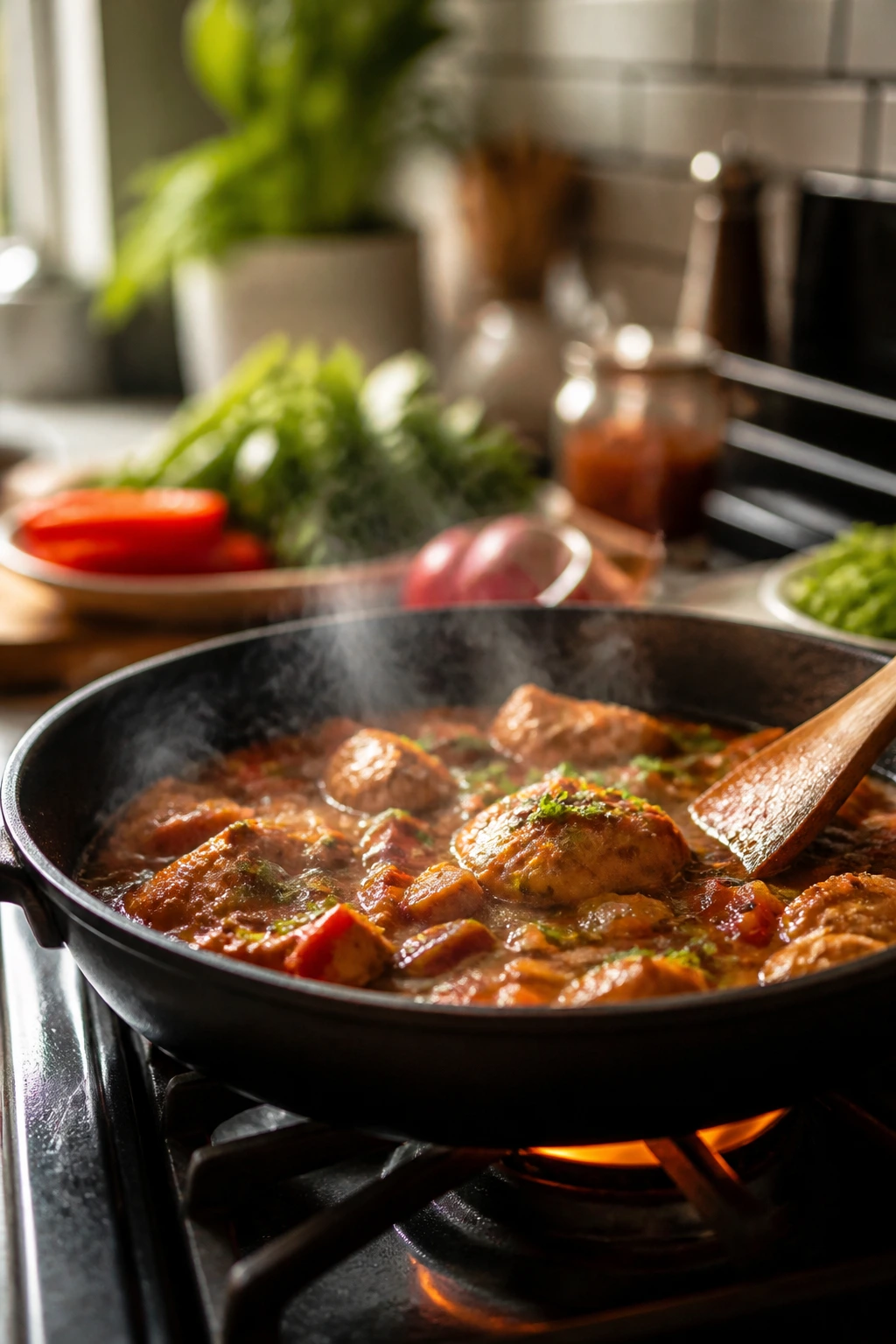
Most family dinners fail for the same boring reason: they ask for too much attention at the exact moment nobody has any left. These meals work because the heat does the heavy lifting. A sheet pan browns. A Dutch oven simmers. A skillet finishes sauce. You’re not standing there babysitting every bite.
The other thing they have in common is texture. Healthy dinners get called boring when everything is soft. These recipes avoid that by pairing roasted vegetables with creamy sauces, tender protein with crunch, or hot grains with cold toppings. It sounds like a small detail. It isn’t. Texture is what keeps people taking one more bite.
And, honestly, a good family dinner rotation should be forgiving. If you forgot to buy cilantro, you can still eat. If the kid wants yogurt on the side instead of on top, fine. If you need to swap rice for pasta or chicken for beans, the meal should survive the change. That kind of flexibility is what makes a recipe worth keeping on repeat.
Essential Equipment for These Recipes
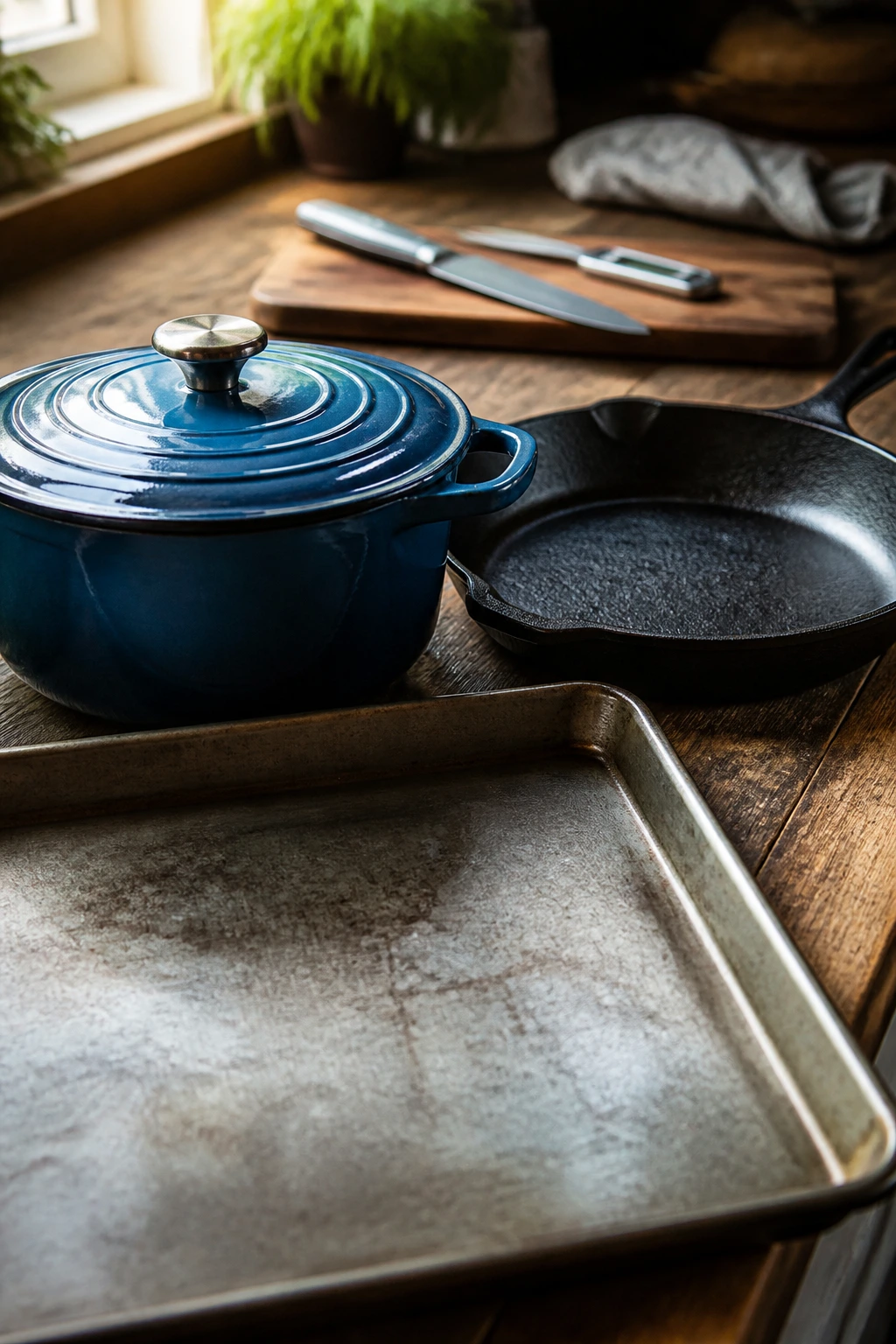
-
Large rimmed sheet pans: Best for fajitas, cod, pork tenderloin, sweet potatoes, and enchiladas because they brown food instead of trapping steam.
-
One heavy Dutch oven or soup pot: Chili and lentil bolognese need steady heat and enough room for simmering.
-
A 12-inch skillet or wok: Stir-fries, fried rice, shrimp couscous, and beef and broccoli cook better in a wide pan.
-
Sharp chef’s knife: Thin slicing is the difference between fast-cooking food and uneven food.
-
Cutting board that won’t slide: A damp towel under the board keeps prep safer.
-
Instant-read thermometer: Chicken, pork, salmon, and cod all benefit from it.
-
Mixing bowls in two sizes: One for sauces, one for tossing vegetables or meatballs.
-
Colander: Pasta, rice, and lentils all need a clean drain.
-
Tongs and a sturdy spatula: Better control in hot pans, less broken food.
-
Storage containers with tight lids: Leftovers keep their shape and reheat better when spread into shallow containers.
Smart Shopping and Ingredient Tips
The smartest grocery move is to buy ingredients that already know how to help you. Chicken thighs stay juicier than breasts if you tend to lean on the oven a little too long. Flank steak and sirloin slice better for stir-fries than thicker cuts, and cod should look firm and moist, not dry around the edges. If fish smells strongly fishy at the store, keep walking.
Canned ingredients matter more than they get credit for. Fire-roasted tomatoes bring more depth than plain diced tomatoes. Low-sodium broth gives you room to season properly. Rinsed beans behave better in chili, bowls, and enchiladas because the canning liquid won’t muddy the sauce. It’s a small step that pays off in the final bowl.
Frozen vegetables are not a backup plan here; they’re a tool. Frozen corn, peas, carrots, and edamame save chopping time and hold their texture well in fried rice, taco bowls, and stir-fries. Fresh vegetables still matter for dishes where you want crunch or a crisp finish, but frozen is often the smarter buy for busy nights.
For starches, choose the one your family will eat without a speech. Brown rice brings chew. White rice cooks faster. Whole-wheat pasta has a little more bite. Corn tortillas crack less if you warm them. Couscous is fast and forgiving. The right starch is the one that fits the sauce and the table.
Don’t ignore the small brighteners. Lemons, limes, vinegar, yogurt, herbs, scallions, mustard, and tahini are what stop a dinner from tasting heavy or flat. A meal can be lean on fat and still taste rich if you finish it well.
How to Serve These Recipes
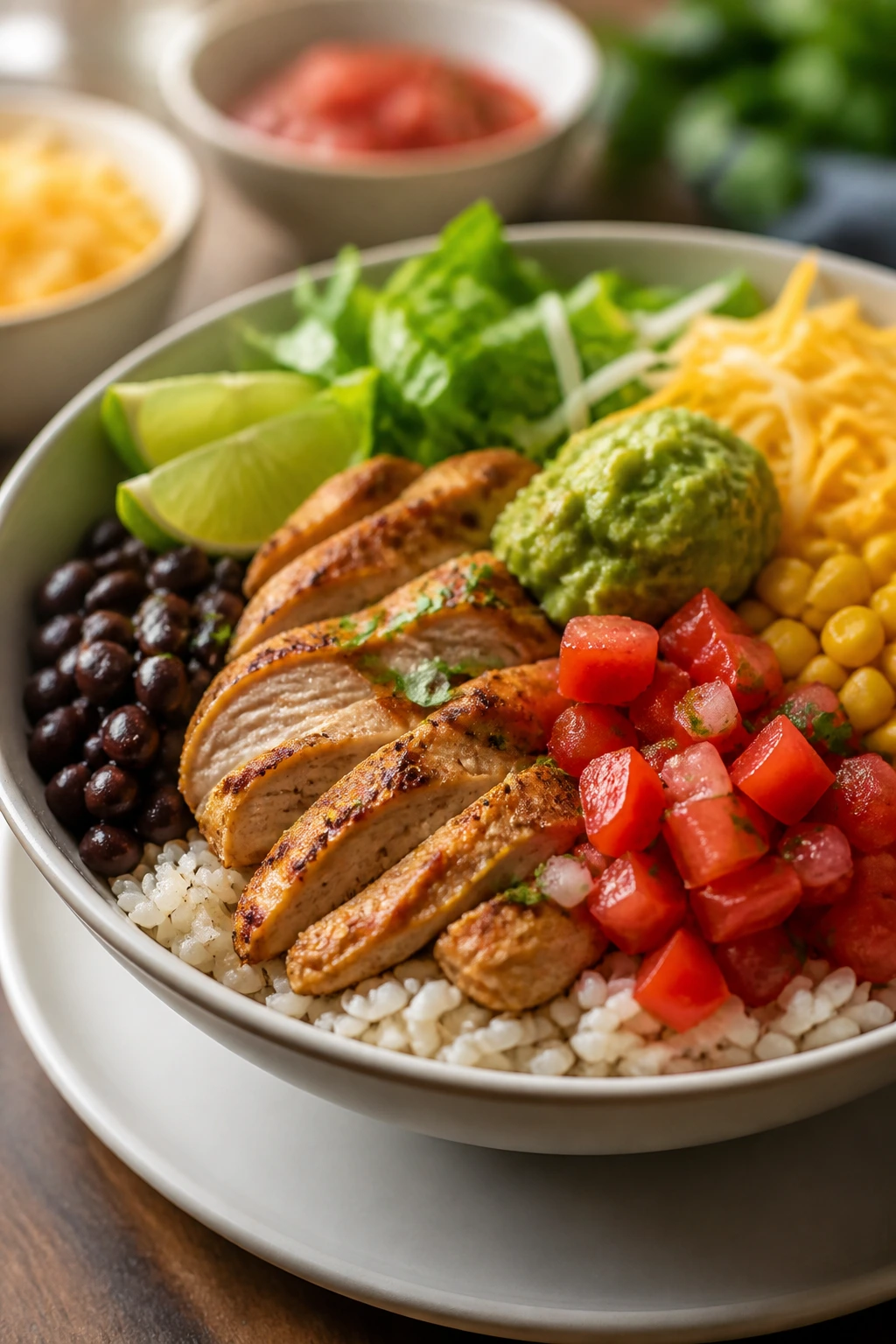
Presentation:
Serve bowls in wide, shallow dishes so the toppings stay visible and the heat lingers. Pile fajitas, enchiladas, and taco bowls with a little height. For roasted fish or pork, spoon the vegetables around the protein so the plate looks deliberate instead of dumped.
Accompaniments:
A green salad with lemon dressing, cabbage slaw, cucumber salad, steamed green beans, or simple fruit on the side works across almost all of these dinners. Warm tortillas, pita, rice, couscous, and crusty bread are the easiest starch partners.
Portions:
Most of these recipes feed 4 to 6 people. For adults, plan on one full protein portion plus a generous scoop of vegetables and starch. For kids, separate the parts when needed; a bowl with ingredients mixed together is not always the friendliest format.
Beverage Pairing:
Sparkling water with lime fits nearly everything here. Unsweetened iced tea works especially well with chili, fajitas, and enchiladas. For adult dinners, a crisp white wine pairs neatly with salmon, cod, and shrimp.
Additional Tips and Flavor Boosters
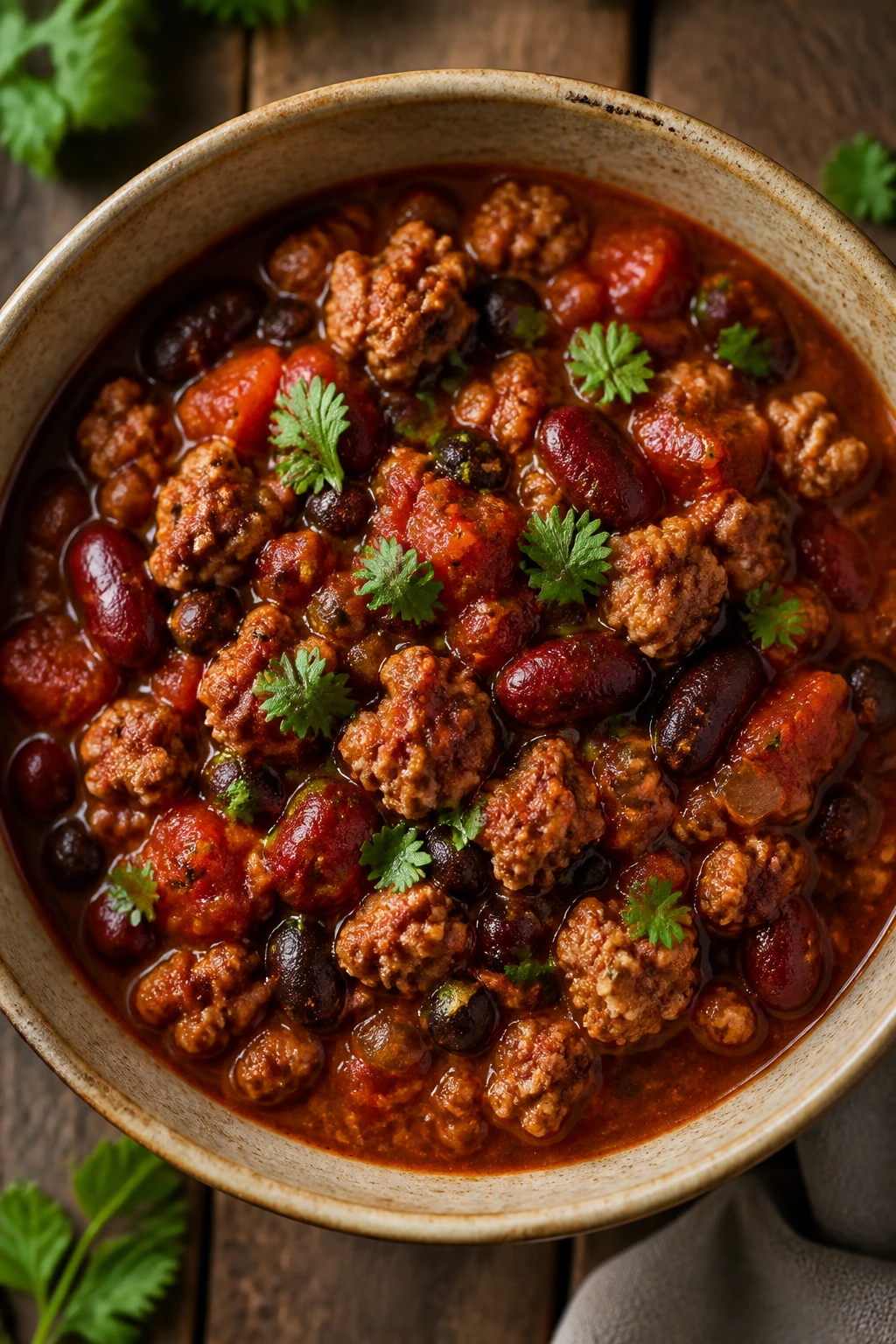
Flavor Enhancement: A squeeze of citrus at the end changes more than people expect. It wakes up salt, cuts richness, and makes roasted food taste finished. Keep lemons and limes nearby for the last 30 seconds, not just the garnish bowl.
Customization: Set up one or two simple topping choices for each meal—Greek yogurt, hot sauce, cilantro, avocado, sesame seeds, or chopped scallions. That lets each person steer their own plate without making dinner a build-your-own event that takes forever.
Serving Suggestions: Add one crunchy thing, one creamy thing, and one bright thing to most plates. That might be cabbage, yogurt, and lime on taco bowls; or sesame seeds, cucumber, and chili sauce on salmon bowls. Small contrast changes the whole meal.
Make-It-Yours: For dairy-free meals, tahini and avocado do more useful work than fake cheese in most of these dinners. For lower-carb plates, swap part of the rice or pasta for greens or cauliflower rice. For budget nights, lean on beans, eggs, potatoes, cabbage, and frozen vegetables—they stretch dinner without making it feel thin.
Make-Ahead, Storage, and Reheating Guidance
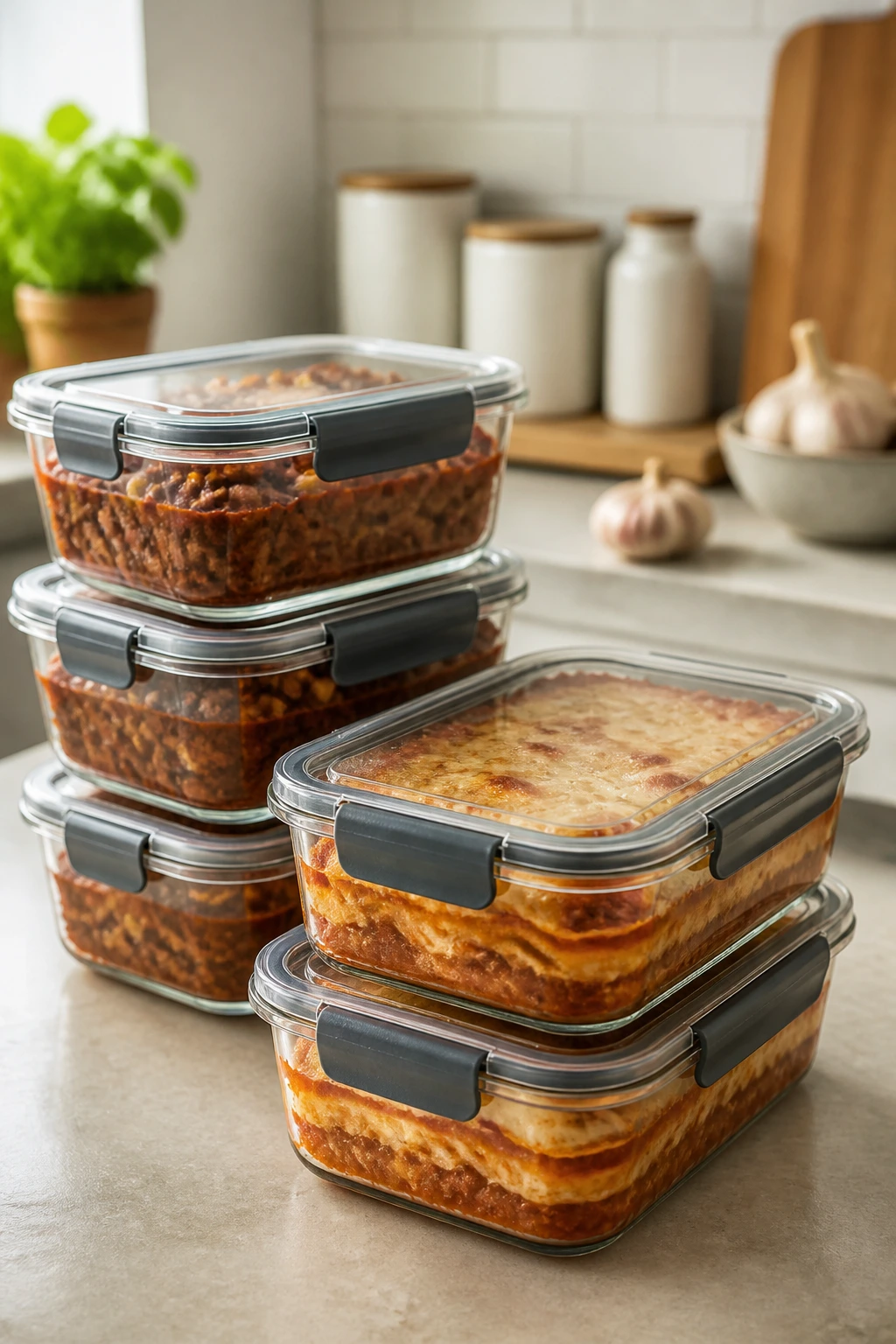
Most of these dinners keep well for 3 to 4 days in the refrigerator in airtight containers. Chili, lentil bolognese, turkey meatballs, and skillet lasagna are especially good the next day because the sauce settles and thickens. If a recipe uses delicate toppings like avocado, cilantro, or yogurt, keep those separate until serving.
For the freezer, think up to 2 to 3 months for chili, meatballs, lentil sauce, and enchiladas. Those freeze cleanly and reheat with their texture intact. Salmon, cod, shrimp, and fried rice are less freezer-friendly once assembled, though the cooked grains or protein can be frozen separately if you need to save parts of the meal.
Reheat saucy dishes in a skillet or saucepan with a splash of water or broth. That works best for chili, bolognese, stir-fries, and skillet lasagna. Pasta dishes do well in the oven, covered, at 350°F until hot through. For rice bowls, fried rice, and taco fillings, the skillet usually beats the microwave because it brings back some texture.
If you’re making ahead, keep wet and crunchy components apart. Warm tortillas and pita should stay wrapped separately. Avocado should be sliced at the last minute. Fresh herbs should go on top after reheating, not before. That tiny bit of planning keeps leftovers from turning dull.
Variations and Adaptations to Try
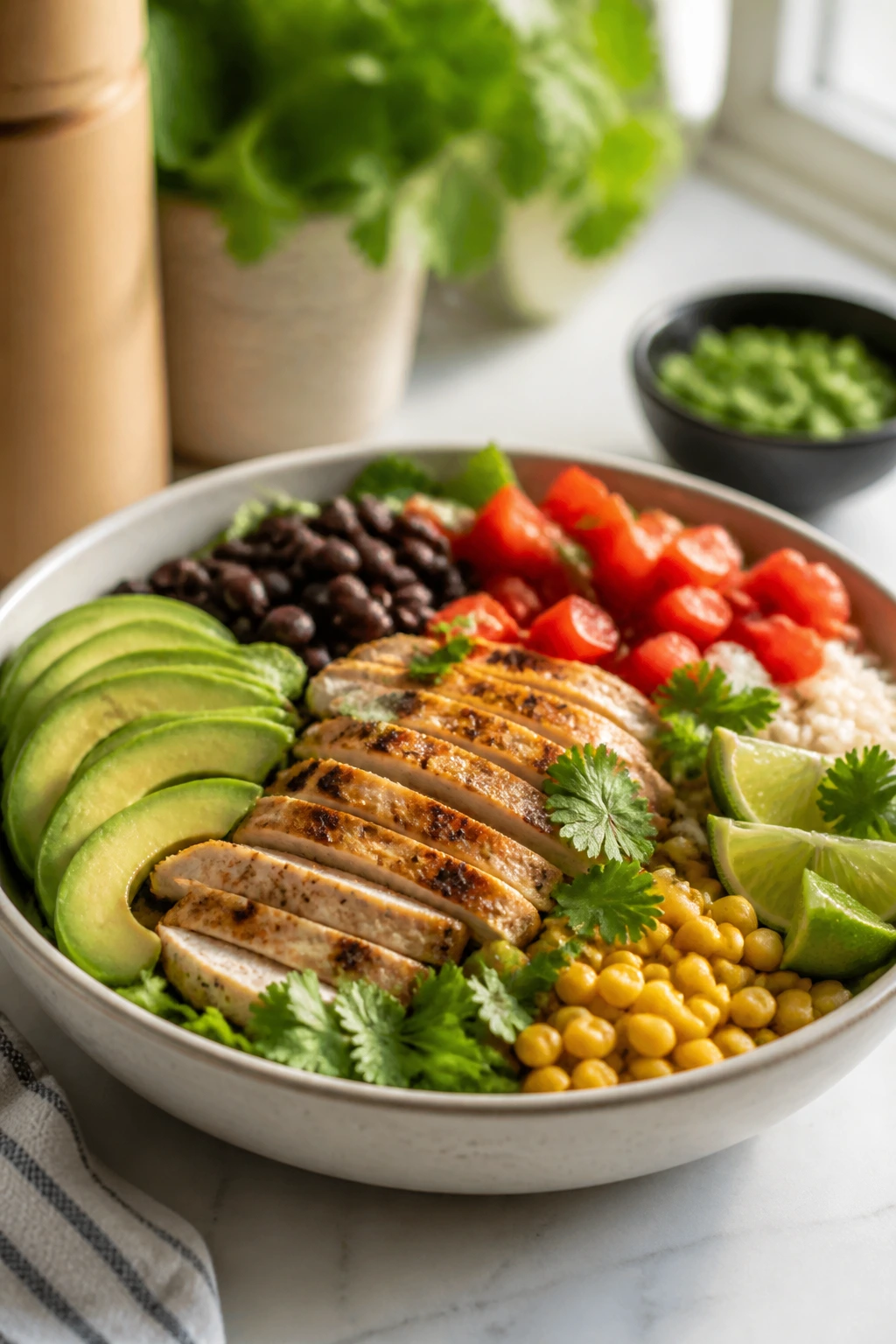
Gluten-Free Weeknight Rotation:
Swap regular pasta for gluten-free pasta, use corn tortillas instead of flour tortillas, and choose tamari in place of soy sauce. Most of the sheet-pan dinners and bowls already fit this adjustment without much work.
Dairy-Free Finishes:
Use tahini, salsa, olive oil, or avocado instead of yogurt and cheese. Shawarma bowls, taco bowls, fajitas, and salmon bowls all handle the swap well as long as the seasoning stays lively.
Lower-Sodium Plates:
Use low-sodium broth, rinse canned beans, and lean on citrus, vinegar, herbs, garlic, and mustard to do more flavor work. That keeps the food tasting clean without stripping it bare.
Kid-Friendly Tuning:
Keep the spicy stuff on the table instead of in the pan. Serve sauces separately when you can. Chop vegetables a little smaller. Kids usually eat more when the parts are clear and not buried under too many mixed textures.
Budget-Smart Versions:
Beans, eggs, cabbage, potatoes, rice, frozen vegetables, and one strong sauce can stretch almost every dinner here. Chili, fried rice, taco bowls, and enchiladas are the best places to lean on this approach.
Heat-Adjusted Cooking:
Use the same base recipe and let each person add hot sauce, red pepper flakes, chipotle, harissa, or sriracha at the table. That keeps the main dish approachable and still gives adults enough fire.
Common Mistakes to Avoid
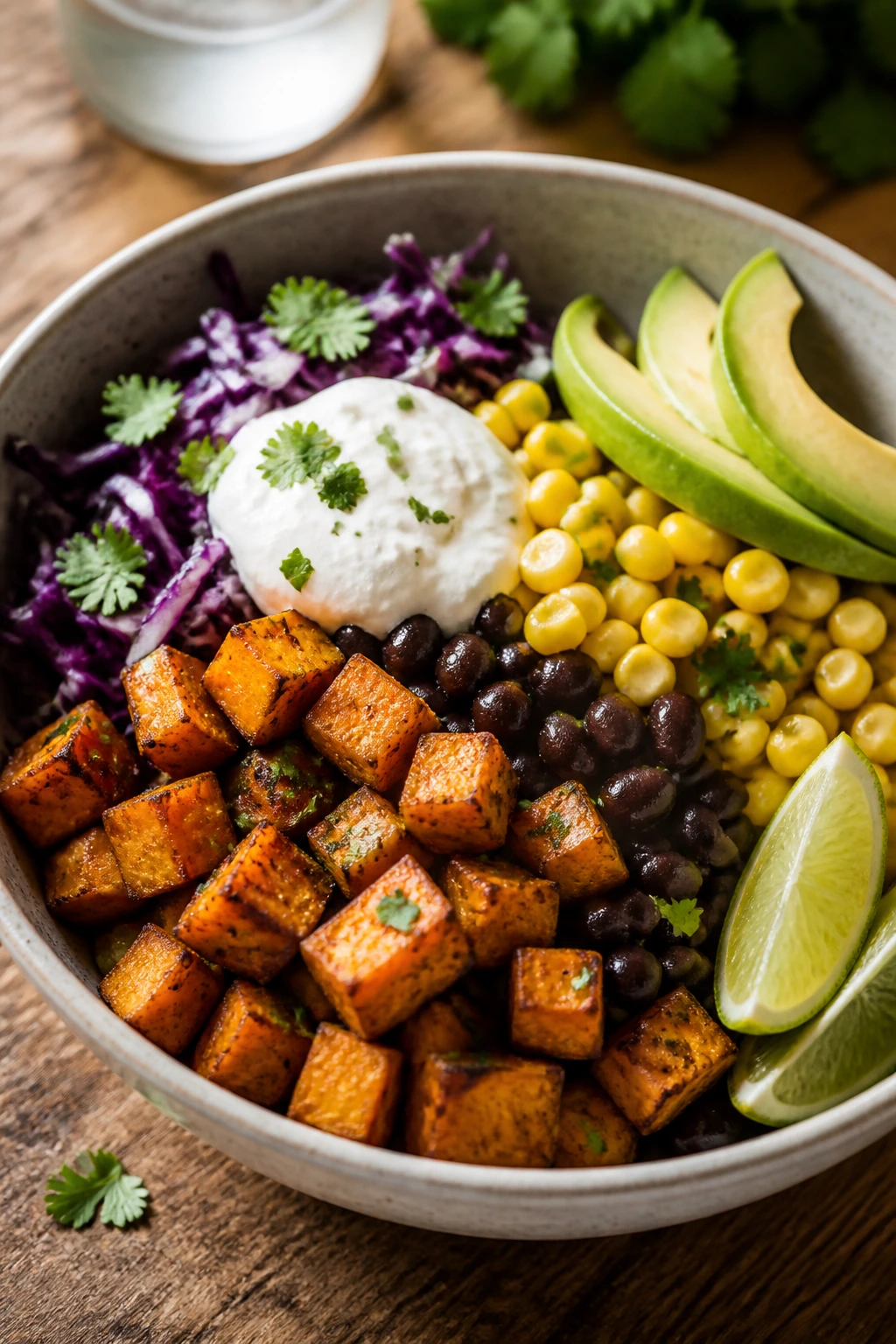
The biggest mistake is underseasoning everything and expecting the final sauce to rescue dinner. It usually can’t. Salt the protein, season the vegetables, and taste the sauce before it hits the table. If the base tastes flat, the finished plate will too.
Crowding pans is another problem that shows up fast. When too much food shares the same surface, it steams. That’s how fajitas go limp, broccoli loses its snap, and potatoes refuse to brown. Use a second pan if needed. It’s worth the extra dish.
Overcooking lean protein is the quiet killer of many “healthy” dinners. Chicken breasts, salmon, cod, shrimp, and pork tenderloin all dry out if you chase a color cue instead of a thermometer or a proper visual check. Pull them at the right moment and let carryover heat finish the job.
People also forget texture. A plate made entirely of soft food gets dull halfway through. Add crunch with cabbage, scallions, sesame seeds, toasted tortillas, cucumbers, or a quick salad. It changes the whole experience without changing the recipe much.
The last mistake is skipping acid at the end. Lemon, lime, vinegar, and yogurt are not decoration. They balance fat, wake up salt, and stop a meal from feeling heavy. If dinner tastes technically fine but oddly flat, this is usually the missing piece.
Frequently Asked Questions
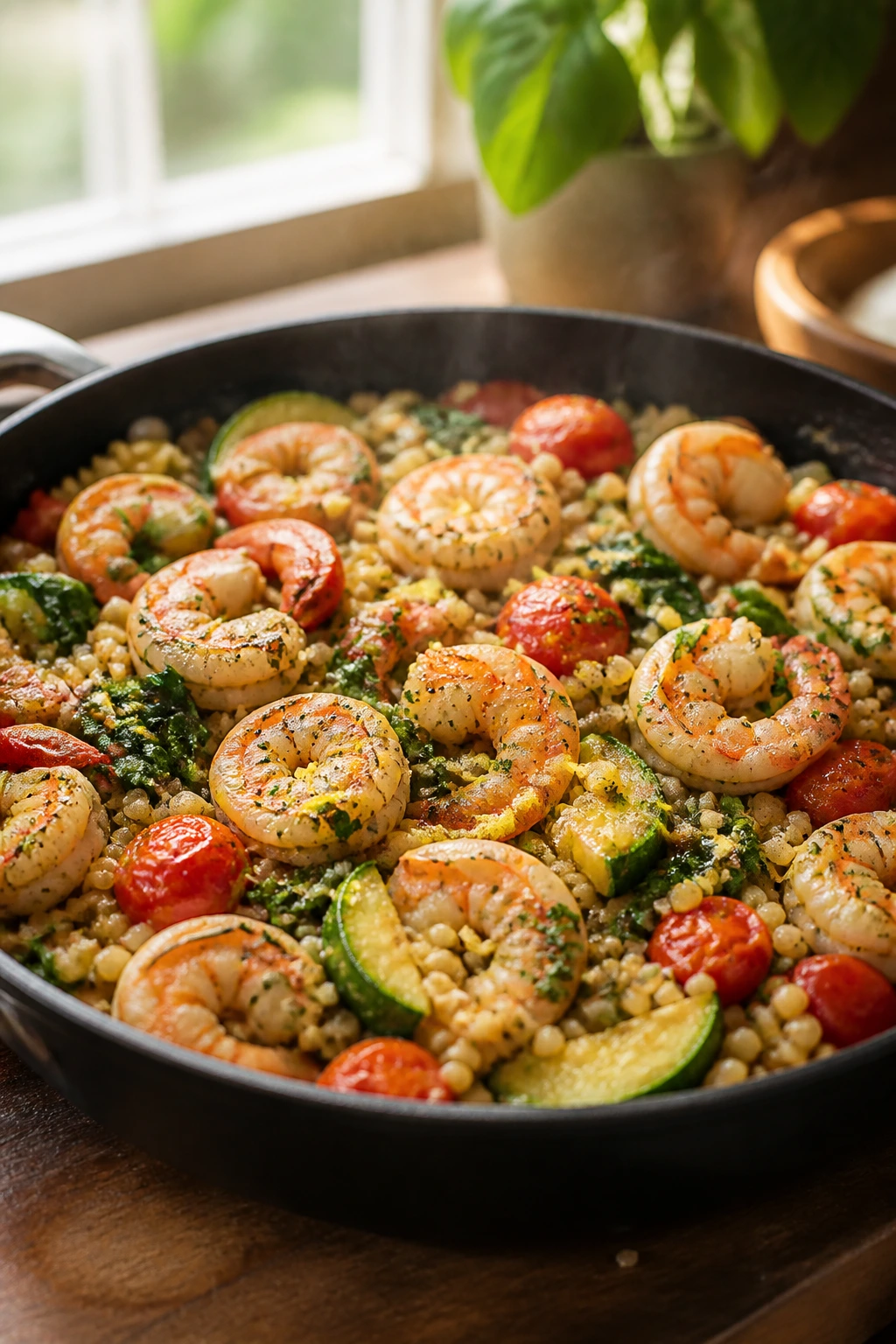
Can I swap proteins across these recipes?
Usually, yes. Chicken thighs can replace turkey in some skillet meals, shrimp can replace chicken in bowls, and beans can step in for meat in tacos or enchiladas. The cooking time is the part that changes most, so keep an eye on doneness rather than following the original timing blindly.
Which of these dinners are best for meal prep?
Chili, lentil bolognese, meatballs, enchiladas, and skillet lasagna are the strongest candidates. They keep their texture, reheat cleanly, and taste good after the flavors settle overnight. Add fresh toppings at serving time so the leftovers don’t lose their edge.
What if my family hates visible vegetables?
Use chopped vegetables that melt into sauce, like spinach in meatballs, zucchini in skillet lasagna, or carrots and celery in lentil bolognese. Roasting also helps, because browned vegetables taste sweeter and look less like a challenge.
Can I make these dinners without an oven?
Several work on the stovetop only: chili, stir-fries, fried rice, beef and broccoli, lentil bolognese, and shrimp couscous. For sheet-pan meals, the stovetop version usually means a skillet with a lid and a little extra attention to timing.
How do I keep chicken from turning dry?
Use thighs when you can, slice breasts evenly if you use them, and check temperature early. Pull chicken at 165°F and let it rest for a few minutes before slicing. A quick marinade or sauce also helps, especially in shawarma bowls and stir-fries.
Are whole-wheat pasta and brown rice mandatory here?
No. They’re options, not rules. If your family eats regular pasta or white rice more happily, use those and keep the meal balanced with vegetables and lean protein. A meal that gets eaten beats a meal that’s “technically better” and left behind.
Can I freeze the leftovers from the bowl recipes?
Some parts, yes. Cooked rice, chili, lentil sauce, meatballs, and enchilada filling freeze well. Fresh toppings like avocado, cucumber, yogurt, and herbs do not. Freeze the cooked base, then add the fresh pieces after reheating.
What’s the easiest way to make these meals kid-friendlier?
Keep sauces separate, cut vegetables smaller, and let each person build their own bowl, taco, or pasta plate. Kids often do better when they can see the parts. Strong flavors like lime, onion, and chili can stay on the table instead of being forced into the main pan.
A Weeknight Dinner Rotation That Holds Up
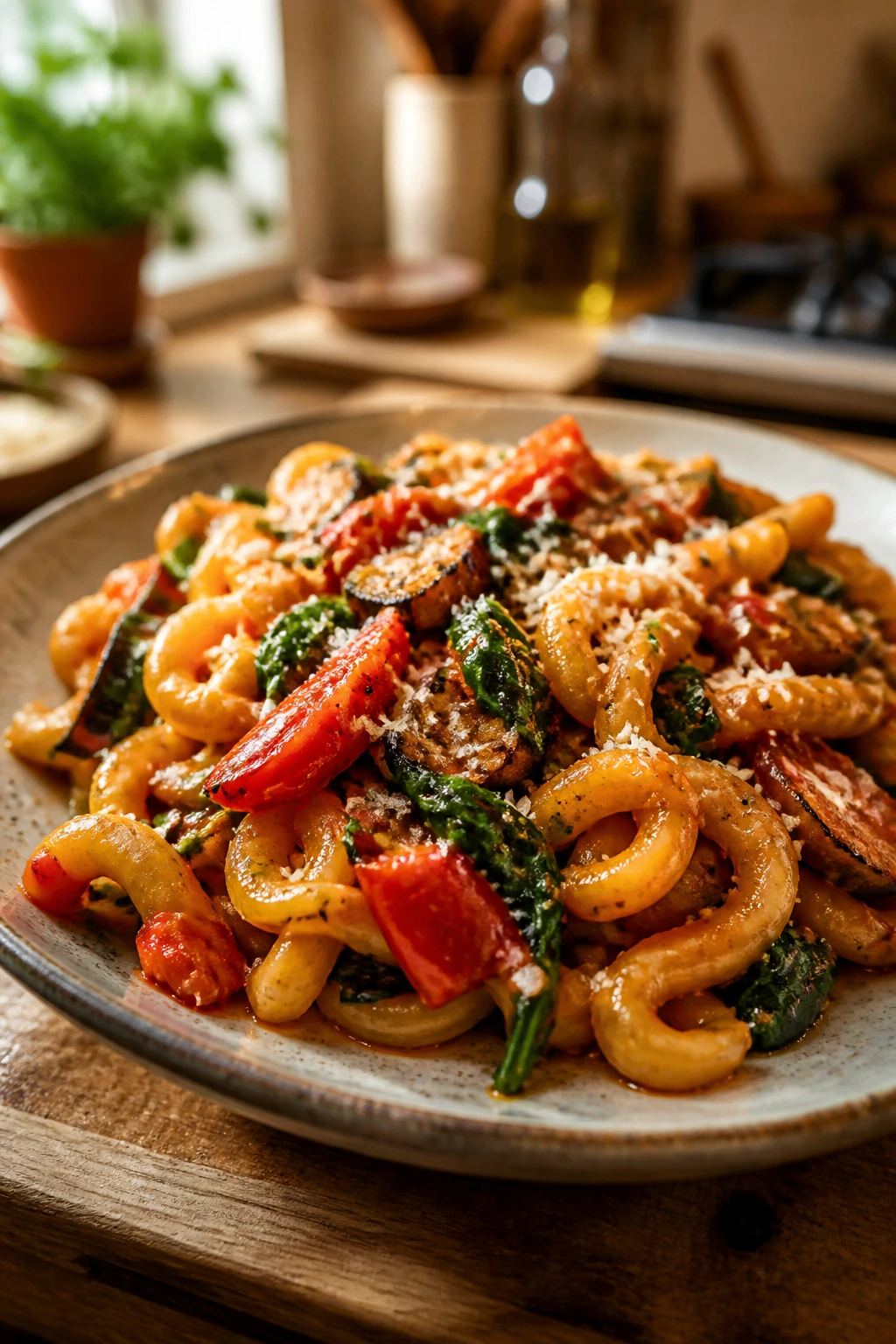
What makes a family dinner worth repeating is not perfection. It’s reliability with personality. You want a few recipes that can survive a busy day, a tired cook, and a table full of opinions—and still taste like dinner instead of a compromise.
These fifteen lean hard on that idea. Some are saucy. Some are roasted. Some live in a skillet and get eaten fast. None of them ask you to stage a performance in the kitchen. They just need decent heat, enough salt, and a finish that wakes the food up.
That’s a pretty good deal for a weeknight. Keep three or four of these in rotation, and dinner stops feeling like a nightly emergency.