



A family dinner can go sideways fast. One heavy-handed pour of olive oil, a pasta portion that creeps past the bowl rim, a shower of cheese that seemed harmless at the time, and suddenly the plate is nowhere near 500 calories. The trick is not to make dinner feel like a diet plate. It’s to build meals that still look generous: browned chicken, crisp-edged vegetables, beans that bring body, and starches portioned with a real measuring cup instead of a hopeful guess.
That matters because the meals that earn a permanent place in a family kitchen are the ones people actually want to eat twice. Lemony sheet-pan chicken with potatoes. Turkey taco skillets that smell like cumin and garlic when they hit the table. Salmon with cool dill yogurt and a pile of green beans that still have some snap. These aren’t “light” in the sad, thin, forgettable way. They’re meals with enough texture and seasoning to feel finished.
The recipes below lean on that idea. They keep the calorie count in check by using lean protein, measured fat, and vegetables that do more than decorate the plate. And they’re built for real households, which means they can handle seconds, picky eaters, and the odd night when somebody wants extra rice while somebody else wants extra peppers. Start with the first pan, and the pattern gets pretty clear.
Why These Healthy Family Meals Under 500 Calories Actually Satisfy
- Protein shows up first: Chicken, turkey, salmon, cod, shrimp, beans, and lentils carry the meal so the plate doesn’t feel like a pile of sides.
- Vegetables earn their space: These recipes roast, sauté, or simmer vegetables until they taste like something, not like a mandatory add-on.
- Portions stay honest: Rice, pasta, tortillas, potatoes, and bread are measured in specific amounts, which is the difference between a 420-calorie dinner and a 720-calorie one.
- Fat is used with a purpose: A tablespoon or two of olive oil does more work than a random pour, especially when the pan is hot enough to brown the edges.
- The recipes still look like dinner: Bowls, skillets, sheet pans, casseroles, and sliders make the food familiar enough that nobody feels tricked.
- Leftovers still matter: Most of these meals reheat well, which is the quiet superpower of a family dinner plan.
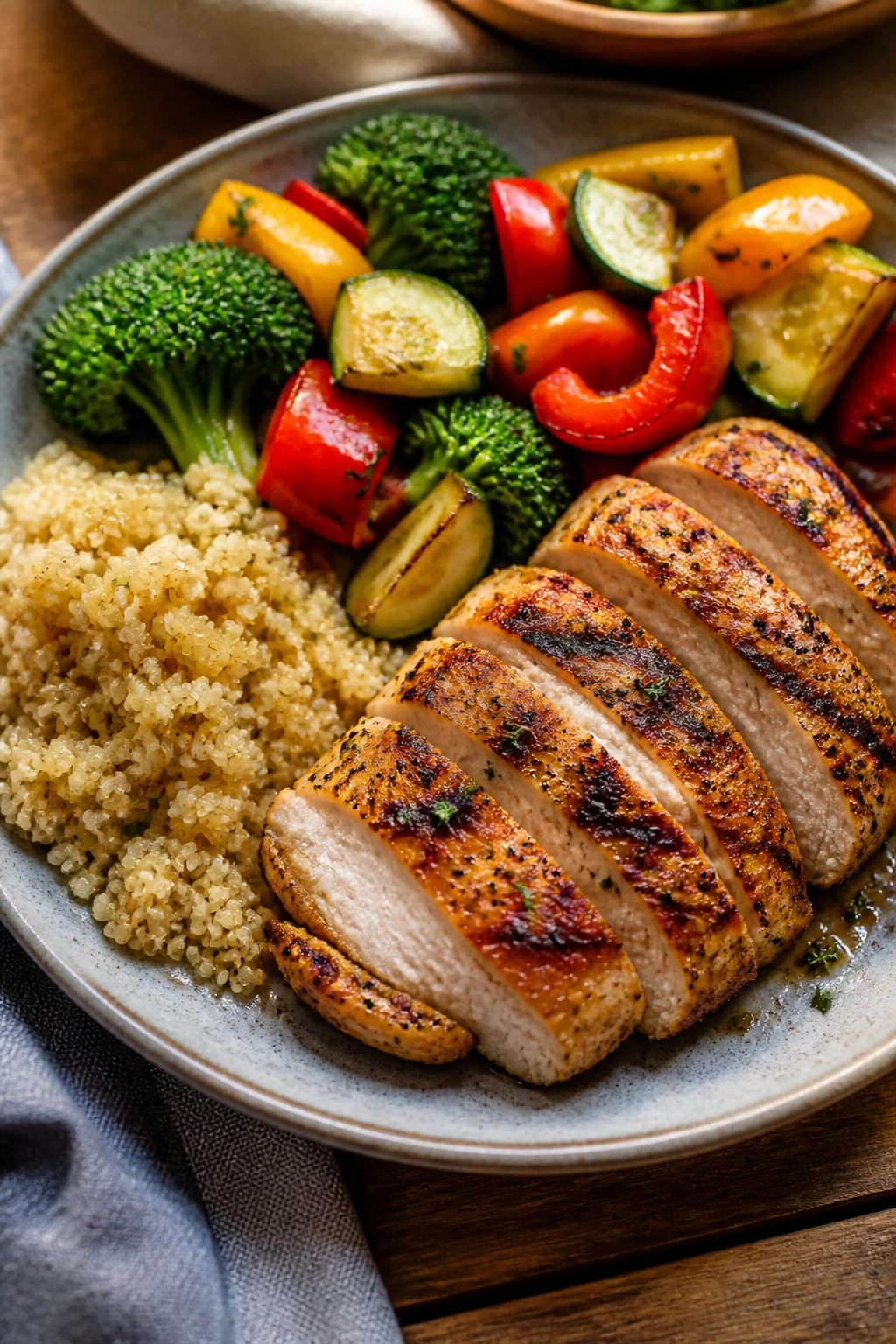
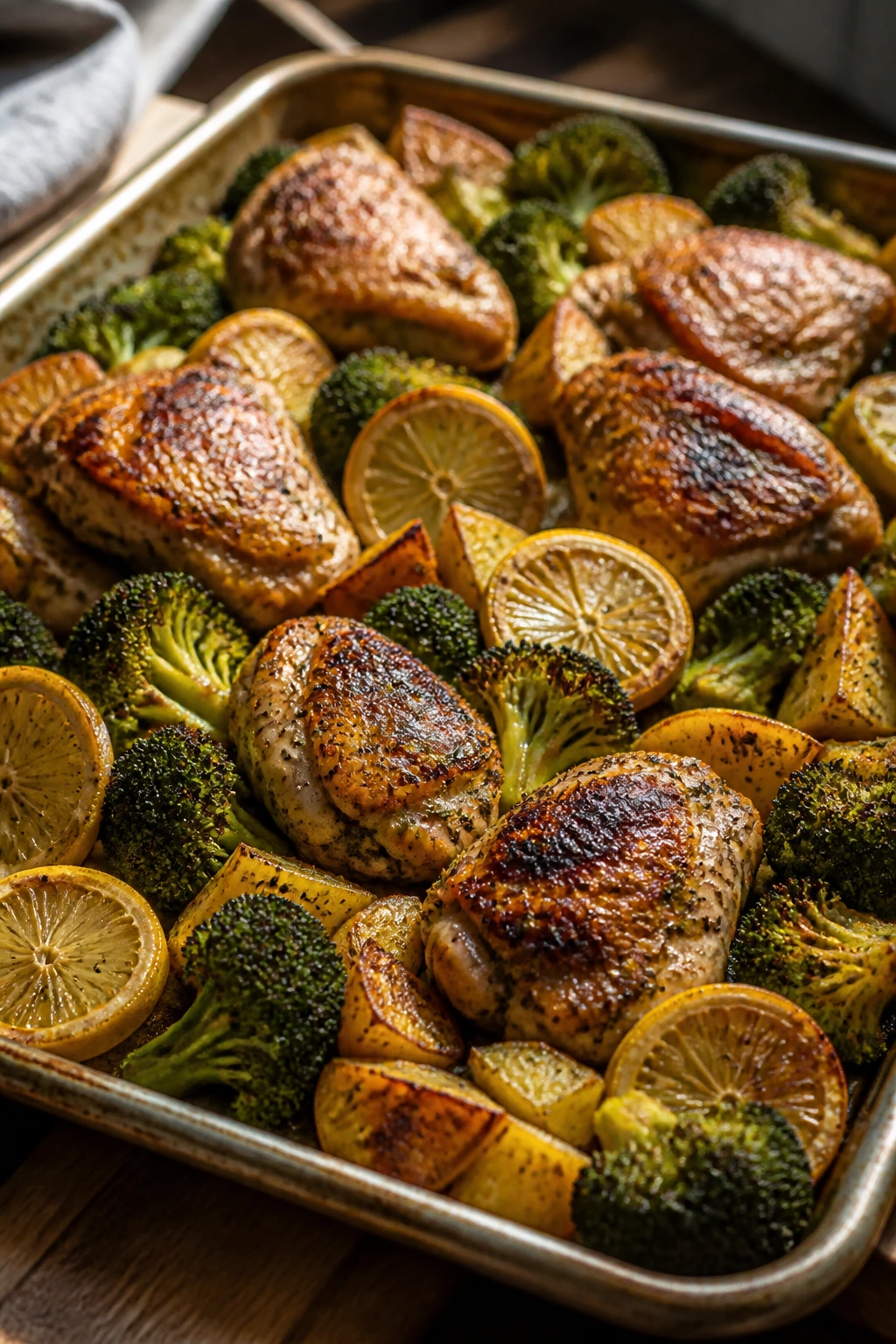
1. Sheet-Pan Lemon Garlic Chicken with Broccoli and Potatoes
A hot sheet pan of lemon garlic chicken has a way of making the whole kitchen smell organized. The potatoes pick up browned edges, the broccoli gets those crisp little dark spots that taste better than they sound, and the chicken stays juicy if you don’t crowd the pan like a bad habit.
This lands around 420 calories per serving when you split it four ways. The formula is simple, and that’s why it works: lean chicken for protein, potatoes for staying power, broccoli for volume, and a measured amount of oil so the vegetables roast instead of swimming.
Why It Works:
The broccoli and potatoes roast at the same temperature, but they don’t need the same timing, so the potato head start matters. Chicken breast gives you a clean protein base without the extra fat of dark meat, and the lemon keeps the whole pan from tasting heavy. A sheet-pan dinner also solves the one thing a lot of “healthy” dinners forget: you want enough food on the plate that nobody starts hunting for crackers afterward.
Key Ingredients:
- 1 1/2 lb boneless, skinless chicken breasts, trimmed and cut into large chunks — keep the pieces big enough to stay juicy.
- 1 1/4 lb baby Yukon Gold potatoes, halved — these get creamy inside and crisp on the cut side.
- 1 1/2 lb broccoli florets, cut into bite-size pieces — small enough to roast, not steam.
- 3 tbsp olive oil — enough to coat the vegetables without leaving puddles.
- 3 garlic cloves, minced — fresh garlic gives the pan its backbone.
- 1 lemon, zested and juiced — use both parts, because the zest does more work than people think.
- 1 tsp dried oregano
- 1 tsp kosher salt
- 1/2 tsp black pepper
- 1/4 tsp red pepper flakes, optional — use this if your crew likes a little heat.
Quick Steps:
- Preheat the oven to 425°F (220°C) and line a large rimmed sheet pan with parchment for easier cleanup.
- Toss the potatoes with 1 tablespoon of olive oil, half the salt, half the pepper, and the oregano. Spread them out cut-side down and roast for 15 minutes.
- Mix the chicken with the remaining olive oil, garlic, lemon zest, half the lemon juice, and the remaining salt and pepper.
- Add the chicken and broccoli to the pan, tossing the broccoli lightly in the pan drippings. Roast for 18 to 22 minutes, until the chicken reaches 165°F (74°C) and the broccoli edges are browned.
- Finish with the remaining lemon juice and a pinch of red pepper flakes, if using.
- Rest for 5 minutes so the juices stay in the chicken instead of running everywhere.
Equipment for This Recipe:
- Large rimmed sheet pan — the vegetables need room to brown.
- Parchment paper — optional, but I use it because I like my cleanup boring.
- Mixing bowl — for tossing the chicken and seasonings.
- Sharp knife and cutting board — to keep the potato and chicken pieces even.
How to Serve This Dish:
Pile the chicken and vegetables onto warmed plates and spoon any lemony pan juices over the top. I like this with a small green salad if I’m feeding hungry people, but it does not need one to feel complete. Four servings is the sweet spot here; if you want a bigger plate, add more broccoli rather than more potatoes.
Pro Tips for This Recipe:
- Dry the chicken first. Wet chicken steams, and steamed chicken is never as good as it should be.
- Cut the potatoes evenly. If some pieces are tiny and some are huge, you’ll end up with half a pan of mush and half a pan of raw centers.
- Don’t overcrowd the pan. If the broccoli is stacked, it turns gray instead of browned.
- Use the lemon twice. Zest before you juice, or you’ll be sorry.
Variations on This Dish:
- Herb Garden Version: Swap the oregano for rosemary and thyme, then add a spoonful of chopped parsley at the end.
- Parmesan Finish: Scatter 1/4 cup grated Parmesan over the hot pan during the last 2 minutes of roasting.
- Mediterranean Chicken Pan: Add sliced red onion and a handful of kalamata olives, then serve with cucumber on the side.
Common Mistakes to Avoid with This Dish:
- Overdoing the oil. The potatoes will look shiny, but they won’t brown well. Stick to the measured amount.
- Roasting tiny broccoli florets with the potatoes from the start. They’ll overcook and fall apart. Add them later.
- Skipping the rest time. Slice the chicken too early and the juices run out onto the board instead of staying in the meat.
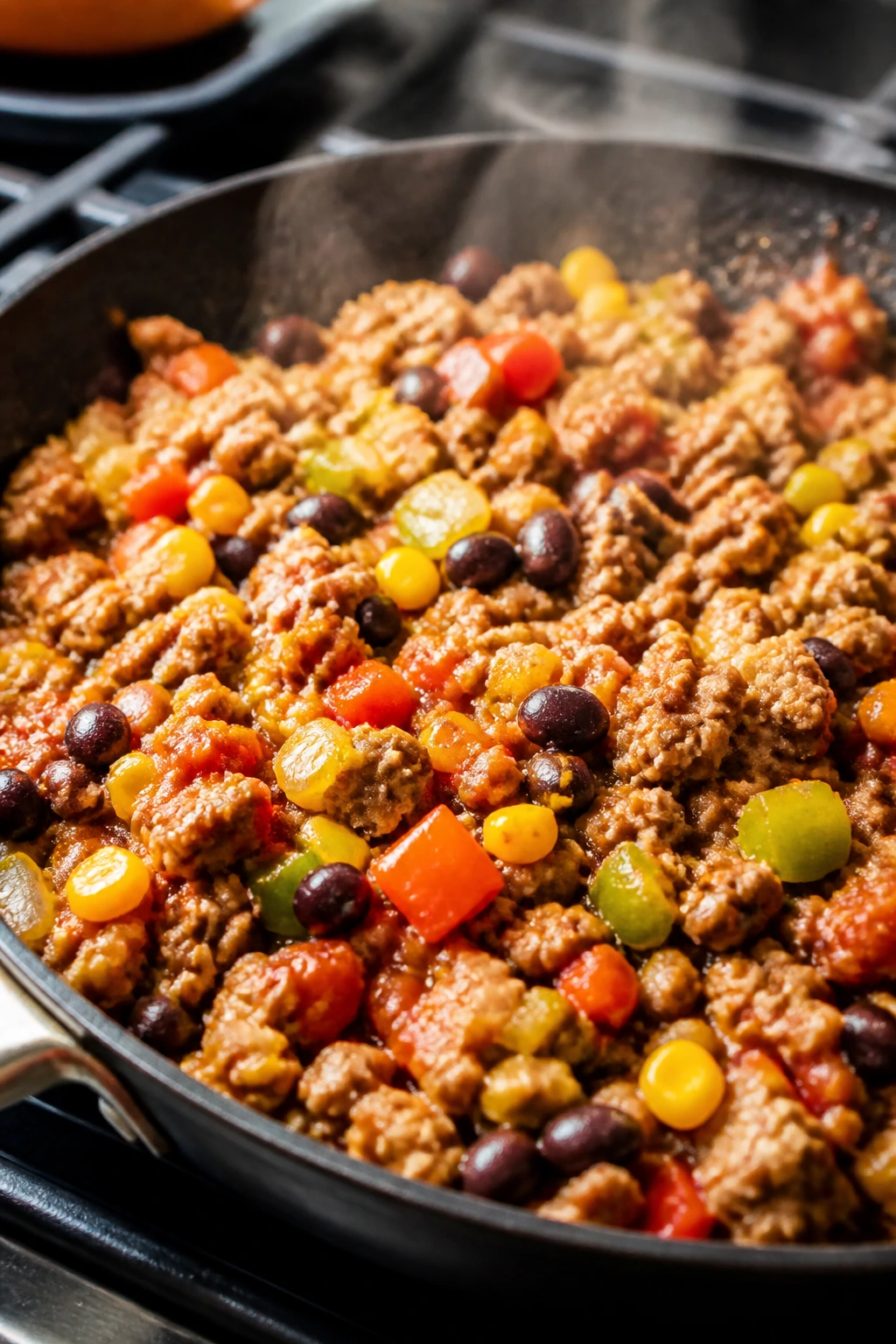
2. Turkey Taco Skillet with Black Beans and Corn
This is the kind of skillet dinner that makes the kitchen smell like taco night long before anyone sees a tortilla. The peppers soften, the turkey picks up spice, and the beans turn the whole pan into something that eats like a full meal instead of a side dish with ambition.
At about 360 calories per serving before toppings, it’s one of the easiest ways to keep dinner under the 500-calorie mark without trimming the flavor down to dust. Serve it in lettuce cups, over a small scoop of rice, or with two warm corn tortillas if the table wants a little more structure.
Why It Works:
Lean ground turkey soaks up seasoning fast, which means you don’t need much fat to get a full taco flavor. Black beans and corn add texture and fiber, and salsa gives you tomato, onion, and chile in one step. The skillet format also means the filling stays moist without a creamy sauce. That matters more than people admit; once a filling dries out, everyone starts loading it with cheese.
Key Ingredients:
- 1 1/2 lb lean ground turkey — choose 93% lean if you want flavor without excess grease.
- 1 tbsp olive oil — just enough to start the onions.
- 1 yellow onion, diced — it sweetens as it cooks.
- 2 bell peppers, diced — use any color, but red and yellow give the best sweetness.
- 3 garlic cloves, minced
- 2 tbsp taco seasoning — homemade or store-bought both work.
- 1 can (15 oz) black beans, drained and rinsed — rinsing cuts the salty edge.
- 1 cup corn kernels, frozen or fresh
- 1 1/2 cups salsa — this keeps the skillet saucy without extra work.
- 1/2 cup chicken broth
- 1/2 cup shredded cheddar, optional
- 2 tbsp chopped cilantro, optional
- Lime wedges, for serving
Quick Steps:
- Warm the olive oil in a large skillet over medium-high heat. Add the onion and peppers and cook for 4 to 5 minutes, until they start to soften.
- Add the turkey and cook, breaking it up with a spoon, until it’s no longer pink and the edges start to brown, about 6 to 8 minutes.
- Stir in the garlic and taco seasoning, then cook for 30 seconds so the spices bloom in the hot pan.
- Mix in the black beans, corn, salsa, and chicken broth. Simmer for 6 to 8 minutes, stirring once or twice, until the mixture thickens slightly.
- Sprinkle with cheese if using, cover for 1 minute, and let it melt.
- Finish with cilantro and lime juice.
Equipment for This Recipe:
- Large deep skillet — a 12-inch pan keeps everything in one place.
- Wooden spoon or spatula — useful for breaking up the turkey.
- Can opener and colander — for the beans.
- Citrus juicer, optional — if you like to get every last drop from the lime.
How to Serve This Dish:
Spoon the skillet into lettuce cups, small tortillas, or bowls with a little shredded lettuce. A spoonful of plain Greek yogurt works better than sour cream if you want the plate lighter. I like to put lime wedges directly on the table; people always want more acid than they think.
Pro Tips for This Recipe:
- Let the turkey brown a little. Pale turkey tastes flat; browned edges bring actual flavor.
- Rinse the beans well. The starchy liquid from the can muddies the sauce.
- Don’t drown it in cheese. A small handful is enough if the salsa is already doing its job.
- Use a thick salsa. Watery salsa makes the skillet soupy.
Variations on This Dish:
- Chicken Taco Skillet: Swap in ground chicken if that’s what you have; cook time stays almost the same.
- Smoky Chipotle Version: Add 1 minced chipotle pepper in adobo and use sweet corn to balance the heat.
- Bean-Heavy Meatless Pan: Use two cans of black beans and skip the turkey for a vegetarian dinner that still feels substantial.
Common Mistakes to Avoid with This Dish:
- Adding the spices too early. They can scorch while the meat is still browning.
- Stopping before the liquid reduces. The filling should be thick enough to sit on a spoon, not run off it.
- Using only lettuce as the “meal.” Add beans, tortillas, or rice so the dinner doesn’t feel thin.
3. Baked Salmon with Dill Yogurt, Green Beans, and Brown Rice
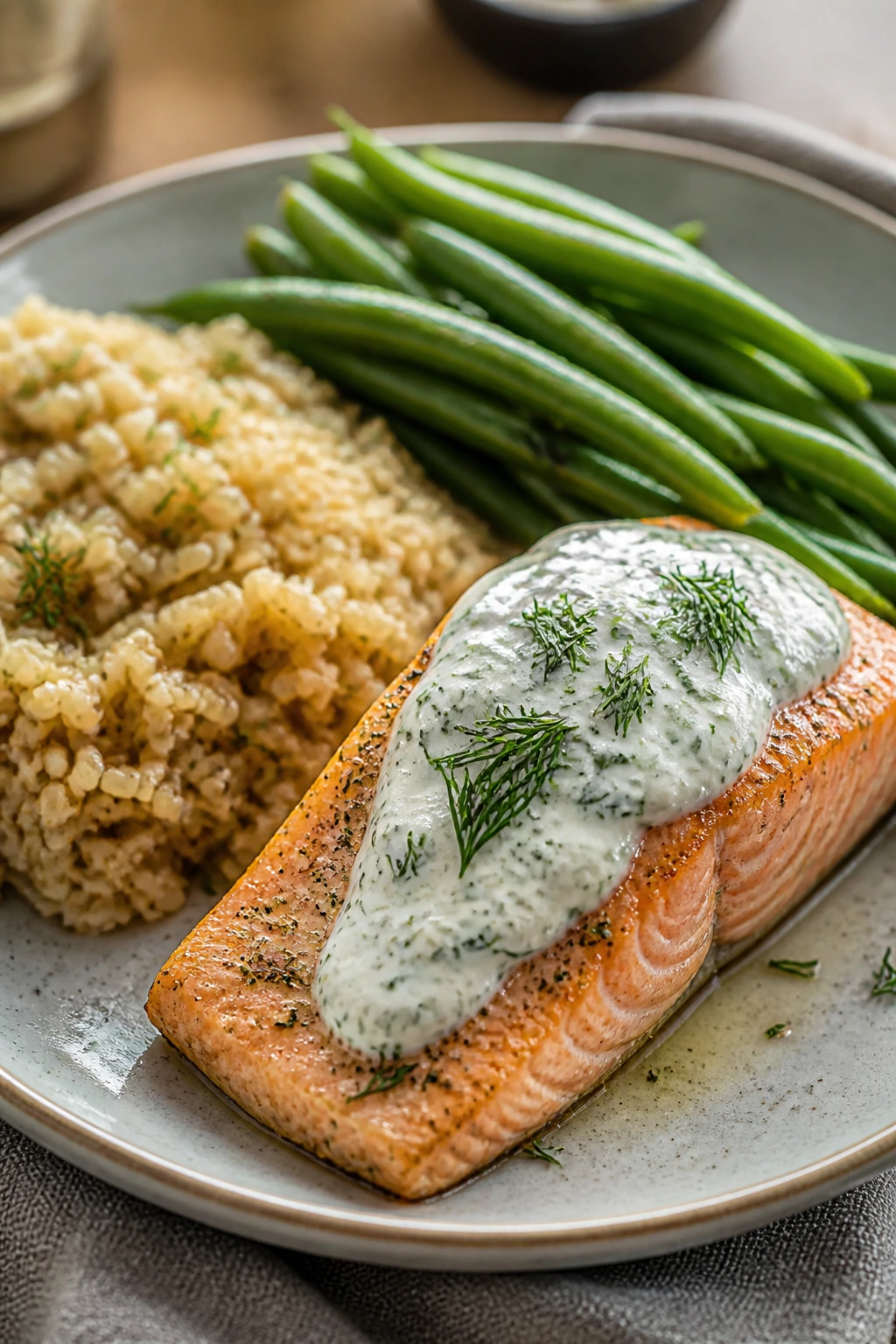
Salmon has a way of making dinner feel calm. The fish turns opaque and flaky in the oven, the dill yogurt stays cool and grassy, and the green beans keep just enough bite to keep the plate from sliding into softness.
This one comes in around 440 calories per serving when you split it four ways. Salmon brings rich flavor and plenty of protein, brown rice gives the meal a steady base, and the green beans keep the dish from feeling dense. The yogurt sauce is the part I’d never skip.
Why It Works:
Salmon is naturally satisfying, so you don’t need a huge portion to make the meal feel complete. Baking keeps the fish tender without extra oil, and the rice portion stays under control because the fish and vegetables are doing the heavy lifting. The dill yogurt adds tang and moisture, which matters because baked salmon can turn dry if you walk away for even a couple of minutes too long.
Key Ingredients:
- 1 1/4 lb salmon fillet, cut into 4 portions — choose fillets with even thickness.
- 1 lb green beans, trimmed — thin beans roast better than huge ones.
- 3/4 cup brown rice, uncooked — this makes about 2 1/4 cups cooked.
- 2 tbsp olive oil
- 1 lemon, sliced and juiced
- 3/4 cup plain Greek yogurt
- 2 tbsp chopped fresh dill
- 1 tsp Dijon mustard
- 1/2 tsp kosher salt
- 1/4 tsp black pepper
Quick Steps:
- Cook the brown rice according to package directions; keep it covered after cooking so it stays fluffy.
- Preheat the oven to 425°F (220°C). Toss the green beans with 1 tablespoon of olive oil, half the salt, and half the pepper.
- Arrange the salmon on a parchment-lined sheet pan. Brush with the remaining olive oil and season with the rest of the salt and pepper. Lay lemon slices on top if you like that bright, roasted-citrus thing.
- Bake the salmon and green beans for 12 to 15 minutes, until the fish flakes easily and the beans are lightly blistered.
- Whisk the yogurt, dill, Dijon, and lemon juice together until smooth.
- Serve the salmon over rice with the green beans and a spoonful of dill yogurt on the side.
Equipment for This Recipe:
- Sheet pan — for the salmon and beans.
- Medium saucepan with lid — for the rice.
- Small mixing bowl — for the yogurt sauce.
- Fish spatula, optional — useful, but not mandatory.
How to Serve This Dish:
I like to build each plate with a scoop of rice first, then the green beans, then the salmon on top so the sauce can slide down through the grains. Four servings is the right scale here. If you want to stretch it, add a simple cucumber salad rather than doubling the rice.
Pro Tips for This Recipe:
- Check the salmon early. Overbaked salmon goes from flaky to dry fast.
- Use thick yogurt. Thin yogurt makes the sauce watery.
- Season the rice lightly. The fish and sauce already carry enough salt.
- Put the lemon on the fish before baking. Roasted lemon is softer and less sharp.
Variations on This Dish:
- Herbed Yogurt Swap: Use parsley or chives instead of dill if that’s what’s in the fridge.
- Lemon Pepper Salmon: Skip the yogurt and finish with lemon zest, black pepper, and a little olive oil.
- No-Rice Version: Serve the fish with extra green beans and roasted cauliflower for a lower-carb plate.
Common Mistakes to Avoid with This Dish:
- Baking salmon until it looks dry on top. Pull it when the center is still slightly translucent; carryover heat finishes the job.
- Skipping the sauce. It’s not decoration. It keeps each bite from tasting one-note.
- Using soggy green beans. They should still have a little snap.
4. Chicken and Veggie Stir-Fry with Brown Rice
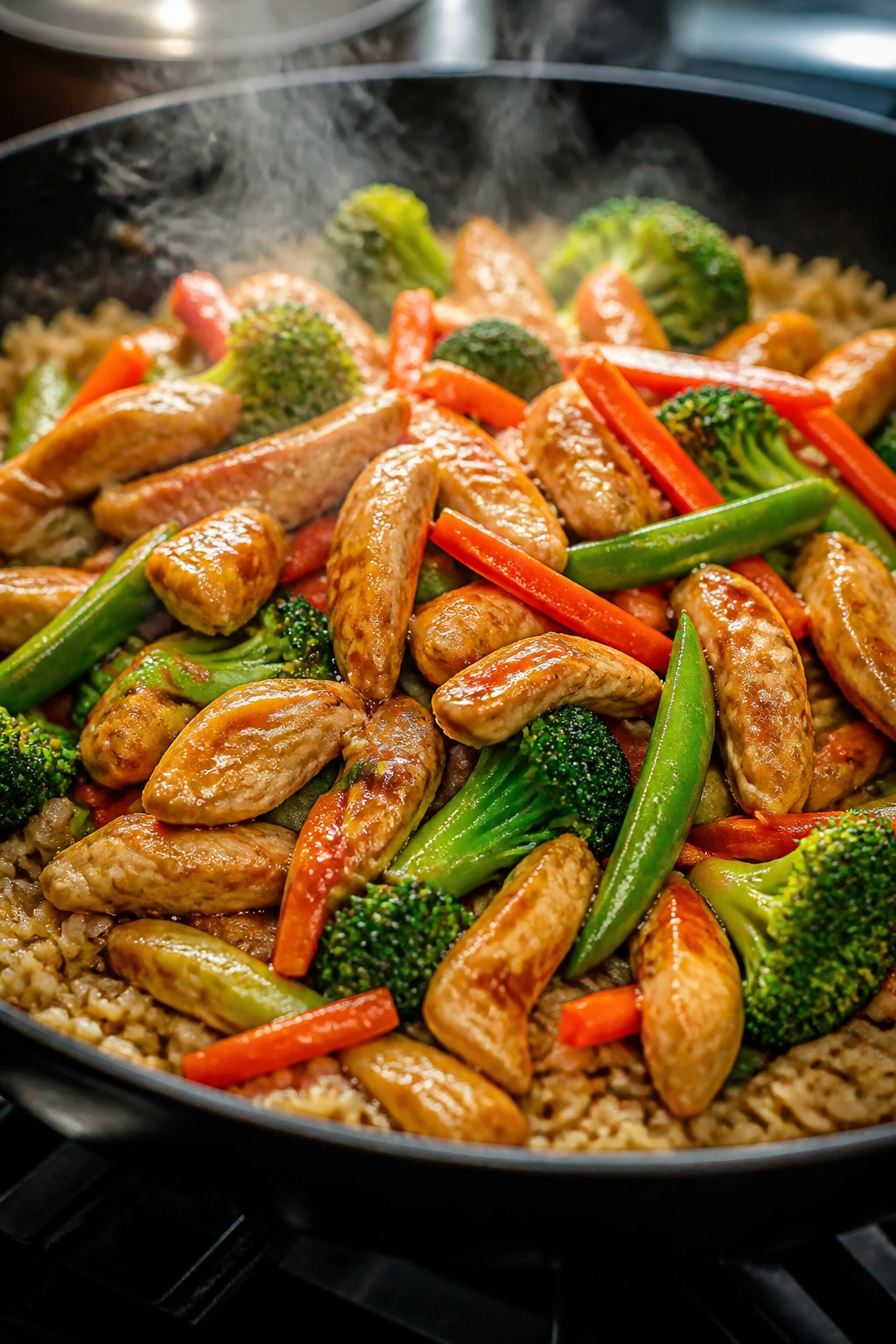
The best stir-fry has movement in the pan. Chicken browns, broccoli flashes bright green, carrots soften at the edges, and the sauce turns glossy enough to coat everything without puddling at the bottom. That sheen is the whole point.
This version lands around 450 calories per serving with brown rice included. It feels generous because the vegetables are cut with intention and the sauce is punchy enough to make a modest amount of oil taste like more. That’s the quiet trick with stir-fry: you don’t need a heavy hand, you need a hot pan.
Why It Works:
Chicken breast cooks fast and stays lean, while the vegetables bring bulk and crunch. Brown rice gives you a real dinner base without blowing up the calorie count, and the sauce uses soy sauce, ginger, garlic, and a little honey to make everything taste finished. The cornstarch in the sauce matters too; it gives the stir-fry that clingy texture people usually only get from takeout.
Key Ingredients:
- 1 1/4 lb boneless, skinless chicken breast, sliced thin — thin slices cook faster and stay tender.
- 1 cup brown rice, uncooked
- 2 tbsp avocado oil or neutral oil
- 3 cups broccoli florets
- 2 carrots, thinly sliced
- 1 cup snap peas
- 3 garlic cloves, minced
- 1 tbsp fresh ginger, grated
- 1/4 cup low-sodium soy sauce
- 2 tbsp water
- 1 tbsp honey
- 1 tsp sesame oil
- 1 tsp cornstarch
- Sesame seeds, optional
Quick Steps:
- Cook the brown rice and keep it warm.
- Whisk the soy sauce, water, honey, sesame oil, and cornstarch in a small bowl until smooth.
- Heat 1 tablespoon of oil in a large skillet or wok over medium-high heat. Add the chicken and stir-fry for 4 to 5 minutes, until lightly browned and cooked through. Transfer it to a plate.
- Add the remaining oil, broccoli, carrots, and snap peas. Stir-fry for 3 to 4 minutes, until the vegetables are bright and crisp-tender.
- Stir in the garlic and ginger and cook for 30 seconds. Return the chicken to the pan.
- Pour in the sauce and toss for 1 to 2 minutes, until everything looks glossy and the sauce thickens.
- Serve over rice with sesame seeds if using.
Equipment for This Recipe:
- Large skillet or wok — the high sides help with tossing.
- Small bowl and whisk — for the sauce.
- Sharp knife — thin chicken slices are easier to cook evenly.
- Measuring cups and spoons — the sauce depends on actual measurements.
How to Serve This Dish:
Serve the stir-fry over a modest scoop of brown rice and let the vegetables stay visible on top. I like a few extra sesame seeds or sliced scallions for texture. This makes four solid servings, and it reheats well enough that lunch the next day isn’t a compromise.
Pro Tips for This Recipe:
- Slice the chicken thin. Thick chunks dry out before the vegetables finish.
- Keep the pan hot. If the temperature drops, the vegetables steam instead of sear.
- Mix the sauce before cooking. Once the pan is hot, there’s no time to hunt for the cornstarch.
- Don’t overcook the snap peas. They should stay bright and crisp.
Variations on This Dish:
- Ginger-Orange Version: Add 2 tablespoons orange juice and a little zest for a sweeter sauce.
- Cashew Crunch Stir-Fry: Toss in 1/4 cup roasted cashews at the end for extra bite.
- Cauliflower Rice Swap: Replace the brown rice with cauliflower rice if you want a lighter plate.
Common Mistakes to Avoid with This Dish:
- Crowding the pan. Too much food at once kills the browning.
- Adding garlic too early. It burns fast in a hot pan.
- Pouring in sauce without whisking. The cornstarch settles fast, and the sauce won’t thicken evenly.
5. Turkey Meatballs with Marinara and Whole-Wheat Spaghetti
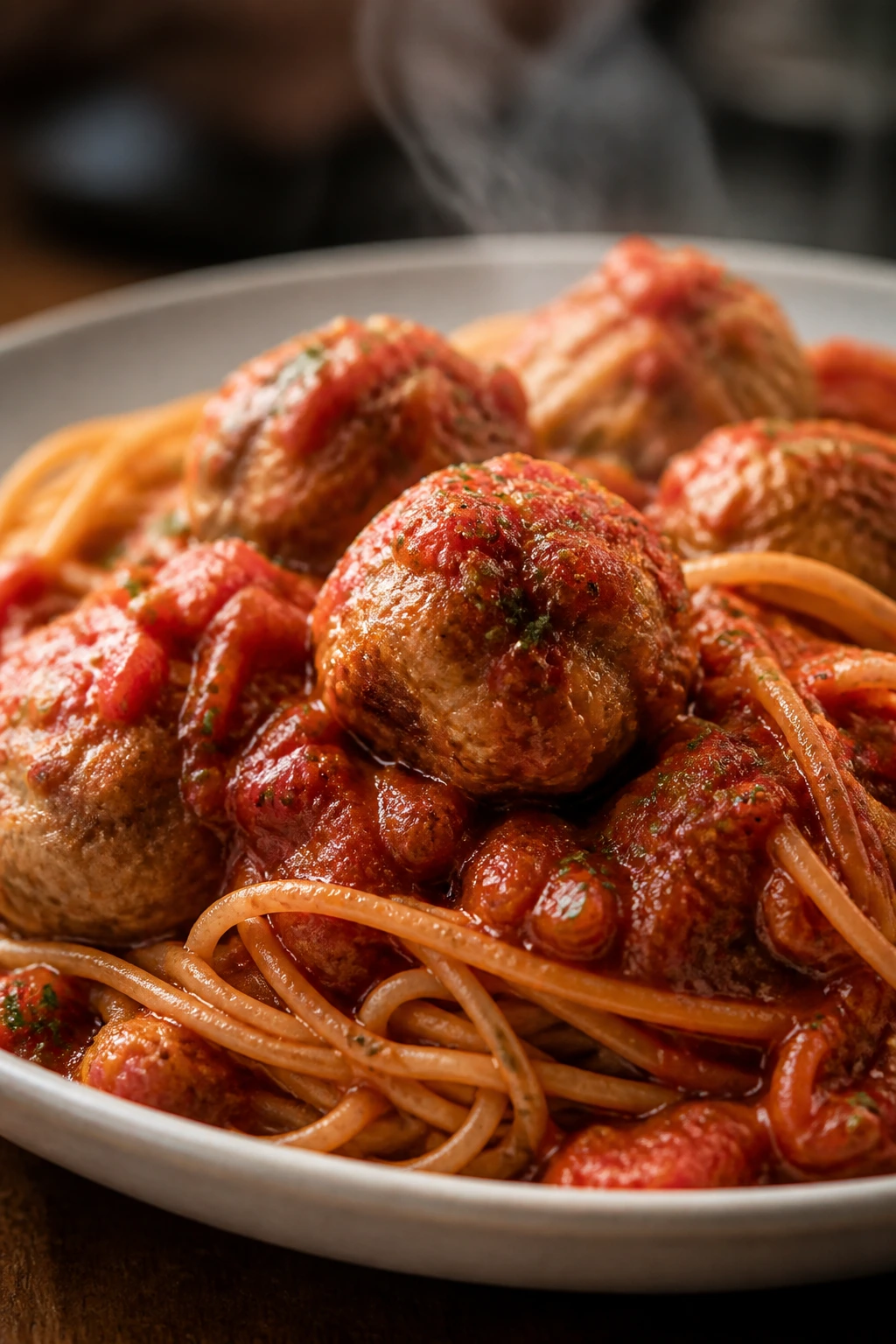
Turkey meatballs can be dry if you treat them like chicken breast in disguise. The fix is simple: enough binder, enough seasoning, and a short bake in a hot oven so they stay tender and pick up some browning before they go into sauce.
This dinner sits around 470 calories per serving when the pasta is portioned sensibly. Whole-wheat spaghetti gives it enough chew to feel like a real pasta night, and the marinara keeps the whole thing moist without a heavy cream sauce trying to take over.
Why It Works:
Meatballs are one of the easiest places to control portions because each ball has a natural serving shape. Lean turkey keeps the fat lower, but the egg, breadcrumbs, and Parmesan help the meatballs stay soft. The sauce does most of the flavor work, which means you can keep the ingredient list sane and still get a dish that feels like it was made on purpose.
Key Ingredients:
- 1 1/2 lb lean ground turkey — 93% lean is a good middle ground.
- 1 large egg — binds the meatballs.
- 1/2 cup plain breadcrumbs — helps hold in moisture.
- 1/4 cup grated Parmesan
- 2 garlic cloves, minced
- 2 tbsp chopped parsley
- 1 tsp kosher salt
- 1/2 tsp black pepper
- 1 tsp dried Italian seasoning
- 24 oz marinara sauce
- 12 oz whole-wheat spaghetti
- 1 tbsp olive oil
Quick Steps:
- Preheat the oven to 425°F (220°C) and line a baking sheet with parchment.
- Mix the turkey, egg, breadcrumbs, Parmesan, garlic, parsley, salt, pepper, and Italian seasoning in a bowl just until combined.
- Shape into 20 to 24 meatballs and place them on the baking sheet.
- Bake for 14 to 16 minutes, until the meatballs are browned and cooked through.
- Warm the marinara in a large skillet, then add the baked meatballs and simmer for 5 minutes.
- Cook the spaghetti until just al dente, then toss with the sauce and meatballs or serve the meatballs over the pasta.
Equipment for This Recipe:
- Rimmed baking sheet — for the meatballs.
- Large pot — for the spaghetti.
- Large skillet or saucepan — for the marinara and meatballs.
- Mixing bowl — for the meatball mixture.
- Cookie scoop, optional — handy for even meatballs.
How to Serve This Dish:
Twirl the pasta into shallow bowls, spoon meatballs and sauce over the top, and finish with a little extra Parmesan. This is one of those dinners that still feels generous even when you keep the pasta to about 1 1/2 cups cooked per serving. A side salad is nice, but not necessary.
Pro Tips for This Recipe:
- Mix gently. Overworking turkey makes the meatballs dense.
- Don’t skip the Parmesan. It helps with flavor and moisture.
- Bake before simmering. Browning first gives you better texture than cooking them only in sauce.
- Use al dente pasta. Soft pasta turns mushy once it meets the sauce.
Variations on This Dish:
- Turkey Zucchini Meatballs: Fold in 1/2 cup grated zucchini, squeezed dry, for a little extra moisture.
- Spicy Arrabbiata Style: Use a spicy marinara and add red pepper flakes.
- Gluten-Free Option: Swap the breadcrumbs for gluten-free crumbs and serve over gluten-free pasta.
Common Mistakes to Avoid with This Dish:
- Packing the meatballs too tightly. That’s how you get rubbery centers.
- Using a thin sauce straight from the jar. Simmer it long enough that it can coat the pasta.
- Cooking the spaghetti past al dente. It turns soft fast once it’s sauced.
6. Stuffed Bell Peppers with Lean Beef and Cauliflower Rice
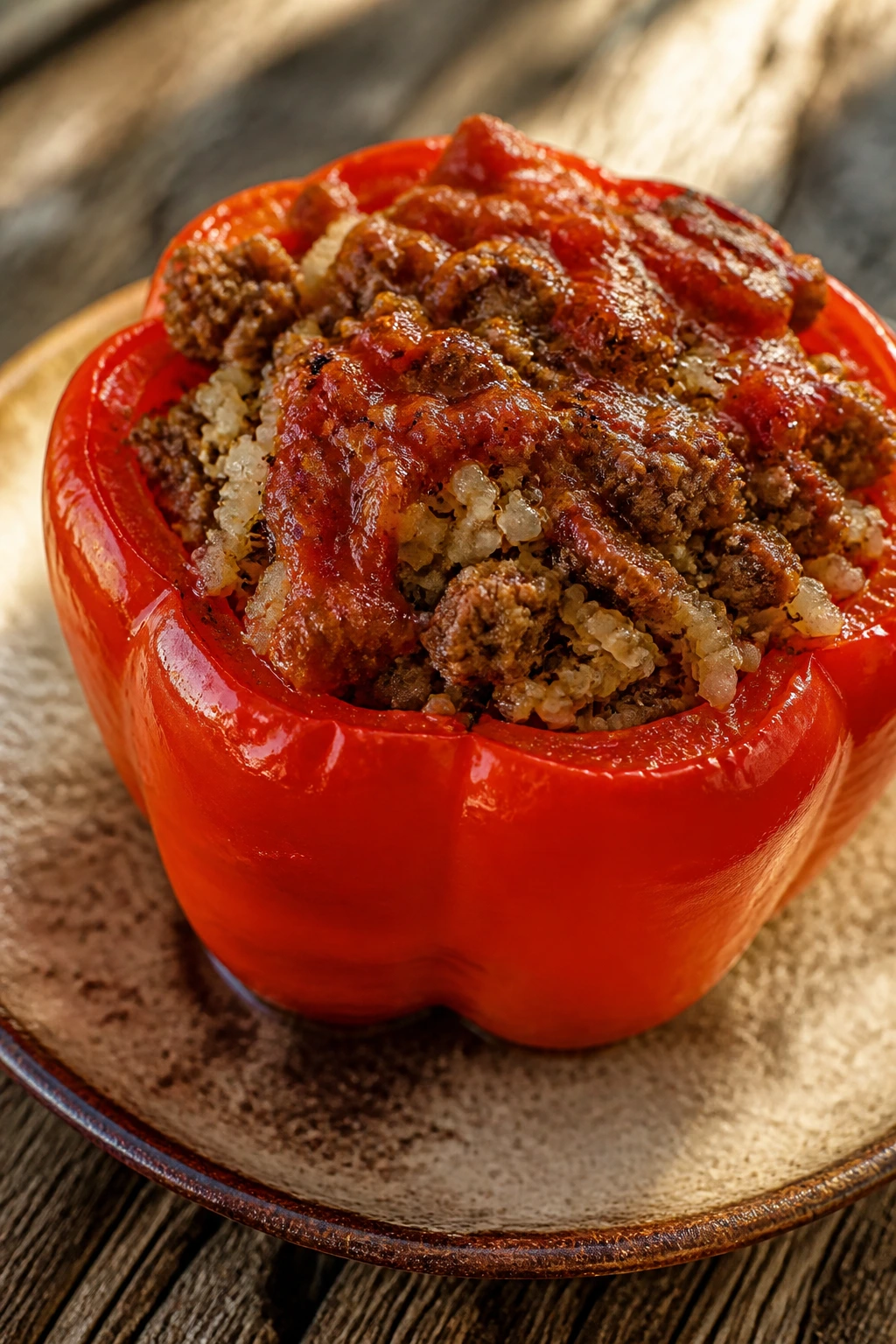
Stuffed peppers are one of those dinners that looks like you tried harder than you did. The peppers soften on the outside while holding their shape, the filling gets savory and a little tomato-rich, and the top browns just enough to make people go back for a second half-pepper.
At roughly 430 calories per stuffed pepper, this version keeps the beef lean and uses cauliflower rice to make room for flavor without overloading the filling with starch. A little quinoa gives the filling body so the pepper isn’t just a shell around loose bits.
Why It Works:
Bell peppers act like their own serving vessel, which helps with portion control. Lean beef gives the filling a richer flavor than turkey without pushing the calorie count too high, and cauliflower rice cuts bulk without making the stuffing watery if you sauté it first. The result tastes complete, not compromised. That’s the difference.
Key Ingredients:
- 6 medium bell peppers, tops removed and seeds cleared — choose peppers that can stand upright.
- 1 lb lean ground beef, 90/10
- 1 tbsp olive oil
- 1 small onion, diced
- 2 garlic cloves, minced
- 2 cups cauliflower rice
- 1 cup cooked quinoa
- 1 can (14.5 oz) diced tomatoes, drained slightly
- 1 tsp kosher salt
- 1/2 tsp black pepper
- 1 tsp paprika
- 1/2 cup shredded mozzarella or cheddar
- 2 tbsp chopped parsley, optional
Quick Steps:
- Preheat the oven to 400°F (200°C). Set the peppers in a baking dish with 1/4 inch of water in the bottom.
- Cook the onion in olive oil over medium heat for 3 to 4 minutes, until softened. Add the beef and brown it, breaking it up as it cooks.
- Stir in the garlic, cauliflower rice, quinoa, tomatoes, salt, pepper, and paprika. Cook for 4 to 5 minutes, until the mixture looks thick and most of the liquid is gone.
- Spoon the filling into the peppers and top with cheese.
- Bake for 25 to 30 minutes, until the peppers are tender and the cheese is melted and spotted with brown.
- Rest for 5 minutes before serving so the filling settles.
Equipment for This Recipe:
- Deep baking dish — to hold the peppers upright.
- Large skillet — for the filling.
- Spoon or small ladle — for packing the peppers.
- Sharp knife — for trimming the pepper tops.
How to Serve This Dish:
Serve one whole pepper per person if the peppers are medium-sized, or half a pepper if you’re pairing them with a salad. I like a little chopped parsley or green onion on top because the color wakes up the plate. If you need to stretch the meal, add a bowl of tomato soup or a simple cucumber salad on the side.
Pro Tips for This Recipe:
- Pre-cook the filling until thick. Wet filling makes the peppers collapse into a puddle.
- Use peppers that sit flat. Floppy peppers are annoying to fill and harder to serve.
- Don’t overload with cheese. A light top layer melts better and keeps the calorie count in check.
- Drain the tomatoes a little. Too much liquid makes the stuffing watery.
Variations on This Dish:
- Italian Turkey Version: Swap the beef for ground turkey and use Italian seasoning instead of paprika.
- Tex-Mex Pepper Poppers: Replace the quinoa with black beans and add a little cumin and corn.
- Vegetarian Lentil Stuffing: Use cooked lentils in place of beef for a meatless dinner with good texture.
Common Mistakes to Avoid with This Dish:
- Skipping the water in the baking dish. The steam helps the peppers soften without drying out.
- Filling raw peppers with a loose mixture. The peppers need a cooked filling or the bake gets watery.
- Using giant peppers without adjusting the filling. Bigger peppers need more stuffing and more bake time.
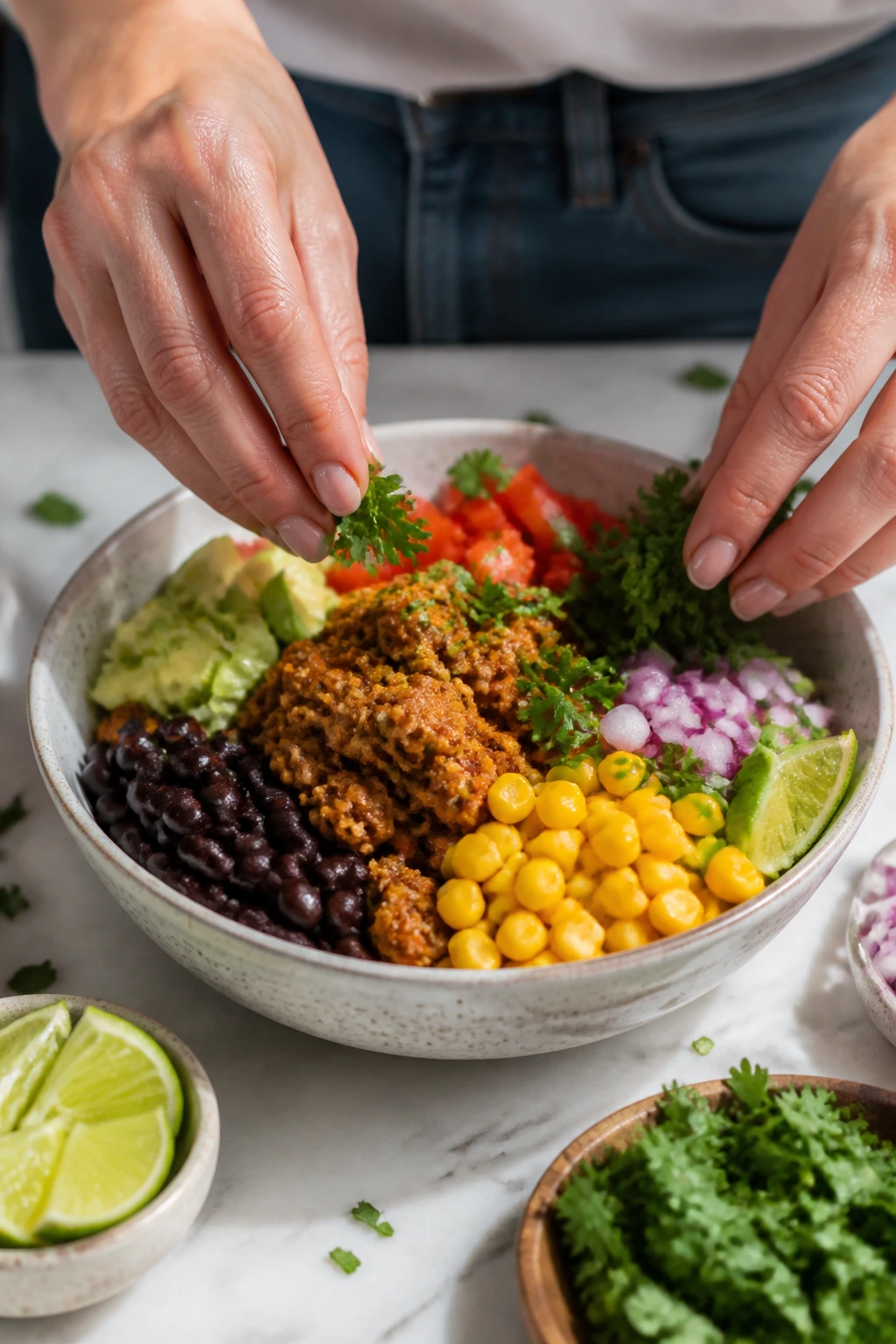
7. Shrimp Fajita Bowls with Lime and Avocado
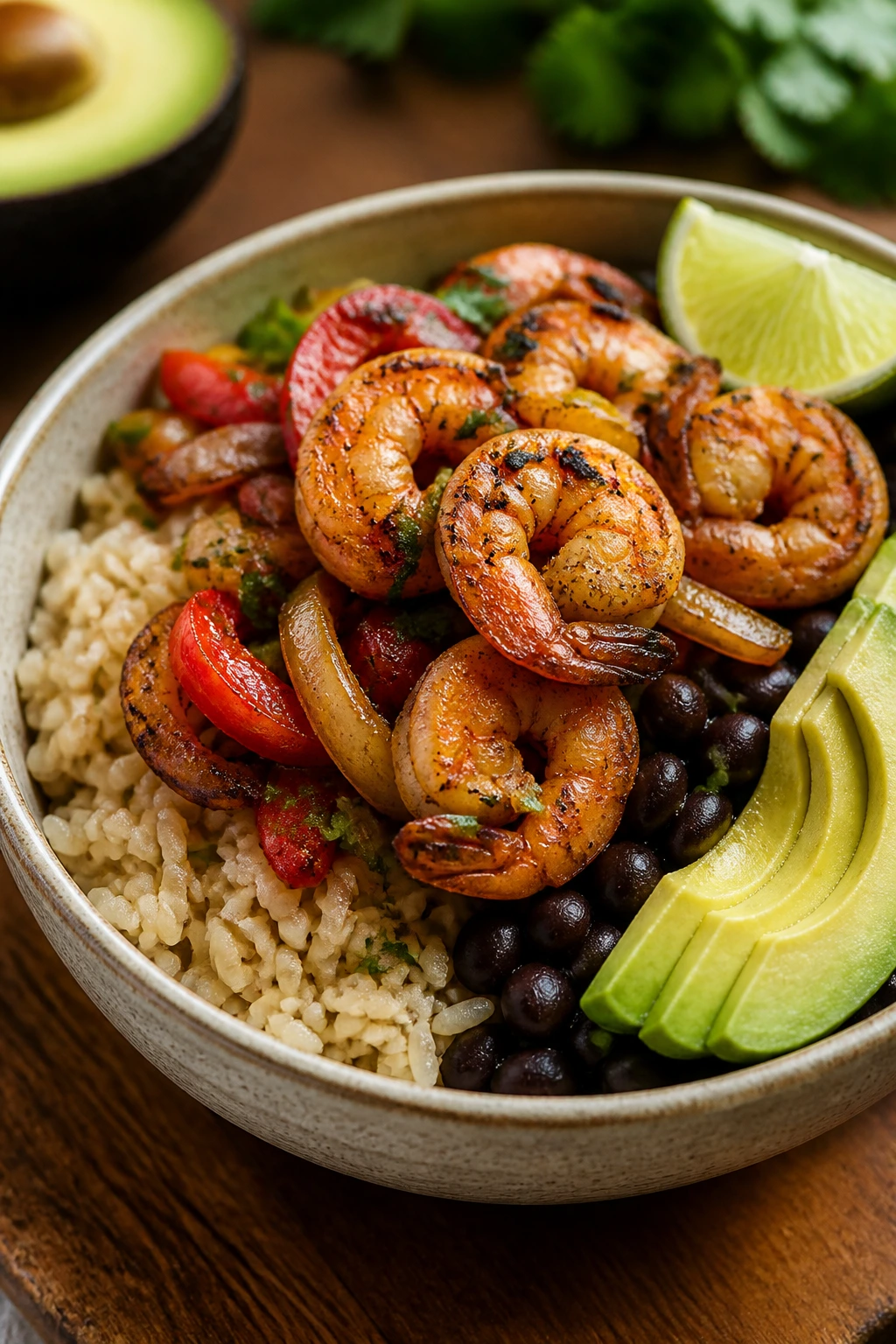
Shrimp fajita bowls have a fast, bright energy that works especially well on nights when you want dinner to feel fresh rather than heavy. The shrimp cook in minutes, the peppers stay sweet and a little charred, and the lime cuts through everything so the bowl doesn’t taste muddy.
This one lands around 460 calories per serving when it’s built with brown rice, beans, shrimp, and a sensible amount of avocado. It’s the kind of bowl that tastes like there’s more going on than there actually is, which I count as a victory.
Why It Works:
Shrimp cooks so quickly that you can get dinner on the table without a long stovetop marathon. The fajita vegetables bring sweetness and crunch, black beans add fiber and heft, and avocado gives you just enough richness to make the bowl feel finished. Use too much avocado and you’ll blow the calorie cap fast, so a quarter of one per serving is plenty.
Key Ingredients:
- 1 1/2 lb large shrimp, peeled and deveined — pat them dry so they sear.
- 2 tbsp olive oil, divided
- 3 bell peppers, sliced
- 1 medium onion, sliced
- 2 tsp fajita seasoning
- 1 cup brown rice, uncooked
- 1 can (15 oz) black beans, rinsed and drained
- 1 lime, juiced
- 1 avocado, sliced into 4 portions
- 2 tbsp chopped cilantro
- Salt, to taste
Quick Steps:
- Cook the brown rice and keep it warm.
- Toss the shrimp with 1 teaspoon of oil, fajita seasoning, and a pinch of salt.
- Heat the remaining oil in a large skillet over medium-high heat. Cook the peppers and onion for 5 to 6 minutes, until softened with browned edges. Remove them to a plate.
- Add the shrimp to the hot skillet and cook for 1 to 2 minutes per side, until pink and opaque.
- Warm the black beans in a small saucepan or in the microwave with a splash of water and a squeeze of lime.
- Build the bowls with rice, beans, peppers, onion, shrimp, avocado, cilantro, and extra lime juice.
Equipment for This Recipe:
- Large skillet — for the peppers and shrimp.
- Small pot or rice cooker — for the rice.
- Knife and cutting board — for slicing peppers and onion.
- Citrus juicer, optional — for the lime.
How to Serve This Dish:
Serve the bowls with the avocado sliced on top and the lime wedges tucked against the rim. I like a little extra cilantro because it gives the bowl a fresh snap that’s hard to fake. If you want more crunch, add shredded cabbage, not more rice.
Pro Tips for This Recipe:
- Dry the shrimp well. Wet shrimp release water and won’t sear.
- Don’t overcook the shrimp. They curl and turn rubbery fast.
- Use one skillet in stages. Cooking the vegetables first gives them the char they need.
- Keep the avocado measured. It’s delicious, but it adds calories quickly.
Variations on This Dish:
- Cauliflower Rice Bowl: Replace half or all of the rice with cauliflower rice.
- Chipotle Shrimp: Add a little adobo sauce for smoky heat.
- Pinto Bean Version: Use pinto beans instead of black beans if that’s what you have on hand.
Common Mistakes to Avoid with This Dish:
- Crowding the shrimp. They need space or they steam.
- Using a cold skillet. A hot pan is what gives the vegetables their edges.
- Overloading toppings. Sour cream, cheese, avocado, and rice can stack calories fast if nobody measures.
8. Lentil Vegetable Soup with Spinach and Parmesan Toast
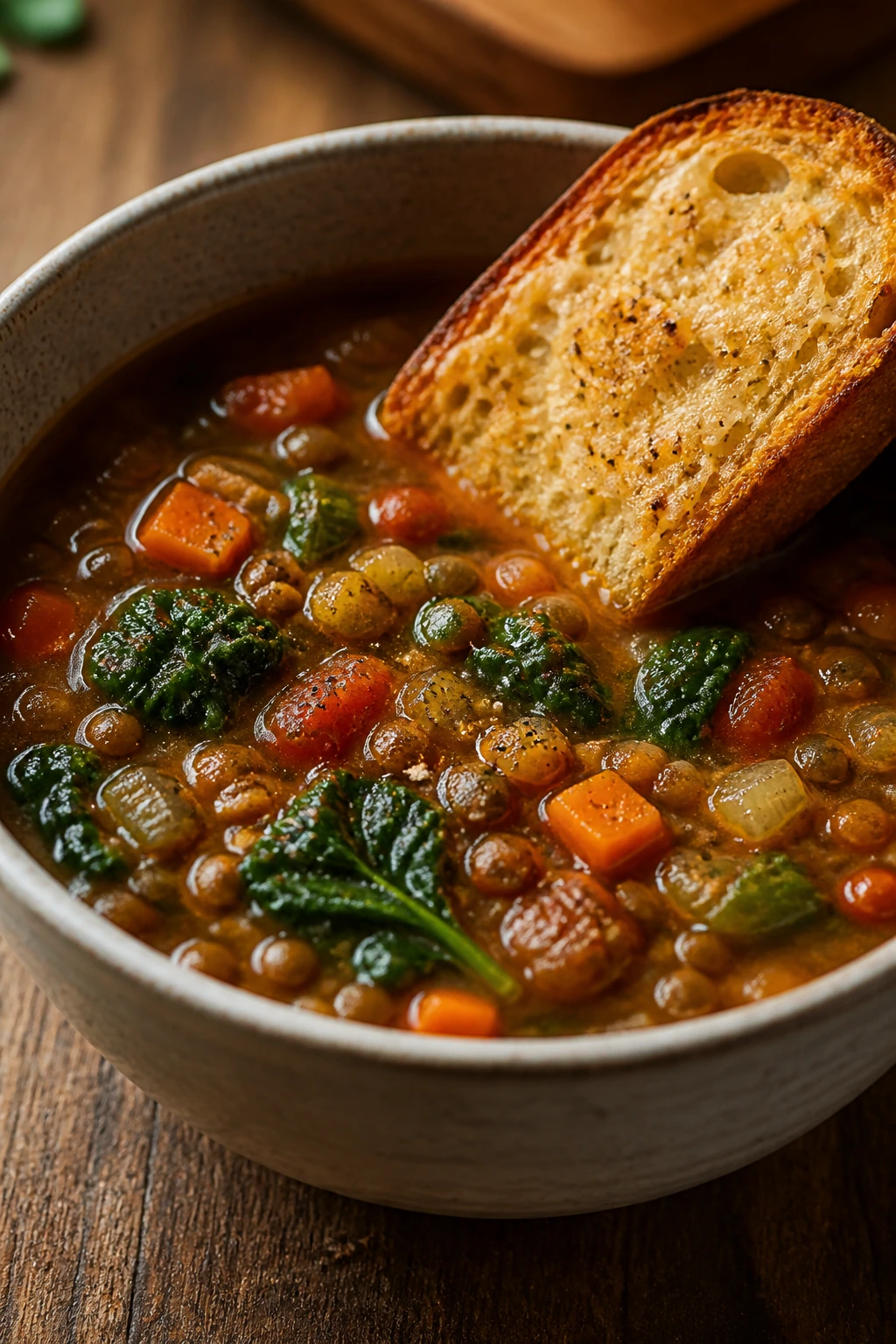
Soup sounds modest until you realize how much work a pot of lentils and vegetables can do. The broth goes earthy and tomato-rich, the carrots and celery soften into the background, and the spinach wilts in at the end with just enough brightness to keep the bowl awake.
At roughly 330 calories per bowl with one piece of Parmesan toast, this is one of the easiest family meals to keep under 500 calories without anyone leaving the table hungry. Lentils are the reason. They’re cheap, filling, and they hold their shape instead of dissolving into paste.
Why It Works:
Lentils bring protein and fiber without needing meat, which keeps the soup filling without making it heavy. The vegetables add volume and sweetness, while the tomatoes and herbs make the broth taste like it simmered all day even when it didn’t. The toast gives the meal that one little crunch people miss when dinner is all soft things.
Key Ingredients:
- 1 1/2 cups brown or green lentils, rinsed — they hold their shape best.
- 1 tbsp olive oil
- 1 yellow onion, diced
- 2 carrots, diced
- 2 celery stalks, diced
- 3 garlic cloves, minced
- 1 can (14.5 oz) diced tomatoes
- 6 cups low-sodium vegetable broth or chicken broth
- 1 bay leaf
- 1 tsp dried thyme
- 2 cups baby spinach
- 4 slices whole-grain bread
- 1/4 cup grated Parmesan
- Salt and black pepper, to taste
Quick Steps:
- Warm the olive oil in a large pot over medium heat. Add the onion, carrots, and celery and cook for 6 to 7 minutes, until softened.
- Stir in the garlic, thyme, and bay leaf for 30 seconds.
- Add the lentils, tomatoes, and broth. Bring to a boil, then reduce to a simmer and cook for 30 to 35 minutes, until the lentils are tender but not mushy.
- Stir in the spinach and cook for 1 minute, just until wilted. Season with salt and pepper.
- Toast the bread and sprinkle with Parmesan.
- Serve the soup hot with the toast on the side or floated on top.
Equipment for This Recipe:
- Large soup pot or Dutch oven — big enough for the broth and lentils.
- Wooden spoon — for stirring without smashing the vegetables.
- Cutting board and knife — for the soup base.
- Toaster or oven broiler — for the Parmesan toast.
How to Serve This Dish:
Ladle the soup into wide bowls so the vegetables stay visible instead of sinking to the bottom. The Parmesan toast can sit on the side or be dipped right in. This is a good four-to-six-person meal depending on whether the table is full of adults or smaller eaters.
Pro Tips for This Recipe:
- Rinse the lentils. You don’t want grit or dust in the bowl.
- Simmer gently. A hard boil can split the lentils before the vegetables are ready.
- Add spinach at the end. It takes almost no time to wilt.
- Toast the bread well. Soft toast turns limp the second it hits broth.
Variations on This Dish:
- Tomato Basil Version: Add chopped basil at the end and a little extra tomato for a brighter bowl.
- Smoky Sausage Upgrade: Stir in a small amount of sliced chicken sausage if you want more meat.
- No-Cheese Option: Skip the Parmesan and finish with a drizzle of olive oil and black pepper.
Common Mistakes to Avoid with This Dish:
- Cooking the lentils too long. They should be tender, not blown apart.
- Salting too early with salty broth. Taste near the end so the soup doesn’t get sharp.
- Skipping the toast. Soup without some texture can feel flat.
9. Black Bean and Sweet Potato Enchilada Casserole
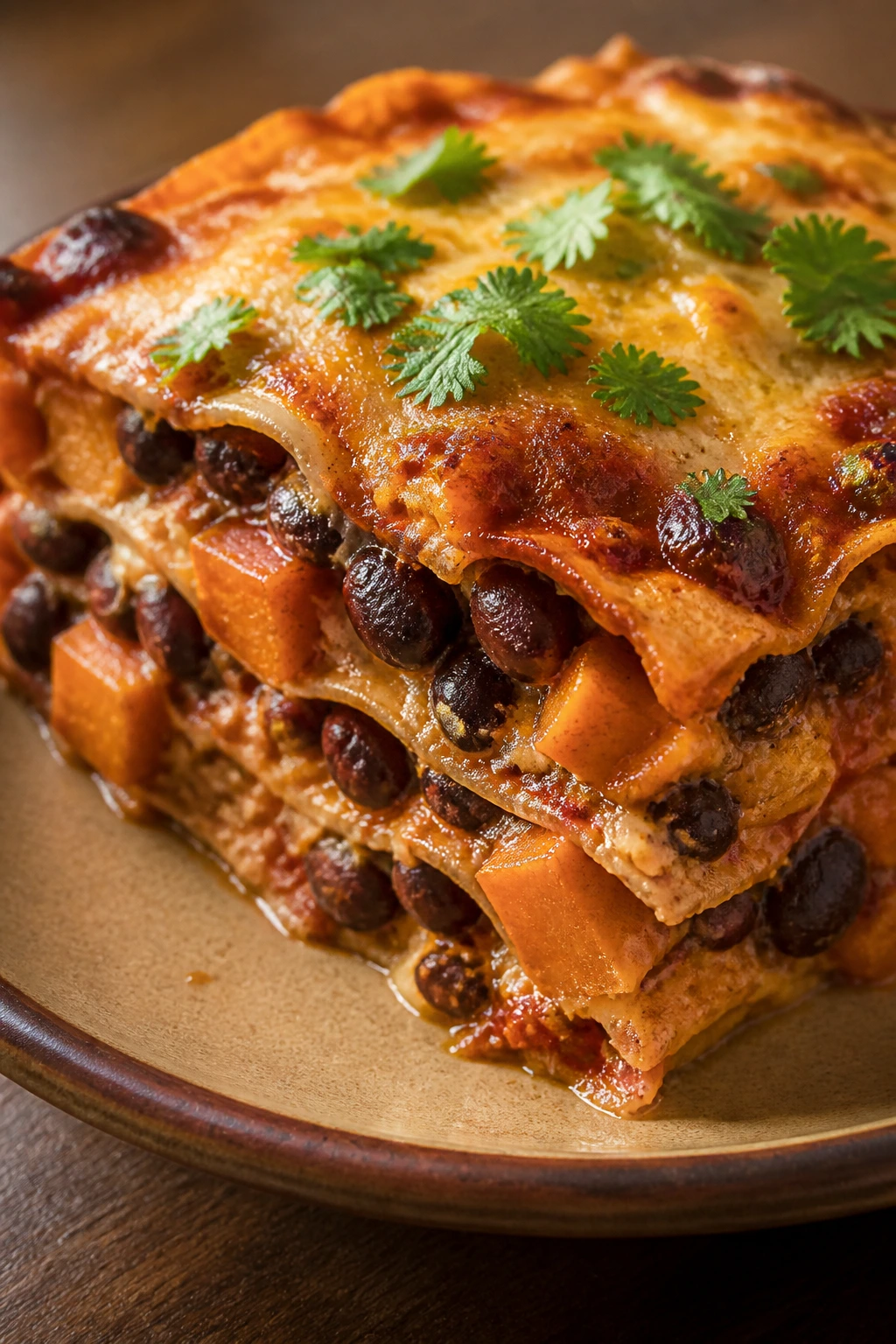
This casserole smells like a taco shop and a roasted vegetable tray had a smart little argument. The sweet potatoes bring a gentle sweetness, the black beans give the filling some heft, and the enchilada sauce ties everything together without making the dish soggy.
It’s about 430 calories per serving when cut into six pieces. That’s with cheese on top, which matters because I don’t trust casseroles that ask you to skip the cheese entirely. The trick is keeping the layers measured so the bake tastes rich without turning into a brick.
Why It Works:
Sweet potatoes and black beans are a solid pairing because one brings starch and the other brings protein and fiber. Corn tortillas keep the structure more interesting than pasta or rice, and enchilada sauce makes the casserole taste layered even though it’s assembled in a hurry. The dish also reheats well, which is half the reason casseroles have stayed in family kitchens for generations.
Key Ingredients:
- 2 medium sweet potatoes, peeled and diced into 1/2-inch cubes
- 1 tbsp olive oil
- 1 small onion, diced
- 2 cans (15 oz each) black beans, rinsed and drained
- 1 cup corn kernels
- 2 cups red enchilada sauce
- 8 corn tortillas, cut into strips
- 1 1/2 cups shredded Mexican blend cheese
- 1 tsp cumin
- 1 tsp kosher salt
- 1/2 tsp black pepper
- 2 tbsp chopped cilantro
Quick Steps:
- Preheat the oven to 400°F (200°C). Toss the sweet potatoes with olive oil, salt, and pepper. Roast for 15 minutes until just beginning to soften.
- Cook the onion in a skillet for 3 to 4 minutes, then stir in the black beans, corn, cumin, and half of the enchilada sauce.
- Layer half the tortilla strips in a greased baking dish, followed by half the sweet potatoes and half the bean mixture. Repeat with the remaining tortillas, sweet potatoes, and beans.
- Pour the remaining enchilada sauce over the top and scatter the cheese evenly.
- Bake for 20 to 25 minutes, until bubbling and browned at the edges.
- Rest for 10 minutes before slicing, then top with cilantro.
Equipment for This Recipe:
- 9×13-inch baking dish — the casserole needs a broad surface.
- Skillet — for the bean mixture.
- Baking sheet — for roasting the sweet potatoes.
- Sharp knife — for the tortilla strips and sweet potatoes.
How to Serve This Dish:
Cut the casserole into neat squares and lift them out with a spatula so the layers stay visible. A spoonful of plain yogurt, salsa, or chopped avocado works well on top, but none of them are required. If you want to stretch the meal, add a crisp cabbage slaw on the side.
Pro Tips for This Recipe:
- Roast the sweet potatoes first. Raw cubes can stay firm in the middle.
- Don’t drown the layers. Too much sauce turns the casserole into a soft pile.
- Let it rest after baking. The slices hold together much better after 10 minutes.
- Use corn tortillas. They give the dish the right texture and hold up better than flour tortillas here.
Variations on This Dish:
- Chicken Enchilada Bake: Add 2 cups shredded cooked chicken to the bean mixture.
- Green Chile Version: Swap red enchilada sauce for green and add roasted poblano strips.
- Dairy-Free Casserole: Skip the cheese and finish with avocado and cilantro.
Common Mistakes to Avoid with This Dish:
- Using too much sauce between layers. The casserole gets mushy instead of sliceable.
- Skipping the rest time. Hot casseroles fall apart when cut too early.
- Underseasoning the beans. Beans need salt, cumin, and sauce to taste like part of the meal.
10. Greek Chicken Pita Plates with Tzatziki
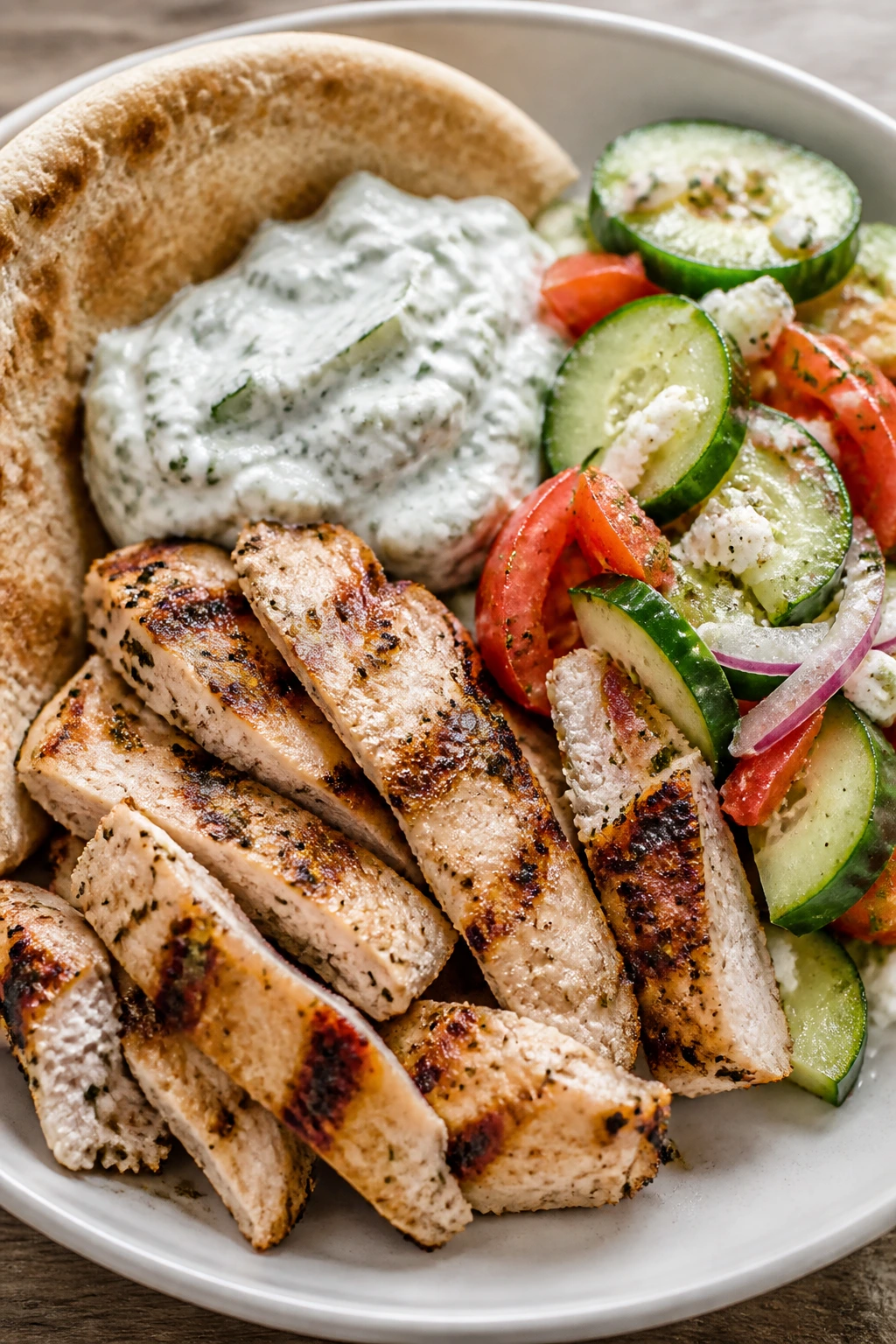
There’s something satisfying about a plate that comes with built-in contrasts: hot chicken, cool sauce, crunchy cucumber, soft pita, salty feta. Greek chicken pita plates deliver that mix without asking you to stand over the stove forever.
This dinner comes in around 470 calories per serving when you keep to one pita, a good handful of salad, and a measured spoon of tzatziki. It feels full because the chicken is seasoned well and the vegetables are sharp and cold against it. Temperature contrast matters more than people think.
Why It Works:
Chicken breast marinated with lemon, garlic, and oregano gets enough flavor to stand up to the yogurt sauce. The cucumber-tomato salad adds volume for very few calories, and the pita acts like a controlled starch instead of an afterthought. Feta brings salt, so you don’t need a heavy hand elsewhere.
Key Ingredients:
- 1 1/2 lb boneless, skinless chicken breasts
- 2 tbsp olive oil
- 2 tbsp lemon juice
- 2 garlic cloves, minced
- 1 tsp dried oregano
- 1/2 tsp kosher salt
- 1/4 tsp black pepper
- 1 cup plain Greek yogurt
- 1/2 cucumber, grated or finely chopped
- 1 small garlic clove, grated
- 1 tbsp dill or mint, chopped
- 4 whole-wheat pitas
- 1 cucumber, chopped
- 1 cup cherry tomatoes, halved
- 1/4 cup crumbled feta
Quick Steps:
- Mix the olive oil, lemon juice, garlic, oregano, salt, and pepper. Coat the chicken and let it sit for at least 20 minutes, or up to 4 hours in the fridge.
- Cook the chicken in a skillet over medium heat for 5 to 6 minutes per side, until browned and cooked through. Rest for 5 minutes, then slice.
- Stir together the yogurt, cucumber, garlic, and dill to make the tzatziki.
- Combine the chopped cucumber, tomatoes, and a pinch of salt for the salad.
- Warm the pitas briefly in a dry skillet or oven.
- Assemble each plate with pita, chicken, salad, tzatziki, and feta.
Equipment for This Recipe:
- Skillet — for the chicken.
- Mixing bowl — for the marinade and tzatziki.
- Box grater or fine chop knife — for the cucumber.
- Tongs — to turn the chicken cleanly.
How to Serve This Dish:
Serve the chicken sliced over or beside the pita so everyone can build their own bite. A little feta goes a long way, and I’d rather see the cucumber salad piled high than the pita overloaded. If you want a little extra color, add red onion slices or chopped parsley.
Pro Tips for This Recipe:
- Marinate the chicken long enough. Twenty minutes makes a difference; four hours makes it better.
- Don’t overfill the pita. It tears fast when overloaded.
- Grate the cucumber for the sauce if you want a looser tzatziki. Chop it if you want more crunch.
- Rest the chicken before slicing. The juices stay inside instead of running out.
Variations on This Dish:
- Turkey Pita Plate: Swap in turkey cutlets and keep the same seasoning.
- No-Pita Bowl: Serve the chicken and salad over chopped romaine for a lower-carb meal.
- Extra Herb Tzatziki: Add mint and parsley for a more sharply green sauce.
Common Mistakes to Avoid with This Dish:
- Cooking the chicken too hot. It browns before it cooks through.
- Using watery yogurt sauce. Drain the cucumber if it releases a lot of liquid.
- Skipping salt on the salad. Tomatoes and cucumbers need a pinch to taste alive.
11. Turkey Chili with Beans and Corn
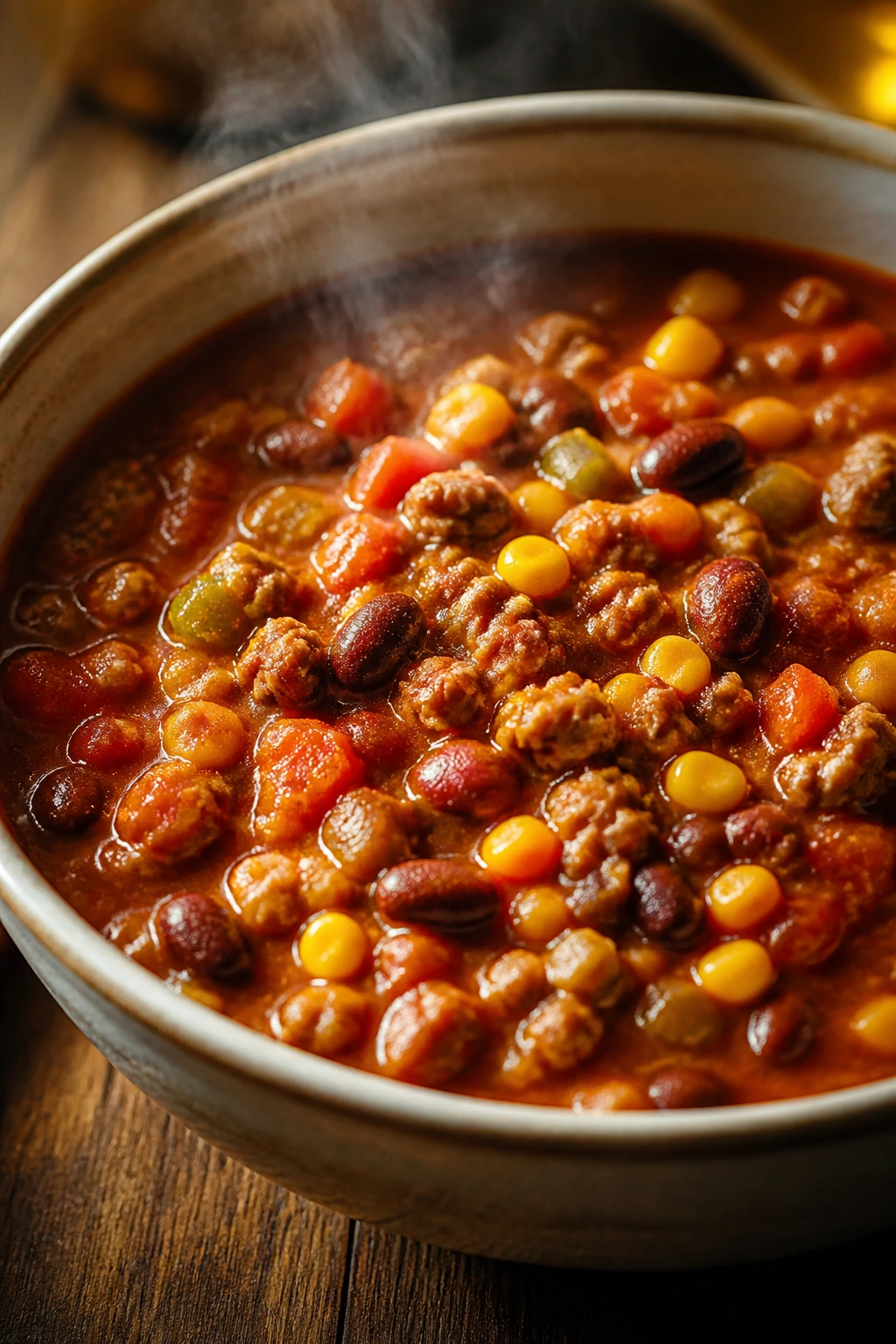
Turkey chili should smell like a pot that has someplace to be. Onions soften, chili powder blooms, tomatoes darken the broth, and the beans make the whole thing thick enough to eat with a spoon that stands up for itself.
This version lands around 380 calories per serving with a generous bowl. That leaves room for a little yogurt, scallions, or a small piece of cornbread if you’re careful, though the chili itself is already doing a lot of work. It’s one of the easiest family meals to keep under 500 because the pot is full of broth, beans, and vegetables.
Why It Works:
Turkey keeps the chili lighter than beef without stripping it of heft. Beans add fiber and make the meal filling at a much lower calorie cost than pasta or bread would. Corn gives small pops of sweetness, and the long simmer ties the flavors together so the pot tastes deeper than the ingredient list looks.
Key Ingredients:
- 1 1/2 lb lean ground turkey
- 1 tbsp olive oil
- 1 large onion, diced
- 1 bell pepper, diced
- 3 garlic cloves, minced
- 2 tbsp chili powder
- 1 tsp ground cumin
- 1 can (15 oz) kidney beans, rinsed and drained
- 1 can (15 oz) black beans, rinsed and drained
- 1 can (28 oz) crushed tomatoes
- 2 cups low-sodium chicken broth
- 1 cup corn kernels
- 1 tbsp tomato paste
- Salt and black pepper, to taste
- Greek yogurt and scallions, for topping
Quick Steps:
- Heat the olive oil in a large pot over medium heat. Add the onion and bell pepper and cook for 5 minutes, until soft.
- Add the turkey and cook, breaking it up, until no pink remains.
- Stir in the garlic, chili powder, cumin, and tomato paste for 30 seconds.
- Pour in the tomatoes and broth, then add the beans and corn. Bring to a simmer.
- Cook uncovered for 25 to 30 minutes, stirring occasionally, until thickened.
- Season with salt and pepper, then serve with yogurt and scallions.
Equipment for This Recipe:
- Large Dutch oven or soup pot — the chili needs room to reduce.
- Wooden spoon — for breaking up the turkey.
- Ladle — for serving.
- Can opener and colander — the beans go faster with the right tools.
How to Serve This Dish:
Ladle the chili into wide bowls and finish with a small spoon of yogurt and scallions. If someone wants crunch, offer a few tortilla chips on the side instead of a full bag in the center of the table. This is a four-to-six serving dinner depending on bowl size.
Pro Tips for This Recipe:
- Cook off the tomato paste. A minute in the pot makes it taste deeper.
- Let it simmer uncovered. That’s how the chili thickens.
- Taste after simmering, not before. Salt levels shift as the liquid reduces.
- Use a wide pot if you can. More surface area means better reduction.
Variations on This Dish:
- Smoky Chili: Add a chopped chipotle in adobo for a deeper heat.
- White Turkey Chili: Swap in white beans, green chiles, and a little oregano.
- Bean-Heavy Family Pot: Use less turkey and one extra can of beans if you want a cheaper version.
Common Mistakes to Avoid with This Dish:
- Using too much broth. Chili should be thick enough to mound on a spoon.
- Rushing the simmer. The flavors need time to settle together.
- Forgetting to taste at the end. Chili often needs more salt than people expect.
12. Baked Cod with Tomatoes, Olives, and Couscous
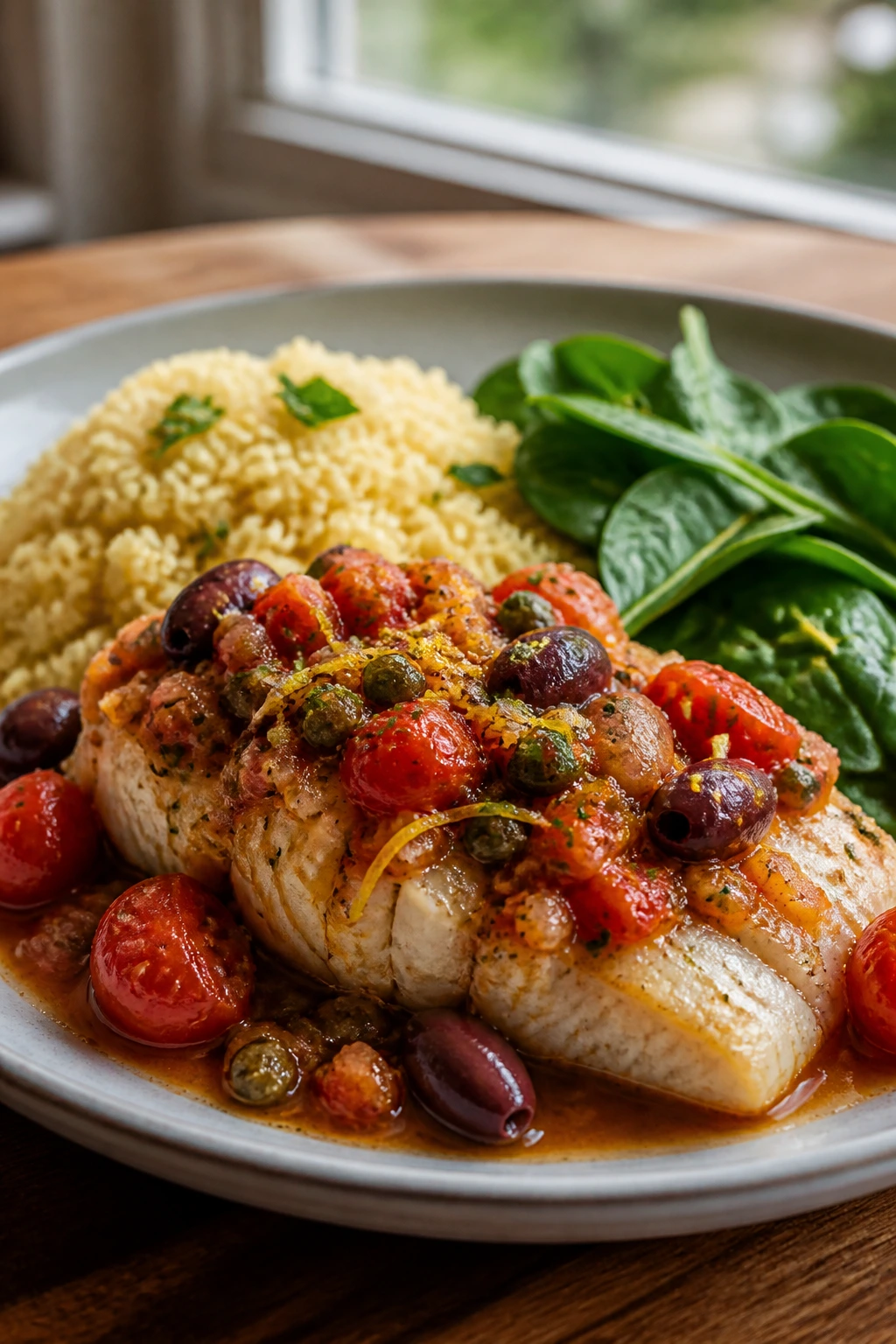
Cod is the fish I reach for when I want dinner to stay light but not boring. It bakes quickly, flakes in big clean pieces, and takes on the taste of whatever is around it—which is why tomatoes, olives, garlic, and lemon work so well here.
This plate comes in around 400 calories per serving with couscous and vegetables. The fish is lean, the couscous cooks fast, and the tomato-olive pan sauce does the kind of job that usually takes a lot more butter than this recipe uses.
Why It Works:
Cod has a mild flavor and a soft texture, so it benefits from a bold topping. The tomatoes break down into a quick sauce, olives add briny depth, and lemon keeps the dish from tasting flat. Couscous is useful here because it soaks up the juices without needing a long cook time or much fat.
Key Ingredients:
- 1 1/2 lb cod fillets, cut into 4 portions
- 2 tbsp olive oil, divided
- 1 shallot, thinly sliced
- 2 garlic cloves, minced
- 2 cups cherry tomatoes, halved
- 1/2 cup pitted kalamata olives, halved
- 1 tsp dried oregano
- 1/2 tsp kosher salt
- 1/4 tsp black pepper
- 1 cup couscous
- 1 1/4 cups low-sodium broth or water
- 2 cups baby spinach
- 1 lemon, zested and juiced
- 2 tbsp chopped parsley
Quick Steps:
- Preheat the oven to 400°F (200°C).
- Warm 1 tablespoon of oil in a skillet and cook the shallot for 2 minutes. Add the garlic, tomatoes, olives, oregano, salt, and pepper. Cook for 5 minutes, until the tomatoes start to burst.
- Stir in the spinach until just wilted, then spread the mixture in a baking dish.
- Nestle the cod into the tomato mixture, drizzle with the remaining oil, and bake for 12 to 15 minutes, until the fish flakes easily.
- Make the couscous by pouring the hot broth or water over it, covering, and letting it sit for 5 minutes before fluffing with a fork.
- Finish with lemon juice, zest, and parsley.
Equipment for This Recipe:
- Skillet — for the tomato base.
- Baking dish — to finish the cod in the oven.
- Small saucepan or kettle — for the couscous liquid.
- Fork — for fluffing couscous.
How to Serve This Dish:
Spoon couscous into shallow bowls, top with the tomato mixture, and lay the cod over it so the fish stays in big pieces. A little parsley on top keeps the plate from looking brown and beige. This is a clean four-serving dinner, and it doesn’t need much beside it.
Pro Tips for This Recipe:
- Don’t overbake the cod. It should flake, not dry out.
- Use a shallow dish. The fish cooks more evenly than it does in a deep pan.
- Let the tomatoes break down first. They need that head start to become a sauce.
- Add lemon at the end. Too much heat can flatten it.
Variations on This Dish:
- Mediterranean Halibut: Swap cod for halibut if you want a firmer fish.
- Capers Instead of Olives: Use capers for a sharper briny note.
- No-Couscous Bowl: Serve over steamed rice or roasted potatoes if that fits your table better.
Common Mistakes to Avoid with This Dish:
- Using thick fish pieces without adjusting time. Thicker fillets need a few more minutes.
- Skipping the tomato pre-cook. Raw tomatoes won’t give you much sauce.
- Over-stirring the fish. Once it flakes, leave it alone.
13. Veggie-Packed Chicken Fried Rice
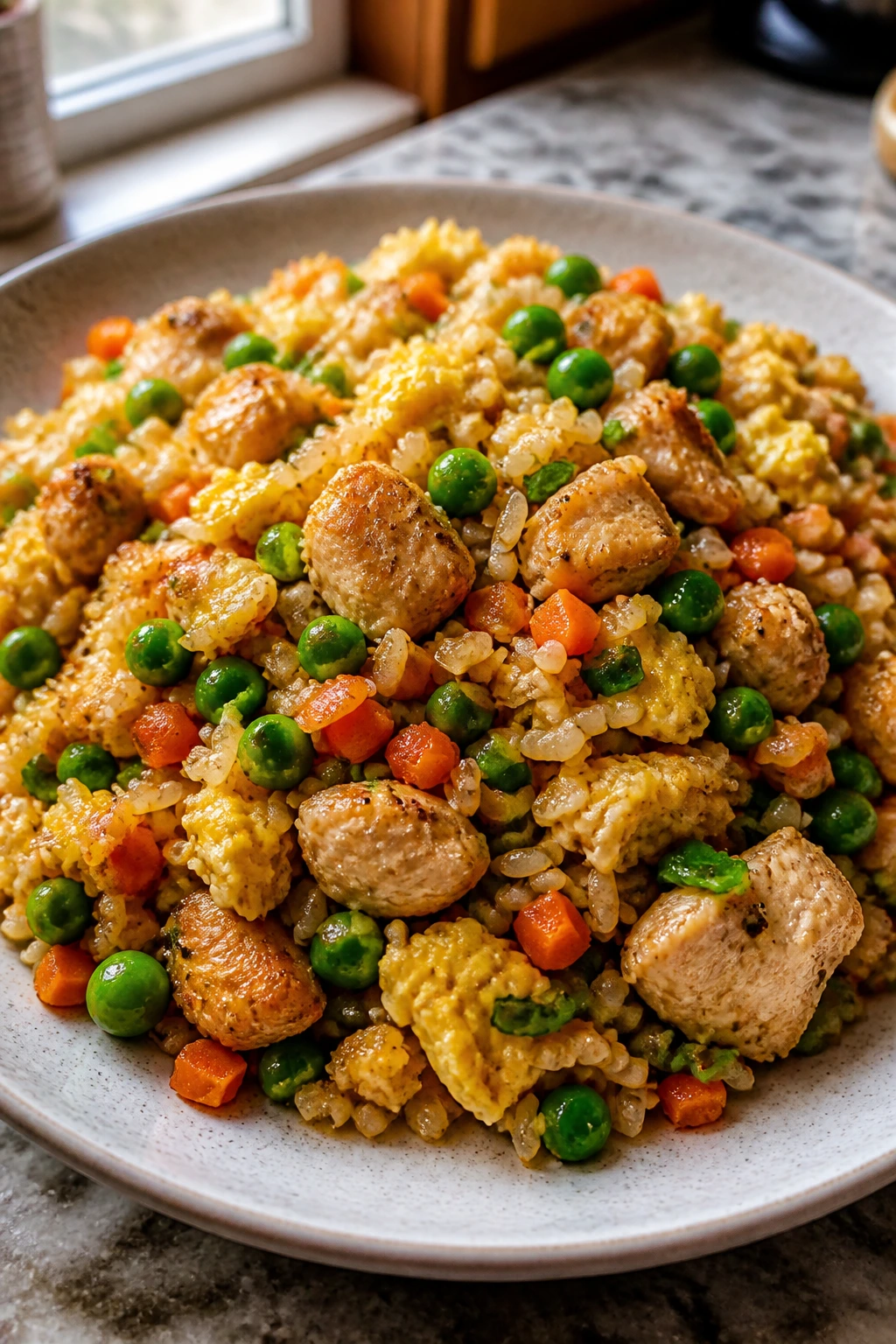
Fried rice is one of the few dinners that can use yesterday’s rice and still feel like a deliberate plan. The chicken browns, the eggs scramble into soft ribbons, the vegetables stay separate instead of turning into mush, and the soy sauce ties the whole pan together.
This one comes in around 440 calories per serving when you keep the rice measured and the oil sensible. It’s a strong family meal because everybody recognizes it, even if the vegetable count is higher than the takeout version.
Why It Works:
Day-old rice is drier and fries better, which means you get more texture and less clumping. Chicken breast keeps the protein lean, peas and carrots bring color and sweetness, and the eggs add richness without much extra volume. The sesame oil is tiny but important; too much and the dish gets greasy, too little and it tastes flat.
Key Ingredients:
- 1 1/4 lb boneless, skinless chicken breast, diced
- 4 cups cooked brown rice, chilled
- 2 tbsp neutral oil, divided
- 2 eggs, lightly beaten
- 1 cup frozen peas and carrots
- 1 small onion, diced
- 2 garlic cloves, minced
- 3 tbsp low-sodium soy sauce
- 1 tsp sesame oil
- 2 tbsp chopped scallions
- Black pepper, to taste
Quick Steps:
- Heat 1 tablespoon of oil in a large skillet or wok over medium-high heat. Cook the chicken for 4 to 5 minutes, until browned and cooked through. Transfer to a plate.
- Add the remaining oil and sauté the onion for 2 minutes, then stir in the garlic for 30 seconds.
- Push the vegetables to one side of the pan and pour in the eggs. Scramble until just set.
- Add the peas and carrots, then the rice. Break up clumps and stir-fry for 3 to 4 minutes, until the rice is hot.
- Return the chicken to the pan and add the soy sauce, sesame oil, and black pepper. Toss until everything is coated.
- Finish with scallions.
Equipment for This Recipe:
- Large wok or skillet — the rice needs room.
- Spatula — for scraping and tossing.
- Small bowl — for beating the eggs.
- Measuring spoons — because sesame oil can get away from you fast.
How to Serve This Dish:
Serve the fried rice hot, with the scallions scattered over the top and maybe a little extra soy sauce on the table. I like a squeeze of lime with this, even though it’s not traditional; it brightens the whole pan. Four big servings work best here.
Pro Tips for This Recipe:
- Use chilled rice. Fresh rice clumps and goes soft.
- Keep the chicken pieces small and even. Big chunks take too long and can dry out.
- Scramble the eggs in the pan, not separately if you’re short on time. It works fine.
- Taste before adding more soy sauce. It’s easier to add salt than to fix too much.
Variations on This Dish:
- Pineapple Fried Rice: Add a small amount of pineapple for sweetness.
- Cauliflower Rice Blend: Replace half the rice with cauliflower rice for a lighter version.
- Shrimp Fried Rice: Swap the chicken for shrimp and cook it even faster.
Common Mistakes to Avoid with This Dish:
- Using rice that’s too wet. It steams instead of fries.
- Overloading the pan. The rice needs direct contact with the hot surface.
- Pouring in too much soy sauce at once. The dish gets salty and dark fast.
14. Whole-Wheat Pasta Primavera with Chicken and Peas
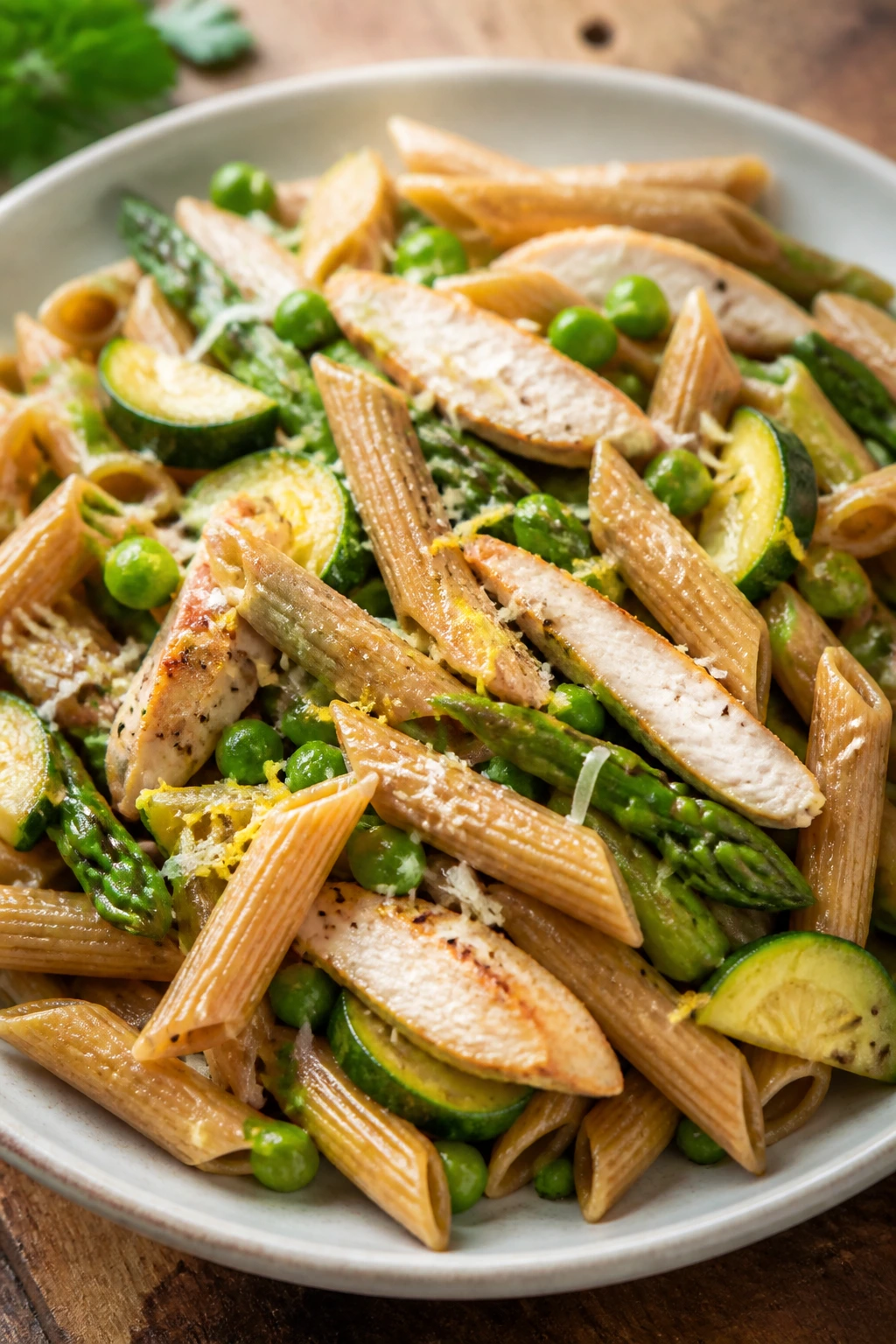
Pasta primavera gets a bad reputation when it’s treated like a bowl of random vegetables with noodles hiding underneath. Done well, it’s bright, springy, and satisfying, with pasta that still has chew and vegetables that keep their shape.
This version lands around 480 calories per serving if you keep the cheese and oil measured. Chicken gives the plate enough protein to make it dinner, and the peas, zucchini, and asparagus bring color and sweetness without turning the sauce into a cream bomb.
Why It Works:
Whole-wheat pasta gives the dish more texture and a little more staying power than white pasta, which matters when you’re trying to keep the meal under 500 calories. Chicken keeps the protein count high, and the vegetables are cooked just enough that they still have life in them. A small amount of Parmesan and lemon juice is enough to make the whole pot taste lively.
Key Ingredients:
- 12 oz whole-wheat penne or rotini
- 1 1/4 lb boneless, skinless chicken breast, sliced
- 1 tbsp olive oil
- 1 small zucchini, sliced into half-moons
- 1 bunch asparagus, cut into 2-inch pieces
- 1 cup frozen peas
- 2 garlic cloves, minced
- 1 lemon, zested and juiced
- 1/3 cup grated Parmesan
- 1/4 cup chopped basil
- 1/2 tsp kosher salt
- 1/4 tsp black pepper
Quick Steps:
- Cook the pasta in salted water until al dente. Reserve 1/2 cup pasta water before draining.
- Heat the olive oil in a large skillet and cook the chicken with salt and pepper for 5 to 6 minutes, until cooked through. Remove to a plate.
- Add the zucchini and asparagus to the skillet and cook for 4 minutes, until tender but still bright. Stir in the garlic for 30 seconds.
- Toss in the peas, pasta, chicken, lemon zest, lemon juice, Parmesan, and a splash of pasta water. Stir until the pasta looks lightly coated.
- Finish with basil and more black pepper.
Equipment for This Recipe:
- Large pot — for the pasta.
- Big skillet — for the chicken and vegetables.
- Colander — to drain the pasta.
- Zester or microplane — for the lemon.
How to Serve This Dish:
Twirl the pasta into bowls and make sure the chicken pieces sit on top where people can see them. A few basil leaves or a little extra Parmesan go a long way. This is the kind of meal that works for four to six people depending on how much pasta you pour.
Pro Tips for This Recipe:
- Keep the vegetables crisp. Mushy primavera is not worth making.
- Save the pasta water. It helps the sauce cling without extra cream.
- Use lemon zest, not just juice. The zest carries the scent.
- Add Parmesan off the heat. It melts smoother that way.
Variations on This Dish:
- Shrimp Primavera: Swap the chicken for shrimp and shorten the cooking time.
- Roasted Vegetable Version: Roast the vegetables first if you want deeper flavor.
- Dairy-Free Pasta: Skip the Parmesan and add more lemon and basil.
Common Mistakes to Avoid with This Dish:
- Overcooking the pasta. Whole-wheat noodles get soft fast if you overshoot.
- Using too much cheese. It turns the dish heavy.
- Cooking all the vegetables until soft. They should still have some bite.
15. Turkey Burger Sliders with Roasted Sweet Potato Wedges
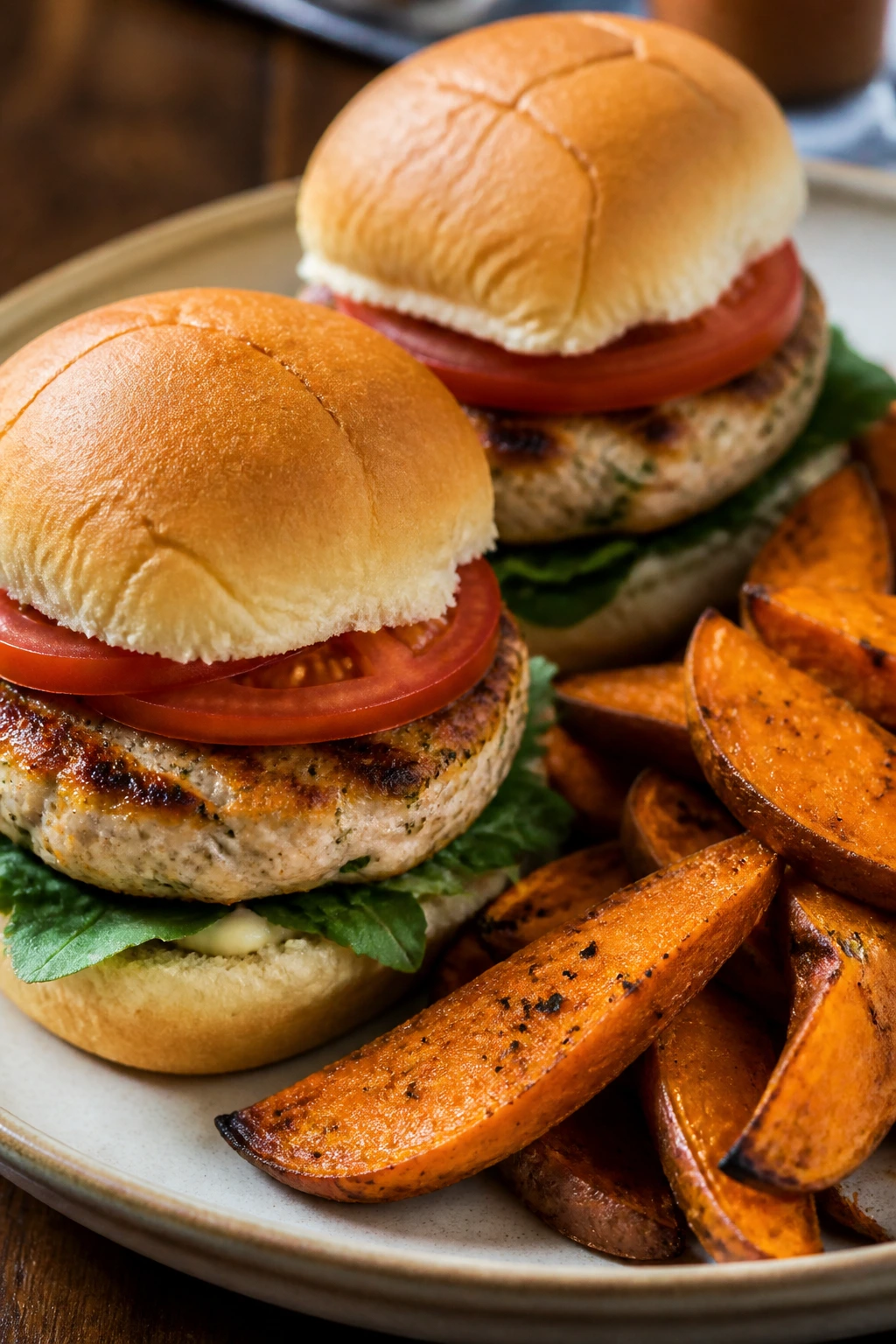
Turkey sliders are one of those dinners that sound small until you serve them with a pile of sweet potato wedges and realize they can hold a table together just fine. The patties are juicy if you mix them lightly, the wedges caramelize at the edges, and the whole plate feels like something you’d actually want on a weeknight.
This lands around 490 calories per serving when you serve two sliders with a modest portion of wedges. That’s close enough to the line that portion size matters, but it still fits the topic without making the meal feel like a compromise.
Why It Works:
Lean turkey keeps the burgers lighter than beef, and the sliders format helps with portion control because each patty is naturally small. Sweet potatoes give the plate enough starch and sweetness to feel complete, and roasting them instead of frying keeps the calorie count down without losing the caramelized edges people love. A yogurt-based sauce ties it together without turning the meal greasy.
Key Ingredients:
- 1 1/2 lb lean ground turkey
- 1/3 cup breadcrumbs
- 1 egg
- 1 small onion, very finely minced
- 1 tsp Worcestershire sauce
- 1 tsp kosher salt
- 1/2 tsp black pepper
- 1 tsp garlic powder
- 8 slider buns
- 2 medium sweet potatoes, cut into wedges
- 1 tbsp olive oil
- 1/3 cup plain Greek yogurt
- 1 tsp Dijon mustard
- Lettuce and tomato slices, for serving
Quick Steps:
- Preheat the oven to 425°F (220°C). Toss the sweet potato wedges with olive oil, salt, and pepper, then spread them on a sheet pan. Roast for 25 to 30 minutes, flipping once.
- Mix the turkey, breadcrumbs, egg, onion, Worcestershire, salt, pepper, and garlic powder in a bowl until just combined.
- Shape into 8 small patties and press a slight dimple in the center of each one so they stay flat.
- Cook the patties in a skillet over medium heat for 4 to 5 minutes per side, until cooked through and browned.
- Stir the yogurt and Dijon together for a quick sauce.
- Assemble the sliders with lettuce, tomato, and the yogurt sauce, then serve with the wedges.
Equipment for This Recipe:
- Sheet pan — for the sweet potato wedges.
- Large skillet — for the sliders.
- Mixing bowl — for the turkey mixture.
- Spatula — to flip the patties without tearing them.
How to Serve This Dish:
Serve two sliders per person with a handful of sweet potato wedges on the side. I like the sauce on the bun and a little extra mustard on the plate for dipping the wedges. The plate looks even better if you stack the sliders in a loose pile instead of spreading everything flat.
Pro Tips for This Recipe:
- Don’t overmix the turkey. Tough sliders are usually mixed too much.
- Make the patties thin and even. They cook faster and stay juicier.
- Flip the wedges once, not six times. Let them brown properly.
- Use slider buns, not full-size buns. That’s where the calorie control stays honest.
Variations on This Dish:
- BBQ Turkey Sliders: Brush with a little barbecue sauce during the last minute of cooking.
- Cheddar Turkey Version: Add a small slice of cheddar, but keep the rest of the plate lighter.
- Lettuce-Bun Option: Skip the buns and wrap the patties in lettuce for a lower-carb plate.
Common Mistakes to Avoid with This Dish:
- Cooking the sweet potatoes too close together. They steam instead of roast.
- Making oversized patties. The sliders stop being sliders, and the calorie math changes fast.
- Serving with too many toppings. Sauce, cheese, and mayo can push the meal over the line before you notice.
Why the Calorie Count Works Without Making Dinner Feel Small
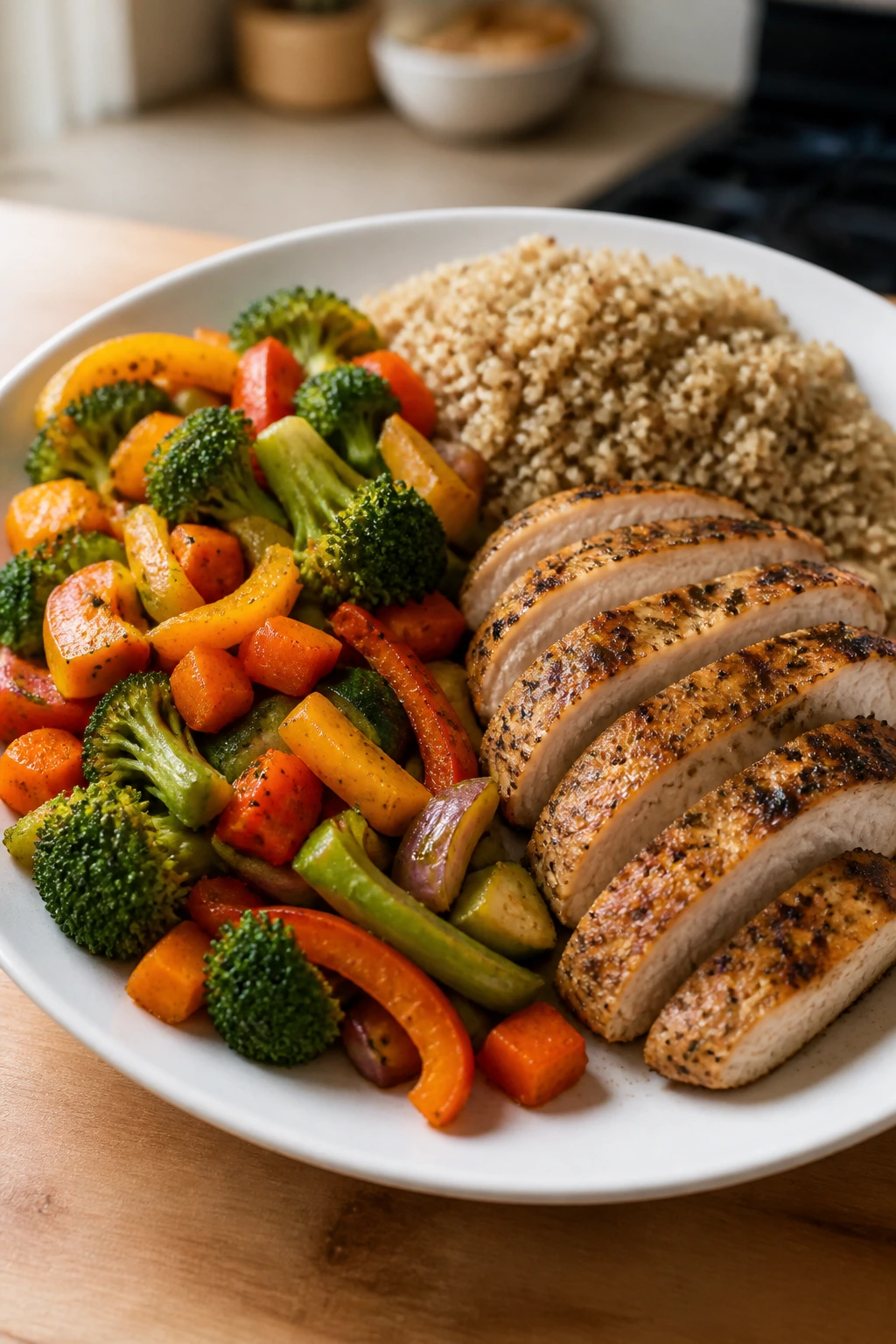
The common thread in these meals is not magic. It’s arithmetic, and a little restraint in the right places. A tablespoon of oil does enough when the pan is hot. A cup of rice or pasta can still feel generous when the plate also has chicken, fish, beans, or vegetables with some bite. And roasting, broiling, baking, and simmering all build flavor without asking for a heavy sauce to cover the edges.
The other thing these dinners do well is move the vegetables out of the “supporting cast” role. Broccoli gets browned. Peppers get softened. Green beans stay crisp. Lentils and beans show up as protein, not filler. That shift is what keeps the meals from tasting like compromise food.
Essential Equipment for These Recipes
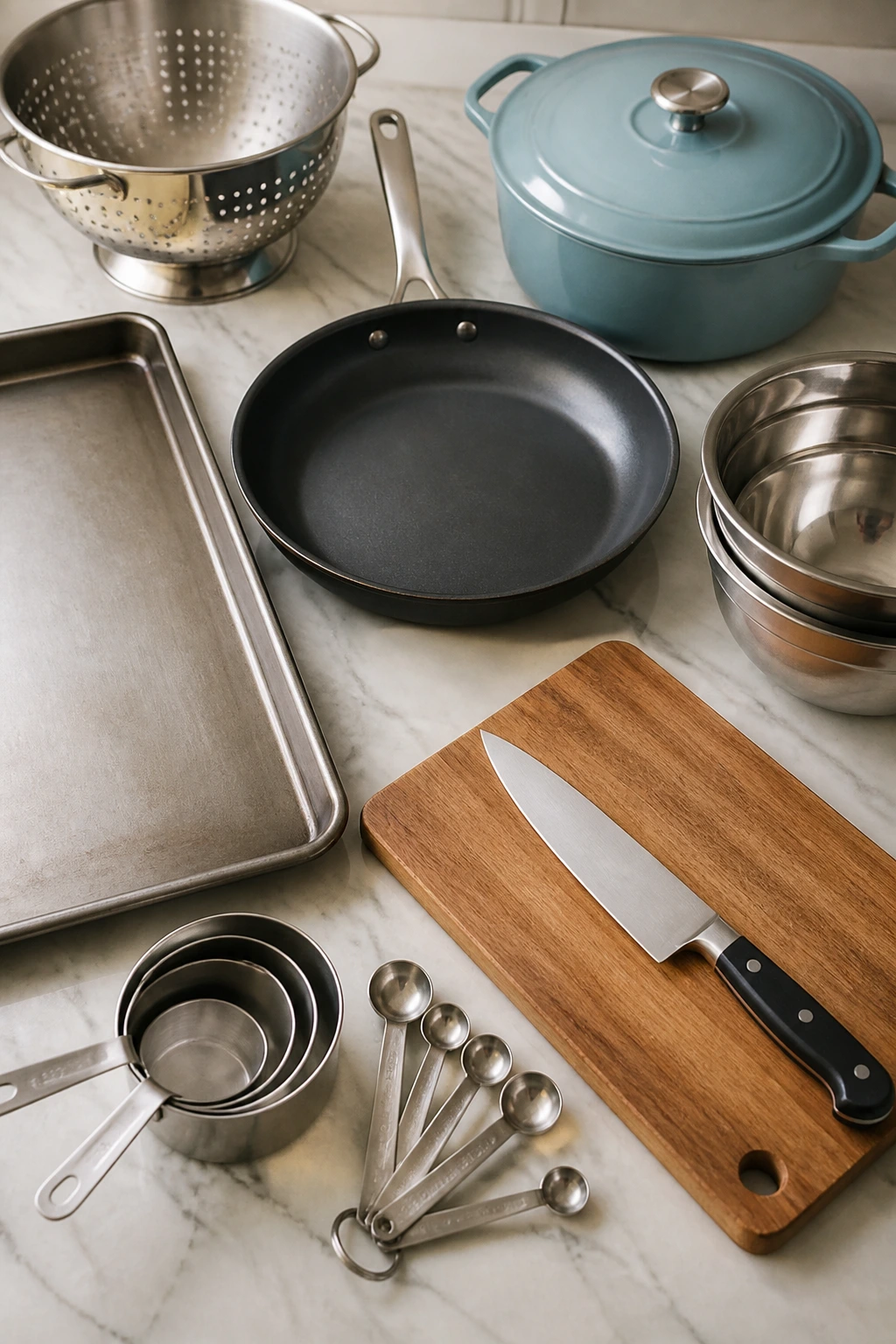
- Large rimmed sheet pans — useful for chicken, fish, and roasted vegetables that need space to brown.
- 12-inch skillet or sauté pan — the workhorse for taco skillets, stir-fries, fried rice, and sliders.
- Large Dutch oven or soup pot — needed for chili, soup, and any long simmer that should reduce evenly.
- Sharp chef’s knife — even cuts keep chicken, potatoes, peppers, and sweet potatoes cooking at the same pace.
- Cutting board with a damp towel underneath — stops sliding when you’re chopping fast.
- Measuring cups and spoons — not glamorous, but they’re the reason the calorie count stays believable.
- Mixing bowls in two sizes — one for sauces or marinades, one for bulk mixing.
- Colander — for rice, pasta, beans, and any rinse-heavy ingredient.
- Instant-read thermometer — especially useful for chicken, turkey, and salmon so you don’t guess at doneness.
Smart Shopping for These Healthy Family Meals
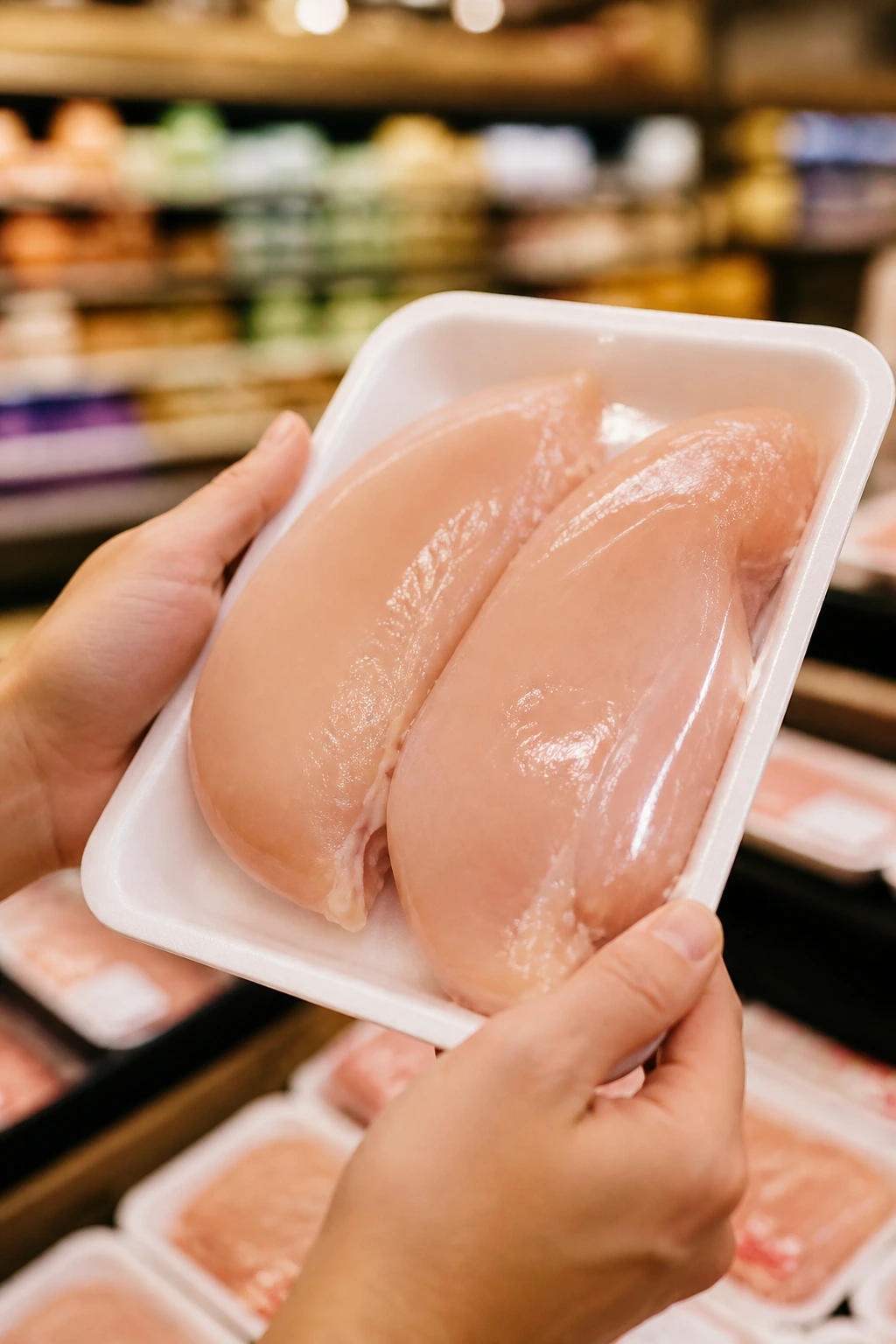
Lean protein matters here, but it doesn’t mean the same cut works in every recipe. Chicken breast is the cleanest fit for sheet-pan dinners, stir-fries, pitas, and pasta, while 93% lean turkey gives you enough flavor for tacos, chili, and meatballs without a greasy skillet. Salmon and cod bring two different kinds of richness: salmon for a fuller, oilier bite, cod for a mild, flaky one that needs a sauce or topping.
For canned goods, choose low-sodium beans, broth, and tomatoes when you can. That gives you room to season the dish yourself instead of inheriting somebody else’s salt problem. Rinse canned beans until the water runs clear. It takes ten seconds and removes the weird canning liquid that can flatten the flavor of chili, taco filling, or enchilada casserole.
When you buy vegetables, size consistency matters more than perfection. Pick broccoli heads with tight florets, green beans that snap, peppers that feel heavy for their size, and sweet potatoes without soft spots. Frozen peas, corn, and even broccoli are fine in these recipes, and sometimes better than tired produce that’s been sitting in the crisper too long.
Whole-wheat pasta, brown rice, corn tortillas, and couscous all play different roles. Pasta gives chew, rice gives steadiness, tortillas give structure, couscous gives speed. I’d rather have a modest amount of a starch that gets measured than a giant plate of one that was poured from the box and called good. That’s how the calorie math quietly drifts off course.
How to Serve These Meals at the Table
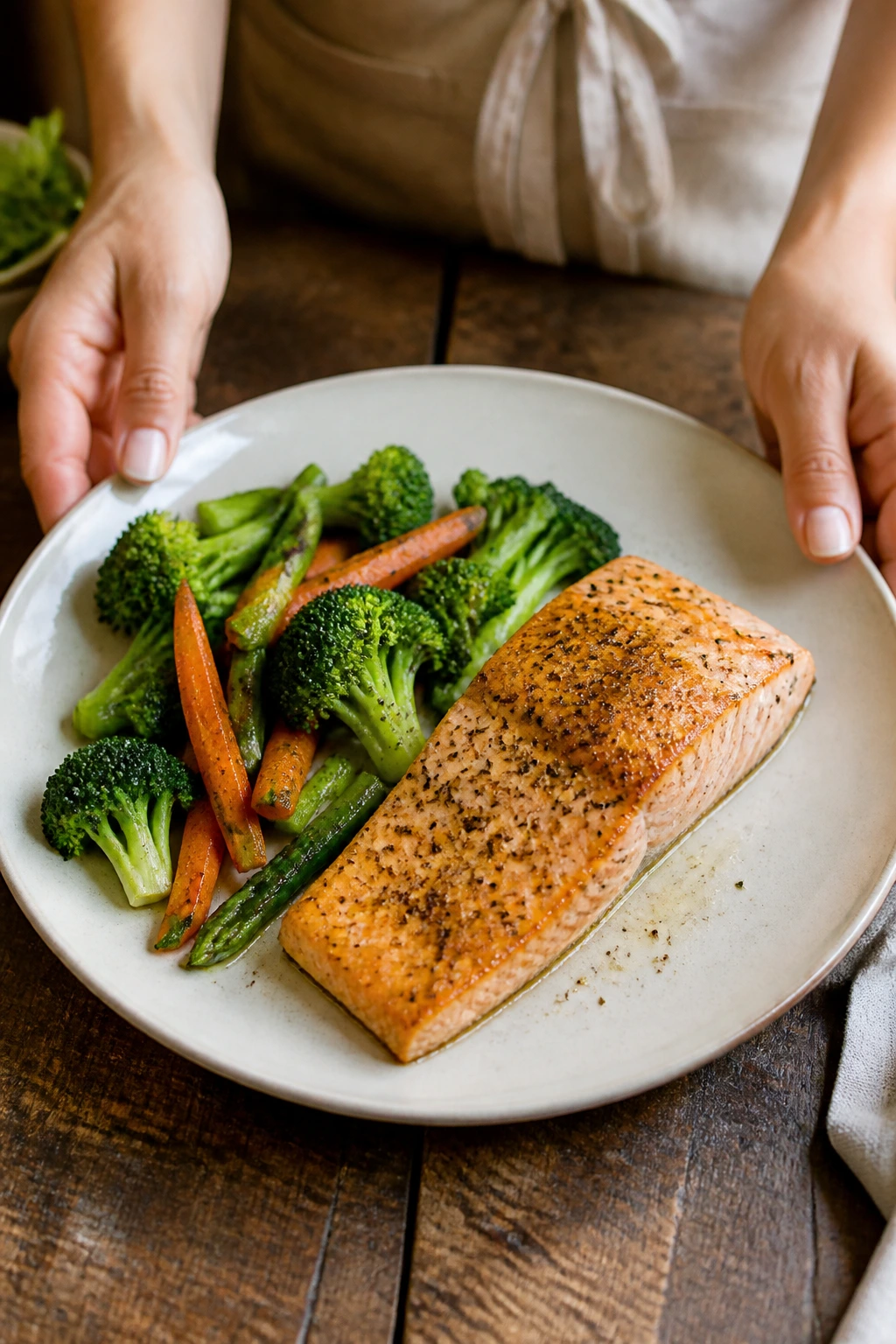
Presentation:
Keep the main protein visible. A chicken breast buried under rice or a fish fillet hidden under sauce looks less appealing, even when the food tastes fine. Use shallow bowls for chili, soup, and fried rice, and use broad plates for sheet-pan meals, salmon, and sliders so the vegetables don’t collapse into a heap.
Accompaniments:
Choose one extra side, not three. A simple green salad, cucumber-tomato salad, extra steamed vegetables, or a bowl of fruit keeps the table light without adding a second dinner. Bread belongs with soup or cod; rice belongs with stir-fry or fajita bowls; tortillas fit taco night and enchiladas. Don’t stack starch on starch unless you’ve adjusted the rest of the plate.
Portions:
For most of these recipes, one serving means 4 to 6 ounces of protein, 1/2 to 1 cup of starch, and at least 1 to 2 cups of vegetables. That’s enough food to feel like dinner without slipping past 500 calories. If you need bigger portions for older kids or active adults, increase the vegetables first and the starch second.
Beverage Pairing:
Sparkling water with lime is the safest all-purpose match. Unsweetened iced tea works with chili, taco skillet, and sliders. With salmon, cod, or Greek chicken, I like a cold lemon water or a dry white wine for adults who drink it. Heavy drinks make these dinners feel slower than they are.
Additional Tips and Flavor Boosters
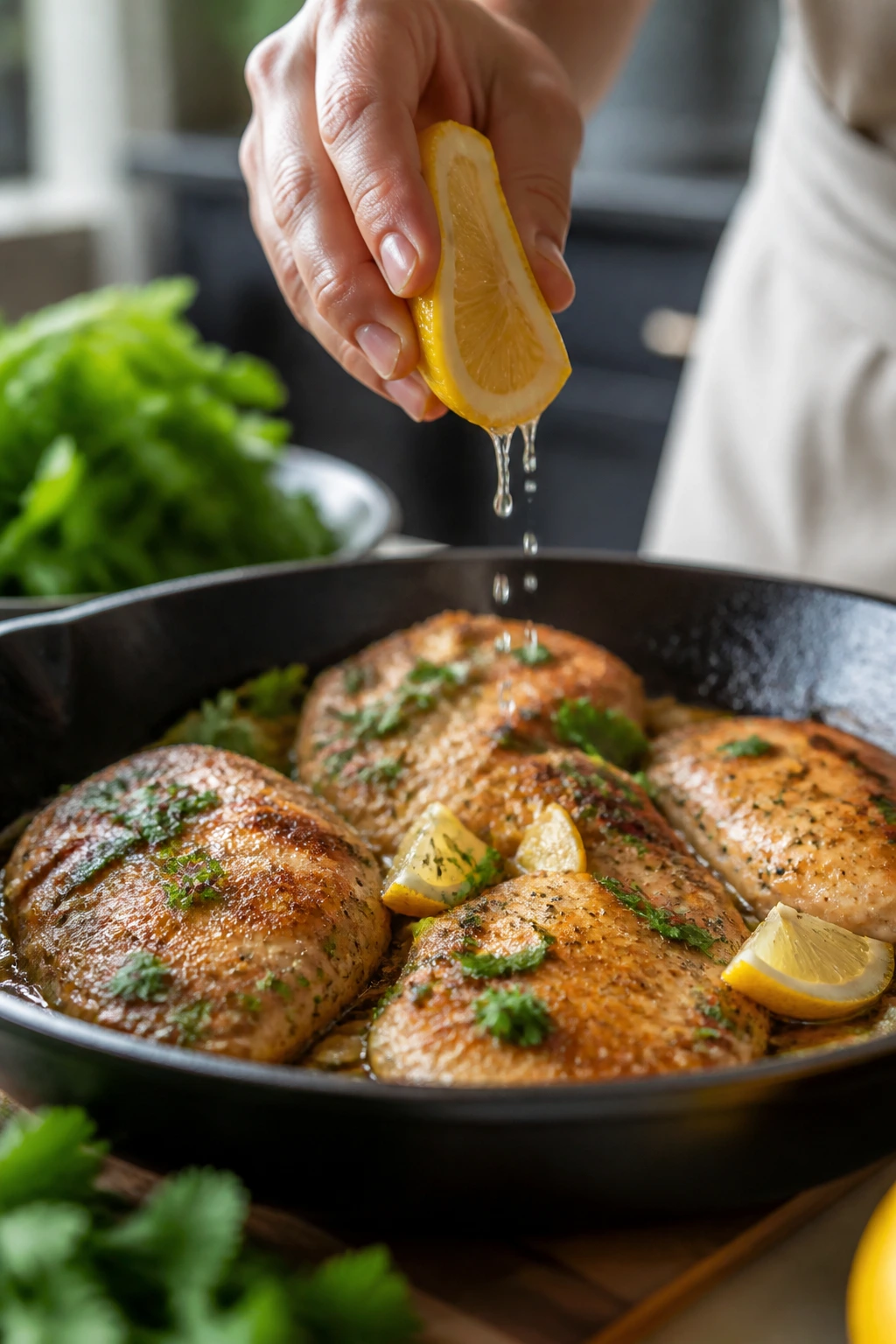
Flavor Enhancement:
A finishing hit of acid does more than most people expect. Lemon juice on chicken, lime on fajita bowls, or a splash of vinegar in chili wakes up the whole dish. If a dinner tastes “fine” but not exciting, acid is usually the missing piece, not more salt.
Customization:
Keep a small bowl of add-ons on the table: chopped herbs, sliced scallions, Greek yogurt, hot sauce, salsa, and lemon wedges. That lets each person steer the plate a little without forcing the whole meal into a single flavor lane. It also solves the perpetual family problem of one person wanting heat and another wanting none.
Serving Suggestions:
A crunchy topping can save a soft dish. Think toasted breadcrumbs on pasta primavera, tortilla strips on chili, or chopped cucumber and radish on pita plates. Texture is a calorie-friendly way to make dinner feel more generous.
Make-It-Yours:
For dairy-free eaters, skip yogurt and cheese finishes and lean harder on herbs, citrus, and olive oil. For gluten-free plates, use corn tortillas, rice, potatoes, or gluten-free pasta and breadcrumbs. For lower-carb nights, trade half the starch for extra vegetables rather than stripping the plate bare.
Make-Ahead, Storage, and Reheating Guidance
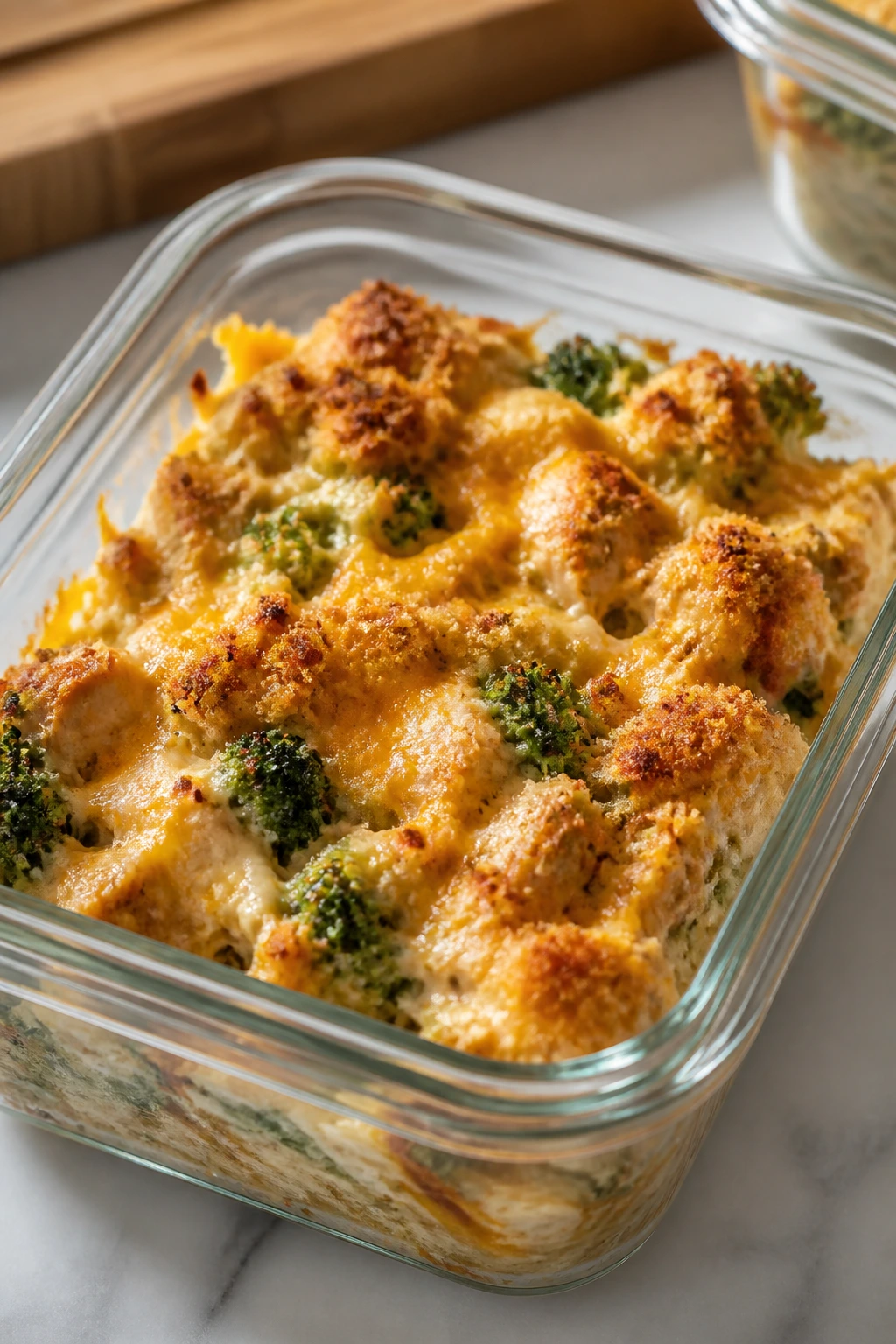
These meals hold up better than people give them credit for, but the method matters. Most cooked chicken, turkey, chili, soup, and casseroles keep 3 to 4 days in the refrigerator in airtight containers. Fish is shorter-lived; salmon and cod are best within 2 days, and I’d reheat them gently or eat them cold over greens if the texture gets too firm.
Soup, chili, taco filling, enchilada casserole, and meatballs freeze well for up to 2 months. Cool them completely before freezing, and use flat freezer bags for chili or soup if you want them to thaw faster. Rice and pasta can be frozen too, but they need a small splash of water when reheated so they don’t turn hard around the edges.
For reheating, the oven is best for sheet-pan meals, casseroles, and sliders. Cover loosely with foil and warm at 325°F until hot, usually 15 to 20 minutes for a casserole and 10 to 15 minutes for sheet-pan leftovers. Stovetop works well for taco skillet, chili, fried rice, and stir-fry; add a tablespoon or two of broth or water so the pan doesn’t dry out. Microwave is fine for soup and rice, but stop halfway through and stir so the edges don’t go rubbery.
A few of these dishes improve overnight. Chili gets deeper, lentil soup gets silkier, and taco filling settles into itself. Pasta primavera, fried rice, and fish are better fresh, but even those can be rescued with a little lemon, a spoonful of broth, or a quick reheat instead of a long blast.
Variations and Adaptations to Try
Gluten-Free Swaps:
Use corn tortillas instead of flour, rice or potatoes instead of bread or pasta, and gluten-free breadcrumbs in the meatballs or sliders. The trick is not to make the whole meal “different” in a way that feels obvious. Keep the seasoning the same, and the family usually won’t care about the swap.
Dairy-Free Nights:
Skip yogurt sauces, cheese toppings, and Parmesan finishes, then lean on lemon, herbs, and a little extra olive oil. A dairy-free dinner doesn’t have to taste spare. It just needs a stronger finish from acid and salt.
Lower-Carb Bowls:
Replace half the rice, pasta, or couscous with cauliflower rice, zucchini, cabbage, or extra broccoli. I prefer this route over removing starch altogether. The plate stays fuller, and nobody starts prowling the pantry after dinner.
Kid-First Mild Versions:
Hold back the hot sauce, red pepper flakes, and chipotle, then serve them at the table instead. Many kids will eat taco skillet, chili, or shrimp fajita bowls if the spice stays adjustable rather than baked in from the start.
Vegetarian Pantry Moves:
Black beans, lentils, quinoa, eggs, and Greek yogurt can replace meat more cleanly than people expect. The key is keeping texture in the dish—roasted vegetables, toasted tortillas, or crunchy toppings—so the meal still feels like something you’d want to sit down for.
Regional Flavor Swaps:
Lean the seasoning one direction and the meal changes fast. Italian herbs and Parmesan push a pasta dish toward the Mediterranean, smoked paprika and cumin make chili or turkey filling feel warmer, and dill plus lemon turns salmon into a cooler, cleaner plate. You don’t need a new recipe every time; sometimes you just need a different finishing note.
Common Mistakes to Avoid
Guessing at oil.
A “light drizzle” is how recipes stop being under 500 calories. Measure the oil, especially for sheet-pan meals, stir-fries, and roasted vegetables. A tablespoon here and there is enough when the pan is hot.
Overcrowding the pan.
If chicken, vegetables, or potatoes are piled up, they steam instead of brown. Browned food tastes richer, and you won’t need extra fat to force the flavor.
Underseasoning lean protein.
Chicken breast, cod, shrimp, and turkey all need help. Salt them properly, then add herbs, citrus, or sauce. Lean meat without seasoning tastes like an apology.
Cooking starches past the point of usefulness.
Mushy pasta, bloated rice, and collapsed potatoes can make a 400-calorie dinner feel heavy anyway. Pull them when they still have structure. Texture is part of satiety.
Saving the sauce for the end but forgetting the acid.
Lemon, lime, vinegar, yogurt, and tomato sauce change how the whole dish lands on the tongue. If a meal feels flat, the fix is often brightness, not more salt or cheese.
Making portions too small to matter.
A plate that looks sparse will get rebuilt from the snack drawer later. Keep the vegetables generous, the protein visible, and the starch measured, not absent. That balance is what makes these dinners repeatable.
Frequently Asked Questions
How do you keep family meals under 500 calories without everyone feeling hungry?
Use lean protein, fill the plate with vegetables, and measure the starch instead of removing it completely. A dinner with chicken, beans, or fish plus roasted vegetables and a sensible portion of rice or potatoes usually feels more complete than a tiny “light” plate ever will.
Can I make these recipes ahead of time?
Yes, and some are better after sitting overnight. Chili, soup, taco filling, and casseroles hold up especially well. Fish, fried rice, and stir-fry are better fresh, though they still reheat fine if you use gentle heat and a little moisture.
What’s the easiest way to lower the calories even more?
Cut the starch portion by a third and add another cup of vegetables. That’s usually the cleanest adjustment because it doesn’t wreck the texture or flavor balance. I’d rather trim rice than strip out the sauce or seasoning.
Can I use frozen vegetables in these meals?
Absolutely. Frozen peas, corn, broccoli, and green beans are useful, especially in stir-fries, soups, and casseroles. Just don’t thaw them into a soggy heap before cooking; add them from frozen or pat them dry if needed.
What if my chicken breast dries out?
That usually means the heat was too high or the pieces were too small. Slice evenly, pull the chicken at 165°F, and let it rest before cutting. A sauce or pan juice helps too, but it can’t rescue chicken that’s been cooked into sawdust.
How do I scale these for a larger family?
Double the ingredients if your pan or pot can handle it, but don’t double the crowding. For sheet-pan meals and stir-fries, use two pans or cook in batches. For chili and soup, a larger pot is enough as long as you keep the simmer steady.
Are these meals freezer-friendly?
Most of the soups, chili, meatballs, taco filling, and casseroles are. Freeze them in portion-sized containers so you’re not thawing a whole pan for a single lunch. Fish and rice-based meals freeze less gracefully, but they still work if you accept a softer texture.
What’s the best way to keep tortillas, pasta, and rice from pushing the meal over 500 calories?
Measure them before they hit the table. One cup of cooked rice or pasta looks smaller than people expect, especially next to a hot skillet or bowl of sauce. If you serve the starch in the kitchen instead of leaving a full pot on the table, the calories stay more predictable.
Can I make these kid-friendly without cooking two dinners?
Yes. Keep the base mild and put the spicy parts, sauces, or extra herbs on the table. Most kids do better with tacos, sliders, pasta, fried rice, and casseroles because the shapes are familiar even when the ingredients change a little.
Meals That Earn a Second Night
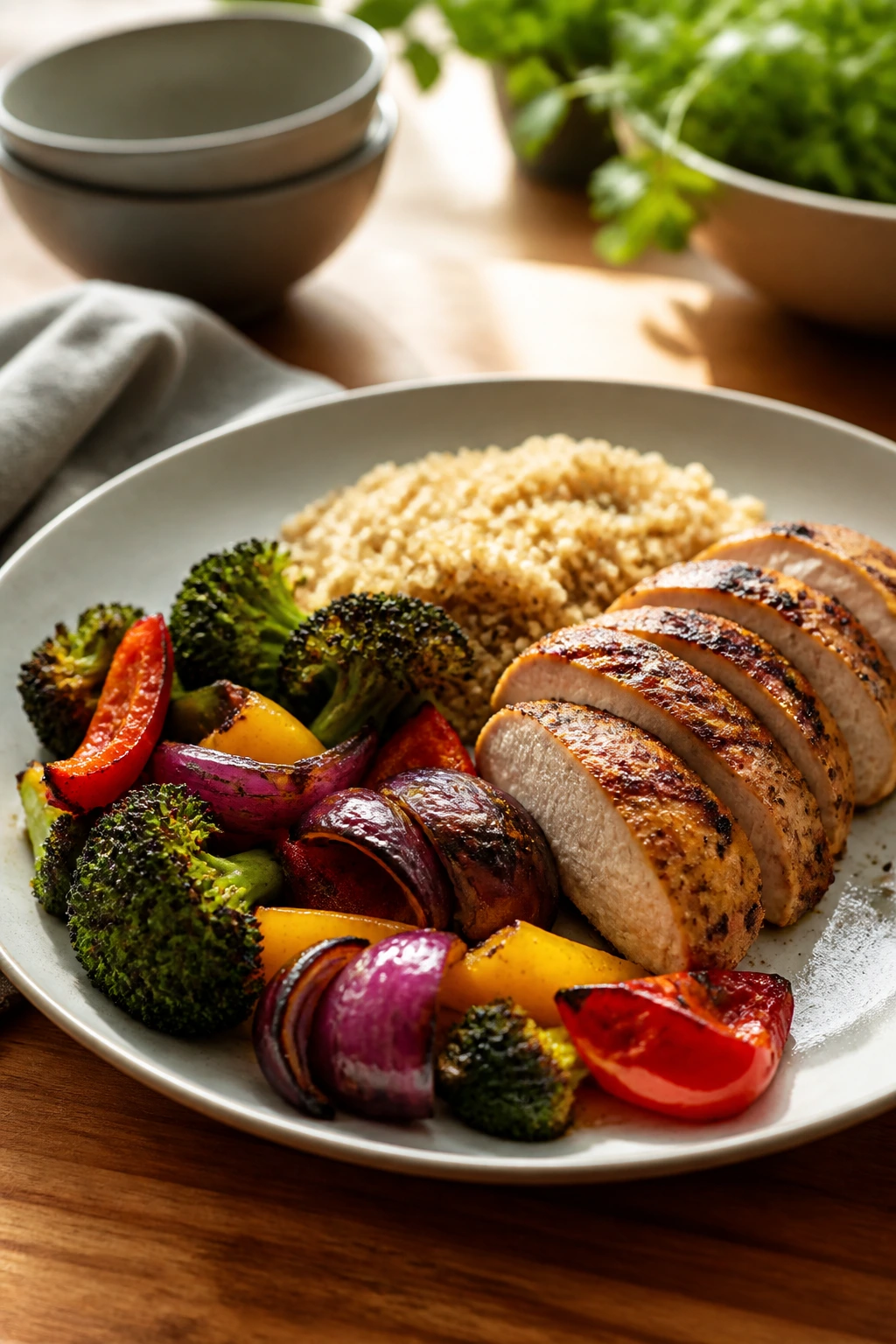
The useful thing about a collection like this is that it gives you more than calorie control. It gives you a small set of dinners that actually behave on a weeknight: they brown when they should, reheat without drama, and leave enough room on the plate for the food to look like a meal instead of a compromise.
That’s the part I’d keep coming back to. Not the number alone. A dinner under 500 calories works best when nobody feels it was built with a calculator first and a skillet second. If the chicken is juicy, the vegetables are cooked with some patience, and the starch is measured rather than guessed, the whole table tends to eat better without anybody making a speech about it.