



Some soups are carrying too much weight and not enough charm. Thin broth, limp noodles, a few tired vegetables—fine, but forgettable. Drop in the right dumpling and the whole bowl changes. The broth clings. The spoon slows down. The top layer steams and swells and turns from “dinner” into something closer to a rescue mission.
That’s the part people miss when they talk about dumplings for soup: they are not all built the same. A light buttermilk drop dumpling wants a bare simmer and a covered pot. A matzo ball needs enough room to drift. A wonton wants a quick, confident poach before it ever sees the bowl. If you treat them all the same, they sulk. If you match the dough to the broth, they start doing what they were born to do.
The best bowls have texture contrast. Soft dumplings against clear broth. Tender centers against peppery greens. A little chew from spätzle. A creamy ricotta bite that melts into tomato. That’s why this list leans on different styles, not one overused dough. A dumpling recipe can be simple and still have a point of view.
Why These Dumplings Belong in One Bowl
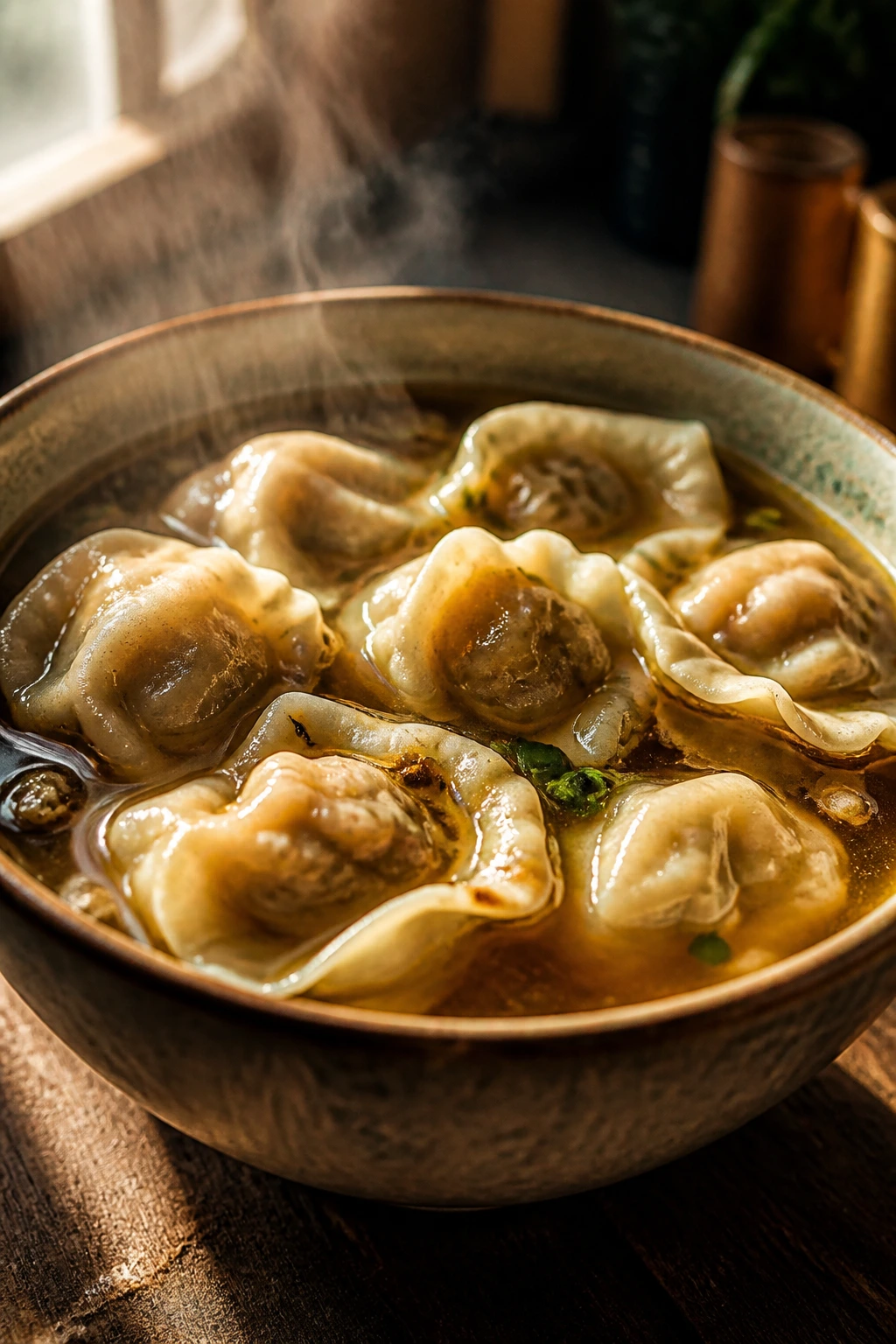
- Broth-first texture: Every recipe here is built to hold its shape in hot liquid without turning into paste or sinkage.
- Different kinds of comfort: Some dumplings are fluffy and spoonable, others are chewy, toothsome, or silky, so you can match the bowl to your mood.
- Pantry-friendly base ingredients: Flour, eggs, broth, cheese, herbs, and a few vegetables do most of the work.
- Make-ahead friendly options: Several of these freeze well before cooking, which means you can pull out a few dumplings and build soup around them later.
- Easy to pair with leftovers: A leftover roast chicken, a pot of bean soup, or a plain vegetable broth can take on a whole new shape with one of these dumplings.
- Built for cold nights: These are the recipes I reach for when I want the bowl to feel substantial without becoming heavy.
1. Buttermilk Drop Dumplings
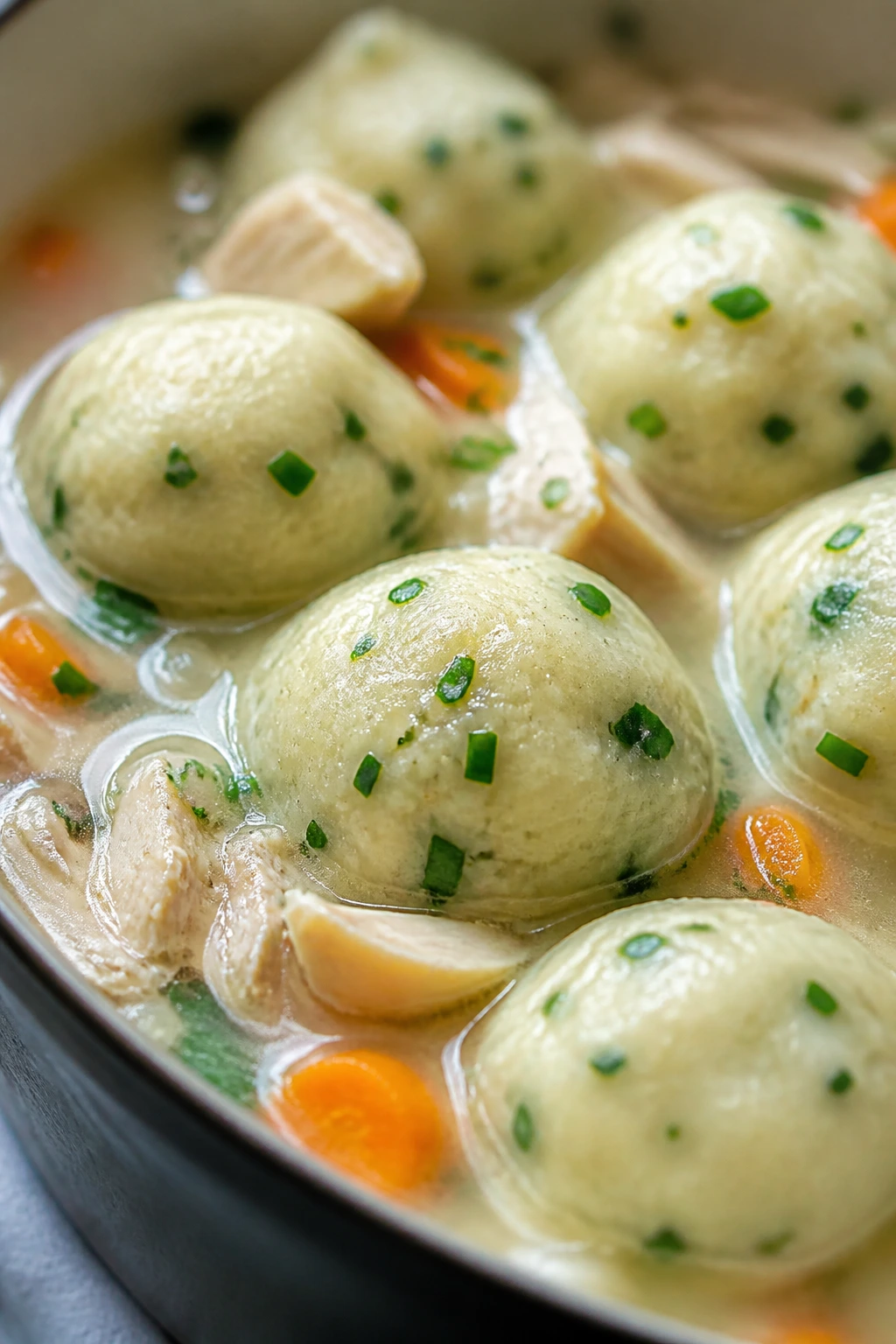
A good drop dumpling should look a little messy going in. That’s the charm. These puff into soft, craggy pillows with a tender middle and a faint tang from the buttermilk, which makes them fit especially well in chicken soup or a simple carrot-and-celery broth.
Why It Works:
Baking powder and baking soda give these dumplings lift, while the buttermilk keeps the crumb soft instead of bready. The real trick is the lid: covered steam cooks the tops and bottoms evenly at a bare simmer, so the centers set without drying out. They’re the simplest dumplings in the bunch, and still one of the smartest.
Key Ingredients:
- 1 1/2 cups all-purpose flour — the base; don’t swap in bread flour unless you want a chewier dumpling.
- 2 teaspoons baking powder — gives the main rise.
- 1/2 teaspoon baking soda — reacts with the buttermilk for extra puff.
- 3/4 teaspoon fine salt — keeps the dough from tasting flat.
- 1 cup buttermilk — the tang and moisture; shake the carton before measuring.
- 2 tablespoons melted unsalted butter — adds richness and a soft finish.
- 2 tablespoons chopped parsley — optional, but it gives the dumplings a fresher look and taste.
Quick Steps:
- Whisk the flour, baking powder, baking soda, and salt in a bowl.
- Stir in the buttermilk and melted butter until the dough just comes together. Do not beat it smooth.
- Let the dough sit for 2 minutes while your soup returns to a bare simmer.
- Drop 1-tablespoon portions onto the soup surface, leaving a little space between each one.
- Cover tightly and cook for 12 minutes without lifting the lid. The dumplings should look puffed and matte on top.
- Turn off the heat and rest 3 minutes before serving.
Equipment for This Recipe:
- Medium mixing bowl — for a fast, no-fuss dough.
- Soup pot with a tight lid — the lid is what finishes the dumplings.
- Tablespoon or small cookie scoop — keeps the dumplings the same size.
- Small whisk — for the dry ingredients.
How to Serve This Dish:
Ladle these into chicken broth with black pepper, shredded celery leaves, and a little chopped dill if you like a grassy note. They sit well beside buttered peas, braised greens, or plain toasted bread that can soak up the broth without stealing the show.
Pro Tips for This Recipe:
- Keep the broth at a lazy simmer. Fast boiling makes the dumplings ragged.
- If the dough feels stiff, add 1 tablespoon buttermilk at a time.
- Don’t stir once the dumplings are in the pot; move the soup only by gently tilting the pan.
Variations on This Dish:
- Garlic-Parsley Drop Dumplings: Stir in 1 minced garlic clove and 1 extra tablespoon parsley.
- Cornmeal Edge: Replace 1/4 cup of the flour with fine cornmeal for a little grit.
- Dairy-Light Version: Use plain yogurt thinned with 2 tablespoons milk instead of buttermilk.
Common Mistakes to Avoid with This Dish:
- Boiling too hard: The tops split and the bottoms get rubbery. Keep the heat low.
- Overmixing the dough: The dumplings turn heavy instead of airy. Stop as soon as the flour disappears.
- Crowding the pot: They need room to puff. If your pot is small, cook in batches.
2. Cheddar Chive Biscuit Dumplings
These are the dumplings I make when I want the bowl to feel a little more blunt and savory. Sharp cheddar melts into the dough, chives keep it bright, and the finished dumplings have the kind of crumb that likes split pea soup, potato leek, or a smoky tomato broth.
Why It Works:
Cold butter and baking powder create those biscuit-like layers, and cheddar gives the dough a salty bite that stands up to rich soup. The chives matter more than people think; they cut through the fat and keep the dumpling from tasting dense. Cover the pot, and the tops set without going dry.
Key Ingredients:
- 1 1/2 cups all-purpose flour — standard biscuit structure.
- 2 teaspoons baking powder — for lift.
- 1/2 teaspoon salt — go easy because the cheddar is salty.
- 1/4 teaspoon baking soda — helps the dough brown gently.
- 4 tablespoons cold unsalted butter, cubed — cold fat makes flaky pockets.
- 3/4 cup shredded sharp cheddar — shred it yourself if you can.
- 2 tablespoons chopped chives — fresh, not dried.
- 3/4 cup whole milk — enough to bring the dough together without making it wet.
Quick Steps:
- Whisk the flour, baking powder, salt, and baking soda in a bowl.
- Cut in the cold butter with your fingers or a pastry cutter until the mixture looks like coarse crumbs.
- Fold in the cheddar and chives.
- Stir in the milk just until a shaggy dough forms; it should look a little uneven.
- Drop heaping tablespoons onto the simmering soup, cover, and cook 12 to 14 minutes until the dumplings are set and the tops feel springy.
- Rest 2 minutes before ladling into bowls.
Equipment for This Recipe:
- Mixing bowl — roomy enough for butter-cutting.
- Pastry cutter or fork — helps keep the butter cold.
- Large soup pot with lid — needed for steam cooking.
- Tablespoon scoop — keeps the dumplings even.
How to Serve This Dish:
These belong in a bowl with something earthy underneath them—split pea, mushroom barley, smoky bean soup. Add a few drops of hot sauce or a little cracked pepper on top, and serve with a mustardy green salad if you want the plate to feel complete.
Pro Tips for This Recipe:
- Freeze the butter cubes for 10 minutes before cutting them in.
- Don’t use pre-shredded cheddar if you want the cleanest melt; it works, but it won’t be as creamy.
- If the dough feels too sticky to drop, dust the spoon with flour instead of adding more flour to the dough.
Variations on This Dish:
- Jalapeño Cheddar: Add 1 tablespoon minced jalapeño for heat.
- Red Onion and Thyme: Replace the chives with 2 tablespoons minced red onion and 1 teaspoon thyme.
- Smoked Cheddar Swap: Use smoked cheddar for a deeper, campfire-like finish.
Common Mistakes to Avoid with This Dish:
- Warm butter: The dumplings bake up flat. Keep it cold.
- Overworking after the milk goes in: The texture turns tough fast.
- Too much cheddar: More cheese sounds nice, but too much can make the dough greasy and spread out.
3. Semolina-Parmesan Dumplings
These are the dumplings I’d put in a bowl of tomato broth when I want something a little firmer, a little silkier, and a lot less fussy than pasta. Semolina gives them a gentle chew, while Parmesan melts into the background and leaves a salty, nutty trail.
Why It Works:
Semolina drinks liquid slowly, which means the dumplings hold shape instead of dissolving the second they hit broth. The egg and milk bind everything, and a short rest lets the grain hydrate before cooking. That rest matters. Skip it and the dough feels coarse.
Key Ingredients:
- 3/4 cup semolina flour — the texture driver.
- 3/4 cup all-purpose flour — softens the bite.
- 1/2 cup finely grated Parmesan — use the real stuff, not the dusty canister kind.
- 1 large egg — binds the dough.
- 1/3 cup whole milk — enough to make a spoonable dough.
- 1 tablespoon olive oil — keeps the dumplings tender.
- 1/2 teaspoon salt — parmesan is salty, so keep this measured.
- Pinch of nutmeg — optional, but it gives the dough a warm edge.
Quick Steps:
- Stir together the semolina, flour, Parmesan, salt, and nutmeg.
- Whisk in the egg, milk, and olive oil until a thick dough forms.
- Rest the dough 10 minutes so the semolina can soften.
- Drop small spoonfuls into simmering broth or tomato soup.
- Cook 6 to 8 minutes, until the dumplings rise and feel firm on the outside but still tender inside.
- Serve immediately; they’re best when fresh.
Equipment for This Recipe:
- Mixing bowl — for the rested dough.
- Spoon or small scoop — the dough is soft, not rollable.
- Soup pot — for a gentle simmer.
- Wooden spoon — to stir the soup around the dumplings without breaking them.
How to Serve This Dish:
These are excellent in tomato soup with torn basil or in chicken broth with a spoonful of pesto on top. I like them with roasted zucchini, toasted bread, or a few olives on the side if the soup is leaning Italian.
Pro Tips for This Recipe:
- Grate the Parmesan finely so it disappears into the dough.
- If the dough seems dry after resting, add 1 teaspoon milk, not a splash.
- Keep the dumplings small; semolina ones get heavy if they’re too large.
Variations on This Dish:
- Lemon-Parmesan Version: Add 1 teaspoon lemon zest for a brighter bowl.
- Herb Garden Version: Stir in 1 tablespoon chopped parsley and 1 teaspoon thyme.
- Garlic Broth Pairing: Drop these into garlic-heavy vegetable stock for a sharper finish.
Common Mistakes to Avoid with This Dish:
- Skipping the rest: The dumplings feel gritty.
- Using coarse Parmesan shards: They poke through the dough and make shaping harder.
- Cooking at a full boil: The outside firms up too fast before the center sets.
4. Ricotta Lemon Dumplings
Ricotta dumplings are soft in a way that almost feels luxurious. They’re light, pale, and a little custardy in the middle, with lemon zest waking up the whole bite. Put them in vegetable soup, tomato broth, or a springy chicken stock and they behave like tiny savory clouds.
Why It Works:
Ricotta brings moisture without making the dough runny, especially if you drain it first. The flour and egg give the dumplings enough structure to hold together, while lemon zest keeps them from tasting flat. They’re delicate, but not fragile if you handle them gently.
Key Ingredients:
- 1 cup whole-milk ricotta, drained — drain it in a sieve for at least 20 minutes.
- 1 large egg — for structure.
- 1/2 cup finely grated Parmesan — adds salt and body.
- 3/4 cup all-purpose flour — enough to form soft dumplings.
- 1 teaspoon lemon zest — use a fine grater so the zest disappears evenly.
- 1 tablespoon chopped basil or parsley — fresh green note.
- 1/2 teaspoon salt — adjust if your ricotta is very salty.
- Pinch of black pepper — just enough to keep the flavor from going sweet.
Quick Steps:
- Drain the ricotta in a fine-mesh sieve so it isn’t watery.
- Stir together the ricotta, egg, Parmesan, lemon zest, herbs, salt, and pepper.
- Fold in the flour until the dough is soft and holds its shape.
- Chill the mixture 15 minutes if it feels sticky.
- Drop teaspoonfuls into barely simmering soup and cook 5 to 6 minutes, until the dumplings float and feel set.
- Serve right away with a drizzle of olive oil or a dusting of Parmesan.
Equipment for This Recipe:
- Fine-mesh sieve — for draining ricotta.
- Mixing bowl — wide enough for folding.
- Teaspoon or small scoop — these should stay small.
- Soup pot — keep it at a calm simmer.
How to Serve This Dish:
These are beautiful in tomato-basil soup, zucchini soup, or a pale chicken broth with a few ribbons of spinach. A drizzle of good olive oil and extra lemon zest makes them feel intentional, not plain.
Pro Tips for This Recipe:
- If your ricotta is wet, drain it longer; watery ricotta makes slack dumplings.
- Keep the dumplings small so they cook through before the outside gets dense.
- Add the lemon zest last so it stays bright.
Variations on This Dish:
- Spinach Ricotta Dumplings: Fold in 1/2 cup very finely chopped, squeezed-dry spinach.
- Sage Ricotta Version: Swap basil for 1 teaspoon minced sage.
- No-Parmesan Batch: Use 1/4 cup Parmesan and 1/4 cup breadcrumbs if you want a lighter, softer finish.
Common Mistakes to Avoid with This Dish:
- Using ricotta straight from the container if it’s watery: The dumplings spread.
- Boiling hard: They can burst before setting.
- Making them too large: Small is the rule here. Large ricotta dumplings get pasty in the middle.
5. Matzo Balls with Dill
Matzo balls have their own personality. They can be light and floaty or dense and sink-y, and the difference comes down to mixing, chilling, and patience. I like mine with dill because it gives the broth a fresh green edge without turning the whole bowl into a herb bomb.
Why It Works:
Matzo meal soaks up moisture during the rest, which is what gives the dumplings their structure. Seltzer adds a little lift, schmaltz or oil adds richness, and a long, gentle poach keeps them from crumbling. If you rush them, they get tight. If you let them rest, they behave.
Key Ingredients:
- 1 cup matzo meal — the base.
- 4 large eggs — bind and puff.
- 1/4 cup schmaltz or neutral oil — schmaltz gives a deeper flavor.
- 1/4 cup seltzer — the bubbles help lighten the mix.
- 1 teaspoon salt — matzo meal needs seasoning.
- 1/4 teaspoon black pepper — subtle, but important.
- 2 tablespoons chopped dill — optional, but I like the herbal note.
Quick Steps:
- Whisk the eggs, schmaltz, seltzer, salt, pepper, and dill in a bowl.
- Stir in the matzo meal and mix until evenly moistened.
- Chill the mixture at least 30 minutes, until it firms up.
- Wet your hands and roll the dough into 1 1/2-inch balls.
- Simmer them in lightly salted chicken broth for 30 to 35 minutes with the lid on.
- Serve them straight from the broth.
Equipment for This Recipe:
- Mixing bowl — for the chilled batter.
- Large pot with lid — the dumplings need room.
- Small bowl of water — keeps your hands from sticking.
- Slotted spoon — handy for lifting them without tearing.
How to Serve This Dish:
Serve matzo balls in clear chicken broth with carrots, celery, and plenty of dill. A spoonful of shredded chicken or a few thin noodles can go in the bowl too, but the dumpling should stay the center of gravity.
Pro Tips for This Recipe:
- Chill the mixture long enough. Thirty minutes is a floor, not a ceiling.
- Keep the broth at a steady simmer, not a rolling boil.
- Make them the same size so they finish cooking at the same time.
Variations on This Dish:
- Herb Heavy: Add parsley and chives along with the dill.
- Gingered Broth Version: Skip the dill and serve them in ginger-scallion chicken broth.
- Lighter Floaters: Separate the eggs and fold in whipped whites for a softer texture.
Common Mistakes to Avoid with This Dish:
- Under-chilling: The balls fall apart in the broth.
- Boiling violently: They break and the broth turns cloudy.
- Scooping too large: Big matzo balls often end up dense in the middle.
6. Cornmeal and Scallion Dumplings
Cornmeal dumplings have a rougher, cozier texture than the flour-based ones. They fit into bean soup, chili, or tomato broth like they were made for it, because they bring a little grainy sweetness and enough structure to stand up to a heavy bowl.
Why It Works:
Cornmeal gives these dumplings a sandy, almost cornbread-like texture, while buttermilk keeps the crumb tender. Scallions cut the sweetness, and baking powder gives the dough enough lift that it won’t settle into a brick. They’re the kind of dumpling that can hold up to bold soup without getting bossy.
Key Ingredients:
- 1 cup fine cornmeal — finer grain makes a softer dumpling.
- 3/4 cup all-purpose flour — helps the dough hold together.
- 2 teaspoons baking powder — gives the rise.
- 1/2 teaspoon salt — necessary to balance the corn.
- 1 large egg — binds the dough.
- 3/4 cup buttermilk — moistens and softens.
- 2 scallions, thinly sliced — use both white and green parts.
- 2 tablespoons melted butter — adds flavor and tenderness.
Quick Steps:
- Whisk the cornmeal, flour, baking powder, and salt.
- Stir in the egg, buttermilk, scallions, and melted butter until just combined.
- Let the batter rest 5 minutes so the cornmeal hydrates slightly.
- Drop tablespoon-sized mounds into simmering soup or chili.
- Cover and cook 10 to 12 minutes, until the tops are set and the centers spring back.
- Serve warm with a little black pepper on top.
Equipment for This Recipe:
- Mixing bowl — for the batter.
- Tablespoon scoop — easy portioning.
- Soup pot with lid — the steam finishes the dumplings.
- Rubber spatula — scrape every bit of batter clean.
How to Serve This Dish:
I like these in black bean soup, smoky chili, or vegetable soup with tomatoes and cabbage. A spoonful of sour cream or a scatter of cilantro makes the bowl feel more finished, but the dumplings can carry the whole thing if you keep the soup flavorful.
Pro Tips for This Recipe:
- Use fine cornmeal, not coarse polenta, or the texture gets gritty.
- Rest the batter a few minutes so the cornmeal doesn’t drink all the liquid at once.
- If you want more body, add 1/4 cup shredded cheddar.
Variations on This Dish:
- Cheddar Scallion Corn Dumplings: Fold in cheddar for a richer finish.
- Jalapeño Cornmeal Version: Add minced jalapeño for heat.
- Herbed Buttermilk Version: Replace scallions with parsley and dill.
Common Mistakes to Avoid with This Dish:
- Using coarse cornmeal: The dumplings stay sandy.
- Lifting the lid too soon: The tops stay wet and collapse.
- Making the batter too thin: It spreads instead of puffing.
7. Potato Chive Dumplings
Cold mashed potatoes make some of the softest dumplings in the whole set. They’re round, tender, and slightly chewy, with chives giving them a fresh onion note that plays well in chicken broth, mushroom soup, or any bowl with a little butter in it.
Why It Works:
Mashed potatoes already have starch and moisture, so they create a plush dumpling without much effort. Flour and egg tighten the texture just enough for poaching, and a bit of butter keeps the finished dumplings from tasting dry. The key is using cold potatoes, not warm ones from the pot.
Key Ingredients:
- 2 cups cold mashed potatoes — plain, not heavily sauced.
- 1 cup all-purpose flour — enough to make a workable dough.
- 1 large egg — binds the dumplings.
- 2 tablespoons potato starch or cornstarch — gives a little more tenderness.
- 2 tablespoons chopped chives — brightens the flavor.
- 1 teaspoon salt — adjust if your potatoes were salted heavily.
- 2 tablespoons melted butter — for richness.
Quick Steps:
- Mix the cold mashed potatoes, flour, starch, chives, salt, and egg in a bowl.
- Knead very gently for 30 seconds, just until the dough holds together.
- Shape small ovals or spoon them directly into simmering broth.
- Cook 4 to 5 minutes, until the dumplings float and feel firm on the outside.
- Finish with melted butter or a little broth spooned over the top.
- Serve immediately; they wait for no one.
Equipment for This Recipe:
- Mixing bowl — for the potato dough.
- Spoon or damp hands — shaping is easiest when the dough is cold.
- Soup pot — with a bare simmer.
- Slotted spoon — useful if you want to lift the dumplings gently.
How to Serve This Dish:
These shine in mushroom soup, chicken broth, or a thick bean soup with thyme. A sprinkle of extra chives and cracked pepper is enough. They already taste like they belong at the table.
Pro Tips for This Recipe:
- Use plain mashed potatoes, not mashed potatoes loaded with milk and cream.
- If the dough sticks, dust your hands lightly with flour instead of mixing in more.
- Shape them while the dough is cold; warm dough gets soft and unruly.
Variations on This Dish:
- Roasted Garlic Potato Dumplings: Stir in 2 tablespoons mashed roasted garlic.
- Parmesan Potato Dumplings: Add 1/4 cup grated Parmesan.
- Dill Potatoes: Swap chives for dill if you want a brighter herb note.
Common Mistakes to Avoid with This Dish:
- Using warm potatoes: The dough gets loose and sticky.
- Adding too much flour: The dumplings turn leaden.
- Boiling hard: The outside can split before the center cooks through.
8. Spinach-Feta Spoon Dumplings
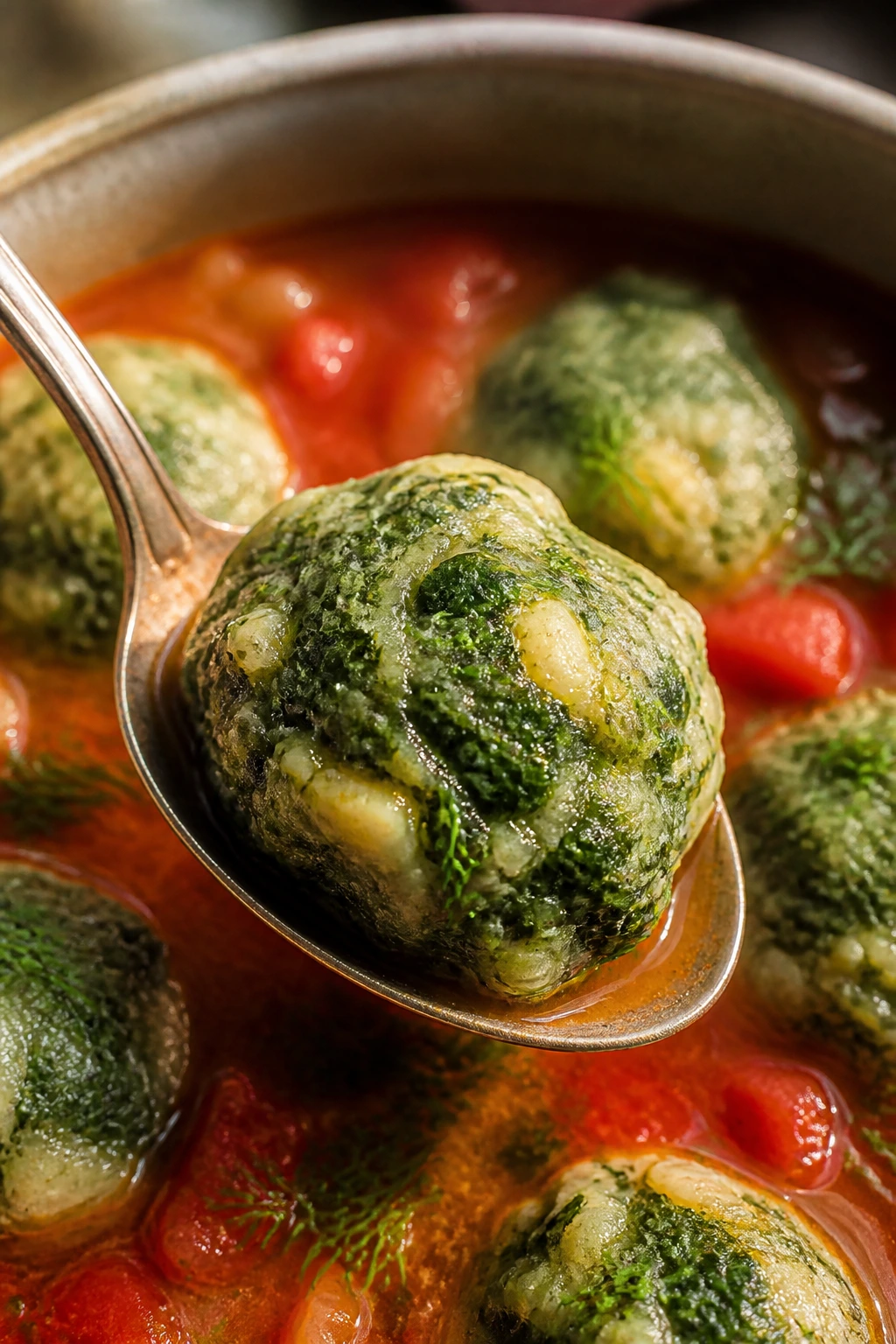
These dumplings have a little Greek energy to them. The spinach gives color and a mild earthy taste, the feta brings salt, and the spooned shape makes them fit neatly into tomato soup, lamb broth, or a simple vegetable stock with lemon.
Why It Works:
Spinach adds flavor, but only if you squeeze it dry. Wet greens make the dough floppy. Ricotta keeps the mixture tender, feta brings tang, and the egg and flour hold it together just enough to survive a simmer. They’re bright without being delicate.
Key Ingredients:
- 1 cup cooked spinach, squeezed dry and chopped — fresh spinach works fine if you cook it down first.
- 1/2 cup crumbled feta — use a block if you want a cleaner texture.
- 1/2 cup ricotta — softens the salt of the feta.
- 1 large egg — binds the dumplings.
- 3/4 cup all-purpose flour — enough for a soft dough.
- 1 tablespoon chopped dill — a classic pairing.
- 1/4 teaspoon black pepper — the feta handles most of the salt.
Quick Steps:
- Combine the spinach, feta, ricotta, egg, dill, and pepper.
- Stir in the flour until the dough is thick and spoonable.
- Rest it 10 minutes so the flour hydrates.
- Drop teaspoonfuls into simmering soup and cook 5 to 7 minutes.
- Serve with a little olive oil or extra dill on top.
- Eat them while they’re soft and warm.
Equipment for This Recipe:
- Mixing bowl — medium size works best.
- Spoon — for dropping the dough.
- Fine sieve or clean towel — for squeezing the spinach dry.
- Soup pot — keep the liquid gentle.
How to Serve This Dish:
These are excellent in tomato soup with a squeeze of lemon, or in a clear broth with chickpeas and herbs. I like them with warm pita or toasted sourdough because the salt of the feta likes something plain beside it.
Pro Tips for This Recipe:
- Squeeze the spinach until it feels almost dry to the touch.
- If the dough spreads too much in the bowl, add 1 tablespoon flour.
- Use the smallest spoonfuls you can manage; they cook more evenly.
Variations on This Dish:
- Minted Version: Add a little chopped mint for a sharper Greek-style finish.
- Swiss Chard Swap: Use well-drained chard instead of spinach.
- No-Ricotta Version: Replace ricotta with thick Greek yogurt, then add a tablespoon more flour.
Common Mistakes to Avoid with This Dish:
- Leaving moisture in the spinach: The dumplings fall apart.
- Over-salting: Feta already brings plenty.
- Making large spoonfuls: Big ones don’t cook through as cleanly.
9. Ginger Scallion Chicken Wontons
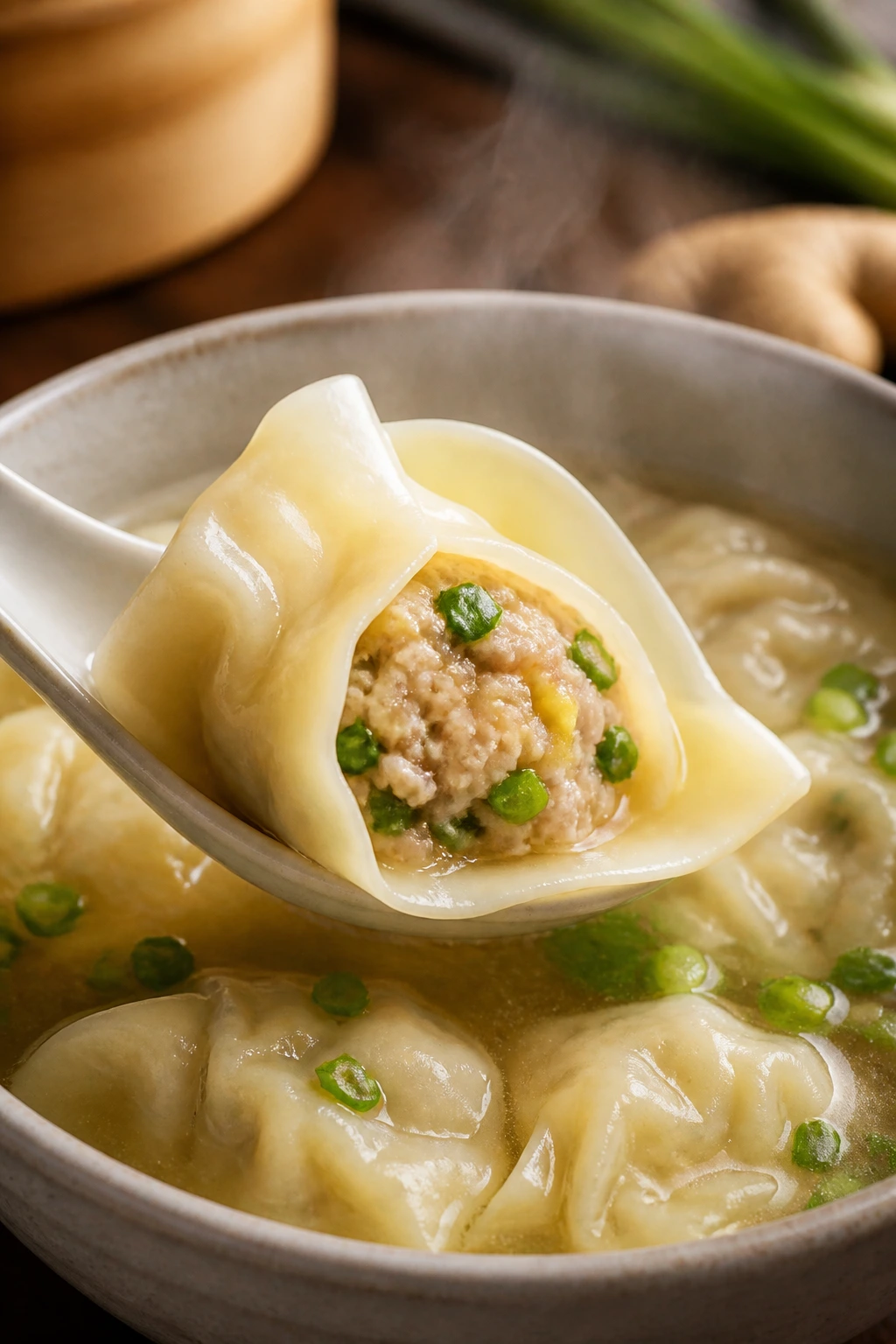
A bowl of broth with chicken wontons is one of those meals that looks more complicated than it is. The filling is minced ginger, scallion, and ground chicken, wrapped in thin sheets that cook in minutes. They taste clean, warm, and a little sharp in the best way.
Why It Works:
Ground chicken is mild enough to pick up ginger and scallion without fighting them. Cornstarch tightens the filling so it stays juicy instead of leaking into the broth, and a quick simmer keeps the wrappers tender. You can freeze a tray of these and pull them out when the pot is already hot.
Key Ingredients:
- 8 ounces ground chicken — lean but not dry.
- 2 tablespoons finely minced ginger — fresh is non-negotiable here.
- 3 scallions, finely sliced — both white and green parts.
- 1 tablespoon soy sauce — seasons the filling.
- 1 teaspoon sesame oil — a little goes a long way.
- 1 teaspoon cornstarch — helps the filling hold together.
- 24 wonton wrappers — keep them covered so they don’t dry out.
- 1 egg white or water — for sealing the wrappers.
Quick Steps:
- Mix the ground chicken, ginger, scallions, soy sauce, sesame oil, and cornstarch.
- Place 1 teaspoon filling in the center of each wrapper.
- Brush the edges with egg white or water, fold, and press out the air pockets.
- Bring broth to a gentle simmer, then slide in the wontons.
- Cook 4 to 5 minutes, until the wrappers turn glossy and the filling feels firm.
- Ladle into bowls and finish with more scallions.
Equipment for This Recipe:
- Small bowl — for the filling.
- Wonton wrappers — keep them under a damp towel.
- Soup pot — wide enough for the wontons to move.
- Slotted spoon — useful if you want to lift them before serving.
How to Serve This Dish:
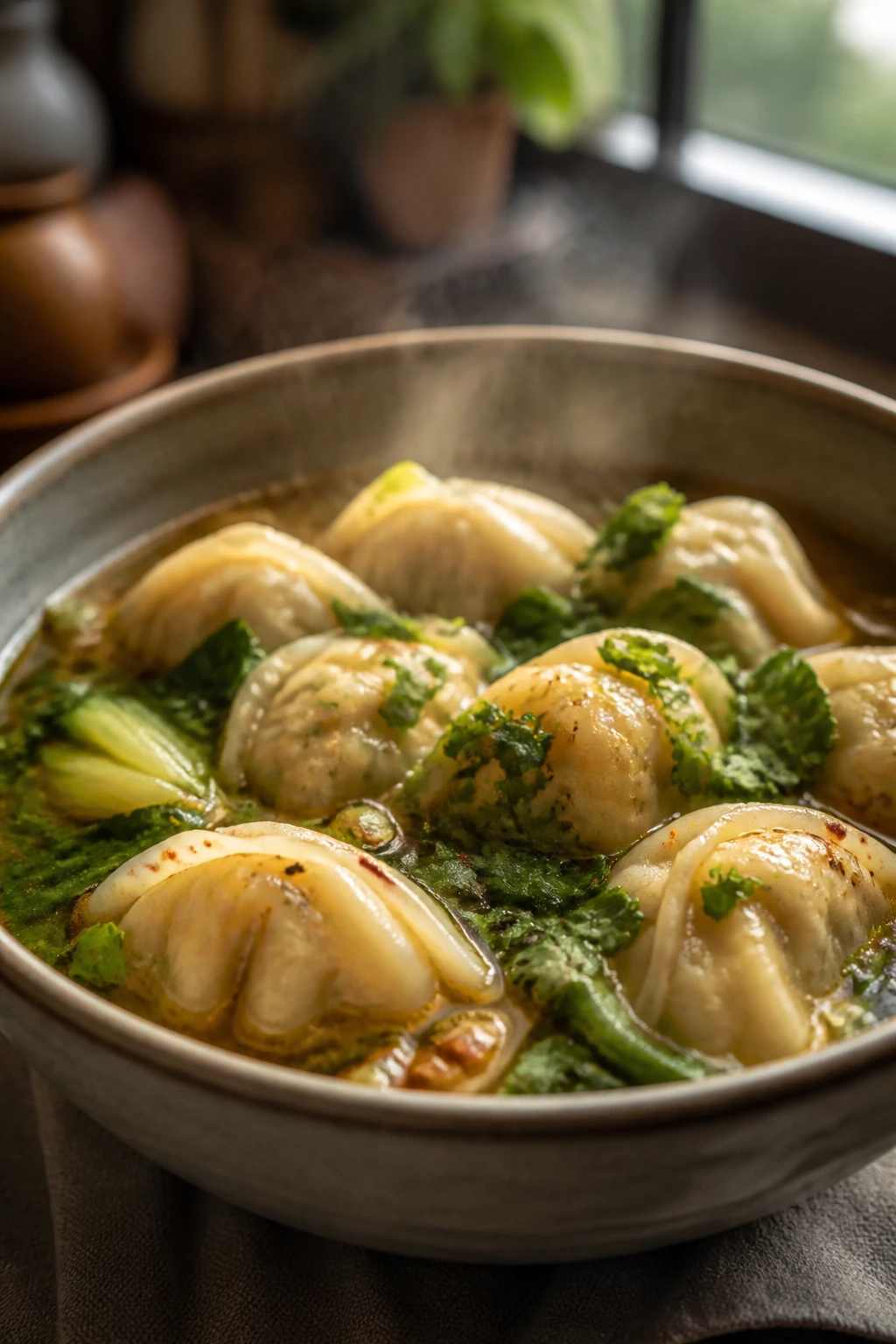
Serve these in clear chicken broth with scallions, baby bok choy, and a few drops of chili oil if you want heat. They’re also good with plain jasmine rice on the side, though I usually skip it and let the wontons do the work.
Pro Tips for This Recipe:
- Keep the wrappers covered so they don’t crack.
- Press out trapped air before sealing; air pockets split in the broth.
- Don’t overfill. A teaspoon looks tiny, then you remember the wrapper has to close.
Variations on This Dish:
- Pork Swap: Replace chicken with ground pork for a richer filling.
- Chili Crisp Version: Add 1 teaspoon chili crisp to the filling.
- Vegetable Broth Version: Use the same dumplings in mushroom broth for a cleaner finish.
Common Mistakes to Avoid with This Dish:
- Wet filling: It leaks into the pot. Keep the ginger and scallions minced fine, not watery.
- Dry wrappers: They crack as soon as you fold them.
- Aggressive boiling: The dumplings bounce around and tear.
10. Pork and Napa Cabbage Wontons
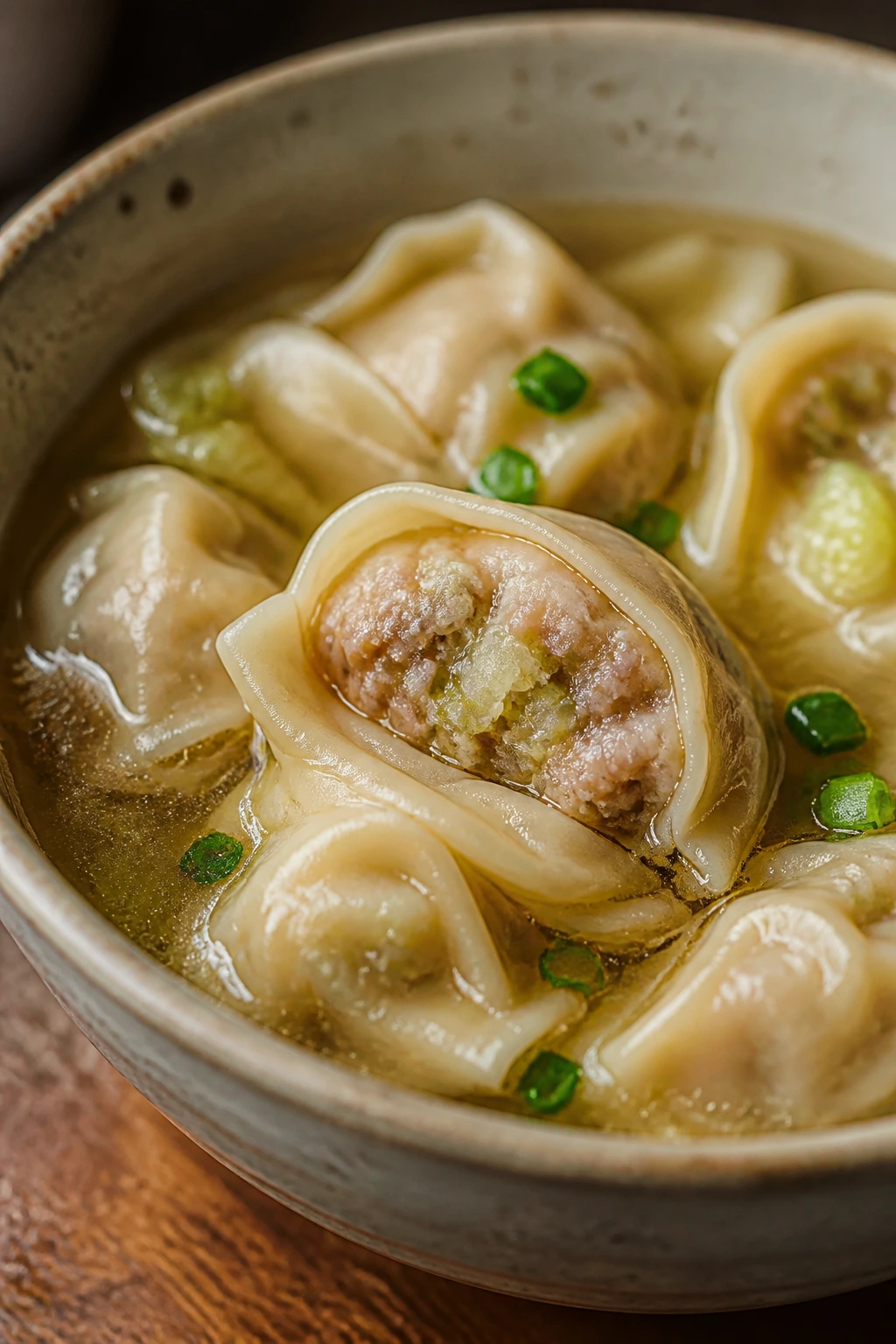
Pork and napa cabbage is a classic pairing because the cabbage softens the meat without making the filling heavy. These wontons taste rich but still clean, and they’re ideal in chicken broth, miso broth, or a simple noodle soup if you want the dumplings to do most of the talking.
Why It Works:
Napa cabbage gives the pork a little juiciness and keeps the filling from becoming dense. Ginger and garlic sharpen the flavor, while sesame oil adds a round finish. The wrappers cook fast, so the whole bowl comes together before the broth loses its heat.
Key Ingredients:
- 8 ounces ground pork — a little fat helps keep the filling moist.
- 1 cup napa cabbage, finely chopped — squeeze out excess moisture.
- 2 scallions, finely sliced — for freshness.
- 1 tablespoon soy sauce — the main seasoning.
- 1 teaspoon grated ginger — bright and aromatic.
- 1 small garlic clove, minced — optional, but useful.
- 1 teaspoon sesame oil — finishes the filling.
- 24 wonton wrappers — keep them covered while you work.
Quick Steps:
- Salt the chopped napa cabbage lightly, let it sit 5 minutes, then squeeze it dry.
- Mix the cabbage with the pork, scallions, soy sauce, ginger, garlic, and sesame oil.
- Fill and seal the wrappers with about 1 teaspoon filling each.
- Simmer in broth for 4 to 5 minutes until they float and the centers are cooked through.
- Serve hot with extra scallions or a little white pepper.
- Freeze any uncooked wontons on a tray if you want them later.
Equipment for This Recipe:
- Mixing bowl — for the filling.
- Clean towel — helps squeeze the cabbage dry.
- Wonton wrappers — chilled and covered.
- Large pot — roomy enough for the dumplings.
How to Serve This Dish:
These are right at home in chicken broth with noodles, bok choy, or sliced mushrooms. A spoonful of chili oil turns the bowl sharper, but they’re good without it if the broth is well-seasoned.
Pro Tips for This Recipe:
- Squeeze the cabbage dry or the filling loosens.
- Keep the wrapper edges free of filling so they seal cleanly.
- If you’re freezing them, freeze in a single layer before bagging.
Variations on This Dish:
- Black Pepper Pork: Add 1/2 teaspoon coarsely ground black pepper.
- Ginger-Heavy Version: Double the ginger for a brighter bite.
- Shrimp Blend: Replace half the pork with minced shrimp for a lighter filling.
Common Mistakes to Avoid with This Dish:
- Wet cabbage: It makes the dumplings burst.
- Filling the wrappers too full: The seams split open in broth.
- Salting the broth too heavily: Pork and soy already bring salt.
11. Turkey and Thyme Dumpling Bites
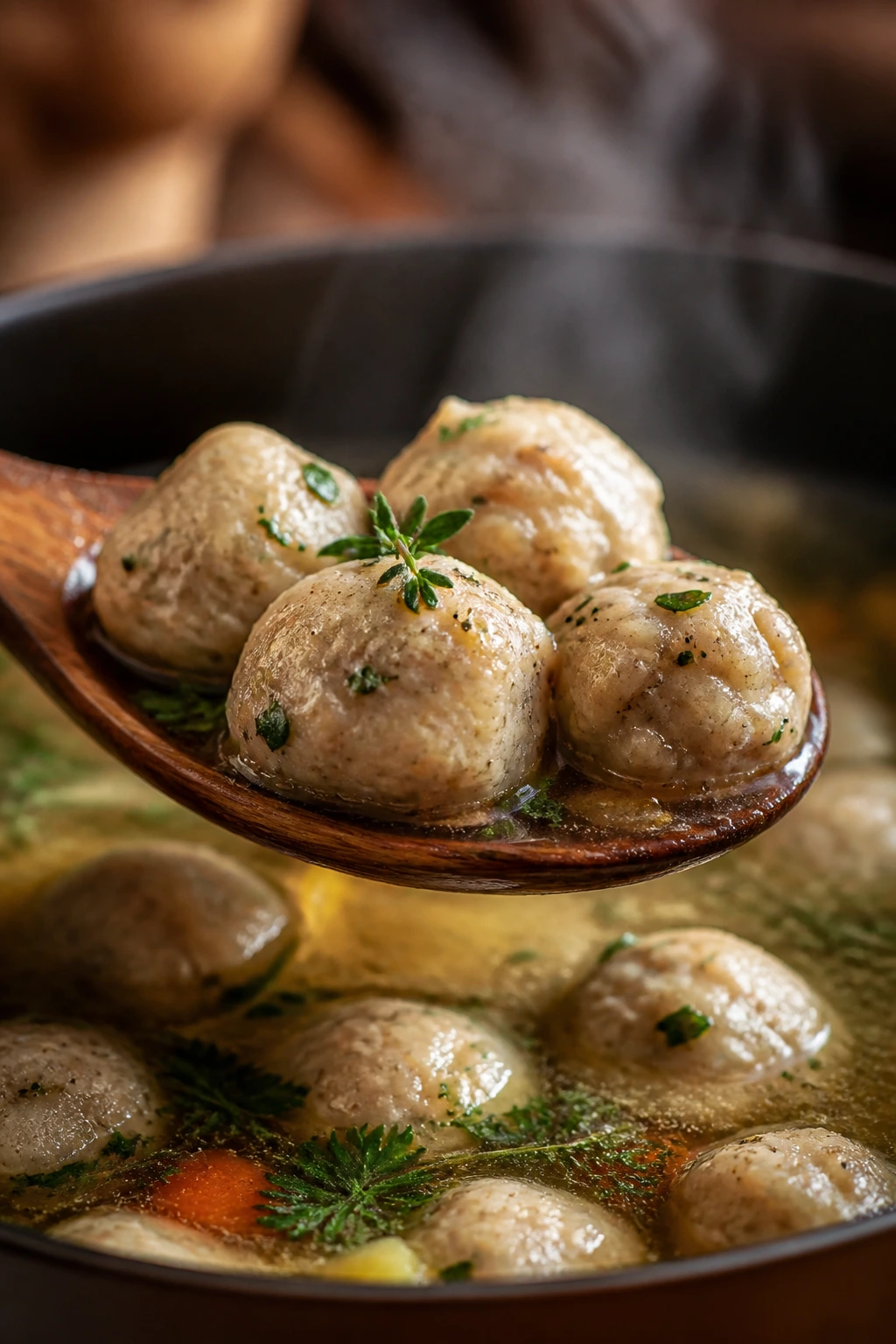
These are little soft meat dumplings, somewhere between a meatball and a dumpling, and that is exactly why they work. Turkey keeps them lighter than pork, thyme gives them a woodsy note, and they’re excellent in broth-heavy soups that need a little body.
Why It Works:
Ground turkey can dry out fast, so the egg and breadcrumbs keep the mixture tender. Onion and thyme bring enough flavor to carry the dumplings on their own, and the small size means they cook through quickly in hot broth. They’re practical, not precious.
Key Ingredients:
- 1 pound ground turkey — preferably not extra-lean.
- 1/3 cup fine breadcrumbs — helps hold moisture.
- 1 large egg — binds the mixture.
- 2 tablespoons minced onion — very fine, so it melts into the bite.
- 1 tablespoon chopped thyme — fresh if possible.
- 1 tablespoon chopped parsley — for color.
- 1 teaspoon salt — turkey needs seasoning.
- 1/4 teaspoon black pepper — enough to sharpen the flavor.
- 1 tablespoon milk — softens the mix.
Quick Steps:
- Mix the turkey, breadcrumbs, egg, onion, thyme, parsley, salt, pepper, and milk.
- Chill the mixture 10 minutes if it feels loose.
- Roll into marble-sized balls with damp hands.
- Drop into gently simmering broth and poach 8 to 10 minutes until firm and cooked through.
- Serve with broth and vegetables spooned around them.
- Don’t boil them hard; the texture gets tight.
Equipment for This Recipe:
- Mixing bowl — for the meat mixture.
- Sheet tray — to hold the shaped dumplings.
- Soup pot — with plenty of room.
- Small scoop or damp hands — both work.
How to Serve This Dish:
These are good in vegetable soup, barley soup, or a clear turkey broth with carrots and celery. Add a squeeze of lemon at the end if you want the thyme to pop a little more.
Pro Tips for This Recipe:
- Use turkey with some fat, not the driest pack on the shelf.
- Keep the dumplings small so they cook before the soup reduces too much.
- Chill the mixture if your kitchen is warm.
Variations on This Dish:
- Garlic and Sage: Swap thyme for sage and add 1 minced garlic clove.
- Lemon Turkey: Add 1 teaspoon lemon zest.
- Breadcrumb-Free Version: Use 2 tablespoons cooked rice instead of breadcrumbs.
Common Mistakes to Avoid with This Dish:
- Too much mixing: The dumplings get springy and dense.
- Big meatballs: They take too long and dry out.
- Simmering too hard: The edges toughen before the center sets.
12. Sweet Potato Gnocchi
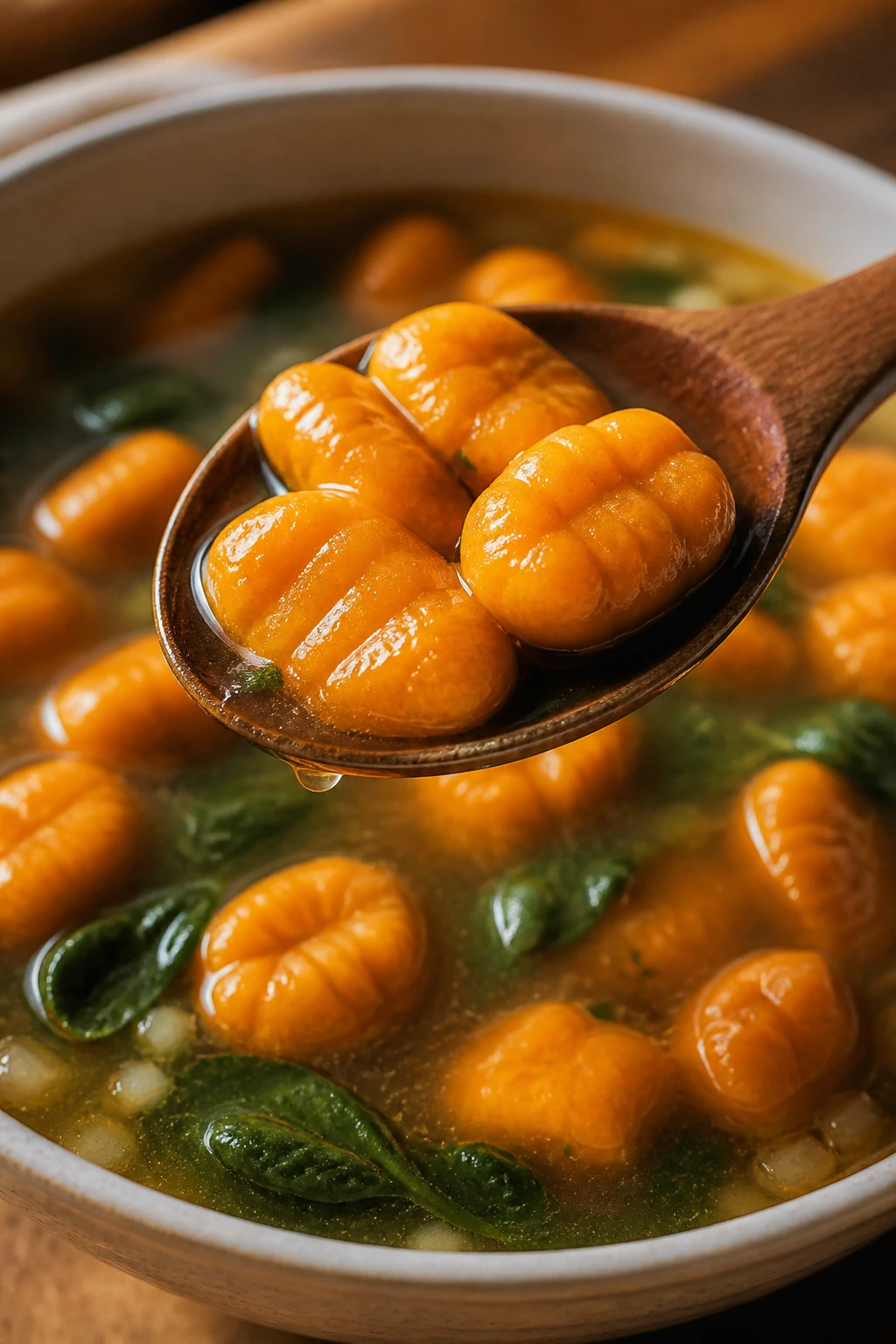
Sweet potato gnocchi in soup is a little richer than the regular kind, with a gentle sweetness that works better than people expect. They’re soft, silky, and a bit more fragile than drop dumplings, so they’re best in calm broth and handled with a light hand.
Why It Works:
Roasted sweet potato has less water than boiled, which makes the dough easier to manage. Egg yolk adds richness, flour gives structure, and a small pinch of nutmeg nudges the flavor toward cozy without making it dessert-like. These reward precision. Sloppy dough makes gluey gnocchi.
Key Ingredients:
- 1 cup roasted sweet potato flesh — cooled and mashed smooth.
- 1 1/2 cups all-purpose flour — add more only if the dough is too sticky.
- 1 large egg yolk — binds without making the dough wet.
- 1/4 cup finely grated Parmesan — optional, but good.
- 1/2 teaspoon salt — needed to keep the sweetness in check.
- Pinch of nutmeg — warm and subtle.
- 1 tablespoon olive oil — helps the dough feel supple.
Quick Steps:
- Mash the roasted sweet potato until smooth and let it cool fully.
- Mix in the egg yolk, Parmesan, salt, nutmeg, and olive oil.
- Fold in the flour until a soft dough forms; do not knead hard.
- Roll into ropes, cut into small pillows, or pinch off rustic pieces.
- Boil or simmer briefly until the gnocchi float, then transfer them to hot soup.
- Serve immediately so they keep their shape.
Equipment for This Recipe:
- Potato masher or fork — for smoothing the sweet potato.
- Mixing bowl — for the dough.
- Knife or bench scraper — for cutting the gnocchi.
- Slotted spoon — helps move them from water to broth.
How to Serve This Dish:
These are lovely in sage broth, chicken soup, or a creamy cauliflower soup. A little brown butter or olive oil over the top makes them feel finished without adding much effort.
Pro Tips for This Recipe:
- Roast the sweet potato instead of boiling it for a drier dough.
- Flour your hands lightly, not heavily.
- Keep the pieces small; oversized gnocchi get gummy.
Variations on This Dish:
- Brown Butter Sage: Toss the cooked gnocchi in brown butter before adding to soup.
- Herbed Sweet Potato: Add parsley and thyme to the dough.
- White Potato Swap: Use the same method with russet potatoes for a less sweet version.
Common Mistakes to Avoid with This Dish:
- Wet sweet potato: The dough needs too much flour and turns heavy.
- Overworking: The gnocchi get rubbery.
- Adding to aggressive boiling broth: They can break apart before setting.
13. Miso Mushroom Dumplings
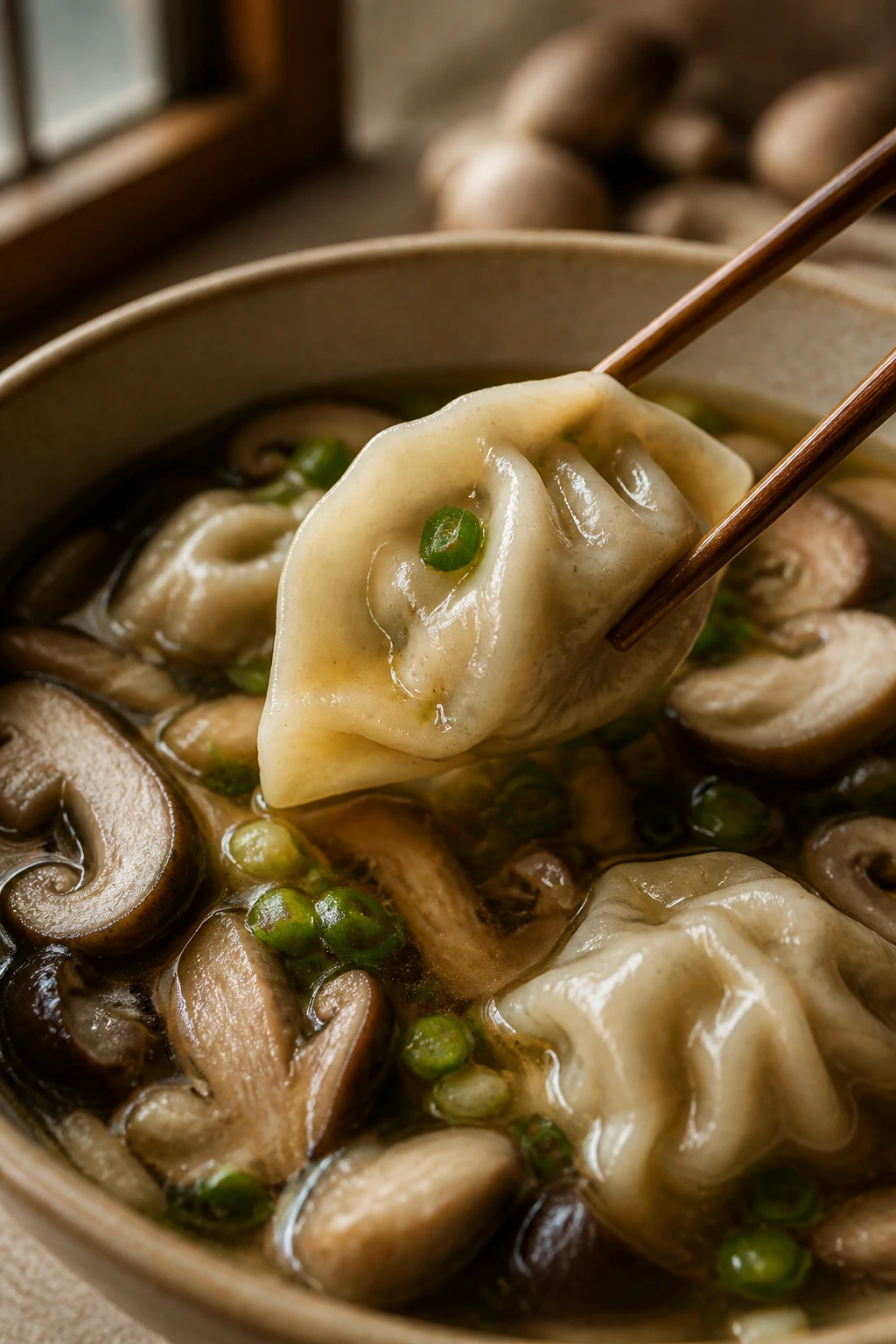
These dumplings taste like a walk through a hot kitchen after mushrooms have been browned in butter. Miso deepens the flavor, ginger keeps it bright, and the whole thing lands beautifully in a clear mushroom broth or a light chicken stock.
Why It Works:
Mushrooms bring savoriness, but they need to be cooked down so the filling isn’t wet. Miso adds salt and depth, while a little tofu or cornstarch gives the filling enough body to stay in the wrapper. They taste richer than they look.
Key Ingredients:
- 8 ounces mushrooms, finely chopped — cremini or shiitake both work.
- 4 ounces firm tofu, pressed and crumbled — helps bind the filling.
- 1 tablespoon white miso — salty, earthy, and soft.
- 1 teaspoon grated ginger — brightens the filling.
- 1 tablespoon finely chopped scallions — fresh finish.
- 1 teaspoon soy sauce — for a little more depth.
- 1 teaspoon sesame oil — keep it measured.
- 24 wonton wrappers — for the shell.
- 1 teaspoon cornstarch — helps absorb extra moisture.
Quick Steps:
- Sauté the mushrooms until they release moisture and look dry again.
- Mix the mushrooms with tofu, miso, ginger, scallions, soy sauce, sesame oil, and cornstarch.
- Fill and seal the wrappers with about 1 teaspoon filling each.
- Simmer in broth 4 to 5 minutes, or steam first and add to soup at the end.
- Serve with extra scallions or a few drops of chili oil.
- Don’t let the filling sit wet for too long before wrapping.
Equipment for This Recipe:
- Skillet — to dry out the mushrooms.
- Mixing bowl — for the filling.
- Wonton wrappers — keep them covered.
- Soup pot or steamer — both work here.
How to Serve This Dish:
These fit nicely in mushroom broth, miso broth, or a broth made with a little kombu and ginger. I like them with soft noodles or a handful of baby greens, but they can stand alone in a plain bowl too.
Pro Tips for This Recipe:
- Cook the mushrooms until all the liquid is gone.
- Press the tofu before crumbling it.
- Use white miso if you want a gentle flavor; red miso gets louder.
Variations on This Dish:
- Shiitake-Forward Version: Use mostly shiitake mushrooms for a deeper aroma.
- Toasted Sesame Version: Finish with a few toasted sesame seeds.
- Spicy Miso: Add a small spoon of chili paste to the filling.
Common Mistakes to Avoid with This Dish:
- Wet mushroom filling: The wrappers split.
- Over-salting: Miso and soy do enough on their own.
- Cooking at a furious boil: The delicate wrappers tear.
14. Spätzle-Style Egg Dumplings
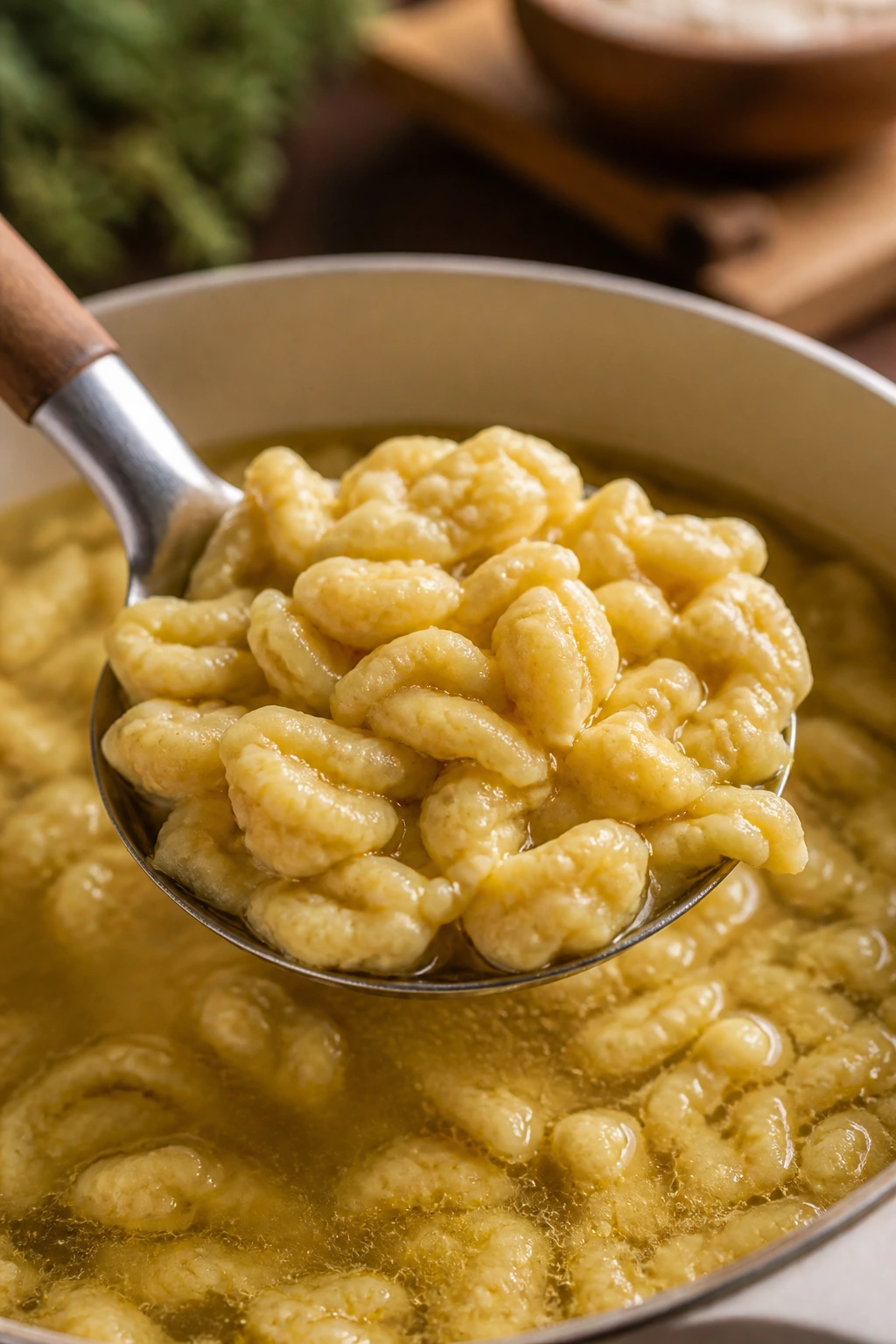
Spätzle are the noodle-dumpling middle ground, and they’re perfect for soup when you want something that feels chewy rather than fluffy. They’re eggy, irregular, and a little rustic, which is exactly why they’re so good in beef broth, chicken soup, or a broth made with caramelized onions.
Why It Works:
The batter is loose enough to drip or press through holes, so the dumplings cook fast and stay tender. Eggs give them richness, milk keeps them soft, and a short boil sets the texture before they’re scooped into the bowl. They’re the least fussy dumplings here if you own a colander with the right holes.
Key Ingredients:
- 2 cups all-purpose flour — the structure.
- 3 large eggs — the main binding force.
- 1/2 cup milk — loosens the batter.
- 1 teaspoon salt — needed all the way through.
- Pinch of nutmeg — traditional and worth keeping.
- 1 tablespoon butter — optional, for tossing the finished spätzle.
Quick Steps:
- Whisk the flour, salt, and nutmeg in a bowl.
- Beat in the eggs and milk until you get a thick, sticky batter.
- Rest the batter 10 minutes.
- Press it through a spätzle maker or the holes of a sturdy colander into simmering salted water.
- Cook 2 to 3 minutes, until the pieces float, then transfer to broth.
- Serve warm with butter or directly in soup.
Equipment for This Recipe:
- Mixing bowl — for the batter.
- Spätzle maker or colander — the shaping tool.
- Slotted spoon — to move the cooked pieces.
- Large pot — for the initial boil.
How to Serve This Dish:
These are excellent in beef broth with caramelized onions, in chicken soup with parsley, or in mushroom stock with black pepper. A little butter on the finished spätzle before they hit the soup gives them a richer sheen.
Pro Tips for This Recipe:
- The batter should be thick and sticky, not pourable like pancake batter.
- Resting helps the flour hydrate and keeps the texture smoother.
- Work in small batches so the water doesn’t cool too much.
Variations on This Dish:
- Cheese Tossed Spätzle: Toss the cooked dumplings with grated Emmentaler before serving.
- Herb Batter: Add chopped parsley or chives to the batter.
- Buckwheat Version: Replace 1/4 cup flour with buckwheat flour for a darker, nuttier note.
Common Mistakes to Avoid with This Dish:
- Batter too thick to press: Add 1 tablespoon milk.
- Boiling too aggressively: The pieces break apart.
- Skipping the rest: The texture ends up uneven.
15. Bacon and Onion Dumplings
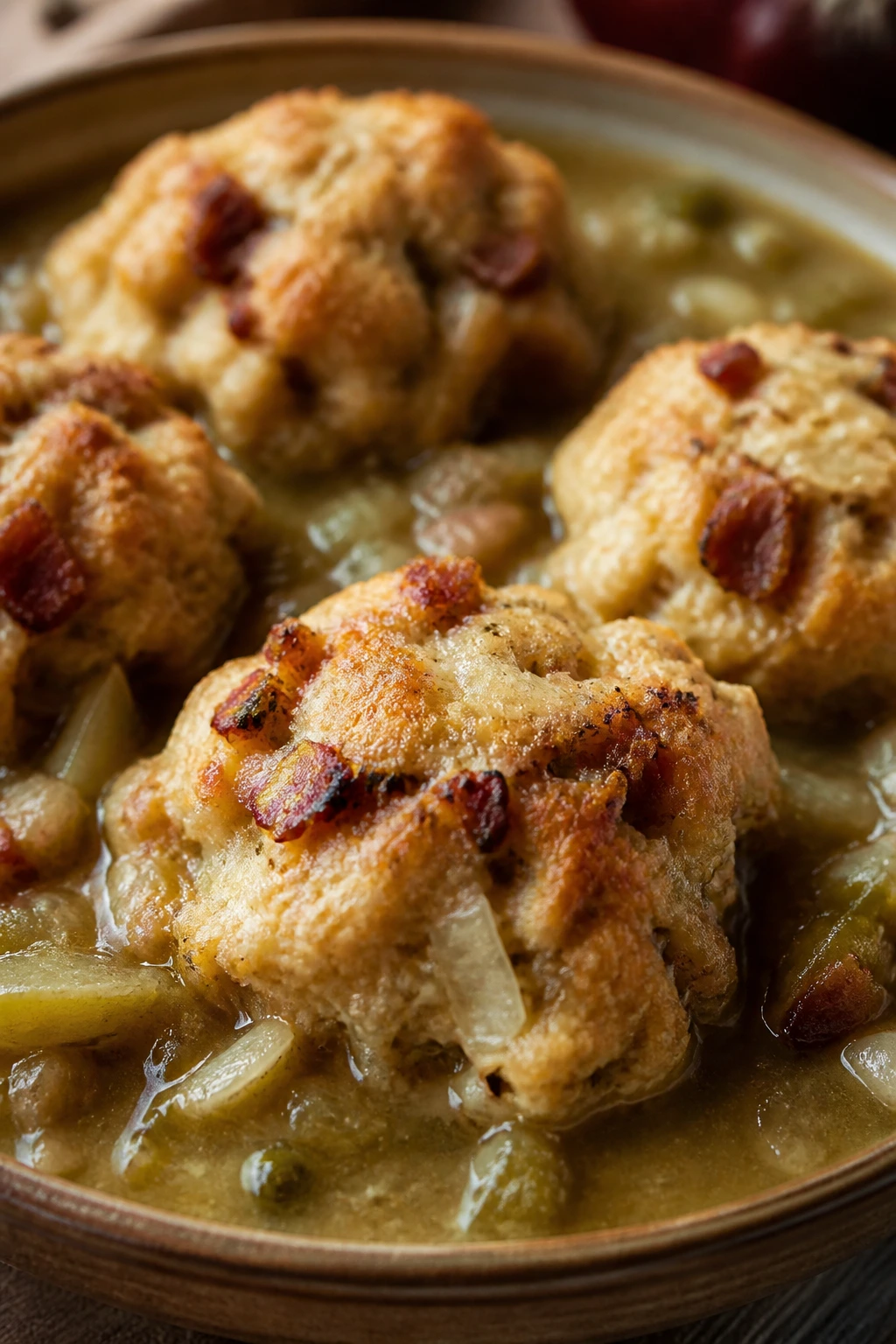
These dumplings are not subtle. They taste like breakfast moved into soup and decided to stay. Bacon gives them smoke, onion gives them sweetness, and the finished dumplings are especially good in cabbage soup, split pea, or a thick potato broth.
Why It Works:
Rendered bacon fat gets folded back into the dough, which means the flavor runs all the way through instead of sitting on top. Cooked onion adds sweetness and moisture, while baking powder keeps the dumplings from turning heavy. They’re sturdy enough for thick soups and bold enough to hold their own.
Key Ingredients:
- 4 slices bacon, chopped — cook until crisp.
- 1 small onion, finely diced — cook until soft and golden.
- 1 1/2 cups all-purpose flour — for the dumpling base.
- 2 teaspoons baking powder — for lift.
- 1/2 teaspoon salt — reduce if your bacon is very salty.
- 1 large egg — binds the dough.
- 1/2 cup milk — to bring it together.
- 2 tablespoons chopped parsley — brightens the finish.
- Black pepper, to taste — bacon likes pepper.
Quick Steps:
- Cook the bacon until crisp, then sauté the onion in a spoonful of the rendered fat until soft.
- Whisk the flour, baking powder, salt, and pepper.
- Stir in the egg, milk, bacon, onion, and parsley.
- Drop spoonfuls into simmering soup, cover, and cook 12 minutes.
- Rest 2 minutes before serving.
- Add extra pepper on top if you like the edge.
Equipment for This Recipe:
- Skillet — for the bacon and onion.
- Mixing bowl — for the dough.
- Soup pot with lid — for the steam finish.
- Spoon — for portioning.
How to Serve This Dish:
These are especially good in split pea soup, cabbage soup, or a bean broth with bay leaf. A little chopped parsley on top keeps the bowl from tasting too heavy, which matters because bacon can steamroll things if you’re not careful.
Pro Tips for This Recipe:
- Cool the bacon and onion slightly before mixing them in.
- If the dough feels dry, add 1 tablespoon milk.
- Use small spoonfuls; they puff more than you think.
Variations on This Dish:
- Maple Bacon Version: Add a teaspoon of maple syrup to the bacon while it cooks.
- Cheddar Onion Dumplings: Fold in 1/2 cup shredded cheddar.
- Smoked Paprika Version: Add 1/2 teaspoon smoked paprika for a deeper flavor.
Common Mistakes to Avoid with This Dish:
- Greasy dough from too much bacon fat: Drain the bacon well.
- Under-cooked onion: It tastes sharp and raw in the finished dumpling.
- Making them huge: The centers lag behind the outside.
16. Pumpkin Sage Dumplings
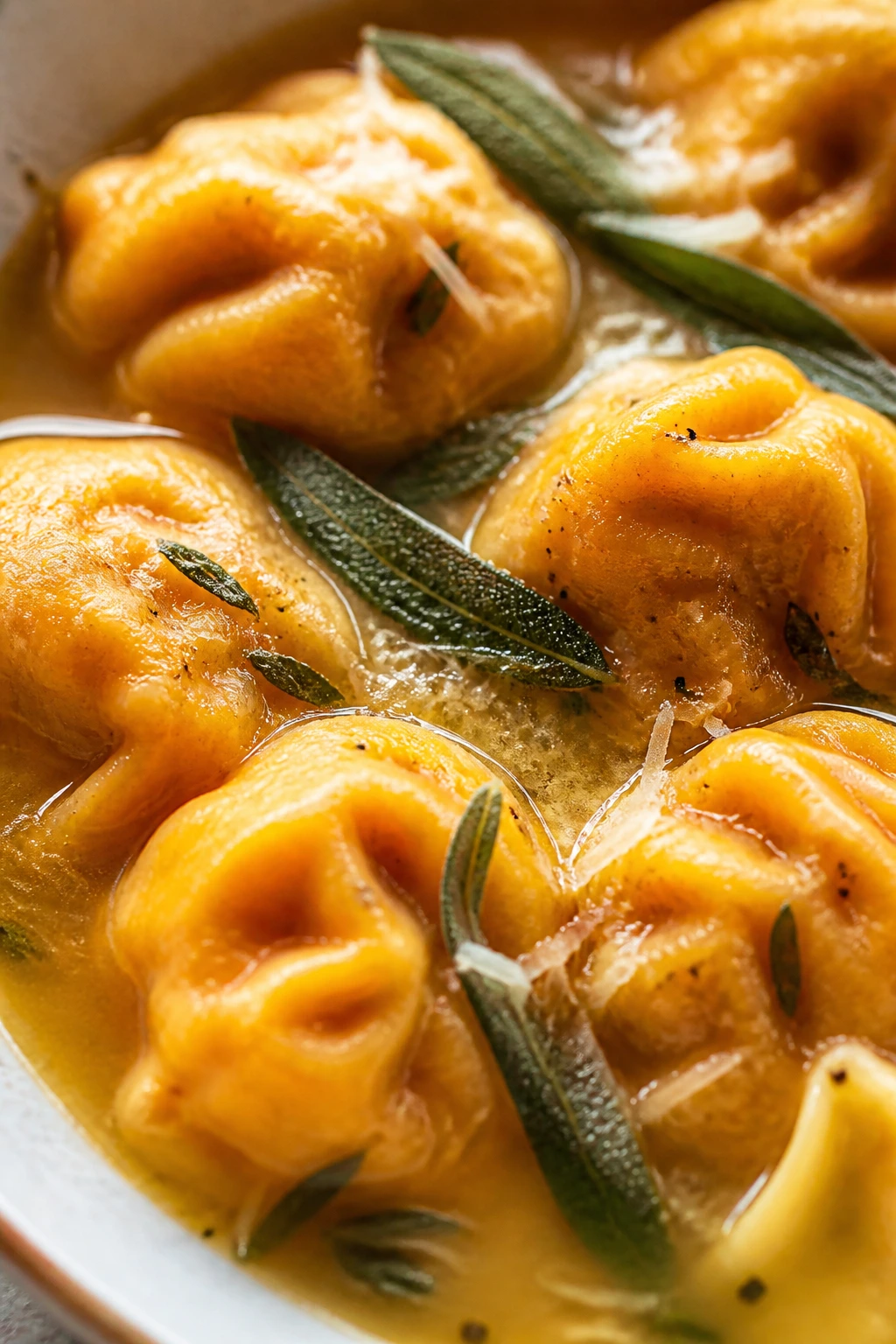
Pumpkin dumplings have a mellow sweetness that works better in soup than most people expect. Sage gives them a dry, savory note, and Parmesan keeps them from drifting into dessert territory. They’re especially good with white bean soup, roasted squash broth, or turkey stock.
Why It Works:
Pumpkin puree brings moisture and color, but it also softens the crumb, so you need enough flour to balance it. Sage and Parmesan keep the flavor grounded, and baking powder gives the dumplings enough lift to stay soft rather than squat. They are the color of a late-afternoon fire.
Key Ingredients:
- 3/4 cup pumpkin puree — not pumpkin pie filling.
- 1 1/2 cups all-purpose flour — adjust lightly if needed.
- 1 teaspoon baking powder — for rise.
- 1 large egg — binds the dough.
- 1/4 cup grated Parmesan — adds salt and body.
- 1 teaspoon finely chopped sage — use fresh if possible.
- 1/2 teaspoon salt — more if your Parmesan is mild.
- Pinch of black pepper — balances the sweetness.
- 1 tablespoon olive oil — keeps the dough tender.
Quick Steps:
- Mix the pumpkin puree, egg, Parmesan, sage, salt, pepper, and olive oil.
- Stir in the flour and baking powder until a soft dough forms.
- Drop spoonfuls into simmering broth or soup.
- Cover and cook 10 to 12 minutes until the dumplings are set.
- Serve hot with extra sage if you want a stronger herbal note.
- Keep the heat low so the dumplings don’t split.
Equipment for This Recipe:
- Mixing bowl — for the dough.
- Spoon — to drop the dumplings.
- Soup pot with lid — for steam cooking.
- Small whisk — for the wet ingredients.
How to Serve This Dish:
These are lovely in white bean soup, turkey soup, or a creamy carrot soup. A drizzle of browned butter or olive oil makes the bowl feel finished, and a few fried sage leaves on top are worth the extra minute.
Pro Tips for This Recipe:
- Use plain pumpkin puree only.
- If the dough seems sticky, chill it for 10 minutes rather than adding too much flour.
- Keep the dumplings small so the pumpkin center cooks evenly.
Variations on This Dish:
- Brown Butter Sage: Finish the soup with browned butter.
- Maple-Glazed Version: Add 1 teaspoon maple syrup to the dough.
- Thyme Swap: Replace sage with thyme for a lighter, woodsy flavor.
Common Mistakes to Avoid with This Dish:
- Using pie filling: It throws the seasoning off.
- Too much flour: The dumplings turn dense and chalky.
- High heat: The outside dries before the center sets.
17. Gluten-Free Almond Flour Dumplings
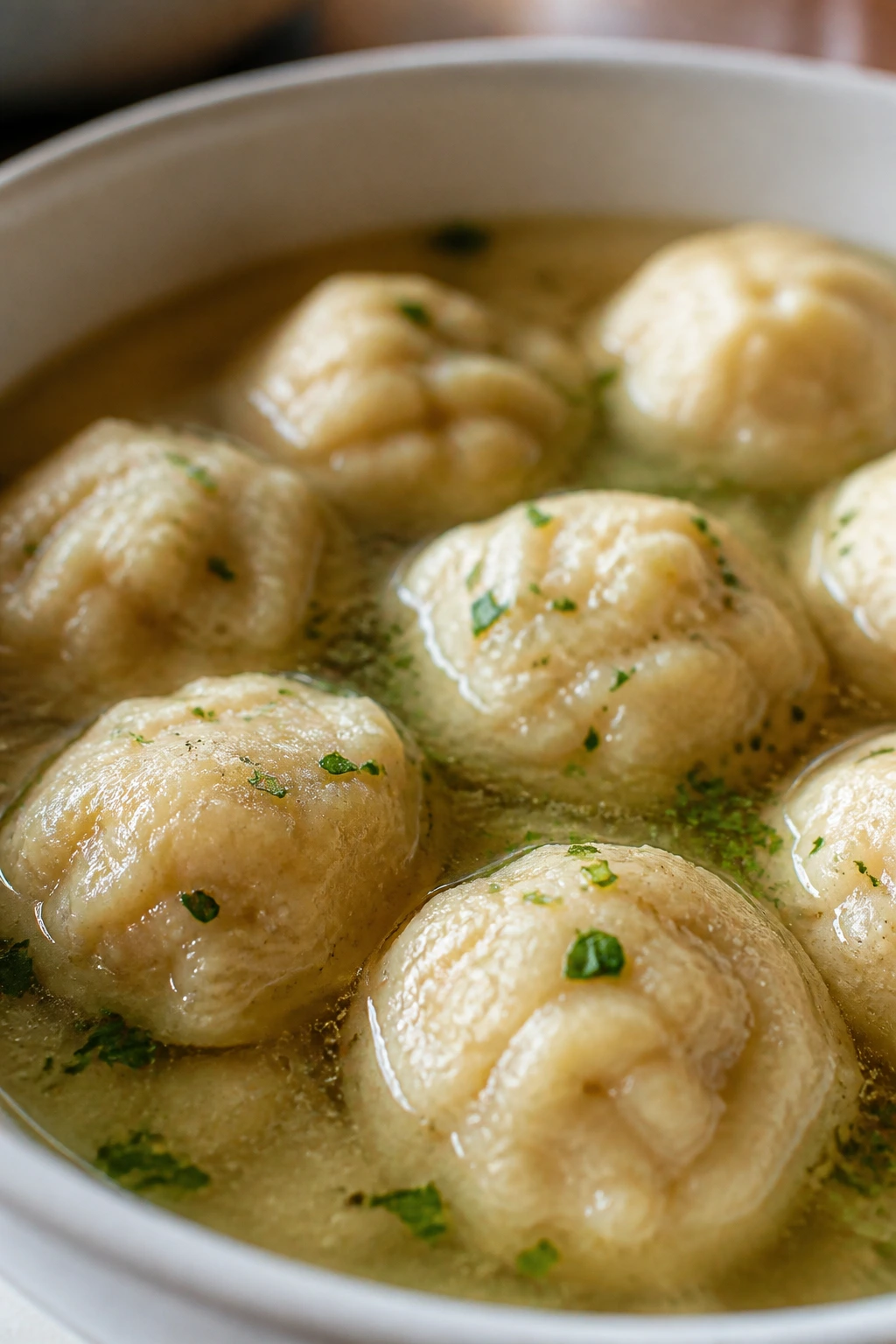
These dumplings are soft, slightly nutty, and more delicate than the wheat-based versions, so they need a gentle simmer and a little patience. Almond flour keeps them rich, tapioca starch gives them stretch, and they’re especially good in chicken broth or a simple vegetable soup with herbs.
Why It Works:
Almond flour has moisture and fat already built in, which gives the dumplings a tender crumb. Tapioca starch helps them bind, eggs carry the structure, and yogurt adds a small tang that keeps the flavor from feeling flat. They are not the same as flour dumplings. That’s the point.
Key Ingredients:
- 1 cup almond flour — fine grind works best.
- 1/2 cup tapioca starch — for chew and structure.
- 1 teaspoon baking powder — for lift.
- 2 large eggs — bind the dough.
- 2 tablespoons plain Greek yogurt or dairy-free yogurt — adds moisture.
- 2 tablespoons olive oil — keeps the crumb soft.
- 1/2 teaspoon salt — necessary.
- 2 tablespoons chopped chives — fresh flavor.
Quick Steps:
- Whisk the almond flour, tapioca starch, baking powder, and salt.
- Stir in the eggs, yogurt, olive oil, and chives until a soft dough forms.
- Let the dough sit 5 minutes so the starch hydrates.
- Drop small spoonfuls into gently simmering broth.
- Cook 6 to 8 minutes, until set but still tender.
- Lift them carefully; they are softer than wheat dumplings.
Equipment for This Recipe:
- Mixing bowl — for the dough.
- Spoon — for portioning.
- Soup pot — with a calm simmer.
- Slotted spoon — helps move the finished dumplings gently.
How to Serve This Dish:
These are good with chicken soup, mushroom broth, or a clear vegetable stock with dill or parsley. Because they’re tender, I like them with a few crisp vegetables in the bowl—thin carrots, celery, or wilted greens add welcome contrast.
Pro Tips for This Recipe:
- Use fine almond flour, not almond meal.
- Keep the simmer low so the dumplings don’t break.
- Chill the dough if it feels too soft to drop cleanly.
Variations on This Dish:
- Dairy-Free Version: Use dairy-free yogurt and a little extra olive oil.
- Herb and Lemon: Add lemon zest and parsley for a brighter bowl.
- Cheesy Version: Fold in 1/4 cup grated Parmesan if dairy is fine.
Common Mistakes to Avoid with This Dish:
- Boiling hard: Almond flour dumplings can split.
- Using coarse almond meal: The texture gets sandy.
- Making them too large: Small ones hold together better.
18. Tofu Sesame Dumplings
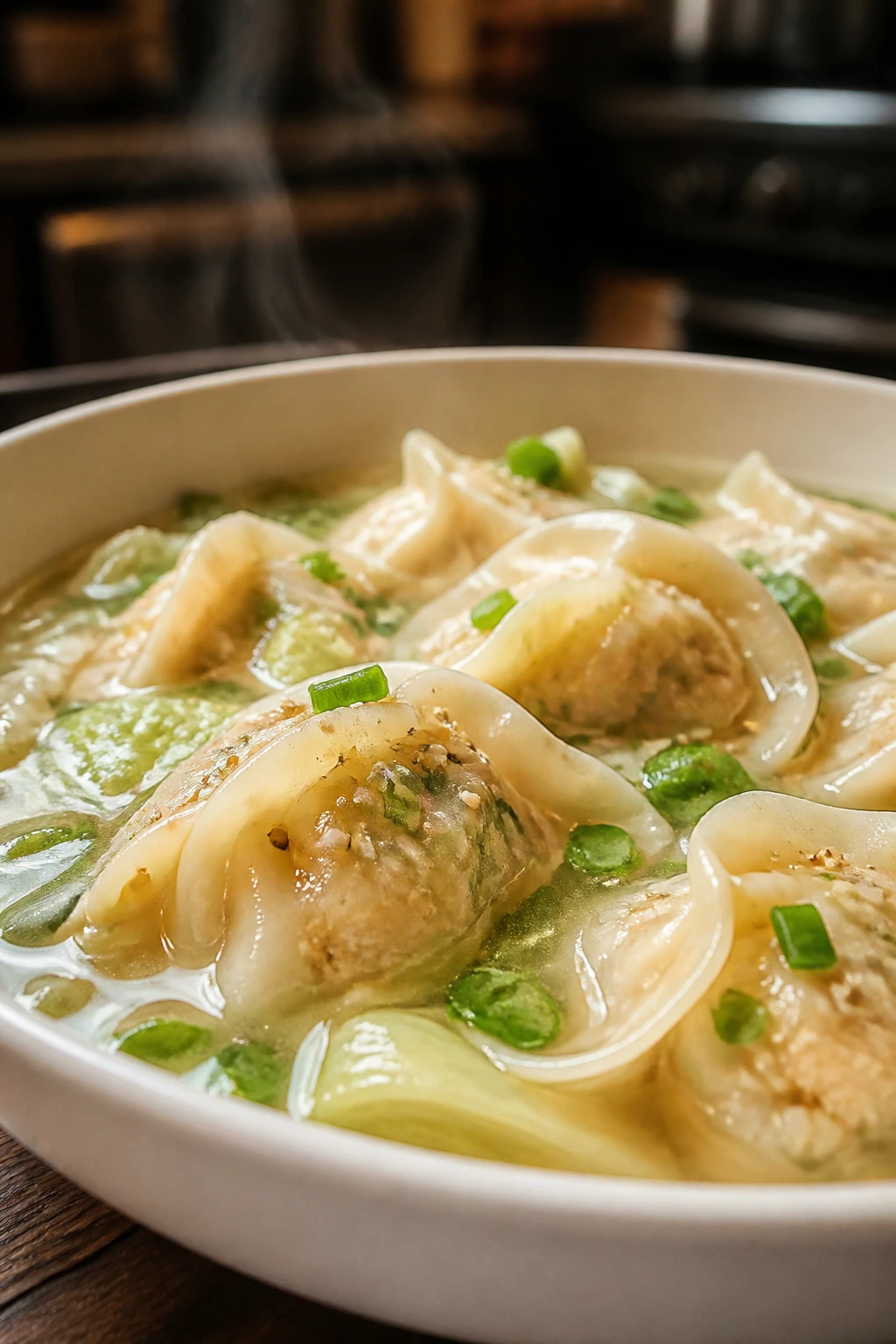
These are the vegan dumplings I pull out when I want broth to feel complete without leaning on meat or cheese. Tofu makes the filling soft and protein-rich, sesame oil gives it a nutty finish, and the wrappers turn silky after a short simmer.
Why It Works:
Tofu needs help from starch and aromatics because, on its own, it can taste plain. Scallions, ginger, soy, and sesame oil handle that job, while the wrappers provide the structure. Cooked in broth, they feel light but still satisfying.
Key Ingredients:
- 8 ounces firm tofu, pressed — remove extra moisture first.
- 1 cup finely shredded napa cabbage — squeeze dry.
- 2 scallions, finely sliced — fresh and sharp.
- 1 teaspoon grated ginger — brings heat.
- 1 tablespoon soy sauce — seasons the filling.
- 1 teaspoon sesame oil — round, nutty flavor.
- 1 tablespoon cornstarch — helps the filling hold.
- 24 wonton wrappers — keep covered while filling.
- 1 small garlic clove, minced — optional but useful.
Quick Steps:
- Press the tofu for 15 minutes, then crumble it into a bowl.
- Squeeze the cabbage dry and mix it with the tofu, scallions, ginger, soy sauce, sesame oil, garlic, and cornstarch.
- Fill and seal the wrappers with 1 teaspoon filling each.
- Simmer in broth for 4 to 5 minutes, until the wrappers look translucent and the filling is hot.
- Serve with extra scallions or chili oil.
- Freeze uncooked dumplings on a tray if you want them later.
Equipment for This Recipe:
- Tofu press or clean towel — for moisture control.
- Mixing bowl — for the filling.
- Wonton wrappers — the shell.
- Soup pot — wide enough for the dumplings to float.
How to Serve This Dish:
These sit well in miso broth, ginger broth, or a light vegetable stock with bok choy and mushrooms. A few drops of toasted sesame oil at the end make the bowl smell like the kitchen knows what it’s doing.
Pro Tips for This Recipe:
- Press the tofu longer than you think you need to.
- Don’t skip squeezing the cabbage dry.
- Seal the wrappers carefully; tofu filling can be soft.
Variations on This Dish:
- Mushroom Tofu Version: Add 1/2 cup sautéed mushrooms for deeper flavor.
- Spicy Sesame: Stir in chili crisp or chili paste.
- Green Dumplings: Add finely chopped spinach for color and a little extra body.
Common Mistakes to Avoid with This Dish:
- Wet tofu: The filling gets loose.
- Overstuffing: The wrappers split.
- Skipping salt in the filling: Tofu tastes bland without it.
What Makes a Dumpling Stay Tender in Broth
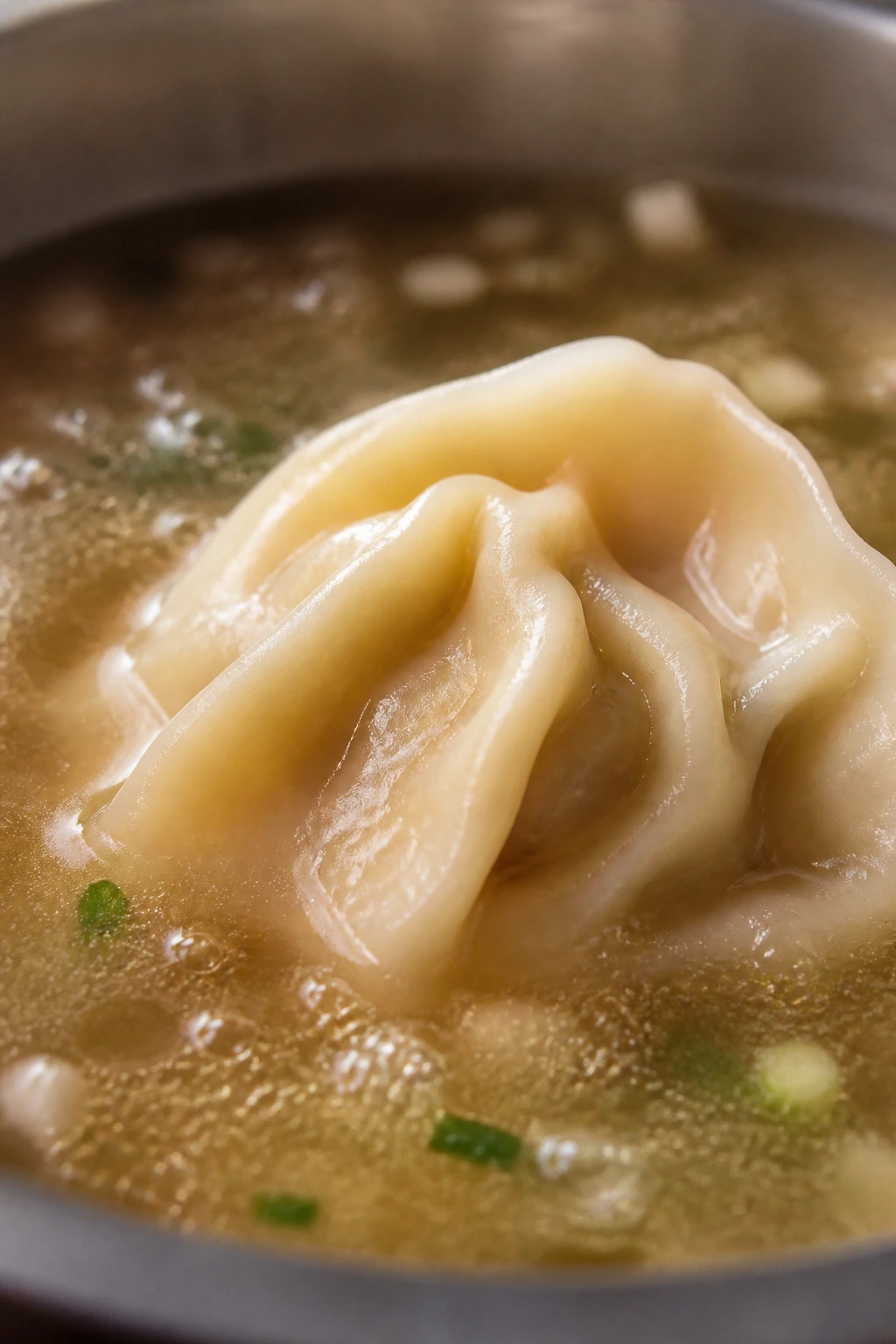
A dumpling that looks fine on the tray can still go wrong the second it hits soup. The difference is usually not dramatic. It’s a lid left off for too long. It’s a boil that got a little too happy. It’s a dough that didn’t get enough rest or got too much flour out of fear.
Keep the Heat Low Enough to Barely Move
A bare simmer is the sweet spot for almost every dumpling here. You want tiny bubbles, not rolling waves. When the broth is too hot, the outside of the dumpling sets before the middle has a chance to cook, which is how you get ragged shells and raw centers.
Match the Dough to the Broth
Soft dumplings like ricotta, potato, and almond flour need calm broths and gentle handling. Firmer dumplings like spätzle, wontons, and semolina can take a little more activity. That is why one dough should not be forced into every soup pot. A clear chicken broth and a thick chili do not behave the same, and the dumplings notice.
Size Changes Everything
Small dumplings cook faster and stay tender. Large ones often go gummy in the center before the outside is fully set. If you’re unsure, make one test dumpling first. It looks cautious, and it saves bowls.
Essential Equipment for These Recipes
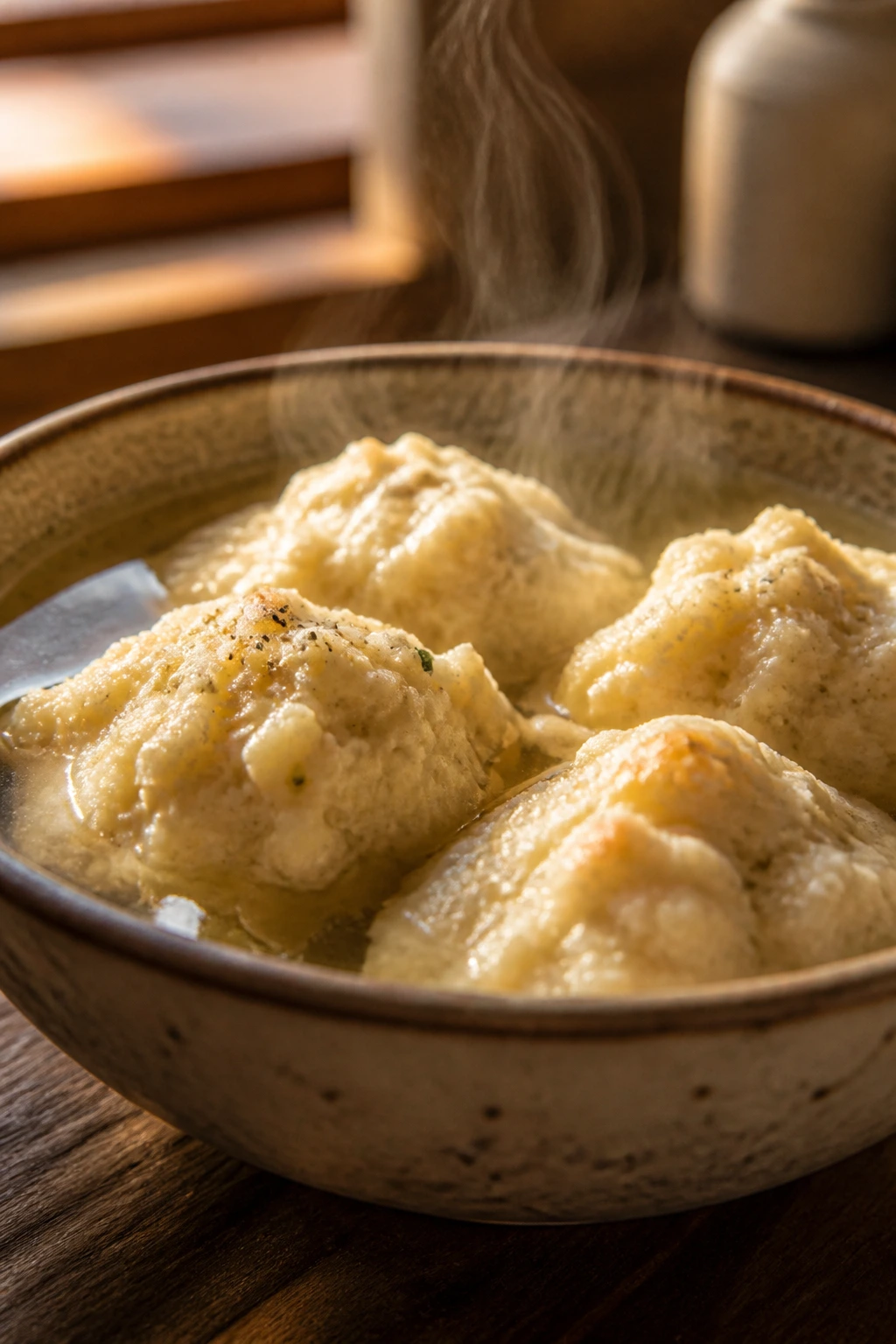
- Large soup pot with a tight lid: Steam is half the job for drop dumplings, biscuit dumplings, and spoon dumplings.
- Medium mixing bowls: You’ll want at least two so wet and dry ingredients don’t crowd each other.
- Tablespoon and teaspoon measures: Small dumplings need small, repeatable portions.
- Small cookie scoop or two spoons: Useful for shaping drop dumplings and meat dumplings cleanly.
- Fine-mesh sieve or clean kitchen towel: Needed for draining ricotta, squeezing spinach, or pressing tofu.
- Slotted spoon or spider: Handy for moving wontons, gnocchi, and spätzle without tearing them.
- Pastry cutter or fork: Makes biscuit-style dumplings easier if you don’t want to use your fingers.
- Sheet trays and parchment paper: Best for freezing raw dumplings before they go into bags or containers.
- Box grater: Useful for Parmesan and cheddar, and the finer shred helps the dough behave.
- Bench scraper: Optional, but useful for cutting gnocchi and moving sticky dough.
Smart Shopping and Ingredient Tips
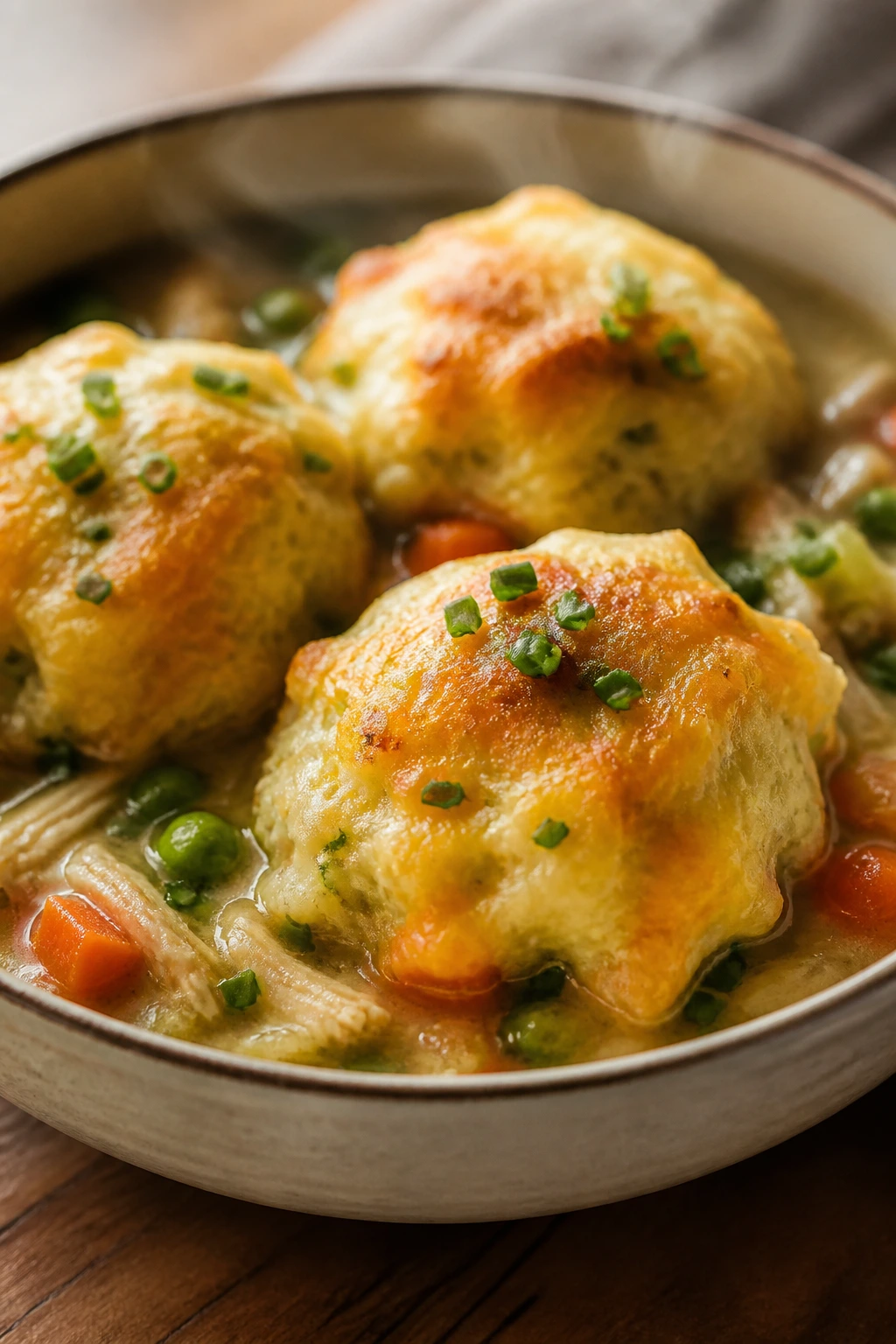
The flour matters more than people think. All-purpose flour is the safest middle ground for drop dumplings, biscuit dumplings, and most spooned doughs. Bread flour makes things chewier, which is useful in spätzle or some wontons, but it can turn delicate dumplings into little rubber pucks if you use it everywhere. If a recipe wants softness, don’t get cute with high-protein flour.
Dairy should match the job. Buttermilk gives lift and tang. Ricotta needs draining. Yogurt works when you want moisture without thinning the dough too much. If you buy cheese, grate it yourself for the best melt and control. Pre-shredded cheese is convenient, but the coating on it can make the dough drier and less cooperative.
Broth is the stage, not the afterthought. Taste it before the dumplings go in. If it tastes fully salted already, the dumplings can end up too salty once they absorb some liquid. A broth that tastes a little shy on seasoning before the dumplings go in usually lands right after everything simmers together.
For wrappers, buy extra. Wonton wrappers dry out at the edges faster than you’d expect, and the torn ones are useless. Keep them covered with a damp towel and work in small stacks. For herbs, pick the ones that look alive: bright green chives, parsley that stands upright, dill that still smells like dill when you crush a stem. Limp herbs make limp dumplings.
How to Serve These Recipes
Presentation:
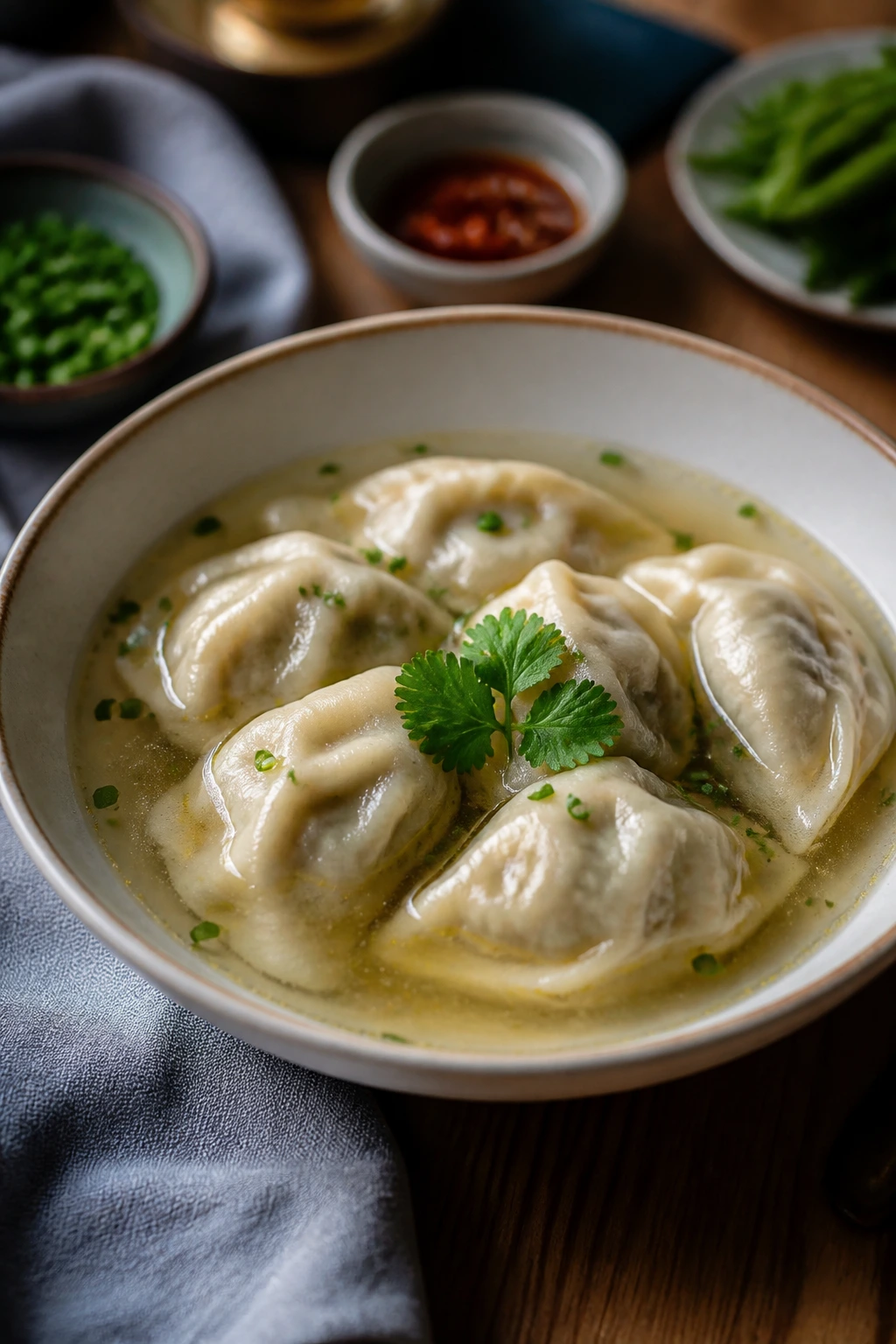
Serve dumplings in shallow bowls when you can. You want the tops peeking out of the broth instead of disappearing into it. A small handful of herbs on top—dill, chives, scallions, parsley—keeps the bowl from looking beige and tired. A final drizzle of oil, browned butter, or chili oil should stay tiny. These bowls need a little shine, not a flood.
Accompaniments:
Choose sides that either soak or contrast. Crusty bread works with ricotta, potato, and pumpkin dumplings. Plain toast or saltines make sense with matzo balls and drop dumplings. If the soup is rich, pair it with something bitter or crisp: a shaved cabbage salad, arugula, or quick-pickled onions. For noodle-heavy bowls, I like to skip the extra starch and keep the side simple.
Portions:
Plan for 3 to 5 medium dumplings per bowl, or 6 to 8 small ones, depending on how rich the soup is. Wonton soups usually need fewer dumplings because the filling is denser. Drop dumplings are fluffier and can carry a bowl on their own. If you’re scaling up for a crowd, make extra dumplings before you thin the broth too much.
Beverage Pairing:
Hot tea is the cleanest match for the lighter dumplings. A ginger tea works well with wontons and tofu dumplings; black tea with matzo balls or bacon dumplings. If you want something colder, a dry hard cider or sparkling water with lemon keeps the broth from feeling too heavy.
Additional Tips and Flavor Boosters
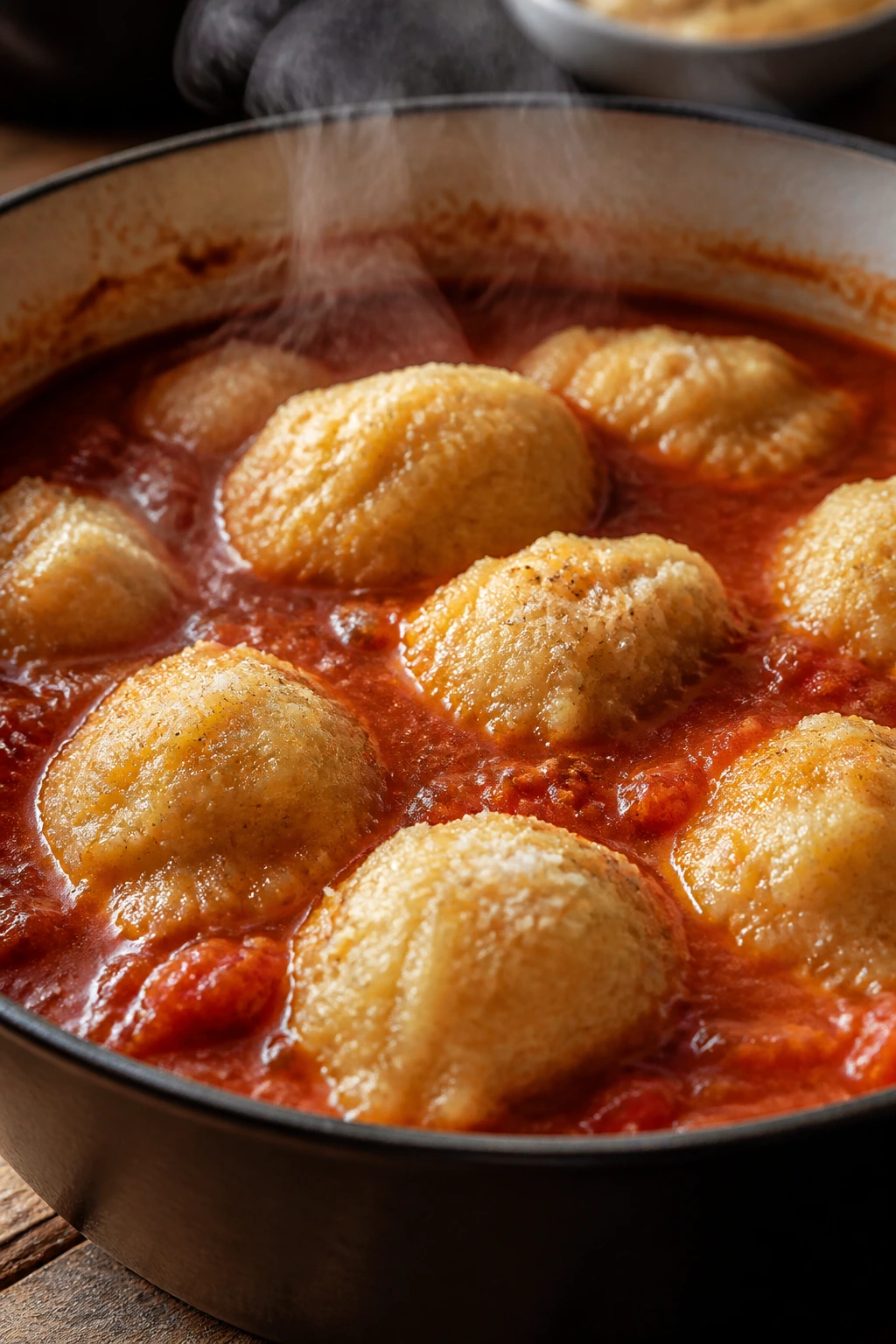
Flavor Enhancement:
A finishing fat changes everything. A teaspoon of chili oil on wontons, browned butter on potato or pumpkin dumplings, or a little olive oil on ricotta dumplings gives the bowl a deeper smell the second it hits the table. Don’t pour with a heavy hand. One small spoonful over the top is enough.
Customization:
If you want more green, add chopped herbs to almost any dough—parsley, dill, chives, or scallions all work in different directions. If you want more body, add a spoonful of grated cheese or a little cooked grain. If you want a softer finish, reduce the flour by 2 tablespoons and chill the dough before shaping. That small pause helps more than people expect.
Serving Suggestions:
Lemon zest belongs with ricotta, spinach, and almond-flour dumplings. Sesame oil belongs with tofu and mushroom dumplings. Black pepper belongs on bacon, potato, and egg dumplings. The point isn’t to decorate the bowl; it’s to wake up whatever the broth has been doing quietly underneath.
Make-It-Yours:
For dairy-free bowls, use olive oil, dairy-free yogurt, or a richer broth so the dumplings don’t feel thin. For gluten-free bowls, use a mix built around almond flour, tapioca starch, or a reliable GF blend with enough binder. For meatless bowls, let mushrooms, miso, and herbs carry the flavor. For richer bowls, a little grated cheese or rendered fat goes a long way.
Make-Ahead, Storage, and Reheating Guidance
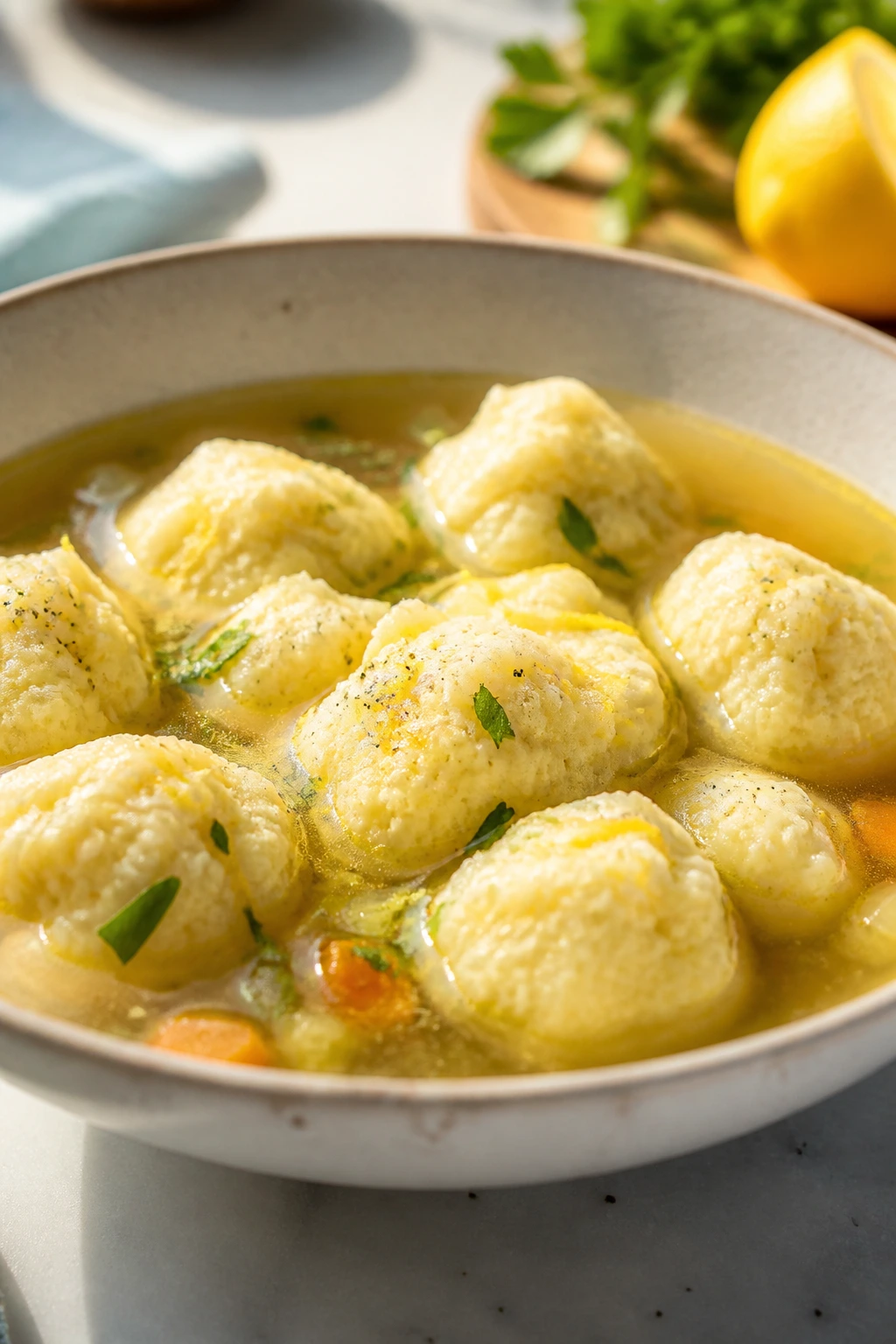
Most dumplings are best cooked the day you plan to eat them, but plenty of them can be prepped ahead without trouble. Wonton-style dumplings freeze especially well raw. Put them on a parchment-lined tray, freeze until firm, then move them into a bag or container. They’ll keep for up to 2 months frozen and can go straight into simmering broth from frozen, with an extra minute or two in the pot.
Cooked dumplings in broth keep in the refrigerator for about 3 days, though the texture changes depending on the style. Drop dumplings soften as they sit. Wontons and spätzle hold a little better. Matzo balls are often better the next day because they absorb more broth, but they still need gentle reheating. Keep the soup in a covered container and warm it slowly over low heat until steaming, not boiling.
If you’re making dough ahead, use common sense by style. Biscuit-style drop dumplings can be mixed, shaped, and held in the refrigerator for a few hours before cooking. Ricotta, potato, and pumpkin doughs usually need a quick chill if they’re soft. Gnocchi can be shaped and frozen raw. Reheat them in broth over low heat or warm them separately in a bit of hot stock before combining them with the soup. Microwaving works in a pinch, but it roughs up the texture fast.
For leftovers, I usually store dumplings and broth together only if I know I’ll eat them within a day or two. After that, the dumplings tend to swell too much. Separate containers help more than people think. A pot of broth and a box of dumplings is a better next-day plan than a single container of softened, soggy everything.
Variations and Adaptations to Try
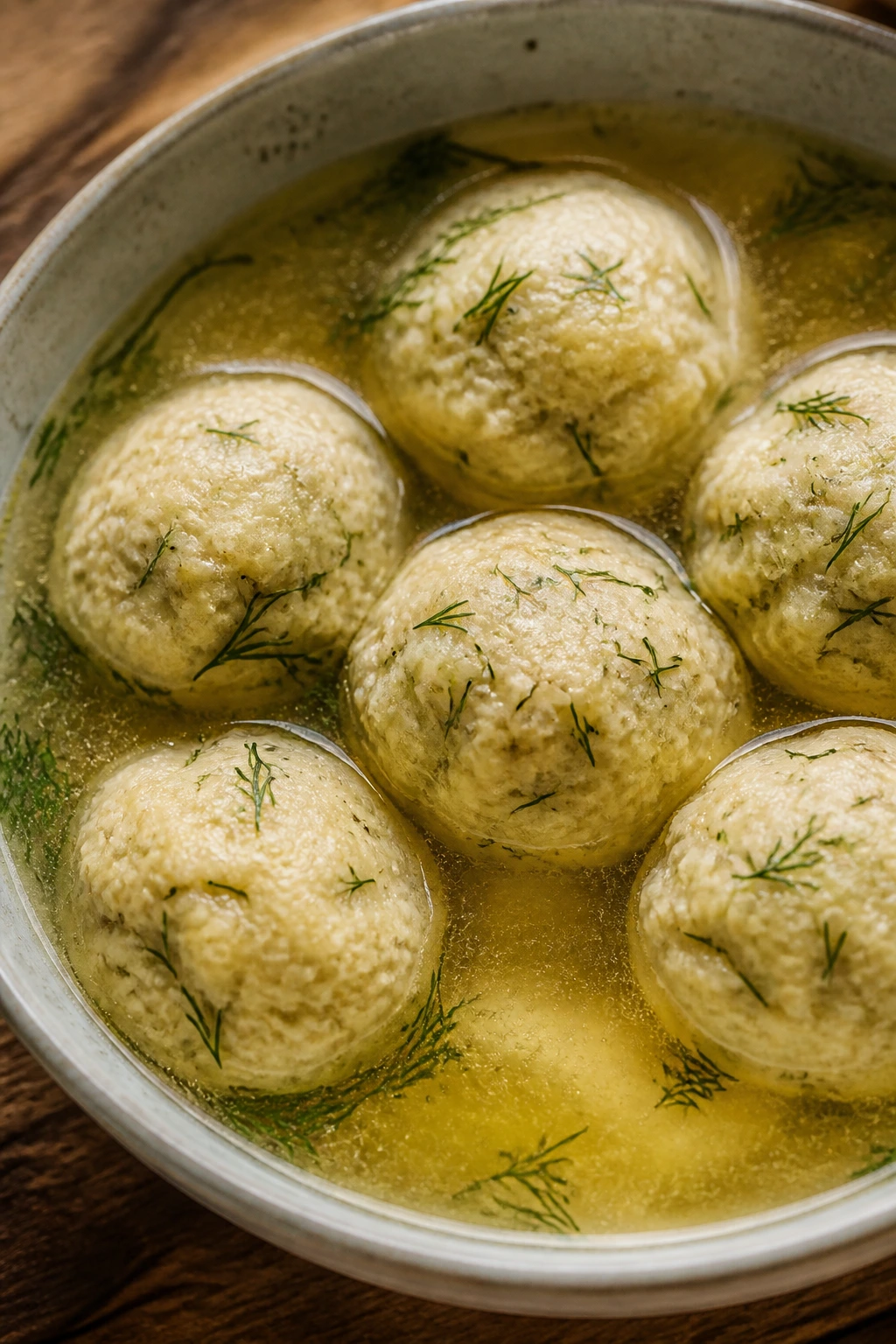
Gluten-Free Broth Bowls:
Use almond flour dumplings, potato dumplings, matzo balls made with certified gluten-free meal if needed, or gluten-free flour blends for drop dumplings. The texture changes, but the comfort doesn’t. Keep the simmer gentle, since gluten-free dumplings usually need a lighter touch.
Dairy-Free Comfort:
Choose tofu wontons, ginger chicken wontons, or gluten-free dumplings built with olive oil instead of butter. For drop dumplings, use unsweetened plant milk and a little extra oil. Skip the cheese-heavy versions and let herbs, sesame oil, or browned onions carry the bowl.
Heat-Lover’s Bowl:
Add chili crisp to wontons, black pepper to bacon dumplings, or minced jalapeño to cornmeal dumplings. A spoonful of chili oil at the end is the quickest route. Keep the broth itself fairly restrained so the dumplings still taste like dumplings and not just spice.
Herb Garden Version:
Mix parsley, dill, chives, thyme, and scallions in different combinations depending on the dough. Dill loves matzo balls and ricotta dumplings. Thyme likes turkey and pumpkin. Chives behave well almost everywhere. Herb-heavy dumplings should still taste like dinner, not like a planter box.
Regional Twist:
Turn the bowl Italian with ricotta, semolina, and gnocchi. Turn it Eastern European with spätzle, potato dumplings, or matzo balls. Turn it East Asian with wontons, tofu, and sesame. The broth should match the dumpling, not compete with it. That part matters more than fancy garnish.
Common Mistakes to Avoid
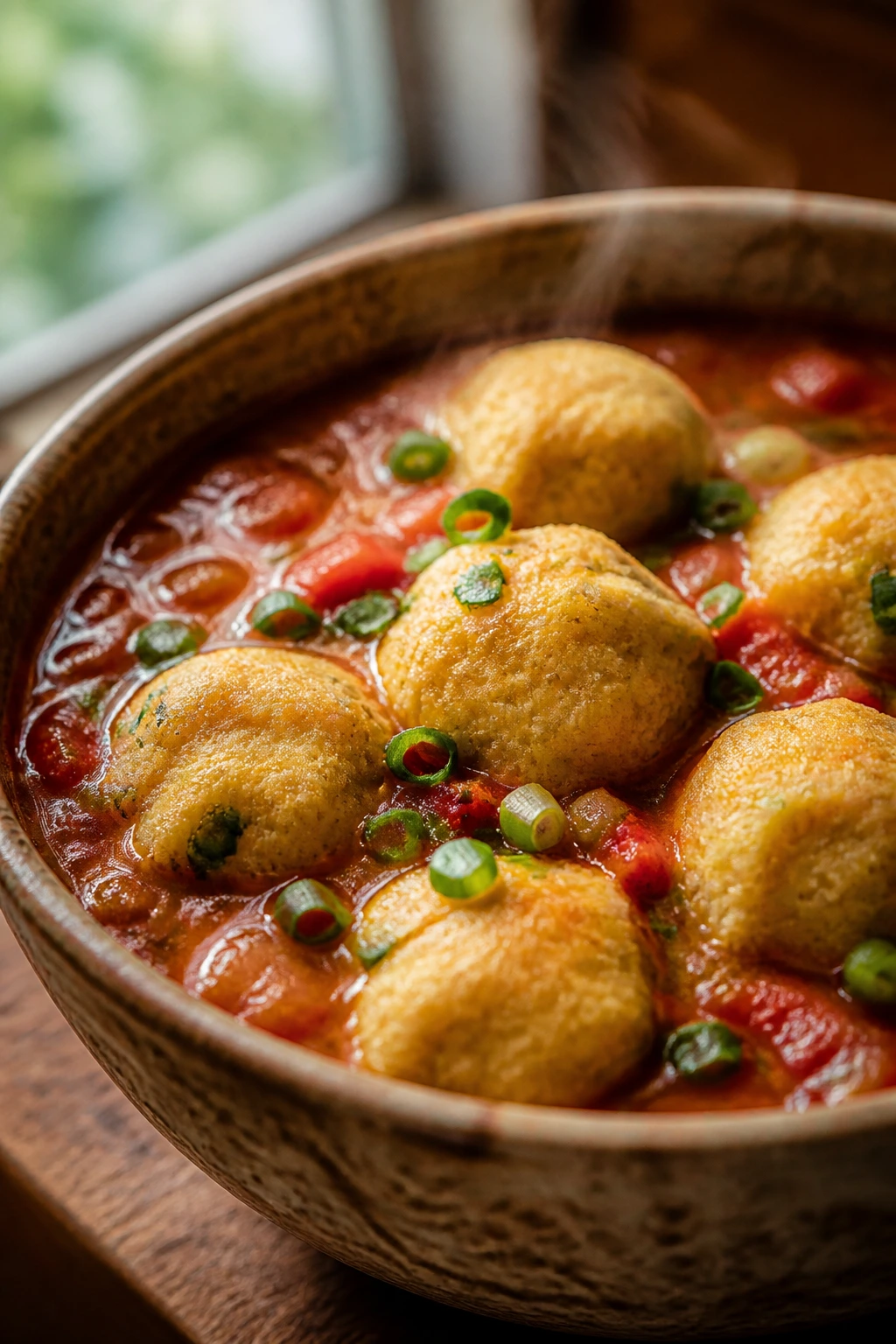
Letting the broth boil too hard:
This is the fastest way to wreck a good dumpling. The outside sets, the inside lags, and the pot starts chewing the edges. Keep the liquid at a lazy simmer. If the surface is churning, turn it down.
Making the dumplings too large:
Big dumplings look generous and eat like regret. They cook unevenly and tend to get heavy in the middle. Smaller dumplings are easier to manage, easier to time, and easier to serve neatly in a bowl.
Ignoring moisture in the filling or dough:
Wet spinach, wet ricotta, wet mushrooms, and under-drained tofu all cause the same problem: slack dumplings that spread or burst. Press, squeeze, drain, or cook ingredients until they are as dry as the recipe allows. That minute of prep pays off later.
Overmixing the dough:
Drop dumplings and biscuit dumplings get tough fast if you work them like bread dough. Mix until the ingredients are combined, then stop. A few streaks are better than a dense, rubbery result.
Serving dumplings in soup that needs more seasoning:
Dumplings absorb salt and flavor while they cook. If the broth tastes dull before they go in, it won’t magically improve. Taste the soup first, season it, then add the dumplings.
Frequently Asked Questions
Can I cook dumplings directly in any soup?
Most of the dumplings here like broth or a soup that has enough liquid to cover them at least halfway. Very thick stews can work too, but the dumplings need room to steam and move. If the soup is too dense, cook the dumplings separately and ladle them in at the end.
Why do my dumplings fall apart in the pot?
Usually it’s one of three things: the broth boiled too hard, the dough was too wet, or the dumplings were moved around too much. Start with a bare simmer and keep the spoon out of the pot once they go in. If the dough feels slack before cooking, chill it or add a small spoonful of flour.
Can I freeze uncooked dumplings?
Yes, and some of them freeze better than others. Wontons, gnocchi, spätzle, and shaped meat dumplings freeze well on a tray before bagging. Drop dumpling batters do not freeze as neatly, so it’s better to mix those fresh.
What’s the best flour for soup dumplings?
All-purpose flour is the safest choice for most of them. Semolina works for chewy dumplings, and almond flour works for gluten-free ones with the right binder. If a recipe asks for a tender result, don’t replace the flour with bread flour unless you want a firmer bite.
Should the broth be boiling when I add dumplings?
No. A gentle simmer is the sweet spot. You want tiny bubbles moving around the edges, not a violent boil in the middle. Too much heat roughs up the dumplings and makes the broth cloudy.
How do I keep leftover dumplings from getting mushy?
Store the dumplings and broth separately if you can. If they’re already combined, reheat slowly over low heat and stop as soon as the soup is steaming. Boiling leftovers again is the quickest way to turn them soft in a bad way.
Can I make these without eggs?
Some can, some cannot. Wonton fillings and certain drop dumplings can be adjusted with a different binder, but matzo balls, many gnocchi, and spätzle rely on eggs for structure. If you need an egg-free bowl, the tofu wontons and some biscuit-style dumplings are the easiest places to start.
How many dumplings should I plan per person?
For light dumplings, 4 to 5 per bowl is a fair amount. For richer dumplings like wontons, ricotta dumplings, or gnocchi, 3 or 4 is usually enough. If the soup is the main event and there’s little else in the bowl, make more. No one complains about a second dumpling.
A Bowl Worth Repeating
A good soup can carry a night. A good dumpling can change what that soup means. The difference is small on paper—flour, egg, broth, steam—but in the bowl it feels much bigger. One turns a clear liquid into dinner that sticks with you.
Keep a couple of these styles in rotation and you stop being at the mercy of whatever stale loaf is sitting on the counter. A bag of flour, a few eggs, a ladle of broth, and one of these dumplings is enough to build a bowl that feels planned, not patched together. That’s the kind of kitchen habit worth keeping close.