



A pot of cozy bean and sausage soup can rescue a night that feels too cold for anything fussy. The sausage gives the broth a savory base right away, the beans soften the edges without turning everything muddy, and the first spoonful usually has that exact mix of heat, salt, and starch that makes you slow down a little.
This is the kind of soup I reach for when I want dinner to feel steady. Not fancy. Not delicate. Steady.
The details matter more than people think. Brown the sausage well, let the tomato paste cook until it darkens, and finish with a sharp splash of vinegar or lemon so the bowl doesn’t taste heavy by the last spoonful. Skip those steps and you still get soup, but it lands flatter, more like a shortcut than a meal.
Why You’ll Keep Coming Back to This Pot
Big flavor from basic groceries: A pound of sausage, three cans of beans, and a few vegetables make six generous bowls without asking you to chase specialty ingredients.
The broth gets better as it sits: Beans release starch into the liquid, so leftovers turn thicker and rounder instead of thinning out in the fridge.
One pot, one real mess: You brown, simmer, and finish in a Dutch oven or soup pot. That’s it. No separate sauce pan, no blender, no flour paste.
Easy to steer toward mild or spicy: Mild Italian sausage keeps the soup mellow, hot sausage brings heat, and smoked sausage pushes it in a different direction without changing the method.
It eats like dinner, not a starter: Between the sausage, beans, and kale, this is the sort of soup that stands up to bread and counts as a full meal.
The last spoonful is as good as the first: A small hit of vinegar at the end keeps the pot from tasting heavy after a long simmer.
What Makes Bean and Sausage Soup Taste Deep Instead of Flat
Why do some bean soups taste like they were built in layers, while others land like salted water with extras floating in it? Usually, it comes down to the first ten minutes. That’s where the sausage browns, the vegetables soften, and the tomato paste stops tasting raw and starts tasting dark and slightly sweet.
The sausage is not only protein here. It is seasoning. Fat, salt, garlic, fennel, pepper, and a little sweetness from browning all move into the broth if you give the meat enough heat and space. Crowding the pot leaves you with pale crumbles and a thinner soup. Give it room, and the bottom of the pan develops those brown bits that make the broth taste cooked, not assembled.
Beans do a different kind of work. They bring body, and they also carry flavor into the spoon. Cannellini beans stay soft but intact; great northern beans split a little more easily and make the broth feel silkier. That difference sounds small. It is not.
The sausage leaves the first footprint
Once the sausage hits the hot fat, the kitchen should smell meaty and sharp within a minute or two. If it smells watery, the heat is too low. If it smells burned, the heat is too high and the spices are getting scorched before the fat has time to render.
Beans are not filler
A lot of people treat beans as the background actor in a soup like this. Wrong job. Beans bring thickness, and that thickness matters because it keeps the broth from tasting thin once the kale goes in and the bowl cools a little at the table.
Acid is the last move, not the first
That final splash of vinegar or lemon does not make the soup sour. It wakes up the sausage, sharpens the beans, and cuts through the richness so the broth tastes clean instead of dull. Leave it out and you’ll probably find yourself reaching for more salt, when what the pot really needs is brightness.
The Ingredient List That Keeps the Soup Moving
Yield: 6 generous bowls
Prep Time: 20 minutes
Cook Time: 40 minutes
Total Time: 1 hour
Difficulty: Beginner — the method is straightforward, but the soup rewards attention when you brown the sausage and season at the end.
Best Served: Hot from the stove with crusty bread or garlic toast
For the Soup Base
- 1 tablespoon olive oil
- 1 pound mild Italian sausage, casings removed
- 1 medium yellow onion, diced
- 2 medium carrots, peeled and diced
- 2 celery stalks, diced
- 1 teaspoon kosher salt, divided, plus more to taste
- 4 garlic cloves, minced
- 2 tablespoons tomato paste
- 1 teaspoon dried thyme
- 1 teaspoon dried oregano
- 1/2 teaspoon crushed red pepper flakes, optional
- 2 (15-ounce) cans cannellini beans, drained and rinsed
- 1 (15-ounce) can great northern beans, drained and rinsed
- 1 (14.5-ounce) can diced tomatoes with juices
- 6 cups low-sodium chicken broth
- 1 cup water, plus more if needed
- 1 bay leaf
- 1 Parmesan rind, optional but worth using if you have one
- 3 cups chopped kale, stems removed
- 1 tablespoon red wine vinegar or fresh lemon juice
- Freshly ground black pepper, to taste
For Serving
- Chopped parsley
- Grated Parmesan cheese
- Crusty bread, for the table
A short ingredient list can fool you here. The pot only looks simple because each piece does a specific job and nobody is wasting time on decorative extras.
The sausage brings salt and fat. The beans bring body. The tomatoes and tomato paste pull the broth toward something deeper and a little darker. The greens keep the bowl from feeling too dense, and the vinegar at the end stops the whole thing from sitting like a brick.
Choosing Sausage That Gives the Broth Its Backbone
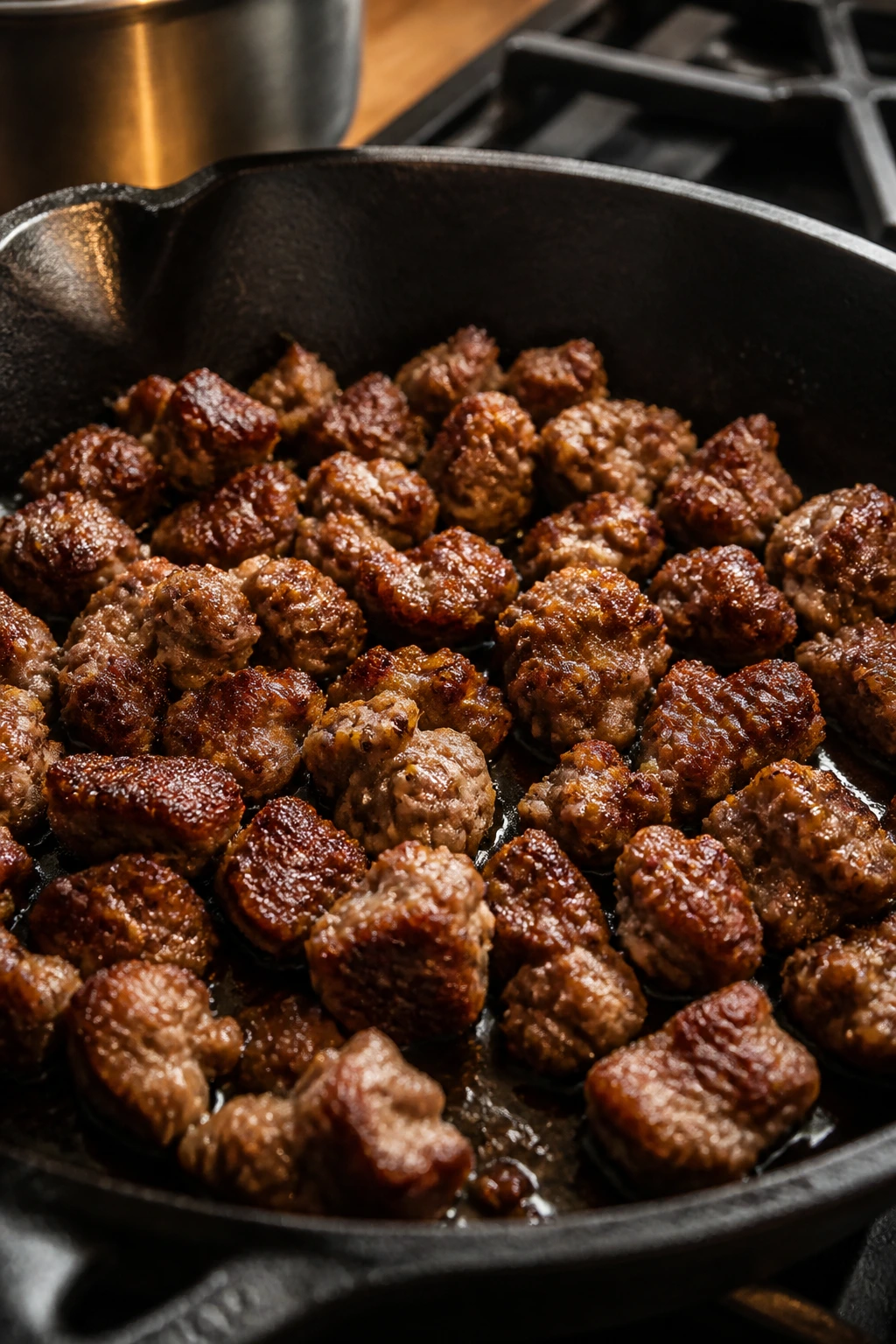
Sausage choice changes the soup more than almost anything else, and I’m willing to be fussy about this. Mild Italian sausage gives you fennel, garlic, and a quiet warmth that works with the beans instead of elbowing them aside. Hot Italian sausage pushes the bowl into spicier territory, which is useful if you like a little bite against the creamy beans.
What to use: 1 pound of mild Italian sausage is the safest path, especially if you want the soup to feel balanced and not greasy. If you know you like heat, hot Italian sausage can step in at the same quantity.
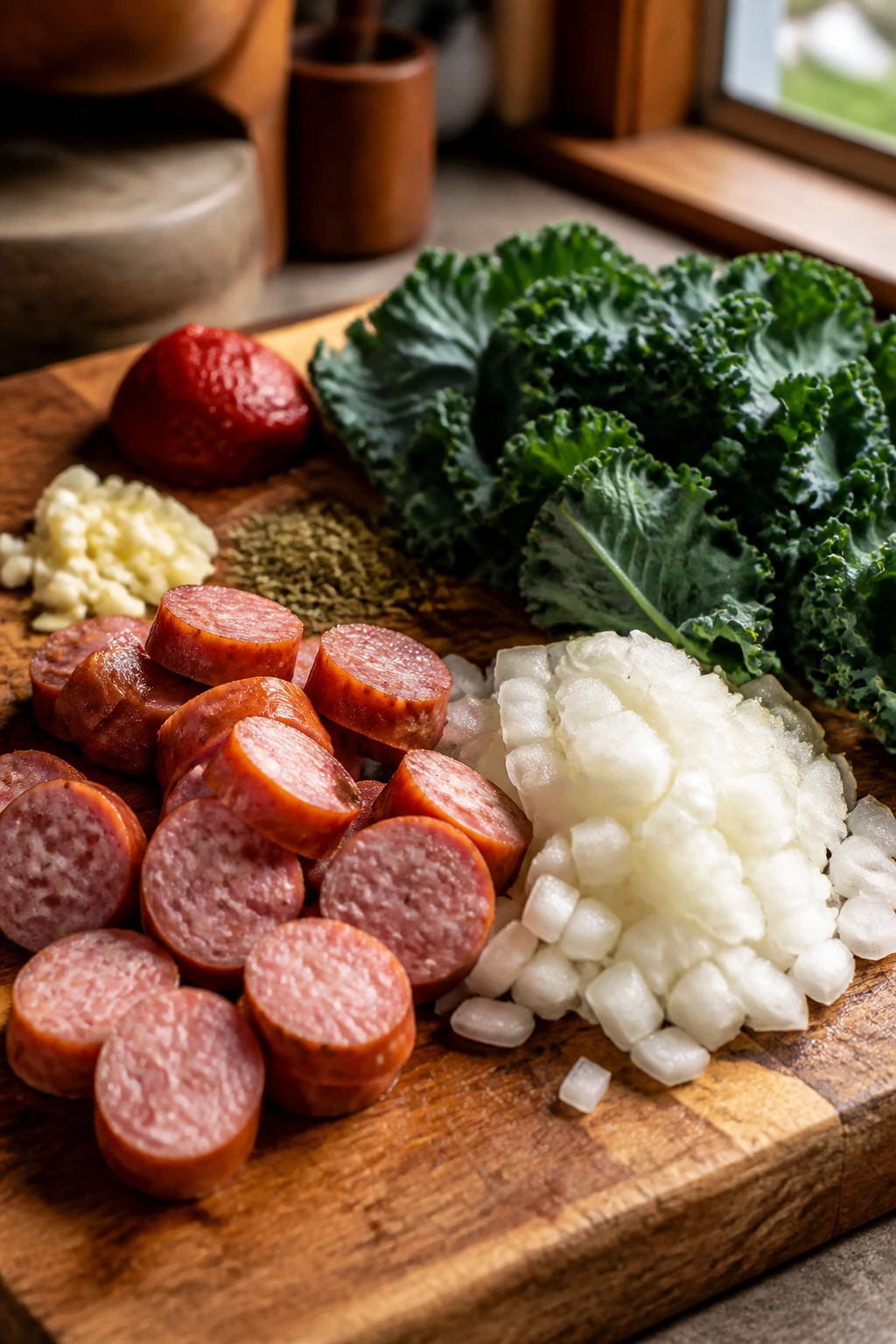
Preparation: Remove the casings if you’re using links, then break the meat into irregular chunks before it hits the pot. Those rough pieces brown more evenly than tiny pellets, and the browned edges give the broth more character.
Substitutions: Turkey Italian sausage works well if you want a lighter soup, though it’s leaner and needs a touch more oil in the pot. Smoked sausage or kielbasa can also work, but they push the flavor toward smoky and salty, so taste carefully at the end.
Tips: Look for sausage that lists fennel, garlic, and pepper near the top of the seasoning profile. If you use a leaner sausage, add an extra teaspoon of oil so the vegetables can soften without sticking.
There’s a reason sausage soup recipes fall apart when the sausage is treated like plain ground meat. You want seasoning built into the meat itself. That way the broth picks up flavor as it simmers, not just from a shaker at the end.
Which Beans Hold Their Shape and Which Turn Creamy
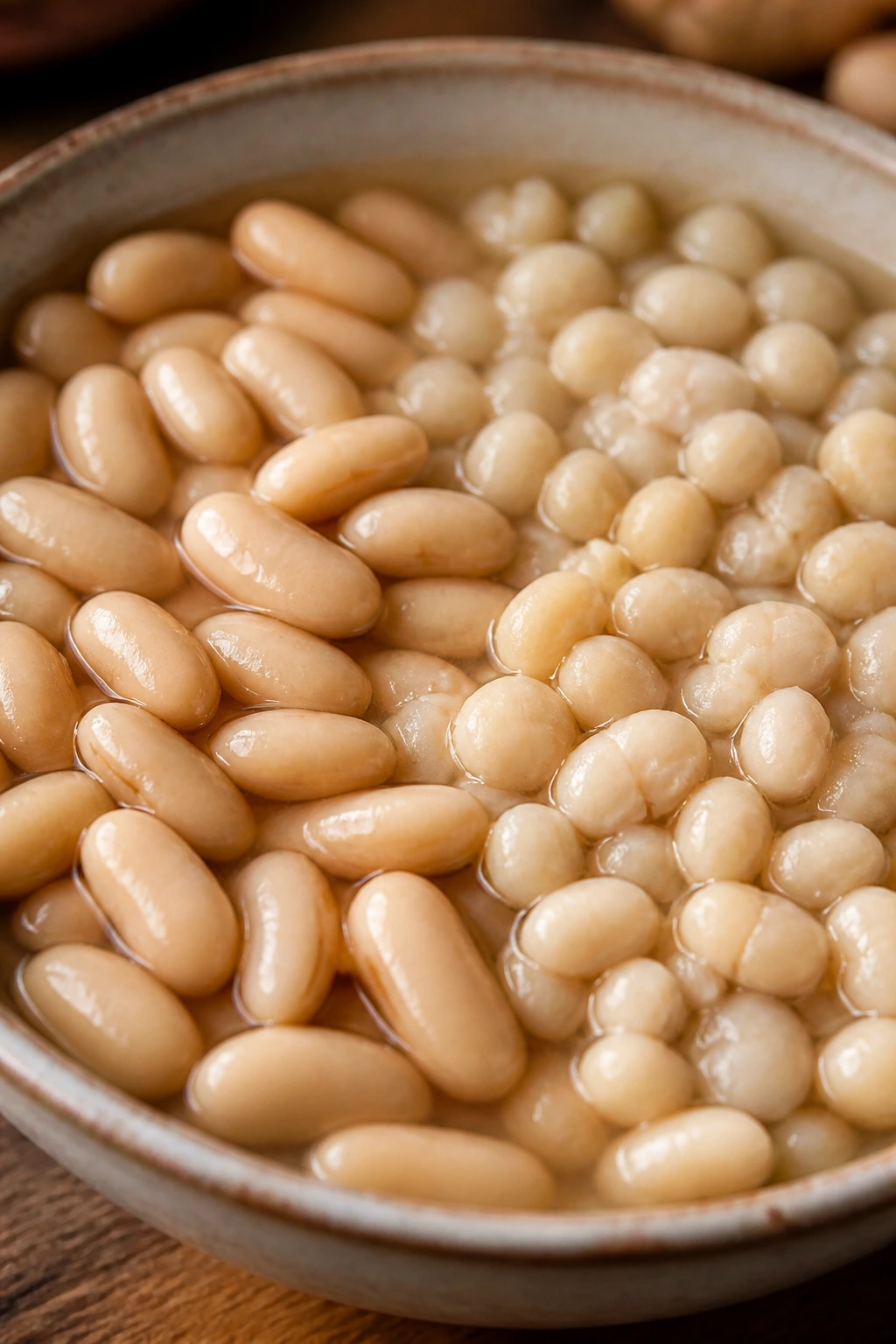
The beans decide whether the soup feels brothy, creamy, or somewhere in between. Cannellini beans are my first pick because they stay intact long enough to look good in the bowl, but they still get soft at the edges and make the broth feel full. Great northern beans are a little smaller and can break down more, which is useful if you want a thicker pot.
What to use: Two 15-ounce cans of cannellini beans and one 15-ounce can of great northern beans make a good mix of body and texture. If you only have one type, three cans of the same bean will still work.
Preparation: Drain and rinse the beans under cool water until the liquid runs mostly clear. That quick rinse removes the canning liquid that can taste metallic or oddly gummy in the broth.
Substitutions: Navy beans are an easy stand-in, and butter beans give the soup a softer, creamier feel. Chickpeas are firmer and less traditional here, but they work if that’s what’s in the cupboard.
Tips: Keep one ladleful of beans aside and mash them against the side of the pot before the greens go in. That gives the broth a thicker, more settled texture without adding cream or flour.
A lot of bean soups need a starch trick to feel complete. This one does not, if you treat the beans with a little respect. Rinse them, don’t boil them to death, and give a few of them a quick mash. That’s enough.
The Vegetables, Herbs, and Finishing Splash That Pull It Together
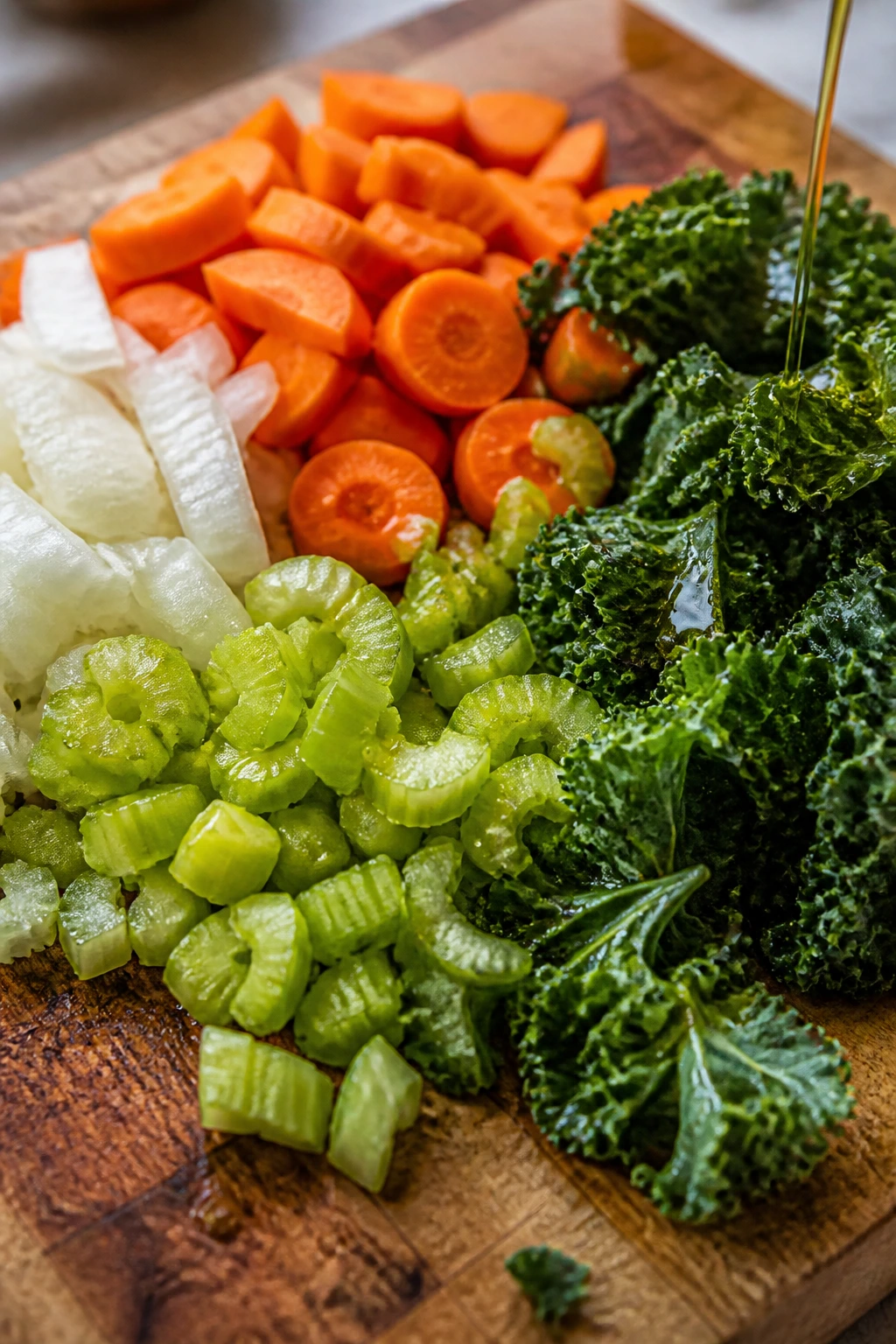
The vegetable base is humble, which is exactly why it works. Onion, carrots, and celery cook down into a sweet, savory bed for the sausage. Garlic goes in later so it stays fragrant instead of bitter. Tomato paste needs a minute in the hot pot so it loses that tinny raw edge and turns darker, almost brick-like.
What to use: One diced onion, two diced carrots, and two diced celery stalks build the base, while four minced garlic cloves, tomato paste, thyme, oregano, and a bay leaf finish the backbone. The kale goes in near the end, and the vinegar or lemon wakes the whole bowl up right before serving.
Preparation: Keep the onion, carrot, and celery pieces small and even, about the size of a pea to a blueberry. That size lets them soften at the same rate and disappear into the soup without turning to mush. Strip the kale from the stems and chop the leaves into rough ribbons.
Substitutions: Spinach can replace kale if you want a softer green that wilts fast. Swiss chard works too, though the stems need a minute or two longer if you include them. Vegetable broth can replace chicken broth, but the soup will taste a little lighter.
Tips: Add the tomato paste directly to the hot pot and stir it for a full minute. That one minute matters more than people admit. It deepens the flavor and keeps the soup from tasting one-note.
I also like to keep a Parmesan rind in the freezer for soups like this. It doesn’t make the bowl cheesy in a loud way. It just rounds off the broth, the way a good stock does.
What You Need Beside the Stove
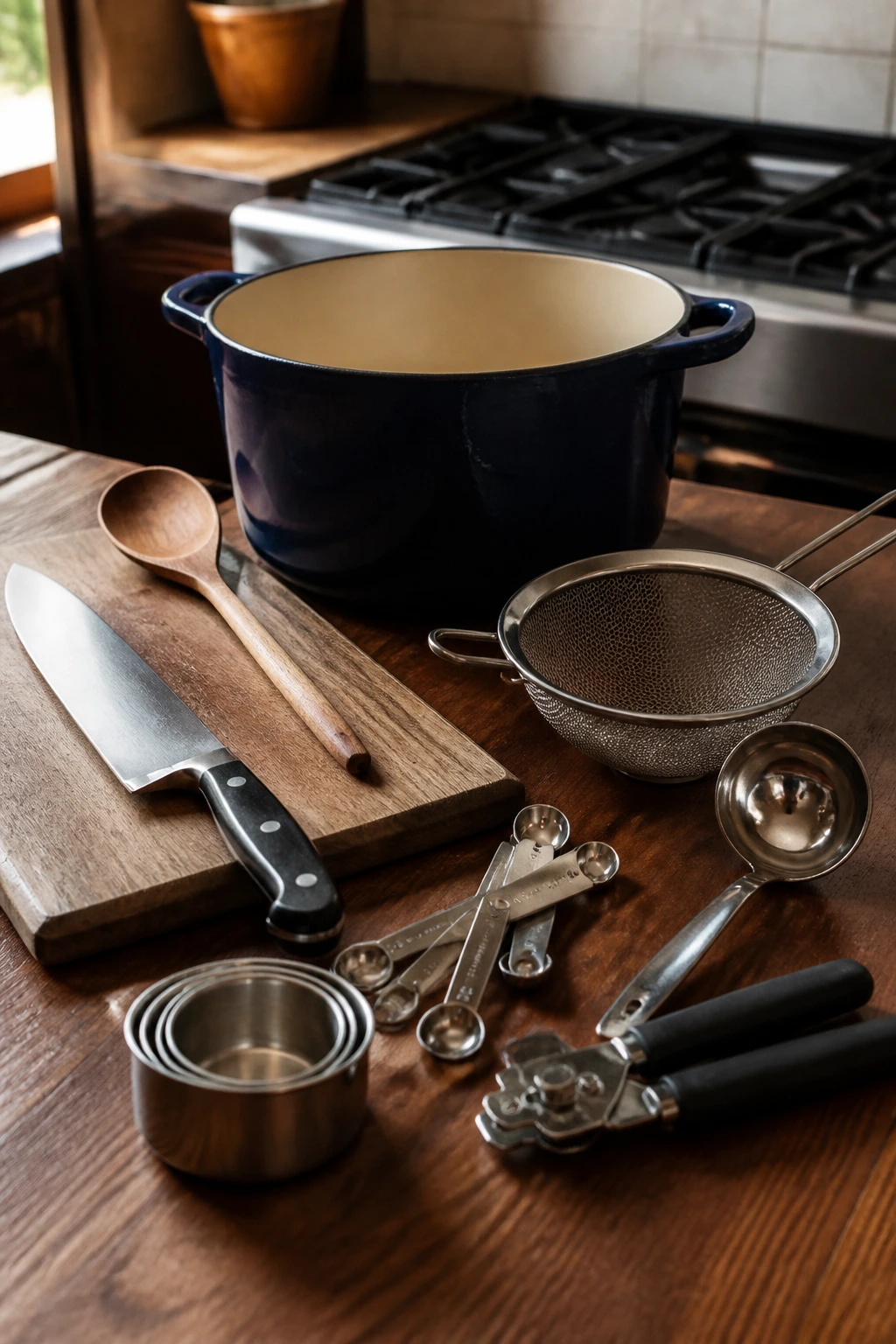
- 5- to 6-quart Dutch oven or heavy soup pot: A thick bottom keeps the sausage from scorching and helps the simmer stay even.
- Wooden spoon or heatproof spatula: You need something sturdy enough to break up the sausage and scrape up the browned bits.
- Chef’s knife and cutting board: The vegetable prep goes faster when the dice is consistent and not too big.
- Can opener and fine-mesh strainer: The strainer makes rinsing the beans quick and keeps the canning liquid out of the pot.
- Ladle: Soup without a ladle turns into a drip situation. No one wants that.
- Measuring spoons and cups: Tomato paste, broth, and vinegar are worth measuring so the salt balance stays under control.
A 12-inch skillet can work in a pinch if it has tall sides, but a Dutch oven is easier. The wider base gives the sausage more contact with the heat, which helps the browning happen instead of a gray steam bath.
How to Build the Soup, One Phase at a Time
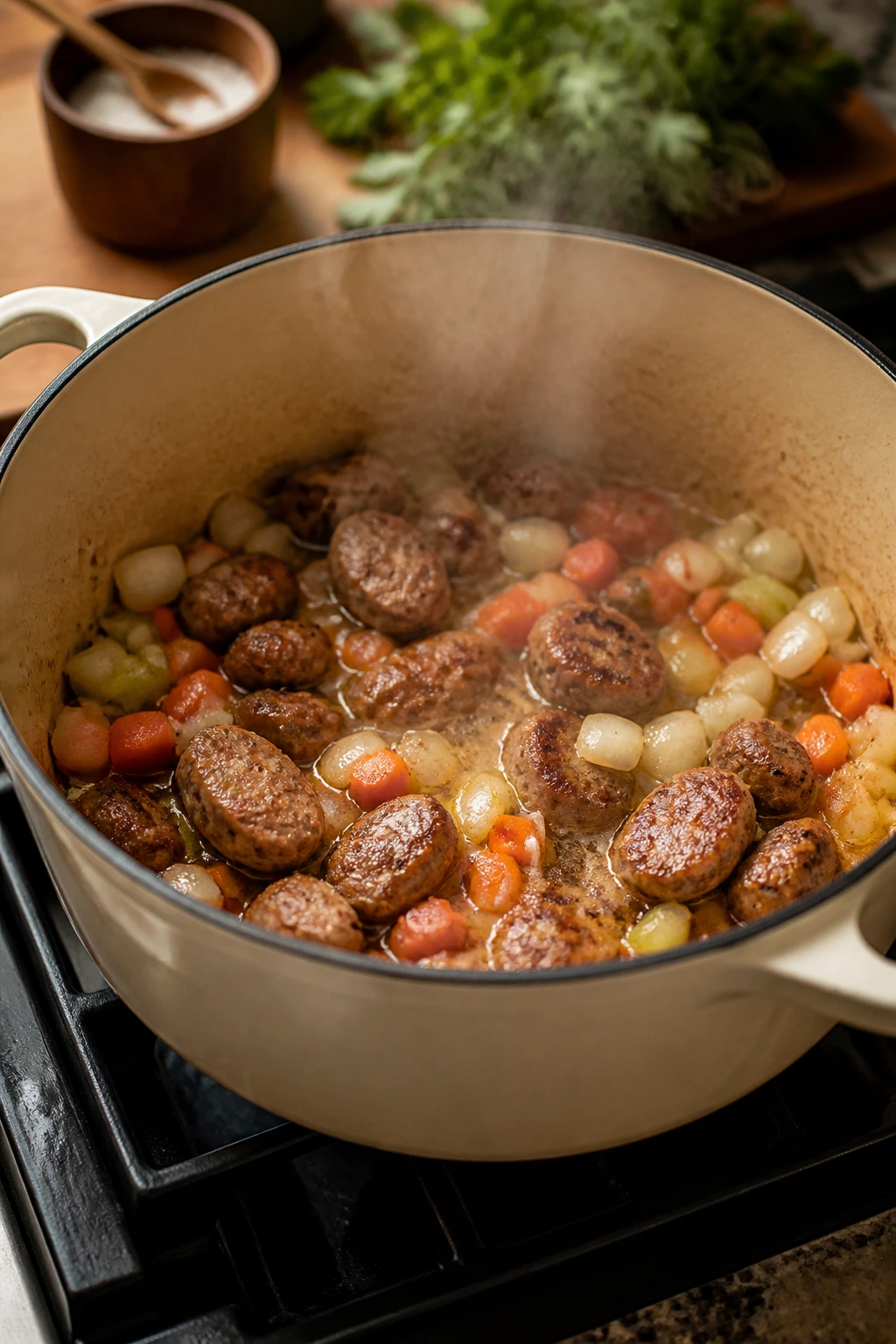
Phase 1: Brown the Sausage and Soften the Vegetables
-
Heat the pot: Set a 5- to 6-quart Dutch oven over medium-high heat and add 1 tablespoon olive oil. Let the oil shimmer for about 30 seconds.
-
Brown the sausage: Add 1 pound of sausage and break it into chunks with a wooden spoon. Cook for 6 to 8 minutes, stirring only enough to keep the bottom from scorching, until the meat is deeply browned in spots and no pink remains. Do not crowd the pot or turn the heat down too early; pale sausage makes a pale soup.
-
Add the vegetables and salt: Stir in the onion, carrots, celery, and 1/2 teaspoon of the kosher salt. Cook for 6 to 8 minutes, stirring now and then, until the onion turns translucent and the carrots look glossy around the edges.
-
Stir in the garlic and tomato paste: Add the garlic, tomato paste, thyme, oregano, and red pepper flakes if you’re using them. Cook for 1 to 2 minutes, stirring constantly, until the tomato paste darkens a shade and smells sweet rather than sharp. If the garlic starts to brown, lower the heat right away.
Phase 2: Build the Broth
-
Add the beans and liquids: Stir in the cannellini beans, great northern beans, diced tomatoes, chicken broth, water, bay leaf, and Parmesan rind if using. Scrape the bottom of the pot well so the brown bits dissolve into the broth.
-
Bring the soup to a simmer: Increase the heat just enough to get the liquid moving, then reduce to medium-low. The soup should make small, lazy bubbles around the edge, not a hard boil.
-
Simmer until the flavors settle: Cook for 20 to 25 minutes, partially covered, stirring once or twice. The broth should thicken slightly, and the beans should taste creamy at the center without falling apart. If you want a thicker soup, mash about 1 cup of the beans against the side of the pot with the spoon during the last 5 minutes of simmering.
Phase 3: Finish, Taste, and Serve
-
Add the greens: Stir in the kale and simmer for 3 to 5 minutes, just until the leaves turn dark green and wilt into the broth. You want them tender, not limp and gray.
-
Season and brighten: Remove the bay leaf and Parmesan rind. Stir in the vinegar or lemon juice, then taste and adjust with the remaining 1/2 teaspoon salt and black pepper. Add the acid after the heat is lower or off the flame so its sharpness stays clean.
-
Rest briefly before serving: Turn off the heat and let the soup sit for 5 minutes. Ladle into bowls and top with parsley and Parmesan. That short rest helps the broth settle and keeps the beans from looking frantic in the bowl.
A soup like this is forgiving, but it still has a rhythm. Brown first. Soften second. Simmer gently. Finish with acid. That sequence is the whole game.
How to Bowl It Up for Dinner and Leftovers
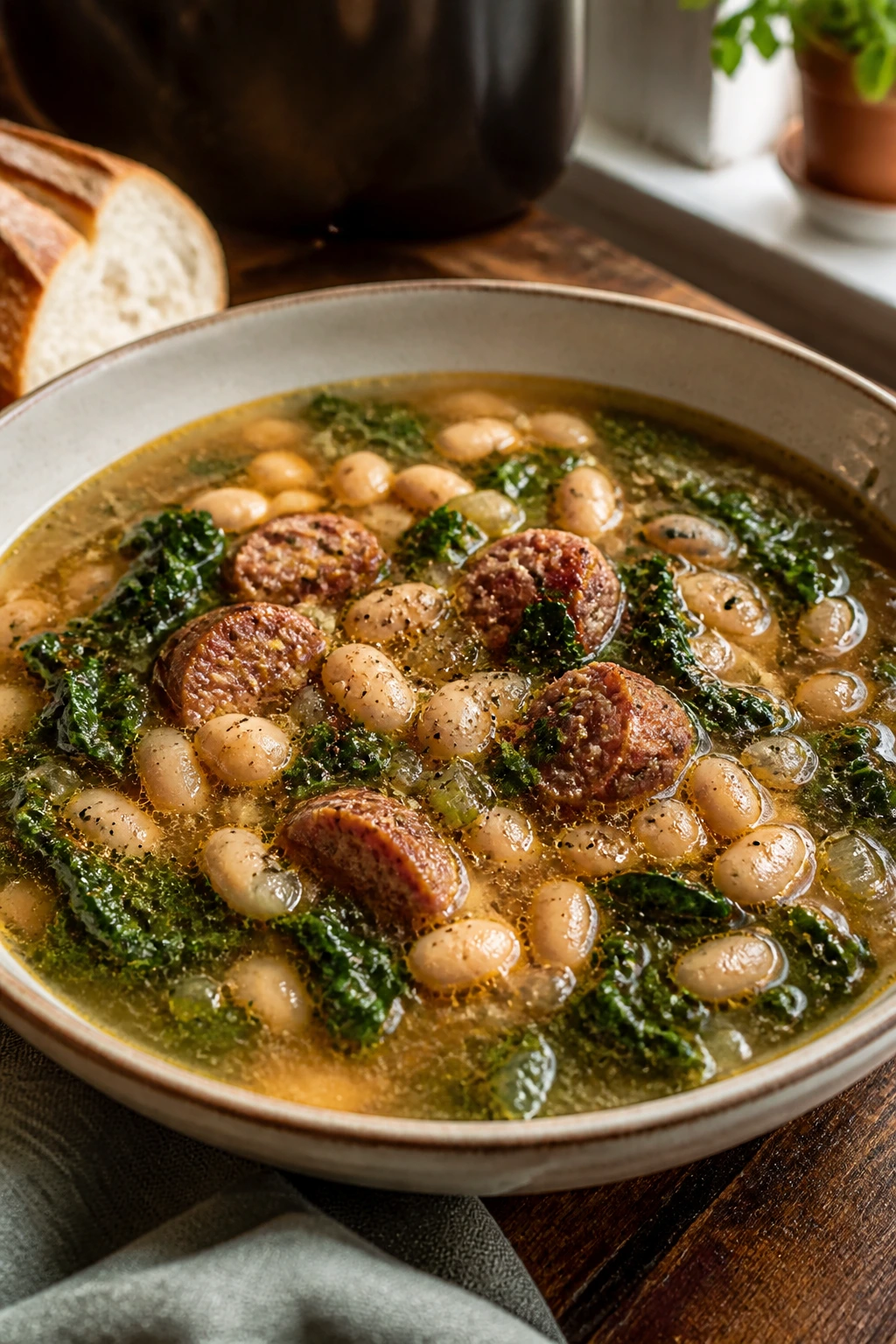
Presentation: Ladle the soup into wide, shallow bowls so you can see the beans, sausage, and greens instead of burying them in a deep mound. A sprinkle of parsley, a little grated Parmesan, and a crack of black pepper give the top some life without turning it fussy.
Accompaniments: Crusty bread is the obvious move, and for good reason. A torn piece of sourdough or a slice of garlic toast catches the broth in a way a spoon never will. If you want a side, keep it sharp and simple — a bitter green salad with a lemony dressing or roasted broccoli is enough.
Portions: A generous dinner bowl is about 1 1/2 to 2 cups per person, especially if bread is on the table. For a lighter lunch portion, 1 cup is plenty. The recipe scales well, but give yourself a bigger pot if you double it; crowded soup doesn’t simmer as evenly.
Beverage Pairing: A dry red wine like Chianti or Sangiovese suits the sausage and tomato base without fighting the beans. If you want something nonalcoholic, sparkling water with a squeeze of lemon keeps the meal feeling clean after a rich spoonful.
I like this soup in a bowl that is warm to the touch. A quick rinse with hot water before ladling makes a bigger difference than people expect.
Small Moves That Make the Pot Better
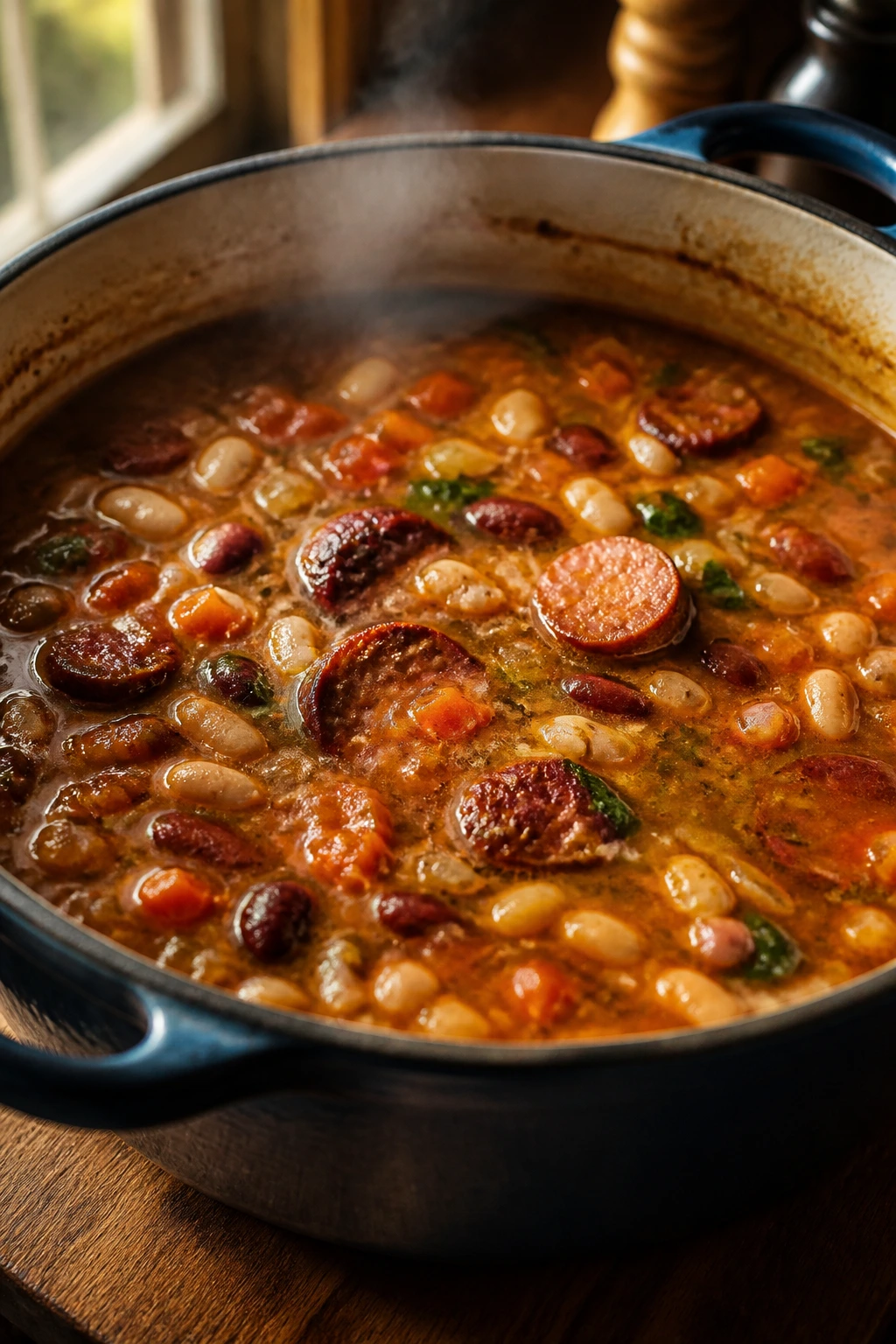
Flavor Enhancement: Keep a Parmesan rind in the freezer and drop it into the pot during the simmer. It won’t melt into strings or make the soup cheesy in a heavy way; it just adds a savory edge that makes the broth taste older and deeper.
Texture Control: Mash part of the beans against the side of the pot if you want the soup to feel thicker. That trick gives you body without flour, cornstarch, or cream, and it keeps the broth from looking paste-like.
Time-Saver: If you use a pre-cut mirepoix mix from the produce section, chop the pieces a little smaller before they go into the pot. Store-bought veggie chunks are often too big for a soup that’s meant to feel spoonable and settled.
Cost-Saver: Buy sausage when it’s on sale and freeze it flat in a zip bag. A thin frozen slab thaws faster than a thick clump, and it means bean soup can happen without a trip to the store.
Finish Smart: Taste after the vinegar goes in, not before. Salt can hide behind fat and starch, and acid changes the way both of them read on the tongue. A tiny extra pinch of salt after the vinegar is common; add it slowly.
I’m a fan of kale here because it stays upright in the bowl, but spinach works if that’s what you have. Spinach just needs the heat turned off sooner, or it collapses into the broth and disappears.
The Mistakes That Make the Broth Muddy or Bland

-
Browning the sausage too gently: Pale sausage gives you pale flavor. The fix is simple — medium-high heat, enough space in the pot, and a few minutes of patience until you see real brown spots.
-
Adding garlic before the onions soften: Garlic cooks faster than the rest of the vegetables and can turn bitter if it sits in hot fat too long. Add it after the onion, carrot, and celery have softened, then keep it moving.
-
Simmering too hard after the beans go in: A rolling boil can split the bean skins and make the broth cloudy. Keep the simmer lazy, with small bubbles around the edges.
-
Forgetting the acid at the end: Without vinegar or lemon, the soup can taste heavier than it should. If the bowl feels dull, a half-teaspoon of acid often fixes what another pinch of salt cannot.
-
Oversalting early: Sausage, broth, Parmesan, and canned beans can all carry salt. Use low-sodium broth, taste near the end, and season in small pinches rather than dumping salt in at the start.
-
Adding kale too soon: Greens that simmer for 20 minutes turn dark, soft, and a little swampy. Wait until the very end so they keep their shape and color.
There’s one more thing people miss: soup changes as it cools. A bowl that tastes a little shy at the stove may be right on the table ten minutes later. That’s normal. Taste, pause, taste again.
Ways to Change the Soup Without Losing Its Shape
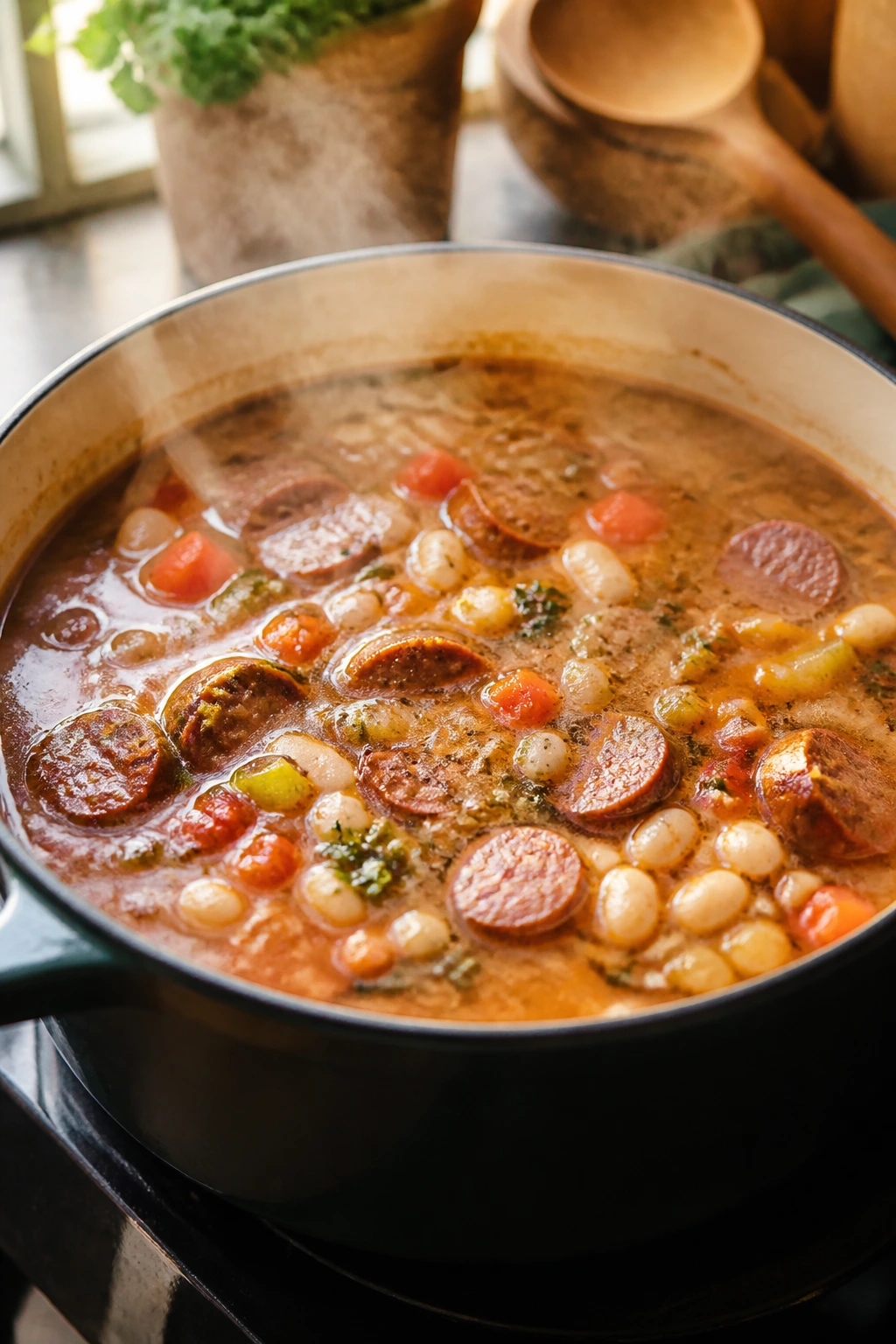
Smoky Kielbasa Pot: Swap the Italian sausage for 1 pound of sliced kielbasa and add 1/2 teaspoon smoked paprika with the herbs. The broth gets a deeper, smoky note that works especially well if you’re serving rye bread on the side.
Hot-and-Spicy Bean Bowl: Use hot Italian sausage, then add an extra 1/2 teaspoon red pepper flakes or a spoonful of Calabrian chili paste with the tomato paste. This version tastes sharper and sits well under a spoonful of ricotta or a shower of Parmesan.
Lighter Turkey Sausage Version: Replace pork sausage with turkey Italian sausage and add 1 extra tablespoon olive oil at the start. Turkey sausage is leaner and won’t leave as much fat behind, so the little bit of extra oil helps the vegetables soften instead of sticking.
Creamier White Bean Finish: Mash 1 1/2 cups of the beans instead of 1 cup, then stir in 1/4 cup heavy cream at the end if you want a softer, rounder broth. This one feels especially good with stale bread toasted into thick slabs.
Tomato-Light Pantry Version: Skip the diced tomatoes and add another cup of broth plus 1 tablespoon Worcestershire sauce. You lose some brightness, so keep the vinegar at the end and don’t skip the herbs.
Each variation keeps the same basic bones: browned sausage, beans, vegetables, and a finishing note that stops the bowl from feeling heavy. Change the accent, not the structure.
Make-Ahead, Storage, and Reheating Rules
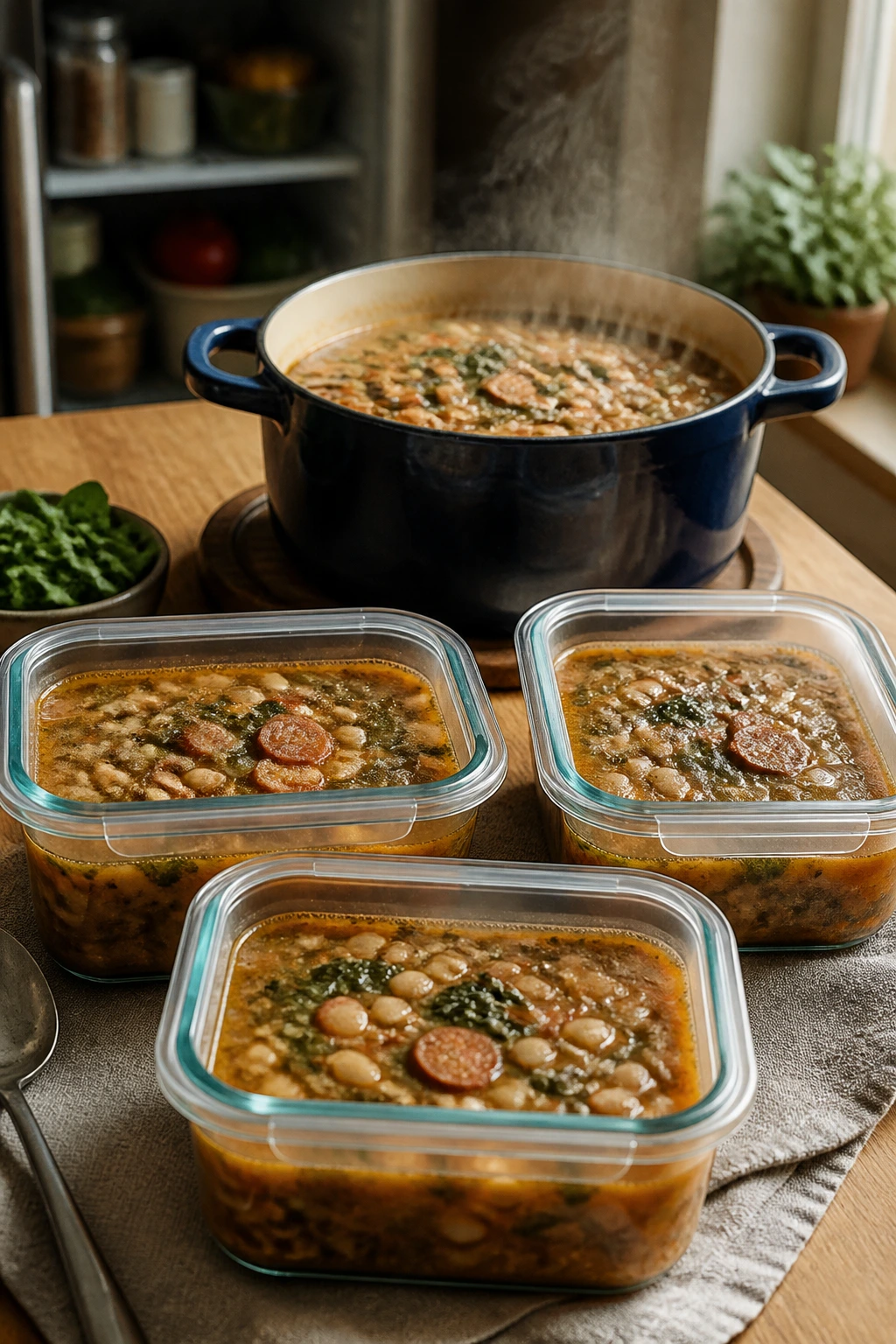
Bean and sausage soup keeps well, and that’s one of the reasons I trust it. The flavor settles overnight, the broth thickens a little, and the beans pick up more of the sausage seasoning. If you’re cooking for a stretch of busy days, that’s a gift.
Cool the soup within 2 hours of cooking and get it into airtight containers. In the refrigerator, it stays in good shape for 3 to 4 days. In the freezer, aim for up to 2 months for the best texture. You can freeze it longer, but the greens soften and the beans lose a little of their clean shape.
Reheat on the stovetop over medium-low heat, stirring now and then, until the soup reaches a steady simmer and is hot all the way through. If you’re using a microwave, heat in 60- to 90-second bursts and stir between rounds so the center doesn’t stay cold while the edges boil. Soup that has thickened in the fridge usually needs a splash of broth or water to loosen it back up.
A small note on greens: if you know you’ll freeze part of the batch, leave the kale out of the portion you plan to freeze and add fresh greens when you reheat it. The texture stays better that way. The same trick works with spinach, which can turn limp fast after freezing.
For make-ahead planning, chop the vegetables and mix the dried herbs up to 1 day in advance. You can also make the full soup a day ahead, chill it, and finish with vinegar and fresh parsley after reheating. The vinegar tastes brighter that way.
Questions People Ask Before They Start the Pot
Can I use dried beans instead of canned?
Yes, but cook the beans separately first. Dried beans need soaking and a long simmer until tender, and they’ll only join the soup once they’re already soft. The soup itself is not the place to try to cook them from raw unless you want to manage timing very closely.
What sausage works best if I want a milder soup?
Mild Italian sausage is the easiest answer. It brings fennel and garlic without making the broth hot, and it leaves room for the beans and greens to taste like themselves. Turkey Italian sausage also works if you want less fat, though the broth will need a touch more oil.
How do I make the soup thicker without using cream?
Mash some of the beans against the side of the pot while the soup simmers. You can also simmer it uncovered for the last 5 to 10 minutes so a little liquid evaporates. That gives you a fuller broth without changing the flavor.
Can I make this in a slow cooker?
You can, but brown the sausage and soften the vegetables first on the stovetop. If you skip that step, the soup loses the browned flavor that makes it taste cooked instead of merely warmed. Add the kale near the end so it stays green and tender.
Why does my soup taste salty after it sits?
The salt concentrates as the broth thickens and the beans absorb liquid. If that happens, add a splash of unsalted broth or water, then a little vinegar to rebalance the bowl. More salt is rarely the fix.
What greens can I use if I don’t have kale?
Spinach is the fastest swap and needs only a minute or two at the end. Swiss chard works well too, though the stems need a little extra time. Collards can work, but slice them thin and give them a longer simmer so they don’t feel tough.
Can I leave out the tomatoes?
Yes, but the soup will taste softer and less sharp. Replace the diced tomatoes with extra broth and keep the tomato paste if you want some depth. A little Worcestershire sauce or a splash of soy sauce can add back a savory edge.
A Bowl Worth Turning On the Stove For
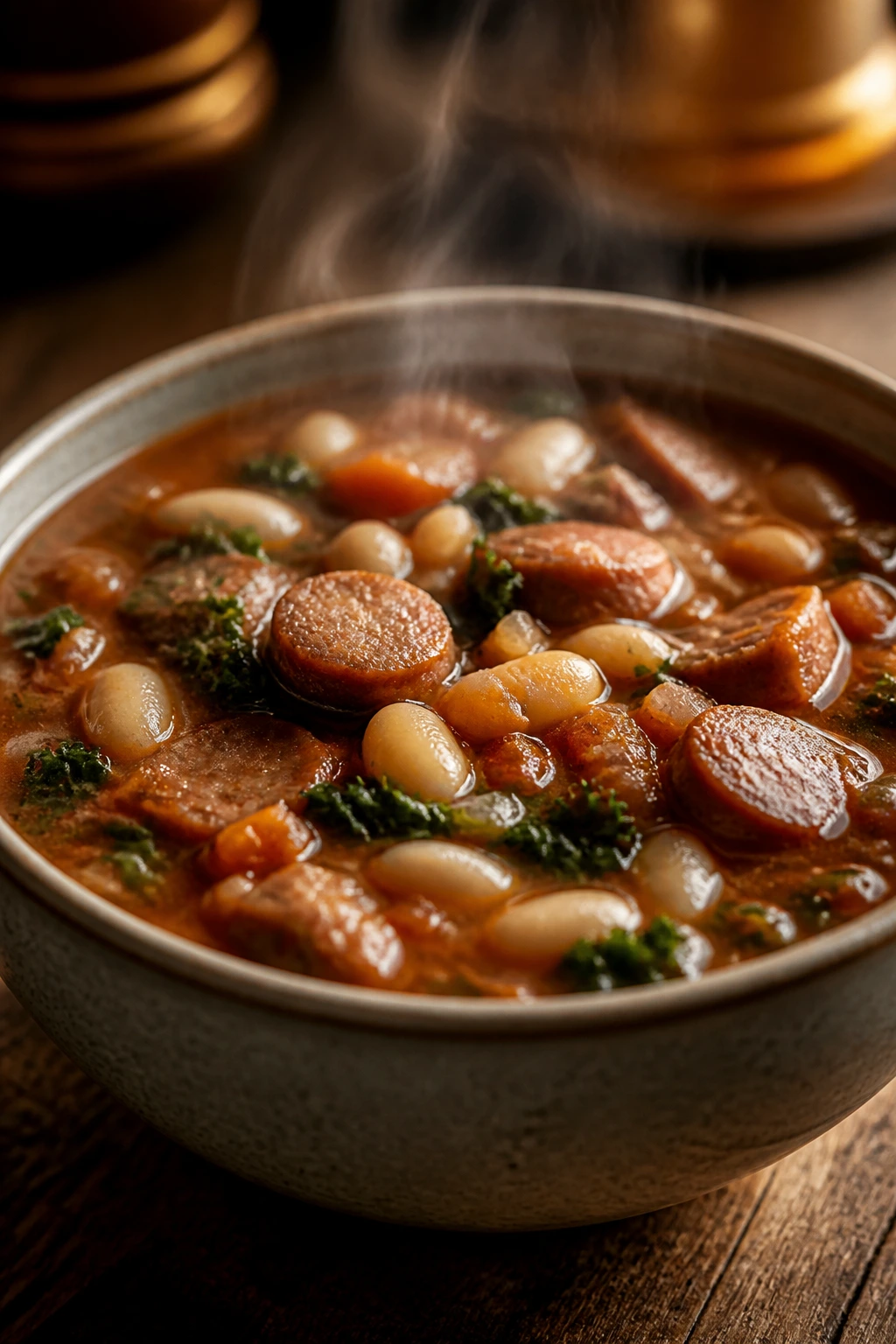
There’s a reason bean and sausage soup keeps showing up in my kitchen when the weather turns mean. It doesn’t ask for much, and it gives a lot back: a broth with weight, beans that feel plush instead of bland, and sausage that tastes like it did something before it landed in the bowl.
The small things matter here. Brown the meat. Don’t rush the tomato paste. Finish with acid. Those are the moves that turn a practical pot into something you want to spoon up slowly, with bread in one hand and the bowl warming the other.
Cozy Bean and Sausage Soup — Recipe Card
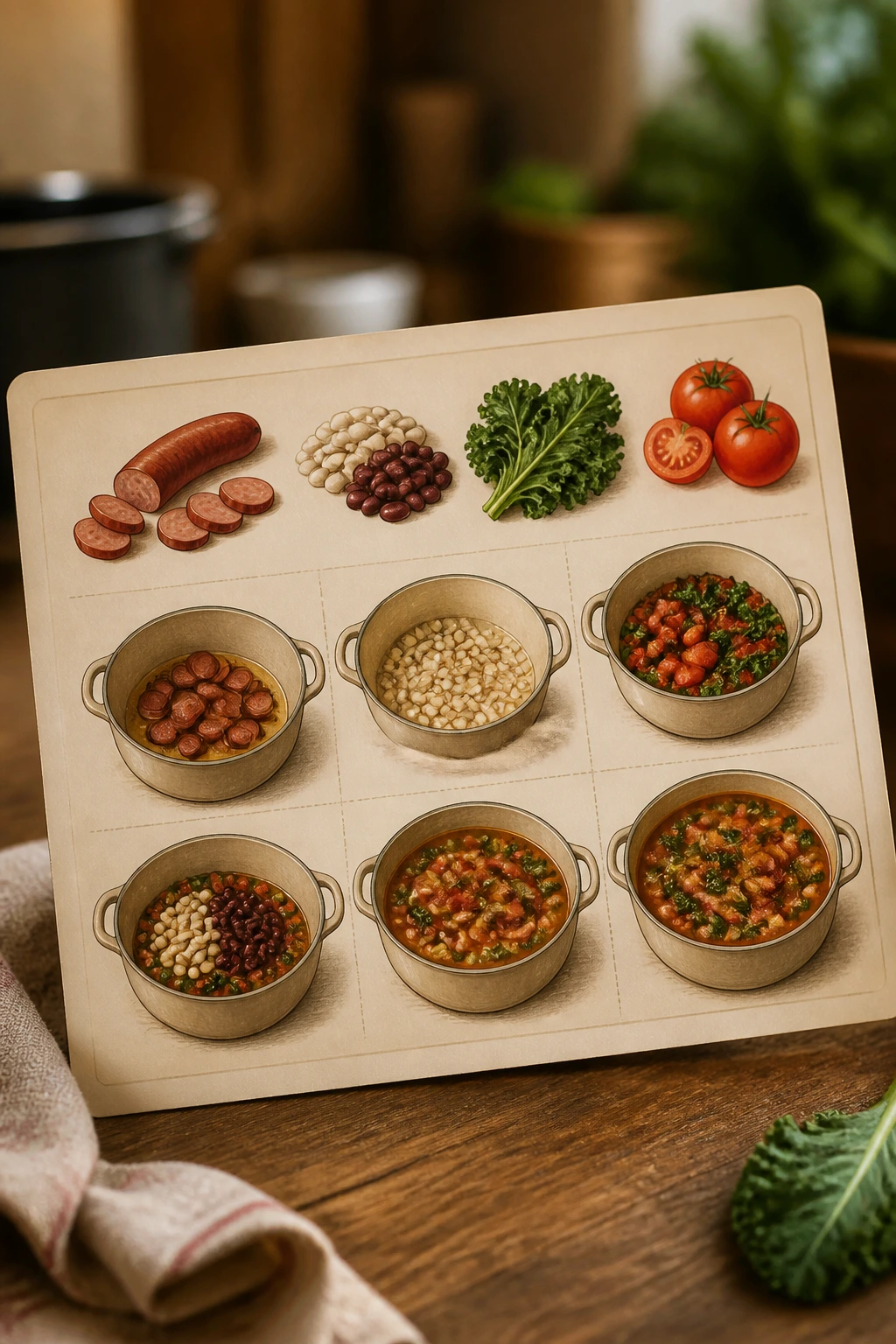
Recipe Name: Cozy Bean and Sausage Soup
Description: A hearty, brothy soup with browned Italian sausage, creamy beans, vegetables, kale, and a bright finish of vinegar and Parmesan. It’s built for cold nights and tastes even better after the flavors settle.
Prep Time: 20 minutes
Cook Time: 40 minutes
Total Time: 1 hour
Course: Dinner, Main Course
Cuisine: Italian-American
Servings: 6 servings
Calories: 390 kcal per serving
Ingredients
For the Soup Base
- 1 tablespoon olive oil
- 1 pound mild Italian sausage, casings removed
- 1 medium yellow onion, diced
- 2 medium carrots, peeled and diced
- 2 celery stalks, diced
- 1 teaspoon kosher salt, divided, plus more to taste
- 4 garlic cloves, minced
- 2 tablespoons tomato paste
- 1 teaspoon dried thyme
- 1 teaspoon dried oregano
- 1/2 teaspoon crushed red pepper flakes, optional
- 2 (15-ounce) cans cannellini beans, drained and rinsed
- 1 (15-ounce) can great northern beans, drained and rinsed
- 1 (14.5-ounce) can diced tomatoes with juices
- 6 cups low-sodium chicken broth
- 1 cup water, plus more if needed
- 1 bay leaf
- 1 Parmesan rind, optional
- 3 cups chopped kale, stems removed
- 1 tablespoon red wine vinegar or fresh lemon juice
- Freshly ground black pepper, to taste
For Serving
- Chopped parsley
- Grated Parmesan cheese
- Crusty bread
Instructions
-
Heat the olive oil in a 5- to 6-quart Dutch oven over medium-high heat. Add the sausage and cook, breaking it into chunks, until browned and cooked through.
-
Add the onion, carrots, celery, and 1/2 teaspoon kosher salt. Cook until the vegetables soften and the onion turns translucent.
-
Stir in the garlic, tomato paste, thyme, oregano, and red pepper flakes, and cook until fragrant and the tomato paste darkens.
-
Add the cannellini beans, great northern beans, diced tomatoes, chicken broth, water, bay leaf, and Parmesan rind. Scrape up the browned bits from the bottom of the pot.
-
Bring the soup to a simmer, then reduce the heat to medium-low and cook partially covered for 20 to 25 minutes.
-
Mash about 1 cup of the beans against the side of the pot if you want a thicker broth.
-
Stir in the kale and simmer for 3 to 5 minutes, until wilted and tender.
-
Remove the bay leaf and Parmesan rind. Stir in the vinegar or lemon juice, then season with the remaining salt and black pepper to taste.
-
Ladle into bowls and serve with parsley, Parmesan, and crusty bread.
Notes: For a thicker soup, mash more beans before serving. Add extra broth when reheating if the soup tightens in the fridge. Freeze without the kale if you want the best texture later.