



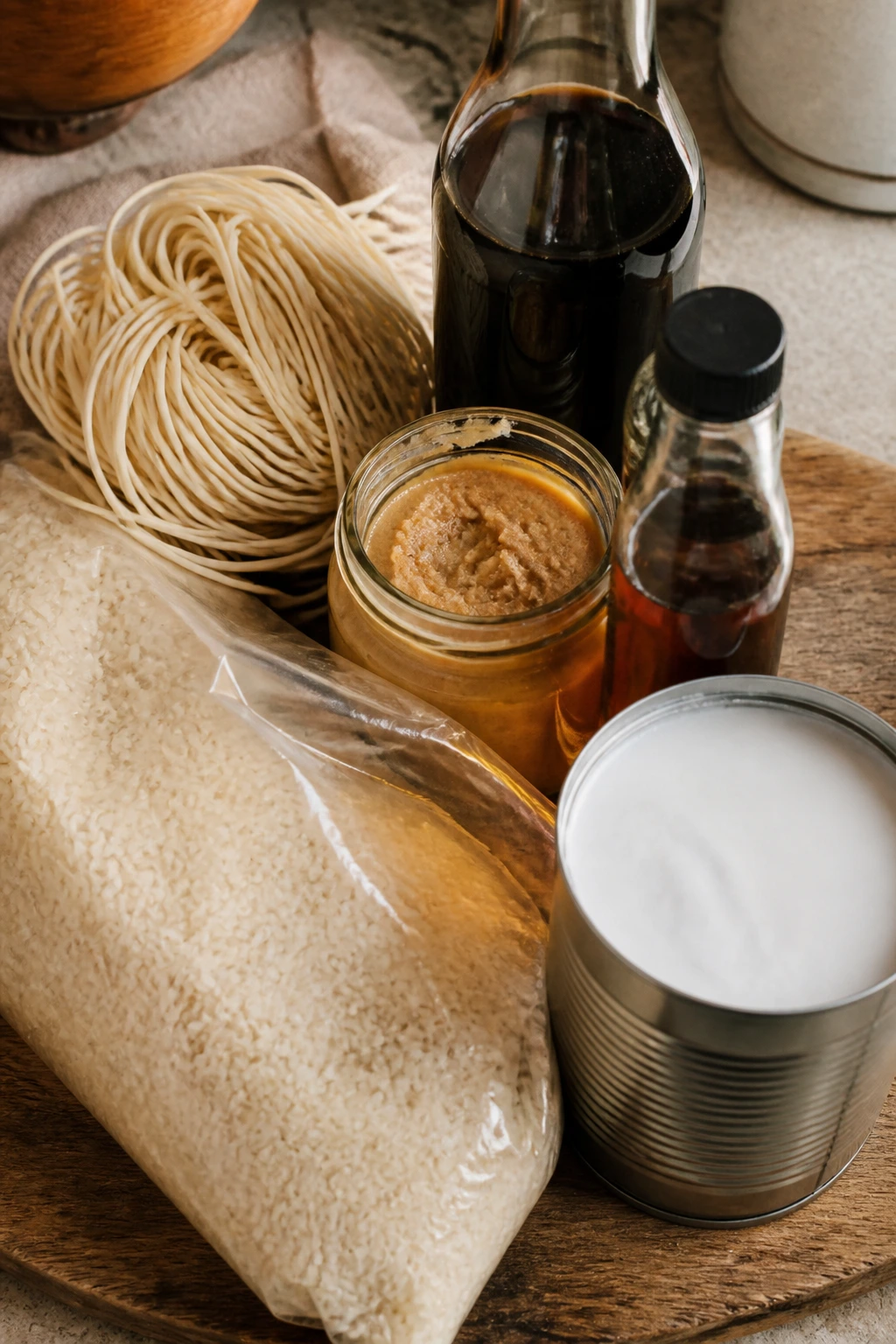
A bottle of soy sauce and a bag of rice can do a shocking amount of work. Add sesame oil, rice vinegar, a jar of peanut butter, and one or two cans you probably already own, and suddenly the pantry stops looking bare and starts looking useful. That’s the quiet magic of Asian inspired recipes built from pantry staples: they lean on a few strong, concentrated flavors instead of a long shopping list.
I keep coming back to this style of cooking because it solves a real problem without pretending to be fancy. You do not need a specialty market haul to make dinner taste layered. You need balance. Salty soy, sharp vinegar, sweet brown sugar or honey, a little fat from sesame oil or coconut milk, and something to carry it all — rice, noodles, tofu, eggs, canned fish, chickpeas, or lentils. That’s enough to get a proper meal on the table with actual character.
And yes, the details matter. Cold rice behaves differently from warm rice. Miso should not be boiled hard. Chili crisp loses its charm if you drown it under heat for too long. Small things, but they’re the difference between “fine” and a bowl you keep thinking about the next day.
Why You’ll Love This Collection
-
Shelf-Friendly: Most of these recipes rely on rice, noodles, canned goods, and jars that keep well, so you can cook without a last-minute grocery run.
-
Big Flavor, Short List: Soy sauce, sesame oil, peanut butter, curry paste, miso, and rice vinegar do the heavy lifting here, which keeps the ingredient lists tight.
-
Flexible Proteins: Eggs, tofu, canned tuna, canned salmon, Spam, chickpeas, and lentils all fit naturally into these flavor profiles.
-
Fast to Build: Once the pantry pieces are in place, many of these meals come together in 20 to 30 minutes, and several are even quicker if the rice is already cooked.
-
Waste-Minimizing: A half-can of coconut milk, a cup of leftover rice, or the last few scallions can get used before they turn into fridge regrets.
-
Easy to Tweak: If you like more heat, more acid, more crunch, or more protein, these dishes give you room to adjust without wrecking the whole pan.
1. Garlic-Soy Fried Rice with Peas and Egg
Cold rice earns its keep here. It fries up with that dry, separate texture you want, and the peas pop sweet against the salty soy. The eggs give the bowl a soft, fluffy body that keeps it from feeling like a side dish pretending to be dinner.
Why It Works:
Fried rice is a pantry staple for a reason: it turns leftovers into something with edge. The trick is using rice that’s had time to dry out in the fridge, because moist rice clumps and steams instead of frying. A quick hit of sesame oil at the end makes the whole pan smell toasted and round, not greasy.
Key Ingredients:
- 3 cups cold cooked jasmine rice — day-old rice separates best and fries instead of sticking.
- 2 tablespoons neutral oil — use a high-heat oil so the garlic doesn’t scorch.
- 2 large eggs, lightly beaten — they add richness and a soft bite.
- 2 cloves garlic, minced — keep the pieces small so they melt into the rice.
- 1 cup frozen peas — they thaw quickly and bring a little sweetness.
- 2 tablespoons soy sauce — enough to season without turning the rice dark and wet.
- 1 teaspoon toasted sesame oil — add it at the end for a nutty finish.
- 2 tablespoons sliced scallions — optional, but the sharp green bite wakes everything up.
Quick Steps:
-
Heat 2 tablespoons neutral oil in a large skillet or wok over medium-high heat until it shimmers. Add the beaten eggs and scramble them for about 45 seconds, just until softly set. Remove to a plate.
-
Add the garlic and peas to the same pan. Stir for 30 to 45 seconds, just until the garlic smells sweet and the peas are hot.
-
Add the cold rice and break up any clumps with a spatula. Fry for 2 to 3 minutes, pressing the rice against the pan so some grains pick up a little color.
-
Drizzle in the soy sauce and toss until the grains turn evenly seasoned. Return the eggs, add sesame oil, and fold everything together. Finish with scallions.
-
Taste and adjust. If the rice tastes flat, add a tiny splash more soy or a pinch of salt rather than dumping in a lot at once.
Equipment for This Recipe:
- Large skillet or wok — a wide surface helps the rice fry instead of steam.
- Spatula or wooden spoon — you want something sturdy enough to break up clumps.
- Small bowl — for beating the eggs before they hit the pan.
- Measuring spoons — soy and sesame oil are easy to overdo.
How to Serve This Dish:
Pile it into shallow bowls and top with extra scallions or a fried egg if you want more richness. A little chili crisp on the side is never a bad decision. This makes 3 to 4 modest servings, or 2 serious ones.
Pro Tips for This Recipe:
- Use rice that’s cold all the way through. Warm rice gives you a gluey pan.
- Keep the heat high enough to hear a steady sizzle. If the pan goes quiet, it’s steaming.
- Add sesame oil last. It tastes fresher that way.
Variations on This Dish:
- Spam Fried Rice: Swap in 1 cup diced Spam and brown it before the garlic for a saltier, more filling version.
- Chili Crisp Fried Rice: Stir in 1 to 2 teaspoons chili crisp at the end for heat and crunchy bits.
- Brown Rice Version: Use 3 cups cold brown rice; it’s chewier and a little nuttier, which some people prefer.
Common Mistakes to Avoid with This Dish:
- Too much soy sauce. The rice turns wet and one-note. Start with 2 tablespoons, then taste.
- Crowding the pan. A small skillet traps steam and softens the grains. Use the widest pan you own.
- Skipping the cooling step. Freshly cooked rice is the wrong texture for fried rice, full stop.
2. Sesame Peanut Noodles with Chili Crisp
This is the bowl I make when I want dinner to feel more deliberate than it really is. The sauce comes together in one dish, clings to every strand, and tastes like it took more than 10 minutes because peanut butter and soy sauce are that good together.
Why It Works:
Peanut butter brings body, soy sauce brings salt, rice vinegar cuts through the richness, and chili crisp gives the bowl a little heat and a little crunch. That combination hits the same notes you’d expect from a proper noodle shop sauce, only the ingredients are sitting in your pantry. Hot noodle water loosens the peanut butter into a glossy dressing instead of leaving it thick and stubborn.
Key Ingredients:
- 8 ounces dried noodles or spaghetti — any long noodle works if you cook it properly.
- 1/3 cup creamy peanut butter — unsweetened is easiest to balance.
- 2 tablespoons soy sauce — the main salty backbone.
- 1 tablespoon rice vinegar — adds the sharp edge peanut butter needs.
- 1 tablespoon toasted sesame oil — gives the sauce its nutty aroma.
- 1 tablespoon honey or brown sugar — rounds out the sharpness.
- 1 to 2 teaspoons chili crisp — use more if you want crunch and heat.
- 1/4 cup hot noodle water — loosens the sauce into something silky.
- 1 tablespoon sesame seeds — for texture at the end.
- 2 scallions, sliced — optional, but worth it.
Quick Steps:
-
Bring a pot of salted water to a boil and cook the noodles until just tender, usually 1 to 2 minutes less than the package says. Reserve 1/2 cup of the cooking water, then drain.
-
In a large bowl, whisk together peanut butter, soy sauce, rice vinegar, sesame oil, honey, chili crisp, and 1/4 cup hot noodle water. The sauce should look glossy and pourable.
-
Add the hot noodles straight into the bowl and toss until every strand is coated. If the sauce grabs too tightly, add another splash of reserved water.
-
Finish with sesame seeds and scallions. Taste before serving; if it feels flat, a tiny extra splash of vinegar usually fixes it faster than more salt.
-
Eat it warm or at room temperature. Both work.
Equipment for This Recipe:
- Medium pot — for boiling the noodles.
- Large mixing bowl — you need room to toss without breaking the noodles.
- Whisk — it helps the peanut butter go smooth instead of lumpy.
- Tongs — optional, but handy for tossing long noodles.
How to Serve This Dish:
Serve it in wide bowls with cucumber ribbons, leftover shredded cabbage, or a handful of chopped peanuts on top. It makes 2 big servings or 4 smaller ones, especially if you add a fried egg.
Pro Tips for This Recipe:
- Undercook the noodles by a minute. They finish in the sauce and stay springy.
- Use hot water from the noodle pot. It emulsifies the peanut butter better than cold water.
- Balance with acid, not more sugar. Rice vinegar keeps the sauce from feeling heavy.
Variations on This Dish:
- Spicy Sesame Version: Add more chili crisp and a spoonful of chili paste for a sharper heat.
- Nut-Free Swap: Use sunflower seed butter; the flavor changes, but the sauce still coats well.
- Cold Noodle Lunch: Rinse the noodles briefly, chill them, and serve with extra scallions and sesame seeds.
Common Mistakes to Avoid with This Dish:
- Sauce that’s too thick. It clumps on the noodles; loosen it with more hot water.
- Over-salting early. Soy sauce is already doing a lot. Taste before adding anything else salty.
- Letting the noodles sit plain. Toss them with sauce while they’re still warm so the coating sticks.
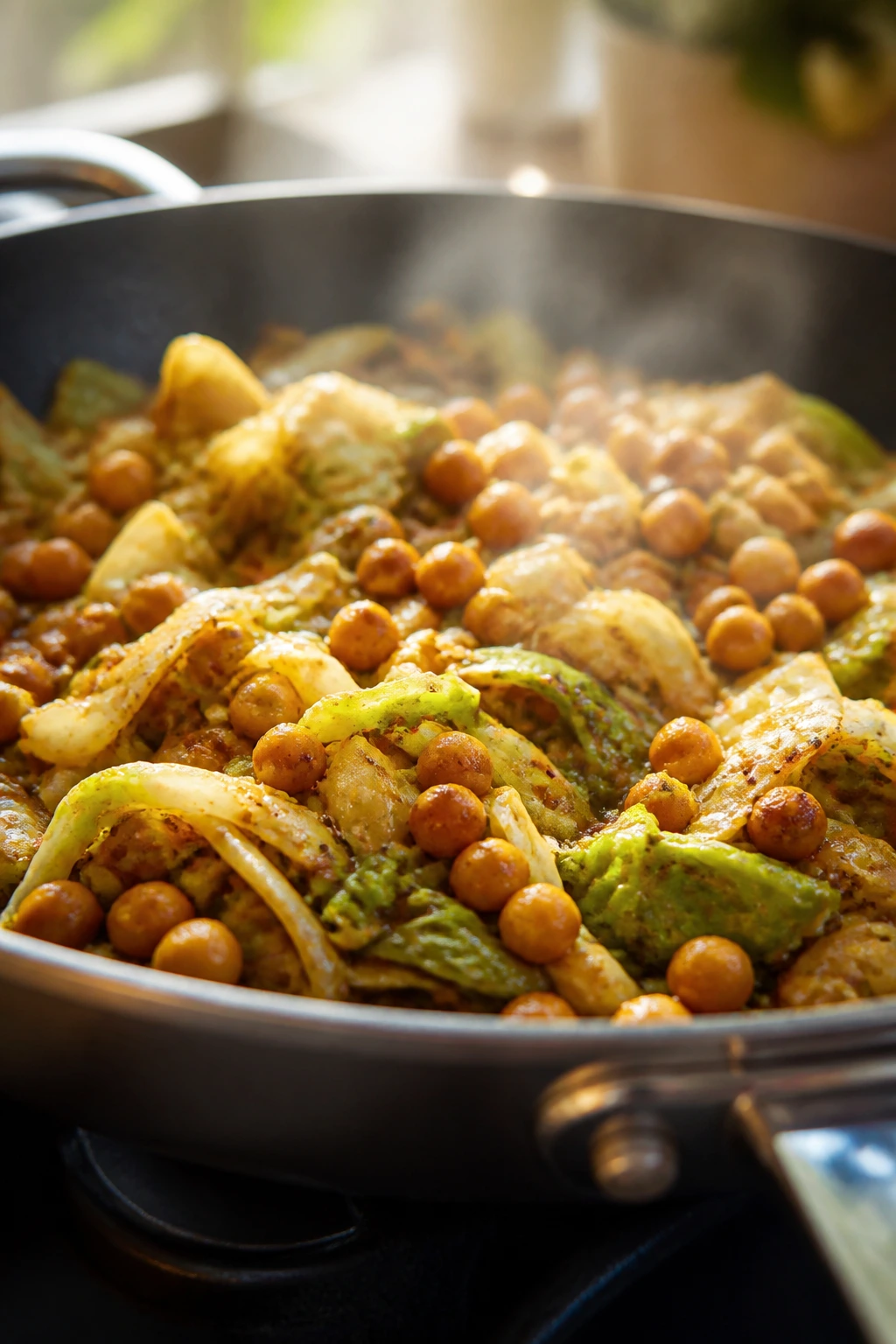
3. Five-Spice Chickpea and Cabbage Stir-Fry
Cabbage is underrated in pantry cooking, and I’ll say that loudly. It softens into sweet ribbons in a hot pan, stays cheap, and carries the warm licorice-cinnamon note of Chinese five-spice better than you’d expect.
Why It Works:
Chickpeas add bulk and a meaty chew, while cabbage gives the dish volume without asking much from the pantry. Five-spice powder can go weird if you use too much, so a measured teaspoon is the right move here — enough to read clearly, not enough to taste like potpourri. A final splash of rice vinegar keeps the whole pan lively.
Key Ingredients:
- 2 tablespoons neutral oil — for high-heat cooking.
- 1 medium onion, thinly sliced — it sweetens as it softens.
- 3 cups shredded green cabbage — use pre-shredded if that’s what you have.
- 1 can chickpeas (15 ounces), drained and rinsed — they hold their shape well.
- 2 tablespoons soy sauce — seasons the veg and beans.
- 1 tablespoon oyster sauce or vegetarian stir-fry sauce — deepens the savory base.
- 1 teaspoon Chinese five-spice powder — use it sparingly.
- 1 teaspoon rice vinegar — sharpens the finish.
- 1 teaspoon toasted sesame oil — add after the heat comes off.
- Cooked rice, for serving — the stir-fry wants a neutral base.
Quick Steps:
-
Heat the oil in a large skillet over medium-high heat. Add the onion and cook for 3 minutes, stirring often, until the edges begin to turn golden.
-
Add the cabbage and a pinch of salt. Cook for 4 to 5 minutes, until it softens and picks up browned spots but still has some structure.
-
Stir in the chickpeas, soy sauce, oyster sauce, and five-spice. Cook for 2 minutes, letting the beans absorb the seasoning.
-
Add the rice vinegar and sesame oil, then toss once more. Taste and adjust with a little more soy if needed.
-
Serve hot over rice while the cabbage still has a little bite.
Equipment for This Recipe:
- Large skillet or wok — the cabbage needs room to soften without steaming.
- Sharp knife — thin slices cook faster.
- Wooden spoon or spatula — helps scrape up the browned bits.
- Measuring spoons — five-spice is too strong to guess.
How to Serve This Dish:
Spoon it over steamed jasmine rice and finish with scallions or sesame seeds. A fried egg on top makes it feel more complete. This serves 3 to 4 people.
Pro Tips for This Recipe:
- Don’t rush the onion. The sweet base matters more than people think.
- Use shredded cabbage, not chunky wedges. Thin pieces cook through before the chickpeas dry out.
- Add the sesame oil at the end. That toasted smell disappears if it sits in the pan too long.
Variations on This Dish:
- Tofu and Cabbage Stir-Fry: Swap in 1 block of firm tofu, cubed and browned first.
- Spicy Five-Spice Version: Add 1 teaspoon chili flakes or a spoonful of chili crisp.
- Mushroom Upgrade: Toss in 2 cups sliced mushrooms for a deeper, earthier pan.
Common Mistakes to Avoid with This Dish:
- Using too much five-spice. The flavor gets dusty fast; stick to 1 teaspoon.
- Cooking the cabbage until mushy. You want it tender, not limp.
- Forgetting acid. Without vinegar, the stir-fry tastes flat and heavy.
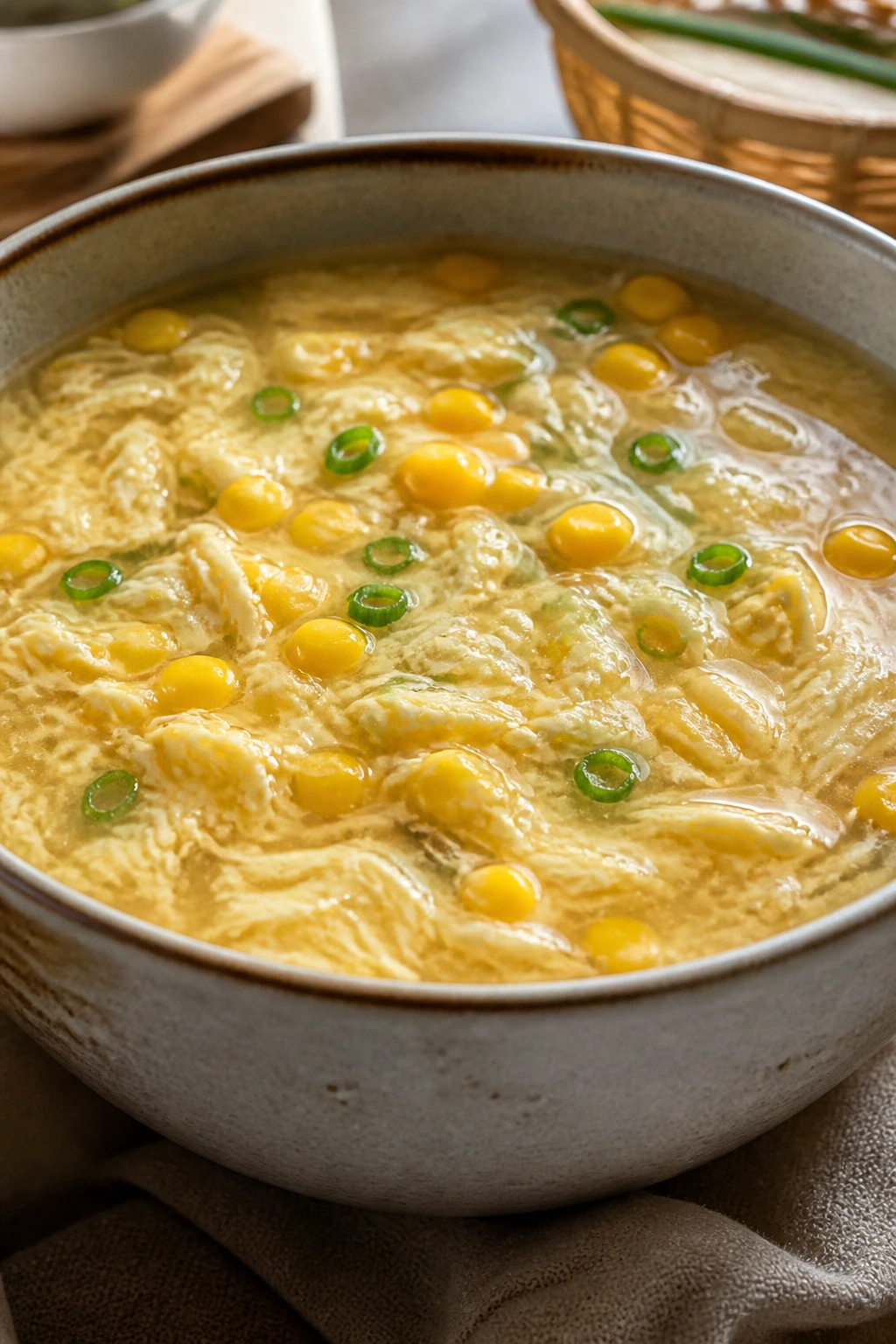
4. Corn and Egg Drop Soup
Silky egg ribbons floating in hot broth never stop being satisfying. Corn is the sleeper ingredient here — it lends sweetness and little bursts of crunch, which keep the soup from feeling thin.
Why It Works:
Egg drop soup is one of the best examples of pantry cooking doing a lot with very little. The broth only needs a few backbone ingredients, then the cornstarch slurry gives it that gently thickened body that helps the egg ribbons hang in the liquid instead of sinking. If you whisk the egg well and pour it in slowly, you get soft strands instead of scrambled fragments.
Key Ingredients:
- 4 cups chicken broth or vegetable broth — use the best-tasting broth you have.
- 1 cup corn kernels, frozen or canned — frozen corn is easy and usually sweeter.
- 2 large eggs, beaten — these make the soup feel full.
- 1 tablespoon soy sauce — adds salt and depth.
- 1 teaspoon grated ginger or 1/2 teaspoon ground ginger — for a warm edge.
- 1 tablespoon cornstarch mixed with 2 tablespoons water — thickens the broth lightly.
- 1 teaspoon toasted sesame oil — finish only.
- 2 scallions, thinly sliced — for freshness at the end.
Quick Steps:
-
Bring the broth, corn, ginger, and soy sauce to a simmer in a medium saucepan over medium heat. Let it bubble gently for 3 minutes.
-
Stir the cornstarch slurry again and drizzle it into the soup. Cook for 1 minute, stirring, until the broth looks slightly glossy.
-
Lower the heat so the soup is at a bare simmer. Stir the broth in one direction with a spoon and slowly pour in the beaten eggs in a thin stream. Wait 10 seconds, then stir once more to form soft ribbons.
-
Turn off the heat. Add sesame oil and scallions. Taste and adjust the salt if the broth needs a touch more brightness.
-
Ladle into bowls right away.
Equipment for This Recipe:
- Medium saucepan — a narrow pot makes egg ribbons harder to control.
- Whisk — for the eggs and slurry.
- Ladle — keeps the soup neat when serving.
- Small bowl — for mixing the cornstarch slurry.
How to Serve This Dish:
Serve it in small soup bowls with a side of rice or steamed dumplings if you have them. A few extra scallions on top look right and taste right. It makes 2 to 3 light servings, or 2 larger lunch portions.
Pro Tips for This Recipe:
- Keep the simmer gentle. A hard boil breaks the egg ribbons apart.
- Pour the egg slowly. Fast dumping makes clumps.
- Taste the broth before serving. Broths vary a lot in salt, so adjust near the end.
Variations on This Dish:
- Mushroom Corn Soup: Add 1 cup sliced mushrooms with the broth for a deeper base.
- Spicy Version: Stir in a small spoonful of chili crisp right before serving.
- Silky Tofu Version: Add cubed soft tofu after the cornstarch slurry for more body.
Common Mistakes to Avoid with This Dish:
- Adding eggs to boiling soup. You’ll get fragments, not ribbons.
- Skipping the slurry. The soup ends up watery and thin.
- Overdoing the sesame oil. One teaspoon is enough; it should perfume the soup, not dominate it.
5. Coconut Curry Chickpeas and Spinach
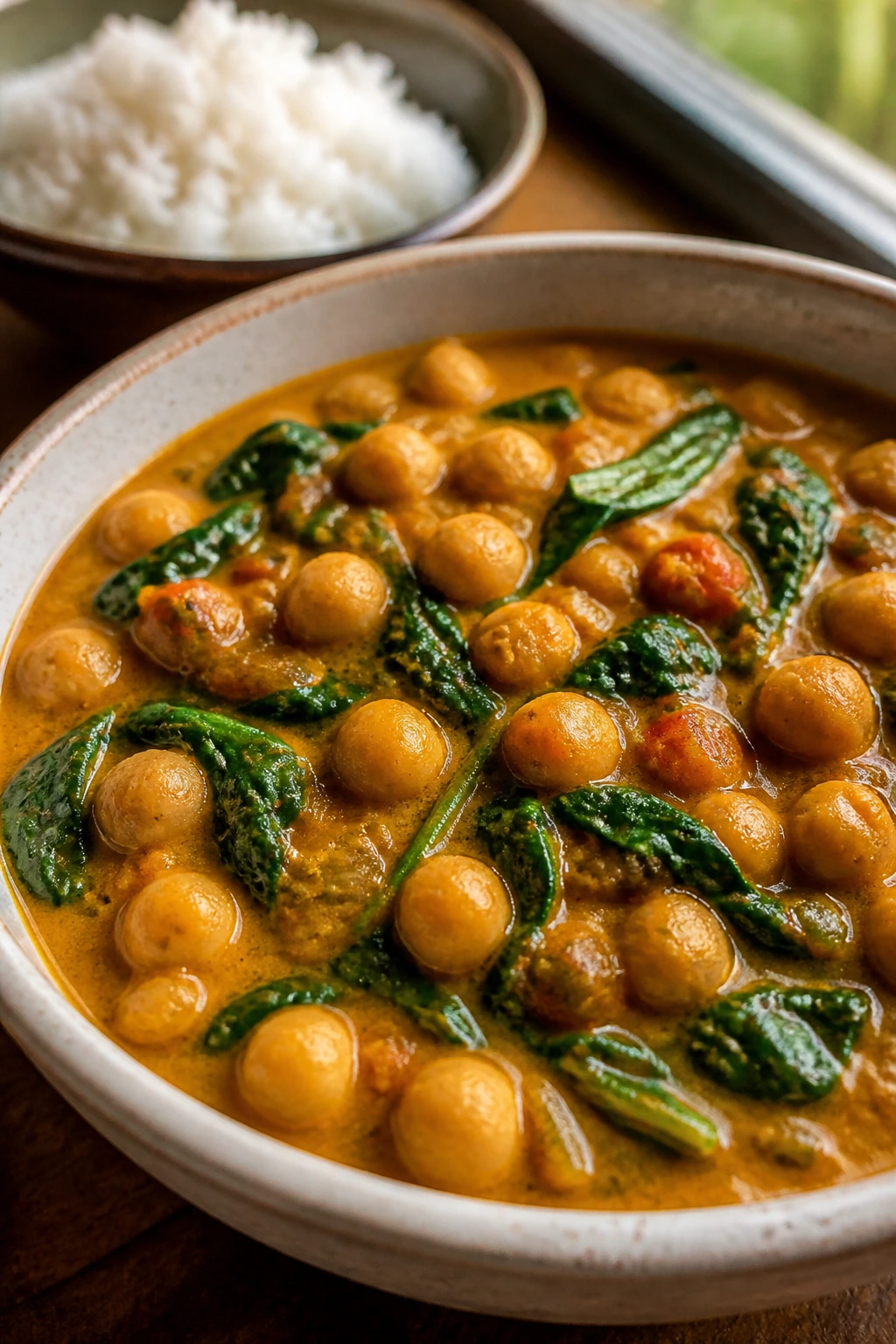
A can of coconut milk can pull a lot of weight when the pantry looks sparse. It turns curry paste into a sauce that tastes rich and rounded, and chickpeas give it enough body to stand in for meat without making the pot heavy.
Why It Works:
Coconut milk carries spice better than water or broth alone, which is why this dish tastes fuller than its ingredient list suggests. Chickpeas soak up the curry base during a short simmer, and spinach wilts in at the end without needing its own cooking time. The result is built for rice, not just sitting in a bowl.
Key Ingredients:
- 1 tablespoon neutral oil — for the onion and curry paste.
- 1 medium onion, chopped — it gives the sauce a sweet base.
- 2 tablespoons red curry paste — use more only if you know your heat tolerance.
- 1 can coconut milk (13.5 ounces) — full-fat gives the best texture.
- 2 cans chickpeas (15 ounces each), drained and rinsed — they hold up well in sauce.
- 1 cup water or broth — helps the curry move without getting too thick.
- 3 cups baby spinach — it melts in quickly.
- 1 tablespoon lime juice or rice vinegar — brightens the finish.
- Salt, to taste — coconut milk needs seasoning.
Quick Steps:
-
Heat the oil in a saucepan over medium heat. Cook the onion for 4 minutes, until soft and translucent.
-
Stir in the curry paste and cook for 30 seconds. You want it fragrant, not scorched.
-
Add the coconut milk, water or broth, and chickpeas. Simmer for 10 minutes, stirring now and then, until the sauce thickens slightly and the chickpeas taste seasoned through.
-
Add the spinach and stir until it wilts, about 1 minute. Finish with lime juice or rice vinegar.
-
Taste and adjust the salt before serving over rice.
Equipment for This Recipe:
- Medium saucepan — deep enough to hold the sauce without splattering.
- Wooden spoon — for stirring the curry paste into the fat.
- Measuring cup — for the coconut milk and liquid.
- Ladle — optional, but useful for serving over rice.
How to Serve This Dish:
Spoon it over jasmine rice or scoop it up with flatbread if that’s what you have. A few chopped herbs or scallions help, though the curry stands on its own. It serves 4 comfortably.
Pro Tips for This Recipe:
- Cook the curry paste in oil first. Raw paste tastes dull; heated paste blooms.
- Shake the coconut milk can before opening. The cream and liquid separate.
- Add spinach last. Anything earlier turns it to sludge.
Variations on This Dish:
- Peanut Curry Version: Stir in 1 tablespoon peanut butter with the coconut milk for a nuttier sauce.
- Sweet Potato Swap: Add diced sweet potato and simmer until tender if you want more bulk.
- Milder Curry: Use 1 tablespoon curry paste and a little extra lime juice for a softer flavor.
Common Mistakes to Avoid with This Dish:
- Boiling the coconut milk hard. It can split or taste greasy.
- Underseasoning. Coconut milk dulls salt, so taste before you serve.
- Using old curry paste. If it smells stale, the whole pot will taste tired.
6. Gochujang Butter Udon
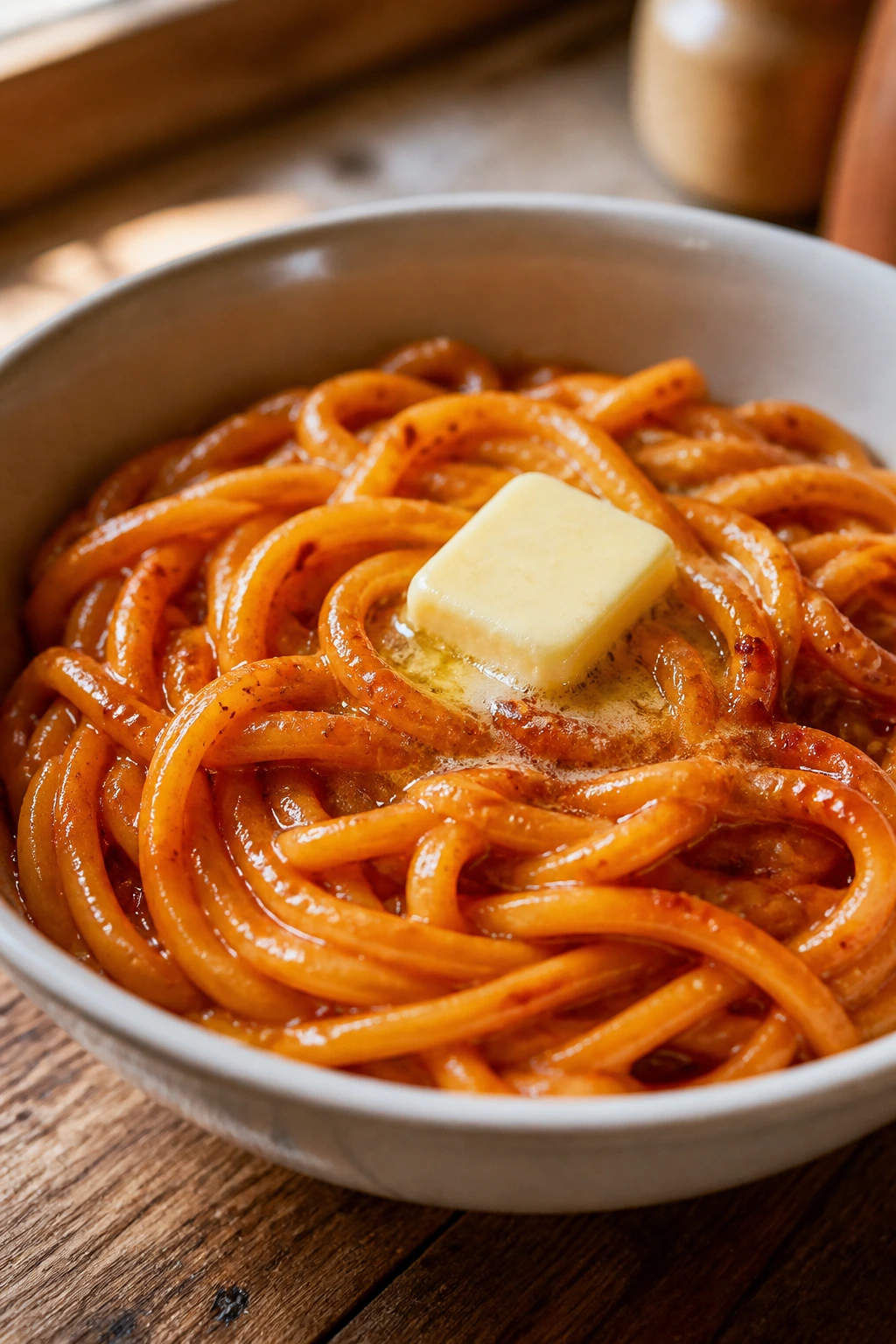
Butter and gochujang should not work as well as they do, and yet here we are. The butter takes the edge off the chili paste, while the gochujang gives the noodles a deep red gloss and a fermented warmth that clings to every bite.
Why It Works:
Gochujang is thick, salty, sweet, and spicy all at once, which makes it unusually good for fast noodle dishes. Butter rounds out the heat and helps the sauce coat the noodles instead of pooling at the bottom of the bowl. A splash of noodle water or plain water loosens the paste into something spoonable.
Key Ingredients:
- 8 ounces udon noodles or thick wheat noodles — chewy noodles hold the sauce best.
- 2 tablespoons unsalted butter — softens the heat and adds body.
- 1 1/2 tablespoons gochujang — the flavor driver.
- 1 tablespoon soy sauce — deepens the salt.
- 1 tablespoon mirin or 2 teaspoons sugar plus 1 tablespoon water — balances the paste.
- 2 cloves garlic, minced — keeps the sauce sharp.
- 1 teaspoon toasted sesame oil — finish only.
- 2 scallions, sliced — for freshness and color.
Quick Steps:
-
Cook the noodles according to the package directions. Reserve 1/4 cup cooking water, then drain.
-
Melt the butter in a skillet over medium heat. Add the garlic and cook for 30 seconds, just until fragrant.
-
Stir in the gochujang, soy sauce, and mirin. The sauce will look thick at first; that’s fine.
-
Add the noodles and 2 to 3 tablespoons reserved water. Toss for 1 to 2 minutes until the sauce turns glossy and clings to the strands.
-
Turn off the heat, add sesame oil, and finish with scallions.
Equipment for This Recipe:
- Skillet or sauté pan — needed for tossing the noodles in sauce.
- Pot for boiling noodles — nothing fancy.
- Tongs — useful for lifting and turning thick noodles.
- Measuring spoons — gochujang is potent.
How to Serve This Dish:
Serve it hot with a fried egg, sesame seeds, or a few strips of nori if you have them. It makes 2 generous servings, and I would not blame you for eating it straight from the pan.
Pro Tips for This Recipe:
- Don’t let the garlic brown too much. Bitter garlic is hard to hide in a simple sauce.
- Use a little noodle water. It turns the paste into a real coating.
- Keep the heat moderate. Butter and gochujang both suffer if the pan is too hot.
Variations on This Dish:
- Creamier Version: Stir in 2 tablespoons heavy cream or a spoonful of mayo at the end.
- Vegetable Add-In: Toss in frozen peas or shredded cabbage during the last minute.
- Extra-Spicy Bowl: Add chili crisp or sliced fresh chilies on top.
Common Mistakes to Avoid with This Dish:
- Too much gochujang without enough liquid. The noodles taste harsh and sticky.
- Skipping the butter. The sauce loses its roundness.
- Overcooking the noodles. Thick noodles need bite, not mush.
7. Tomato Egg Stir-Fry over Rice
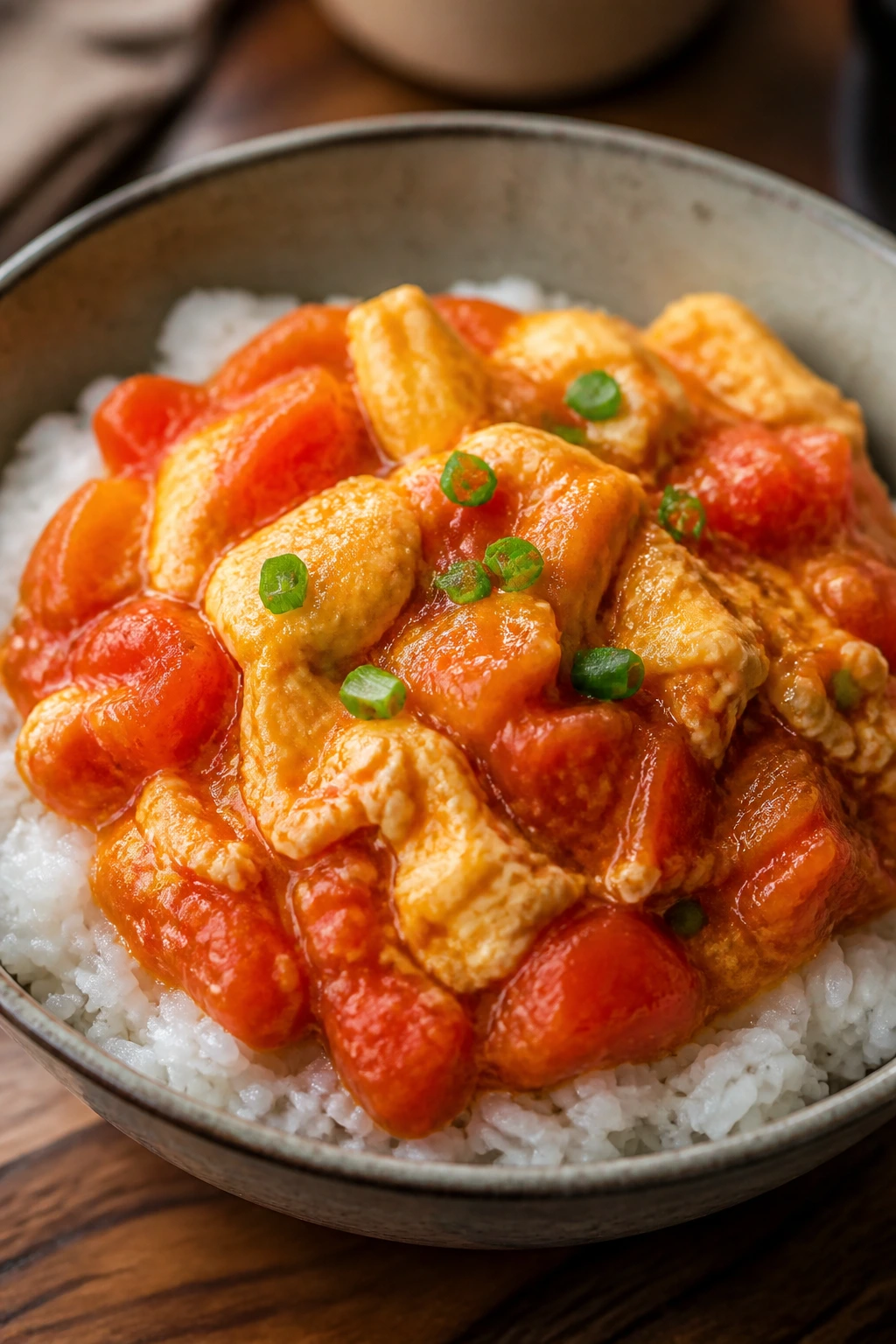
Tomato and egg is one of those dishes that sounds humble and eats like comfort. The eggs stay tender, the tomatoes collapse into a saucy layer, and a little ketchup plus soy sauce makes the whole thing taste richer than the ingredient list would suggest.
Why It Works:
This is a classic example of pantry ingredients behaving like they belong together. The eggs bring creaminess without dairy, the tomatoes bring acidity and juice, and a touch of sugar keeps the sauce from tasting sharp. Ketchup may seem odd if you haven’t cooked this way before, but it deepens the tomato flavor and gives the sauce a familiar backbone.
Key Ingredients:
- 4 large eggs — beaten lightly so they stay soft.
- 1 tablespoon neutral oil — for scrambling and saucing.
- 1 small onion, sliced thin — optional, but it adds sweetness.
- 1 can diced tomatoes (14.5 ounces), drained a bit — canned tomatoes work surprisingly well here.
- 1 tablespoon ketchup — boosts the tomato flavor.
- 1 tablespoon soy sauce — for salt and depth.
- 1 teaspoon sugar — balances the acidity.
- 1 teaspoon cornstarch mixed with 2 tablespoons water — thickens the sauce.
- Cooked rice, for serving — this is a rice bowl first.
Quick Steps:
-
Heat the oil in a skillet over medium heat. Scramble the eggs for about 1 minute, just until softly set, then remove them to a plate.
-
Add the onion, if using, and cook for 2 minutes until it softens. Stir in the tomatoes, ketchup, soy sauce, and sugar.
-
Simmer for 3 to 4 minutes, until the tomatoes break down and look saucy. Stir in the cornstarch slurry and cook for 30 seconds more.
-
Return the eggs to the pan and fold gently so they stay in soft pieces. Serve over hot rice.
Equipment for This Recipe:
- 10- or 12-inch skillet — wide enough for the eggs and tomato sauce.
- Wooden spoon — for folding, not smashing.
- Small bowl — for whisking the eggs.
- Measuring spoons — the sugar and soy need to stay balanced.
How to Serve This Dish:
Spoon it over rice and finish with scallions or black pepper. It’s also good with toasted bread if rice is not in reach, though I prefer the rice version. This serves 2 to 3 people.
Pro Tips for This Recipe:
- Pull the eggs early. They finish in the sauce and stay soft.
- Drain some tomato liquid if needed. Too much water makes the pan soupy.
- Taste before adding more sugar. Ketchup already brings sweetness.
Variations on This Dish:
- Garlic Version: Add 2 minced garlic cloves with the onion.
- Chili Version: Stir in chili crisp or sliced chilies at the end.
- Tofu Swap: Replace the eggs with cubed tofu if you want a vegan bowl.
Common Mistakes to Avoid with This Dish:
- Cooking the eggs until dry. They should stay tender because they go back into the sauce.
- Using too much ketchup. It should support the tomato, not replace it.
- Serving it too dry. A little sauce is the point.
8. Miso Mushroom Ramen
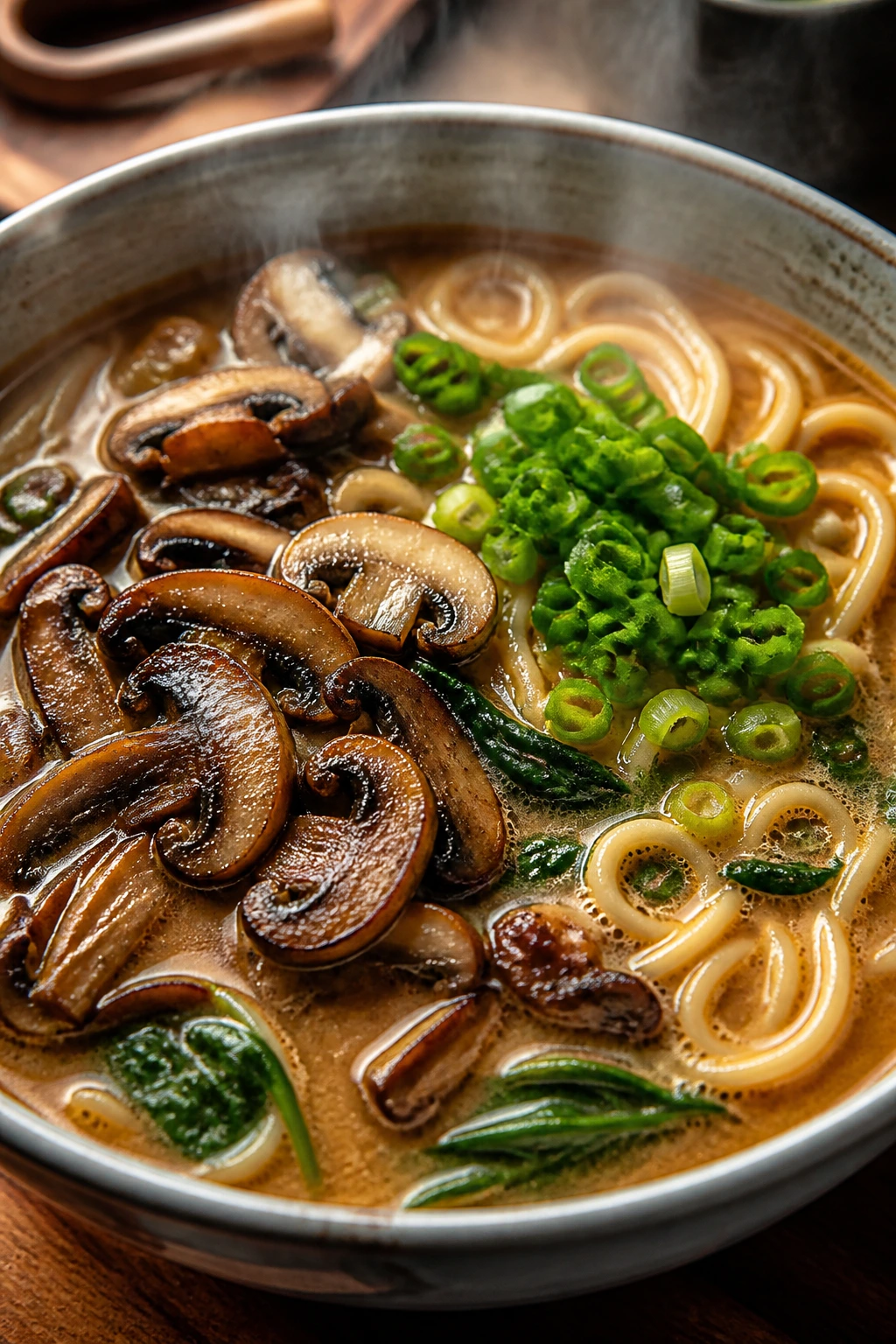
Miso gives broth a low, savory hum that plain salt can’t fake. Mushrooms step in with their own meaty depth, and the ramen noodles drink up the broth without turning the bowl into soup with noodles floating in it.
Why It Works:
Miso should be treated like a finishing ingredient, not a boiling liquid. When you whisk it into hot broth off the heat, it keeps its sweetness and funk instead of tasting flat. Mushrooms browned in a little oil give you the dark, earthy note that makes a simple ramen bowl feel built, not improvised.
Key Ingredients:
- 8 ounces dried ramen or wheat noodles — fresh works too, but dried is pantry-friendly.
- 1 tablespoon neutral oil — for browning the mushrooms.
- 8 ounces mushrooms, sliced — cremini or button mushrooms both work.
- 4 cups broth or water with bouillon — use what you have.
- 2 tablespoons miso paste — white miso is softer; red miso is stronger.
- 1 tablespoon soy sauce — deepens the broth.
- 1 teaspoon toasted sesame oil — add after the heat is off.
- 1 cup baby spinach or sliced bok choy — optional, but useful.
- 1 soft-boiled egg, halved — optional for more richness.
Quick Steps:
-
Heat the oil in a saucepan over medium-high heat. Cook the mushrooms for 5 to 6 minutes until browned at the edges and fragrant.
-
Add the broth and soy sauce, then bring to a gentle simmer. Add the noodles and cook until just tender.
-
Turn off the heat. Scoop out 1/4 cup hot broth into a bowl and whisk in the miso paste until smooth, then stir it back into the pot. Do not boil the miso hard.
-
Add spinach or bok choy if using, then drizzle in sesame oil. Serve immediately with the egg on top if you want it.
Equipment for This Recipe:
- Medium saucepan — deep enough for noodles and broth.
- Small bowl — for dissolving the miso.
- Ladle — helpful for serving the broth cleanly.
- Chopsticks or tongs — for lifting noodles without breaking them.
How to Serve This Dish:
Serve in deep bowls with a few sesame seeds or sliced scallions on top. I like it with an extra spoon of chili crisp on the side. It serves 2 as a main dish or 4 as a smaller starter.
Pro Tips for This Recipe:
- Brown the mushrooms well. Pale mushrooms taste watery.
- Dissolve the miso separately. That keeps it smooth.
- Cook the noodles just shy of done. They keep softening in the broth.
Variations on This Dish:
- Corn Miso Ramen: Add 1 cup corn kernels for sweetness and texture.
- Spicy Miso Bowl: Stir in chili crisp or a little sambal at the end.
- Tofu Ramen: Add cubed tofu after the broth simmers for a more filling bowl.
Common Mistakes to Avoid with This Dish:
- Boiling miso like regular broth. It dulls the flavor.
- Leaving the mushrooms pale. You lose a lot of depth.
- Overcooking ramen noodles. They go soft fast and won’t recover.
9. Canned Tuna Rice Bowls with Scallion Oil
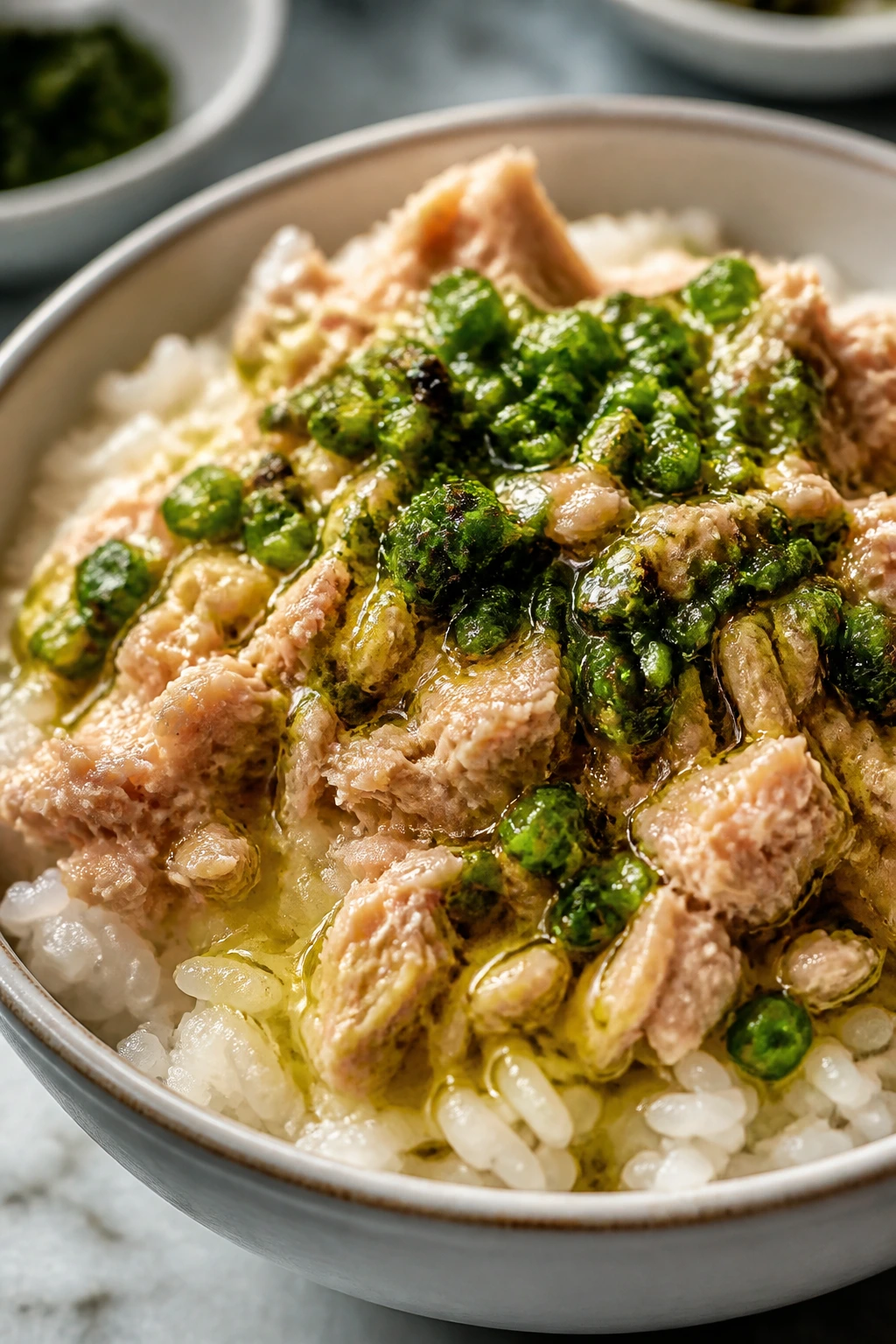
This is the kind of lunch that reminds me not to be snooty about canned fish. Tuna, mayo, soy sauce, and rice make a bowl that’s salty, creamy, and deeply practical — exactly the sort of meal that keeps pantry cooking from feeling like a compromise.
Why It Works:
Canned tuna is already cooked, seasoned enough to be useful, and sturdy enough to mix with bold flavors. A little mayonnaise smooths out the texture, soy sauce gives the bowl direction, and scallion oil adds the kind of savory hit that makes the whole thing feel intentional. Rice underneath keeps everything grounded.
Key Ingredients:
- 2 cups cooked rice — warm or room temperature both work.
- 2 cans tuna, drained — chunk light or solid white both fit.
- 2 tablespoons mayonnaise — for richness and a softer texture.
- 1 tablespoon soy sauce — the main seasoning.
- 1 teaspoon rice vinegar — keeps the mix from tasting heavy.
- 1 teaspoon toasted sesame oil — for nuttiness.
- 2 scallions, thinly sliced — for the oil and the finish.
- 1 teaspoon chili crisp or chili flakes — optional, for heat.
- 1 teaspoon sesame seeds — for crunch.
Quick Steps:
-
Mix the tuna, mayonnaise, soy sauce, rice vinegar, and sesame oil in a bowl. The mixture should be creamy but not soupy.
-
Warm 1 tablespoon neutral oil in a small pan and add half the scallions. Cook for 20 to 30 seconds until they look glossy and slightly softened.
-
Spoon the rice into bowls. Top with the tuna mixture, then drizzle over the scallion oil and the rest of the scallions.
-
Finish with chili crisp and sesame seeds if you want more bite.
Equipment for This Recipe:
- Small skillet — for the scallion oil.
- Mixing bowl — for the tuna.
- Spoon — to mound the topping neatly over the rice.
- Measuring spoons — this one lives or dies by balance.
How to Serve This Dish:
Serve it in a bowl with cucumber slices, pickled vegetables, or a fried egg if you want more heft. It makes 2 generous bowls. I like it best when the rice is still warm enough to loosen the tuna a little.
Pro Tips for This Recipe:
- Drain the tuna well. Excess liquid makes the bowl watery.
- Use a little vinegar. It wakes up the mayo and keeps the bowl from feeling flat.
- Make the scallion oil fast. A short sizzle is enough; you’re not frying them crisp.
Variations on This Dish:
- Spicy Tuna Bowl: Add sriracha or chili crisp to the tuna mix.
- Sesame Cucumber Version: Add sliced cucumber tossed with a pinch of salt.
- Avocado Upgrade: If you have one, slice it on top for extra richness.
Common Mistakes to Avoid with This Dish:
- Using too much mayonnaise. The tuna should be creamy, not paste-like.
- Skipping acid. Without vinegar, the bowl tastes dense.
- Pouring hot oil over wet scallions. They’ll sputter; a quick warm oil is enough.
10. Ginger Scallion Congee
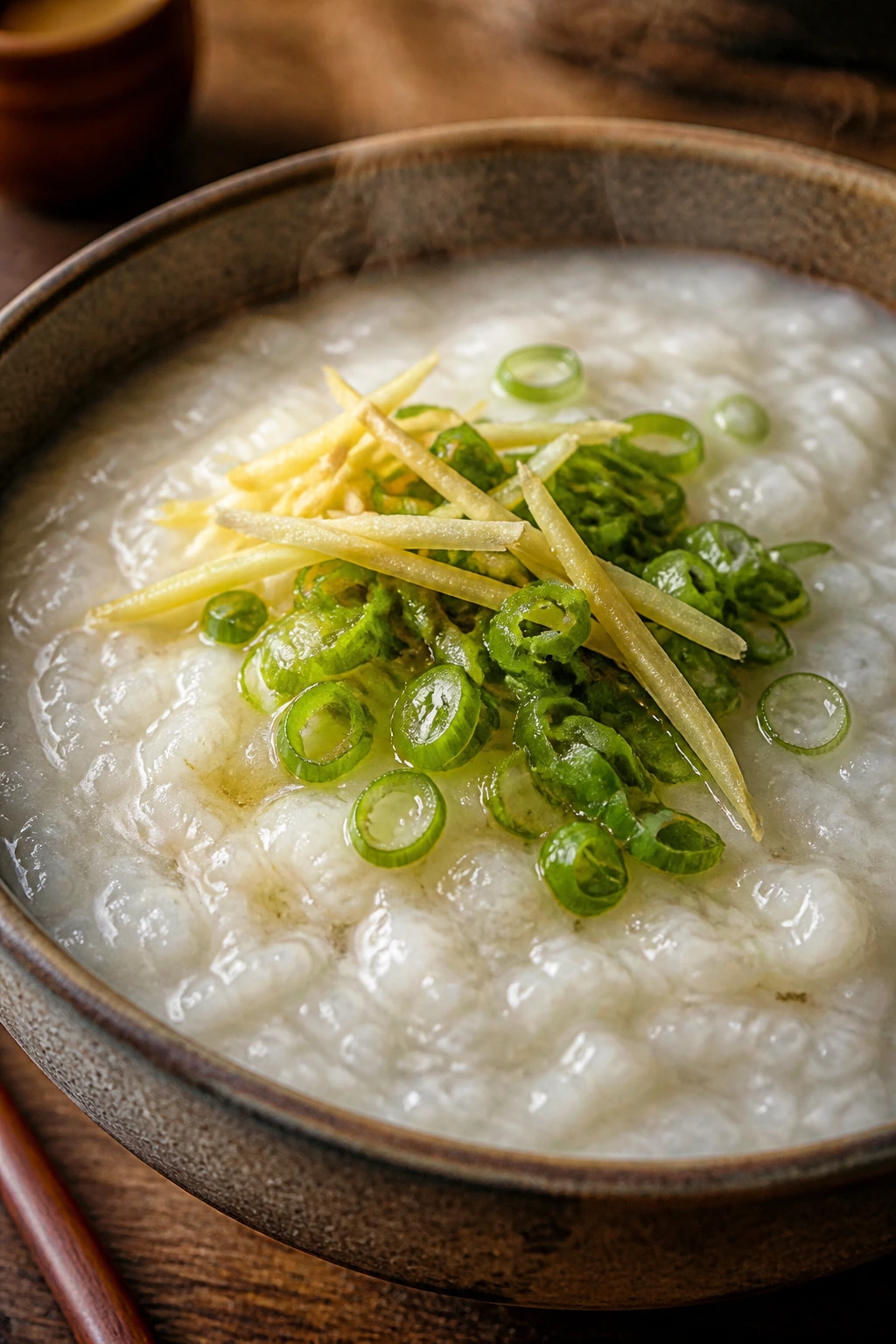
Congee is what happens when rice decides to become comfort food. It cooks down into something soft and almost velvet-like, and the ginger-scallion finish keeps it from turning bland or sleepy.
Why It Works:
This dish is pantry-friendly because rice and water can become dinner if you give them time. The slow simmer breaks the grains apart, releasing starch into the pot and thickening the whole thing naturally. Ginger brings a clean, warm aroma that cuts through the softness, and soy sauce plus sesame oil finish the bowl with enough salt and depth to keep every spoonful interesting.
Key Ingredients:
- 1 cup jasmine rice, rinsed — rinsing removes some surface starch and keeps the pot cleaner.
- 8 cups water or broth — broth makes it richer, water keeps it simple.
- 1-inch piece ginger, sliced thin — easy to remove later if you want.
- 1 teaspoon salt — adjust near the end.
- 2 tablespoons soy sauce — for serving.
- 1 teaspoon toasted sesame oil — finish only.
- 2 scallions, sliced — for brightness.
- Fried garlic or chili crisp, optional — for crunch and heat.
Quick Steps:
-
Add the rice, water or broth, ginger, and salt to a medium pot. Bring to a boil, then lower to a bare simmer.
-
Cook uncovered for 45 to 60 minutes, stirring every 10 minutes, until the rice has broken down and the pot looks porridge-thick. Add more water if it gets too dense.
-
Remove the ginger slices if you like a cleaner texture, then stir in a little more salt if needed.
-
Ladle into bowls and top with soy sauce, sesame oil, scallions, and any crunchy garnish you have.
Equipment for This Recipe:
- Medium pot — the wider the better for evaporation.
- Wooden spoon — for occasional stirring.
- Ladle — for serving the porridge neatly.
- Fine-mesh strainer — optional, if you want to rinse the rice first.
How to Serve This Dish:
Serve congee hot with a few salty toppings, not a mound of them. A soft egg, pickled vegetables, or a spoon of chili crisp works well. This makes 4 smaller bowls or 2 filling ones.
Pro Tips for This Recipe:
- Stir often enough to prevent sticking, not constantly. You want movement, not agitation.
- Add water if the porridge tightens up. Congee should be spoonable.
- Use leftover rice for a faster version. It collapses in about 20 to 25 minutes instead of an hour.
Variations on This Dish:
- Chicken Congee: Add shredded cooked chicken near the end if you want more protein.
- Savory Egg Version: Crack in an egg and stir until the whites set in threads.
- Mushroom Congee: Simmer sliced mushrooms with the rice for a deeper broth.
Common Mistakes to Avoid with This Dish:
- Turning the heat too high. The bottom scorches before the rice softens.
- Forgetting to thin it out. It should be loose, not paste-like.
- Overloading the bowl with toppings. The porridge should still taste like porridge.
11. Soy-Braised Tofu and Green Beans
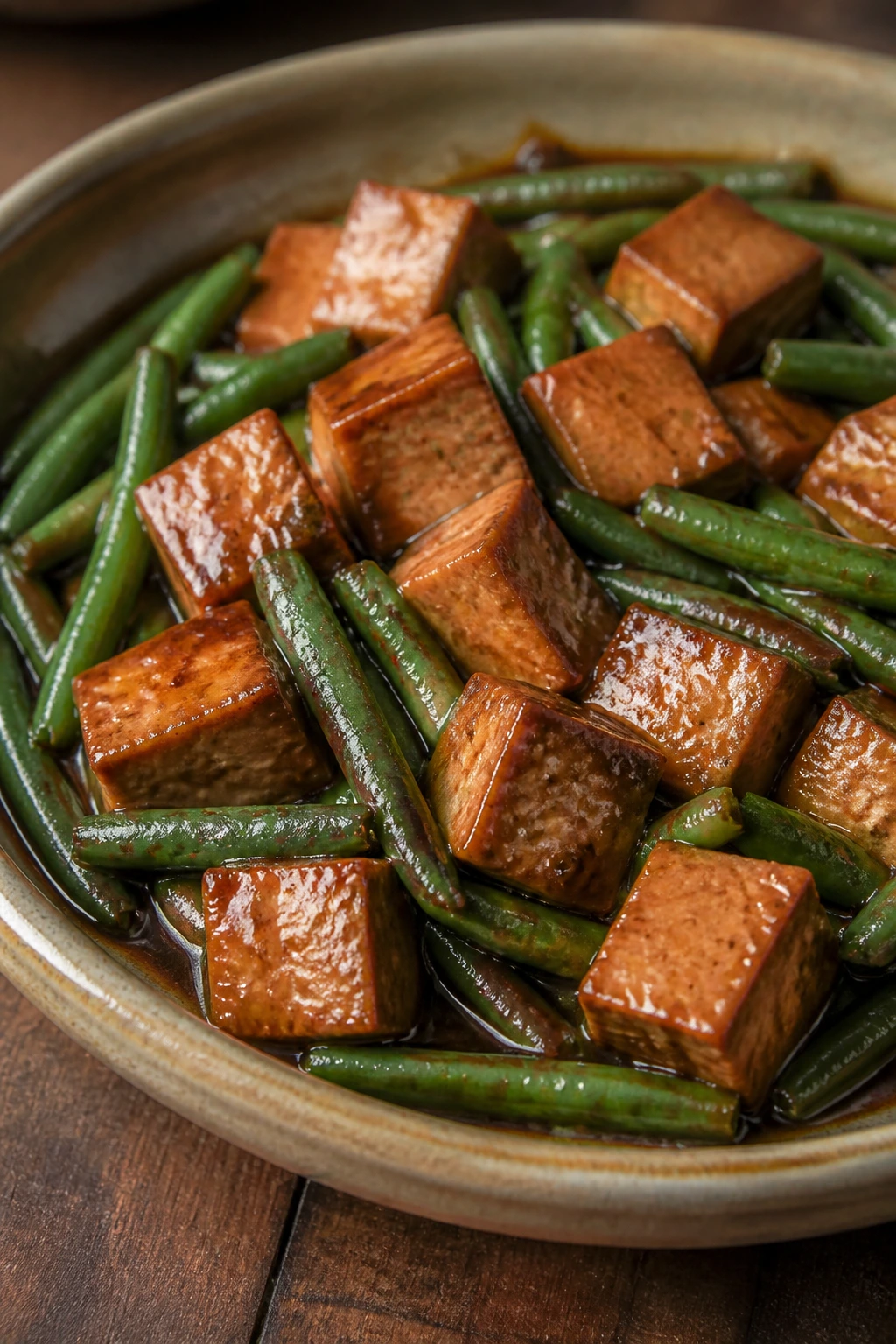
Tofu gets a bad reputation from people who cook it like a chore. Give it a little browning, a salty braise, and a few green beans for contrast, and it becomes the sort of weekday dinner that disappears faster than you expect.
Why It Works:
Firm tofu absorbs sauce when it’s browned first, which means it doesn’t stay bland in the middle. The soy-brown sugar liquid gives you a glossy braise, and the green beans hold a bit of crunch so the dish isn’t all one soft texture. A cornstarch slurry tightens the sauce just enough to coat rice.
Key Ingredients:
- 2 blocks firm tofu (14 ounces each), pressed and cubed — the press matters here.
- 2 tablespoons neutral oil — for browning.
- 2 cups green beans, trimmed or frozen and thawed — both work.
- 2 cloves garlic, minced — for the braise.
- 3 tablespoons soy sauce — the main seasoning.
- 1 tablespoon brown sugar — rounds out the salt.
- 3/4 cup water or broth — enough for braising.
- 1 tablespoon cornstarch mixed with 2 tablespoons water — for thickening.
- 1 teaspoon toasted sesame oil — finish only.
Quick Steps:
-
Heat the oil in a large skillet over medium-high heat. Add the tofu and cook for 6 to 8 minutes, turning until the cubes are golden on several sides.
-
Add the green beans and garlic. Cook for 2 minutes, stirring until the garlic smells sweet and the beans brighten a little.
-
Pour in the soy sauce, brown sugar, and water or broth. Simmer for 4 to 5 minutes until the beans are tender-crisp.
-
Stir in the cornstarch slurry and cook for 30 to 45 seconds until the sauce turns glossy and clings to the tofu. Finish with sesame oil.
Equipment for This Recipe:
- Large skillet — enough room to brown tofu instead of crowding it.
- Spatula — for turning the tofu gently.
- Small bowl — for the cornstarch slurry.
- Plate lined with paper towel — useful if your tofu releases a lot of moisture.
How to Serve This Dish:
Serve it over rice or noodles, with extra sauce spooned over the top. A few sesame seeds or scallions make the bowl look finished. It serves 3 to 4.
Pro Tips for This Recipe:
- Press the tofu if you can. Dry tofu browns better.
- Brown first, braise second. If you braise tofu from the start, it stays soft and pale.
- Add sesame oil after the sauce thickens. The aroma stays brighter.
Variations on This Dish:
- Mushroom Braise: Add sliced mushrooms with the green beans for more depth.
- Spicy Tofu: Stir in chili crisp or crushed red pepper.
- Rice Bowl Version: Serve over brown rice and top with a fried egg.
Common Mistakes to Avoid with This Dish:
- Using silken tofu. It falls apart in the pan.
- Skipping the browning step. You lose texture and flavor.
- Too much liquid. The sauce should coat, not flood, the plate.
12. Soy-Garlic Noodles with Crispy Garlic
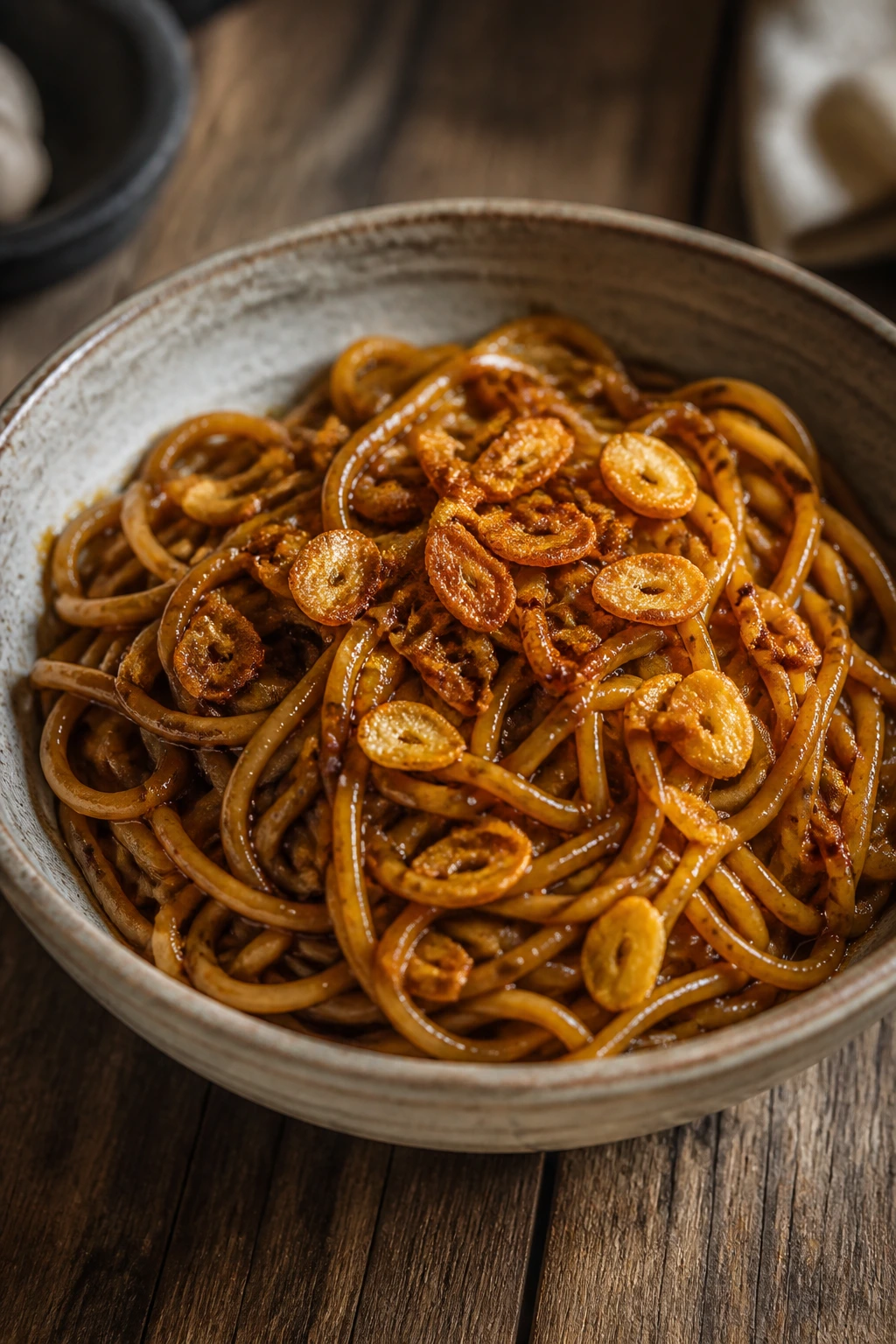
Some noodles don’t need a long sauce. They need garlic, soy, a little sugar, and enough heat to turn the garlic edges golden. That’s it. It sounds too plain until you take the first bite and realize the bowl has done exactly what you wanted.
Why It Works:
This is the pantry version of a fast noodle shop dish. Garlic fried in oil becomes sweet and fragrant, and the soy-sugar mix clings to the noodles in a thin, shiny coating. A tiny splash of rice vinegar keeps the dish from tasting heavy, which matters when the ingredient list is this short.
Key Ingredients:
- 8 ounces spaghetti, ramen, or other dried noodles — whatever shape you have.
- 3 cloves garlic, thinly sliced — slices crisp better than minced.
- 2 tablespoons neutral oil — for frying the garlic.
- 2 tablespoons soy sauce — the main salty element.
- 1 tablespoon brown sugar — helps the sauce glaze the noodles.
- 1 teaspoon rice vinegar — keeps the sauce balanced.
- 1 tablespoon butter or more oil — adds body at the end.
- 1 teaspoon chili flakes — optional, for heat.
- 2 scallions, sliced — optional garnish.
Quick Steps:
-
Cook the noodles until just tender and reserve 1/4 cup of the cooking water. Drain.
-
Heat the oil in a skillet over medium heat and add the garlic slices. Cook for 1 to 2 minutes, stirring often, until golden at the edges and crisp.
-
Add the soy sauce, brown sugar, rice vinegar, butter, and 2 tablespoons noodle water. Stir until the sugar dissolves.
-
Toss in the noodles and cook for 1 minute, adding more water if needed until the sauce coats the strands.
-
Top with chili flakes and scallions.
Equipment for This Recipe:
- Large skillet — for sauce and noodles together.
- Pot for boiling noodles — straightforward but necessary.
- Tongs — useful for turning noodles in the pan.
- Slotted spoon — handy if you want to lift the crisp garlic separately.
How to Serve This Dish:
Serve it as-is, or top with a fried egg and a handful of greens if you need more substance. It makes 2 substantial servings. I like it with extra crispy garlic on top.
Pro Tips for This Recipe:
- Watch the garlic closely. It goes from golden to bitter fast.
- Use a little noodle water. It helps the sauce cling instead of pooling.
- Finish with vinegar. That small sharp note makes the bowl taste finished.
Variations on This Dish:
- Sesame Version: Add 1 teaspoon toasted sesame oil at the end.
- Vegetable Noodle Bowl: Toss in frozen peas or shredded cabbage before the noodles.
- Butterless Version: Use all oil if you want a lighter finish.
Common Mistakes to Avoid with This Dish:
- Burning the garlic. It ruins the whole pan.
- Using too much sugar. The sauce should glaze, not taste like candy.
- Letting the noodles sit dry. Toss them while they’re hot so they absorb the sauce.
13. Thai Peanut Noodle Soup
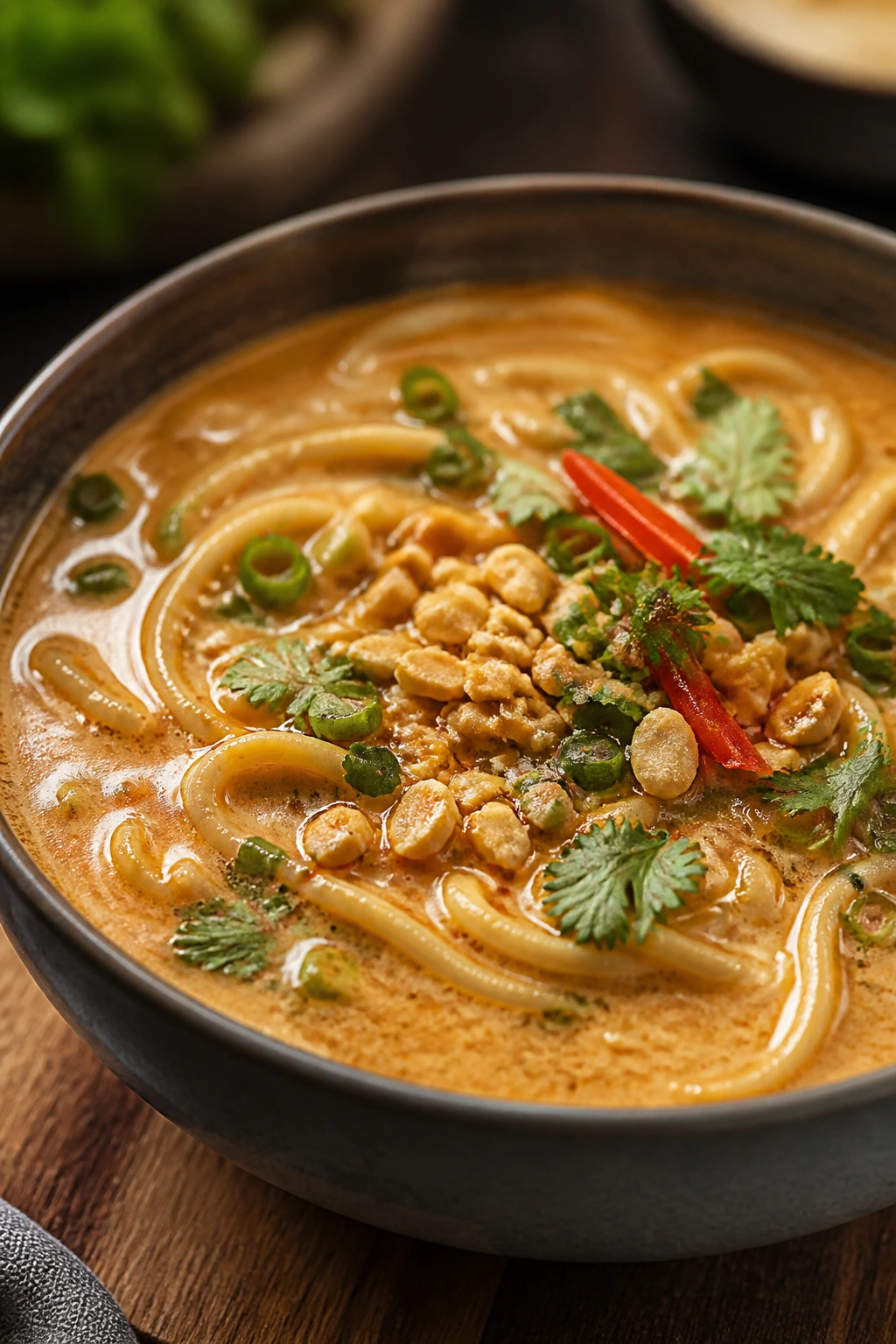
Peanut butter in soup sounds odd until it’s in the bowl. Then it tastes like a legitimate idea — rich, a little spicy, and thick enough to cling to noodles without becoming sludge.
Why It Works:
Peanut butter gives the broth body, coconut milk softens the edges, and curry paste brings the warm spice that makes the bowl feel full. Because the noodles cook separately, they stay springy instead of bloating in the broth. A small splash of rice vinegar at the end is what keeps the soup from feeling heavy.
Key Ingredients:
- 8 ounces rice noodles or spaghetti — both work in a pinch.
- 4 cups broth — vegetable or chicken.
- 1 cup coconut milk — the sauce needs some fat.
- 1/3 cup creamy peanut butter — unsweetened if possible.
- 2 tablespoons soy sauce — for salt.
- 1 tablespoon red curry paste — for heat and depth.
- 1 tablespoon rice vinegar — cuts the richness.
- 1 cup frozen vegetables or chickpeas — optional, for extra bulk.
- Chili oil, to taste — for serving.
Quick Steps:
-
Cook the noodles separately and set them aside. This keeps them from soaking up too much liquid.
-
In a saucepan, bring the broth, coconut milk, peanut butter, soy sauce, and curry paste to a gentle simmer. Whisk until smooth.
-
Add the frozen vegetables or chickpeas, if using, and cook for 5 minutes until hot.
-
Stir in the rice vinegar. Taste the broth and adjust the salt or heat before adding the noodles back in.
-
Divide into bowls and finish with chili oil.
Equipment for This Recipe:
- Medium saucepan — for the broth.
- Whisk — peanut butter needs help going smooth.
- Separate pot — for the noodles.
- Ladle — keeps the broth portion steady.
How to Serve This Dish:
Serve it hot with chopped peanuts, scallions, or cilantro if you have them. It makes 3 to 4 bowls depending on how many noodles you use. I like it best with a spoon and chopsticks, which is a good sign the texture is right.
Pro Tips for This Recipe:
- Whisk the peanut butter into hot liquid early. It dissolves better that way.
- Keep the noodles separate until serving. They hold their shape better.
- Taste for balance before plating. If it feels too thick, use a splash more broth.
Variations on This Dish:
- Spicy Soup: Add more curry paste or a spoonful of chili crisp.
- Tofu Version: Drop in cubes of tofu for a vegetarian protein boost.
- Cold Peanut Noodles: Skip the broth and serve the sauce over chilled noodles instead.
Common Mistakes to Avoid with This Dish:
- Putting the noodles in too early. They soak up broth and go heavy.
- Using too much peanut butter. The soup turns pasty.
- Forgetting acid. The vinegar keeps the bowl from feeling sticky.
14. Spam Fried Rice with Pineapple
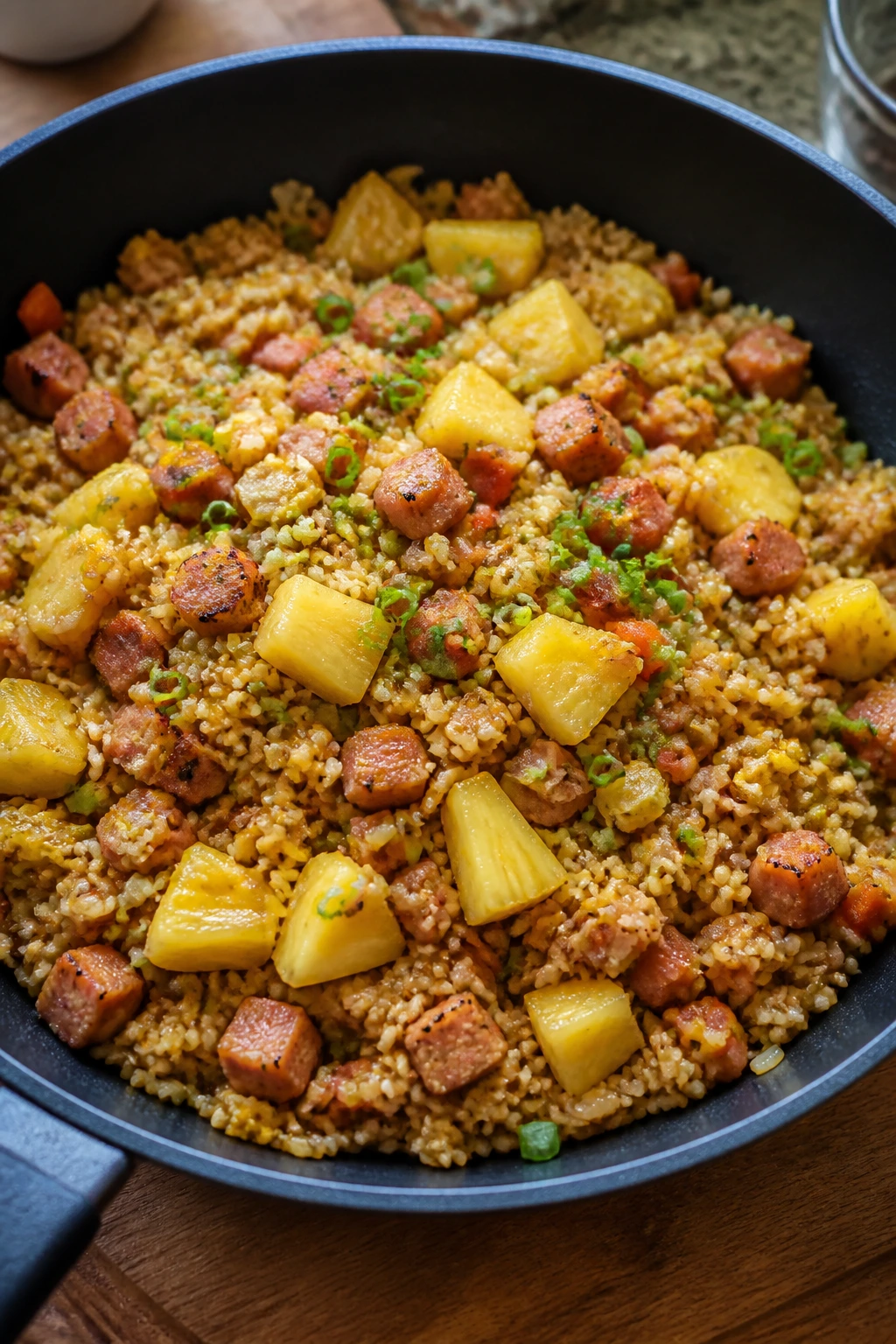
Spam fried rice is never subtle, and that’s part of the appeal. The Spam crisps at the edges, the pineapple throws in sweet bursts, and the rice takes on a salty-sweet balance that tastes more deliberate than it has any right to.
Why It Works:
Spam brings fat, salt, and browning in a way that works beautifully with fried rice. Pineapple is not just a sweet add-on; its acidity cuts through the richness and keeps the dish from feeling greasy. Eggs and peas round out the bowl so it lands as dinner, not novelty.
Key Ingredients:
- 1 can Spam, diced into 1/2-inch pieces — small cubes crisp better.
- 3 cups cold cooked rice — dry rice is the point.
- 1 cup frozen peas and carrots — optional, but practical.
- 1/2 cup canned pineapple chunks, drained — enough for bright bursts.
- 2 large eggs, beaten — for softness.
- 2 tablespoons soy sauce — main seasoning.
- 1 teaspoon toasted sesame oil — finish only.
- 1 tablespoon neutral oil — for the pan.
Quick Steps:
-
Heat the neutral oil in a large skillet over medium-high heat. Add the Spam and cook for 4 to 5 minutes until browned on the edges.
-
Add the peas and carrots, if using, and cook for 1 minute.
-
Push everything to the side, add the eggs, and scramble until just set.
-
Add the rice, breaking it up as you go. Fry for 2 to 3 minutes, then stir in soy sauce.
-
Fold in the pineapple and sesame oil, then cook for 30 seconds more and serve.
Equipment for This Recipe:
- Large skillet or wok — needed for the browning and tossing.
- Spatula — for breaking up rice and turning Spam.
- Small bowl — for the eggs.
- Can opener — obvious, but not optional here.
How to Serve This Dish:
Serve it in bowls with extra pineapple on the side if you like the sweet note. A fried egg on top makes it feel more like a full dinner. It serves 3.
Pro Tips for This Recipe:
- Brown the Spam well. Pale Spam tastes flat.
- Add pineapple near the end. Early heat turns it mushy.
- Use cold rice. Same rule as every good fried rice.
Variations on This Dish:
- Kimchi Twist: Add chopped kimchi for heat and tang.
- Tropical Curry Version: Stir in 1 teaspoon curry powder for a warmer flavor.
- Tofu Swap: Use cubed firm tofu instead of Spam if you want a lighter bowl.
Common Mistakes to Avoid with This Dish:
- Too much pineapple liquid. Drain the fruit or the rice gets soggy.
- Skipping the browning step. You lose the savory edge.
- Overcrowding the pan. Spam needs contact with heat to crisp.
15. Red Lentil Coconut Soup with Rice
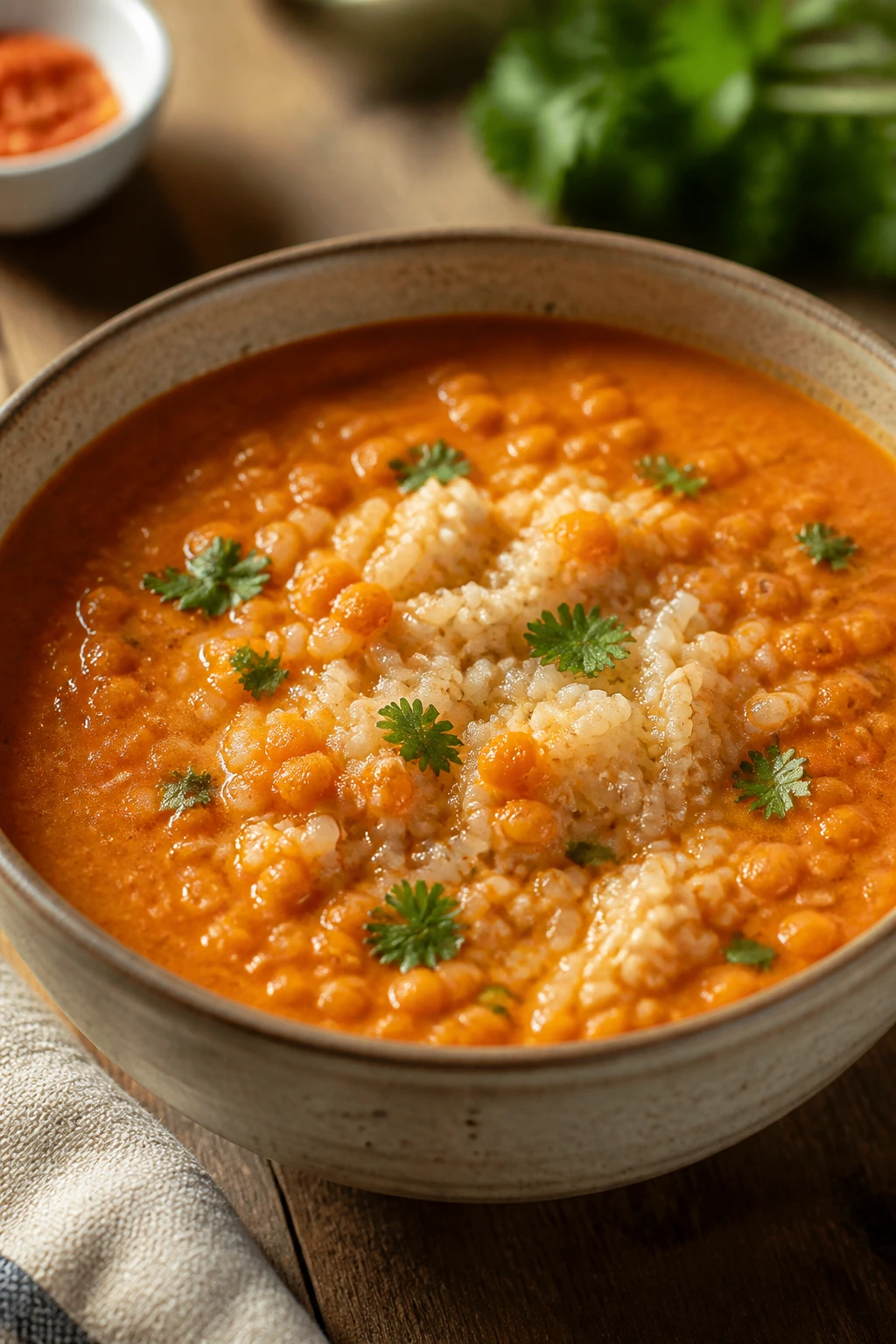
Red lentils are one of the best pantry ingredients around. They break down fast, thicken soup naturally, and carry spice in a way that makes a bare-bones pot taste like something you intended to make.
Why It Works:
Red lentils cook quickly enough for weeknight use, but they also create a creamy texture without cream. Coconut milk gives the soup richness, curry powder or curry paste brings warmth, and rice on the side turns it into a meal with some staying power. A few handfuls of spinach at the end add color and lift.
Key Ingredients:
- 1 tablespoon neutral oil — for the onion.
- 1 medium onion, chopped — the flavor base.
- 2 cloves garlic, minced — for depth.
- 1 cup red lentils, rinsed — they cook in about 20 minutes.
- 1 tablespoon curry powder — use a fresh jar if possible.
- 1 can coconut milk — for body.
- 4 cups broth or water — enough for a soup texture.
- 1 cup canned diced tomatoes — optional, but helpful for brightness.
- 3 cups spinach — optional, stirred in at the end.
- Cooked rice, for serving — makes the soup more filling.
Quick Steps:
-
Heat the oil in a saucepan over medium heat. Cook the onion for 4 minutes, then add the garlic and curry powder and stir for 30 seconds.
-
Add the lentils, coconut milk, broth or water, and tomatoes if using. Bring to a simmer.
-
Cook for 15 to 20 minutes, stirring occasionally, until the lentils are soft and the soup thickens.
-
Stir in the spinach until wilted, then taste and adjust the salt.
-
Serve in bowls with rice spooned underneath or alongside.
Equipment for This Recipe:
- Medium saucepan — deep enough for soup.
- Wooden spoon — for the onion and spice step.
- Measuring cup — for the broth and coconut milk.
- Ladle — for serving.
How to Serve This Dish:
Serve it over rice or with a scoop on the side if you want a thicker bowl. A squeeze of lime or a spoon of chili crisp works well at the end. It makes 4 servings.
Pro Tips for This Recipe:
- Rinse the lentils. It removes dust and helps the soup taste cleaner.
- Stir often near the end. Red lentils stick if you ignore them.
- Add spinach last. It only needs a minute.
Variations on This Dish:
- Lighter Soup: Use half coconut milk and half broth.
- Spicy Version: Add chili flakes or gochujang for heat.
- Carrot Version: Add diced carrots with the onion for more sweetness.
Common Mistakes to Avoid with This Dish:
- Using brown or green lentils. They take longer and won’t break down the same way.
- Cooking at a hard boil. The soup can scorch.
- Underseasoning. Lentils soak up salt fast.
16. Pantry Pad Thai
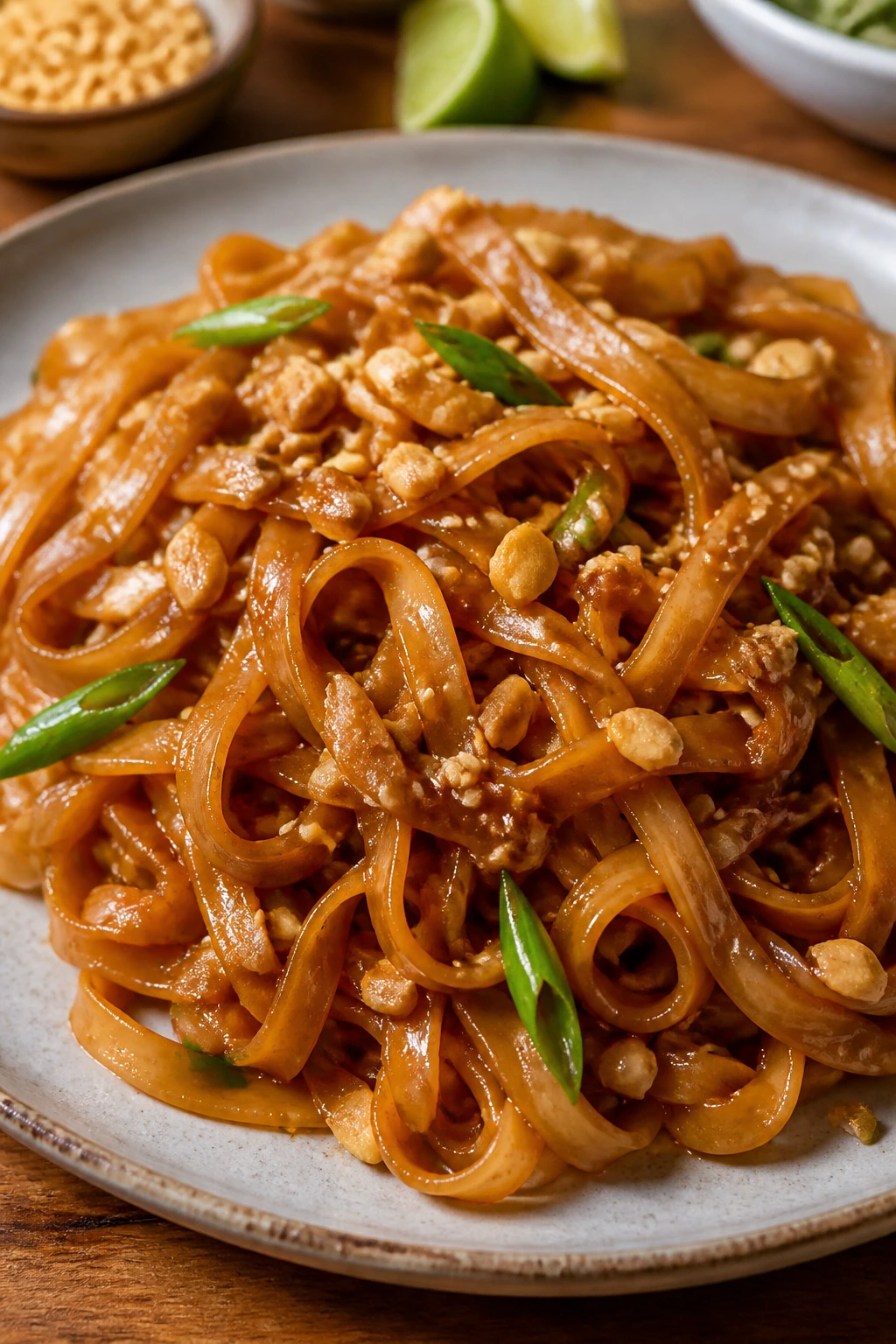
Pad Thai gets intimidating when people start naming the original ingredients. The pantry version is looser, friendlier, and still hits the right sweet-sour-salty balance if you treat the sauce carefully.
Why It Works:
Peanut butter supplies body, soy sauce replaces the fish sauce element in a pinch, and rice vinegar gives the sauce the acid it needs. Brown sugar keeps the sauce glossy, while eggs give the noodles a soft, savory edge. If you toss everything while the noodles are hot, the sauce clings instead of sliding off.
Key Ingredients:
- 8 ounces rice noodles — or thin spaghetti if that’s what’s in the cupboard.
- 2 large eggs — beaten lightly.
- 2 tablespoons neutral oil — for the pan.
- 3 tablespoons peanut butter — the sauce’s backbone.
- 2 tablespoons soy sauce — salty base.
- 1 tablespoon rice vinegar — acid.
- 1 tablespoon brown sugar — sweetness and shine.
- 1 teaspoon chili sauce or chili flakes — optional heat.
- 1/4 cup water — to loosen the sauce.
- 1/2 cup chopped peanuts — optional garnish.
Quick Steps:
-
Soak or cook the rice noodles according to package directions until just tender, then drain.
-
Whisk peanut butter, soy sauce, rice vinegar, brown sugar, chili sauce, and water in a bowl until smooth.
-
Heat the oil in a large skillet over medium heat. Scramble the eggs for about 45 seconds, then add the noodles and sauce.
-
Toss for 1 to 2 minutes until the noodles are evenly coated and the sauce looks glossy.
-
Finish with chopped peanuts if you have them.
Equipment for This Recipe:
- Large skillet — for tossing noodles without breaking them.
- Pot or bowl — depending on whether your noodles need soaking or boiling.
- Whisk — to smooth out the peanut butter.
- Tongs — very helpful here.
How to Serve This Dish:
Serve it warm with lime if you have it, or with a few quick-pickled vegetables on the side. It makes 2 to 3 servings, and it’s best eaten soon after cooking.
Pro Tips for This Recipe:
- Don’t overcook the noodles. Rice noodles keep softening after they leave the pot.
- Keep the sauce loose before it hits the pan. Thick sauce clumps.
- Taste for acid at the end. A little extra vinegar often fixes everything.
Variations on This Dish:
- Vegetable Pad Thai: Add frozen peas or shredded cabbage.
- Tofu Pad Thai: Use browned tofu cubes instead of eggs.
- Extra-Peanut Version: Add a spoon of crunchy peanut butter for texture.
Common Mistakes to Avoid with This Dish:
- Using dry sauce on wet noodles. Toss while both are hot.
- Too much heat after the sauce goes in. The peanut butter can seize.
- Ignoring balance. Pad Thai needs salty, sweet, and sour in equal conversation.
17. Kimchi Fried Rice with Spam
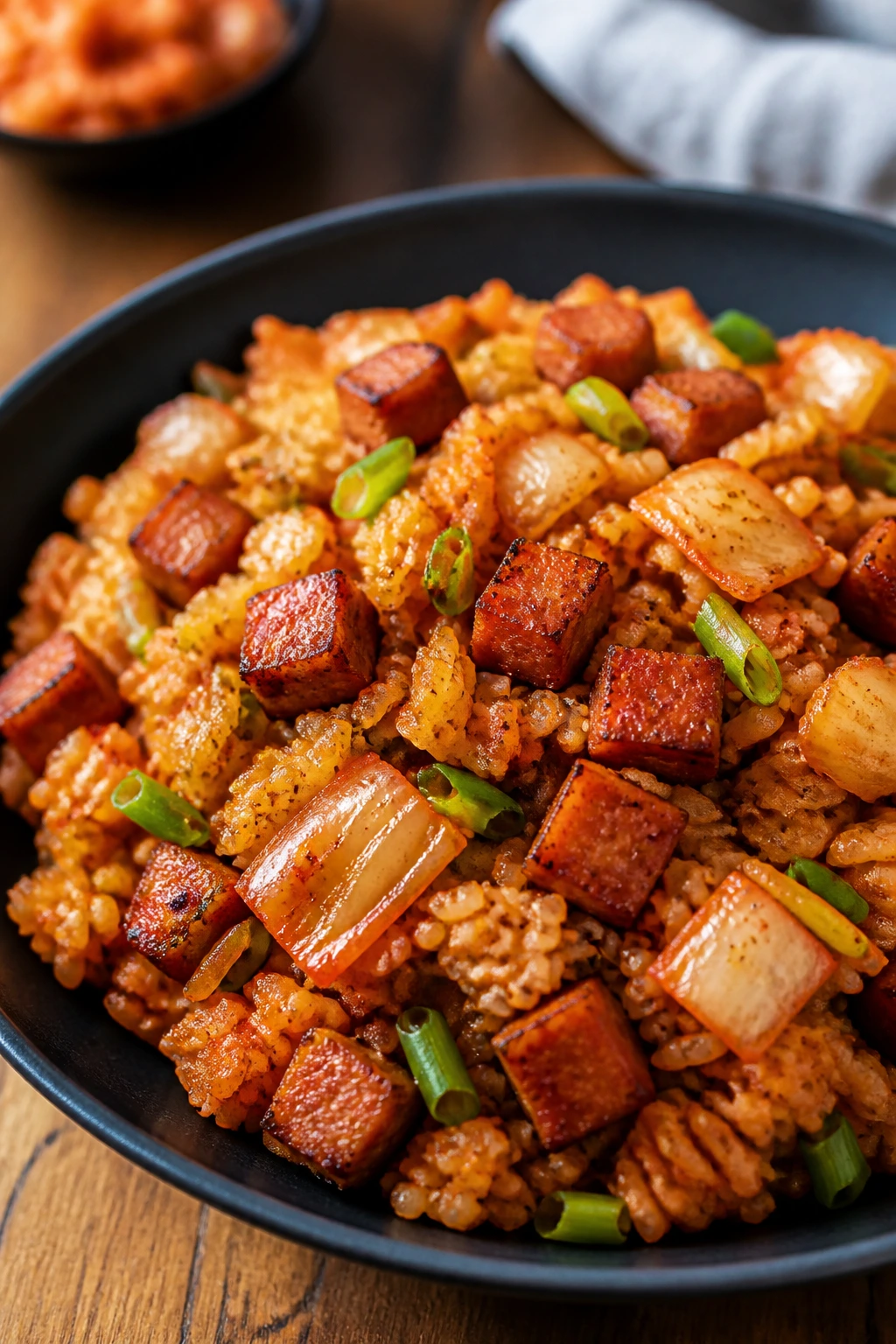
Kimchi fried rice has a way of sounding like leftovers and tasting like a plan. The kimchi brings sharpness and funk, the Spam gives you browned edges, and the egg softens the whole thing into something you’d happily make on purpose.
Why It Works:
Kimchi is already seasoned, acidic, and a little spicy, which makes it one of the strongest pantry-adjacent ingredients you can keep around. Fried rice uses that fermented juice to season the grains, and Spam adds the savory fat that keeps the dish from tasting too lean. A spoonful of gochujang gives the rice more color and warmth without making it taste like a sauce dump.
Key Ingredients:
- 1 tablespoon neutral oil — for browning the Spam.
- 1 can Spam, diced — crisp the edges well.
- 1 cup chopped kimchi plus 2 tablespoons kimchi juice — the flavor engine.
- 3 cups cold cooked rice — essential for the texture.
- 2 large eggs, beaten — for richness.
- 1 tablespoon gochujang — optional but useful.
- 1 tablespoon soy sauce — for salt.
- 1 teaspoon toasted sesame oil — finish only.
- Scallions, for serving — optional but welcome.
Quick Steps:
-
Heat the oil in a skillet over medium-high heat. Add the Spam and cook until browned, about 4 minutes.
-
Stir in the kimchi and cook for 2 minutes, letting some of the liquid evaporate.
-
Add the rice and break up clumps with the spatula. Stir in the gochujang and soy sauce, then fry for 2 to 3 minutes.
-
Push the rice to the side, add the eggs, and scramble until just set. Fold everything together and finish with sesame oil.
Equipment for This Recipe:
- Large skillet or wok — you need room for browning.
- Spatula — sturdy enough to break up rice.
- Small bowl — for the eggs.
- Knife — for chopping the kimchi into bite-size pieces.
How to Serve This Dish:
Serve it in a bowl with a fried egg on top if you want the rich version. A few sesame seeds or seaweed flakes make it feel finished. It serves 3.
Pro Tips for This Recipe:
- Use older kimchi if you have it. It’s sharper and better for fried rice.
- Let the kimchi cook down a bit. That keeps the rice from tasting raw-fermented.
- Add sesame oil at the end. It stays more aromatic that way.
Variations on This Dish:
- Vegetarian Kimchi Rice: Use tofu instead of Spam.
- Cheesy Twist: Add a small handful of shredded cheese off the heat if you like fusion comfort food.
- Extra-Spicy Bowl: Stir in more gochujang or a spoon of chili crisp.
Common Mistakes to Avoid with This Dish:
- Using fresh rice. It turns sticky fast.
- Skipping the kimchi juice. That liquid is part of the flavor.
- Overcooking the eggs. They should stay soft against the rice.
18. Teriyaki Salmon Rice Bowls
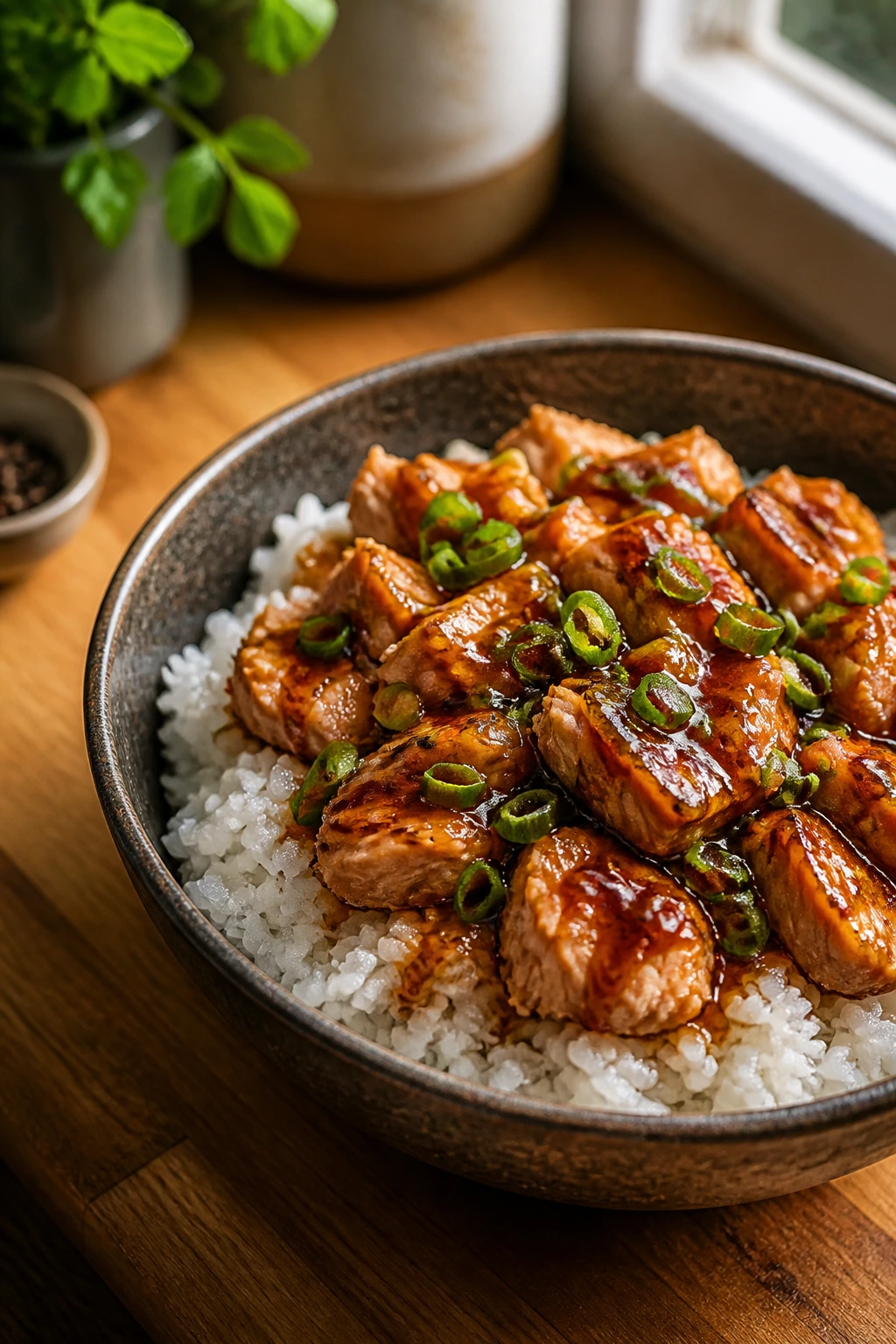
Canned salmon does not need an apology, only a better use case. Mix it with a quick teriyaki-style glaze, spoon it over rice, and you get a bowl that tastes balanced, salty-sweet, and a little glossy in a way that feels much more put together than the pantry label suggests.
Why It Works:
The glaze is simple: soy sauce, sugar or honey, vinegar, and a little water to keep it from going sticky. Canned salmon has enough natural richness to handle that glaze without falling apart, and rice provides the neutral base the fish wants. If you thicken the sauce with a tiny cornstarch slurry, it coats the salmon instead of disappearing into the bowl.
Key Ingredients:
- 2 cans salmon, drained — remove any skin or bones if you prefer.
- 2 cups cooked rice — warm rice is best here.
- 2 tablespoons soy sauce — for the teriyaki base.
- 1 tablespoon honey or brown sugar — for shine and balance.
- 1 tablespoon rice vinegar — for lift.
- 1 teaspoon toasted sesame oil — for finish.
- 1 teaspoon cornstarch mixed with 2 tablespoons water — to thicken the glaze.
- 2 scallions, sliced — for garnish.
- Sesame seeds — optional, for texture.
Quick Steps:
-
In a small skillet, whisk soy sauce, honey or brown sugar, rice vinegar, and 2 tablespoons water over medium heat until the sugar dissolves.
-
Stir in the cornstarch slurry and cook for 30 seconds until the sauce turns glossy.
-
Add the drained salmon and fold gently to coat, warming it through for 1 to 2 minutes. Do not stir hard or the salmon will turn to paste.
-
Spoon the rice into bowls, top with the salmon, and finish with sesame oil, scallions, and sesame seeds.
Equipment for This Recipe:
- Small skillet — for the glaze.
- Spoon or spatula — for gentle folding.
- Bowl for the rice — helps with neat serving.
- Measuring spoons — the glaze is all about balance.
How to Serve This Dish:
Serve with steamed frozen vegetables, cucumber slices, or a small pile of pickled onions if you have them. It makes 2 to 3 bowls. A little mayo on top is optional, but I’m not above it.
Pro Tips for This Recipe:
- Use low heat once the salmon goes in. You’re warming, not frying.
- Taste the glaze before adding salmon. It should lean slightly salty-sweet.
- Break up the salmon only as much as needed. Keep some flakes intact.
Variations on This Dish:
- Spicy Teriyaki Bowl: Add a little chili crisp to the glaze.
- Mayo Drizzle Version: Mix mayo with a drop of soy sauce and drizzle it over the bowl.
- Canned Tuna Swap: Use tuna if that’s what you have; the glaze works the same way.
Common Mistakes to Avoid with This Dish:
- Overmixing the salmon. It turns into mush.
- Too much cornstarch. The sauce should coat, not set like gel.
- Serving without acid. The vinegar keeps the sweetness in line.
19. Sweet and Sour Tofu with Pineapple
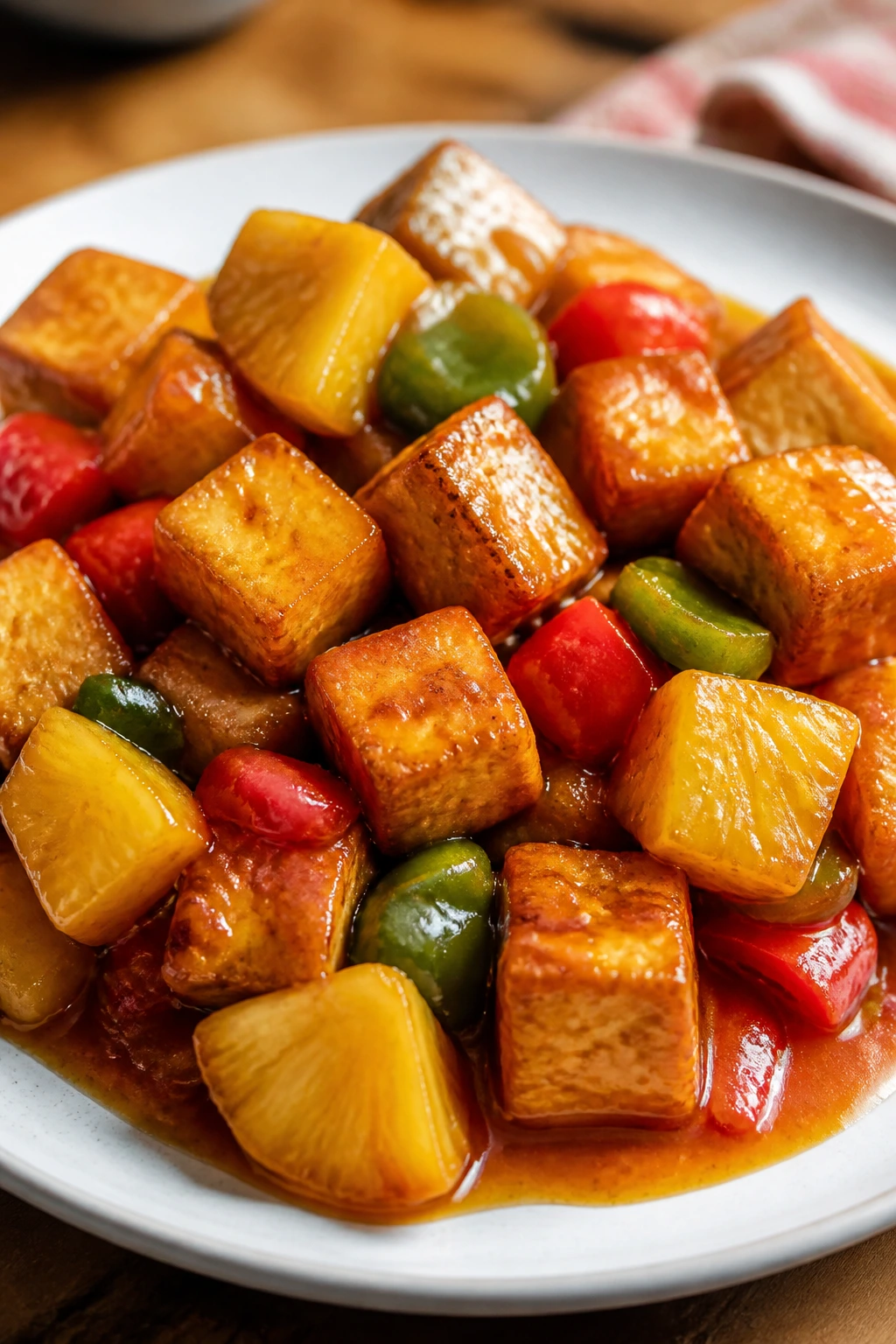
This is the pantry dish that behaves like takeout without making a mess of your kitchen. The tofu browns, the sauce goes glossy, and the pineapple gives the whole thing a bright edge that keeps the sweet-and-sour profile from feeling syrupy.
Why It Works:
Sweet and sour sauce needs three things: sweetness, acid, and enough thickener to cling. Ketchup, rice vinegar, soy sauce, and brown sugar cover the first three neatly, and cornstarch gives the sauce the sheen that makes it feel finished. Pineapple contributes both sweetness and juice, which means the sauce tastes layered instead of one-dimensional.
Key Ingredients:
- 1 block firm tofu (14 ounces), pressed and cubed — dry tofu browns best.
- 1 tablespoon neutral oil — for browning.
- 1 small onion, sliced — for body.
- 1 bell pepper, sliced — optional, but classic.
- 1 cup canned pineapple chunks, drained — save a little juice if you want more sauce.
- 1/4 cup ketchup — the tomato base.
- 2 tablespoons rice vinegar — the sour part.
- 1 tablespoon soy sauce — salt and depth.
- 2 tablespoons brown sugar — sweetness.
- 1 teaspoon cornstarch mixed with 2 tablespoons water — for gloss.
Quick Steps:
-
Heat the oil in a large skillet over medium-high heat. Add the tofu cubes and cook for 6 to 8 minutes, turning until golden on at least two sides.
-
Add the onion and bell pepper, if using, and cook for 3 minutes until they begin to soften.
-
Whisk ketchup, rice vinegar, soy sauce, brown sugar, and the cornstarch slurry in a small bowl. Pour it into the skillet and stir.
-
Add the pineapple and cook for 1 to 2 minutes until the sauce looks shiny and clings to the tofu.
-
Serve over rice.
Equipment for This Recipe:
- Large skillet — space matters for browning.
- Small bowl — for the sauce.
- Spatula — to turn the tofu without breaking it apart.
- Paper towels — helpful if you want to blot tofu before cooking.
How to Serve This Dish:
Serve it with rice and maybe a side of steamed broccoli or cabbage if you have it. A few sesame seeds or scallions make the bowl look finished. This serves 3 to 4.
Pro Tips for This Recipe:
- Press the tofu first. Moist tofu won’t brown well.
- Keep the sauce moving once it goes in. Cornstarch thickens fast.
- Drain the pineapple well. Too much extra juice turns the sauce thin.
Variations on This Dish:
- Chicken Version: Swap in diced chicken thighs if you’re not staying pantry-only.
- Spicier Sauce: Add chili flakes or chili crisp.
- Vegetable Load-Up: Toss in snap peas or frozen stir-fry vegetables.
Common Mistakes to Avoid with This Dish:
- Using soft tofu. It falls apart before browning.
- Too much pineapple juice. The sauce gets watery.
- Cooking the sauce too long. Cornstarch can turn gummy if you keep it on the heat.
20. Sichuan-Style Chili Oil Soba with Spinach
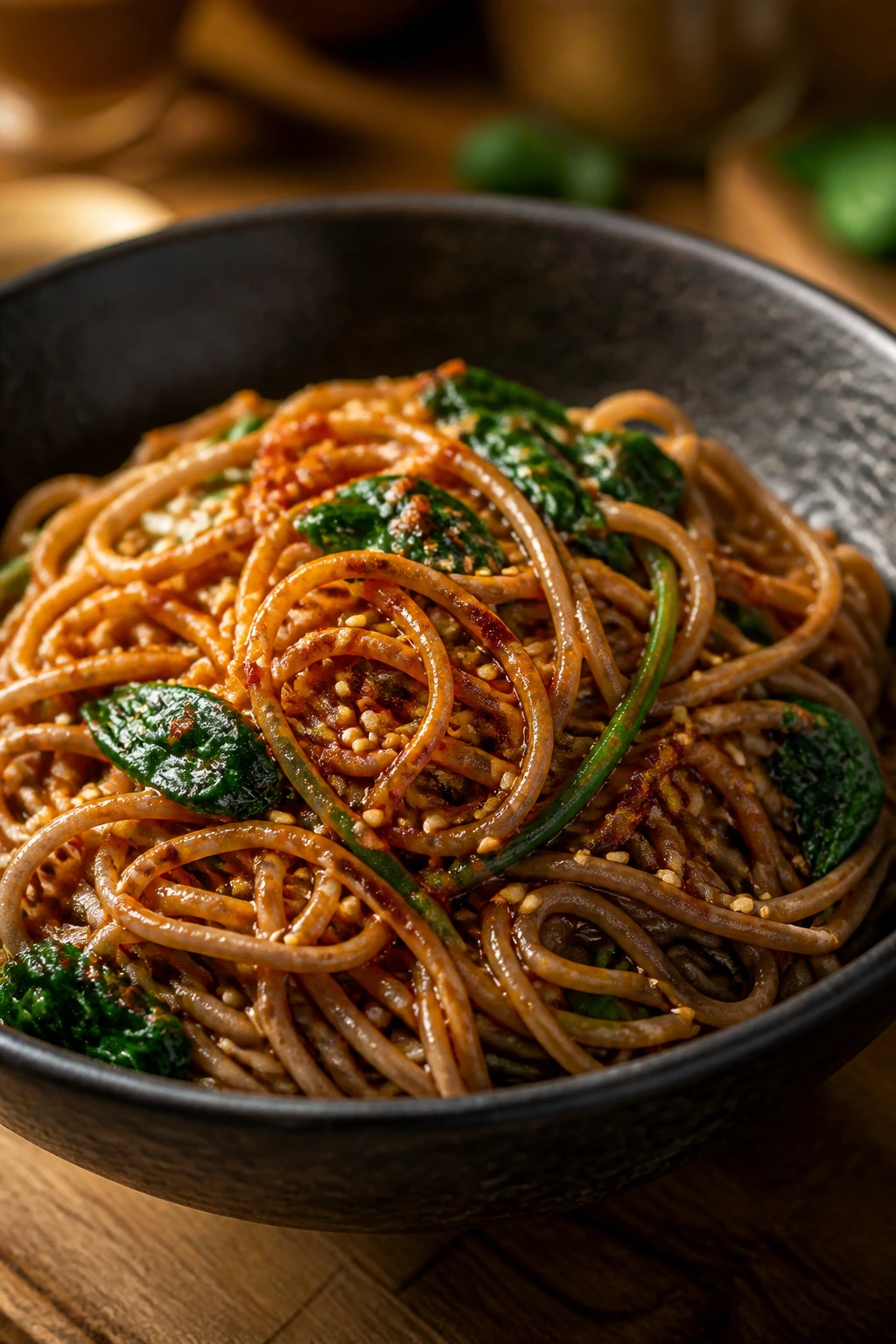
This bowl leans on heat, acid, and sesame in the way good Sichuan-inspired food often does. It’s fast, sharp, and built for people who want dinner to wake up the tongue a little.
Why It Works:
Chili oil brings both spice and aroma, black vinegar or rice vinegar adds the bite, and sesame paste or tahini gives the sauce enough body to cling to soba. Spinach folds in easily and cools the heat just enough. If you cook the noodles properly and toss them while warm, the sauce settles into every ridge.
Key Ingredients:
- 8 ounces soba noodles — dried soba is easy to keep on hand.
- 2 tablespoons chili oil or chili crisp — adjust to your heat level.
- 2 tablespoons soy sauce — salty base.
- 1 tablespoon black vinegar or rice vinegar — for tang.
- 1 tablespoon tahini or sesame paste — adds body and nuttiness.
- 1 teaspoon sugar — smooths the sharp edges.
- 1 clove garlic, finely minced — optional, but useful.
- 2 cups baby spinach or thawed frozen spinach — for color and bulk.
- Sesame seeds — for garnish.
Quick Steps:
-
Cook the soba noodles according to package directions, then drain and rinse briefly so they don’t stick.
-
In a large bowl, whisk chili oil, soy sauce, vinegar, tahini, sugar, and garlic until smooth.
-
Add the warm noodles and spinach. Toss until the spinach wilts and the sauce coats the noodles evenly.
-
Taste and adjust with a little more vinegar if you want sharper edges, or a splash of hot water if the sauce is too tight.
-
Finish with sesame seeds and serve.
Equipment for This Recipe:
- Pot for boiling noodles — soba needs a little care.
- Colander — for draining and rinsing.
- Large bowl — for tossing the sauce.
- Whisk — helps the tahini go smooth.
How to Serve This Dish:
Serve it warm or at room temperature with a fried egg, sliced cucumbers, or chopped peanuts if you have them. It makes 2 generous bowls. A cold tea or sparkling water fits the heat nicely.
Pro Tips for This Recipe:
- Rinse the soba briefly. It keeps the noodles from getting sticky.
- Use vinegar to tune the heat. More chili is not always the answer.
- Thin the sauce with a spoonful of hot water if needed. It should coat, not clump.
Variations on This Dish:
- Peanut Soba: Swap tahini for peanut butter and keep the rest the same.
- Edamame Version: Add frozen edamame for extra protein.
- Cold Noodle Salad: Chill the noodles and serve with cucumber and scallions.
Common Mistakes to Avoid with This Dish:
- Sauce that’s too thick. Tahini can seize; loosen it with water.
- Skipping the rinse on soba. Sticky noodles clump badly.
- Forgetting acid. The vinegar makes the chili oil taste sharper and cleaner.
Why Pantry Staples Do Most of the Heavy Lifting
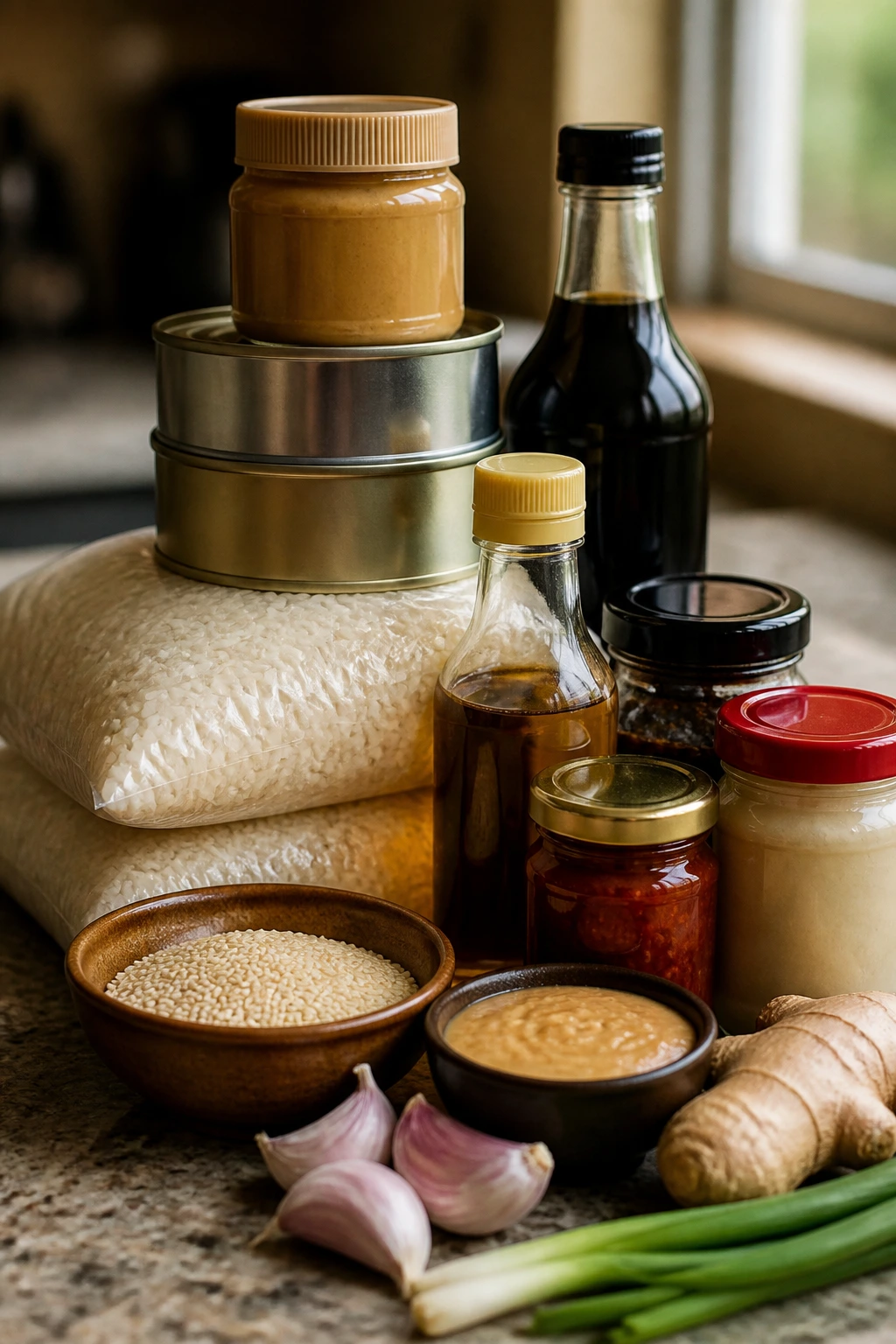
Asian inspired pantry cooking works because the flavor structure is already doing half the job for you. A spoon of soy sauce brings salt and depth. Rice vinegar or black vinegar brings the clean bite that keeps a bowl from tasting flat. Sesame oil, peanut butter, coconut milk, miso, curry paste, and chili crisp each contribute a distinct lane — nutty, creamy, fermented, spicy, or smoky — and that means you can build a proper dinner from very ordinary shelf items.
What I like about this style is how forgiving it is without becoming sloppy. Fried rice wants cold rice and a hot pan. Soups want a gentle simmer. Miso wants to be treated like a finishing touch. Noodles need enough liquid to coat them, not drown them. Those are small rules, but they’re the whole game. Follow them and the pantry starts to feel like a menu instead of a backup plan.
The other thing worth saying: these dishes are not all trying to taste the same. A bowl of sesame peanut noodles wants roundness and richness. Ginger scallion congee wants softness and restraint. Kimchi fried rice wants sharpness and funk. That range is the point. You can cook from the same shelf and still land in very different places.
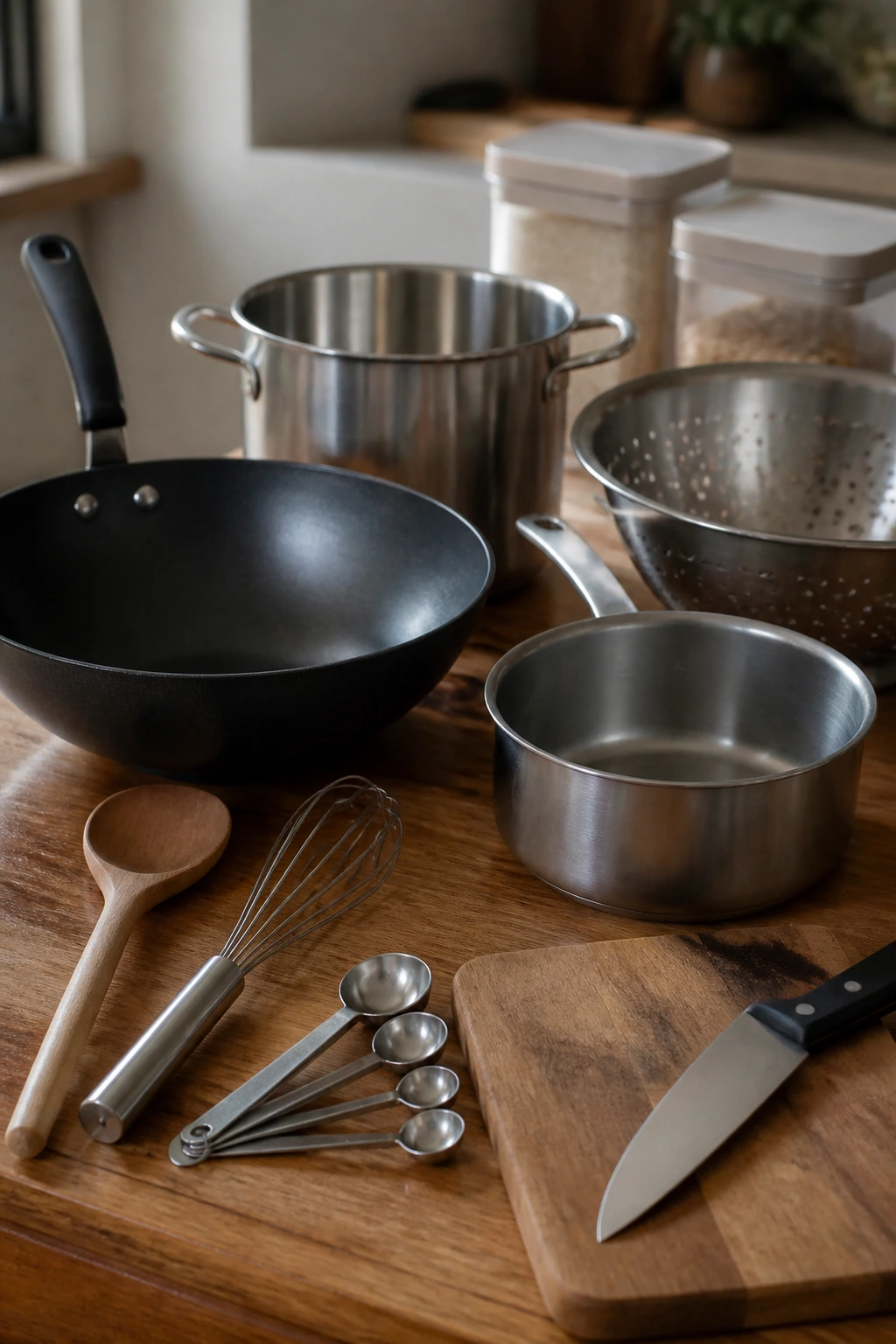
Essential Equipment for These Recipes
-
Large skillet or wok: Best for fried rice, stir-fries, and noodle tossing because the wide surface keeps food from steaming.
-
Medium saucepan: The workhorse for soups, curry, congee, and quick broth-based dishes.
-
Pot for boiling noodles or rice: Any sturdy pot works, but a deeper one helps prevent boil-overs.
-
Colander or fine-mesh strainer: Useful for noodles, rice rinsing, and draining canned ingredients cleanly.
-
Wooden spoon or heatproof spatula: Better than a flimsy spoon when you need to break up rice or turn tofu.
-
Whisk: Keeps peanut sauces, cornstarch slurries, and miso mixtures smooth.
-
Sharp chef’s knife and cutting board: Onion, scallions, cabbage, garlic, and herbs all go faster when the knife is sharp.
-
Measuring spoons and cups: These recipes depend on balance, especially the soy, vinegar, sugar, and sesame oil.
-
Airtight storage containers: Essential for leftovers; shallow containers cool rice and stir-fries faster and more safely.
-
Rice cooker or small pot with lid: Optional, but useful if rice is the base for half your week.
Smart Shopping for Sauces, Noodles, and Rice
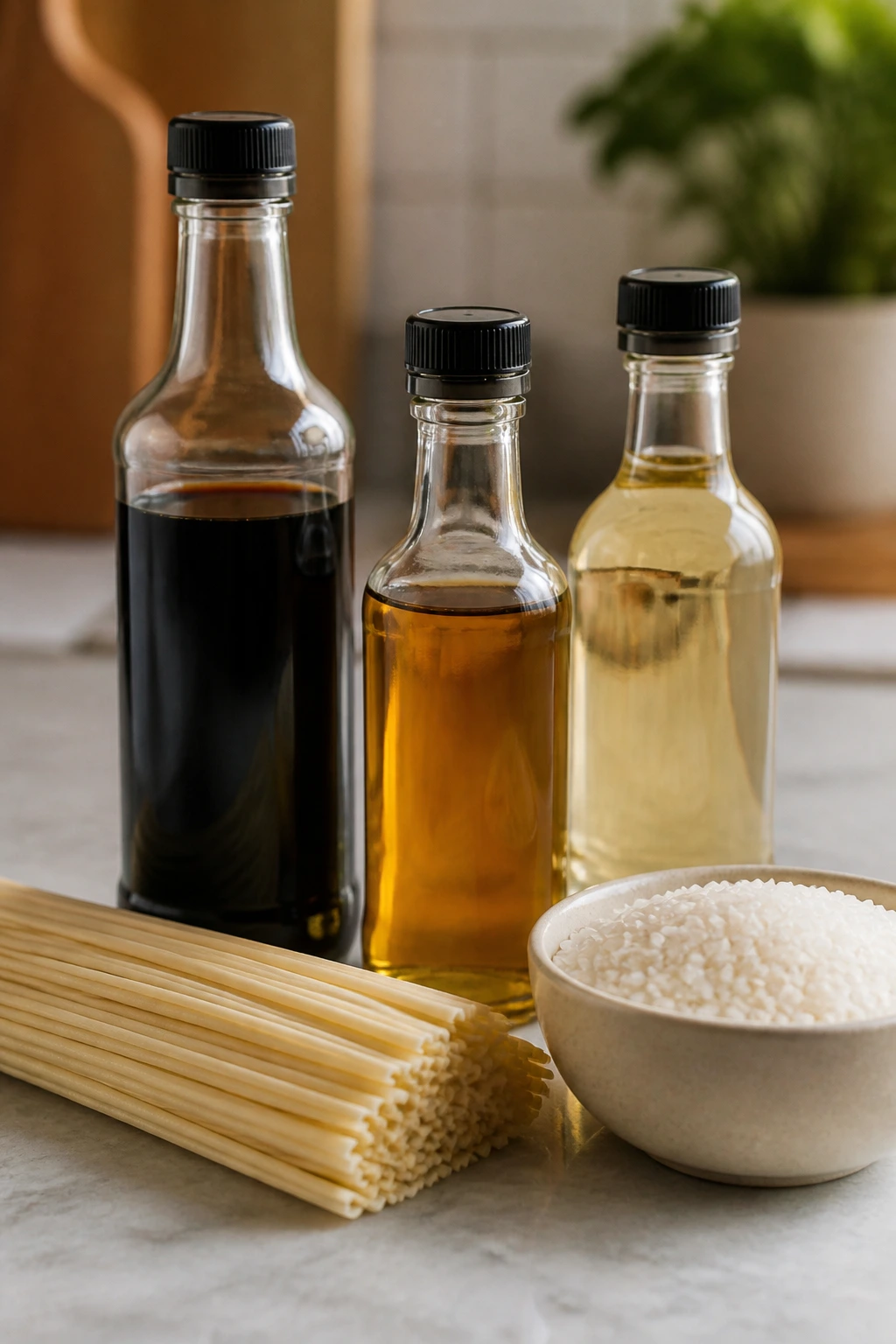
If you buy only a few things for this kind of cooking, start with soy sauce, toasted sesame oil, rice vinegar, and a decent noodle shape. Those four ingredients show up again and again, and they each play a different role. Soy sauce gives salt and depth, sesame oil finishes with aroma, rice vinegar keeps the dish bright, and noodles or rice carry the whole thing.
Choose soy sauce by purpose, not by brand loyalty. A standard Japanese shoyu or a Chinese light soy both work in most of these recipes. If you’re watching salt, buy low-sodium soy sauce, but don’t make the mistake of assuming you can pour it with abandon. Low-sodium still tastes salty. It just buys you a little room.
For sesame oil, look for toasted sesame oil in a small bottle and treat it like a finishing ingredient. It should smell nutty as soon as you open it. For rice vinegar, plain rice vinegar is the most flexible; seasoned rice vinegar brings sugar and salt with it, which is fine if you know it’s there.
Coconut milk is worth buying full-fat if you want curries and soups to feel rounded. Shake the can before opening if it sounds split. Peanut butter should be unsweetened for noodle sauces and soups, because sweetened peanut butter throws balance off fast. Miso paste keeps for a long time in the fridge, but the lighter white miso is easier to use in quick soups because it doesn’t bulldoze everything else.
For noodles, dried ramen, udon, soba, rice noodles, and even spaghetti all have a place. The shape matters less than the sauce and the cook time. Canned tuna and salmon should be drained well, while tofu should be pressed if you want browning. Frozen peas, spinach, corn, and stir-fry vegetables are all fair game. In pantry cooking, frozen is not a compromise. It’s a tool.
How to Serve These Recipes
Presentation:
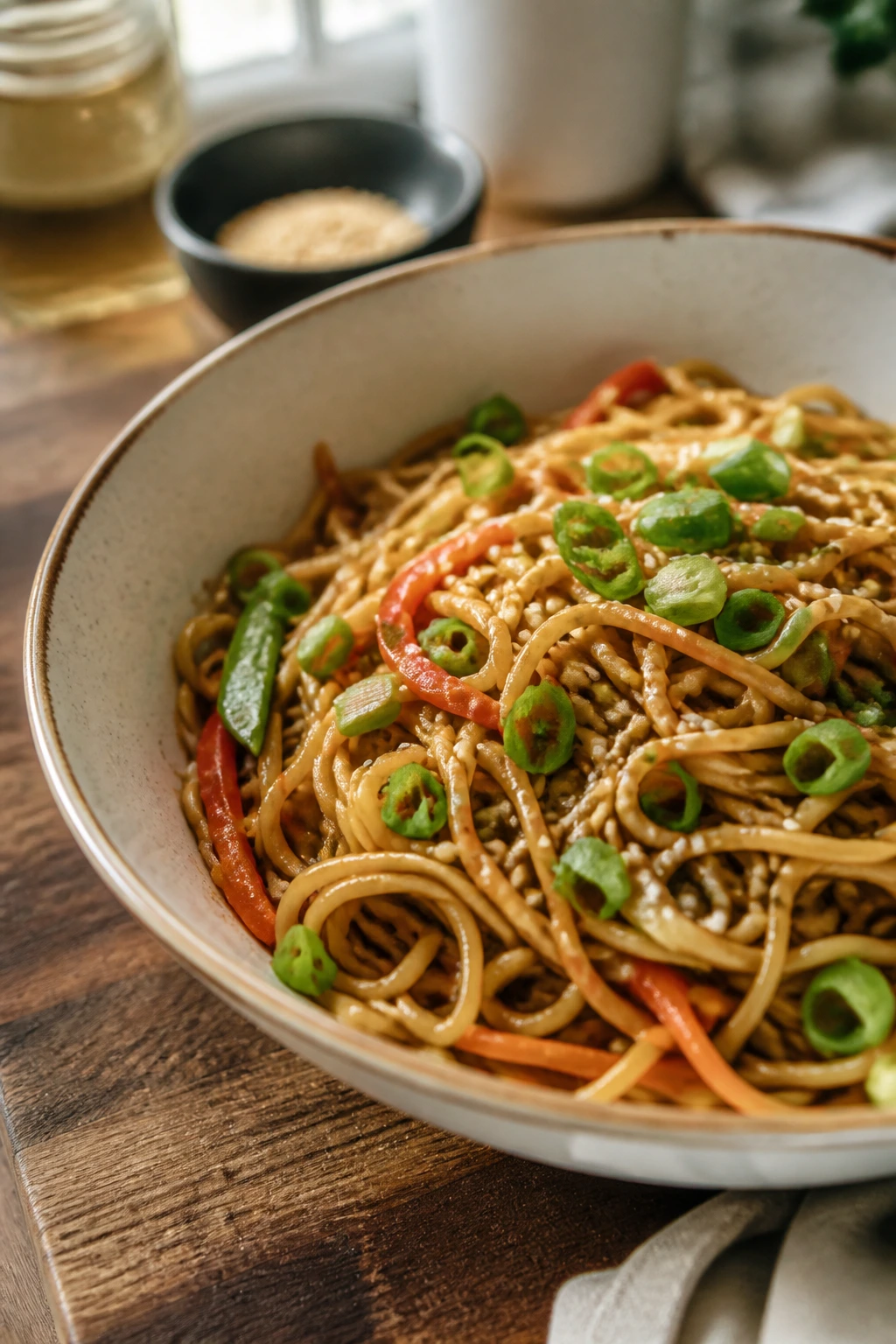
Use wide bowls for noodles and soup, and shallow bowls or plates for fried rice and stir-fries. Keep the main item slightly off-center, then finish with a small pile of scallions, sesame seeds, chili crisp, or fried garlic. A bowl looks more finished when you can still see the texture of the rice or noodles instead of a smooth surface.
Accompaniments:
Quick cucumber pickles, steamed frozen broccoli, kimchi, a fried egg, or a handful of roasted peanuts fit almost all of these dishes. A simple side salad with rice vinegar dressing also helps when the main dish leans rich, especially peanut noodles, coconut curry, or spam fried rice. If you need more starch, serve with extra rice rather than trying to stretch sauces thin.
Portions:
Most of these recipes are built for 2 to 4 servings, depending on whether rice, noodles, or protein are doing the heavy lifting. Fried rice and noodle bowls tend to eat bigger than they look, so 1 to 1 1/2 cups per person is a fair starting point. Soups and congee can be smaller per bowl if you serve them with sides.
Beverage Pairing:
Unsweetened jasmine tea, iced green tea, or plain sparkling water all work across the board. If you want something colder and a little more playful, a light lager or a crisp pilsner handles soy, chili, and sesame without fighting them. I’d skip sugary drinks; these recipes already carry enough sweetness on their own.
Easy Ways to Push the Flavors Further
Flavor Enhancement:
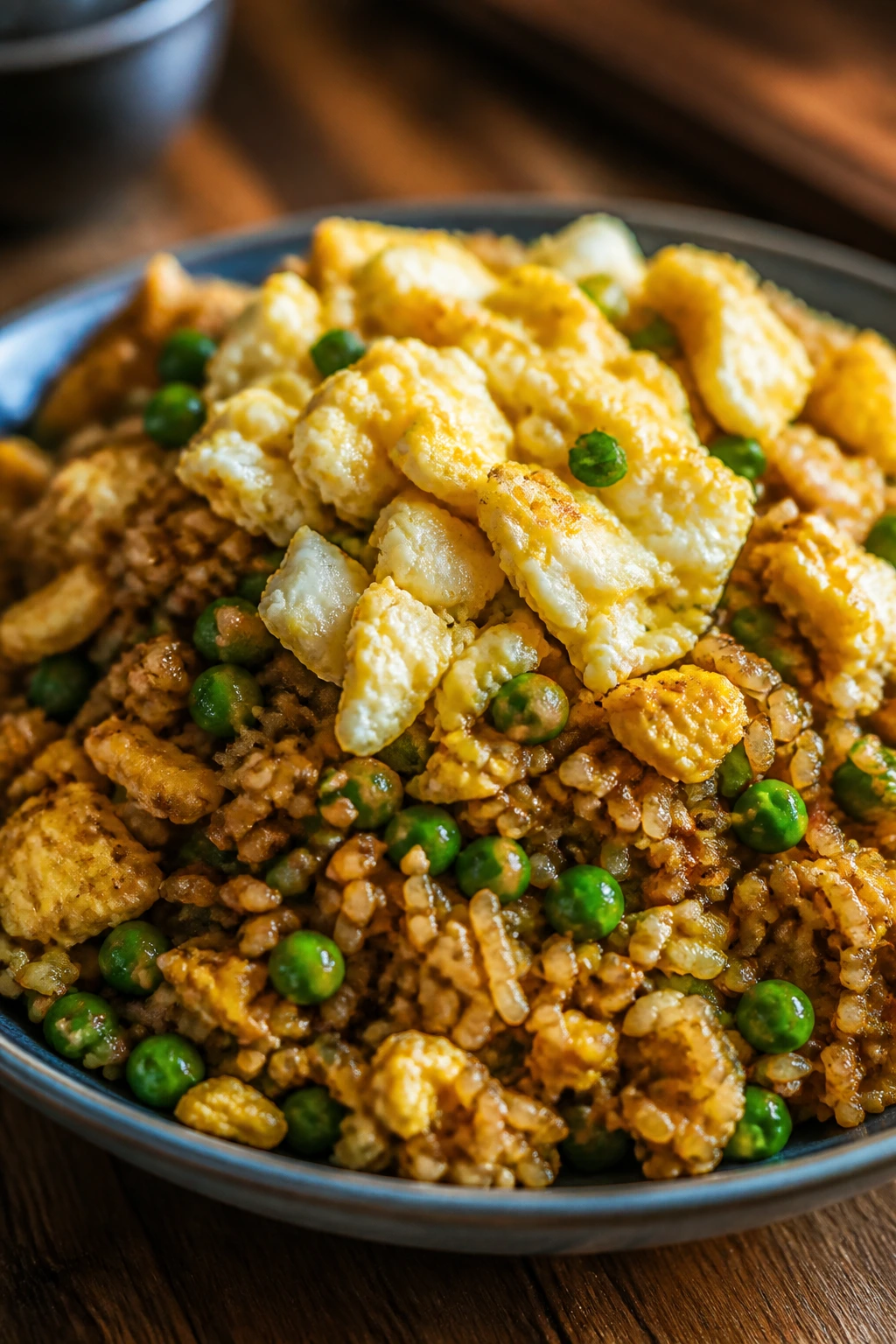
A final splash of rice vinegar, black vinegar, or lime juice does more for these dishes than another tablespoon of soy sauce ever will. Acid wakes up fried rice, noodles, curry, and soup in a way salt can’t. If the bowl tastes heavy, reach for vinegar first.
Customization:
Frozen peas, corn, spinach, cabbage, mushrooms, and edamame are easy add-ins that stretch the meal without wrecking the flavor profile. Cabbage is especially useful because it soaks up sauce and cooks fast. Mushrooms bring depth when a dish feels too simple.
Serving Suggestions:
Keep a little stash of scallions, sesame seeds, chili crisp, fried garlic, and chopped peanuts nearby. Those finishing touches make the dishes feel layered, and they only take a second to add. A fried egg works on half this list, and I’m not even kidding.
Make-It-Yours:
For gluten-free cooking, switch soy sauce to tamari and use rice noodles, rice, or soba labeled gluten-free. For dairy-free meals, skip butter and use neutral oil or sesame oil at the end. For extra protein, add tofu, eggs, canned fish, or chickpeas instead of trying to force meat into everything. For more heat, use chili crisp, gochujang, or red curry paste instead of dumping in dry flakes and hoping for the best.
Make-Ahead, Storage, and Reheating Guidance
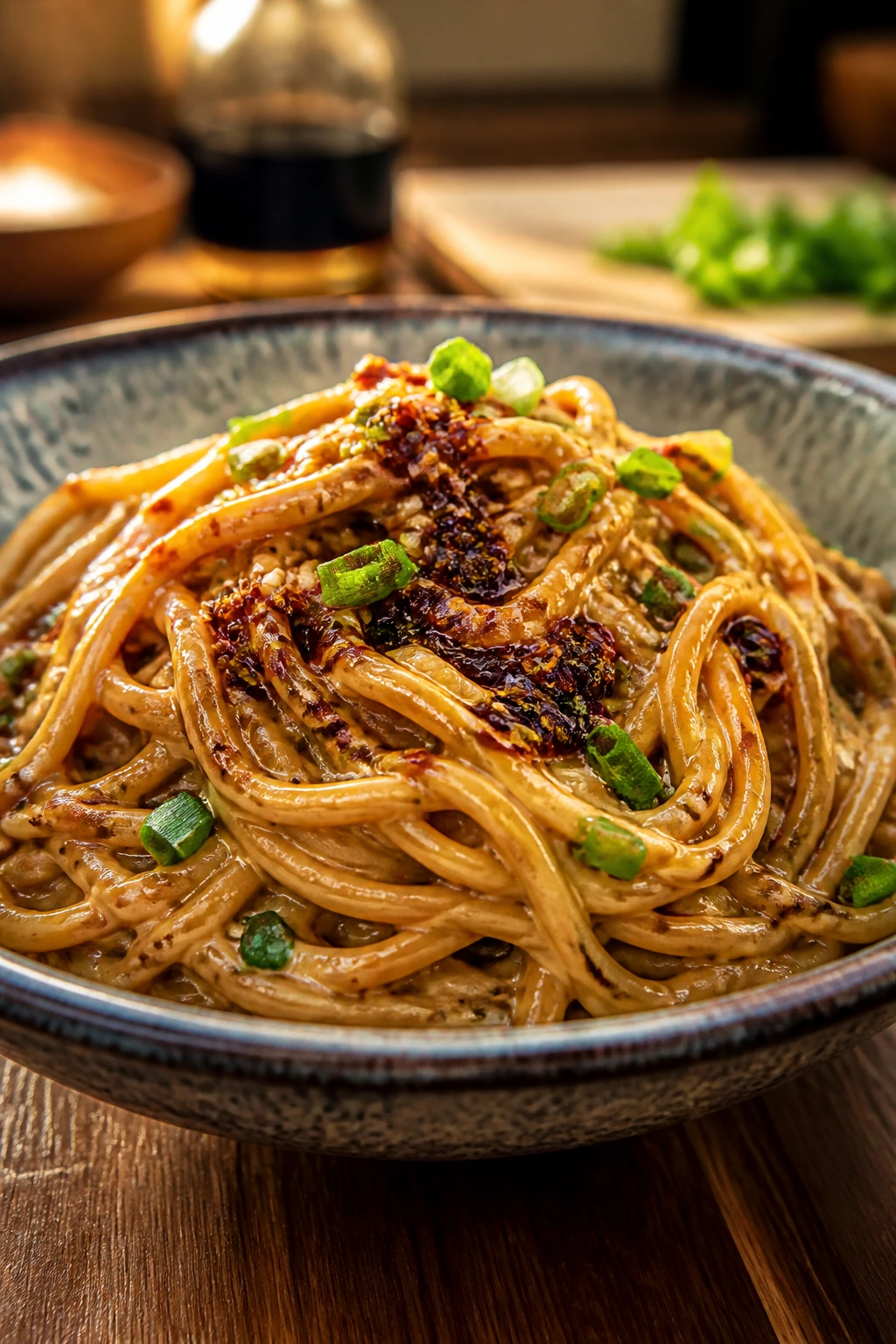
Most of these dishes keep 3 to 4 days in the refrigerator when stored in shallow airtight containers. Fried rice, braised tofu, curry, soup, and congee hold up well. Noodles are a little more delicate; they’re best within 2 to 3 days, and they improve if you keep the sauce separate from the noodles when possible.
Freezing works best for soups, curries, braises, and congee. Those can usually stay in the freezer for up to 2 to 3 months. Fried rice can be frozen too, though the texture softens a bit after reheating. Noodle dishes are the least freezer-friendly unless the sauce and noodles are stored separately.
For reheating, use a skillet when you want to preserve texture. Fried rice and stir-fries come back well with a teaspoon or two of water and a lid for the last minute. Soups and congee reheat gently on the stove, and you can thin them with broth or water if they’ve thickened too much in the fridge. Noodles usually need a splash of hot water or broth plus a quick toss in a pan.
Cooked rice deserves special handling. Cool it quickly, get it into the fridge within 2 hours, and sooner if the room is warm. Spread it in a shallow container if you can. That habit keeps fried rice safer and better textured. If you make congee ahead, expect it to thicken overnight; that’s normal. Just add water and stir until it loosens again.
Variations and Adaptations to Try
-
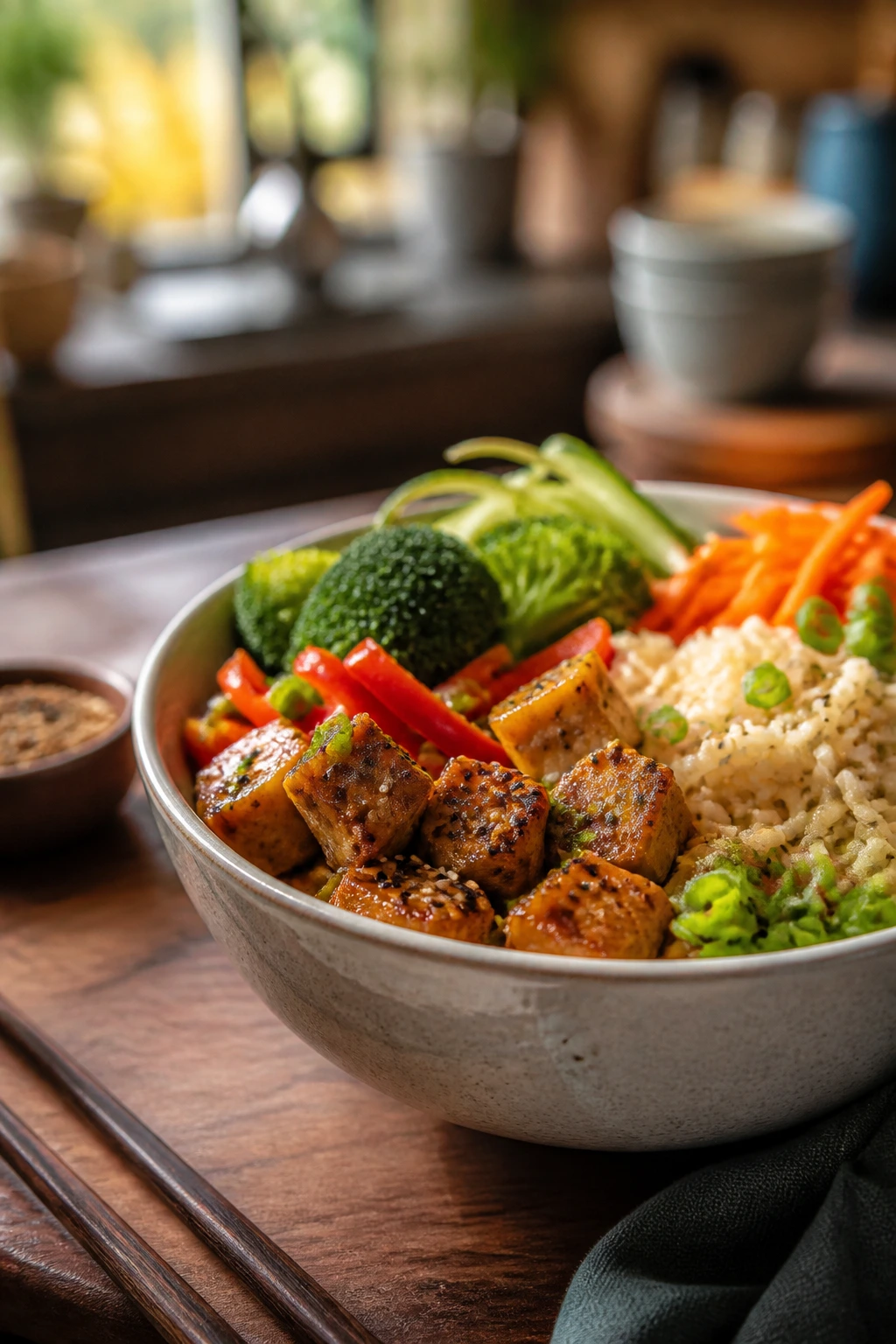
Gluten-Free Pantry Swap: Use tamari instead of soy sauce, rice noodles or rice instead of wheat noodles, and check curry paste, chili crisp, and canned fish labels for wheat. This swap is easiest on soups, curries, and rice bowls, but it works across the whole collection if you read the bottle once.
-
Vegetarian and Vegan Route: Replace canned fish and Spam with tofu, chickpeas, lentils, or mushrooms. Use vegetable broth instead of chicken broth, and skip the egg where needed. The flavor profile stays intact because soy sauce, miso, curry paste, sesame oil, and vinegar are doing the core work.
-
Lower-Sodium Shift: Buy low-sodium soy sauce and use a little less than the recipe calls for, then lean harder on ginger, garlic, vinegar, scallions, and sesame oil. That way the dish still tastes complete, not watered down. A squeeze of acid at the end matters more here.
-
Heat-Lover’s Shelf: Keep chili crisp, gochujang, sambal, and red curry paste on hand. Add heat at the end when possible, because the aromatics stay sharper that way. If you like a layered burn, use both a paste and a finishing oil instead of doubling one ingredient.
-
Budget Bowl Mode: Rely on rice, eggs, frozen vegetables, tofu, lentils, and canned tuna or salmon. These ingredients stretch well and don’t ask much of the fridge. The key is still balance — a cheap bowl can taste excellent if the sauce is tuned right.
-
Lunch-Box Friendly Version: Make the sauces a little thicker and pack crunchy toppings separately so they don’t go soft. Fried rice, congee, curry, and braised tofu travel well if you let them cool fully before sealing the container. Noodle dishes are fine too, but add a splash of water when reheating.
Common Mistakes to Avoid
-
Using the wrong heat for the job. Fried rice and stir-fries need a hot pan, or they steam and go limp. Soup, congee, and curry need a gentler simmer, or they scorch and taste harsh. The fix is simple: match the heat to the texture you want.
-
Pouring in too much soy sauce. People do this because soy is easy to overestimate. The dish ends up dark, salty, and one-note. Start modestly, taste, then add a little more if the bowl still feels pale.
-
Adding sesame oil too early. Toasted sesame oil is fragrant, not sturdy. If it cooks for too long, the aroma fades. Finish with it, don’t build the whole dish on it.
-
Overcooking noodles. Rice noodles, soba, udon, and ramen all keep softening after draining. Pull them a little early so they still have bite when they hit the sauce. If they sit in the pan too long, the texture turns heavy fast.
-
Ignoring acid. Rice vinegar, black vinegar, lime, kimchi juice, and even a little pineapple juice matter because they keep rich sauces from flattening out. A dish with soy, coconut milk, peanut butter, or Spam usually needs something sharp at the end.
-
Skipping texture. If everything in the bowl is soft, the meal feels dull no matter how seasoned it is. A fried egg, scallions, sesame seeds, crispy garlic, peanuts, or browned tofu fixes that.
Pantry-Recipe FAQs
What pantry ingredients matter most for Asian inspired cooking?
Start with soy sauce, rice vinegar, toasted sesame oil, rice, a few noodle shapes, and one creamy ingredient like peanut butter or coconut milk. After that, add chili crisp, miso, curry paste, or gochujang depending on what flavors you like most. Those core items give you enough range to make noodles, soups, fried rice, and bowls without a huge shopping list.
Can I use spaghetti instead of Asian noodles?
Yes, and it works better than people think. Spaghetti, linguine, and even ramen-style instant noodles can stand in for rice noodles or soba if you cook them to a firm bite. The sauce matters more than the exact noodle shape in most of these dishes.
How do I keep fried rice from getting mushy?
Use cold rice, a hot pan, and not too much sauce. Fresh rice releases too much steam, which makes the grains cling together. If the rice came out of the fridge in one giant block, break it apart before it ever touches the skillet.
Is tamari the same as soy sauce?
Not exactly, but it behaves similarly in most of these recipes. Tamari is usually gluten-free and often a little rounder in flavor. You can swap it 1:1 for soy sauce if you need to avoid wheat.
Can these recipes be made vegetarian or vegan?
Most of them can, and the swap is usually easy. Replace chicken broth with vegetable broth, use tofu or chickpeas instead of meat or fish, and skip butter or eggs where needed. The seasonings are doing most of the work anyway, which is why this style adapts so well.
What if my sauce tastes too salty?
Add acid, a little sugar, or a splash of water before you add more of anything else salty. Rice vinegar, lime juice, or even a bit of coconut milk can soften the edge. If the dish is already on the plate, a fried egg or extra rice can help spread the salt out.
Can I freeze these meals?
Soups, curries, braises, and congee freeze well for up to 2 to 3 months. Fried rice can freeze, though the texture softens a bit when reheated. Noodle dishes are the least freezer-friendly unless you keep the sauce separate and cook fresh noodles later.
What’s the easiest dish in the whole group for a beginner?
Egg drop soup, sesame peanut noodles, and garlic-soy fried rice are the least fussy. They rely on a short ingredient list and a few clear cues: simmer, whisk, toss, taste. If you can boil water and stir a skillet, you can make any of those.
Pantry Supper Notes
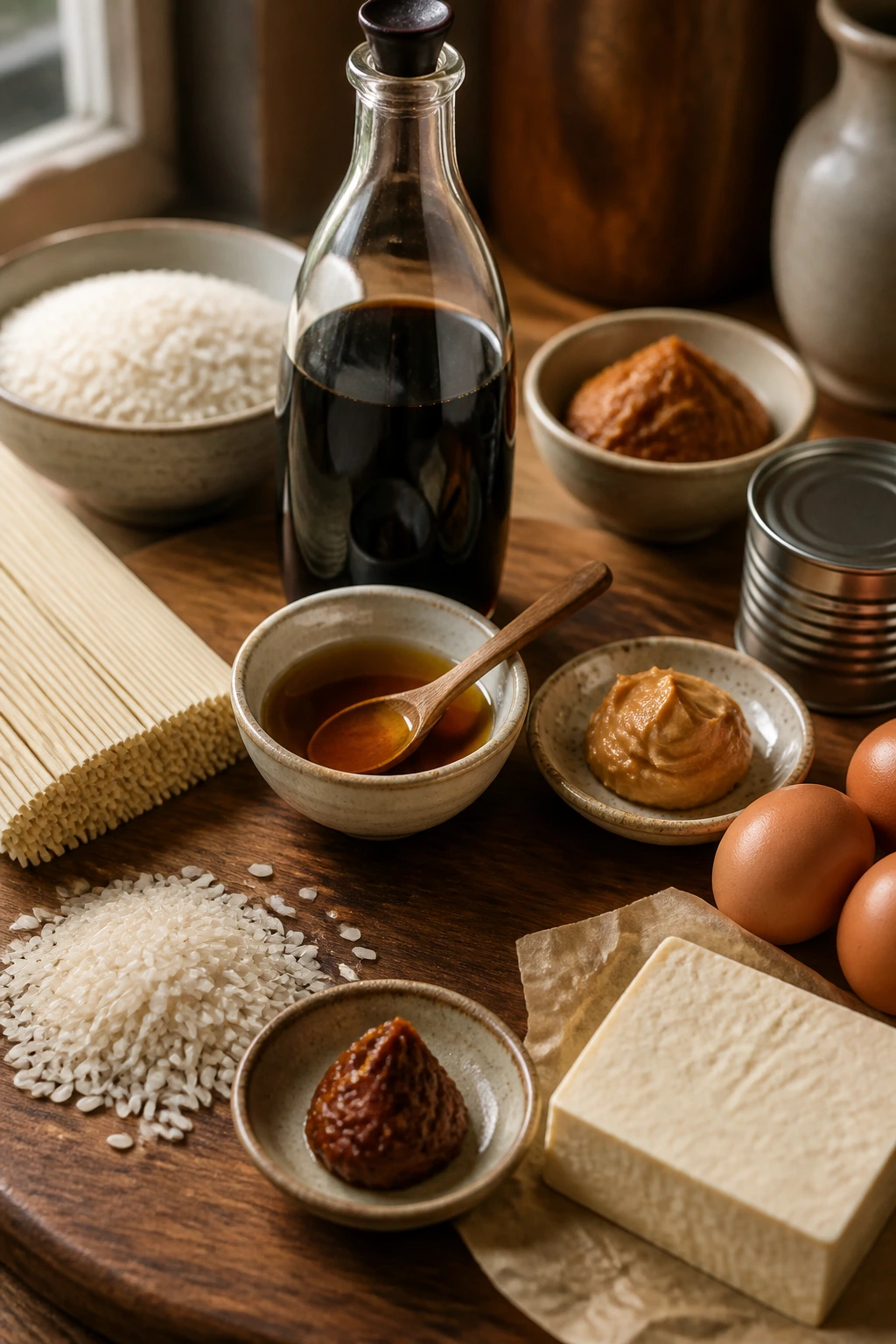
There’s a reason these recipes keep showing up in my kitchen: they solve dinner without making a project out of it. Rice, noodles, soy sauce, sesame oil, curry paste, miso, peanut butter, canned fish, tofu, and eggs can cover a shocking amount of ground when you use them with a little care.
The best part is that none of this food feels like a compromise if you season it properly and keep the textures honest. Crisp where it should be crisp. Soft where it should be soft. Sharp where it needs a little edge. That’s the whole rhythm.
Keep the shelf stocked with a few smart bottles and jars, and you’ll always have a path to dinner that doesn’t depend on a perfect fridge.