



A brownie tray tells the truth the minute you lift the parchment. If the top shatters into a thin shell and the center gives a little, you’ve got the texture people chase. If the cut edges smear and the crumb looks dry, something went off by a few minutes or a few vigorous stirs. Brownies are not hard, but they are touchy in the ways that matter.
These classic brownies lean into that line between handsome and dense. Some come out with a glassy crust that cracks under the knife. Others wear swirls, nuts, ribbons of caramel, or a glossy ganache cap that makes a plain square look dressed for company. I love that about them. A good pan doesn’t need decoration to be appealing, but a little drama never hurts.
The recipes below all start from a familiar brownie backbone, then push in a different direction: darker, nuttier, brighter, saltier, chewier, or more polished on top. That means you can pick based on mood, pantry, or the kind of crowd you’re feeding without learning a new method every time. And yes, some of these are prettier than they have any right to be.
Why These Brownies Earn a Place on the Cooling Rack
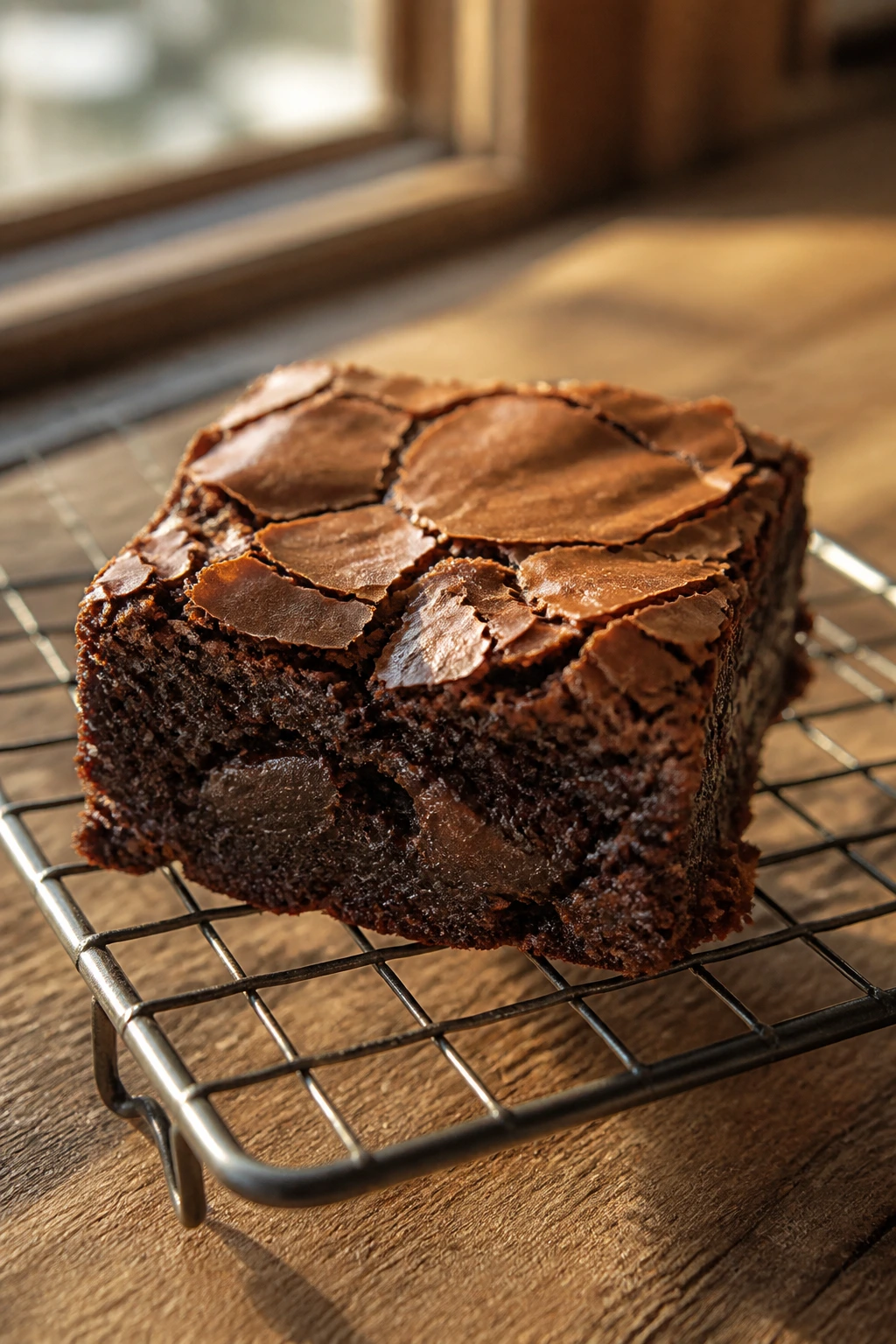
- Crackly Tops: A few recipes use warm butter and a longer egg whisk so the surface dries into that thin, shiny skin that breaks cleanly under a knife.
- Pan-Friendly Sizes: Every brownie here is built for a standard 8-inch or 9-inch square pan, so you’re not hunting for specialty tins.
- Swirl and Finish Options: Jam, caramel, cream cheese, ganache, and nut butters turn one pan of batter into something with actual visual shape.
- Clean Slices: Most of these chill long enough to cut into neat squares, which matters when you want the brownies to look deliberate, not hacked apart.
- Easy to Dress Up: A pinch of flaky salt, a handful of toasted nuts, or a spoon of whipped cream is enough to make the top look finished.
1. Glossy Cocoa Crinkle Brownies
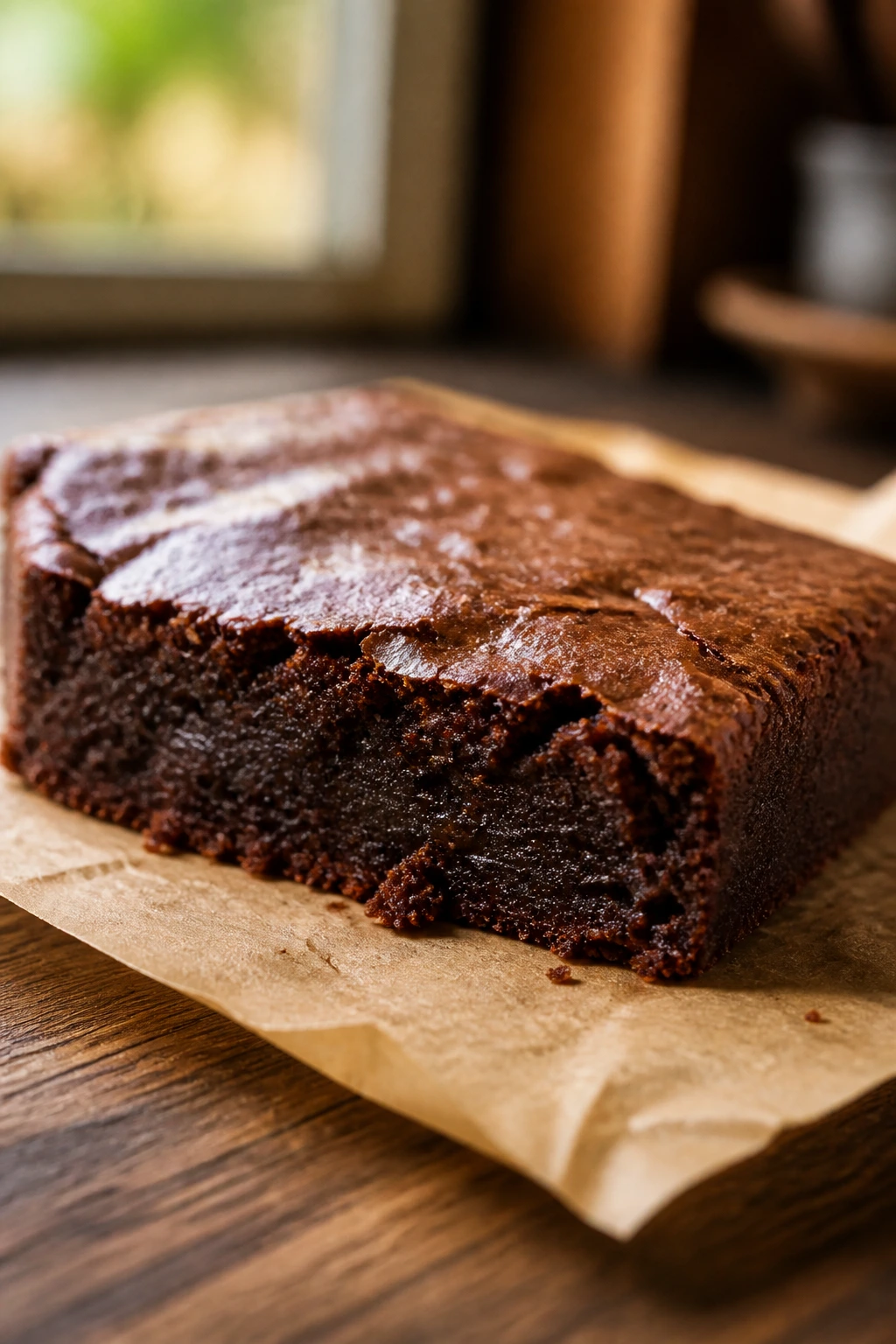
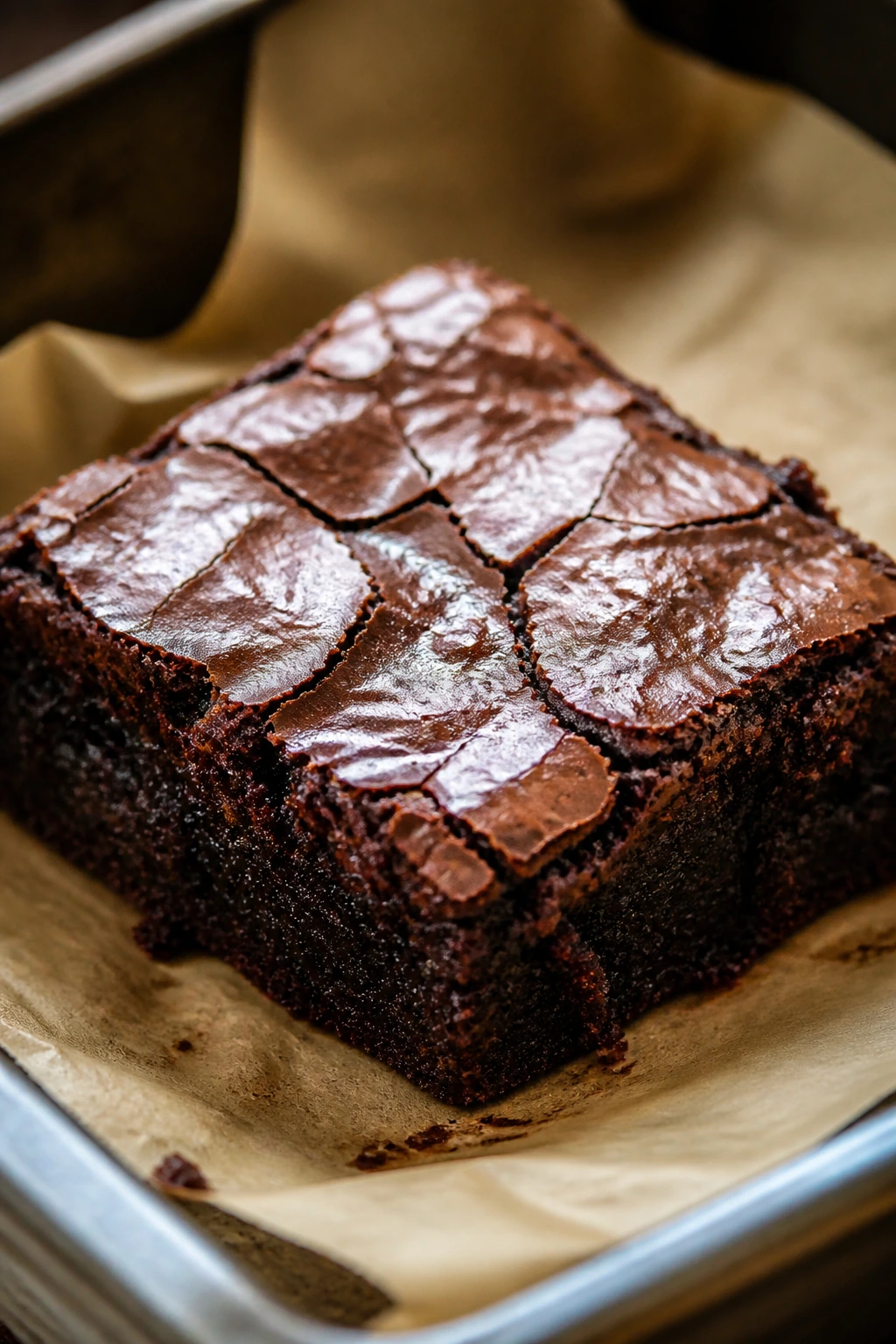
A pan of these comes out dark, shiny, and almost lacquered on top. The crumb is dense and fudgy, with a little give in the middle and a clean chocolate smell that fills the kitchen before the timer even finishes. I reach for this version when I want the brownie itself to do the work. No frosting. No extra noise.
Why It Works:
Warm butter helps the sugar dissolve enough to build that thin crackly top, and whisking the eggs long enough gives the batter a glossy look before the flour goes in. The small amount of flour keeps the center compact instead of airy. Cocoa powder carries the chocolate flavor without making the texture heavy, and a few chips melt into soft pockets if you want more contrast. Flaky salt on top keeps the sweetness from flattening out.
Key Ingredients:
- 1/2 cup (1 stick) unsalted butter
- 1 cup granulated sugar
- 2 large eggs, room temperature
- 1 teaspoon vanilla extract
- 1/2 cup unsweetened cocoa powder, sifted
- 1/2 cup all-purpose flour
- 1/4 teaspoon fine salt
- 1/2 cup semisweet chocolate chips, optional
- Flaky sea salt, for finishing
Quick Steps:
- Preheat the oven to 350°F (175°C) and line an 8-inch square metal pan with parchment, leaving a sling on two sides.
- Melt the butter in a medium saucepan or microwave-safe bowl, then whisk in the sugar for 30 seconds until the mixture looks glossy.
- Whisk in the eggs one at a time for about 30 seconds each, then add the vanilla. The batter should look thick and shiny.
- Fold in the cocoa, flour, and salt until no dry streaks remain. Stir in chocolate chips if you want extra pockets of melt.
- Spread the batter into the pan, smooth the top, and bake for 24 to 28 minutes, until the center still gives slightly and a toothpick comes out with moist crumbs.
- Cool for at least 1 hour before slicing, then finish with a few grains of flaky salt.
Equipment for This Recipe:
- 8-inch square metal baking pan
- Parchment paper
- Medium saucepan or microwave-safe bowl
- Whisk and rubber spatula
How to Serve This Dish:
Cut these into 16 small squares and set them on a dark plate so the glossy top shows. A scoop of vanilla ice cream works, but a cold glass of milk or a shot of espresso is even better if you want the chocolate to stay front and center.
Pro Tips for This Recipe:
- Whisk the sugar into the warm butter before adding eggs; that little head start helps the top set shiny.
- Don’t overbake for a clean toothpick. You want moist crumbs, not a dry stick.
- If your pan runs hot, start checking at 22 minutes.
- A light dusting of flaky salt right after baking gives the top a speckled, bakery look.
Variations on This Dish:
- Dark Cocoa Edge: Swap 1 tablespoon of the cocoa for black cocoa if you want a deeper color and a slightly Oreo-like edge.
- Chip Pocket Brownies: Fold in 3/4 cup chopped semisweet chocolate instead of chips for larger melted pockets.
- Nut Finish: Press 1/3 cup chopped toasted pecans over the top before baking for a more textured surface.
Common Mistakes to Avoid with This Dish:
- Don’t stir the flour in until smooth like cake batter. The brownies turn tighter and lose that dense center.
- Don’t bake until the middle looks fully set in the oven. It keeps cooking in the pan.
- Don’t slice while warm unless you want smeared edges. Wait for the crumb to set.
2. Toasted Walnut Corner Brownies
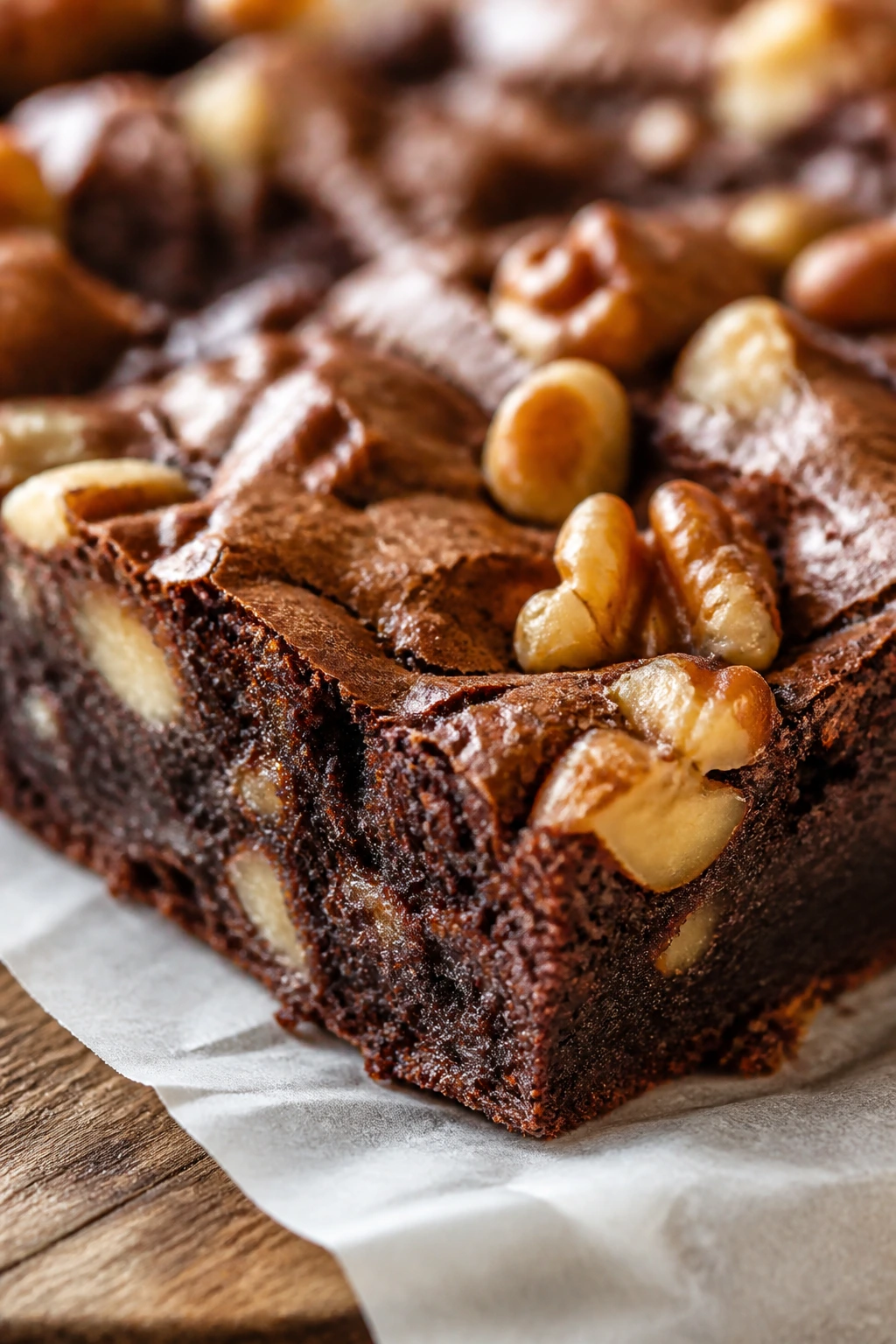
Walnuts don’t make brownies rustic. They make them deliberate. Toast them first and they smell warm and almost buttery, which matters because the nut flavor sits right beside the cocoa instead of hiding under it. These are the brownies I’d put in a tin for someone who likes a little crunch with the fudginess.
Why It Works:
Brown sugar deepens the batter and gives the edges a caramel note that works with toasted walnuts. The nuts are folded in and pressed on top, so you get texture in the middle and a pretty, jagged surface. Toasting matters here. Raw walnuts can taste flat, but 8 to 10 minutes in a 350°F oven wakes them up fast. A small pinch of cinnamon is optional, though I usually skip it unless I want the brownies to lean more like a bakery counter square.
Key Ingredients:
- 1/2 cup (1 stick) unsalted butter, melted
- 1/2 cup granulated sugar
- 1/2 cup packed light brown sugar
- 2 large eggs
- 1 teaspoon vanilla extract
- 1/2 cup unsweetened cocoa powder
- 1/2 cup all-purpose flour
- 1/4 teaspoon fine salt
- 1 cup walnuts, toasted and chopped
- 1/4 cup walnut halves for the top
Quick Steps:
- Heat the oven to 350°F (175°C), line an 8-inch square pan with parchment, and toast the walnuts for 8 to 10 minutes until fragrant.
- Whisk the melted butter, granulated sugar, and brown sugar together until the mixture looks grainy and glossy.
- Add the eggs and vanilla and whisk for about 45 seconds. The batter should thicken slightly.
- Fold in the cocoa, flour, salt, and chopped walnuts until just combined.
- Spread into the pan, press the walnut halves into the top, and bake for 25 to 30 minutes.
- Cool fully before cutting, or the nuts will drag the crumb.
Equipment for This Recipe:
- 8-inch square baking pan
- Parchment paper
- Rimmed sheet pan for toasting walnuts
- Whisk and spatula
How to Serve This Dish:
These look best cut into neat rectangles with the walnut halves visible on top. I like them with black coffee or a small scoop of vanilla bean ice cream, which softens the crunch without covering it.
Pro Tips for This Recipe:
- Toast the walnuts first and let them cool before mixing them in.
- Use chopped walnuts in the batter and halves on top if you want the pan to look cleaner.
- A metal pan gives sharper edges than glass.
- If your nuts are old and dusty, replace them. Stale walnuts turn bitter fast.
Variations on This Dish:
- Maple Walnut Brownies: Replace 2 tablespoons of the granulated sugar with maple sugar or brush a little maple syrup over the top after baking.
- Espresso Walnut Brownies: Add 1 teaspoon instant espresso powder to the cocoa for a darker, more grown-up bite.
- Chocolate Chunk Walnut Brownies: Swap half the walnuts for chopped dark chocolate if you want more melt than crunch.
Common Mistakes to Avoid with This Dish:
- Don’t skip toasting the walnuts. Untoasted nuts disappear into the batter.
- Don’t add too many nuts. The brownie starts falling apart instead of slicing cleanly.
- Don’t use a glass pan and expect the same edges. It bakes slower and softer.
3. Cream Cheese Swirl Brownies
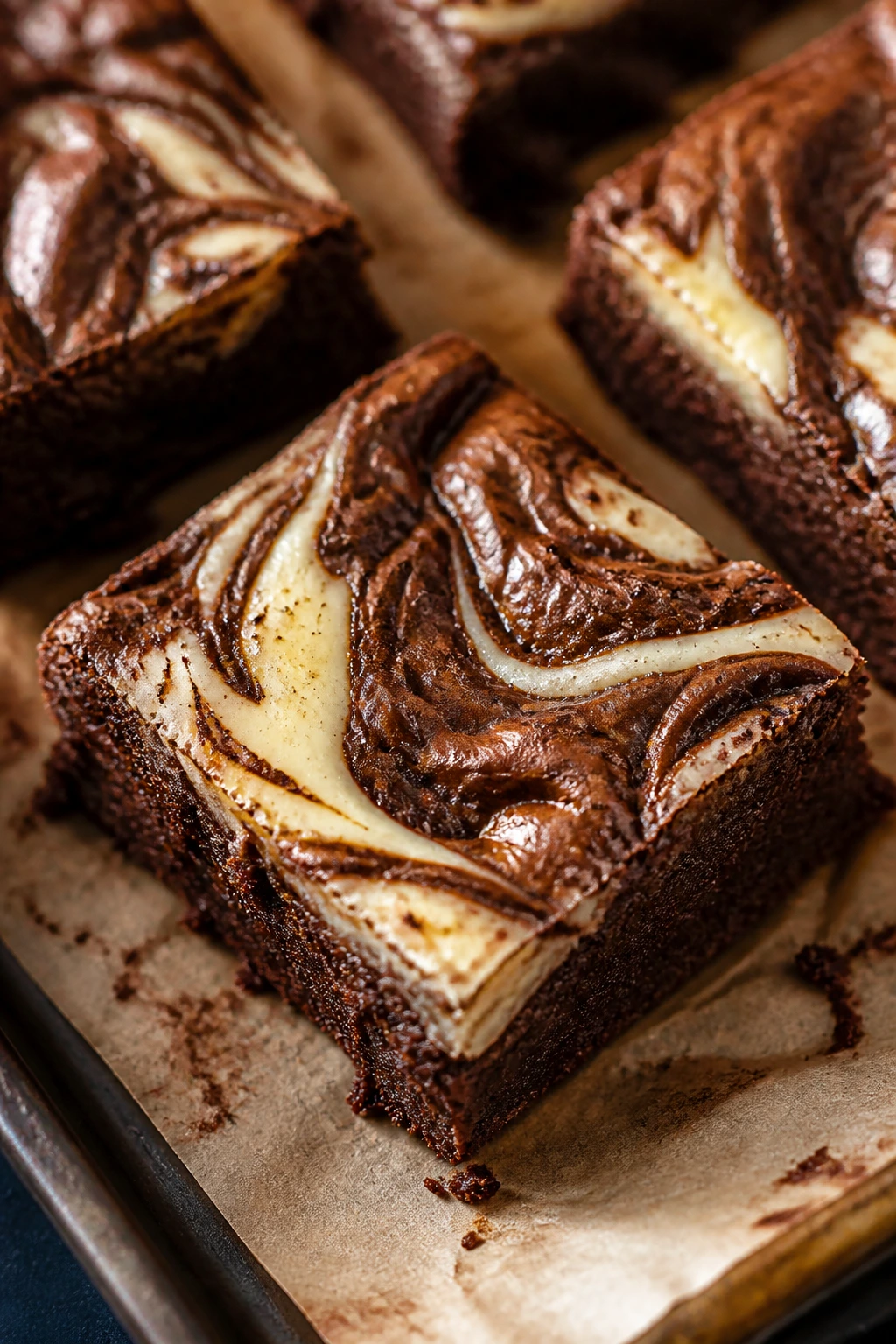
These are the brownies that make people pause before taking a square. The white swirl against the dark batter looks sharp and clean, and the cream cheese bakes into a tangy stripe that cuts the richness in a very useful way. I like them cold from the fridge. The swirl firms up and the brownie eats almost like a layered bar.
Why It Works:
Cream cheese brings acid and fat, so the filling stays smooth while the brownie underneath stays dense. A little sugar and one egg yolk keep the swirl from weeping into the batter. The trick is to drop the filling in thick spoonfuls rather than spreading it everywhere; you want visible streaks, not one pale layer. A quick pass with a knife or skewer creates the marble pattern without overblending the two batters.
Key Ingredients:
- For the Brownie Base:
- 1/2 cup (1 stick) unsalted butter
- 1 cup granulated sugar
- 2 large eggs
- 1 teaspoon vanilla extract
- 1/2 cup unsweetened cocoa powder
- 1/2 cup all-purpose flour
- 1/4 teaspoon fine salt
- For the Cream Cheese Swirl:
- 8 ounces cream cheese, softened
- 1/4 cup granulated sugar
- 1 large egg yolk
- 1 teaspoon vanilla extract
- Pinch of fine salt
Quick Steps:
- Preheat the oven to 350°F (175°C) and line an 8-inch square pan with parchment.
- Make the brownie batter by melting the butter, whisking in the sugar, then adding the eggs and vanilla.
- Fold in the cocoa, flour, and salt until the batter turns thick and dark.
- Beat the cream cheese, sugar, egg yolk, vanilla, and salt until smooth and spreadable.
- Spread the brownie batter in the pan, drop the cream cheese mixture in spoonfuls, and drag a knife through the top in slow S-shapes.
- Bake for 28 to 32 minutes, until the center is just set and the swirl no longer looks wet.
Equipment for This Recipe:
- 8-inch square baking pan
- Electric mixer or sturdy whisk
- Mixing bowls
- Paring knife or skewer for swirling
How to Serve This Dish:
Cut these into small squares because the swirl makes them look richer than plain brownies. A few raspberries on the plate make sense here, and so does a cup of coffee with actual bitterness to balance the cream cheese.
Pro Tips for This Recipe:
- Soften the cream cheese fully or you’ll get lumps in the swirl.
- Don’t over-swirl. Two or three passes is enough.
- Chill the brownies before slicing if you want the stripes to stay sharp.
- If the top browns too fast, tent loosely with foil for the last 5 minutes.
Variations on This Dish:
- Lemon Cheesecake Swirl: Add 1 teaspoon lemon zest to the cream cheese layer for a brighter finish.
- Chocolate Chip Swirl: Fold 1/3 cup mini chocolate chips into the brownie batter for more texture.
- Cherry Swirl: Spoon 2 tablespoons cherry preserves into the cream cheese before marbling.
Common Mistakes to Avoid with This Dish:
- Don’t let the cream cheese layer turn runny. It should be thick enough to sit on top.
- Don’t use a warm brownie base for the swirl. The filling sinks too fast.
- Don’t cut the bars before they cool. The swirl needs time to set.
4. Salted Caramel Ribbon Brownies
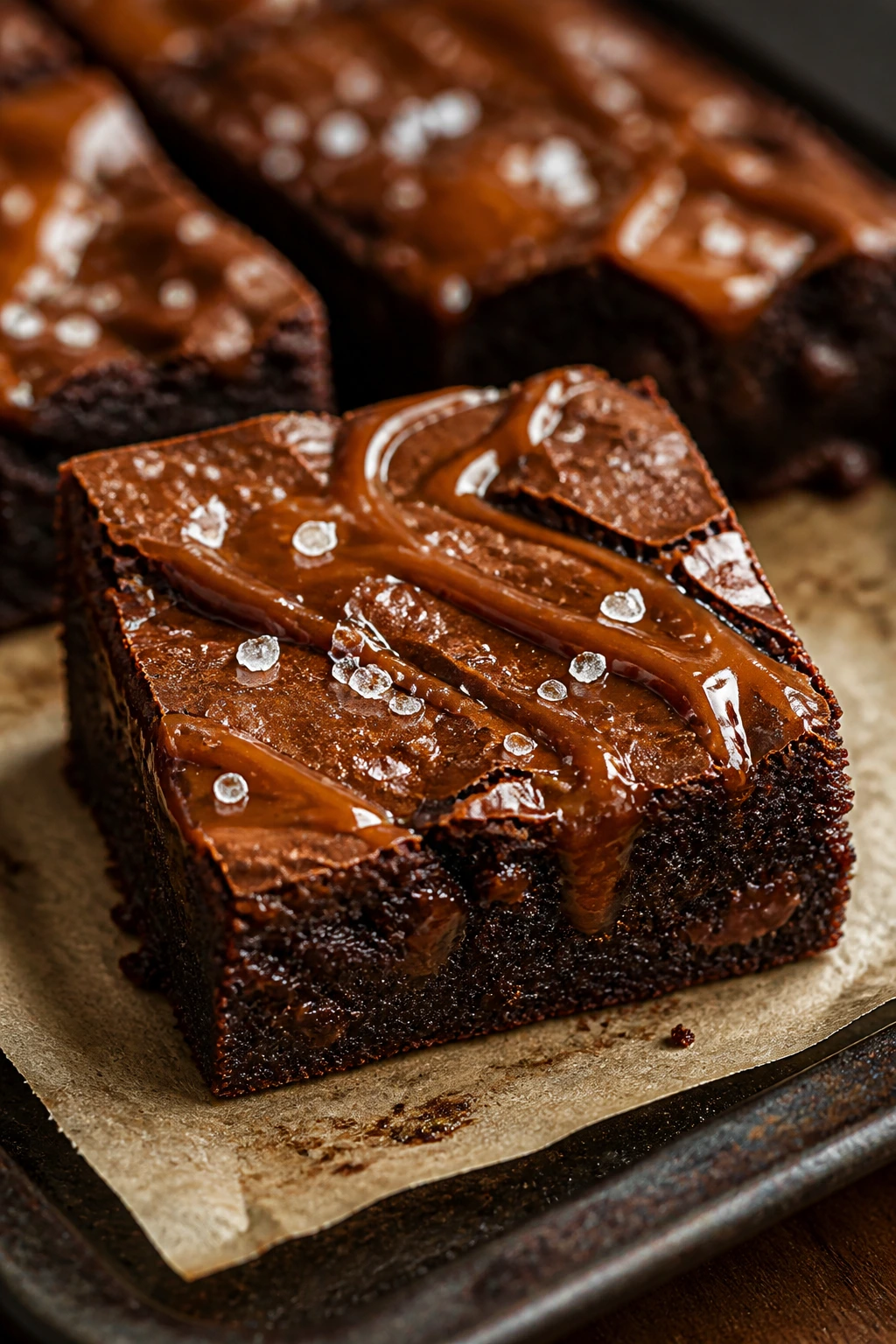
A caramel ribbon gives brownies that little bit of theater people notice before they taste anything. The lines run through the dark crumb like amber glass, and the salt on top keeps the whole square from reading too sweet. This is a good one when you want the pan to look polished with very little fuss.
Why It Works:
The caramel only needs to be cooked long enough to thicken; if you take it much farther, it hardens in the oven and turns chewy in the wrong way. Brown sugar and butter make the ribbon taste rounded instead of sharp, and cream loosens it just enough to swirl. Using a thick brownie batter keeps the caramel suspended near the top instead of sinking to the bottom. A pinch of salt is not optional here. It keeps the sugar from taking over.
Key Ingredients:
- For the Brownie Base:
- 1/2 cup (1 stick) unsalted butter
- 3/4 cup granulated sugar
- 1/4 cup packed light brown sugar
- 2 large eggs
- 1 teaspoon vanilla extract
- 1/2 cup unsweetened cocoa powder
- 1/2 cup all-purpose flour
- 1/4 teaspoon fine salt
- For the Caramel Ribbon:
- 1/2 cup packed light brown sugar
- 3 tablespoons unsalted butter
- 2 tablespoons heavy cream
- 1/2 teaspoon vanilla extract
- 1/4 teaspoon flaky salt, plus more for finishing
Quick Steps:
- Preheat the oven to 350°F (175°C) and line an 8-inch square pan.
- Make the caramel by simmering the brown sugar, butter, and cream in a small saucepan for 2 to 3 minutes until glossy and slightly thickened.
- Remove the caramel from the heat, stir in the vanilla and salt, and let it cool for 5 minutes.
- Mix the brownie batter in the usual way, then spread half into the pan, drizzle on half the caramel, add the rest of the batter, and finish with the remaining caramel.
- Pull a knife through the top once or twice for ribbons, then bake for 26 to 30 minutes.
- Sprinkle with flaky salt while warm and cool before slicing.
Equipment for This Recipe:
- Small saucepan
- 8-inch square baking pan
- Whisk and spatula
- Parchment paper
How to Serve This Dish:
Serve these slightly chilled if you want the caramel to cut into clean, glossy lines. A scoop of plain ice cream or a spoon of softly whipped cream keeps the caramel from feeling too sticky on the tongue.
Pro Tips for This Recipe:
- Let the caramel cool a bit before adding it to the batter, or it sinks too hard.
- Use no more than two knife passes when swirling.
- Bake on the middle rack so the caramel doesn’t scorch.
- A little extra flaky salt right before serving sharpens the finish.
Variations on This Dish:
- Pecan Caramel Ribbon: Add 1/2 cup chopped toasted pecans to the batter for a praline feel.
- Dark Salt Caramel: Use dark brown sugar in the caramel for a deeper, molasses-heavy note.
- Chocolate Caramel Squares: Stir 2 tablespoons chopped dark chocolate into the caramel after it cools slightly.
Common Mistakes to Avoid with This Dish:
- Don’t overcook the caramel. It sets too hard once baked.
- Don’t swirl until the batter and caramel turn one muddy color.
- Don’t skip the salt. The brownies taste flatter without it.
5. Espresso Dark Chocolate Brownies
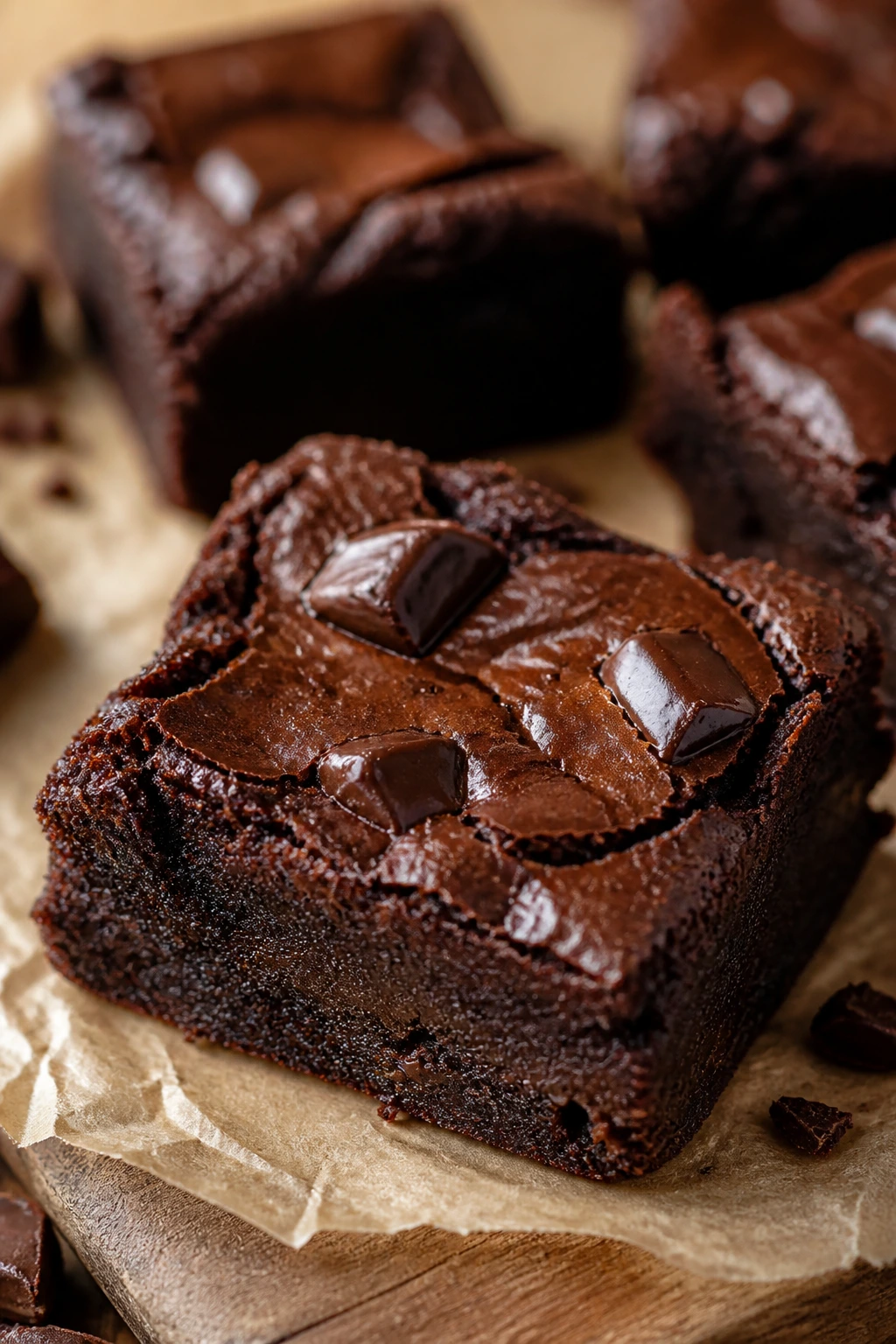
These taste like the brownie version of a very good mocha. Not sweet-coffee candy. Real coffee-brownie territory, with a bitter edge that makes the chocolate taste darker than it is. If you like a pan that smells almost toasted when it comes out of the oven, this is the one.
Why It Works:
Espresso powder doesn’t make the brownies taste like coffee cake. It deepens the chocolate and sharpens the edges of the cocoa. Dark chocolate chunks melt into irregular pockets, so you get little seams of softer texture against the dense crumb. A mix of white and brown sugar keeps the top crackly while the middle stays fudgy. This version looks especially good cut into clean squares with a few glossy chocolate spots showing on top.
Key Ingredients:
- 1/2 cup (1 stick) unsalted butter
- 3/4 cup granulated sugar
- 1/4 cup packed light brown sugar
- 2 large eggs
- 1 teaspoon vanilla extract
- 1 tablespoon instant espresso powder
- 1/2 cup unsweetened cocoa powder
- 1/2 cup all-purpose flour
- 1/4 teaspoon fine salt
- 3/4 cup chopped dark chocolate or chocolate chunks
Quick Steps:
- Heat the oven to 350°F (175°C) and line an 8-inch square pan.
- Melt the butter, then whisk in both sugars and the espresso powder until no dry granules remain.
- Add the eggs and vanilla, then whisk for 45 to 60 seconds until the batter looks thick and glossy.
- Fold in the cocoa, flour, salt, and chocolate chunks until just combined.
- Spread into the pan and bake for 24 to 29 minutes, until the center looks set at the edges but still soft in the middle.
- Cool completely, then chill for 20 minutes if you want the slices extra sharp.
Equipment for This Recipe:
- 8-inch square metal pan
- Mixing bowl
- Whisk
- Rubber spatula
How to Serve This Dish:
These are the brownies I’d set next to a small cup of coffee or a scoop of coffee ice cream. They also look neat with a fine dusting of cocoa over the cut edges, especially if you’re serving them on a white plate.
Pro Tips for This Recipe:
- Use instant espresso powder, not brewed coffee. Brewed coffee thins the batter.
- Chop the chocolate into uneven pieces for better melt pockets.
- Let the brownies cool before slicing or the dark chunks drag through the crumb.
- A pinch of flaky salt on top makes the coffee note read cleaner.
Variations on This Dish:
- Mocha Chip Brownies: Fold in 1/2 cup mini chocolate chips for more melt and more surface texture.
- Cinnamon Espresso Brownies: Add 1/4 teaspoon cinnamon for a warmer finish.
- Double Dark: Replace half the cocoa with Dutch-process cocoa for a deeper color.
Common Mistakes to Avoid with This Dish:
- Don’t add too much espresso powder. It turns bitter fast.
- Don’t bake until the center is fully firm.
- Don’t use milk chocolate if you want the coffee note to stay clear.
6. Peppermint Bark Brownies
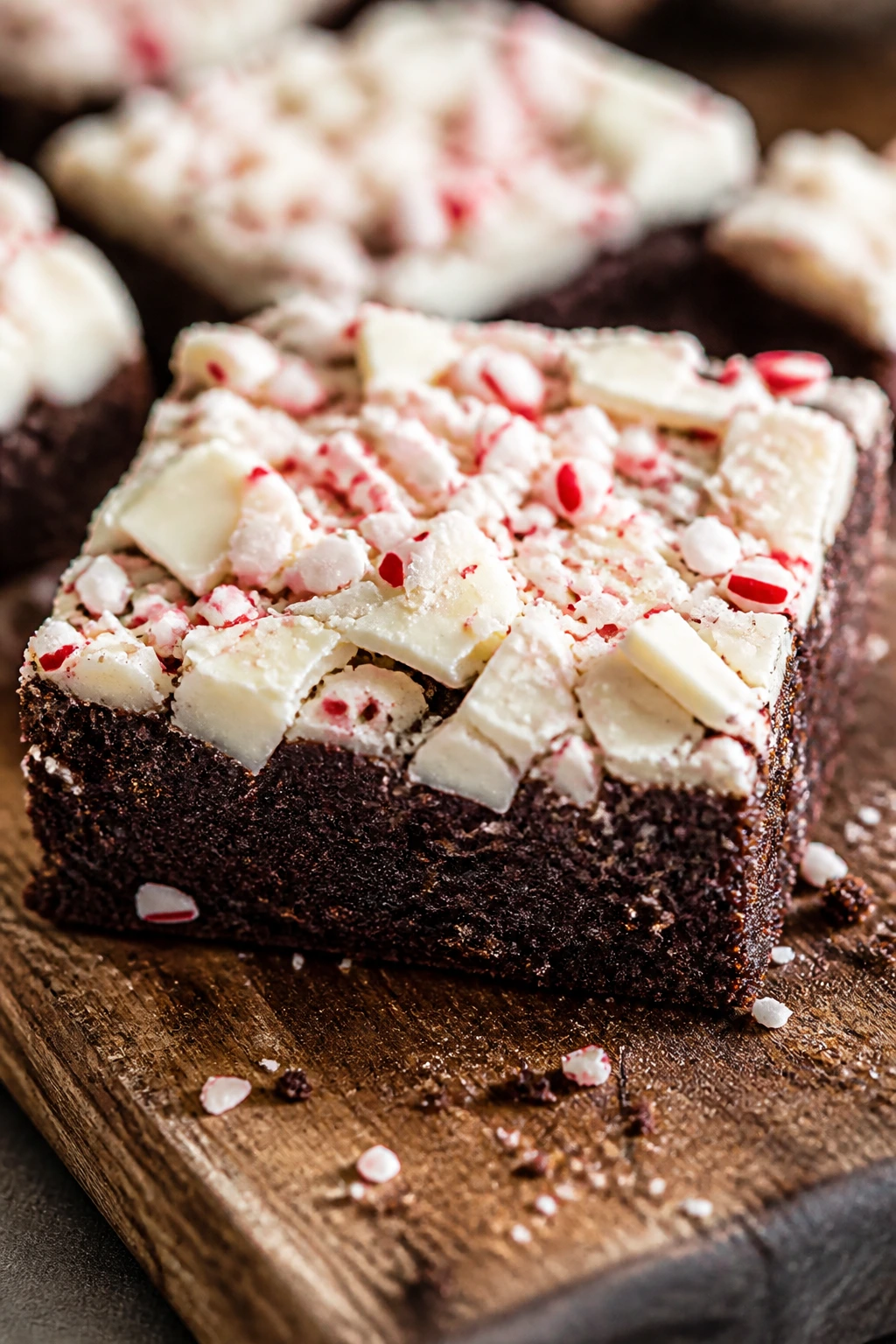
Peppermint brownies can tip into toothpaste territory if you’re careless, so I keep the mint tight and the chocolate dark. Done right, they look festive without being loud. The crushed candy on top gives the pan a sparkly, broken-glass look that I like a lot.
Why It Works:
A small amount of peppermint extract in the batter perfumes the whole pan without making it taste like mint candy. White chocolate on top gives the “bark” look, but it stays secondary to the darker brownie layer underneath. Crushed candy canes add crunch and color right at the end, which keeps them bright instead of melted into a sticky mess. The contrast is the point.
Key Ingredients:
- 1/2 cup (1 stick) unsalted butter
- 1 cup granulated sugar
- 2 large eggs
- 1 teaspoon vanilla extract
- 1/2 teaspoon peppermint extract
- 1/2 cup unsweetened cocoa powder
- 1/2 cup all-purpose flour
- 1/4 teaspoon fine salt
- 1/2 cup semisweet chocolate chips
- 1/3 cup white chocolate chips, melted
- 1/3 cup crushed candy canes
Quick Steps:
- Preheat the oven to 350°F (175°C) and line an 8-inch square pan.
- Make the brownie batter, adding the peppermint extract with the vanilla.
- Fold in the cocoa, flour, salt, and semisweet chips.
- Bake for 24 to 28 minutes, then cool for 10 minutes.
- Drizzle the melted white chocolate over the top and scatter with crushed candy canes while it’s still tacky.
- Cool completely so the peppermint pieces stay crisp.
Equipment for This Recipe:
- 8-inch square pan
- Parchment paper
- Mixing bowl
- Spoon for drizzling
How to Serve This Dish:
These brownies look sharp on a platter because of the white drizzle and red bits. I like them with hot tea or cold milk, depending on whether you want the mint to feel fresh or dessert-heavy.
Pro Tips for This Recipe:
- Use peppermint extract sparingly. 1/2 teaspoon is enough.
- Add the candy canes after baking so they keep their crunch.
- If the white chocolate is thick, thin it with a teaspoon of neutral oil.
- Chill before cutting if you want the red and white top to stay neat.
Variations on This Dish:
- Peppermint Mocha: Add 1 teaspoon instant espresso powder to the batter.
- Dark Bark: Use chopped dark chocolate instead of semisweet chips.
- Mint Crunch: Fold 1/4 cup chopped mint cookies into the batter for more texture.
Common Mistakes to Avoid with This Dish:
- Don’t overdo the peppermint extract. The brownies should smell fresh, not sharp.
- Don’t add candy canes too early or they dissolve.
- Don’t use stale candy canes. They turn sticky after baking.
7. Raspberry Jam Marble Brownies
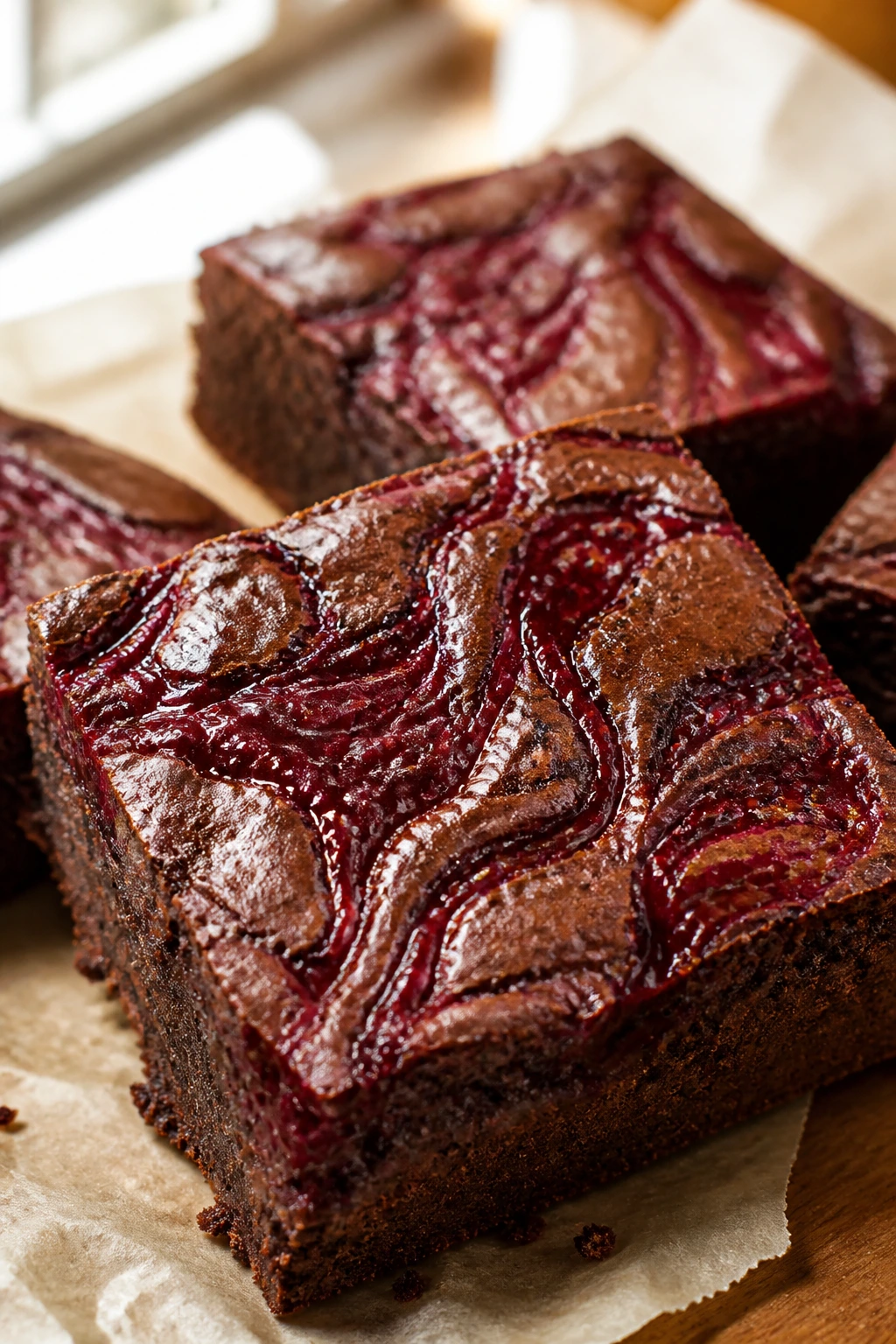
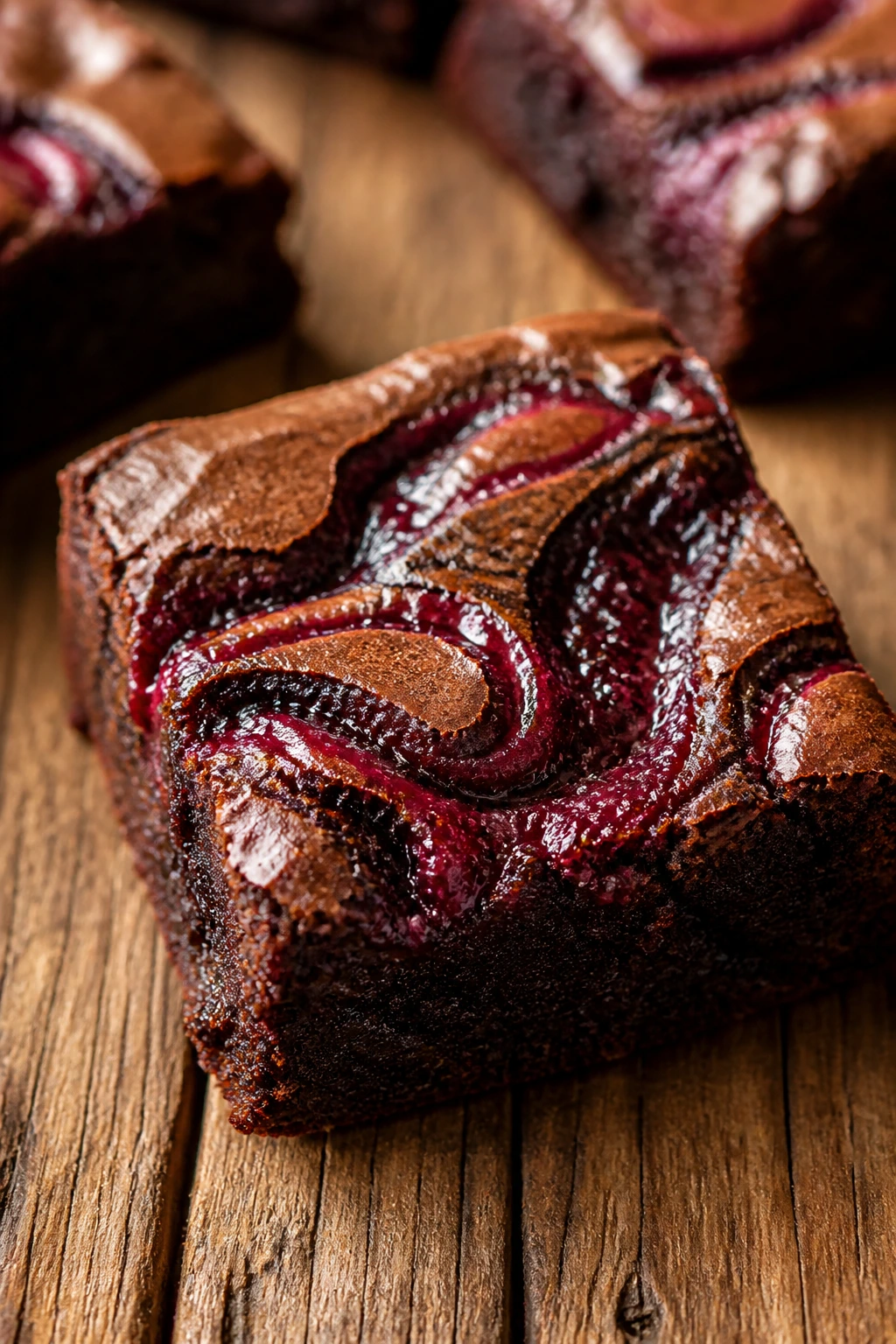
Raspberry and chocolate know how to share a pan. The jam swirls into the batter in streaks of red that stay visible after baking, which is why I like this one for a dessert plate that needs color. The fruit note keeps the brownie from feeling too heavy, and the pattern makes the squares look hand-finished.
Why It Works:
Thick seedless raspberry jam adds sweetness and acid without watering down the batter. Because you spoon it on top and barely swirl, the jam keeps its shape in pockets instead of disappearing into the crumb. Dark chocolate gives the fruit a solid base, and the combination reads more polished than it does playful. That matters if you want the brownies to look intentional.
Key Ingredients:
- 1/2 cup (1 stick) unsalted butter
- 1 cup granulated sugar
- 2 large eggs
- 1 teaspoon vanilla extract
- 1/2 cup unsweetened cocoa powder
- 1/2 cup all-purpose flour
- 1/4 teaspoon fine salt
- 1/3 cup seedless raspberry jam
- 1/2 cup chopped dark chocolate, optional
- 2 tablespoons freeze-dried raspberries, crushed, for garnish
Quick Steps:
- Preheat the oven to 350°F (175°C) and line an 8-inch square pan.
- Mix the brownie batter and spread it evenly in the pan.
- Warm the jam for 10 to 15 seconds so it loosens, then spoon it over the batter in small dollops.
- Drag a knife through the top 3 or 4 times to create marbled streaks.
- Bake for 25 to 29 minutes, until the edges are set and the center still feels a little soft.
- Cool, then scatter crushed freeze-dried raspberries over the top if you want extra color.
Equipment for This Recipe:
- 8-inch square pan
- Spoon and knife for marbling
- Parchment paper
- Mixing bowl
How to Serve This Dish:
These are nice with whipped cream and fresh raspberries if you’re going for dessert-plate polish. On their own, they taste good slightly chilled, which keeps the fruit lines distinct.
Pro Tips for This Recipe:
- Use thick jam, not runny preserves.
- Warm the jam just enough to spoon easily.
- Don’t over-swirl or the red color disappears.
- A few freeze-dried raspberries on top make the pan look brighter than fresh fruit does after baking.
Variations on This Dish:
- Strawberry Marble: Swap in thick strawberry jam if raspberry is too tart.
- Dark Berry Swirl: Use blackberry preserves for a deeper, almost wine-colored stripe.
- Chocolate Raspberry Chunk: Fold in 1/3 cup chopped dark chocolate for a firmer bite.
Common Mistakes to Avoid with This Dish:
- Don’t use thin jam. It runs into the batter.
- Don’t overbake. The fruit note gets dull when the brownie dries out.
- Don’t expect fresh berries to behave the same way. They leak more liquid.
8. Peanut Butter Swirl Brownies
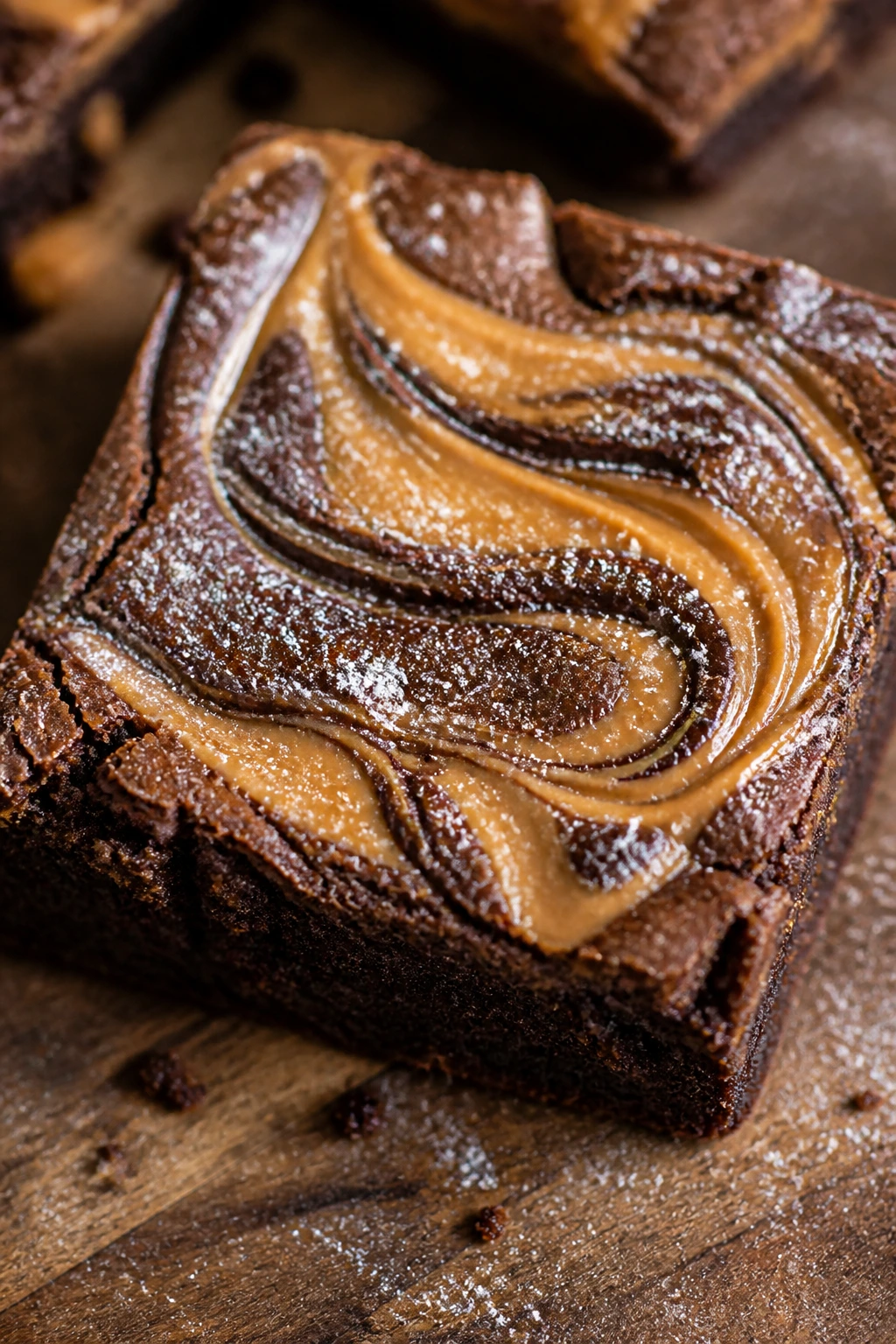
Peanut butter swirls look dramatic because they hold their shape in pale ribbons against the chocolate. The flavor is familiar, but the top does all the visual work. I like this pan warm enough that the peanut butter softens, but not so warm that it smears when you cut it.
Why It Works:
Creamy peanut butter is thick enough to sit on the brownie surface and bake into distinct swirls. A little powdered sugar helps the swirl stay put instead of melting into oily streaks. The chocolate base stays fudgy and slightly bitter, which keeps the peanut butter from tasting like a candy bar. Mini chips are optional, though they do make the squares look busier in a good way.
Key Ingredients:
- For the Brownie Base:
- 1/2 cup (1 stick) unsalted butter
- 1 cup granulated sugar
- 2 large eggs
- 1 teaspoon vanilla extract
- 1/2 cup unsweetened cocoa powder
- 1/2 cup all-purpose flour
- 1/4 teaspoon fine salt
- For the Peanut Butter Swirl:
- 1/2 cup creamy peanut butter
- 2 tablespoons powdered sugar
- 1 tablespoon milk
- Pinch of salt
- 1/2 cup peanut butter chips, optional
Quick Steps:
- Heat the oven to 350°F (175°C) and line an 8-inch square pan.
- Mix the brownie batter and spread it in the pan.
- Stir the peanut butter, powdered sugar, milk, and salt until smooth and thick.
- Drop the peanut butter mixture over the brownie batter in spoonfuls, then drag a knife through once to create ribbons.
- Bake for 25 to 30 minutes until the edges are set and the center looks barely underdone.
- Cool fully before slicing so the peanut butter stripes stay distinct.
Equipment for This Recipe:
- 8-inch square baking pan
- Small bowl for swirl mixture
- Knife or skewer
- Parchment paper
How to Serve This Dish:
These look especially good on a tray with cold milk. If you’re serving them after dinner, a few salted peanuts beside the squares make the peanut butter flavor more obvious and the plate look thought through.
Pro Tips for This Recipe:
- Use creamy peanut butter, not the dry natural kind.
- Keep the swirl thick so it doesn’t sink.
- Don’t over-marble or the top turns muddy.
- Let the brownies cool at room temperature before chilling; the peanut butter sets cleaner that way.
Variations on This Dish:
- Chocolate Peanut Butter Chip: Fold 1/2 cup peanut butter chips into the batter.
- Crunchy Top: Scatter 1/4 cup chopped salted peanuts over the swirl before baking.
- Honey Peanut Butter: Add 1 teaspoon honey to the swirl for a softer, rounder finish.
Common Mistakes to Avoid with This Dish:
- Don’t use runny natural peanut butter. It separates in the oven.
- Don’t over-swirl the top. The pattern disappears.
- Don’t slice while the pan is still warm if you want clean edges.
9. Coconut Almond Brownies
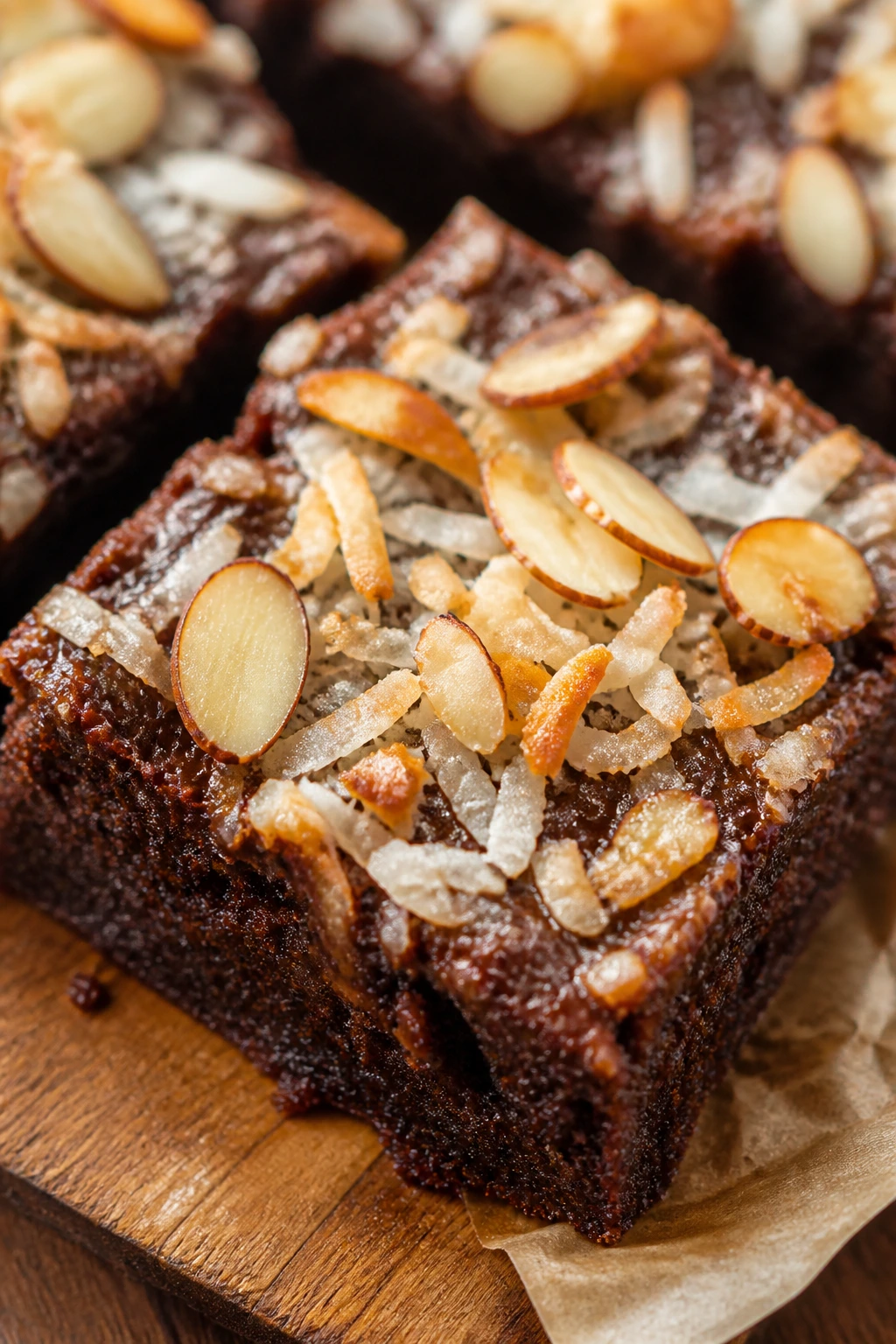
This is the brownie tray that smells like a candy counter, but better behaved. Coconut brings chew, almonds bring a gentle crunch, and the top gets a toasted, speckled look that makes the whole pan feel decorated without any frosting. It’s a little more textured than standard brownies, and that’s the point.
Why It Works:
Shredded coconut adds moisture and chew, especially when it’s folded into a batter that already leans fudgy. Almond extract is strong, so a tiny amount gives the brownies a bakery smell without turning them perfumey. Toasted sliced almonds on top brown in the oven and add a crisp finish. If you like Almond Joy energy, this is the cleanest way to get there without stuffing the batter full of candy.
Key Ingredients:
- 1/2 cup (1 stick) unsalted butter
- 1 cup granulated sugar
- 2 large eggs
- 1 teaspoon vanilla extract
- 1/4 teaspoon almond extract
- 1/2 cup unsweetened cocoa powder
- 1/2 cup all-purpose flour
- 1/4 teaspoon fine salt
- 3/4 cup sweetened shredded coconut
- 1/2 cup sliced almonds, toasted
- 1/2 cup semisweet chocolate chips
Quick Steps:
- Preheat the oven to 350°F (175°C) and line an 8-inch square pan.
- Make the brownie batter, adding the almond extract with the vanilla.
- Fold in the cocoa, flour, salt, coconut, and chocolate chips.
- Spread the batter into the pan and scatter the sliced almonds evenly over the top.
- Bake for 26 to 30 minutes until the almonds are golden and the center is set at the edges.
- Cool before cutting so the coconut doesn’t drag through the crumb.
Equipment for This Recipe:
- 8-inch square pan
- Baking sheet for toasting almonds
- Mixing bowl
- Parchment paper
How to Serve This Dish:
These are good at room temperature with tea or coffee. If you want to lean into the coconut side, add a little whipped cream and a few toasted coconut flakes on the plate.
Pro Tips for This Recipe:
- Toast the almonds first if you want a stronger nut flavor.
- Don’t use too much almond extract; it gets sharp fast.
- Sweetened coconut gives the best chew here.
- Press a few extra almonds into the top before baking for a cleaner finish.
Variations on This Dish:
- Almond Coconut Chip: Add 1/2 cup chopped white chocolate for more sweetness.
- Cocoa-Nut Darker Brownies: Replace 1 tablespoon of flour with cocoa for a deeper chocolate note.
- Nut-Free Coconut Brownies: Leave out the almonds and use extra coconut on top.
Common Mistakes to Avoid with This Dish:
- Don’t use too much almond extract. It overpowers the chocolate.
- Don’t skip the cooling time. Coconut brownies slice badly when hot.
- Don’t use unsweetened coconut unless you want a drier crumb.
10. Tahini Sesame Brownies
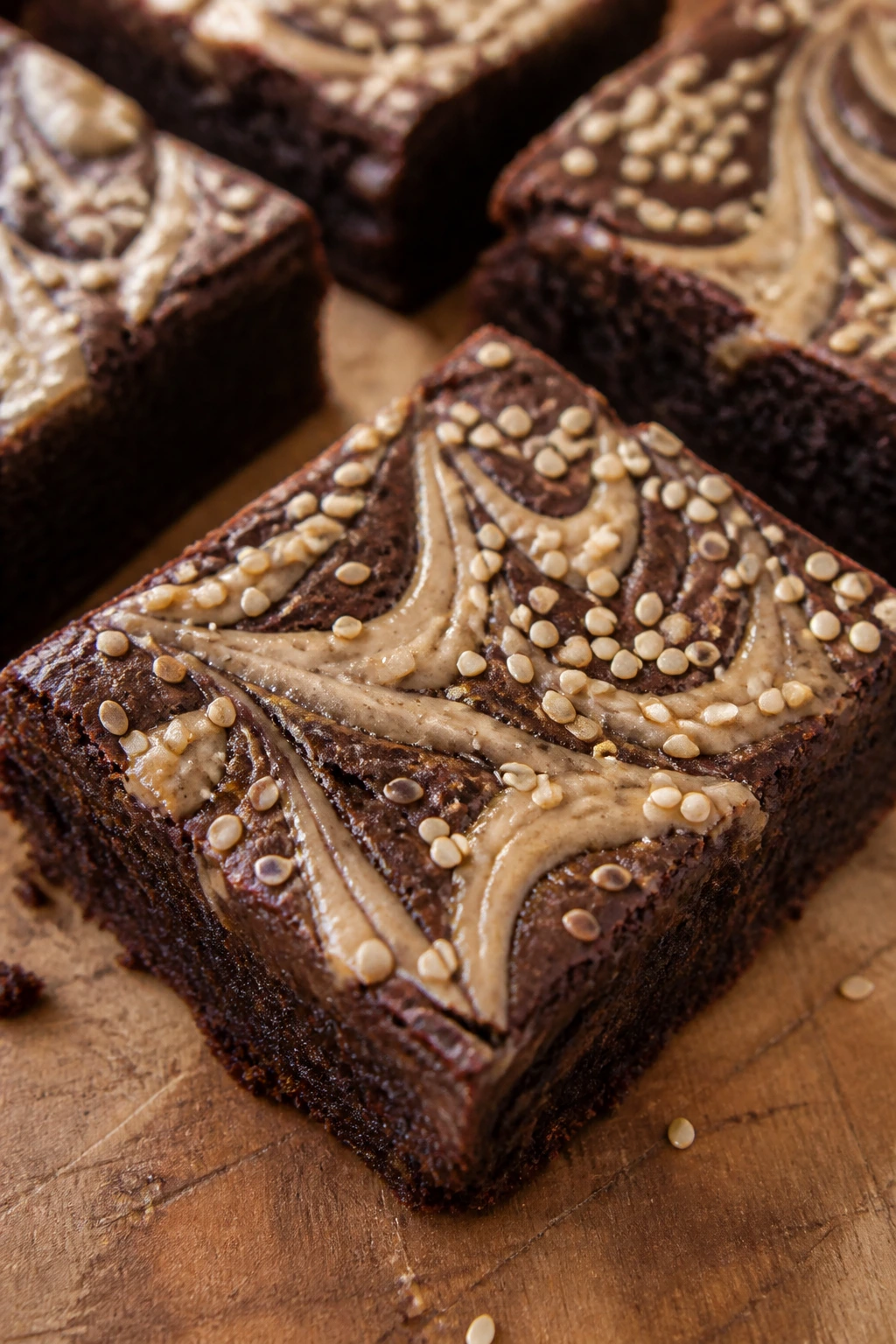
Tahini brownies have a quiet, nutty depth that surprises people in the best way. The sesame paste makes the crumb taste warmer and a little earthier, and the top can be swirled into pale ribbons that look almost abstract. I like them with black sesame sprinkled over the top, though a pinch of white sesame works if that’s what’s in the cupboard.
Why It Works:
Tahini adds fat and a roasted sesame note that plays well with cocoa. It also gives the batter a silkier texture, which is why these brownies feel dense without turning heavy. A small amount of honey or powdered sugar in the swirl helps the tahini stay visible on top instead of sinking. Sesame seeds toast in the oven and add a bit of snap. The whole pan looks modern without trying too hard.
Key Ingredients:
- For the Brownie Base:
- 1/2 cup (1 stick) unsalted butter
- 1 cup granulated sugar
- 2 large eggs
- 1 teaspoon vanilla extract
- 1/2 cup unsweetened cocoa powder
- 1/2 cup all-purpose flour
- 1/4 teaspoon fine salt
- For the Tahini Swirl:
- 1/3 cup tahini
- 2 tablespoons powdered sugar
- 1 teaspoon honey
- Pinch of salt
- 2 tablespoons white sesame seeds
- 1 tablespoon black sesame seeds, optional
Quick Steps:
- Preheat the oven to 350°F (175°C) and line an 8-inch square pan.
- Make the brownie batter and spread it into the pan.
- Stir the tahini, powdered sugar, honey, and salt until smooth.
- Drop the tahini mixture over the top and swirl gently with a skewer or knife.
- Sprinkle sesame seeds over the surface and bake for 24 to 28 minutes.
- Cool before slicing so the sesame topping stays in place.
Equipment for This Recipe:
- 8-inch square baking pan
- Small bowl
- Skewer or knife for swirling
- Parchment paper
How to Serve This Dish:
These brownies look especially good cut into slim rectangles instead of squares. Serve them with strong tea or coffee, and if you want a little extra polish, drizzle a few drops of tahini over the plate.
Pro Tips for This Recipe:
- Use smooth tahini, not one that’s dry or separated.
- Swirl lightly; too much and the sesame pattern vanishes.
- Sesame seeds toast fast, so keep an eye on the oven.
- A tiny pinch of flaky salt on top makes the tahini taste richer.
Variations on This Dish:
- Halva Brownies: Crumble a few tablespoons of halva over the top after baking.
- Sesame-Chocolate Chunk: Fold in 1/2 cup chopped dark chocolate for more contrast.
- Maple Tahini: Replace the honey in the swirl with maple syrup for a rounder sweetness.
Common Mistakes to Avoid with This Dish:
- Don’t use dry tahini that needs too much stirring. It won’t swirl well.
- Don’t overbake. Tahini brownies dry out faster than plain ones.
- Don’t skip the salt. The sesame flavor tastes flatter without it.
11. Orange Zest Brownies
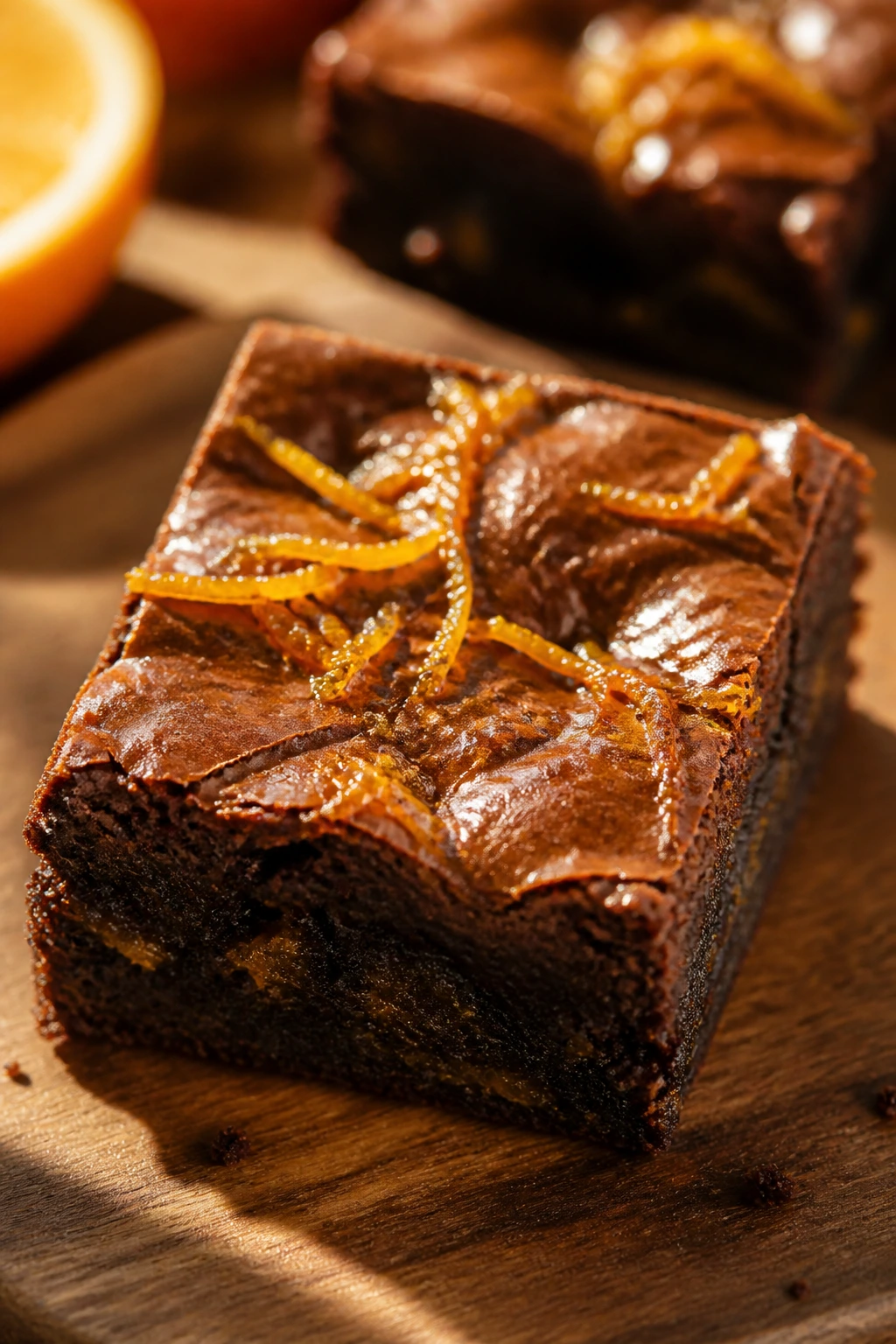
Orange brownies can go weird if you push too hard, but a restrained hand gives you a bright, clean scent that sits right on top of the cocoa. These are not citrus bars pretending to be brownies. They’re brownies with a lifted edge and a glossy marmalade streak that makes the pan look better than a plain chocolate square ever could.
Why It Works:
Orange zest carries more aroma than juice, so the flavor reaches the nose before it hits the tongue. A little marmalade on top creates shiny amber lines that bake into the surface and look almost stained-glass bright. Dark chocolate keeps the orange from reading candy-like. A small amount of juice in the batter is fine, but too much makes the crumb loose, so I keep it light.
Key Ingredients:
- 1/2 cup (1 stick) unsalted butter
- 1 cup granulated sugar
- 2 large eggs
- 1 teaspoon vanilla extract
- 1 tablespoon finely grated orange zest
- 1 teaspoon orange juice
- 1/2 cup unsweetened cocoa powder
- 1/2 cup all-purpose flour
- 1/4 teaspoon fine salt
- 1/2 cup chopped dark chocolate
- 2 tablespoons orange marmalade, warmed
Quick Steps:
- Preheat the oven to 350°F (175°C) and line an 8-inch square pan.
- Make the batter, adding the orange zest and juice with the vanilla.
- Fold in the cocoa, flour, salt, and chocolate.
- Spread into the pan, then spoon the warmed marmalade over the top in thin streaks.
- Pull a knife through once or twice to make the marmalade marble.
- Bake for 25 to 29 minutes and cool fully before slicing.
Equipment for This Recipe:
- 8-inch square pan
- Microplane or fine grater
- Small bowl for marmalade
- Parchment paper
How to Serve This Dish:
These look best with a few thin curls of orange peel on top or beside the square. I like them with black tea or espresso; the bitterness keeps the citrus line crisp.
Pro Tips for This Recipe:
- Use zest, not extra juice, if you want the orange to stay bright.
- Warm the marmalade just enough to move easily.
- Don’t over-swirl or the orange disappears.
- Dark chocolate chunks hold the best shape here.
Variations on This Dish:
- Blood Orange Brownies: Use blood orange zest if you want a deeper citrus smell.
- Orange Almond: Add 1/4 teaspoon almond extract for a bakery-style aroma.
- Triple Citrus: Stir in a pinch of lemon zest with the orange for sharper edges.
Common Mistakes to Avoid with This Dish:
- Don’t dump in too much orange juice. It loosens the crumb.
- Don’t use bitter, pithy zest. Grate only the colored part.
- Don’t bake until the marmalade has disappeared into the batter. It should still show.
12. S’mores Brownies
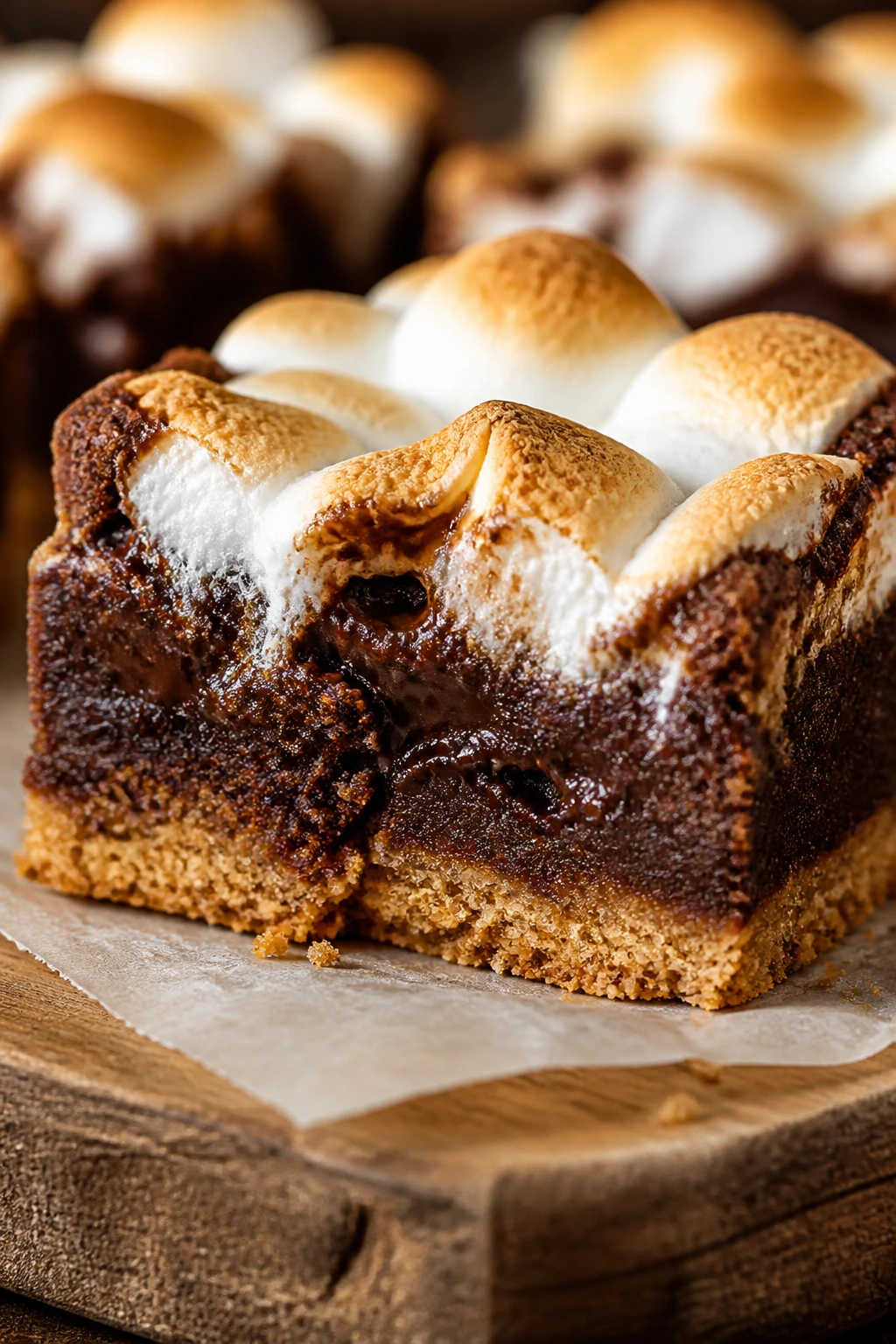
A s’mores brownie has a job to do: look a little messy in a controlled way. The graham base gives the bottom a sandy crunch, the brownie layer stays dark and fudgy, and the marshmallows on top blister into pale, toasted lumps that look right at home on a campfire tray. These are crowd brownies. Not elegant. Still pretty.
Why It Works:
The graham layer keeps the base from tasting like one-note chocolate and gives you a crisp bottom that cuts cleanly. Milk chocolate and mini marshmallows echo the campfire dessert without turning the pan cloying. I like to add the marshmallows near the end of baking so they toast instead of disappearing into the batter. The color contrast matters here: tan, white, and dark brown. That is the whole visual pitch.
Key Ingredients:
- For the Graham Base:
- 1 1/2 cups graham cracker crumbs
- 1/4 cup melted butter
- 2 tablespoons light brown sugar
- Pinch of salt
- For the Brownie Layer:
- 1/2 cup (1 stick) unsalted butter
- 1 cup granulated sugar
- 2 large eggs
- 1 teaspoon vanilla extract
- 1/2 cup unsweetened cocoa powder
- 1/2 cup all-purpose flour
- 1/4 teaspoon fine salt
- 1/2 cup milk chocolate chips
- For the Top:
- 1 1/2 cups mini marshmallows
Quick Steps:
- Preheat the oven to 350°F (175°C) and line an 8-inch square pan.
- Mix the graham crumbs, melted butter, brown sugar, and salt, then press firmly into the pan.
- Make the brownie batter and spread it over the graham layer.
- Bake for 18 minutes, then scatter the marshmallows and chocolate chips over the top.
- Bake 6 to 8 minutes more, until the marshmallows are puffed and lightly toasted.
- Cool for at least 45 minutes before slicing.
Equipment for This Recipe:
- 8-inch square baking pan
- Mixing bowls
- Rubber spatula
- Parchment paper
How to Serve This Dish:
Serve these at room temperature so the marshmallows stay chewy and the graham layer stays crisp. A cold glass of milk is the obvious choice, but hot chocolate makes the whole thing feel even more over-the-top.
Pro Tips for This Recipe:
- Press the graham layer down hard or it crumbles on the plate.
- Add the marshmallows late so they toast instead of melting away.
- Use mini marshmallows; large ones leave gaps.
- A few broken graham cracker shards on the plate make the dessert look intentional.
Variations on This Dish:
- Dark Campfire: Use dark chocolate chips instead of milk chocolate.
- Peanut Butter S’mores: Swirl 2 tablespoons peanut butter through the brownie layer.
- Salted S’mores: Finish with flaky salt right after baking.
Common Mistakes to Avoid with This Dish:
- Don’t bake the marshmallows from the start. They vanish.
- Don’t underpress the graham layer.
- Don’t slice before cooling or the layers slide apart.
13. Pretzel Toffee Brownies
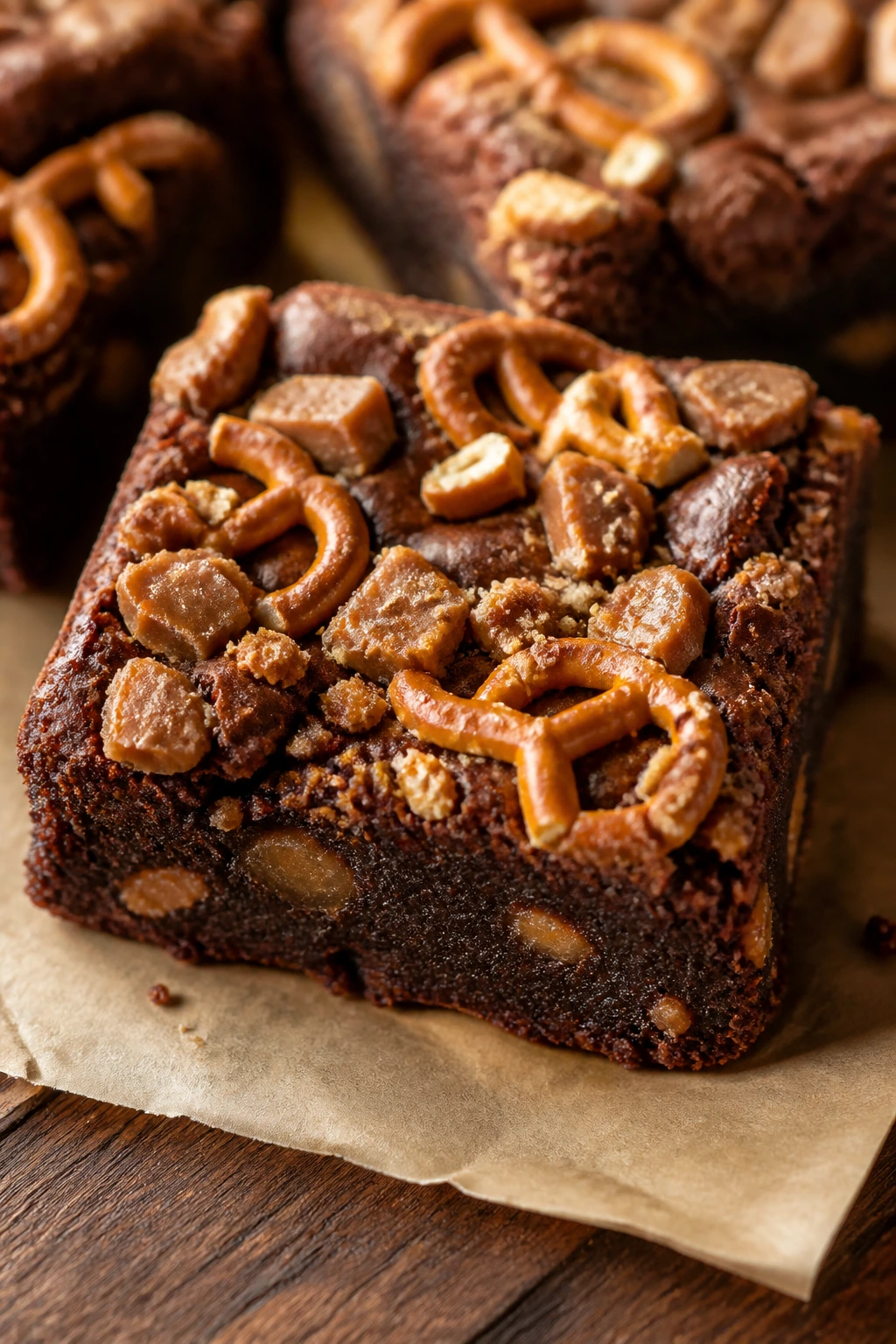
Pretzels and toffee give brownies the kind of crunch that makes the next bite louder than the first. The salt from the pretzels keeps the chocolate from getting too sweet, and the toffee bits bake into little caramel shards that catch the light. These are the brownies I reach for when I want texture without adding frosting.
Why It Works:
Pretzels bring salt and snap, which is useful because brownies can blur into one soft note if every bite is the same. Toffee bits melt just enough to make small glassy pockets on the top and inside the crumb. The chocolate base stays standard and sturdy, so the toppings can do the talking. A little chopped chocolate over the top gives the pan a more finished look than toffee alone.
Key Ingredients:
- 1/2 cup (1 stick) unsalted butter
- 1 cup granulated sugar
- 2 large eggs
- 1 teaspoon vanilla extract
- 1/2 cup unsweetened cocoa powder
- 1/2 cup all-purpose flour
- 1/4 teaspoon fine salt
- 1 cup mini pretzels, lightly crushed
- 1/2 cup toffee bits
- 1/3 cup chopped milk chocolate or semisweet chocolate
Quick Steps:
- Preheat the oven to 350°F (175°C) and line an 8-inch square pan.
- Make the brownie batter and fold in half the pretzels and half the toffee bits.
- Spread the batter into the pan, then scatter the remaining pretzels, toffee bits, and chocolate over the top.
- Bake for 24 to 28 minutes until the top is set and the edges are dark.
- Cool completely so the toffee hardens again before slicing.
- Finish with a few extra pretzel crumbs if you want the top to look rougher and more textured.
Equipment for This Recipe:
- 8-inch square pan
- Rolling pin or heavy mug for crushing pretzels
- Parchment paper
- Mixing bowl
How to Serve This Dish:
These are excellent with coffee or a cold stout if you’re serving them after dinner. Cut them into smaller squares than usual; the salt and toffee make them read richer than plain brownies.
Pro Tips for This Recipe:
- Crush the pretzels lightly. Powder turns the top muddy.
- Use toffee bits, not a soft caramel candy.
- Let the brownies cool all the way or the toffee sticks to the knife.
- A tiny pinch of flaky salt on top makes the whole pan taste sharper.
Variations on This Dish:
- Chocolate-Covered Pretzel Brownies: Use chopped chocolate-covered pretzels for more contrast.
- Butterscotch Pretzel: Swap half the toffee bits for butterscotch chips.
- Salt Bomb: Sprinkle with extra flaky salt right after baking if you like stronger sweet-salty contrast.
Common Mistakes to Avoid with This Dish:
- Don’t crush the pretzels into dust.
- Don’t skip cooling. The toffee needs time to reset.
- Don’t use candy caramel pieces that melt into puddles.
14. Truffle Ganache Brownies
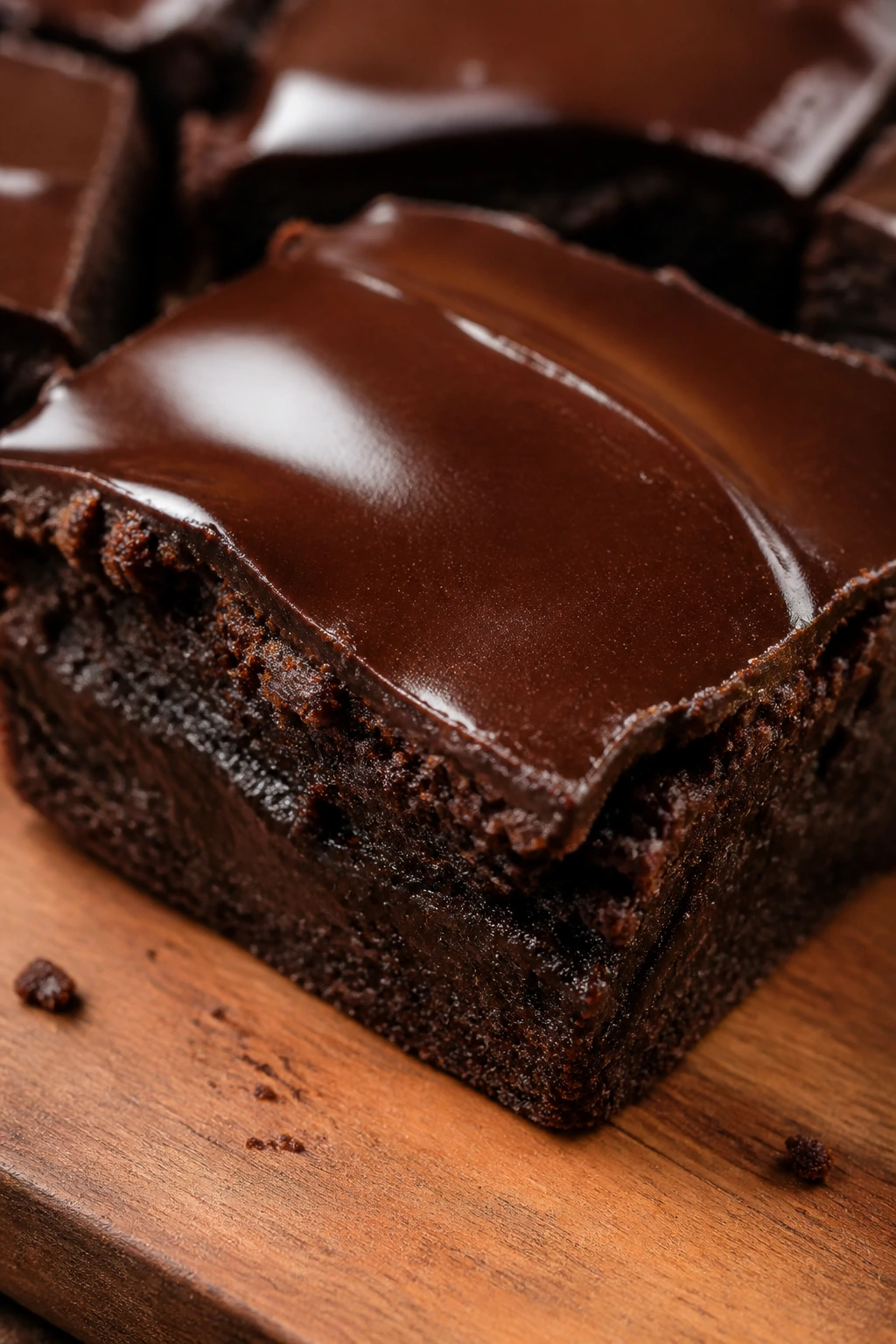
These look like they came from a pastry case, not from a square pan on a home counter. The ganache sits on top in a dark, smooth layer that catches a little light and cuts cleanly if you chill the pan long enough. The brownie underneath should be fudgy enough to feel like it belongs under that gloss.
Why It Works:
Ganache is just cream and chocolate, but when it sets over a brownie it changes the whole mood of the pan. The top becomes sleek and sliceable, while the brownie base adds enough structure so the dessert doesn’t collapse when you cut it. I keep the topping bittersweet rather than sweet so it reads like truffle filling instead of frosting. A little butter in the ganache adds shine and a softer bite.
Key Ingredients:
- For the Brownie Base:
- 1/2 cup (1 stick) unsalted butter
- 1 cup granulated sugar
- 2 large eggs
- 1 teaspoon vanilla extract
- 1/2 cup unsweetened cocoa powder
- 1/2 cup all-purpose flour
- 1/4 teaspoon fine salt
- For the Ganache:
- 3/4 cup heavy cream
- 6 ounces bittersweet chocolate, chopped
- 1 tablespoon unsalted butter
- Flaky sea salt for finishing
Quick Steps:
- Preheat the oven to 350°F (175°C) and line an 8-inch square pan.
- Make and bake the brownie base for 24 to 28 minutes, then cool it completely.
- Heat the cream until it just begins to steam, then pour it over the chopped chocolate and let it sit for 2 minutes.
- Stir until smooth, then mix in the butter.
- Pour the ganache over the cooled brownies, spread it into an even layer, and chill for 30 to 45 minutes.
- Cut with a hot knife for the neatest squares and finish with a pinch of salt.
Equipment for This Recipe:
- 8-inch square baking pan
- Small saucepan
- Heatproof bowl
- Offset spatula or small spatula
How to Serve This Dish:
Serve these in smaller pieces than you would plain brownies; the ganache makes them feel richer. A berry on the plate cuts the darkness, but I usually prefer them with coffee and nothing else.
Pro Tips for This Recipe:
- Let the brownie base cool before adding ganache or the topping melts.
- Don’t boil the cream.
- Chill long enough for the ganache to set.
- Wipe the knife between cuts for clean edges.
Variations on This Dish:
- Sea Salt Truffle: Finish with extra flaky salt and skip any other garnish.
- Orange Truffle: Add 1 teaspoon orange zest to the ganache.
- Coffee Truffle: Stir 1/2 teaspoon espresso powder into the cream before heating.
Common Mistakes to Avoid with This Dish:
- Don’t pour ganache onto a warm brownie.
- Don’t use milk chocolate if you want the topping to stay elegant.
- Don’t cut too soon or the ganache smears.
15. Black Forest Brownies
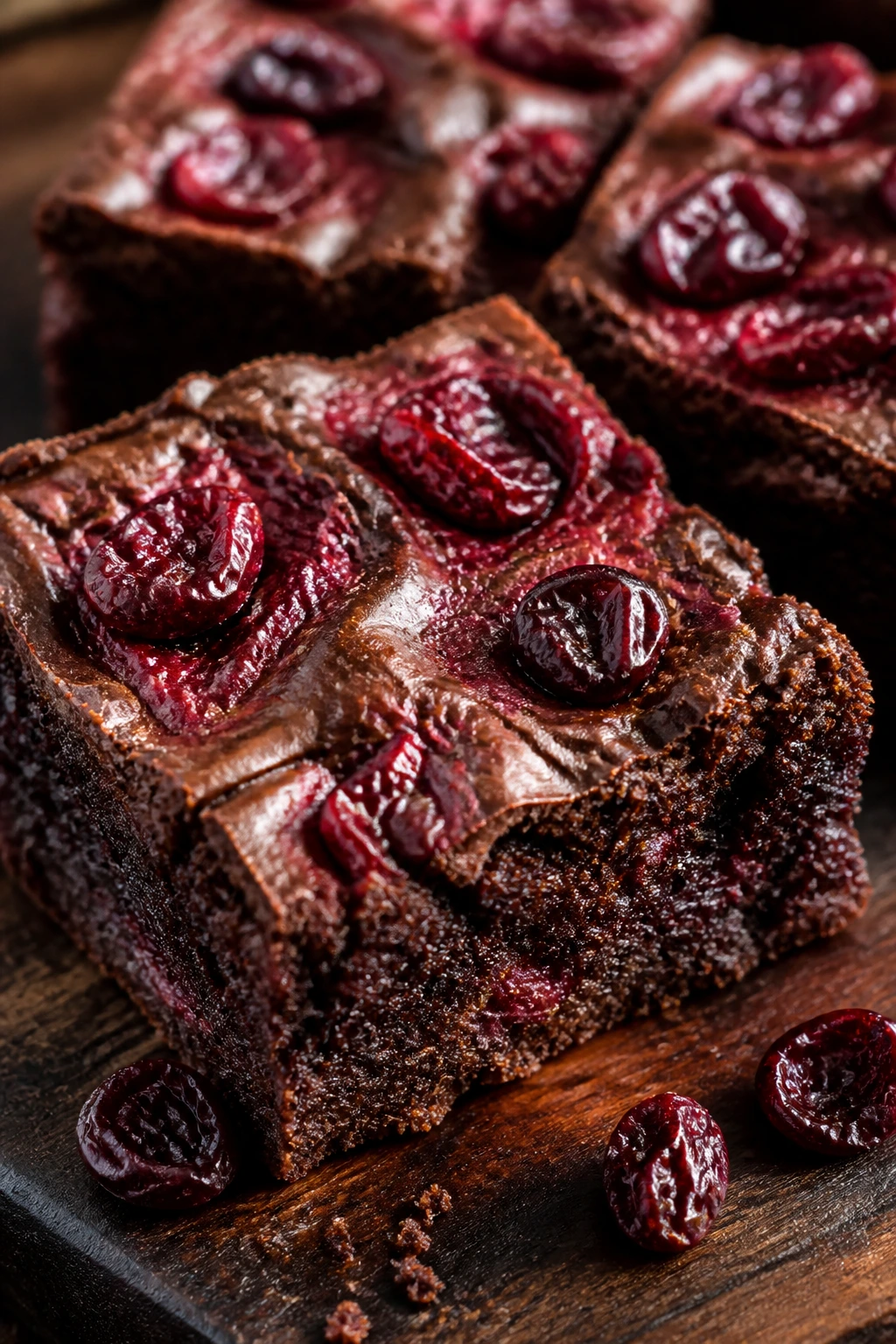
Black Forest brownies should feel a little dramatic. The cherry streaks add color, the chocolate base stays dark, and the whole pan ends up looking like it has a story. I like these topped with a spoon of whipped cream if I’m serving them to guests, but they hold up fine on their own.
Why It Works:
Cherries bring acidity and a glossy red note that cuts through the cocoa. Dried tart cherries stay chewy in the oven, while cherry preserves create visible swirls on top. This keeps the fruit present in both texture and look. A little extra chocolate chunking deepens the base so the cherries don’t taste like a garnish; they feel woven in.
Key Ingredients:
- 1/2 cup (1 stick) unsalted butter
- 3/4 cup granulated sugar
- 1/4 cup packed light brown sugar
- 2 large eggs
- 1 teaspoon vanilla extract
- 1/2 cup unsweetened cocoa powder
- 1/2 cup all-purpose flour
- 1/4 teaspoon fine salt
- 1/2 cup dried tart cherries
- 1/2 cup chopped dark chocolate
- 2 tablespoons cherry preserves, warmed
- Sweetened whipped cream, for serving
Quick Steps:
- Heat the oven to 350°F (175°C) and line an 8-inch square pan.
- Make the batter, folding in the dried cherries and chopped chocolate.
- Spread it into the pan and dot the top with warmed cherry preserves.
- Drag a knife lightly through the preserves for red streaks.
- Bake for 25 to 29 minutes, then cool fully.
- Serve with whipped cream if you want the black forest cue to read more clearly.
Equipment for This Recipe:
- 8-inch square baking pan
- Small bowl for warming preserves
- Knife for marbling
- Parchment paper
How to Serve This Dish:
These deserve a plate with a little height, so add a spoon of whipped cream or a few fresh cherries if you have them. A dark chocolate curl on top makes them feel a little more finished.
Pro Tips for This Recipe:
- Use tart cherries rather than sweet ones if you want balance.
- Warm the preserves just enough to move.
- Don’t over-swirl or the red turns brown.
- A chilled brownie slices cleaner when fruit is involved.
Variations on This Dish:
- Cherry Almond Forest: Add 1/4 teaspoon almond extract to the batter.
- Chocolate Cherry Chunk: Swap dried cherries for chopped dried sour cherries.
- Extra Dark Forest: Use bittersweet chocolate chunks and less sugar in the base.
Common Mistakes to Avoid with This Dish:
- Don’t use watery fruit fillings.
- Don’t skip the cooling time if you want the cherry streaks to stay visible.
- Don’t overload the batter with cherries or it gets gummy.
16. Hazelnut Crunch Brownies
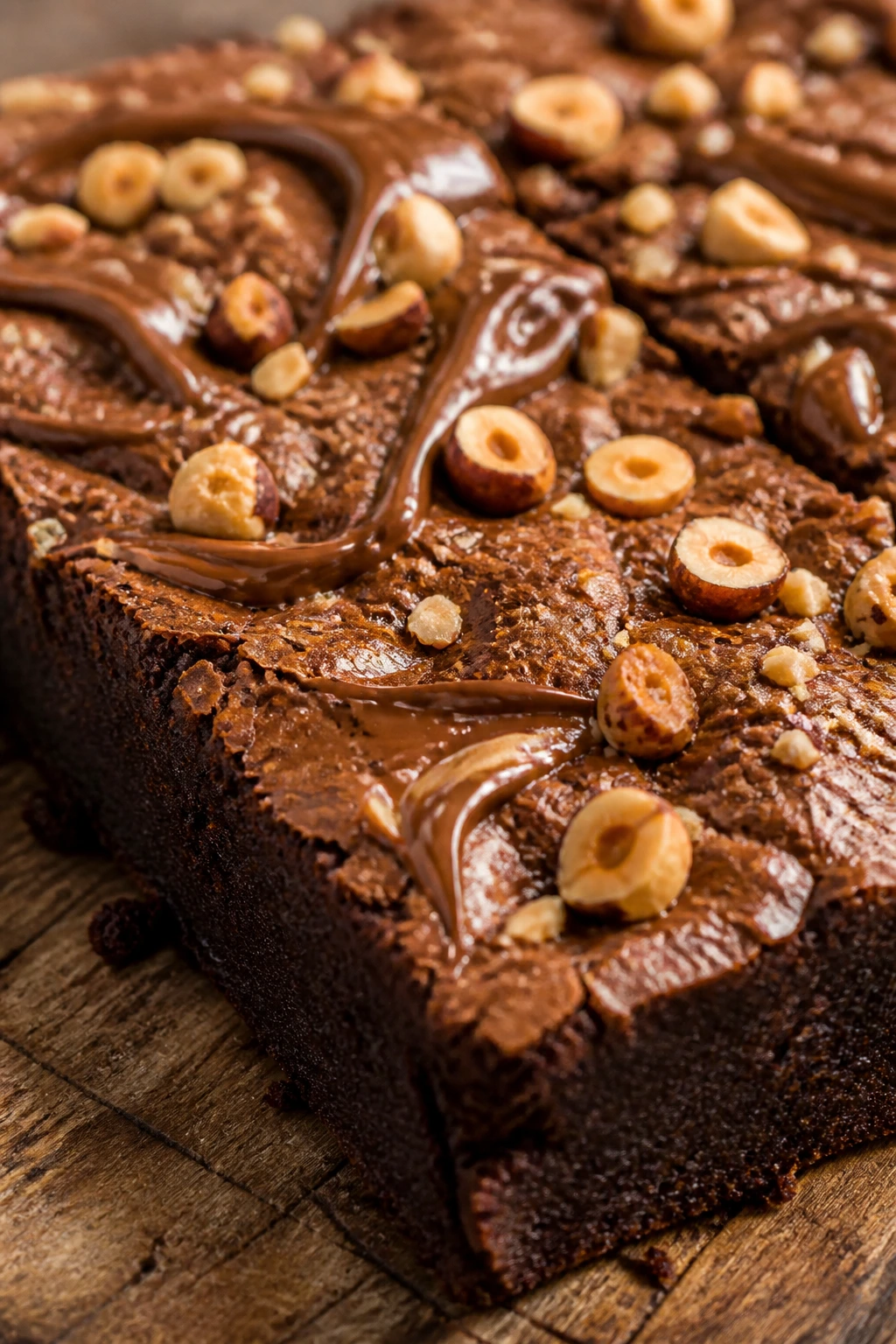
Hazelnuts give brownies a deeper, rounder nut flavor than walnuts do, and they look especially nice when you scatter them across the top in rough pieces. Add a little hazelnut spread and the pan gets a marbled top with a soft sheen that holds well after baking. This is a brownie for people who like chocolate with a little polish.
Why It Works:
Hazelnuts and chocolate have the same old comfortable chemistry, but they bring different textures. Chopped toasted hazelnuts stay crisp, while hazelnut spread melts into thin ribbons that make the surface glossy. Because the spread is sweeter than plain cocoa, the brownie base needs to stay a little darker and less sugary so the flavors don’t crowd each other. The result is nutty, rich, and sharp-edged enough to cut cleanly.
Key Ingredients:
- 1/2 cup (1 stick) unsalted butter
- 1 cup granulated sugar
- 2 large eggs
- 1 teaspoon vanilla extract
- 1/2 cup unsweetened cocoa powder
- 1/2 cup all-purpose flour
- 1/4 teaspoon fine salt
- 3/4 cup toasted hazelnuts, chopped
- 1/3 cup chocolate-hazelnut spread
- 1/2 cup chopped bittersweet chocolate
Quick Steps:
- Preheat the oven to 350°F (175°C) and line an 8-inch square pan.
- Make the brownie batter and fold in the chopped hazelnuts and chocolate.
- Spoon the batter into the pan and dollop the hazelnut spread over the top.
- Swirl once or twice with a knife so the spread stays visible.
- Bake for 25 to 30 minutes, until the top is set and the center still has a little give.
- Cool before slicing so the hazelnuts don’t tear the crumb.
Equipment for This Recipe:
- 8-inch square pan
- Baking sheet for toasting hazelnuts
- Knife or skewer
- Parchment paper
How to Serve This Dish:
These are especially good with espresso or a cup of strong black tea. If you want to lean into the hazelnut look, dust the top very lightly with cocoa before slicing.
Pro Tips for This Recipe:
- Toast and rub the hazelnuts to remove loose skins if you want a cleaner look.
- Use a thick hazelnut spread so the swirl doesn’t disappear.
- Don’t overbake. Hazelnuts can make the top seem done before the center is.
- Let the brownies cool on a rack before cutting.
Variations on This Dish:
- Nutella Marble: Use more spread and less chocolate chunking for a sweeter pan.
- Roasted Hazelnut Salt: Finish with flaky salt and a few whole toasted hazelnuts.
- Hazelnut Cherry: Add 1/3 cup dried cherries for a darker fruit note.
Common Mistakes to Avoid with This Dish:
- Don’t skip toasting the hazelnuts.
- Don’t drown the top in spread or it sinks.
- Don’t cut while warm if you want the swirl to hold shape.
17. Brown Butter Brownies
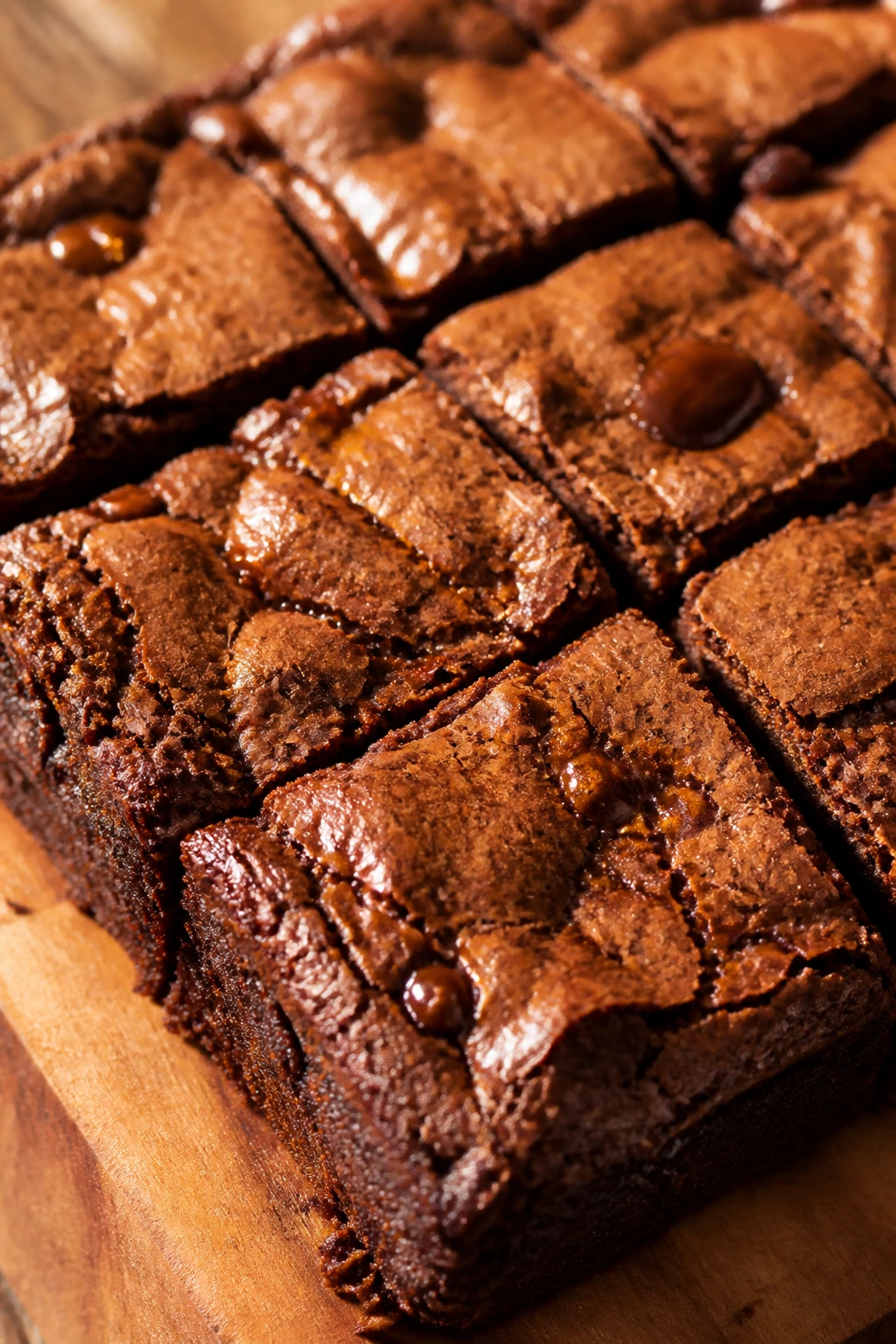
Brown butter gives these a nutty smell that hits before the chocolate does. The batter turns deeper and more toasty than a standard brownie, and the top often bakes into little crinkled ridges that look good under a knife. I think this is one of the most rewarding brownie changes you can make without turning the recipe into a project.
Why It Works:
Browning the butter cooks out some water and leaves behind milk solids with a toasted aroma, which changes the whole flavor of the pan. Because the butter is warmer and more concentrated, the sugar and eggs whisk into a glossy batter with a slightly richer smell. I like to add one extra egg yolk here to keep the crumb supple after the butter changes. Dark chocolate chunks finish the job by giving you pockets of melt against that toasty base.
Key Ingredients:
- 3/4 cup unsalted butter, browned down to 1/2 cup and cooled slightly
- 1/2 cup packed light brown sugar
- 1/2 cup granulated sugar
- 2 large eggs
- 1 large egg yolk
- 1 teaspoon vanilla extract
- 1/2 cup unsweetened cocoa powder
- 1/2 cup all-purpose flour
- 1/4 teaspoon fine salt
- 1/2 cup chopped dark chocolate
- Flaky sea salt, for finishing
Quick Steps:
- Brown the butter in a saucepan over medium heat until it smells nutty and the solids at the bottom turn amber, then cool it for 10 minutes.
- Preheat the oven to 350°F (175°C) and line an 8-inch square pan.
- Whisk the browned butter with both sugars, then add the eggs, yolk, and vanilla until thick.
- Fold in the cocoa, flour, salt, and chocolate.
- Spread into the pan and bake for 24 to 28 minutes, until the center still moves a little.
- Cool fully and finish with flaky salt.
Equipment for This Recipe:
- Small saucepan
- 8-inch square pan
- Whisk and spatula
- Parchment paper
How to Serve This Dish:
Brown butter brownies are good on their own, but they shine with plain vanilla ice cream and nothing else. The toasted flavor already does a lot, so I would keep the plate clean and the garnish light.
Pro Tips for This Recipe:
- Watch the butter closely; it can go from golden to burnt in seconds.
- Cool it slightly before mixing so the eggs don’t scramble.
- Add the extra yolk for a softer center.
- Salt on top makes the toasted flavor stand out.
Variations on This Dish:
- Brown Butter Pecan: Fold in 1/2 cup toasted pecans.
- Brown Butter Espresso: Add 1 teaspoon espresso powder for a deeper finish.
- Brown Butter Toffee: Add 1/3 cup toffee bits for more crunch.
Common Mistakes to Avoid with This Dish:
- Don’t use scorching-hot butter.
- Don’t let the browned solids blacken.
- Don’t overbake and blame the butter; the issue is usually the timer.
18. Brookie Layer Brownies
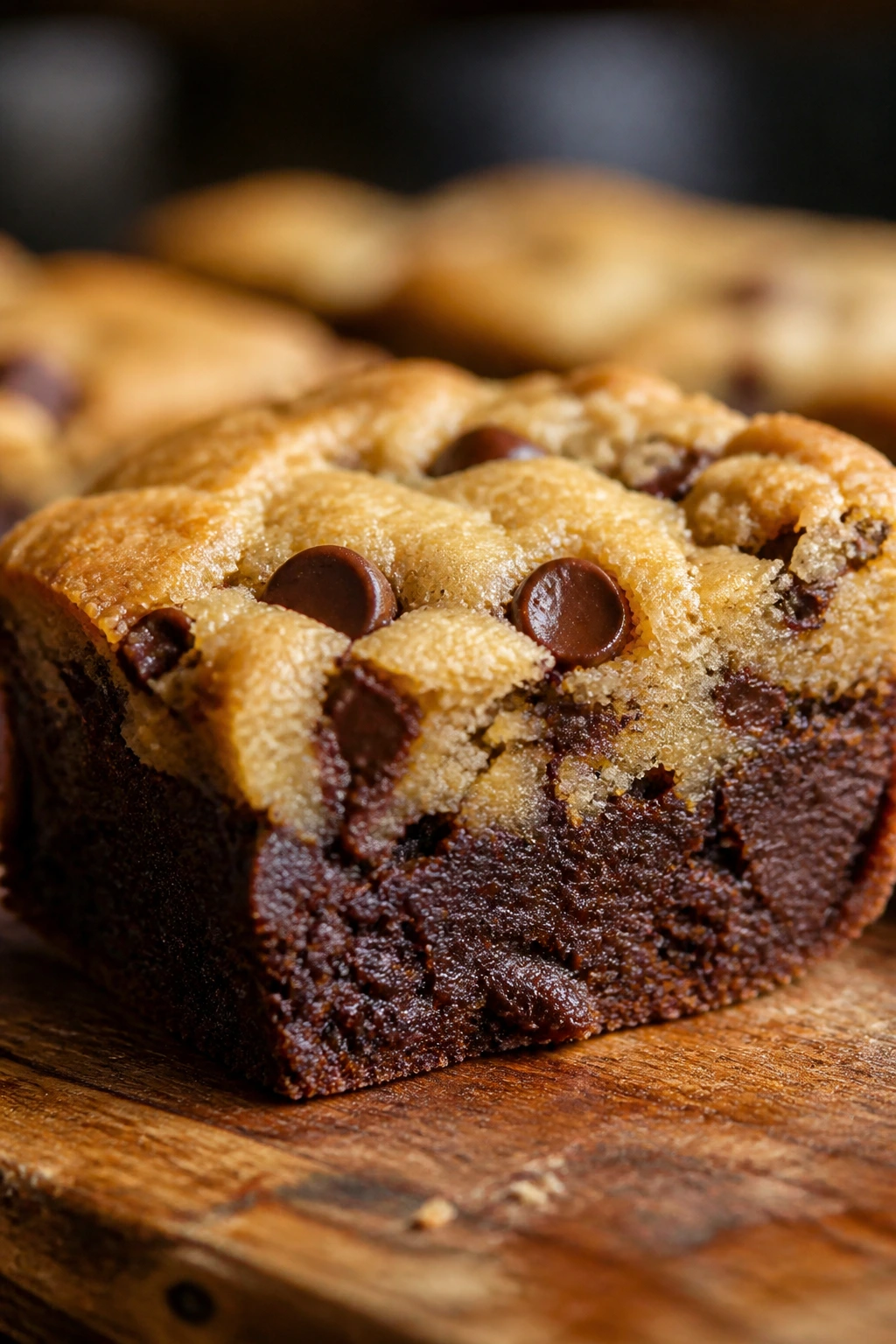
Brookies look like a dessert with an identity crisis, and that’s part of their charm. The cookie layer bakes into a pale, chewy cap over the dark brownie base, so every square has a two-tone cross section that looks a little fancy when sliced. If you like the idea of two desserts sharing one pan without fighting, this is your recipe.
Why It Works:
The brownie layer stays dense enough to support the cookie dough, while the cookie top bakes into a thin chewy layer instead of a full cake. Using an egg yolk in the cookie dough gives it body without making it cakey. Mini chocolate chips keep the top visually busy in a good way. The key is not to overbake, because the cookie layer can fool you into thinking the pan is done sooner than it is.
Key Ingredients:
- For the Brownie Base:
- 1/2 cup (1 stick) unsalted butter
- 1 cup granulated sugar
- 2 large eggs
- 1 teaspoon vanilla extract
- 1/2 cup unsweetened cocoa powder
- 1/2 cup all-purpose flour
- 1/4 teaspoon fine salt
- For the Cookie Layer:
- 1/4 cup unsalted butter, softened
- 1/4 cup packed light brown sugar
- 2 tablespoons granulated sugar
- 1 large egg yolk
- 1 teaspoon vanilla extract
- 1/2 cup all-purpose flour
- 1/4 teaspoon fine salt
- 1/2 cup mini chocolate chips
Quick Steps:
- Preheat the oven to 350°F (175°C) and line an 8-inch square pan.
- Mix the brownie batter and spread it into the bottom of the pan.
- Beat the softened butter, sugars, egg yolk, and vanilla for the cookie layer, then stir in the flour, salt, and mini chips.
- Flatten small pieces of cookie dough and place them over the brownie batter so the surface is mostly covered.
- Bake for 28 to 32 minutes, until the cookie layer is lightly golden and the brownie center still has a little softness.
- Cool fully before slicing so the two layers stay distinct.
Equipment for This Recipe:
- 8-inch square pan
- Mixing bowls
- Hand mixer or sturdy spoon
- Parchment paper
How to Serve This Dish:
Cut these into small squares and show off the cross section. A scoop of ice cream is almost too much here; I’d go with cold milk or coffee and let the two layers do the talking.
Pro Tips for This Recipe:
- Keep the cookie dough in small pieces so the top bakes evenly.
- Don’t press the cookie layer too hard into the brownie base.
- Watch the edges; the cookie can brown before the center sets.
- Chill before slicing if you want a cleaner two-tone look.
Variations on This Dish:
- Oat Brookie: Swap 1/4 cup of the cookie flour for quick oats.
- Salted Caramel Brookie: Add a few caramel chips between the layers.
- White Chip Brookie: Use white chocolate chips in the cookie dough for a lighter top.
Common Mistakes to Avoid with This Dish:
- Don’t make the cookie layer too thick or it steals the brownie show.
- Don’t underbake the center and call it chewy.
- Don’t slice warm unless you want the layers to slide.
19. Olive Oil Sea Salt Brownies
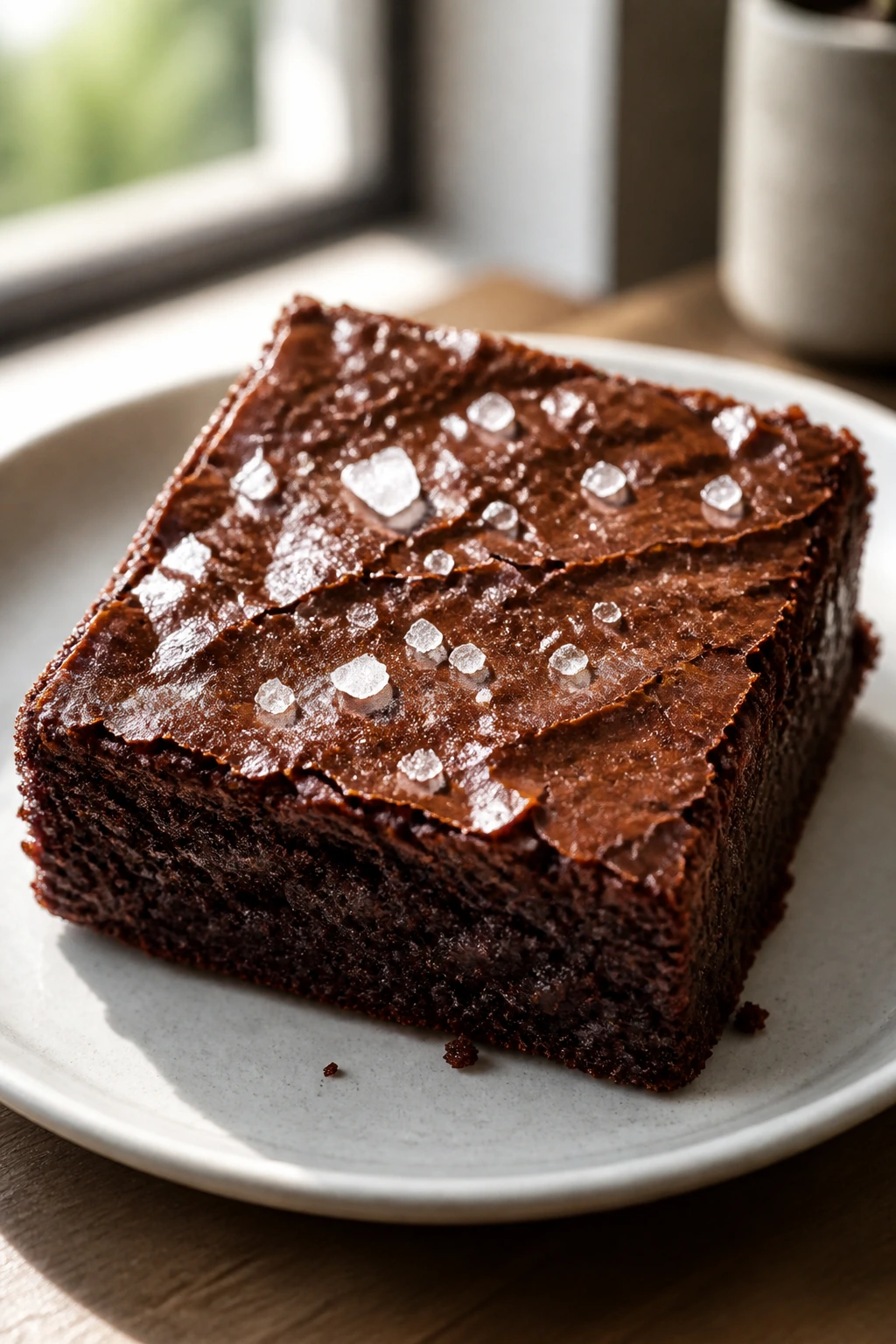
Olive oil brownies have a softer, silkier crumb than butter-based ones, and that makes them feel a little more grown-up without being fussy. A fruity olive oil can read almost peppery on the finish, and the flaky salt on top gives the squares a rough, sparkling surface. I like this version when I want the chocolate to taste cleaner and less heavy.
Why It Works:
Olive oil keeps the batter smooth and helps the brownies stay moist for days. Because there’s no butter to cool and firm up, the texture stays tender even after chilling. The chocolate flavor reads a little brighter and less milky, which is why this recipe likes a good pinch of salt on top. It’s one of those brownies that changes slightly as it sits, and that’s a good thing.
Key Ingredients:
- 1/2 cup extra-virgin olive oil
- 1 cup granulated sugar
- 2 large eggs
- 1 teaspoon vanilla extract
- 1/2 cup unsweetened cocoa powder
- 1/2 cup all-purpose flour
- 1/4 teaspoon fine salt
- 1/2 cup chopped dark chocolate
- Flaky sea salt, for finishing
Quick Steps:
- Preheat the oven to 350°F (175°C) and line an 8-inch square pan.
- Whisk the olive oil and sugar together until the mixture looks smooth and a little thick.
- Add the eggs and vanilla and whisk until glossy.
- Fold in the cocoa, flour, salt, and chopped chocolate.
- Spread into the pan, sprinkle with flaky salt, and bake for 23 to 27 minutes.
- Cool before cutting; the crumb firms as it rests.
Equipment for This Recipe:
- 8-inch square pan
- Mixing bowl
- Whisk and spatula
- Parchment paper
How to Serve This Dish:
These are especially good with espresso or a glass of red wine if you’re serving dessert after dinner. The olive oil gives the crumb a subtle shine, so keep the garnish minimal.
Pro Tips for This Recipe:
- Use an olive oil you actually like the smell of.
- Whisk the oil and sugar until they stop looking separate.
- Don’t overbake; olive oil brownies dry out faster if you push them.
- Flaky salt on top is not decoration only. It matters.
Variations on This Dish:
- Orange Olive Oil: Add 1 teaspoon orange zest for a brighter top note.
- Chocolate Olive Oil Chip: Fold in 1/2 cup extra chopped chocolate.
- Herbed Sea Salt: A tiny pinch of rosemary sugar on top works if you want a savory edge.
Common Mistakes to Avoid with This Dish:
- Don’t use a heavy, bitter oil unless you want that flavor to lead.
- Don’t skip the salt.
- Don’t overbake and expect the olive oil to save the texture.
20. Dulce de Leche Swirl Brownies
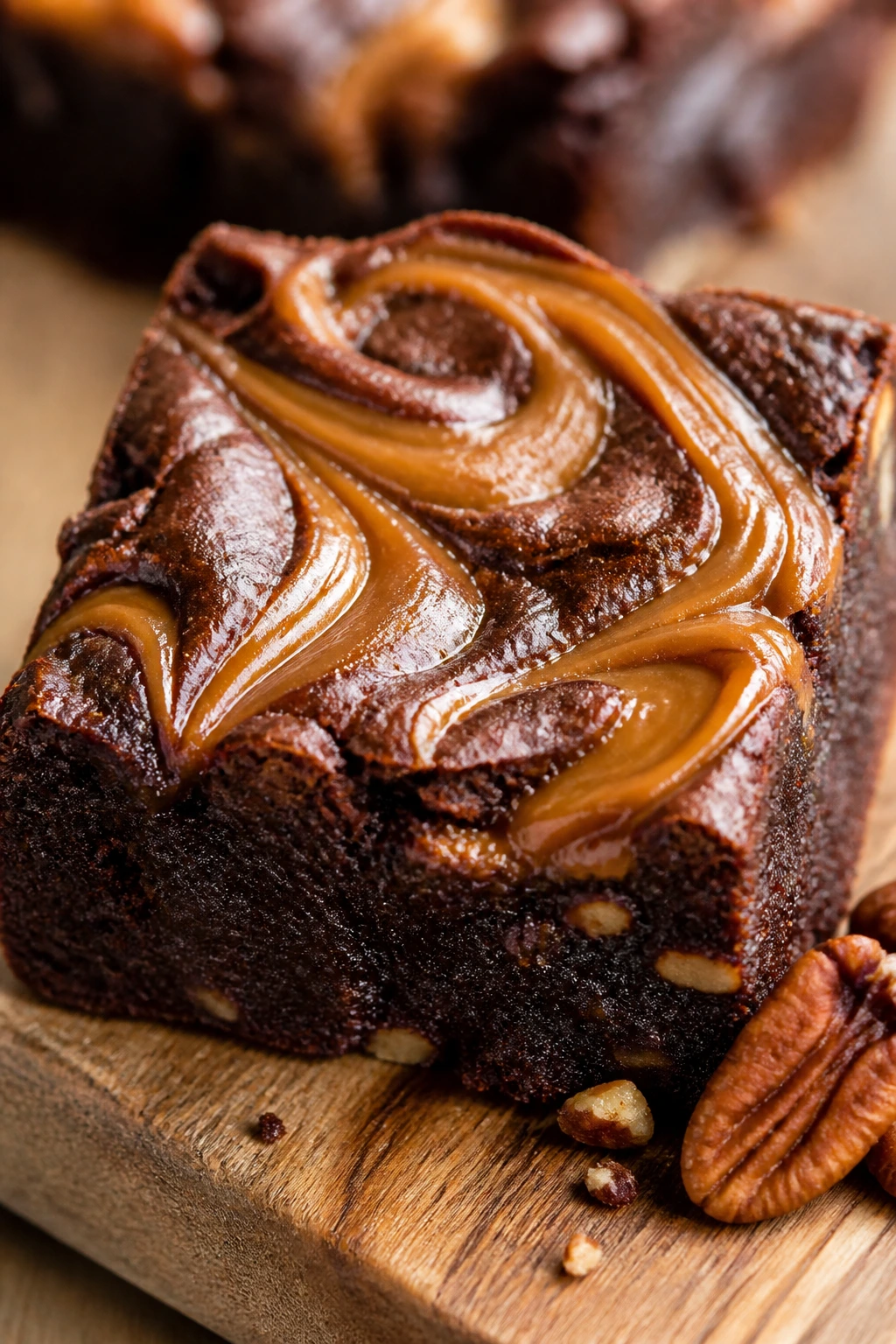
Dulce de leche gives brownies a milk-caramel ribbon that feels softer and more rounded than straight caramel. The swirls bake into golden streaks that make the pan look almost painted, and a few toasted pecans keep the surface from looking too smooth. This is the one I’d bring out when I want the tray to disappear fast.
Why It Works:
Dulce de leche is thick enough to sit on the batter in soft dollops, so the swirls stay visible after baking. Its creamy caramel flavor is less sharp than standard caramel sauce, which gives the brownies a gentler finish. Toasted pecans add a crackle that keeps the texture from getting one-note. The whole pan ends up looking layered even though it’s still a simple brownie underneath.
Key Ingredients:
- For the Brownie Base:
- 1/2 cup (1 stick) unsalted butter
- 1 cup granulated sugar
- 2 large eggs
- 1 teaspoon vanilla extract
- 1/2 cup unsweetened cocoa powder
- 1/2 cup all-purpose flour
- 1/4 teaspoon fine salt
- For the Swirl:
- 1/2 cup dulce de leche
- 1/2 cup toasted pecans, chopped
- Flaky sea salt, for finishing
Quick Steps:
- Preheat the oven to 350°F (175°C) and line an 8-inch square pan.
- Make the brownie batter and spread it into the pan.
- Warm the dulce de leche for 10 to 15 seconds if needed so it dollops easily.
- Spoon the dulce de leche over the batter, sprinkle on the pecans, and drag a knife through once or twice.
- Bake for 25 to 29 minutes until the center still looks slightly soft.
- Cool, then finish with a pinch of flaky salt before slicing.
Equipment for This Recipe:
- 8-inch square baking pan
- Small bowl for warming dulce de leche
- Knife or skewer
- Parchment paper
How to Serve This Dish:
These look polished enough for a dessert plate and casual enough for a napkin on the couch. If you want a richer finish, add a spoon of whipped cream and a few extra pecans beside the square.
Pro Tips for This Recipe:
- Use thick dulce de leche, not a runny caramel sauce.
- Warm it only slightly so it stays visible.
- Toast the pecans first for a cleaner flavor.
- A light salt finish keeps the sweetness from getting heavy.
Variations on This Dish:
- Dulce de Leche Almond: Swap pecans for toasted almonds.
- Coffee Caramel Swirl: Stir 1/2 teaspoon espresso powder into the brownie batter.
- Chocolate-Chip Dulce: Fold 1/3 cup semisweet chips into the batter for extra melt.
Common Mistakes to Avoid with This Dish:
- Don’t use thin caramel sauce in place of dulce de leche.
- Don’t over-swirl or the topping disappears.
- Don’t cut before the swirl sets, or the ribbons smear.
The Small Choices That Make Brownies Look Bakery-Ready
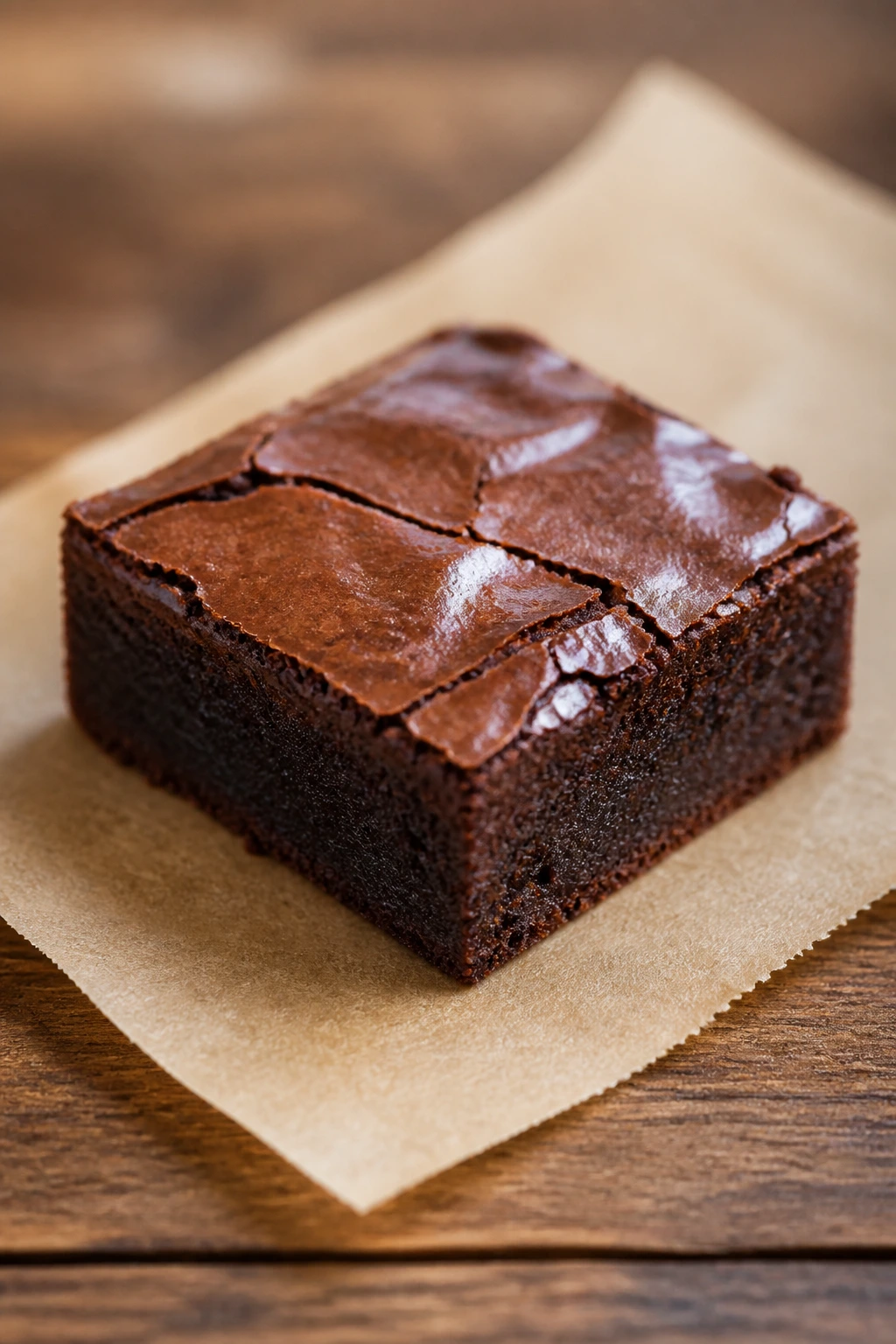
Brownies seem simple right up until you try to make them look neat. That is where the real work lives. A metal pan gives sharper edges than glass, parchment with overhang makes lifting easy, and a long cool-down turns a messy pan into a stack of clean squares. None of that is glamorous. All of it matters.
The other piece is mixing. Brownie batter wants enough whisking to bring the sugar and eggs together, but not so much that it turns airy. That’s why some of the prettiest brownies here have a dense, tight crumb under a glossy top. The batter should look smooth, yes, but not whipped. If you can see bubbles like cake batter, you’ve gone too far.
Swirls and toppings need restraint. Jam, caramel, tahini, cheesecake, and ganache all look better when they sit on top in visible bands instead of being driven through the batter until the whole pan turns muddy. I keep saying that because it’s the difference between a square that looks deliberate and a square that looks stirred to death. The knife should leave a trail, not a collapse.
The Pan, Bowl, and Spatula Setup That Makes Brownies Behave
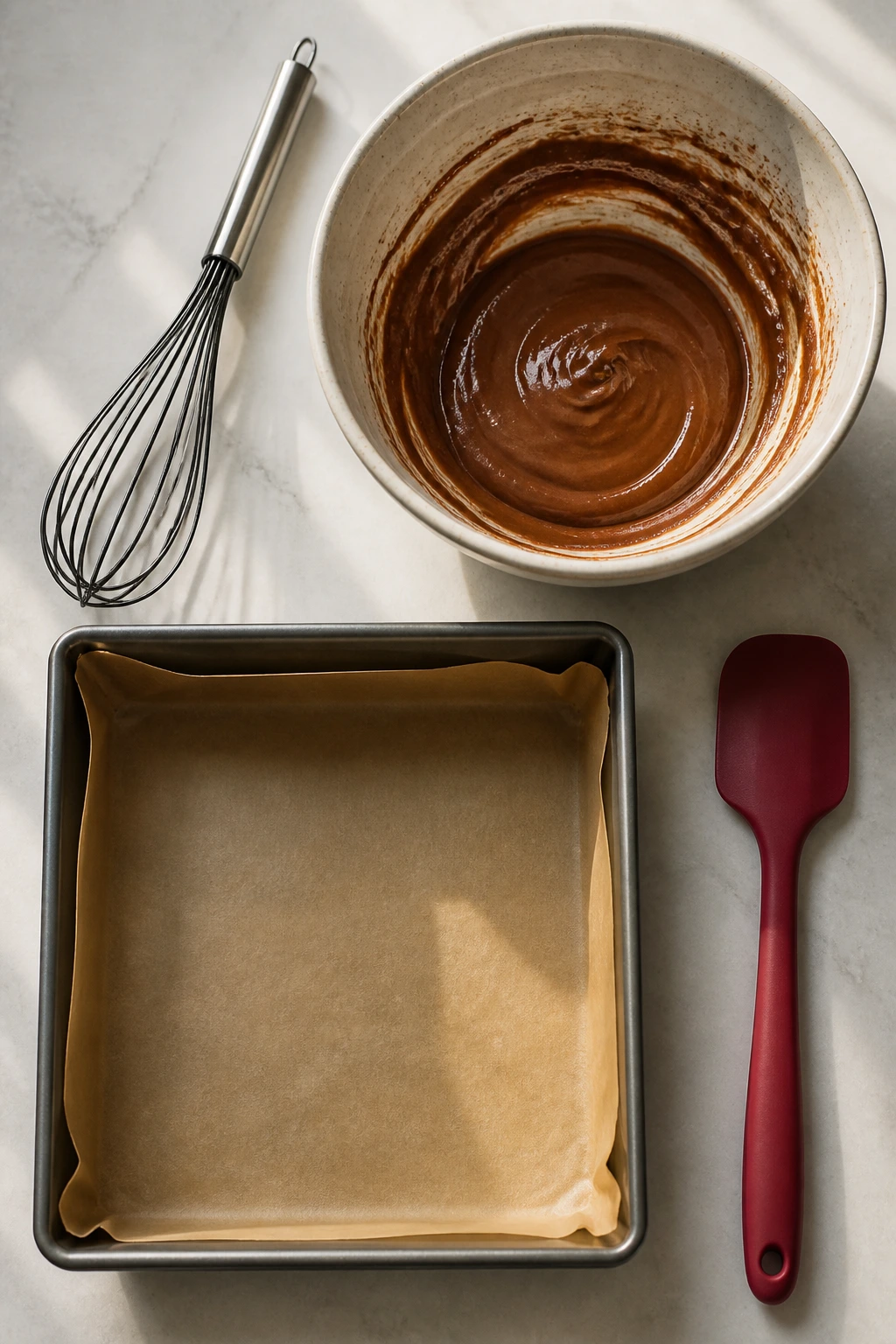
- 8-inch square metal baking pan: The standard for thick, fudgy brownies; use 9-inch if you prefer thinner squares.
- Parchment paper: Leave a sling on two sides so the whole slab lifts out in one piece.
- Mixing bowls: One medium bowl handles the batter, and a second small bowl helps with swirls or ganache.
- Whisk: A balloon whisk gives the sugar and eggs enough air for a shiny top.
- Rubber spatula: Best for folding in flour and scraping the bowl clean.
- Offset spatula: Handy for spreading batter evenly and smoothing the top of ganache or caramel.
- Small saucepan: Useful for brown butter, caramel ribbons, or warming dulce de leche.
- Microplane or fine grater: Good for citrus zest without bitter pith.
- Sharp chef’s knife: The tool that decides whether the squares look bakery-neat or dragged apart.
- Wire rack: Lets the brownies cool from underneath instead of steaming in the pan.
Smart Shopping for Cocoa, Chocolate, and the Good Stuff on Top
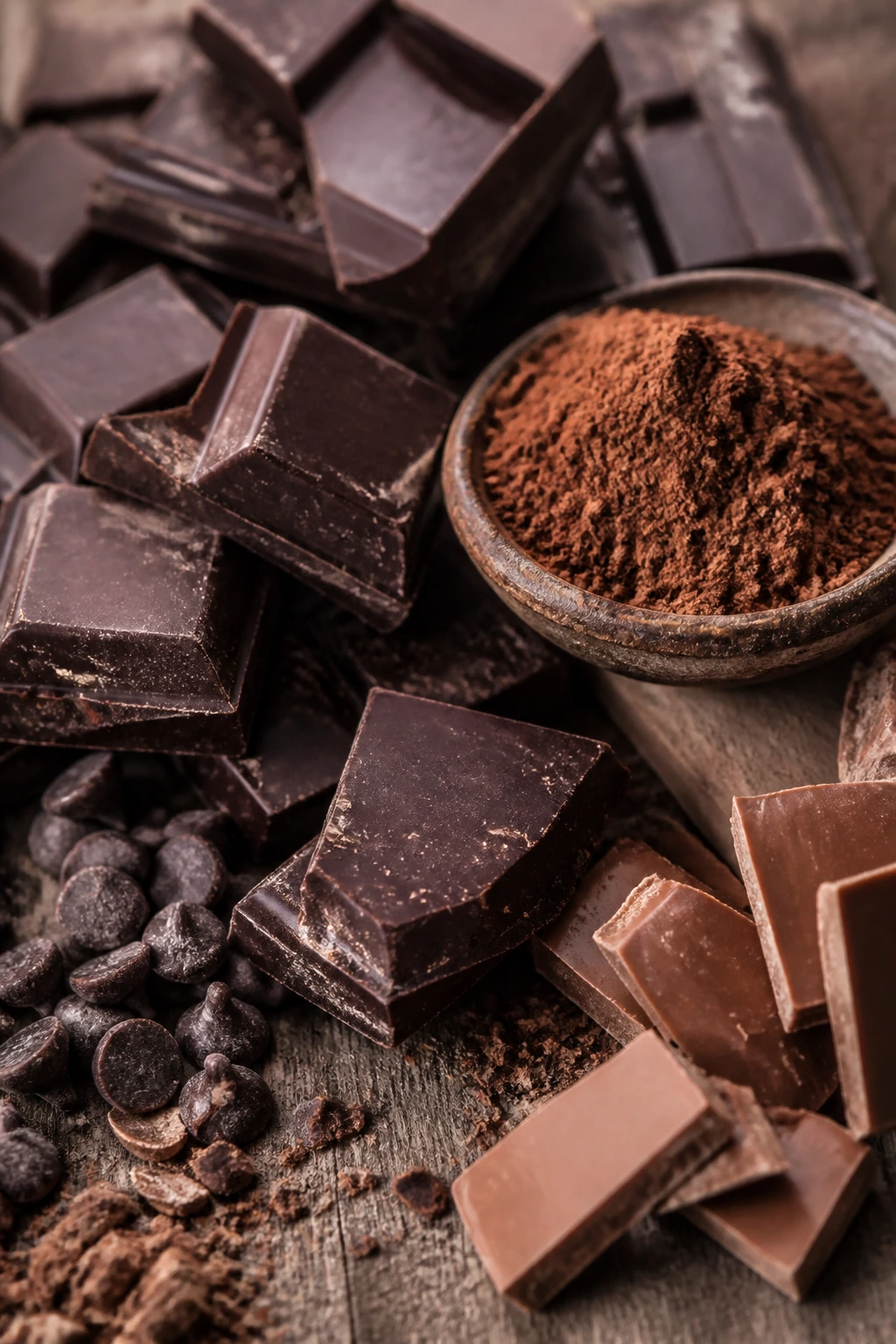
Cocoa powder is not one-size-fits-all. Dutch-process cocoa tastes smoother and gives a darker color, while natural cocoa reads a little sharper and more old-school. For brownies, I usually like Dutch-process when the recipe wants a deep dark look and natural cocoa when the batter needs a brighter chocolate snap. Either can work, but the flavor shifts are real.
Chocolate matters more than people think. Chopped chocolate melts into puddles with rough edges, while chips hold their shape. If you want the top to look glossy and broken in a good way, chop a bar. If you want neat little dots, use chips. For ganache, buy a bar you’d eat plain. The cream is doing enough work already.
Then there are the add-ins. Cream cheese should be full-fat block cream cheese, not the soft tub stuff. Nut butters should be thick, not oily and separated. Jams need to be thick enough to sit on the batter, and dulce de leche should be spoonable, not runny. Nuts should smell clean, never dusty or stale. If they taste faintly bitter on their own, they will taste louder in the brownie.
One small thing people skip: pan material. A metal pan gives you darker edges and a more even center because it heats faster. Glass looks nice on a table, but I do not love it for brownies. The corners overcook before the middle catches up, and then you’re stuck choosing between dry edges and soft centers.
How to Plate Them So the Swirls Actually Show
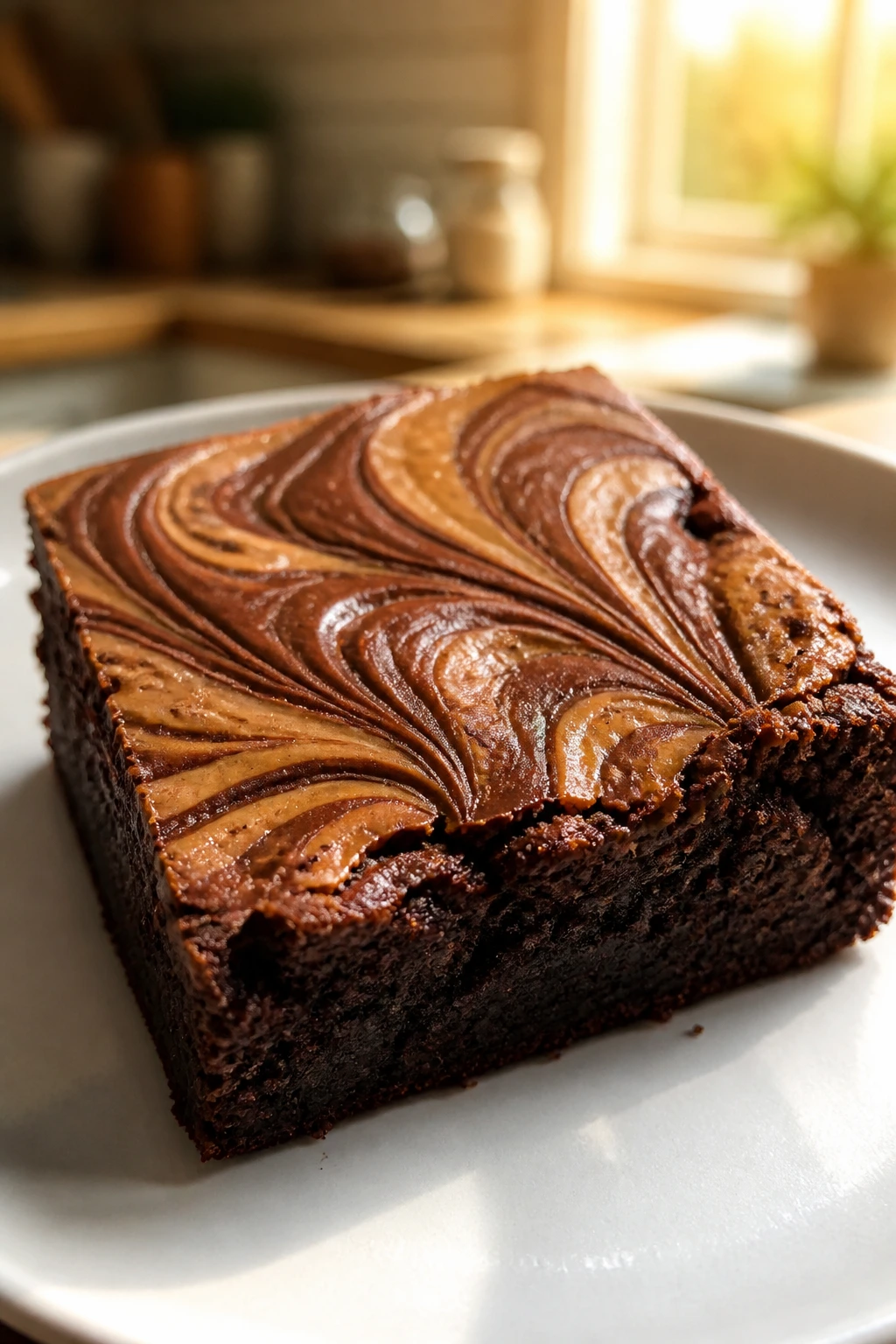
Presentation: Cut brownies with a hot knife, wipe the blade after every slice, and lift each square with a thin spatula so the edges stay sharp. If the brownie has a swirl on top, cut straight down instead of sawing; sawing tears the pattern and drags the crumb.
Accompaniments: Vanilla ice cream works across almost every brownie here, but coffee, whipped cream, raspberries, and toasted nuts each do a different job. Use berries with cream cheese, use coffee with espresso or dark chocolate, and use extra whipped cream only when the brownie already has a salty or bitter edge.
Portions: A standard 8-inch pan usually yields 9 to 16 squares depending on how rich the topping is. Truffle, caramel, and ganache brownies are better cut smaller. Plain crinkle brownies can go slightly larger if you’re serving them with ice cream.
Beverage Pairing: Cold milk is the easy answer, but espresso, black tea, and even a dry red wine have their place. Peppermint and s’mores brownies like milk best. Caramel, orange, and brownie-ganache squares stand up well to coffee or tea with a little bite.
Extra Flavor Moves That Change the Whole Pan
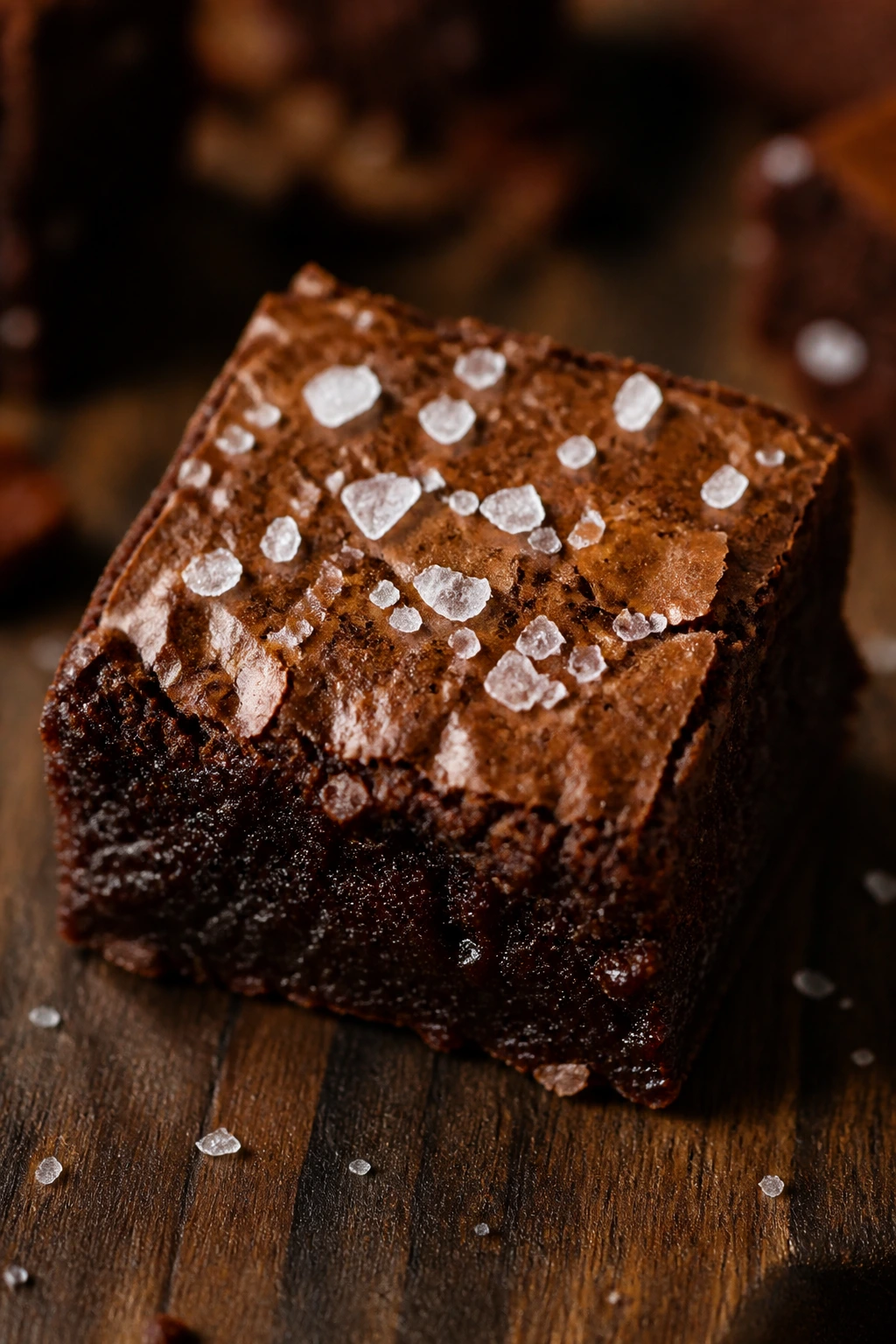
Flavor Enhancement: A pinch of flaky sea salt on the finished brownies is the fastest way to sharpen chocolate. It doesn’t make the dessert salty; it makes the cocoa taste more specific. If you want deeper flavor, add 1 teaspoon instant espresso powder to almost any dark brownie batter.
Customization: Toasted nuts, chopped chocolate, crushed cookies, or a thin jam swirl all change the bite without requiring a new recipe. Pick one texture change, not three. Brownies are sturdy, but too many add-ins can turn the crumb loose.
Serving Suggestions: A dusting of cocoa through a fine sieve looks cleaner than powdered sugar on dark brownies. Coconut, sesame seeds, orange zest, and a few berry crumbs also read well on top. Keep garnishes small and let the cut edges stay visible.
Make-It-Yours: For gluten-free brownies, use a good 1:1 baking flour and stop mixing as soon as the last streak disappears. For dairy-free brownies, use olive oil or a neutral vegan butter and pick dark chocolate that doesn’t contain milk solids. For nut-free brownies, swap nuts for pretzel bits, marshmallows, or extra chocolate chunks so the texture still changes.
Make-Ahead, Storage, and Reheating Without Ruining the Crumb
Plain brownies keep well at room temperature for 3 to 4 days if you store them in an airtight container with parchment between layers. Cheesecake, ganache, caramel, and any brownie with fresh dairy topping should be refrigerated, where they’ll hold for about 5 days. Wrapped tightly, most brownies freeze well for up to 2 months.
Freezing works best when the brownies are already cut. Wrap each square in parchment, then a layer of plastic or a freezer bag. That way you can thaw one or two pieces instead of defrosting the whole pan. If you know you’ll freeze them, skip very delicate toppings like candy cane shards until after thawing. Those get soggy fast.
For reheating, use 8 to 12 seconds in the microwave for a single square if you want the center soft again. A brownie with ganache or caramel should sit at room temperature for 15 to 20 minutes before serving so the topping loosens without melting. If you’re warming a whole pan, use a low oven, around 275°F (135°C), and cover loosely with foil so the top doesn’t dry out.
Some brownies improve overnight. Walnut, brown butter, and olive oil versions usually settle into a better texture by the next day, and the flavor reads deeper. Brownies with marshmallows or a graham base are better the same day or the day after; beyond that, the texture starts to blur.
Named Twists and Dietary Swaps That Still Taste Like Brownies
Gluten-Free Cocoa Squares: Swap the all-purpose flour for a 1:1 gluten-free baking flour and let the batter rest for 10 minutes before baking. That pause helps the starch hydrate so the crumb doesn’t feel sandy.
Dairy-Free Dark Pan: Use olive oil or a neutral plant-based butter in place of butter, and choose dairy-free dark chocolate. The texture stays moist, but the flavor gets a touch cleaner and less milky.
Lower-Sugar Edge: Cut the sugar by 1/4 cup in the plain brownie base and lean on dark chocolate or cocoa nibs for contrast. Don’t reduce the sugar too far or you lose the crackly top and the surface turns dull.
Nut-Free School Tray: Skip walnuts, hazelnuts, and pecans and use pretzel bits, marshmallows, or cookie crumbs for crunch. That keeps the bite interesting without crossing into nut territory.
Fruit-Laced Squares: Fold in dried cherries, raspberry jam, or orange zest if you want a brighter finish without frosting. Fruit keeps brownies from feeling flat, especially in a dark chocolate batter.
Extra Fudgy Chill: For any brownie in this collection, bake a minute or two less and chill the pan before slicing. The center turns denser, the edges sharpen, and the squares look more polished.
The Traps That Turn a Good Pan Into a Dry One
The most common mistake is baking by the toothpick alone. Brownies do not need to come out clean the way cake does. You want moist crumbs or a few sticky streaks, especially in the center. Pull them too late and the whole pan goes from fudgy to chalky fast.
Overmixing after the flour goes in is the second trap. Once the dry ingredients are added, the batter should look thick and glossy, not whipped and loose. Stir until the streaks disappear, then stop. If you keep going, the crumb tightens and the top loses that thin shiny skin.
Using the wrong pan changes the whole bake. Glass and dark-coated pans both behave differently from plain metal, and home bakers often blame the recipe when the pan is the problem. If your brownies keep browning too fast at the edges, line the pan well and start checking a few minutes early. If they’re pale and gummy in the center, your pan is probably slowing the heat down.
Cutting too soon ruins good brownies more often than overbaking does. The center needs time to set, and swirls need time to stop moving. I know it’s annoying to wait. Still worth it. A warm brownie is pleasant; a cooled brownie is neat, richer, and easier to stack.
Brownie Questions People Actually Ask
Can I use Dutch-process cocoa in all of these brownies?
Yes, in most of them. Dutch-process gives a darker, smoother taste, while natural cocoa tastes a little sharper. If a recipe relies on baking soda for lift, stick with what the recipe asks for, but most brownies here are flexible.
Why do my brownies come out cakey instead of fudgy?
Usually the batter got overmixed, or the pan stayed in the oven a few minutes too long. Too much flour can do it too. Measure carefully, fold gently, and pull the pan while the center still looks slightly underdone.
How do I get those clean bakery-style cuts?
Cool the brownies completely, chill them for 20 to 30 minutes if needed, then slice with a hot knife wiped clean between cuts. A parchment sling helps you lift the whole slab out without tearing the edges.
Can I bake these in a 9×13 pan?
Yes, but you’ll need to double many of the recipes or expect much thinner brownies. Start checking much earlier if you keep the same batter in a larger pan, because the bake time drops fast.
Do brownies with cream cheese or ganache need to stay refrigerated?
Yes. Anything with a dairy-based topping should go in the fridge and come back to room temperature before serving unless you want the center to feel too firm. Plain brownies don’t need refrigeration unless your kitchen is warm.
What if the middle looks raw but the edges are done?
Lower the oven rack one notch next time and use a metal pan if you aren’t already. For the current batch, tent loosely with foil and give it 3 to 5 more minutes, then test again. The center should wobble slightly, not slosh.
Can I freeze brownies with swirls or toppings?
Most of them, yes. Ganache, caramel, and plain brownies freeze well if wrapped tightly. Candy cane tops and marshmallows are the weak link, so those are better frozen plain and finished after thawing.
Why did my swirl sink?
The topping was probably too thin or the base batter too loose. Use thicker dollops, don’t overdo the swirl, and make sure the brownie batter is spread evenly before adding the topping.
A Pan Worth Keeping
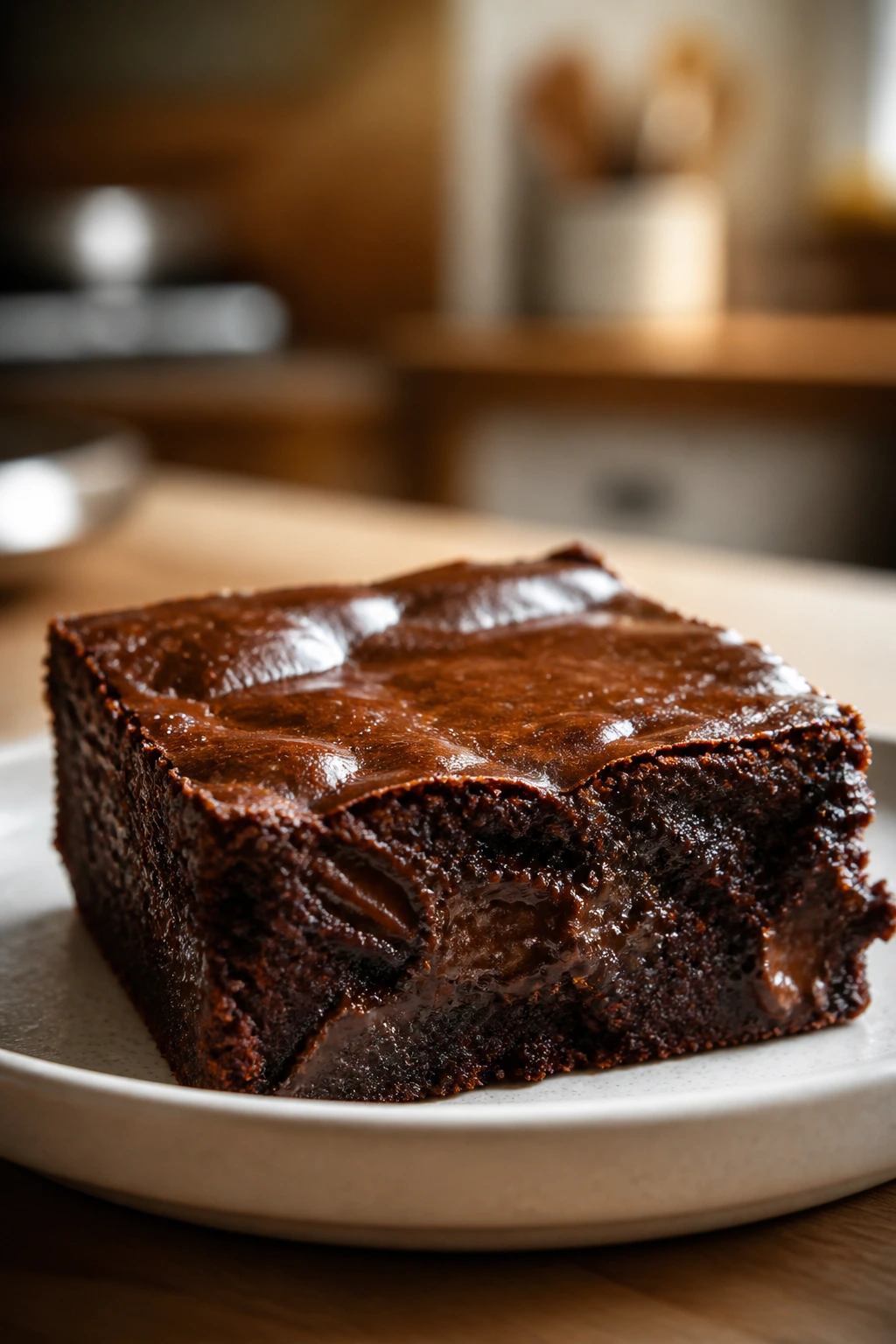
Brownies are one of the few desserts that can wear swirls, nuts, ribbons, and glossy tops without losing their core identity. That’s why I keep coming back to them. A good square can look restrained or ornate, but it should still eat like a brownie first.
If you make just one change from this collection, make it the cooling time. The shiny top, the clean edges, the neat swirl — all of that depends on patience after the oven is off. The chocolate gets better at rest. So do the slices.