



Spicy Korean ground beef has a way of disappearing before the rice is even ready. One minute the skillet smells like garlic and ginger; the next, the meat is coated in a dark, glossy sauce that tastes salty, sweet, sharp, and hot in a way that keeps pulling you back for one more bite.
I like recipes like this because they don’t waste your time pretending to be elaborate. Ground beef is cheap enough to keep around, fast enough to cook on a tired night, and sturdy enough to soak up a sauce that would slide right off a more delicate protein. The trick is getting the balance right so it tastes bold, not blunt.
That balance matters more than people think. Too much sugar and you get sticky meat with no depth. Too much gochujang and the sauce feels noisy instead of rounded. But when the ratio lands, the beef takes on that takeout-style gloss that clings to rice, noodles, or lettuce leaves without turning soupy.
And yes, there’s a reason this one keeps sneaking back into the weekly rotation. It’s not trying to be fancy. It just works.
Why You’ll Want This Skillet on Repeat
- Fast browning: The beef goes from raw to ready in about 10 to 12 minutes, which is exactly the kind of timing that saves dinner when rice is already cooking.
- Glossy sauce: Gochujang, soy sauce, brown sugar, rice vinegar, and sesame oil reduce into a clingy glaze instead of pooling in the pan.
- Budget-friendly cut: Ground beef gives you strong flavor without asking for steak money, and 85/15 has enough fat to stay juicy.
- Flexible heat: You can keep it mild enough for kids or push the gochujang higher if you want the sauce to bite back a little.
- Meal-prep friendly: The beef reheats cleanly and holds up well for lunches, especially if you keep the scallions and sesame seeds separate.
- Easy to serve a few ways: Spoon it over rice, tuck it into lettuce cups, or pile it onto noodles; the sauce behaves itself in every one of those formats.
Yield: Serves 4
Prep Time: 15 minutes
Cook Time: 12 minutes
Total Time: 27 minutes
Chill/Rest Time: None
Difficulty: Beginner — the technique is straightforward, but the last-minute taste adjustment makes a real difference.
Best Served: Hot, while the sauce is still shiny and the rice is steaming.
Why Spicy Korean Ground Beef Works So Well on a Weeknight
This is a Korean-inspired skillet, not a copy of a restaurant dish, and that distinction matters. It borrows the flavor profile of bulgogi and other sweet-savory Korean beef dishes, then swaps in ground beef so you can cook it quickly without marinating, slicing, or babysitting anything.
That shortcut changes the texture in a good way. Sliced beef gives you ribbons; ground beef gives you little browned crags and edges, which means more surface area for the sauce to grab. Every crumb gets coated. Every browned spot picks up a little extra sweetness. The pan ends up doing some of the work that a long marinade usually handles.
There’s also a practical reason this format tastes so good. Ground beef carries fat evenly, so the sauce doesn’t just sit on top of the meat; it settles into it. When you hit it with garlic and ginger, then add gochujang and soy, the pan smells rich and savory almost immediately. The whole thing reads as dinner, not as a pile of seasoned meat waiting for rescue.
And because the dish is built on simple pantry pieces, it forgives the kind of real-life timing that cooks deal with all the time. If the rice finishes early, fine. If the scallions sit out for a few minutes, they still taste bright. If you need to spoon kimchi or cucumbers on the side, the beef welcomes them. It is not a delicate recipe. That’s the appeal.
The Sauce Balance That Makes It Taste Finished
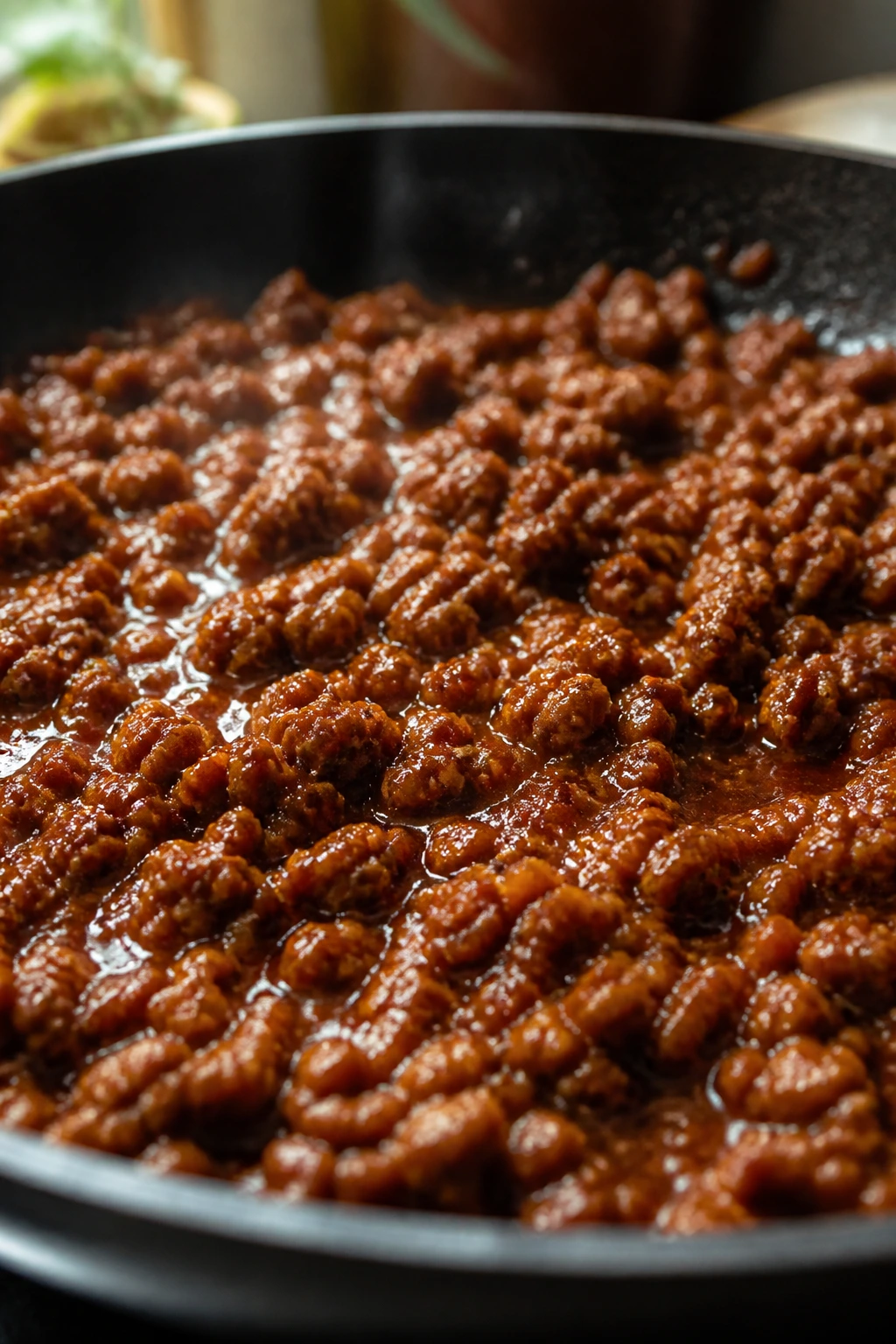
Salt alone makes beef taste flat. Sugar alone makes it sticky. The reason this sauce works is that each part does one job and then steps back.
Gochujang Gives the Sauce Body
Gochujang is doing more than adding heat. It brings fermented depth, a little sweetness, and a thick paste texture that helps the sauce cling to the meat instead of running off the bottom of the skillet. If you’ve only thought of it as “spicy stuff,” taste a teaspoon on its own sometime. It’s more complicated than hot sauce, and more useful here.
The quantity matters. Two tablespoons is enough to give the dish its color and backbone without overwhelming the beef. If your jar is especially salty or especially hot, you can trim it back to 1½ tablespoons and add a touch more brown sugar.
Soy Sauce Handles the Savory Side
Soy sauce is the part that makes the dish taste cooked, not just mixed. It deepens the browned beef, pulls the garlic and ginger into the sauce, and keeps the flavor from leaning too sweet.
I strongly prefer low-sodium soy sauce here. Regular soy can push the sauce into harsh territory fast, especially once it reduces in the pan. Low-sodium gives you room to adjust at the end, which is where good home cooking usually happens anyway.
Brown Sugar and Vinegar Keep the Sauce Awake
Brown sugar softens the chili paste and helps the glaze turn shiny, but it shouldn’t taste like dessert. One tablespoon is enough. Rice vinegar is the quiet piece that stops the whole skillet from tasting heavy; it cuts through the fat and keeps the sauce from turning dull after the first few bites.
That little hit of acid matters more than people expect. Without it, the beef can taste one-note, especially if you’re serving it over plain rice. With it, the whole dish feels sharper and more alive.
Sesame Oil Is a Finishing Note, Not a Frying Oil
Toasted sesame oil is powerful. A teaspoon goes a long way, and that’s why it belongs in the sauce or at the end rather than as the main cooking fat. If you use too much, the whole pan starts tasting like the bottle and nothing else.
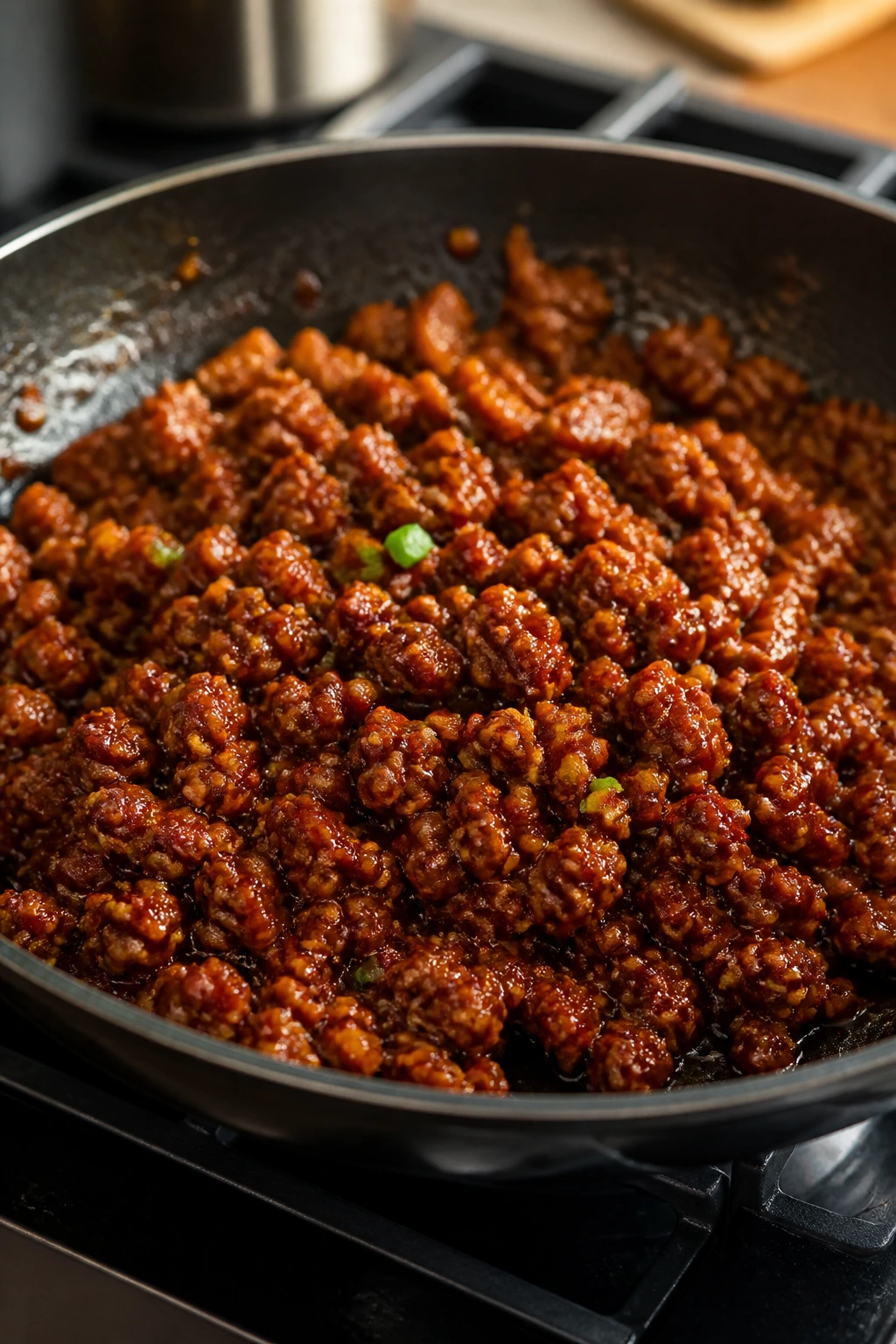
When the sauce first hits the heat, it will look a little loose. Give it a minute. The sugar tightens, the gochujang darkens, and the liquid becomes glossy enough to coat the meat in a thin sheen. That glossy stage is the target. Not watery. Not jammy. Glossy.
Spicy Korean Ground Beef Ingredients for a Glossy Skillet
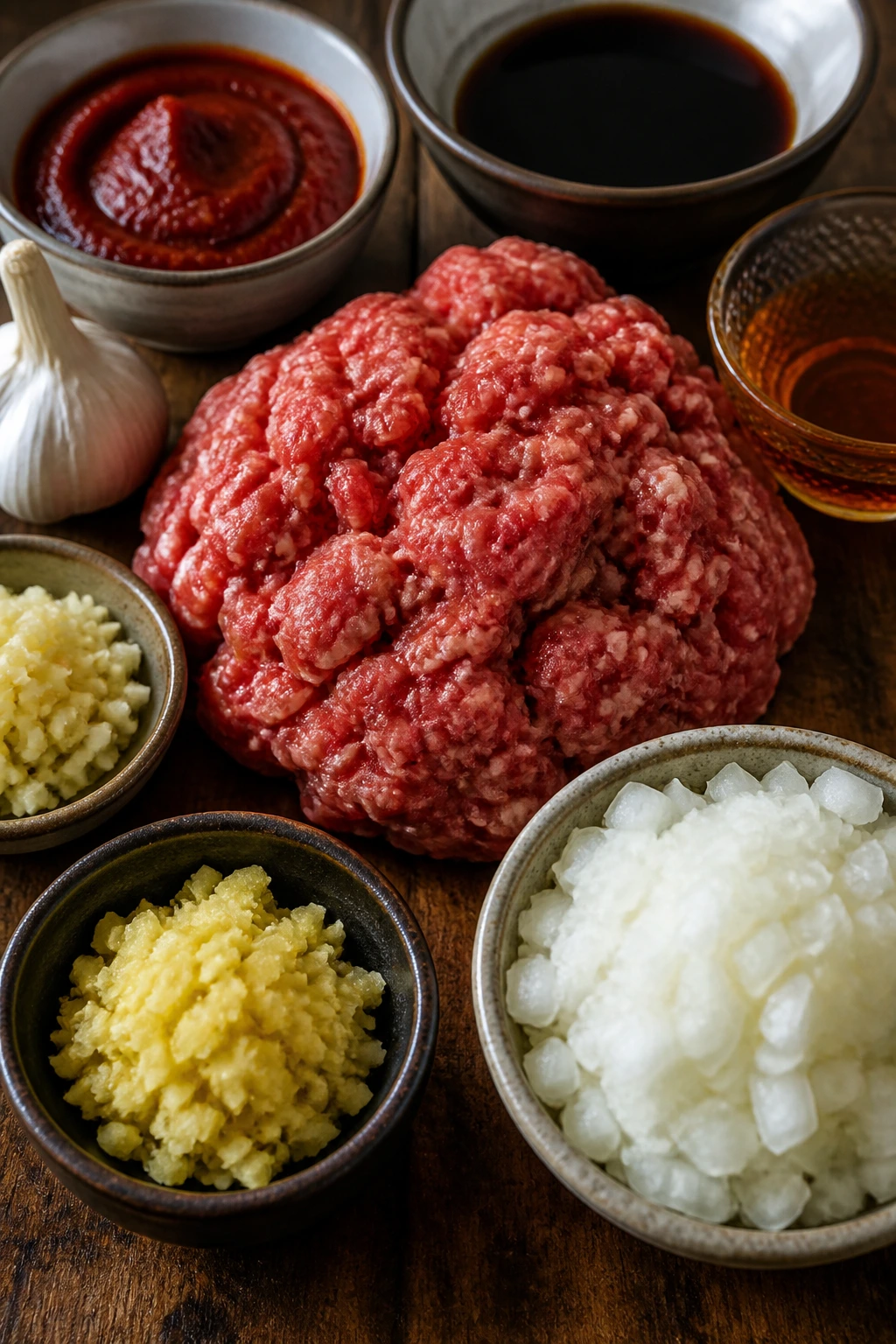
- 1 tablespoon neutral oil, optional — Use this only if your ground beef is leaner than 85/15 or if the skillet looks dry when the meat goes in.
- 1 small yellow onion, finely diced — It softens into the beef and gives the sauce a sweet base without needing a long cook.
- 1 pound ground beef, 85/15 or 90/10 — 85/15 gives the best flavor-to-greasiness balance for this recipe.
- 4 garlic cloves, minced — Garlic should be fresh here; jarred garlic is dull and can taste muddy after simmering.
- 1 tablespoon fresh ginger, grated or minced — Ginger makes the beef taste brighter and keeps the sauce from feeling heavy.
- 3 tablespoons low-sodium soy sauce — This is the savory backbone of the glaze.
- 2 tablespoons gochujang — The fermented chili paste provides heat, color, and thickness.
- 1 tablespoon packed light brown sugar or honey — Sweetness rounds out the salt and heat.
- 1 tablespoon rice vinegar — A small amount of acid keeps the sauce from tasting sticky.
- 2 tablespoons water — This loosens the sauce enough to spread through the beef before it reduces.
- 1 teaspoon toasted sesame oil — Adds a warm, nutty finish.
- 3 scallions, thinly sliced — Keep the whites and greens separate so the greens stay fresh at the end.
- 1 tablespoon toasted sesame seeds — A little crunch and a nutty finish.
- 4 cups hot cooked jasmine rice, for serving — The rice catches the sauce and turns the skillet into a full meal.
- 1/4 teaspoon crushed red pepper flakes, optional — Add this if you want the heat to land harder.
What Each Ingredient Does in the Pan
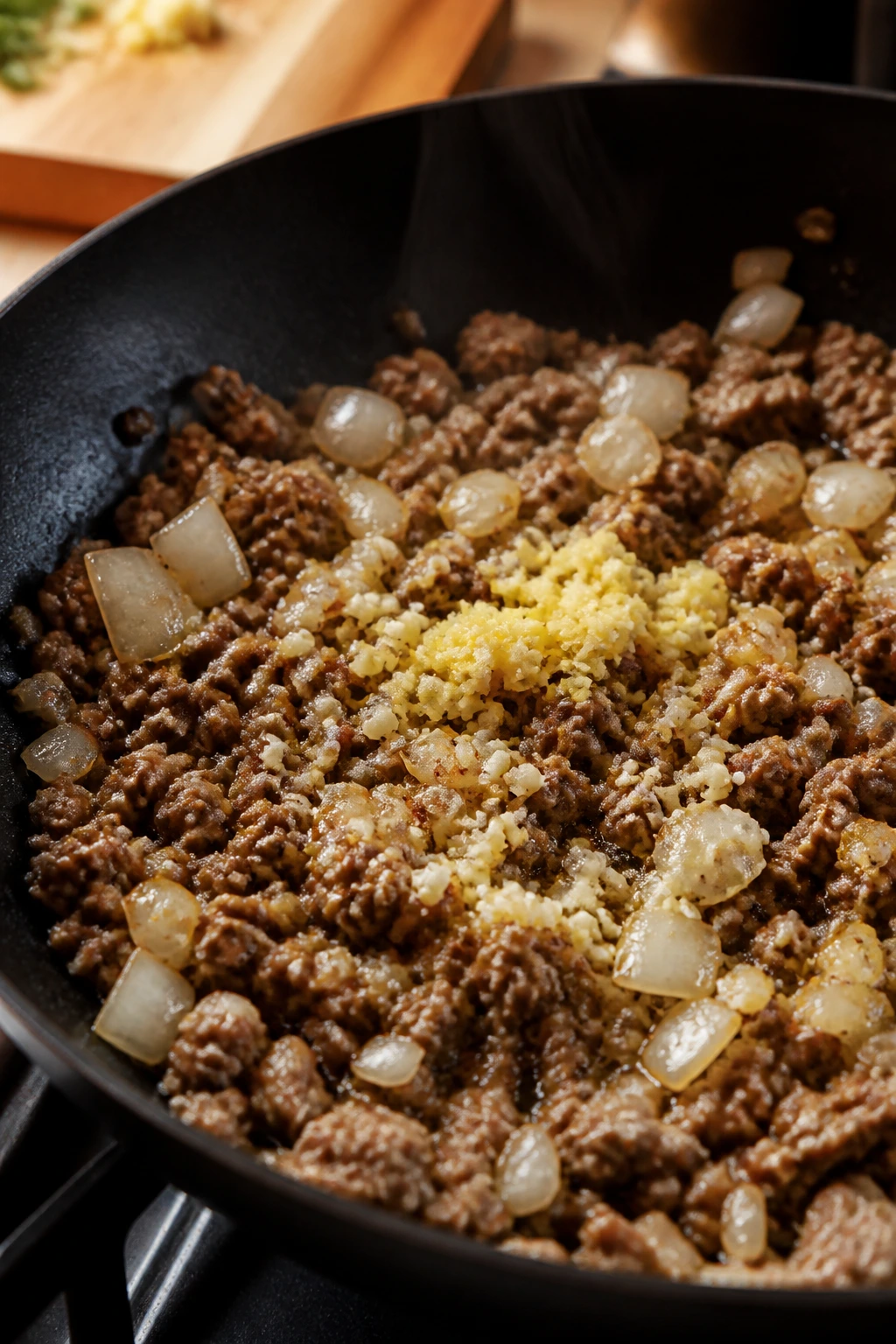
Main Protein
What to use: 1 pound ground beef, ideally 85/15. That fat percentage gives you enough richness to keep the meat juicy after the sauce reduces.
Preparation: Break the meat into rough chunks before it hits the skillet, but don’t crumble it too finely right away. Bigger pieces brown better at first, then you can break them down once they start to color.
Substitutions: Ground turkey, ground chicken, or ground pork all work, though the leaner ones need a tablespoon of neutral oil and a little more attention so they don’t dry out.
Tips: If the beef releases a lot of liquid before it browns, the pan is overcrowded or the heat is too low. Let some moisture cook off before you stir constantly, or you’ll steam the meat instead of browning it.
Aromatics
What to use: 1 small yellow onion, 4 garlic cloves, and 1 tablespoon fresh ginger. This trio is the smell of the dish coming together.
Preparation: Dice the onion finely so it disappears into the beef. Mince the garlic and grate the ginger so they soften fast and don’t stay crunchy.
Substitutions: A shallot can stand in for the onion if that’s what you have. Ground ginger will work in a pinch, but fresh ginger tastes cleaner and livelier.
Tips: Garlic and ginger go in late because they burn fast. If they hit the pan too early, the finished dish can taste bitter and sharp instead of warm and savory.
Sauce Builders
What to use: 3 tablespoons low-sodium soy sauce, 2 tablespoons gochujang, 1 tablespoon brown sugar or honey, 1 tablespoon rice vinegar, 2 tablespoons water, and 1 teaspoon toasted sesame oil.
Preparation: Whisk the sauce in a bowl before anything touches the skillet. Gochujang is thick and sticky, and if you try to stir it in dry, it clumps in streaks.
Substitutions: Tamari works for a gluten-free version, as long as your gochujang is gluten-free too. Honey can replace brown sugar, and apple cider vinegar can stand in for rice vinegar if that’s what’s in the cupboard.
Tips: Taste the sauce before it goes into the pan. Different brands of gochujang can vary a lot in salt and heat, and a 30-second taste check saves a lot of guessing.
Finishing Touches
What to use: 3 scallions and 1 tablespoon toasted sesame seeds.
Preparation: Slice the scallions thinly. Keep the white parts separate from the green tops so you can cook the whites briefly and leave the greens fresh at the end.
Substitutions: Thinly sliced chives can stand in for scallions, though they’re milder. A few strips of nori or a spoonful of kimchi on top also work if you want more contrast.
Tips: Add the sesame seeds right before serving so they stay crisp. If they sit in the sauce too long, they go soft and lose that little toasty pop.
Serving Base
What to use: 4 cups hot cooked jasmine rice.
Preparation: Make the rice before the beef if you like to move calmly; make it while the beef cooks if you like to work fast. Keep it hot so the sauce melts into it instead of sitting on a cold mound.
Substitutions: Short-grain rice gives a stickier bowl. Brown rice works too, though it needs a little more sauce because it doesn’t absorb flavor as quickly.
Tips: Cold rice from the fridge can be fine, but break it up before serving and splash it with a teaspoon of water during reheating so it doesn’t clump into hard chunks.
The Few Tools You Actually Need
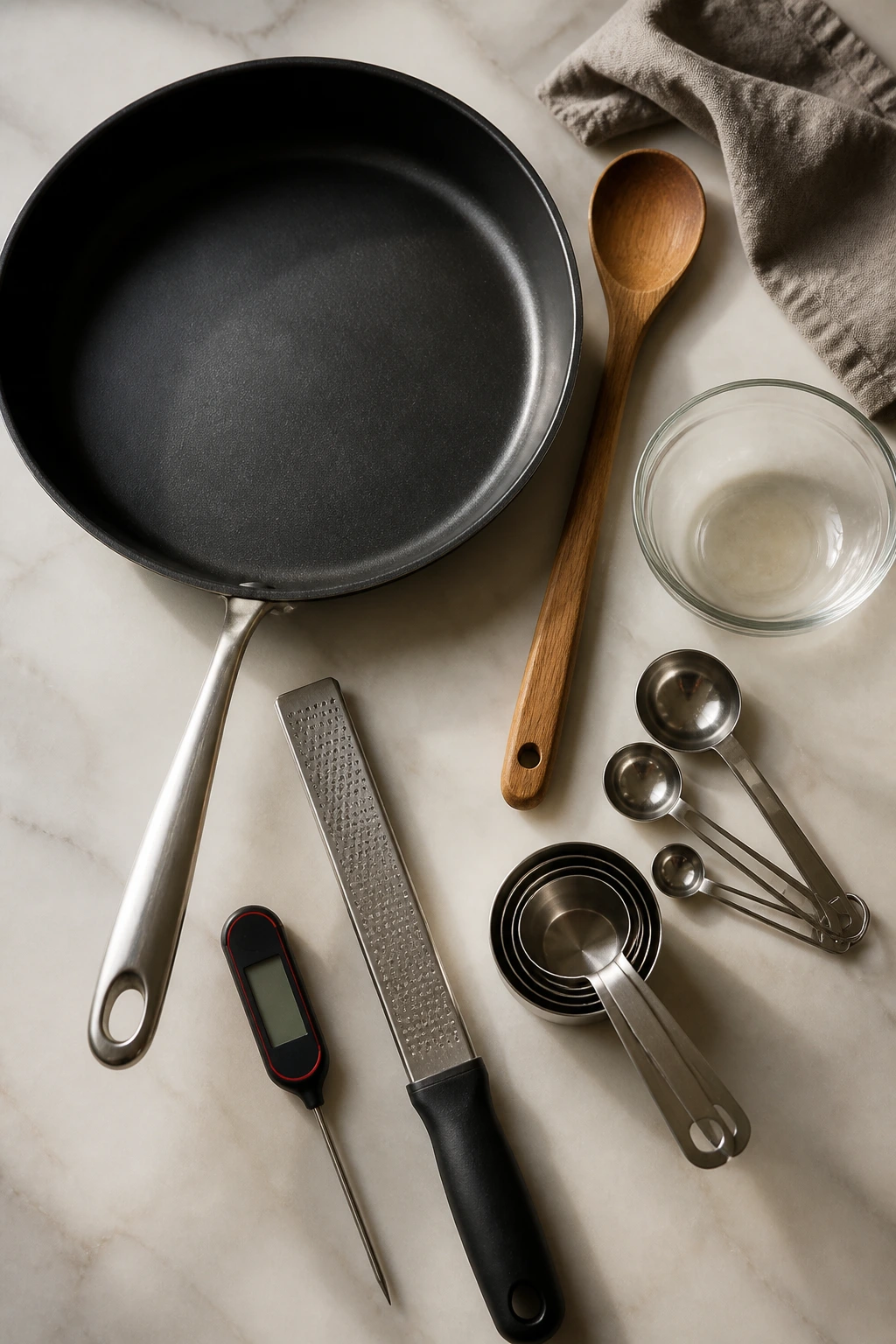
- 12-inch skillet or sauté pan — Big enough to brown the beef without crowding; a smaller pan will trap steam and slow the browning.
- Wooden spoon or heatproof spatula — Best for breaking up the meat while still leaving some browned texture.
- Small mixing bowl — Whisk the sauce here before it hits the heat.
- Measuring spoons and cups — Go ahead and measure the gochujang and soy; the balance is the whole point.
- Microplane or fine grater — Makes short work of fresh ginger.
- Instant-read thermometer, optional but useful — Handy if you want to check that the beef has reached 160°F / 71°C without guessing.
Browning, Stirring, and Glazing the Beef
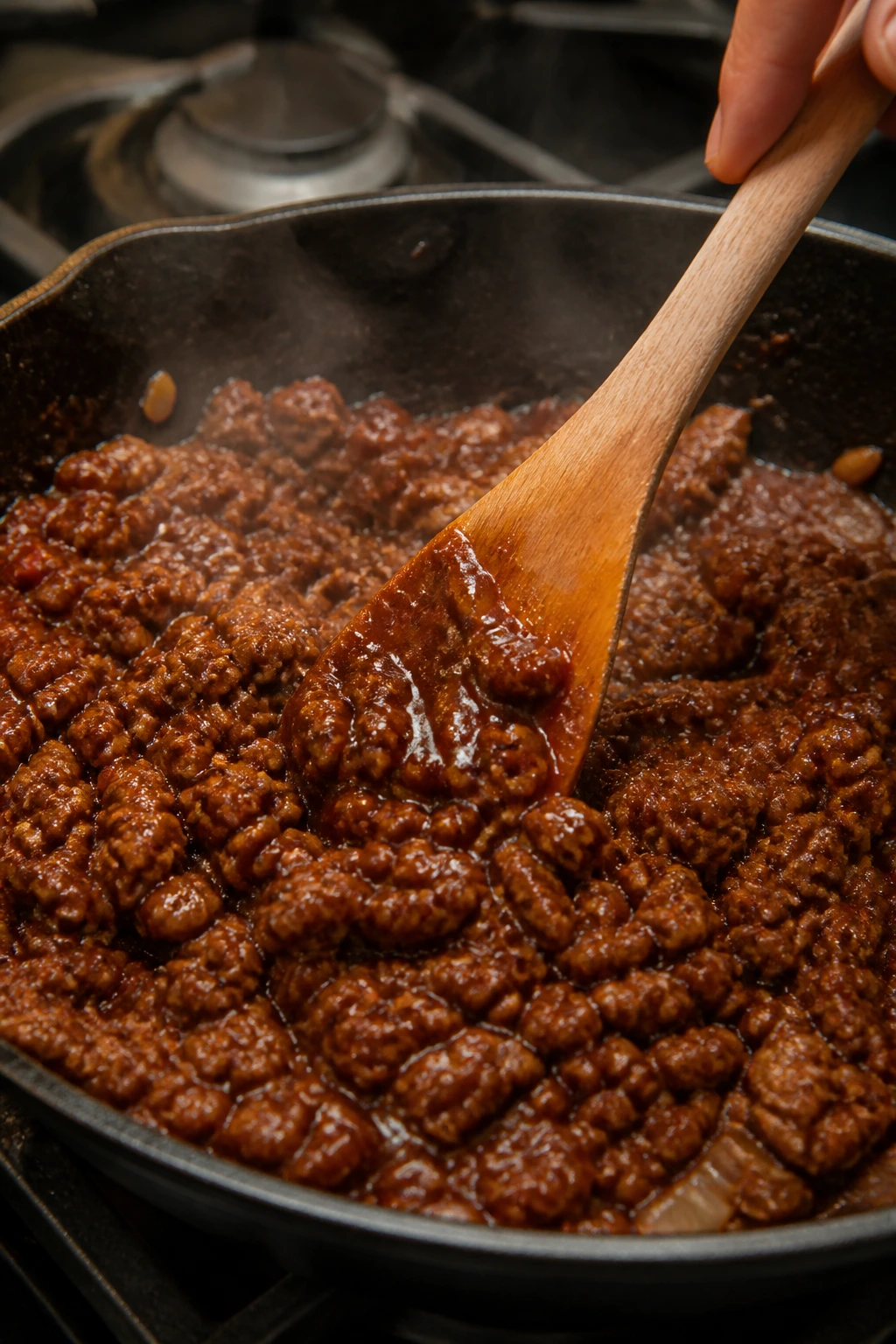
Build the sauce first:
-
In a small bowl, whisk together the soy sauce, gochujang, brown sugar, rice vinegar, water, sesame oil, and crushed red pepper flakes until smooth. The mixture should look thick, red-brown, and glossy, with no clumps of paste hiding at the bottom.
-
Slice the scallions and separate the whites from the greens. Set the greens aside for the end and keep the rice hot. If the rice is ready early, cover it so it stays fluffy instead of drying out at the edges.
Brown the beef:
-
Set a 12-inch skillet over medium-high heat. If you’re using 90/10 beef or anything leaner, add 1 tablespoon neutral oil. Add the onion and cook for 2 to 3 minutes, stirring once or twice, until the edges turn translucent and the pieces lose their raw bite.
-
Add the ground beef and break it into large chunks first. Let it sit for 1 minute before stirring hard. That first pause helps the surface color instead of steaming, and those browned spots matter later when the sauce goes in.
-
Continue cooking for 5 to 7 minutes, breaking the beef into smaller crumbles as it cooks, until no pink remains and some bits are browned at the edges. Ground beef should reach 160°F / 71°C for food safety. If there is more than a thin sheen of fat in the skillet, spoon off the excess so the sauce doesn’t turn greasy.
Add the aromatics and glaze:
-
Stir in the garlic, ginger, and scallion whites. Cook for 30 to 45 seconds, just until the garlic smells sweet and the ginger softens. Do not let the garlic sit on the hot pan by itself; that’s how you get bitterness.
-
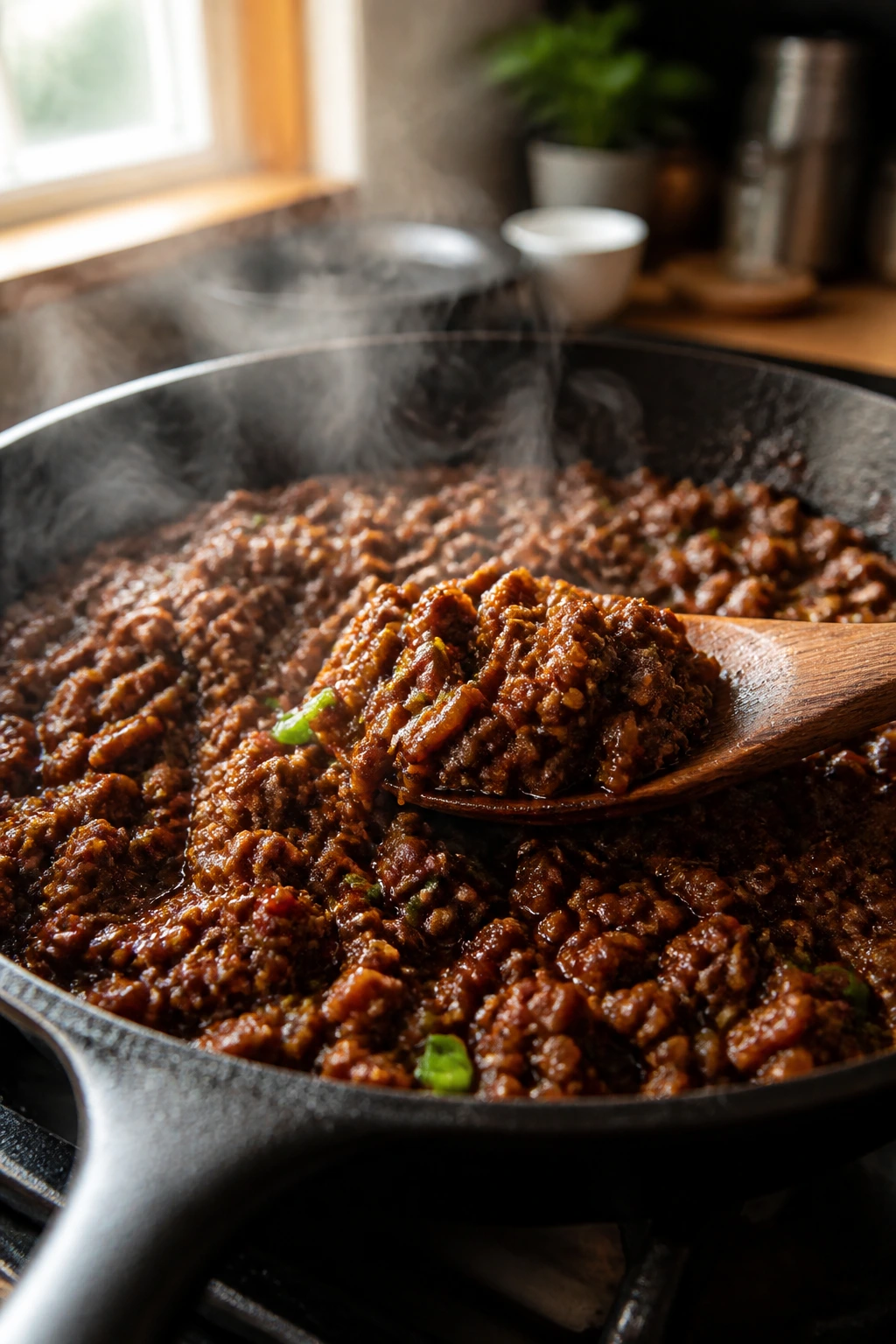
Pour the sauce over the beef and stir constantly for 1 to 2 minutes. At first it will look a little loose. Keep going until the meat is fully coated and the liquid reduces into a shiny glaze that clings to the spoon instead of sliding off in a puddle.
-
Taste the beef and adjust while it’s still in the pan. Add a teaspoon of brown sugar if it needs more roundness, a teaspoon of rice vinegar if it feels too heavy, or 1 to 2 tablespoons water if it reduced too far. Turn off the heat, stir in half the scallion greens, then serve over rice and finish with the remaining greens and sesame seeds.
How to Serve Spicy Korean Ground Beef So the Plate Feels Complete
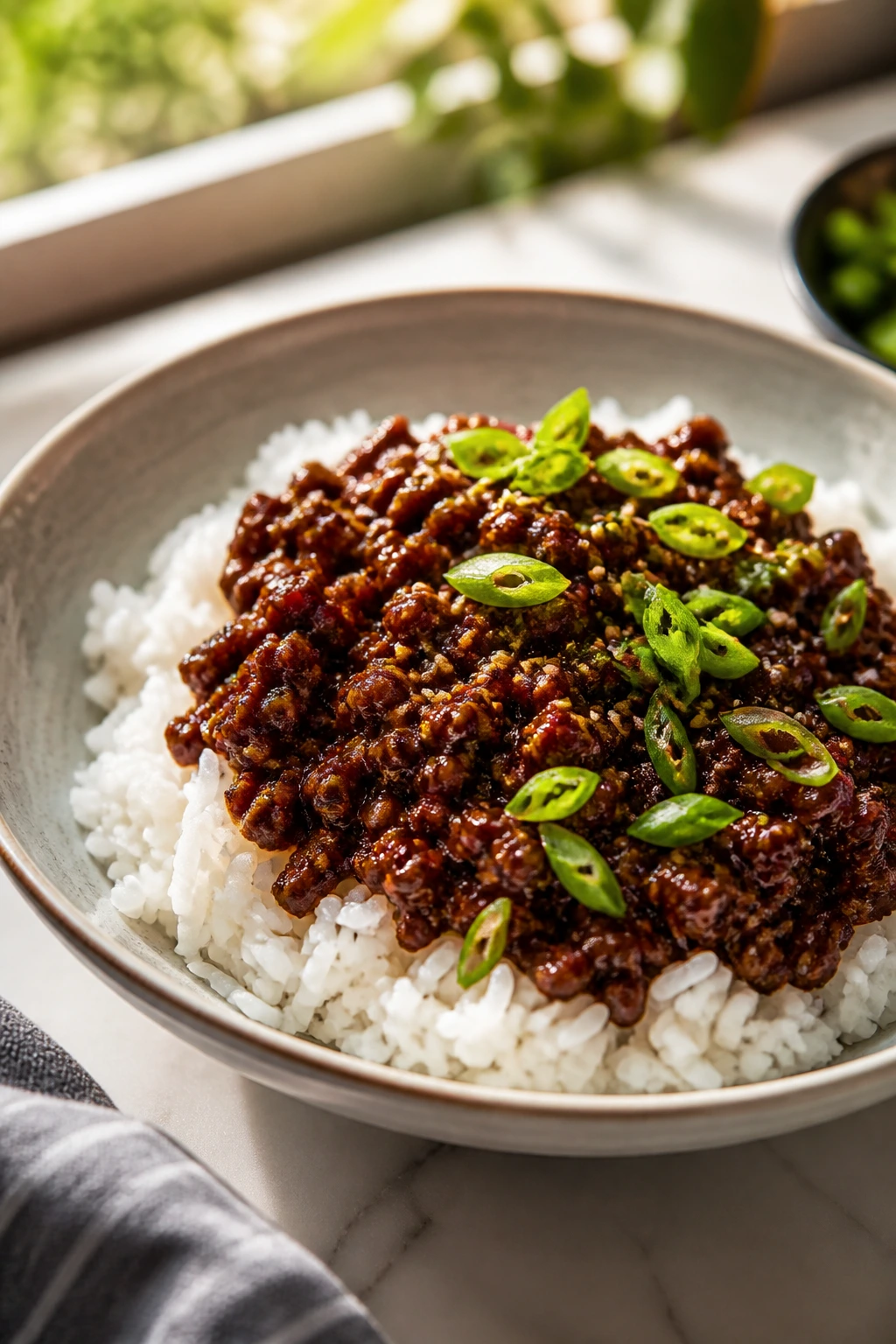
Presentation: Spoon the beef over a shallow bowl of hot jasmine rice so the sauce can run into the grains instead of disappearing down the sides of a deep bowl. I like to pile the meat slightly off-center, then scatter scallion greens and sesame seeds on top so the color stays bright against the dark sauce. A fried egg on top is not required, but the runny yolk does make the whole thing look and taste more finished.
Accompaniments: Keep the sides crisp or cool. Thin cucumber slices, quick-pickled carrots, kimchi, or a simple cabbage salad all work because they cut through the sweet heat. If you want something more filling, serve it with steamed broccoli, sautéed spinach, or lettuce cups so the bowl has a little green against all that red-brown sauce.
Portions: Four servings is comfortable if you’re serving rice with it. If you have big appetites in the room, it stretches to three generous bowls. If you set it out with kimchi, cucumbers, or a fried egg, it can reach five or six smaller plates without feeling skimpy.
Beverage Pairing: Cold drinks help more than fancy ones here. Unsweetened iced green tea keeps the palate clean between bites, while a crisp lager or dry sparkling water with lime cuts the richness of the beef. If you’re serving a nonalcoholic meal and want something with a little edge, cucumber water or plain soda water does the job without fighting the sauce.
Small Tweaks That Make the Skillet Taste Better
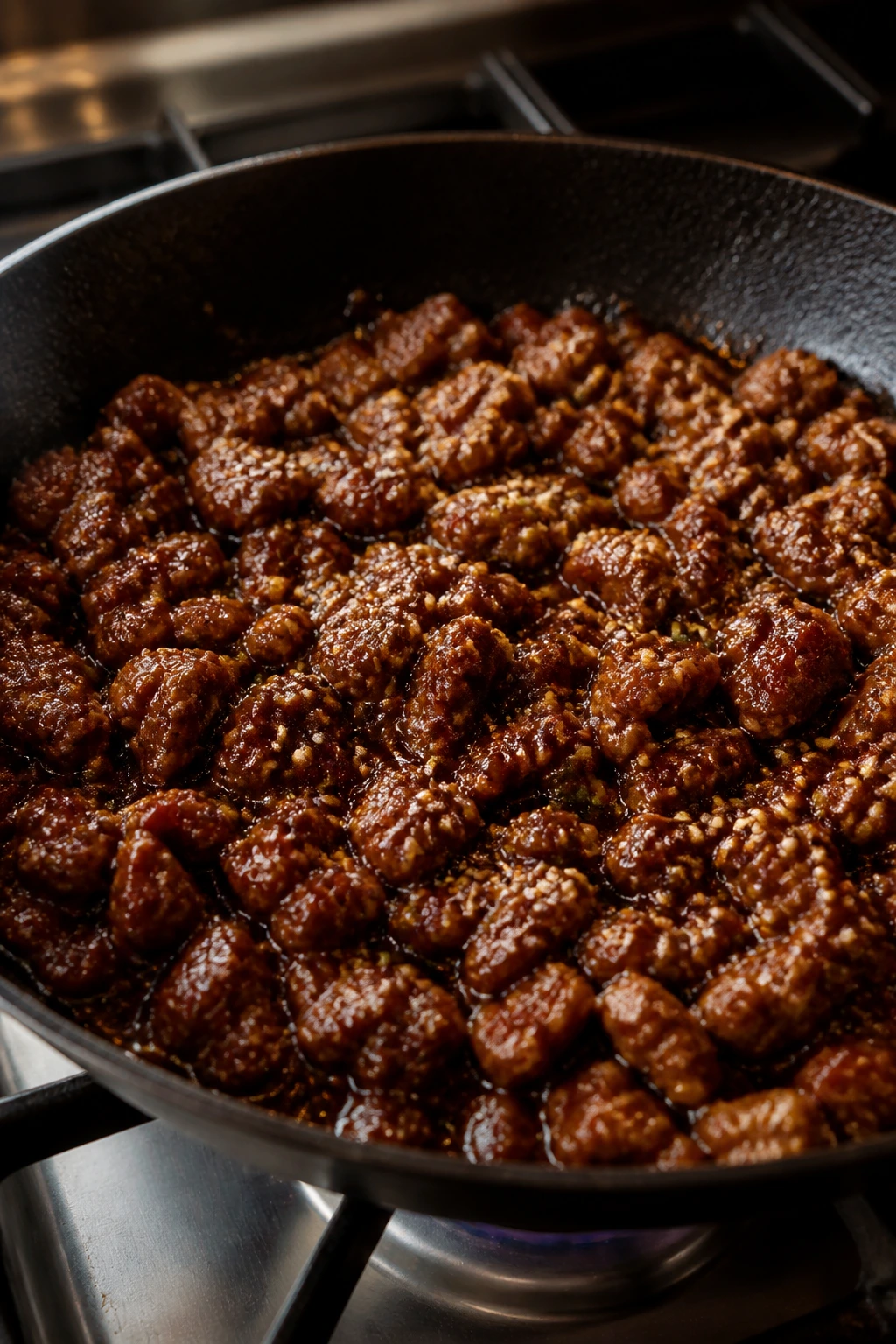
Flavor Enhancement: Finish the beef with one extra teaspoon of toasted sesame oil off the heat if you want a stronger nutty aroma. That last little hit smells more pronounced than it tastes, which is exactly what makes the bowl seem more complete when it hits the table.
Texture Boost: If you like more contrast, sprinkle on extra sesame seeds and add sliced cucumber on the side. The crunch wakes up the soft rice and sticky beef, and it keeps the dish from eating like one long soft texture.
Heat Control: If you want more burn without changing the sauce balance, add a pinch of gochugaru or red pepper flakes at the end instead of dumping in more gochujang. You get a brighter heat that sits on top of the sauce rather than deepening the sweetness.
Stretch It Without Diluting: A handful of finely chopped mushrooms or shredded carrots can go into the skillet with the onion if you want to bulk up the recipe. Chop them small enough that they disappear into the sauce, or they’ll release too much water and thin everything out.
Common Mistakes That Make the Beef Dry or Flat
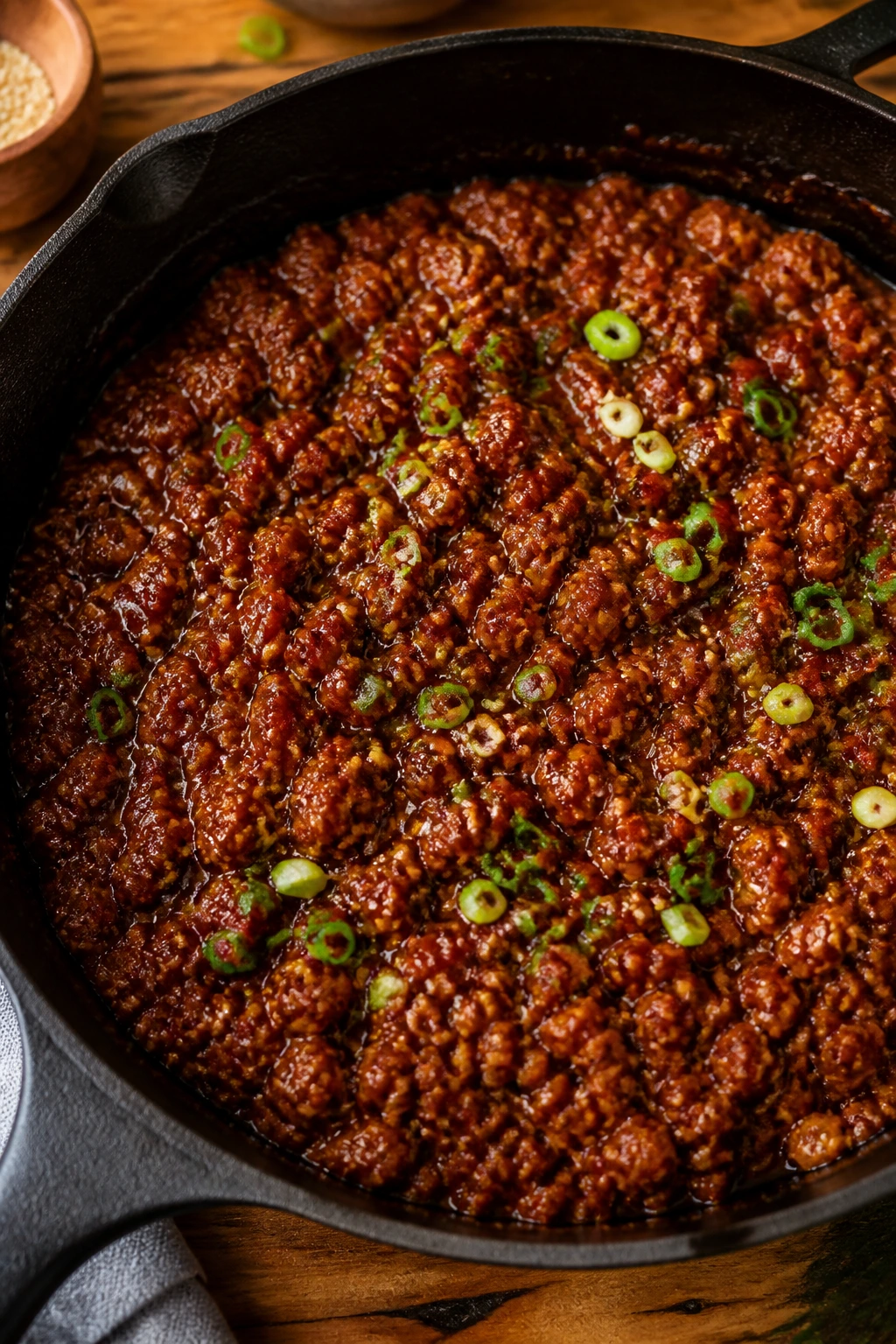
-
Using beef that’s too lean without adjusting the fat.
93/7 ground beef can taste dry and crumbly once the sauce reduces. Use 85/15 if you can, or add a tablespoon of neutral oil and watch the pan carefully so the meat stays tender. -
Pouring in the sauce before the beef browns.
If the meat is still pale when the sauce goes in, it steams instead of caramelizing, and the finished dish tastes dull. Wait until some browned bits appear on the bottom and sides of the skillet before adding the glaze. -
Letting garlic sit on the hot pan too long.
Burnt garlic tastes bitter and takes over the whole skillet. Add it after the beef is cooked, stir it for less than a minute, and get the sauce in quickly. -
Skipping the taste test at the end.
Gochujang brands vary, soy sauces vary, and the sugar level in the sauce can land differently every time. Taste the beef right before serving and adjust with a teaspoon of vinegar, sugar, or water instead of hoping it will magically sort itself out. -
Leaving too much grease in the skillet.
A thin sheen of fat is good. A greasy puddle is not. If your beef renders a lot of fat, spoon some out before the sauce goes in so the glaze stays bright and concentrated instead of oily. -
Serving it after it has sat too long.
The sauce tightens as it cools. If you leave it in the pan for ten minutes, it can turn a little sticky in the wrong way. Have the rice and garnishes ready before the beef finishes, and plate it while the glaze still shines.
Variations Worth Trying
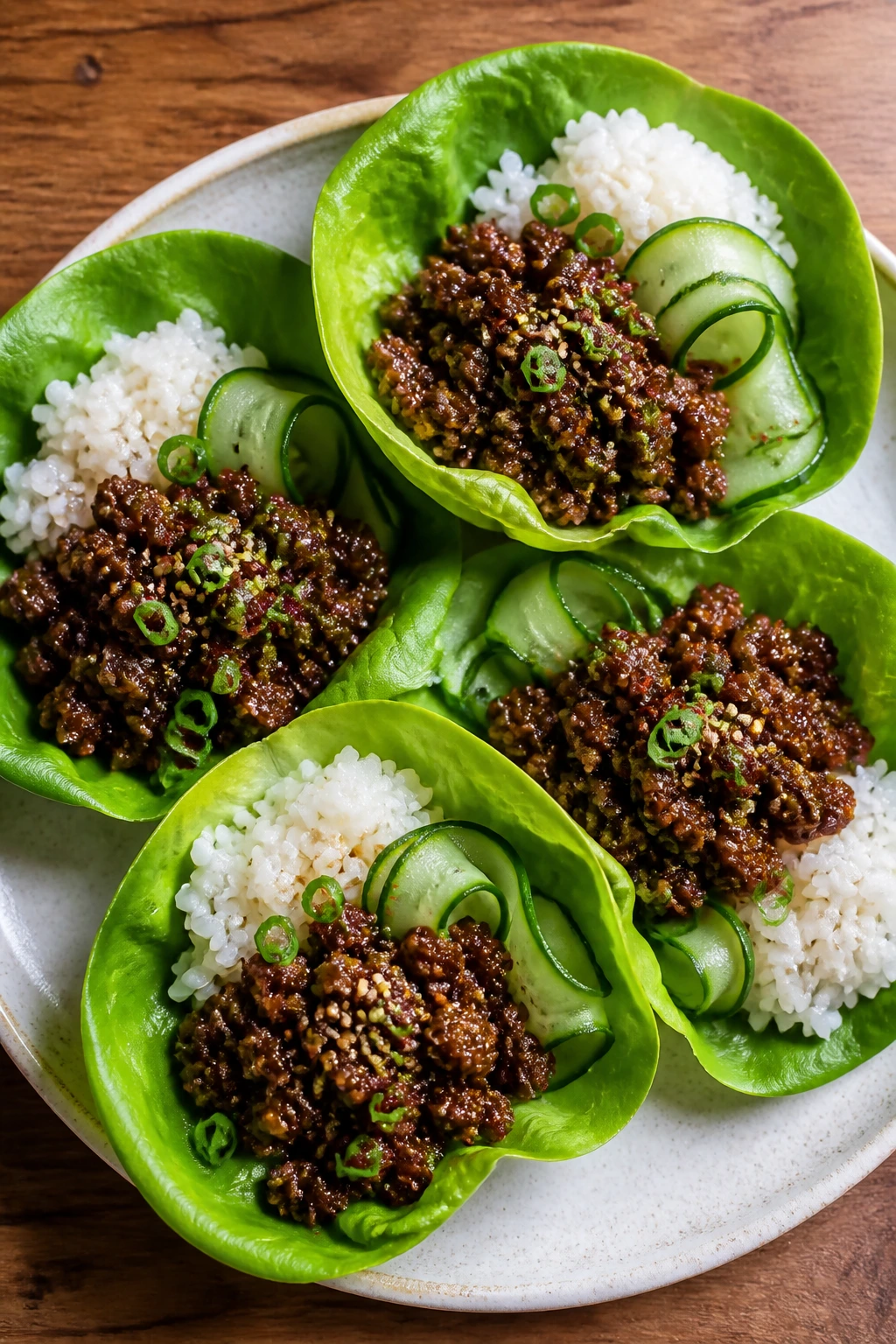
Lettuce-Cup Crunch
Spoon the finished beef into butter lettuce leaves instead of rice, then add thin cucumber slices and shredded carrots. The cool crunch against the hot, sticky meat is a sharp contrast, and it turns the recipe into something lighter without making it feel sparse.
Kimchi Skillet Shortcut
Stir 1/2 cup chopped kimchi into the beef during the last minute of cooking and add 1 tablespoon of kimchi juice to the sauce. Cut the soy sauce back by 1 tablespoon so the extra salt from the kimchi doesn’t push the skillet too far.
Milder Maple Bowl
For a gentler version, use 1 tablespoon gochujang instead of 2 and replace the brown sugar with 1 tablespoon maple syrup. You still get the sweet-savory shape of the dish, just with less heat and a slightly rounder finish.
Turkey or Chicken Swap
Ground turkey or ground chicken works if you want a lighter protein, but those meats need help. Add 1 tablespoon neutral oil at the start and keep an eye on the skillet so the meat doesn’t dry out before the sauce goes in.
Noodle Bowl Night
Toss the finished beef with hot cooked ramen, udon, or even spaghetti if that’s what’s in the cupboard. Add 2 to 3 tablespoons of reserved noodle water so the sauce loosens just enough to coat the noodles instead of clumping on top.
Make-Ahead, Storage, and Reheating
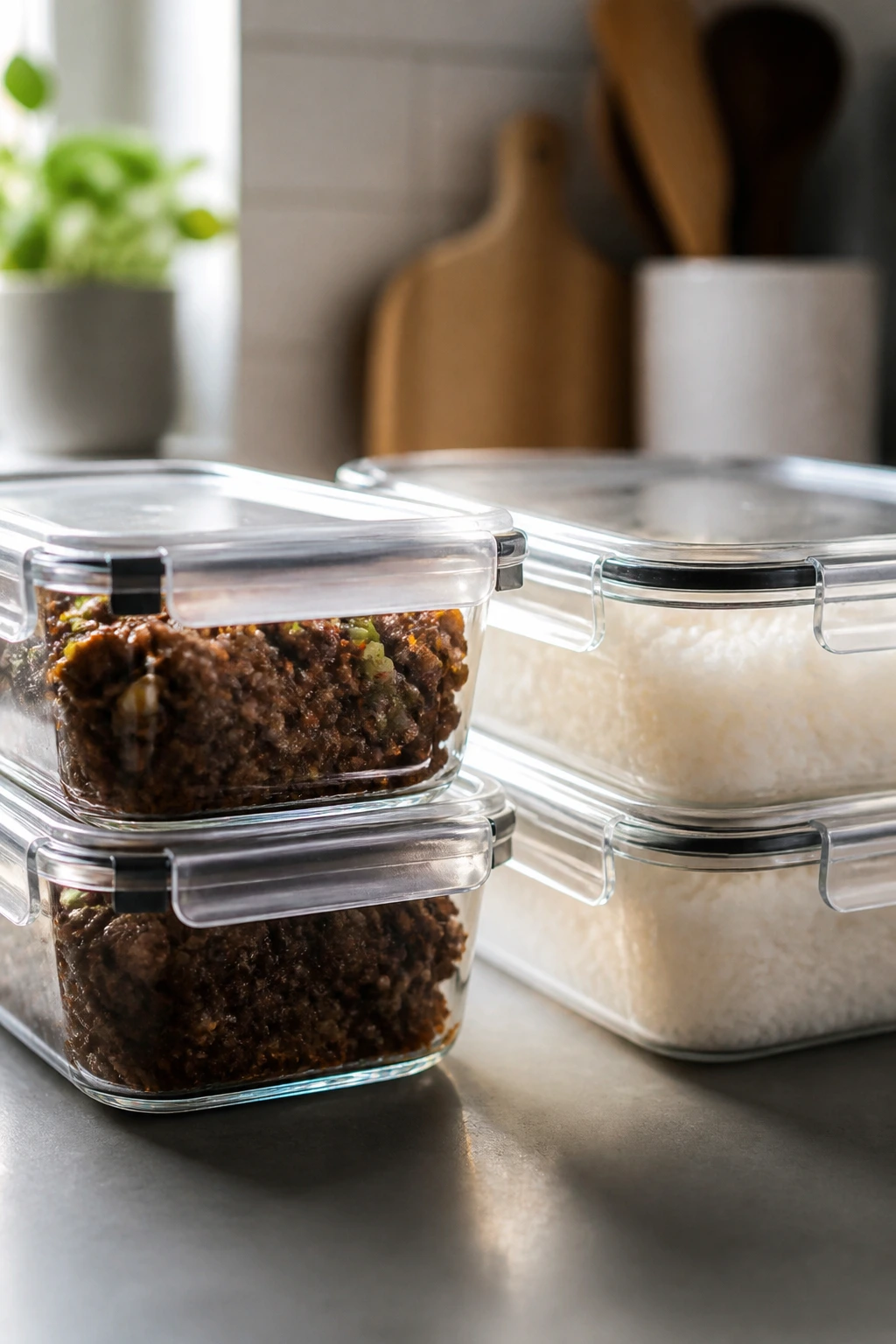
The beef mixture keeps well, which is one reason I keep coming back to it. Once it cools, pack it into an airtight container and refrigerate it for 3 to 4 days. Keep the rice in a separate container if you can; the beef stays saucy, and the rice doesn’t turn into a dense block.
For freezing, the cooked beef will hold for up to 2 months if you portion it into flat freezer bags or small containers. Press the air out before freezing so the sauce doesn’t pick up freezer flavors. Rice can be frozen too, but I find the texture is better if you freeze it separately and reheat it with a splash of water under a damp paper towel.
Reheat the beef in a skillet over medium-low heat with 1 to 2 tablespoons water. Stir it for 3 to 5 minutes until it loosens, bubbles lightly, and looks glossy again. The microwave works fine too, but use short bursts and cover the dish so the sauce doesn’t dry out at the edges.
If you’re planning ahead, the sauce can be whisked together up to 5 days in advance and kept in the fridge. The onions can be chopped the day before, and the scallions are best sliced just before serving. The finished beef tastes good the next day, sometimes even better, because the sauce settles into the meat overnight. Just keep the bright toppings fresh.
Questions People Ask Before They Cook It
Can I make this with ground turkey instead of ground beef?
Yes, and it works well if you add a tablespoon of neutral oil because turkey is leaner and dries out faster. You may also want a little extra soy sauce or a pinch of salt at the end since turkey has a milder flavor than beef.
How spicy is gochujang, really?
It’s more layered than fiery. Gochujang brings heat, but it also has sweetness and fermented depth, so the sauce feels fuller than a plain chili paste would. If you’re cautious, start with 1 tablespoon and taste before adding more.
What if my sauce tastes too salty?
Stir in a teaspoon of brown sugar and a tablespoon of water, then taste again. If it still feels harsh, a small splash of rice vinegar can help the flavor open up instead of just getting sweeter.
Can I double this recipe in one skillet?
You can, but use the biggest skillet you own and brown the meat in batches if the pan feels crowded. If too much beef is packed into one pan, it steams, and the browned bits that give the dish its flavor never show up.
Does this need rice, or can I serve it another way?
Rice is the easiest match, but it’s not the only one. Lettuce cups, noodles, cauliflower rice, or even a pile of sautéed cabbage all work because the sauce is strong enough to carry a neutral base.
What if the beef turns out dry?
That usually means the skillet was too hot or the beef cooked too long before the sauce went in. Add a tablespoon of water, toss it over low heat for a minute, and finish with a little sesame oil; if you’re making it again, shorten the browning time a touch.
Can I make it gluten-free?
Yes, but check both the soy sauce and the gochujang label. Use tamari instead of regular soy sauce, and choose a gochujang that does not contain wheat ingredients. The method stays the same.
Can I turn this into meal-prep bowls?
Absolutely. Divide rice, beef, and a crunchy side like cucumber or shredded cabbage into containers, then keep scallions and sesame seeds in a small bag or jar. Add those fresh after reheating so the bowls don’t taste tired by day three.
A Skillet Dinner Worth Repeating
This is one of those recipes that earns its place by being useful before it is anything else. It gives you heat, sweetness, and a little fermented depth without asking for a long marinade or a sink full of dishes, and that’s why it lands so well on a normal night.
The small details matter more than the headline promise. Brown the beef properly. Stir the sauce before it goes in. Taste at the end. Those little steps are what separate a bowl of seasoned meat from something that feels finished.
Once you’ve made it once or twice, the sauce ratio starts to feel like muscle memory. That’s when a simple skillet dinner turns into a reliable one.
Spicy Korean Ground Beef Better than Takeout — Recipe Card
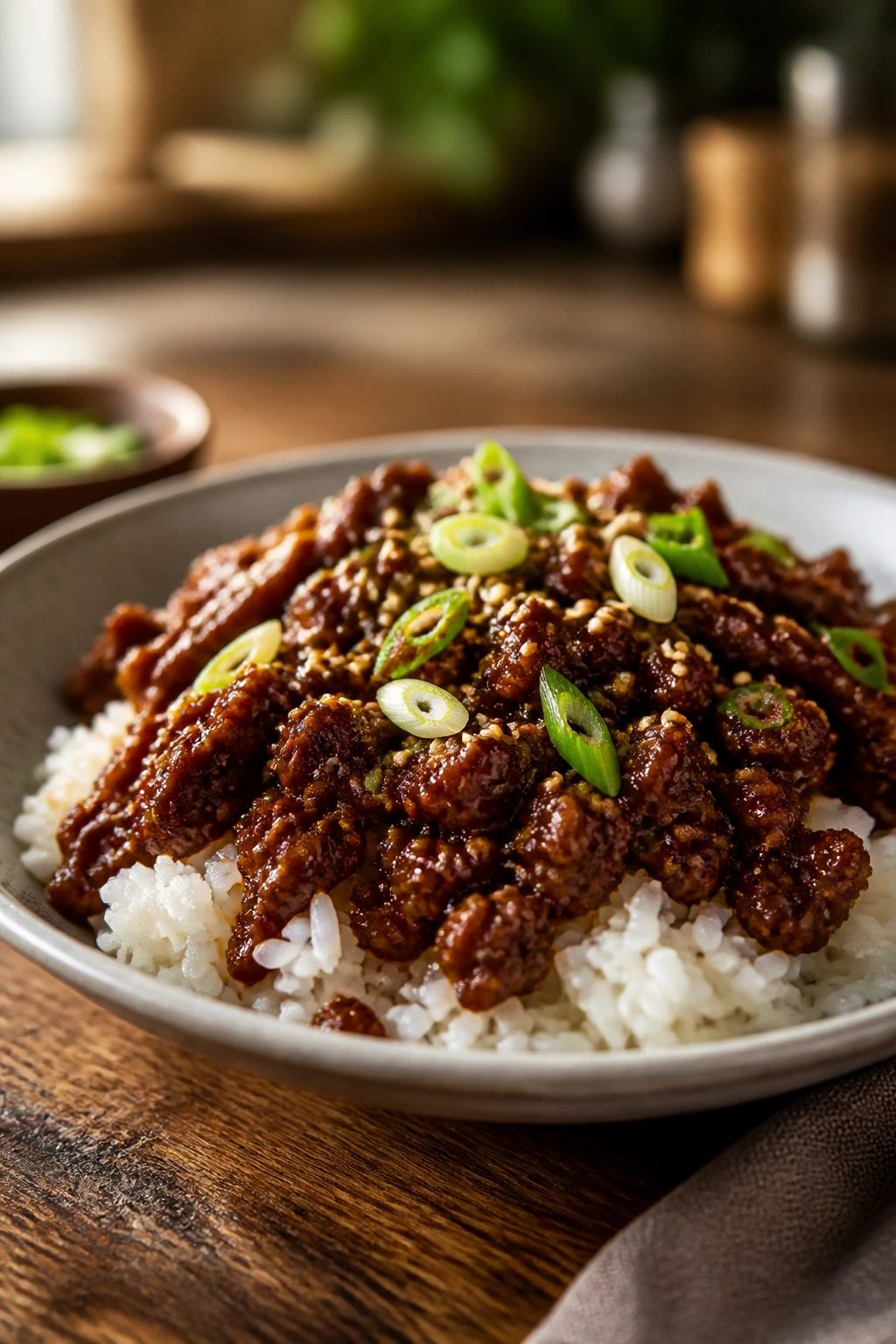
Recipe Name: Spicy Korean Ground Beef Better than Takeout
Description: A fast Korean-inspired beef skillet with a glossy sweet-heat glaze made from gochujang, soy sauce, garlic, ginger, and sesame oil, served over hot jasmine rice.
Prep Time: 15 minutes
Cook Time: 12 minutes
Total Time: 27 minutes
Course: Dinner, Main Course
Cuisine: Korean-Inspired, Asian-Inspired
Servings: 4 servings
Calories: About 470 kcal per serving
Ingredients
For the Beef
- 1 tablespoon neutral oil, optional if using beef leaner than 85/15
- 1 small yellow onion, finely diced
- 1 pound ground beef, 85/15 or 90/10
- 4 garlic cloves, minced
- 1 tablespoon fresh ginger, grated or minced
For the Sauce
- 3 tablespoons low-sodium soy sauce
- 2 tablespoons gochujang
- 1 tablespoon packed light brown sugar or honey
- 1 tablespoon rice vinegar
- 2 tablespoons water
- 1 teaspoon toasted sesame oil
- 1/4 teaspoon crushed red pepper flakes, optional
To Finish and Serve
- 3 scallions, thinly sliced, whites and greens separated
- 1 tablespoon toasted sesame seeds
- 4 cups hot cooked jasmine rice
Instructions
Build the Sauce
- Whisk together the soy sauce, gochujang, brown sugar, rice vinegar, water, sesame oil, and optional red pepper flakes in a small bowl until smooth.
- Slice the scallions and separate the whites from the greens. Keep the rice hot.
Brown the Beef 3. Heat a 12-inch skillet over medium-high heat. Add neutral oil if needed, then cook the onion for 2 to 3 minutes. 4. Add the ground beef and cook for 5 to 7 minutes, breaking it up, until browned and cooked through. Drain excess fat if needed.
Glaze and Finish 5. Stir in the garlic, ginger, and scallion whites; cook for 30 to 45 seconds. 6. Pour in the sauce and stir for 1 to 2 minutes until glossy and thick. 7. Turn off the heat, stir in half the scallion greens, then serve over rice with the remaining greens and sesame seeds.
Notes: Use 85/15 beef for the best texture. If the sauce tightens too fast, add a splash of water. Keep scallions and sesame seeds fresh for serving.