



Some nights, the fridge is a joke. Half a cabbage, a carton of eggs, a block of tofu, one tired bunch of scallions, and a pantry that looks more promising than the produce drawer. That’s enough. With a hot pan, a bottle of soy sauce, a splash of vinegar, and a little sugar, Chinese side dishes that use pantry staples stop feeling like backup food and start acting like the smartest part of dinner.
That’s the part I love: these dishes don’t depend on fancy shopping or a stack of specialty bottles. They depend on balance. Salt, acid, a touch of sweetness, a little aroma from garlic or scallion, and enough heat to turn basic ingredients glossy and alive. A cabbage stir-fry can taste crisp and savory instead of watery. Eggs can turn plush and custardy. Tofu can pick up a dark, shiny glaze that clings to every edge.
And pantry cooking, done this way, has a useful kind of humility. It doesn’t pretend a dinner needs twelve ingredients to matter. It asks a better question: what do you already have, and how can you make it taste deliberate? That’s where these recipes live — on the line between practical and craveable, with enough flexibility to survive a nearly empty pantry and enough flavor to deserve a second helping.
Why This Pantry-Staple Collection Pulls Its Weight
-
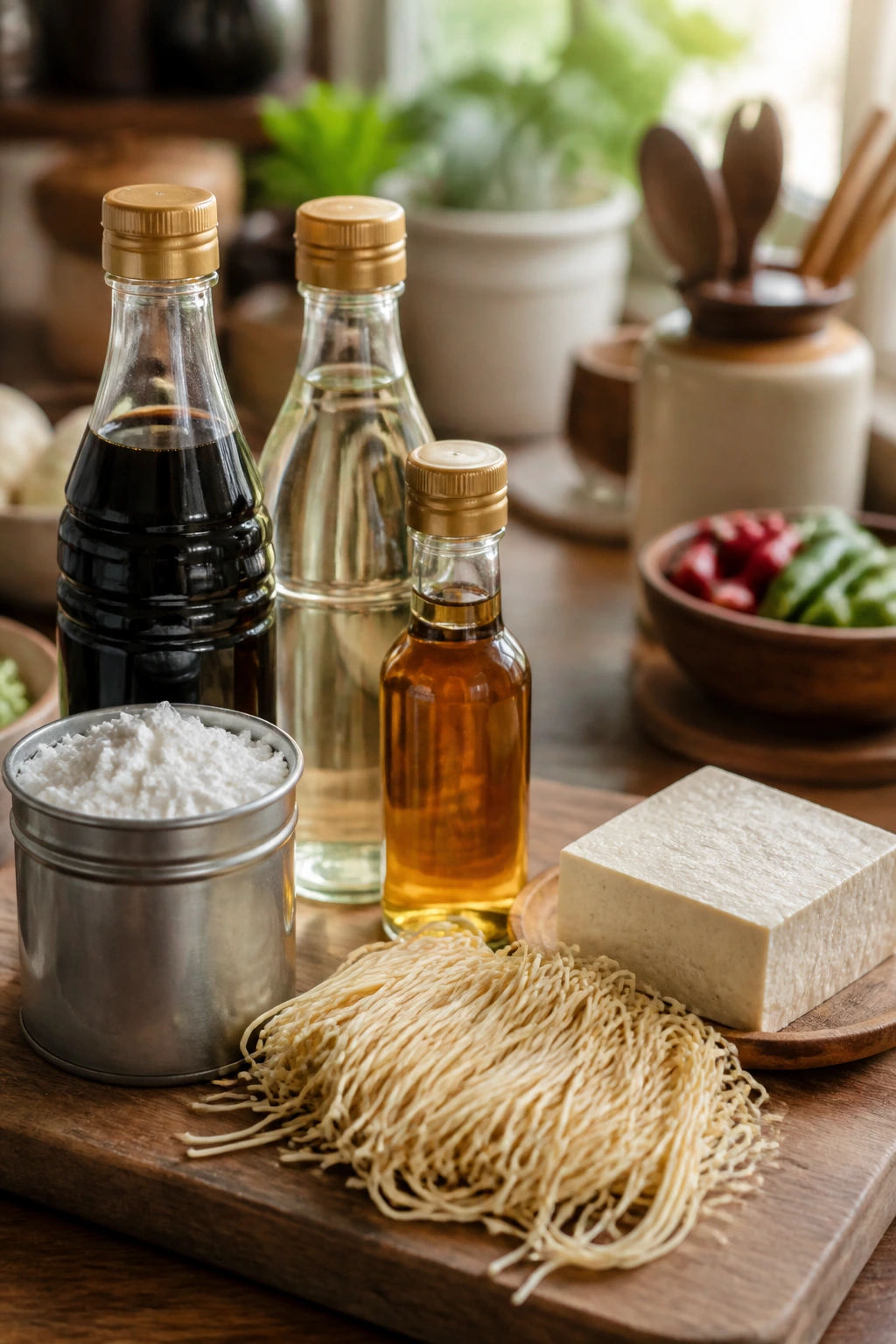
Short shopping list, real flavor: Most of these recipes lean on soy sauce, vinegar, sesame oil, cornstarch, dried noodles, eggs, tofu, or canned vegetables, so the flavor comes from what you already store, not from a last-minute grocery run.
-
Built for one fresh vegetable: A cabbage, a cucumber, a handful of green beans, or a daikon is often all you need. The sauce carries the rest.
-
Fast heat, clean results: These dishes are made for a wok or wide skillet, which means the vegetables stay bright and the sauces finish glossy instead of soggy.
-
Good leftovers are part of the deal: Several of these sides taste even better after a short rest, especially braises, tofu dishes, noodles, and cold salads.
-
Flexible on purpose: If you have frozen corn instead of fresh, or rice vinegar instead of black vinegar, these recipes still work without turning into a compromise meal.
Why Chinese Pantry Cooking Works So Well
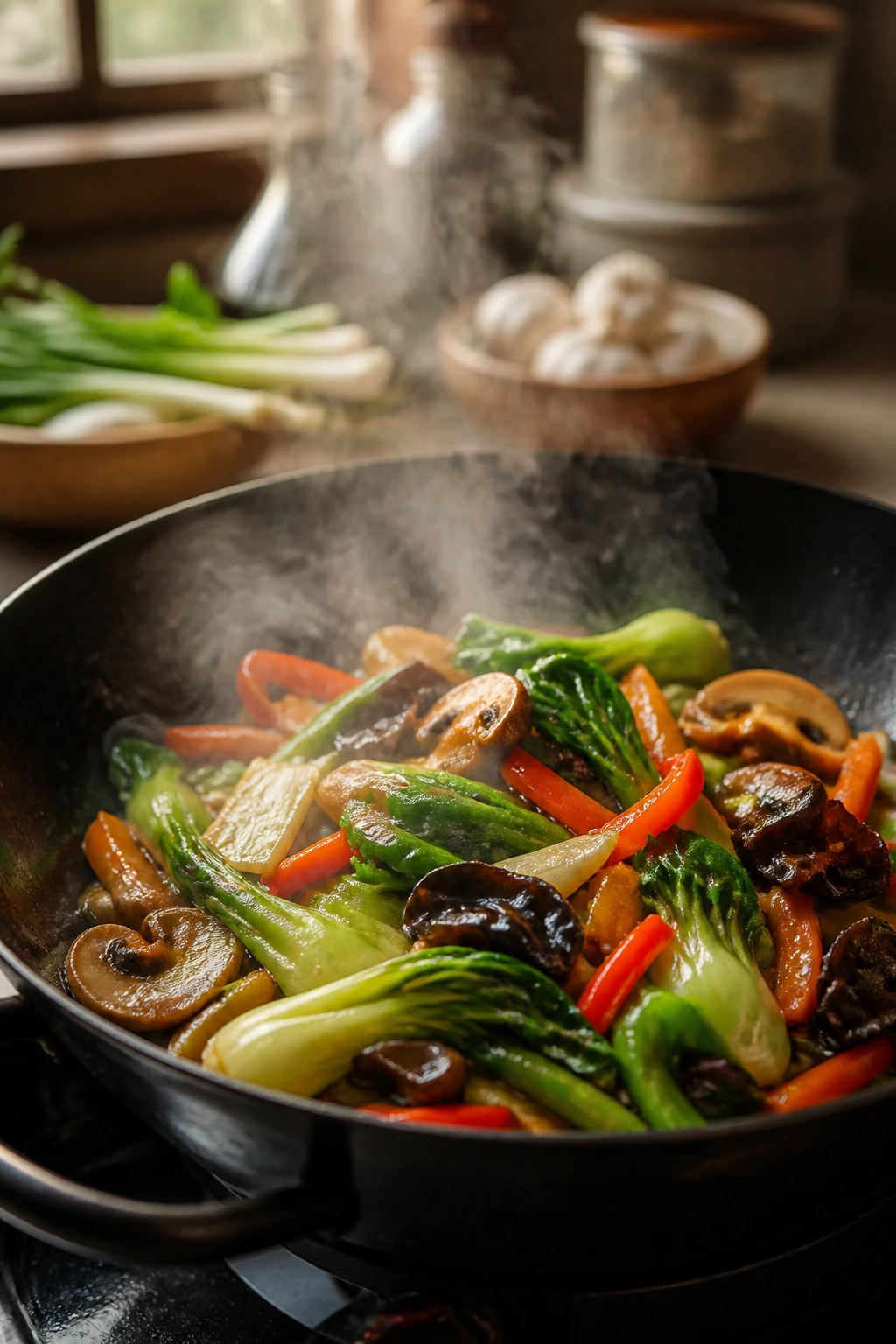
Chinese home cooking has always been generous about using what’s on hand. A bottle of light soy sauce, a little dark soy for color, rice vinegar, sesame oil, dried mushrooms, glass noodles, and a jar of chili oil can go a long way when the rest of the meal is plain rice or a simple protein. That’s not an accident. It’s a system.
The trick is balance. Soy sauce brings salt and depth, vinegar brings lift, sugar smooths the edges, and sesame oil finishes the dish with that nutty smell you notice the second it hits the bowl. If a recipe also uses cornstarch, it’s usually there to give the sauce a soft sheen and help it cling to cabbage, tofu, or noodles instead of sliding off into the pan.
Heat matters too. A lot. The best versions of these sides are cooked quickly over fairly high heat, then finished with a splash of something sharp or aromatic. That’s why cabbage stays a little crisp, why eggs stay tender, and why a pan of mushrooms can taste like more than the sum of its parts.
Why You’ll Love This Collection
-
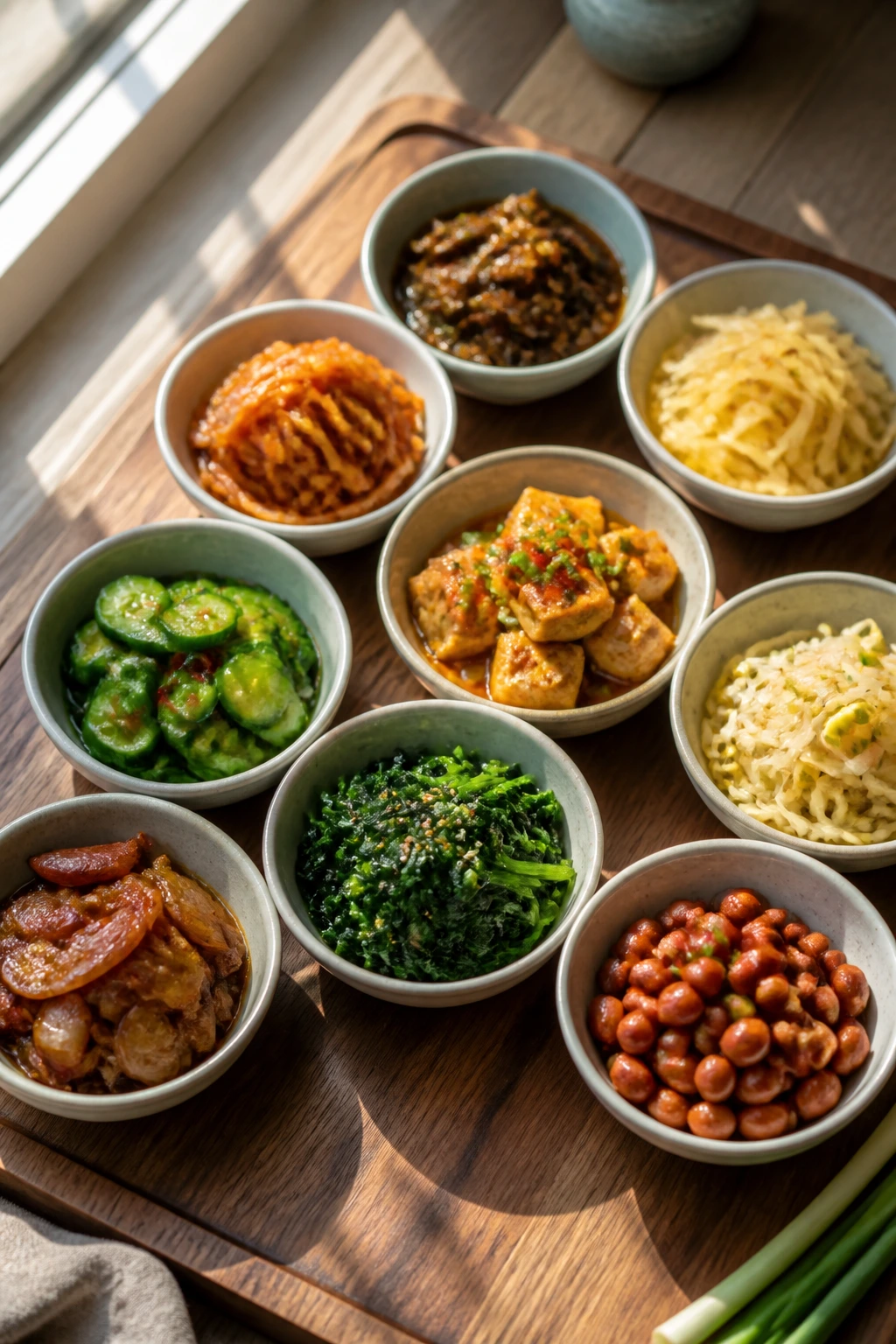
Pantry-first cooking: These dishes make real use of dry goods, condiments, and freezer staples instead of treating them like emergency backups.
-
Built for side-dish life: Each recipe is small enough to sit beside rice, noodles, dumplings, or a simple main without stealing the whole table.
-
Low-drama ingredients: No one needs a specialty market for every dish here; the long-haul ingredients are mostly soy sauce, vinegar, dried noodles, and a few basic aromatics.
-
Flexible heat and seasoning: You can keep these mild for a plain family table or push them toward chili oil, black vinegar, and garlic if you want more bite.
-
Useful all week: Several of these can be cooked ahead, eaten cold, or reheated without turning sad and limp.
1. Garlic Soy Napa Cabbage
Napa cabbage is the kind of vegetable that behaves beautifully in a hot pan. The leaves soften fast, the pale stems stay just a little crisp, and the whole thing drinks in garlic and soy sauce without collapsing into mush. I like this dish when I want something green on the table that doesn’t feel like an afterthought.
Why It Works: The cabbage cooks in minutes, so it keeps a little texture, and the soy-vinegar-sugar balance gives it the same dark, savory shine you get in better Chinese home cooking. A small amount of water helps steam the stems just enough without making the pan soupy.
Key Ingredients:
- 1 small napa cabbage, cut into 1-inch strips
- 2 tablespoons neutral oil
- 4 cloves garlic, minced
- 1 tablespoon light soy sauce
- 1 teaspoon dark soy sauce
- 1 teaspoon sugar
- 2 tablespoons water
- 1 teaspoon sesame oil
Quick Steps:
- Heat the oil in a wok or large skillet over medium-high heat.
- Add the garlic and stir for 15 to 20 seconds, just until fragrant.
- Add the cabbage, stir-fry for 2 minutes, then add soy sauce, dark soy sauce, sugar, and water.
- Cook 2 to 3 minutes more until the leaves are wilted and the stems are glossy but still slightly crisp. Finish with sesame oil.
Equipment for This Recipe:
- Wok or 12-inch skillet
- Wooden spatula or tongs
- Chef’s knife and cutting board
How to Serve This Dish: Spoon it into a shallow bowl and serve it with steamed rice, congee, or simple noodles; the little pool of savory sauce at the bottom is part of the appeal.
Pro Tips for This Recipe:
- Slice the stem end thinly so it softens at the same pace as the leaves.
- Keep the heat high enough that the cabbage sizzles, not stews.
- Finish with sesame oil off the heat so the aroma stays bright.
Variations on This Dish:
- Chili-Garlic Cabbage: Add 1 teaspoon chili flakes with the garlic for a sharper edge.
- Black Vinegar Cabbage: Swap in 1 teaspoon black vinegar at the end for deeper tang.
Common Mistakes to Avoid with This Dish:
- Crowding the pan: The cabbage will steam and go limp. Use a wide pan.
- Adding too much liquid: You want gloss, not broth. Stick to the measured water.
2. Chinese Tomato Egg Stir-Fry
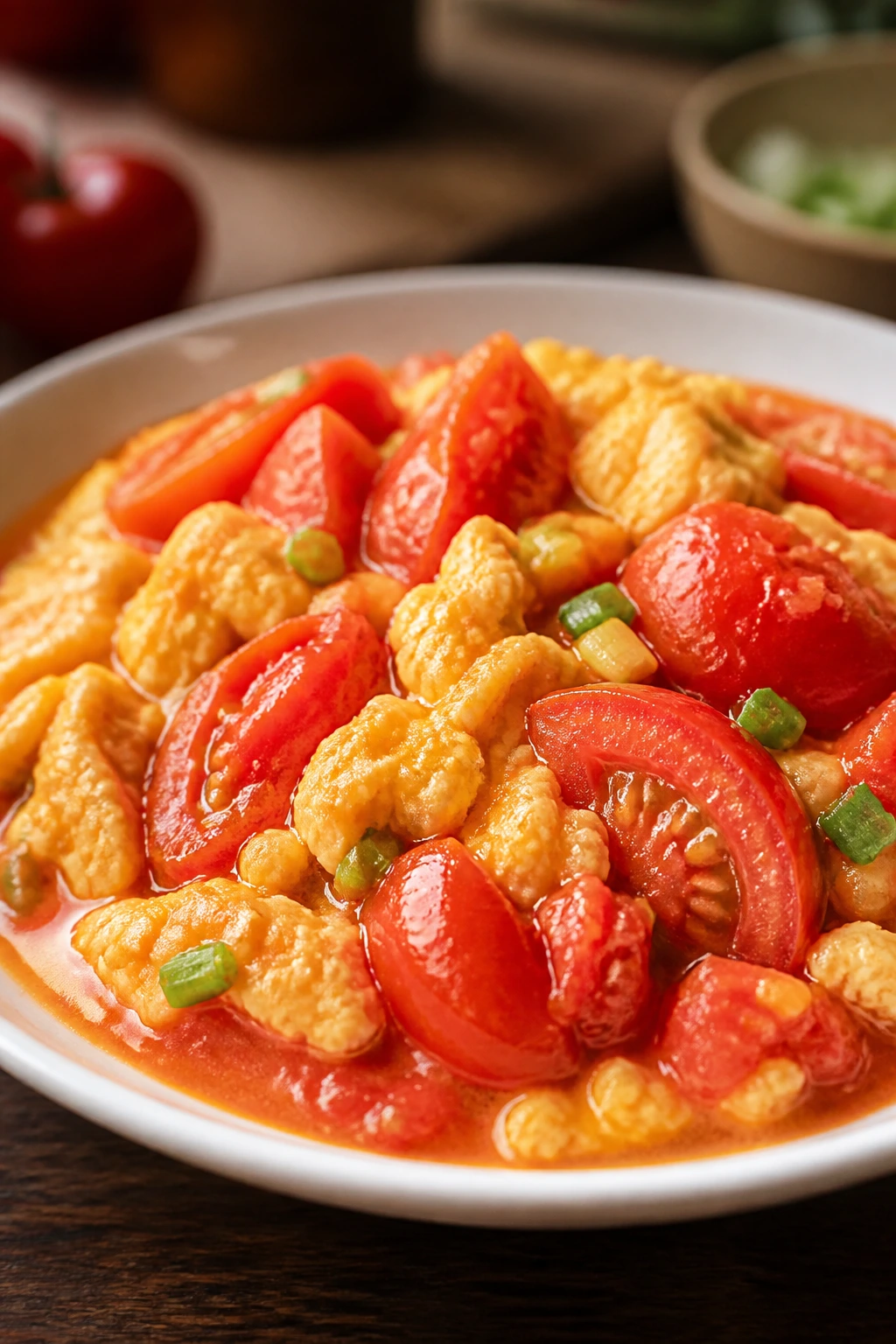
Tomatoes and eggs are one of those combinations that sounds plain until you eat them the right way. The eggs should stay soft and tender, not dry, and the tomatoes should break down into a saucy, bright-red tangle that clings to rice instead of running across the plate.
Why It Works: Eggs bring body, tomatoes bring acidity, and a pinch of sugar rounds out the sharp edges so the whole thing tastes fuller. This is one of the easiest Chinese side dishes to pull together because the ingredients are cheap, common, and forgiving.
Key Ingredients:
- 4 large eggs
- 3 medium tomatoes, cut into wedges
- 2 tablespoons neutral oil
- 1 tablespoon sugar
- 1/2 teaspoon salt
- 2 scallions, sliced
- 1 teaspoon cornstarch mixed with 1 tablespoon water, optional for a silkier sauce
Quick Steps:
- Beat the eggs with half the salt in a bowl.
- Heat 1 tablespoon oil in a skillet and scramble the eggs for 30 to 45 seconds until just set; remove them while still soft.
- Add the remaining oil and cook the tomatoes with sugar and the rest of the salt for 3 to 4 minutes until they slump and release juice.
- Stir the eggs back in, add scallions, and cook 30 seconds more. If you want a thicker sauce, stir in the cornstarch slurry and simmer until glossy.
Equipment for This Recipe:
- Skillet
- Mixing bowl
- Silicone spatula
How to Serve This Dish: Serve it over plain rice or next to a soy-braised tofu dish; the tomato sauce is especially good when it runs into rice grains.
Pro Tips for This Recipe:
- Pull the eggs early. They keep cooking in the hot pan.
- Use ripe tomatoes if you can; under-ripe ones stay hard and taste thin.
- A tiny bit of sugar matters here. It doesn’t make the dish sweet. It makes the tomato taste like itself.
Variations on This Dish:
- Garlic Tomato Eggs: Add 2 minced cloves of garlic to the oil before the tomatoes.
- Corn-Loaded Version: Stir in 1/2 cup canned or frozen corn for extra sweetness and texture.
Common Mistakes to Avoid with This Dish:
- Overcooking the eggs: Rubbery eggs make the whole dish feel heavy. Take them out before they’re fully dry.
- Skipping the sugar: The tomatoes can taste sharp and empty without it.
3. Vinegar-Braised Potatoes
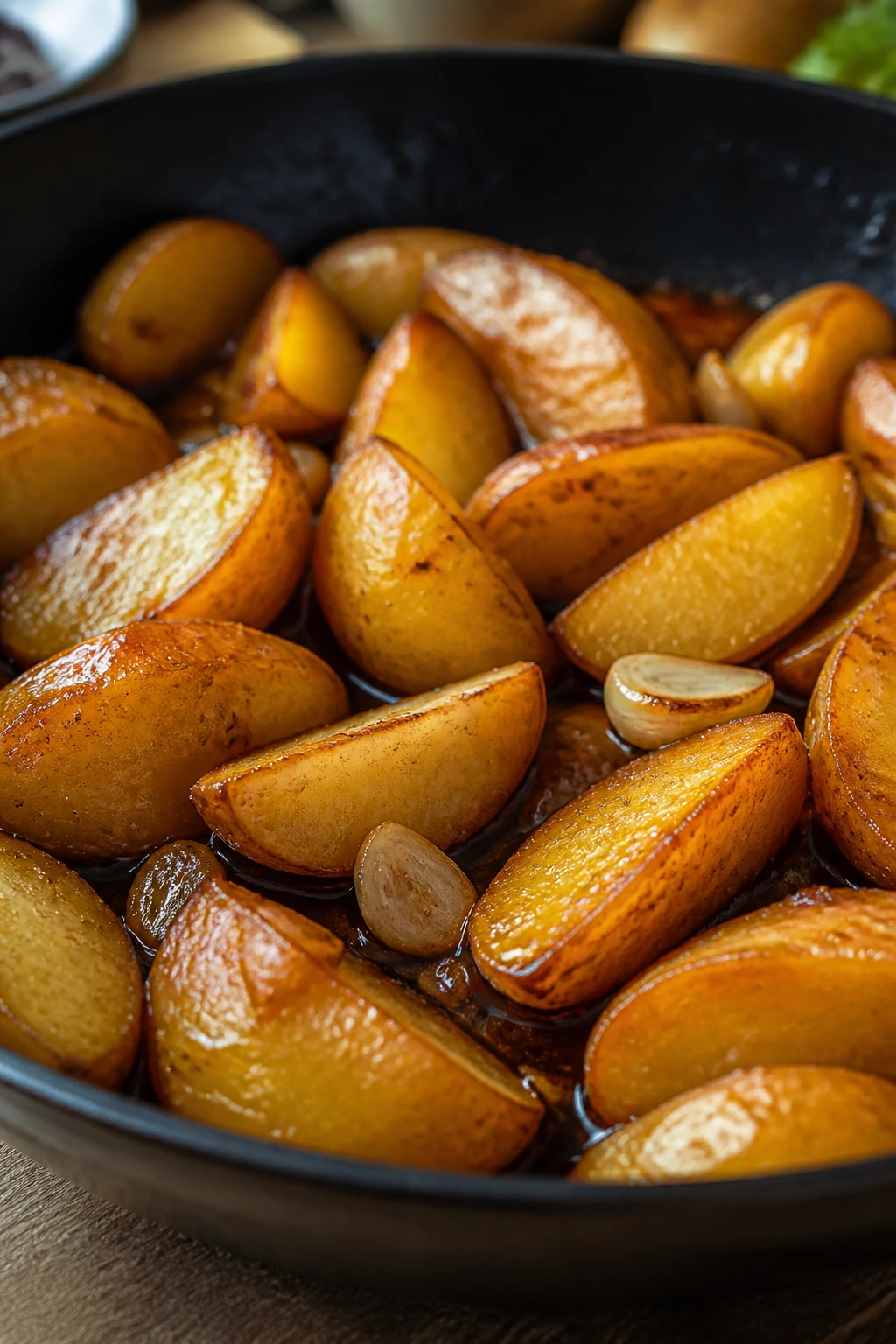
Potatoes are not flashy, and that’s exactly why this works. In a hot pan, the edges brown first, then the vinegar and soy sauce seep in and turn the whole dish into something with a little tang, a little salt, and a lot more personality than a plain boiled potato.
Why It Works: Thin wedges cook fast enough to brown before they soften completely, and a small amount of liquid lets them braise without turning mealy. The vinegar gives lift; the soy sauce makes the pan smell rich and savory.
Key Ingredients:
- 1 pound Yukon Gold potatoes, cut into thin wedges
- 2 tablespoons neutral oil
- 3 cloves garlic, sliced
- 1 tablespoon light soy sauce
- 1 tablespoon rice vinegar or black vinegar
- 1 teaspoon sugar
- 2 tablespoons water
- 1/4 teaspoon chili flakes, optional
Quick Steps:
- Heat the oil in a skillet over medium-high heat and add the potatoes in a single layer.
- Cook 4 to 5 minutes, turning once, until the edges are golden.
- Add the garlic, soy sauce, vinegar, sugar, water, and chili flakes.
- Cover and cook 4 to 6 minutes until the potatoes are tender, then uncover and reduce the liquid until it coats the wedges.
Equipment for This Recipe:
- Large skillet with lid
- Spatula
- Knife and cutting board
How to Serve This Dish: These belong beside fried fish, tofu, or a plain stir-fried vegetable; the vinegar cuts through richer dishes and keeps the meal from feeling heavy.
Pro Tips for This Recipe:
- Keep the wedges thin and even or they’ll cook unevenly.
- Don’t add the vinegar until the potatoes have browned a bit; acid can slow browning.
- If the pan dries before the potatoes are tender, add another tablespoon of water.
Variations on This Dish:
- Chili Crisp Potatoes: Finish with 1 teaspoon chili crisp for a punchier, more textured version.
- Five-Spice Potatoes: Add a pinch of five-spice powder with the soy sauce for a warmer flavor.
Common Mistakes to Avoid with This Dish:
- Cutting the potatoes too thick: They’ll brown on the outside and stay hard inside.
- Using too much vinegar: The dish should be tangy, not sour.
4. Soy-Braised Tofu with Scallions
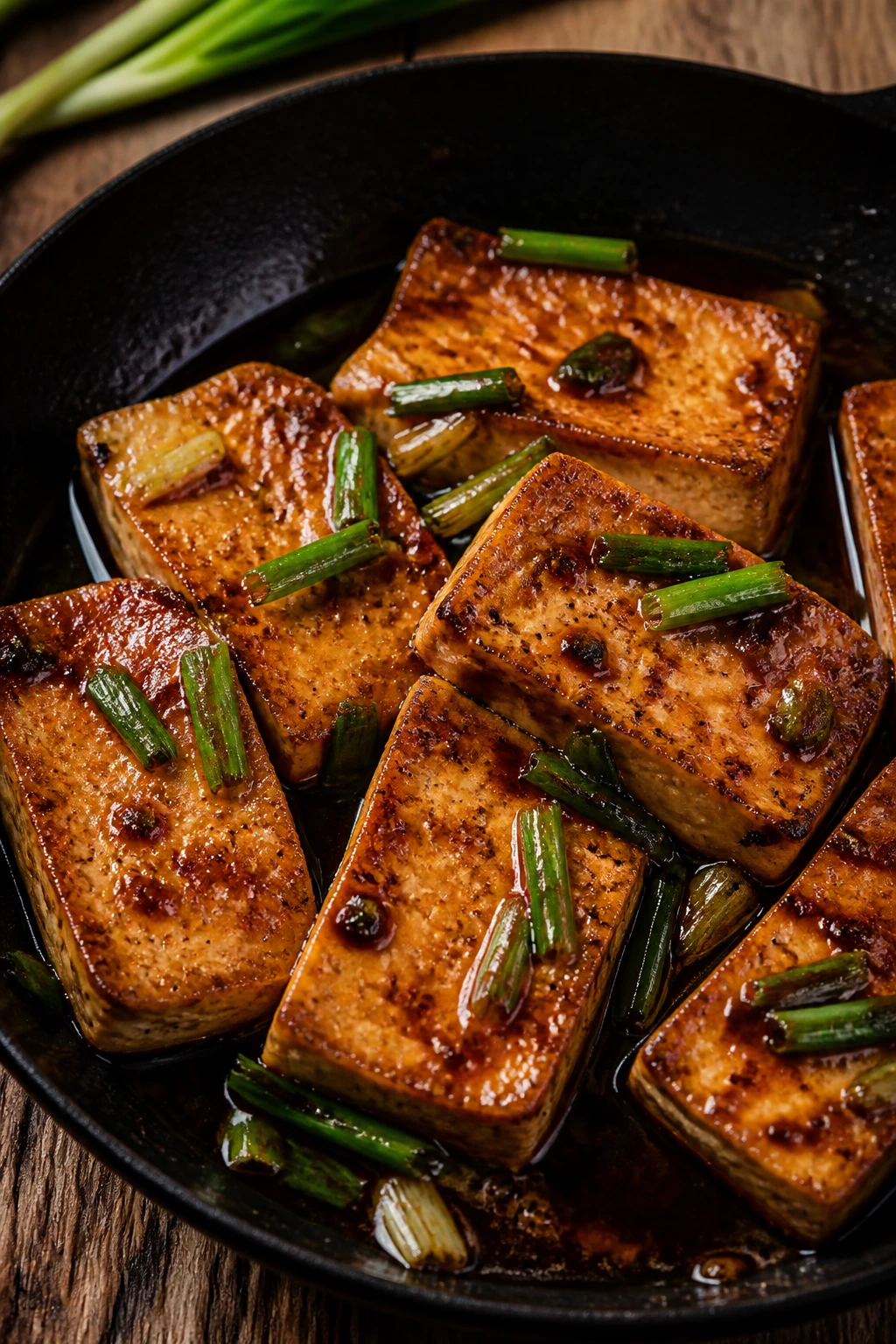
Tofu does its best work when it’s allowed to brown first. A little cornstarch on the outside gives you a thin crust, then the soy-based sauce slips over the top and settles into the corners. The result is soft inside, savory outside, and a lot more satisfying than plain steamed tofu.
Why It Works: Pan-frying gives the tofu texture, while the sauce — soy sauce, water, a little sugar, and scallion — adds enough depth to make it feel finished. The tofu absorbs flavor without losing its shape.
Key Ingredients:
- 14 ounces firm tofu, pressed and cut into slabs
- 2 tablespoons cornstarch
- 2 tablespoons neutral oil
- 2 tablespoons soy sauce
- 1 tablespoon oyster sauce or mushroom stir-fry sauce
- 1/2 cup water
- 2 scallions, sliced
- 1 teaspoon sesame oil
Quick Steps:
- Pat the tofu dry and dust it lightly with cornstarch.
- Heat the oil in a skillet and fry the tofu for 3 to 4 minutes per side until golden.
- Add soy sauce, oyster sauce, water, and half the scallions.
- Simmer 2 to 3 minutes until the sauce thickens slightly, then finish with sesame oil and the rest of the scallions.
Equipment for This Recipe:
- Nonstick or well-seasoned skillet
- Tofu press or clean towel
- Tongs
How to Serve This Dish: Serve it over rice or next to a pile of stir-fried greens; the sauce should be spooned over everything, not left in the pan.
Pro Tips for This Recipe:
- Firm tofu is the right choice here. Silken tofu won’t hold.
- Don’t move the tofu too soon or the crust tears.
- If you want a darker glaze, add 1/2 teaspoon dark soy sauce.
Variations on This Dish:
- Garlic Tofu: Add 2 minced cloves of garlic before the sauce.
- Spicy Tofu: Stir in 1 teaspoon chili oil at the end.
Common Mistakes to Avoid with This Dish:
- Skipping the press: Wet tofu spits and browns badly.
- Boiling the sauce hard: It can break down the tofu’s crust; keep it at a gentle simmer.
5. Sweet Soy Eggplant
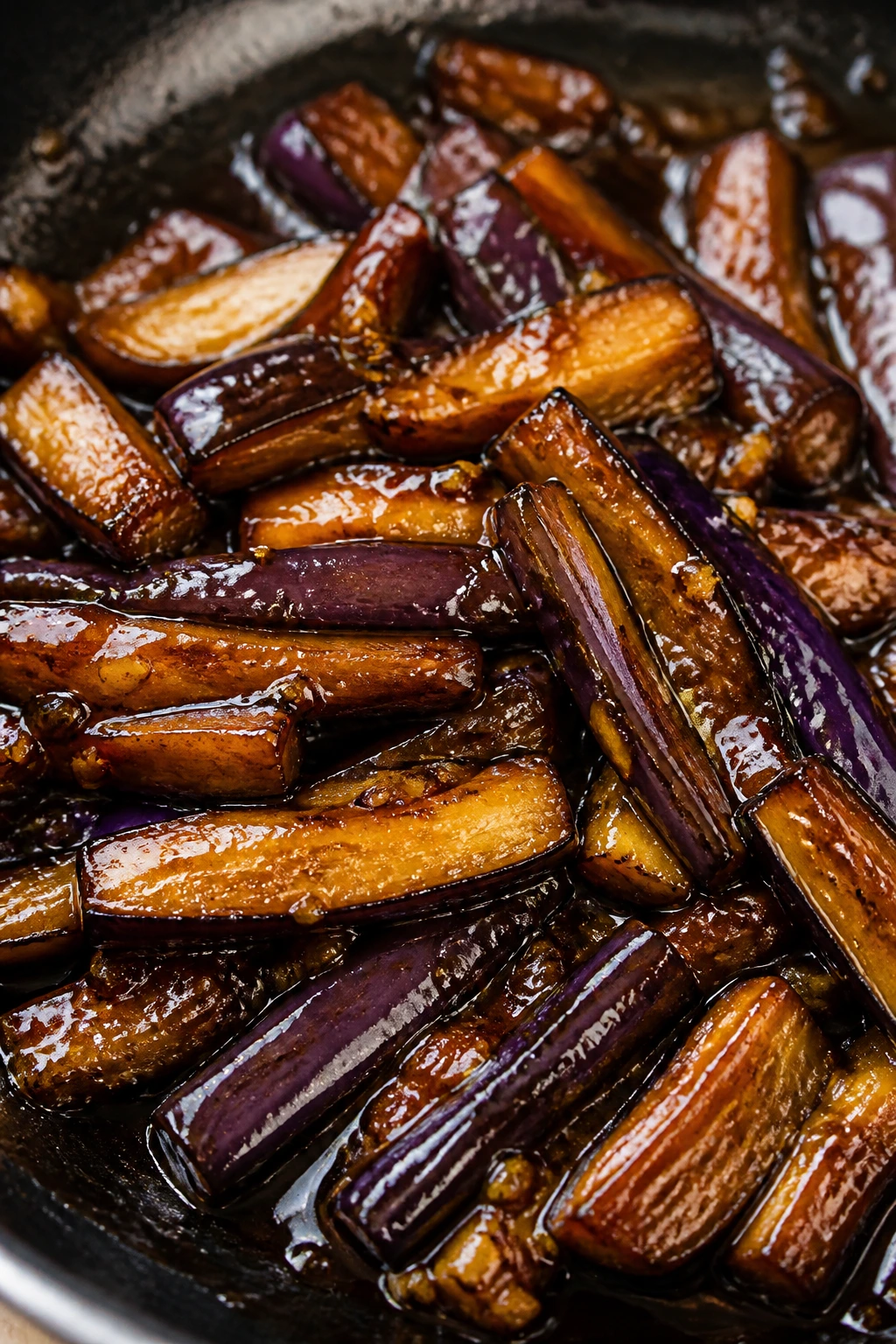
Eggplant loves oil, and trying to fight that fact usually ends in disappointment. The trick is to give it enough heat to soften and enough sauce to turn the flesh silky, then stop before it becomes oily sludge. Done right, the pieces should look glazed and almost jammy at the edges.
Why It Works: Eggplant soaks up flavor quickly, so a sweet soy garlic sauce turns a humble vegetable into something rich without needing meat. A small cornstarch slurry helps the glaze cling instead of disappearing.
Key Ingredients:
- 2 medium eggplants, cut into batons
- 1 teaspoon salt
- 3 tablespoons neutral oil
- 4 cloves garlic, minced
- 1 tablespoon light soy sauce
- 1 tablespoon oyster sauce
- 1 teaspoon sugar
- 1 tablespoon water
- 1 teaspoon cornstarch mixed with 1 tablespoon water
Quick Steps:
- Salt the eggplant for 10 minutes, then blot it dry.
- Heat the oil and stir-fry the eggplant for 5 to 6 minutes until it starts to soften.
- Add garlic, soy sauce, oyster sauce, sugar, and water.
- Stir in the cornstarch slurry and cook 1 to 2 minutes until the sauce turns glossy and the eggplant is tender.
Equipment for This Recipe:
- Wok or deep skillet
- Paper towels
- Wooden spatula
How to Serve This Dish: Pile it into a small bowl and serve with plain rice; this is one of those sides that can quietly become the center of the plate.
Pro Tips for This Recipe:
- Salting the eggplant first makes it less thirsty.
- Keep the pieces similar in size so they finish together.
- A splash of black vinegar at the end sharpens the sweetness.
Variations on This Dish:
- Chili Eggplant: Add sliced dried chiles with the garlic.
- Miso-Style Twist: Stir in 1 teaspoon miso with the sauce for a deeper, saltier note.
Common Mistakes to Avoid with This Dish:
- Using too little oil: Eggplant will seize up and brown unevenly.
- Overcooking after the sauce goes in: The pieces can break apart fast.
6. Wood Ear Mushroom and Cucumber Salad
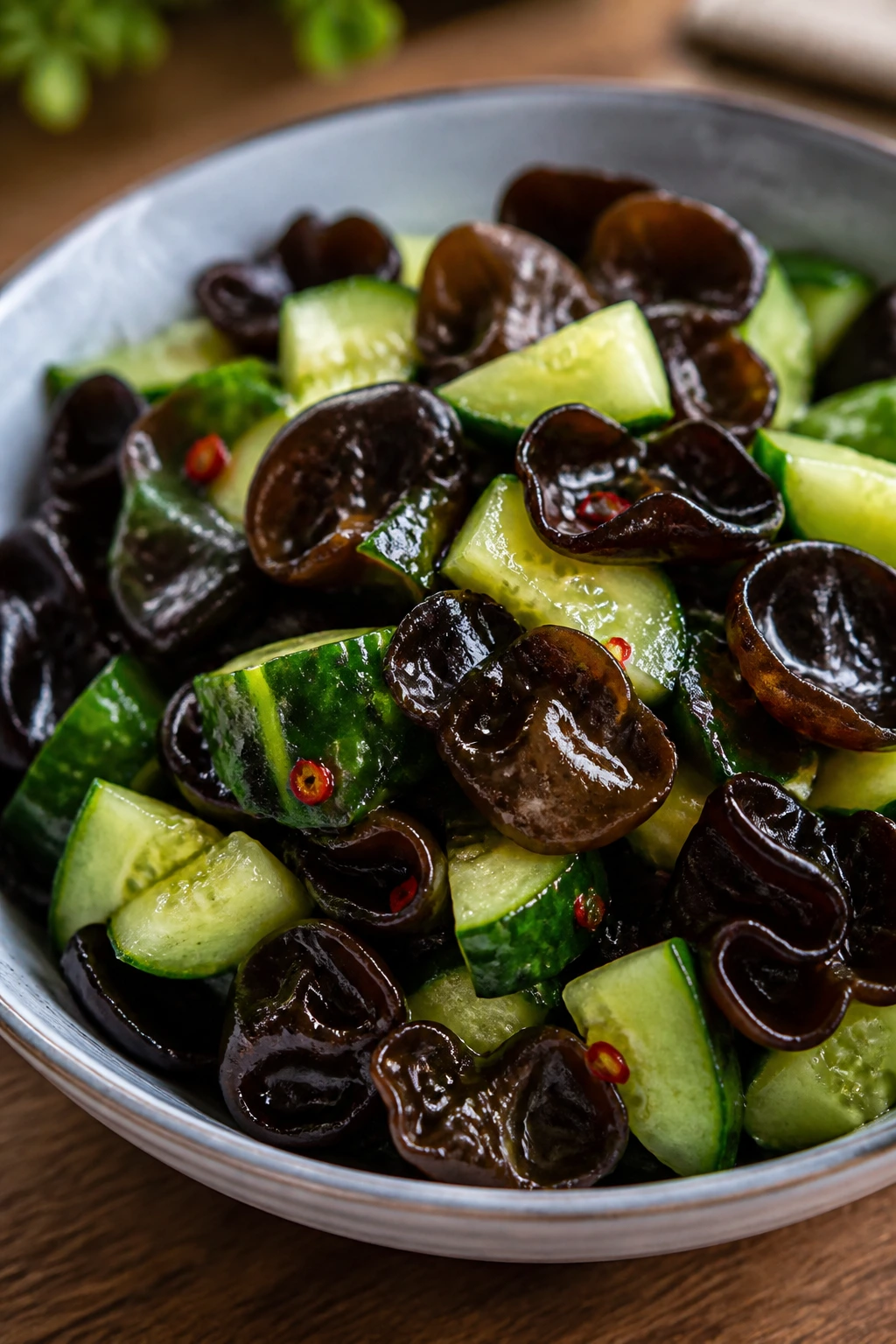
This is a cold dish with a little bounce to it. Wood ear mushrooms are crinkly, slick, and faintly chewy in a way that makes sense only after the first bite, and cucumber keeps the salad crisp and cool. The dressing is sharp, salty, and clean.
Why It Works: Dried wood ear mushrooms are a pantry bargain, and once soaked, they take on a springy bite that holds up well against vinegar and sesame oil. The cucumber adds crunch and a fresh finish.
Key Ingredients:
- 1 ounce dried wood ear mushrooms
- 2 cucumbers, smashed and cut into chunks
- 1 tablespoon rice vinegar
- 1 tablespoon light soy sauce
- 1 teaspoon sugar
- 1 teaspoon sesame oil
- 1 small garlic clove, minced
- 1 teaspoon chili oil, optional
Quick Steps:
- Soak the mushrooms in hot water for 20 minutes, then trim any hard bits and tear them into bite-size pieces.
- Smash the cucumbers, salt them lightly, and drain for 10 minutes.
- Whisk vinegar, soy sauce, sugar, sesame oil, and garlic.
- Toss everything together and chill 10 minutes before serving.
Equipment for This Recipe:
- Bowl for soaking
- Mixing bowl
- Knife or rolling pin for smashing cucumbers
How to Serve This Dish: Serve it cold in a small bowl as a crunchy side next to rice dishes, dumplings, or anything heavy and braised.
Pro Tips for This Recipe:
- Dry the mushrooms well after soaking so the dressing doesn’t wash out.
- Smash cucumbers instead of slicing them; the rough edges catch the dressing.
- Add chili oil only if you want heat. The vinegar already does plenty.
Variations on This Dish:
- Sesame-Heavy Version: Add 1 teaspoon toasted sesame seeds.
- Sharper Version: Use black vinegar instead of rice vinegar.
Common Mistakes to Avoid with This Dish:
- Skipping the cucumber drainage: The dressing turns watery fast.
- Leaving mushroom pieces too large: You lose the chewy-crisp contrast.
7. Sesame Cucumber Smash
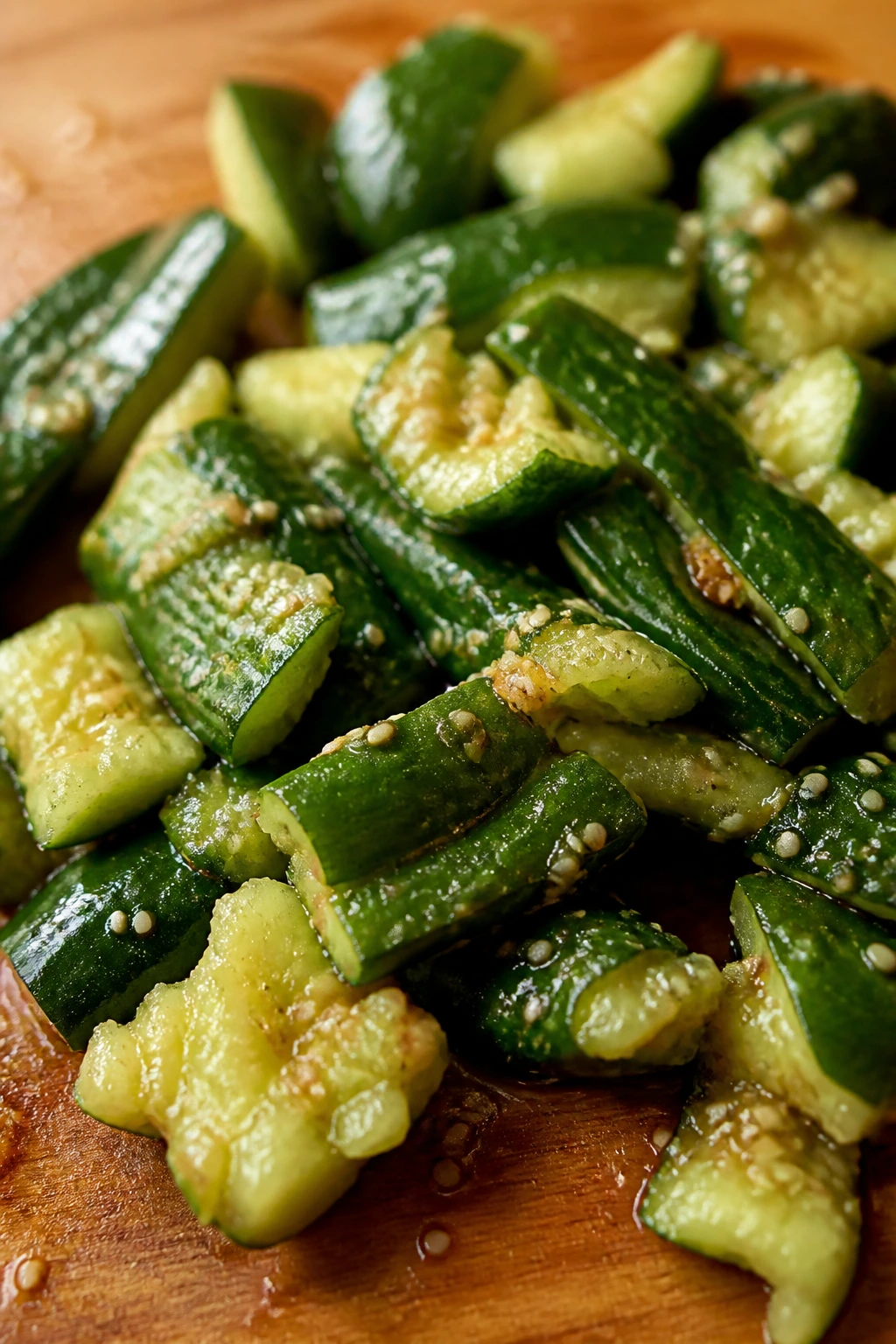
Smashed cucumbers are one of those dishes that look casual and eat like a plan. Breaking the cucumbers open creates jagged edges that hold dressing better than neat slices ever could. The result is cold, loud, and bracing — in a good way.
Why It Works: Smashing exposes more surface area, so the salt and vinegar penetrate quickly. Sesame oil and a bit of sugar round out the sharpness, and the cucumbers stay snappy if you drain them properly.
Key Ingredients:
- 2 cucumbers
- 1 teaspoon salt
- 1 tablespoon rice vinegar
- 1 tablespoon light soy sauce
- 2 teaspoons sesame oil
- 1 teaspoon sugar
- 1 teaspoon toasted sesame seeds
- 1 small garlic clove, grated
Quick Steps:
- Smash the cucumbers with the flat side of a knife or a rolling pin, then cut into rough chunks.
- Toss with salt and let stand 10 minutes.
- Whisk vinegar, soy sauce, sesame oil, sugar, and garlic.
- Drain the cucumbers, toss with the dressing, and top with sesame seeds.
Equipment for This Recipe:
- Knife or rolling pin
- Bowl
- Small whisk or fork
How to Serve This Dish: Put it on the table cold and let it do its sharp little job beside fried rice, noodles, or a softer tofu dish.
Pro Tips for This Recipe:
- Drain the cucumbers after salting or the dressing gets diluted.
- Use English cucumbers if you want fewer seeds.
- Let the salad sit 5 to 10 minutes, then eat it while the edges are still crisp.
Variations on This Dish:
- Chili Crisp Cucumber: Add 1 teaspoon chili crisp just before serving.
- Black Vinegar Cucumber: Swap the rice vinegar for black vinegar and add a pinch of sugar.
Common Mistakes to Avoid with This Dish:
- Cutting instead of smashing: You lose the rough edges that make the salad work.
- Overdressing it: The flavor should be sharp, not soupy.
8. Cabbage and Glass Noodle Stir-Fry
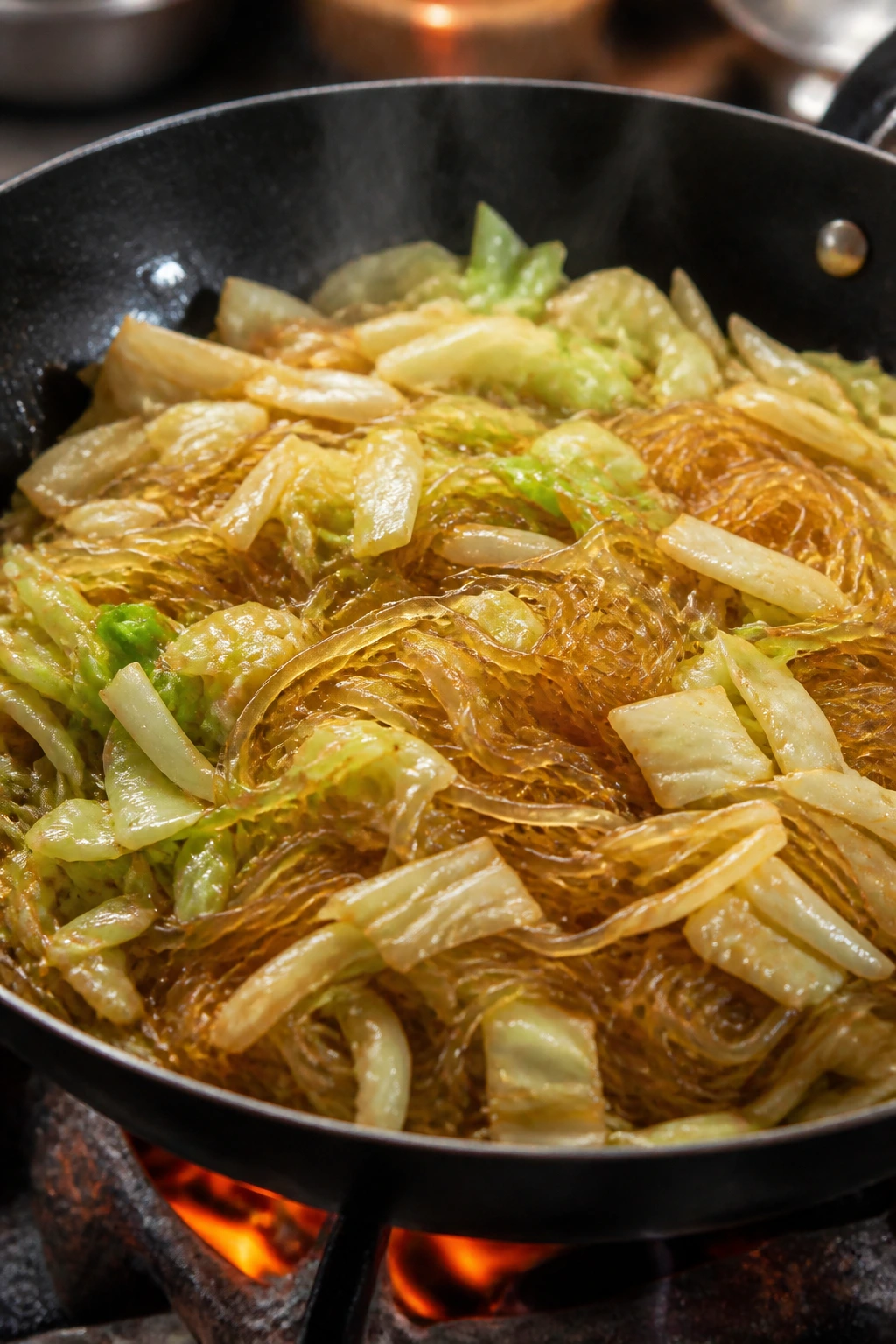
Glass noodles are one of the best pantry stashes you can keep around. They soak up sauce, stretch a small amount of cabbage into a full side dish, and turn tender without much fuss. The texture is slippery, soft, and a little chewy, which is exactly the point.
Why It Works: Dried glass noodles cook fast and carry sauce well, while cabbage adds freshness and bulk. A small amount of oyster sauce or mushroom sauce gives the whole pan a deeper, savory backbone.
Key Ingredients:
- 4 ounces dried glass noodles
- 1/2 head green cabbage, shredded
- 2 tablespoons neutral oil
- 3 cloves garlic, minced
- 1 tablespoon light soy sauce
- 1 tablespoon oyster sauce or mushroom sauce
- 1/4 cup water
- 1 teaspoon sesame oil
Quick Steps:
- Soak the noodles in warm water until pliable, then drain.
- Heat the oil and stir-fry the garlic for 15 seconds.
- Add the cabbage and cook 2 minutes until it begins to soften.
- Add noodles, soy sauce, oyster sauce, and water, then toss 2 to 3 minutes until the noodles are glossy and tender. Finish with sesame oil.
Equipment for This Recipe:
- Large skillet or wok
- Colander
- Tongs
How to Serve This Dish: Serve it warm with grilled tofu, steamed eggs, or a simple soup; it works best when it shares the plate instead of standing alone.
Pro Tips for This Recipe:
- Soak the noodles until flexible but not mushy.
- Keep a little water in the pan so the noodles can loosen and take on the sauce.
- Cut the cabbage fairly thin so it cooks at the same pace as the noodles.
Variations on This Dish:
- Spicy Version: Add sliced dried chiles with the garlic.
- Mushroom-Heavy Version: Add soaked dried shiitake for more depth.
Common Mistakes to Avoid with This Dish:
- Oversoaking the noodles: They fall apart in the pan.
- Using too little sauce: The noodles need enough liquid to taste seasoned, not dry.
9. Bean Sprouts with Garlic and Chili Oil
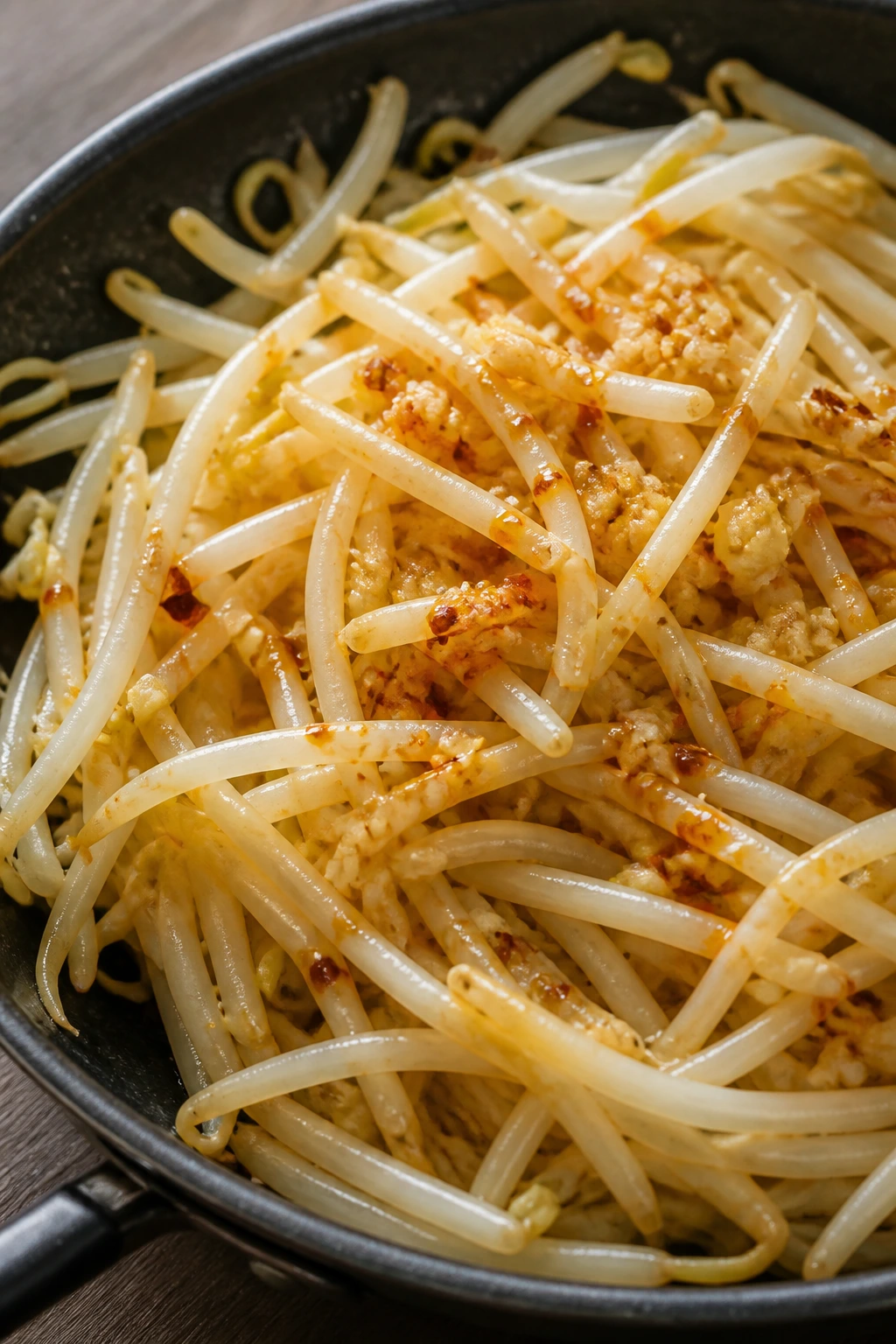
Bean sprouts are about crunch, and this dish keeps them that way. A quick stir in a hot pan is all they need before garlic, soy sauce, and a few drops of chili oil dress them up. If you cook them too long, they turn limp and weird. Don’t.
Why It Works: Bean sprouts are fast-cooking and high in water, so a short cook preserves their snap. The garlic and chili oil give the dish the kind of sharp, direct flavor that makes it useful beside rice or noodles.
Key Ingredients:
- 12 ounces bean sprouts
- 2 tablespoons neutral oil
- 3 cloves garlic, minced
- 1 tablespoon light soy sauce
- 1 teaspoon rice vinegar
- 1 to 2 teaspoons chili oil
- 1 teaspoon sesame oil
Quick Steps:
- Heat the oil in a wok until it shimmers.
- Add the garlic and stir for 10 to 15 seconds.
- Add the bean sprouts and toss for 60 to 90 seconds until just wilted at the edges.
- Season with soy sauce, vinegar, chili oil, and sesame oil, then serve immediately.
Equipment for This Recipe:
- Wok or skillet
- Tongs or spatula
- Colander for rinsing sprouts
How to Serve This Dish: Serve it right away as a bright side next to braised pork, tofu, or fried rice; the crunch is the point.
Pro Tips for This Recipe:
- Dry the sprouts well after rinsing so the pan stays hot.
- Keep the cook time short or they lose their snap.
- Add vinegar at the end to keep the flavor clean.
Variations on This Dish:
- Sesame Sprout Toss: Add 1 teaspoon toasted sesame seeds.
- Garlic-Heavy Version: Double the garlic and skip the chili oil.
Common Mistakes to Avoid with This Dish:
- Cooking too long: Bean sprouts go limp fast.
- Starting with a wet pan: The sprouts steam instead of sear.
10. Frozen Peas and Eggs
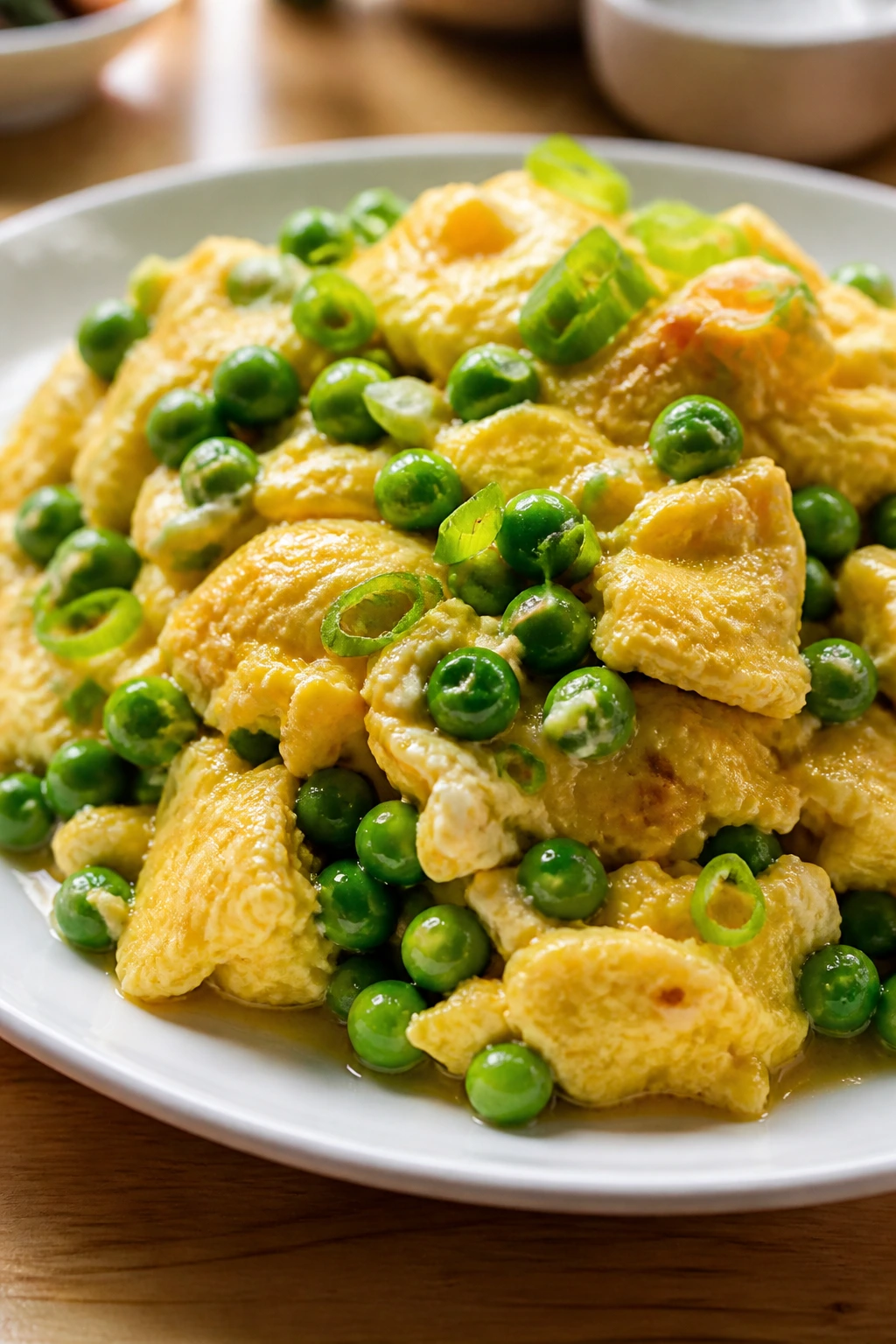
Frozen peas are one of the easiest pantry-adjacent wins you can keep around. Paired with eggs, they turn into a sweet, savory side with a soft texture and a little pop from the peas. It’s not fancy. It’s useful. Those are not the same thing.
Why It Works: Eggs give the peas something rich to cling to, and a few scallions keep the flavor from tasting flat. Because both ingredients cook fast, the dish stays bright instead of dull.
Key Ingredients:
- 2 cups frozen peas
- 4 large eggs
- 2 tablespoons neutral oil
- 1 scallion, sliced
- 1 tablespoon light soy sauce
- 1/4 teaspoon salt
- Pinch of white pepper
Quick Steps:
- Beat the eggs with salt and white pepper.
- Cook the eggs in 1 tablespoon oil over medium heat until softly set, then remove them.
- Add the remaining oil and the frozen peas; stir-fry 2 to 3 minutes until heated through.
- Return the eggs, add soy sauce and scallion, and toss for 30 seconds.
Equipment for This Recipe:
- Skillet
- Bowl
- Spatula
How to Serve This Dish: Serve it warm over rice or alongside a cold cucumber salad; the sweet peas balance salty, sharp dishes well.
Pro Tips for This Recipe:
- Don’t thaw the peas first; they can go mushy.
- Pull the eggs while they’re still soft.
- A tiny splash of water helps the peas heat through without scorching.
Variations on This Dish:
- Corn-and-Pea Mix: Use half peas and half frozen corn.
- Garlic Version: Add minced garlic before the peas.
Common Mistakes to Avoid with This Dish:
- Overcooking the eggs: They turn dry and leathery.
- Salting too late: The eggs should be seasoned before they hit the pan.
11. Scallion Oil Noodles
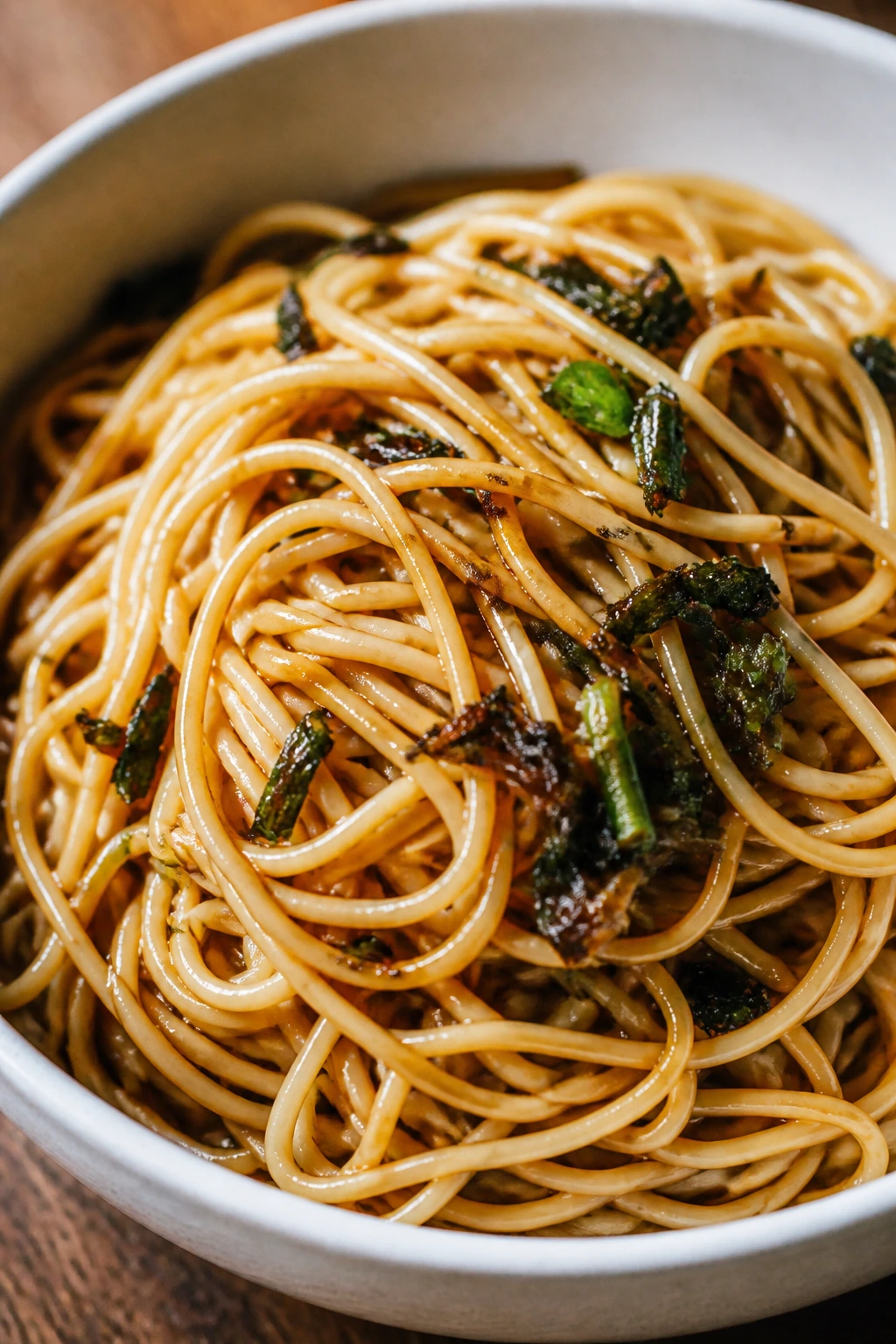
Scallion oil noodles are the kind of dish that makes three ordinary ingredients feel like a plan. The scallions cook down until they smell sweet and browned at the edges, then the oil carries that flavor into every strand of noodle. It’s simple, and it absolutely should be.
Why It Works: Hot oil pulls flavor out of scallions fast, and a soy-sugar sauce coats the noodles without needing a separate stir-fry. This is pantry cooking at its most direct.
Key Ingredients:
- 8 ounces dried wheat noodles
- 6 scallions, cut into 2-inch pieces
- 1/4 cup neutral oil
- 2 tablespoons light soy sauce
- 1 tablespoon oyster sauce or mushroom sauce
- 1 teaspoon sugar
- 1 teaspoon sesame oil
Quick Steps:
- Cook the noodles until just tender, then drain.
- Heat the oil in a skillet and cook the scallions over medium heat until softened and lightly browned, about 4 to 5 minutes.
- Add soy sauce, oyster sauce, sugar, and sesame oil.
- Toss in the noodles and stir until every strand is coated.
Equipment for This Recipe:
- Pot for boiling noodles
- Large skillet
- Tongs
How to Serve This Dish: Serve it as a side with tofu, greens, or dumplings, or make it the noodle base under a few quick vegetables.
Pro Tips for This Recipe:
- Don’t rush the scallions; browning builds flavor.
- Reserve a splash of noodle water if the pan looks dry.
- Use long noodles if you want the best coating.
Variations on This Dish:
- Chili Oil Noodles: Add 1 teaspoon chili oil at the end.
- Garlic Scallion Noodles: Fry 2 minced garlic cloves with the scallions.
Common Mistakes to Avoid with This Dish:
- Burning the scallions: They should brown, not blacken.
- Letting noodles sit dry in the colander: Toss them with sauce while warm.
12. Cold Sesame Peanut Noodles
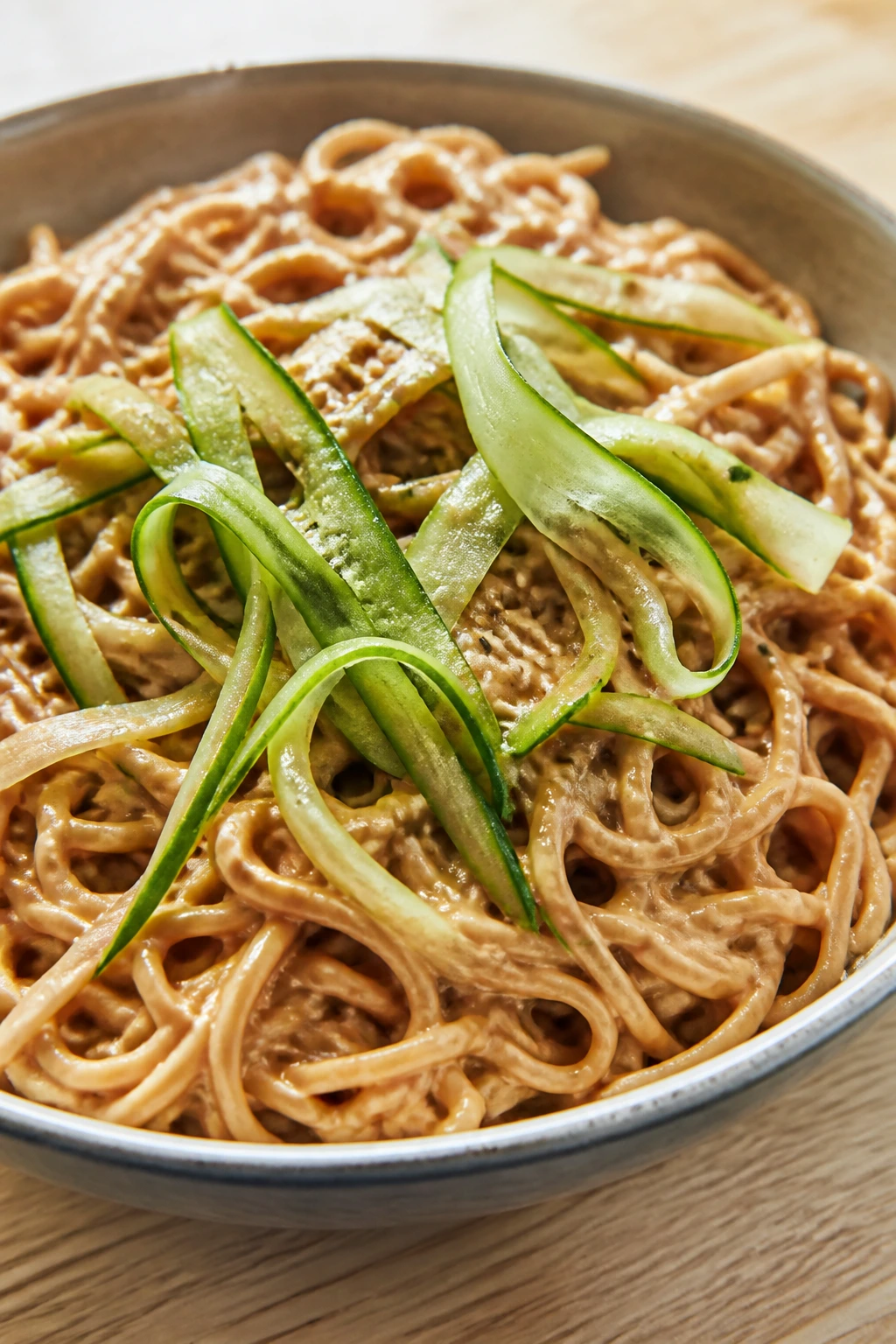
These are cool, slick, and a little nutty in the best way. The sauce should taste like peanut butter softened with vinegar and soy, not like a sandwich spread in disguise. With cucumber on top, the bowl eats like a side dish but has enough substance to hold its own.
Why It Works: Peanut butter gives body, soy sauce adds salt, vinegar brightens the whole bowl, and sesame oil rounds it out. It’s one of the most forgiving recipes here because the sauce can be loosened with warm water until it clings properly.
Key Ingredients:
- 8 ounces dried noodles
- 2 tablespoons peanut butter
- 1 1/2 tablespoons light soy sauce
- 1 tablespoon rice vinegar
- 1 tablespoon sesame oil
- 1 teaspoon sugar
- 1 small garlic clove, grated
- 2 to 4 tablespoons warm water
- 1/2 cucumber, julienned, optional
Quick Steps:
- Cook the noodles, rinse briefly under cool water, and drain well.
- Whisk peanut butter, soy sauce, vinegar, sesame oil, sugar, garlic, and warm water until smooth.
- Toss the sauce with the noodles.
- Top with cucumber if using and chill for 10 minutes or serve right away.
Equipment for This Recipe:
- Saucepan
- Mixing bowl
- Whisk
How to Serve This Dish: Serve cold or at room temperature beside grilled tofu or a plate of stir-fried vegetables; it’s especially useful when the rest of dinner is hot.
Pro Tips for This Recipe:
- Warm water helps the peanut butter loosen without clumping.
- Rinse the noodles only enough to cool them; too much rinsing washes away flavor.
- Taste the sauce before adding it to the noodles. It should taste slightly too strong on its own.
Variations on This Dish:
- Chili-Sesame Version: Add chili oil or chili crisp.
- Tahini Swap: Use tahini instead of peanut butter for a nuttier, less sweet flavor.
Common Mistakes to Avoid with This Dish:
- Using the sauce too thick: It won’t coat the noodles evenly.
- Serving it ice-cold straight from the fridge: The sauce can taste muted. Let it sit a few minutes first.
13. Stir-Fried Mushrooms with Oyster Sauce
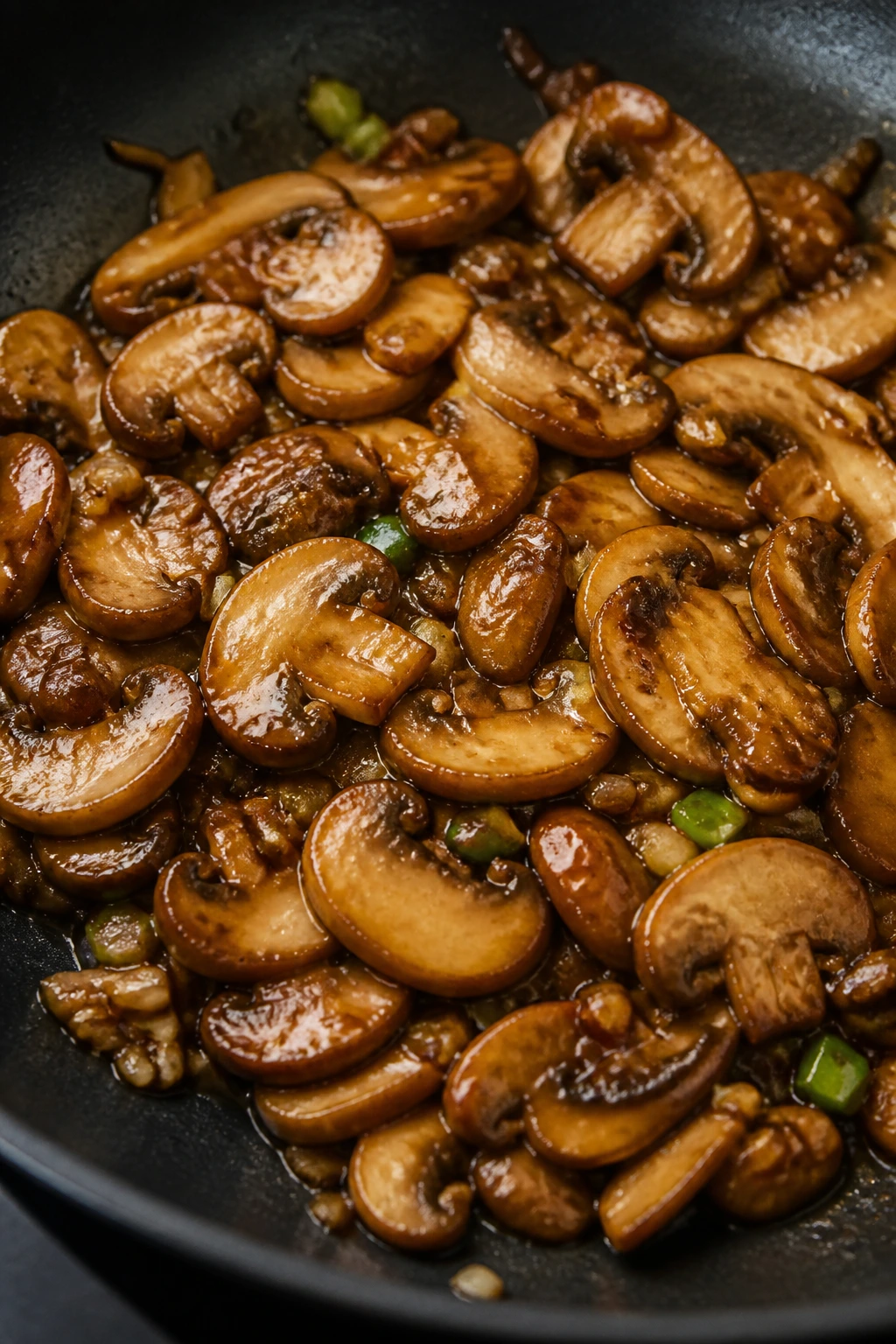
Mushrooms are good at pretending they took more work than they did. A hot pan gives them color, then oyster sauce or mushroom sauce pulls them into a glossy, savory pile that tastes deeper than the ingredient list looks. This is one of those sides that disappears fast.
Why It Works: Mushrooms brown well when given enough heat and space, and their natural moisture concentrates as they cook. A quick sauce makes them taste richer without needing cream or stock.
Key Ingredients:
- 12 ounces mushrooms, sliced
- 2 tablespoons neutral oil
- 2 cloves garlic, minced
- 1 tablespoon oyster sauce or vegetarian mushroom sauce
- 1 tablespoon light soy sauce
- 1/4 cup water
- 1 teaspoon cornstarch mixed with 1 tablespoon water
Quick Steps:
- Heat the oil in a skillet and add the mushrooms in a single layer.
- Cook 4 to 5 minutes until they release moisture and start to brown.
- Add garlic, oyster sauce, soy sauce, and water.
- Stir in the cornstarch slurry and cook 1 minute until the sauce turns glossy.
Equipment for This Recipe:
- Large skillet
- Spatula
- Small bowl for slurry
How to Serve This Dish: Serve these mushrooms next to rice, noodles, or steamed greens; they bring a dark, savory note that makes the rest of the meal feel fuller.
Pro Tips for This Recipe:
- Don’t salt early or the mushrooms may steam before they brown.
- Let the pan stay hot enough for visible color.
- Use a mix of mushrooms if you have them; texture improves.
Variations on This Dish:
- Black Pepper Version: Add a generous pinch of white pepper or black pepper.
- Tofu-Mushroom Mix: Toss in cubed tofu at the end.
Common Mistakes to Avoid with This Dish:
- Overcrowding the pan: The mushrooms will steam and go pale.
- Skipping the water: The sauce needs a little liquid to spread cleanly.
14. Braised Canned Bamboo Shoots
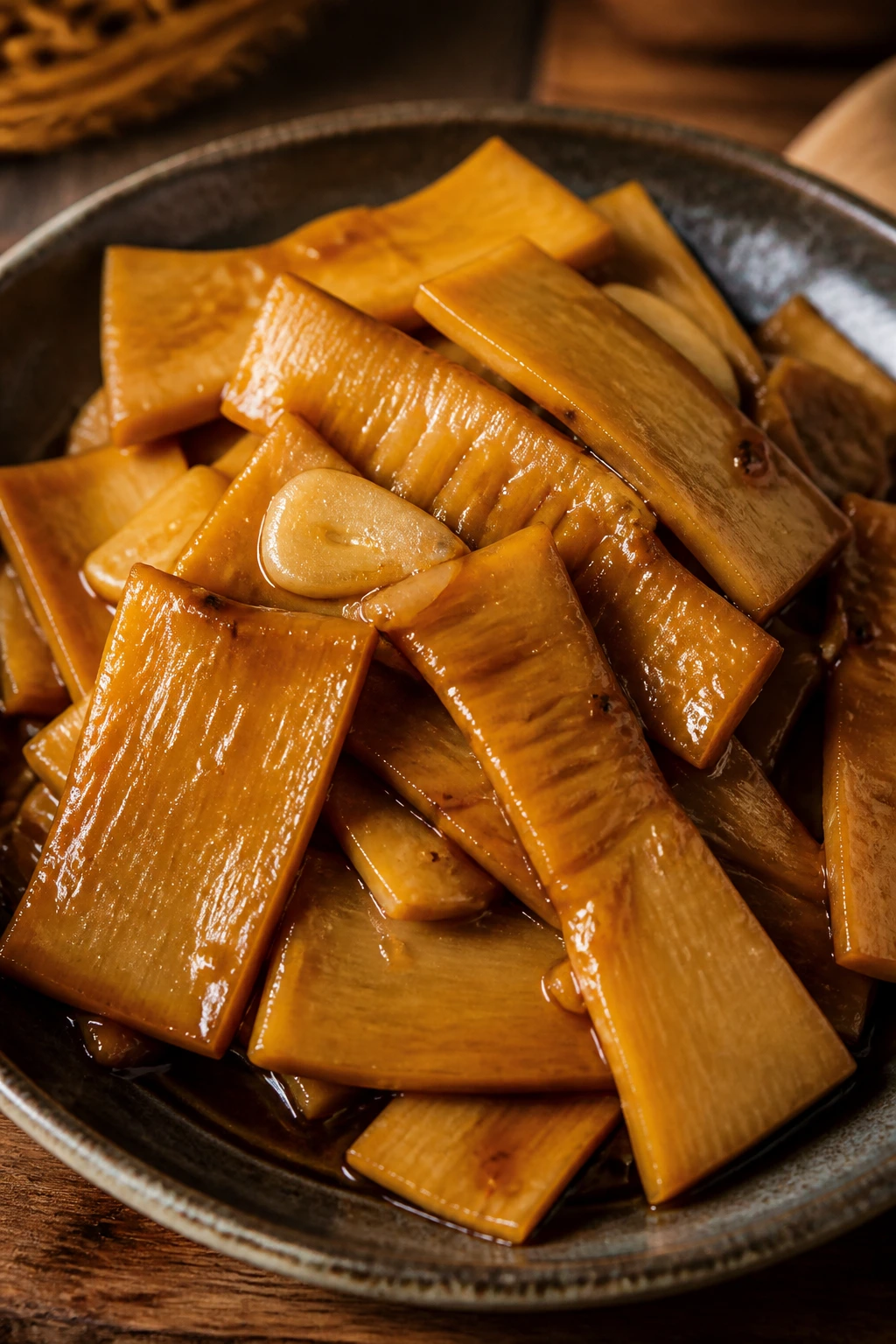
Canned bamboo shoots are one of those pantry items people forget until they need something with bite. Braised with soy, garlic, and a touch of sugar, they become savory, slightly sweet, and firm in a way that cuts through richer dishes very nicely.
Why It Works: Bamboo shoots hold their shape during braising and soak up seasoned liquid without falling apart. A short simmer is enough to make them taste intentional, not canned.
Key Ingredients:
- 1 can bamboo shoots, drained and rinsed
- 1 tablespoon neutral oil
- 3 cloves garlic, sliced
- 1 tablespoon light soy sauce
- 1 teaspoon dark soy sauce
- 1 teaspoon sugar
- 1/4 cup water
- 1 teaspoon sesame oil
Quick Steps:
- Heat the oil and cook the garlic for 15 seconds.
- Add the bamboo shoots and stir for 1 minute.
- Add soy sauces, sugar, and water.
- Simmer 4 to 5 minutes until the liquid is mostly reduced, then finish with sesame oil.
Equipment for This Recipe:
- Small skillet
- Spoon
- Can opener
How to Serve This Dish: Serve it as a little savory side with rice, porridge, or a larger vegetable spread; it’s especially useful next to softer dishes.
Pro Tips for This Recipe:
- Rinse canned bamboo shoots well to remove any tinny taste.
- Dark soy is for color; don’t overdo it.
- If you have dried chilies, add one or two for a subtle edge.
Variations on This Dish:
- Five-Spice Bamboo Shoots: Add a pinch of five-spice powder to the simmer.
- Chili Bamboo Shoots: Finish with chili oil.
Common Mistakes to Avoid with This Dish:
- Not rinsing the canning liquid off: The flavor can taste flat or metallic.
- Reducing the sauce too far: Leave enough glaze to coat the shoots.
15. Chili Oil Smashed Potatoes
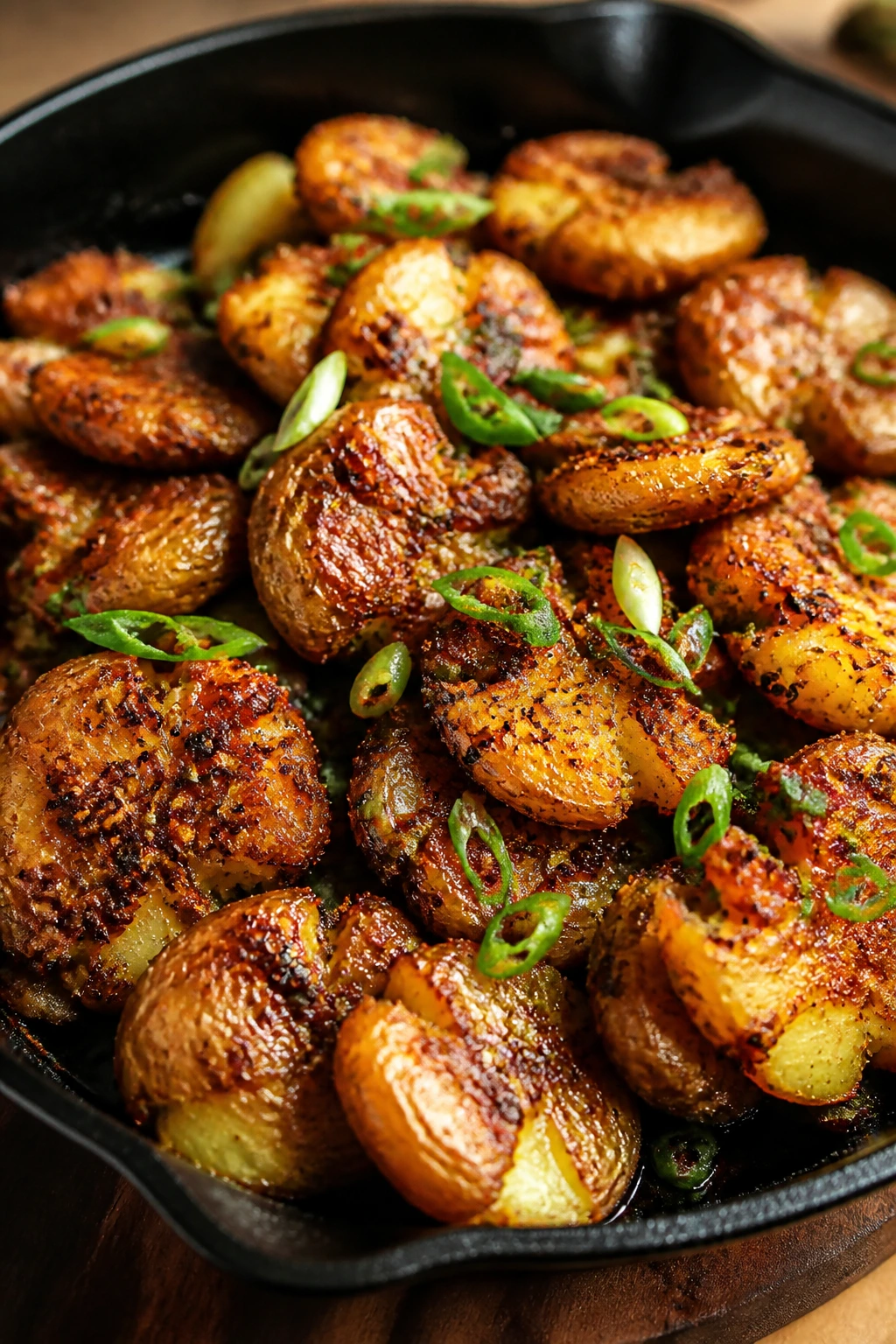
These potatoes are all about texture. Boil them until tender, smash them so the edges crack, then roast or pan-fry them until the rough surfaces crisp. Once chili oil and soy sauce hit the hot potatoes, the whole pan smells like a snack you forgot you wanted.
Why It Works: Smashing exposes more surface area, which means more crisp bits and more places for seasoning to cling. The chili oil adds heat and richness without needing a long sauce.
Key Ingredients:
- 1 1/2 pounds baby potatoes
- 1 teaspoon salt
- 2 tablespoons neutral oil
- 1 1/2 tablespoons chili oil
- 1 tablespoon light soy sauce
- 1 teaspoon rice vinegar
- 1 clove garlic, grated
- 1 tablespoon sliced scallions
Quick Steps:
- Boil the potatoes in salted water until just tender, about 12 to 15 minutes.
- Drain and let them steam dry for 5 minutes.
- Smash each potato on a sheet pan or plate, then brush with oil.
- Roast at 425°F (220°C) for 20 to 25 minutes, or pan-fry until crisp. Toss with chili oil, soy sauce, vinegar, garlic, and scallions.
Equipment for This Recipe:
- Pot
- Sheet pan or skillet
- Potato masher or bottom of a glass
How to Serve This Dish: Serve them hot as a crisp side next to tofu, steamed greens, or a bowl of soup; they’re best when the edges are still rough and crunchy.
Pro Tips for This Recipe:
- Dry the potatoes after boiling or they won’t crisp.
- Smash gently; you want cracks, not crumbs.
- Toss with the sauce only after they’re cooked so the crisp edges stay intact.
Variations on This Dish:
- Black Vinegar Potatoes: Use black vinegar instead of rice vinegar.
- Sesame Potato Crisp: Add toasted sesame seeds at the end.
Common Mistakes to Avoid with This Dish:
- Using too much oil before roasting: The potatoes can turn greasy.
- Skipping the steam-dry step: Moisture blocks crisping.
16. Steamed Egg Custard
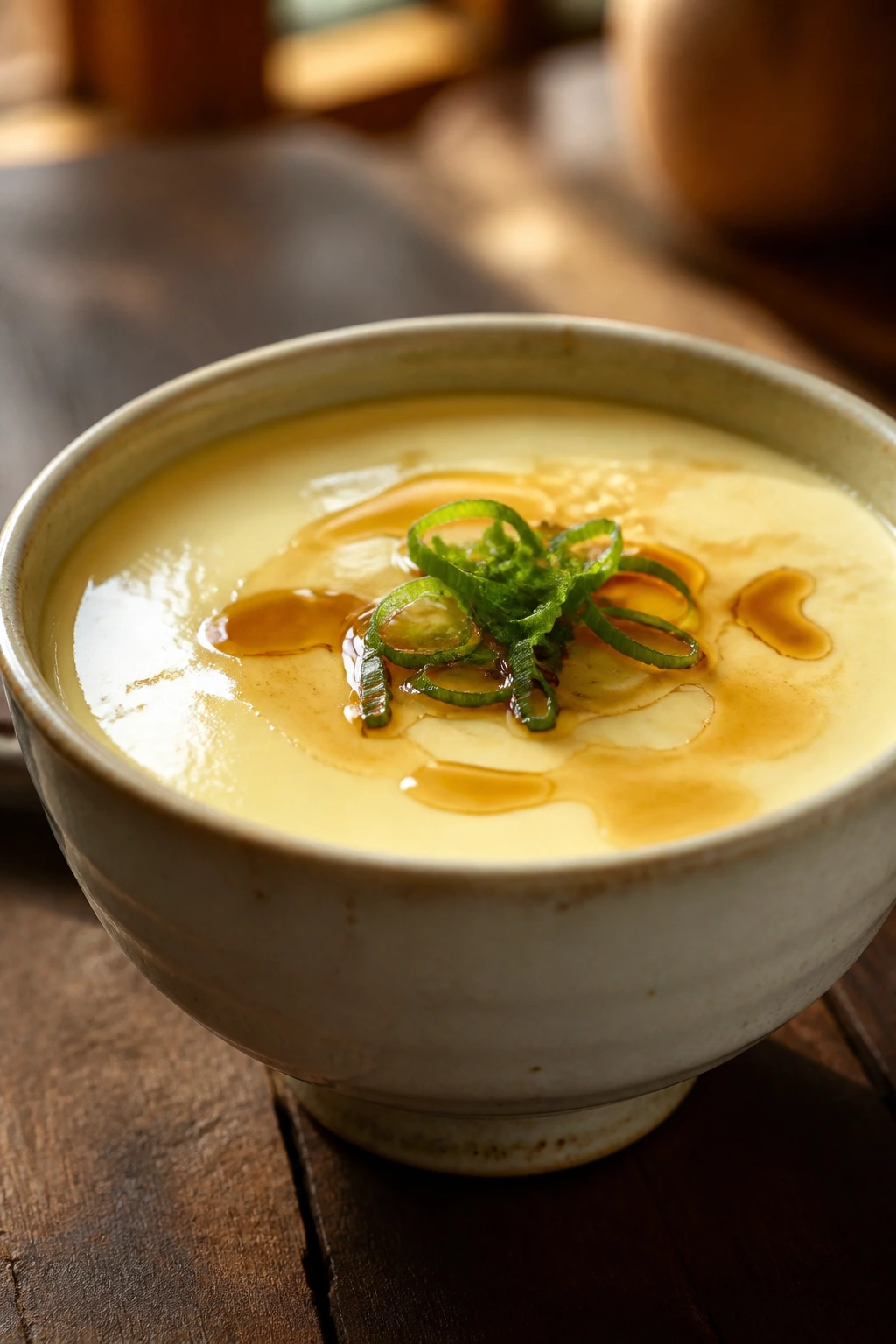
Steamed egg custard is silky in the way good tofu can be silky, but with a deeper egg flavor and a surface that jiggles when you tap the bowl. If your water ratio is right, it turns tender and almost pudding-like; if not, it gets rough. This recipe rewards care.
Why It Works: Straining the egg mixture removes loose bits that make the custard bumpy, and steaming gently keeps the texture smooth. A little soy sauce and sesame oil at the end is enough; the custard itself should stay mild.
Key Ingredients:
- 4 large eggs
- 1 1/2 cups warm water or light stock
- 1/2 teaspoon salt
- 1 teaspoon light soy sauce, for serving
- 1 teaspoon sesame oil, for serving
- 1 tablespoon sliced scallions
Quick Steps:
- Beat the eggs with salt, then strain them into a heatproof bowl.
- Whisk in the warm water gently to avoid bubbles.
- Cover the bowl loosely with foil and steam over low heat for 12 to 15 minutes until just set.
- Finish with soy sauce, sesame oil, and scallions.
Equipment for This Recipe:
- Heatproof bowl
- Steamer or covered pot with rack
- Fine-mesh strainer
How to Serve This Dish: Serve it warm in the bowl it steamed in, with the soy sauce and sesame oil pooled on top; it fits naturally beside rice and stir-fried vegetables.
Pro Tips for This Recipe:
- Use warm, not hot, water so the eggs don’t start setting early.
- Steam on low heat. A rolling boil makes the surface pockmarked.
- Cover loosely to stop condensation from dripping onto the custard.
Variations on This Dish:
- Shrimp Topping: Add a few small cooked shrimp before steaming.
- Mushroom Version: Lay thin mushroom slices on top before steaming.
Common Mistakes to Avoid with This Dish:
- Whisking too hard: Big bubbles create holes.
- Steaming over high heat: The custard turns spongy.
17. Egg Drop Corn Soup
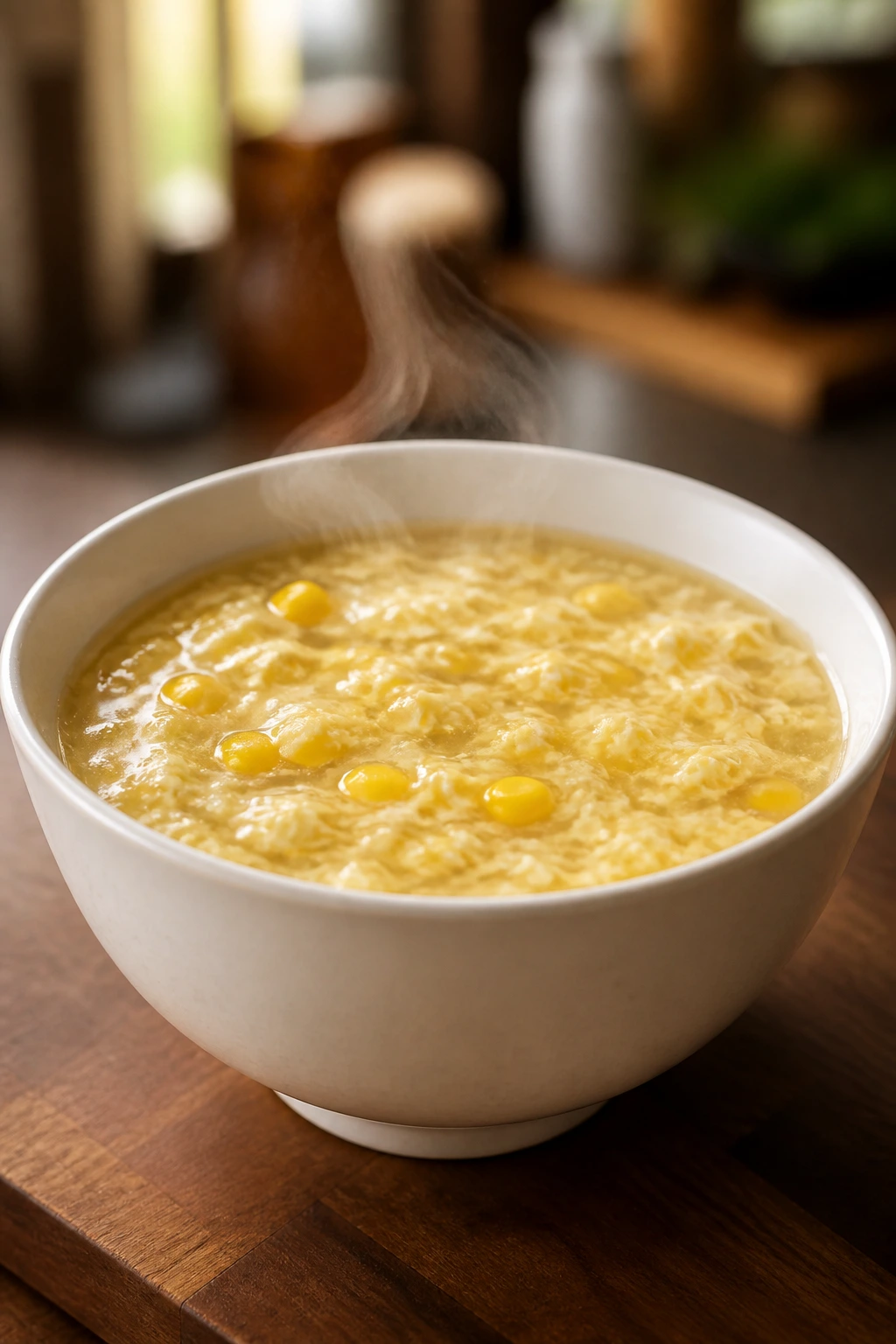
This soup is fast, light, and quietly useful. Frozen or canned corn gives it sweetness, eggs turn it silky, and a little cornstarch makes the broth cling just enough to feel finished. It’s more side dish than meal, which is exactly how I like it here.
Why It Works: Corn adds sweetness and texture without extra prep, and the eggs form soft ribbons when they hit the simmering broth. A tiny bit of white pepper keeps the flavor from going flat.
Key Ingredients:
- 4 cups chicken or vegetable broth
- 1 cup frozen or canned corn, drained if canned
- 2 large eggs, beaten
- 1 tablespoon cornstarch mixed with 2 tablespoons water
- 1 scallion, sliced
- 1 teaspoon light soy sauce
- 1/4 teaspoon white pepper
- 1/2 teaspoon sesame oil
Quick Steps:
- Bring the broth and corn to a simmer.
- Stir in the soy sauce, white pepper, and cornstarch slurry.
- Slowly drizzle in the eggs while stirring the soup in one direction.
- Turn off the heat, add sesame oil and scallions, and serve hot.
Equipment for This Recipe:
- Saucepan
- Whisk or fork
- Ladle
How to Serve This Dish: Ladle it into small bowls and serve it alongside dumplings, fried rice, or a plate of cold vegetables.
Pro Tips for This Recipe:
- Keep the broth at a gentle simmer when adding the eggs.
- Stir in one direction for larger ribbons.
- Add the sesame oil off the heat so the aroma stays clean.
Variations on This Dish:
- Ginger Corn Soup: Simmer a few slices of ginger in the broth.
- Chili Version: Add a few drops of chili oil at the end.
Common Mistakes to Avoid with This Dish:
- Boiling too hard: The egg turns stringy.
- Adding cornstarch all at once: It clumps. Mix it first with water.
18. Dried Tofu Skin Salad
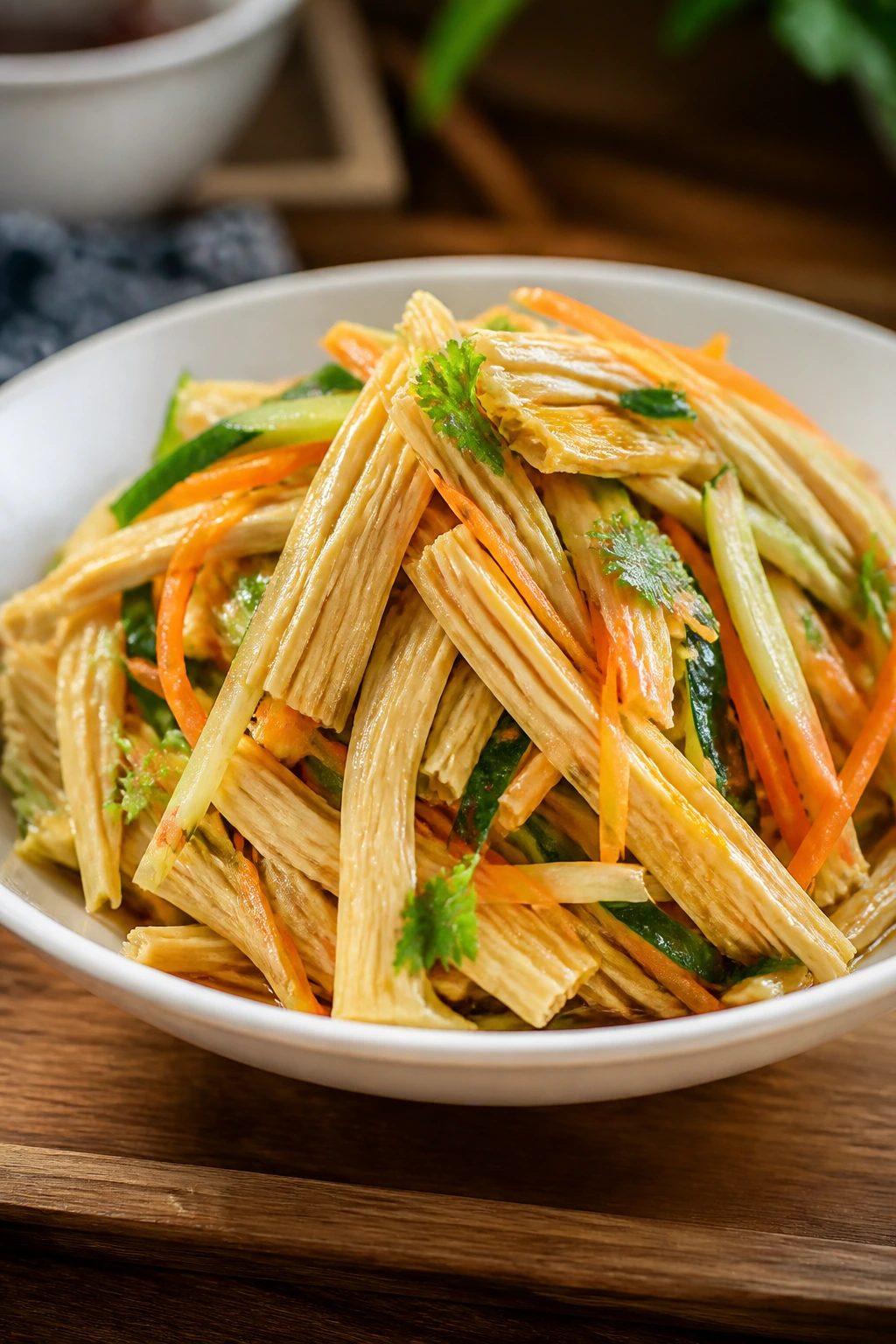
Dried tofu skin, or yuba, feels like one of those ingredients that should be harder to use than it is. Soak it, slice it, dress it, and suddenly you’ve got a chewy, savory cold side that feels far more interesting than its ingredient list suggests.
Why It Works: Yuba has enough texture to hold dressing without turning mushy, and the soy-vinegar-sesame dressing gives it a clean, salted finish. A little cucumber or carrot keeps the salad bright.
Key Ingredients:
- 2 ounces dried tofu skin
- 1/2 cucumber, julienned
- 1 small carrot, julienned
- 1 tablespoon light soy sauce
- 1 tablespoon rice vinegar
- 1 teaspoon sugar
- 1 teaspoon sesame oil
- 1 teaspoon chili oil, optional
Quick Steps:
- Soak the tofu skin in warm water until soft, then drain and cut into strips.
- Whisk soy sauce, vinegar, sugar, sesame oil, and chili oil.
- Toss the tofu skin with cucumber and carrot.
- Let it sit 5 to 10 minutes before serving.
Equipment for This Recipe:
- Bowl for soaking
- Mixing bowl
- Knife
How to Serve This Dish: Serve it cold as one of several small plates; it’s especially good next to something warm and plain, like rice or steamed greens.
Pro Tips for This Recipe:
- Drain the tofu skin well so the dressing sticks.
- Slice the vegetables thin so they don’t fight the yuba.
- Taste after 5 minutes; the dressing should be present, not aggressive.
Variations on This Dish:
- Sesame-Garlic Version: Add grated garlic to the dressing.
- Black Vinegar Twist: Swap in black vinegar for more depth.
Common Mistakes to Avoid with This Dish:
- Over-soaking the yuba: It gets floppy.
- Serving it dripping wet: The dressing slides off instead of clinging.
19. Pickled Mustard Greens and Tofu
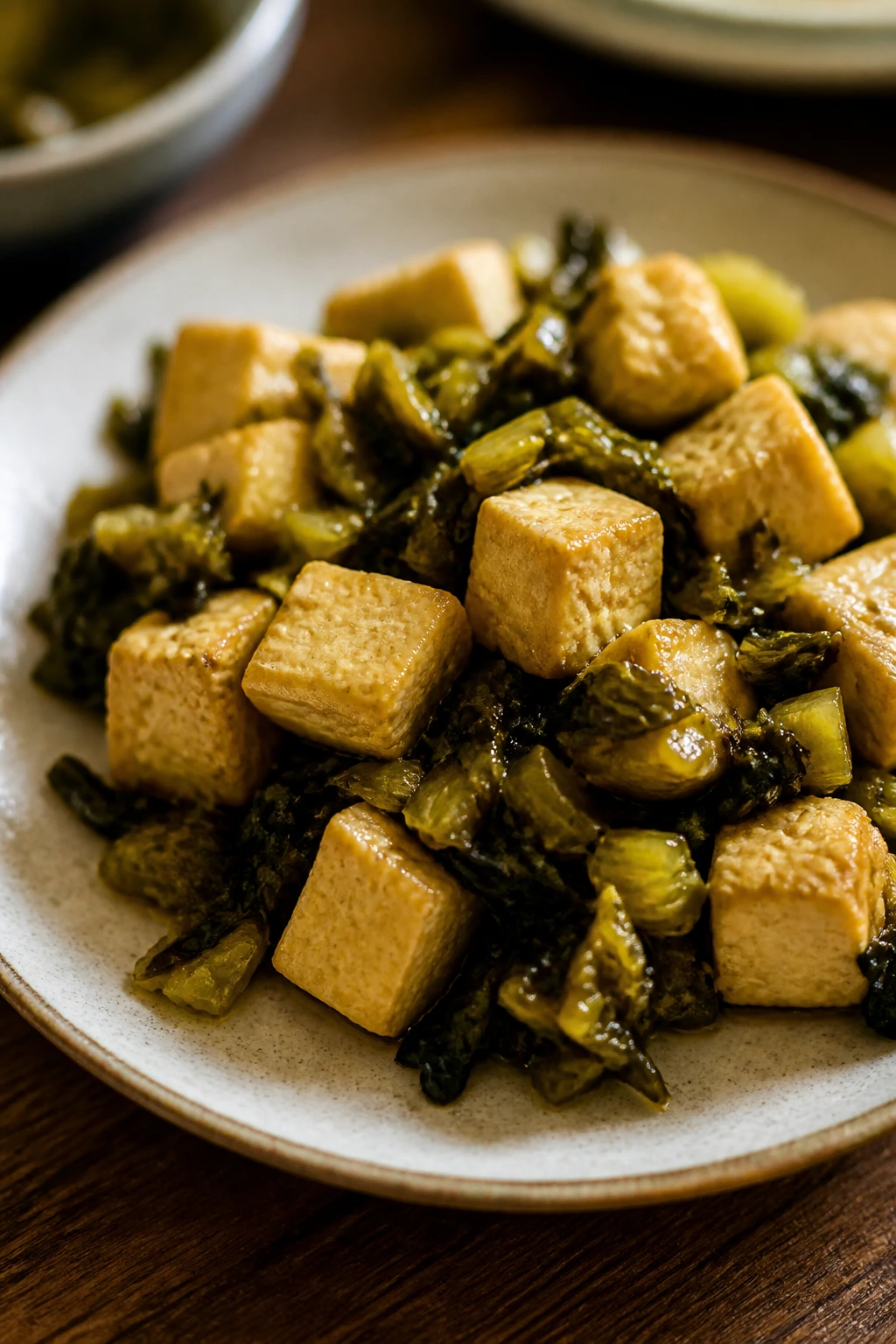
Pickled mustard greens bring a salty, sour punch that wakes up plain tofu without much effort. This is the kind of side dish that tastes like someone in the kitchen paid attention. It doesn’t need much help. It only needs the right balance.
Why It Works: The mustard greens already bring acidity and salt, so tofu is there to soften the edges and make the dish feel fuller. A brief stir-fry keeps the greens vivid instead of harsh.
Key Ingredients:
- 14 ounces firm tofu, cubed
- 1 cup pickled mustard greens, rinsed and chopped
- 2 tablespoons neutral oil
- 2 cloves garlic, minced
- 1 teaspoon sugar
- 1 tablespoon light soy sauce
- 2 tablespoons water
Quick Steps:
- Brown the tofu in oil on all sides, then remove it.
- Stir-fry the garlic and mustard greens for 1 minute.
- Add sugar, soy sauce, water, and tofu.
- Simmer 2 minutes until the flavors come together.
Equipment for This Recipe:
- Skillet
- Spatula
- Bowl for tofu
How to Serve This Dish: Serve it as a small salty side with plain rice or congee; a little goes a long way here.
Pro Tips for This Recipe:
- Rinse the mustard greens if they taste too salty.
- Brown the tofu well so it doesn’t crumble in the sauce.
- A teaspoon of chili oil can sharpen the whole dish.
Variations on This Dish:
- Egg Version: Scramble in 2 eggs after the greens soften.
- Ground Pork Version: Add 1/2 pound ground pork after the garlic for a richer plate.
Common Mistakes to Avoid with This Dish:
- Using mustard greens straight from the jar without tasting them: Some are very salty.
- Skipping the sugar: The dish can taste too sharp without a little roundness.
20. Five-Spice Marinated Eggs
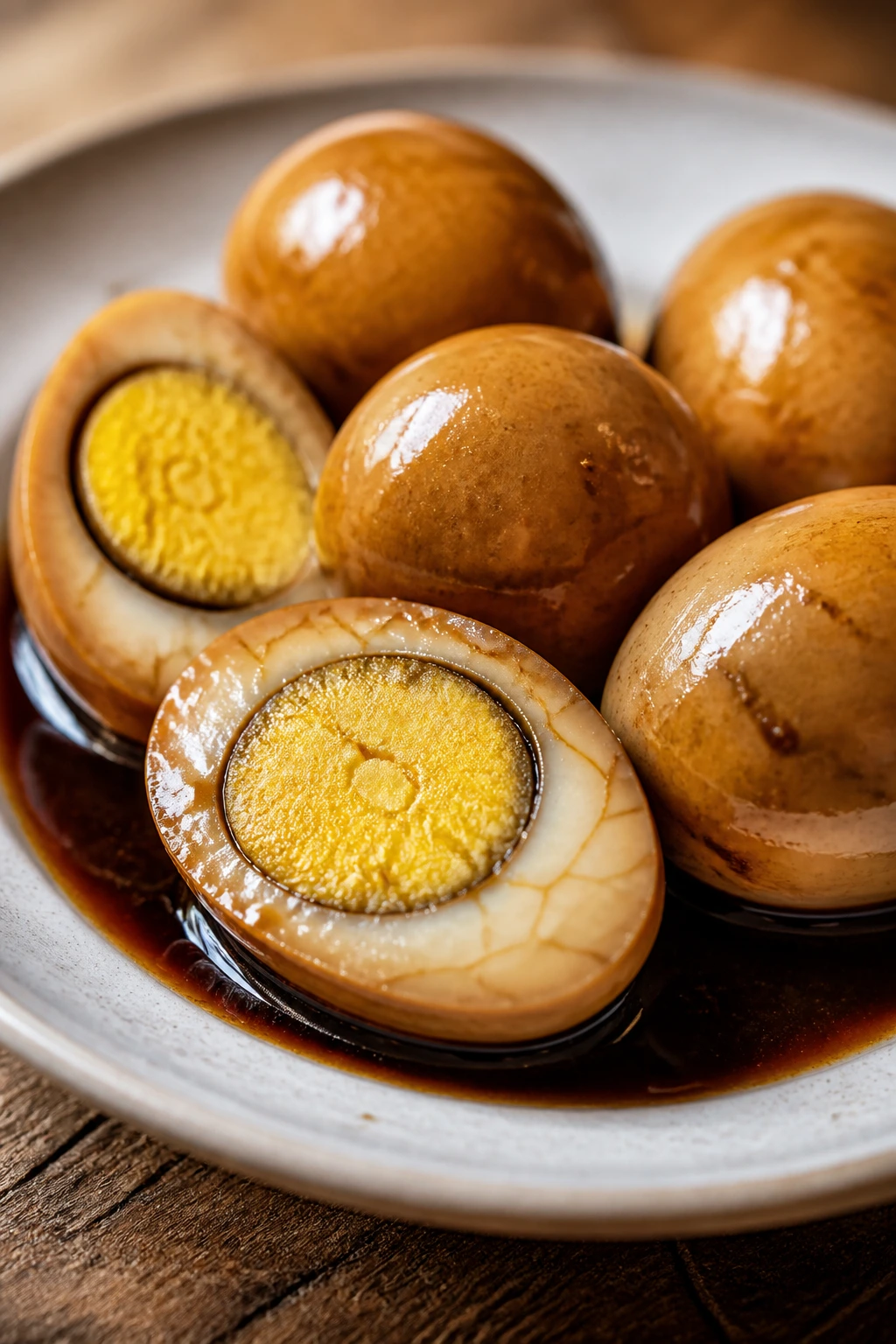
These are not fancy tea eggs, and that’s fine. They’re simpler, faster, and built from pantry spices that most kitchens already have. The eggs get seasoned all the way through, with a faint warmth from five-spice and enough soy sauce to tint the whites.
Why It Works: Boiled eggs hold seasoning well after cracking and simmering in a seasoned liquid. Five-spice powder gives the eggs a warm, aromatic background that makes them feel more layered than their short ingredient list suggests.
Key Ingredients:
- 6 large eggs
- 2 cups water
- 2 tablespoons light soy sauce
- 1 tablespoon dark soy sauce
- 1 teaspoon sugar
- 1 teaspoon five-spice powder
- 1/2 teaspoon salt
Quick Steps:
- Hard-boil the eggs, peel them, and lightly crack the shells all over if you want marbled whites.
- Simmer water, soy sauces, sugar, five-spice, and salt.
- Add the eggs and simmer gently for 10 minutes.
- Turn off the heat and let the eggs cool in the liquid for at least 1 hour.
Equipment for This Recipe:
- Saucepan
- Slotted spoon
- Bowl or jar for soaking
How to Serve This Dish: Serve them halved over rice, sliced beside noodles, or as a cold snack with tea.
Pro Tips for This Recipe:
- Crack the shells lightly for a marbled look and deeper flavor.
- Let the eggs sit overnight if you want a stronger color and seasoning.
- Keep the simmer gentle so the whites stay tender.
Variations on This Dish:
- Star Anise Version: Add 1 star anise to the simmer.
- Chili Version: Drop in a dried chili for heat.
Common Mistakes to Avoid with This Dish:
- Boiling too hard after adding the eggs: The whites get rubbery.
- Skipping the soak: The flavor stays shallow.
21. Pan-Fried Tofu with Garlic Soy Glaze
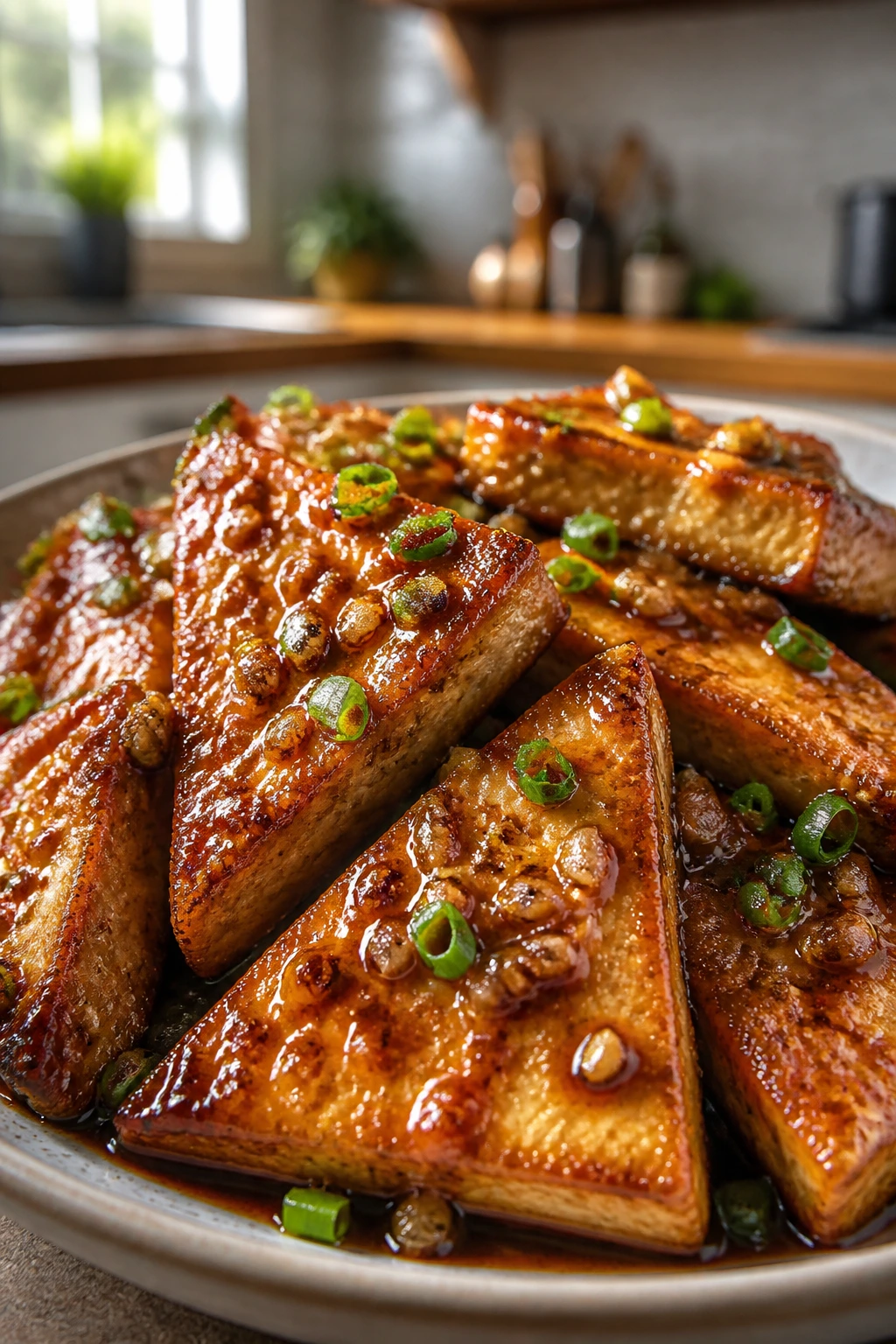
This one leans crispier than the soy-braised version. The tofu gets browned in oil first, then a garlic-soy glaze tightens around the edges and clings to the surface. The result is savory, sticky, and a little more assertive.
Why It Works: Pan-frying builds texture, and the quick glaze turns that texture into something the sauce can hold onto. A splash of vinegar keeps the glaze from tasting flat.
Key Ingredients:
- 14 ounces firm tofu, pressed and cut into triangles
- 2 tablespoons cornstarch
- 2 tablespoons neutral oil
- 3 cloves garlic, minced
- 2 tablespoons light soy sauce
- 1 tablespoon rice vinegar
- 1 teaspoon sugar
- 2 tablespoons water
- 1 teaspoon sesame oil
Quick Steps:
- Dust the tofu lightly with cornstarch.
- Pan-fry the tofu in oil until golden on both sides.
- Add garlic, soy sauce, vinegar, sugar, and water.
- Simmer 1 to 2 minutes until the glaze thickens, then finish with sesame oil.
Equipment for This Recipe:
- Skillet
- Tongs
- Small bowl for cornstarch
How to Serve This Dish: Serve it hot with rice and a crisp vegetable side; the glaze is strong enough to carry a bland grain bowl.
Pro Tips for This Recipe:
- Press the tofu well or the crust won’t brown evenly.
- Don’t flip too early; let the crust set first.
- Add sesame oil at the end, not in the frying oil.
Variations on This Dish:
- Chili Garlic Tofu: Add chili flakes with the garlic.
- Black Vinegar Tofu: Swap rice vinegar for black vinegar.
Common Mistakes to Avoid with This Dish:
- Using silken tofu: It won’t hold the pan-fry.
- Letting the glaze reduce too far: It can turn sticky and clumpy.
22. Fried Rice with Eggs and Frozen Vegetables
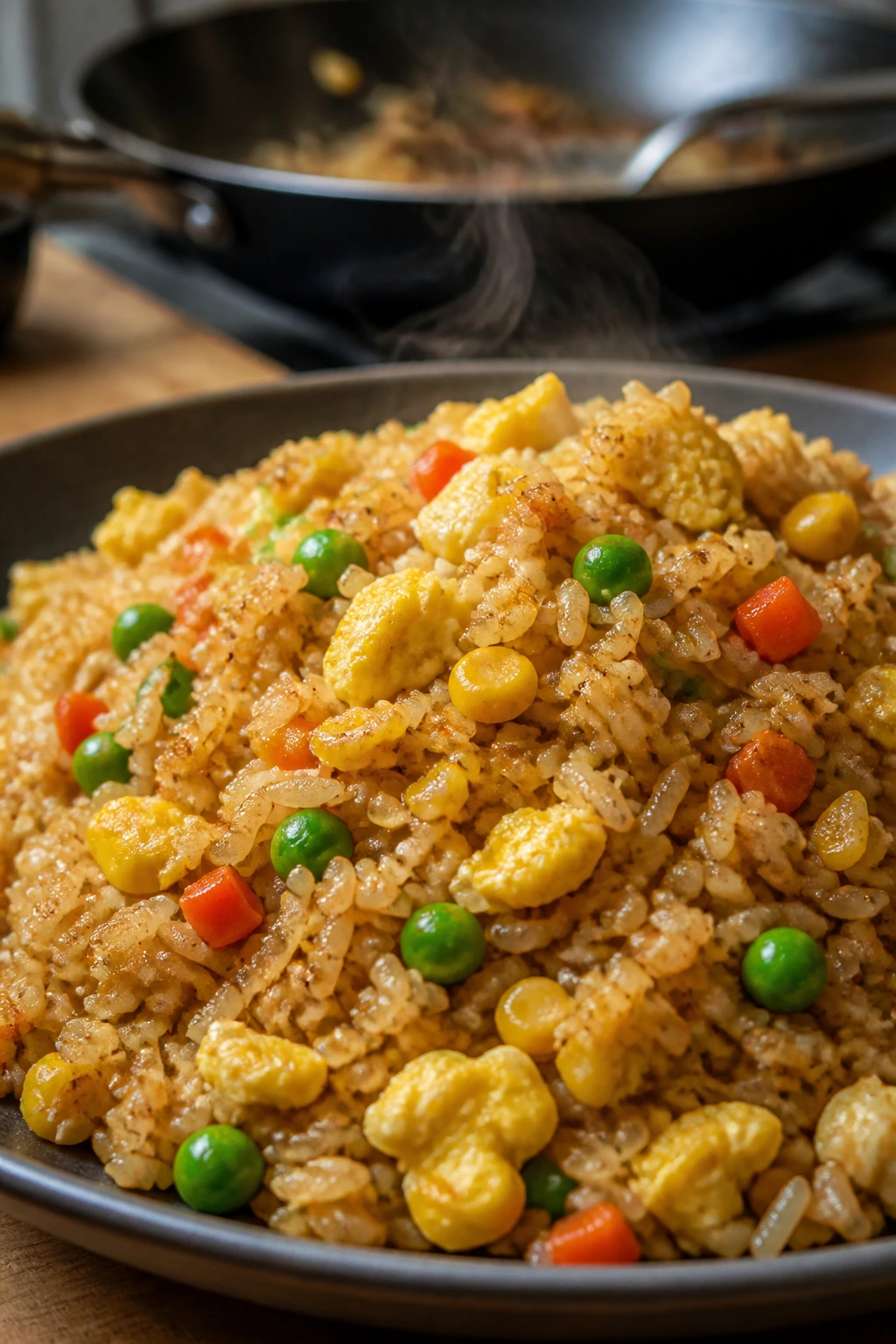
Fried rice is where leftovers get to act like a meal on purpose. Cold rice, eggs, and frozen vegetables make a side dish that feels complete without needing a long ingredient list. The trick is high heat and dry rice. That’s the whole game.
Why It Works: Day-old rice stays separate in the pan, while eggs and vegetables add color and texture. Soy sauce and a little sesame oil season the grains without making them wet.
Key Ingredients:
- 3 cups cooked, chilled rice
- 3 large eggs
- 1 cup frozen mixed vegetables
- 2 tablespoons neutral oil
- 2 tablespoons light soy sauce
- 2 scallions, sliced
- 1 teaspoon sesame oil
- Pinch of white pepper
Quick Steps:
- Scramble the eggs in 1 tablespoon oil and remove them.
- Add the remaining oil, then stir-fry the frozen vegetables for 2 minutes.
- Add the rice and break up clumps with the spatula.
- Stir in soy sauce, eggs, scallions, sesame oil, and white pepper, cooking until the rice is hot and lightly toasted.
Equipment for This Recipe:
- Large wok or skillet
- Spatula
- Bowl for eggs
How to Serve This Dish: Serve it as a side next to dumplings, braised tofu, or simple soup; it’s filling enough to stand in for the rice course.
Pro Tips for This Recipe:
- Cold rice fries better than warm rice.
- Use a wide pan so the rice can toast, not steam.
- Keep the soy sauce measured. Too much turns the rice muddy.
Variations on This Dish:
- Corn-and-Pea Fried Rice: Use frozen peas and corn only.
- Garlic Fried Rice: Add minced garlic before the vegetables.
Common Mistakes to Avoid with This Dish:
- Using fresh, steamy rice: It clumps and goes soft.
- Adding too much sauce at once: The grains lose their separate texture.
23. Sichuan-Style Green Beans
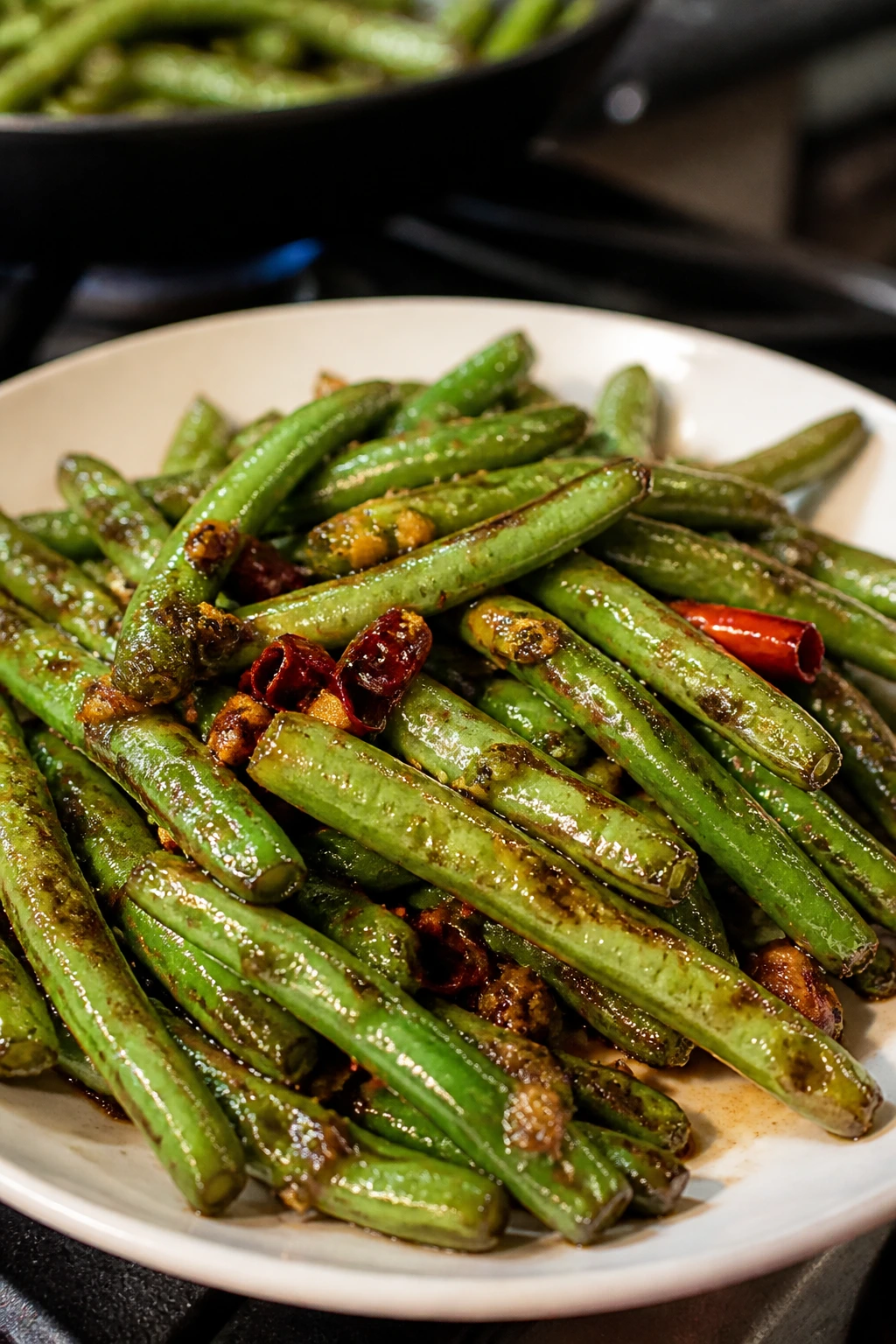
Green beans love a little blistering. Give them a hot pan, garlic, and a bit of soy sauce, and they turn from plain to sharp and savory. If you like a little heat, dried chilies or chili oil fit here without fighting the vegetable.
Why It Works: High heat creates blistered spots, which add flavor and texture, and a brief steam at the end makes the beans tender without going limp. A touch of sugar and soy balances the bite.
Key Ingredients:
- 1 pound green beans, trimmed
- 2 tablespoons neutral oil
- 3 cloves garlic, minced
- 2 dried red chilies, broken up, optional
- 1 tablespoon light soy sauce
- 1 teaspoon sugar
- 2 tablespoons water
- 1 teaspoon chili oil, optional
Quick Steps:
- Heat the oil and cook the beans over medium-high heat until blistered in spots, about 4 to 5 minutes.
- Add garlic and chilies and stir for 20 seconds.
- Add soy sauce, sugar, and water.
- Cover 2 minutes until the beans are tender-crisp, then uncover and finish with chili oil if using.
Equipment for This Recipe:
- Skillet or wok
- Tongs
- Lid
How to Serve This Dish: Serve these next to rice and a braised dish; the blistered edges and garlic make them punch through rich food.
Pro Tips for This Recipe:
- Dry the beans before cooking or they’ll sputter less and blister less.
- Don’t overcook; a little snap is the whole point.
- If using frozen green beans, thaw and dry them first.
Variations on This Dish:
- Black Vinegar Beans: Add 1 teaspoon black vinegar at the end.
- Ground Pork Version: Stir in 1/2 pound ground pork after the beans blister.
Common Mistakes to Avoid with This Dish:
- Cooking on low heat: The beans go limp instead of blistering.
- Adding sauce too early: They’ll steam before they color.
24. Spicy Garlic Lotus Root
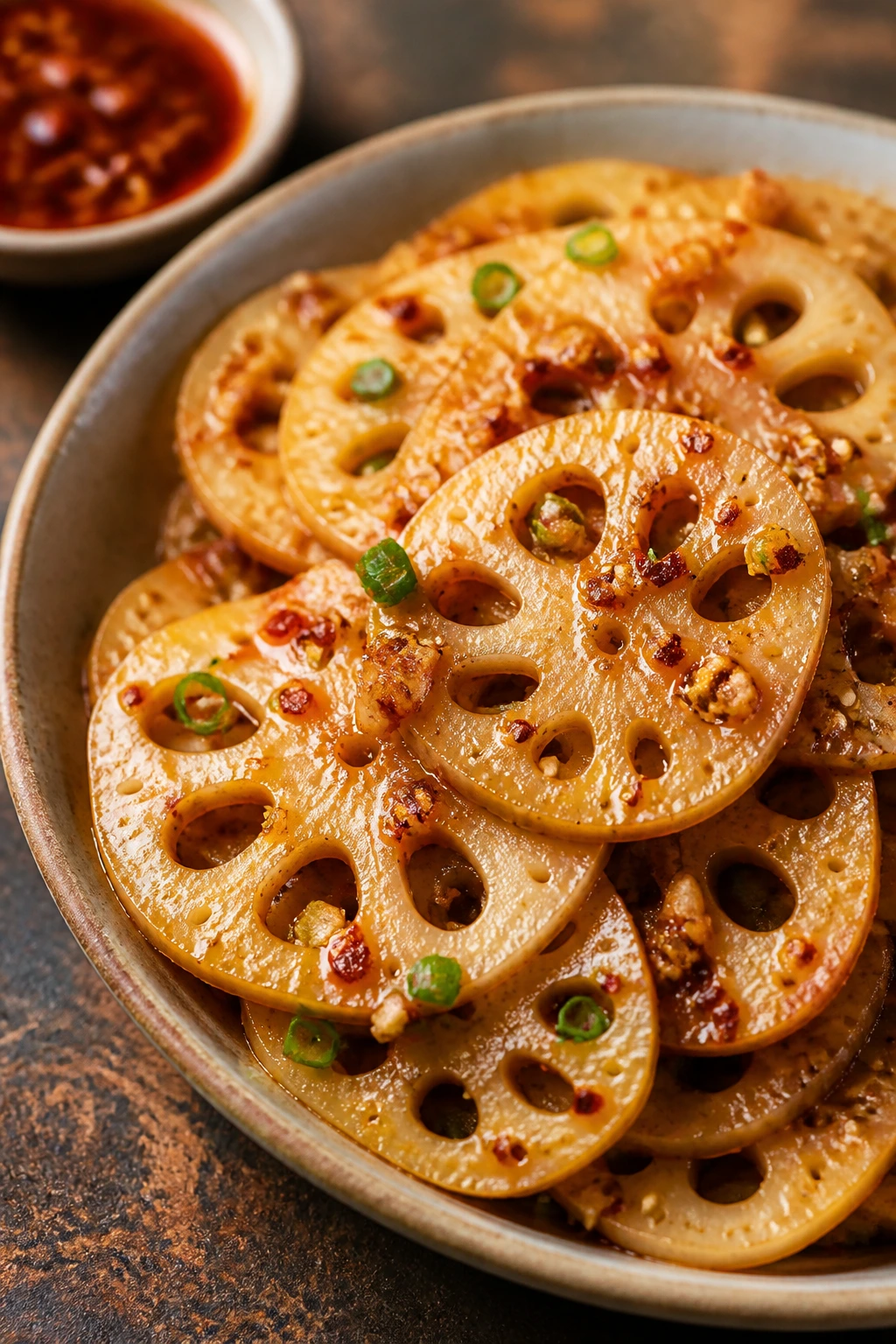
Lotus root is crisp, starchy, and full of little holes that catch sauce in the best way. Once it’s sliced thin and hit with garlic, vinegar, and chili oil, it turns into a side dish with snap and bite rather than a bland root vegetable.
Why It Works: Lotus root keeps its crunch if it’s cooked quickly, and a sharp, spicy dressing keeps the flavor lively. It’s one of the few vegetables here that feels sturdy enough to stand up to aggressive seasoning.
Key Ingredients:
- 1 pound lotus root, peeled and sliced thin
- 2 tablespoons neutral oil
- 3 cloves garlic, minced
- 1 tablespoon light soy sauce
- 1 tablespoon rice vinegar
- 1 teaspoon sugar
- 1 teaspoon chili oil
- 1 teaspoon sesame seeds
Quick Steps:
- Boil the sliced lotus root for 2 to 3 minutes until crisp-tender, then drain.
- Heat the oil and cook the garlic for 15 seconds.
- Add the lotus root, soy sauce, vinegar, sugar, and chili oil.
- Toss for 1 minute, then top with sesame seeds.
Equipment for This Recipe:
- Pot
- Skillet
- Slotted spoon
How to Serve This Dish: Serve it warm or at room temperature as a crunchy side with rice or noodles; it stays pleasantly crisp for a while.
Pro Tips for This Recipe:
- Slice the lotus root evenly so it cooks at the same pace.
- Don’t boil past crisp-tender or it loses its bite.
- A splash of black vinegar gives it a deeper finish.
Variations on This Dish:
- Sesame-Heavy Version: Add extra sesame seeds and a little toasted sesame oil.
- Mild Version: Skip the chili oil and add more vinegar instead.
Common Mistakes to Avoid with This Dish:
- Overboiling: Lotus root turns soft and chalky.
- Not peeling it well: The outer skin can taste woody.
25. Sesame Spinach with Garlic
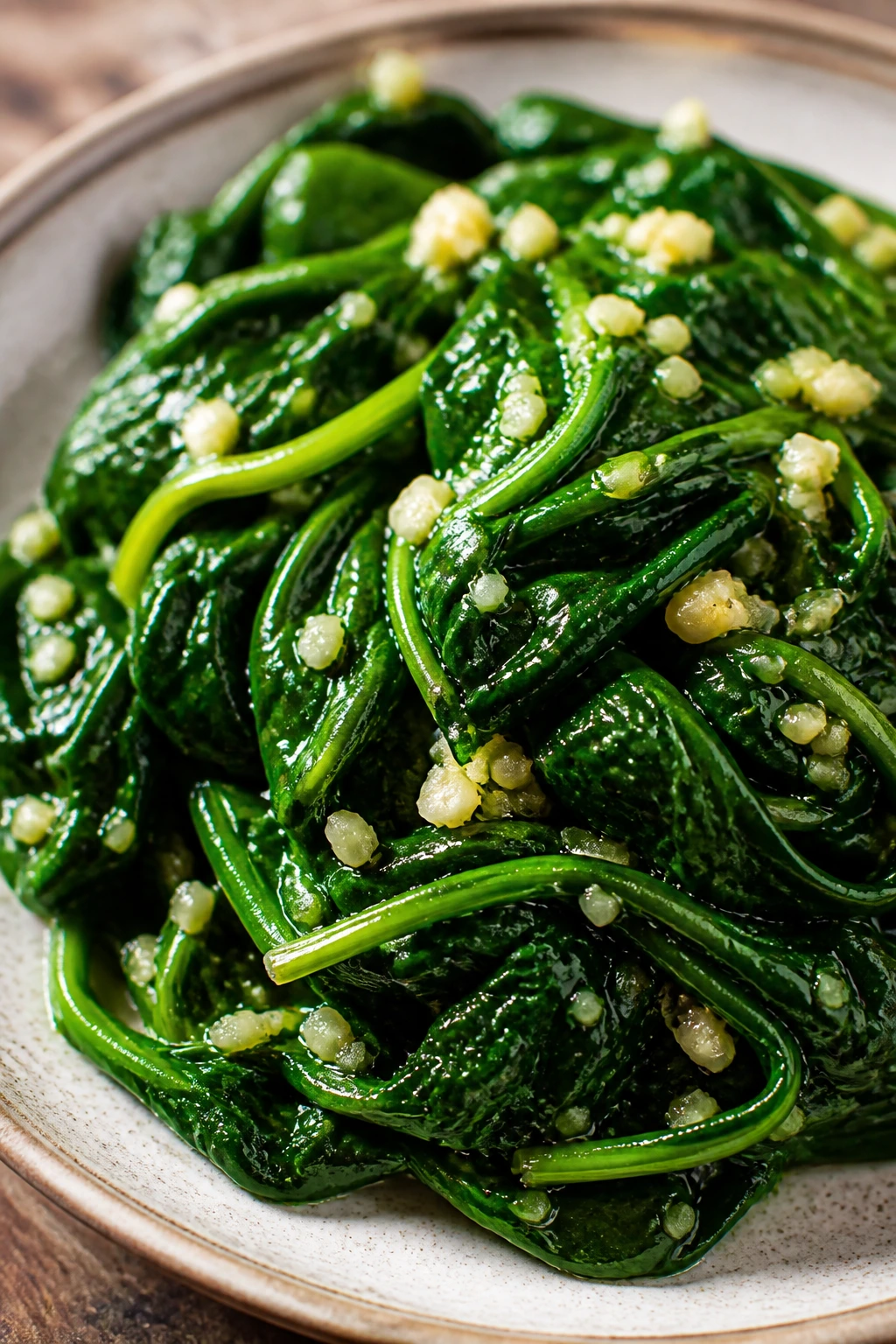
Spinach cooks in a blink, which is why this side works so well when the rest of dinner is already moving. Garlic, sesame oil, and a few drops of soy sauce are enough to make the leaves taste full and nutty without burying them.
Why It Works: Spinach has enough natural water to wilt quickly, so you only need a brief cook to keep it bright. Sesame oil at the end gives the dish a round finish without weighing it down.
Key Ingredients:
- 10 ounces spinach, washed and dried
- 1 tablespoon neutral oil
- 2 cloves garlic, minced
- 1 tablespoon light soy sauce
- 1 teaspoon sesame oil
- 1 teaspoon toasted sesame seeds
Quick Steps:
- Heat the oil and garlic in a skillet for 15 seconds.
- Add the spinach and toss until just wilted, about 1 minute.
- Season with soy sauce and sesame oil.
- Sprinkle sesame seeds on top and serve.
Equipment for This Recipe:
- Skillet or wok
- Tongs
- Salad spinner or towels for drying
How to Serve This Dish: Serve it hot under a saucy tofu dish or alongside rice; the spinach should look glossy but still hold its shape.
Pro Tips for This Recipe:
- Dry the spinach well so it doesn’t water down the pan.
- Work in batches if the bunch is large.
- Add the soy sauce at the end so the color stays fresh.
Variations on This Dish:
- Chili Garlic Spinach: Add a pinch of chili flakes with the garlic.
- Black Sesame Version: Use black sesame seeds for a deeper finish.
Common Mistakes to Avoid with This Dish:
- Cooking too long: Spinach turns dull and wet.
- Using too much sesame oil: The flavor should finish the dish, not dominate it.
26. Black Vinegar Glass Noodles
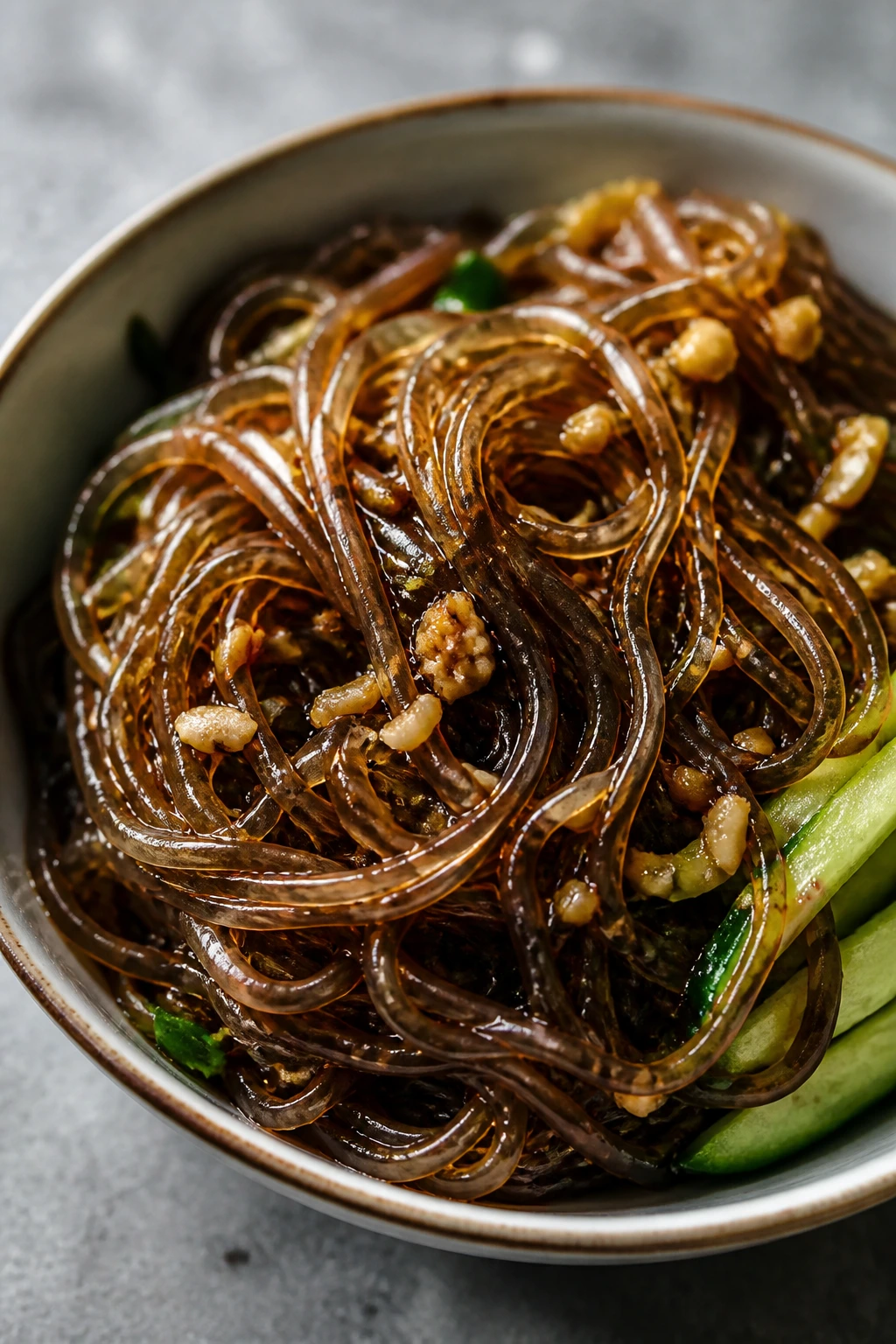
Black vinegar gives glass noodles a darker, deeper kind of sharpness that rice vinegar can’t quite mimic. With garlic, soy sauce, and a little chili oil, this becomes a cool, chewy side that tastes more complex than the time it takes to make it.
Why It Works: Glass noodles absorb dressing fast, and black vinegar brings a molasses-like tang that plays well with their slippery texture. This is a strong candidate when you want something cold, fast, and not shy.
Key Ingredients:
- 4 ounces dried glass noodles
- 2 tablespoons black vinegar
- 1 1/2 tablespoons light soy sauce
- 1 teaspoon sugar
- 1 teaspoon chili oil
- 1 small garlic clove, grated
- 1 teaspoon sesame oil
- 1/2 cucumber, sliced thin, optional
Quick Steps:
- Soak or cook the noodles until tender, then drain and rinse briefly.
- Whisk vinegar, soy sauce, sugar, chili oil, garlic, and sesame oil.
- Toss with the noodles and cucumber if using.
- Chill 10 minutes or serve at room temperature.
Equipment for This Recipe:
- Saucepan or bowl for soaking
- Mixing bowl
- Whisk
How to Serve This Dish: Serve it cold in a small bowl with dumplings, tofu, or a crisp vegetable plate; the dark vinegar makes it feel sharper than a standard noodle salad.
Pro Tips for This Recipe:
- Black vinegar is strong; taste before adding more.
- Let the noodles drain well so the dressing doesn’t wash out.
- Add cucumber only if you want extra crunch.
Variations on This Dish:
- Peanut Version: Add 1 teaspoon peanut butter to the dressing.
- Scallion Version: Toss in sliced scallions before serving.
Common Mistakes to Avoid with This Dish:
- Using too much vinegar: It can drown the noodles.
- Serving the noodles wet: The dressing won’t cling properly.
27. Stir-Fried Corn with Scallions
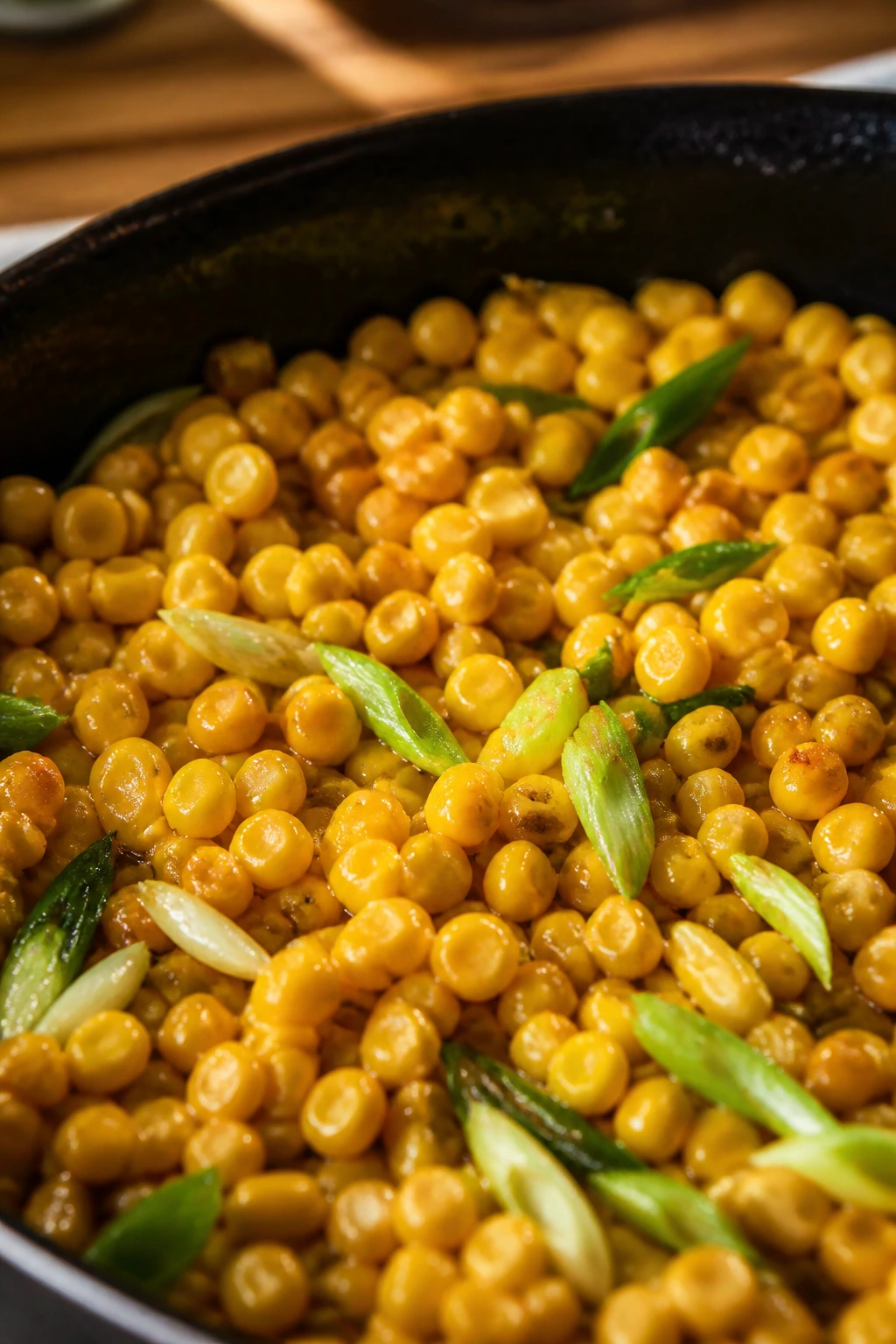
Corn is sweet, but in a Chinese-style side dish it should not taste like dessert. A quick stir-fry with scallions, a little soy sauce, and a dab of butter or oil gives it a savory edge while keeping the kernels bright and snappy.
Why It Works: Frozen or canned corn needs almost no prep, which makes this one of the easiest pantry-friendly sides in the whole collection. The scallions bring aroma, and the soy sauce keeps the sweetness from taking over.
Key Ingredients:
- 2 cups frozen or canned corn, drained if canned
- 2 tablespoons neutral oil or butter
- 2 scallions, sliced
- 1 tablespoon light soy sauce
- 1 teaspoon sugar
- Pinch of salt
Quick Steps:
- Heat the oil in a skillet over medium-high heat.
- Add the corn and stir-fry 2 to 3 minutes until hot and lightly browned in spots.
- Add scallions, soy sauce, sugar, and salt.
- Toss 30 seconds more and serve.
Equipment for This Recipe:
- Skillet
- Spatula
- Colander if using canned corn
How to Serve This Dish: Serve it warm with rice or as part of a larger vegetable spread; it works especially well beside anything salty or braised.
Pro Tips for This Recipe:
- Let the corn sit in the pan long enough to pick up a little color.
- If using canned corn, drain it very well.
- A pinch of white pepper works nicely if you want more bite.
Variations on This Dish:
- Egg Corn Version: Stir in one scrambled egg at the end.
- Chili Corn: Add a little chili oil or chili flakes.
Common Mistakes to Avoid with This Dish:
- Cooking on low heat: The corn stays pale and tastes flat.
- Over-salting: Soy sauce already brings plenty of salt.
28. Charred Cauliflower with Soy and Chili
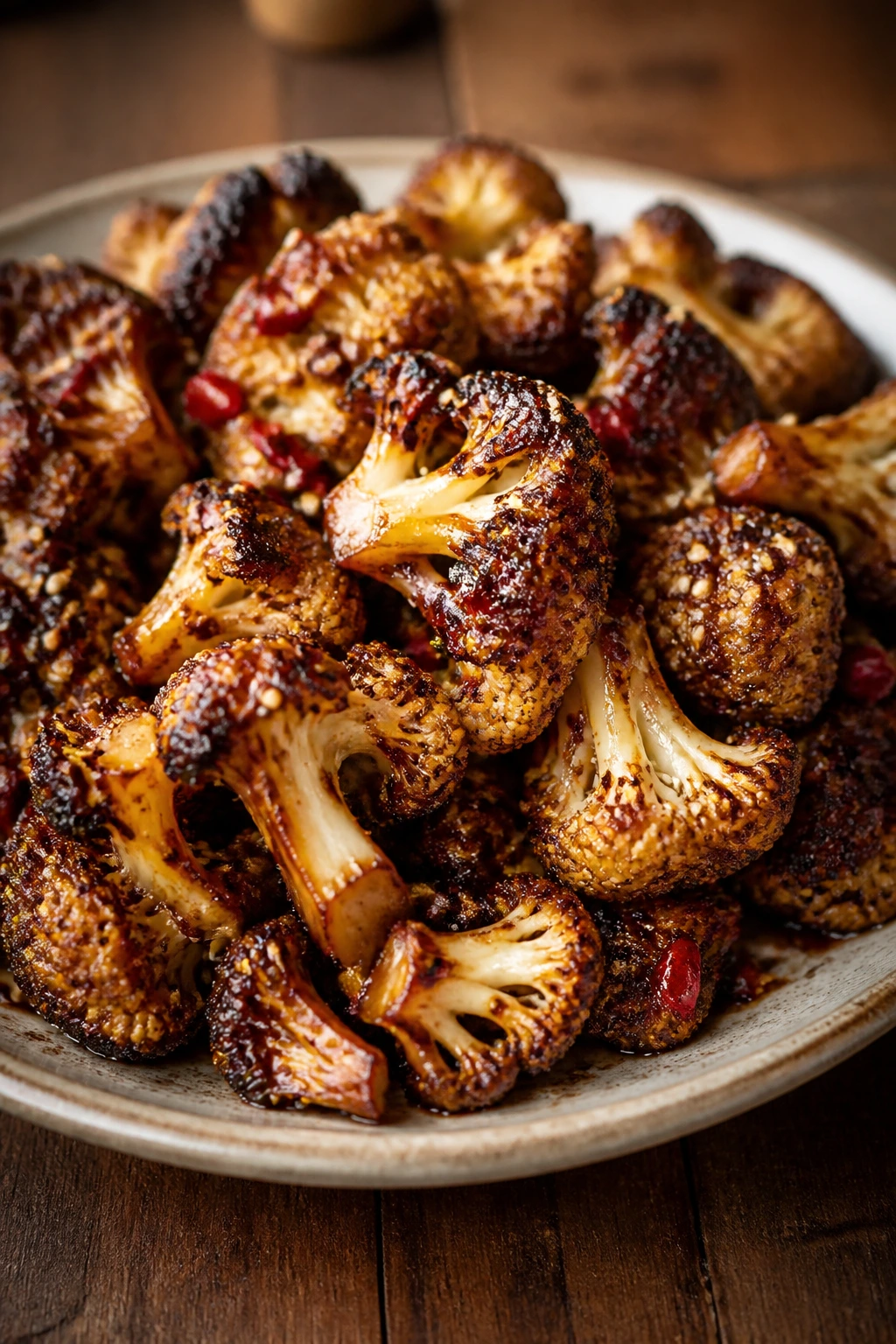
Cauliflower can take a beating, which is why it’s useful here. Roast or stir-fry it until the edges brown, then glaze it with soy, garlic, and chili. The vegetable should come out nutty and a little crisp, not soft enough to fall apart.
Why It Works: Cauliflower has enough structure to handle high heat, and browning it first gives you flavor before the sauce goes in. The soy-chili finish adds contrast instead of masking the vegetable.
Key Ingredients:
- 1 head cauliflower, cut into florets
- 3 tablespoons neutral oil
- 3 cloves garlic, minced
- 1 tablespoon light soy sauce
- 1 teaspoon sugar
- 1 teaspoon chili oil or chili flakes
- 1 tablespoon water
- 1 teaspoon sesame seeds
Quick Steps:
- Toss the florets with oil and roast at 425°F (220°C) for 20 to 25 minutes, or stir-fry until browned.
- Add garlic and cook 15 seconds.
- Stir in soy sauce, sugar, chili oil, and water.
- Toss until the glaze coats the florets, then sprinkle sesame seeds on top.
Equipment for This Recipe:
- Sheet pan or large skillet
- Bowl
- Spatula
How to Serve This Dish: Serve it hot with rice, noodles, or tofu; the charred edges make it one of the more substantial vegetable sides here.
Pro Tips for This Recipe:
- Don’t overcrowd the pan or the cauliflower will steam.
- Keep the florets medium-small so they brown faster.
- A splash of vinegar at the end brightens the glaze.
Variations on This Dish:
- Garlic Chili Crisp Cauliflower: Add chili crisp instead of plain chili oil.
- Five-Spice Roast: Dust lightly with five-spice before roasting.
Common Mistakes to Avoid with This Dish:
- Underbrowning the cauliflower: Pale cauliflower tastes bland.
- Adding too much sauce too early: It blocks the browning.
29. Quick Braised Daikon with Soy
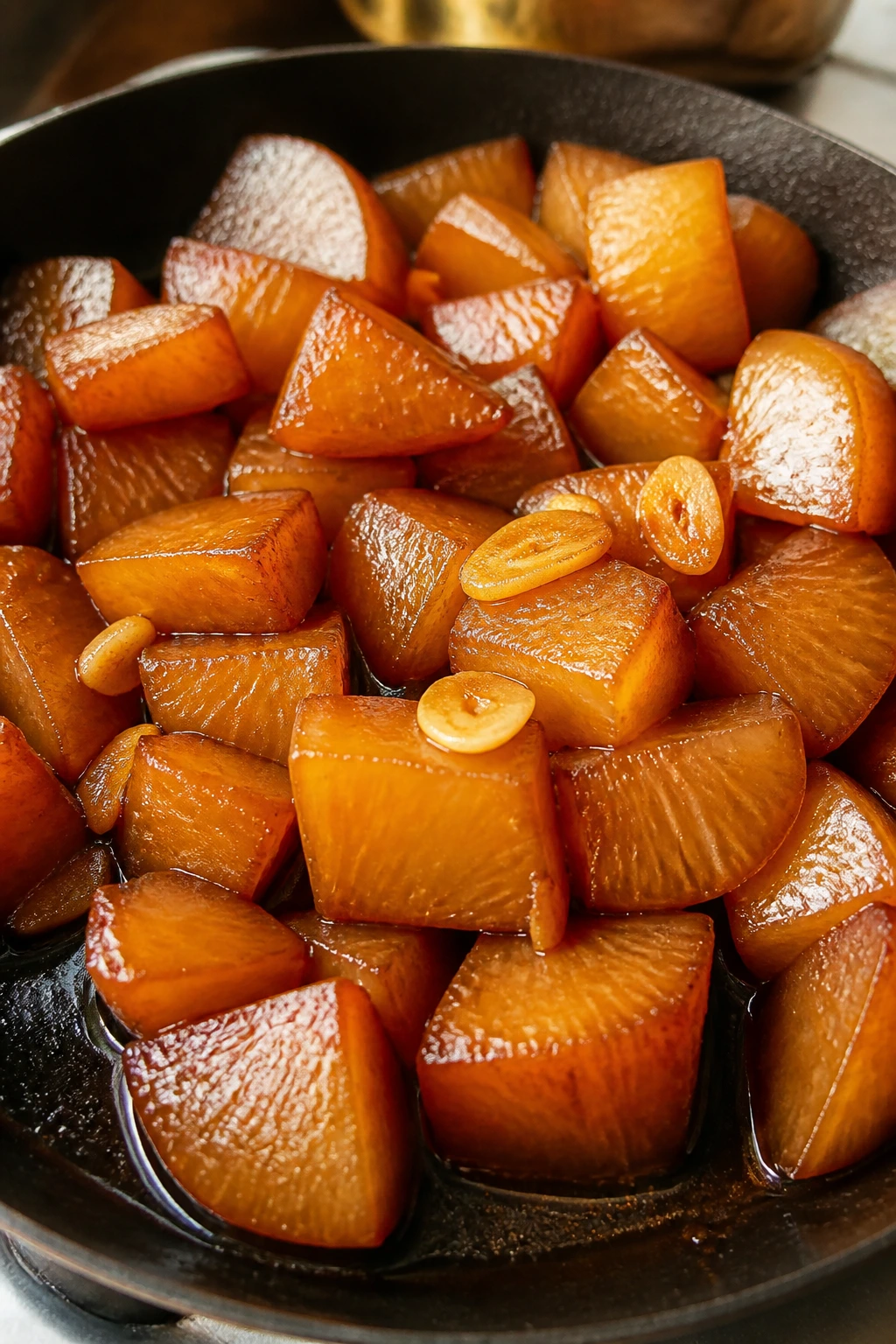
Daikon is one of those vegetables that turns soft and savory if you give it enough time with enough liquid. It has a mild, almost clean flavor that soaks up soy sauce and garlic well, which makes it ideal for a simple braise.
Why It Works: Braising turns the daikon tender while letting the seasonings sink into the flesh. The sugar rounds out the soy sauce, and a short reduction keeps the sauce from feeling watery.
Key Ingredients:
- 1 pound daikon radish, peeled and cut into chunks
- 2 tablespoons neutral oil
- 3 cloves garlic, sliced
- 1 tablespoon light soy sauce
- 1 teaspoon dark soy sauce
- 1 teaspoon sugar
- 1/2 cup water
- 1 teaspoon sesame oil
Quick Steps:
- Heat the oil and garlic in a skillet for 15 seconds.
- Add the daikon and stir for 1 minute.
- Add soy sauces, sugar, and water.
- Cover and simmer 10 to 12 minutes until the daikon is tender, then uncover and reduce the sauce slightly. Finish with sesame oil.
Equipment for This Recipe:
- Skillet with lid
- Knife and peeler
- Spatula
How to Serve This Dish: Serve warm with rice or as part of a braised plate; the daikon takes on the sauce and tastes more composed the next day.
Pro Tips for This Recipe:
- Cut the daikon into even pieces or some chunks will soften before others.
- Dark soy is only for color, so use a small amount.
- This dish keeps well, which is rare and useful.
Variations on This Dish:
- Dried Mushroom Daikon: Add soaked dried shiitake for a deeper broth.
- Spicy Daikon: Add a dried chili or two to the braise.
Common Mistakes to Avoid with This Dish:
- Skipping the lid: The daikon won’t soften evenly.
- Reducing too far: Leave enough sauce to coat the chunks.
30. Scallion Pancakes with Pantry Dipping Sauce
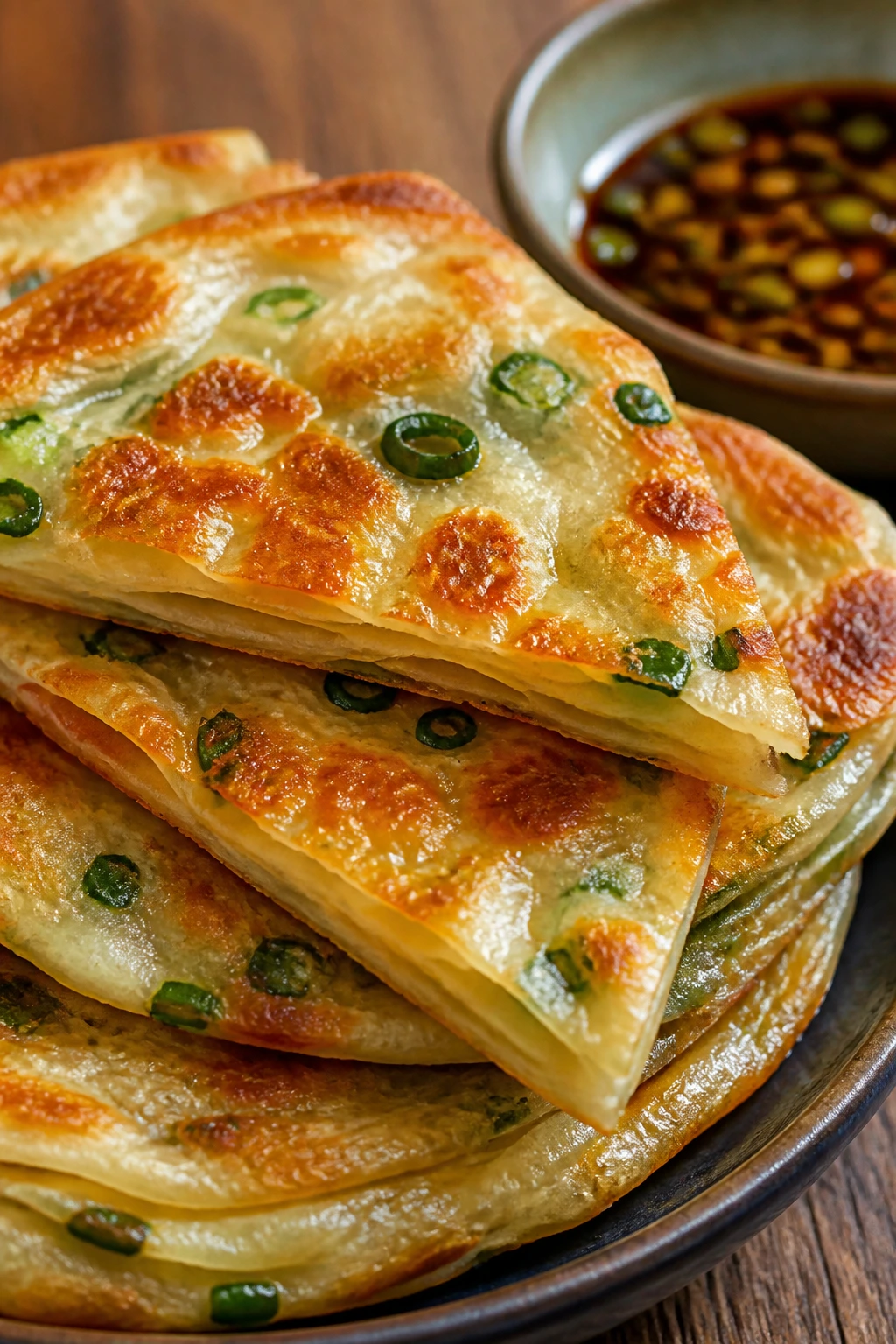
Scallion pancakes are what happens when flour, water, and oil stop being plain and start acting like dinner. The layers should come out crisp at the edges and chewy in the middle, with scallions tucked inside each fold. The dipping sauce is just soy, vinegar, and sesame oil, but it’s the difference between a snack and a proper side.
Why It Works: The dough is simple and forgiving, and the oil layers create the flaky, crackly texture people expect. The dipping sauce gives the pancakes salt, acid, and aroma in three quick hits.
Key Ingredients:
- 2 cups all-purpose flour
- 3/4 cup hot water
- 1/2 teaspoon salt
- 4 scallions, finely sliced
- 2 tablespoons neutral oil, plus more for cooking
- 2 tablespoons light soy sauce
- 1 tablespoon rice vinegar
- 1 teaspoon sesame oil
Quick Steps:
- Mix flour, salt, and hot water into a shaggy dough, then knead 3 minutes until smooth.
- Rest 20 minutes, then divide and roll each piece thin.
- Brush with oil, sprinkle scallions, roll up, coil into rounds, and roll flat again.
- Pan-fry in a thin layer of oil over medium heat for 3 to 4 minutes per side until golden and crisp. Stir the dipping sauce together and serve.
Equipment for This Recipe:
- Mixing bowl
- Rolling pin
- Large skillet
- Small bowl for sauce
How to Serve This Dish: Cut the pancakes into wedges and serve them hot with the dipping sauce on the side; they belong with soup, tofu, or a cold cucumber dish.
Pro Tips for This Recipe:
- Hot water dough is easier to roll and a little more tender.
- Roll the dough thin before adding oil so the layers stay distinct.
- If the pancakes brown too fast, lower the heat and give them another minute.
Variations on This Dish:
- Sesame Pancakes: Add toasted sesame seeds with the scallions.
- Chili Pancakes: Brush the dough with chili oil before rolling.
Common Mistakes to Avoid with This Dish:
- Using too much flour while rolling: It dries out the dough and weakens the layers.
- Cooking over high heat the whole time: The outside burns before the inside cooks through.
Essential Equipment for These Recipes
-
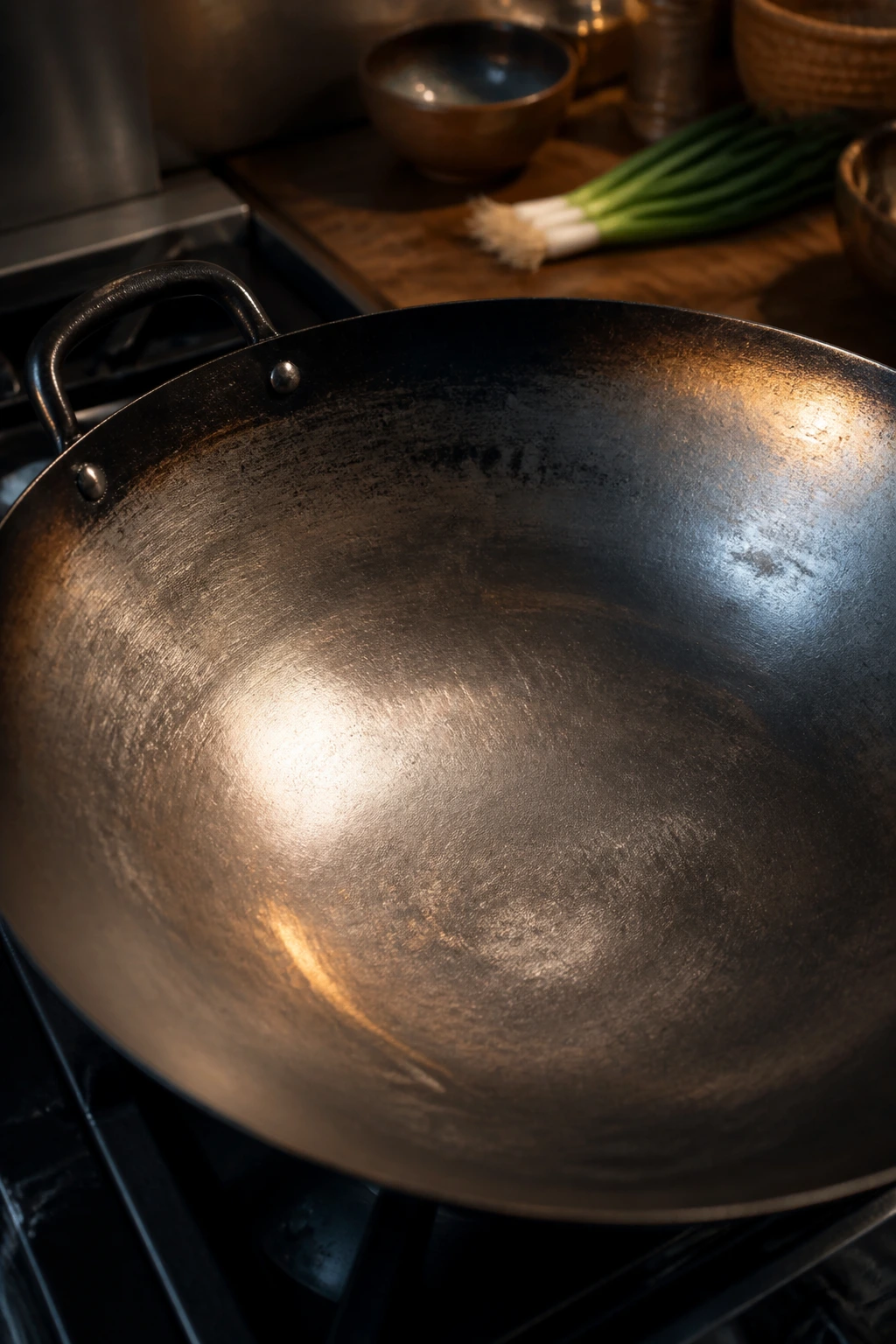
Wok or 12-inch skillet: A wide pan gives vegetables room to sear instead of steaming, which matters more than the brand of the pan.
-
Medium saucepan: Useful for eggs, noodles, soups, and anything that needs a steady simmer.
-
Pot with lid: Several of these recipes braise or steam, and a lid keeps the moisture where it belongs.
-
Mixing bowls: Small and medium bowls help with sauces, beaten eggs, and quick marinades.
-
Chef’s knife and cutting board: A good cut changes the texture of cabbage, cucumbers, daikon, and tofu more than people realize.
-
Tongs or a spatula: For turning tofu, lifting noodles, and tossing vegetables without tearing them up.
-
Fine-mesh strainer: Handy for steamed egg custard, soaked mushrooms, and rinsed noodles.
-
Colander or sieve: Useful for draining sprouts, cucumbers, noodles, and canned vegetables.
-
Rolling pin or heavy bottle: Needed for scallion pancakes and smashed cucumbers if you don’t own a proper rolling pin.
-
Airtight storage containers: These help cold salads, braised vegetables, and noodles hold up in the fridge without absorbing strange smells.
Smart Shopping and Ingredient Tips
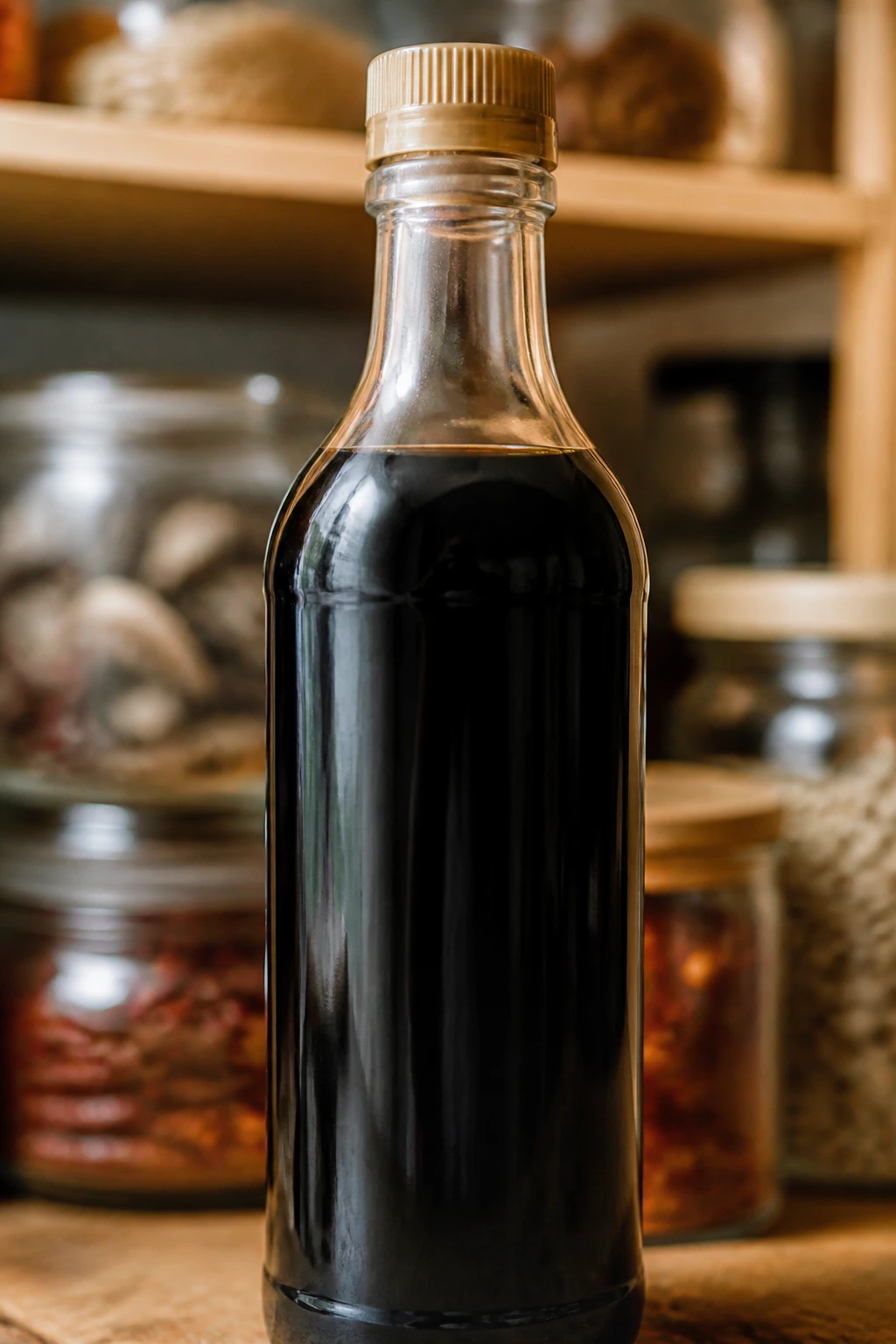
The backbone of these recipes is a very small set of pantry items, and the quality of those bottles matters. Light soy sauce should be the everyday salty one you use to season, while dark soy sauce is darker, thicker, and mainly for color and a hint of molasses-like depth. If you only buy one bottle, choose a good light soy first.
Rice vinegar and black vinegar deserve the same attention. Rice vinegar is cleaner and sharper; black vinegar, especially the kind sold for Chinese cooking, tastes deeper and less bright. They are not interchangeable in a one-for-one way if you care about the final flavor, although both are useful.
Dried ingredients pull more weight than people think. Dried shiitake mushrooms, wood ear mushrooms, glass noodles, tofu skin, and bamboo shoots store well for months and still deliver real texture after soaking. Buy them in a form that looks clean and dry, not dusty or damp, and keep them sealed once opened.
For tofu, choose firm or extra-firm blocks when the recipe wants browning and a clean shape. Silken tofu belongs in custards and soups, not in pan-fried dishes. Eggs should be as fresh as you can reasonably get them, because custards and egg-drop soups depend on clean texture.
Frozen vegetables are not a compromise here. Frozen peas, corn, and mixed vegetables are often better than tired produce when you need speed. The rule is simple: thaw and dry anything wet before it hits the pan, or you’ll lose the sizzle.
How to Serve These Recipes
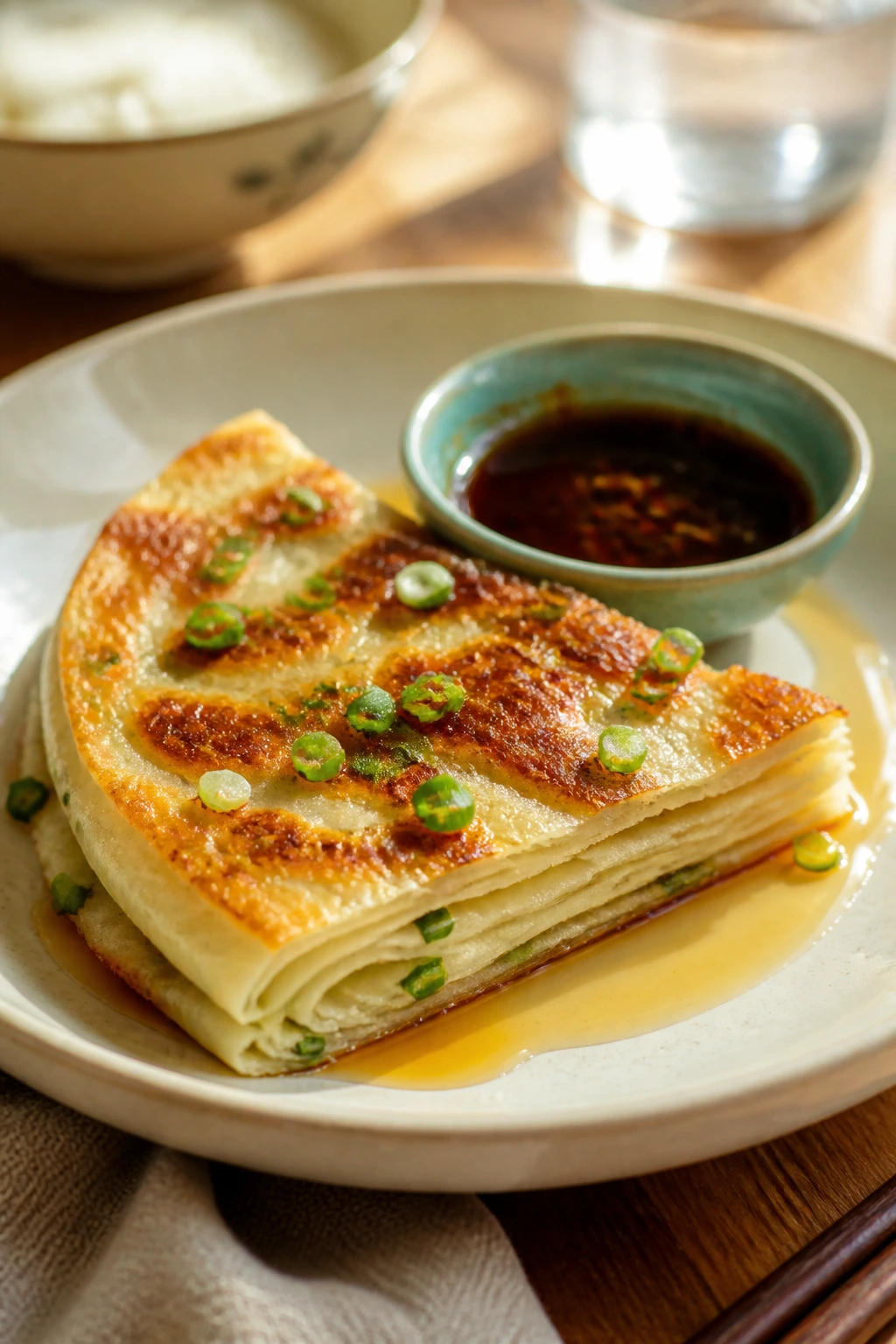
Presentation: Keep the food in shallow bowls or on wide plates so the sauces pool a little instead of disappearing into deep containers. A few sliced scallions, sesame seeds, or a small drizzle of chili oil make the plate look finished without turning it fussy.
Accompaniments: Steamed jasmine rice is the obvious partner, but these side dishes also work with congee, plain noodles, dumplings, mantou, and simple soups. If you’re serving several dishes, pair one cold item, one saucy item, and one crisp item so the table doesn’t blur together.
Portions: Most of these recipes serve 2 to 4 as sides, though fried rice, noodles, and scallion pancakes stretch farther. As a rough table rule, plan 2 to 3 side dishes for 4 people when rice is also on the table.
Beverage Pairing: Jasmine tea and lightly roasted oolong are the quietest, best fits. If you want something colder, a plain lager or sparkling water with lime keeps the palate clean between salty bites.
Additional Tips and Flavor Boosters
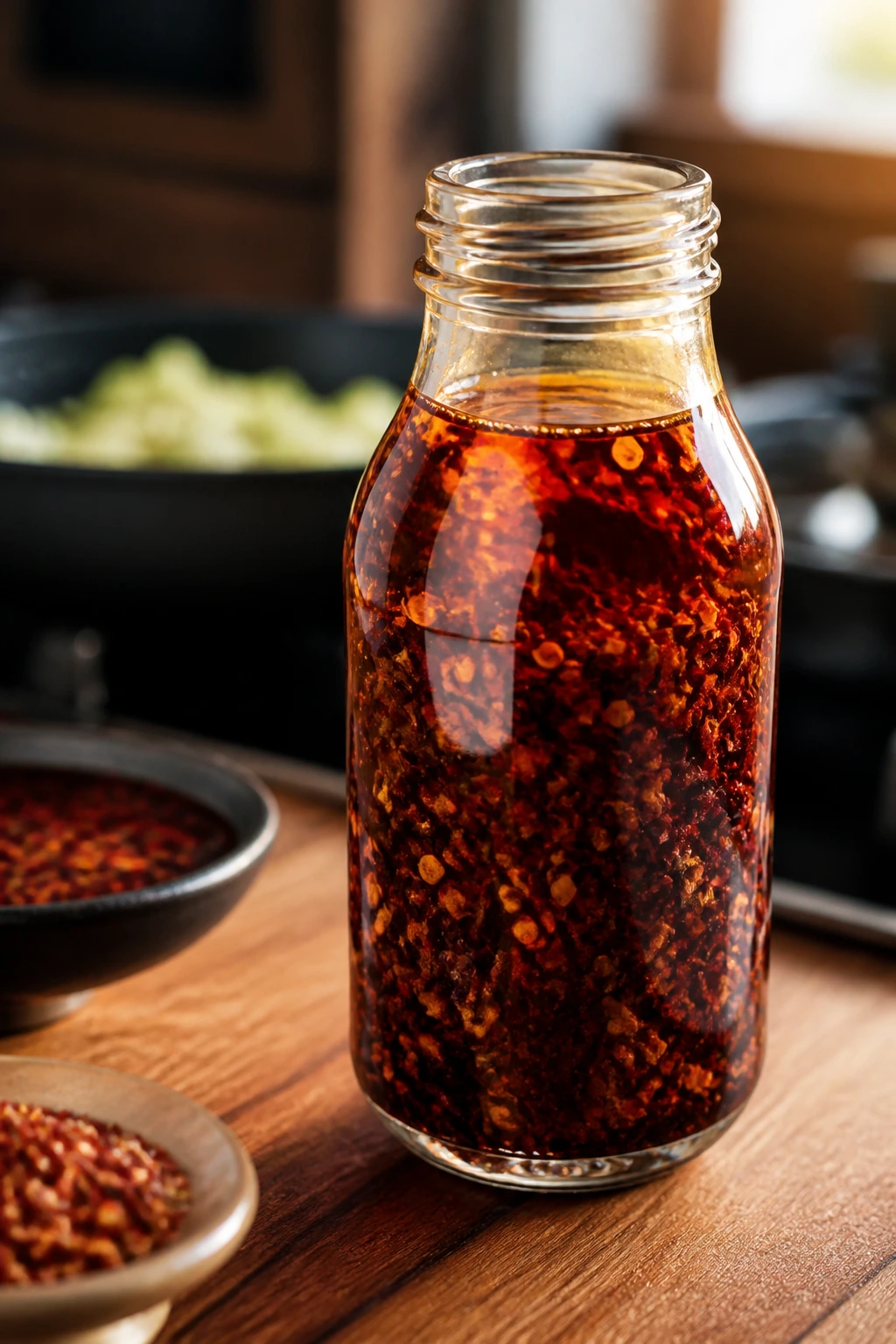
Flavor Enhancement: Keep a bottle of chili oil or chili crisp near the stove. A teaspoon at the end can wake up cabbage, tofu, potatoes, and noodles without making them taste like a different recipe.
Customization: If you want more body, add eggs to peas, corn, or fried rice. If you want more savory depth, use mushroom sauce instead of oyster sauce, especially in vegetarian dishes. And if you want sharper flavor, black vinegar is usually the move.
Serving Suggestions: Scallions are the easiest finishing touch, but toasted sesame seeds, thin garlic slices, and a few drops of sesame oil work too. Add them at the end. Early garnishes tend to disappear or burn.
Make-It-Yours: For a gluten-free version, use tamari in place of soy sauce and check your oyster or mushroom sauce labels. For lower sodium, cut the soy sauce by a third and lean on vinegar, garlic, and sesame oil to keep the dish awake. For a kid-mild plate, skip chili oil entirely and pull back on black vinegar.
Make-Ahead, Storage, and Reheating Guidance
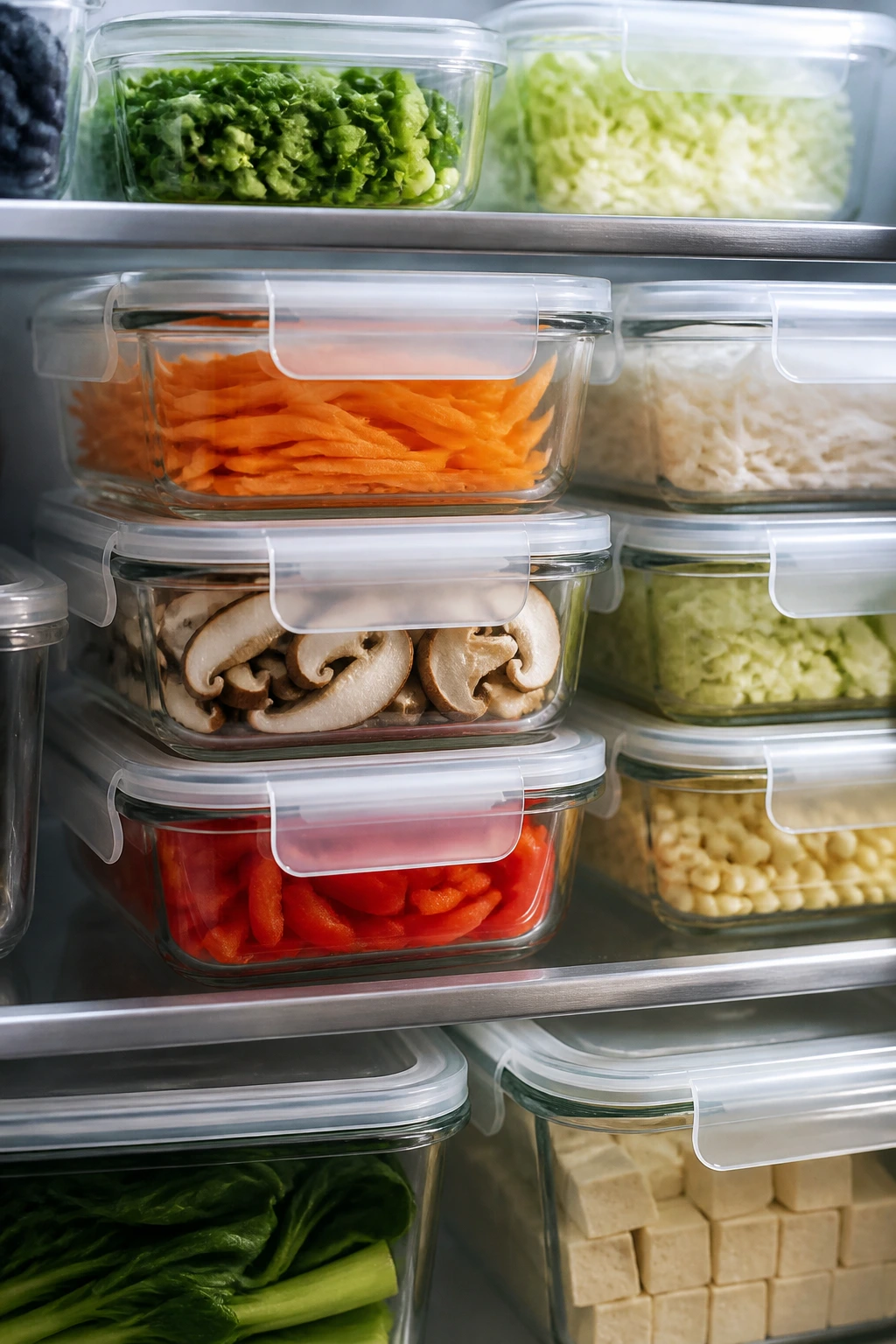
Most stir-fried vegetable sides keep 3 to 4 days in the fridge in airtight containers. Cabbage, tofu, mushrooms, potatoes, braised daikon, and fried rice all fall into this group. Reheat them in a skillet over medium heat with a tablespoon of water, or in the microwave covered loosely so they steam rather than dry out.
Cold cucumber dishes, smashed cucumbers, and dressed salads are a different story. They’re best the day they’re made, and most stay sharp for up to 24 hours refrigerated before they start releasing too much water. If you need to prep ahead, mix the dressing separately and toss it in right before serving.
Egg custard and egg-drop soup keep about 2 days refrigerated, though the custard is best warm and the soup loses some of its sheen after reheating. Reheat custard gently by steaming it for a few minutes. Soup can be warmed on the stove over low heat; don’t boil it hard or the egg strands get tough.
Noodles and fried rice store well for 3 days refrigerated and can be frozen for up to 1 month, though the texture softens a little after thawing. Reheat noodles in a skillet with a splash of water or broth so the sauce loosens and coats again. Fried rice does best in a wide pan, not a deep bowl, so the grains can heat evenly.
If you’re making several dishes ahead, cook the saucy ones first and the crisp ones last. That one rule saves more texture than any trick I know.
Variations and Adaptations to Try
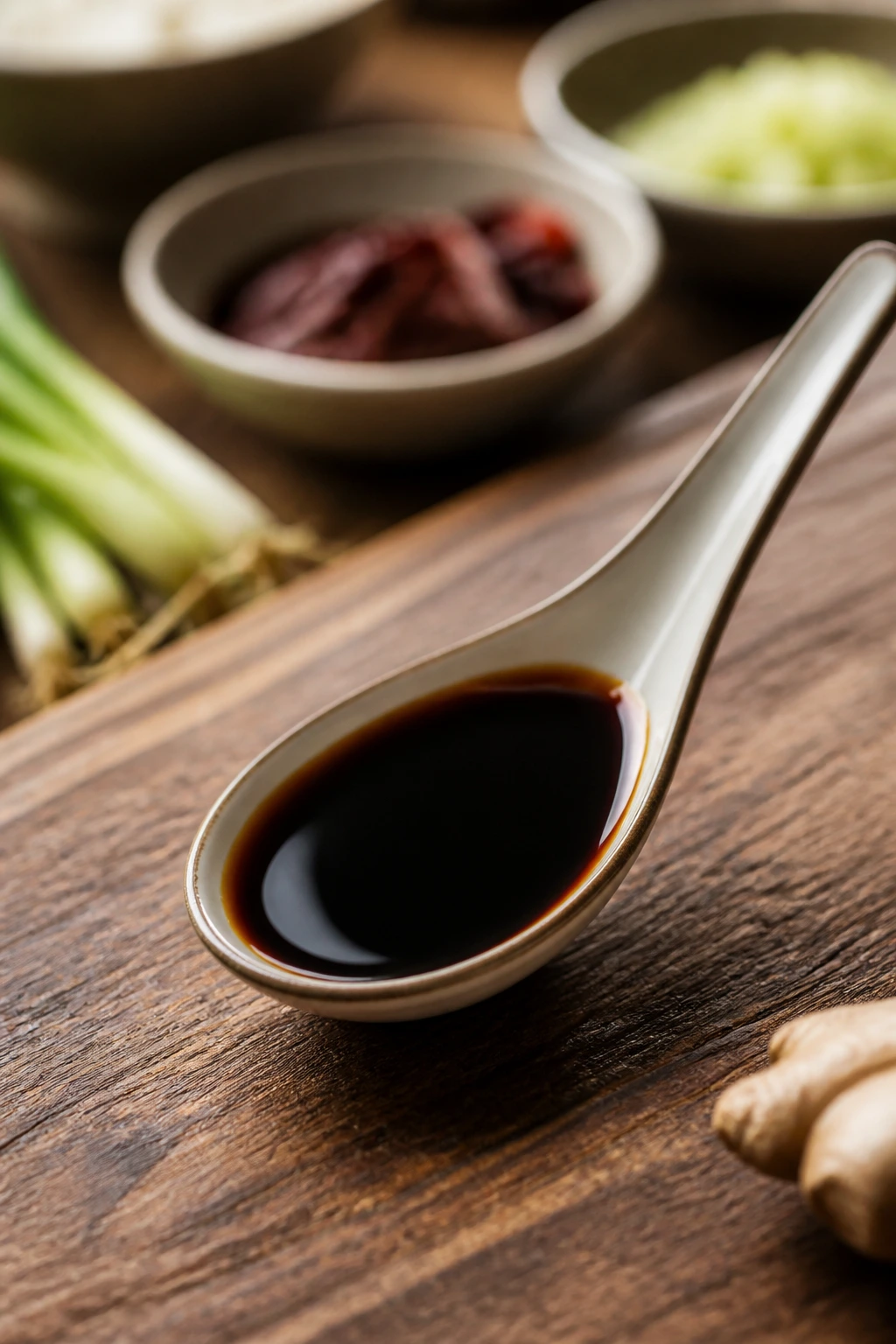
Gluten-Free Pantry Rack: Use tamari instead of soy sauce and choose gluten-free mushroom sauce or a simple salt-and-vinegar finish where oyster sauce would normally go. Rice noodles, glass noodles, tofu, eggs, cabbage, and cucumbers all fit neatly into this version.
Lower-Sodium Table: Cut the soy sauce by about one-third and add more garlic, black vinegar, scallions, or sesame oil to make up for the lost intensity. The food should still taste seasoned, not blank.
Extra-Spicy Sichuan Lean: Add dried chilies to the oil before the garlic, then finish with chili crisp on cabbage, beans, tofu, potatoes, and mushrooms. A tiny pinch of Sichuan peppercorn powder also works if you already keep it in the pantry, though it should stay a background note rather than take over.
Fridge-Cleanout Mix: Combine one sturdy vegetable with one soft one — cabbage plus mushrooms, corn plus peas, daikon plus tofu, or green beans plus glass noodles. The sauce formulas here are flexible enough to absorb those swaps without falling apart.
Kid-Mild Version: Pull back on vinegar and chili oil, and keep the soy sauce moderate. A small pinch of sugar and a finishing drizzle of sesame oil are usually enough to make the dish taste complete without turning sharp.
Protein-Boosted Table: Add fried eggs, tofu, or a little ground pork to cabbage, beans, rice, or noodles. It turns the side into something closer to the center of the plate without changing the cooking method much.
Common Mistakes to Avoid
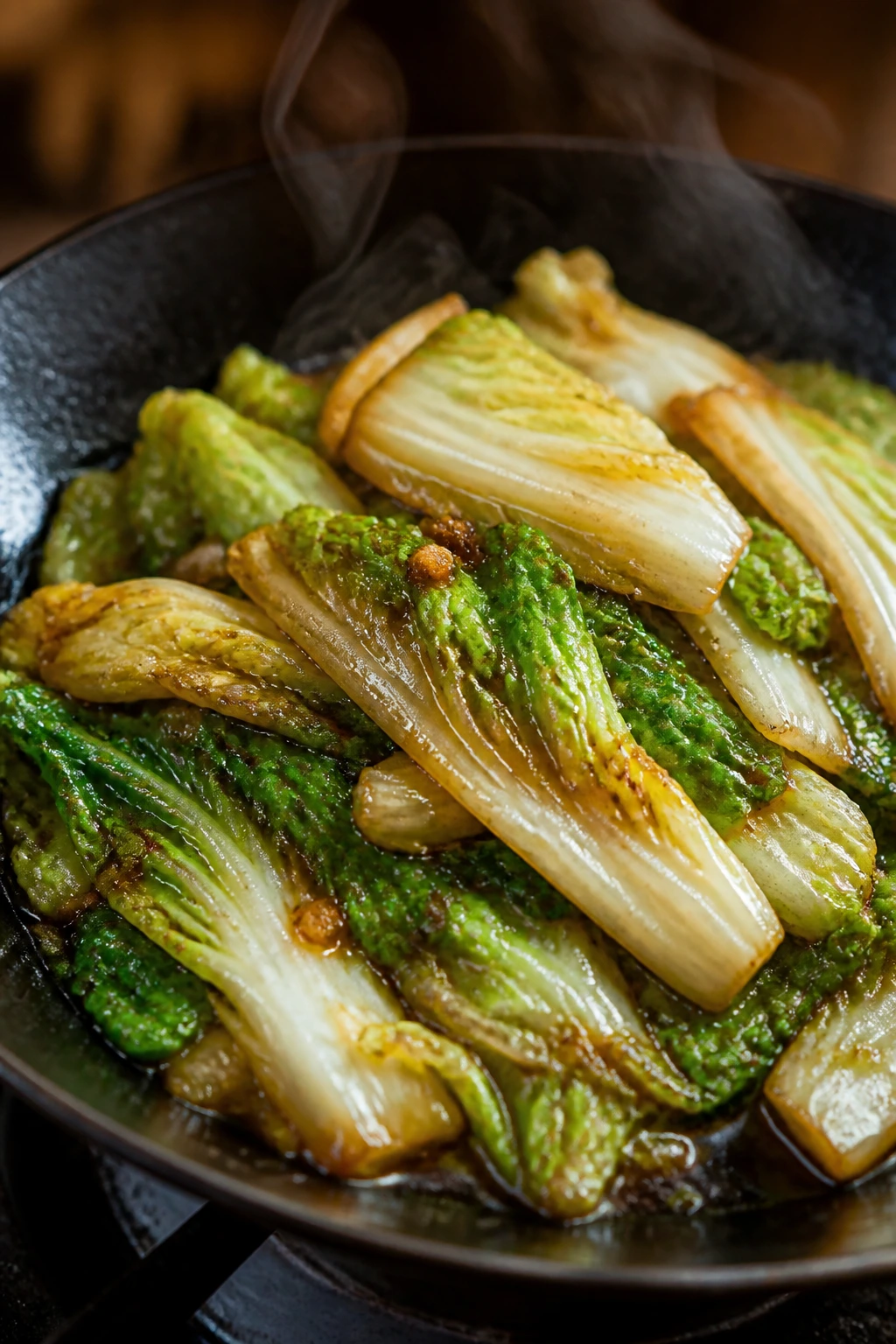
The first mistake is crowding the pan. Cabbage, mushrooms, cauliflower, and green beans all need room to brown. If the pan is packed, they steam instead of sear, and the flavor gets flat and wet. Cook in batches if you have to.
The second is dumping sauce into a cold or overloaded pan. Soy sauce, sugar, and vinegar need heat to bloom into something cohesive. If the pan is cool, the sauce just sits there and tastes raw. If the pan is too crowded, everything loses texture before the sauce can do its work.
The third is using too much sesame oil too early. Sesame oil is a finishing note in most of these recipes. It smells amazing, but it burns more easily than neutral oil and can taste harsh if used as the main frying fat. Save it for the end unless a recipe says otherwise.
Another common error is not tasting the sauce before it goes in. A lot of these recipes look simple enough to skip tasting, and that’s where people run into trouble. Soy sauce brands vary a lot in saltiness. Rice vinegar and black vinegar vary too. Taste, adjust, then cook.
Finally, overcooking the texture ingredients ruins more than people expect. Eggs turn dry. Bean sprouts collapse. Cucumbers leak. Tofu crusts go soft. The fix is not complicated: shorter cooking, more heat, and less panic.
Frequently Asked Questions
What pantry staples matter most for Chinese side dishes?
Soy sauce, rice vinegar, sesame oil, cornstarch, chili oil, sugar, dried noodles, and canned or dried vegetables give you the biggest return. Garlic and scallions are the fresh items I’d keep around with them.
Can I use one soy sauce for everything?
Yes, if that’s what you have, but the flavor will be flatter. Light soy sauce seasons; dark soy sauce colors. If you only buy one, buy light soy and add a tiny bit of sugar or black vinegar when you want more depth.
Do I need a wok to make these recipes?
No. A wide 12-inch skillet handles most of them well. The real requirement is surface area, because vegetables and tofu brown better when they’re not piled on top of each other.
Which dishes work best for leftovers?
Braised tofu, cabbage, mushrooms, fried rice, daikon, and glass noodles hold up well for a few days. Cold cucumber salads and smashed cucumber dishes do not; they lose their crunch faster than you’d expect.
Can I use frozen vegetables instead of fresh?
Yes, especially for peas, corn, spinach, and mixed vegetables. Thaw and dry them first when possible. Water is the enemy of browning, and frozen vegetables can carry a lot of it.
How do I make these less salty without making them bland?
Use a bit less soy sauce and replace the missing flavor with vinegar, garlic, scallions, sesame oil, or a small pinch of sugar. Salt is only one part of the picture. The other parts do a lot of work.
What if my sauce turns watery?
Reduce it a little longer, or whisk in a tiny cornstarch slurry and simmer for 20 to 30 seconds. Usually the problem is too much liquid or too much moisture from the vegetables. Dry ingredients first, sauce second.
Are these recipes good for meal prep?
Some are, some are not. Braises, tofu dishes, fried rice, noodles, and steamed egg custard work well. Cucumber salads, bean sprouts, and anything meant to stay crisp are better cooked close to serving time.
Can I make these without oyster sauce?
Yes. Use mushroom sauce, a little extra soy sauce, or soy sauce plus a pinch of sugar. Oyster sauce adds depth, but it is not the only path to a savory finish.
How spicy are these recipes?
Most can be kept mild with no trouble. Heat is usually added at the end with chili oil, dried chilies, or chili crisp, which means you can leave it out entirely and still end up with a balanced dish.
When the Pantry Starts Cooking
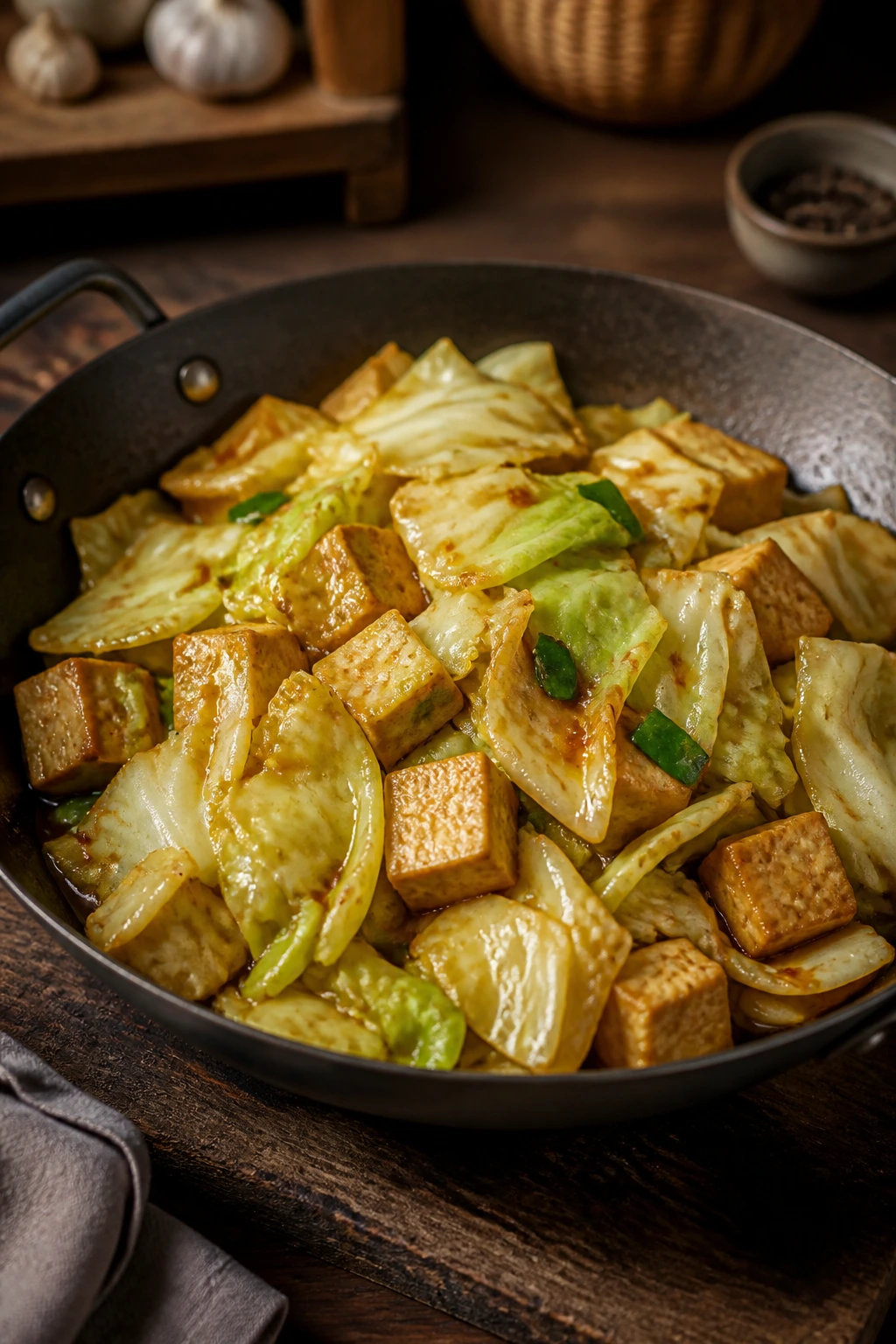
There’s a special kind of satisfaction in making a table feel complete from a few dependable bottles and a couple of vegetables that were hanging around anyway. These dishes do that without pretending to be anything else. They’re not showpieces. They’re the food you make when the pantry is doing more work than the fridge, and honestly, that’s a useful skill.
The nice part is how often these recipes improve the rest of the meal. A crisp cabbage side wakes up plain rice. A glossy tofu dish makes noodles feel finished. A cold cucumber plate cuts through fried food and braises. One good pantry side can make the whole dinner look more planned than it was.