



A hot grill does something ordinary fruit never gets on its own. Pineapple turns sticky at the edges, peaches soften into perfume, and even a plain banana picks up a smoky sweetness that tastes like it was planned, not improvised. That’s the charm of fruit skewers for the grill: they look casual on the platter, but the flavor change is immediate and very specific.
The trick is restraint. Fruit does not need a long stay over flame, and it punishes distraction faster than a steak does. Give it a clean, hot grate, pieces cut large enough to stay intact, and a glaze or finishing salt that makes the sweetness snap into focus. That’s where the good stuff happens.
A weekend grill already has heat going. You might as well let it do the dessert course, the picnic side, and the “what should we bring?” job all at once. Keep the fruit firm, the cuts even, and the turns quick, and you get a platter that disappears before the burgers are fully rested.
Why These Grill Fruit Skewers Deserve a Spot on the Grate
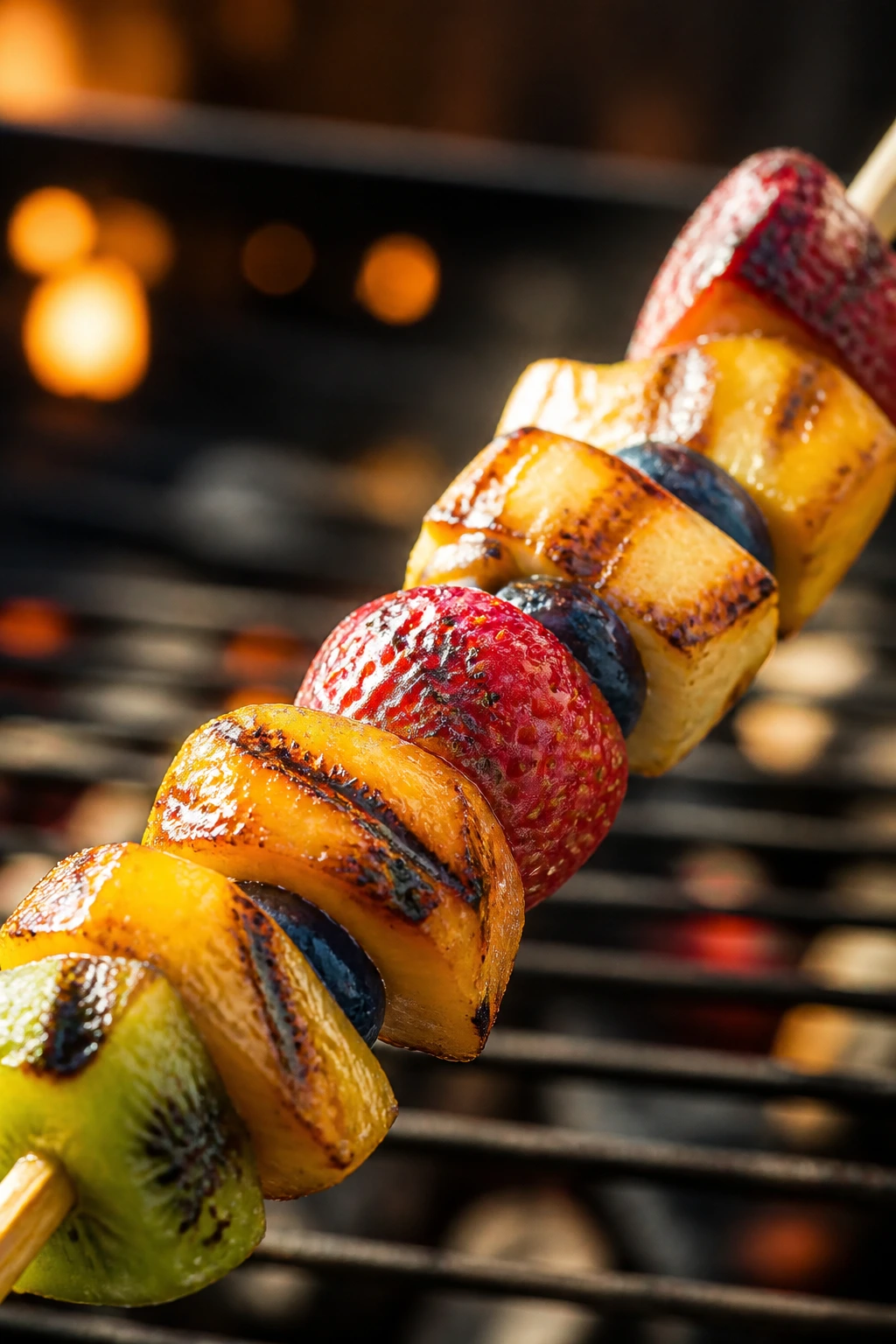
-
Fast payoff: Most fruit needs only 1 to 3 minutes per side, so you get char, caramel edges, and a warmer aroma without babysitting the fire.
-
Built for mixed crowds: Some skewers lean dessert, some lean side dish, and a few land right in the middle, which makes the collection easy to serve with pork, chicken, or ice cream.
-
Flexible shopping: If the peaches are perfect but the mango is still hard, you can swap fruit without changing the whole plan.
-
Better texture than plain sliced fruit: The heat tightens the surface and concentrates the juice, so each bite tastes sharper and less watery.
-
Low-fuss cleanup: A brush of oil on the grates and a pair of tongs are usually enough. No roasting pans, no sauce splatter, no stack of bowls.
1. Pineapple, Lime, and Brown Sugar Skewers
Sticky pineapple is the classic move for a reason. The edges blister fast, the center stays juicy, and the lime keeps the sweetness from getting flat.
Why It Works: Pineapple stands up to direct heat better than most fruit, so you can get real caramelization in under 10 minutes. The brown sugar melts into a thin glaze, which is what gives these skewers that glossy, lacquered look.
Key Ingredients:
- 2 cups fresh pineapple chunks, cut into 1½-inch pieces
- 1 tablespoon melted unsalted butter
- 1 tablespoon dark brown sugar
- 1 tablespoon fresh lime juice
- ¼ teaspoon flaky sea salt
Quick Steps:
- Heat the grill to medium-high, about 400°F to 450°F, and oil the grates.
- Toss the pineapple with butter, brown sugar, and lime juice.
- Thread the chunks onto 6 skewers, leaving tiny gaps between pieces.
- Grill for 2 minutes per side until you see dark marks and the sugar turns glossy.
- Finish with flaky salt and serve right away.
Equipment for This Recipe:
- Grill or grill pan
- 6 metal or soaked wooden skewers
- Pastry brush for the butter glaze
How to Serve This Dish: Serve these with vanilla ice cream or alongside pork chops. A light shower of toasted coconut makes the platter look finished without much effort.
Pro Tips for This Recipe:
- Use pineapple that smells sweet at the base.
- Cut the chunks too small and they’ll slide around.
- Brush a little extra lime over the hot skewers at the end.
Variations on This Dish:
- Chili-Lime Pineapple: Add ¼ teaspoon chili powder for a sharper finish.
- Honey-Glazed Pineapple: Swap brown sugar for 1½ tablespoons honey.
Common Mistakes to Avoid with This Dish:
- Don’t leave the pineapple on long enough to collapse; it should still hold its shape.
- Don’t use a sugary glaze on a screaming-hot flame, or the outside will burn before the fruit warms through.
2. Peach, Vanilla, and Thyme Skewers
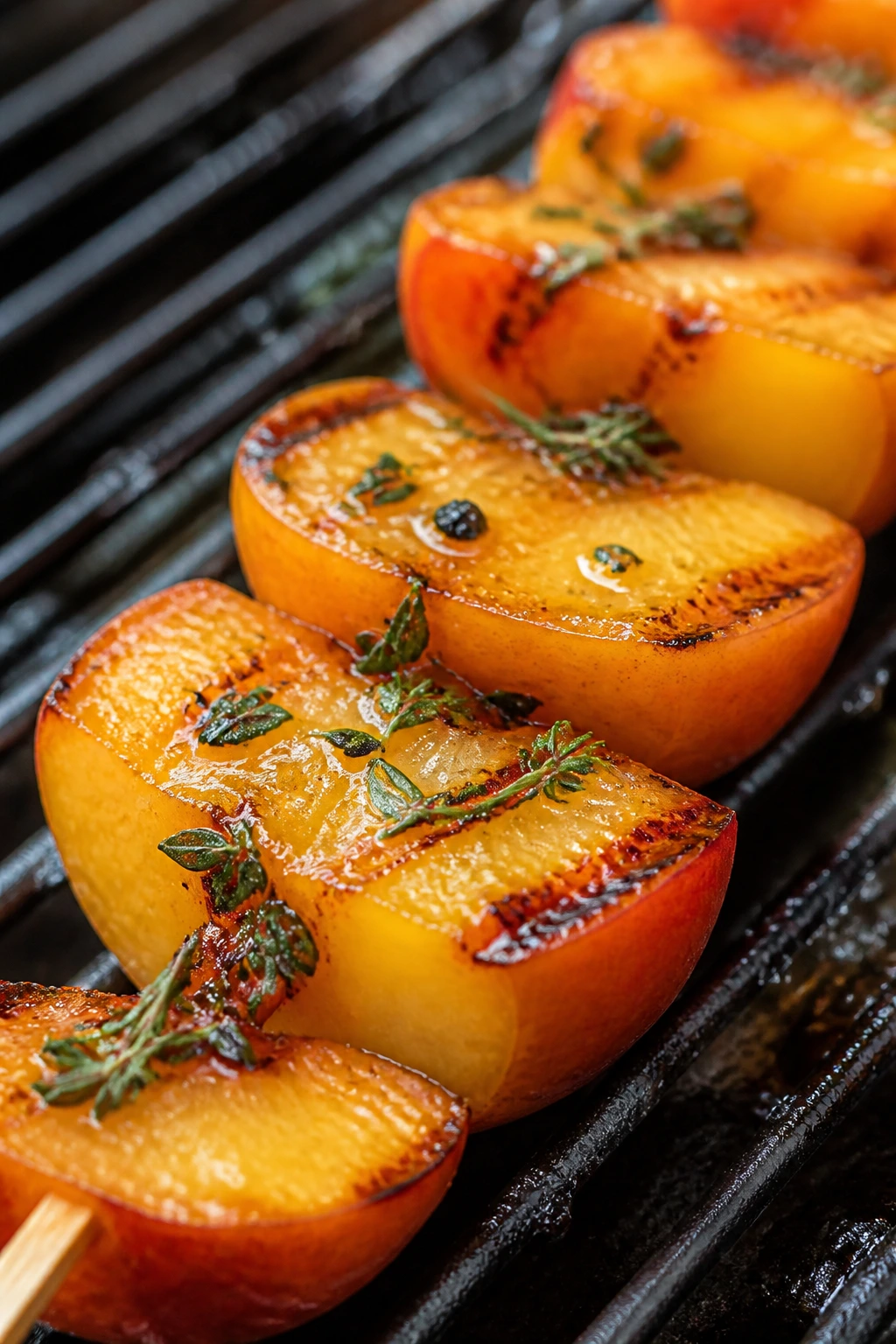
Peaches on the grill smell like jam before they even come off. The vanilla softens the edges, and thyme gives the fruit a savory little echo that keeps things from reading as candy.
Why It Works: Firm-ripe peaches caramelize in about 2 minutes per side and keep enough structure to thread cleanly. Thyme handles heat well, so it can sit in the glaze without turning muddy.
Key Ingredients:
- 3 ripe but firm peaches, pitted and cut into wedges
- 1 tablespoon melted butter
- 1 tablespoon honey
- 1 teaspoon vanilla extract
- 1 teaspoon fresh thyme leaves
Quick Steps:
- Heat the grill to medium-high and oil the grates.
- Whisk butter, honey, vanilla, and thyme in a small bowl.
- Brush the peach wedges and thread them onto skewers.
- Grill 2 minutes per side until the flesh softens and the edges pick up color.
- Spoon any leftover glaze over the top.
Equipment for This Recipe:
- Grill
- Skewers
- Small bowl and brush
How to Serve This Dish: Put these next to yogurt, granola, or a scoop of mascarpone. They also sit nicely beside grilled chicken if you want the sweet side of dinner to feel more deliberate.
Pro Tips for This Recipe:
- If the peaches are hard, leave them on the counter for a day.
- Wedges hold better than cubes.
- Fresh thyme beats dried thyme here by a mile.
Variations on This Dish:
- Bourbon Peach Skewers: Replace vanilla with 1 tablespoon bourbon in the glaze.
- Cinnamon Orchard Version: Add ¼ teaspoon cinnamon for a warmer finish.
Common Mistakes to Avoid with This Dish:
- Don’t use peaches that are bruised or oversoft; they’ll tear on the skewer.
- Don’t walk away after the first flip. Peaches go from bronzed to too soft fast.
3. Strawberry, Balsamic, and Black Pepper Skewers
This one sounds fancy until you make it once and realize it’s just strawberries, heat, and a sharp little finish. The balsamic darkens the berries, and the pepper gives the sweetness a clean edge.
Why It Works: Strawberries have enough sugar to brown quickly, but they need very brief heat or they collapse. A reduced balsamic glaze clings to the surface and keeps the berries from tasting watery.
Key Ingredients:
- 2 cups large strawberries, hulled
- 1 tablespoon balsamic vinegar
- 1 tablespoon honey
- ⅛ teaspoon freshly ground black pepper
- 1 teaspoon chopped basil, optional
Quick Steps:
- Heat the grill to medium and oil the grates lightly.
- Stir balsamic, honey, and pepper together.
- Thread the strawberries onto skewers with the flat ends alternating outward.
- Grill 30 to 45 seconds per side, just until the berries soften.
- Drizzle with the balsamic mixture and basil.
Equipment for This Recipe:
- Grill or grill pan
- Skewers
- Small saucepan, if you want to reduce the balsamic first
How to Serve This Dish: Serve these warm over vanilla yogurt or with shortcake biscuits. They’re also a sharp, bright finish after a rich meal.
Pro Tips for This Recipe:
- Use the largest berries you can find.
- Keep the heat moderate; strawberries punish overconfidence.
- Reduce the balsamic for 2 to 3 minutes if you want a thicker glaze.
Variations on This Dish:
- Minted Strawberry Skewers: Swap basil for mint.
- Sweet Pepper Twist: Add a pinch of pink peppercorn for a floral note.
Common Mistakes to Avoid with This Dish:
- Don’t cut the berries in half unless they’re huge; smaller pieces slip and scorch.
- Don’t grill them long enough to leak all their juice onto the grate.
4. Mango, Chili-Lime, and Coconut Skewers
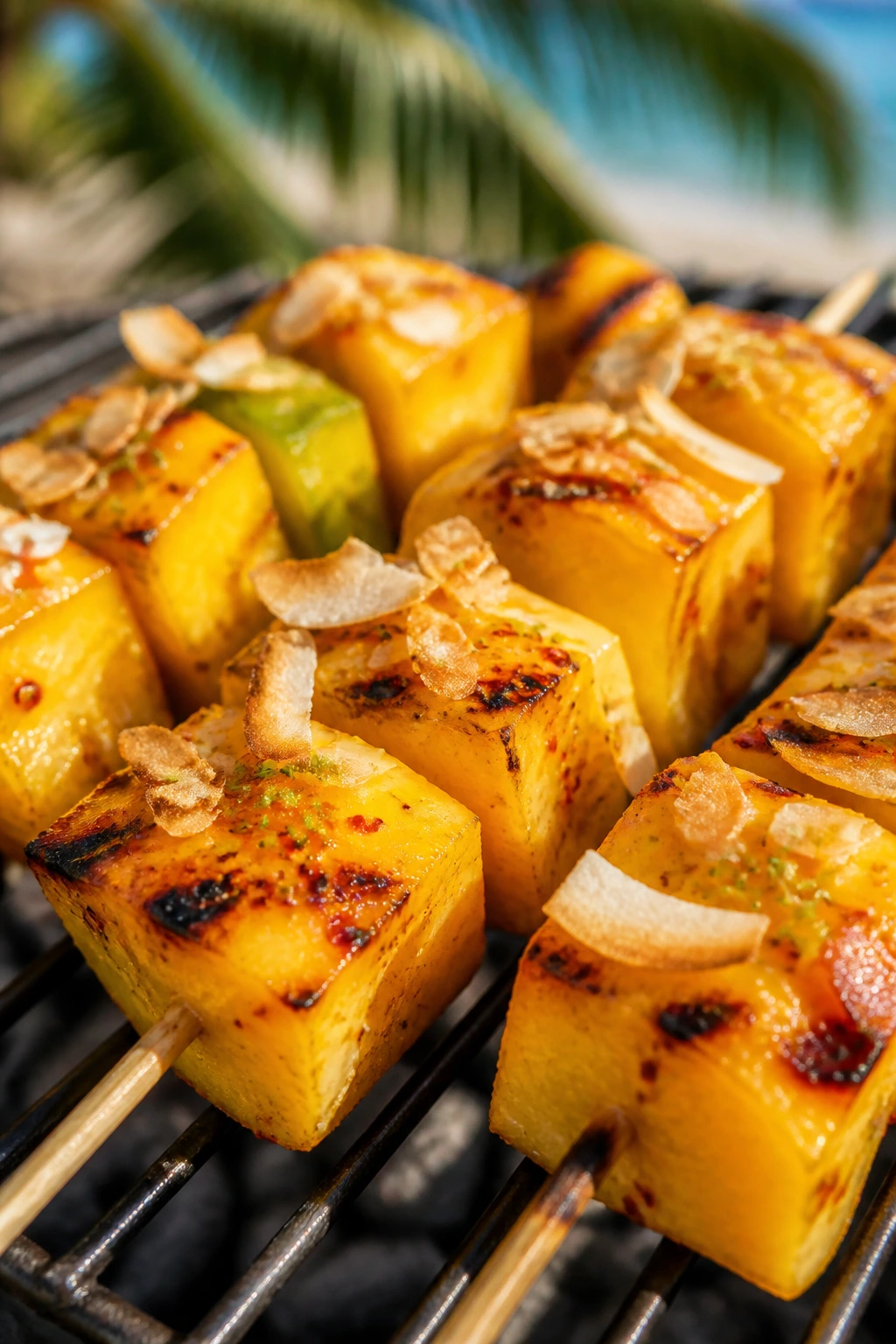
Mango goes silky on the grill, with edges that taste almost candied. The chili-lime finish keeps the sweetness honest, and the coconut brings a toasted note that feels made for warm weather.
Why It Works: Mango has enough density to take brief heat without falling apart, especially if you cut it into thick chunks. Chili and lime work because they wake up the fruit’s aroma instead of burying it.
Key Ingredients:
- 2 ripe mangoes, peeled and cut into 1½-inch chunks
- 1 tablespoon melted coconut oil
- 1 tablespoon honey
- 1 teaspoon lime zest
- ¼ teaspoon chili powder
Quick Steps:
- Heat the grill to medium-high and oil the grates.
- Toss the mango with coconut oil, honey, lime zest, and chili powder.
- Thread onto skewers in firm, even chunks.
- Grill 1½ to 2 minutes per side until marked.
- Sprinkle with toasted coconut before serving.
Equipment for This Recipe:
- Grill
- Skewers
- Zester or fine grater
How to Serve This Dish: These are excellent with coconut yogurt or as a bright side for grilled shrimp. A few mint leaves on top keep the coconut from feeling heavy.
Pro Tips for This Recipe:
- Choose mangoes that give slightly at the stem, not mushy ones.
- Keep chunks large so they stay on the skewer.
- Toast the coconut in a dry skillet first if you want more crunch.
Variations on This Dish:
- Tajin Mango Skewers: Swap chili powder for Tajín-style seasoning.
- Creamy Finish Version: Serve with a drizzle of coconut cream.
Common Mistakes to Avoid with This Dish:
- Don’t use underripe mango unless you want a starchy bite.
- Don’t crowd the skewer; mango pieces need room to catch heat evenly.
5. Watermelon, Mint, and Sea Salt Skewers
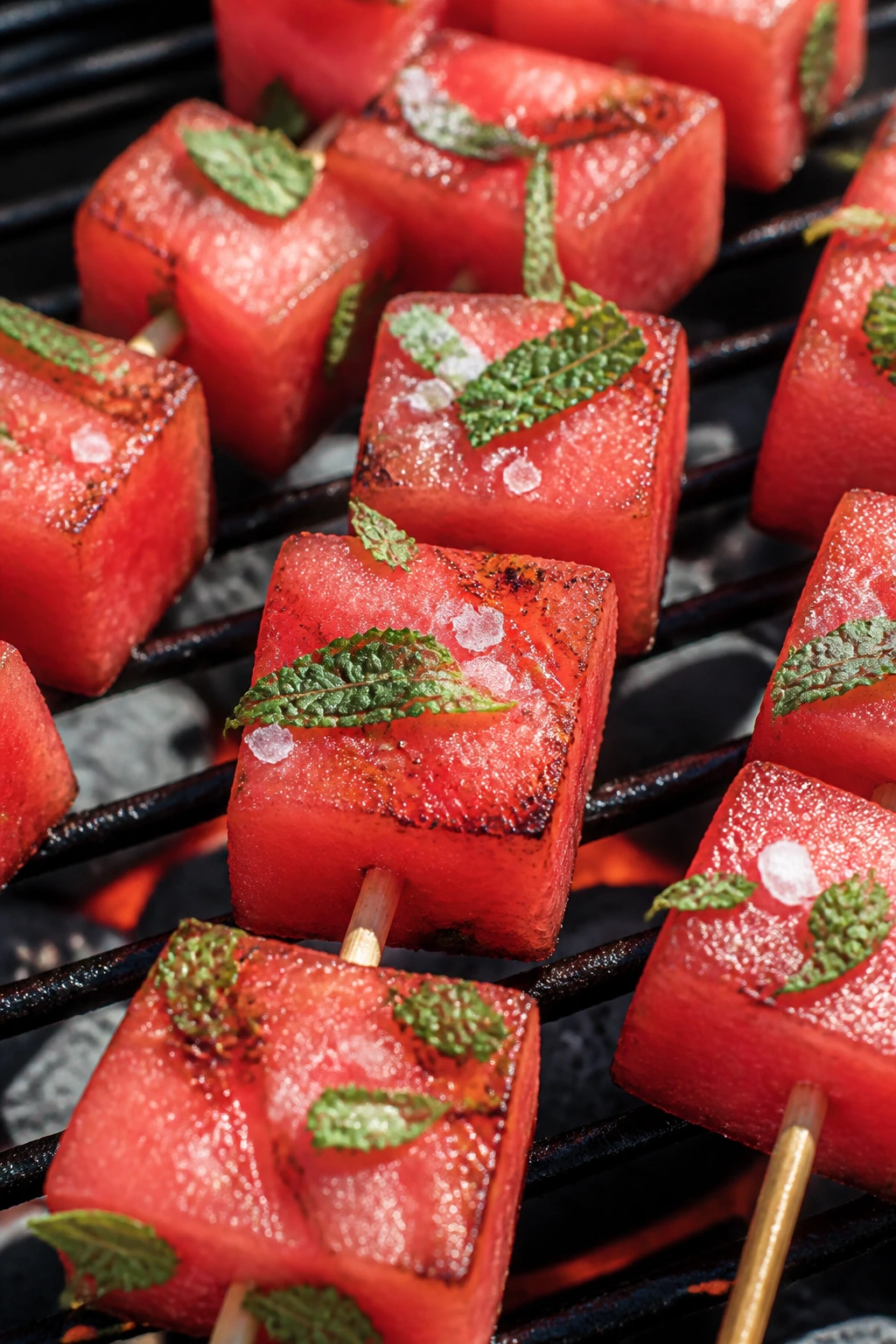
Watermelon on the grill is a little strange in the best way. It loses some of that cold-crisp snap and takes on a softer, almost savory sweetness at the edges.
Why It Works: Watermelon is mostly water, so the goal is not to cook it through. You want brief contact with high heat so the surface browns before the center turns mushy.
Key Ingredients:
- 3 cups watermelon, cut into 1½-inch cubes
- 1 tablespoon olive oil
- 1 teaspoon fresh lime juice
- ¼ teaspoon flaky sea salt
- 1 tablespoon torn mint leaves
Quick Steps:
- Heat the grill to high or medium-high and oil the grates well.
- Pat the watermelon dry and toss with olive oil and lime juice.
- Thread onto wide skewers, using the firmest cubes.
- Grill 30 seconds per side, just enough to mark the edges.
- Finish with sea salt and mint.
Equipment for This Recipe:
- Grill
- Skewers with enough width to hold soft fruit
- Paper towels for drying the cubes
How to Serve This Dish: Serve these cold-ish or barely warm with feta on the side if you want a salty contrast. They also work as a reset between heavier grilled meats.
Pro Tips for This Recipe:
- Dry the cubes first or they’ll steam.
- Use seedless watermelon with firm flesh.
- Keep the grill very hot so the fruit sears instead of melting.
Variations on This Dish:
- Cucumber-Mint Version: Add cucumber only if you want a more savory plate.
- Honey Lime Version: Add a thin honey drizzle after grilling.
Common Mistakes to Avoid with This Dish:
- Don’t leave watermelon over the fire too long; it should still look like watermelon.
- Don’t use pieces that are too small or they’ll fall apart as soon as you turn them.
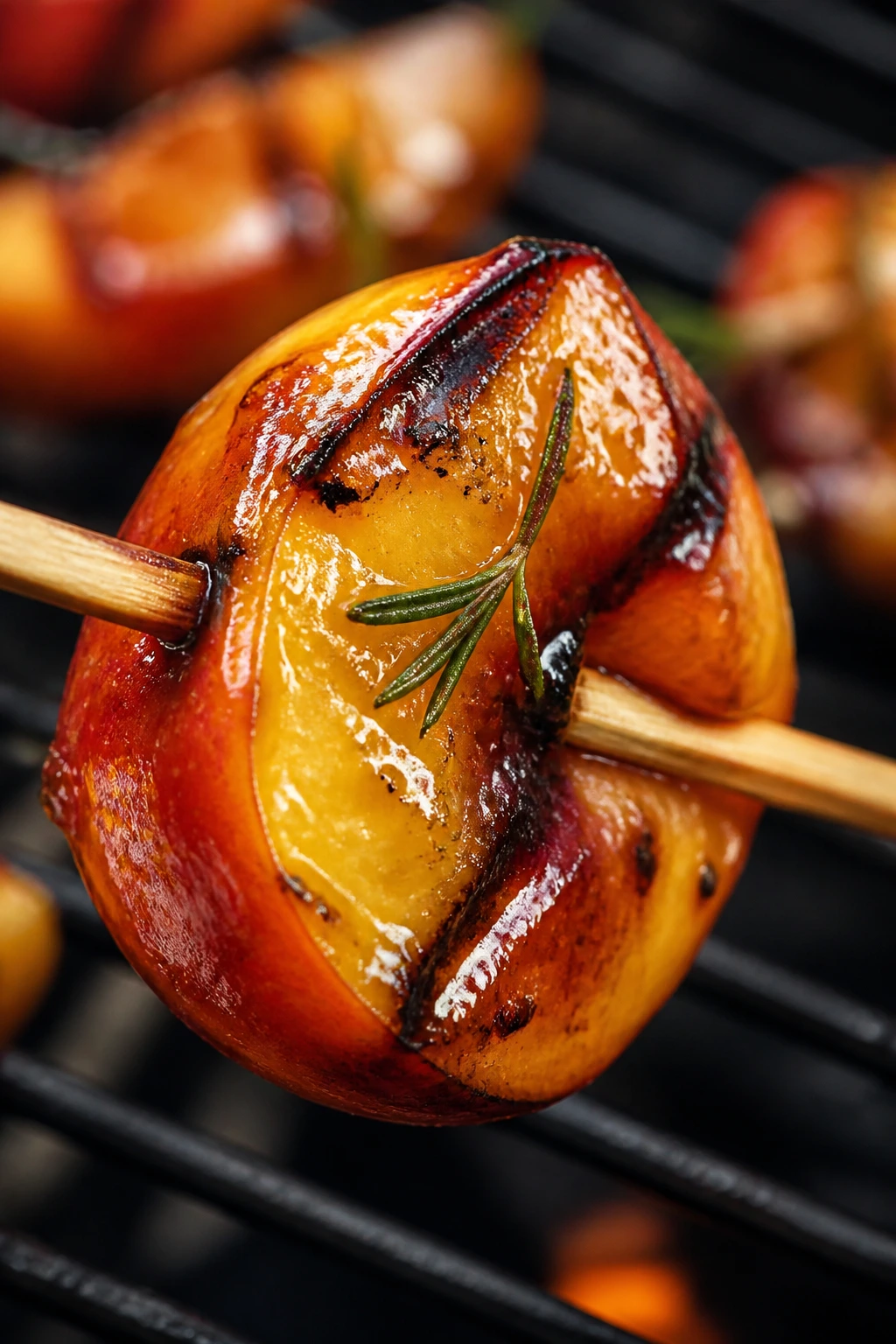
6. Nectarine, Honey, and Rosemary Skewers
Nectarines have the same grill-friendly bones as peaches but a slightly cleaner bite. Rosemary gives them a piney edge that tastes sharper than basil and keeps the sweetness from getting sleepy.
Why It Works: Nectarines are firm enough to hold their shape, and their skins blister nicely at medium-high heat. Honey helps the surface brown, while rosemary cuts through the sugar.
Key Ingredients:
- 3 ripe nectarines, pitted and cut into wedges
- 1 tablespoon honey
- 1 tablespoon melted butter
- 1 teaspoon finely chopped rosemary
- Pinch of salt
Quick Steps:
- Heat the grill to medium-high and oil the grates.
- Stir honey, butter, rosemary, and salt together.
- Brush the nectarines and skewer them.
- Grill for 2 minutes per side until marked and fragrant.
- Spoon the extra glaze over the hot fruit.
Equipment for This Recipe:
- Grill
- Skewers
- Small bowl and brush
How to Serve This Dish: These are good with almond yogurt or a slice of pound cake. If you’re serving dinner outside, they sit neatly next to grilled pork.
Pro Tips for This Recipe:
- Use nectarines that are firm at the shoulders.
- Rosemary should be chopped fine so it does not burn in clumps.
- A pinch of salt sharpens the fruit’s flavor more than more honey does.
Variations on This Dish:
- Lemon Rosemary Nectarines: Add 1 teaspoon lemon zest.
- Spiced Nectarines: Add a pinch of ground ginger.
Common Mistakes to Avoid with This Dish:
- Don’t use nectarines that are too soft; they turn jammy fast.
- Don’t rush the preheating step. A weak grill gives you pale fruit and sticky grates.
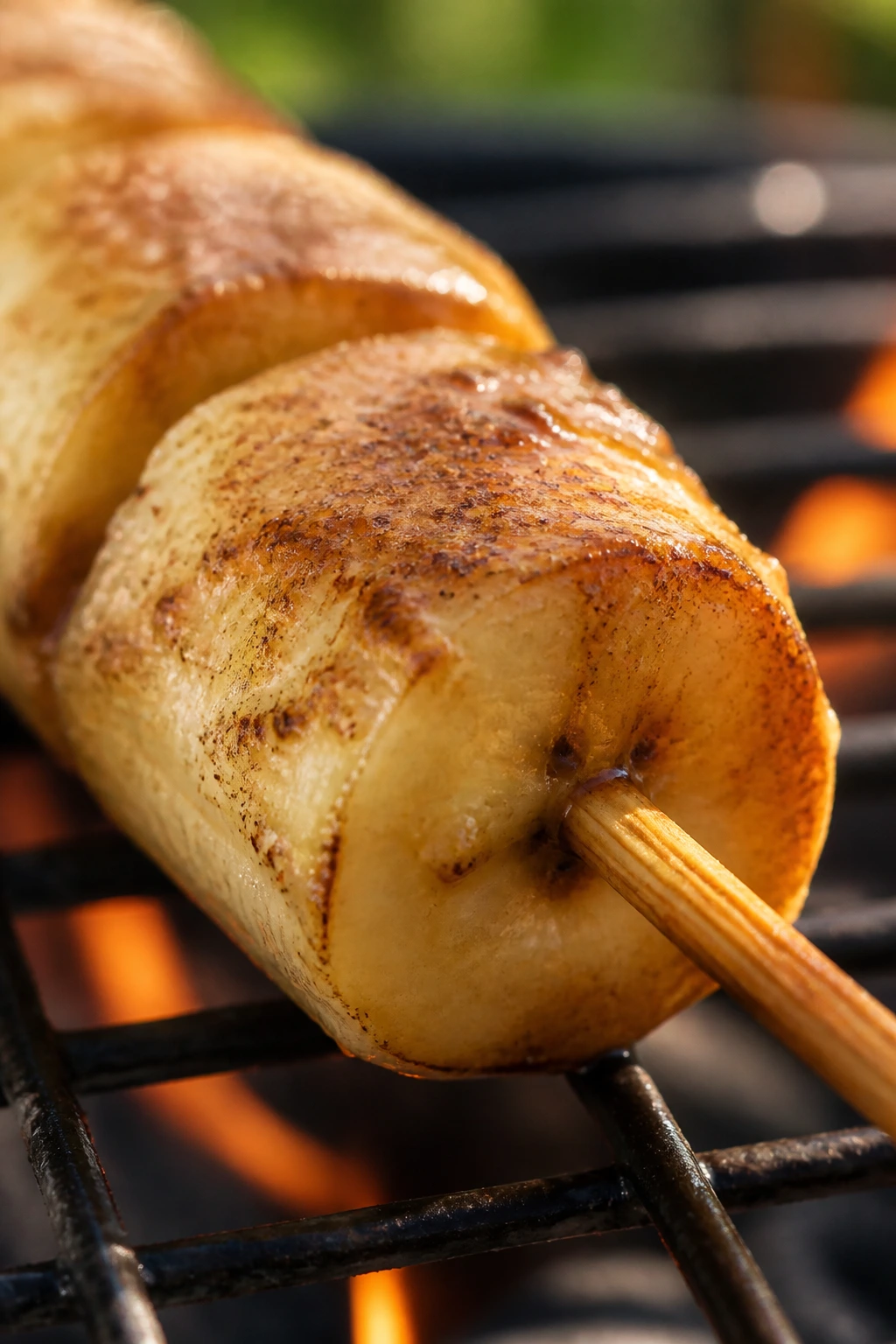
7. Banana, Cinnamon, and Rum Skewers
Bananas are tricky in the best way. Use them right and you get soft centers, dark edges, and a smell that lands somewhere between caramel and banana bread.
Why It Works: Slightly underripe bananas hold their shape better than speckled ones, and the cinnamon wakes up the sweetness without needing much sugar. A tiny amount of rum in the glaze makes the finished fruit smell deeper, not boozy.
Key Ingredients:
- 3 bananas, just yellow with a few brown freckles, cut into thick chunks
- 1 tablespoon melted butter
- 1 tablespoon brown sugar
- 1 teaspoon dark rum
- ½ teaspoon ground cinnamon
Quick Steps:
- Heat the grill to medium and oil the grates.
- Whisk butter, brown sugar, rum, and cinnamon.
- Thread banana chunks onto skewers carefully.
- Grill 1 minute per side, watching for light browning.
- Brush with any extra glaze and serve warm.
Equipment for This Recipe:
- Grill
- Skewers
- Pastry brush
How to Serve This Dish: Serve with vanilla ice cream, or tuck them beside pancakes if you’re turning the grill into breakfast. A few chopped walnuts on top make the plate feel finished.
Pro Tips for This Recipe:
- Slightly firmer bananas are easier to thread.
- Keep the chunks thick or they’ll tear.
- If you skip the rum, add a touch more vanilla.
Variations on This Dish:
- Banana Foster Skewers: Add a pinch of nutmeg.
- Chocolate Finish Version: Drizzle with melted dark chocolate after grilling.
Common Mistakes to Avoid with This Dish:
- Don’t use overripe bananas; they will slide apart.
- Don’t let them sit on the grill while you answer a text. They need attention.
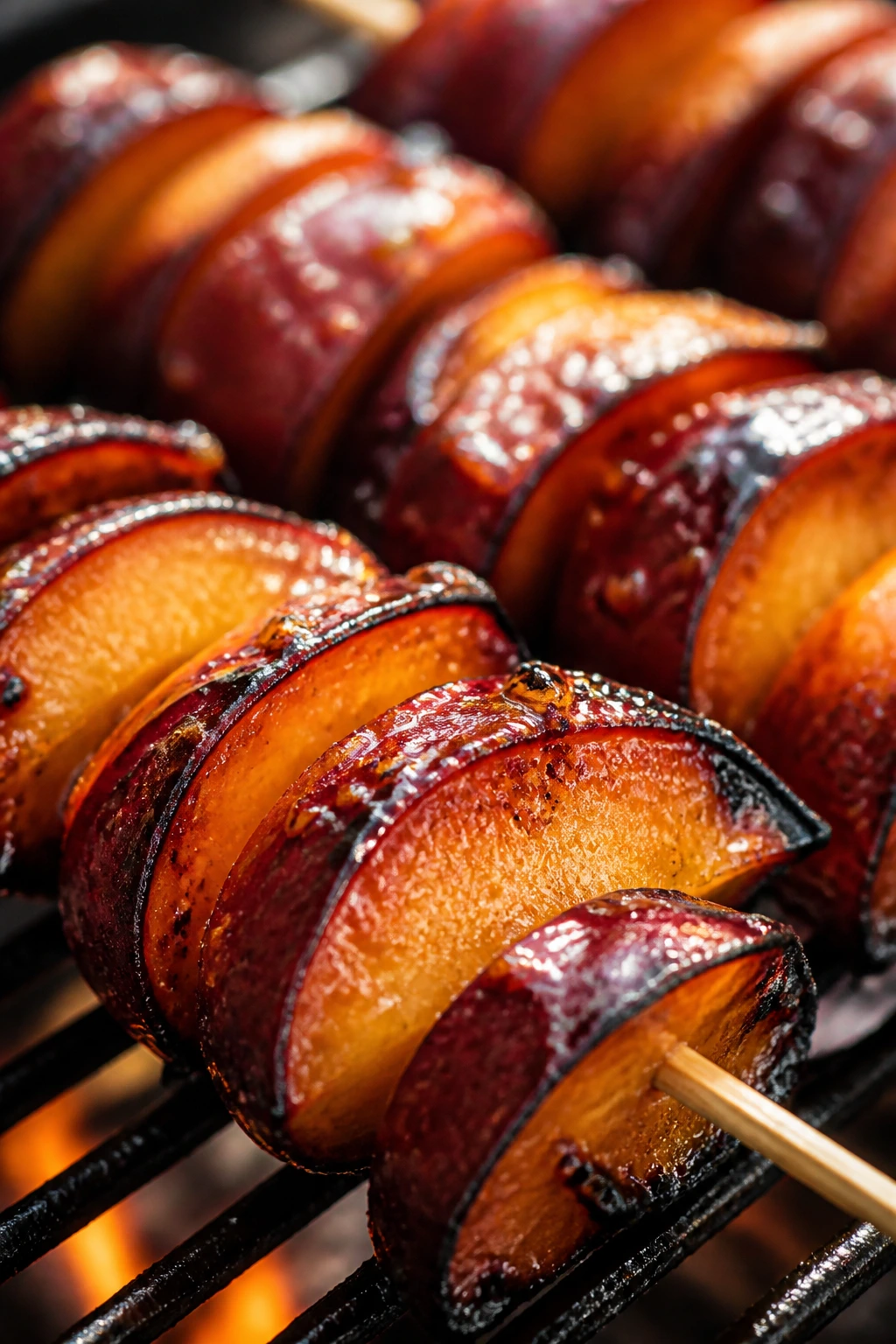
8. Plum, Maple, and Cardamom Skewers
Plums bring a tart edge that reads more grown-up than peach. Cardamom adds perfume, and maple gives the whole thing a warm, round finish.
Why It Works: Plums grill fast because their flesh softens near the skin before the center fully collapses. Cardamom stands up to heat well and gives the fruit a bakery-style aroma.
Key Ingredients:
- 3 ripe but firm plums, pitted and cut into wedges
- 1 tablespoon pure maple syrup
- 1 tablespoon melted butter
- ¼ teaspoon ground cardamom
- Pinch of salt
Quick Steps:
- Heat the grill to medium-high and oil the grates.
- Mix maple, butter, cardamom, and salt.
- Brush the plum wedges and thread onto skewers.
- Grill 1½ minutes per side until marked and soft at the edges.
- Serve with the warm glaze spooned over the top.
Equipment for This Recipe:
- Grill
- Skewers
- Small bowl for the glaze
How to Serve This Dish: Good with Greek yogurt or alongside grilled lamb. The tart plum flavor also plays well with a handful of toasted pistachios.
Pro Tips for This Recipe:
- Keep the skin on; it helps the wedges hold together.
- Use plums that still feel a little firm.
- Cardamom can go bitter if you dump in too much.
Variations on This Dish:
- Cinnamon Plum Skewers: Swap cardamom for cinnamon.
- Orange-Maple Version: Add 1 teaspoon orange zest.
Common Mistakes to Avoid with This Dish:
- Don’t use tiny plums unless you halve them; wedges hold better.
- Don’t skip the salt. Plum can taste flat without it.
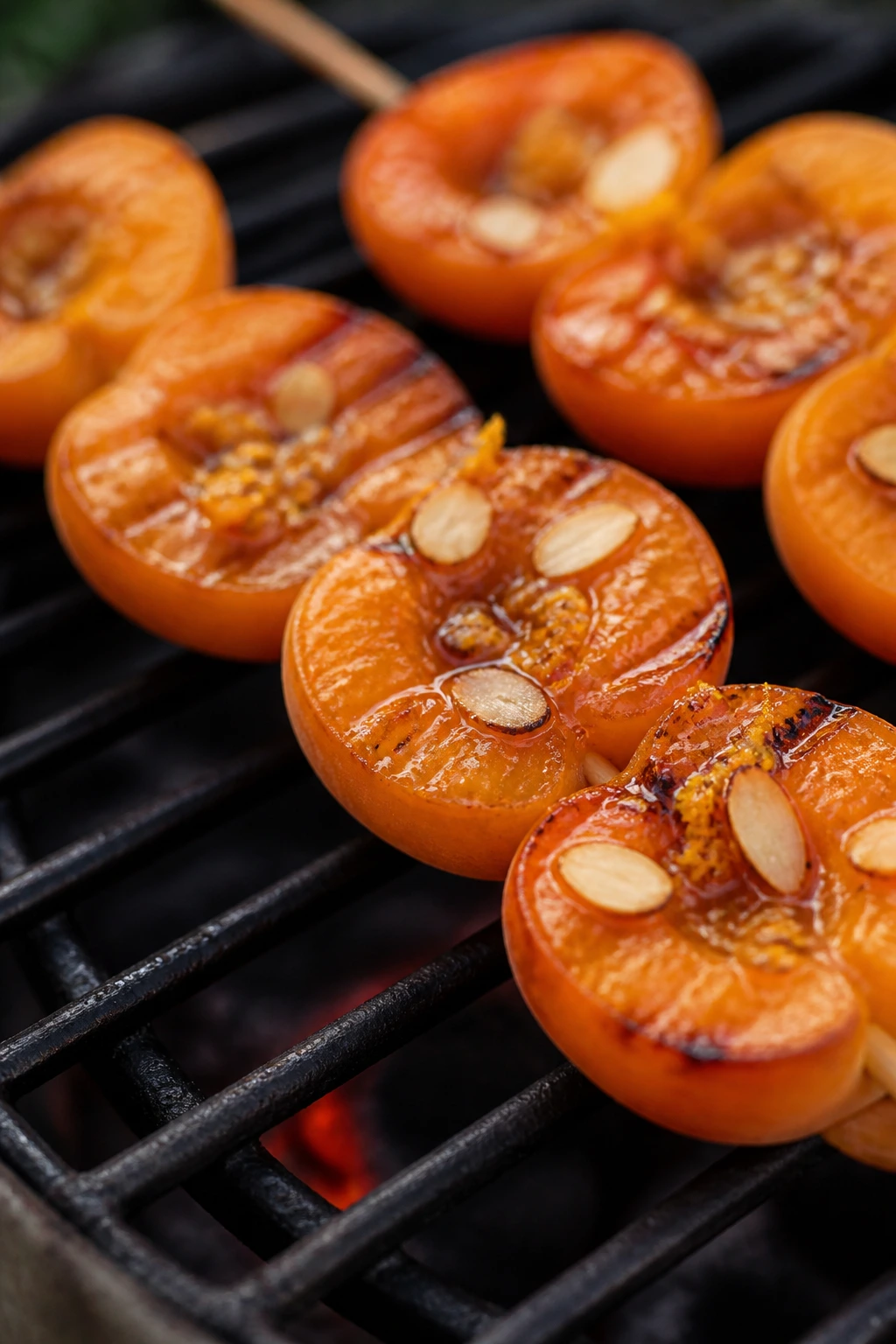
9. Apricot, Almond, and Orange Zest Skewers
Apricots get a little floral on the grill, almost like jam with a sharper edge. Almond and orange make the whole skewer feel crisp and bakery-like.
Why It Works: Apricots are delicate, so brief heat is the whole point. Almond extract and orange zest add aroma fast, which means you do not need much sugar.
Key Ingredients:
- 6 ripe apricots, halved and pitted
- 1 tablespoon honey
- ½ teaspoon almond extract
- 1 teaspoon orange zest
- 2 tablespoons sliced almonds, toasted
Quick Steps:
- Heat the grill to medium and oil the grates.
- Stir honey, almond extract, and orange zest together.
- Brush the cut sides of the apricots.
- Thread and grill 1 minute per side, cut side down first.
- Scatter toasted almonds over the hot fruit.
Equipment for This Recipe:
- Grill
- Skewers
- Microplane or fine grater
How to Serve This Dish: Serve these with yogurt, whipped cream, or sliced pound cake. They also work as a small sweet plate after grilled fish.
Pro Tips for This Recipe:
- Apricots should be ripe enough to smell sweet but not mushy.
- Toast the almonds first; raw ones taste dull here.
- Keep the skewer count low so each half has room.
Variations on This Dish:
- Lavender Apricots: Add a tiny pinch of dried culinary lavender.
- Honey Yogurt Version: Drizzle with plain yogurt and honey after grilling.
Common Mistakes to Avoid with This Dish:
- Don’t use overripe apricots; they break on contact.
- Don’t overdo the almond extract. It takes over fast.
10. Cherry, Vanilla, and Almond Skewers
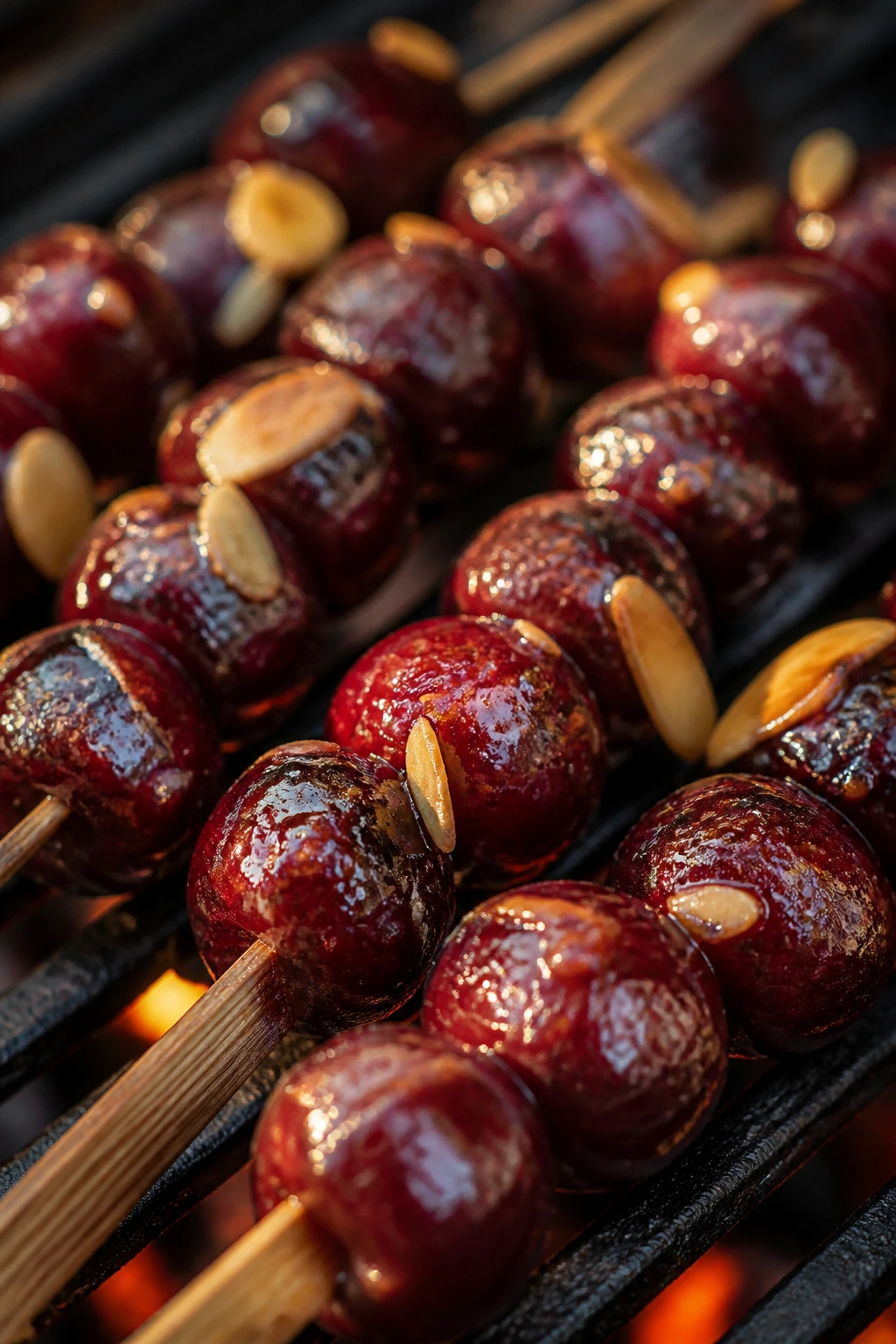
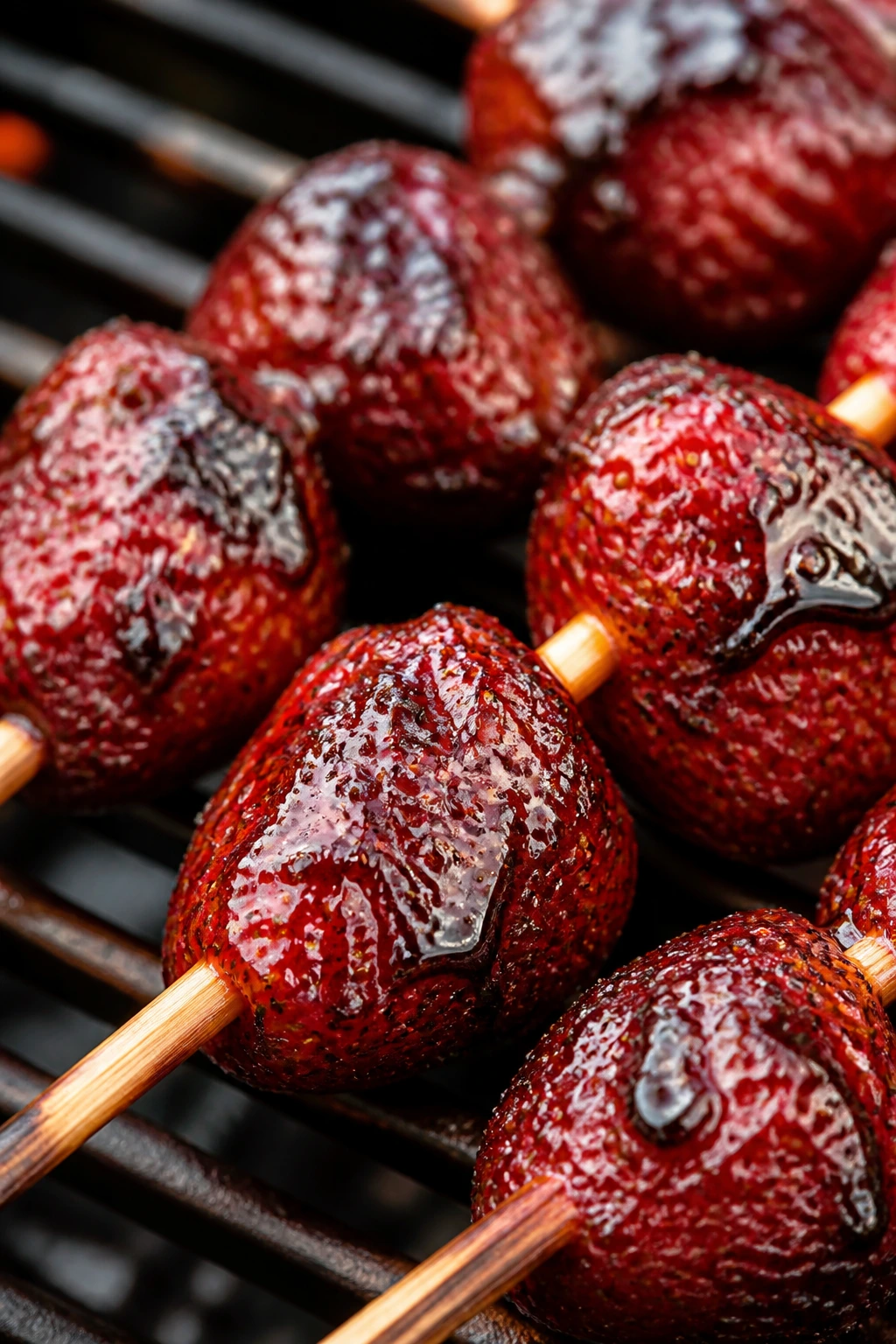
Pitted cherries on the grill taste like they were built for dessert sauce. Vanilla smooths the tartness, and almond gives the fruit a cherry-pie kind of finish.
Why It Works: Cherries blister quickly and only need a few minutes of heat, so they keep their shape if you thread them with care. The vanilla-almond combination makes the fruit taste deeper without turning it into syrup.
Key Ingredients:
- 2 cups sweet cherries, pitted
- 1 tablespoon melted butter
- 1 tablespoon honey
- ½ teaspoon vanilla extract
- ¼ teaspoon almond extract
Quick Steps:
- Heat the grill to medium-high and oil the grates.
- Whisk butter, honey, vanilla, and almond extract.
- Thread the cherries onto skewers with a few berries per skewer.
- Grill 1 minute per side, just until the skins wrinkle.
- Brush with the glaze and serve warm.
Equipment for This Recipe:
- Grill
- Skewers
- Cherry pitter, if you own one
How to Serve This Dish: These are good with yogurt, ice cream, or a spoonful of ricotta. They also make a sharp little topper for grilled cheesecake slices.
Pro Tips for This Recipe:
- Pit the cherries cleanly or they’ll be awkward to eat.
- Use a tighter skewer pattern so the fruit does not spin.
- A little almond extract goes a long way.
Variations on This Dish:
- Bourbon Cherry Skewers: Replace vanilla with a splash of bourbon.
- Spiced Cherry Version: Add a pinch of cinnamon.
Common Mistakes to Avoid with This Dish:
- Don’t use cherries that are too soft and watery.
- Don’t grill them until the skins split open completely.
11. Pear, Ginger, and Honey Skewers
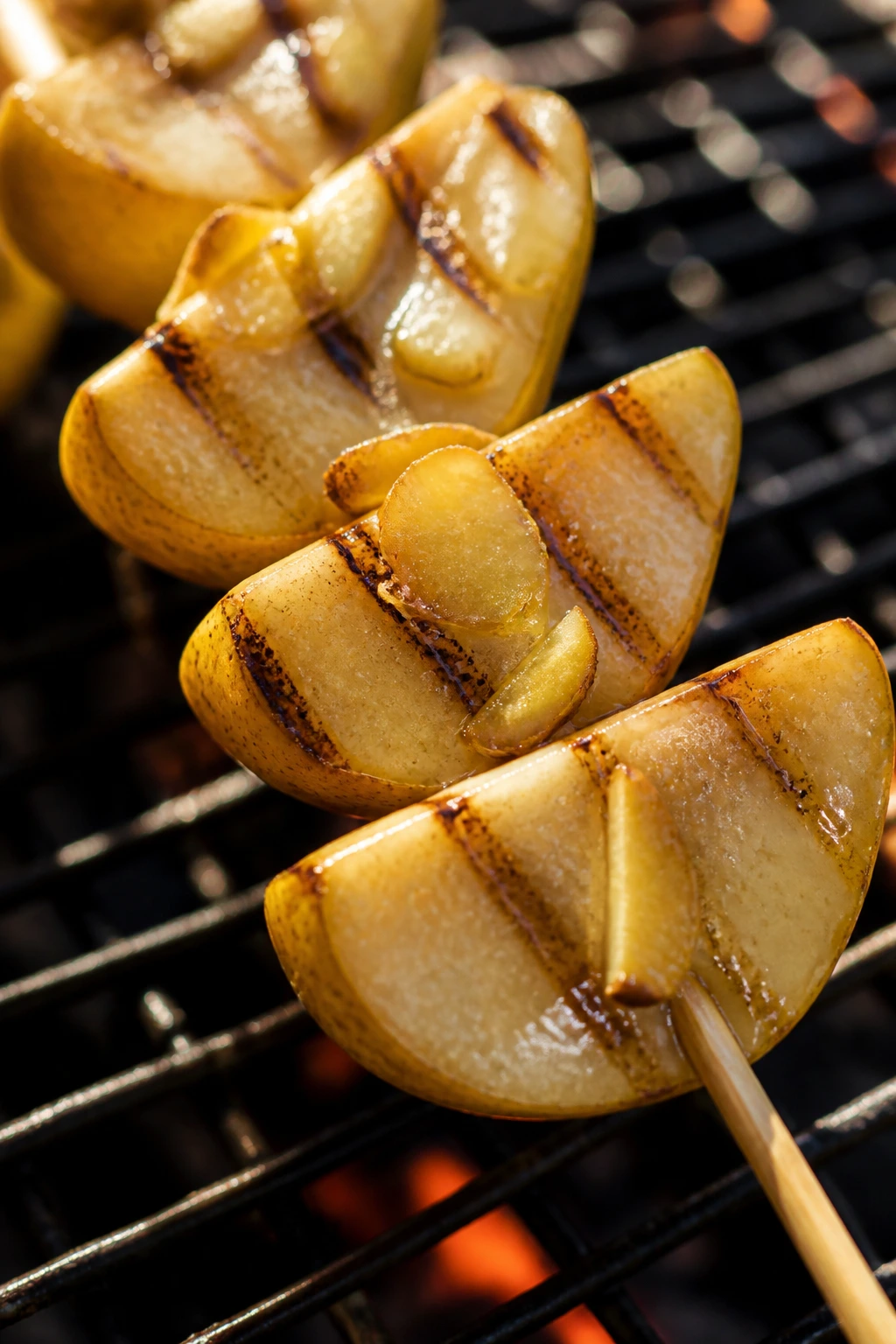
Pears can be a little shy on their own, but heat fixes that. Ginger wakes them up, honey adds shine, and the grill gives the flesh a faint smoky edge.
Why It Works: Firm pears hold shape better than soft ones, and a quick sear draws out the aroma without turning them grainy. Ginger is sharp enough to cut through the sweetness, which keeps the fruit from tasting one-note.
Key Ingredients:
- 2 firm pears, peeled if the skin is thick, cored, and cut into wedges
- 1 tablespoon honey
- 1 teaspoon freshly grated ginger
- 1 tablespoon melted butter
- 1 teaspoon lemon juice
Quick Steps:
- Heat the grill to medium-high and oil the grates.
- Mix honey, ginger, butter, and lemon juice.
- Brush the pear wedges and skewer them.
- Grill 2 minutes per side until lightly marked and tender at the edges.
- Spoon the remaining glaze over the fruit.
Equipment for This Recipe:
- Grill
- Skewers
- Grater or microplane
How to Serve This Dish: Good with plain yogurt and chopped walnuts. For a more savory plate, serve these with roast chicken or pork tenderloin.
Pro Tips for This Recipe:
- Peel pears only if the skin feels thick or waxy.
- Keep the wedges large enough to survive flipping.
- Lemon juice keeps the cut fruit from browning too quickly.
Variations on This Dish:
- Cardamom Pear Skewers: Swap ginger for cardamom.
- Brown Sugar Version: Replace honey with brown sugar and a splash of water.
Common Mistakes to Avoid with This Dish:
- Don’t use pears that are rock-hard; they won’t soften evenly.
- Don’t grill over open flames, or the honey will scorch.
12. Apple, Cinnamon, and Butter Skewers
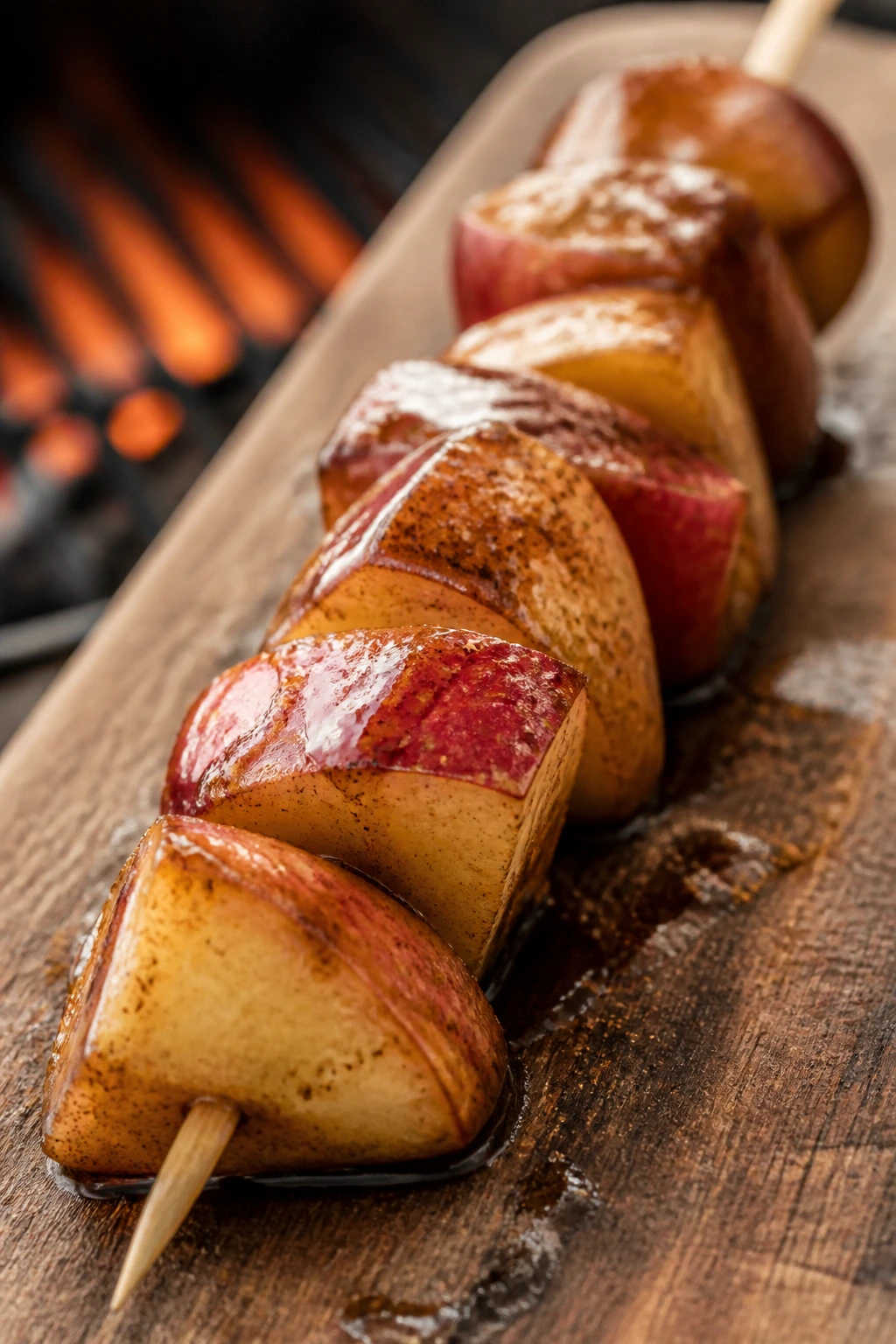
Apples need a little help on the grill, and cinnamon gives them that help with very little drama. Butter makes the outside glossy and keeps the fruit from tasting dry.
Why It Works: Apples are dense, which is useful here; they keep their structure when the grill gets hot. A quick brush of butter and sugar helps the edges brown before the center turns mealy.
Key Ingredients:
- 2 large apples, cored and cut into 1½-inch chunks
- 1 tablespoon melted butter
- 1 tablespoon light brown sugar
- ½ teaspoon cinnamon
- 1 teaspoon lemon juice
Quick Steps:
- Heat the grill to medium and oil the grates.
- Toss the apple chunks with lemon juice.
- Mix butter, brown sugar, and cinnamon.
- Brush and thread the apples onto skewers.
- Grill 2 to 3 minutes per side until marked and tender.
Equipment for This Recipe:
- Grill
- Skewers
- Sharp knife and cutting board
How to Serve This Dish: Serve with caramel dip, yogurt, or a scoop of vanilla ice cream. They also work as a side for pork sausages, which is a very old-fashioned combination for a reason.
Pro Tips for This Recipe:
- Use tart-sweet apples like Honeycrisp or Pink Lady.
- Keep the chunks larger than you think.
- Lemon juice helps the fruit stay bright on the cutting board.
Variations on This Dish:
- Maple Apple Skewers: Swap brown sugar for maple syrup.
- Nutmeg Orchard Version: Add a pinch of nutmeg with the cinnamon.
Common Mistakes to Avoid with This Dish:
- Don’t use apples that turn mealy when cooked.
- Don’t cut them too thin; they’ll fall through the skewer or go soft too fast.
13. Fig, Honey, and Lemon Skewers
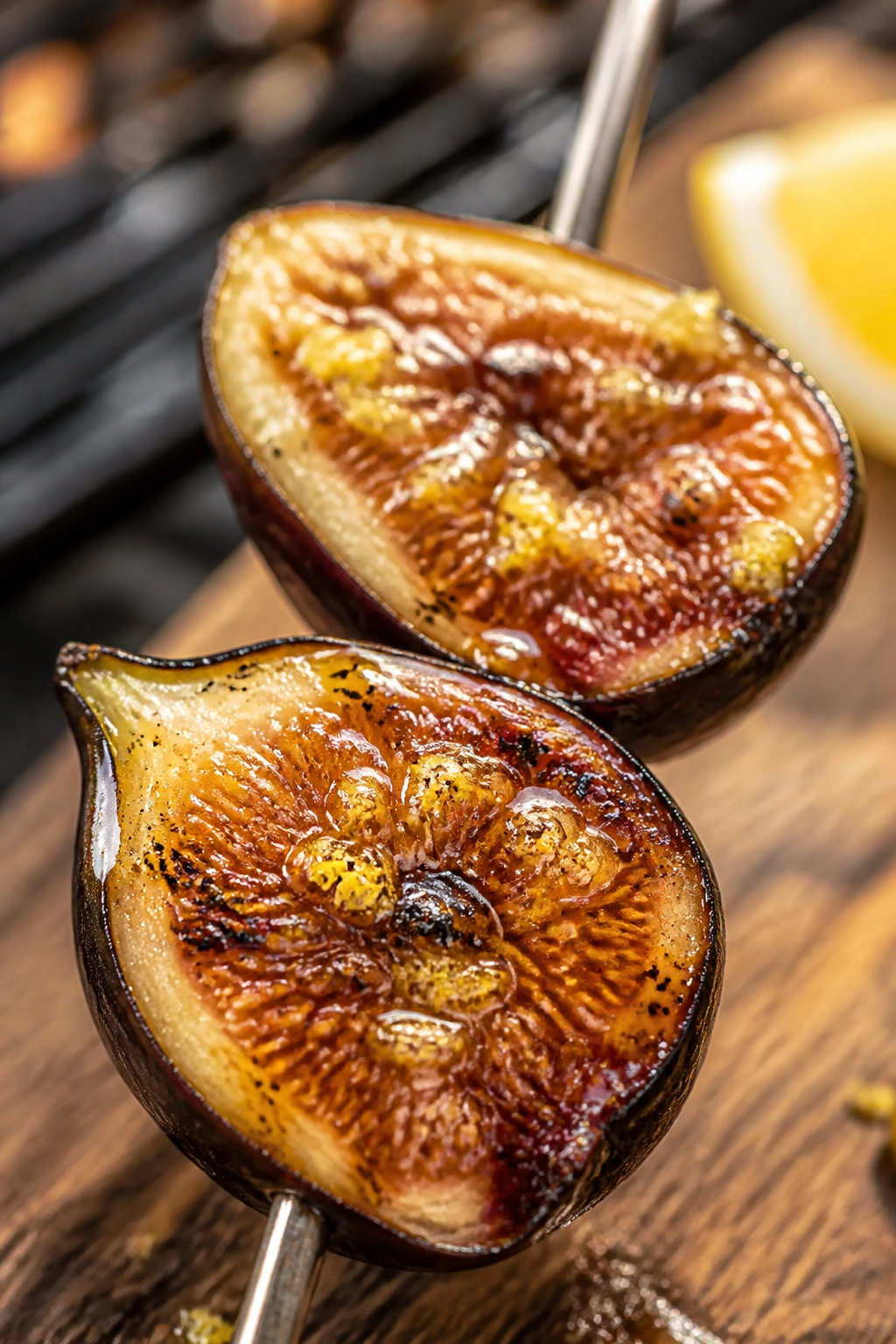
Figs are the fancy-looking fruit that do not actually require much effort. On the grill, they turn jammy at the center and keep that soft, seedy bite that makes them interesting.
Why It Works: Fresh figs grill quickly because they’re already tender, so the goal is to warm and caramelize, not cook. Honey and lemon keep the flavor clean instead of sticky.
Key Ingredients:
- 8 fresh figs, halved
- 1 tablespoon honey
- 1 tablespoon olive oil
- 1 teaspoon lemon zest
- Pinch of flaky salt
Quick Steps:
- Heat the grill to medium and oil the grates.
- Stir honey, olive oil, and lemon zest together.
- Brush the cut sides of the figs.
- Thread and grill cut side down for 1 minute, then flip for 30 seconds.
- Finish with flaky salt.
Equipment for This Recipe:
- Grill
- Skewers
- Small brush
How to Serve This Dish: These are very good with goat cheese if you want something richer nearby. They also belong on a platter with prosciutto and crusty bread.
Pro Tips for This Recipe:
- Choose figs that feel heavy and intact.
- Halves are easier than whole figs for grilling.
- Salt at the end matters more than more honey.
Variations on This Dish:
- Honeyed Figs with Thyme: Add a few thyme leaves to the glaze.
- Balsamic Fig Skewers: Drizzle with a little reduced balsamic after grilling.
Common Mistakes to Avoid with This Dish:
- Don’t use figs that are split or leaking.
- Don’t leave them on the grill long enough to dry out around the edges.
14. Kiwi, Strawberry, and Mint Skewers
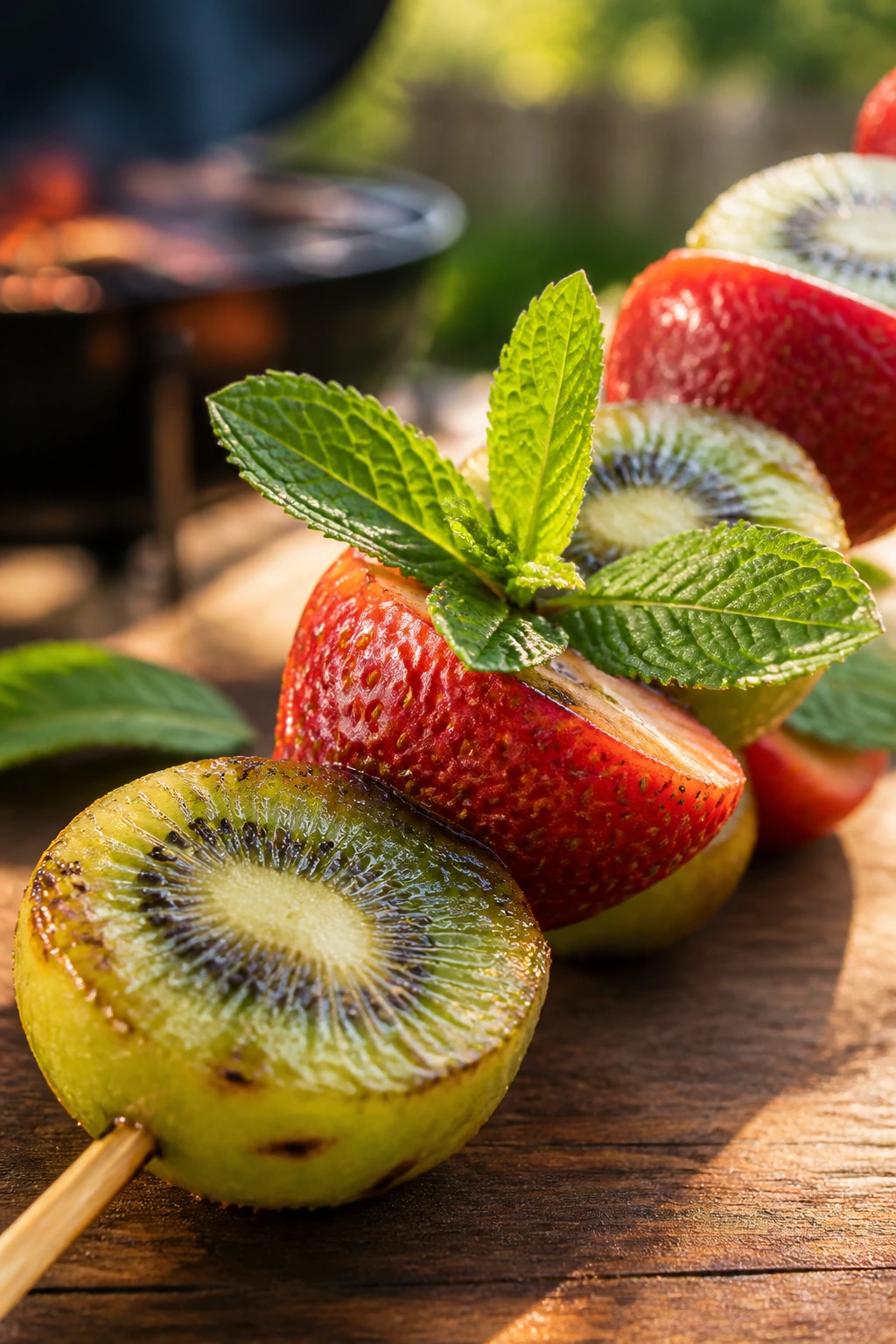
Kiwi brings sharpness, strawberries bring sweetness, and mint keeps the whole skewer bright. The result tastes chilled even when it’s warm from the grill.
Why It Works: Kiwis are sturdy enough to grill for a very short time, especially when paired with firmer strawberries. Mint should be added at the end so it stays fresh and aromatic.
Key Ingredients:
- 2 kiwis, peeled and cut into thick rounds
- 1 cup large strawberries, hulled
- 1 tablespoon honey
- 1 teaspoon lime juice
- 1 tablespoon torn mint leaves
Quick Steps:
- Heat the grill to medium-high and oil the grates.
- Whisk honey and lime juice together.
- Brush the fruit lightly and thread onto skewers.
- Grill 30 to 45 seconds per side.
- Sprinkle with mint just before serving.
Equipment for This Recipe:
- Grill
- Skewers
- Small bowl for glaze
How to Serve This Dish: Good with yogurt parfaits or as a bright side to grilled fish. They’re also one of the better choices if you want something that still feels fresh rather than dessert-heavy.
Pro Tips for This Recipe:
- Use kiwi that is ripe but still firm.
- If strawberries are huge, halve them to match the kiwi.
- Mint should stay cold until the last second.
Variations on This Dish:
- Lime-Zest Version: Add ½ teaspoon zest to the glaze.
- Berry Swap: Replace kiwi with blueberries if you want a smaller-bite version.
Common Mistakes to Avoid with This Dish:
- Don’t use kiwi that’s too soft; it smears on the skewer.
- Don’t grill the strawberries long enough to collapse.
15. Cantaloupe, Basil, and Lime Skewers
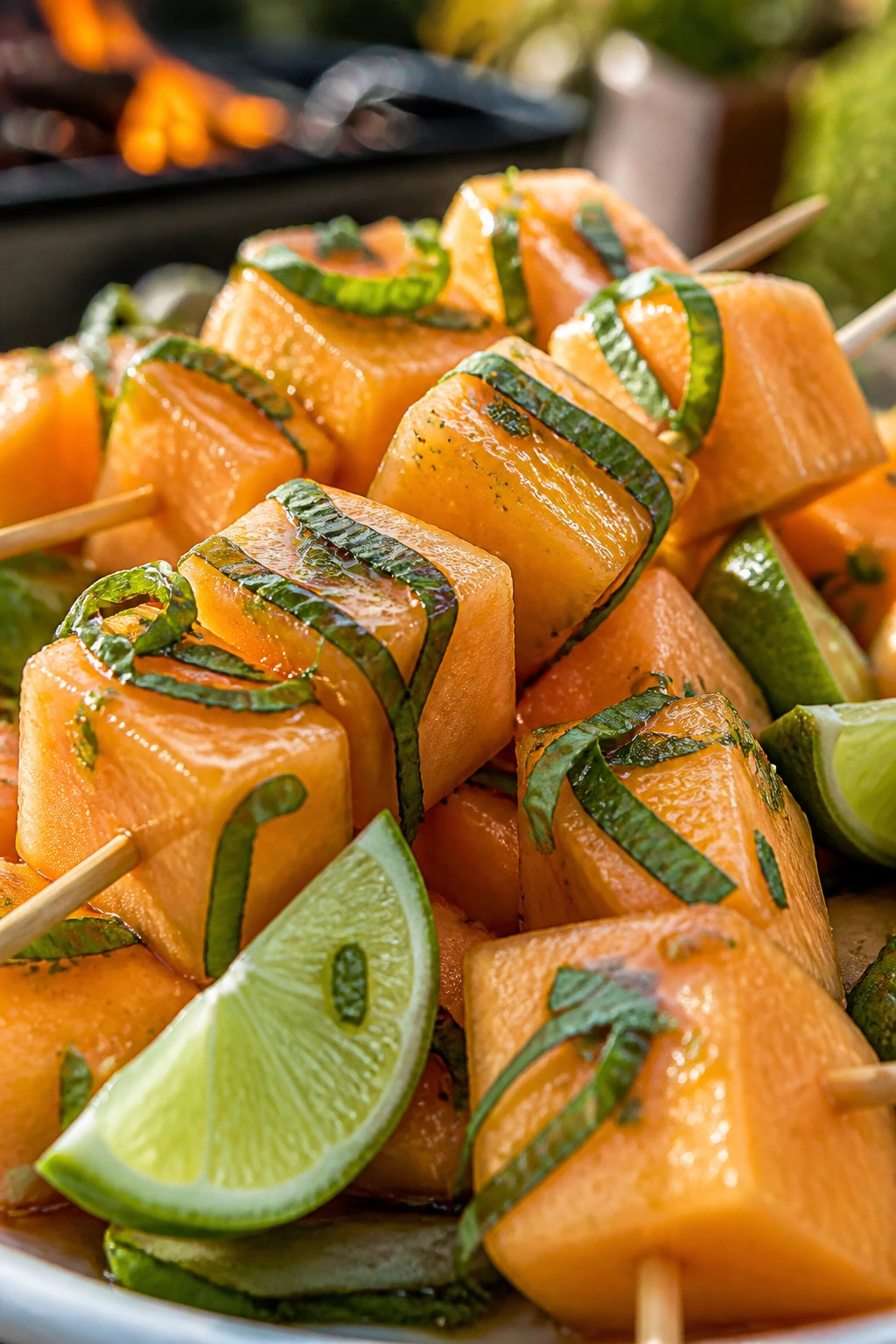
Cantaloupe gets less sleepy once it hits heat. Basil gives it a green, peppery note, and lime wakes up every piece on the skewer.
Why It Works: Cantaloupe is mellow, so the grill’s job is to put a little edge on it. A quick brush of citrus keeps the fruit from tasting flat, and basil brings a clean finish that reads almost savory.
Key Ingredients:
- 3 cups cantaloupe, cut into 1½-inch cubes
- 1 tablespoon olive oil
- 1 tablespoon honey
- 1 teaspoon lime juice
- 1 tablespoon thinly sliced basil
Quick Steps:
- Heat the grill to medium-high and oil the grates.
- Stir olive oil, honey, and lime juice together.
- Toss the melon lightly and thread onto skewers.
- Grill 30 to 60 seconds per side.
- Add basil after grilling.
Equipment for This Recipe:
- Grill
- Skewers
- Cutting board and sharp knife
How to Serve This Dish: These work as a palate cleanser between richer dishes or as part of a fruit platter with yogurt dip. A few cracks of black pepper make them surprisingly good.
Pro Tips for This Recipe:
- Chill the cantaloupe before skewering.
- Use firm cubes so they do not slump.
- Basil goes on after the grill, not before.
Variations on This Dish:
- Peppery Melon Skewers: Add a few grinds of black pepper.
- Mint-Lime Version: Swap basil for mint.
Common Mistakes to Avoid with This Dish:
- Don’t use overripe melon; it turns watery fast.
- Don’t leave it on the grates long enough to lose its shape.
16. Honeydew, Green Grape, and Mint Skewers
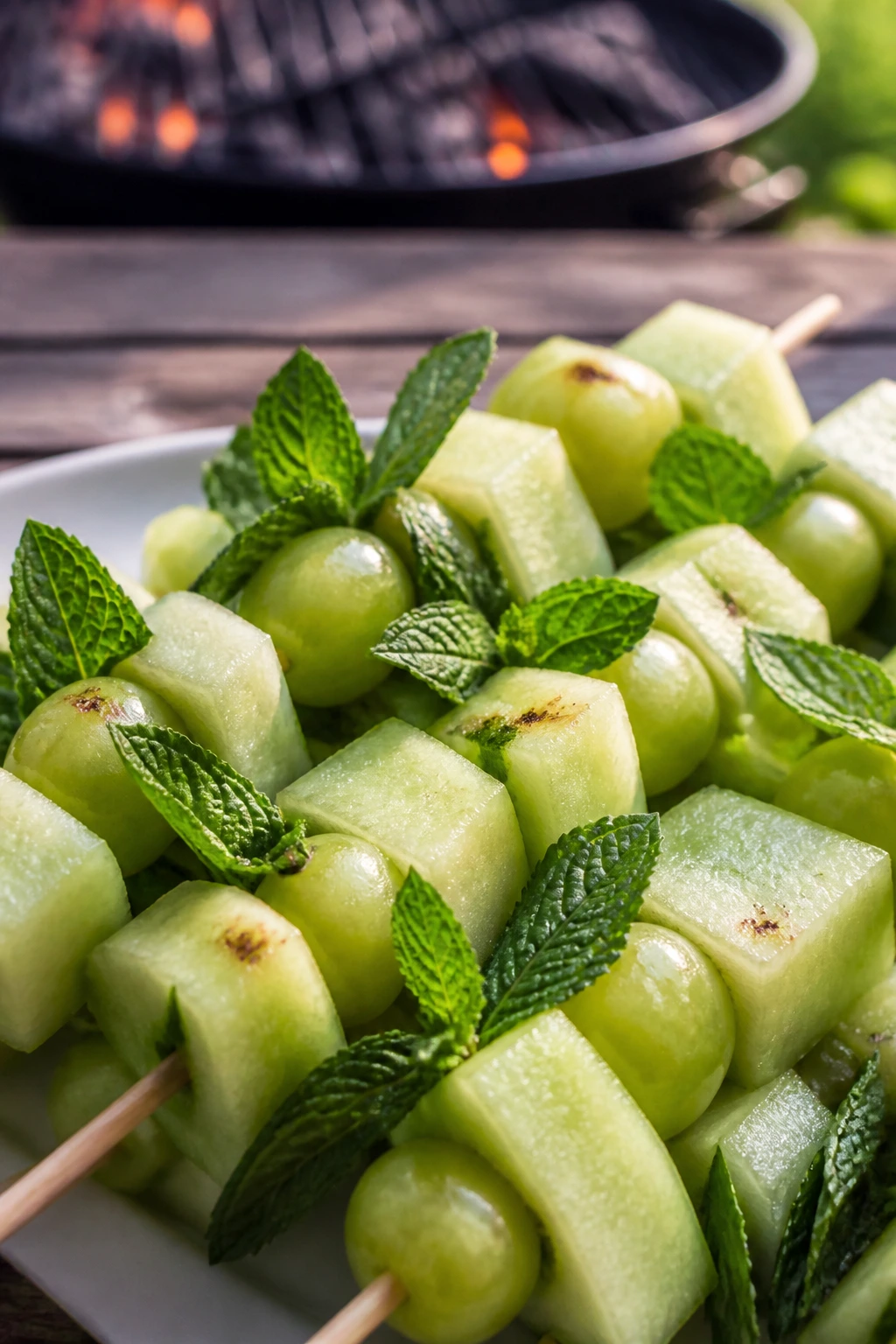
Honeydew and grapes make a colder, cleaner kind of sweetness. Mint pulls the whole thing together and keeps it from feeling heavy.
Why It Works: Green grapes blister before they burst if the heat is controlled, and honeydew softens enough to pick up grill marks without turning mushy. Mint is the right herb here because it tastes cool even after the fruit warms.
Key Ingredients:
- 3 cups honeydew, cut into 1½-inch cubes
- 1 cup green grapes
- 1 tablespoon lime juice
- 1 tablespoon honey
- 1 tablespoon chopped mint
Quick Steps:
- Heat the grill to medium and oil the grates.
- Toss the fruit with lime juice and honey.
- Thread the honeydew and grapes alternately onto skewers.
- Grill 1 minute per side until lightly marked.
- Scatter mint over the top.
Equipment for This Recipe:
- Grill
- Skewers
- Small bowl
How to Serve This Dish: Good chilled with a spoonful of yogurt or alongside a salty cheese board. They’re also nice when the rest of the meal is smoky and rich.
Pro Tips for This Recipe:
- Dry the grapes so the glaze sticks.
- Keep the honeydew chunks firm and cold before grilling.
- If the grapes are large, use a skewer through the center so they do not roll.
Variations on This Dish:
- Lemon Honeydew Version: Swap lime for lemon.
- Cucumber-Like Finish: Add a tiny pinch of salt if you want a cleaner, cooler flavor.
Common Mistakes to Avoid with This Dish:
- Don’t leave the grapes unattended; they can split suddenly.
- Don’t cut the honeydew too small, or it will soften too fast.
17. Peach, Blueberry, and Basil Skewers
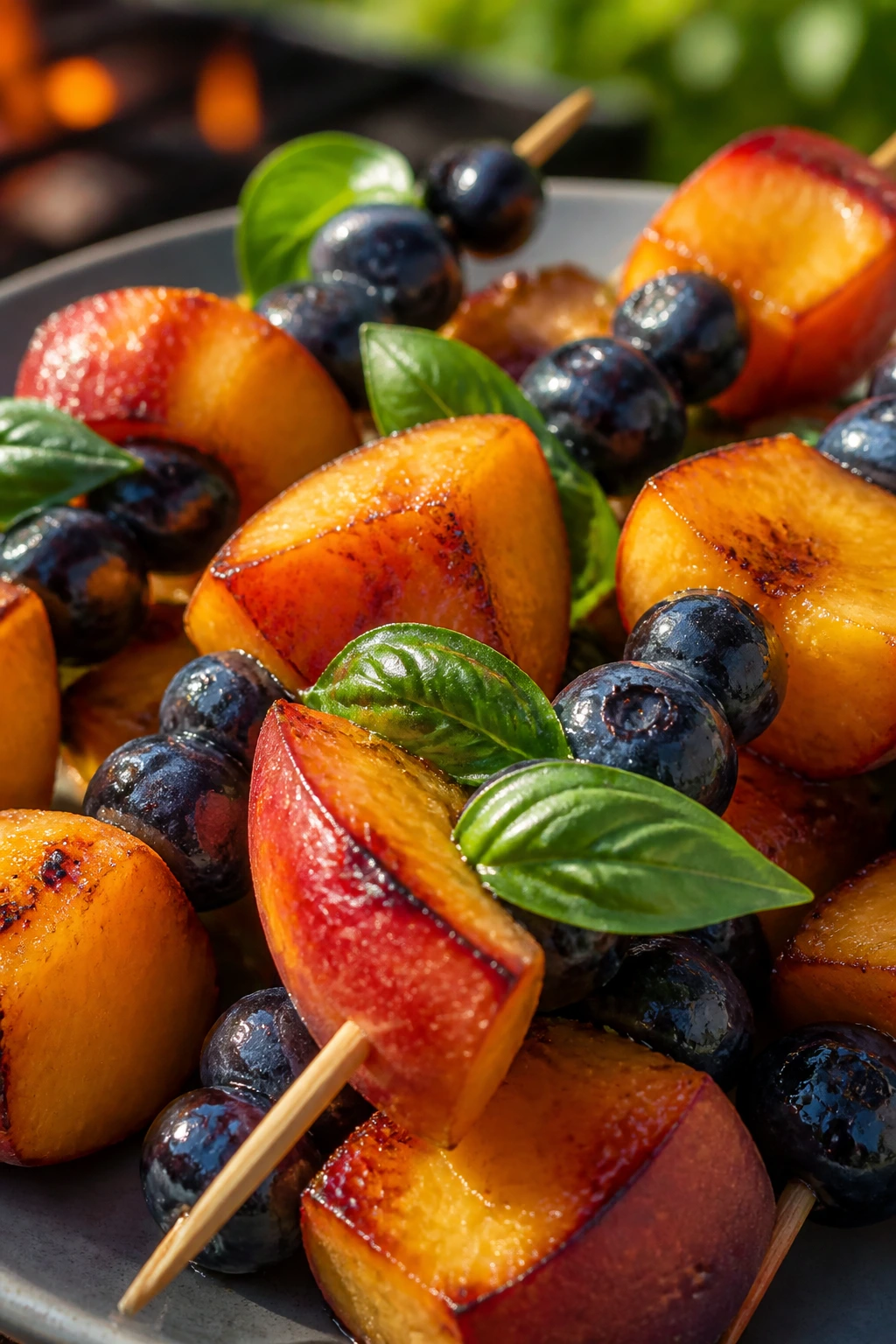
Blueberries are the outlier here, and that’s the point. Paired with peach and basil, they give you a skewer that tastes like late-summer fruit salad with a little char on the edges.
Why It Works: Peach chunks provide the structure, while the blueberries sit in the gaps and pick up heat fast. Basil adds a green finish that keeps the fruit from turning syrupy.
Key Ingredients:
- 2 ripe peaches, cut into chunks
- 1 cup large blueberries
- 1 tablespoon honey
- 1 teaspoon lemon juice
- 1 tablespoon chopped basil
Quick Steps:
- Heat the grill to medium-high and oil the grates.
- Mix honey and lemon juice.
- Thread peaches and blueberries alternately onto skewers.
- Grill 1 minute per side, turning gently.
- Add basil after grilling.
Equipment for This Recipe:
- Grill
- Skewers
- Small brush
How to Serve This Dish: Spoon these over yogurt or serve with pound cake. They’re also nice on a brunch board with salty bacon, which sounds odd until you try it.
Pro Tips for This Recipe:
- Use the biggest blueberries you can find.
- Keep the peach chunks slightly larger than the berries.
- Basil burns if you grill it too early.
Variations on This Dish:
- Minted Berry Skewers: Swap basil for mint.
- Vanilla Peach Version: Add ¼ teaspoon vanilla extract to the glaze.
Common Mistakes to Avoid with This Dish:
- Don’t use tiny blueberries; they fall through the gaps.
- Don’t over-stir when flipping or the berries will crack open.
18. Papaya, Lime, and Toasted Coconut Skewers
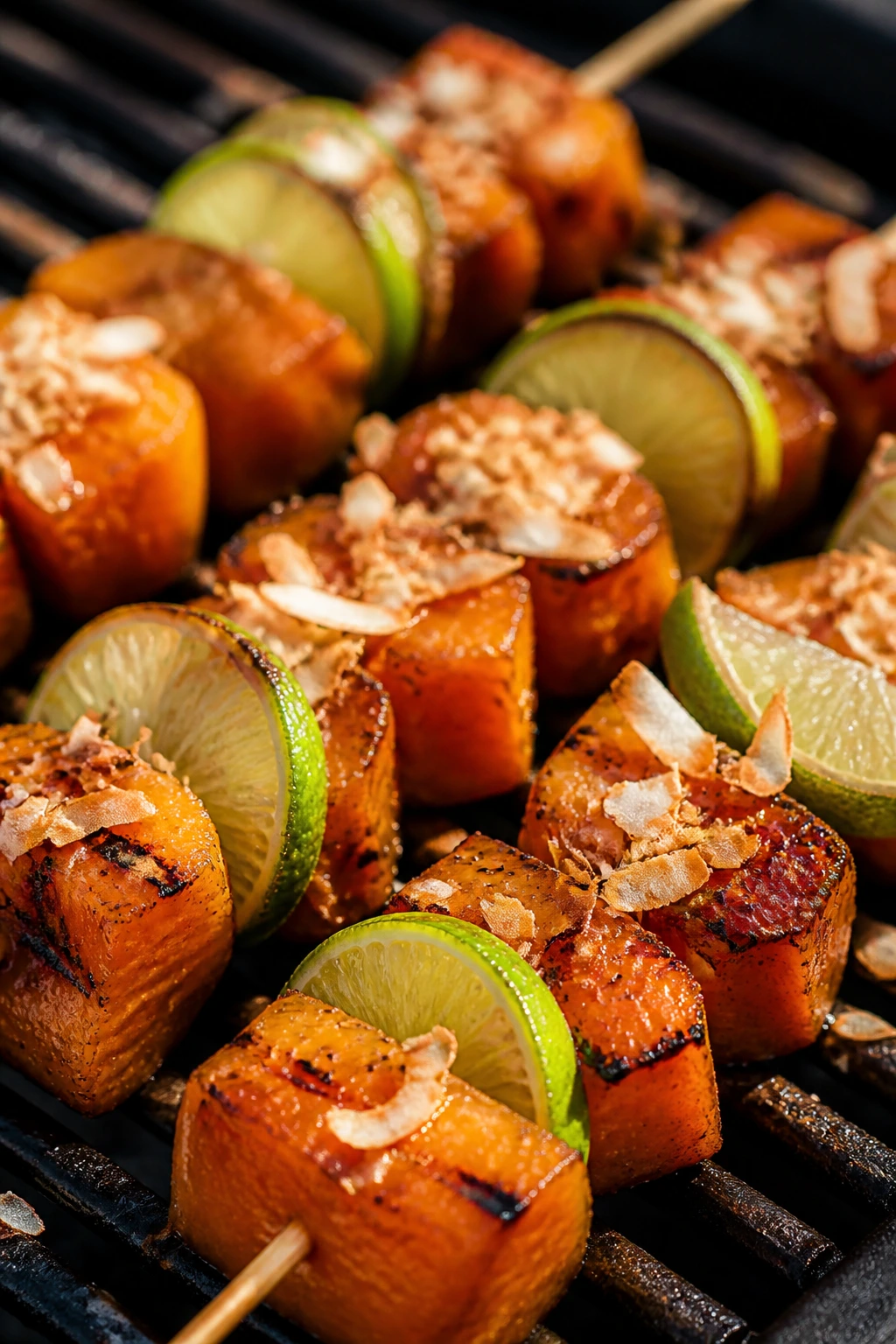
Papaya has a soft, tropical sweetness that gets richer when it touches the grill. Lime keeps it from feeling heavy, and toasted coconut gives the whole thing a dry, nutty finish.
Why It Works: Papaya is tender enough to grill quickly but still keeps shape in thick chunks. Coconut works here because it adds crunch and a roasted note that the fruit itself does not have.
Key Ingredients:
- 3 cups papaya, peeled, seeded, and cut into thick chunks
- 1 tablespoon coconut oil
- 1 tablespoon lime juice
- 1 tablespoon honey
- 2 tablespoons toasted coconut
Quick Steps:
- Heat the grill to medium-high and oil the grates.
- Toss papaya with coconut oil, lime juice, and honey.
- Thread the chunks onto skewers.
- Grill 1 minute per side until lightly marked.
- Scatter toasted coconut over the top.
Equipment for This Recipe:
- Grill
- Skewers
- Paring knife
How to Serve This Dish: Good with coconut yogurt or as a topping for vanilla ice cream. A little lime zest over the top keeps the coconut from taking over.
Pro Tips for This Recipe:
- Use papaya that smells sweet but still feels firm.
- Toast the coconut in a dry pan first.
- Chill the fruit before grilling if your kitchen is warm.
Variations on This Dish:
- Chili-Papaya Skewers: Add a pinch of chili powder.
- Pineapple Swap: Replace half the papaya with pineapple for more bite.
Common Mistakes to Avoid with This Dish:
- Don’t use papaya that’s already too soft.
- Don’t pile on too much coconut before grilling; it can burn.
19. Dragon Fruit, Pineapple, and Ginger Skewers
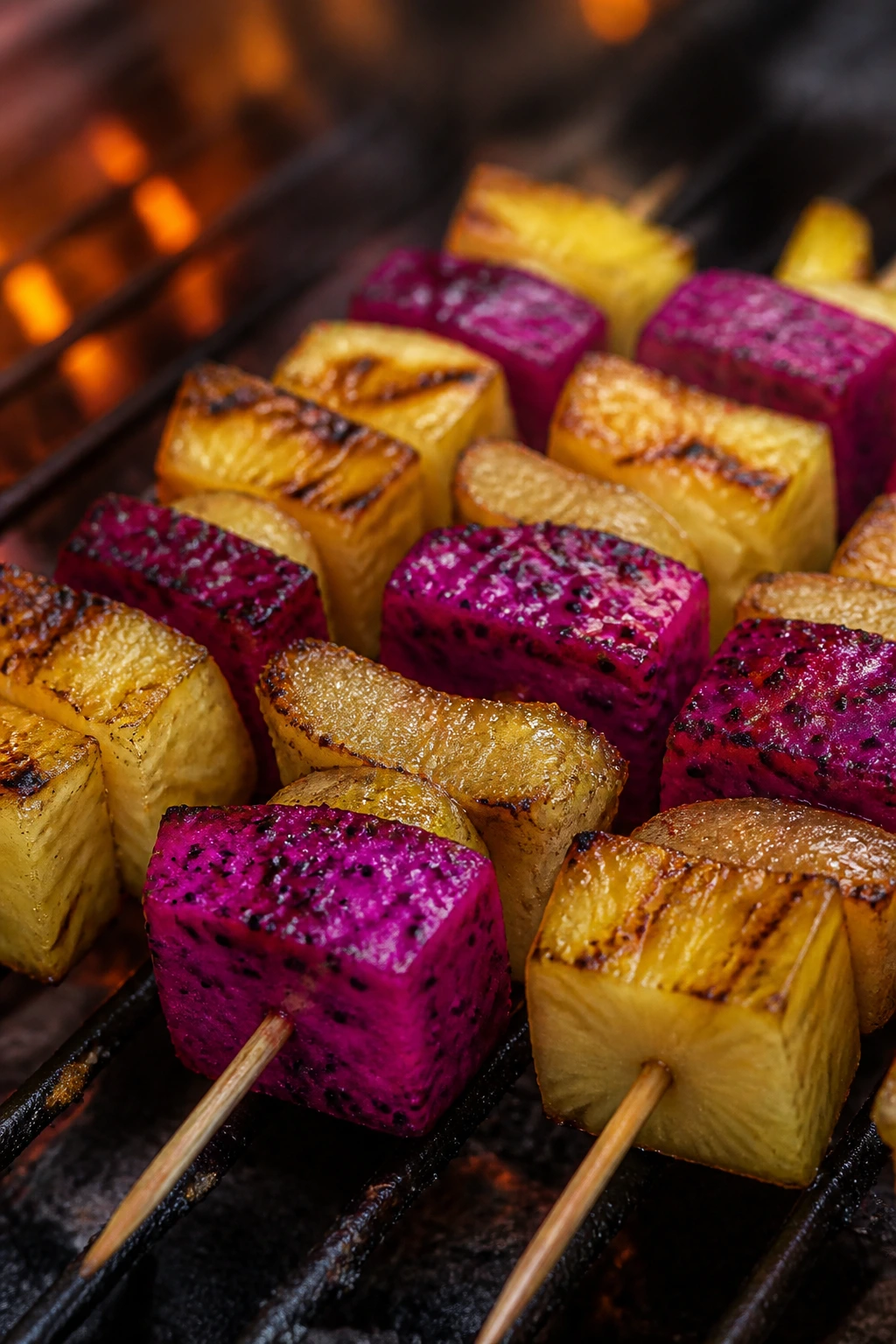
Dragon fruit looks dramatic and can taste a little quiet unless you wake it up. Pineapple and ginger do the waking.
Why It Works: Dragon fruit has a mild flavor and a delicate texture, so it benefits from a stronger partner. Pineapple brings sugar and acid; ginger adds the snap.
Key Ingredients:
- 2 cups dragon fruit, peeled and cut into thick cubes
- 1 cup pineapple chunks
- 1 tablespoon honey
- 1 teaspoon grated fresh ginger
- 1 tablespoon lime juice
Quick Steps:
- Heat the grill to medium and oil the grates.
- Stir honey, ginger, and lime juice together.
- Toss the fruit gently and thread onto skewers.
- Grill 45 seconds to 1 minute per side.
- Spoon the glaze over the skewers.
Equipment for This Recipe:
- Grill
- Skewers
- Fine grater
How to Serve This Dish: Serve with yogurt or as part of a bright fruit plate. The pink flesh of dragon fruit makes the platter look lively even before the first bite.
Pro Tips for This Recipe:
- Buy dragon fruit that feels firm, not spongy.
- Use pineapple chunks that are slightly larger than the dragon fruit.
- Ginger should be fresh; powdered ginger tastes dusty here.
Variations on This Dish:
- Coconut Dragon Fruit: Add toasted coconut at the end.
- Mint-Ginger Version: Add mint leaves after grilling.
Common Mistakes to Avoid with This Dish:
- Don’t overgrill dragon fruit; it turns limp fast.
- Don’t use tiny pineapple pieces, or the skewer will feel unbalanced.
20. Persimmon, Maple, and Sesame Skewers
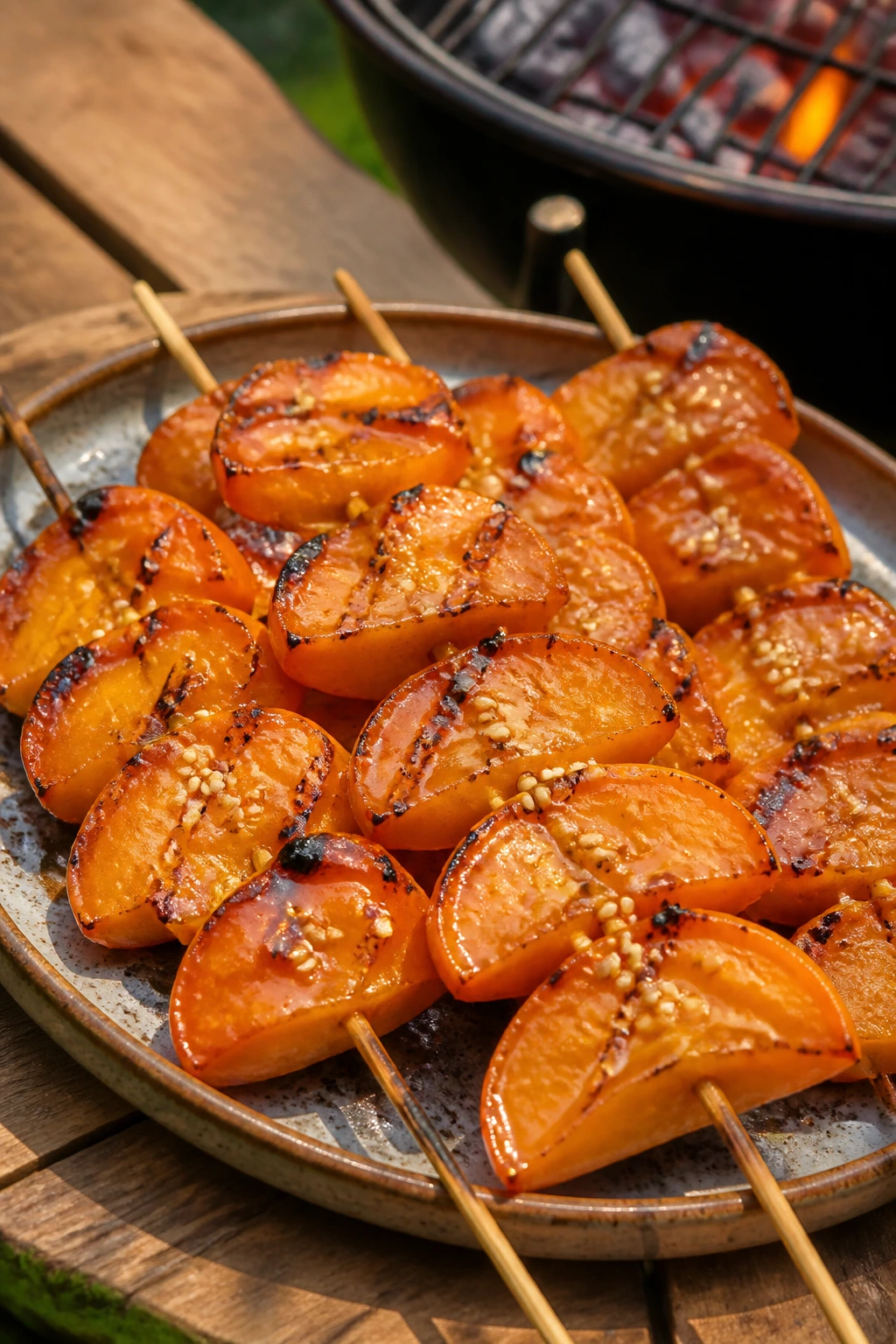
Fuyu persimmons are one of the easiest fruits to overlook and one of the best to grill. They keep a clean bite, take on color fast, and like maple and sesame in a way that feels a little unexpected.
Why It Works: Fuyu persimmons stay firm when ripe, which makes them perfect for skewering. Maple caramelizes on the surface, and sesame adds a nutty finish that keeps the fruit from tasting too soft.
Key Ingredients:
- 2 Fuyu persimmons, peeled if needed and cut into wedges
- 1 tablespoon maple syrup
- 1 tablespoon melted butter
- 1 teaspoon toasted sesame seeds
- Pinch of salt
Quick Steps:
- Heat the grill to medium-high and oil the grates.
- Mix maple, butter, and salt.
- Brush the persimmon wedges and skewer them.
- Grill 1½ to 2 minutes per side.
- Finish with sesame seeds.
Equipment for This Recipe:
- Grill
- Skewers
- Small brush
How to Serve This Dish: These are good with yogurt or a scoop of vanilla ice cream. They also sit well beside roasted nuts on a snack board.
Pro Tips for This Recipe:
- Use Fuyu, not the soft Hachiya type.
- Keep the wedges thick enough to flip without breaking.
- Toast the sesame seeds before using them.
Variations on This Dish:
- Ginger Persimmon Skewers: Add a little grated ginger to the glaze.
- Cinnamon-Sesame Version: Add a pinch of cinnamon.
Common Mistakes to Avoid with This Dish:
- Don’t use overripe persimmons; they will smear.
- Don’t skip the salt. Persimmon can taste hollow without it.
21. Kumquat, Honey, and Cardamom Skewers
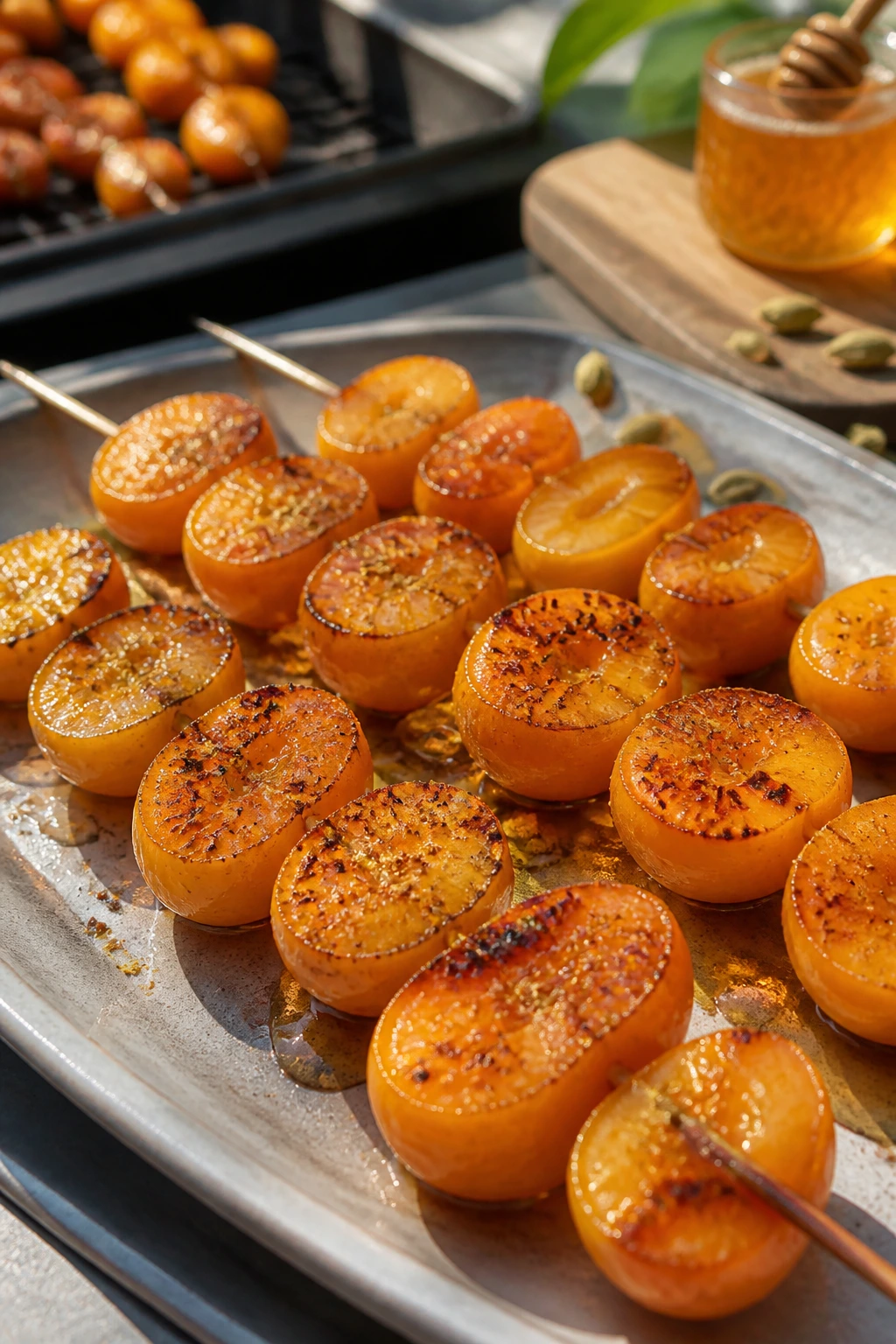
Kumquats bring a bright, bitter-sweet note that behaves differently from the softer fruits on this list. They look tiny, but the peel caramelizes fast and gives the skewers a clean citrus bite.
Why It Works: Kumquats can go on the grill whole, which makes them one of the easiest fruits to handle once you know the trick. Honey smooths the peel’s bitterness, and cardamom adds warmth.
Key Ingredients:
- 2 cups kumquats, halved and seeded
- 1 tablespoon honey
- 1 tablespoon olive oil
- ¼ teaspoon ground cardamom
- Pinch of salt
Quick Steps:
- Heat the grill to medium and oil the grates.
- Stir honey, olive oil, cardamom, and salt.
- Thread the kumquats cut side out.
- Grill 1 minute per side until the peel blister softens.
- Serve warm, glaze on top.
Equipment for This Recipe:
- Grill
- Skewers
- Small knife for seeding
How to Serve This Dish: These work well beside grilled chicken or salmon if you want a citrus side. They’re also sharp enough to wake up a cheese board.
Pro Tips for This Recipe:
- Seed them before grilling or they’ll eat like little citrus grenades.
- Use a small skewer so they do not wobble.
- Cardamom should stay light; too much makes the fruit taste dusty.
Variations on This Dish:
- Orange-Kumquat Mix: Add orange segments if you want a softer citrus note.
- Mint Finish: Top with torn mint for extra lift.
Common Mistakes to Avoid with This Dish:
- Don’t leave the kumquats on too long or the peel turns chewy.
- Don’t use syrup alone; you need a little oil to help the glaze spread.
22. Orange, Vanilla, and Cinnamon Skewers
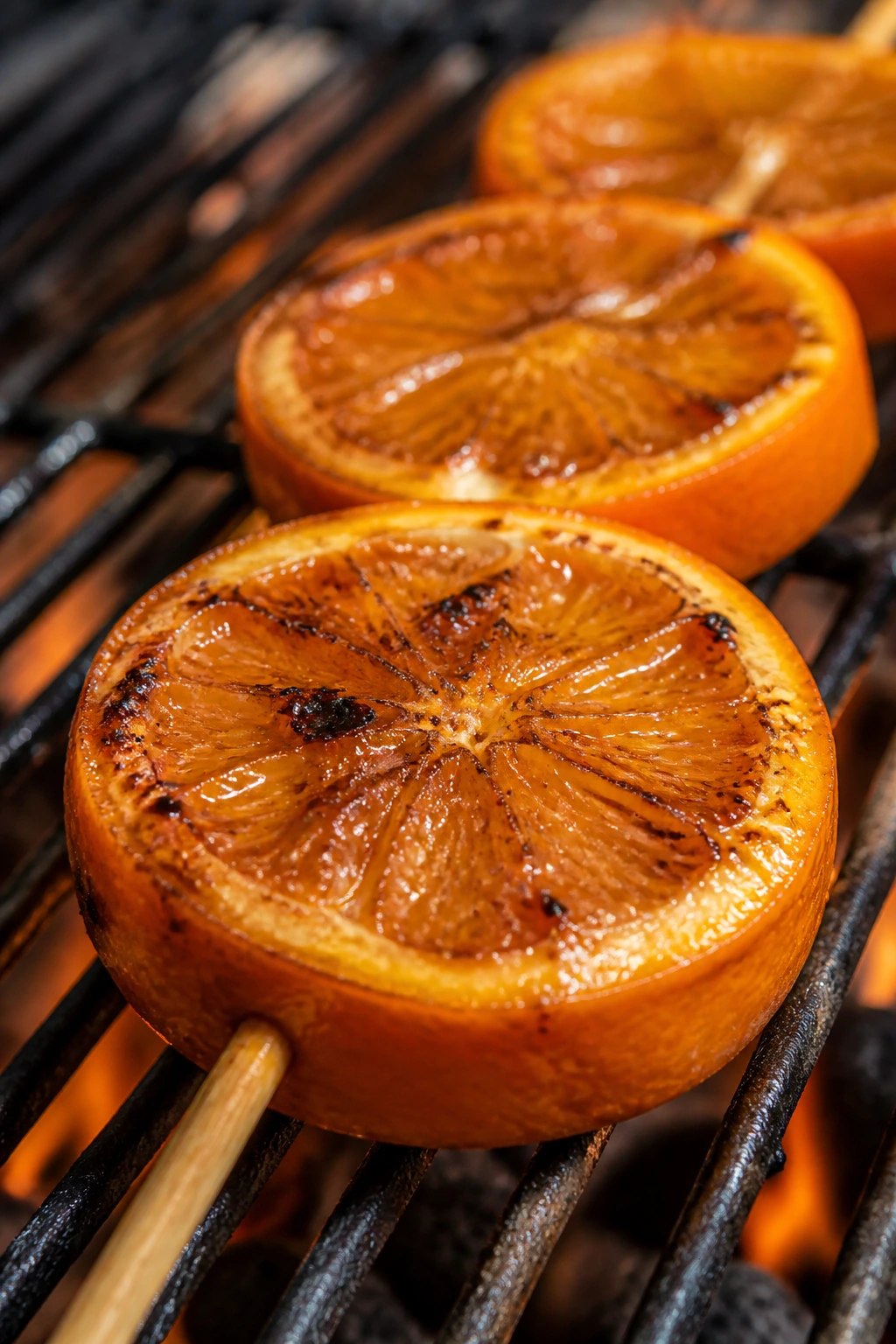
Thick orange pieces on the grill taste closer to marmalade than fresh citrus, in a good way. Vanilla rounds out the sharpness, and cinnamon turns the whole thing into a warm, fragrant plate.
Why It Works: Oranges need a heavier hand than berries or peaches, because the pith and juice both react to heat quickly. If you cut them thick and keep the cook time short, you get aroma without dryness.
Key Ingredients:
- 2 large oranges, peeled and cut into thick rounds or wedges
- 1 tablespoon honey
- ½ teaspoon vanilla extract
- ¼ teaspoon cinnamon
- Pinch of salt
Quick Steps:
- Heat the grill to medium and oil the grates.
- Mix honey, vanilla, cinnamon, and salt.
- Thread the orange pieces carefully.
- Grill 45 seconds per side.
- Spoon the glaze over the top.
Equipment for This Recipe:
- Grill
- Skewers
- Sharp knife
How to Serve This Dish: These are nice with yogurt or as a palate-cleansing fruit course. A few crushed pistachios on top give them a little crunch.
Pro Tips for This Recipe:
- Keep the pieces thick so the juice does not vanish.
- Use navel oranges or another sweet variety.
- Remove seeds before grilling if you want a cleaner bite.
Variations on This Dish:
- Citrus Spice Skewers: Add a pinch of cardamom.
- Honey Mint Version: Finish with mint instead of cinnamon.
Common Mistakes to Avoid with This Dish:
- Don’t cut the orange pieces too thin.
- Don’t push them around the grill too much or they’ll tear.
23. Grapefruit, Honey, and Rosemary Skewers
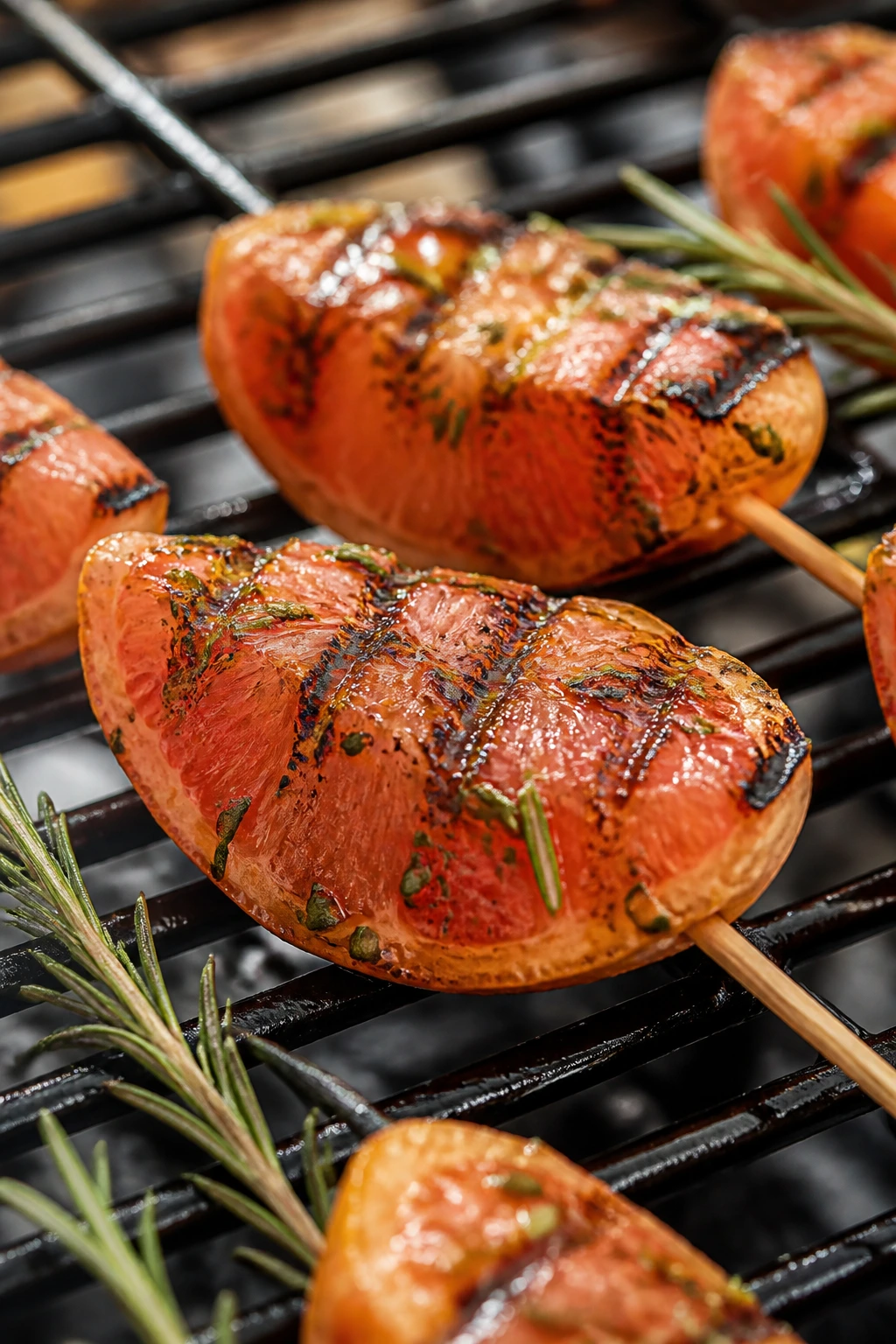
Grapefruit is the bold cousin in the citrus family. On the grill, its bitterness softens, and rosemary gives it a piney edge that feels sharper than dessert but sweeter than a side salad.
Why It Works: Brief heat mellows grapefruit’s sharpness and lets the honey cling to the cut surface. Rosemary adds enough scent that you do not need much else.
Key Ingredients:
- 2 grapefruits, peeled and cut into thick wedges
- 1 tablespoon honey
- 1 tablespoon olive oil
- 1 teaspoon chopped rosemary
- Pinch of flaky salt
Quick Steps:
- Heat the grill to medium and oil the grates.
- Stir honey, olive oil, and rosemary together.
- Brush the grapefruit wedges lightly.
- Grill 30 to 45 seconds per side.
- Finish with flaky salt.
Equipment for This Recipe:
- Grill
- Skewers
- Small bowl and brush
How to Serve This Dish: Serve these with brunch, next to yogurt, or as a sharp finish after rich grilled food. They also do fine on their own with a little extra honey.
Pro Tips for This Recipe:
- Use thick wedges so they do not collapse.
- Rosemary should be finely chopped.
- Salt at the end keeps the bitterness in check.
Variations on This Dish:
- Honey-Lime Grapefruit: Swap rosemary for lime zest.
- Pink Citrus Version: Mix grapefruit with orange for less bite.
Common Mistakes to Avoid with This Dish:
- Don’t grill grapefruit too long or it becomes pithy and dry.
- Don’t use too much rosemary; the woodsy flavor can take over.
24. Watermelon, Cantaloupe, and Honeydew Skewers
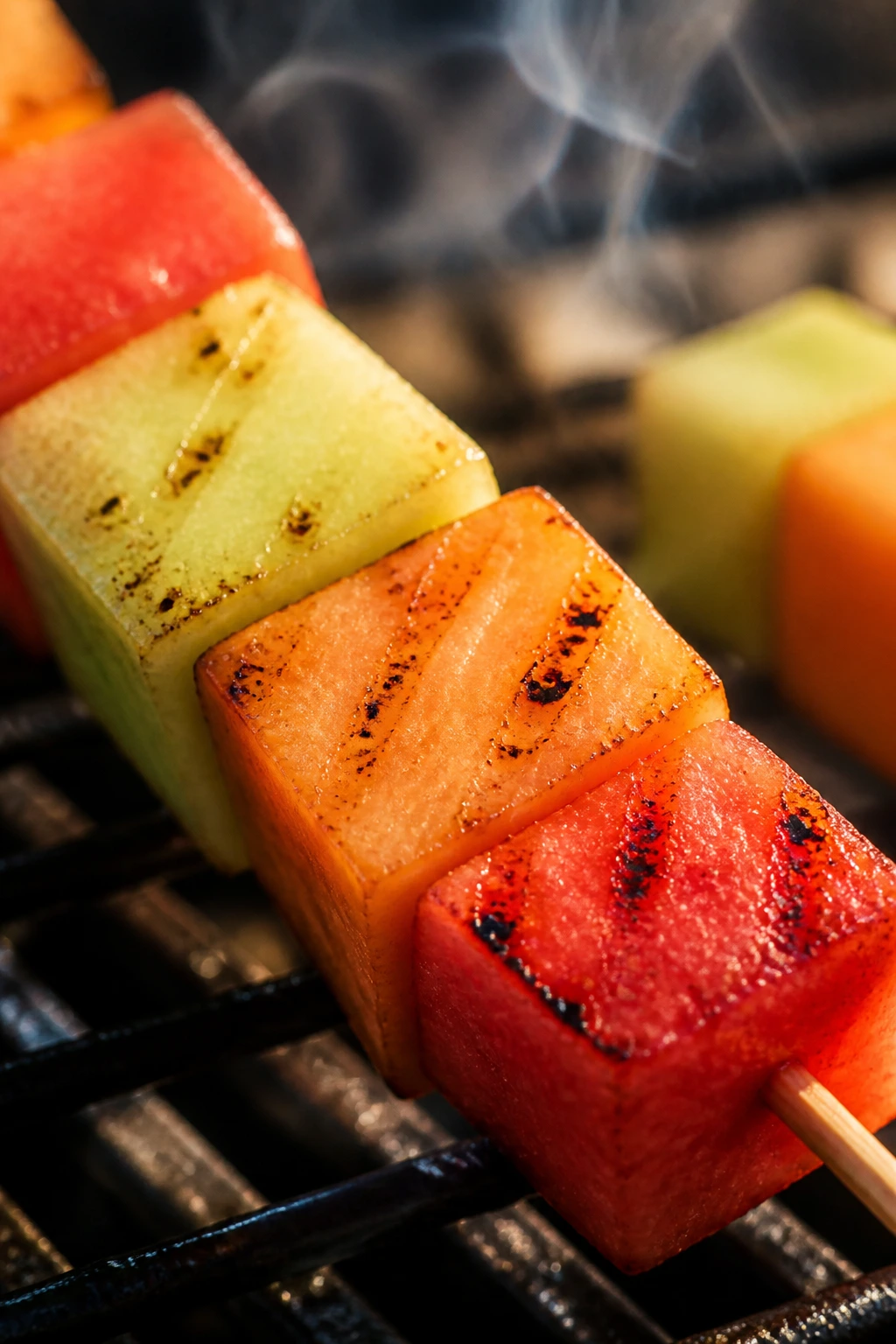
A melon trio gives you color first, sweetness second, and cool texture everywhere else. The grill rounds out the edges without making the fruit feel cooked through.
Why It Works: Each melon behaves a little differently, but all three like short, high heat. The point is to warm the surface and sharpen the sweetness, not to melt the fruit into juice.
Key Ingredients:
- 1 cup watermelon cubes
- 1 cup cantaloupe cubes
- 1 cup honeydew cubes
- 1 tablespoon lime juice
- 1 tablespoon chopped mint
Quick Steps:
- Heat the grill to medium-high and oil the grates.
- Pat the melon dry and toss with lime juice.
- Thread the cubes in alternating colors.
- Grill 30 to 45 seconds per side.
- Add mint once off the grill.
Equipment for This Recipe:
- Grill
- Skewers
- Paper towels
How to Serve This Dish: These are the platter I reach for when I need something cool next to smoky meat. They’re also good with a light yogurt dip.
Pro Tips for This Recipe:
- Use firm melon and dry it well before grilling.
- Keep the cubes large.
- Mint goes on after the heat, not before.
Variations on This Dish:
- Salted Melon Skewers: Add a pinch of flaky salt.
- Basil Swap: Use basil for a more savory note.
Common Mistakes to Avoid with This Dish:
- Don’t use melons that are already soft and mushy.
- Don’t grill too long or the fruit starts losing shape fast.
25. Peach, Plum, and Apricot Skewers
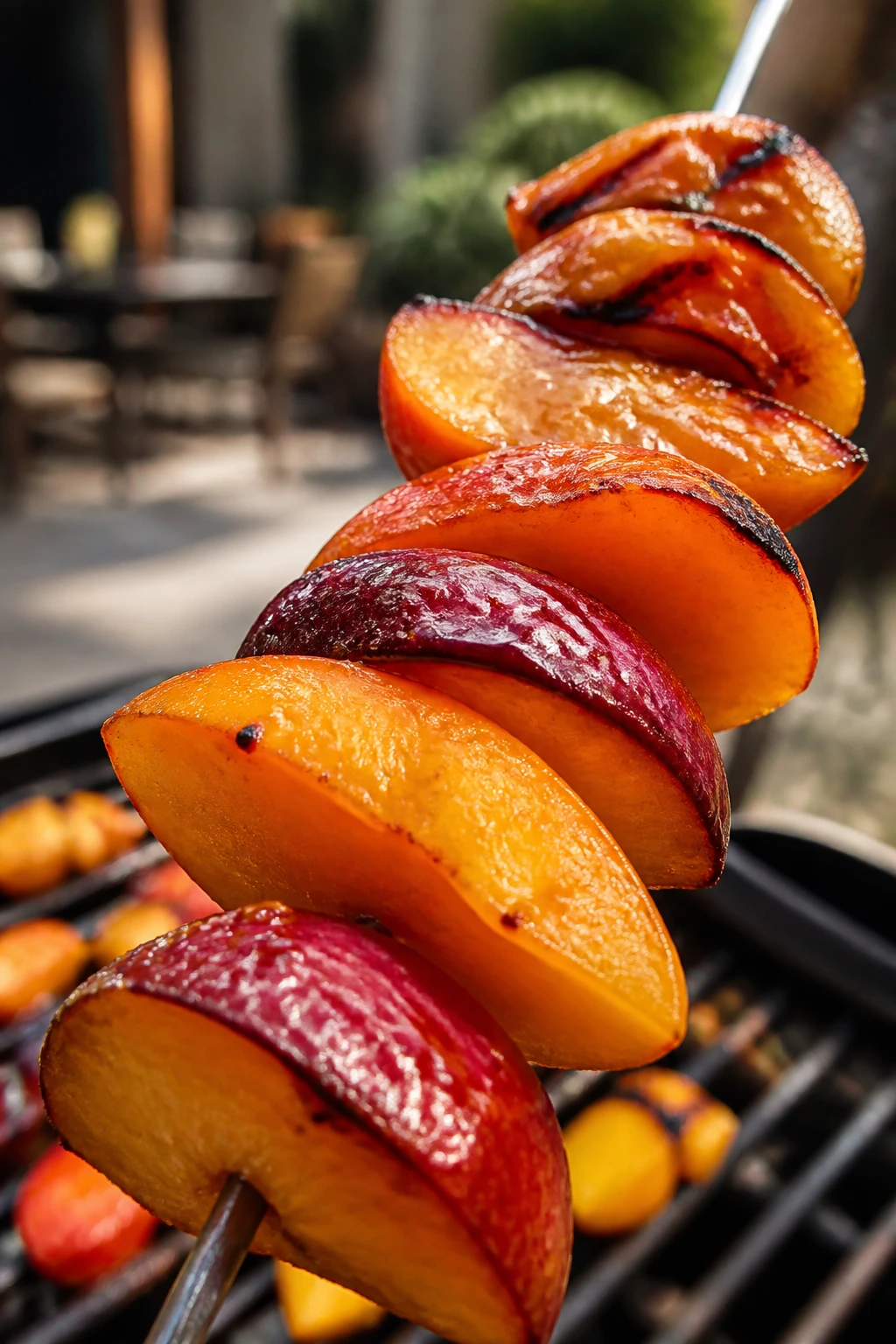
Stone fruit together gives you one of the best texture combinations on the grill. Peach, plum, and apricot each soften at a slightly different pace, which means the skewer never tastes one-note.
Why It Works: All three fruits caramelize well, but they need to be close in ripeness so one does not dissolve before the others warm through. A little honey makes the fruit look glossy without burying the flavor.
Key Ingredients:
- 1 peach, pitted and cut into wedges
- 1 plum, pitted and cut into wedges
- 3 apricots, halved
- 1 tablespoon honey
- 1 teaspoon lemon juice
Quick Steps:
- Heat the grill to medium-high and oil the grates.
- Mix honey and lemon juice.
- Brush the fruit lightly and thread onto skewers.
- Grill 1½ to 2 minutes per side.
- Serve while the edges are still warm and tender.
Equipment for This Recipe:
- Grill
- Skewers
- Small brush
How to Serve This Dish: Good with yogurt, ice cream, or a spoonful of whipped ricotta. If you’re serving dinner outside, this one fits beside grilled pork or chicken without stealing the show.
Pro Tips for This Recipe:
- Cut everything into similar-size pieces.
- Use fruit that is ripe but still springy.
- Lemon juice keeps the colors brighter.
Variations on This Dish:
- Brown Sugar Stone Fruit: Swap honey for brown sugar.
- Thyme Orchard Version: Add thyme to the glaze.
Common Mistakes to Avoid with This Dish:
- Don’t mix very ripe fruit with barely ripe fruit on the same skewer.
- Don’t let the cut pieces sit exposed too long or they dry at the edges.
26. Apple, Pear, and Fig Skewers
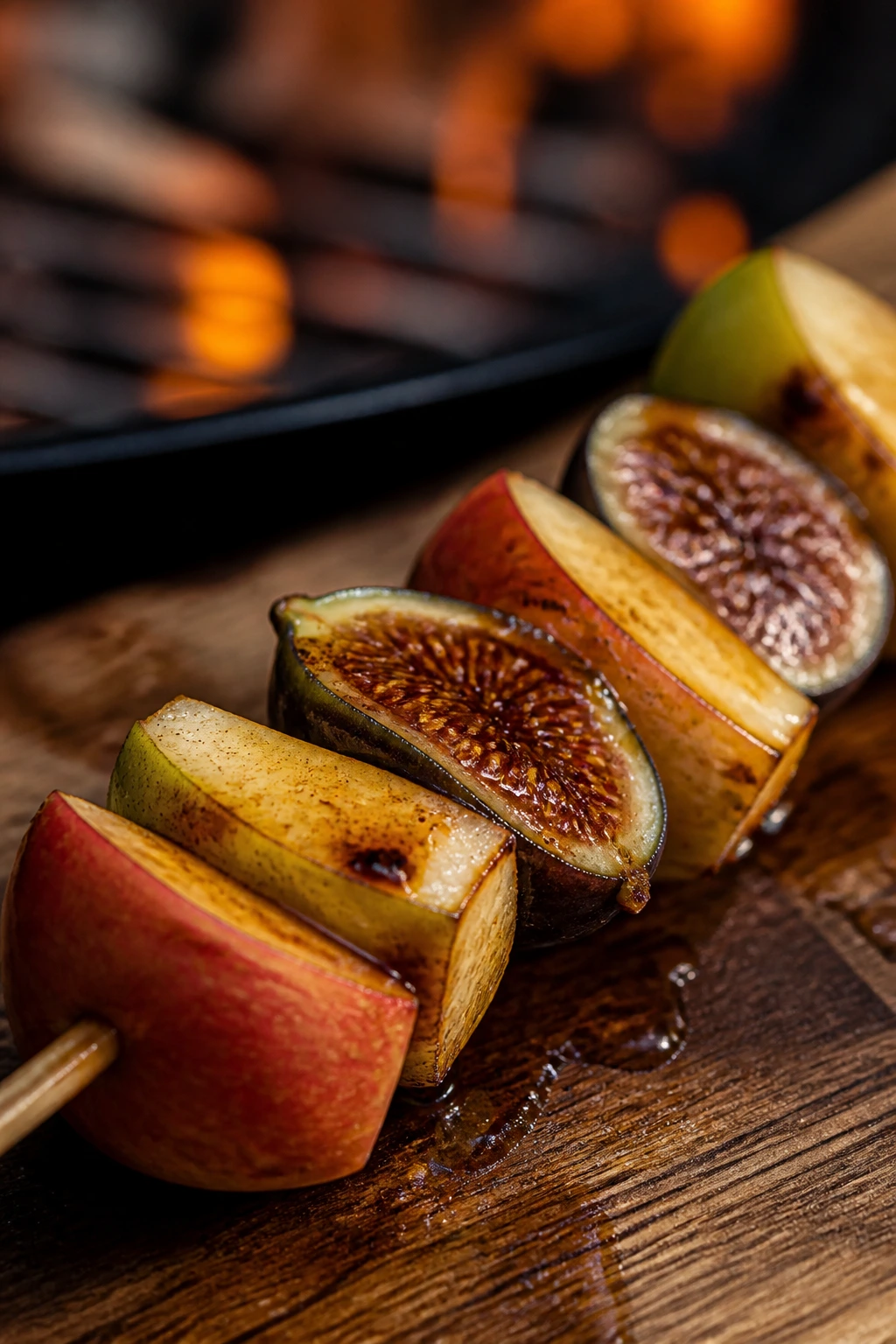
This is the orchard skewer that tastes more layered than it looks. Apple gives structure, pear gives perfume, and fig slips in a soft jammy note that makes the whole thing feel richer.
Why It Works: Apples and pears hold up to short heat, while figs soften almost instantly, so the order matters. If you thread the firmer fruit around the fig, you get a balanced skewer instead of fruit paste on a stick.
Key Ingredients:
- 1 apple, cored and cut into chunks
- 1 pear, cored and cut into chunks
- 4 fresh figs, halved
- 1 tablespoon maple syrup
- ½ teaspoon cinnamon
Quick Steps:
- Heat the grill to medium and oil the grates.
- Toss the fruit with maple syrup and cinnamon.
- Thread apple, pear, and fig pieces in alternating order.
- Grill 2 minutes per side, turning carefully.
- Brush with any leftover glaze.
Equipment for This Recipe:
- Grill
- Skewers
- Cutting board and knife
How to Serve This Dish: These go well with yogurt, granola, or a little sharp cheese. They’re also good warm beside roast turkey or pork if you want a fruit side that behaves like a sauce.
Pro Tips for This Recipe:
- Use a firmer pear like Bosc.
- Keep the fig halves near the middle of the skewer.
- Maple burns less easily than honey here, which is handy.
Variations on This Dish:
- Ginger Orchard Skewers: Add 1 teaspoon grated ginger.
- Walnut Finish: Sprinkle toasted walnuts over the hot fruit.
Common Mistakes to Avoid with This Dish:
- Don’t use a very soft pear or it will collapse first.
- Don’t cut the apple pieces tiny; they need the extra structure.
27. Pineapple, Mango, and Papaya Chili-Lime Skewers
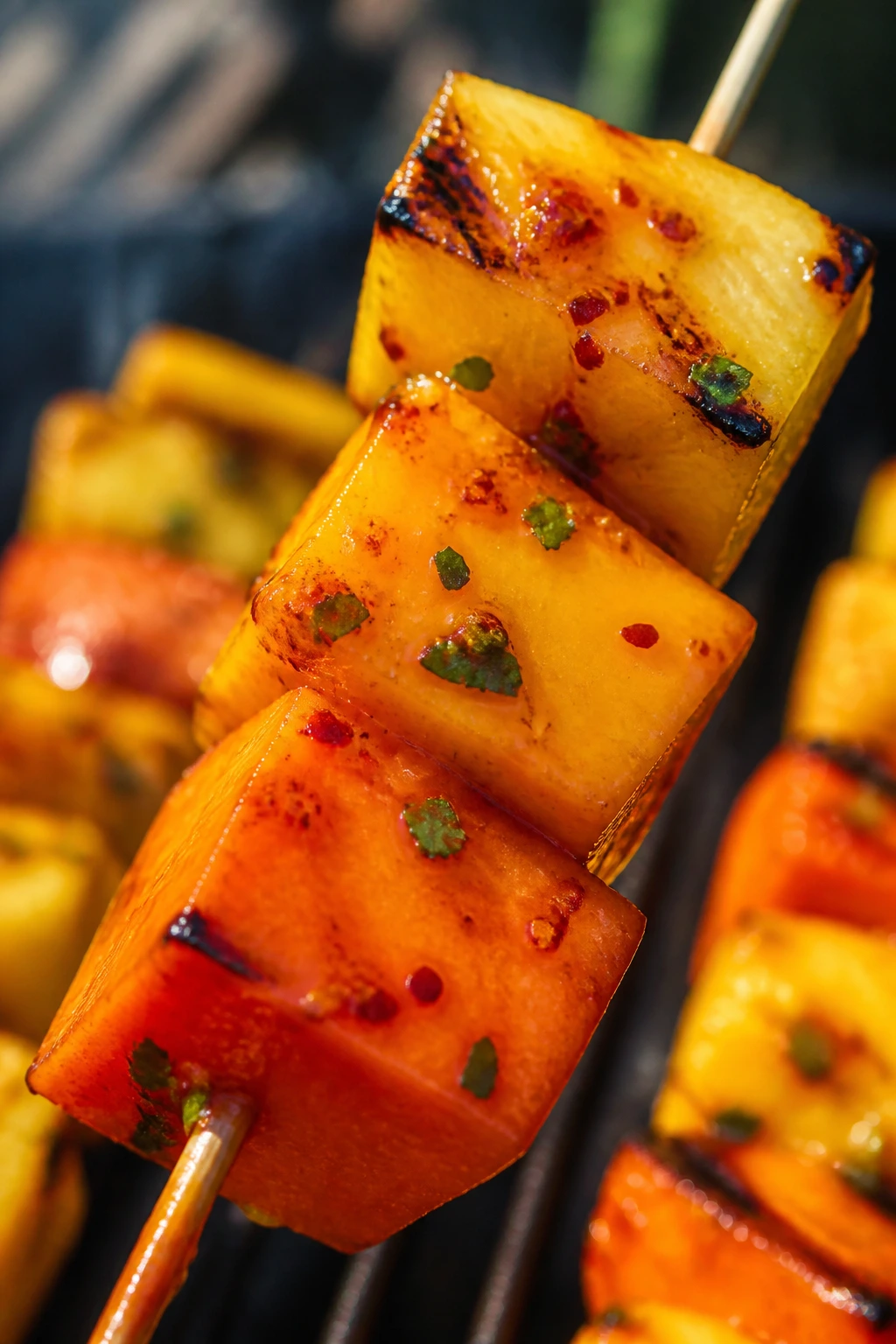
This is the tropical skewer with the most personality. Pineapple and mango bring the sugar, papaya smooths the edges, and chili-lime keeps the whole thing awake.
Why It Works: All three fruits love high heat and brief contact, which makes them ideal for a grill that’s already hot. The chili-lime glaze also prevents the platter from reading like dessert overload.
Key Ingredients:
- 1 cup pineapple chunks
- 1 cup mango chunks
- 1 cup papaya chunks
- 1 tablespoon lime juice
- ¼ teaspoon chili powder
Quick Steps:
- Heat the grill to medium-high and oil the grates.
- Mix lime juice, chili powder, and a pinch of salt.
- Thread the fruit in alternating chunks.
- Grill 1 minute per side until lightly marked.
- Brush with the chili-lime mixture and serve.
Equipment for This Recipe:
- Grill
- Skewers
- Small bowl
How to Serve This Dish: These are good with coconut yogurt or as a side for grilled fish tacos. A sprinkle of toasted coconut or chopped cilantro pushes them into the savory lane.
Pro Tips for This Recipe:
- Keep mango and papaya in firm chunks.
- Pineapple should be the largest piece on the skewer.
- Add the chili-lime mix after grilling if you want stronger flavor.
Variations on This Dish:
- Coconut-Chili Version: Add toasted coconut at the end.
- Extra Hot Version: Use a pinch of cayenne instead of chili powder.
Common Mistakes to Avoid with This Dish:
- Don’t use fruit that’s already falling apart.
- Don’t over-season before grilling, or the sugars darken too fast.
28. Strawberry, Blackberry, and Peach Skewers
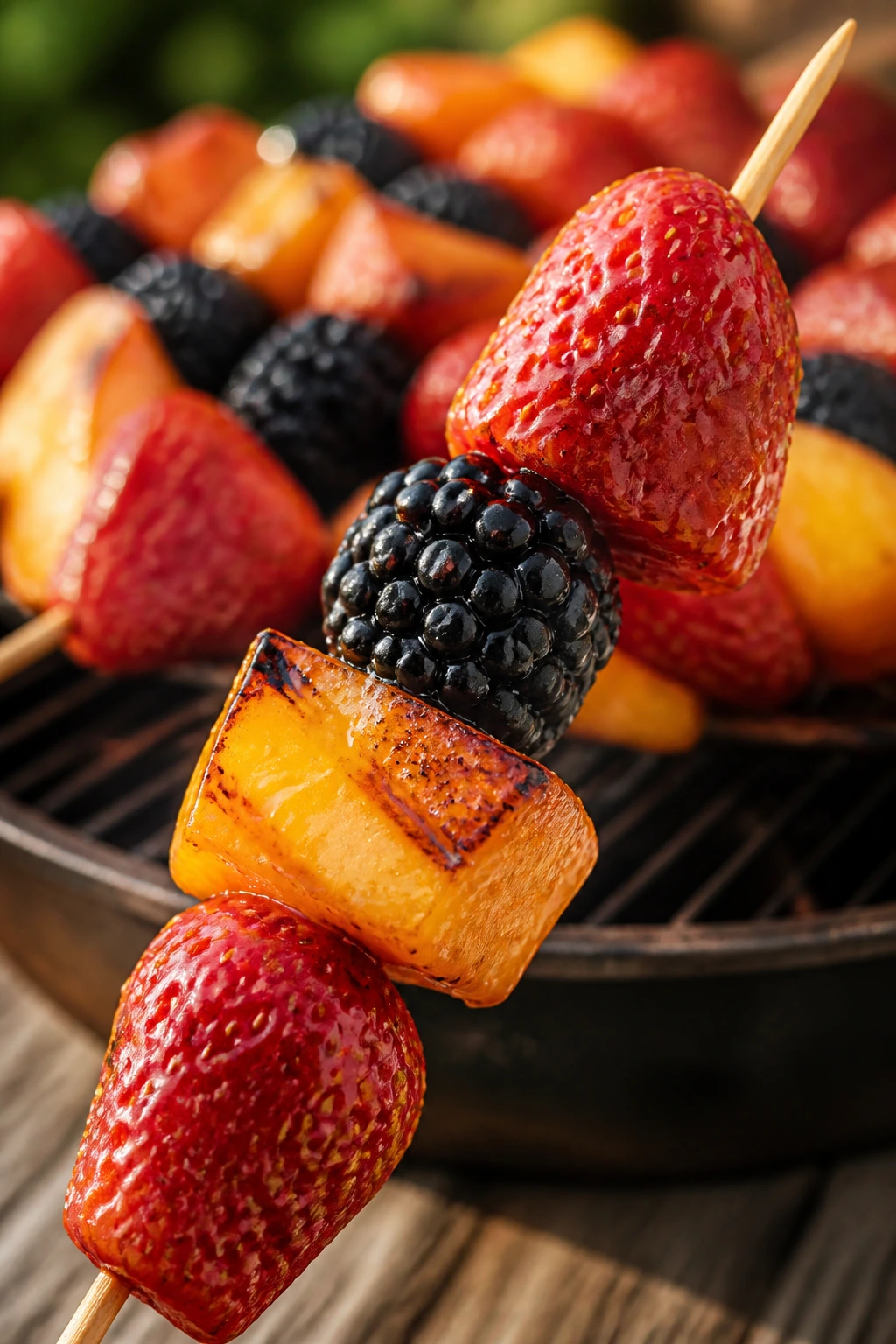
This is the prettiest skewer in the group, but it’s not just looks. Peaches give structure, strawberries bring perfume, and blackberries add a deep, jammy middle note.
Why It Works: The peach chunks act as anchors for the softer berries, which means the skewer holds together better than a berry-only version. Brief heat draws the juices together and gives the fruit a darker, more intense flavor.
Key Ingredients:
- 1 peach, cut into chunks
- 1 cup large strawberries, hulled
- 1 cup blackberries
- 1 tablespoon honey
- 1 teaspoon lemon juice
Quick Steps:
- Heat the grill to medium-high and oil the grates.
- Stir honey and lemon juice together.
- Thread fruit alternately, using peach pieces as anchors.
- Grill 45 seconds to 1 minute per side.
- Drizzle any extra glaze on top.
Equipment for This Recipe:
- Grill
- Skewers
- Small brush
How to Serve This Dish: Serve these with yogurt, shortcake, or a vanilla pudding cup if you want an easy dessert. They also brighten up a platter of grilled meats without acting like a side dish that’s trying too hard.
Pro Tips for This Recipe:
- Use the biggest blackberries you can find.
- Keep the peach chunks firm.
- Turn the skewers gently; berries bruise fast.
Variations on This Dish:
- Mint Berry Skewers: Finish with mint.
- Balsamic Berry Version: Add a tiny splash of balsamic after grilling.
Common Mistakes to Avoid with This Dish:
- Don’t use berries that are soft enough to squash when you pick them up.
- Don’t overload the skewer with fruit that cooks at different speeds unless the peach is the anchor.
29. Clementine, Blood Orange, and Kiwi Skewers
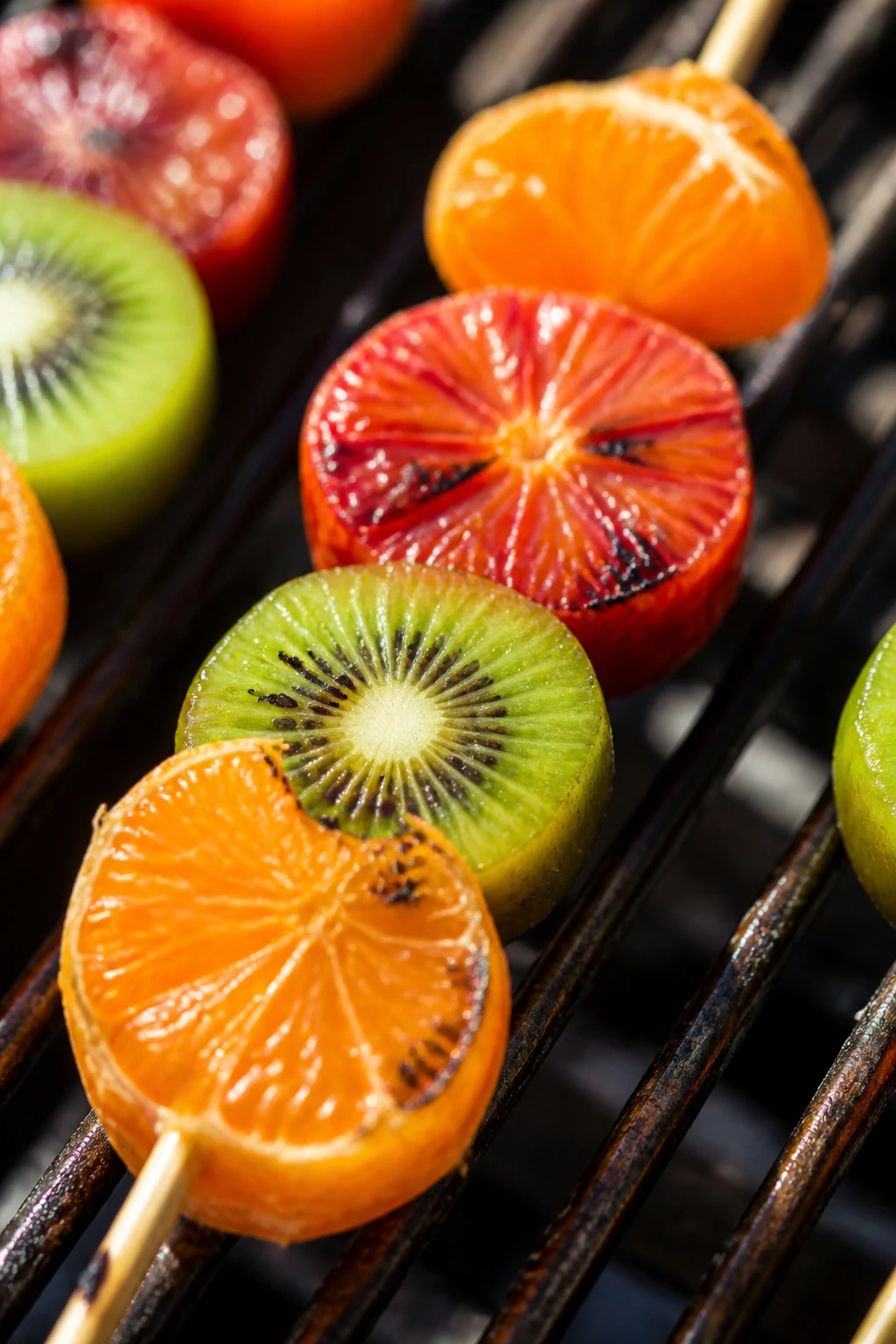
This skewer brings bright color and a sharper citrus line than most of the others. The clementines stay sweet, the blood orange adds depth, and kiwi keeps the plate from tipping too far into citrus.
Why It Works: Thin citrus segments can burn fast, so the goal is very brief heat and a light glaze. Kiwi holds enough firmness to balance the softer orange pieces and makes the skewer easier to thread.
Key Ingredients:
- 2 clementines, peeled and separated
- 1 blood orange, peeled and cut into thick segments or rounds
- 2 kiwis, peeled and cut into thick rounds
- 1 tablespoon honey
- 1 teaspoon lime zest
Quick Steps:
- Heat the grill to medium and oil the grates.
- Stir honey and lime zest together.
- Thread the fruit carefully so the pieces are snug but not crushed.
- Grill 30 to 45 seconds per side.
- Serve with the honey drizzle.
Equipment for This Recipe:
- Grill
- Skewers
- Zester or microplane
How to Serve This Dish: Good with yogurt, granola, or a brunch spread. The colors are sharp enough that you can put them straight on a plain white platter and still look like you meant it.
Pro Tips for This Recipe:
- Use citrus pieces that are thick enough to stay together.
- Kiwi should be ripe but still firm.
- A little zest goes farther than extra honey.
Variations on This Dish:
- Mint Citrus Skewers: Add mint after grilling.
- Grapefruit Swap: Replace the blood orange with grapefruit for more bite.
Common Mistakes to Avoid with This Dish:
- Don’t use thin citrus slices; they dry out or tear.
- Don’t overbrush with honey or the fruit turns sticky before it chars.
30. Banana, Peach, and Bourbon-Maple Skewers
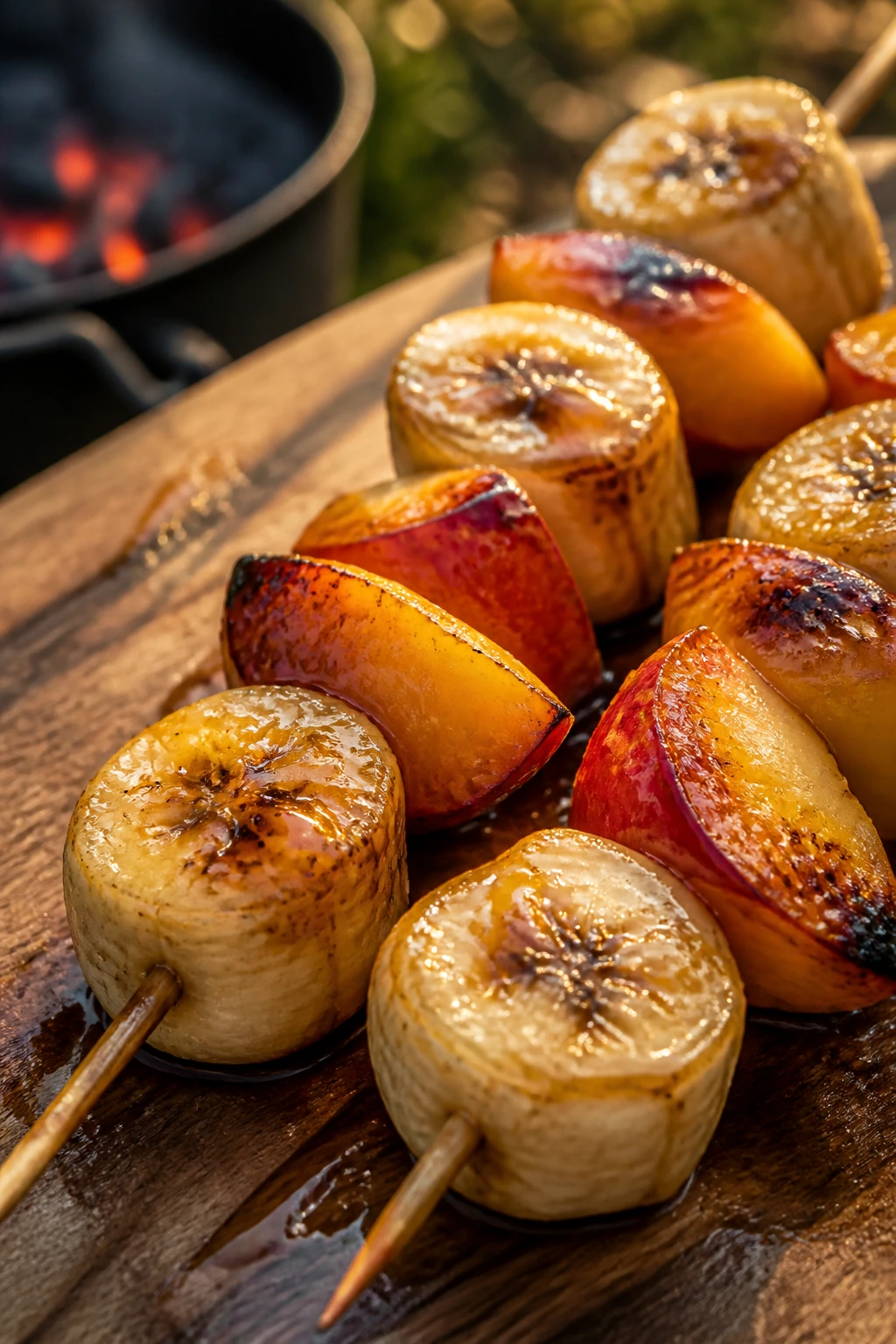
This is the skewer for people who want dessert to look relaxed but taste carefully built. Banana goes soft and sweet, peach brings perfume, and bourbon-maple gives the whole thing a warm, smoky edge.
Why It Works: Bananas need a firmer partner and a shorter cook time, so peach helps steady the skewer. Bourbon and maple bring a cooked-sugar note that makes the fruit taste deeper without turning it into a heavy sauce.
Key Ingredients:
- 2 bananas, just ripe, cut into thick chunks
- 2 peaches, pitted and cut into wedges
- 1 tablespoon pure maple syrup
- 1 teaspoon bourbon
- ½ teaspoon cinnamon
Quick Steps:
- Heat the grill to medium and oil the grates carefully.
- Whisk maple syrup, bourbon, and cinnamon together.
- Thread banana and peach pieces onto skewers.
- Grill 1 minute per side, turning gently.
- Brush on the bourbon-maple glaze and serve warm.
Equipment for This Recipe:
- Grill
- Skewers
- Small bowl and brush
How to Serve This Dish: Serve these with vanilla ice cream or spoonfuls of whipped cream. They also make a strong finish to a grilled dinner because they feel familiar without being plain.
Pro Tips for This Recipe:
- Use bananas that are ripe but not freckled all over.
- Keep the peach wedges large enough to hold the banana.
- If you want less alcohol flavor, warm the bourbon in the glaze for a minute before brushing.
Variations on This Dish:
- Banana Foster Skewers: Add a pinch of nutmeg and a splash of vanilla.
- Nutty Finish Version: Sprinkle chopped pecans over the hot fruit.
Common Mistakes to Avoid with This Dish:
- Don’t use overripe bananas unless you want the skewers to fall apart.
- Don’t grill too long; banana goes soft fast and can slip off the stick.
What Makes Grilling Fruit Worth the Smoke
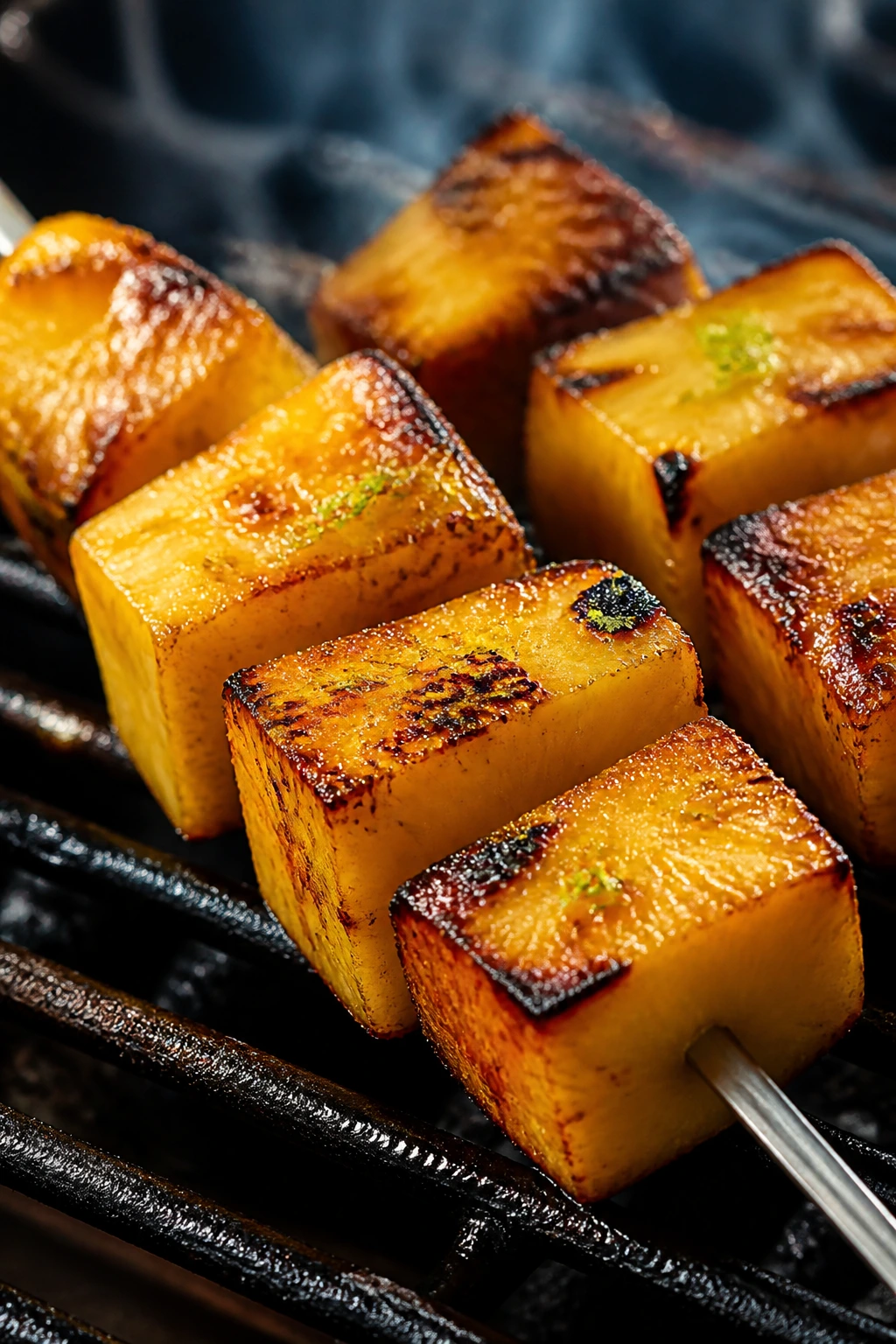
Fruit on a grill sounds almost too simple until you taste the difference. Heat does two useful things at once: it pushes moisture to the surface, then browns that surface fast enough to make the sugars taste deeper and less sugary. That’s why a grilled peach can taste more peachy than a raw one, and why pineapple gets that sticky edge that always disappears first.
The best fruit for this job is firm-ripe, not soft-ripe. You want enough structure to survive a flip, enough sugar to brown, and enough acid or aroma to keep the flavor from going dull. Stone fruit, pineapple, pears, apples, figs, melon, and grapes all behave differently, which is a nuisance if you want a single trick, but a gift if you like variety.
Heat level matters more than people think. Medium-high, around 400°F to 450°F, gives you browning without a collapsed skewer. Lower heat tends to dry fruit before it colors; hotter heat burns syrup and leaves the center cold. That’s the whole dance. Short, hot, watchful.
And yes, the skewer matters too. Wide fruit deserves sturdy metal skewers, while wooden ones work fine if they’re soaked long enough not to scorch. I prefer to give every piece a little breathing room on the stick. Crowded fruit steams. Slightly spaced fruit caramelizes.
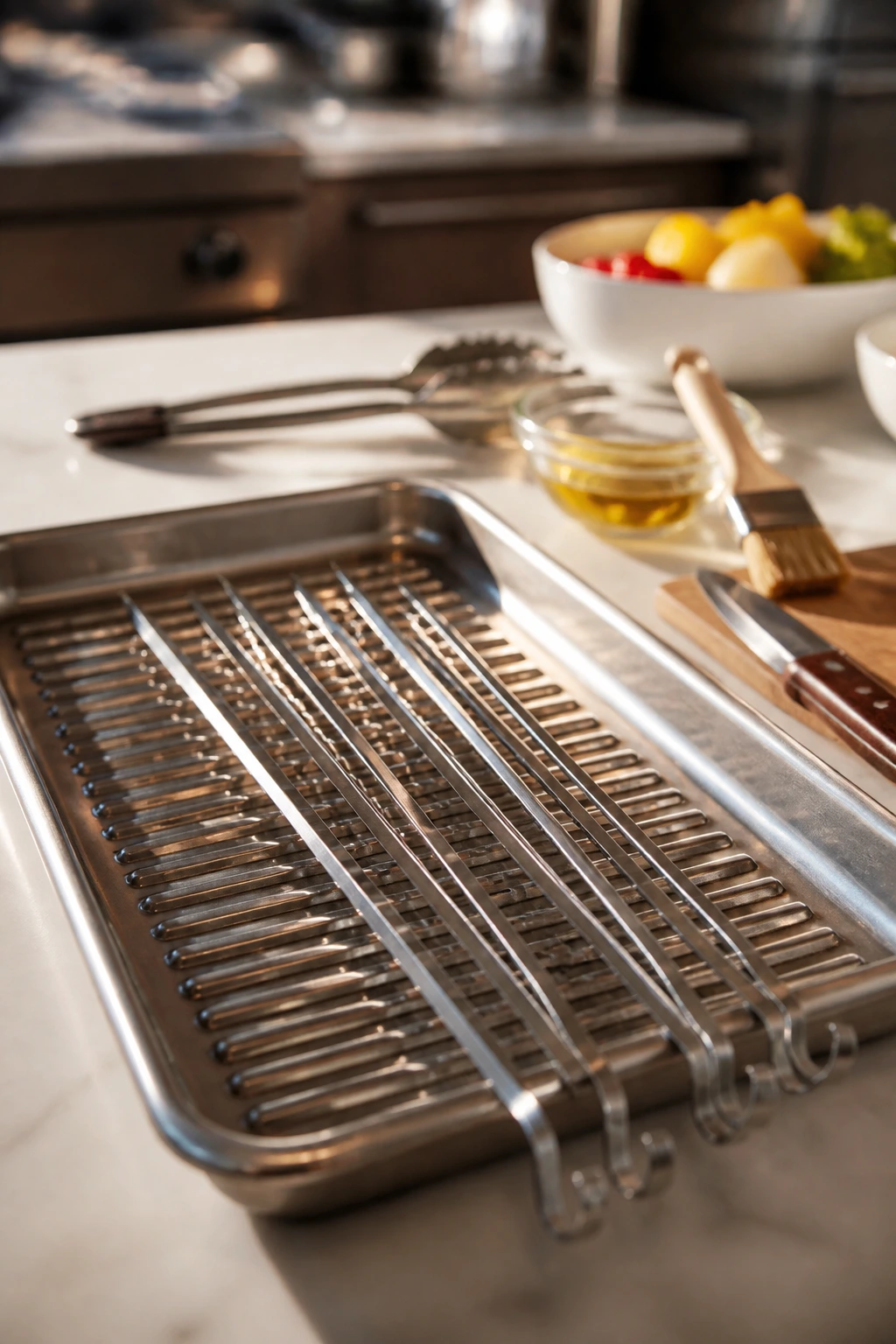
Essential Equipment for These Recipes
-
Grill or grill pan: A gas or charcoal grill both work; a grill pan is the backup when the weather refuses to cooperate.
-
Metal skewers or soaked wooden skewers: Metal holds heat and never burns. Wood is fine if soaked for at least 30 minutes.
-
Long tongs: Fruit needs gentle turning, and tongs give you that without stabbing the pieces.
-
Pastry brush: Handy for honey, butter, maple, or citrus glaze.
-
Sharp knife and cutting board: Clean, even cuts are the difference between tidy skewers and fruit that falls apart on contact.
-
Small mixing bowls: One for glaze, one for garnish, one for whatever you’re keeping separate because it burns too fast.
-
Rimmed sheet pan: Useful for carrying assembled skewers from the counter to the grill without losing half your setup.
Smart Shopping and Ingredient Tips
Buy fruit for grilling at the firm-ripe stage. That phrase sounds fussy, but it matters. If peaches are perfect for eating over the sink, they may be too soft for a skewer; if pears are hard enough to dent a countertop, they’ll need time on the windowsill before they behave on the grill. Pineapple should smell sweet at the base. Apples should feel heavy and crisp. Melons should feel dense for their size, not hollow.
Stone fruit and bananas need special timing. Peaches, nectarines, plums, apricots, and figs should still have some spring when you press them. Bananas are better just-yellow than fully speckled if you want them to stay on the stick. For apples and pears, a splash of lemon juice is worth it the second they’re cut, because browning starts fast and the grill only makes that more obvious.
Herbs and spices should stay in the background. Fresh mint, basil, thyme, and rosemary are bright enough to finish a skewer. Dried spices like cinnamon, cardamom, and chili powder belong in glazes or brushed oils, not dumped straight onto the fruit. And if you’re buying coconut, nuts, or sesame seeds for finishing, toast them first. Raw toppings taste sleepy next to grilled fruit.
How to Serve These Recipes
Presentation: Build skewers with alternating colors and sizes so the platter looks lively without any extra fuss. A scatter of torn mint, basil, toasted coconut, or chopped nuts makes the fruit look finished instead of merely cooked.
Accompaniments: Vanilla yogurt, coconut cream, whipped ricotta, sorbet, shortcake biscuits, grilled pound cake, or a salty cheese board all sit naturally beside these skewers. For savory meals, try them with pork chops, chicken, salmon, or grilled sausages.
Portions: Two medium skewers per person works for dessert, while three smaller skewers make sense if fruit is the main side dish. If you’re serving them over yogurt or ice cream, one skewer per bowl is usually enough.
Beverage Pairing: Sparkling water with lime, iced mint tea, cold hibiscus tea, or a dry white wine all play well with the fruit’s sweetness. If you want something softer, lemonade with a pinch of salt keeps the palate awake.
Additional Tips and Flavor Boosters
Flavor Enhancement: A tiny pinch of flaky salt at the end does more work than extra sugar. It sharpens pineapple, peach, melon, and even watermelon, and it makes grilled fruit taste less flat.
Customization: If you like a stronger dessert feel, brush the fruit with honey or maple before grilling. If you want the fruit to lean savory, use citrus zest, fresh herbs, and a little pepper instead of more syrup.
Serving Suggestions: Warm fruit gets better with a cold topping. Vanilla yogurt, coconut cream, whipped mascarpone, or plain whipped cream all work because they cool the surface while the fruit still tastes freshly grilled.
Make-It-Yours: For a dairy-free plate, stay with fruit, citrus, herbs, and coconut. For lower sugar, skip the glaze and rely on heat plus salt. For a bigger meal, thread in one firmer fruit with one softer fruit so the texture stays interesting from the first bite to the last.
Make-Ahead, Storage, and Reheating Guidance
Most of these skewers are best grilled close to serving, but the prep can absolutely happen earlier. Firm fruit like apples, pears, pineapple, and melon can be cut 8 to 12 hours ahead and kept covered in the fridge. Add lemon or lime to apples and pears right after cutting. Softer fruit like peaches, bananas, strawberries, and figs are better prepped the same day.
Assembled skewers hold well for about 4 hours in the refrigerator if you keep them on a tray and cover them loosely. Once grilled, most fruit skewers stay good for 2 days in the fridge, though delicate ones like watermelon, strawberries, and grapes are nicer within 24 hours. Let them cool completely before refrigerating, or the trapped steam will make them slack and wet.
Reheating is mild, not aggressive. A 300°F oven for 4 to 6 minutes brings back warmth without turning the fruit into jam. A low grill or a dry skillet for 1 minute per side also works if you just want to wake the fruit up. Freeze only if you’re turning the leftover fruit into smoothies or compote later; the skewer texture won’t survive a thaw with much dignity.
Food safety is plain and blunt here: do not leave the platter out for more than 2 hours, and cut that down if the grill is sitting in strong heat. Fruit looks harmless, but once it’s sliced and glazed, it follows the same rules as any other perishable food.
Variations and Adaptations to Try
Low-Sugar Herb Finish: Skip honey, maple, and brown sugar entirely and finish the skewers with herbs, citrus zest, and a pinch of salt. This works especially well with pineapple, melon, peaches, and strawberries, which already carry enough sweetness on their own.
Spice Cabinet Skewers: Lean harder on cinnamon, cardamom, ginger, chili powder, and black pepper. That style is best when you want the fruit to feel less like dessert and more like a side with attitude, especially for pineapple, mango, pears, and plums.
Creamy Dessert Plates: Serve the skewers over yogurt, coconut cream, mascarpone, or whipped ricotta instead of putting the topping on the grill. The cold cream makes the hot fruit taste brighter, and it gives you a better plate when you want something more polished than a skewer on its own.
Kid-Friendly Rainbow: Use pineapple, peaches, strawberries, bananas, and melon, then keep the glaze simple: honey, lime, and maybe a little vanilla. Skip chili, pepper, bourbon, and rosemary here. Kids usually care more about color and sweetness than restraint.
Savory Side Version: Serve the skewers with grilled pork, chicken, salmon, or sausages, and use herbs and salt more than sugar. Pineapple, peaches, plums, and figs are the easiest fruits to steer in that direction, and they hold up nicely next to smoky mains.
Common Mistakes to Avoid
The first mistake is cutting the fruit too small. Tiny pieces dry out, slide off the skewer, and char before they get tender. Go larger than you think, especially with peaches, pineapple, apples, and melon.
The second mistake is using fruit at the wrong stage of ripeness. Too hard, and it tastes chalky. Too soft, and it falls apart when you turn it. Firm-ripe is the sweet spot, and it matters more on the grill than in a fruit bowl.
The third mistake is loading every skewer with mixed textures and pretending they all cook the same. Bananas, grapes, strawberries, and melon need far less time than apples or pears. If you combine them without thinking, something will finish early and something else will be underdone.
The fourth mistake is ignoring the grate. A dirty or dry grill will rip the sugar glaze right off the fruit. Oil the grates, preheat fully, and use tongs instead of poking with a fork. A fork lets the juices run out. Then you get smoke, mess, and fruit that tastes tired.
Frequently Asked Questions About Grilled Fruit Skewers
What fruit grills best on skewers?
Pineapple, peaches, nectarines, plums, pears, apples, figs, and firm melon are the easiest place to start. They hold shape long enough to pick up color without collapsing, which is the whole point.
Do I need to soak wooden skewers?
Yes, if you’re using wood. Soak them for at least 30 minutes so the exposed ends do not scorch before the fruit is done. Metal skewers skip that step and are easier to reuse.
Can I make fruit skewers without sugar?
You can, and some fruit does not need it at all. Use citrus juice, zest, herbs, and a little salt instead of honey or brown sugar if the fruit is already ripe and sweet.
Why does my fruit stick to the grill?
Usually the grates were not hot enough, clean enough, or oiled enough. Fruit needs a properly preheated surface so it sears instead of welding itself to the metal.
Can I grill fruit ahead of time?
You can, but the texture softens as it sits. If you need to make it ahead, grill it earlier in the day and rewarm gently in a low oven, then serve it the same day for the best bite.
What if the fruit falls apart on the skewer?
That usually means the pieces were too ripe or too small. Cut larger chunks next time, choose firmer fruit, and keep delicate fruit like strawberries or figs paired with sturdier pieces.
Can these work as a savory side dish?
Absolutely. Pineapple, peaches, plums, figs, and grapefruit all behave well next to grilled pork, chicken, fish, or sausages, especially when you use salt, pepper, herbs, and citrus instead of extra sugar.
How do I keep banana or watermelon from turning mushy?
Use slightly firmer fruit, keep the pieces thick, and grill only long enough to mark the surface. If you’re making both in the same spread, put them on separate skewers so the timing stays honest.
A Platter Worth Pulling the Grill Lid Open For
The nicest thing about grilled fruit is that it feels generous without being fussy. A few good pieces of fruit, a hot grate, and one bright finish can turn the simplest skewer into something people keep returning to while the rest of dinner is still on the fire.
If you want the best results, start with firm-ripe fruit, cut it larger than you think, and keep the heat steady. That alone gets you most of the way there. The rest is flavor: citrus for lift, herbs for freshness, salt for contrast, and just enough sweetness to make the grill marks taste intentional.
Pick two fruits, one herb, and one glaze, and you’ve got a plate that can sit beside ribs, salad, pancakes, or a bowl of ice cream without feeling out of place. That’s the kind of flexibility worth keeping around.