



A hot skillet changes dinner fast. Five minutes ago, you’ve got raw broccoli, sliced beef, a bowl of soy sauce, and a cutting board that smells faintly of ginger. Then the garlic hits the oil, the pan starts snapping, and suddenly dinner feels like movement instead of waiting. That’s the real appeal of Chinese dinner ideas built for a quick stir fry night: the cooking is short, but the payoff tastes like you spent a lot longer on it.
The best versions are not fussy. They depend on a few things done well: thin slices, a sauce that’s mixed before the heat goes on, vegetables that still have a little bite, and enough heat to keep everything from steaming into gray mush. A lot of home stir-fries go wrong because the pan is crowded or the sauce gets added piecemeal. Both are fixable. Both are boring mistakes.
What you get when you do it right is a glossy pan of food with real texture. Tender beef that still has a seared edge. Chicken that stays juicy because it was cooked quickly and cut the right way. Snow peas that snap. Bok choy that keeps its crunch at the stem. Noodles that carry the sauce instead of drowning in it. That’s the lane these dishes live in.
Why These Dinners Earn a Spot on the Stove
-
Fast pan time: Most of these dinners finish in 10 to 15 minutes once the chopping is done, which is the whole point of a stir-fry night.
-
One sauce, many dinners: Soy sauce, oyster sauce, sesame oil, Shaoxing wine, cornstarch, garlic, and ginger show up again and again, so the pantry load stays small.
-
Crisp vegetables, not limp ones: These recipes are built around quick-cooking vegetables like broccoli, snap peas, cabbage, bok choy, mushrooms, and bell peppers that hold their shape in a hot pan.
-
Flexible with rice or noodles: A bowl of jasmine rice, a tangle of lo mein, or a pile of fried rice can carry almost every dish here without changing the recipe much.
-
Easy to scale up or down: Stir-fry is one of the few dinners that still works when you double it for four people or cut it in half for one hungry person and tomorrow’s lunch.
-
Takeout-style without the soggy carton: The sauce clings, the vegetables stay bright, and the dish lands on the table with more texture than most delivery food ever manages.
1. Beef and Broccoli Stir-Fry
Broccoli loves hot oil. Beef loves a quick sear. Put them together with a soy-oyster sauce and you get the classic stir-fry that most people think of first, and for good reason. The sauce turns glossy in seconds, and the broccoli keeps enough bite to stop the dish from feeling soft or heavy.
Why It Works: Thin-sliced flank steak cooks in a minute or two, which keeps it tender instead of chewy. The cornstarch in the marinade helps the sauce stick, and the broccoli soaks up the savory gravy without turning mushy.
Key Ingredients:
- 1 lb flank steak, sliced thinly against the grain
- 4 cups broccoli florets
- 2 tablespoons soy sauce
- 1 tablespoon oyster sauce
- 1 teaspoon cornstarch
- 2 cloves garlic, minced
- 1 teaspoon fresh ginger, minced
- 2 tablespoons neutral oil
- 1/4 cup water
Quick Steps:
- Toss the steak with 1 tablespoon soy sauce and the cornstarch; let it sit for 10 minutes.
- Heat 1 tablespoon oil in a wok or 12-inch skillet over high heat and sear the beef for 60 to 90 seconds per side, then move it out.
- Add the remaining oil, broccoli, garlic, ginger, and water; stir-fry for 2 to 3 minutes until the florets are bright green and just tender.
- Return the beef, add the oyster sauce and remaining soy sauce, and toss for 30 seconds until everything looks lacquered.
Equipment for This Recipe:
- Wok or large skillet
- Sharp knife
- Small bowl for the sauce
How to Serve This Dish: Spoon it over jasmine rice so the sauce has somewhere to go. A little steamed rice on the side keeps the salty beef from taking over the whole plate.
Pro Tips for This Recipe:
- Partly freeze the steak for 15 minutes before slicing; the knife will glide through it.
- Don’t boil the broccoli in the pan. A splash of water and a lid for 30 seconds gives it the right finish.
- If your oyster sauce is thick, loosen it with 1 tablespoon water before adding it.
Variations on This Dish:
- Mushroom Stretch: Swap in 2 cups sliced cremini mushrooms for some of the beef and let them brown first.
- Garlic-Chili Version: Add 1 teaspoon chili crisp at the end for heat that sticks around.
Common Mistakes to Avoid with This Dish:
- Slicing with the grain: The beef turns ropey instead of tender. Cut across the lines in the meat.
- Overcooking the broccoli: If the florets go olive-green, they stayed in too long. Pull them while they still look bright.
2. Chicken and Cashew Stir-Fry
Cashews give this one a buttery crunch that changes the whole mouthfeel of the dish. Chicken thighs stay juicy, the bell peppers stay a little crisp, and the sauce lands somewhere between savory and faintly sweet without getting sticky in the wrong way.
Why It Works: Chicken thighs forgive a hot pan better than breasts do. The cashews go in at the end, so they stay snappy instead of tasting like damp nuts.
Key Ingredients:
- 1 lb boneless chicken thighs, cut into bite-size pieces
- 1 red bell pepper, sliced
- 1 cup unsalted roasted cashews
- 2 tablespoons soy sauce
- 1 tablespoon hoisin sauce
- 1 teaspoon cornstarch
- 2 cloves garlic, minced
- 1 teaspoon ginger, minced
- 2 tablespoons neutral oil
Quick Steps:
- Toss the chicken with soy sauce and cornstarch; let it sit while you prep the vegetables.
- Brown the chicken in hot oil for 4 to 5 minutes until the edges look golden.
- Add the bell pepper, garlic, and ginger; cook for 2 minutes until the pepper starts to soften but still has a little snap.
- Stir in hoisin and cashews, toss for 30 seconds, and serve while the nuts are still crisp.
Equipment for This Recipe:
- 12-inch skillet or wok
- Wooden spatula
- Measuring spoons
How to Serve This Dish: It sits well over rice, but I like it with simple steamed rice and nothing else; the cashews already bring enough texture.
Pro Tips for This Recipe:
- Buy unsalted cashews if you can; salted ones make the sauce taste blunt.
- Toast the cashews in a dry pan for 2 minutes if they taste dull straight from the bag.
- Keep the heat up when the sauce goes in, or the hoisin will cling in clumps.
Variations on This Dish:
- Spicy Peppercorn Cashew Chicken: Add 1/2 teaspoon ground Sichuan pepper for a tingle at the finish.
- Vegetable-Heavy Version: Add snap peas and sliced carrots; they behave well in a hot pan.
Common Mistakes to Avoid with This Dish:
- Adding cashews too early: They soften and lose their snap. Put them in at the end.
- Using chicken breast and overcooking it: If you swap cuts, shorten the cook by a minute or two and watch the color closely.
3. Garlic Shrimp with Snap Peas
This is the dish I make when I want dinner to taste bright and clean, not heavy. Shrimp cook fast enough that you can keep the snap peas crisp and the garlic sweet, which is a nice little trick of timing.
Why It Works: Shrimp go from raw to done in a blink, so the vegetables never have to wait around and wilt. A small splash of Shaoxing wine or dry sherry makes the garlic taste rounder instead of sharp.
Key Ingredients:
- 1 lb large shrimp, peeled and deveined
- 3 cups snap peas
- 3 cloves garlic, minced
- 1 tablespoon ginger, minced
- 2 tablespoons soy sauce
- 1 tablespoon Shaoxing wine or dry sherry
- 1 teaspoon cornstarch
- 2 tablespoons neutral oil
- 1 teaspoon sesame oil
Quick Steps:
- Pat the shrimp dry and toss them with cornstarch and 1 tablespoon soy sauce.
- Heat oil in a hot wok, sear the shrimp for about 1 minute per side, then remove them.
- Stir-fry the snap peas, garlic, and ginger for 2 minutes until the peas are bright and the garlic smells sweet.
- Add the shrimp back with the remaining soy sauce, Shaoxing wine, and sesame oil; toss just until coated.
Equipment for This Recipe:
- Wok or skillet
- Paper towels
- Slotted spoon
How to Serve This Dish: Serve it over rice or thin rice noodles. A squeeze of lime is not traditional here, but it works if you like a brighter finish.
Pro Tips for This Recipe:
- Dry shrimp cook cleaner. Wet shrimp steam and get rubbery.
- Leave the tails on if you want a restaurant look; pull them off if you want easier eating.
- Don’t walk away from the pan. Shrimp punish distraction.
Variations on This Dish:
- Snow Pea and Mushroom Mix: Swap half the snap peas for sliced mushrooms if that’s what’s in the fridge.
- Chili-Garlic Shrimp: Add 1 teaspoon chili paste with the garlic for a sharper finish.
Common Mistakes to Avoid with This Dish:
- Overcooking shrimp: Once they curl into tight commas, they’re done. Any longer and they go chalky.
- Skipping the dry step: Moist shrimp won’t sear; they’ll sit there and sigh in the pan.
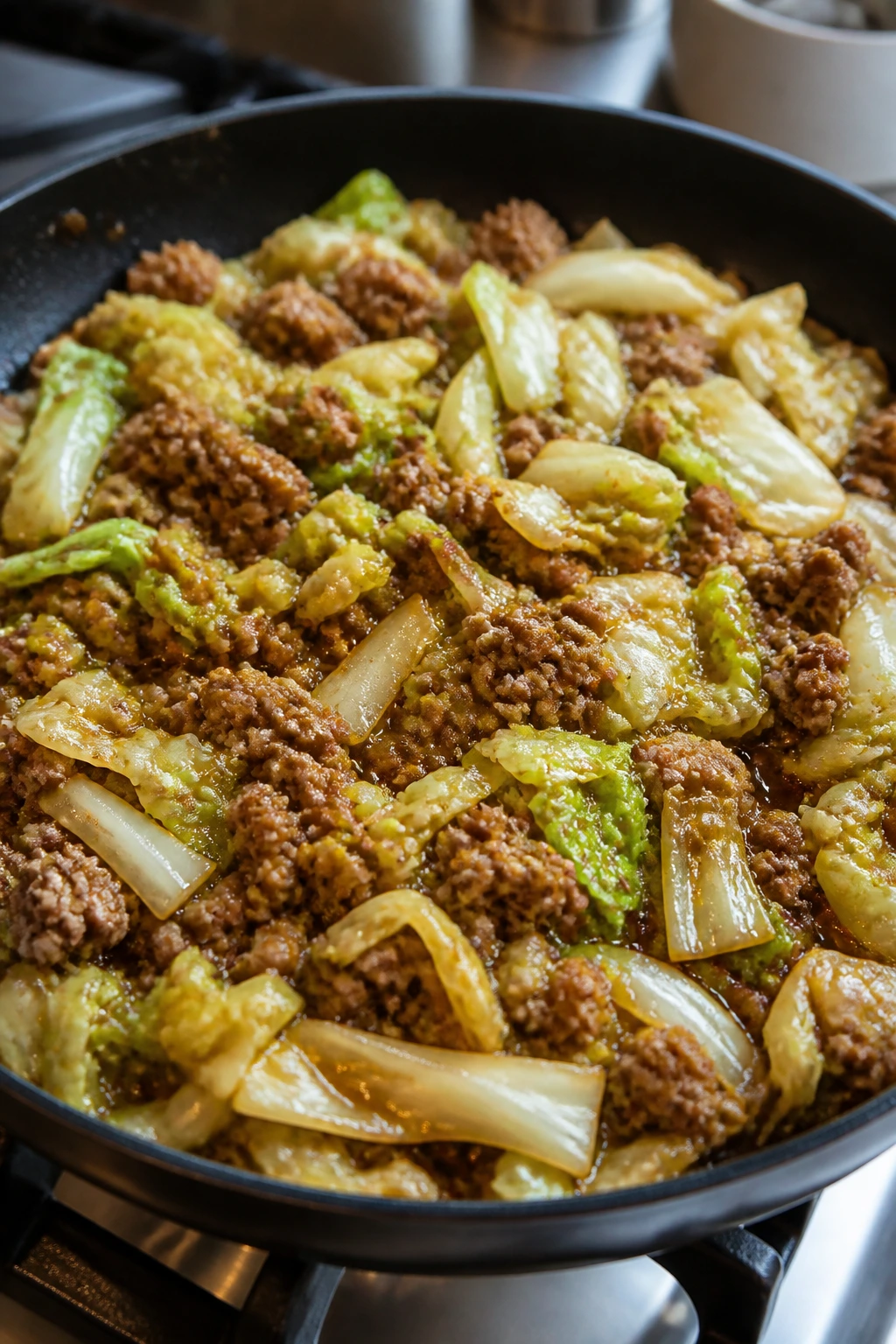
4. Pork and Napa Cabbage Stir-Fry
Napa cabbage is a quiet hero. It softens at the leaves, stays juicy at the stem, and soaks up pork juices in a way that makes the whole skillet taste fuller than it looks. This is a very good use for ground pork on a night when you do not want to think too hard.
Why It Works: Ground pork renders enough fat to coat the cabbage, so the vegetable gets flavor instead of just heat. A little soy, a little vinegar, and some garlic keep the dish from tasting flat.
Key Ingredients:
- 1 lb ground pork
- 6 cups napa cabbage, chopped
- 3 cloves garlic, minced
- 1 tablespoon ginger, minced
- 2 tablespoons soy sauce
- 1 tablespoon rice vinegar
- 1 teaspoon cornstarch
- 2 tablespoons neutral oil
- 1 teaspoon sesame oil
Quick Steps:
- Brown the pork in oil over medium-high heat for 4 to 5 minutes until no pink remains.
- Add garlic and ginger and cook for 30 seconds until fragrant.
- Add cabbage, soy sauce, rice vinegar, and cornstarch mixed with 2 tablespoons water; stir-fry for 3 to 4 minutes until the cabbage wilts but still has body.
- Finish with sesame oil and serve immediately.
Equipment for This Recipe:
- Large skillet or wok
- Wooden spoon
- Measuring cup for the slurry
How to Serve This Dish: Scoop it over jasmine rice or tuck it into soft lettuce leaves if you want a lighter plate. The cabbage juices are good enough to spoon over the rice without shame.
Pro Tips for This Recipe:
- Chop the cabbage into wide ribbons, not tiny shreds, or it disappears.
- If the pork looks dry, add 1 tablespoon water before the cabbage goes in.
- Rice vinegar at the end keeps the dish sharp; add it too early and the flavor gets dull.
Variations on This Dish:
- Glass Noodle Version: Toss in a handful of soaked mung bean noodles for a heartier pan.
- Ginger-Heavy Version: Double the ginger if you want a warmer, louder finish.
Common Mistakes to Avoid with This Dish:
- Crowding the cabbage in too soon: It steams instead of stir-frying. Let the pork brown first.
- Using too much vinegar: One tablespoon is enough. More and the whole pan tastes thin.
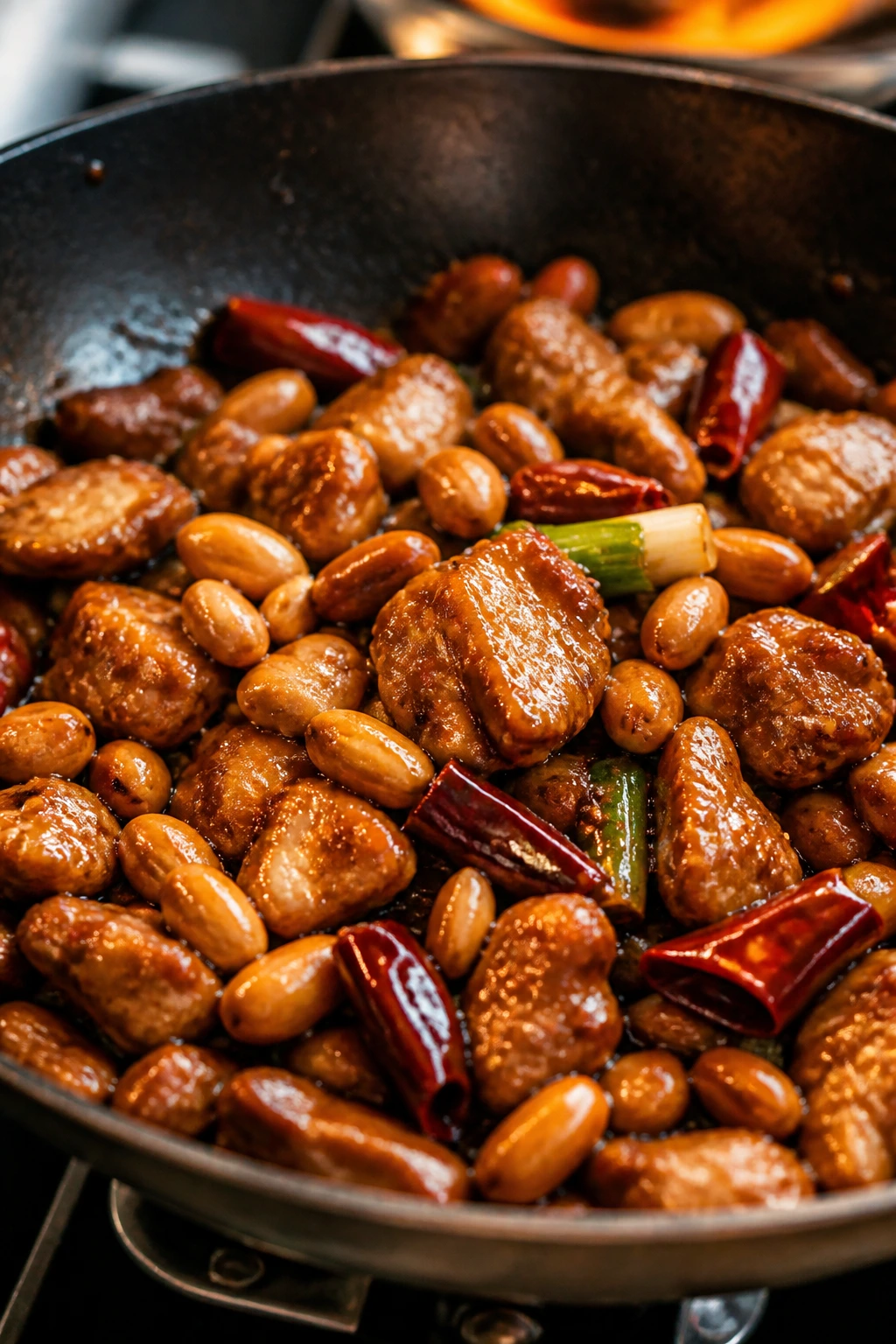
5. Kung Pao Chicken
Kung Pao has a way of sounding more complicated than it is. The real trick is balance: chicken that is tender, peanuts that still crack when you bite them, and a sauce that hits salty, sweet, and hot without any one part shouting over the others.
Why It Works: The cornstarch coating on the chicken keeps the surface silky. Dried chilies and Sichuan pepper bring heat and a faint buzz, while peanuts give you that dry, roasted crunch that makes the dish feel finished.
Key Ingredients:
- 1 lb chicken thighs, cut into bite-size pieces
- 1/2 cup roasted peanuts
- 6 dried red chilies
- 2 cloves garlic, minced
- 1 teaspoon ginger, minced
- 2 tablespoons soy sauce
- 1 tablespoon black vinegar
- 1 tablespoon hoisin sauce
- 1 teaspoon cornstarch
- 2 tablespoons neutral oil
Quick Steps:
- Toss the chicken with cornstarch and 1 tablespoon soy sauce.
- Fry the dried chilies briefly in oil for 10 seconds, then add the chicken and cook for 4 minutes.
- Add garlic and ginger, then stir in the remaining soy, black vinegar, and hoisin.
- Finish with peanuts, toss for 20 seconds, and serve while the sauce still glistens.
Equipment for This Recipe:
- Wok
- Small bowl for the sauce
- Slotted spoon
How to Serve This Dish: It wants plain rice, not a complicated side. A bowl of rice gives the chilies and sauce a place to settle.
Pro Tips for This Recipe:
- Keep the dried chilies whole if you want fragrance more than fire.
- If you like more heat, crack two of the chilies open before cooking.
- Chicken thighs stay juicier than breast here, and I would not switch unless I had to.
Variations on This Dish:
- Vegetable Kung Pao: Add zucchini cubes or bell pepper chunks and cut the chicken by a third.
- Extra Crunch Version: Stir in celery slices with the peanuts for a cleaner snap.
Common Mistakes to Avoid with This Dish:
- Burning the chilies: They should toast, not blacken. If they go dark fast, lower the heat for a moment.
- Adding the peanuts too early: They turn soft and stale-tasting. Always finish with them.
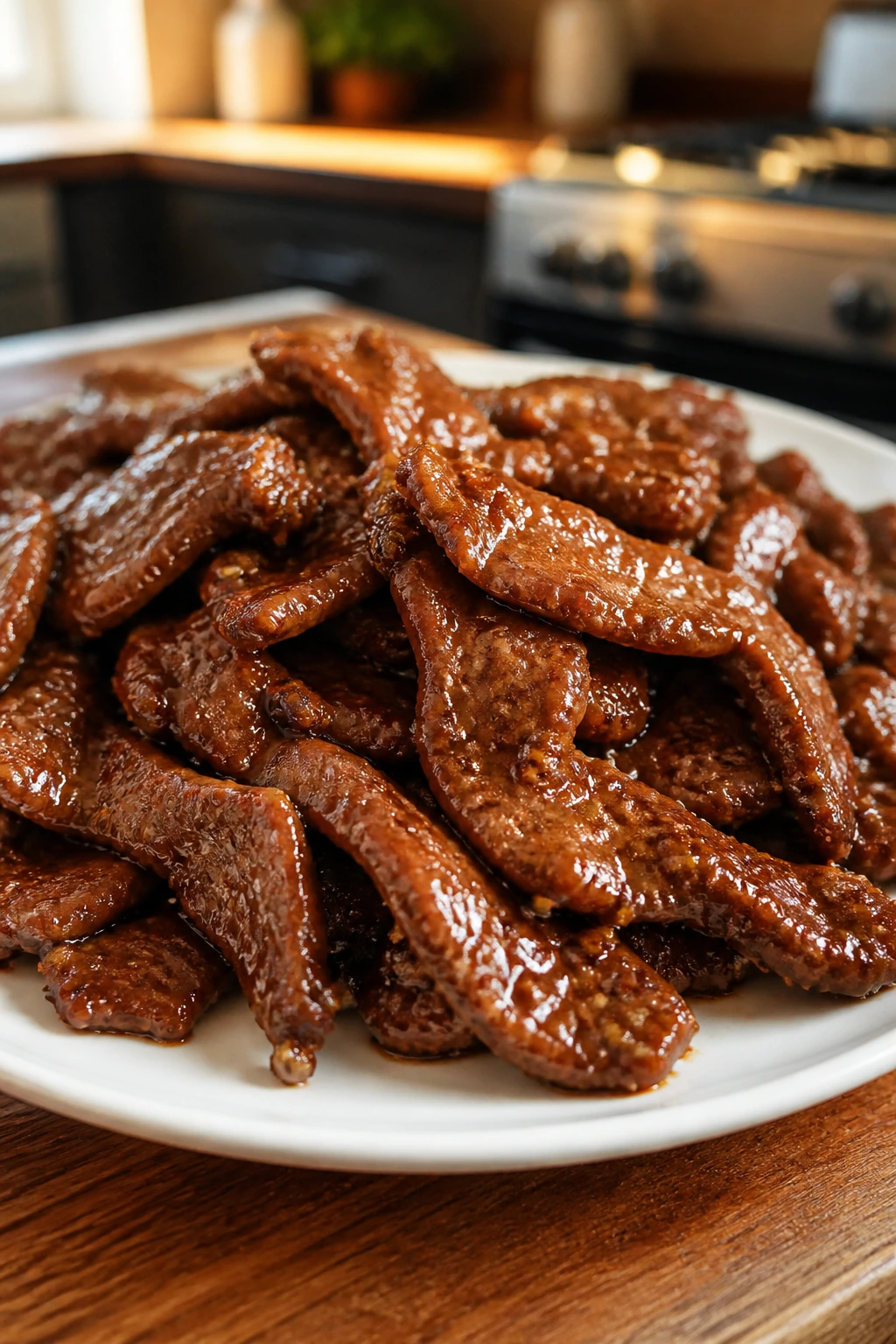
6. Mongolian Beef
Mongolian beef is really about the sauce. Brown sugar, soy, garlic, and ginger make a glaze that clings to thin beef in a way that feels richer than the ingredient list looks on paper. It is fast, a little sticky, and excellent over rice when you want dinner to feel like a reward.
Why It Works: Thin slices of beef sear in under two minutes, which keeps them tender. The sugar in the sauce reduces fast and gives you that glossy, takeout-style finish.
Key Ingredients:
- 1 lb flank steak, sliced thin
- 3 tablespoons soy sauce
- 2 tablespoons brown sugar
- 2 cloves garlic, minced
- 1 tablespoon ginger, minced
- 1 tablespoon cornstarch
- 3 scallions, cut into 2-inch lengths
- 2 tablespoons neutral oil
- 2 tablespoons water
Quick Steps:
- Toss the beef with cornstarch and 1 tablespoon soy sauce.
- Sear the beef in hot oil for 2 to 3 minutes total, then remove it.
- Add garlic, ginger, brown sugar, water, and remaining soy sauce; simmer for 30 seconds until the sugar dissolves.
- Return the beef and scallions, toss until glossy, and stop as soon as the sauce coats the meat.
Equipment for This Recipe:
- Skillet or wok
- Tongs
- Small saucepan or bowl for the sauce mix
How to Serve This Dish: Serve it with rice and a plain vegetable like steamed bok choy. The sauce is strong enough that you do not need much else on the plate.
Pro Tips for This Recipe:
- Slice the beef thin enough that the edges almost curl in the pan.
- Add the scallions late so they stay green and fresh.
- If the sauce looks dry, add 1 tablespoon water instead of more soy.
Variations on This Dish:
- Mushroom Mongolian Beef: Add sliced mushrooms after the beef comes out.
- Spicy Mongolian Beef: Stir in a spoonful of chili crisp with the sauce.
Common Mistakes to Avoid with This Dish:
- Too much beef in the pan: It steams and turns gray. Cook in two batches if needed.
- Over-reducing the sugar sauce: If it goes past glossy and starts looking like syrup, pull it off the heat.
7. Black Pepper Chicken
Black pepper chicken brings a sharper, more direct heat than the sweeter stir-fries. The pepper bites back in a good way, the onions soften around the edges, and the sauce stays clean instead of heavy.
Why It Works: Freshly cracked black pepper is the whole point, so using the pre-ground stuff will flatten the dish. Chicken breast works here because the cooking time is short and the sauce keeps things moving.
Key Ingredients:
- 1 lb chicken breast, sliced thin
- 1 onion, sliced
- 1 green bell pepper, sliced
- 2 tablespoons soy sauce
- 1 tablespoon oyster sauce
- 1 tablespoon black pepper, freshly cracked
- 1 teaspoon cornstarch
- 2 cloves garlic, minced
- 2 tablespoons neutral oil
Quick Steps:
- Toss the chicken with cornstarch and 1 tablespoon soy sauce.
- Stir-fry the chicken in hot oil for 3 to 4 minutes until opaque and lightly browned.
- Add onion, bell pepper, garlic, and black pepper; cook for 2 minutes until the onion turns translucent at the edges.
- Stir in oyster sauce and the remaining soy sauce, then toss until the pan looks shiny.
Equipment for This Recipe:
- Wok or wide skillet
- Pepper mill
- Spatula
How to Serve This Dish: Rice is the easy answer, but this also works in lettuce cups if you want a lighter dinner. The pepper makes the plate feel more savory than sweet.
Pro Tips for This Recipe:
- Grind the pepper right into the pan so the aroma stays loud.
- Cut the chicken across the grain; long strips stay tougher.
- If the pan dries out, add a tablespoon of water, not extra oil.
Variations on This Dish:
- Peppercorn Heat Version: Add 1/4 teaspoon Sichuan pepper for a tingly edge.
- Mushroom Pepper Chicken: Fold in sliced shiitake or cremini mushrooms with the onions.
Common Mistakes to Avoid with This Dish:
- Using too little pepper: This is not the place to be timid.
- Adding the sauce before the chicken is cooked through: The chicken should get its color first, or it can taste boiled.
8. Szechuan Tofu and Green Beans
This is the pan of food that convinces people tofu can have some backbone. The green beans blister, the tofu browns at the corners, and the sauce carries enough heat and salt to make the whole dish feel alive.
Why It Works: Firm tofu soaks up flavor after it’s browned, not before. Green beans hold their snap longer than softer vegetables, which gives the dish a better texture from the first bite to the last.
Key Ingredients:
- 1 block firm tofu, pressed and cubed
- 3 cups green beans, trimmed
- 2 tablespoons doubanjiang
- 2 cloves garlic, minced
- 1 tablespoon ginger, minced
- 1 tablespoon soy sauce
- 1 teaspoon cornstarch
- 2 tablespoons neutral oil
- 1 teaspoon sesame oil
Quick Steps:
- Pat the tofu dry and pan-fry it in oil for 6 to 8 minutes until the edges are golden.
- Remove the tofu and stir-fry the green beans for 3 minutes until blistered.
- Add garlic, ginger, doubanjiang, soy sauce, and 2 tablespoons water; stir until the paste loosens.
- Return the tofu, toss with cornstarch slurry if needed, and finish with sesame oil.
Equipment for This Recipe:
- Nonstick skillet or well-seasoned wok
- Tofu press or paper towels
- Spatula
How to Serve This Dish: Serve it over rice with a spoon of chili oil if you like extra heat. It also works with plain noodles when the fridge is otherwise empty.
Pro Tips for This Recipe:
- Press the tofu long enough that it feels firm, not spongy.
- Doubanjiang is salty; taste before adding extra soy.
- If your beans are thick, blanch them for 60 seconds first so they finish evenly.
Variations on This Dish:
- Mushroom Tofu Version: Add sliced shiitakes for a deeper, woodsy note.
- Milder Pantry Version: Use chili bean paste sparingly and add a touch of sugar.
Common Mistakes to Avoid with This Dish:
- Skipping the tofu browning step: Pale tofu tastes flat and soft.
- Using untrimmed green beans with thick strings: They stay tough no matter how long you cook them.
9. Chicken Chow Mein
Chicken chow mein is one of those dishes that lives or dies on noodle texture. Get the noodles just tender, and you’ve got a stir-fry with chew, salt, and a little caramelized edge where the noodles hit the pan.
Why It Works: The noodles fry best when they’re cooked a minute shy of done and drained well. That keeps them from breaking apart when the sauce goes in.
Key Ingredients:
- 8 oz chow mein noodles
- 1 lb chicken thigh or breast, sliced
- 2 cups cabbage, shredded
- 1 carrot, julienned
- 2 tablespoons soy sauce
- 1 tablespoon oyster sauce
- 2 cloves garlic, minced
- 1 teaspoon ginger, minced
- 2 tablespoons neutral oil
Quick Steps:
- Cook the noodles until just tender, drain, and rinse lightly.
- Brown the chicken in oil for 4 minutes, then move it aside.
- Add cabbage, carrot, garlic, and ginger; stir-fry for 2 minutes.
- Add noodles, soy sauce, and oyster sauce; toss until the noodles pick up color and the pan smells toasted.
Equipment for This Recipe:
- Large wok or skillet
- Pot for noodles
- Tongs or two spatulas
How to Serve This Dish: It’s a full meal on its own, though a handful of scallions on top helps a lot. A little extra soy at the table is not a crime here.
Pro Tips for This Recipe:
- Dry the noodles after draining; wet noodles glue themselves together.
- Use a wide pan so you can toss instead of stir in tight circles.
- Add a splash of noodle water if the pan looks dry before the sauce coats everything.
Variations on This Dish:
- Shrimp Chow Mein: Swap in peeled shrimp and cut the cook time by a few minutes.
- Vegetable Chow Mein: Add mushrooms and snow peas and skip the chicken.
Common Mistakes to Avoid with This Dish:
- Overcooking the noodles first: They soften again in the pan, so stop early.
- Adding too much sauce: Chow mein should look coated, not soupy.
10. Beef Lo Mein
Lo mein is the noodle dish I reach for when I want dinner to feel generous. The beef, the sauce, and the slick noodles all cling together, and the carrots and cabbage keep the whole thing from feeling one-note.
Why It Works: Lo mein noodles have enough chew to handle a thicker sauce. Sliced beef and quick vegetables let the pan stay hot while the noodles pick up flavor.
Key Ingredients:
- 8 oz lo mein noodles or spaghetti
- 1 lb flank steak, sliced thin
- 2 cups cabbage, shredded
- 1 carrot, julienned
- 2 tablespoons soy sauce
- 1 tablespoon hoisin sauce
- 2 cloves garlic, minced
- 1 teaspoon ginger, minced
- 2 tablespoons neutral oil
Quick Steps:
- Cook and drain the noodles, then toss them lightly with oil.
- Sear the beef quickly in hot oil, then set it aside.
- Stir-fry cabbage, carrot, garlic, and ginger for 2 minutes.
- Add noodles, beef, soy sauce, and hoisin; toss hard until everything looks evenly coated.
Equipment for This Recipe:
- Large skillet or wok
- Pot for noodles
- Tongs
How to Serve This Dish: Serve it in bowls with a few sliced scallions. I like it as-is, but a side of quick cucumber salad cuts through the sauce nicely.
Pro Tips for This Recipe:
- Keep the noodles loose with a little oil after draining.
- Hoisin is sweet; don’t add extra sugar unless you’ve tasted the sauce first.
- If you want more depth, add 1 teaspoon oyster sauce.
Variations on This Dish:
- Chicken Lo Mein: Swap the beef for sliced chicken thighs and keep the rest the same.
- Sesame Lo Mein: Finish with 1 teaspoon toasted sesame oil off the heat.
Common Mistakes to Avoid with This Dish:
- Letting the noodles sit wet and clumped: They’ll break in the pan.
- Overloading with vegetables: Too many vegetables turn it into noodle soup by accident.
11. Garlic Eggplant with Minced Pork
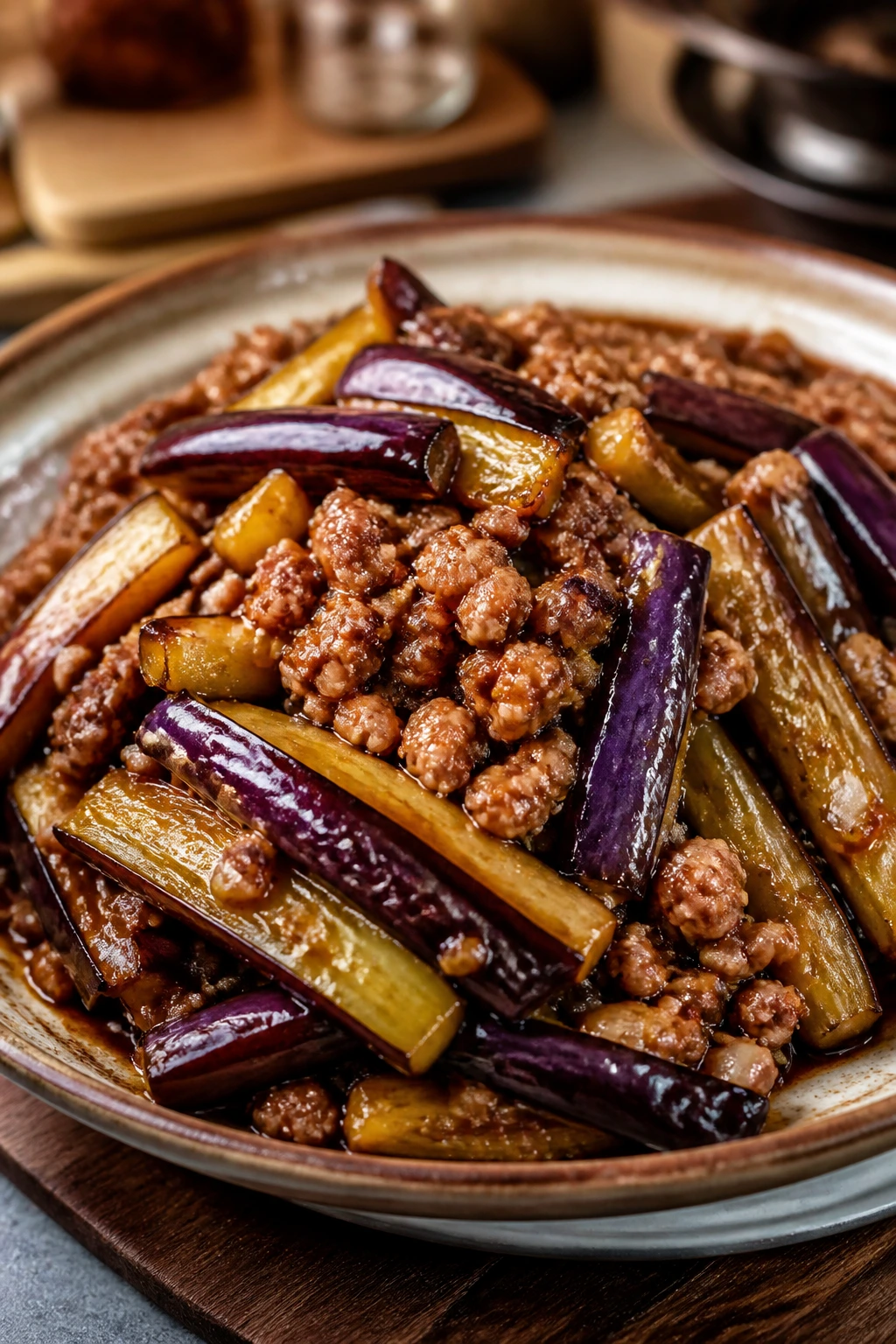
Eggplant needs heat and patience, and this dish gives it both. The pork brings salt and fat, the eggplant drinks up the sauce, and the garlic goes sweet instead of bitter if you don’t rush it.
Why It Works: Eggplant gets silky when it’s cooked until the edges collapse slightly. Minced pork gives the pan enough fat that the eggplant doesn’t taste dry or spongy.
Key Ingredients:
- 2 medium Chinese eggplants, cut into batons
- 1/2 lb ground pork
- 3 cloves garlic, minced
- 1 tablespoon ginger, minced
- 2 tablespoons soy sauce
- 1 tablespoon black vinegar
- 1 teaspoon sugar
- 1 teaspoon cornstarch
- 2 tablespoons neutral oil
Quick Steps:
- Brown the pork in oil for 3 to 4 minutes.
- Add eggplant and stir-fry until the pieces start to soften and take on oil, about 4 minutes.
- Stir in garlic, ginger, soy sauce, vinegar, sugar, and a splash of water.
- Cook until the eggplant is tender and the sauce clings to the sides of the pan.
Equipment for This Recipe:
- Wide skillet or wok
- Sharp knife
- Small bowl for the sauce
How to Serve This Dish: Rice is the obvious partner, and it is the right one. The sauce is too good to leave behind in the pan.
Pro Tips for This Recipe:
- Eggplant drinks oil fast, so keep the heat up and stir often.
- Chinese eggplants cook faster than globe eggplants, which helps a lot here.
- If the pan dries out, a tablespoon or two of water saves the texture.
Variations on This Dish:
- Spicy Eggplant Pork: Add chopped chilies or chili crisp.
- Vegetarian Garlic Eggplant: Skip the pork and add diced mushrooms.
Common Mistakes to Avoid with This Dish:
- Using too low a heat: The eggplant turns soggy before it softens.
- Underseasoning the sauce: Eggplant needs a strong hand or it tastes bland.
12. Moo Goo Gai Pan
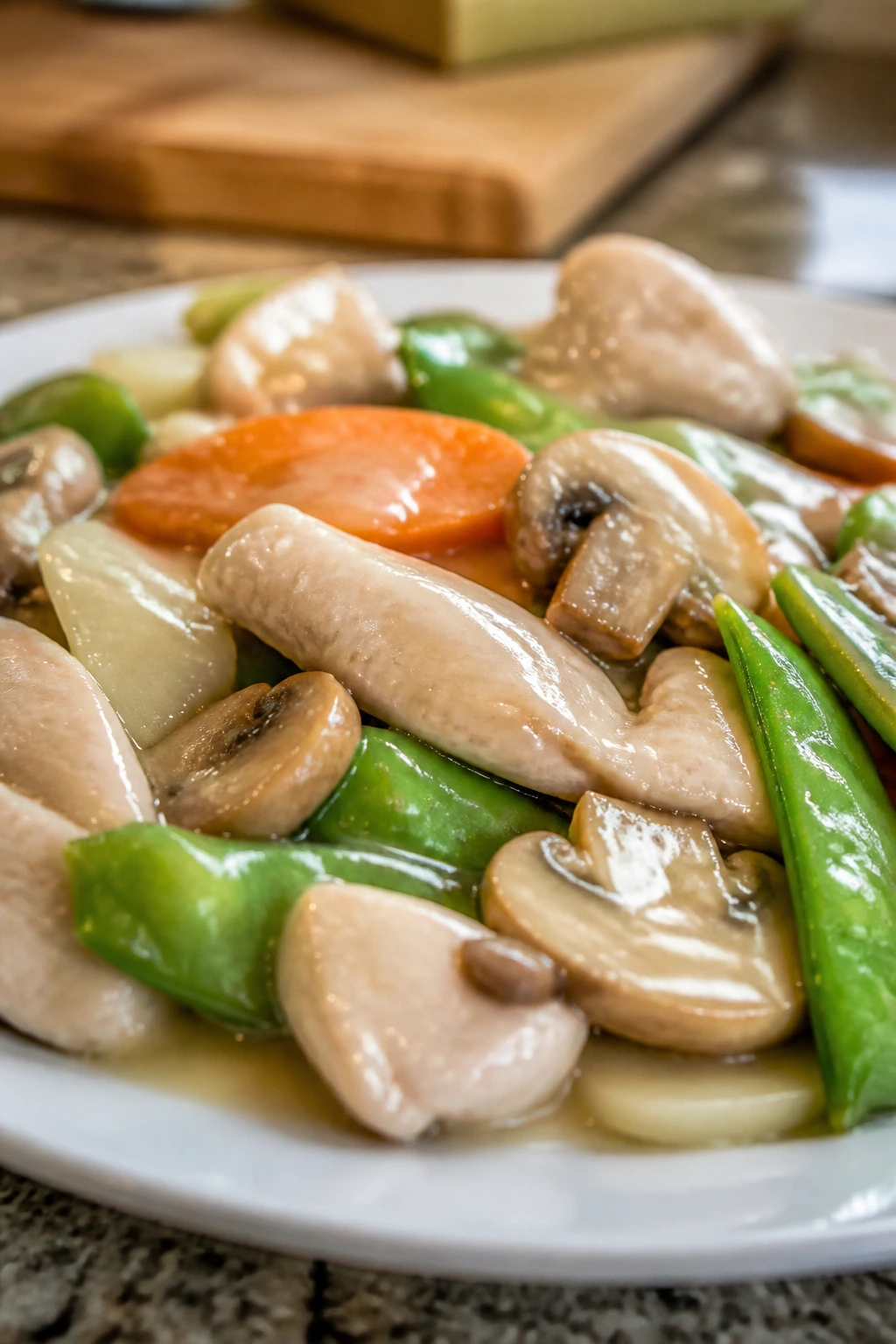
Moo goo gai pan is the dish I think of when the fridge is full of random vegetables and you want them to taste like a plan. The sauce is gentle, the chicken stays tender, and the mushrooms do a lot of the heavy lifting.
Why It Works: Chicken breast stays light when it’s sliced thin and cooked briefly. Mushrooms bring a savory depth that stands in for a heavier sauce.
Key Ingredients:
- 1 lb chicken breast, sliced thin
- 2 cups mushrooms, sliced
- 1 cup snow peas
- 1 cup sliced carrots
- 2 tablespoons chicken stock
- 1 tablespoon soy sauce
- 1 teaspoon cornstarch
- 2 cloves garlic, minced
- 2 tablespoons neutral oil
Quick Steps:
- Toss the chicken with cornstarch and 1 tablespoon soy sauce.
- Stir-fry the chicken in hot oil until just opaque, then remove it.
- Cook mushrooms, carrots, snow peas, and garlic for 3 minutes.
- Add stock, return the chicken, and toss until the sauce looks light and silky.
Equipment for This Recipe:
- Large skillet or wok
- Cutting board
- Small bowl
How to Serve This Dish: Spoon it over rice and keep the garnish simple; a few scallions are enough. It also works with a tiny drizzle of sesame oil if you want a softer finish.
Pro Tips for This Recipe:
- Slice the mushrooms thick enough that they don’t disappear.
- Snow peas should stay bright; don’t cook them until floppy.
- A little stock goes farther than extra soy here.
Variations on This Dish:
- Tofu Moo Goo: Replace the chicken with pressed tofu cubes.
- Ginger Mushroom Version: Add another teaspoon of ginger for a warmer broth-like note.
Common Mistakes to Avoid with This Dish:
- Too much sauce: Moo goo gai pan should be light, not soupy.
- Cooking all the vegetables at the same speed: Carrots need a head start; snow peas do not.
13. Sweet and Sour Pork Stir-Fry
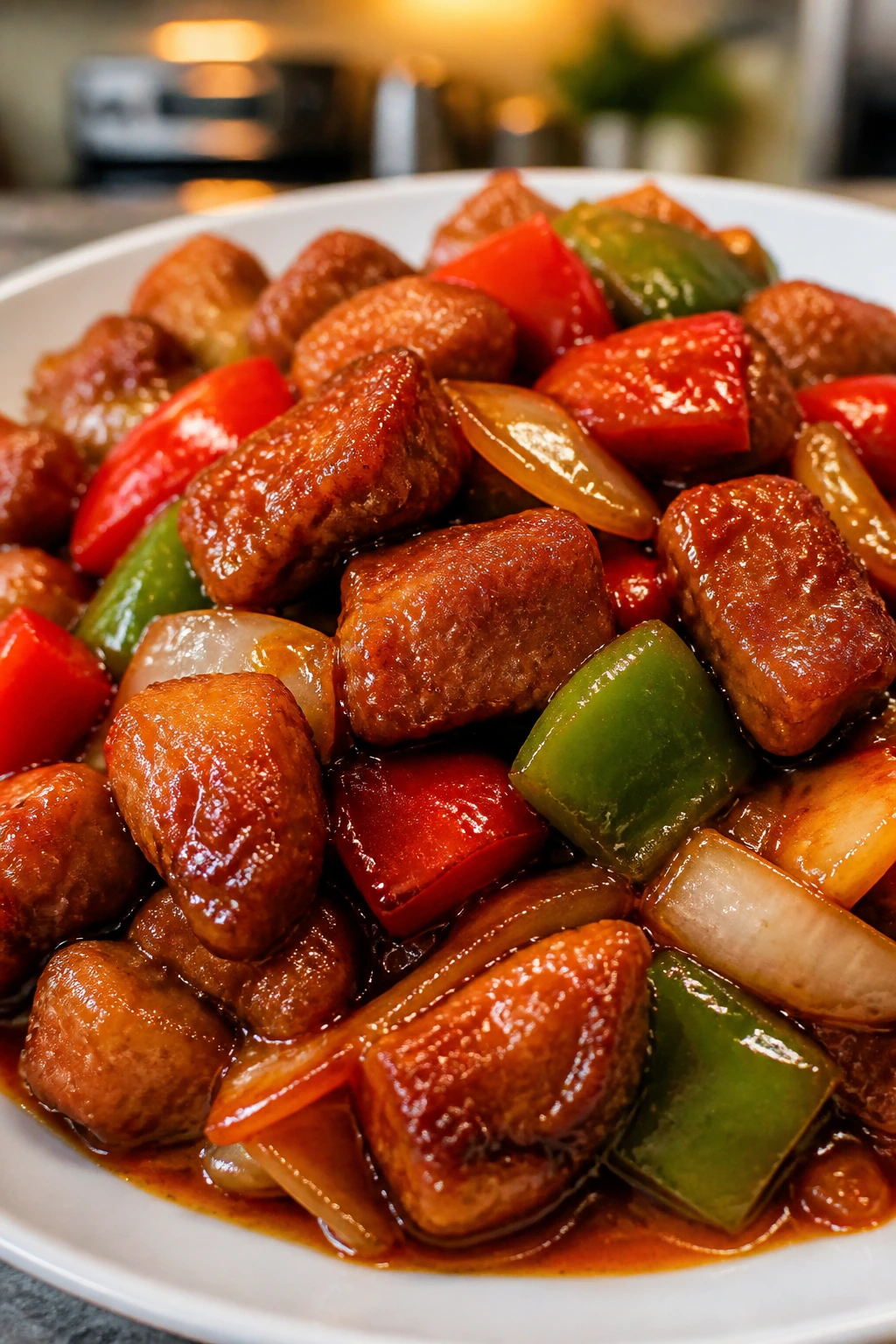
Sweet and sour pork can be clumsy when it’s too sugary, but a good version has a clean snap from the peppers and onions and enough vinegar to keep the sauce lively. The pork should taste crisp around the edges before the sauce lands.
Why It Works: A light cornstarch coating helps the pork brown instead of drying out. The vinegar cuts through the sugar so the dish stays sharp rather than syrupy.
Key Ingredients:
- 1 lb pork tenderloin, cubed
- 1 red bell pepper, chunked
- 1 green bell pepper, chunked
- 1 onion, chunked
- 3 tablespoons ketchup
- 2 tablespoons rice vinegar
- 1 tablespoon sugar
- 1 teaspoon cornstarch
- 2 tablespoons neutral oil
Quick Steps:
- Toss the pork with cornstarch and 1 tablespoon oil.
- Sear the pork until browned on all sides, about 5 minutes.
- Stir-fry the peppers and onion for 2 minutes.
- Add ketchup, vinegar, sugar, and 2 tablespoons water; return the pork and toss until the sauce coats everything.
Equipment for This Recipe:
- Skillet or wok
- Mixing bowl
- Spatula
How to Serve This Dish: Serve over rice, and keep the portion modest because the sauce has a lot of personality. A plain green vegetable on the side helps.
Pro Tips for This Recipe:
- Use pork tenderloin or loin, not shoulder, if you want quick cooking.
- Chunk the vegetables large enough that they stay crisp.
- Taste the sauce before finishing; one extra tablespoon of vinegar can make it sing.
Variations on This Dish:
- Pineapple Version: Add 1/2 cup pineapple chunks for a more classic takeout feel.
- Heat-Forward Version: Add red pepper flakes to the sauce.
Common Mistakes to Avoid with This Dish:
- Letting the sauce cook too long: It turns thick and candy-like.
- Using tiny vegetable pieces: They vanish before the pork is done.
14. Sesame Chicken and Broccoli
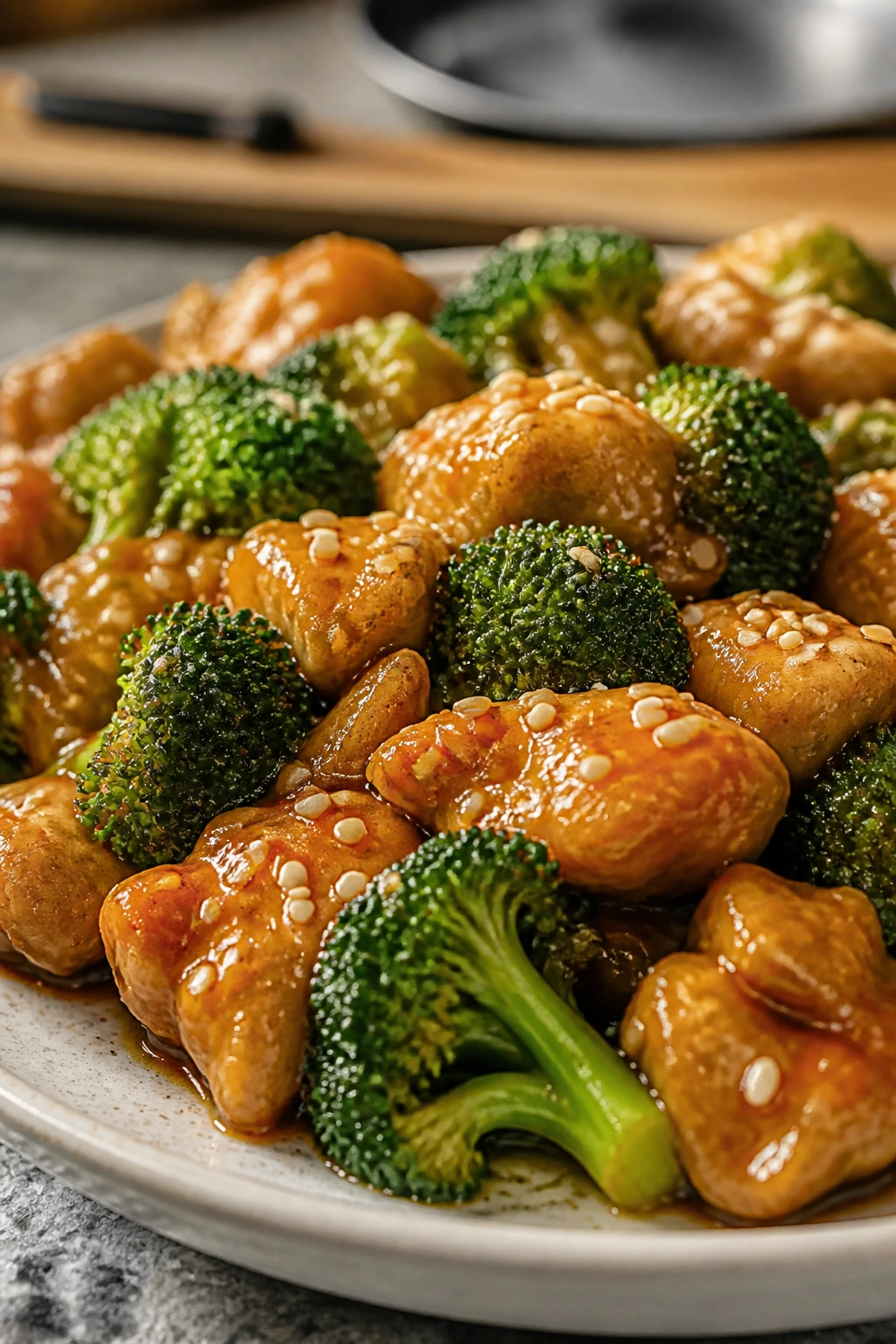
This is the sticky-sweet cousin of beef and broccoli, and it earns its place because the sesame finish gives the whole pan a toasted, nutty smell. The broccoli brings structure, which matters when the sauce leans glossy and sweet.
Why It Works: A short sauce reduction with honey or sugar creates the shine. Sesame oil at the end gives more aroma than heat, so the dish finishes smelling richer than it tastes sweet.
Key Ingredients:
- 1 lb chicken thighs, bite-size pieces
- 4 cups broccoli florets
- 2 tablespoons soy sauce
- 1 tablespoon honey
- 1 tablespoon sesame oil
- 1 teaspoon cornstarch
- 2 cloves garlic, minced
- 1 teaspoon ginger, minced
- 2 tablespoons neutral oil
- 1 tablespoon toasted sesame seeds
Quick Steps:
- Toss chicken with cornstarch and 1 tablespoon soy sauce.
- Brown the chicken in hot oil for 4 to 5 minutes.
- Add broccoli, garlic, ginger, and 1/4 cup water; cover for 1 minute to soften the florets.
- Stir in honey, remaining soy sauce, sesame oil, and sesame seeds; toss until glossy.
Equipment for This Recipe:
- Wok or skillet with lid
- Small bowl
- Measuring spoons
How to Serve This Dish: Rice is the cleanest match. If you want a little more crunch, scatter extra sesame seeds over the top right before serving.
Pro Tips for This Recipe:
- Toast the sesame seeds if yours are pale and flavorless.
- Don’t use a lot of honey; the sauce should shine, not glue itself to the spoon.
- If you like a darker sauce, add 1 teaspoon oyster sauce.
Variations on This Dish:
- Orange Sesame Version: Stir in 1 tablespoon orange juice and a little zest.
- Garlic Sesame Broccoli-Heavy Version: Add an extra cup of broccoli and reduce the chicken slightly.
Common Mistakes to Avoid with This Dish:
- Over-sweetening the sauce: Sesame chicken should taste savory first.
- Letting broccoli oversteam: A minute under the lid is enough.
15. Ginger Scallion Chicken
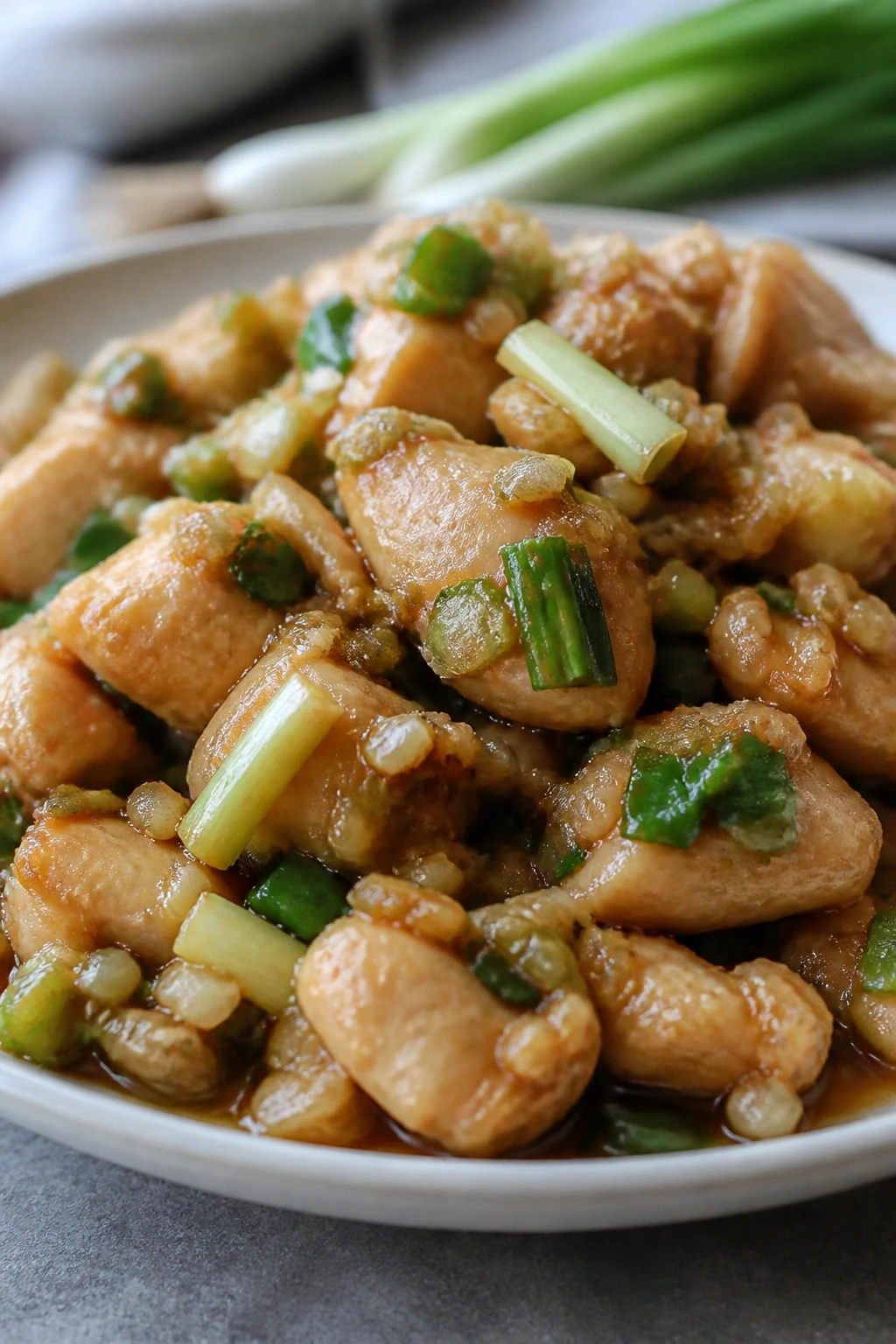
There’s something almost bare-bones about ginger scallion chicken, and that’s why I like it. The sauce is simple, the chicken stays clean-tasting, and the scallions turn sweet in the hot oil without losing their green edge.
Why It Works: Ginger and scallion are a classic pairing because the scallion adds freshness while the ginger gives heat without spice. Chicken thighs handle the quick cooking well and don’t dry out.
Key Ingredients:
- 1 lb chicken thighs, sliced thin
- 5 scallions, cut into 2-inch pieces
- 2 tablespoons ginger, minced
- 2 tablespoons soy sauce
- 1 tablespoon Shaoxing wine
- 1 teaspoon sugar
- 1 teaspoon cornstarch
- 2 tablespoons neutral oil
Quick Steps:
- Toss the chicken with cornstarch, soy sauce, Shaoxing wine, and sugar.
- Stir-fry the chicken in oil for 4 minutes until just cooked through.
- Add ginger and the scallion whites; cook for 30 seconds.
- Add the scallion greens and toss for 15 seconds before serving.
Equipment for This Recipe:
- Wok
- Tongs
- Small prep bowls
How to Serve This Dish: Serve with rice and maybe a few cucumber slices on the side. The dish is clean and fragrant enough to stand alone.
Pro Tips for This Recipe:
- Separate the scallion whites and greens; they need different cooking times.
- Use a generous amount of ginger here. It is the point.
- If you don’t have Shaoxing wine, dry sherry is the closest swap.
Variations on This Dish:
- Scallion Oil Chicken: Add extra scallions and finish with an extra teaspoon of hot oil.
- Chili-Ginger Version: Add sliced fresh chilies with the ginger.
Common Mistakes to Avoid with This Dish:
- Cooking the scallion greens too long: They lose their fresh bite.
- Under-seasoning the chicken: The sauce is spare, so the seasoning matters.
16. Shrimp and Bell Pepper Stir-Fry
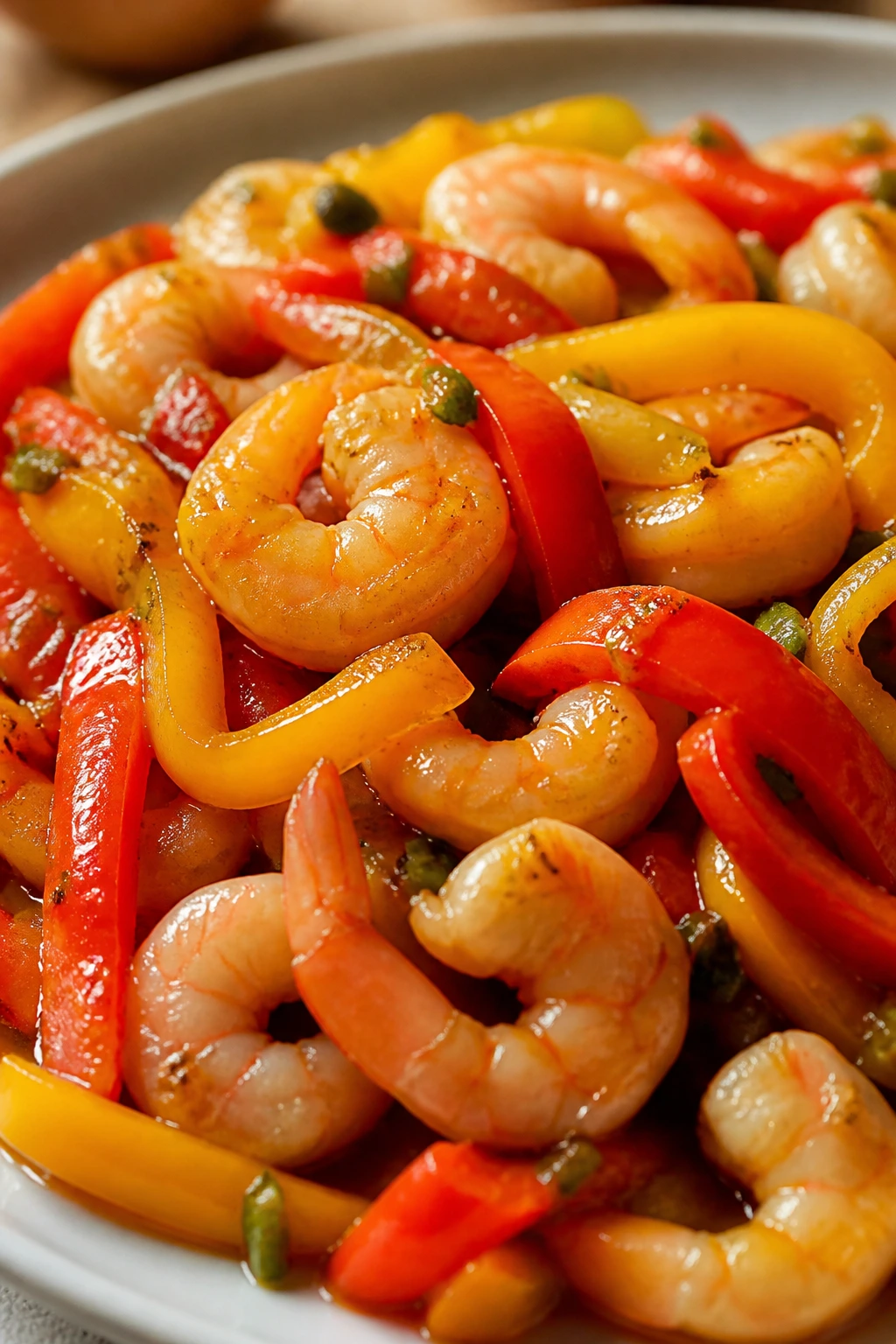
This one is all about color and speed. Shrimp cook in a blink, bell peppers stay crisp, and the sauce gets to be light and salty instead of thick and heavy.
Why It Works: Shrimp and peppers both reward quick heat. A short cook keeps the shrimp juicy while the peppers stay sweet at the edges.
Key Ingredients:
- 1 lb shrimp, peeled and deveined
- 2 bell peppers, sliced
- 2 cloves garlic, minced
- 1 tablespoon ginger, minced
- 2 tablespoons soy sauce
- 1 tablespoon oyster sauce
- 1 teaspoon cornstarch
- 2 tablespoons neutral oil
- 1 teaspoon sesame oil
Quick Steps:
- Pat the shrimp dry and toss with cornstarch and 1 tablespoon soy sauce.
- Sear the shrimp for 1 minute per side, then remove them.
- Stir-fry the peppers, garlic, and ginger for 2 minutes.
- Add the shrimp back with oyster sauce and sesame oil; toss until coated and just opaque.
Equipment for This Recipe:
- Skillet or wok
- Paper towels
- Spatula
How to Serve This Dish: Serve it over rice or with thin noodles. The peppers make it look like more work than it was, which I do not mind at all.
Pro Tips for This Recipe:
- Use two different pepper colors if you want a brighter pan.
- Don’t overcook the shrimp while you wait for the peppers.
- A tiny splash of water helps the sauce spread if it starts clumping.
Variations on This Dish:
- Garlic-Heavy Version: Double the garlic and keep the sauce simple.
- Snow Pea Swap: Replace one pepper with 2 cups snap peas.
Common Mistakes to Avoid with This Dish:
- Cooking shrimp until tight curls: Stop when they form loose C-shapes.
- Using watery peppers: They steam the pan and dull the sauce.
17. Ground Turkey and Bok Choy
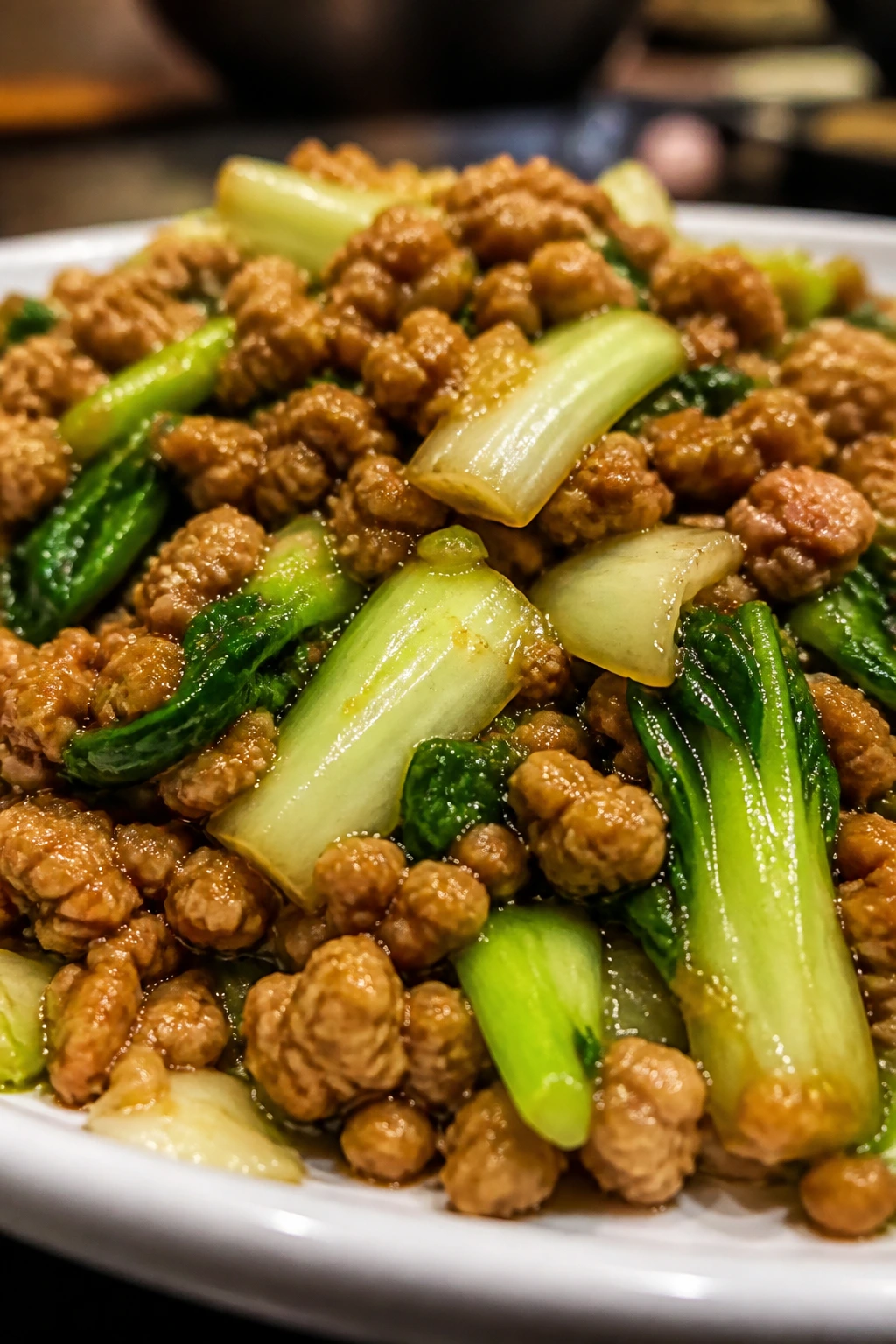
Ground turkey can be bland if you treat it like it has personality on its own. Here, bok choy, garlic, and soy sauce carry the flavor, and the turkey gives you a lean base that soaks up the pan juices.
Why It Works: Ground meat cooks quickly and takes on whatever sauce you add. Bok choy gives you both crunch and softness, especially if you keep the stems and leaves in the pan for different lengths of time.
Key Ingredients:
- 1 lb ground turkey
- 4 baby bok choy, halved
- 3 cloves garlic, minced
- 1 tablespoon ginger, minced
- 2 tablespoons soy sauce
- 1 tablespoon oyster sauce
- 1 teaspoon cornstarch
- 2 tablespoons neutral oil
Quick Steps:
- Brown the turkey in oil for 5 minutes, breaking it into small bits.
- Add garlic and ginger and cook for 30 seconds.
- Add bok choy stems and a splash of water; cook for 2 minutes.
- Add the leaves, soy sauce, oyster sauce, and cornstarch slurry; toss until the sauce lightly coats everything.
Equipment for This Recipe:
- Large skillet
- Wooden spoon
- Small bowl
How to Serve This Dish: Serve over rice, and make sure each bowl gets some of the bok choy stems. They carry the best texture.
Pro Tips for This Recipe:
- Use baby bok choy if you want the stems and leaves to cook evenly.
- Turkey needs salt more than fat, so don’t underseason the sauce.
- A spoonful of chili crisp wakes up the whole pan.
Variations on This Dish:
- Turkey and Mushroom Version: Add sliced mushrooms with the bok choy stems.
- Spicy Garlic Bok Choy: Add chili paste and extra garlic.
Common Mistakes to Avoid with This Dish:
- Breaking the turkey into paste: Leave some small crumbles for better texture.
- Adding the bok choy leaves too early: They collapse into nothing.
18. Char Siu Pork Stir-Fry
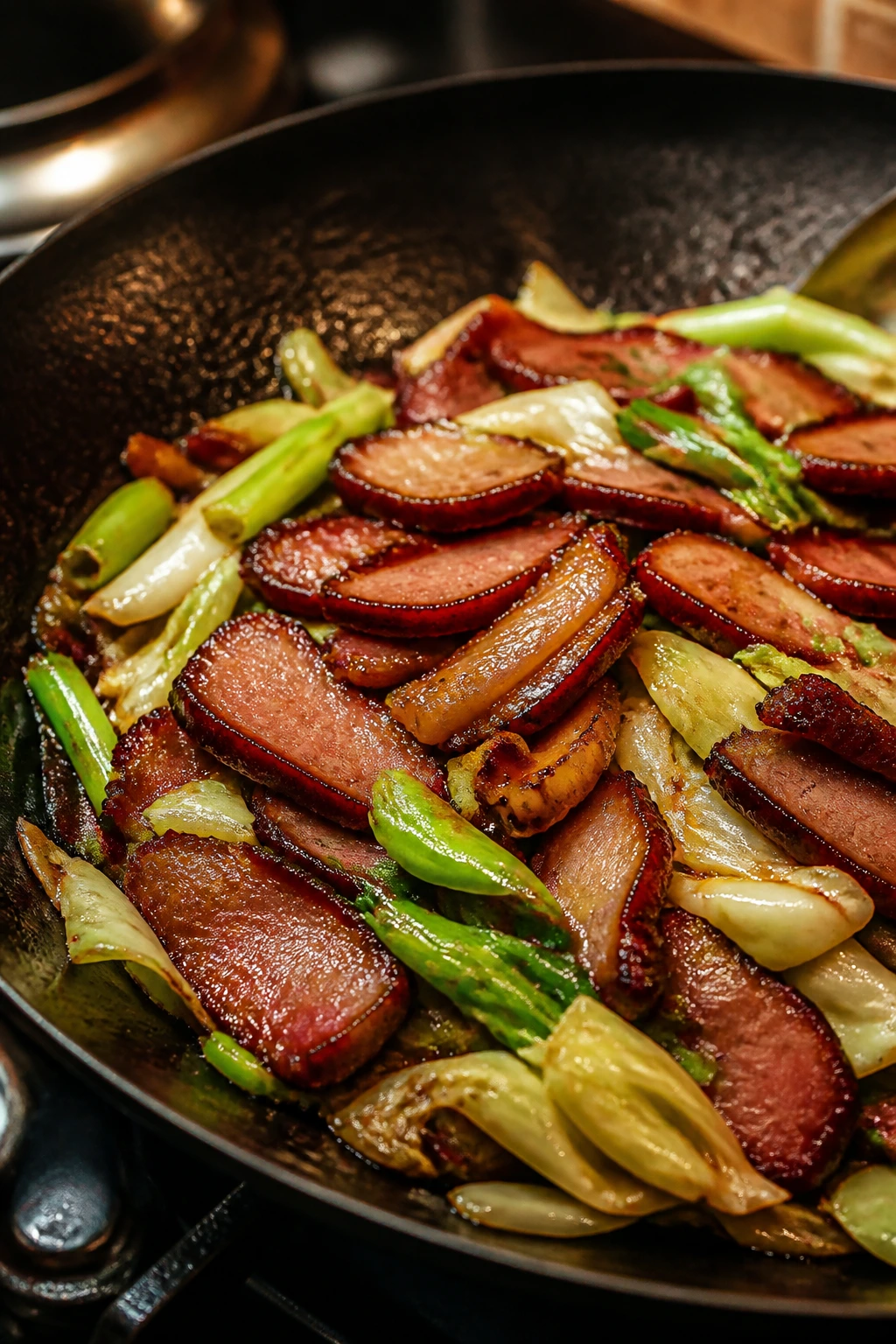
Char siu flavor gives this stir-fry its sweet, red lacquered edge without needing a full barbecue setup. With sliced pork, cabbage, and scallions, it tastes like you borrowed the idea from a roast and turned it into a weeknight pan dinner.
Why It Works: Hoisin, soy, honey, and five-spice echo char siu sauce fast. Pork loin cooks quickly and holds onto the marinade better when sliced thin.
Key Ingredients:
- 1 lb pork loin, sliced thin
- 2 cups cabbage, shredded
- 3 scallions, cut into lengths
- 2 tablespoons hoisin sauce
- 1 tablespoon soy sauce
- 1 tablespoon honey
- 1/2 teaspoon five-spice powder
- 2 tablespoons neutral oil
Quick Steps:
- Toss the pork with hoisin, soy, honey, and five-spice.
- Sear the pork in hot oil for 3 to 4 minutes.
- Add cabbage and scallions; stir-fry for 2 minutes.
- Toss until the glaze coats the pork and cabbage.
Equipment for This Recipe:
- Wok or skillet
- Mixing bowl
- Spatula
How to Serve This Dish: It’s excellent with rice and a little extra scallion sprinkled over the top. If you have leftover rice, this reheats into a very good lunch.
Pro Tips for This Recipe:
- A little five-spice goes a long way; too much tastes dusty.
- If your hoisin is thick, loosen it with 1 tablespoon water.
- Pork loin cooks faster than shoulder, which is what you want here.
Variations on This Dish:
- Pineapple Char Siu: Add a few pineapple chunks with the cabbage.
- Char Siu Noodle Bowl: Toss the finished pork with lo mein noodles instead of rice.
Common Mistakes to Avoid with This Dish:
- Overdoing the five-spice: The dish turns medicinal fast.
- Cooking cabbage until soft: It should still have some bite.
19. Chinese Sausage Fried Rice
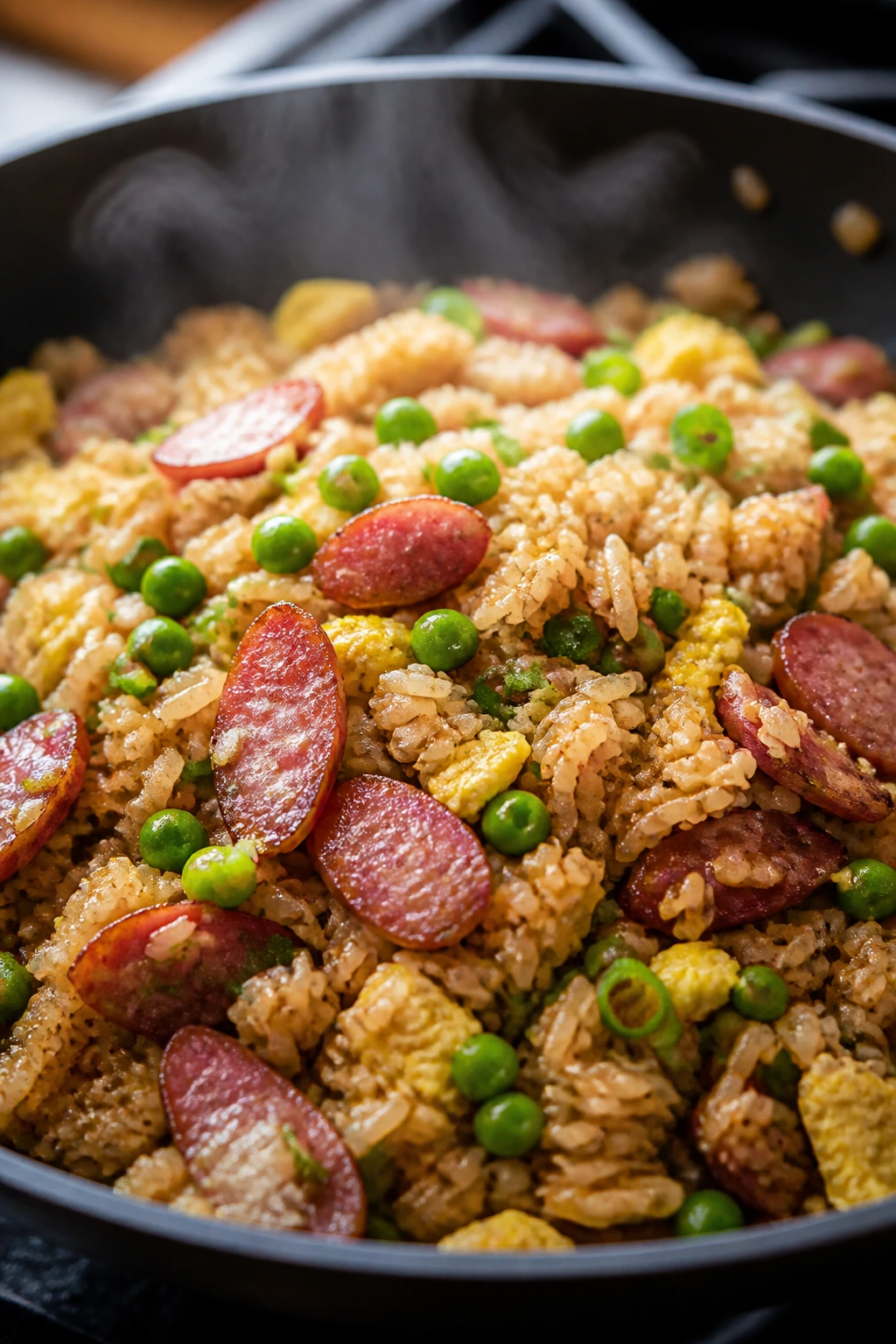
Chinese sausage fried rice has that smoky-sweet aroma that fills the kitchen before the rice even hits the pan. The sausage renders into the eggs and rice, and the peas and scallions keep the dish from getting heavy.
Why It Works: Day-old rice fries better because the grains are dry and separate. Lap cheong is rich, so you don’t need much oil or extra meat.
Key Ingredients:
- 3 cups cold cooked jasmine rice
- 2 Chinese sausages, sliced thin
- 2 eggs, lightly beaten
- 1 cup frozen peas
- 3 scallions, sliced
- 2 tablespoons soy sauce
- 1 teaspoon sesame oil
- 1 tablespoon neutral oil
Quick Steps:
- Brown the sausage slices in oil for 1 to 2 minutes.
- Push them aside and scramble the eggs in the same pan.
- Add rice and peas; break up the clumps and fry for 3 minutes.
- Stir in soy sauce, sesame oil, and scallions, then toss until the rice looks evenly colored.
Equipment for This Recipe:
- Large skillet or wok
- Spatula
- Bowl for the eggs
How to Serve This Dish: Fried rice is already the meal, but a few cucumber slices or a fried egg on top makes it feel complete.
Pro Tips for This Recipe:
- Cold rice is not optional if you want the grains to stay separate.
- Slice the sausage thin so it can flavor the whole pan.
- Add the scallions at the end so they stay bright.
Variations on This Dish:
- Shrimp Fried Rice: Swap the sausage for shrimp and reduce the cook time.
- Egg-Heavy Version: Add a third egg for a softer, richer rice.
Common Mistakes to Avoid with This Dish:
- Using freshly cooked rice: It turns sticky and clumpy.
- Too much soy sauce: The rice gets wet instead of fried.
20. Chicken with Snow Peas and Mushrooms
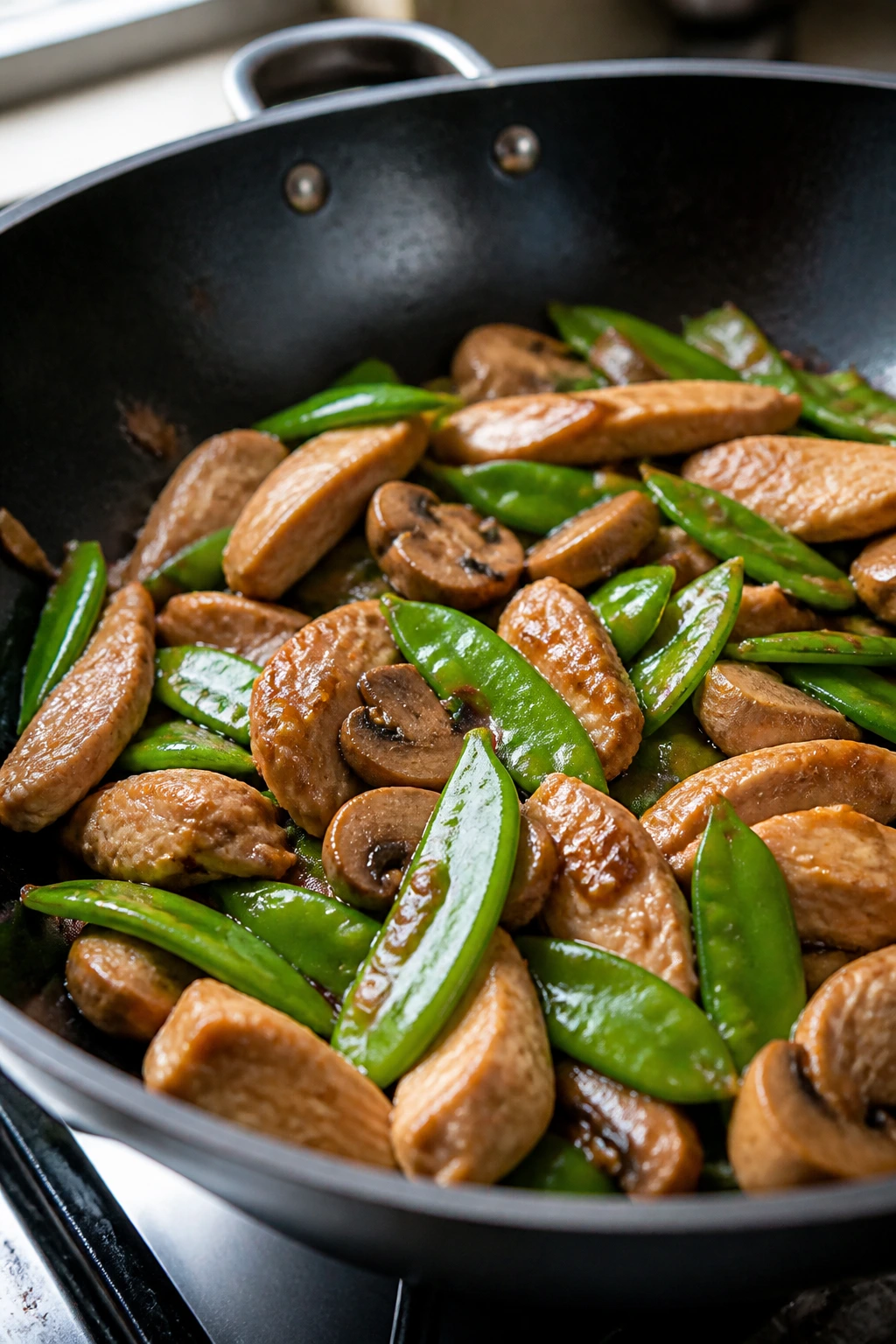
Snow peas and mushrooms do a lot of work here with very little fuss. The peas stay crisp, the mushrooms go savory and dark at the edges, and the chicken just needs to stay in the pan long enough to pick up the flavor.
Why It Works: Mushrooms brown if you give them room. Snow peas cook fast, so they keep the dish lively instead of collapsing into softness.
Key Ingredients:
- 1 lb chicken thighs, sliced
- 2 cups mushrooms, sliced
- 2 cups snow peas
- 2 cloves garlic, minced
- 1 tablespoon ginger, minced
- 2 tablespoons soy sauce
- 1 tablespoon oyster sauce
- 2 tablespoons neutral oil
Quick Steps:
- Brown the chicken in oil for 4 minutes, then move it to the side.
- Cook the mushrooms until they release moisture and start to brown.
- Add garlic, ginger, and snow peas; stir-fry for 2 minutes.
- Return the chicken and toss with soy sauce and oyster sauce until glossy.
Equipment for This Recipe:
- Wok or skillet
- Slotted spoon
- Cutting board
How to Serve This Dish: It works well over rice, but I also like it with plain noodles when the snow peas are especially good. The mushrooms carry the sauce nicely.
Pro Tips for This Recipe:
- Don’t salt the mushrooms too early or they throw off too much water.
- Keep snow peas crisp; they should still snap.
- Chicken thighs are safer than breast here because they tolerate the two-stage cooking better.
Variations on This Dish:
- Tofu and Mushroom Bowl: Replace the chicken with tofu and let the mushrooms do more of the lifting.
- Garlic Black Pepper Version: Add fresh pepper at the end for a sharper finish.
Common Mistakes to Avoid with This Dish:
- Rushing the mushrooms: If they don’t brown, the dish tastes thin.
- Overcooking the snow peas: They should stay bright green.
21. Beef and Onion Stir-Fry
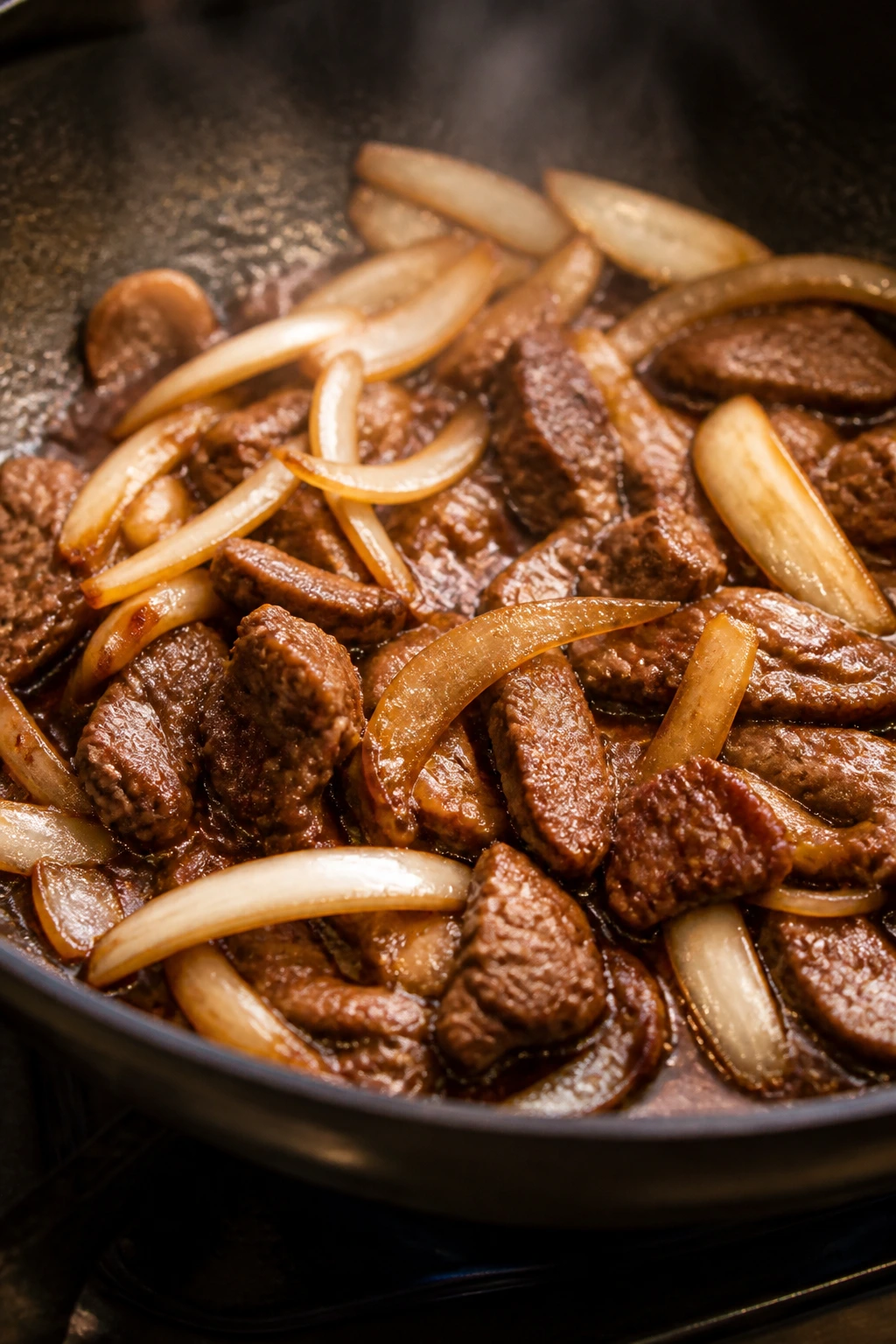
Beef and onion is a plain-spoken dish, and I mean that as a compliment. The onions go sweet, the beef stays savory, and there’s enough sauce to tie everything together without burying the meat.
Why It Works: Onions soften and caramelize quickly in a hot pan, which gives the dish sweetness without extra sugar. Thin beef slices keep the cook time short and the texture tender.
Key Ingredients:
- 1 lb flank steak, thinly sliced
- 2 large onions, sliced
- 2 tablespoons soy sauce
- 1 tablespoon oyster sauce
- 1 teaspoon cornstarch
- 2 cloves garlic, minced
- 1 teaspoon ginger, minced
- 2 tablespoons neutral oil
Quick Steps:
- Toss the beef with cornstarch and 1 tablespoon soy sauce.
- Sear the beef in hot oil for 2 to 3 minutes, then remove it.
- Cook the onions for 4 minutes until they soften and brown at the edges, then add garlic and ginger.
- Return the beef with oyster sauce and remaining soy sauce; toss until coated.
Equipment for This Recipe:
- Skillet or wok
- Sharp knife
- Spatula
How to Serve This Dish: Rice keeps the onions from feeling too sharp. A few sliced scallions on top finish it without adding clutter.
Pro Tips for This Recipe:
- Slice onions pole to pole so they hold their shape.
- If your beef is tougher than flank, marinate it 15 minutes longer.
- A teaspoon of black vinegar at the end adds a nice edge.
Variations on This Dish:
- Pepper Onion Beef: Add sliced green pepper with the onions.
- Sweet Onion Version: Use Vidalia-style onions if you want a softer finish.
Common Mistakes to Avoid with This Dish:
- Cooking the onions into mush: They should still have some texture.
- Searing the beef too long: Thin slices only need a brief blast of heat.
22. Mapo Tofu Stir-Fry
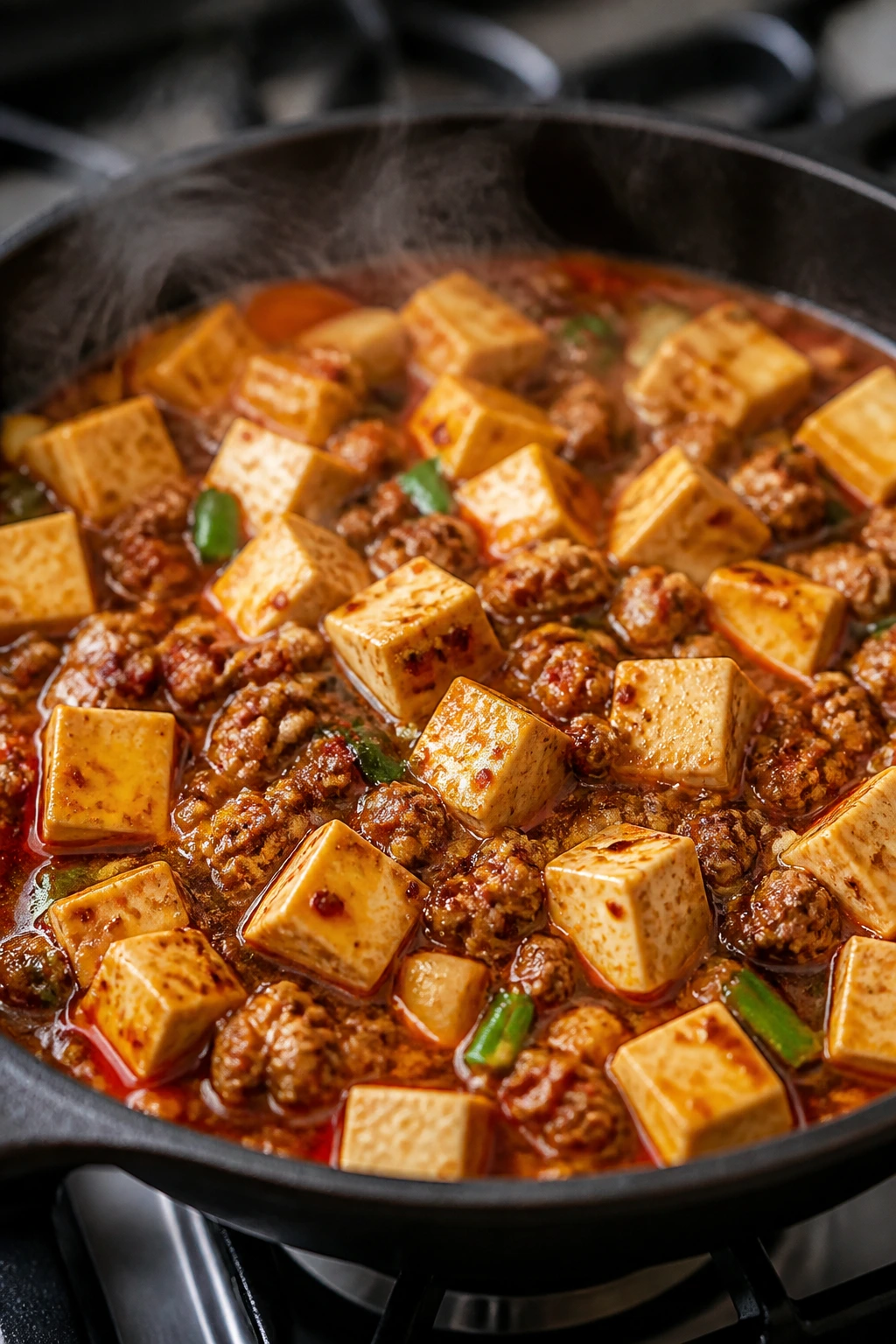
Mapo tofu is one of those dishes that gets loud fast, and that’s the fun of it. The tofu is soft but not bland, the pork or beef adds depth, and the chile bean paste carries a deep, fermented heat that tastes much bigger than the ingredient list.
Why It Works: Silken or soft tofu would break apart too much here, so firm tofu keeps the dish intact. Doubanjiang and a little ground meat give it that signature savory, spicy base.
Key Ingredients:
- 1 block firm tofu, cut into cubes
- 1/2 lb ground pork
- 2 tablespoons doubanjiang
- 2 cloves garlic, minced
- 1 tablespoon ginger, minced
- 1 tablespoon soy sauce
- 1 teaspoon cornstarch
- 2 tablespoons neutral oil
- 1/2 cup water or stock
Quick Steps:
- Brown the pork in oil for 4 minutes.
- Add garlic, ginger, and doubanjiang; stir for 30 seconds.
- Add tofu, water or stock, soy sauce, and cornstarch slurry.
- Simmer gently for 3 minutes until the sauce thickens around the tofu.
Equipment for This Recipe:
- Wide skillet or wok
- Spatula
- Small bowl
How to Serve This Dish: Serve it over rice and keep the portion of rice generous. Mapo tofu should have room to seep into the grains.
Pro Tips for This Recipe:
- Stir gently once the tofu is in; rough handling breaks the cubes.
- Taste the doubanjiang before adding more soy because the salt level varies.
- A final pinch of Sichuan pepper changes the whole dish.
Variations on This Dish:
- Vegetarian Mapo: Use mushrooms instead of pork and mushroom stock instead of water.
- Extra-Spicy Version: Add chili oil at the finish.
Common Mistakes to Avoid with This Dish:
- Boiling too hard: The tofu fractures and the sauce turns grainy.
- Using the wrong tofu: Soft tofu doesn’t hold up here.
23. Gai Lan with Oyster Sauce and Beef
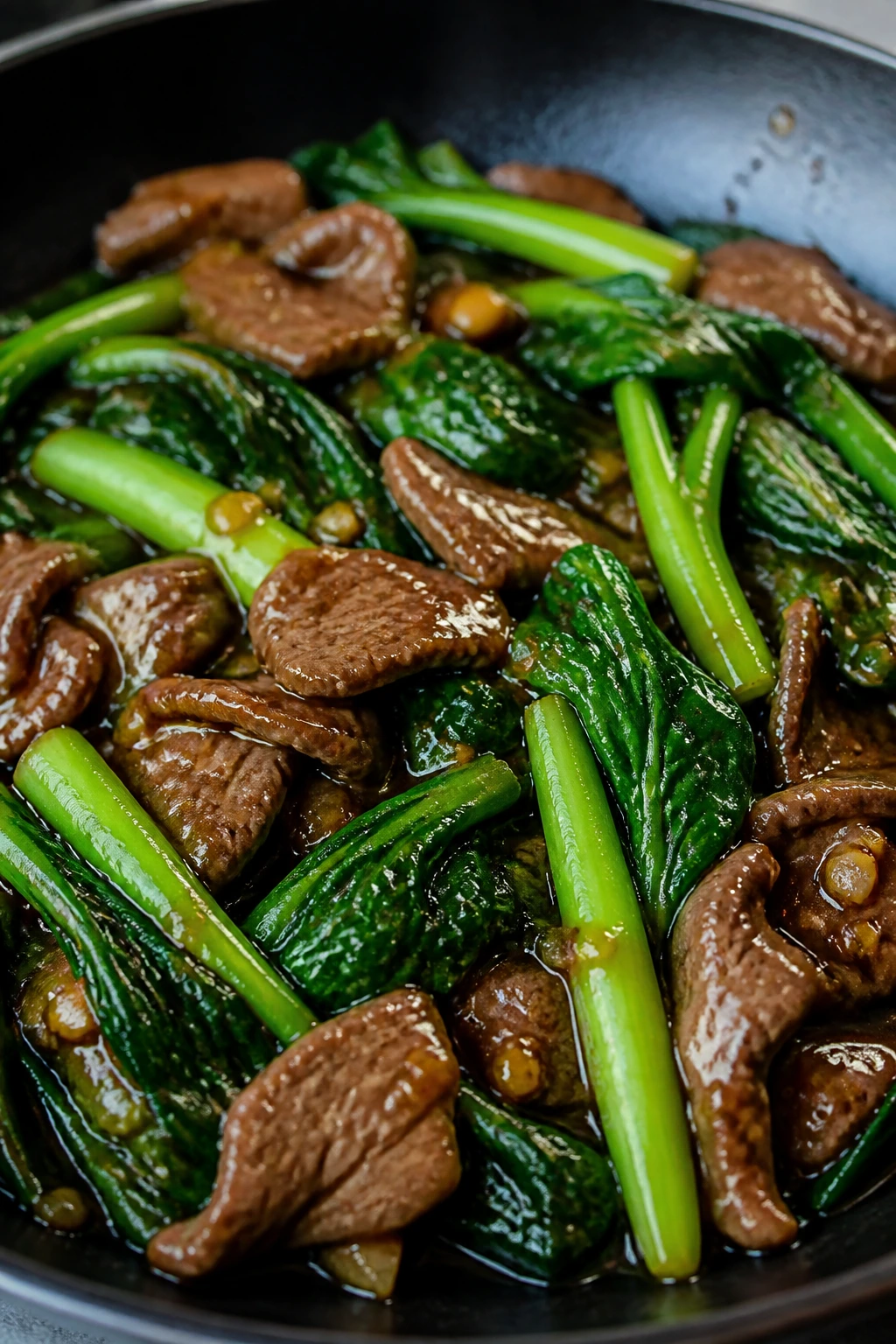
Gai lan has a firmer, slightly bitter bite that stands up to rich beef and oyster sauce in a way broccoli can’t quite imitate. The stems stay crisp, the leaves wilt just enough, and the sauce lands in the grooves of the vegetables.
Why It Works: Gai lan likes quick heat and a salty sauce. Beef brings the savory weight, while a splash of stock keeps the pan from drying out.
Key Ingredients:
- 1 lb flank steak, thinly sliced
- 1 bunch gai lan, trimmed
- 2 tablespoons oyster sauce
- 1 tablespoon soy sauce
- 2 cloves garlic, minced
- 1 teaspoon ginger, minced
- 1 teaspoon cornstarch
- 2 tablespoons neutral oil
- 1/4 cup stock or water
Quick Steps:
- Marinate the beef with cornstarch and 1 tablespoon soy sauce.
- Sear the beef briefly and remove it.
- Stir-fry gai lan stems for 2 minutes, then add leaves, garlic, ginger, and stock.
- Return the beef with oyster sauce and toss until the stems are crisp-tender.
Equipment for This Recipe:
- Wok or large skillet
- Knife
- Tongs
How to Serve This Dish: Serve it over rice with the stems laid in the middle and the beef around them. That way every bite gets a little of both.
Pro Tips for This Recipe:
- Separate the stems and leaves if they’re thick; they cook at different speeds.
- If gai lan looks dry, trim the ends and soak it for 5 minutes first.
- Oyster sauce is the main flavor, so use a good one if you have it.
Variations on This Dish:
- Chicken Gai Lan: Swap the beef for sliced chicken thighs.
- Garlic-Heavy Version: Add an extra clove or two and keep the sauce simple.
Common Mistakes to Avoid with This Dish:
- Dumping everything in at once: The stems need a head start.
- Letting the beef overcook: Once it turns from pink to gray-brown, pull it.
24. Five-Spice Chicken and Cabbage
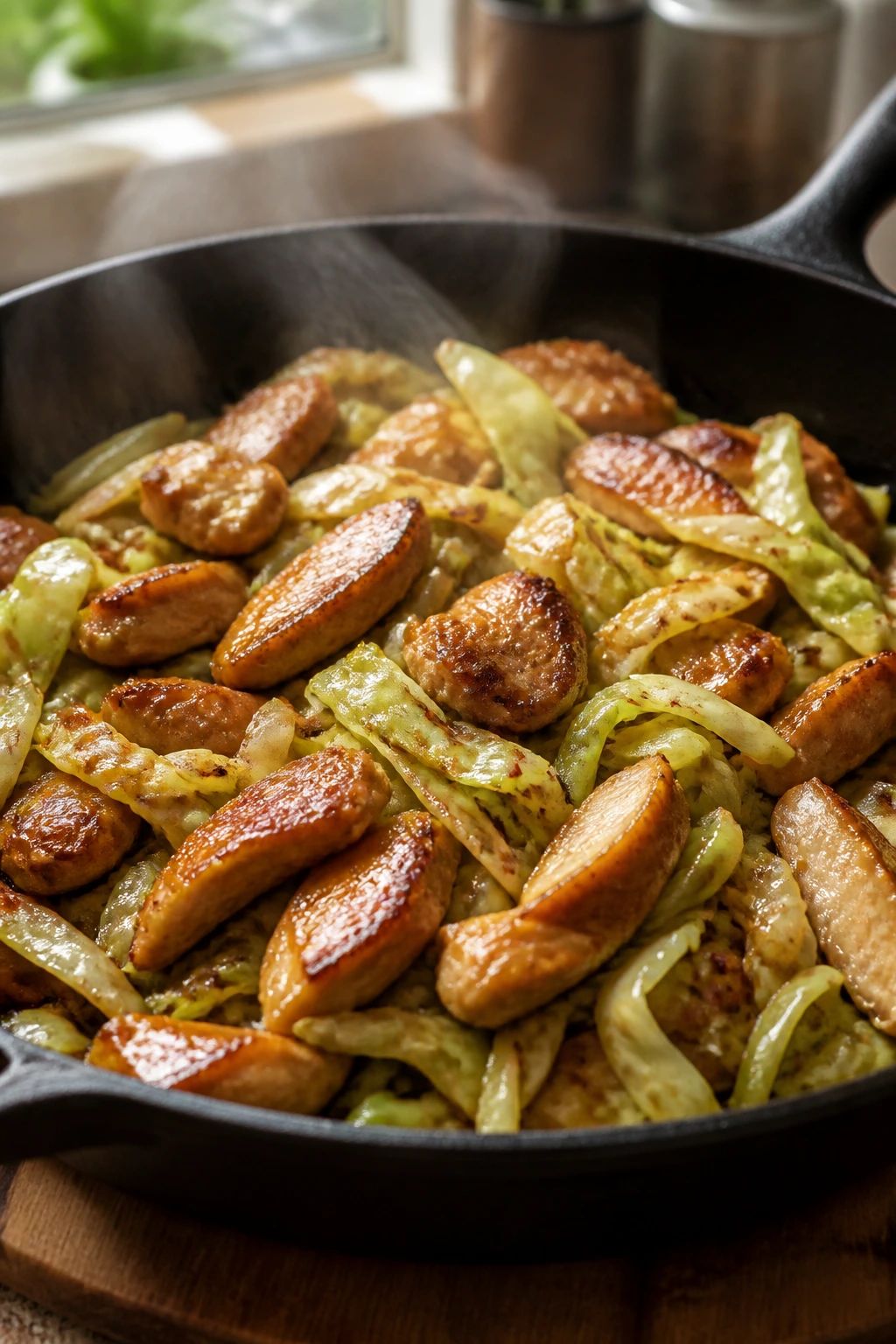
Five-spice can go dusty if you’re heavy-handed, but when it’s used well it gives chicken and cabbage a warm, rounded flavor that feels deeper than the quick cook time suggests. The cabbage softens, the chicken stays juicy, and the whole pan smells faintly of star anise and clove.
Why It Works: Five-spice works best with a little sugar and soy because the sweetness smooths the sharp edges. Cabbage cooks quickly and catches the seasoning in its folds.
Key Ingredients:
- 1 lb chicken thighs, sliced
- 6 cups cabbage, shredded
- 2 cloves garlic, minced
- 1 tablespoon ginger, minced
- 2 tablespoons soy sauce
- 1 teaspoon sugar
- 1/2 teaspoon five-spice powder
- 2 tablespoons neutral oil
Quick Steps:
- Toss the chicken with soy sauce, sugar, and five-spice.
- Brown the chicken in oil for 4 minutes.
- Add cabbage, garlic, and ginger; stir-fry for 3 minutes.
- Toss until the cabbage softens and the seasoning coats the pan.
Equipment for This Recipe:
- Large skillet
- Wooden spoon
- Small bowl
How to Serve This Dish: Rice is enough. The cabbage and chicken bring the rest of the plate with them.
Pro Tips for This Recipe:
- Measure the five-spice carefully; half a teaspoon is usually enough.
- Cabbage should shrink but not collapse.
- A splash of black vinegar at the end sharpens the whole pan.
Variations on This Dish:
- Pork and Cabbage Version: Swap the chicken for ground pork.
- Spicy Five-Spice Version: Add sliced chilies with the garlic.
Common Mistakes to Avoid with This Dish:
- Using too much five-spice: It can taste medicinal fast.
- Overcooking the cabbage: It should still have some chew.
25. Hunan Chicken
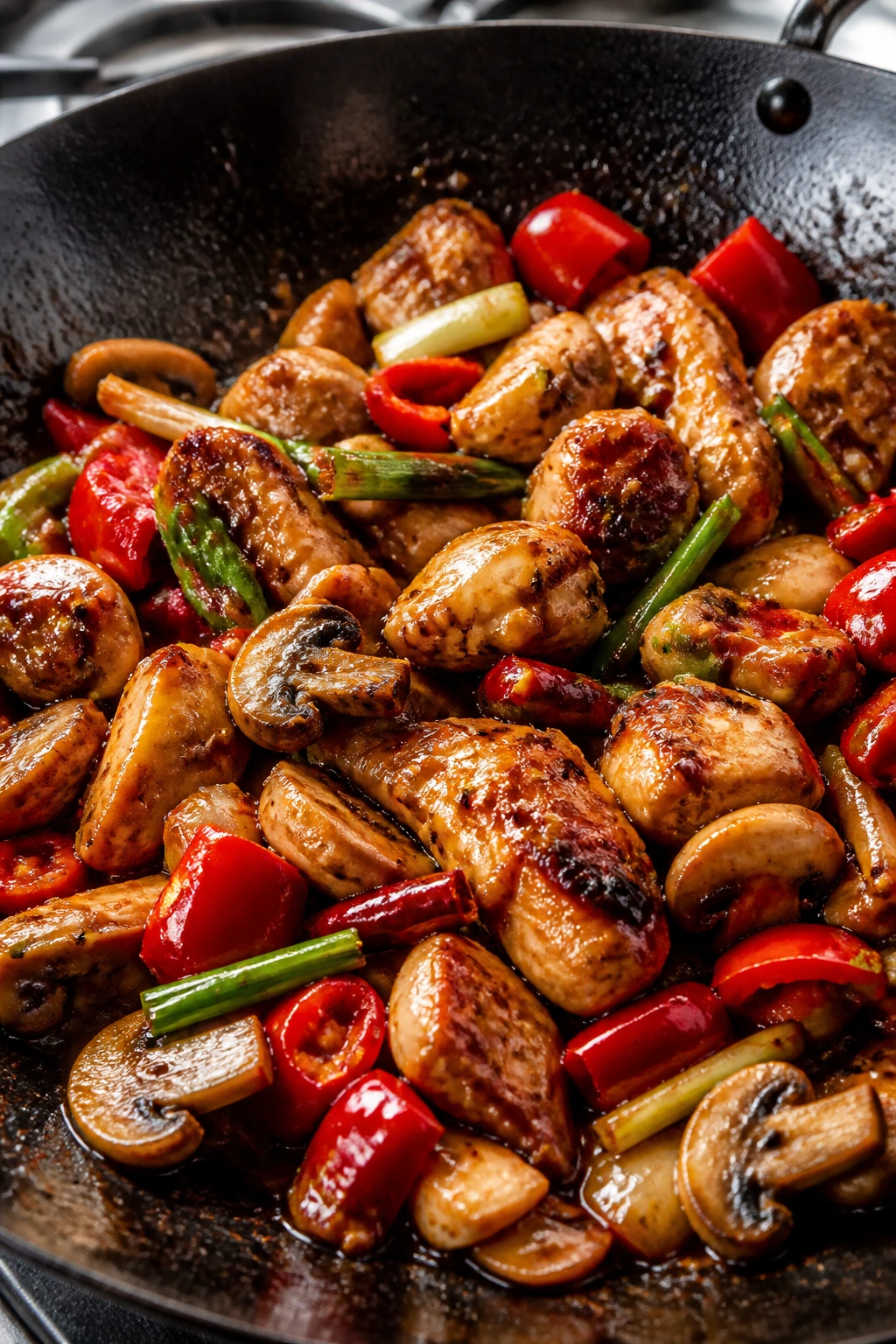
Hunan chicken has more heat and less sweetness than many takeout-style stir-fries, and that sharper profile makes it a good change of pace. The vegetables stay bright, the chicken gets a little sear, and the sauce has enough chili to wake up the whole pan.
Why It Works: A mix of fresh chilies, garlic, and soy creates a direct, savory heat. Thin chicken and fast vegetables mean the pan stays lively.
Key Ingredients:
- 1 lb chicken breast or thighs, sliced
- 1 red bell pepper, sliced
- 1 cup sliced mushrooms
- 2 cloves garlic, minced
- 1 tablespoon ginger, minced
- 2 tablespoons soy sauce
- 1 tablespoon chili paste
- 1 teaspoon cornstarch
- 2 tablespoons neutral oil
Quick Steps:
- Toss the chicken with cornstarch and 1 tablespoon soy sauce.
- Sear the chicken for 3 to 4 minutes and remove it.
- Stir-fry the bell pepper and mushrooms for 2 minutes, then add garlic, ginger, and chili paste.
- Return the chicken with remaining soy sauce and toss until the sauce coats the vegetables.
Equipment for This Recipe:
- Wok or skillet
- Spatula
- Small prep bowl
How to Serve This Dish: It works best with plain rice to offset the chili. If you like more heat, keep a little chili oil at the table.
Pro Tips for This Recipe:
- Use chili paste with some body, not a watery hot sauce.
- Mushrooms add depth, but don’t let them crowd the pan.
- Chicken thighs are more forgiving if you want a slightly longer sear.
Variations on This Dish:
- More Vegetable Hunan: Add zucchini and snow peas.
- Saucy Hunan Version: Stir in 1 tablespoon oyster sauce for more body.
Common Mistakes to Avoid with This Dish:
- Confusing heat with sweetness: Hunan chicken should lean savory and sharp.
- Undercooking the mushrooms: They need a little browning to taste right.
26. Salt and Pepper Shrimp
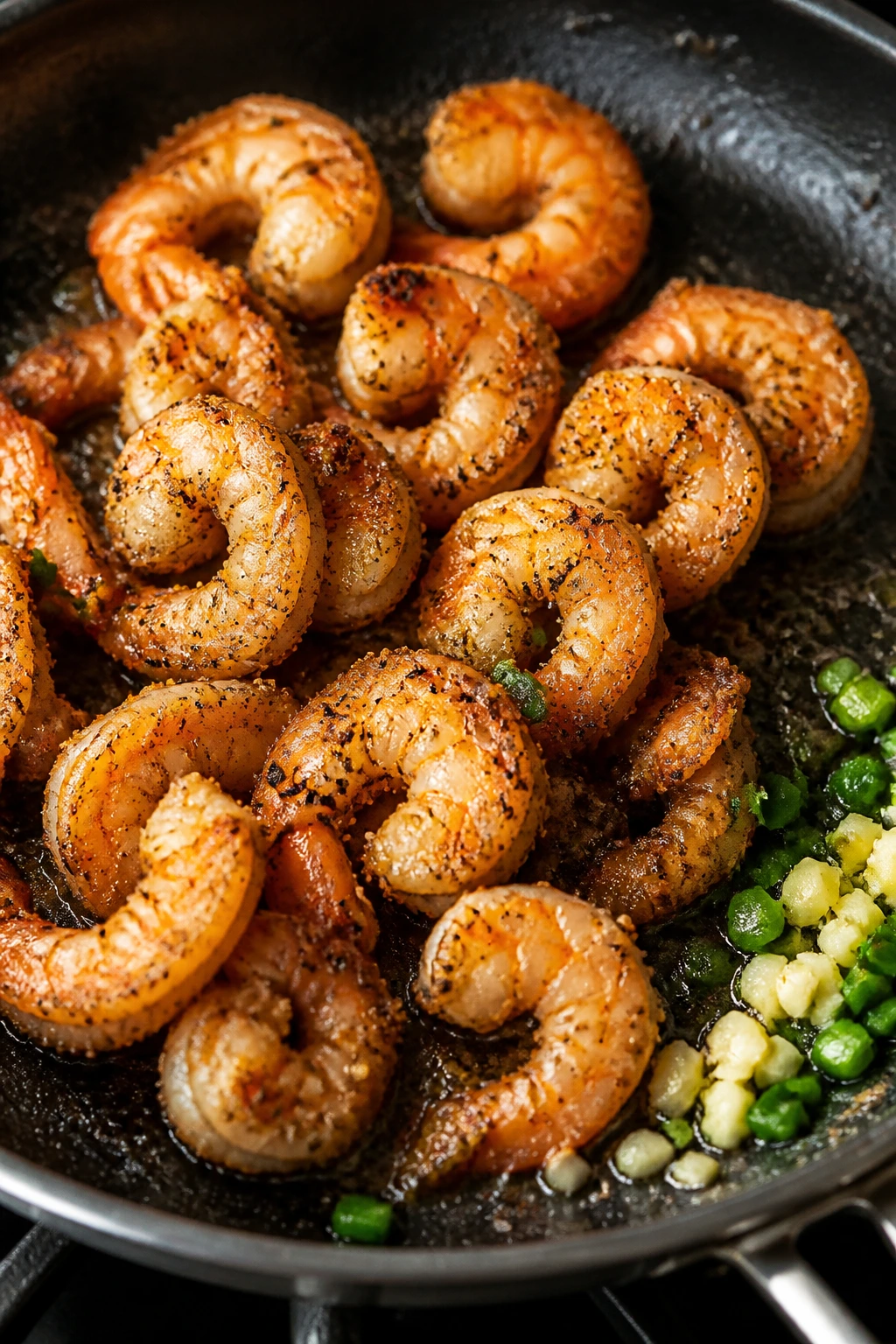
Salt and pepper shrimp are all about crunch and speed. The shell-on version is the classic move, but peeled shrimp work too if you want less fuss and more direct bite. Either way, the seasoning should stay crisp and fragrant.
Why It Works: A light dusting of cornstarch helps the shrimp brown fast. Garlic, scallions, and pepper land at the end so they stay aromatic rather than bitter.
Key Ingredients:
- 1 lb shrimp, peeled or shell-on
- 2 tablespoons cornstarch
- 1 teaspoon salt
- 1 teaspoon black pepper, freshly cracked
- 2 cloves garlic, minced
- 3 scallions, sliced
- 1 fresh chili, sliced
- 2 tablespoons neutral oil
Quick Steps:
- Toss the shrimp with cornstarch, salt, and black pepper.
- Fry in hot oil for 2 minutes total until crisp at the edges.
- Add garlic, scallions, and chili; stir for 20 seconds.
- Serve immediately while the crust is still crisp.
Equipment for This Recipe:
- Skillet or wok
- Slotted spoon
- Paper towels
How to Serve This Dish: Serve it as a main with rice or as part of a spread with other small plates. The shrimp deserve to be eaten hot, not left to steam.
Pro Tips for This Recipe:
- Pat the shrimp dry before coating them.
- If you use shell-on shrimp, snip the legs and feelers off first.
- Keep the garlic in the pan only long enough for it to smell sweet.
Variations on This Dish:
- Extra Pepper Version: Add white pepper along with black.
- Chili-Lime Version: Add a little lime zest at the end if you want brightness.
Common Mistakes to Avoid with This Dish:
- Holding the shrimp after frying: The coating goes soft fast.
- Using too much cornstarch: You want a dusting, not a paste.
27. Honey Garlic Chicken and Green Beans
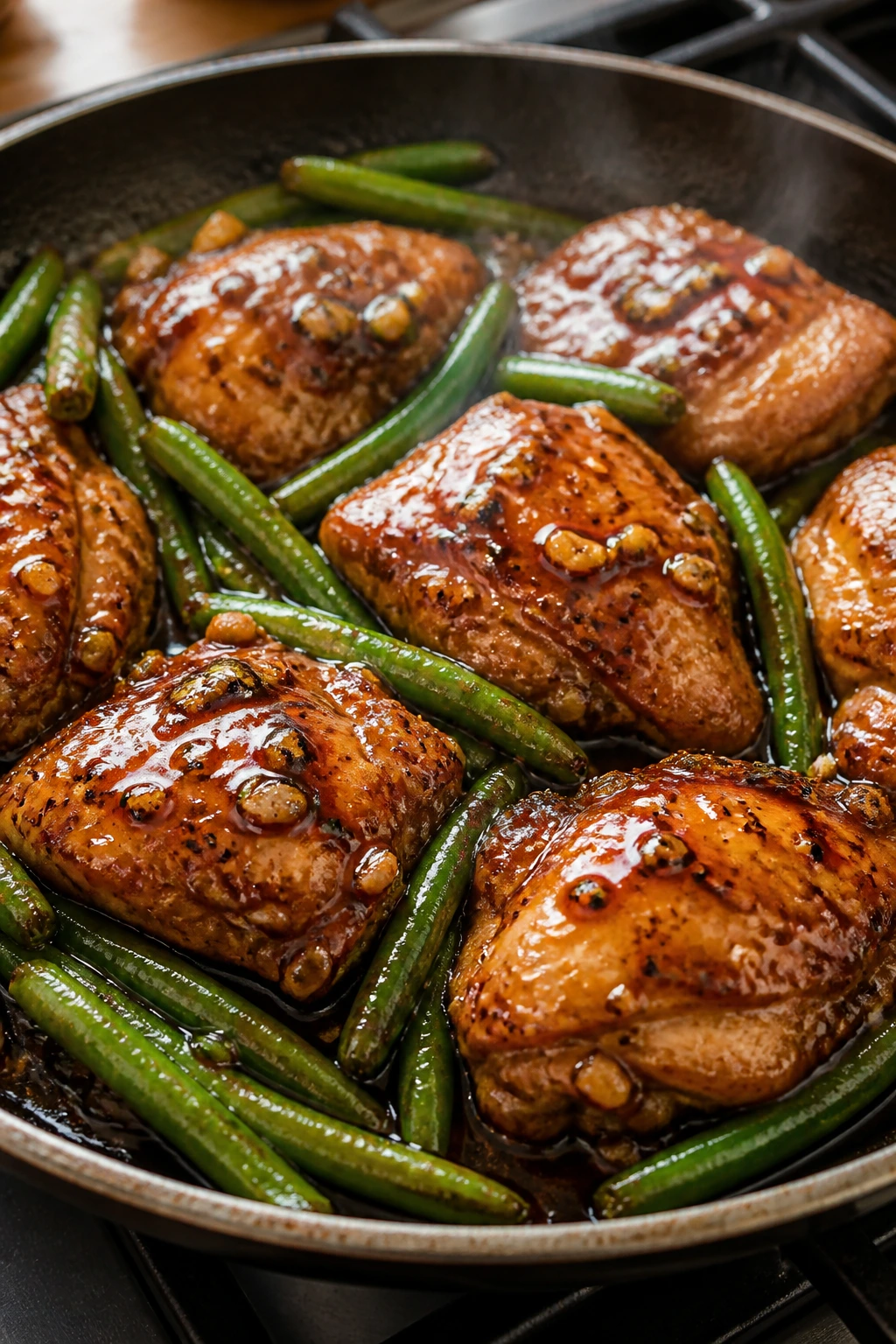
This is one of those pans that disappears fast because the sauce hits that sweet-savory corner people keep chasing. The green beans stay crisp, the chicken stays coated, and the honey turns the garlic into something round and sticky rather than harsh.
Why It Works: Green beans blister well in a hot pan, and honey gives a quick glaze without needing a long simmer. Chicken thighs hold moisture better here because the sauce reduces quickly.
Key Ingredients:
- 1 lb chicken thighs, sliced
- 3 cups green beans, trimmed
- 3 cloves garlic, minced
- 2 tablespoons soy sauce
- 1 tablespoon honey
- 1 teaspoon cornstarch
- 2 tablespoons neutral oil
- 1 teaspoon sesame oil
Quick Steps:
- Brown the chicken in oil for 4 minutes.
- Add green beans and stir-fry for 3 minutes until blistered.
- Add garlic, soy sauce, honey, and cornstarch slurry.
- Toss until the sauce turns shiny, then finish with sesame oil.
Equipment for This Recipe:
- Skillet or wok
- Wooden spoon
- Small bowl
How to Serve This Dish: It works with rice, but I also like it alongside fried rice if there are leftovers. The beans keep the plate from feeling too soft.
Pro Tips for This Recipe:
- Don’t let the honey sit on high heat for too long or it tastes dark.
- Trim the green beans evenly so they cook at the same rate.
- Sesame oil belongs at the end, not at the start.
Variations on This Dish:
- Garlic-Chili Green Beans: Add chili flakes or chili crisp.
- Pork Swap: Use thin pork slices if you want a richer pan.
Common Mistakes to Avoid with This Dish:
- Overcooking the beans: They should bend, not collapse.
- Adding honey before the chicken is browned: The sauce can scorch.
28. Stir-Fried Rice Cakes with Pork and Napa Cabbage
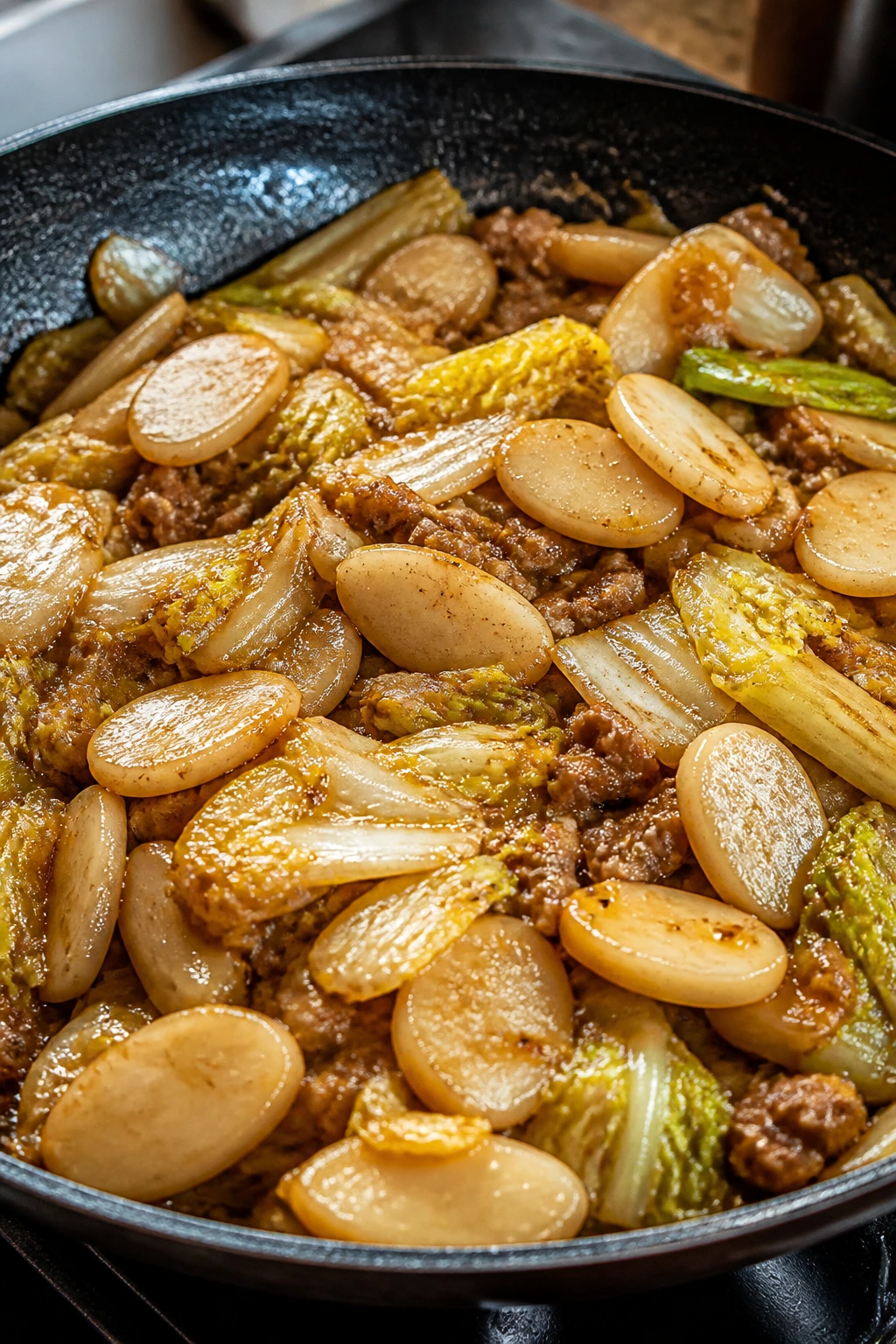
Rice cakes have a chewy, springy texture that makes this dish stand apart from the noodle and rice crowd. They pick up sauce like a sponge, and the napa cabbage and pork keep the whole thing from feeling too dense.
Why It Works: Rice cakes need enough liquid to soften around the edges, but not so much that they turn mushy. Pork and cabbage give you fat and crunch, which makes the texture feel complete.
Key Ingredients:
- 12 oz rice cakes, soaked if needed
- 1/2 lb ground pork
- 4 cups napa cabbage, sliced
- 2 cloves garlic, minced
- 1 tablespoon ginger, minced
- 2 tablespoons soy sauce
- 1 tablespoon oyster sauce
- 1 teaspoon cornstarch
- 2 tablespoons neutral oil
Quick Steps:
- Brown the pork in oil for 3 to 4 minutes.
- Add garlic, ginger, and napa cabbage; cook for 2 minutes.
- Add rice cakes, soy sauce, oyster sauce, and 1/4 cup water.
- Toss gently for 3 to 4 minutes until the rice cakes are tender at the edges.
Equipment for This Recipe:
- Wok or wide skillet
- Spatula
- Bowl for soaking rice cakes if needed
How to Serve This Dish: Serve it straight from the pan with extra scallions. It’s filling enough that you don’t need much else.
Pro Tips for This Recipe:
- Check whether your rice cakes need soaking; some are ready to go, some are not.
- Keep the heat moderate so the rice cakes soften before they brown too hard.
- Napa cabbage adds moisture, so don’t skip it.
Variations on This Dish:
- Spicy Rice Cake Version: Add chili bean paste.
- Vegetarian Version: Use mushrooms instead of pork.
Common Mistakes to Avoid with This Dish:
- Cooking rice cakes dry: They can get stiff fast.
- Using too much heat at the end: They’ll stick and tear.
29. Sesame Salmon with Bok Choy
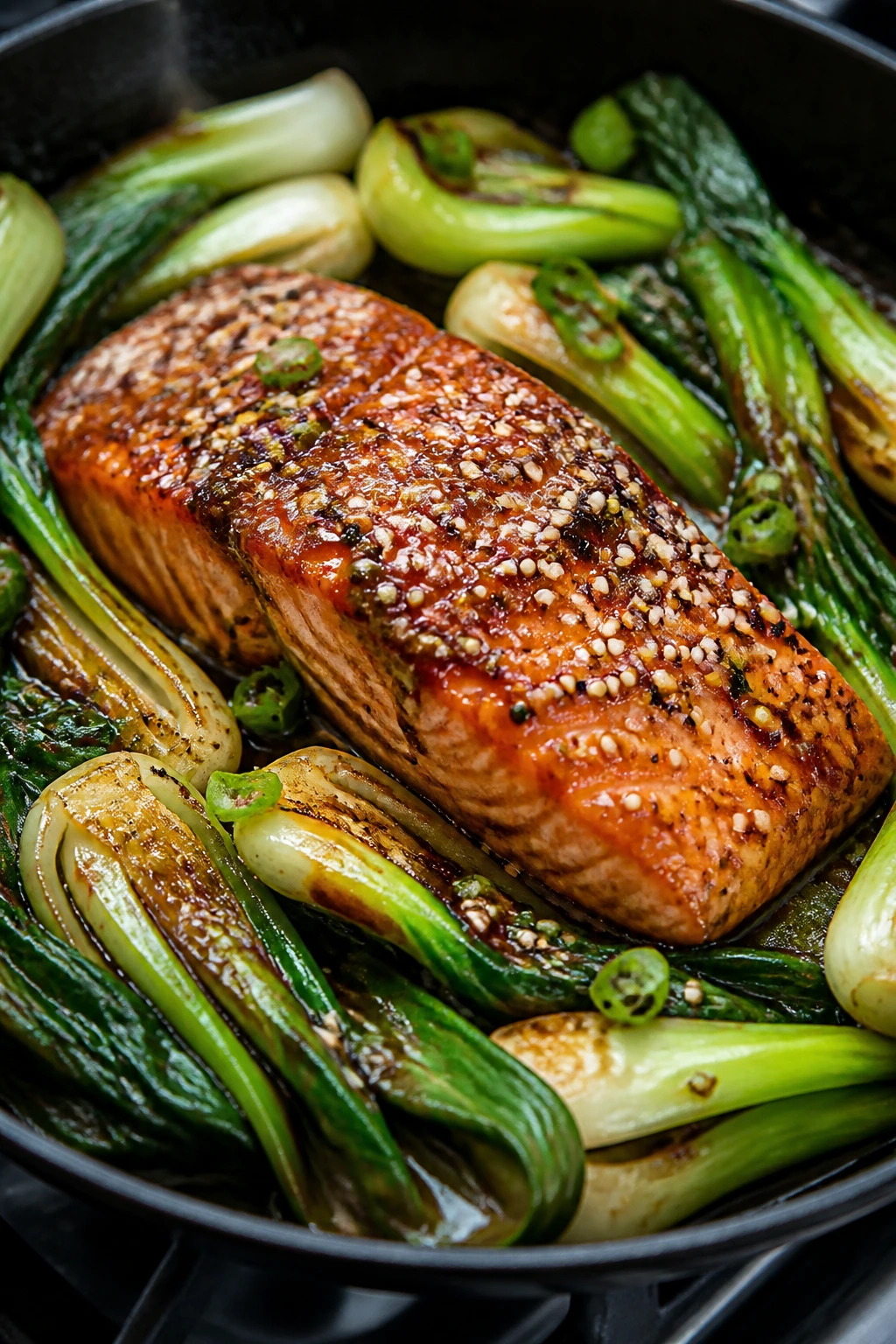
Salmon is not a classic Chinese takeout protein, but it takes sesame, soy, and ginger very well. The bok choy brings a clean green bite, and the fish stays rich without needing much else.
Why It Works: Salmon cooks fast, and bok choy cooks in two stages if you separate the stems from the leaves. A light sesame-soy glaze is enough to tie the pan together.
Key Ingredients:
- 4 salmon fillets, about 5 oz each
- 4 baby bok choy, halved
- 2 tablespoons soy sauce
- 1 tablespoon honey
- 1 tablespoon sesame oil
- 2 cloves garlic, minced
- 1 teaspoon ginger, minced
- 2 tablespoons neutral oil
Quick Steps:
- Sear salmon skin-side down in oil for 4 minutes, then flip for 1 minute and remove.
- Stir-fry bok choy stems with garlic and ginger for 2 minutes.
- Add bok choy leaves, soy sauce, honey, and sesame oil.
- Return the salmon and spoon the glaze over the fillets for 30 seconds.
Equipment for This Recipe:
- Skillet with lid or wok
- Fish spatula
- Small bowl
How to Serve This Dish: Rice is the right base, but it also works with noodles if you want a fuller bowl. Keep the salmon intact and spoon the bok choy around it.
Pro Tips for This Recipe:
- Dry the salmon skin well so it crisps instead of sticking.
- Don’t crowd the bok choy; the stems need to touch the pan.
- Honey should stay light here, more glaze than syrup.
Variations on This Dish:
- Ginger-Lime Salmon: Add a little lime zest at the end.
- Spicy Sesame Salmon: Stir in chili crisp with the glaze.
Common Mistakes to Avoid with This Dish:
- Flipping the salmon too early: The skin will tear.
- Overcooking the bok choy leaves: They only need a minute or so.
30. Shiitake Mushroom and Tofu Stir-Fry
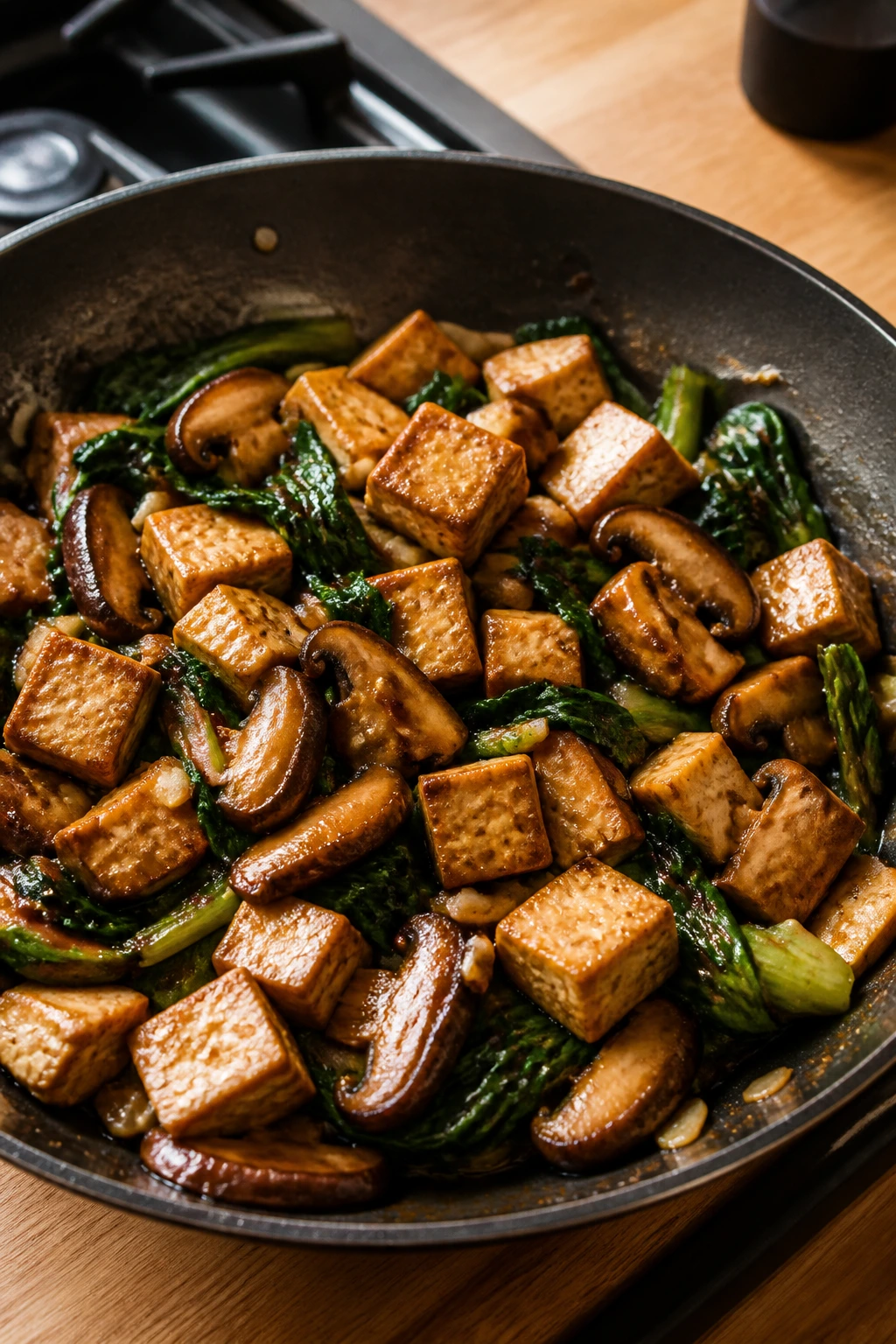
When you want a vegetarian dish with some actual depth, shiitakes are doing the heavy lifting. The mushrooms bring a dark, almost meaty flavor, and the tofu holds the sauce without falling apart if you brown it properly.
Why It Works: Shiitakes taste better once their moisture cooks off. Firm tofu becomes much more appealing after it picks up a little crust in the pan.
Key Ingredients:
- 1 block firm tofu, pressed and cubed
- 2 cups shiitake mushrooms, sliced
- 2 cups baby spinach or bok choy leaves
- 2 cloves garlic, minced
- 1 tablespoon ginger, minced
- 2 tablespoons soy sauce
- 1 tablespoon oyster sauce or mushroom sauce
- 2 tablespoons neutral oil
Quick Steps:
- Brown the tofu cubes in oil for 6 to 7 minutes until the edges are golden.
- Add shiitakes and cook until they shrink and darken.
- Add garlic, ginger, soy sauce, and oyster sauce.
- Toss in the greens at the end and cook until just wilted.
Equipment for This Recipe:
- Nonstick skillet or wok
- Spatula
- Tofu press or towels
How to Serve This Dish: It’s solid over rice, but I also like it over noodles if I want something softer and more slurpy. Finish with scallions.
Pro Tips for This Recipe:
- Press the tofu longer than you think you need to.
- Brown the mushrooms before adding the greens.
- Use mushroom sauce if you want to keep it fully vegetarian.
Variations on This Dish:
- Garlic Broccoli Version: Swap the greens for broccoli florets.
- Spicy Shiitake Tofu: Add chili oil at the end.
Common Mistakes to Avoid with This Dish:
- Using soft tofu: It crumbles before the sauce settles.
- Skipping the mushroom browning: They’ll taste wet instead of savory.
31. Chicken, Corn, and Snow Pea Stir-Fry
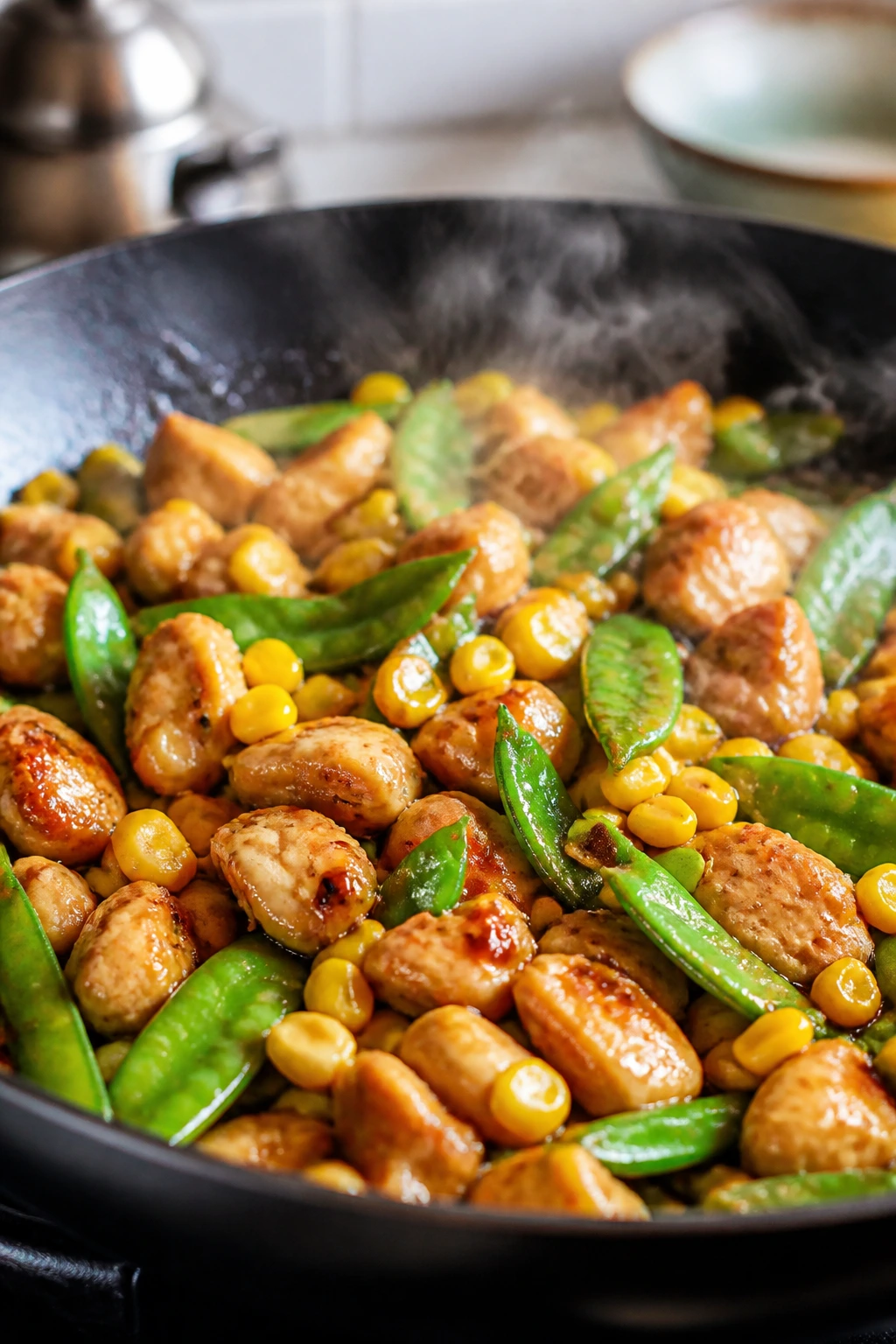
Corn brings sweetness that feels almost impossible to resist in a quick stir-fry. Pair it with chicken and snow peas, and you get a pan that tastes bright, fresh, and a little playful without turning into a kid-food cliché.
Why It Works: Snow peas keep their snap, and sweet corn gives little bursts of juice. Chicken thighs hold the sauce better than breast, which matters when the vegetables are this light.
Key Ingredients:
- 1 lb chicken thighs, sliced
- 1 cup corn kernels, fresh or frozen
- 2 cups snow peas
- 2 cloves garlic, minced
- 1 tablespoon ginger, minced
- 2 tablespoons soy sauce
- 1 tablespoon oyster sauce
- 2 tablespoons neutral oil
Quick Steps:
- Brown the chicken in oil for 4 minutes.
- Add garlic, ginger, corn, and snow peas; stir-fry for 3 minutes.
- Stir in soy sauce and oyster sauce.
- Toss until the corn looks glossy and the snow peas are still bright.
Equipment for This Recipe:
- Large skillet
- Spatula
- Knife
How to Serve This Dish: Spoon it over rice or quinoa if you want a slightly different base. The corn makes it feel a little sweeter than the usual stir-fry.
Pro Tips for This Recipe:
- Frozen corn is fine; let it thaw and pat it dry first.
- Snow peas should still feel crisp under the spatula.
- A pinch of white pepper suits this dish well.
Variations on This Dish:
- Butter Corn Version: Add a teaspoon of butter at the end for a rounder flavor.
- Shrimp Swap: Use shrimp instead of chicken for a lighter dinner.
Common Mistakes to Avoid with This Dish:
- Using too much corn: It starts to taste like a side dish instead of dinner.
- Cooking snow peas too long: They lose the snap that makes the dish work.
32. Yu Xiang Pork
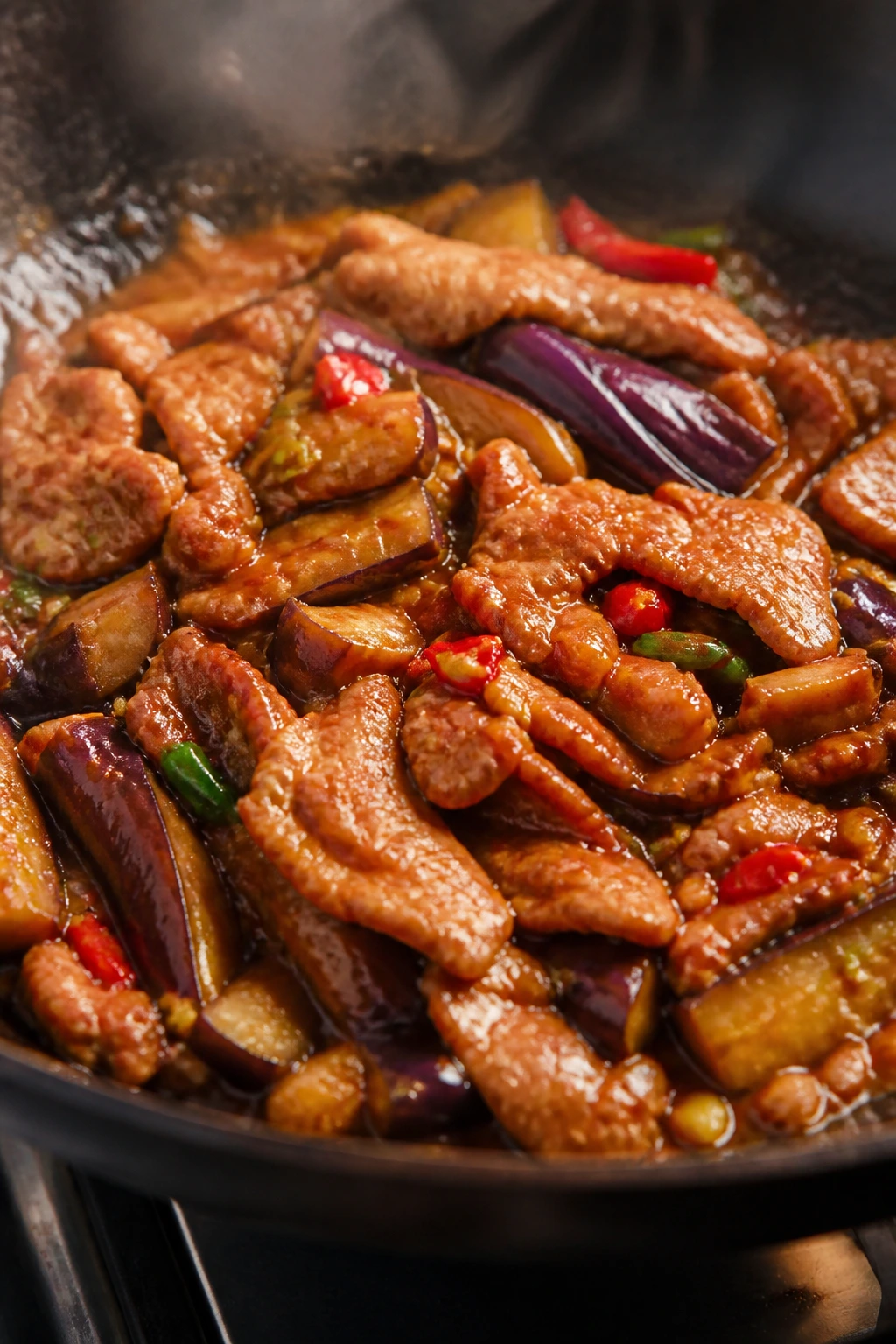
Yu xiang, or fish-fragrant, is one of those sauces that sounds odd until you taste it. There’s no fish in the pan, just chile bean paste, garlic, ginger, vinegar, and sugar working together in a way that turns pork and eggplant into something bright, spicy, and a little funky in the best sense.
Why It Works: The sauce is strong enough to handle eggplant and pork at the same time. The sweet-sour-spicy balance keeps the dish from tasting one-dimensional.
Key Ingredients:
- 1/2 lb ground pork
- 1 medium Chinese eggplant, sliced
- 2 tablespoons doubanjiang
- 3 cloves garlic, minced
- 1 tablespoon ginger, minced
- 2 tablespoons soy sauce
- 1 tablespoon rice vinegar
- 1 teaspoon sugar
- 2 tablespoons neutral oil
Quick Steps:
- Brown the pork in oil for 3 minutes.
- Add eggplant and cook until it softens and drinks up the fat.
- Stir in garlic, ginger, doubanjiang, soy sauce, vinegar, and sugar.
- Cook until the sauce clings to the pork and the eggplant looks glossy.
Equipment for This Recipe:
- Wok or skillet
- Sharp knife
- Small bowl
How to Serve This Dish: Rice is the natural match, and you’ll want plenty of it. The sauce is too good to waste.
Pro Tips for This Recipe:
- Eggplant should be sliced evenly so the pieces soften at the same rate.
- A small amount of sugar smooths the heat without making the sauce sweet.
- Doubanjiang varies a lot in saltiness; taste before adding more soy.
Variations on This Dish:
- Mushroom Yu Xiang: Add sliced mushrooms and cut the pork by half.
- Less-Spicy Version: Reduce the doubanjiang and add a bit more vinegar.
Common Mistakes to Avoid with This Dish:
- Underseasoning the sauce: Yu xiang should have a strong personality.
- Using too little oil for eggplant: It will never soften properly.
33. Dan Dan Noodles with Ground Pork
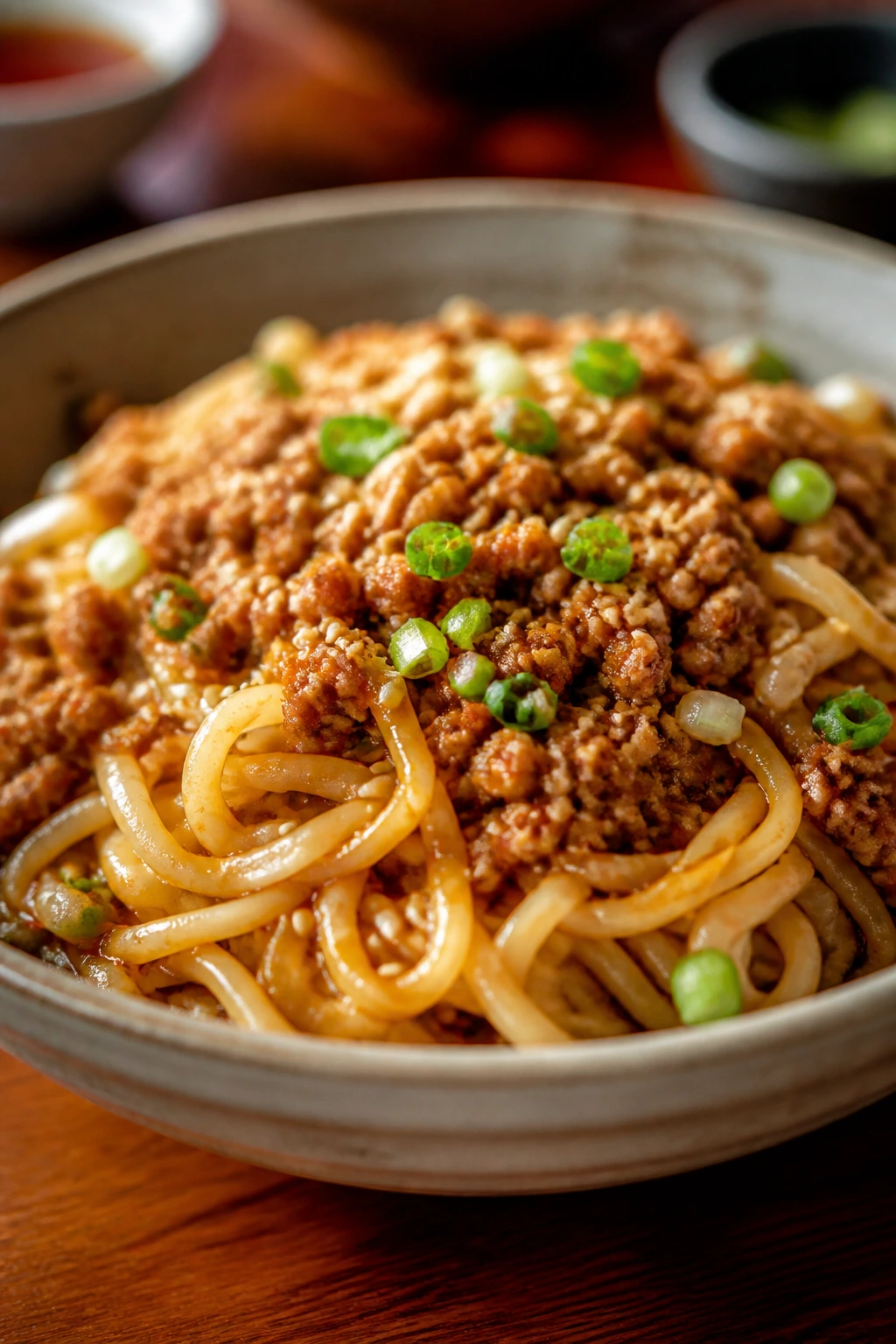
Dan dan noodles have a specific kind of pull: spicy, nutty, savory, and a little slick. They’re not subtle. They’re the bowl you want when you’ve had a long day and need a dinner that wakes the whole mouth up.
Why It Works: The pork is seasoned quickly and the sauce is mixed separately, which keeps the noodles from clumping. Peanut butter or sesame paste gives body without needing a long simmer.
Key Ingredients:
- 8 oz wheat noodles
- 1/2 lb ground pork
- 2 tablespoons soy sauce
- 1 tablespoon chili crisp
- 1 tablespoon sesame paste or peanut butter
- 1 tablespoon black vinegar
- 2 cloves garlic, minced
- 2 scallions, sliced
- 1 teaspoon sesame oil
Quick Steps:
- Cook the noodles and set them aside with a little oil.
- Brown the pork in a skillet for 4 minutes with garlic and soy sauce.
- Whisk sesame paste, chili crisp, black vinegar, and 2 tablespoons warm water.
- Toss the noodles with the sauce, pork, scallions, and sesame oil.
Equipment for This Recipe:
- Pot for noodles
- Skillet
- Whisk or fork
How to Serve This Dish: Serve it in a bowl with extra scallions on top and maybe a few cucumber slices on the side. It’s a full dinner, not a side dish pretending to be one.
Pro Tips for This Recipe:
- Warm water helps the sesame paste loosen smoothly.
- Black vinegar adds that sharp finish; don’t skip it if you can help it.
- Keep the noodles slightly undercooked because they soften when tossed.
Variations on This Dish:
- Tofu Dan Dan: Replace the pork with crumbled tofu and mushrooms.
- More Nutty Version: Use peanut butter instead of sesame paste.
Common Mistakes to Avoid with This Dish:
- Throwing the sauce in cold: It clumps instead of coating.
- Using too little vinegar: The bowl tastes heavy without that sharp line.
34. Beef with Chinese Celery
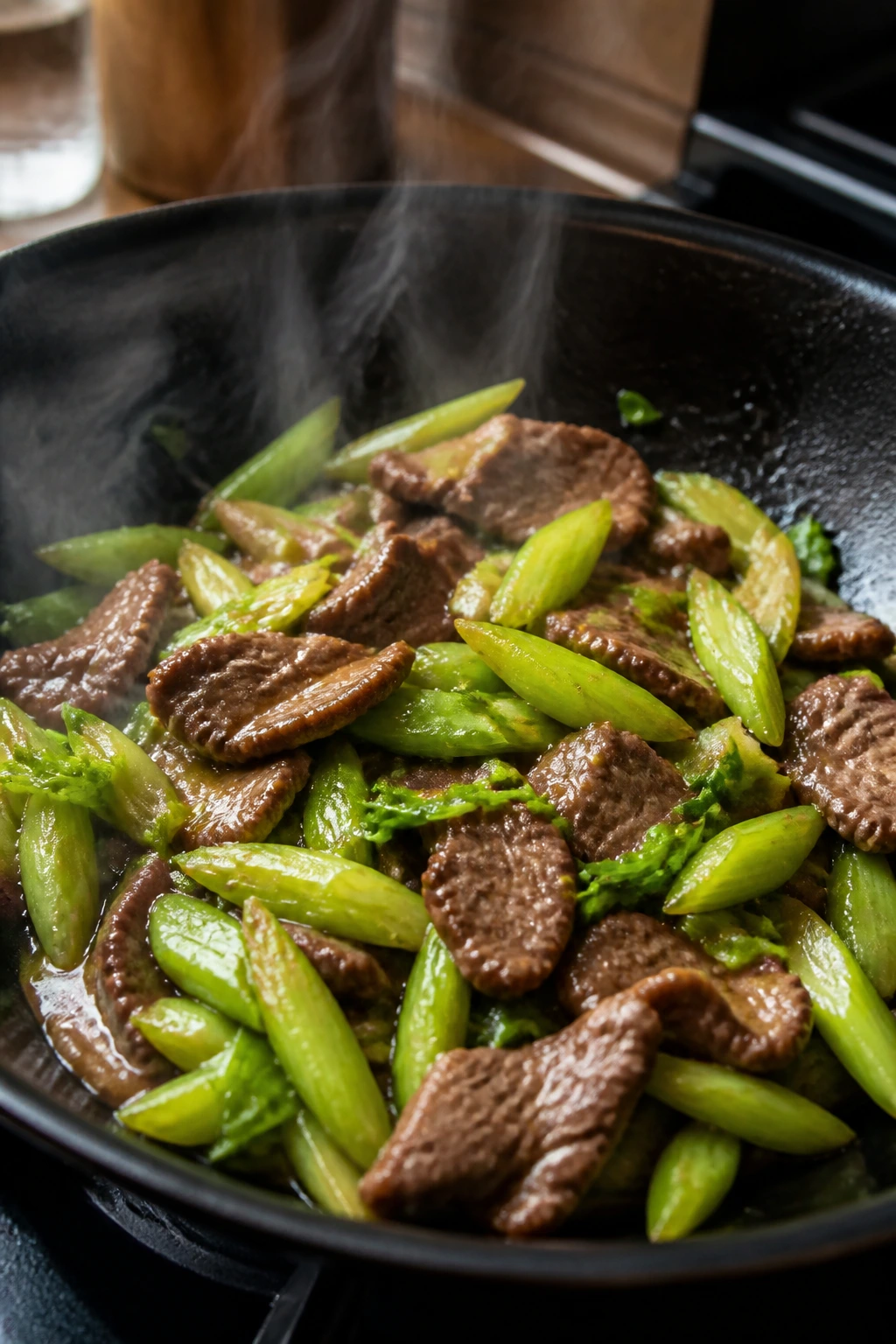
Chinese celery has a thinner, more fragrant bite than standard celery, and it gives this dish a brighter finish. The beef is savory and quick, the celery stays crisp, and the whole pan tastes cleaner than a lot of beef-and-vegetable stir-fries.
Why It Works: Thin beef slices and a short cooking time keep the meat tender. Chinese celery brings aroma as well as crunch, which regular celery can’t always match.
Key Ingredients:
- 1 lb flank steak, thinly sliced
- 2 cups Chinese celery, cut into 2-inch pieces
- 2 cloves garlic, minced
- 1 tablespoon ginger, minced
- 2 tablespoons soy sauce
- 1 tablespoon oyster sauce
- 1 teaspoon cornstarch
- 2 tablespoons neutral oil
Quick Steps:
- Toss the beef with cornstarch and 1 tablespoon soy sauce.
- Sear the beef for 2 to 3 minutes and remove it.
- Stir-fry Chinese celery, garlic, and ginger for 2 minutes.
- Return the beef with oyster sauce and remaining soy sauce; toss quickly and serve.
Equipment for This Recipe:
- Wok or skillet
- Knife
- Spatula
How to Serve This Dish: It pairs nicely with rice and another simple vegetable if you want a fuller dinner. I like how the celery cuts through the richness of the beef.
Pro Tips for This Recipe:
- If you can’t find Chinese celery, use regular celery but slice it thinner.
- Keep the celery cooking short or you lose the crisp.
- A dash of white pepper fits this dish better than black.
Variations on This Dish:
- Black Bean Beef: Add a teaspoon of fermented black beans with the garlic.
- Pepper Celery Beef: Add sliced green pepper for extra crunch.
Common Mistakes to Avoid with This Dish:
- Using celery that’s too thick: It stays stringy.
- Sautéing the beef too long: Thin slices only need a brief sear.
35. Chicken Fried Rice with Egg and Peas
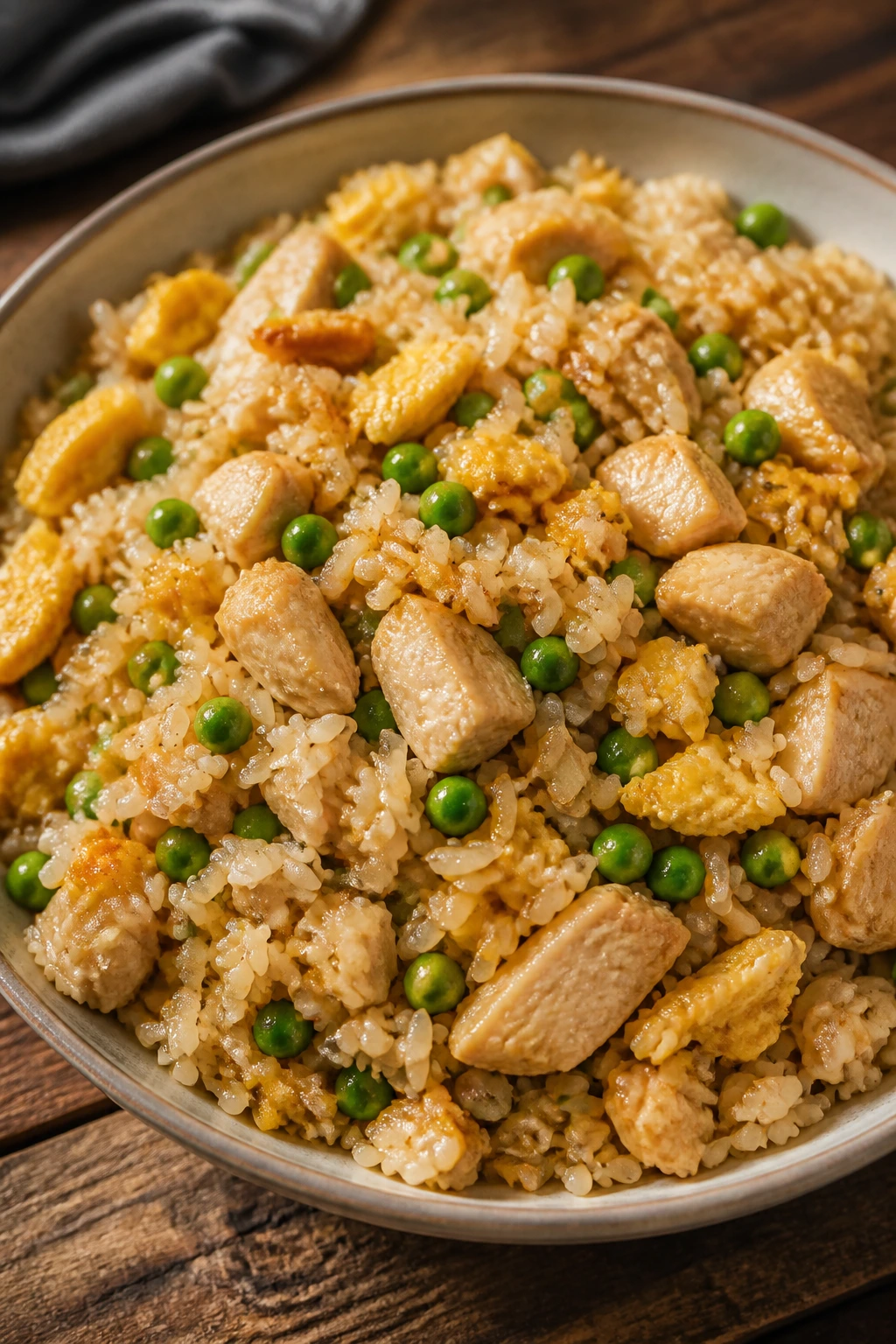
Chicken fried rice is the clean-out-the-fridge dinner that still feels like a proper meal when it’s done well. The rice should be separate, the eggs should fold into the grains, and the peas should pop green against the soy-colored rice.
Why It Works: Day-old rice fries instead of steaming. Small chicken pieces and quick-cooked vegetables let the pan stay hot, which is what gives fried rice its loose, savory texture.
Key Ingredients:
- 3 cups cold cooked jasmine rice
- 1 lb chicken breast or thighs, diced
- 2 eggs, beaten
- 1 cup frozen peas
- 3 scallions, sliced
- 2 tablespoons soy sauce
- 1 teaspoon sesame oil
- 2 tablespoons neutral oil
Quick Steps:
- Cook the chicken in oil until just done, then move it aside.
- Scramble the eggs in the same pan.
- Add rice and peas; break up clumps and fry for 3 minutes.
- Return the chicken, add soy sauce, sesame oil, and scallions, and toss until the rice looks evenly seasoned.
Equipment for This Recipe:
- Large skillet or wok
- Spatula
- Bowl for the eggs
How to Serve This Dish: Fried rice is easiest to serve in bowls with a spoon, not chopsticks. A little hot sauce at the table is welcome if you want it.
Pro Tips for This Recipe:
- Cold rice is the whole trick here.
- Don’t skimp on heat; fried rice needs a hot pan to stay loose.
- Add scallions at the end so they stay fresh and green.
Variations on This Dish:
- Shrimp Fried Rice: Replace the chicken with shrimp and cut the cook time.
- Five-Spice Fried Rice: Add a tiny pinch of five-spice to the chicken only.
Common Mistakes to Avoid with This Dish:
- Using soft, fresh rice: It clumps and gets gummy.
- Overloading with soy sauce: The rice should taste seasoned, not soaked.
Why a Hot Pan Beats a Long Recipe
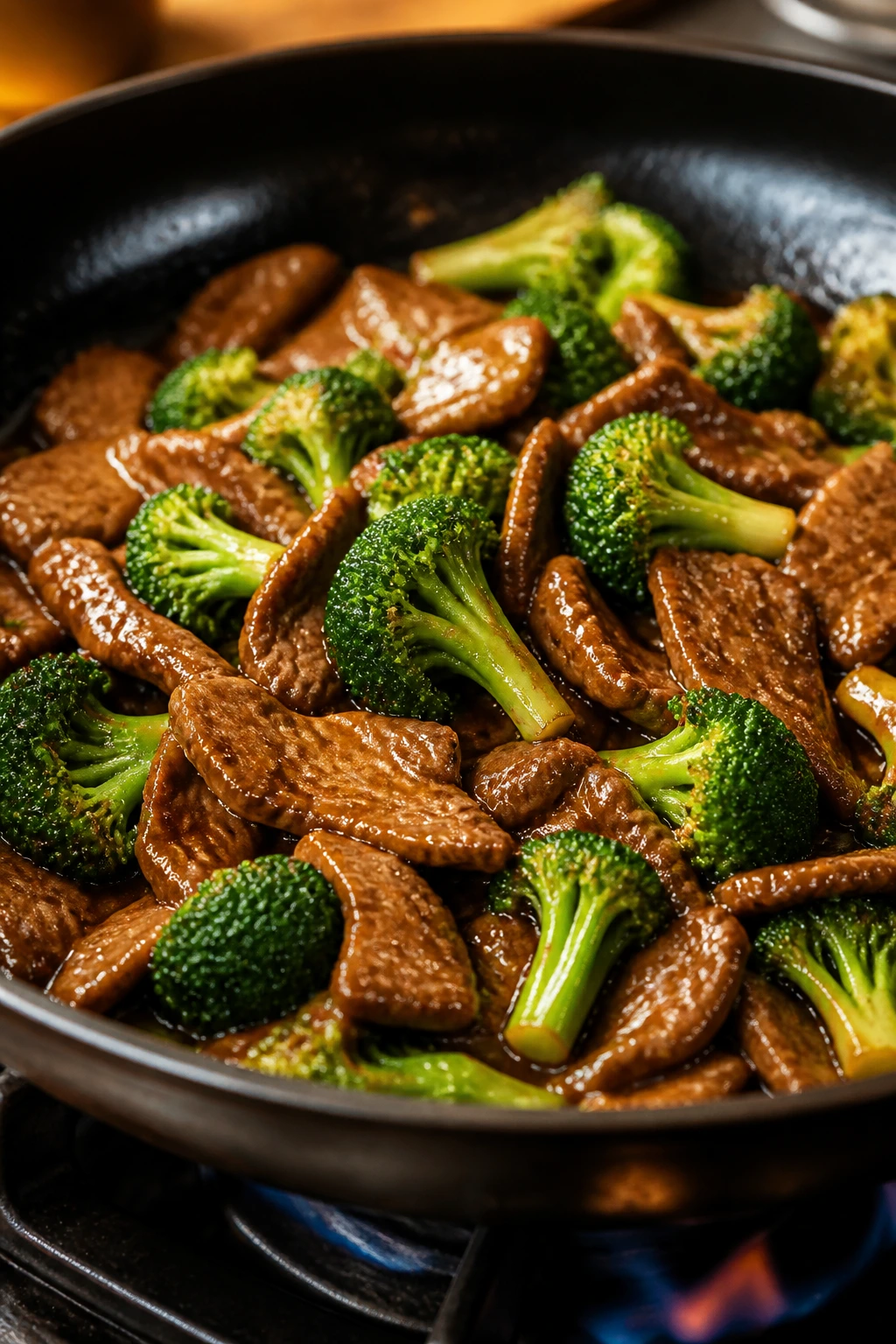
The hot pan is the whole story with quick stir-fries. If the heat is high enough, the protein sears before it dries out, the vegetables brown at the edges instead of steaming, and the sauce thickens just enough to cling without reducing into sludge. That’s the sweet spot. Not a simmer. Not a roast. A fast, noisy, slightly chaotic little window where dinner comes together in the time it takes to get a bowl of rice on the table.
A lot of home cooks think the wok is the secret. It helps, sure, mostly because it gives you room to toss and a shape that concentrates heat. But a 12-inch skillet does the job if you give it some discipline. Cook the beef in batches. Pull the shrimp as soon as they curl. Keep the vegetables dry. Mix the sauce before the pan gets hot, because once the garlic is in the oil, nobody has time to measure cornstarch.
There’s also a practical reason these dinners keep showing up in real kitchens. The ingredient overlap is excellent. One bottle of soy sauce, one jar of oyster sauce, a knob of ginger, garlic, scallions, and a bag of rice cover a shocking amount of ground. That’s not glamorous. It is useful.
Essential Equipment for These Recipes
-
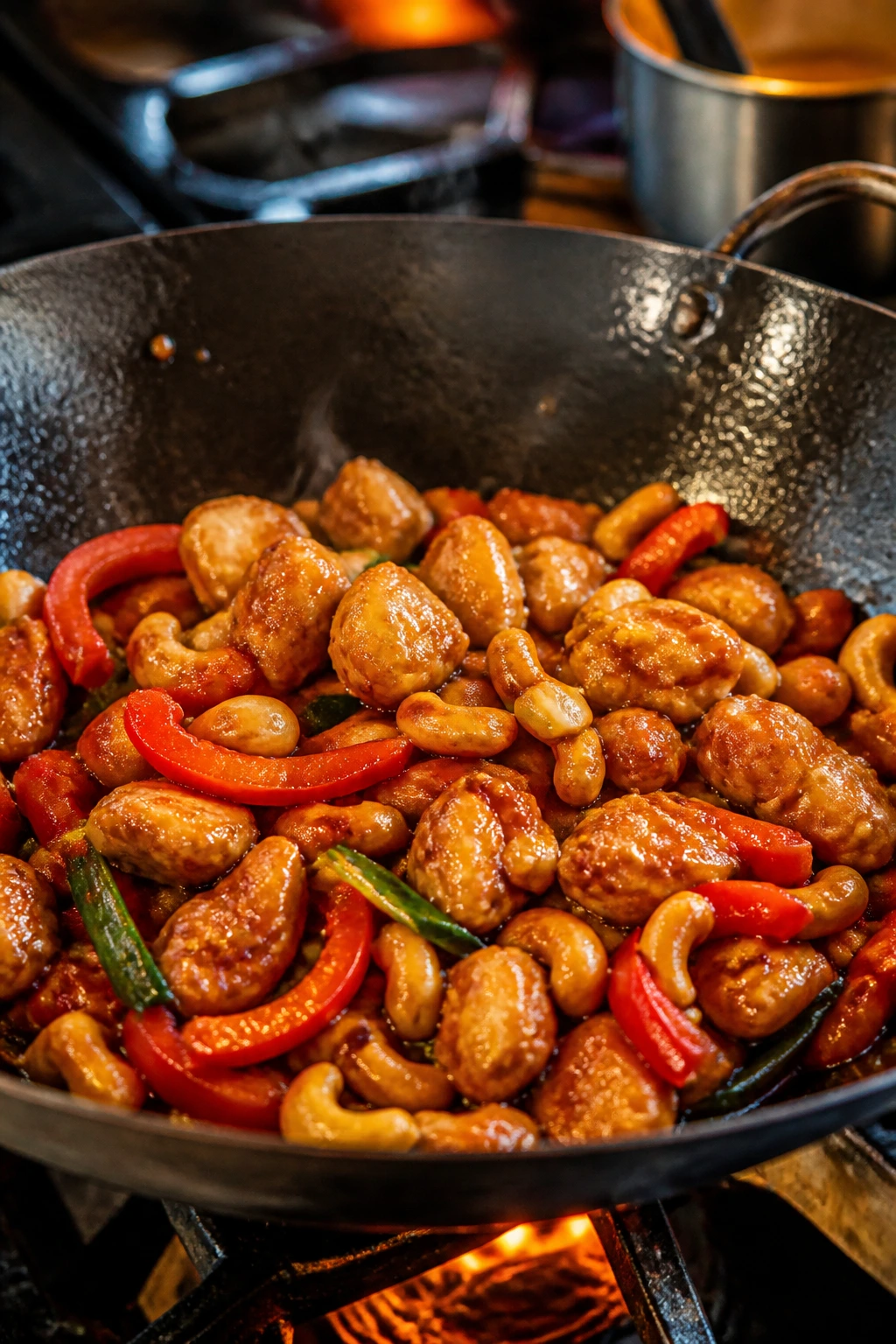
Wok or 12-inch skillet: A wok is great if you have one, but a wide skillet with decent heat is enough for most of these dinners.
-
Sharp chef’s knife: Thin slices of beef, chicken, pork, and vegetables depend on a knife that cuts cleanly instead of crushing.
-
Cutting board with a damp towel underneath: This keeps the board from sliding while you work through piles of vegetables.
-
Small prep bowls: Stir-fries move quickly, and garlic, ginger, soy sauce, and cornstarch are easier to manage when they’re measured before the burner turns on.
-
Spatula or wooden spoon: Use something sturdy enough to scrape the pan and toss noodles or rice without breaking them.
-
Tongs: Handy for turning beef, chicken, and shrimp without shredding them.
-
Rice cooker or saucepan with lid: Not fancy, just useful. Almost every one of these dishes is better with a proper bowl of rice on the side.
-
Airtight containers: Leftovers keep better when they’re cooled quickly and sealed before the vegetables soften too much.
Smart Shopping and Ingredient Tips
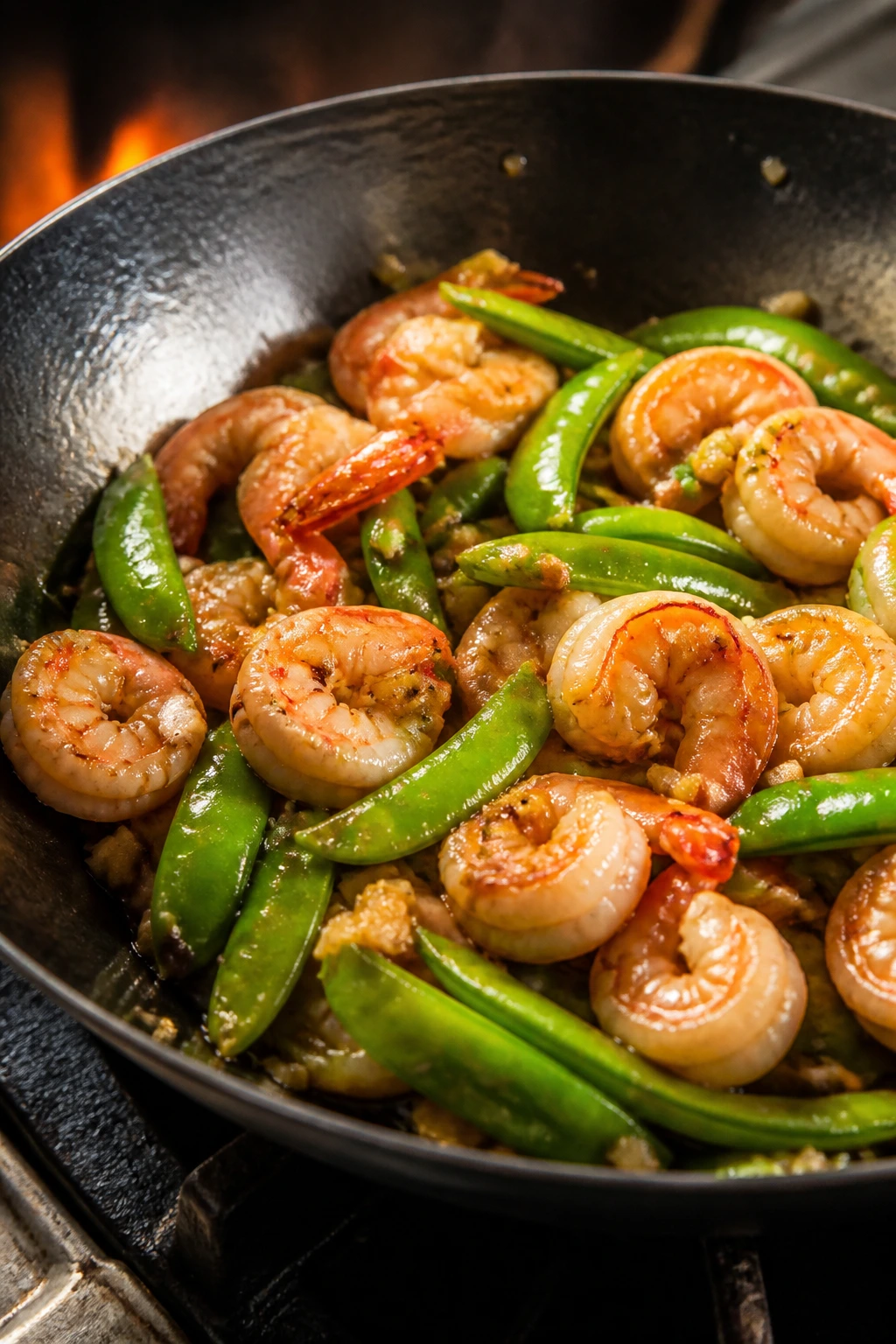
Buy the right protein for the job. Flank steak and skirt steak are the easiest beef cuts for stir-frying because they slice thinly and cook fast. Chicken thighs are my first pick for most of these dishes because they stay juicy when the pan is hot. Chicken breast works too, but it needs a shorter cook and a little more attention. For shrimp, large or extra-large is the sweet spot; tiny shrimp overcook before you can blink.
Watch the vegetables. Broccoli should feel heavy for its size, with tight florets and stalks that don’t look dry. Bok choy should snap at the base. Snap peas should squeak a little when you bend them. Napa cabbage should feel airy, not soggy. If you’re buying mushrooms, skip the damp, slimy trays and choose ones with dry caps and firm stems.
Sauces matter more than most people think. A decent soy sauce is the backbone of the pan. Oyster sauce gives body. Hoisin is sweet and thick, so use it carefully. Shaoxing wine adds a round, savory note that dry sherry can imitate if needed. If a recipe calls for cornstarch slurry, mix it before the heat goes on; it turns into a smooth sauce faster when it’s already dissolved.
Frozen ingredients can help. Frozen peas, corn, and sometimes even shrimp are fine if you thaw and dry them first. That little bit of moisture is the difference between a crisp stir-fry and a watery one. And if you’re slicing beef yourself, put it in the freezer for 15 minutes before cutting. It firms up just enough to make thin slices easier.
How to Serve These Recipes
Presentation: Serve stir-fries in shallow bowls or wide plates so the sauce doesn’t pool at the bottom and the vegetables stay visible. A small mound of rice under the center of the dish looks cleaner than scattering everything flat, especially with glossy beef, chicken, or tofu on top.
Accompaniments: Steamed jasmine rice is the safest default, but lo mein noodles, chow mein noodles, fried rice, and rice cakes all work across the collection. A simple cucumber salad, quick-pickled carrots, or a bowl of plain broth on the side keeps the plate from feeling too heavy.
Portions: Most of these recipes feed 3 to 4 people when you use about 1 pound of protein and 3 to 4 cups of vegetables. If you’re serving hungry adults, make the rice first and don’t be shy about doubling the sauce; that’s usually the part that runs out.
Beverage Pairing: I like iced jasmine tea, oolong tea, or a cold lager with stir-fries that use oyster sauce, hoisin, or five-spice. For spicier dishes, a plain sparkling water with lime keeps the heat from flattening your taste buds.
Additional Tips and Flavor Boosters
Flavor Enhancement: A tiny splash of toasted sesame oil at the end does more than people expect, but keep it off the heat. It smells nutty and warm, and if you cook it hard, you lose the point.
Customization: Add chili crisp, black vinegar, or a pinch of white pepper depending on how sharp you want the finish. If you like sweeter takeout-style sauces, a teaspoon of honey can soften the edges without turning everything into candy.
Serving Suggestions: Scallions, toasted sesame seeds, and a few drops of chili oil go a long way. I also like a light dusting of sesame seeds on noodle dishes because it gives you a little texture on top of an already slippery bowl.
Make-It-Yours: For gluten-free cooking, use tamari and a gluten-free oyster sauce. For vegetarian versions, mushrooms and tofu usually carry the pan better than people expect, especially if you brown the mushrooms first and press the tofu long enough to get water out.
Make-Ahead, Storage, and Reheating Guidance
Most stir-fries keep well in the fridge for 3 to 4 days, though shrimp is best eaten within 2 to 3 days and fried rice keeps its texture a little longer, closer to 4 days. Cool the food quickly, pack it into shallow containers, and get it into the fridge before the vegetables go soft. If you leave it in a deep pot, the steam lingers and the texture slips.
Freezing works best for saucy dishes with beef, chicken, pork, tofu, or fried rice. They can go up to 2 months in the freezer if they’re sealed tightly. Shrimp and very crisp vegetables freeze less gracefully, so I would eat those fresh if possible. Noodles can freeze, but they soften on the second round and never come back quite the same way.
For reheating, a skillet is the best choice. Add a teaspoon or two of water, cover for 30 seconds if the pan looks dry, and stir over medium heat until the food is hot. Noodle dishes and fried rice can also go in the microwave, covered with a damp paper towel, though the texture will be softer. If you’re reheating a dish with beef, stop as soon as it’s hot; another full minute can push the meat from tender to tired.
Make-ahead prep helps a lot. Slice the vegetables, mix the sauces, and cut the proteins the day before if you want the actual cooking to feel almost effortless. A sauce base can hold in the fridge for up to 5 days as long as you leave the cornstarch out until cooking time.
Variations and Adaptations to Try
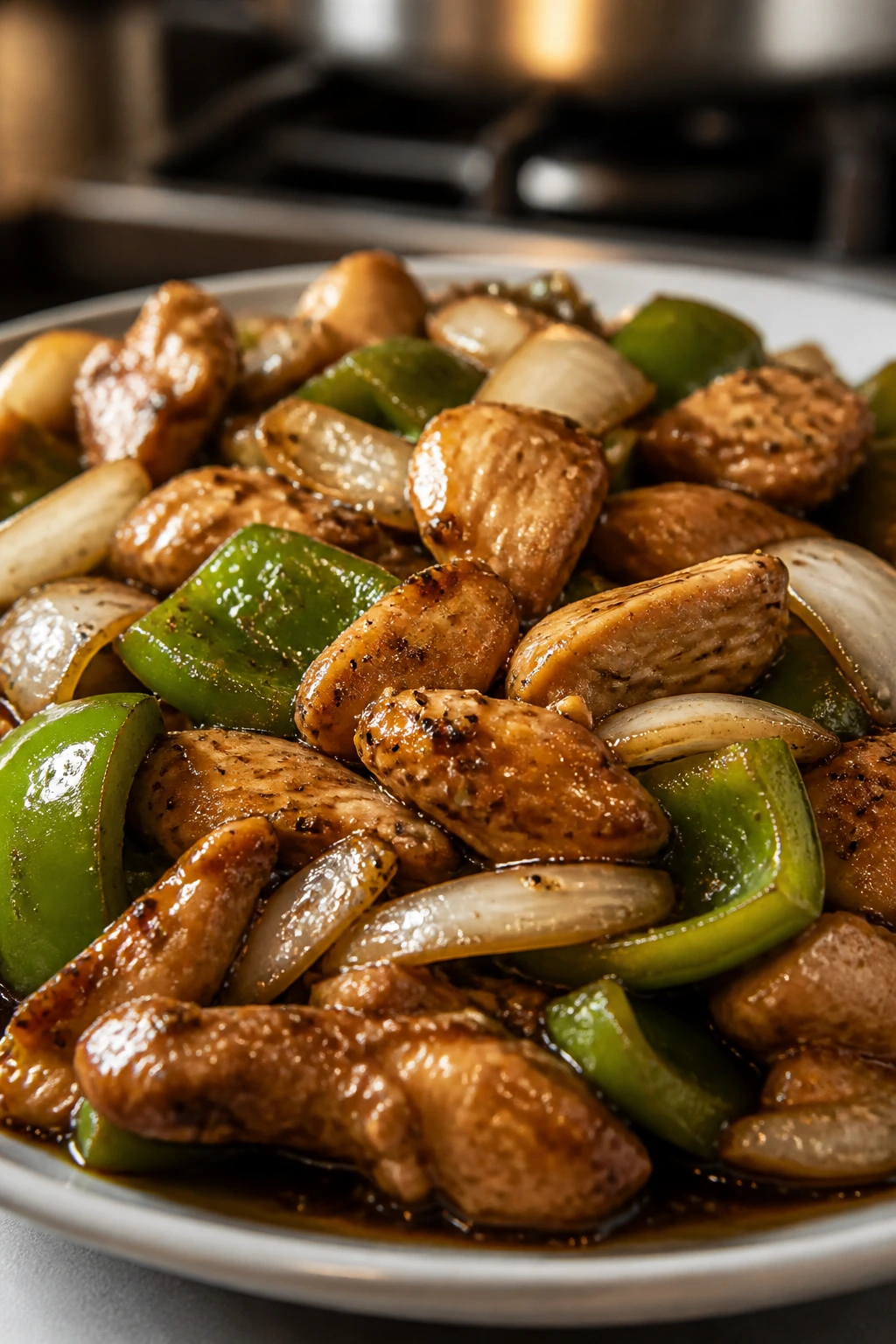
Gluten-Free Pantry Swap: Use tamari instead of soy sauce and check labels on oyster sauce, hoisin, and chili paste. Rice noodles, rice, and rice cakes fit naturally into this swap, and cornstarch still works exactly the same.
Lower-Sodium Wok Night: Cut the soy sauce by about a third and replace the lost volume with water or unsalted stock. A little extra garlic, ginger, and black vinegar keeps the dish lively even when the salt drops.
Vegetable-First Version: Turn almost any of these into a vegetable-heavy dinner by using half the meat and doubling the mushrooms, cabbage, bok choy, or peppers. The sauce usually has enough power to carry the extra vegetables without making the pan bland.
Spicy Sichuan Turn: Add doubanjiang, Sichuan pepper, or chili crisp to beef, tofu, eggplant, and pork dishes. You do not need a lot; the heat compounds fast once it’s in the pan.
Kid-Friendly Sweet Spot: Pull back on chili and black pepper, then lean on honey, hoisin, or a little extra carrot and corn. The dish still tastes like a proper stir-fry, just with fewer sharp edges.
Rice-Free Bowl Build: Serve the stir-fries over shredded cabbage, cauliflower rice, or blanched greens when you want the sauce without the starch. It works especially well with beef and broccoli, ginger chicken, or mushroom tofu.
Common Mistakes to Avoid
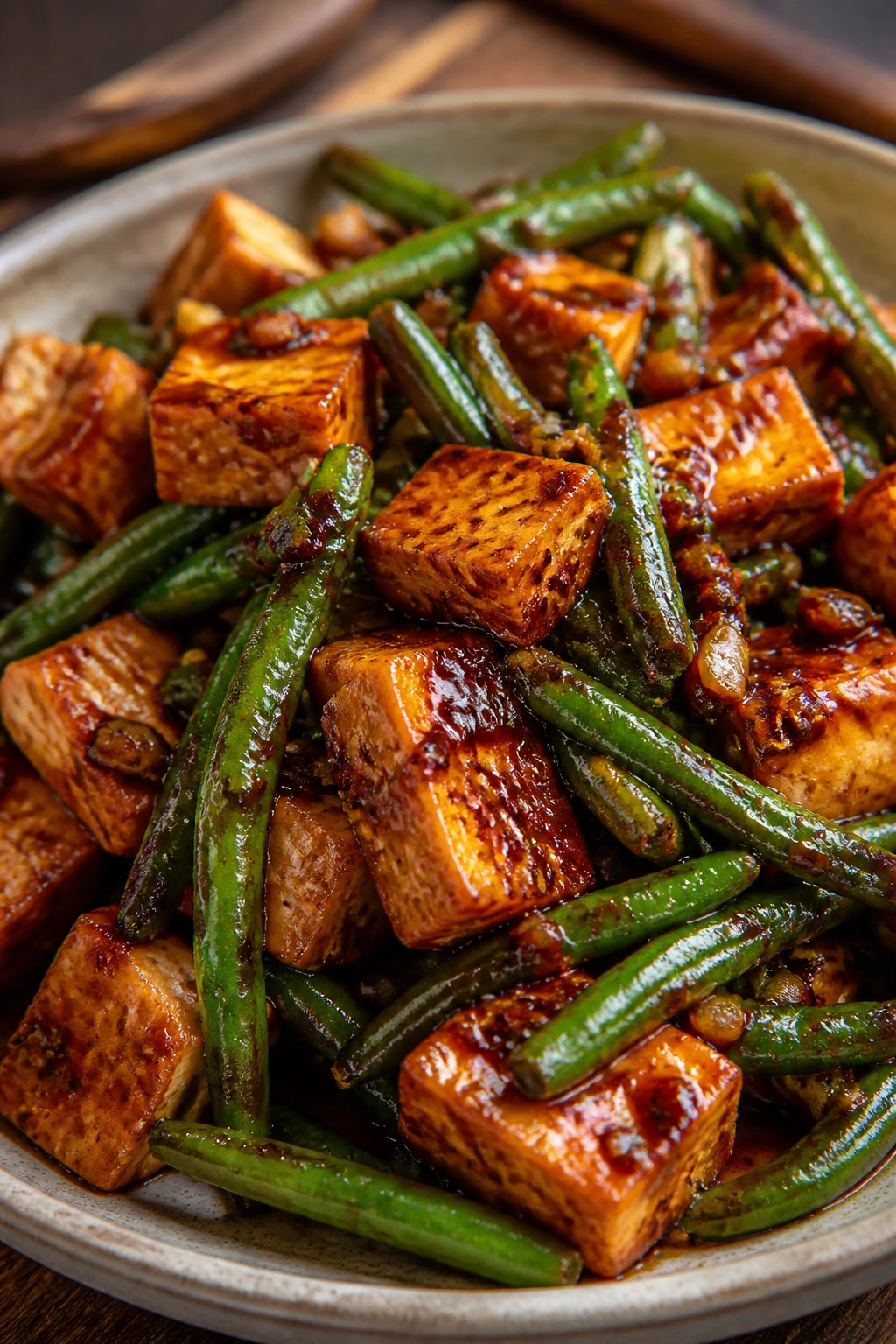
Crowding the pan: This is the mistake that ruins the most stir-fries. If you pile too much meat or too many vegetables into one skillet, the pan loses heat and everything steams instead of browning. Fix it by cooking in batches or using a wider pan.
Adding the sauce too late or too early: If the sauce goes in before the ingredients are cooked, the pan turns gray and wet. If it goes in too late, it clumps at the bottom. Mix your sauce ahead of time, then add it when the protein and vegetables are nearly done so it can coat in the last minute.
Leaving ingredients wet: Water on shrimp, tofu, mushrooms, or noodles makes them steam. Pat proteins dry, drain noodles well, and dry vegetables after washing if they’re going straight into the pan. That one habit changes the texture more than almost anything else.
Burning garlic and ginger: They go from sweet to bitter fast. Add them after the protein has a little color and keep them moving for only 20 to 30 seconds before the next ingredient goes in.
Overcooking the vegetables: Stir-fries are supposed to have a little texture. Broccoli, snow peas, bok choy stems, and cabbage should be tender with some bite left. If they slump completely, you stayed too long.
Not tasting at the end: Sauces change once they hit heat. A tiny splash of vinegar, a pinch of sugar, or another spoon of soy can fix a dish right before serving, but only if you taste it while it still matters.
Frequently Asked Questions
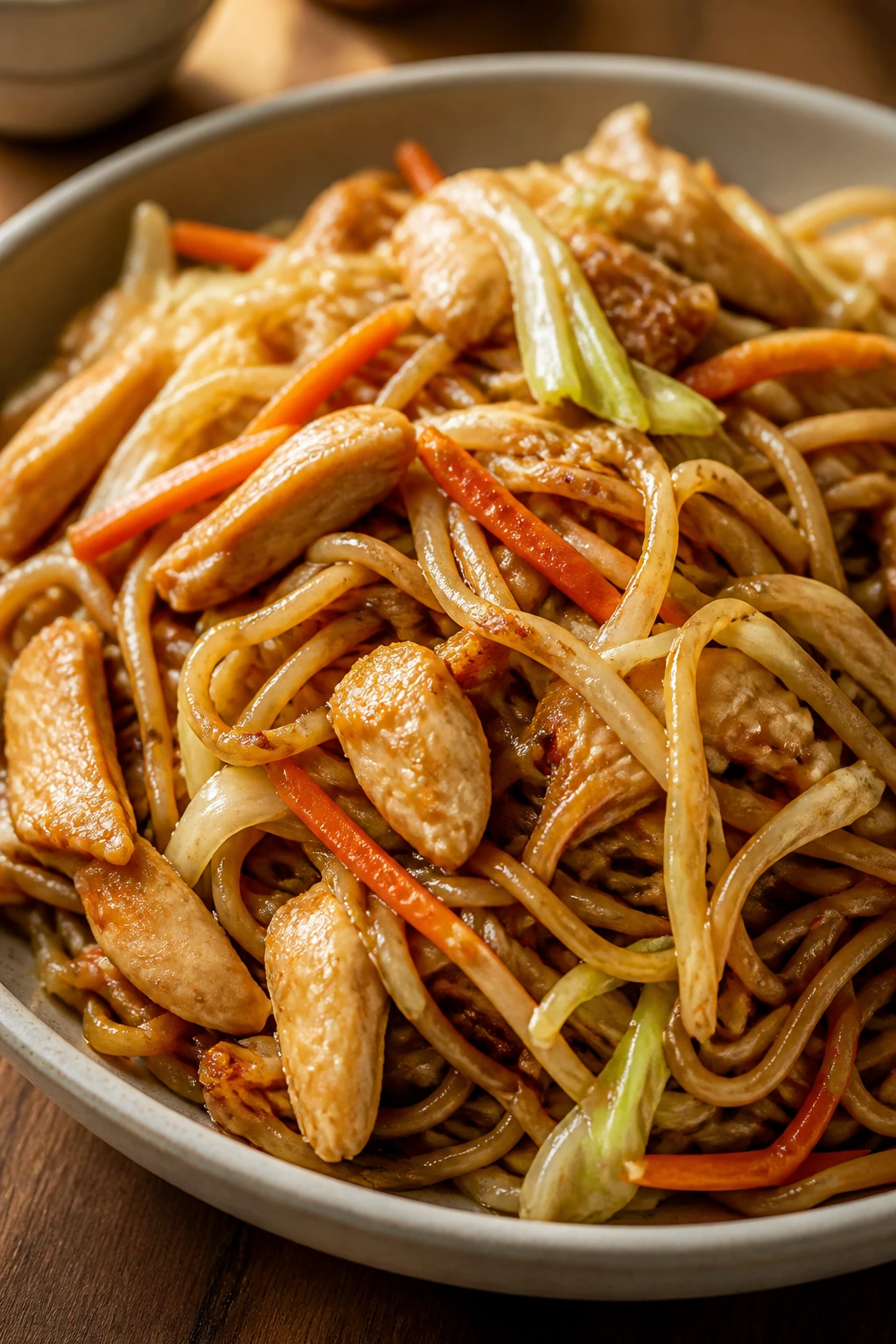
Can I make these stir-fries in a regular skillet instead of a wok?
Yes. A wide 12-inch skillet is perfectly usable as long as you keep the pan hot and avoid overcrowding it. The wok gives you more room to toss, but the skillet still browns well if you stay organized.
What oil works best for Chinese stir-fries?
Use a neutral oil with a high smoke point, like canola, peanut, sunflower, avocado, or grapeseed oil. Save extra virgin olive oil for a different job; its flavor and lower smoke point make it a clumsy fit here.
How do I keep beef tender in a stir-fry?
Slice it thinly against the grain and marinate it briefly with cornstarch and a little soy sauce. Then sear it quickly and pull it from the pan before it overcooks. Thin slices can go from tender to leathery in a minute or two.
Can I use frozen vegetables?
Yes, especially peas, corn, and some broccoli florets. Thaw them first and pat them dry so they don’t dump water into the pan. Frozen vegetables usually come out softer than fresh ones, but they’re still useful on a busy night.
What if my sauce turns out too thin?
Mix 1 teaspoon cornstarch with 1 tablespoon cold water and stir it into the pan near the end, then cook for 20 to 30 seconds until the sauce turns glossy. If you add cornstarch straight to a hot pan, it clumps.
What if my sauce tastes too salty?
Add a splash of water, a few extra vegetables, or a small pinch of sugar to smooth it out. Vinegar helps too, but use it carefully; too much makes the sauce thin instead of balanced.
Can I prep these meals ahead of time?
Absolutely. Slice the vegetables, portion the protein, and mix the sauce ingredients the day before. Keep the cornstarch separate until cooking time so the sauce stays smooth and doesn’t turn muddy in the fridge.
Are these recipes okay for meal prep?
Most of them are, though crisp vegetables soften a little after a day or two. Beef, chicken, pork, tofu, fried rice, and noodle dishes reheat well if you do not overcook them the first time. Shrimp is the least forgiving for leftovers.
How can I make the dishes spicier without ruining the balance?
Add chili crisp, fresh chilies, or a little doubanjiang in small amounts and taste as you go. Stir-fry heat builds fast, so it’s easier to add a little more than to fix a pan that went too far.
Do I need Shaoxing wine?
No, but it helps. Dry sherry is the closest easy swap, and in a pinch you can skip it and add a teaspoon of water plus a touch more ginger. The dish will still work.
A Hot Pan, A Fast Sauce
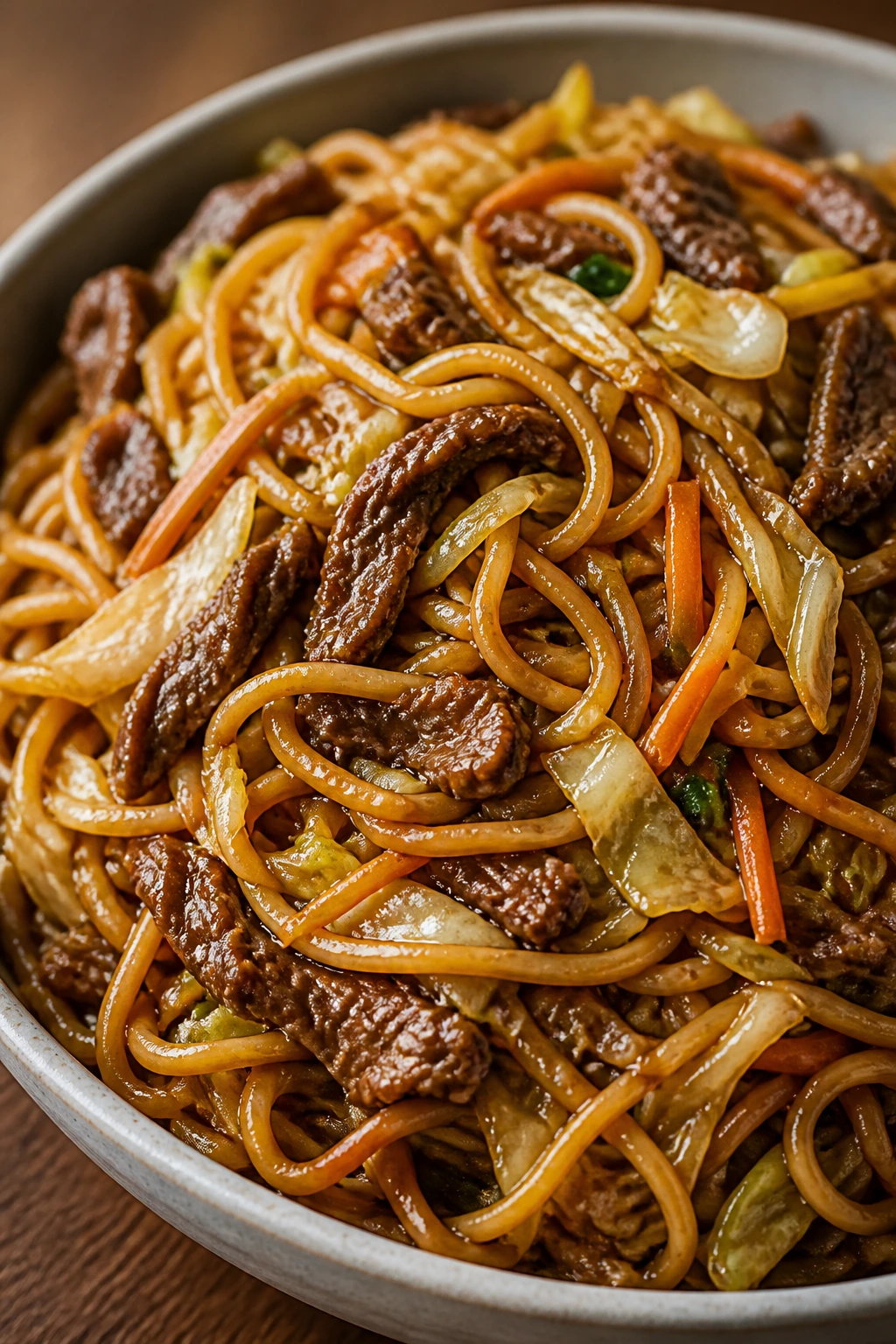
The best stir-fry dinners have a kind of momentum to them. Once the knife work is done, everything else moves quickly: a splash of oil, the first hiss of garlic, the sauce going glossy, the vegetables staying green for just long enough. That pace is the appeal. It keeps dinner lively.
What matters most is not a perfect pantry or some grand technique. It’s a hot pan, ingredients cut to the right size, and the willingness to cook in short, sharp stages instead of throwing everything together and hoping for the best. That is where Chinese dinner ideas for a quick stir fry night really shine. They reward focus, not fuss.
Pick one recipe, keep the sauce ingredients on hand, and you’ve got the start of a very useful weeknight habit.