



A wholesome fast easy healthy dinner for family nights does not need a sad pile of steamed vegetables and a dry chicken breast that tastes like paperwork. Give me a hot sheet pan, a sharp knife, a little olive oil, and twenty quiet minutes while the oven does the heavy lifting, and I’m happy.
This is the kind of dinner that smells like it means business. Garlic gets sweet at the edges, lemon wakes everything up at the end, and the potatoes turn bronzed where they touch the pan. The broccoli doesn’t come out limp and apologetic, either — it gets charred tips, a little crunch, and enough pan juice clinging to the florets to make even vegetable skeptics take a second scoop.
I like recipes like this because they respect real life. You can put the chicken on the pan first, give the potatoes a head start, then add the broccoli when there’s enough heat left to brown it without turning it mushy. That small bit of timing matters. It’s the difference between “we made dinner” and “I’d make this again tomorrow.”
Why This Sheet-Pan Dinner Earns a Spot on the Rotation
A good family dinner should solve more than one problem at once. Dinner needs to be quick, yes, but it also needs enough texture to feel cooked, enough color to look appetizing, and enough protein and vegetables to feel like a full meal rather than a snack wearing a dinner hat.
This lemon-garlic chicken tray bake does that without asking for a sauce pot, a second skillet, or a backup plan. The chicken stays juicy because it roasts at a high enough heat to brown fast. The potatoes get a head start so they soften in the middle before the broccoli gets added. And the lemon comes in at the end, which is where it belongs; roast lemon can go flat and bitter if it sits too long in the oven.
There’s another reason it works so well: it lines up with the basic plate balance a lot of nutrition guidance keeps circling back to — vegetables first, lean protein in the middle, starch in a sensible amount, fat used with intention instead of poured on absentmindedly. No lectures. Just a pan that naturally lands in a good place.
And yes, it’s forgiving. If your oven runs a touch hot, the chicken still survives. If your carrots are cut a little unevenly, the smaller ones caramelize first and the bigger ones catch up. That kind of flexibility matters on a Tuesday night when one child is asking whether broccoli counts as “tree food” and the other is trying to steal the lemon wedges.
Why You’ll Love This Recipe
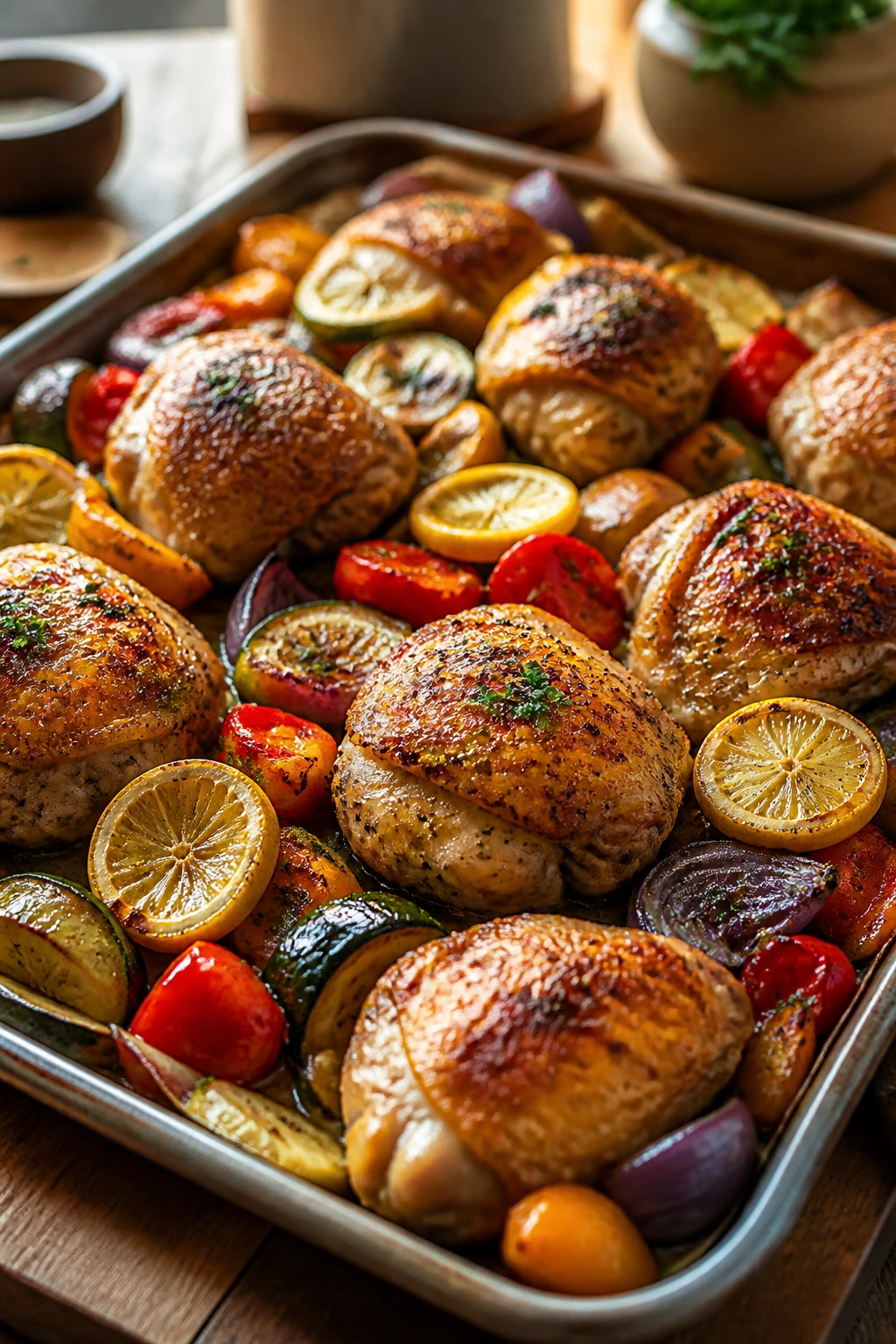
-
One pan, one bowl: The whole meal roasts on a rimmed sheet pan, so cleanup stays simple and you do not end up with a sink full of evidence.
-
Juicy chicken, not dry chicken: Boneless chicken thighs handle the 425°F heat well, which means you get browning on the outside and a tender center without babysitting the oven.
-
Vegetables with real texture: The potatoes get crisp cut sides, the carrots turn sweet, and the broccoli roasts instead of steaming into that dull, gray-green version nobody asks for.
-
Flexible enough for picky eaters: The seasoning is lemony and mild, not aggressive. If someone wants heat, they can add red pepper flakes at the table.
-
Looks like you tried harder than you did: The pan comes out colorful enough for serving straight from the tray, which is one of those small kitchen wins I’ll never stop appreciating.
-
Good for leftovers: The chicken and vegetables reheat well for lunch if you keep the broccoli from overcooking the first time around.
Yield: Serves 4 to 6
Prep Time: 20 minutes
Cook Time: 30 minutes
Total Time: 50 minutes
Rest Time: 5 minutes
Difficulty: Beginner — the method is straightforward, but the staggered roasting keeps the vegetables from overcooking and gives the chicken better texture.
Best Served: Hot from the oven with lemon wedges and chopped parsley.
What Goes on the Pan and Why It Matters
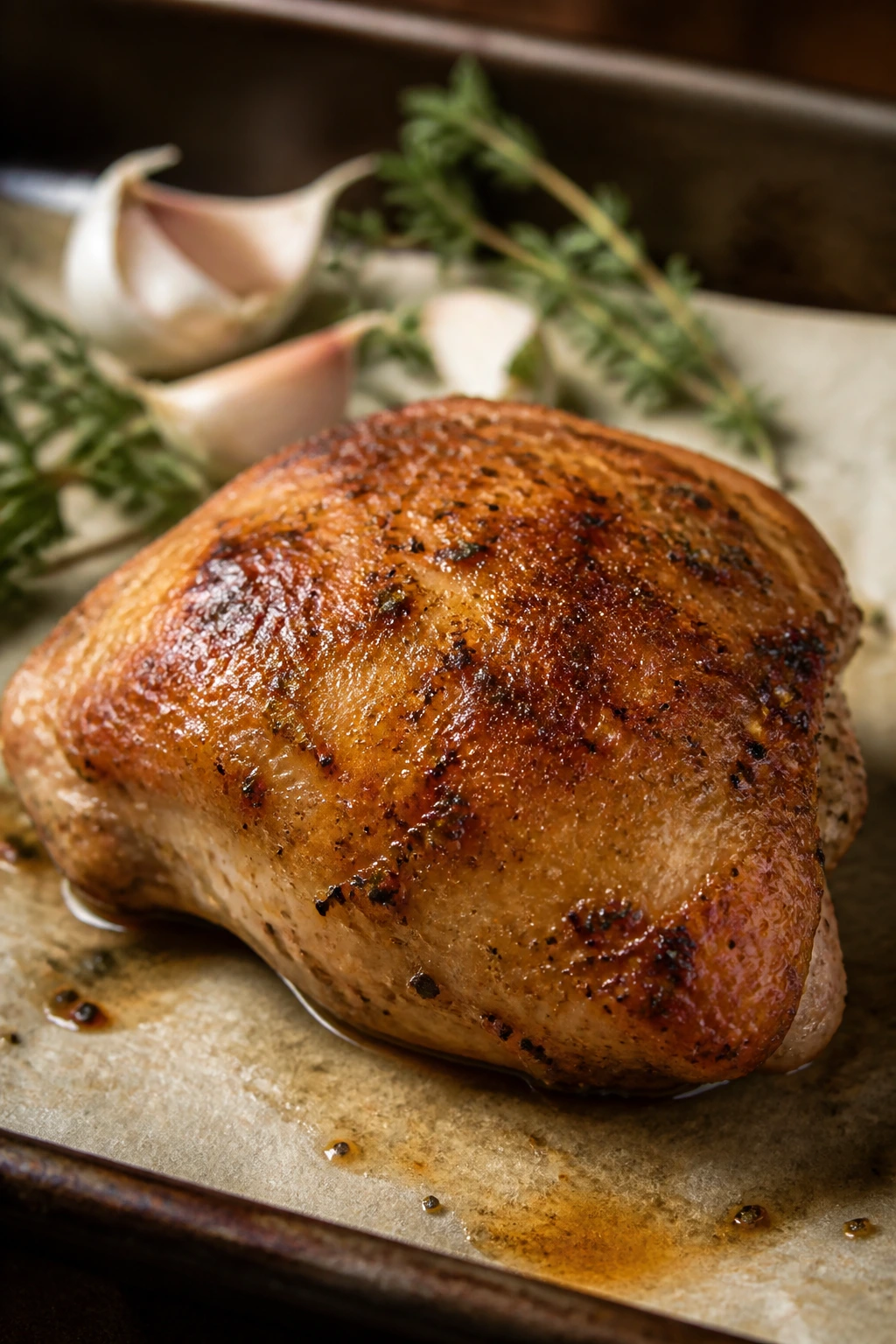
Chicken Thighs: The Forgiving Main Event
What to use: 1 1/2 pounds boneless, skinless chicken thighs, trimmed of excess fat.
Preparation: Pat them dry with paper towels before seasoning. If one piece is much thicker than the others, press it gently with your hand so the batch cooks at the same pace.
Substitutions: Boneless, skinless chicken breasts work if you prefer them, but they need a closer eye and often finish a few minutes sooner. Turkey cutlets can also work, though they’re leaner and less forgiving.
Tips: Thighs hold up better at sheet-pan temperature because the extra fat keeps the meat from drying out while the vegetables finish. If you buy very small thighs, tuck them toward the middle of the pan where the heat is gentler.
Potatoes and Carrots: The Built-In Comfort
What to use: 1 pound baby potatoes, halved, and 3 medium carrots, peeled and cut into 1/2-inch diagonal slices.
Preparation: Keep the potato halves close to the same size so they roast evenly. Cut the carrots on a diagonal because it gives more surface area for browning and makes them cook a little faster.
Substitutions: Baby Yukon gold potatoes, fingerlings, or small red potatoes all work. Parsnips can replace one or two carrots if you want a sweeter, earthier edge.
Tips: Potatoes need direct contact with the pan to brown. If you pile them on top of each other, they steam. Spread them cut side down and give them a little space.
Broccoli, Onion, and Bell Pepper: The Last-Minute Color
What to use: 3 cups broccoli florets, 1 small red bell pepper sliced into 1-inch strips, and 1 small yellow onion cut into wedges.
Preparation: Keep the broccoli dry after washing. If it’s damp, it will steam before it browns. Separate the onion wedges a little so they soften into sweet layers instead of staying chunky.
Substitutions: Cauliflower, zucchini, green beans, or Brussels sprouts can stand in for part of the broccoli. If your family likes a sweeter pan, use red onion instead of yellow.
Tips: Broccoli goes in later because it cooks much faster than potatoes. If you add it at the start, it turns soft and loses its color before the chicken is done.
Seasoning and Finish: The Part That Makes It Taste Finished
What to use: 2 tablespoons olive oil, 1 teaspoon kosher salt, 1/2 teaspoon black pepper, 1 teaspoon garlic powder, 1 teaspoon smoked paprika, 1 teaspoon dried oregano, 1/2 teaspoon onion powder, zest and juice of 1 lemon, and 2 cloves garlic minced.
Preparation: Mix the dry seasonings first so they distribute evenly, then toss them with the oil before they hit the pan. Zest the lemon before juicing it. That sounds obvious until you’ve squeezed the lemon dry and remembered too late.
Substitutions: Avocado oil works if that’s what you keep around. Regular paprika can replace smoked paprika, though you’ll lose that gentle campfire note. If you want more herb flavor, use thyme instead of oregano.
Tips: Salt the vegetables before roasting, not after. Potatoes and carrots need that seasoning early to taste like more than hot starch.
The Tools That Make the Job Easier
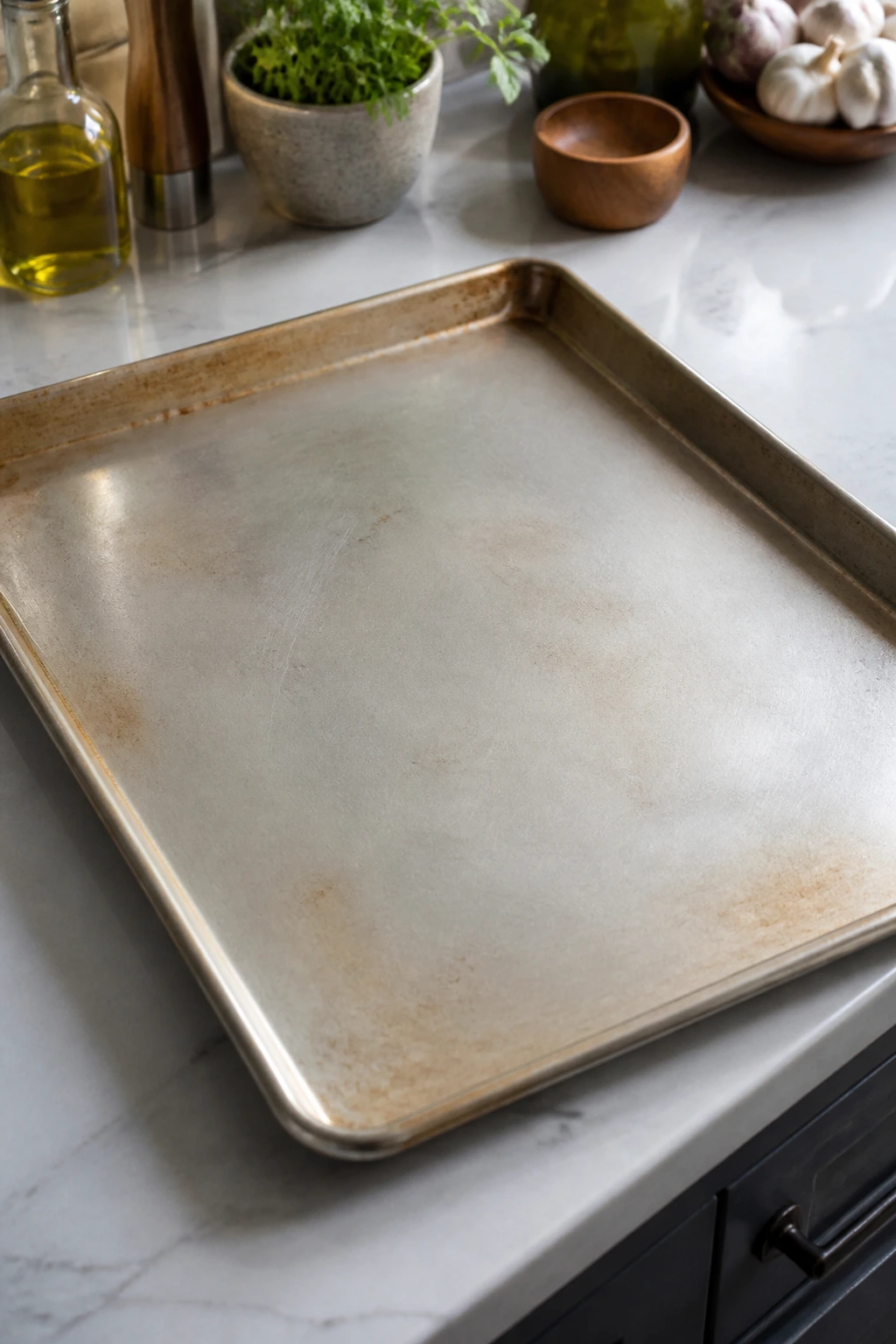
You do not need much, which is half the charm.
-
Rimmed half-sheet pan, 18 x 13 inches: This is the workhorse. If your pan is smaller, the vegetables crowd together and steam.
-
Large mixing bowl: Big enough to toss the chicken and vegetables without flinging paprika across the counter.
-
Chef’s knife: A sharp knife matters here because the potatoes, carrots, and onion all need clean, even cuts.
-
Cutting board: A stable board makes prep faster and safer. I like one with a damp towel underneath so it doesn’t skate around.
-
Tongs or a wide spatula: Useful for turning the vegetables halfway through and moving everything around without tearing the chicken.
-
Instant-read thermometer: The easiest way to know the chicken is done without slicing into every piece. Aim for 165°F at the thickest part.
-
Parchment paper, optional: Makes cleanup easier. Bare metal gives a little more browning, so use parchment if convenience matters more than extra crispness.
Why the Roast Order Matters More Than the Spice Mix
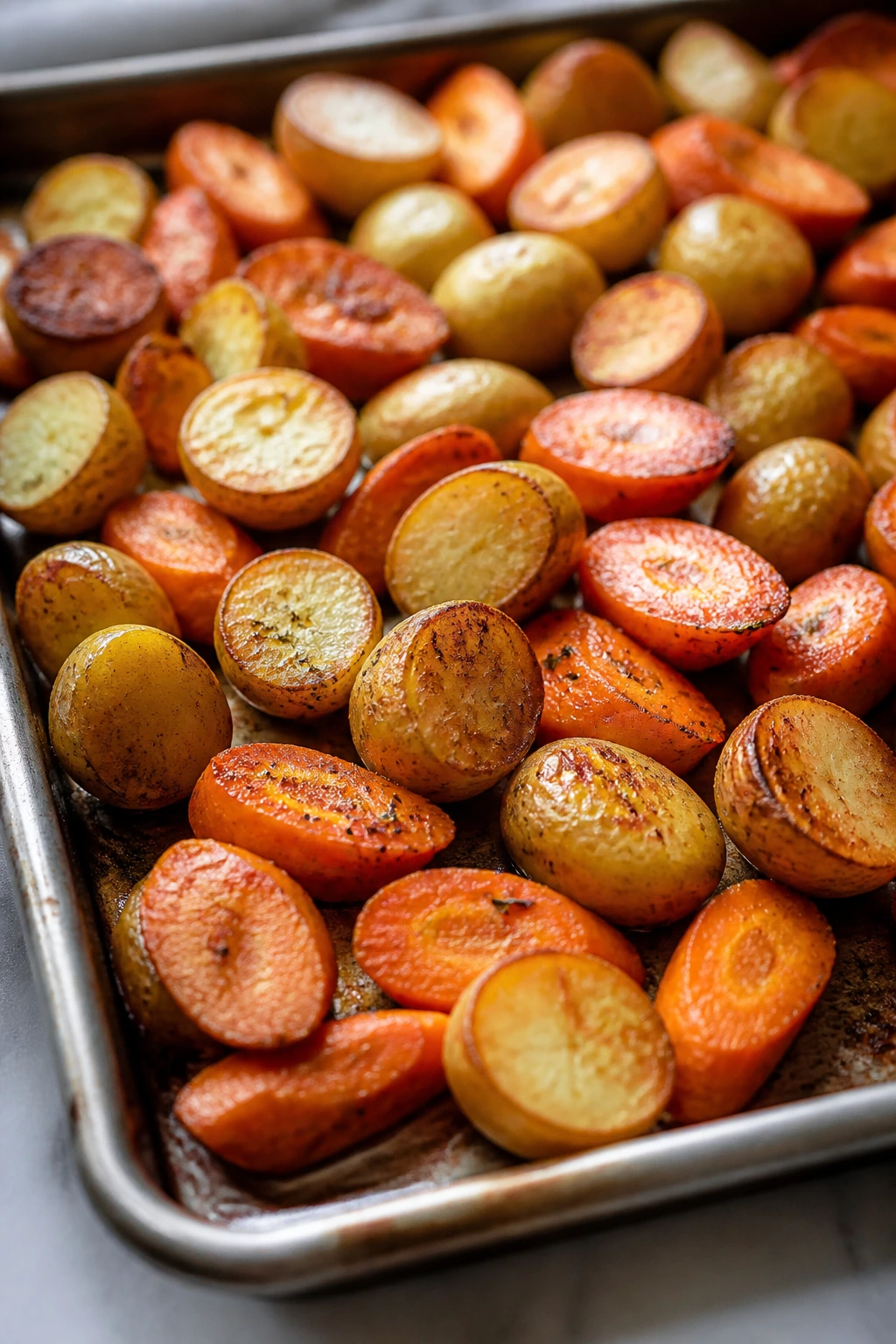
A lot of people think sheet-pan dinners live or die by the seasoning blend. I don’t. The pan order matters more.
Potatoes and carrots need more time than broccoli, and chicken thighs sit somewhere in the middle. If everything goes in at once, one ingredient always loses. Usually it’s the broccoli, which comes out drab and soft. Sometimes it’s the chicken breast, which dries out while the potatoes are still stubborn in the middle. The trick is not fancy. It’s just timing.
Roasting the potatoes first gives them a head start on browning. They should land on the sheet pan with enough space to show some skin to the heat. After about 12 minutes, they’ll have started to color on the edges and their surfaces will feel a little more set. That’s the moment to add the chicken and the other vegetables.
There’s a little mechanics lesson hiding here, and I think it’s useful. Food browns best when it’s dry, hot, and not packed in tight. A crowded pan gives off steam. Steam is the enemy of crisp edges. I know that sounds dramatic for dinner. It is still true.
And one more thing: don’t be shy about the pan juices. The lemon, garlic, seasoning, and chicken fat mingle with the roasted vegetable edges and make the whole tray taste like one dish instead of a pile of separate ingredients. That’s what you want. Separate ingredients on one pan can taste oddly confused.
Step-by-Step: From Raw Ingredients to Dinner on the Table
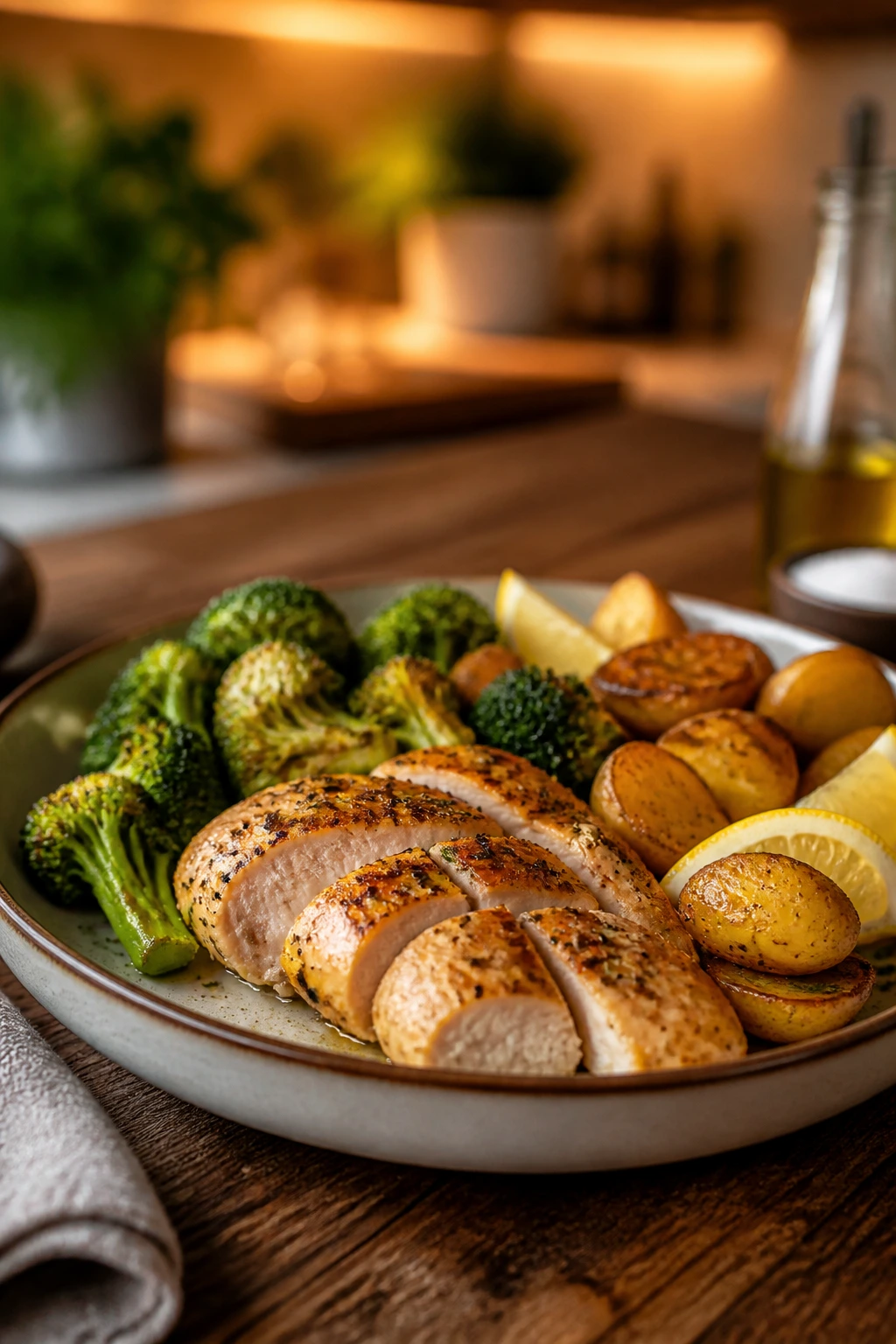
Prep and Preheat
-
Preheat the oven to 425°F (220°C) and set a rack in the middle position. Line a rimmed sheet pan with parchment paper if you want easier cleanup, or leave it bare for a little more browning.
-
In a large bowl, combine the potatoes and carrots with 1 tablespoon olive oil, 1/2 teaspoon kosher salt, 1/4 teaspoon black pepper, 1/2 teaspoon garlic powder, 1/2 teaspoon smoked paprika, and 1/2 teaspoon dried oregano. Toss until every piece looks lightly coated.
-
Spread the potatoes and carrots on the sheet pan in a single layer, with the potato halves cut side down whenever possible. Roast for 12 minutes until the edges start to color and the potatoes no longer look raw on the outside.
Season the Chicken
-
While the vegetables roast, pat the chicken thighs dry and place them in the same bowl. Add the remaining 1 tablespoon olive oil, 1 teaspoon garlic powder, 1/2 teaspoon smoked paprika, 1/2 teaspoon dried oregano, 1/2 teaspoon onion powder, 1/2 teaspoon kosher salt, 1/4 teaspoon black pepper, the lemon zest, lemon juice, and minced garlic. Toss until the chicken is evenly coated.
-
Taste the marinade with your nose, not your tongue — you should smell garlic and lemon before the pan ever goes back into the oven. If the mixture looks dry, add a teaspoon more oil. Do not drown the chicken in lemon juice; a little acid helps, but too much can make the surface cook oddly fast.
Build the Pan
-
Remove the pan from the oven and carefully push the potatoes and carrots toward the edges. Add the chicken thighs, onion wedges, and red bell pepper to the center and open spaces. Return the pan to the oven and roast for 12 minutes.
-
Take the pan out again and scatter the broccoli florets over the open areas. Toss the broccoli lightly in the pan juices if you can, then return the pan to the oven for 8 to 10 minutes, until the chicken reaches 165°F, the broccoli edges are browned, and the potatoes are tender when pierced with a knife.
Finish and Serve
-
If you want a little extra color, switch the oven to broil for 1 to 2 minutes at the end, but stand there and watch it. Broiling is not the time to answer a text or refill a water glass. Lemon and garlic can go from browned to bitter faster than you expect.
-
Let the pan rest for 5 minutes before serving. Sprinkle with chopped parsley and add lemon wedges on the side. The chicken stays juicier if you let it sit briefly before cutting.
How I Like to Serve It at the Table
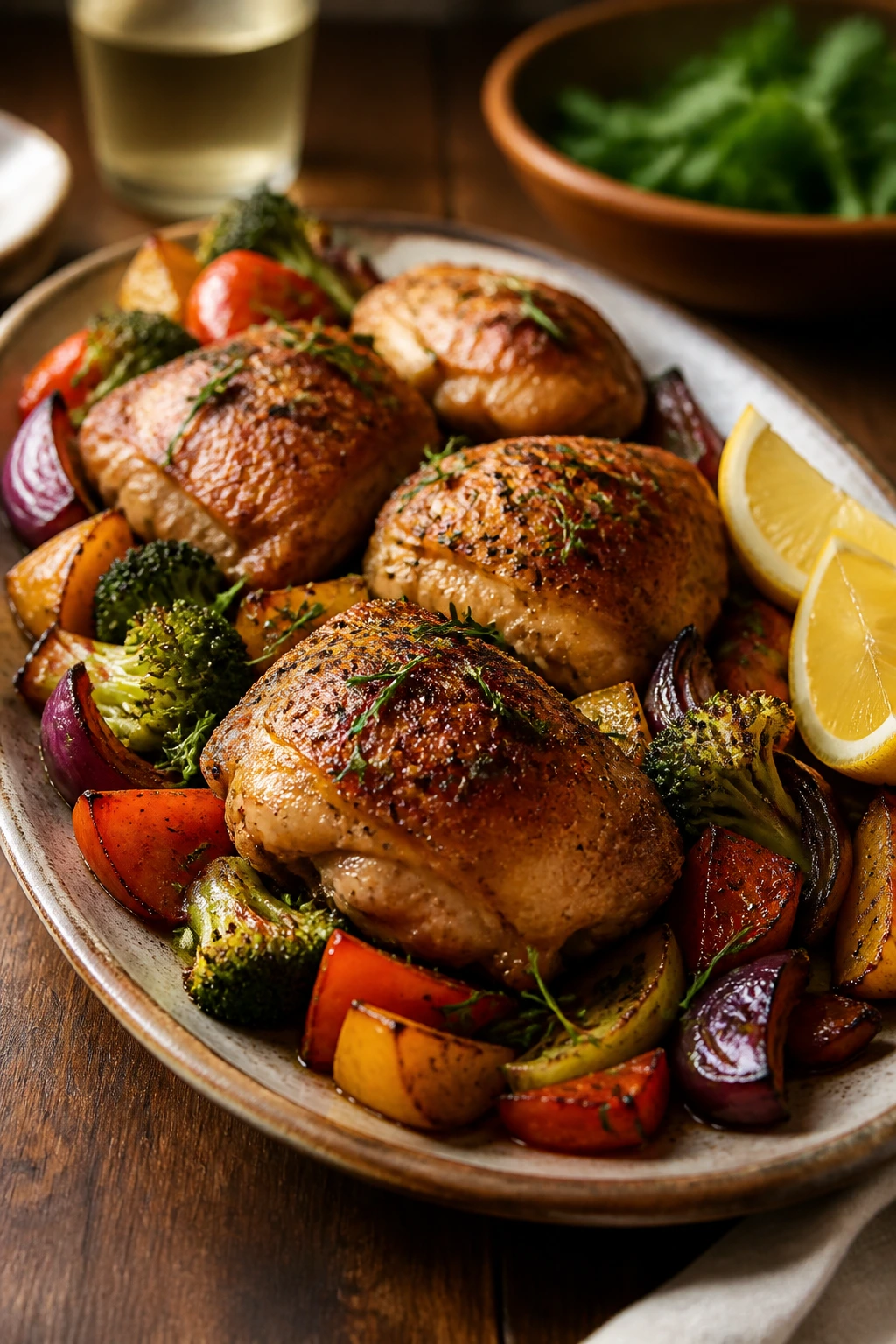
Presentation: Spoon the chicken and vegetables onto a warm platter or shallow serving bowls, then drizzle any pan juices over the top. The lemon wedges belong on the side, not buried under the food, because people like to decide how bright they want each bite.
Accompaniments: The pan is already complete enough for a simple meal, but I like it with a spoonful of plain Greek yogurt mixed with chopped dill and a pinch of salt. If your crew wants more starch, serve it with brown rice, quinoa, or warm pita. A crisp cucumber salad works nicely too, especially when the oven heat has done all the heavy lifting.
Portions: For adults, plan on about 1 chicken thigh and 1 to 1 1/2 cups vegetables per person. Kids usually do fine with half that amount, plus extra potatoes if they’re in a carb phase, which seems to be most of childhood.
Beverage Pairing: Sparkling water with lemon keeps the meal light. If you want something with a little more structure, a dry white wine like Sauvignon Blanc or Pinot Grigio handles the garlic and citrus well. Unsweetened iced tea does the job too.
Small Tweaks That Change the Flavor Fast
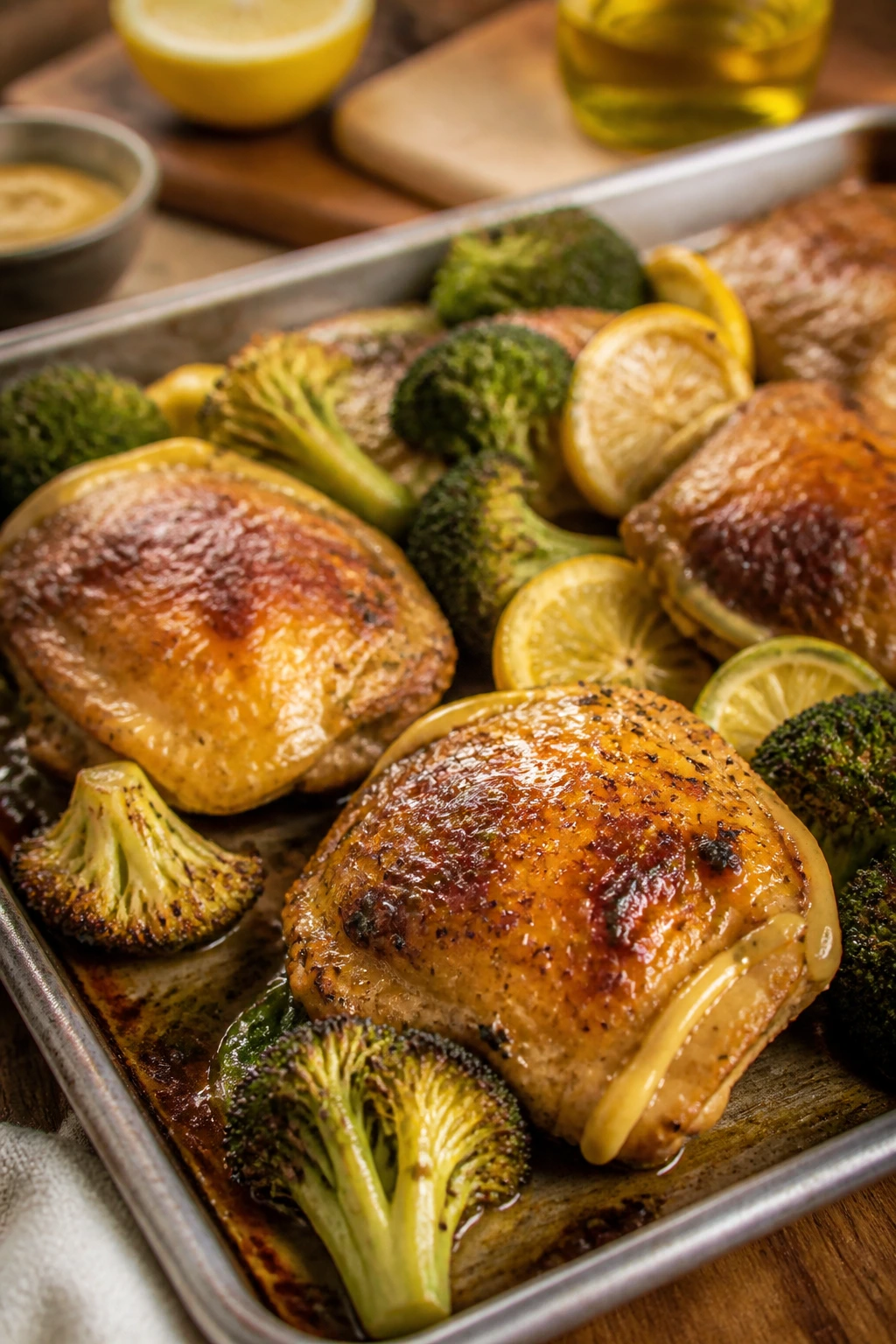
Flavor Enhancement: A spoonful of Dijon mustard whisked into the olive oil and lemon mixture gives the chicken a sharper, more savory edge. It also helps the seasoning cling to the surface instead of slipping off into the bowl.
Customization: If your household likes more sweetness, add a handful of cherry tomatoes during the last 10 minutes of roasting. They burst a little and leave a glossy juice that mixes well with the lemon. For more heat, add 1/4 teaspoon red pepper flakes to the seasoning blend.
Serving Suggestions: Fresh parsley is the obvious finish, but chopped dill or chives work too. A little crumbled feta on the vegetables after roasting is a nice move if you want a salty finish without turning the pan heavy. I would not add a mountain of cheese here. A spoonful is enough.
Make-It-Yours: For a dairy-free version, nothing needs to change. For a gluten-free table, you’re already there. For a higher-protein dinner, add a can of drained chickpeas to the pan at the same time as the broccoli; they roast up a little crisp at the edges and catch the seasoning nicely.
Common Mistakes That Make Sheet-Pan Dinners Fall Flat
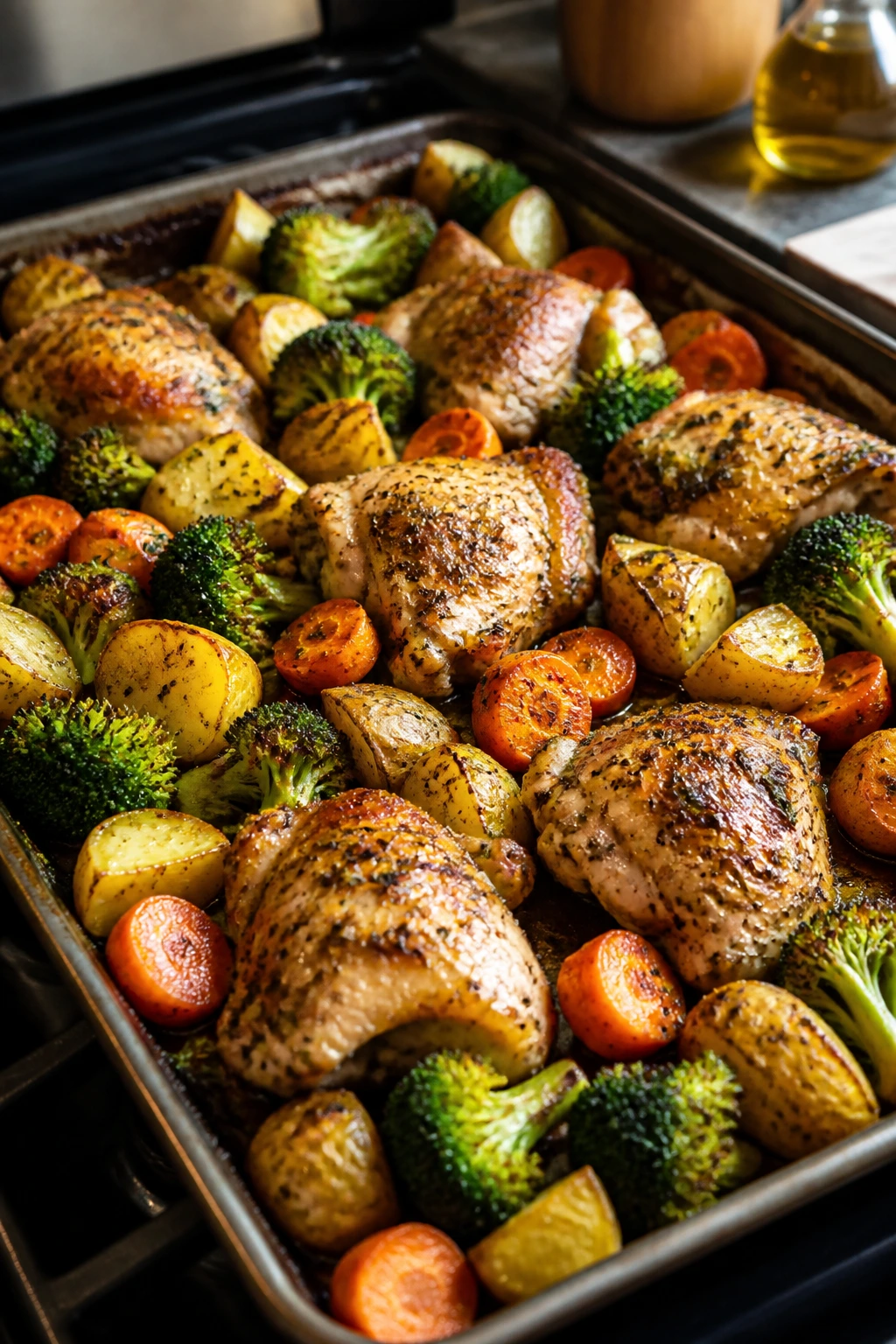
A sheet-pan dinner can look easy and still miss the mark if a few details are off. The good news is that most of the problems are predictable.
Crowding the pan: If the vegetables are piled in a thick layer, they steam instead of roast. You’ll know it happened because the potatoes look pale and the broccoli goes soft. Use a bigger pan or split the batch across two pans.
Adding the broccoli too early: Broccoli is not a long-haul vegetable in this recipe. If it goes in at the same time as the potatoes, it overcooks while the potatoes are still catching up. Hold it back until the final 8 to 10 minutes.
Skipping the dry step on the chicken: Wet chicken doesn’t brown as well. It leaves puddles on the pan and turns the seasoning gummy. Pat the chicken dry with paper towels before it meets the oil and spices.
Cutting the vegetables unevenly: A giant potato chunk and a tiny carrot coin will not finish together. Keep everything around the same size so the oven can do its job without leaving one ingredient raw and another collapsing.
Forgetting to check temperature: Chicken thighs are forgiving, but they still need to hit 165°F. If you slice them open too soon, the juices run out and the meat dries faster on the plate. Thermometers cost less than a takeout dinner and save a lot of guessing.
Under-salting the vegetables: People often season the chicken well and forget the potatoes. That leaves the meal oddly flat, even with lemon on top. Salt the vegetables before they roast. Not after. Before.
Variations When You Want a Different Mood
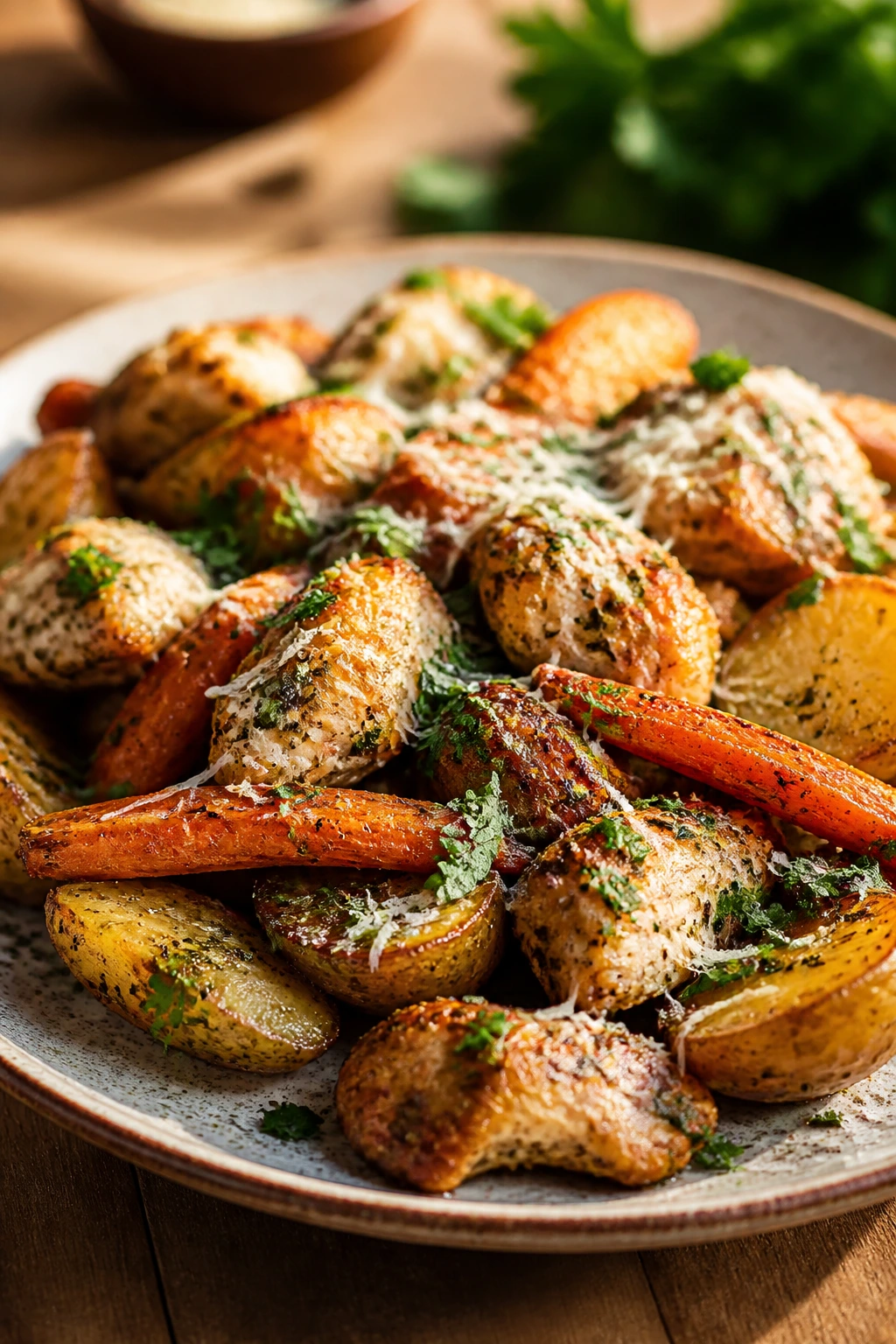
Mediterranean Tray Bake: Swap the red bell pepper for zucchini rounds and add a handful of cherry tomatoes in the last 8 minutes. Finish with feta and chopped dill. It turns the pan brighter and softer, with a more seaside flavor.
Smoky Chickpea Version: Replace half the potatoes with a drained, rinsed can of chickpeas and add an extra 1/2 teaspoon smoked paprika. The chickpeas crisp at the edges and make the pan feel a little more substantial without adding more meat.
Herb-and-Parmesan Finish: After roasting, sprinkle the hot vegetables with 2 to 3 tablespoons finely grated Parmesan and chopped parsley. The cheese melts into the carrots and potatoes just enough to make the whole pan taste richer without turning it heavy.
Garlic-Lime Swap: Use lime zest and juice instead of lemon, and add a pinch of ground cumin to the seasoning. The flavor shifts toward a sharper, slightly warmer profile that works especially well if you serve the chicken with rice or tortillas.
Vegetable-Heavy Version: Use only 1 pound of chicken and increase the vegetables by another 2 cups, leaning on cauliflower, broccoli, and onions. This is the version I make when I want the dinner to feel lighter but still filling enough for real appetites.
Make-Ahead, Storage, and Reheating Notes
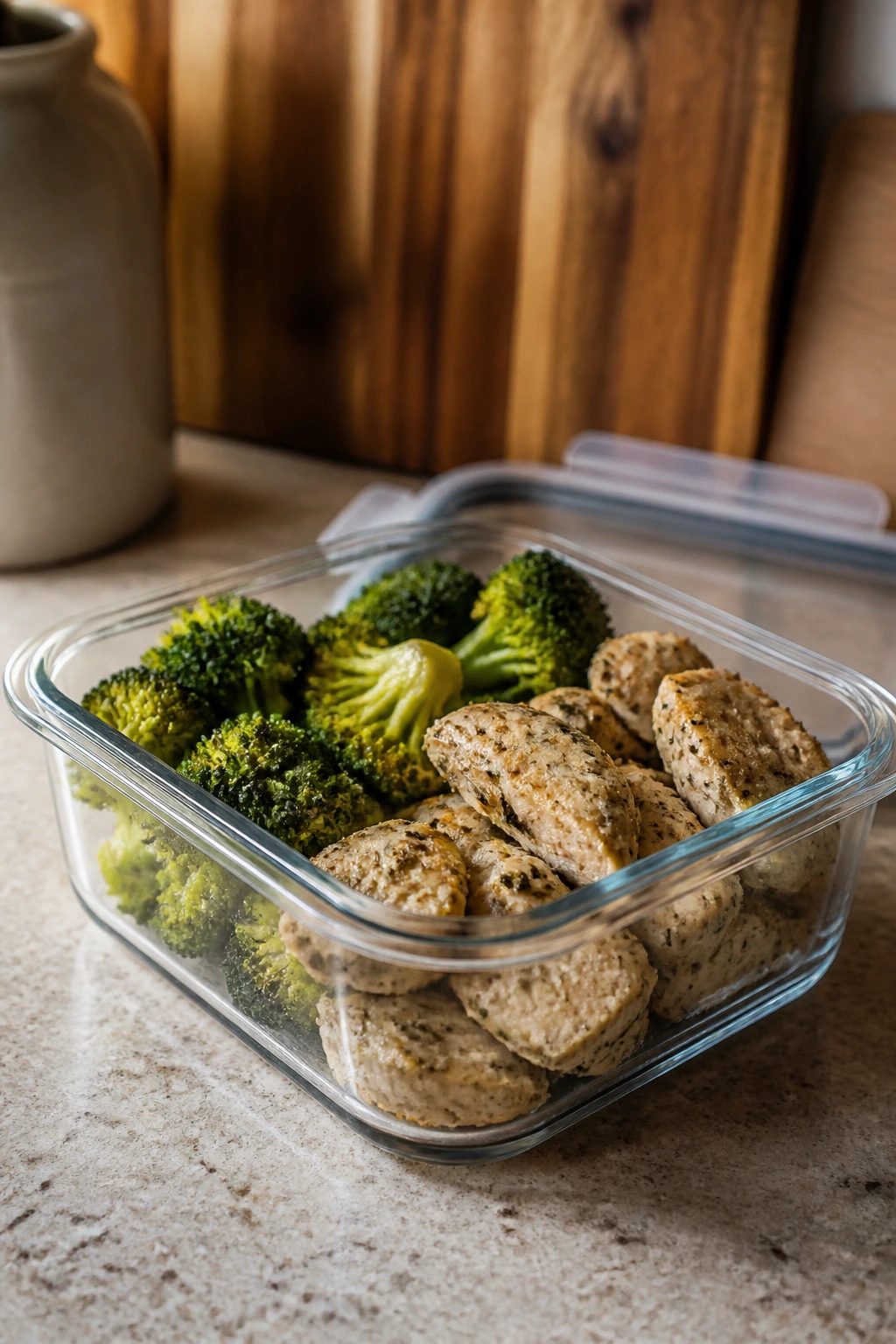
Leftovers hold up better than you might expect, though the broccoli and potatoes do lose a little sharpness after a night in the fridge. Keep the components in an airtight container once they cool, and try to get them chilled within 2 hours of cooking.
In the refrigerator, the chicken and vegetables keep for 3 to 4 days. The broccoli softens a bit each day, so if you know you’re cooking for leftovers, it helps to pull the pan from the oven while the broccoli still has a little bite. That first roast matters more than the reheating does.
For the freezer, the chicken freezes better than the vegetables. You can freeze the cooked chicken and potatoes for up to 2 months, but broccoli tends to get soft and watery after thawing. If you want to freeze portions, I’d freeze the chicken and potatoes separately, then make a fresh batch of broccoli later. That sounds fussy. It is less fussy than forcing mushy broccoli to pretend it’s fine.
To reheat, the oven is your friend. Spread the leftovers on a sheet pan and warm them at 375°F (190°C) for about 10 to 12 minutes, until heated through. A skillet over medium heat works too, especially if you want the potatoes to regain a little crispness. The microwave is the fastest option, but it softens the vegetables the most; use it in 30-second bursts and stop as soon as the chicken is hot.
You can also do the prep ahead. Cut the vegetables and mix the seasoning the day before, then store everything separately in the fridge. I would not season the chicken too early if the lemon juice is already mixed in; the surface texture is better if it goes on close to baking time.
Questions People Ask Before They Make It

Can I use chicken breasts instead of thighs?
Yes, but keep an eye on them. Breasts are leaner, so they dry out faster at high heat. If you use them, cut them into larger pieces or pound them to an even thickness and start checking for doneness a few minutes early.
How do I keep the broccoli from getting mushy?
Add it late and keep it dry. Damp broccoli steams, and early broccoli overcooks. If your florets are very small, they may only need 6 to 8 minutes at the end.
Can I use frozen vegetables?
You can, but they need extra care. Frozen broccoli or carrots should be thawed and patted dry first, or they release too much moisture on the pan. Fresh vegetables brown better here, so I’d only reach for frozen if that’s what you have.
What if my potatoes are still firm when the chicken is done?
Cut the potatoes smaller next time, but for this batch, pull the chicken off and let the potatoes roast a little longer while the chicken rests loosely covered. A few extra minutes usually solves it. If they’re still stubborn, your oven may run cool, and the pan may need a higher rack position.
Can I double the recipe?
Yes, but use two sheet pans. If you cram double the food onto one pan, the vegetables steam and the chicken loses browning. Rotate the pans halfway through if they’re on different racks.
Is there a good sauce for this?
A quick yogurt sauce works well: plain Greek yogurt, lemon juice, chopped dill, salt, and a tiny splash of olive oil. Keep it cold and spoon it over the hot chicken right before eating. The contrast is worth the extra bowl.
How do I make it lower in sodium?
Use less salt in the seasoning mix and lean on lemon zest, garlic, and herbs for flavor. The vegetables will still taste full if they roast long enough to brown. A squeeze of fresh lemon at the table does more than people think.
Can I make this ahead for lunches?
Yes, and it packs neatly. Let everything cool, then divide into containers with the chicken on top of the vegetables so the steam doesn’t trap under the meat. Reheat gently, or eat it cold over greens if you’re the sort of person who likes roasted vegetables at room temperature.
A Pan Dinner You Can Trust Again and Again
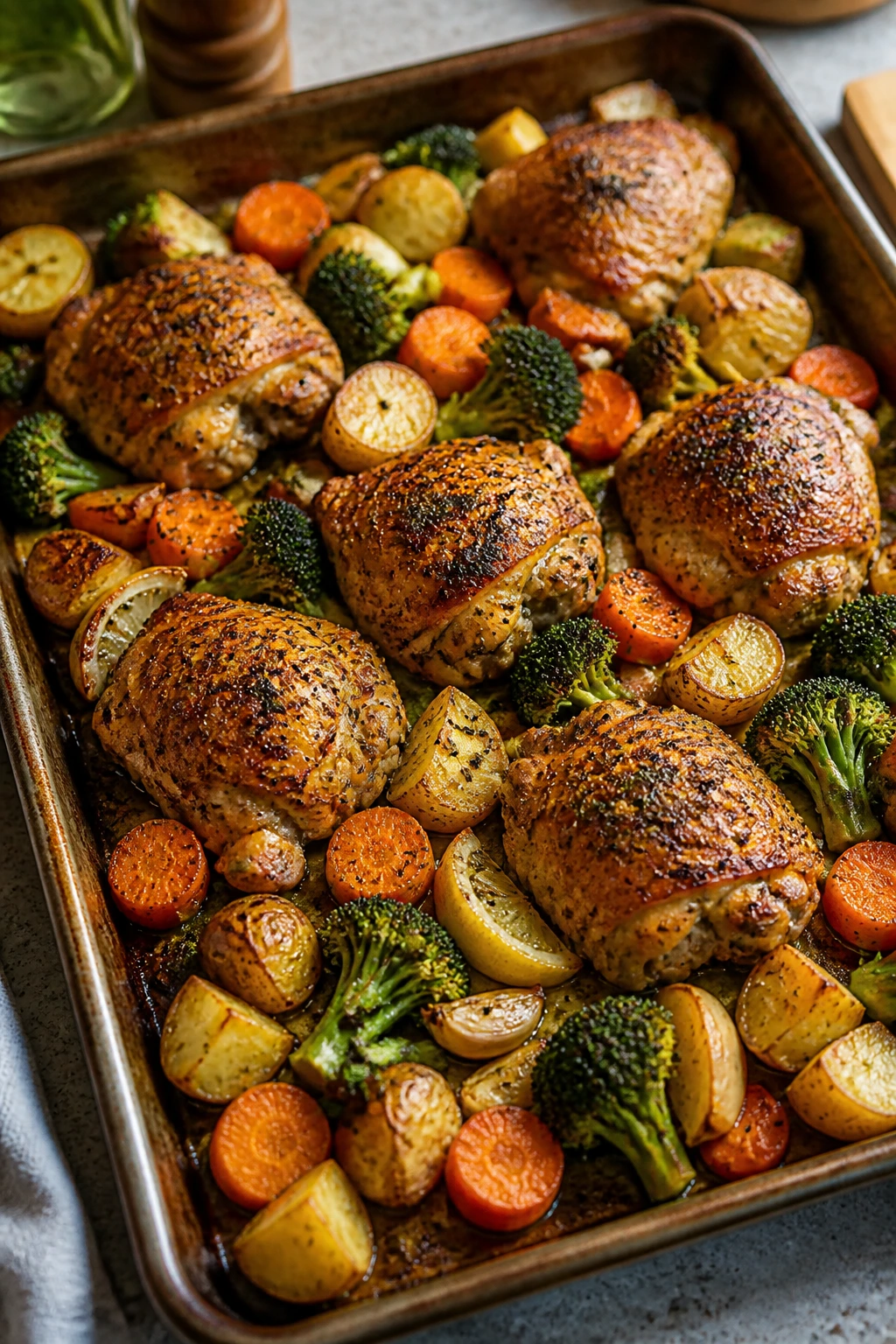
There’s a reason sheet-pan dinners keep showing up in real kitchens. They’re not flashy. They just work when the timing is sensible and the vegetables get enough room to brown. This version lands in that sweet spot where the chicken stays juicy, the potatoes do something better than just soften, and the broccoli comes out with a little edge instead of a boiled look.
I also like that it doesn’t ask for a separate mood. It works on a tired weeknight, sure, but it also holds up when company is coming and you want dinner to look orderly without doing extra work. The lemon, garlic, and herbs keep it bright. The roasted vegetables keep it grounded. That balance is the whole point.
Put the pan in the oven once, and the recipe starts earning its place on the regular menu.
Sheet-Pan Lemon Garlic Chicken with Potatoes, Carrots, and Broccoli — Recipe Card
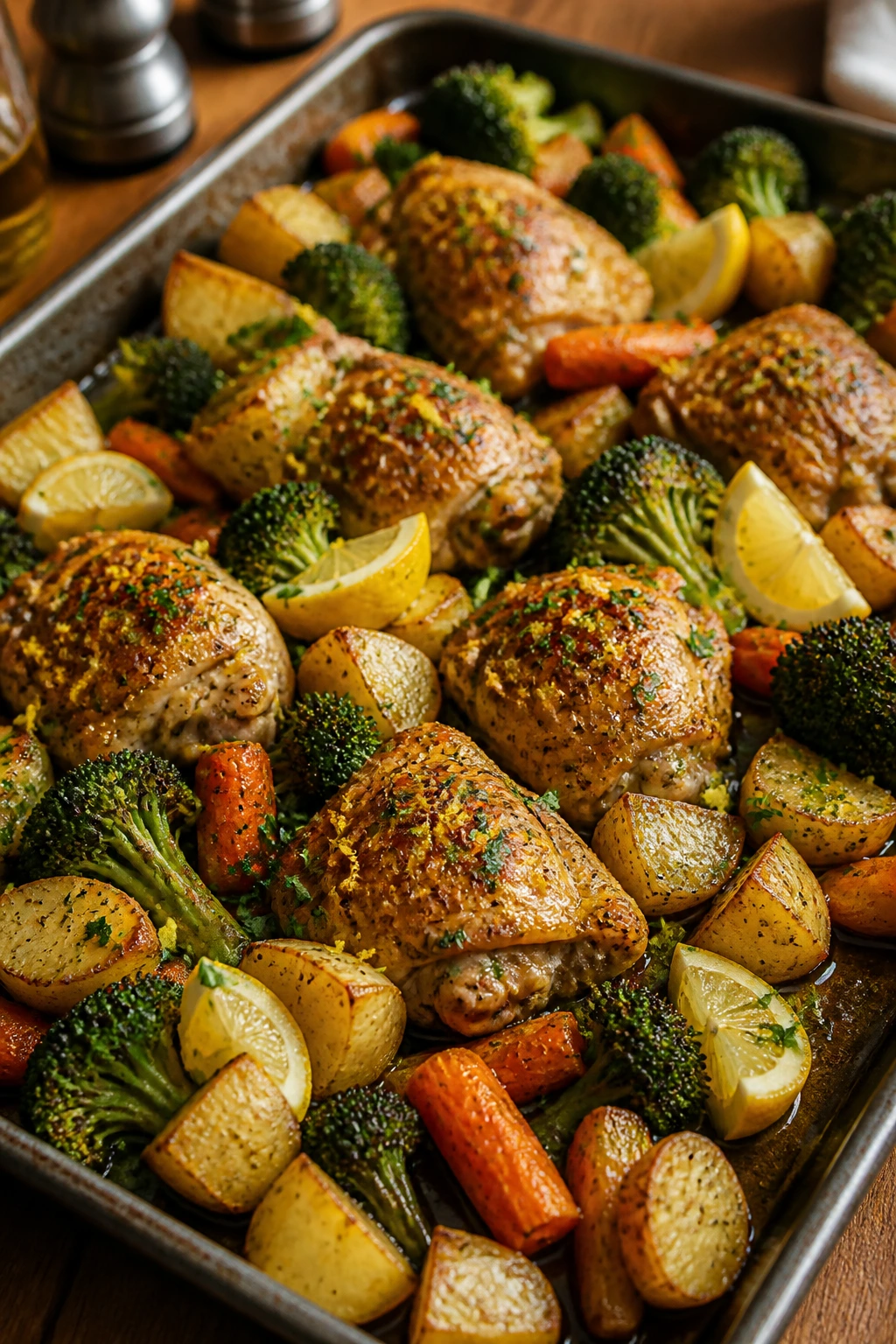
Recipe Name: Sheet-Pan Lemon Garlic Chicken with Potatoes, Carrots, and Broccoli
Description: A simple one-pan chicken dinner with browned potatoes, sweet carrots, and roasted broccoli, finished with lemon, garlic, and parsley. The chicken stays juicy, the vegetables pick up pan juices, and cleanup stays easy.
Prep Time: 20 minutes
Cook Time: 30 minutes
Total Time: 50 minutes
Course: Dinner, Main Course
Cuisine: American
Servings: 4 to 6 servings
Calories: About 390 kcal per serving
Ingredients
For the Chicken and Vegetables:
- 1 1/2 pounds boneless, skinless chicken thighs, trimmed of excess fat
- 1 pound baby potatoes, halved
- 3 medium carrots, peeled and cut into 1/2-inch diagonal slices
- 3 cups broccoli florets, cut into bite-size pieces
- 1 small red bell pepper, sliced into 1-inch strips
- 1 small yellow onion, cut into wedges
- 2 tablespoons olive oil, divided
- 1 teaspoon kosher salt, plus more to taste
- 1/2 teaspoon black pepper
- 2 teaspoons garlic powder, divided
- 1 teaspoon smoked paprika, divided
- 1 teaspoon dried oregano, divided
- 1/2 teaspoon onion powder
- Zest of 1 lemon
- 2 tablespoons lemon juice
- 2 cloves garlic, minced
- 1 tablespoon chopped fresh parsley, for serving
- 1 lemon, cut into wedges
Instructions
-
Preheat the oven to 425°F (220°C) and line a rimmed sheet pan with parchment paper if desired.
-
Toss the potatoes and carrots with 1 tablespoon olive oil, 1/2 teaspoon kosher salt, 1/4 teaspoon black pepper, 1 teaspoon garlic powder, 1/2 teaspoon smoked paprika, and 1/2 teaspoon dried oregano.
-
Spread the potatoes and carrots on the pan in a single layer and roast for 12 minutes.
-
Pat the chicken dry and toss it with the remaining 1 tablespoon olive oil, 1 teaspoon garlic powder, 1/2 teaspoon smoked paprika, 1/2 teaspoon dried oregano, 1/2 teaspoon onion powder, 1/2 teaspoon kosher salt, 1/4 teaspoon black pepper, lemon zest, lemon juice, and minced garlic.
-
Add the chicken, onion, and red bell pepper to the pan. Roast for 12 minutes.
-
Add the broccoli florets and roast for 8 to 10 minutes more, until the chicken reaches 165°F and the vegetables are tender with browned edges.
-
Rest for 5 minutes, then finish with parsley and lemon wedges.
Notes: Add the broccoli late so it stays bright and crisp at the edges. If you use chicken breasts instead of thighs, check for doneness a few minutes early. For extra flavor, serve with a spoonful of Greek yogurt mixed with dill and salt.