



Chinese dishes recipes for a quick stir fry night live or die by heat, knife prep, and a sauce that knows when to get out of the way. Once the pan is hot enough that garlic hits the oil and smells sweet in seconds, the whole dinner changes shape. The meat sears instead of steaming. The vegetables keep a little snap. The sauce coats the food in a thin gloss instead of pooling into a gray puddle at the bottom.
That’s why stir-fry cooking keeps coming back to the weeknight table. It rewards clean cuts, small batches, and a little organization on the counter. A flank steak sliced against the grain behaves one way; the same steak hacked into random chunks behaves another. Snow peas want a short, aggressive blast of heat. Eggplant wants a little oil and patience. Shrimp wants even less time than you think. The difference is in the details, and the details are where good takeout-style cooking either sings or falls flat.
Forty dishes is a lot, but that’s part of the fun. Some are saucy and clingy, some are dry-fried and sharp, some lean on black bean paste or cumin or chiles, and a few are the sort of plain-looking bowls that disappear faster than you expect. Keep your wok or skillet hot, keep your ingredients chopped, and the rest starts to feel almost unfairly easy.
Why This Collection Keeps Stir Fry Night Interesting
- Fast assembly: Most of these dishes use a 5- to 10-minute sauce and cook in one pan, so the slowest part is usually the rice.
- Protein swaps make sense: Chicken thighs, flank steak, shrimp, tofu, pork, and even cauliflower can trade places without wrecking the flavor profile.
- Sauce-first cooking pays off: A little soy sauce, Shaoxing wine, cornstarch, and vinegar gives you that glossy restaurant-style coating without a long simmer.
- Vegetables stay useful: Broccoli, bok choy, green beans, cabbage, mushrooms, and snow peas each behave differently under high heat, which keeps the meals from tasting samey.
- Leftovers usually hold up: The stronger-sauced dishes reheat better than most takeout, especially if you stop cooking the vegetables while they still have some bite.
- The pantry does most of the work: Garlic, ginger, soy sauce, sesame oil, rice vinegar, and a little sugar appear again and again for a reason. They carry dinner.
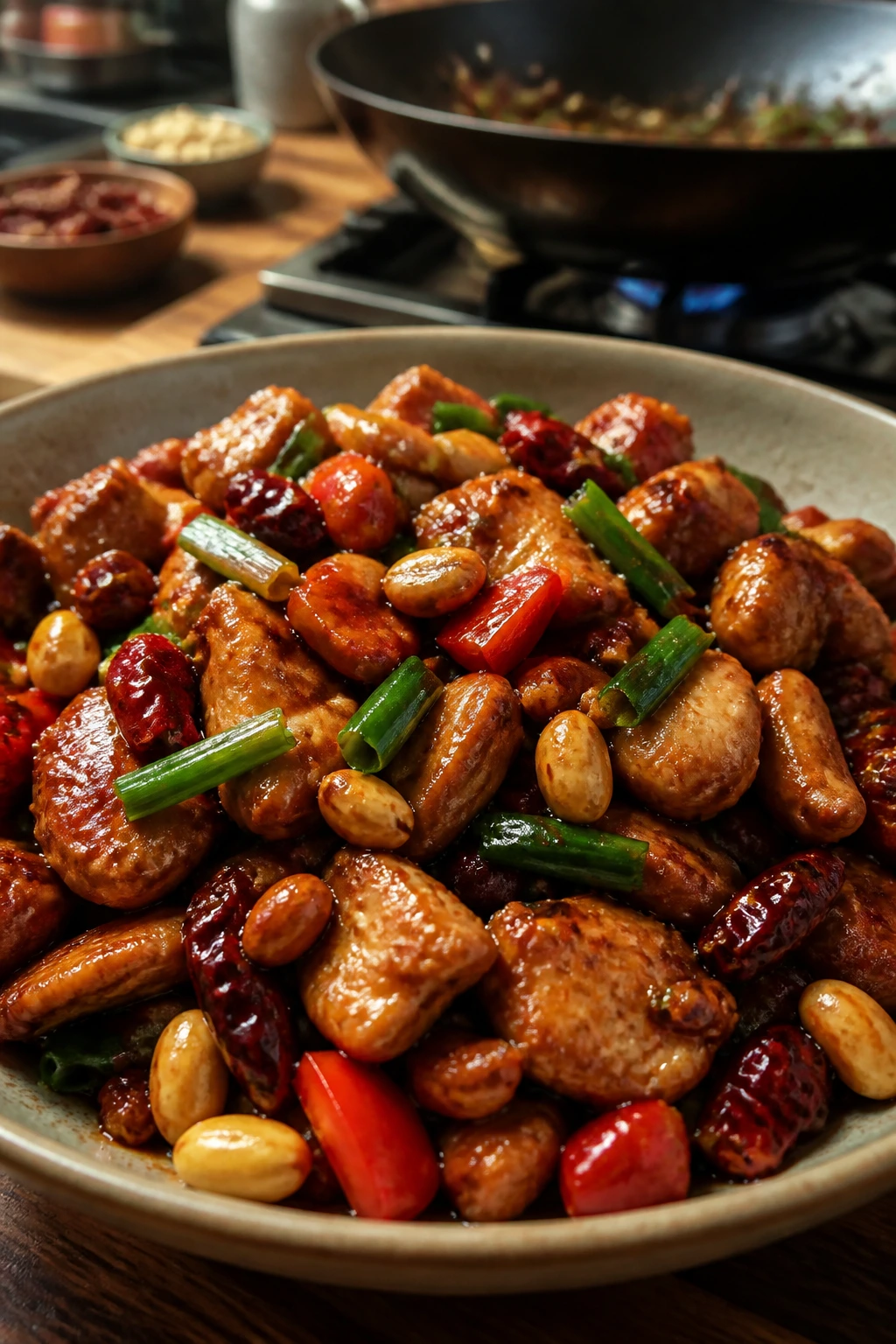
1. Kung Pao Chicken
The best Kung Pao Chicken smells like toasted peanuts and dried chiles before you even taste it. The sauce should be sticky enough to glaze the chicken, but not so thick that it turns sugary.
Why It Works: High heat gives the chicken browned edges, and the vinegar-sugar-soy sauce lands sharp first, then rounded. The peanuts stay crunchy if you add them at the end, not at the start.
Key Ingredients:
- 1 lb boneless chicken thighs, cut into 1-inch pieces
- 1/2 cup roasted peanuts
- 8 dried red chiles
- 1 red bell pepper, diced
- 3 garlic cloves, minced
- 1 tbsp fresh ginger, minced
- 2 tbsp light soy sauce
- 1 tbsp Chinkiang vinegar
- 1 tbsp Shaoxing wine
- 1 tsp sugar
- 1 tsp cornstarch
- 2 scallions, cut into 1-inch pieces
Quick Steps:
- Toss the chicken with 1 tbsp soy sauce, 1 tbsp Shaoxing wine, and 1 tsp cornstarch; rest 10 minutes.
- Whisk the remaining soy sauce, vinegar, sugar, and 2 tbsp water in a small bowl.
- Stir-fry the chiles, ginger, and garlic for 20 seconds, then cook the chicken over high heat until just browned, 3 to 4 minutes.
- Add the bell pepper, sauce, peanuts, and scallions; toss 30 to 45 seconds until glossy.
Equipment for This Recipe:
- 14-inch wok or large skillet
- Mixing bowl
- Small bowl for the sauce
- Wooden spatula or metal turner
How to Serve This Dish: Spoon it over steamed jasmine rice and let the sauce soak into the top layer. A pile of plain cucumber slices on the side keeps the heat in check.
Pro Tips for This Recipe:
- Use thighs, not breasts, if you want the chicken to stay tender after the final toss.
- Add the peanuts at the very end so they keep their snap.
- If your dried chiles scorch fast, split the difference and use 6 instead of 8.
Variations on This Dish:
- Extra-Chile Version: Add 1 tsp chili flakes with the garlic for a hotter finish.
- Cashew Swap: Use cashews instead of peanuts if that’s what’s in the pantry; the texture shifts softer and a little sweeter.
Common Mistakes to Avoid with This Dish:
- Don’t pour in the sauce too early or the cornstarch can clump on the hot pan.
- Don’t overload the wok with chicken; if it steams, you lose the browned edges that make this dish work.
2. Beef and Broccoli
Beef and Broccoli is the cleanest proof that a short marinade can save a weeknight. The steak should taste savory and slightly sweet, while the broccoli keeps its bright green color and a little bite.
Why It Works: Flank steak sliced thin against the grain cooks in minutes, and the broccoli gets just enough time to soften without going olive-drab. Oyster sauce gives the dish body without turning it heavy.
Key Ingredients:
- 1 lb flank steak, sliced thin against the grain
- 4 cups broccoli florets
- 3 tbsp light soy sauce
- 1 tbsp oyster sauce
- 1 tbsp Shaoxing wine
- 1 tsp sugar
- 2 tsp cornstarch
- 3 garlic cloves, minced
- 1 tbsp ginger, minced
- 1/2 cup water
Quick Steps:
- Marinate the steak with 1 tbsp soy sauce, Shaoxing, and 1 tsp cornstarch for 10 minutes.
- Whisk the remaining soy, oyster sauce, sugar, water, and cornstarch until smooth.
- Stir-fry the beef over high heat for 1 to 2 minutes; remove it before it dries out.
- Stir-fry the broccoli with a splash of water until bright green and crisp-tender, then add garlic, sauce, and beef; toss until thickened.
Equipment for This Recipe:
- Wok or 12-inch skillet
- Sharp knife
- Mixing bowl
- Small whisk or fork
How to Serve This Dish: Serve it with plain rice so the sauce has a place to go. If you like a little crunch, add a few toasted sesame seeds right before serving.
Pro Tips for This Recipe:
- Cut the broccoli into similar-size florets so the stems and tops finish together.
- Pull the beef early; it will finish in the sauce.
- A tablespoon of water in the pan helps steam the broccoli without overcooking it.
Variations on This Dish:
- Garlic-Heavy Version: Add two extra garlic cloves and finish with sesame oil.
- Mushroom Broccoli Beef: Swap in 6 oz sliced mushrooms for half the broccoli.
Common Mistakes to Avoid with This Dish:
- Don’t simmer the steak in the sauce for long or it turns tough and grainy.
- Don’t skip the cornstarch marinade; that thin coating is what helps the beef stay soft.
3. Garlic Shrimp with Snow Peas
This one tastes like the clean edge of the wok. Shrimp curl fast, snow peas stay crisp, and the garlic should smell sweet, not bitter, by the time the pan comes off the heat.
Why It Works: Shrimp cooks in a blink, so the whole dish stays light and sharp. Snow peas need only a short toss, which is why they keep their snap instead of collapsing into mush.
Key Ingredients:
- 1 lb large shrimp, peeled and deveined
- 2 cups snow peas, trimmed
- 4 garlic cloves, minced
- 1 tbsp fresh ginger, minced
- 2 tbsp light soy sauce
- 1 tbsp rice wine
- 1 tsp sugar
- 1 tsp cornstarch
- 1/4 cup chicken or vegetable stock
- 1 tsp toasted sesame oil
Quick Steps:
- Mix soy sauce, rice wine, sugar, cornstarch, stock, and sesame oil in a small bowl.
- Pat the shrimp dry so they sear instead of steam.
- Stir-fry the garlic and ginger for 15 seconds, then add the shrimp and cook until pink and curled, about 2 minutes.
- Add the snow peas and sauce; toss just until the sauce turns glossy and lightly thickens.
Equipment for This Recipe:
- Wok or large skillet
- Paper towels
- Small bowl
- Spatula or tongs
How to Serve This Dish: It’s good over rice, but I like it with rice noodles when I want dinner to feel loose and fast. A squeeze of lime on the plate makes the garlic pop.
Pro Tips for This Recipe:
- Dry shrimp matter. Wet shrimp steam, and shrimp that steam get rubbery fast.
- Snow peas should go in late enough to stay bright.
- Use large shrimp if you want fewer overcooked pieces.
Variations on This Dish:
- Chili-Lime Shrimp: Add 1 tsp chili crisp and 1 tsp lime juice at the end.
- Bok Choy Swap: Replace the snow peas with baby bok choy if you want a softer, greener finish.
Common Mistakes to Avoid with This Dish:
- Don’t walk away from the pan; shrimp flips from perfect to overdone in a minute.
- Don’t drown the wok in sauce or the snow peas lose their crunch.
4. Chicken Lo Mein
Chicken Lo Mein is the kind of noodle bowl that disappears while people are still talking. The noodles should be glossy, the cabbage barely softened, and the chicken tucked into the sauce instead of sitting on top like an afterthought.
Why It Works: Lo mein needs a sauce that clings to noodles without making them slick and heavy. A little oyster sauce and sesame oil gives the bowl that takeout smell people notice from the hallway.
Key Ingredients:
- 8 oz lo mein noodles or thin spaghetti
- 1 lb chicken breast, sliced thin
- 2 cups shredded cabbage
- 1 carrot, julienned
- 3 scallions, sliced
- 3 tbsp light soy sauce
- 1 tbsp oyster sauce
- 1 tbsp sesame oil
- 1 tsp sugar
- 2 tbsp water
- 2 garlic cloves, minced
Quick Steps:
- Cook the noodles until just tender, then rinse briefly and drain well.
- Stir together soy sauce, oyster sauce, sesame oil, sugar, and water.
- Stir-fry the chicken until cooked through, then add garlic, cabbage, and carrot for 2 minutes.
- Add noodles and sauce; toss until every strand looks coated and warmed through.
Equipment for This Recipe:
- Large wok or deep skillet
- Pot for boiling noodles
- Tongs
- Colander
How to Serve This Dish: Serve it in shallow bowls with extra scallions on top. A side of quick-pickled cucumbers keeps the noodle richness from feeling too dense.
Pro Tips for This Recipe:
- Slightly undercook the noodles; they finish in the wok.
- Drain them well, or the sauce slides off.
- Slice the chicken thin so it cooks as fast as the vegetables.
Variations on This Dish:
- Vegetable Lo Mein: Skip the chicken and add mushrooms, cabbage, and snap peas.
- Spicy Lo Mein: Stir 1 tsp chili oil into the sauce right before tossing.
Common Mistakes to Avoid with This Dish:
- Don’t leave the noodles wet after boiling; excess water thins the sauce.
- Don’t overload the pan with cabbage or it turns limp before the noodles are ready.
5. Mapo Tofu
Mapo Tofu is not shy. The sauce is red, slick, and deep with chili bean paste, and the tofu should wobble softly in the pan while the pork gives the whole dish its savory base.
Why It Works: Soft tofu holds flavor like a sponge, and the chili bean paste brings heat plus funk in one spoonful. Sichuan peppercorn adds that mouth-tingling finish that separates this from a simple spicy tofu bowl.
Key Ingredients:
- 14 oz firm or soft tofu, cut into 1-inch cubes
- 1/2 lb ground pork
- 2 tbsp doubanjiang (chili bean paste)
- 1 tbsp fermented black beans, rinsed and chopped
- 3 garlic cloves, minced
- 1 tbsp fresh ginger, minced
- 1 cup chicken or vegetable stock
- 1 tbsp light soy sauce
- 1 tsp cornstarch mixed with 1 tbsp water
- 1 tsp ground Sichuan peppercorn
- 2 scallions, sliced
Quick Steps:
- Blanch the tofu in lightly salted water for 2 minutes, then drain gently.
- Fry the pork until it loses its raw color, then add doubanjiang, black beans, garlic, and ginger.
- Pour in the stock and soy sauce; simmer for 2 minutes.
- Add tofu, stir carefully, thicken with the cornstarch slurry, and finish with Sichuan peppercorn and scallions.
Equipment for This Recipe:
- Wok or deep skillet
- Slotted spoon
- Small bowl
- Cutting board
How to Serve This Dish: Spoon it over hot rice and keep the bowl deep. A side of blanched greens makes the chili oil taste cleaner, not louder.
Pro Tips for This Recipe:
- Handle the tofu gently; rough stirring breaks the cubes.
- Rinsing the doubanjiang from the jar’s top can help if it tastes overly salty.
- Ground Sichuan peppercorn loses punch fast, so add it at the end.
Variations on This Dish:
- Vegetarian Mapo: Use minced mushrooms instead of pork.
- Extra-Firm Version: Use extra-firm tofu if you want the cubes to hold sharper edges.
Common Mistakes to Avoid with This Dish:
- Don’t boil the tofu hard or it falls apart.
- Don’t skip the peppercorn if you want the classic numb-spicy finish.
6. Moo Goo Gai Pan
Moo Goo Gai Pan is the calm dish in this group. It’s pale, glossy, and full of mushrooms, chicken, and crisp vegetables that taste clean instead of heavy.
Why It Works: The sauce is light, so the vegetables still taste like themselves. Mushrooms bring the savory part, while chicken and snow peas keep the bowl from feeling one-note.
Key Ingredients:
- 1 lb chicken breast, sliced thin
- 8 oz mushrooms, sliced
- 1 cup snow peas
- 1 carrot, sliced thin
- 3 garlic cloves, minced
- 2 tbsp oyster sauce
- 2 tbsp light soy sauce
- 1 tbsp Shaoxing wine
- 1 tsp sugar
- 1/2 cup chicken stock
- 1 tsp cornstarch
Quick Steps:
- Mix oyster sauce, soy sauce, Shaoxing, sugar, stock, and cornstarch.
- Stir-fry the chicken until it turns opaque and barely golden.
- Add mushrooms, carrot, and garlic; cook until the mushrooms give up some liquid.
- Add snow peas and sauce; toss just until the sauce lightly coats the pan.
Equipment for This Recipe:
- Large skillet or wok
- Sharp knife
- Mixing bowl
- Spatula
How to Serve This Dish: Serve with steamed rice and maybe nothing else. That’s the point; the bowl already has enough going on.
Pro Tips for This Recipe:
- Slice the chicken thin so it stays tender.
- Let the mushrooms cook down a minute before the sauce goes in.
- Snow peas should stay bright and crisp, not soft.
Variations on This Dish:
- Mushroom-Heavy Version: Double the mushrooms and cut the chicken to 3/4 lb.
- Cashew Finish: Scatter a handful of cashews over the top for a little crunch.
Common Mistakes to Avoid with This Dish:
- Don’t oversauce it; Moo Goo Gai Pan should feel light.
- Don’t cook the snow peas too long or the dish loses its snap.
7. Pepper Steak
Pepper Steak is all about contrast: chewy-slick beef, sweet onions, and bell peppers that still taste a little raw at the core. If the beef is sliced right, this dish comes together in a blur.
Why It Works: The steak sears fast, and the peppers only need a short turn in the pan. Oyster sauce and Shaoxing wine keep the flavor savory without making it muddy.
Key Ingredients:
- 1 lb sirloin or flank steak, sliced thin
- 2 bell peppers, sliced
- 1 large onion, sliced
- 3 garlic cloves, minced
- 2 tbsp light soy sauce
- 1 tbsp oyster sauce
- 1 tbsp Shaoxing wine
- 2 tsp cornstarch
- 1 tsp sugar
- 1/3 cup water
Quick Steps:
- Toss the beef with 1 tbsp soy sauce and cornstarch; rest 10 minutes.
- Stir-fry the beef quickly, then remove it from the pan.
- Cook onion, peppers, garlic, and a splash of water until just softened.
- Return beef with the sauce ingredients and toss until the sauce clings.
Equipment for This Recipe:
- Wok or skillet
- Mixing bowl
- Knife and cutting board
- Tongs
How to Serve This Dish: It sits nicely on rice, but it also works over plain noodles if you want a little more chew. Keep the rice neutral so the peppers stay the loudest thing on the plate.
Pro Tips for This Recipe:
- Slice the beef thin and across the grain.
- Cook the peppers just until their edges wrinkle.
- A little extra black pepper at the end sharpens the finish.
Variations on This Dish:
- Garlic Pepper Steak: Add 2 extra garlic cloves and a pinch of white pepper.
- Cumin Version: Stir in 1 tsp ground cumin if you want a warmer, earthier flavor.
Common Mistakes to Avoid with This Dish:
- Don’t cook the beef first and leave it in the pan too long.
- Don’t slice the onions too thin or they melt before the peppers finish.
8. Cashew Chicken
Cashew Chicken should taste nutty, salty, and a little sweet, with celery giving the whole dish a clean crunch. I like this one because it doesn’t need a thick sauce to feel finished.
Why It Works: Cashews bring fat and crunch at the same time, which makes the dish feel fuller than the ingredient list suggests. A simple soy-vinegar sauce keeps the chicken bright.
Key Ingredients:
- 1 lb boneless chicken thighs, cut into bite-size pieces
- 3/4 cup unsalted cashews
- 1 red bell pepper, sliced
- 2 celery stalks, sliced on a diagonal
- 3 garlic cloves, minced
- 2 tbsp light soy sauce
- 1 tbsp oyster sauce
- 1 tbsp rice vinegar
- 1 tsp sugar
- 1 tsp cornstarch
- 1/3 cup water
Quick Steps:
- Stir together soy sauce, oyster sauce, vinegar, sugar, cornstarch, and water.
- Brown the chicken, then pull it out.
- Cook the celery, bell pepper, and garlic for 2 minutes.
- Add the chicken, cashews, and sauce; toss until glossy.
Equipment for This Recipe:
- Large skillet or wok
- Mixing bowl
- Wooden spoon
- Measuring spoons
How to Serve This Dish: Rice is the obvious answer, but lettuce cups work if you want something lighter. Add the cashews at the end so they keep their clean crunch.
Pro Tips for This Recipe:
- Toast the cashews separately if yours taste soft.
- Keep the celery on the crisp side.
- Thigh meat gives you more cushion if you overcook by a minute.
Variations on This Dish:
- Chicken and Almonds: Swap in toasted almonds for a less buttery finish.
- Spicy Cashew Chicken: Add sliced fresh chile with the garlic.
Common Mistakes to Avoid with This Dish:
- Don’t add cashews too early or they go soft.
- Don’t drown the vegetables in sauce; celery should still snap.
9. Mongolian Beef
Mongolian Beef is all about that dark, sticky sauce clinging to thin strips of meat and scallions. The right version tastes sweet-salty with a clean garlic finish, not like caramel candy.
Why It Works: Brown sugar and soy sauce make a glossy glaze in minutes, and the scallions bring freshness at the end. Thin beef cooks so fast that you can keep the center tender without babying it.
Key Ingredients:
- 1 lb flank steak, sliced thin
- 6 scallions, cut into 2-inch lengths
- 4 garlic cloves, minced
- 1 tbsp fresh ginger, minced
- 1/4 cup light soy sauce
- 2 tbsp brown sugar
- 1 tbsp oyster sauce
- 1/4 cup water
- 1 tsp cornstarch
- 1 tsp toasted sesame oil
Quick Steps:
- Toss the beef with 1 tsp cornstarch and a pinch of salt.
- Cook the beef in a hot pan until browned, then remove it.
- Stir the garlic, ginger, soy sauce, brown sugar, oyster sauce, water, and cornstarch in the pan until syrupy.
- Return the beef and scallions; toss just long enough to coat.
Equipment for This Recipe:
- Wok or skillet
- Small bowl
- Tongs
- Knife
How to Serve This Dish: Serve it over rice with a side of steamed broccoli if you want the plate to feel complete. The sauce is strong enough that you don’t need much else.
Pro Tips for This Recipe:
- Slice the beef very thin; thick strips fight the sauce.
- Don’t let the sugar burn before the water goes in.
- Scallions should stay green and a little crisp.
Variations on This Dish:
- Garlic Chili Mongolian Beef: Add 1 tsp chili flakes with the garlic.
- Snow Pea Version: Replace half the scallions with snow peas for a greener pan.
Common Mistakes to Avoid with This Dish:
- Don’t overcrowd the beef or the edges won’t brown.
- Don’t let the sauce reduce until it turns sticky and bitter.
10. Szechuan Green Beans
Szechuan Green Beans are the kind of dish that changes minds about vegetables. The beans should blister, wrinkle, and taste smoky before the salty-chile sauce hits them.
Why It Works: Dry-frying or high-heat blistering gives the beans a slightly wrinkled skin that holds sauce better. A little chili bean paste brings depth, not just heat.
Key Ingredients:
- 1 lb green beans, trimmed
- 2 tbsp chili bean paste
- 4 garlic cloves, minced
- 1 tbsp fresh ginger, minced
- 2 tbsp light soy sauce
- 1 tbsp Chinkiang vinegar
- 1 tsp sugar
- 2 tbsp water
- 1/2 cup minced pork, optional
Quick Steps:
- Cook the beans in a hot pan with oil until blistered and shriveled in spots.
- If using pork, brown it first, then add garlic, ginger, and chili bean paste.
- Stir in soy sauce, vinegar, sugar, and water.
- Toss the beans through the sauce and cook until the pan looks almost dry.
Equipment for This Recipe:
- Large wok or skillet
- Spatula
- Bowl
- Tongs
How to Serve This Dish: Serve alongside plain rice and a softer main like tofu or chicken. The beans bring the bite, so the rest of the meal can stay simple.
Pro Tips for This Recipe:
- Keep the beans dry before they hit the pan.
- A slightly scorched edge is good here.
- If the bean paste is salty, cut the soy sauce back by 1/2 tbsp.
Variations on This Dish:
- Garlic-Only Version: Skip the pork for a faster vegetarian side.
- Extra-Smoky Version: Add a tiny pinch of smoked paprika if your burner runs cool.
Common Mistakes to Avoid with This Dish:
- Don’t steam the beans in a covered pan.
- Don’t stop cooking too soon or the sauce won’t cling to the wrinkles.
11. Egg Fried Rice
Egg Fried Rice is what you make when the rice is cold, the fridge is half empty, and dinner still needs to happen. The grains should stay separate and a little dry on the outside, with egg ribbons and scallions everywhere.
Why It Works: Cold rice fries instead of clumping, and the egg coats the grains in a way that makes the bowl taste richer than it looks. A hot pan keeps the texture loose.
Key Ingredients:
- 3 cups cooked white rice, chilled
- 3 large eggs, beaten
- 1 cup diced carrots and peas
- 3 scallions, sliced
- 2 tbsp light soy sauce
- 1 tbsp sesame oil
- 2 tbsp neutral oil
- 1 garlic clove, minced
Quick Steps:
- Scramble the eggs in a hot oiled pan, then remove them.
- Stir-fry the carrots, peas, and garlic for 1 to 2 minutes.
- Add the cold rice and break up the clumps with the spatula.
- Stir in soy sauce, sesame oil, and eggs; toss until the grains look evenly colored.
Equipment for This Recipe:
- Large skillet or wok
- Spatula
- Bowl for beaten eggs
- Rice cooker or pot for the rice
How to Serve This Dish: It can sit beside almost any stir-fry on this list. A bowl of fried rice turns a small portion of meat and vegetables into a full plate.
Pro Tips for This Recipe:
- Day-old rice works better than fresh.
- Break big clumps before the rice hits the pan.
- Don’t add too much soy sauce or the rice gets damp and dark.
Variations on This Dish:
- Pineapple Rice: Add 1/2 cup diced pineapple for a sweeter edge.
- Shrimp Fried Rice: Fold in 1 cup cooked shrimp at the end.
Common Mistakes to Avoid with This Dish:
- Don’t use steaming-hot fresh rice or the grains turn pasty.
- Don’t crowd the pan if you’re doubling the recipe; fry in batches.
12. Orange Chicken Stir-Fry
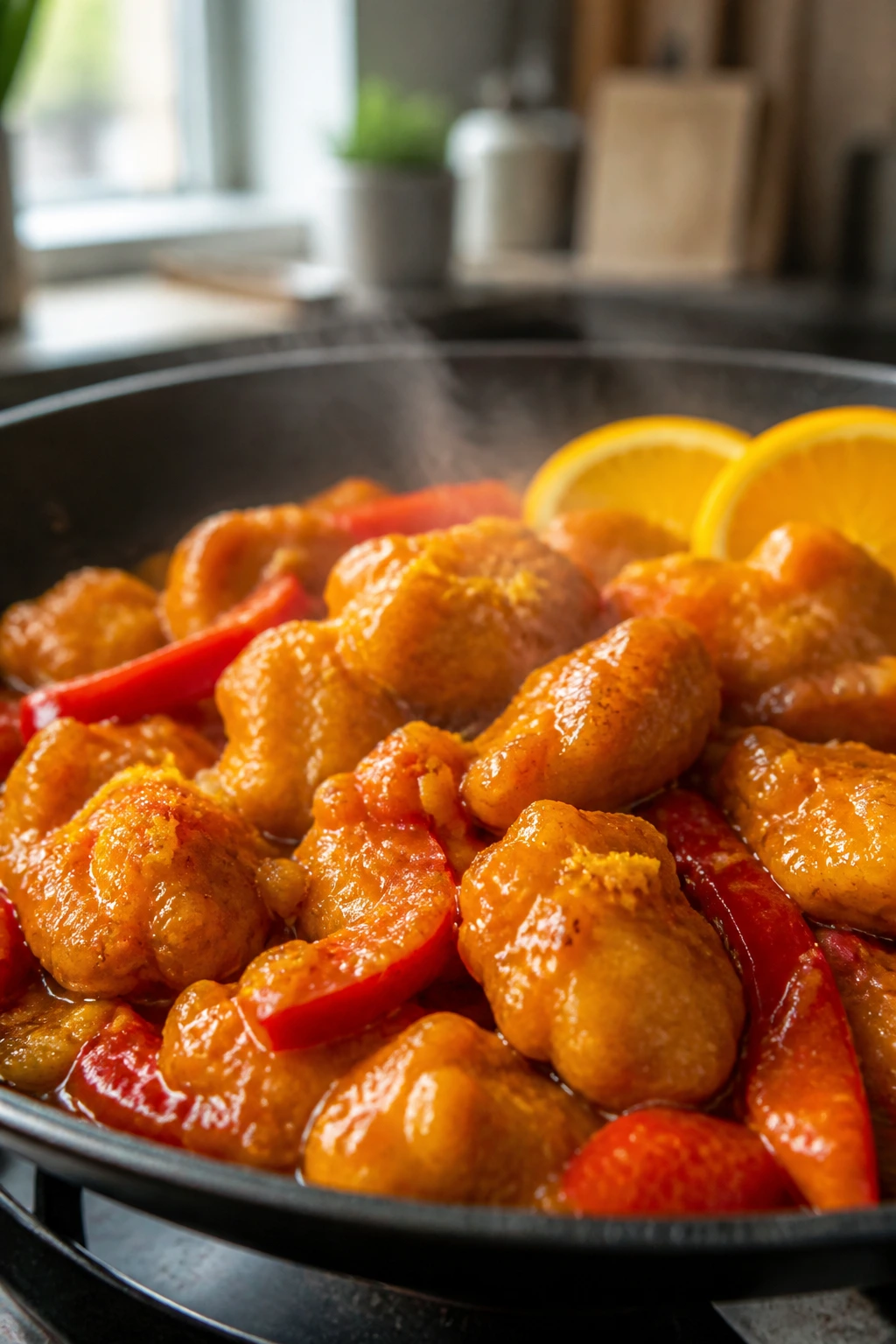
Orange Chicken Stir-Fry should taste bright before it tastes sweet. Fresh orange zest gives the sauce a clean citrus smell that bottled orange sauce never quite manages.
Why It Works: The citrus cuts through the fried chicken pieces and keeps the sauce from turning gluey. Bell pepper adds a little freshness, so the dish doesn’t read as dessert.
Key Ingredients:
- 1 lb boneless chicken thighs, bite-size pieces
- 1 orange, zested and juiced
- 2 tbsp light soy sauce
- 1 tbsp rice vinegar
- 2 tbsp sugar
- 1 tbsp cornstarch
- 1 red bell pepper, sliced
- 2 garlic cloves, minced
- 1 tsp grated ginger
- 2 tbsp water
Quick Steps:
- Stir the orange juice, zest, soy sauce, vinegar, sugar, cornstarch, and water together.
- Brown the chicken in a hot pan until the edges turn golden.
- Add bell pepper, garlic, and ginger; cook for 1 minute.
- Pour in the sauce and toss until it turns glossy and lightly thick.
Equipment for This Recipe:
- Wok or skillet
- Citrus zester or fine grater
- Small bowl
- Spatula
How to Serve This Dish: Rice soaks up the citrus sauce well, and steamed broccoli makes the plate feel less sweet. Keep the garnish plain; a few orange zest shavings are enough.
Pro Tips for This Recipe:
- Fresh orange zest matters more than extra sugar.
- Don’t let the sauce reduce until it turns sticky like candy.
- Thighs hold up better than breast meat here.
Variations on This Dish:
- Spicy Orange Chicken: Add 1 tsp chili flakes with the ginger.
- Mandarin Pepper Version: Add a second bell pepper and skip the zest for a softer citrus note.
Common Mistakes to Avoid with This Dish:
- Don’t use too much juice without enough cornstarch or the sauce stays thin.
- Don’t burn the orange zest in the pan; add it with the sauce, not before.
13. Salt and Pepper Pork
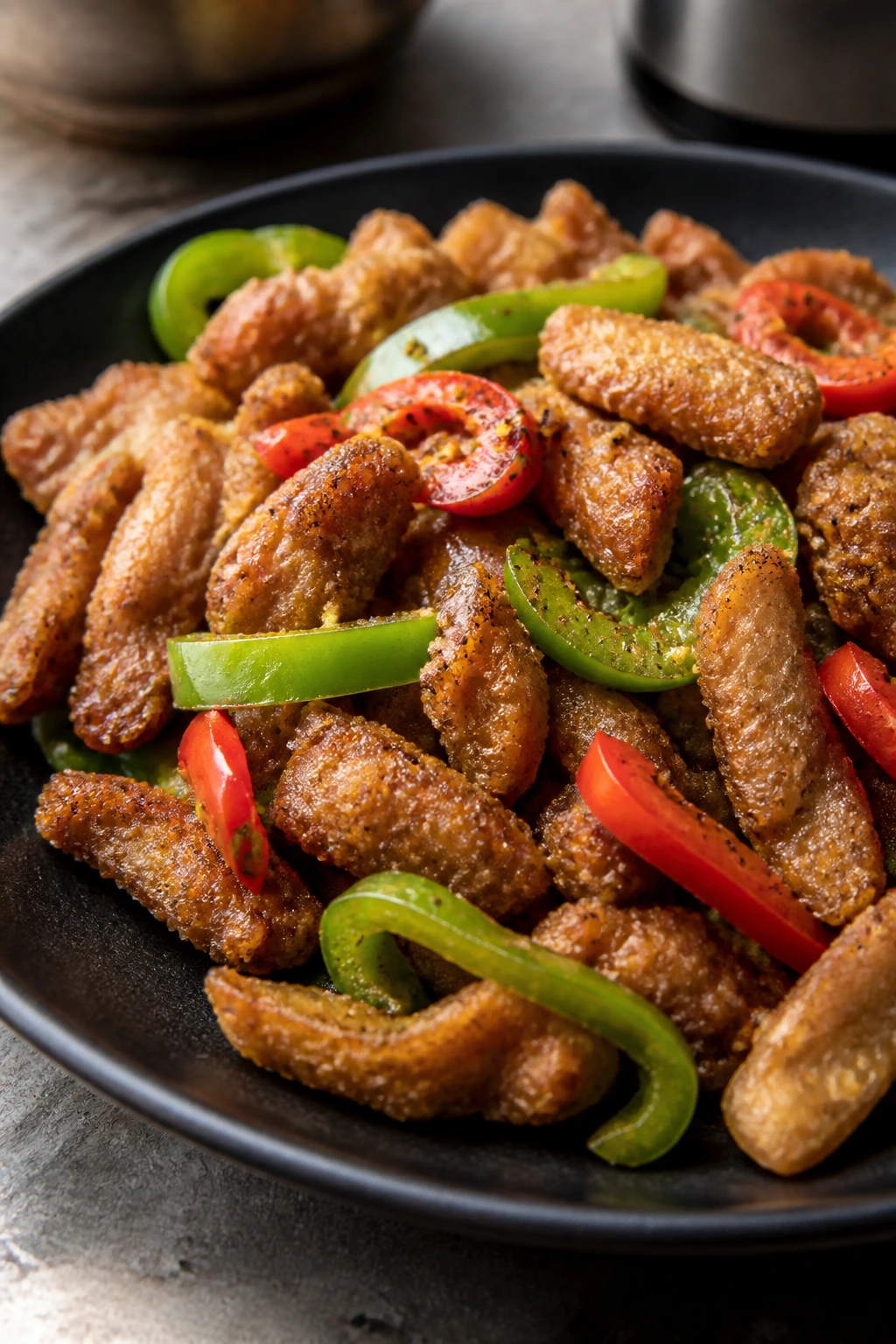
Salt and Pepper Pork is crispy, punchy, and a little reckless in the best way. The pork should come out with a rough, seasoned crust, and the chiles and garlic should hit your nose before the first bite.
Why It Works: A light starch coating fries into a crisp shell, and white pepper gives the dish its sharp, almost floral bite. The vegetables stay spare so the pork stays the focus.
Key Ingredients:
- 1 lb pork tenderloin, sliced into strips
- 1/2 cup cornstarch
- 1 green bell pepper, sliced
- 1 red chile or jalapeño, sliced
- 3 garlic cloves, minced
- 2 scallions, sliced
- 1 tsp salt
- 1 tsp white pepper
- 2 tbsp neutral oil
Quick Steps:
- Toss the pork with salt, white pepper, and cornstarch.
- Pan-fry or shallow-fry until crisp and pale gold; drain briefly.
- Stir-fry the garlic and chiles for 15 seconds, then add the pepper.
- Return the pork and toss with scallions just long enough to heat through.
Equipment for This Recipe:
- Wok or deep skillet
- Slotted spoon
- Paper towels
- Mixing bowl
How to Serve This Dish: Serve it immediately, while the coating is still crisp. It’s best with plain rice and a cold cucumber side, because the pork already brings plenty of attitude.
Pro Tips for This Recipe:
- Shake off extra cornstarch so the coating stays light.
- Pork tenderloin cooks fast; don’t walk away.
- White pepper matters here. Black pepper changes the profile.
Variations on This Dish:
- Garlic-Chive Version: Add 1/2 cup garlic chives with the scallions.
- Extra-Crunch Version: Double-fry the pork for 30 seconds after the first fry.
Common Mistakes to Avoid with This Dish:
- Don’t crowd the pork in the pan or the crust turns soggy.
- Don’t leave it sitting in the sauce too long; this dish wants to stay crisp.
14. General Tso’s Chicken
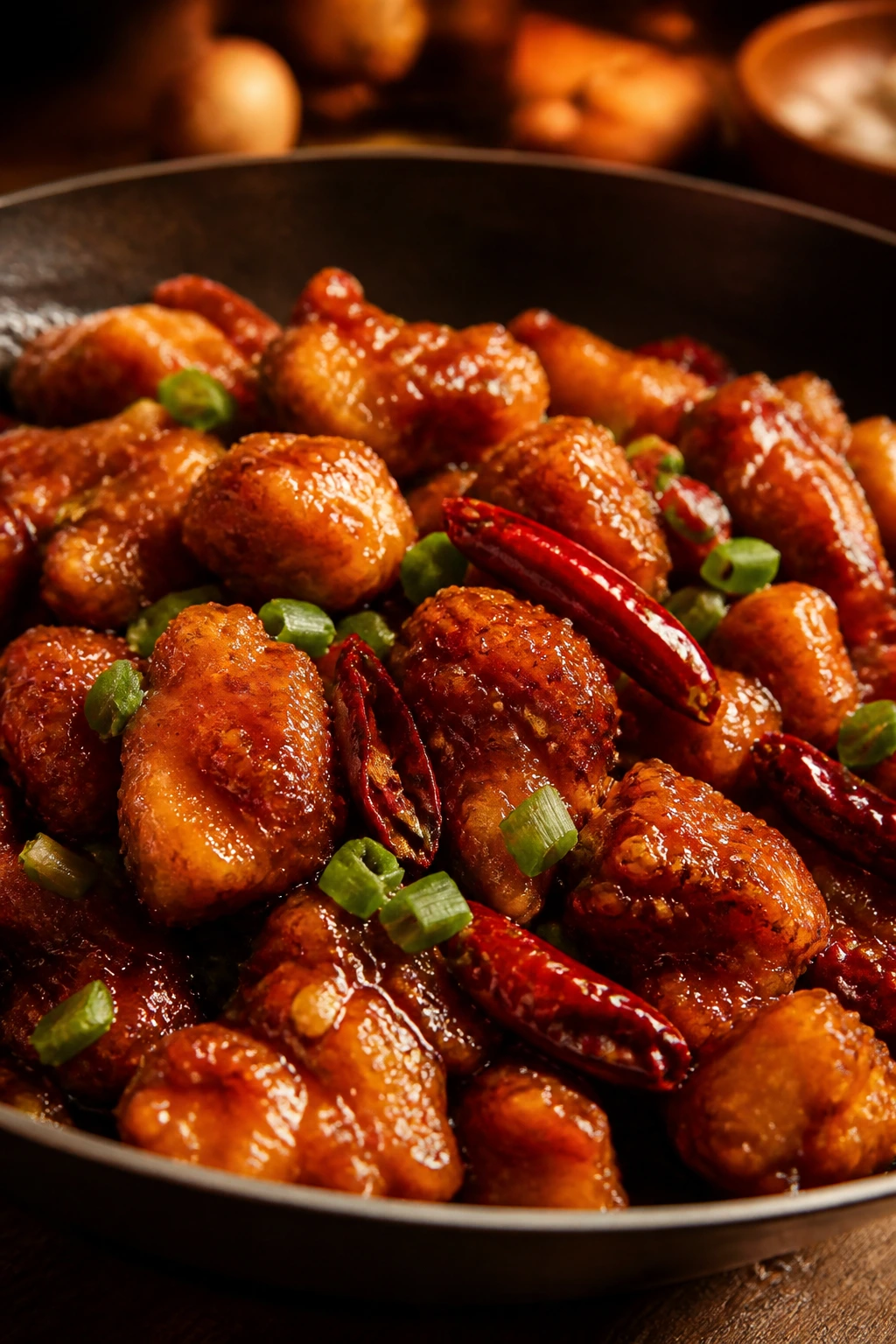
General Tso’s Chicken works because the sauce has bite before it gets sweet. The chicken should be crisp at the edges, and the dried chiles should perfume the oil without turning the whole pan bitter.
Why It Works: A quick fry creates texture, and the tangy-sweet sauce clings in a thin coat that stays lively. Ginger, garlic, and vinegar keep the sweetness from taking over.
Key Ingredients:
- 1 lb boneless chicken thighs, cut into chunks
- 1/2 cup cornstarch
- 2 tbsp light soy sauce
- 1 tbsp rice vinegar
- 2 tbsp sugar
- 1 tbsp hoisin sauce
- 1 tsp cornstarch mixed with 2 tbsp water
- 3 dried chiles
- 3 garlic cloves, minced
- 1 tbsp fresh ginger, minced
Quick Steps:
- Toss the chicken with cornstarch and a little soy sauce.
- Fry or pan-fry until crisp and cooked through, then set aside.
- Cook chiles, garlic, and ginger briefly, then stir in soy sauce, vinegar, sugar, hoisin, and the cornstarch slurry.
- Add chicken back and toss until glossy.
Equipment for This Recipe:
- Wok or deep skillet
- Slotted spoon
- Small bowl
- Tongs
How to Serve This Dish: It wants steamed rice and nothing too fussy. If you like a sharper plate, add a few steamed green beans on the side.
Pro Tips for This Recipe:
- Keep the sauce short and sharp.
- Add the chicken back only after the sauce thickens a little.
- Dried chiles should darken, not blacken.
Variations on This Dish:
- Mild Version: Cut the chiles to one or two and use more ginger.
- Orange Tso: Add 1 tbsp orange juice to the sauce for a citrus edge.
Common Mistakes to Avoid with This Dish:
- Don’t let the sugar burn in the pan.
- Don’t coat the chicken too heavily or the crust gets pasty.
15. Beef Chow Fun
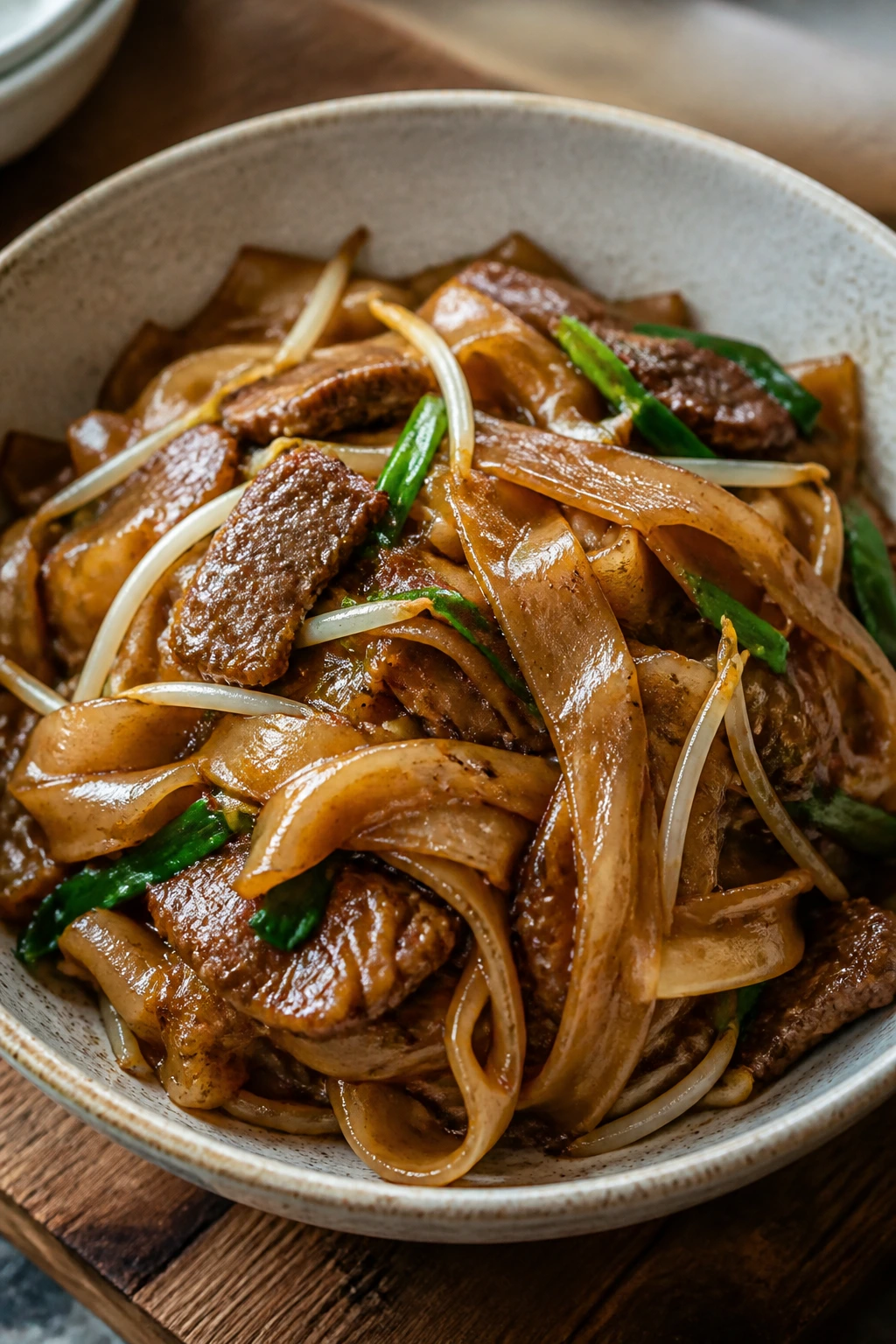
Beef Chow Fun is about wide noodles that pick up little browned bits from the pan. The best version has a smoky edge, a little soy, and noodles that don’t tear when tossed.
Why It Works: Wide rice noodles can handle high heat and a brief toss in the wok. Dark soy gives the noodles color, and bean sprouts keep the dish from feeling flat.
Key Ingredients:
- 8 oz wide rice noodles
- 1 lb flank steak, sliced thin
- 2 cups bean sprouts
- 2 scallions, cut into lengths
- 2 tbsp light soy sauce
- 1 tbsp dark soy sauce
- 1 tbsp oyster sauce
- 1 tbsp Shaoxing wine
- 1 tsp sugar
- 2 garlic cloves, minced
Quick Steps:
- Soak or separate the rice noodles as needed so they don’t clump.
- Stir-fry the beef quickly, then remove it.
- Cook garlic and scallions, then add noodles, sauces, and sugar.
- Return beef and bean sprouts; toss over high heat until the noodles pick up color.
Equipment for This Recipe:
- Wok
- Tongs or two spatulas
- Bowl for noodles
- Knife
How to Serve This Dish: Serve in wide bowls and eat it hot. It doesn’t need much on the side, though chili crisp at the table is never a bad idea.
Pro Tips for This Recipe:
- Separate the noodles before they hit the pan.
- Use dark soy sparingly; it’s for color, not salt alone.
- Keep the toss short or the noodles tear.
Variations on This Dish:
- Shrimp Chow Fun: Swap the beef for shrimp and cut the first cook time in half.
- Vegetable Chow Fun: Use mushrooms, cabbage, and bean sprouts instead of meat.
Common Mistakes to Avoid with This Dish:
- Don’t use brittle noodles that break when stirred.
- Don’t overcrowd the wok or the noodles steam instead of sear.
16. Chicken and Chinese Broccoli
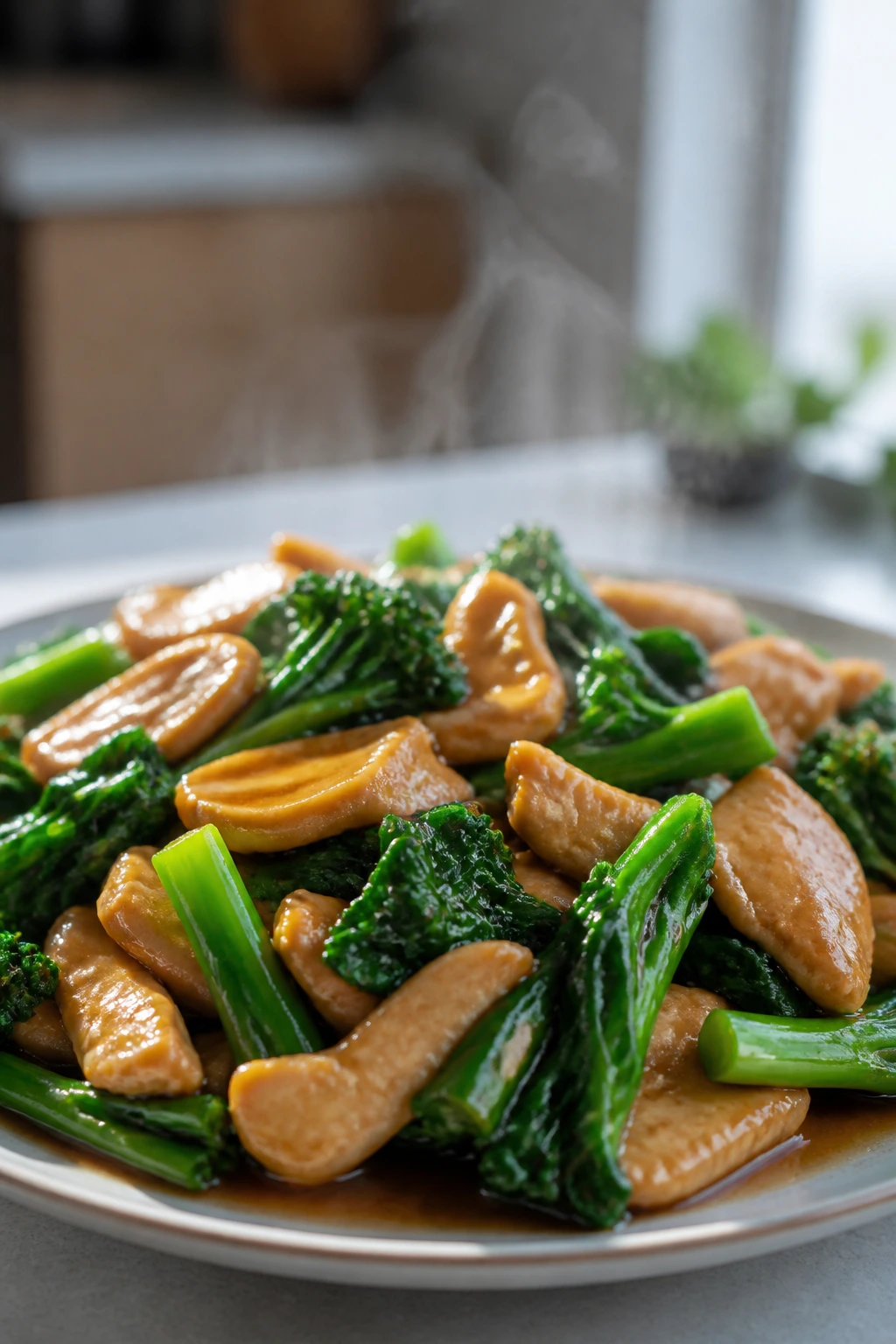
Chicken and Chinese Broccoli tastes clean, sharp, and a little bitter in the best way. Gai lan keeps a firm stem and silky leaves, which gives the dish texture without needing heavy sauce.
Why It Works: The oyster sauce and stock coat the chicken lightly, while the broccoli-like stems stay crisp if you blanch them first. It’s a straight-line stir-fry, and that’s part of the appeal.
Key Ingredients:
- 1 lb chicken breast, sliced thin
- 1 bunch Chinese broccoli (gai lan), trimmed
- 3 garlic cloves, minced
- 1 tbsp fresh ginger, minced
- 1 tbsp oyster sauce
- 1 tbsp light soy sauce
- 1 tbsp Shaoxing wine
- 1/4 cup chicken stock
- 1 tsp cornstarch
- 1 tsp sesame oil
Quick Steps:
- Blanch the gai lan stems for 1 minute, then add the leaves for 20 seconds and drain.
- Stir-fry the chicken until just cooked, then remove it.
- Cook garlic and ginger, then add oyster sauce, soy sauce, Shaoxing, stock, and cornstarch.
- Return chicken and gai lan; toss with sesame oil to finish.
Equipment for This Recipe:
- Wok or large skillet
- Pot for blanching
- Colander
- Tongs
How to Serve This Dish: Serve it with plain rice and maybe a little chili oil on the side. The plate looks better when the greens stay high and the chicken stays tucked underneath.
Pro Tips for This Recipe:
- Blanching the stems first keeps the bunch from turning stringy.
- Chicken breast must be sliced thin or it dries out.
- Add sesame oil at the end, not during the high-heat cook.
Variations on This Dish:
- Garlic Mushroom Version: Add sliced mushrooms with the gai lan.
- Tofu Swap: Replace the chicken with firm tofu cubes for a vegetarian bowl.
Common Mistakes to Avoid with This Dish:
- Don’t cook gai lan from raw unless the stalks are very thin.
- Don’t reduce the sauce until it gets sticky; this dish wants light coating, not glaze.
17. Shrimp with Garlic Sauce
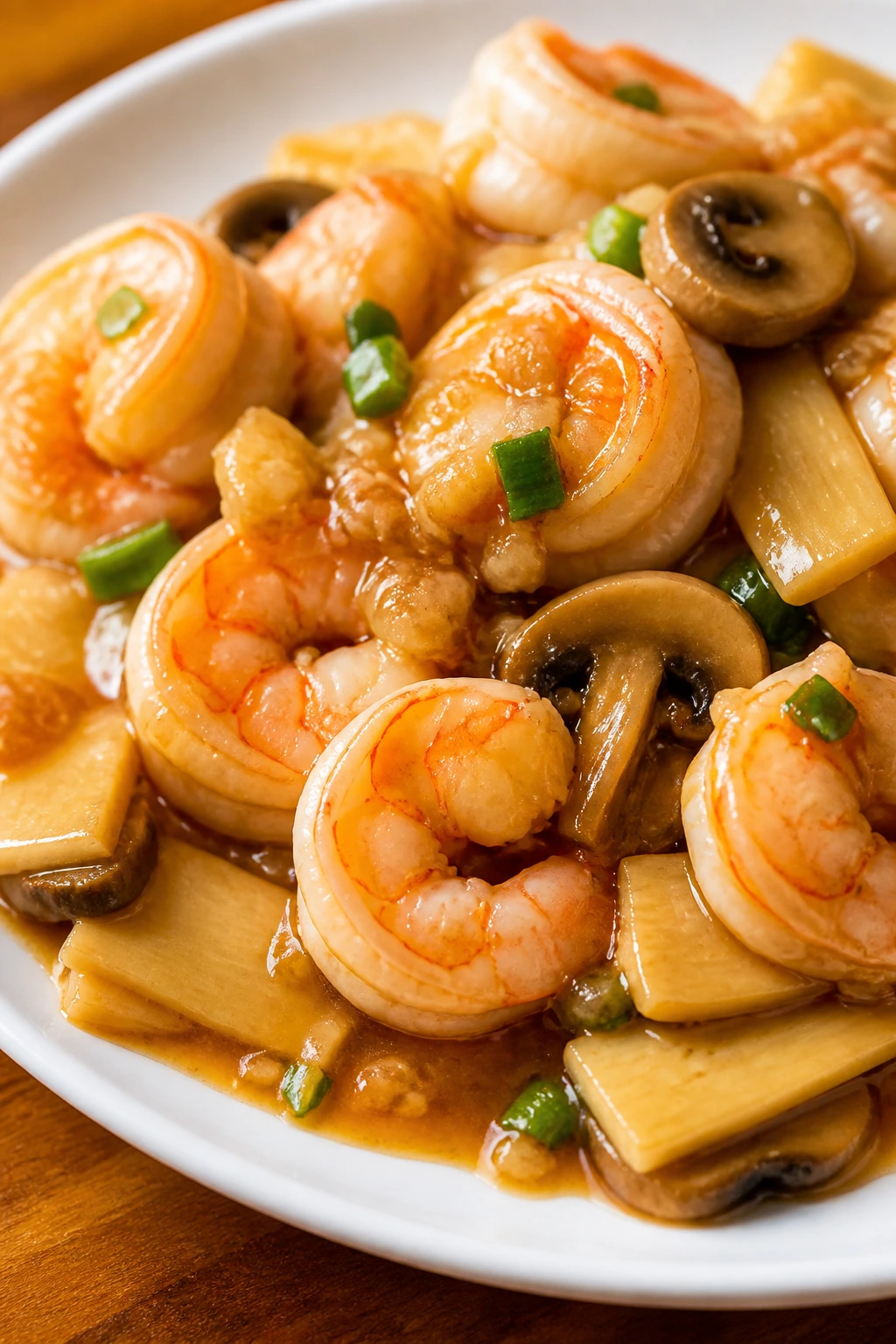
Shrimp with Garlic Sauce has a punchy, savory smell that lands before the plate does. The sauce should be a little tangy, a little salty, and loose enough to pool lightly around the vegetables.
Why It Works: Shrimp gives you fast protein, and garlic sauce brings enough body to make the dish feel like a main course. Bamboo shoots or mushrooms add bite without slowing down the cook.
Key Ingredients:
- 1 lb shrimp, peeled and deveined
- 1 cup bamboo shoots or bell pepper
- 1 cup mushrooms, sliced
- 4 garlic cloves, minced
- 1 tbsp fresh ginger, minced
- 2 tbsp light soy sauce
- 1 tbsp oyster sauce
- 1 tbsp black vinegar
- 1 tsp sugar
- 1 tsp cornstarch
- 1/2 cup stock
Quick Steps:
- Mix soy sauce, oyster sauce, vinegar, sugar, cornstarch, and stock.
- Stir-fry the mushrooms and bamboo shoots until they start to soften.
- Add garlic, ginger, and shrimp; cook until the shrimp curl.
- Pour in the sauce and toss until lightly thickened.
Equipment for This Recipe:
- Wok
- Small bowl
- Spatula
- Knife
How to Serve This Dish: Rice is the cleanest landing pad. A spoonful of sauce over the rice is half the pleasure here.
Pro Tips for This Recipe:
- Dry the shrimp first so they sear.
- Black vinegar gives the sauce depth, but don’t overdo it.
- Add the shrimp late; they need less time than the mushrooms.
Variations on This Dish:
- Spicy Garlic Shrimp: Add chili oil at the end.
- Snow Pea Version: Replace bamboo shoots with snow peas for a brighter green pan.
Common Mistakes to Avoid with This Dish:
- Don’t overcook shrimp while waiting for the sauce to thicken.
- Don’t chop the garlic too finely or it burns too fast.
18. Scallion Beef
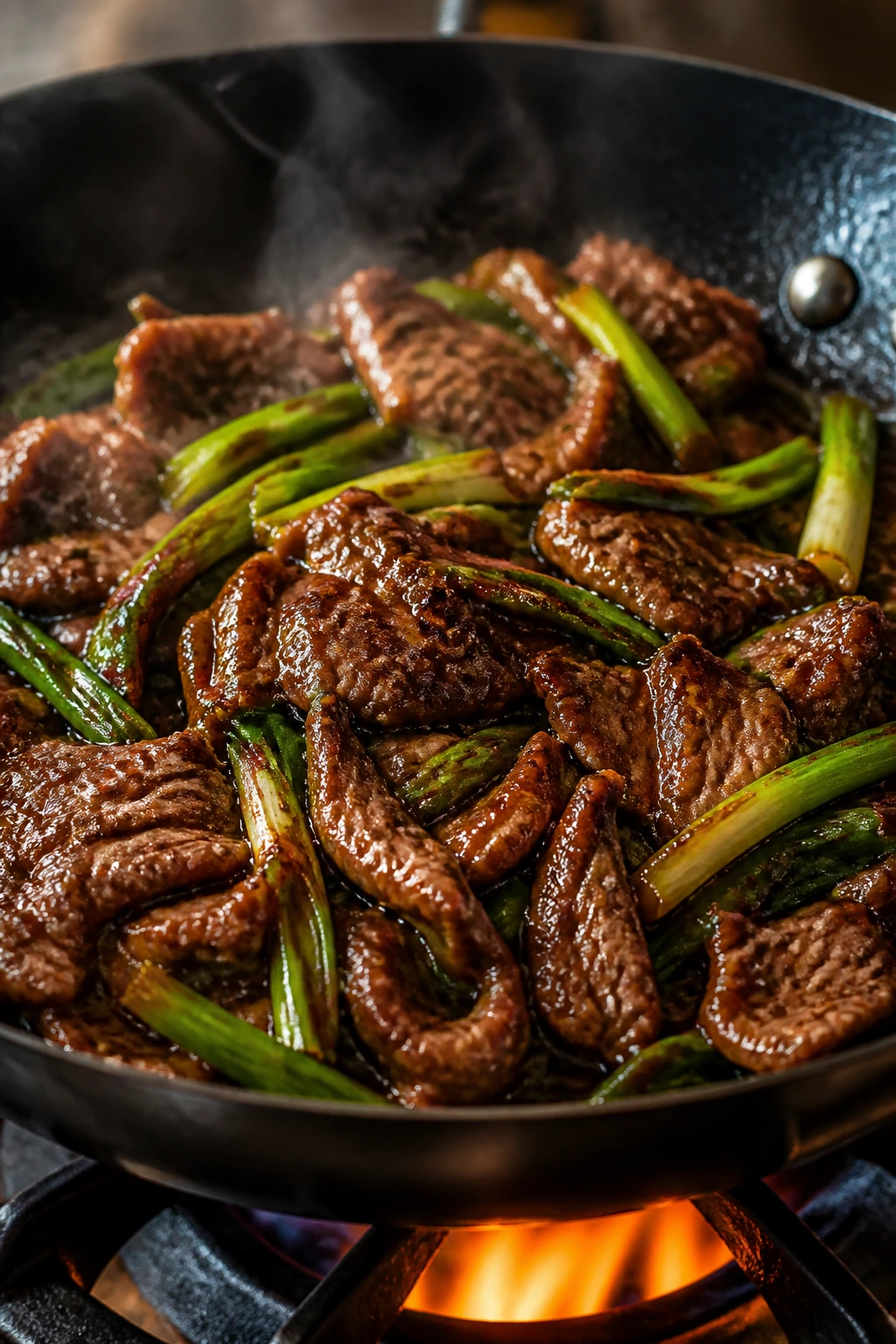
Scallion Beef is a short list of ingredients with a loud result. The beef should taste deep and savory, and the scallions should stay vivid enough to look almost raw.
Why It Works: The beef gets a quick sear, then the scallions melt just enough to perfume the sauce. Shaoxing wine and oyster sauce build the classic takeout note without making the pan heavy.
Key Ingredients:
- 1 lb flank steak, thinly sliced
- 2 bunches scallions, cut into 2-inch lengths
- 4 garlic cloves, minced
- 1 tbsp fresh ginger, minced
- 2 tbsp light soy sauce
- 1 tbsp oyster sauce
- 1 tbsp Shaoxing wine
- 1 tsp sugar
- 1 tsp cornstarch
- 1/4 cup water
Quick Steps:
- Marinate the beef with soy sauce and cornstarch for 10 minutes.
- Sear the beef in a very hot pan and set it aside.
- Stir-fry garlic, ginger, and scallions for 1 minute.
- Return the beef with the sauce ingredients and toss just until coated.
Equipment for This Recipe:
- Wok or skillet
- Mixing bowl
- Tongs
- Knife
How to Serve This Dish: This is built for rice, but plain steamed buns work too if you want something softer under the sauce. Keep the side dishes plain; the scallions already do the talking.
Pro Tips for This Recipe:
- Don’t let the scallions lose their green color.
- Thin beef cooks best in one layer.
- A hot pan gives the scallions a little char, which helps.
Variations on This Dish:
- Peppery Version: Add 1/2 tsp white pepper with the sauce.
- Onion Swap: Replace one bunch of scallions with sliced onions for a sweeter bowl.
Common Mistakes to Avoid with This Dish:
- Don’t let the beef stew in the sauce.
- Don’t slice the scallions too short or they disappear into the pan.
19. Twice-Cooked Pork
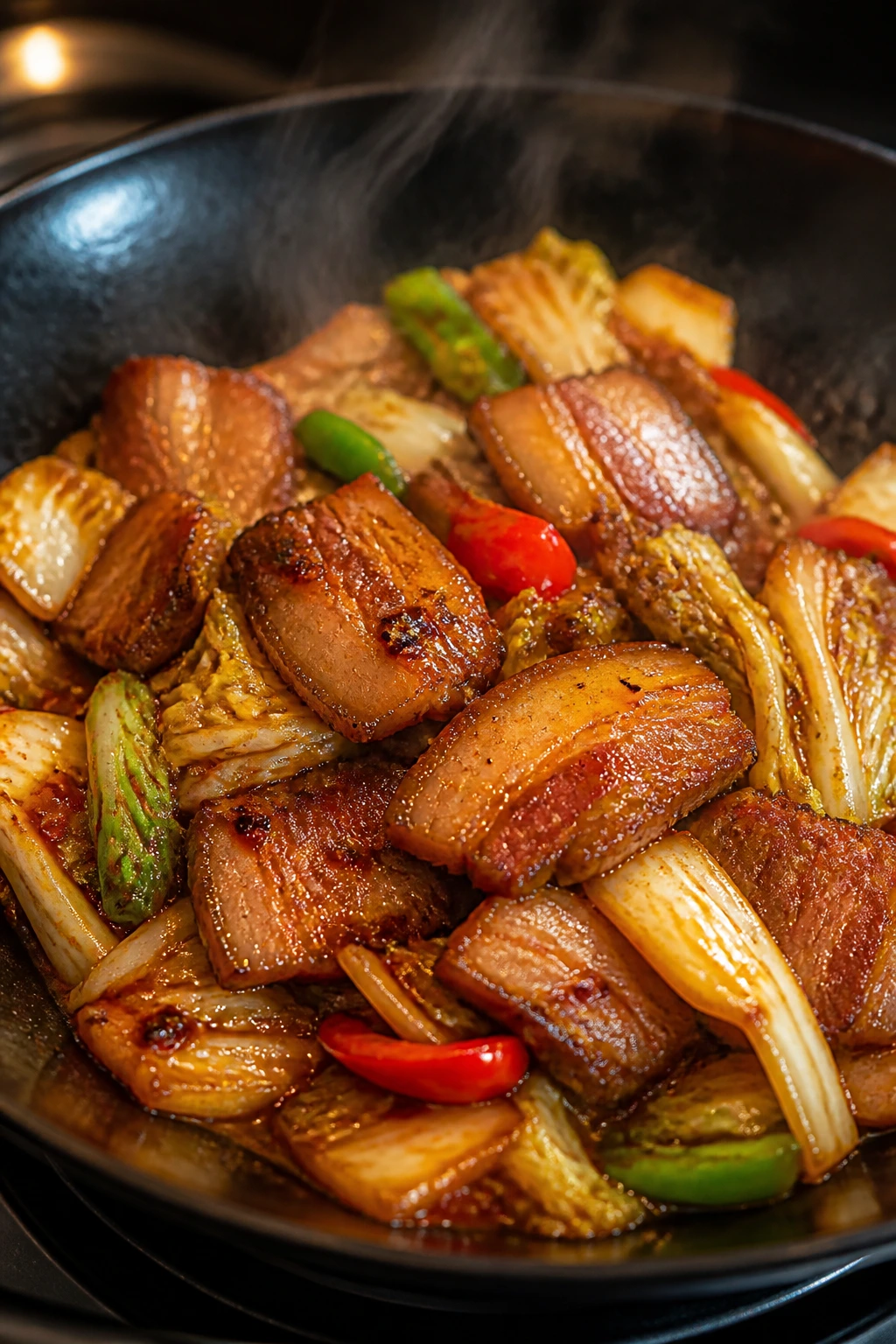
Twice-Cooked Pork is heavier, richer, and a little more rustic than most of the dishes here. The pork belly should get firm and slightly crisp at the edges, then come back in with cabbage and chile bean paste.
Why It Works: Boiling the pork first gives you clean slices that fry well later. Doubanjiang coats everything in a deep red savoriness that doesn’t need much else.
Key Ingredients:
- 1 lb pork belly or pork shoulder
- 2 cups napa cabbage, chopped
- 1 green bell pepper, sliced
- 2 tbsp doubanjiang
- 3 garlic cloves, sliced
- 1 tbsp fresh ginger, sliced
- 1 tbsp light soy sauce
- 1 tsp sugar
Quick Steps:
- Simmer the pork until just tender, then cool and slice thin.
- Stir-fry the pork until some fat renders and the edges brown.
- Add doubanjiang, garlic, ginger, cabbage, and pepper; cook until fragrant.
- Finish with soy sauce and sugar.
Equipment for This Recipe:
- Pot for boiling pork
- Wok or skillet
- Slotted spoon
- Knife
How to Serve This Dish: Serve with plain rice and maybe nothing else unless you want to stretch the meal with steamed greens. This dish is the loudest thing on the table.
Pro Tips for This Recipe:
- Slice the pork only after it’s cool enough to handle.
- Let a little fat render before the vegetables go in.
- Napa cabbage should soften but not melt.
Variations on This Dish:
- Green Bean Version: Replace the cabbage with long beans.
- Milder Home Version: Use less doubanjiang and add more cabbage.
Common Mistakes to Avoid with This Dish:
- Don’t skip the first simmer or the pork stays chewy.
- Don’t add too much sugar; the sauce should stay savory.
20. Stir-Fried Chinese Cabbage with Garlic
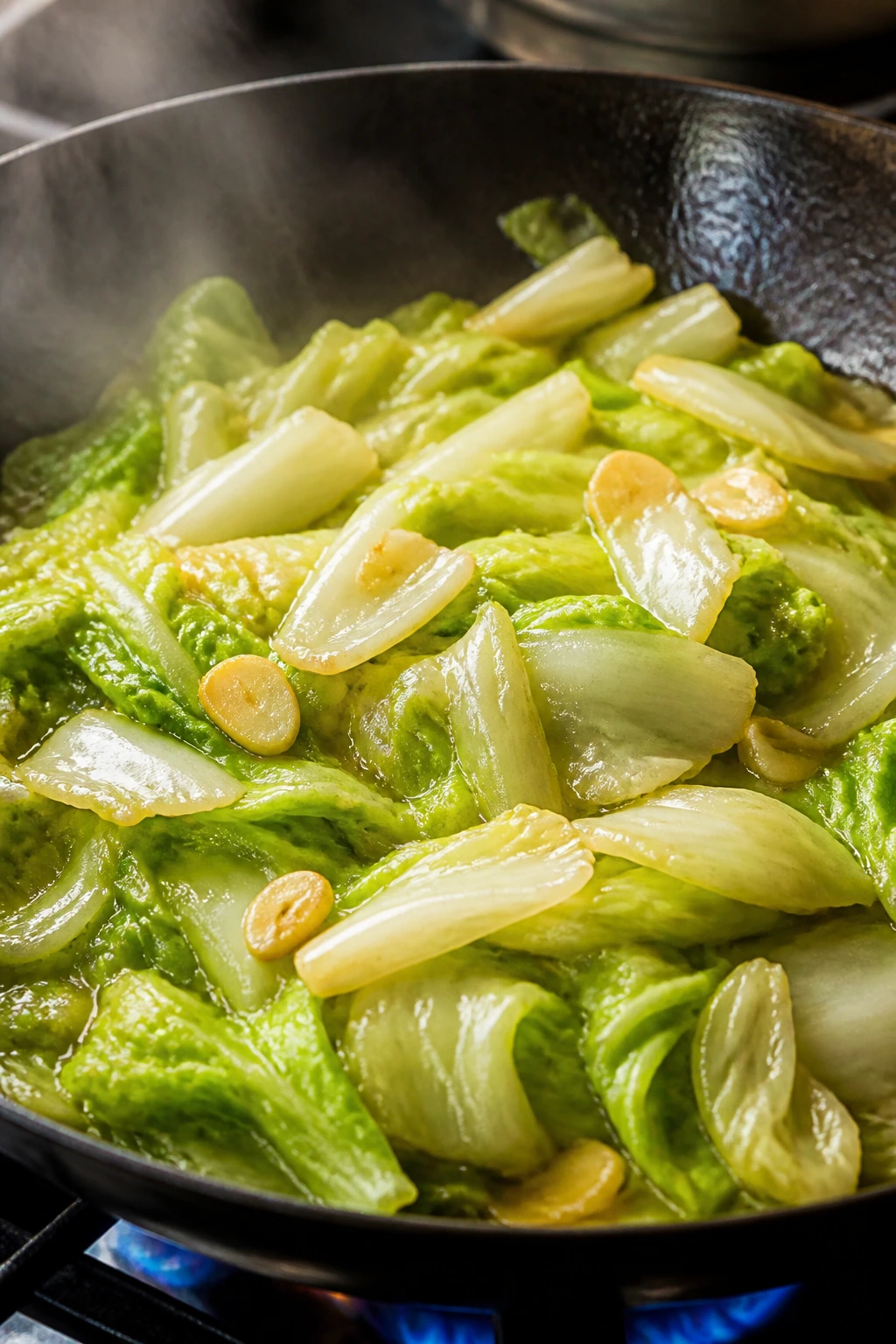
Chinese cabbage sounds plain until the garlic hits the oil and the leaves start to collapse into silky ribbons. This is the sort of side dish that saves a meat-heavy meal.
Why It Works: Napa cabbage cooks fast and turns tender without needing much liquid. Garlic and a splash of vinegar keep it sharp enough to matter.
Key Ingredients:
- 1 small napa cabbage, chopped into 2-inch pieces
- 6 garlic cloves, sliced
- 1 tbsp fresh ginger, julienned
- 1 tbsp light soy sauce
- 1 tsp rice vinegar
- 1 tsp toasted sesame oil
- 2 tbsp neutral oil
- Chili flakes, optional
Quick Steps:
- Heat the oil until shimmering, then stir-fry garlic and ginger for 15 seconds.
- Add the cabbage stems first, then the leaves.
- Cook until the leaves wilt and the stems turn tender-crisp.
- Season with soy sauce, vinegar, and sesame oil.
Equipment for This Recipe:
- Large skillet or wok
- Spatula
- Knife
- Cutting board
How to Serve This Dish: Put it beside anything saucy, especially beef or tofu. It gives the plate a green edge and keeps the meal from feeling too dense.
Pro Tips for This Recipe:
- Cut the cabbage into large pieces so it doesn’t vanish.
- Add the leaves after the stems start to soften.
- Use enough heat to wilt fast, not braise slowly.
Variations on This Dish:
- Chili Garlic Cabbage: Add chili flakes with the garlic.
- Black Vinegar Version: Swap rice vinegar for black vinegar if you want more depth.
Common Mistakes to Avoid with This Dish:
- Don’t overcook the cabbage into limp ribbons.
- Don’t drown it in soy sauce; the cabbage should still taste fresh.
21. Tofu and Bok Choy
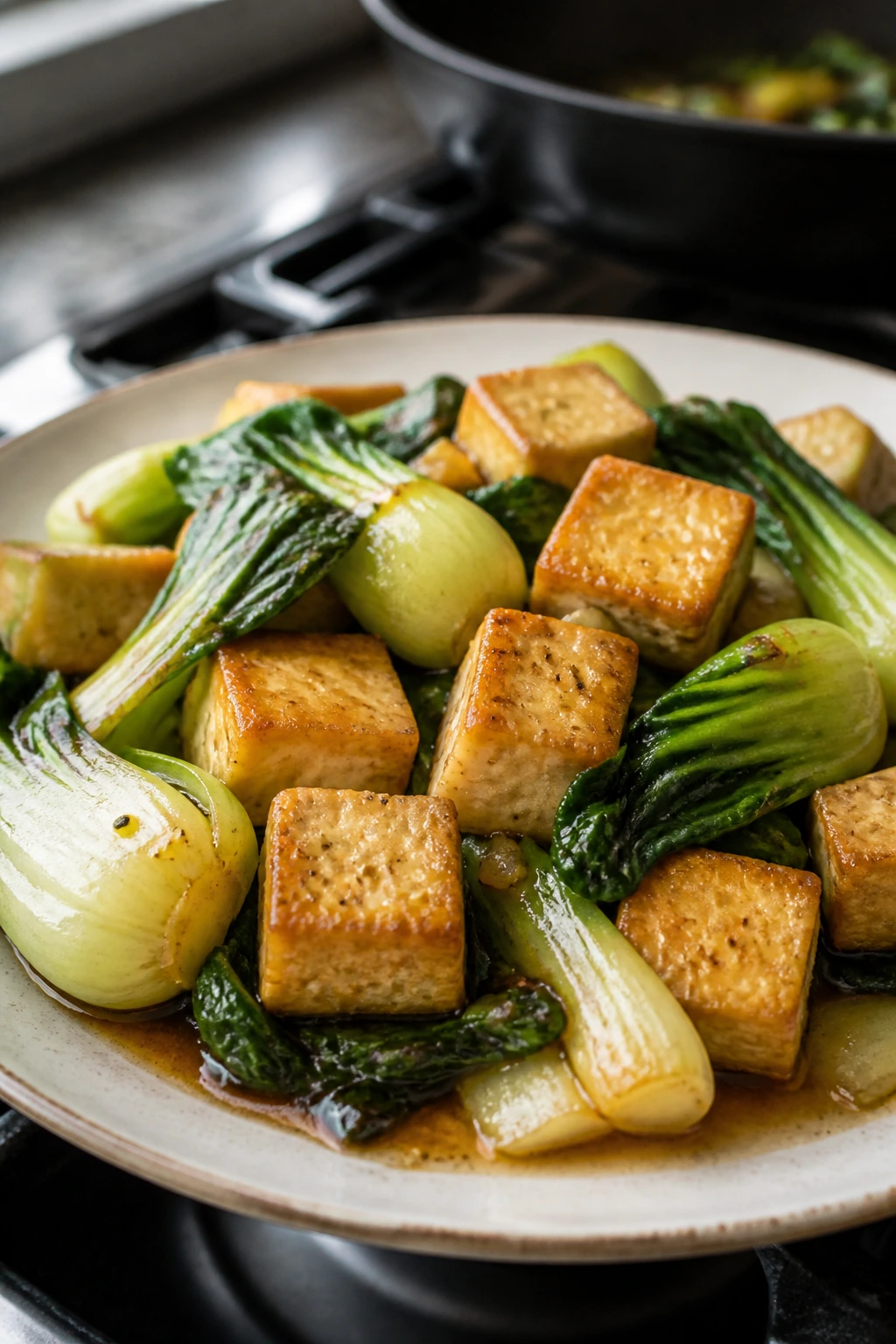
Tofu and Bok Choy is the dish you make when you want something clean but not dull. The tofu should brown on the edges, and the bok choy should stay bright and slightly crisp at the stems.
Why It Works: Extra-firm tofu handles pan heat better than softer blocks, and bok choy brings both a tender leaf and a snappy stem. A light oyster-style sauce ties the whole pan together.
Key Ingredients:
- 14 oz extra-firm tofu, pressed and cubed
- 6 baby bok choy, halved
- 3 garlic cloves, minced
- 1 tbsp fresh ginger, minced
- 2 tbsp light soy sauce
- 1 tbsp vegetarian oyster sauce or oyster sauce
- 1 tsp cornstarch
- 1/2 cup vegetable stock
- 1 tsp sesame oil
Quick Steps:
- Press the tofu for 15 minutes, then brown the cubes in oil until golden.
- Stir-fry garlic and ginger briefly.
- Add bok choy stems, then leaves, and splash in the stock.
- Stir in soy sauce, oyster sauce, cornstarch, and sesame oil; toss until lightly thickened.
Equipment for This Recipe:
- Wok or skillet
- Paper towels or tofu press
- Spatula
- Small bowl
How to Serve This Dish: Serve with rice and a little extra sauce spooned over the top. If you want more protein, add a soft-boiled egg.
Pro Tips for This Recipe:
- Press the tofu or it won’t brown well.
- Bok choy stems need a minute longer than the leaves.
- Keep the sauce light so the tofu still tastes like tofu.
Variations on This Dish:
- Mushroom Bok Choy: Add 6 oz sliced mushrooms with the garlic.
- Chili Crisp Finish: Spoon a little chili crisp over the bowl at the table.
Common Mistakes to Avoid with This Dish:
- Don’t move the tofu too fast or the edges won’t crisp.
- Don’t cook the bok choy leaves as long as the stems.
22. Chicken with Black Bean Sauce
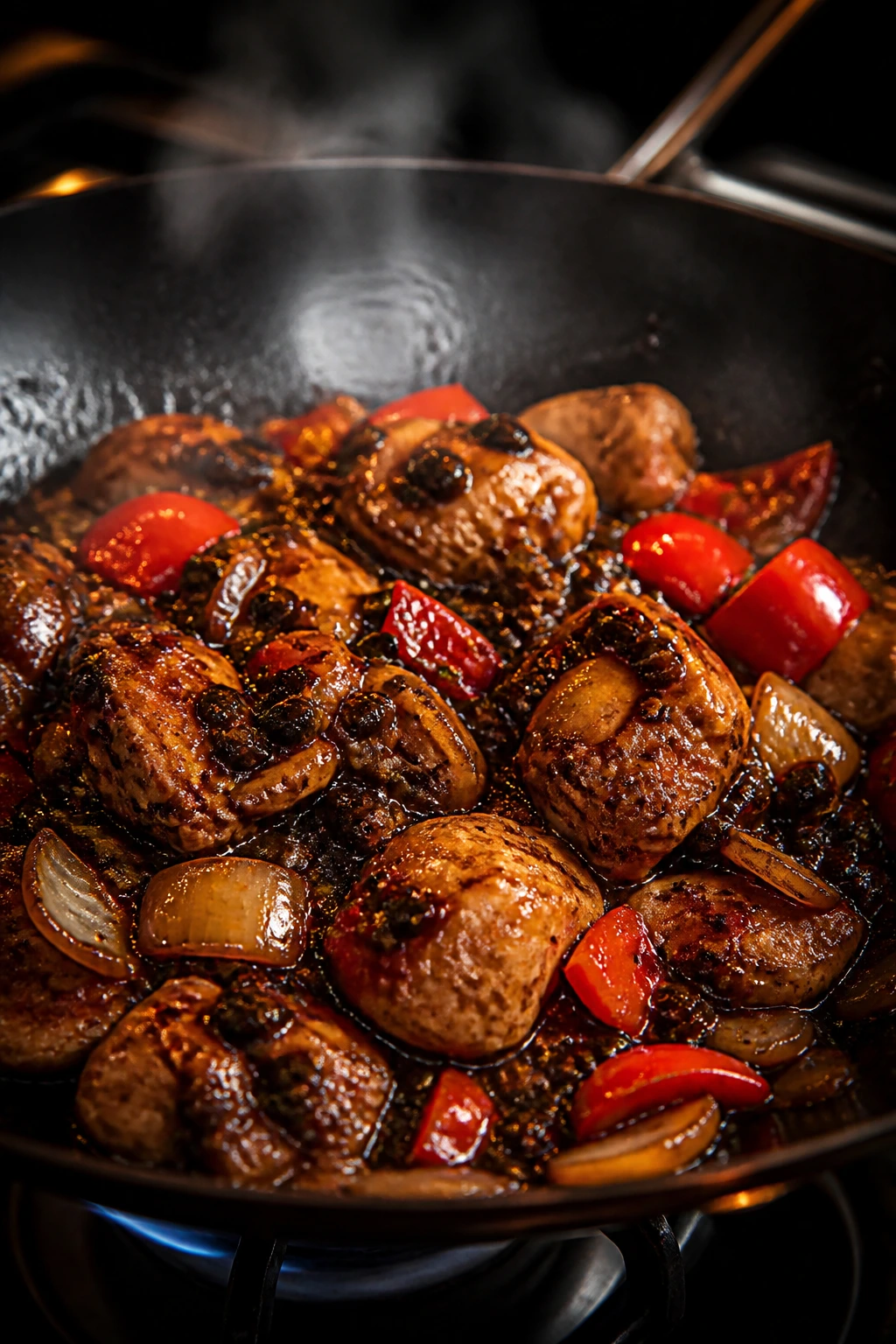
Chicken with Black Bean Sauce has a deep, savory smell that hits fast. The fermented black beans give the sauce a salty backbone, and the peppers keep it from feeling dark and one-note.
Why It Works: Black bean sauce brings instant depth, so you don’t need a long simmer. Chicken thighs stay juicy while the onions and peppers soften into the sauce.
Key Ingredients:
- 1 lb chicken thighs, sliced thin
- 1 red bell pepper, sliced
- 1 onion, sliced
- 2 tbsp fermented black beans, rinsed and lightly mashed
- 3 garlic cloves, minced
- 1 tbsp fresh ginger, minced
- 2 tbsp light soy sauce
- 1 tbsp Shaoxing wine
- 1 tsp sugar
- 1/4 cup water
Quick Steps:
- Cook the chicken until lightly browned, then remove it.
- Stir-fry black beans, garlic, and ginger for 20 seconds.
- Add onion and bell pepper; cook until just softened.
- Return the chicken with soy sauce, Shaoxing, sugar, and water; toss to coat.
Equipment for This Recipe:
- Wok
- Knife
- Small bowl
- Spatula
How to Serve This Dish: This one tastes best with plain rice and maybe a bowl of soup on the side. The sauce is bold enough to carry the plate.
Pro Tips for This Recipe:
- Rinse fermented black beans if they taste too salty straight from the bag.
- Keep the onion slightly crisp.
- Chicken thighs are safer than breast meat for this sauce.
Variations on This Dish:
- Beef Black Bean Stir-Fry: Use flank steak instead of chicken.
- Extra-Garlic Version: Add two more cloves if you like a sharper finish.
Common Mistakes to Avoid with This Dish:
- Don’t skip rinsing the black beans if your brand runs salty.
- Don’t let the onions cook until mushy.
23. Ginger Pork Stir-Fry
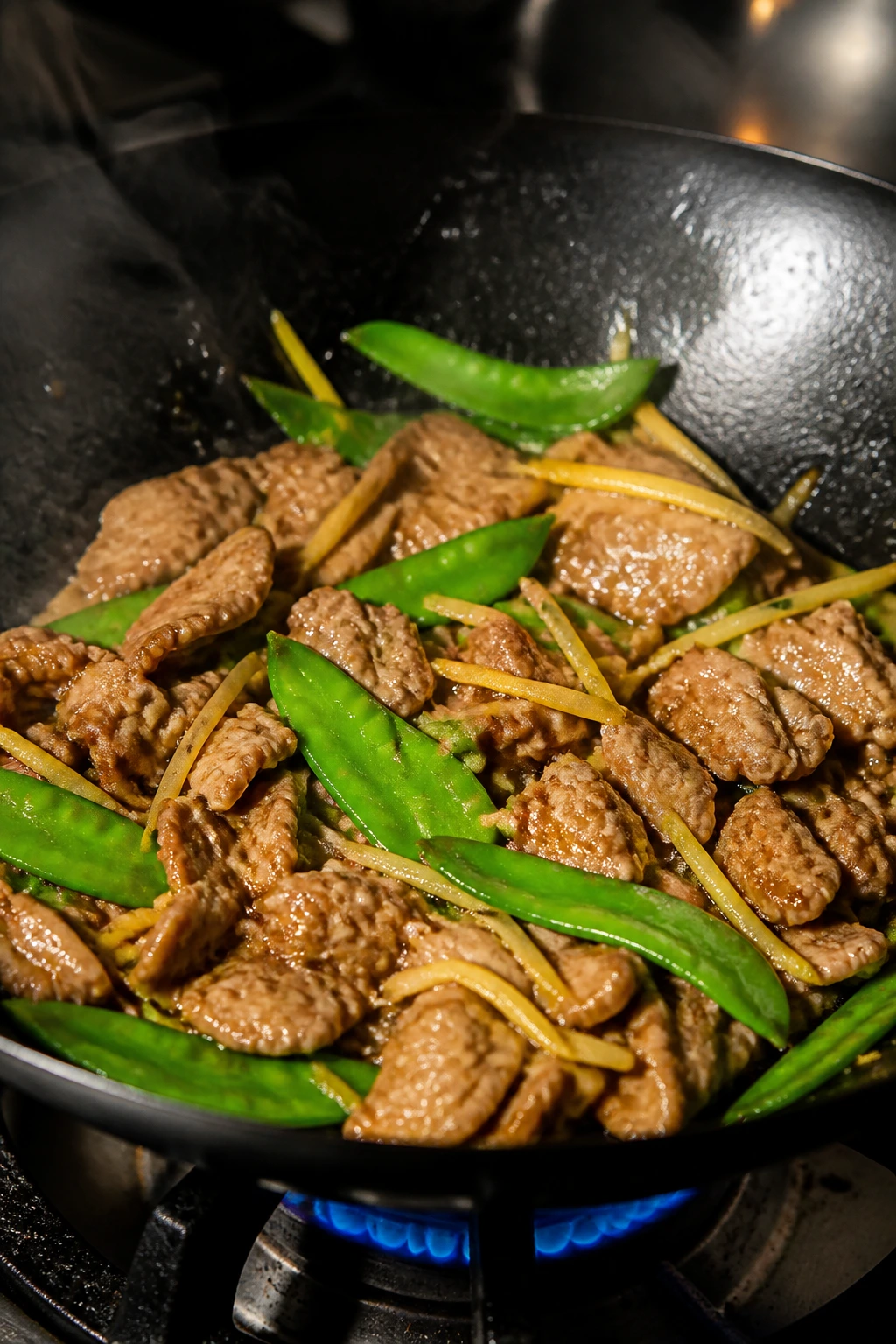
Ginger Pork Stir-Fry smells like sliced ginger sizzling in oil, which is already half the appeal. The pork stays savory and clean, and the vegetables soak up the ginger without turning heavy.
Why It Works: Ginger cuts through the richness of pork and keeps the pan tasting bright. A small cornstarch coat helps the sauce cling in a thin film.
Key Ingredients:
- 1 lb pork loin, sliced thin
- 1 onion, sliced
- 2 cups snow peas or shredded cabbage
- 2 tbsp fresh ginger, julienned
- 3 garlic cloves, minced
- 2 tbsp light soy sauce
- 1 tbsp rice wine
- 1 tsp sugar
- 1 tsp cornstarch
- 2 tbsp neutral oil
Quick Steps:
- Toss the pork with soy sauce and cornstarch for 10 minutes.
- Brown the pork quickly, then remove it.
- Stir-fry ginger, garlic, onion, and snow peas or cabbage until fragrant.
- Return pork with rice wine and sugar; toss until hot and coated.
Equipment for This Recipe:
- Wok or large skillet
- Knife
- Mixing bowl
- Spatula
How to Serve This Dish: Serve over rice with a little extra ginger on top if you want the aroma to stay loud. A crisp cucumber salad works well beside it.
Pro Tips for This Recipe:
- Slice pork thin so it cooks in a minute or two.
- Ginger should be julienned, not grated, so it doesn’t burn.
- Don’t overdo the sugar; ginger needs room to stay sharp.
Variations on This Dish:
- Cabbage-Heavy Version: Use all cabbage and skip the peas.
- Spicy Ginger Pork: Add sliced chile with the garlic.
Common Mistakes to Avoid with This Dish:
- Don’t use thick pork chunks; they won’t finish fast enough.
- Don’t let the ginger darken too far or it tastes harsh.
24. Sweet and Sour Shrimp Stir-Fry
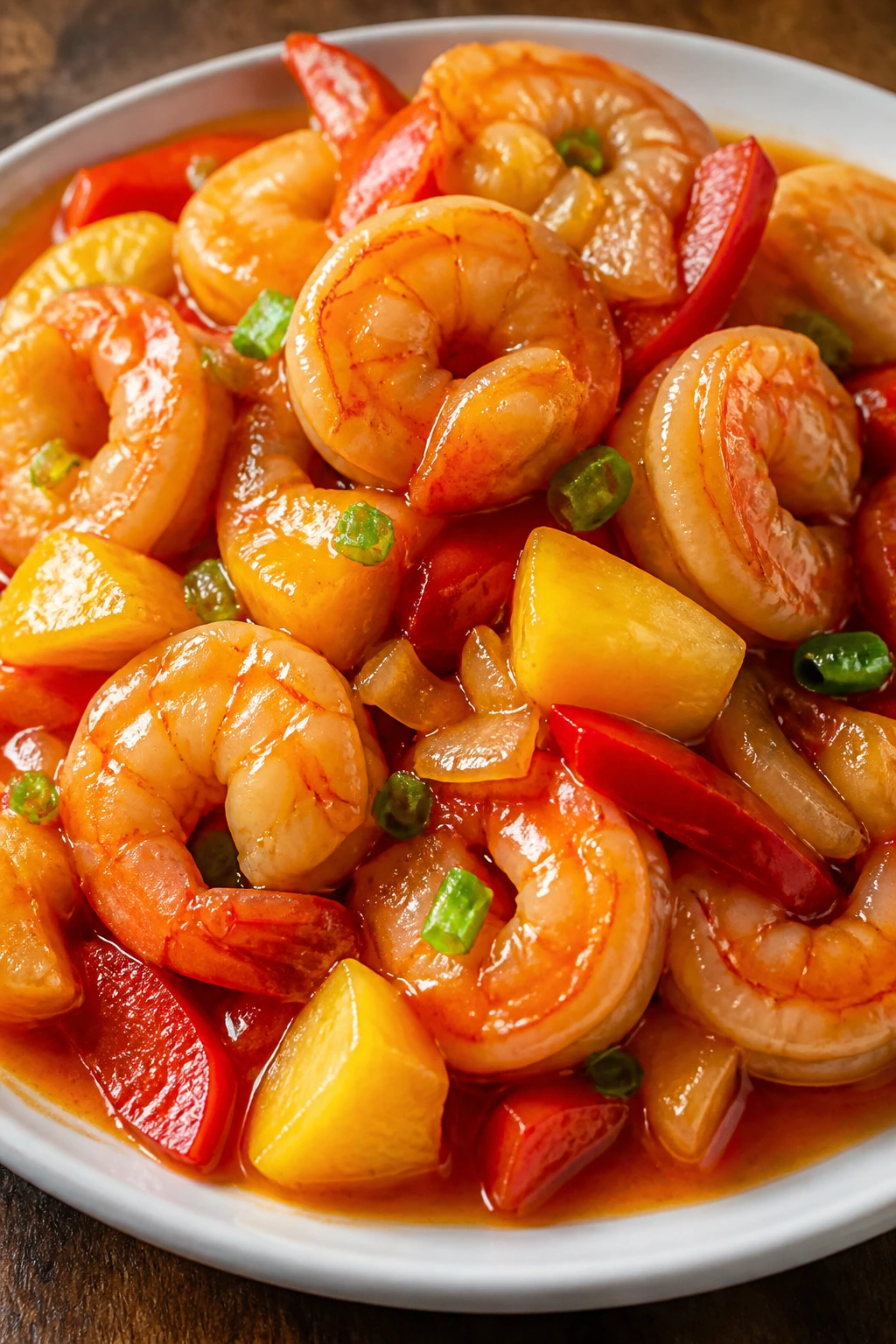
Sweet and Sour Shrimp should taste bright, sticky, and fast, with enough fruit or tomato sweetness to keep the vinegar from biting too hard. Shrimp gives the dish speed, and bell pepper adds the kind of crunch that holds up to sauce.
Why It Works: The sweet-sour sauce wants a short cook, not a long simmer, or it loses its clean edge. Shrimp finishes so quickly that the vegetables can stay crisp alongside it.
Key Ingredients:
- 1 lb shrimp, peeled and deveined
- 1 red bell pepper, sliced
- 1 onion, cut into wedges
- 1 cup pineapple chunks
- 2 tbsp ketchup
- 2 tbsp rice vinegar
- 2 tbsp sugar
- 1 tbsp light soy sauce
- 1 tsp cornstarch
- 1/3 cup water
Quick Steps:
- Whisk ketchup, vinegar, sugar, soy sauce, cornstarch, and water.
- Stir-fry the onion and bell pepper for 2 minutes.
- Add shrimp and pineapple; cook until the shrimp turn pink.
- Pour in the sauce and toss until glossy.
Equipment for This Recipe:
- Wok or skillet
- Small bowl
- Spatula
- Knife
How to Serve This Dish: Rice is the natural partner, and the dish looks best when the pineapple sits on top instead of sinking. Keep the plate simple so the sauce stays bright.
Pro Tips for This Recipe:
- Use pineapple chunks that are drained well, not watery.
- Add the shrimp only after the vegetables start to soften.
- Don’t boil the sauce too long or the vinegar gets blunt.
Variations on This Dish:
- Tomato Sweet-Sour Shrimp: Swap the ketchup for 1 chopped tomato.
- Chicken Version: Use chicken thighs and cook them before the vegetables.
Common Mistakes to Avoid with This Dish:
- Don’t let the pineapple overcook into mush.
- Don’t make the sauce so sweet that the vinegar disappears.
25. Chinese Eggplant with Garlic Sauce
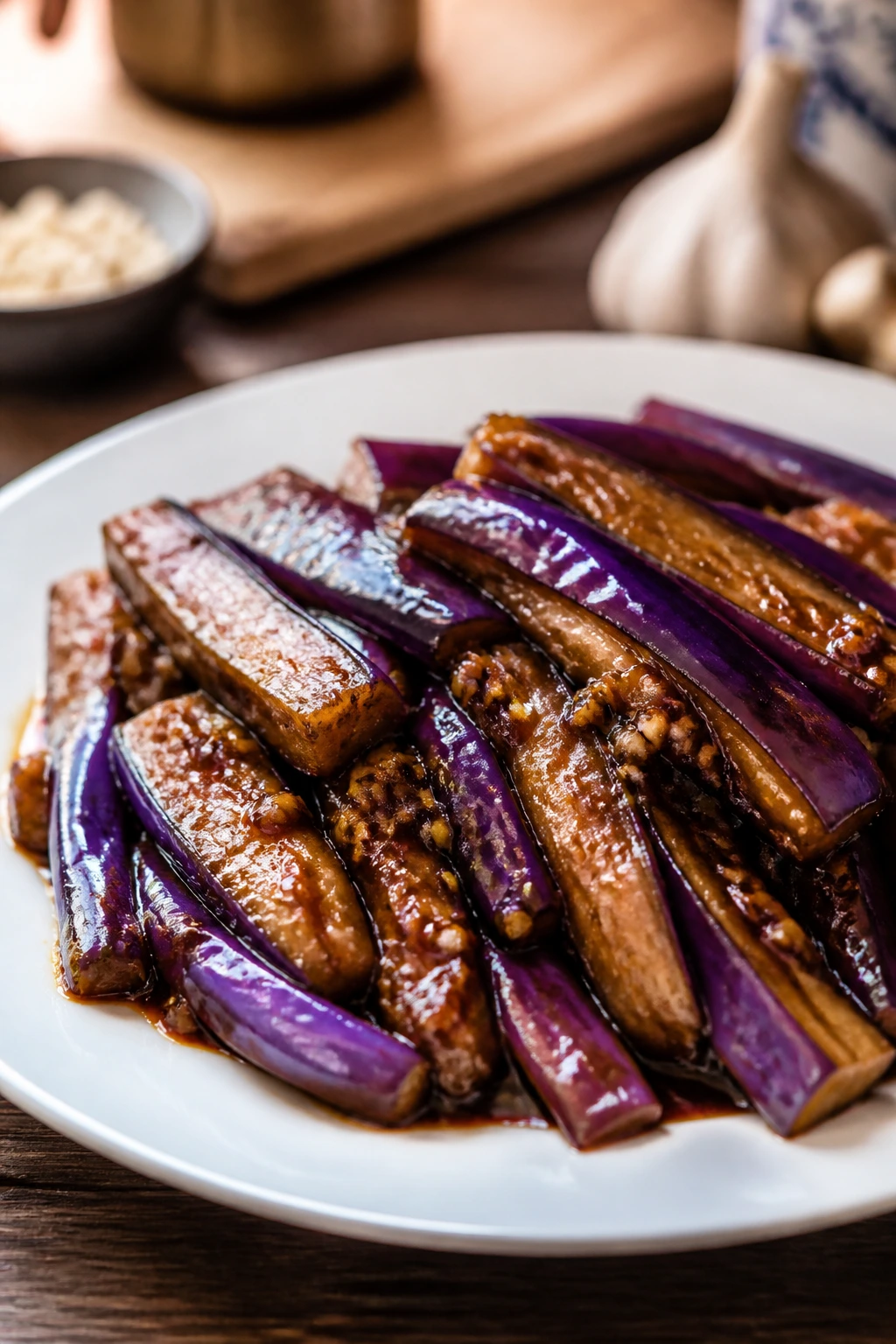
Chinese Eggplant with Garlic Sauce is silky and a little rich, the kind of dish that eats like it took more work than it did. The eggplant softens and drinks in sauce, which is why this one disappears fast.
Why It Works: Chinese eggplant has a thinner skin and softer flesh than globe eggplant, so it cooks faster and soaks up sauce better. Garlic, black vinegar, and oyster sauce keep the flavor deep and sharp.
Key Ingredients:
- 2 medium Chinese eggplants, cut into batons
- 3 garlic cloves, minced
- 1 tbsp fresh ginger, minced
- 2 tbsp light soy sauce
- 1 tbsp oyster sauce
- 1 tbsp black vinegar
- 1 tsp sugar
- 1 tsp cornstarch
- 1/3 cup stock
- 2 tbsp neutral oil
Quick Steps:
- Salt the eggplant for 10 minutes if you want less oil absorption, then pat dry.
- Stir-fry or pan-fry the eggplant until it starts to soften.
- Add garlic and ginger, then pour in soy sauce, oyster sauce, vinegar, sugar, cornstarch, and stock.
- Toss until the eggplant is glossy and tender.
Equipment for This Recipe:
- Wok or skillet
- Knife
- Bowl
- Spatula
How to Serve This Dish: Serve it over rice while the sauce is still loose. It also works well next to a crisp stir-fried green vegetable so the plate doesn’t feel too soft.
Pro Tips for This Recipe:
- Chinese eggplant cooks faster than standard eggplant.
- Keep the pieces similar in size so they soften evenly.
- A little extra oil helps the eggplant turn silky, not leathery.
Variations on This Dish:
- Spicy Garlic Eggplant: Add a teaspoon of chili paste.
- Vegetarian Garlic Sauce: Use vegetarian oyster sauce instead of oyster sauce.
Common Mistakes to Avoid with This Dish:
- Don’t undercook the eggplant; it should be soft enough to absorb sauce.
- Don’t leave it in the pan too long after the sauce thickens or it turns sticky-heavy.
26. Mushroom and Snow Pea Stir-Fry
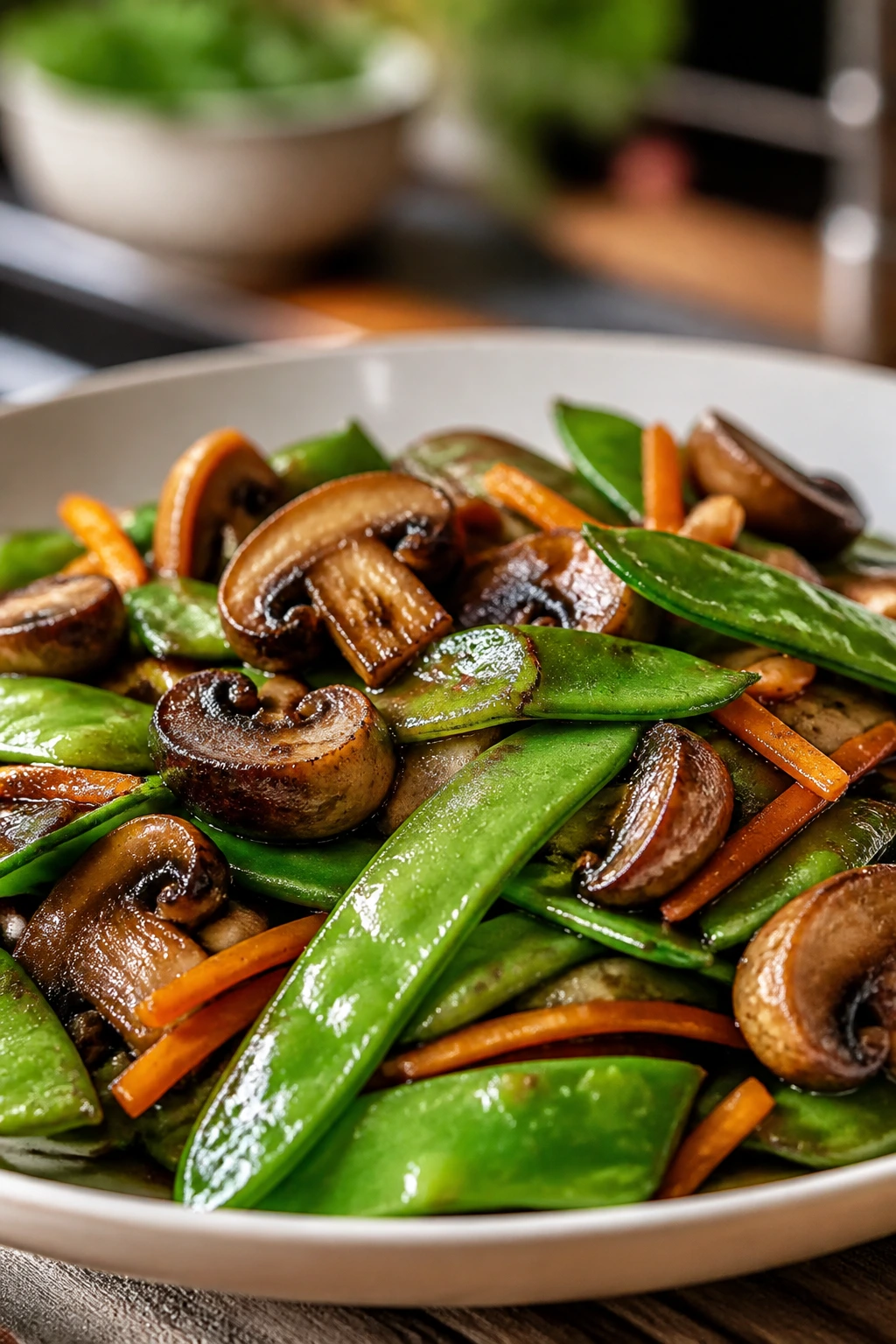
Mushroom and Snow Pea Stir-Fry is what I make when I want dinner to feel green and quick without acting like a health project. The mushrooms go savory and browned, while the snow peas keep their crisp snap.
Why It Works: Mushrooms bring umami and water, so the pan gets a little natural sauce before the seasoning goes in. Snow peas finish fast and keep the texture from getting too soft.
Key Ingredients:
- 8 oz mushrooms, sliced
- 2 cups snow peas, trimmed
- 1 carrot, thinly sliced
- 3 garlic cloves, minced
- 1 tbsp fresh ginger, minced
- 2 tbsp light soy sauce
- 1 tbsp oyster sauce
- 1 tsp sesame oil
- 2 tbsp water
Quick Steps:
- Brown the mushrooms in a hot pan until they give up moisture and start to sear.
- Add carrot, garlic, and ginger; stir for 30 seconds.
- Add snow peas, soy sauce, oyster sauce, and water.
- Toss until the peas turn bright green and the sauce lightly coats everything.
Equipment for This Recipe:
- Wok or skillet
- Spatula
- Knife
- Cutting board
How to Serve This Dish: It works as a side next to beef, chicken, or tofu. If you turn it into the main, add noodles or rice so the bowl has some weight.
Pro Tips for This Recipe:
- Let the mushrooms brown before salting them.
- Cut the carrot thin or it stays too firm.
- Snow peas want the last minute in the pan, not the first.
Variations on This Dish:
- Bok Choy Version: Use baby bok choy instead of snow peas.
- Sesame Mushroom Bowl: Add toasted sesame seeds at the end.
Common Mistakes to Avoid with This Dish:
- Don’t cover the pan or the mushrooms steam.
- Don’t overcook the snow peas into olive-colored strips.
27. Shredded Pork with Green Peppers
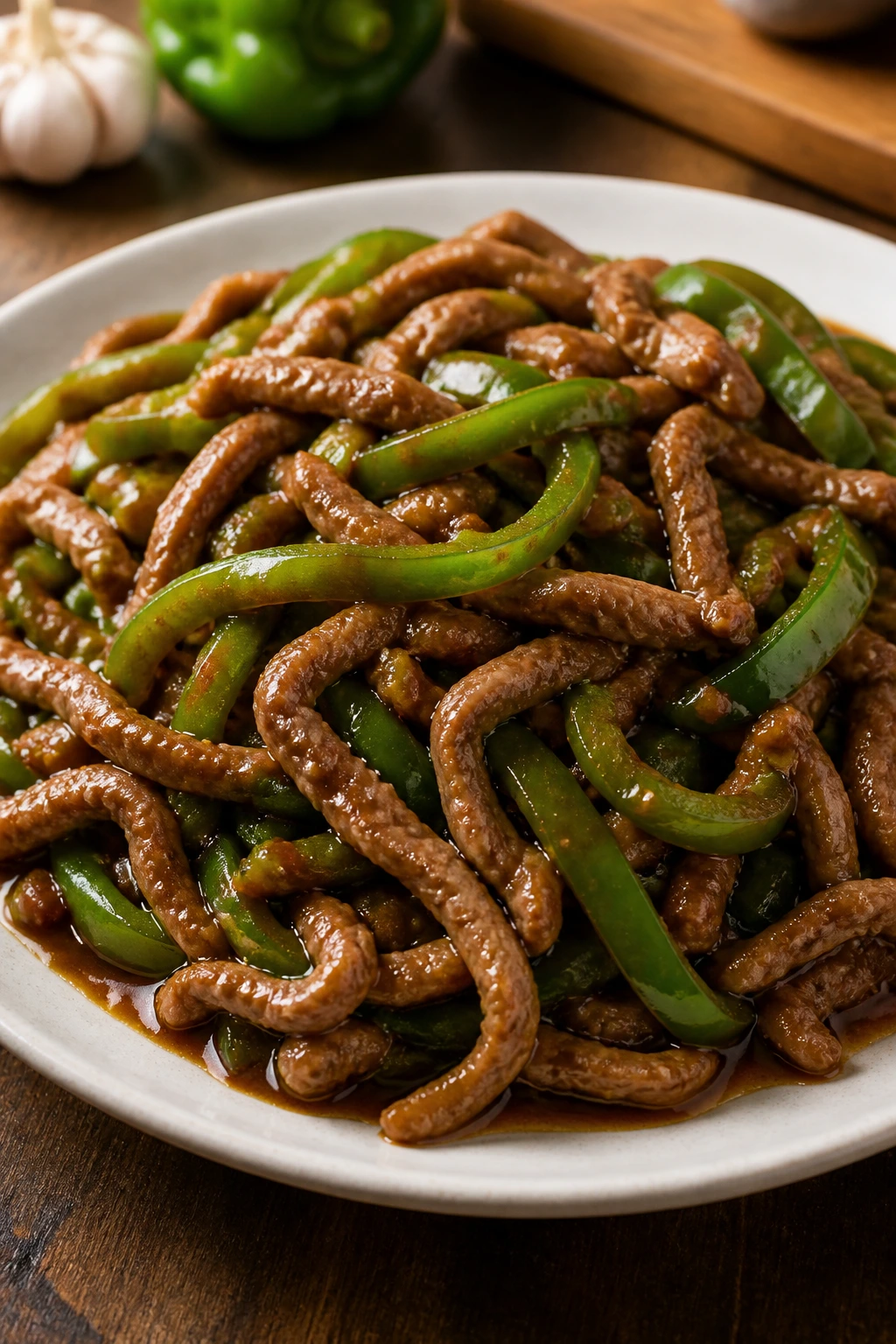
Shredded Pork with Green Peppers is the kind of home-style stir-fry that tastes bigger than the ingredient list. The pork should be tender and lightly glossy, and the peppers should stay a little crisp in the middle.
Why It Works: Thin pork strips cook fast, and green peppers stay sturdy enough to balance the softer meat. A simple soy-Shaoxing sauce keeps the flavors direct and clean.
Key Ingredients:
- 1 lb pork tenderloin, cut into thin strips
- 2 green bell peppers, sliced
- 1 carrot, julienned
- 3 garlic cloves, minced
- 1 tbsp fresh ginger, minced
- 2 tbsp light soy sauce
- 1 tbsp Shaoxing wine
- 1 tsp cornstarch
- 1 tsp sugar
- 2 tbsp neutral oil
Quick Steps:
- Toss the pork with soy sauce, Shaoxing, and cornstarch; rest 10 minutes.
- Stir-fry the pork until just cooked, then remove it.
- Cook peppers, carrot, garlic, and ginger until crisp-tender.
- Return the pork with sugar and toss until the sauce turns glossy.
Equipment for This Recipe:
- Wok or skillet
- Mixing bowl
- Knife
- Spatula
How to Serve This Dish: Serve it with rice and a plain soup if you want a fuller meal. The peppers give enough color that you don’t need much garnish.
Pro Tips for This Recipe:
- Slice the pork into even thin strips.
- Don’t overcook the peppers; the crunch matters here.
- A little sugar smooths the soy without making the dish sweet.
Variations on This Dish:
- Black Pepper Version: Add 1/2 tsp black pepper at the end.
- Mushroom Add-In: Toss in sliced mushrooms with the peppers.
Common Mistakes to Avoid with This Dish:
- Don’t use pork chunks; they won’t cook fast enough.
- Don’t let the peppers collapse into softness.
28. Beef with Onions
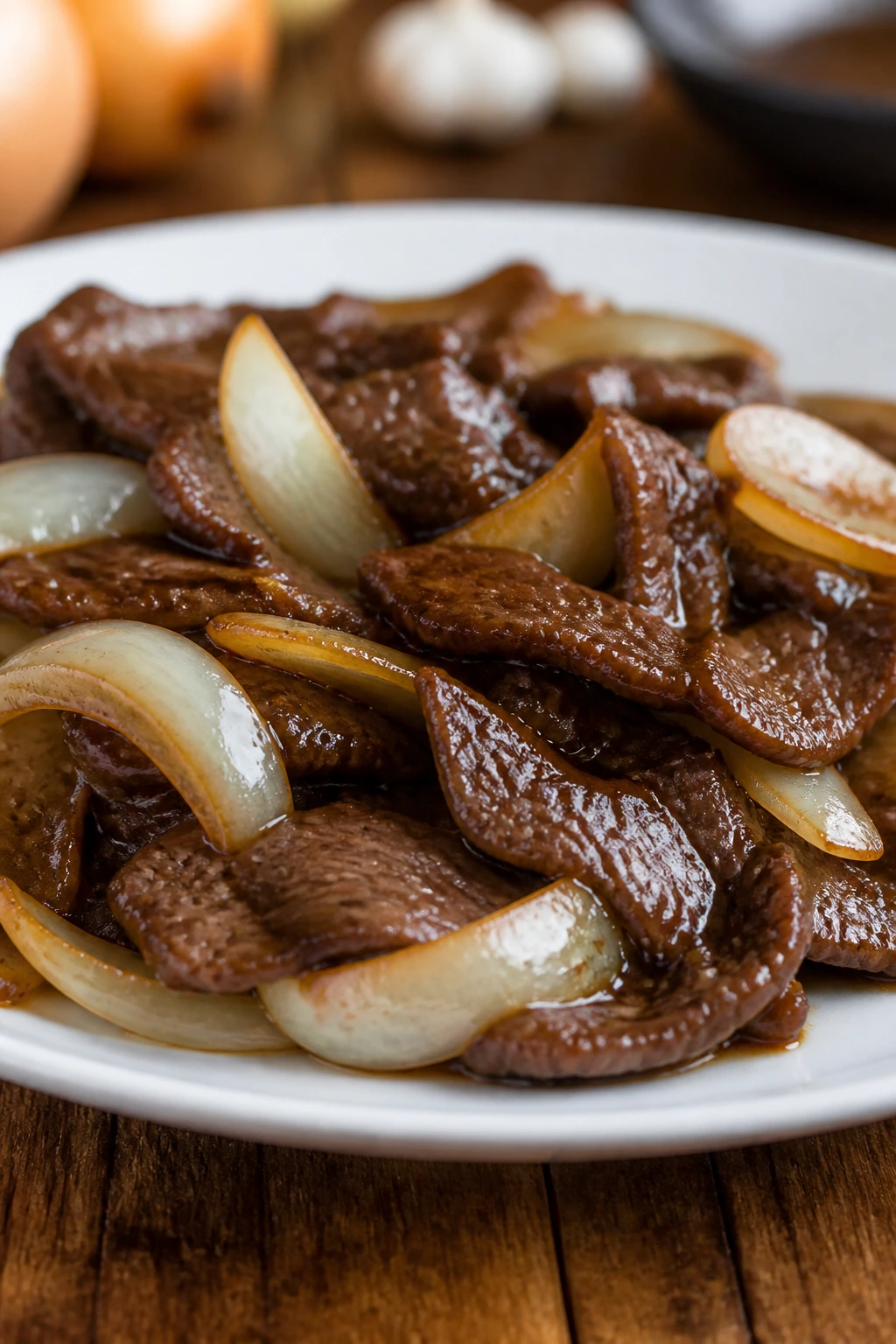
Beef with Onions is one of those dishes that tastes like it has been around forever because it works so cleanly. The onions should be soft and lightly browned, and the beef should keep enough chew to matter.
Why It Works: Onion sweetness balances the salt and soy in the sauce, while the beef cooks quickly enough to stay tender. Shaoxing wine gives the pan a little depth without needing a long braise.
Key Ingredients:
- 1 lb beef strips, sliced thin
- 2 large onions, sliced into wedges
- 3 garlic cloves, minced
- 1 tbsp fresh ginger, minced
- 2 tbsp light soy sauce
- 1 tbsp oyster sauce
- 1 tbsp Shaoxing wine
- 1 tsp sugar
- 1 tsp cornstarch
- 1/4 cup water
Quick Steps:
- Marinate the beef with soy sauce and cornstarch for 10 minutes.
- Sear the beef briefly and remove it.
- Cook onions until soft at the edges, then add garlic and ginger.
- Return beef with oyster sauce, Shaoxing, sugar, and water; toss until coated.
Equipment for This Recipe:
- Wok or large skillet
- Knife
- Mixing bowl
- Tongs
How to Serve This Dish: Rice is the obvious choice, but noodles work too if you want a more filling plate. A few cucumber slices make the onions taste sweeter.
Pro Tips for This Recipe:
- Slice the onions into wedges so they keep some shape.
- Don’t cook the beef beyond the quick sear.
- Let the onions get a little color; pale onions taste flatter.
Variations on This Dish:
- Scallion-Onion Beef: Add a handful of scallions at the end.
- Pepper Onion Beef: Add sliced bell peppers for more crunch.
Common Mistakes to Avoid with This Dish:
- Don’t let the onions cook into jam.
- Don’t simmer the beef in the sauce after it returns to the pan.
29. Chicken with Cashews and Celery
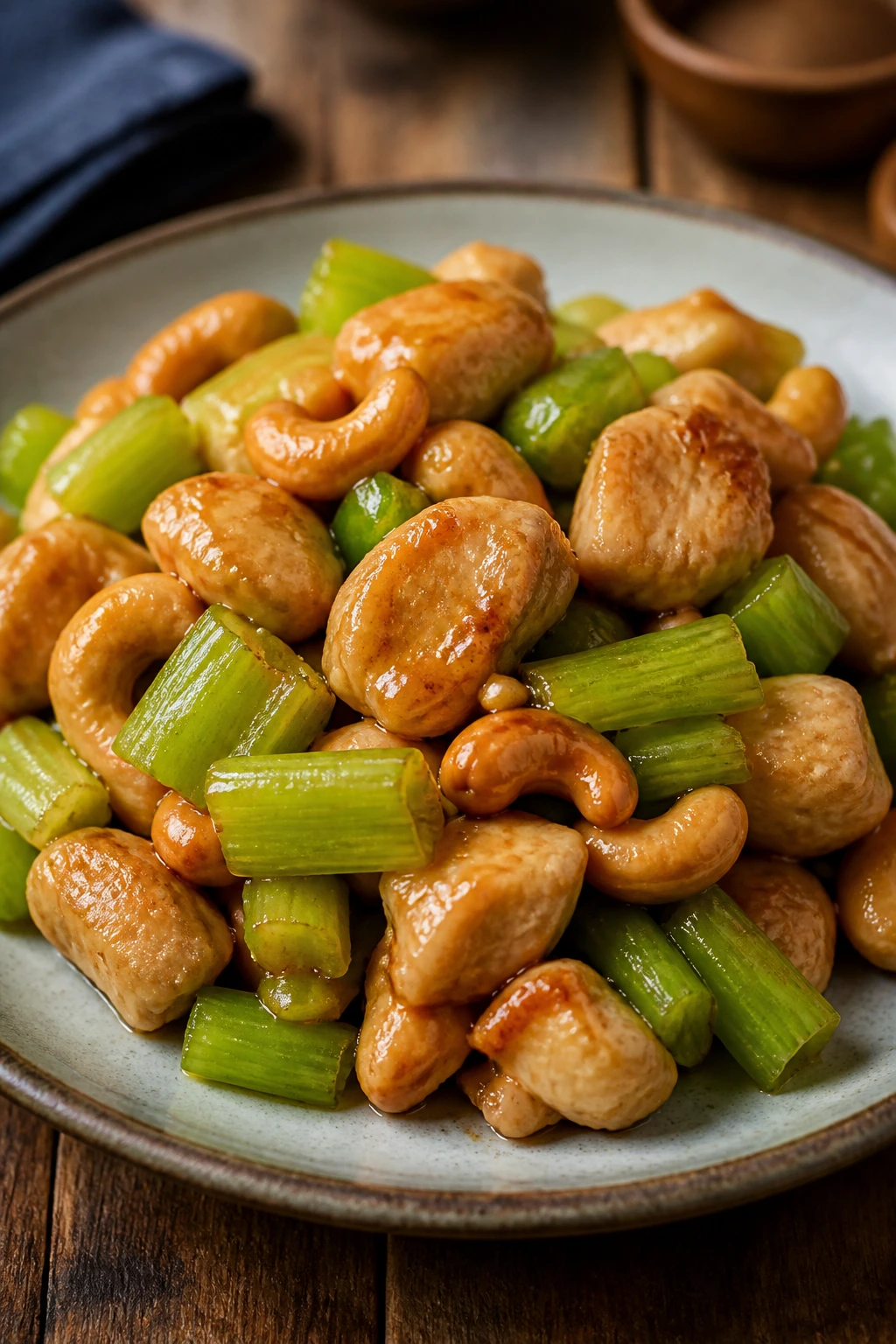
Chicken with Cashews and Celery is crisp, nutty, and just a little grassy from the celery. It feels lighter than many takeout-style dishes, but it still gives you enough sauce to care.
Why It Works: Celery holds its crunch even after a short stir-fry, and cashews add fat plus texture. The chicken thighs stay moist, which matters because this dish cooks fast and doesn’t have much extra liquid.
Key Ingredients:
- 1 lb chicken thighs, cut into chunks
- 1 cup celery, sliced on a bias
- 1 red bell pepper, sliced
- 1 cup cashews
- 3 garlic cloves, minced
- 2 tbsp light soy sauce
- 1 tbsp oyster sauce
- 1 tbsp rice vinegar
- 1 tsp sugar
- 1 tsp cornstarch
- 1/4 cup water
Quick Steps:
- Whisk soy sauce, oyster sauce, vinegar, sugar, cornstarch, and water.
- Brown the chicken and remove it.
- Stir-fry celery, bell pepper, and garlic until crisp-tender.
- Return chicken, add cashews and sauce, and toss briefly until glossy.
Equipment for This Recipe:
- Wok or skillet
- Knife
- Small bowl
- Spatula
How to Serve This Dish: Serve with jasmine rice and maybe a side of plain greens. The cashews already make the dish feel finished, so the rest can stay simple.
Pro Tips for This Recipe:
- Toast the cashews first if you want stronger flavor.
- Slice celery on a bias so it cooks evenly.
- Keep the sauce light or the cashews soften too much.
Variations on This Dish:
- Dried Chile Version: Add a few dried chiles with the garlic.
- Almond Swap: Use almonds if that’s what you have on hand.
Common Mistakes to Avoid with This Dish:
- Don’t add the cashews too early.
- Don’t let the celery lose its snap.
30. Kung Pao Cauliflower
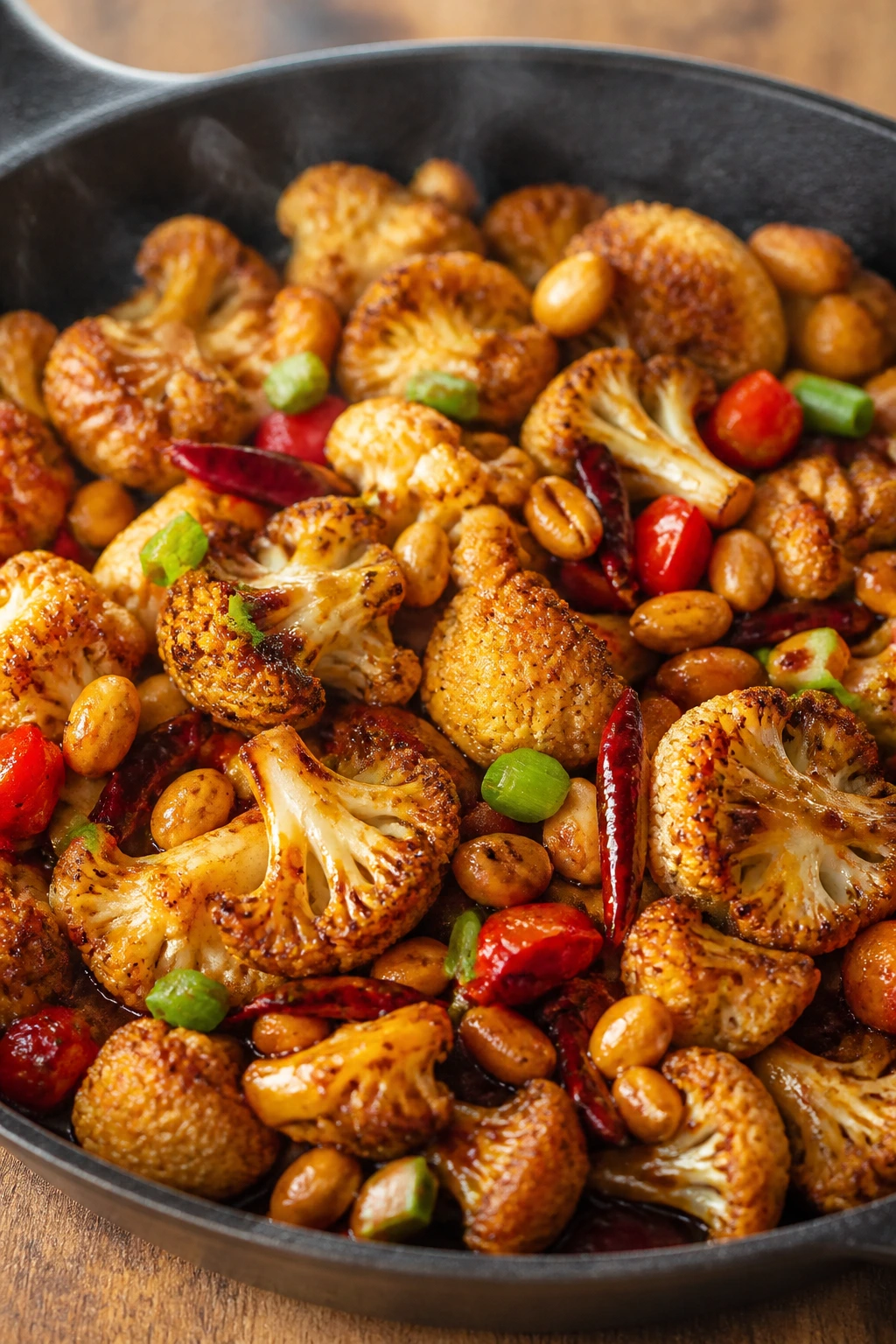
Kung Pao Cauliflower gives you the same sweet-hot crunch people want from the chicken version, only with roasted florets that can take a little extra abuse. The cauliflower should be browned at the edges and still firm inside.
Why It Works: Cauliflower soaks up sauce without falling apart if you roast or stir-fry it first. Peanuts and dried chiles keep the flavor anchored in the same direction as the classic version.
Key Ingredients:
- 1 head cauliflower, cut into small florets
- 1/2 cup roasted peanuts
- 6 dried red chiles
- 1 red bell pepper, diced
- 3 garlic cloves, minced
- 1 tbsp fresh ginger, minced
- 2 tbsp light soy sauce
- 1 tbsp Chinkiang vinegar
- 1 tbsp sugar
- 1 tsp cornstarch
- 1/4 cup water
Quick Steps:
- Roast or stir-fry the cauliflower until browned at the edges.
- Mix soy sauce, vinegar, sugar, cornstarch, and water.
- Stir-fry the chiles, garlic, ginger, and bell pepper briefly.
- Add cauliflower, peanuts, and sauce; toss until coated.
Equipment for This Recipe:
- Wok or sheet pan
- Mixing bowl
- Spatula
- Knife
How to Serve This Dish: Serve over rice or alongside noodles if you want it to read as a main. It also works well in lettuce cups for a lighter plate.
Pro Tips for This Recipe:
- Cut the florets small enough to brown quickly.
- Don’t crowd the pan when cooking the cauliflower.
- Add peanuts at the end so they stay crisp.
Variations on This Dish:
- Sesame Cauliflower: Finish with 1 tsp sesame oil.
- Extra-Spicy Version: Add chili crisp at the table.
Common Mistakes to Avoid with This Dish:
- Don’t steam the cauliflower into mush.
- Don’t let the sauce soak too long before serving.
31. Beef Ho Fun
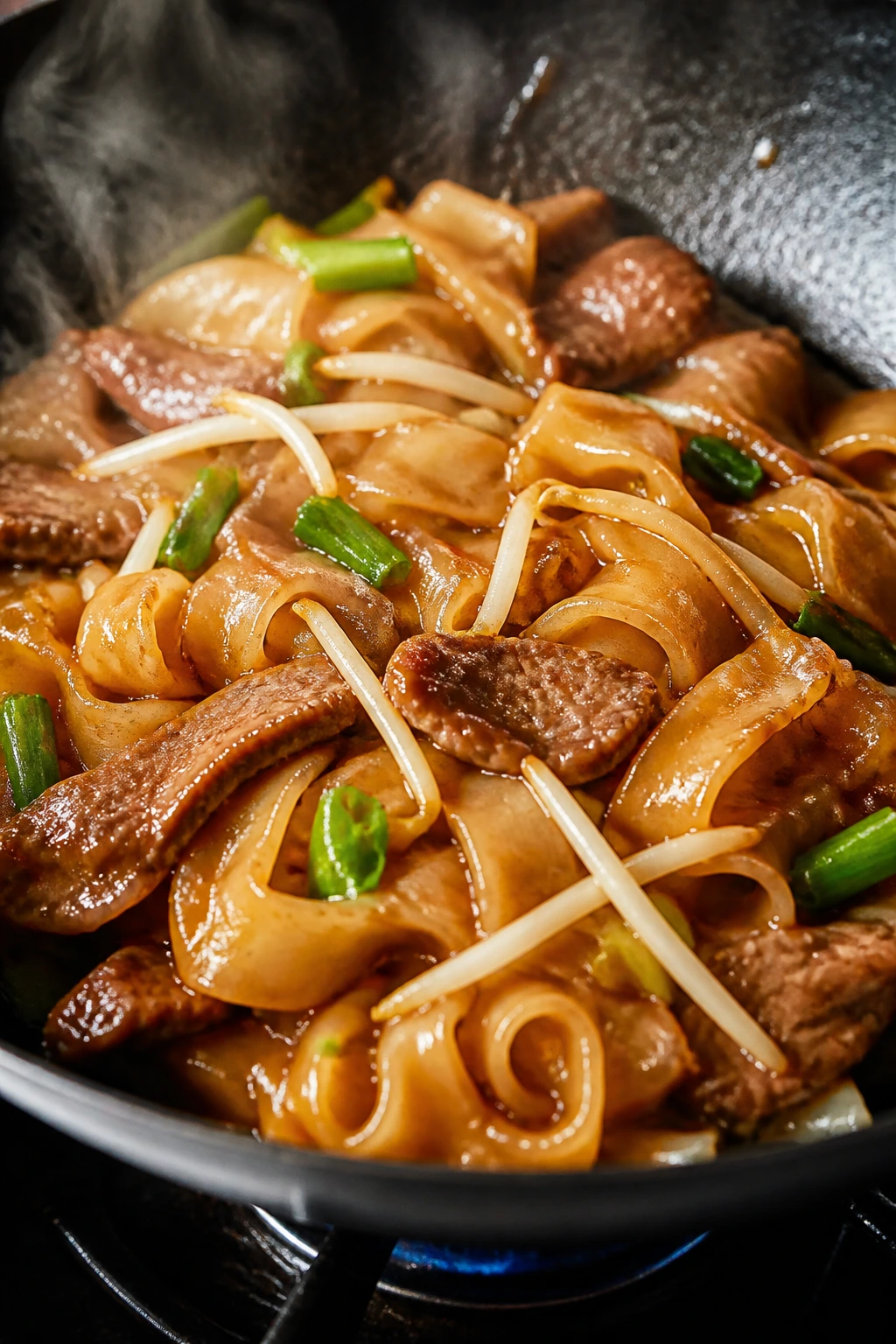
Beef Ho Fun has a softer, slippier texture than chow fun, and that’s part of the pleasure. The broad noodles should pick up little streaks of soy and char while the beef stays tender.
Why It Works: Ho fun noodles need hot pan contact but not too much stirring, or they tear. Dark soy and oyster sauce give the noodles that restaurant color and deep savor.
Key Ingredients:
- 8 oz wide rice noodles
- 1 lb flank steak, sliced thin
- 1 cup bean sprouts
- 2 scallions, cut into lengths
- 2 tbsp light soy sauce
- 1 tbsp dark soy sauce
- 1 tbsp oyster sauce
- 1 tbsp Shaoxing wine
- 1 tsp sugar
- 2 cloves garlic, minced
Quick Steps:
- Prepare the noodles so they separate easily.
- Stir-fry the beef briefly and remove it.
- Cook garlic, scallions, and noodles with the sauces over high heat.
- Return beef and bean sprouts; toss just until heated through.
Equipment for This Recipe:
- Wok
- Tongs
- Bowl
- Knife
How to Serve This Dish: Serve it hot and plain. The noodles are the main event, and cold tea is a better sidekick than anything else.
Pro Tips for This Recipe:
- Keep the noodles separated before cooking.
- Use dark soy lightly; too much makes the noodles muddy.
- Bean sprouts should stay crisp.
Variations on This Dish:
- Shrimp Ho Fun: Swap in shrimp and cut the beef step entirely.
- Chicken Ho Fun: Use sliced chicken breast if you want a lighter bowl.
Common Mistakes to Avoid with This Dish:
- Don’t stir too aggressively or the noodles shred.
- Don’t underheat the wok; ho fun needs a hot pan for any real flavor.
32. Shanghai-Style Stir-Fried Noodles
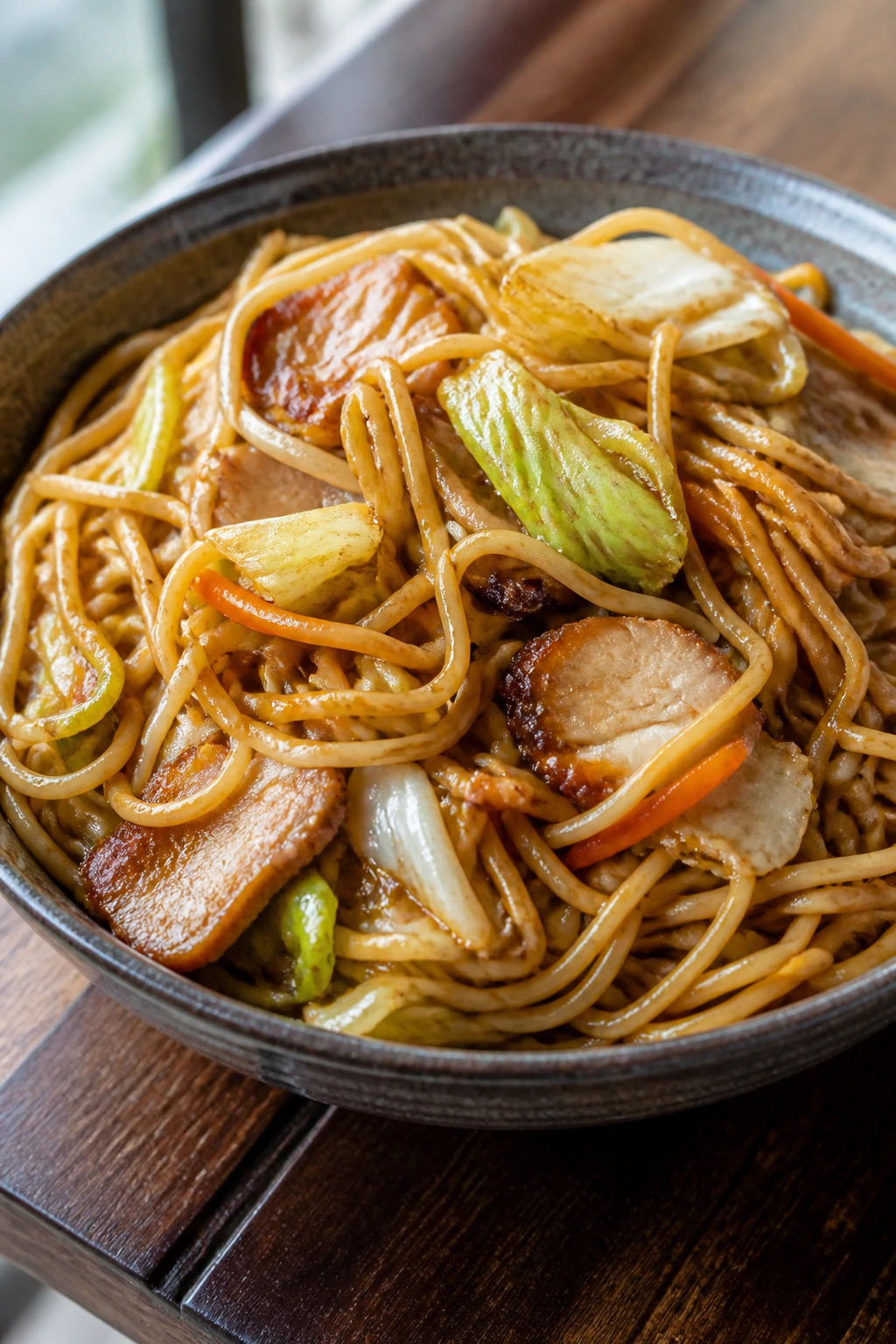
Shanghai-Style Stir-Fried Noodles are darker, richer, and a little sweeter than lo mein. The noodles should come out glossy, with cabbage and pork tucked into the folds instead of floating around them.
Why It Works: A touch of sweetness and dark soy gives the noodles depth, while roast pork or char siu adds a smoky edge. Napa cabbage softens into the sauce without going mushy.
Key Ingredients:
- 8 oz yellow noodles or chow mein noodles
- 1 cup sliced roast pork or char siu
- 1 cup napa cabbage, shredded
- 1 carrot, thinly sliced
- 2 tbsp light soy sauce
- 1 tbsp oyster sauce
- 1 tsp sugar
- 1 tbsp sesame oil
- 2 garlic cloves, minced
- 2 tbsp water
Quick Steps:
- Cook the noodles until just tender and drain well.
- Stir-fry the pork, garlic, carrot, and cabbage until the cabbage softens.
- Add noodles, soy sauce, oyster sauce, sugar, sesame oil, and water.
- Toss until the noodles turn glossy and warm through.
Equipment for This Recipe:
- Wok or deep skillet
- Pot for noodles
- Tongs
- Colander
How to Serve This Dish: It’s filling enough on its own, but a side of blanched greens keeps the meal from feeling too heavy. Serve it in wide bowls so the noodles don’t clump.
Pro Tips for This Recipe:
- Drain noodles well so the sauce sticks.
- Use cooked roast pork to keep the stir-fry fast.
- A little sugar helps the noodles taste rounded, not flat.
Variations on This Dish:
- Chicken Noodle Version: Use shredded cooked chicken instead of pork.
- Vegetable Shanghai Noodles: Add mushrooms and skip the meat.
Common Mistakes to Avoid with This Dish:
- Don’t let the noodles sit too long after draining.
- Don’t oversweeten the sauce; this dish should stay savory first.
33. Spicy Cumin Lamb
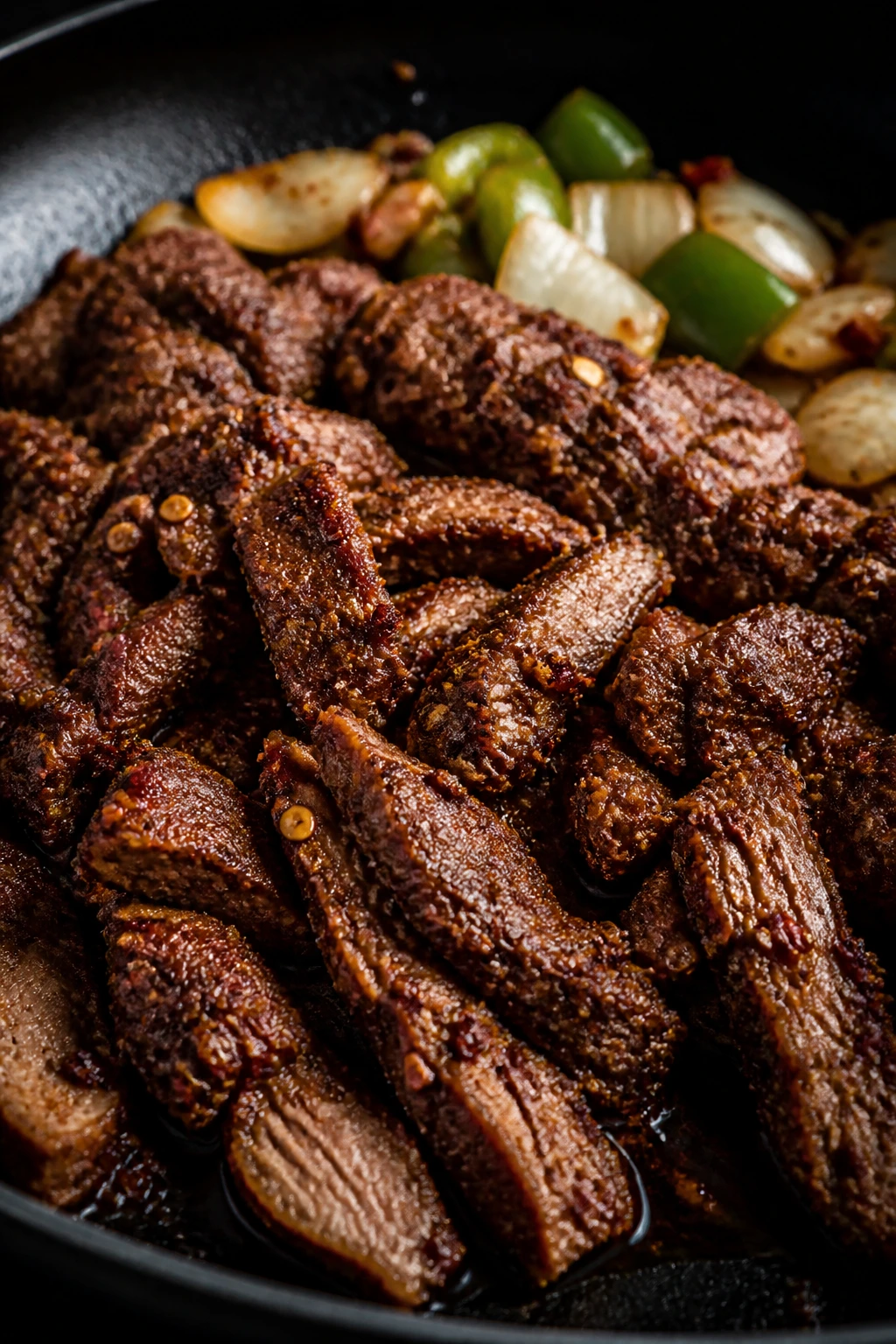
Spicy Cumin Lamb has a dry, fragrant heat that smells like the pan is doing most of the work. The lamb should be seared and a little crisp, while cumin and chile cling to the meat instead of soaking into a sauce.
Why It Works: Lamb has enough fat to carry strong spices, and cumin makes that richness taste sharper. Onion and green pepper keep the dish from feeling like a spice rub alone.
Key Ingredients:
- 1 lb lamb slices, trimmed thin
- 1 onion, sliced
- 1 green pepper, sliced
- 2 tbsp ground cumin
- 1 tbsp chili flakes
- 3 garlic cloves, minced
- 1 tbsp fresh ginger, minced
- 2 tbsp light soy sauce
- 1 tbsp Shaoxing wine
- 1 tbsp neutral oil
Quick Steps:
- Toss the lamb with soy sauce, Shaoxing, cumin, and chili flakes.
- Sear the lamb in a hot pan until browned.
- Add onion, green pepper, garlic, and ginger; stir until fragrant.
- Return the lamb and cook until the spices smell toasted and the pan looks dry.
Equipment for This Recipe:
- Wok or skillet
- Knife
- Mixing bowl
- Spatula
How to Serve This Dish: Serve with rice or flatbread if you want to catch the spice-laced juices. It also works well with cucumber on the side to cool the heat.
Pro Tips for This Recipe:
- Trim lamb well so the spice coating sticks cleanly.
- Toasted cumin tastes deeper than raw cumin.
- Keep the cook short so the lamb stays tender.
Variations on This Dish:
- Extra-Chile Lamb: Add sliced fresh chiles with the onions.
- Beef Cumin Stir-Fry: Swap in flank steak if lamb isn’t on hand.
Common Mistakes to Avoid with This Dish:
- Don’t cook the spices so long they turn bitter.
- Don’t use thick lamb chunks; they won’t sear properly.
34. Stir-Fried Lotus Root
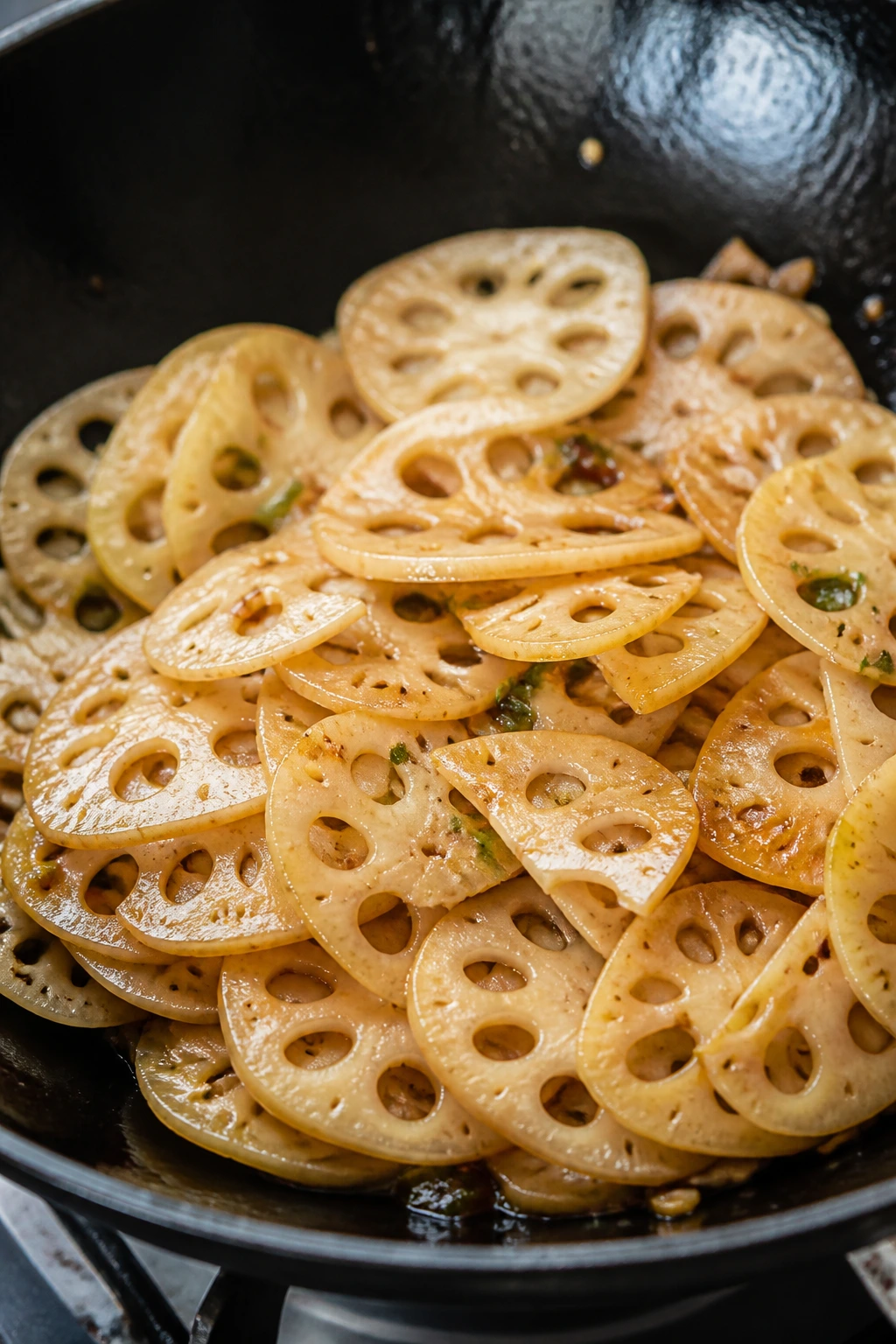
Stir-Fried Lotus Root brings crunch in a way most vegetables can’t. The slices should stay pale and crisp, with a little shine from vinegar and sesame oil.
Why It Works: Lotus root holds its structure even after a short stir-fry, so you get crunch instead of softness. A light sweet-sour seasoning wakes up the clean flavor.
Key Ingredients:
- 1 lb lotus root, peeled and sliced thin
- 1 red bell pepper, sliced
- 3 garlic cloves, sliced
- 1 tbsp light soy sauce
- 1 tbsp rice vinegar
- 1 tsp sugar
- 1 tsp sesame oil
- 2 tbsp water
- 1 tbsp sliced scallions
Quick Steps:
- Soak the lotus root briefly in water so it stays bright.
- Stir-fry garlic and bell pepper for 30 seconds.
- Add lotus root, soy sauce, vinegar, sugar, and water.
- Toss until the slices are crisp-tender and glossy, then finish with sesame oil.
Equipment for This Recipe:
- Wok or skillet
- Bowl of water
- Knife
- Spatula
How to Serve This Dish: It works as a side or a crunchy plate filler next to softer dishes like tofu or braised pork. The contrast is the whole point.
Pro Tips for This Recipe:
- Slice lotus root evenly so the rounds cook at the same pace.
- Don’t overcook it; the crunch is the payoff.
- A quick soak helps keep the slices from dulling.
Variations on This Dish:
- Chili Lotus Root: Add dried chile or chili oil.
- Black Vinegar Lotus Root: Swap rice vinegar for black vinegar for more depth.
Common Mistakes to Avoid with This Dish:
- Don’t cook lotus root until soft.
- Don’t leave it cut and exposed to air too long or it browns.
35. Dry-Fried Chinese Long Beans
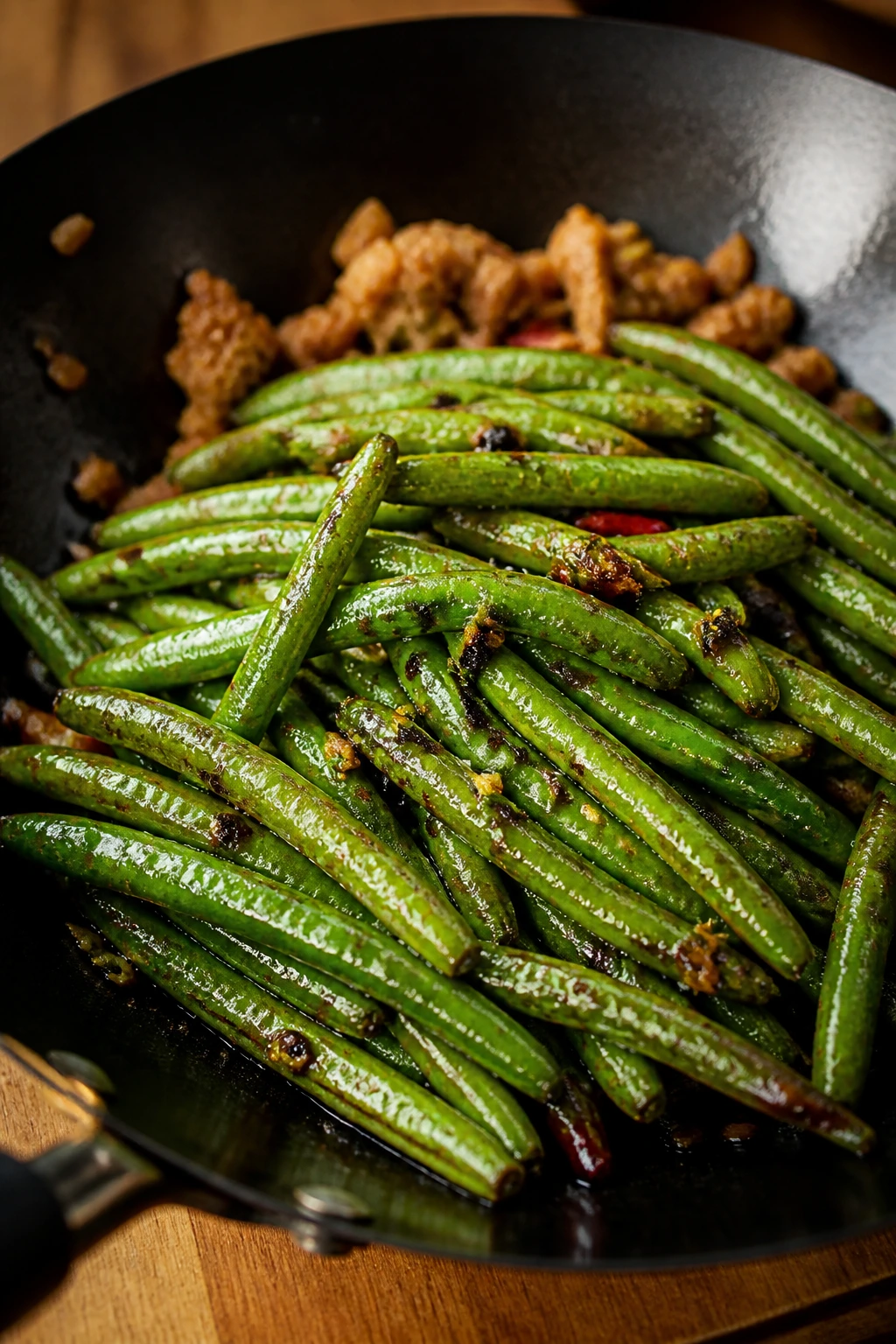
Dry-Fried Chinese Long Beans have the best kind of green-bean energy: smoky, wrinkled, and salted just enough. They’re a side dish that can steal the meal if you let them.
Why It Works: Dry frying blisters the beans so they taste roasted instead of boiled. A little minced pork is optional, but it adds the savory grounding that makes the beans feel complete.
Key Ingredients:
- 1 lb Chinese long beans, cut into 2-inch pieces
- 1/2 cup minced pork, optional
- 4 garlic cloves, minced
- 1 tbsp fresh ginger, minced
- 2 tbsp light soy sauce
- 1 tbsp oyster sauce
- 1 tsp sugar
- Chili flakes, optional
- 2 tbsp neutral oil
Quick Steps:
- Cook the beans over high heat until blistered and slightly wrinkled.
- If using pork, brown it first.
- Add garlic and ginger, then soy sauce, oyster sauce, and sugar.
- Toss until the pan looks nearly dry and the beans are coated.
Equipment for This Recipe:
- Wok or skillet
- Spatula
- Knife
- Bowl
How to Serve This Dish: Serve it beside rice and something softer, like mapo tofu or chicken. The beans bring texture, so the rest of the plate can stay mellow.
Pro Tips for This Recipe:
- Dry beans blister better than wet ones.
- Keep the heat high enough to wrinkle the skins.
- Don’t over-sauce them; they should stay dry-fried.
Variations on This Dish:
- Vegetarian Long Beans: Skip the pork and add extra garlic.
- Spicy Beans: Add a pinch of chili flakes at the start.
Common Mistakes to Avoid with This Dish:
- Don’t steam the beans by covering the pan.
- Don’t stop cooking too early or they’ll taste raw in the middle.
36. Tomato and Egg Stir-Fry
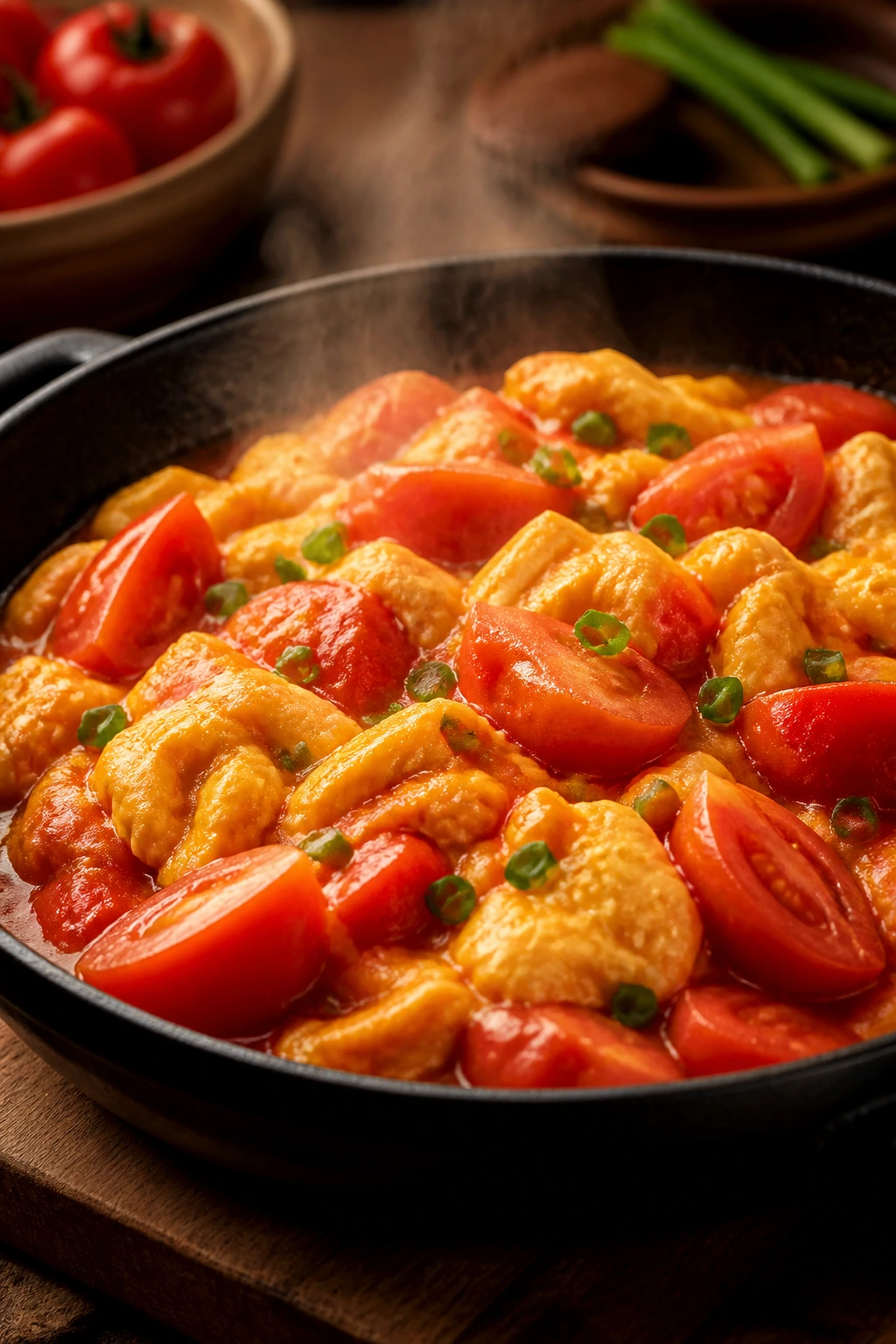
Tomato and Egg Stir-Fry is soft, sweet, and comforting in a way most stir-fries don’t bother to be. The tomatoes break down into a saucy pile, and the eggs stay fluffy instead of rubbery.
Why It Works: Eggs and tomatoes are an old, easy pairing because the eggs catch the tomato juice and the whole pan turns silky. A touch of sugar keeps the tomatoes tasting rounded, not sharp.
Key Ingredients:
- 4 large eggs, beaten
- 3 medium tomatoes, cut into wedges
- 3 scallions, sliced
- 1 tbsp light soy sauce
- 1 tbsp sugar
- 1 tbsp rice vinegar
- 2 tbsp neutral oil
- Pinch of salt
Quick Steps:
- Scramble the eggs softly and remove them while still tender.
- Cook the tomatoes with sugar and a pinch of salt until they start to collapse.
- Add soy sauce and vinegar.
- Return the eggs and scallions; toss just until the sauce turns glossy.
Equipment for This Recipe:
- Skillet or wok
- Bowl
- Spatula
- Knife
How to Serve This Dish: Spoon it over rice and let the tomato juices soak in. It also works as the soft, red, comforting part of a bigger meal with crisp greens.
Pro Tips for This Recipe:
- Pull the eggs before they set hard.
- Use ripe tomatoes for the best texture.
- Keep the sauce loose and spoonable.
Variations on This Dish:
- Silken Version: Add a splash of stock for a looser sauce.
- Onion Tomato Egg: Add a little sliced onion with the tomatoes.
Common Mistakes to Avoid with This Dish:
- Don’t overcook the eggs; they should stay soft.
- Don’t use bland tomatoes unless you’re okay with a flatter dish.
37. Garlic Bok Choy
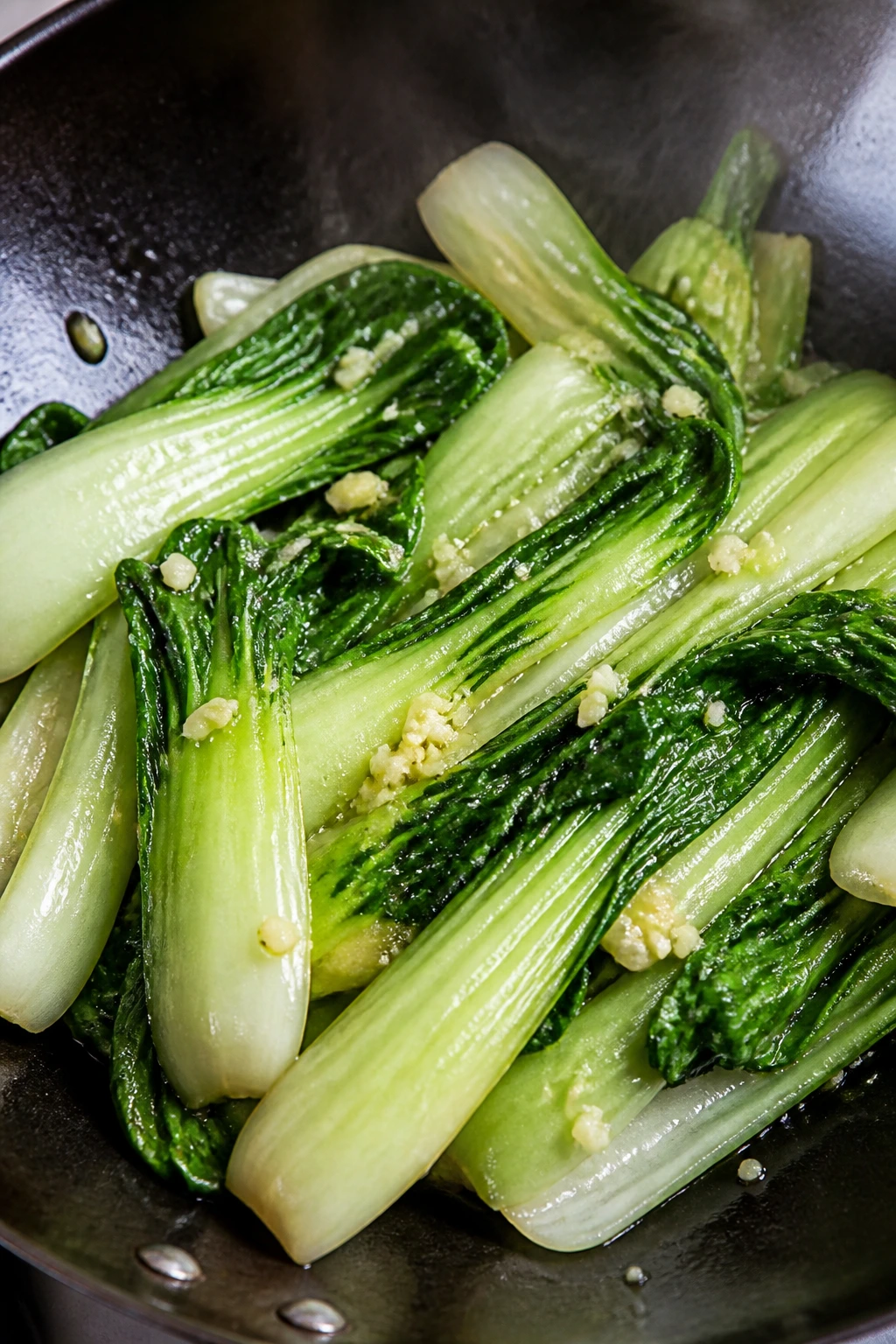
Garlic Bok Choy is the kind of side dish that earns its keep in under five minutes. The stems should still have a crisp bite, and the leaves should wilt into a glossy pile.
Why It Works: Bok choy cooks in stages, which is why the stems and leaves don’t finish together. Garlic and oyster sauce are enough to make the vegetable taste deliberate instead of plain.
Key Ingredients:
- 1 lb bok choy, halved or quartered
- 4 garlic cloves, minced
- 1 tbsp fresh ginger, minced
- 2 tbsp oyster sauce or vegetarian oyster sauce
- 1 tbsp light soy sauce
- 1/4 cup stock or water
- 1 tsp sesame oil
- 1 tbsp neutral oil
Quick Steps:
- Stir-fry garlic and ginger for 15 seconds.
- Add bok choy stems and cook briefly.
- Add the leaves with stock, oyster sauce, and soy sauce.
- Toss until the leaves wilt and the stems stay just crisp.
Equipment for This Recipe:
- Wok or skillet
- Spatula
- Knife
- Cutting board
How to Serve This Dish: Use it as the green anchor beside any saucier meat or noodle dish. A few drops of sesame oil at the end make the bowl smell finished.
Pro Tips for This Recipe:
- Split big bok choy so the stems cook through.
- Don’t leave too much water clinging to the leaves.
- Add the leaves later than the stems, always.
Variations on This Dish:
- Chili Garlic Bok Choy: Add chili oil at the end.
- Baby Bok Choy Version: Use baby bok choy whole if the heads are small.
Common Mistakes to Avoid with This Dish:
- Don’t overcook the leaves into dark ribbons.
- Don’t skip the stalk-first cooking or the stems stay tough.
38. Clams with Black Bean Sauce
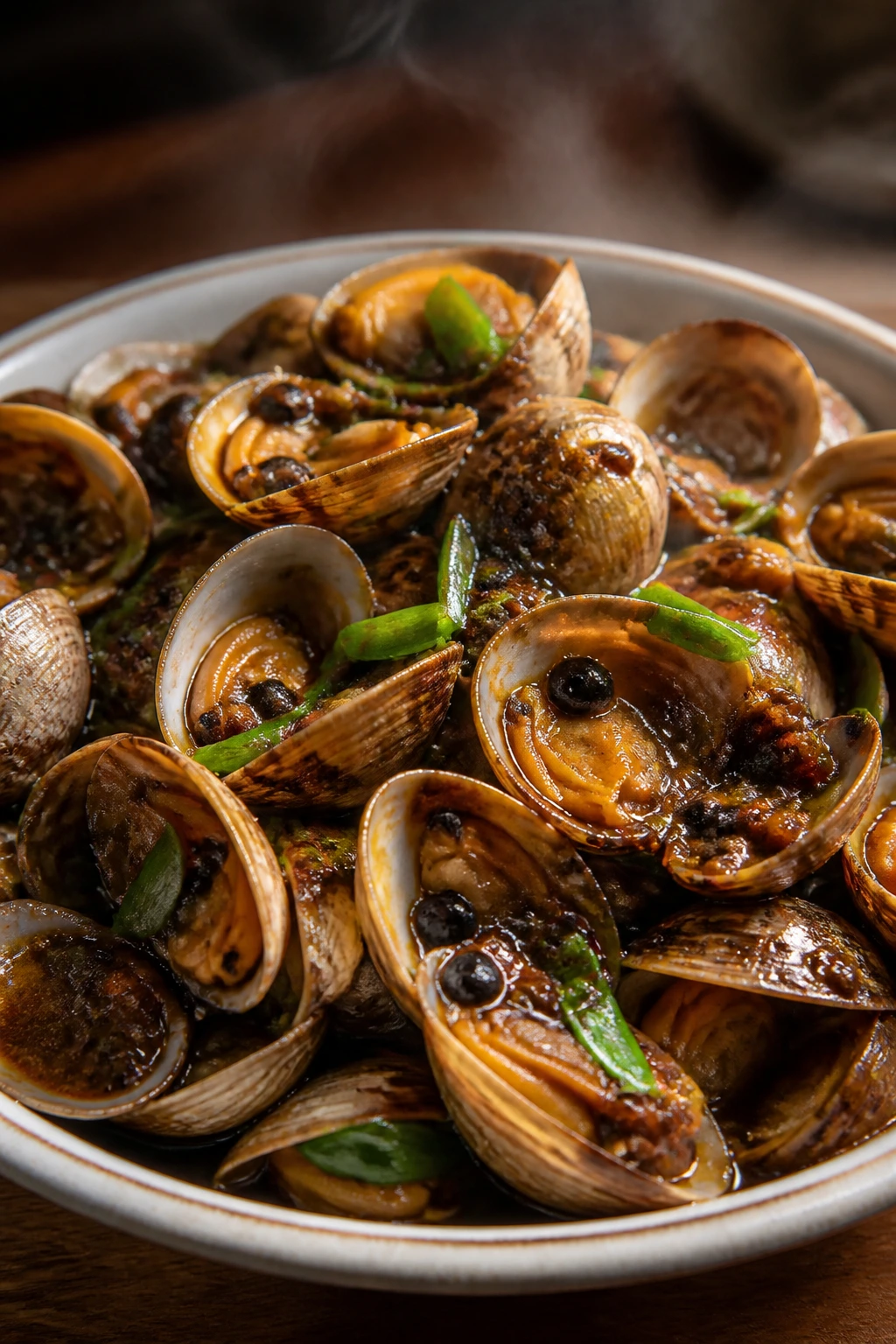
Clams with Black Bean Sauce smells briny, garlicky, and faintly fermented in a good way. The clams should open just enough, and the sauce should sit in the shell juices like it was meant to be there.
Why It Works: Fresh clams bring their own liquid, which blends with black beans and Shaoxing wine for a sauce that tastes layered fast. The whole dish cooks in minutes if the clams are clean and ready.
Key Ingredients:
- 2 lbs fresh clams, scrubbed
- 2 tbsp fermented black beans, rinsed
- 4 garlic cloves, minced
- 1 tbsp fresh ginger, minced
- 2 scallions, sliced
- 2 tbsp light soy sauce
- 1 tbsp Shaoxing wine
- 1 tbsp neutral oil
- 2 tbsp water
Quick Steps:
- Cook black beans, garlic, ginger, and scallions in oil for 20 seconds.
- Add the clams, Shaoxing, soy sauce, and water.
- Cover and steam just until the clams open.
- Toss once and serve immediately; discard any clams that stay closed.
Equipment for This Recipe:
- Deep wok or covered skillet
- Lid
- Scrub brush or clean sponge
- Slotted spoon
How to Serve This Dish: Serve it with steamed rice or crusty bread if you want to chase the sauce. The shells look best in a shallow bowl with plenty of room.
Pro Tips for This Recipe:
- Scrub the clams well before cooking.
- Do not overcook them; the shells open fast.
- Rinse the black beans if they taste too salty.
Variations on This Dish:
- Spicy Clam Version: Add sliced red chile with the garlic.
- Ginger-Heavy Version: Double the ginger for a sharper aroma.
Common Mistakes to Avoid with This Dish:
- Don’t cook the clams too long after they open.
- Don’t skip cleaning them; sandy clams ruin the sauce.
39. Beef with Cumin and Onions
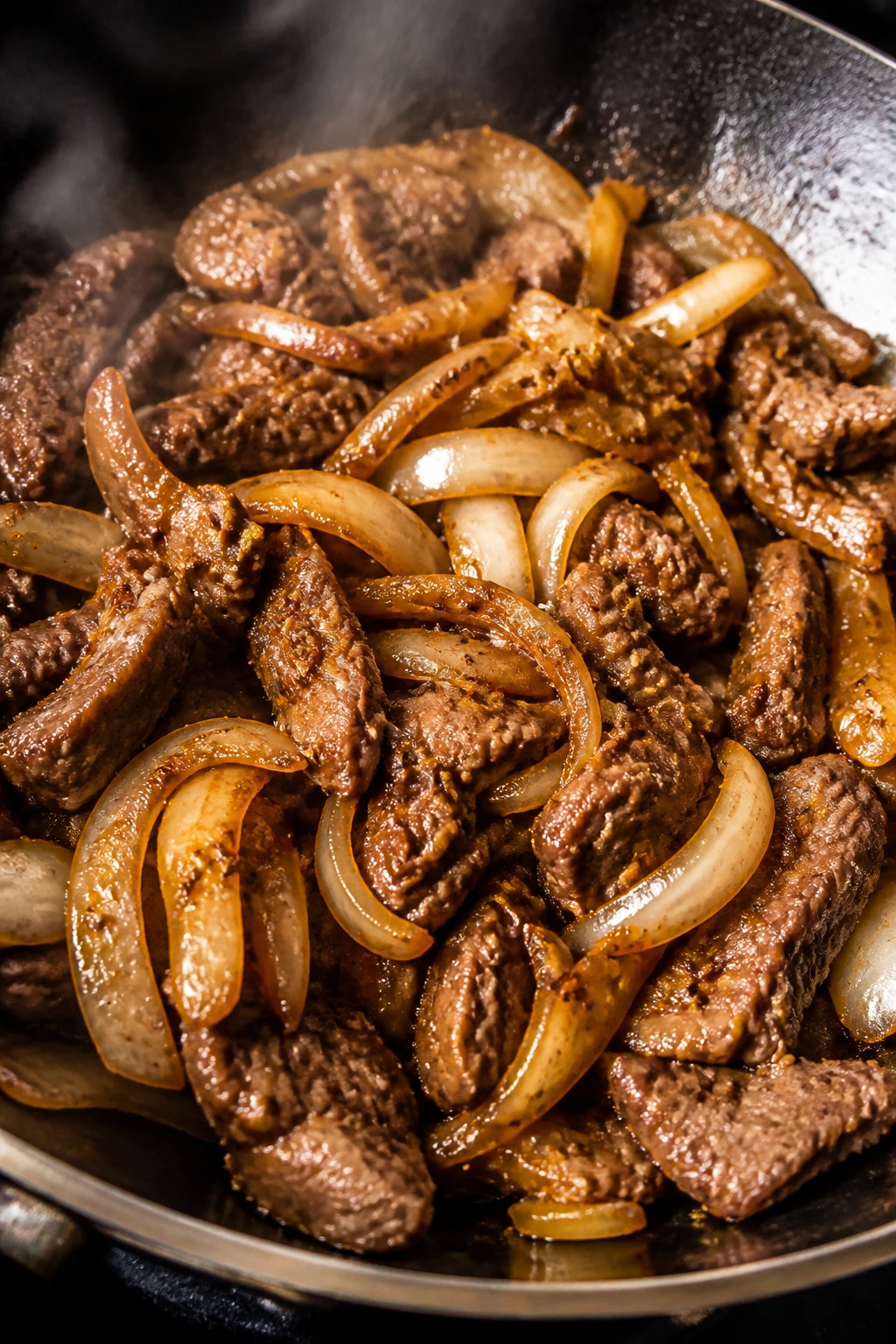
Beef with Cumin and Onions has a dry, fragrant heat that smells more like a spice market than a sauce pan. The onions soften just enough to catch the cumin without turning sweet-heavy.
Why It Works: Cumin toasts in the oil and clings to the beef, which gives you a stronger flavor than a watery sauce ever could. Onion and chile keep the dish lively and quick.
Key Ingredients:
- 1 lb beef strips, sliced thin
- 2 onions, sliced
- 2 tbsp ground cumin
- 1 tbsp chili flakes
- 3 garlic cloves, minced
- 2 tbsp light soy sauce
- 1 tbsp Shaoxing wine
- 1 tsp sugar
- 2 tbsp neutral oil
Quick Steps:
- Toss the beef with soy sauce, Shaoxing, cumin, and chili flakes.
- Sear the beef in a hot pan until browned.
- Add onions and garlic; cook until the onions soften at the edges.
- Return the beef and toss until the spices smell toasted.
Equipment for This Recipe:
- Wok or skillet
- Knife
- Mixing bowl
- Spatula
How to Serve This Dish: Serve with rice or flatbread, depending on how much sauce you want to chase. A simple green salad beside it helps tame the cumin.
Pro Tips for This Recipe:
- Ground cumin burns if the pan runs too hot for too long.
- Slice the onions thick enough to keep some texture.
- Keep the beef moving once it goes back in.
Variations on This Dish:
- Lamb Cumin Version: Swap lamb for beef if you want a richer pan.
- Pepper Cumin Beef: Add sliced green pepper for extra crunch.
Common Mistakes to Avoid with This Dish:
- Don’t let the cumin sit in the pan alone for long.
- Don’t overcook the onions into sweetness.
40. Pork and Mushroom Stir-Fry
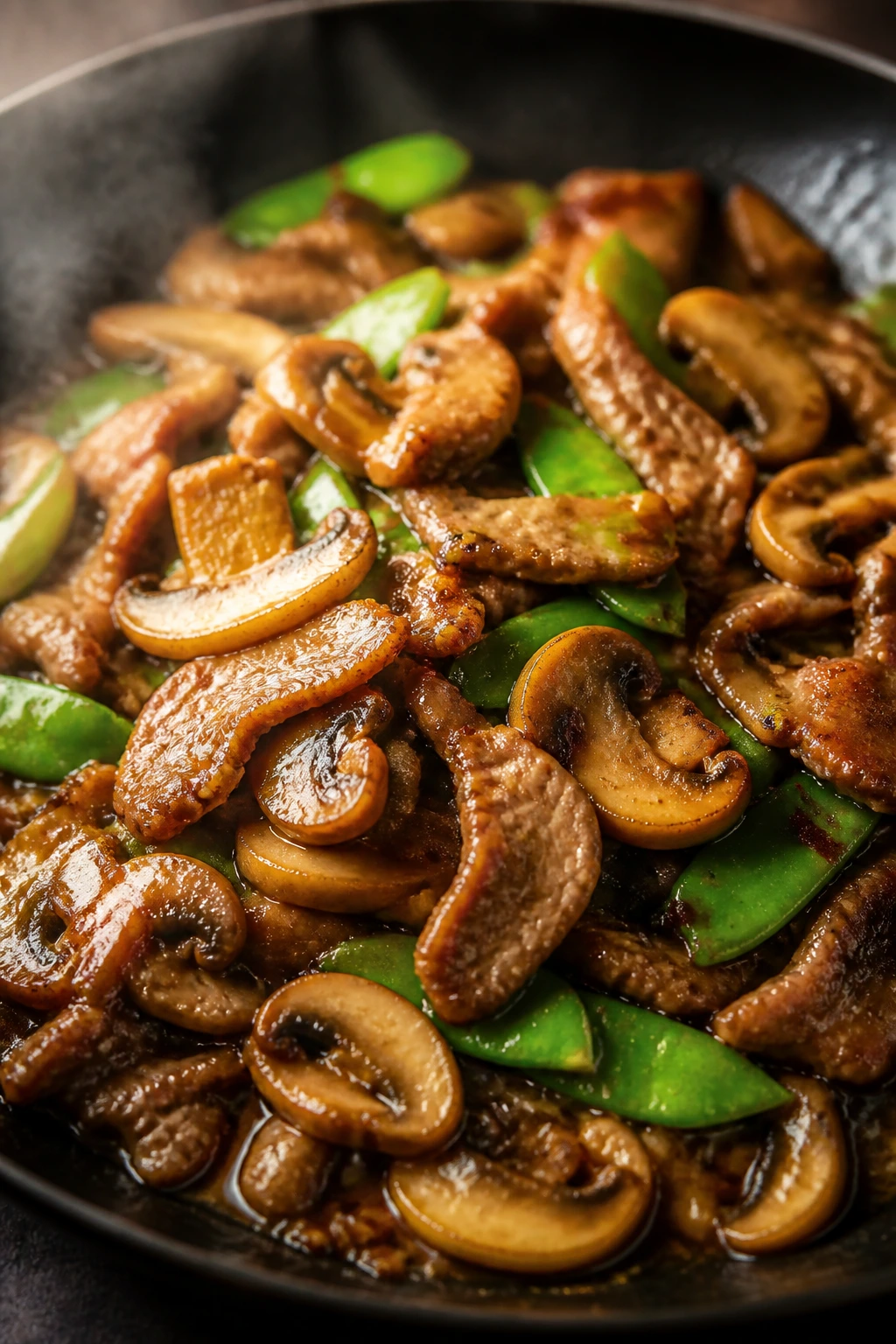
Pork and Mushroom Stir-Fry is deep, savory, and almost too easy to forget until you taste it. The mushrooms bring the earthiness, and the pork keeps the dish from drifting into side-dish territory.
Why It Works: Mushrooms soak up sauce and release their own liquid, which helps build a fast pan sauce. Pork loin or shoulder both work, as long as you slice them thin and cook them quickly.
Key Ingredients:
- 1 lb pork loin, sliced thin
- 8 oz mushrooms, sliced
- 1 cup snow peas
- 3 garlic cloves, minced
- 1 tbsp fresh ginger, minced
- 2 tbsp light soy sauce
- 1 tbsp oyster sauce
- 1 tsp cornstarch
- 1 tsp sugar
- 2 tbsp neutral oil
Quick Steps:
- Toss the pork with soy sauce and cornstarch; rest 10 minutes.
- Brown the pork and remove it from the pan.
- Cook mushrooms until they release moisture, then add snow peas, garlic, and ginger.
- Return the pork with oyster sauce and sugar; toss until glossy.
Equipment for This Recipe:
- Wok or skillet
- Knife
- Mixing bowl
- Spatula
How to Serve This Dish: It’s good over rice, but it also makes a solid noodle topping if you want a bigger dinner. The mushrooms bring enough depth that you don’t need much garnish.
Pro Tips for This Recipe:
- Let the mushrooms brown a little before the sauce goes in.
- Slice the pork thin so it stays tender.
- Snow peas should go in near the end to keep their snap.
Variations on This Dish:
- Chicken and Mushroom Version: Use chicken thighs instead of pork.
- Black Pepper Mushroom Pork: Add a pinch of black pepper at the end.
Common Mistakes to Avoid with This Dish:
- Don’t crowd the mushrooms or they’ll steam.
- Don’t let the pork simmer too long after it returns to the pan.
Why Stir-Fry Night Works Best When the Pan Stays Hot
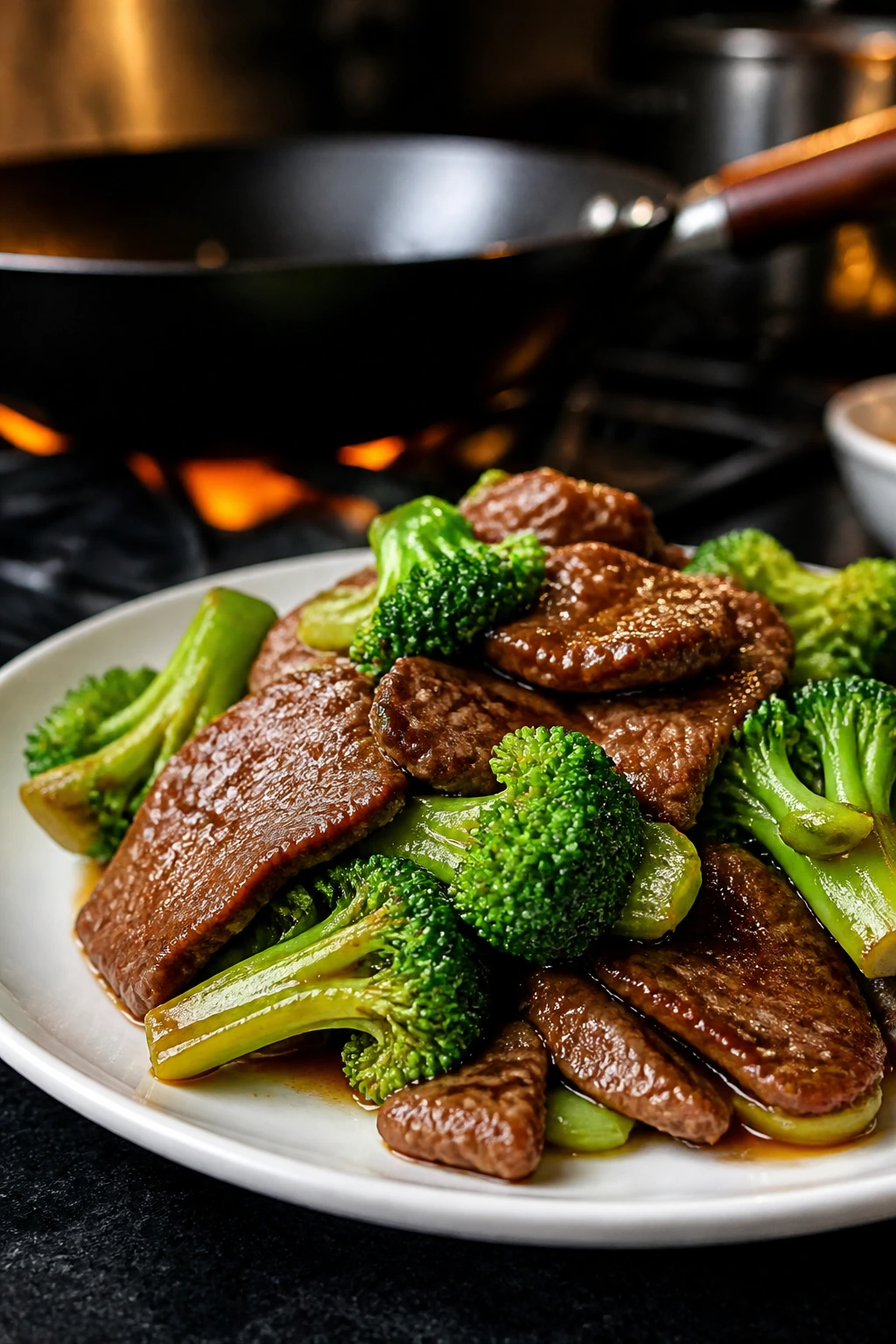
The reason these dishes travel so well from one kitchen to another is simple: they respect heat. A hot wok or skillet doesn’t just cook faster; it changes texture. Chicken sears instead of turning chalky. Broccoli stays green. Garlic turns sweet before it burns. That is the whole game.
There’s also a practical advantage that gets overlooked. Once you know how to build a sauce with soy sauce, cornstarch, Shaoxing wine, vinegar, and a touch of sugar, you stop treating each dinner like a separate event. You start working with a small set of moves. That’s why Chinese stir-fry cooking is so useful on a Tuesday night. It does not ask for a long list of tricks. It asks for timing, a sharp knife, and enough confidence to leave the pan alone for thirty seconds when that’s what the dish needs.
Essential Equipment for These Recipes
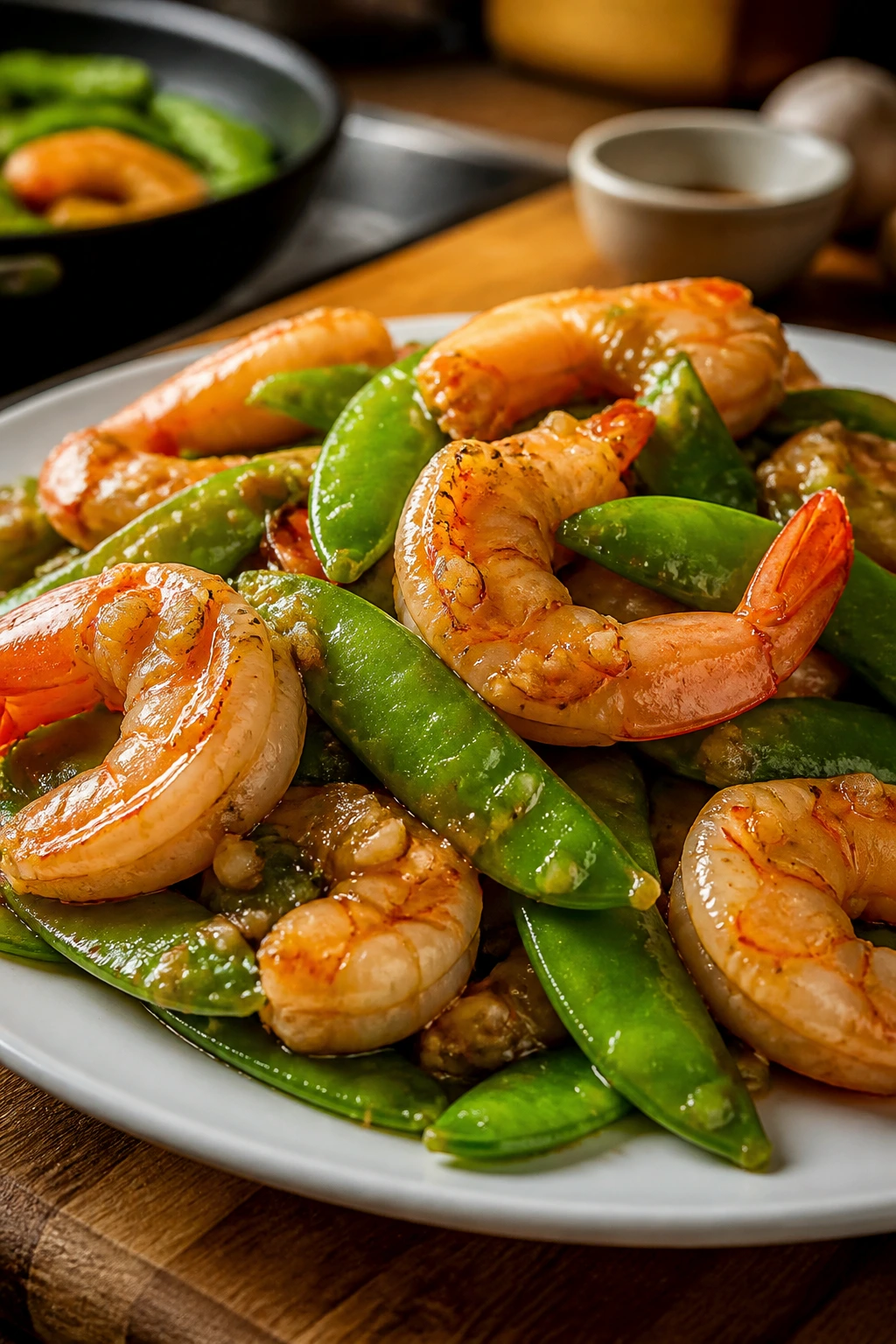
- 14-inch wok or large skillet: A wok gives the quickest recovery of heat, but a wide skillet works if you keep the batch size modest.
- Sharp chef’s knife: Thin, even slices are half the success in beef, pork, chicken, and noodles.
- Cutting board with a damp towel underneath: Keeps the board from skating while you chop fast.
- Mixing bowls, small and medium: One for the sauce, one for marinades, one for holding prepped vegetables.
- Tongs or a metal spatula: Good for turning beef and noodles without tearing them apart.
- Fine-mesh strainer or colander: Useful for noodles, blanched greens, and rinsing black beans.
- Small whisk or fork: Needed for cornstarch sauces so the slurry doesn’t clump.
- Lid for the skillet: Handy for clams, bok choy, cabbage, and anything that needs a brief steam.
Smart Shopping and Ingredient Tips
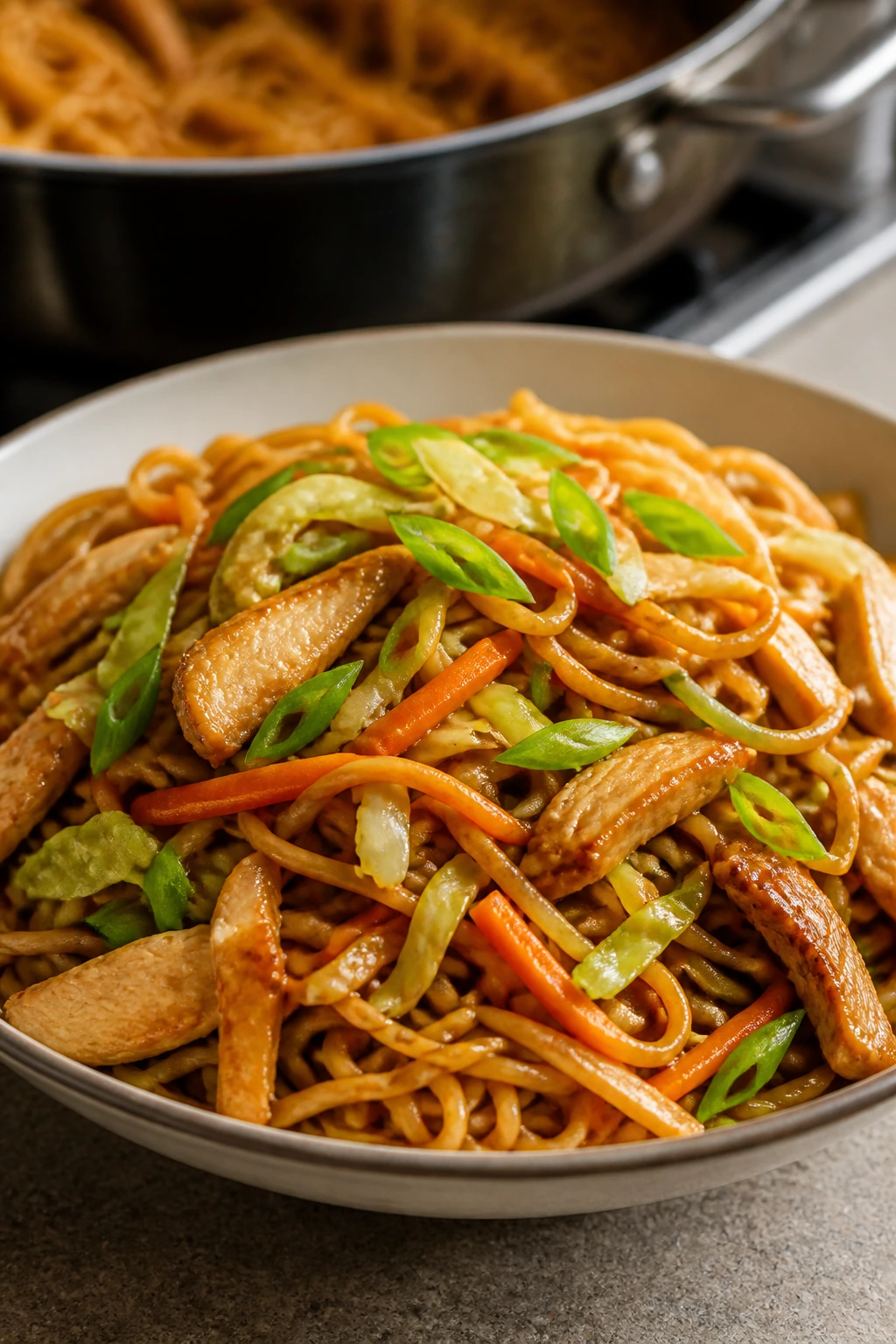
The biggest flavor difference in a stir-fry usually comes from three things: the cut of the protein, the quality of the soy sauce, and whether your vegetables were chopped before the oil went on. Start there. Flank steak, chicken thighs, pork tenderloin, and shrimp all behave differently, but they share one trait: they cook fast when sliced right. Breast meat is fine in a pinch, though it dries out faster and asks for more attention.
Soy sauce matters more than people admit. Light soy sauce gives salt and color; dark soy sauce gives color first and salt second; oyster sauce adds body; black bean sauce adds fermented depth. If your pantry only has one bottle, light soy sauce is the one to buy. If you cook these dishes often, keep sesame oil, rice vinegar, cornstarch, and Shaoxing wine close at hand. They show up over and over because they solve real problems in the pan.
Vegetables are forgiving, but only up to a point. Broccoli, bok choy, snow peas, long beans, napa cabbage, and mushrooms can all handle short high heat. Tomatoes, onions, and egg need gentler timing. Frozen vegetables are fine for some dishes, especially green beans and peas, but thaw them and blot them dry or they’ll flood the pan. And for garlic, use fresh cloves. The jarred stuff gets harsh when it hits heat.
How to Serve These Recipes
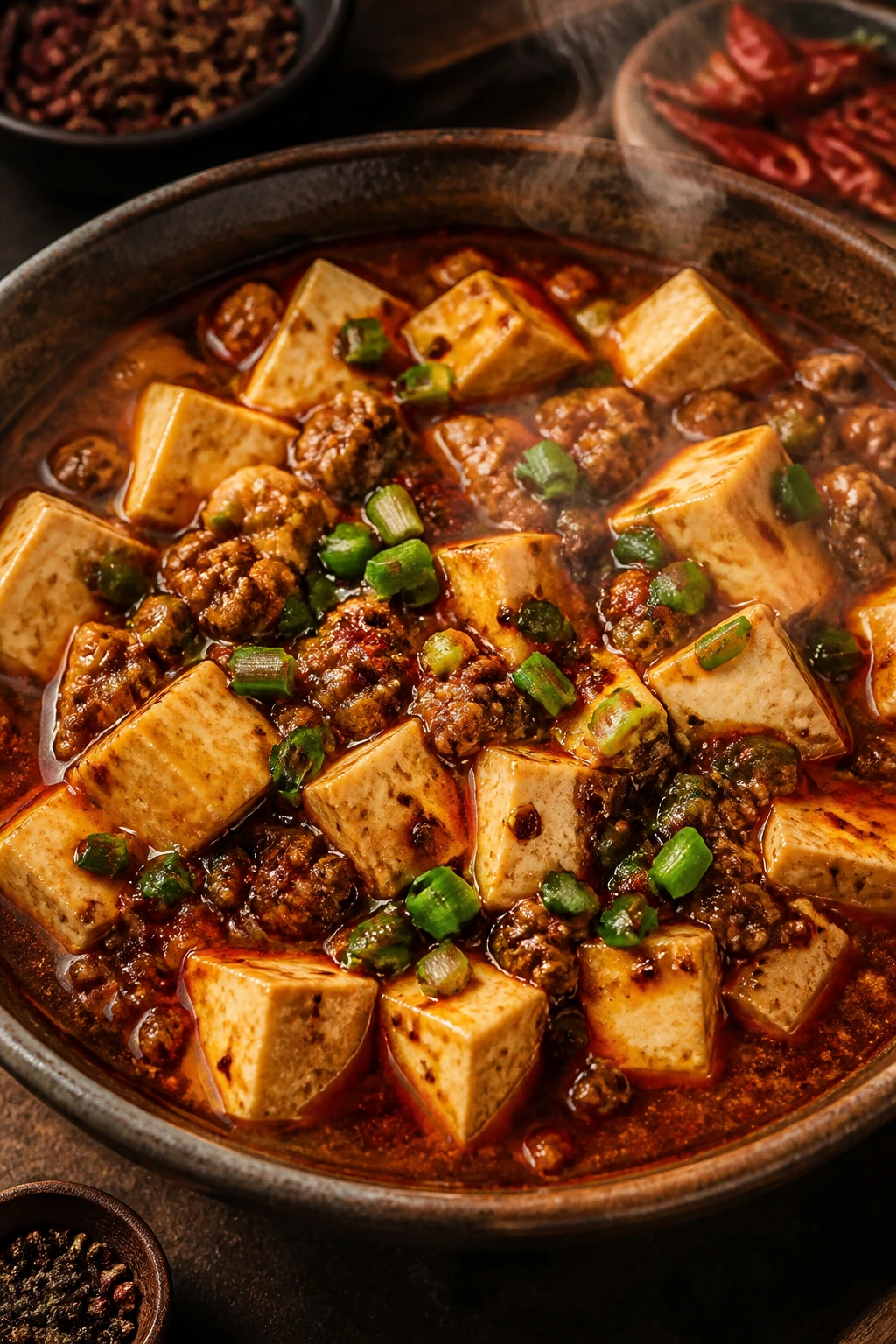
Presentation: Keep stir-fries in shallow bowls or wide plates so the steam can escape a little and the sauce stays visible. A final scatter of scallions, sesame seeds, or sliced chiles makes the dish look finished without turning fussy.
Accompaniments: Steamed jasmine rice is the obvious base, but rice noodles, lo mein noodles, and plain congee all make sense depending on the sauce. Cucumber salad, blanched gai lan, or a simple broth can balance the richer dishes like Mongolian Beef or Twice-Cooked Pork.
Portions: Most of these recipes feed 3 to 4 people with rice, or 2 people if you want generous bowls. For a bigger spread, pair one protein dish with one vegetable dish and one noodle or rice dish, then keep the sauces distinct so the plate doesn’t blur together.
Beverage Pairing: Jasmine tea fits almost all of them because it clears the palate without fighting the garlic and chile. Cold lager or dry sparkling water with lime works well when the dish leans salty or spicy.
Additional Tips and Flavor Boosters
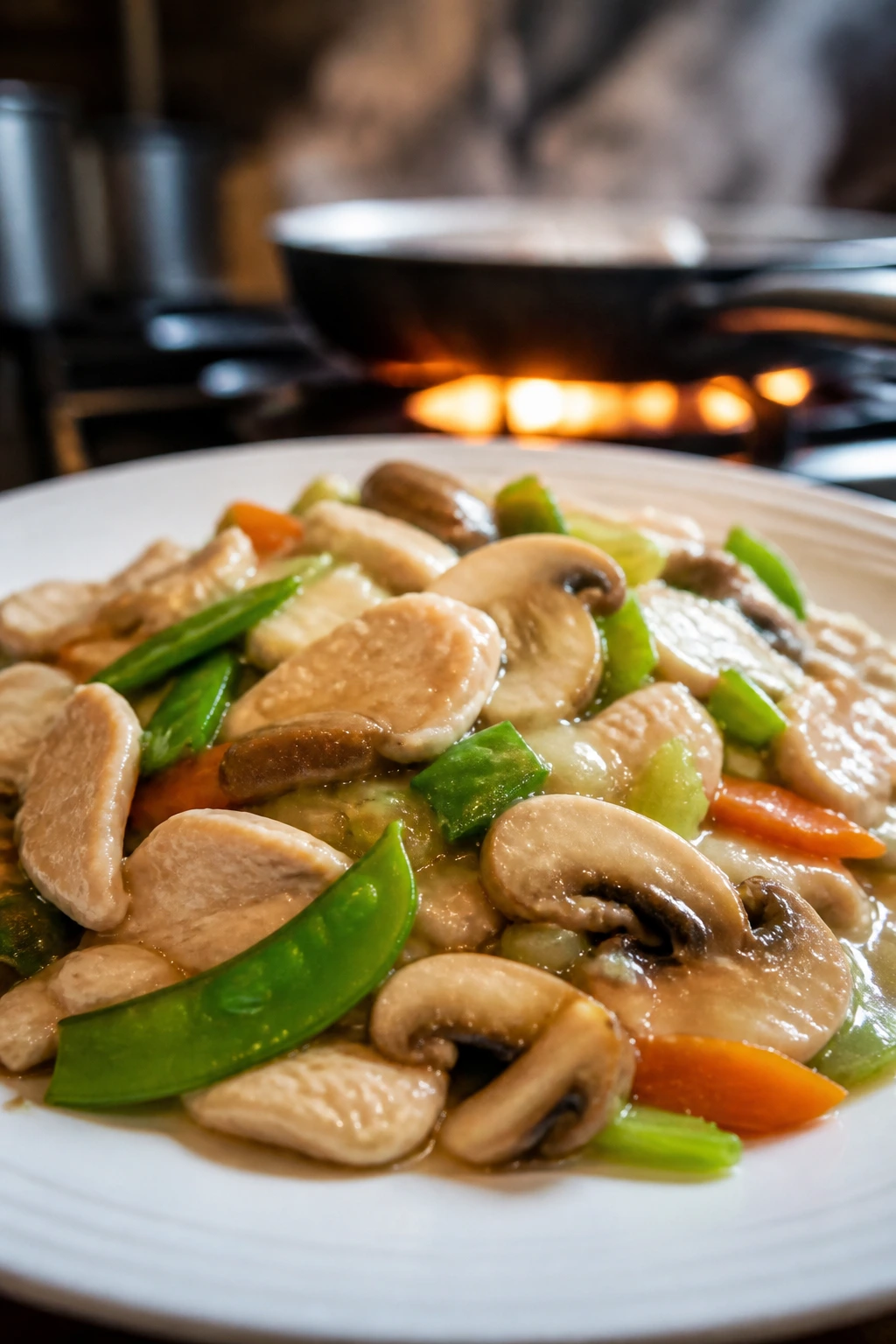
Flavor Enhancement: A small spoonful of chili crisp or toasted sesame oil at the very end can rescue a dish that tastes a little flat. Use it after the heat comes off, not before, or the aroma goes dull.
Customization: Swap proteins by shape, not just by name. Thin chicken, pork, beef, shrimp, and tofu all work best when their pieces are similar in size and thickness, which keeps the pan timing sane. For vegetables, think in textures: something crisp like snow peas, something soft like mushrooms, something sturdy like cabbage.
Serving Suggestions: Keep garnishes specific. Scallions for peppery freshness, peanuts for crunch, sesame seeds for a dry nutty note, cilantro only when the dish can take it. Not every bowl needs all four.
Make-It-Yours: For a lower-sugar version, cut the sweetener in the sauce by half and lean harder on vinegar or black vinegar. For a gluten-free plate, use tamari and check the oyster sauce label. For a meat-free dinner, tofu, mushrooms, and cauliflower can stand in for almost anything here if you brown them properly first.
Make-Ahead, Storage, and Reheating Guidance
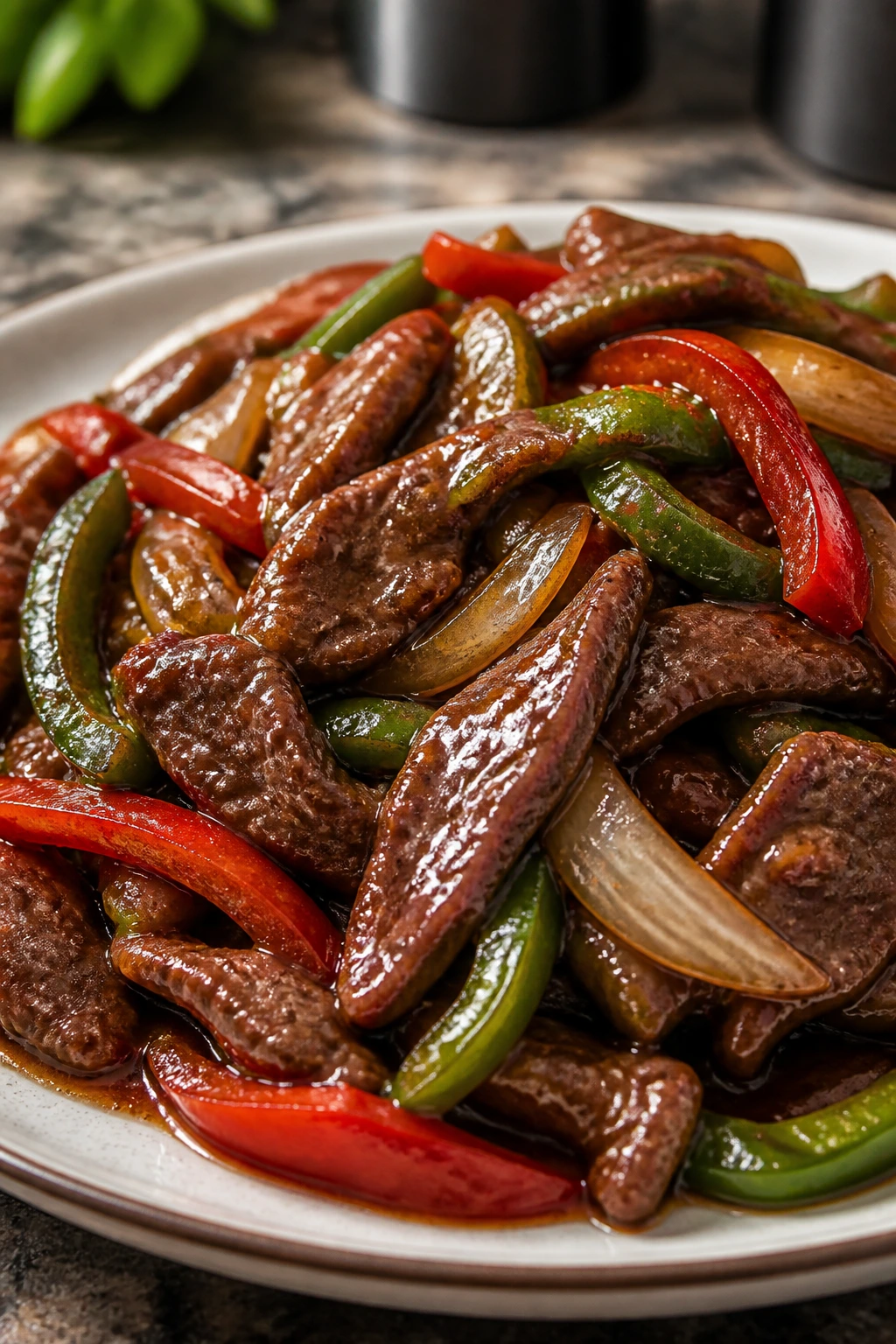
Most stir-fries keep best when the sauce is modest and the vegetables still have some structure. Chicken, beef, pork, and tofu dishes usually hold in the fridge for 3 to 4 days in airtight containers. Seafood is shorter-lived; plan on 2 days for shrimp or clam dishes. Noodle dishes usually stay in decent shape for 3 days, though the noodles may drink up some sauce as they sit.
Freezing works for some dishes and not others. Saucy beef, pork, chicken, and tofu stir-fries can freeze for up to 2 months, but the vegetables will soften after thawing. Egg fried rice can freeze too, though it reheats best when the grains were dry to start with. Shrimp dishes and anything with blanched greens are better eaten fresh. Egg-and-tomato stir-fry also loses its best texture in the freezer, so don’t bother.
For reheating, a skillet beats a microwave. Add a splash of water or stock, cover briefly, and warm over medium heat until the sauce loosens and the center is hot. Noodle dishes need a little more liquid and a quick toss; rice dishes need a lid for a minute or two so the grains steam back to life. Microwave reheating works in a pinch, but stop and stir halfway through so the edge doesn’t dry out before the center heats.
If you want to make ahead, chop vegetables and mix sauces the day before. Marinate beef, pork, or chicken for up to 12 hours in the fridge. Keep the vegetables dry, the sauce separate, and the wok hot.
Variations and Adaptations to Try
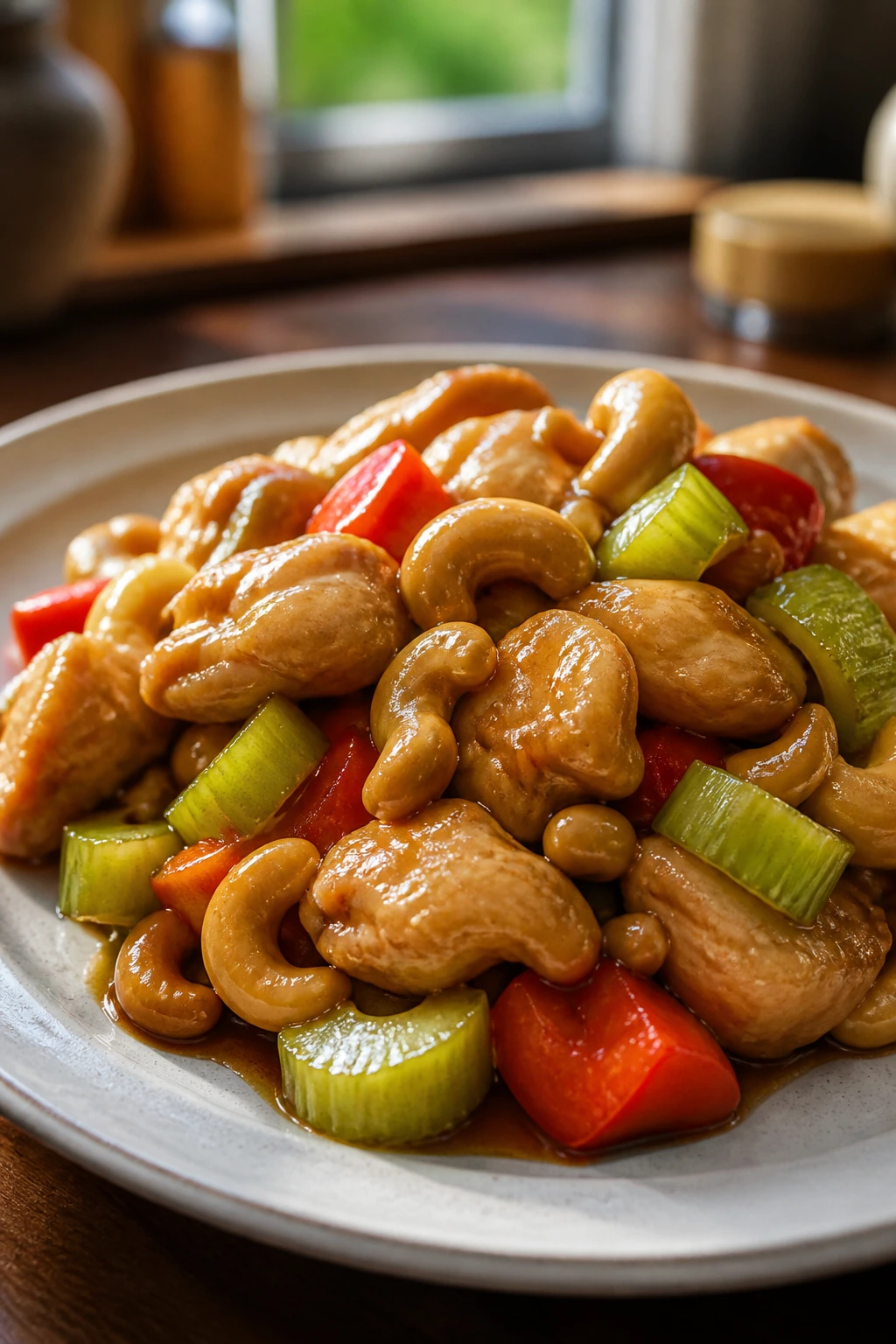
Gluten-Free Pan: Use tamari in place of soy sauce, and check that your oyster sauce or black bean sauce is labeled gluten-free. Rice noodles, rice, cauliflower, and bok choy make the swap easy without changing the spirit of the meal.
Lower-Sodium Stir Fry: Cut the soy sauce by one-third and add more garlic, ginger, black vinegar, or citrus zest for brightness. This works especially well in chicken, shrimp, and vegetable dishes where the sauce is lighter to begin with.
Vegetarian Wok Lineup: Tofu, mushrooms, cauliflower, egg, bok choy, cabbage, and long beans carry the vegetarian side of this collection without feeling like substitutes. Brown the tofu first and sear the mushrooms hard so the pan still tastes savory.
Kid-Calmer Version: Skip dried chiles, chili crisp, and heavy black pepper. Keep the sauce a little sweeter, lean on chicken, pork, or egg, and use carrots, broccoli, or snow peas because they stay familiar on the plate.
Extra-Spicy Sichuan Route: Add doubanjiang, chili oil, chili flakes, and a pinch of ground Sichuan peppercorn to dishes that can take heat. Kung Pao Chicken, Mapo Tofu, and Szechuan Green Beans handle this shift especially well.
Common Mistakes to Avoid
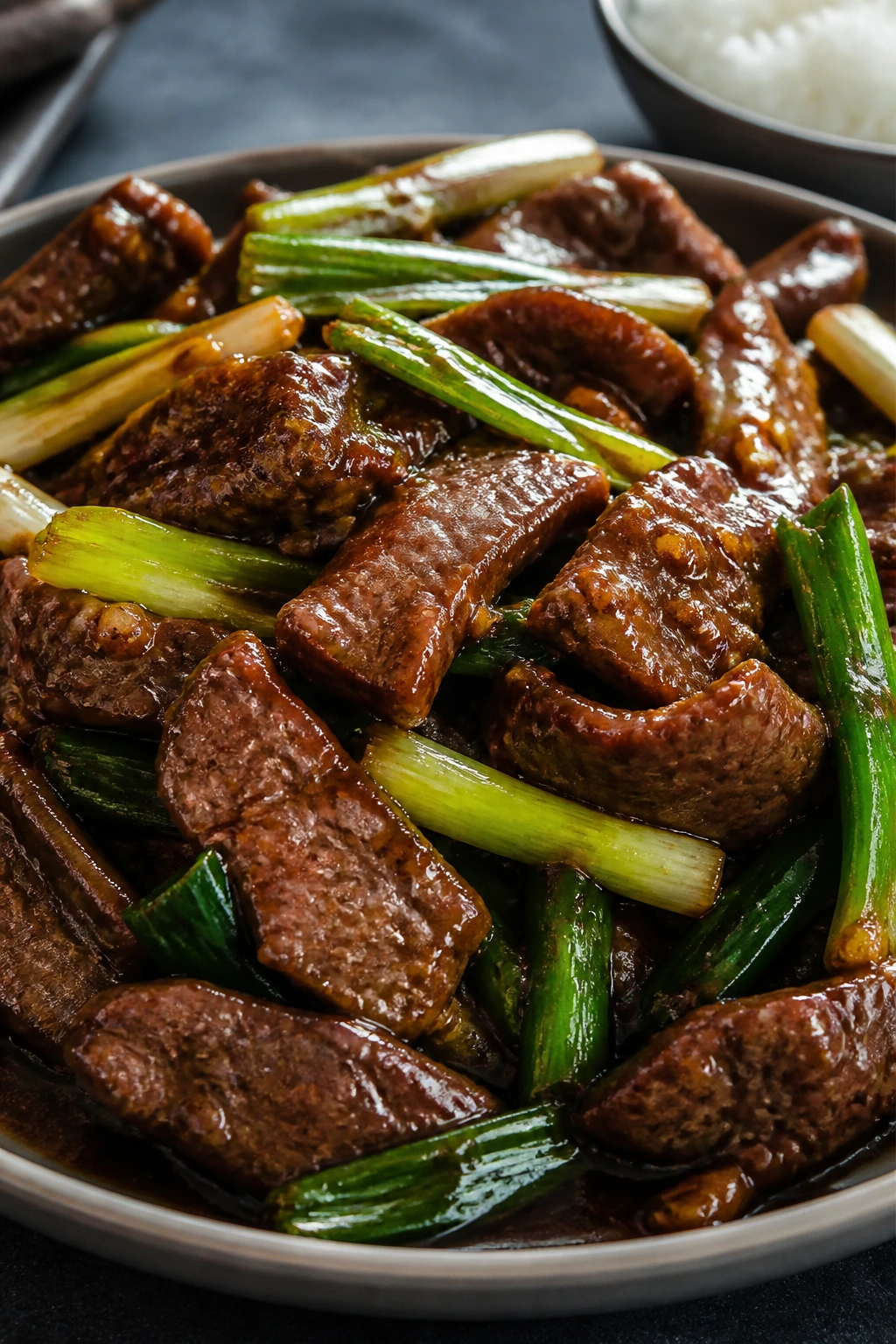
The first mistake is cooking in a pan that never gets hot enough. If the ingredients sit there and simmer, you get pale chicken, soft vegetables, and sauce that tastes boiled. Heat the pan until the oil shimmers before anything goes in, and cook in batches when the load gets heavy.
The second mistake is adding the sauce too early. Cornstarch needs heat to thicken, but it also needs space. If you dump it onto ingredients that are already crowded and wet, it clumps or waters down. Whisk it first, pour it in near the end, and give it 30 to 60 seconds to turn glossy.
The third mistake is slicing meat too thick or against the wrong grain. That’s how a fast stir-fry turns chewy. Take the extra minute to cut flank steak, pork, or chicken thinly and evenly. It changes the texture more than almost any sauce trick.
The fourth mistake is overcooking vegetables because you wanted them to “get soft enough.” A good stir-fry usually wants a little resistance. Broccoli should still have a green edge, snow peas should snap, bok choy stems should be crisp-tender, and cabbage should collapse only halfway.
The last mistake is trying to crowd too many ingredients into one pass. If the pan looks packed, the food has already started to steam. Use a bigger wok, split the batch, or accept that dinner will take one extra minute. It is still faster than fixing a soggy plate.
Frequently Asked Questions
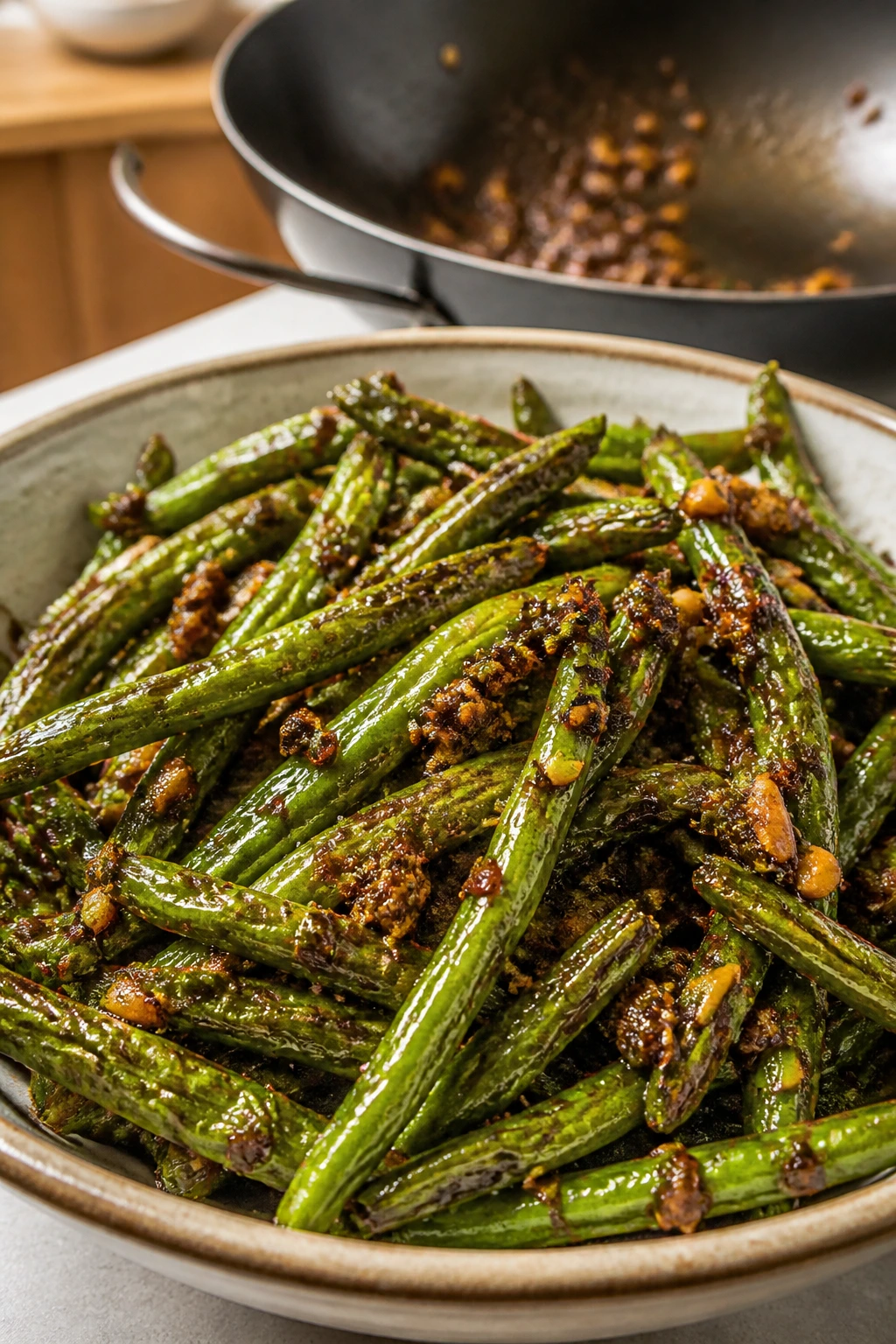
Can I make these recipes in a skillet if I don’t have a wok?
Yes. A wide skillet works well as long as you keep the batch size smaller and let the pan reheat between additions. A wok is better at recovering heat, but a good skillet with a broad surface still does the job.
What soy sauce should I buy first?
Buy light soy sauce first. It’s the backbone of most stir-fries and handles salt, color, and basic seasoning. After that, add dark soy sauce for color, oyster sauce for body, and black vinegar for sharper dishes.
Can I use frozen vegetables?
You can, especially for green beans, peas, or mixed vegetables. Thaw them first and blot them dry so they don’t flood the pan. Frozen broccoli and bok choy usually lose more texture, so use them only when you’re okay with a softer result.
How do I keep the beef tender?
Slice it thin against the grain, marinate it with a little cornstarch, and cook it fast over high heat. If it goes back into the pan at the end, it only needs enough time to warm through. Long cooking is what turns it tough.
What if my sauce gets too thick?
Add 1 to 2 tablespoons of water or stock and toss over low heat for a few seconds. If it gets too thin, let it bubble briefly or add a tiny cornstarch slurry. The fix is easy if you catch it early.
Can I prep these dishes ahead of time?
Yes, and you should. Slice the meat, chop the vegetables, and mix the sauce earlier in the day or the night before. Keep wet and dry ingredients separate until the pan is hot.
Which recipes are best for people who don’t like spicy food?
Beef and Broccoli, Moo Goo Gai Pan, Chicken Lo Mein, Egg Fried Rice, Garlic Bok Choy, and Tomato and Egg Stir-Fry are all naturally calmer. You can still add chili oil at the table for anyone who wants heat.
How do I scale these up for a crowd?
Cook in batches. That matters more than the ingredient math. If you double everything and cram it into one pan, the food steams and the sauce goes dull. Make the sauce ahead, then sear the protein and vegetables in separate rounds before combining them.
A Hot Pan, A Fast Plate
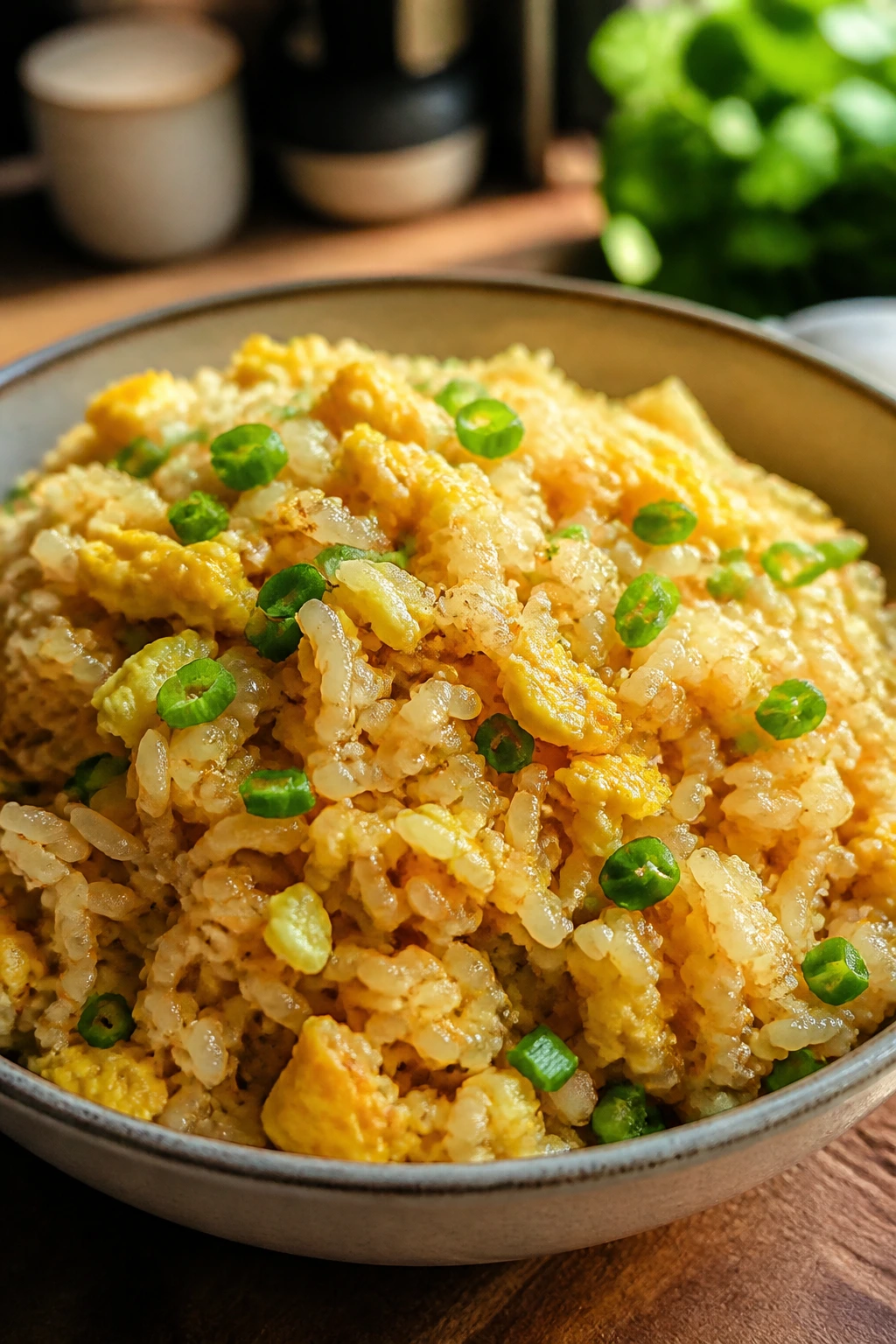
These forty dishes all point in the same direction: keep the pan hot, keep the chopping clean, and don’t ask one sauce to do the work of five. That’s why stir-fry night stays useful. It’s fast, yes, but it also rewards attention in a way that feels satisfying rather than fussy.
Pick one dish that matches the fridge you have in front of you. Maybe it’s broccoli and beef. Maybe it’s tofu and bok choy, or shrimp with garlic sauce, or the orange chicken version that tastes bright enough to wake up the table. Once you’ve cooked a few of them, the patterns start to click, and the whole category becomes less like a list of recipes and more like a set of moves you can trust.