



Sticky Thai peanut chicken is the kind of skillet dinner that makes you stop stirring and lean over the pan for a second sniff. Warm peanut butter, garlic, ginger, lime, and soy turn into a glossy sauce that clings to chicken instead of sliding off in a sad puddle at the bottom of the bowl.
The trick is balance. Peanut butter by itself is heavy. Too much heat and it turns grainy; too little acid and it tastes flat; too much sugar and it starts to feel like dessert wearing a savory disguise. Get the proportions right, though, and you’ve got that satay-style flavor profile people chase in takeout boxes: nutty, salty, sweet, sharp at the edges, and just a little sticky on the tongue.
I like thighs for this more than breasts, and I’ll say that plainly. Thigh meat forgives a minute of extra searing, and the sauce has something juicy to cling to. A quick dusting of cornstarch helps the chicken pick up color, which matters here. Pale chicken under peanut sauce is a missed opportunity.
Why This Version Works So Well
-
The sauce stays glossy, not gluey: A little warm water loosens the peanut butter before it hits the skillet, so it turns satiny instead of clumping into a paste.
-
The chicken gets real color first: Cornstarch and a hot pan give the thighs a browned edge, which adds flavor before the sauce even shows up.
-
The acid keeps the whole pan lively: Rice vinegar and lime cut through the peanut richness, so each bite tastes bright instead of heavy.
-
The vegetables keep the texture awake: Bell pepper and snap peas bring crunch and color, which matters because a pan full of soft food gets boring fast.
-
The heat is easy to control: Chili garlic sauce gives a gentle burn, but you can push it higher or leave it mellow without breaking the recipe.
-
It reheats better than most saucy chicken dishes: The peanut base thickens in the fridge, then loosens again with a splash of water or lime in the skillet.
A Quick Snapshot Before the Skillet Starts
The setup is fast. The sauce wants your attention for the last few minutes, but the rest is a straight, practical skillet dinner.
Yield: Serves 4
Prep Time: 20 minutes
Cook Time: 18 minutes
Total Time: 38 minutes
Difficulty: Intermediate — the ingredients are simple, but the pan temperature and sauce texture need a little attention.
Chill/Rest Time: None
Best Served: Right away, while the sauce is hot and glossy
The Ingredient List That Keeps the Sauce Sticky
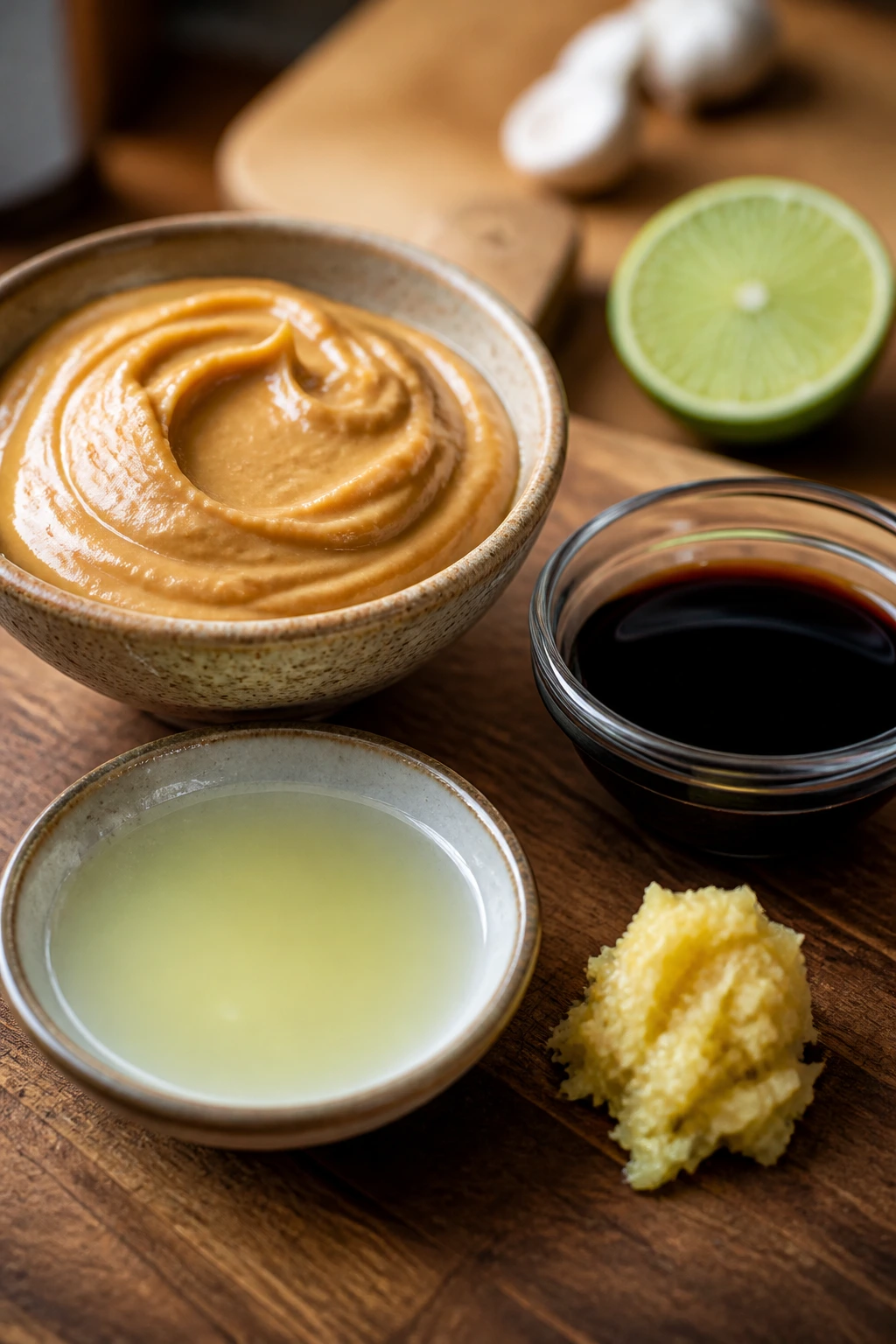
For the Chicken:
- 1½ pounds boneless, skinless chicken thighs, cut into 1-inch pieces
- 1 tablespoon cornstarch
- 1 teaspoon kosher salt
- ½ teaspoon black pepper
- 1 tablespoon neutral oil, such as avocado or canola
For the Peanut Sauce:
- ½ cup creamy peanut butter, well stirred if using a natural style
- ¼ cup low-sodium soy sauce
- 3 tablespoons packed light brown sugar
- 2 tablespoons rice vinegar
- 2 tablespoons fresh lime juice
- 3 tablespoons warm water, plus more as needed
- 1 tablespoon fresh ginger, finely grated
- 3 garlic cloves, finely grated or minced very fine
- 1 tablespoon chili garlic sauce or sambal oelek
- 1 teaspoon toasted sesame oil
For the Vegetables and Finish:
- 1 red bell pepper, thinly sliced
- 1 cup sugar snap peas, trimmed
- 3 scallions, thinly sliced
- 2 tablespoons chopped roasted peanuts
- 1 tablespoon sesame seeds
- 2 tablespoons chopped cilantro, optional
- 1 lime, cut into wedges
Chicken, Peanut Butter, and the Parts That Matter Most
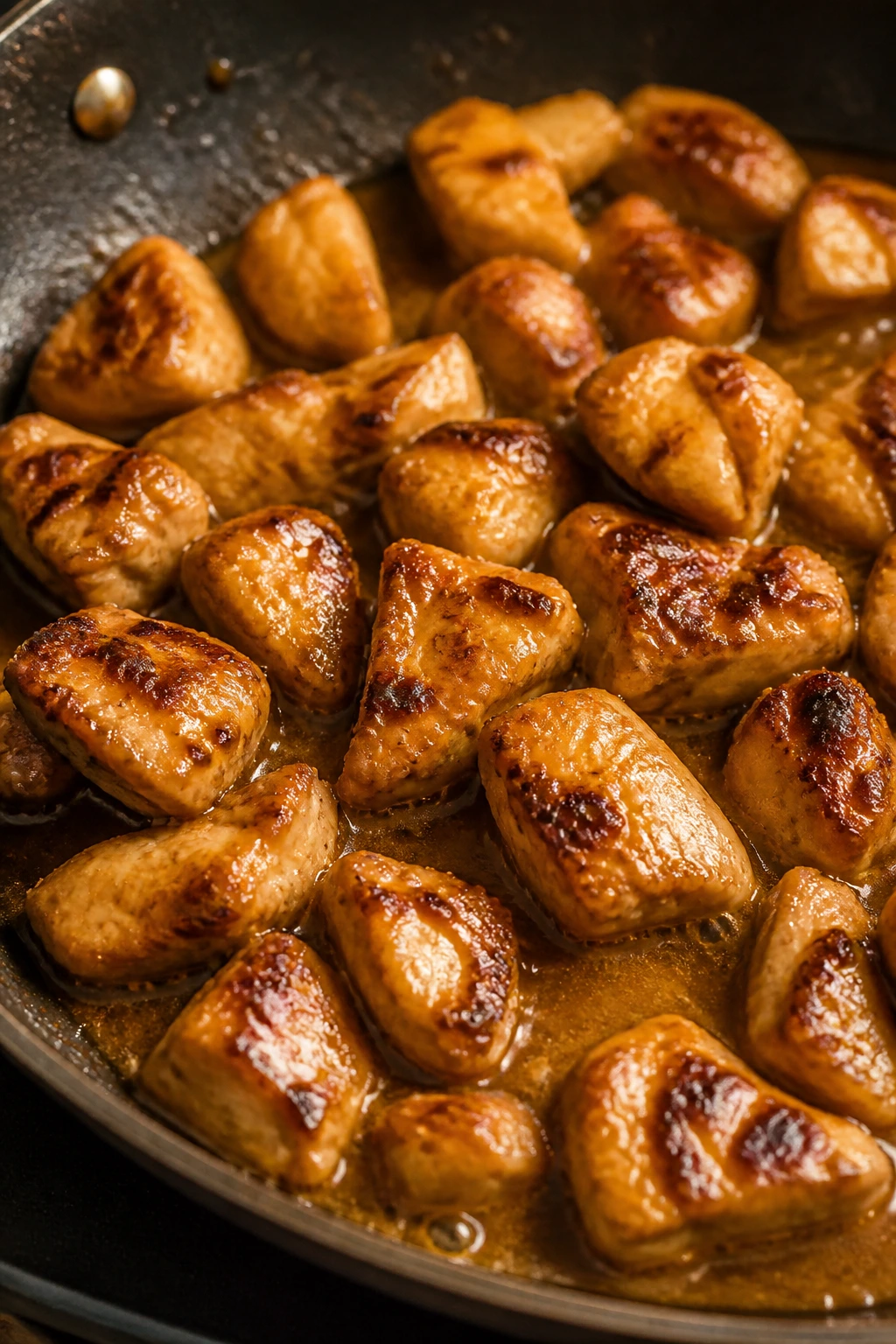
Chicken Thighs That Stay Juicy
-
What to use: 1½ pounds boneless, skinless chicken thighs, cut into 1-inch pieces. That size gives you enough surface area for browning without making the pieces so small that they dry out before the sauce goes in.
-
Preparation: Pat the chicken dry before anything else. Then toss it with cornstarch, salt, and pepper until the pieces look lightly dusty, not gummy. A dry surface browns; a wet one steams.
-
Substitutions: Boneless chicken breast works if that’s what you’ve got, but cut it into slightly larger pieces and watch it closely. Chicken tenderloins can work too, though they cook a little unevenly because of the shape.
-
Tips: Thighs should hit 165°F in the center, but I like to pull them once they’re almost there and let the sauce finish the job. That keeps the texture soft instead of stringy.
Peanut Butter and the Sauce Liquids
-
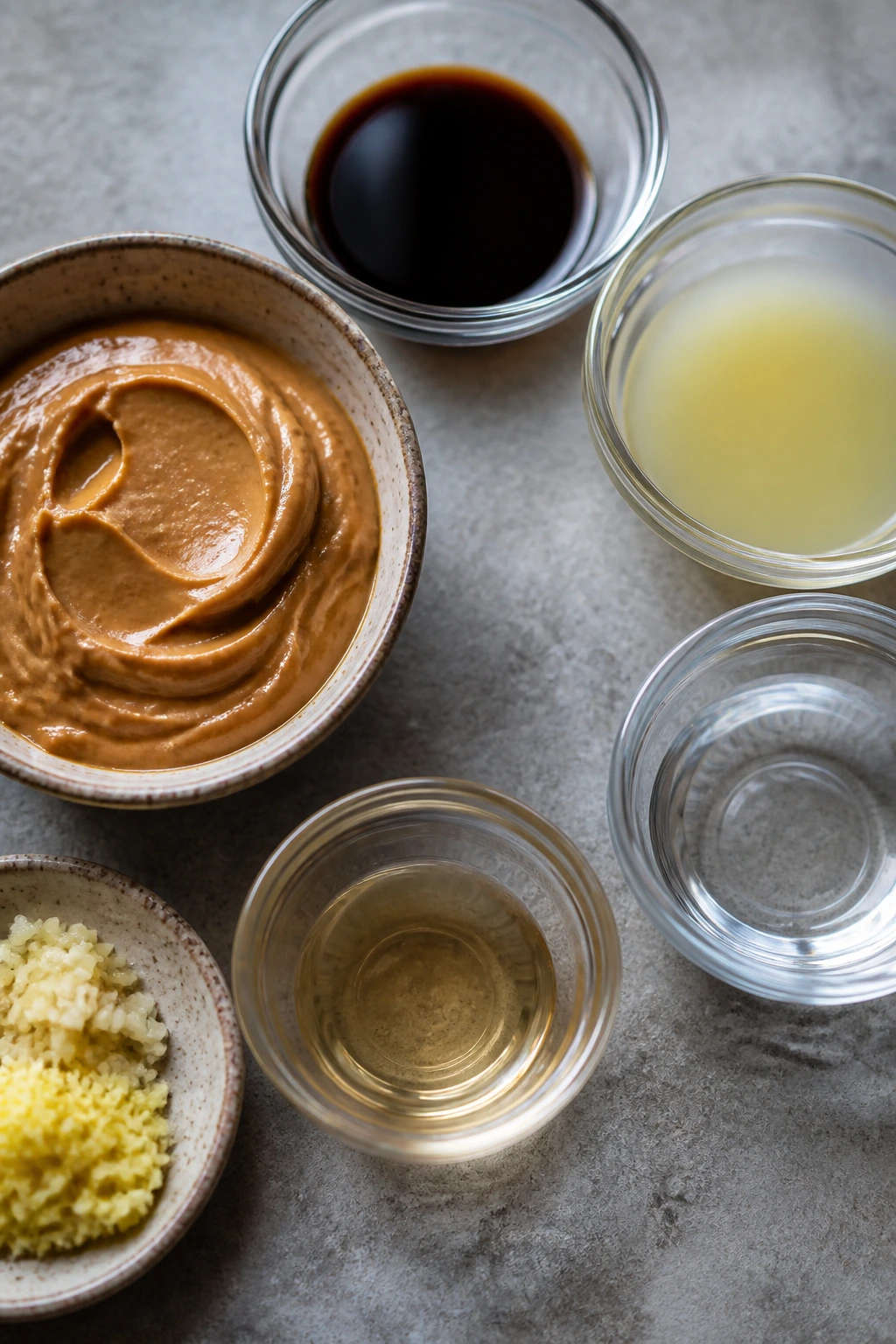
What to use: ½ cup creamy peanut butter, ¼ cup low-sodium soy sauce, 3 tablespoons brown sugar, 2 tablespoons rice vinegar, 2 tablespoons lime juice, 3 tablespoons warm water, and 1 teaspoon toasted sesame oil. That mix gives you salt, sweet, fat, and acid in a way that actually tastes like dinner.
-
Preparation: Whisk the sauce in a bowl before it ever touches the skillet. Peanut butter needs room to loosen up, and warm water helps it move without breaking into oily streaks.
-
Substitutions: Tamari can replace soy sauce if you need gluten-free, and honey can stand in for brown sugar if that’s what sits in your pantry. Almond butter or sunflower seed butter will work in a pinch, though the flavor gets less peanut-forward.
-
Tips: If your peanut butter has a hard layer of oil on top, stir it until the jar is fully smooth first. Uneven peanut butter makes uneven sauce. That’s one of those annoying little truths.
Ginger, Garlic, and Heat
-
What to use: 1 tablespoon grated ginger, 3 finely grated garlic cloves, and 1 tablespoon chili garlic sauce or sambal oelek. These are the sharp edges that stop the sauce from tasting like sweet nut butter.
-
Preparation: Grate the ginger and garlic as finely as you can, or mince them to a paste with the side of your knife. Large chunks tend to scorch or stay raw-tasting in a quick skillet sauce.
-
Substitutions: Ginger paste is fine if fresh ginger is missing, and crushed red pepper can replace chili garlic sauce if that’s all you have. The flavor shifts a little, but the recipe still works.
-
Tips: Garlic and ginger should smell sweet and bright, not harsh. If they start browning hard in the pan, the heat is too high and the sauce will taste bitter at the end.
Vegetables, Herbs, and Crunch
-
What to use: 1 red bell pepper, 1 cup sugar snap peas, 3 scallions, 2 tablespoons chopped roasted peanuts, 1 tablespoon sesame seeds, and optional cilantro. These bring crunch, color, and a fresh finish that keeps the bowl from feeling dense.
-
Preparation: Slice the bell pepper thin so it softens fast, trim the snap peas, and keep the scallions for the very end. The garnishes should be ready before the sauce hits the pan because the sauce moves quickly.
-
Substitutions: Broccoli florets, shredded carrots, snow peas, or sliced zucchini all work. If cilantro tastes like soap to you, skip it and use Thai basil or mint instead.
-
Tips: Add the herbs after the pan comes off the heat. If they cook in the sauce, they lose that clean, green smell that makes the final bowl taste alive.
The Skillet, Whisk, and Knife You Actually Need
-
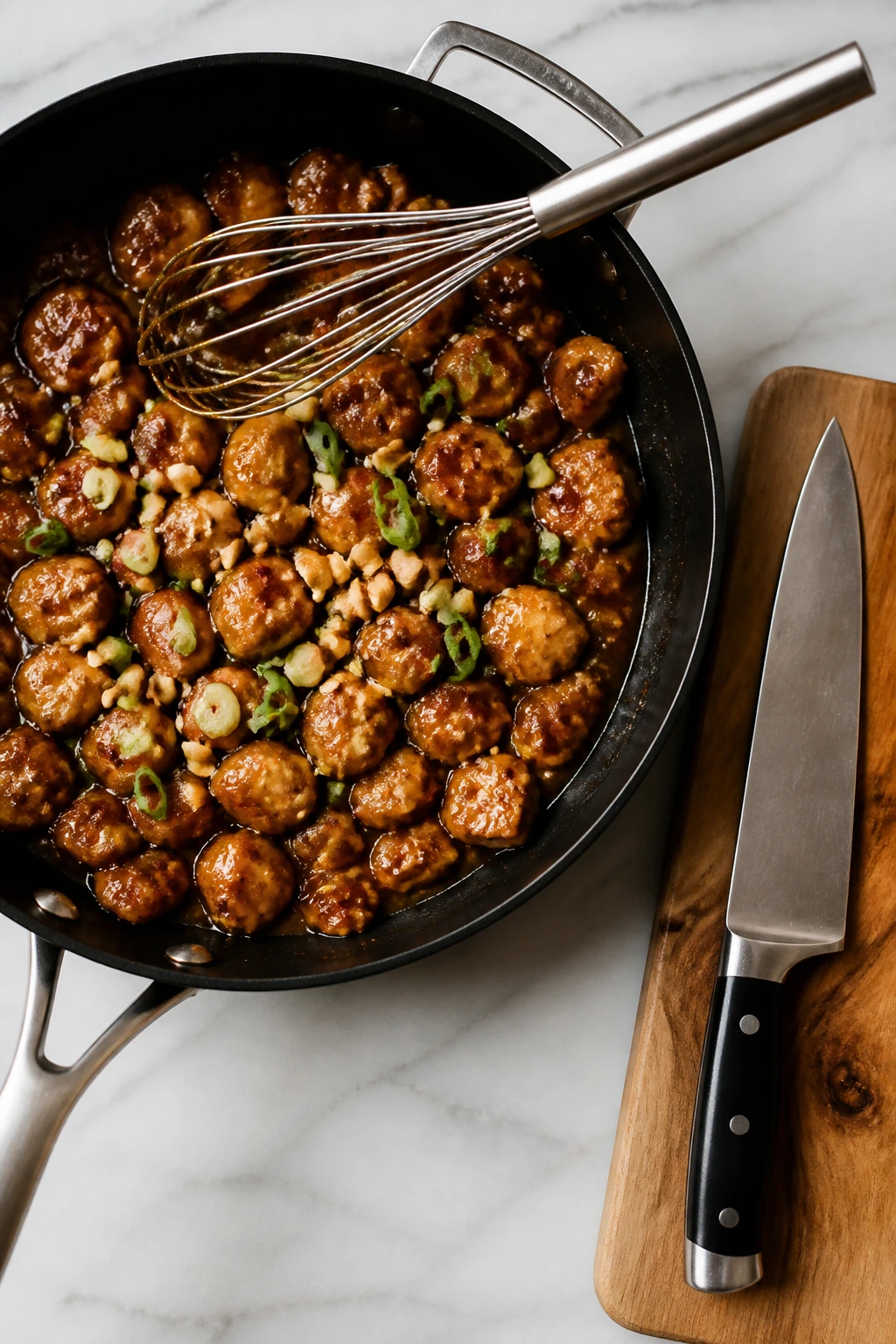
12-inch skillet or wok: You want enough surface area to brown the chicken in a single layer. A smaller pan traps steam and makes the whole thing pale.
-
Medium mixing bowl: This is for the peanut sauce, and a bowl with a little depth helps you whisk out any clumps before the sauce goes near heat.
-
Whisk: Peanut butter needs more than a spoon. A whisk gets the sauce smooth faster and keeps the ginger and garlic distributed.
-
Tongs or a silicone spatula: Tongs help with turning chicken pieces without tearing off the crust. A heatproof spatula is handy for scraping up the sauce.
-
Microplane or fine grater: Not mandatory, but excellent for ginger and garlic. Finer pieces disappear into the sauce instead of poking at your teeth.
-
Instant-read thermometer: Useful if you cook chicken breast or want to avoid guesswork. It takes the drama out of doneness.
-
Sharp chef’s knife and cutting board: The vegetables cook fast, so clean cuts matter. Ragged slices soften unevenly.
-
Small bowls for toppings: You can scatter peanuts and herbs from your hand, sure. Or you can keep them in little bowls and feel mildly organized.
How I Cook It, Step by Step
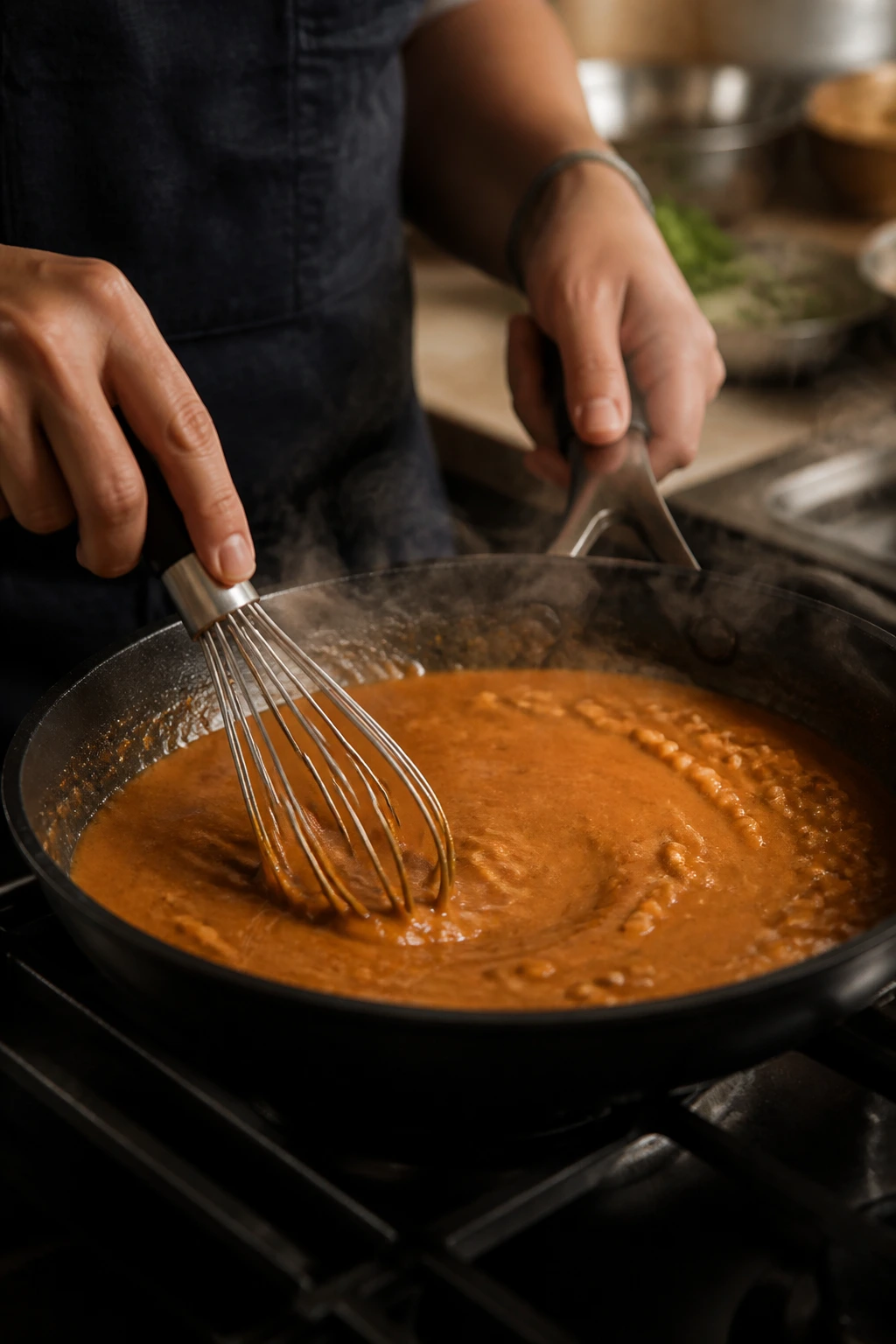
Make the Peanut Sauce:
- In a medium bowl, whisk together the peanut butter, soy sauce, brown sugar, rice vinegar, lime juice, warm water, ginger, garlic, chili garlic sauce, and sesame oil until smooth. The sauce should look thick but pourable, like warm satin. If it seems stiff, add 1 more tablespoon of warm water.
Prep the Chicken: 2. Pat the chicken thighs dry with paper towels, then toss them in a bowl with the cornstarch, salt, and pepper until every piece has a thin, even coating. The coating should cling without turning pasty. If the chicken feels wet, it will steam instead of sear.
Sear the Chicken: 3. Heat the oil in a 12-inch skillet over medium-high heat until it shimmers. Add the chicken in a single layer and leave it alone for 3 to 4 minutes so the bottoms can brown, then turn the pieces and cook 2 to 3 minutes more. The chicken should look golden on the edges and mostly cooked through, with some pink still hiding in the thickest pieces.
Add the Vegetables: 4. Add the bell pepper and snap peas to the skillet and stir for 2 to 3 minutes, just until the pepper starts to soften and the snap peas turn a brighter green. You want tender-crisp, not limp. The vegetables should still have some snap left.
Glaze Everything: 5. Reduce the heat to medium-low and pour in the peanut sauce. Stir constantly for 2 to 4 minutes, scraping the bottom of the pan as the sauce bubbles and thickens. It should cling to the chicken in glossy sheets. If the sauce tightens too fast, add warm water 1 tablespoon at a time. Cook until the chicken reaches 165°F.
Finish and Serve: 6. Take the pan off the heat and stir in the scallions and half of the peanuts. Spoon the chicken over hot jasmine rice, then top with the remaining peanuts, sesame seeds, cilantro if you’re using it, and lime wedges. A squeeze of lime at the table wakes the whole dish up.
How to Serve It Without Making It Heavy
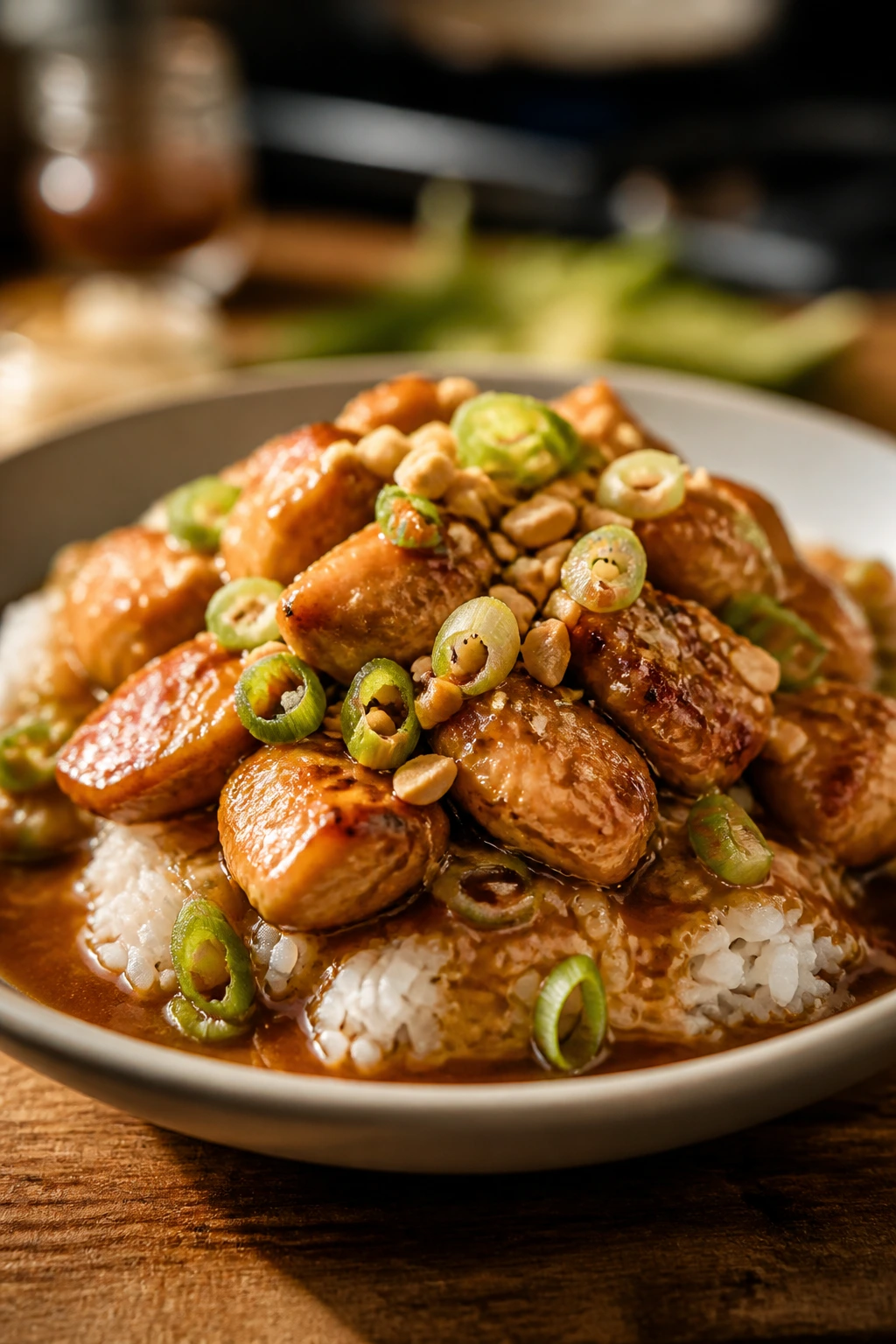
Presentation: Serve the chicken in shallow bowls over a mound of jasmine rice so the sauce can pool around the edges instead of disappearing into a deep pile. I like the scallions and peanuts sprinkled in two stages: some in the pan, some at the end. That gives the bowl a little movement.
Accompaniments: A crisp cucumber salad, steamed broccoli, or shredded cabbage dressed with lime and salt all work well beside this. If you want something more substantial, add roasted broccoli or a handful of blistered green beans. Plain rice is enough, but a side of crunchy vegetables makes the dinner feel complete.
Portions: Four servings is realistic if this is the main event and you’re using rice. If you have big eaters, serve the chicken over a slightly larger bed of rice and add an extra vegetable. Leftovers shrink a little in feel, not in flavor, which is a nice change for once.
Beverage Pairing: Iced jasmine tea, a dry lager, or sparkling water with lime all cut through the peanut richness without competing with it. A ginger beer works too, though I’d keep it on the drier side if you can find one.
Small Moves That Make the Sauce Taste Restaurant-Level
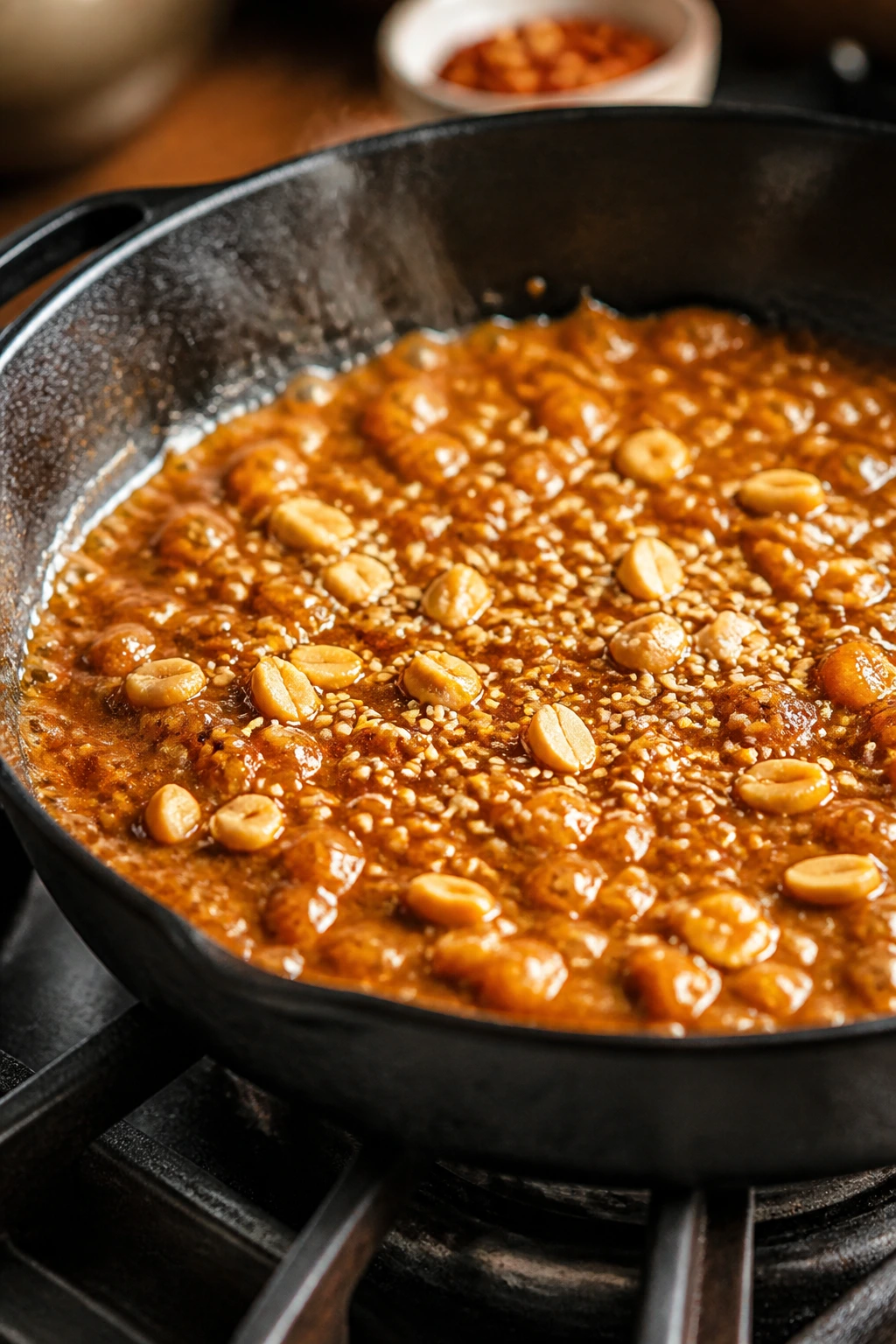
Flavor Enhancement: Toast the peanuts and sesame seeds in the dry skillet for 60 seconds after the chicken comes out, then scatter them on top at the end. The smell is immediate. Nutty, warm, a little roasty. It’s one of those tiny steps that makes the dish taste finished.
Time-Saver: Mix the sauce in a measuring cup or small pitcher instead of a bowl. That way, once the chicken and vegetables are ready, you can pour it straight in without hunting for a spoon or making another mess.
Texture Trick: Let the sauce bubble for the full 2 minutes before you call it done. Peanut butter needs a moment to lose that raw, spread-on-toast feel and turn into a proper glaze. If you stop too soon, the sauce tastes loose and a little flat.
Make-It-Yours: If you want more brightness, add lime zest right before serving. If you want more heat, a spoonful of chili crisp on top is hard to beat. For a milder bowl, cut the chili garlic sauce in half and lean on extra scallions instead.
The Mistakes That Ruin Sticky Peanut Chicken
-
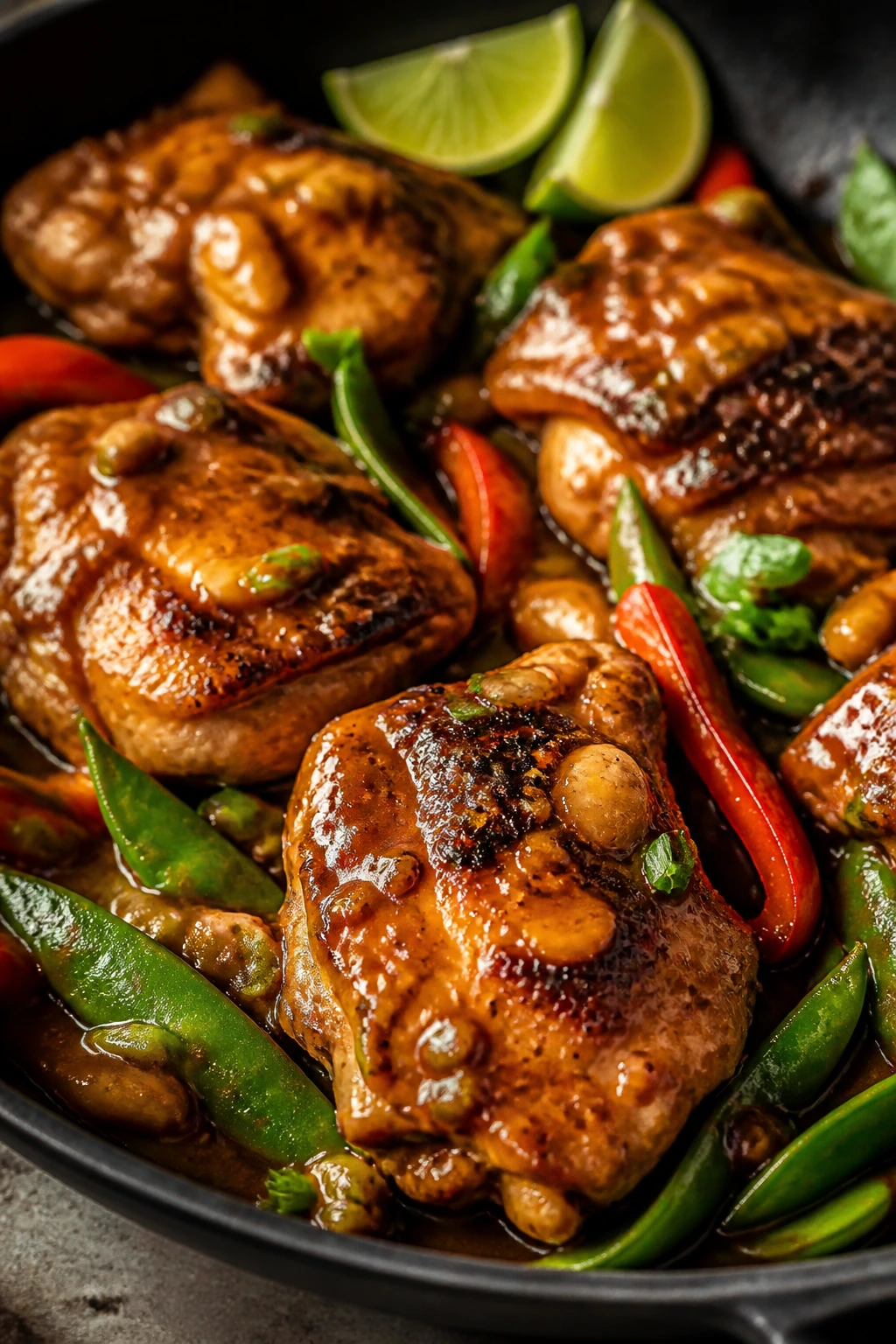
Overcrowding the skillet: If the chicken pieces are packed tight, they steam and turn gray before they brown. The fix is simple: use a 12-inch pan and cook in two batches if your skillet looks crowded.
-
Turning the heat too high after the sauce goes in: Peanut butter can scorch faster than people expect. If the sauce starts to smell bitter or stick to the pan in dry patches, pull the heat back to medium-low and add a splash of warm water.
-
Using un-stirred natural peanut butter: Separated oil on top and dry peanut paste underneath create a lumpy sauce that never quite smooths out. Stir the jar well before measuring, or use a conventional creamy peanut butter if you want less fuss.
-
Skipping the acid: A peanut sauce without vinegar and lime tastes heavy, almost dull. If the final dish feels flat, it usually needs more lime before it needs more salt. Add acid first, then taste again.
-
Cooking chicken breast as if it were thigh meat: Breast meat goes dry fast, especially once it sits in a sticky sauce. If you choose breast, cut the pieces a little larger and stop cooking the moment they reach 165°F.
Smart Variations That Still Taste Like the Real Thing
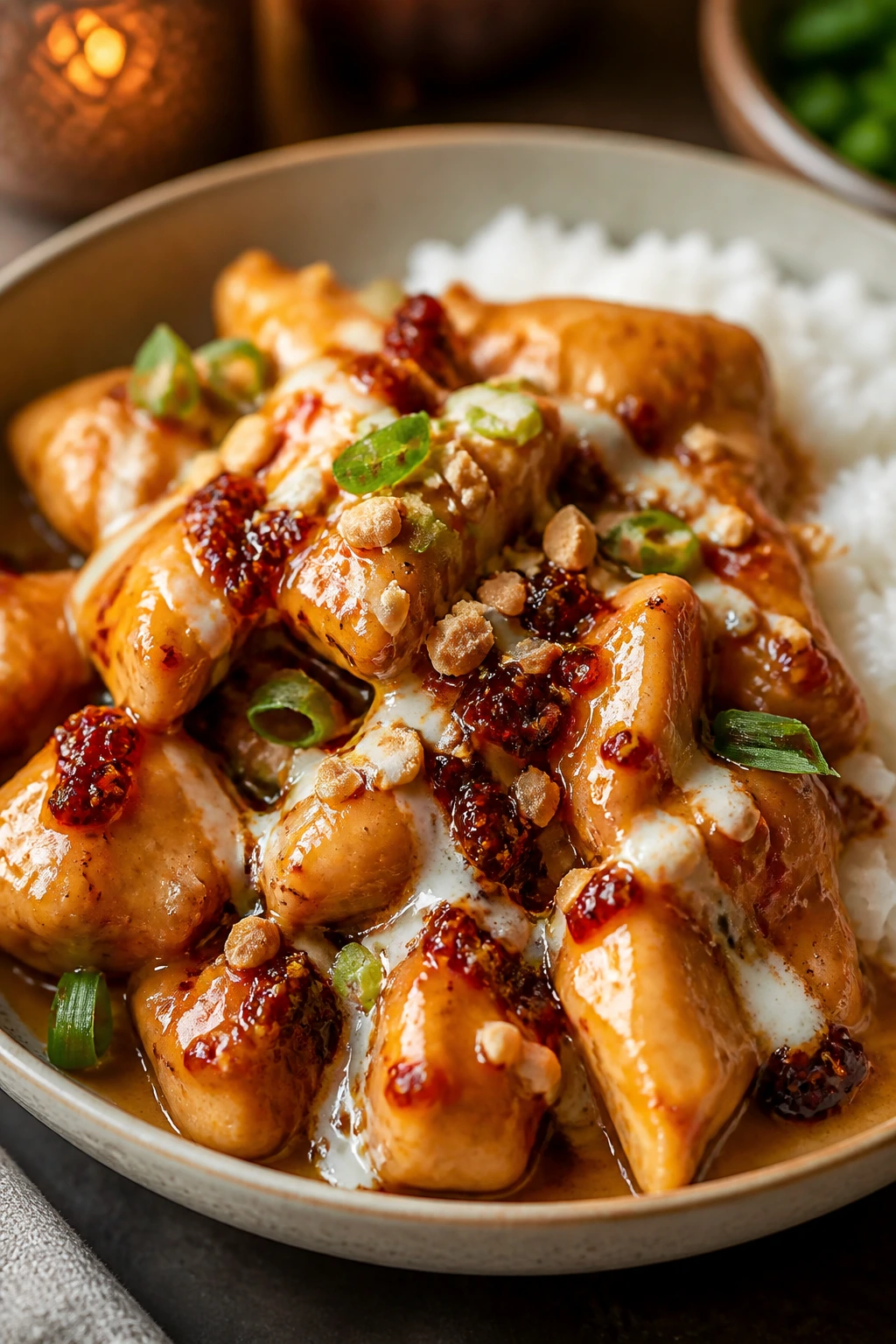
Chili Crisp Peanut Chicken: Stir 1 to 2 teaspoons of chili crisp into the finished sauce and scatter a little extra over the top. This version brings crunchy heat and a smoky garlic note that tastes a touch more aggressive in a good way.
Coconut-Satin Peanut Chicken: Replace 2 tablespoons of the warm water with full-fat coconut milk. The sauce turns softer and rounder, with a richer finish that sits closer to a restaurant curry-peanut hybrid.
Broccoli and Snow Pea Skillet: Swap the bell pepper and snap peas for 3 cups of small broccoli florets and a handful of snow peas. Broccoli soaks up the sauce in a way bell pepper never will, and the stems stay pleasantly firm if you keep the cook time short.
Gluten-Free Tamari Swap: Use tamari instead of soy sauce, and check that your chili garlic sauce is gluten-free. The flavor stays close to the original, which is one of the reasons this swap works so well.
Nut-Free Sesame Version: Replace the peanut butter with sunflower seed butter and add an extra teaspoon of toasted sesame oil. It will not taste like classic peanut chicken, and that’s fine; it lands in the same sweet-salty lane with a more seed-forward finish.
Make-Ahead, Storage, and Reheating Guidance
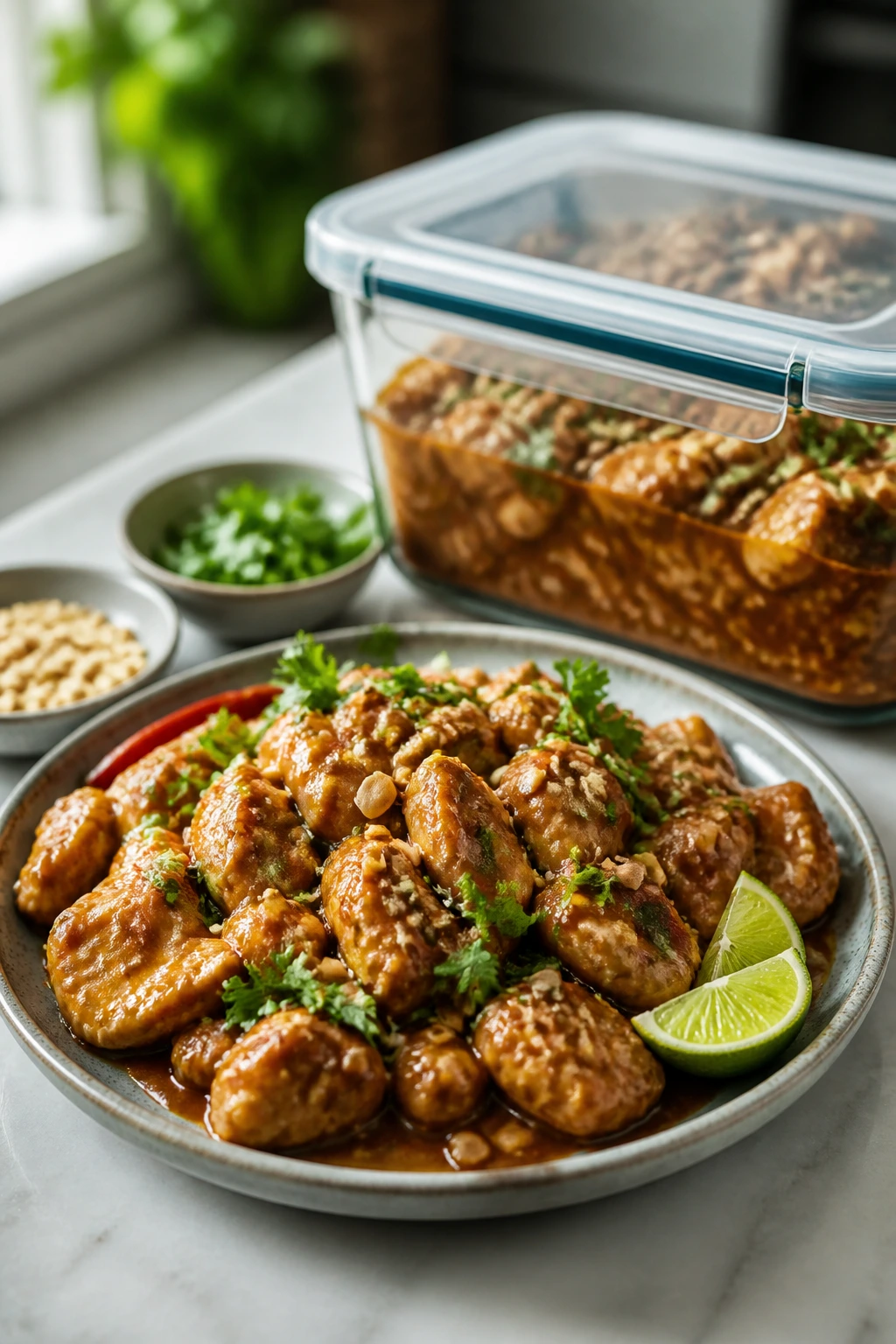
Refrigerator: Cooked sticky Thai peanut chicken keeps well for 3 to 4 days in an airtight container. The sauce will thicken in the fridge, which is normal. If you’re packing lunches, store the peanuts and herbs separately so they stay crunchy.
Freezer: Freeze the cooked chicken and sauce for up to 2 months in a tightly sealed container or freezer bag. Flattening the bag helps it thaw faster and more evenly. I would not freeze the fresh scallions, cilantro, or peanuts on top; add those after reheating.
Reheating: The skillet is the best route. Warm the chicken over medium-low heat with 1 to 3 tablespoons of water and stir until the sauce loosens and turns glossy again. The microwave works in a pinch, but the chicken can dry out at the edges, so cover it and reheat in short bursts, stirring between each one.
Make-Ahead: The peanut sauce can be whisked together up to 3 days ahead and kept in the fridge. You can also cut the chicken and vegetables a day ahead and keep them covered and cold, which makes the actual cooking part very quick. If the sauce separates a little after chilling, whisk it again with a spoonful of warm water and it comes back.
Sticky Peanut Chicken Questions People Ask First
Can I use chicken breast instead of thighs?
Yes, but cut the breast into slightly larger pieces and watch the pan closely. Thighs are more forgiving and stay juicy longer, while breast meat goes dry fast once the sauce starts thickening.
Is natural peanut butter okay?
It is, as long as you stir it thoroughly before measuring. Natural peanut butter tends to separate in the jar, which can make the sauce oily on top and dry underneath if you don’t mix it well first.
What if my sauce gets too thick?
Add warm water, one tablespoon at a time, and stir over low heat until it loosens. Peanut sauce thickens quickly once it starts bubbling, so it’s easier to fix with a splash of water than to rescue it after it turns paste-like.
Can I make this less sweet?
Yes. Drop the brown sugar to 2 tablespoons and add an extra teaspoon of lime juice. That shifts the sauce toward salty and tangy rather than sweet-salty, which some people prefer.
What can I use instead of rice vinegar?
Apple cider vinegar works best as a substitute, though you’ll want to use a touch less because it’s a little sharper. White wine vinegar is fine too. I would avoid lemon juice as a direct swap because it changes the flavor in a brighter, less clean way.
Can I bake the chicken instead of searing it?
You can. Roast the chicken and vegetables at 425°F until the chicken is cooked through, then toss them with the sauce in a warm bowl or pan. You’ll lose some of the browned skillet flavor, but the dish still works.
Why did my sauce turn grainy?
Usually the pan was too hot or the peanut butter was added without enough liquid to relax it first. Lower the heat, add warm water, and whisk hard. If the sauce has already scorched, starting a fresh batch is often faster than pretending it can be fixed.
Can this be meal prepped with rice?
Yes, and it holds up well. Keep the rice, chicken, and toppings separate if you can, then reheat the chicken with a splash of water before serving so the sauce turns glossy again.
The Bowl I Keep Coming Back To
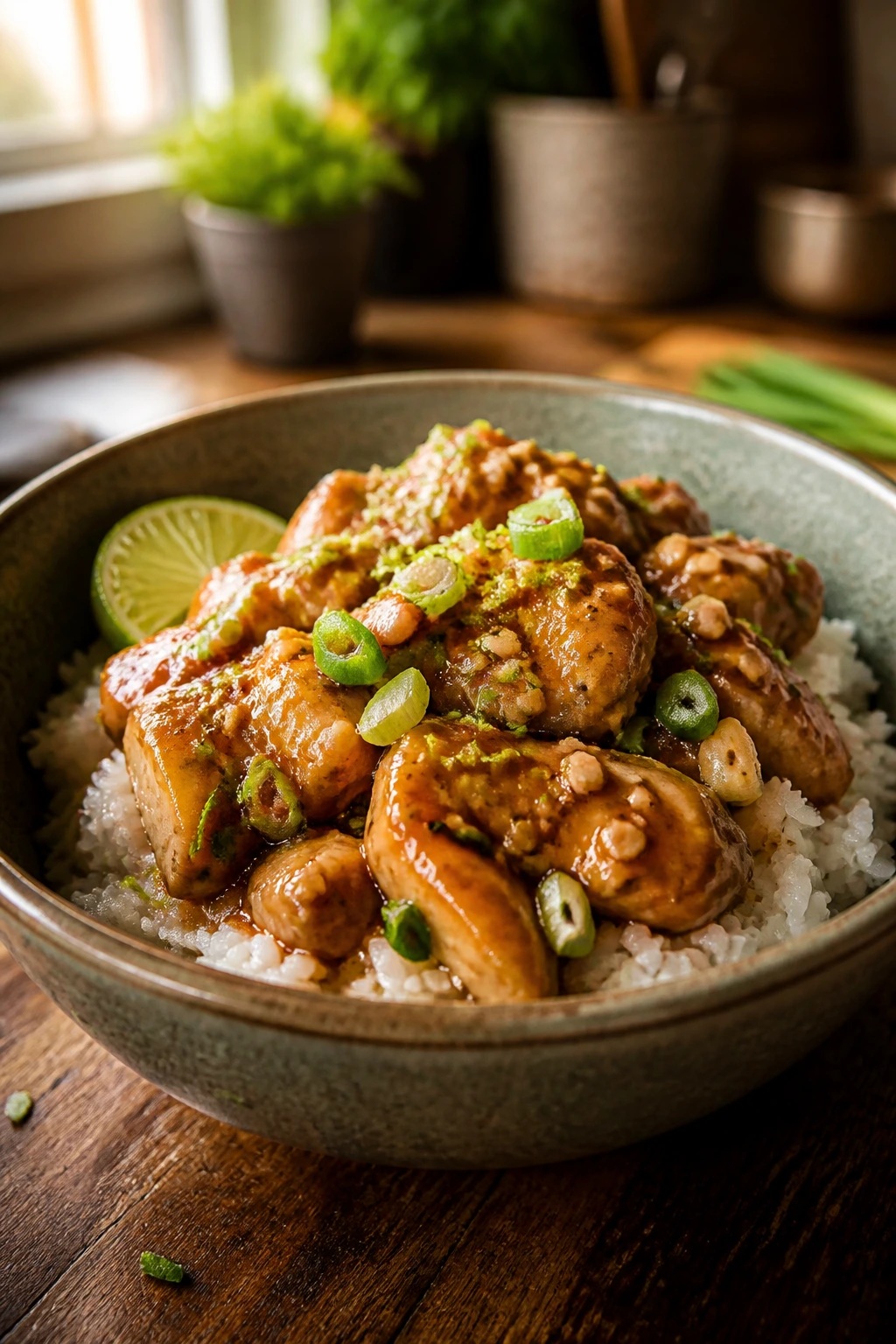
There’s a reason sticky Thai peanut chicken earns repeat status in a kitchen. It gives you contrast in every bite: soft rice, juicy chicken, a sauce that’s both salty and sweet, and little sharp hits of lime and scallion that keep your mouth paying attention.
The part I come back to most is the sauce. Get it smooth, keep the heat gentle once the peanut butter goes in, and don’t skip the acid at the end. That’s the whole trick, really. Once you’ve done it once, the pan starts to feel familiar in the best way.
Sticky Thai Peanut Chicken Better than Takeout — Recipe Card
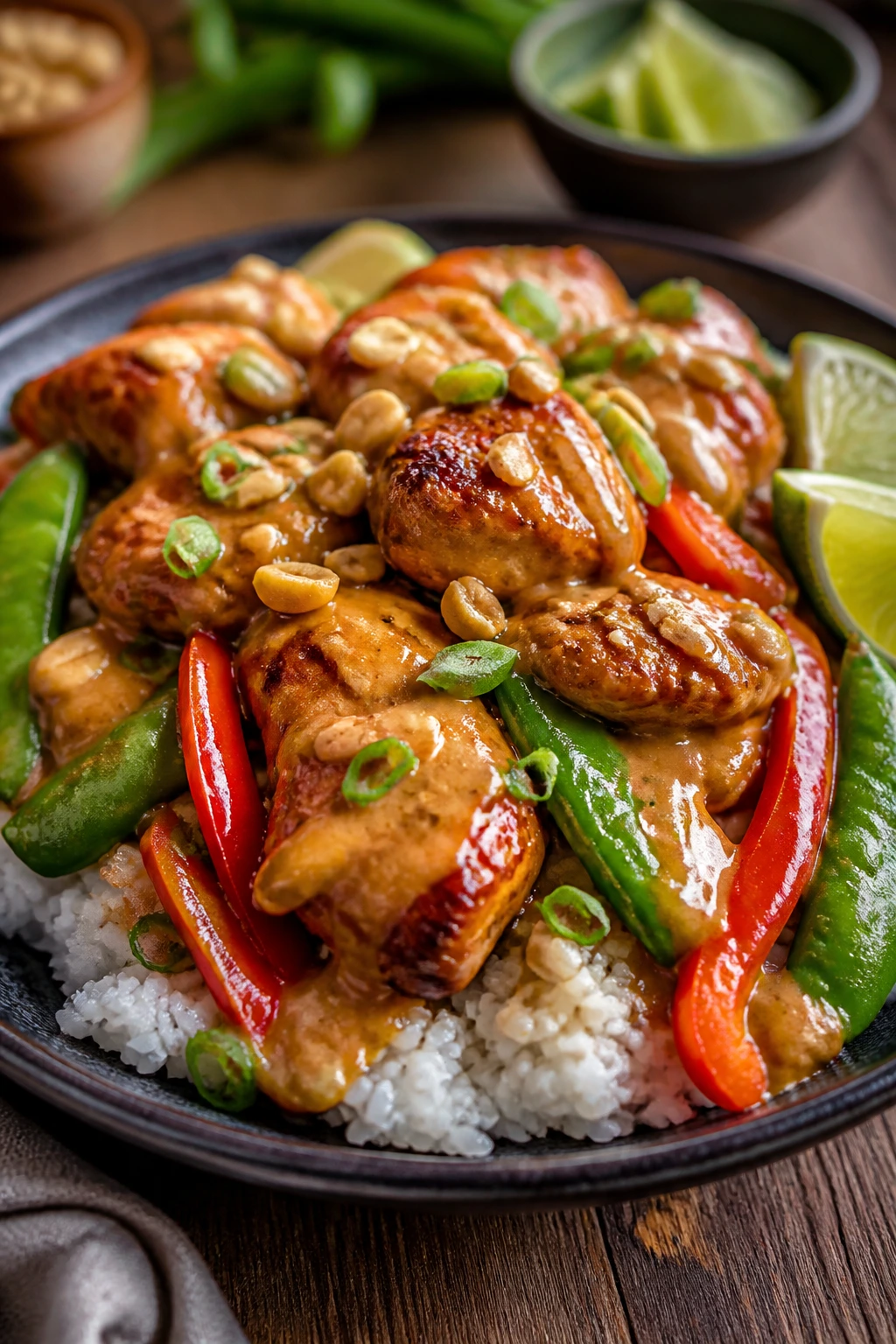
Recipe Name: Sticky Thai Peanut Chicken Better than Takeout
Description: Juicy chicken thighs, crisp vegetables, and a glossy peanut-lime sauce that clings to every piece. Serve it over jasmine rice and finish with peanuts, scallions, and a squeeze of lime.
Prep Time: 20 minutes
Cook Time: 18 minutes
Total Time: 38 minutes
Course: Dinner, Main Course
Cuisine: Thai-Inspired, Asian-Inspired
Servings: 4 servings
Calories: About 560 kcal per serving
Ingredients
For the Chicken:
- 1½ pounds boneless, skinless chicken thighs, cut into 1-inch pieces
- 1 tablespoon cornstarch
- 1 teaspoon kosher salt
- ½ teaspoon black pepper
- 1 tablespoon neutral oil, such as avocado or canola
For the Peanut Sauce:
- ½ cup creamy peanut butter, well stirred if using a natural style
- ¼ cup low-sodium soy sauce
- 3 tablespoons packed light brown sugar
- 2 tablespoons rice vinegar
- 2 tablespoons fresh lime juice
- 3 tablespoons warm water, plus more as needed
- 1 tablespoon fresh ginger, finely grated
- 3 garlic cloves, finely grated or minced very fine
- 1 tablespoon chili garlic sauce or sambal oelek
- 1 teaspoon toasted sesame oil
For the Vegetables and Finish:
- 1 red bell pepper, thinly sliced
- 1 cup sugar snap peas, trimmed
- 3 scallions, thinly sliced
- 2 tablespoons chopped roasted peanuts
- 1 tablespoon sesame seeds
- 2 tablespoons chopped cilantro, optional
- 1 lime, cut into wedges
Instructions
-
Whisk together the peanut butter, soy sauce, brown sugar, rice vinegar, lime juice, warm water, ginger, garlic, chili garlic sauce, and sesame oil until smooth. Add more warm water if needed.
-
Toss the chicken with cornstarch, salt, and pepper until lightly coated.
-
Heat the oil in a 12-inch skillet over medium-high heat. Sear the chicken in a single layer for 3 to 4 minutes, then turn and cook 2 to 3 minutes more until golden and nearly cooked through.
-
Add the bell pepper and snap peas. Cook 2 to 3 minutes until bright and tender-crisp.
-
Reduce the heat to medium-low, pour in the peanut sauce, and stir for 2 to 4 minutes until glossy and thick enough to coat the chicken. Add warm water a tablespoon at a time if it tightens too fast. Cook until the chicken reaches 165°F.
-
Remove from the heat. Stir in the scallions and half the peanuts, then serve over hot jasmine rice with the remaining peanuts, sesame seeds, cilantro if using, and lime wedges.
Notes: Stir the peanut butter well if it has separated. Add water a little at a time if the sauce thickens too quickly. For extra heat, add more chili garlic sauce or a spoonful of chili crisp at the end.