



The first clue that an aromatic Chinese dinner better than takeout is about to happen is the smell, not the sauce. Ginger hits hot oil and turns from sharp to sweet in a matter of seconds. Garlic follows. Scallions go from grassy to nutty at the edges. And suddenly the kitchen smells like someone has been cooking there all afternoon, even if you’ve only been at the stove for fifteen minutes.
That smell is the whole trick. Takeout often tastes good because it arrives hot, seasoned in layers, and packed with aromatics that have had a real chance to wake up in the pan. Home versions go flat when the pan is too cool, the sauce goes in too early, or everything gets crowded into one lazy pile of steam. The food still fills the plate, but it never really blooms.
The best part? You do not need a cabinet full of bottles to get there. A few smart ingredients, a hot pan, and a little restraint go a long way. Once you understand how the aroma is built — and when to stop cooking before the garlic gets bitter or the vegetables slump — the dinner starts doing the heavy lifting for you.
Why This Dinner Formula Works
-
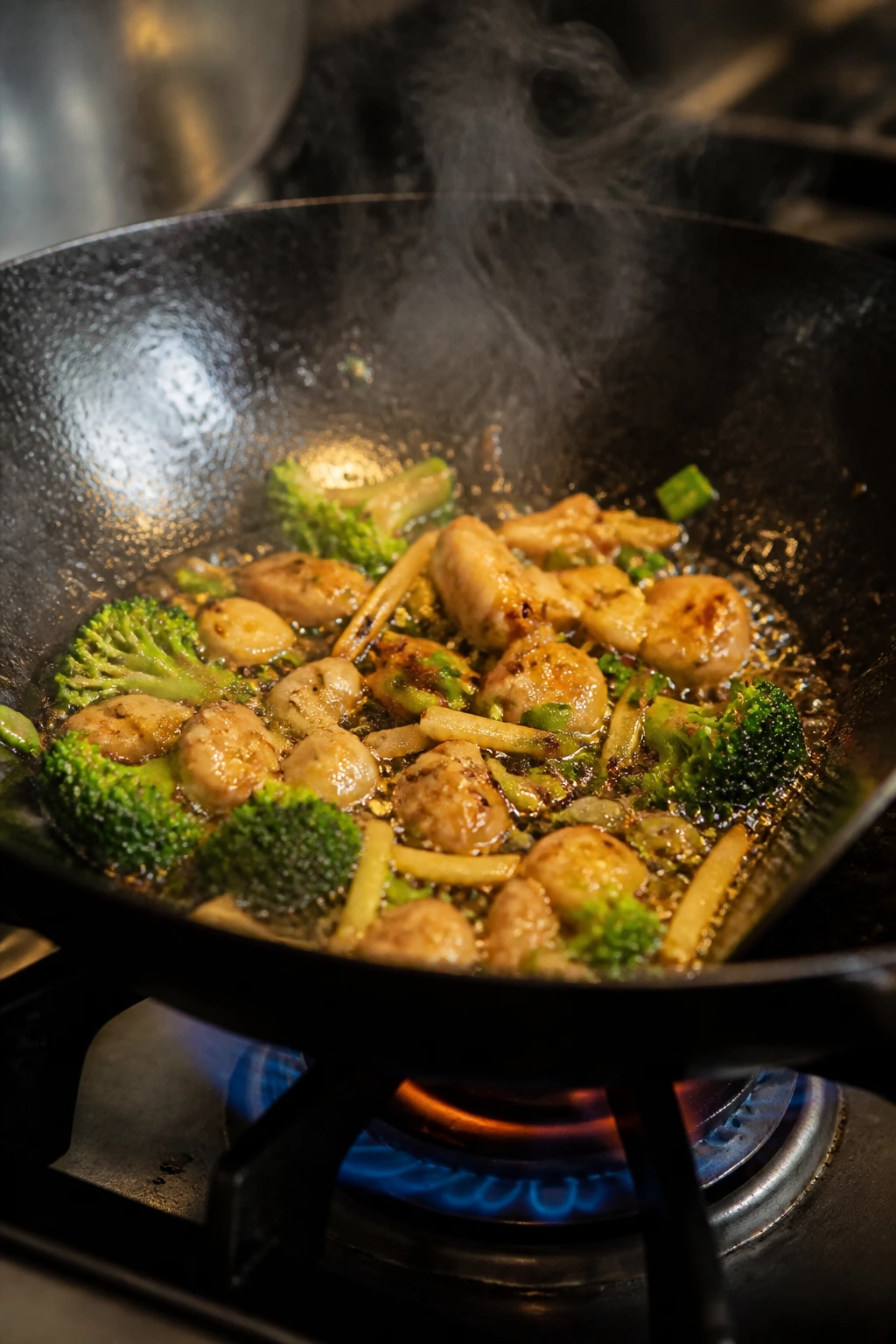
The aroma starts in oil, not at the end: Ginger, garlic, and scallions release their best flavor when they hit hot oil for 20 to 40 seconds, which is why the kitchen smells rich before the sauce even arrives.
-
A glossy sauce clings to food instead of pooling on the plate: A tiny bit of cornstarch, added at the right moment, turns a thin sauce into something that coats chicken, tofu, or broccoli instead of sliding off.
-
High heat keeps vegetables crisp: Broccoli, snap peas, bok choy, and peppers stay bright when they spend minutes in a hot pan, not a long soak in a simmering sauce.
-
The whole meal can be built around one base: Jasmine rice, noodles, or even fried rice gives the dish a landing spot, so the sauce feels intentional instead of loose.
-
The flavor is layered, not loud: Light soy sauce, a little dark soy, a splash of rice vinegar or black vinegar, and a finish of sesame oil create depth without making the dish taste heavy.
-
It’s easy to steer toward your pantry: Chicken, shrimp, beef, tofu, mushrooms, cabbage, and frozen broccoli all work if you respect the order of the pan.
What Makes a Chinese Dinner Taste Better Than Takeout
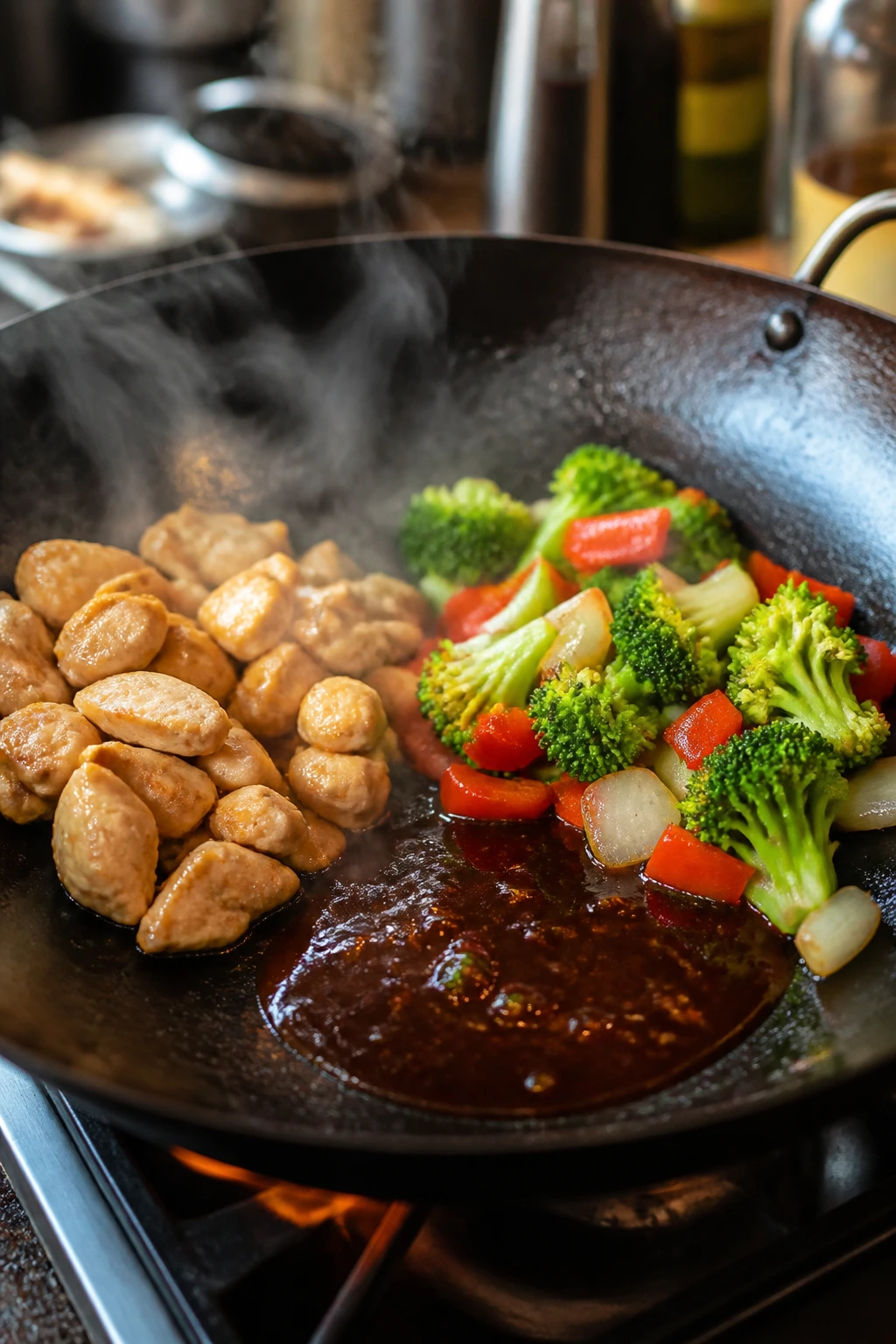
Takeout smells so strong because it arrives sealed. The steam, the oil, and the sauce stay trapped long enough to slam into your nose when the lid comes off. That does a lot for the first impression. But the flavor you want at home is different: cleaner, brighter, and sharper at the edges.
The home version wins when you build that smell on purpose. Hot oil blooms the aromatics. Salt tightens the seasoning. A little sugar softens the soy sauce. Acid wakes everything back up. None of that sounds dramatic on its own, but together it makes the dish feel alive instead of merely sauced.
I think the most common mistake is trying to make everything happen at once. Meat, vegetables, sauce, noodles, and garnish all go into the pan together, and the result tastes muddled. The better move is almost boring in its simplicity: cook the pieces separately, then let them meet at the end.
That separation is why a good stir-fry can taste cleaner than a lot of restaurant food. The broccoli stays green. The chicken stays juicy. The sauce stays glossy. And the last bite doesn’t taste like the first bite left sitting under a heat lamp.
The Aromatic Trio That Starts the Whole Meal
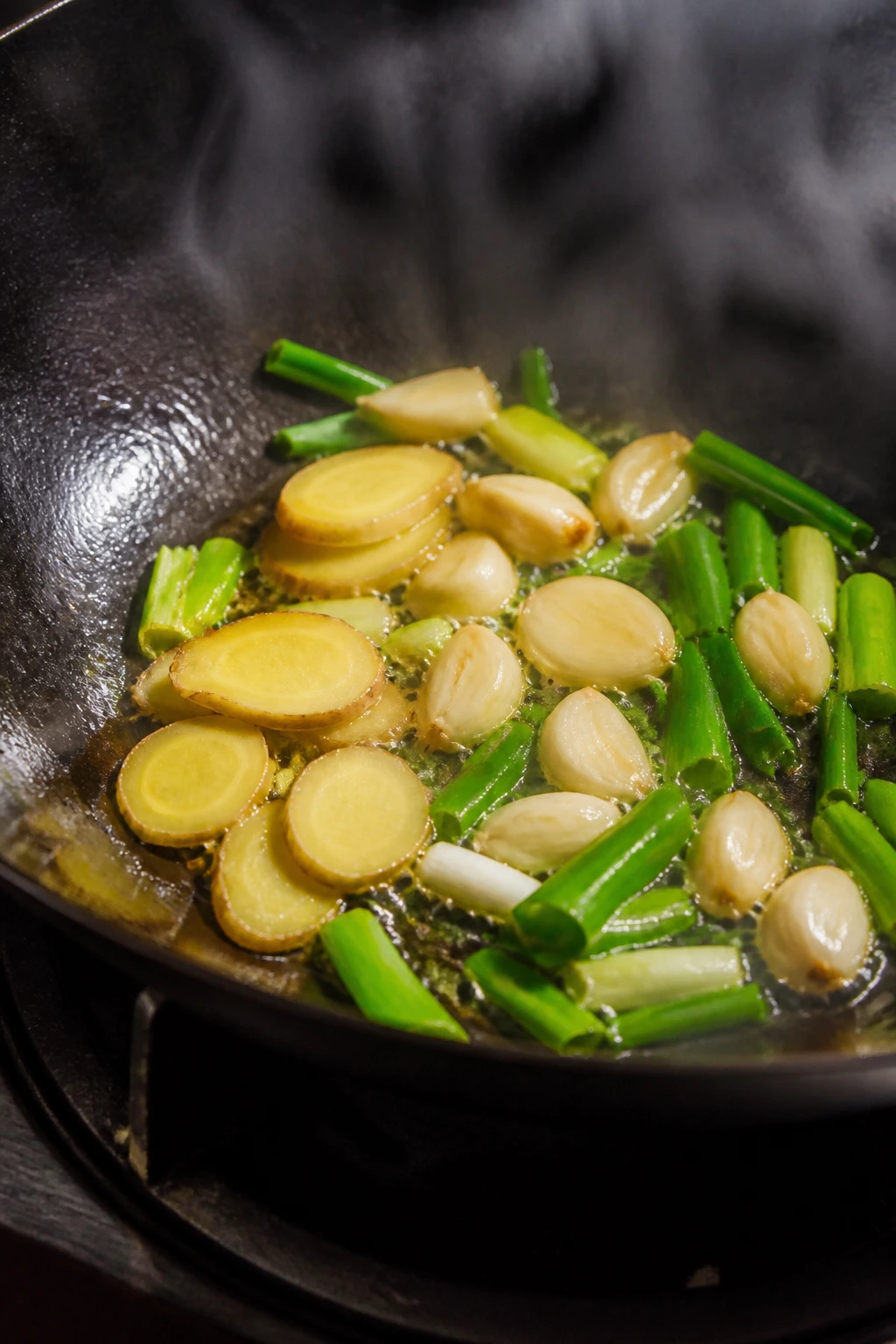
Ginger, garlic, and scallions are the backbone here, and each one earns its place by doing a different job. Ginger brings warmth and a faint citrus note. Garlic brings sweetness once it’s cooked fast enough. Scallions bridge the gap — the white and pale green parts go into the pan, and the dark green tops usually wait until the very end.
Ginger: sharp at first, sweet when it blooms
Fresh ginger should be firm, not wrinkled, with tight skin that scrapes off easily with a spoon. For a family-size stir-fry, I like about 1 to 2 tablespoons of finely minced ginger or a 2-inch piece, cut into thin matchsticks. Matchsticks give you little flashes of ginger in the finished dish; mince gives a more even background note.
If you grate ginger, it disappears fast and can vanish into the sauce. That’s not wrong. It’s just a different effect. Thin slices or matchsticks give you something more aromatic when you bite into the food.
Garlic: sweet, not scorched
Use 3 to 6 cloves, depending on how much sauce and how many vegetables you’re cooking. Slice it if you want sweeter, more obvious pieces. Mince it if you want it to spread through the whole pan. I prefer minced garlic for chicken and tofu, sliced garlic for noodles.
Garlic burns quickly in a hot wok. Bitter garlic can ruin an entire dinner in under a minute. If the pan is blazing hot, add the garlic after the ginger has had a few seconds to perfume the oil, and keep it moving.
Scallions: the finish that makes the dish smell alive
The white parts of the scallions go in with the aromatics. The green tops go in late, or even off heat, so they stay sharp and bright. That little split matters. It gives the dish two layers of scallion flavor instead of one vague onion note.
If you want a more takeout-style edge, cut the whites on a bias and keep the greens in long, loose pieces. They soften at different speeds, and that gives the finished plate a little texture in the mouth, not just on the plate.
A good rule: white parts for the pan, green parts for the finish. That one habit alone makes the dish smell more deliberate.
Sauce That Tastes Rich Instead of Thin
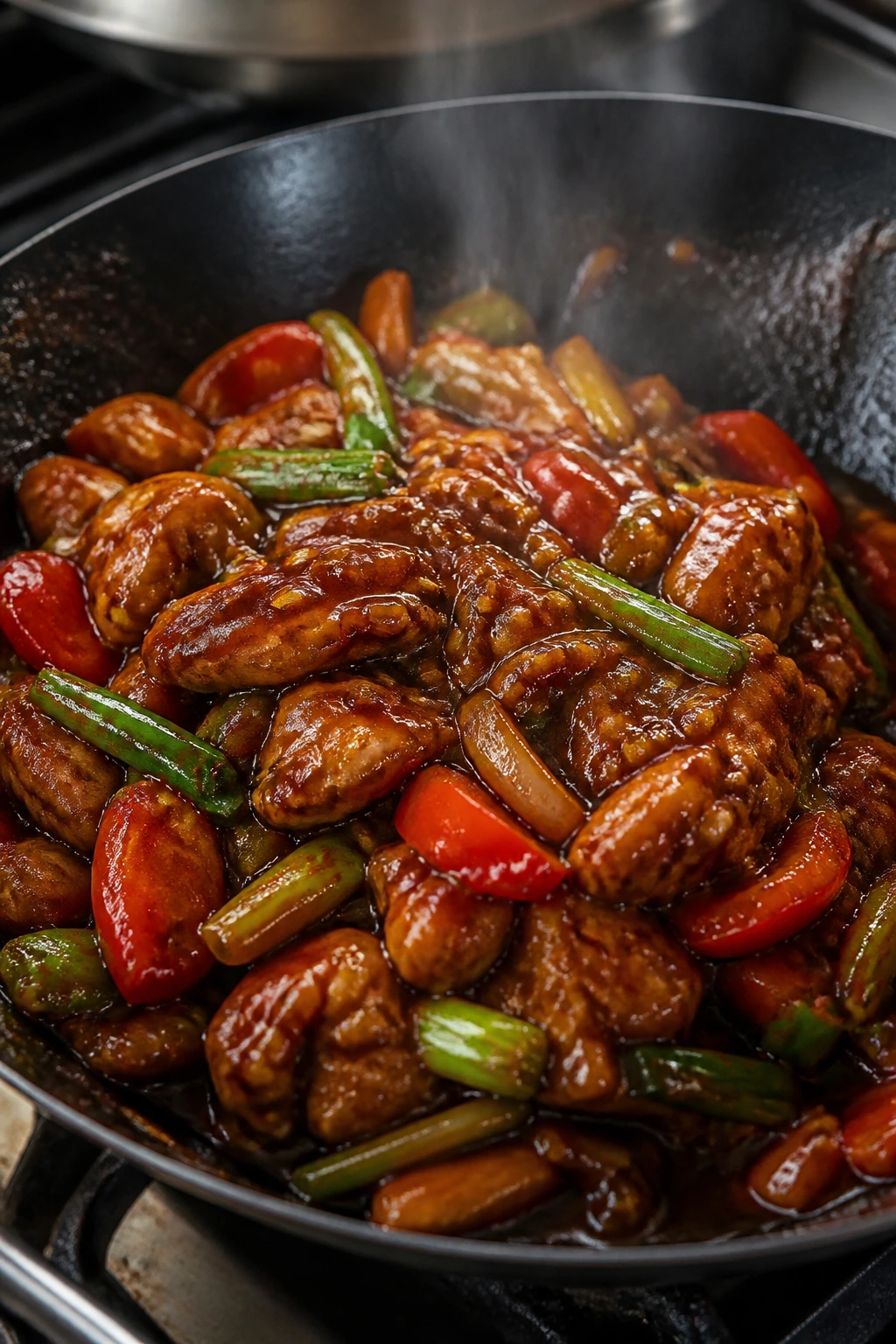
Most thin-tasting stir-fry sauces fail for the same reason: they lean on one soy sauce and stop there. That gives salt, but not depth. The richer versions use a simple stack of ingredients that each do one job.
Savory: the base layer
Light soy sauce gives salt and clean umami. Dark soy sauce is mostly for color and a softer, rounder flavor. Oyster sauce adds body, gloss, and that sticky-savory note that makes restaurant-style dishes taste finished. If you skip oyster sauce, the dish is still good, but it will need something else to carry the middle of the flavor.
For a family-size pan, a useful starting point is something like 3 tablespoons light soy sauce, 1 tablespoon oyster sauce, and 1 teaspoon dark soy sauce. That is not a law. It’s a balance point.
Sweet: the part people forget
A touch of sugar matters more than most home cooks want to admit. 1 to 2 teaspoons of sugar or honey can make the soy sauce taste round instead of harsh. Chinese takeout-style sauces often have that soft edge, and sugar is what keeps the salt from landing flat.
You do not want it dessert-sweet. You want the sauce to taste like it has a center.
Acid: the bright finish
Rice vinegar gives a clean lift. Black vinegar gives a darker, almost malty sharpness that works especially well with pork, mushrooms, and noodles. Add acid near the end, after the sauce has thickened, or it can feel blunt and one-note.
A small splash changes the whole pan. Small. Not a flood.
Body: cornstarch, stock, and a little restraint
A slurry made with 1 teaspoon cornstarch and 1 tablespoon cold water thickens a sauce fast. Mix it before the heat goes on. If you dump cornstarch straight into the pan, it clumps in rude little lumps and never fully dissolves.
Use chicken stock, mushroom stock, or water to stretch the sauce so it coats the food rather than curing it in salt. Stock gives more body. Water works too, especially if the rest of the pan is seasoned well.
Fragrance: finish, don’t fry it
Sesame oil is not your frying oil. It belongs at the end, usually 1/2 to 1 teaspoon for a family dish. If you cook it too long, the aroma fades and the nutty note turns dull. A small drizzle over the finished pan wakes everything up.
White pepper deserves a mention too. It’s not mandatory, but it gives that familiar Chinese takeout warmth that black pepper never quite copies. Use a pinch, not a dump.
Protein That Stays Tender in a Hot Pan
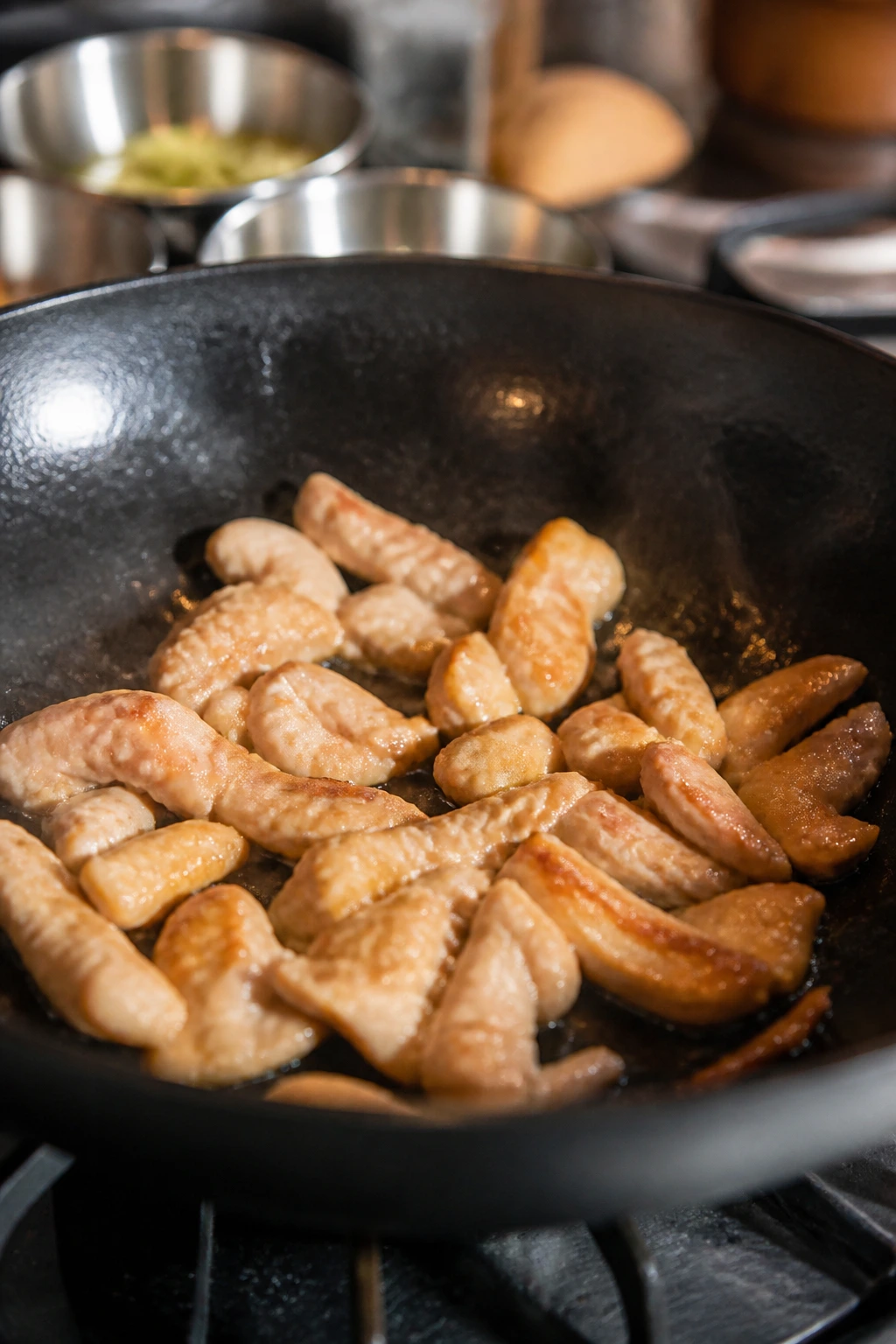
The protein is where a lot of home stir-fries fall apart. People either overcook it, or they use a cut that fights back. A better dinner starts with picking the right piece for the job and treating it like it wants to stay moist.
Chicken and pork: thin slices and a short marinade
Boneless chicken thighs are the most forgiving choice. They stay juicy even if you leave them in the pan a little too long, and they take well to soy, ginger, garlic, and sesame. Slice them across the grain into thin strips, then marinate briefly with soy sauce, a splash of Shaoxing wine or dry sherry, and a teaspoon of cornstarch.
That cornstarch coating is part of the Chinese restaurant trick called velveting. It forms a light film around the meat, which helps it stay tender when it hits the hot pan. Pork tenderloin works well the same way.
Chicken breast can work, but it needs to be sliced thinner than people usually think. If the strips are thick, they dry out before they brown.
Beef: slice it cold, slice it thin
Flank steak or skirt steak is the move here. Put it in the freezer for 15 to 20 minutes first so it firms up, then slice it thinly against the grain. That matters. Against the grain gives you meat that feels tender instead of stringy.
Beef likes bold sauces — black pepper, garlic, oyster sauce, and a little dark soy all fit well. It also benefits from a fast sear. If it sits too long, it starts to stew.
Shrimp: fast and dry
Shrimp are probably the easiest protein here, but they are unforgiving in one specific way: they go rubbery fast. Pat them dry. Use medium-large shrimp, peeled and deveined, and cook them until they’re just opaque and curled, usually 1 to 2 minutes per side depending on size.
Pull them out early if you’re building the rest of the pan after that. They can go back in at the end for a quick toss.
Tofu: press it, then give it texture
Extra-firm tofu is the version that behaves best. Press it for 15 to 30 minutes to push out water, then cube or slice it and coat it lightly with cornstarch before pan-frying. That gives you a thin crust that holds up against sauce.
Soft tofu belongs in brothy dishes. This is not that dish.
If the protein is wet, the pan steams. If the pan steams, the aroma dulls. That’s the whole game.
Vegetables With Snap, Color, and Bite
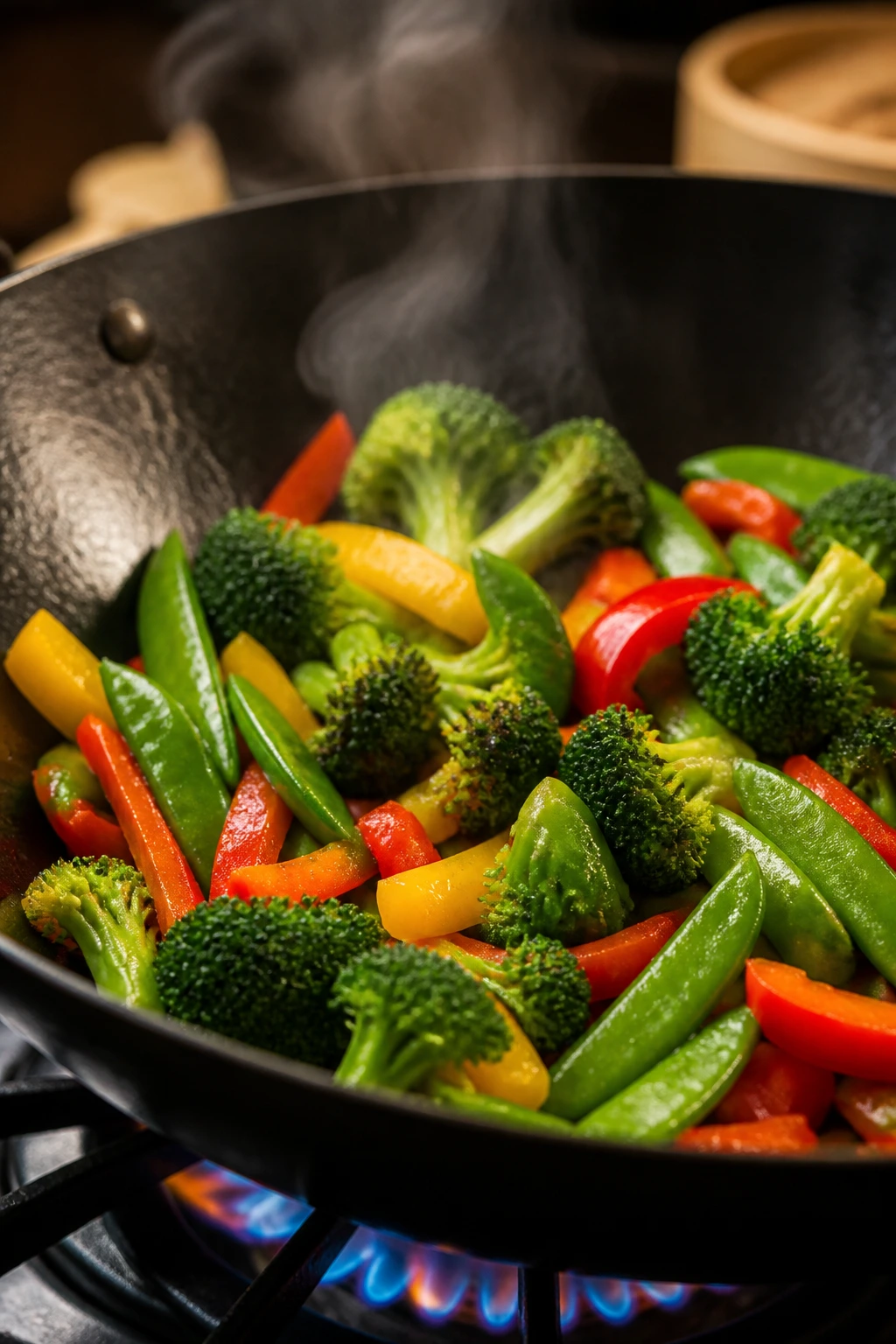
Vegetables are not decoration here. They’re half the reason the dish tastes fresh instead of heavy. The trick is to choose vegetables that can handle heat and to cut them with the cook time in mind.
Sturdy vegetables need a head start
Broccoli, carrots, cauliflower, green beans, and snap peas all do well in hot stir-fries. Broccoli florets should be cut small enough to cook quickly, and the stems shouldn’t be wasted — peel them and slice them thin. Carrots need thin diagonal slices if you want them tender without turning floppy.
If you’re using thicker broccoli or cauliflower, a 60-second blanch in salted water can help. Drain it well and dry it before it goes near the wok. Wet broccoli is a puddle waiting to happen.
Leafy vegetables go in late
Bok choy, napa cabbage, gai lan, and even spinach need far less time than people expect. Split bok choy into stems and leaves. Start the stems first, then add the leaves when the pan is almost finished. The stems should still have a little bite; the leaves should wilt without collapsing into slime.
That’s the difference between a good bowl and a sad one.
Mushrooms need room, not pity
Button mushrooms, cremini, shiitake, and oyster mushrooms all work, but they need space to brown. If you crowd them, they release water and steam. If you give them room, they turn deep and savory and make the whole pan taste meatier.
I like mushrooms in this kind of dinner because they soak up sauce without losing their shape. They also help a vegetarian stir-fry feel substantial without trying too hard.
Keep the cuts consistent
This part is tedious. Do it anyway. If the carrots are sliced thick and the peppers are left huge, you end up with one undercooked piece and one overcooked one in the same bite. Aim for pieces that are close in size, or sort them by cooking speed and add them in phases.
Thin, quick-cooking vegetables are the easiest route to a dinner that still has some crunch by the time it reaches the table.
Rice, Noodles, and the Right Base for the Sauce
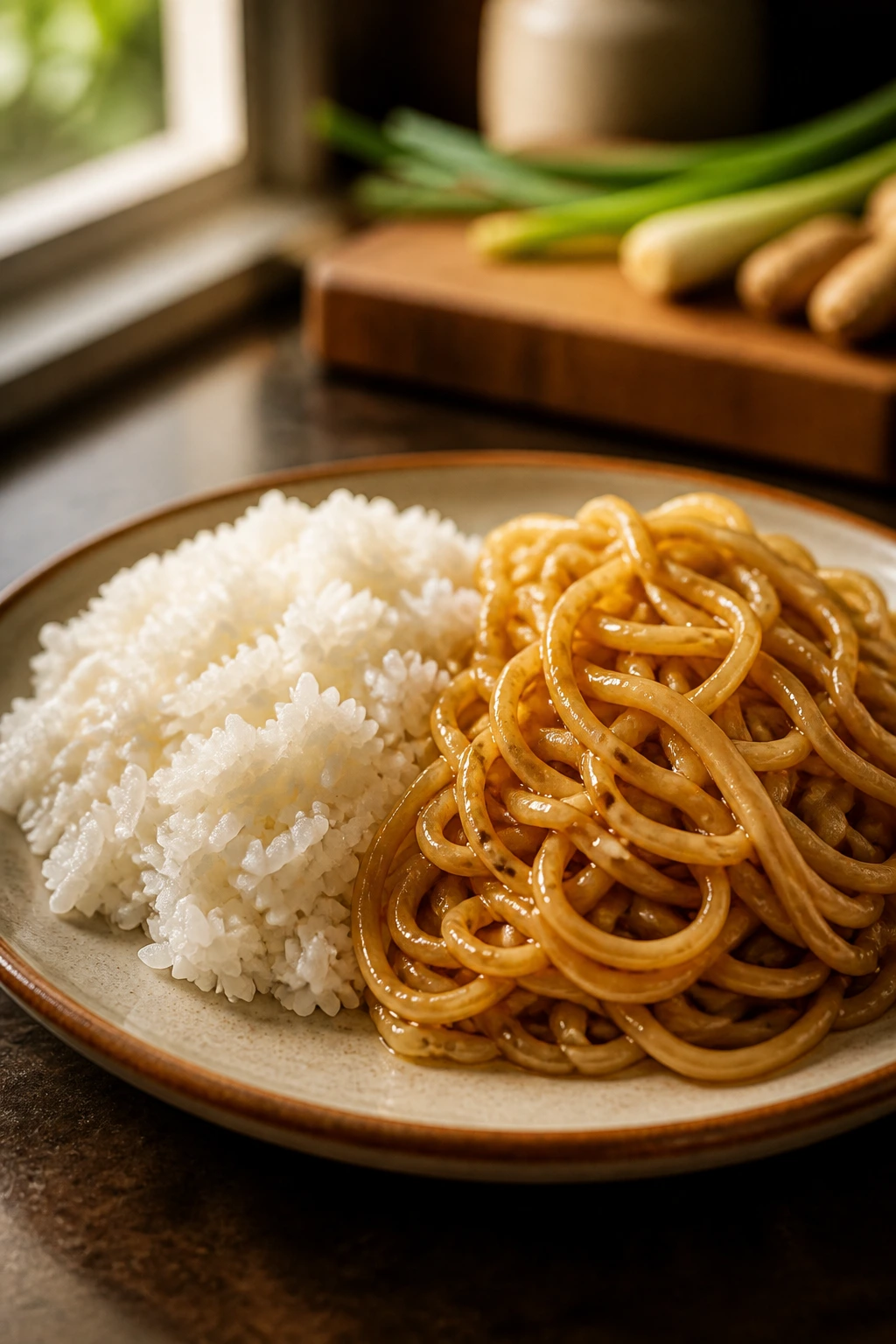
The base matters more than people think. A glossy stir-fry can be excellent on its own, but it becomes a real dinner when it lands on something that can catch the sauce.
Jasmine rice: the safest, smartest choice
Jasmine rice has a soft floral smell and a texture that works under saucy dishes without going gluey. Rinse it until the water runs mostly clear, then cook it with the water ratio your pot or rice cooker prefers. In many kitchens, that lands around 1 cup rice to 1.1 to 1.25 cups water, but older rice often needs a touch more moisture.
Let it rest after cooking. Ten minutes is enough to settle the grains and keep them from tearing when you fluff them. If the rice is too wet, the stir-fry sauce slides around instead of soaking in.
Fried rice: use yesterday’s rice, not this morning’s
If you want the dinner to feel closer to takeout, cold rice gives you a drier, more separate texture. Fresh rice is too soft and steamy; it clumps in the pan and turns gummy. Spread cooked rice out on a tray and chill it before frying, or use leftover rice from the fridge.
A little oil in the rice helps too. Not much. Just enough to keep the grains from locking together.
Noodles: great when you want the sauce to cling
Wheat noodles, lo mein noodles, and even thin rice noodles can all carry a saucy stir-fry. The trick is to undercook them slightly, then finish them in the pan with the sauce. If they go fully soft before they meet the wok, they break when tossed.
Noodles are the right move when you want the dinner to feel slurpy and complete. Rice is better when you want the vegetables and protein to stay more distinct.
Don’t drown the base
A lot of home cooks over-sauce the rice or noodles because they’re afraid the plate will taste dry. It usually tastes the opposite: heavy, dull, and a little wet. Start with less sauce than you think, toss, taste, then add only what the pan needs.
The food should sit on the base, not disappear into it.
The Pan Heat That Gives You Stir-Fry, Not Steam
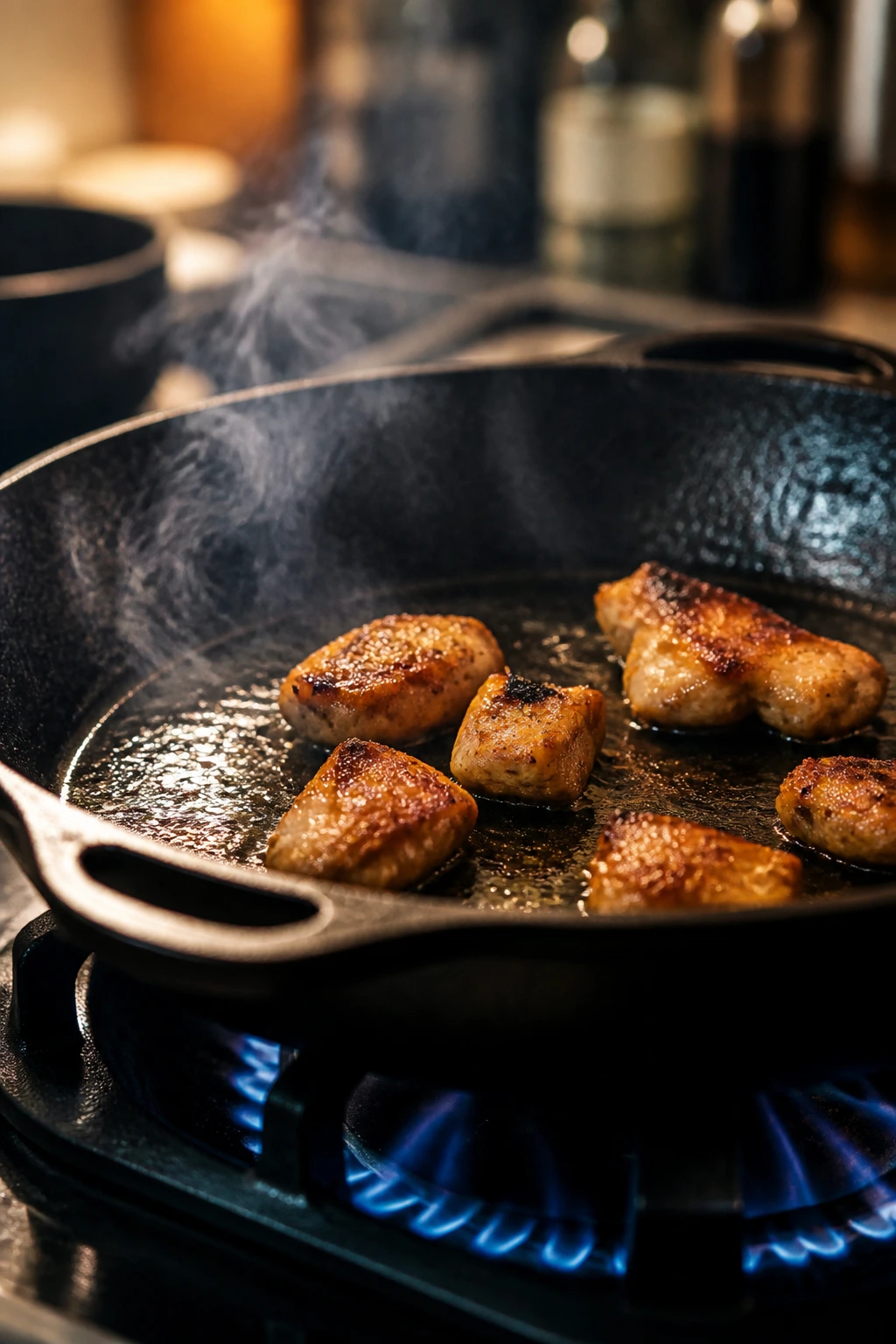
A wok is useful. A very hot skillet can still get the job done. What matters most is the way the pan holds heat and how quickly you move the food through it.
A heavy 12-inch skillet, stainless steel or carbon steel, is often better than a flimsy wok on a weak burner. On a gas flame, a wok shines because the sides heat fast and the food can move up and down the curve. On an electric stove, a wide skillet sometimes browns more evenly. Nonstick is the least useful option here. It’s fine for eggs. It’s not the right tool if you want browning and a little char.
You want the pan hot enough that oil ripples fast. A scallion piece should hiss on contact. If a piece of chicken sits in the pan and immediately starts weeping instead of browning, the heat is too low or the pan is too crowded. That’s the point where stir-fry turns into a covered stew, and the aroma goes quiet.
There’s a Chinese restaurant flavor people call wok hei, or the breath of the wok. It’s that smoky, slightly charred note that comes from very hot metal, quick tossing, and sauce hitting the pan at the right moment. You do not need to chase it like a prize. But if the food gets a little edge from the hot surface, that’s a good sign.
Cook in batches if you need to. I know, it feels slower. It isn’t. It’s faster than rescuing a gray, watery pan full of crowded chicken and limp broccoli.
A Better-Than-Takeout Dinner Plate Worth Repeating
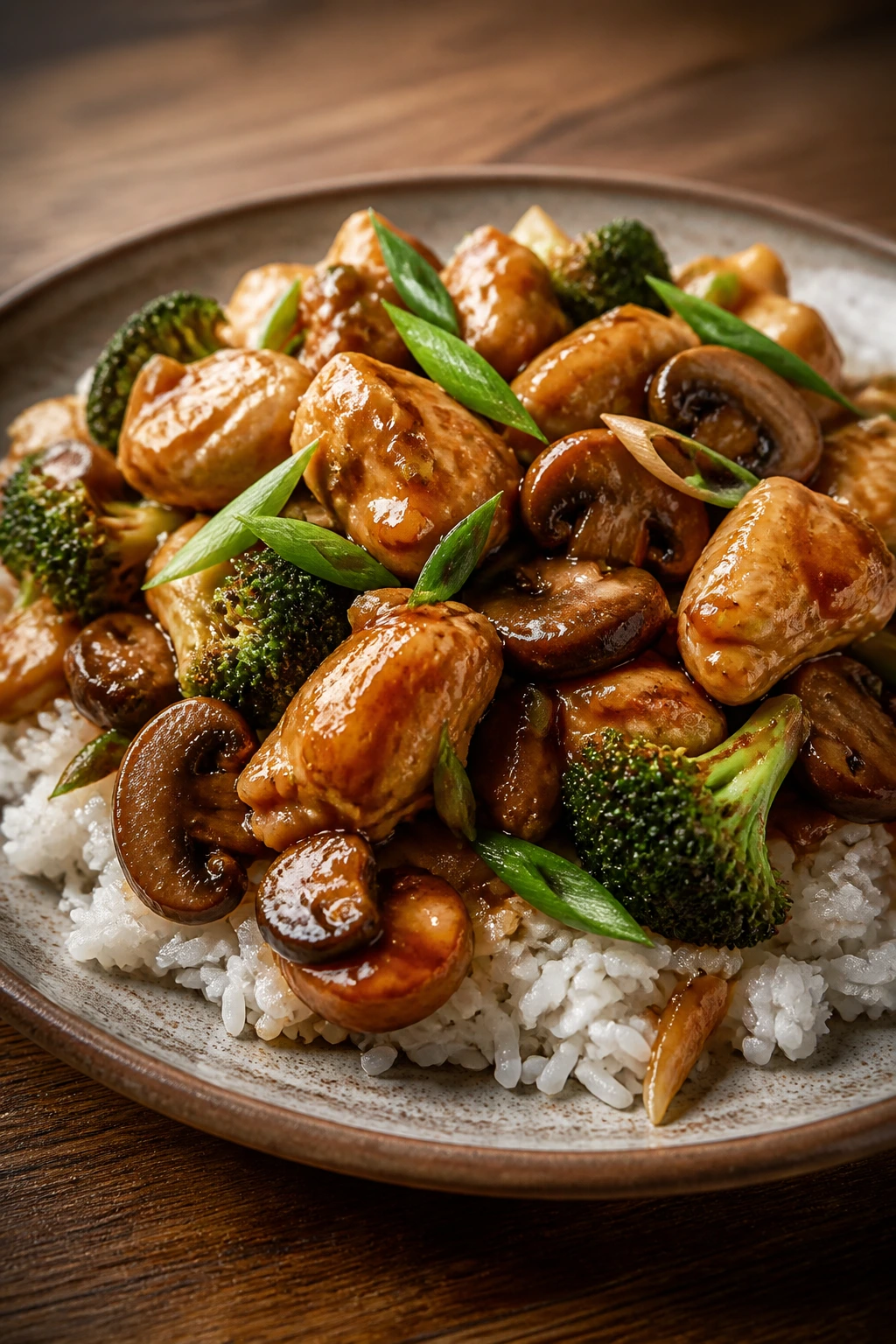
A good example helps this whole thing click. My favorite version for a weeknight is simple: ginger-garlic chicken, broccoli, mushrooms, jasmine rice, and a finish of scallion greens and sesame oil. Nothing exotic. Just the right order.
Start the rice first, because rice forgives waiting. Then mix the sauce in a small bowl so you’re not measuring over a hot pan later. Slice the chicken thin, trim the broccoli into small florets, and cut the mushrooms so they brown instead of collapse. Keep the aromatics separate from the vegetables and the sauce. That little discipline matters.
- Cook the rice first so it can rest while everything else happens.
- Mix the sauce with soy sauce, a splash of stock, a little sugar, cornstarch, and vinegar.
- Marinate the chicken for 10 to 15 minutes if you have the time.
- Stir-fry the chicken in hot oil until it’s nearly done, then pull it out.
- Cook the broccoli and mushrooms in the same pan, adding a splash of water only if the vegetables need a brief steam.
- Add ginger, garlic, and scallion whites just long enough to perfume the oil.
- Return the chicken, pour in the sauce, and toss until glossy.
- Finish with scallion greens and a tiny drizzle of sesame oil, then serve immediately over rice.
That plate works because every part has a job. The rice catches the sauce. The chicken stays juicy. The broccoli keeps its color. The mushrooms bring depth. The scallions wake everything up at the end.
If you want it to feel even more like a takeout order, serve it in a wide shallow bowl instead of a deep one. Sounds trivial. It isn’t. The sauce spreads differently, and the smell reaches you faster.
Little Moves That Brighten the Whole Wok
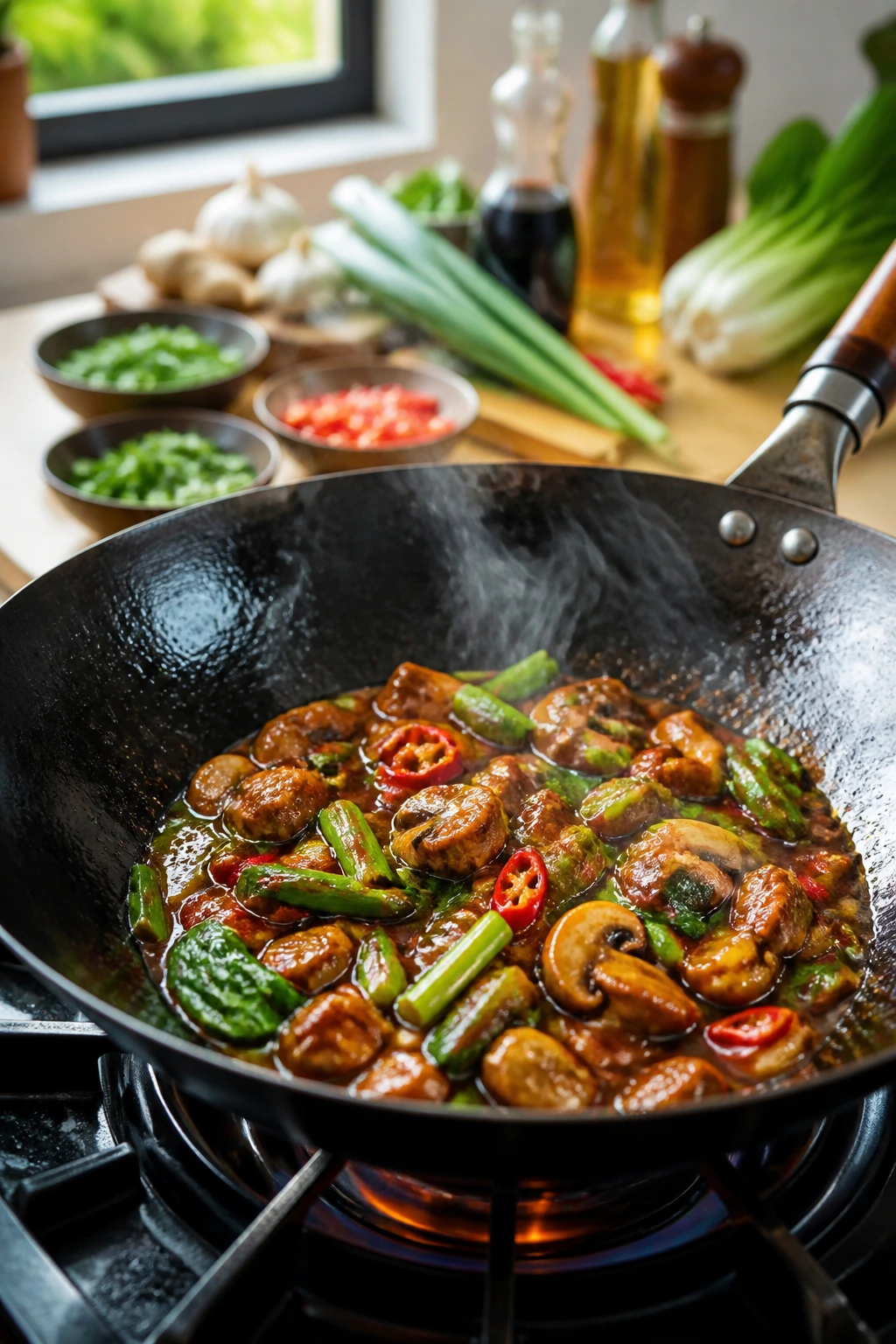
The basic method gets you dinner. The small moves make it taste like someone paid attention.
Flavor Enhancement: Add 1 teaspoon of black vinegar or 1/2 teaspoon of rice vinegar at the very end, after the heat is off or nearly off. That tiny acid hit cuts through soy sauce and oil without making the dish sour. If the pan tastes a little heavy, this is the fix.
Time-Saver: Chop the ginger, garlic, and scallion whites together, but keep them in separate little piles on the board. You save time without losing control. Mixed together in one bowl, garlic can burn while ginger is still trying to wake up.
Pro Move: Keep a small spoon nearby and taste the sauce before it hits the pan. If it tastes too salty in the bowl, it will not magically soften later. Add stock or water early, not after the sauce has thickened.
Cost-Saver: Frozen broccoli, frozen stir-fry vegetables, and even frozen shrimp can work. The catch is moisture. Thaw them first, then pat them dry on towels. If you skip that step, the pan steams and the sauce thins.
Serving Suggestions: Finish with toasted sesame seeds, sliced scallion greens, or a few drops of chili oil. Pick one or two. You want the dish to smell bright, not crowded.
Make-It-Yours: If you like heat, use chili crisp. If you want a cleaner flavor, stay with white pepper and scallions. If you want more depth, a spoonful of oyster sauce or mushroom sauce goes farther than another shake of soy.
The nicest thing about this kind of cooking is that the upgrades are tiny. You do not need to rewrite the dish. You just need to nudge it.
Where Home Stir-Fries Go Wrong
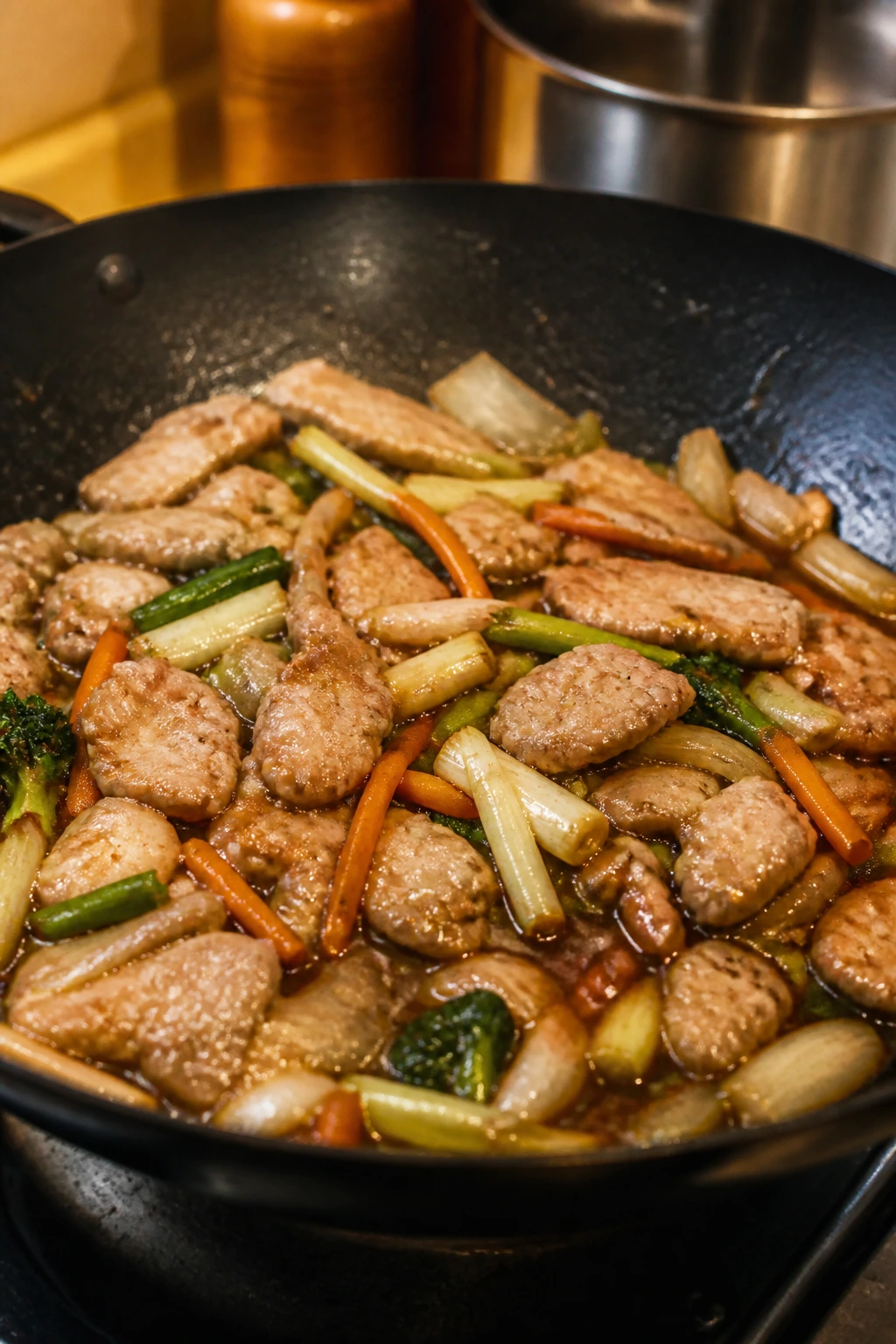
Most bad stir-fries fail in predictable ways, and the frustrating part is that they often look fine right before they taste off.
-
Crowding the pan: The chicken or vegetables turn pale and soft instead of browned. The fix is to cook in batches and keep the pan hot between rounds.
-
Adding garlic too early: Garlic goes from sweet to bitter fast, especially in a dry hot pan. If it’s burning before the rest of the ingredients are ready, pull the pan off the heat for a few seconds or add the garlic later.
-
Using too much sauce: A flooded pan tastes muddy and salty. Start with less sauce than you think you need, toss, then add the last splash only if the food still looks dry.
-
Skipping the dry step: Wet protein or wet vegetables dump water into the pan. Pat everything dry before it goes in, and if you blanch vegetables, drain them well.
-
Finishing sesame oil too early: Sesame oil loses its aroma when it cooks too long. Use it at the end, almost like perfume.
-
Slicing pieces unevenly: Thick carrots with thin peppers and chunky chicken make the pan cook in layers you didn’t plan for. Keep the cuts closer in size so everything reaches done at the same time.
There’s a smaller mistake too: tasting only the sauce, not the finished pan. A sauce can seem perfect in a bowl and taste flat once it meets vegetables and rice. Taste the final dish. That’s the one that matters.
Different Paths: Chicken, Beef, Tofu, Shrimp, and Veg-Heavy Versions
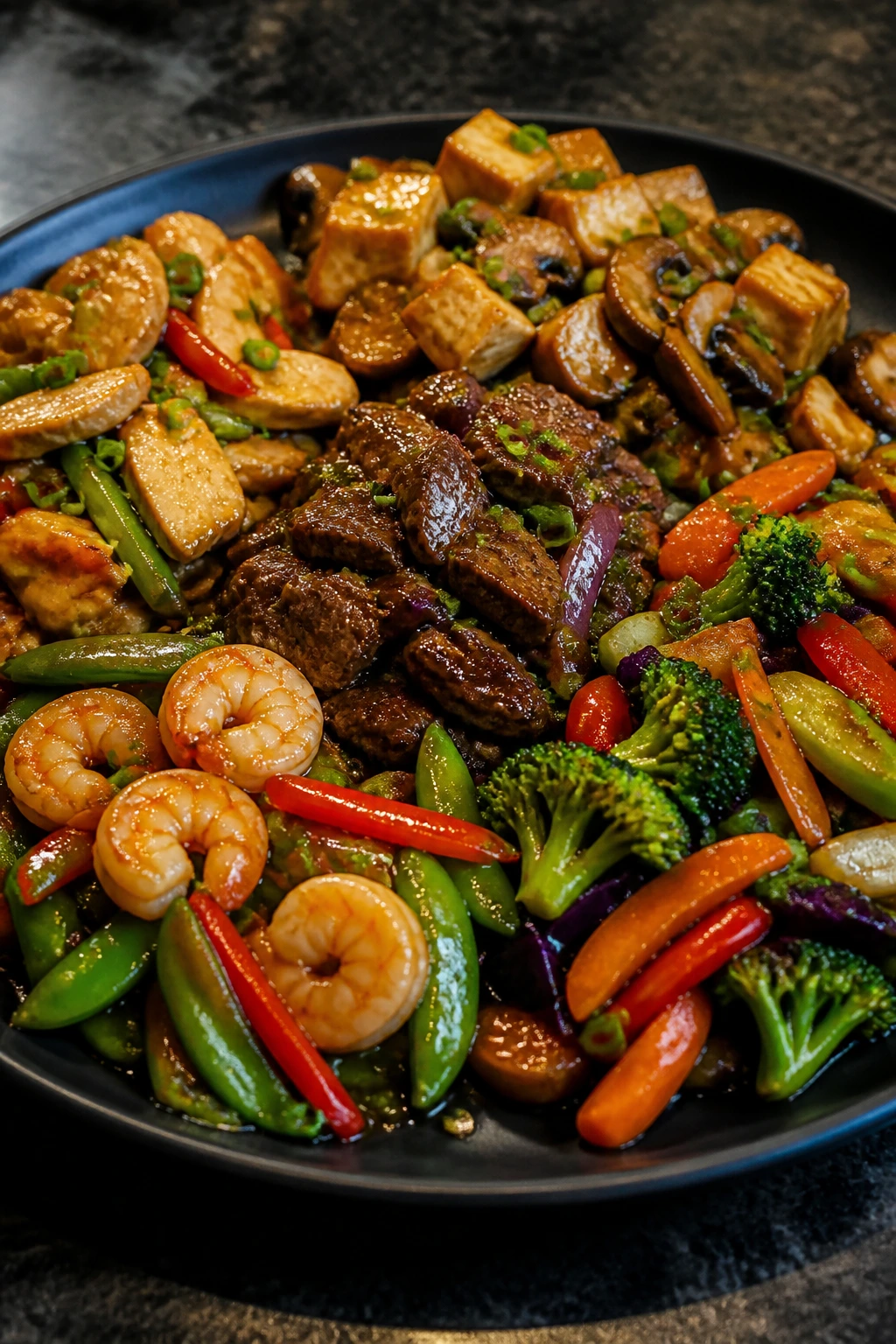
You can keep the same cooking pattern and change the whole mood of the dinner by switching the protein or leaning the sauce in a different direction.
Ginger-Scallion Chicken: This is the cleanest, most familiar version. Keep the sauce light, use chicken thighs, and let the scallions stay visible. It’s the one I’d make when I want the kitchen to smell sharp and fresh rather than dark and heavy.
Black Pepper Beef: Flank steak, onions, bell peppers, and a generous pinch of white pepper or black pepper change the whole profile. A little oyster sauce and a touch of dark soy make the sauce deeper, and the beef should stay pink in the center before the sauce goes in.
Crispy Tofu and Mushroom Pan: Pressed tofu and browned mushrooms carry this dish well, especially with bok choy or napa cabbage. A mushroom-based sauce or vegetarian oyster sauce keeps the savory note strong without needing meat.
Shrimp With Snap Peas and Garlic: Shrimp cook so fast that this version feels almost impatient, in the best way. Keep the sauce lighter, add the shrimp near the end, and finish with scallion greens so the whole pan stays bright.
Vegetable-Heavy Rainbow Stir-Fry: Broccoli, carrots, peppers, mushrooms, cabbage, and snow peas can make a full meal if the sauce is balanced and the rice is good. This version needs more attention to cut size and pan heat, because vegetables release water at different speeds.
Low-Sodium Sesame Style: Use more stock, more ginger, a little vinegar, and less soy. The sauce will taste cleaner and a bit lighter, which is useful if you want the aromatics to lead instead of the salt.
The point is not to reinvent the dinner every time. It’s to keep the same bones and shift the color, heat, or richness to match what you’re craving.
Tools That Make the Night Easier
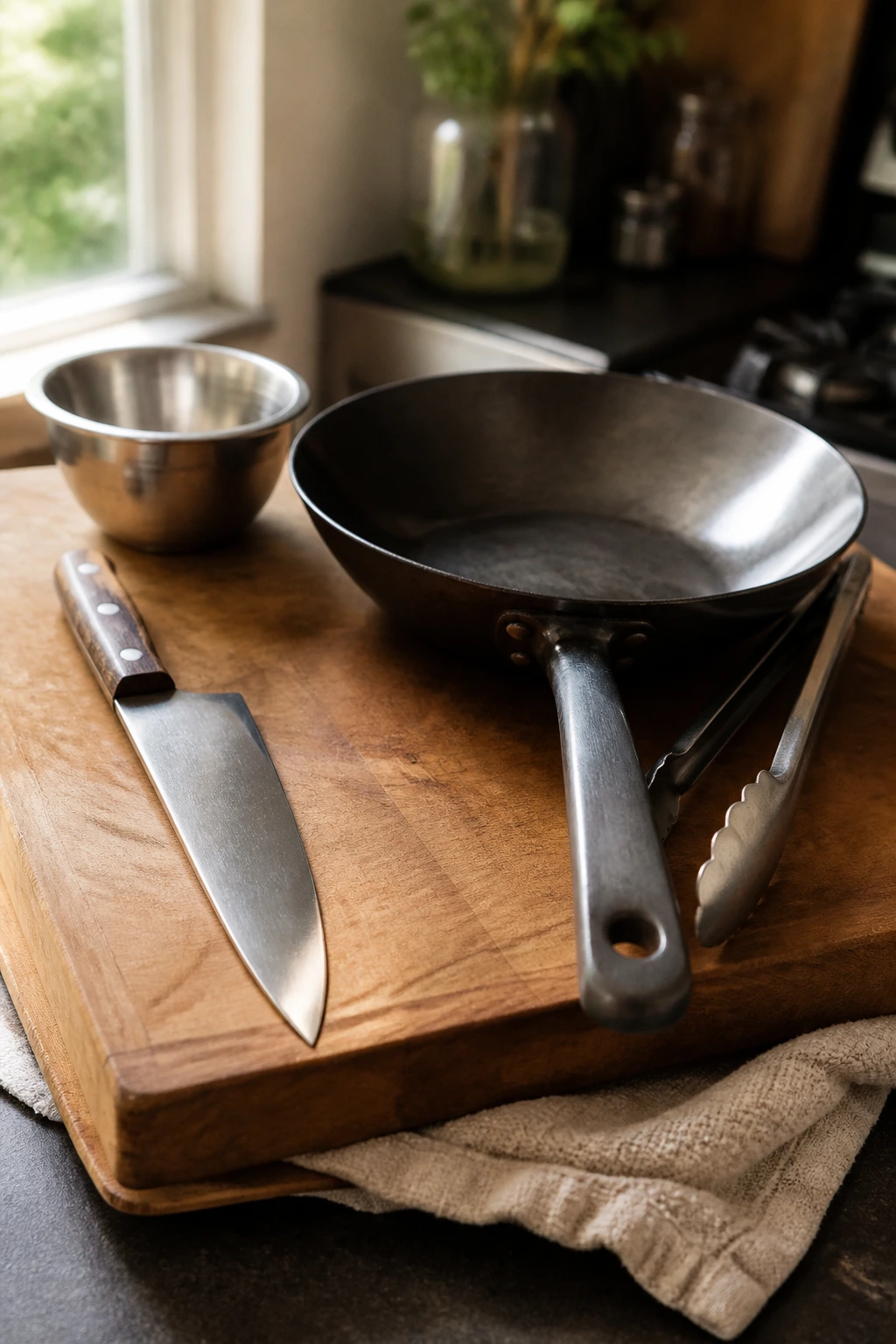
You do not need fancy equipment, but the right few tools make a Chinese-inspired dinner move faster and taste more controlled.
-
12-inch stainless steel or carbon steel skillet: A wide pan gives vegetables space to brown instead of steam. Carbon steel is ideal if you like high heat and are willing to season it.
-
Wok: Great on a gas burner and useful if you already own one. The sloped sides help with tossing, but a wok is not mandatory.
-
Sharp chef’s knife: Thin, even slicing matters for protein and vegetables. Dull knives make uneven pieces, and uneven pieces cook badly.
-
Cutting board with a damp towel underneath: Keeps the board from sliding while you chop ginger, scallions, and slippery vegetables.
-
Small mixing bowls: One for sauce, one for protein marinade, one for aromatics if you want the workflow to stay tidy.
-
Tongs or a wok spatula: Good for flipping chicken and beef without smashing them. A wooden spoon works in a pinch.
-
Rice cooker or medium saucepan with a tight lid: Either one handles jasmine rice well. A rice cooker is easier, but the saucepan still gets the job done.
-
Instant-read thermometer: Optional, but useful for chicken and leftovers. It takes the guesswork out of doneness.
-
Paper towels: Not glamorous. Essential. Dry protein, dry vegetables, dry shrimp. The pan rewards dryness.
If you already have a wok, use it. If you don’t, don’t let that stop you. A hot skillet and a little discipline will take you a long way.
Make-Ahead, Storage, and Reheating
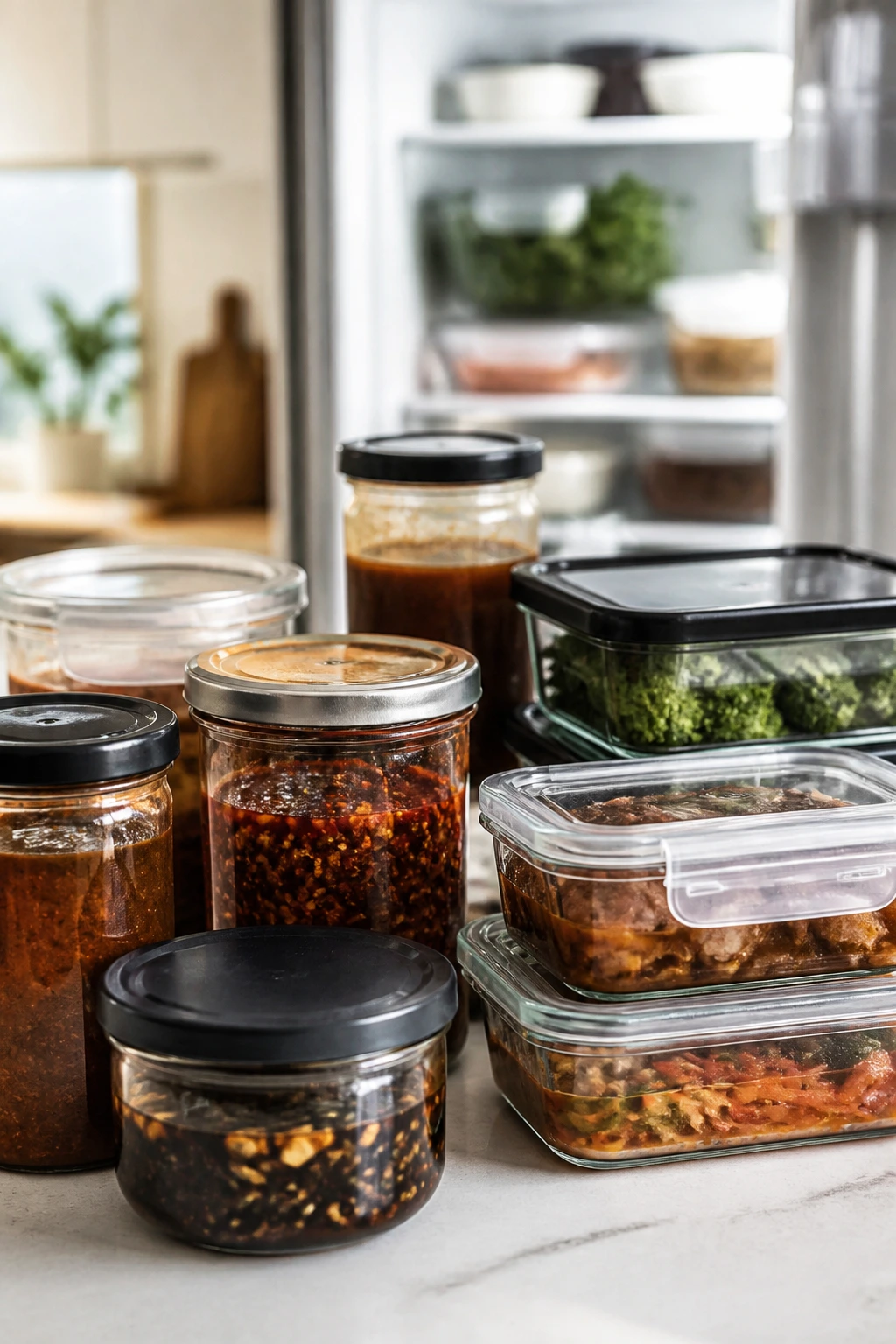
A stir-fry dinner is best right after it leaves the pan, but smart prep can make the actual cooking feel almost effortless.
The sauce can be mixed up to 5 days ahead and kept in the fridge in a sealed jar. Chop the ginger, garlic, and scallions the day before if you want, but keep them dry and separate so the garlic doesn’t perfume the other ingredients and turn everything muddy. Marinated chicken, beef, or pork usually holds well for up to 12 hours in the fridge.
Cooked stir-fry keeps in the fridge for 3 to 4 days in an airtight container. If the dish includes delicate vegetables like bok choy or snap peas, expect some softening. That’s normal. The trick is to undercook the vegetables by about 30 to 60 seconds the first time, so they have a little life left when reheated.
For freezing, the smartest move is to freeze the protein and sauce, not the full vegetable mix. Most stir-fried vegetables lose too much texture after thawing. Cooked protein and sauce can last up to 2 months frozen in a sealed container or freezer bag. Thaw overnight in the fridge, then reheat in a skillet with a splash of water or stock.
Reheating works best in a pan over medium heat. Add a teaspoon or two of water, cover briefly, and stir until the food is hot all the way through. If you microwave it, cover the dish and heat in short bursts so the sauce doesn’t dry out. Rice needs a splash of water before reheating, or it turns hard at the edges and strangely stubborn in the middle.
If you plan to make fried rice from leftovers, chill the rice uncovered or loosely covered so excess steam escapes. Damp rice is the enemy there.
Questions People Ask Before They Cook
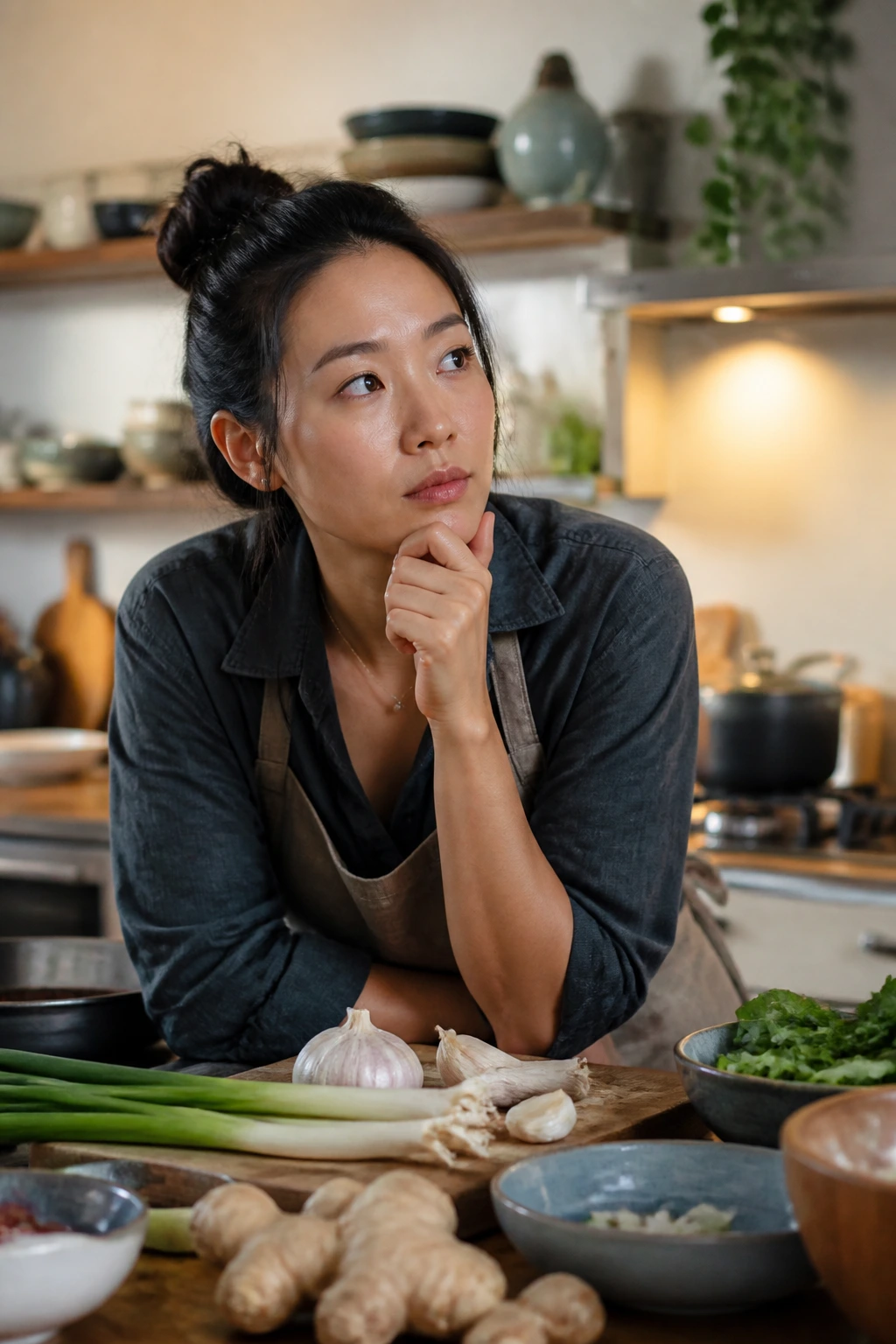
Can I make this without a wok?
Yes. A wide stainless steel or carbon steel skillet works well, and in some kitchens it works better than a wok because the contact with the burner is more even. The only real requirement is a hot pan and enough room for the ingredients to brown.
What soy sauce should I buy for this kind of dinner?
Light soy sauce is the one that seasons the food without darkening it too much. Dark soy adds color and a rounder flavor, but it’s stronger and not a substitute for light soy on its own. If you can only buy one bottle, choose light soy first.
Is Shaoxing wine necessary?
No, but it helps. Dry sherry is the closest pantry substitute, and a little chicken stock with a splash of rice vinegar also gets you part of the way there. The point is a mild fermented note, not alcohol for its own sake.
How do I keep chicken breast from drying out?
Slice it thinly across the grain, marinate it briefly with cornstarch and soy, and pull it from the pan as soon as it turns opaque. If you want an easier life, use chicken thighs instead. They tolerate high heat better and stay juicier.
Can I use frozen vegetables?
Yes, as long as you thaw and dry them first. Frozen vegetables hold a lot of surface water, and that water will steam the pan if you skip the drying step. Broccoli, green beans, and mixed stir-fry vegetables all work if you handle the moisture.
Why does my sauce taste flat even when it’s salty enough?
Usually the sauce needs acid, sweetness, or a little more aroma. A splash of rice vinegar, a pinch of sugar, or fresh scallions at the end can wake up a sauce that tastes heavy and one-dimensional.
What if my sauce gets too thick?
Add a tablespoon of stock or water and toss over low heat until it loosens. Cornstarch thickens fast, and a sauce can go from glossy to paste-like in a few seconds if the pan is too hot.
Can I meal prep this for the week?
Yes, but keep the rice, sauce, and protein-vegetable mixture in separate containers if you can. That keeps the rice from getting soggy and the vegetables from turning soft too quickly. Reheat the components together only when you’re ready to eat.
The Night the Takeout Bag Stays Closed
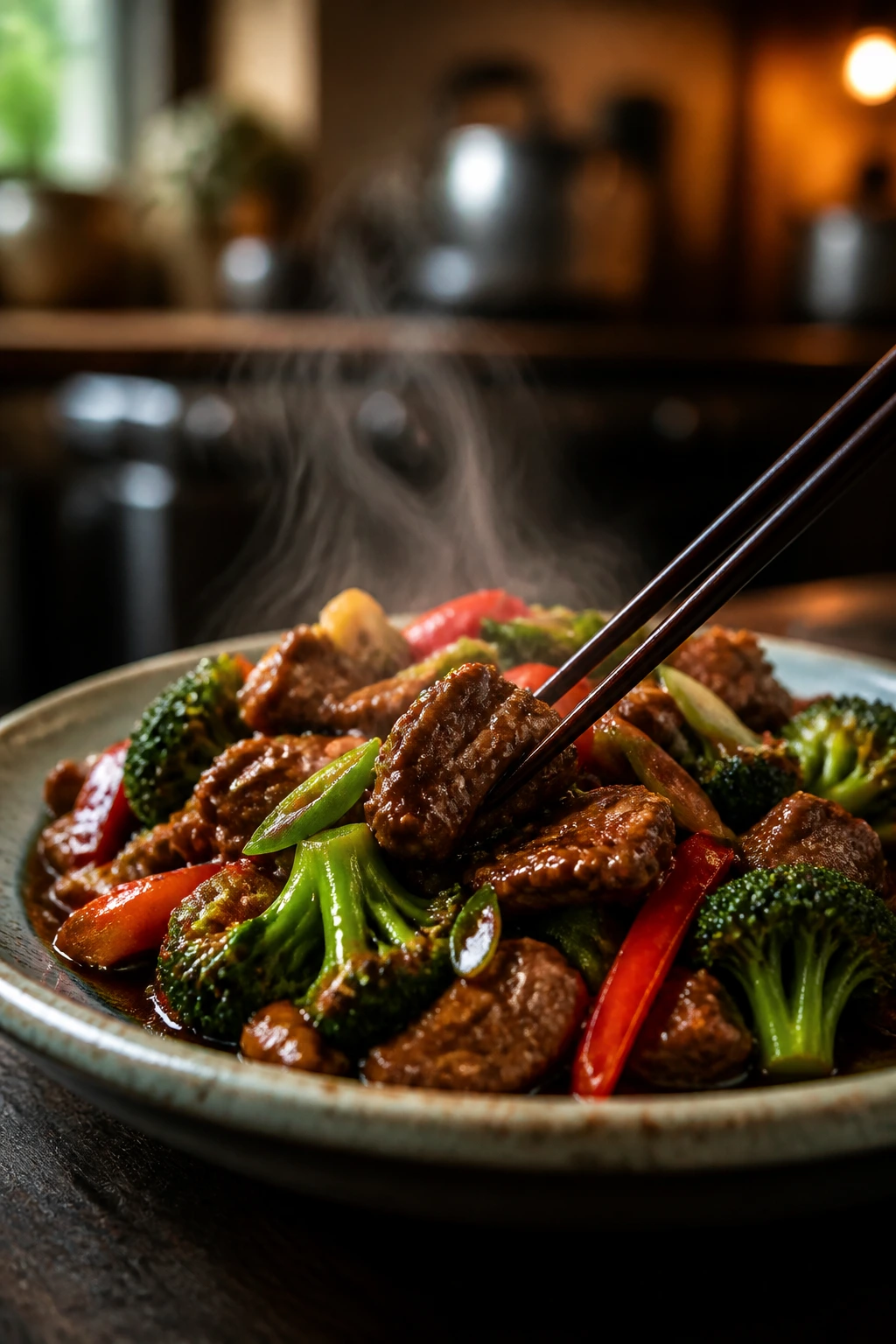
A good home Chinese dinner does not need to shout. It just needs to smell right, cook fast, and land on the plate with enough gloss to make the whole thing feel deliberate. That starts with the hot oil and the aromatics, then moves through sauce, protein, vegetables, and the carb that holds it all together.
The next time the takeout craving hits, start with ginger in the pan and keep the heat honest. Use a little less sauce than you think you need. Finish with scallions and a tiny splash of vinegar. Those small moves are what turn a regular stir-fry into the kind of dinner people keep asking about after the pan is already empty.