



A good sticky Japanese pancake should hit the pan with a soft hiss, smell like browned cabbage and egg, and come off the skillet with an edge you can hear when the knife slides through it. The center stays tender. The top gets glossy. And the sauce — that sweet-salty, slightly sharp sauce — clings in a way that makes the whole thing taste richer than the ingredient list looks on paper.
This sticky Japanese pancake is the home-cook version of okonomiyaki, the cabbage-heavy savory pancake that shows up in Japanese kitchens, casual diners, and street stalls with a thousand little variations. The reason it works so well at home is also the reason most bad versions fail: the batter has to be thick enough to hold a pile of cabbage, the pan has to be hot enough to brown without scorching, and the flip needs a little confidence. Not bravado. Just confidence.
I like this style of pancake because it behaves like dinner, not a project. You whisk a bowl, fold in cabbage, cook it in a skillet, and finish with a sauce that tastes like it came from a proper counter, not a bottle that’s been ignored for six months. If you’ve ever had one that collapsed in the middle or turned bland under the toppings, this version fixes those two problems first. The rest is garnish.
Why This Sticky Japanese Pancake Earns a Spot in the Rotation
-
Crisp edges, soft middle: A hot skillet and a thick cabbage batter give you a browned underside in about 4 to 5 minutes per side, with a center that stays tender instead of turning bready.
-
Pantry sauce, real payoff: Ketchup, Worcestershire, oyster sauce, soy, and honey make a glossy topping that tastes layered, not flat, and it takes less than a minute to whisk together.
-
Flexible without getting sloppy: Bacon, shrimp, mushrooms, or plain cabbage all fit here as long as the cabbage stays the main event and the batter doesn’t get thinned out.
-
Fast enough for a weeknight: The whole thing moves from bowl to plate in about 40 minutes, and most of that time is the pan doing the work while you stay nearby.
-
Leftovers hold their shape: A wedge reheats better than most saucy takeout food, especially if you bring the crust back in a skillet instead of the microwave.
-
The toppings do real work: Kewpie mayo, aonori, sesame, and bonito flakes aren’t decoration; they change the flavor balance so the pancake tastes smoky, creamy, and salty all at once.
What Makes the Center Soft and the Edges Crisp
The magic here is not mysterious. It’s a stack of tiny choices that all point in the same direction: keep the interior moist without letting the batter flood the pan. Okonomiyaki-style pancakes live or die on texture, and the texture comes from cabbage cut thin enough to soften, but not so fine that it disappears.
Cabbage does the heavy lifting. Once it warms, it releases steam inside the batter, which keeps the middle light while the outside browns. If the shreds are too thick, they stay crunchy in a rough way and the pancake slices like a loose cabbage casserole. If they’re too wet, the batter turns soupy and takes forever to set. The sweet spot is thin ribbons, dry enough to hold their shape when you grab a handful.
The batter is a binder, not the point
A lot of home versions go wrong because the batter is treated like a crepe batter. That’s backwards. Here, the flour and egg should barely hold the cabbage together, not cloak it. The mixture should mound on the spoon and stay put when you drop it into the skillet. If it pours like cake batter, it’s too loose.
Eggs help with structure. Dashi helps with savoriness. A little baking powder gives the center a touch of lift so it does not feel dense after the flip. That’s enough. You do not need a long ingredient list to get the right mouthfeel.
Heat is what builds the crust
Medium heat is the right place to start. Not medium-high. Not a pan blazing hot enough to smoke the oil. The underside needs time to brown before the interior overcooks, and the cabbage needs a few minutes to soften in its own steam. If the bottom goes dark too fast, the middle stays pale and floppy.
That’s the part people forget. The pancake is not just frying; it’s frying and steaming at the same time. Once you understand that, the whole dish gets easier to read.
The Ingredient List That Keeps the Pancake Tender
A short ingredient list is one of the reasons I keep coming back to this dish. It looks humble, but the details matter. The cabbage should be dry, the dashi should be cold, and the sauce should taste a little too sharp in the bowl because it will calm down once it hits the hot pancake.
Yield: Makes 2 large pancakes, serves 2 to 4
Prep Time: 20 minutes
Cook Time: 15 minutes
Total Time: 40 minutes
Chill/Rest Time: 5 minutes
Difficulty: Intermediate — the batter is straightforward, but the flip asks for a steady hand and a wide spatula.
Best Served: Right away, while the crust is still crisp.
For the Pancake:
- 1½ cups all-purpose flour
- 1 teaspoon baking powder
- 1 teaspoon fine sea salt
- 1 tablespoon granulated sugar
- 2 large eggs
- 1 cup cold dashi, chicken stock, or water with 1 teaspoon instant dashi granules
- 6 cups finely shredded green cabbage, loosely packed (about 10 ounces)
- 3 scallions, thinly sliced
- ½ cup tenkasu or ¼ cup panko
- 4 slices bacon, cut in half crosswise
- 2 tablespoons neutral oil, divided
For the Sticky Sauce:
- ¼ cup ketchup
- 2 tablespoons Worcestershire sauce
- 1 tablespoon oyster sauce
- 1 tablespoon soy sauce
- 1 tablespoon honey
For the Toppings:
- 2 tablespoons Kewpie mayonnaise
- 1 tablespoon toasted sesame seeds
- 1 tablespoon aonori or finely crumbled nori
- 1 tablespoon bonito flakes, optional
Batter Base
What to use: 1½ cups all-purpose flour, 1 teaspoon baking powder, 1 teaspoon fine sea salt, 1 tablespoon sugar, 2 eggs, and 1 cup cold liquid. The liquid can be dashi, chicken stock, or water with instant dashi granules stirred in.
Preparation: Whisk the dry ingredients in one bowl and the wet ingredients in another before combining them. The batter should look thick and a little lumpy before the cabbage goes in.
Substitutions: A gluten-free 1:1 flour blend can stand in for the all-purpose flour, though the pancake will be a touch more delicate. If you do not keep dashi around, chicken stock gives a good savory base, and plain water works in a pinch if the sauce and toppings do their job.
Tips: Keep the liquid cold. It slows gluten development and keeps the batter from turning elastic, which matters more here than people expect. If the batter looks pourable, it is too loose for this style.
Cabbage & Scallions
What to use: 6 cups finely shredded green cabbage, about 10 ounces, plus 3 scallions sliced thin.
Preparation: Shred the cabbage into thin ribbons, then chop those ribbons once or twice so the pieces are short enough to sit comfortably in the batter. Pat the cabbage dry after washing it. If you skip that part, the extra water will thin the batter and the pancake will spread.
Substitutions: Napa cabbage works if that’s what you have, but green cabbage gives a sturdier bite and a little more crunch. You can swap scallions for a small handful of chives or the pale green part of a leek, sliced very thin.
Tips: I prefer cabbage cut finer than coleslaw but not minced. You want strands, not confetti. Those strands create the web that makes the center look loose and fluffy instead of heavy.
Sauce & Toppings
What to use: ¼ cup ketchup, 2 tablespoons Worcestershire sauce, 1 tablespoon oyster sauce, 1 tablespoon soy sauce, and 1 tablespoon honey for the sauce; Kewpie mayonnaise, sesame seeds, aonori, and bonito flakes for the finish.
Preparation: Stir the sauce until it turns smooth and dark. Keep the mayonnaise in a squeeze bottle if you have one, because the zigzags look cleaner and the drizzle is easier to control.
Substitutions: If oyster sauce is off the table, hoisin sauce is the closest pantry swap, though it tastes a little sweeter. Vegan mayo works fine. If you can’t find aonori, finely crumbled nori gives the same seaweed note, just a little less aggressively green.
Tips: Taste the sauce before you put it on the pancake. It should land somewhere between tangy and savory, with enough sweetness to cling to the crust. If it tastes like barbecue sauce, it’s too soft and too sweet.
Protein Topper
What to use: 4 slices bacon cut in half crosswise, arranged over the batter before the first flip.
Preparation: Cut the bacon so the strips fit inside a 6-inch round without hanging over too much. The slices render fat as the pancake cooks, and that fat helps brown the bottom.
Substitutions: Thin pork belly slices are more traditional and a bit richer. Chopped shrimp works well too, especially if you want a lighter finish. You can skip the meat entirely and keep the pancake vegetable-forward.
Tips: Don’t overload the top with too much meat. The pancake already has enough going on, and too many add-ins make the center dense and awkward to flip.
The Skillet, Spatula, and Other Tools That Make Flipping Bearable
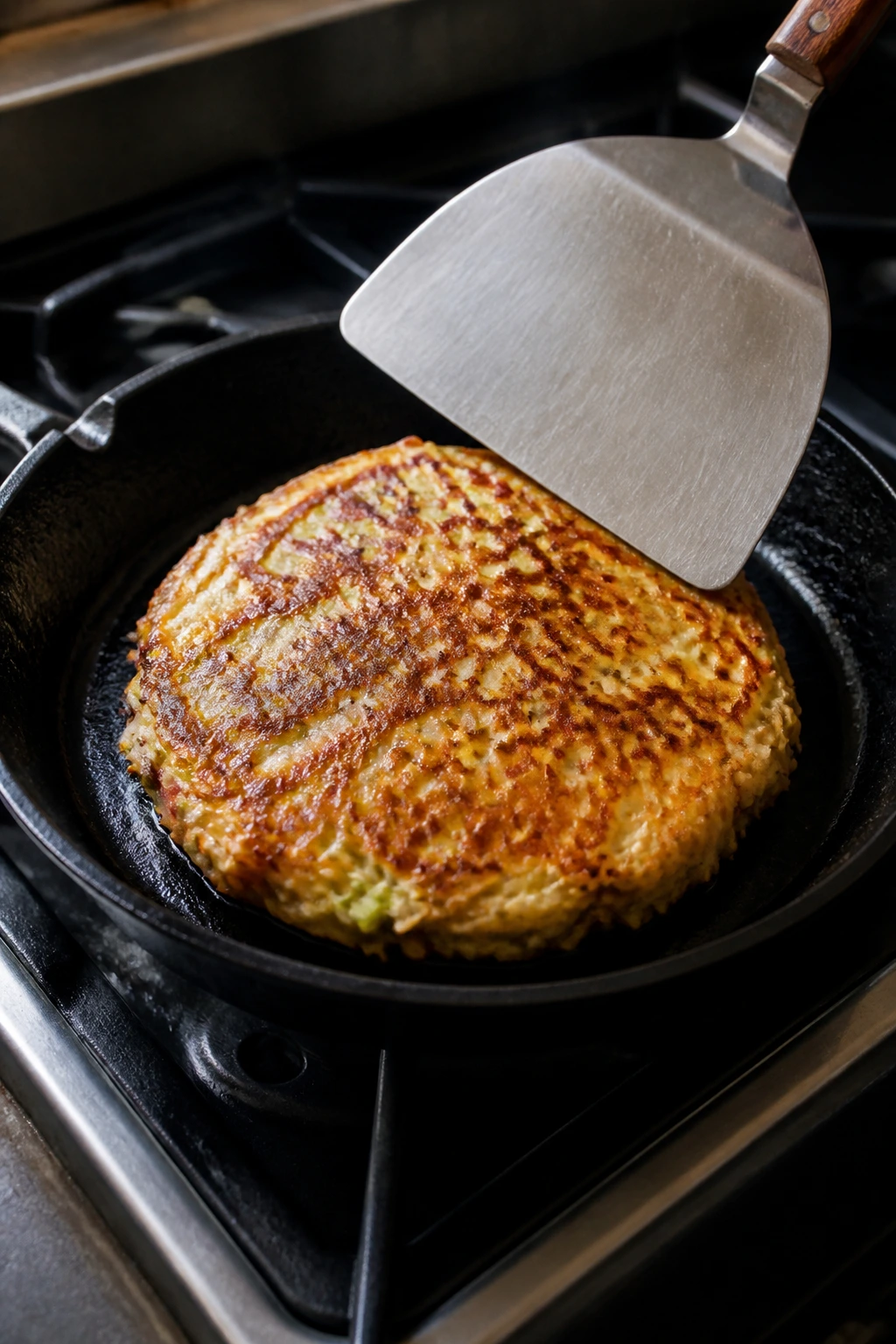
A sticky Japanese pancake does not demand fancy gear, which is part of its charm. Still, a few tools make the difference between a clean flip and a ragged edge that sags the second it leaves the pan.
-
10- or 12-inch nonstick skillet or well-seasoned cast-iron skillet: Nonstick gives you the least drama; cast iron gives you a deeper crust if you know your burner runs even.
-
Wide metal spatula or fish spatula: This is the tool that matters most. A narrow turner pokes holes in the pancake and makes the flip feel like a gamble.
-
Large mixing bowl: You need room to fold cabbage into batter without packing it down.
-
Whisk and rubber spatula: The whisk handles the batter; the rubber spatula folds in the cabbage without bruising it.
-
Lid or sheet pan: Useful for a short steam finish if the center still feels loose after the flip.
-
Sharp knife and cutting board, or a mandoline: Thin cabbage shreds are worth the extra minute they take.
-
Small bowl or squeeze bottle for the sauce and mayo: Optional, but it keeps the finishing lines neat instead of gloppy.
If you only own one skillet, use that. The pancake is forgiving once the batter is the right thickness. The one tool I would not skimp on is the spatula. That’s the difference between a clean turn and a lunch rescue mission.
Mixing the Batter So It Stays Tender
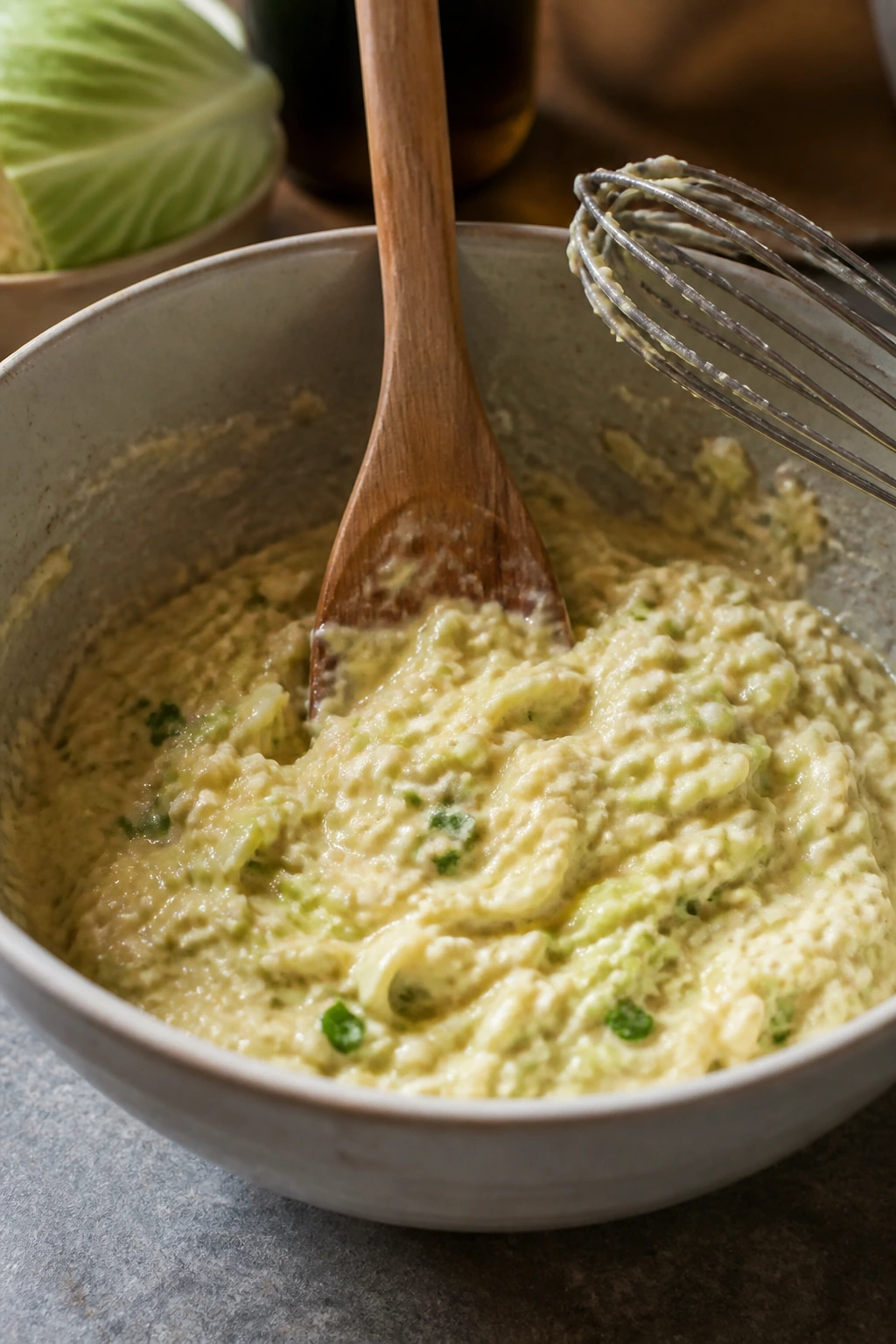
The batter should look like a cabbage-loaded heap, not a pour. That’s the mental picture worth keeping. If you stir until everything is smooth, you’ve gone too far and probably made the pancake tougher than it needs to be.
What the batter should look like
Whisk the dry ingredients first, then beat the eggs with the cold dashi. When the wet and dry meet, you want a thick mixture that still shows a few flour streaks before the cabbage goes in. Once the cabbage and scallions are folded through, the batter should cling to the shreds without pooling at the bottom of the bowl.
A spoon should stand up for a second before sinking. Not forever. Just long enough to tell you the mixture has enough structure to hold a mound in the skillet.
Why the rest matters
Give the batter 5 minutes to sit while the skillet heats. That short pause hydrates the flour, tightens the mixture, and gives the cabbage time to settle into the batter instead of floating around like loose mulch. It is a small step, and I would not skip it.
If the mixture seems too stiff after the rest, add a tablespoon of dashi. If it looks too loose, fold in a small handful of cabbage or a spoonful of flour. Do not start from scratch. A few tiny adjustments are usually enough.
The part people rush
Fold the cabbage in gently. You are trying to coat the shreds, not crush them. Once the cabbage breaks down too much, the pancake loses the airy, layered feel that makes it work in the first place.
I like to stop folding as soon as there are no dry flour pockets left. That’s the line. Anything beyond that is usually extra motion without extra benefit.
Turning Batter and Cabbage Into a Proper Pancake
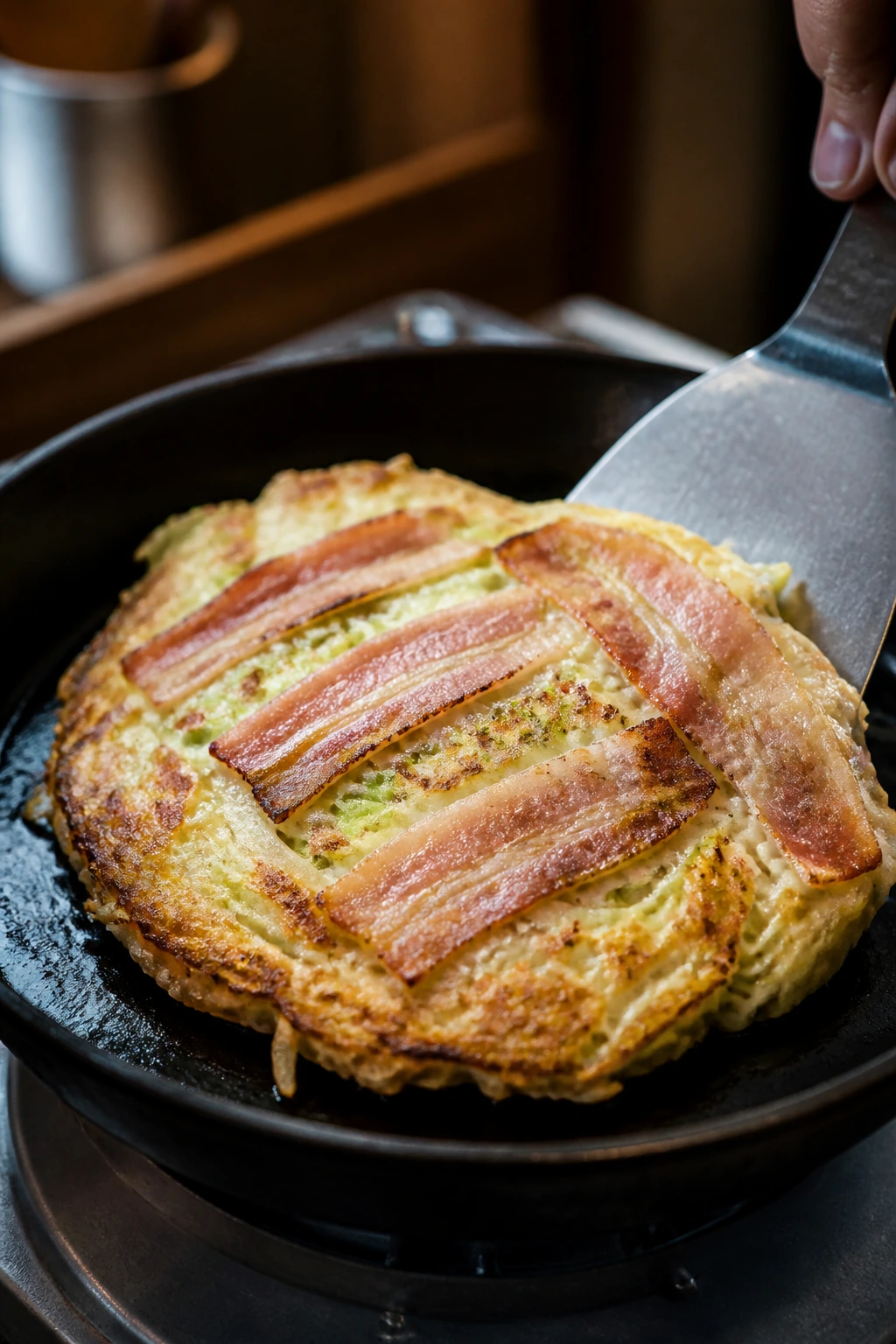
Here is where the dish stops being ingredients and starts being dinner.
Prep the Batter:
-
In a large bowl, whisk together the flour, baking powder, salt, and sugar until the mixture looks even and no clumps of baking powder remain.
-
In a second bowl, whisk the eggs and cold dashi until smooth. Pour the wet mixture into the dry ingredients and whisk just until the batter thickens and a few small lumps remain. Do not chase a perfectly smooth batter; overmixing makes the pancake dense.
-
Add the cabbage, scallions, and tenkasu or panko. Fold with a rubber spatula until the cabbage is coated and the batter clings to the shreds. Let the mixture rest for 5 minutes.
Cook the Pancakes: 4. Set a 10- or 12-inch skillet over medium heat and add 1 tablespoon of the neutral oil. When the oil shimmers and slides easily across the pan, scoop in half the batter and shape it into a round about 6 inches across and 1 inch thick. Press lightly so the top is even, then lay 2 bacon halves across the surface.
-
Cook the pancake for 4 to 5 minutes, until the bottom is deep golden and the edges look set. If the top still looks wet in the middle but the bottom is browning fast, lower the heat a notch. A dark crust with a raw center is the wrong trade.
-
Slide a wide spatula fully under the pancake, or use two spatulas if you need the help, and flip it in one confident motion. Set the bacon side down in the skillet and cook for 3 to 4 minutes more, until the bacon crisps and the second side is browned.
-
If the center still feels loose when you press the middle with a spatula, cover the skillet for 1 to 2 minutes and turn the heat to low. The trapped steam finishes the middle without burning the underside. Transfer the pancake to a plate and repeat with the remaining batter and oil.
Sauce and Finish: 8. Stir the ketchup, Worcestershire sauce, oyster sauce, soy sauce, and honey in a small bowl until glossy and smooth. Spoon or brush the sauce over the hot pancakes, drizzle the Kewpie mayonnaise in thin lines, and finish with sesame seeds, aonori, and bonito flakes if you’re using them.
If you want smaller pancakes, make four rounds instead of two. That’s my preference if I’m cooking for someone nervous about flipping. Smaller rounds are easier to handle and brown more evenly.
Whisking the Sticky Sauce and Finishing the Top
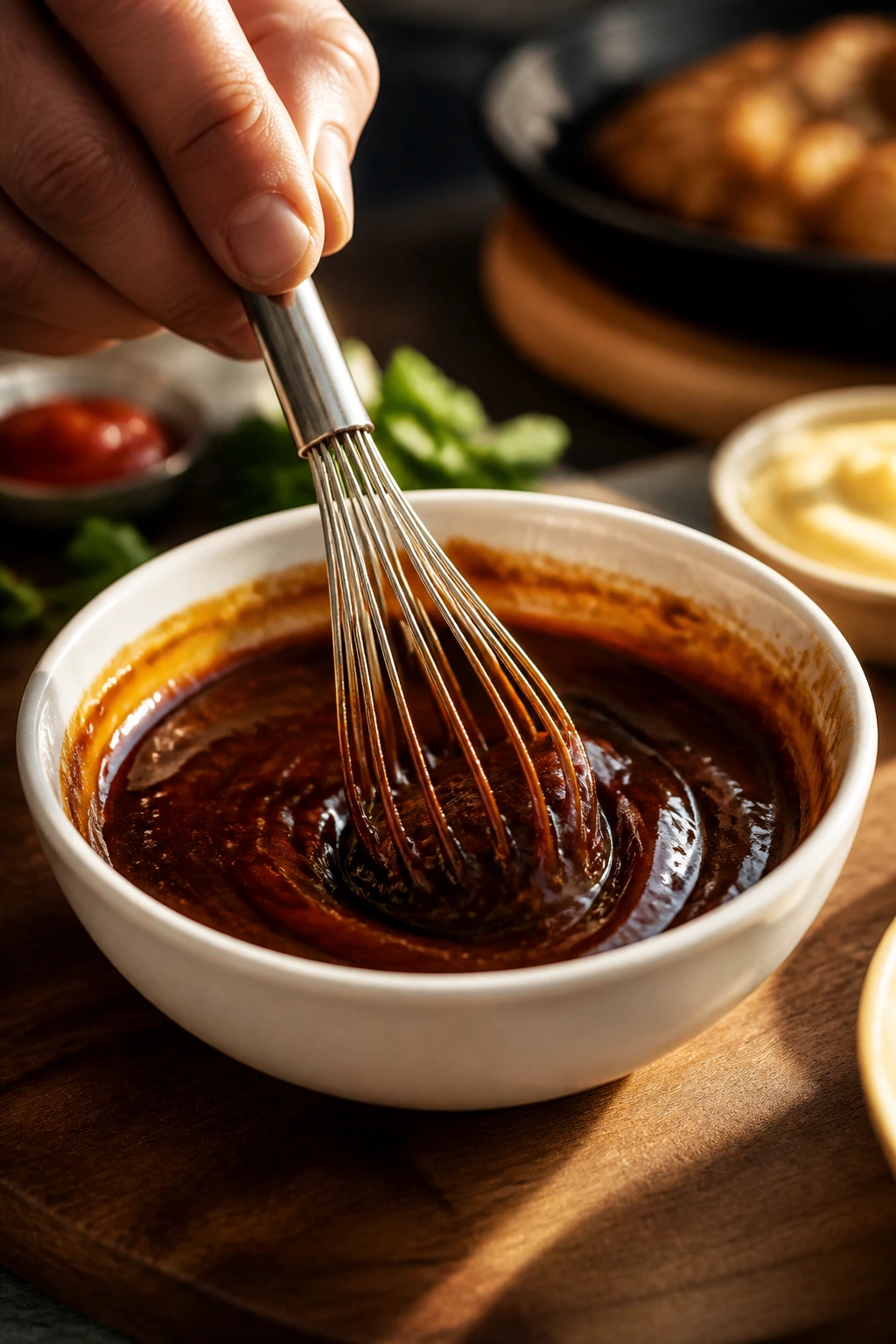
The sauce is not an afterthought. It is the bridge between the browned pancake and the toppings, and it should taste like a cross between sharp, sweet, and savory before it ever reaches the skillet.
Most store-bought okonomiyaki sauces lean dark, fruity, and slightly thick. The homemade version here lands in the same neighborhood without sending you on a specialty shopping run. Ketchup gives it body. Worcestershire adds tang and a little anchovy depth. Oyster sauce fills in the round, salty middle. Soy sauce sharpens the edges. Honey keeps the whole thing from tasting stern.
If the sauce tastes a little too sharp in the bowl, that’s fine. Once it hits the hot pancake and gets chased by the creamy mayo, the balance settles. What you want is cling, not runoff. A thin sauce will slide off the cabbage and puddle on the plate. A thicker one stays where you put it and stains the surface in a way that looks and tastes right.
Kewpie mayonnaise deserves its reputation here. It tastes richer and more eggy than standard mayo, and it makes the top of the pancake look striped and deliberate instead of vaguely dressed. Use a squeeze bottle if you have one. If not, a spoon and a steady hand do the job.
Bonito flakes and aonori are optional, but I’d use them when I can. The bonito moves from the heat and gives the dish a little visual life. The aonori adds a marine note that makes the sauce taste less like a generic glaze and more like the dish it’s supposed to be.
How to Serve It So the Pancake Stays Crisp
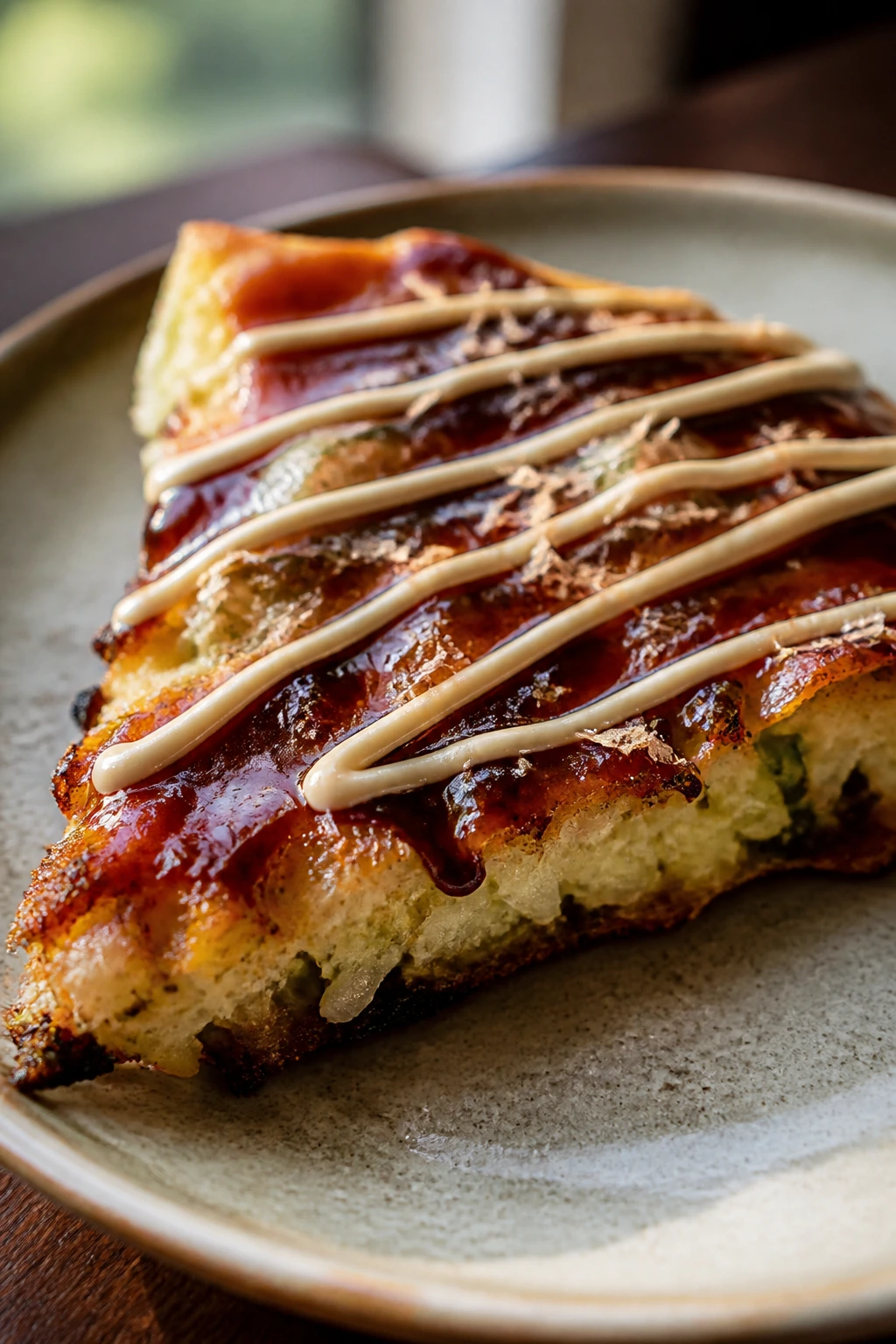
Presentation: Cut each pancake into four wedges with a sharp knife or bench scraper, then slide them onto warm plates while the crust is still firm. Drizzle the sauce in thin zigzags rather than dumping it on; the pancake should still show through the sheen. The cut face gives you that good cross-section of cabbage strands, bacon, and tender batter, which is half the pleasure of serving it.
Accompaniments: A small bowl of miso soup keeps the plate from feeling heavy, and a cucumber salad with rice vinegar gives the meal a crisp edge. If you want something more filling, steamed white rice fits, though I prefer the pancake as the clear center of the plate. Quick pickled ginger, edamame, or a little sesame-dressed greens salad all work without competing.
Portions: Two 6-inch pancakes serve 2 people as a main dish or 4 if you have side dishes on the table. If you’re feeding more people, make extra rounds rather than one giant pancake; the smaller ones hold their shape better and brown more evenly. One giant skillet pancake looks dramatic and flips badly. I’d skip that idea every time.
Beverage Pairing: A dry lager cuts through the sauce, and a cold glass of unsweetened green tea keeps the cabbage tasting clean. If you want something with more body, a crisp sake or a simple highball works well. Sparkling water with lime is the quiet choice, and it still does the job.
I like serving this right out of the skillet on a warm plate, then adding the sauce at the table if I’m cooking for people who like to control their own drizzle. It keeps the crust a little firmer and gives everyone a chance to watch the bonito move around on top. Small thing. Worth it.
Small Tips That Make the Texture Better
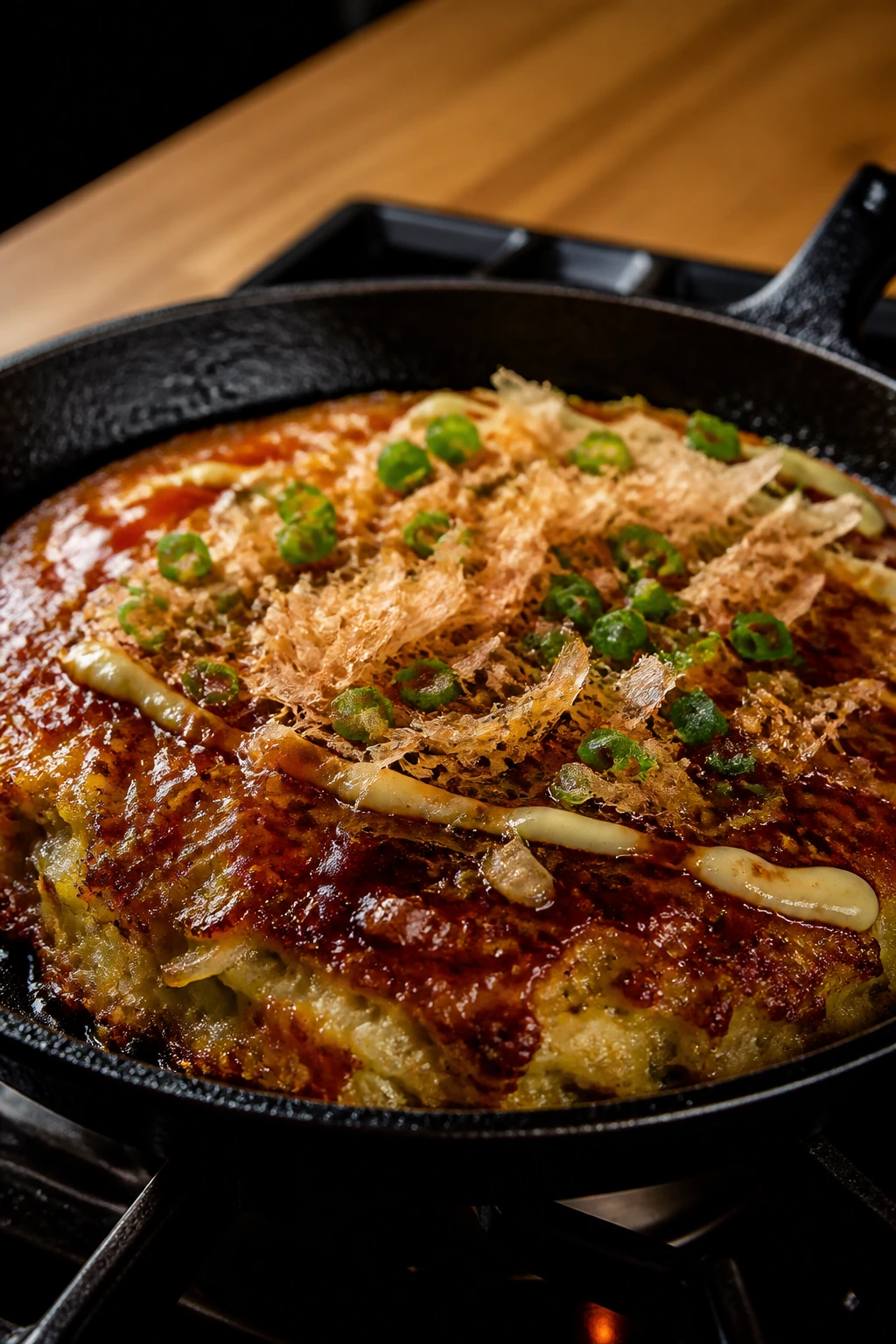
Flavor Enhancement: Stir 1 teaspoon of toasted sesame oil into the sauce if you want a deeper, nuttier finish. It does not scream for attention, but the pancake tastes rounder after it hits the plate. A tiny grate of fresh ginger over the top works too, especially if you’re using shrimp instead of bacon.
Texture Trick: Hold back about 1 cup of the cabbage and fold it in last. Those last few shreds stay a little more defined and give you small crisp pockets in the middle of the pancake. I prefer that to an even, uniform filling. Uniform can be dull.
Time-Saver: Shred the cabbage a day ahead and keep it wrapped in a clean kitchen towel inside a container so it stays dry. The sauce can be mixed ahead too and held in the fridge for a week. That turns the whole dish into a 20-minute cook once the pan is warm.
Make-It-Yours: If you want a vegan version, use egg-free mayo and skip the bacon, then add sautéed mushrooms for heft. For more heat, finish with shichimi togarashi or a little chili oil. For a richer version, top the pancake with a softly fried egg and let the yolk mix with the sauce.
A tiny detail that matters more than it should: keep the cabbage dry. Water is the enemy of good browning here. If you wash the cabbage and then fold it in damp, the pancake will steam too much and the crust won’t come back after the flip.
Common Mistakes That Ruin the First Batch
-
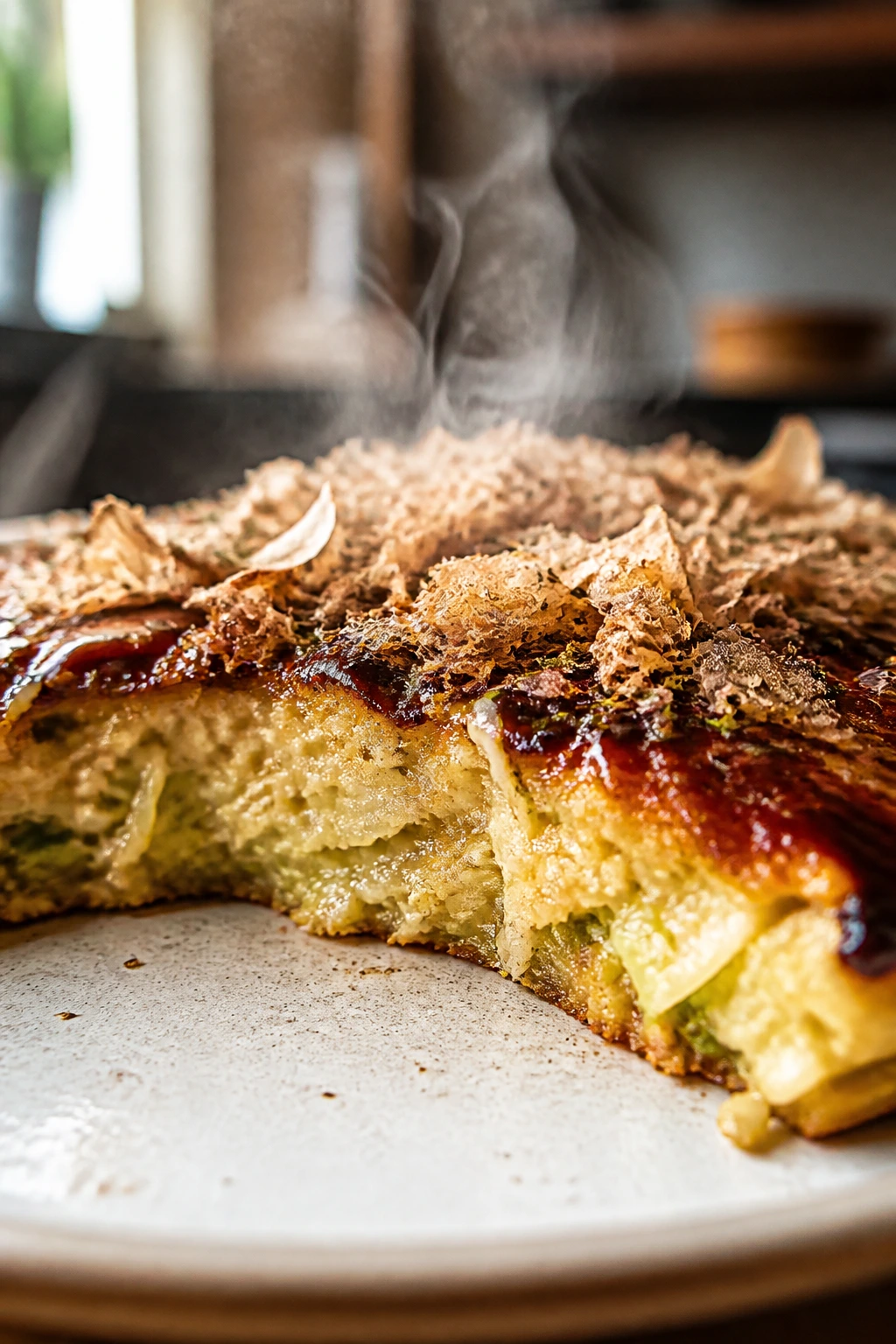
Shredding the cabbage too thick: Thick cabbage strands stay stubborn and make the middle feel stringy. Cut the cabbage into thin ribbons, then shorten those ribbons a bit with the knife so they fold neatly into the batter.
-
Making the batter pourable: A loose batter spreads out like a crepe and burns before the middle can set. The mixture should mound and hold shape; if it slumps instantly, add a little more cabbage or a spoonful of flour.
-
Cranking the heat to hurry the crust: High heat darkens the bottom before the inside catches up, and the flip turns messy. Medium heat gives the egg and flour time to set while the underside turns golden.
-
Using a narrow spatula for the flip: A small turner only catches part of the pancake, which leads to tearing. Slide in a wide spatula, support the whole round, and flip in one motion. If needed, use two spatulas and treat the pancake like a single sheet.
-
Saucing too early: Sauce on a hot raw side can sink in and soften the crust before you want it to. Wait until the pancake is fully cooked and plated, then add the sticky sauce and mayonnaise.
-
Crowding the batter with extras: Too many mushrooms, too much meat, or a pile of shrimp can make the pancake heavy and hard to turn. Keep the cabbage central and treat additions like accents.
The biggest fix, though, is patience. If the first side isn’t ready, it isn’t ready. Let the pan do its thing, and the pancake usually rewards you.
Variations and Adaptations to Try
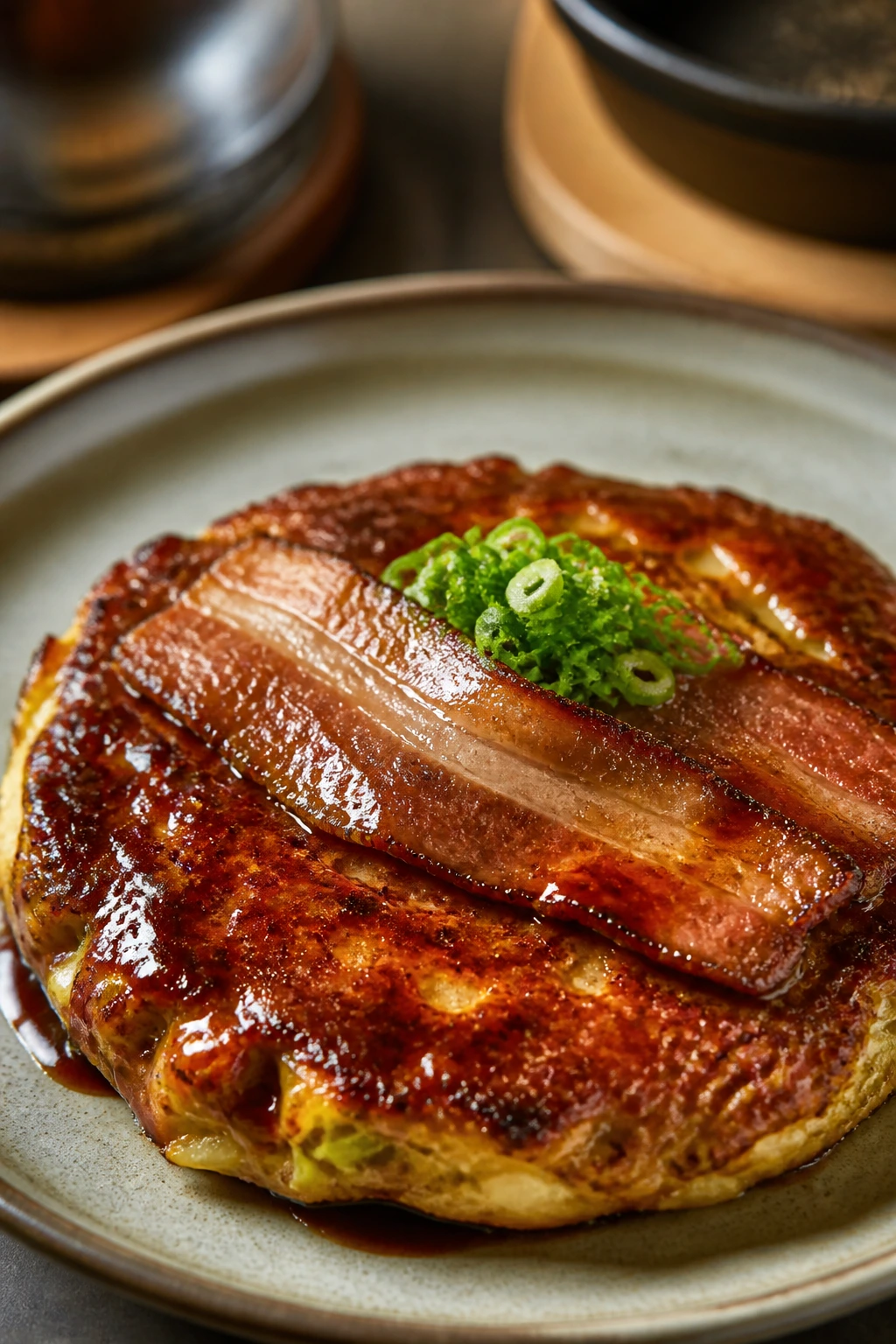
Osaka Pork Belly Stack: Swap the bacon for 4 ounces of thin-sliced pork belly and lay it across the top before the first flip. The rendered fat gives the crust a deeper flavor and makes the edges a little more luxurious. This is the version I’d make when I want the dish to feel closest to a classic street-stall plate.
Seafood Harbor Pancake: Fold ½ pound of chopped raw shrimp into the batter and skip the bacon entirely. Shrimp cooks fast, so keep the heat at medium and watch for the flesh to turn opaque. A little extra scallion works well here, and a squeeze of lime on the finished plate brightens the whole thing.
Mushroom and Scallion Version: Sauté 8 ounces of sliced shiitakes or cremini mushrooms in a dry skillet first, then fold them into the batter with the cabbage. The pre-cooking step keeps the mushrooms from dumping water into the pan and gives the pancake a meaty, savory bite. I like this one with a heavier hand of aonori.
Kimchi Heat Spike: Replace 1 cup of the shredded cabbage with well-drained chopped kimchi and cut the soy sauce in the sticky sauce by about 1 teaspoon. The kimchi brings acid and heat, so the finished pancake tastes sharper and less sweet. Good with a fried egg on top.
Rice-Flour Gluten-Free Round: Replace the flour with 1 cup rice flour and ½ cup potato starch, then keep the batter a little thicker than usual. The crust turns crisp, but the structure is a touch more fragile, so use a wide spatula and do not rush the flip. This version tastes especially good with a little extra mayo and sesame.
Make-Ahead, Storage, and Reheating Guidance
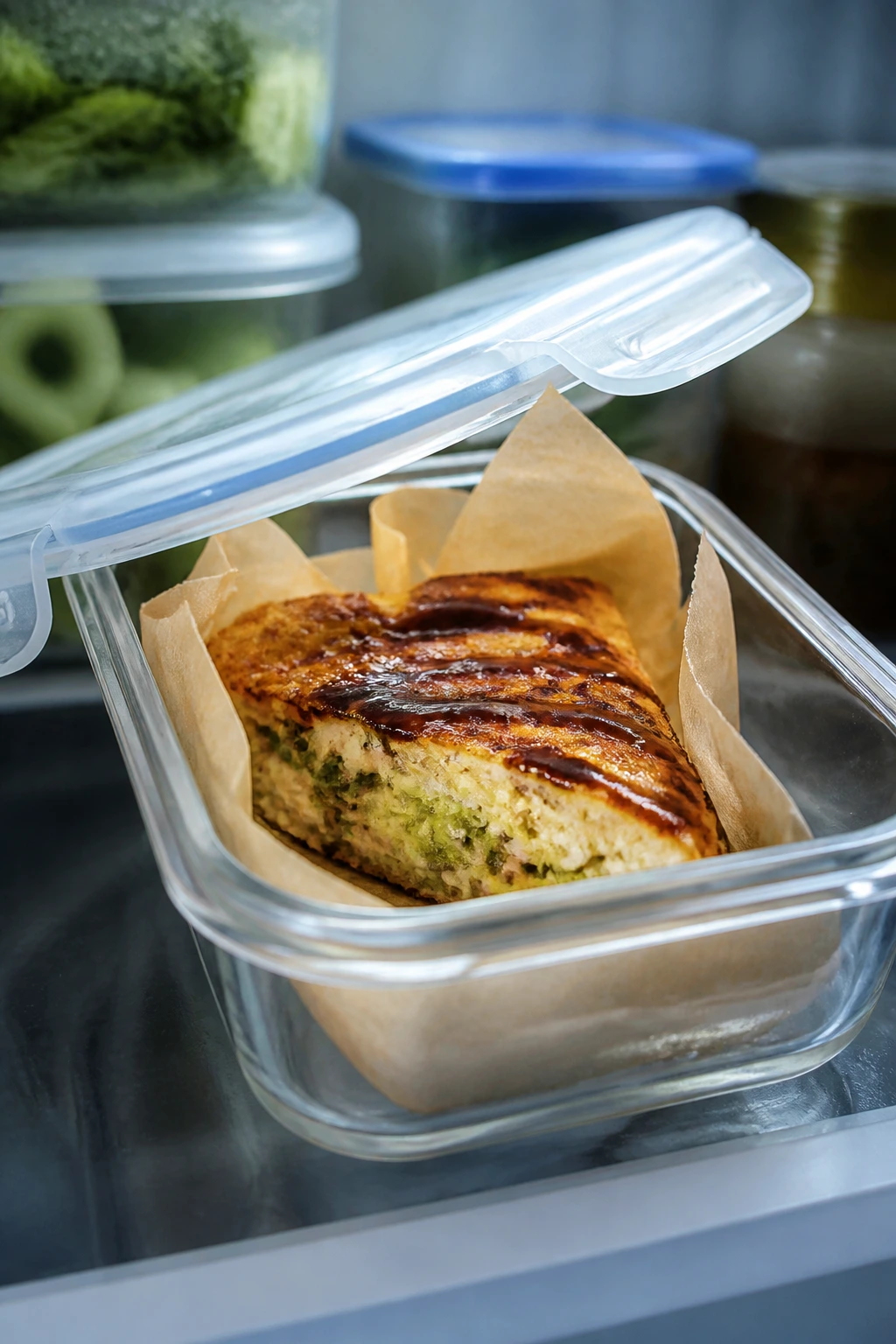
Cooked pancakes keep in the refrigerator for up to 3 days in an airtight container. Put a sheet of parchment between wedges if you stack them, because the sauce and cabbage both like to stick to anything they touch. For room temperature, keep them out no longer than 2 hours. The eggs and mayo are not the place to get casual.
Freezing works better than people expect. Wrap each cooled wedge tightly, then place the wrapped pieces in a freezer bag or container and freeze for up to 2 months. If you plan to freeze, leave the bonito flakes off until after reheating. They do not come back in a useful way.
Reheat from the fridge in a skillet over medium-low heat for 2 to 3 minutes per side. If you want the crust back, add a lid for the last minute only, then uncover so the moisture can escape. An oven set to 375°F works too; 8 to 10 minutes is usually enough for refrigerated wedges, and a little longer for frozen ones.
Microwaving is the least satisfying route, but it can rescue a lunch. Use 20- to 30-second bursts and then finish the wedge in a dry skillet for a minute or two. That last dry sizzle matters. It wakes the crust back up.
For make-ahead prep, shred the cabbage up to 24 hours in advance and keep it very dry. The sauce can be mixed a week ahead, and the dry ingredients can be whisked together the night before. Do not combine the cabbage with the batter too early, though. Once they sit together, the cabbage softens and starts leaking water, which makes the flip less reliable.
Questions People Ask Before They Start Cooking It
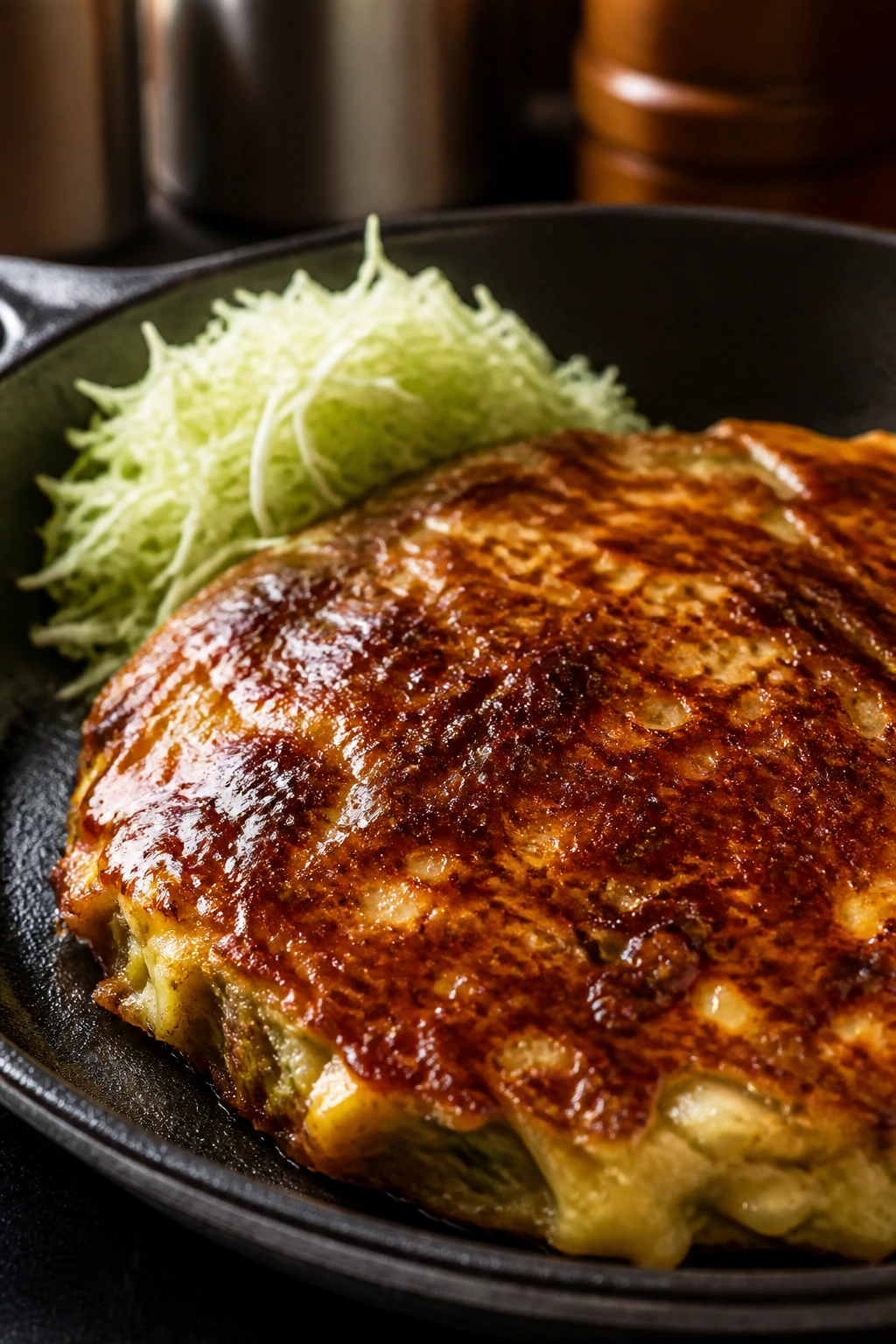
Is this the same thing as okonomiyaki?
Yes, this version sits in the okonomiyaki family, especially the Osaka-style approach that leans on cabbage, batter, and a sticky sauce. The exact toppings vary from home to home, but the structure here is the same: a savory cabbage pancake with a glossy finish.
Can I use napa cabbage instead of green cabbage?
You can, and it will cook a little faster because napa cabbage is softer and wetter. I still prefer green cabbage for this dish because it holds more crunch and gives the pancake a cleaner slice. If you use napa, dry it well and keep the shreds a touch thicker.
What can I use if I don’t have dashi?
Chicken stock is the easiest swap, and plain water with instant dashi granules is another good option. The point of the liquid is not just hydration; it adds a savory base that keeps the batter from tasting plain under the sauce. Water works if the toppings are doing enough work.
Why did my pancake fall apart when I flipped it?
Usually one of three things happened: the batter was too loose, the pancake was flipped too early, or the spatula didn’t support enough of the surface. A thick batter and a fully set first side solve most of that. Smaller pancakes also flip more cleanly.
Can I make this vegetarian?
Absolutely. Skip the bacon and add sautéed mushrooms, shredded cabbage, or small cubes of tofu if you want extra heft. Use vegetarian oyster sauce or hoisin in the sticky sauce, and keep the rest of the build the same.
Does Kewpie mayo really matter?
It does, though the pancake will still work with regular mayonnaise. Kewpie has a softer, richer taste and a thicker squeeze that sits well on the hot surface. If you use standard mayo, a small splash of rice vinegar in the sauce helps it feel less flat.
Can I cook one large pancake instead of two smaller ones?
You can, but I don’t recommend it unless your skillet is broad and your spatula is wide. A single giant pancake is harder to flip cleanly, and the center tends to lag behind the edges. Two smaller rounds brown more evenly and give you fewer reasons to swear at the pan.
One Last Drizzle Worth Keeping
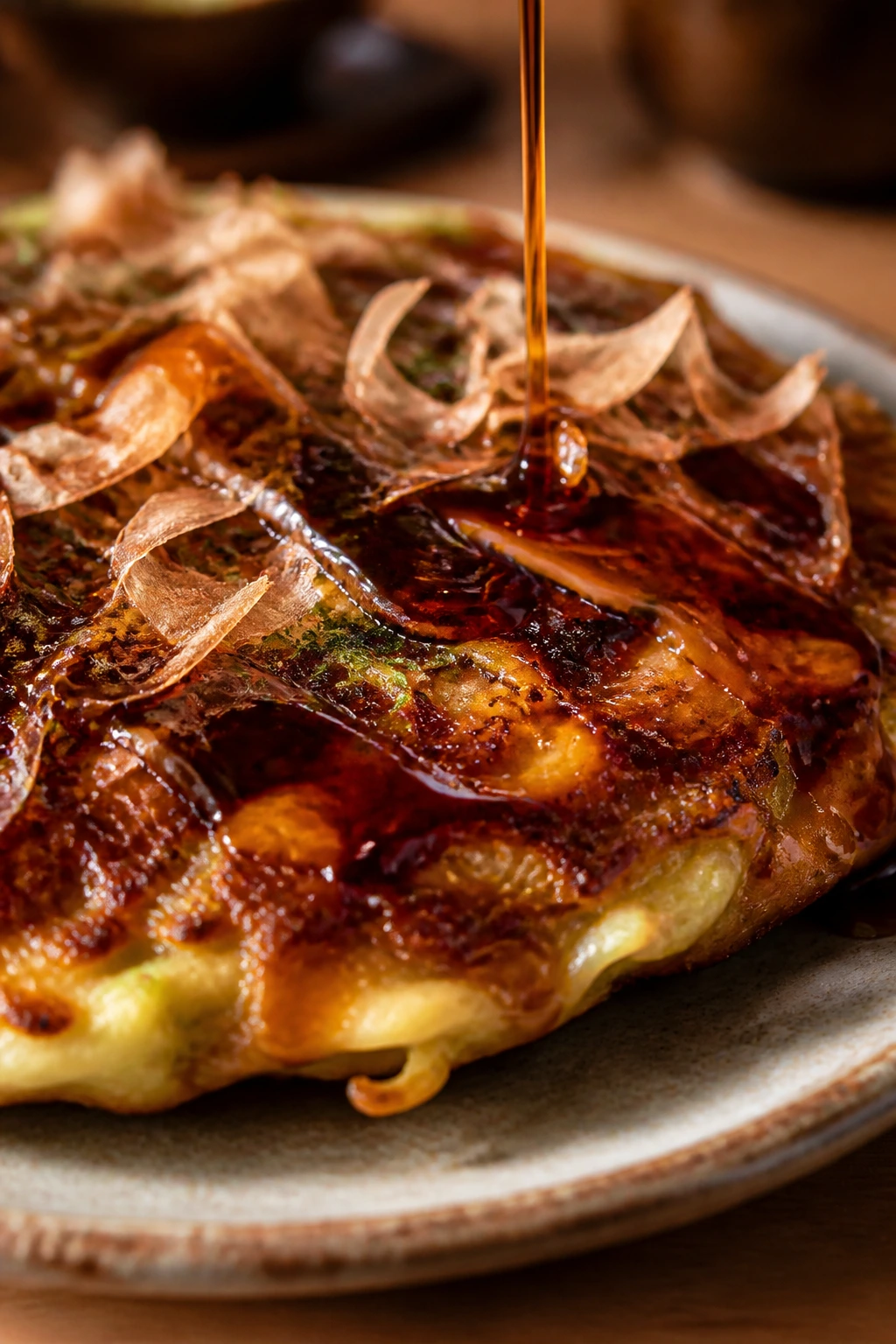
A sticky Japanese pancake looks casual until you make one the right way. Then it turns into one of those dishes that teaches you something while you cook it: how much cabbage can be folded into a batter without weighing it down, how much heat a skillet can hold before the crust gives up, and how a fast sauce can make pantry food taste pulled together.
What I like most is that it does not need a perfect night. The cabbage can be a little uneven. The sauce can be mixed in a small bowl you were already using for something else. The flip can be a little tense. If the pan is right and the shreds are thin, the pancake still comes out with a crisp edge and a soft middle, which is enough.
After the first one, the whole thing gets easier. After the second, it starts to feel like a habit.
Sticky Japanese Pancake — Recipe Card
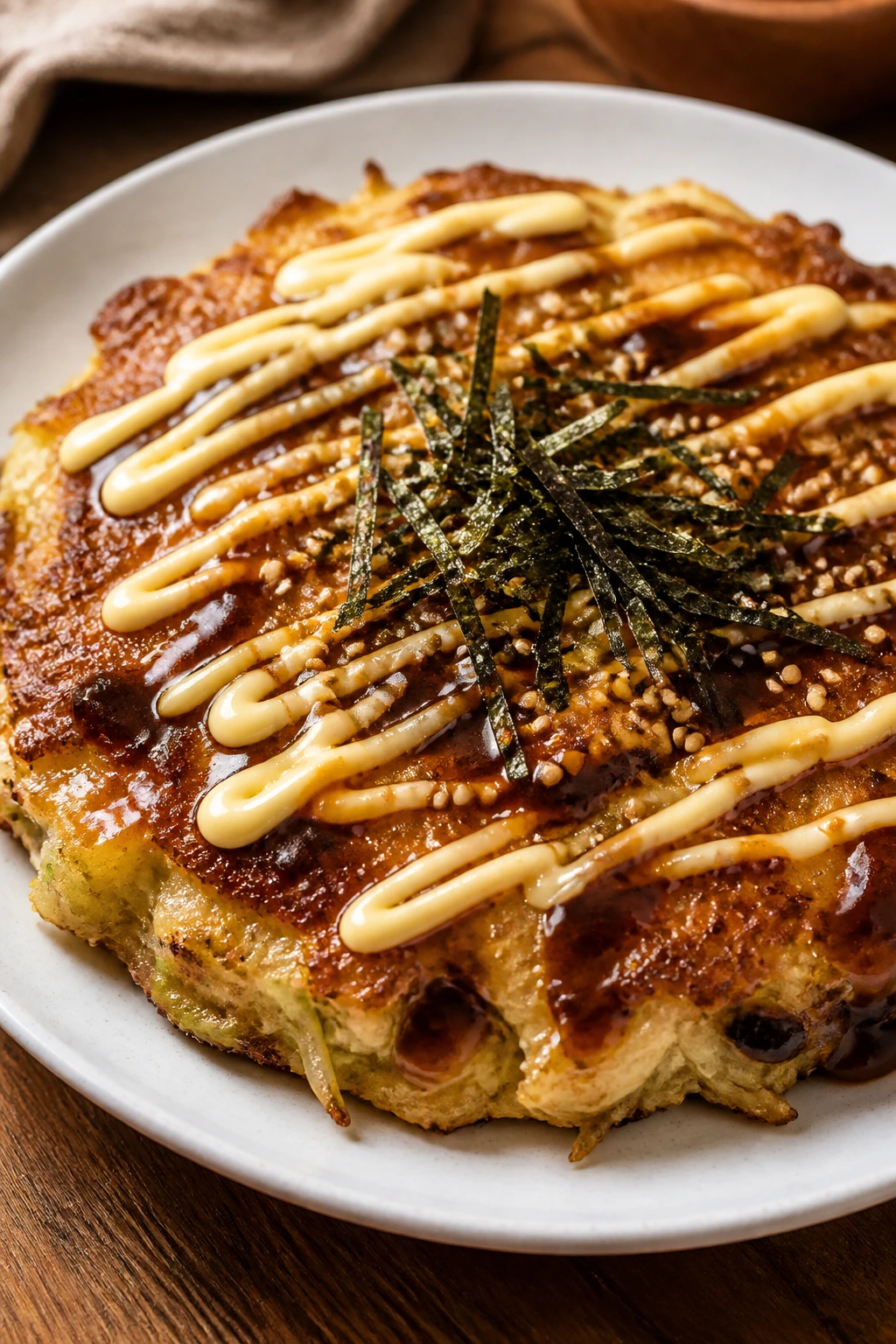
Recipe Name: Sticky Japanese Pancake
Description: A Japanese-inspired cabbage pancake with crisp browned edges, a tender center, sticky-savory sauce, and Kewpie mayo on top.
Prep Time: 20 minutes
Cook Time: 15 minutes
Total Time: 40 minutes
Course: Main Course
Cuisine: Japanese
Servings: 2 to 4 servings
Calories: About 430 kcal per serving
Ingredients
For the Pancake:
- 1½ cups all-purpose flour
- 1 teaspoon baking powder
- 1 teaspoon fine sea salt
- 1 tablespoon granulated sugar
- 2 large eggs
- 1 cup cold dashi, chicken stock, or water with 1 teaspoon instant dashi granules
- 6 cups finely shredded green cabbage, loosely packed (about 10 ounces)
- 3 scallions, thinly sliced
- ½ cup tenkasu or ¼ cup panko
- 4 slices bacon, cut in half crosswise
- 2 tablespoons neutral oil, divided
For the Sticky Sauce:
- ¼ cup ketchup
- 2 tablespoons Worcestershire sauce
- 1 tablespoon oyster sauce
- 1 tablespoon soy sauce
- 1 tablespoon honey
For the Toppings:
- 2 tablespoons Kewpie mayonnaise
- 1 tablespoon toasted sesame seeds
- 1 tablespoon aonori or finely crumbled nori
- 1 tablespoon bonito flakes, optional
Instructions
- Whisk the flour, baking powder, salt, and sugar in a large bowl.
- Whisk the eggs and cold dashi in a second bowl, then stir into the dry ingredients until thick and slightly lumpy.
- Fold in the cabbage, scallions, and tenkasu or panko. Rest the batter for 5 minutes.
- Stir together the ketchup, Worcestershire sauce, oyster sauce, soy sauce, and honey for the sticky sauce.
- Heat 1 tablespoon oil in a skillet over medium heat. Form half the batter into a 6-inch round and top with 2 bacon pieces. Cook 4 to 5 minutes.
- Flip carefully and cook 3 to 4 minutes more, adding a brief cover if the center needs help. Repeat with the remaining batter and oil.
- Drizzle with sticky sauce and Kewpie mayo, then finish with sesame seeds, aonori, and bonito flakes if using.
Notes: Keep the cabbage dry, keep the batter thick, and use a wide spatula for the flip. For the crispest leftovers, reheat wedges in a skillet, not the microwave.