



The first clue that a chicken stir fry is going to be worth your time is the smell. Garlic hits hot oil, ginger turns sweet for a second before it gets sharp again, and the chicken starts to brown at the edges while the vegetables are still crisp enough to snap. That tiny stretch of time tells you almost everything.
Aromatic easy chicken stir fry lives or dies on heat control. Too low, and the pan steams. Too high for too long, and the chicken goes chalky before the sauce can do its job. The version I keep coming back to leans on chicken thighs, a glossy soy-oyster sauce, and a quick cornstarch coating that makes the sauce cling instead of puddle at the bottom of the skillet.
What makes this dish worth repeating is not drama. It’s the way a few familiar ingredients behave when you handle them with a little care — even slices, a hot pan, and aromatics added at the right moment. Get those three things right, and dinner smells like you know exactly what you’re doing.
Why This Chicken Stir Fry Works So Well
-
The chicken stays tender: Thigh meat holds up better than breast meat in a fast stir fry, so you get juicy bites even if the pan runs a little hot.
-
The sauce clings instead of sliding off: A small amount of cornstarch in the sauce gives it that thin, glossy coat you want on the chicken and vegetables.
-
Garlic and ginger stay bright: They go in late and cook for less than a minute, so they smell sweet and sharp instead of bitter and tired.
-
The vegetables keep their shape: Everything is cut to a similar size, which means the carrot softens at the same pace as the bell pepper and snap peas.
-
It handles substitutions without falling apart: Swap the vegetables, change the base, or turn the heat up with chili oil, and the dish still makes sense.
-
It tastes better after a short rest in the pan: That final 30 seconds of simmering lets the sauce settle into the chicken, which is the difference between a skillet full of ingredients and a real stir fry.
Timing, Yield, and What to Expect From the Pan
Yield: Serves 4
Prep Time: 20 minutes
Cook Time: 15 minutes
Total Time: 35 minutes
Difficulty: Beginner — the steps are straightforward, but the stove needs your attention the whole time.
Chill/Rest Time: 10 to 15 minutes for the chicken to sit in its quick seasoning
Best Served: Right away over hot jasmine rice or noodles
If your stove runs weak, add 2 or 3 extra minutes to the vegetable stage and keep the pan uncovered so moisture can escape. If your burner runs hot, use a heavy skillet or wok and keep the food moving once the aromatics go in. Stir fry is a fast dance, not a slow simmer.
The Ingredient List That Keeps the Sauce Glossy
For the Chicken:
- 1 1/2 pounds boneless, skinless chicken thighs, cut into 1-inch pieces
- 1 tablespoon low-sodium soy sauce
- 1 tablespoon cornstarch
- 1 tablespoon neutral oil, such as avocado or canola
- 1/2 teaspoon kosher salt
- 1/4 teaspoon white pepper
For the Sauce:
- 1/3 cup low-sodium soy sauce
- 1/4 cup chicken broth or water
- 2 tablespoons oyster sauce
- 1 tablespoon Shaoxing wine or dry sherry
- 1 tablespoon rice vinegar
- 1 tablespoon honey
- 2 teaspoons cornstarch
- 1 teaspoon toasted sesame oil
- 1/4 teaspoon crushed red pepper flakes, optional
For the Stir Fry:
- 2 tablespoons neutral oil, divided
- 1 small yellow onion, thinly sliced
- 1 medium carrot, peeled and cut into thin half-moons
- 1 red bell pepper, thinly sliced
- 1 cup broccoli florets, cut small
- 1 cup snap peas, trimmed
- 4 garlic cloves, minced
- 1 tablespoon fresh ginger, minced
- 3 scallions, sliced, whites and greens separated
For Serving:
- 4 cups cooked jasmine rice or noodles
- 1 tablespoon toasted sesame seeds, optional
Why Each Ingredient Matters in the Bowl
Chicken and Quick Seasoning
What to use: 1 1/2 pounds boneless, skinless chicken thighs, cut into 1-inch pieces, plus 1 tablespoon soy sauce, 1 tablespoon cornstarch, 1 tablespoon neutral oil, 1/2 teaspoon kosher salt, and 1/4 teaspoon white pepper.
Preparation: Cut the chicken into pieces that are close in size so they brown at the same pace. Pat it dry first; wet chicken steams before it sears, and that dulls the flavor fast.
Substitutions: Chicken breast works if that’s what you have, but slice it a little larger and pull it from the heat as soon as it reaches 165°F. Extra-firm tofu or peeled shrimp can stand in too, though both need less time in the pan.
Tips: Don’t let the chicken sit in soy sauce and salt for hours. This is a quick seasoning, not a marinade for the ages, and a short rest is enough to give the meat a little flavor and a better surface for browning.
Sauce Base and Aromatic Finish
What to use: 1/3 cup soy sauce, 1/4 cup chicken broth or water, 2 tablespoons oyster sauce, 1 tablespoon Shaoxing wine or dry sherry, 1 tablespoon rice vinegar, 1 tablespoon honey, 2 teaspoons cornstarch, 1 teaspoon toasted sesame oil, and crushed red pepper flakes if you want a little heat.
Preparation: Whisk the sauce until the cornstarch disappears. If you can still see white streaks, those streaks will turn into little clumps the second they hit hot metal.
Substitutions: Tamari can replace soy sauce for a gluten-free version. If you do not have oyster sauce, add 1 extra tablespoon of soy sauce and 1 teaspoon of brown sugar, then toss in a handful of mushrooms for deeper flavor.
Tips: Keep the toasted sesame oil out of the hot-pan stage. It smells best when added at the end, and it loses a lot of its personality if you cook it hard for too long.
Vegetables and Texture
What to use: 1 small yellow onion, 1 medium carrot, 1 red bell pepper, 1 cup broccoli florets, 1 cup snap peas, 4 garlic cloves, 1 tablespoon ginger, and 3 scallions.
Preparation: Slice the vegetables into pieces that cook in the same window. Thin carrot slices soften fast; broccoli florets should be small enough to pick up with chopsticks, not hefty enough to need a second trip around the skillet.
Substitutions: Mushrooms, baby bok choy, snow peas, green beans, or zucchini all fit here. Use what you’ve got, but keep one crisp vegetable and one softer vegetable in the mix so the pan has some contrast.
Tips: Dry vegetables matter. If you rinse snap peas or broccoli, shake them off and let them sit for a minute before they hit the pan. A wet vegetable turns the skillet into a steam room.
Serving Base and Finish
What to use: 4 cups cooked jasmine rice or noodles and 1 tablespoon toasted sesame seeds.
Preparation: Warm the rice before serving so the stir fry doesn’t hit a cold pile that drags the temperature down. If you’re using noodles, toss them with a teaspoon of oil so they don’t glue themselves together.
Substitutions: Brown rice adds more chew, while cauliflower rice keeps the plate lighter. Lo mein noodles work well if you want the sauce to cling in long, glossy strands.
Tips: Hot rice changes the whole dish. Cold rice makes the sauce feel thicker and a little stiff; warm rice lets the juices soak in without turning the bottom of the bowl gummy.
The Skillet, Wok, and Other Tools That Keep the Stir Fry Moving
-
12-inch wok or large heavy skillet: A wok gives you more room to toss, but a wide skillet with a strong base works just fine if it holds heat.
-
Two mixing bowls: One for the chicken, one for the sauce. Keeping the sauce separate keeps the cornstarch from setting too soon.
-
Wooden spoon, silicone spatula, or wok spatula: Use something that can scrape the pan without scratching it and still move food quickly.
-
Sharp chef’s knife: Thin, even slices matter more here than in a braise. Big uneven chunks cook at different speeds, and that is where stir fry goes sideways.
-
Cutting board: A roomy board helps because you’ll want your chicken and vegetables lined up before the burner goes on.
-
Measuring spoons and cups: Stir fry looks casual, but the sauce depends on ratio. Eyeballing soy sauce and vinegar is how people end up with a bowl that tastes flat or harsh.
-
Tongs: Handy for moving the chicken fast and flipping bigger pieces without tearing them.
How to Sear the Chicken Without Turning It Dry
Prep Everything Before the Heat Goes On:
- Pat the chicken dry with paper towels and trim away any large pockets of fat or gristle. Cut the thighs into 1-inch pieces so they brown evenly and cook through at the same pace.
- In a medium bowl, toss the chicken with 1 tablespoon soy sauce, 1 tablespoon cornstarch, 1 tablespoon neutral oil, 1/2 teaspoon kosher salt, and 1/4 teaspoon white pepper. Let it sit for 10 to 15 minutes while you prep the vegetables and sauce.
- In a separate small bowl, whisk together the 1/3 cup soy sauce, 1/4 cup broth, oyster sauce, Shaoxing wine, rice vinegar, honey, 2 teaspoons cornstarch, toasted sesame oil, and red pepper flakes if using. Stir until the liquid looks smooth and the cornstarch is fully dissolved.
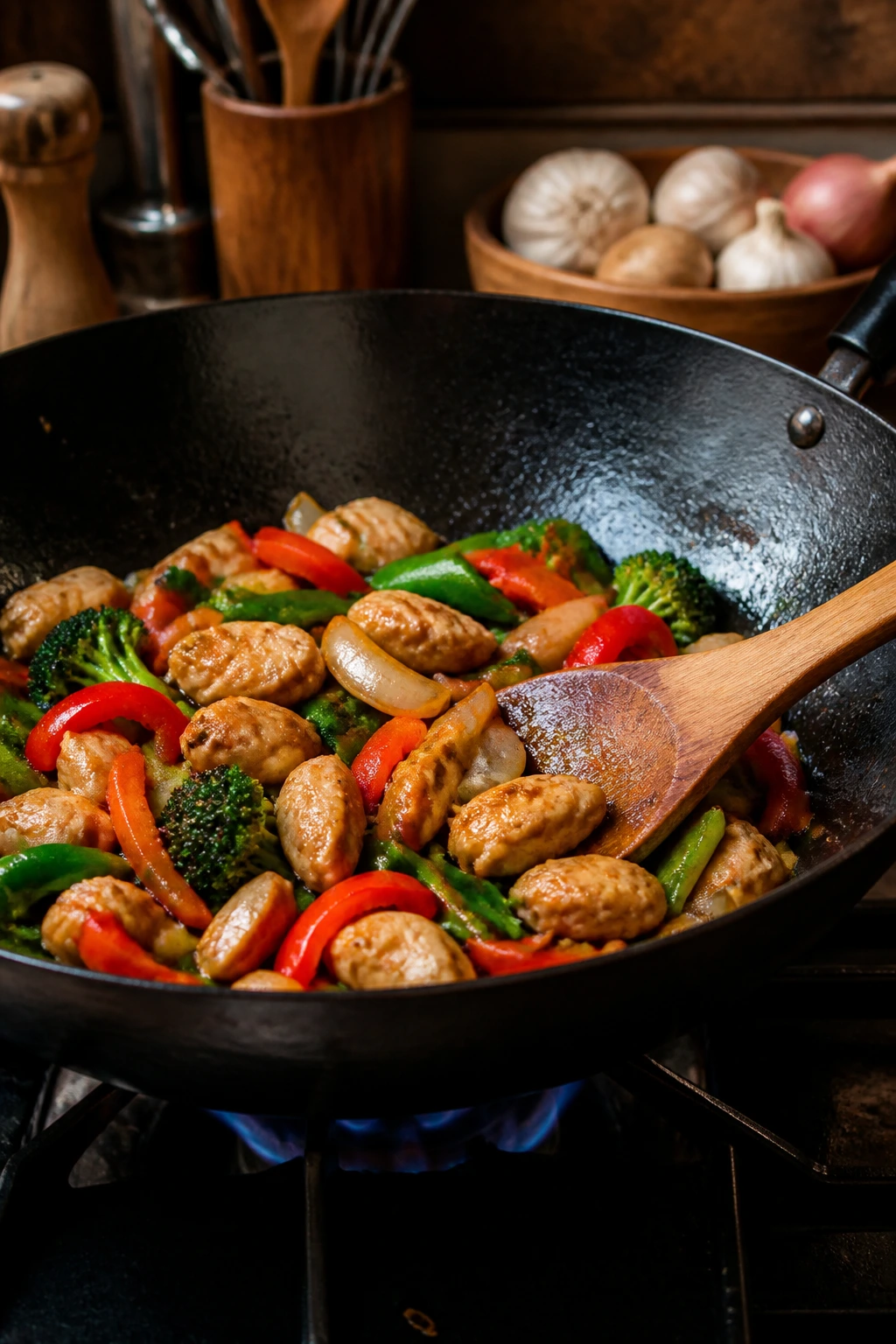
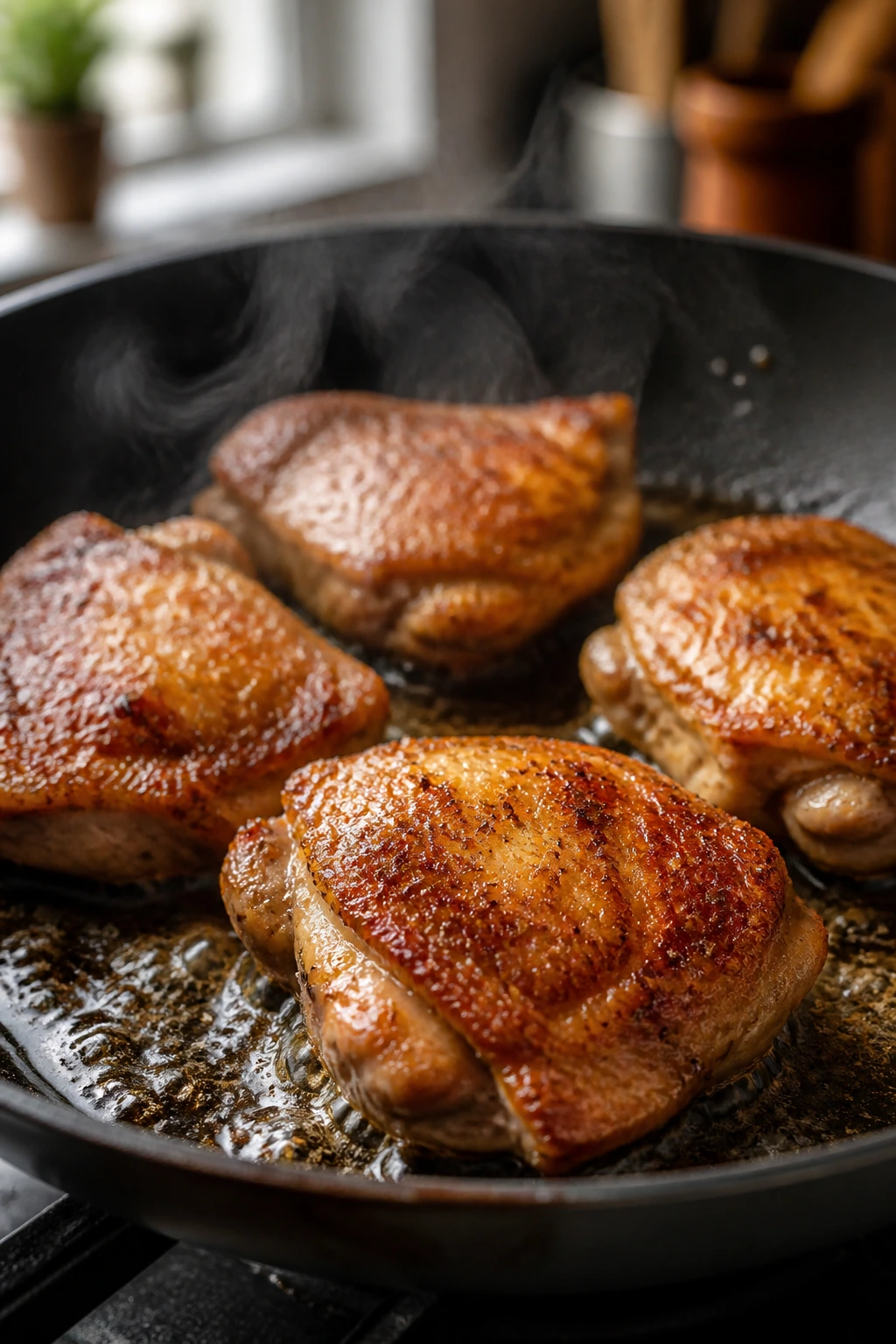
Build the Stir Fry Base: 4. Heat a wok or large skillet over high heat for 1 to 2 minutes, until the surface is hot and a drop of water skitters away almost immediately. Add 1 tablespoon of the neutral oil and swirl it to coat the pan. 5. Add the chicken in a single layer. Let it cook untouched for 2 to 3 minutes so one side can take on color, then stir and cook for another 2 to 3 minutes until the pieces are browned on the outside and mostly cooked through. Do not crowd the pan; if you pile the chicken in, it will steam instead of sear. 6. Transfer the chicken to a plate. The center should still look a touch underdone — it will finish in the sauce later, and that keeps it juicy.
Cook the Vegetables and Aromatics: 7. Add the remaining 1 tablespoon oil to the pan. Toss in the onion and carrot and stir-fry for 1 minute, then add the broccoli and bell pepper. Cook for 2 minutes, stirring often, until the vegetables are bright and the onion edges start to soften. 8. Add the snap peas, garlic, ginger, and the white parts of the scallions. Stir constantly for 30 to 45 seconds, just until the garlic smells sweet and the ginger loses its raw bite. If the garlic starts browning, move fast and lower the heat for a few seconds.
Glaze and Finish: 9. Return the chicken and any juices to the skillet. Give the sauce one last whisk and pour it in around the edges of the pan. Stir constantly for 30 to 60 seconds as the sauce turns shiny and thick enough to coat the chicken and vegetables in a thin layer. 10. Turn off the heat and stir in the scallion greens. Taste a piece of chicken and one vegetable. If it needs brightness, add a small splash of rice vinegar; if it needs more depth, add a tiny pinch of salt. 11. Spoon the stir fry over hot rice or noodles right away, then finish with sesame seeds if you like a little nutty crunch.
How to Serve It So the Plate Smells Like Dinner
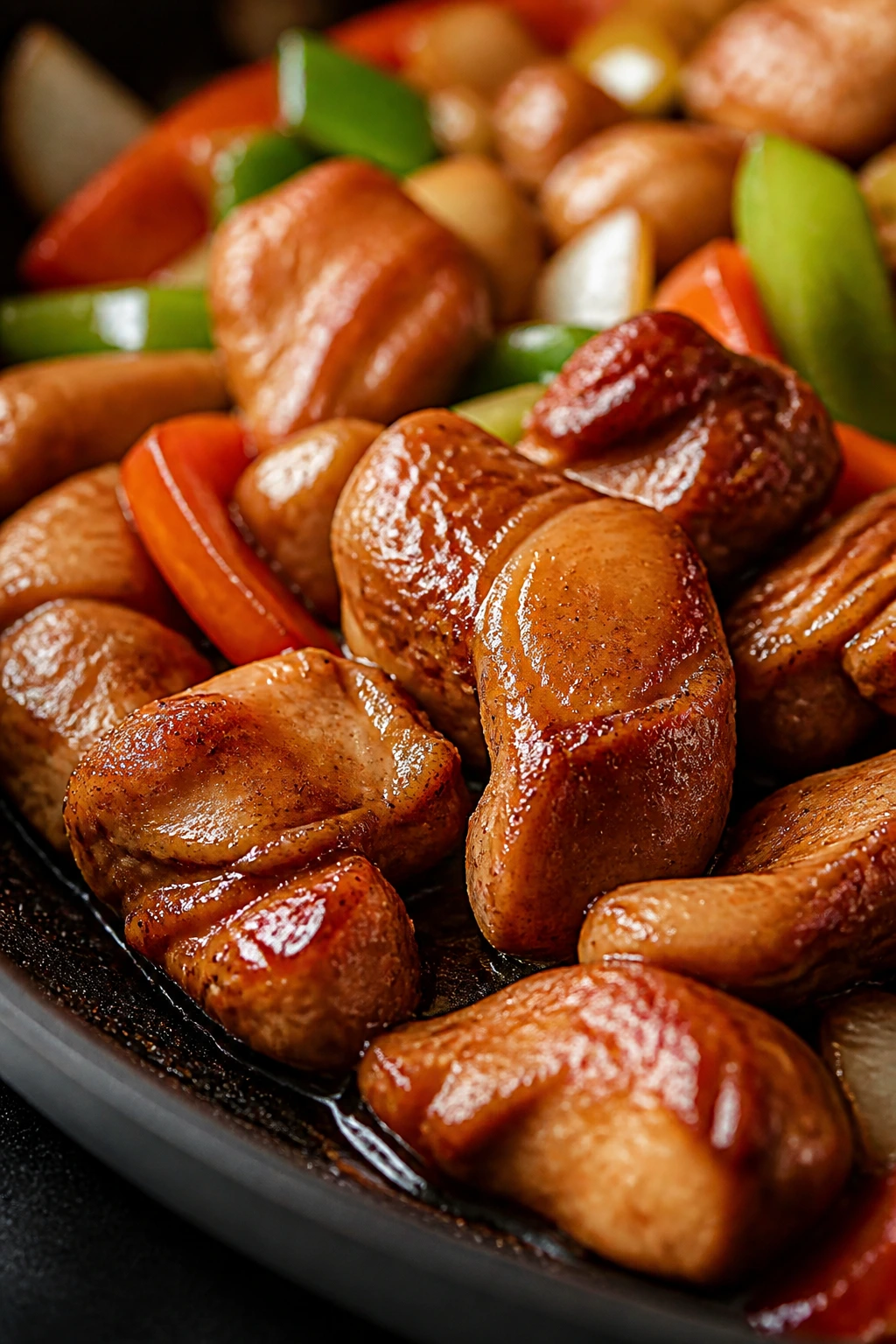
Presentation: Spoon the chicken stir fry over a shallow mound of jasmine rice so the sauce can run through the grains instead of pooling under them. A scatter of scallion greens and sesame seeds gives the bowl enough contrast to look finished without turning it fussy.
Accompaniments: Keep the sides plain and crisp. A sliced cucumber salad with rice vinegar and a pinch of sugar works well, and so does a simple bowl of miso soup or clear broth if you want something warm beside it. If you prefer noodles, toss them with the sauce in the pan and add a handful of blanched bok choy on the side.
Portions: Four servings is about 1 1/2 cups of stir fry with 1 cup of rice per person. If you’re serving bigger appetites, keep the rice at 1 cup and stretch the chicken with an extra cup of vegetables instead of just piling on more starch.
Beverage Pairing: Cold jasmine tea fits the garlic and ginger without fighting them. A light lager or a sparkling water with lime also works nicely, especially if you add red pepper flakes and want something that cools the palate.
Small Changes That Make a Big Difference in Flavor
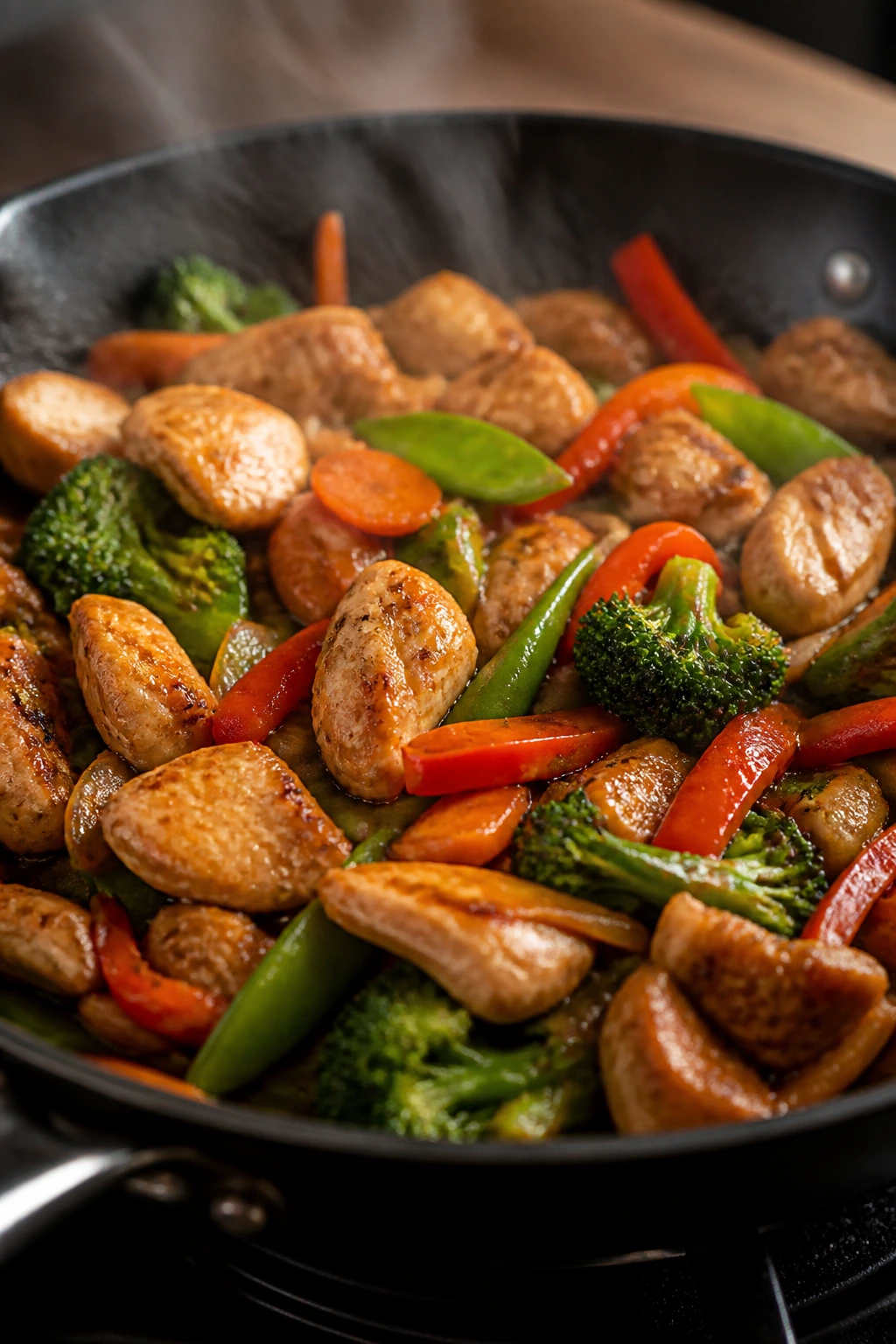
Flavor Enhancement: A teaspoon of finely grated orange zest stirred into the sauce gives the pan a brighter top note. It does not make the dish taste like orange chicken; it just lifts the soy and ginger in a way that feels cleaner on the finish.
Time-Saver: Buy pre-trimmed snap peas and pre-cut broccoli florets when the schedule is tight, but dry them on a towel before cooking. The savings show up in prep time, not in flavor, and that is fine by me on a Tuesday.
Cost-Saver: Chicken thighs are the smarter buy here. They stay tender, they’re usually cheaper than breasts, and they forgive a hot skillet better than lean meat does.
Make-It-Yours: If you like heat, stir in 1 teaspoon of chili crisp at the end instead of dumping chili flakes into the sauce. That keeps the spicy oil fragrant and gives the bowl little crunchy bits that survive the heat.
Serving Suggestions: A handful of crushed roasted peanuts or cashews adds a nice crunch if you want the dish to feel more substantial. Fresh cilantro is optional, not required; I usually skip it unless I’m already using it somewhere else in the week.
Mistakes That Turn a Good Stir Fry Watery or Bland
-
Crowding the pan: If the chicken or vegetables overlap too much, they release moisture faster than it can evaporate. The symptom is gray chicken and limp broccoli. Fix it by cooking in batches or using a wider skillet.
-
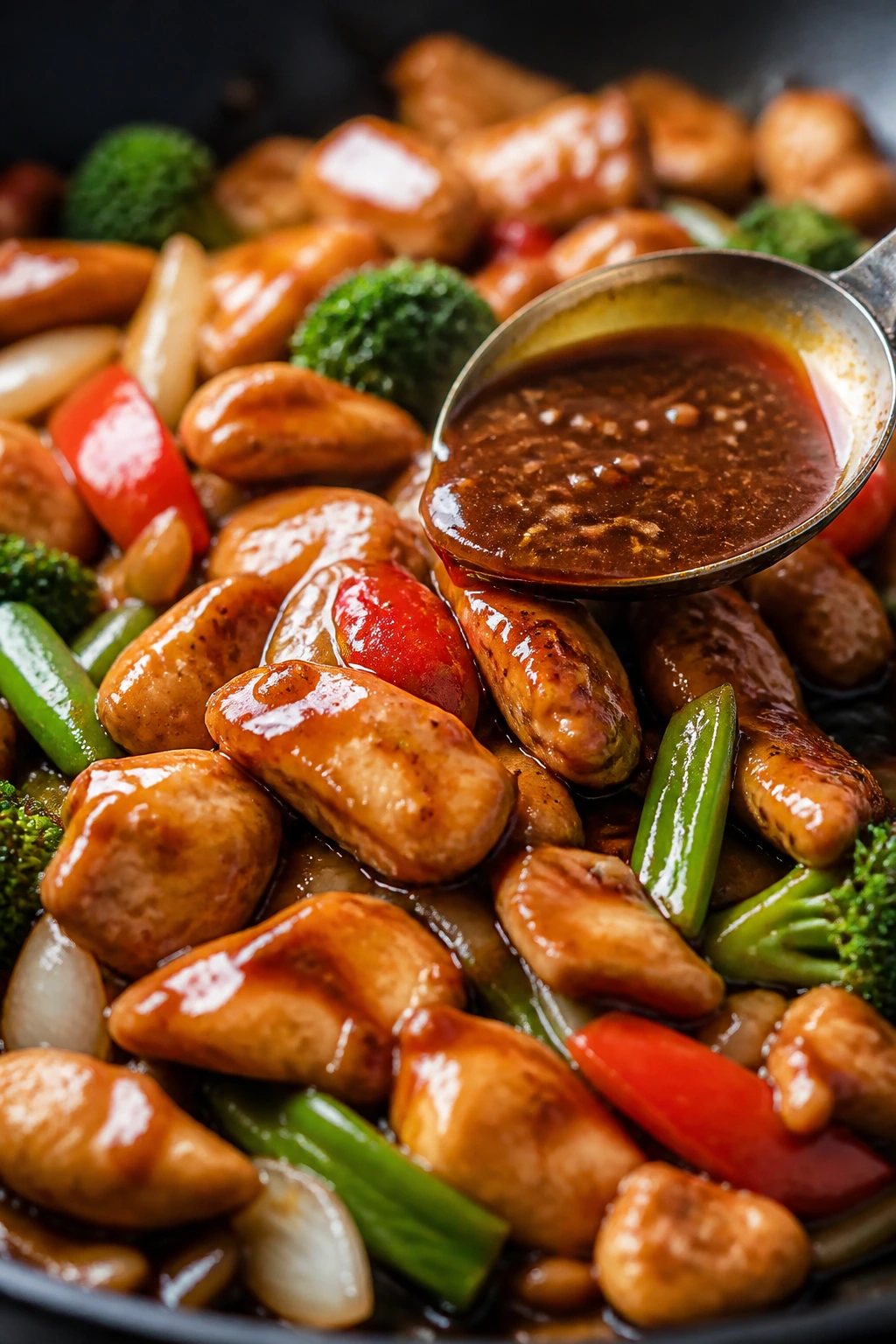
Adding the sauce too early: The sauce wants hot metal and a nearly finished stir fry. If you pour it in before the vegetables have had time to take on color, you end up with a thin, pale liquid instead of a glossy glaze.
-
Skipping the sauce whisk: Cornstarch settles fast. If the sauce sits for several minutes without a stir, the starch drops to the bottom and clumps as soon as it hits the pan. Whisk it again right before pouring.
-
Using chicken pieces of different sizes: Tiny scraps cook before the larger chunks even start to brown. Cut the meat evenly or you’ll chase doneness from one end of the skillet to the other.
-
Cooking garlic too long: Browned garlic tastes bitter, and bitter garlic can flatten the entire dish. It only needs 30 to 45 seconds after the vegetables have already started to soften.
-
Forgetting to taste at the end: Soy sauce brands vary a lot in salt level, and oyster sauce can swing sweeter or saltier depending on the bottle. One tiny taste before serving is usually enough to save the whole skillet.
Smart Swaps and Flavor Variations for Different Kitchens
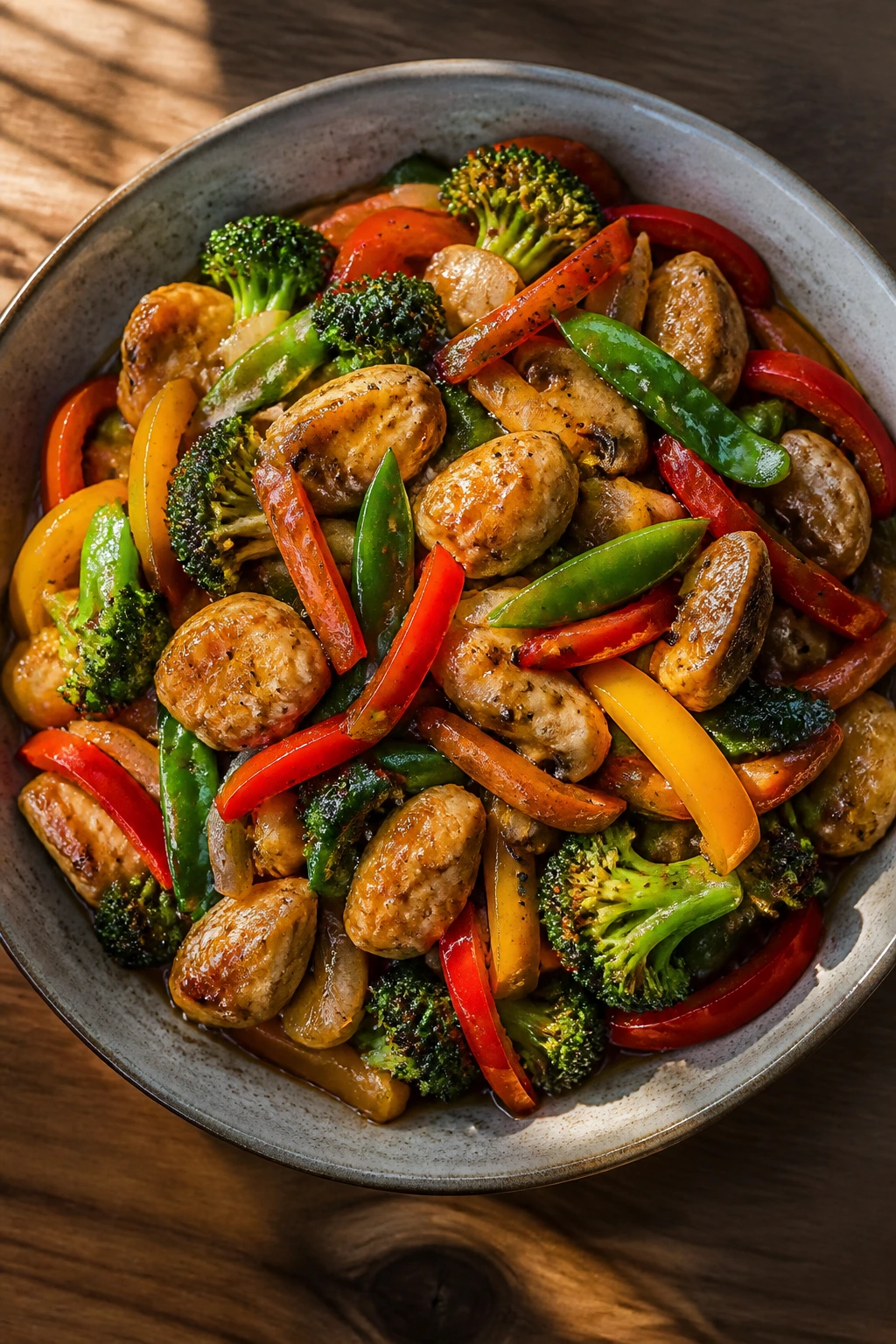
Spicy Chili Crisp Chicken: Stir 1 to 2 teaspoons of chili crisp into the sauce, then finish with an extra spoonful on top. The oil adds smoke and heat, while the crunchy bits cling to the chicken in a way that flakes of red pepper never do.
Orange-Ginger Skillet: Add 2 tablespoons fresh orange juice and 1 teaspoon orange zest to the sauce, then reduce the honey to 2 teaspoons. The flavor shifts brighter and slightly sweeter, which works especially well if you’re serving the dish over rice rather than noodles.
Cashew Crunch Stir Fry: Fold in 3/4 cup roasted cashews during the last 30 seconds of cooking. They stay crisp enough to give each bite a little snap, and they make the dish feel more like a full meal without changing the basic flavor.
Gluten-Free Tamari Bowl: Swap the soy sauce for tamari and use a gluten-free oyster-style sauce or a mushroom stir-fry sauce. The texture stays the same, and the pan still gets that glossy finish as long as you keep the cornstarch in the mix.
Veg-Heavy Market Pan: Add sliced mushrooms, baby bok choy, or green beans and cut the chicken back to 1 pound. This version leans more toward vegetables than protein, which is useful when the fridge is full of produce that needs to be used before it softens.
Storing, Reheating, and Making It Ahead Without Ruining the Texture
Let the stir fry cool for 20 to 30 minutes before packing it away. Don’t seal it while it’s still steaming hard, or the vegetables will sweat inside the container and soften overnight.
Refrigerator: Store the cooked chicken stir fry in an airtight container for up to 3 to 4 days. Keep the rice or noodles in a separate container if you can; that keeps the starch from soaking up every drop of sauce and turning dense.
Freezer: Freeze the cooked stir fry for up to 2 months. The vegetables soften a little after thawing, especially broccoli and bell pepper, so I prefer freezing only if I know I’m okay with a softer texture later.
Reheating on the Stovetop: Warm the stir fry in a skillet over medium heat with 1 to 2 tablespoons of water or broth. Stir for 3 to 5 minutes until the sauce loosens and the chicken is hot all the way through.
Reheating in the Microwave: Use a covered dish and heat in 45-second bursts, stirring between rounds. A splash of water helps the sauce loosen, and it keeps the chicken from drying out at the edges.
Make-Ahead Notes: You can mix the sauce up to 3 days in advance and keep it in the fridge. The chicken can be cut and seasoned 4 hours ahead, and the vegetables can be sliced the day before if you store them dry in a lined container. I would not marinate the chicken overnight here; this recipe is built for a quick hold, not a long soak.
Questions People Ask Before They Start Cooking This
Can I use chicken breast instead of thighs?
Yes, but cut the breast into slightly larger pieces and watch the clock. Breast meat dries out faster, so take it off the heat as soon as it’s opaque and reaches 165°F, then let the sauce finish the job.
Do I need oyster sauce?
No, but it helps the sauce taste fuller and a little rounder. If you skip it, add another teaspoon of honey and a few sliced mushrooms, or the sauce can land a little thin and salty.
What vegetables work best if I don’t have the ones listed?
Use vegetables that can handle quick heat: mushrooms, green beans, snow peas, bok choy, zucchini, or cabbage all fit. The main thing is to match the size of the cut to the speed of the vegetable, so nothing turns mushy before the chicken is done.
Can I make this with frozen vegetables?
You can, but thaw and drain them first, then pat them dry. Frozen vegetables carry extra water, and if you dump them in frozen, they cool the pan too much and the sauce struggles to thicken.
Why toss the chicken with cornstarch before cooking?
It does two jobs. First, it helps the chicken brown more evenly. Second, it gives the sauce something to cling to, which is why the finished dish looks glossy instead of wet.
Can I make the whole thing ahead for meal prep?
Yes, and it holds up better than a lot of stir fries because the chicken thighs stay tender. Keep the rice separate, store everything in shallow containers, and reheat with a spoonful of water so the sauce loosens back up.
What if the sauce comes out too thin?
Keep the pan over medium-high heat for another 30 to 60 seconds and stir steadily. If it still looks loose, mix 1 teaspoon cornstarch with 1 tablespoon water and add that slurry in a thin stream, then cook until the sauce turns glossy again.
Do I need a wok?
No. A wide skillet with a heavy bottom works fine. A wok gives you more room to toss, but heat control matters more than the shape of the pan.
A Stir-Fry Worth Keeping in the Rotation
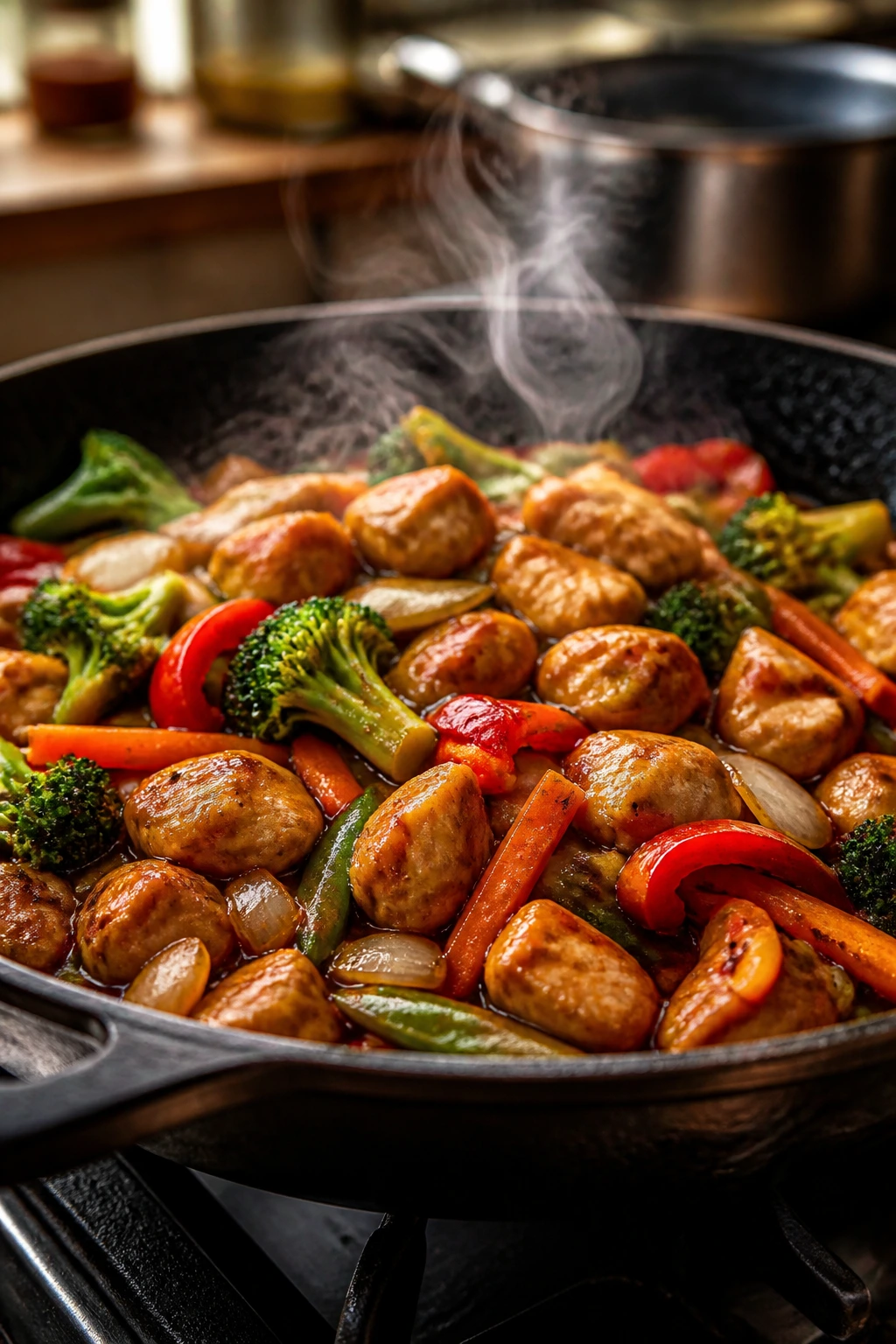
What I like about this chicken stir fry is how little it asks for and how much it gives back. A hot pan, a sharp knife, a sauce that knows when to stop, and you end up with something fragrant enough to make the kitchen smell like dinner got there before you did.
The real trick is restraint. Don’t crowd it, don’t overcook the garlic, and don’t drown the vegetables. Keep the sauce glossy and the chicken tender, and this is the kind of skillet you’ll make once, then start making on instinct.
Aromatic Easy Chicken Stir Fry — Recipe Card
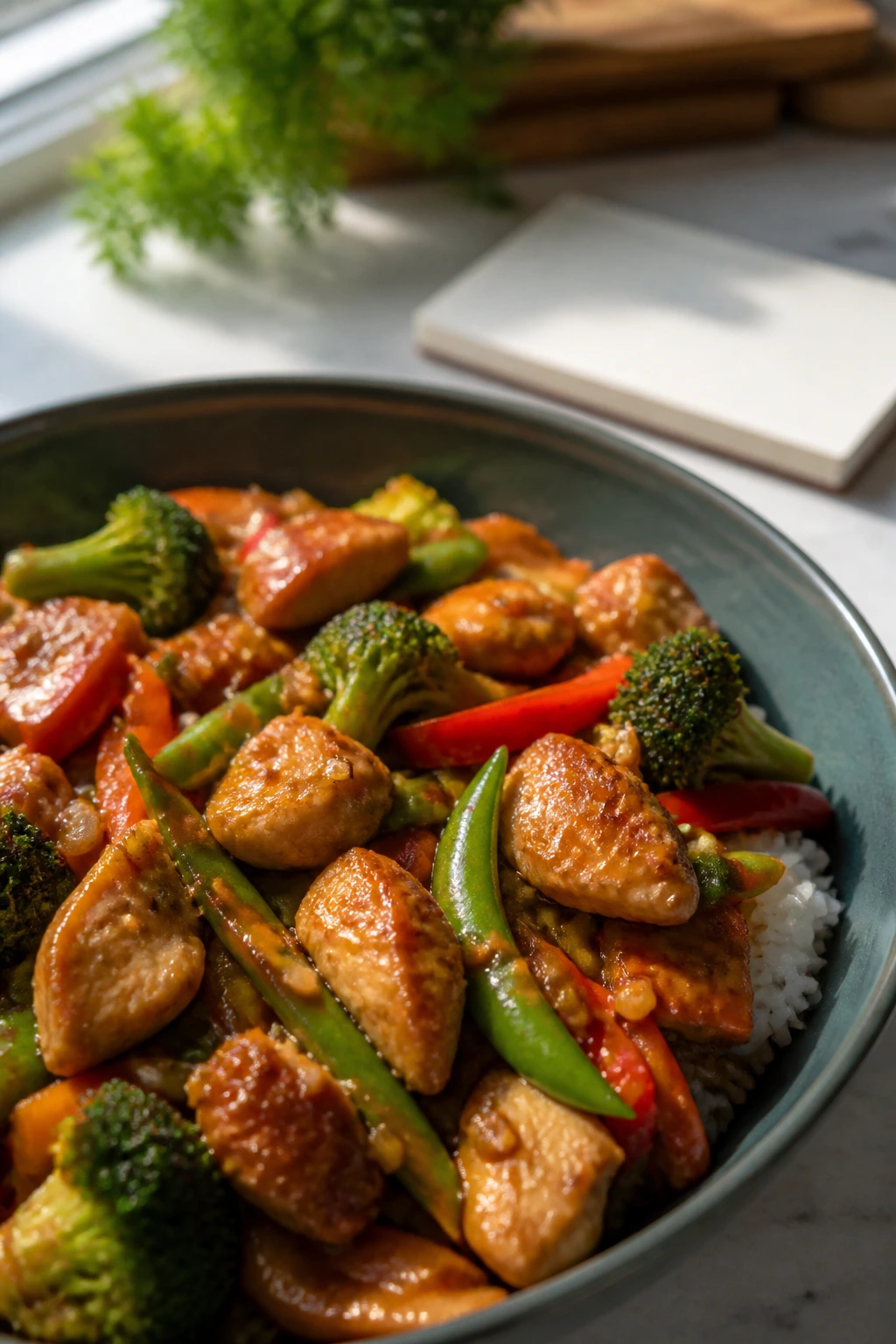
Recipe Name: Aromatic Easy Chicken Stir Fry
Description: Juicy chicken thighs, crisp vegetables, and a glossy garlic-ginger sauce make this stir fry taste fresh, punchy, and deeply savory. Serve it over hot jasmine rice or noodles for a fast dinner that feels built, not thrown together.
Prep Time: 20 minutes
Cook Time: 15 minutes
Total Time: 35 minutes
Course: Main Course
Cuisine: Chinese-Inspired, Asian-Inspired
Servings: 4 servings
Calories: About 560 kcal per serving
Ingredients
For the Chicken:
- 1 1/2 pounds boneless, skinless chicken thighs, cut into 1-inch pieces
- 1 tablespoon low-sodium soy sauce
- 1 tablespoon cornstarch
- 1 tablespoon neutral oil, such as avocado or canola
- 1/2 teaspoon kosher salt
- 1/4 teaspoon white pepper
For the Sauce:
- 1/3 cup low-sodium soy sauce
- 1/4 cup chicken broth or water
- 2 tablespoons oyster sauce
- 1 tablespoon Shaoxing wine or dry sherry
- 1 tablespoon rice vinegar
- 1 tablespoon honey
- 2 teaspoons cornstarch
- 1 teaspoon toasted sesame oil
- 1/4 teaspoon crushed red pepper flakes, optional
For the Stir Fry:
- 2 tablespoons neutral oil, divided
- 1 small yellow onion, thinly sliced
- 1 medium carrot, peeled and cut into thin half-moons
- 1 red bell pepper, thinly sliced
- 1 cup broccoli florets, cut small
- 1 cup snap peas, trimmed
- 4 garlic cloves, minced
- 1 tablespoon fresh ginger, minced
- 3 scallions, sliced, whites and greens separated
For Serving:
- 4 cups cooked jasmine rice or noodles
- 1 tablespoon toasted sesame seeds, optional
Instructions
- Pat the chicken dry and toss it with soy sauce, cornstarch, neutral oil, salt, and white pepper. Let it sit for 10 to 15 minutes.
- Whisk the sauce ingredients in a small bowl until the cornstarch fully dissolves.
- Heat a wok or large skillet over high heat. Add 1 tablespoon oil and swirl.
- Add the chicken in a single layer and sear for 2 to 3 minutes without moving it, then stir and cook 2 to 3 minutes more. Transfer to a plate.
- Add the remaining oil, then stir-fry the onion and carrot for 1 minute.
- Add the broccoli and bell pepper and cook for 2 minutes, stirring often.
- Add the snap peas, garlic, ginger, and scallion whites. Stir for 30 to 45 seconds until fragrant.
- Return the chicken and any juices to the skillet. Whisk the sauce again and pour it in.
- Stir constantly for 30 to 60 seconds, until the sauce turns glossy and coats the chicken and vegetables.
- Turn off the heat, stir in the scallion greens, and serve over hot rice or noodles. Top with sesame seeds if you like.
Notes: For extra heat, add chili crisp at the end instead of more red pepper flakes. Reheat gently with a splash of water so the sauce loosens again. Keep the sesame oil for the end so its flavor stays bright.