



A good sticky chicken stir fry should hit the table with a lacquered sheen, a little steam, and that smell that makes people drift into the kitchen without being asked. The chicken should be browned at the edges, the broccoli still have some snap, and the sauce should cling to the rice instead of disappearing into a puddle at the bottom of the bowl. That thin line between glossy and gluey is where this dish either wins or falls flat.
This sticky chicken stir fry is the version I keep coming back to when I want takeout energy without the takeout disappointments. I want the garlic to taste sweet, not burnt. I want the soy sauce to read as savory, not salty in a blunt way. And I want the sauce to coat each piece of chicken with enough shine that you can see it in the light on the stove.
The trick is not dumping in more sugar and hoping for the best. It’s a fast, hot stir-fry built around chicken thighs, a balanced sauce, and vegetables that keep their shape long enough to matter. Once the pan is hot, everything moves quickly. That’s the whole game, and it’s why this dish works so well when you’re tired, hungry, and not in the mood for a fussy dinner.
Why This Sticky Chicken Stir Fry Works So Well
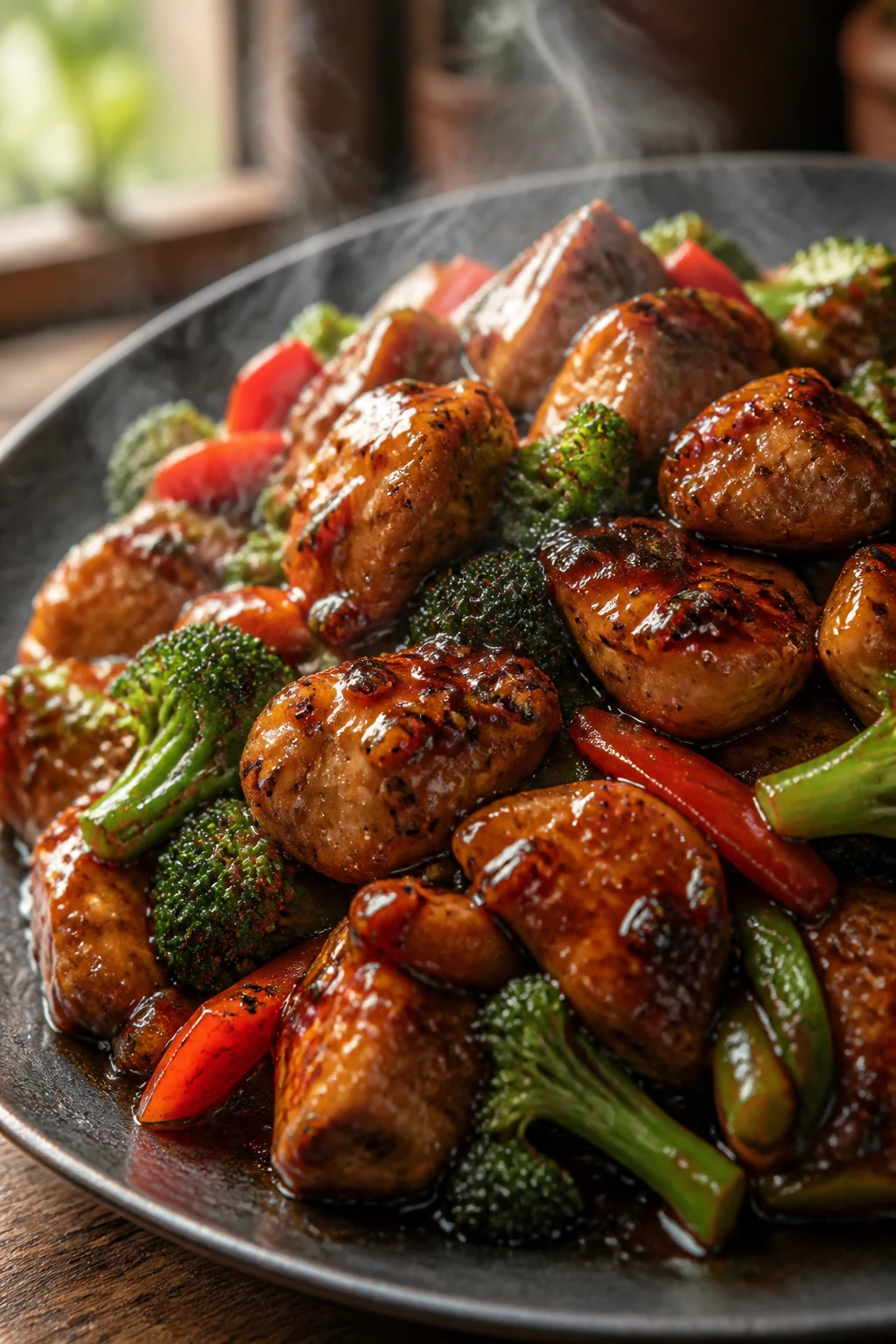
A lot of home stir-fries go wrong because the cook tries to make the sauce do everything. The pan cools down, the vegetables soften too far, and the chicken ends up tasting like it was boiled in sweet soy water. This one behaves differently because the chicken gets a quick cornstarch coating first, the sauce is mixed before it ever meets the heat, and the vegetables are chosen for how they hold up in a screaming-hot pan.
Chicken thighs are the right call here. I know breasts are popular, and yes, they can work, but thighs give you a little insurance. They stay juicy through a hard sear and a fast toss in sauce, which matters because this dish doesn’t reward long, gentle cooking. It rewards speed, heat, and a bit of nerve.
The sauce is built like a proper takeout glaze: soy for salt, honey and brown sugar for shine, rice vinegar for lift, hoisin for depth, garlic and ginger for the sharp aromatic edge, and a cornstarch slurry to finish the job. That last part is the difference between a glossy coating and a sauce that slides off the chicken like rain on glass.
And the vegetables matter more than people think. Bell peppers, broccoli, snap peas, carrots, and scallions each bring a different texture, and when you cook them just long enough, the bowl feels alive. Soft vegetables make the dish taste old. Crisp ones make it taste made-to-order.
The Clock, the Yield, and the Pan Setup
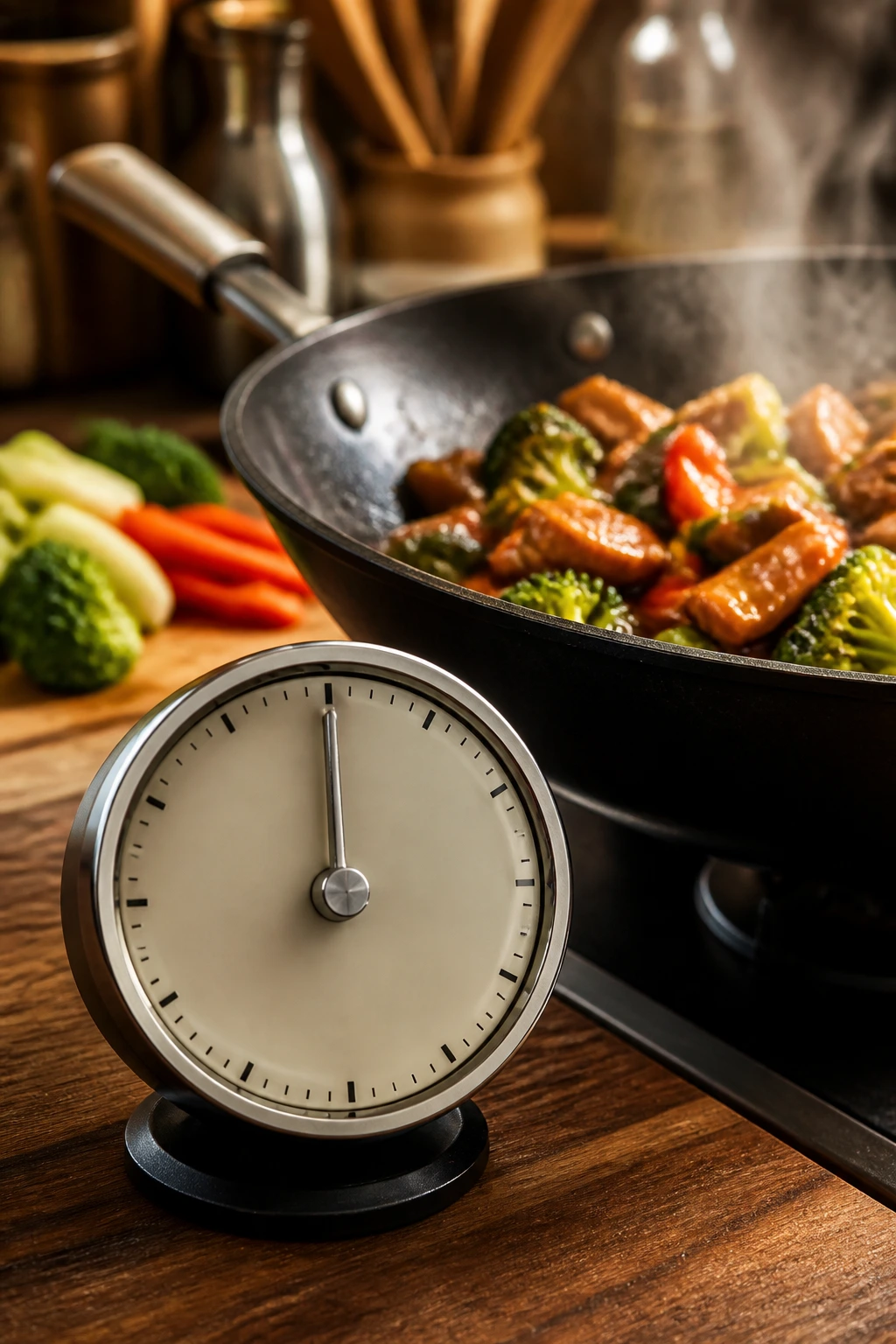
The whole recipe moves fast once the stove is on. Chop first, cook second. If you start improvising after the pan is hot, you’ll feel rushed in the worst way.
Yield: Serves 4
Prep Time: 20 minutes
Cook Time: 15 minutes
Total Time: 35 minutes
Difficulty: Beginner — the steps are straightforward, but the pan has to stay hot and you need to move in the right order.
Chill/Rest Time: 10 to 15 minutes optional if you want to let the chicken sit in its cornstarch coating while you cut the vegetables.
Best Served: Immediately, over hot rice, while the sauce is still glossy and the vegetables still have some bite.
Why the Sauce Clings Instead of Pooling
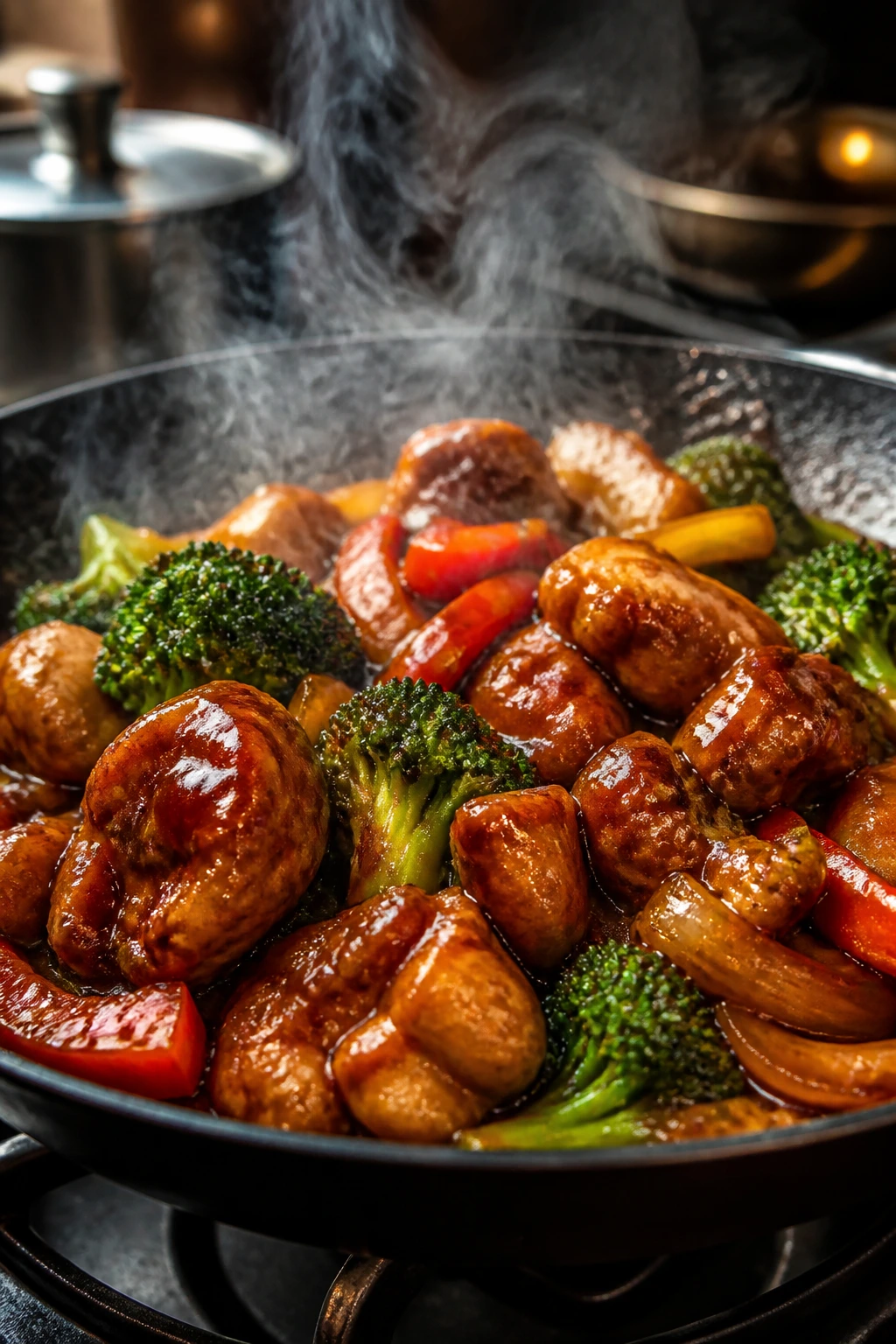
Sticky sauce is not magic. It’s a little chemistry, a little timing, and a refusal to crowd the pan.
The sweetness comes from honey and brown sugar, but the gloss comes from reduction and starch. When the sauce hits the hot skillet, the liquid starts to thin, then the cornstarch slurry tightens it back up into a shiny coating. That’s why the order matters so much. If you dump everything in at the same time and hope for shine, you usually get steam instead.
The Sweet-Salty Balance That Matters
Soy sauce does the heavy lifting, but low-sodium soy is the safer choice here. Regular soy can turn sharp after the sauce reduces, especially once hoisin and the glaze concentrate in the pan. Low-sodium soy gives you room to build flavor without ending up with a sauce that tastes like it was measured with a salt shaker from across the room.
Hoisin is the quiet hero. It has that deep, savory sweetness that people often can’t name but always miss when it isn’t there. One tablespoon is enough to round the edges and make the whole thing taste like it came from a serious wok, not a pantry experiment at 6:15 p.m.
Why Acid Keeps the Glaze From Feeling Heavy
Rice vinegar is what keeps the dish from collapsing into candy. Without acid, the sauce reads flat and sticky in the wrong way. With it, the glaze tastes bright enough to make you want another bite.
That balance matters even more if you serve this over white rice, which is exactly what most of us will do. Rice wants a sauce with enough personality to season it, but not one so sweet it feels like dessert pretending to be dinner. The vinegar gives the glaze the little lift it needs.
The Ingredient Lineup I’d Buy for This Dish
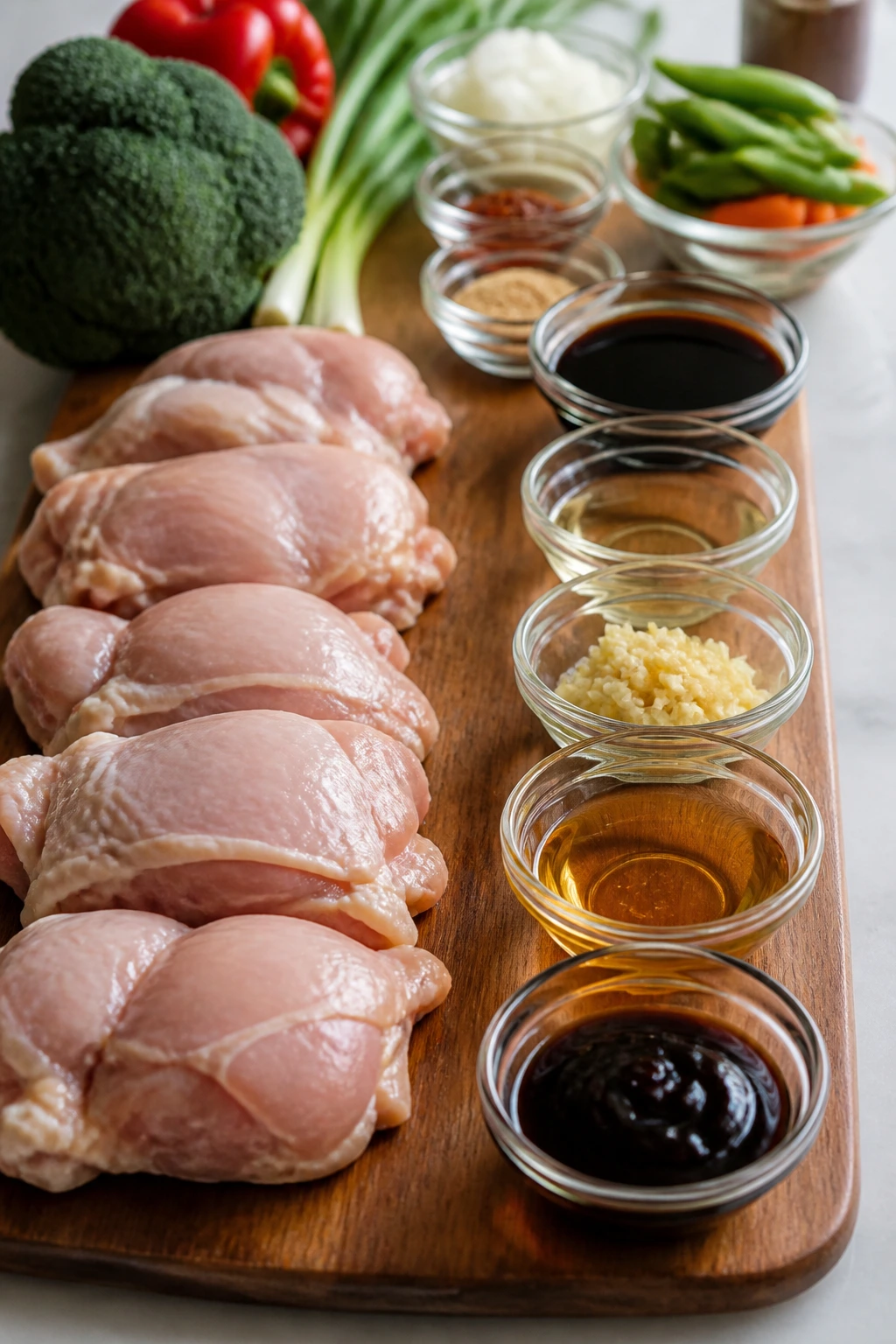
For the Chicken
- 1 1/2 lbs boneless, skinless chicken thighs, trimmed and cut into 1-inch pieces
- 1 tbsp low-sodium soy sauce
- 1 tbsp cornstarch
- 1 tsp neutral oil
For the Sticky Sauce
- 1/3 cup low-sodium soy sauce
- 1/4 cup honey
- 2 tbsp packed light brown sugar
- 2 tbsp rice vinegar
- 1 tbsp hoisin sauce
- 1/4 cup water or low-sodium chicken broth
- 4 cloves garlic, minced
- 1 tbsp fresh ginger, finely grated
- 1 tsp toasted sesame oil
- 1/4 tsp crushed red pepper flakes
For the Vegetables and Finish
- 2 tbsp neutral oil, divided
- 1 red bell pepper, thinly sliced
- 1 cup snap peas, trimmed
- 2 cups broccoli florets, cut small
- 1 medium carrot, cut into matchsticks or thin half-moons
- 3 scallions, whites and greens separated and sliced
- 1 tbsp cornstarch
- 2 tbsp cold water
- 1 tsp toasted sesame seeds
- Cooked jasmine rice, for serving
What Each Ingredient Is Doing in the Pan
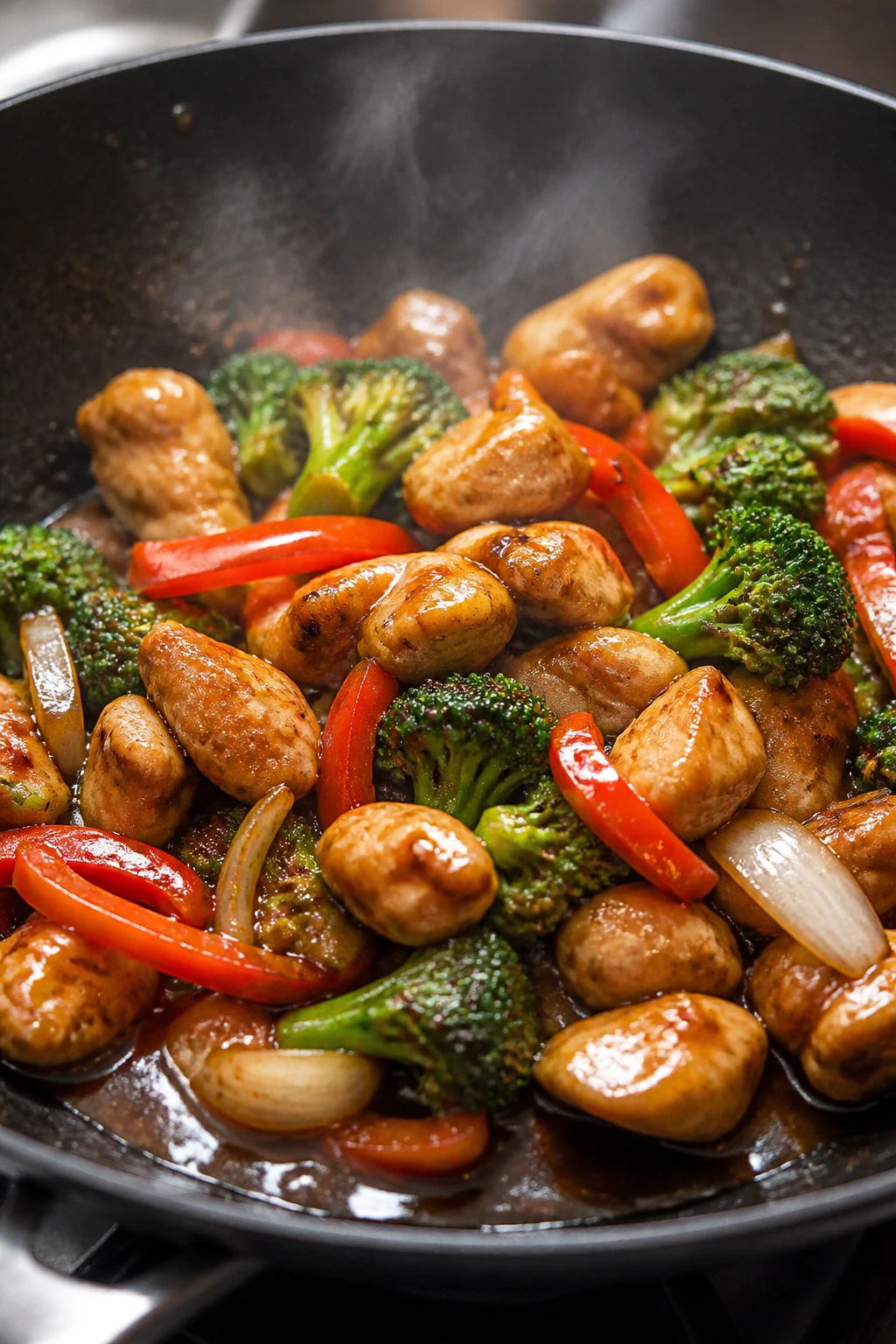
Chicken Thighs: The Part That Keeps the Dish Juicy
What to use: 1 1/2 lbs boneless, skinless chicken thighs, trimmed and cut into 1-inch pieces, plus 1 tbsp soy sauce, 1 tbsp cornstarch, and 1 tsp neutral oil.
Preparation: Cut the thighs into fairly even pieces so they cook at the same pace, then toss them until the coating looks tacky rather than wet. That thin cornstarch layer helps the chicken brown and helps the sauce cling later.
Substitutions: Chicken breast works if you cut it smaller and watch the clock closely. Firm tofu or shrimp can work too, but both need shorter cooking times and less handling in the pan.
Tips: Thighs forgive a little overcooking; breasts do not. If you use breasts, pull them as soon as they reach 165°F so they don’t turn dry and stringy after the sauce goes in.
Sticky Sauce: Sweet, Salty, Sharp, and Glossy
What to use: 1/3 cup low-sodium soy sauce, 1/4 cup honey, 2 tbsp brown sugar, 2 tbsp rice vinegar, 1 tbsp hoisin sauce, 1/4 cup water or broth, 4 cloves garlic, 1 tbsp ginger, 1 tsp toasted sesame oil, and 1/4 tsp red pepper flakes.
Preparation: Whisk everything until the sugar starts to dissolve and the sauce looks smooth. Grate the ginger finely so it disappears into the glaze instead of landing in rough little fibrous bits.
Substitutions: Maple syrup can stand in for honey, though the flavor shifts a little darker. Tamari works for gluten-free cooking, and a splash of lime juice can replace some of the rice vinegar if that’s what you have.
Tips: Hoisin brands vary a lot in sweetness and salt. Taste the sauce before it hits the pan if you can, because a sweeter hoisin may need a touch more vinegar.
Vegetables: The Crunch That Keeps the Bowl Interesting
What to use: 1 red bell pepper, 1 cup snap peas, 2 cups broccoli florets, 1 medium carrot, and 3 scallions, separated into whites and greens.
Preparation: Cut the broccoli small enough that it can cook in 2 to 3 minutes, not 8. Slice the carrots thin so they soften at roughly the same rate as the peppers and peas.
Substitutions: Mushrooms, baby corn, zucchini, or thinly sliced cabbage can all step in. If you want a more wintery pan, use broccoli, mushrooms, and carrots; if you want more brightness, lean harder on peppers and snap peas.
Tips: Keep the scallion whites and greens separate. The whites can take heat in the pan; the greens should be added at the end so they stay fresh and sharp.
Finishing Touches: Small Things That Make the Bowl Feel Finished
What to use: 1 tbsp cornstarch mixed with 2 tbsp cold water, 1 tsp toasted sesame seeds, and hot cooked jasmine rice.
Preparation: Stir the slurry right before using it so the starch hasn’t settled. Keep the rice warm and fluffy; cold rice under hot stir-fry sauce feels dense and a little sad.
Substitutions: Arrowroot can replace cornstarch if that’s what’s in the pantry. Brown rice, short-grain rice, or noodles can work, though jasmine rice gives the sauce the cleanest landing spot.
Tips: Add the sesame seeds at the very end so they keep their nutty smell. If you want extra gloss, a few drops of sesame oil after the heat is off make the whole pan smell deeper and more intentional.
The Tools I’d Keep Within Reach
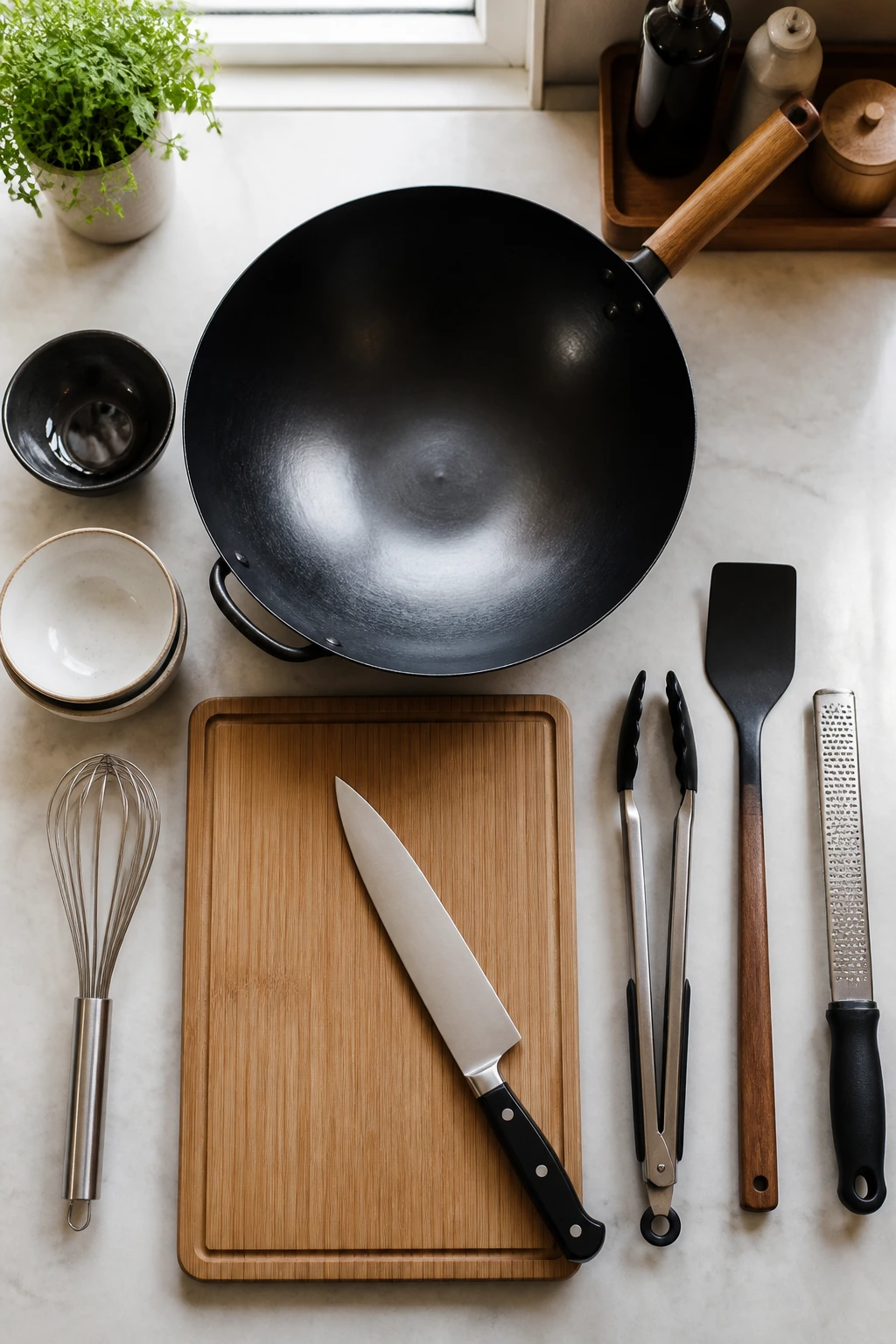
- 12-inch wok or large skillet: A wok is ideal, but a wide skillet works if it can hold heat and leave room for tossing.
- Medium mixing bowl: Good for coating the chicken without flinging cornstarch all over the counter.
- Small bowl or measuring cup with a spout: I like this for the sauce because it pours cleanly into a hot pan.
- Whisk or fork: Needed to dissolve the sauce and keep the slurry smooth.
- Tongs or a stiff spatula: Tongs are best for turning chicken pieces and scraping the bottom of the pan.
- Chef’s knife and cutting board: You want the vegetables cut before the stove turns on.
- Microplane or fine grater: Best for ginger; a coarse grater leaves stringy bits behind.
- Instant-read thermometer: Optional, but handy if you use chicken breast and want to pull it at 165°F without guessing.
The Stir-Fry Method, Step by Step
Prep the Chicken and Sauce
-
Toss the chicken thighs with 1 tbsp soy sauce, 1 tbsp cornstarch, and 1 tsp neutral oil in a medium bowl until every piece looks lightly coated and a little tacky.
-
Whisk together the 1/3 cup soy sauce, 1/4 cup honey, 2 tbsp brown sugar, 2 tbsp rice vinegar, 1 tbsp hoisin, 1/4 cup water or broth, garlic, ginger, toasted sesame oil, and red pepper flakes in a small bowl or measuring cup. Set it next to the stove so you can grab it fast.
-
Stir the 1 tbsp cornstarch and 2 tbsp cold water in a separate small bowl until smooth. This slurry should look milky and lump-free. Do not add it to the pan dry.
Cook the Chicken and Vegetables
-
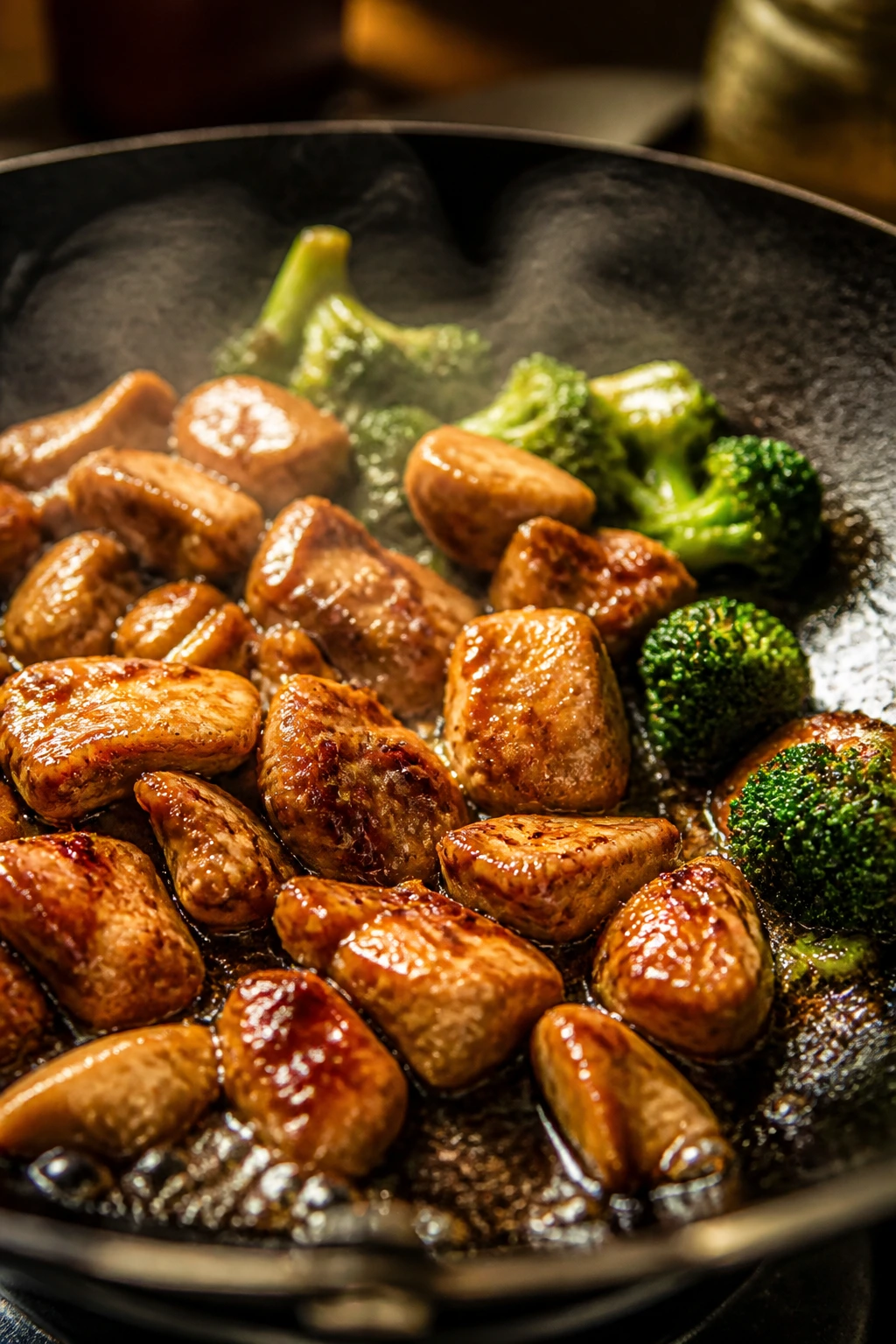
Heat a 12-inch wok or skillet over medium-high to high heat for 2 minutes, then add 1 tbsp of the neutral oil. When the oil shimmers and moves like thin glass, add the chicken in a single layer. Sear for 2 to 3 minutes without fussing with it too much, then stir and cook another 2 to 3 minutes until the pieces are browned on the edges and nearly cooked through. Transfer the chicken to a plate. If your pan is crowded, cook in two batches.
-
Add the remaining 1 tbsp neutral oil to the hot pan. Toss in the broccoli and carrots first and stir-fry for 2 minutes, scraping up the browned bits. Add the bell pepper and snap peas, then cook 1 to 2 minutes more until the vegetables are bright and crisp-tender. The broccoli should still have a little bite in the stem. If the pan looks dry, add 1 to 2 tbsp water to keep anything from scorching.
-
Push the vegetables to the sides, add the scallion whites, and cook for 20 to 30 seconds until fragrant. Return the chicken and any juices to the pan.
Glaze and Finish
-
Pour in the sauce and toss everything together for 30 to 60 seconds. When the sauce starts bubbling, stir the cornstarch slurry again and drizzle it in slowly while tossing. Keep the pan moving for another 30 to 45 seconds until the sauce looks shiny and clings to the chicken and vegetables instead of sitting in a pool.
-
Turn off the heat. Add the scallion greens and sesame seeds, then toss once more. Serve the sticky chicken stir fry over hot jasmine rice while the glaze is still glossy and the vegetables still have structure. If the sauce thickens too much, splash in 1 tbsp hot water and toss.
How I’d Serve It at the Table
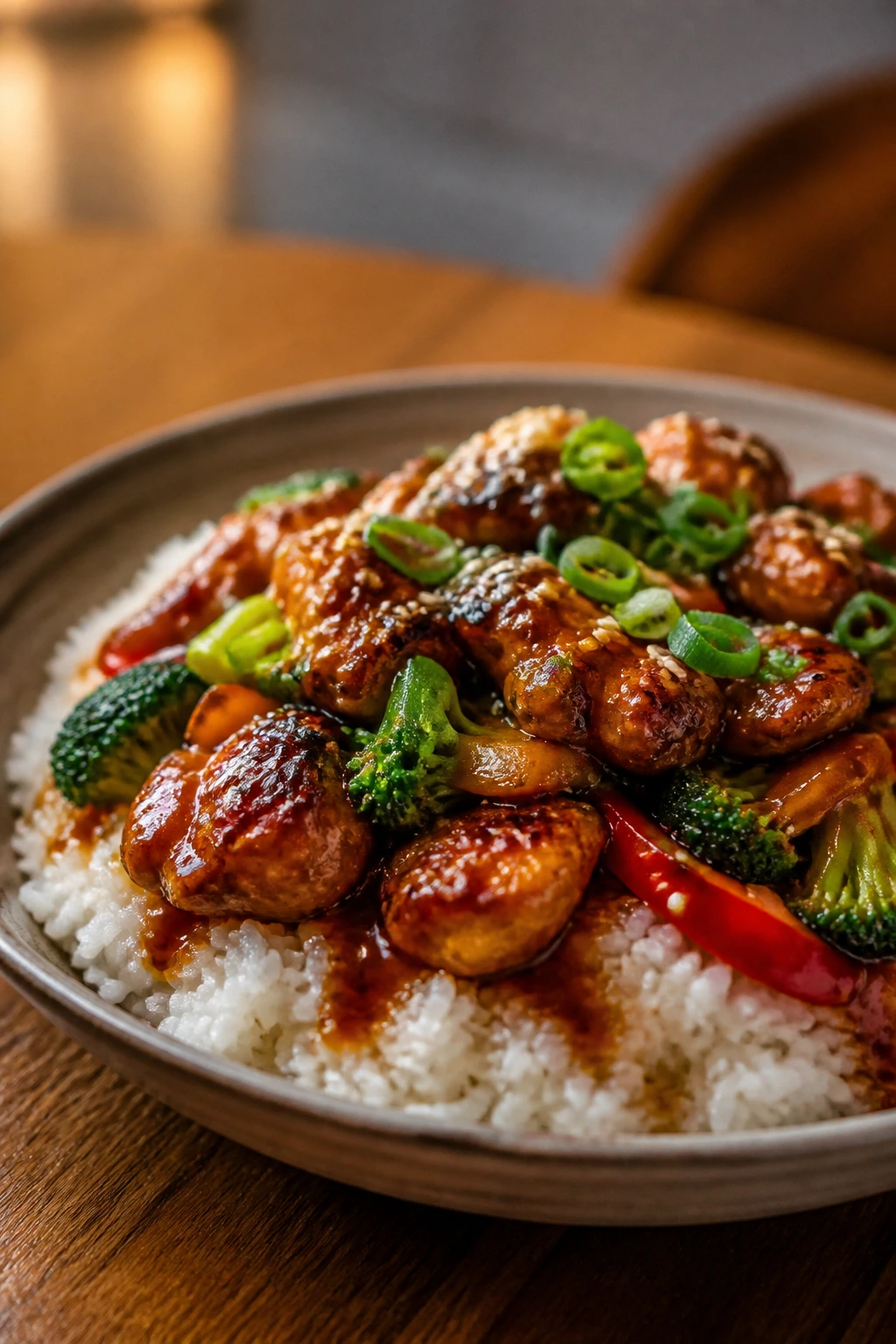
Presentation: I like this in shallow bowls over a mound of jasmine rice, not buried under a huge pile of everything all at once. Spoon the chicken and vegetables over the rice, then let a little sauce run down the sides. Finish with the scallion greens and sesame seeds so the bowl looks fresh rather than muddy.
Accompaniments: Steamed jasmine rice is the natural partner, but a bowl like this also plays well with cucumber salad, quick pickled carrots, or plain steamed bok choy. If you want more heft, add a fried egg on top and let the yolk mingle with the sticky sauce.
Portions: Four decent servings is the honest answer here, though you can stretch it to five or six if you use extra rice and a generous pile of vegetables. For a bigger table, make the recipe twice rather than trying to cram everything into one pan; the sear matters.
Beverage Pairing: Cold jasmine tea is clean and simple. A crisp lager or a dry sparkling water with lime also works, especially if you’ve leaned into the ginger and garlic.
Little Moves That Improve the Whole Pan
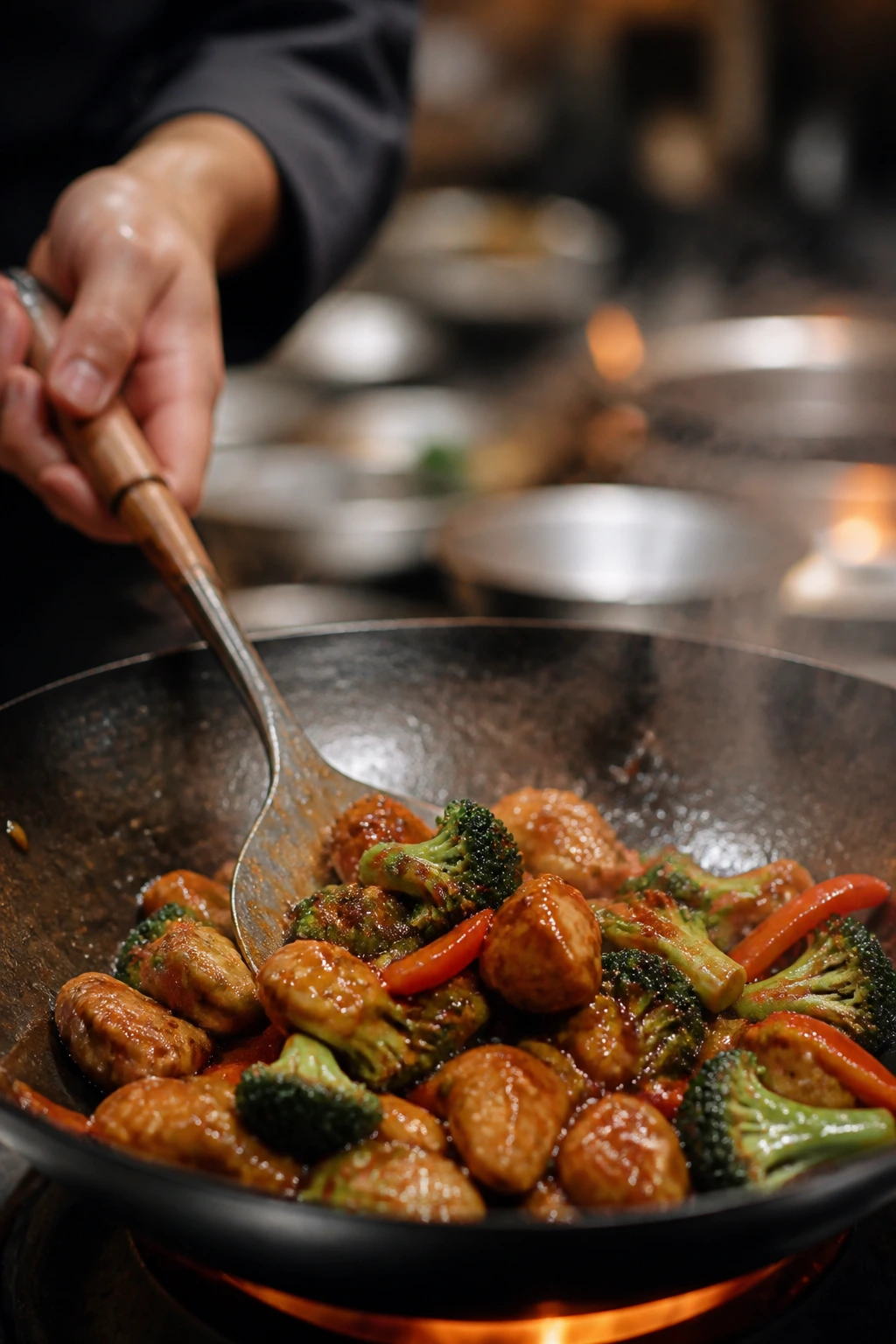
Flavor Enhancement: A teaspoon of chili crisp stirred in at the end gives the glaze a smoky heat that feels natural here, not bolted on. I also like a tiny squeeze of lime right before serving if the sauce tastes heavy after reduction.
Customization: If you want more vegetable bulk, add mushrooms or cabbage and cut back the chicken slightly. Pineapple chunks also fit here, but keep them to about 1 cup so they brighten the pan without turning the sauce into a fruit bowl.
Serving Suggestions: A few extra sliced scallions and a second pinch of sesame seeds make the dish look and taste more finished. If you like heat, a thin drizzle of chili oil over the rice does more than another pinch of red pepper flakes ever will.
Make-It-Yours: For a lower-sugar version, drop the brown sugar to 1 tbsp and increase the rice vinegar by 1 tsp. For gluten-free cooking, use tamari and a gluten-free hoisin or a mix of tamari plus a little extra honey and garlic.
The Missteps That Turn Sticky into Soggy
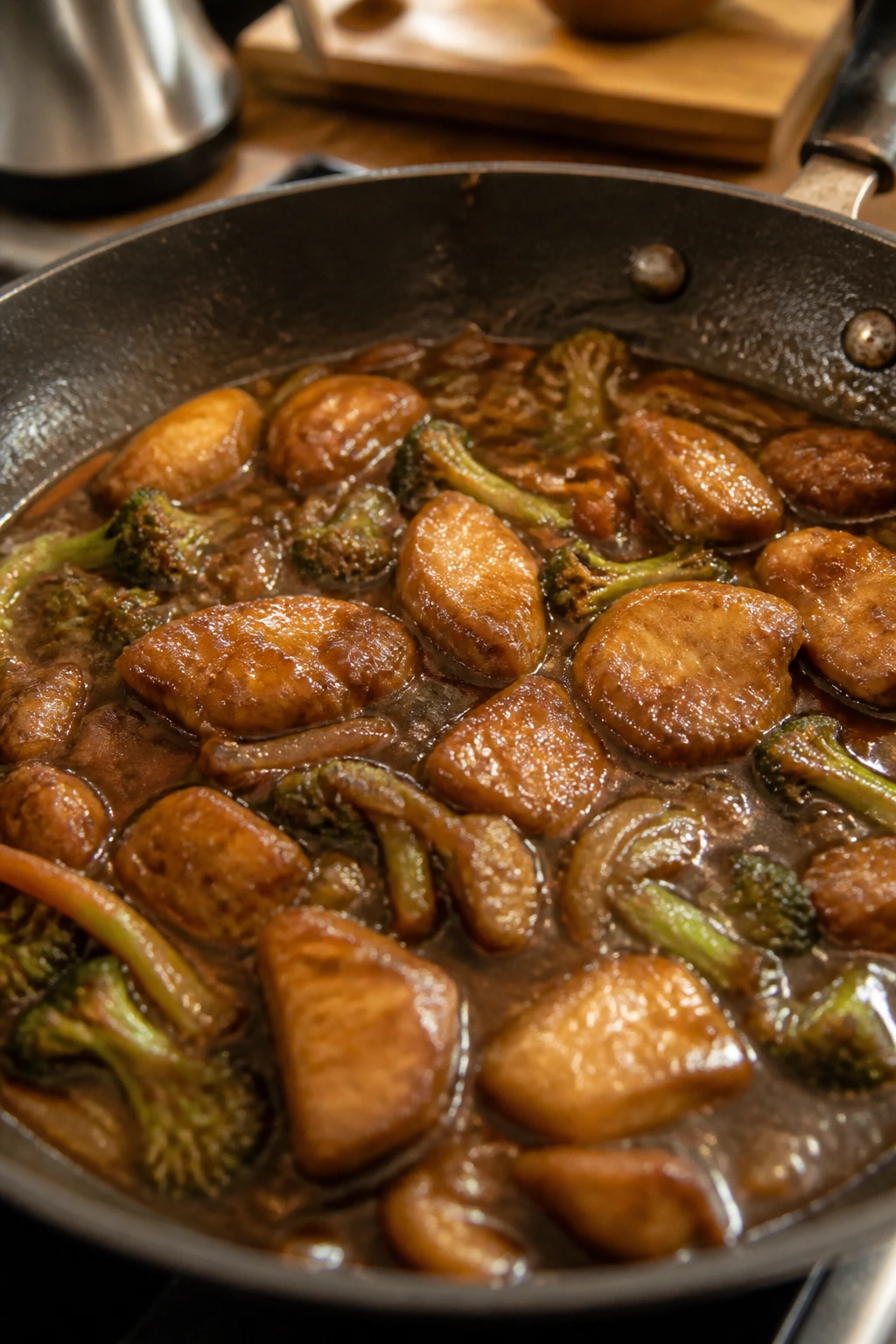
Crowding the pan is the first mistake, and it’s the one that ruins the sear before the sauce even shows up. The chicken turns pale and starts releasing liquid, which means you end up simmering instead of browning. Fix it by cooking in two batches if you need to. A full pan is not a badge of honor.
Adding the sauce too early is another common one. If the chicken hasn’t picked up some color first, the final dish tastes flat and steamed. Brown the meat first, remove it, then bring it back once the vegetables have some life. That order gives the glaze something worth coating.
The slurry can also go wrong if you don’t stir it right before pouring. Cornstarch settles fast. If the slurry sits, the first splash may be watery and the last splash too thick, which means the sauce thickens unevenly and leaves little cloudy streaks in the pan. Whisk it again, every time.
Overcooking the vegetables is the quiet killer. People keep cooking because the sauce isn’t thick yet, and suddenly the broccoli goes olive and the snap peas lose their snap. The fix is to trust the timeline: vegetables go in, sauce goes in, slurry goes in, heat goes off. The whole finish takes less than two minutes if the pan is hot enough.
Burning the garlic is one I see often, especially when people add it too early with the vegetables. Garlic wants a brief kiss of heat, not a long bath in a dry skillet. Add it with the scallion whites for just 20 to 30 seconds, and don’t let it sit alone on the pan bottom.
Flavor Swaps and Variations I Actually Like
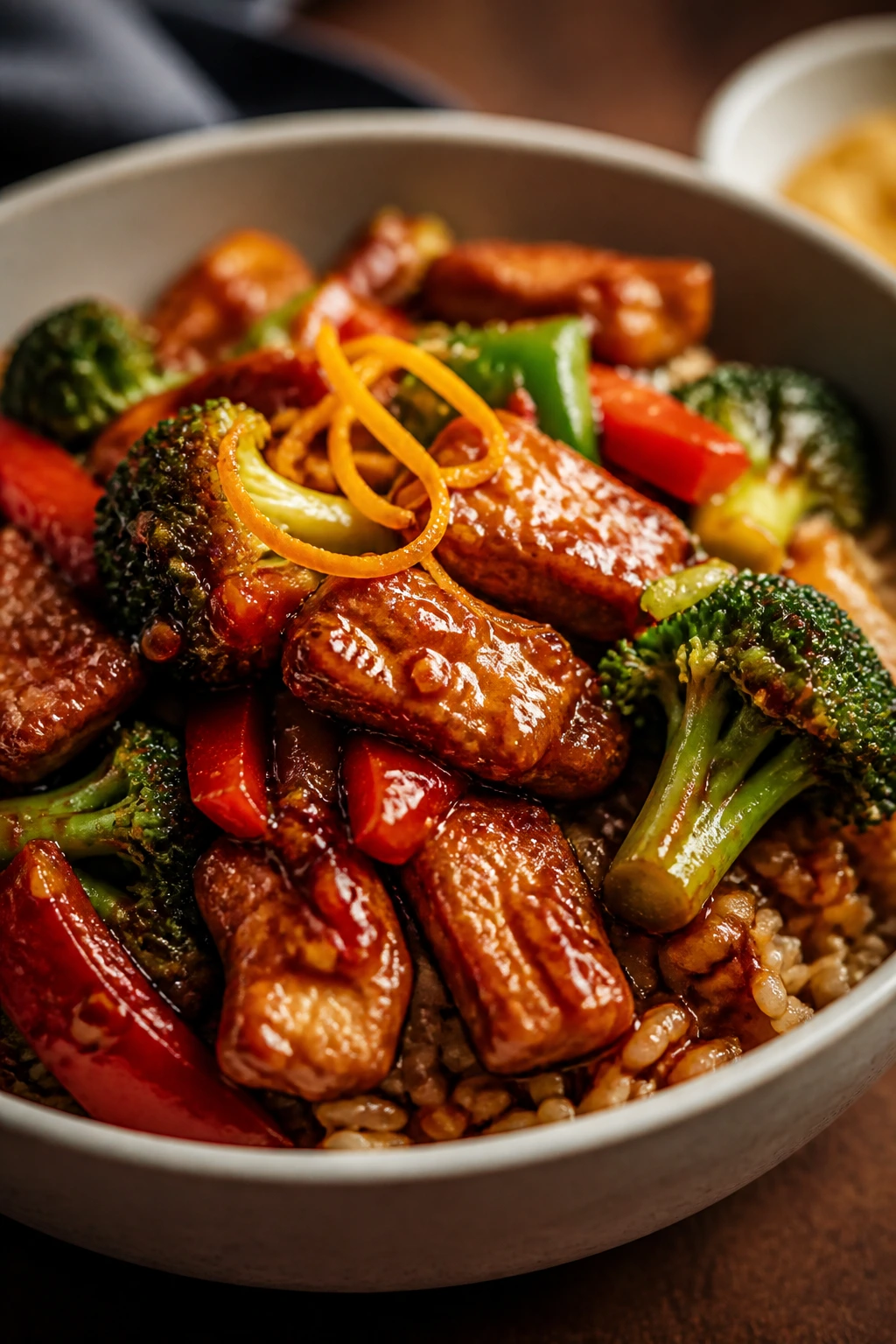
Orange-Sesame Brightening
Add 1 tbsp orange zest and replace 2 tbsp of the water with fresh orange juice. It gives the glaze a softer citrus lift that works well if you’re serving the stir-fry with plain rice and want a little more perfume in the bowl.
Chili Crisp Heat
Stir 1 to 2 tbsp chili crisp into the finished pan after the heat is off. This version has a deeper, oilier heat than straight red pepper flakes, and it suits people who want the sauce to feel a little more textured and less candy-sweet.
Pineapple Pepper Takeout Bowl
Add 1 cup pineapple chunks when you return the chicken to the pan and reduce the brown sugar to 1 tbsp. The pineapple juices loosen the sauce a touch, so the glaze feels bright and sticky at the same time. It’s the variation I make when I want the dish to lean more playful than serious.
Gluten-Free Tamari Swap
Use tamari in place of soy sauce and choose a gluten-free hoisin, checking the label carefully. The flavor lands close to the original, though tamari can taste a little rounder and less sharp, so you may want an extra splash of rice vinegar at the end.
Vegetable-Heavy Weeknight Version
Cut the chicken back to 1 lb and add 2 cups thinly sliced cabbage plus 1 cup mushrooms. This one stretches farther and has a looser, more vegetable-forward feel, which I like when I’m serving people who want plenty of crunch with less meat in the bowl.
Make-Ahead, Storage, and Reheating Notes
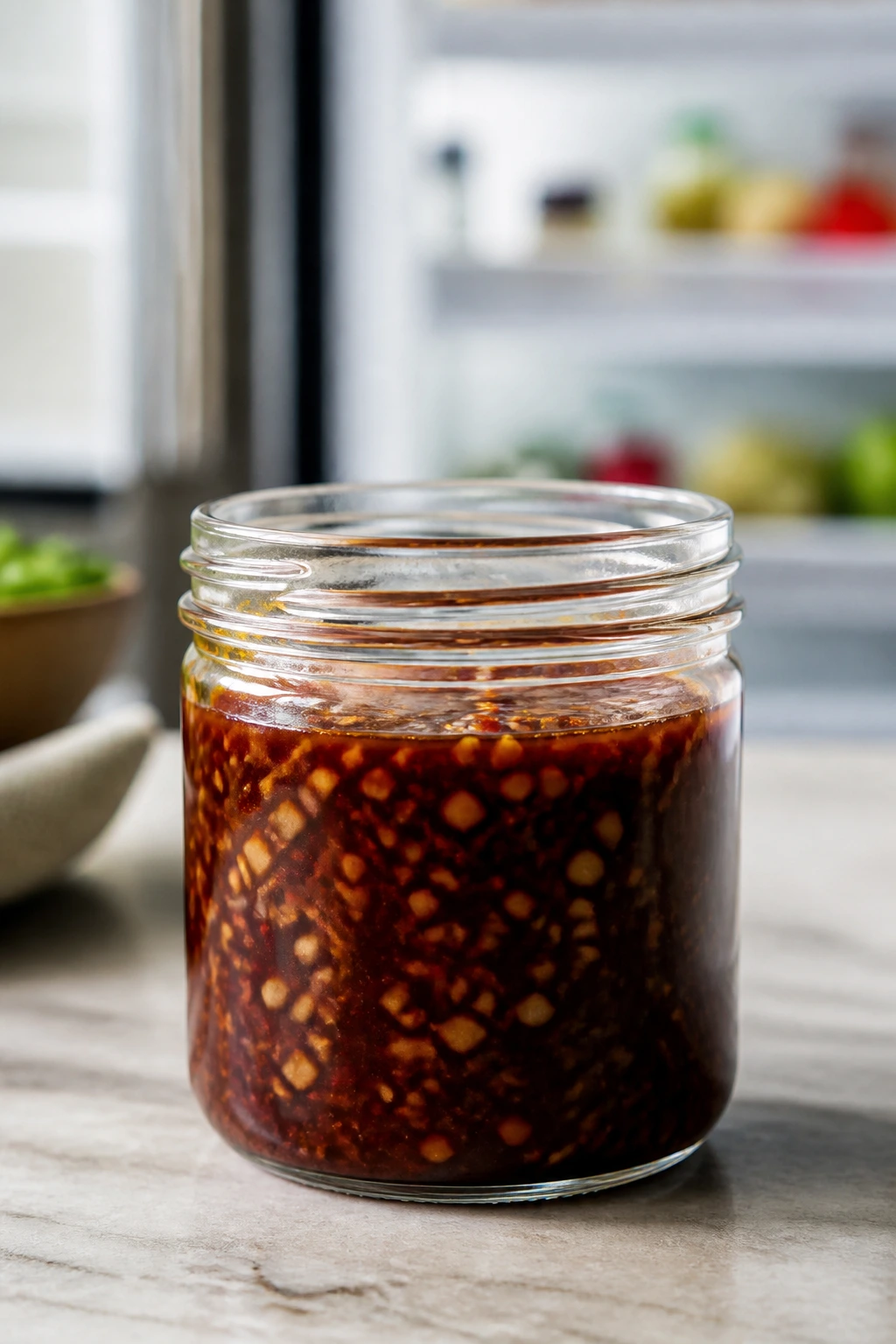
The best thing you can make ahead is the sauce. Whisk it up and keep it covered in the fridge for up to 3 days. You can also cut the vegetables a day ahead and store them in a sealed container lined with a paper towel, which keeps the broccoli from getting soggy in its own condensation.
The chicken can be cut and coated with soy, cornstarch, and oil up to 4 hours ahead if you want to get organized, but I wouldn’t leave it much longer than that. The cornstarch coating starts to pull moisture from the chicken and can turn patchy if it sits all day. Short rest, fine. Long rest, not worth it.
Leftovers keep well in the fridge for 3 to 4 days in an airtight container. The sauce thickens as it chills, which is normal. If you want to freeze it, cool it completely first, then store it in a freezer-safe container for up to 2 months. The vegetables will soften after thawing, so I prefer freezing only if I know texture is secondary to convenience.
For reheating, the stove wins. Add the stir-fry to a skillet with 1 to 2 tbsp water and warm it over medium-low heat, stirring until the sauce loosens and the chicken is heated through. The microwave works too, but cover the bowl and use short bursts, stirring once in the middle so the chicken doesn’t dry out around the edges. If you know you’ll reheat leftovers, undercook the vegetables by about 30 seconds the first time around. They’ll finish on the second pass.
Questions People Ask Before They Start
Can I use chicken breasts instead of thighs?
Yes, but cut them into smaller, even pieces and cook them a little faster. Pull them from the pan as soon as they hit 165°F, because breast meat goes dry fast once the sauce reduces around it. Thighs are still my pick, though.
Do I need a wok for this recipe?
Nope. A large 12-inch skillet works if it holds heat and gives the ingredients room to move. A wok is nice because of the shape, but a cramped skillet is still better than not making the dish at all.
How do I keep the sauce from getting too thick?
Keep a little hot water nearby and add a tablespoon at a time if the glaze tightens too far. The sauce should coat the chicken and vegetables in a shiny film, not sit like paste. If it gets sticky too fast, the pan may have been too hot when the slurry went in.
Can I make this ahead for dinner later?
You can prep the sauce, cut the vegetables, and coat the chicken earlier in the day. I would still cook it close to serving time if you care about crisp vegetables and that fresh glossy finish. Stir-fries lose their best texture as they sit.
What vegetables work best if I don’t have broccoli or snap peas?
Mushrooms, cabbage, baby corn, green beans, and zucchini all work. Pick vegetables that can handle quick high heat without turning to mush, and keep the cut size close so everything finishes together.
Is this recipe freezer-friendly?
Yes, though the vegetables will soften after thawing. If you want the best result from the freezer, freeze the cooked chicken and sauce, then make fresh vegetables when you reheat it. That keeps the dish from tasting tired.
How do I make it less sweet?
Cut the honey back to 3 tablespoons and reduce the brown sugar to 1 tablespoon. Then add another teaspoon of rice vinegar or a squeeze of lime so the sauce stays lively instead of blunt. The soy and hoisin still give it enough body.
A Stir-Fry Worth Keeping in Rotation
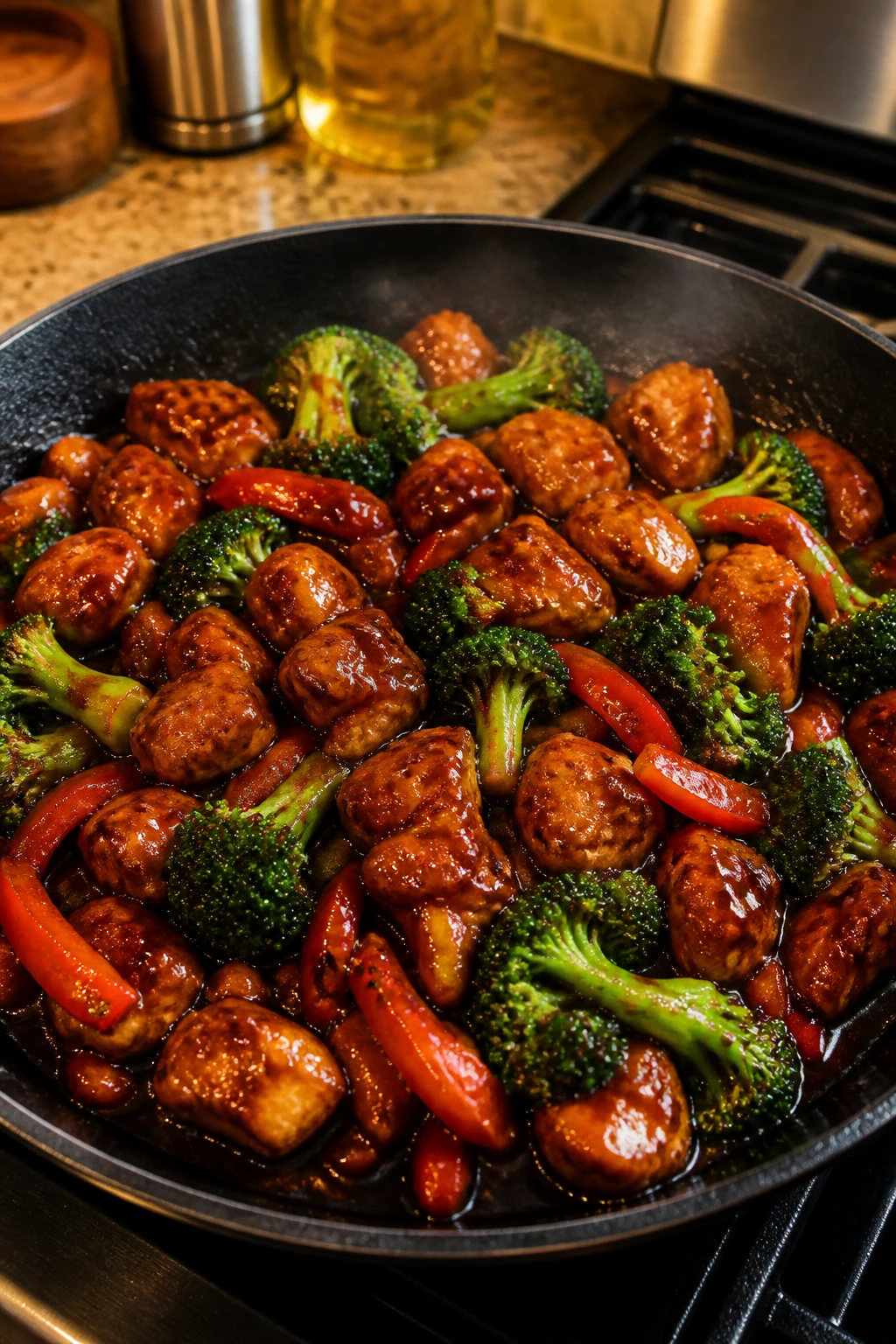
What I like most about this sticky chicken stir fry is that it teaches a useful rhythm. Marinate lightly. Sear hard. Add vegetables with some restraint. Finish the sauce fast and stop before it crosses the line from glossy to heavy. Once you’ve cooked it this way once or twice, the method starts to feel less like a recipe and more like a skill you can pull out on a random night when the fridge is half-empty.
There’s a reason this style of dish earns repeat status. It’s forgiving without being sloppy, and it gives you a lot back for the small amount of work it asks for. Keep the pan hot, keep the vegetables crisp, and let the glaze do its job.
Sticky Chicken Stir Fry — Recipe Card
Recipe Name: Sticky Chicken Stir Fry
Description: A glossy, sweet-salty chicken stir fry with crisp vegetables, garlic-ginger sauce, and a sticky glaze that clings to every bite. Serve it over hot jasmine rice for a takeout-style dinner that tastes fresher and cleaner.
Prep Time: 20 minutes
Cook Time: 15 minutes
Total Time: 35 minutes
Course: Dinner, Main Course
Cuisine: Chinese-American
Servings: 4 servings
Calories: About 450 kcal per serving
Ingredients
For the Chicken:
- 1 1/2 lbs boneless, skinless chicken thighs, trimmed and cut into 1-inch pieces
- 1 tbsp low-sodium soy sauce
- 1 tbsp cornstarch
- 1 tsp neutral oil
For the Sticky Sauce:
- 1/3 cup low-sodium soy sauce
- 1/4 cup honey
- 2 tbsp packed light brown sugar
- 2 tbsp rice vinegar
- 1 tbsp hoisin sauce
- 1/4 cup water or low-sodium chicken broth
- 4 cloves garlic, minced
- 1 tbsp fresh ginger, finely grated
- 1 tsp toasted sesame oil
- 1/4 tsp crushed red pepper flakes
For the Vegetables and Finish:
- 2 tbsp neutral oil, divided
- 1 red bell pepper, thinly sliced
- 1 cup snap peas, trimmed
- 2 cups broccoli florets, cut small
- 1 medium carrot, cut into matchsticks or thin half-moons
- 3 scallions, whites and greens separated and sliced
- 1 tbsp cornstarch
- 2 tbsp cold water
- 1 tsp toasted sesame seeds
- Cooked jasmine rice, for serving
Instructions
-
Toss the chicken with soy sauce, cornstarch, and neutral oil until lightly coated.
-
Whisk together the sauce ingredients in a small bowl or measuring cup.
-
Stir the cornstarch and cold water together in a separate small bowl to make the slurry.
-
Heat a wok or large skillet over medium-high to high heat, add 1 tbsp neutral oil, and sear the chicken until browned and nearly cooked through. Transfer to a plate.
-
Add the remaining oil and stir-fry the broccoli and carrot for 2 minutes. Add the bell pepper and snap peas, then cook 1 to 2 minutes more until crisp-tender.
-
Add the scallion whites, cook briefly, then return the chicken and any juices to the pan.
-
Pour in the sauce, toss for 30 to 60 seconds, then stir in the cornstarch slurry and cook until glossy and thickened.
-
Turn off the heat, add the scallion greens and sesame seeds, and serve immediately over hot jasmine rice.
Notes: Use low-sodium soy if you can; regular soy can make the finished sauce too salty after reduction. If the glaze tightens too much, loosen it with 1 tablespoon hot water at a time. Leftovers keep 3 to 4 days refrigerated.