



The first time you pull a tray of crispy Chinese BBQ pork from a home oven and hear the glaze crackle at the edges, it’s hard not to grin. The smell hits first: soy, honey, garlic, five-spice, and that little dark note from the roast pan that tells you dinner is going in the right direction. Then you slice it and see the thing takeout so often misses — a glossy crust that actually has texture, with juicy pork underneath instead of the soft, bouncy sweetness that can slide into one-note territory.
Char siu, the Cantonese roast pork that lives in bakery windows and hanging-barbecue cases, has always had a split personality. The best version is sticky, savory, sweet, and lacquered with edges that go almost candied where the heat kisses them hardest. The average version is fine. It feeds you. But fine is not the goal here.
This home version leans into the part that makes the dish irresistible in the first place: a pork shoulder that keeps its fat, a marinade that tastes deeply savory before it ever touches heat, and a glaze that gets brushed on late enough to shine instead of scorch. No special rotisserie. No hanging hooks. Just a rack, a hot oven, and enough patience to let the pork dry a little before it roasts. That little pause matters. A lot.
Why You’ll Keep Coming Back to This Pork
-
Sticky edges, not syrupy glaze: The honey and hoisin bake down into a lacquer that clings to each slice instead of pooling on the plate.
-
Pork shoulder stays juicy: A well-marbled cut gives you roast pork that slices cleanly and still eats tender after a fast broil.
-
The flavor is layered, not flat: Soy, oyster sauce, five-spice, garlic, and Shaoxing wine give the pork a savory base before the sweet glaze even enters the picture.
-
You don’t need restaurant gear: A rack over a foil-lined sheet pan does the job just fine, which is one reason I keep coming back to this method.
-
Leftovers do useful things: Chilled slices make excellent fried rice, noodle bowls, and lettuce wraps the next day, especially when you re-crisp them in a skillet.
-
The finish is customizable: You can push it darker, sweeter, lighter, or a little spicier without changing the core method.
Before the Oven Heats
Yield: Serves 4 to 6
Prep Time: 20 minutes
Cook Time: 35 minutes
Marinate Time: 8 to 24 hours
Rest Time: 10 minutes
Total Time: 55 minutes active, plus marinating time
Difficulty: Intermediate — the method is straightforward, but the broiler and glaze need your full attention.
Best Served: Warm, within 20 minutes of slicing
A long marinade does most of the heavy lifting here. The actual cooking is brisk. That’s the part I like most.
What Chinese BBQ Pork Usually Gets Right — and Wrong
Char siu has always lived in that narrow lane between roast meat and candy. The good versions have a burnished outer layer that smells of caramel, soy, and warm spice, with meat that still gives a little when you bite into it. The bad versions go in one of two directions: too dry, or too soft. Dry usually means the cut was too lean or the pork cooked too long. Soft usually means the glaze stayed pale and wet, never getting the chance to set into a proper crust.
I’m partial to the versions that use pork shoulder. It is not the leanest route, and that’s the point. Shoulder has enough fat to protect the meat during a high-heat roast, and enough structure to stay sliceable. Pork loin can work, but it asks for more caution. Pork belly gives you a richer result, but it can feel heavy if you’re serving rice and a few sides. Shoulder sits in the middle and behaves well in a home oven.
What makes this particular version worth making is that it keeps the flavors familiar while fixing the texture problem. The marinade is built to taste like barbecue pork should taste before the oven ever opens: salty, sweet, spiced, and aromatic. The glaze goes on late, which keeps the sugars from burning before the pork finishes cooking. Then there’s the broil — brief, close, and watched like a hawk. That’s where the edges take on that blistered, sticky look that makes people hover by the cutting board.
The Ingredients That Build the Bark, Shine, and Tender Bite
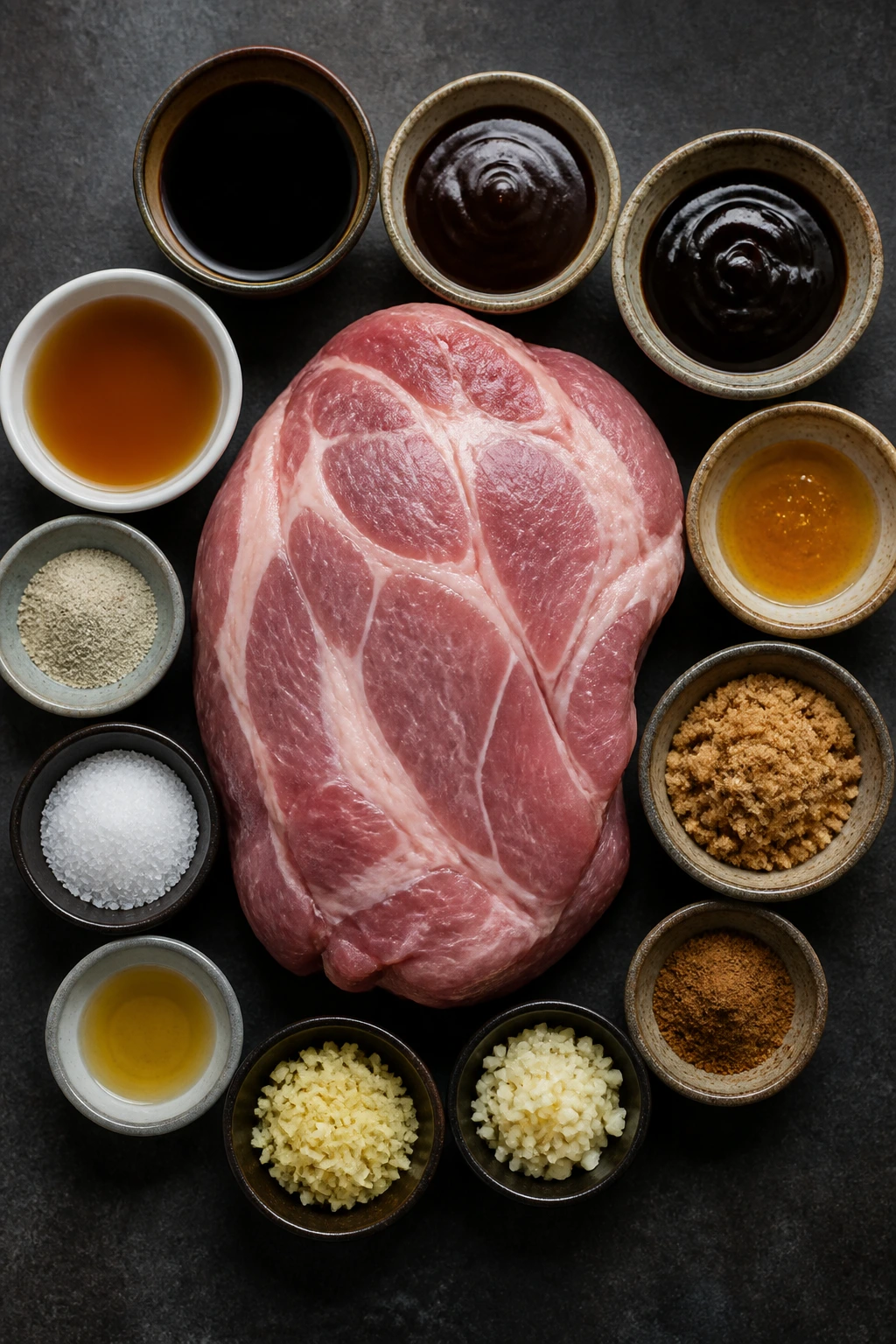
For the Pork and Marinade:
- 2 lb boneless pork shoulder, trimmed of thick surface fat and cut into 4 long strips
- 3 tablespoons soy sauce
- 2 tablespoons hoisin sauce
- 1 tablespoon oyster sauce
- 2 tablespoons Shaoxing wine or dry sherry
- 1 tablespoon honey
- 1 tablespoon light brown sugar
- 2 teaspoons Chinese five-spice powder
- 3 cloves garlic, grated or minced finely
- 1 teaspoon fresh ginger, grated
- 1 teaspoon toasted sesame oil
- 1 teaspoon kosher salt
- 1/2 teaspoon white pepper
- 1 tablespoon neutral oil
For the Finishing Glaze:
- 1/4 cup honey
- 2 tablespoons hoisin sauce
- 1 tablespoon soy sauce
- 1 tablespoon Shaoxing wine or water
- 1 teaspoon rice vinegar
- 1/2 teaspoon Chinese five-spice powder
- 1 tablespoon water, as needed to loosen
For Serving:
- Thinly sliced scallions
- Toasted sesame seeds
- Steamed jasmine rice, if you want the classic plate
- Quick cucumber slices or a plain green vegetable, if you want contrast
Why Each Ingredient Pulls Its Weight
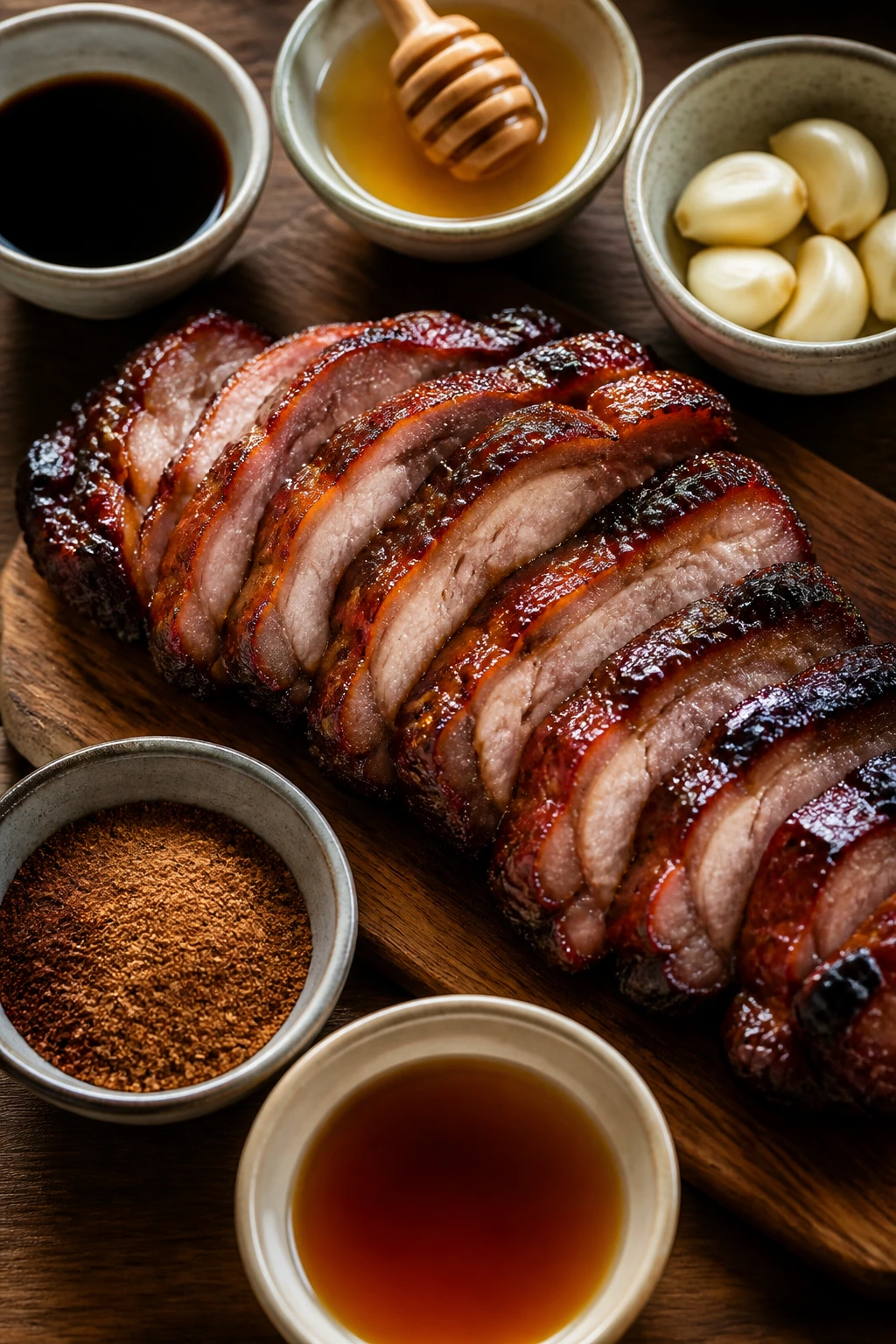
Main Pork Cut
What to use: Use 2 pounds of boneless pork shoulder, sometimes sold as pork butt, trimmed of any ragged hard fat and cut into 4 long strips. Each piece should be thick enough to stay juicy, but not so thick that the glaze burns before the center cooks.
Preparation: Slice the shoulder into long, even pieces so more surface can meet the heat. If one end is much thinner than the other, tuck it under slightly or trim it so the strips roast at the same pace.
Substitutions: Pork loin works if you want a leaner slice, though it needs closer watching and usually less cook time. Pork belly gives a richer, fattier result and crisps up in a different way, almost like a roast and a skillet-fried bite combined.
Tips: Don’t chase perfect uniformity. You want some edges, some fat, and some surface area for the glaze to cling to. Shoulder has enough marbling to protect the meat during the broiler finish, which is why I trust it here.
The Marinade Base
What to use: Soy sauce, hoisin sauce, oyster sauce, Shaoxing wine, honey, brown sugar, Chinese five-spice, garlic, ginger, sesame oil, salt, and white pepper make the core marinade.
Preparation: Grate the garlic and ginger finely so they disappear into the marinade instead of burning in little bits on the surface. Whisk until the sugar is mostly dissolved and the mixture looks glossy.
Substitutions: Dry sherry stands in for Shaoxing wine without making the flavor feel off. If you need a soy-free path, tamari works well, though the final color will be a touch darker.
Tips: Hoisin gives you body, oyster sauce adds savory depth, and five-spice gives the pork that familiar warm, slightly sweet nose. If the marinade smells flat, it usually needs a little more salt, not more sugar.
The Finishing Glaze
What to use: Honey, hoisin, soy sauce, Shaoxing wine or water, rice vinegar, five-spice powder, and a splash of water for brushing.
Preparation: Simmer the glaze briefly until it turns smooth and brushable. You want it thick enough to coat the back of a spoon lightly, but thin enough to spread in a clean layer.
Substitutions: Maple syrup can take the place of honey if that’s what you have, though honey browns a little more aggressively. Rice vinegar can be swapped for cider vinegar in a pinch, but use a touch less because cider vinegar reads sharper.
Tips: Keep this glaze separate from the raw marinade. That’s not a fussy food-safety rule I’m making up for sport; it saves you from dragging raw pork juices back onto the finished meat.
The Garnishes
What to use: Scallions and sesame seeds are the easy classics. Steamed rice and cucumber are not garnishes exactly, but they are the right kind of quiet backdrop.
Preparation: Slice the scallions thinly and toast the sesame seeds if yours are pale and raw. Cut cucumbers into thin coins or quick spears, then leave them plain or toss them with a pinch of salt and rice vinegar.
Substitutions: Chopped cilantro works if you like a fresher finish, though it pushes the dish farther from the classic roast-pork lane. Thinly sliced jalapeño can replace scallions if you want heat.
Tips: The final plate needs contrast. A sticky roast like this gets better when it lands next to something cool, plain, or lightly salted.
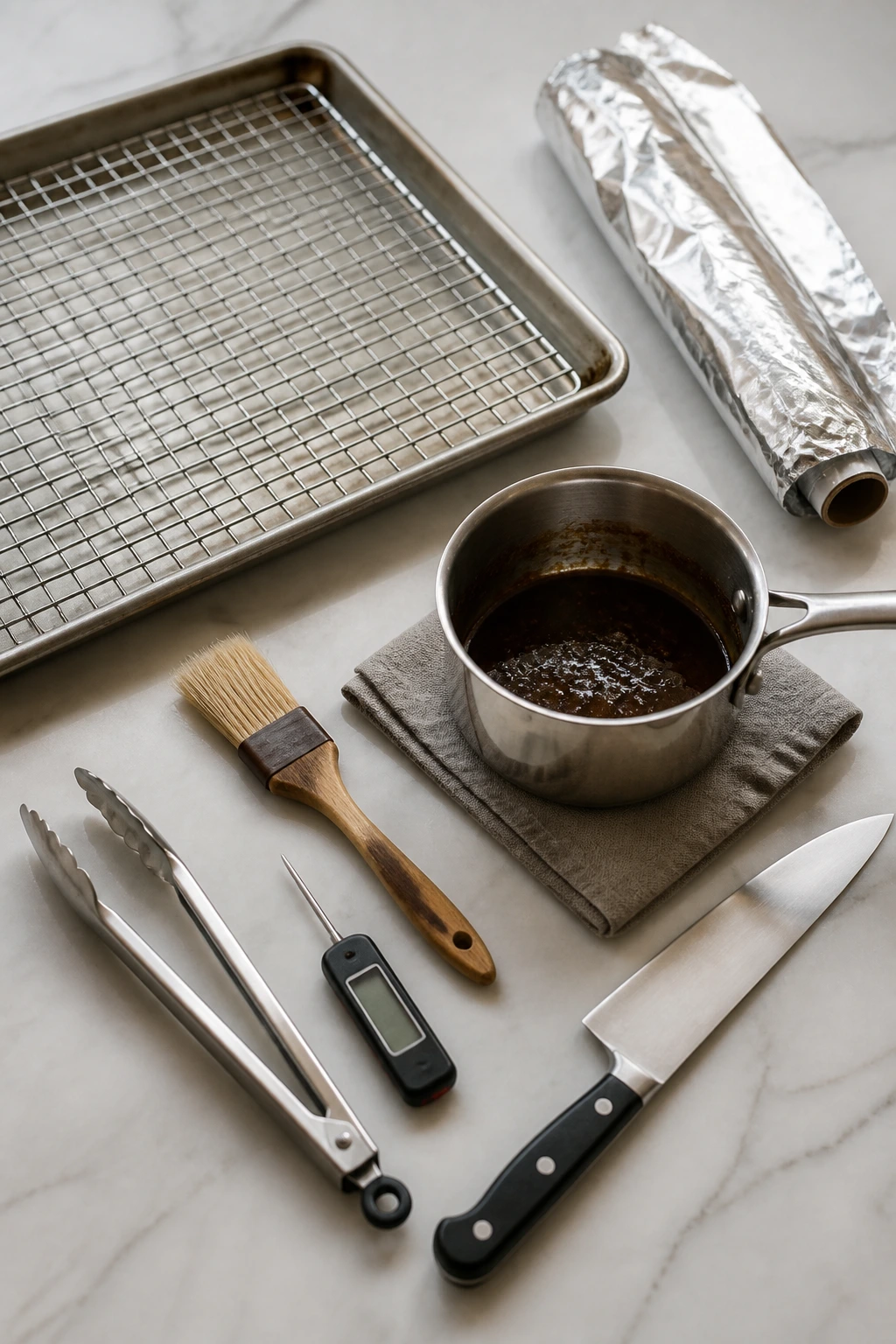
The Tools That Make the Job Easier
-
Rimmed half-sheet pan: Catches glaze drips and gives the pork enough room to roast instead of steam.
-
Wire rack that fits the pan: This keeps the pork lifted so the underside can brown and the glaze can drip away from the meat a little.
-
Heavy-duty foil: Makes cleanup bearable, which matters because honey and hoisin are clingy.
-
Small saucepan: Useful for simmering the finishing glaze so it thickens slightly before brushing.
-
Pastry brush or silicone brush: Lets you paint on the glaze in thin, even layers instead of dumping it on.
-
Instant-read thermometer: The most honest tool in the kitchen. Use it.
-
Tongs: Better than a fork for moving the pork, since you don’t want to pierce out the juices before resting.
-
Sharp chef’s knife: You’ll want clean slices, not ragged shreds.
How to Cook Crispy Chinese BBQ Pork
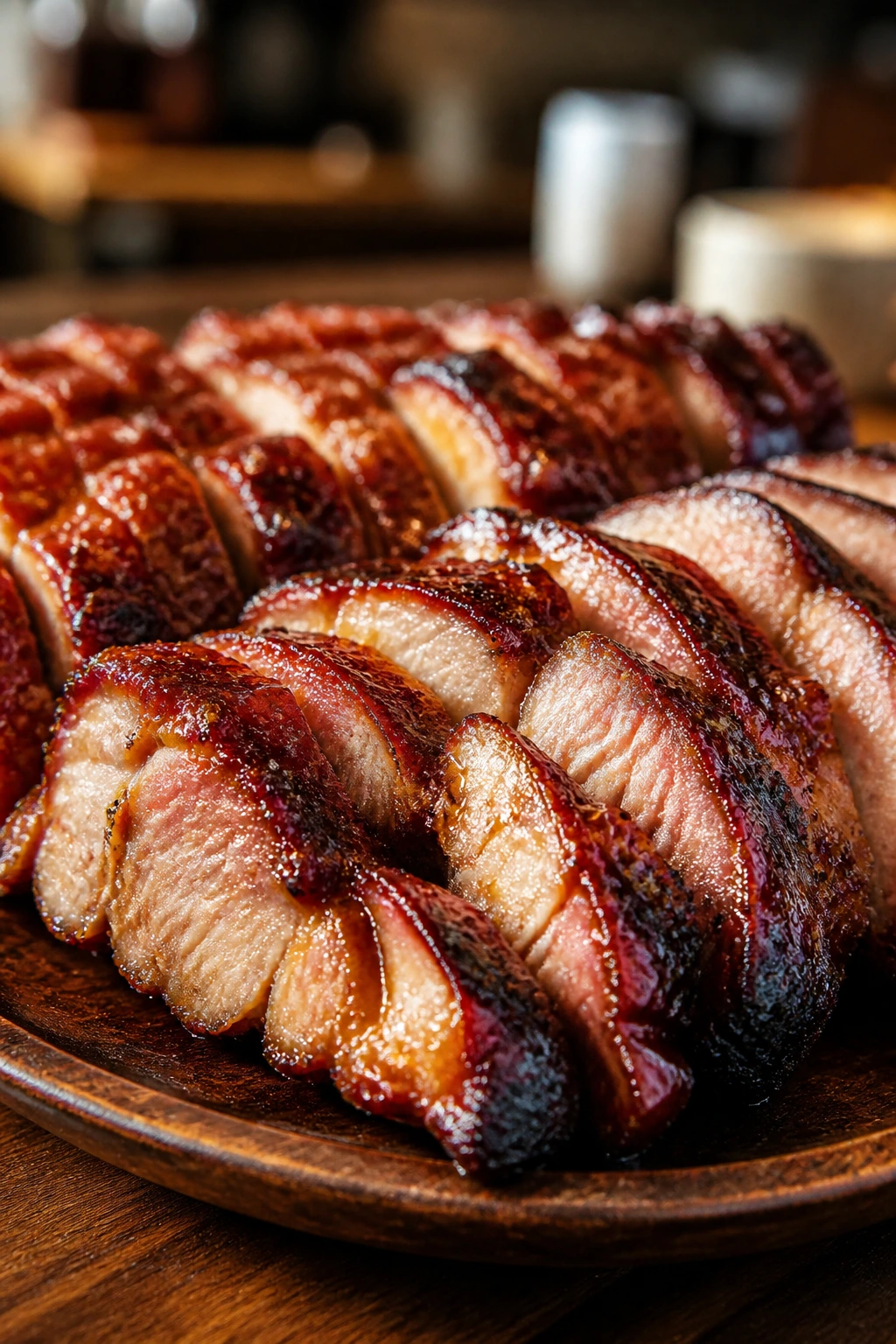
Marinate the Pork
-
In a medium bowl, whisk together the soy sauce, hoisin sauce, oyster sauce, Shaoxing wine, honey, brown sugar, five-spice powder, garlic, ginger, sesame oil, salt, white pepper, and neutral oil until the sugar dissolves and the mixture looks smooth and glossy.
-
Place the pork shoulder strips in a shallow dish or a zip-top bag. Pour the marinade over the pork and turn the pieces until every side is coated. Press out excess air if you use a bag, and refrigerate the pork for at least 8 hours, preferably overnight.
-
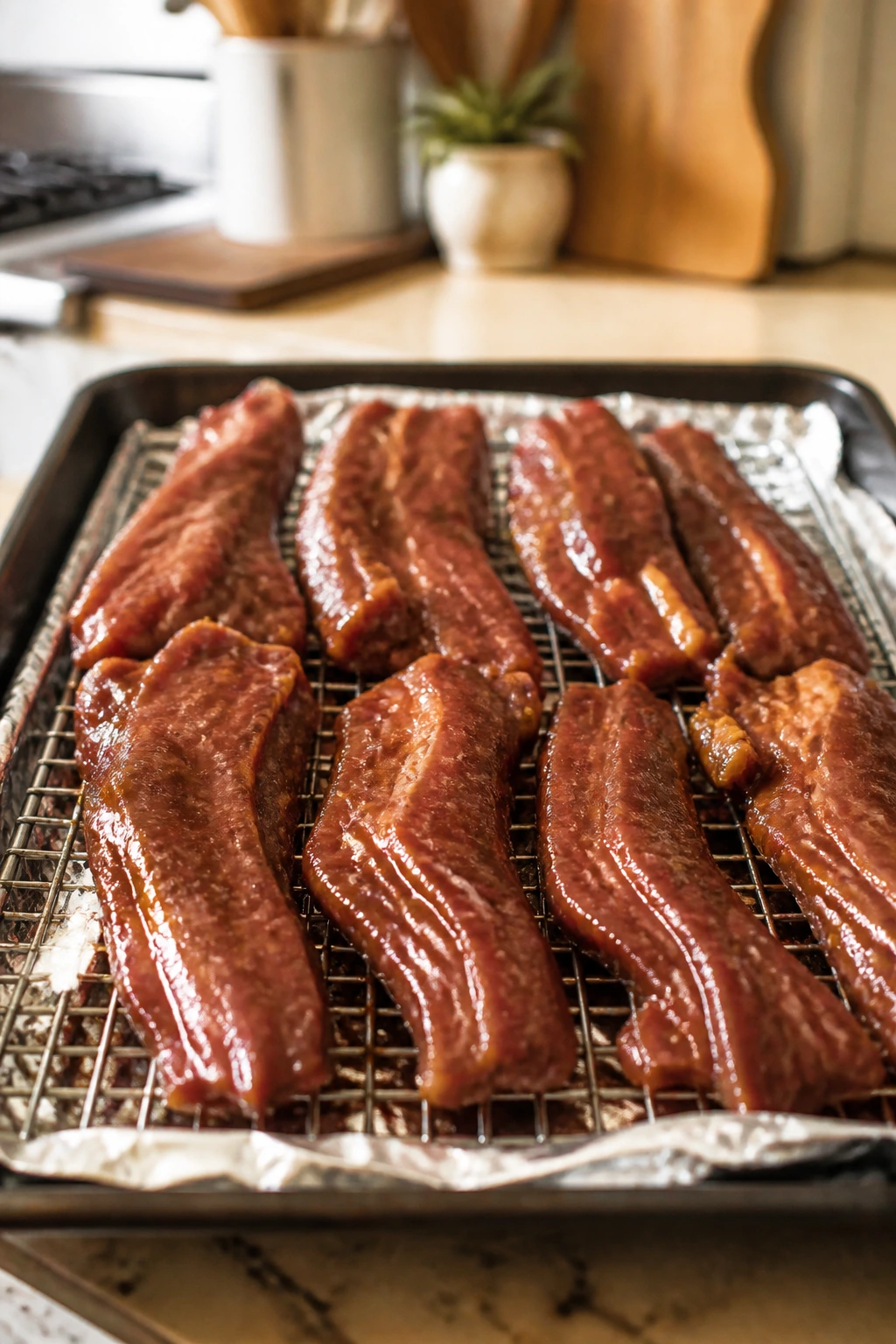
About 30 minutes before cooking, remove the pork from the refrigerator so it loses its chill slightly. Preheat the oven to 425°F (220°C) and position a rack in the center of the oven. Line a rimmed sheet pan with foil and place a wire rack on top. Lightly oil the rack.
Make the Glaze
- In a small saucepan, combine the honey, hoisin sauce, soy sauce, Shaoxing wine or water, rice vinegar, and five-spice powder. Set over medium-low heat and whisk until the mixture bubbles gently and looks smooth, about 2 to 3 minutes. Add the tablespoon of water if it looks too thick to brush.
Roast the Pork
-
Lift the pork from the marinade and let the excess drip off. Arrange the strips on the rack with space between them. Do not wipe the marinade off completely — you want flavor left on the surface. Roast for 15 minutes, until the edges start to darken and the kitchen smells toasted and sweet.
-
Reduce the oven temperature to 375°F (190°C). Brush the pork with a generous layer of glaze, then roast for 8 minutes. Brush again, rotate the pan, and roast for another 8 to 10 minutes, until the pork reaches 155°F to 160°F in the thickest part and the glaze looks lacquered, bubbling, and slightly sticky.
-
If you want more edge crispness, switch the oven to broil for 1 to 2 minutes. Keep the pan on the upper-middle rack and stand there. Sugar burns fast, and honey burns even faster. You want dark, blistered spots, not black patches.
Rest and Slice
-
Move the pork to a cutting board or clean rack and rest for 10 minutes. This lets the juices settle back into the meat and keeps the slices from flooding the board.
-
Slice the pork against the grain into 1/4-inch pieces. Spoon any pan juices over the top, then finish with scallions and sesame seeds. Serve hot.
How to Serve It Without Overthinking It
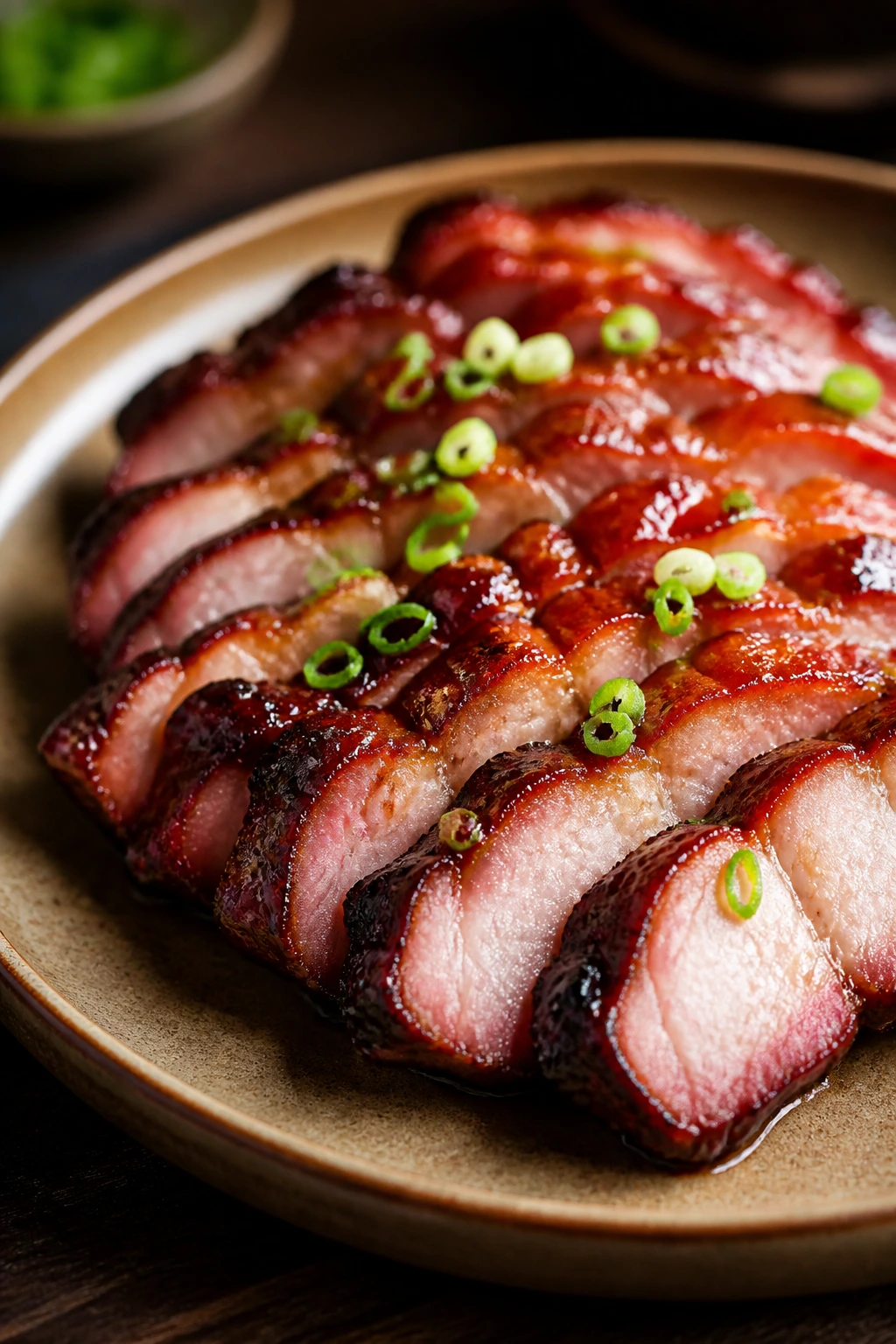
Presentation: Pile the sliced pork slightly off-center on a warm platter, then spoon the pan juices over the top so the glaze catches the light and clings to the cut edges. A scatter of scallions makes the whole thing look less heavy, which helps when the pork is as glossy as this.
Accompaniments: Steamed jasmine rice is the safest and, frankly, one of the best choices because it catches the sauce without competing with it. If you want a fuller meal, add garlicky bok choy, quick cucumber salad, or plain stir-fried greens. Soft milk bread buns, steamed mantou, or thin noodles are also fair game if you want a more casual spread.
Portions: Plan on 6 to 8 ounces of raw pork per person if this is the main event with rice and vegetables. If you’re serving it as part of a bigger table of dishes, 4 ounces per person goes farther than you’d think.
Beverage Pairing: A cold lager is the easy answer because the bitterness cuts through the sweetness. Unsweetened jasmine tea works just as well if you want something softer, and it keeps the plate from feeling too rich.
Extra Moves That Improve the Batch
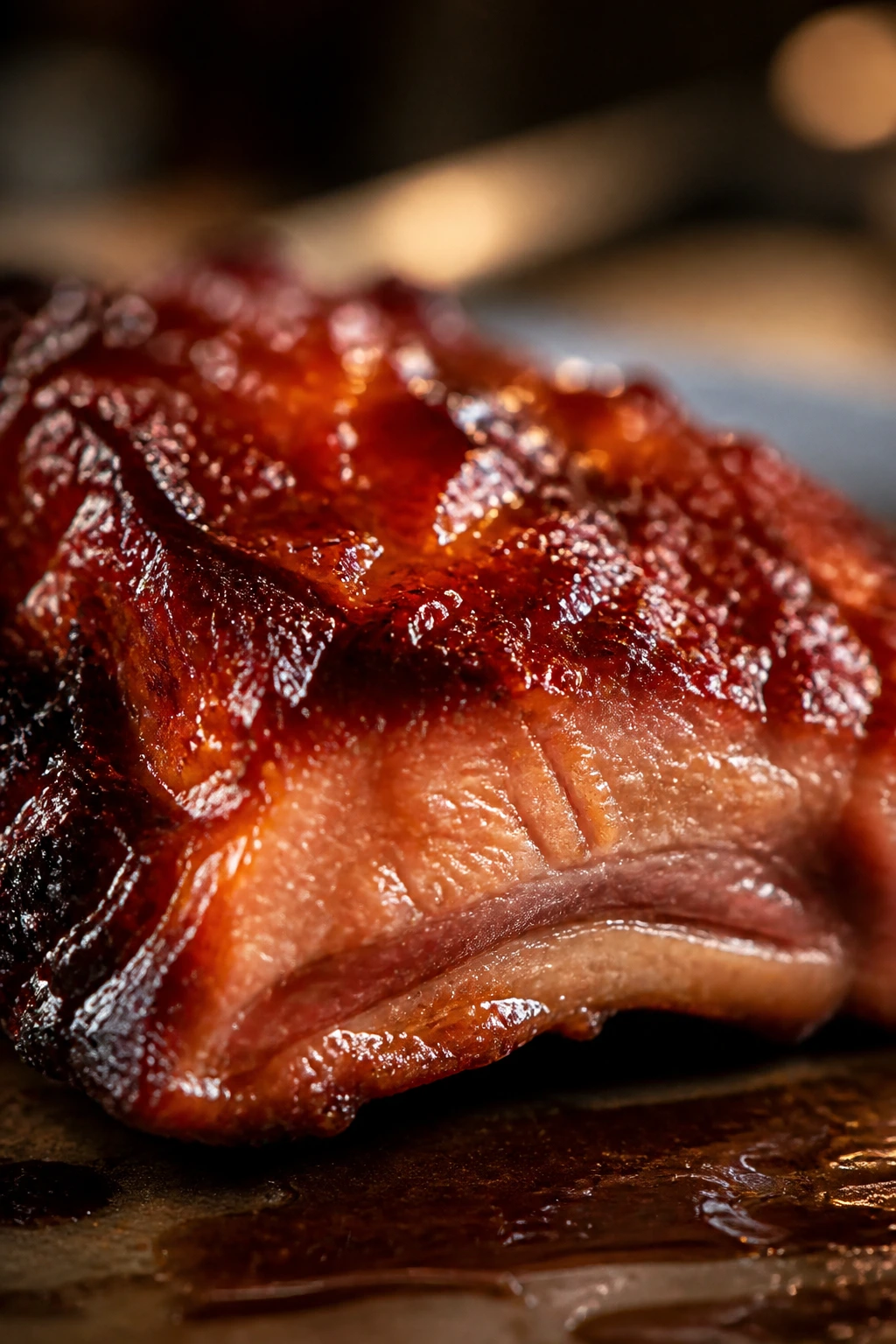
Flavor Enhancement: Brush the pork with one final thin coat of glaze as soon as it comes out of the oven, then rest it. That tiny extra layer softens into shine while the pork settles, and the slices look much better on the plate.
Customization: If you like a more savory finish, add an extra teaspoon of soy sauce to the glaze and pull back the honey by one tablespoon. If you want the sweet-shop version, leave the honey where it is and add a pinch more five-spice right at the end.
Serving Suggestions: I like this with something cold and plain on the side — cucumber, a lightly dressed cabbage slaw, or a simple salad with rice vinegar. The pork has enough personality already. It doesn’t need a loud supporting cast.
Make-It-Yours: For a gluten-free version, use tamari in place of soy sauce and make sure your hoisin and oyster sauce are labeled gluten-free. For a lighter plate, serve the pork over shredded cabbage instead of rice and keep the glaze a little thinner so the slices don’t feel heavy.
The Mistakes That Ruin the Edges
-
Skipping the marinade window: If the pork goes into the oven after only 30 minutes of soaking, the flavor sits mostly on the surface and tastes thin. The fix is simple: give it at least 8 hours, and overnight is better.
-
Glazing too early: Honey and hoisin burn when they sit under high heat for too long. If you brush them on at the start, the surface turns dark before the inside finishes, and the crust tastes bitter.
-
Using a flat baking sheet with no rack: Pork lying in its own juices will steam at the bottom, and the underside stays soft. A rack keeps air moving and lets the fat drip away.
-
Crowding the pan: If the strips sit shoulder to shoulder, they’ll steam each other and the glaze won’t tighten properly. Leave visible space between pieces. It matters.
-
Slicing too soon: The pork will leak all over the board and lose some of the sticky glaze if you rush the rest. Ten minutes feels boring. It’s still worth doing.
-
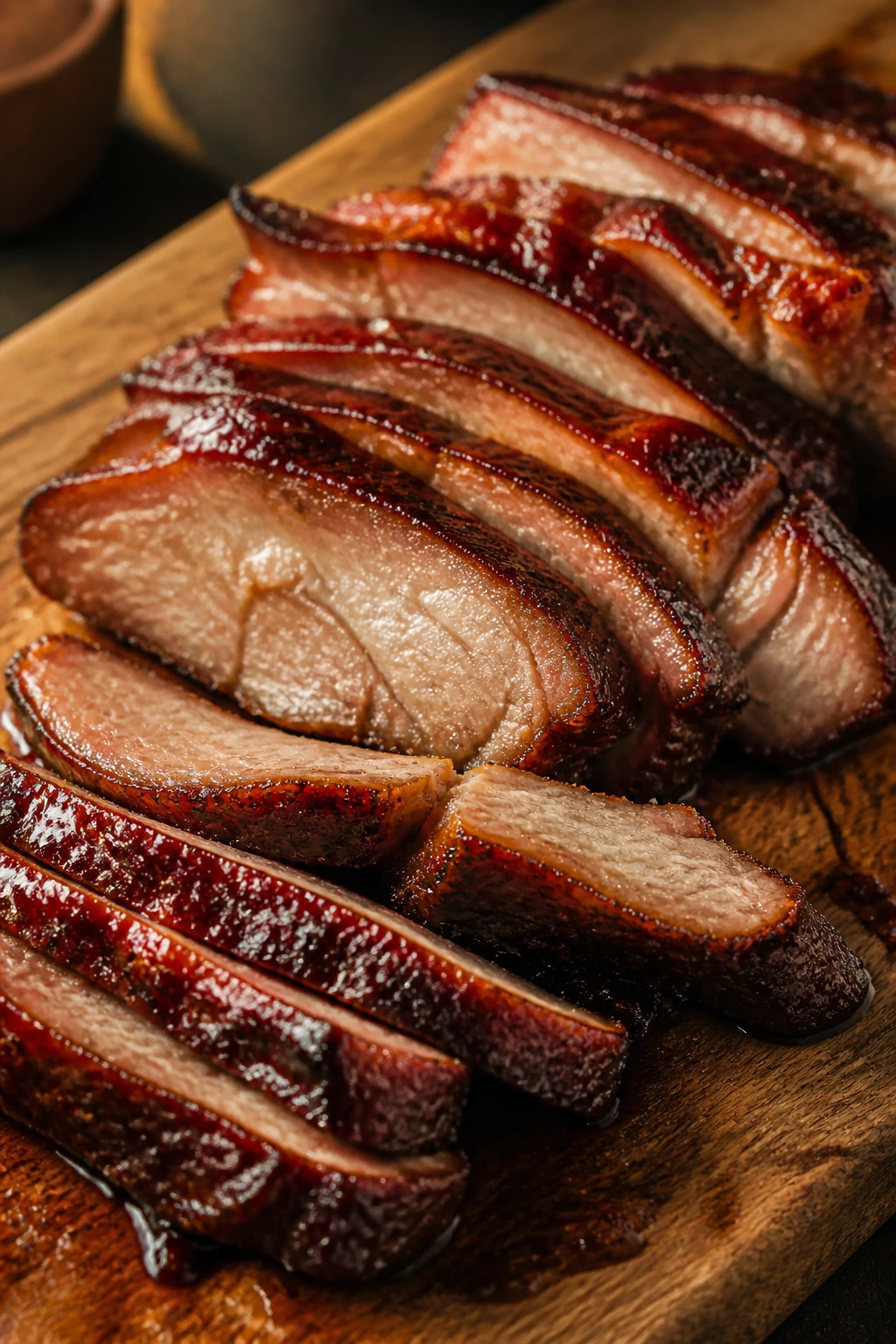
Cutting with the grain: Shoulder can turn chewy if you slice it the wrong way. Look for the long lines in the meat and cut across them for tender bites.
Variations That Still Taste Like Char Siu
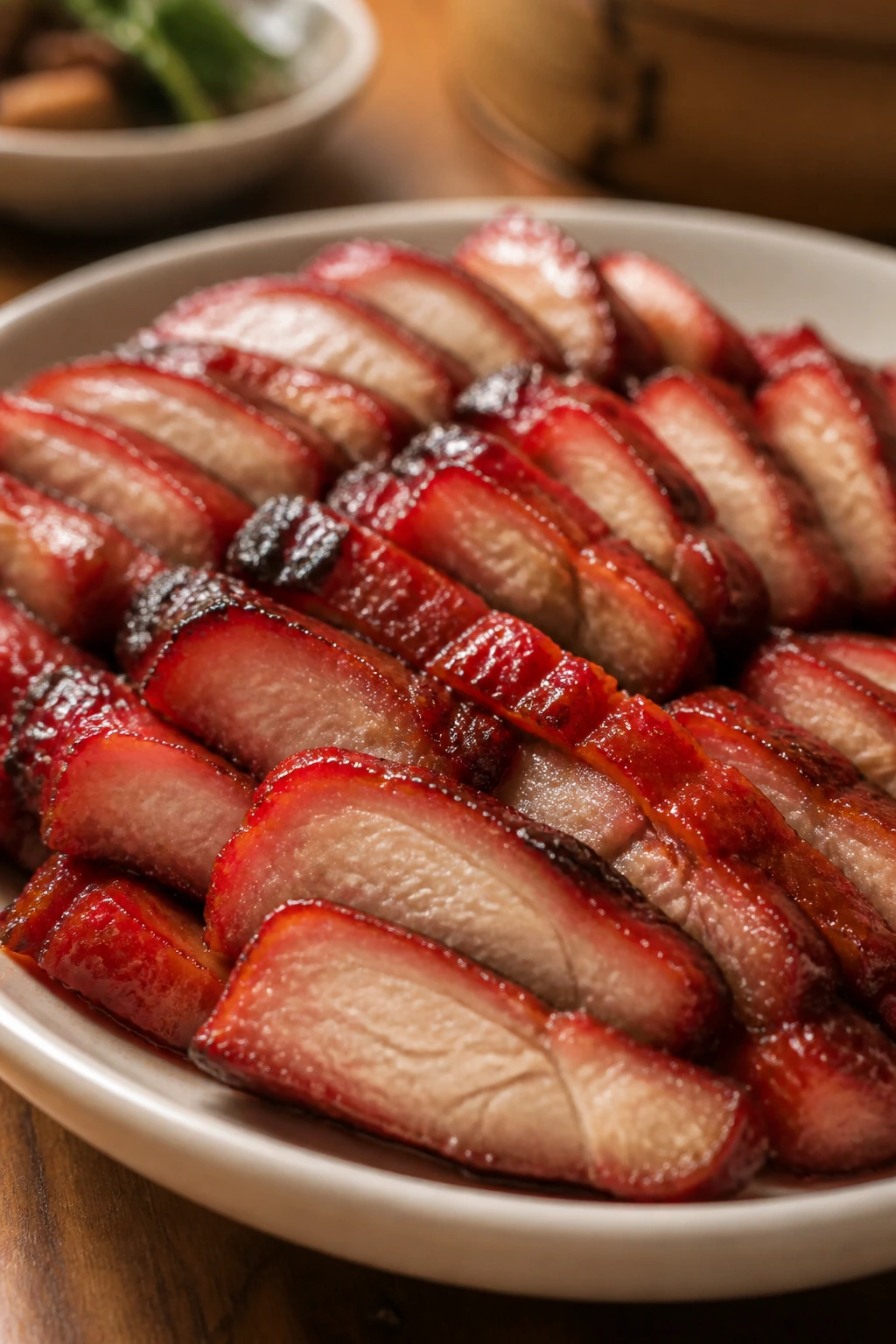
Bakery-Window Red Version: If you want the classic red tint, whisk a few drops of red food coloring or a little red fermented bean curd liquid into the glaze. The taste changes very little; the look changes a lot. I treat this as optional, not required.
Pork Belly Rich Cut: Swap the shoulder for 2 pounds skinless pork belly cut into thick strips. The cooking time may shorten slightly because the fat renders faster, and the result is richer, softer, and more decadent. I save this version for when I want the plate to feel more like an occasion.
Less-Sweet Cantonese Style: Reduce the honey in both the marinade and glaze by about one-third and add an extra teaspoon of soy sauce plus a splash more rice vinegar. The result tastes more savory and less candy-like, which I prefer when the pork is going onto noodles.
Air Fryer Edge Burner: Use smaller pork strips and cook them at 375°F in a preheated air fryer, brushing with glaze only during the last few minutes. You won’t get the same broad lacquer as the oven version, but you do get crisp corners fast. Watch closely; air fryers can darken sugar in a hurry.
Spicy Ginger Finish: Add 1 teaspoon of chili crisp to the glaze or a few thin slices of fresh red chile on top at serving. The heat doesn’t change the base flavor much, but it keeps the sweetness from running away with the whole dish.
Storing, Reheating, and Planning Ahead
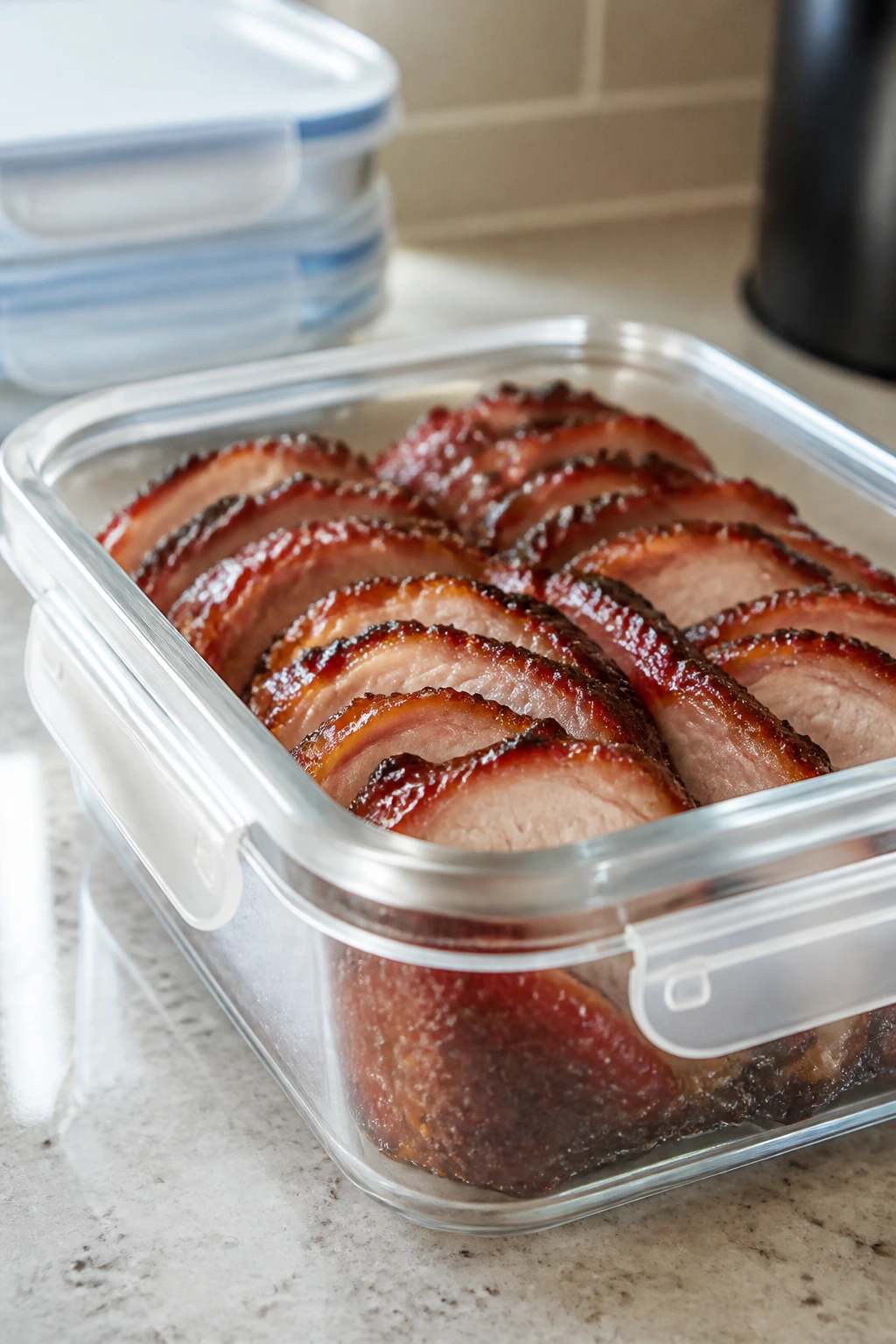
Cooked pork keeps well in an airtight container in the refrigerator for 3 to 4 days. If you have pan juices, spoon them over the slices before sealing the container; that little bit of moisture keeps the meat from drying out in the fridge. For the freezer, wrap slices tightly and freeze for up to 2 months. I prefer to freeze them in flat layers so they thaw evenly instead of clumping into one stubborn brick.
For reheating, the oven gives the best texture. Arrange the pork in a baking dish, drizzle with a spoonful of water or pan juices, cover loosely with foil, and warm at 300°F (150°C) for 8 to 12 minutes until heated through. If you want to bring back some edge crispness, uncover for the last 2 minutes or give the slices a quick blast under the broiler.
A skillet works well for smaller portions. Set it over medium-low heat, add a teaspoon of water or sauce, and warm the slices just until the glaze loosens and the pork stops looking dull. The microwave is the fastest path, but use it only when you must, and cover the meat with a damp paper towel so the edges don’t dry into little leather ribbons.
For make-ahead planning, the marinade can be mixed 1 day ahead and held in the fridge. You can also marinate the pork overnight, then cook it the next day with the glaze made fresh right before roasting. The finished pork tastes good the day it’s made, but it also makes a solid second meal once it has been chilled and re-warmed properly.
Questions People Ask About Crispy Chinese BBQ Pork
Can I use pork loin instead of pork shoulder?
Yes, but you’ll need to shorten the cooking time and watch the temperature more closely. Pork loin is leaner, so it dries faster under a broiler; pull it as soon as it reaches about 145°F to 150°F and give it a shorter glaze finish.
Do I need Shaoxing wine?
No. Dry sherry is the best easy substitute, and even water with a small splash of rice vinegar will keep the marinade moving in the right direction. Shaoxing gives a deeper, rounder flavor, but the recipe still works without it.
Is the red color necessary?
Not at all. The red look is mostly cosmetic, and plenty of good char siu doesn’t lean hard into that color. A dark mahogany glaze with browned edges tastes every bit as good.
How do I keep the glaze from burning?
Brush it on late, not early, and use the broiler for only a minute or two at the end. If your oven runs hot, move the rack down one notch and rely more on the roast-and-brush method than on the broiler.
Can I make this in an air fryer?
You can, especially if you cut the pork into smaller strips. The air fryer crisps the edges quickly, but it also pushes sugar toward burn faster than a conventional oven, so the glaze needs to go on near the end and you need to watch the basket closely.
Why is my pork chewy instead of tender?
Usually it’s one of three things: the cut was too lean, the slices were too thick, or the pork was cut with the grain. Shoulder helps, thin slices help, and cutting across the grain matters more than people think.
Can I prep the pork the night before?
Yes, and you should if you have the time. Overnight marinating gives the seasoning a chance to get into the meat instead of sitting on the surface, and it makes the finished pork taste deeper without any extra work.
One More Slice
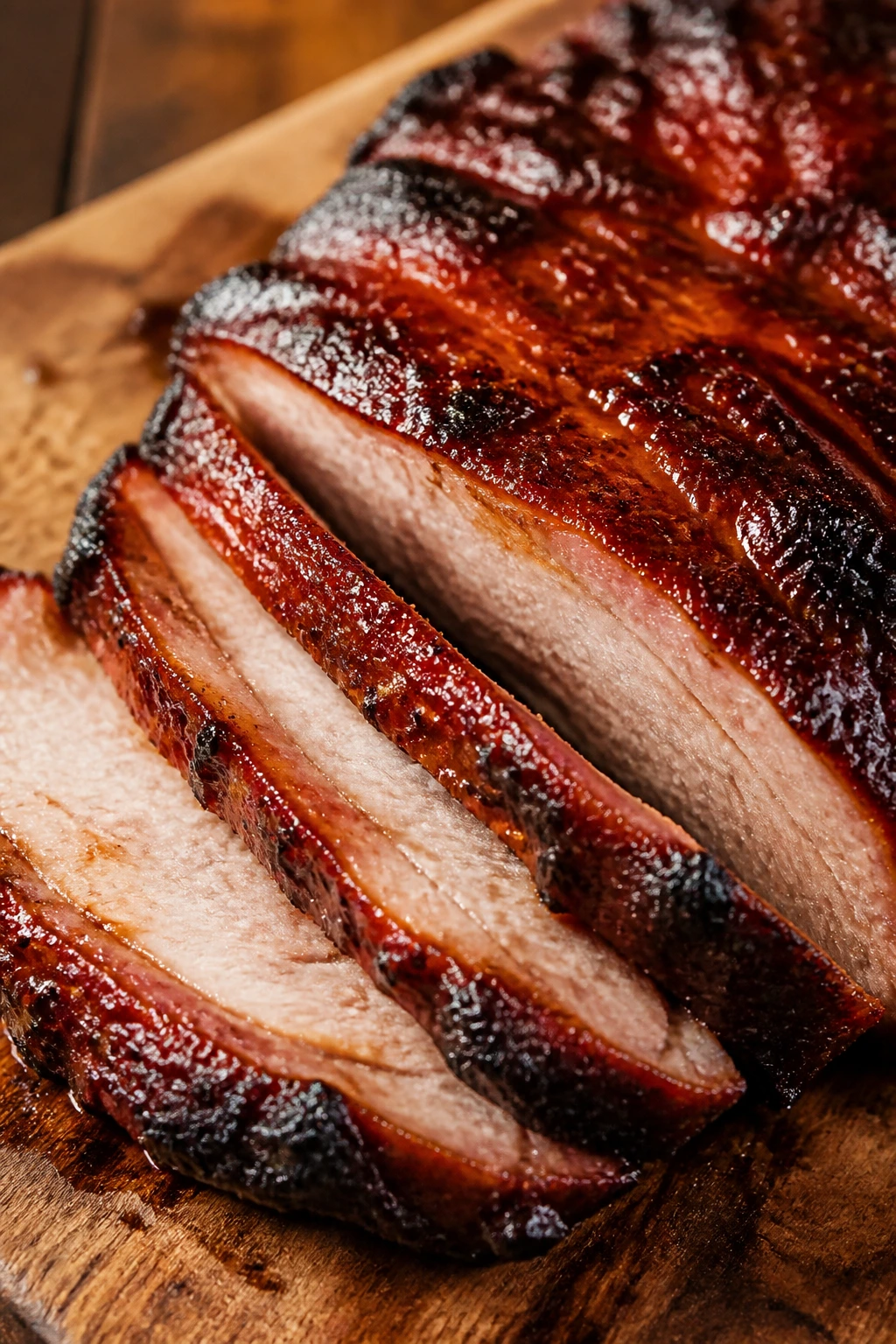
The charm of crispy Chinese BBQ pork is that it looks fancy only until you make it once. After that, it starts to feel almost sensible: a good cut of pork, a strong marinade, a glaze that knows when to stay out of the way, and a blast of heat right at the end. That is the whole trick. Not a hard trick. Just a good one.
What you get in return is a roast that can hold a place at the center of the table, slip into rice bowls the next day, or disappear off the cutting board before it even reaches a serving platter. And if the last few edges come out a little darker than planned, I would not worry. Those are usually the first pieces gone.
Crispy Chinese BBQ Pork Better than Takeout — Recipe Card
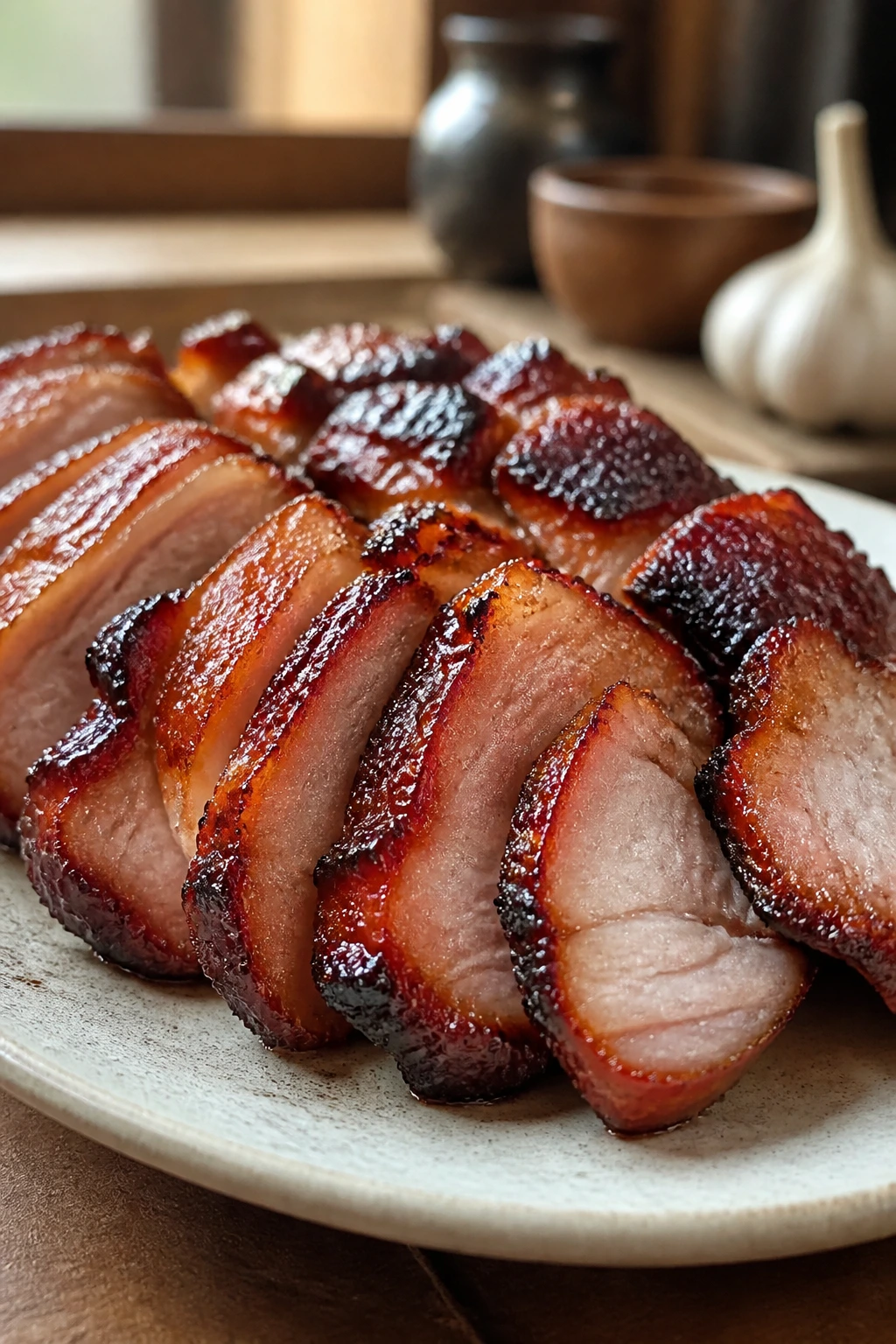
Recipe Name: Crispy Chinese BBQ Pork Better than Takeout
Description: Tender pork shoulder is marinated in soy, hoisin, oyster sauce, garlic, ginger, and five-spice, then roasted and glazed until the edges turn sticky, caramelized, and crisp. It’s the kind of char siu that disappears fast.
Prep Time: 20 minutes
Cook Time: 35 minutes
Total Time: 55 minutes active, plus 8 to 24 hours marinating
Course: Main Course, Dinner
Cuisine: Chinese-Inspired, Cantonese-Inspired
Servings: 4 to 6
Calories: About 430 kcal per serving
Ingredients
For the Pork and Marinade:
- 2 lb boneless pork shoulder, trimmed of thick surface fat and cut into 4 long strips
- 3 tablespoons soy sauce
- 2 tablespoons hoisin sauce
- 1 tablespoon oyster sauce
- 2 tablespoons Shaoxing wine or dry sherry
- 1 tablespoon honey
- 1 tablespoon light brown sugar
- 2 teaspoons Chinese five-spice powder
- 3 cloves garlic, grated or minced finely
- 1 teaspoon fresh ginger, grated
- 1 teaspoon toasted sesame oil
- 1 teaspoon kosher salt
- 1/2 teaspoon white pepper
- 1 tablespoon neutral oil
For the Finishing Glaze:
- 1/4 cup honey
- 2 tablespoons hoisin sauce
- 1 tablespoon soy sauce
- 1 tablespoon Shaoxing wine or water
- 1 teaspoon rice vinegar
- 1/2 teaspoon Chinese five-spice powder
- 1 tablespoon water, as needed to loosen
For Serving:
- Thinly sliced scallions
- Toasted sesame seeds
- Steamed jasmine rice, optional
- Quick cucumber slices or greens, optional
Instructions
-
Whisk the soy sauce, hoisin, oyster sauce, Shaoxing wine, honey, brown sugar, five-spice powder, garlic, ginger, sesame oil, salt, white pepper, and neutral oil into a smooth marinade.
-
Coat the pork shoulder strips fully, cover, and refrigerate for 8 to 24 hours.
-
Remove the pork from the fridge about 30 minutes before cooking. Preheat the oven to 425°F (220°C). Line a rimmed sheet pan with foil and set a wire rack on top.
-
Simmer the honey, hoisin, soy sauce, Shaoxing wine or water, rice vinegar, five-spice powder, and water in a small saucepan for 2 to 3 minutes until glossy and brushable.
-
Lift the pork from the marinade and place it on the rack with space between pieces. Roast for 15 minutes.
-
Reduce the oven to 375°F (190°C). Brush the pork with glaze, roast for 8 minutes, brush again, rotate the pan, and roast another 8 to 10 minutes until the thickest part reaches 155°F to 160°F.
-
Broil for 1 to 2 minutes if you want darker, crispier edges. Watch constantly.
-
Rest the pork for 10 minutes, then slice against the grain into 1/4-inch pieces. Spoon pan juices over the top and finish with scallions and sesame seeds.
Notes: Marinating overnight gives the best flavor; don’t brush raw marinade on the pork after cooking unless it has been boiled first. For a more classic red look, you can add a little red food coloring or red fermented bean curd liquid to the glaze, but it’s optional.