



Sweet and sour Thai tea should hit in layers: cold tea first, then a little caramel, then a tart edge that wakes up your mouth, and finally that smooth finish that makes you want another sip before you’ve even swallowed the first. Too many versions miss the point. They taste like sugar with orange dye, or they’re so watered down by the ice that the tea part barely shows up.
The version I keep coming back to uses strong Thai tea, tamarind for the sour note, brown sugar for depth, and an optional swirl of condensed milk if you want that familiar creamy look. The trick is not throwing everything together and hoping it behaves. It’s building each layer on purpose, then giving the tea enough strength to survive the ice.
Restaurant Thai tea often gets brewed in huge batches, sits around too long, and lands in the glass already tired. At home, you can make the concentrate bold enough to stand up to dilution, and you can decide whether you want the drink to lean creamy, bright, or somewhere in the middle. That control changes the whole thing.
Why Homemade Thai Tea Tastes Fresher Than the Restaurant Pour
The first reason is simple: strength. A homemade Thai tea concentrate can be brewed so the tea tastes almost too bold on its own, which is exactly what you want once the ice gets involved. If you brew it weak, the drink turns thin the second the cubes start melting.
The second reason is balance. Tamarind gives this drink a sour note that feels rounder than lemon and less sharp than vinegar. It doesn’t punch the tea in the face. It trims the sweetness so the glass tastes like a drink, not a melted dessert.
I also like that the sour part lives in the syrup, not in the tea pot. That keeps the base clean and lets you control the finish. One glass can lean sweeter. The next can be a little more tart. No drama.
And then there’s the part people forget: temperature matters. Hot tea over ice tastes flatter than it should, and it mutes spice fast. Brew it strong, cool it enough to protect the ice, and the whole drink keeps its shape.
Why You’ll Want This Recipe on Repeat
-
Brighter balance: Tamarind cuts through the sugar so the tea tastes like tea, not syrup with a tan.
-
Strong tea backbone: Brewing the tea concentrate in 4 cups of water keeps the flavor bold enough to survive a full glass of ice.
-
Flexible finish: You can stop at a clean iced tea, or add a small swirl of condensed milk for a creamier, café-style look.
-
Make-ahead friendly: The tea and syrup keep separately, which means the final pour comes together fast when you actually want to drink it.
-
Low gear count: A saucepan, a strainer, and a pitcher handle the whole job. No strange equipment. No special skills.
-
Better ice control: You decide how much dilution happens, which sounds small until you’ve had one too many watery Thai teas.
The Ingredient List That Gives the Drink Its Backbone
The tea should look darker than you think it needs to. That’s the first clue you’re on the right track.
Yield: 4 servings
Prep Time: 10 minutes
Cook Time: 15 minutes
Total Time: 25 minutes active + 20 minutes cooling
Difficulty: Beginner — the steps are straightforward, but the tea tastes best when you pay attention to steeping time and cooling.
Chill/Rest Time: 20 minutes, if you want the cleanest, coldest pour
Best Served: Over ice, right after the tea and syrup have cooled enough to keep the glass from fogging up
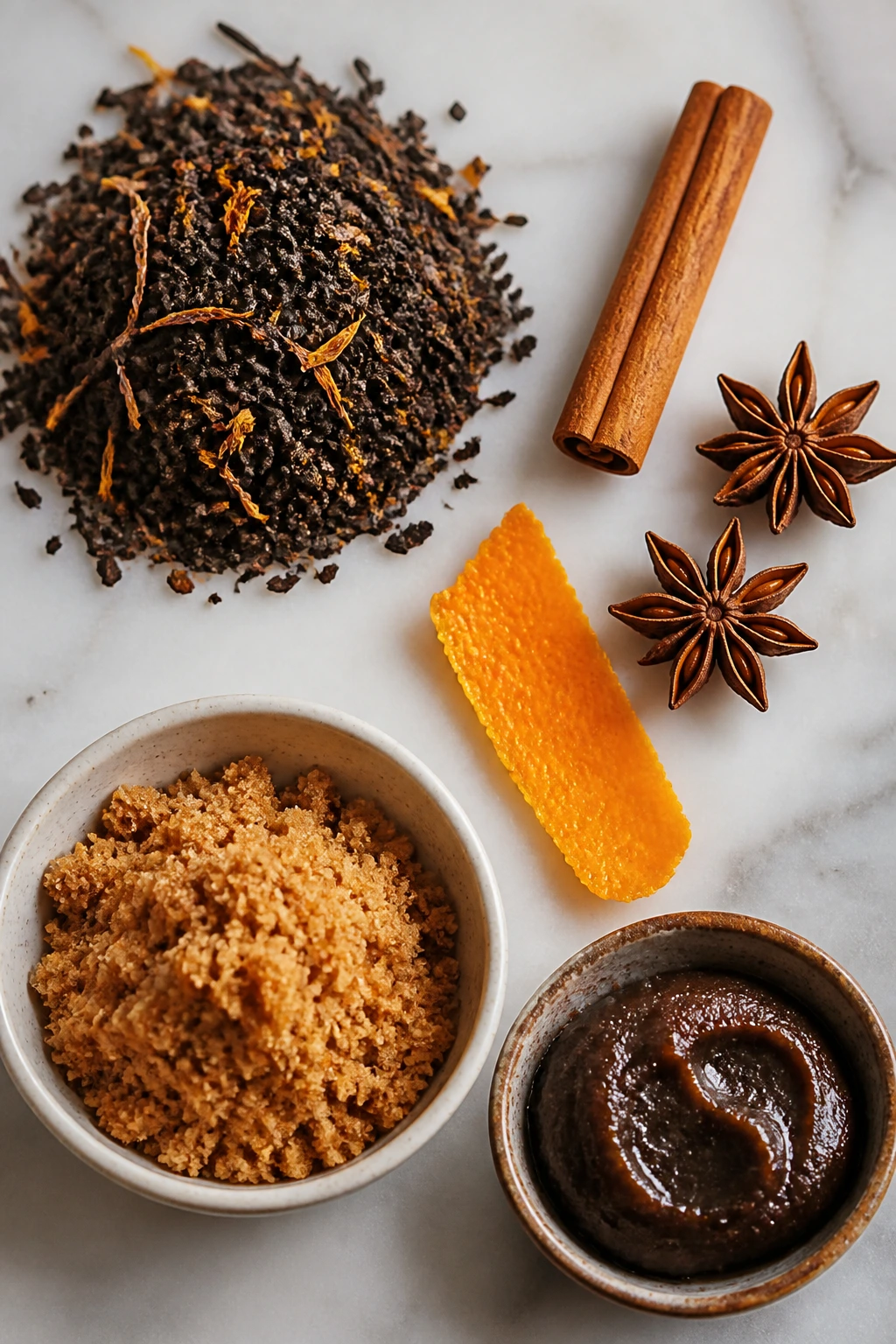
For the Tea Concentrate:
- 4 cups filtered water
- 6 tablespoons Thai tea mix or 5 tablespoons loose black tea blend (if your mix is sweetened, reduce the brown sugar in the syrup by 2 tablespoons)
- 1 cinnamon stick
- 2 star anise pods
- 1 strip orange peel, about 2 inches long, with as little white pith as possible
- 1/4 teaspoon fine sea salt
For the Sweet-Sour Syrup:
- 1/2 cup packed light brown sugar
- 3 tablespoons tamarind paste
- 1/2 cup hot water
- 1 teaspoon vanilla extract
For Serving:
- 4 cups ice
- 4 tablespoons sweetened condensed milk, optional
- Lime wedges or mint sprigs, optional
Why Each Ingredient Has a Job in the Glass
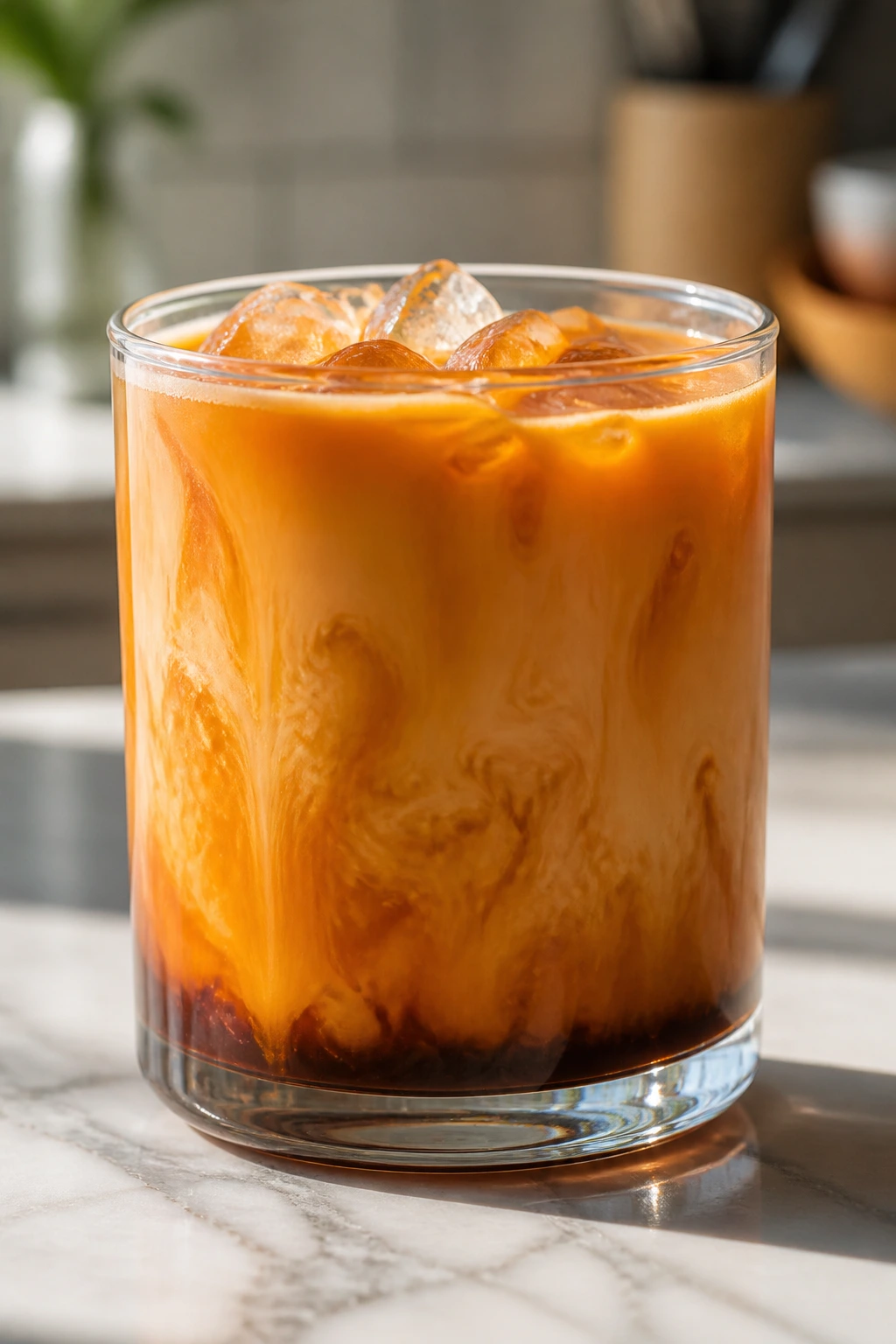
Tea Concentrate
What to use: 6 tablespoons Thai tea mix or 5 tablespoons loose black tea blend, 4 cups filtered water, 1 cinnamon stick, 2 star anise pods, 1 strip orange peel, and 1/4 teaspoon fine sea salt.
Preparation: Bring the water to a bare simmer, then steep the tea and spices for 5 to 6 minutes. That timing matters. It’s long enough to pull out color and spice, short enough to avoid the dusty, bitter edge that can show up when tea sits too long.
Substitutions: If you can’t find Thai tea mix, use strong Assam or Ceylon tea. You’ll lose the orange color and some of the perfume, but the drink still lands in the right place. Orange peel and a tiny splash of vanilla help bridge the gap.
Tips: Strain the tea well. Thai tea blends can leave fine grit, and that grit is the kind of thing that shows up halfway through the glass when the ice has already started to melt.
Sweet-Sour Syrup
What to use: 1/2 cup packed light brown sugar, 3 tablespoons tamarind paste, 1/2 cup hot water, and 1 teaspoon vanilla extract.
Preparation: Whisk the sugar and tamarind with the hot water over low heat until the syrup turns smooth and glossy. You’re not making candy here. You want a pourable syrup that disappears into the tea instead of sitting at the bottom of the glass.
Substitutions: Palm sugar gives the syrup a deeper, more rounded caramel note. If tamarind is hard to find, pomegranate molasses is the closest pantry substitute I’d actually recommend, though it tastes a little fruitier and less tropical.
Tips: Tamarind pastes vary a lot. Some are tart and concentrated; some are thinner and a little salty. Taste before you commit to the full amount, because a syrup that tastes fine warm can read harsh once it’s chilled.
Creamy Finish
What to use: 4 tablespoons sweetened condensed milk, optional, or a coconut-based finish if you want to keep the drink dairy-free.
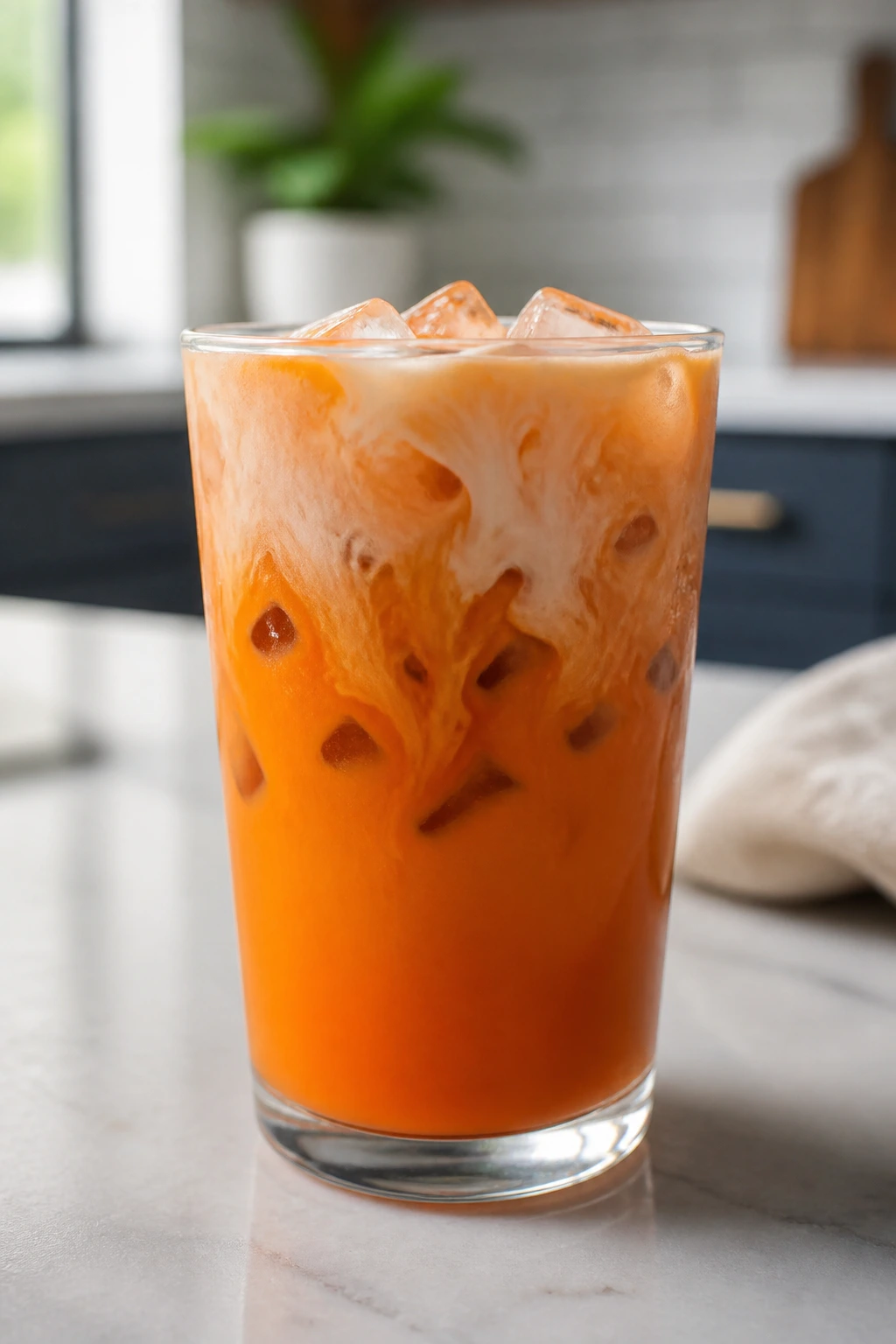
Preparation: Keep the milk cold and add it at the very end, after the tea has gone over the ice. If you want those pale ribbons to hang in the glass for a moment, pour slowly.
Substitutions: Coconut cream works if you want a dairy-free version that still feels lush. Oat creamer also works, though it tastes milder and doesn’t give the same old-school Thai tea sweetness.
Tips: Don’t force the milk into hot tea. It dissolves faster than you want, and the drink loses the layered look that makes the first sip fun.
Ice and Garnish
What to use: 4 cups ice, plus lime wedges or mint sprigs if you want a little lift at the rim.
Preparation: Fill the glasses with ice before you pour the tea. Tall glasses are better than short ones here because they keep the syrup, tea, and optional milk in clearer layers before the stir.
Substitutions: Large cubes are better than crushed ice. Tea ice cubes are even better if you’re making the drink for more than one round and don’t want the last glass to taste weak.
Tips: Chill the glasses if you have space. A cold glass buys you a few extra minutes before the ice starts giving up its flavor.
The Tools That Make the Brew Easy
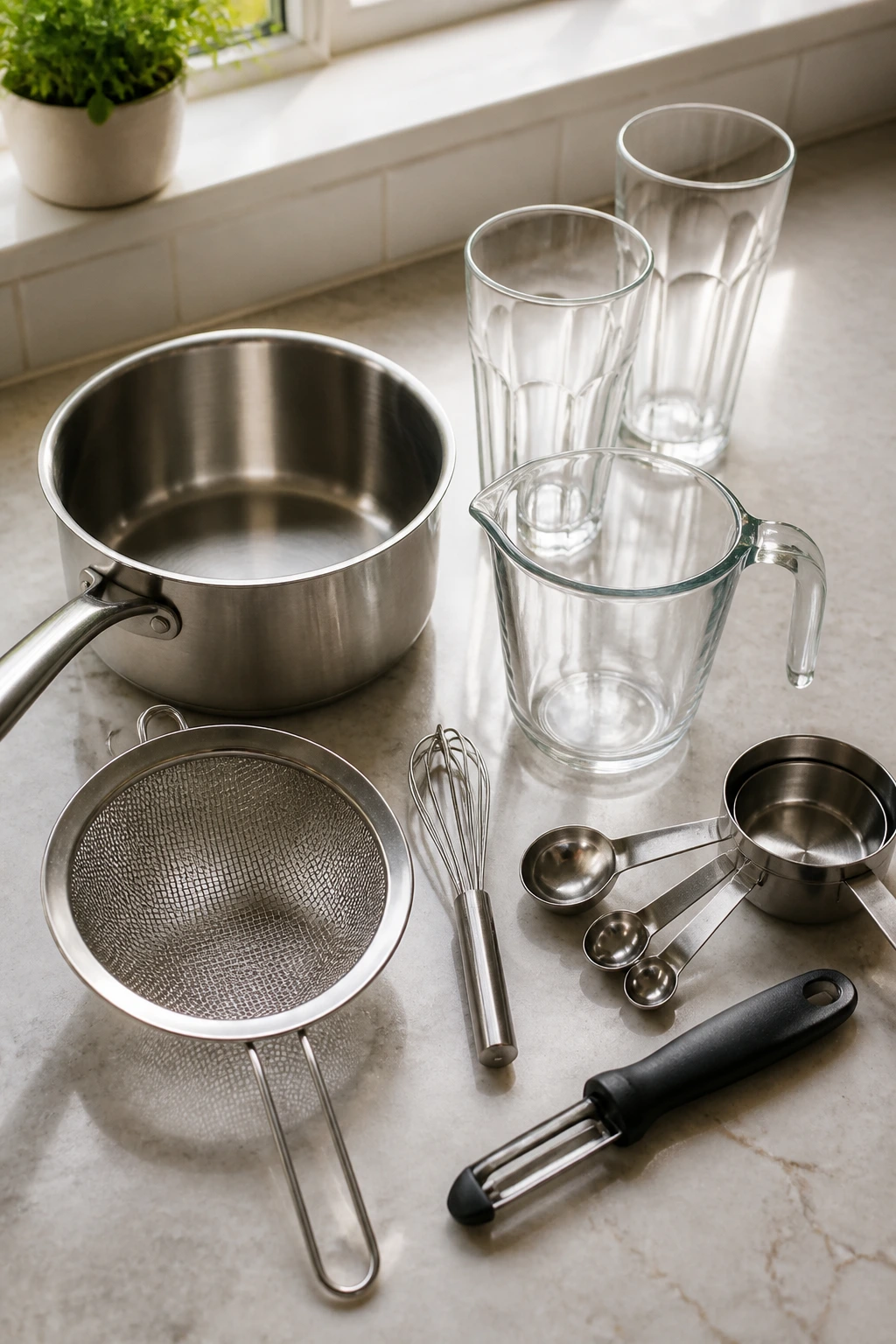
You do not need restaurant gear for this. You need a few sensible tools and a little attention.
-
Medium saucepan: Big enough to hold the tea base without boiling over when it simmers.
-
Fine-mesh strainer: This keeps the tea clear and catches the tiny tea bits that can turn the drink cloudy.
-
Heatproof pitcher or large measuring cup: Useful for cooling the tea concentrate before you pour it.
-
Small whisk: Handy for dissolving the tamarind paste and brown sugar without leaving sticky lumps behind.
-
Tall serving glasses: A 10- to 12-ounce glass gives the drink room for ice and a clean-looking finish.
-
Measuring spoons and cups: Don’t eyeball the tamarind or the tea unless you make this constantly. Small shifts change the balance fast.
-
Vegetable peeler or microplane, optional: If you want a cleaner strip of orange peel or a tiny bit of zest for garnish, this saves you from hacking at the fruit with a knife.
How to Brew Sweet and Sour Thai Tea, Step by Step
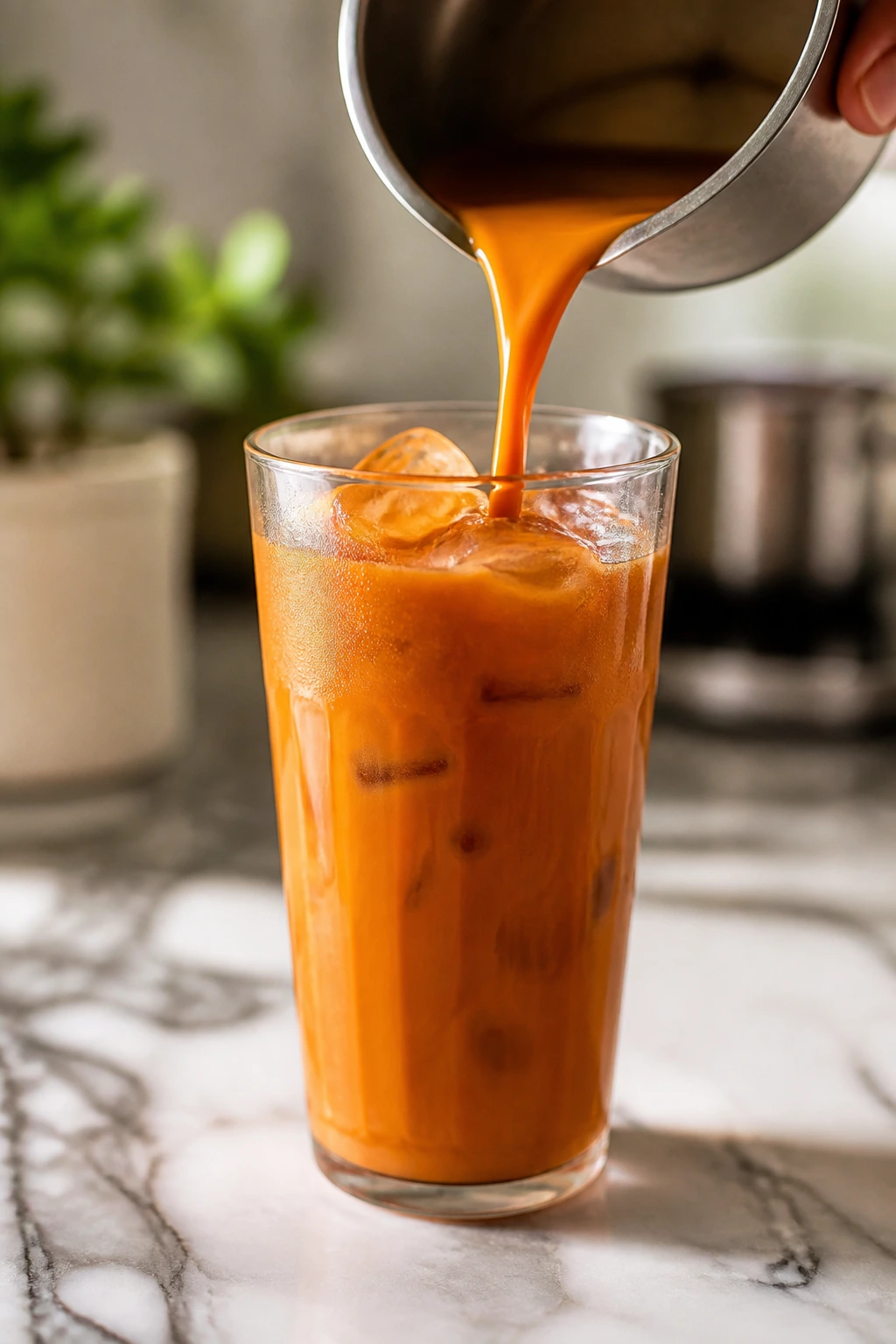
Brew the Tea Concentrate
-
Bring 4 cups of filtered water to a bare simmer in a medium saucepan over medium heat. Aim for just-off-the-boil water, around 190 to 200°F if you’re using a thermometer. Do not let it boil hard; aggressive boiling makes the tea taste rough.
-
Add the Thai tea mix, cinnamon stick, star anise, orange peel, and salt. Stir once to wet the tea, then turn off the heat. Steep for 5 to 6 minutes until the liquid turns deep amber and smells like tea with a spice shelf behind it.
-
Strain the tea into a heatproof pitcher. Press the solids gently with the back of a spoon if needed, but do not mash the tea leaves or spices. That’s how bitterness sneaks in.
Make the Sweet-Sour Syrup
-
Return the empty saucepan to low heat and add the brown sugar, tamarind paste, hot water, and vanilla. Whisk for 1 to 2 minutes until the sugar dissolves and the syrup looks smooth and glossy.
-
Taste the syrup while it’s still warm. If you want a sharper sour edge, add a little more tamarind paste; if it feels too dense, stir in another tablespoon of hot water. The syrup should coat a spoon lightly, not cling like caramel.
Cool and Assemble
-
Let both the tea and syrup cool for 10 to 15 minutes. If you have 20 minutes to spare, chill them separately in the refrigerator. Hot tea melts the ice too quickly and flattens the first few sips.
-
Fill four tall glasses with ice and add 2 tablespoons of syrup to each glass. If you’re making a stronger, less sweet version, start with 1 tablespoon and taste before adding more.
-
Pour the tea over the ice, leaving a little room at the top. Stir once so the syrup disappears into the tea and the color evens out.
-
If you’re using sweetened condensed milk, drizzle about 1 tablespoon over each glass and stir lightly, or leave it streaked on top if you want the layered look. Garnish with mint or a lime wedge and serve immediately.
How to Serve It Over Ice Without Watering It Down
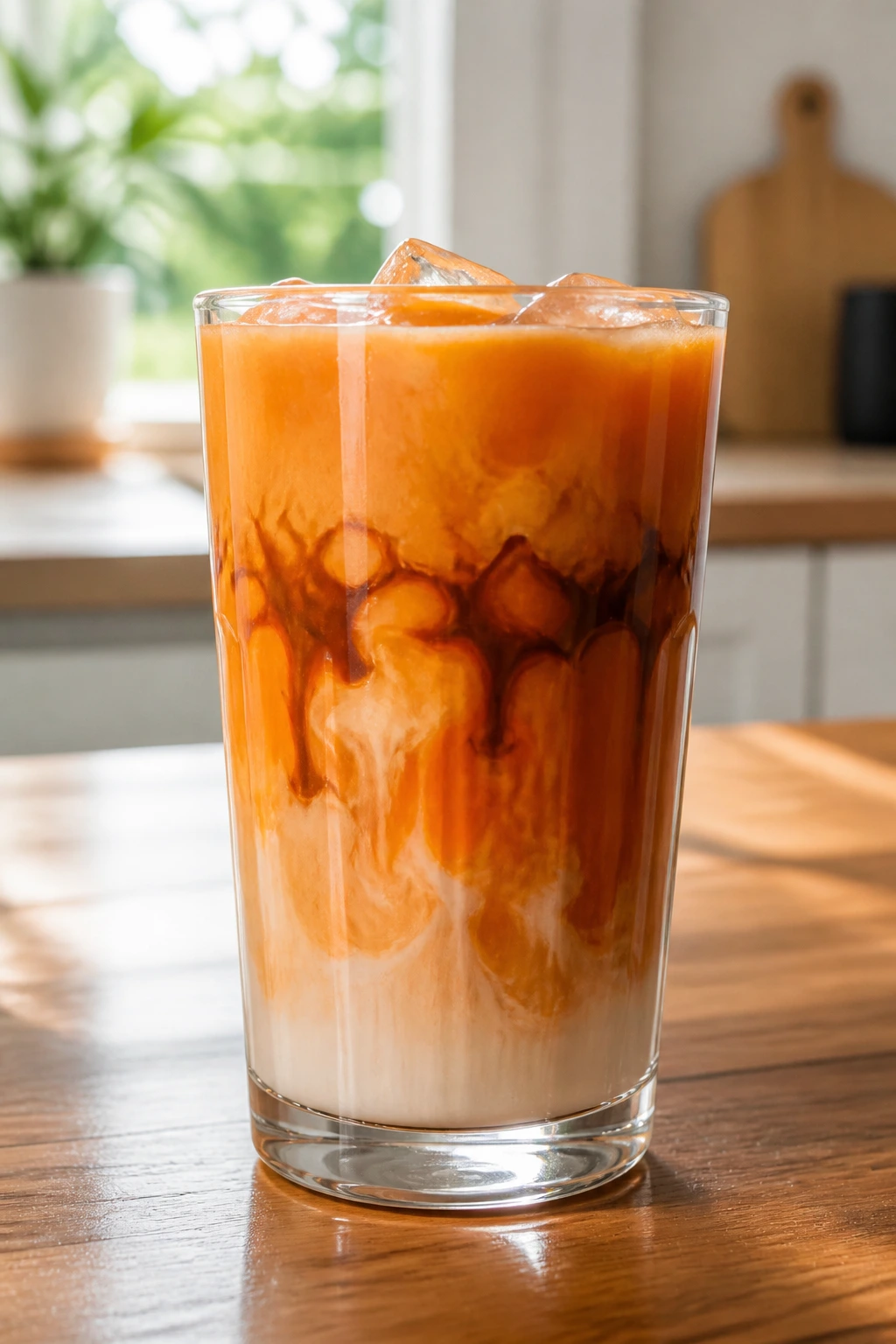
Presentation: Serve this in a clear glass. It sounds obvious, but it matters because the amber tea, the darker syrup, and the pale milk finish all look different for the first few seconds, and that little visual split makes the drink feel intentional. If you want a cleaner look, pour the tea slowly over the back of a spoon.
Accompaniments: I like this with salty, crunchy food. Shrimp spring rolls, satay skewers, fried dumplings, or a handful of roasted peanuts all make sense here because the tea’s sweetness and sour edge do a nice job resetting your palate. If you want dessert instead, mango slices or coconut sticky rice are both easy wins.
Portions: Plan on about 8 to 10 ounces of tea plus ice per person. If you’re serving guests, keep the concentrate and syrup separate until the last minute so the glasses don’t sit around and drift into watered-down territory before people pick them up.
Beverage Pairing: If you’re setting out more than one drink, a plain sparkling water with lime works better than another sweet beverage. Unsweetened iced jasmine tea also sits nicely beside this one; it keeps the table from feeling overloaded with sugar.
Cold tea tastes flat when the base is weak. That’s the whole game.
I also keep a small bowl of extra ice nearby. Not because the drink needs more, but because the first round of cubes always starts melting faster than you want once the glasses hit the table.
Small Tweaks That Change the Whole Glass
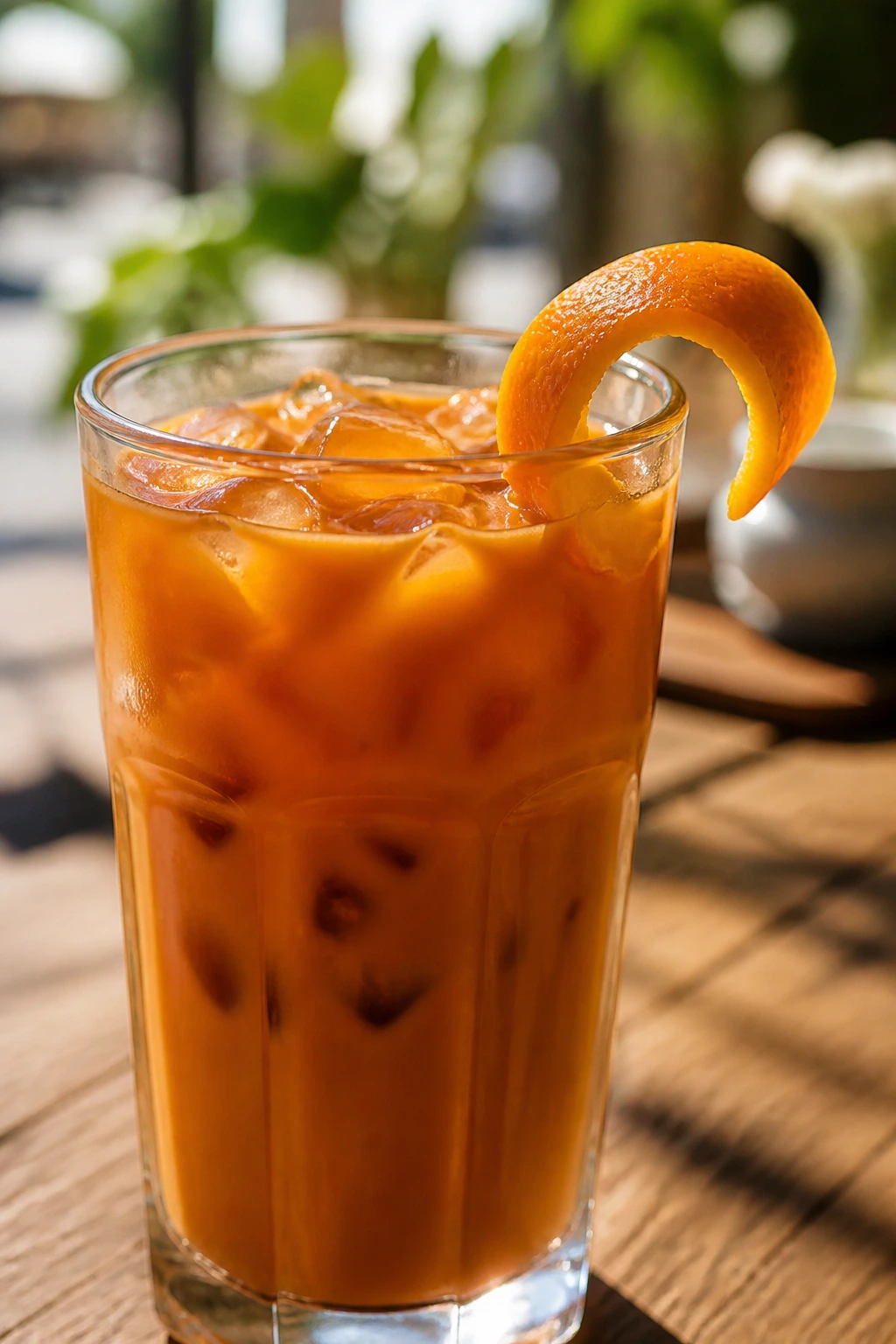
Flavor Enhancement: Add the orange peel to the tea while it steeps, not after. The citrus oil in the peel gives the drink a brighter smell without making it taste like lemon tea. If you like spice, a tiny pinch of ground cardamom can sit nicely beside the cinnamon, but keep it light — too much turns the glass into a spice cabinet.
Customization: If you want a deeper caramel note, swap the brown sugar for palm sugar. If you want a lighter, cleaner taste, cut the syrup back to 1 tablespoon per glass and let the tea carry more of the flavor. A tablespoon of coconut cream on top gives the drink a softer finish without pushing it into dessert territory.
Serving Suggestions: A strip of orange peel curled over the rim looks better than a random mint sprig if you want the garnish to echo what’s inside the glass. Mint still works, though, especially if you’re serving the tea with salty food. I’d skip anything fussy. This drink already has enough going on.
Make-It-Yours: For a dairy-free version, leave out the condensed milk and use coconut cream only if you want that pale top layer. For a less sweet drink, don’t reduce the tea first — reduce the syrup. That keeps the tea strong, which is where the good flavor lives.
Mistakes That Leave Thai Tea Flat, Bitter, or Watery
-
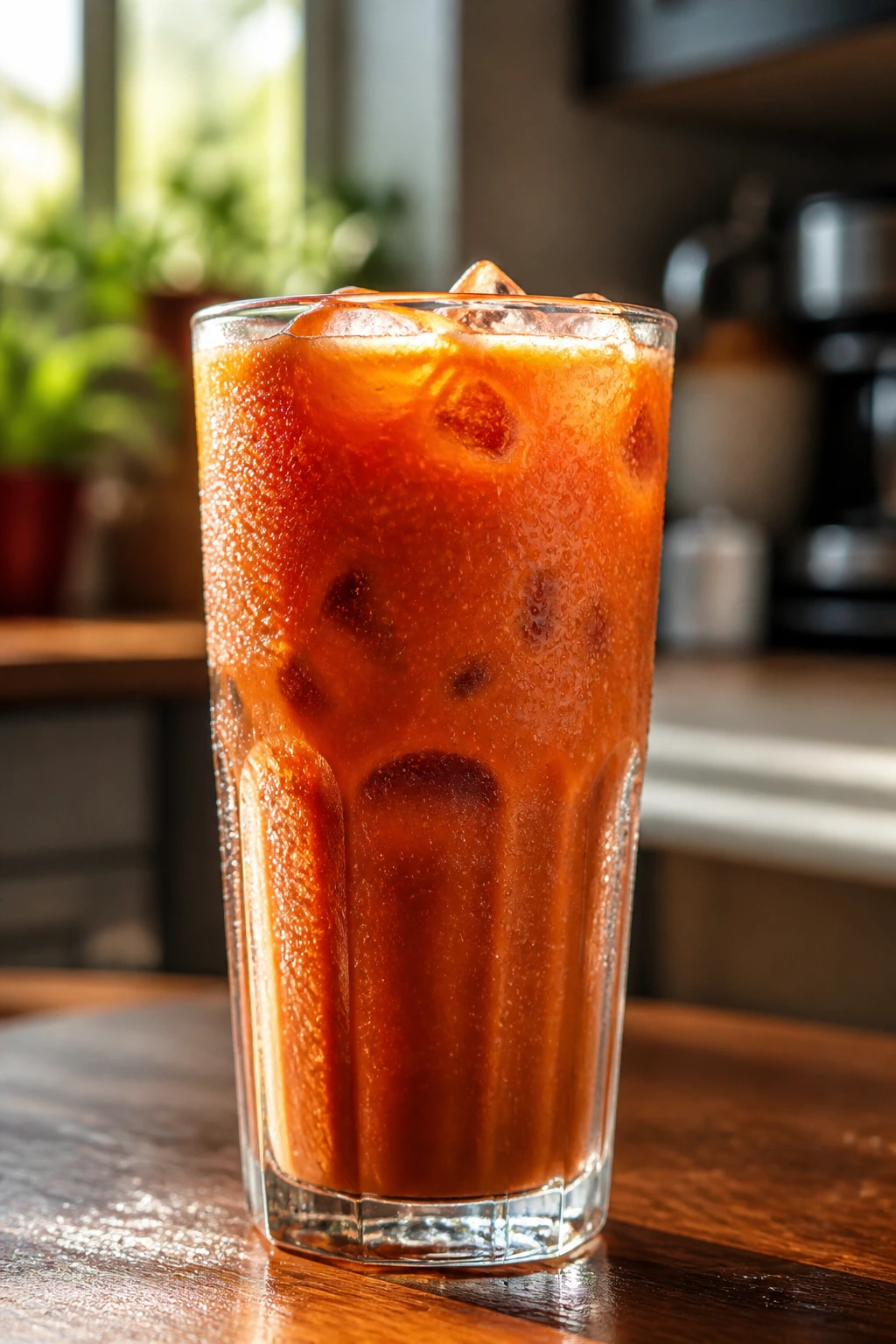
Brewed too weak: If the tea tastes fine in the pot but disappears after ice, it was never strong enough. Fix it by using the full 6 tablespoons of tea mix and steeping for the full 5 to 6 minutes.
-
Steeped too long: Bitter tea gets louder once the tamarind syrup hits it. If the first sip feels harsh or dusty, shorten the steep next time by a minute and strain faster.
-
Added milk to hot tea: Condensed milk can handle heat better than regular dairy, but hot tea still blurs the flavor and melts the ice too fast. Let the tea cool before you add anything creamy.
-
Used crushed ice or too little ice: Small ice melts fast. The drink gets thin before you finish the glass. Use large cubes if you can, and fill the glass higher than you think you need.
-
Left tamarind lumpy: Tiny tamarind bits turn the drink grainy. Whisk the syrup until it’s smooth, and strain it if you see stubborn specks hanging around.
-
Assembled the drink too early: Thai tea is at its best right after pouring. If it sits in the glass for 20 minutes, the ice wins. Keep the components separate until the last possible moment.
Flavor Variations Worth Trying
-
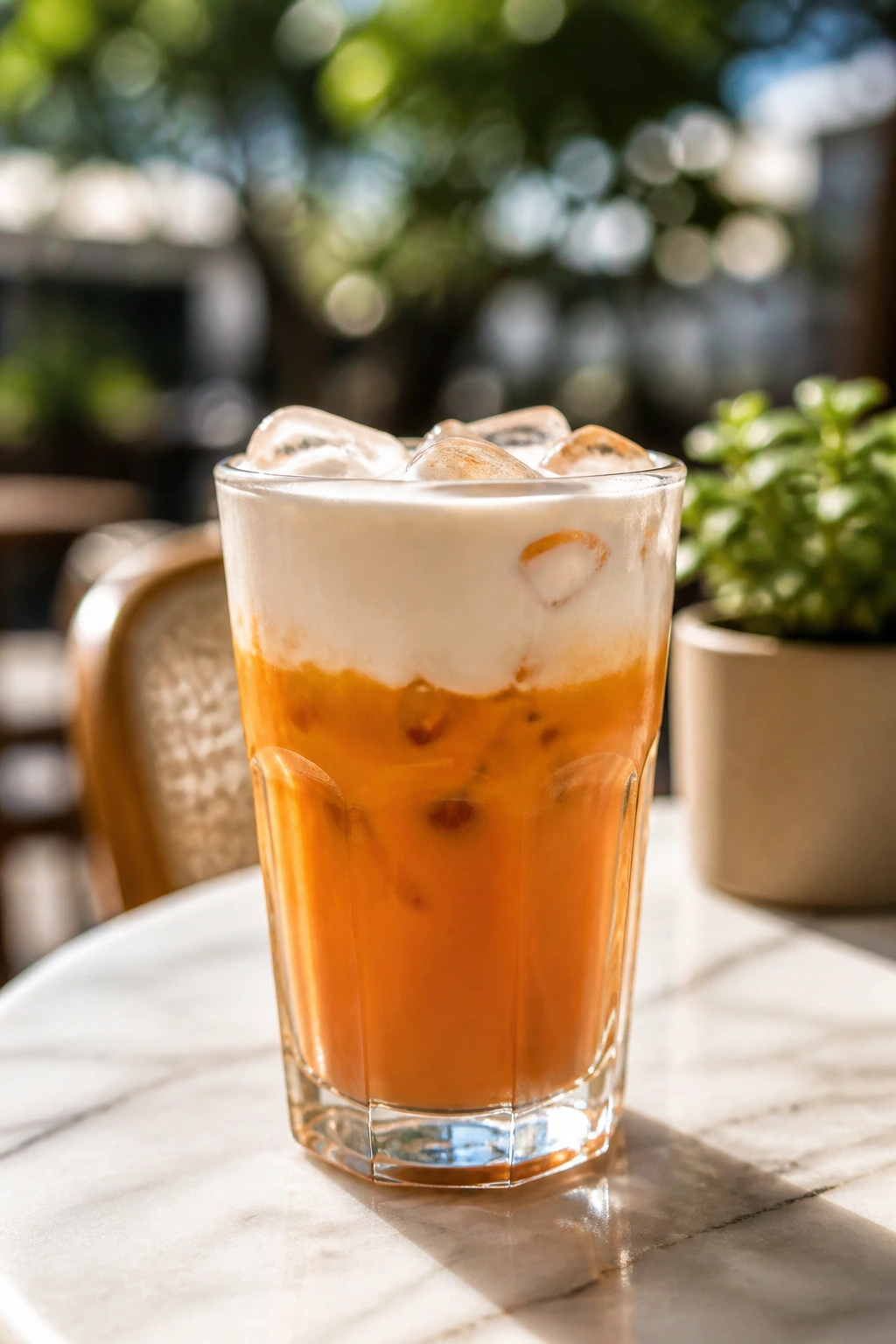
Coconut Silk Thai Tea: Swap the condensed milk for coconut cream and stir it in at the end. The flavor turns rounder, a little softer, and fully dairy-free, with the same bright tamarind edge underneath.
-
Sparkling Porch Pour: Add 2 ounces of plain club soda to each glass after the tea goes in. It lightens the sweetness and makes the drink feel more refreshing on a hot day, though you’ll want to cut the syrup slightly so it doesn’t go soft.
-
Orange-Ginger Thai Tea: Steep a 1-inch slice of fresh ginger with the tea base and keep the orange peel in place. The ginger adds a dry, clean heat that makes the tamarind taste sharper and a little more grown-up.
-
Extra-Strong Café Style: Use 7 tablespoons of Thai tea mix instead of 6 and keep the syrup at the lower end of the range. This version tastes bolder, especially if you plan to pour it over a lot of ice or serve it with something rich.
-
Low-Sugar Fridge Pitcher: Reduce the brown sugar to 1/3 cup and lean on the tamarind for the sour note. It won’t taste like the sweet café version, but the tea comes through more clearly and the finish stays cleaner.
Make-Ahead, Storage, and the Best Way to Keep It Cold
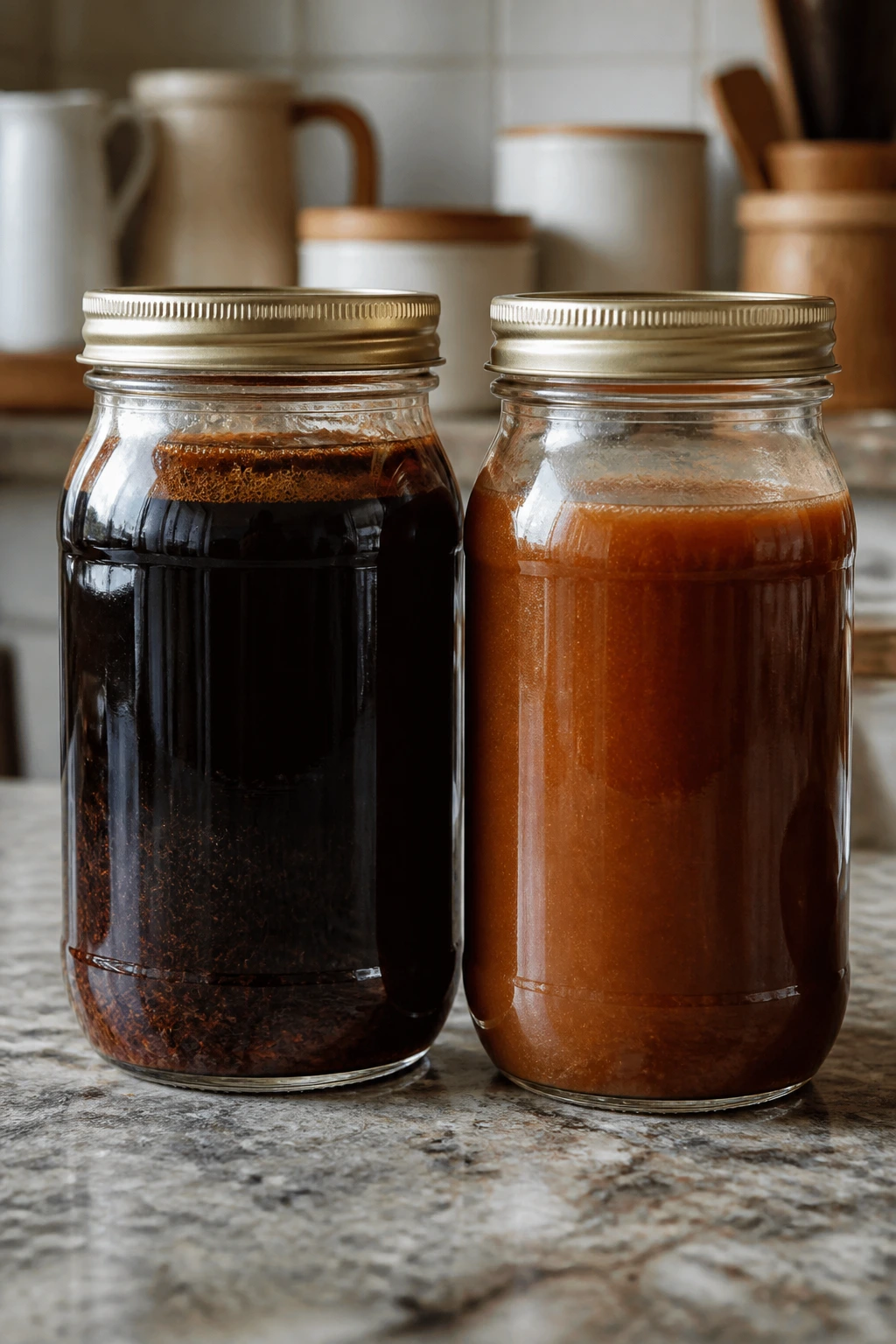
Tea and syrup behave differently in the fridge, which is why it’s smart to keep them separate. The tea concentrate keeps for up to 3 days refrigerated in a covered pitcher or jar. It may darken a little and lose a touch of aroma, but the flavor stays usable.
The tamarind syrup keeps for up to 1 week in the refrigerator. If it thickens, set the jar in a bowl of warm water for 30 seconds and shake or stir it back to a pourable texture. That’s faster than trying to microwave a sticky jar and hoping for the best.
The assembled drink is a different story. Once the ice goes in, it’s best within 15 to 20 minutes. After that, the cube melt starts softening the tea and the finish goes a little sleepy. If you’re hosting, build only what you expect to serve right away.
For longer storage, freeze the tea concentrate in ice cube trays for up to 2 months. Tea cubes are one of those small kitchen tricks that feel silly until you use them once. They keep future glasses cold without diluting them, which is exactly what this drink needs.
If you want a warm version, skip the ice and reheat the tea concentrate gently over low heat until steaming, not boiling. Stir in the syrup off the heat, then add milk only after the pot is no longer hot enough to haze the flavor. It won’t taste like the iced version, but it makes a decent cold-weather fallback.
Questions People Ask Before They Brew It
Can I use regular black tea instead of Thai tea mix?
Yes, and it still works. Strong Assam or Ceylon gets you the tea backbone, while the cinnamon and orange peel keep the drink from tasting plain. You’ll lose the signature orange color and some of the café-style perfume, but the flavor stays in the right neighborhood.
Does tamarind make the tea taste sour-sour?
Not if you keep it in balance. Tamarind gives a round, mellow tartness that sits behind the sweetness instead of blasting through it. If you want the sour edge more obvious, add a touch more tamarind after the syrup cools.
Can I make this without condensed milk?
Absolutely. Leave it out and the drink becomes a cleaner, brighter iced tea with a Thai tea profile and a tart finish. If you still want a creamy feel, use coconut cream or a mild oat creamer instead.
What if my tea tastes bitter after chilling?
That usually means the tea steeped too long or the water was too hot when you brewed it. Shorten the next steep by a minute, and make sure you strain right away. Bitterness gets louder once ice and tamarind enter the picture, so what seems merely strong in the saucepan can turn rough in the glass.
Can I make a big pitcher for guests?
Yes. Double or triple both the tea concentrate and the syrup, keep the same ratios, and assemble in batches instead of all at once. If you pour the whole pitcher ahead of time, the ice melts and the last glass tastes like it spent the afternoon in the sun.
Is lime juice a good substitute for tamarind?
Only in a pinch, and only in small amounts. Lime gives sharper acidity, while tamarind has a deeper fruit note that suits sweet tea better. If you use lime, add it after the tea cools and keep the dose light so it doesn’t clash with any creamy finish.
How sweet should the finished drink be?
Sweet enough that the tea tastes rounded, not sticky. The sour note should show up on the back end and keep the sip from feeling heavy. If the first taste reminds you of syrup more than tea, cut the syrup down by a tablespoon per glass next time.
A Final Sip Worth Repeating
The best part of this drink is that it looks more complicated than it is. Strong tea, a small sour syrup, cold ice, optional milk. That’s the structure. Once you’ve made it once, the whole thing gets easier than waiting for takeout.
I keep coming back to this version because it respects the tea. The drink doesn’t hide behind sugar, and it doesn’t need a pile of extra ingredients to feel finished. Make one batch, keep the components cold, and the next glass becomes a five-minute pour instead of a special project.
Sweet and Sour Thai Tea — Recipe Card
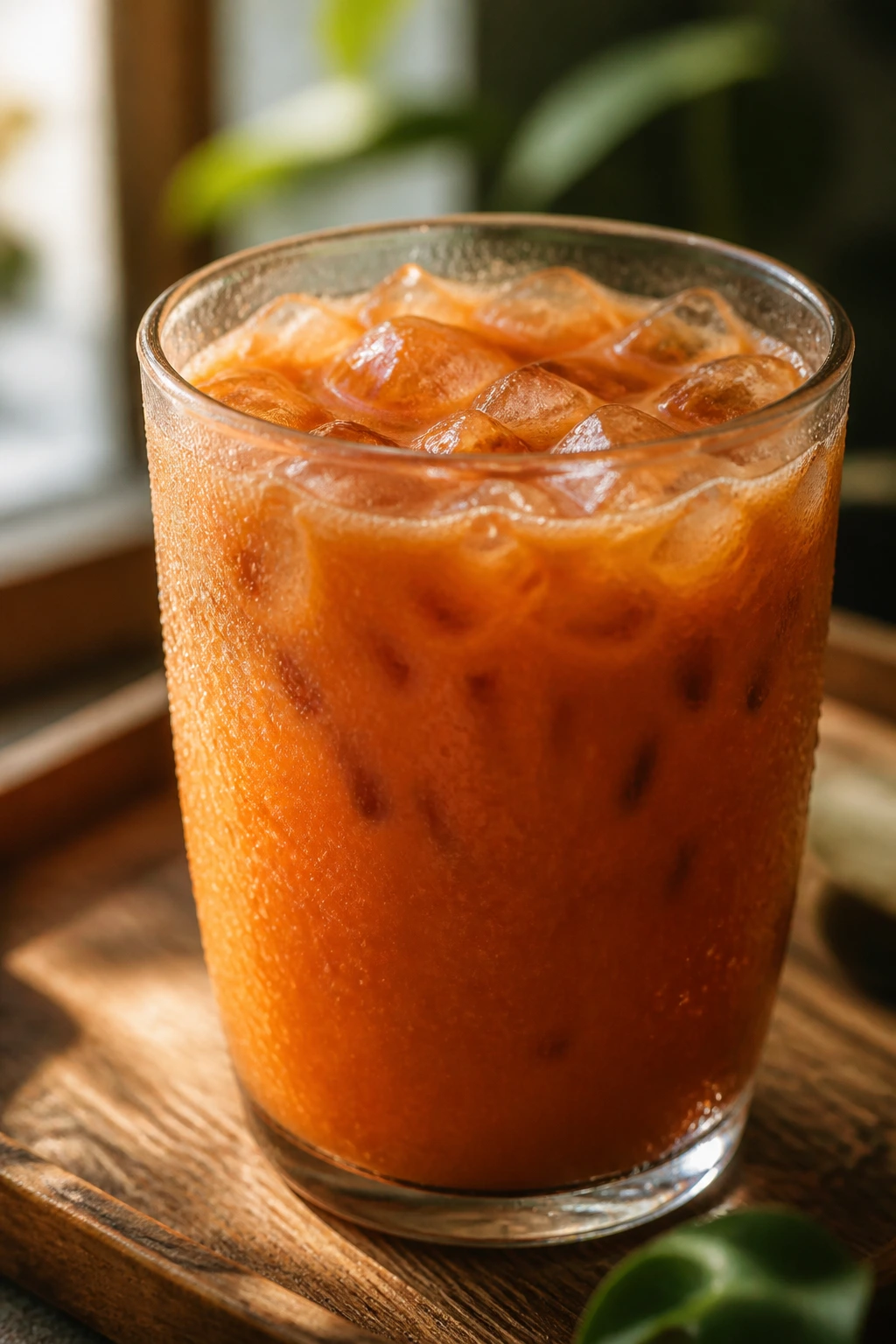
Recipe Name: Sweet and Sour Thai Tea
Description: A cold Thai tea with strong black-tea flavor, tamarind brightness, and brown-sugar sweetness, finished with an optional swirl of condensed milk or coconut cream.
Prep Time: 10 minutes
Cook Time: 15 minutes
Total Time: 25 minutes active + 20 minutes cooling
Course: Beverage
Cuisine: Thai-inspired
Servings: 4 servings
Calories: about 130 kcal per serving
Ingredients
For the Tea Concentrate:
- 4 cups filtered water
- 6 tablespoons Thai tea mix or 5 tablespoons loose black tea blend
- 1 cinnamon stick
- 2 star anise pods
- 1 strip orange peel, about 2 inches long
- 1/4 teaspoon fine sea salt
For the Sweet-Sour Syrup:
- 1/2 cup packed light brown sugar
- 3 tablespoons tamarind paste
- 1/2 cup hot water
- 1 teaspoon vanilla extract
For Serving:
- 4 cups ice
- 4 tablespoons sweetened condensed milk, optional
- Lime wedges or mint sprigs, optional
Instructions
- Bring the water to a bare simmer in a medium saucepan.
- Add the tea mix, cinnamon stick, star anise, orange peel, and salt. Turn off the heat and steep for 5 to 6 minutes.
- Strain the tea into a heatproof pitcher.
- In the same saucepan, whisk the brown sugar, tamarind paste, hot water, and vanilla over low heat until smooth and glossy.
- Let the tea and syrup cool for 10 to 15 minutes.
- Fill four tall glasses with ice and add 2 tablespoons syrup to each.
- Pour the tea over the ice, stir, and drizzle with condensed milk if using.
- Garnish with mint or lime and serve right away.
Notes: Chill the tea before assembling for the cleanest flavor. Keep the tea and syrup separate in the fridge for the best texture, and use tea ice cubes if you want the last glass to taste as strong as the first.