



Aromatic quinoa stir fry earns its keep the second the ginger hits the oil. The pan shifts from quiet to lively in a few seconds: garlic softens, scallion whites turn sweet, and the quinoa starts picking up toasted spots instead of sitting there like warm cereal.
That’s the whole reason this dish works when a lot of grain bowls don’t. If the quinoa is dry and cool, it stays separate in the skillet and grabs sauce the way fried rice does, only with a firmer, nuttier bite. If it’s still steaming, the whole thing turns heavy and a little sticky. Small detail. Huge difference.
I keep coming back to this recipe because it behaves like a proper dinner, not a compromise. You can make it from scratch, or you can lean on leftover quinoa and move fast. Either way, the finish is the same: glossy grains, crisp-tender vegetables, a savory-salty-slightly-sweet sauce, and that sesame-ginger smell that makes the kitchen feel busy in a good way.
Why This Quinoa Stir Fry Feels More Finished Than Most Skillets
- The grains keep their shape: Quinoa has a tiny natural bite, so when it’s cooled properly it fries instead of collapsing into paste.
- The sauce tastes layered, not flat: Soy sauce brings salt, rice vinegar sharpens it, sesame oil adds perfume, and a touch of honey keeps the edges round.
- The vegetables stay awake: Carrots, snap peas, and mushrooms each hold onto a different texture, which keeps every forkful from feeling samey.
- It uses the fridge well: A lonely pepper, half an onion, a few scallions, and some mushrooms turn into something that looks planned.
- The pan does real work: A hot skillet gives you toasted quinoa, browned edges, and that faint savory edge that makes people reach for another bite.
- It adapts cleanly: Eggs, tofu, shrimp, or chicken all fit without changing the backbone of the dish.
Why Quinoa Works Here When Rice Would Be Heavier
Why quinoa, when fried rice already exists? Because quinoa brings a different kind of bite. Rice can go soft, especially if it starts warm or if the pan is overloaded. Quinoa is smaller, drier, and a little more stubborn in the best possible way. It catches sauce in the spaces between the grains, but it doesn’t turn to sludge the moment you stir too hard.
There’s another advantage people miss. Quinoa has a nutty flavor that shows up even after you season it. That gives the stir fry a backbone before the soy sauce and ginger arrive. White quinoa is my first pick here because it cooks a little more evenly and reads cleaner in the pan. Tri-color quinoa looks pretty, sure, but the darker seeds can stay a touch firmer and more rustic. Fine in a salad. Less persuasive in a skillet meant to echo takeout.
Quinoa also has one annoying little habit: if you skip the rinse, you can taste the saponin coating. That bitterness isn’t dramatic, but it’s enough to flatten the whole dish. Rinse it well, cook it until the water is gone, then cool it down. Do those three things and the grain stops fighting you.
This recipe is not pretending to be Chinese food. It borrows the stir-fry rhythm — hot pan, quick aromatics, sauce at the end — and applies it to quinoa because the texture works. That’s the point. Not imitation. Better fit.
Time, Yield, and the Ingredient List
The ingredient list looks short, which is deceptive. A few of these items do heavy lifting, especially the aromatics and the sauce, and they need to be treated with a little care if you want the finished bowl to taste rounded instead of slapped together.
Here’s the timing and yield block first, because this recipe behaves much better when you know what you’re dealing with before you start chopping.
Yield: 4 main-dish servings
Prep Time: 20 minutes
Cook Time: 25 minutes
Total Time: 45 minutes
Chill/Rest Time: 10 minutes for the quinoa to cool and dry
Difficulty: Beginner — the steps are straightforward, but the quinoa needs to be cool before it hits the pan.
Best Served: Right away, while the vegetables still have some snap
For the quinoa:
- 1 cup dry quinoa, rinsed well
- 2 cups water
- 1/2 teaspoon fine sea salt
For the stir fry:
- 2 tablespoons neutral oil, divided
- 3 large eggs, lightly beaten
- 1 small yellow onion, finely diced
- 2 medium carrots, cut into small dice
- 1 red bell pepper, diced
- 4 ounces shiitake mushrooms, thinly sliced
- 1 cup snap peas, trimmed and sliced on the bias
- 3 cloves garlic, minced
- 1 tablespoon fresh ginger, finely grated
- 3 scallions, whites and greens separated, thinly sliced
For the sauce and finish:
- 3 tablespoons low-sodium soy sauce or tamari
- 1 tablespoon toasted sesame oil
- 1 tablespoon rice vinegar
- 1 teaspoon honey or maple syrup
- 1 teaspoon chili garlic sauce or chili crisp, optional
- 1 tablespoon water
- 1 tablespoon toasted sesame seeds
- 2 tablespoons chopped cilantro or extra scallion greens
- Lime wedges, for serving
Breaking Down the Grain, Sauce, and Vegetables
The Quinoa Base
- What to use: 1 cup dry quinoa, rinsed well, cooked in 2 cups water with 1/2 teaspoon salt.
- Preparation: Rinse it in a fine-mesh strainer until the water runs mostly clear, then cook until the liquid is absorbed and the little germ spirals show. Spread it on a tray so the steam can escape.
- Substitutions: Leftover jasmine rice works if you want a more classic fried-rice feel; farro is chewy but not gluten-free; cauliflower rice is possible, though it cooks in a different lane entirely.
- Tips: Cool quinoa on a rimmed sheet pan, not in a deep bowl. The exposed surface dries faster, and dry grains fry better than damp ones.
White quinoa is the one I reach for here. It loosens in the pan without giving up its bite, and the grains stay distinct even after the sauce goes in. If you use tri-color quinoa, expect a slightly firmer texture and a more rustic look.
The Sauce
- What to use: 3 tablespoons low-sodium soy sauce or tamari, 1 tablespoon toasted sesame oil, 1 tablespoon rice vinegar, 1 teaspoon honey or maple syrup, 1 teaspoon chili garlic sauce or chili crisp, and 1 tablespoon water.
- Preparation: Whisk it until the honey disappears and the sauce looks glossy, not streaky.
- Substitutions: Tamari keeps it gluten-free; coconut aminos make it sweeter and a little softer; black vinegar gives the dish a deeper tang if you keep a bottle around.
- Tips: Toasted sesame oil belongs in the sauce or at the very end. It has a low smoke point and gets dull if you try to use it as a frying oil.
That balance matters more than people think. Soy sauce alone makes the dish salty. Rice vinegar alone makes it sharp. Honey alone makes it sticky. Put them together, and the sauce tastes finished before it touches the pan.
The Aromatics and Vegetables
- What to use: 1 small yellow onion, 2 medium carrots, 1 red bell pepper, 4 ounces shiitake mushrooms, 1 cup snap peas, 3 cloves garlic, 1 tablespoon ginger, and 3 scallions.
- Preparation: Cut the carrots small enough to soften in the same window as the mushrooms; keep the scallion whites separate from the greens; trim the snap peas so they stay bright and neat.
- Substitutions: Broccoli florets, shredded cabbage, zucchini, frozen peas, asparagus, or baby corn all work if you keep the pieces bite-size.
- Tips: The smaller the cuts, the less time the pan needs. Big vegetable chunks invite steaming, and steaming is the enemy here.
Shiitake mushrooms bring a deeper, woodier flavor than button mushrooms. I like them because they brown instead of leaking water forever, though cremini is a perfectly good second choice. If your store only has one of those long, pale mushrooms sitting in a plastic box, skip them. They’re fine, but they don’t bring much.
The Eggs and Finishing Touches
- What to use: 3 large eggs, 1 tablespoon toasted sesame seeds, 2 tablespoons chopped cilantro or extra scallion greens, and lime wedges.
- Preparation: Beat the eggs until the whites and yolks are fully combined; slice the scallion greens thin so they look fresh at the end.
- Substitutions: Crumbled tofu can take the place of eggs if you need a vegan version; fried shallots give a sharper crunch; basil works if cilantro tastes soapy to you.
- Tips: Add the eggs early enough that they stay tender, then finish with herbs after the heat is off so they keep their color and smell.
Optional Protein Add-Ins
- What to use: 8 ounces extra-firm tofu, pressed and cubed, or 8 ounces boneless chicken thigh, sliced thin, or 8 ounces peeled shrimp.
- Preparation: Sear the protein separately so it gets real color before it meets the quinoa.
- Substitutions: Edamame gives you a fast vegetarian boost if you don’t want to bother with tofu.
- Tips: Don’t crowd the pan. Protein needs room to brown, and crowded protein steams like a miserable little puddle.
The Pan Setup That Keeps Everything Fragrant, Not Mushy
A hot skillet is not a suggestion here. It’s the whole trick. Quinoa stir fry needs enough heat to dry the grains out the second they touch the pan, or they slump and grab each other in sticky clumps. That’s the point where the dish stops tasting like stir fry and starts tasting like reheated grain salad.
Use the biggest pan you own if it has a wide surface. A 12-inch skillet is fine. A wok is fine. A crowded 10-inch pan is not. The larger the surface area, the more room the quinoa has to toast in a thin layer before you toss it. That little pause — thirty seconds, maybe forty — is where the flavor changes. You can smell it. The grains go from plain to nutty, and the edges pick up a faint toast.
Order matters too. Eggs go in first so they don’t disappear into the quinoa. Vegetables come next, and the garlic and ginger arrive late because they burn if you leave them alone over high heat for too long. Sauce goes in last, after the quinoa is already hot and the pan is awake.
If your stove runs weak, don’t solve the problem by adding more ingredients at once. Cook in batches or use less quinoa in one round. The difference between a good stir fry and a soggy one often comes down to restraint. Boring advice. Reliable advice.
Equipment That Makes the Stir Fry Easier
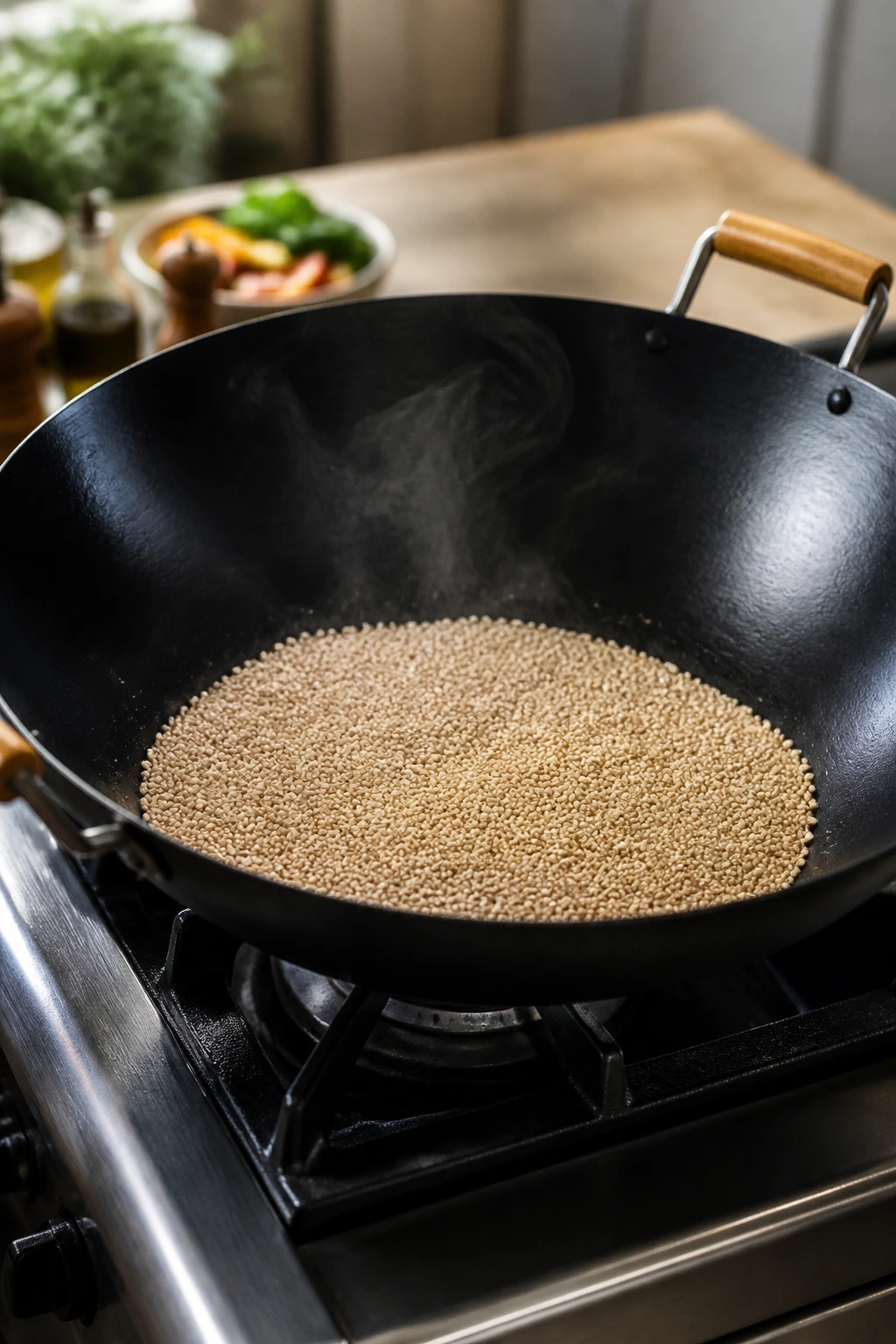
- 12-inch wok or large skillet: A wide surface helps the quinoa toast instead of steaming.
- Medium saucepan with a lid: Needed for cooking the quinoa evenly before it goes into the pan.
- Fine-mesh strainer: Best for rinsing quinoa thoroughly and draining it cleanly.
- Rimmed sheet pan: This dries the cooked quinoa fast and keeps it from clumping in a bowl.
- Wooden spoon or wok spatula: A sturdy tool helps break up quinoa without crushing the grains.
- Microplane or small grater: The easiest way to get ginger into a fine paste-like texture.
- Measuring cups and spoons: The sauce depends on balance, so eyeballing is a bad trade here.
- Small bowl or liquid measuring cup: Handy for whisking the sauce before it hits the pan.
Step-by-Step: Cooking the Quinoa Stir Fry
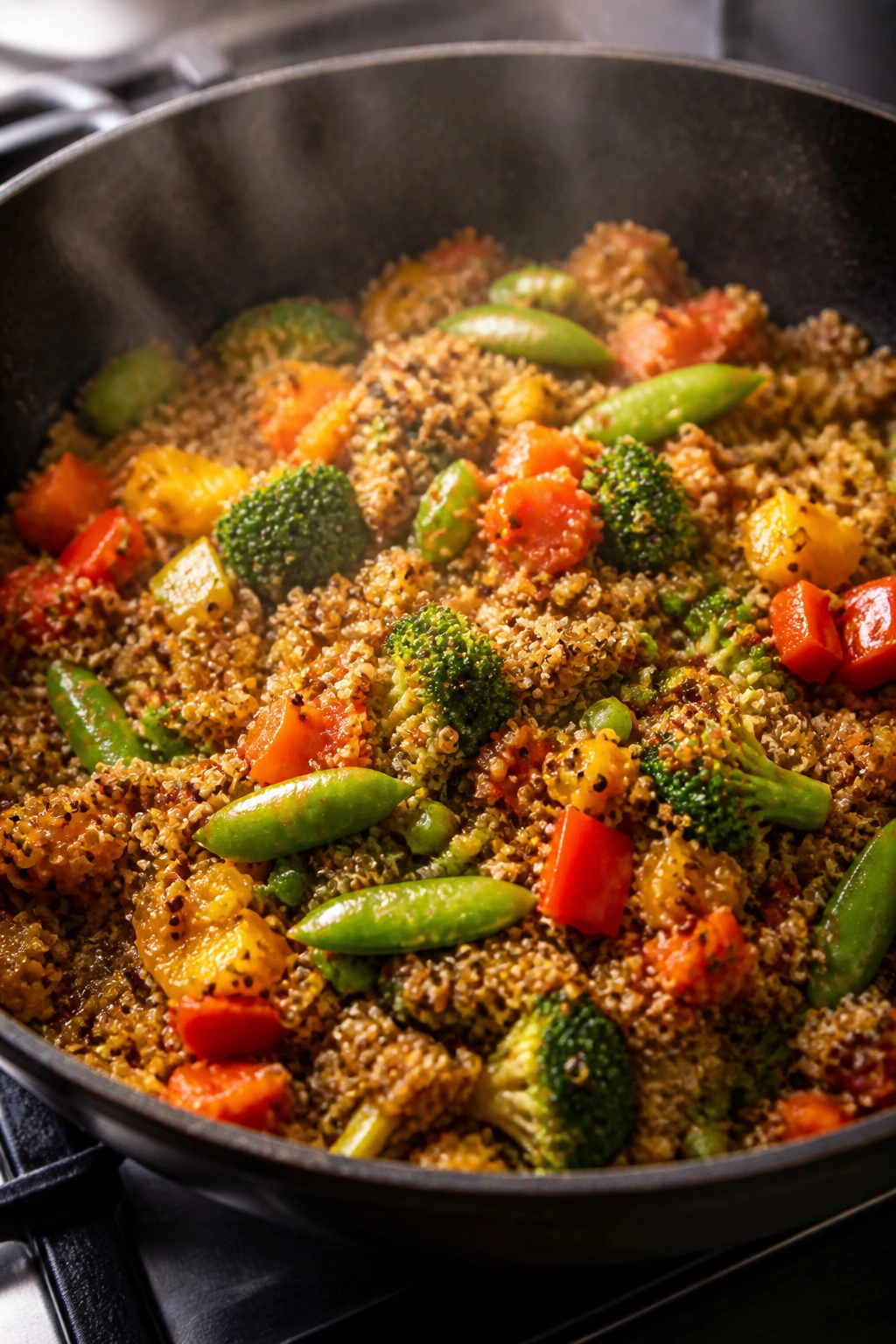
Cook and Cool the Quinoa
-
Rinse 1 cup dry quinoa in a fine-mesh strainer under cold running water for 30 to 45 seconds, rubbing it gently with your fingers until the water stops looking cloudy.
-
Combine the rinsed quinoa, 2 cups water, and 1/2 teaspoon fine sea salt in a medium saucepan. Bring it to a boil over high heat, then immediately reduce the heat to low, cover the pot, and simmer for 15 minutes, until the water is absorbed and little spirals appear around the grains.
-
Turn off the heat and let the pot sit, covered, for 5 minutes. Fluff the quinoa with a fork, then spread it in a thin layer on a rimmed sheet pan. Cool for 10 to 15 minutes. Do not skip this step — warm quinoa steams in the skillet and turns sticky.
Mix the Sauce and Prep the Pan
-
Whisk the soy sauce, toasted sesame oil, rice vinegar, honey or maple syrup, chili garlic sauce if using, and water in a small bowl until smooth. Taste it. It should be salty, sharp, and a little sweet, with the sesame oil showing up at the end.
-
Set a 12-inch wok or skillet over medium-high heat and let it heat for 2 full minutes. Add 1 tablespoon neutral oil and swirl to coat the bottom.
Scramble the Eggs and Start the Vegetables
-
Pour in the beaten eggs and let them set for about 10 seconds before stirring. Scramble for 30 to 45 seconds, until just softly set, then slide them onto a plate. Pull them early or they’ll dry out while the quinoa cooks.
-
Add the remaining 1 tablespoon neutral oil to the pan. Stir in the onion, carrots, bell pepper, mushrooms, snap peas, and a small pinch of salt. Cook for 4 to 5 minutes, stirring often, until the onion looks translucent at the edges, the carrots are crisp-tender, and the mushrooms have lost their raw sheen.
-
Add the garlic, ginger, and scallion whites. Stir for 30 to 45 seconds, just until the kitchen smells sharp and warm. Do not let the garlic brown; once it darkens, the whole dish gets bitter.
Toast the Quinoa and Finish the Pan
-
Add the cooled quinoa to the skillet. Break up any clumps with your spatula, then spread it out in an even layer and leave it alone for 20 to 30 seconds so the bottom grains can toast. Toss for 2 minutes, until the quinoa is hot through and a little dry-looking at the edges.
-
Return the scrambled eggs to the pan and pour the sauce around the edges. Toss for 30 to 45 seconds, until the quinoa looks glossy and the sauce has coated every grain without pooling in the bottom of the pan.
-
Turn off the heat. Fold in the scallion greens, sesame seeds, and cilantro. Taste and add a squeeze of lime if you want a brighter finish. Serve right away.
How to Plate It So It Eats Like Dinner
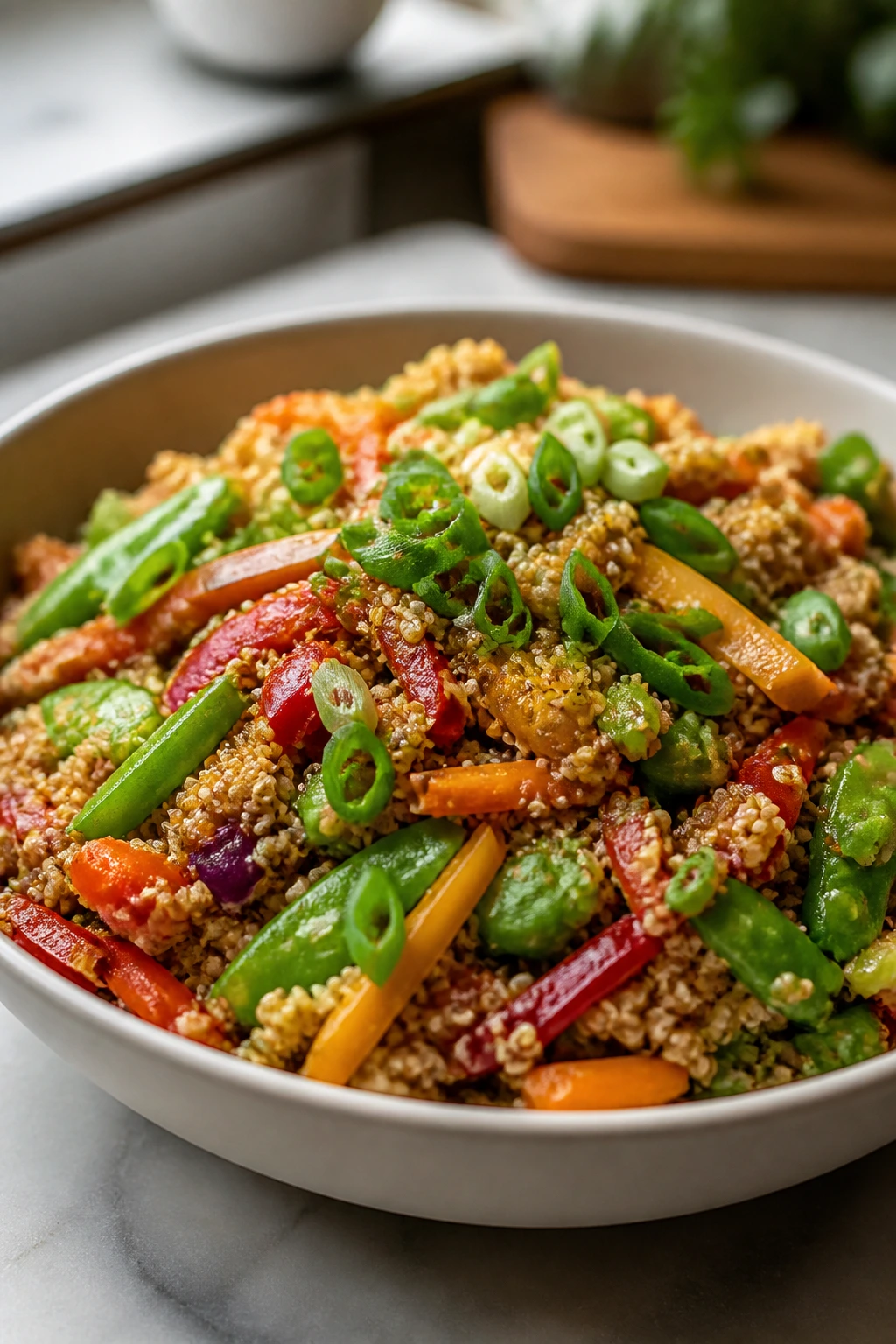
Serve this in wide shallow bowls, not deep ones. The difference sounds minor, but a broad bowl lets the quinoa stay loose instead of compressing into a packed mound. A final scatter of scallion greens and sesame seeds makes the surface look lively, and a lime wedge on the side gives the bowl a little lift if you like sharper food.
For accompaniments, I’d keep the plate simple: a cold cucumber salad with rice vinegar, a handful of edamame, or a small bowl of miso soup if you want to turn it into a more complete meal. Steamed broccoli works too, though I’d rather have it chopped and tossed with a pinch of salt than left bland on the side. This dish already has enough going on.
Portion-wise, this makes 4 main-dish servings, or 6 if you’re serving it beside other food. If you want it to stretch farther, add another cup of vegetables before you add more quinoa. That keeps the bowl from becoming dry and keeps the texture varied.
For drinks, iced green tea is the cleanest match. A dry lager works if you want something colder and a little bitter. If you’d rather go non-alcoholic and a touch fancier, jasmine tea served cold with a slice of lemon is hard to argue with.
Tips for Better Texture and Bigger Flavor
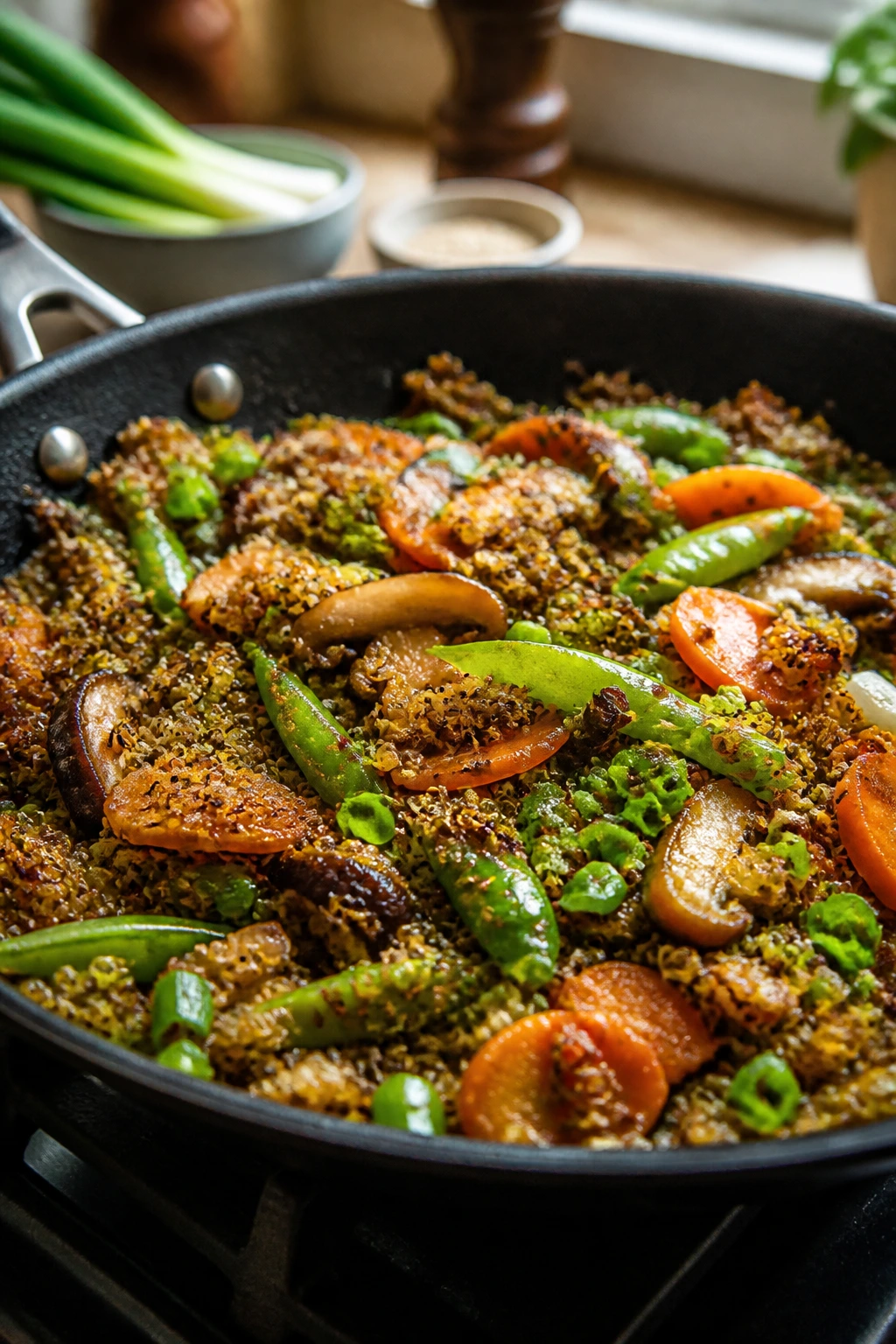
Flavor Enhancement: A teaspoon of white miso whisked into the sauce gives the whole pan a deeper, rounder savoriness. It disappears into the background in the best way. If you use miso, cut the soy sauce by half a tablespoon so the salt doesn’t run away from you.
Time-Saver: Cook the quinoa a day ahead and spread it on a sheet pan in the fridge uncovered for a few hours. Cold, dry grains fry more cleanly than freshly cooled ones. I know that sounds fussy. It pays off.
Texture Fix: If the quinoa clumps when it hits the pan, give it a minute before you start tossing. Let the bottom layer dry out a little first. Trying to break every clump immediately only smears the grains and makes the texture worse.
Customization: Stir in one cup of baby spinach at the very end if you want extra greens, or add 1/2 cup thawed edamame for more heft. Both changes work without forcing you to change the sauce. Broccoli florets are the other easy win, but cut them small and give them a head start.
Serving Suggestions: A spoonful of chili crisp on top changes the mood fast. So does a few drops of toasted sesame oil after the heat is off. If cilantro isn’t your thing, sliced scallion greens alone are enough to keep the top from looking flat.
The Mistakes That Usually Flatten Quinoa Stir Fry
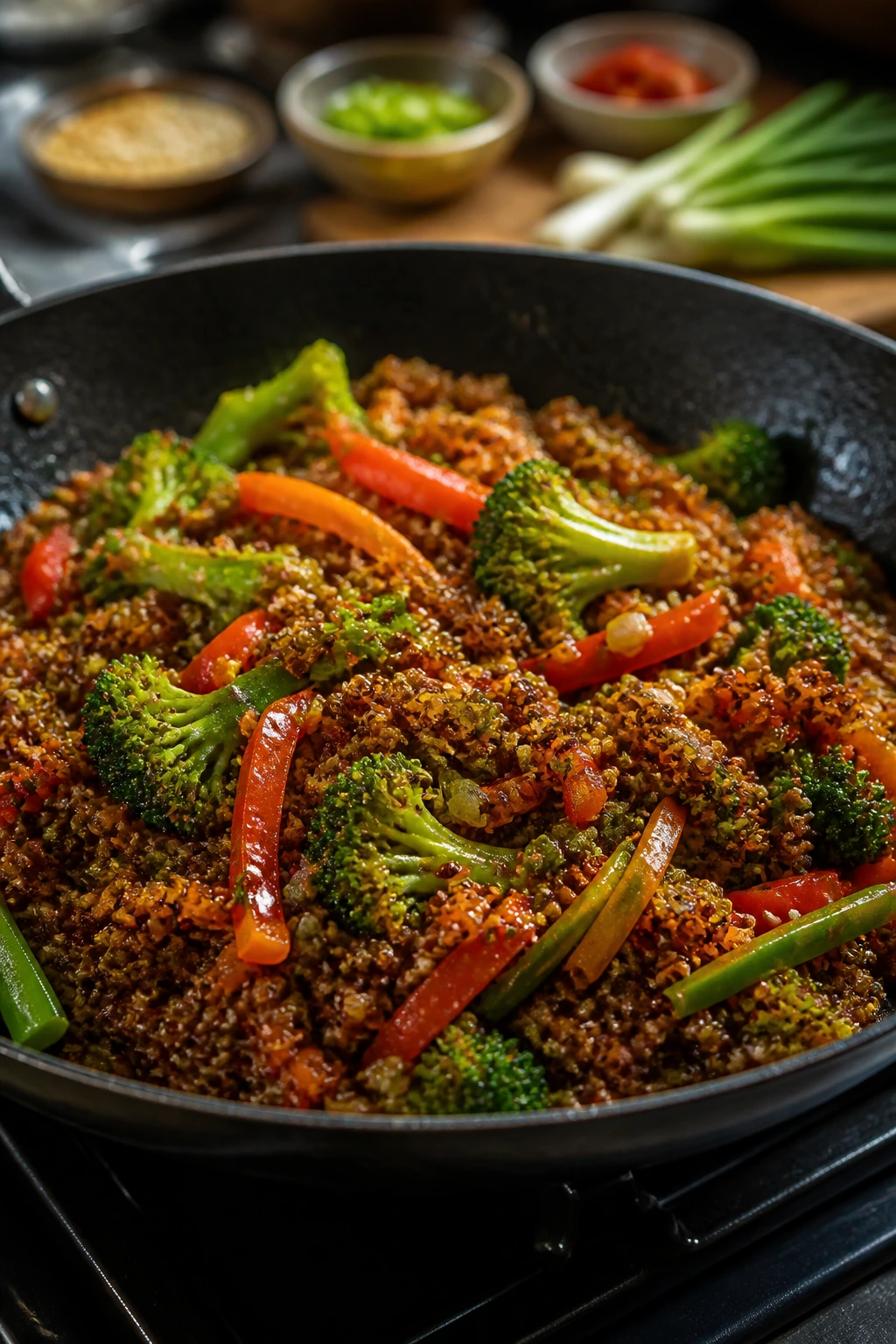
Using quinoa that’s still warm and damp is the biggest one. The grains clump, the pan steams, and you never get the toasted edges that make this recipe worth making. Cool it on a tray, not in a heap. That one move fixes a lot.
Crowding the vegetables causes a gray, wet skillet instead of a quick stir fry. If your pan is packed, the carrots and mushrooms dump out moisture and sit in it. Cook fewer vegetables at once or use a wider pan. This is one of those annoying fixes that sounds too simple, then solves everything.
Adding the sauce too soon turns the quinoa soft before it has a chance to toast. The pan should be hot and mostly dry when the sauce goes in. Think of the sauce as the last coat, not the bath.
Letting the garlic burn is a fast way to wreck the whole bowl. Garlic goes from fragrant to bitter in a blink over medium-high heat. Thirty seconds is enough. If it starts to brown, you waited too long.
Overcooking the eggs makes them rubbery by the time the quinoa is done. Soft scramble, then pull them. They’ll finish reheating when you fold them back in near the end.
Skipping the salt in the quinoa water leaves the base dull, even if the sauce tastes fine. Season the grain itself. Otherwise every bite depends on the sauce to do all the work, and that’s not fair to the sauce.
Variations That Fit Different Kitchens
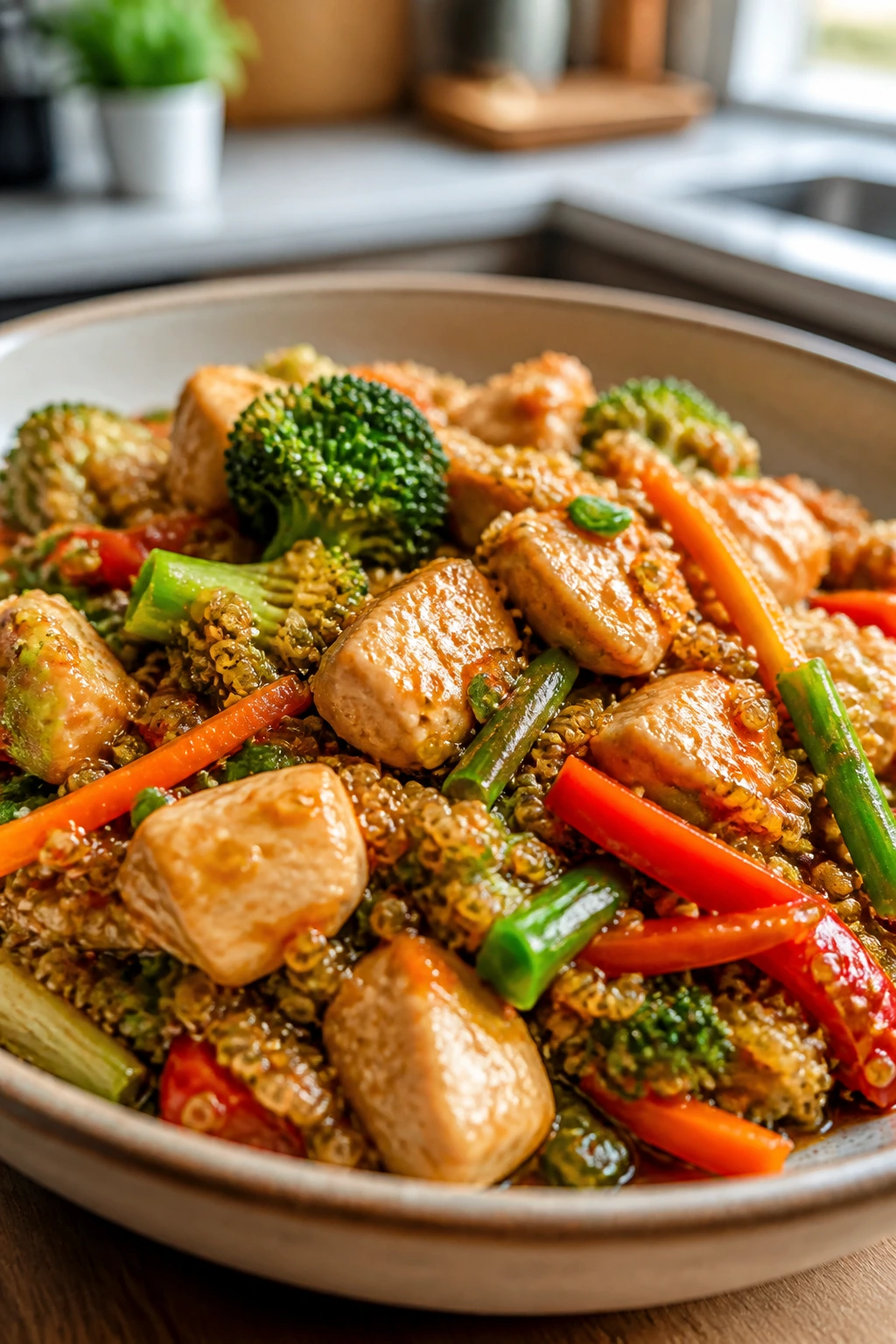
Ginger Chicken Quinoa Stir Fry
Slice 8 ounces boneless chicken thighs thin and season them with a pinch of salt before cooking. Brown them in the pan before the eggs, remove them, then fold them back in with the sauce. Thighs stay juicier than breasts and stand up better to the sharp ginger-sesame profile.
Crispy Tofu and Broccoli Version
Press 8 ounces extra-firm tofu for 20 minutes, cube it, and sear it in oil until the edges turn golden. Swap the snap peas for 2 cups small broccoli florets and give them 2 extra minutes in the pan. This version eats cleanly and freezes a little better than the egg version.
Shrimp and Snap Pea Skillet
Use 8 ounces peeled shrimp and cook them for 1 to 2 minutes per side, just until pink. Pull them out before the vegetables, then return them at the end with the sauce. Shrimp and ginger are natural friends, and the quick cook keeps the texture sweet instead of tough.
Mushroom-Heavy Umami Bowl
Double the mushrooms and use a mix of shiitake and cremini. Add 1 teaspoon white miso to the sauce if you want a deeper, darker savory note. This is the one I make when the fridge is mostly vegetables and nobody wants a sad dinner.
Chili Crisp Heat-Lover’s Version
Stir 1 to 2 tablespoons chili crisp into the sauce and add extra scallions on top at the end. The crisped garlic and chile bits cling to the quinoa and give each bite a little crunch. Use a lighter hand if the chili crisp is already salty, because the soy sauce is still doing its job.
Storage, Reheating, and Make-Ahead Notes
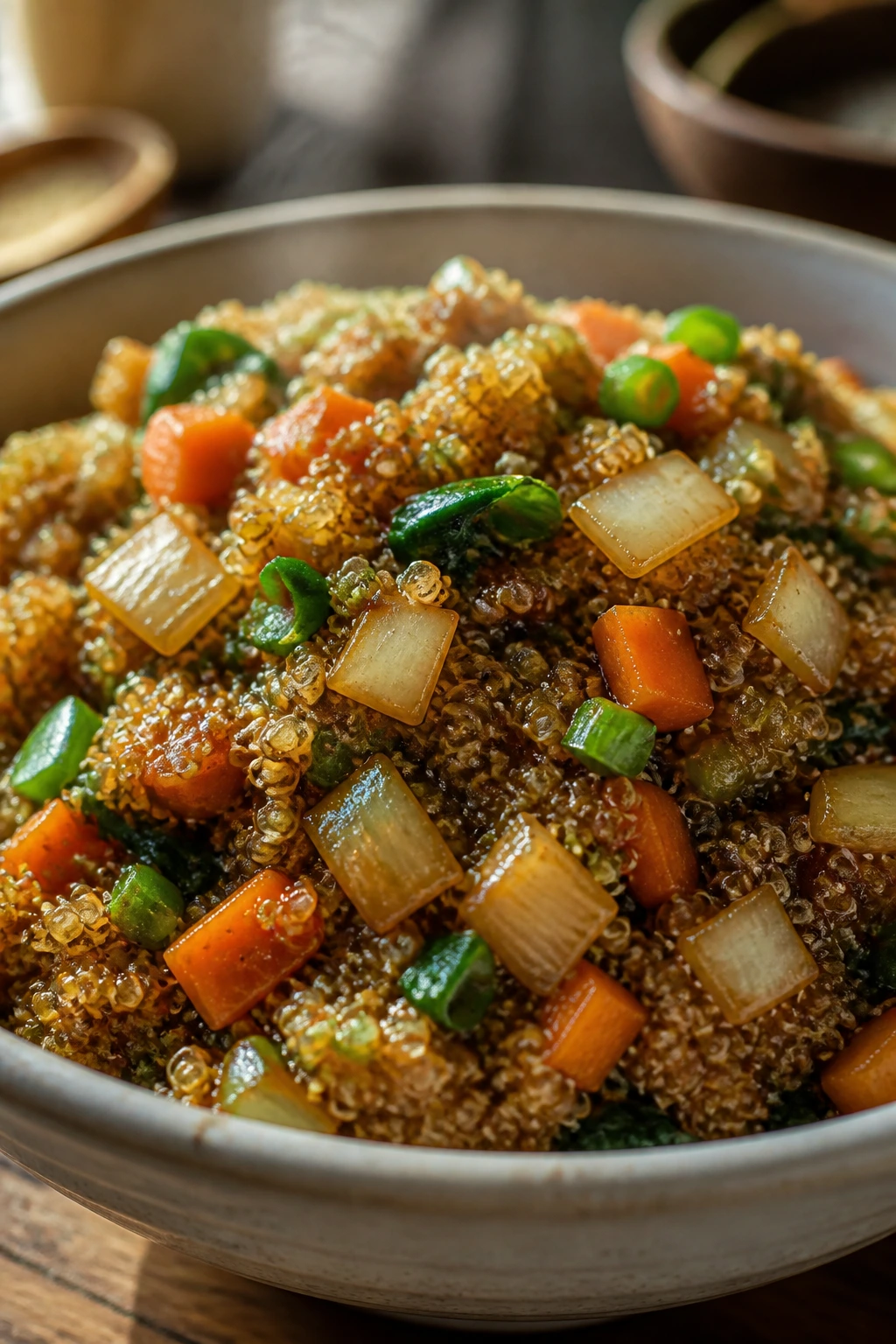
This quinoa stir fry keeps well, but the texture changes in a predictable way. In the fridge, store it in an airtight container for up to 4 days. It’s safe at room temperature for about 2 hours, though I’d rather get it chilled sooner because the vegetables hold their color better that way.
Freezing works for up to 2 months, though the vegetables soften a little after thawing. If you know you want freezer leftovers, undercook the carrots and snap peas by a minute the first time around. They’ll land in a better place after reheating.
For the best reheating method, use a skillet. Add the leftovers to a pan with 1 to 2 teaspoons of neutral oil or a splash of water, cover for 1 minute, then uncover and stir over medium heat for 3 to 5 minutes until hot. That restores the grain texture better than the microwave does. If you do use the microwave, sprinkle the top with a teaspoon of water and cover the bowl with a damp paper towel so the quinoa doesn’t dry out and go chalky.
Make-ahead is easy here. The quinoa can be cooked 2 days ahead and chilled. The vegetables can be chopped a day ahead and stored in separate containers. The sauce keeps for 5 days in the fridge, and it’s one of those small things that makes the whole dinner feel quicker than it is. The dish is best the day it’s made, but leftovers are good enough that I never mind opening the container the next day.
Quinoa Stir Fry Questions People Actually Ask
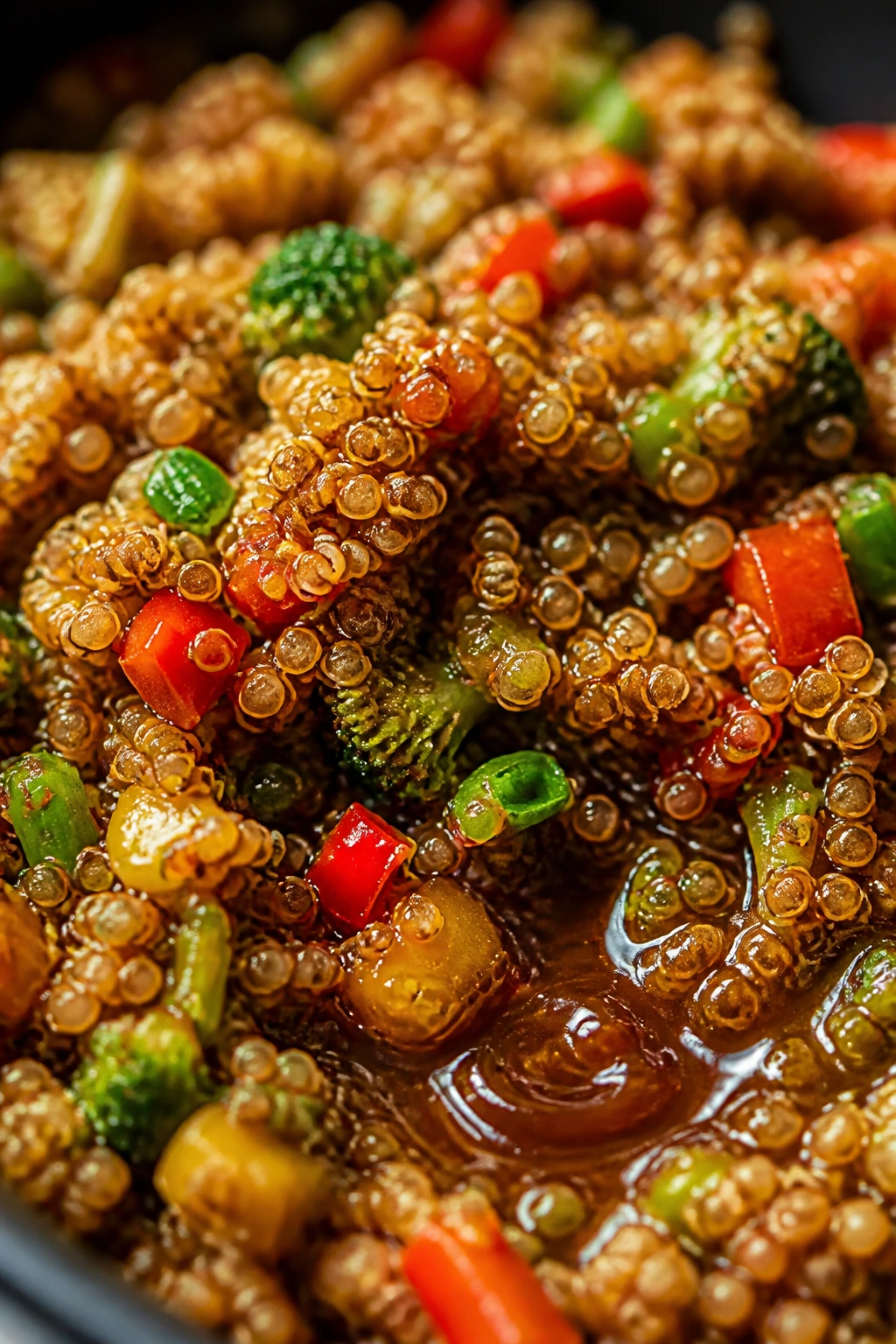
Can I use leftover quinoa instead of cooking it from scratch?
Yes, and honestly, that’s the easiest route. You want about 3 cups of chilled cooked quinoa, and it should be broken up with a fork before it goes into the pan. Leftover quinoa that’s been sitting in the fridge overnight often fries even better than fresh-cooked quinoa because it’s drier.
Do I need a wok for this?
No. A wide 12-inch skillet does the job fine. A wok helps if you like tossing ingredients aggressively, but a skillet gives you a broad surface and easier access with a spatula. The real requirement is room, not shape.
How do I keep the quinoa from tasting bitter?
Rinse it well in a fine-mesh strainer before cooking. Quinoa has a natural coating called saponin, and if it isn’t washed off, you’ll taste a faint bitterness that lingers under the sesame and soy. Some boxed quinoa is cleaner than others, but I rinse it every time anyway.
Can I make this vegan?
Yes. Leave out the eggs and add 8 ounces pressed tofu or 1 cup shelled edamame instead. If you want more richness without eggs, a small handful of chopped cashews at the end gives the bowl some body and crunch.
What vegetables work if I don’t have snap peas or mushrooms?
Shredded cabbage, broccoli florets, asparagus, zucchini, frozen peas, or even thin-sliced green beans all fit the pattern. The only rule is size: cut everything small enough to cook in the same short window. If one vegetable takes longer, give it a head start.
Why does my quinoa get mushy in the pan?
It’s usually one of three things: the quinoa was too wet, the pan was crowded, or the sauce went in before the grains had a chance to toast. Fix those three points and the texture changes fast. The grains should look dry and separate before the sauce arrives.
Can I freeze the finished stir fry?
Yes, though the vegetables will soften after thawing and reheating. If freezing is the plan, cook the vegetables just to crisp-tender and cool the dish fast before packing it away. Reheat it in a skillet rather than the microwave if you want the best texture back.
A Stir Fry Worth Keeping in Rotation
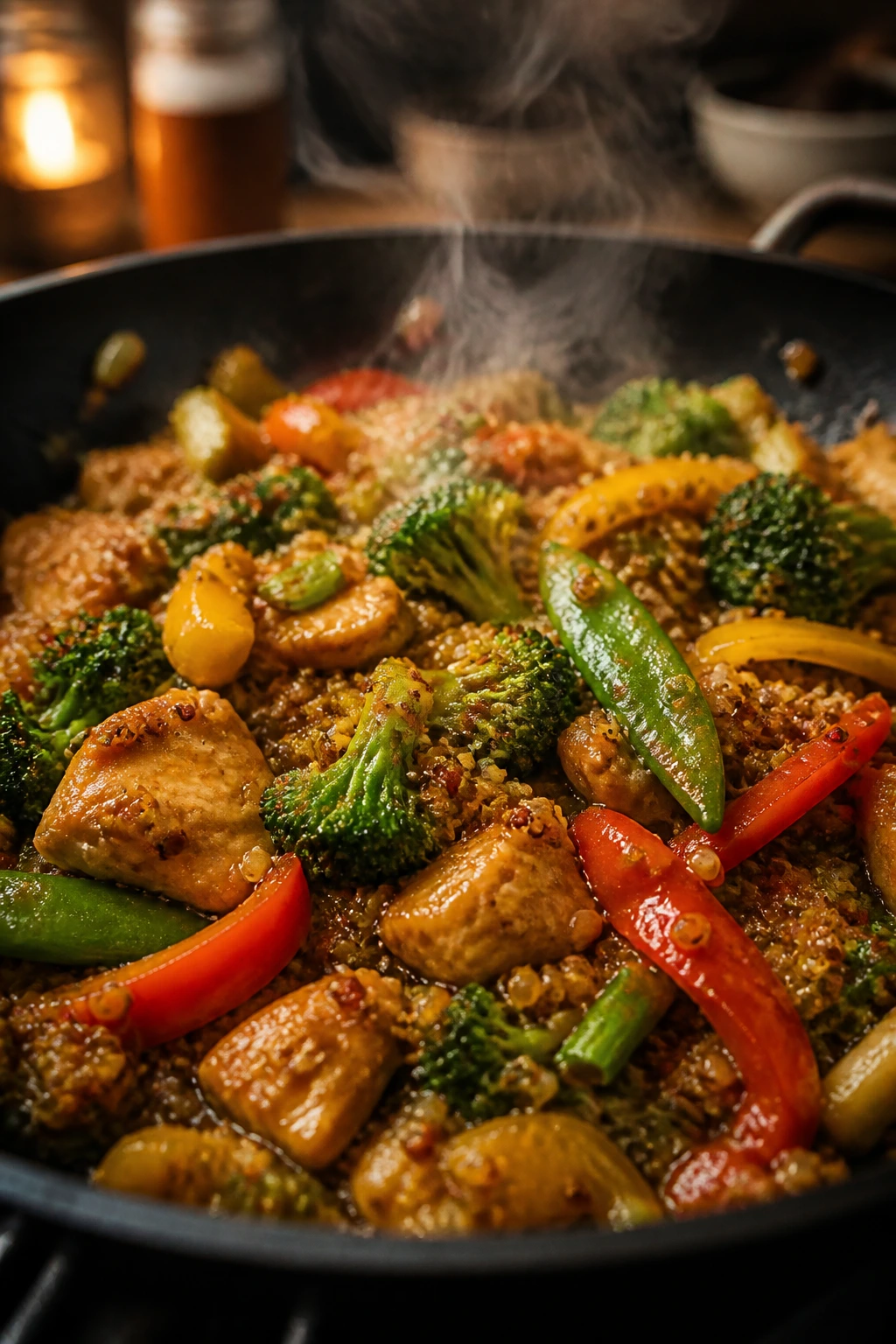
The nice thing about this dish is that it doesn’t ask for much. It wants a hot pan, cool quinoa, and a sauce that knows how to keep its balance. That’s it. Once those pieces line up, the bowl turns from a pantry clean-out into something with a real point of view.
I like recipes that leave a little room for judgment, and this one does. Use more ginger if you want the perfume sharper. Add chili crisp if you want heat. Swap in tofu, shrimp, or chicken when the mood changes. The structure holds either way, which is why this quinoa stir fry keeps earning its place.
Aromatic Quinoa Stir Fry Better than Takeout — Recipe Card
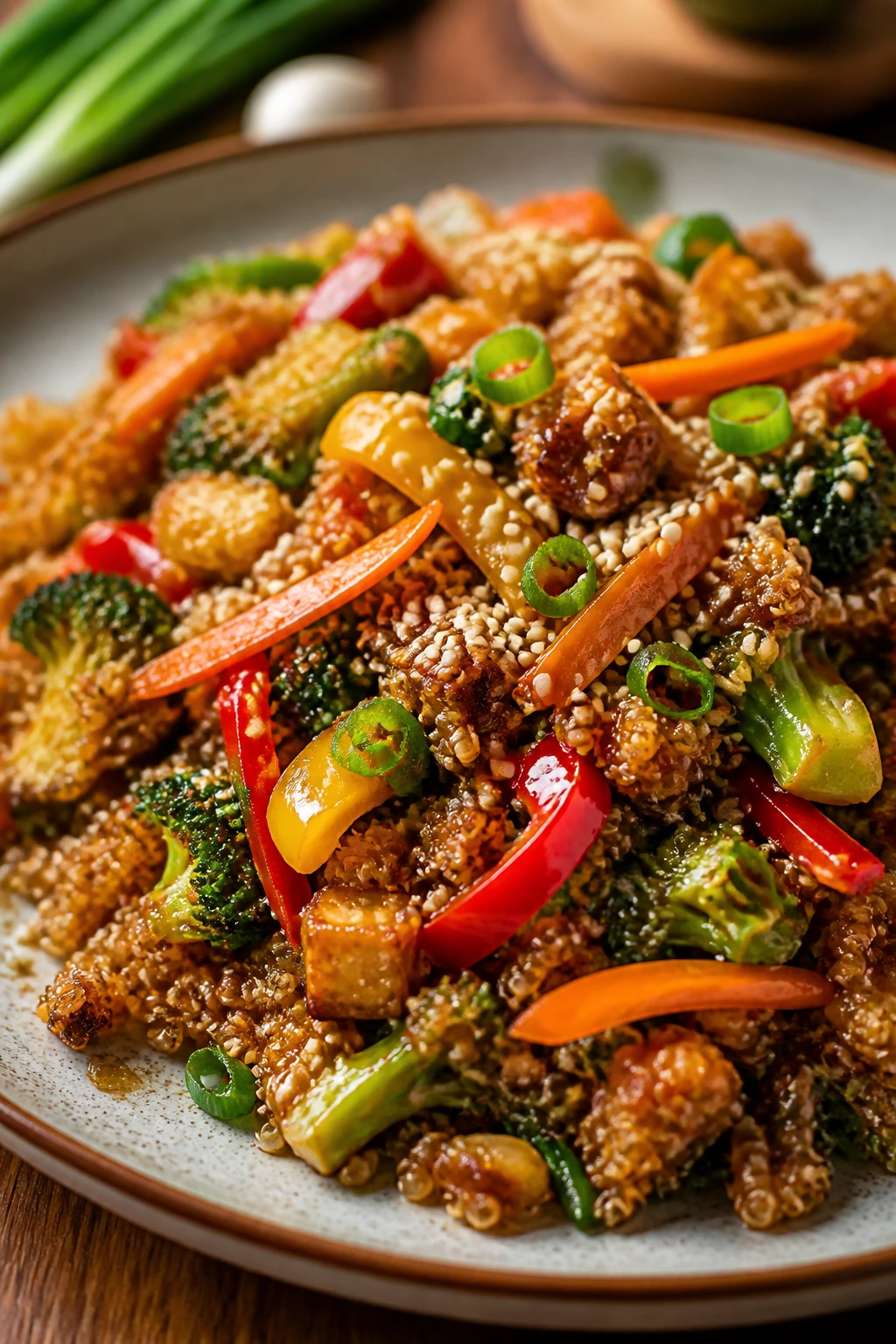
Recipe Name: Aromatic Quinoa Stir Fry Better than Takeout
Description: A savory, sesame-ginger quinoa stir fry with crisp-tender vegetables, soft scrambled eggs, and a glossy soy-vinegar sauce. The quinoa stays separate and toasty when it’s cooled properly, which gives the dish the texture that makes it feel complete.
Prep Time: 20 minutes
Cook Time: 25 minutes
Total Time: 45 minutes
Course: Main Course
Cuisine: Asian-Inspired
Servings: 4 servings
Calories: About 260 kcal per serving
Ingredients
For the quinoa:
- 1 cup dry quinoa, rinsed well
- 2 cups water
- 1/2 teaspoon fine sea salt
For the stir fry:
- 2 tablespoons neutral oil, divided
- 3 large eggs, lightly beaten
- 1 small yellow onion, finely diced
- 2 medium carrots, cut into small dice
- 1 red bell pepper, diced
- 4 ounces shiitake mushrooms, thinly sliced
- 1 cup snap peas, trimmed and sliced on the bias
- 3 cloves garlic, minced
- 1 tablespoon fresh ginger, finely grated
- 3 scallions, whites and greens separated, thinly sliced
For the sauce and finish:
- 3 tablespoons low-sodium soy sauce or tamari
- 1 tablespoon toasted sesame oil
- 1 tablespoon rice vinegar
- 1 teaspoon honey or maple syrup
- 1 teaspoon chili garlic sauce or chili crisp, optional
- 1 tablespoon water
- 1 tablespoon toasted sesame seeds
- 2 tablespoons chopped cilantro or extra scallion greens
- Lime wedges, for serving
Instructions
Cook and Cool the Quinoa
- Rinse the quinoa until the water runs mostly clear.
- Combine quinoa, water, and salt in a saucepan. Bring to a boil, cover, reduce heat to low, and simmer 15 minutes.
- Rest covered for 5 minutes, fluff with a fork, then spread on a sheet pan to cool 10 to 15 minutes.
Make the Sauce and Stir Fry 4. Whisk soy sauce, sesame oil, rice vinegar, honey or maple syrup, chili garlic sauce if using, and water. 5. Heat 1 tablespoon neutral oil in a large skillet or wok over medium-high heat. 6. Scramble the eggs for 30 to 45 seconds, then transfer to a plate. 7. Add the remaining oil, onion, carrots, bell pepper, mushrooms, and snap peas. Stir-fry 4 to 5 minutes. 8. Add garlic, ginger, and scallion whites; cook 30 to 45 seconds. 9. Add the cooled quinoa and toss 2 minutes, letting it toast briefly in the pan. 10. Return the eggs, add the sauce, and toss 30 to 45 seconds until glossy. 11. Fold in scallion greens, sesame seeds, and cilantro. Serve with lime wedges.
Notes: Cool the quinoa before frying or it will clump. For gluten-free results, use tamari. Leftover quinoa works well if it’s chilled and broken up with a fork.