



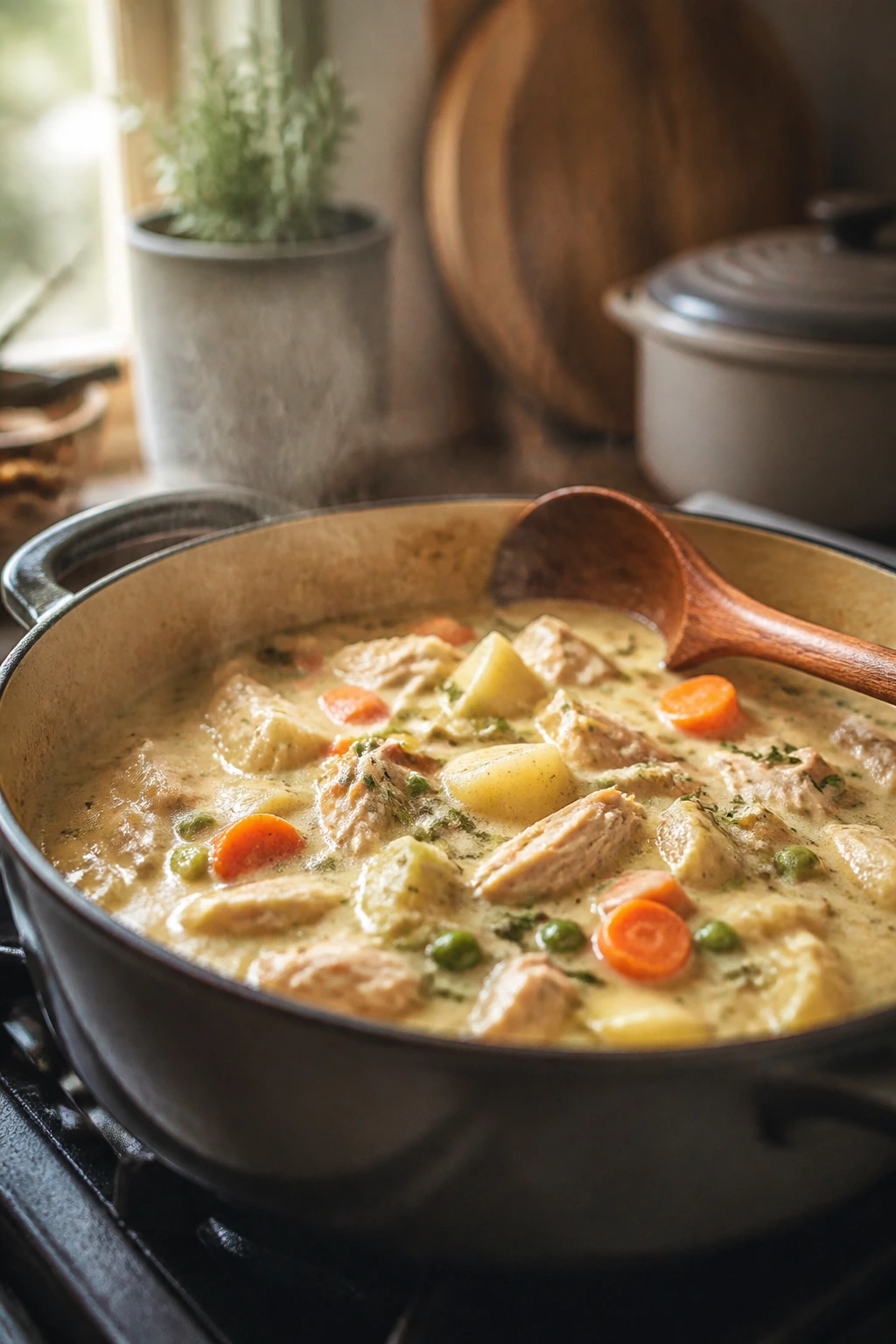
A good creamy chicken pot for weeknight dinners should smell like butter, onions, and thyme before you even reach for a spoon. It should arrive at the table with tender chicken, soft potatoes, and a sauce that clings to the vegetables instead of flooding the bowl like soup. That balance matters. Too thin, and it feels unfinished. Too thick, and you’ve got glue.
I keep coming back to this kind of one-pot chicken dinner because it solves the real problem most of us have on busy evenings: you want something that tastes cooked, not assembled. The chicken needs enough browning to pick up a little color. The vegetables need enough time to soften without collapsing. The sauce has to move from milky to glossy without getting grainy. That’s the whole game, really.
What makes this version worth making is that it leans into those details instead of pretending they don’t matter. The potatoes cook right in the pot, so they thicken the broth naturally. The peas go in at the end, where they stay bright and sweet. And the final hit of lemon juice keeps the cream from tasting flat, which is where a lot of creamy chicken recipes stumble.
Why This Creamy Chicken Pot Earns Its Place
-
One pot, fewer dishes: The chicken browns first, then the vegetables and sauce build in the same pot, so you’re not juggling three pans after dinner.
-
The sauce tastes layered, not muddy: Browning the chicken and cooking the flour for a minute gives the broth a deeper, toastier flavor that plain simmering never gets.
-
The texture stays useful: Yukon Gold potatoes soften enough to help thicken the pot, but they still hold their shape instead of dissolving into mush.
-
It’s flexible without feeling random: You can swap in chicken breasts, rotisserie chicken, mushrooms, or biscuit topping without wrecking the basic structure.
-
It feeds people properly: This is not a tiny skillet that disappears in one round. It makes enough for a real family dinner, with leftovers that hold up well.
-
It tastes like more effort than it takes: That’s the sweet spot. The pot looks and smells like you worked, even though the method stays straightforward.
How the Sauce Stays Silky Without Getting Heavy
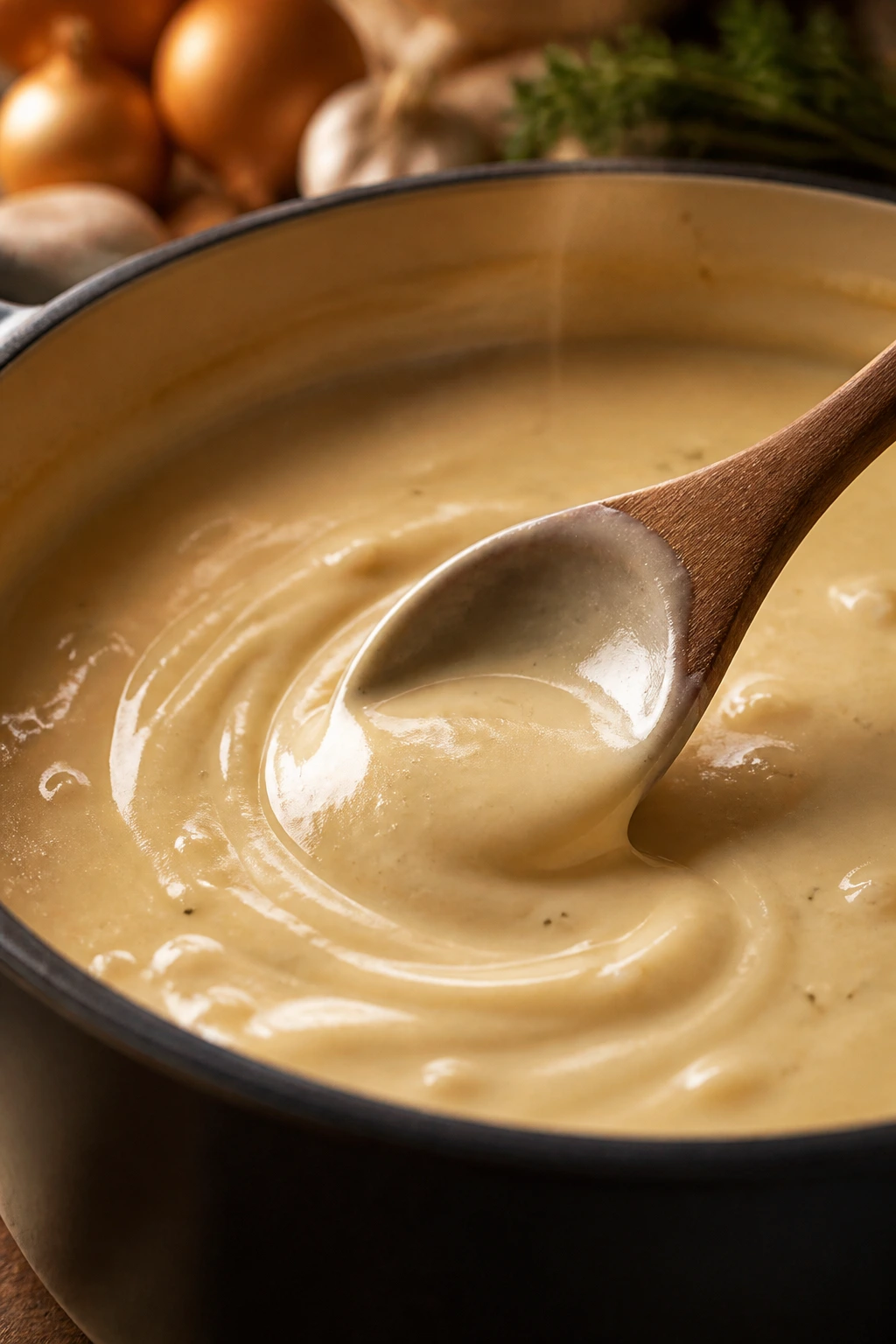
Creamy chicken pot recipes can go in two annoying directions: watery gravy that slides off the spoon, or a thick, floury sauce that tastes like it came from a packet. The trick is to build the body in stages. First, the onions, carrots, and celery soften in butter. Then the flour cooks briefly on the vegetables, which takes away that raw starch taste. After that, the broth goes in gradually, so the mixture stays smooth instead of clumping.
The milk and cream do different jobs here. Milk gives the pot enough liquid to simmer the potatoes without turning the sauce into a brick. Cream adds that soft, rounded finish at the end. I would not skip the milk and replace it with all cream unless you want a heavier, sweeter sauce that can feel blunt after a few bites.
There’s also a small but important detail people miss: the final splash of lemon juice. It does not make the dish taste lemony. It just wakes up the chicken, the cream, and the thyme so the whole pot tastes brighter. That one spoonful keeps the dinner from feeling sleepy.
Timing, Yield, and When the Pot Is Ready
Yield: Serves 4 to 6
Prep Time: 20 minutes
Cook Time: 35 minutes
Total Time: 55 minutes
Difficulty: Beginner — the technique is simple, but you do need to watch the heat so the sauce stays smooth and the chicken doesn’t overcook.
Best Served: Right after a 5-minute rest, when the sauce has thickened enough to coat the spoon and the potatoes still hold their shape.
A dish like this lives or dies by timing. If you rush the vegetables, the pot tastes flat. If you boil the sauce hard, the dairy can separate. If you undercook the potatoes, the whole thing feels unfinished no matter how good the flavor is. That’s why the timing block matters here more than usual. You want enough time for the flour to lose its raw edge and just enough simmering for the potatoes to soften cleanly.
Ingredient List: What Goes Into the Pot
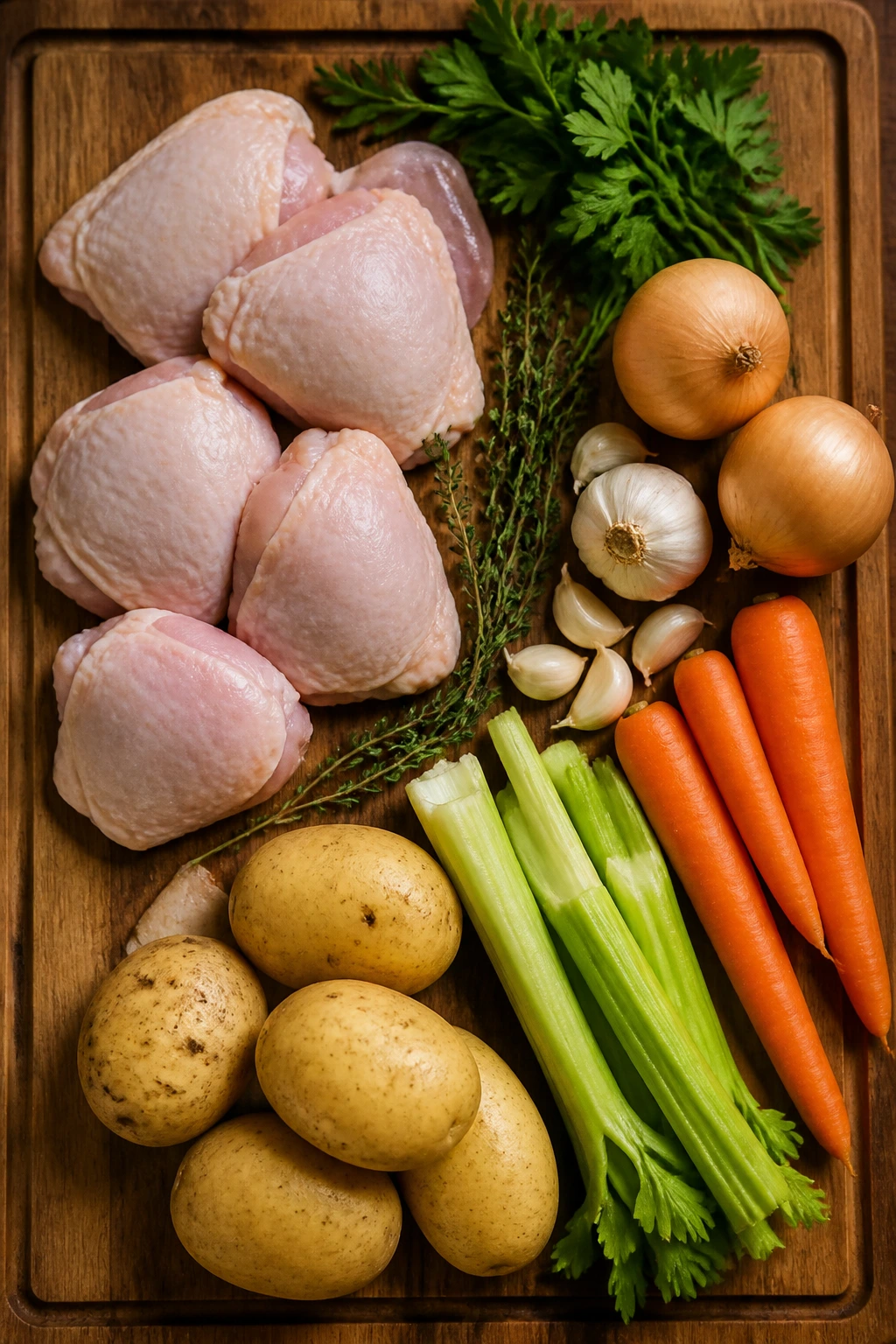
For the Creamy Chicken Pot:
- 1 1/2 pounds boneless, skinless chicken thighs, cut into 1-inch pieces
- 1 1/2 teaspoons kosher salt, divided
- 1/2 teaspoon black pepper, divided
- 2 tablespoons olive oil
- 2 tablespoons unsalted butter
- 1 medium yellow onion, diced small
- 2 medium carrots, peeled and sliced 1/4-inch thick
- 2 celery stalks, sliced thin
- 3 cloves garlic, minced
- 2 tablespoons all-purpose flour
- 2 cups low-sodium chicken broth
- 1 cup whole milk
- 1/2 cup heavy cream
- 1 pound Yukon Gold potatoes, cut into 3/4-inch cubes
- 1 teaspoon dried thyme
- 1 bay leaf
- 1 teaspoon Dijon mustard
- 1 cup frozen peas
- 1 tablespoon lemon juice
- 2 tablespoons chopped fresh parsley
The list looks ordinary on paper. In the pot, it turns into something much more specific: a chicken dinner with a creamy base, enough vegetables to make it feel complete, and a sauce that can stand up to bread or rice without getting lost.
Ingredient Deep Dive: Chicken, Vegetables, and Cream
Chicken
- What to use: 1 1/2 pounds boneless, skinless chicken thighs cut into 1-inch pieces.
- Preparation: Pat the chicken dry and season it with 1 teaspoon of the salt and 1/4 teaspoon of the pepper before it hits the pot.
- Substitutions: Boneless chicken breasts work if you prefer them, and rotisserie chicken can step in when you need a shorter route.
- Tips: Thighs are my pick because they stay juicy through the simmer; breasts need a little more attention and should come out as soon as they hit 165°F.
Vegetables
- What to use: 1 medium yellow onion, 2 medium carrots, 2 celery stalks, 3 cloves garlic, and 1 pound Yukon Gold potatoes.
- Preparation: Dice the onion small, slice the carrots and celery thin so they soften evenly, and cut the potatoes into cubes close to the same size.
- Substitutions: Frozen diced onions or a frozen mirepoix mix can save time; parsnips or sweet potatoes can replace part of the potato if you want a sweeter finish.
- Tips: Smaller pieces cook faster and give you a smoother spoonful; large chunks leave you chasing undercooked bits at the bottom of the pot.
Creamy Base
- What to use: 2 tablespoons flour, 2 cups low-sodium chicken broth, 1 cup whole milk, 1/2 cup heavy cream, and 1 teaspoon Dijon mustard.
- Preparation: Measure everything before you start cooking; once the flour goes in, things move faster than people expect.
- Substitutions: Half-and-half can stand in for the milk and cream if that’s what you have, though the sauce will be a little lighter.
- Tips: Low-sodium broth gives you room to season the pot properly. Salted broth plus salted butter can tip the whole thing too far before the peas even go in.
Finishing Ingredients
- What to use: 1 teaspoon dried thyme, 1 bay leaf, 1 cup frozen peas, 1 tablespoon lemon juice, and 2 tablespoons chopped parsley.
- Preparation: Keep the peas frozen until the last few minutes, and chop the parsley right before serving so it stays bright.
- Substitutions: Fresh thyme can replace dried, and chives can stand in for parsley if that’s what’s left in the crisper drawer.
- Tips: The lemon juice is not garnish fluff. It sharpens the sauce in a way that salt alone can’t.
Tools That Make the Pot Easier to Manage
-
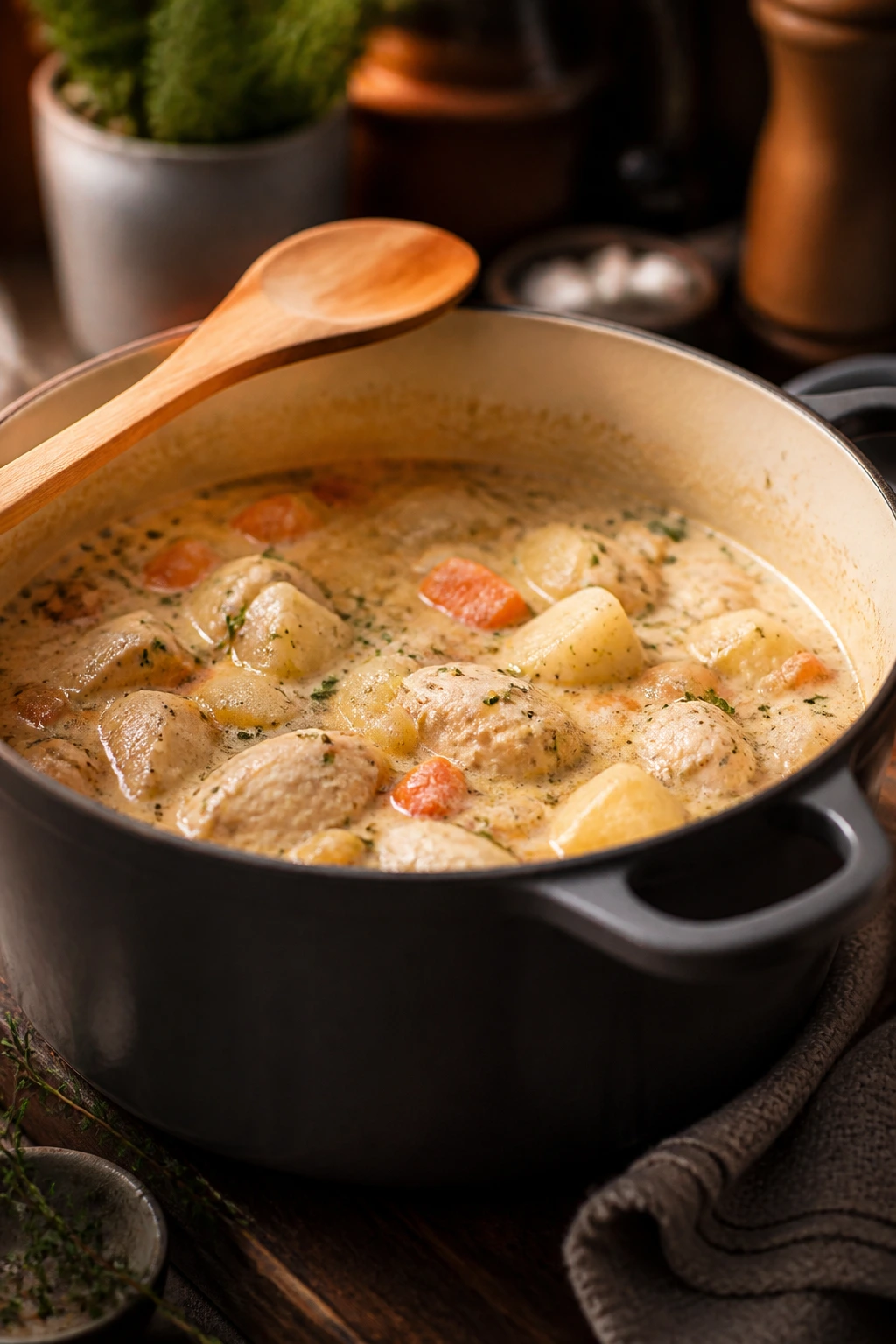
5- to 6-quart Dutch oven or heavy-bottomed pot: The weight helps the chicken brown instead of steaming, and the wide base gives the vegetables room to soften.
-
Wooden spoon or sturdy spatula: You need something that can scrape up the browned bits without scratching the pot.
-
Sharp chef’s knife: Small, even dice on the onion and potatoes make the whole dish cook at the same pace.
-
Cutting board with a damp towel underneath: A sliding board is how people end up with uneven pieces and little knife slips.
-
Measuring cups and spoons: The sauce depends on the ratio of flour, broth, milk, and cream, so eyeballing gets sloppy fast.
-
Instant-read thermometer: Not mandatory, but useful. Chicken thighs are best checked at the thickest piece, and 165°F is the number you want.
Stovetop Instructions: Browning, Simmering, Finishing
Prepare the Chicken and Veggies:
-
Pat the chicken thighs dry with paper towels, then season them with 1 teaspoon of the salt and 1/4 teaspoon of the black pepper.
-
Dice the onion, slice the carrots and celery, mince the garlic, and cube the potatoes into 3/4-inch pieces. Keep the peas frozen for later.
Brown the Chicken:
-
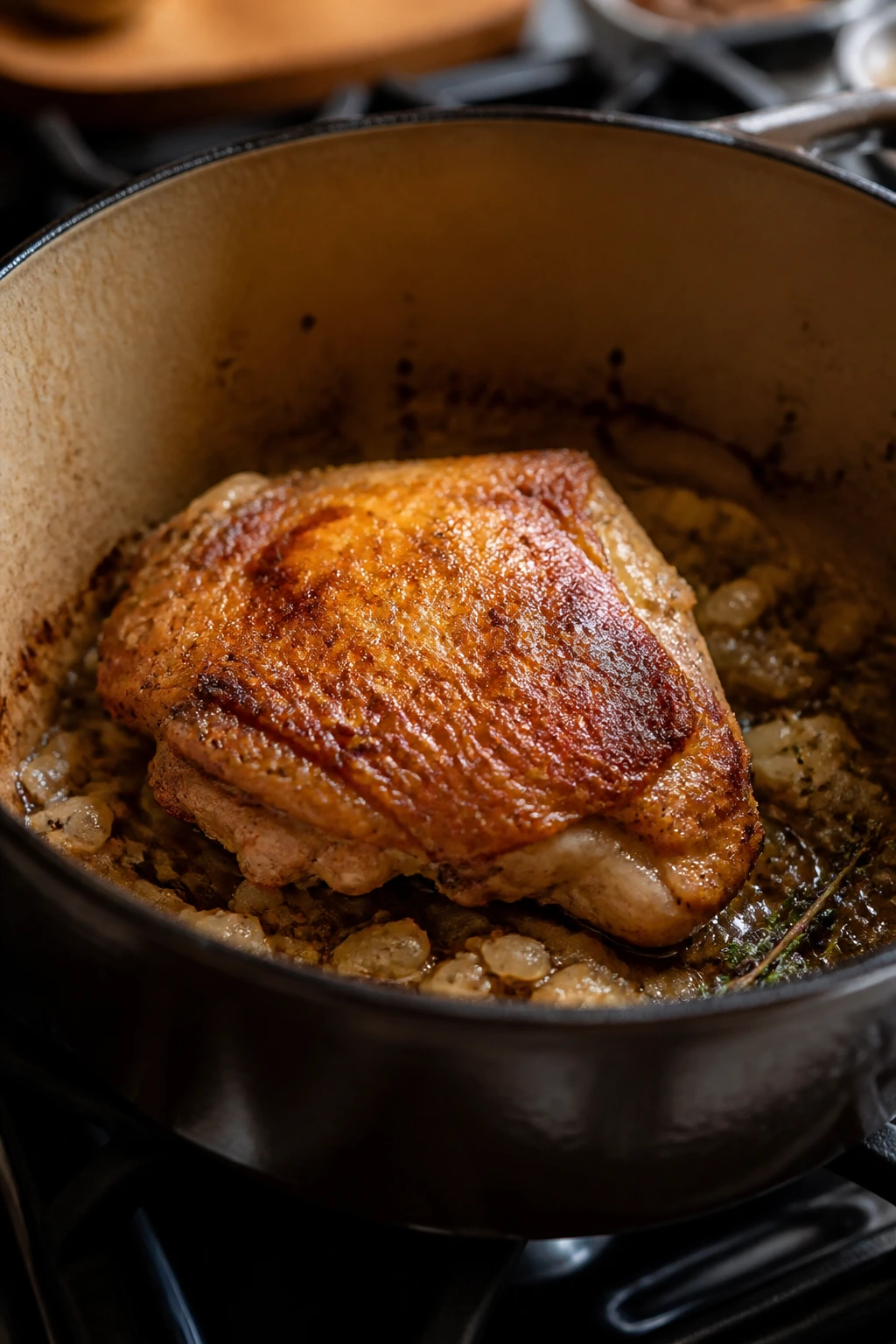
Heat 2 tablespoons olive oil in a 5- to 6-quart Dutch oven over medium-high heat until the oil shimmers.
-
Add the chicken in a single layer, leaving a little space between pieces if you can. Cook for 3 to 4 minutes per side, until browned on the outside but not fully cooked through. Do not crowd the pot; crowded chicken steams instead of browns. Transfer the chicken to a plate.
Build the Base:
-
Reduce the heat to medium and melt 2 tablespoons unsalted butter in the same pot.
-
Add the onion, carrots, and celery along with the remaining 1/2 teaspoon salt and the remaining 1/4 teaspoon pepper. Cook for 6 to 8 minutes, stirring often, until the onion looks translucent and the carrots start to soften at the edges.
-
Stir in the garlic and dried thyme and cook for 30 seconds, just until the garlic smells sweet and the thyme blooms in the butter.
-
Sprinkle the flour over the vegetables and stir for 1 minute so the flour coats everything evenly and loses its raw, dusty smell.
Make the Sauce and Simmer:
-
Slowly pour in the chicken broth while stirring and scraping the bottom of the pot to loosen the browned bits.
-
Stir in the milk, heavy cream, Dijon mustard, bay leaf, and potatoes. Return the browned chicken and any juices on the plate to the pot.
-
Bring the mixture to a gentle simmer over medium heat, then reduce the heat to medium-low. Partially cover the pot and cook for 15 to 18 minutes, stirring every few minutes, until the potatoes are tender and the chicken reaches 165°F at the thickest piece. A hard boil can make the dairy break and the chicken tighten up.
Finish and Adjust:
-
Stir in the frozen peas and lemon juice and cook for 2 to 3 minutes, just until the peas turn bright green and the sauce thickens enough to coat the back of a spoon.
-
Remove the bay leaf, taste the sauce, and add a little more salt or pepper if needed. Fold in the parsley, then let the pot rest off the heat for 5 minutes before serving.
A small rest matters. The sauce settles, the potatoes finish absorbing flavor, and the whole pot becomes easier to spoon without running everywhere.
How to Serve It on a Busy Night
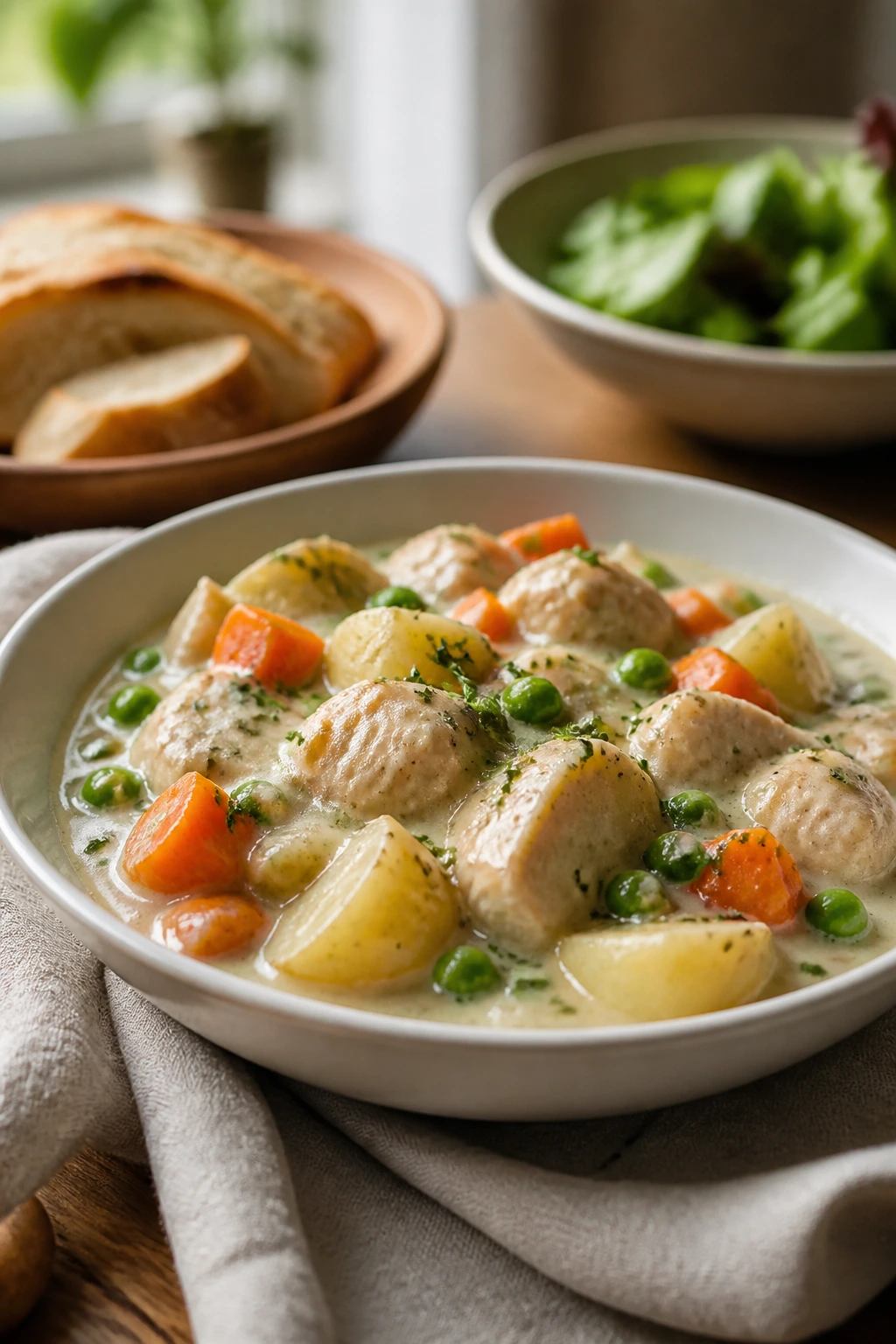
Presentation: Spoon the creamy chicken pot into shallow bowls so you get chicken, vegetables, and sauce in the same bite. A final scatter of parsley and a few extra cracks of black pepper make it look finished without fuss.
Accompaniments: Toasted sourdough, split biscuits, or a simple mound of buttered rice all make sense here. If you want something fresh beside it, go with a sharp green salad dressed in lemon vinaigrette so the plate does not feel heavy from start to finish.
Portions: A generous ladle feeds 4 hungry adults. With bread or a side salad, it stretches to 6. If you want to serve it over rice, keep the scoops a little smaller because the starch underneath makes the bowl fuller fast.
Beverage Pairing: A dry white wine, such as Sauvignon Blanc, handles the cream and herbs cleanly. If you want something non-alcoholic, sparkling water with lemon or unsweetened iced tea keeps the meal from feeling too rich.
Extra Tips and Flavor Boosters
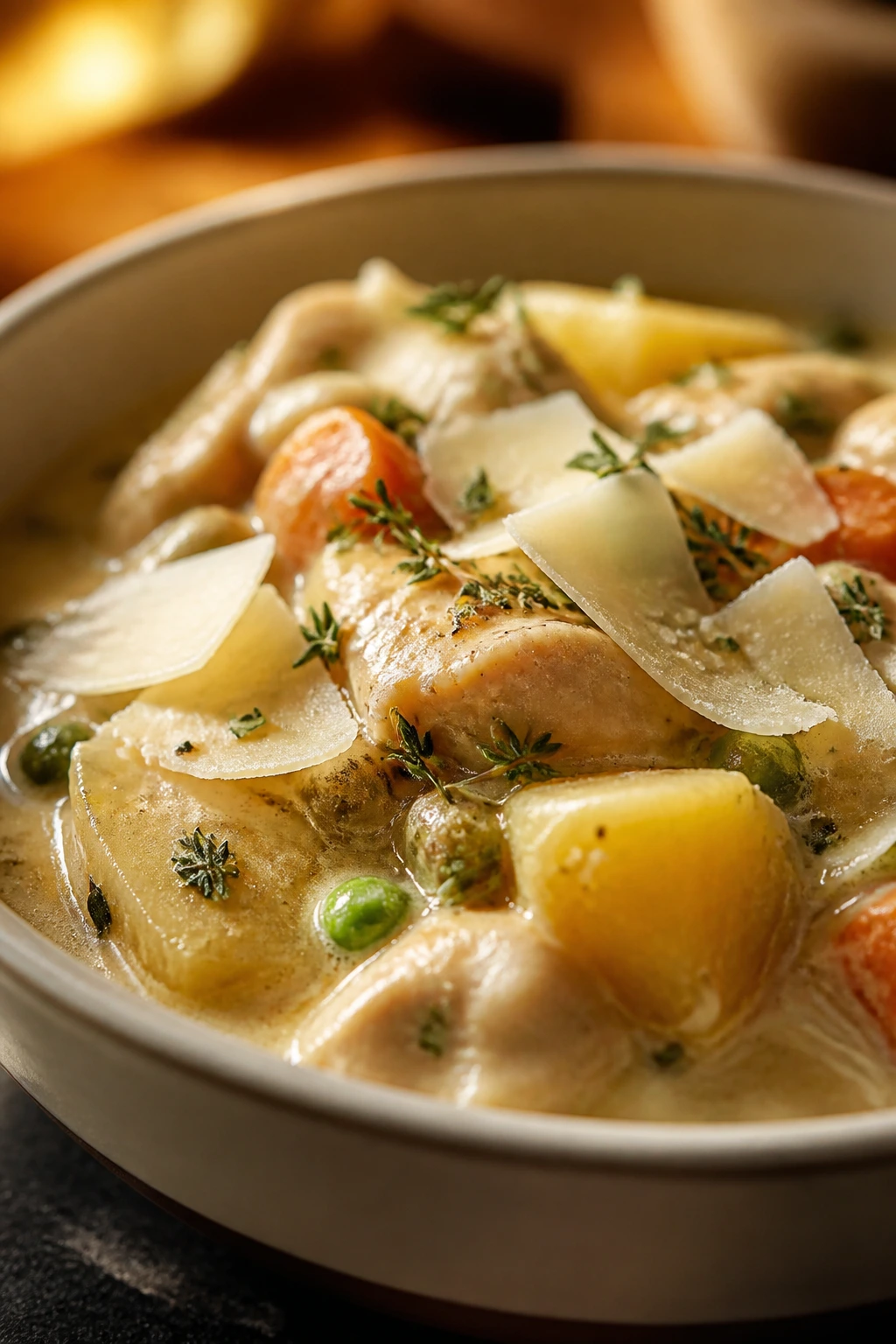
Flavor Enhancement: Stir in 1/4 cup grated Parmesan at the very end if you want the sauce a little saltier and more savory. It melts into the cream and gives the pot a rounder finish without making it taste cheesy in a loud way.
Time-Saver: Use diced rotisserie chicken instead of raw thighs. Skip the browning step, simmer the vegetables and sauce until the potatoes are tender, then add the shredded chicken during the last 5 minutes so it warms through without drying out.
Cost-Saver: Chicken thighs are already kinder on the budget than breasts, and frozen peas beat most sad bagged vegetables by a mile. I would spend the money on good broth before I’d spend it on fancy cream.
Make-It-Better: A small spoonful of Dijon does more than people think. It keeps the sauce from tasting flat, and it gives the chicken a faint sharpness that keeps the cream from taking over.
Serving Move: If you want the dish to feel a little more special, brush the top of split biscuits with melted butter and serve them beside the pot. It sounds minor. It isn’t.
Common Mistakes That Turn a Good Pot Flat
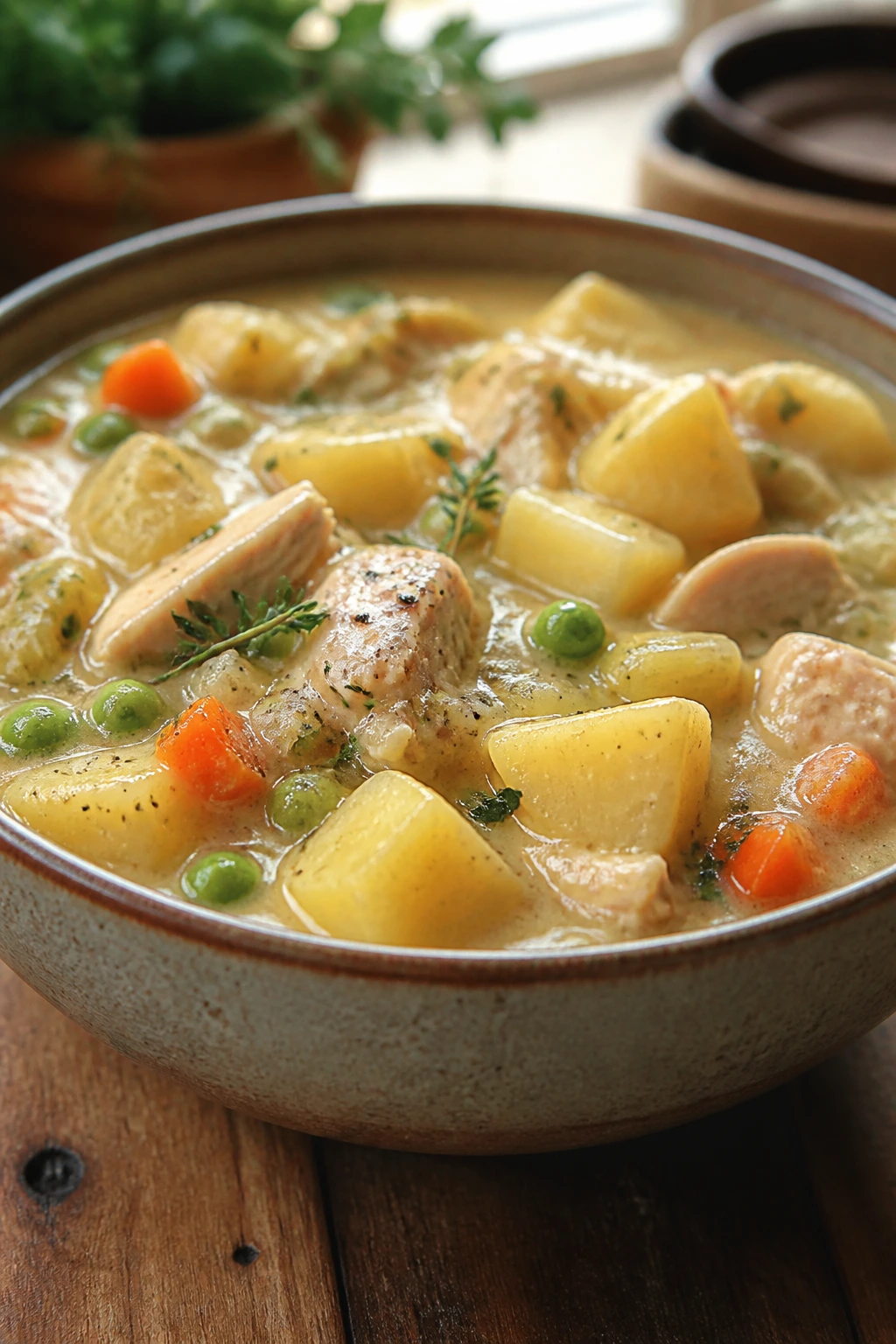
Crowding the chicken: If you pile every piece in at once, the chicken sweats and turns gray instead of picking up color. Brown it in a single layer, and if your pot is small, do two batches.
Boiling the sauce hard: Cream and milk do not like a rough boil. If the pot bubbles like a rolling soup, the sauce can split or turn grainy, so keep it at a gentle simmer once the dairy is in.
Cutting the potatoes too large: Big cubes look tidy, but they take forever to soften. A 3/4-inch cube cooks through in the same window as the chicken and vegetables, which keeps the whole pot on the same clock.
Adding the peas too early: Frozen peas only need a few minutes. If you toss them in at the beginning, they lose their color and taste like old canned vegetables, which is not the point here.
Underseasoning the base: Cream dulls salt. If the onion, carrots, and broth are timid, the final pot will taste quiet even after the parsley goes in. Taste at the end and season with purpose.
Skipping the resting time: The sauce looks looser right off the heat than it does five minutes later. That pause gives you a better spoonable texture and stops the first bowl from running all over the plate.
Variations for Rotisserie Chicken, Biscuit Toppers, and Swaps
Rotisserie Shortcut Pot: Shred 3 to 4 cups of rotisserie chicken and stir it in near the end instead of browning raw chicken. This version cooks faster and is handy when you’re using leftovers that need a second life.
Mushroom and Thyme Pot: Add 8 ounces sliced cremini mushrooms with the onion, carrots, and celery. They bring a deeper, earthier flavor and make the pot feel a little closer to a mushroom chicken stew without losing the creamy base.
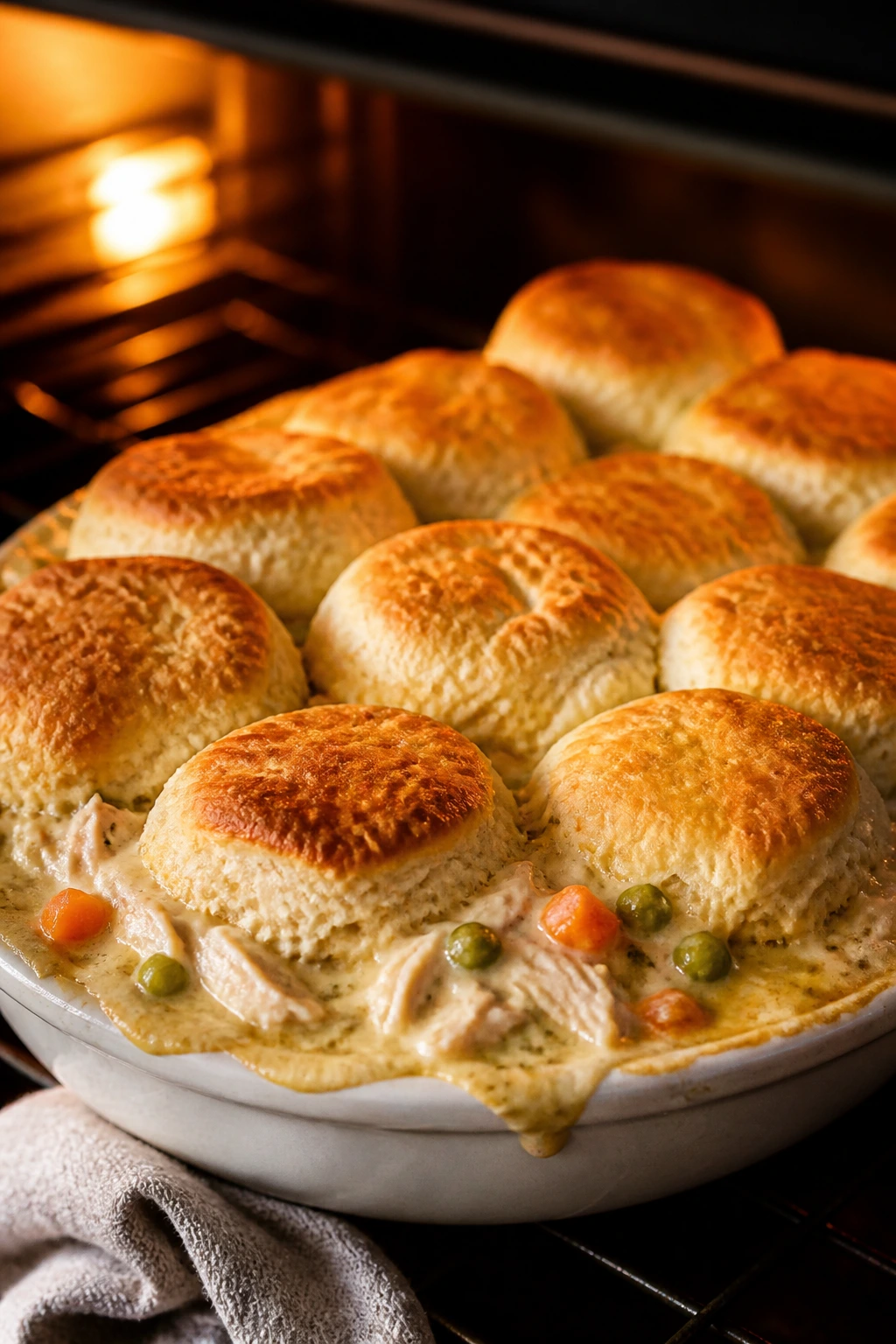
Biscuit-Topped Version: Spoon the finished chicken pot into a baking dish, top with store-bought biscuit dough, and bake at 400°F for 15 to 20 minutes until the biscuits are golden. That turns the stovetop dinner into a pot-pie-style bake with a crackly top.
Dairy-Lighter Swap: Replace the cream with extra milk and use 2 tablespoons of unsalted butter instead of adding more fat. The sauce will be lighter and a little less plush, but it still holds together if you simmer it long enough to thicken.
Herb-and-Leek Change-Up: Swap one carrot for a leek and add an extra teaspoon of thyme or a little chopped rosemary. The flavor leans a little greener and more springlike, which works especially well if you plan to serve it with bread instead of rice.
Storage, Reheating, and Make-Ahead Notes
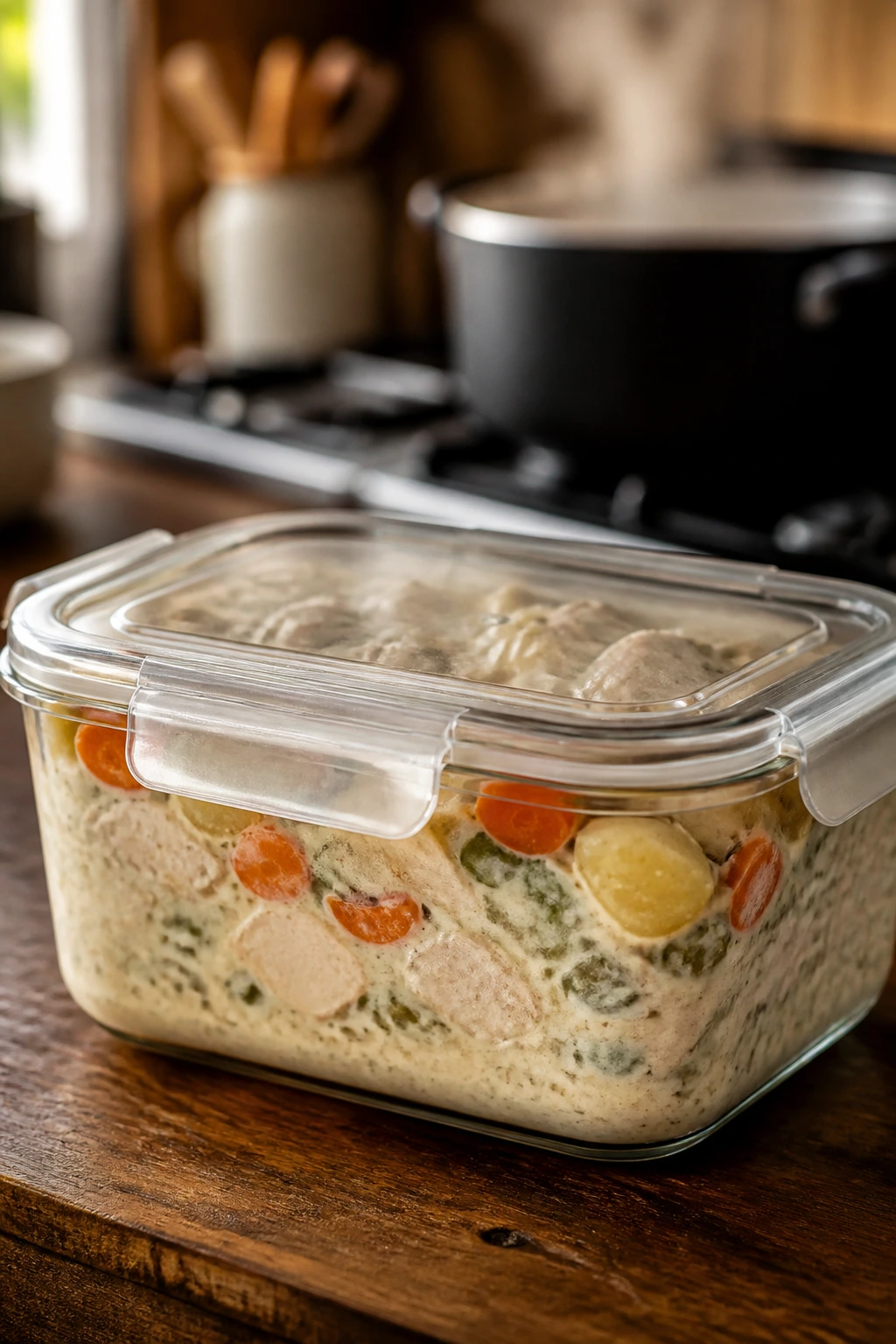
This creamy chicken pot keeps well in the refrigerator for 3 to 4 days in a sealed container. The sauce will thicken as it chills, which is normal. It also means the leftovers often need a splash of milk or broth when reheated.
For freezing, cool the pot fully, portion it into airtight containers, and freeze for up to 2 months. The potatoes will soften a little after thawing, but the flavor stays solid. If you know ahead of time that you want to freeze it, slightly undercook the potatoes during the simmer so they don’t go mushy on reheating.
The best way to reheat it is on the stovetop over low heat. Add 1 to 3 tablespoons of milk or broth, stir gently, and let the pot warm until it is steaming and the chicken is hot all the way through. The microwave works too, but use medium power and stop to stir every 45 to 60 seconds so the sauce does not split at the edges.
If you want to make pieces ahead, chop the vegetables and cube the potatoes up to 24 hours in advance and keep them covered in the fridge. You can also season the chicken earlier in the day. What I would not do is fully cook the dish and leave it sitting around for hours; creamy sauces dry out fast once they cool and reheat badly if they’re neglected.
Questions People Ask Before Cooking It
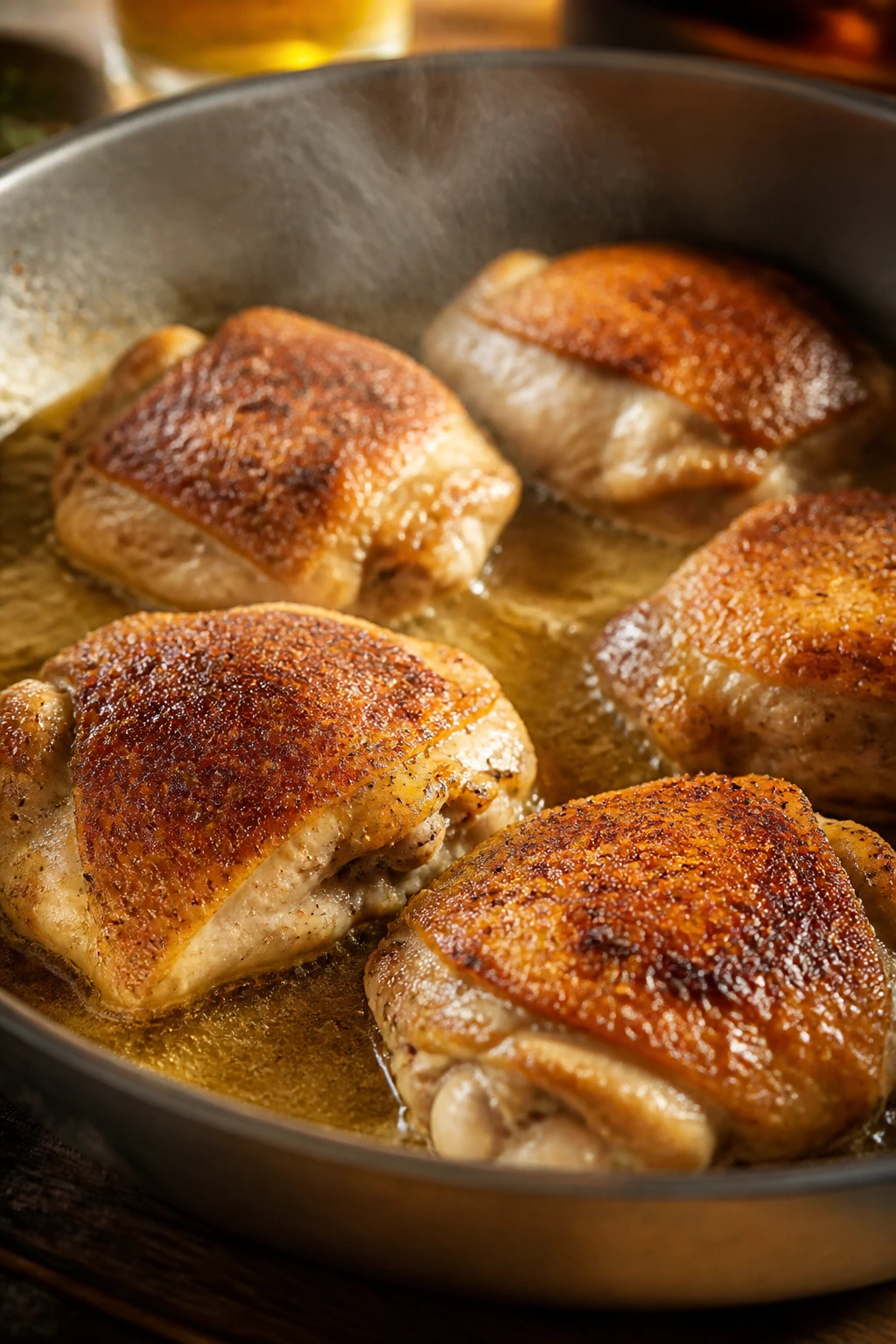
Can I use chicken breasts instead of thighs?
Yes, but treat them gently. Breasts cook faster and dry out sooner, so cut them into even pieces and pull the pot as soon as they hit 165°F. Thighs still win for texture, especially if you want leftovers.
Can I make this with rotisserie chicken?
Absolutely. Add the shredded chicken during the final 5 minutes, after the potatoes are tender and the sauce is already thick. That keeps the meat from overcooking and turning stringy.
What if my sauce is too thin?
Simmer it uncovered for 3 to 5 more minutes, stirring now and then. The starch from the potatoes and the flour in the base should tighten it up. If it still looks loose, mash a few potato cubes against the side of the pot and stir them back in.
What if my sauce gets too thick?
Stir in warm broth or milk a splash at a time until it loosens to a spoonable texture. Thick sauces are easier to fix than thin ones, so add liquid in small amounts and wait 30 seconds before deciding you need more.
Can I make it gluten-free?
Yes. Replace the flour with a gluten-free all-purpose blend that includes xanthan gum, or use 1 1/2 tablespoons cornstarch mixed with 2 tablespoons cold broth. Stir that slurry in after the vegetables soften, then simmer until it thickens.
Can I add more vegetables?
You can, but choose ones that cook in the same window as the potatoes. Corn, mushrooms, and small cauliflower florets fit well. Broccoli works too, though it tastes better if you add it in the last 6 to 8 minutes so it stays bright.
How do I keep the peas from turning dull?
Add them right near the end and keep the heat low. They only need a few minutes to warm through, and their color goes from fresh to muddy fast if you leave them in the simmer too long.
A Warm Finish for a Cold Night
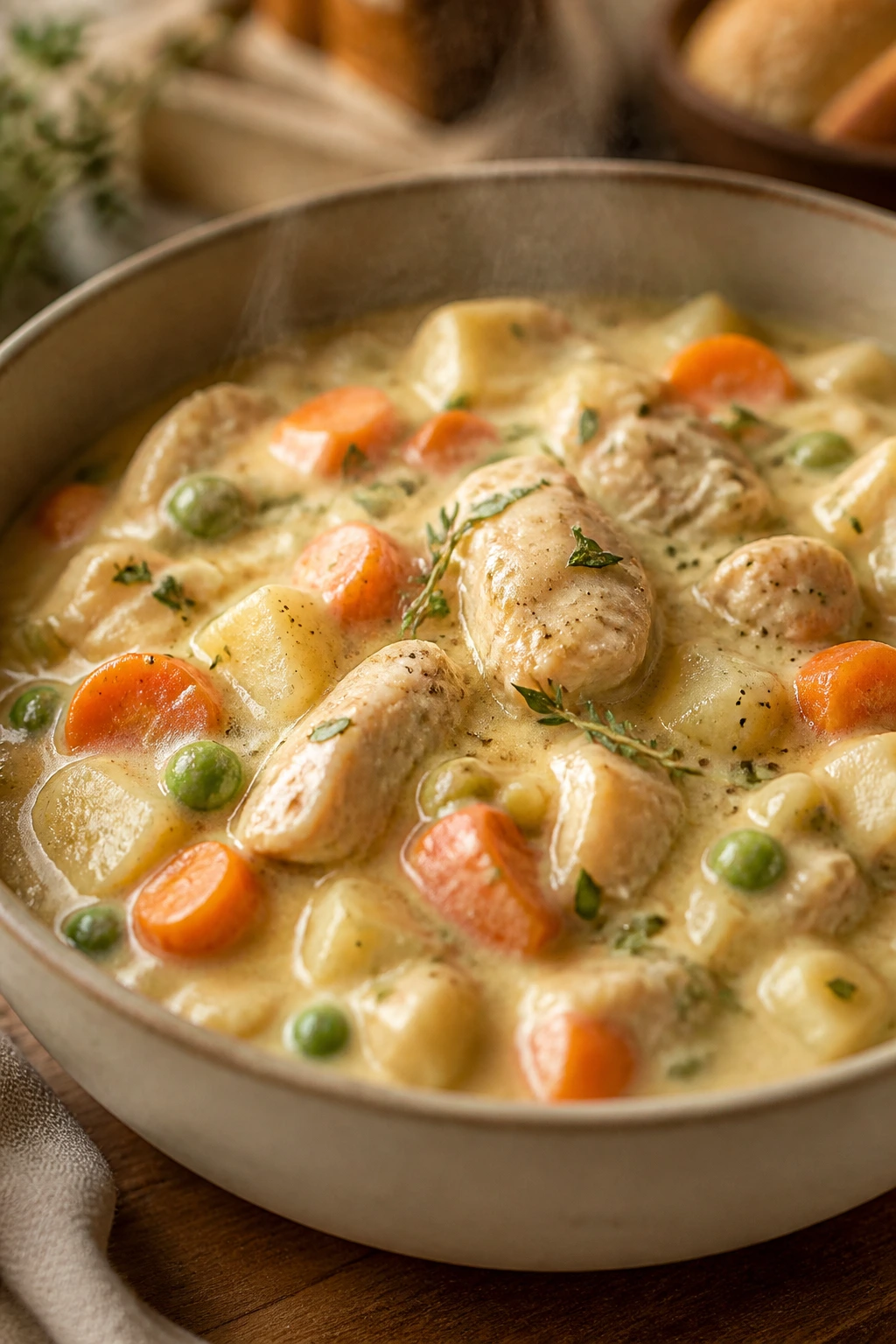
There’s a reason this kind of creamy chicken pot keeps coming back to the table. It’s not flashy. It doesn’t need a long list of tricks or a pile of toppings. It just does the job: tender chicken, soft vegetables, and a sauce that tastes like it came from somebody who paid attention for half an hour.
That’s the real appeal. The pot is sturdy enough for a weeknight, but the flavor has enough care in it to make the meal feel complete. Serve it with bread if you want extra comfort, or keep it plain and let the spoon do the work. Either way, this is the sort of dinner that gets made once and then quietly moves into regular rotation.
Creamy Chicken Pot — Recipe Card
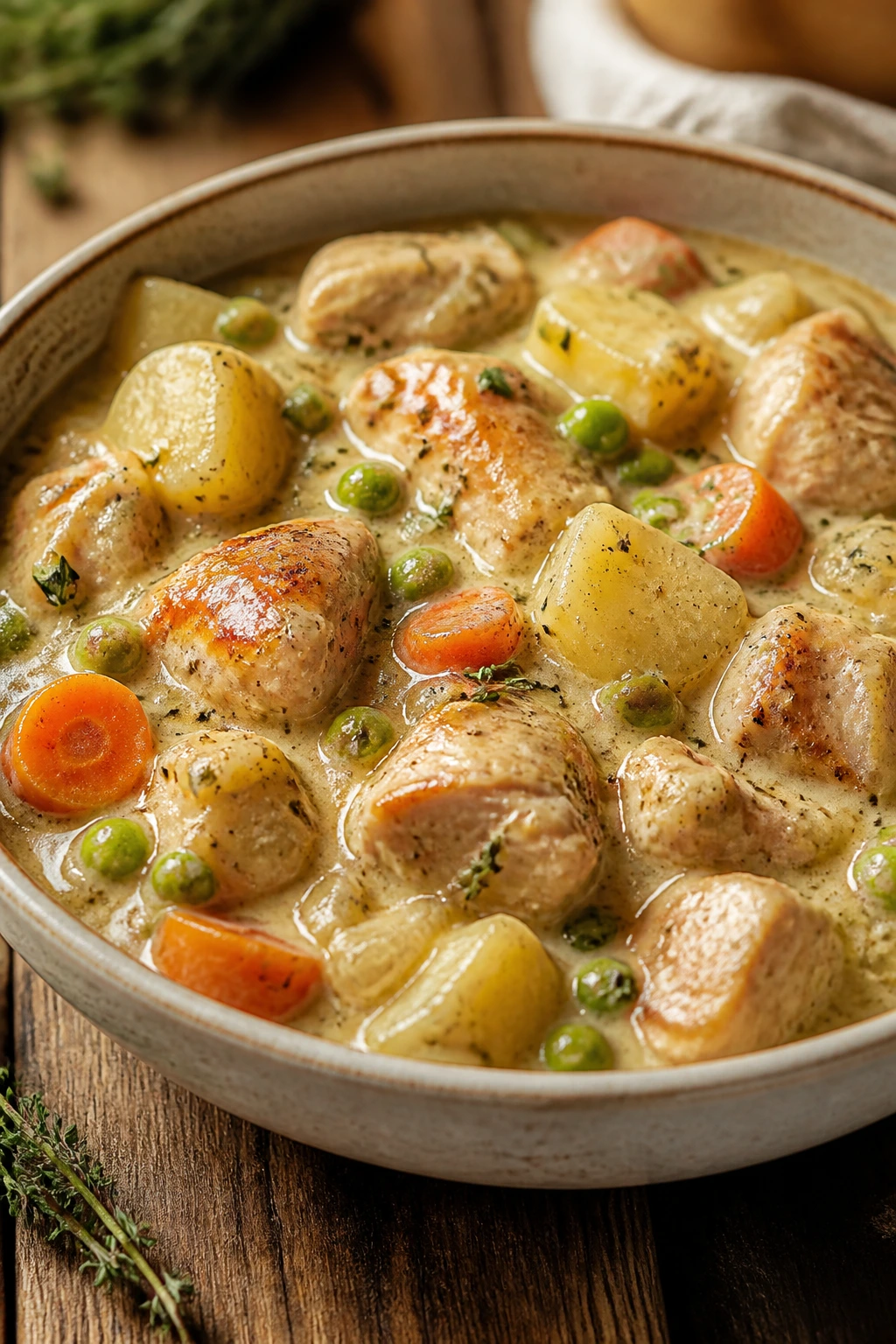
Recipe Name: Creamy Chicken Pot
Description: A one-pot creamy chicken dinner with tender thighs, potatoes, carrots, celery, peas, and a silky thyme-scented sauce. It tastes like a cross between chicken stew and pot-pie filling, minus the crust.
Prep Time: 20 minutes
Cook Time: 35 minutes
Total Time: 55 minutes
Course: Dinner, Main Course
Cuisine: American
Servings: 4 to 6
Calories: about 520 kcal per serving
Ingredients
For the Creamy Chicken Pot:
- 1 1/2 pounds boneless, skinless chicken thighs, cut into 1-inch pieces
- 1 1/2 teaspoons kosher salt, divided
- 1/2 teaspoon black pepper, divided
- 2 tablespoons olive oil
- 2 tablespoons unsalted butter
- 1 medium yellow onion, diced small
- 2 medium carrots, peeled and sliced 1/4-inch thick
- 2 celery stalks, sliced thin
- 3 cloves garlic, minced
- 2 tablespoons all-purpose flour
- 2 cups low-sodium chicken broth
- 1 cup whole milk
- 1/2 cup heavy cream
- 1 pound Yukon Gold potatoes, cut into 3/4-inch cubes
- 1 teaspoon dried thyme
- 1 bay leaf
- 1 teaspoon Dijon mustard
- 1 cup frozen peas
- 1 tablespoon lemon juice
- 2 tablespoons chopped fresh parsley
Instructions
-
Pat the chicken dry and season it with 1 teaspoon salt and 1/4 teaspoon pepper.
-
Brown the chicken in olive oil over medium-high heat for 3 to 4 minutes per side. Transfer to a plate.
-
Cook the onion, carrots, and celery in butter over medium heat for 6 to 8 minutes, then add the garlic and thyme for 30 seconds.
-
Stir in the flour and cook for 1 minute.
-
Whisk in the broth, then add the milk, cream, Dijon, bay leaf, potatoes, and browned chicken.
-
Simmer gently, partially covered, for 15 to 18 minutes, until the potatoes are tender and the chicken reaches 165°F.
-
Stir in the peas and lemon juice and cook for 2 to 3 minutes.
-
Remove the bay leaf, adjust the seasoning, fold in the parsley, and rest for 5 minutes before serving.
Notes: Add a splash of milk or broth when reheating. Thighs stay juicier than breasts. For a biscuit-top version, spoon the finished filling into a baking dish and bake with biscuit dough at 400°F until golden.