



A chocolate cake can go wrong in sneaky ways. It can bake up dry at the edges, bland in the middle, or so sweet that the second bite feels like a chore. A buttery fudge cake should do none of that. It should taste dark and soft, with a crumb that gives slightly under the fork, and it should have the kind of butter-backed richness that makes a cold glass of milk seem less like a pairing and more like a necessity.
The cream cheese frosting changes the whole mood. On a lesser cake, it can feel like an afterthought. Here, it earns its keep. The tang cuts through the cocoa, the butter keeps the frosting plush instead of sharp, and the powdered sugar gives you that smooth, spreadable finish that sits in thick waves over the top instead of sliding off the sides.
I like chocolate cakes that behave like they were made by somebody who has actually baked a few flops. This one does. It uses melted butter, sour cream, and hot coffee to keep the crumb dense in the good way — fudgy, not heavy — and the frosting is built to spread cleanly without becoming greasy or stiff. The method matters here. A lot. And once you know where the trouble spots live, the cake becomes very forgiving.
Why This Cake Earns Its Place on the Table
- Dark Chocolate Flavor: The cocoa gets bloomed with hot coffee, which deepens the chocolate taste without turning the cake into a mocha cake unless you want that.
- Tender Crumb: Sour cream and butter keep the crumb soft for days, so the slices stay plush instead of turning dry by the next morning.
- Tangy Frosting: Cream cheese frosting keeps the sweetness in check, and that little bit of sharpness makes the cake taste more grown-up than the usual sugar bomb.
- Simple Batter Method: You do not need to cream butter for ages or fiddle with multiple bowls and fussy stages; the batter comes together fast if you measure well.
- Good Slice Structure: A 9×13-inch pan gives you neat squares or generous rectangles, which is useful when you need dessert that can be cut for a crowd without collapse.
- Make-Ahead Friendly: The cake layer and the frosting both hold well, which means you can bake ahead, chill, and frost when you have time to breathe.
Yield, Timing, and the Pan That Fits Best
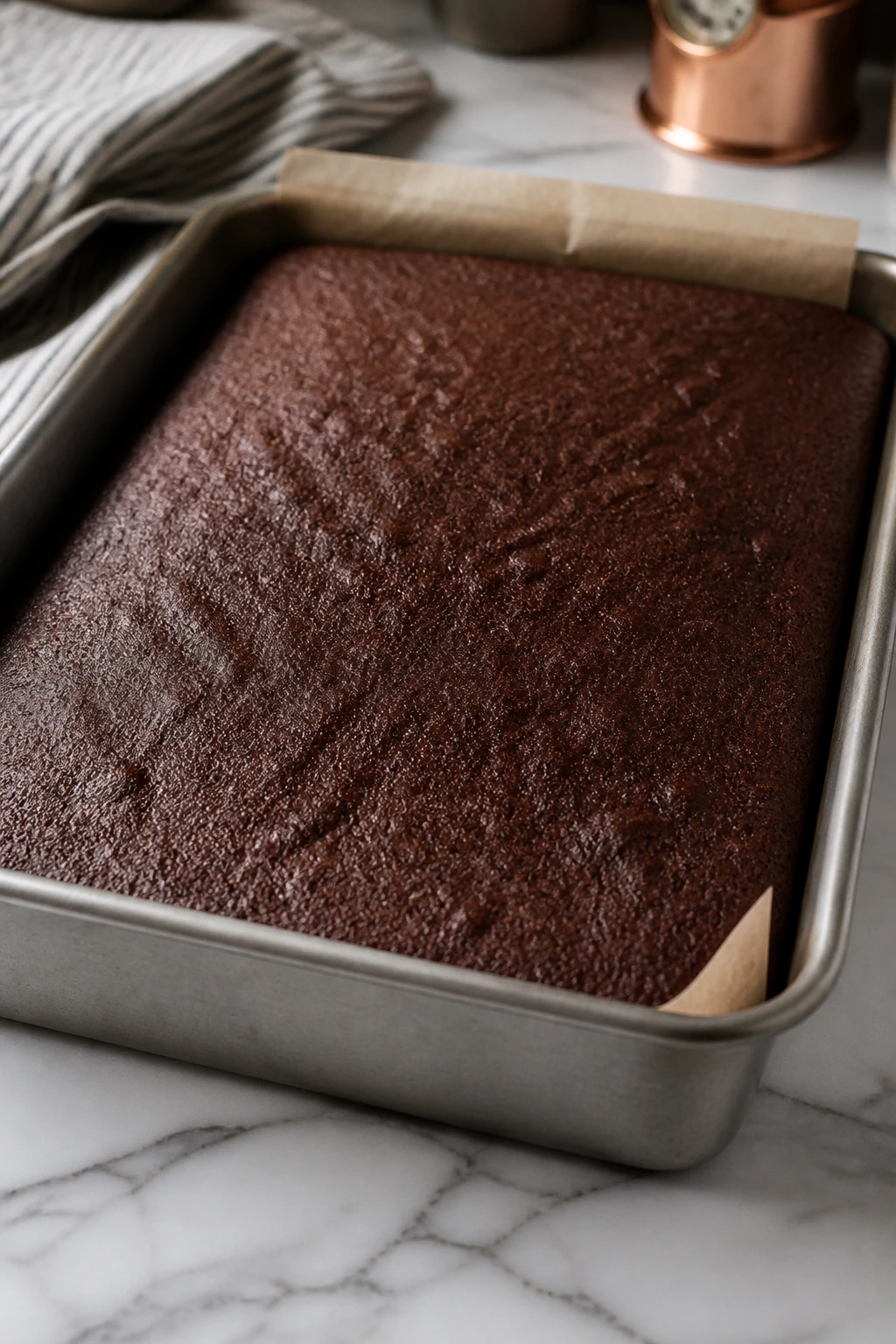
Yield: 12 to 15 slices
Prep Time: 25 minutes
Cook Time: 32 to 38 minutes
Total Time: 1 hour 5 minutes, plus about 1 hour for cooling before frosting
Difficulty: Beginner to Intermediate — the batter is straightforward, but the cake does need proper cooling and the frosting needs a light hand.
Chill/Rest Time: 30 minutes after frosting for the cleanest slices
Best Served: At room temperature, when the crumb is soft and the frosting is creamy
A metal 9×13-inch pan is my first choice here. It bakes more evenly than glass, and that matters when you want the center to stay moist without the edges getting tough. If your oven tends to run hot, set the rack in the middle and start checking early. Chocolate cake can go from done to dry faster than you’d expect.
The Ingredient List You Actually Need
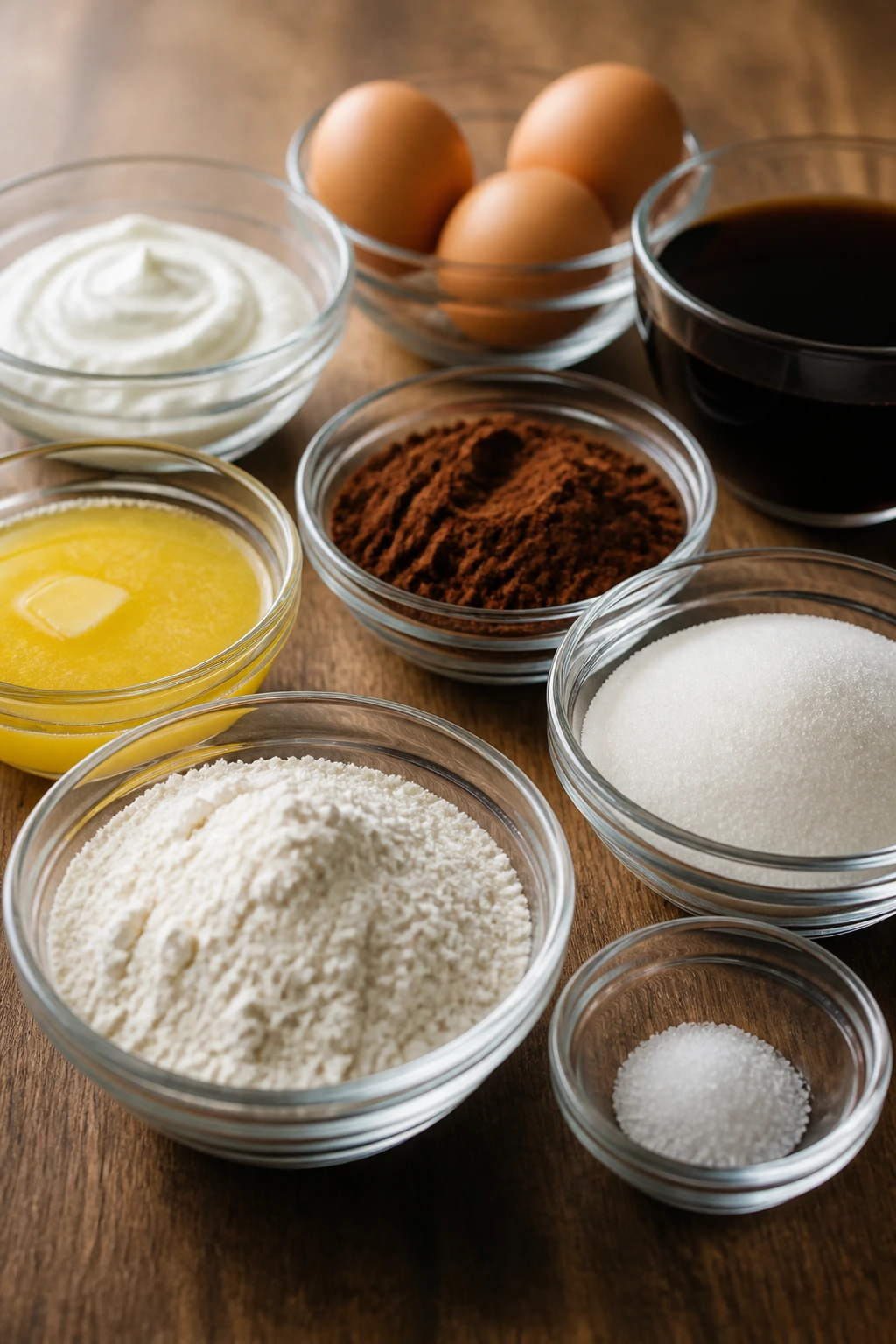
For the Buttery Fudge Cake:
- 2 cups all-purpose flour, spooned and leveled
- 3/4 cup unsweetened cocoa powder, preferably Dutch-process for a darker flavor
- 1 3/4 cups granulated sugar
- 1 1/2 teaspoons baking powder
- 1 teaspoon baking soda
- 1 teaspoon fine sea salt
- 1 cup unsalted butter, melted and cooled slightly
- 1/4 cup neutral oil, such as canola or avocado
- 3 large eggs, at room temperature
- 1 cup sour cream, at room temperature
- 2 teaspoons pure vanilla extract
- 1 cup hot strong coffee or hot water
For the Cream Cheese Frosting:
- 8 ounces cream cheese, softened
- 1/2 cup unsalted butter, softened
- 4 to 4 1/2 cups powdered sugar, sifted if clumpy
- 2 teaspoons pure vanilla extract
- 1/4 teaspoon fine sea salt
- 1 to 2 tablespoons heavy cream or whole milk, only if needed for texture
The list is short on purpose. Chocolate cake can get fussy when you overload it with extras. This version leans on fat, acid, and cocoa to do the heavy lifting, and that is part of why it tastes like a real bakery sheet cake instead of a dry homemade compromise.
What the Chocolate Batter Needs to Stay Moist
Flour, Cocoa, and the Leaveners
What to use: 2 cups all-purpose flour, 3/4 cup unsweetened cocoa powder, 1 1/2 teaspoons baking powder, 1 teaspoon baking soda, and 1 teaspoon fine sea salt.
Preparation: Whisk the dry ingredients together until the cocoa stops looking streaky and the salt disappears into the flour. If your cocoa is lumpy, sift it first; cocoa clumps are stubborn little things, and they never melt out during baking.
Substitutions: Natural cocoa works if that is what you have, but the cake will taste a touch lighter and slightly sharper. A good 1:1 gluten-free baking blend can replace the all-purpose flour, though I would not skip the whisking step because gluten-free flour needs even distribution.
Tips: Salt matters here more than people think. Without it, the frosting can feel one-note and the chocolate tastes flat. Baking soda plus sour cream gives the cake a bit of lift, while baking powder helps the crumb rise evenly through the middle.
Butter, Oil, Eggs, and Sour Cream
What to use: 1 cup melted unsalted butter, 1/4 cup neutral oil, 3 large eggs, and 1 cup sour cream.
Preparation: Let the butter cool until it is warm, not steaming. Whisk the eggs into the fat while the mixture still looks glossy, and make sure the sour cream is loose enough to stir without cold lumps.
Substitutions: Plain Greek yogurt can stand in for sour cream if you want a slightly tangier finish. If you need dairy-free, use a good plant-based butter and a thick dairy-free yogurt, though the frosting will need a separate swap too.
Tips: The butter gives flavor, but the oil keeps the cake soft after chilling. That small bit of oil is not a trick; it is insurance. Cold eggs and cold sour cream can cause the batter to look split for a minute, and that is annoying but fixable if you keep whisking.
Coffee, Vanilla, and Sugar
What to use: 1 3/4 cups granulated sugar, 2 teaspoons vanilla extract, and 1 cup hot strong coffee or hot water.
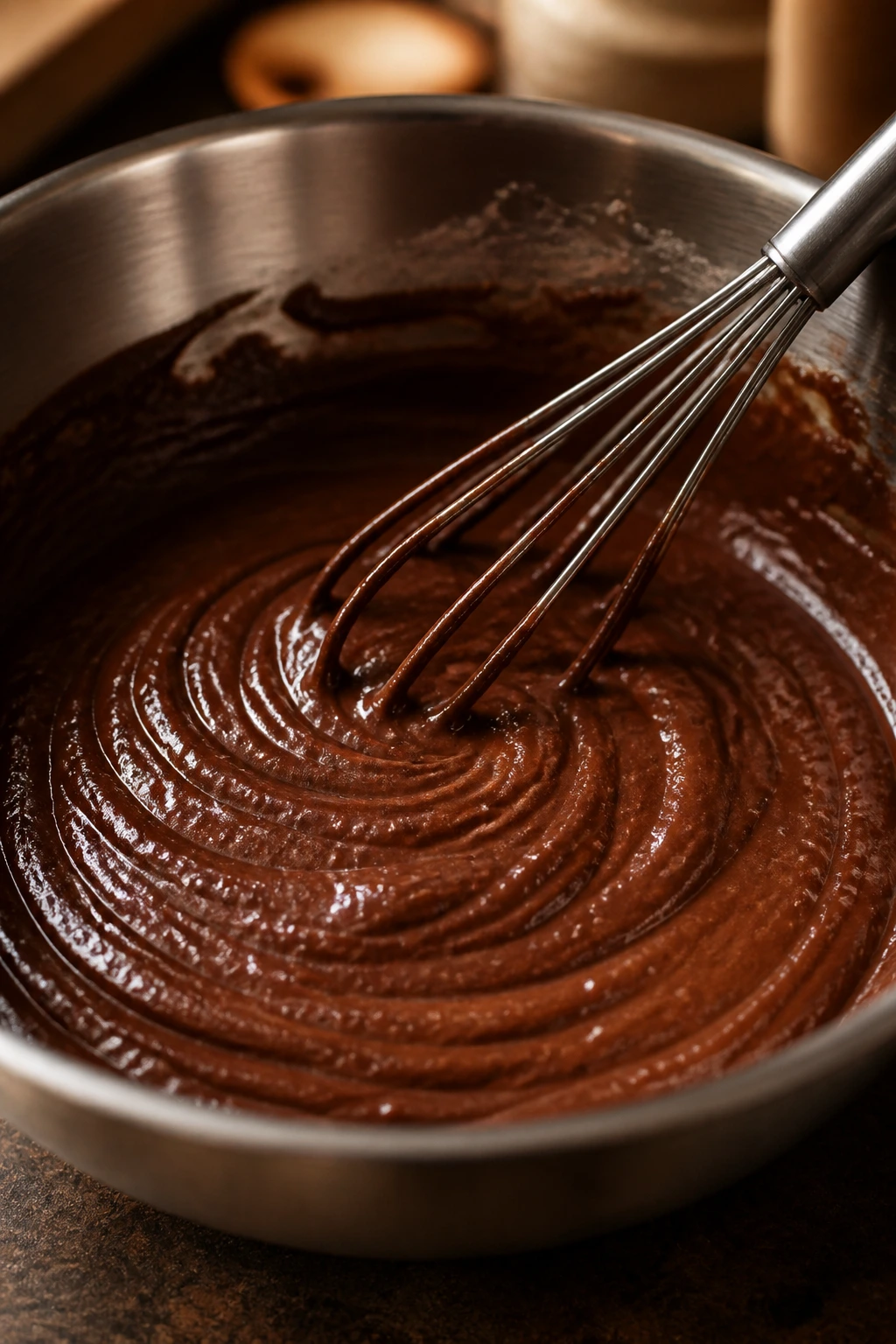
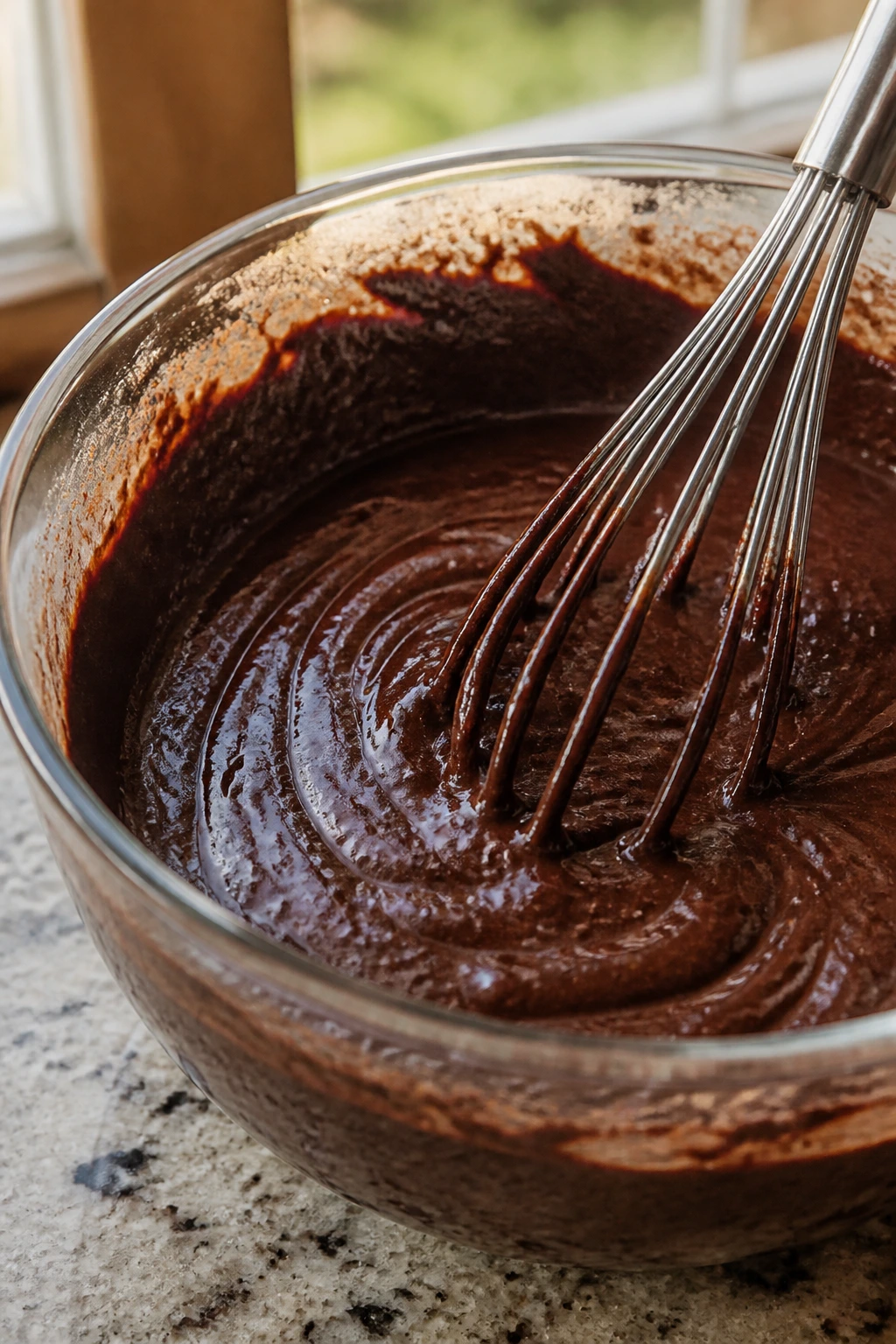
Preparation: Add the coffee last and stir just until the batter loosens and becomes smooth. It will look thin. That is correct. The batter should pour in a thick ribbon, not mound like brownie batter.
Substitutions: Hot water is fine if you do not want coffee notes in the final cake. If you do like the deeper flavor, use brewed coffee that is hot but not boiling; it should feel hot to the touch and smell clean, not scorched.
Tips: Sugar does more than sweeten. It helps the cake stay moist and gives the crumb that tender, almost velvety texture you want from a fudge-style chocolate cake. Vanilla rounds off the cocoa so the cake tastes full instead of harsh.
What the Cream Cheese Frosting Needs to Stay Spreadable
Cream Cheese and Butter
What to use: 8 ounces cream cheese and 1/2 cup unsalted butter, both softened.
Preparation: Soften the cream cheese until it yields when pressed but still holds its shape. The butter should be soft enough to beat smooth, not melted.
Substitutions: Full-fat cream cheese is the best choice here. Reduced-fat versions can work in a pinch, but they usually give you a looser frosting with a less clean finish. If you need a dairy-free route, use a cream cheese alternative that is meant for baking, not the watery kind made for dips.
Tips: Cold cream cheese leaves small lumps that never fully disappear unless you overbeat the frosting, and overbeating is how you end up with a soft, greasy mess. Start with room-temperature ingredients. Every time.
Powdered Sugar, Vanilla, and Salt
What to use: 4 to 4 1/2 cups powdered sugar, 2 teaspoons vanilla extract, and 1/4 teaspoon fine sea salt.
Preparation: Add the sugar in two or three additions so the bowl does not explode in a white cloud. Mix on low at first, then increase speed once the sugar is mostly absorbed.
Substitutions: If you prefer a less sweet frosting, start with 4 cups and stop there. You can always add more after you taste it. A tiny splash of lemon juice can sharpen the frosting, but I would only use it if you want a brighter finish.
Tips: Salt keeps the frosting from tasting like sweet paste. Vanilla should smell like vanilla, not like alcohol. If the frosting tastes flat, it probably needs another pinch of salt, not more sugar.
Adjusting the Texture
What to use: 1 to 2 tablespoons heavy cream or whole milk, only if the frosting needs loosening.
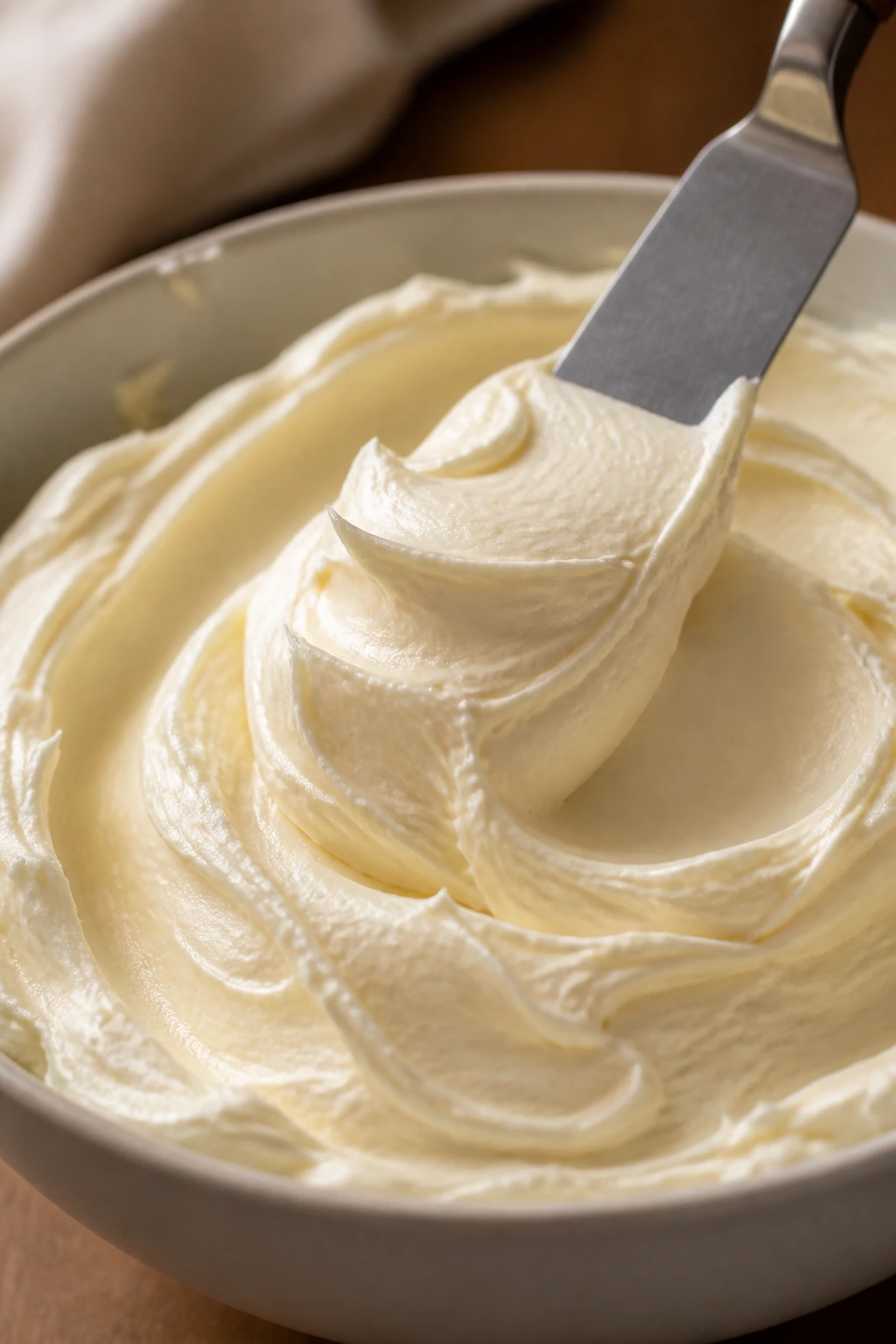
Preparation: Add liquid a teaspoon at a time after the sugar is fully incorporated. Stop as soon as the frosting spreads with a smooth drag against the spatula.
Substitutions: Heavy cream gives a richer finish, but whole milk works fine. You can even use a spoonful of the coffee from the cake if you want the frosting to echo the base flavor.
Tips: Frosting should hold a soft ridge when you lift the spatula. If it slumps immediately, it is too warm. Chill it for 10 minutes before trying to fix it with more sugar, because more sugar often makes the texture worse, not better.
The Tools That Save You From Annoying Surprises
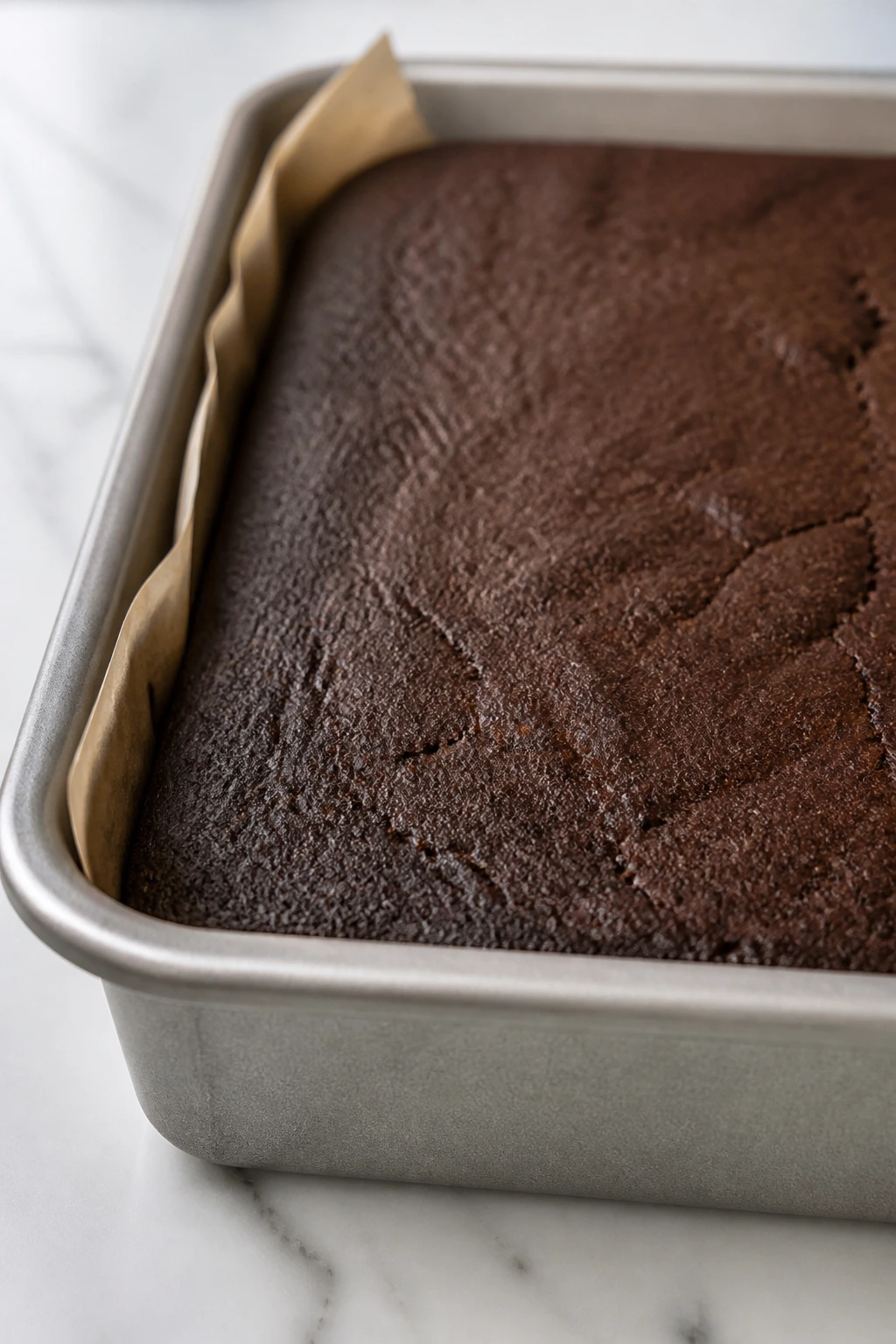
- 9×13-inch metal baking pan — Bakes more evenly than glass and keeps the edges from overcooking before the center sets.
- Parchment paper — A sling is optional, but useful if you want to lift the cake out for cleaner slicing.
- Large mixing bowl — You need room for the batter to loosen once the coffee goes in.
- Medium mixing bowl — Handy for whisking the dry ingredients without sending cocoa dust over the counter.
- Whisk — Better than a spoon for combining the dry mix and smoothing the batter base.
- Rubber spatula — Good for folding without scraping too aggressively or leaving flour stuck in the corners.
- Hand mixer or stand mixer — Not essential for the batter, but very helpful for the frosting.
- Offset spatula or butter knife — Makes frosting the top faster and cleaner.
- Wire cooling rack — Helps the cake cool evenly so the bottom does not steam itself damp.
- Fine-mesh sieve — Optional, but a good choice if your powdered sugar tends to clump.
Mixing the Cake Batter Without Turning It Tough
Prep the Pan and Heat the Oven
- Preheat the oven to 350°F (175°C) and set a rack in the center of the oven.
- Grease a 9×13-inch metal baking pan with butter or nonstick spray, then line the bottom with parchment if you want an easy lift later. Grease the parchment too. Do not skip the corners; chocolate batter loves to stick there.
Build the Dry Base 3. In a large bowl, whisk together the flour, cocoa powder, granulated sugar, baking powder, baking soda, and salt until the mixture looks even and dark brown. 4. If your cocoa is clumpy, press it through a sieve before whisking. A few seconds here saves you from flecks of unmixed cocoa in the finished crumb.
Add the Fat and Dairy 5. In a second large bowl, whisk the melted butter, oil, eggs, sour cream, and vanilla until the mixture looks thick, glossy, and fully combined. 6. Stir in the dry ingredients in two additions, mixing with a whisk or spatula just until the flour disappears. The batter will be heavy at first, then loosen as you stir.
Finish with the Coffee 7. Pour in the hot coffee or hot water and stir gently until the batter becomes smooth and pourable. The batter should look thin enough to spread easily and thick enough to coat a spoon. 8. Scrape the batter into the prepared pan and smooth the top with an offset spatula or the back of a spoon.
Baking and Cooling Without the Sinking Center
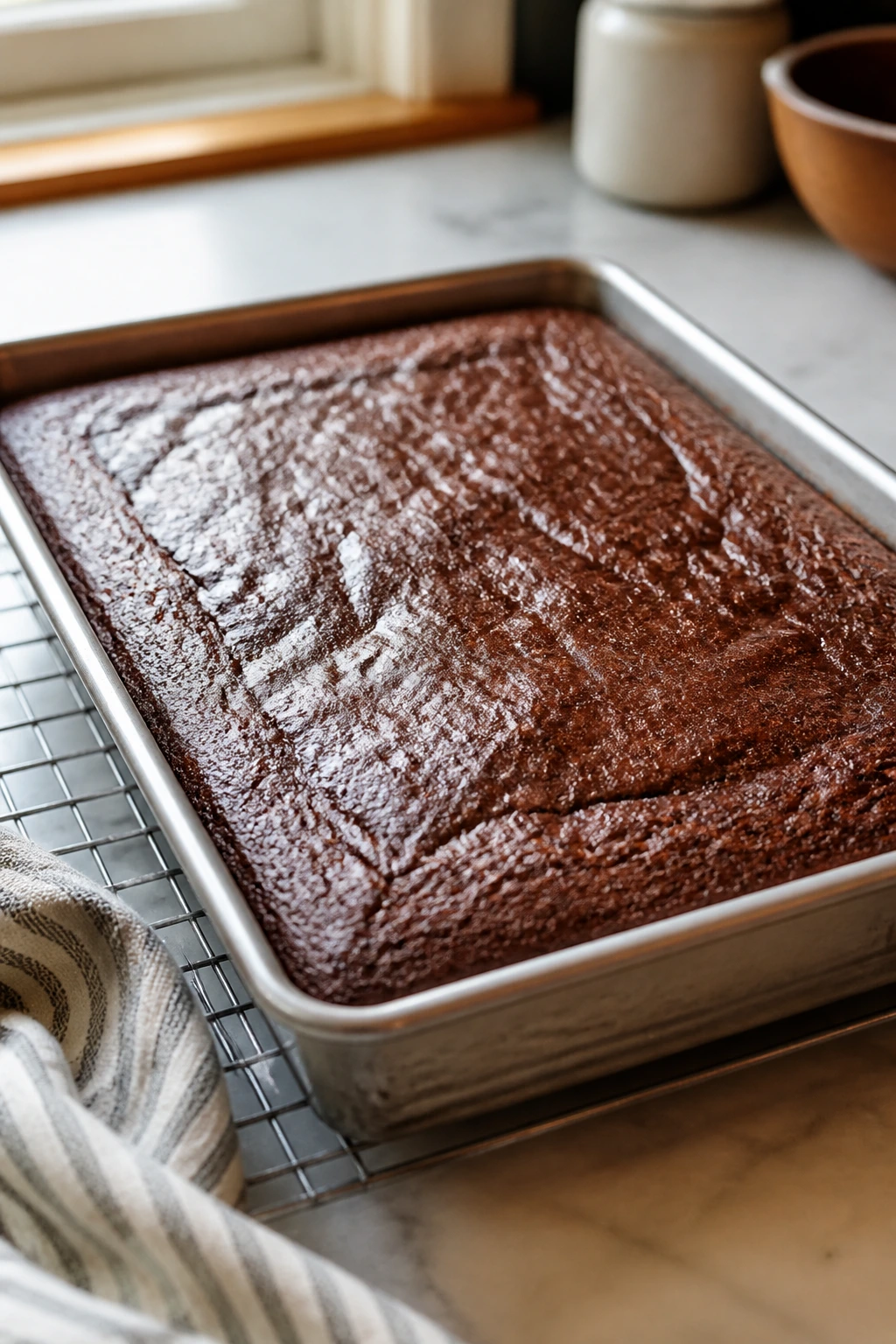
Bake the Cake 9. Bake for 32 to 38 minutes, rotating the pan once halfway through if your oven has hot spots. The cake is ready when the center springs back lightly when touched and a toothpick inserted in the middle comes out with a few moist crumbs, not wet batter. 10. If the top looks done but the center still jiggles, give it another 2 to 3 minutes and check again. Do not chase a bone-dry toothpick; a fudgy cake should not bake like a sandwich loaf.
Cool It the Right Way 11. Set the pan on a wire rack and let the cake cool in the pan for at least 1 hour before frosting. If you frost too soon, the topping melts and slides into the crumb. 12. If you want very clean edges, cool it a little longer until the pan feels only faintly warm. A barely warm pan is fine. A hot one is not.
Whipping the Frosting So It Spreads Cleanly
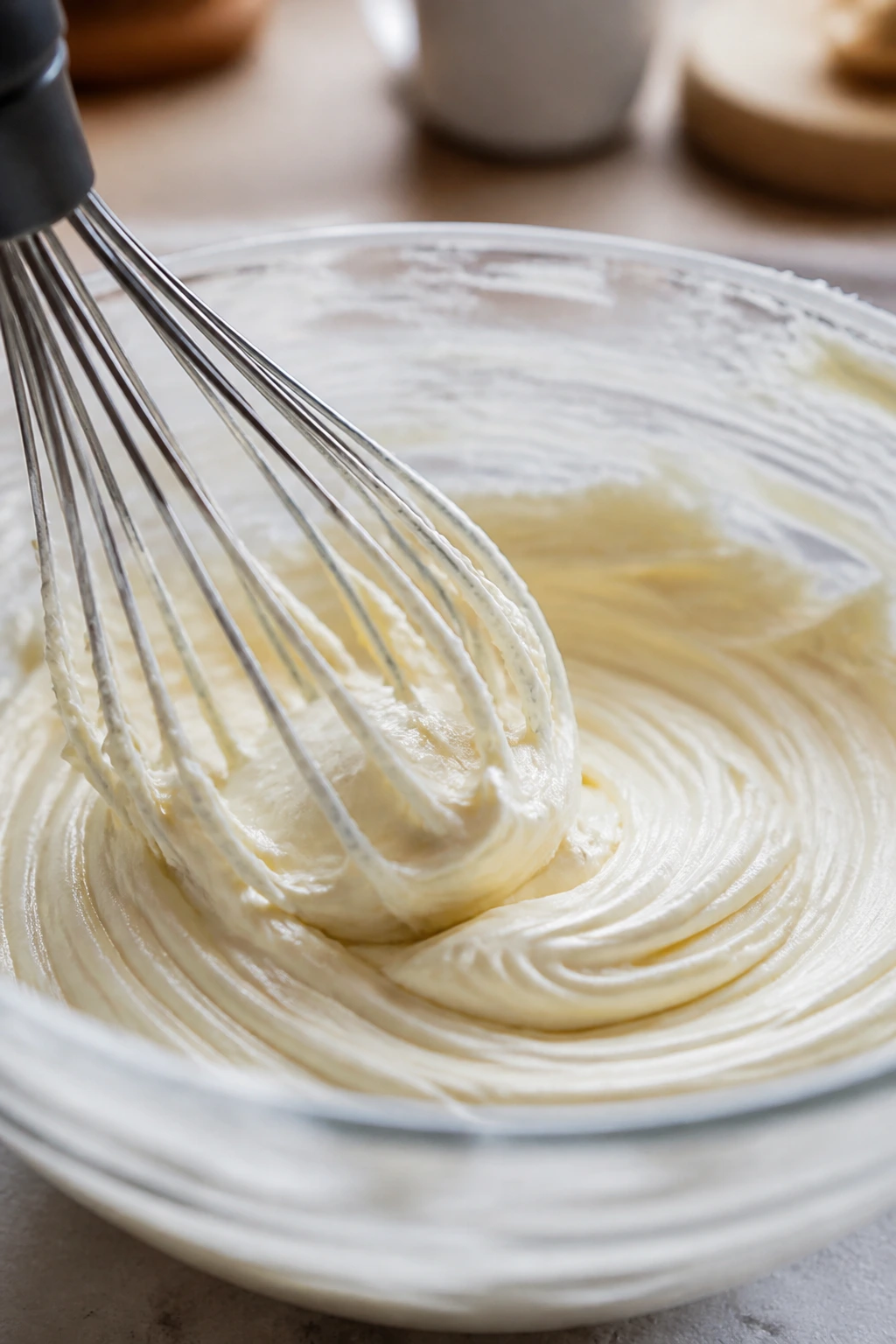
Beat the Base 13. In a large bowl, beat the softened cream cheese and softened butter together for 1 to 2 minutes until smooth, pale, and free of visible lumps. 14. Scrape down the bowl, then add the powdered sugar in two or three additions, mixing on low speed at first so the sugar stays in the bowl instead of the air.
Adjust and Taste 15. Beat in the vanilla and salt. If the frosting seems too thick to spread, add 1 tablespoon heavy cream or milk and mix again. If it still feels stiff, add the second tablespoon. 16. Taste the frosting. If it tastes one-note, add a small pinch more salt. If it tastes too sharp, add a tablespoon or two more powdered sugar.
Frosting the Cake and Getting Clean Slices
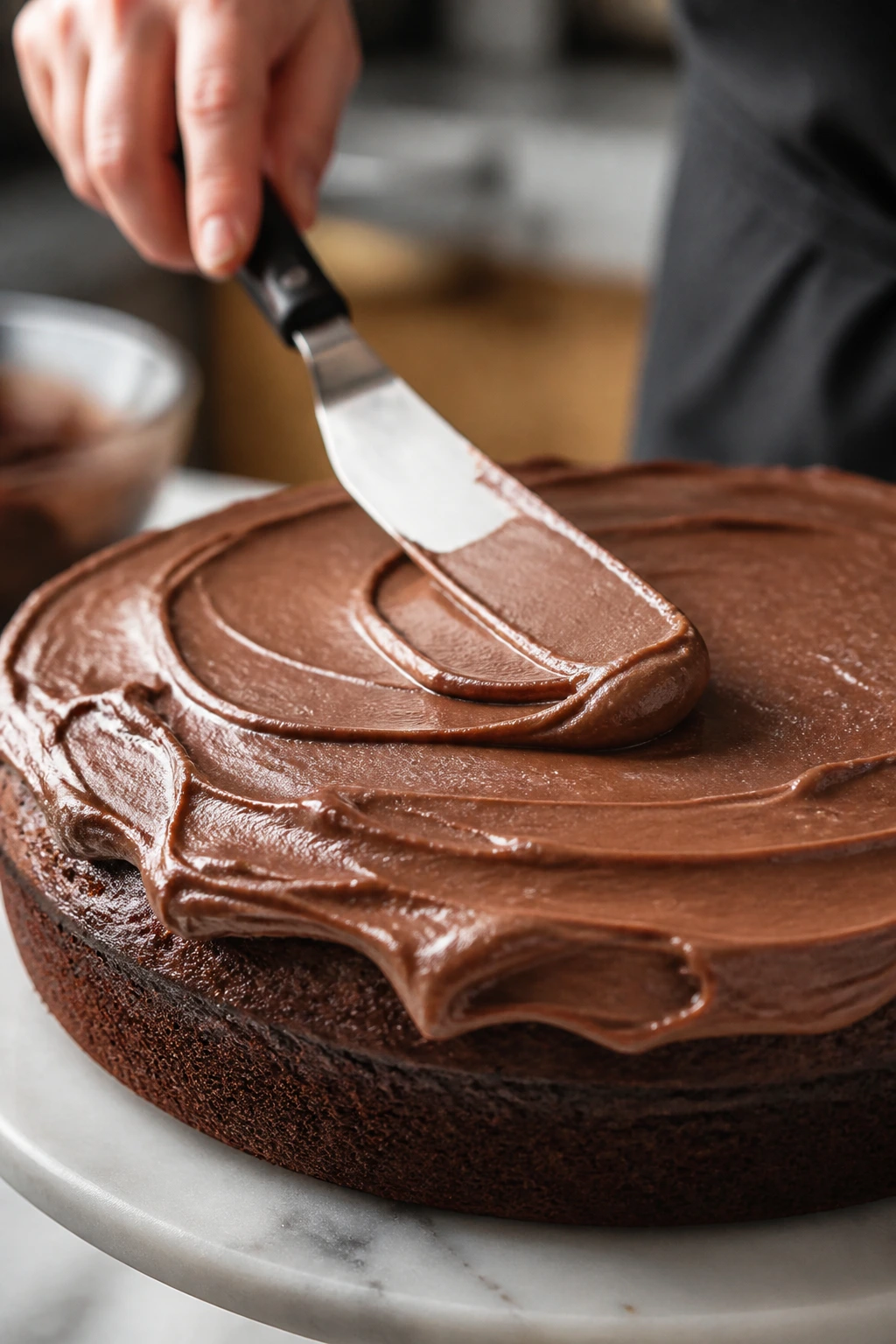
Finish the Cake 17. Spread the frosting over the cooled cake in thick swoops, pushing it all the way to the edges. I like a slightly uneven top here; it looks more appetizing than a perfectly flat layer. 18. Chill the frosted cake for 20 to 30 minutes if you want the neatest slices. Use a sharp knife dipped in hot water and wiped dry between cuts for the cleanest edges.
How to Serve It at the Table
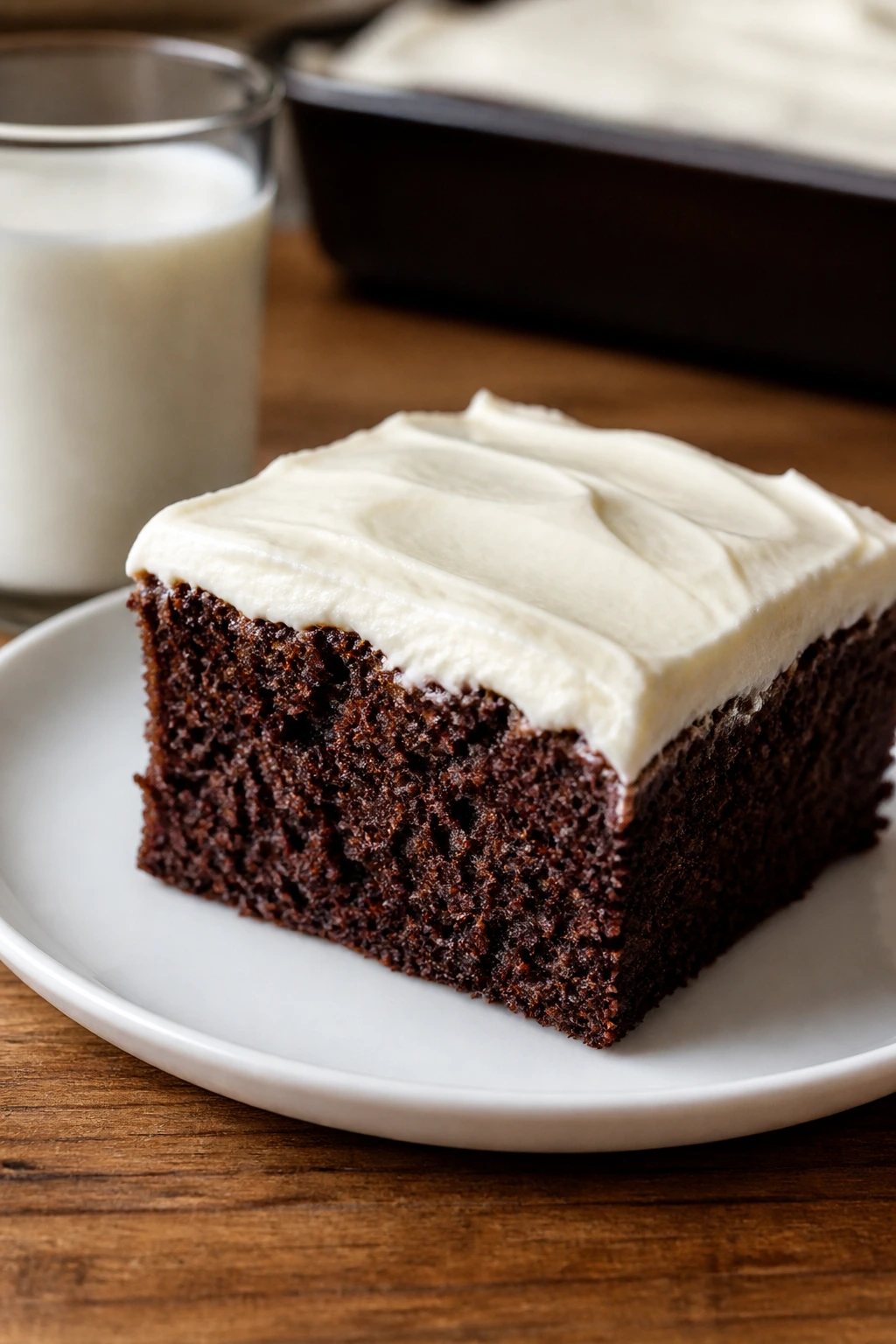
Presentation: Serve the cake straight from the pan for a casual crowd, or lift the slab onto a board if you want sharper visual lines. A small offset spatula gives the frosting those rough, bakery-style swirls that look better than a perfectly smoothed surface.
Accompaniments: Cold milk is the obvious partner, and it earns that spot. Fresh raspberries, sliced strawberries, or a spoonful of lightly sweetened whipped cream help if you want the plate to feel less heavy. A scoop of vanilla ice cream works too, especially with a slice that has been sitting out for 10 minutes and softened at the edges.
Portions: A 9×13-inch cake cuts cleanly into 12 hearty pieces or 15 more restrained slices. If you are serving after a rich meal, lean smaller. If this is the main event, cut bigger and do not apologize for it.
Beverage Pairing: Strong black coffee is excellent because it echoes the cocoa without turning the dessert into a caffeine parade. Espresso or a glass of very cold milk are the other two drinks I reach for most often.
Tips That Make This Recipe More Forgiving
- Flavor Enhancement: Add 1 teaspoon instant espresso powder to the hot coffee if you want the chocolate flavor to taste darker and deeper. It does not make the cake taste like coffee; it just sharpens the cocoa.
- Time-Saver: Bake the cake a day ahead, let it cool completely, then wrap the pan tightly once the surface is set. Frost it cold the next day, and the frosting will spread more neatly.
- Texture Trick: If you want the crumb a little tighter and more brownie-like, replace 1/4 cup of the sour cream with plain Greek yogurt. That gives you a firmer slice without drying the cake out.
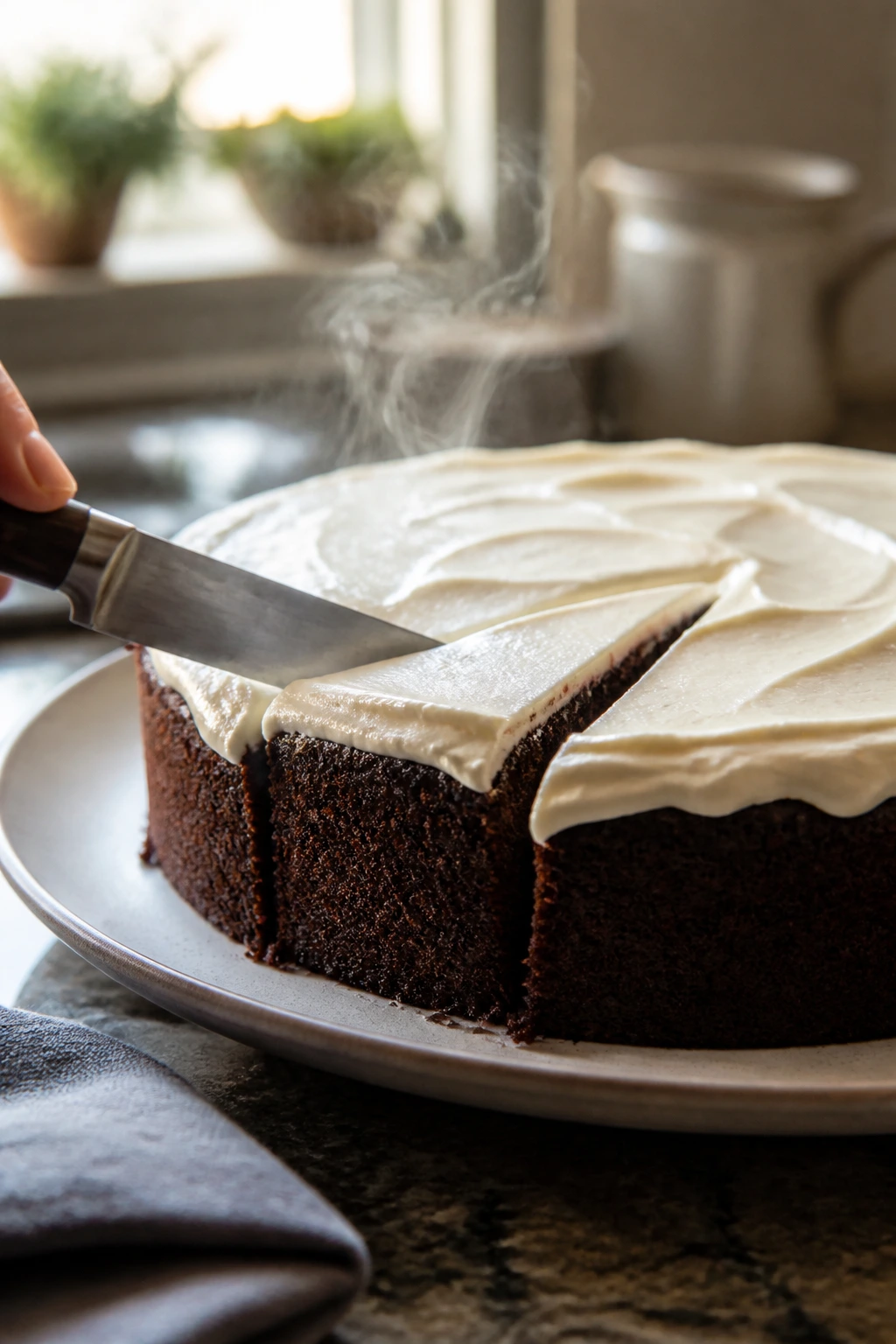
- Pro Move: Use a hot knife for slicing. Dip the blade in hot water, wipe it dry, make one cut, and repeat. The frosting will look cleaner, and the crumb will not tear.
- Cost-Saver: Store-brand cream cheese works fine here as long as it is full-fat and block-style. The tub spreads made for bagels tend to be softer and can make the frosting runnier than you want.
Common Mistakes and What They Look Like
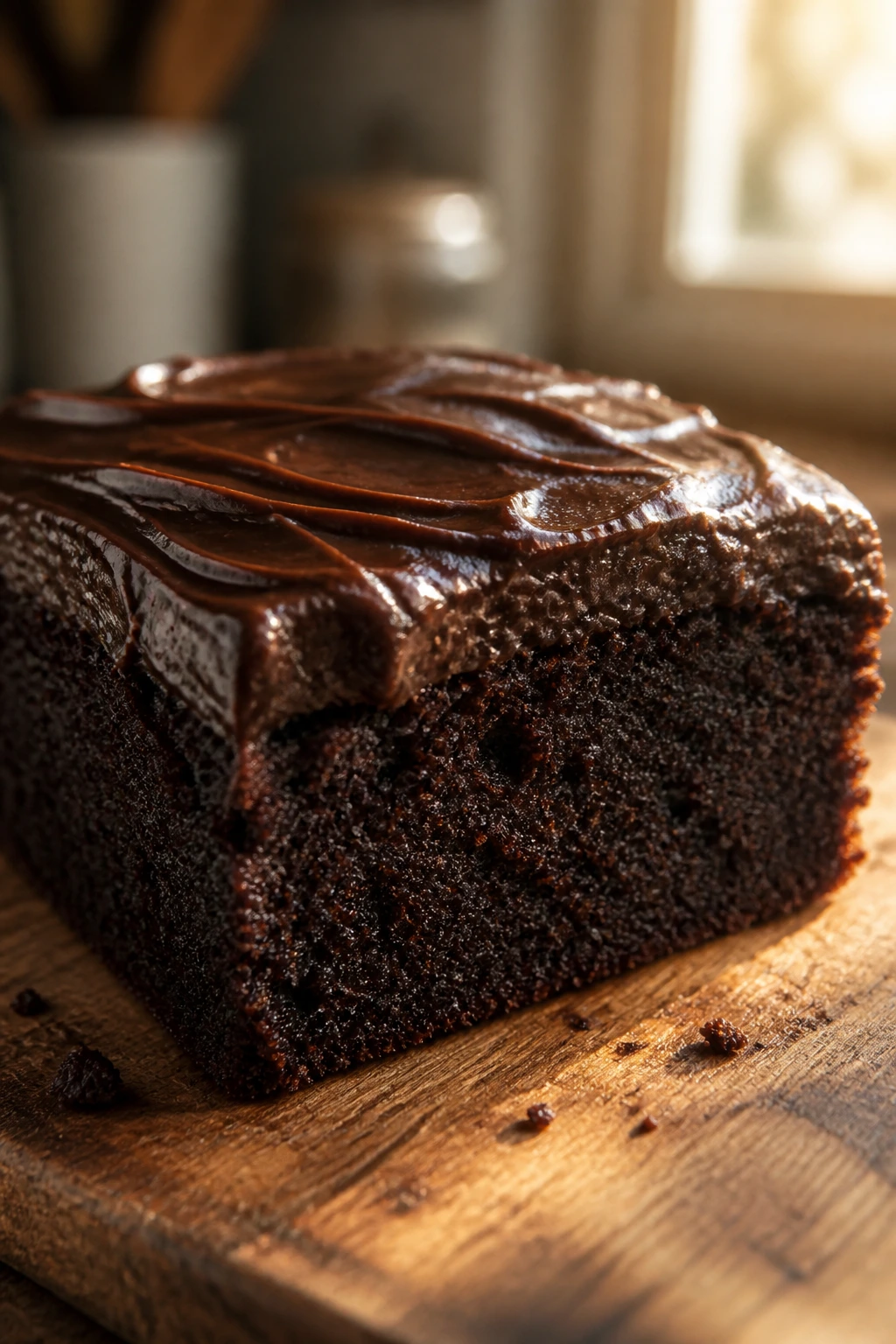
- Frosting a warm cake: The frosting goes glossy, then slides into the top layer and leaves you with a greasy, patchy finish. Let the cake cool for a full hour, and longer if the kitchen is warm.
- Overmixing after the flour goes in: The crumb turns tight and a little rubbery instead of soft and fudgy. Stir only until the flour streaks disappear, then stop. The hot coffee will thin the batter on its own.
- Using cold cream cheese: You end up with tiny pale lumps that never quite vanish, and the frosting feels grainy against the tongue. Soften the cream cheese until it yields easily when pressed, but do not melt it.
- Pulling the cake too early: The center sinks after cooling, which makes frosting annoying and gives the cake a dense stripe through the middle. Bake until a tester comes out with a few moist crumbs and the top springs back lightly.
- Adding too much sugar at once to the frosting: The bowl clouds up, the frosting gets stiff in a hurry, and you lose control of the texture. Add the sugar in parts and stop once the frosting spreads in thick ribbons.
- Skipping the salt: The cake tastes flat and the frosting tastes like sweet cream cheese paste. A small amount of salt wakes both parts up.
Variations That Fit the Base Cake
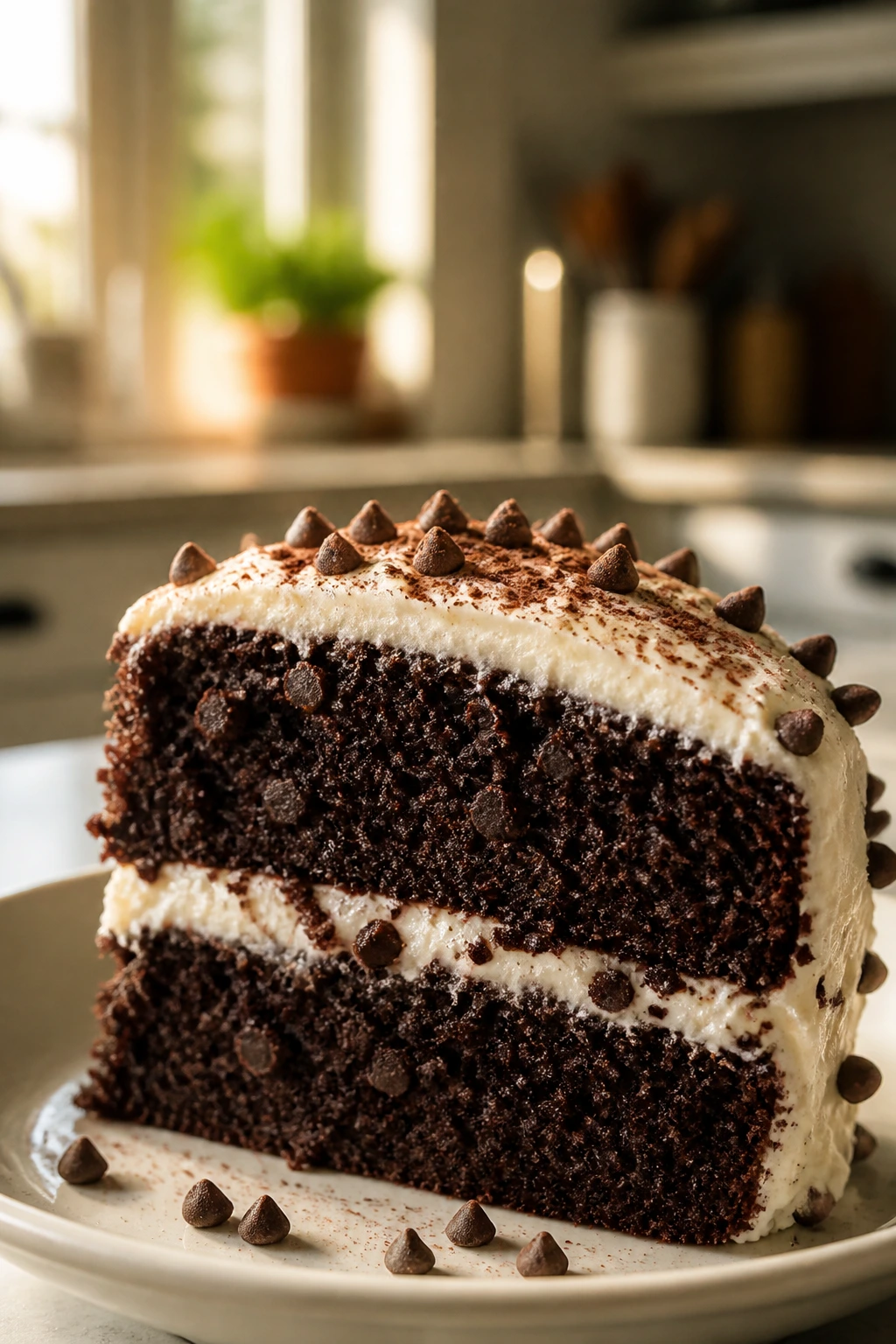
Midnight Mocha Slice
Stir 1 teaspoon instant espresso powder into the hot coffee and add 1/2 cup mini chocolate chips to the batter. The chips give you tiny pockets of melted chocolate in the crumb, which is a nice surprise when the cake has chilled.
Orange-Edge Chocolate Cake
Add 2 teaspoons finely grated orange zest to the batter and another teaspoon to the frosting. Orange and chocolate can be clumsy if you overdo the citrus, so keep it restrained. The point is a faint perfume, not a fruit dessert.
Raspberry Ribbon Cake
Spread 1/3 cup seedless raspberry jam over the cooled cake before the frosting goes on, or drizzle it in thin streaks on top. The tart fruit cuts the sweetness and makes the cake feel a little brighter.
Toasted Pecan Fudge Cake
Fold 3/4 cup chopped toasted pecans into the batter or scatter them over the frosting while it is still soft. The crunch is good against the smooth icing, and it gives the cake a more Southern bakery feel.
Gluten-Free Chocolate Sheet Cake
Use a 1:1 gluten-free baking flour blend in place of the all-purpose flour and keep everything else the same. The batter will still be pourable, but let the baked cake cool fully before slicing so the crumb can settle and hold together.
Make-Ahead, Storage, and Reheating Guidance
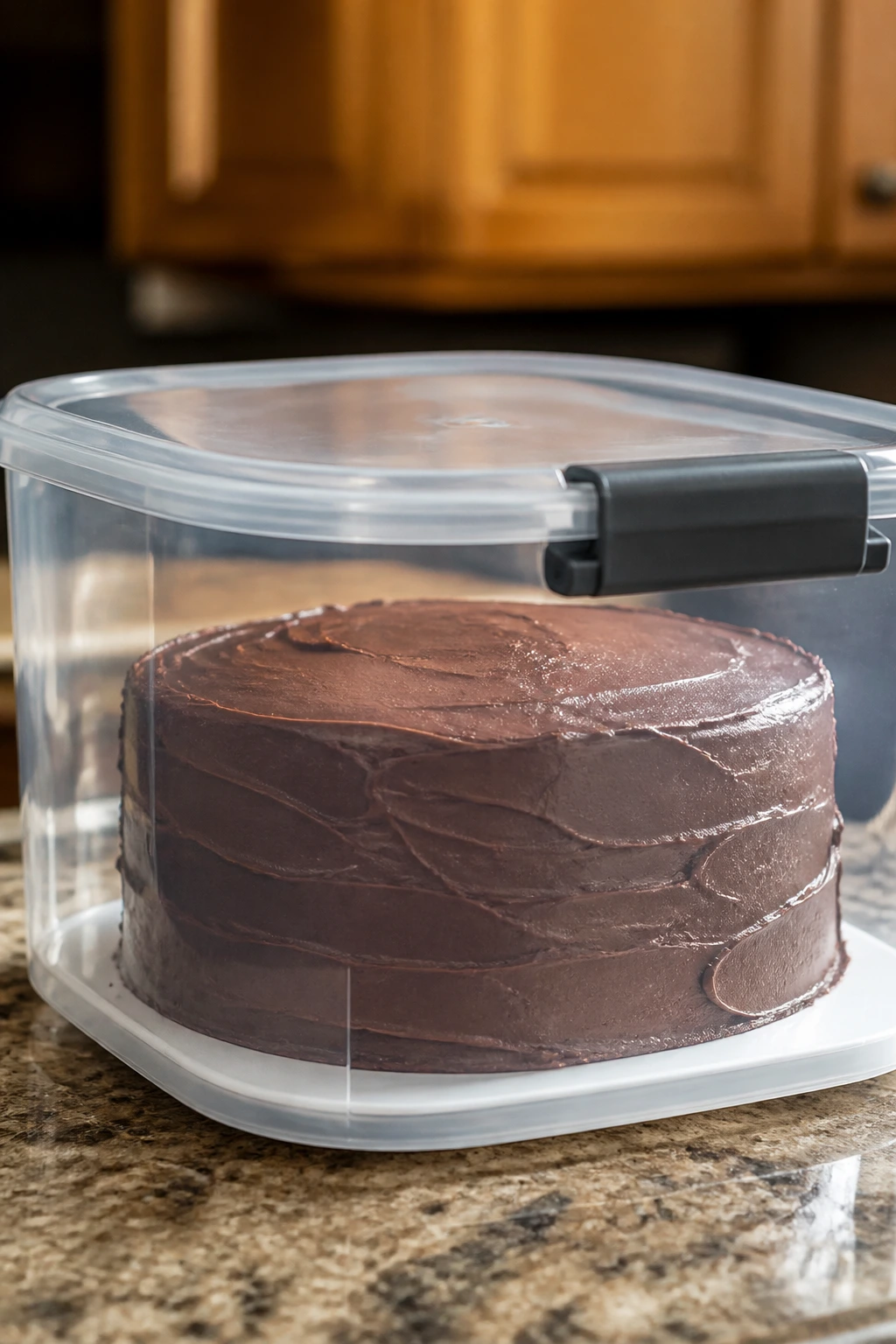
This cake holds up well, which is one reason I keep coming back to it. The unfrosted cake can be baked, cooled, wrapped tightly, and kept at room temperature for 1 day. If you need a longer head start, refrigerate it for up to 3 days or freeze it for up to 2 months. Wrap it in plastic first, then foil, so the cocoa aroma does not pick up freezer smells.
The frosting can be made up to 3 days ahead and stored in the refrigerator in a sealed container. Before using it, let it sit at room temperature for 20 to 30 minutes, then beat it again for 20 seconds to bring back the spreadable texture. If it feels loose, a short chill of 10 minutes usually fixes it.
A fully frosted cake keeps in the refrigerator for 4 to 5 days. Because the frosting contains dairy, I would not leave it out on the counter for more than 2 hours. That is the line I use for any cream cheese frosting, and it saves you from guessing. For the best texture, bring refrigerated slices to room temperature for 20 to 30 minutes before serving. The crumb softens, the frosting loses its chill, and the whole thing tastes more like itself.
Freezing works better for slices than for whole decorated cakes. Wrap individual pieces tightly, freeze them on a tray until firm, then move them to a freezer bag. Thaw overnight in the fridge, then let them sit on the counter for 15 to 20 minutes before eating. I do not recommend microwaving frosted cake unless you want melted edges and a slick frosting surface. If you want a slightly warm slice, warm the plain cake first and add frosting after.
Questions People Ask Before Baking It

Can I use natural cocoa instead of Dutch-process cocoa?
Yes. The cake will still work, though the flavor will read a bit lighter and less dark. Dutch-process cocoa gives a deeper color and a smoother chocolate taste, while natural cocoa brings a sharper edge.
Do I have to use coffee in the batter?
No, hot water works. Coffee does not make the cake taste like coffee; it mostly wakes up the cocoa and makes the chocolate taste fuller. If you are sensitive to coffee or just do not have any brewed, hot water is fine.
Can I turn this into cupcakes or a layer cake?
You can, but the bake time changes. Cupcakes usually need about 18 to 22 minutes, while two 9-inch rounds will bake faster than the sheet pan and need close checking around the 24-minute mark. Keep the same batter, but line the pans well and start testing early.
Why did my frosting turn runny?
Usually the cream cheese or butter was too warm, or the kitchen was hot enough to soften the frosting before you spread it. Chill the bowl for 10 to 15 minutes, then beat it briefly before trying again. Adding more sugar helps a little, but chilling first is the better fix.
Can I freeze the frosted cake?
Yes, though slices freeze better than the whole slab. Freeze the pieces uncovered until firm, then wrap them well so the frosting does not pick up freezer odors. Thaw in the fridge overnight and bring to room temperature before serving.
What if the center sinks after baking?
That usually means the cake was underbaked or the oven temperature ran low. Check with a toothpick in the center, not just the edges, and make sure the top springs back lightly before you pull the pan. A small dip can still be covered with frosting; a deep sink means the cake needed a few more minutes.
How far ahead can I make it for a party?
Bake the cake one day ahead and frost it the day you plan to serve it, or frost it the night before if you want very clean slices. The texture actually settles nicely overnight in the fridge, as long as you bring it back toward room temperature before cutting.
A Cake That Knows When to Be Rich
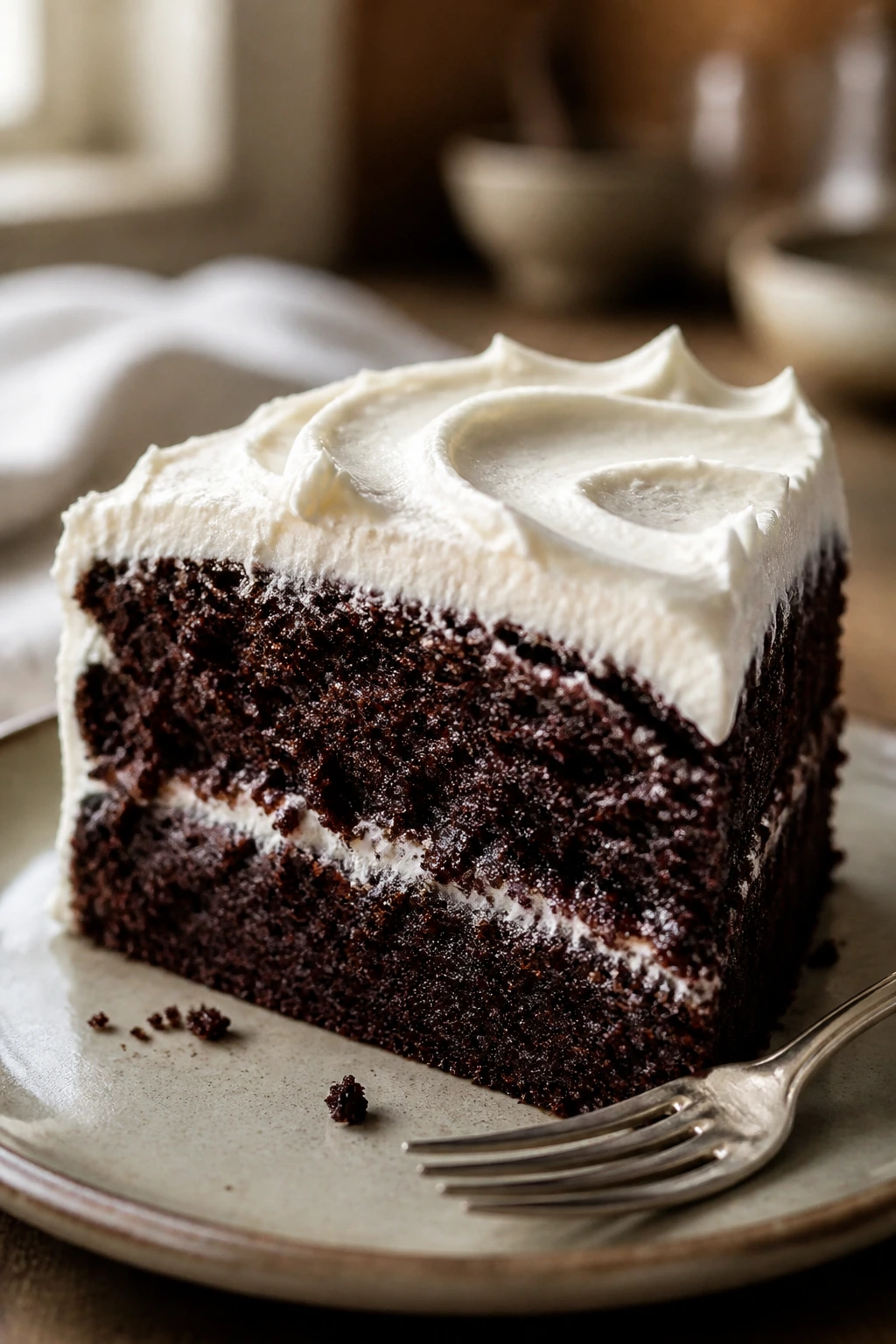
There is a fine line between a chocolate cake that feels lush and one that feels heavy. This one stays on the right side because the butter, sour cream, and coffee each do a separate job. None of them are decorative. They all earn their spot.
The cream cheese frosting is the part people remember first, though. It brings a cool tang and a soft finish that makes the whole cake taste more balanced than the ingredient list suggests. Bake it once, and you’ll understand why I prefer this style of frosting over a syrupy chocolate glaze when the cake itself is already this rich.
Buttery Fudge Cake with Cream Cheese Frosting — Recipe Card
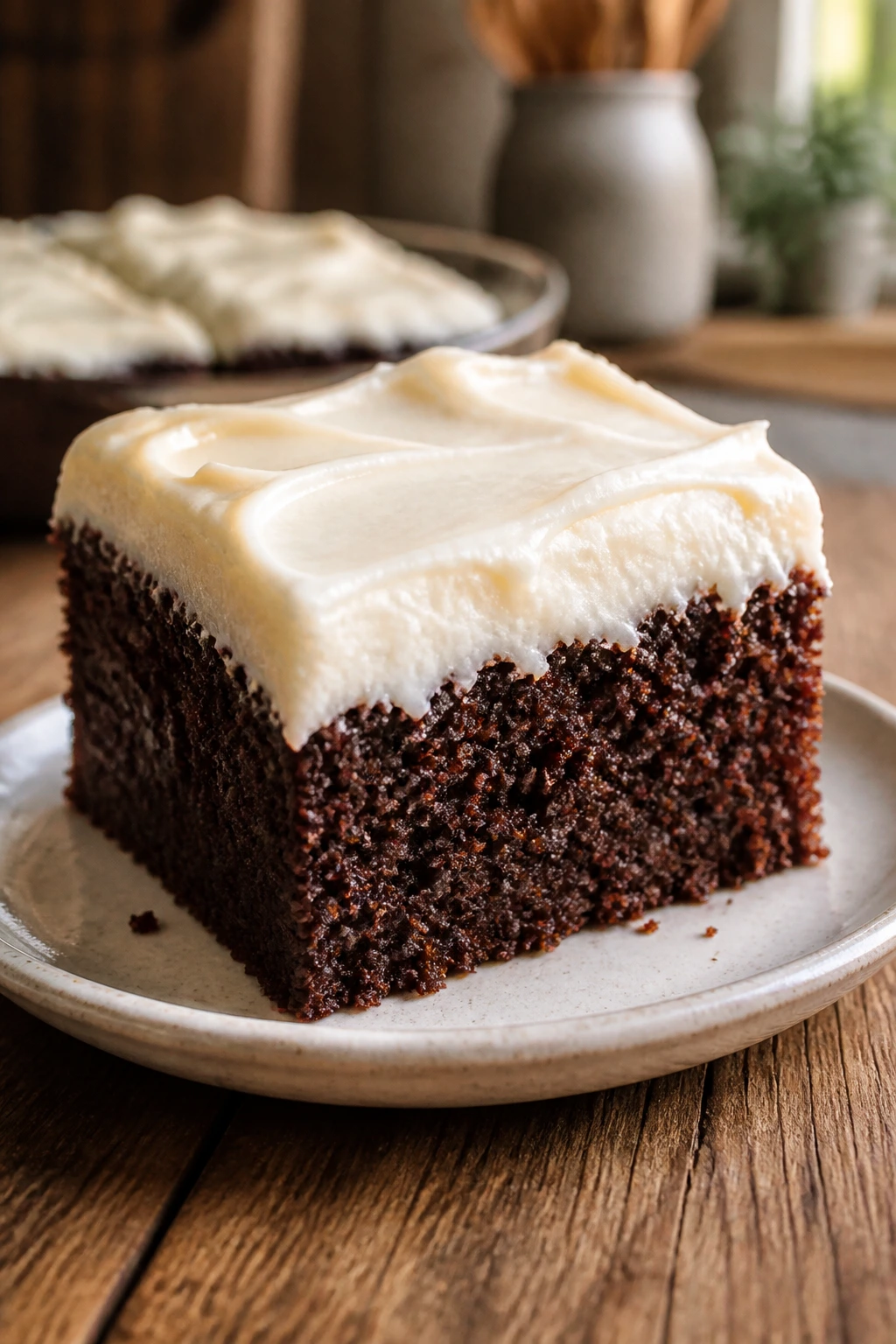
Recipe Name: Buttery Fudge Cake with Cream Cheese Frosting
Description: A rich chocolate sheet cake made with butter, sour cream, and hot coffee, topped with a thick cream cheese frosting that cuts the sweetness and keeps every slice soft.
Prep Time: 25 minutes
Cook Time: 32 to 38 minutes
Total Time: 1 hour 5 minutes, plus about 1 hour cooling before frosting
Course: Dessert
Cuisine: American
Servings: 12 to 15 slices
Calories: About 540 kcal per serving
Ingredients
For the Buttery Fudge Cake:
- 2 cups all-purpose flour, spooned and leveled
- 3/4 cup unsweetened cocoa powder
- 1 3/4 cups granulated sugar
- 1 1/2 teaspoons baking powder
- 1 teaspoon baking soda
- 1 teaspoon fine sea salt
- 1 cup unsalted butter, melted and cooled slightly
- 1/4 cup neutral oil
- 3 large eggs, room temperature
- 1 cup sour cream, room temperature
- 2 teaspoons pure vanilla extract
- 1 cup hot strong coffee or hot water
For the Cream Cheese Frosting:
- 8 ounces cream cheese, softened
- 1/2 cup unsalted butter, softened
- 4 to 4 1/2 cups powdered sugar, sifted if needed
- 2 teaspoons pure vanilla extract
- 1/4 teaspoon fine sea salt
- 1 to 2 tablespoons heavy cream or whole milk, as needed
Instructions
- Preheat the oven to 350°F (175°C) and grease a 9×13-inch metal baking pan.
- Whisk the flour, cocoa powder, sugar, baking powder, baking soda, and salt together in a large bowl.
- In another bowl, whisk the melted butter, oil, eggs, sour cream, and vanilla until smooth.
- Add the dry ingredients to the wet ingredients in two additions and mix just until combined.
- Stir in the hot coffee or hot water until the batter is smooth and pourable.
- Spread the batter into the prepared pan and smooth the top.
- Bake for 32 to 38 minutes, until the center springs back lightly and a toothpick comes out with moist crumbs.
- Cool the cake in the pan for at least 1 hour.
- Beat the cream cheese and butter until smooth.
- Add the powdered sugar in additions, then beat in the vanilla and salt.
- Add a little cream or milk only if needed to loosen the frosting.
- Spread the frosting over the fully cooled cake.
- Chill for 20 to 30 minutes for cleaner slices, then cut and serve.
Notes: Use coffee for a deeper chocolate flavor, or hot water if you prefer. Keep the cake refrigerated if it sits out longer than 2 hours. If the frosting feels soft, chill it for 10 minutes before spreading.