



Caramelized colorful vegetables are the difference between a tray of limp odds and ends and a dinner you actually want to sit down to eat. Give them a hot oven, enough space, and a little patience with the cut edges, and the carrots go sweet, the onions go jammy, the broccoli tips go crisp at the edges, and the peppers keep a little bite instead of collapsing into mush.
That’s the part most home cooks miss. They treat vegetables like they all want the same treatment, then wonder why one piece is blackened while another is still stubbornly raw. Broccoli, carrots, zucchini, mushrooms, Brussels sprouts, peppers — they each brown at a different pace, and once you start roasting them in stages, the whole pan gets better. Faster, too. Strange, but true.
This version is the one I reach for when I want dinner to feel finished without making a separate protein, sauce, and side dish. Pile it over quinoa, spoon it onto lentils, tuck in a fried egg, or serve it next to grilled tofu if you want more heft. The oven does the heavy lifting. Your job is mostly cutting things to the right size, spacing them out, and not rushing the part where the heat works.
Why Caramelized Colorful Vegetables Belong in a Hot Oven
- Sweetness without added sugar: A hot roast pulls natural sugars out of carrots, onions, and peppers, so the pan tastes deeper and rounder without leaning on a heavy sauce.
- A real dinner base: A full serving of roasted vegetables gives you volume, fiber, and color, which makes it far easier to build a satisfying meatless plate.
- Texture you can actually control: Sturdy vegetables go in first, tender ones later, so zucchini stays intact and broccoli gets the browned edges it deserves.
- One pan, if you handle it right: Two sheet pans and a hot oven give you caramelization instead of steam. Crowding is the enemy here.
- Easy to build on: Add chickpeas, a fried egg, or a grain bowl underneath and the same tray turns into a full meal without rewriting the whole recipe.
Timing, Yield, and the Best Way to Serve Caramelized Colorful Vegetables Warm
Yield: Serves 4 as a main with grains, or 6 as a side
Prep Time: 20 minutes
Cook Time: 30 to 35 minutes
Total Time: 50 to 55 minutes
Difficulty: Beginner — the method is straightforward, but the cuts and the pan spacing matter more than people expect.
Best Served: Warm from the oven, while the cut edges are still crisp and the balsamic finish is glossy.
Hot vegetables change character quickly. Right out of the oven, they taste sweet, lightly smoky, and a little sharp from the lemon and vinegar. Give them ten minutes on the counter and they’re still good, but the broccoli loses some of that snap and the zucchini starts to soften in a way that reads more ordinary.
If you’re building dinner around this, plan the rest of the plate before the vegetables come out of the oven. Grain, sauce, herbs, protein if you’re adding it — all of that should be waiting. Roasted vegetables are at their best when everything else around them is already set.
Ingredients for Caramelized Colorful Vegetables
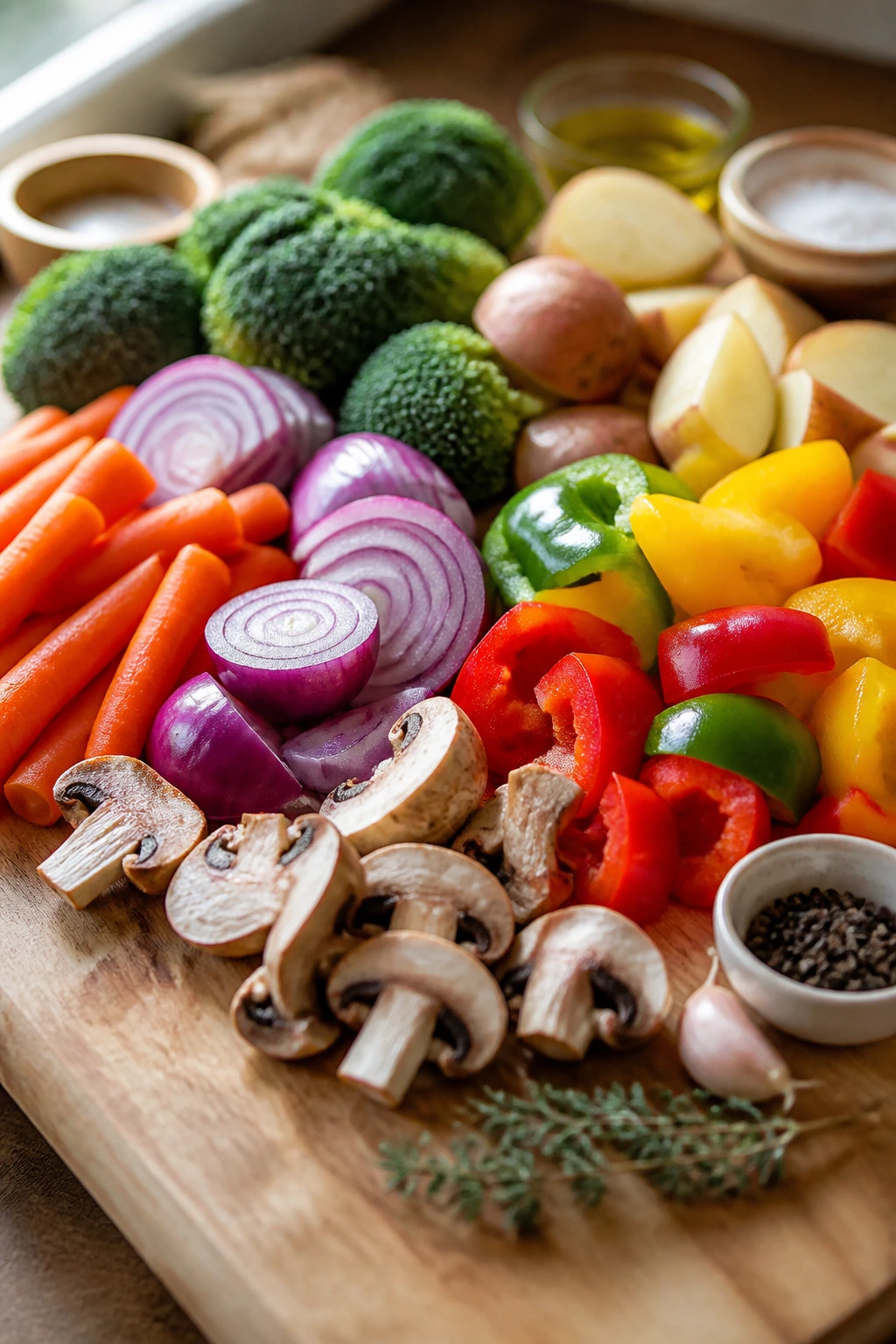
For the Vegetables:
- 2 medium red bell peppers, cored and cut into 1-inch strips
- 2 medium yellow bell peppers, cored and cut into 1-inch strips
- 1 large red onion, peeled and cut into 8 wedges
- 2 medium carrots, peeled and sliced on a diagonal into 1/4-inch pieces
- 1 small head broccoli, cut into bite-size florets
- 8 ounces Brussels sprouts, trimmed and halved
- 1 medium zucchini, halved lengthwise and sliced into 1/2-inch half-moons
- 8 ounces cremini mushrooms, halved if large
For the Seasoning:
- 3 tablespoons extra-virgin olive oil
- 1 1/2 teaspoons kosher salt
- 1 teaspoon smoked paprika
- 1 teaspoon dried thyme
- 1/2 teaspoon black pepper
For the Finish:
- 2 cloves garlic, finely grated
- 1 tablespoon balsamic vinegar
- 1 teaspoon maple syrup
- 1 tablespoon lemon juice
- 2 tablespoons chopped fresh parsley
- Optional: 2 tablespoons crumbled feta or goat cheese
What Each Ingredient Does After It Hits the Heat
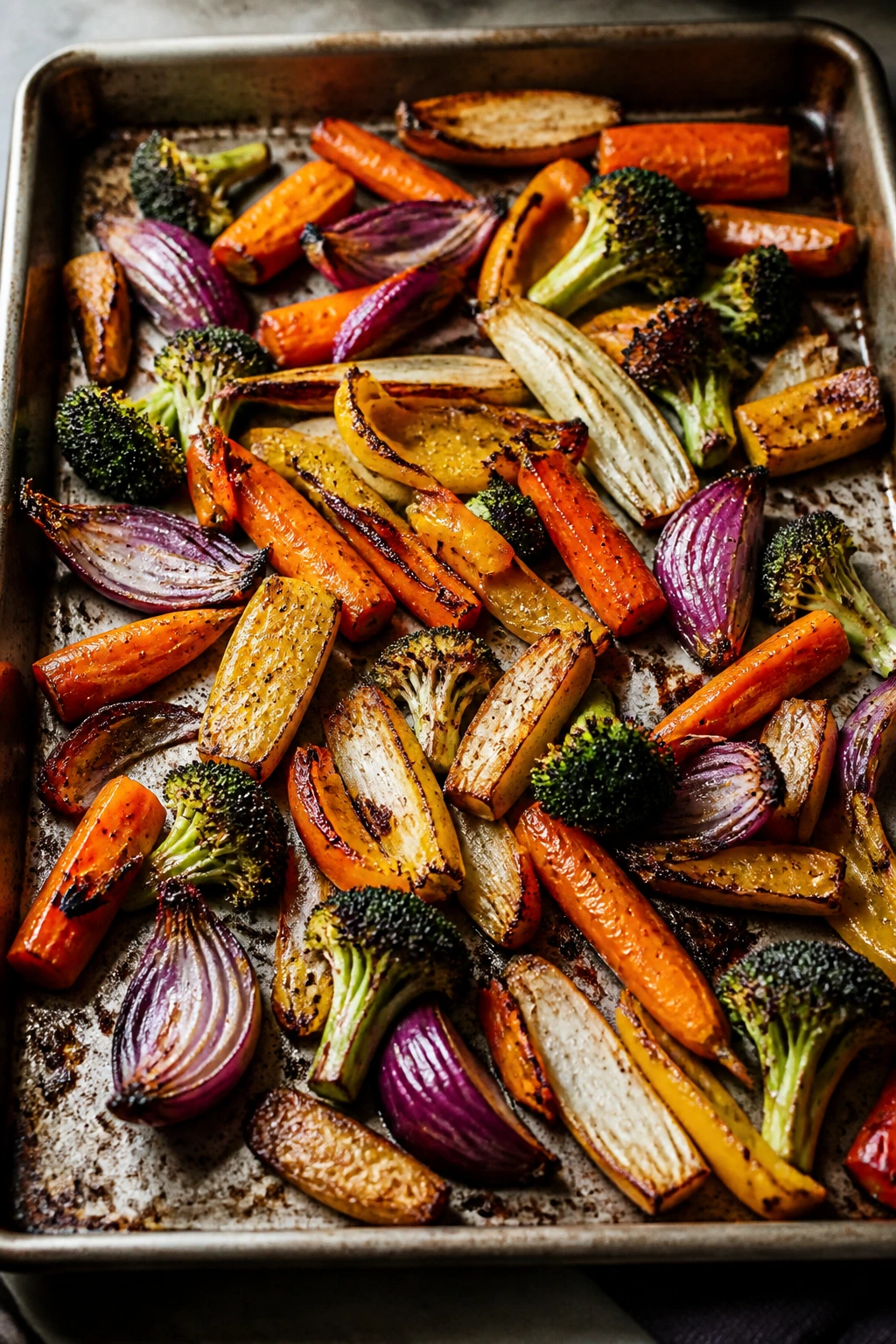
Sturdy Vegetables That Need the Head Start
What to use: 1 small head broccoli, 8 ounces Brussels sprouts, 2 medium carrots, and 1 large red onion.
Preparation: Cut the broccoli into fairly even florets, halve the Brussels sprouts, slice the carrots on the bias, and break the onion into wedges so the layers hold together. Keep the pieces close in size within each vegetable type; that matters more than making every single piece identical.
Substitutions: Cauliflower can stand in for broccoli, and parsnips can take the carrots’ place if you want a slightly earthier sweetness. If Brussels sprouts are missing from the produce drawer, extra broccoli or cauliflower works better than trying to force in watery vegetables that won’t brown.
Tips: These vegetables reward direct contact with the pan, so try to put at least one cut side down. Broccoli florets brown at the little nubbly tips first, and Brussels sprouts darken along the cut face before the outer leaves crisp, which is exactly the point.
Broccoli and Brussels sprouts take the longest because they carry more structure. That’s a good thing. Their sturdier flesh gives you contrast against the softer vegetables that arrive later.
Tender Vegetables That Join Later
What to use: 2 medium bell peppers, 1 medium zucchini, and 8 ounces cremini mushrooms.
Preparation: Slice the peppers into wide strips, not thin threads, so they keep some shape. Cut the zucchini into thick half-moons and halve any mushrooms that seem larger than a walnut.
Substitutions: Orange peppers work fine, and sliced sweet onions can replace part of the red onion if you like a softer, sweeter finish. If mushrooms aren’t your thing, use cherry tomatoes in the final 10 minutes instead — they’ll burst instead of browning, which changes the texture but still works.
Tips: These vegetables release moisture fast, so they should come in after the first roast has already started the browning. If you add them too early, the pan fills with steam and the carrots stop crisping.
Bell peppers are forgiving, but zucchini is not. It can go from tender to floppy in a blink, which is why it’s treated like a late arrival.
Oil and Seasonings That Build the Browning
What to use: 3 tablespoons extra-virgin olive oil, 1 1/2 teaspoons kosher salt, 1 teaspoon smoked paprika, 1 teaspoon dried thyme, and 1/2 teaspoon black pepper.
Preparation: Toss the sturdier vegetables with most of the seasoning first, then save a little salt for the second round so the tender vegetables don’t over-season while they finish roasting. Smoked paprika should coat the cut surfaces lightly, not sit in dusty patches.
Substitutions: Regular paprika works if that’s what you have, though it won’t give the same warm edge. Dried rosemary can replace thyme, but use it sparingly; rosemary is bossier and can take over the pan.
Tips: Don’t drown the vegetables in oil. Three tablespoons is enough for this amount, and more than that tends to leave the tray slick instead of bronzed.
The seasoning here is not about making the vegetables taste like a spice rub. It’s about giving the edges something to cling to while they brown.
The Finish That Pulls the Pan Together
What to use: 2 cloves garlic, finely grated, 1 tablespoon balsamic vinegar, 1 teaspoon maple syrup, 1 tablespoon lemon juice, 2 tablespoons chopped parsley, and optional feta or goat cheese.
Preparation: Grate the garlic finely so it melts into the hot vegetables rather than landing in sharp little bits. Whisk the balsamic, maple, and lemon together before you finish the pan so the glaze goes on in one quick move.
Substitutions: Red wine vinegar can replace the balsamic if you want less sweetness, and a squeeze of orange juice can stand in for part of the lemon if the dish needs a softer citrus note. If you’re skipping dairy, use toasted pumpkin seeds or sesame seeds instead of feta.
Tips: The finish should brighten, not bury, the roast. If the vinegar is loud enough that you can taste it first, there’s too much.
This is the part that makes the vegetables taste finished. The balsamic gives depth, the lemon cuts through the roast, and the garlic settles into the heat without turning harsh.
The Equipment That Keeps Browning on Track
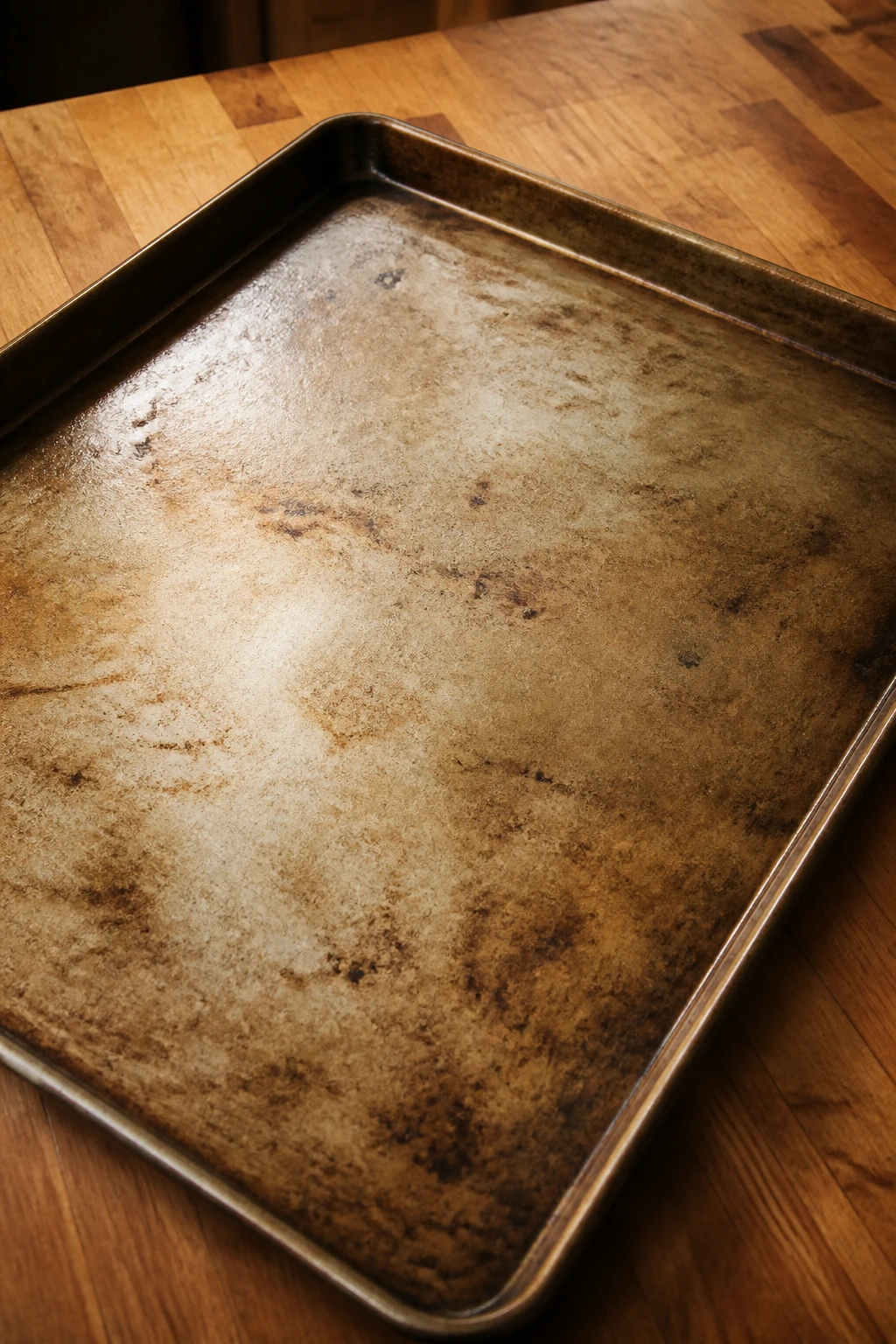
- 2 large rimmed sheet pans — the extra surface area is the whole reason this dish browns instead of steaming.
- Large mixing bowl — deep enough to toss the vegetables without spilling oil over the counter.
- Chef’s knife — a sharp blade gives cleaner cuts, and cleaner cuts brown more evenly.
- Sturdy cutting board — one that doesn’t slide when you’re cutting carrots and onions.
- Silicone spatula or metal turner — useful for flipping the vegetables without crushing broccoli florets.
- Small whisk or fork — for mixing the balsamic finish before it hits the hot tray.
- Parchment paper, optional — handy for cleanup, though bare metal gives a little more browning on the cut surfaces.
- Kitchen towel or paper towels — drying the vegetables matters more than people think, especially the mushrooms.
Roasting in Stages So Nothing Turns Soft
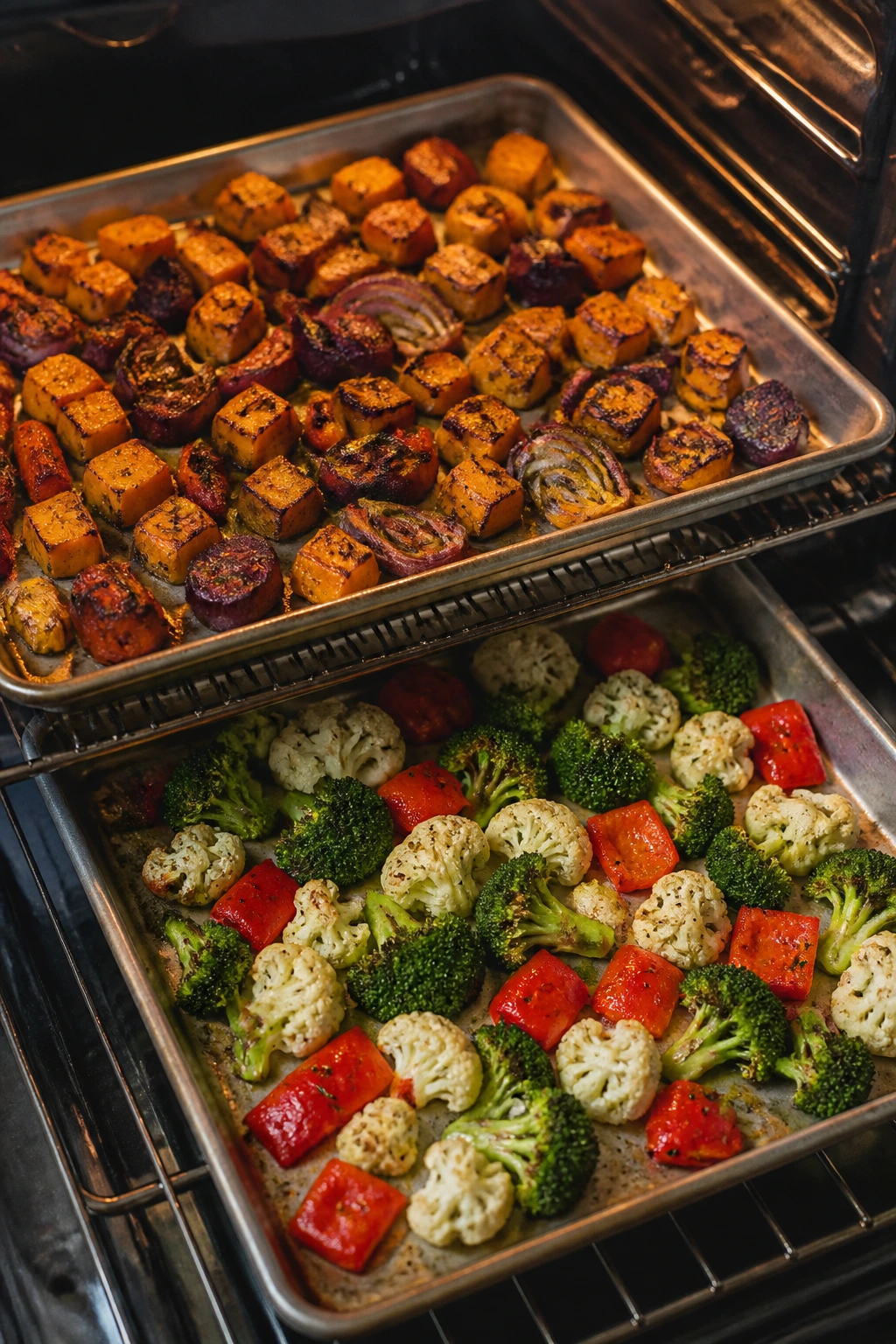
Prepare the Pan and Heat the Oven:
-
Preheat the oven to 425°F (220°C) and position racks in the upper and lower thirds. Slide two rimmed sheet pans into the oven while it heats so the metal is already hot when the vegetables go on.
-
Wash and dry every vegetable well. Cut the carrots into 1/4-inch diagonal pieces, the broccoli into bite-size florets, the Brussels sprouts in half, the onion into wedges, the peppers into 1-inch strips, the zucchini into 1/2-inch half-moons, and the mushrooms into halves if they’re large. Dry vegetables brown; wet vegetables steam.
-
In a large bowl, toss the carrots, broccoli, Brussels sprouts, and onion with 2 tablespoons of the olive oil, 1 teaspoon of the salt, the smoked paprika, the thyme, and the black pepper. Make sure the cut surfaces look lightly glossy, not drenched.
Roast the Sturdy Vegetables First:
-
Carefully remove the hot pans from the oven. Divide the sturdy vegetables between them in a single layer, with as much cut side down as possible. Roast for 12 minutes, then flip the vegetables and rotate the pans from top to bottom.
-
Toss the bell peppers, zucchini, and mushrooms with the remaining 1 tablespoon olive oil and the remaining 1/2 teaspoon salt. Add them to the pans in a single layer. Do not pile them into one thick mound or you’ll trap steam and lose the caramelized edges.
-
Roast for 12 to 15 minutes more, stirring once halfway through, until the carrots are tender at the center, the Brussels sprouts are deep golden at the cut edges, the mushrooms have shrunk and browned, and the peppers are blistered in spots.
Finish the Pan:
-
Whisk the grated garlic, balsamic vinegar, maple syrup, and lemon juice together in a small bowl. Drizzle the mixture over the hot vegetables and toss quickly so the glaze coats the vegetables instead of pooling at the bottom of the pan.
-
Return the pans to the oven for 2 to 3 minutes, just until the glaze looks shiny and sticky around the edges. Keep your eye on this part; balsamic can turn bitter if you leave it too long.
-
Transfer the vegetables to a serving bowl or platter, scatter the parsley over the top, and add feta if you’re using it. Taste one carrot or broccoli floret and add a pinch more salt only if it needs it.
A small note here: if you only have one sheet pan, roast the vegetables in two batches. One crowded pan is not a shortcut; it’s a disappointment with extra dishes.
How to Turn Caramelized Colorful Vegetables Into Dinner
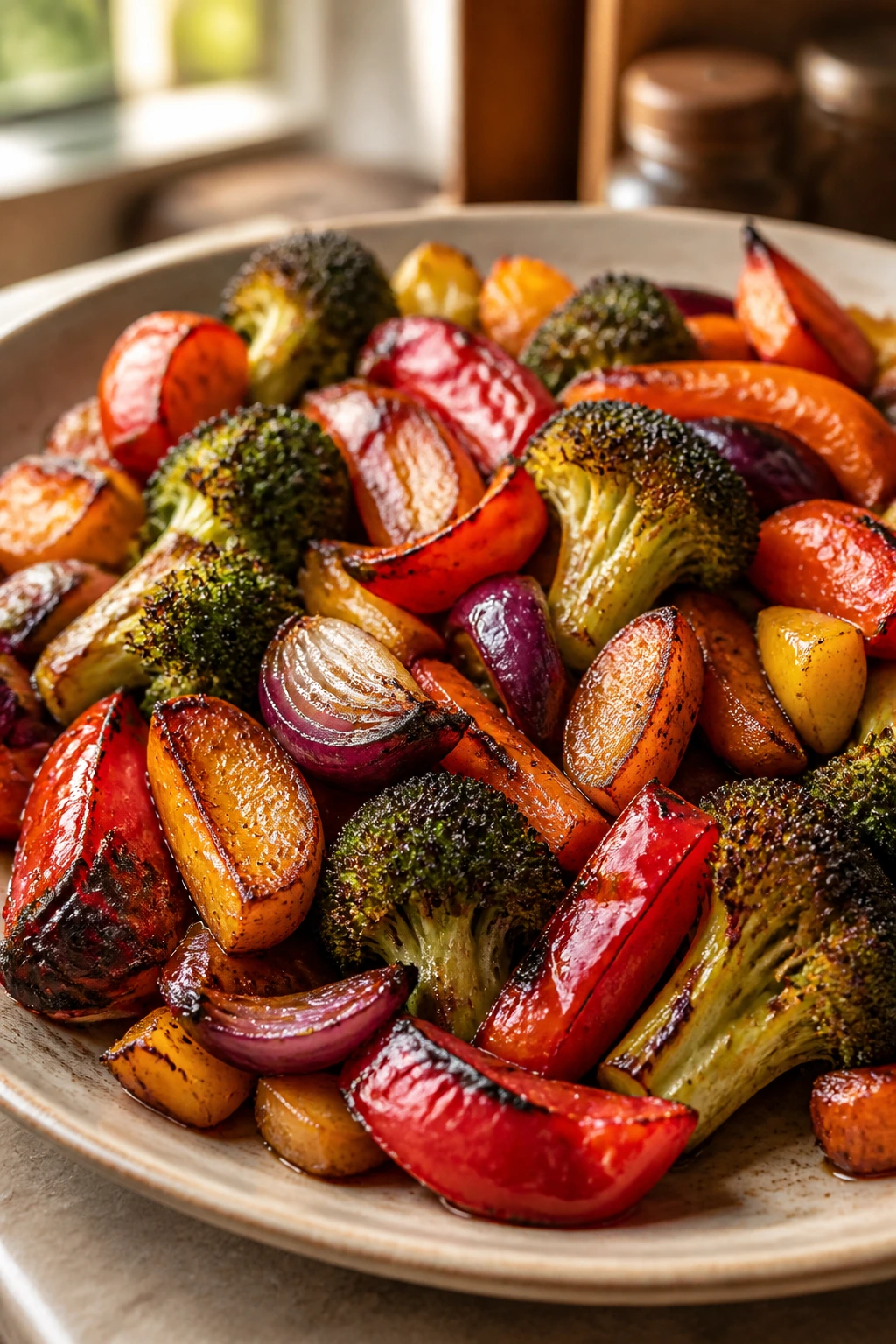
Presentation: Spoon the vegetables over a shallow bowl of quinoa or farro so the browned edges stay visible instead of disappearing into a pile. I like using a wide platter if I’m serving family-style; it lets the peppers, broccoli, and onions keep their shape instead of slumping into each other.
Accompaniments: A cup of cooked grain per person turns this into a full meal fast, and a scoop of lentils or chickpeas adds enough body to make it hold until dinner ends. If you want something creamy on the side, a spoonful of lemony yogurt or tahini sauce does the job without making the plate heavy.
Portions: As a side dish, figure on about 1 to 1 1/4 cups per person. As a main, plan closer to 2 cups per person, especially if you’re serving it over a grain or adding eggs, beans, or tofu.
Beverage Pairing: A crisp white wine like Sauvignon Blanc works well with the balsamic and lemon, and unsweetened sparkling water with lime keeps the plate feeling bright. If you want a nonalcoholic option with more character, iced mint tea is a good match because it cuts through the roasted sweetness.
Small Flavor Moves That Matter Here
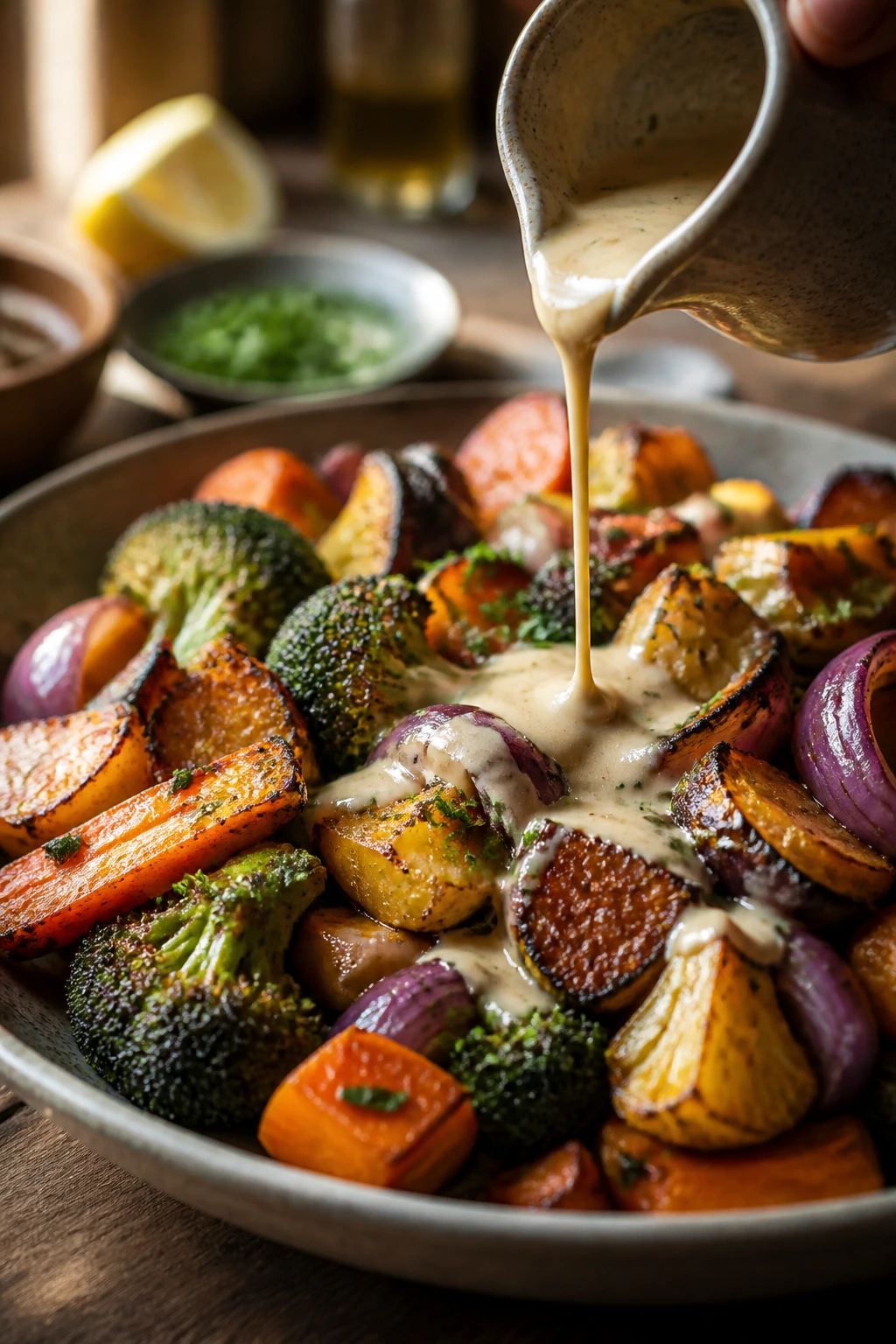
Flavor Enhancement: A spoonful of tahini thinned with lemon juice and water turns this into a fuller meal fast. Drizzle it over the finished vegetables, not before roasting, or the sauce will disappear into the pan.
Time-Saver: Chop the carrots, broccoli, Brussels sprouts, and onion up to 2 days ahead and store them in separate containers with paper towels tucked inside. Keep the zucchini and mushrooms for the day you cook; they don’t hold as well once cut.
Texture Move: If you like deeper browning, let the cut sides of the broccoli and Brussels sprouts sit directly on the pan for the first roast and avoid fussing with them too soon. One flip is enough. Constant stirring steals the crust.
Make-It-Yours: For a dairy-free finish, skip the feta and add toasted pumpkin seeds for crunch. For a higher-protein plate, add a can of drained chickpeas during the second roast, but dry them well first so they don’t soften the whole pan.
This is the kind of dish that improves when you treat the garnish as part of the flavor, not as decorative confetti. Parsley, lemon zest, toasted seeds, a spoon of sauce — one of those little finishes keeps roasted vegetables from tasting flat by the third bite.
The Mistakes That Flatten the Color and Crunch
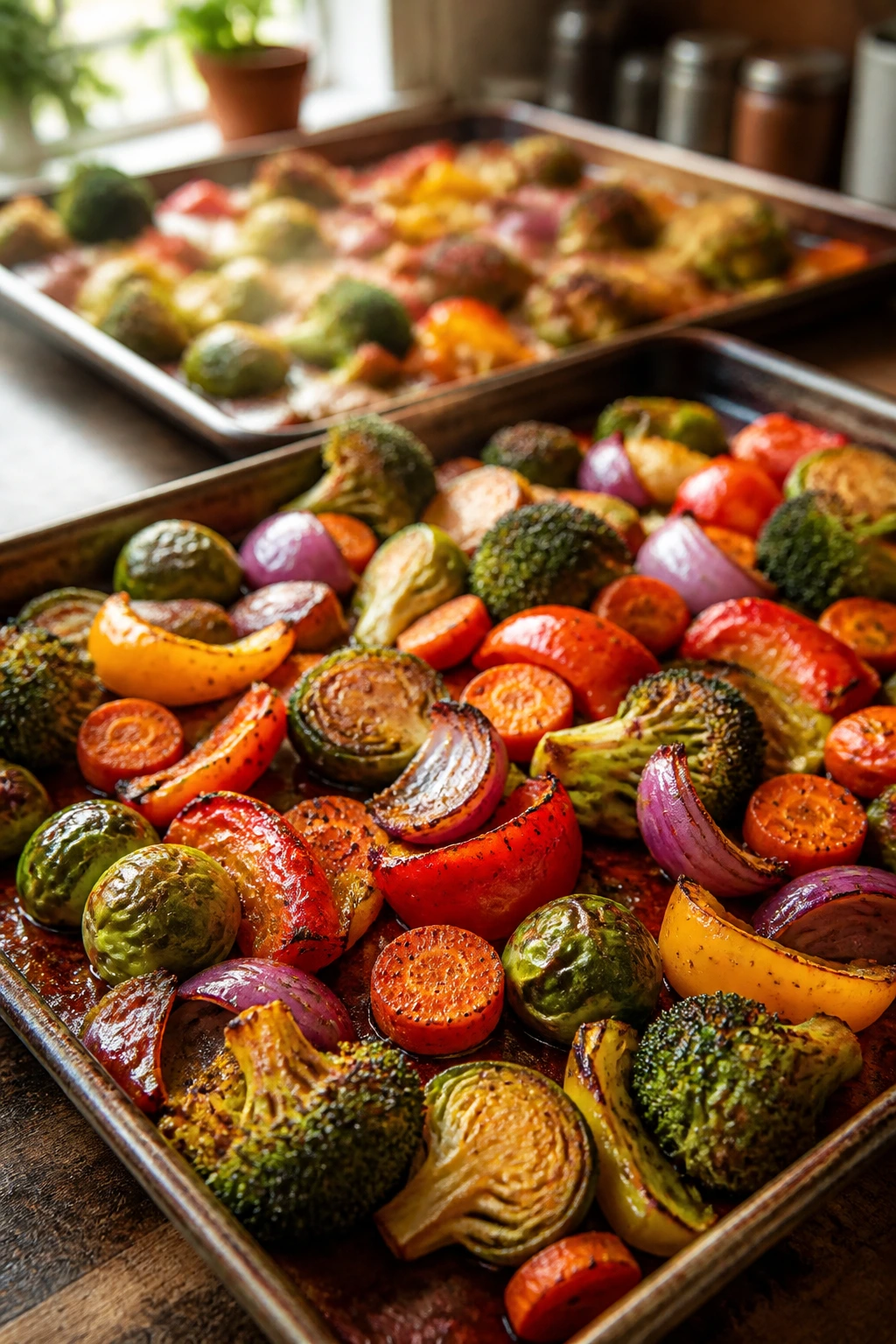
- Crowding the pan — if the vegetables sit on top of each other, they release steam and go pale. Fix it with two sheet pans and a single layer, even if the pan looks half-empty at first.
- Using the same roast time for every vegetable — zucchini and mushrooms collapse long before carrots are tender. Fix it by giving the sturdy vegetables a head start and adding the soft ones later.
- Pouring on too much oil — the vegetables look shiny but taste greasy, and the edges brown unevenly. Fix it by measuring the oil instead of guessing; 3 tablespoons is enough for this batch.
- Adding balsamic too early — the glaze burns before the vegetables are done and leaves a sharp, bitter note. Fix it by finishing with the vinegar mixture only after the vegetables are already browned.
- Skipping the dry-off step — wet broccoli and damp mushrooms keep the pan from getting hot enough to brown. Fix it by patting everything dry after washing, especially the mushrooms and Brussels sprouts.
There’s also the smaller mistake of stirring too often. It feels productive. It is not. Every time you toss the vegetables, you move the browned side away from the heat and make the pan work harder than it needs to.
Variations for Different Pantry Shelves and Taste Buds
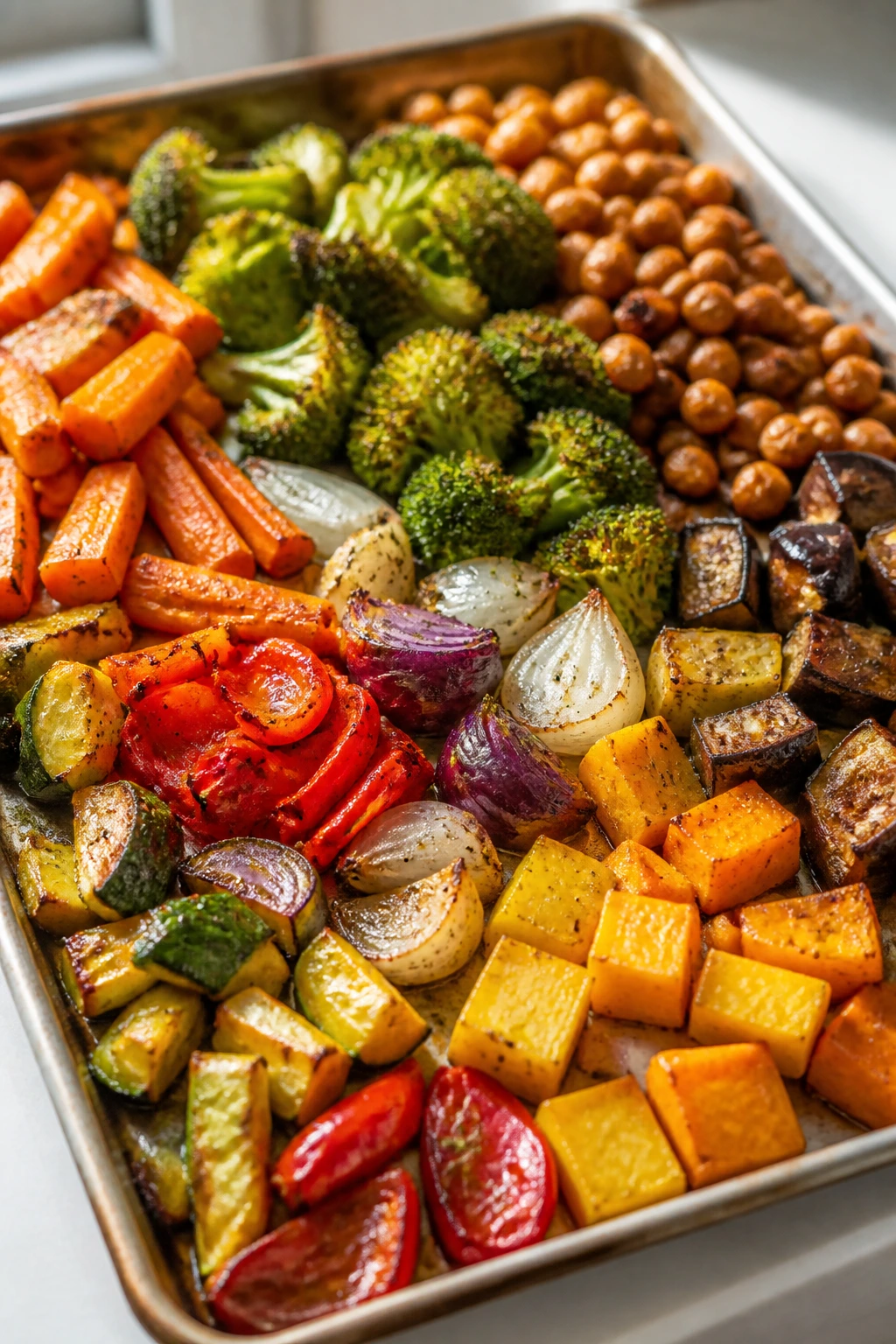
Market Basket Medley: Use whatever sturdy vegetables look best and keep the structure the same: one head-type vegetable, one root vegetable, one onion, and one softer vegetable that goes in later. The exact mix can change, but the stage-roasting method stays the same.
Mediterranean Tray: Swap the thyme for oregano, add a handful of cherry tomatoes during the last 8 minutes, and finish with more lemon, chopped parsley, and feta. A few sliced olives can go on after roasting if you want a saltier, brinier edge.
Smoky Chickpea Supper: Add one 15-ounce can of chickpeas, drained and dried, during the second roast. They crisp around the edges and make the pan sturdy enough to stand in for dinner on its own.
Golden Curry Roast: Replace the smoked paprika and thyme with 1 1/2 teaspoons curry powder and 1/2 teaspoon cumin, then finish with lime juice and cilantro. This version works especially well with cauliflower or sweet potato in the mix.
Ginger-Sesame Finish: Swap the balsamic finish for 1 tablespoon rice vinegar, 1 teaspoon grated ginger, and 1 teaspoon toasted sesame oil. Use a light hand with the sesame oil; a little goes a long way, and too much can flatten the roasted flavor.
The variations that work best here are the ones that respect the browning. If a swap adds too much liquid too early, the whole tray loses its edge, and you’re back to making steamed vegetables with ambition.
Make-Ahead, Storage, and Reheating Without Soggy Edges
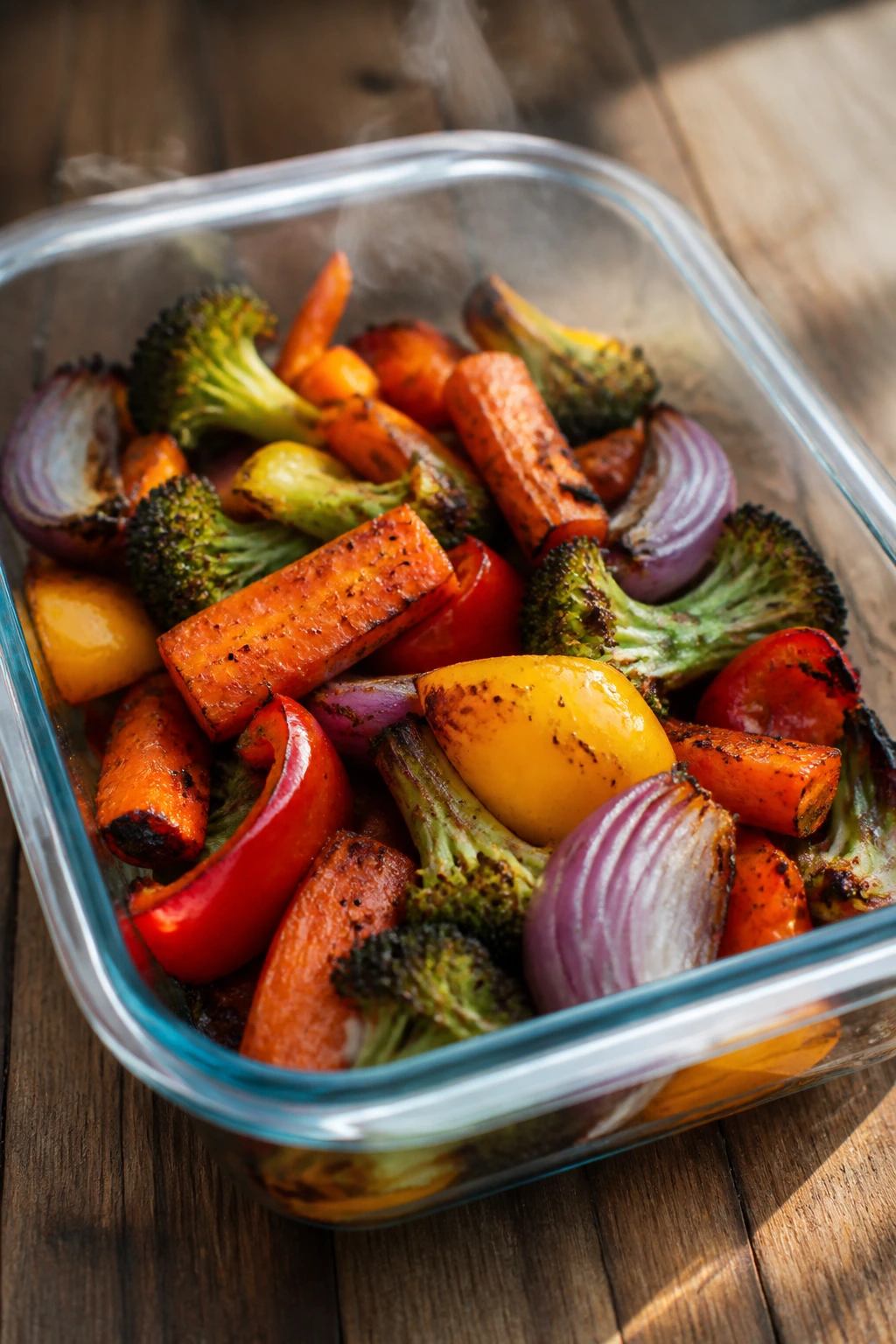
Roasted vegetables keep well in the fridge for 3 to 4 days in an airtight container. Let them cool for about 20 to 30 minutes before packing them up, but do not leave them sitting out longer than 2 hours.
Freezing is possible for up to 2 months, though the texture softens when they thaw. If you plan to freeze them, skip the parsley and feta, cool the vegetables completely, and store them flat in a freezer bag or container so they don’t clump into one cold brick.
For reheating, a 425°F (220°C) oven for 8 to 10 minutes gives you the best shot at bringing back the edges. A hot skillet over medium-high heat works too; add a teaspoon of olive oil and cook just until the vegetables start to sizzle again, usually 5 to 7 minutes.
Microwaving works when you’re in a hurry, but the vegetables will go softer. If you go that route, use short bursts of 30 to 45 seconds and stop as soon as the center is hot. Overheating is what turns leftovers into a lukewarm pile.
If you want to make parts ahead, the dry seasoning can be mixed a day in advance, and the sturdy vegetables can be chopped a day or two early. Hold off on cutting the zucchini until the day you roast it, because it gives off water fast and gets tired in the fridge.
Common Questions About Caramelized Colorful Vegetables
Can I use frozen vegetables instead of fresh ones?
You can, but the result won’t brown as deeply. Thaw them first and pat them very dry, then roast them on a hot pan in a thinner layer than you would with fresh vegetables.
Do I really need two sheet pans?
For this full batch, yes, unless you want to roast in two separate rounds. One pan can work for a smaller amount, but crowding is the fastest way to lose the crisp edges.
How do I get more browning without burning the vegetables?
Use a hot oven, dry vegetables, and enough surface space. If your oven runs cool, give the vegetables an extra 3 to 5 minutes before adding the balsamic finish, but watch the tender pieces closely.
Can I make this into a full meal without adding meat?
Absolutely. Serve it over quinoa, farro, or lentils, then add chickpeas, a fried egg, or tofu if you want more protein. The vegetables carry enough flavor to hold up to those additions.
What if my zucchini turns mushy every time?
Cut it thicker, add it later, and keep the pieces in a single layer. Zucchini is one of the first vegetables to go soft if the pan is crowded or the roast runs too long.
Can I skip the balsamic vinegar?
Yes. If you want a simpler finish, use lemon juice, a little olive oil, and salt, or swap in a spoonful of tahini sauce. The vinegar adds depth, but it isn’t the only way to finish the dish.
Which vegetables should I avoid in this recipe?
Very watery vegetables, like cucumber or raw tomato chunks, do not belong here. They break the texture and push the whole pan toward steaming instead of roasting.
What’s the best way to use leftovers?
Fold them into omelets, tuck them into pita with hummus, or stir them into warm grain bowls with a spoonful of yogurt sauce. Leftovers also work well chopped into a frittata, where the softer texture stops being a problem.
A Pan Full of Color That Earns Its Keep
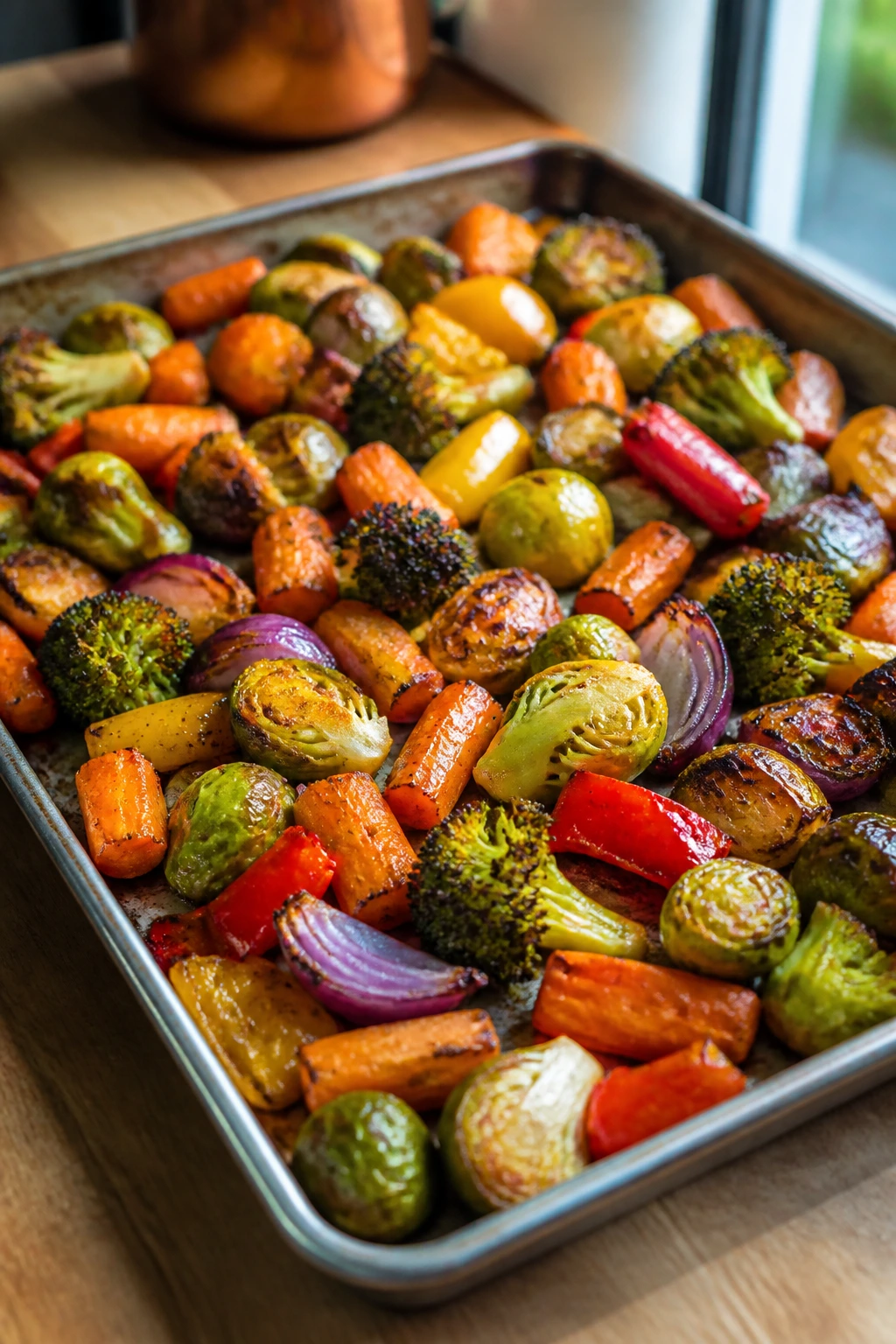
There’s a reason this kind of vegetable tray keeps getting made in my kitchen. It solves the ordinary problem of “what’s for dinner” without asking for anything fancy, and it gives back more than a side dish usually does. The carrots come out sweet, the peppers stay bright, the broccoli gets those dark little tips, and the whole thing feels deliberate instead of improvised.
That’s the part I like most. A good tray of roasted vegetables doesn’t pretend to be something else. It just tastes like heat, time, and a little attention paid in the right places. The next time the produce drawer looks random, this is the move that turns it into dinner.
Caramelized Colorful Vegetables for a Healthy Dinner — Recipe Card
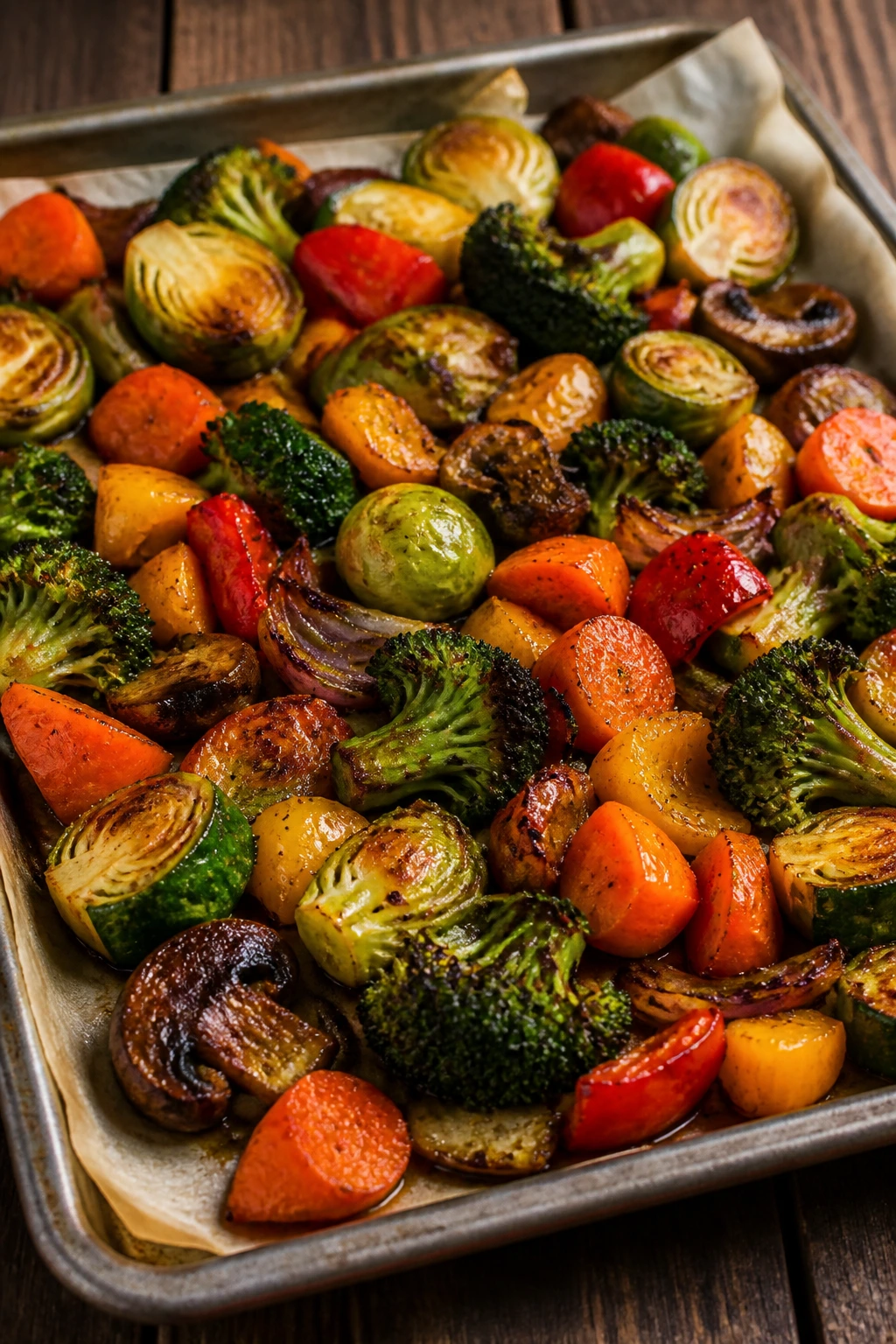
Recipe Name: Caramelized Colorful Vegetables for a Healthy Dinner
Description: A hot-sheet-pan mix of broccoli, carrots, Brussels sprouts, bell peppers, zucchini, and mushrooms finished with balsamic, lemon, and parsley. Serve it as a side or pile it over grains for a meatless dinner.
Prep Time: 20 minutes
Cook Time: 30 to 35 minutes
Total Time: 50 to 55 minutes
Course: Main Course or Side Dish
Cuisine: Vegetable / Mediterranean-Inspired
Servings: 4 servings as a main with grains, or 6 as a side
Calories: About 180 kcal per serving
Ingredients
For the Vegetables:
- 2 medium red bell peppers, cored and cut into 1-inch strips
- 2 medium yellow bell peppers, cored and cut into 1-inch strips
- 1 large red onion, peeled and cut into 8 wedges
- 2 medium carrots, peeled and sliced on a diagonal into 1/4-inch pieces
- 1 small head broccoli, cut into bite-size florets
- 8 ounces Brussels sprouts, trimmed and halved
- 1 medium zucchini, halved lengthwise and sliced into 1/2-inch half-moons
- 8 ounces cremini mushrooms, halved if large
For the Seasoning:
- 3 tablespoons extra-virgin olive oil
- 1 1/2 teaspoons kosher salt
- 1 teaspoon smoked paprika
- 1 teaspoon dried thyme
- 1/2 teaspoon black pepper
For the Finish:
- 2 cloves garlic, finely grated
- 1 tablespoon balsamic vinegar
- 1 teaspoon maple syrup
- 1 tablespoon lemon juice
- 2 tablespoons chopped fresh parsley
- Optional: 2 tablespoons crumbled feta or goat cheese
Instructions
-
Preheat the oven to 425°F (220°C) and place two rimmed sheet pans in the oven while it heats.
-
Wash and dry the vegetables well, then cut the carrots, broccoli, Brussels sprouts, onion, peppers, zucchini, and mushrooms as listed.
-
Toss the carrots, broccoli, Brussels sprouts, and onion with 2 tablespoons olive oil, 1 teaspoon salt, smoked paprika, thyme, and black pepper.
-
Remove the hot pans, divide the sturdy vegetables between them in a single layer, and roast for 12 minutes. Flip and rotate the pans.
-
Toss the peppers, zucchini, and mushrooms with the remaining 1 tablespoon olive oil and 1/2 teaspoon salt, then add them to the pans in a single layer.
-
Roast for 12 to 15 minutes more, stirring once halfway through, until the vegetables are tender and browned at the edges.
-
Whisk together the garlic, balsamic vinegar, maple syrup, and lemon juice, then drizzle over the hot vegetables and toss.
-
Return to the oven for 2 to 3 minutes until the glaze looks shiny and sticky, then finish with parsley and feta if using.
Notes: Use two pans for the best browning. Add the balsamic finish at the end so it stays bright instead of bitter. Leftovers reheat best in a hot oven or skillet.