



A skillet full of vegetables can go wrong in two directions, and both are depressingly common: limp and watery, or scorched at the edges with raw centers hiding underneath. Garlicky sautéed vegetables for a healthy dinner live in the narrow strip between those two failures, and when they land there, the pan smells like sweet onion, browned garlic, and vegetables that still have a little shape when you bite into them.
That balance matters more than people admit. A lot of vegetable recipes either drown everything in sauce or treat vegetables like a punishment food, cooked until they collapse and then salted into submission. I’d rather have a pan where the carrots keep a little chew, the broccoli takes on deep green edges, the zucchini turns glossy instead of mushy, and the garlic gets 30 to 45 seconds in hot oil before it starts to whisper toasted sweetness.
This kind of dinner also solves the irritating problem of a fridge full of odds and ends. One red pepper, two carrots, a lonely zucchini, a few broccoli florets, maybe snap peas if you’re lucky. Put them in the right order, give them enough heat, and suddenly they taste like a deliberate meal instead of a clean-out-the-crisper chore. And that’s the point: this is not a sad side dish pretending to be dinner. It’s a pan with enough color, texture, and garlic to hold the center of the plate.
Why This Skillet Dinner Stays Crisp, Not Watery
Garlic is doing more than adding aroma here. It sharpens the vegetables, but only if you treat it like the last 45 seconds matter, because they do. Once garlic goes past golden, it turns bitter fast, and bitter garlic can flatten the whole pan into something blunt and greasy.
The vegetable order matters just as much. Hard vegetables go first, water-heavy vegetables go later, and fragile things like snap peas and zucchini should spend only enough time in the pan to lose their raw edge. That sounds fussy until you make it once and realize the pan is basically doing three jobs at the same time: browning, softening, and glazing.
There’s also a nutrition side that makes sense without turning the meal into a lecture. Fat-soluble vitamins in vegetables need fat to be absorbed well, so the olive oil here isn’t just for flavor. It carries the garlic and helps the carrots and peppers taste fuller, not greasy.
And yes, the half-plate vegetable idea from MyPlate is useful here, but only if the vegetables taste like something you’d willingly eat twice. Bland steamed broccoli on a plate is compliance. A hot skillet with garlic, lemon, and a little parsley is dinner.
Why You’ll Want This Recipe on Repeat
Fast but not sloppy: The whole pan comes together in about 30 minutes, but it still tastes like you paid attention, because you did.
Flexible with what’s in the fridge: The ingredient list tolerates substitutions well as long as you respect the cooking order and keep the pieces roughly the same size.
Bright without a heavy sauce: Lemon juice and parsley at the end wake up the vegetables without smothering them in cream or cheese.
Works beside almost anything: Spoon it next to roast chicken, pile it over rice, tuck it into grain bowls, or serve it with eggs and toast.
Good use of a hot pan: The browning on the onions, carrots, and broccoli brings in flavor that plain steaming never gets close to.
Easy to scale up: If you use a larger skillet or cook in two batches, the recipe doubles cleanly for a bigger dinner crowd.
Time, Yield, and the Texture You’re Chasing
Yield: Serves 4 to 6 as a side, or 3 to 4 as a light main with grains, eggs, or beans
Prep Time: 15 minutes
Cook Time: 15 minutes
Total Time: 30 minutes
Difficulty: Beginner — the method is straightforward, but the order of the vegetables and the heat level matter.
Best Served: Right away, while the broccoli still has bite and the zucchini is glossy, not limp
The texture target is crisp-tender with browned edges. That means the carrots should still have a faint snap, the broccoli should be bright but not raw, and the zucchini should bend without turning to ribbons in the pan. If your vegetables look cooked in the way cafeteria vegetables look cooked, you’ve gone too far.
I like this meal because it gives you a real dinner feel without asking for a sauce, a casserole dish, or a second pan. It’s the kind of cooking that rewards a decent knife, a hot skillet, and enough confidence to stop before the vegetables surrender completely.
The Vegetables, Oil, and Seasonings You Need
For the vegetables:
- 2 tablespoons extra-virgin olive oil
- 1 tablespoon unsalted butter, or 1 extra tablespoon olive oil for a dairy-free version
- 1 medium yellow onion, cut into thin wedges
- 2 medium carrots, peeled and sliced on a diagonal into 1/4-inch coins
- 2 cups broccoli florets, cut into bite-size pieces
- 1 red bell pepper, sliced into 1/2-inch strips
- 1 medium zucchini, halved lengthwise and sliced into 1/2-inch half-moons
- 1 cup snap peas, strings removed
For the garlic finish:
- 4 garlic cloves, minced
- 1/2 teaspoon kosher salt, plus more to taste
- 1/4 teaspoon black pepper
- 1/4 teaspoon red pepper flakes, optional but useful
- 2 tablespoons water or low-sodium vegetable broth
For serving:
- 1 tablespoon lemon juice, plus wedges if you want a sharper finish
- 2 tablespoons chopped fresh parsley
- 1 tablespoon grated Parmesan, optional
The amount of vegetable here is enough to fill a standard 12-inch skillet without burying the pan in raw pieces. That matters. If you pack the pan too tight, the vegetables steam before they brown, and the whole thing starts tasting like boiled produce with garlic on top. Nobody needs that.
Why Each Ingredient Earns Its Spot
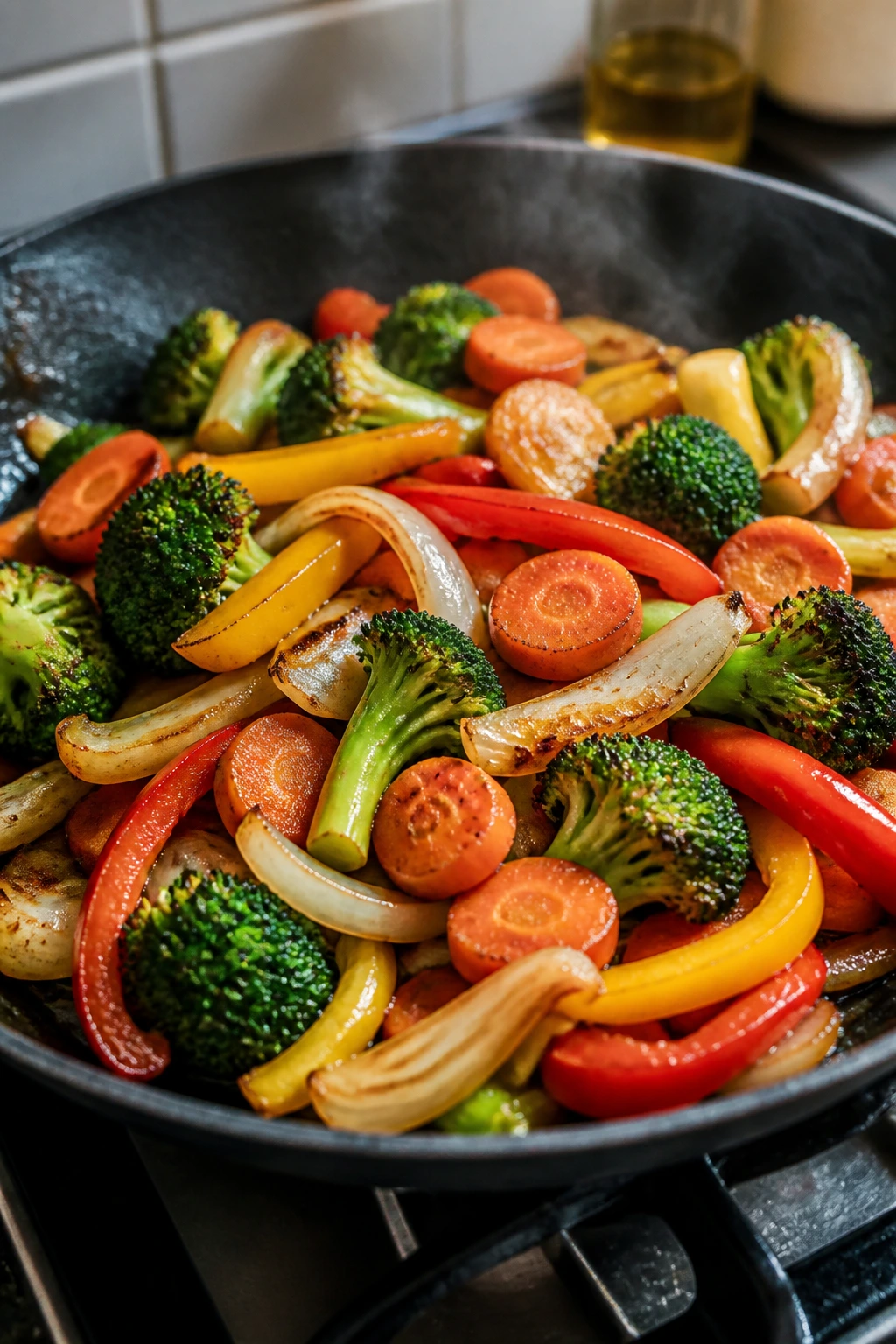
Vegetables with Structure
What to use: 1 onion, 2 carrots, 2 cups broccoli, 1 bell pepper, 1 zucchini, and 1 cup snap peas.
Preparation: Cut everything into pieces that are close in size where possible, then keep the broccoli and carrots a little smaller than the pepper and zucchini so they finish together.
Substitutions: Green beans, asparagus, cauliflower, mushrooms, or cabbage all work, but you need to adjust cook time slightly based on how firm they are.
Tips: Hard vegetables need the first minute or two alone in the pan; soft vegetables should not be asked to race the carrots.
Garlic and Heat
What to use: 4 minced garlic cloves, 1/2 teaspoon kosher salt, 1/4 teaspoon black pepper, and 1/4 teaspoon red pepper flakes if you like a little sting.
Preparation: Mince the garlic finely so it disperses in the oil rather than sitting in one bitter clump.
Substitutions: Garlic powder can work in a pinch, but it won’t give the same smell or the same sweet edge when it hits the hot pan.
Tips: Garlic goes in late because it cooks fast; if it smells aggressively sharp instead of warm and sweet, it needs less time, not more stirring.
Fat and Finish
What to use: 2 tablespoons olive oil, 1 tablespoon butter, 1 tablespoon lemon juice, and 2 tablespoons parsley.
Preparation: Measure the lemon juice before you start cooking so you can add it at the end while the pan is still hot.
Substitutions: All olive oil is fine if you want dairy-free vegetables, and dill or basil can stand in for parsley if that’s what you have.
Tips: The fat gives the vegetables sheen and helps the seasoning cling; the lemon should taste like a final lift, not like a sauce.
The Splash That Prevents Dryness
What to use: 2 tablespoons water or low-sodium vegetable broth.
Preparation: Keep it nearby before you turn on the heat, because once the vegetables start browning, the timing moves quickly.
Substitutions: A tablespoon or two of stock from cooked beans can work if you want a slightly deeper savory note.
Tips: This little splash creates steam for the hard vegetables without collapsing the whole pan into mush.
The Tools That Make Sautéing Easier
A good pan matters more here than a lot of people want to admit. Not fancy. Just big enough and hot enough.
- 12-inch skillet, preferably stainless steel or cast iron: Room to spread the vegetables out means more browning and less steaming.
- Sharp chef’s knife: Clean cuts help everything cook at the same pace, and ragged cuts turn limp faster.
- Cutting board with enough space: A crowded board leads to uneven pieces and a mess of vegetable juice.
- Wooden spoon or silicone spatula: You want something that can toss vegetables without smashing the softer ones.
- Measuring spoons: Garlic, lemon, red pepper flakes, and salt all matter in small amounts here.
- Microplane or small grater, optional: If you want extra lemon zest at the end, this is the neatest way to get it.
- Lid for the skillet, optional but helpful: A short cover traps steam for the carrots and broccoli without cooking the zucchini too long.
A wok can work if it’s large enough, but I still prefer a wide skillet for mixed vegetables. The wider surface gives you more browned spots, and browned spots are the whole reason this tastes like dinner instead of a bowl of warm produce.
How to Cook the Vegetables in the Right Order
Prep the vegetables
-
Wash and dry all the produce thoroughly. Moisture on the vegetables slows browning, and wet broccoli florets throw steam into the pan before the oil has a chance to work.
-
Cut the vegetables into cook-time-matched pieces. Slice the carrots thinly, keep the broccoli bite-size, and make the zucchini half-moons thick enough to hold shape, about 1/2 inch. If the pieces vary wildly, the pan will cook wildly.
Start the browning
-
Heat the skillet over medium-high heat for 1 to 2 minutes, then add the olive oil and butter. The fat should look fluid and shimmer lightly, not smoke. If the butter browns instantly, the pan is too hot.
-
Add the onion and carrots first, then cook for 3 to 4 minutes, stirring only every 30 seconds or so. You want a little color at the edges and a faint softening, not a full collapse. The carrots should still feel firm when you poke one with a spoon.
-
Stir in the broccoli and bell pepper, then add the 2 tablespoons water or broth and cover the pan for 2 minutes. That quick burst of steam softens the broccoli stems and the carrots without giving up the browning you already built.
Finish with the delicate vegetables
-
Uncover the pan and add the zucchini and snap peas. Cook for 2 to 3 minutes, tossing often, until the zucchini turns glossy and the snap peas brighten to a vivid green. Do not walk away here; the difference between just-cooked and overcooked is about 90 seconds.
-
Add the garlic, salt, pepper, and red pepper flakes. Stir constantly for 30 to 45 seconds, just until the garlic smells fragrant and loses its raw bite. If it starts to brown deeply, pull the pan off the heat immediately.
-
Turn off the heat and add the lemon juice and parsley. Toss once or twice to coat, then taste and adjust with a pinch more salt if needed. A little Parmesan on top is fine, but the vegetables should taste complete even without it.
-
Serve right away. The pan will keep cooking from residual heat, so waiting five minutes on the stove is enough to soften the zucchini more than you want.
The biggest mistake home cooks make is adding the garlic early because they want the kitchen to smell good sooner. It already smells good. Let the carrots and broccoli earn the first few minutes, then the garlic can come in and do its job without getting bitter.
How to Serve This as Dinner
Presentation: Spoon the vegetables into a shallow bowl or onto a wide platter so you can see the colors instead of burying them in a deep pile. A scatter of parsley and a few flecks of red pepper make the pan look fresh, not plain.
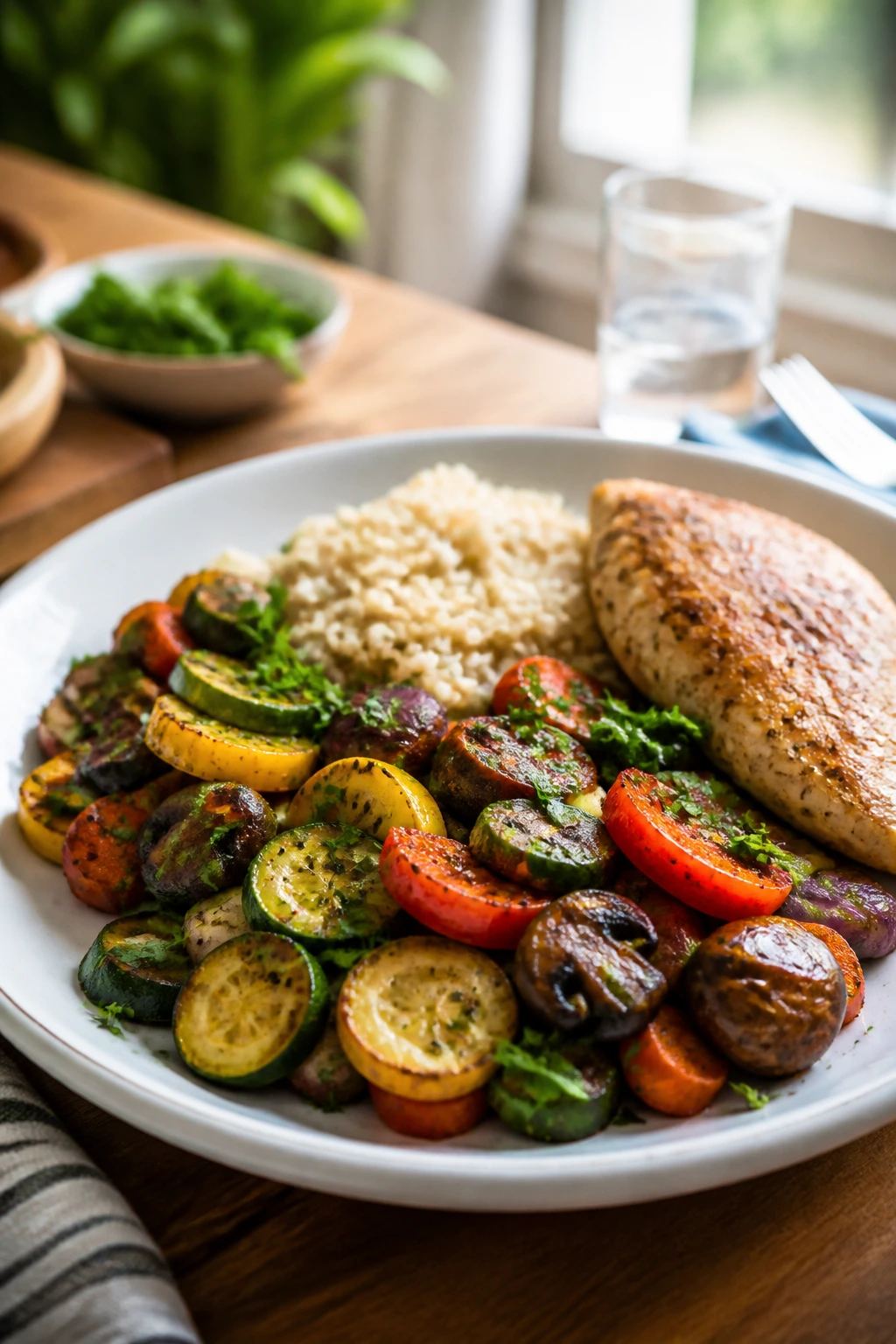
Accompaniments: For a side dish, I like these with roasted chicken, salmon, simple tofu, or fried eggs. As a light main, serve them over brown rice, quinoa, or buttered couscous, or tuck them beside a slice of crusty bread that can mop up the lemony oil at the bottom of the pan.
Portions: Four servings is realistic if the vegetables sit alongside protein and a starch. If you want them to carry the meal, count on 1 1/2 to 2 cups per person and add beans, eggs, or grains so the plate doesn’t feel unfinished.
Beverage Pairing: Sparkling water with lemon keeps the plate bright, and a dry white wine like Sauvignon Blanc or Pinot Grigio matches the garlic and lemon without making the vegetables taste flat.
If you want the dish to feel more substantial, put a scoop of white beans or chickpeas under the vegetables. That trick works better than people expect. The beans soak up the lemon and garlic in the pan, and the vegetables sit on top like they mean it.
Small Tweaks That Change the Flavor Fast
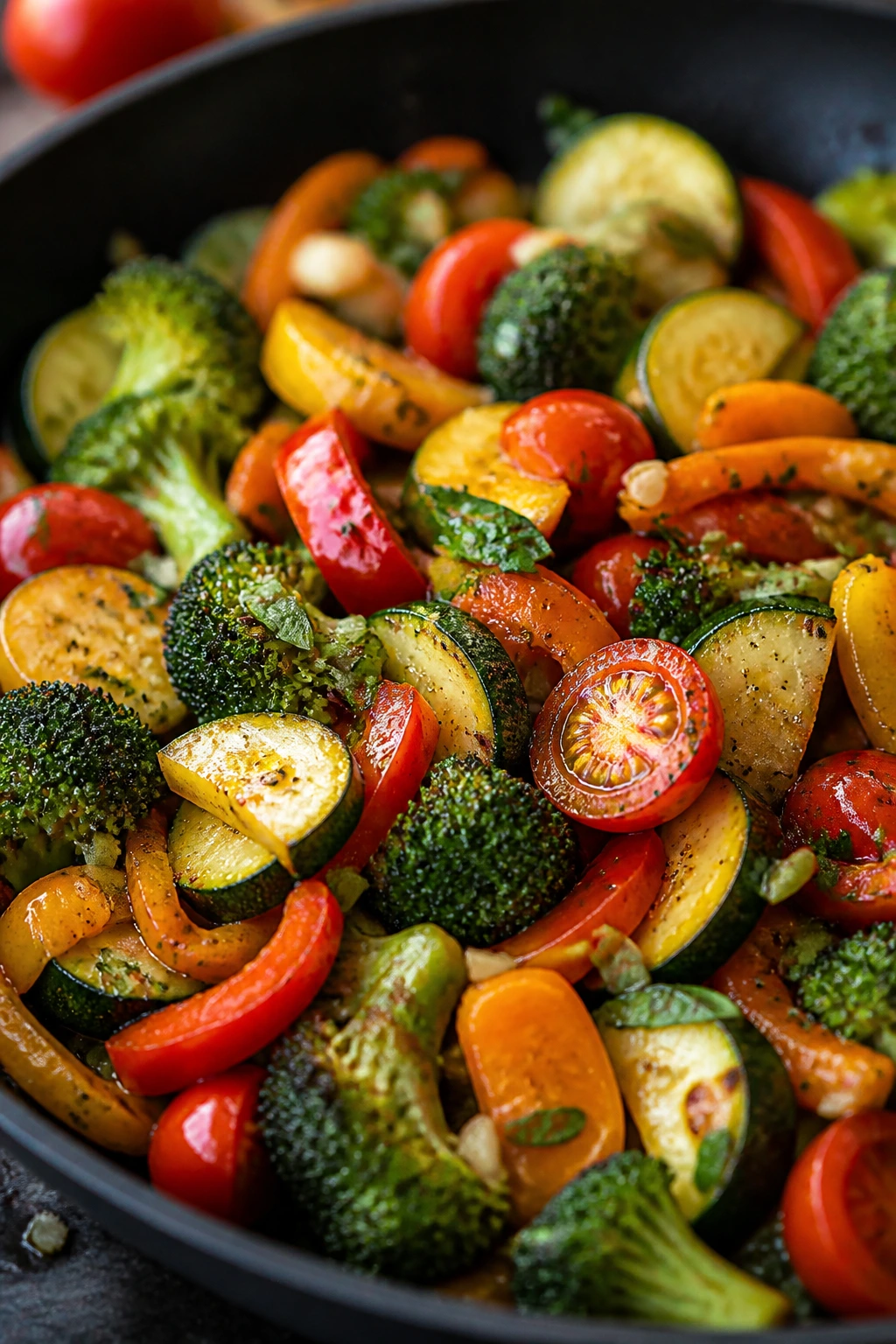
Flavor Enhancement: A little lemon zest at the end changes the whole smell of the dish. One swipe of the microplane over the finished pan gives the garlic a cleaner edge and makes the carrots taste sweeter.
Customization: If you like a more savory pan, add 1 teaspoon of tamari with the lemon juice. If you want a softer, rounder flavor, swap the red pepper flakes for a pinch of dried thyme or oregano and let the herbs bloom briefly in the oil.
Serving Suggestions: A spoonful of grated Parmesan is useful, but only after the heat is off. On a hot pan, cheese can go grainy and clump; off the heat, it melts just enough to cling to the vegetables in small salty bits.
Make-It-Yours: For a dairy-free version, use all olive oil and finish with a drizzle of good olive oil instead of butter. For a vegan version that still feels complete, toss in chickpeas near the end so the pan has enough heft to stand as a main dish.
I also like a tiny pinch of sugar in one specific case: when the carrots are lean and the bell pepper tastes a little sharp. Half a teaspoon is enough. You won’t taste sweetness, only a smoother edge.
Common Mistakes That Turn a Good Pan Soggy
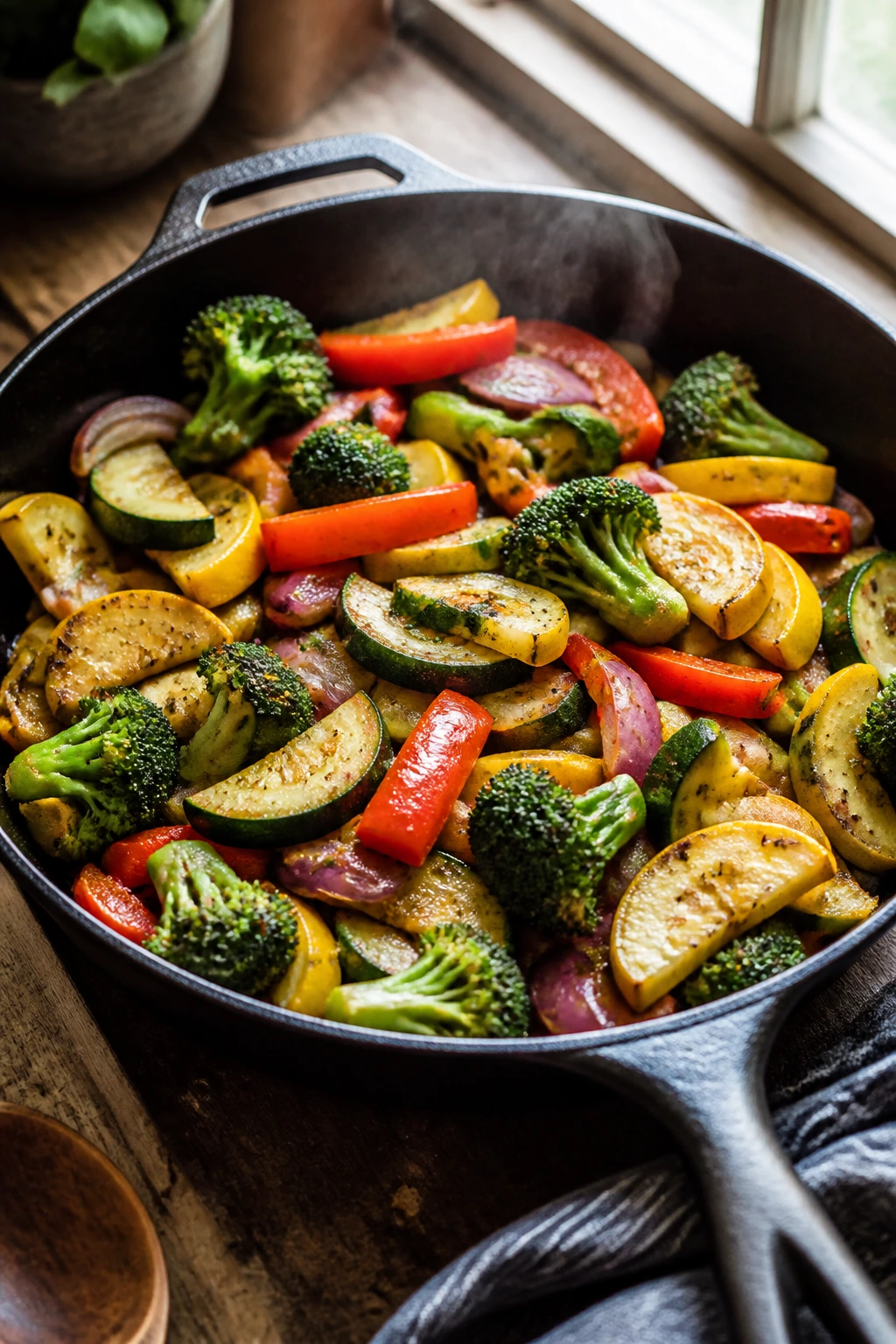
Packing the skillet too full: The symptom is obvious. Instead of browning, the vegetables sit in a puddle and start releasing liquid. The fix is to use a 12-inch skillet and cook in two batches if the pan looks crowded before you start.
Adding garlic too early: Burnt garlic smells harsh and takes the whole pan with it. If you add it at the beginning, it has time to darken before the carrots are tender. The fix is simple: garlic goes in at the end, after the vegetables are almost done.
Cutting everything into one-size-fits-all pieces: Zucchini chunks the same size as carrot coins will not cook on the same clock. The zucchini collapses before the carrots soften. Slice hard vegetables smaller and soft vegetables larger so the end result comes together in the same minute.
Using too low heat: Low heat feels safe, but it mostly produces gray vegetables and a lot of liquid. The fix is medium-high heat, plus a short splash of water or broth to help the firmer pieces along without drowning them.
Salting too early and too hard: Salt pulls water out of vegetables. A little early salt is fine, but a heavy hand at the beginning can make the pan wet before browning happens. Add most of the salt near the end, then taste and adjust.
Skipping the finishing acid: Without lemon, the vegetables can taste flat, especially if the garlic and oil are the loudest flavors in the pan. The fix is one tablespoon of lemon juice at the end. It doesn’t make the pan sour; it makes the vegetables taste alive.
Flavor Swaps and Diet-Friendly Variations
Mediterranean Lemon-Parmesan Pan
Add a handful of cherry tomatoes in the last 2 minutes and finish with extra parsley, lemon zest, and 2 tablespoons Parmesan. The tomatoes burst into a light sauce, and the whole pan feels brighter and a little more lunch-worthy.
Sesame-Garlic Vegetable Skillet
Swap the butter for another tablespoon of olive oil, use 1 teaspoon toasted sesame oil at the end, and add 1 teaspoon tamari with the lemon juice. Finish with sesame seeds and sliced scallions. This version has a deeper savory edge and works well over rice.
Smoky Chili Lime Vegetables
Replace the red pepper flakes with 1/2 teaspoon smoked paprika and finish with lime juice instead of lemon. The paprika gives the vegetables a warmer, almost grilled flavor even though they never leave the stovetop.
Bean-Boosted Main Dish
Stir in 1 can of drained cannellini beans or chickpeas during the last 2 minutes of cooking. The beans absorb the garlic oil and make the skillet sturdy enough for dinner on its own, especially with toast or grains.
Green-Only Spring Skillet
Use broccoli, snap peas, asparagus, and zucchini, and skip the carrots and red pepper. The pan cooks faster and tastes fresher, with a cleaner green flavor that needs only lemon, garlic, and parsley to finish.
Storage, Reheating, and Make-Ahead Notes
These vegetables are best the moment they leave the skillet, but leftovers are still worth saving if you handle them correctly. Store them in an airtight container in the refrigerator for up to 4 days. After that, the zucchini starts to slump and the broccoli loses its clean bite.
Freezing is possible for up to 2 months, though I would only freeze this if you expect the texture to soften. Broccoli and carrots hold up better than zucchini and snap peas, so if freezer storage matters to you, make a batch with sturdier vegetables and leave the delicate ones out.
For reheating, a skillet beats the microwave every time. Put the vegetables in a dry pan over medium heat with a teaspoon of olive oil or water, then toss for 3 to 4 minutes until the edges wake back up. Microwaving works in a hurry, but it tends to make the zucchini slouch and the garlic taste muted.
If you want to make the recipe ahead, chop the vegetables up to 24 hours in advance and keep them in separate containers if possible. Carrots and broccoli can sit together. Zucchini should stay in its own container because it sheds moisture faster than the rest and can make the other vegetables damp.
One smart compromise: pre-cook the carrots and broccoli for 2 minutes, cool them, then finish the whole pan later with the softer vegetables, garlic, and lemon. That shortens the final cook time and gives you a better dinner window when the rest of the meal is still catching up.
Questions About Garlicky Sautéed Vegetables
Can I use frozen vegetables instead of fresh?
Yes, but dry them well and expect less browning. Frozen broccoli, green beans, and cauliflower work better than frozen zucchini, which tends to go soft fast. If you use frozen vegetables, cook off the extra moisture before adding the garlic.
How do I keep the garlic from burning?
Add it after the vegetables are nearly cooked and keep it moving for less than a minute. Garlic should smell warm and savory, not sharp or dark. If your pan runs hot, take it off the burner for the garlic step and let the residual heat finish the job.
Can this be a main dish instead of a side?
Yes, but give it a partner with more body. White beans, chickpeas, eggs, rice, quinoa, or farro turn the vegetables into a meal that actually satisfies. Without one of those, it’s still good, but it feels like it wants backup.
What vegetables should I avoid in this recipe?
Very watery vegetables like tomatoes and mushrooms can work, but they change the whole pan and may need a different order. Tender greens like spinach can also go in, but only at the very end, since they wilt in less than a minute. If you want the same flavor profile, keep the bulk of the pan to firmer vegetables.
My vegetables keep steaming instead of browning. What am I doing wrong?
The pan is probably crowded, wet, or not hot enough. Dry the vegetables, preheat the skillet for a full minute or two, and cook in batches if needed. Browning comes from surface contact and space, not from hope.
Can I add protein directly to the pan?
You can, but pre-cooked protein works better than raw pieces here. Leftover chicken, seared tofu, or cooked shrimp can be folded in at the end to warm through. Raw meat needs a different timing plan and will usually slow the vegetables down.
What if I don’t have lemon?
Use a small splash of vinegar instead, preferably white wine vinegar or apple cider vinegar. Start with 1 teaspoon, taste, then add a little more if needed. Vinegar is sharper than lemon, so go slow.
A Skillet I Keep Coming Back To
There’s a reason this kind of vegetable pan shows up so often in my kitchen: it behaves like a side dish when I need one, then turns into a proper dinner with beans, rice, eggs, or bread. That flexibility is worth more than a fancier recipe that only works on a perfect night.
The other reason is simpler. It tastes like vegetables that were respected. Not overworked, not hidden under cream, not shoved into the background. Just hot garlic, a little lemon, and the kind of browning that makes carrots and broccoli taste like they had a plan.
Garlicky Sauteed Vegetables for a Healthy Dinner — Recipe Card
Recipe Name: Garlicky Sauteed Vegetables for a Healthy Dinner
Description: A hot skillet of broccoli, carrots, bell pepper, zucchini, onion, and snap peas tossed with garlic, lemon, and parsley. Crisp-tender, bright, and flexible enough to serve as a side or a light main with beans, eggs, or grains.
Prep Time: 15 minutes
Cook Time: 15 minutes
Total Time: 30 minutes
Course: Side Dish, Main Course
Cuisine: American
Servings: 4 to 6 servings
Calories: About 120 kcal per serving
Ingredients
For the vegetables:
- 2 tablespoons extra-virgin olive oil
- 1 tablespoon unsalted butter, or 1 extra tablespoon olive oil for dairy-free
- 1 medium yellow onion, cut into thin wedges
- 2 medium carrots, peeled and sliced on a diagonal into 1/4-inch coins
- 2 cups broccoli florets, cut into bite-size pieces
- 1 red bell pepper, sliced into 1/2-inch strips
- 1 medium zucchini, halved lengthwise and sliced into 1/2-inch half-moons
- 1 cup snap peas, strings removed
For the garlic finish:
- 4 garlic cloves, minced
- 1/2 teaspoon kosher salt, plus more to taste
- 1/4 teaspoon black pepper
- 1/4 teaspoon red pepper flakes, optional
- 2 tablespoons water or low-sodium vegetable broth
- 1 tablespoon lemon juice
- 2 tablespoons chopped fresh parsley
- 1 tablespoon grated Parmesan, optional
Instructions
-
Wash and dry all vegetables thoroughly, then cut the onion, carrots, broccoli, bell pepper, zucchini, and snap peas into the sizes listed above.
-
Heat a 12-inch skillet over medium-high heat for 1 to 2 minutes, then add the olive oil and butter.
-
Add the onion and carrots and cook for 3 to 4 minutes, stirring occasionally, until the edges begin to brown.
-
Add the broccoli and bell pepper, then pour in the water or broth and cover for 2 minutes.
-
Uncover, add the zucchini and snap peas, and cook for 2 to 3 minutes, tossing often, until the vegetables are crisp-tender.
-
Stir in the garlic, salt, black pepper, and red pepper flakes, and cook for 30 to 45 seconds until fragrant.
-
Remove from the heat, add the lemon juice and parsley, and toss to coat. Finish with Parmesan if using.
-
Serve immediately.
Notes: Don’t add the garlic too early or it will burn. For a heartier meal, add chickpeas, white beans, rice, or eggs. Leftovers keep for up to 4 days in the refrigerator.