



Caramelized vegan sauces are what rescue a plain dinner from the beige zone. A tray of broccoli, tofu, and chickpeas can be clean, balanced, and still feel a little like homework until something browned and glossy hits the plate.
I don’t mean sugary sauce. I mean a sauce built from onions left alone long enough to turn copper-brown, tomato paste cooked until the raw edge disappears, mushrooms browned hard in a skillet, or tahini loosened with warm water until it turns silky and pourable. That kind of sauce adds weight without leaning on cream, butter, or cheese.
A healthy dinner can be satisfying. It just needs a sauce with actual backbone. Not a watery drizzle. Not a timid vinaigrette pretending to be dinner. The best plant-based sauces cling to roasted vegetables, soak into grains, and make lentils taste like somebody cared.
Why This Approach Works
-
Browning does the heavy lifting: A few extra minutes on onions, mushrooms, or tomato paste creates a deeper, toastier flavor that tastes cooked in a way raw blender sauces never can.
-
The sauce finishes the plate, not hides it: Thick, glossy sauces stay on roasted cauliflower, baked potatoes, and tofu instead of sliding to the bottom of the bowl.
-
You get body without dairy: Tahini, cashews, white beans, caramelized onions, and roasted vegetables all thicken a sauce without cream or cheese.
-
Meal prep gets easier: These sauces often taste better after a night in the fridge, when the salt, acid, and browned flavors settle into each other.
-
They stretch across dinner formats: One sauce can live on pasta, then reappear over grain bowls, then finish a tray of roasted carrots two days later. That kind of flexibility matters.
Why Caramelized Vegan Sauces Taste Bigger Than They Are
The word “caramelized” gets tossed around a lot, but the useful part is simple: you are browning natural sugars and building flavor at the same time. Onions, carrots, sweet potatoes, tomatoes, and mushrooms all change character when heat starts working on them. They get sweeter, yes, but they also taste deeper, less sharp, more finished.
That finished flavor matters in vegan cooking because there is no butter to round off the edges for you. You have to build that roundness on purpose. A good sauce does not just taste like the ingredient list. It tastes like the ingredient list plus time, heat, and restraint.
Raw sauce often tastes thin because everything in it still speaks in the same register. A browned sauce has contrast. There is sweetness from caramelized onion, savoriness from miso or mushrooms, acid from vinegar or lemon, and a little salt to make the whole thing snap into place. One note is useful. Four notes is dinner.
The nicest part? You do not need a restaurant trick. You need a skillet, a little patience, and a willingness to let the onions sit there while they go from pale and soft to soft and coppery. That’s the moment where dinner starts tasting like dinner.
The Ingredients That Brown Into Real Dinner Flavor
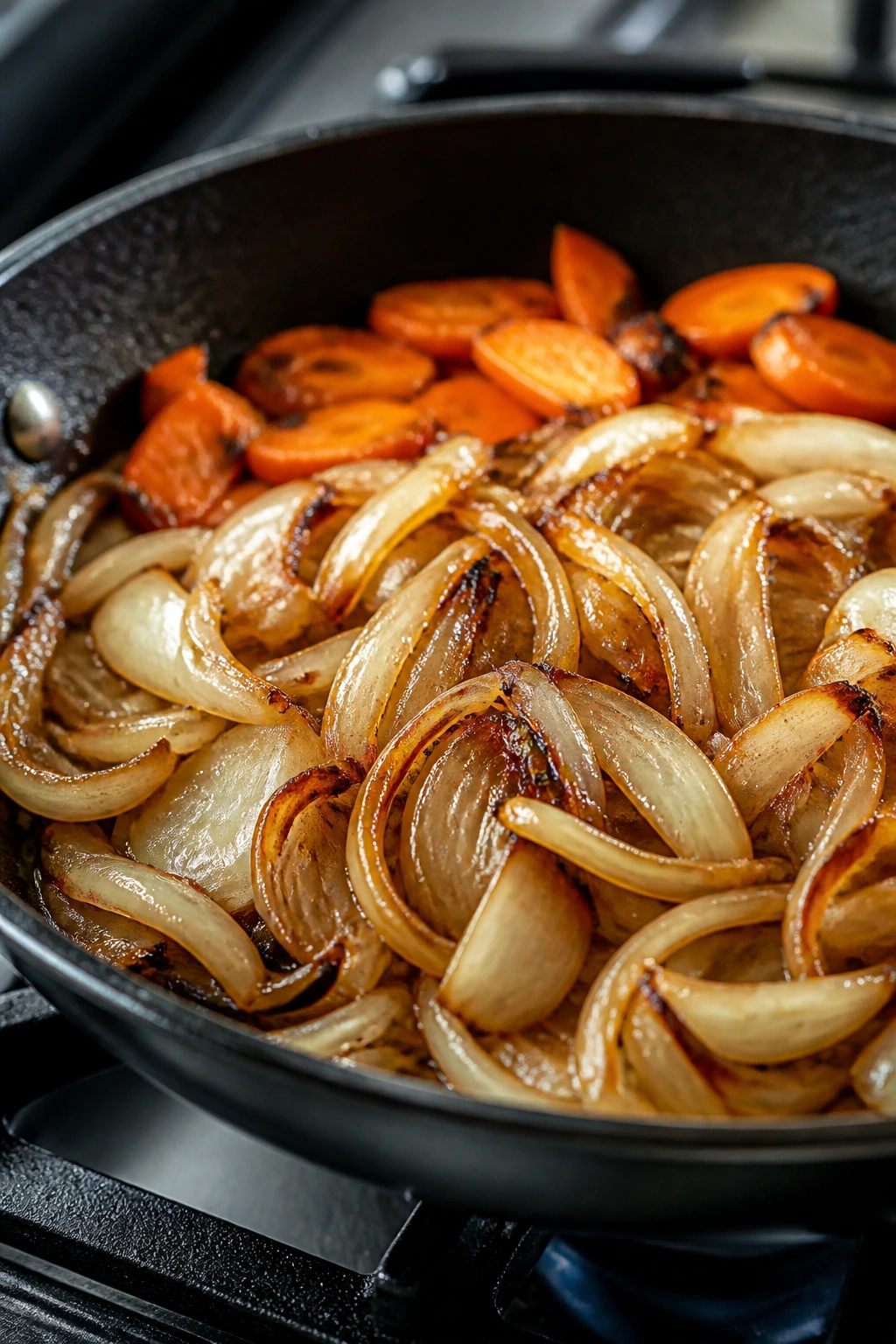
Onions and shallots do the most with the least
Yellow onions are my default because they soften, sweeten, and brown without getting fussy. Slice them evenly, keep the heat low enough that they sweat before they scorch, and let the natural sugars do their slow work. Shallots are a little more elegant and a little more expensive; I use them when I want a lighter, sweeter sauce for pasta or green vegetables.
Red onions can work, but they keep a sharper edge and a brighter color. That can be useful in a sauce meant for bowls or tacos. If you want deep brown flavor, yellow onions still win.
Carrots, sweet potatoes, and squash bring body
Root vegetables are the quiet heroes of a healthy dinner sauce. Roasted carrots turn almost jammy. Sweet potato makes a sauce thick enough to cling to a spoon with no flour, starch, or dairy at all. Butternut squash does the same thing, though I find it a little sweeter and more one-note unless you give it acid or mustard to wake it up.
The trick is not to drown them in oil. A light coating is enough. You want edges that color, not vegetables that slide around in fat and steam themselves pale.
Tomatoes and peppers add a darker kind of sweetness
Tomato paste is one of the cheapest shortcuts to real depth, and it works because it browns fast. A minute or two in a hot pan changes it from sharp and metallic to rich and brick-red. Roasted red peppers do something similar, only softer. They bring a smoky sweetness that helps a sauce taste like it simmered longer than it did.
I like these ingredients when the dinner needs a red or orange sauce that still feels light enough for vegetables, beans, or whole-grain pasta.
Mushrooms and miso bring the savory backbone
Mushrooms lose a huge amount of water as they cook, which concentrates their flavor in a way that feels almost unfair. Once they stop looking wet and start looking browned and a little wrinkled, they taste more like broth than vegetables. Add miso, tamari, or soy sauce, and the sauce gets that long-cooked savory note people usually expect from meat stock.
That’s the useful thing about plant-based sauce-making: you are not faking anything. You are building the same kind of depth from different materials.
How to Caramelize Onions Without Burning the Pan
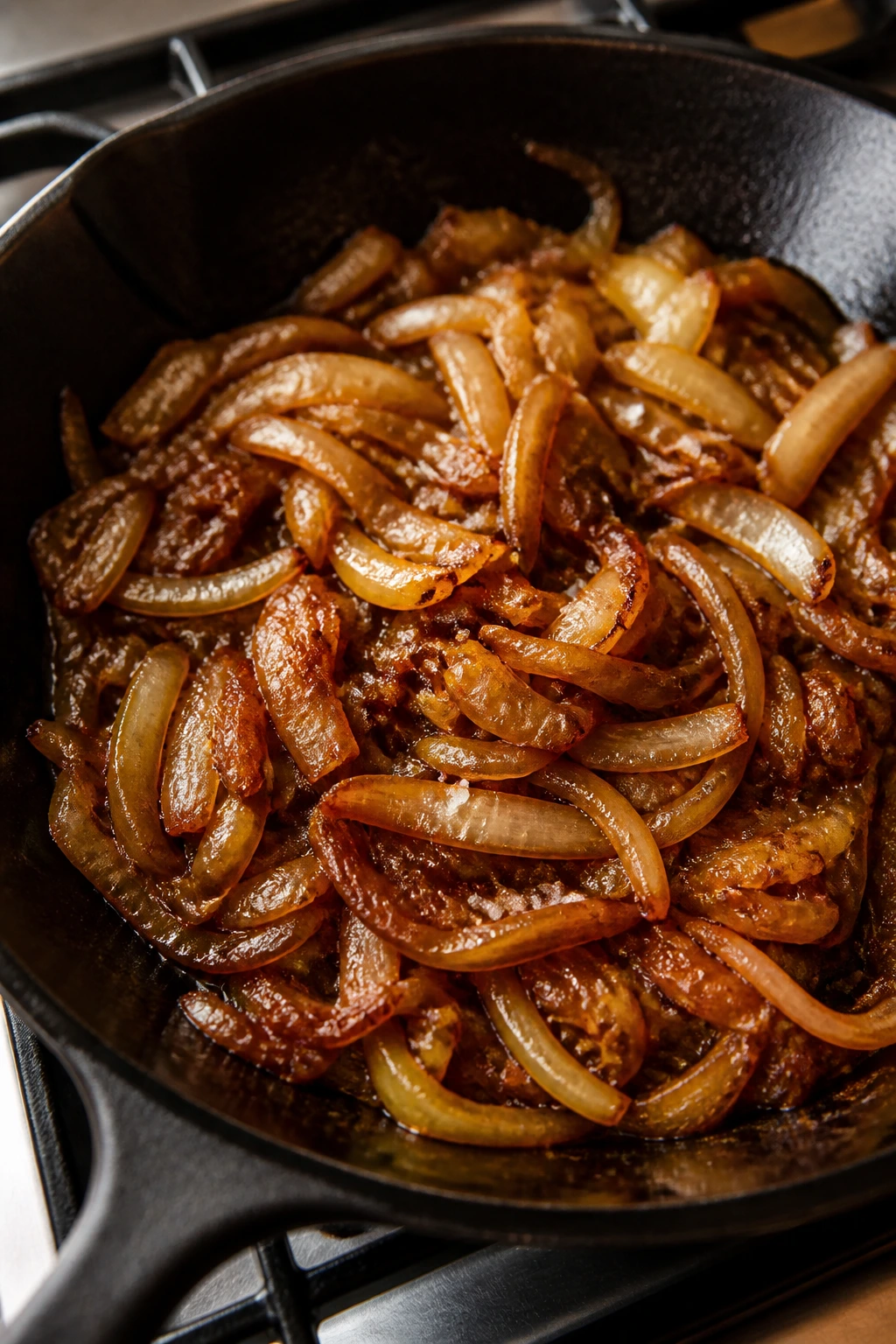
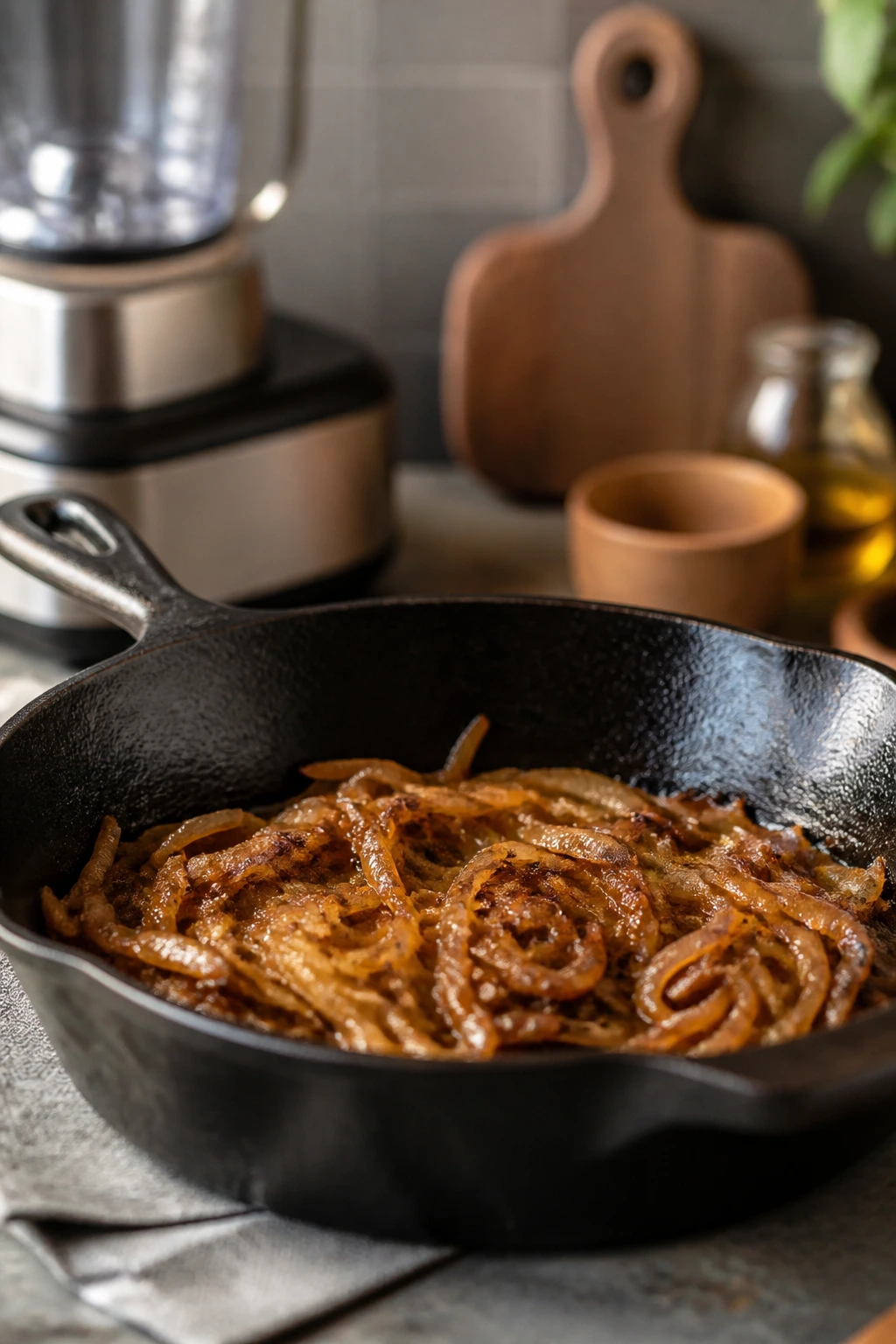
The most common mistake is thinking caramelization means crank the heat and wait for magic. Nope. It means moderate heat, thin slices, and enough time for moisture to leave before browning starts. If the pan is too hot, the edges go bitter before the center gets sweet.
Start with a heavy skillet. Stainless steel and cast iron both work well. Add 1 to 2 tablespoons of olive oil for 2 large sliced onions, then stir in a pinch of salt. The salt helps pull out moisture, which keeps the onions from scorching in the first few minutes.
At first, stir every minute or two. Once the onions look translucent and floppy, you can back off. Let them sit for short stretches so the bottom gets color, then scrape it up with a wooden spoon. If the pan starts to look dry before the onions are done, add a tablespoon of water. That tiny splash is often enough to keep the sugars from turning bitter.
What the finished onions should look like
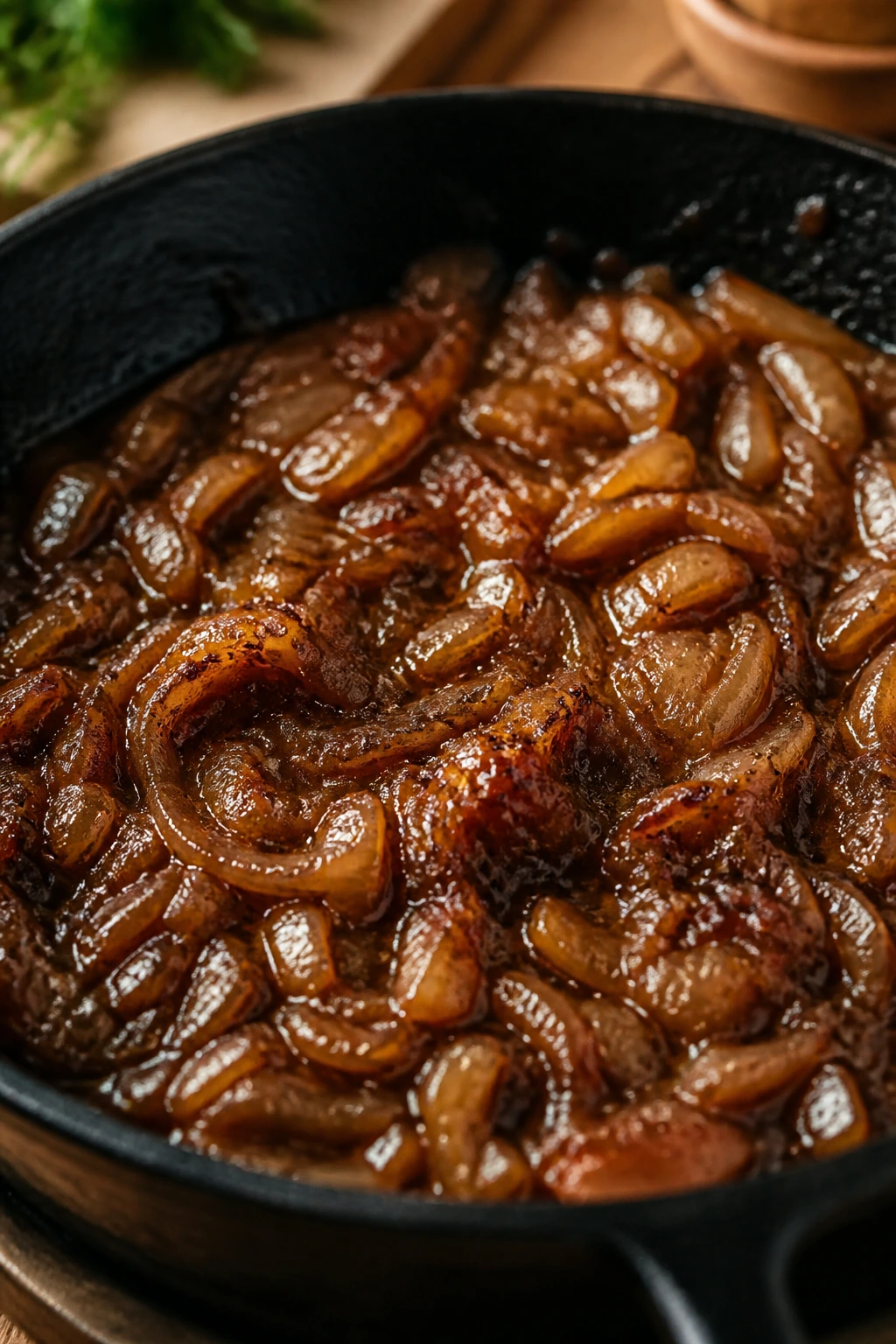
They should not be dark brown all over. That is too far. You want a soft, jammy mass with amber edges and a smell that leans sweet, not sharp. If they smell like the skillet is getting angry, the heat is too high.
When to add garlic
Late. Garlic burns faster than onions and turns bitter fast. I usually add it in the last 2 minutes, just long enough for the smell to go from raw and sharp to warm and fragrant. If the sauce also needs tomato paste, I’ll cook the paste right after the garlic so it has a chance to darken in the oil.
The one move that saves a pan
Deglaze. A tablespoon or two of water, broth, or even a splash of vinegar loosens the browned bits stuck to the bottom. Those bits are flavor. Do not leave them there if they’re about to blacken.
Roasted Vegetables That Turn Into Sauce Instead of Side Dish
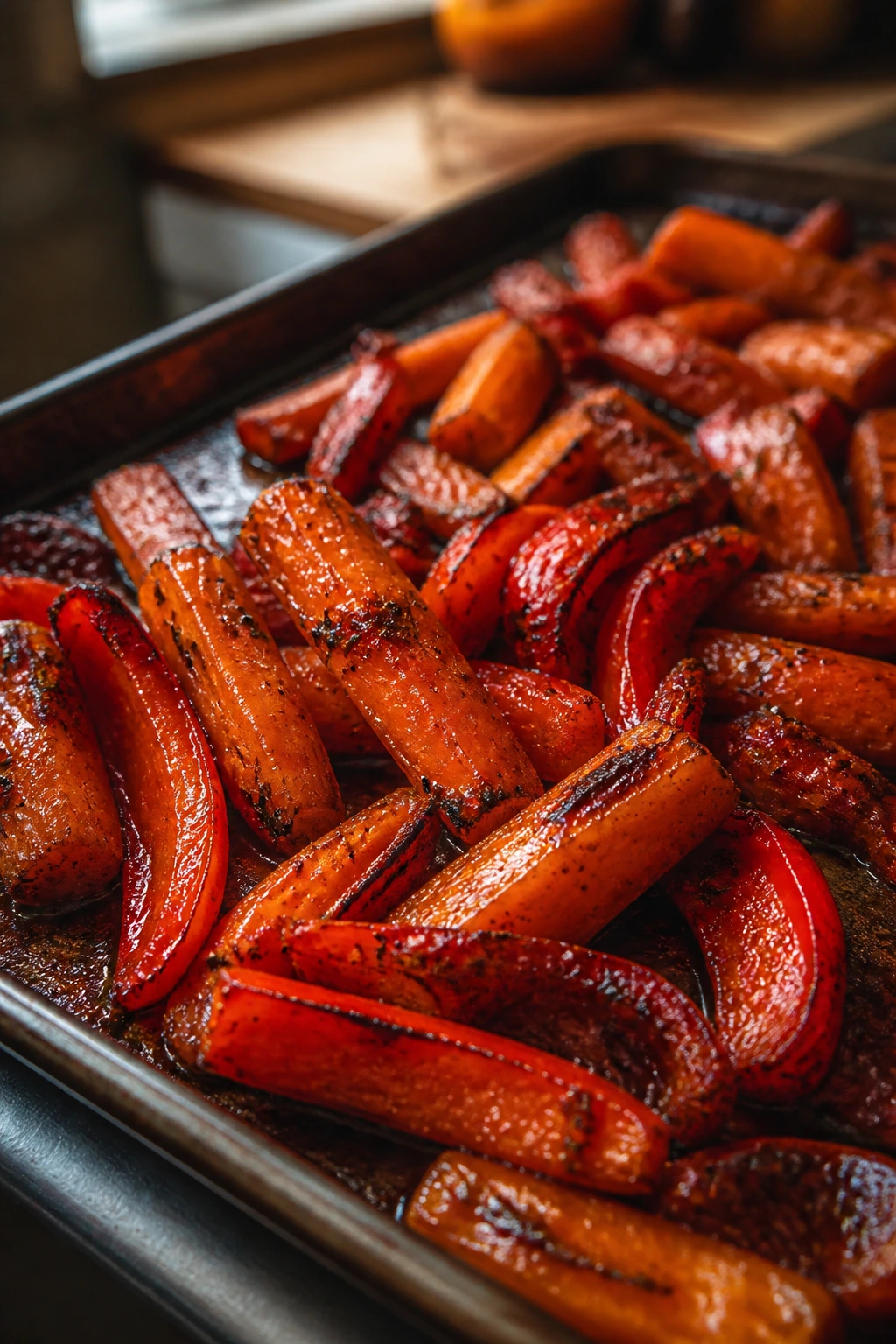
Roasting is the easiest way to make vegetables taste like they had a plan. High heat concentrates flavor, browns the edges, and softens the inside enough that the blender can turn everything into a smooth sauce without much effort. A sheet pan can do a lot of work here.
Roasted carrot-miso sauce
This is the sauce I reach for when the plate needs sweetness, color, and enough umami to keep the whole thing from tasting like baby food. Roast chopped carrots, a sliced onion, and a few garlic cloves at 425°F until the carrots have browned edges and the onion looks soft and caramelized. Blend with warm vegetable broth, 1 to 2 teaspoons white miso, and a small squeeze of lemon.
It’s excellent on lentils, millet, roasted cauliflower, and baked tofu. The miso keeps the sweetness from getting cloying.
Charred red pepper-tomato sauce
Roast red peppers, a halved onion, and a few tomatoes or a spoonful of tomato paste spread thin on the pan. You want blackened spots on the peppers and browned edges on the onion, not a soft steamed pile. Blend with olive oil, garlic, a pinch of smoked paprika, and vinegar.
This sauce behaves like a lighter romesco without the almonds. It loves chickpeas, pasta, eggplant, and roasted zucchini.
Sweet potato-tahini sauce
Roast peeled sweet potato cubes until the edges darken and the centers collapse under a fork. Blend with tahini, warm water, lemon juice, and salt until it pours. Add cumin if you want warmth; add chili flakes if you want the sauce to snap a little.
This one is thick. Really thick. It belongs on bowls, grain salads, and roasted broccoli where you want the sauce to sit in the nooks and crannies.
Creamy Vegan Sauces Without Dairy or Fuss
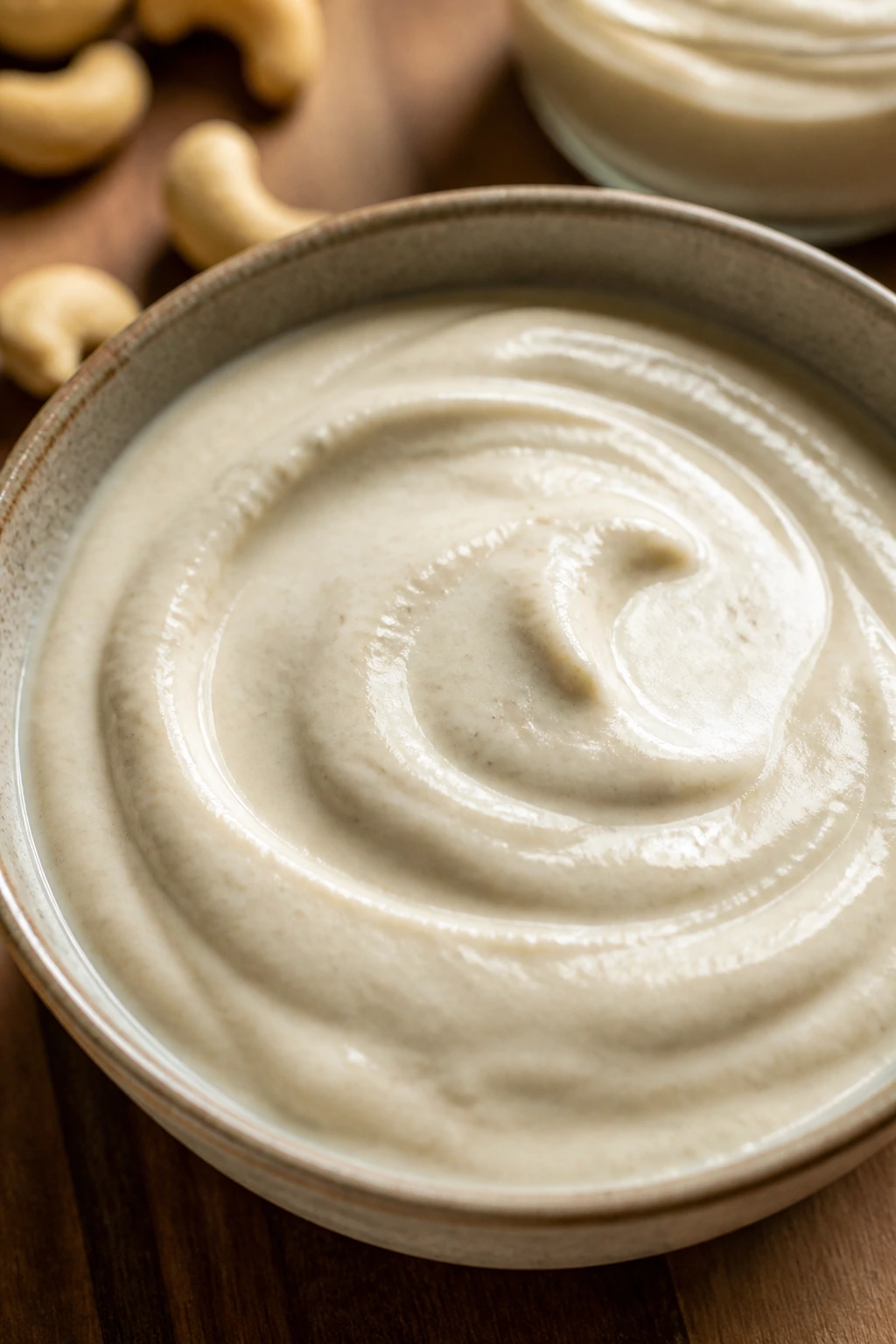
Creaminess can come from a lot of places besides cream. That sounds obvious until you taste a sauce made from soaked cashews, and then the whole thing feels a little rude to dairy. The key is choosing the right creamy base for the job.
Cashews for the smoothest finish
Cashews give you the most neutral, velvety sauce. Soak them in hot water for 20 minutes if your blender is decent, or overnight if it’s older and grumpier. Drain, then blend with warm water, lemon juice, salt, and a small garlic clove if the dish can handle it.
Cashew sauce works best when you want a pale sauce over roasted vegetables, pasta, or baked potatoes. It’s also the easiest base to flavor with herbs because it doesn’t fight you.
Tahini for nuttiness and depth
Tahini has a built-in bitterness that can be wonderful if you balance it properly. Lemon, warm water, and salt are the nonnegotiables. If you add cold water too fast, tahini can seize and turn pasty before it loosens again. Keep whisking. It usually comes back.
I like tahini when the dinner needs a sauce with some grit and character. It’s fantastic with broccoli, chickpeas, charred greens, and roasted carrots. Add maple syrup only if the other ingredients are already loud and you need a soft landing.
Sunflower seeds and white beans for nut-free body
Sunflower seeds are a good answer when nuts are off the table. Soak them, or simmer them for 10 minutes if you forgot to plan ahead. White beans bring a softer, starchier body; they’re excellent when you want a cream-style sauce that still tastes like dinner instead of dessert.
Both of these benefit from acid. A little lemon, a spoon of vinegar, or even a chopped pickle stirred into the blender can wake them up fast.
Mushrooms, Miso, and Tamari Bring the Savory Backbone
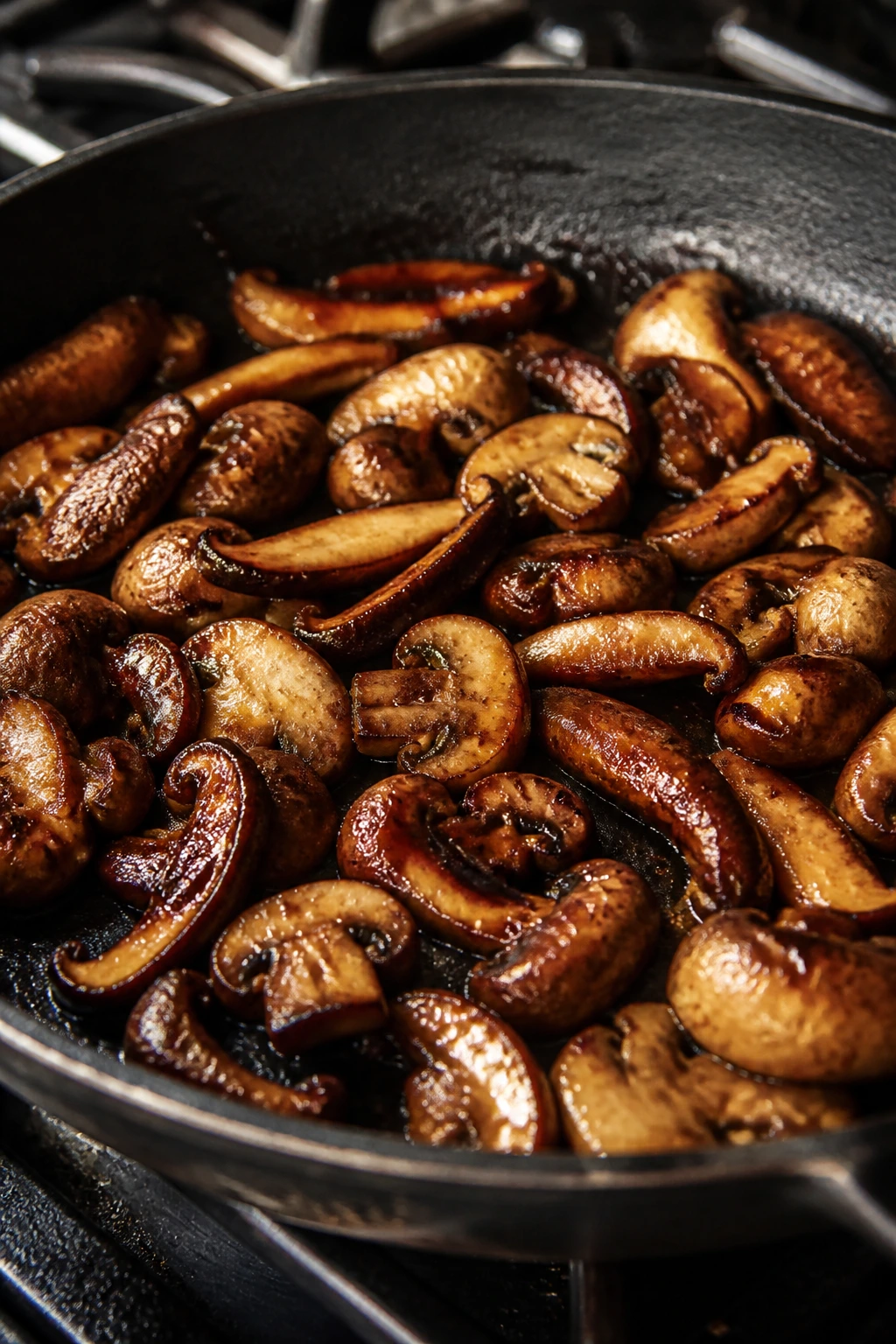
A sauce can be creamy and still taste flat if nothing in it carries enough savory weight. That’s where mushrooms, miso, and tamari step in. They give you a browned, brothy, almost meaty depth without trying to imitate meat. That distinction matters.
Mushrooms should be cooked hard enough to lose their wet sheen. If they sit in a crowded pan, they steam and slump. If they get space, heat, and a little salt after they brown, they turn dark and meaty around the edges. Cremini are my workhorse. Shiitake bring a deeper, woodier note. A mix of the two is even better.
Miso should usually go in near the end or off the heat. Boiling it hard strips away some of the layered flavor. White miso is softer and sweeter; red miso is stronger and saltier. If you only keep one jar, white miso is more flexible for weeknight sauces.
Tamari or soy sauce works as a salt source and a flavor carrier. A teaspoon or two can make a vegetable base taste fuller without making it taste like soy sauce. Coconut aminos can replace it if you need a soy-free option, though I find them sweeter and less deep. Use them with more vinegar and less maple syrup.
The Right Sauce for Pasta, Grain Bowls, Potatoes, and Greens
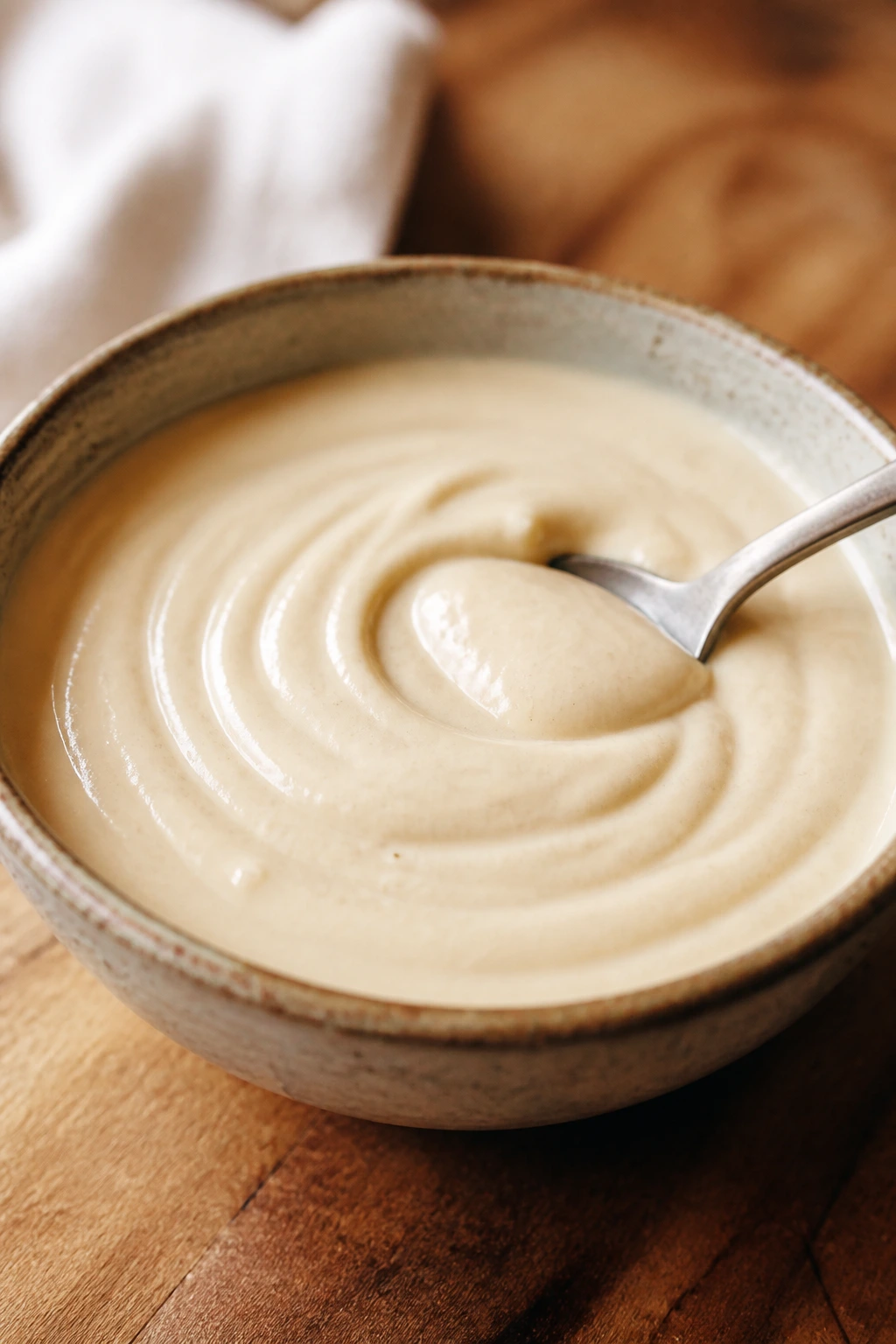
A sauce is only half the job. The other half is knowing where to pour it. Thin, bright sauces disappear into pasta in a nice way. Thick, sturdy sauces cling better to roasted roots and potatoes. If you match the texture to the dinner, everything feels easier.
For pasta, go with cashew cream, mushroom-miso, or a loosened onion sauce. Stir in a splash of pasta water if the sauce seems heavy. The starch helps it coat the noodles instead of sitting on top like a hat.
For grain bowls, use carrot-tahini, roasted pepper-tomato, or a thicker white bean sauce. Grains need a sauce that can seep into the gaps between rice, quinoa, or farro. Otherwise every bite tastes like separate ingredients in the same bowl.
For potatoes, I like anything with onion or mushroom in it. Potatoes are blank enough to carry deeper flavors. If you have roasted garlic in the sauce, even better. The combination of soft potato, browned onion, and a little acid is hard to mess up.
For greens and roasted brassicas, use brighter sauces. Lemon-tahini, miso with water and vinegar, or tomato-pepper sauce all work. Bitter greens need a little sweetness or fat to soften their edge. Broccoli and Brussels sprouts are happier when the sauce has both.
For tofu and tempeh, choose sauces with salt and umami. Mushroom-miso, tamari-onion, or charred pepper sauce all hold up well. Plain tofu is a sponge. Use that to your advantage.
Additional Tips and Flavor Boosters
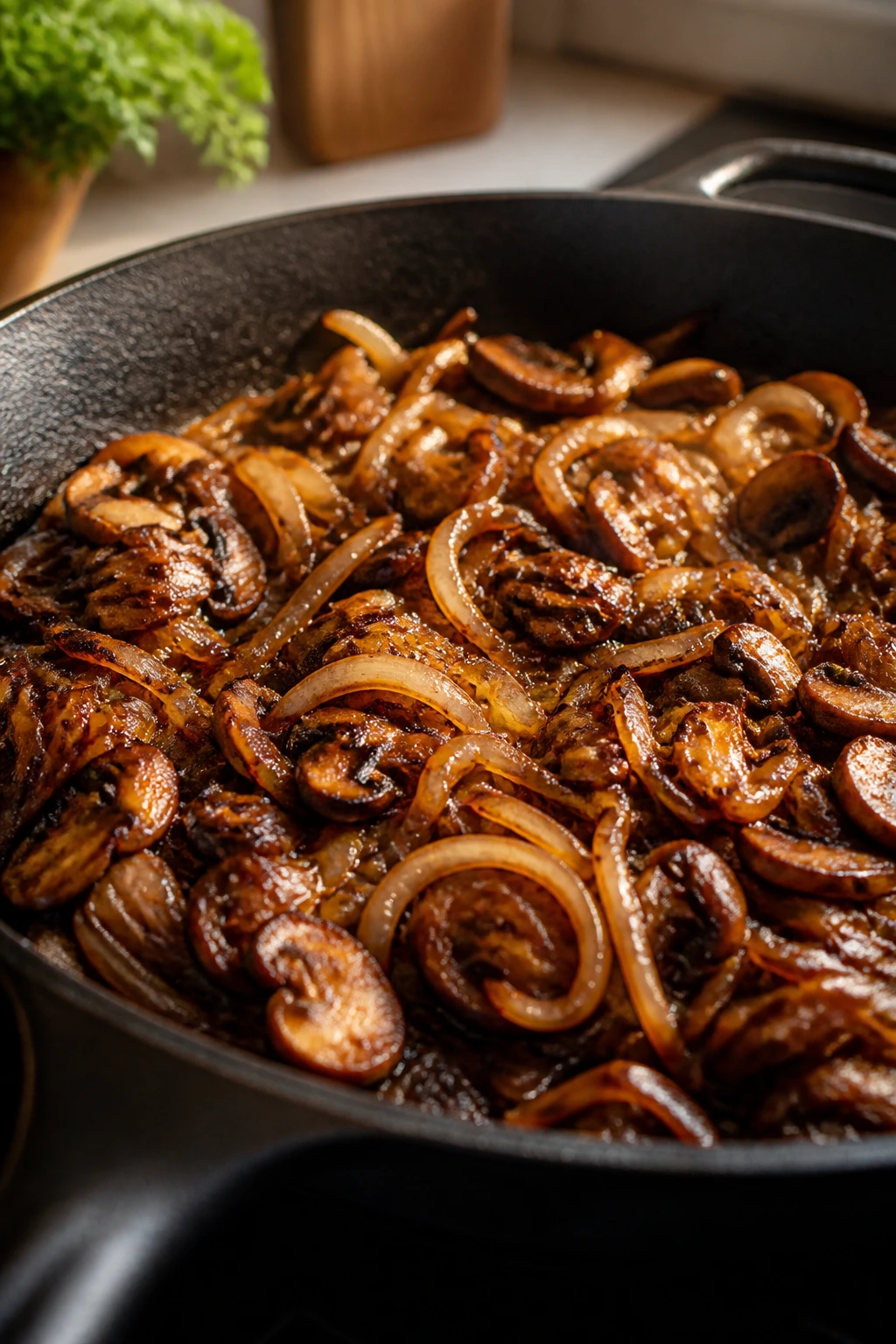
Flavor Enhancement: A spoonful of tomato paste cooked in oil for 60 to 90 seconds can make an onion sauce taste twice as deep. I use this when the pan smells good but the sauce still feels a little thin in the middle.
Acid Balance: Add lemon juice or vinegar after the heat is off. Hot acid tastes flatter, and if you add too much early, the sauce can end up sharp instead of bright. Start with 1 teaspoon, taste, then add more only if the sauce still feels sleepy.
Time-Saver: Double the onion base and freeze it in half-cup portions. That gives you a head start on pasta sauce, lentil sauce, or a quick bean skillet later in the week. Frozen caramelized onions thaw into something almost unfairly useful.
Texture Control: If a sauce feels grainy, blend it longer than you think you need to. Cashew and bean sauces especially can look smooth and still feel slightly sandy if you stop too soon. A minute of extra blending solves more than most people expect.
Make-It-Yours: For a smoky dinner, add smoked paprika or a little chipotle. For a fresher sauce, add parsley, dill, cilantro, or basil at the end. For a richer sauce without dairy, stir in 1 teaspoon of olive oil right before serving. Small moves. Big change.
Common Mistakes to Avoid
-
Burning the onions before they sweeten: The symptom is a sharp, acrid smell and dark brown edges long before the onions look soft. Lower the heat, add a splash of water, and give them more time.
-
Crowding the pan with too many vegetables: Mushrooms and peppers release water, and if the pan is packed, they steam instead of brown. Cook in batches or use a wider skillet.
-
Adding garlic too early: Burned garlic tastes bitter and spreads that bitterness through the whole sauce. Add it near the end, or cook it briefly after the onions are already soft.
-
Skipping acid at the finish: A sauce without lemon, vinegar, or something bright can feel heavy even if it’s technically well made. Taste at the end and add a small hit of acid before you decide it needs more salt.
-
Using cold water in tahini too fast: Tahini can tighten into a paste before it loosens. Add warm water in small splashes and whisk steadily until it turns creamy.
-
Stopping the blend too soon: Grainy cashew or bean sauces often need another 30 to 60 seconds in the blender. If your blender is weak, soak the base longer first. That’s usually the fix.
Variations and Alternatives Worth Keeping Around
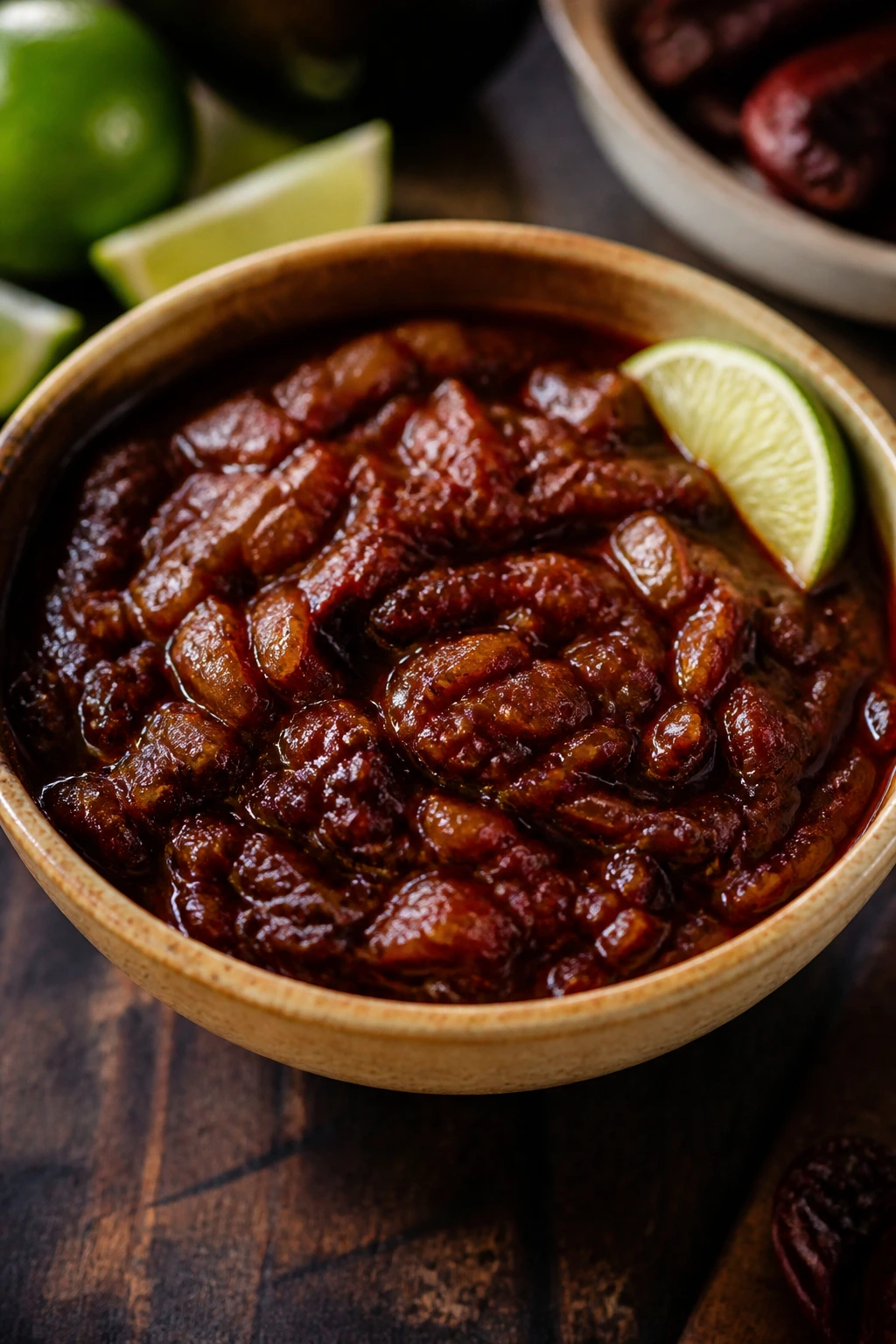
Smoky Chipotle Onion Sauce: Add 1 chopped chipotle in adobo and 1 teaspoon of the sauce to a browned onion base, then blend with broth and a little lime juice. It’s excellent on black beans, roasted sweet potatoes, and cauliflower tacos.
Ginger-Miso Carrot Sauce: Stir 1 tablespoon grated ginger into the carrots during the last minute of roasting, then blend with white miso and rice vinegar. This one tastes sharp, warm, and clean, which makes it strong over soba noodles and steamed greens.
Nut-Free White Bean Cream: Swap cashews for 1 can of drained white beans and blend with garlic, lemon, and olive oil. The texture is less lush than cashew sauce, but it’s sturdy, cheap, and very useful on potatoes or pasta.
Oil-Light Broth Sauce: Start onions or mushrooms in a nonstick or well-seasoned skillet with broth instead of oil, adding a tablespoon at a time so they don’t stick. You lose some gloss, but you still get browning if the pan is hot enough and you’re patient.
Herby Green Finish: Blend a handful of parsley, dill, or basil into a pale cashew or tahini sauce right before serving. The base stays creamy, but the herbs cut through it and make the whole thing taste fresher.
Tools That Make Sauce Work Easier
-
Heavy skillet or sauté pan: Stainless steel or cast iron gives you better browning than a flimsy pan, which tends to steam vegetables and burn spots unevenly.
-
Sheet pan with rim: Useful for roasted carrot, pepper, or sweet potato sauces; the rim keeps juices from running off into the oven.
-
Blender or immersion blender: A high-speed blender makes the smoothest cashew and vegetable sauces, while an immersion blender is fine for smaller batches and less cleanup.
-
Wooden spoon or silicone spatula: You need something sturdy enough to scrape browned bits off the pan without gouging it.
-
Sharp knife: Thin, even slices of onion and uniform chunks of vegetables cook at the same pace. That matters more than people think.
-
Measuring spoons and cups: Sauce balance is easier when the acid and salt are measured. You can taste and adjust, but starting with a real measurement keeps things sane.
-
Microplane or fine grater: Great for garlic, ginger, and lemon zest. A microplane is one of those tools that quietly earns its drawer space.
-
Airtight jars or containers: Glass jars are good for fridge storage, freezing portions, and shaking a sauce back to life if it separates a little.
Batch Cooking, Fridge Life, and Freezer Notes
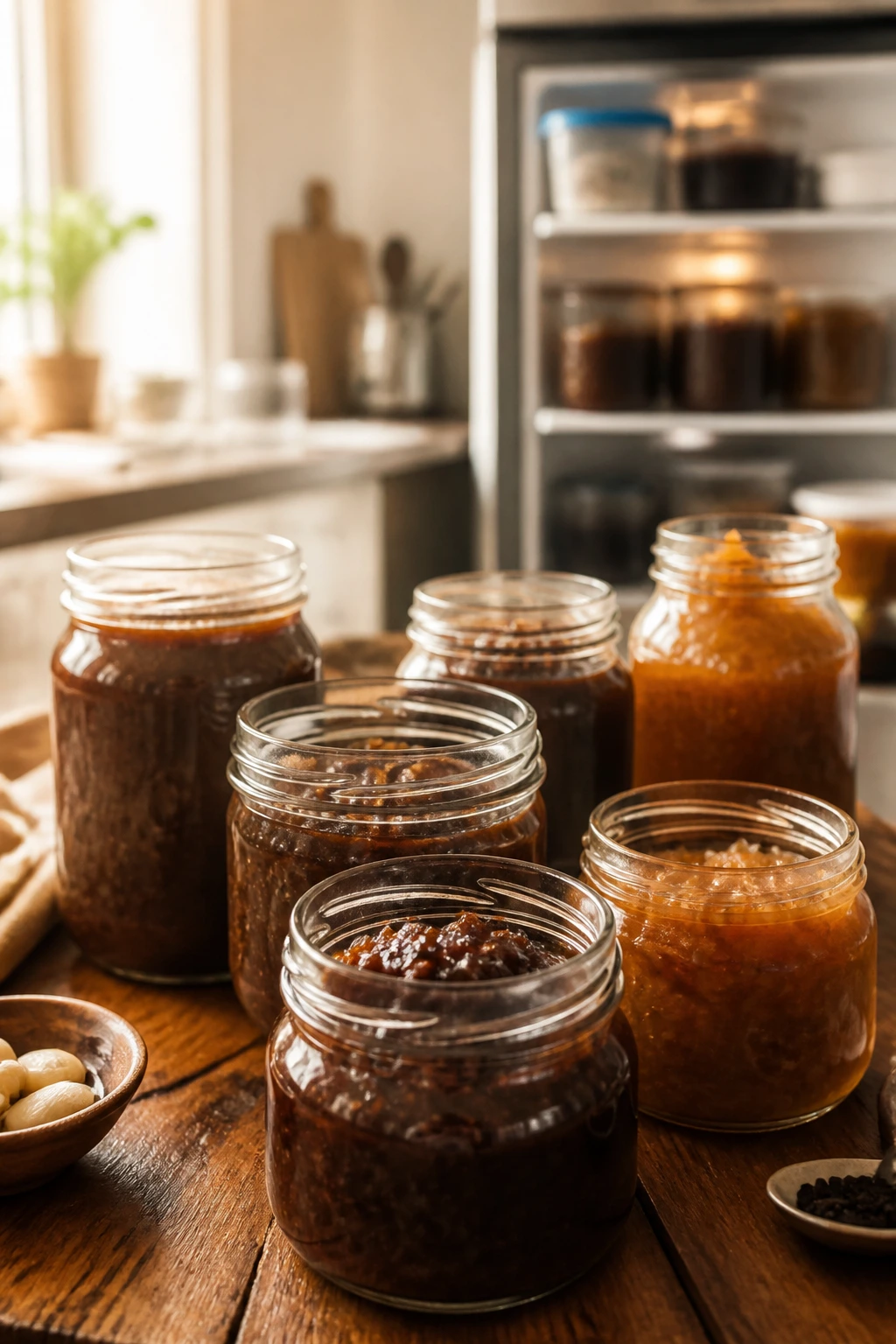
Most caramelized vegan sauces hold up well in the fridge for 4 to 5 days if they’re onion-, mushroom-, or tomato-based. Cashew and tahini sauces usually do best within 3 to 4 days. Keep them in airtight containers and cool them before sealing if they’re still warm. You do not want steam trapped inside the lid.
Freezing works especially well for roasted vegetable sauces, onion bases, and mushroom sauces. Portion them into half-cup or one-cup containers, or freeze in silicone ice cube trays if you want smaller amounts for finishing bowls or sauté pans later. Most of these sauces keep well for up to 2 months frozen, and sometimes longer if your freezer stays consistent, though the texture starts to lose some charm after that.
Reheat gently. Low heat on the stove is better than blasting them in a microwave until the edges dry out. Add a tablespoon or two of water, broth, or plant milk if the sauce has tightened in the fridge. Tahini and cashew sauces usually need a good whisk once they warm up. If they split a little, a quick blend usually puts them back together.
For make-ahead work, I’d do this: caramelize a batch of onions, roast a tray of carrots or peppers, and keep a jar of tahini sauce in the fridge. That gives you three different sauce paths from one hour of effort. Not bad for a weeknight.
Questions People Actually Ask About Caramelized Vegan Sauces

Do these sauces need sugar to taste caramelized?
No. If the onions, carrots, tomatoes, or mushrooms are browned properly, you usually don’t need added sugar at all. A teaspoon of maple syrup can help in a red sauce or chipotle sauce, but if you’re reaching for sugar by the tablespoon, the pan probably needs more time.
Can I make them oil-free?
Yes, though the flavor and texture will change. Use broth or water in small splashes so the vegetables don’t stick, and choose ingredients that already bring some body, like sweet potato, white beans, or cashews. You’ll lose some gloss, but not the whole sauce.
What if my sauce tastes bitter?
Bitterness usually comes from burned garlic, scorched onions, or overcooked tomato paste. Try adding a little acid, a pinch of salt, and a touch of sweetness from roasted carrot, sweet potato, or a very small amount of maple syrup. If the bitterness tastes burnt rather than sharp, start over. That flavor does not hide well.
Can I freeze tahini sauce?
You can, but I wouldn’t make it your first freezer project. Tahini-based sauces sometimes separate after thawing and need a strong whisk or a quick blend to come back together. Cashew and vegetable sauces freeze more smoothly.
What’s the best onion for caramelized vegan sauces?
Yellow onions are the most reliable. They soften, brown, and taste round without getting too sweet too fast. Shallots are lovely for lighter sauces, while red onions make a sharper, more obvious onion flavor.
How do I thicken a sauce that turned out too thin?
Blend in more roasted vegetables, a spoonful of cashew butter, another tablespoon of tahini, or a small handful of cooked beans. If it’s an onion or mushroom sauce, simmer it a little longer with the lid off. Reducing by even 5 minutes can change the texture enough to matter.
Can I use a blender instead of a food processor, or the other way around?
Yes, but they’re not identical. A blender makes the smoothest sauces, especially for cashews and roasted vegetables. A food processor works fine for chunkier, rustic sauces or for blending a sautéed onion base when you want a little texture left in it.
Do these sauces work for meal prep, or do they get dull after a day?
They work well for meal prep, and many taste better the next day. The onion base softens, the salt settles, and the acid stops tasting so sharp. If the sauce thickens in the fridge, loosen it with a splash of warm water when you reheat it.
A Bowl That Carries Dinner
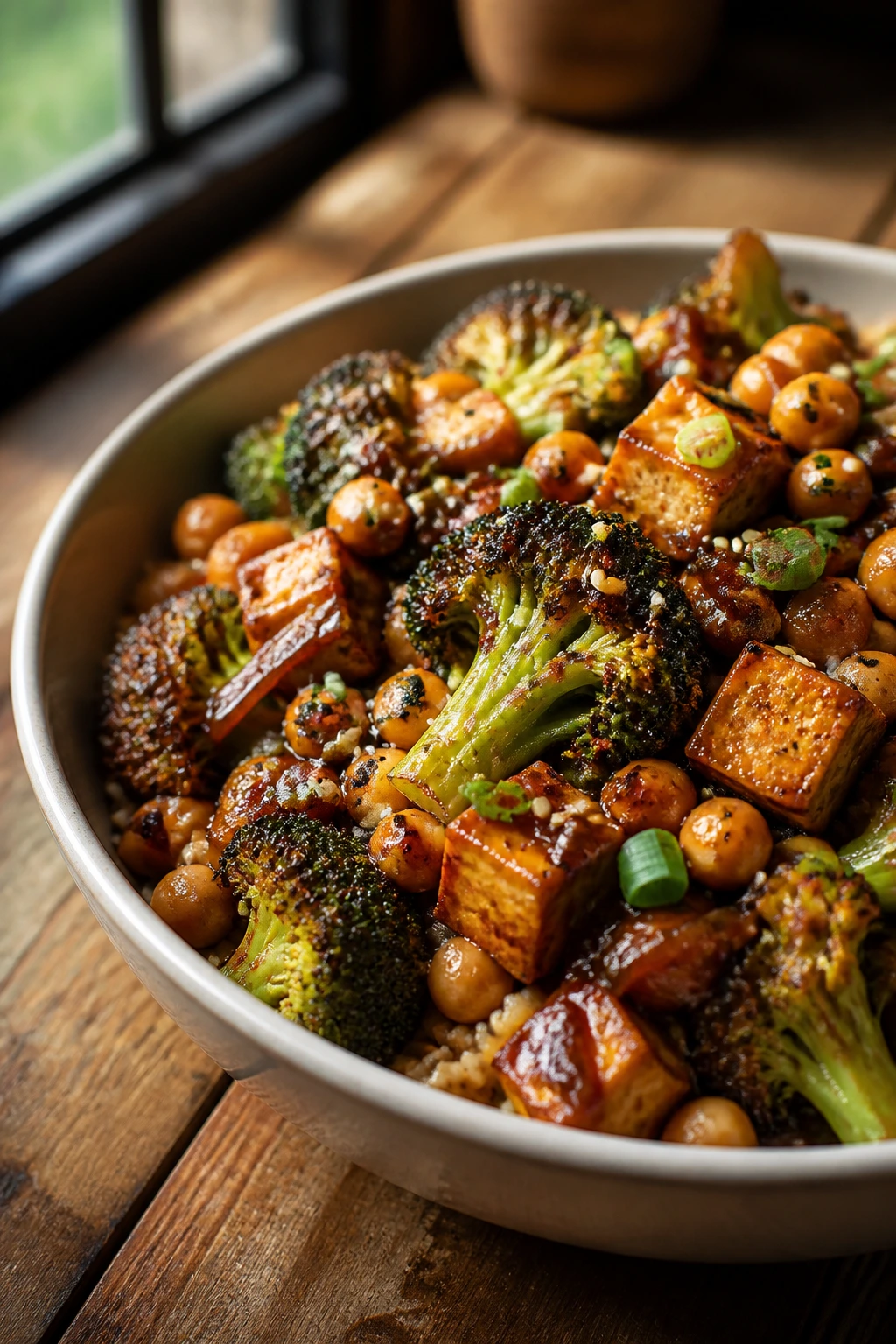
The best part of caramelized vegan sauces is how little drama they need. A browned onion base, a tray of roasted carrots, a spoon of miso, a hit of lemon, and suddenly a pile of vegetables has shape, depth, and a little confidence. That is the difference between “I guess this is healthy” and “I’d happily eat this again tomorrow.”
Keep one or two sauces in rotation and dinner stops depending on mood. A jar of tahini sauce can save broccoli. A container of roasted tomato sauce can rescue pasta. A scoop of caramelized onion base can make beans taste like somebody planned the meal with care.
That’s the move I’d keep coming back to: brown something, balance it, and don’t rush the last taste. The next time you roast vegetables or cook grains, give them a sauce with actual color and let the plate do the rest.