



A proper roast beef dinner has a way of slowing a room down. The oven starts doing its thing, the kitchen picks up that deep, savory smell of browned beef and garlic, and suddenly everyone is hanging around the stove a little longer than usual, pretending they’re not waiting for the carving knife to come out. Roast beef does that. It feels formal for about ten seconds, then it feels deeply, almost stubbornly comforting.
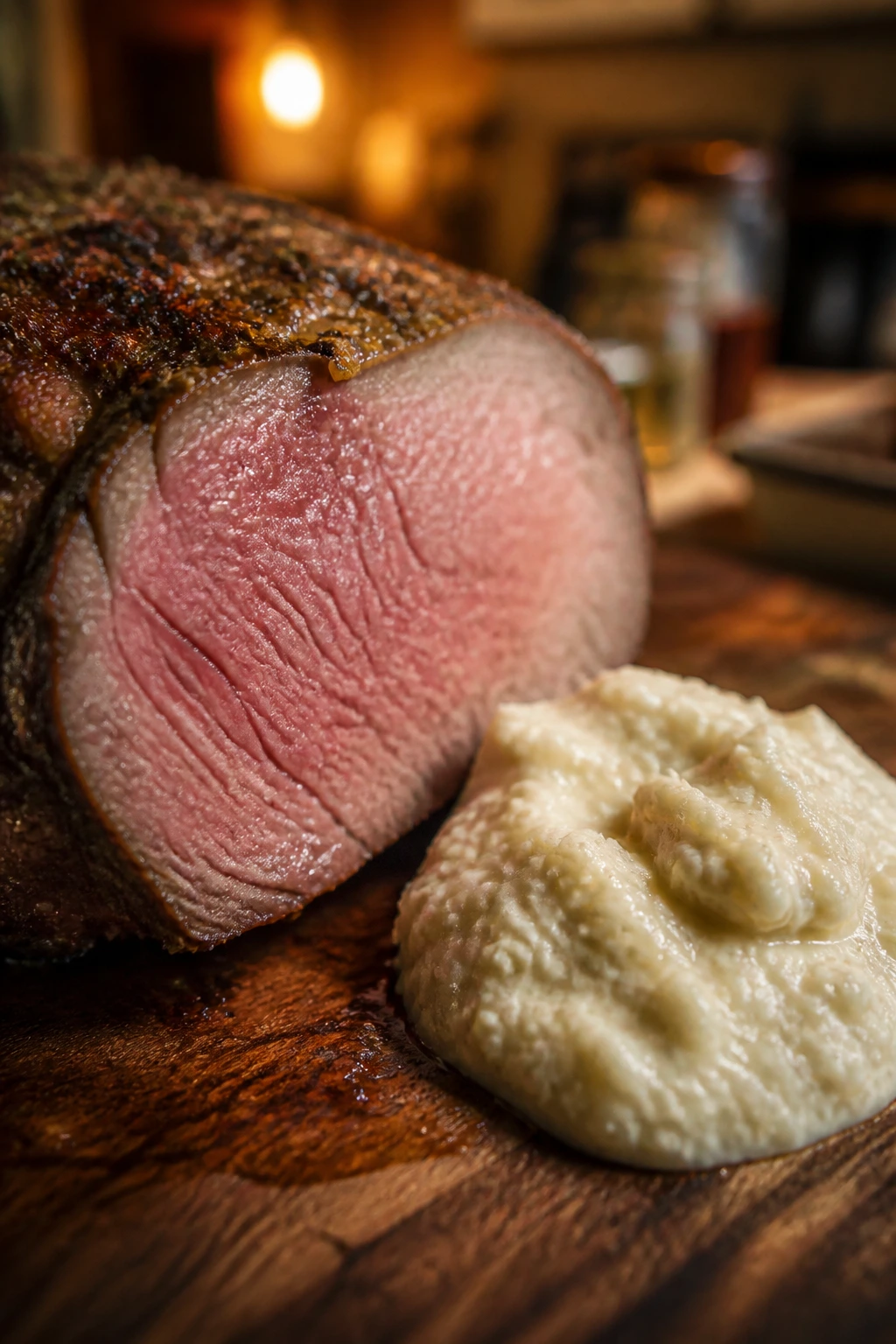
The horseradish matters just as much as the beef. Too many versions play it timid, which is a shame. Horseradish should wake up the fat, not vanish under it; it should cut through the richness with a sharp, cool sting that you notice right away. If it’s cooked too hard or mixed too early into something warm, it loses that edge and turns into a flat, dusty echo of itself. The whole trick is keeping the beef juicy and the horseradish lively.
That’s where this version earns its keep: a well-seasoned roast, a hard sear for a dark crust, a thermometer doing the heavy lifting, and a cold horseradish sauce that stays bright until the last bite. If you’ve had roast beef that sliced like cardboard or horseradish that tasted like sadness in a jar, this one corrects both problems in one pass.
Why Roast Beef and Horseradish Still Work So Well Together
Roast beef and horseradish are one of those pairings that look simple until you taste why they stick around. Beef brings fat, browned edges, and a little chew; horseradish brings heat that hits the nose before it hits the tongue. That sharpness is the point. It keeps a rich roast from feeling heavy, which is exactly why the combination still feels right on a plate with potatoes and a pile of green vegetables.
The best part is that the sauce does not need much. A few tablespoons of prepared horseradish, some sour cream, a little Dijon, and lemon are enough. That’s all it takes to keep the flavor alive without drowning the beef. A lot of recipes overwork this pairing by adding cream, sugar, and too many extras. Don’t. The sauce should taste clean, cold, and slightly mean.
There’s also a texture contrast here that matters more than people admit. Slice a roast correctly, and you get tender pink meat with a browned outer ring. Add a cold sauce, and every forkful has contrast: warm and cool, rich and sharp, soft and brisk. That’s the reason this dinner feels complete, even before the sides show up.
One more thing. Whole cuts of beef behave differently from braises. The USDA’s safe minimum internal temperature for whole cuts of beef is 145°F with a three-minute rest, but many home cooks prefer medium-rare slices pulled a little earlier and allowed to finish gently on the board. Know your target, use a thermometer, and let the roast tell you when it’s done. Guessing is how dry beef happens.
Why You’ll Love This Roast Beef Dinner
-
The crust actually tastes like something: A hot sear and a well-salted exterior give you dark, savory edges instead of a pale roast that tastes boiled.
-
The horseradish stays sharp: Mixing the sauce cold at the end keeps the heat bright and clean, which is the whole reason to make it.
-
The slices hold together nicely: A top sirloin roast or similar cut gives you tidy slices that still feel substantial on the plate.
-
The pan juices pull their weight: A quick deglaze with beef broth catches all the browned bits, so nothing goes to waste.
-
Leftovers are useful, not sad: Cold slices make excellent sandwiches, and the sauce turns into a spread that actually tastes better the next day.
-
It feels like a meal, not a project: There’s enough ceremony to make dinner feel special, but the method stays straightforward if you own a thermometer.
Timing, Yield, and the Shape of the Meal
Yield: Serves 6 hearty portions
Prep Time: 20 minutes
Cook Time: 55 to 70 minutes
Total Time: 1 hour 15 minutes to 1 hour 30 minutes
Difficulty: Intermediate — the steps are simple, but the roast benefits from a thermometer and a little attention.
Chill/Rest Time: 20 to 25 minutes resting after roasting; optional 8 to 12 hours for a dry-brine.
Best Served: Warm, sliced against the grain, with the horseradish sauce cold from the fridge.
What Goes Into the Roast and the Horseradish Sauce
For the Roast Beef:
- 3 to 4 lb beef top sirloin roast, tied if uneven
- 2 tbsp olive oil
- 1 tbsp kosher salt
- 1 tsp freshly ground black pepper
- 2 tsp Dijon mustard
- 3 garlic cloves, minced
- 1 tbsp fresh rosemary, finely chopped
- 1 tbsp fresh thyme leaves
- 1 large yellow onion, cut into thick wedges
- 1 cup low-sodium beef broth
For the Horseradish Sauce:
- 1 cup sour cream
- 3 tbsp prepared horseradish, drained if watery
- 1 tbsp mayonnaise
- 1 tsp Dijon mustard
- 1 tsp fresh lemon juice
- 1 tbsp chives, finely chopped
- 1/4 tsp kosher salt, plus more to taste
Choosing the Right Cut for Roast Beef Slices
What to use: 3 to 4 lb beef top sirloin roast is the sweet spot here. It’s beefy enough to feel like a real roast, but not so expensive that you start fussing over every slice. If you want a richer, more marbled roast, a boneless rib roast works too, though it pushes the dinner into splurge territory.
Preparation: Look for a roast with an even thickness from end to end. If one end is much thinner, tie it with kitchen twine so the roast cooks in a more even shape instead of giving you one overdone tail and one rosy center. Pat it dry before seasoning; wet beef steams before it sears.
Substitutions: Eye of round works if you want a leaner roast, but it needs thinner slicing and a little more care at the table. Rib roast is the luxury move. Bottom round can work too, though it benefits from careful slicing and a generous sauce.
Tips: The cut matters because roast beef is a slicing game, not a shredding game. You want enough structure to carve cleanly across the grain, with enough fat that the slices don’t feel dry at the edges. That’s why a top sirloin roast earns its place here more often than not.
What Horseradish Does That Mustard Can’t
What to use: 3 tbsp prepared horseradish is enough to give the sauce a clean, nasal-clearing bite without turning it harsh. If you can find freshly grated horseradish root, use 2 to 3 tbsp grated and move fast; the flavor is sharper and more immediate, but it fades faster too.
Preparation: Keep the sauce ingredients cold until serving. That matters more than people think. Horseradish loses punch when it gets warm, so the sour cream, mayo, lemon, and horseradish should come together right before the meal or at least stay chilled until the last minute.
Substitutions: Crème fraîche gives the sauce a richer, silkier feel. Greek yogurt makes it tangier and a little leaner. If you want more heat, stir in another teaspoon of horseradish rather than adding more lemon, which changes the flavor in a different direction.
Tips: Horseradish is not there to be creamy. It’s there to cut. That bite is what keeps roast beef from settling into one heavy note, and it’s why the sauce works best when you keep it cold, restrained, and slightly sharp at the finish.
Aromatics, Salt, and the Pan Juices
What to use: Onion wedges, garlic, rosemary, thyme, and beef broth turn the roasting pan into more than a place to catch drips. The onion softens and sweetens at the edges, the garlic perfumes the fat, and the broth becomes the base for a fast pan juice.
Preparation: Mix the Dijon, oil, garlic, rosemary, thyme, salt, and pepper into a loose paste and rub it all over the roast. You want it in every side and corner, not just smoothed over the top like a polite coating. Put the onion wedges in the pan under or beside the roast so they catch some of the drippings without burning.
Substitutions: Shallots can stand in for onion if you want a milder pan flavor. Sage can replace thyme if that’s what’s in the kitchen. If you don’t have broth, a mix of water and a teaspoon of Worcestershire sauce gets close enough to save dinner.
Tips: Salt is doing more than seasoning here. It helps the crust brown and it seasons the meat deeper than a last-minute sprinkle ever can. If you have time, salt the roast the night before and leave it uncovered in the fridge; the surface dries a bit, which makes the sear cleaner and faster.
Tools That Make the Roast Easier
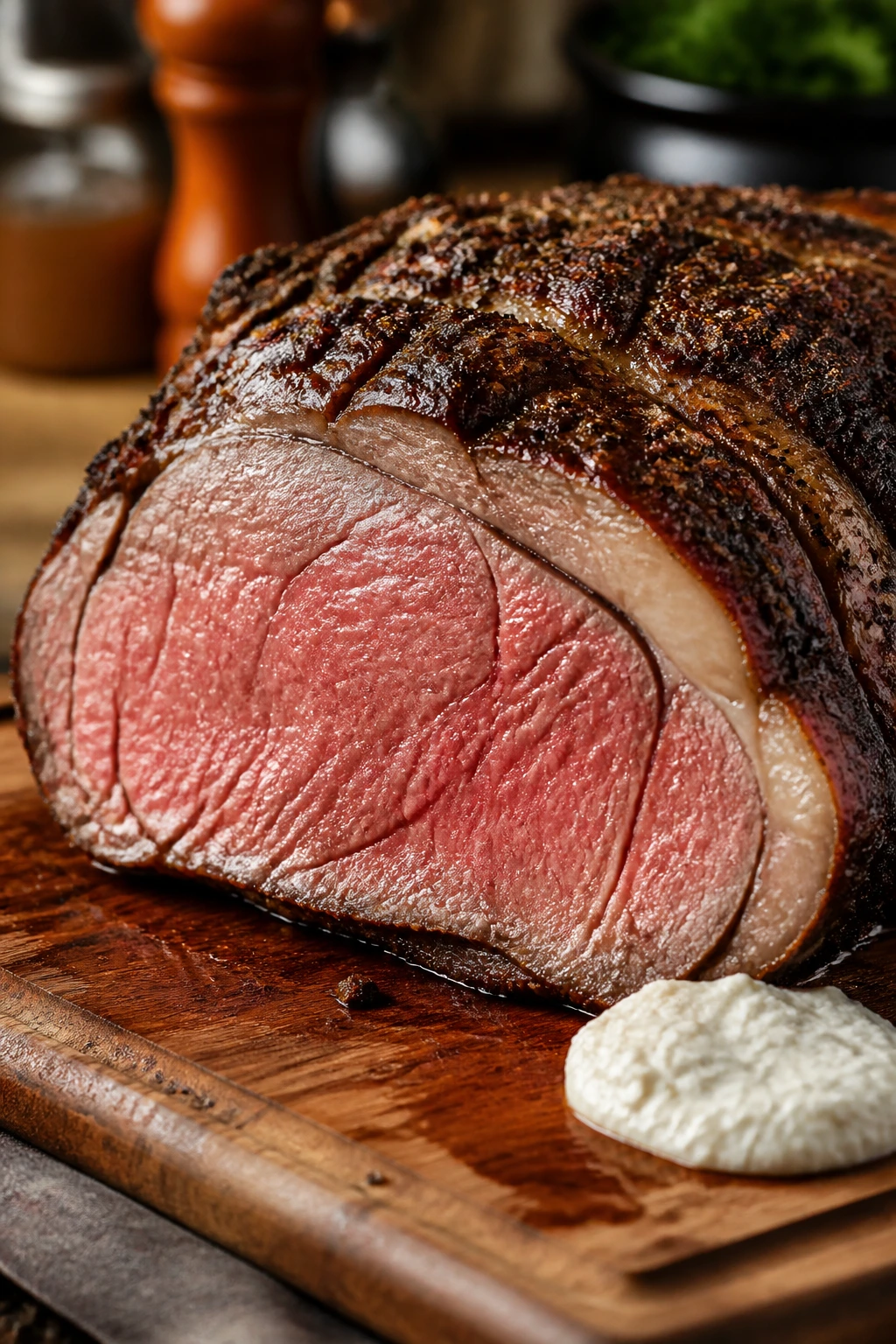
-
Heavy cast-iron skillet or roasting pan: A sturdy pan holds heat well and lets the roast brown properly. Thin pans cool off too fast and leave you with pale spots.
-
Instant-read thermometer: This is the piece of gear that keeps roast beef from becoming expensive regret. Check the thickest part, not the fat cap.
-
Sharp carving knife: A long, sharp knife gives you clean slices instead of ragged shreds. A serrated knife can work in a pinch, but a slicing knife is better.
-
Cutting board with a juice groove: It keeps the resting juices where you can use them, not on the counter.
-
Small mixing bowl and whisk: The horseradish sauce comes together fast, but it needs a bowl that’s easy to chill and a whisk that doesn’t leave lumps.
-
Foil or a loose lid: Resting the roast tented loosely keeps it warm without trapping steam against the crust.
-
Fine-mesh strainer, optional: Handy if you want a smoother pan juice and want to strain out the onion bits and herb stems.
Roasting the Beef to a Juicy Center
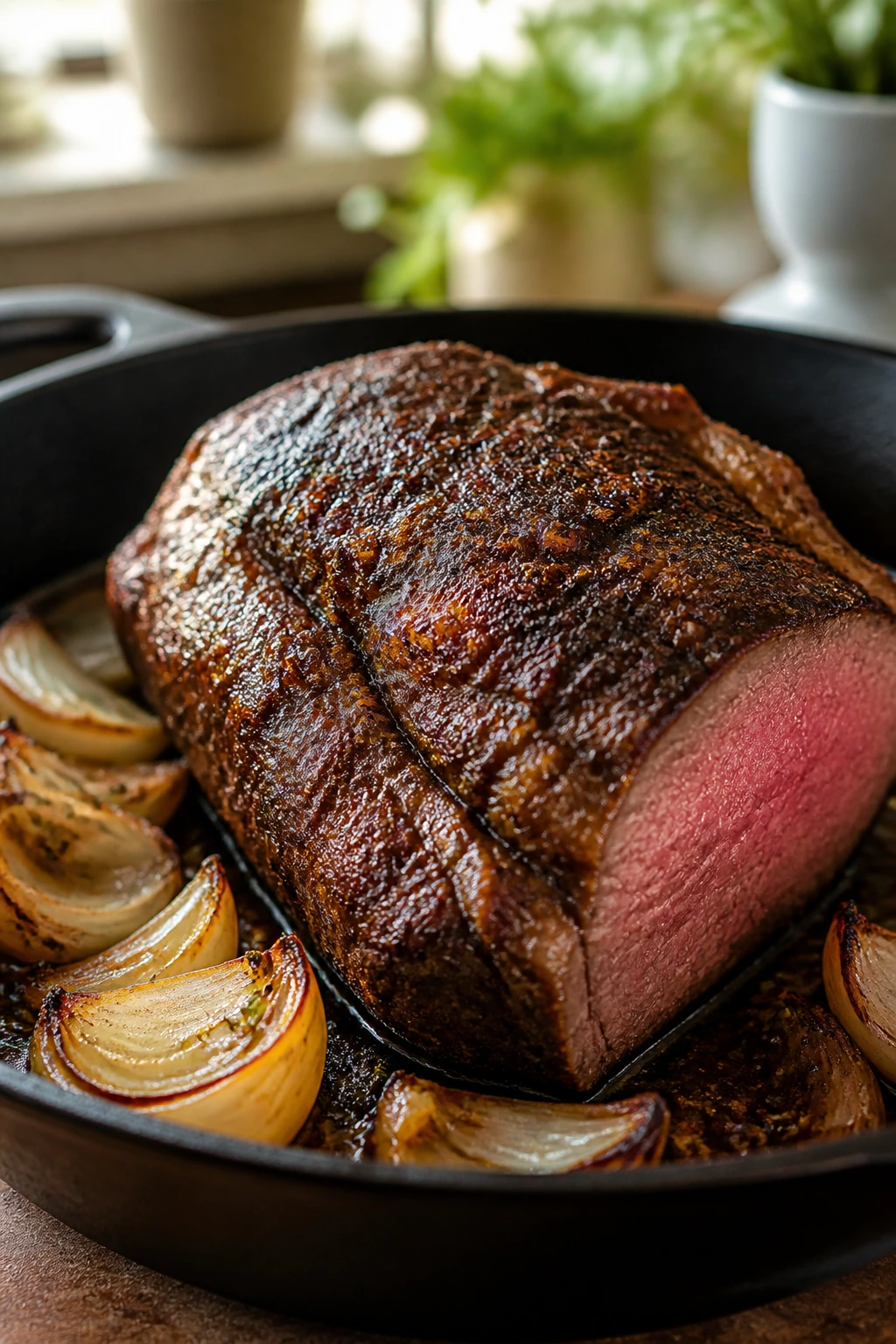
Prepare the pan and preheat:
-
Move a rack to the center of the oven and preheat to 450°F (230°C). If your skillet is not oven-safe, use a roasting pan for the oven step and sear the beef in a skillet first.
-
Pat the roast dry with paper towels, then let it sit at room temperature for 30 to 45 minutes if it came straight from the fridge. Do not roast it ice-cold unless you enjoy guessing about the center.
-
Stir together the olive oil, Dijon, minced garlic, rosemary, thyme, kosher salt, and black pepper in a small bowl. Rub this mixture all over the beef, pressing it into the surface so it sticks.
Sear the roast: 4. Heat the cast-iron skillet over medium-high heat until very hot, then add a thin film of oil. Sear the roast for 2 to 3 minutes per side, turning with tongs, until the outside looks dark brown and smells nutty. Do not move it too early or the crust will tear.
- Add the onion wedges to the pan around the roast. If needed, tuck them under the edges rather than crowding the center. They should sit in the rendered fat and take on color, not bury the meat.
Roast and rest: 6. Transfer the pan to the oven and roast at 450°F for 15 minutes, then reduce the oven to 325°F (165°C) without opening the door for long. Continue roasting until the thickest part reaches 125°F to 130°F for medium-rare or 135°F for medium. The roast should feel firm at the edges but still have a little give in the center.
-
Move the roast to a cutting board and tent it loosely with foil. Rest it for 20 to 25 minutes. Skip the rest and the juices will run all over the board the second you cut in.
-
While the beef rests, keep the onions in the hot pan and set the pan over medium heat. Pour in the beef broth and scrape up every browned bit with a wooden spoon. Let it simmer for 3 to 5 minutes until slightly reduced and savory. Taste and add a pinch of salt if needed.
Mixing the Horseradish Sauce and Slicing the Roast
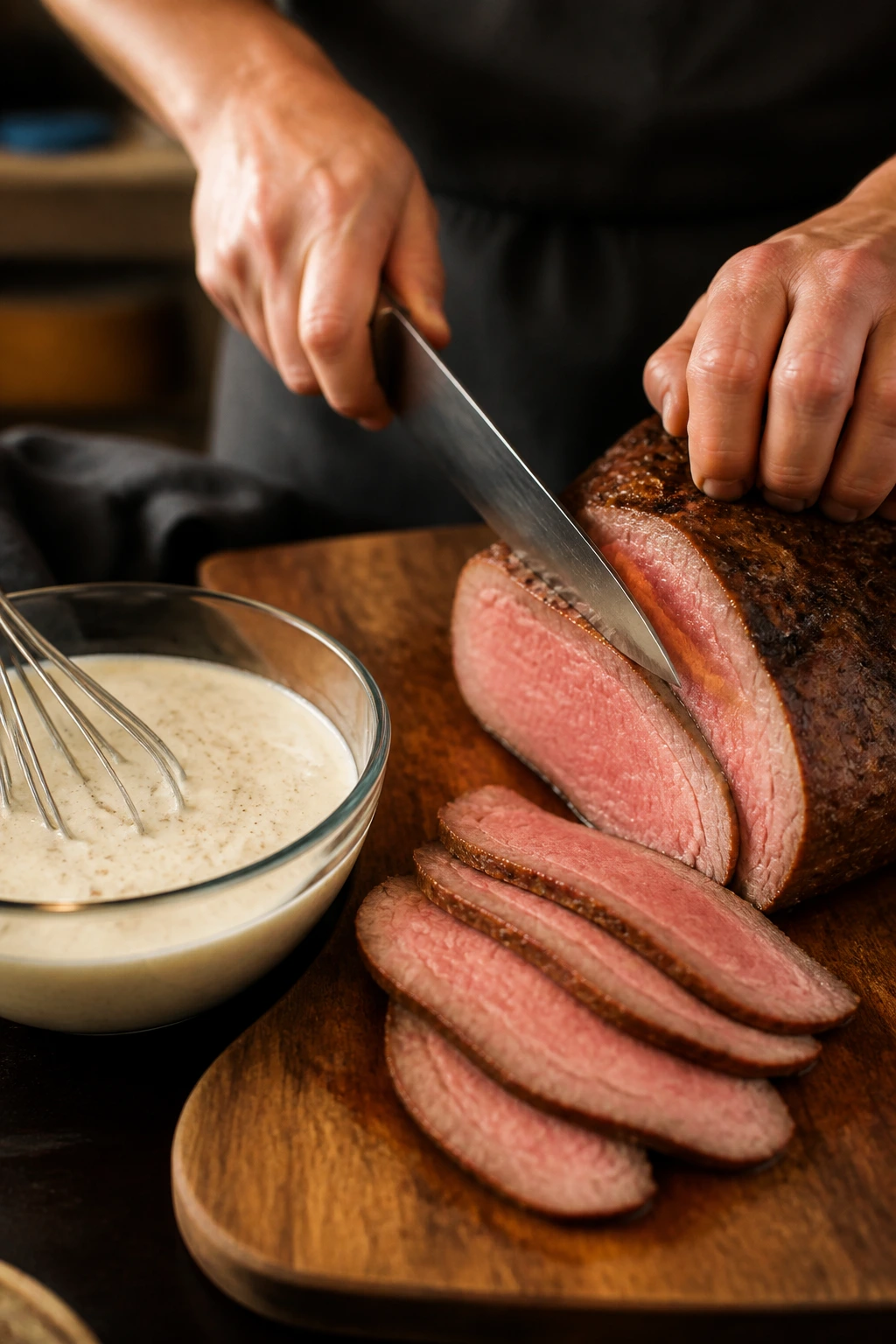
Make the sauce: 9. In a chilled bowl, whisk together the sour cream, prepared horseradish, mayonnaise, Dijon mustard, lemon juice, chives, and kosher salt. Taste it and adjust the horseradish in 1-teaspoon steps if you want more bite. Chill until serving. If the sauce tastes sharp now, it will taste even sharper cold.
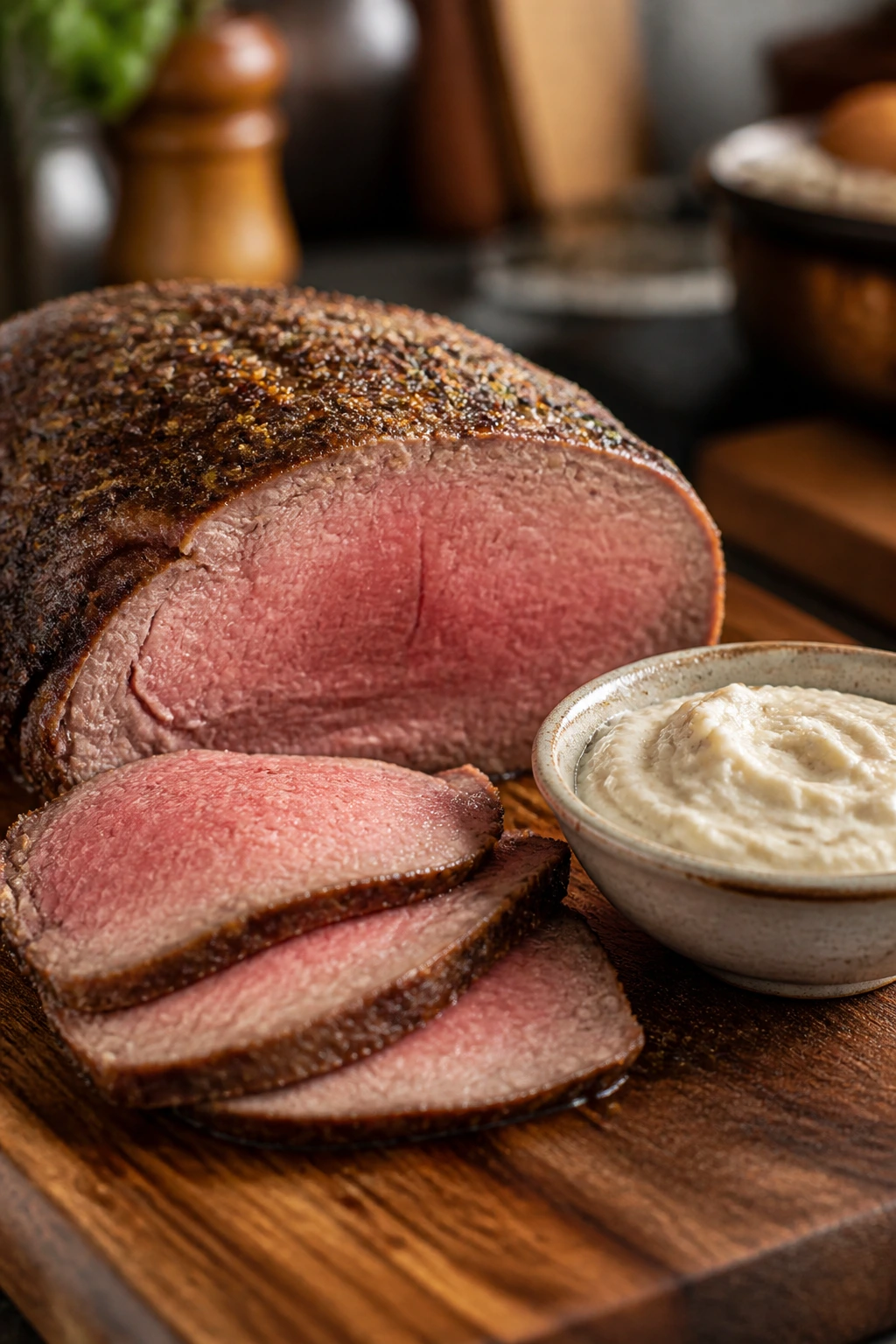
Slice and serve: 10. Remove the foil from the roast and carve it across the grain into slices about 1/4 inch thick. The center should be rosy and moist, with a browned edge around the outside. Spoon the pan juices over the slices or serve them on the side, then pass the horseradish sauce cold.
- If you want a little extra drama on the plate, fan the slices slightly overlapping instead of stacking them in a heap. It takes ten seconds and makes the dinner feel calmer and more generous.
How to Serve Roast Beef Without Fussy Plating
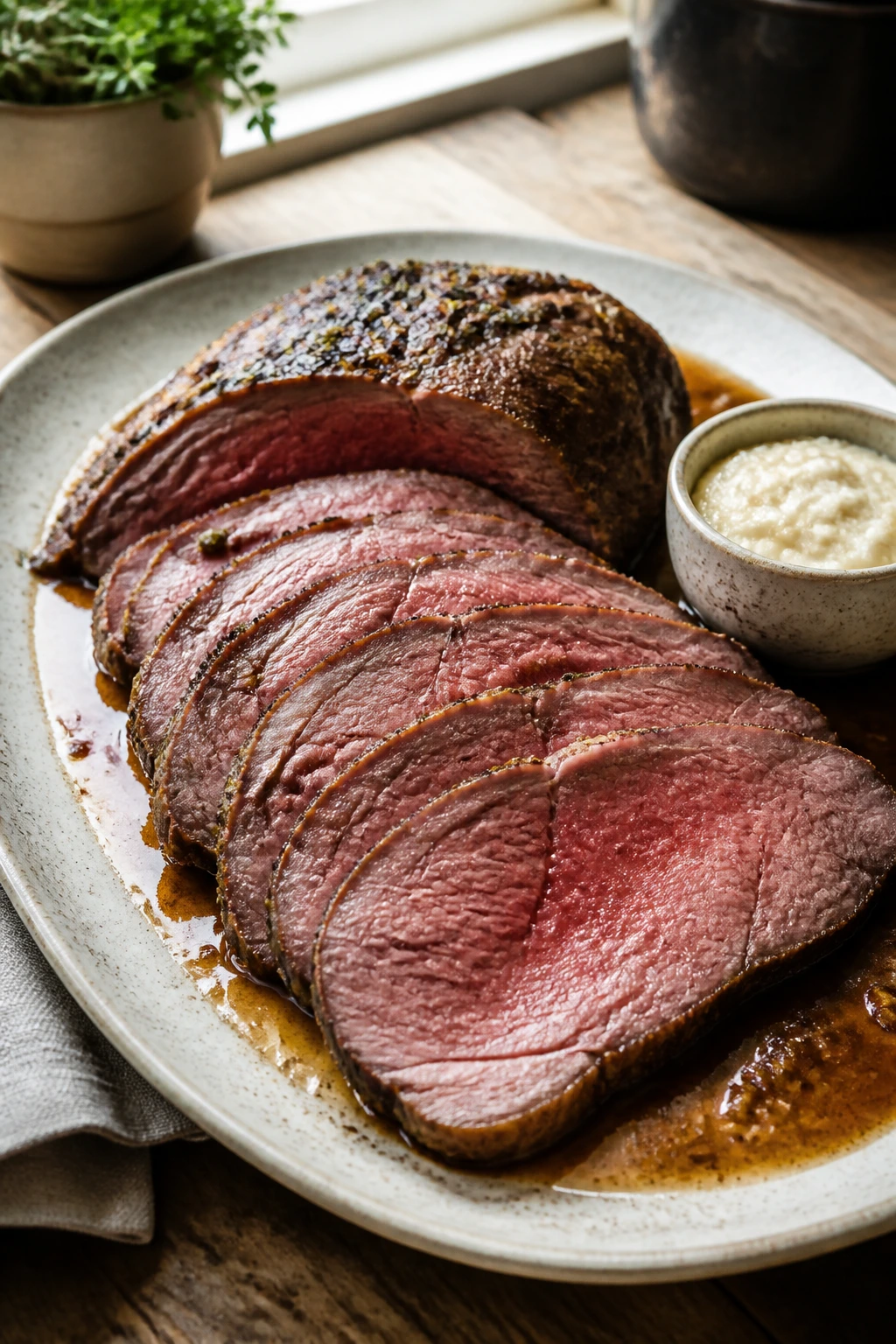
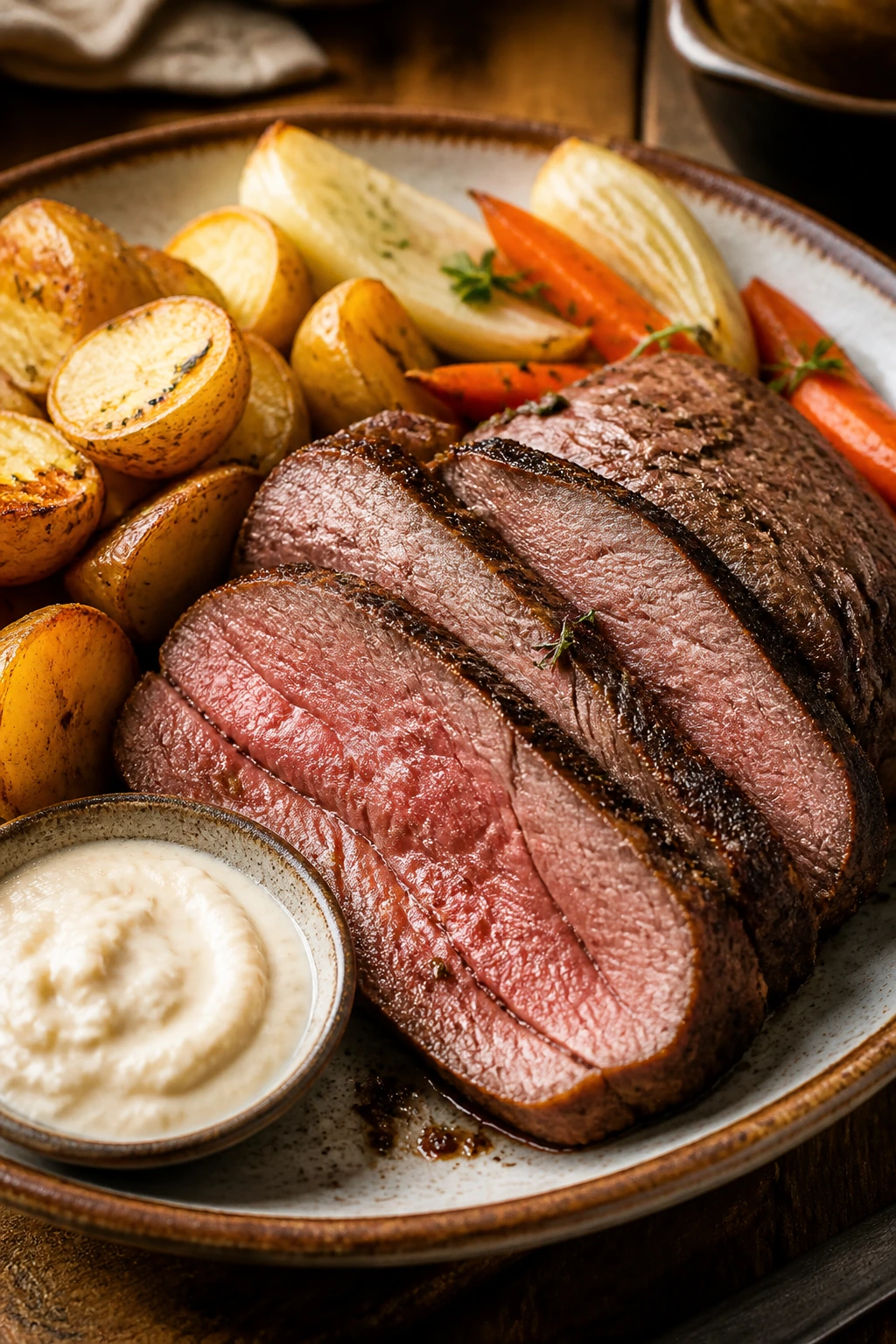
Presentation: Put the sliced roast on a warm platter and spoon a little of the pan juice around the meat, not over all of it. That keeps the crust visible. A small bowl of horseradish sauce on the side looks better than pouring it over the beef, and it lets each person decide how much heat they want.
Accompaniments: Mashed potatoes are the obvious companion because they catch the juices. Roasted carrots, green beans, buttered peas, or a crisp salad with sharp vinaigrette all work. If you want something more old-school, add Yorkshire pudding or a crusty loaf for mopping the pan juices.
Portions: A 3 to 4 lb roast serves 6 people comfortably with sides, or 4 if the table likes generous slices and seconds. If you’re stretching it for more people, slice thinly and serve with extra vegetables and bread. The sauce should be offered in a separate bowl so no one gets stuck with a plate that looks pasted together.
Beverage Pairing: A Cabernet Sauvignon or Syrah stands up to the beef without fighting the horseradish. If you prefer beer, a brown ale or amber ale fits the roast’s savory edges. For a nonalcoholic option, cold sparkling water with lemon keeps the meal brisk instead of heavy.
Extra Tips and Small Fixes That Matter
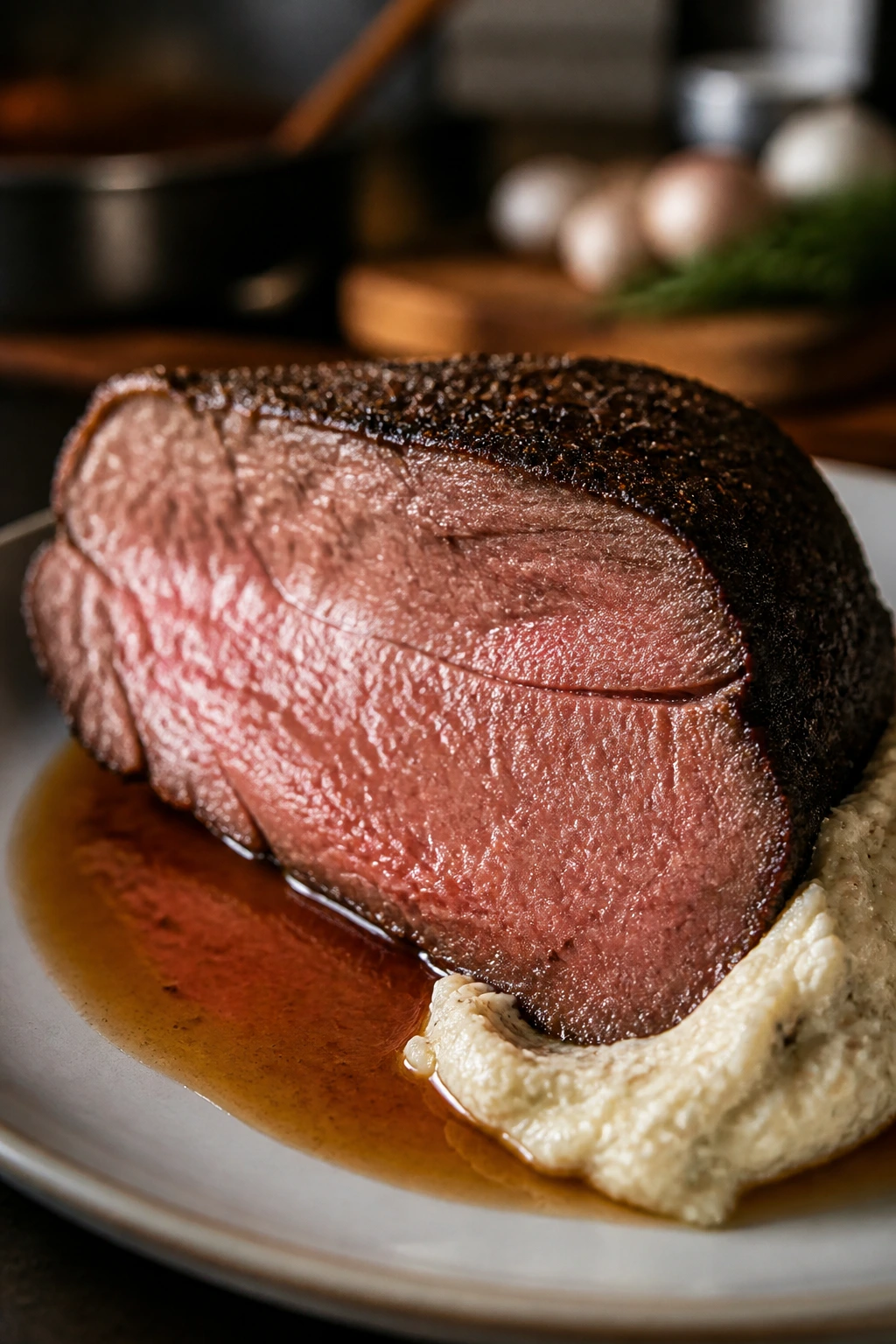
Flavor Enhancement: A teaspoon of Worcestershire stirred into the pan juices gives the beef a deeper, rounder finish. It doesn’t make the sauce taste like steak sauce; it just makes the drippings taste like they came from a better roast. If you like a little more edge, a pinch of crushed black pepper in the sauce wakes it up.
Time-Saver: Salt and season the roast the night before, then leave it uncovered in the fridge. The next day, the surface will be drier, the sear will take hold faster, and you won’t be rushing with a wet piece of meat while dinner is already hanging over your head.
Cost-Saver: Top sirloin is the best balance of price and texture for this meal. Rib roast is lovely, sure, but it’s also expensive enough that you start staring at every slice. Sirloin gives you the roast-beef shape and the right chewing texture without making the grocery bill feel theatrical.
Smart Swap: If sour cream feels too thick for the sauce, cut it with a spoonful of crème fraîche or a splash of cold milk. You want the sauce thick enough to sit on the beef, not so stiff that it drags the knife through the slice.
Serving Suggestion: A few snipped chives or parsley leaves on top of the roast keep the platter from looking bare. Use them sparingly. This is beef and horseradish, not a salad.
Common Mistakes That Dry Out the Roast
-
Starting with a cold roast: A fridge-cold center takes longer to cook, which means the outer slices overcook before the middle catches up. Let the roast sit out for 30 to 45 minutes first.
-
Skipping the thermometer: Guessing at doneness is how a good roast turns into gray beef. Pull at 125°F to 130°F for medium-rare, then rest. If you want to stay closer to USDA guidance, cook to 145°F and rest 3 minutes, knowing the slice will be less pink.
-
Slicing along the grain: The meat becomes chewy and stringy when you cut the wrong direction. Turn the roast if needed and slice across the grain in thin, steady strokes.
-
Mixing the sauce too early: Horseradish dulls when it sits in a warm kitchen for too long. Make the sauce near the end and keep it cold until the platter hits the table.
-
Crowding the pan with liquid: Too much broth under the roast can start steaming the bottom instead of browning it. Use just enough broth to deglaze after roasting, not so much that the beef sits in a bath.
-
Carving too soon: The juices need time to settle back into the meat. Resting is not optional. If you cut early, the cutting board becomes the side dish.
Variations and Adaptations for Different Tables
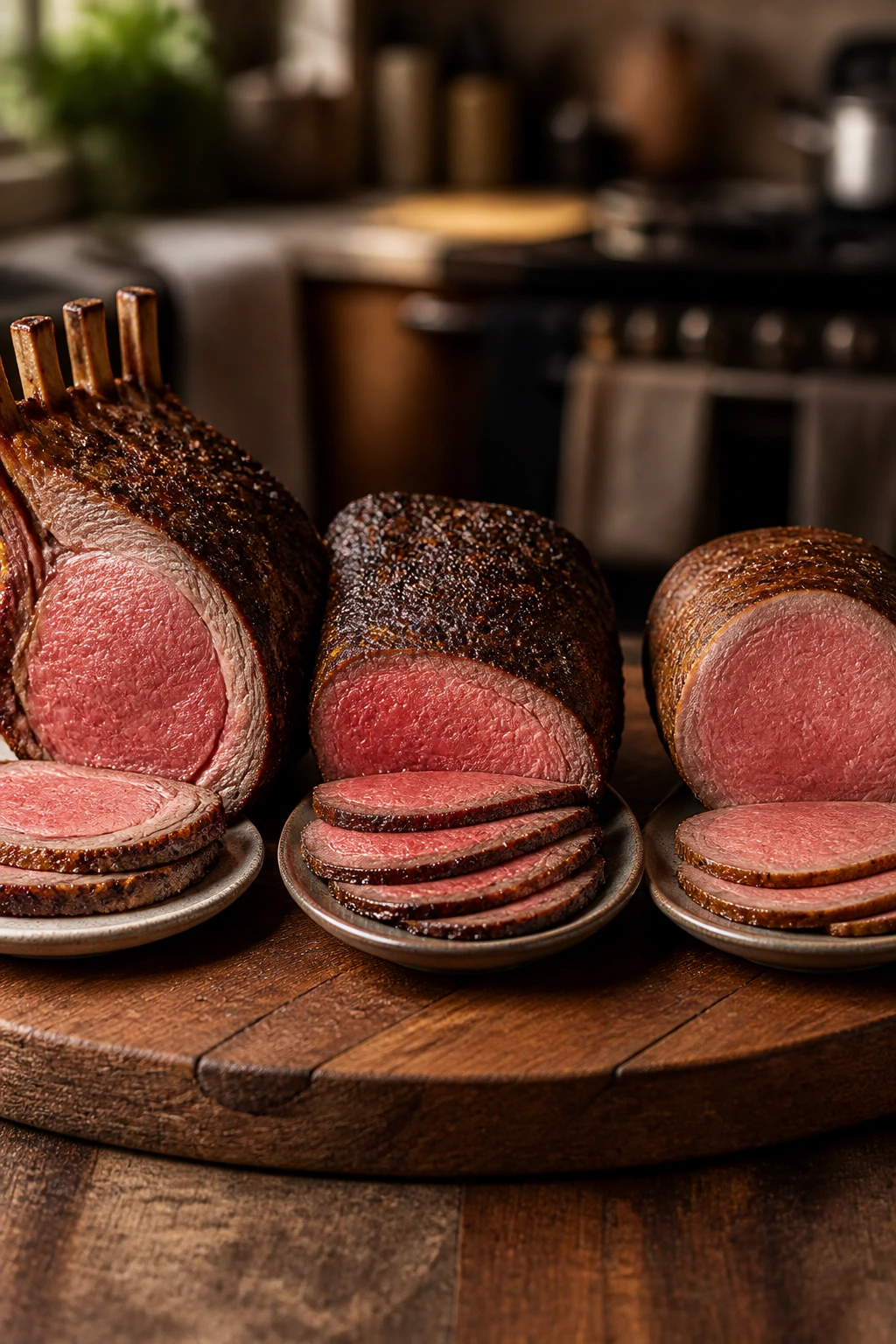
Prime Rib Celebration Roast: Swap the top sirloin for a bone-in rib roast if you want a richer, more luxurious cut. Roast it the same way with a longer cook time, aiming for the same internal temperature cues. The horseradish sauce stays unchanged and cuts through the richer fat beautifully.
Lean Eye-of-Round Dinner: Use eye of round if you want a leaner, more budget-minded roast. Salt it overnight, roast it carefully to medium-rare, and slice it paper-thin against the grain. It’s less forgiving, but when it’s sliced thin and paired with extra sauce, it makes a very good dinner.
Garlic-Herb Crust Roast: Add 1 tablespoon chopped parsley and 1 teaspoon whole-grain mustard to the rub. The mustard doesn’t make the beef taste like mustard; it helps the crust cling and adds a little grit under the browned surface.
Red Wine Pan-Juice Version: After roasting, deglaze the pan with 1/2 cup red wine and 1/2 cup beef broth, then simmer until reduced by about half. This version tastes deeper and a little more polished, especially if you’re serving the roast with potatoes or mushrooms.
Smokier Horseradish Sauce: Stir in a pinch of smoked paprika and a few drops of Worcestershire sauce. It nudges the sauce in a darker direction without hiding the horseradish bite. Use it when the rest of the meal leans plain and you want the condiment to carry a little more attitude.
Storing, Reheating, and Making It Ahead
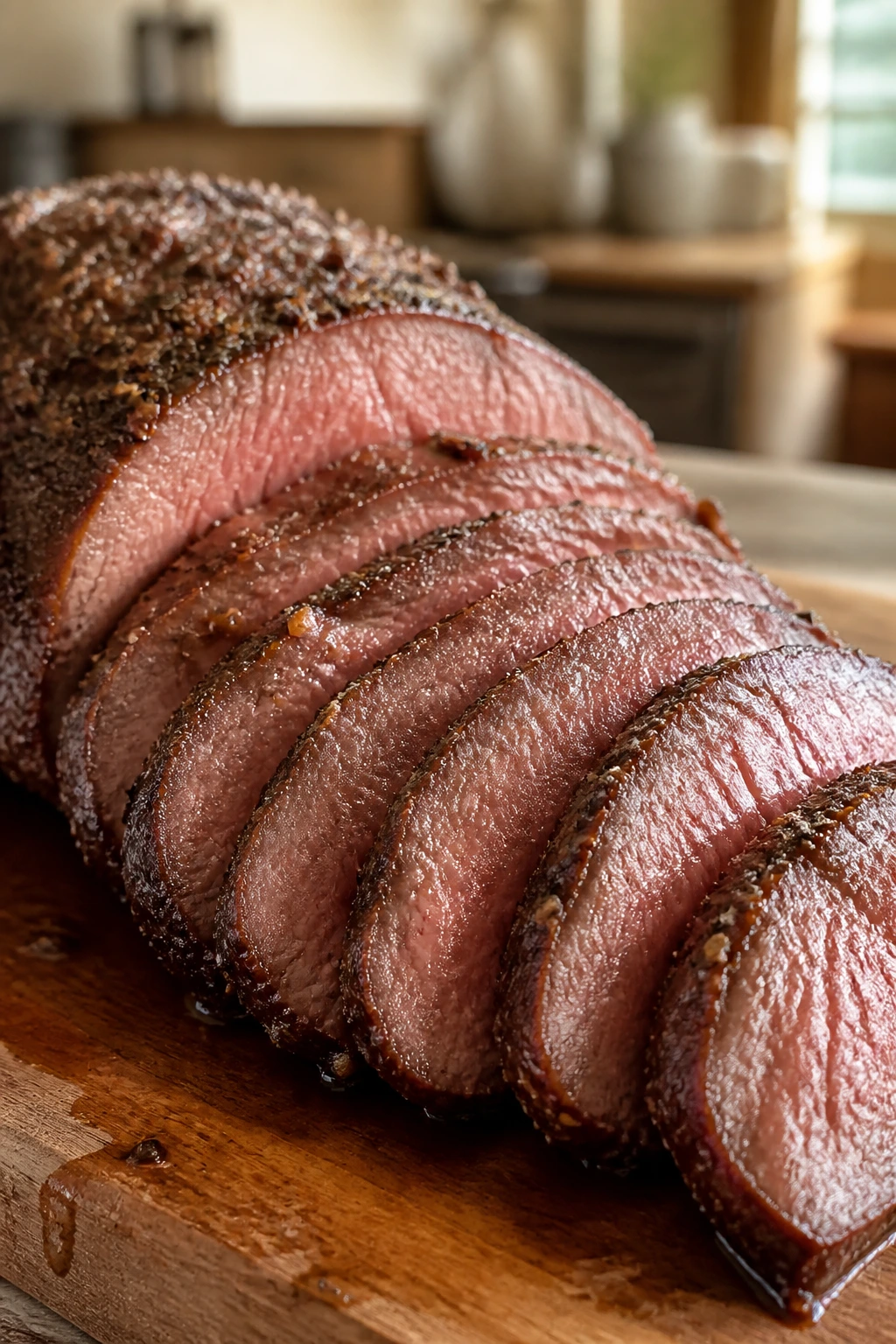
Roast beef keeps well if you treat it like cooked meat, not a casserole. Once it’s cooled, wrap the slices tightly or store them in an airtight container and refrigerate them for 3 to 4 days. Leave the horseradish sauce in a separate covered container; it keeps for 3 to 4 days as well, though the bite softens a little after the first day.
For freezing, portion the sliced beef into small packs and freeze it for up to 2 months. Wrap the portions well so they don’t pick up that freezer drawer smell that seems to attach itself to everything. The horseradish sauce does not freeze well. It tends to break and separate, which is not the texture you want on sliced beef.
Reheat the roast gently. The best method is a 275°F oven with the slices in a covered baking dish and a splash of beef broth under them. Ten to 15 minutes is usually enough for thin slices; thick ones may need a little longer. You’re aiming for warm, not hot. A skillet over low heat with a spoonful of broth works too. The microwave should be the last resort, and if you use it, keep the power at half and stop before the meat turns rubbery.
For make-ahead work, the sauce can be mixed up to 24 hours in advance and chilled. The roast can be salted and left uncovered in the fridge overnight, which helps the crust. If you want the whole dinner to feel less frantic, make the pan juices, cool them, and reheat them right before serving. They hold up nicely.
Roast Beef and Horseradish Questions People Actually Ask
Can I use prepared horseradish from a jar?
Yes, and that’s the version I’d reach for most nights. Just drain off excess liquid if it looks watery, because a loose sauce can slide right off the beef. Fresh-grated horseradish is sharper, but jarred prepared horseradish is dependable and easy to find.
What cut gives the best roast beef slices?
Top sirloin is a strong choice because it balances tenderness, flavor, and price. Rib roast gives you a richer result, while eye of round is leaner and needs thinner slicing. If you want one dependable middle-ground cut, top sirloin is the one.
How do I keep the roast pink and not gray?
Pull it before it reaches your final target, then let resting finish the job. A thermometer matters more than the clock here. Also, don’t slice too soon; the center can look more overdone than it really is if you cut before the juices settle.
Can I make the horseradish sauce ahead of time?
Yes, and it can actually taste better after an hour or two in the fridge. The flavor settles, the lemon and sour cream blend, and the horseradish still keeps enough bite to matter. Just keep it cold and covered.
What if my roast finishes before the sides are ready?
Rest it loosely tented for 20 to 30 minutes. That window gives you breathing room. If you need longer, keep it in a very low oven around 200°F, but check it often so it does not keep cooking into dryness.
Can I make this with chuck roast?
Not in the same style. Chuck roast wants a braise, not a carved roast beef finish, because it has more connective tissue and less slicing elegance. If you want chuck, it’s better treated as pot roast, not this recipe.
Can I cook it without a cast-iron skillet?
Yes. Sear it in any heavy skillet that can handle heat, then move it to a roasting pan for the oven. The important thing is even heat and a pan that doesn’t warp or cool off the second the beef goes in.
What’s the best way to use leftovers?
Thin slices on rye or crusty bread with a swipe of horseradish sauce are hard to beat. Add pickles or arugula if you like some bite. Cold roast beef also works surprisingly well with mustard and a little pan juice spooned over the top.
A Roast Worth Slicing Thick
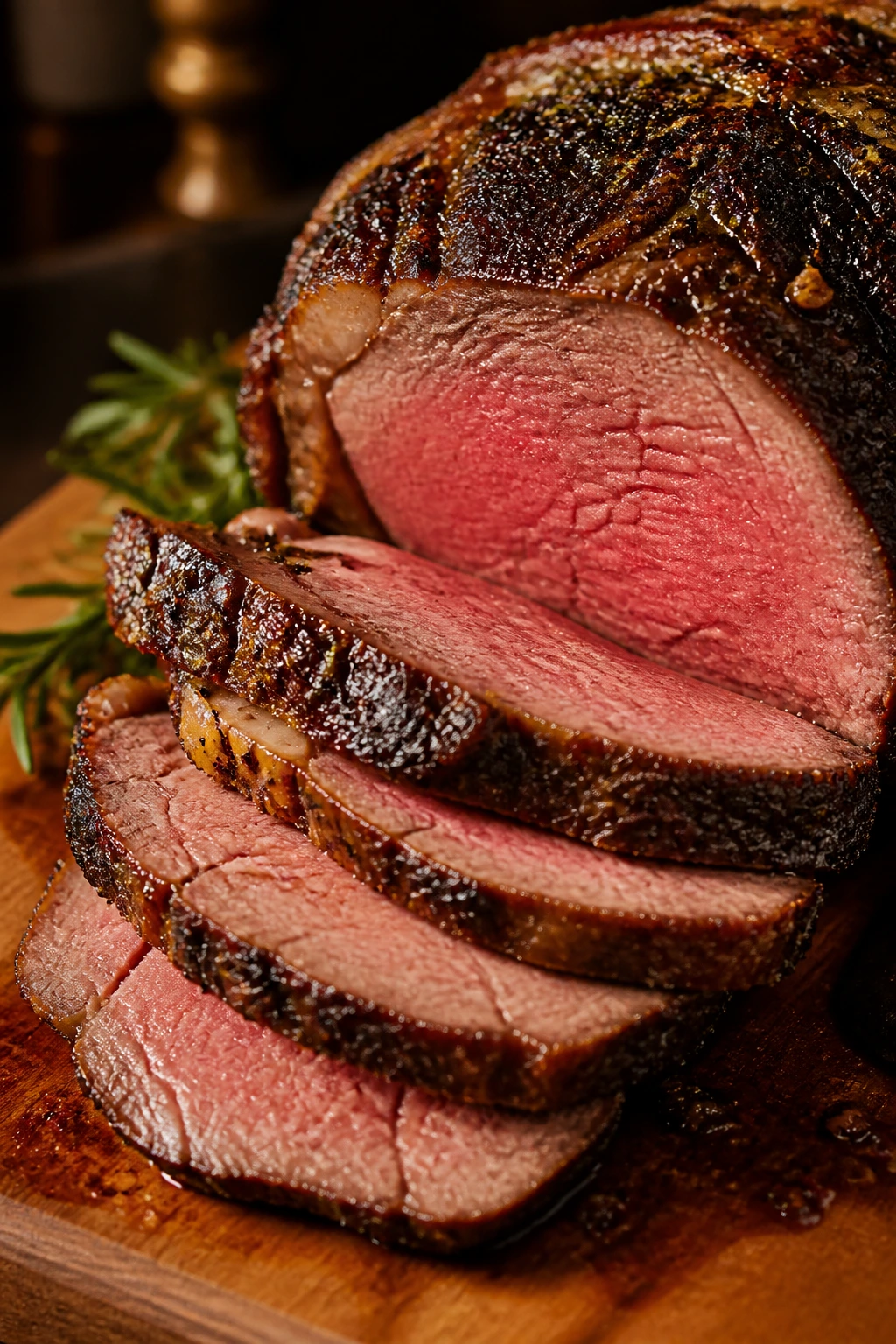
A roast beef dinner like this does not need clever tricks. It needs heat, salt, a short rest, and a horseradish sauce that refuses to be boring. That’s the whole pleasure of it. Once the roast is carved, the crust crackles a little under the knife, the center looks exactly as pink as it should, and the first bite gives you beef, sharpness, and a little warmth from the peppery sauce.
I like meals that feel sturdy without feeling fussy, and this one lands right there. It looks like a dinner you planned, even when the actual work is mostly patience and a thermometer. If your table needs something that eats like a proper meal and still leaves room for second helpings, this roast earns its place.
Comforting Roast Beef and Horseradish for a Hearty Dinner — Recipe Card
Recipe Name: Comforting Roast Beef and Horseradish for a Hearty Dinner
Description: A well-seasoned roast beef dinner with a browned crust, juicy center, quick pan juices, and a cold horseradish sauce that cuts through the richness. Best served sliced against the grain with potatoes or vegetables.
Prep Time: 20 minutes
Cook Time: 55 to 70 minutes
Total Time: 1 hour 15 minutes to 1 hour 30 minutes
Course: Main Course, Dinner
Cuisine: American
Servings: 6 servings
Calories: About 430 kcal per serving
Ingredients
For the Roast Beef:
- 3 to 4 lb beef top sirloin roast, tied if uneven
- 2 tbsp olive oil
- 1 tbsp kosher salt
- 1 tsp freshly ground black pepper
- 2 tsp Dijon mustard
- 3 garlic cloves, minced
- 1 tbsp fresh rosemary, finely chopped
- 1 tbsp fresh thyme leaves
- 1 large yellow onion, cut into thick wedges
- 1 cup low-sodium beef broth
For the Horseradish Sauce:
- 1 cup sour cream
- 3 tbsp prepared horseradish, drained if watery
- 1 tbsp mayonnaise
- 1 tsp Dijon mustard
- 1 tsp fresh lemon juice
- 1 tbsp chives, finely chopped
- 1/4 tsp kosher salt, plus more to taste
Instructions
-
Preheat the oven to 450°F (230°C) and move a rack to the center.
-
Pat the roast dry and let it sit at room temperature for 30 to 45 minutes.
-
Mix the olive oil, Dijon, garlic, rosemary, thyme, salt, and pepper, then rub it all over the roast.
-
Heat a heavy skillet over medium-high heat and sear the roast for 2 to 3 minutes per side until browned.
-
Add the onion wedges around the roast, then transfer the pan to the oven and roast for 15 minutes at 450°F.
-
Lower the oven to 325°F (165°C) and continue roasting until the center reaches 125°F to 130°F for medium-rare or 135°F for medium.
-
Transfer the roast to a cutting board, tent loosely with foil, and rest for 20 to 25 minutes.
-
Set the hot pan over medium heat, pour in the beef broth, and scrape up the browned bits. Simmer for 3 to 5 minutes.
-
Whisk together the sour cream, horseradish, mayonnaise, Dijon, lemon juice, chives, and salt. Chill until serving.
-
Slice the roast against the grain, spoon over the pan juices, and serve with the horseradish sauce on the side.
Notes: Salt the roast the night before if you have time. Horseradish sauce keeps for 3 to 4 days in the fridge, but it should stay cold. Resting the beef is non-negotiable.