



Hearty Calabrian chili is the kind of pot that makes the kitchen smell like browned meat, toasted spices, and red pepper oil long before dinner is ready. It has that dark, slow-cooked look I always want on a cold night: brick-red broth, beans that hold their shape, and a surface that glistens in little patches where the fat and tomatoes meet.
What makes this version worth your time is the Calabrian chili paste. It doesn’t taste like blunt heat. It tastes fruity, smoky, a little sun-dried, almost sweet around the edges, and when you bloom it with tomato paste in a hot pot, the whole base turns deeper and rounder. That’s the move. That’s the difference between a chili that just burns and one that keeps you going back for another spoonful.
I like this pot because it sits in a useful middle ground. It’s rich enough to feel like dinner, sharp enough to wake up your palate, and sturdy enough to taste even better after it rests for a while. If you’ve only used Calabrian chiles as a pizza topping or a quick hit of heat in pasta sauce, this is where they start earning their keep in a bigger, slower dish.
Why This Calabrian Chili Belongs in Your Cold-Weather Rotation
-
The Calabrian paste changes the heat profile: Instead of a sharp chili-flake bite, you get a warm, fruity burn that spreads through the broth without flattening the beef.
-
The texture lands in the sweet spot: A long simmer makes the tomatoes silky and the beans creamy at the edges, but the pot still has enough body to cling to a spoon.
-
The flavor deepens overnight: The vinegar, tomatoes, and spice settle into each other after a rest, so the leftover bowl often tastes more complete than the first one.
-
It’s easy to balance at the table: Sour cream, cheddar, or even a thick spoonful of yogurt can calm the heat without muting the chili’s character.
-
The pot rewards small attention: Browning the meat well and blooming the tomato paste for a minute or two gives you more flavor than adding another tablespoon of spice ever will.
Timing and Yield for This Calabrian Chili
Yield: Serves 6 to 8
Prep Time: 20 minutes
Cook Time: 55 minutes
Total Time: 1 hour 15 minutes active, plus 20 minutes resting time
Difficulty: Intermediate — the steps are straightforward, but proper browning, spice blooming, and seasoning adjustments matter a lot here.
Chill/Rest Time: 20 minutes off the heat before serving is ideal
Best Served: After a short rest, with toppings on the side or the next day when the flavors have settled
What Goes Into the Pot
For the Chili:
- 2 tablespoons olive oil
- 1 pound ground beef, 85/15
- 1 pound hot Italian sausage, casings removed
- 1 large yellow onion, diced
- 2 ribs celery, diced
- 1 large carrot, diced small
- 1 red bell pepper, diced
- 5 garlic cloves, minced
- 2 tablespoons tomato paste
- 2 tablespoons Calabrian chili paste or Calabrian chili oil paste
- 2 tablespoons chili powder
- 2 teaspoons ground cumin
- 1 teaspoon smoked paprika
- 1 teaspoon dried oregano
- 1 1/2 teaspoons kosher salt, plus more to taste
- 1/2 teaspoon black pepper
- 1 tablespoon Worcestershire sauce
- 1 can (28 ounces) crushed tomatoes
- 1 can (15 ounces) fire-roasted diced tomatoes
- 2 cups low-sodium beef broth
- 1 can (15 ounces) kidney beans, drained and rinsed
- 1 can (15 ounces) pinto beans, drained and rinsed
- 1 teaspoon brown sugar
- 1 tablespoon apple cider vinegar
For Serving:
- 1 cup sour cream or plain Greek yogurt
- 1 cup shredded sharp cheddar
- 2 scallions, thinly sliced
- 1/4 cup chopped parsley
- Warm cornbread, crusty bread, or tortilla chips
Why These Ingredients Taste Better Together
Meat and Fat
What to use: 1 pound ground beef and 1 pound hot Italian sausage give the chili enough body and seasoning to feel hearty without turning heavy. The beef brings the familiar chili base, and the sausage adds fennel, garlic, and a little extra richness.
Preparation: Let the meat sit out for 10 to 15 minutes before it hits the pot, then break it up into walnut-size pieces as it browns. That helps it sear instead of clump.
Substitutions: All beef works if you want a cleaner, more standard chili. Ground turkey can also work, though you’ll want an extra tablespoon of olive oil to keep the pot from tasting dry.
Tips: Brown the meat in a wide layer and give it time to color. Pale meat makes pale chili. Nobody wants that.
Aromatics and Vegetables
What to use: Onion, celery, carrot, red bell pepper, and garlic build the base. The carrot is not a classic chili purist move, and I don’t care. It softens the sharpness of the pepper paste and gives the tomatoes a rounder finish.
Preparation: Dice everything evenly so it softens at the same pace. Garlic should be minced fine; big chunks burn and turn bitter in hot fat.
Substitutions: You can swap the red bell pepper for poblano if you want a darker, earthier note. If you’re missing celery, use a second onion rib of fennel instead.
Tips: Salt the vegetables as they cook. They should sweat and soften, not dry out and scorch on the bottom of the pot.
Heat and Spice
What to use: Calabrian chili paste, chili powder, cumin, smoked paprika, oregano, and black pepper are the spice core. The Calabrian paste is the star; the others build the background so it doesn’t taste one-dimensional.
Preparation: Stir the tomato paste and Calabrian paste into the hot fat before adding liquid. That blooming step changes the flavor from raw and sharp to deep and rounded.
Substitutions: If you cannot find Calabrian chili paste, use a spoonful of Calabrian chili oil, a little crushed red pepper, and an extra teaspoon of tomato paste. It will be less fruity, but still good.
Tips: The paste should smell sweet and peppery after a minute in the pot. If it smells harsh, it needs more time in the heat.
Tomatoes, Beans, and Liquid
What to use: Crushed tomatoes, fire-roasted diced tomatoes, beef broth, kidney beans, pinto beans, Worcestershire sauce, brown sugar, and vinegar make the broth thick, savory, and balanced.
Preparation: Rinse the beans well so the broth stays clean and the chili doesn’t taste like can water. Crushed tomatoes give you body; diced tomatoes give you little soft bites.
Substitutions: Black beans can replace pinto beans if that’s what’s in the pantry. Chicken broth works too, though beef broth gives the pot more backbone.
Tips: The brown sugar should not make the chili sweet. It smooths the tomato edge and keeps the Calabrian heat from tasting abrupt.
Finishing Touches
What to use: Sour cream, cheddar, scallions, and parsley are the toppings I reach for first. They cool the heat and add color, which matters when the bowl is dark and heavy.
Preparation: Slice the scallions right before serving so they stay crisp. Chop the parsley last; it should smell fresh, not tired.
Substitutions: Greek yogurt works in place of sour cream, and Monterey Jack can stand in for cheddar if you want a softer melt.
Tips: Keep the toppings cold and the bowls warm. That contrast makes the chili taste hotter, cleaner, and more intentional.
The Dutch Oven and Tools You’ll Actually Use
A good chili doesn’t ask for a stack of gadgets. It wants a solid pot, a spoon that won’t melt, and enough room to stir without splashing tomato broth onto your shirt.
-
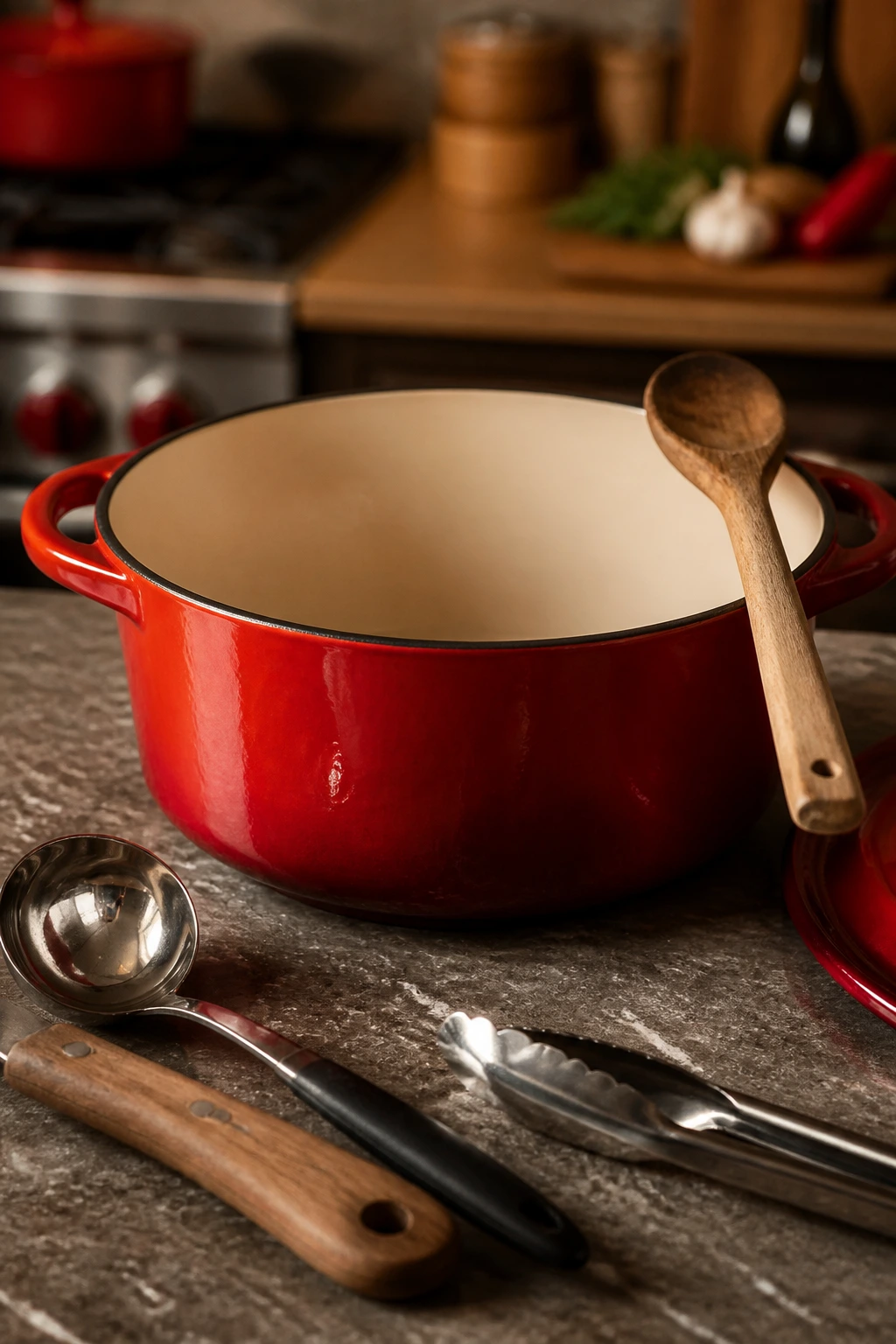
6-quart Dutch oven or heavy-bottomed stockpot: This is the main event. A wider pot browns meat better than a tall narrow one, and you’ll notice the difference in the flavor.
-
Wooden spoon or heatproof spatula: You need something sturdy enough to scrape up browned bits without gouging the pot.
-
Chef’s knife: Keep it sharp. Onion, celery, carrot, and pepper all move faster when the knife does.
-
Cutting board: A stable board matters more than people admit. I like a damp towel underneath so it doesn’t slide when the vegetables start flying.
-
Can opener: Obvious, sure, but you’ll be glad it’s within reach once the meat is browned and the stove is hot.
-
Measuring spoons and cups: Chili forgives some improvisation, but not every cook can eyeball two tablespoons of Calabrian paste and get it right.
-
Ladle: Useful at the end, especially if you’re serving a crowd or packing leftovers.
Building a Calabrian Chili from Scratch
Brown the Meat First:
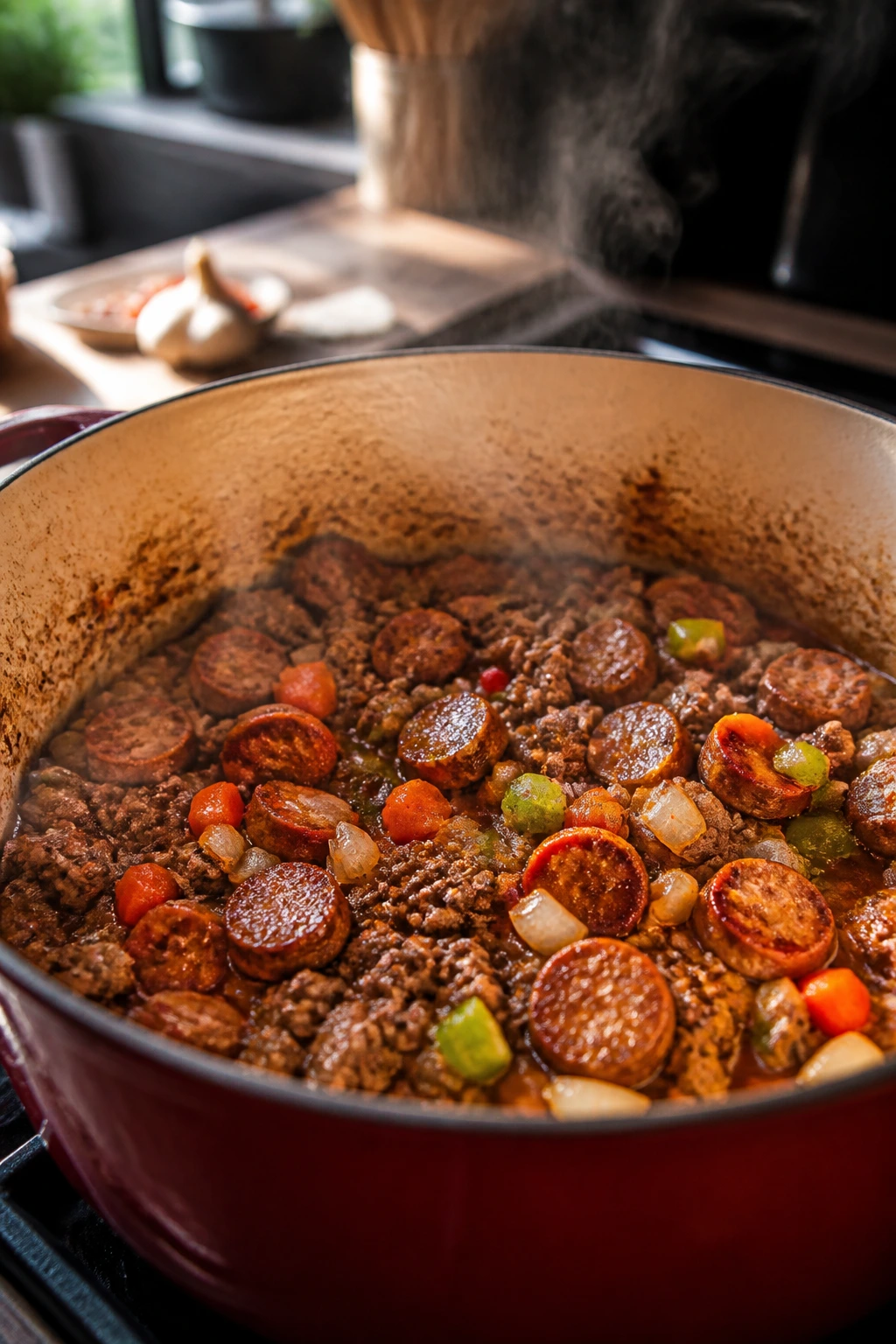
- Set a 6-quart Dutch oven over medium-high heat and add the olive oil. When the oil shimmers, add the ground beef and sausage. Break the meat into large crumbles and let it sit long enough to brown before stirring too much, about 8 to 10 minutes. You want deep brown spots on the bottom and no pink in the center, not a gray pile of steam.
Cook the Vegetables in the Fat:
2. Add the onion, celery, carrot, bell pepper, and 1 teaspoon of the salt. Cook over medium heat for 7 to 8 minutes, stirring every minute or so, until the onion turns translucent and the carrot starts to soften. If the pot looks dry, the vegetables are not the problem; lower the heat and let them release their moisture.
Bloom the Paste and Spices:
3. Stir in the garlic, tomato paste, Calabrian chili paste, chili powder, cumin, smoked paprika, oregano, black pepper, and Worcestershire sauce. Cook for 1 to 2 minutes, stirring constantly, until the paste darkens from bright red to a rusty brick color and the spices smell warm and smoky. Do not let the garlic scorch. If it sticks, add a spoonful of broth and keep moving.
Add the Tomatoes and Beans:
4. Pour in the crushed tomatoes, fire-roasted diced tomatoes, beef broth, kidney beans, pinto beans, brown sugar, and the remaining 1/2 teaspoon salt. Stir well and scrape the bottom of the pot so nothing browned stays stuck there. Bring the chili to a gentle boil, then drop the heat to low.
Simmer Until It Thickens:
5. Let the chili simmer uncovered or partially covered for 35 to 45 minutes, stirring every 8 to 10 minutes. The surface should bubble lazily, not roar. If it starts looking too thick before the beans are tender and the broth has tightened, splash in 1/2 cup more broth. If it looks loose near the end, simmer the last 10 minutes uncovered.
Fine-Tune the Seasoning:
6. Taste the chili and adjust with more salt, black pepper, or a small extra spoon of Calabrian paste if you want more heat. Stir in the apple cider vinegar at the end. It should brighten the tomato and make the pepper flavor taste cleaner, not sour.
Rest and Serve:
7. Turn off the heat and let the chili rest for 20 minutes before serving. This is the part people skip, and it matters. The broth thickens, the heat settles, and the bowl tastes more unified. Ladle into warm bowls and add your toppings right before serving.
How to Bring the Bowl to the Table
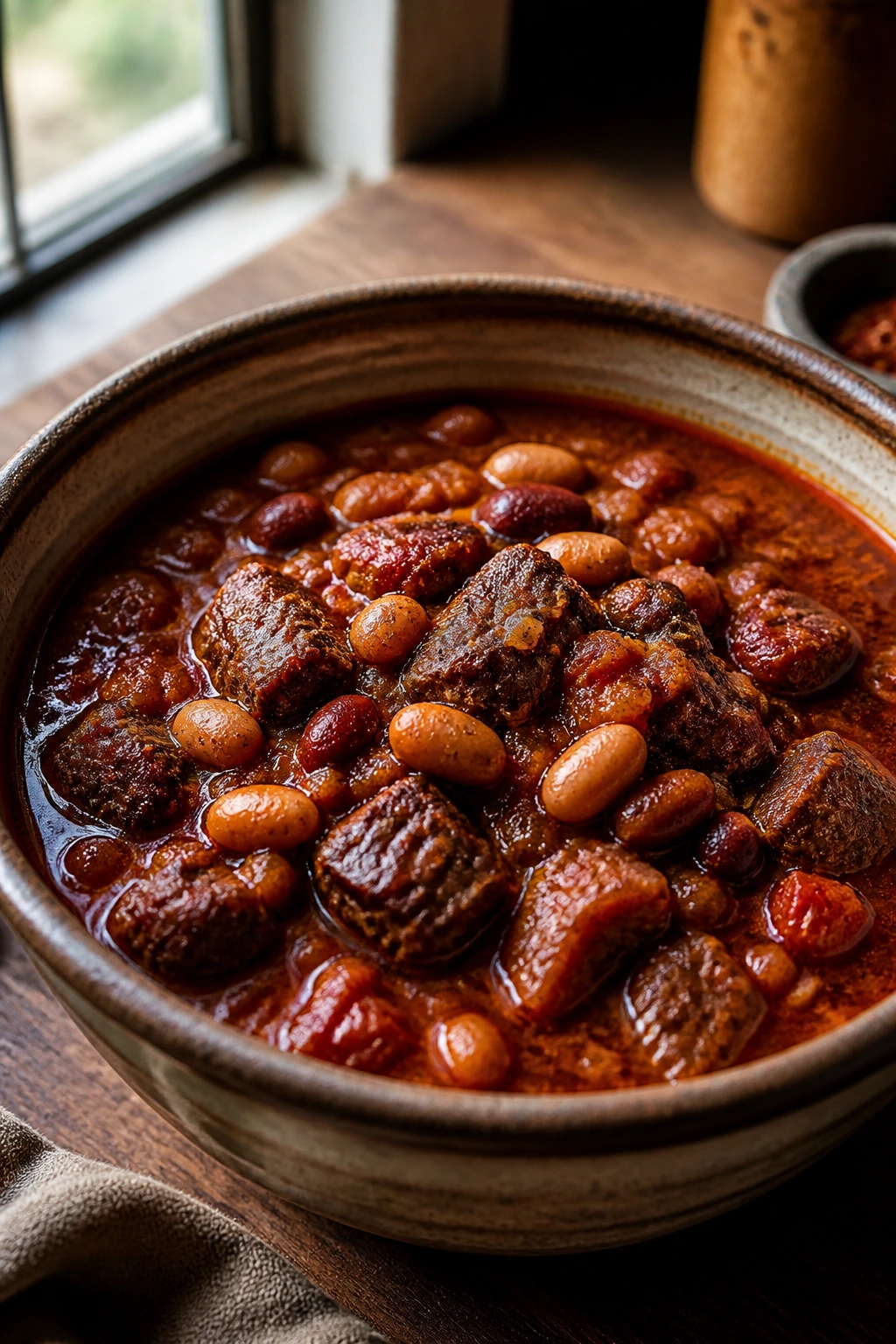
Presentation: Warm the bowls before you ladle. It sounds fussy until you’ve had the first spoonful stay hot all the way through instead of cooling off halfway down the bowl. I like to drop the chili in, make a loose swirl of sour cream through the top, then scatter scallions and parsley over one side so the surface still looks rough and inviting.
Accompaniments: Cornbread is the easy answer, and I’m not arguing with that. Thick crusty bread works too, especially if you want something to drag through the bottom of the bowl. Tortilla chips add crunch, while a sharp green salad with a vinegar-heavy dressing gives your mouth a break between bites.
Portions: Plan on about 1 1/2 cups per person for a main bowl, more if you’re serving bread on the side and fewer if there are a lot of extras. If you want to stretch it, add another can of beans or serve the chili over baked potatoes or rice. It’s a sturdy pot; it can handle that.
Beverage Pairing: A malty amber ale or a dry lager keeps the heat in check without flattening the flavor. If you want wine, reach for something with enough acid and fruit to stand up to the tomatoes, like Sangiovese or Zinfandel. Cold sparkling water with lime works too, especially if you like the chili to stay front and center.
Practical Tips That Make the Pot Taste Slower-Cooked
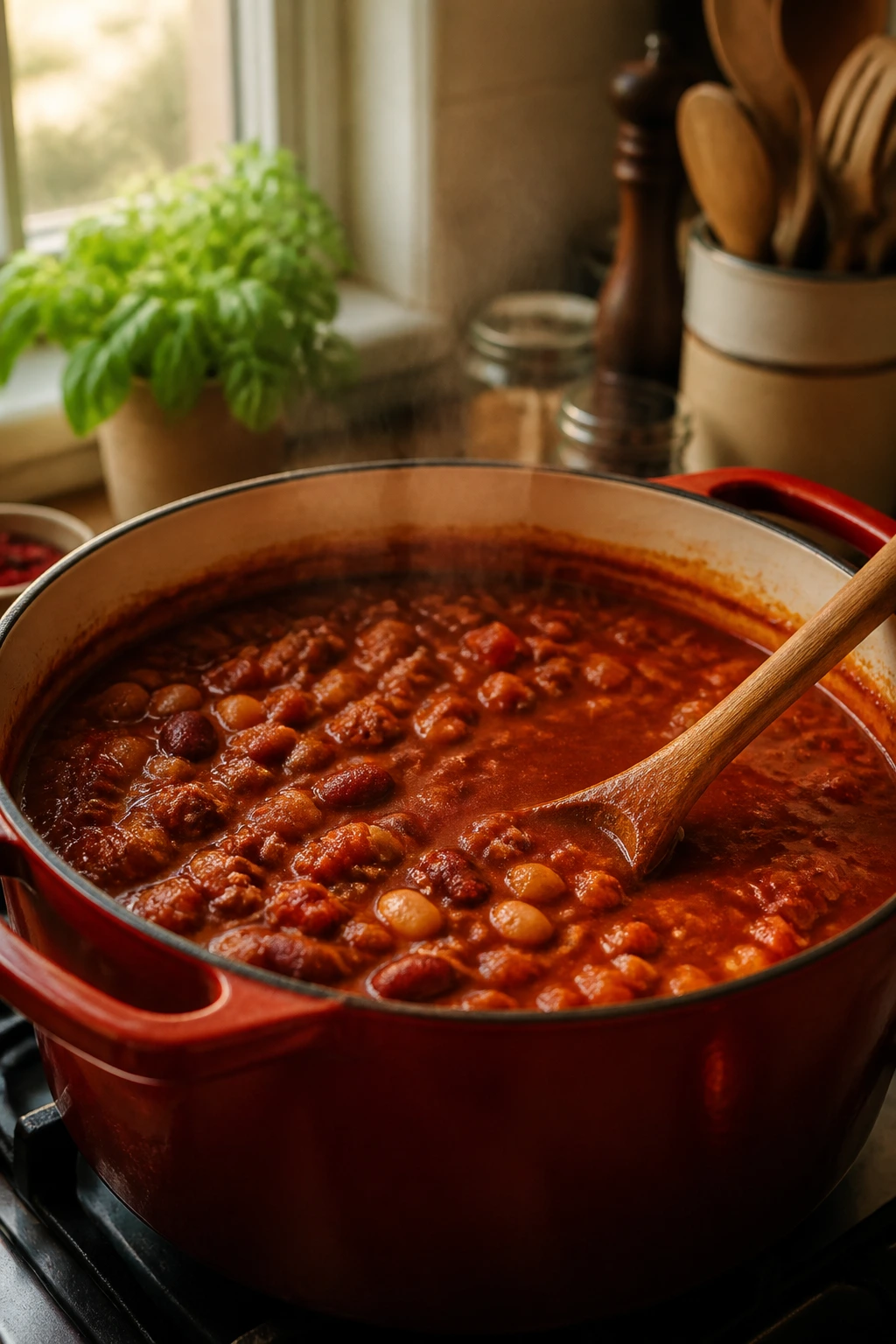
Flavor Enhancement: Spoon in a little of the oil from the Calabrian jar if you have it. That oil carries a lot of the pepper’s fruit and aroma, and a teaspoon or two at the end gives the pot a brighter, cleaner heat.
Time-Saver: Dice the onion, celery, carrot, and bell pepper the night before and keep them in a sealed container. Once the pot is hot, the whole recipe moves faster, and the vegetables actually brown a little better because you’re not stopping to chop.
Texture Trick: Mash about 1/2 cup of the beans against the side of the pot during the last 10 minutes of simmering. That thickens the broth without flour, cornstarch, or any of the gluey stuff that muddies a chili.
Heat Control: If the Calabrian paste hits harder than you expected, don’t drown it in toppings right away. Stir in another spoonful of beans or a splash of broth, then serve with sour cream on the side so each person can tune their own bowl.
Depth Move: If you like a darker, meatier flavor, let the meat take a little longer on the stove before the vegetables go in. Those browned bits are the closest thing chili has to a shortcut.
My Favorite Little Finish: A tiny extra splash of vinegar right at the end can wake the whole pot up. Too much and it tastes sharp. One measured tablespoon is enough.
Common Mistakes That Flatten the Flavor
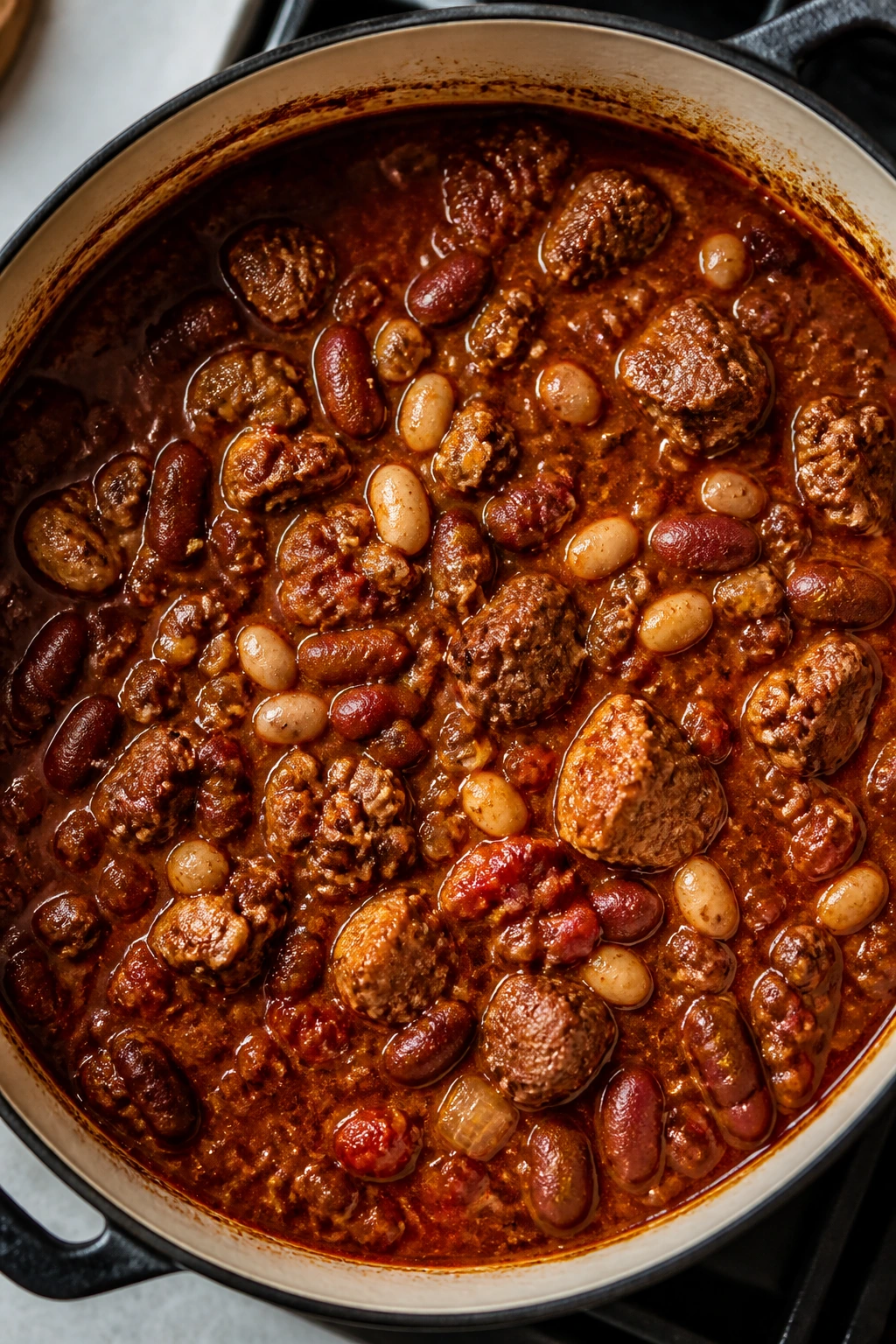
-
Browning the meat too fast: If you cram it all into the pot and stir constantly, it steams instead of browns. The chili still works, but the broth tastes flatter. Spread the meat out, let it sit, and accept that the first dark bits on the bottom are your friend.
-
Burning the tomato paste or garlic: Calabrian paste and garlic are both quick to turn bitter if the heat runs too high. If you smell a harsh, acrid note instead of sweet pepper and tomato, pull the pot off the heat for a moment and add a splash of broth before continuing.
-
Adding too much broth too early: Chili should look loose at the start and thicker at the end. If you over-thin it during the first 15 minutes, you spend the rest of the simmer trying to get the body back. Add liquid in small splashes, not a rush.
-
Skipping the rest time: Straight off the stove, the chili tastes louder and a little separated. After 20 minutes off heat, it settles into itself. The surface thickens, the beans absorb more flavor, and the bowl stops tasting edgy.
-
Under-seasoning after the simmer: Tomatoes and beans swallow salt. Taste again near the end, not just at the beginning. If the pot tastes almost right but not quite, it usually wants another pinch of salt before it wants more heat.
-
Forgetting to rinse the beans: Bean liquid can cloud the broth and make the whole pot taste tinny. A quick rinse under cold water is enough.
Variations and Adaptations to Try
Turkey and White Bean Calabrian Chili
Swap the beef and sausage for 2 pounds ground turkey and use cannellini beans instead of kidney and pinto beans. Chicken broth works better here than beef broth, and I’d add a little lemon zest at the end to keep the lighter meat from tasting washed out.
Smokehouse Calabrian Chili
Add 4 slices of diced bacon at the start and cook them until crisp before the meat goes in. A teaspoon of chipotle in adobo or an extra half-teaspoon of smoked paprika pushes the pot toward a deeper, campfire kind of heat that plays well with the Calabrian paste.
Vegetarian Mushroom-Lentil Pot
Replace the meat with 16 ounces chopped cremini mushrooms and 1 cup cooked brown lentils. Cook the mushrooms until their water evaporates and the edges brown, because that’s where the savory flavor lives. Vegetable broth is enough here, and the Calabrian paste keeps the bowl from tasting soft.
Slow-Braised Chuck Version
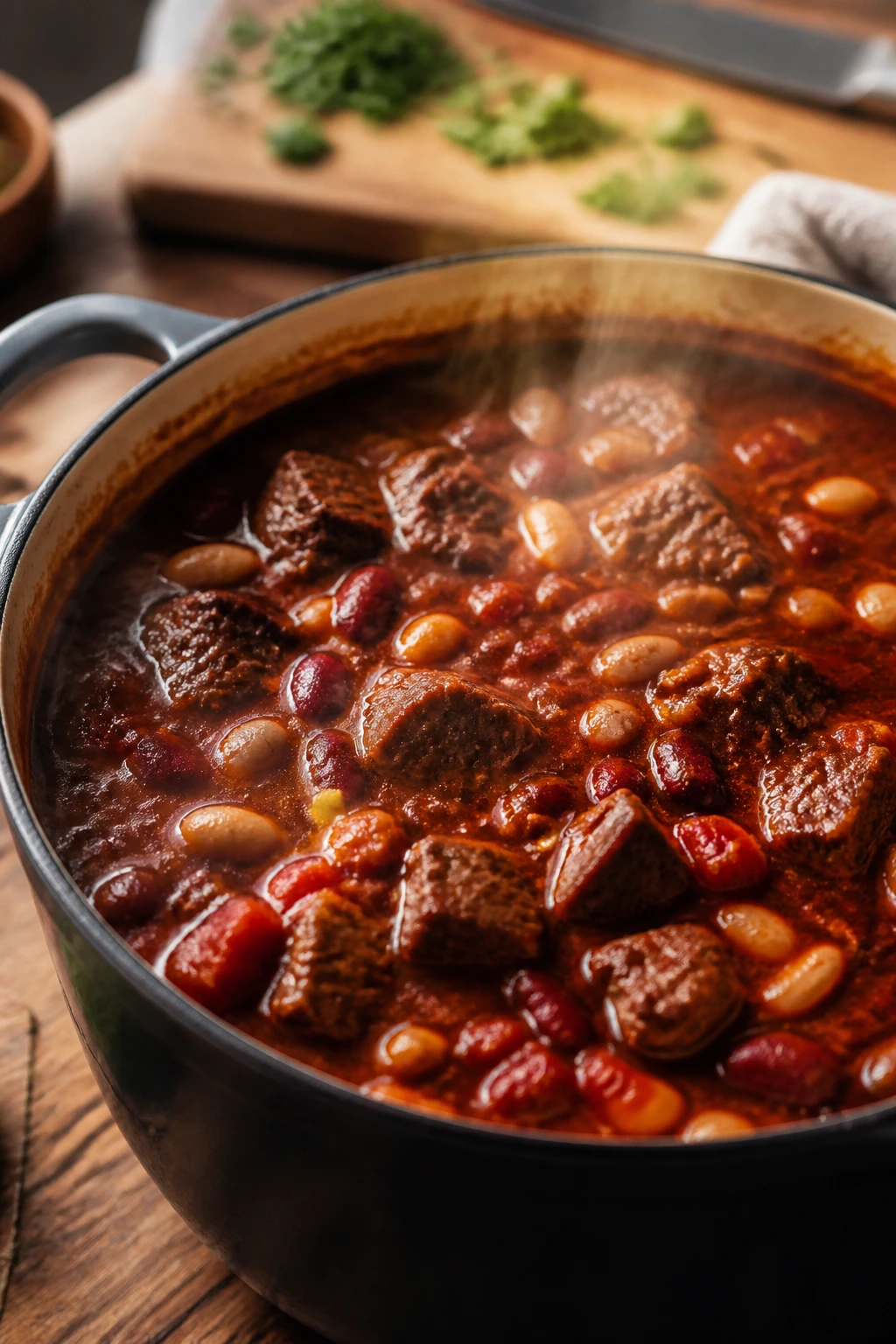
If you want bigger chunks instead of ground meat, use 2 pounds beef chuck cut into 1-inch pieces and brown it well before building the rest of the pot. Increase the simmer time to about 1 1/2 to 2 hours, adding broth as needed, until the beef is spoon-tender and the chili has a stew-like body.
Extra-Fire Pepper Oil Version
For people who want the heat to linger, stir in an extra tablespoon of Calabrian chili oil at the end. It makes the bowl sharper and brighter, so I’d serve it with plenty of sour cream and a bigger piece of cornbread than usual.
Keeping Leftover Chili Thick, Hot, and Useful
Room Temperature: Don’t let chili sit out for more than 2 hours, and less if the kitchen is warm. It’s a thick, meat-based dish, so it cools slowly in the center of the pot. Transfer it to storage containers once steam stops rolling off the top.
Refrigerator: Store leftovers in airtight containers for up to 4 days. The flavor gets deeper by the second day, and the surface often thickens into a scoopable layer. That is normal. If you want to remove some of the fat, chill it overnight and lift the solid layer from the top before reheating.
Freezer: Freeze the chili for up to 3 months in freezer-safe containers or heavy zip-top bags laid flat. Leave a little room at the top for expansion. I like smaller portions here because a single bowl thaws faster than a giant frozen brick.
Reheating: Warm refrigerated chili over low heat on the stovetop, stirring every few minutes and adding a splash of broth or water if it has tightened too much. For the microwave, use medium power in 60-second bursts and stir between rounds so the center doesn’t go cold while the edges boil. From frozen, thaw overnight in the fridge if you can; if not, reheat gently in a covered pot with a few tablespoons of liquid.
Make-Ahead: This is one of those dishes that gets better after a night in the fridge. If you’re cooking for guests, make it a day early, cool it fast, and reheat it slowly the next day. You’ll get a thicker broth and a more settled pepper flavor.
Questions That Come Up Before the First Bowl
Can I make this Calabrian chili if I only have Calabrian chili flakes instead of paste?
Yes. Use about 1 tablespoon of the flakes plus 1 tablespoon of the oil from the jar if you have it, then keep the tomato paste in the recipe. The flavor will be a little sharper and less silky, but the chili will still have that peppery, fruity heat.
How spicy is this chili, really?
It lands in the medium-hot range if you use the recipe as written. The Calabrian paste brings warmth that lingers, but the beans, tomatoes, and sour cream can pull it back into a comfortable bowl. If you know you’re heat-sensitive, start with 1 tablespoon of paste instead of 2.
Can I make it without beans?
You can, but the chili will be looser and much more meat-forward. If you skip the beans, reduce the broth by 1/2 cup and simmer a little longer so the pot still has body. I’d also keep the vegetables in, because they carry moisture and sweetness that beans usually help balance.
What if my chili tastes flat after simmering?
It usually needs salt, a little more vinegar, or both before it needs more spice. Tomatoes can swallow seasoning in a way that fools people into adding heat when what they actually need is brightness. Taste, salt in small pinches, then recheck.
Can I make this in a slow cooker?
Yes, but brown the meat and cook the vegetables on the stovetop first. Then transfer everything to the slow cooker and cook on low for 5 to 6 hours or high for about 3 to 4 hours. The paste needs that initial stovetop bloom, or the chili tastes one-note.
How do I thicken chili that turns out too loose?
Let it simmer uncovered for another 10 to 15 minutes, stirring often. If you’re in a hurry, mash some beans against the side of the pot or stir in another tablespoon of tomato paste. Flour works, but it muddies the flavor, and I’d skip it unless you have no other choice.
Can I make it milder without losing the Calabrian flavor?
Use the lower amount of Calabrian paste and lean on the tomato paste, smoked paprika, and Worcestershire for depth. Then serve it with extra sour cream and cheddar. You’ll still get the signature fruity pepper note, just without the long burn.
A Bowl Worth Repeating
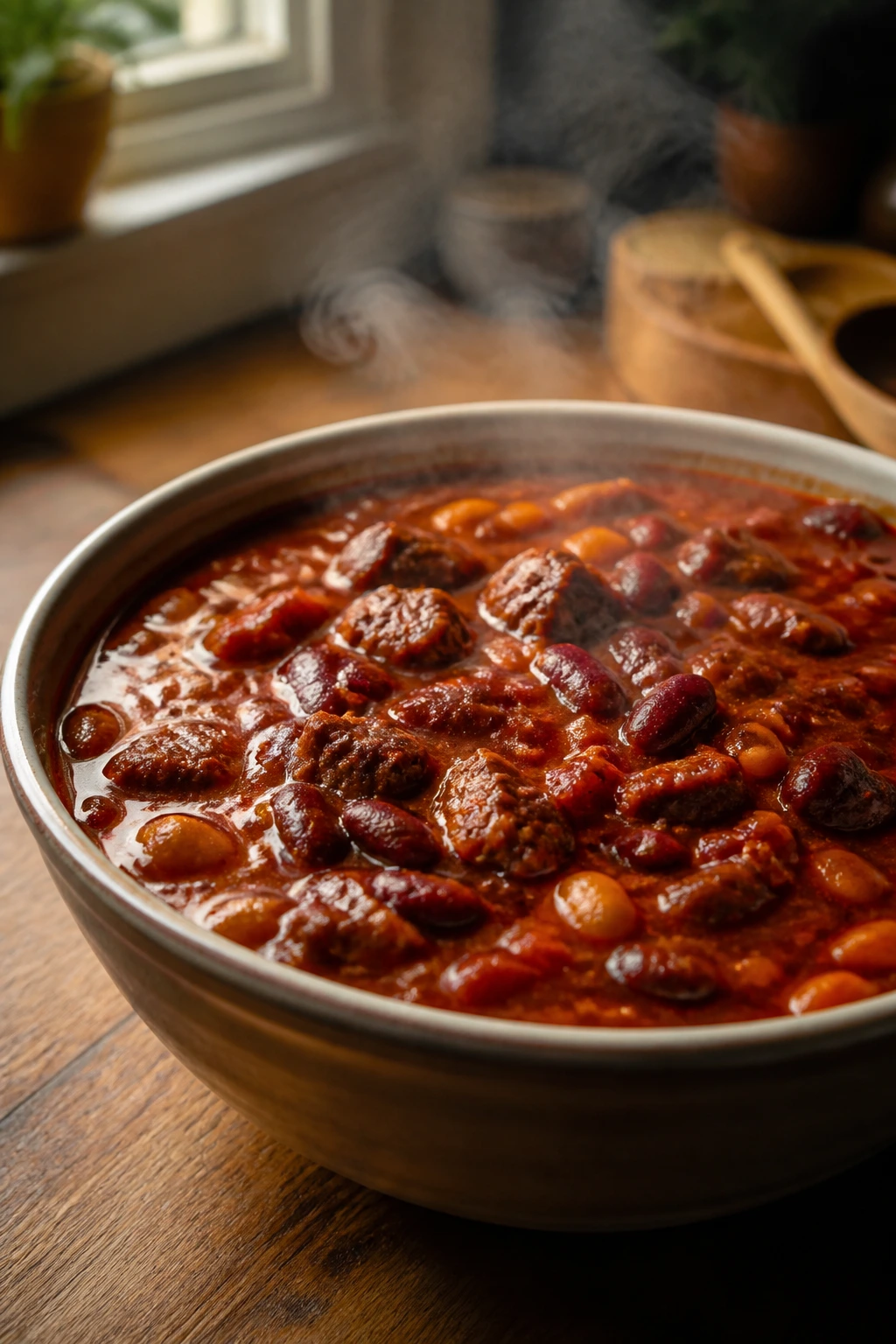
There’s a reason this chili feels different from the usual weeknight pot. The Calabrian paste gives it a warm, peppery glow instead of a blunt wall of heat, and the rest of the ingredients are there to keep that flavor grounded in beef, beans, and a thick tomato base. It tastes like a dish that knows exactly what it is.
Make a big batch, let the leftovers sit overnight, and the second bowl will probably be the best one. That’s the quiet magic here: a simple pot with enough depth to stay interesting after the steam fades. Keep a jar of Calabrian chili paste in the pantry, and cold nights stop feeling so long.
Hearty Calabrian Chili for Cold Winter Nights — Recipe Card
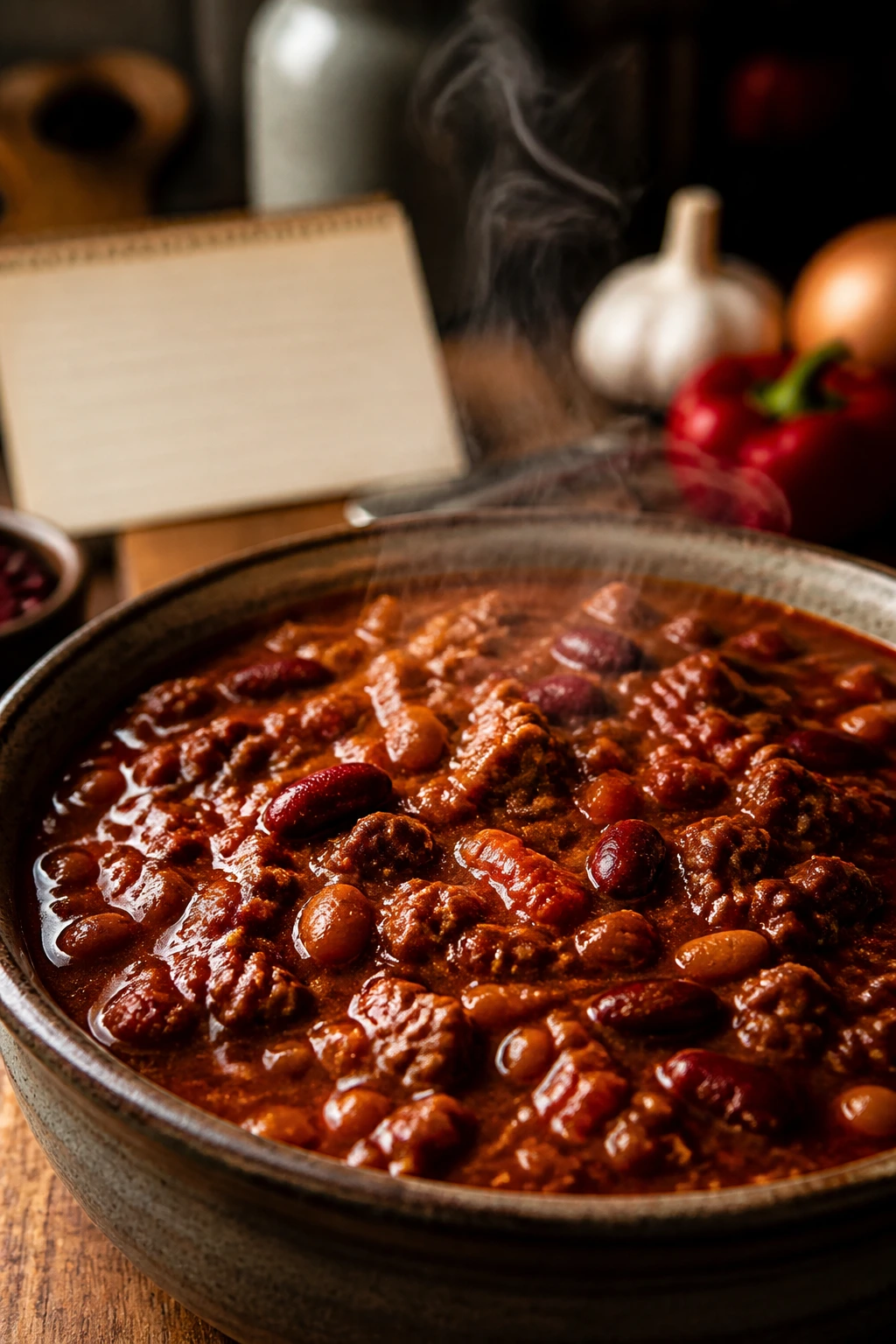
Recipe Name: Hearty Calabrian Chili for Cold Winter Nights
Description: A thick, beefy chili built with Calabrian chili paste, fire-roasted tomatoes, beans, and a slow-simmered spice base. The heat is warm and fruity rather than harsh, and the finished bowl tastes even better after a short rest.
Prep Time: 20 minutes
Cook Time: 55 minutes
Total Time: 1 hour 15 minutes active, plus 20 minutes resting time
Course: Dinner, Main Course
Cuisine: Italian-American
Servings: 6 to 8 servings
Calories: About 470 kcal per serving
Ingredients
For the Chili:
- 2 tablespoons olive oil
- 1 pound ground beef, 85/15
- 1 pound hot Italian sausage, casings removed
- 1 large yellow onion, diced
- 2 ribs celery, diced
- 1 large carrot, diced small
- 1 red bell pepper, diced
- 5 garlic cloves, minced
- 2 tablespoons tomato paste
- 2 tablespoons Calabrian chili paste or Calabrian chili oil paste
- 2 tablespoons chili powder
- 2 teaspoons ground cumin
- 1 teaspoon smoked paprika
- 1 teaspoon dried oregano
- 1 1/2 teaspoons kosher salt, plus more to taste
- 1/2 teaspoon black pepper
- 1 tablespoon Worcestershire sauce
- 1 can (28 ounces) crushed tomatoes
- 1 can (15 ounces) fire-roasted diced tomatoes
- 2 cups low-sodium beef broth
- 1 can (15 ounces) kidney beans, drained and rinsed
- 1 can (15 ounces) pinto beans, drained and rinsed
- 1 teaspoon brown sugar
- 1 tablespoon apple cider vinegar
For Serving:
- 1 cup sour cream or plain Greek yogurt
- 1 cup shredded sharp cheddar
- 2 scallions, thinly sliced
- 1/4 cup chopped parsley
- Warm cornbread, crusty bread, or tortilla chips
Instructions
-
Heat the olive oil in a 6-quart Dutch oven over medium-high heat. Add the ground beef and sausage, break them into crumbles, and cook until browned with no pink left, about 8 to 10 minutes.
-
Add the onion, celery, carrot, bell pepper, and 1 teaspoon of the salt. Cook over medium heat for 7 to 8 minutes, until the onion is translucent and the vegetables have softened.
-
Stir in the garlic, tomato paste, Calabrian chili paste, chili powder, cumin, smoked paprika, oregano, black pepper, and Worcestershire sauce. Cook for 1 to 2 minutes, stirring constantly, until the paste darkens and smells sweet and smoky.
-
Pour in the crushed tomatoes, diced tomatoes, beef broth, kidney beans, pinto beans, brown sugar, and the remaining 1/2 teaspoon salt. Stir well and bring to a gentle boil, then reduce to low.
-
Simmer uncovered or partially covered for 35 to 45 minutes, stirring every 8 to 10 minutes, until the chili is thick and the flavors have melded. Add a splash of broth if it gets too thick.
-
Taste and adjust with more salt, black pepper, or a little extra Calabrian paste if you want more heat. Stir in the apple cider vinegar at the end.
-
Turn off the heat and let the chili rest for 20 minutes before serving. Ladle into warm bowls and top with sour cream, cheddar, scallions, and parsley.
Notes: The chili thickens as it rests and tastes even better the next day. If reheating, add a splash of broth to loosen it.