



A pot of sausage soup can do more than fill a bowl; on a raw evening, it should smell like browned meat, onion sweetness, garlic, and pepper rising in the steam. That’s the target here. Not a thin, polite broth. Not a bland “soup night” compromise. A real bowl that feels heavy in the hand and leaves a little sheen on the spoon.
That’s why hearty sausage soup for cold winter nights keeps earning its place on my stove. The best versions lean on a few things that do their work without bragging: browned Italian sausage, potatoes that soften at the edges but don’t dissolve, beans that turn the broth creamy without any cream at all, and a hit of acid right at the end so the whole pot doesn’t taste muffled. I like soup with backbone. This has it.
And yes, the details matter. If you rush the browning, the soup tastes flat. If you dump the greens in too early, they slump into olive-colored ribbons and lose their bite. If you forget the vinegar or lemon at the end, the bowl lands a little too heavy. Get those small things right, and the whole pot starts behaving like something that belongs on the table after the weather turns mean.
Why This Hearty Sausage Soup Feels Like a Real Meal
- Browned sausage carries the flavor: When the sausage hits the hot pot and picks up those caramelized bits, the broth gets a meaty depth that plain stock never provides.
- Potatoes and beans do the heavy lifting: Yukon Golds melt just enough to thicken the soup, while cannellini beans make each spoonful feel fuller without turning it into a puree.
- The greens keep it from getting dull: Kale holds up for days better than spinach, and it gives the soup a little chew instead of a limp, tired texture.
- It’s thick enough for bread, not a fork: That balance matters. You want a spoonable soup that still clings to sourdough when you swipe the bowl.
- The finish tastes brighter than the pot looks: A spoonful of vinegar or lemon at the end lifts the sausage, tomato, and broth so they taste layered instead of heavy.
- It reheats without drama: The flavors settle in after a night in the fridge, which makes leftovers less of an afterthought and more like the best bowl in the pot.
Yield: 6 generous servings
Prep Time: 20 minutes
Cook Time: 40 minutes
Total Time: 1 hour
Difficulty: Beginner — the method is straightforward, but the order of browning, simmering, and finishing makes a real difference.
Best Served: Hot, with crusty bread and a final shower of Parmesan
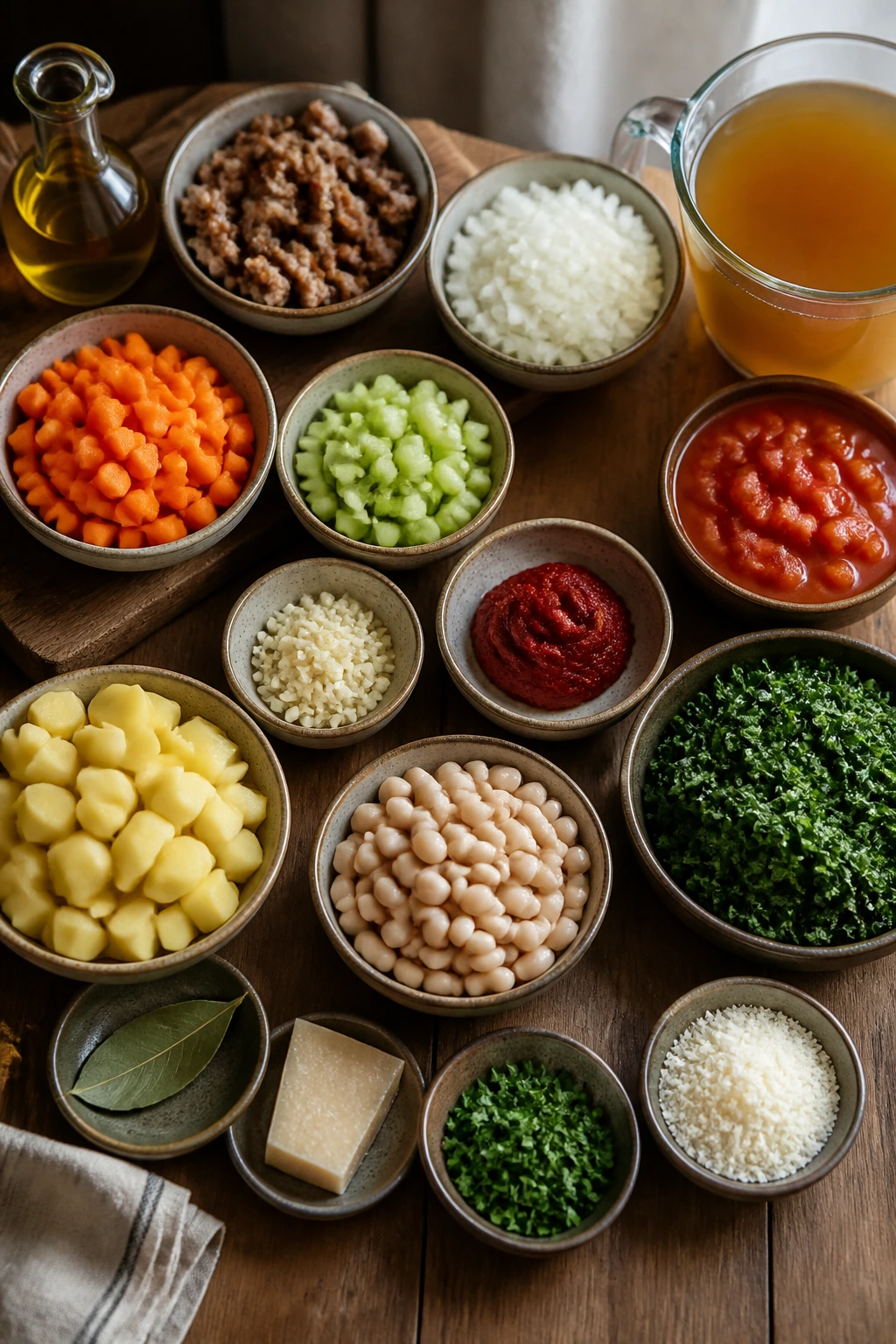
The Ingredient Lineup for Hearty Sausage Soup
For the Soup:
- 1 tablespoon olive oil
- 1 1/2 pounds Italian sausage, mild or hot, casings removed if needed
- 1 large yellow onion, diced
- 2 medium carrots, diced
- 2 celery ribs, diced
- 4 cloves garlic, minced
- 1 tablespoon tomato paste
- 6 cups low-sodium chicken broth
- 1 (14.5-ounce) can diced tomatoes, with juices
- 1 pound Yukon Gold potatoes, cut into 1/2-inch cubes
- 1 (15-ounce) can cannellini beans, drained and rinsed
- 1 bay leaf
- 1 teaspoon kosher salt, plus more to taste
- 1/2 teaspoon black pepper
- 1 teaspoon dried thyme
- 1/2 teaspoon crushed red pepper flakes, optional
- 1 Parmesan rind, optional but strongly recommended
- 3 packed cups chopped kale, stems removed
- 1 tablespoon red wine vinegar or fresh lemon juice
- 2 tablespoons chopped fresh parsley
- Grated Parmesan, for serving
Why Each Ingredient Belongs in the Pot
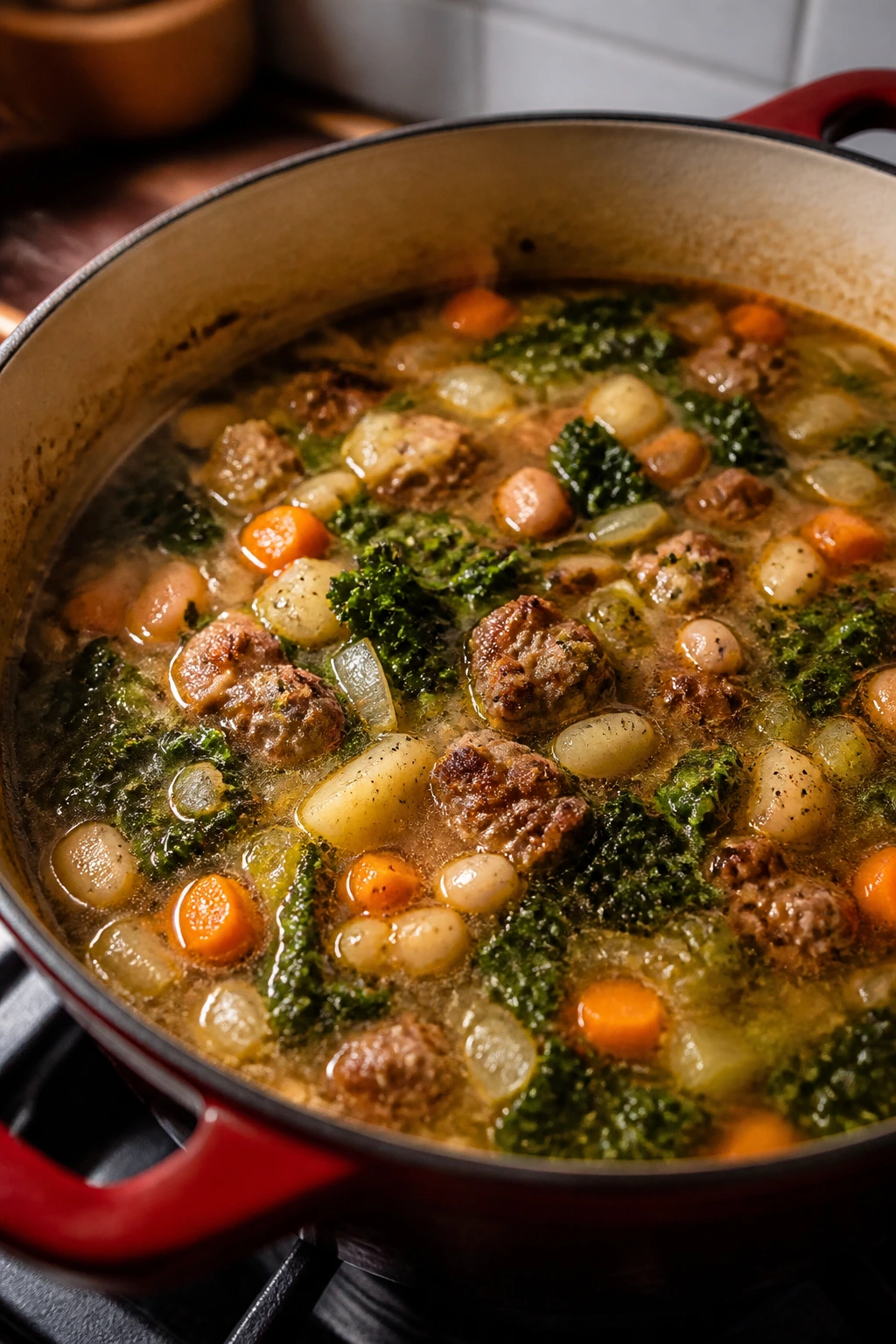
The sausage
What to use: Use 1 1/2 pounds Italian sausage, either mild or hot, with the casing removed if it comes in links.
Preparation: Break it into small chunks before it hits the pot, then let some pieces brown without stirring them apart too early. A few larger crumbles give the soup more bite.
Substitutions: Turkey Italian sausage works if you want a lighter bowl, and smoked sausage works if you want a deeper, woodier flavor. Breakfast sausage can work in a pinch, but it pushes the soup toward brunch in a way I don’t love.
Tips: Buy sausage with enough fat to brown properly. If it looks very lean, add a touch more olive oil, or the pot will dry out before the onions have time to soften.
The vegetables
What to use: Onion, carrots, celery, and garlic make the base. That trio gives the soup its shape before the broth even goes in.
Preparation: Dice the onion small, because you want it to disappear into the broth. Keep the carrots and celery around 1/4-inch to 1/2-inch pieces so they soften at the same pace as the potatoes.
Substitutions: Leeks can stand in for onion, and diced fennel makes a nice echo with the sausage’s fennel seed. If you’re out of celery, a little extra carrot and onion is better than skipping the whole base.
Tips: Don’t rush this part. If the onion is still sharp and crunchy when you add the broth, the soup never fully settles into itself.
The broth, tomatoes, and beans
What to use: Six cups of low-sodium chicken broth, one can of diced tomatoes, one can of cannellini beans, and one tablespoon of tomato paste.
Preparation: Drain and rinse the beans so the broth stays cleaner and less starchy. Keep the tomato juices from the can; they add body and a little tang.
Substitutions: Great Northern beans work just as well as cannellini beans. If you need a vegetarian-leaning broth base for part of the pot, vegetable broth will work, though the sausage carries most of the flavor either way.
Tips: Low-sodium broth is the move here. Sausage, Parmesan, and canned tomatoes already bring salt, and using full-salt broth can make the soup taste flat rather than bold, which sounds backward until you taste it.
The finishers
What to use: Kale, red wine vinegar or lemon juice, parsley, Parmesan rind, bay leaf, thyme, black pepper, and red pepper flakes if you want heat.
Preparation: Strip the tough stems from the kale and chop the leaves into ribbons or bite-size pieces. Tear the Parmesan rind into a few pieces so it can move around the pot without clinging to one spot.
Substitutions: Spinach can replace kale, but add it at the very end because it wilts in a blink. Lemon juice can stand in for vinegar if you want a sharper finish.
Tips: These finishing ingredients are not decorative. The acid and herbs are what keep the final spoonful from tasting like a stew that got left on the stove too long.
The Equipment That Makes the Pot Easy
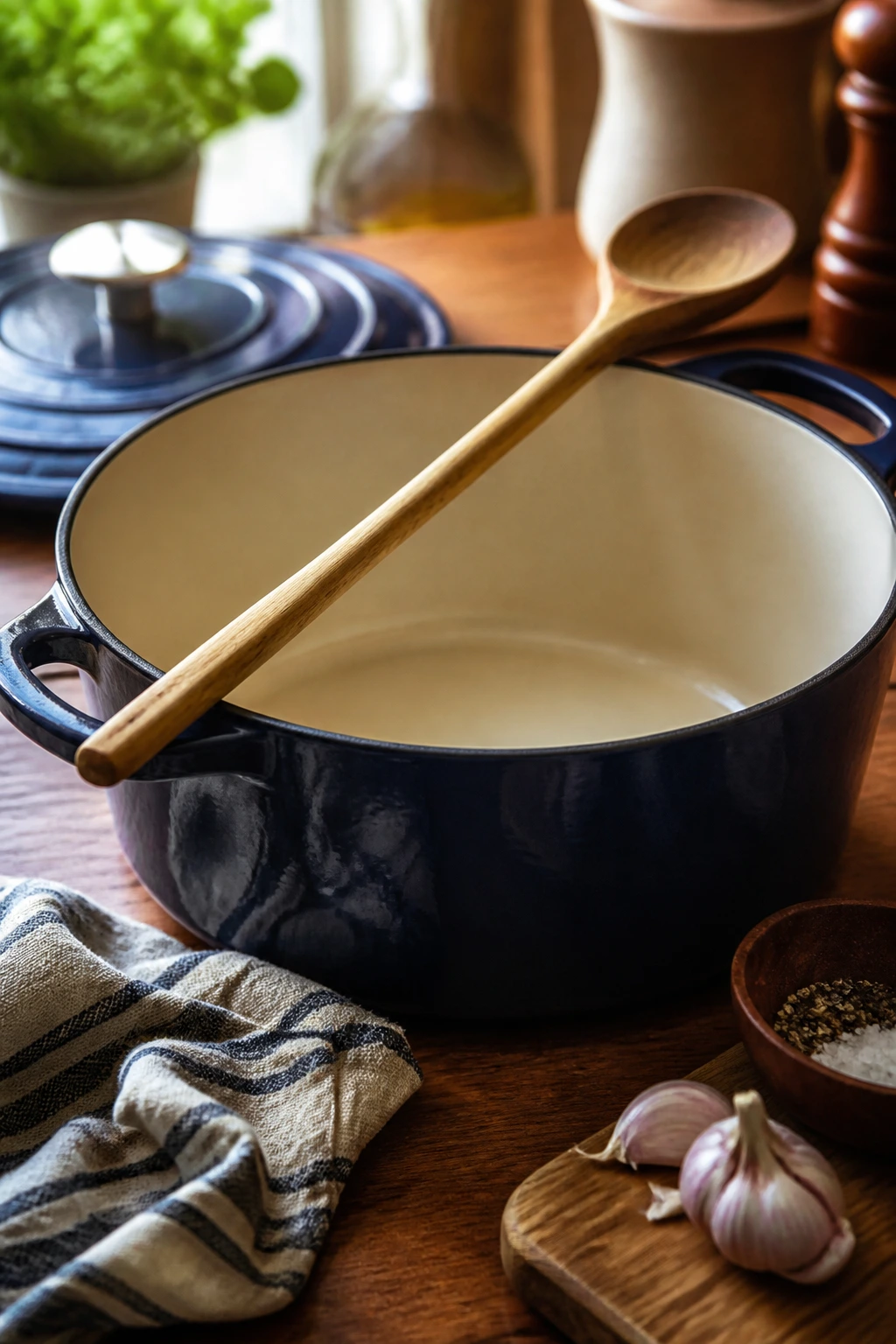
A soup like this does not need a kitchen full of gadgets, but the right few tools make the work smoother.
- 5- to 6-quart Dutch oven or heavy soup pot: This gives the sausage enough room to brown instead of steam.
- Wooden spoon or heatproof spatula: Useful for breaking up the sausage and scraping the browned bits off the bottom.
- Sharp chef’s knife: A dull knife turns dicing onions and celery into a chore.
- Cutting board: A roomy board keeps the chopped vegetables from skittering everywhere.
- Measuring spoons and cups: Helpful for keeping the seasoning balanced, especially if you make this soup often and want it consistent.
- Ladle: A deep ladle makes it easy to serve potatoes, beans, and broth in one scoop.
- Can opener: Not glamorous. Necessary.
- Fine grater for Parmesan: Optional, but the snowy texture feels right on top of a hot bowl.
Browning, Simmering, and Finishing the Soup
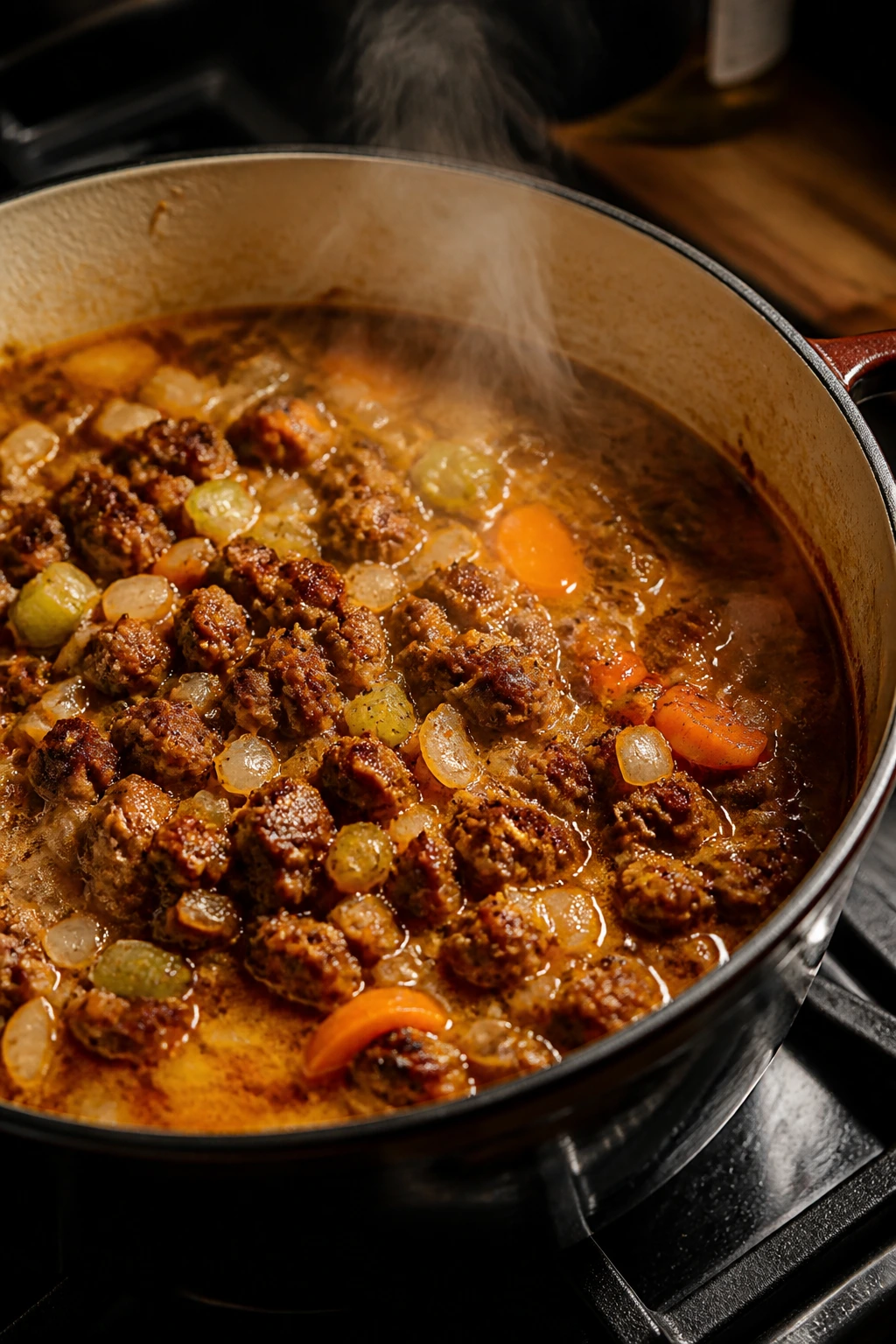
Brown the sausage:
- Set a 5- to 6-quart Dutch oven over medium-high heat and add 1 tablespoon olive oil if the sausage is lean or the pot seems dry.
- Add the Italian sausage and break it into chunks with a wooden spoon.
- Cook for 6 to 8 minutes, stirring only every minute or so, until the sausage is deeply browned and no pink remains. A few crisp edges are a good thing.
- If the pot has more than about 2 tablespoons of fat, spoon off the excess, leaving enough to coat the bottom.
Build the base:
- Reduce the heat to medium and add the onion, carrots, and celery.
- Cook for 6 to 7 minutes, stirring occasionally, until the onion turns translucent and the vegetables soften at the edges.
- Add the garlic, tomato paste, kosher salt, black pepper, thyme, and red pepper flakes if you want heat.
- Stir for 30 to 45 seconds, until the garlic smells sweet and the tomato paste darkens to a brick-red color. Do not let the garlic scorch.
Simmer the soup:
- Pour in about 1/2 cup of the broth and scrape the bottom of the pot with the spoon to lift up the browned bits.
- Add the remaining broth, diced tomatoes with juices, potatoes, cannellini beans, bay leaf, and Parmesan rind if you’re using it.
- Bring the pot to a boil over medium-high heat, then reduce the heat to low so the soup settles into a steady simmer.
- Cover partly with a lid and simmer for 18 to 22 minutes, until the potatoes are tender when pierced with a fork and the broth looks a little thicker around the edges. You want a gentle simmer, not a hard boil.
Finish and serve:
- Stir in the chopped kale and simmer for 4 to 5 minutes, until the leaves are wilted but still green and lively.
- Remove the bay leaf and Parmesan rind.
- Stir in the red wine vinegar or lemon juice and the parsley.
- Taste and adjust with more salt, pepper, or a small splash more vinegar. Serve hot with grated Parmesan on top.
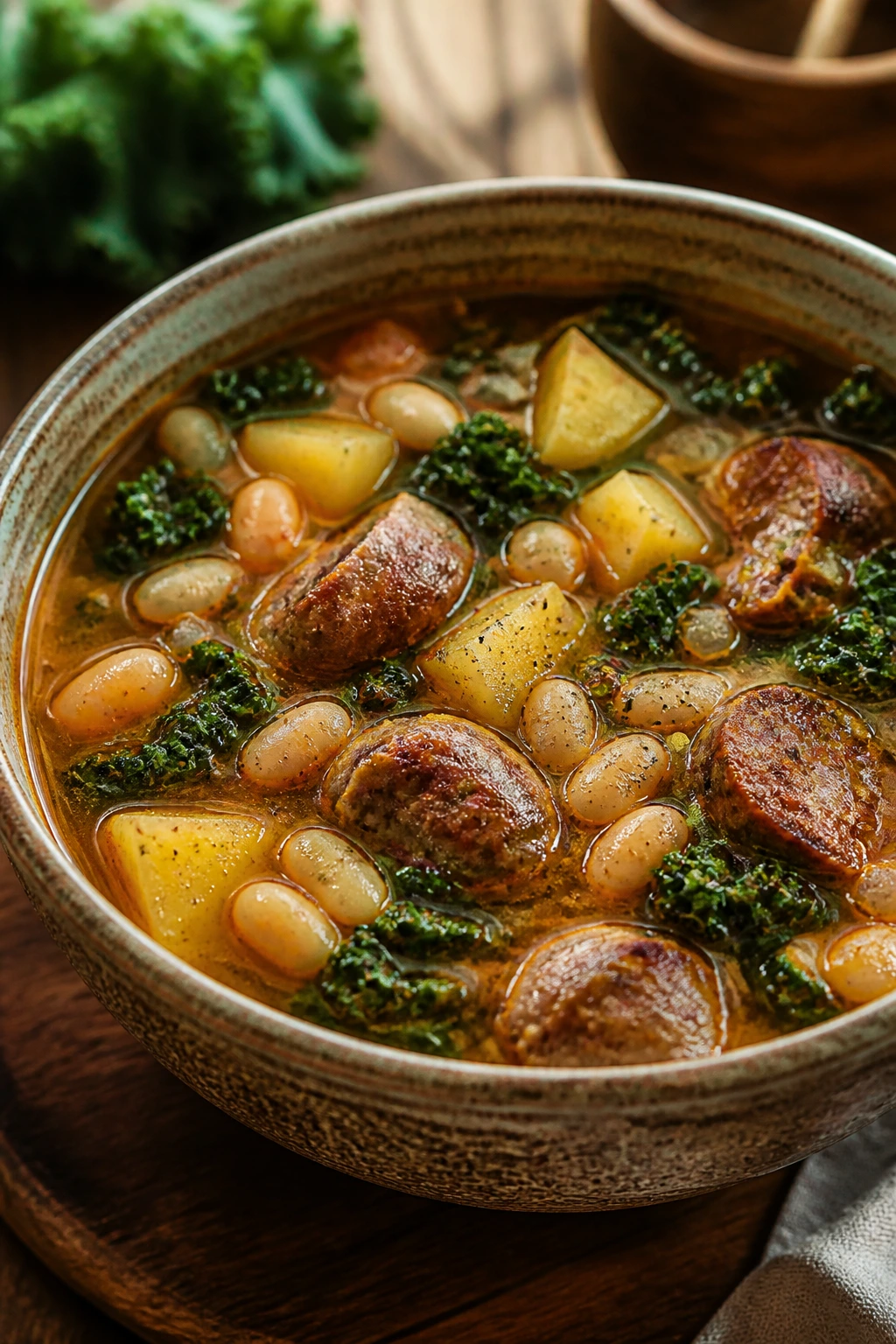
Browned sausage is the backbone here.
How to Bowl It Up on a Bitter Night
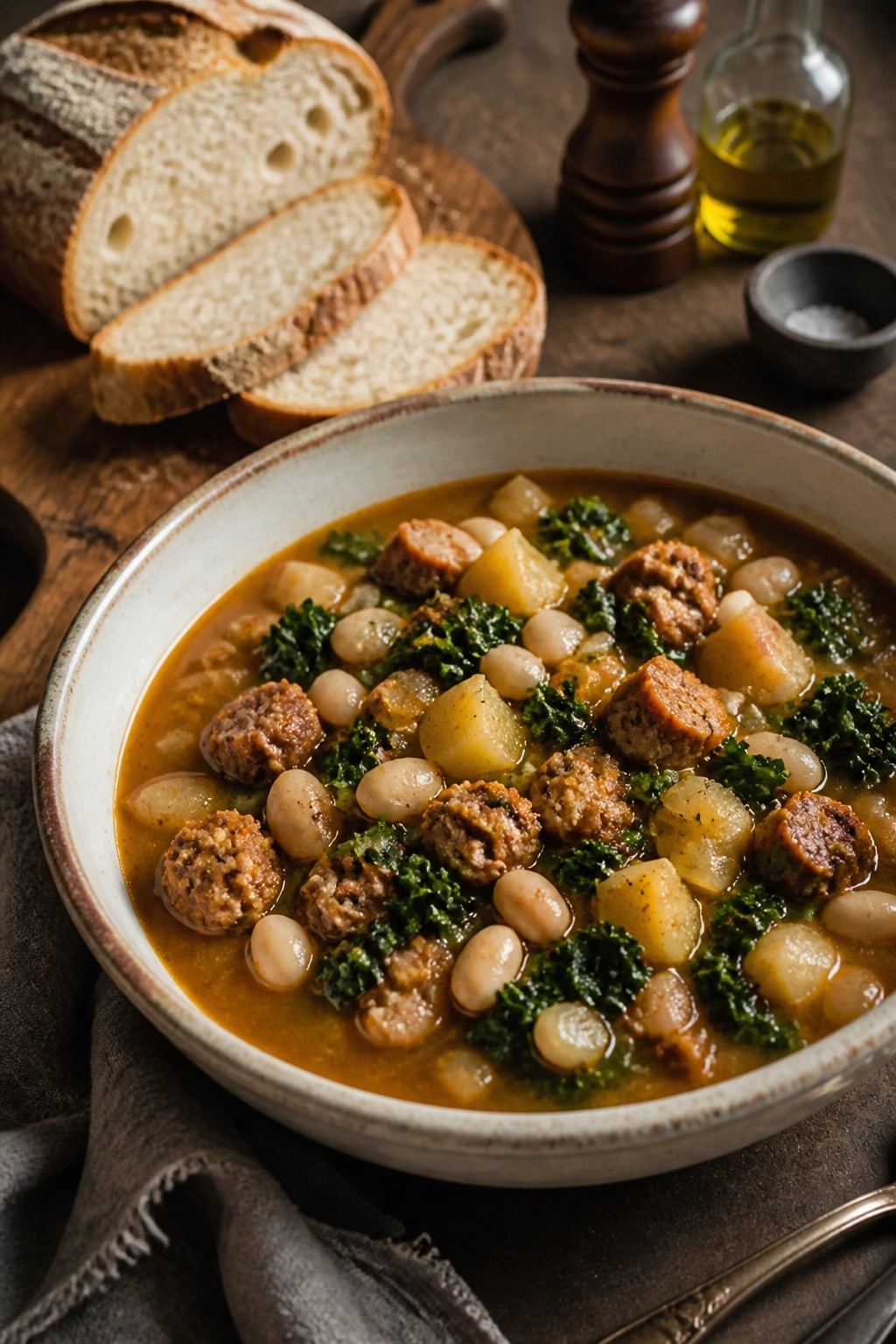
Presentation: Ladle the soup into wide bowls so the potatoes, beans, and sausage sit above the broth instead of sinking to the bottom. A little Parmesan on top, a pinch of black pepper, and a ribbon of parsley make the bowl look finished without turning it fussy.
Accompaniments: I want crusty sourdough, a hunk of country bread, or garlic toast on the side. If you want something greener, a sharp little salad with lemon vinaigrette cuts the richness in a way that works well with the sausage.
Portions: Plan on about 1 1/2 to 2 cups per serving. With bread, six servings is easy. Without bread, if you are serving hungry people, call it four to five portions and stop pretending otherwise.
Beverage Pairing: A dry cider is one of my favorite matches because it plays against the sausage without fighting the broth. A medium-bodied red wine like a Côtes du Rhône also works. For a nonalcoholic option, sparkling water with lemon keeps the meal from feeling heavy.
Small Moves That Make a Big Difference

Flavor Enhancement: Keep the Parmesan rind in the pot while the soup simmers, then fish it out at the end. It gives the broth a savory roundness that tastes richer than the ingredient list suggests, and you don’t need much else if you do that well. I also like a final teaspoon of red wine vinegar right before serving if the tomatoes taste sleepy.
Texture Control: If you want the soup thicker, scoop out about 1 cup of the potatoes and beans near the end, mash them with a fork, and stir them back in. That gives the broth a cozy, clingy texture without adding flour or cream. It’s a small trick, but it changes the bowl.
Time-Saver: Chop the onion, carrots, celery, and kale a day ahead and store them in separate containers. The soup moves fast once the sausage hits the pot, and having the vegetables ready means you can go from cutting board to simmer in a very short stretch.
Cost-Saver: Bulk sausage is usually cheaper than links, and canned cannellini beans are friendlier to the budget than trying to stretch the sausage with extra meat. If you need to shave cost further, use more potatoes and one fewer cup of sausage rather than cutting the sausage so much that the broth loses its backbone.
Make-It-Yours: Hot sausage gives the broth a little kick, while mild sausage leaves more room for herbs and black pepper. If you like a smoky edge, stir in 1/2 teaspoon smoked paprika with the tomato paste. It’s not traditional Italian soup, but it’s good in the bowl.
Common Mistakes That Steal the Comfort
-
Crowding the sausage at the start: If the pan is too packed, the sausage steams instead of browning. The fix is simple: use a wide pot and give it a little space so you actually get those brown bits that make the broth taste deep.
-
Adding the kale too early: Kale cooked for 20 minutes turns dull, soft, and a little swampy. Add it only at the end, when the potatoes are already tender, and it will keep its color and some texture.
-
Boiling the soup hard after the potatoes go in: A rolling boil breaks down the potatoes too fast and can make the broth cloudy in a rough way. Keep the heat at a steady simmer so the potatoes soften without collapsing.
-
Salting too aggressively before tasting the broth: Sausage, Parmesan, broth, and canned tomatoes all bring their own salt. If you dump in a full extra hit of salt before the soup has simmered, you may end up with a pot that tastes sharp rather than balanced.
-
Skipping the acid at the end: Without vinegar or lemon, the soup can land heavy and a little one-note. The fix takes 10 seconds. Stir in a small splash, taste again, and stop when the flavors wake up.
-
Using spinach as if it were kale: Spinach is fine, but it wilts fast and can disappear into the broth. If you swap it in, add it at the very end and expect a softer, lighter finish.
Variations That Still Taste Like Home
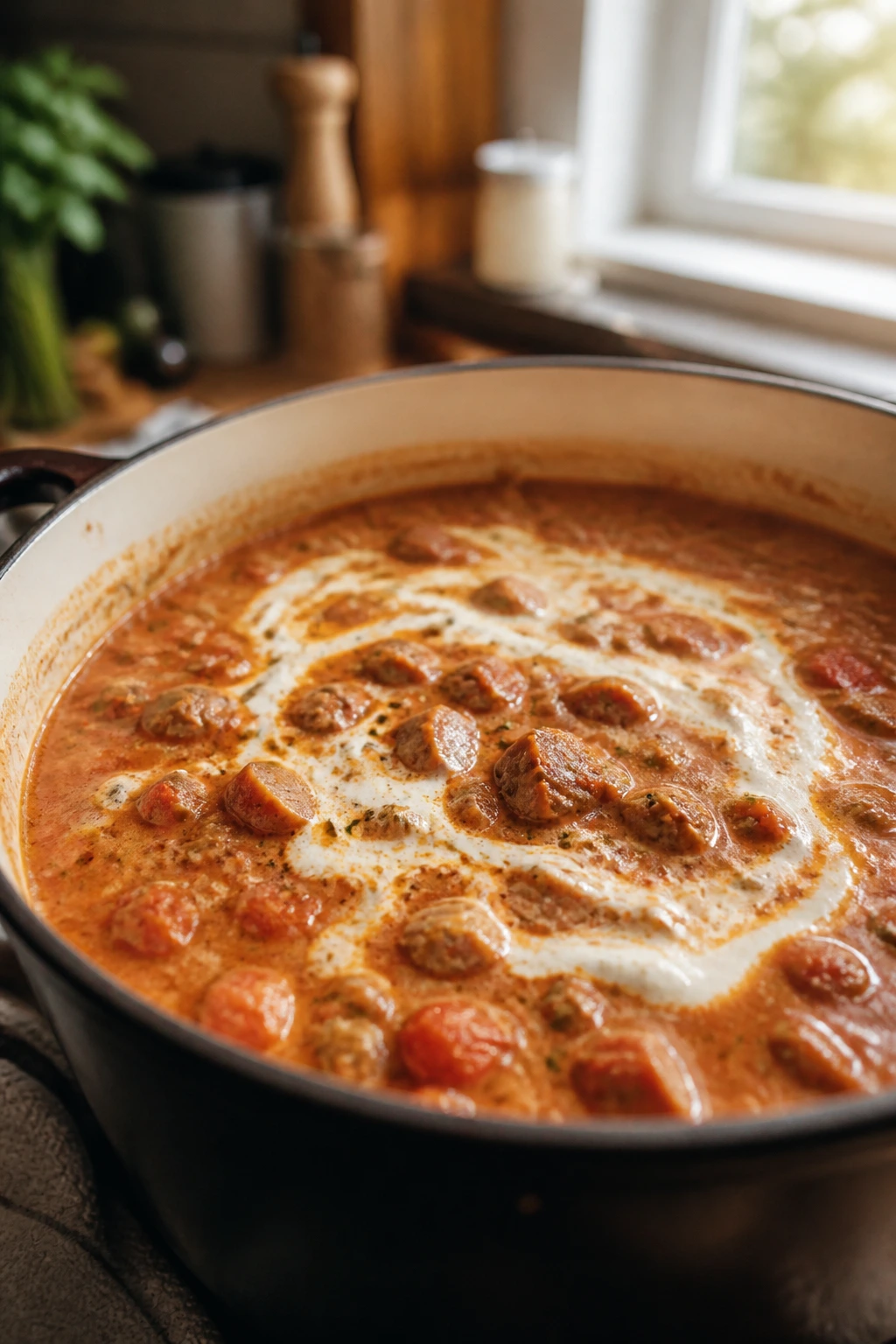
Creamy Cottage Pot: Stir in 1/2 cup heavy cream or half-and-half after the heat is off, then warm the soup gently for a minute or two. The broth turns silkier and the tomatoes go a little softer around the edges. I’d use this version when you want the soup to feel more like a cold-weather supper than a brothy bowl.
Spicy Red Pepper Bowl: Use hot Italian sausage, add 1 diced red bell pepper with the onion, and bump the red pepper flakes to 1 teaspoon. The bell pepper sweetens the pot while the heat lingers at the back of the throat. Good if you like a soup that leaves a little warmth behind.
Smoky Bean-and-Sausage Pot: Swap in smoked sausage and add 1/2 teaspoon smoked paprika with the tomato paste. The flavor shifts from Italian supper to something closer to a rustic cabin pot, especially if you use cabbage instead of kale. It’s not fussy, and that’s part of its charm.
Lighter Turkey Version: Use turkey Italian sausage, add an extra teaspoon of olive oil when browning, and keep the beans and kale exactly the same. The soup still tastes full because the beans and potatoes do the structural work. It just lands a little lighter on the palate.
White Bean and Escarole Swap: Replace the kale with chopped escarole if you want a softer, slightly bitter green that melts into the broth in a different way. Escarole likes a gentler simmer, so add it in the last 3 minutes and stop there.
Make-Ahead, Storage, and Reheating
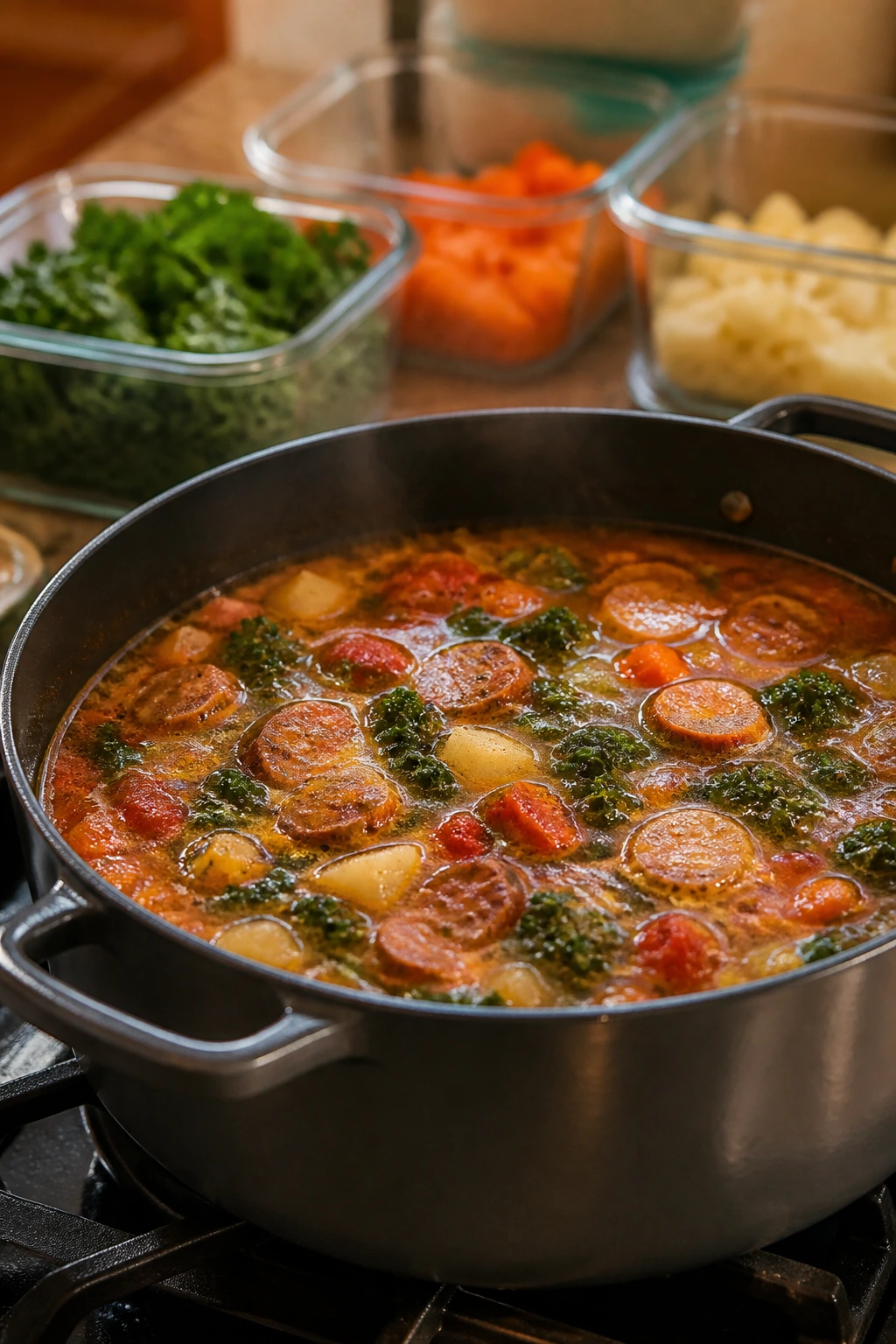
Make-Ahead: You can chop the vegetables and wash the kale a day ahead, which cuts the active time in half when you’re ready to cook. If you want to make the soup itself ahead of time, undercook the potatoes by about 2 minutes so they hold their shape after reheating.
Refrigerator: The soup keeps well for 3 to 4 days in the fridge in a sealed container. The broth will thicken as it sits because the potatoes and beans keep soaking up liquid, so that first reheated bowl may look a little dense before you loosen it up.
Freezer: Freeze it for up to 2 months. Let the soup cool completely, then portion it into freezer-safe containers and leave about 1 inch of headspace so the liquid can expand. The potatoes will soften a little after thawing, but the soup still holds together well, especially if you didn’t overcook them the first time.
Reheating: Reheat on the stovetop over medium-low heat, stirring now and then and adding a splash of broth or water if it looks thick. If you use the microwave, cover the bowl loosely and heat in 60-second bursts, stirring between rounds so the sausage and potatoes warm evenly. Avoid blasting it on high heat, because the potatoes can break apart and the broth can spatter.
Best texture after storing: The soup usually tastes even better the next day because the sausage seasoning settles into the broth. Right before serving, add a tiny squeeze of lemon or a few drops of vinegar again if the leftovers taste a little muted. That’s the part people forget.
Questions Home Cooks Ask
Can I use breakfast sausage instead of Italian sausage?
You can, but the flavor shifts. Breakfast sausage leans sweet and sage-heavy, so the broth will taste less like a rustic supper and more like something that wandered in from brunch. If that’s the sausage you have, add a little fennel seed and black pepper to pull it back toward savory.
What kind of potatoes hold up best?
Yukon Gold potatoes are my first pick because they stay tender without crumbling. Russets work, but they break down faster and make the soup cloudier. If you like a thicker broth, that’s not a disaster — it may even help — but Yukon Golds give you more control.
Can I make this in a slow cooker?
Yes, but brown the sausage and soften the onions, carrots, celery, and garlic first. Add everything except the kale, parsley, and vinegar to the slow cooker and cook on low for 5 to 6 hours or on high for 3 to 4 hours, then stir in the greens and finishers at the end. If you skip the browning step, the soup tastes flatter.
How do I thicken the soup without flour or cream?
Mash a cup of the potatoes and beans against the side of the pot with a spoon, then stir them back in. You can also simmer the pot uncovered for the last 5 to 10 minutes so some of the liquid cooks off. I prefer the potato mash because it keeps the soup hearty without changing the flavor.
Can I use spinach instead of kale?
Yes, and it works fine if you want a softer green. Add spinach only in the final minute or two, because it wilts fast and can disappear into the broth if it sits too long. Kale keeps its shape better for leftovers, so I’d choose spinach only if you plan to eat the whole pot quickly.
What if the soup tastes too salty?
Add a splash of unsalted broth or water, then a few extra potato cubes if you have them. A small squeeze of lemon can also help the flavor feel less heavy, even though it does not remove salt. Next time, use low-sodium broth and taste before salting at the end.
Can I leave the Parmesan out?
Absolutely. The soup still works without it, though the Parmesan rind gives the broth a deeper savory note while it simmers. If you skip both the rind and the garnish, use a little extra parsley and a touch more black pepper so the bowl still finishes cleanly.
A Pot Worth Repeating
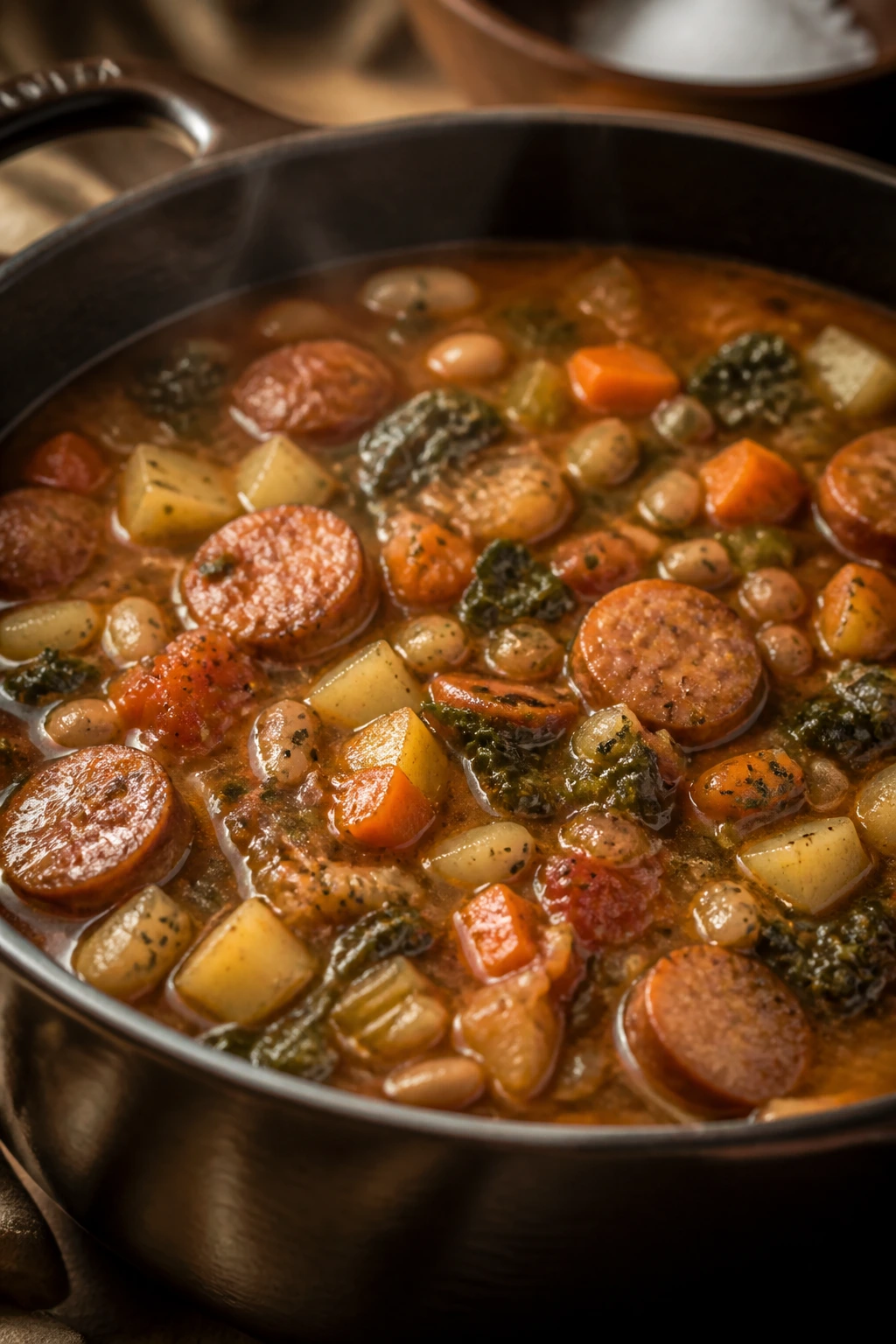
This is the kind of soup that earns its place by being useful. It handles a hungry crowd, it survives leftovers without getting weird, and it has enough body to feel like dinner instead of a warm opening act. The sausage brings the muscle, the beans and potatoes bring the heft, and the vinegar at the end keeps the whole thing from going dull.
I like recipes that know what they are. This one does. Make it once on a night when the windows feel cold from the inside, then make it again the next time you want a bowl that gives back more than it takes. The second pot usually goes faster.
Hearty Sausage Soup for Cold Winter Nights — Recipe Card
Recipe Name: Hearty Sausage Soup for Cold Winter Nights
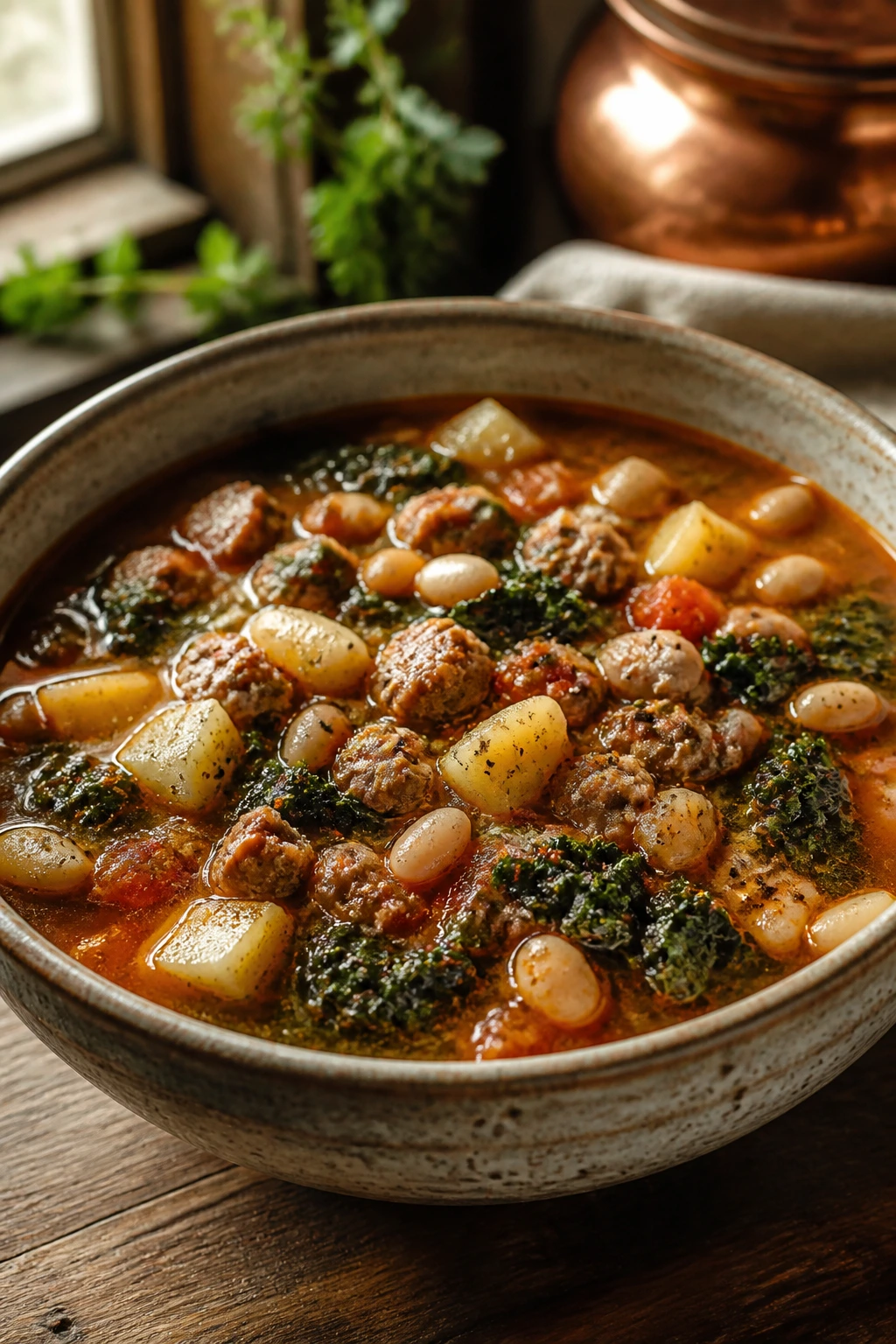
Description: A thick, savory sausage soup with potatoes, beans, kale, and tomatoes in a broth that tastes fuller than the ingredient list suggests. It’s sturdy enough for bread, brightened with vinegar at the end, and ideal for a cold evening.
Prep Time: 20 minutes
Cook Time: 40 minutes
Total Time: 1 hour
Course: Dinner, Main Course
Cuisine: American, Italian-Inspired
Servings: 6 servings
Calories: About 420 kcal per serving
Ingredients
For the Soup:
- 1 tablespoon olive oil
- 1 1/2 pounds Italian sausage, mild or hot, casings removed if needed
- 1 large yellow onion, diced
- 2 medium carrots, diced
- 2 celery ribs, diced
- 4 cloves garlic, minced
- 1 tablespoon tomato paste
- 6 cups low-sodium chicken broth
- 1 (14.5-ounce) can diced tomatoes, with juices
- 1 pound Yukon Gold potatoes, cut into 1/2-inch cubes
- 1 (15-ounce) can cannellini beans, drained and rinsed
- 1 bay leaf
- 1 teaspoon kosher salt, plus more to taste
- 1/2 teaspoon black pepper
- 1 teaspoon dried thyme
- 1/2 teaspoon crushed red pepper flakes, optional
- 1 Parmesan rind, optional
- 3 packed cups chopped kale, stems removed
- 1 tablespoon red wine vinegar or fresh lemon juice
- 2 tablespoons chopped fresh parsley
- Grated Parmesan, for serving
Instructions
- Heat the olive oil in a 5- to 6-quart Dutch oven over medium-high heat. Add the sausage and break it into chunks, then cook until browned and no pink remains.
- Add the onion, carrots, and celery. Cook until softened, then stir in the garlic, tomato paste, salt, pepper, thyme, and red pepper flakes.
- Pour in a splash of broth and scrape up the browned bits from the bottom of the pot.
- Add the remaining broth, diced tomatoes, potatoes, cannellini beans, bay leaf, and Parmesan rind if using.
- Bring to a boil, then reduce to a gentle simmer and cook until the potatoes are tender.
- Stir in the kale and simmer until wilted and still green.
- Remove the bay leaf and Parmesan rind, then stir in the vinegar or lemon juice and parsley. Taste and adjust seasoning, then serve with Parmesan on top.
Notes: For a thicker bowl, mash a few potatoes and beans against the side of the pot before serving. The soup keeps well for 3 to 4 days in the fridge and can be frozen for up to 2 months. Add the vinegar or lemon at the end so the flavor stays bright.