



A good creamy potato soup does not need theatrics. It needs heat, salt, a little patience, and potatoes that collapse just enough to thicken the pot without turning it into paste. On a cold night, that matters. You want steam on the spoon, a soft spoonful that still shows a few potato edges, and a broth that tastes like onion, butter, and the kind of depth that only comes from letting the vegetables cook down slowly.
This is the kind of soup that rewards small choices. Yukon Gold potatoes give you a naturally buttery texture. A little flour, cooked in fat before the broth goes in, keeps the soup from feeling watery. And the dairy goes in at the end, off the heat, where it can do its job without splitting or tasting boiled. That last part sounds fussy. It isn’t. It’s the difference between a bowl that feels smooth and one that tastes like it was rushed.
I like this soup because it has range. You can keep it plain and soft, with chives and black pepper, or take it toward loaded-baked-potato territory with bacon and cheddar. Either way, the base stays simple and sturdy. That’s what makes it worth keeping in your back pocket when the weather turns sharp and dinner needs to feel like a warm blanket without turning into a production.
Why This Bowl Earns Its Keep

-
Silky without being heavy: The soup gets body from the potatoes themselves, not from a mountain of cream, so each spoonful feels rich but still tastes like potato first.
-
Built from pantry basics: Onion, celery, broth, flour, milk, and potatoes are the backbone here, which means you can make it without a special grocery run.
-
Flexible in the best way: Keep it simple with chives, or pile on bacon and cheddar if you want something closer to a diner bowl.
-
Friendly to partial prep: The vegetables can be chopped ahead, and the soup base holds well for a day before the dairy goes in.
-
Actually filling: A bowl of this with bread on the side can stand in for dinner, not just act like a starter.
-
Better than thin potato soup: The texture lands in that sweet spot between chowder and mashy comfort food, where the spoon leaves a trail and the soup still pours cleanly.
What Gives This Creamy Potato Soup Its Body on a Cold Night
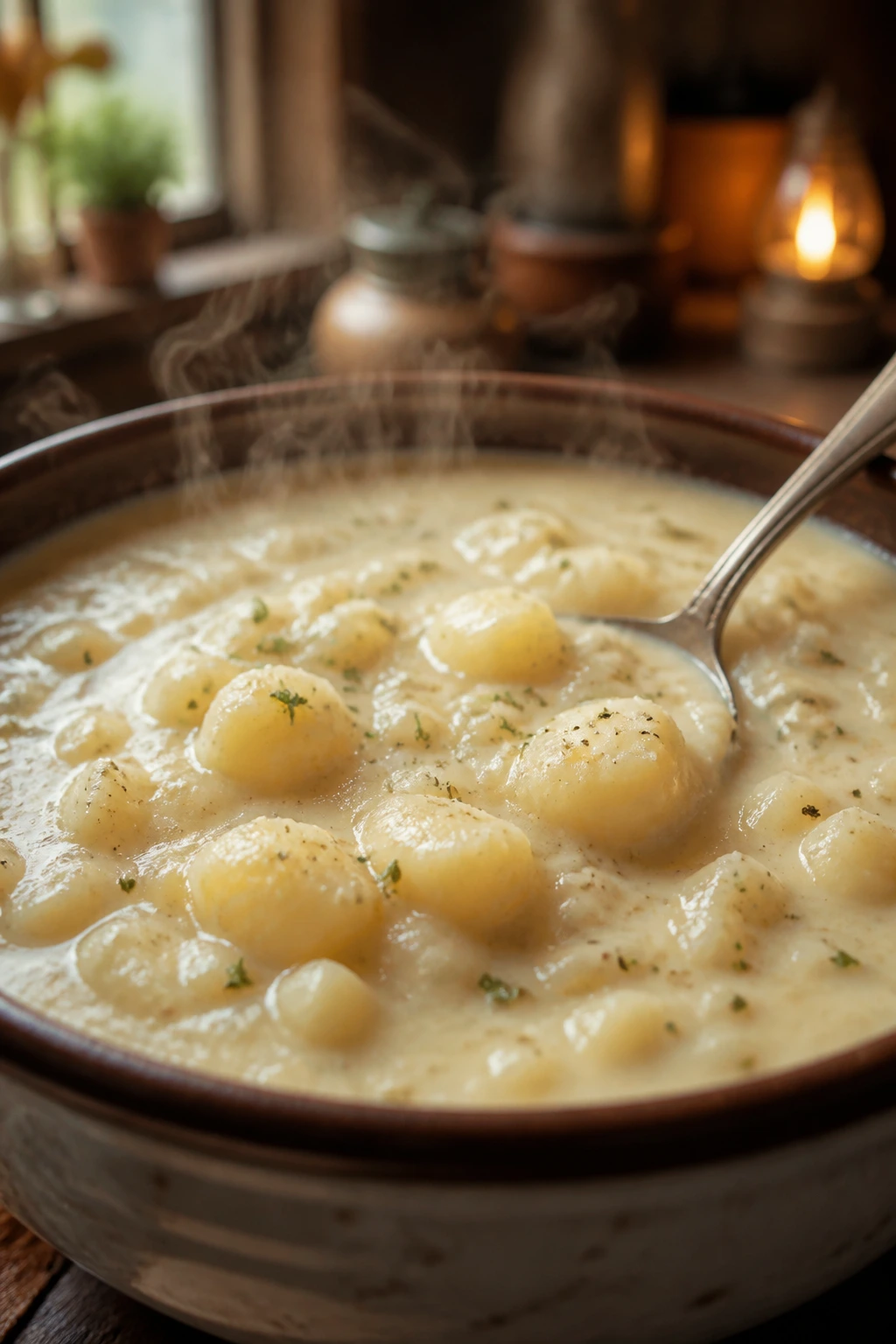
Potato soup has deep roots in everyday cooking because potatoes are cheap, sturdy, and forgiving. They soak up flavor from broth and aromatics, then soften into the pot in a way that feels generous rather than showy. That’s the charm of it. You start with a handful of plain ingredients and end up with something that tastes layered, even if the shopping list was short.
This version leans into that old-school logic, but it keeps the texture in a tighter lane. I use Yukon Gold potatoes because they hold their shape a little better than russets, then break down just enough to thicken the soup without turning weirdly sticky. Some of the potatoes get mashed right in the pot, which gives you body without needing a blender for the whole batch. That small move matters more than people think.
The dairy comes in late, after the potatoes are tender. That means the soup tastes fresh and clean instead of flat and boiled. It also gives you more control. You can make it a little looser if you like, or let it sit a few minutes so it thickens as it cools. Soup like this changes in the bowl. That’s part of the appeal.
Yield: Serves 6
Prep Time: 20 minutes
Cook Time: 40 minutes
Total Time: 1 hour
Difficulty: Beginner — the method is straightforward, but the finishing steps need a little attention so the dairy stays smooth.
Best Served: Hot, with a handful of chives and a crack of black pepper
The Ingredients That Build the Pot
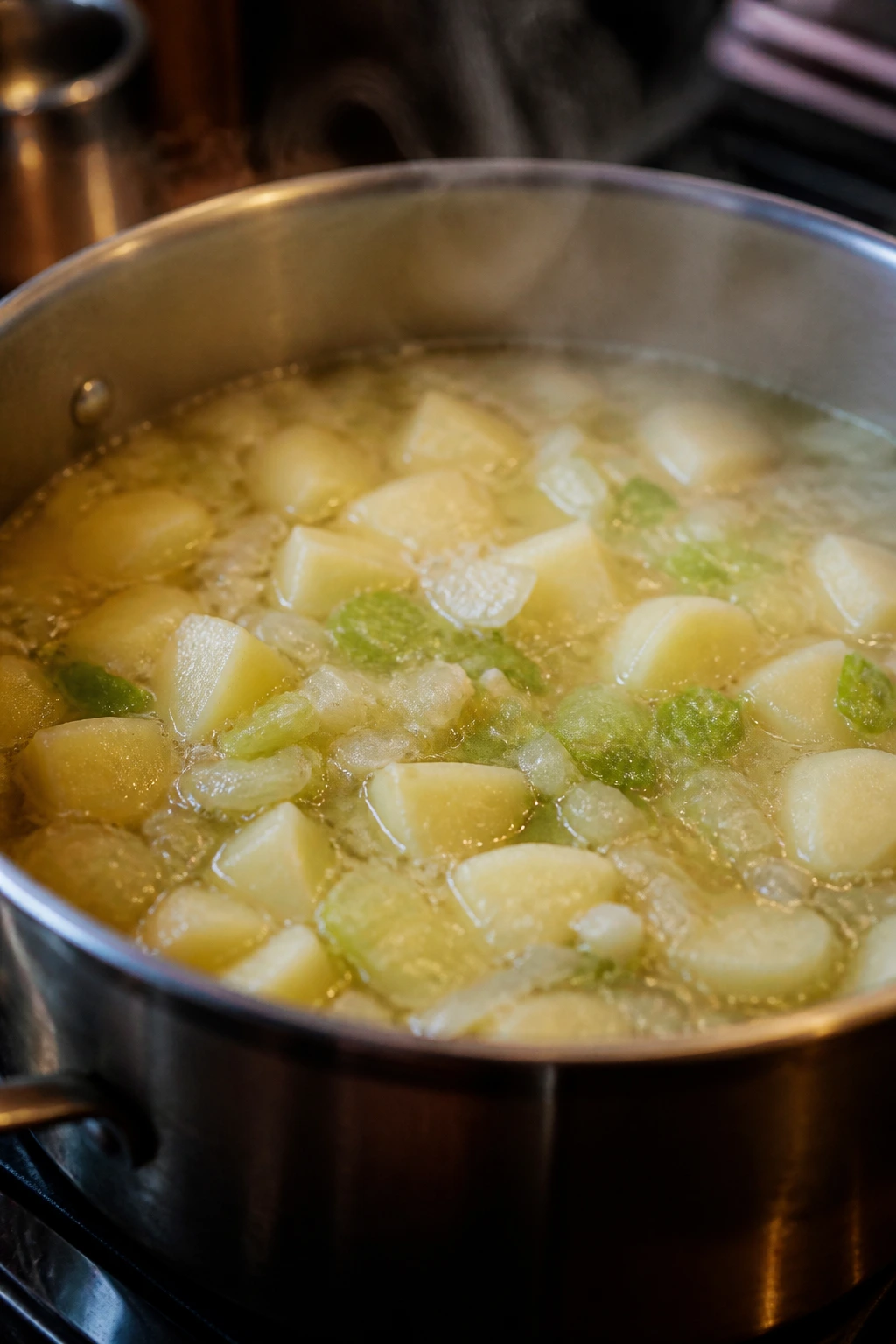
For the Soup:
- 4 slices thick-cut bacon, chopped, for flavor and garnish; omit if you want a vegetarian base
- 2 tablespoons unsalted butter
- 1 medium yellow onion, diced small
- 2 celery stalks, diced small
- 2 cloves garlic, minced
- 1/4 cup all-purpose flour
- 4 cups low-sodium chicken broth or vegetable broth
- 2 1/2 pounds Yukon Gold potatoes, peeled and cut into 1/2-inch cubes
- 1 1/2 teaspoons kosher salt, plus more to taste
- 1/2 teaspoon black pepper
- 1/2 teaspoon dried thyme
- 1 bay leaf
- 1 cup whole milk, warmed
- 1/2 cup heavy cream, warmed
- 1/2 cup sour cream, at room temperature
For Serving:
- 2 tablespoons chopped chives
- 1/2 cup shredded sharp cheddar cheese, optional
- Extra black pepper, to finish
Why Each Ingredient Matters in the Pot
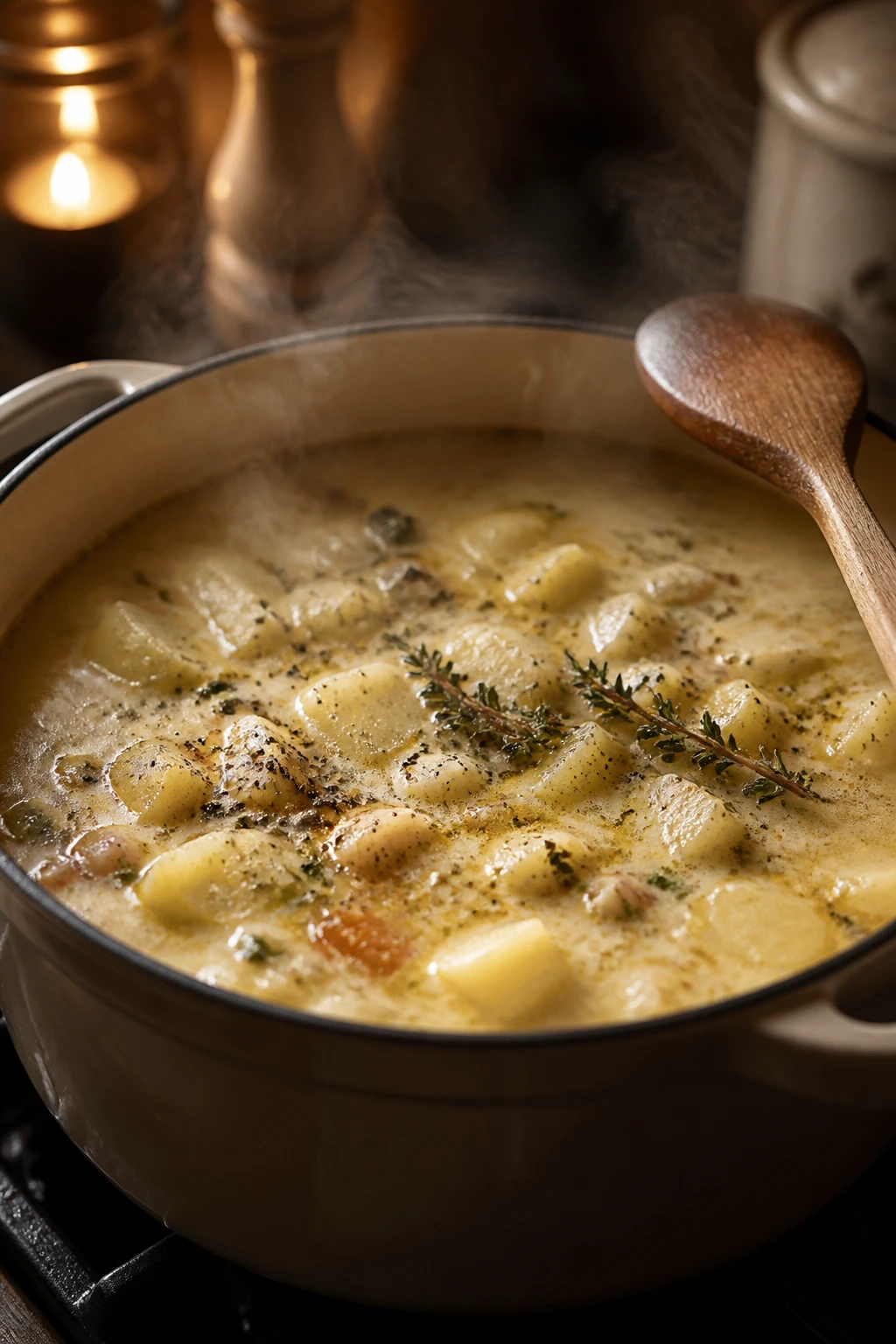
The Potatoes
What to use: 2 1/2 pounds Yukon Gold potatoes, peeled and cut into 1/2-inch cubes.
Preparation: Keep the cubes even so they soften at the same pace; a loose range in size gives you some pieces that hold and some that melt, which is exactly what you want.
Substitutions: Russet potatoes work if that’s what you have, but cut them a touch larger and mash more gently; red potatoes keep more shape and make the soup a little chunkier.
Tips: Yukon Golds carry enough starch to thicken the soup naturally, but they do not punish you as quickly if you handle them with a spoon instead of a blender.
The Aromatics
What to use: 1 medium yellow onion, 2 celery stalks, and 2 cloves garlic.
Preparation: Dice the onion and celery small so they soften into the base instead of standing out in crunchy bits; mince the garlic finely so it disappears into the pot.
Substitutions: A leek can replace the onion if you want a softer, sweeter flavor, and shallots work in a pinch if your onion is tiny.
Tips: Cook the onion and celery until the onion turns translucent and the edges just start to catch color. Raw onion makes the whole bowl taste unfinished.
The Fat and Thickener
What to use: 4 slices thick-cut bacon, 2 tablespoons butter, and 1/4 cup all-purpose flour.
Preparation: Chop the bacon before it hits the pot so it renders faster, and measure the flour before the heat is on; roux work goes better when you are not hunting for cups mid-stir.
Substitutions: If you skip the bacon, use 2 tablespoons olive oil plus the butter; for gluten-free soup, a 2:1 gluten-free flour blend usually behaves well in the roux.
Tips: The flour must cook in the fat for about a minute before the broth goes in. That step gets rid of the raw flour taste and keeps the soup from tasting dusty.
The Broth and Dairy
What to use: 4 cups low-sodium chicken broth, 1 cup whole milk, 1/2 cup heavy cream, and 1/2 cup sour cream.
Preparation: Warm the milk and cream before adding them so the soup does not take a cold shock; stir the sour cream in until it disappears.
Substitutions: Vegetable broth makes the soup fully vegetarian, and half-and-half can replace the milk and cream if that is what sits in your fridge.
Tips: Low-sodium broth gives you room to season properly. If you start with salty broth, you can end up chasing the flavor instead of steering it.
The Seasoning and Finish
What to use: 1 1/2 teaspoons kosher salt, 1/2 teaspoon black pepper, 1/2 teaspoon dried thyme, 1 bay leaf, chives, and cheddar for serving.
Preparation: Measure the seasoning before you begin; the soup moves fast once the broth goes in, and little pauses are where seasoning gets sloppy.
Substitutions: Dried parsley can stand in for thyme, and dill gives the soup a sharper edge if you want something a little brighter.
Tips: Save the final pinch of salt until the end. Potatoes absorb seasoning as they cook, and the bowl should taste full, not flat.
The Tools That Make the Soup Smooth
-
Dutch oven or heavy soup pot: The thick base keeps the onions from scorching and gives the soup an even simmer.
-
Chef’s knife and cutting board: You want clean, even potato cubes and small onion dice, not random chunks that cook at different speeds.
-
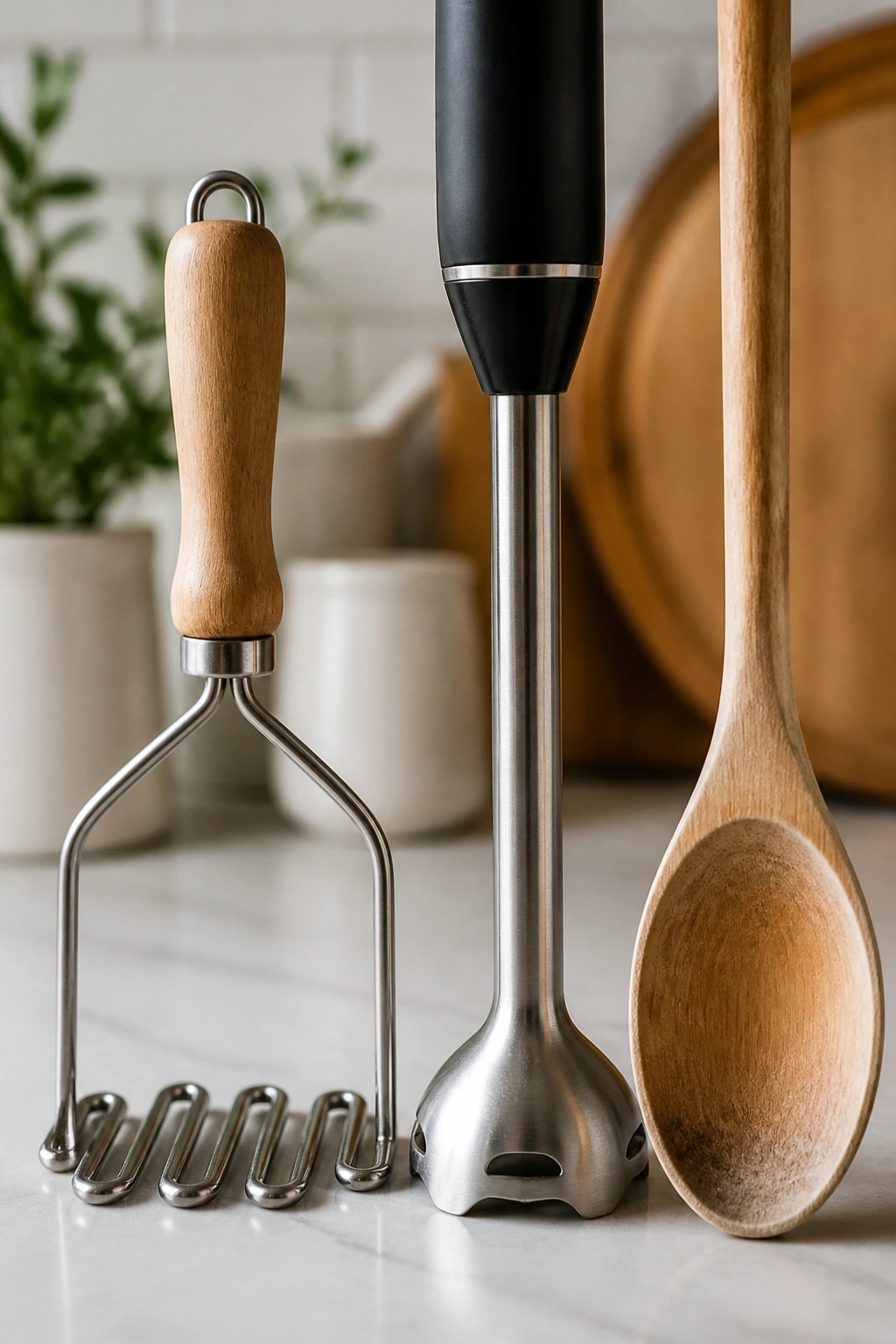
Wooden spoon or heatproof spatula: Good for stirring the flour into the fat and scraping the bottom of the pot clean.
-
Potato masher or immersion blender: A masher keeps the soup rustic; an immersion blender gives it a smoother body if you use it sparingly.
-
Ladle: A wide ladle makes it easier to portion the soup without smashing the potatoes.
-
Measuring cups and spoons: Sounds basic. It is. Roux and dairy both reward actual measuring.
-
Small saucepan or microwave-safe cup: Useful for warming the milk and cream before they go into the pot.
Turning Potatoes Into Soup
Prep the Bacon and Vegetables:
-
Place a large Dutch oven over medium heat. Add the chopped bacon and cook for 5 to 7 minutes, stirring now and then, until the pieces are crisp and the fat has rendered into the pot. Transfer the bacon to a paper towel-lined plate, and leave about 1 tablespoon of fat in the pot. If you skip bacon, melt the butter directly in the pot and move on.
-
Add the butter, onion, and celery to the pot. Cook for 5 to 6 minutes, stirring often, until the onion turns translucent and the celery softens. The onion should smell sweet, not sharp.
-
Stir in the garlic, thyme, and bay leaf. Cook for 30 to 45 seconds, just until the garlic smells fragrant. Do not let the garlic brown hard; burnt garlic makes the whole pot taste bitter.
Build the Base:
-
Sprinkle the flour over the vegetables and stir constantly for 1 full minute. The mixture should look pasty and coat the onions evenly, with no dry flour sitting in the corners of the pot.
-
Slowly pour in the broth in 3 additions, whisking or stirring between each pour so the flour dissolves smoothly. Scrape the bottom of the pot while you go; that keeps the roux from clumping into little pockets.
-
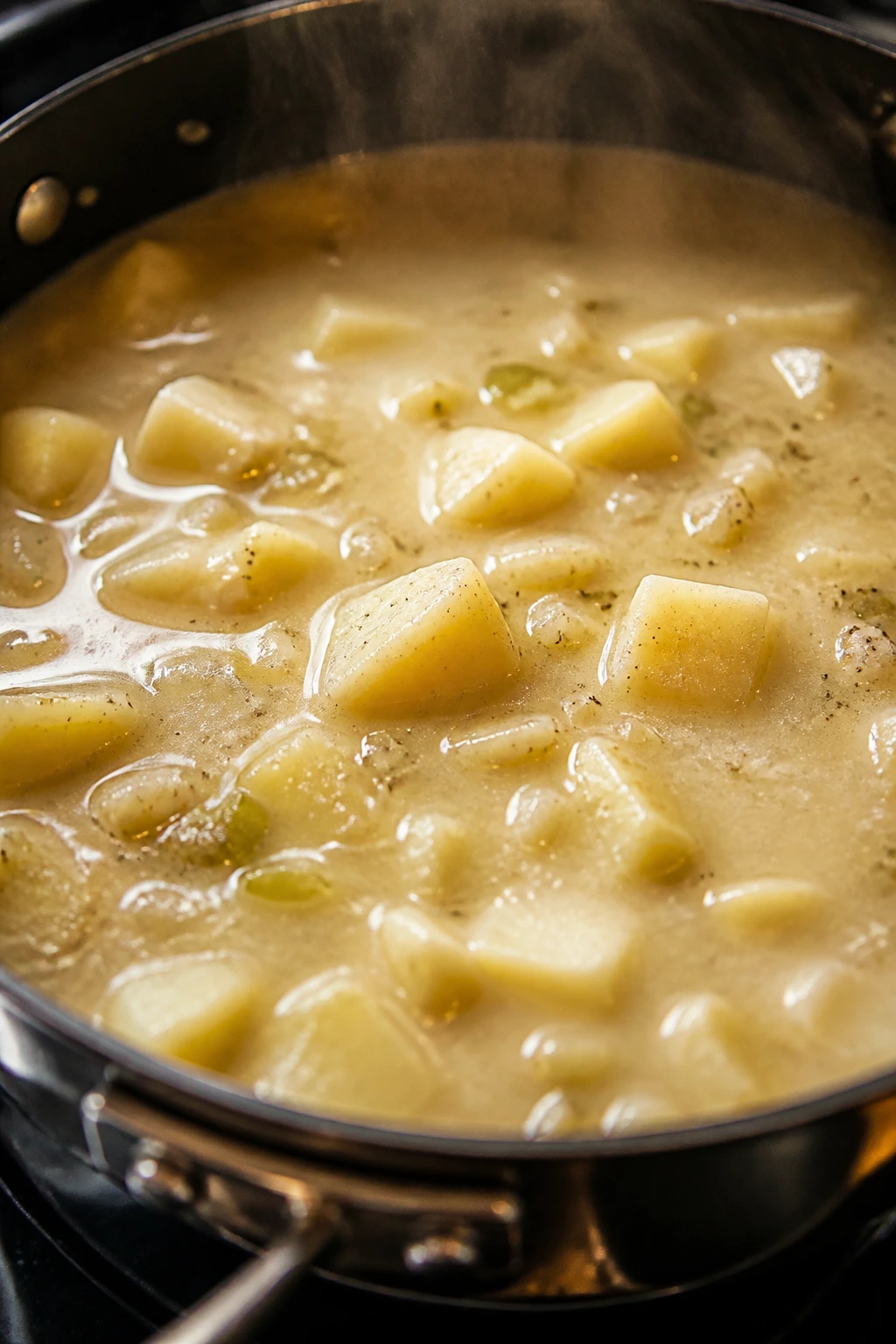
Add the potatoes, salt, pepper, and the bay leaf. Bring the soup to a gentle boil over medium-high heat, then lower the heat to maintain a steady simmer. Cover partially and cook for 15 to 20 minutes, stirring every few minutes, until the potatoes are fork-tender and a few edges are starting to fall apart.
Finish the Texture:
-
Remove the bay leaf. Use a potato masher to mash about one-third of the potatoes right in the pot, or use an immersion blender for 3 to 5 short pulses. You want body, not glue. Leave plenty of chunks so the soup still feels like potato soup and not a beige puree.
-
Turn the heat to low or off. Stir in the warmed milk, warmed cream, and sour cream until the soup looks smooth and steamy. Taste, then add more salt and black pepper if needed. If the soup is thicker than you want, stir in up to 1/2 cup more broth. If it feels thin, simmer it very gently for 2 to 3 minutes before serving. Do not let it boil after the dairy goes in.
-
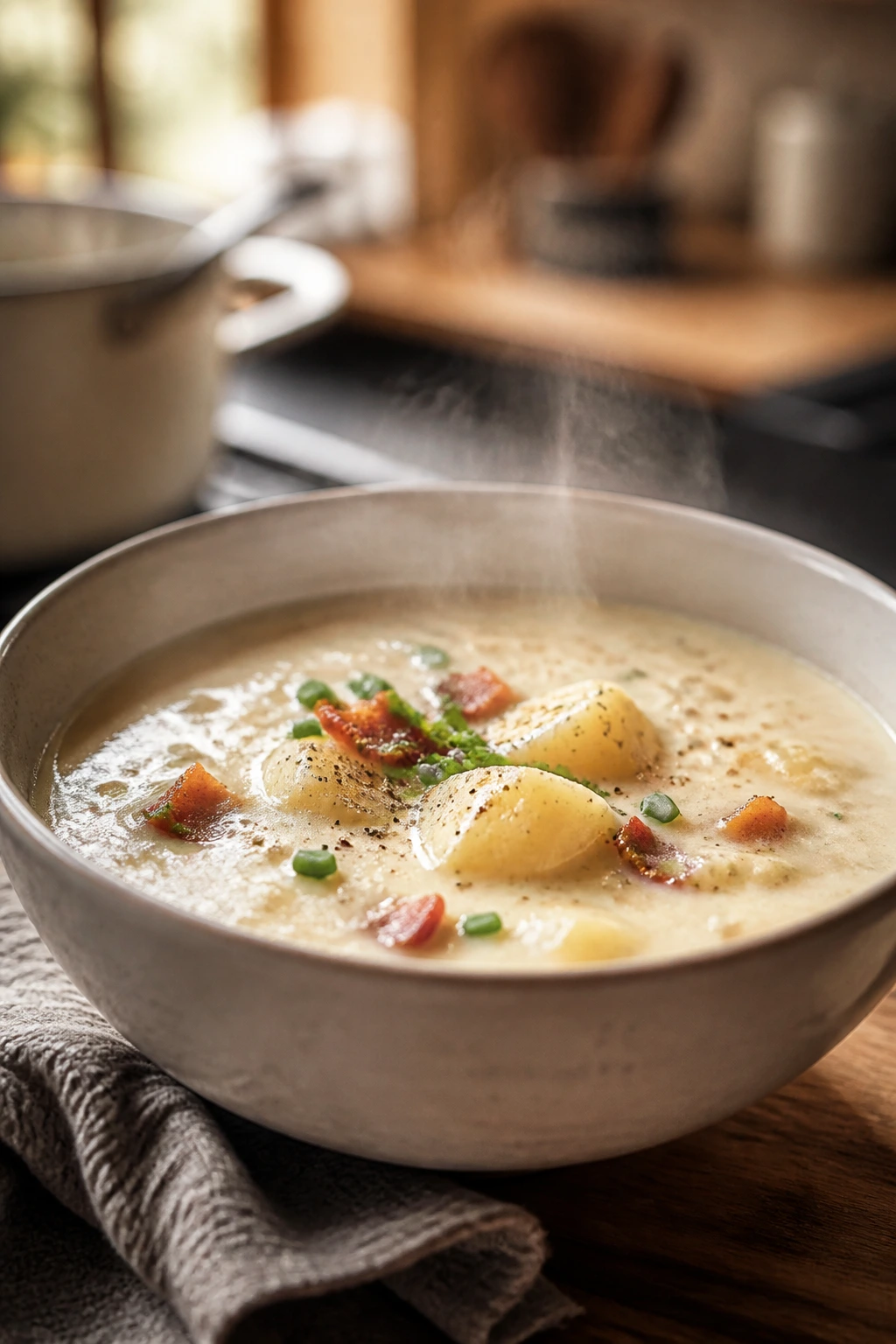
Ladle the soup into bowls and top with the reserved bacon, chives, cheddar, and a final pinch of black pepper. Serve immediately while the edges are still glossy and hot.
How to Serve a Bowl Like You Mean It

Presentation: Spoon the soup into warm, wide bowls so the steam stays visible for a minute or two. I like to scatter the bacon and chives over the center instead of burying them, then finish with a small pinch of black pepper so the top looks speckled and fresh. A thin swirl of cream on top looks nice, but only if you keep it light; too much and the bowl turns heavy before the first bite.
Accompaniments: A thick slice of buttered sourdough, a split biscuit, or crusty rye on the side is the move here because the soup is soft and the bread should give it some chew. A sharp green salad with a lemony vinaigrette cuts through the dairy nicely. If you want to stay fully in comfort-food territory, roasted Brussels sprouts or a simple grilled cheese sandwich make sense without feeling overdone.
Portions: Figure about 1 1/2 cups per serving for a main-dish bowl, or 3/4 cup if you are serving it as a starter. It also scales up cleanly; if you want to feed a bigger table, the pot can be doubled in a stockpot as long as you keep the simmer gentle and stir the bottom well. When the soup sits, it thickens, so be prepared to loosen it with a splash of broth before serving the leftovers.
Beverage Pairing: A dry hard cider or a crisp lager cuts through the cream and bacon without fighting the potatoes. If you want a nonalcoholic choice, sparkling water with lemon works well, and for a kid-friendly table a cold glass of apple juice fits the mood better than you might expect.
Small Moves That Make the Soup Better
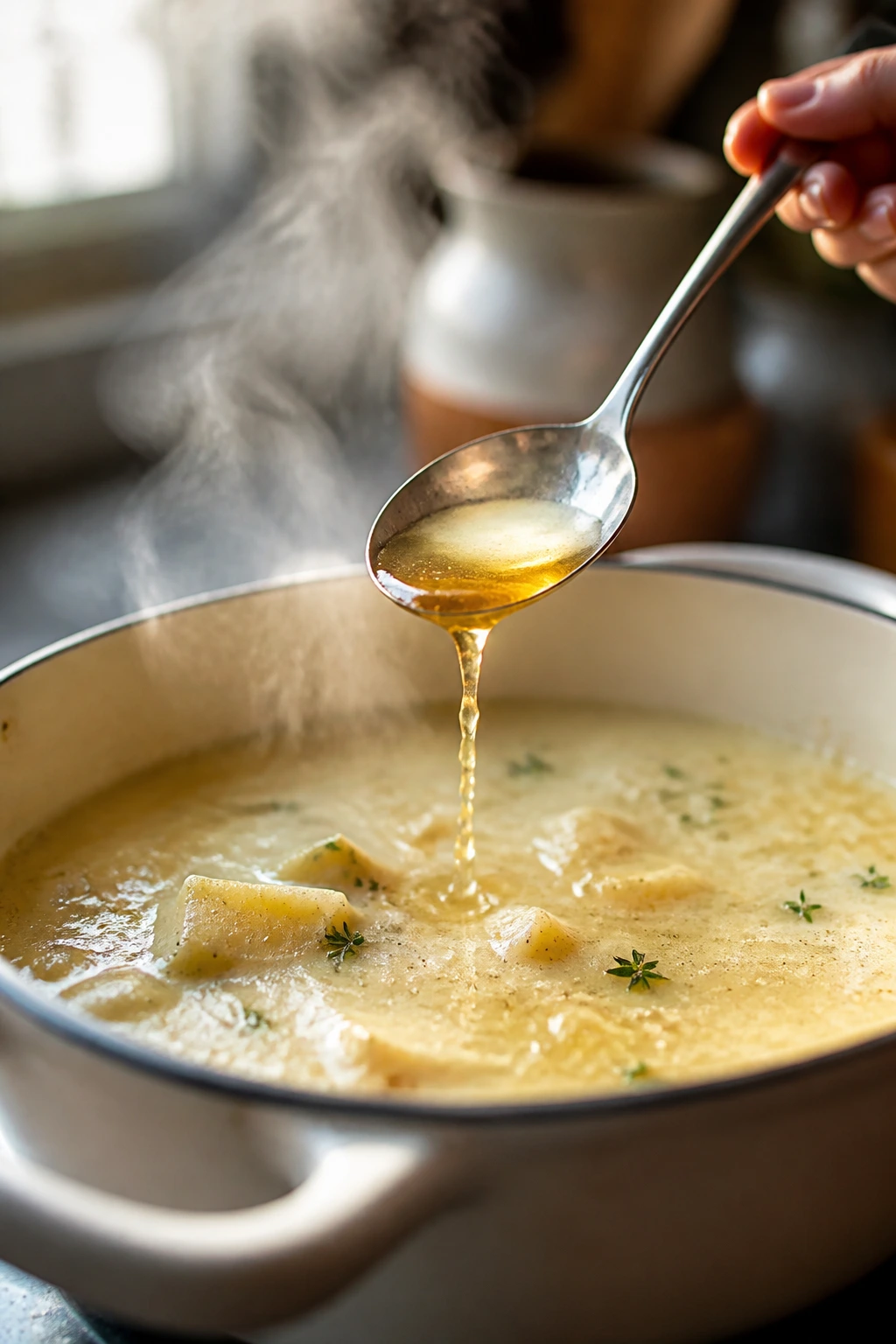
Flavor Enhancement: A teaspoon of apple cider vinegar at the end can wake up the whole pot. Potatoes love acid, and a small splash keeps the dairy from flattening the flavor. You will not taste vinegar. You will taste a cleaner potato flavor.
Time-Saver: Cut the potatoes into smaller, even cubes if you are in a hurry. Half-inch pieces cook faster and break down more predictably than large chunks, which means less babysitting at the stove.
Pro Move: Warm the milk and cream before they go in. Cold dairy can cool the soup too fast and make the texture feel dull for a minute before it recovers. Warm dairy slides in smoothly and keeps the pot steaming.
Cost-Saver: Skip the cheddar topping if you are trying to keep the grocery list short. The soup already has enough body and flavor from the potatoes, onion, and butter. Chives and black pepper are enough to finish it cleanly.
Make-It-Yours: If you like a little smoke, add 1/2 teaspoon smoked paprika with the thyme. It does not turn the soup into a barbecue bowl; it just gives the bacon, if you use it, a deeper edge.
The Mistakes That Turn Creamy Into Chalky
-
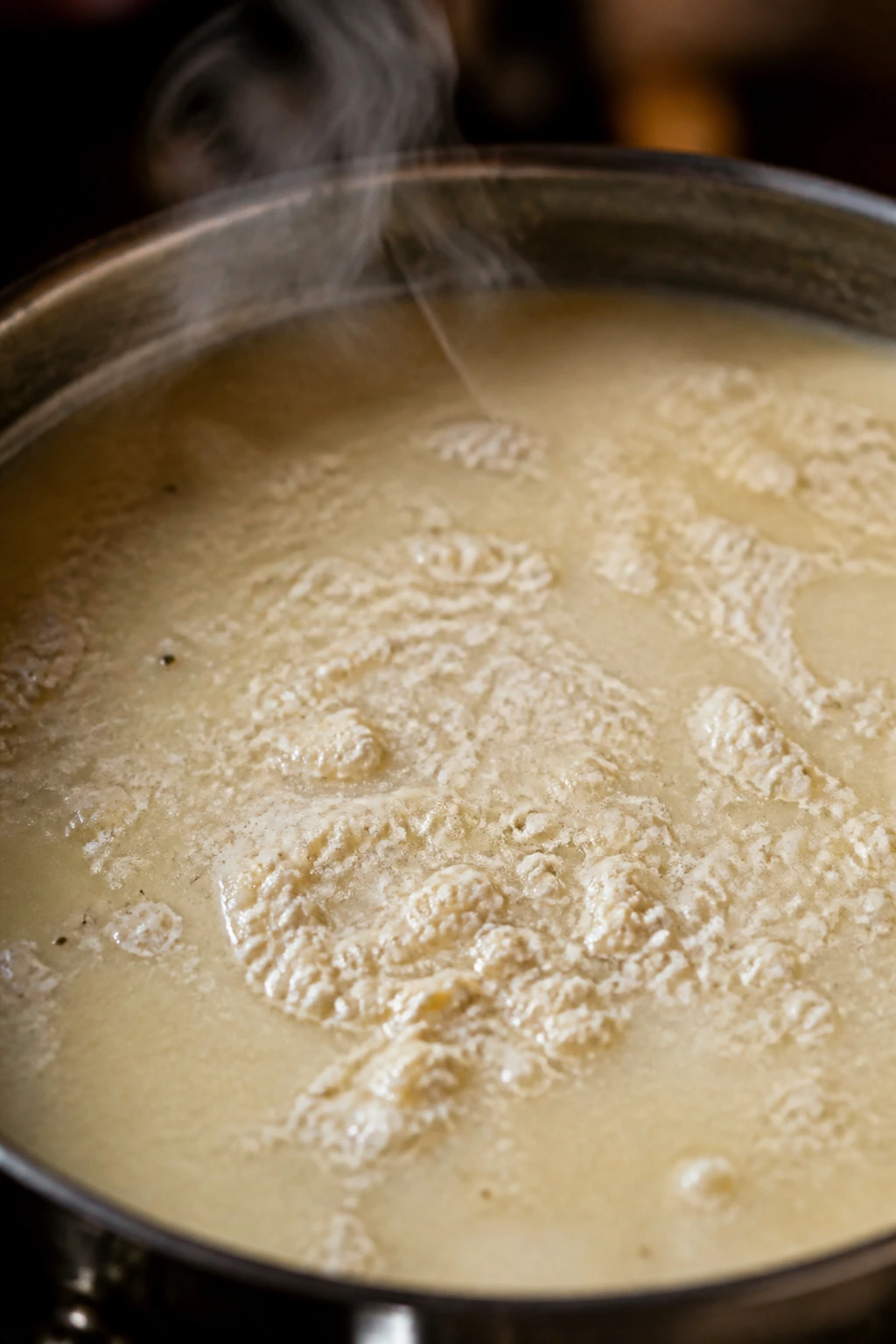
Boiling the soup after the dairy goes in: The surface may look fine for a minute, then you get a faintly broken texture or tiny curdled bits. Keep the heat low once the milk, cream, and sour cream are added, and stop at a bare steam.
-
Over-blending the potatoes: If you run an immersion blender for too long, the soup can turn sticky or glue-like, especially with Yukon Golds or russets. Pulse a few times, then switch to a masher if the pot needs more body.
-
Underseasoning the base: Potatoes drink salt. If the broth tastes fine before the potatoes go in, the finished soup can still land flat. Season in layers, then taste again after the dairy.
-
Using giant potato chunks: Big cubes take longer to soften, and the soup can end up with some pieces collapsing while others stay undercooked. Keep the cut size even, about 1/2 inch, so the texture stays consistent.
-
Adding cold sour cream straight from the fridge: It can leave little white streaks if the soup is too hot or if you stir too fast. Let it come to room temperature, or temper it with a spoonful of hot soup before stirring it in.
-
Letting the onions stay pale and raw-smelling: Onion is not background noise here. If you rush that first softening stage, the soup tastes thin no matter how much cream you add later.
Five Ways to Change the Pot Without Starting Over

Loaded Diner Bowl: Keep the base recipe the same, then double the bacon garnish and add extra cheddar, sliced scallions, and a spoonful of sour cream on top. This version feels richest when you serve it with toast for dunking and a few grinds of black pepper over everything.
Leek-and-Potato Version: Swap the onion for 2 trimmed leeks, sliced thin and rinsed well, and use vegetable broth. Leeks give the soup a softer, sweeter finish that feels a little gentler than onion and celery. It is the version I reach for when I want the soup to taste a touch more elegant without becoming precious.
Smoky Paprika Pot: Add 1/2 teaspoon smoked paprika with the thyme and use bacon if you like a deeper, campfire note. The paprika gives the broth a warm copper color and pushes the soup toward something heartier without making it spicy.
Vegetarian Hearth Soup: Skip the bacon, use olive oil instead of bacon fat, and swap in vegetable broth. Add an extra tablespoon of butter at the end or a spoonful of grated Parmesan if you eat dairy and want more savoriness. The soup still feels complete, not stripped down.
Dairy-Light Bowl: Replace the heavy cream with an extra 1/2 cup whole milk and reduce the sour cream to 1/4 cup. The texture will be a little lighter and less plush, but it still tastes like proper potato soup. A little extra mashed potato in the pot helps make up the difference.
Keeping Leftovers Smooth, Safe, and Worth Eating
Creamy potato soup keeps well, but it asks for a little care. Cool it within 2 hours of cooking, then move it to shallow containers so the heat drops faster. In the fridge, it holds for 3 to 4 days. The flavor often settles in overnight, which means the next-day bowl can taste even better than the first one if you reheat it gently.
Reheat it on the stovetop over low heat, stirring often. If it has thickened in the fridge, loosen it with a splash of broth, milk, or even water before it warms through. A microwave works too, but use medium power in short bursts and stir between them so the dairy does not separate along the edges of the bowl. The goal is warm and steamy, not bubbling.
Freezing takes a little more judgment. Potato soup can go into the freezer for up to 2 months, but the dairy may loosen or grain slightly when it thaws. If you know you want to freeze part of the batch, the cleaner move is to freeze the soup before adding the milk, cream, and sour cream. Make the base through the potato simmer, cool it, freeze it, then add the dairy after reheating. If you are freezing leftovers from the finished soup, whisk it well after thawing and expect a softer texture.
Make-ahead is easy if you split the work. Dice the onions, celery, and potatoes earlier in the day, storing the potatoes in cold water in the fridge for a few hours if needed, then drain and dry them before cooking. You can also make the whole base a day ahead and stop before the dairy goes in. Reheat the base gently, stir in the dairy, and the soup tastes fresher than trying to force the full pot through one long session.
Questions People Ask Before They Make It

Can I use russet potatoes instead of Yukon Gold?
Yes, but handle them a little more gently. Russets break down faster and can turn starchy or gluey if you blend them hard, so mash only part of the pot and stop as soon as the texture looks creamy.
Do I need to peel the potatoes?
You do not have to, especially if you like a more rustic soup. Skins on Yukon Golds are thin and tender, though peeling gives you a smoother, more classic bowl and a cleaner color.
How do I make the soup thicker if it feels thin?
Let it simmer gently for a few more minutes before adding the dairy, or mash a few more potato pieces into the pot. If you want a last-resort fix, stir 1 tablespoon of instant potato flakes into the hot soup and wait a minute before deciding if it needs more.
Can I make creamy potato soup without bacon?
Absolutely. Use butter or olive oil as the fat, then build the onion, celery, and garlic exactly the same way. The soup will be quieter, but it will still taste rich if you season it properly and finish with chives or cheddar.
Why did my soup turn gluey?
Most of the time, that comes from overworking the potatoes, especially with a blender. Stop earlier than you think you need to, and use a masher or just a few immersion-blender pulses if you want the soup to stay soft instead of sticky.
Can I freeze the finished soup?
Yes, though the texture may loosen a bit after thawing. For the best result, freeze the soup before the milk, cream, and sour cream go in, then finish it after reheating. If you are freezing leftovers, whisk well after reheating and add a splash of broth if needed.
Can I make this in a slow cooker?
You can, but I would still build the onion, celery, garlic, and flour on the stovetop first. That first step gives the soup a better base. After that, transfer everything except the dairy to the slow cooker and cook on low until the potatoes are tender, then stir in the warmed milk, cream, and sour cream at the end.
A Bowl Worth Repeating

The best thing about this soup is that it knows what it is. It does not chase fancy ingredients or try to hide behind cheese. The potatoes do the heavy lifting, the onions give them someplace to land, and the dairy rounds off the edges without taking over. That is why a bowl like this feels right when the night is long and the kitchen light is the warmest thing in the room.
Keep the heat low, the potato chunks even, and the dairy patient. Those three habits do more for the final bowl than any garnish ever will. Once you make it this way, it has a way of sticking in your head, which is useful because cold weather has a habit of coming back.
Creamy Potato Soup for Cold Winter Nights — Recipe Card
Recipe Name: Creamy Potato Soup for Cold Winter Nights
Description: A rich, silky potato soup made with Yukon Gold potatoes, onion, celery, broth, and a careful finish of milk, cream, and sour cream. Bacon, chives, and cheddar take it toward a loaded-baked-potato feel if you want that route.
Prep Time: 20 minutes
Cook Time: 40 minutes
Total Time: 1 hour
Course: Dinner, Main Course
Cuisine: American
Servings: 6 servings
Calories: About 390 kcal per serving
Ingredients
For the Soup:
- 4 slices thick-cut bacon, chopped, for flavor and garnish; omit if you want a vegetarian base
- 2 tablespoons unsalted butter
- 1 medium yellow onion, diced small
- 2 celery stalks, diced small
- 2 cloves garlic, minced
- 1/4 cup all-purpose flour
- 4 cups low-sodium chicken broth or vegetable broth
- 2 1/2 pounds Yukon Gold potatoes, peeled and cut into 1/2-inch cubes
- 1 1/2 teaspoons kosher salt, plus more to taste
- 1/2 teaspoon black pepper
- 1/2 teaspoon dried thyme
- 1 bay leaf
- 1 cup whole milk, warmed
- 1/2 cup heavy cream, warmed
- 1/2 cup sour cream, at room temperature
For Serving:
- 2 tablespoons chopped chives
- 1/2 cup shredded sharp cheddar cheese, optional
- Extra black pepper, to finish
Instructions
-
Cook the bacon in a large Dutch oven over medium heat for 5 to 7 minutes until crisp. Transfer it to a paper towel-lined plate and leave about 1 tablespoon of fat in the pot.
-
Add the butter, onion, and celery. Cook for 5 to 6 minutes until the onion is translucent. Stir in the garlic, thyme, and bay leaf and cook for 30 to 45 seconds.
-
Sprinkle the flour over the vegetables and stir for 1 minute until the mixture looks pasty and no dry flour remains.
-
Slowly whisk in the broth in 3 additions, scraping the bottom of the pot as you go. Add the potatoes, salt, and pepper.
-
Bring the soup to a gentle boil, then lower the heat and simmer for 15 to 20 minutes until the potatoes are fork-tender. Remove the bay leaf.
-
Mash about one-third of the potatoes in the pot, or use an immersion blender for 3 to 5 short pulses to thicken the soup while keeping some chunks.
-
Turn the heat to low or off. Stir in the warmed milk, warmed cream, and sour cream until smooth. Taste and adjust with more salt or pepper if needed.
-
Ladle into bowls and top with the reserved bacon, chives, cheddar, and extra black pepper.
Notes:
Warm the dairy before adding it so the soup stays smooth. Do not boil after the cream and sour cream go in. For a lighter bowl, skip the bacon and use vegetable broth.