



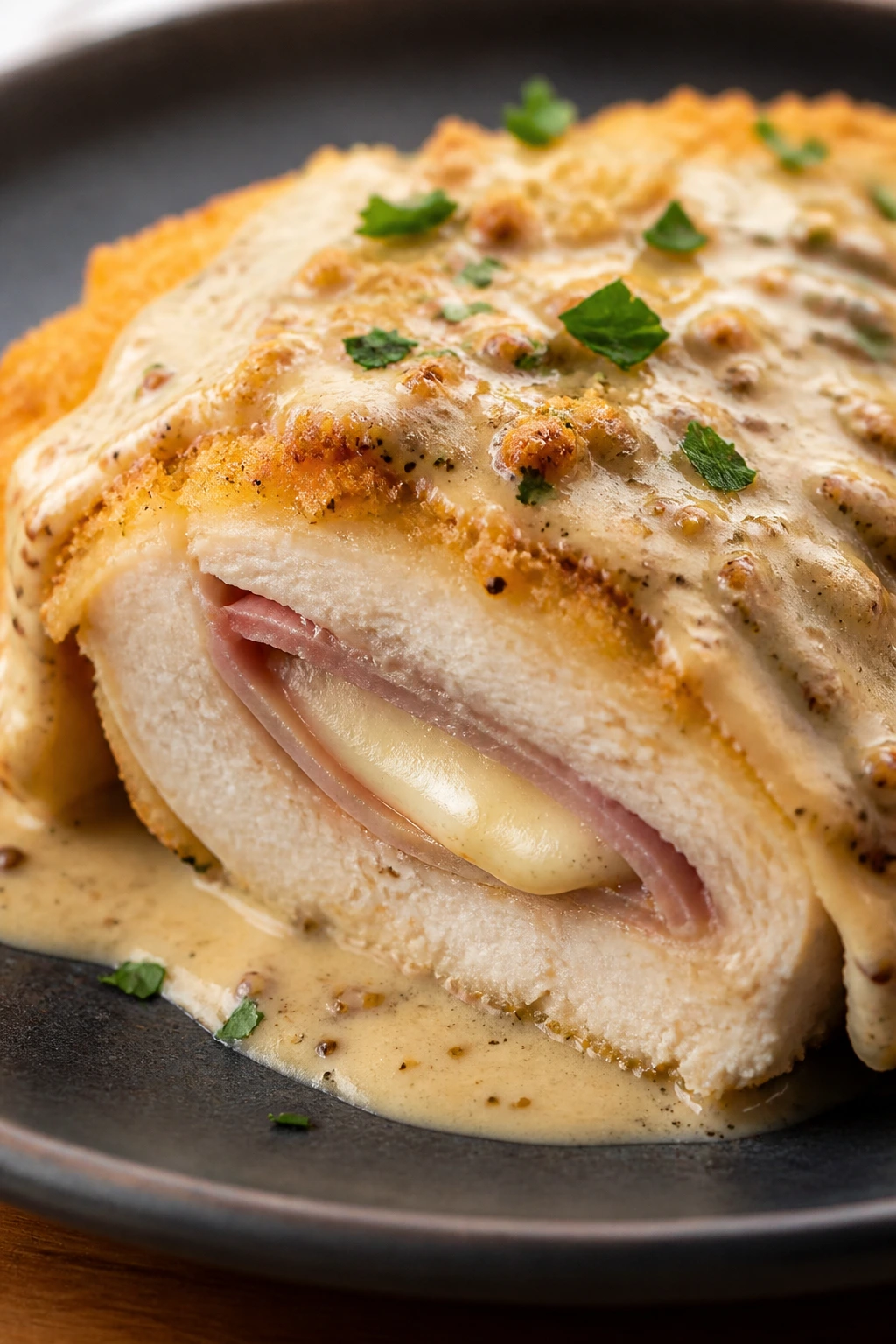
The first slice of creamy chicken cordon bleu tells you whether dinner is worth repeating: crisp crumbs, smoky ham, Swiss cheese that melts into a soft seam, and a sauce that clings to the chicken instead of sliding off the plate.
Traditional cordon bleu can feel fussy. Thin cutlets, filling that wants to escape, breading that behaves like it has a grudge — all of it can turn a good idea into a long evening.
This version keeps the useful parts and trims the rest. The chicken gets pounded thin so it cooks fast, the pan sauce comes together from the browned bits left behind, and the whole thing tastes like you spent more time on it than you did. If your chicken breasts are thick enough to knock over the pepper grinder, slice them first; that one move makes the rest much easier.
Why This Creamy Chicken Cordon Bleu Works on a Busy Night
- Thin cutlets cook fast: The chicken reaches 165°F in about 12 to 15 minutes after searing, so you are not babysitting the oven.
- The filling stays tidy: A thin layer of ham and a single slice of Swiss melt into a neat center instead of bursting out the sides.
- The sauce uses the same skillet: The browned bits from the sear dissolve into the Dijon cream sauce, which gives you more flavor and one less pan to wash.
- Panko keeps the crust crisp: The crumbs toast fast and stay snappy under the sauce if you spoon it on at the table instead of drowning the cutlet.
- Leftovers hold up better than you’d expect: If you reheat them gently in the oven and keep the sauce separate, the chicken keeps its shape instead of turning limp.
- It feels special without requiring special gear: A skillet, a baking pan, and an instant-read thermometer are enough. No deep fryer. No drama.
What Goes Into the Pan
The ingredient list looks short because the recipe does most of the heavy lifting for you. What matters is not the quantity of things, but how thinly you handle them and how you build the layers.
Yield: Serves 4
Prep Time: 25 minutes
Cook Time: 30 minutes
Total Time: 55 minutes active + 15 minutes resting
Difficulty: Intermediate — the steps are straightforward, but the stuffing, breading, searing, and sauce all need a little attention.
Chill/Rest Time: 10 minutes after breading + 5 minutes after baking
Best Served: Hot from the oven, with the sauce spooned on right before eating
For the Chicken and Filling:
- 4 boneless, skinless chicken breasts, about 2 pounds total
- 1 teaspoon kosher salt
- 1/2 teaspoon black pepper
- 1 teaspoon garlic powder
- 1/2 teaspoon paprika
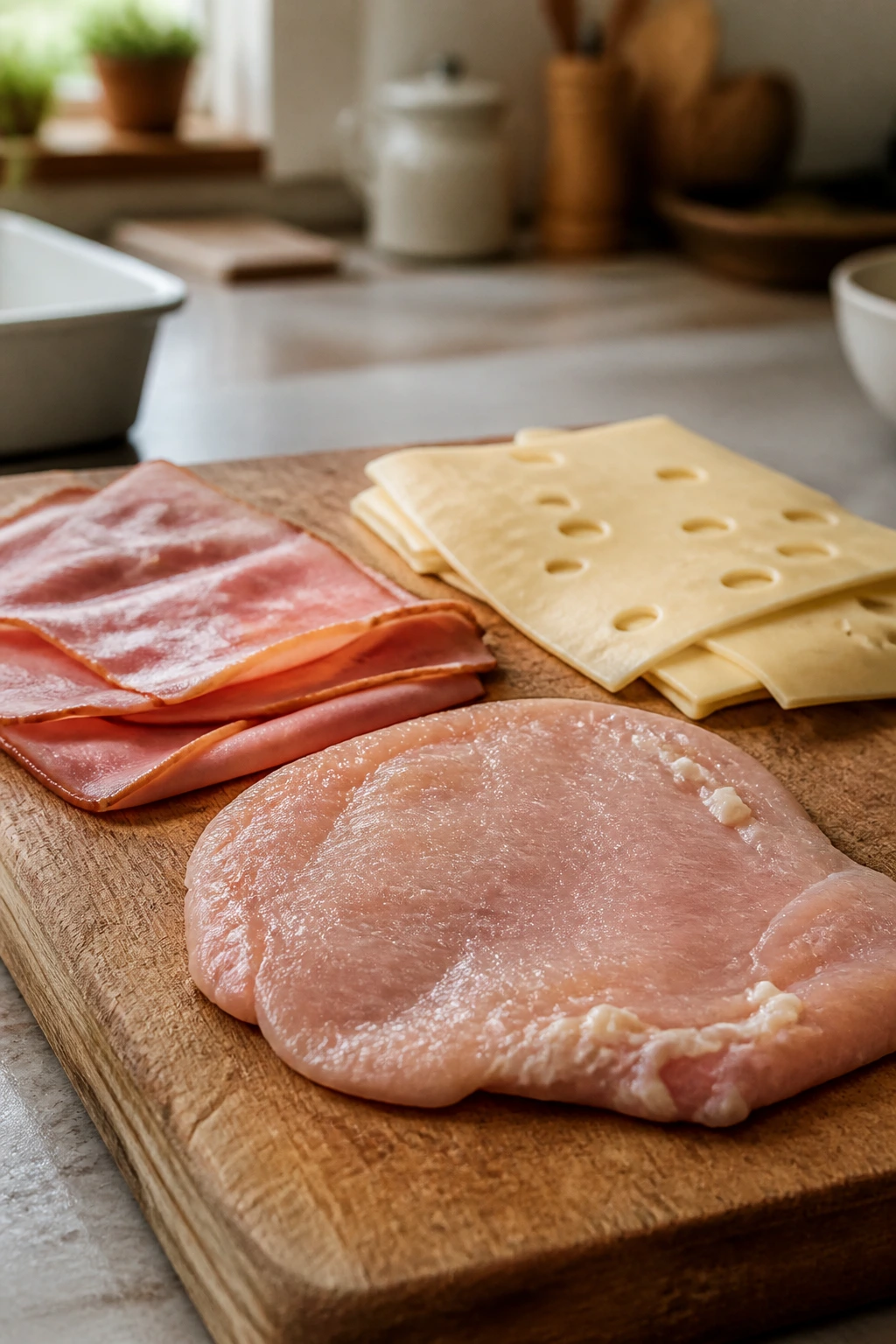
- 4 thin slices deli ham, about 4 ounces total
- 4 slices Swiss cheese, about 4 ounces total
For the Breading:
- 1 cup all-purpose flour
- 2 large eggs
- 2 tablespoons milk
- 1 1/2 cups panko breadcrumbs
- 1/4 cup grated Parmesan
- 1 teaspoon dried thyme
For Cooking and the Sauce:
- 2 tablespoons olive oil
- 4 tablespoons unsalted butter, divided
- 2 cloves garlic, minced
- 2 tablespoons all-purpose flour
- 1 1/2 cups low-sodium chicken broth
- 3/4 cup whole milk or half-and-half
- 2 teaspoons Dijon mustard
- 1/4 teaspoon kosher salt, plus more to taste
- 1/4 teaspoon black pepper
- 1/4 cup grated Parmesan
- 1 teaspoon lemon juice
- 1 tablespoon chopped parsley, for garnish
Why Each Ingredient Earns Its Spot
Main Chicken
What to use: 4 boneless, skinless chicken breasts, about 2 pounds total.
You want pieces that are close to the same size so they cook evenly; if one breast is huge, slice it horizontally into two thinner cutlets before pounding.
Preparation: Pound each breast to about 1/4-inch thickness between two sheets of parchment or inside a zip-top bag.
That thin shape is what keeps the chicken from drying out while the crust browns.
Substitutions: Boneless, skinless chicken cutlets work well and save time.
Boneless thighs can work too, though they are harder to shape neatly and won’t give you the same classic stuffed look.
Tips: Even thickness matters more than weight here.
If one end stays plump while the other gets flattened, the thin end will overcook before the center is done.
Ham and Cheese Filling
What to use: 4 thin slices deli ham and 4 slices Swiss cheese.
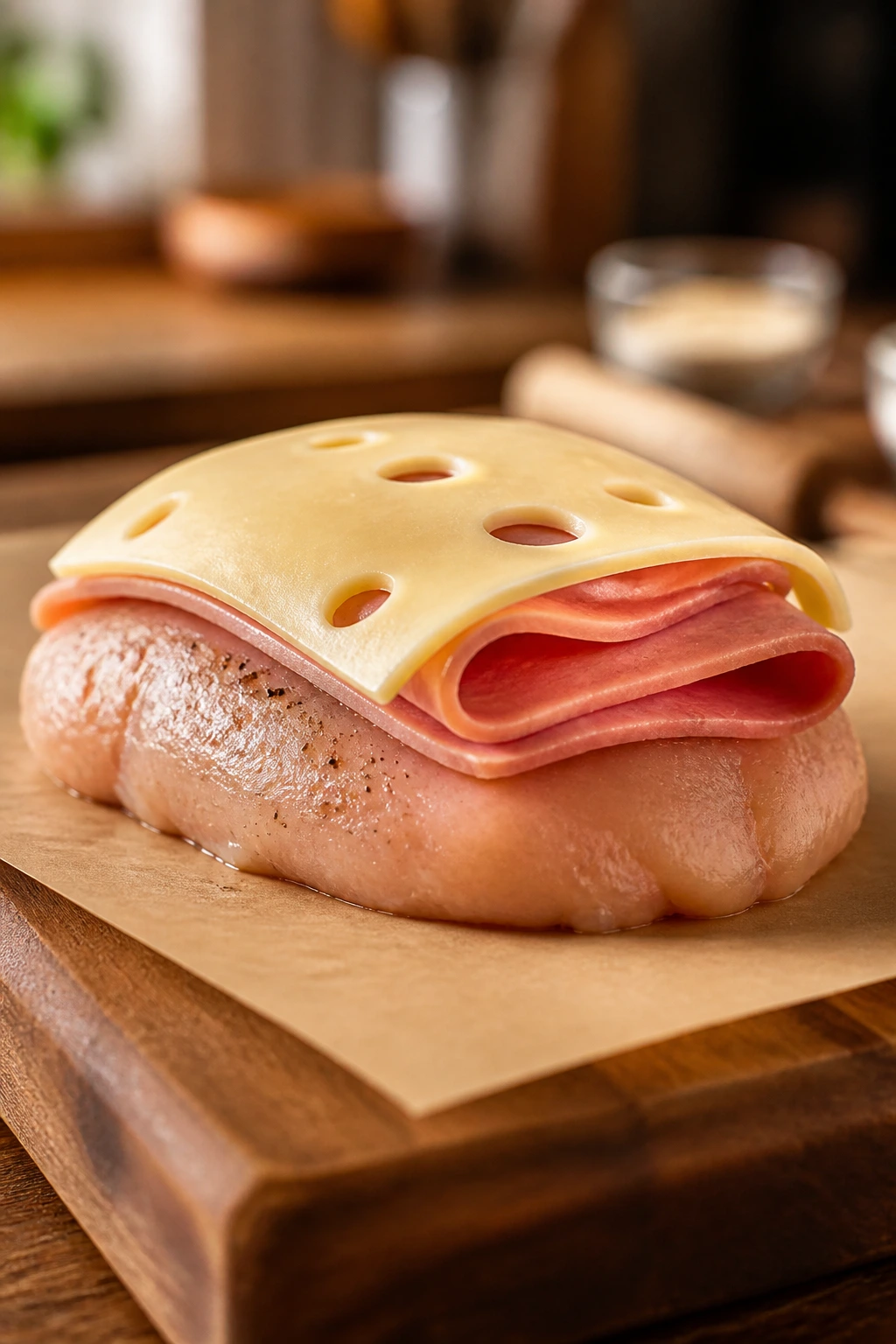
Thin slices fold inside the chicken without poking holes through the crust, which is where leaks usually start.
Preparation: Trim the ham if the slices hang far past the chicken’s edges, and cut the cheese so it sits in a single layer.
A neat stack melts better than a loose pile.
Substitutions: Black Forest ham gives a deeper smoke note; prosciutto works if you want something saltier and leaner.
Gruyère, provolone, or fontina can replace Swiss, though Swiss melts with the most predictable, mellow finish.
Tips: Thick cheese blocks are the fastest way to lose filling to the skillet.
Use slices, not chunks, and keep them inside the edges of the chicken.
Breading and Crust
What to use: 1 cup all-purpose flour, 2 large eggs, 2 tablespoons milk, 1 1/2 cups panko breadcrumbs, 1/4 cup grated Parmesan, and 1 teaspoon dried thyme.
That mix gives you a dry base, a sticky middle, and a crunchy shell that browns quickly.
Preparation: Set the flour in one dish, whisk the eggs with the milk in a second, and combine the panko, Parmesan, and thyme in a third.
Do not skip the Parmesan in the crumbs; it adds a salty edge and helps the crust color faster.
Substitutions: Gluten-free flour and gluten-free panko both work if you need them.
Crushed cornflakes can stand in for panko in a pinch, though they brown faster and need a watchful eye.
Tips: Press the crumbs on firmly with your fingertips.
You want an even coat, not a thick armor shell.
Sauce Base
What to use: 4 tablespoons unsalted butter, 2 cloves garlic, 2 tablespoons all-purpose flour, 1 1/2 cups low-sodium chicken broth, 3/4 cup whole milk or half-and-half, 2 teaspoons Dijon mustard, 1/4 teaspoon kosher salt, 1/4 teaspoon black pepper, and 1/4 cup grated Parmesan.
This is the part that turns a breaded chicken cutlet into a plated dinner.
Preparation: Mince the garlic finely so it melts into the sauce instead of floating around in sharp little pieces.
Whisk the flour into the butter long enough that the sauce tastes cooked, not pasty.
Substitutions: Half-and-half makes the sauce richer; whole milk keeps it lighter.
If you want a more pronounced tang, add another half teaspoon of Dijon, not more than that.
Tips: Low-sodium broth matters because ham and Parmesan already bring salt.
If you use regular broth, the sauce can cross from savory into salty with barely any warning.
Finishing Notes
What to use: 1 teaspoon lemon juice and 1 tablespoon chopped parsley.
The lemon wakes up the sauce after all that ham, cheese, and butter, and the parsley keeps the plate from looking heavy.
Preparation: Add both at the end, once the sauce is off the heat or nearly there.
That keeps the lemon bright and the parsley green.
Substitutions: Chives or tarragon can replace the parsley if you want a different finish.
A tiny bit of lemon zest works if you want more lift without more acid.
Tips: Finishings are small, but they change the whole bite.
Without something sharp at the end, the dish can taste flat.
Setting Up the Assembly Line
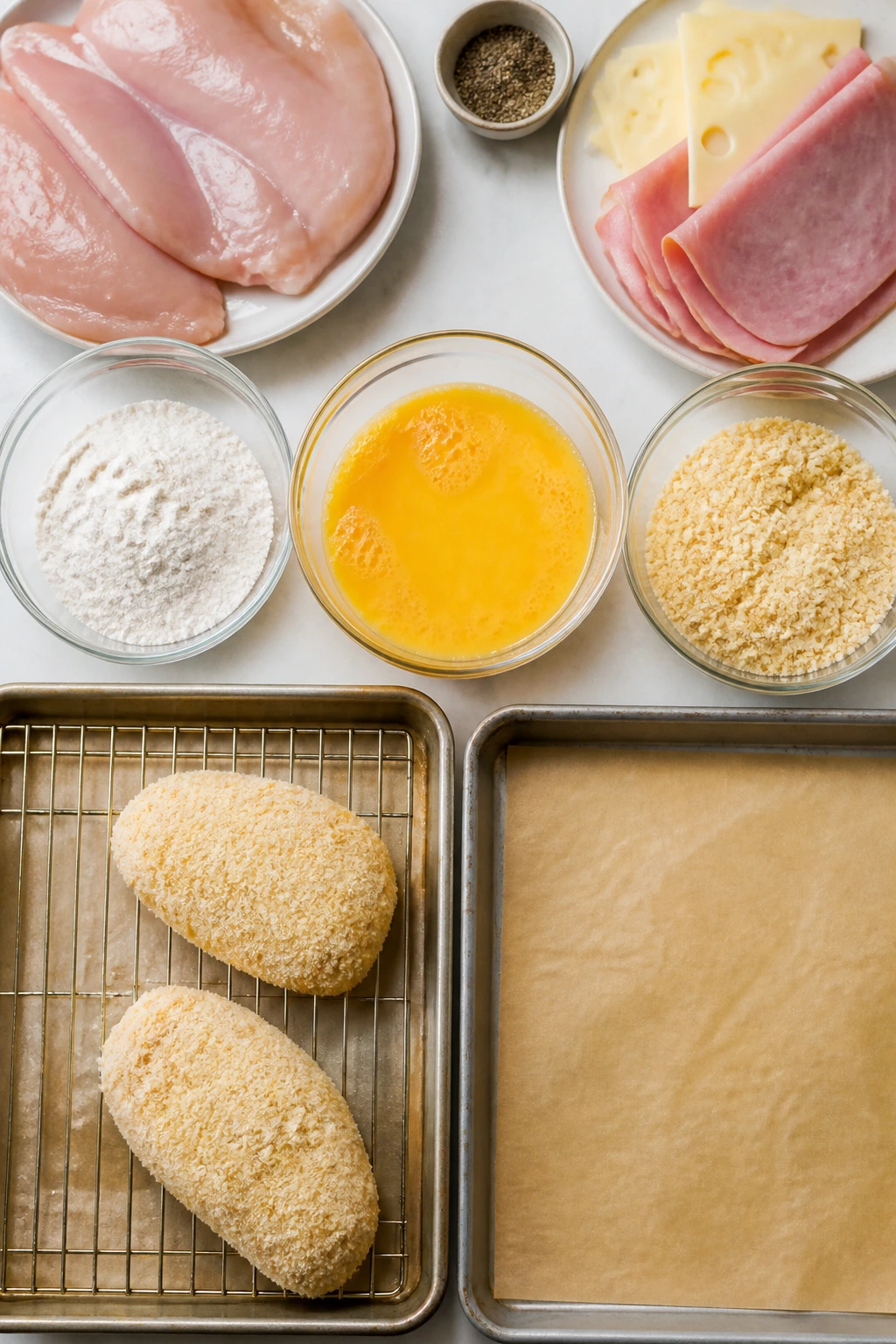
The easiest way to make stuffed chicken on a Tuesday is to stop pretending you can do it casually. Lay everything out before you touch the chicken. Once the breasts are pounded, the process moves fast, and a clean setup keeps the flour from turning into paste on your fingers.
A rimmed sheet pan on one side and a large plate or tray on the other help more than people expect. Put the flour dish first, then the egg wash, then the crumb mixture. Keep a second tray ready for the breaded cutlets so you are not dropping them back onto a cutting board where they stick and tear.
Pound the chicken between parchment sheets if you can. Plastic wrap works, but parchment gives you a little more grip and doesn’t cling as badly when the meat starts flattening. If you have a small meat mallet, use the flat side first and switch to lighter taps at the thicker ends. You are shaping, not punishing the chicken.
One more thing. If the breasts are thin enough already, don’t flatten them into paper. A little body helps them hold the ham and cheese without tearing.
How to Assemble, Sear, Bake, and Finish
Prepare the Chicken:
-
Preheat the oven to 400°F (200°C) and line a rimmed sheet pan with parchment. If your skillet is not oven-safe, set a second sheet pan nearby for baking later.
-
Slice each chicken breast horizontally if needed so it opens into a thinner cutlet, then pound it to about 1/4-inch thickness between parchment or in a zip-top bag. Aim for even thickness from edge to edge. Do not leave one end thick and one end paper-thin — that is how you get dry chicken and leaking filling at the same time.
-
Season both sides of the chicken with the salt, pepper, garlic powder, and paprika. Keep the seasoning light and even; the ham, cheese, and sauce bring plenty of salt later.
Fill and Bread:
-
Lay 1 slice of ham and 1 slice of Swiss on the lower half of each cutlet, leaving a small border around the edges. Fold or roll the chicken over the filling and secure each piece with 1 to 2 toothpicks if needed. Press the seam gently so it holds.
-
Set up the breading station with flour in one dish, eggs and milk whisked together in the second, and panko, Parmesan, and thyme mixed together in the third. Dredge each stuffed cutlet in flour, shake off the excess, dip in egg wash, and coat in the crumb mixture. Press the crumbs on firmly so they stick to the curves of the chicken.
-
Place the breaded cutlets on a tray and let them rest for 10 minutes. That short rest helps the coating set. Skip this and the crust can slide right off in the skillet.
Cook and Finish:
-
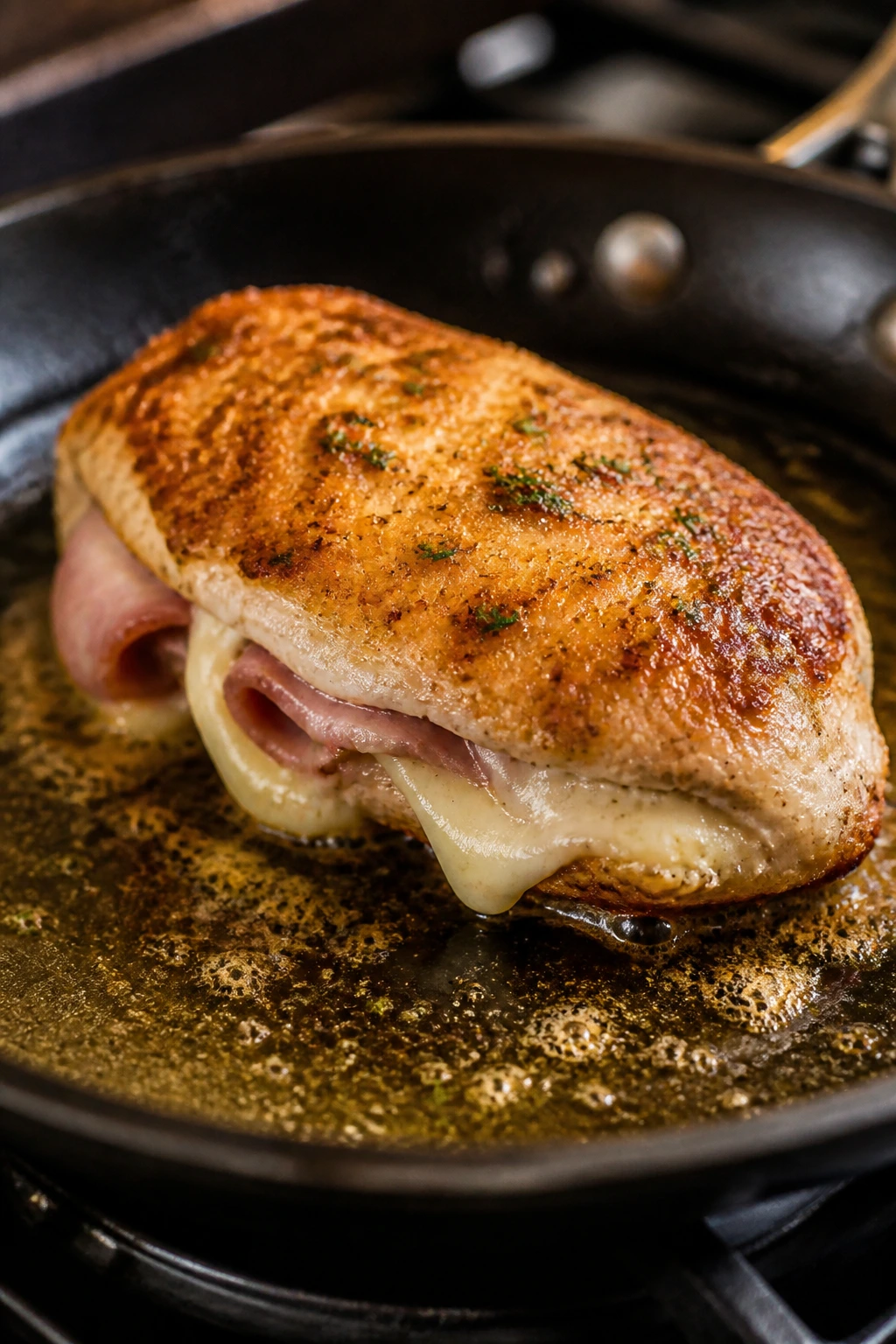
Heat 2 tablespoons olive oil and 2 tablespoons butter in a large oven-safe skillet over medium-high heat until the butter foams and the surface shimmers. Add the chicken seam-side down first if possible, and sear for 2 to 3 minutes per side until the crust turns deep golden brown. Work in batches if the skillet feels crowded. Crowding makes the chicken steam instead of brown.
-
Transfer the seared cutlets to the prepared sheet pan or leave them in the oven-safe skillet and bake for 12 to 15 minutes, until an instant-read thermometer inserted into the thickest part reads 165°F. If your breasts are very thick, give them another minute or two, then check again. The chicken should feel firm but not stiff when pressed.
-
While the chicken bakes, lower the skillet heat to medium and pour off excess fat if needed, leaving about 1 tablespoon in the pan. Add the remaining 2 tablespoons butter and the garlic; cook for 20 to 30 seconds until fragrant, not brown. Whisk in the flour and cook for 1 minute until the mixture looks sandy and pale gold. Slowly whisk in the broth, then the milk or half-and-half, Dijon, salt, and pepper. Simmer for 3 to 4 minutes, whisking often, until the sauce thickens enough to coat the back of a spoon.
-
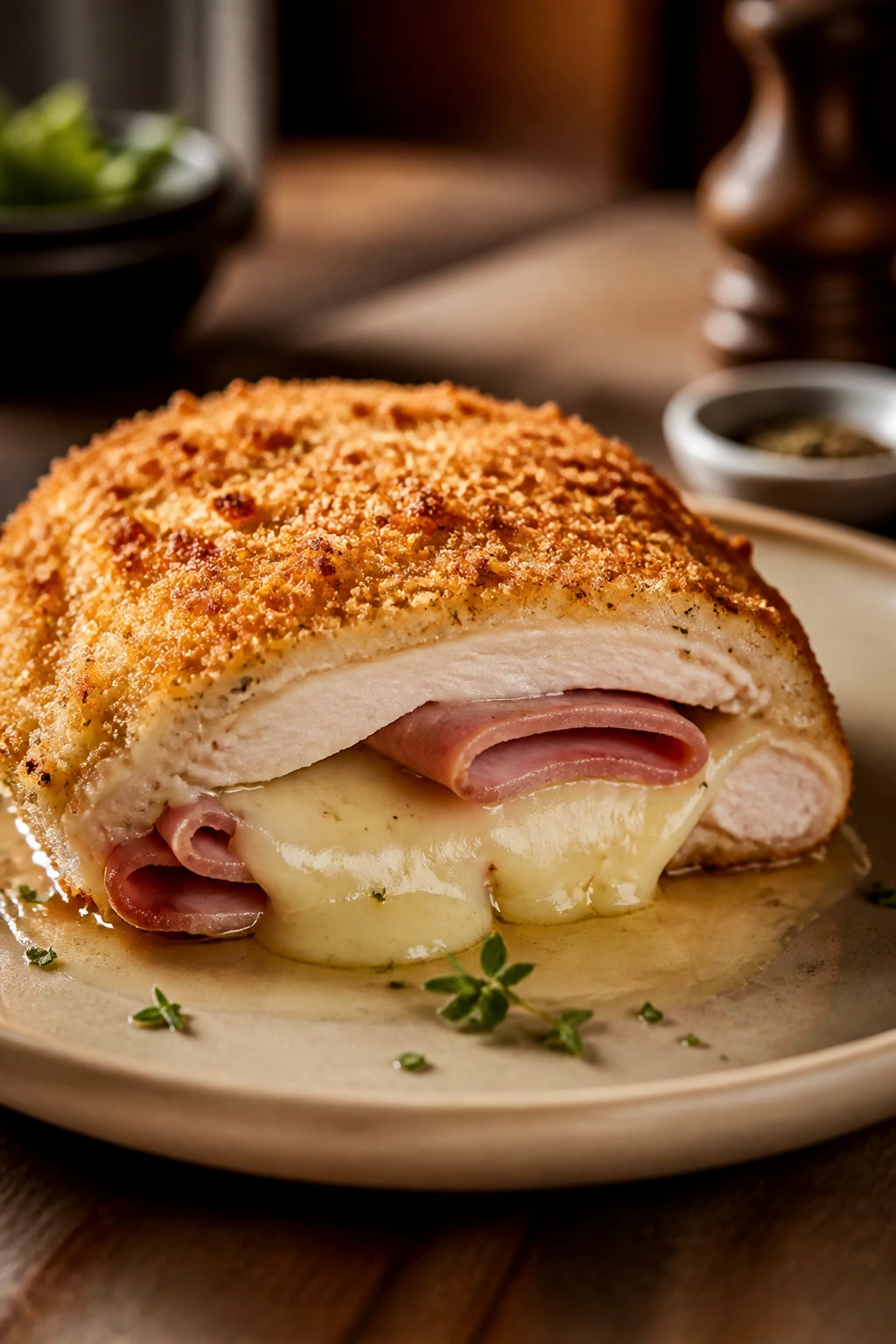
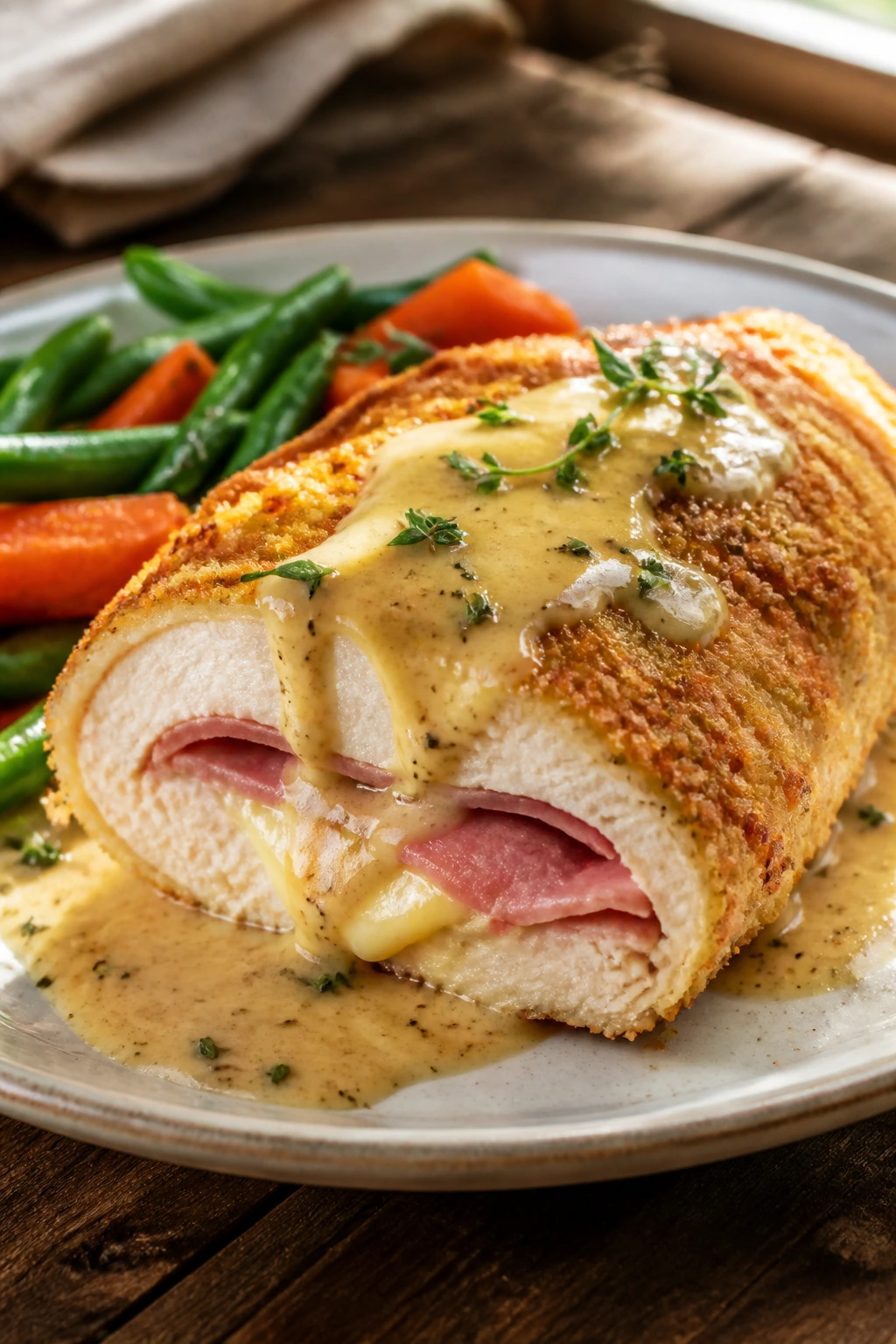
Stir in the Parmesan and lemon juice, then taste and adjust with a little more salt if needed. Let the chicken rest for 5 minutes, remove the toothpicks, and spoon the sauce over or beside the cutlets. Finish with the parsley. The crust should still have some texture under the sauce, and the cheese should melt in a soft line when you cut into it.
The Creamy Dijon Sauce That Makes It Feel Finished
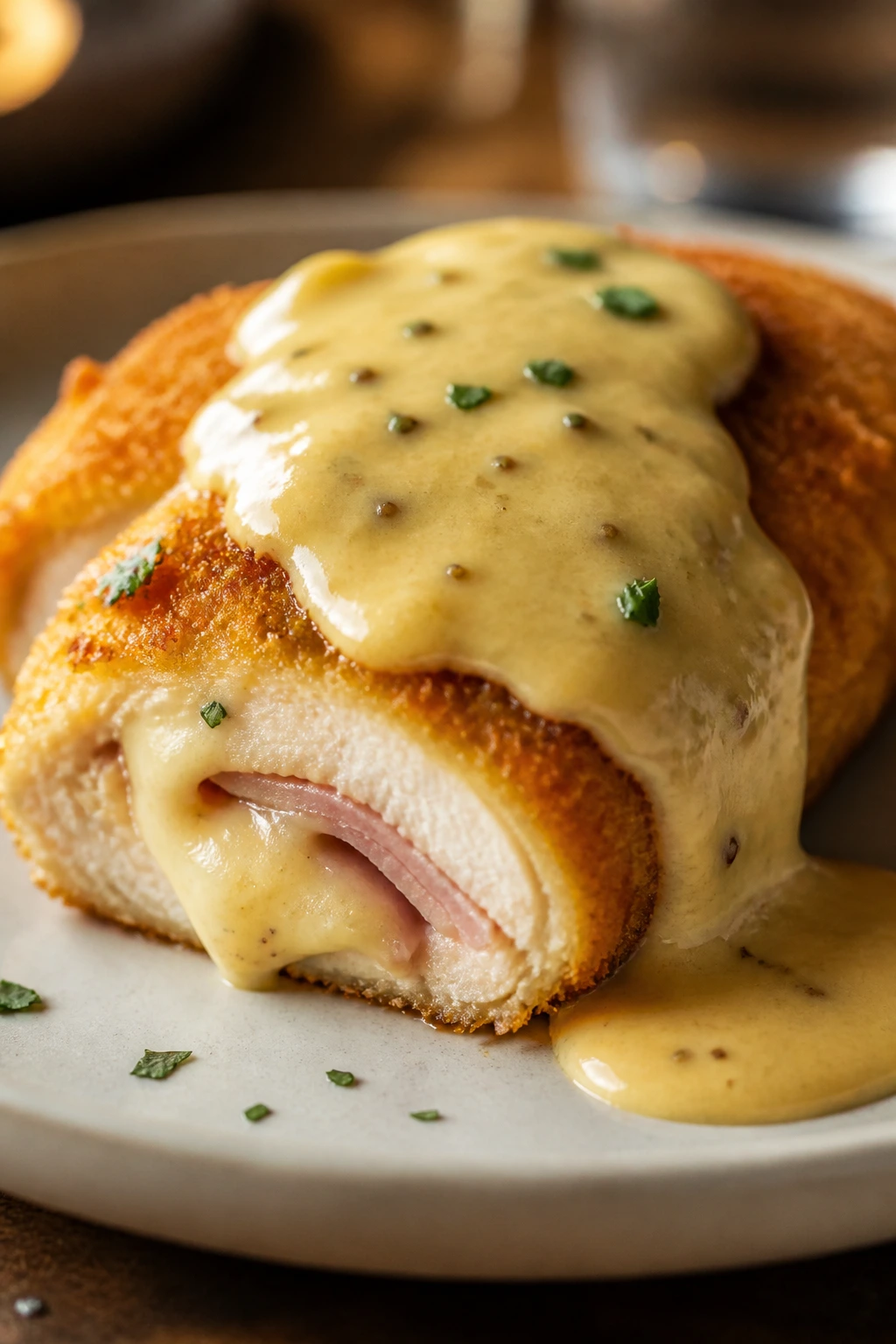
The sauce is the part that keeps this dish from feeling like a breaded chicken stunt. It needs to be smooth, a little tangy, and thick enough to cling without turning gluey. If you make it too heavy, the whole plate gets sleepy. If you make it too thin, it runs off the chicken and pools at the bottom of the dish.
Building the Roux
Butter and flour are doing the real work here. Cook them together for a full minute before you add liquid, because raw flour tastes chalky and can make a sauce taste unfinished. You are looking for a pale, sandy paste that smells nutty, not toasted dark brown. That short cook gives the sauce body without a floury edge.
Keeping the Dairy Smooth
Add the broth first, then the milk or half-and-half. That order helps the roux loosen without clumping. Whisk steadily while the liquid goes in, and keep the heat at a lazy simmer once the dairy is added. A rolling boil is where a smooth sauce starts to break apart or turn grainy around the edges.
Finishing with Mustard and Lemon
Dijon mustard gives the sauce its backbone. It cuts the richness of the cheese and butter without tasting sharp, and it keeps the sauce from feeling one-note. The lemon juice does a different job — it brightens the finish so the ham and Swiss taste savory instead of heavy.
If you want the sauce looser, add 1 to 2 tablespoons warm broth at the end. If you want it thicker, give it another minute on the stove. That’s the only adjustment most people need.
Special Equipment for This Recipe
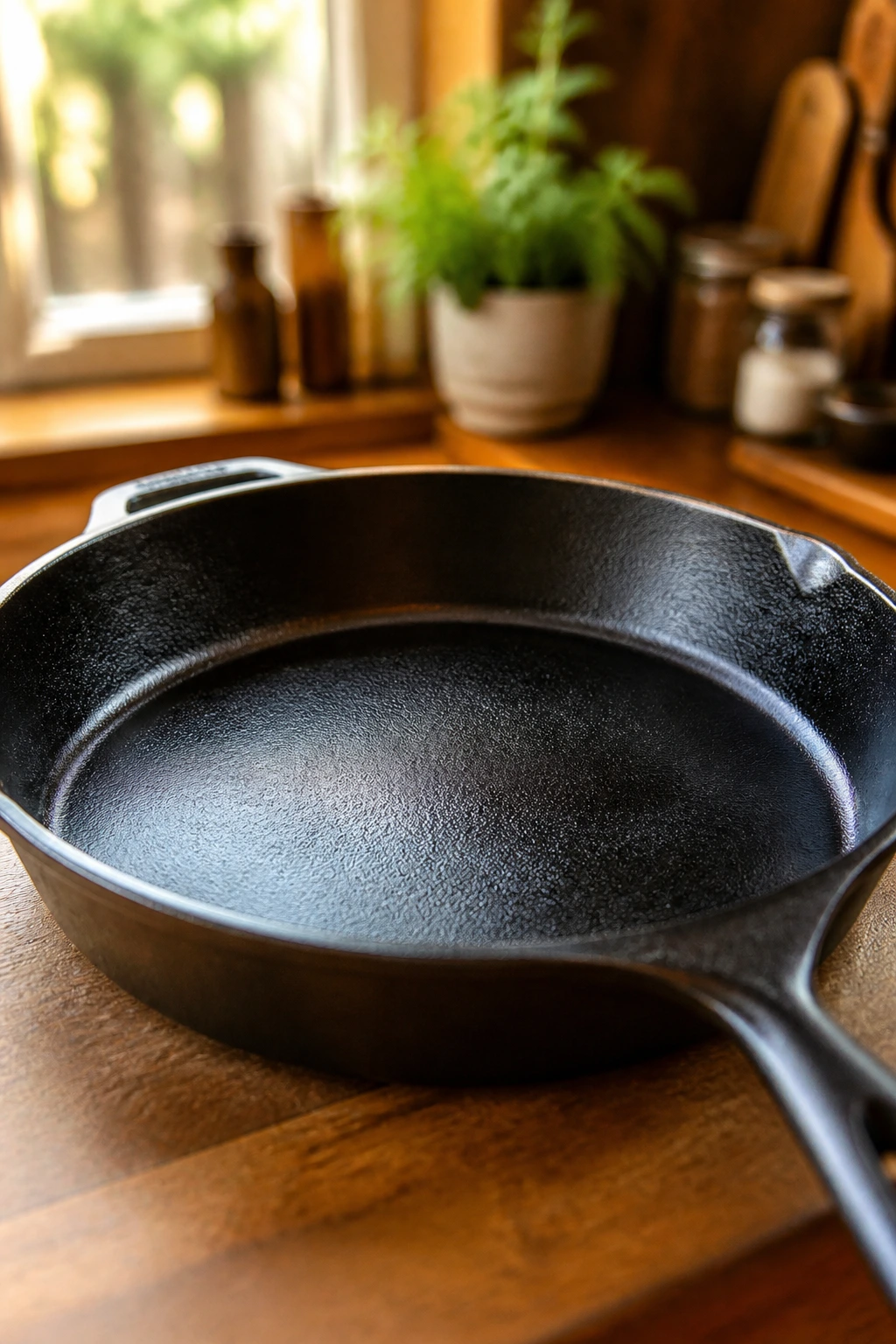
- 12-inch oven-safe skillet or cast-iron skillet: This lets you sear and bake in the same pan, which saves time and captures the browned bits for the sauce.
- Rimmed sheet pan: Useful if your skillet is not oven-safe or if you want a separate place for the cutlets while the sauce comes together.
- Meat mallet or rolling pin: A mallet makes the chicken even; a rolling pin works if you keep the pressure gentle.
- Parchment paper or plastic wrap: Keeps the chicken from tearing while you pound it.
- Three shallow dishes: One each for flour, egg wash, and crumbs.
- Instant-read thermometer: This is the easiest way to hit 165°F without overcooking.
- Tongs: Better than a fork for turning the cutlets and keeping the crust intact.
- Toothpicks: Small, plain toothpicks help secure the filling. Remove them before serving.
- Whisk: Needed for the sauce so the flour doesn’t clump.
- Microplane or fine grater: Helpful for the Parmesan if you want it to melt into the sauce without graininess.
How to Serve It at the Table
Presentation:
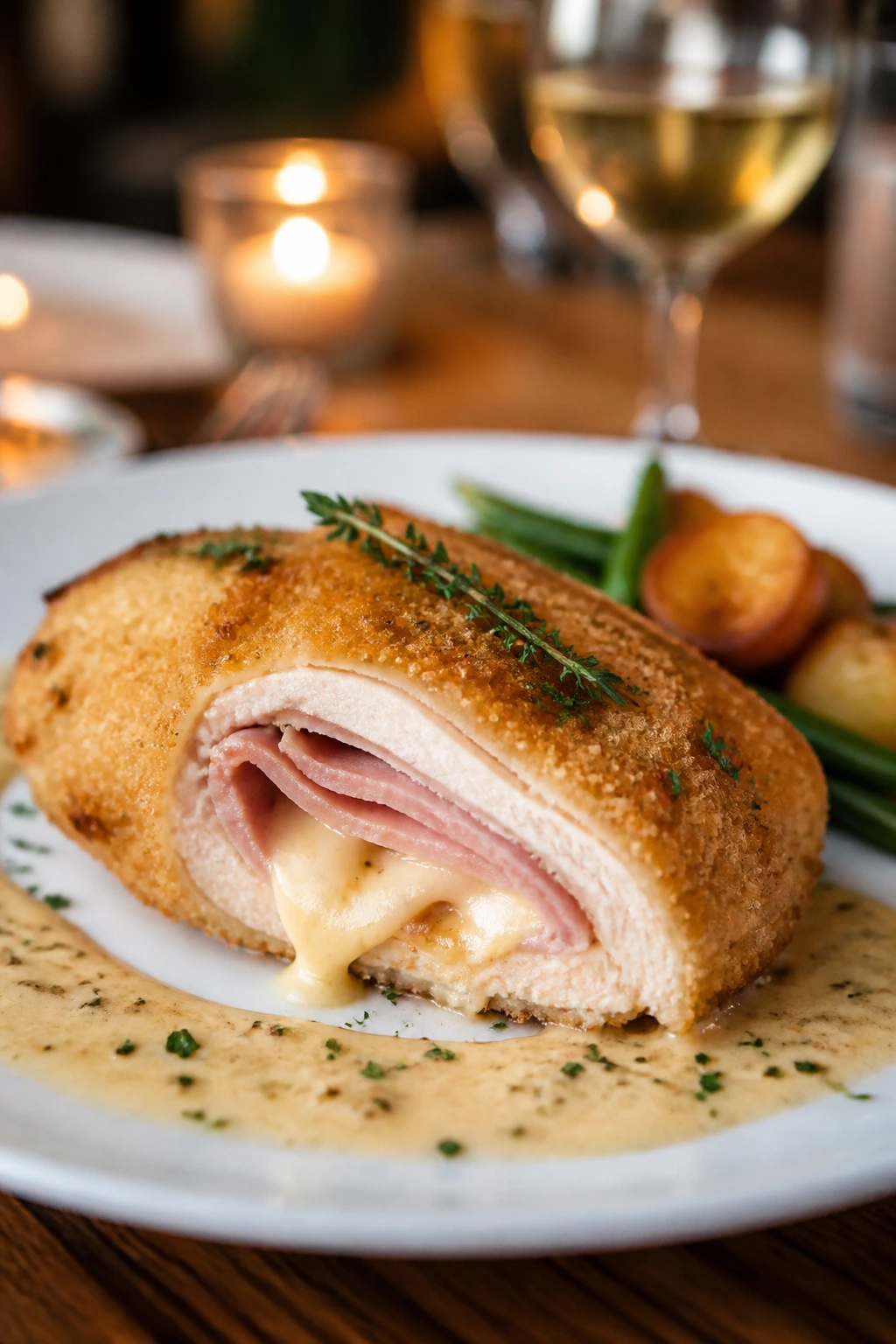
Set each cutlet slightly angled on the plate so the crust stays visible, then spoon the sauce around the sides or over the top in a thin ribbon. I prefer to leave one edge of the chicken exposed because that little strip of golden crumb is where the texture lives.
Accompaniments:
Buttery mashed potatoes are the obvious move, and I won’t pretend otherwise. Buttered egg noodles, roasted green beans, steamed broccoli, or a crisp arugula salad also work because they handle the sauce without competing with the ham and Swiss.
Portions:
One stuffed cutlet feeds one person if the breasts are average size. If you started with bigger chicken breasts, slice each cutlet in half on the diagonal and serve it alongside potatoes or noodles so the plate doesn’t feel oversized.
Beverage Pairing:
A dry Riesling, Pinot Gris, or Sauvignon Blanc gives the sauce a clean finish. If you’re skipping wine, sparkling water with lemon or a sharp iced tea keeps the plate from feeling too rich by the last bite.
Practical Tips for Better Texture and Faster Cleanup
Flavor Enhancement: A teaspoon of white wine in the skillet after the garlic goes in can add a little extra depth to the sauce, especially if you let it bubble for 30 seconds before the broth. If you want a touch more brightness, add a pinch of lemon zest over the plated chicken. Tiny amounts. Both of them matter.
Time-Saver: Pound and season the chicken earlier in the day, then keep it covered in the fridge. Mix the breading ingredients ahead too, but keep the wet and dry stations separate until you are ready to cook. That keeps the breading from turning damp before it ever hits the skillet.
Pro Move: If your skillet is a little small, sear the cutlets in batches and hold the first batch on a wire rack set over a sheet pan in a low oven. A rack keeps the crust from softening under trapped steam. A plate does not. A plate is where crispness goes to die.
Cost-Saver: Thin deli ham is the smart buy here. The thick fancy slices look handsome in the package and behave badly inside the chicken because they make a bulge that wants to split the crust. The same goes for cheese — buy slices that fold neatly, not a block that turns into a melting landslide.
Common Mistakes That Make Cordon Bleu Sloppy
-
Pounding uneven chicken: One side ends up dry while the thicker end stays pale and underdone. The fix is simple: slice thick breasts horizontally first, then pound from the center outward so the piece stays even.
-
Overstuffing the cutlets: If the ham and cheese spill out before the chicken is sealed, the filling burns in the skillet and the crust tears. Keep the filling to one thin slice of each, and leave a small border around the edges.
-
Skipping the breading rest: The coating can separate from the chicken when it hits the hot fat if you move too fast. Ten minutes on the tray gives the flour and egg time to bind with the crumbs.
-
Using heat that is too high: Dark crust with raw chicken inside is a classic problem here. Medium-high is enough for color; anything hotter can scorch the panko before the center reaches 165°F.
-
Boiling the sauce hard: A rough boil can make the dairy grainy and thin the flavor out instead of concentrating it. Keep the sauce at a gentle simmer and whisk often, especially after the milk goes in.
-
Cutting the chicken too soon: Slice it the moment it leaves the oven and the cheese runs everywhere. Five minutes of rest lets the juices settle and gives the filling a chance to thicken slightly.
Variations Worth Trying
Smoky Gruyère Swap
Trade the Swiss for Gruyère and use a smoky ham. The flavor gets deeper and a little nuttier, which suits people who want a richer finish without changing the method at all. The sauce can stay exactly the same.
Spinach Layered Version
Add a thin layer of squeezed-dry baby spinach between the ham and cheese. It gives the filling more color and a faint vegetal note, and it works well if you want the plate to feel a little less heavy. Dry the spinach well first or it will leak into the crust.
Gluten-Free Crust
Use a gluten-free flour blend for the dredge and gluten-free panko for the crust. The method stays the same, though the cutlets benefit from the full 10-minute rest after breading so the coating sets before searing. Gluten-free crumbs can be a little more fragile if you rush them.
Lighter Sauce Finish
Use whole milk instead of half-and-half and cut the Parmesan in the sauce back to 2 tablespoons. You still get a creamy, spoonable sauce, but the result feels lighter and works better when you’re serving the chicken with potatoes or noodles. The sauce will be thinner, and that is the point.
Prosciutto-and-Fontina Version
Swap the deli ham for prosciutto and the Swiss for fontina. This is saltier, silkier, and a little less old-school, which is why I like it when I want the dish to feel sharper and less nostalgic. Keep the chicken seasoning light if you go this route.
Make-Ahead, Storage, and Reheating
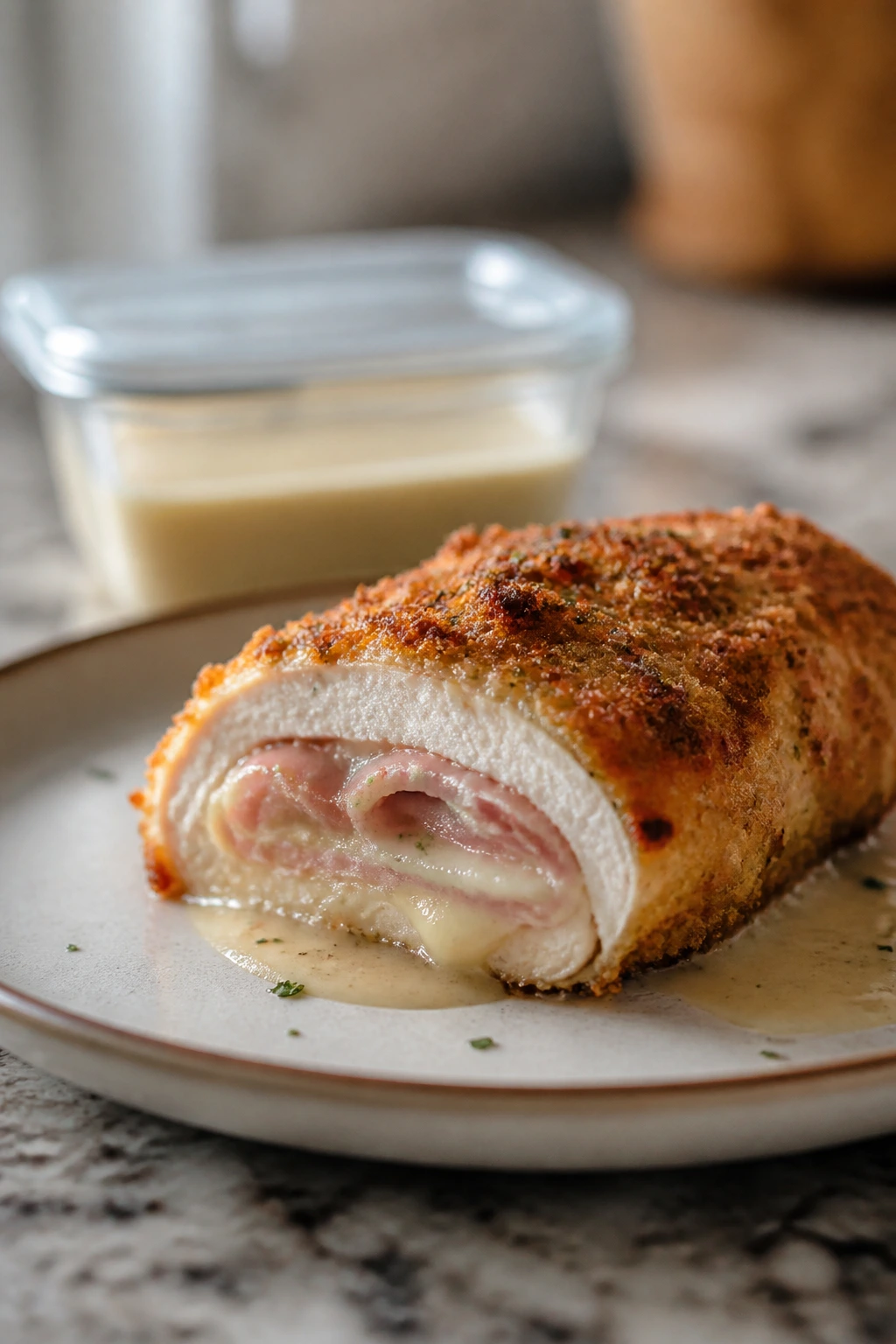
Leftovers are fine, but the crust loses some charm if you treat it like a stew. A little care goes a long way.
Refrigerator
Cooked chicken cordon bleu keeps in the fridge for 3 to 4 days in an airtight container. If you can, store the sauce separately so the crust stays drier and the chicken reheats more evenly. If the sauce already sits on top, it will still be safe, but the coating will soften.
Freezer
You can freeze the cooked cutlets for up to 2 months. Wrap each piece tightly, then tuck them into a freezer bag or container so the crust does not pick up freezer burn. Freeze the sauce in a separate container for up to 1 month; it may look slightly split when thawed, but a whisk and gentle heat usually bring it back together.
Reheating
For the best texture, reheat the chicken in a 325°F (165°C) oven for 15 to 20 minutes if it is refrigerated, or a little longer if it is frozen and thawed first. Put it on a rack over a sheet pan and cover it loosely with foil for the first half of the time, then uncover it so the crust can dry out.
Warm the sauce in a small saucepan over low heat, whisking in a splash of broth or milk if it thickened too much in the fridge. The microwave works in a pinch, but the sauce can go uneven fast and the crust will soften.
Make-Ahead
You can pound, season, fill, and bread the chicken up to 1 day ahead. Keep the breaded cutlets on a tray or rack in the fridge, uncovered or very lightly covered, so the coating stays firm instead of getting soggy. The sauce can be made 2 days ahead, cooled, and rewarmed gently before serving.
Questions People Actually Ask
Can I use chicken thighs instead of breasts?
Yes, if you use boneless, skinless thighs and pound them thin enough to fold. They stay juicy, but they do not roll as neatly as breasts, so expect a looser shape and a slightly less tidy presentation.
Do I have to sear the chicken before baking it?
No, but I think the sear is worth the extra few minutes. It gives the crust color and a better texture, and it helps the chicken look finished instead of pale and steamed. If you skip the sear, bake a little longer and watch the crust closely.
What cheese melts best if I do not have Swiss?
Gruyère, fontina, and provolone all melt well and keep a soft center. Avoid hard cheddar if you want the classic cordon bleu feel, because it can turn oily and separate before the chicken is done.
How do I keep the filling from leaking out?
Use thin ham and cheese slices, leave a border at the edges, and do not overstuff the cutlets. Sealing the seam gently, then letting the breaded chicken rest before it hits the skillet, helps a lot too.
Can I make the chicken ahead and cook it later?
Yes. Bread the cutlets and keep them chilled for up to a day before cooking. I would not leave them longer than that, because the coating can soften and the filling starts to leak during searing.
What if the sauce gets too thick?
Whisk in warm broth or milk, a tablespoon at a time, until it loosens. If it gets too thin, let it simmer for another minute or two. The sauce should coat a spoon without turning into paste.
Can I freeze it before baking?
You can, but I like freezing the cooked cutlets more because the breading stays better. If you do freeze them raw, freeze them on a tray first so they harden separately, then wrap them well. Bake from thawed rather than straight from frozen if you want the crust to behave.
Why This One Belongs in Rotation
What makes this dinner stick is not the ham or the cheese. It is the sequence. Thin chicken, tidy filling, crisp crumbs, gentle sauce. That order turns a dish that can feel awkward on paper into something you can pull off after work without needing a pep talk.
I like recipes that reward attention without punishing you for being human. This one does that. Keep the cutlets even, keep the sauce soft, and serve it before the crust has a chance to sit under a flood of steam. The next time you want a dinner that feels a little dressed up but still lands comfortably on a weekday, this one earns its spot.
Creamy Chicken Cordon Bleu — Recipe Card
Recipe Name: Creamy Chicken Cordon Bleu
Description: Thin chicken breasts are stuffed with ham and Swiss, coated in a crisp panko-Parmesan crust, baked until juicy, and finished with a creamy Dijon sauce. It keeps the classic cordon bleu flavor but fits a weeknight timeline.
Prep Time: 25 minutes
Cook Time: 30 minutes
Total Time: 55 minutes active + 15 minutes resting
Course: Main Course
Cuisine: French-American
Servings: 4 servings
Calories: About 620 kcal per serving
Ingredients
For the Chicken and Filling:
- 4 boneless, skinless chicken breasts, about 2 pounds total
- 1 teaspoon kosher salt
- 1/2 teaspoon black pepper
- 1 teaspoon garlic powder
- 1/2 teaspoon paprika
- 4 thin slices deli ham, about 4 ounces total
- 4 slices Swiss cheese, about 4 ounces total
For the Breading:
- 1 cup all-purpose flour
- 2 large eggs
- 2 tablespoons milk
- 1 1/2 cups panko breadcrumbs
- 1/4 cup grated Parmesan
- 1 teaspoon dried thyme
For Cooking and the Sauce:
- 2 tablespoons olive oil
- 4 tablespoons unsalted butter, divided
- 2 cloves garlic, minced
- 2 tablespoons all-purpose flour
- 1 1/2 cups low-sodium chicken broth
- 3/4 cup whole milk or half-and-half
- 2 teaspoons Dijon mustard
- 1/4 teaspoon kosher salt, plus more to taste
- 1/4 teaspoon black pepper
- 1/4 cup grated Parmesan
- 1 teaspoon lemon juice
- 1 tablespoon chopped parsley, for garnish
Instructions
- Preheat the oven to 400°F (200°C) and line a rimmed sheet pan with parchment.
- Slice thicker chicken breasts horizontally if needed, then pound each piece to about 1/4-inch thickness between parchment or in a zip-top bag. Season with salt, pepper, garlic powder, and paprika.
- Lay 1 slice of ham and 1 slice of Swiss on each cutlet, leaving a small border. Fold or roll the chicken over the filling and secure with toothpicks if needed.
- Set up three shallow dishes with flour, beaten eggs mixed with milk, and panko mixed with Parmesan and thyme. Dredge each cutlet in flour, dip in egg wash, then coat in crumbs.
- Rest the breaded chicken for 10 minutes on a tray.
- Heat olive oil and 2 tablespoons butter in a large oven-safe skillet over medium-high heat. Sear the chicken for 2 to 3 minutes per side until golden brown.
- Transfer the chicken to the sheet pan or keep it in the oven-safe skillet and bake for 12 to 15 minutes, or until the thickest part reaches 165°F.
- Meanwhile, lower the skillet heat to medium. Add the remaining 2 tablespoons butter and garlic, cook for 20 to 30 seconds, then whisk in flour for 1 minute. Slowly whisk in broth, milk or half-and-half, Dijon, salt, and pepper. Simmer for 3 to 4 minutes until thickened.
- Stir in Parmesan and lemon juice. Rest the chicken for 5 minutes, remove toothpicks, spoon sauce over or beside the cutlets, and finish with parsley.
Notes: Chill the breaded chicken for 10 minutes before searing so the crust sticks better. If the sauce gets too thick, whisk in a splash of warm broth or milk.