



A roasted chicken sandwich is what I make when dinner needs to feel deliberate but the clock is already rude. A hot sheet pan, a little lemon in the mayo, and bread that gets a fast toast are enough to turn plain chicken into something that eats like a proper meal.
Most chicken sandwiches fail in one of two ways: the meat is dry, or the toppings bury it. Roasting boneless thighs at a hard 425°F solves the first problem, and a sharp, creamy spread plus a few crisp toppings solve the second. You get browned edges, juicy slices, and a sandwich that still behaves when you pick it up.
I like this version because it has structure. The oven does the heavy lifting, the bread gets a quick toast, and the sauce brings the whole thing into focus without turning it greasy. Nothing here is fussy. Nothing needs a marinade overnight or a long shopping list. The result is a roasted chicken sandwich that feels sturdy, warm, and very much like dinner, not a desk lunch that wandered onto a plate.
Why This Roasted Chicken Sandwich Works on a Busy Night
-
Juicy Chicken, Not Guesswork: Boneless thighs stay tender at a hot oven temperature, and an instant-read thermometer takes the drama out of doneness.
-
One Pan, One Real Cleanup: The chicken roasts on a single sheet pan, which means you are not juggling three burners and a skillet you’ll regret later.
-
A Sharp Sauce Changes Everything: Lemon-Dijon mayo keeps the sandwich from tasting flat, and it cuts through the richness of the chicken in a way plain mayonnaise never will.
-
Bread That Can Hold Its Own: Toasted ciabatta or sturdy rolls keep the juices and toppings in place instead of collapsing into a soft mess halfway through dinner.
-
Flexible Enough for a Fridge Raid: Lettuce, arugula, tomato, red onion, pickles — use what you have, as long as you keep the crunch and the acid.
-
Easy to Repeat: The chicken and sauce keep well separately, so this can become a twice-in-one-week dinner without feeling like a repeat.
Yield: 4 sandwiches
Prep Time: 15 minutes
Cook Time: 22 minutes
Rest Time: 10 minutes
Total Time: 47 minutes
Difficulty: Beginner — the method is a straightforward sheet-pan roast with simple assembly, and the thermometer does most of the thinking for you.
Best Served: Warm, within 15 minutes of toasting the rolls
Why Roasting the Chicken Makes This Sandwich Taste Like Dinner
A lot of chicken sandwiches taste like they were built from leftovers with a very optimistic attitude. This one starts differently. Roasting the chicken gives you browned edges, a little caramelized seasoning, and meat that tastes seasoned all the way through instead of only on the surface. That matters. A sandwich doesn’t have much time to make an impression, and roast chicken brings more flavor than cold deli slices ever will.
Boneless, skinless thighs are the sweet spot here. They roast quickly, they stay juicy even if the oven runs a little hot, and they slice cleanly after a short rest. You do not need the skin for this kind of sandwich. You need meat that stays tender under heat, then stays tender again after it’s sliced and piled onto bread.
The other nice thing about roast chicken is the way it lets the sandwich build flavor in layers. The bread gets toasted, the mayo gets sharpened with lemon and Dijon, the pickles bring salt and tang, and the chicken itself carries smoke, garlic, and paprika. That’s a small stack of simple things. Together, they taste complete.
This is also one of those rare chicken dinners that doesn’t punish you for cooking a little extra. Leftover roast chicken works in tomorrow’s sandwich, tossed over greens, or tucked into a wrap. If you’re the kind of cook who likes dinner to quietly handle two nights at once, this recipe cooperates.
What Goes Into the Sandwich and What Each Piece Does
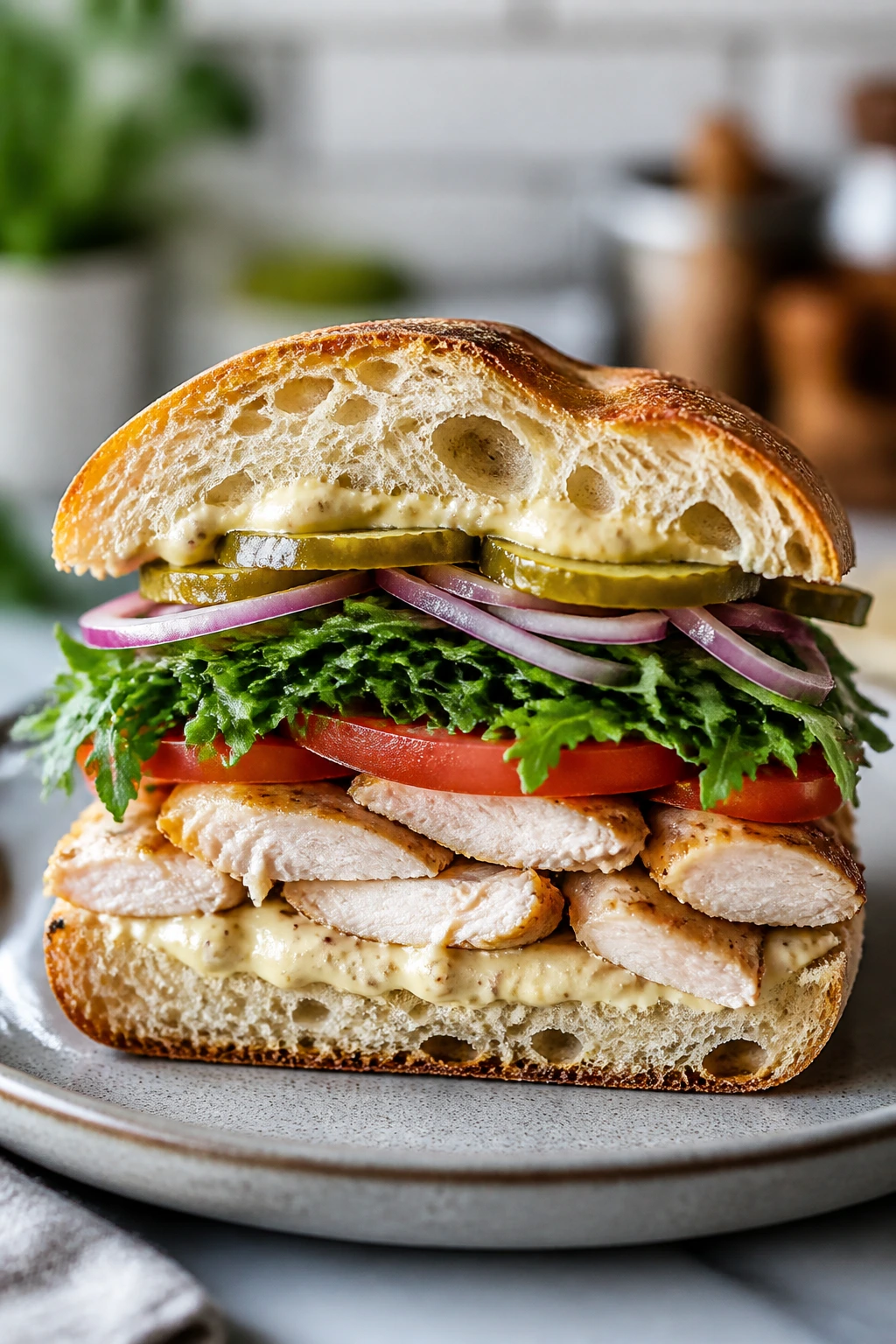
The ingredient list is short enough to memorize, which is a good sign. Every item has a job. If one of them is weak, the whole sandwich feels thin.
For the Chicken:
- 1 1/2 pounds boneless, skinless chicken thighs, trimmed of excess fat
- 1 tablespoon olive oil
- 1 teaspoon kosher salt
- 1/2 teaspoon black pepper
- 1 teaspoon garlic powder
- 1 teaspoon smoked paprika
- 1/2 teaspoon dried thyme
- 1/4 teaspoon red pepper flakes, optional
For the Sandwich:
- 4 sturdy sandwich rolls or ciabatta rolls, split
- 2 tablespoons olive oil, for toasting
- 1 cup shredded romaine or baby arugula
- 1 large ripe tomato, sliced and patted dry
- 1/2 small red onion, very thinly sliced
- 1/2 cup dill pickle chips
For the Lemon-Dijon Mayo:
- 1/2 cup mayonnaise
- 1 tablespoon Dijon mustard
- 1 tablespoon lemon juice
- 1 teaspoon lemon zest
- 1 small garlic clove, finely grated
- 1 tablespoon chopped fresh parsley or dill
- 1/4 teaspoon kosher salt
- 1/8 teaspoon black pepper
Chicken Thighs: The Part That Makes the Sandwich Worth Eating
-
What to use: 1 1/2 pounds boneless, skinless chicken thighs, preferably pieces that are close in size so they finish at the same time.
-
Preparation: Trim off large bits of fat, pat the thighs dry with paper towels, and toss them with the oil and seasoning so every surface gets coated.
-
Substitutions: Boneless, skinless chicken breasts work if that’s what you have, but pound them to an even thickness and pull them at 165°F instead of waiting for dark meat tenderness.
-
Tips: Thighs are more forgiving than breasts, which matters when you’re trying to cook dinner and answer three other questions at once. If they look a little underbrowned at the 18-minute mark, give them a few more minutes rather than pulling early.
Bread: The Shell That Has to Stay Upright
-
What to use: 4 sturdy sandwich rolls or ciabatta rolls, split open so the cut sides can toast.
-
Preparation: Brush the cut sides with olive oil before toasting so they turn golden and slightly crisp instead of just warm.
-
Substitutions: Hoagie rolls, kaiser rolls, or a firm sourdough bun all work. Soft brioche is usable, but it needs a firm toast or it gives up too fast under the chicken and sauce.
-
Tips: Bread matters more than people like to admit. If it squashes under your fingers before toasting, it probably won’t hold the sandwich once the chicken and tomato are in place.
Lemon-Dijon Mayo: The Part That Ties Everything Together
-
What to use: 1/2 cup mayonnaise, 1 tablespoon Dijon mustard, 1 tablespoon lemon juice, 1 teaspoon lemon zest, and a little grated garlic.
-
Preparation: Stir the sauce until smooth and taste it before assembling. It should feel creamy first, then sharp, then faintly garlicky.
-
Substitutions: Whole-grain mustard gives a little texture, and a dairy-free mayo works cleanly if you want the sandwich to stay dairy-free. Yellow mustard can do the job in a pinch, though it tastes a bit more direct and less rounded.
-
Tips: This is not the place for a tiny dab of spread. The sauce needs enough body to coat the bread and enough acid to wake up the chicken. If it tastes flat in the bowl, it will taste flatter on the sandwich.
Crunch and Freshness: The Parts That Keep the Sandwich Bright
-
What to use: 1 cup shredded romaine or baby arugula, 1 large ripe tomato, 1/2 small red onion, and 1/2 cup dill pickle chips.
-
Preparation: Pat the tomato slices dry so they don’t flood the bread, and slice the onion thin enough that it gives sharpness without biting back too hard.
-
Substitutions: Shredded cabbage, butter lettuce, cucumber slices, or a quick slaw all work if you want different crunch. If tomatoes are watery, leave them out rather than forcing the issue.
-
Tips: Fresh toppings are not decoration. They’re the reason the sandwich doesn’t feel heavy after the first few bites. A little acid from pickles or onion goes a long way, so don’t pile them on like you’re building a tower.
Seasoning: Small Amounts, Big Payoff
-
What to use: Kosher salt, black pepper, garlic powder, smoked paprika, dried thyme, and a small pinch of red pepper flakes if you want a little heat.
-
Preparation: Mix the dry seasonings before they hit the chicken so they distribute evenly instead of clumping in one spot.
-
Substitutions: Sweet paprika can stand in for smoked paprika, and dried oregano works where thyme would go if that’s what sits in your cabinet.
-
Tips: The seasoning on the chicken should taste a touch too bold on its own, because the bread and toppings will soften it once the sandwich is built. That’s not a mistake. That’s balance.
The Tools That Keep the Sandwich from Falling Apart
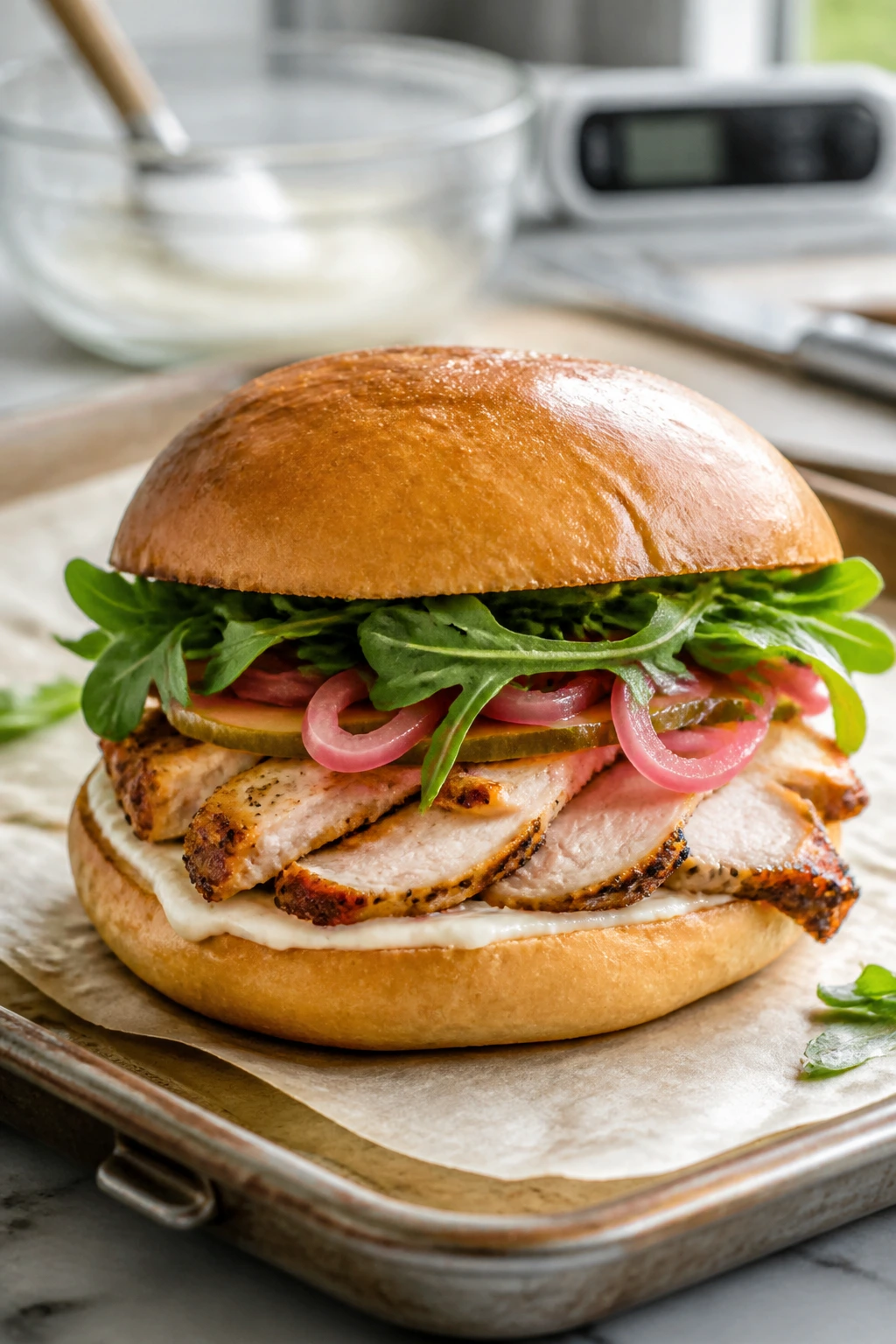
A sandwich like this doesn’t need fancy gear. It does need a few tools that make the work cleaner and the results steadier.
-
Rimmed sheet pan: This is where the chicken roasts. The rim catches juices, which matters when you want to spoon a little of that flavor back over the sliced meat.
-
Parchment paper: Line the pan for easy cleanup. Foil works in a pinch, but parchment feels less sticky and makes the browned bits easier to lift.
-
Instant-read thermometer: The single most useful tool in the whole recipe. It keeps you from guessing, which is where dry chicken starts.
-
Mixing bowl: One medium bowl is enough for the chicken seasoning and the sauce.
-
Tongs: Helpful for turning the chicken, moving it to the board, and handling the bread if you toast it in a skillet.
-
Sharp serrated knife: A crusty roll cuts better with a serrated blade, and the sandwich slices more cleanly if the bread isn’t crushed.
-
Cutting board: Use a stable one. If yours slides, tuck a damp kitchen towel underneath it. That tiny trick saves knuckles.
-
Small whisk or fork: For the mayo. A fork does the job fine, which is one less thing to wash.
How to Roast the Chicken and Build the Sandwich
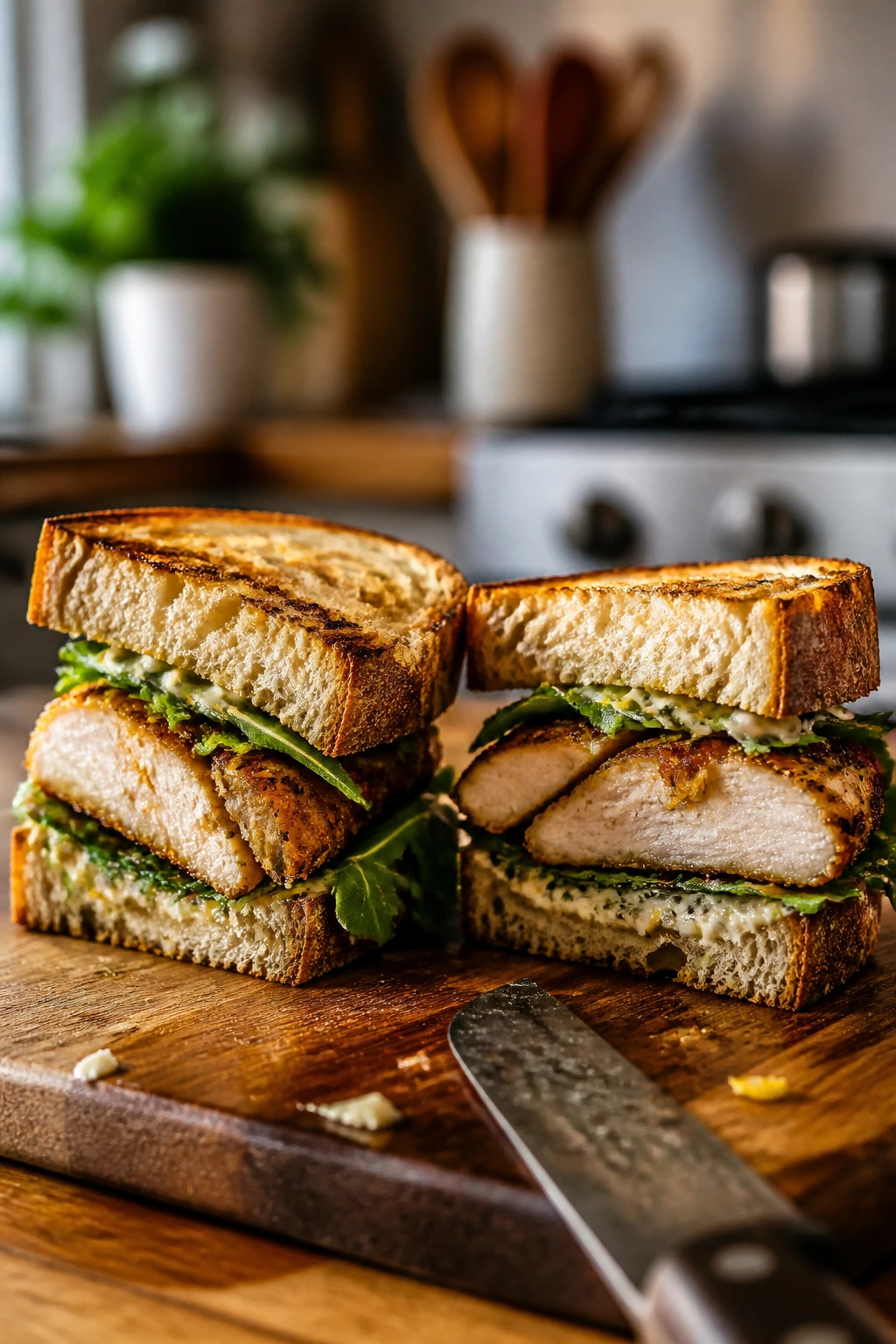
Do the chicken first. The sandwich only looks quick once the meat is resting.
Roast the Chicken
-
Preheat the oven to 425°F (220°C) and line a rimmed sheet pan with parchment paper. Position a rack in the center of the oven so the chicken browns evenly instead of scorching on top.
-
Pat the chicken thighs dry with paper towels, then place them in a medium bowl. Add 1 tablespoon olive oil, kosher salt, black pepper, garlic powder, smoked paprika, thyme, and red pepper flakes if using. Toss until every piece looks evenly coated and the seasoning is stuck to the surface instead of sitting in the bowl.
-
Arrange the chicken in a single layer on the prepared sheet pan, leaving a little space between the pieces. Do not crowd the pan; if the thighs touch, they steam and lose the roasted edges you want.
-
Roast for 18 to 22 minutes, until the thickest piece reaches 175°F (or 165°F if you’re using chicken breasts) on an instant-read thermometer and the outside looks browned at the edges. The chicken should feel springy when pressed lightly, not soft or loose.
-
Transfer the chicken to a cutting board and rest for 10 minutes. This part matters more than people think. If you slice early, the juices run out onto the board, and the sandwich eats drier than it should.
Make the Sauce and Toast the Bread
-
Stir together the mayonnaise, Dijon mustard, lemon juice, lemon zest, grated garlic, parsley or dill, salt, and black pepper in a small bowl. Taste it. It should be creamy, sharp, and a little salty. If it tastes sleepy, add a few more drops of lemon juice.
-
Brush the cut sides of the rolls with the remaining 2 tablespoons olive oil and toast them in a skillet over medium heat for 1 to 2 minutes, cut side down, or under the broiler for 30 to 60 seconds. Watch them closely. Bread goes from lightly golden to burnt faster than most people expect.
Assemble the Sandwich
-
Slice the chicken against the grain into 1/2-inch pieces. If there are any juices on the board, spoon a little over the sliced chicken. That tiny move makes the meat taste roasted instead of merely cooked.
-
Spread the lemon-Dijon mayo on both cut sides of the rolls, then layer on the romaine or arugula, tomato slices, red onion, pickles, and chicken. Close the sandwiches, press them gently, and slice them in half with a serrated knife.
-
Serve immediately while the bread is still crisp and the chicken is warm. If you’re feeding people who like a little more sauce, put the extra mayo on the table, not inside the sandwich where it can make the bread soggy.
How I Like to Serve It at Dinner
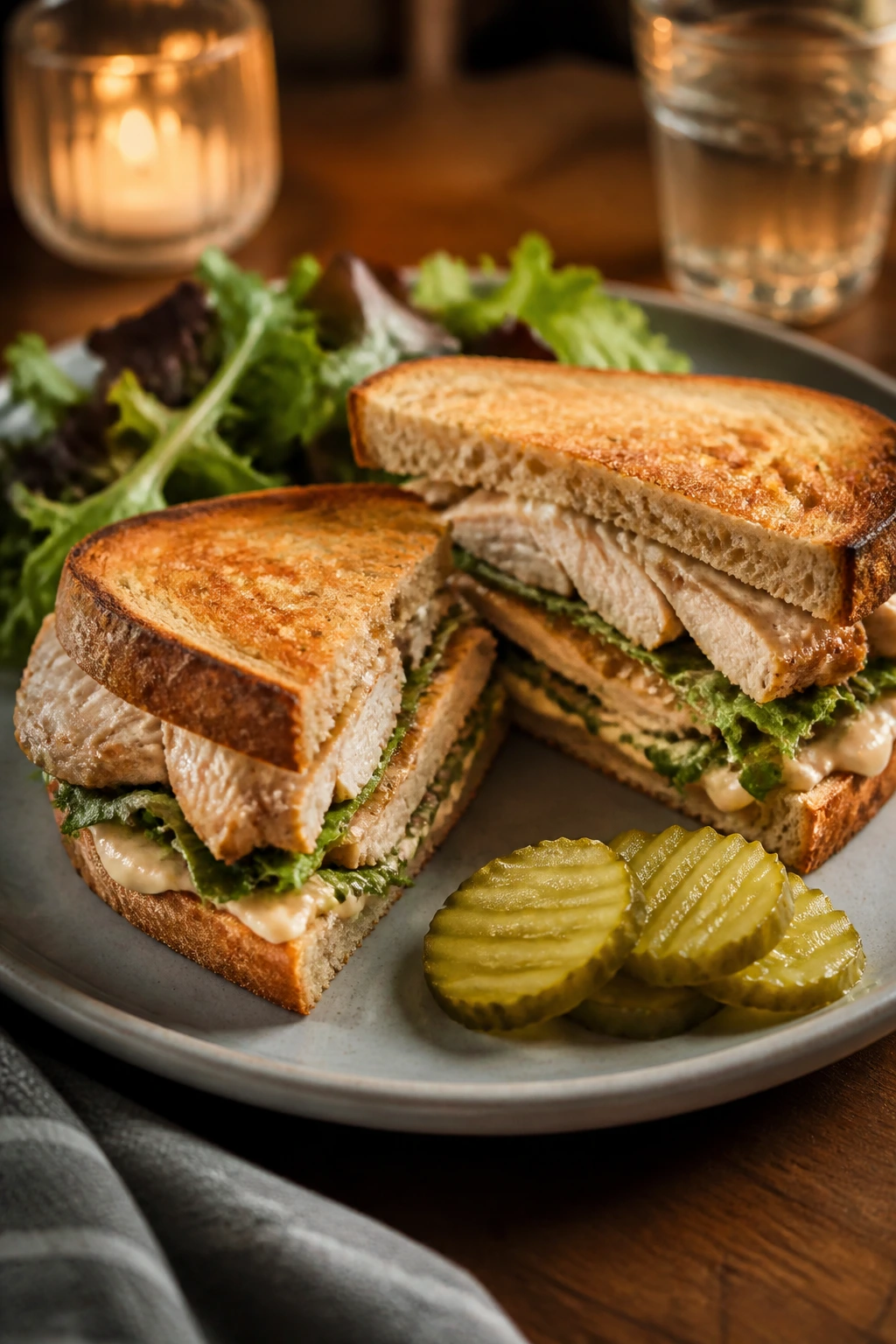
Presentation: I cut the sandwich on a sharp diagonal so the browned chicken and glossy tomato show at the edge of the bread. It looks more inviting that way, and the halves are easier to handle. A plate with a few pickle chips and a little pile of kettle chips beside it feels finished without being fussy.
Accompaniments: This sandwich wants something crisp, salty, or cool. Oven fries, dill cucumber salad, a simple coleslaw, or even a tomato-cucumber salad with a vinegar dressing all fit the mood. If the rolls are large, a half sandwich with a side salad is enough; if the rolls are smaller, one whole sandwich feels right for dinner.
Portions: One sandwich feeds one hungry adult. If you’re serving it with fries or a heavier side, two people can share one large ciabatta sandwich, though I wouldn’t recommend that if the goal is not to argue over the last bite. For kids, you can halve the sandwich and trim back the onion and pickles.
Beverage Pairing: I like iced tea with lemon, sparkling water with a slice of cucumber, or a light lager if the sandwich is part of a more relaxed dinner. Anything too sweet fights the Dijon and pickles. Anything overly heavy just gets in the way.
Small Tweaks That Make the Sandwich Better
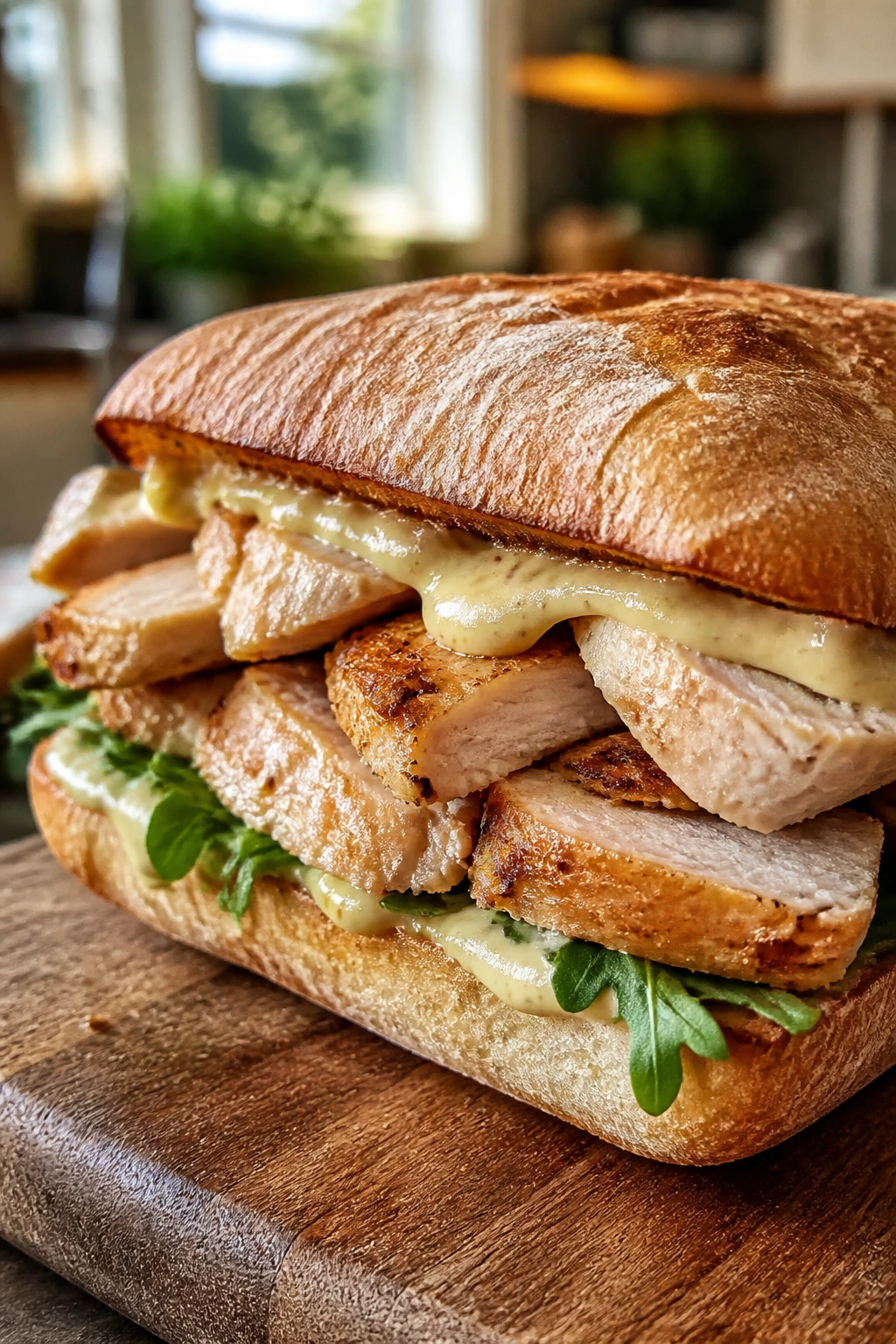
Flavor Enhancement: Stir a teaspoon of lemon zest into the mayo and save a tiny pinch for the sliced chicken. The extra citrus makes the whole sandwich taste brighter without turning it sour. A few drops of pickle brine in the sauce can help too, though I’d keep that subtle.
Time-Saver: Roast the chicken earlier in the day, let it cool, and store it in the fridge. Rewarm it in a 325°F oven for 8 to 10 minutes while you toast the rolls, and the dinner comes together fast enough for a tired evening.
Cost-Saver: Boneless thighs are usually the better buy here, and they’re also the better eat. Spend the money you save on sturdy rolls and good pickles instead of chasing fancy add-ons that disappear under the sauce.
Make-It-Yours: If you like a softer sandwich, add sliced avocado. If you want more crunch, swap the lettuce for shredded cabbage. If you prefer a greener, pepperier bite, use arugula instead of romaine and let the greens carry some of the sharpness.
Mistakes That Flatten the Flavor or Soak the Bread
-
Using chicken that’s still wet: Wet chicken steams before it browns, and the seasoning slides off instead of sticking. Pat the thighs dry with paper towels before you add oil and spices.
-
Crowding the sheet pan: If the pieces are jammed together, the edges stay pale and the chicken tastes flatter. Leave space around each piece so the hot air can move.
-
Slicing too soon: Chicken cut straight from the oven loses juices fast. Give it 10 minutes to rest, then slice it against the grain for the best texture.
-
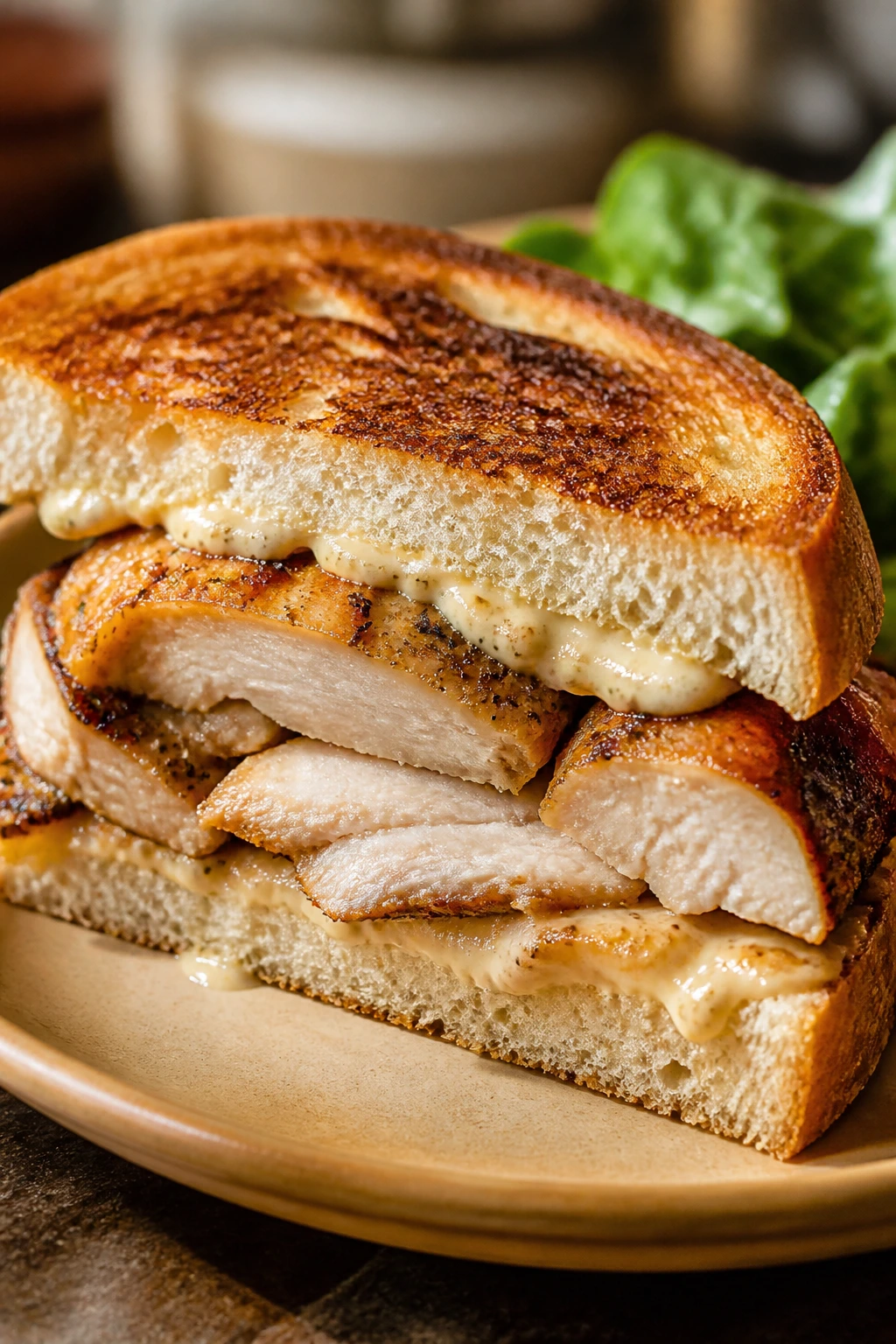
Choosing soft bread: A soft bun may look fine in the package and fail completely once the mayo and warm chicken hit it. Pick rolls with enough structure to toast into a light crust.
-
Assembling too early: Tomatoes and sauce will soften the bread if the sandwich sits for long. Build it right before serving, not ten minutes before you think people will arrive.
-
Skipping the toast: Untoasted bread gets damp in the first few bites. A quick skillet toast gives you a barrier between the sauce and the crumb, which is a small thing that changes the whole sandwich.
Variations That Still Taste Like the Same Sandwich
-
Hot Honey Crunch: Drizzle a little hot honey over the sliced chicken before closing the sandwich. The sweet heat plays well with pickles and lemon, and it’s a good choice if you like a sharper finish without more sauce.
-
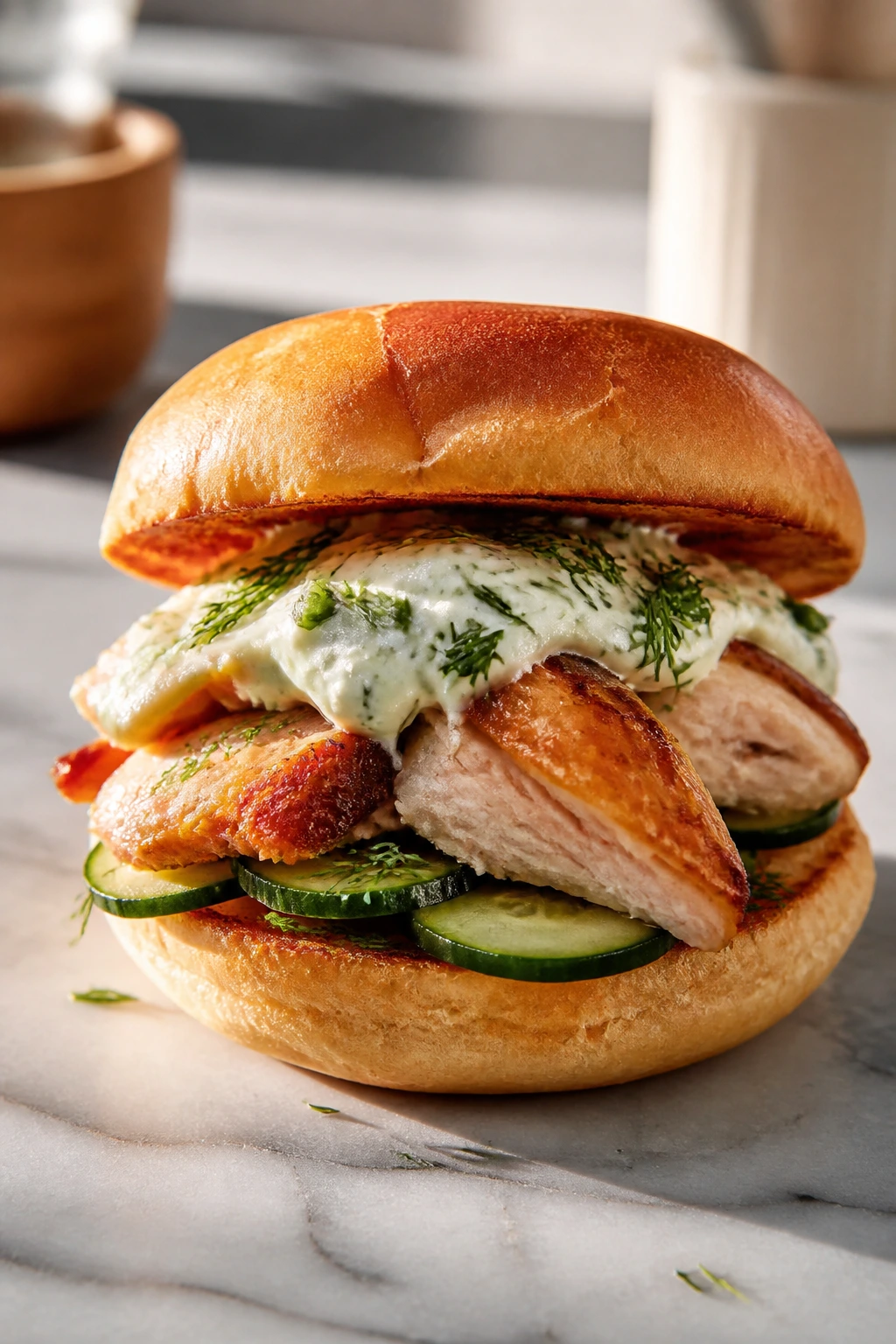
Herb Garden Version: Swap the parsley in the mayo for dill and chives, then add cucumber slices along with the lettuce. The sandwich turns lighter and more herb-driven, which works well if you want something that leans fresher than rich.
-
Provolone Melt: If you want a more deli-style sandwich, lay a slice of provolone over the chicken during the last minute of roasting and let it soften in the hot pan. It adds a milder, creamier finish without changing the structure too much.
-
Rotisserie Shortcut: Use about 3 cups shredded rotisserie chicken instead of roasting fresh thighs. Warm it gently with a spoonful of pan juices or broth, then build the sandwich the same way. It’s not quite the same as roasted chicken, but it gets close enough on a night when time is thin.
-
Gluten-Free Board Dinner: Swap in sturdy gluten-free rolls and toast them well before assembly. If your bread is delicate, serve the chicken and toppings open-faced so the structure holds better.
Storing, Reheating, and Making Ahead
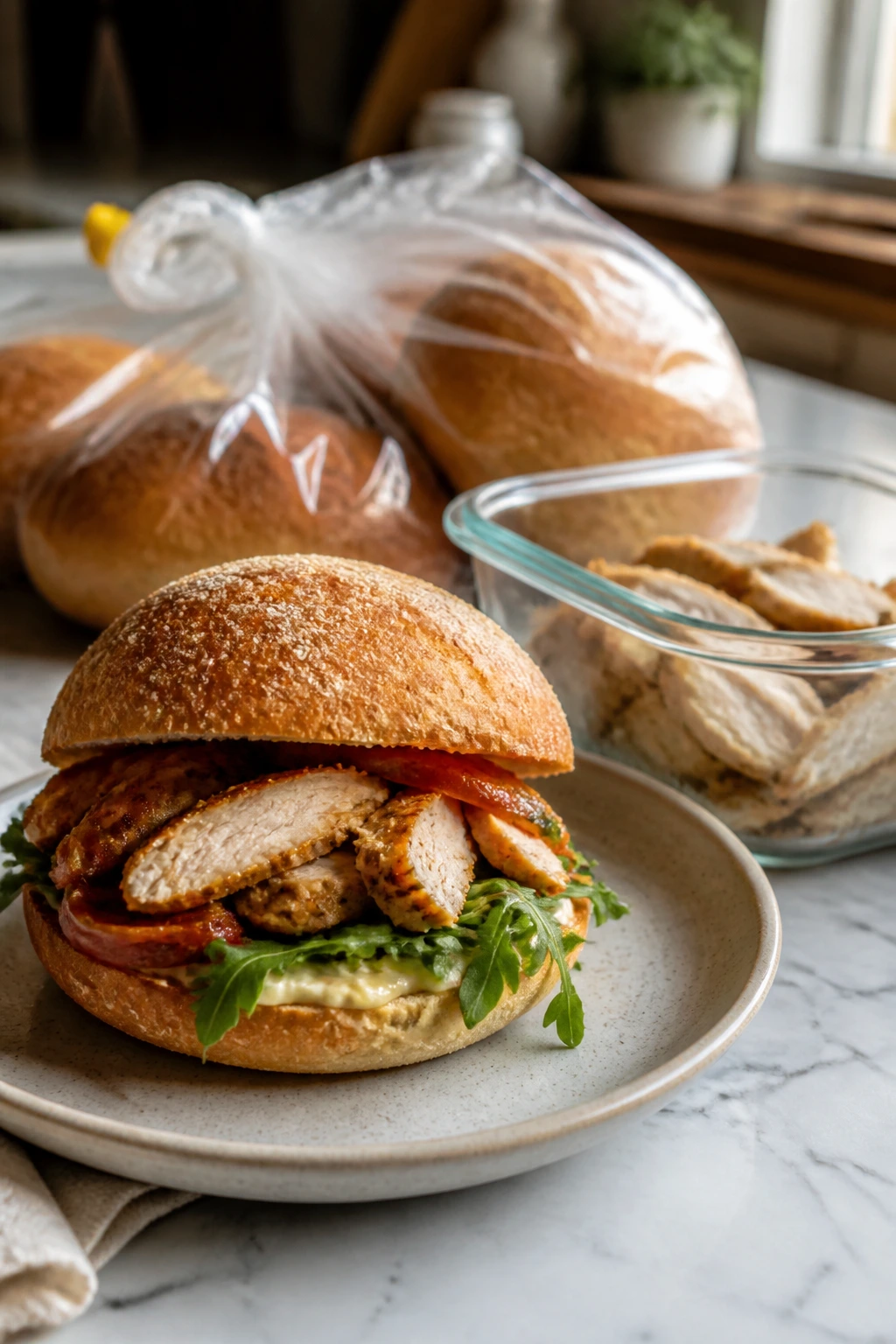
The chicken is the part worth saving. The fully assembled sandwich is not.
Roasted chicken: Store the cooked chicken in an airtight container in the refrigerator for up to 4 days. It freezes well for up to 2 months if you wrap it tightly or seal it in a freezer bag with the air pressed out. Slice it before freezing if you want it to reheat more evenly later.
Lemon-Dijon mayo: Keep the sauce refrigerated for up to 5 days. Give it a quick stir before using because the lemon can loosen it slightly while it sits. I would not freeze it; mayonnaise-based sauces tend to split and turn grainy after thawing.
Bread: Store rolls at room temperature for 1 to 2 days if you’ll eat them soon, or freeze them for up to 1 month. Toasting straight from frozen works fine, which is useful when you only need a couple of sandwiches and don’t want the rest of the package going stale.
Vegetables: Slice the onion up to 3 days ahead and store it in a sealed container. Wash and dry the greens 2 to 3 days ahead if you line the container with a paper towel. Tomatoes are best sliced right before serving; if you must prep them ahead, hold them in a single layer and blot them again before assembly.
Reheating: Warm the chicken in a 325°F oven for 8 to 10 minutes, loosely covered with foil, or in a covered skillet over medium-low heat with a teaspoon of water or broth. If you use the microwave, keep it short — 30 to 45 seconds at a time — and then toast the bread separately so the texture doesn’t go soft.
Make-ahead plan: Season the chicken up to 24 hours ahead and keep it covered in the fridge. Make the sauce up to 3 days ahead. Toast the bread and assemble at the last minute. That rhythm keeps the chicken juicy and the sandwich crisp.
Roasted Chicken Sandwich Questions I Hear Often
Can I use chicken breasts instead of thighs?
Yes, but they need more attention. Pound them to an even thickness so the thinner edge does not dry out before the center is done, and pull them at 165°F instead of waiting for dark meat tenderness.
What bread holds up best for this sandwich?
Ciabatta, hoagie rolls, and kaiser rolls are the strongest choices because they toast into a crisp shell. Soft sandwich bread or very soft brioche can work, but it collapses faster once the sauce and tomato are in the picture.
Can I make the chicken ahead of time?
Absolutely. Roast it earlier in the day, chill it, and reheat it gently before assembling. The sauce and toppings can be prepped ahead too, but the sandwich itself should be built right before eating.
How do I keep the sandwich from getting soggy?
Toast the bread, pat the tomato dry, and spread the sauce on the bread instead of pouring it onto the fillings. If you’re packing it for later, keep the sauce separate and assemble as close to serving time as you can.
Can I cook the chicken in an air fryer instead of the oven?
Yes, though the texture changes a little. Cook the thighs at 380°F until they reach 175°F in the thickest spot, usually around 14 to 18 minutes depending on the size. You’ll still want to rest them before slicing.
What should I do if the chicken turns out dry?
Slice it thinly and spoon a little of the pan juices over the meat before building the sandwich. A generous sauce also helps, which is one reason the lemon-Dijon mayo is doing more than looking pretty on the plate.
Is this sandwich good cold?
It is usable cold, but it tastes better warm because the roast chicken, toasted bread, and sharp sauce all feel more alive together. If you need it for later, pack the components separately and assemble when you’re ready to eat.
Why I Keep Coming Back to This Sandwich
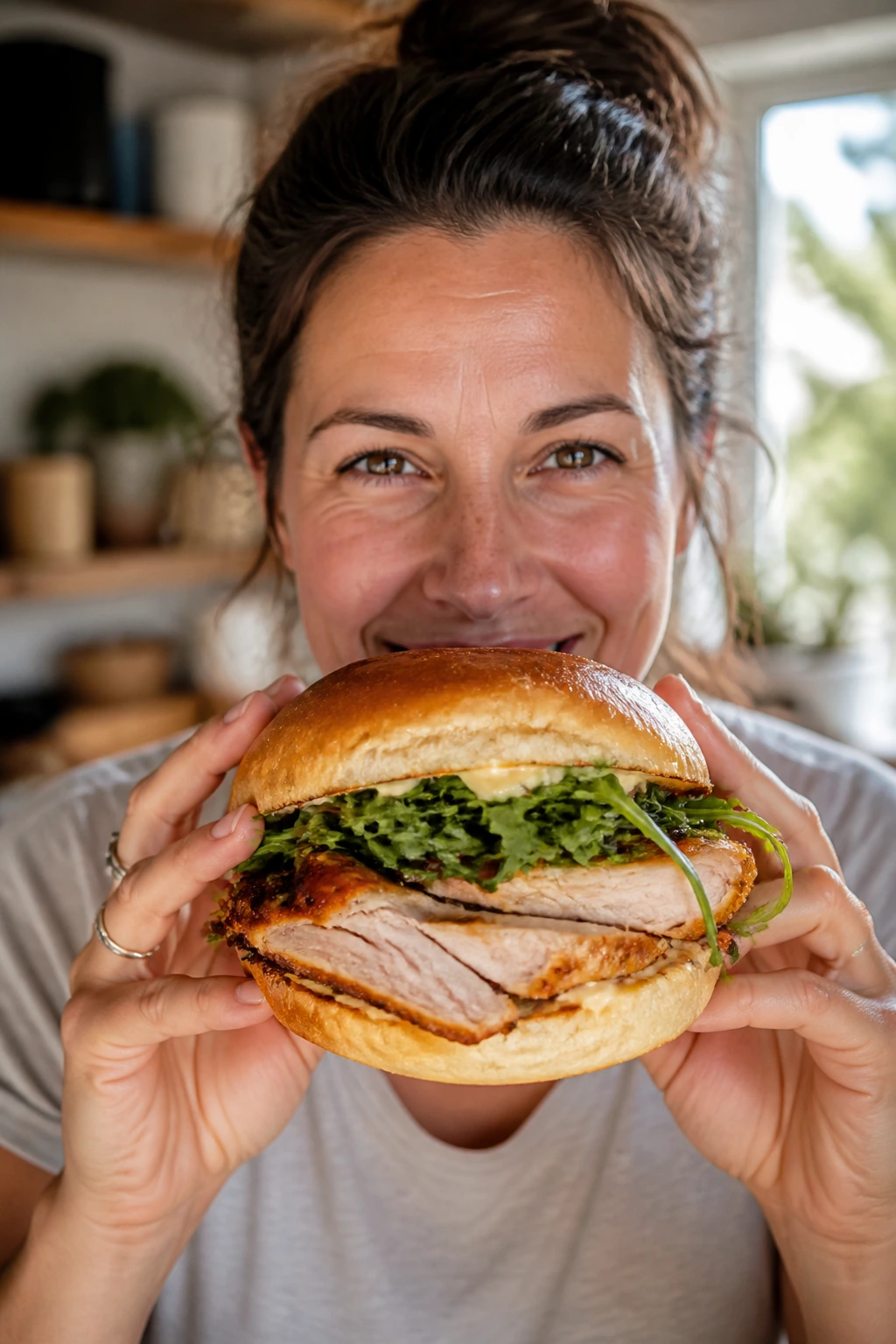
The reason this roasted chicken sandwich keeps earning a spot in dinner rotation is simple: it feels cared for without asking for much. The chicken gets real color, the bread gets a fast toast, and the toppings bring the whole thing into balance before the plate goes to the table.
It also leaves room for the cook to breathe. You can swap the greens, change the herb, or use leftover chicken without wrecking the whole thing. Keep a pack of sturdy rolls in the freezer, and this becomes the kind of dinner you can pull off with little more than a sheet pan, a lemon, and a decent appetite.
Roasted Chicken Sandwich — Recipe Card
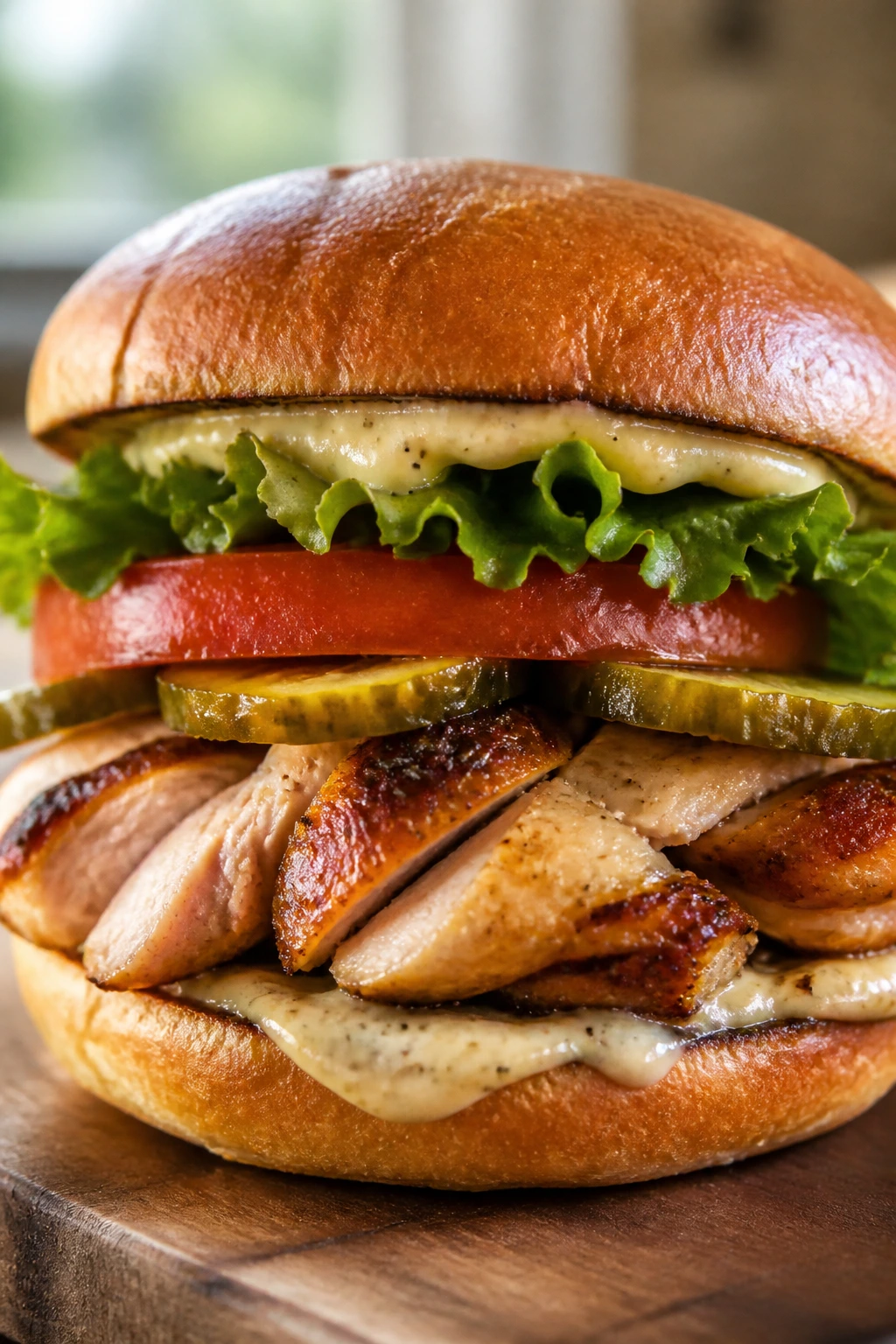
Recipe Name: Roasted Chicken Sandwich for Weeknight Dinners
Description: Juicy roasted chicken thighs, lemon-Dijon mayo, crisp greens, tomato, pickles, and toasted rolls come together in a sandwich that eats like a real dinner. It’s warm, sturdy, and easy to repeat.
Prep Time: 15 minutes
Cook Time: 22 minutes
Total Time: 47 minutes
Course: Dinner, Main Course
Cuisine: American
Servings: 4 sandwiches
Calories: about 630 kcal per serving
Ingredients
For the Chicken:
- 1 1/2 pounds boneless, skinless chicken thighs, trimmed of excess fat
- 1 tablespoon olive oil
- 1 teaspoon kosher salt
- 1/2 teaspoon black pepper
- 1 teaspoon garlic powder
- 1 teaspoon smoked paprika
- 1/2 teaspoon dried thyme
- 1/4 teaspoon red pepper flakes, optional
For the Sandwich:
- 4 sturdy sandwich rolls or ciabatta rolls, split
- 2 tablespoons olive oil, for toasting
- 1 cup shredded romaine or baby arugula
- 1 large ripe tomato, sliced and patted dry
- 1/2 small red onion, very thinly sliced
- 1/2 cup dill pickle chips
For the Lemon-Dijon Mayo:
- 1/2 cup mayonnaise
- 1 tablespoon Dijon mustard
- 1 tablespoon lemon juice
- 1 teaspoon lemon zest
- 1 small garlic clove, finely grated
- 1 tablespoon chopped fresh parsley or dill
- 1/4 teaspoon kosher salt
- 1/8 teaspoon black pepper
Instructions
-
Preheat the oven to 425°F (220°C) and line a rimmed sheet pan with parchment paper.
-
Pat the chicken thighs dry, then toss them with 1 tablespoon olive oil, kosher salt, black pepper, garlic powder, smoked paprika, thyme, and red pepper flakes if using.
-
Arrange the chicken in a single layer on the prepared sheet pan with space between the pieces.
-
Roast for 18 to 22 minutes, until the thickest piece reaches 175°F on an instant-read thermometer and the chicken is browned at the edges.
-
Transfer the chicken to a cutting board and rest for 10 minutes.
-
Stir together the mayonnaise, Dijon mustard, lemon juice, lemon zest, grated garlic, parsley or dill, salt, and black pepper.
-
Brush the cut sides of the rolls with the remaining 2 tablespoons olive oil and toast them in a skillet or under the broiler until golden.
-
Slice the chicken against the grain, spread the lemon-Dijon mayo on the rolls, and layer on the greens, tomato, red onion, pickles, and chicken.
-
Close the sandwiches, slice them in half if you like, and serve warm.
Notes: Use chicken breasts if you prefer them, but roast them only to 165°F and check them early. Assemble right before serving so the bread stays crisp, and keep any extra sauce on the side.