



Roasted chicken thighs for weeknight dinners earn their place because they behave well when the evening is already slipping sideways. The oven can be heating while the onions get cut. The rice can still be rattling in its pot. And the chicken — if you treat it right — comes out with bronzed skin, juicy meat near the bone, and enough pan drippings to make the whole kitchen smell like you planned ahead.
I reach for chicken thighs when I want dinner that feels solid instead of fussy. Breast meat can be lovely, sure, but it asks for more babysitting. Thighs give you a wider landing strip: a little extra time in the oven won’t punish you, the skin renders into something crisp instead of leathery, and the dark meat stays moist even if your timer gets ignored for a few minutes because someone needed help finding a soccer cleat.
425°F is the sweet spot I keep coming back to. Hot enough to brown the skin, hot enough to get the onion wedges sweet at the edges, and not so blistering that the garlic turns bitter before the chicken is done. That higher heat matters more than people expect. The thighs need to climb past the bare minimum safe temperature and into the zone where the connective tissue loosens and the meat goes from merely cooked to tender and supple.
Why These Thighs Earn Their Keep
- Forgiving Timing: Bone-in, skin-on thighs keep their juices even if the oven runs a little hot or dinner runs a little late.
- Crispy Skin Without Frying: A 425°F oven renders the fat under the skin so it turns crackly instead of rubbery.
- One Pan, Fewer Dishes: A foil-lined sheet pan and one small bowl are enough for the main event.
- Strong Flavor Base: Garlic powder, smoked paprika, thyme, and lemon give the chicken a roast-y, savory edge without a long marinade.
- Leftovers That Pull Their Weight: Cold thigh meat slices cleanly for salads, grain bowls, and sandwiches the next day.
- Flexible Enough for Real Life: You can serve it with rice, potatoes, bread, or a pile of greens, and it still feels like dinner.
What Makes This Dinner Work So Well
Chicken thighs are the cut I trust when I want a roast dinner that doesn’t punish normal human behavior. You can season them, slide the pan into the oven, and come back 35 to 40 minutes later to something with actual texture. The skin should be deep golden, not pale and flabby. The meat near the bone should feel loose when you press it with tongs, not tight and springy.
That extra tenderness comes from the way dark meat behaves under heat. Thighs have more connective tissue than breasts, which sounds like a bad thing until you cook them properly. Once they move into the 175°F to 185°F range, the meat relaxes instead of seizing up. That’s why a thigh that reads 165°F can still eat a little firm, while one that reaches 180°F feels silky and rich.
Breasts are neat. Thighs are useful.
I also like that this method gives you something beyond the chicken itself. The onion wedges soften in the drippings. The garlic turns sweet and spreadable. A squeeze of lemon at the end wakes the whole pan up, which matters because roasted poultry can go dull fast if you stop at salt and pepper alone. This version lands in a very practical place: enough flavor to feel deliberate, not so much that the ingredient list turns into a scavenger hunt.
The real trick is respecting the skin. Dry surface. Hot oven. Space on the pan. Those three things do more work than a complicated marinade ever will.
Timing, Yield, and the Gear You’ll Want Nearby
Yield: Serves 4 to 6
Prep Time: 15 minutes
Cook Time: 35 to 40 minutes
Total Time: 50 to 55 minutes
Difficulty: Beginner — the steps are straightforward, and chicken thighs give you a little breathing room if the oven runs unevenly.
Chill/Rest Time: 5 to 10 minutes
Best Served: Warm, straight from the oven
A dinner like this moves fast once the oven is on. The only part that deserves patience is the resting time at the end, because the juices settle back into the meat instead of flooding the cutting board. That five-minute pause is the difference between a tidy plate and a small flood.
If you want to push the chicken a little earlier in the day, you can season it ahead and leave it uncovered in the fridge. The skin dries out a bit, which helps it brown better. But if you’re working from a normal weekday clock, a dry paper towel and a hot oven are enough.
The Ingredient List That Gives You Crispy Skin and Juicy Meat
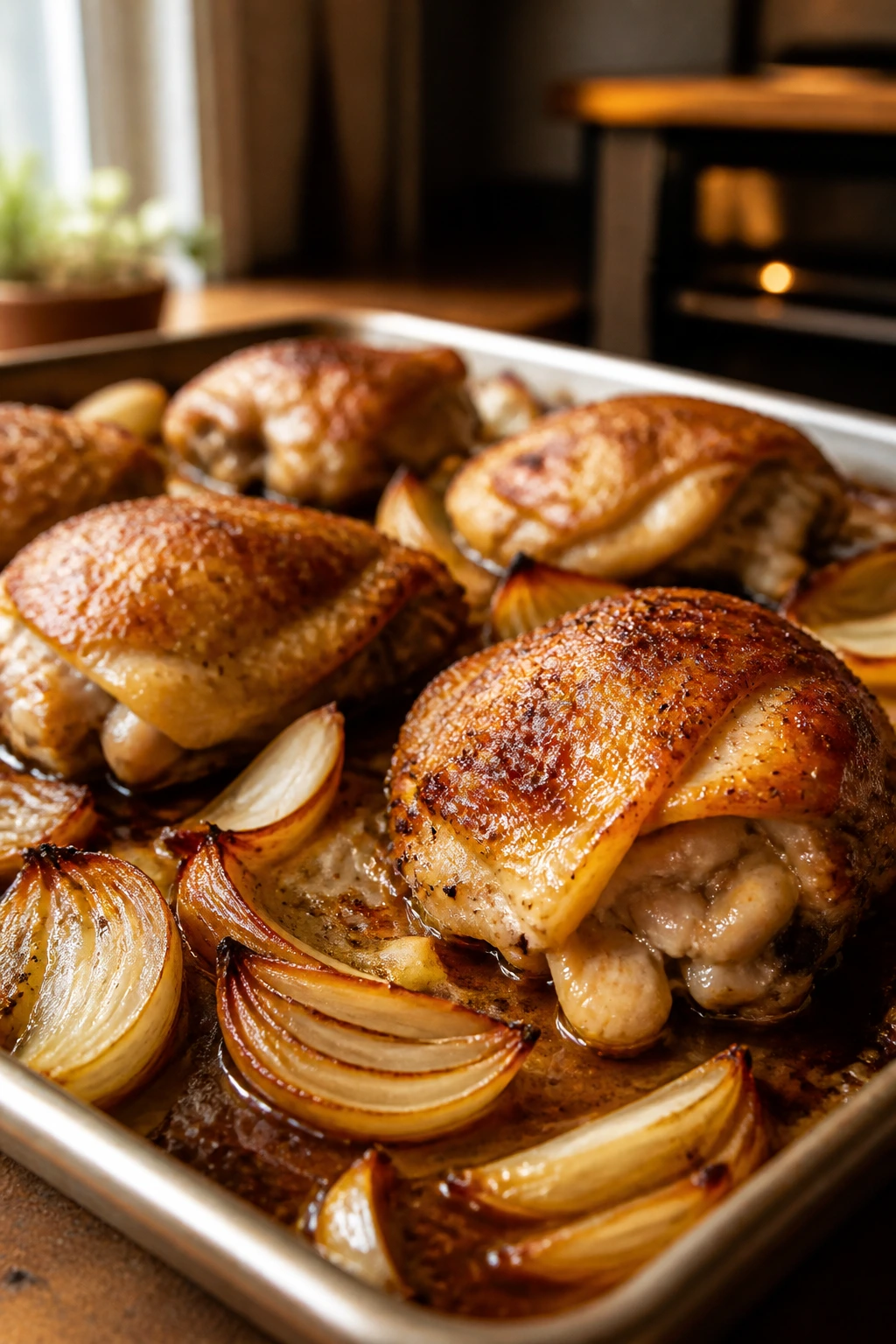
For the Chicken
- 8 bone-in, skin-on chicken thighs, about 3 to 3 1/2 pounds, patted very dry
- 1 1/2 tablespoons olive oil
- 2 teaspoons kosher salt
- 1 teaspoon freshly ground black pepper
- 2 teaspoons garlic powder
- 1 1/2 teaspoons smoked paprika
- 1 teaspoon dried thyme
- 1 lemon, zested and cut into wedges
For the Pan
- 1 large yellow onion, cut into 8 wedges
- 4 garlic cloves, smashed
To Finish
- 1 tablespoon fresh lemon juice
- 2 tablespoons chopped fresh parsley
Why Each Ingredient Matters in the Pan
Chicken Thighs
What to use: 8 bone-in, skin-on chicken thighs, about 3 to 3 1/2 pounds total.
Preparation: Pat them dry with paper towels and trim away any loose skin or ragged fat if it’s hanging off in a big flap.
Substitutions: Drumsticks work with nearly the same timing; boneless, skinless thighs work too, but they cook faster and won’t give you the same crisp skin.
Tips: Try to buy thighs that are similar in size so the smaller ones don’t race ahead and dry out while the bigger ones finish.
The Seasoning Blend
What to use: 1 1/2 tablespoons olive oil, 2 teaspoons kosher salt, 1 teaspoon black pepper, 2 teaspoons garlic powder, 1 1/2 teaspoons smoked paprika, and 1 teaspoon dried thyme.
Preparation: Stir the seasonings together before you touch the chicken so the coating goes on evenly and you don’t end up with one thigh that tastes like a salt lick and another that tastes shy.
Substitutions: Sweet paprika can replace smoked paprika if that’s what you have; rosemary or Italian seasoning can stand in for thyme.
Tips: Garlic powder is the smarter choice here than raw minced garlic in the seasoning mix, because raw garlic can scorch on the skin before the thighs finish roasting.
Onion, Garlic, and Lemon
What to use: 1 large yellow onion, 4 smashed garlic cloves, and 1 lemon for both zest and wedges.
Preparation: Cut the onion into sturdy wedges so it doesn’t collapse into mush, smash the garlic with the flat side of a knife, and zest the lemon before you cut it.
Substitutions: Shallots make the pan a little sweeter; orange can replace lemon if you want a rounder, less sharp finish.
Tips: Keep the lemon juice for the end. If it goes into the oven too early, most of its brightness disappears and you’re left with something flatter than it should be.
The Gear I Reach for Every Time
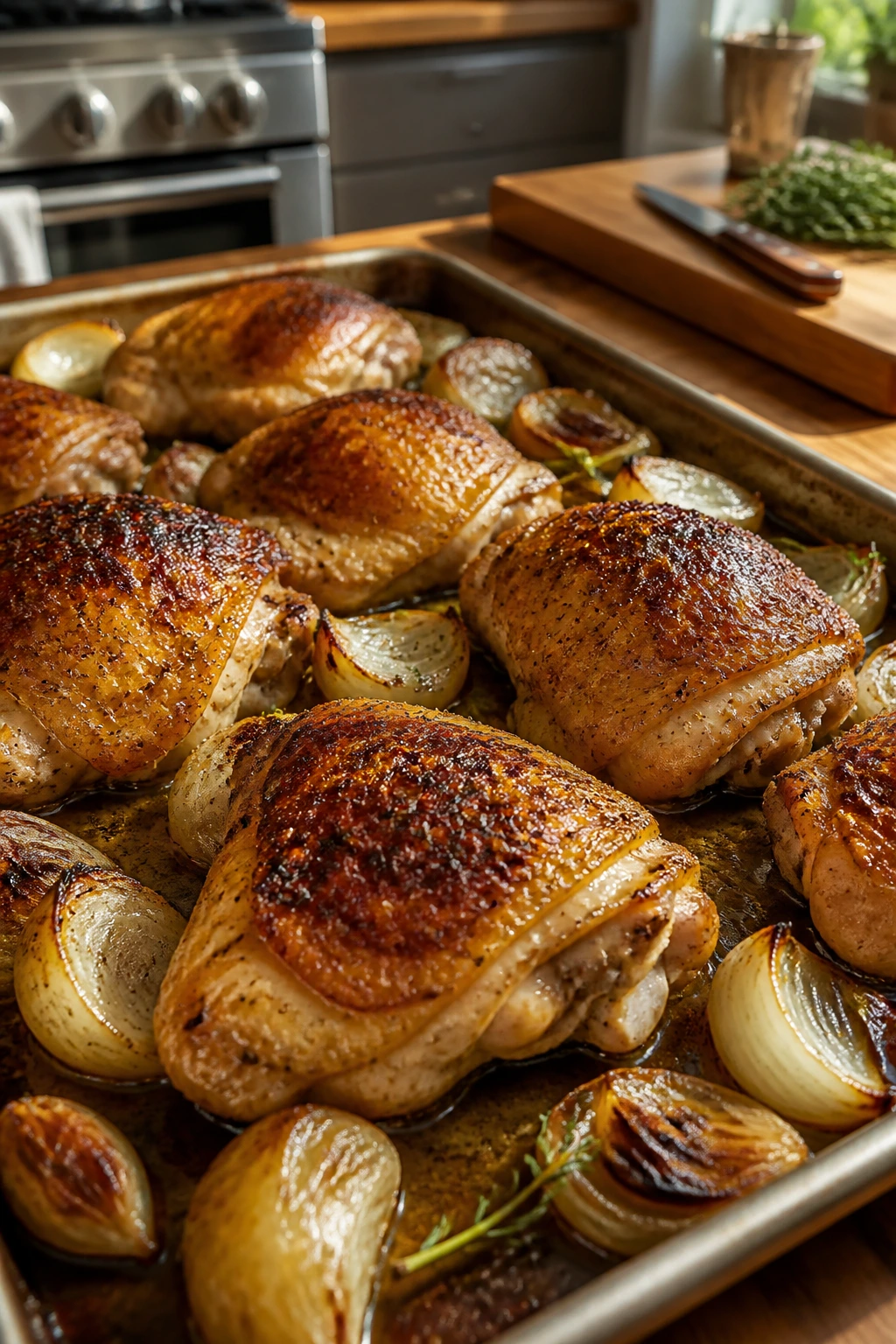
- Rimmed sheet pan — A 13×18-inch pan gives the thighs room so they roast instead of steam.
- Heavy-duty foil — Lining the pan makes cleanup easier and keeps the drippings from welding themselves to the metal.
- Paper towels — Dry skin is the whole game here, and paper towels do that job better than a cloth.
- Small mixing bowl — You need one place to mix the seasoning before it hits the chicken.
- Tongs — Easier than fingers when the thighs are hot and slippery with oil.
- Instant-read thermometer — The best way to know when the meat is done; color alone lies.
- Chef’s knife and cutting board — For the onion wedges, lemon, and garlic.
- Microplane or fine grater — Optional, but helpful for lemon zest if you want a brighter finish.
A wire rack can help crisp the skin a little faster, but I do not consider it mandatory for this recipe. The thighs roast well right on the pan as long as they have room.
Roasting the Thighs Without Guesswork
Prep the Pan and the Chicken
-
Preheat the oven to 425°F (220°C) and move a rack to the middle position. Line a rimmed sheet pan with foil so the pan stays easy to clean and the drippings don’t bake onto the surface.
-
Pat the chicken thighs dry with paper towels on all sides, including under any loose flap of skin. If the skin feels damp, it will steam first and brown later. Trim away any hanging bits of skin or fat that are likely to burn before the meat is done.
-
In a small bowl, mix the olive oil, kosher salt, black pepper, garlic powder, smoked paprika, and thyme. Rub the thighs all over with the mixture, making sure each piece is evenly coated. If you have a minute, lift the skin gently at the top edge and tuck a little seasoning underneath, but don’t rip the skin trying to be heroic about it.
Roast and Finish
-
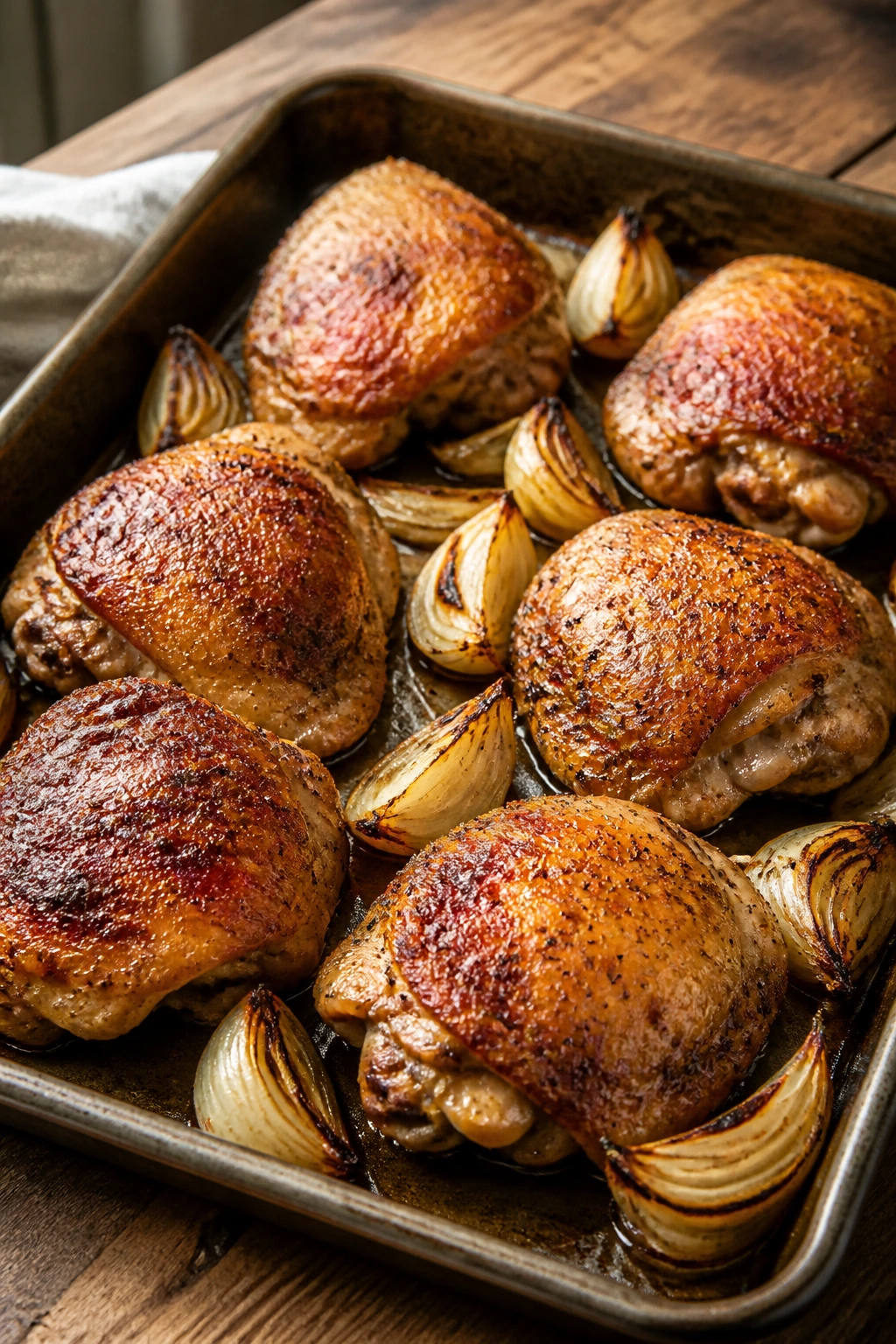
Scatter the onion wedges and smashed garlic around the sheet pan, leaving a little space between them and the chicken. Set the chicken thighs skin-side up on the pan and tuck the lemon wedges into the open spots. Do not crowd the pan; steam is the enemy of crisp skin.
-
Roast for 35 to 40 minutes, rotating the pan once around the 20-minute mark, until the skin is deep golden and the thickest part of each thigh reads 175°F to 185°F on an instant-read thermometer. Pulling thighs at 165°F is safe, but they usually eat better a little higher, when the meat has a softer, silkier texture.
-
If the skin needs a little more color, broil for 1 to 2 minutes, watching the pan the whole time. The skin should blister at the edges and deepen in color, not go dark and bitter. Step away only if you like learning the hard way.
-
Rest the chicken for 5 to 10 minutes. Squeeze the roasted lemon over the thighs, scatter the parsley on top, and spoon the oniony pan juices over the chicken or serve them on the side.
How to Serve Them on a Busy Night
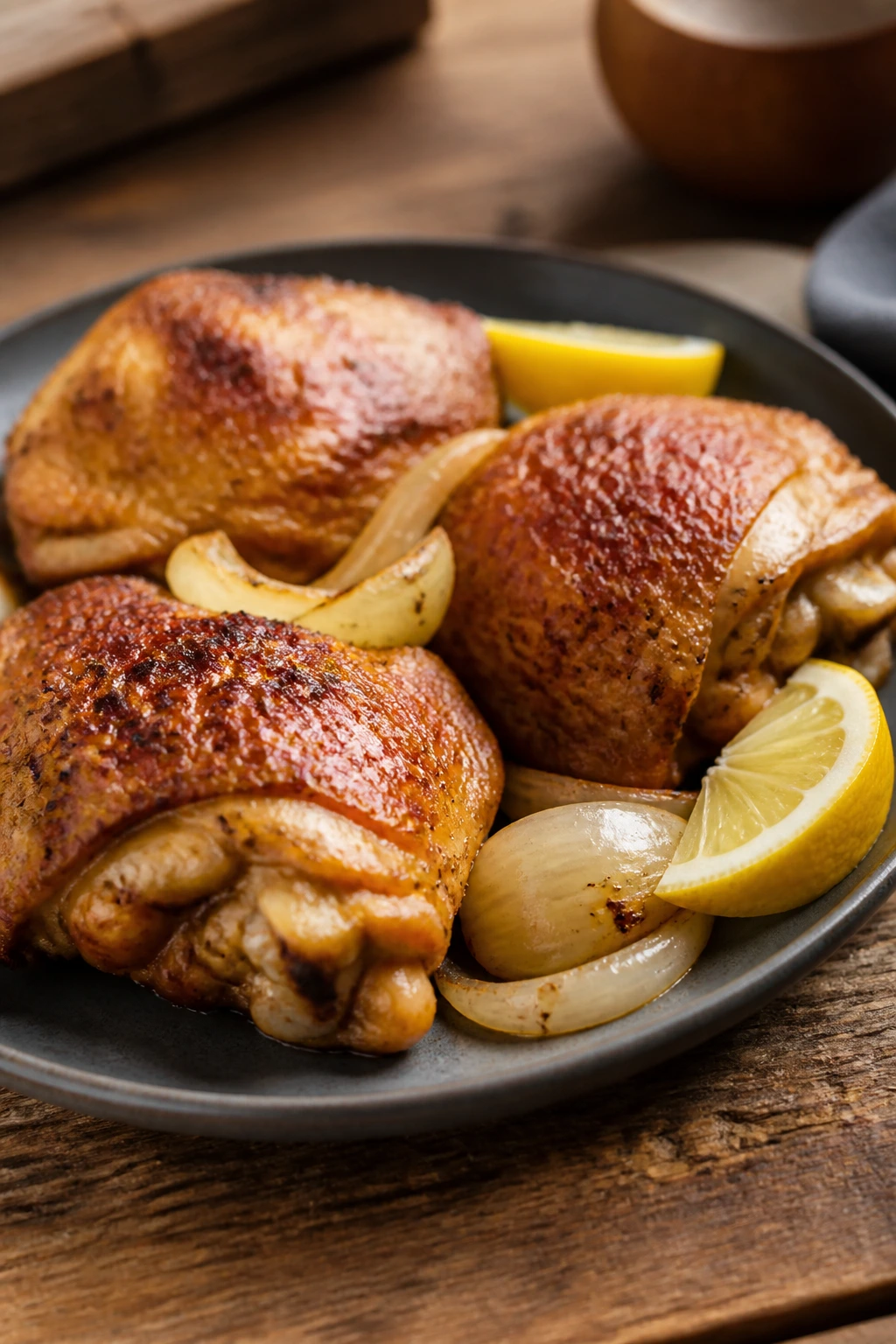
Presentation: Put the thighs over the roasted onion wedges so the pan looks intentional instead of dumped. Spoon a little of the drippings over each piece, then finish with parsley and a squeeze of lemon. The plate should look rustic and glossy, with browned edges and a bit of shine from the pan juices.
Accompaniments: Buttered rice, mashed potatoes, or a simple pot of couscous are all good landing spots for the drippings. If you want vegetables, use something quick and sturdy: green beans, broccoli florets, or a shaved cucumber salad with a sharp vinaigrette. A thick slice of crusty bread is never wasted here, especially if you like mopping the pan clean.
Portions: Plan on one thigh per person for lighter eaters and two thighs for hungry adults. If you’re stretching the pan for six or serving kids, add a starchy side and a green vegetable; the meal will feel full without needing more chicken.
Beverage Pairing: A dry Riesling or a chilled lager works nicely with the lemon and paprika. If you want something nonalcoholic, sparkling water with lemon or unsweetened iced tea keeps the plate from feeling heavy.
Small Moves That Make the Pan Better
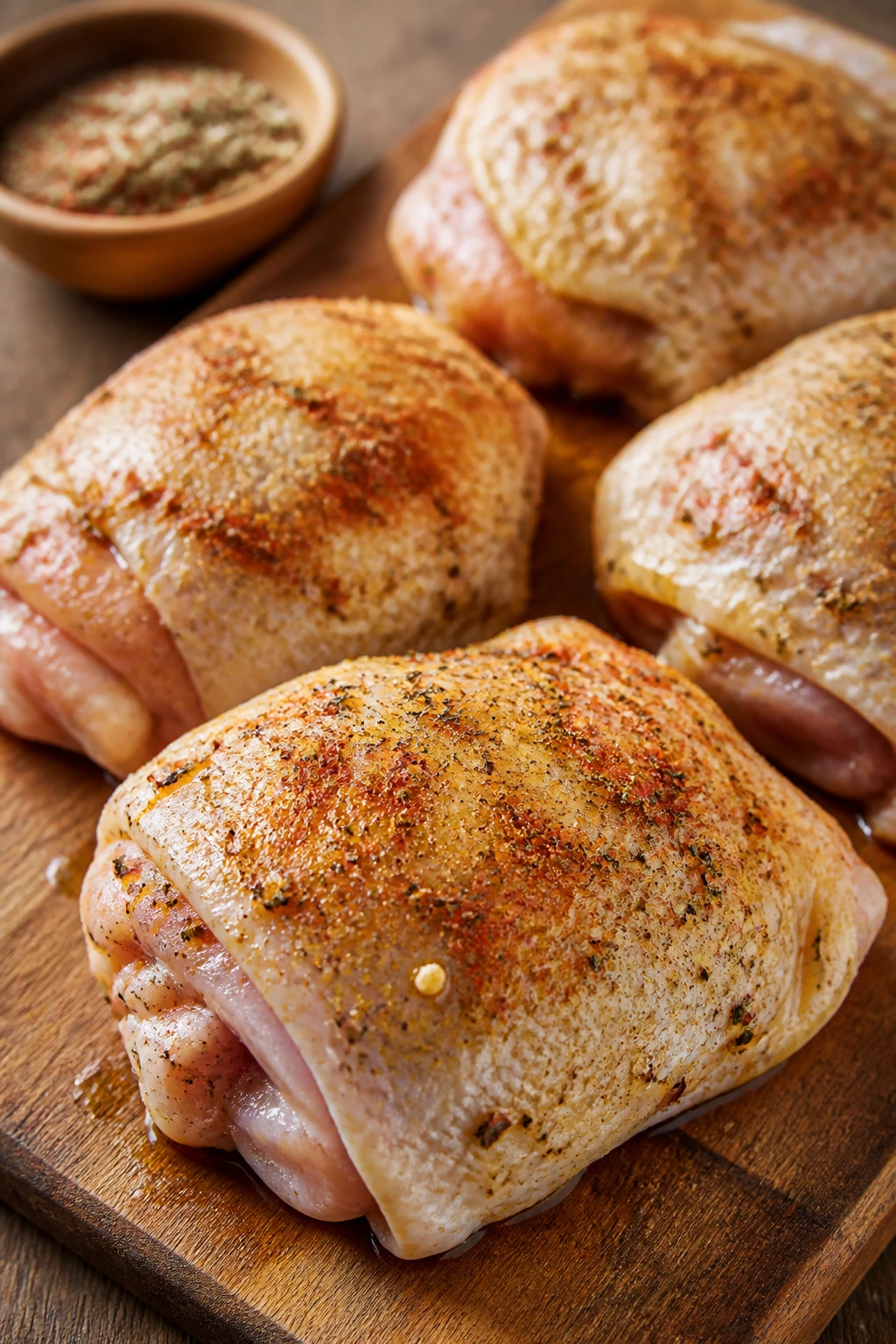
A few tiny habits change this dish more than any clever marinade does.
Flavor Enhancement: If you like a little sharper edge, add 1 teaspoon of Dijon mustard to the olive oil and spice mix. It won’t taste like mustard once the thighs roast, but it gives the skin a subtle savory bite. A pinch of crushed red pepper also works if you want the finish to lean warmer.
Time-Saver: Mix the seasoning directly in the bowl you’ll rub onto the chicken. One bowl, one spoon, one less thing to wash after dinner. If you’re really moving, cut the onion first and let it wait on the pan while you season the thighs.
Pro Move: Dry-brine the thighs with the salt alone up to 24 hours ahead, uncovered in the fridge. That gives you drier skin and a deeper seasoning line near the meat. It’s not required, but it does make the skin better. And better skin is usually worth the minor forethought.
Cost-Saver: Buy chicken thighs in family packs and freeze them in pairs on a sheet pan before bagging. They thaw faster when they’re not welded together in one frozen brick, and you can pull out exactly what you need instead of committing to a giant package all at once.
If you want to add vegetables to the pan, choose ones that roast in roughly the same window: onions, fennel wedges, broccoli florets, or small potatoes cut into 1-inch pieces. Big chunks of carrot need a head start; otherwise they’ll still taste like they’re waiting for the oven to notice them.
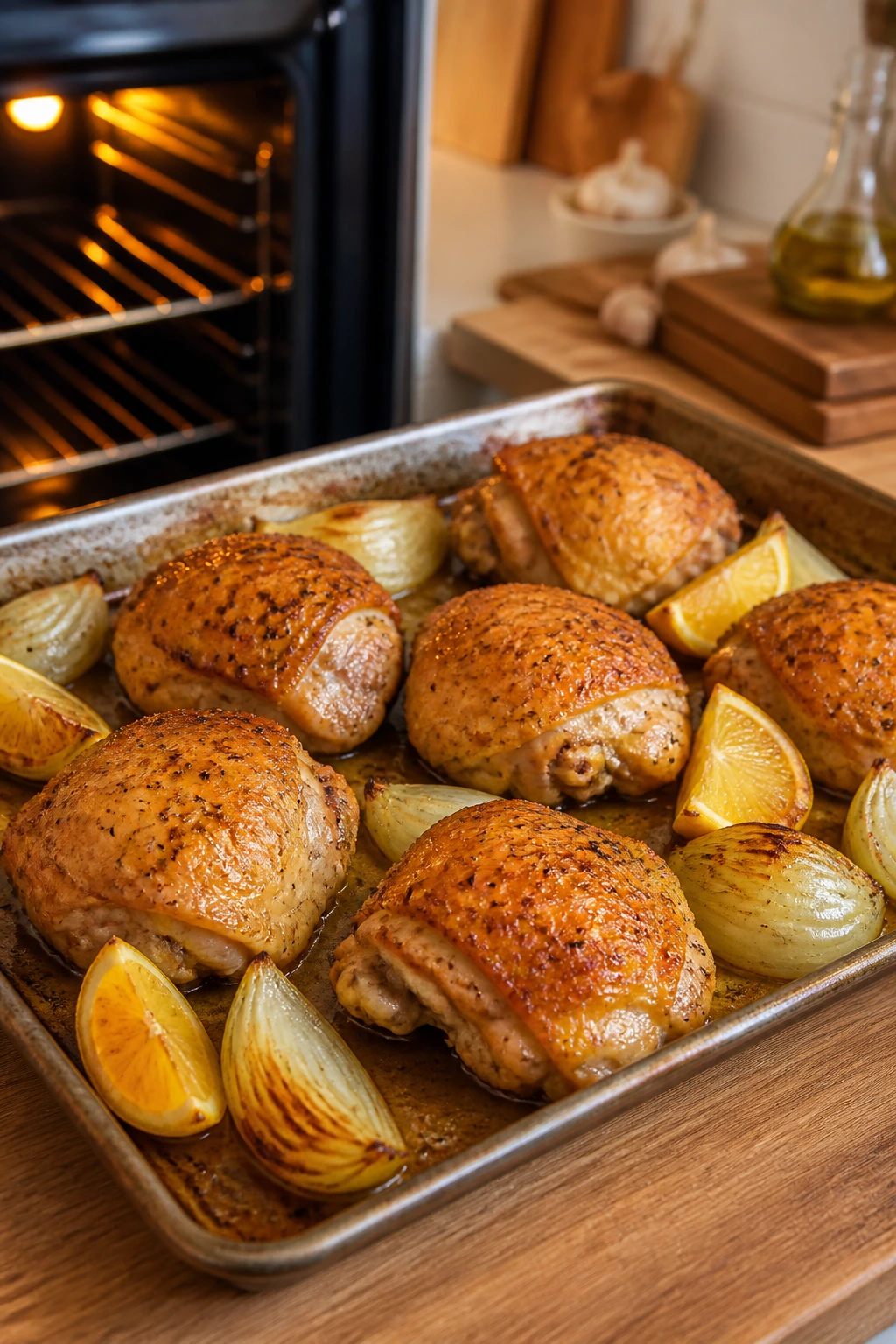
Common Mistakes That Steal the Crisp Skin
-
Starting with damp chicken: Pale, rubbery skin is almost always a moisture problem. Pat the thighs dry, and if you have time, let them sit uncovered in the fridge for a bit after seasoning.
-
Packing the pan too tightly: When the thighs touch or the onions pile up under them, the pan traps steam and the skin goes soft. Use a larger sheet pan or split the batch across two pans if the pieces are crowded.
-
Pulling the chicken the moment it hits 165°F: That temperature is safe, but thighs usually taste better once they reach 175°F to 185°F. If the meat still feels a little tight near the bone, give it a few more minutes.
-
Broiling without watching the pan: A minute too long under the broiler can turn beautifully bronzed skin into bitter, blackened edges. Stay close and use the broiler only as a short finish, not as a second cooking phase.
-
Skipping the rest: If you cut into the thighs immediately, the juices run out and the meat seems drier than it is. Five to ten minutes on the counter lets the juices settle back into the meat.
-
Using a sugary glaze too early: Honey, maple, or brown sugar can be lovely, but they burn fast at 425°F. If you want a sweet finish, brush it on in the last 5 to 8 minutes or after the chicken comes out.
Easy Flavor Swaps and Variations
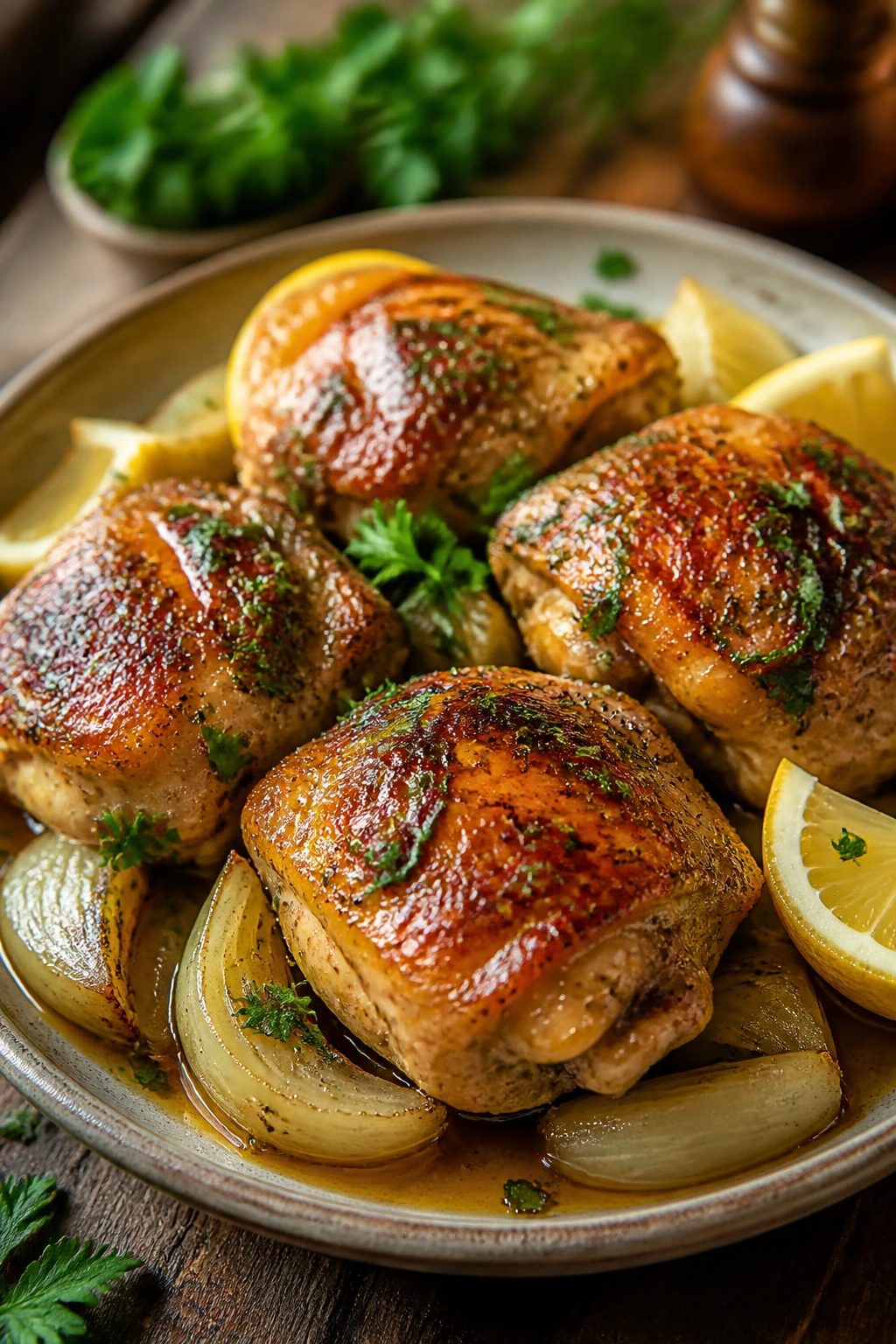
Smoky Spanish-Style Thighs
Swap the thyme for 1 teaspoon ground cumin and add 1/2 teaspoon sweet paprika plus 1/4 teaspoon cayenne. Finish with orange wedges instead of lemon. The result is warmer, deeper, and very good with rice that soaks up the drippings.
Honey-Mustard Finish
Whisk together 1 tablespoon Dijon mustard, 1 tablespoon honey, and 1 teaspoon apple cider vinegar, then brush it over the thighs during the last 5 minutes of roasting. The glaze turns sticky and glossy without drowning the crisp skin. It’s a nice move when you want the pan to lean a little sweeter.
Herb Garden Version
Replace the thyme with 1 teaspoon chopped rosemary and 1 teaspoon chopped sage, then tuck extra onion wedges under the chicken. This version smells like a Sunday roast, even if you’re making it on a Tuesday at 6:30. It works especially well with mashed potatoes.
Chili-Lemon Thighs
Add 1/2 teaspoon chili flakes to the seasoning mix and finish with extra lemon juice plus a handful of chopped scallions instead of parsley. The heat stays mild but present, and the scallions keep the finish fresh. If you like a little bite without a full-on hot sauce moment, this is the one.
Boneless Shortcut Thighs
Use 2 1/2 pounds boneless, skin-on or skinless thighs and roast at 425°F for about 22 to 28 minutes, checking early. They cook faster and still stay juicy, but they won’t give you the same crackly skin if they’re skinless. Good option when you want the dinner on the table faster.
Storing, Reheating, and Making Ahead
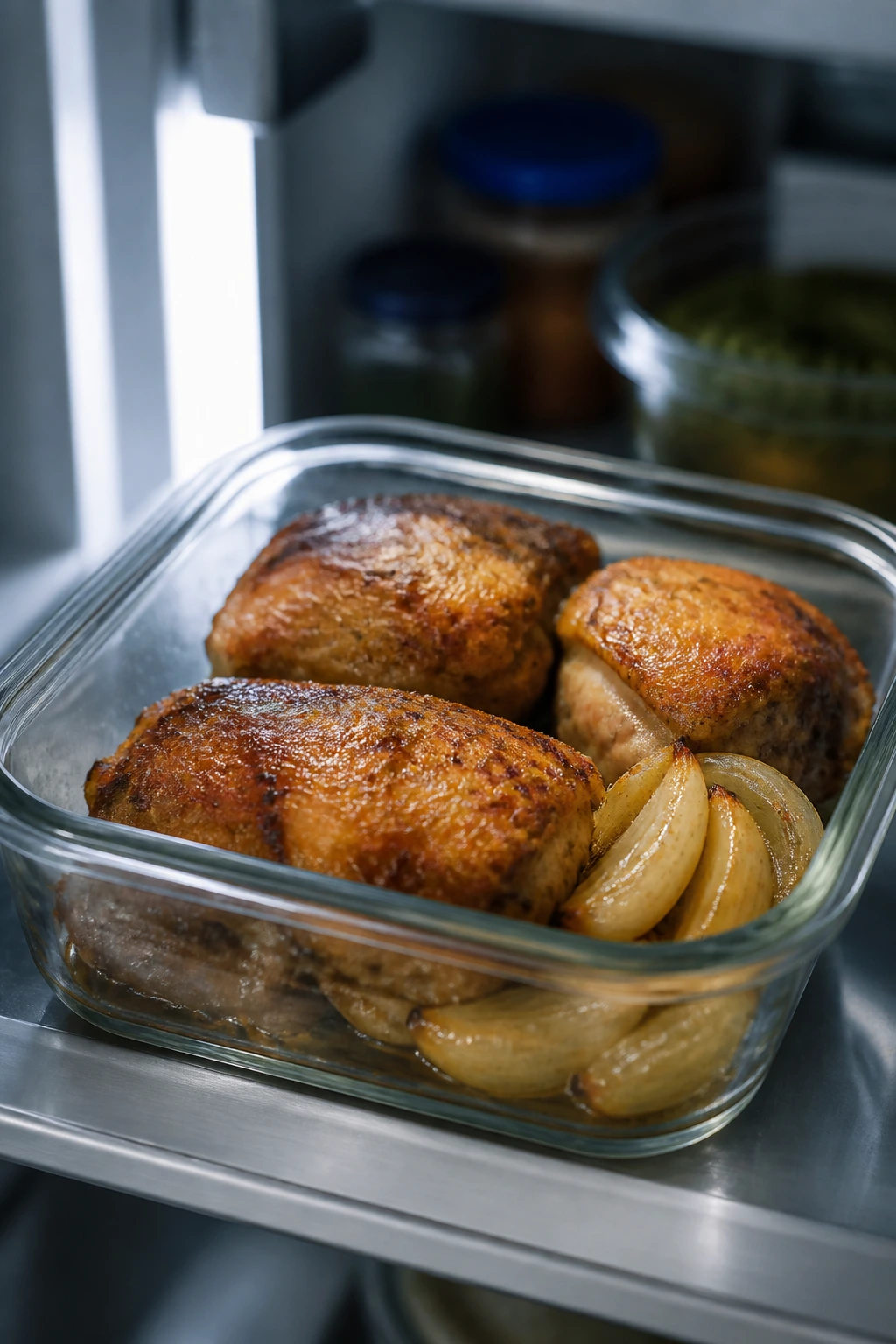
Leftover chicken should cool for no more than 2 hours before it goes into the fridge. After that, tuck the thighs into an airtight container and keep them refrigerated for 3 to 4 days. The onion wedges and pan juices can go in the same container if you like, though I often separate them so the chicken skin has a better chance of staying close to crisp.
For longer storage, freeze the cooked thighs for up to 3 months. Wrap each piece tightly or pack them in a freezer bag with the air pressed out so the skin doesn’t get freezer burn. Thaw them overnight in the fridge before reheating. I don’t love microwaving them from frozen; the skin loses too much texture and the meat heats unevenly.
The best reheating method is a 350°F oven. Set the thighs on a small sheet pan, cover loosely with foil for the first 10 minutes, then uncover for another 3 to 5 minutes so the skin can firm back up. If you want faster reheating, an air fryer at 375°F for 4 to 6 minutes does a decent job of re-crisping the skin. A skillet over medium-low heat works too, especially if you add a teaspoon of water and cover the pan for a minute before uncovering to finish.
For make-ahead work, you can season the thighs up to 24 hours in advance and keep them uncovered in the fridge. You can also cut the onions and smash the garlic a day ahead. If you want to fully cook them before a busy evening, roast the chicken, cool it, and reheat in the oven rather than the microwave. The texture holds up much better that way.
Questions People Ask Before They Roast Chicken Thighs
Can I use boneless, skinless thighs instead of bone-in, skin-on?
Yes, but the cooking time changes and the skin won’t crisp the same way because there isn’t any skin to crisp. Boneless thighs usually need about 22 to 28 minutes at 425°F, and I’d start checking them early so they don’t dry out. They’re a fine shortcut, just not the same experience.
Why do chicken thighs taste better at 175°F to 185°F than at 165°F?
At 165°F they’re safe, but the dark meat can still feel a little tight near the bone. Once they move higher, the connective tissue softens and the texture gets silkier. That’s the reason thighs feel forgiving in a way breasts never quite do.
Do I have to use a wire rack?
No. A rack helps air move around the thighs, but a foil-lined sheet pan works well as long as you leave space between the pieces. If you do use a rack, make sure it fits the pan cleanly so the chicken doesn’t wobble when you move it.
Can I roast potatoes or carrots on the same pan?
Yes, but choose vegetables with similar timing. Onion wedges, broccoli florets, fennel, and small potato pieces work best. Carrots usually need either smaller cuts or a short head start before the chicken goes in.
How do I keep the skin crisp when reheating leftovers?
The oven or air fryer is your friend; the microwave is not. Reheat at 350°F in the oven or 375°F in the air fryer until the chicken is hot through, then uncover or finish dry so the skin can firm up again. If you’re in a hurry, a quick skillet reheat on medium-low helps more than people expect.
Can I marinate the thighs instead of using the dry seasoning?
You can, but wet marinades soften the skin and make crisping harder. If your goal is roasted chicken with crackly skin, a dry seasoning mix is the better tool. Save the marinade approach for grilling or for skinless thighs.
What if the pan is releasing a lot of liquid?
That usually means the chicken was crowded, the skin wasn’t dry enough, or the thighs were especially fatty. Keep roasting until the liquid reduces and the skin can brown properly, and rotate the pan once so the heat hits evenly. If the pan looks flooded, you can spoon off a little of the liquid midway through, though I usually leave it unless it’s covering the chicken.
Why This Pan Keeps Paying Off
There are dinners that ask for attention and dinners that earn trust. Roasted chicken thighs belong in the second group. Once you know how they behave — dry skin, hot oven, enough time for the meat to relax — the whole thing becomes steady and repeatable in a way that matters on ordinary nights.
The best part is that nothing about this dish feels fragile. If the onions get a little darker, fine. If the thighs need five more minutes, fine. If you forget to buy parsley, a squeeze of lemon still wakes the pan up. That kind of resilience is why I keep recommending thighs over and over: they let the rest of dinner stay human.
Make it once, and you’ll probably stop treating it like a backup plan. Make it twice, and it starts to feel like muscle memory.
Roasted Chicken Thighs for Weeknight Dinners — Recipe Card
Recipe Name: Roasted Chicken Thighs for Weeknight Dinners
Description: Bone-in, skin-on chicken thighs roasted at high heat with garlic, paprika, thyme, lemon, and onion wedges for crispy skin and juicy meat. A sheet-pan dinner that handles busy evenings without fuss.
Prep Time: 15 minutes
Cook Time: 35 to 40 minutes
Total Time: 50 to 55 minutes
Course: Main Course
Cuisine: American
Servings: 4 to 6
Calories: About 390 kcal per serving
Ingredients
For the Chicken
- 8 bone-in, skin-on chicken thighs, about 3 to 3 1/2 pounds, patted very dry
- 1 1/2 tablespoons olive oil
- 2 teaspoons kosher salt
- 1 teaspoon freshly ground black pepper
- 2 teaspoons garlic powder
- 1 1/2 teaspoons smoked paprika
- 1 teaspoon dried thyme
- 1 lemon, zested and cut into wedges
For the Pan
- 1 large yellow onion, cut into 8 wedges
- 4 garlic cloves, smashed
To Finish
- 1 tablespoon fresh lemon juice
- 2 tablespoons chopped fresh parsley
Instructions
-
Preheat the oven to 425°F (220°C) and line a rimmed sheet pan with foil.
-
Pat the chicken thighs very dry. Mix the olive oil, salt, pepper, garlic powder, smoked paprika, and thyme, then coat the thighs evenly.
-
Scatter the onion wedges and smashed garlic around the pan. Place the chicken thighs skin-side up with space between them, and tuck the lemon wedges around the edges.
-
Roast for 35 to 40 minutes, rotating once halfway through, until the skin is deep golden and the thickest part of each thigh reaches 175°F to 185°F.
-
Broil for 1 to 2 minutes if the skin needs more color, watching closely.
-
Rest for 5 to 10 minutes, then squeeze over the lemon juice, scatter parsley on top, and serve with the pan juices.
Notes: Dry skin is the key to crisping; if you have time, season the chicken up to 24 hours ahead and chill it uncovered. For faster cleanup, keep the pan lined with foil.