



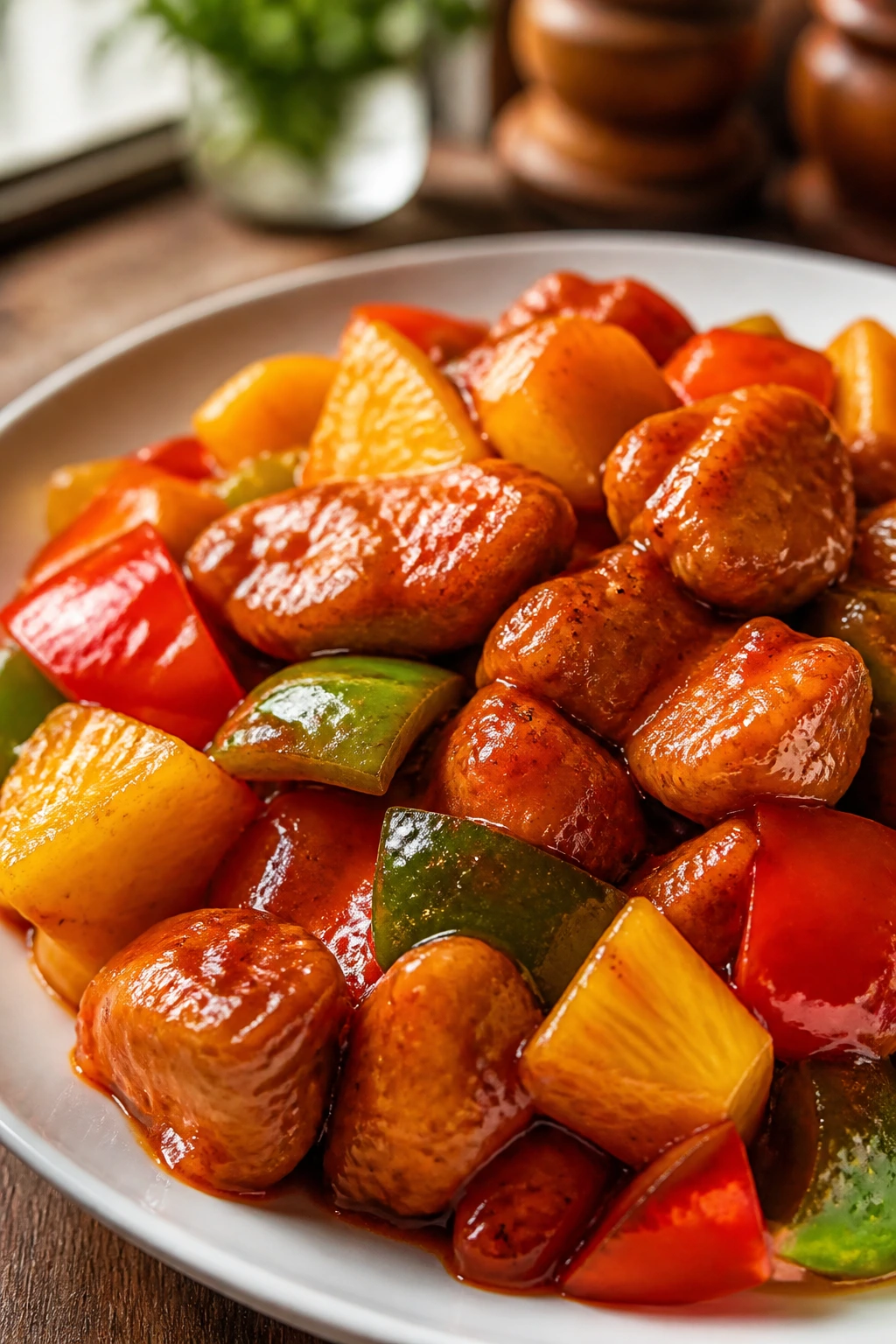
Sweet and sour Chinese pork only works when the pan stays in control. The pork needs a thin, crisp coat. The sauce needs to hit sweet, sharp, and salty in the same bite without sliding into syrup, and the peppers need to keep some bite so the whole thing feels lively instead of soggy. When it’s right, you get that glossy takeout look with a little more edge and a lot more flavor.
That balance is why this dish is so satisfying to make at home. A lot of restaurant versions lean too sweet, or the pork sits in sauce long enough to lose its crunch before it reaches the table. At home, you can keep the fried coating a little craggy, keep the vegetables crisp-tender, and make the sauce taste bright rather than heavy. The ketchup is not a cheat here. It gives body and color, and it plays better with pineapple juice and rice vinegar than people expect.
I like this style because it rewards a hot pan and a bit of timing discipline. No drama. No fancy equipment. Just a skillet, a bowl of sauce, and enough heat to make the pork go from pale to golden in a few minutes. Do that part well, and the dish stops tasting like a red sauce poured over random bits of meat. It starts tasting like the thing you were hoping takeout would be.
Why This Pan Beats the Paper Box
- Crisp pork without a deep fryer: A quick egg-and-cornstarch coating gives the pork a thin shell that browns fast in a skillet, so you get texture without a vat of oil.
- A sauce with real shape: Pineapple juice, rice vinegar, ketchup, and brown sugar create a glaze that tastes sweet first, then sharp, then a little salty at the end.
- Vegetables that still act like vegetables: Bell peppers and onion stay firm enough to break with a fork instead of dissolving into the sauce.
- Fast once everything is chopped: If the pork is cubed and the sauce is whisked before the heat goes on, dinner lands in about 45 minutes.
- Leftovers that hold up better than most stir-fries: The sauce clings to the pork instead of pooling at the bottom of the container, which makes reheating less sad.
- Easy to tune: You can push it fruitier, sharper, or spicier without changing the whole structure of the dish.
What Sweet and Sour Pork Should Taste Like
Sweet and sour pork has two personalities, and the best versions make peace between them. There’s the glossy, American-Chinese takeout side most people know: red-orange sauce, pineapple, peppers, onion, and bite-size pork pieces that look almost lacquered when they hit the plate. Then there’s the older sweet-sour idea that leans more clearly on vinegar and less on sugar. This recipe borrows from the takeout version on purpose, because that’s the flavor memory most readers are chasing.
What I don’t want here is a sauce that tastes like jam with vinegar in it. That happens when the sugar runs ahead of the acid, or when the pan is too cool and the glaze never tightens. The finished sauce should cling in a thin coat, not puddle under the pork. If you tilt the skillet and the sauce moves in a slow sheet rather than a watery splash, you’re in the right neighborhood.
The pork matters more than people think. Tenderloin stays tender if you cook it quickly and don’t let it sit around. Cut into 1-inch cubes, it browns on the outside before the inside has a chance to dry out. Pork shoulder can work too, but it needs a little more trimming and a longer cook; it brings more flavor, though, so I’m not against it.
Pineapple is not just decoration. It brings sweetness, juice, and a little acidity, which makes the sauce taste rounder and less one-note. If you use canned pineapple packed in juice, reserve the juice for the sauce. Don’t toss it. That liquid is doing real work.
The peppers and onion are the quiet part of the dish, and they can ruin the whole thing if you overcook them. They need enough heat to soften the raw edge and pick up a few browned spots, but they should still snap a little when you bite them. Limp peppers in sweet and sour pork are a betrayal. Harsh word, maybe, but I mean it.
What Goes Into the Pan
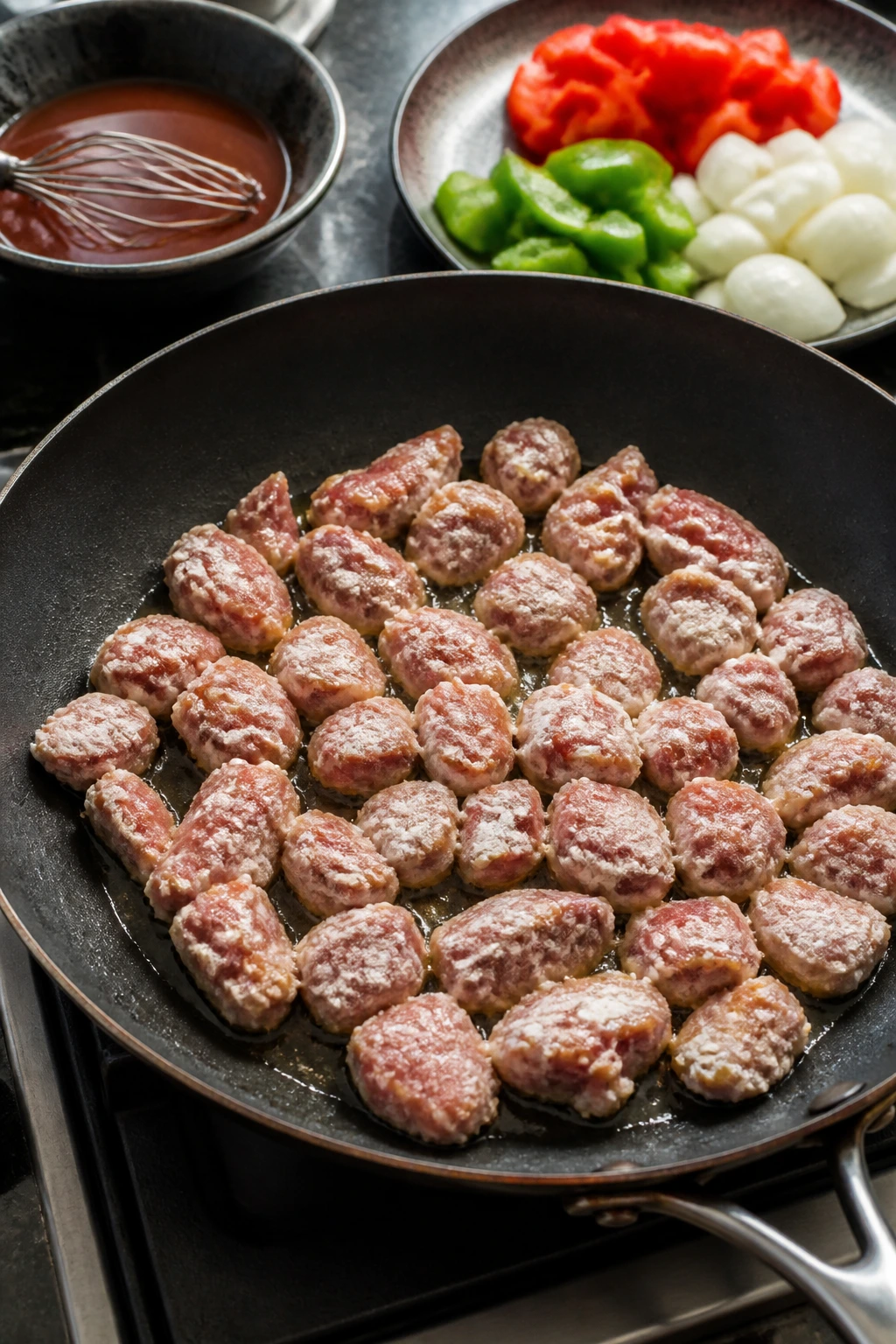
For the Pork
- 1½ pounds pork tenderloin, trimmed and cut into 1-inch cubes
- 1 teaspoon kosher salt
- ½ teaspoon black pepper
- 1 large egg, lightly beaten
- ½ cup cornstarch
- ¼ cup all-purpose flour
- 3 tablespoons neutral oil, plus 1 to 2 more tablespoons as needed
For the Sauce
- ¾ cup pineapple juice
- ½ cup rice vinegar
- ⅓ cup ketchup
- ¼ cup packed light brown sugar
- 2 tablespoons low-sodium soy sauce
- 2 teaspoons fresh ginger, grated
- 3 garlic cloves, minced
- 1 tablespoon cornstarch
- 2 tablespoons cold water
For the Stir-Fry
- 1 medium red bell pepper, cut into 1-inch pieces
- 1 medium green bell pepper, cut into 1-inch pieces
- 1 small yellow onion, cut into 1-inch wedges
- 1 cup pineapple chunks, drained if canned
- 2 scallions, thinly sliced
- 1 tablespoon toasted sesame seeds, for serving
Why Each Ingredient Matters
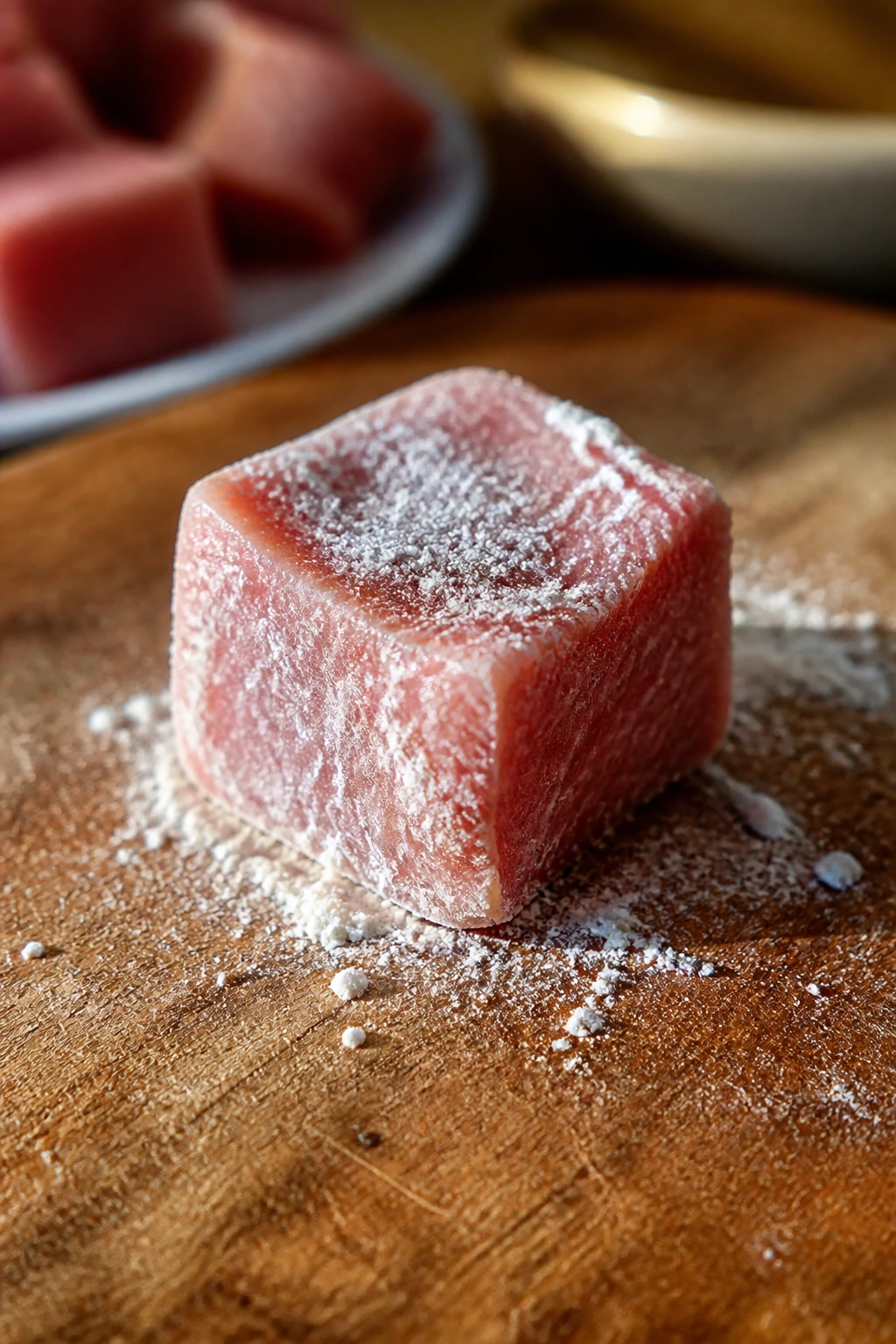
Pork Tenderloin
- What to use: 1½ pounds pork tenderloin, trimmed and cut into 1-inch cubes.
- Preparation: Trim away any silver skin, then pat the pork dry before cutting it. Dry meat browns better, and 1-inch cubes cook evenly without turning stringy.
- Substitutions: Pork shoulder works if you want a richer, slightly fattier bite; boneless chicken thigh also works if you’re using the same sauce and method.
- Tips: Keep the pieces close to the same size. If some are half the size of others, the small ones will dry out before the larger ones finish.
The Crisp Coating
- What to use: 1 large egg, ½ cup cornstarch, ¼ cup all-purpose flour, 1 teaspoon kosher salt, and ½ teaspoon black pepper.
- Preparation: Beat the egg first, then toss the pork in it before adding the dry coating. That helps the starch grab onto the surface without clumping in one corner of the bowl.
- Substitutions: For gluten-free cooking, swap the flour for an extra ¼ cup cornstarch or use rice flour. Cornstarch alone gives a thinner crust, but it still crisps nicely.
- Tips: Don’t build a thick batter here. You want a dusted, craggy coating, not a shell that feels like tempura.
The Sweet-Sour Sauce
- What to use: ¾ cup pineapple juice, ½ cup rice vinegar, ⅓ cup ketchup, ¼ cup packed light brown sugar, 2 tablespoons low-sodium soy sauce, 2 teaspoons grated fresh ginger, 3 minced garlic cloves, 1 tablespoon cornstarch, and 2 tablespoons cold water.
- Preparation: Whisk the sauce cold before it ever touches the heat. The cornstarch must be fully dissolved in cold liquid or you’ll get little gelatinous bits.
- Substitutions: Apple cider vinegar can stand in for rice vinegar if that’s what you have. Tamari works for the soy sauce, and white sugar can replace brown sugar in a pinch, though the sauce loses a little depth.
- Tips: Taste the sauce before you thicken it. It should taste sharper than you think it should on its own, because the pork and vegetables will soften that edge once they go in the pan.
The Vegetables and Fruit
- What to use: 1 medium red bell pepper, 1 medium green bell pepper, 1 small yellow onion, 1 cup pineapple chunks, 2 scallions, and 1 tablespoon toasted sesame seeds.
- Preparation: Cut the peppers and onion into roughly 1-inch pieces so they cook at the same speed as the pork cubes. Slice the scallions last so they stay bright.
- Substitutions: Red onion can replace yellow onion, and snap peas or small broccoli florets can replace one of the peppers if you want a different crunch. Fresh pineapple works too; just keep the pieces bite-size.
- Tips: If you use canned pineapple, drain it well but keep the juice. Wet fruit in the pan is fine; wet vegetables are what dilute the stir-fry.
Oil and Finish
- What to use: 3 tablespoons neutral oil, plus 1 to 2 more tablespoons as needed.
- Preparation: Use a clean, high-heat oil like canola, avocado, or peanut oil. You want something that won’t taste heavy when the pan gets hot.
- Substitutions: Peanut oil gives the cleanest takeout-style flavor if no one at the table has a peanut allergy.
- Tips: Add a little more oil only if the skillet looks dry before the second batch of pork goes in. Too much oil softens the coating instead of crisping it.
The Gear That Makes the Job Easier
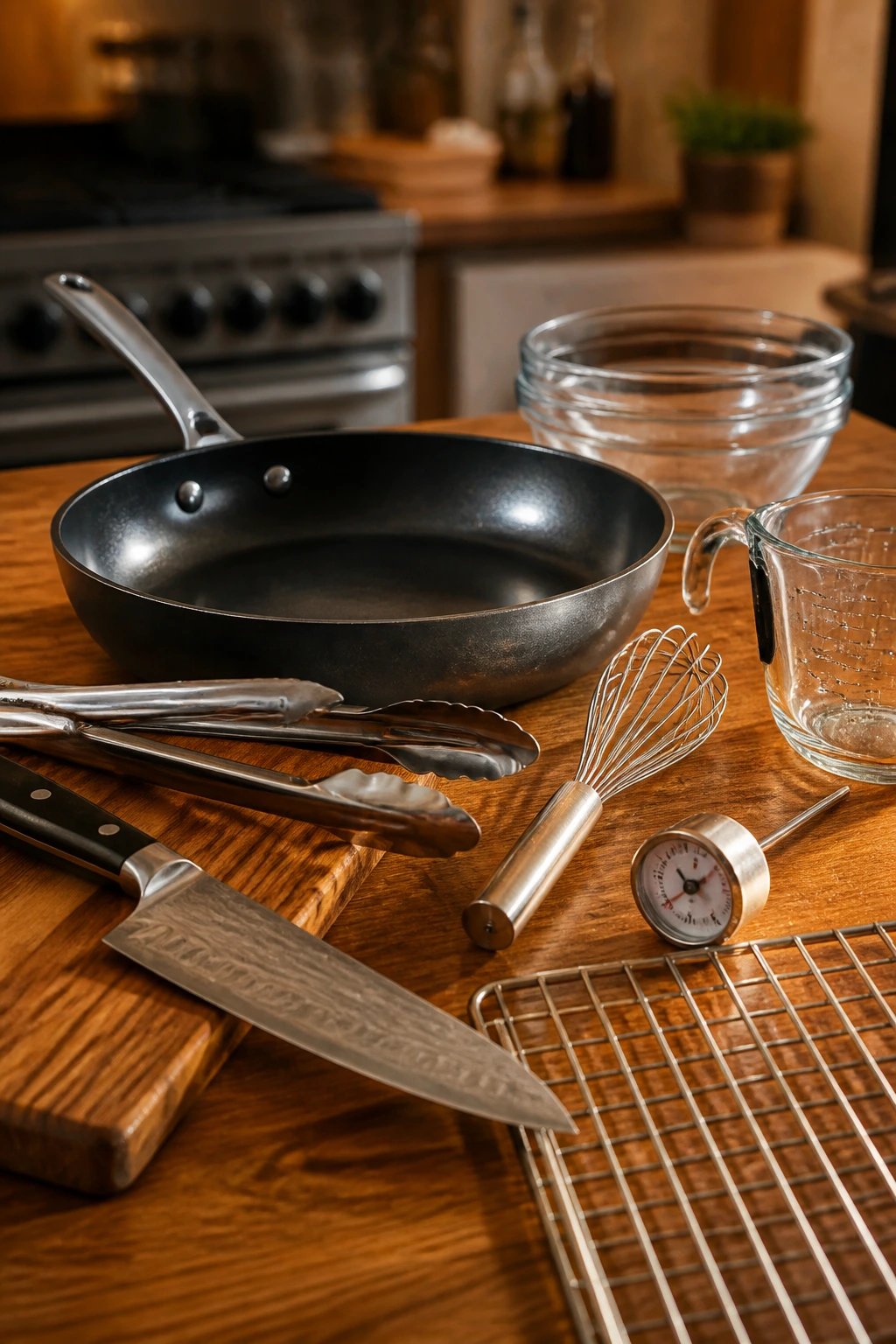
- 12-inch skillet or wok: A wide surface matters because the pork needs room to brown instead of steam.
- Large mixing bowl: Use this for coating the pork so you can toss without flinging starch everywhere.
- Medium bowl or liquid measuring cup: Perfect for whisking the sauce and keeping it within arm’s reach.
- Whisk: Small tool, big deal. It breaks up cornstarch before it has a chance to clump.
- Tongs or a spider strainer: Helpful for turning the pork and getting it out of the oil quickly.
- Sharp chef’s knife and cutting board: Clean cubes start with a decent knife. Dull knives make the pork ragged and slow you down.
- Instant-read thermometer: Not required, but useful. The thickest pork pieces should hit 145°F at the center.
- Wire rack set over a sheet pan: Best place for the fried pork to rest while you cook the vegetables. Paper towels work in a pinch, but the rack keeps steam from softening the crust.
How to Cook It Step by Step
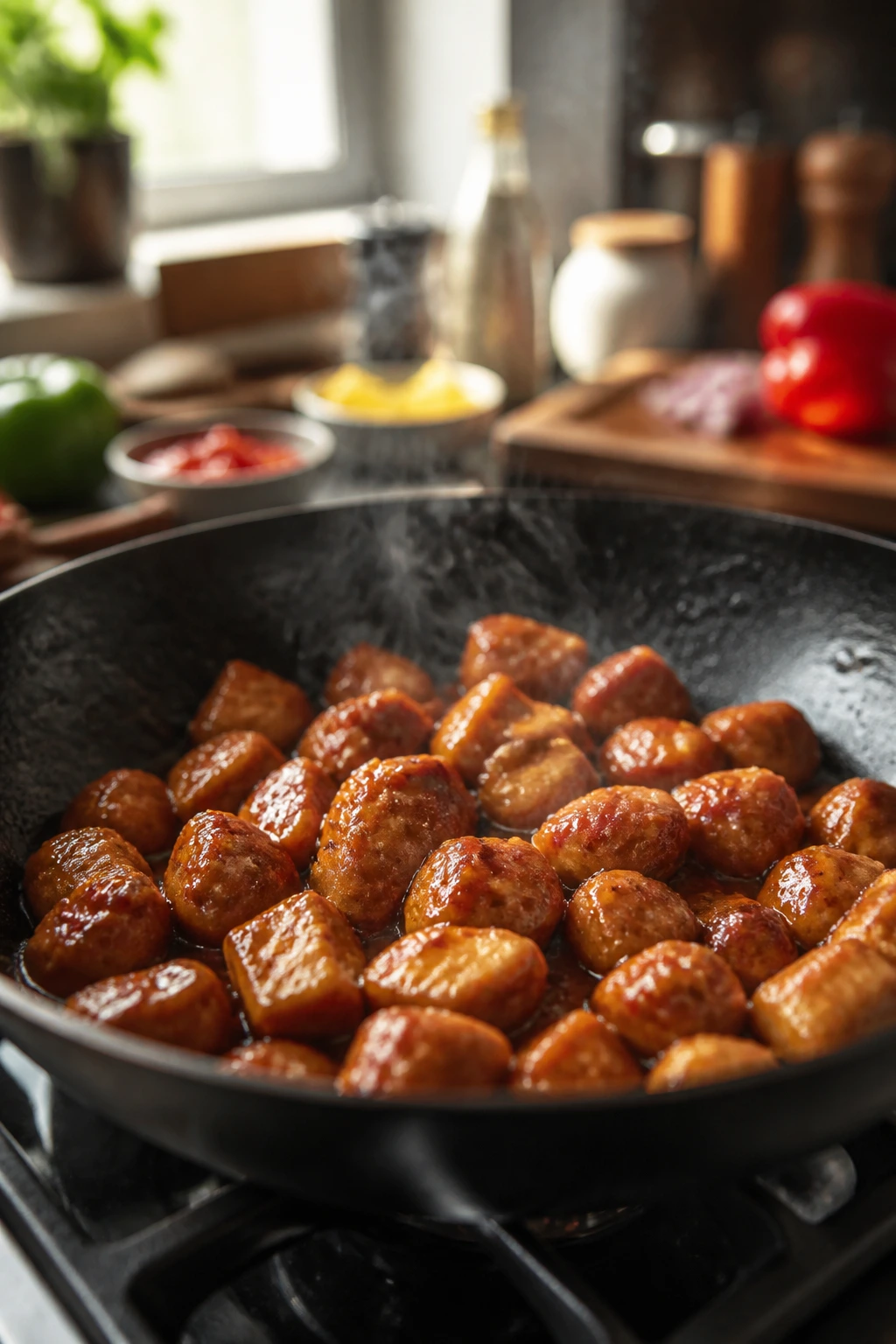
Prep the Pork and Sauce
-
Pat the pork tenderloin dry with paper towels, trim away the silver skin, and cut it into 1-inch cubes. Dry meat browns better, and the uniform cubes finish at the same time.
-
In a medium bowl, whisk together the pineapple juice, rice vinegar, ketchup, brown sugar, soy sauce, ginger, garlic, cornstarch, and cold water until the mixture looks smooth and brick-red. Set it aside within reach of the stove.
-
In a large bowl, toss the pork with the egg, salt, and black pepper first, then add the cornstarch and flour. Mix until every piece is lightly coated and a little sticky. Do not build a thick batter — the coating should look dusty in spots, not paste-like.
Cook the Pork
-
Heat 2 tablespoons of the neutral oil in a 12-inch skillet over medium-high heat until it shimmers. Add half the pork in a single layer and cook for 4 to 5 minutes total, turning once or twice, until the outside is golden and crisp and the thickest piece reads 145°F at the center.
-
Transfer the pork to a wire rack set over a sheet pan. Add the remaining 1 tablespoon oil, then cook the second batch the same way. If the pan looks dry, add 1 more tablespoon oil before the second round. Crowding the skillet will steam the coating and you’ll lose the texture you just worked for.
Build the Stir-Fry
-
Return the skillet to medium-high heat if needed. Add the onion and bell peppers and stir-fry for 3 to 4 minutes, until the onion turns translucent at the edges and the peppers pick up a few blistered spots but still hold their shape.
-
Add the pineapple chunks and cook for 30 seconds, just long enough for them to warm through. Pour in the sauce and stir constantly. Let it bubble for 1 to 2 minutes until it thickens into a glossy glaze that coats the back of a spoon. If the sauce tightens too quickly, add 1 to 2 tablespoons water and stir again.
-
Return the pork to the skillet and toss for 30 to 60 seconds, just until every piece is coated and heated through. Scatter the scallions and sesame seeds over the top and serve immediately. The finished pork should look shiny, not soupy, and the vegetables should still have some snap.
How to Serve It So It Stays Crisp
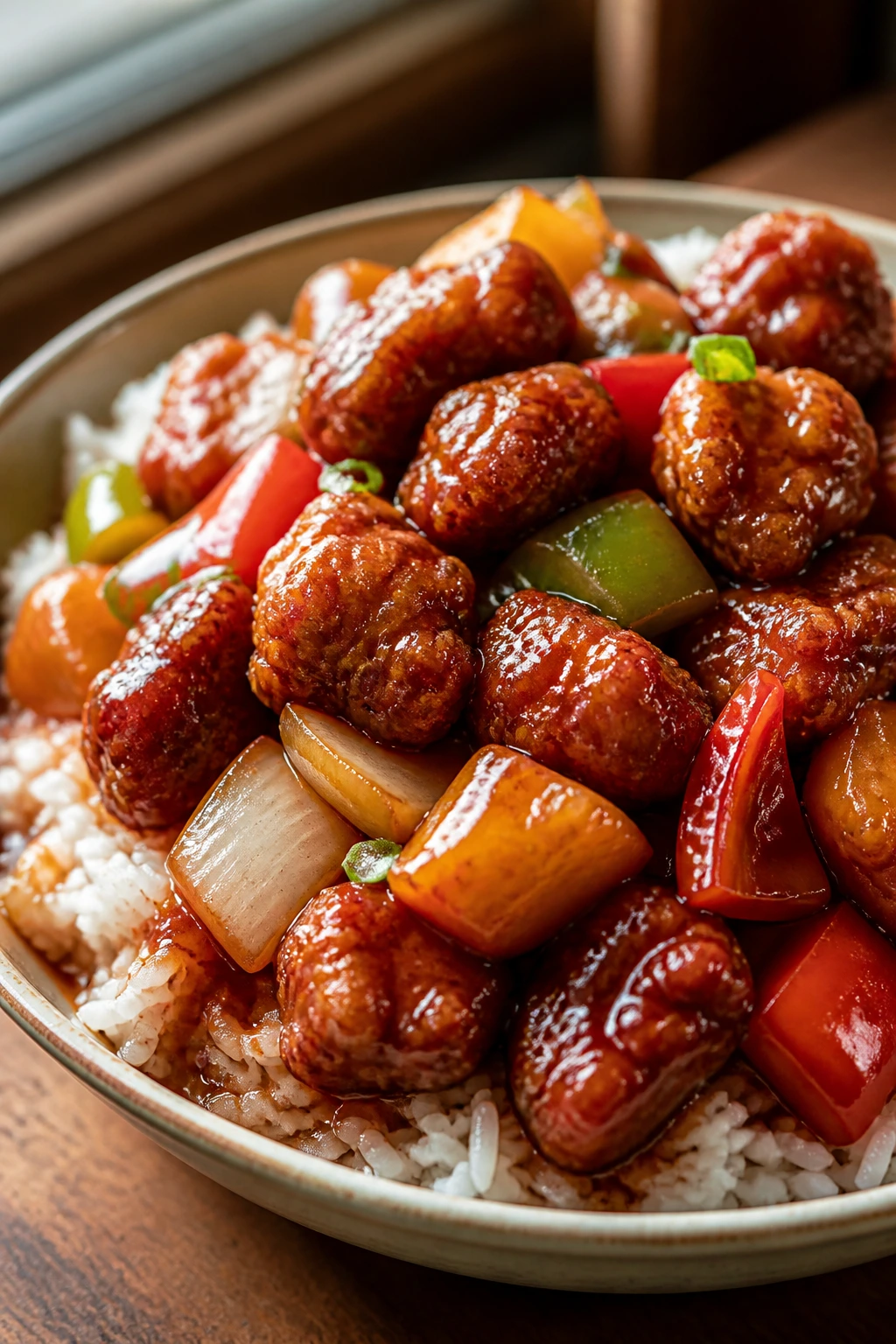
Presentation: Spoon the sweet and sour Chinese pork over hot jasmine rice in a shallow bowl instead of a deep one. That gives the sauce space to sit around the rice and keeps the pork visible, which matters because the best part of this dish is the contrast between the lacquered glaze and the crisp edges.
Accompaniments: Plain steamed rice is the safest match, but garlic fried rice works if you want something richer. I also like it with quick cucumber salad, steamed bok choy, or a simple cabbage slaw dressed with rice vinegar and a pinch of salt. The plate does not need anything fussy.
Portions: This recipe serves 4 as a main course over rice or 6 if you’re serving it with extra sides. If you’re feeding bigger eaters, increase the rice and keep the pork amount the same rather than stretching the sauce too thin.
Beverage Pairing: Iced jasmine tea is the cleanest match. A dry lager or a lightly off-dry Riesling also works well because both cut through the sweet glaze without fighting the pineapple.
Extra Tips That Pay Off
Flavor Enhancement: A teaspoon of the reserved pineapple juice stirred into the sauce after it thickens brightens the fruit note without making the dish sweeter. It’s a small move, but it keeps the glaze from tasting flat after it hits the hot pork.
Time-Saver: Cut the pork, peppers, onion, and pineapple before you heat the pan. Sweet and sour pork moves fast once the oil is hot, and the shortest route to a good dinner is having every bowl lined up before you start frying.
Pro Move: Let the fried pork sit on the wire rack for 2 full minutes before it goes back into the sauce. That pause lets steam escape from the crust. If you toss it back too soon, the outside softens faster than it should.
Cost-Saver: Use one red pepper and one green pepper instead of two red peppers. The green one is cheaper, the red one carries the sweetness, and together they give the dish that familiar takeout look without wasting money on a color preference.
Make-It-Yours: For a little heat, add 1 teaspoon of chili crisp or ½ teaspoon red pepper flakes to the sauce before it hits the skillet. For a lighter version, reduce the brown sugar to 2 tablespoons and add a few extra pineapple chunks to keep the glaze lively.
Common Mistakes That Make It Mushy
-
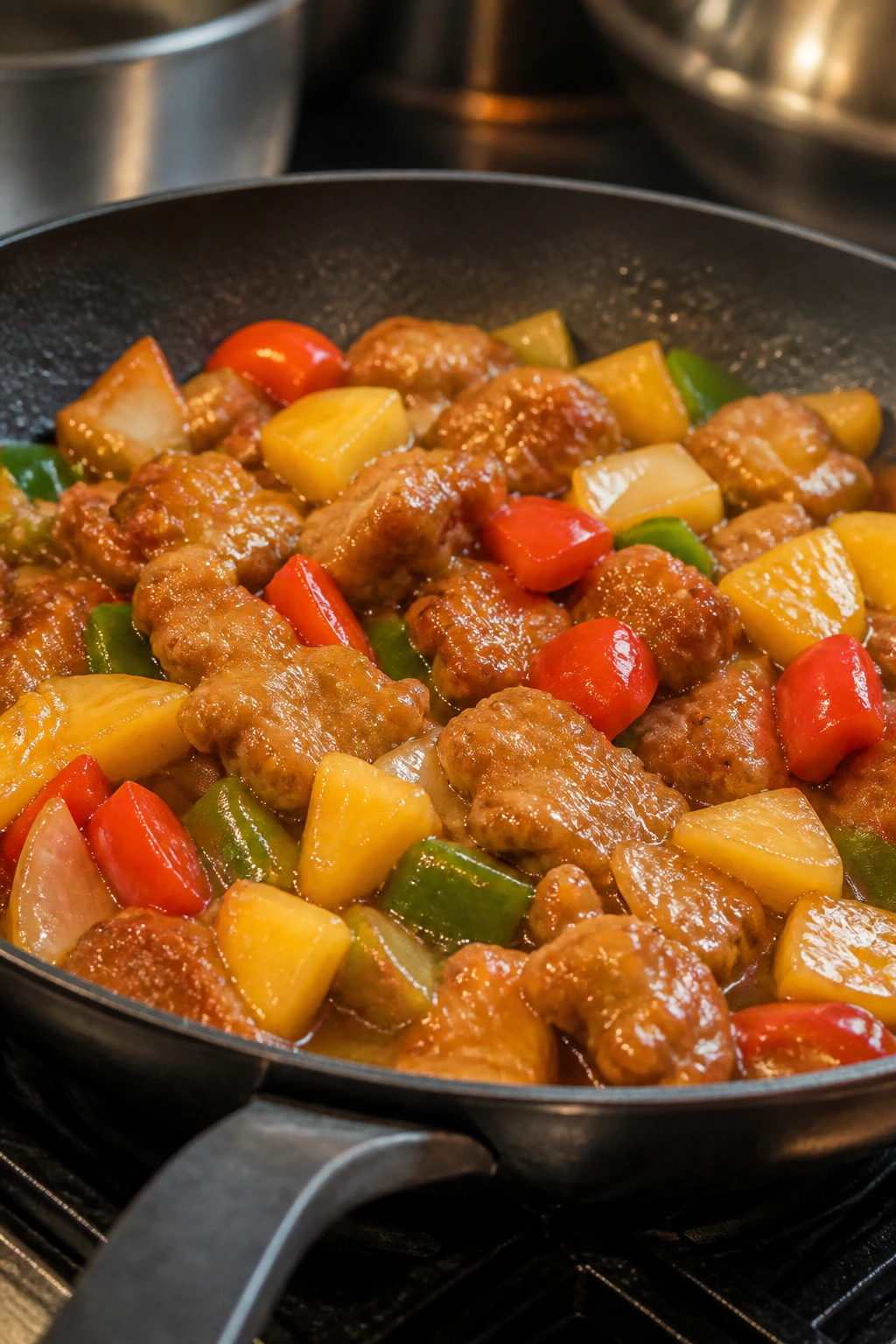
Crowding the skillet: If you pack too much pork into one batch, the coating steams instead of frying. The pieces come out pale and soft. Cook in two batches, even if it feels slower.
-
Adding the sauce before the vegetables are ready: The peppers turn limp and the pork coating goes slack when sauce floods the pan too soon. Fry the pork first, stir-fry the vegetables second, and only then pour in the sauce.
-
Using a sauce that’s too sweet before you taste it: Pineapple juice and ketchup can push the glaze toward sticky dessert territory if the vinegar is too timid. Taste the sauce cold before cooking and make it sharp enough to stand up to the pork.
-
Letting the cornstarch clump: If you dump cornstarch into hot liquid or fail to whisk the sauce properly, you’ll get lumps that never fully disappear. Mix the starch with cold water first and whisk until the sauce looks smooth.
-
Overcooking the pork out of caution: Pork tenderloin dries out fast. Once the center hits 145°F and the outside is golden, it’s done; the sauce finishing step gives it the last few seconds of heat it needs.
-
Serving it too late: This dish does not age gracefully in the pan. The longer the sauced pork sits, the softer the coating becomes. Get the rice ready before the glaze goes in so you can plate immediately.
Variations Worth Trying
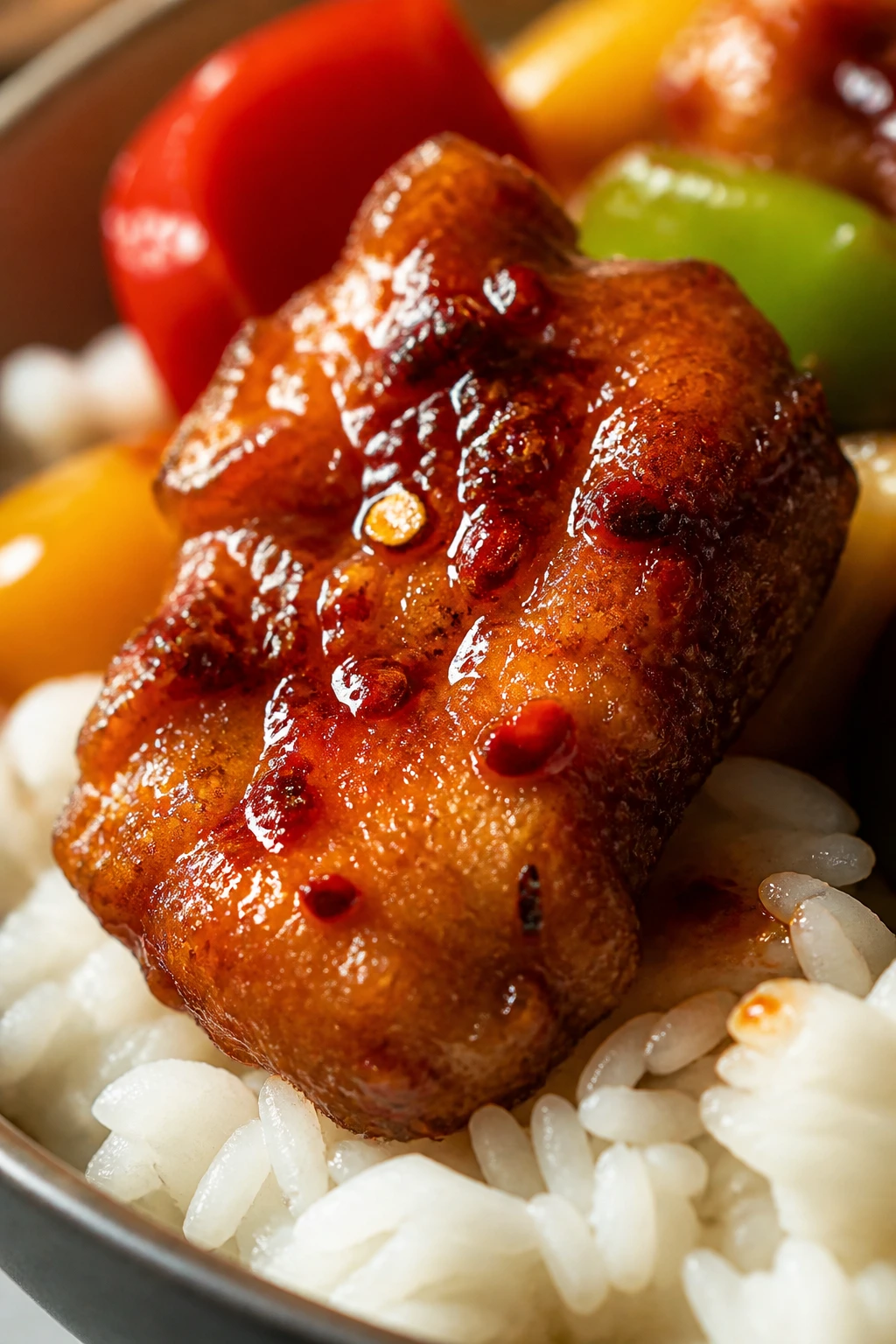
Chili Crisp Lantern Pork
Stir 1 teaspoon of chili crisp into the sauce before it goes into the pan, then finish with a few extra scallions. The heat lands underneath the sweet-sour glaze instead of sitting on top of it, which gives the dish more depth without changing the core flavor.
Pineapple-Forward Party Skillet
Increase the pineapple chunks to 1½ cups and the pineapple juice to 1 cup, then reduce the ketchup to ¼ cup. This version tastes fruitier and a little brighter, and it works well if you want the sauce less tomato-heavy.
Gluten-Free Crunch Bowl
Swap the all-purpose flour for ¼ cup more cornstarch and use tamari instead of soy sauce. The coating becomes thinner and a little more delicate, but it still browns well if you keep the pan hot and don’t crowd it.
Charred Pepper Version
Cook the peppers and onion until they pick up more color than usual, almost to the edge of blistered. That brings a smoky note that plays nicely with the vinegar and brown sugar, and it’s my pick when I want the vegetables to taste less polite.
Make-Ahead, Storage, and Reheating
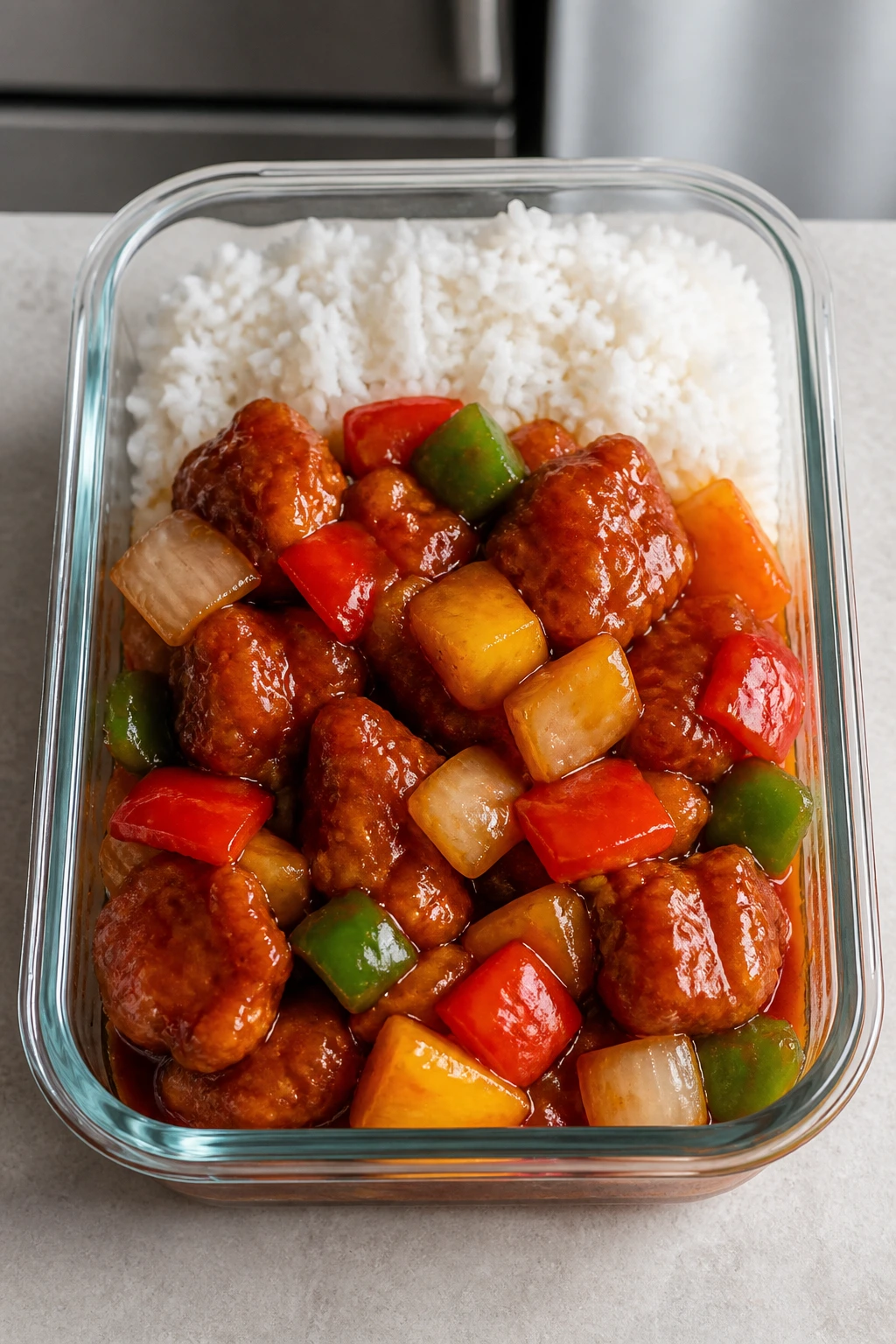
Sweet and sour Chinese pork is at its best right after it leaves the skillet, but the parts can be handled ahead if you’re willing to split the work. The sauce can be whisked together up to 3 days ahead and kept in the fridge in a sealed container. The pork can be trimmed and cubed a day ahead, and the vegetables can be chopped a day ahead too, though I’d keep the onion and peppers in separate containers so the onion scent doesn’t creep into everything else.
Once cooked, the pork and vegetables will keep in the refrigerator for 3 to 4 days in an airtight container. Room temperature is a no-go beyond 2 hours, especially because of the sauce. If you’re packing leftovers for lunch, store the rice separately from the pork so the grains don’t turn sticky before you reheat them.
Freezing is possible, but the texture changes. The sauced pork will keep for up to 2 months in the freezer, though the peppers soften after thawing and the coating loses some of its crispness. If you know ahead of time that you’ll freeze it, freeze the fried pork pieces and the sauce separately. That keeps the coating from sitting in liquid for weeks.
For reheating, a skillet is the best tool. Add the leftovers to a skillet over medium heat with 1 to 2 tablespoons of water, cover for 2 minutes, then uncover and stir until hot. The lid helps loosen the sauce without scorching it, and the last minute uncovered brings the glaze back. An oven at 375°F works too if you spread the pork on a sheet pan and heat it for 10 to 12 minutes. The microwave is the last resort; use 30-second bursts and expect softer edges.
Questions People Ask About Sweet and Sour Chinese Pork
Can I use pork loin instead of pork tenderloin?
Yes, but cut it a little smaller, around ¾- to 1-inch pieces, because pork loin is lean and can dry out faster. Tenderloin is still my first choice for this dish because it stays tender with the short cooking time.
What vinegar works best if I don’t have rice vinegar?
Apple cider vinegar is the easiest stand-in. White vinegar is sharper and can work too, but you may want an extra teaspoon of brown sugar or a splash more pineapple juice to smooth out the bite.
Do I really need to fry the pork?
For the texture people expect from sweet and sour Chinese pork, yes. You can bake or air-fry it if you want less oil, but the crust will be thinner and the sauce will soften it faster once it’s tossed together.
Why did my sauce turn lumpy?
That usually means the cornstarch met heat before it was fully dissolved, or the sauce was whisked too little. Start with cold liquid, whisk until smooth, and keep the simmer gentle once the sauce goes into the pan.
Can I make this without pineapple?
You can, but the sauce needs another sweet, juicy element to keep the balance. Orange segments, canned peaches, or even a little extra bell pepper sweetness can fill that role if you keep the vinegar in the mix.
How do I keep the pork crisp for guests?
Fry the pork and hold it on a wire rack in a 250°F oven for up to 20 minutes while you finish the sauce and vegetables. Skip paper towels for holding if you can; they trap steam and soften the coating fast.
Can I double the recipe for a crowd?
Yes, and the sauce doubles cleanly. The part that gets tricky is the frying, because crowding the pan drops the oil temperature and the pork turns pale. Use more batches than feels necessary, or use two skillets if you have them.
The Version I’d Make Again
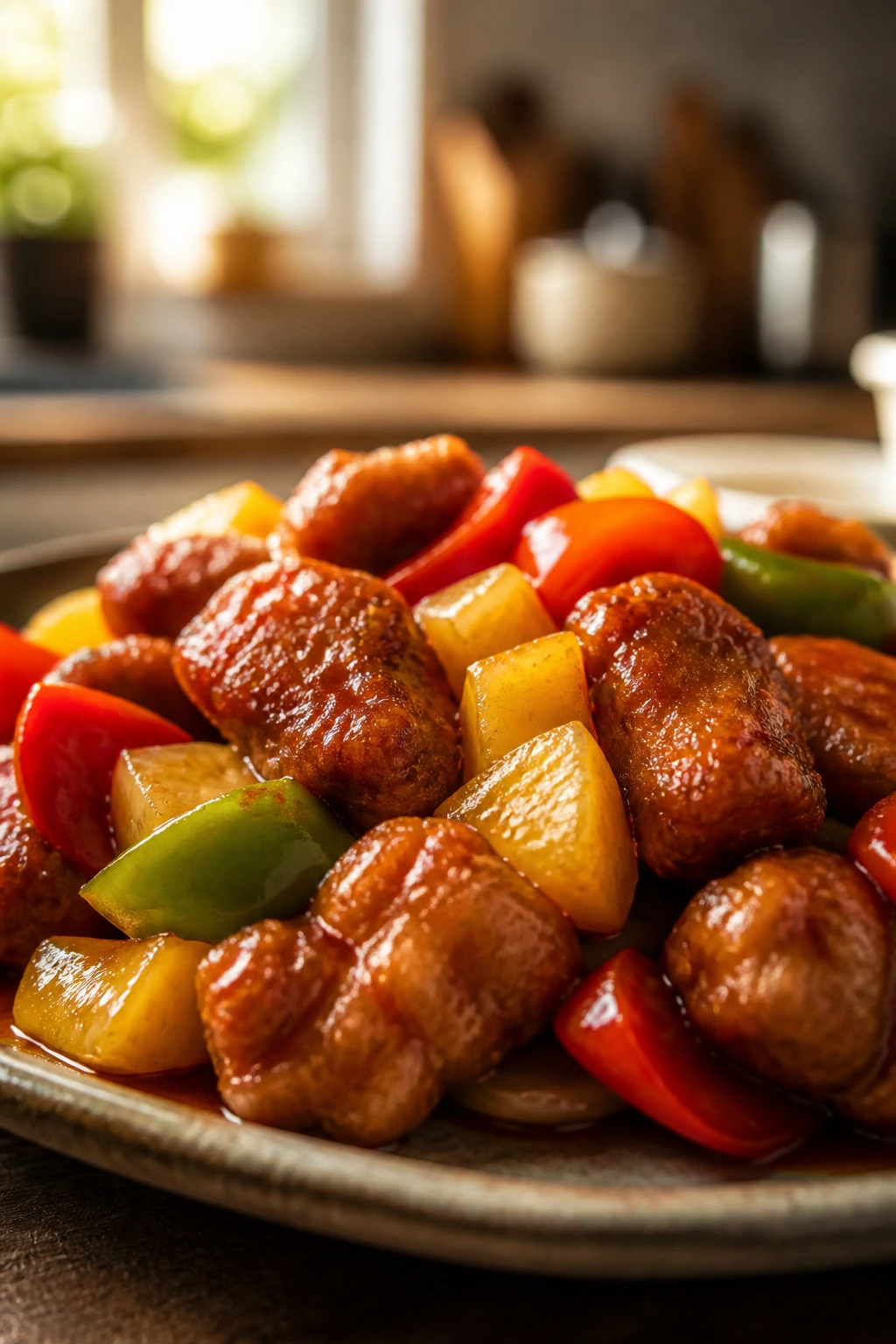
The version worth keeping is the one that respects contrast. Crisp pork. Sharp sauce. Peppers that still snap. Pineapple that tastes like pineapple, not just sugar by another name. Once you get those pieces working together, the dish stops feeling like a takeout imitation and starts feeling like a better answer to the same craving.
I also like how forgiving the sauce is once you understand its job. It should taste a touch too sharp in the bowl, then settle into place when it hits the hot pan and the fried pork. That small bit of tension is what makes the whole thing wake up.
Sweet and Sour Chinese Pork — Recipe Card
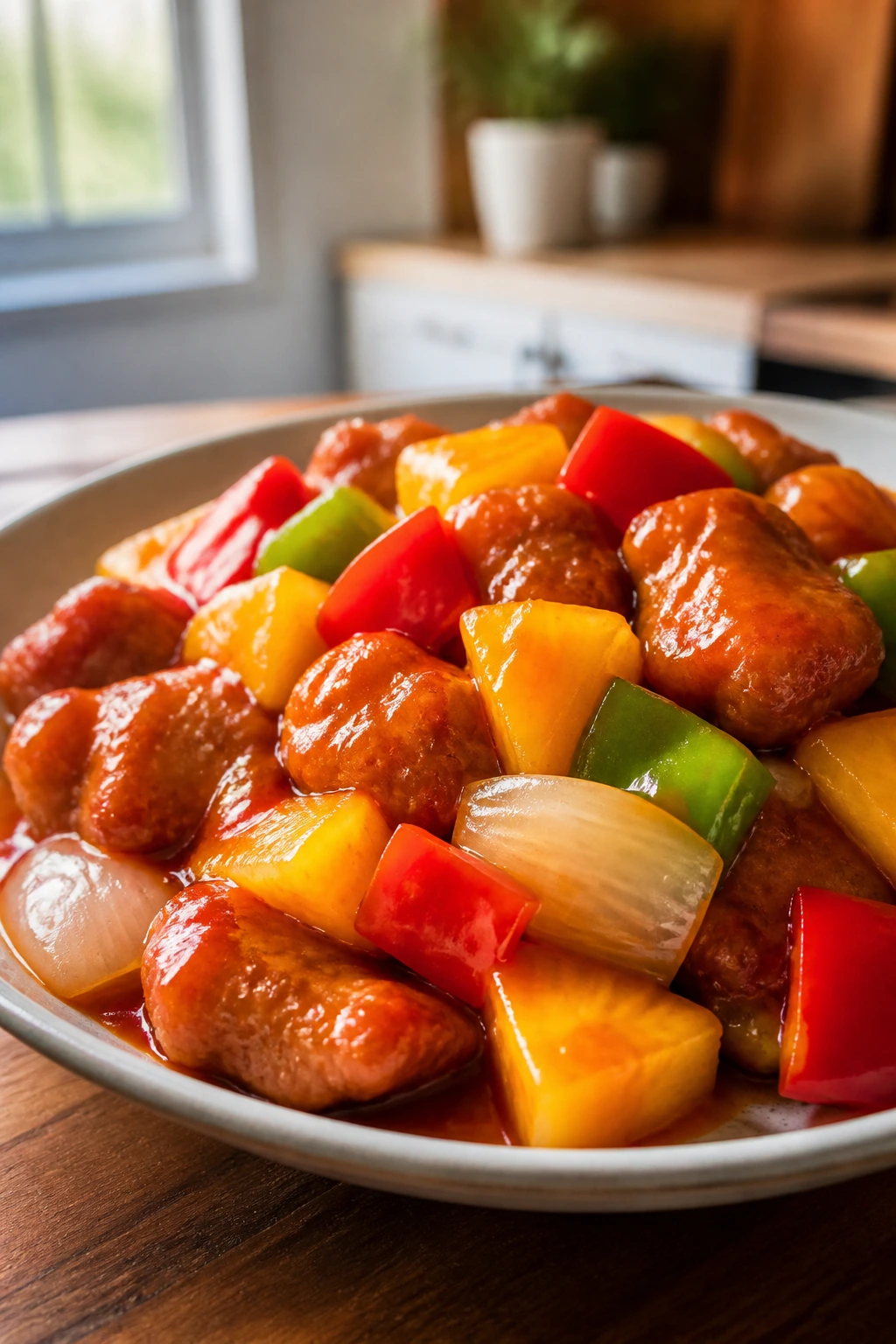
Recipe Name: Sweet and Sour Chinese Pork
Description: Crispy pork tenderloin, peppers, onion, and pineapple tossed in a glossy sweet-tart sauce made with pineapple juice, rice vinegar, ketchup, and ginger. It’s the takeout-style version with brighter flavor and a better shot at staying crisp.
Prep Time: 25 minutes
Cook Time: 20 minutes
Total Time: 45 minutes
Course: Main Course
Cuisine: Chinese-Inspired, American-Chinese
Servings: 4 to 6 servings
Calories: About 430 kcal per serving
Ingredients
For the Pork:
- 1½ pounds pork tenderloin, trimmed and cut into 1-inch cubes
- 1 teaspoon kosher salt
- ½ teaspoon black pepper
- 1 large egg, lightly beaten
- ½ cup cornstarch
- ¼ cup all-purpose flour
- 3 tablespoons neutral oil, plus 1 to 2 more tablespoons as needed
For the Sauce:
- ¾ cup pineapple juice
- ½ cup rice vinegar
- ⅓ cup ketchup
- ¼ cup packed light brown sugar
- 2 tablespoons low-sodium soy sauce
- 2 teaspoons fresh ginger, grated
- 3 garlic cloves, minced
- 1 tablespoon cornstarch
- 2 tablespoons cold water
For the Stir-Fry:
- 1 medium red bell pepper, cut into 1-inch pieces
- 1 medium green bell pepper, cut into 1-inch pieces
- 1 small yellow onion, cut into 1-inch wedges
- 1 cup pineapple chunks, drained if canned
- 2 scallions, thinly sliced
- 1 tablespoon toasted sesame seeds, for serving
Instructions
-
Pat the pork dry, trim the silver skin, and cut it into 1-inch cubes. Whisk the sauce ingredients together in a bowl and set aside.
-
Toss the pork with the egg, salt, pepper, cornstarch, and flour until lightly coated.
-
Heat 2 tablespoons oil in a 12-inch skillet over medium-high heat. Fry the pork in batches for 4 to 5 minutes per batch, until golden and the thickest piece reaches 145°F. Transfer to a rack.
-
Add the remaining oil as needed, then stir-fry the onion and peppers for 3 to 4 minutes until crisp-tender. Add the pineapple chunks and cook for 30 seconds.
-
Pour in the sauce and simmer for 1 to 2 minutes, stirring, until glossy and thick.
-
Return the pork to the skillet and toss for 30 to 60 seconds until coated and hot. Stir in the scallions and top with sesame seeds.
Notes: Fry in batches for the best crust. If the sauce gets too thick, loosen it with 1 to 2 tablespoons water. Serve right away for the crispiest texture.