



Creamy Garlic Chicken is the kind of skillet dinner that saves a tired evening without tasting tired. The sauce lands somewhere between velvet and gravy: glossy, garlicky, with enough Parmesan to feel rich and enough lemon to keep it from sinking into heaviness. If you’ve ever had a cream sauce go grainy, bitter, or flat, this version fixes the usual trouble spots by making the pan do the work. Browning the chicken, softening the shallot, blooming the garlic for only a few seconds, then deglazing and simmering gently — that sequence matters more than any fancy ingredient list.
I reach for chicken thighs here because they stay juicy while the sauce comes together. Breasts can work, but they ask for more babysitting, and a weeknight recipe should not behave like a temperamental audition piece. Thighs give you a little margin. They forgive a brief phone distraction, a slightly hot burner, or a sauce that takes an extra minute to tighten.
The other reason this dish earns a permanent spot in the rotation is the way it finishes. A teaspoon of Dijon, a squeeze of lemon, and a handful of parsley keep all that cream from feeling one-note. It still tastes cozy. It just doesn’t sit there like a blanket. The first thing worth getting right is the pan, because once the skillet is hot, everything else moves quickly.
Why This Creamy Garlic Chicken Wins on a Busy Night
One skillet does nearly all the work. The chicken browns in the same pan that later becomes the sauce, so the browned bits left behind turn into flavor instead of becoming stuck-on cleanup. That’s the part people skip when they rush, and then they wonder why the sauce tastes thin.
The garlic stays sweet instead of sharp. Eight cloves sound bold on paper, but they cook for less than a minute before the liquid goes in. That’s the sweet spot. Garlic that lingers too long in hot butter turns bitter fast, and bitter garlic in cream is a bad trade.
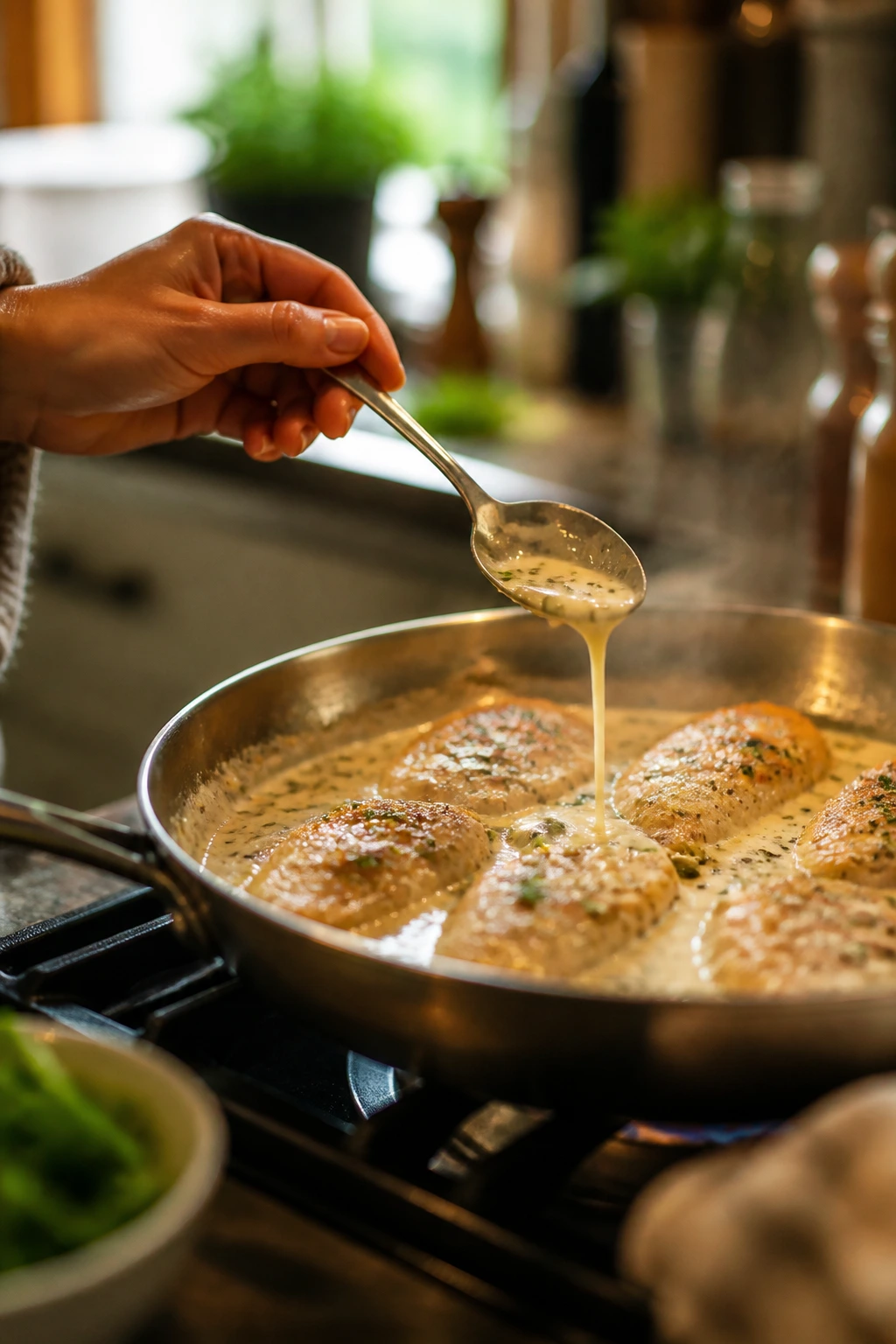
The sauce clings, which is the whole point. A small flour dredge on the chicken plus a brief simmer with Parmesan gives you a sauce that coats the meat instead of pooling around it. You want it to slide slowly off a spoon, not behave like soup.
It stretches across whatever side you already have. Egg noodles, rice, mashed potatoes, roasted broccoli, a torn piece of bread — this chicken doesn’t fight the plate. It settles in. That makes it much easier to make on a night when the fridge is only half helpful.
Leftovers don’t fall apart. The sauce thickens in the fridge, which sounds like a problem until you reheat it with a splash of broth and watch it come back to life. Some cream sauces turn gluey overnight. This one holds together if you warm it gently.
Time, Yield, and How Fast the Skillet Comes Together
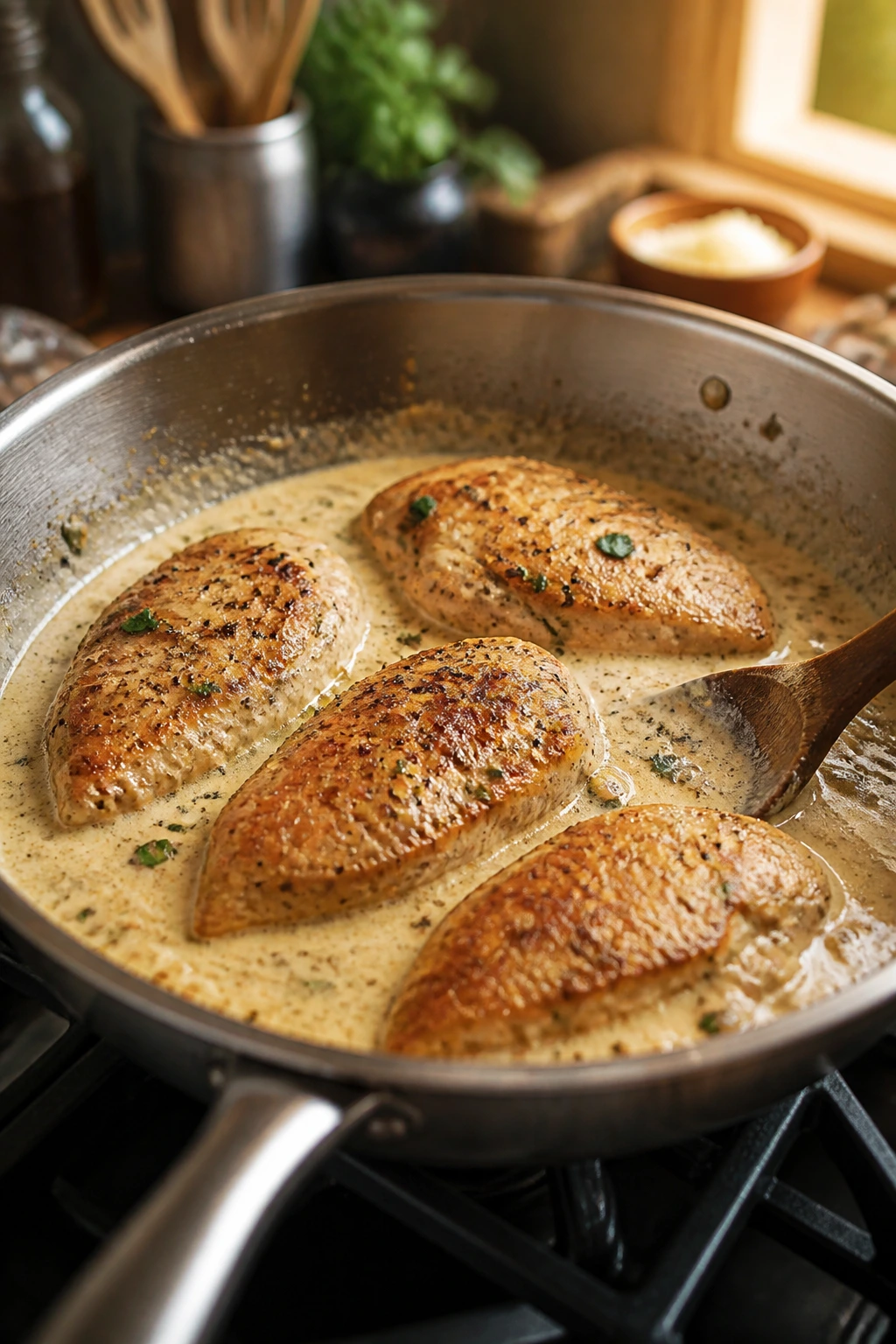
Forty minutes is realistic here. Not “forty minutes if the moon is aligned,” either. The sear is brisk, the sauce builds in one pan, and the chicken returns to finish in the cream so you’re not waiting around for a separate bake.
Yield: Serves 4
Prep Time: 15 minutes
Cook Time: 25 minutes
Total Time: 40 minutes
Difficulty: Beginner — the method is simple, but the sauce needs a little attention so the garlic stays pale and the cream stays smooth.
Best Served: Right away, while the sauce is glossy and the chicken is still juicy.
The Ingredient List for a Sauce That Stays Silky
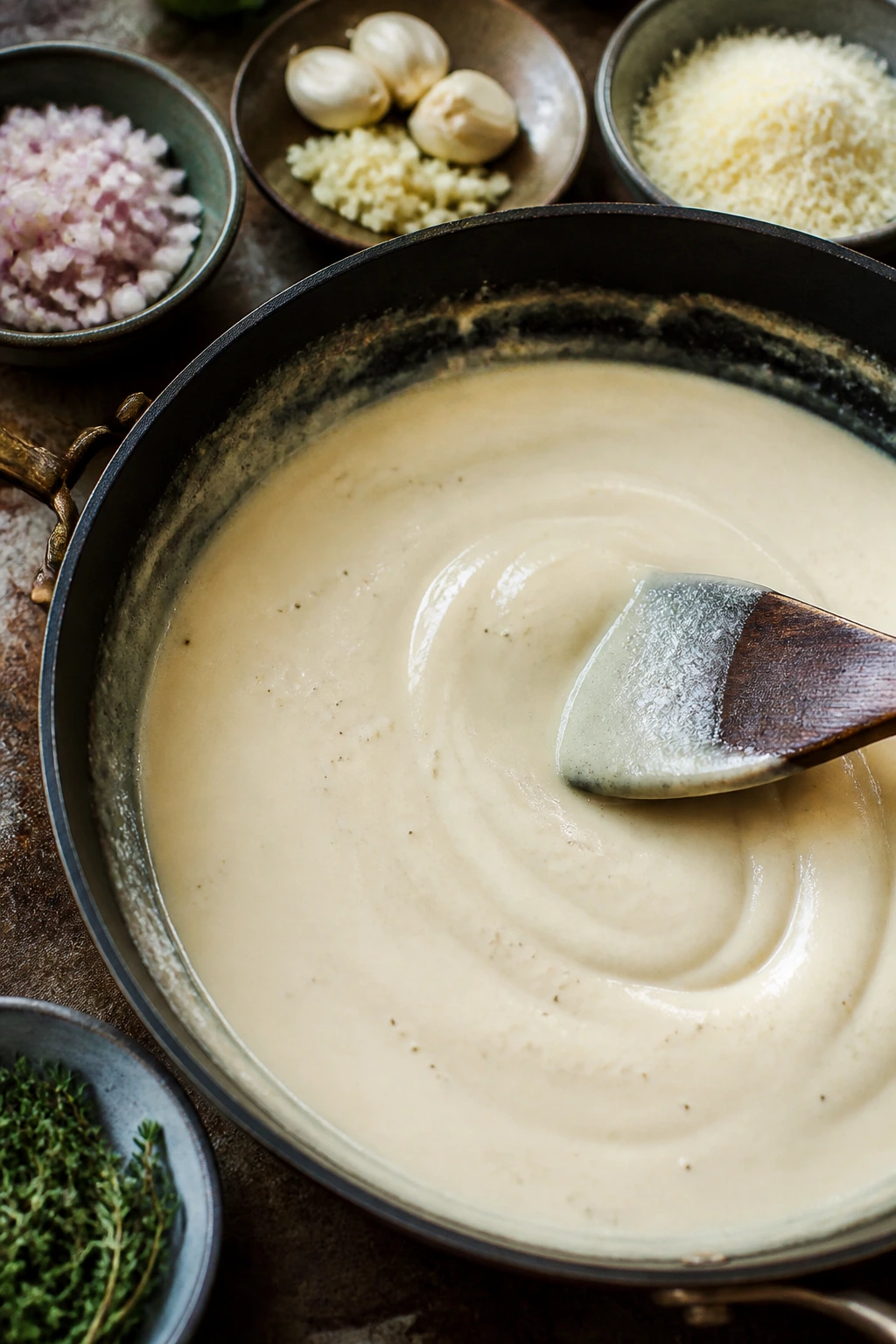
For the Chicken
- 1 1/2 pounds boneless, skinless chicken thighs, trimmed of excess fat
- 1 teaspoon kosher salt
- 1/2 teaspoon black pepper
- 1/2 teaspoon paprika
- 2 tablespoons all-purpose flour, for a light dredge
- 2 tablespoons olive oil
- 1 tablespoon unsalted butter
For the Creamy Garlic Sauce
- 1 small shallot, finely minced
- 8 cloves garlic, minced
- 1 tablespoon all-purpose flour
- 1/2 cup dry white wine or low-sodium chicken broth
- 1 cup low-sodium chicken broth
- 3/4 cup heavy cream
- 1/2 cup finely grated Parmesan
- 1 teaspoon Dijon mustard
- 1 teaspoon fresh thyme leaves or 1/2 teaspoon dried thyme
- 1/4 teaspoon red pepper flakes, optional
For Finishing
- 2 cups baby spinach, optional
- 2 tablespoons lemon juice
- 2 tablespoons chopped parsley
Why Each Ingredient Matters in This Creamy Garlic Chicken
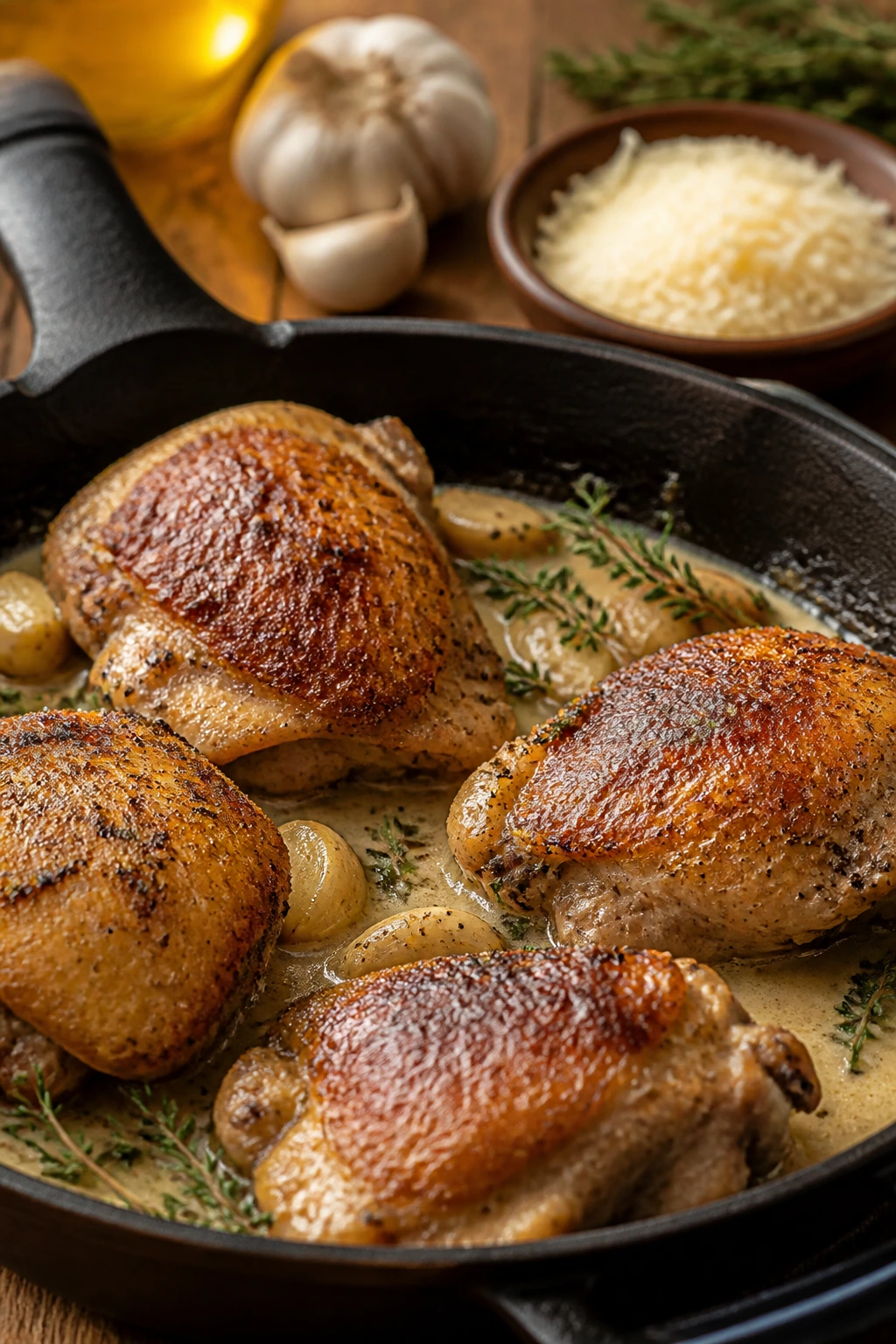
Main Protein
What to use: 1 1/2 pounds boneless, skinless chicken thighs, trimmed of excess fat. Four to six thighs is usually the sweet spot, depending on size.
Preparation: Pat the chicken very dry before seasoning. If a piece looks bulky, flatten the thicker end a little with your palm so it cooks at the same pace as the thinner parts.
Substitutions: Boneless chicken breasts work if you pound them to an even 3/4-inch thickness. Thin cutlets cook even faster, though they can dry out if you let them sit too long in the pan.
Tips: Thighs are the safer choice for a creamy garlic skillet because they stay tender after a brief simmer in sauce. If you use breasts, pull them a little earlier and let the sauce finish the last bit of carryover cooking.
The Creamy Sauce Base
What to use: 1 cup low-sodium chicken broth, 3/4 cup heavy cream, and 1/2 cup finely grated Parmesan.
Preparation: Measure the cream before you start cooking so you’re not fumbling once the garlic is in the pan. Grate the Parmesan yourself if you can; a microplane gives you tiny strands that melt cleanly.
Substitutions: Half-and-half can replace part of the cream if you want a lighter sauce, but keep the heat gentle. If you skip wine, use an extra 1/2 cup broth and add the lemon at the end for brightness.
Tips: Heavy cream handles heat far better than milk. That’s why the sauce stays smooth instead of splitting. And for Parmesan, buy the wedge, not the dusty shelf-stable shreds in a canister.
Garlic, Shallot, and Seasonings
What to use: 1 small shallot, 8 cloves garlic, 1 teaspoon Dijon mustard, 1 teaspoon thyme, and 1/4 teaspoon red pepper flakes if you want a little warmth.
Preparation: Mince the shallot finely so it softens fast. Slice or mince the garlic so it cooks evenly; giant chunks can scorch before the sauce has a chance to move.
Substitutions: A small yellow onion can replace the shallot if that’s what you have. Tarragon, rosemary, or oregano can replace thyme, though thyme is the cleanest fit if you want the garlic to stay central.
Tips: Garlic should smell sweet and nutty when it hits the fat. If it smells sharp or starts browning, the heat is too high. Dijon isn’t there to make the dish taste like mustard; it gives the cream a little backbone.
Finishing Ingredients
What to use: 2 cups baby spinach, 2 tablespoons lemon juice, and 2 tablespoons chopped parsley.
Preparation: Keep the spinach washed and ready before you start. Lemon juice should go in at the very end, after the heat is lowered, so the sauce stays smooth.
Substitutions: Kale works, but it needs a few more minutes to soften. If you want a richer finish instead of greens, skip the spinach and shower the top with extra parsley and a few shavings of Parmesan.
Tips: The lemon matters more than people think. It doesn’t make the dish taste lemony; it keeps the cream from feeling flat and heavy after two or three bites.
Tools That Make the Skillet Move Faster
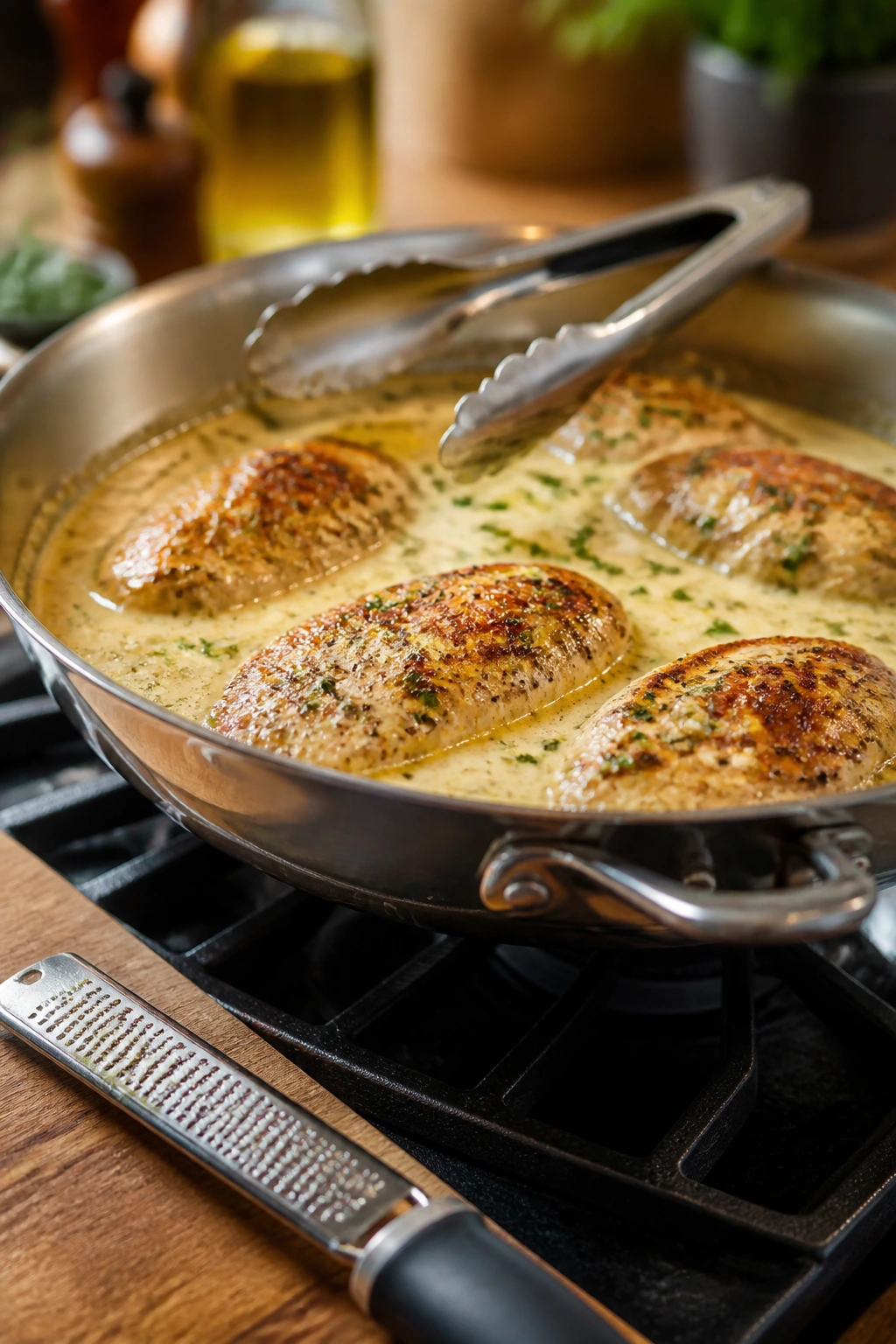
You do not need a rack full of gadgets for Creamy Garlic Chicken, but the right pan and a couple of small tools make a difference.
- 12-inch skillet, stainless steel or cast iron: This gives the chicken enough room to brown instead of steam. A nonstick skillet works in a pinch, though you will get less fond.
- Tongs: Helpful for turning the chicken without piercing it and losing juices into the pan.
- Wooden spoon or silicone spatula: Good for scraping up browned bits when you deglaze.
- Instant-read thermometer: The easiest way to keep chicken juicy and avoid guessing. It’s especially useful if you swap thighs for breasts.
- Microplane or fine grater: Best for Parmesan, which melts more smoothly when it’s finely grated.
- Measuring cups and spoons: Cream sauces move fast once the garlic is in, so measure before the heat comes on.
Step-by-Step: Building Creamy Garlic Chicken in One Pan
Prep the Chicken
-
Pat the chicken thighs dry with paper towels and trim away any loose pieces of fat. Dry chicken browns better, and browning is the difference between a flat sauce and one that tastes like it has depth.
-
Season both sides with the kosher salt, black pepper, and paprika, then dust lightly with the 2 tablespoons of flour. The coating should look thin and even, not pasty. If you pile on too much flour, the sauce can turn bready instead of silky.
Sear the Chicken
-
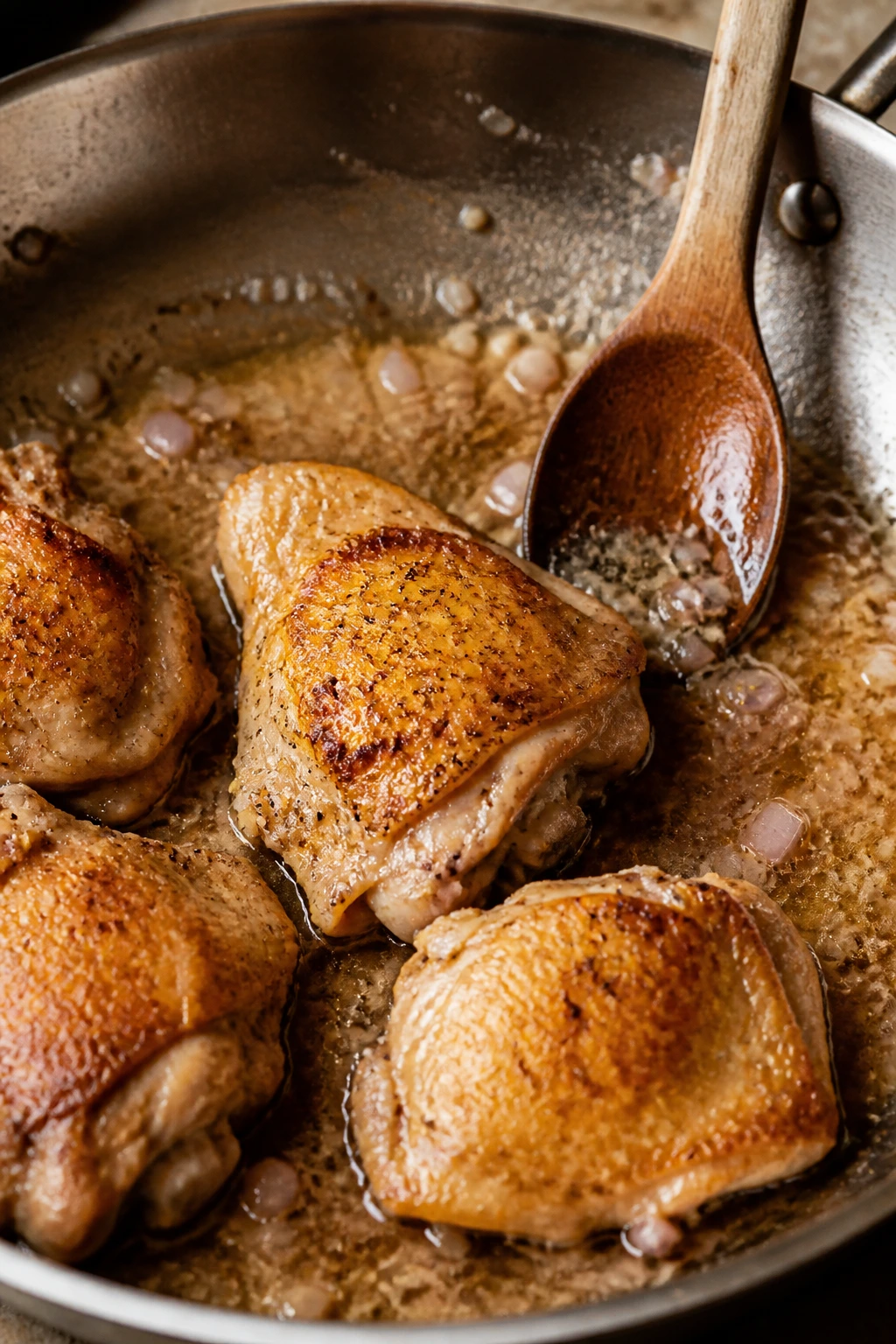
Heat the olive oil and butter in a 12-inch skillet over medium-high heat until the butter foams and the fat shimmers. Lay the chicken in the pan in a single layer, leaving space between the pieces. Cook for 4 to 5 minutes on the first side, until the underside is deep golden brown.
-
Flip the chicken and cook for another 2 to 3 minutes on the second side. The chicken does not need to be fully cooked yet; it should just have color on both sides. Transfer it to a plate and keep the juices. Do not crowd the skillet or the chicken will steam and go pale.
Build the Sauce
-
Lower the heat to medium. Add the minced shallot to the pan and cook for about 1 minute, stirring often, until it softens and turns glossy. Add the garlic and cook for 30 to 45 seconds, just until fragrant. If the garlic starts to brown, lower the heat right away.
-
Sprinkle in the tablespoon of flour and stir for 30 seconds so it cooks out the raw taste. Pour in the white wine or a little broth and scrape the bottom of the skillet with a wooden spoon, loosening every browned bit. Let the liquid bubble for about 1 minute.
-
Add the chicken broth, heavy cream, Dijon mustard, thyme, and red pepper flakes if using. Stir well, then bring the sauce to a gentle simmer. Cook for 3 to 4 minutes, stirring now and then, until it thickens enough to coat the back of a spoon. Keep the sauce at a simmer, not a hard boil.
Finish the Dish
-
Stir in the Parmesan until melted and smooth, then return the chicken and any juices from the plate to the skillet. Reduce the heat to medium-low and simmer for 4 to 6 minutes, turning the chicken once, until the chicken reaches 165°F and the sauce clings to the meat. If using spinach, stir it in during the last minute and let it wilt.
-
Turn off the heat and stir in the lemon juice and parsley. Taste the sauce and add a pinch more salt or pepper if it needs it. Let the chicken rest in the sauce for 2 minutes before serving so the juices settle and the sauce thickens just a little more. That tiny pause matters.
How to Serve Creamy Garlic Chicken Without Weighing It Down
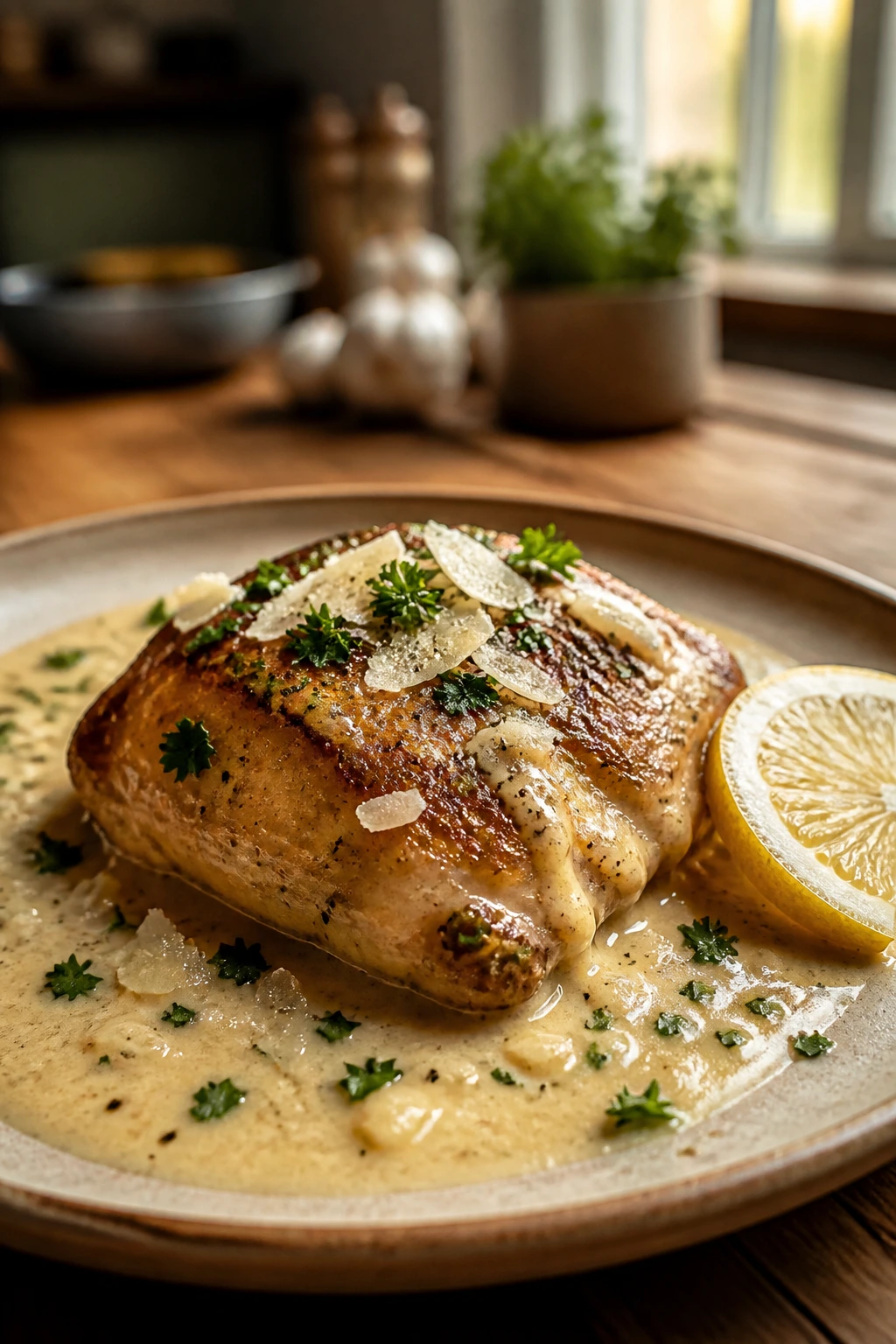
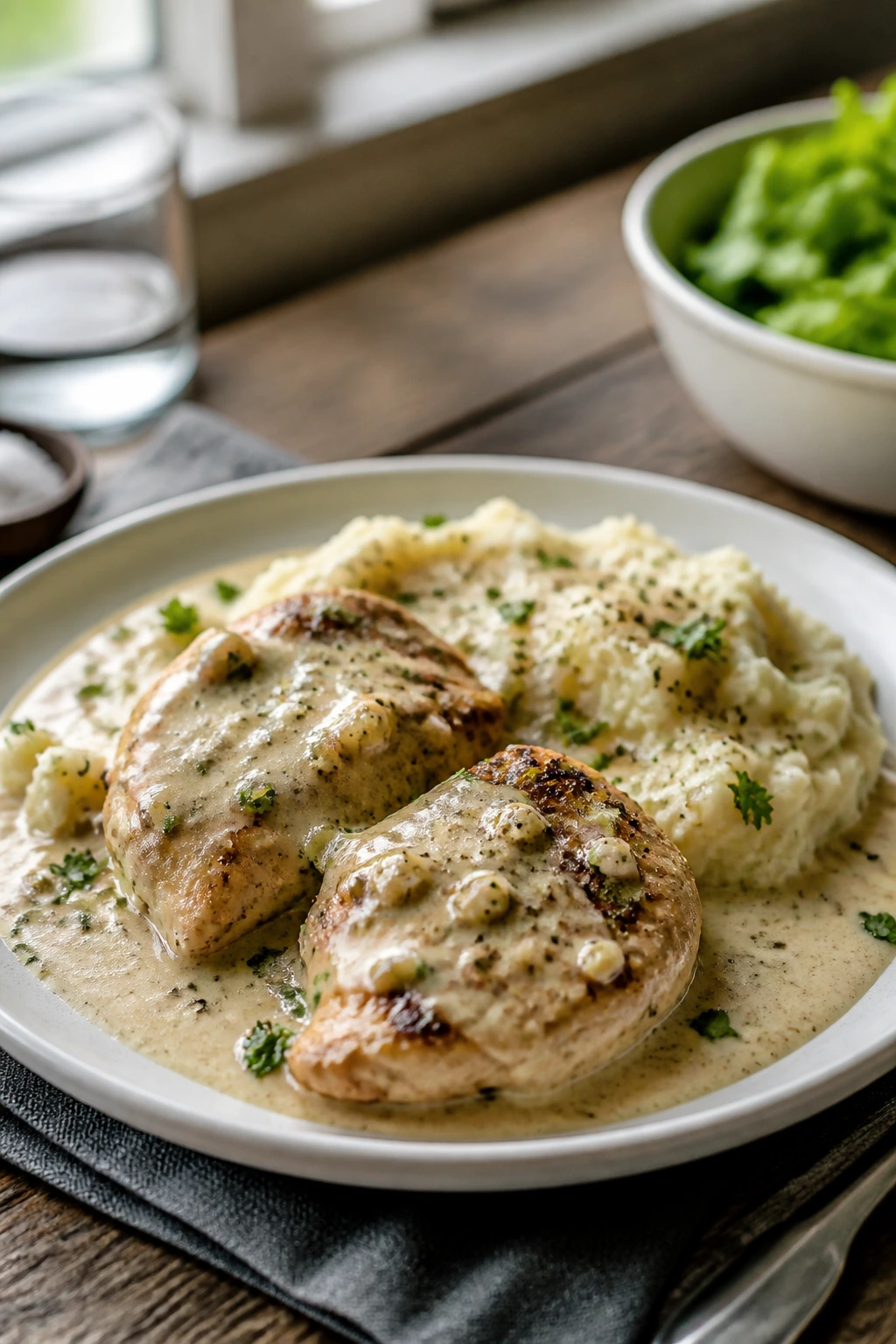
Presentation: Spoon a little sauce onto warm plates first, then set the chicken on top and ladle more sauce over the middle rather than burying the whole piece. A scatter of parsley and a few Parmesan shavings make the dish look finished without asking for extra fuss. I like a lemon wedge on the side, too; it gives each person control over how rich the plate feels.
Accompaniments: Buttered egg noodles are the obvious answer because they trap sauce in every curve. Mashed potatoes make the whole meal softer and more filling, while steamed rice keeps the plate lighter and lets the garlic sauce stay center stage. If you want a vegetable, go with roasted broccoli, green beans, or a crisp salad with a sharp vinaigrette so the meal doesn’t lean too heavy.
Portions: Four servings is realistic with 1 1/2 pounds of chicken thighs, especially if you add noodles, rice, or potatoes. If you’re serving this with a big vegetable side and bread, you can stretch it to 5 smaller portions. If you’re feeding a hungry table, double the sauce before you double the chicken; extra sauce disappears faster than people expect.
Beverage Pairing: A crisp Sauvignon Blanc or Pinot Grigio cuts through the cream nicely. For a non-alcoholic option, sparkling water with lemon or unsweetened iced tea keeps the meal bright and stops the sauce from feeling too rich by the last bite.
Small Tweaks That Make the Dish Taste Fuller
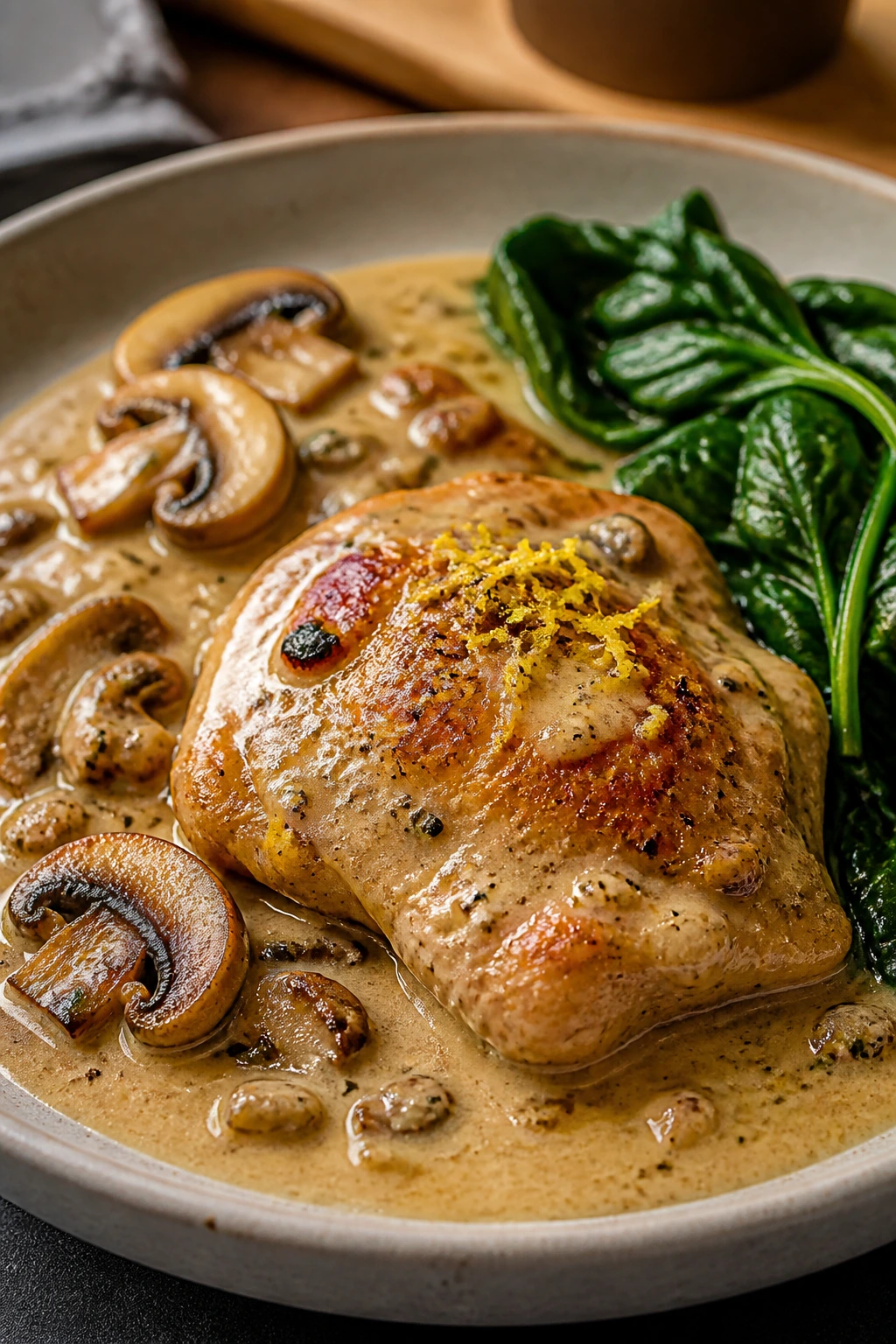
Flavor Enhancement: A little lemon zest at the end changes the whole surface of the sauce. Not much — maybe 1/2 teaspoon — but it wakes up the garlic and makes the Parmesan taste cleaner. If you keep a Parmesan rind in the freezer, simmer it in the sauce for a few minutes and pull it out before serving; it adds body without making the dish taste cheesy in a loud way.
Customization: Mushrooms fit here like they were invited. Slice 8 ounces of cremini and cook them after the chicken comes out, before the shallot goes in, so they brown instead of steaming. If you want more green, add a handful of baby spinach or a few stems of chopped kale near the end.
Serving Suggestions: A pinch of flaky salt on top right before serving gives the sauce a little lift. So does a dusting of extra parsley. If you’re serving this over pasta, save a spoonful of cooking water and splash it into the sauce at the end; it helps the sauce cling to noodles instead of sitting underneath them.
Make-It-Yours: For a lighter plate, serve the chicken with roasted cauliflower or zucchini instead of potatoes. For gluten-free cooking, swap the flour dredge for a light cornstarch dusting and skip the roux step, then simmer the sauce a minute longer to thicken. For a sharper flavor, add capers at the end; they work better than people expect with cream and garlic.
Mistakes That Turn the Sauce Grainy or Thin
-
Crowding the pan: If the chicken pieces sit too close together, they release steam and stop browning. The symptom is pale, damp chicken and a sauce that lacks depth. Use a 12-inch skillet or cook in two batches.
-
Letting the garlic brown: Garlic goes from sweet to bitter faster than people think, especially in butter. If the pan is too hot when the garlic hits, the sauce can taste harsh even after the cream goes in. Lower the heat before adding it and keep the garlic moving for only 30 to 45 seconds.
-
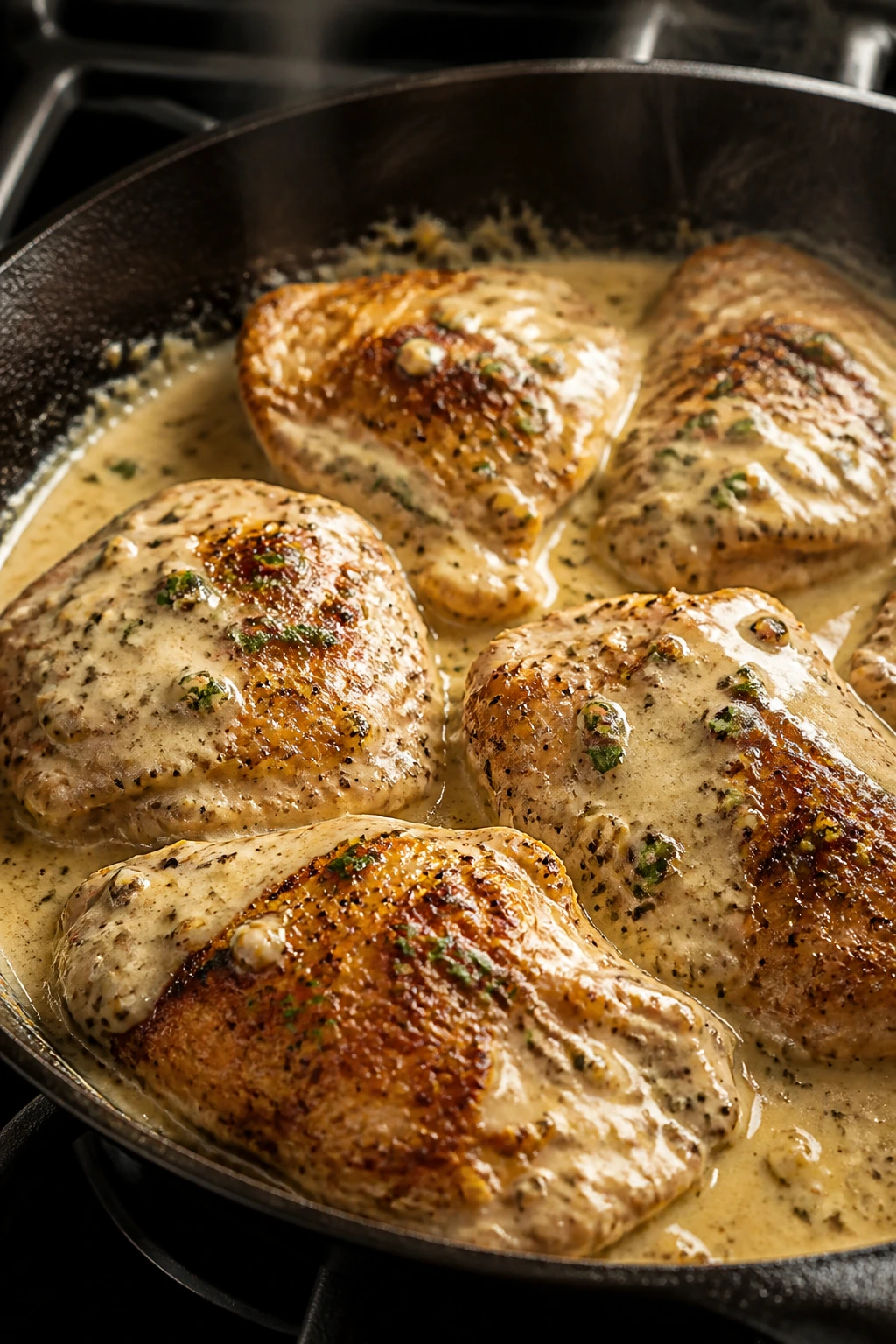
Boiling the cream hard: A hard boil can make the sauce split or look greasy around the edges. The fix is boring but effective: keep the heat at a gentle simmer once the cream goes in, and stir often enough that the bottom doesn’t catch.
-
Adding Parmesan too fast: Dumping cheese into a sauce that’s screaming hot can leave you with little grainy flecks instead of a smooth finish. Pull the heat back to low or medium-low and sprinkle the Parmesan in gradually while stirring.
-
Skipping the lemon: A cream sauce without acid can taste heavy after the second bite. The symptom isn’t a broken sauce; it’s a flat one. A couple tablespoons of lemon juice at the end bring the garlic back into focus.
-
Overcooking the chicken while waiting for the sauce to thicken: This is the quiet mistake. The sauce can always simmer another minute; dry chicken cannot be fixed with more cream. Use a thermometer and pull the pan as soon as the chicken hits 165°F.
Variations That Still Taste Like Creamy Garlic Chicken
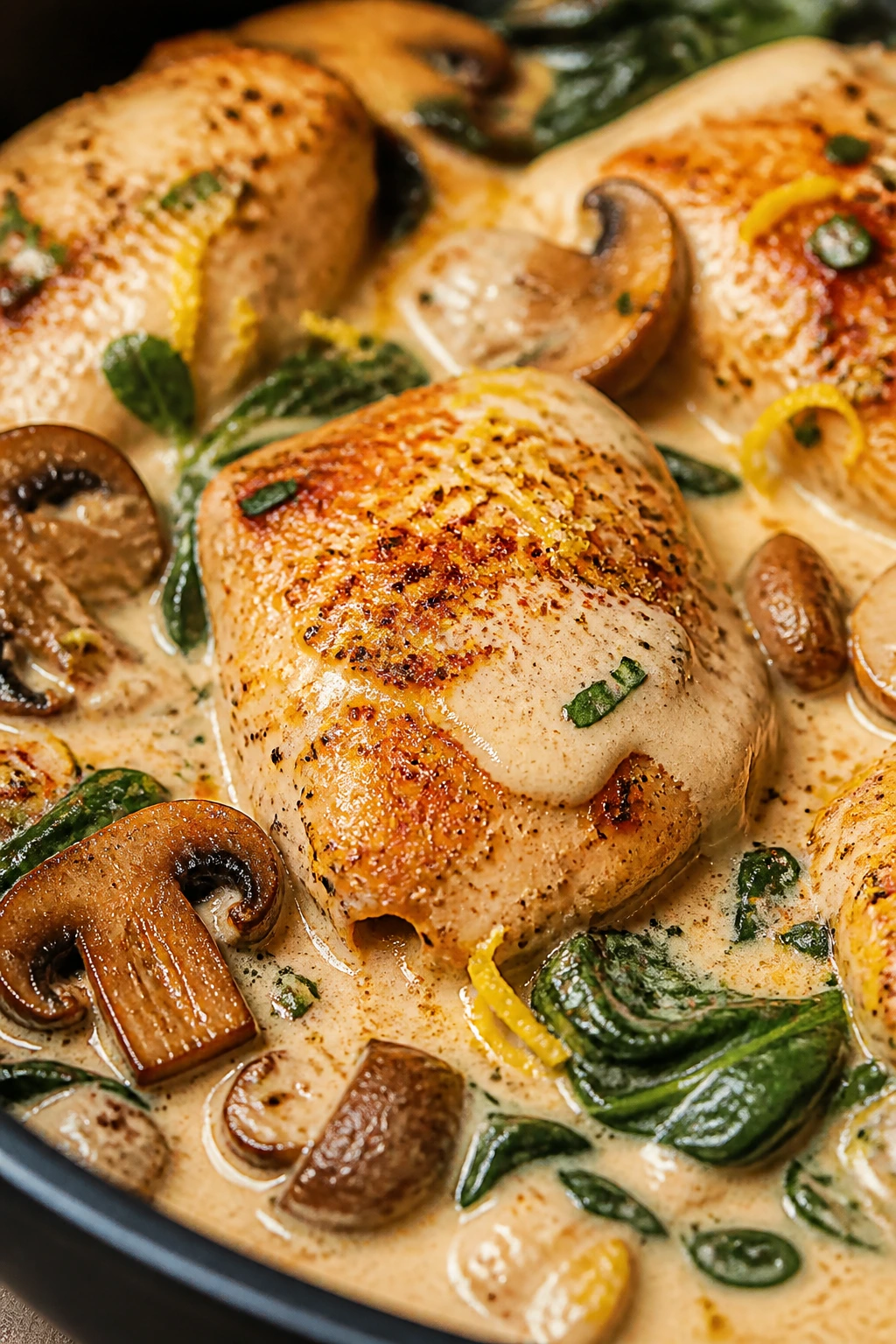
Mushroom-Packed Skillet: Add 8 ounces of sliced cremini mushrooms after the chicken comes out of the pan. Let them brown in the oil and butter until the edges darken and their moisture cooks off, then continue with the shallot and garlic. The mushrooms make the sauce earthier and turn the dish into something that feels a little more substantial.
Spinach and Lemon Finish: Stir in 2 extra cups of baby spinach and add 1 teaspoon of lemon zest with the parsley. This version is the one I make when I want the plate to look greener and taste a little brighter. It still feels creamy, but the finish is cleaner and less dense.
Smoky Paprika Version: Swap the regular paprika for smoked paprika and add a small pinch of cayenne. The sauce keeps its familiar shape, but the chicken tastes like it spent time near a grill instead of just in a skillet. Good when you want a little more edge without changing the structure of the recipe.
Lighter Cream Sauce: Replace 1/4 cup of the heavy cream with half-and-half and keep the heat low. Add an extra tablespoon of Parmesan so the sauce still has body. This is the version for people who want the flavor without the full richness of a straight cream sauce.
Gluten-Free Skillet: Use a light coating of cornstarch instead of flour on the chicken, and skip the tablespoon of flour in the sauce. Let the sauce reduce a little longer over gentle heat, then finish with Parmesan as usual. It won’t look any different on the plate, which is the nicest part.
Keeping Leftovers Creamy the Next Day
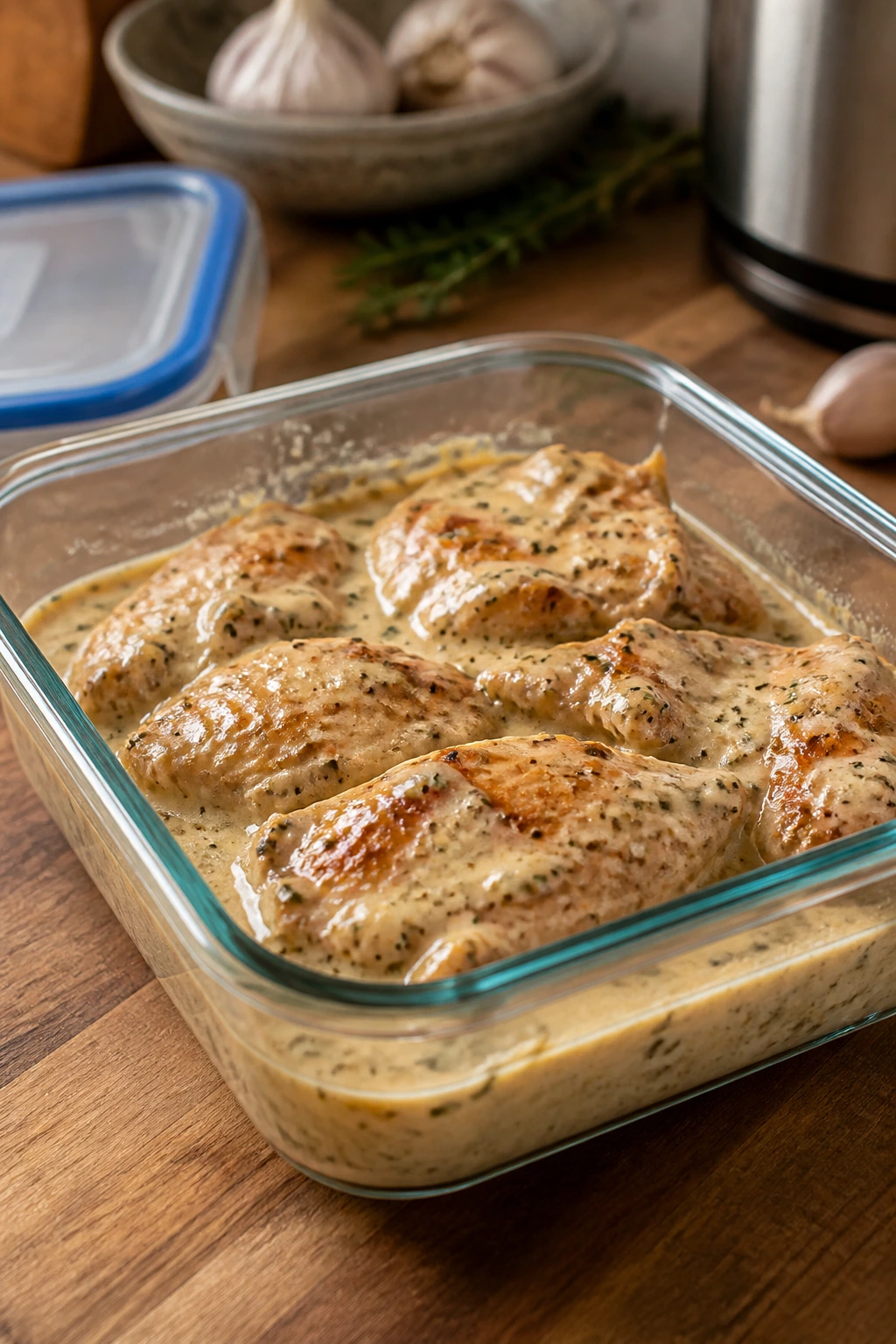
Creamy Garlic Chicken keeps well, but it likes gentle treatment. Store leftovers in an airtight container in the refrigerator for 3 to 4 days. If you’ve added spinach, the leaves will soften more by the next day, so if you know you want leftovers that hold up better, add the spinach fresh when reheating instead of during the first cook.
Freezing works for up to 2 months, though the texture of the sauce may loosen a little when thawed. That’s normal. Cream sauces are never as neat after a freeze as they are on day one, but this one does better than most if you cool it fully before packing it away and thaw it overnight in the refrigerator.
Reheat it slowly on the stovetop over low heat with a splash of chicken broth or water. Stir often and give the sauce a minute or two to relax back into place. If you use the microwave, keep it at 50 percent power and heat in 30-second bursts, stirring between each round so the cream doesn’t separate at the edges.
For make-ahead prep, season the chicken and chop the shallot, garlic, parsley, and spinach up to a day ahead. I would not build the whole sauce in advance unless you’re willing to accept a slightly less glossy finish after reheating. The dish is at its best when the sauce is finished close to serving time, which is usually true of cream sauces anyway.
Questions Home Cooks Ask Before They Start
Can I use chicken breasts instead of thighs?
Yes, but pound them to an even 3/4-inch thickness so they cook at the same speed. Breasts dry out faster than thighs, so check them early and pull them as soon as they reach 165°F. If they’re very thick, slice them into cutlets first.
What if I don’t have white wine?
Use low-sodium chicken broth instead. The sauce will still have enough depth because the browned chicken and Parmesan already carry a lot of flavor. If you miss the little acidic lift wine gives, keep the lemon juice at the end.
Can I make this without flour?
You can. Skip the flour dredge and let the sauce reduce a minute or two longer, or use a light cornstarch dusting if you want a gluten-free version. The sauce will be a bit looser at first, but it still coats the chicken well.
How do I stop the sauce from splitting?
Keep the heat low once the cream goes in and don’t let the pan boil hard. Add the Parmesan gradually, stir often, and avoid rushing the final simmer. If the sauce gets too hot, pull it off the burner for a minute before stirring again.
Can I freeze leftovers?
Yes, though the sauce may separate slightly after thawing. Let it thaw in the fridge, then reheat gently on the stovetop with a spoonful or two of broth. Stir well and it usually comes back together.
What should I do if the sauce is too thin?
Simmer it a little longer before you return the chicken to the skillet, or let the chicken finish in the sauce for an extra minute or two with the heat low. Parmesan also helps tighten the texture. If you still want it thicker, mix 1 teaspoon cornstarch with 1 tablespoon cold water and stir that in slowly.
Can I make this in the oven or slow cooker instead?
The stovetop is better because it lets you brown the chicken and control the garlic. An oven finish can work after the sauce is built, but a slow cooker is a poor fit for this recipe because cream sauces lose their clean texture after long cooking. If you want a slow cooker dinner, this is not the one I’d pick.
Why This Skillet Dinner Stays in Rotation
Creamy Garlic Chicken works because it respects the sequence. Brown the meat first. Treat the garlic gently. Keep the cream at a simmer, not a boil. Those are small moves, but they’re the ones that separate a sauce that tastes smooth from one that tastes rushed.
I also like that it leaves room for whatever the rest of the meal looks like. Rice, potatoes, pasta, bread, roasted greens — none of them are wrong here. Once you make it a couple of times, the rhythm settles into your hands, and the recipe stops feeling like a project. It becomes one of those dinners you can pull off without thinking too hard, which is usually when a recipe earns its keep.
Creamy Garlic Chicken — Recipe Card
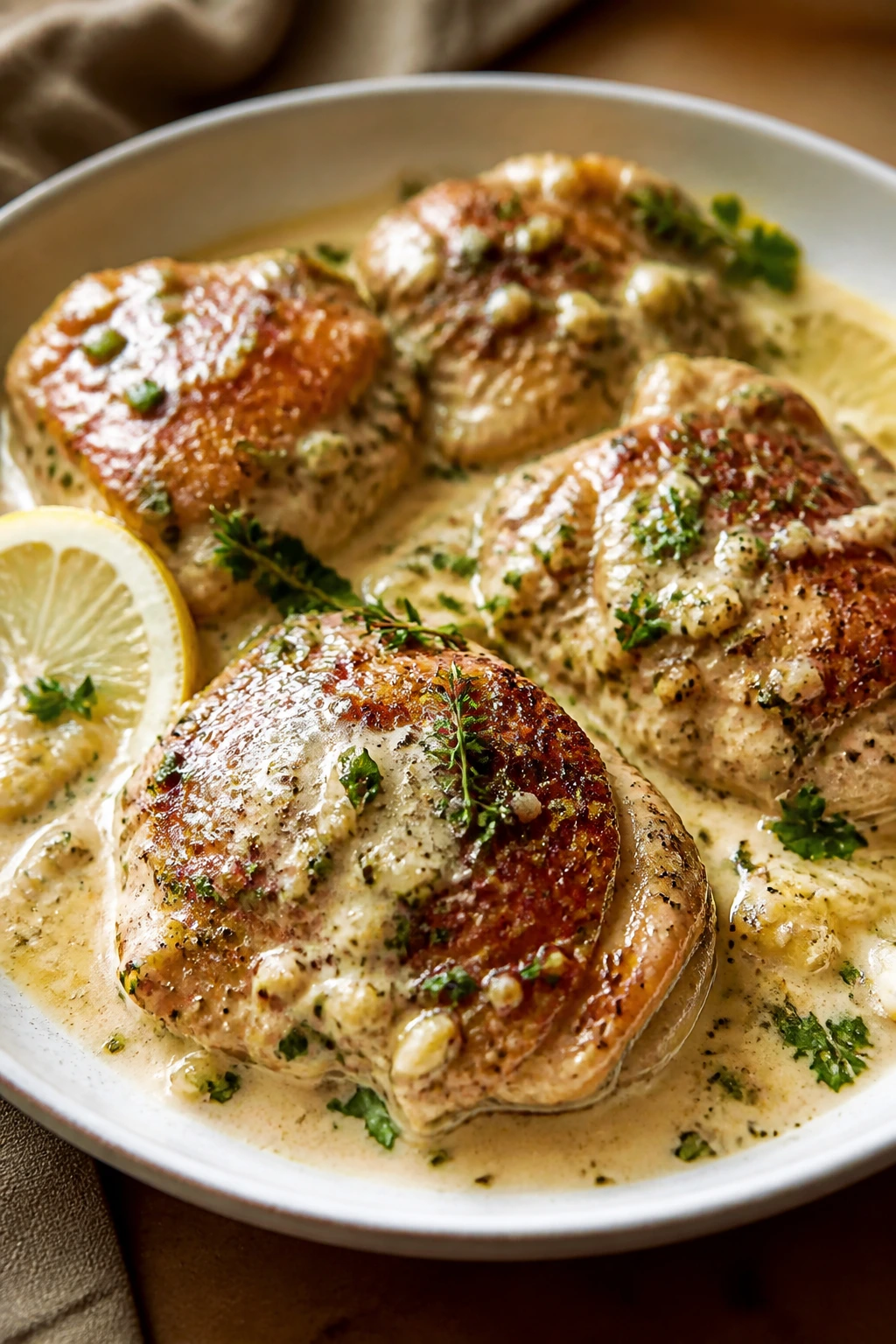
Recipe Name: Creamy Garlic Chicken
Description: Pan-seared chicken thighs in a silky garlic-Parmesan cream sauce with Dijon, thyme, and a bright finish of lemon and parsley.
Prep Time: 15 minutes
Cook Time: 25 minutes
Total Time: 40 minutes
Course: Dinner, Main Course
Cuisine: American
Servings: 4 servings
Calories: about 540 kcal per serving
Ingredients
For the Chicken:
- 1 1/2 pounds boneless, skinless chicken thighs, trimmed of excess fat
- 1 teaspoon kosher salt
- 1/2 teaspoon black pepper
- 1/2 teaspoon paprika
- 2 tablespoons all-purpose flour, for a light dredge
- 2 tablespoons olive oil
- 1 tablespoon unsalted butter
For the Creamy Garlic Sauce:
- 1 small shallot, finely minced
- 8 cloves garlic, minced
- 1 tablespoon all-purpose flour
- 1/2 cup dry white wine or low-sodium chicken broth
- 1 cup low-sodium chicken broth
- 3/4 cup heavy cream
- 1/2 cup finely grated Parmesan
- 1 teaspoon Dijon mustard
- 1 teaspoon fresh thyme leaves or 1/2 teaspoon dried thyme
- 1/4 teaspoon red pepper flakes, optional
For Finishing:
- 2 cups baby spinach, optional
- 2 tablespoons lemon juice
- 2 tablespoons chopped parsley
Instructions
-
Pat the chicken thighs dry, season with salt, pepper, and paprika, then dust lightly with flour.
-
Heat the olive oil and butter in a 12-inch skillet over medium-high heat. Sear the chicken for 4 to 5 minutes on the first side and 2 to 3 minutes on the second side, then transfer it to a plate.
-
Lower the heat to medium. Add the shallot and cook for 1 minute, then add the garlic and cook for 30 to 45 seconds until fragrant.
-
Stir in the tablespoon of flour and cook for 30 seconds. Deglaze with the wine or broth, scraping up the browned bits.
-
Add the chicken broth, heavy cream, Dijon mustard, thyme, and red pepper flakes. Simmer gently for 3 to 4 minutes until slightly thickened.
-
Stir in the Parmesan, return the chicken and any juices to the skillet, and simmer over medium-low heat for 4 to 6 minutes until the chicken reaches 165°F.
-
Add the spinach, if using, and stir until wilted. Turn off the heat, stir in the lemon juice and parsley, then serve.
Notes: Keep the simmer gentle so the sauce stays smooth. Add a splash of broth when reheating. This dish is best served right away over noodles, rice, or mashed potatoes.