



Five o’clock is when creamy pesto chicken starts making sense. You want dinner to taste deliberate, but you do not want three pans, a pot of boiling water, and a sink full of utensils staring back at you.
A good version of this dish hits a very specific lane: browned chicken, a sauce that smells like basil and garlic the second it hits the heat, and enough cream and Parmesan to make everything cling without turning heavy. The color changes, too. Fresh pesto is vivid green, but once it meets cream and cheese in a hot skillet, it shifts into a softer olive tone that looks richer and tastes rounder.
A skillet, a jar of pesto, and one piece of chicken that isn’t dried out. That’s the whole trick.
I prefer creamy pesto chicken with thighs because they forgive a minute or two of extra heat, which matters on a night when the phone rings, the rice is late, or someone asks where the soy sauce went for no reason anyone can explain. The sauce has enough personality to carry plain rice, pasta, mashed potatoes, or bread, and it does so without asking you to juggle a dozen moving parts. That’s the real appeal. Not cleverness. Not drama. Just a dinner that lands with actual flavor.
Why Creamy Pesto Chicken Works on a Busy Night
- Fast from skillet to table: The chicken browns first, then the sauce comes together in the same pan, so dinner moves in a straight line instead of a zigzag.
- The sauce has built-in depth: Pesto already brings basil, garlic, oil, nuts, and cheese, which means you are not building flavor from scratch.
- Chicken thighs stay tender: They hold up better than breasts when the sauce needs a few minutes to thicken, and that matters more than people admit.
- One pan means better cleanup: Browned bits stuck to the skillet become part of the sauce once the broth hits the pan, so nothing useful gets left behind.
- It plays well with leftovers: Reheated gently, the sauce still clings to the chicken instead of turning into a sad puddle.
This is a very Italian-American kind of dinner, and I mean that in the nicest way. It takes the basil-pine-nut-Parmesan idea of pesto and folds it into a creamy skillet sauce that feels at home on a Tuesday, not just under restaurant lighting. The method matters as much as the ingredients. If you sear the chicken properly, you get browned edges. If you deglaze the pan instead of skipping straight to cream, you get that little roasted, savory lift that makes the whole dish taste made with intention.
The best part is how forgiving it is without becoming lazy. You still need to watch the heat, respect the cheese, and add the pesto at the right moment. But once you’ve done it once, the rhythm is easy to remember. Chicken. Pan. Broth. Cream. Pesto. Parmesan. Done.
Yield: Serves 4
Prep Time: 15 minutes
Cook Time: 20 minutes
Total Time: 35 minutes
Difficulty: Beginner — the technique is straightforward, and the skillet does most of the work if you keep an eye on the heat.
Best Served: Right away, while the sauce is glossy and the spinach still looks fresh.
Creamy Pesto Chicken Ingredient List
For the Chicken:
- 1 1/2 pounds boneless, skinless chicken thighs, trimmed of excess fat
- 1 teaspoon kosher salt
- 1/2 teaspoon black pepper
- 1/2 teaspoon garlic powder
- 1 tablespoon olive oil
- 1 tablespoon unsalted butter
For the Sauce:
- 1 small shallot, finely minced
- 3 cloves garlic, minced
- 3/4 cup low-sodium chicken broth
- 1/2 cup heavy cream
- 1/3 cup basil pesto
- 1/2 cup finely grated Parmesan cheese
- 2 cups baby spinach, loosely packed
- 1 tablespoon fresh lemon juice
- 1/4 teaspoon crushed red pepper flakes, optional
- 2 tablespoons chopped fresh basil, for garnish
The ingredient list is short on purpose. There is nowhere to hide in a dish like this, so every item needs a job. The chicken brings the main body, the pesto brings the basil and nutty depth, the cream rounds out the sharp edges, and the Parmesan adds salt and body. Spinach is there because it wilts in a minute and makes the skillet look fuller without getting in the way.
What Each Ingredient Does in the Pan
What does each ingredient actually do once the heat hits the skillet? Quite a lot, and the difference between a decent creamy pesto chicken and one that tastes flat usually comes down to how these pieces are handled.
Chicken
- What to use: 1 1/2 pounds boneless, skinless chicken thighs, trimmed of loose fat and similar in thickness if possible.
- Preparation: Pat them dry with paper towels before seasoning; dry surfaces brown, damp ones steam.
- Substitutions: Boneless, skinless chicken breasts work if you cut them into thinner cutlets. Chicken tenderloins also work, but they cook a little faster and need closer attention.
- Tips: If a thigh is much thicker than the others, lightly pound it so the whole pan finishes at the same time. Uneven pieces are how you end up with one dry piece and one underdone one.
Pesto, Cream, and Cheese
- What to use: 1/3 cup basil pesto, 1/2 cup heavy cream, and 1/2 cup finely grated Parmesan.
- Preparation: Stir the pesto in its jar before measuring; the oil can separate, and the last spoonful in the jar is often not the same as the first. Grate the Parmesan finely so it melts instead of clumping.
- Substitutions: For a lighter sauce, use half-and-half and let it simmer gently a little longer. For dairy-free cooking, use a dairy-free pesto and full-fat coconut milk, then finish with nutritional yeast for a savory edge.
- Tips: Pesto brands vary a lot in salt and thickness. Taste the sauce before adding extra salt, because some jars bring plenty on their own.
Aromatics and Broth
- What to use: 1 small shallot, 3 cloves garlic, and 3/4 cup low-sodium chicken broth.
- Preparation: Mince the shallot very fine so it softens quickly, and keep the garlic minced but not crushed into a paste. Have the broth ready before the chicken comes out of the pan.
- Substitutions: A small yellow onion can stand in for the shallot, though it needs a bit more time. Vegetable broth works if that’s what’s in the fridge.
- Tips: The broth is not there to make the dish soupy. It’s there to deglaze the pan and give the sauce enough liquid to become silky instead of sticky.
Greens, Acid, and Finish
- What to use: 2 cups baby spinach, 1 tablespoon fresh lemon juice, 1/4 teaspoon crushed red pepper flakes, and 2 tablespoons chopped fresh basil.
- Preparation: Keep the spinach dry and the basil ready to scatter at the end. Juice the lemon before you start cooking if you don’t want to fumble with it over steam.
- Substitutions: Baby kale or arugula can replace the spinach. If you want a sharper finish, use a few drops of white wine vinegar instead of the lemon juice.
- Tips: The lemon juice is not decorative. It cuts through the cream and wakes up the basil, which otherwise can taste a little sleepy once dairy joins the pan.
The Small Set of Tools This Skillet Needs
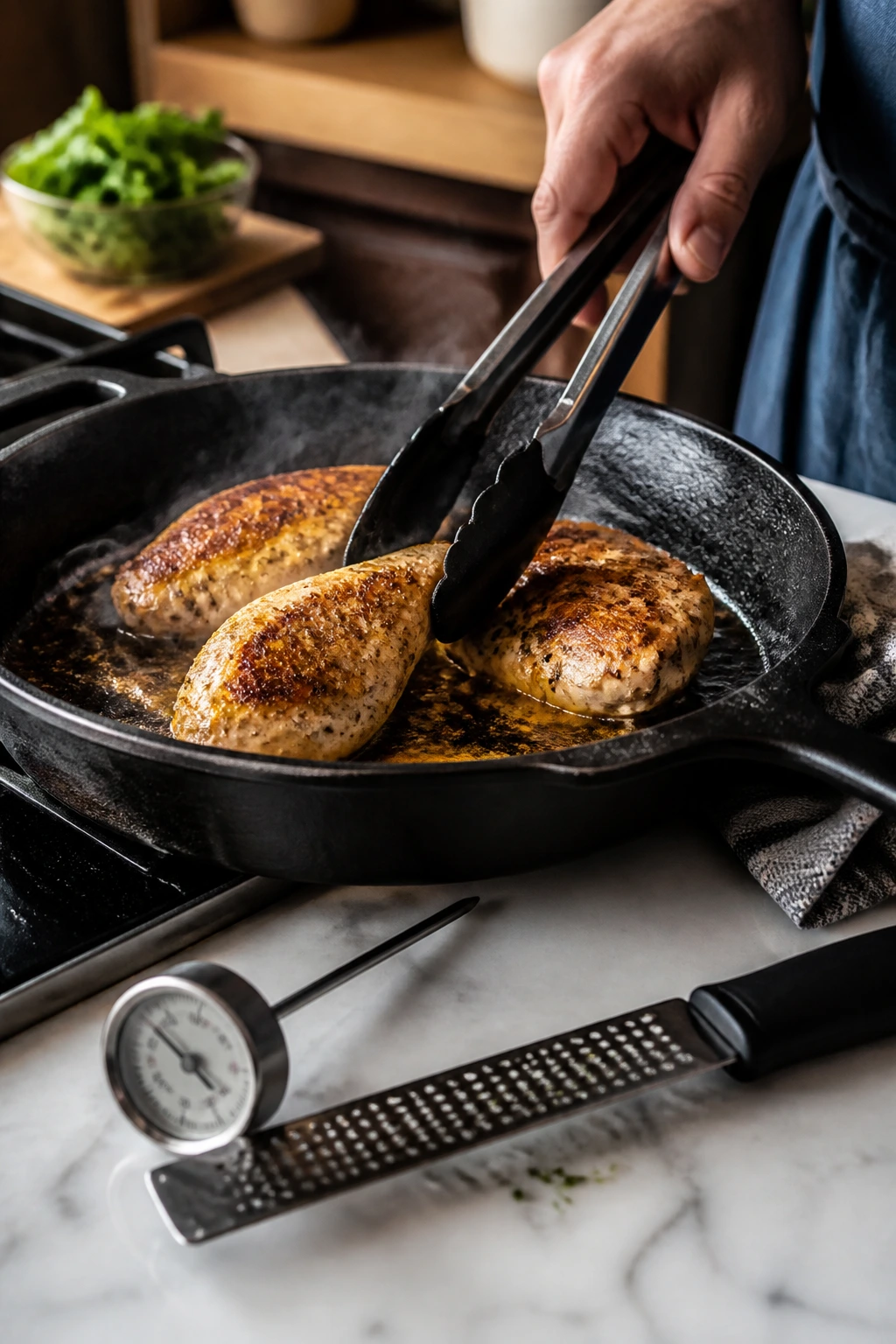
You do not need much gear here, and that is part of the charm.
- 12-inch skillet: Stainless steel or cast iron gives the best browning; a heavy nonstick skillet works if that is what you own, but it won’t build the same fond.
- Tongs: Useful for turning the chicken cleanly without tearing the crust you just made.
- Wooden spoon or silicone spatula: Good for scraping up the browned bits when the broth goes in.
- Instant-read thermometer: The simplest way to keep the chicken juicy. Guessing is how weeknight chicken gets dry.
- Microplane or fine grater: Parmesan melts better when it’s finely grated, and this tool makes that easy.
- Paper towels: Not glamorous. Necessary. Dry chicken browns better than chicken that still feels wet.
A smaller skillet can work, but a 12-inch pan gives you space to sear the chicken without crowding it. That matters. Crowding turns browning into steaming, and once the surface goes pale, the sauce has to work harder to create the flavor the pan should have given you for free.
How to Cook Creamy Pesto Chicken in One Skillet
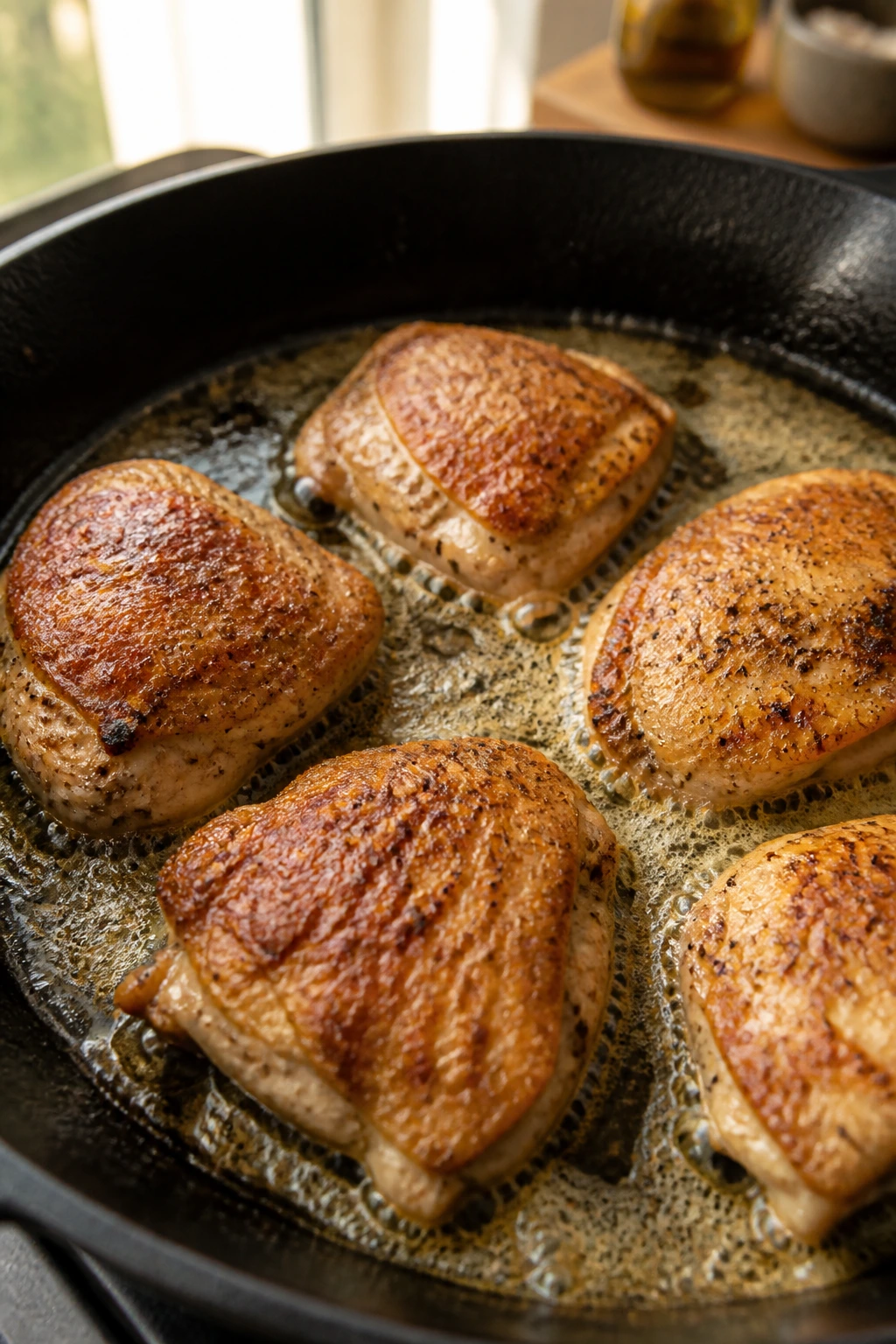
The chicken leaves the pan before the sauce starts. That is the move that keeps the meat juicy and gives the sauce the best chance to pick up the good bits left behind.
Prep the Chicken and Heat the Skillet:
- Pat the chicken thighs dry with paper towels, then season both sides with the salt, black pepper, and garlic powder.
- Set a 12-inch skillet over medium-high heat and add the olive oil and butter. When the butter foams and the oil shimmers, the pan is ready; if it smokes hard, the heat is too high.
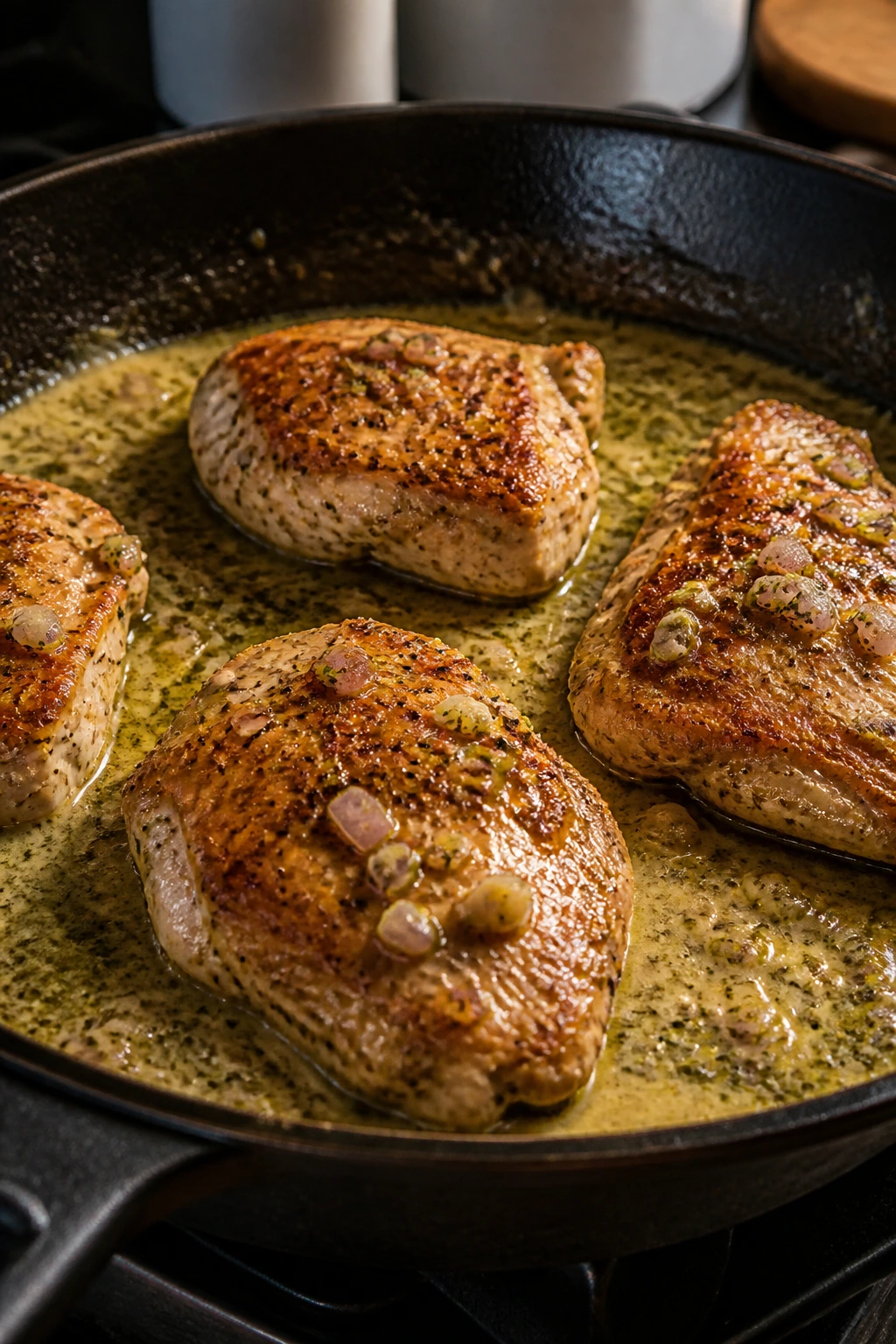
Sear the Chicken: 3. Lay the chicken in the skillet in a single layer and cook for 5 to 6 minutes on the first side, undisturbed, until deep golden brown. Flip and cook for another 4 to 5 minutes, until the thickest piece reaches 165°F (74°C). Do not crowd the pan — if the pieces are packed tightly, they will steam instead of browning. 4. Transfer the chicken to a plate and keep it nearby. Leave the browned bits in the skillet; that is flavor, not mess.
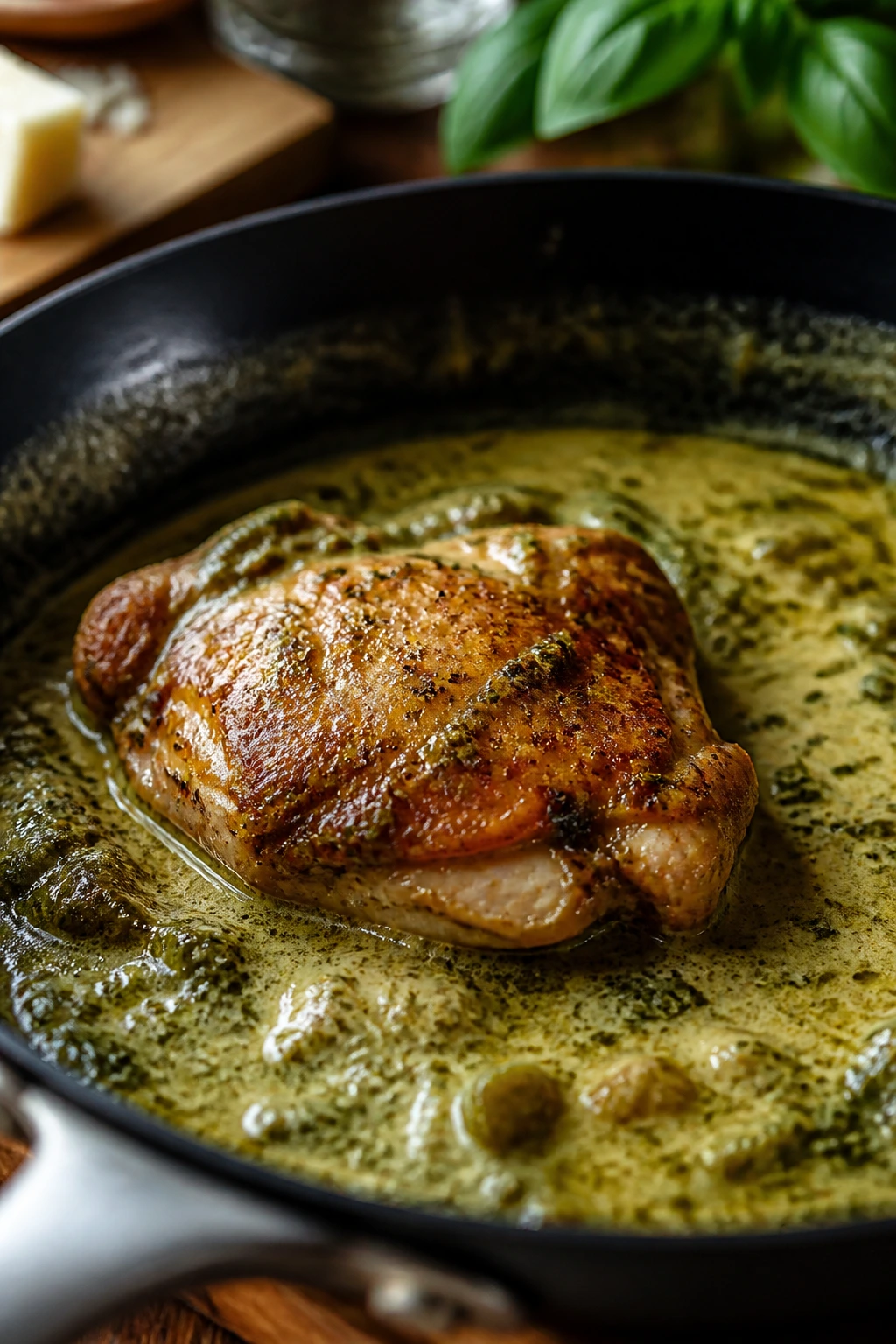
Build the Sauce: 5. Reduce the heat to medium and add the minced shallot. Cook for 1 to 2 minutes, stirring often, until softened and translucent. Add the garlic and cook for 30 seconds, just until fragrant. If the garlic starts to brown, move fast; bitter garlic will show up in the sauce. 6. Pour in the chicken broth and scrape the bottom of the skillet with a wooden spoon to lift up the browned bits. Let it simmer for about 1 minute so the liquid picks up color and the sharp edge of the broth eases off. 7. Stir in the heavy cream and pesto until the sauce looks evenly green and creamy, then add the Parmesan and lemon juice. Simmer gently for 2 to 3 minutes, stirring often, until the sauce thickens enough to coat the back of a spoon. Keep the heat at a gentle simmer, not a boil, or the cream can separate and the cheese can turn grainy.
Finish the Dish: 8. Return the chicken and any juices to the skillet, nestling the pieces into the sauce. Add the spinach and crushed red pepper flakes, if using, and cook for 1 to 2 minutes more, until the spinach wilts and the chicken is hot through. Taste the sauce and adjust with a little more salt or lemon if it needs brightness. 9. Turn off the heat and scatter the basil over the top. Serve immediately while the sauce is glossy and loose enough to spoon over rice, pasta, or bread.
The temperature details matter because this dish depends on timing in a way a soup does not. Once the cream and Parmesan go in, the sauce wants a calm simmer. Hard boiling turns the texture rough. Gentle heat keeps it smooth, and smooth is what you want here.
How to Serve the Green Sauce Without Overthinking Dinner
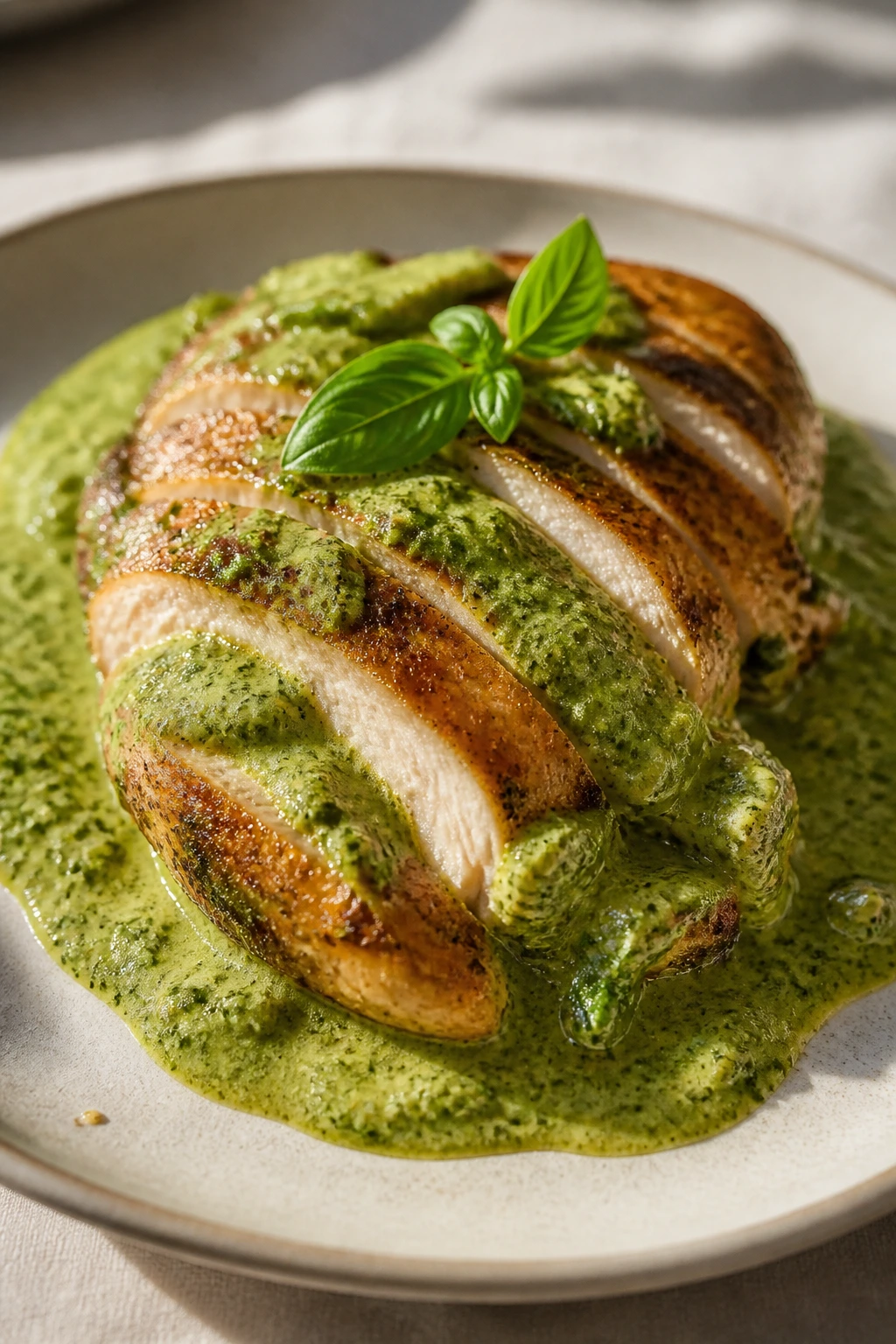
Presentation: Spoon the chicken into shallow bowls or onto wide plates, then drag a generous spoonful of sauce over the top so it pools around the chicken instead of disappearing underneath it. A final sprinkle of basil and a dusting of Parmesan make the dish look finished without turning it fussy.
Accompaniments: Buttered linguine is the obvious move, and it works because the pasta catches the sauce in those long strands. Rice, mashed potatoes, creamy polenta, or even crusty sourdough all make sense here. If you want something fresher on the side, do a simple salad with lemon vinaigrette and crisp lettuce; the sharpness helps keep the plate from feeling too rich.
Portions: Four servings is comfortable if you’re pairing the chicken with pasta or a starch. If you’re serving it with only bread and salad, the same amount can feel a little lean for very hungry adults, so plan on five or six smaller thighs or make extra pasta to stretch the meal.
Beverage Pairing: A dry white wine like Pinot Grigio or Sauvignon Blanc fits the basil and cream without dragging the meal down. If you want something nonalcoholic, sparkling water with lemon or unsweetened iced tea keeps the plate feeling balanced.
One thing I like about this dish is that it looks good in a plain bowl. The sauce does the visual work. You do not need herbs piled like a bouquet or twelve garnish moves that fall off the fork anyway.
Small Tweaks That Make the Sauce Taste Bigger
Flavor Enhancement: Stir in 1 teaspoon of lemon zest right at the end. The zest lifts the basil and makes the sauce taste brighter without turning it sour, which is a small distinction that matters once the cream has settled in.
Time-Saver: Grate the Parmesan and mince the shallot before the pan goes on the heat. The actual cooking moves fast, and the sauce does not wait politely while you hunt for a microplane or peel garlic over a steaming skillet.
Cost-Saver: Buy chicken thighs and a modest jar of pesto, then freeze the leftover pesto in tablespoon-sized portions. Pesto freezes well in an ice cube tray, and those little cubes become useful for pasta, toast, or another skillet dinner later.
Texture Move: Toast 2 tablespoons of pine nuts in a dry pan for 2 to 3 minutes and scatter them over the finished plates. They add a little crunch that cuts through the cream, and they make the dish feel more layered without changing the basic recipe.
Make-It-Yours: Stir in 1 cup of sliced mushrooms with the shallot if you want more body, or swap the spinach for baby kale if you want something sturdier. If you like heat, a pinch more crushed red pepper or a teaspoon of Calabrian chili paste gives the sauce a deeper burn than plain red pepper flakes.
Common Mistakes That Dry Out the Chicken or Split the Sauce
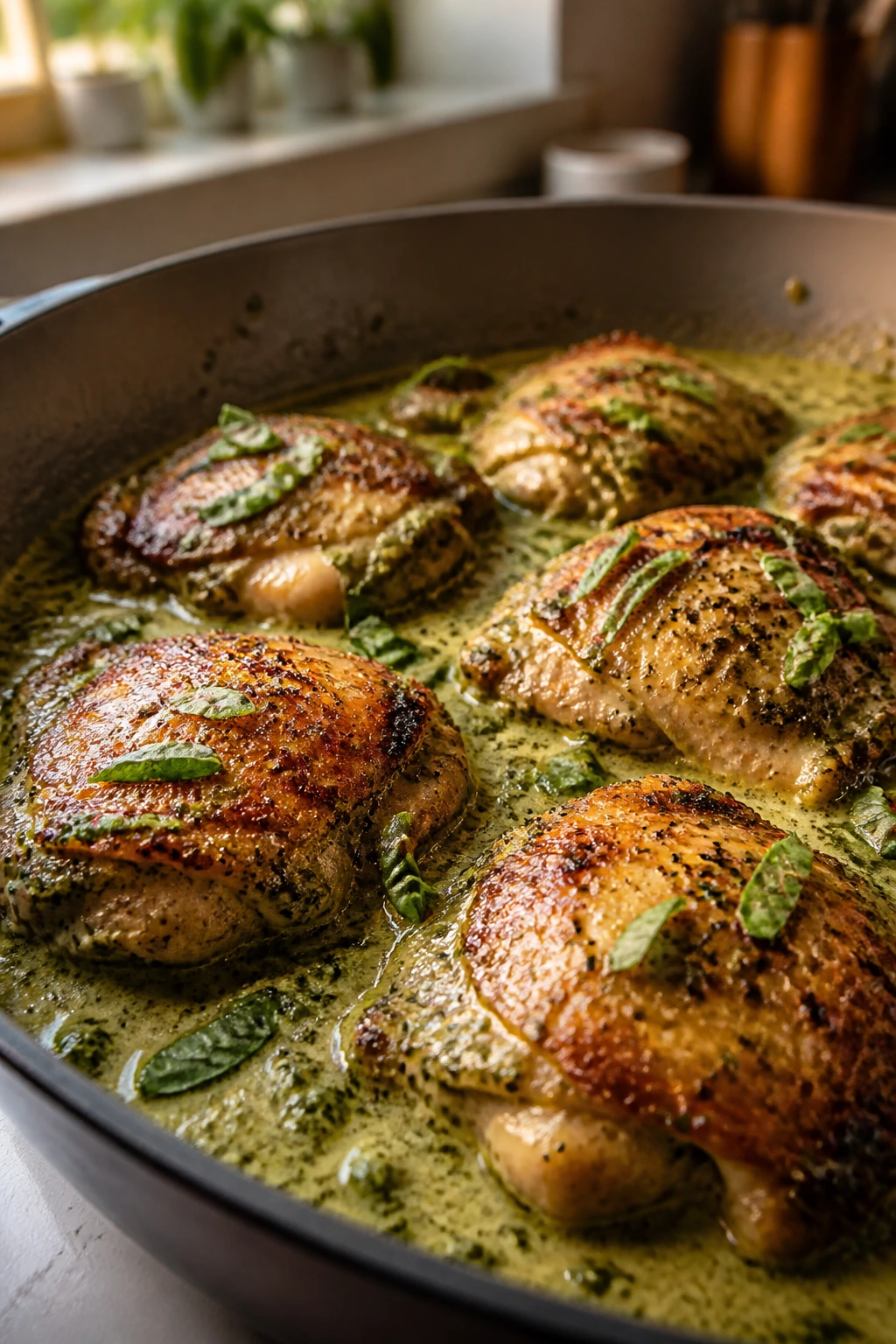
-
Crowding the skillet: When the chicken pieces touch too much, they release moisture and go pale instead of browned. The fix is simple: sear in two batches if needed, or use a larger pan so the heat can move around the meat.
-
Burning the garlic: Garlic goes from fragrant to bitter fast, especially in a hot pan with butter. Keep it to about 30 seconds after the shallot softens, then move on the moment you smell it bloom.
-
Boiling the cream and cheese hard: A rolling boil can make the sauce look greasy or grainy, especially if the Parmesan is added too early. Keep the sauce at a gentle simmer and stir often; if it thickens too fast, add a splash of broth and lower the heat.
-
Using coarse Parmesan shreds: Long curly shreds melt unevenly and can leave little clumps behind. Finely grated Parmesan disappears into the sauce much better and gives you a smoother finish.
-
Skipping the lemon: A creamy pesto sauce without acid can taste thick and sleepy after a few bites. That tablespoon of lemon juice keeps the sauce from sitting flat on the tongue.
-
Overcooking chicken breasts if you swap them in: Breasts are leaner than thighs, so they dry out faster and don’t forgive as much time in the pan. If you use breasts, cut them into even cutlets and pull them as soon as they reach 160°F to 165°F, then let them finish in the sauce.
The annoying part is that all of these mistakes are preventable with ordinary attention. No special skill. No knife tricks. Mostly patience, heat control, and not trying to rush the skillet into doing two jobs at once.
Variations That Fit Different Kitchens and Diets
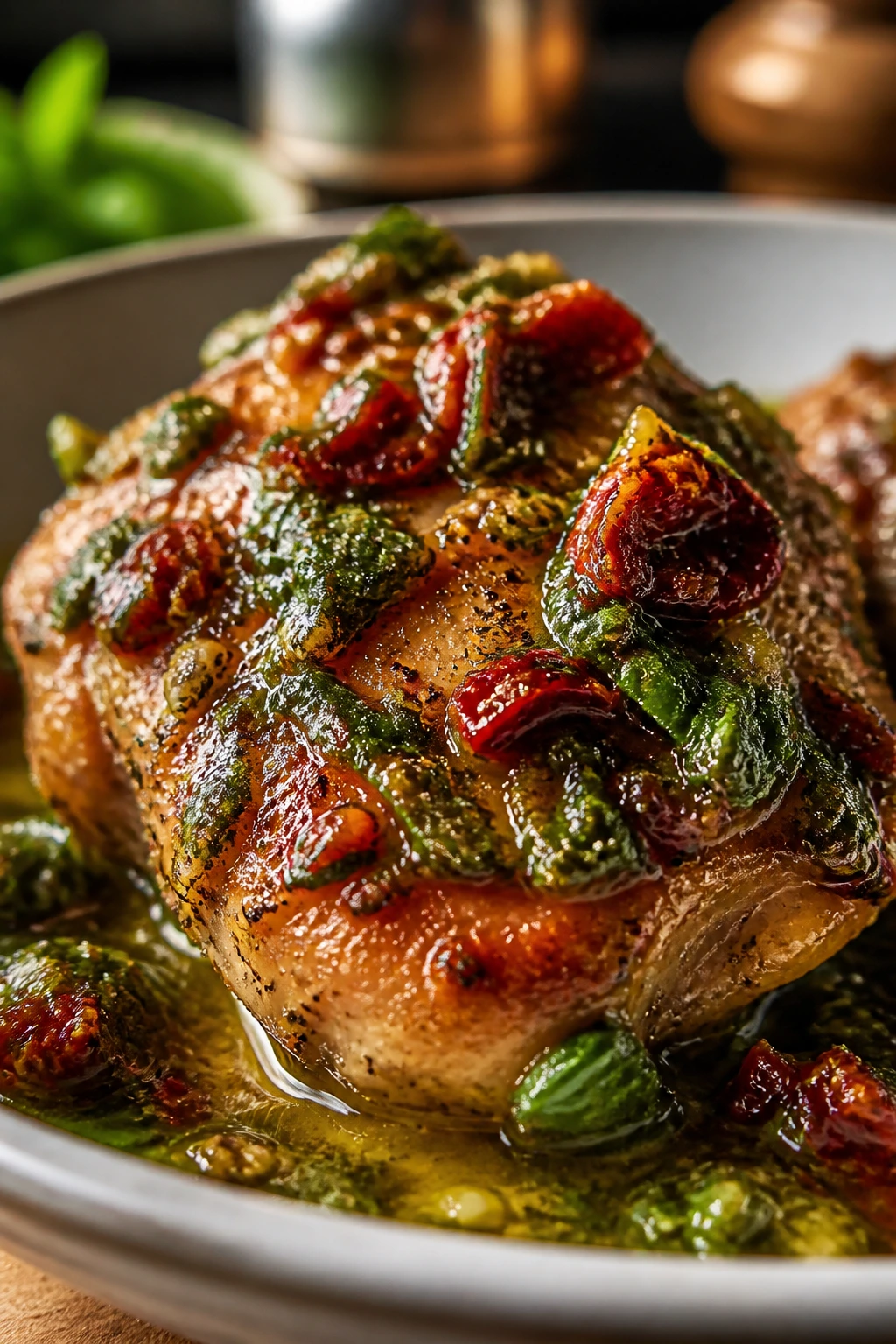
Sun-Dried Tomato Pesto Chicken: Stir 1/4 cup chopped sun-dried tomatoes into the sauce after the broth goes in. The tomatoes bring a sweet-tart edge that sits nicely against the cream and gives the dish a darker, more savory finish.
Mushroom and Spinach Skillet: Add 8 ounces of sliced cremini mushrooms right after the shallot, and cook them until their edges brown and the pan looks dry again. They make the sauce feel deeper and a little earthier, which is useful when you want the dish to eat like a fuller meal.
Lighter Cream-and-Pesto Version: Swap the heavy cream for half-and-half and keep the heat low. The sauce will be thinner and less lush, so let it simmer a little longer and add an extra tablespoon or two of Parmesan to help it body up.
Dairy-Free Basil Skillet: Use a dairy-free pesto and replace the cream with full-fat coconut milk. Add the lemon at the end and taste carefully before salting; coconut milk softens the basil in a different way, so the acid matters even more.
Some variations are worth doing because they add something useful. Others just change the dish for the sake of change. The four above all keep the basic shape intact, which is what you want if you’re trying to preserve the fast weeknight logic of the recipe.
Keeping Leftovers Creamy the Next Day
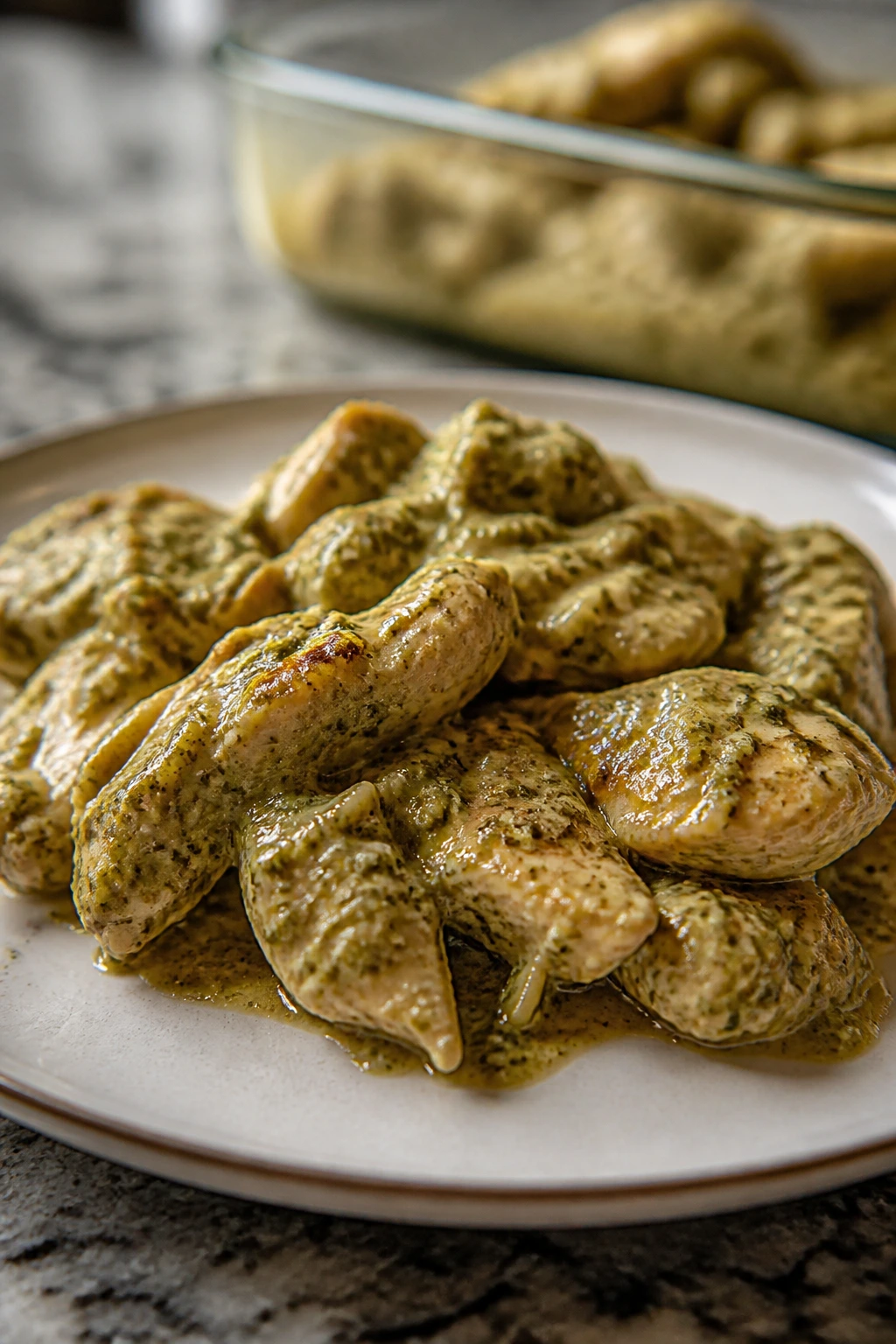
This dish is at its best fresh, but the leftovers are still worth keeping. Let the chicken cool for no more than 2 hours at room temperature, then store it in an airtight container in the refrigerator for 3 to 4 days. If you know you’ll want leftovers, keep the sauce and chicken together; separating them does not buy you much here, and the chicken actually benefits from staying coated.
For the freezer, pack the cooled chicken and sauce into a freezer-safe container and freeze for up to 2 months. The texture may change a little after thawing — cream sauces can get a little grainy if they are pushed too hard — but a gentle reheat and a splash of broth usually pull it back together. I would not freeze this on top of pasta. Freeze the chicken and sauce alone, then make fresh pasta or rice when you thaw it.
Reheat in a skillet over low heat with 1 to 2 tablespoons of chicken broth, stirring often until the sauce loosens and the chicken is hot through. That method keeps the chicken from drying out and gives the sauce a chance to come back to life. A microwave works too, but use 50 percent power in short bursts and stir between rounds so the cream does not overheat at the edges.
For make-ahead prep, you can season the chicken up to 24 hours in advance, mince the shallot and garlic the day before, and grate the Parmesan ahead of time. If you want to get even farther ahead, brown the chicken earlier in the day, then finish the sauce just before dinner. That keeps the chicken from spending too long in the pan while you’re distracted by everything else.
Questions About Creamy Pesto Chicken
Can I use chicken breasts instead of thighs?
Yes, and they’ll work fine if you treat them gently. Cut thicker breasts into cutlets so they cook evenly, and pull them the moment they reach 160°F to 165°F; they’ll finish in the sauce. If you leave them in the skillet too long, they go dry faster than thighs.
What kind of pesto works best here?
A basil pesto with a bright green color, good olive oil, and real Parmesan gives the sauce the cleanest flavor. Very oily pesto can make the sauce feel slick, while very salty pesto can push the whole dish over the edge, so taste before adding extra salt. Homemade pesto works beautifully if you have it, but a decent jar from the store is completely fine.
Do I need freshly grated Parmesan?
I’d say yes if you want the smoothest sauce. Pre-shredded Parmesan often has anti-caking agents that keep it from melting as cleanly, and that can leave the sauce a little grainy. A fine grater makes the cheese disappear into the cream instead of sitting there like tiny shreds.
Can I make creamy pesto chicken without heavy cream?
You can use half-and-half, but keep the heat low and give the sauce a little more time to thicken. For a dairy-free version, full-fat coconut milk is the most practical swap, though the flavor shifts in a noticeable way. The sauce becomes softer and a little sweeter, so the lemon at the end matters even more.
What if my sauce gets too thick?
Whisk in chicken broth, one tablespoon at a time, while the skillet sits over low heat. Thin the sauce slowly; if you pour in too much liquid at once, you lose the silky texture and have to cook it back down. The sauce should coat the spoon, not paste itself to the chicken.
What if the sauce looks split or oily?
Turn the heat down right away and whisk in a splash of broth or a spoonful of cream. Most of the time, the problem is heat, not the recipe. A split sauce usually comes from boiling too hard after the dairy goes in or adding cheese too fast.
Is this recipe gluten-free?
Yes, as written it can be gluten-free because there is no flour in the sauce. Still, check the pesto and broth labels, because some brands hide gluten in strange places. If you serve it with pasta, just choose a gluten-free pasta and you’re set.
Can I add vegetables without messing it up?
Yes, as long as you add them in the right place. Mushrooms go in early with the shallot, broccoli needs a quick steam or roast first, and spinach should go in at the very end so it only wilts. If you toss in raw vegetables that need a long cook, they will fight the sauce instead of joining it.
A Skillet Dinner Worth Repeating
Creamy pesto chicken earns its keep because it gives you a proper sauce without asking for a proper production. The skillet browns the chicken, the broth grabs the fond, the pesto brings the basil, and the Parmesan pulls the whole thing into one smooth, spoonable finish. That’s a lot of payoff for a recipe with this few moving parts.
The next time dinner needs to feel a little more put together than plain chicken and rice, this is the kind of pan that solves the problem cleanly. Keep pesto in the fridge, keep Parmesan within reach, and the whole thing starts to feel less like a recipe and more like a dependable habit.
Creamy Pesto Chicken for Weeknight Dinners — Recipe Card
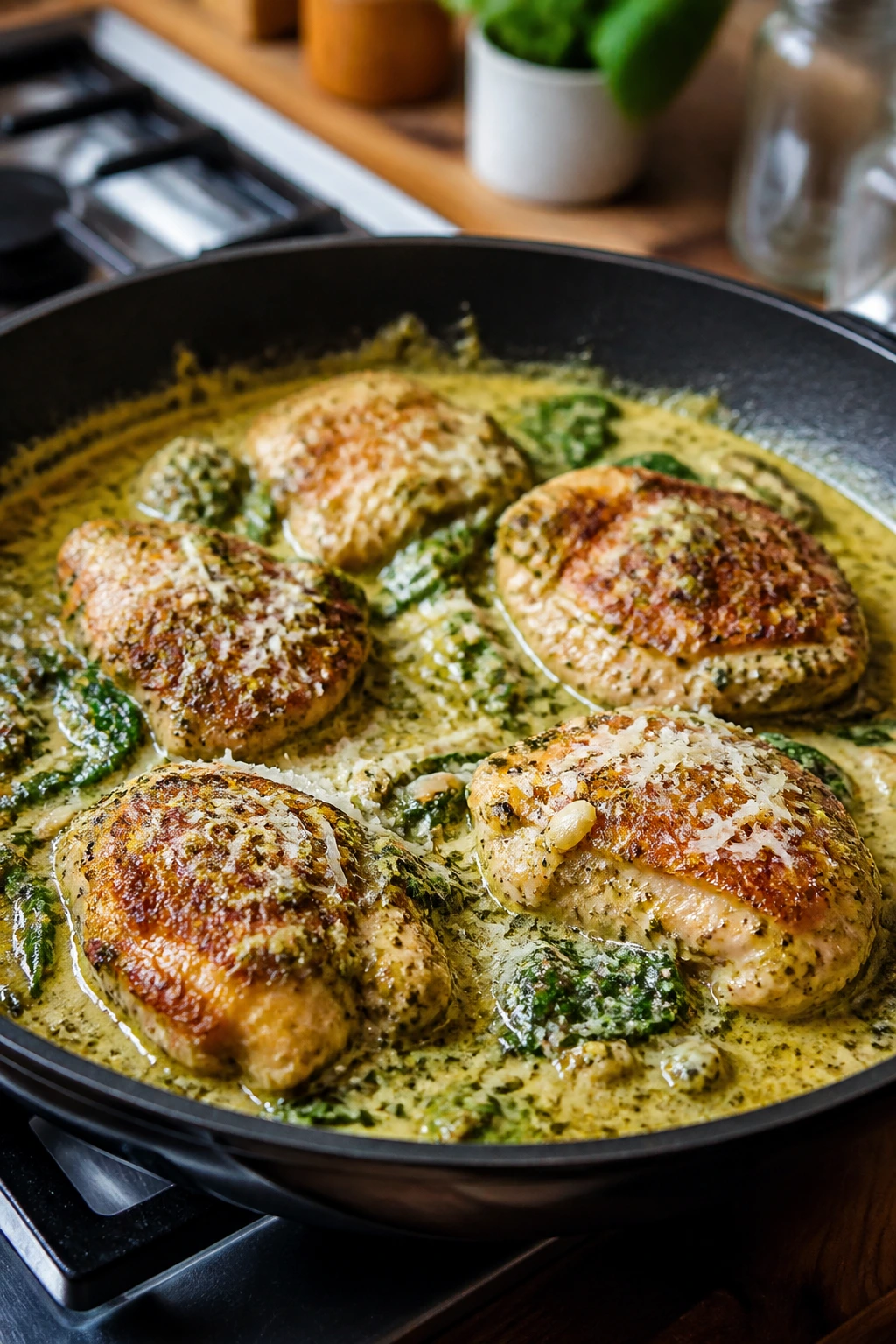
Recipe Name: Creamy Pesto Chicken for Weeknight Dinners
Description: Juicy chicken thighs are seared in one skillet, then finished in a creamy basil pesto sauce with Parmesan, garlic, spinach, and lemon. Serve it over pasta, rice, mashed potatoes, or with crusty bread.
Prep Time: 15 minutes
Cook Time: 20 minutes
Total Time: 35 minutes
Course: Dinner, Main Course
Cuisine: Italian-American
Servings: 4 servings
Calories: 470 kcal per serving
Ingredients
For the Chicken:
- 1 1/2 pounds boneless, skinless chicken thighs, trimmed of excess fat
- 1 teaspoon kosher salt
- 1/2 teaspoon black pepper
- 1/2 teaspoon garlic powder
- 1 tablespoon olive oil
- 1 tablespoon unsalted butter
For the Sauce:
- 1 small shallot, finely minced
- 3 cloves garlic, minced
- 3/4 cup low-sodium chicken broth
- 1/2 cup heavy cream
- 1/3 cup basil pesto
- 1/2 cup finely grated Parmesan cheese
- 2 cups baby spinach, loosely packed
- 1 tablespoon fresh lemon juice
- 1/4 teaspoon crushed red pepper flakes, optional
- 2 tablespoons chopped fresh basil, for garnish
Instructions
-
Pat the chicken dry and season both sides with the salt, pepper, and garlic powder.
-
Heat the olive oil and butter in a 12-inch skillet over medium-high heat until the butter foams and the oil shimmers.
-
Sear the chicken for 5 to 6 minutes on the first side and 4 to 5 minutes on the second side, until browned and cooked through to 165°F (74°C). Transfer to a plate.
-
Reduce the heat to medium. Add the shallot and cook for 1 to 2 minutes, then add the garlic and cook for 30 seconds.
-
Pour in the chicken broth and scrape up the browned bits. Simmer for 1 minute.
-
Stir in the cream, pesto, Parmesan, and lemon juice. Simmer gently for 2 to 3 minutes until the sauce thickens.
-
Return the chicken and any juices to the skillet. Add the spinach and red pepper flakes, then cook for 1 to 2 minutes until the spinach wilts and the chicken is hot.
-
Turn off the heat, garnish with basil, and serve right away.
Notes: Taste before adding extra salt; pesto and Parmesan can already be salty. If the sauce gets too thick, loosen it with 1 to 2 tablespoons of broth. Reheat gently over low heat so the cream stays smooth.