



Roasted chicken tetrazzini is the sort of casserole that earns its place because it doesn’t ask for much drama. You boil the pasta, brown the mushrooms until their edges go deep and earthy, stir up a cream sauce that clings instead of sloshing, and slide the whole thing under a breadcrumb lid that turns golden and crisp in the oven. The smell alone can change the mood of a kitchen.
A lot of baked pasta recipes lean heavy in a sloppy way. This one shouldn’t. The sauce needs to coat the noodles, not drown them, and the chicken should taste roasted and savory, not like an afterthought thrown in because it was there. When the balance is right, you get forkfuls of silky pasta, soft onions, browned mushrooms, salty Parmesan, and little pops of sweet peas tucked in between. It’s old-school comfort, but not in a sleepy, bland way.
There’s also a practical reason this dish still hangs around. Tetrazzini was built to turn cooked poultry into dinner with enough richness to feel intentional, and that part still holds up. If you already have roasted chicken, the rest moves quickly. If you don’t, a rotisserie bird works without making the final pan taste like a shortcut. Either way, the recipe rewards a little care in the sauce and a little restraint in the baking.
What keeps me coming back to it is the same thing every time: it tastes like more effort than it asks for. That’s the sweet spot on a Tuesday night. Not fancy. Not fussy. Just a creamy, crackly, deeply satisfying pan of dinner that disappears faster than you expect.
Why Roasted Chicken Tetrazzini Still Works on a Busy Night
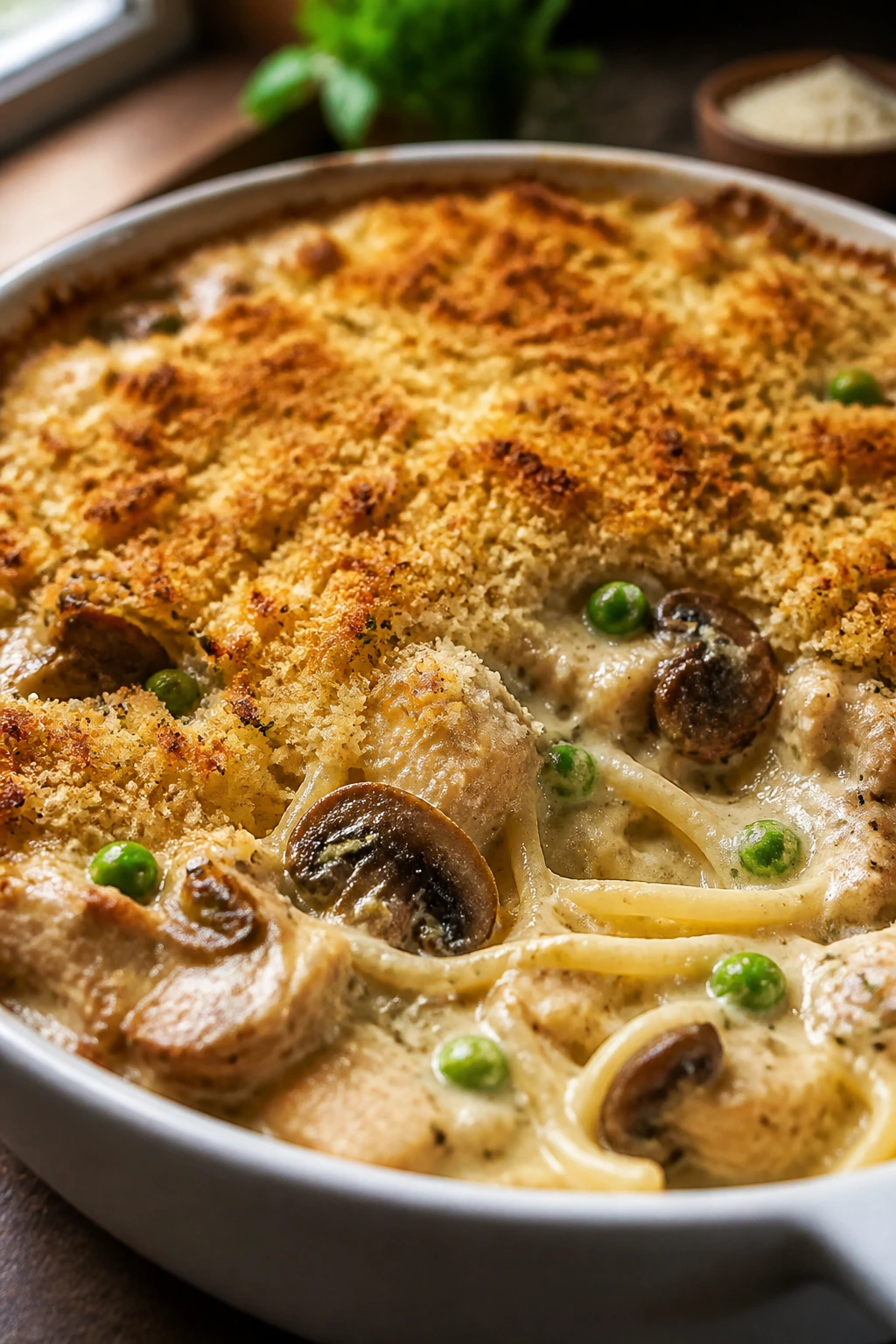
- The chicken already brings roasted flavor: Cooked chicken has a deeper, more savory edge than plain poached poultry, so the casserole tastes built rather than assembled.
- The sauce comes together fast once the pan is hot: A roux, broth, milk, and a little cream give you a glossy base in about 5 minutes if you keep whisking.
- Mushrooms do the heavy lifting: They add a browned, almost meaty flavor that keeps the dish from tasting flat, especially if you let their moisture cook off before adding the flour.
- The breadcrumb top solves texture fatigue: Creamy pasta can turn monotonous fast; a panko topping gives you a crisp first bite and keeps the casserole from feeling soft all the way through.
- It reheats better than most cream pastas: Because the sauce is thickened with a roux, it holds together after chilling instead of turning into a loose puddle.
- You can stretch it with vegetables without ruining it: Peas, spinach, or broccoli fit naturally here, which makes the pan feel a little less heavy and a lot more useful.
Timing, Yield, and What Kind of Dinner This Makes
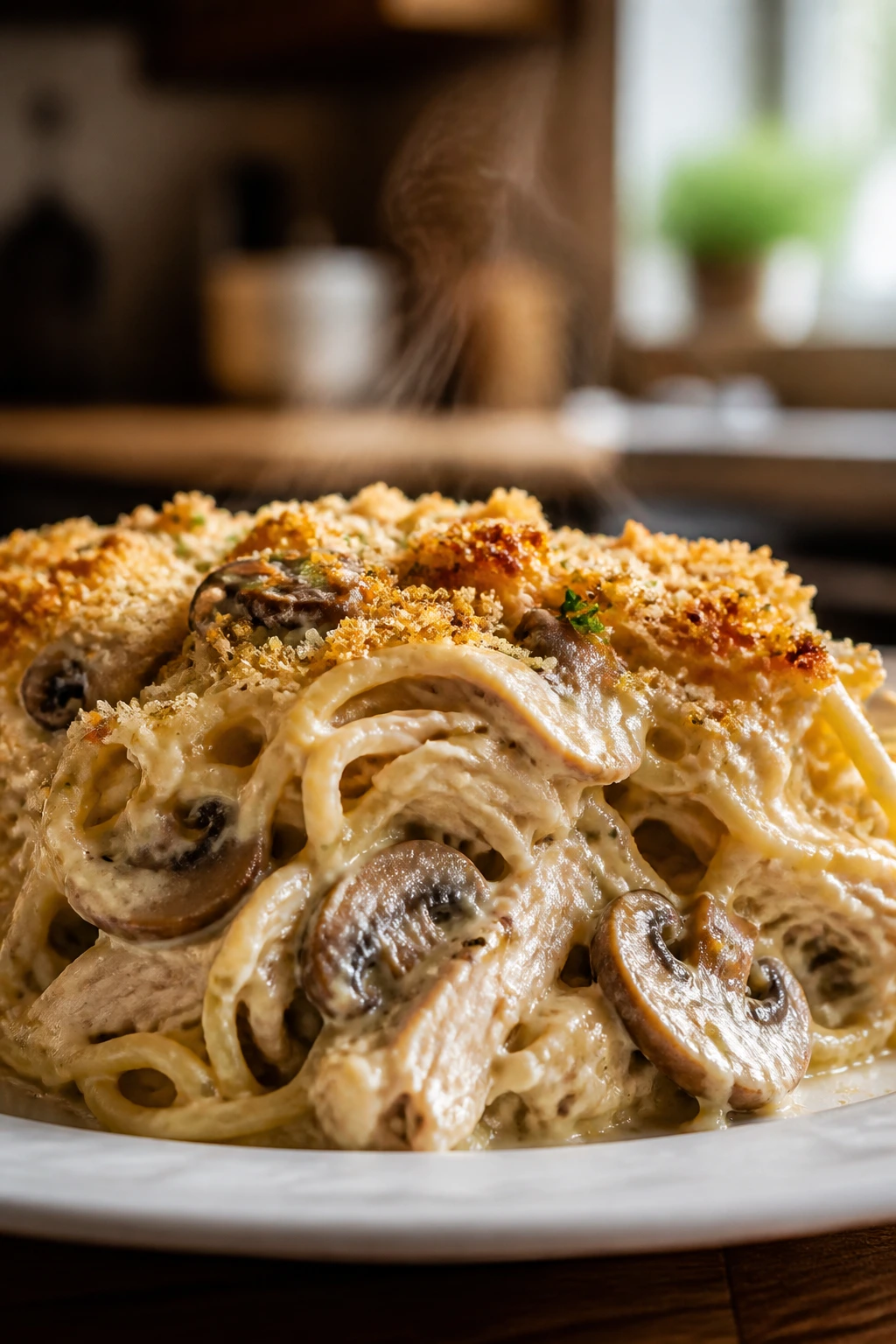
Yield: Serves 6 to 8
Prep Time: 25 minutes
Cook Time: 35 minutes
Total Time: 1 hour
Difficulty: Intermediate — the method is straightforward, but the sauce asks for steady whisking and a little attention so it stays smooth.
Chill/Rest Time: 10 minutes before serving
Best Served: Warm from the oven, after the top has had a chance to settle for a few minutes
A casserole like this needs a little patience at the finish. That 10-minute rest is not decorative. It helps the sauce settle back into the pasta instead of running all over the serving spoon, and it keeps the first portion from collapsing into a creamy heap.
If you’re making it for a weeknight, the timing is kind. The pasta boils while the mushrooms brown. The sauce comes together in the same pan. The oven does the last stretch of work. That’s the part I like most: nothing here requires you to stand over three burners with a stopwatch and a nervous eye on dinner.
The Ingredient List That Keeps the Sauce Rich
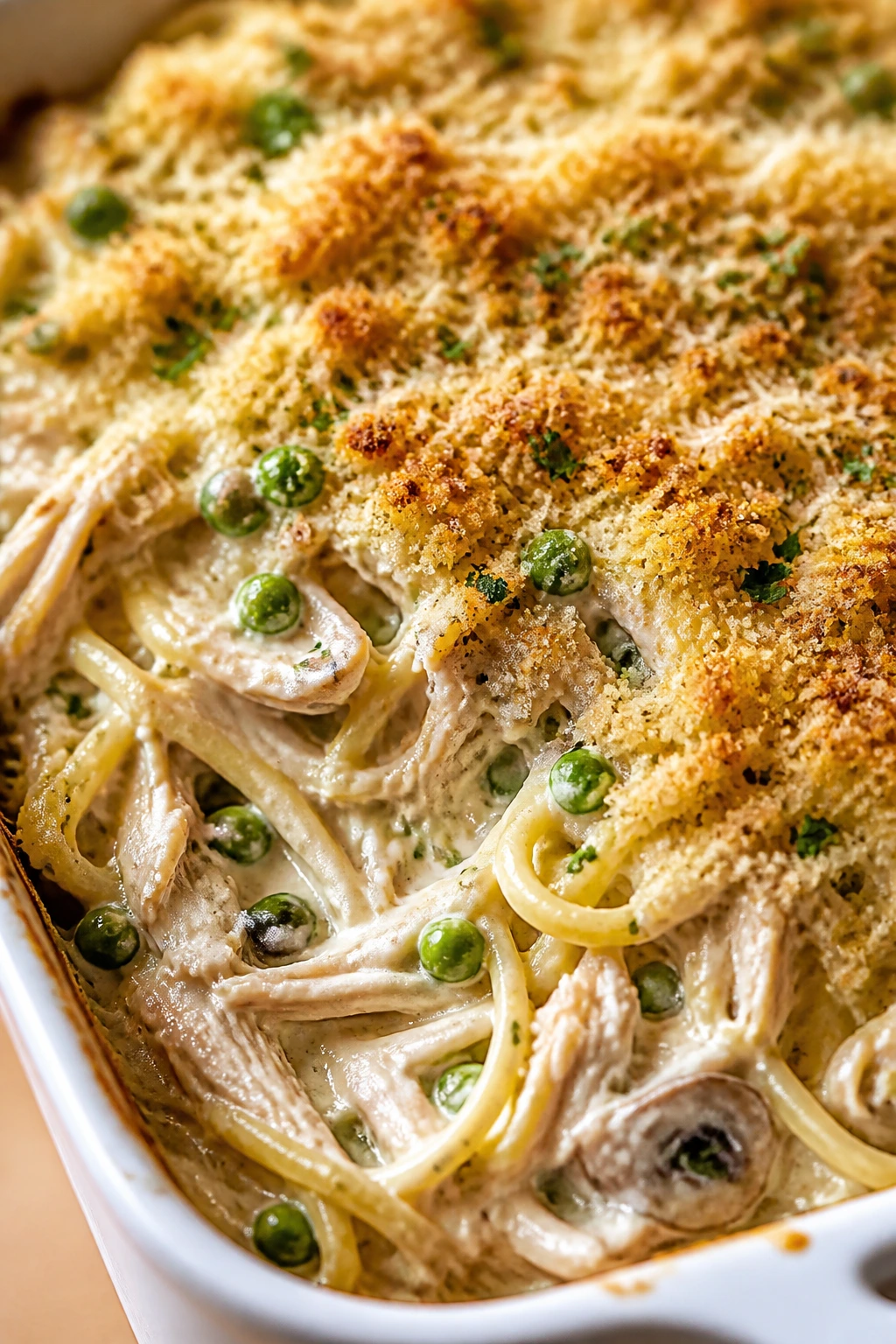
For the Pasta and Filling:
- 12 ounces dried spaghetti or linguine
- 4 tablespoons unsalted butter, divided
- 8 ounces cremini mushrooms, thinly sliced
- 1 medium yellow onion, finely chopped
- 2 celery ribs, finely chopped
- 3 cloves garlic, minced
- 1/4 cup all-purpose flour
- 2 cups low-sodium chicken broth
- 1 cup whole milk
- 1/2 cup heavy cream
- 1 teaspoon kosher salt, plus more for the pasta water
- 1/2 teaspoon black pepper
- 1/4 teaspoon ground nutmeg
- 1 tablespoon dry sherry or dry white wine, optional
- 4 cups shredded roasted chicken, skin removed, chopped into bite-size pieces
- 1 cup frozen peas, thawed
- 1 cup grated Parmesan, divided
- 2 tablespoons chopped fresh parsley, plus more for serving
For the Topping:
- 1 cup panko breadcrumbs
- 2 tablespoons melted butter
- 1/4 cup grated Parmesan
The ingredient list looks long on the page, but most of it is pantry and fridge material. The only thing that really needs foresight is the cooked chicken. Everything else is basic casserole architecture: pasta, sauce, vegetables, cheese, crunch.
Why Each Ingredient Pulls Its Weight
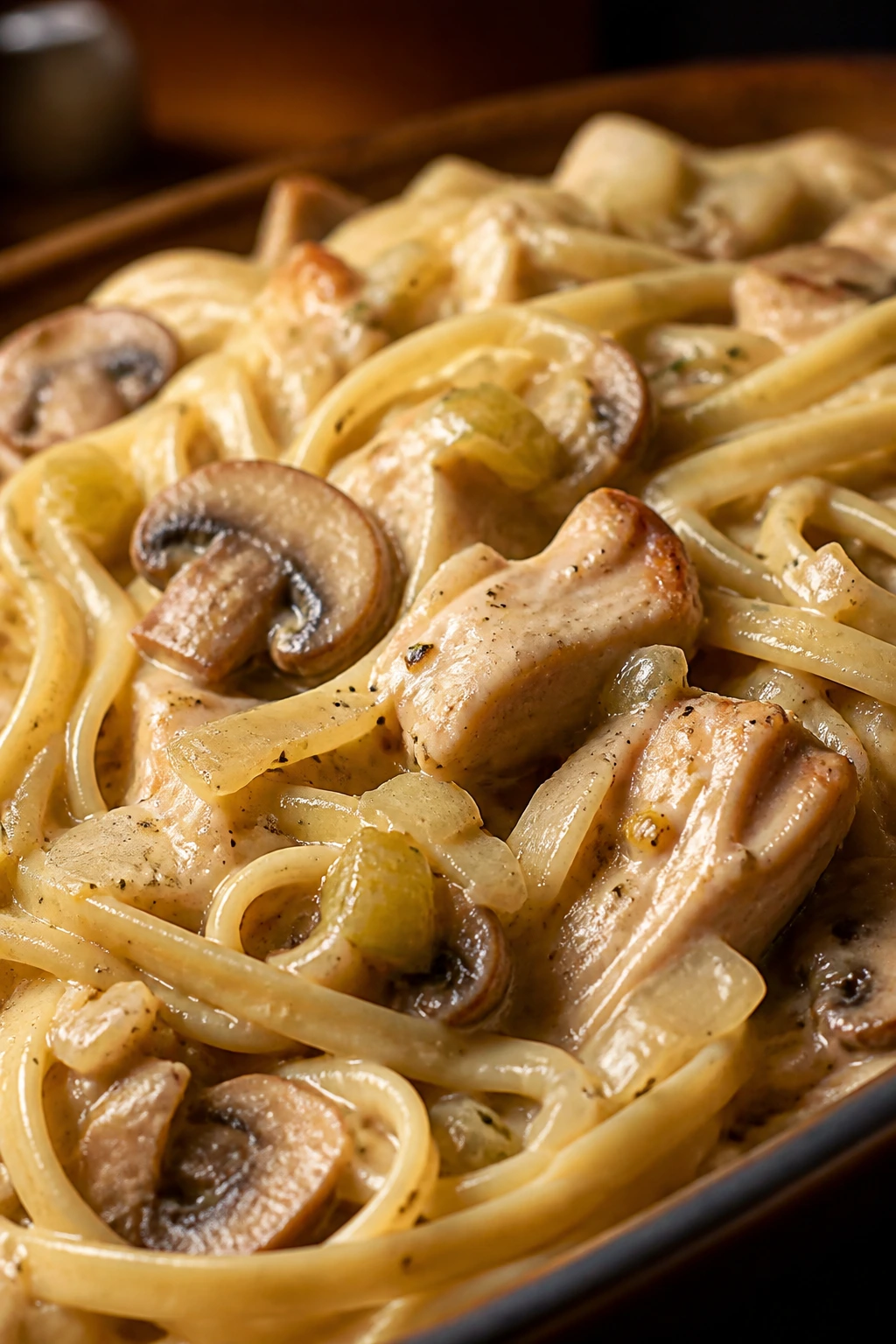
The Pasta That Carries the Sauce
What to use: 12 ounces dried spaghetti or linguine.
Preparation: Cook it in heavily salted water until it’s 2 minutes shy of the package time, then drain it right away.
Substitutions: Angel hair is too delicate here; fettuccine, thin spaghetti, or even egg noodles work better.
Tips: Stop the boil early. The pasta finishes in the oven, and fully cooked noodles turn soft fast once the sauce goes in.
The Roasted Chicken That Gives the Dish Its Name
What to use: 4 cups shredded roasted chicken, pulled from one medium chicken and cut into bite-size pieces.
Preparation: Remove the skin, then shred or chop the meat so the pieces mix cleanly into the pasta.
Substitutions: Rotisserie chicken works, and turkey fits the same way after a holiday roast.
Tips: Dark meat stays juicier after baking, but a mix of white and dark meat is fine. If the chicken is cold from the fridge, let it sit on the counter while you build the sauce so it warms a little before it goes in.
Mushrooms, Onion, Celery, and Garlic
What to use: 8 ounces cremini mushrooms, 1 medium yellow onion, 2 celery ribs, and 3 garlic cloves.
Preparation: Slice the mushrooms thin so they brown fast, and chop the onion and celery small enough that they soften before the casserole goes into the oven.
Substitutions: Button mushrooms are fine, and leeks can stand in for onion if that’s what you have.
Tips: Don’t rush the mushrooms. Let them sit in the hot butter until their liquid cooks off and the edges take on color; that’s where the flavor lives.
The Sauce Base That Keeps Everything Together
What to use: 4 tablespoons unsalted butter, 1/4 cup all-purpose flour, 2 cups low-sodium chicken broth, 1 cup whole milk, and 1/2 cup heavy cream.
Preparation: Melt the butter, cook the flour long enough to lose its raw smell, and whisk the liquids in slowly so the sauce stays smooth.
Substitutions: Half-and-half can replace the milk and cream if that’s what you’ve got, though the sauce will be a touch lighter. A good unsweetened evaporated milk works in a pinch, too.
Tips: Use low-sodium broth unless you enjoy a casserole that tastes like a salt lick after the Parmesan goes in.
Cheese, Peas, and the Finish
What to use: 1 cup grated Parmesan, 1 cup thawed frozen peas, 2 tablespoons chopped parsley, 1 cup panko breadcrumbs, 2 tablespoons melted butter, and 1/4 cup more Parmesan for the top.
Preparation: Grate the cheese finely so it melts into the sauce, and thaw the peas before they go in so they don’t chill the whole pan.
Substitutions: Frozen chopped spinach, cooked broccoli florets, or small asparagus pieces can replace the peas if you want a different green.
Tips: Panko stays crisper than standard breadcrumbs. If you only have regular crumbs, use them, but don’t expect the same airy crunch.
The Equipment I Reach for Before I Start
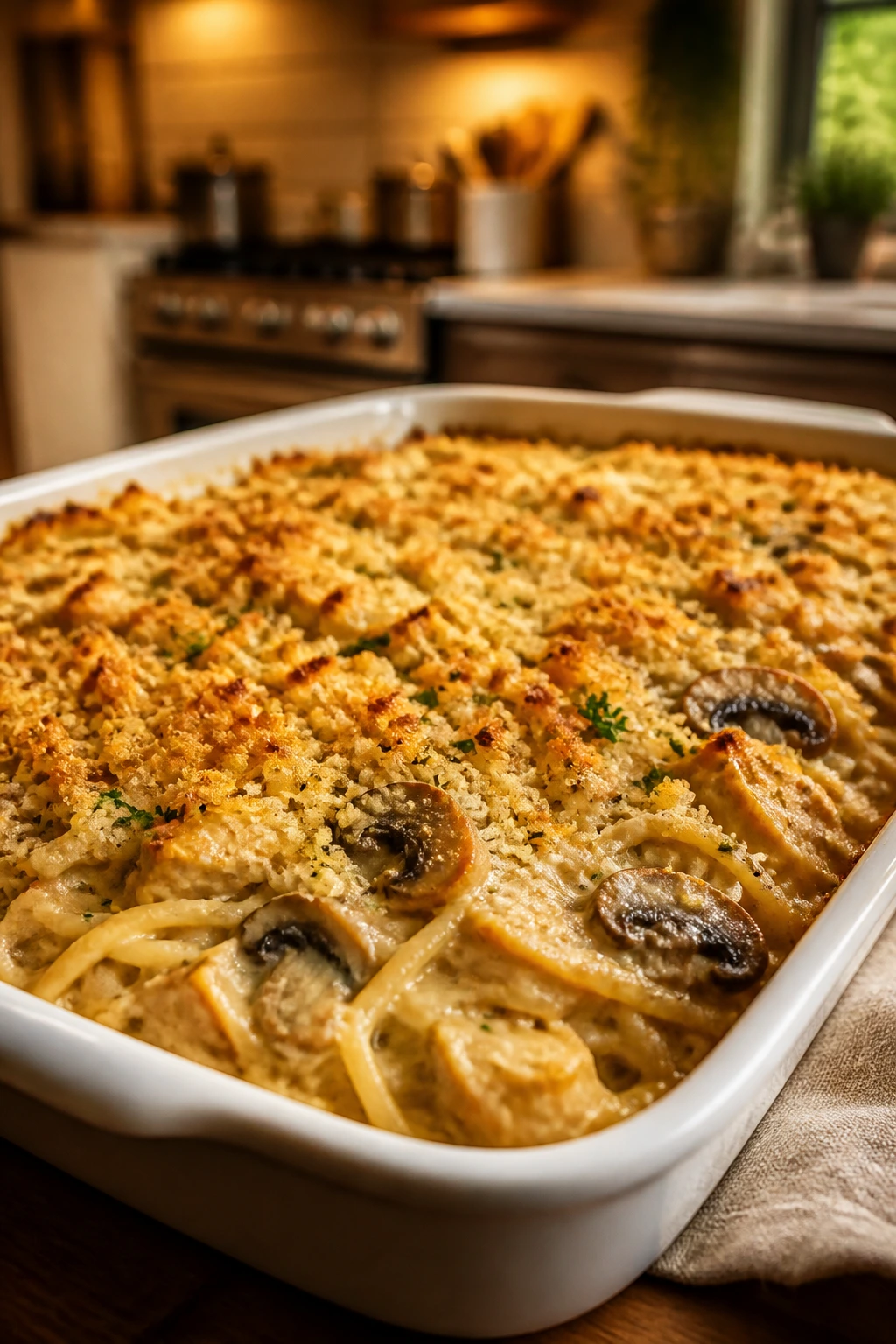
Set the pan down before you start boiling water. That saves stress later.
- Large pot for pasta: A 6- to 8-quart pot keeps the spaghetti from clumping while it softens.
- 12-inch skillet or Dutch oven: This is where the sauce gets built. If it’s oven-safe, you can even skip a transfer and bake in it.
- 9×13-inch baking dish: The casserole needs enough room to bubble without spilling over the edges.
- Whisk: A real whisk matters here. It keeps the roux smooth and breaks up flour before it turns into little lumps.
- Wooden spoon or silicone spatula: Useful for folding in chicken and pasta without tearing the noodles.
- Colander: Drain the pasta fast so it doesn’t keep cooking in the hot water.
- Measuring cups and spoons: The sauce depends on balance, not guesswork.
- Box grater: Parmesan melts better when it’s grated fresh and fine.
- Foil: Handy if the top browns before the center is hot.
How the Casserole Comes Together in the Oven
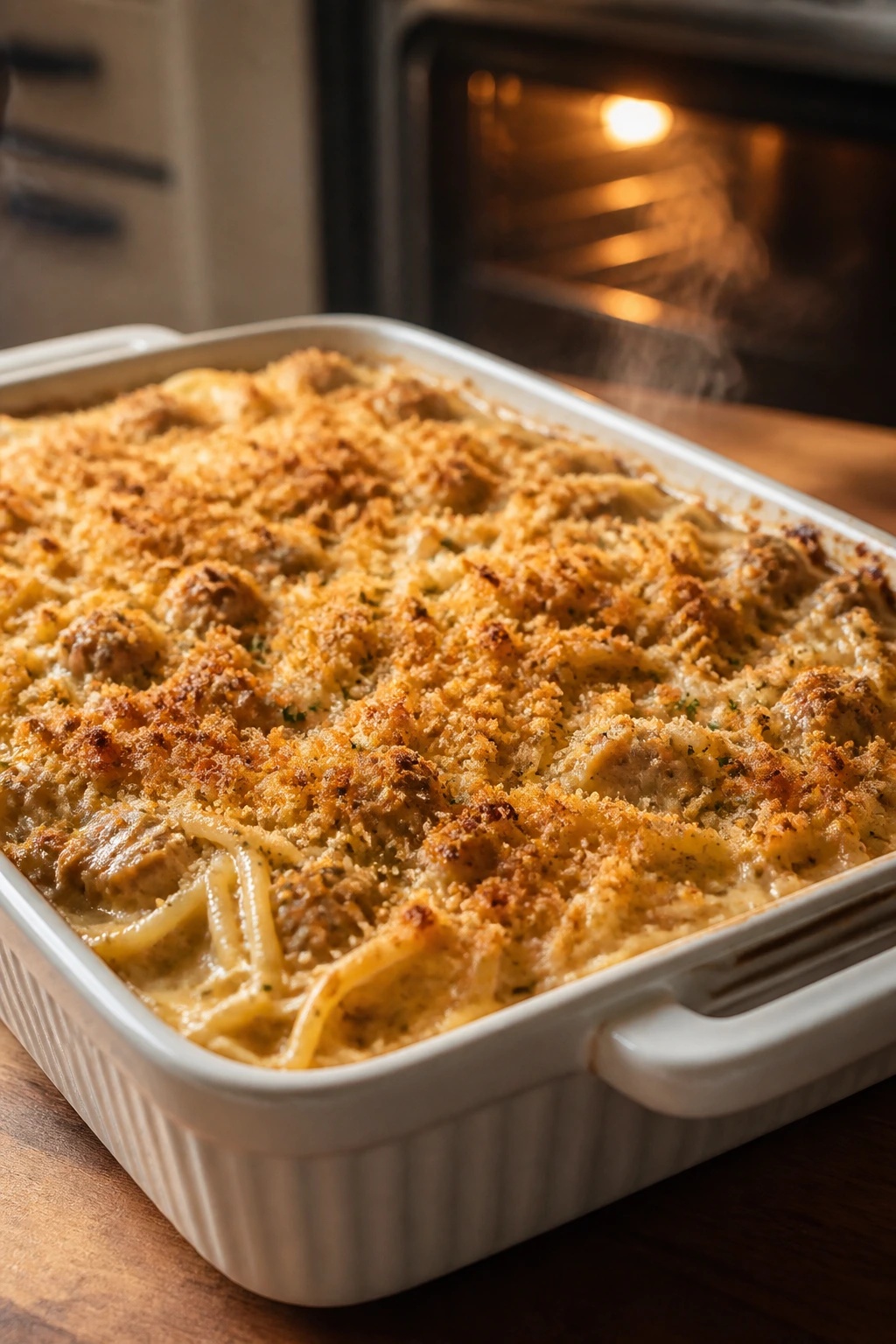
Prep the Pasta and Pan:
- Preheat the oven to 400°F (205°C) and grease a 9×13-inch baking dish with butter or nonstick spray.
- Bring a large pot of water to a boil, salt it well, and cook the spaghetti or linguine until it is 2 minutes shy of the package directions. Reserve 1 cup of the pasta water, then drain the pasta.
Build the Sauce:
- Melt 2 tablespoons of the butter in a large skillet or Dutch oven over medium-high heat. Add the mushrooms in a single layer and cook for 5 to 6 minutes, stirring only after they’ve had time to brown, until their moisture evaporates and the edges take on color.
- Add the onion and celery along with the remaining 2 tablespoons butter. Cook for 4 to 5 minutes, stirring often, until the onion looks translucent and the celery softens.
- Stir in the garlic and cook for 30 seconds, just until fragrant.
- Sprinkle the flour over the vegetables and stir for 1 minute. The mixture should look pasty and smell faintly nutty, not raw.
- Slowly whisk in the chicken broth, then the milk and cream. Keep whisking until the sauce smooths out, then add the salt, pepper, and nutmeg. Cook for 3 to 5 minutes, stirring often, until the sauce thickens enough to coat the back of a spoon.
- Stir in the sherry or white wine, if you’re using it, and cook for 30 seconds more.
Assemble and Bake:
- Remove the pan from the heat. Fold in the roasted chicken, peas, 3/4 cup of the Parmesan, and the parsley. Add the drained pasta and toss until every strand is coated. If the mixture looks too tight, add a splash of the reserved pasta water, 1/4 cup at a time, until it loosens.
- Transfer the mixture to the prepared baking dish and spread it into an even layer.
- In a small bowl, mix the panko, melted butter, and remaining 1/4 cup Parmesan. Scatter the topping evenly over the casserole.
- Bake for 20 to 25 minutes, until the edges bubble and the top turns deep golden brown. If the top looks pale at the end, broil for 1 to 2 minutes while watching closely.
- Rest the casserole for 10 minutes before serving. Finish with extra parsley.
What to Serve on the Side
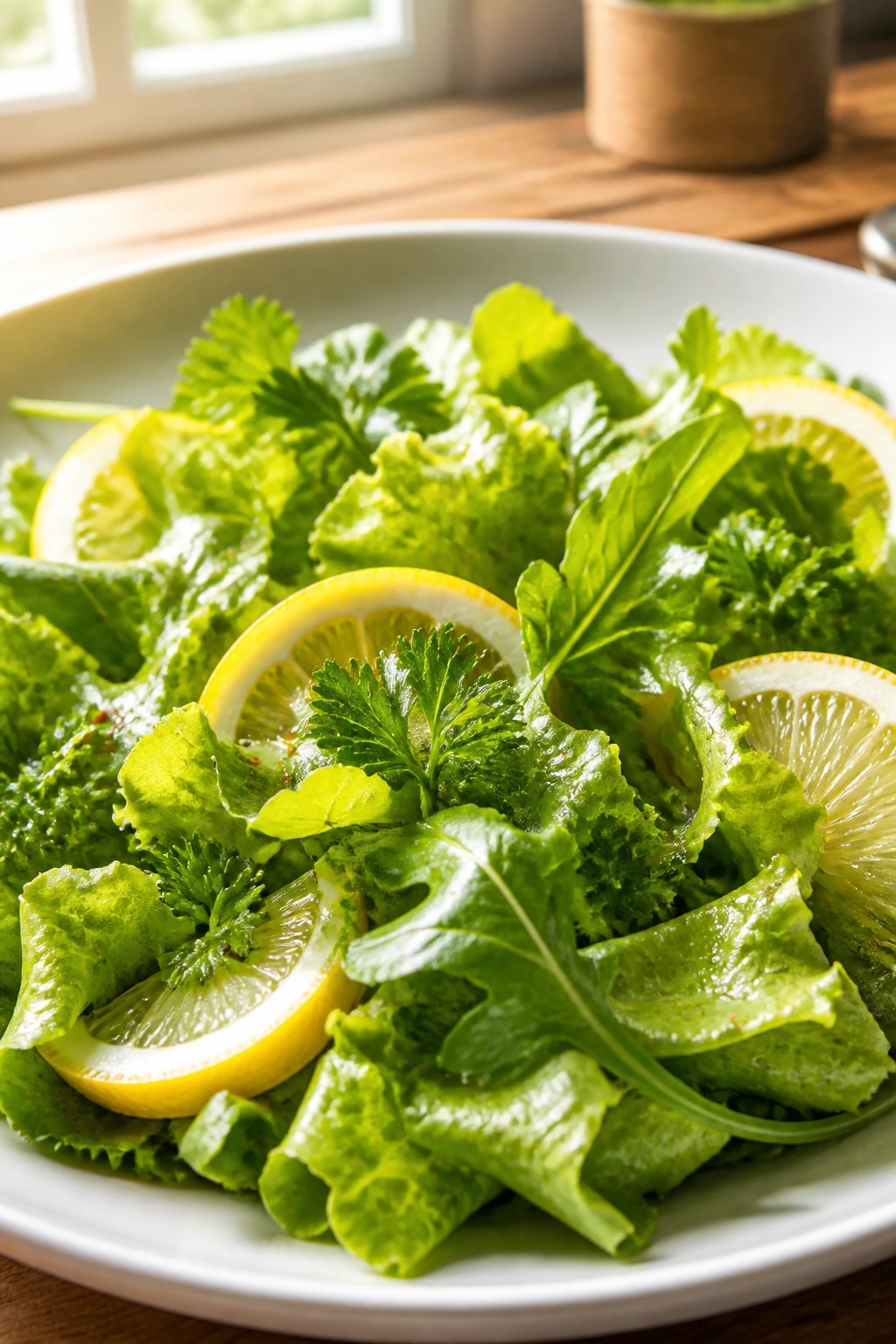
Rich pasta bakes need something sharp or green beside them. Otherwise, the plate tilts too far into cream and starch, and even a good tetrazzini starts to feel heavy by the third bite.
Presentation: Spoon the casserole into shallow bowls or onto warmed plates so the sauce stays glossy. A little chopped parsley on top is enough; you do not need a shower of cheese to make it look finished.
Accompaniments: A lemony green salad, roasted broccoli, garlicky green beans, or a simple arugula salad with vinaigrette all make sense here. If you want bread, go with something crusty and plain so you can mop the sauce without competing with it.
Portions: Plan on about 1 1/2 cups per person if this is the main event. For bigger appetites, especially with a salad only, the dish comfortably feeds 6. With a second side and bread, it stretches to 8.
Beverage Pairing: A dry white wine like Pinot Grigio or Sauvignon Blanc cuts through the cream nicely. If you’re skipping wine, sparkling water with lemon or a cold iced tea with very little sugar keeps the palate awake.
Small Tweaks That Make a Big Difference
Flavor Enhancement: A teaspoon of Dijon mustard stirred into the sauce adds a faint sharpness that disappears into the cheese but keeps the whole pan from tasting flat. I also like a squeeze of lemon at the table. It sounds minor. It isn’t.
Time-Saver: If you already have roasted chicken in the fridge, use it cold and shred it while the pasta cooks. Pre-sliced mushrooms shave a few minutes off the front end, and nobody at the table will complain.
Texture Fix: If the sauce looks thicker than gravy before you add the pasta, loosen it with a splash of the reserved pasta water. That starchy liquid helps the sauce cling instead of breaking into a tight, gluey mass.
Serving Suggestions: A little extra parsley, a few grinds of black pepper, and a pinch of flaky salt on the finished pan make the top taste brighter. If you like a little heat, red pepper flakes work better at the table than inside the sauce.
Make-It-Yours: For a less rich version, swap the heavy cream for more whole milk and add an extra tablespoon of Parmesan. For a more vegetable-heavy pan, stir in baby spinach at the very end and let it wilt from the heat of the sauce.
Mistakes That Turn Tetrazzini Heavy or Dry
Most bad tetrazzini fails in the same few places, and the problems show up fast. The sauce goes grainy. The noodles slump. The top browns before the center is hot. None of that is mysterious.
Cooking the pasta all the way through before baking: That’s the easiest way to get soft, tired noodles. The pasta should still have a firm bite when it goes into the dish, because it keeps cooking in the oven and again during the rest.
Skipping the mushroom browning step: If the mushrooms go in and out before their moisture cooks off, they dump water into the sauce and weaken the flavor. Wait for the pan to go dry and the mushrooms to pick up color. That extra few minutes matters.
Adding flour and liquid too fast: Dump the broth in all at once and you risk flour lumps that never fully smooth out. A slow whisk gives you a silkier sauce and keeps the casserole from tasting pasty.
Overbaking the pan: Once the edges bubble and the top turns gold, the job is done. Leaving it in too long dries out the noodles and tightens the sauce. If the top looks ready before the middle is hot, cover it loosely with foil for the last few minutes instead of blasting it with more heat.
Under-seasoning the sauce: Pasta and cream both need salt. So do the chicken and the Parmesan. Taste the sauce before it goes into the dish; if it tastes a little flat in the pan, it will taste even flatter after baking.
Forgetting the rest: A fresh-baked casserole is loose in the middle. Give it 10 minutes on the counter and it settles into proper slices and spoonfuls. Skip that rest and the first serving runs everywhere.
Variations Worth Trying
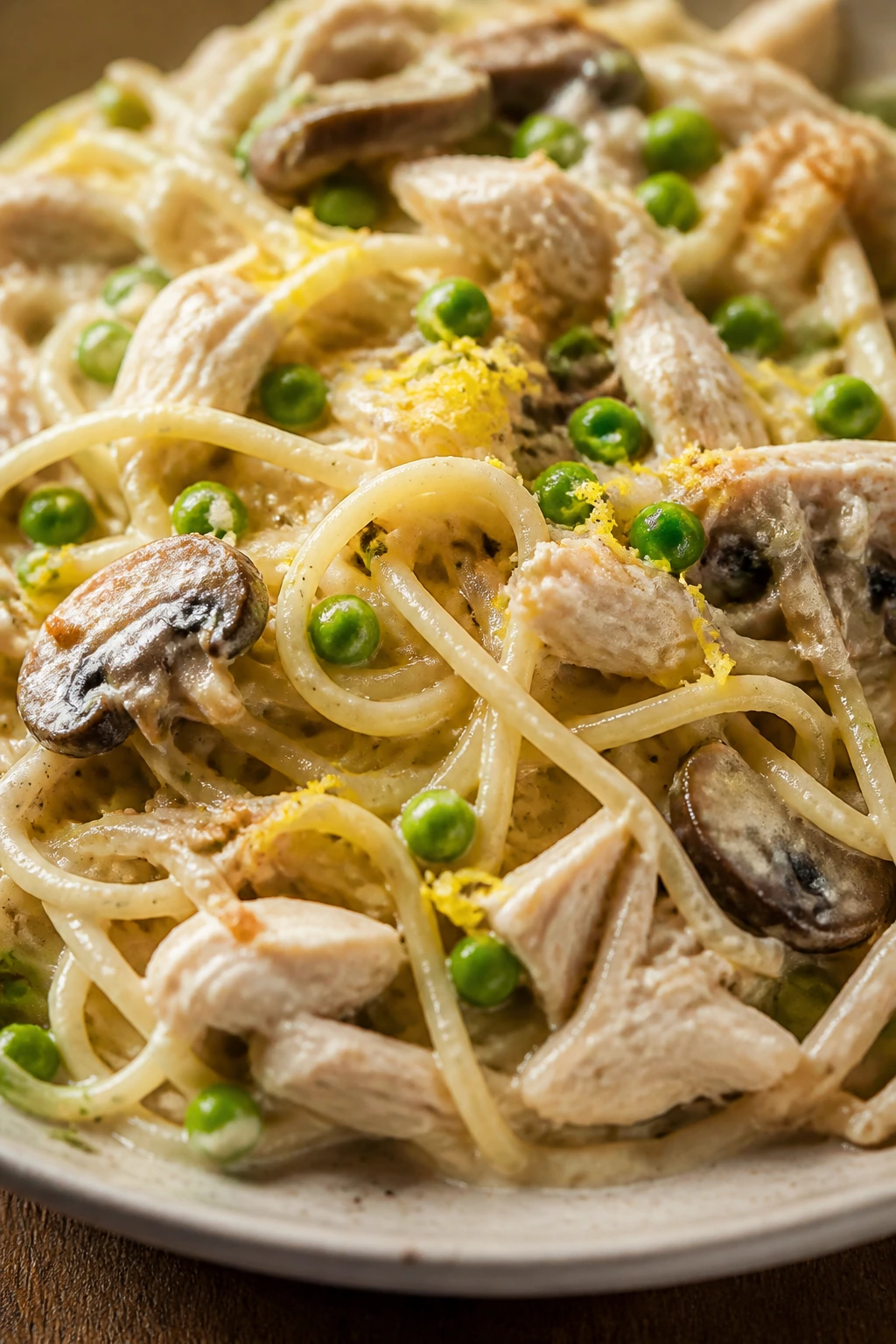
Lemon-and-Pea Brightener
Stir in 1 tablespoon of lemon zest and keep the peas in place. The zest cuts through the cream and gives the dish a cleaner finish, which helps if you’re serving it on a night when a heavy casserole sounds good in theory but not on the second bite.
Broccoli and Chicken Bake
Swap the peas for 2 cups of small broccoli florets, blanched for 2 minutes and drained well. Broccoli brings more texture and looks a little heartier on the plate, though I’d still keep the sauce and breadcrumbs exactly the same.
Smoky Bacon Version
Cook 4 slices of bacon until crisp, then use a tablespoon of the fat in place of one tablespoon of butter. Crumble the bacon over the top before baking. The smoke works well with the mushrooms, but don’t overdo it or the dish starts tasting like brunch.
Gluten-Free Swap
Use gluten-free spaghetti and a 1:1 gluten-free flour blend for the roux. Keep the rest the same and bake it a few minutes less if the pasta gets soft quickly. The texture is a little different, but the flavor lands in the same place.
Spinach and Artichoke Tetrazzini
Add 1 cup chopped, squeezed-dry spinach and 1 cup chopped artichoke hearts with the chicken. This version leans brighter and a little brinier, which is handy when you want the casserole to taste less like a winter coat and more like a proper dinner.
Make-Ahead, Storage, and Reheating Guidance
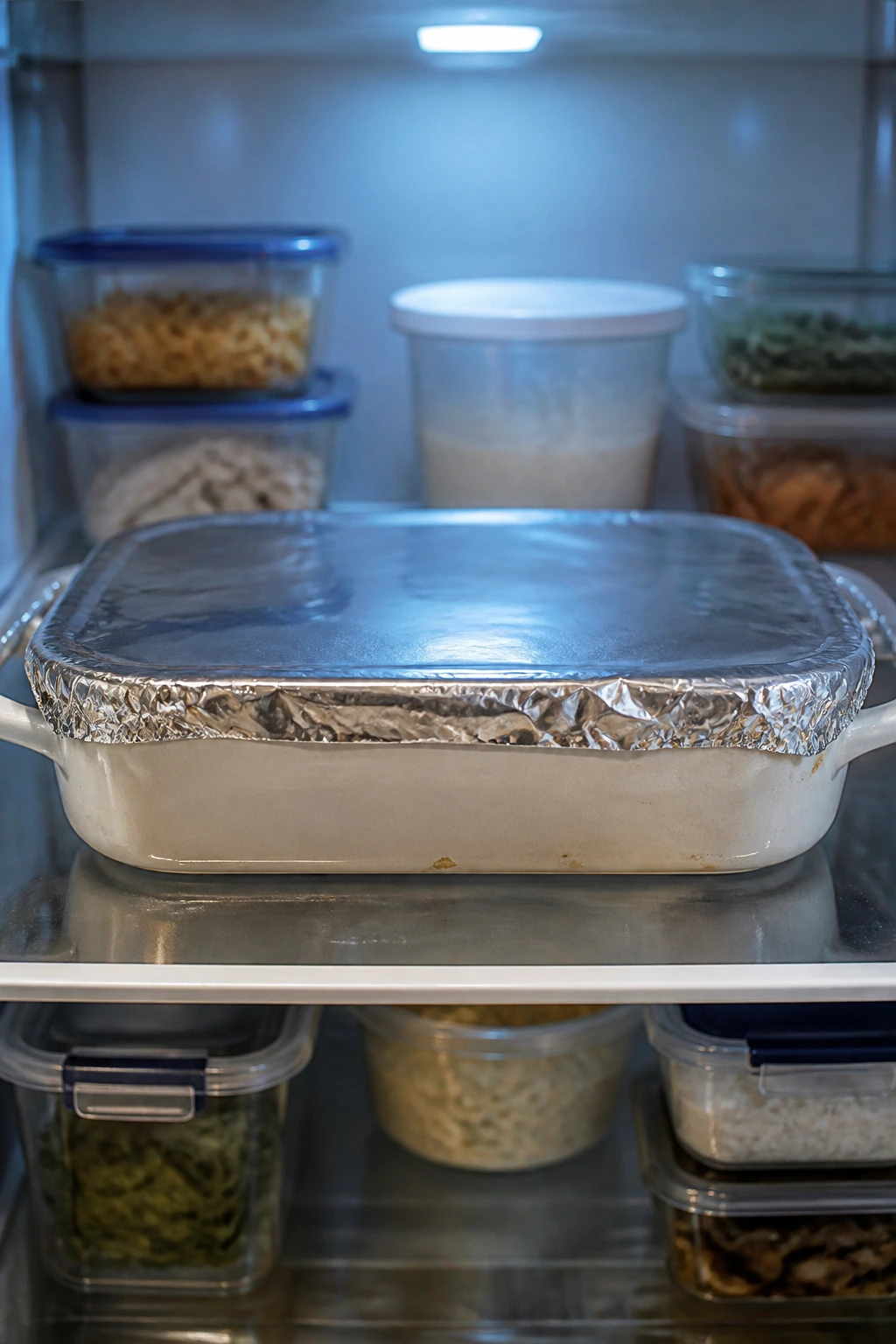
This casserole is friendly to planning, but it likes a little care on the back end. If you leave it out at room temperature, keep that window to no more than 2 hours. Cream sauces do not forgive long stretches on the counter.
For the fridge, cool the baked casserole completely, then cover it tightly or move portions into airtight containers. It keeps well for 3 to 4 days. The texture actually improves a little on day two because the sauce settles into the pasta, though the breadcrumb top loses some of its snap.
Freezing works best if you freeze the casserole before baking. Assemble it in the dish, let it cool, wrap tightly, and freeze for up to 2 months. Thaw it in the fridge overnight, then bake covered for the first 15 minutes and uncovered for the rest, adding about 10 to 15 extra minutes if it’s still cold in the center.
If you freeze leftovers after baking, portion them first. Big frozen slabs take forever to reheat and tend to dry out at the edges. Individual portions are easier to warm all the way through.
For reheating, the oven is your friend. Put the casserole in a covered dish at 350°F (175°C) with a splash of milk or broth, and heat until hot all the way through, usually 20 to 25 minutes for a full pan or 12 to 15 minutes for single portions. The microwave works for one bowl at a time, but stop halfway through, stir if you can, and add a spoonful of liquid so the sauce loosens instead of turning thick and sticky.
If you want to make parts ahead, the sauce can be cooked 1 day in advance and chilled separately. The pasta should wait until just before assembly. That gives you the smoothest texture and keeps the noodles from soaking up too much sauce before they ever see the oven.
Questions Home Cooks Ask Most

Can I use rotisserie chicken instead of roasted chicken I made myself?
Yes. Rotisserie chicken is one of the easiest ways to get this on the table fast, and it fits the dish well because the meat is already seasoned and fully cooked. Pull off the skin, shred the meat, and taste the sauce before adding extra salt because store-bought chicken can be saltier than home-roasted bird.
What pasta shape works if I don’t have spaghetti?
Linguine, fettuccine, or egg noodles are the easiest swaps. Anything too short and stubby can work, but long noodles hold the sauce in a way that feels more like tetrazzini and less like mixed casserole debris.
Can I leave the mushrooms out?
You can, but the dish loses a lot of its backbone. If mushrooms are a no-go, replace them with diced zucchini cooked until the moisture cooks off, or use more celery and a little extra Parmesan. The flavor will shift, though, so I’d keep at least one browned vegetable in the pan.
Why did my sauce turn grainy?
Usually the heat was too high or the liquids went in too fast. Pull the pan off the burner if the sauce starts looking split, whisk in a splash of warm broth, and keep stirring over medium heat until it smooths out. A roux wants patience, not aggression.
How do I keep the casserole from drying out in the oven?
Don’t overcook the pasta, don’t skimp on the sauce, and don’t bake it until it looks bone-dry on top. The dish should still have a little movement in the center when it comes out of the oven because it will tighten as it rests.
Can I make it ahead and bake it later?
Yes, and that’s one of its best uses. Assemble it, cover it tightly, and refrigerate it for up to 24 hours. Let it sit on the counter for about 20 minutes before baking so the center isn’t ice-cold, then add a few extra minutes in the oven if needed.
What if I want a lighter version without losing the creaminess?
Use more milk and less cream, and keep the Parmesan in the mix because it carries a lot of the body. You can also add spinach or broccoli to make each serving feel less rich without changing the character of the dish.
Can I make this without sherry or wine?
Absolutely. The dish still works without it. The sherry adds a dry, almost nutty edge, but if you skip it, the casserole will still taste right as long as the mushrooms are properly browned and the sauce is seasoned well.
A Better Tuesday-Night Casserole
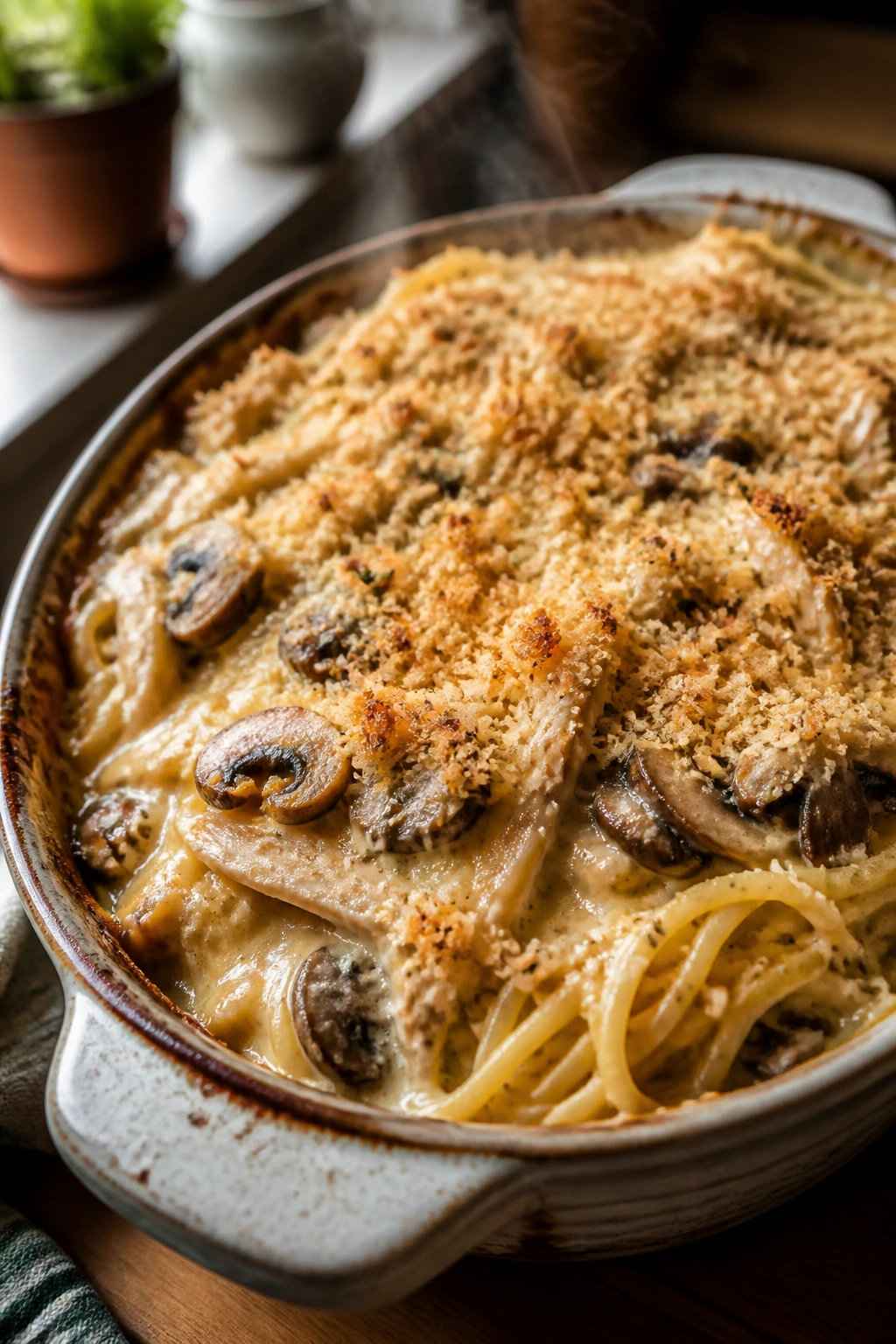
Roasted chicken tetrazzini works because it respects the stuff that matters: browned mushrooms, a sauce that actually coats the noodles, and a topping that gives you a little crunch after the creamy middle. That combination is old, but it isn’t tired. When it’s built carefully, the pan tastes like dinner with a backbone.
I like casseroles that know what they are. This one is rich, a little nostalgic, and very willing to be reheated for lunch the next day. If you keep the pasta a touch firm and give the sauce a minute to thicken properly, it turns into the sort of meal people go back to for seconds without asking what else is coming.
Roasted Chicken Tetrazzini for Weeknight Dinners — Recipe Card
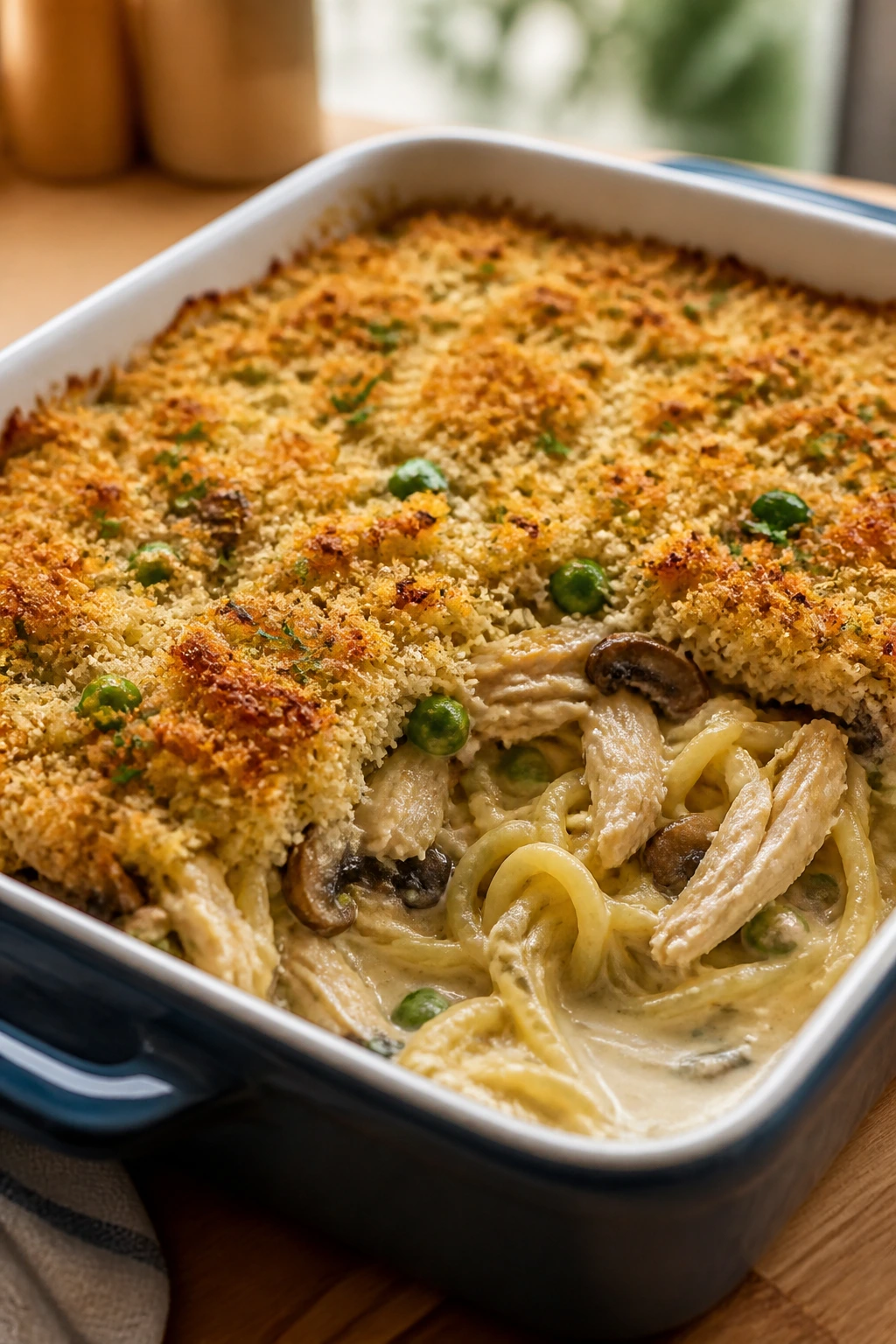
Recipe Name: Roasted Chicken Tetrazzini for Weeknight Dinners
Description: A creamy baked pasta with roasted chicken, mushrooms, peas, Parmesan, and a crisp panko topping. The sauce stays silky, the noodles hold their bite, and the finished pan tastes rich without turning heavy.
Prep Time: 25 minutes
Cook Time: 35 minutes
Total Time: 1 hour
Course: Main Course
Cuisine: American
Servings: 6 to 8 servings
Calories: About 560 kcal per serving
Ingredients
For the Pasta and Filling:
- 12 ounces dried spaghetti or linguine
- 4 tablespoons unsalted butter, divided
- 8 ounces cremini mushrooms, thinly sliced
- 1 medium yellow onion, finely chopped
- 2 celery ribs, finely chopped
- 3 cloves garlic, minced
- 1/4 cup all-purpose flour
- 2 cups low-sodium chicken broth
- 1 cup whole milk
- 1/2 cup heavy cream
- 1 teaspoon kosher salt, plus more for the pasta water
- 1/2 teaspoon black pepper
- 1/4 teaspoon ground nutmeg
- 1 tablespoon dry sherry or dry white wine, optional
- 4 cups shredded roasted chicken, skin removed, chopped into bite-size pieces
- 1 cup frozen peas, thawed
- 1 cup grated Parmesan, divided
- 2 tablespoons chopped fresh parsley, plus more for serving
For the Topping:
- 1 cup panko breadcrumbs
- 2 tablespoons melted butter
- 1/4 cup grated Parmesan
Instructions
- Preheat the oven to 400°F (205°C) and grease a 9×13-inch baking dish.
- Bring a large pot of salted water to a boil and cook the pasta until 2 minutes shy of the package directions. Reserve 1 cup pasta water, then drain.
- Melt 2 tablespoons butter in a large skillet or Dutch oven over medium-high heat. Add the mushrooms and cook until browned and dry, about 5 to 6 minutes.
- Add the onion, celery, and remaining 2 tablespoons butter. Cook until softened, about 4 to 5 minutes. Stir in the garlic and cook for 30 seconds.
- Sprinkle in the flour and cook for 1 minute, stirring constantly. Slowly whisk in the broth, milk, and cream, then add the salt, pepper, and nutmeg.
- Cook, stirring often, until the sauce thickens and coats a spoon, 3 to 5 minutes. Stir in the sherry or wine, if using.
- Remove from the heat. Fold in the chicken, peas, 3/4 cup Parmesan, and parsley. Add the pasta and toss to coat, loosening with reserved pasta water if needed.
- Transfer to the prepared baking dish.
- Mix the panko, melted butter, and remaining 1/4 cup Parmesan. Sprinkle over the casserole.
- Bake for 20 to 25 minutes, until bubbling and golden. Broil briefly if needed for extra browning.
- Rest for 10 minutes before serving, then finish with extra parsley.
Notes: Add a squeeze of lemon at the table if you like a sharper finish. The casserole keeps well for 3 to 4 days in the fridge, and the unbaked version freezes well for up to 2 months.